Issues
New US legislation aimed at reducing social media addiction
Utah isn’t always seen as a beacon for progressivism but on 1 March the US state introduced a law that could provide a benchmark for combating what many believe is a public health emergency. The Social Media Regulation Act aims to restrict social media use among under-18s by requiring them to obtain parental permission to open an account, imposing a curfew between 22.30 and 06.30, and compelling technology companies to remove “addictive” features from their platforms. Whether or not internet use is addictive is debatable; it does not feature in the American Psychiatric Association’s Diagnostic and Statistical Manual of Mental Disorders. Indeed, the fact that laws restricting internet use on the basis of addiction are being passed without scientific support lends credence to those who argue that they are nothing more than the product of a moral panic.
But when you hear professionals discuss “real” addiction, the parallels are chilling. Anna Lembke, a Stanford University psychiatrist, says that addiction “begins with intermittent use, then progresses into daily use, and then progresses into consequential use”. There is now widespread belief that social media and internet use is inhibiting children’s development – socially, emotionally and even physically. “Kids who are heavily into video games and social media fall behind socially due to a lack of face-to-face interaction,” says Mike Bishop, a clinical psychologist who runs Summerland Camps, an organisation in the US that offers practical treatment for technology addiction in young people.
Summerland Camps runs retreats for 12- to 21-year-olds at which all devices are prohibited. “There’s no minimum amount of screen activity that you need to live,” Bishop tells Monocle. But unlike with other addictions, it is understood that technology “addicts” will go back to using as soon as they leave. “We treat it more like someone who has a problem with overeating.” Bishop’s advice for concerned parents is to ask their children to track their screen time themselves. “We asked kids to convert the time they spend on their devices each week into the US minimum wage and then look at how much money they would save over a typical working lifetime for their retirement fund,” he says. “For most of them it was in the millions of dollars.
Abstinence is also the antidote favoured by Hector Hughes, co-founder of Unplugged, a company that operates 20 digital-detox rental properties in the UK (a number that it plans to double this summer). When guests arrive at one of the stylishly minimal huts, they place their devices in a box with a padlock, the key for which stays in a sealed envelope. Hughes says that some families renting the properties are keen to use the novelty of a phone-free holiday to spark a behavioural change in their children.
Laws like the one passed in Utah aim to spark that change from on high. Whether or not they succeed, public opinion seems to be turning away from a belief that unfettered access to the internet is an inevitability of modern life, towards one where its use, especially among young people, is legislatively proscribed. “When the car came out, it took us 50 years to come up with a seatbelt,” says Hughes. Bishop puts it in starker terms: “We’re going to look back at this time and compare it to how we saw smoking in the 1920s.”

Monocle’s three-day roadtrip along South Africa’s Atlantic coast
South Africa’s west coast stretches more than 1,000km from Cape Town to the mouth of the Orange river and neighbouring Namibia. Despite the cool sea temperatures, people shoal here for the white-washed fishing towns skirting cerulean bays, as well as the blankets of wildflowers that bloom in spring. Inland, Swartland is known for its olive groves and vineyards. Here, independent winemakers are winning over critics and drinkers alike with citrussy chenins and spicy syrahs.
In recent years, new residents have joined the road-trippers in search of a more idyllic life – not to mention fresh retailers, makers and entrepreneurs ready to cater to them. Monocle takes the wheel for a trip across the rugged region from Cape Town North to Paternoster, then inland and back south past Malmesbury, Wellington to Simondium and back. Ready? Let’s hit the road.
Day one
Cape Town — Yzerfontein — Paternoster
Monocle is passing the seaside apartment blocks and windswept beaches visible from the R27 highway as Cape Town recedes in the rear-view mirror. By Melkbosstrand, the clutter of buildings and stop-start traffic lights has fallen away to reveal seemingly endless sand dunes and wildlife reserves that stretch out along the coast. Our first stop is Rosemead Artisan in Yzerfontein. Its founders, chefs Brett and Anli Nortier, escaped the hustle and bustle – and higher rents – of Stellenbosch to open, as Brett puts it, “a small community bakery”.
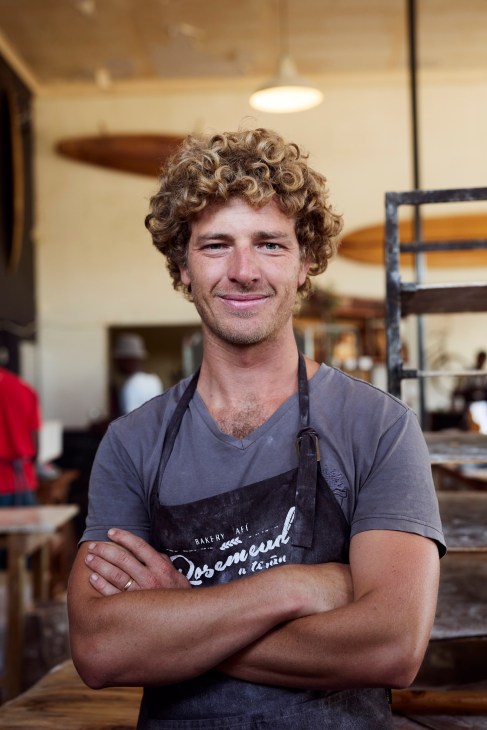
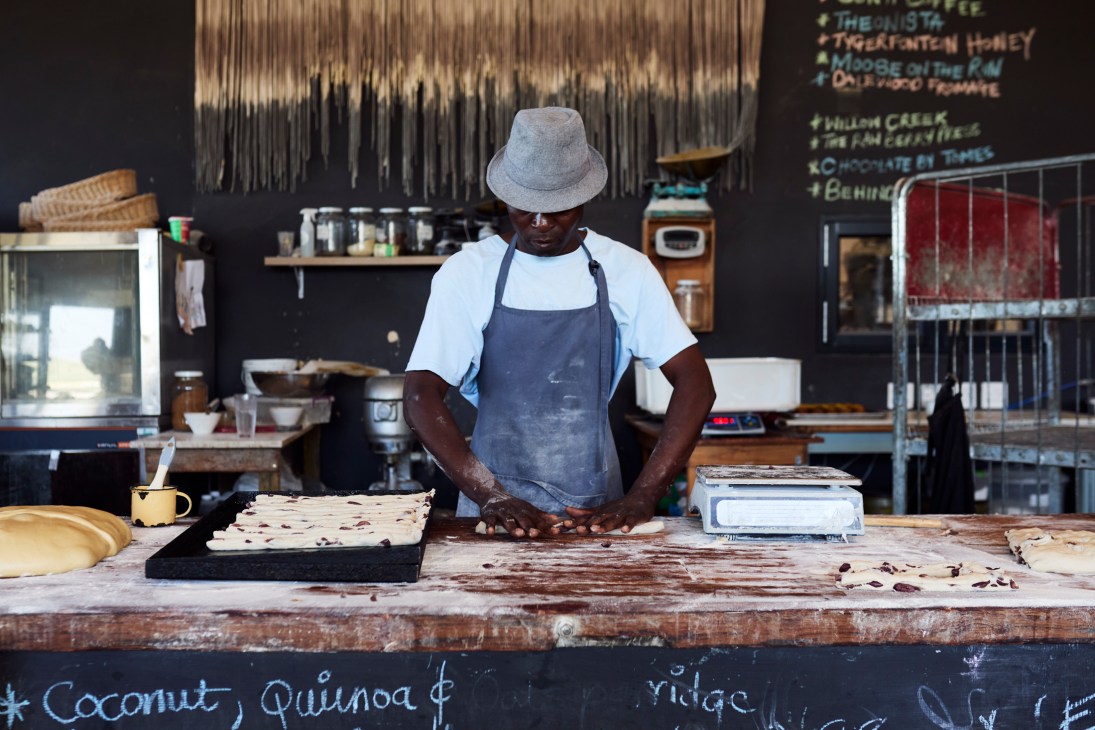
Before you enter the corner café, just a few minutes’ drive from the beach, you’ll catch a buttery waft of croissant and the reassuring aroma of freshly baked loaves. Taste either and you’ll soon realise why this is the sort of neighbourhood joint that tempts day-trippers to make the 85km journey from Cape Town. During the high season (December and January), queues snake out the door for a seat. But things move quickly here. Brett tells us about a customer who stopped in recently and queued for carrot cake despite having a rather pressing flight to catch (he made it, cake in his hand luggage). Grab a seat in the stripped-back, concrete-floored space, order a pastel de nata and watch as the baker’s hands dart and glide across the floured surface at the open pastry counter.

Back on the R27, we spy giraffes’ heads poking through the canopy at Buffelsfontein, a wildlife reserve that skirts the highway. Off the main road, once we pass through the unlovely industrial area of Vredenburg, we’re back in a postcard-pretty coastal idyll. The white-washed fishermen’s cottages seem to shimmer like the silvery scales of the Cape’s abundant tuna: we’re in Paternoster, one of the oldest settlements on South Africa’s west coast.
Being here means that we can try Dispens, a farm shop and all-day restaurant from food-writer turned chef Kobus van der Merwe. Paternoster has grown in recent years but there’s still a slow rhythm to life here. “There has been a massive property boom,” says Van der Merwe. He has seen the town attract talent in increasing numbers since he moved here 13 years ago and opened Dispens in a small, tin-roofed former shark-liver-oil factory. Today things are rather different. Pull up a seat in the courtyard for rooibos tea and a scone freckled with deliciously salty seaweed or, if you have more time on your hands, try Wolfgat, Van der Merwe’s restaurant a few streets over.
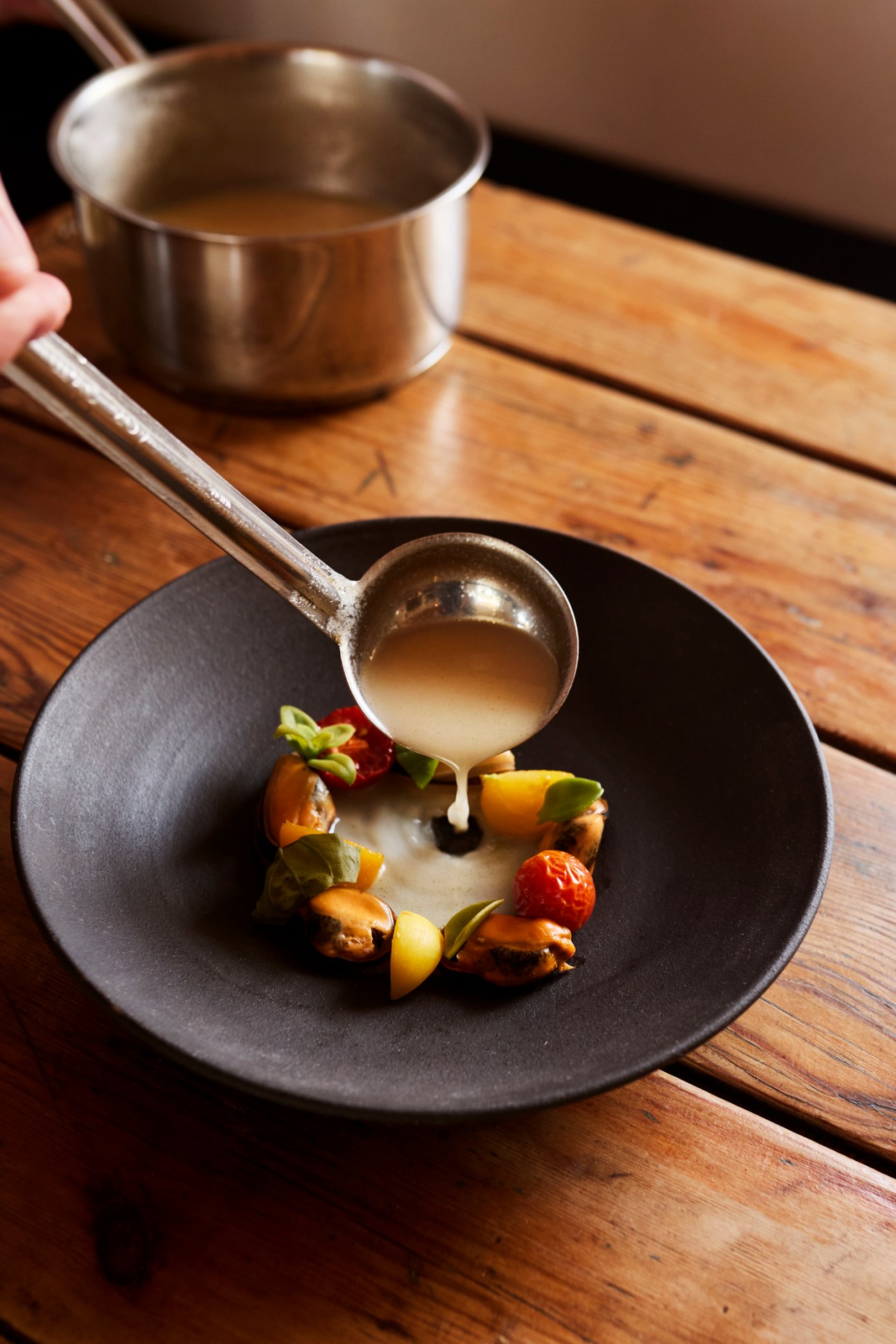
Set in a cottage above a bay, Wolfgat is less a stopover and more a destination: bookings can fill up months in advance. Despite its top billing in “best restaurant” lists, the place is unpretentious and set around a simple dining room riven with wooden beams and flanked by a shady terrace. The menu is heavy on seafood, including succulent mussels, tender Cape bream and foraged delicacies such as dune spinach. “The menu is inspired by the history of this coastline,” says Van der Merwe, who we meet in the restaurant kitchen. After lunch, we recommend you roll down to the beach for an invigorating dip or walk. Want to stick around for longer? Stay overnight at the Strandloper, a glass-fronted hotel overlooking the sea.
Address book:
Breakfast: Rosemead Artisan Bakery
Corner of Park and Volstruis Street, Yzerfontein, 7351
Eat: Dispens
Corner of St Augustine Road and R45, 1 St Augustine Rd, Paternoster, 7381
Eat and drink: Wolfgat
wolfgat.co.za
Stay: Strandloper
strandloperocean.com
Day two
Hopefield — Malmesbury — Riebeek-Kasteel
In the morning, we head back onto the R27 and through Hopefield, stopping for breakfast at the Hopefield Market at the Foodie Hub, which comes to life with local producers on Saturdays. We’re heading inland to Riebeek-Kasteel, a neat town surrounded by mountains that mark the heart of Swartland. Here, we check in at Kokos Huis, a new lodge in a 200-year-old farm building with terracotta floors and old shutters. The structure has been overhauled by Andorran hotelier Prisca Llagostera.
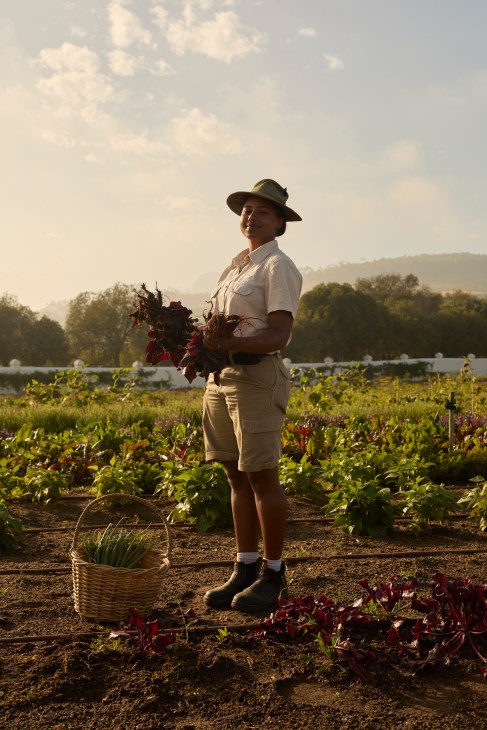
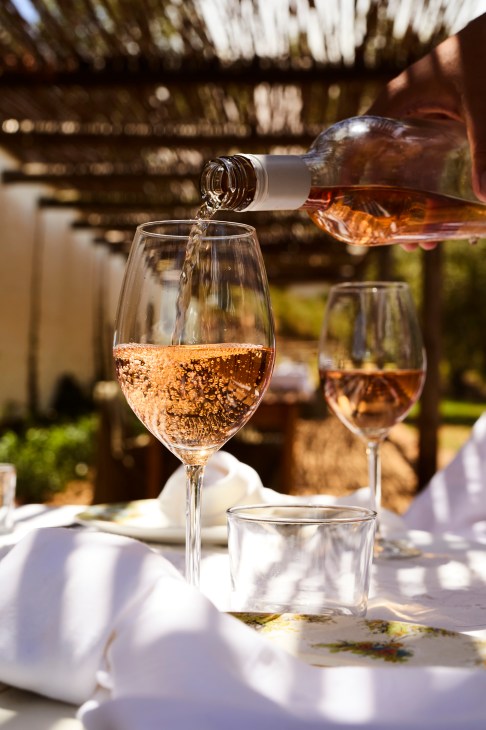
“It has a lot of soul,” says Llagostera of the building she helped painstakingly restore. Inside, the cosy rooms have low ceilings decked out in muted linens and illuminated by dappled light from woven lampshades. In the rear courtyard, there’s an inky pool lined with tasselled umbrellas and palm trees. Llagostera moved to Riebeek-Kasteel after she fell in love with a winemaker (and the region). “The cellars are full of personality,” she says. Be sure to make appointments at some of them. Monocle’s favourites include The Sadie Family Wines, Swerwer Wines and AA Badenhorst. The latter lets out homely farm cottages with sweeping vineyard views, should you plan on lingering longer. If you’re in town on a Thursday or Friday, visit the farm for its famed pizza night. Not all of the cellars are open all of the time, and almost all of them are appointment-only. But if you’re simply looking for a selection of the very best bottles, you’ll find most of them at the Wine Kollective, a tiny hole-in-the-wall shop right on the edge of town. It’s stacked with the region’s best and hardest-to-find vintages. Grab a few before settling down for dinner and drinks under the stars at Kokos Huis.

Address book:
Breakfast: Hopefield Market
hopefield-market-pop-up.business.site
Eat and drink: AA Badenhorst, Malmesbury
aabadenhorst.com
Shop: The Wine Kollective, Riebeek-Kasteel
thewinekollective.co.za
Stay: Kokos Huis, Riebeek-Kasteel
kokoshuis.com
Day three
Wellington — Simondium — Cape Town
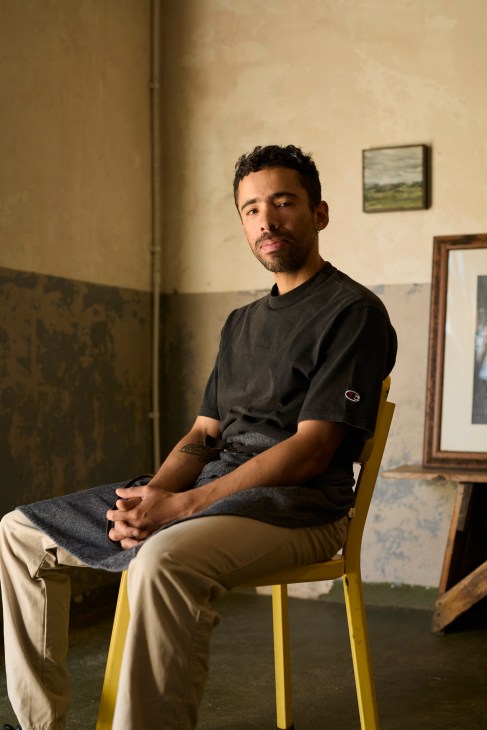
Our final morning drive takes us to Wellington and FiftyFive Croissants for a breakfast coffee and pan au chocolat. Set in a white gabled building with a sunny terrace, the café makes seeded sourdough and croissants loaded with cheese and bacon. It also stocks essentials, including coffee and eggs. Be sure to leave ample room for lunch at Vygie though. The restaurant is set on lush grounds wedged deep in the mountains and down a bumpy road. Partners Rose and AJ Williams, who previously worked in art and fashion (and now catering), opened the restaurant on Rose’s father’s farm when they moved to Wellington in 2021. Occupying a large, open-air brick building that was once a foaling barn, the space is also home to multiple artist studios, one of which belongs to Rose.
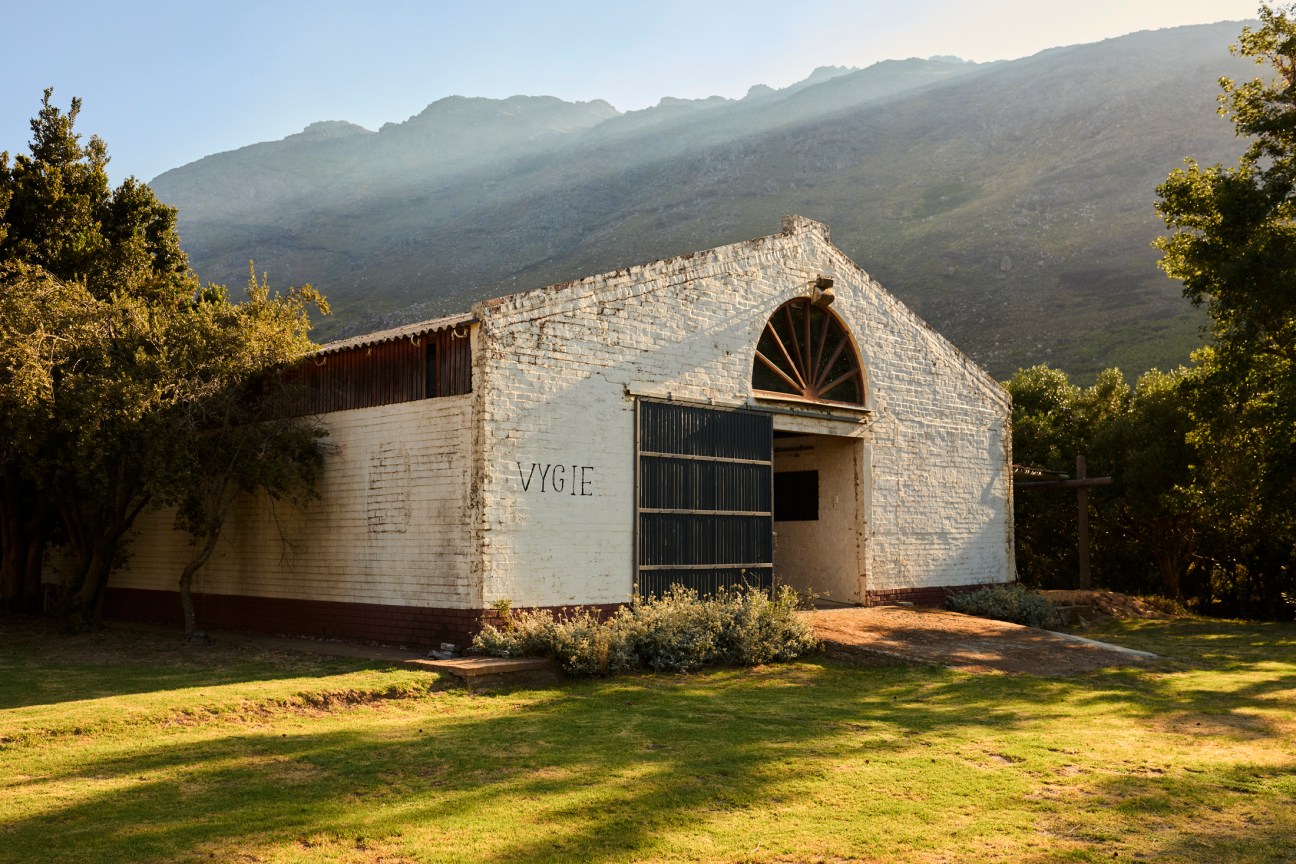
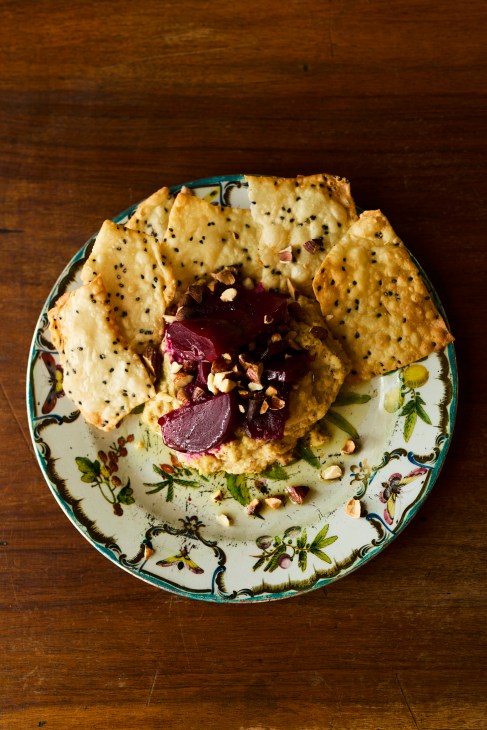
The best seat at Vygie is on the lawn or down by the babbling stream. The menu is served family style, with dishes such as marmalade roast chicken and pasta stuffed with roasted butternut squash and spinach. For dessert there’s seasonal fruit tart or ice cream. “We love making cakes,” says Rose, who has seen an influx of people to the area. “There’s a lot of space for creativity [here] and a strong community who appreciate hard work and good taste.”
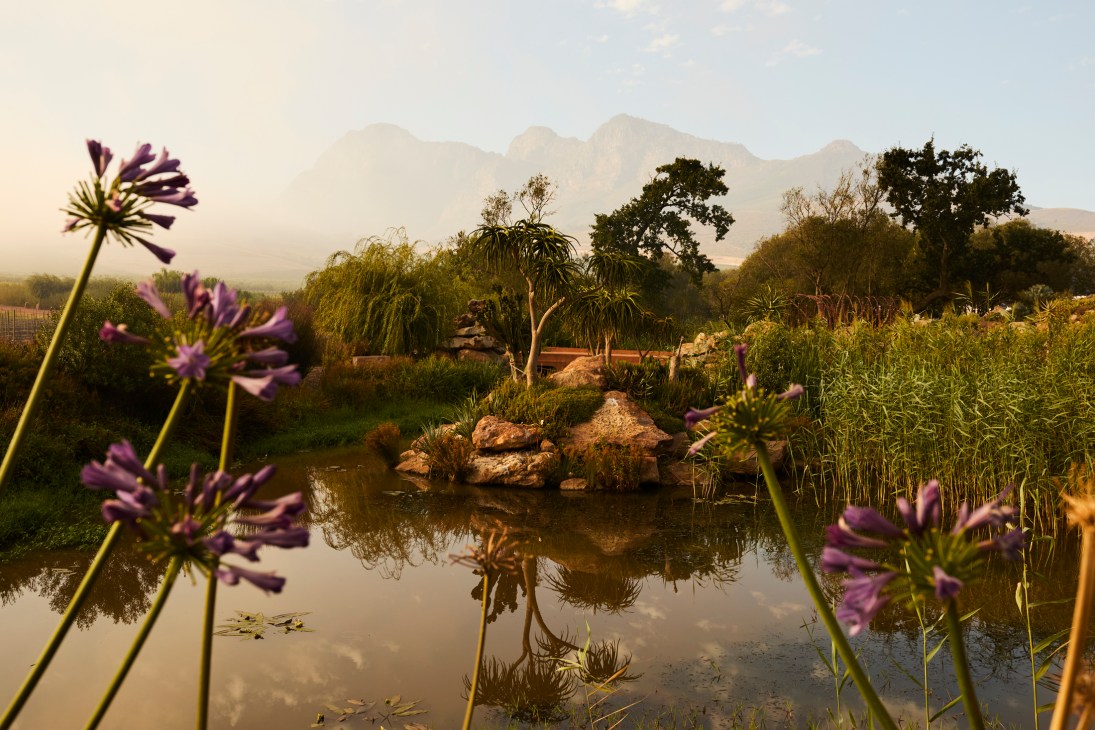
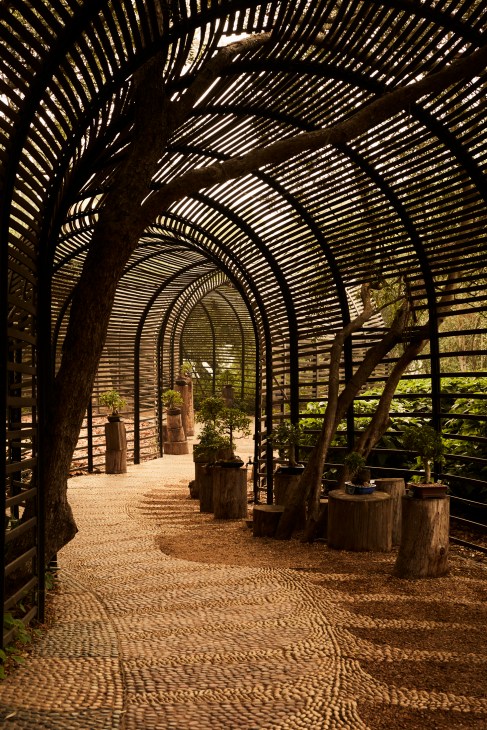
We head back to Kokos Huis for our effects before taking the N1 to our final stop, Babylonstoren, a farm outside Stellenbosch. Set up by former magazine editor Karen Roos, the property features several revamped farm cottages with green shutters, thick walls, white Scandi-style furniture and floor-to-ceiling glass windows that overlook the garden. There’s plenty to do, from baking courses to wine tasting and a shop stuffed with local linens and crockery. You can hike to the top of the koppie (a small hill) or splash around in the farm pool. Have dinner at Babel, the farm’s restaurant, which serves seasonal plates and salads so pretty it almost seems a shame to eat them. But it’s in the evenings, once the day visitors leave, that Babylonstoren really shines. Grab a glass and take an evening stroll around the gardens, through rows of citrus trees and past the shimmering fronds of the cycads in the shadow of Swartland’s rolling hills. You won’t want to head home.
Address book:
Breakfast: FiftyFive Croissants
36 Bain Steet, Wellington, 7654
Eat and drink: Vygie
Bovlei Road, Wellington, 7654
Stay: Babylonstoren, Simondium
babylonstoren.com
Monocle’s itinerary
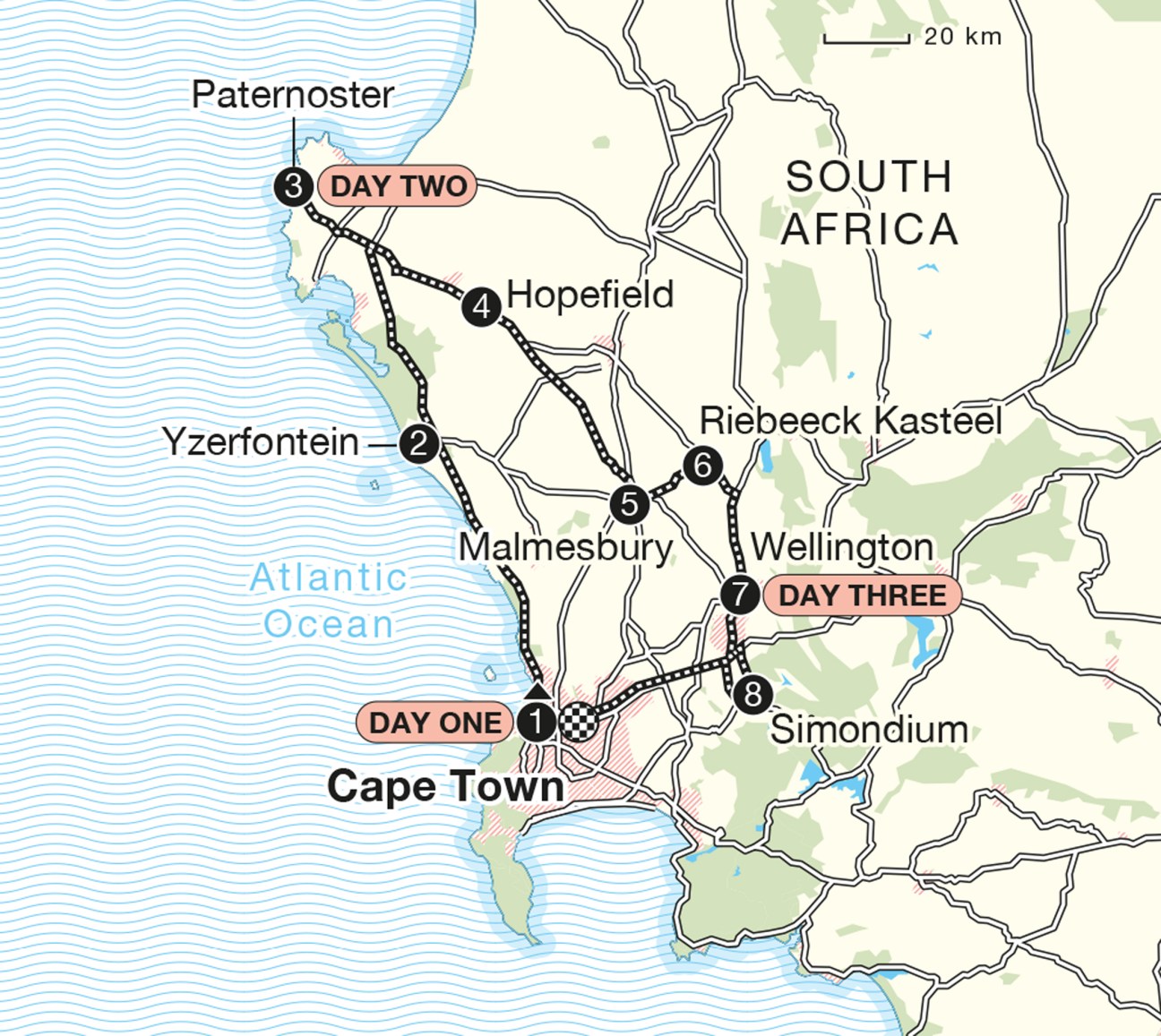
Our journey by car takes us north from Cape Town, along South Africa’s Atlantic coast. We travel 150km, past Yzerfontein to pretty Paternoster, where we spend the first night. Then we head inland to hilly Swartland to the small settlements and farm-dotted foothills of Hopefield, then on to Malmesbury and Riebeek-Kasteel for the night. The next day, we go south to complete the loop, taking in Wellington and Simondium, 60km east of Cape Town for a clear run back to the airport. We recommend a minimum of three days for the trip.
Dadaocheng: One of the Taiwanese capital’s oldest and most atmospheric corners
Dadaocheng is the oldest part of Taipei and one of its best-preserved areas. Its illustrious past as a rice-trading centre during the late Qing Dynasty in the 19th century left a grand architectural legacy. This district on the eastern banks of the Tamsui river has an unexpectedly baroque feel, with architecture and streetscapes dating back to Taipei’s time as a Japanese colony.
Today these streets are a backdrop to some of the best under-the-radar independents in the city, including bookshops, restaurants and tearooms, as well as the many street-food delights to be found along the revived wharf. It’s a neighbourhood with more than its fair share of diversions. Here are a few of our Dadaocheng favourites.
1.
Read
Seek, an English-language travel and culture magazine from Taipei journalist Sheena Lee. Pick up the latest copy – and a coffee too – at Kuo’s Astral Bookshop.

2.
Stay
Originn Space is a petite inn in a century-old mansion with just a handful of rooms. The third-floor suite has a six-metre vaulted ceiling riven with cypress beams.

3.
See
The AS Watson Building from 1917 was the first Western-style pharmacy on the island. The stone-cut façade now houses a bookshop and tea house.

4.
Try
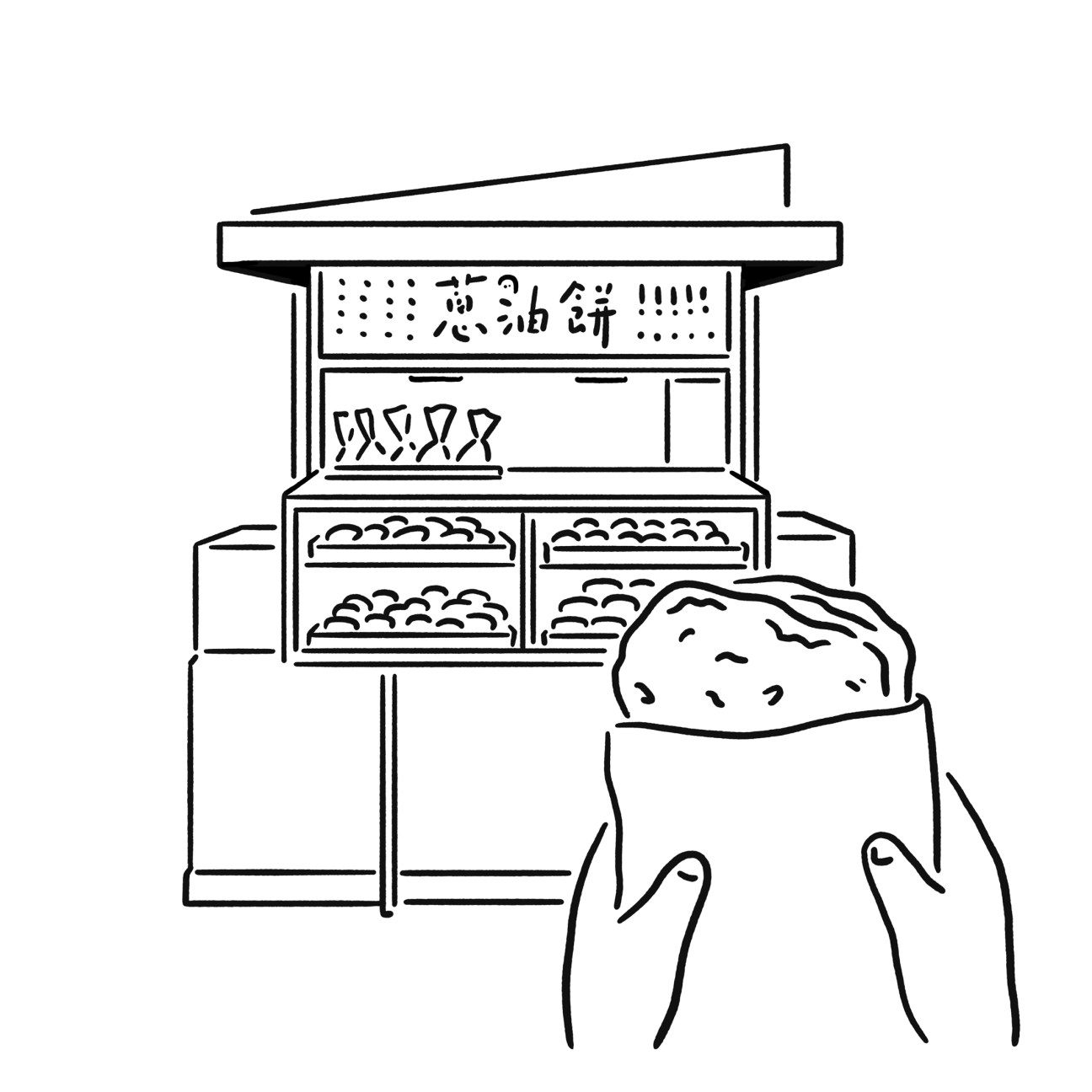
A pancake hot from the griddle at the Yongle Scallion Pancake stall. Enjoy it coated with sweet soy sauce and topped with egg and a dash of white pepper. Then have a doughnut for afters.
5.
Shop
Monsoon Books – an independent tucked into the second floor of an unassuming shoe shop – specialises in the work of Asian authors. It’s great for a guidebook, illustrated postcard or tasteful bookmark.

6.
Order
The roast chicken, soup and freshly milled Tainong No 71 rice at Rice and Shine is not to be missed. Drizzle soy and hot lard over the rice and order the iced black tea flavoured with maqaw (mountain pepper).

7.
Visit
The riverside Dadaocheng Wharf Pier 5 Container Market has plenty to recommend it. Hire a bike to explore, or board a boat to see the city from the river. For a snack, try a Hong Kong waffle at the smartly branded I Love Bow concession.

8.
Drink
Tea, of course. You’re in Taiwan. Preferably at the South Street Delight Tea House. The “oriental beauty” is a fermented oolong with a honeyed taste, served with dried fruit and sweet-bean petit fours.

9.
Take home
Wooden tchotchkes, bamboo spice baskets or a rattan granny basket (all the rage here) from the Gao Jian Bucket Shop.

10.
Don’t miss
The Love God, a 40cm statue – one of 600 deities represented in the Xia Hai City God Temple – is known for his matchmaking skills. People flock from all over Taiwan to seek his supernatural guidance and spiritual approval.

Illustrations: Hao-Yan
What’s on our itinerary: Shops and hotels to add to your list
Warren Street Hotel
New York
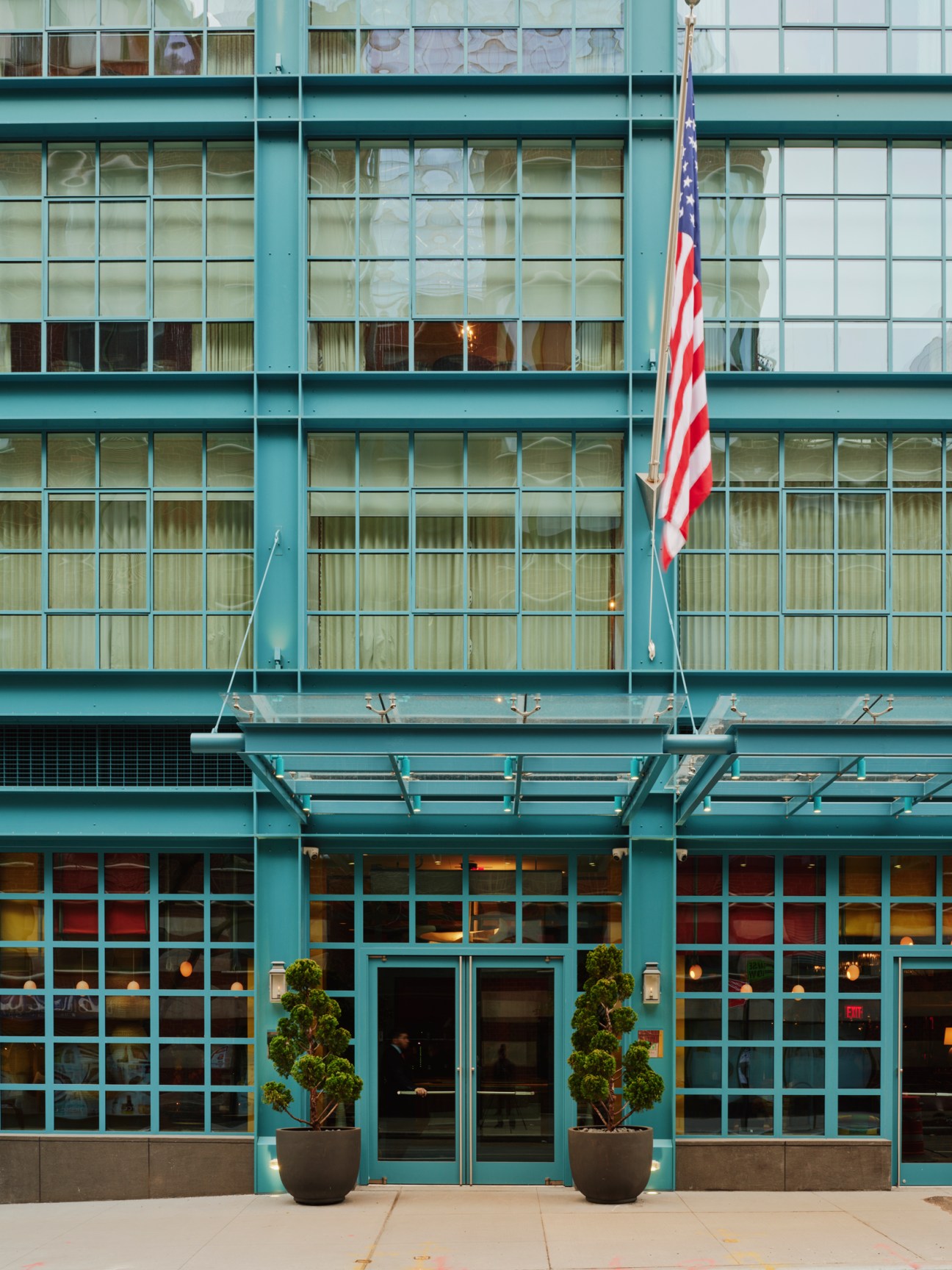
British-born hotel company Firmdale Hotels has opened its 11th property, an oasis of blue steel and sunny yellow on a red-brick block in Tribeca. “We love Crittall windows; it’s such a classic look,” says co-founder and creative director, Kit Kemp, who used the same windows at the firm’s fêted Manhattan hotels, Crosby Street and the Whitby. “It looks as good in Paris as it does downtown.”
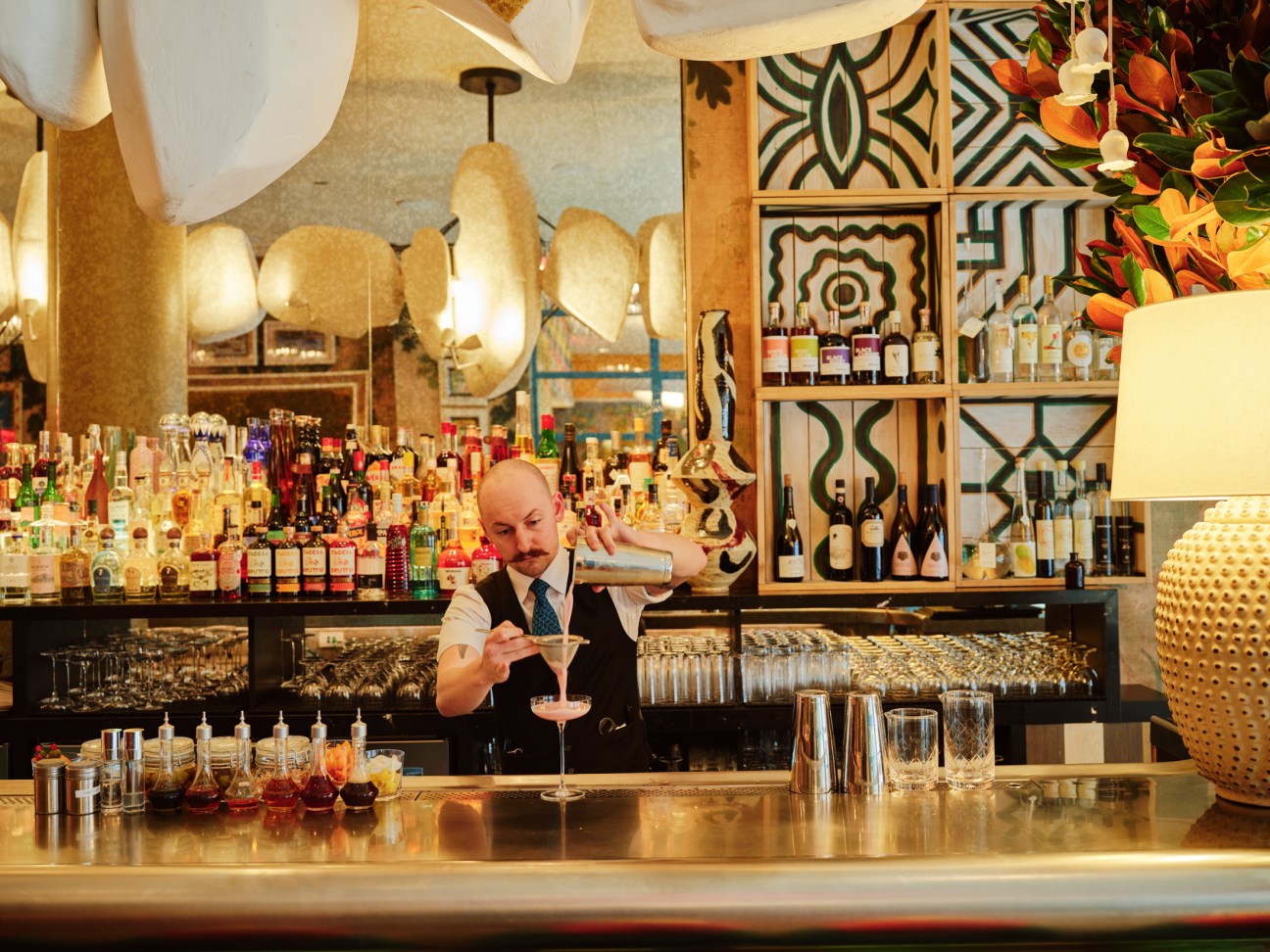
The interior is unmistakably Kemp too: a mishmash of patterns and wallpapers in a range of colours and textures. It’s a cacophonous clash that shouldn’t work but does. “All the pieces speak to one another,” says Kemp of the collage she created with her daughters, Willow and Minnie, who work in graphic design and architecture, respectively. The property is a breath of fresh air in a neighbourhood that has welcomed an influx of galleries but long lacked any decent independent hotels. “It still has a village feel about it,” says Kemp, who looked to the area’s textile trade for inspiration.
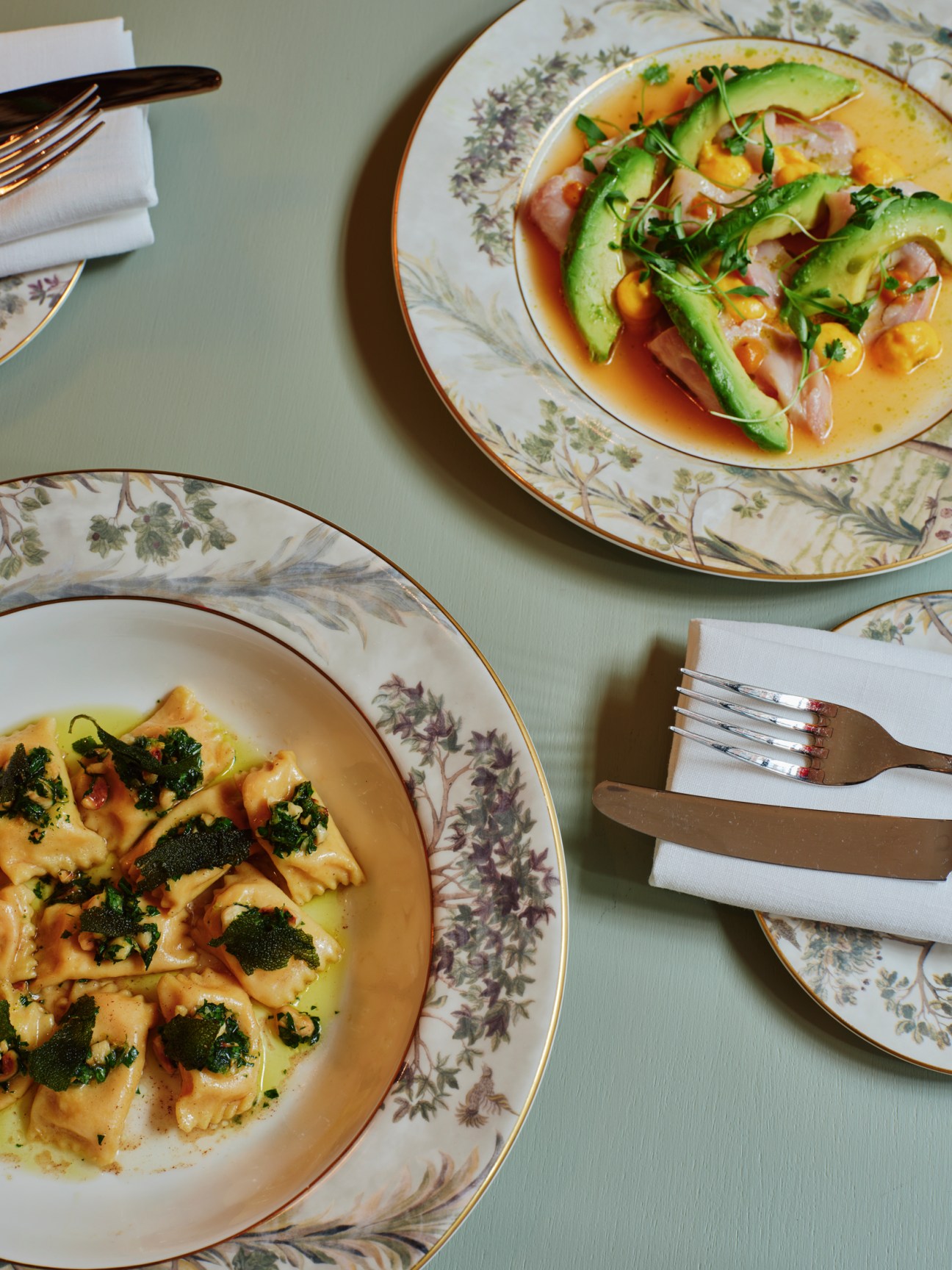
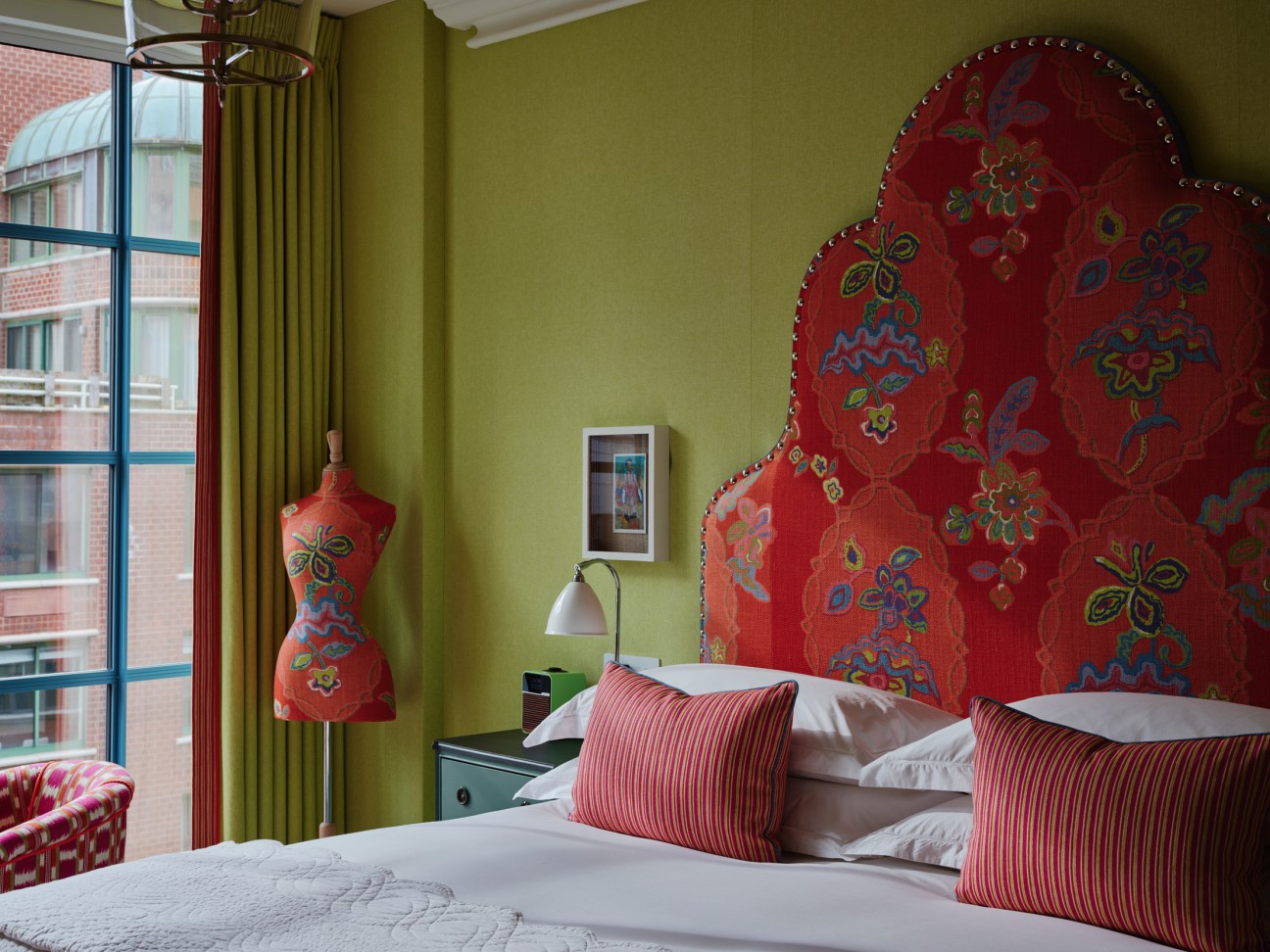
The 69 guest rooms are decorated with brightly-hued curtains and carpets, and wallpapers. You’ll find almost 1,000 artworks throughout the hotel, from creatives such as Argentinian designer Cristián Mohaded and Ugandan artist Sanaa Gateja. The downstairs drawing room is open only to guests and there are snug sofas and a fireplace by which to hunker down. The brasserie serves wild mushroom risotto, scallops and strip steak au poivre, as well as a decadent afternoon tea with macarons, scones, clotted cream and champagne. “I remember going with my mother or family for afternoon tea,” says Kemp. “It was always very special and spoiling. It’s lovely to bring that in.”
firmdalehotels.com
Q&A
New York
Kit Kemp
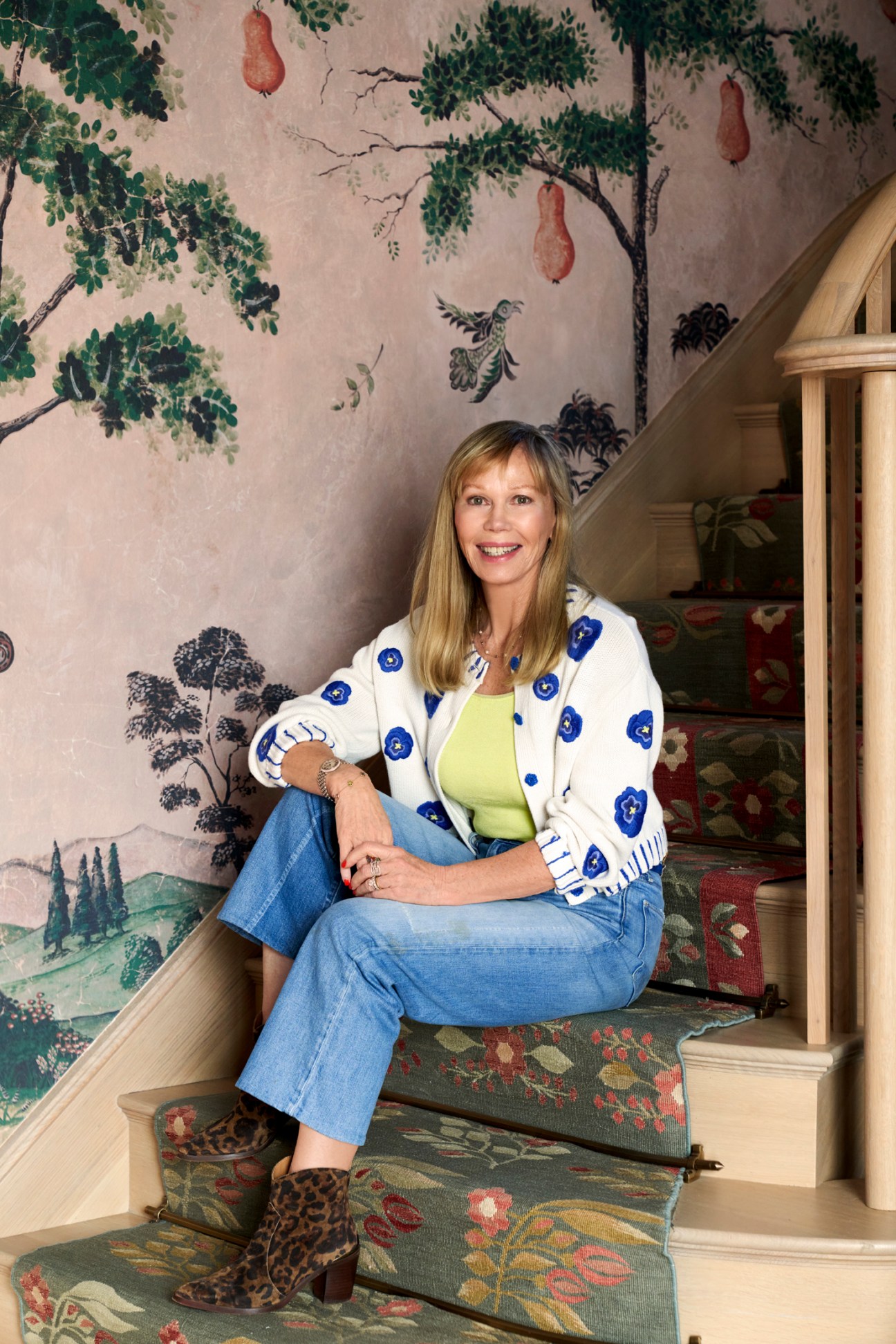
Firmdale’s co-founder and creative director on her latest New York hotel opening.
Why downtown?
We have the Whitby in Midtown and Crosby Street in Soho, and Tribeca just felt exciting. Over the past 10 years, we’ve seen it change, with lots of people living there rather than in massive sky-rise buildings. It has a good buzz. Other than the Greenwich, there wasn’t a hotel that had character, so there was room for a hotel, brasserie and bar like ours.
What about the building?
It was a gap between two buildings. We brought in the blue with the yellow at the top, so it always looks like summer. We wanted something cheerful.
Each of the 69 rooms is different from the last. Why?
Some of the rooms have a similar scheme vertically but everything else is quite different. If you’re travelling and you go into a white-painted room, it can feel terribly cold. As soon as you have linen on the walls, it suddenly feels fabulous; you are tucked up and safe.
Kopria Florist
Athens
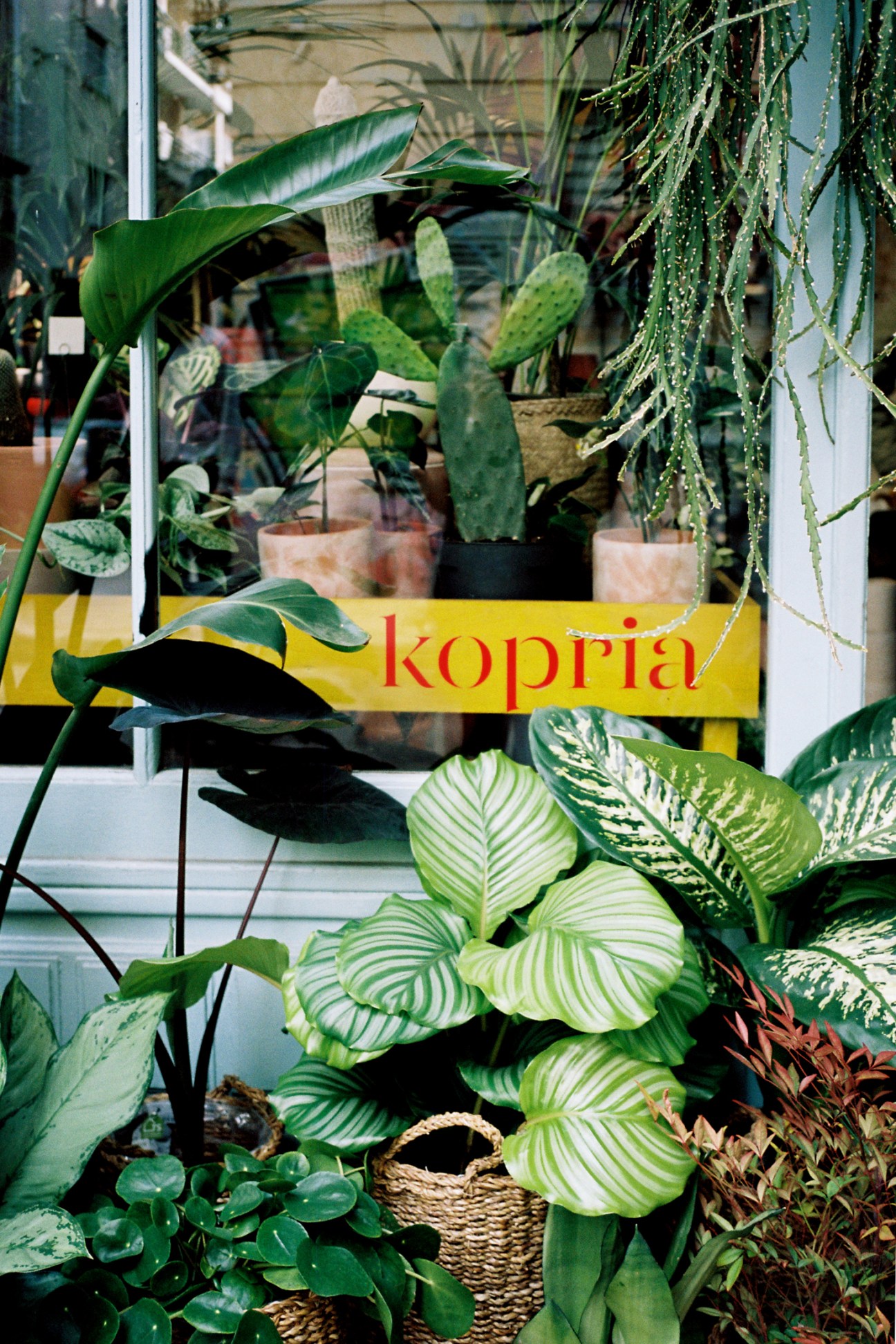
Plant shop and flower studio Kopria opened in the heart of the lively Exarchia neighbourhood in 2018 is growing a budding fan club of locals and regulars from further afield. Alongside the usual line-up of hard-to-kill houseplants and outdoor varieties, its small team has a penchant for the unusual; Kopria stocks an array of oddly shaped cacti and other curiosities that would be difficult to find at your average city garden centre. The business is growing in other senses too: its flower arrangements can be spotted adorning some of the Greek capital’s most high-profile hotels and restaurants. The shop, which boasts an appropriately inviting tropical interior, also sells a small range of international design magazines, plus ceramics by Athenian makers and handmade Japanese garden tools. A snip, if you ask us.
30 Eresou, 106 80
Retail safari
Seoul
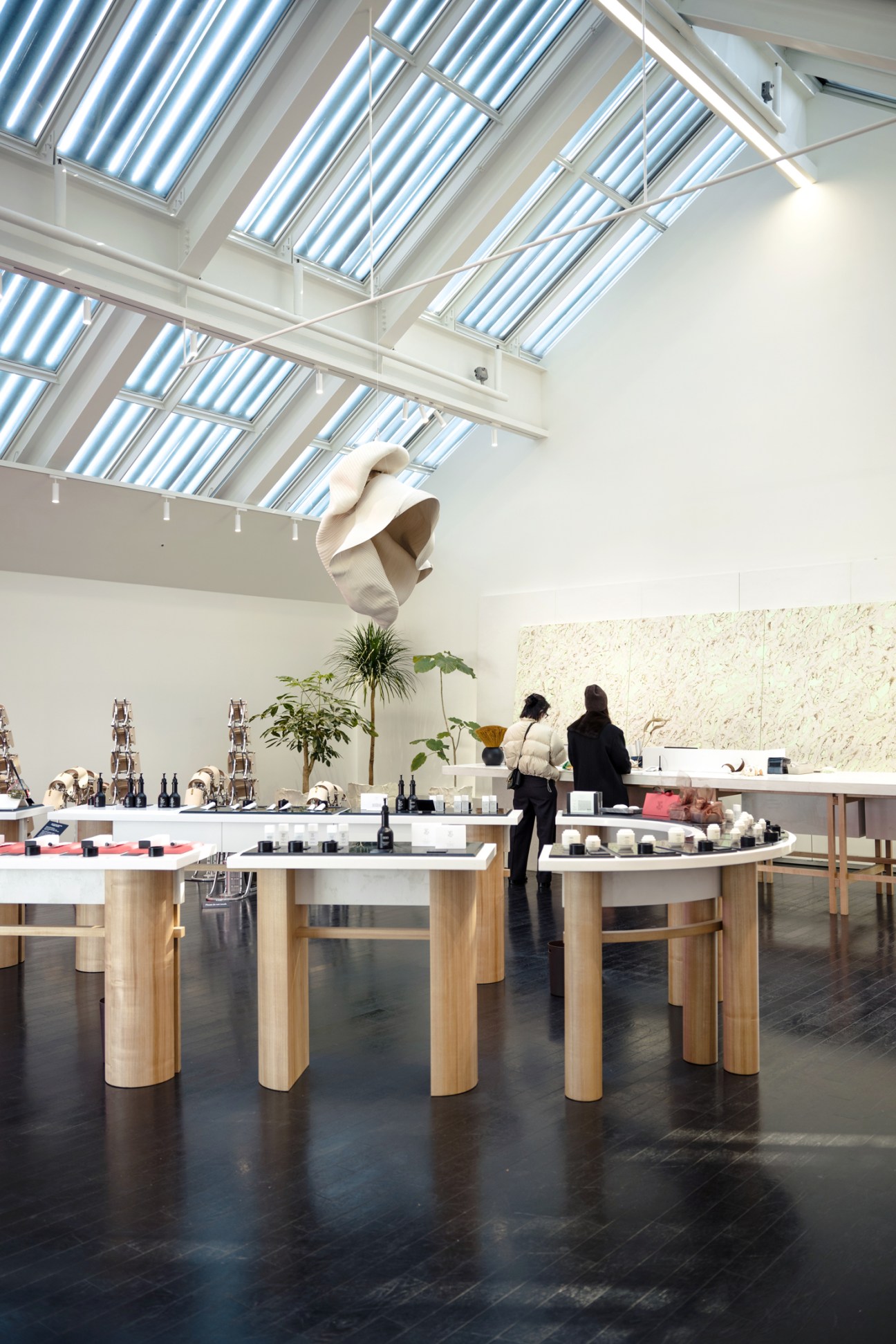
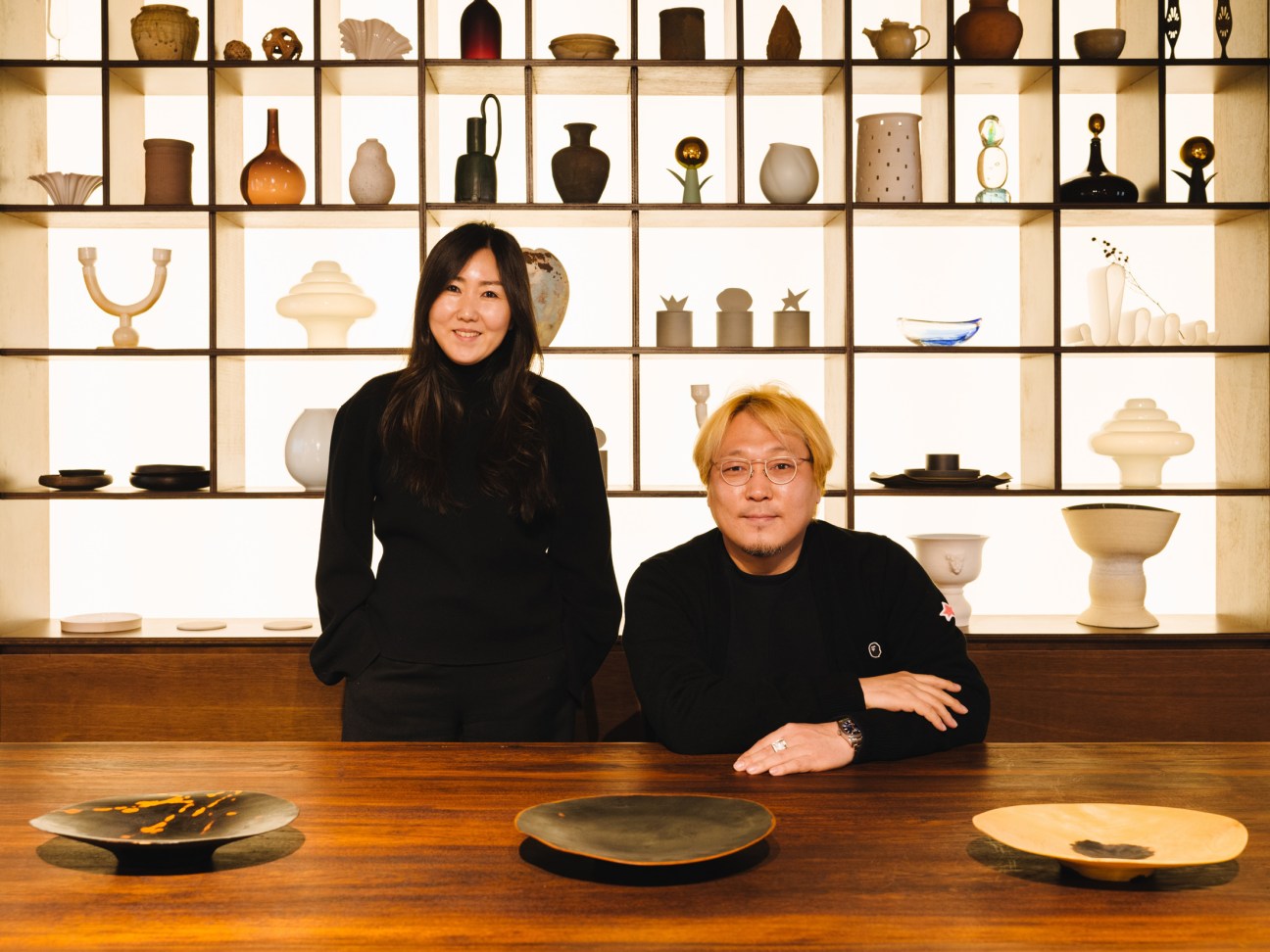
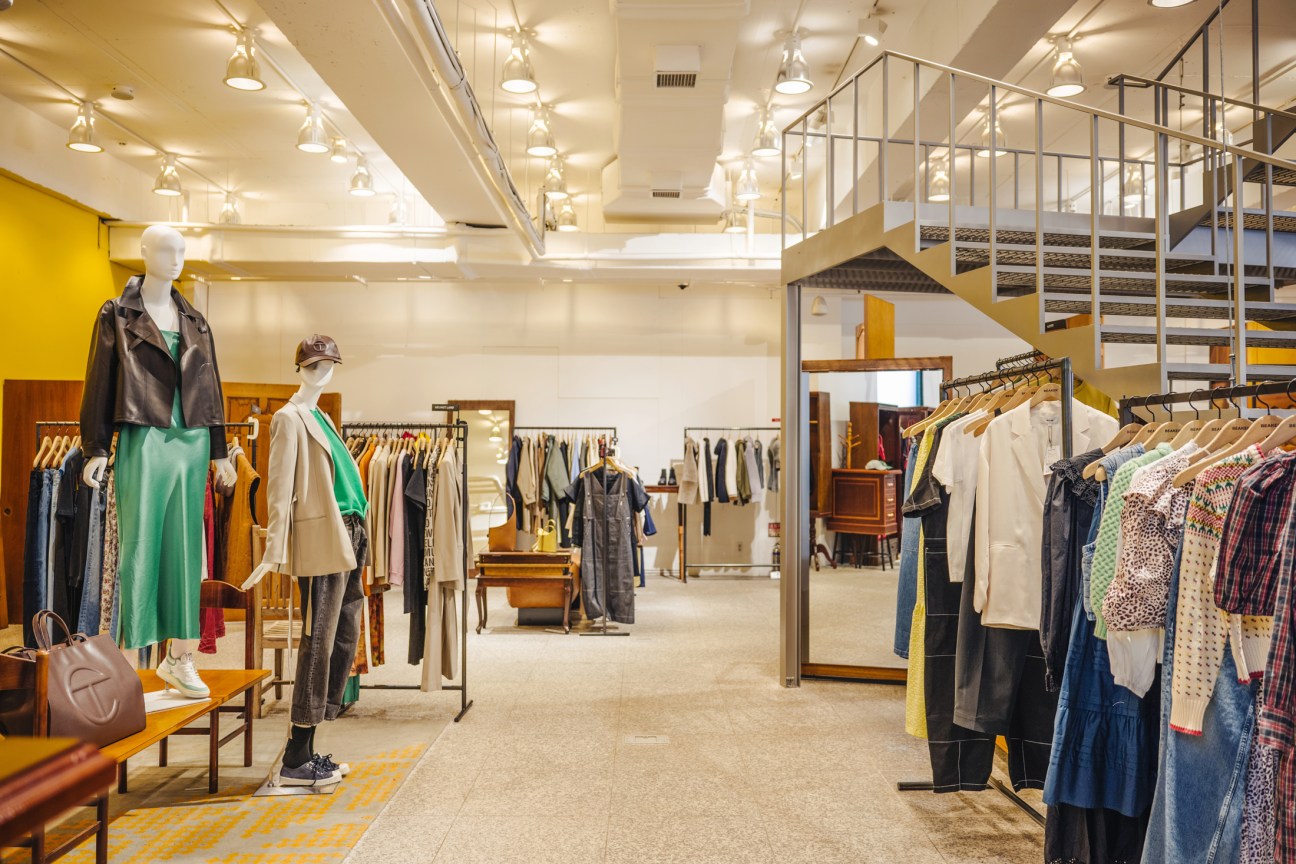
Start by walking around serene Seochon – one of Seoul’s oldest neighbourhoods – the streets of which are lined with hanok houses and quaint alleyways. Near Gyeongbokgung Palace, you’ll find Parlour, which has a great selection of men’s shoes, plus clothing from Seoul and abroad. Head to the Arumjigi Culture Keepers Foundation if you’re a fan of contemporary handicraft – the shop stocks everything from silver chopsticks to lacquerware jewellery boxes inspired by traditional designs. Pay a visit to antique art dealer The Store from Tong-In, which celebrates its centenary this year and is just a 15-minute walk away, in the historical Insa-dong district. Chapter 1 sells furniture and homeware, while earthenware maker Soilbaker is known for its clay bowls and ttukbaegi crockery. In need of a little pampering? Visit Tamburins, the cosmetics label owned by Gentle Monster, which has its flagship shop in Seongsu. Next, head to Hannam-dong, where the city’s best-dressed gather for people-watching and coffee. Drop in at menswear brand Pottery to pick up a few shirts, which are cut to allow for ease of movement. Finally, near the Hannam post office is Handle With Care, a winsome arts and crafts shop so small you might miss it. Don’t.
Nobis Hotel
Palma
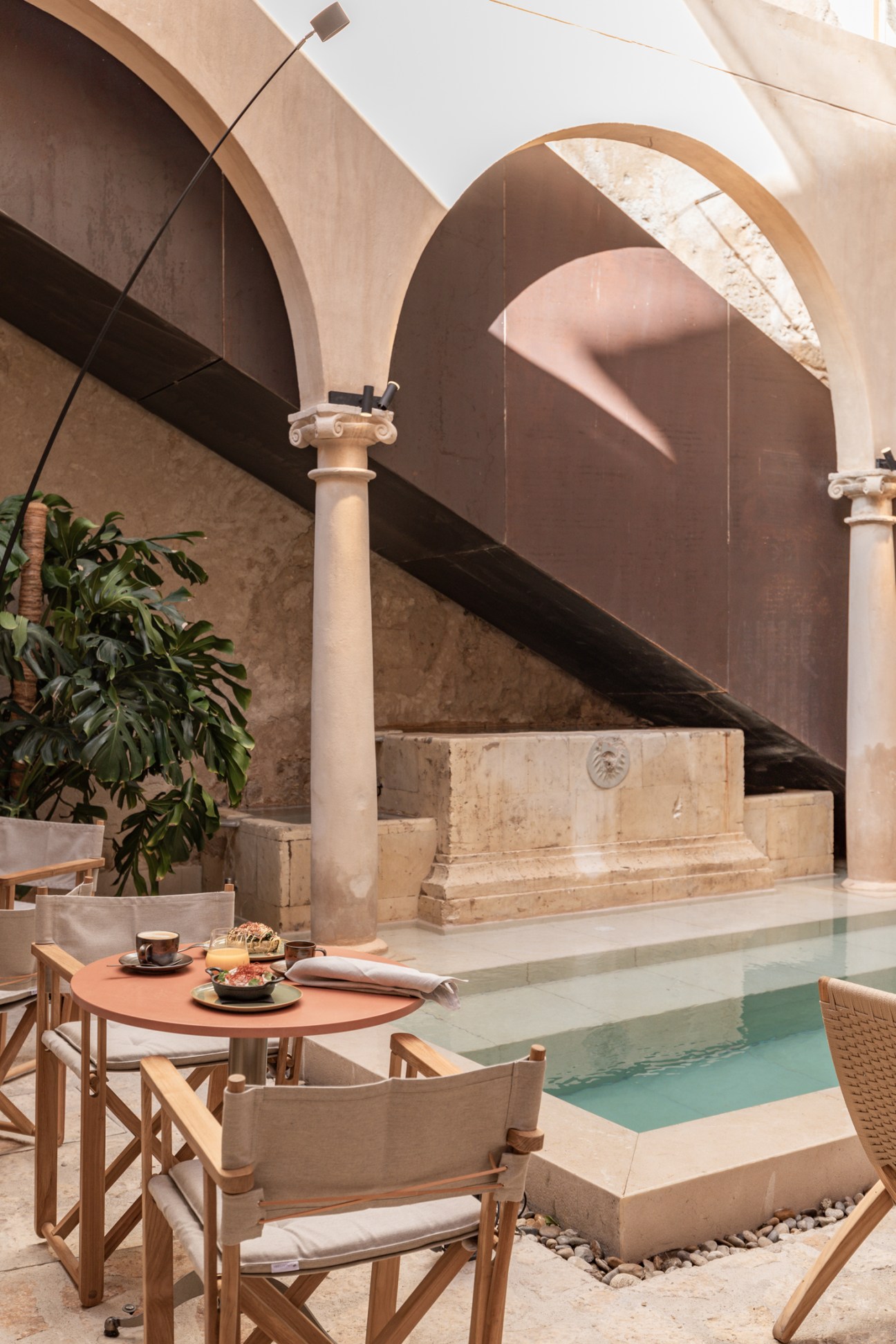
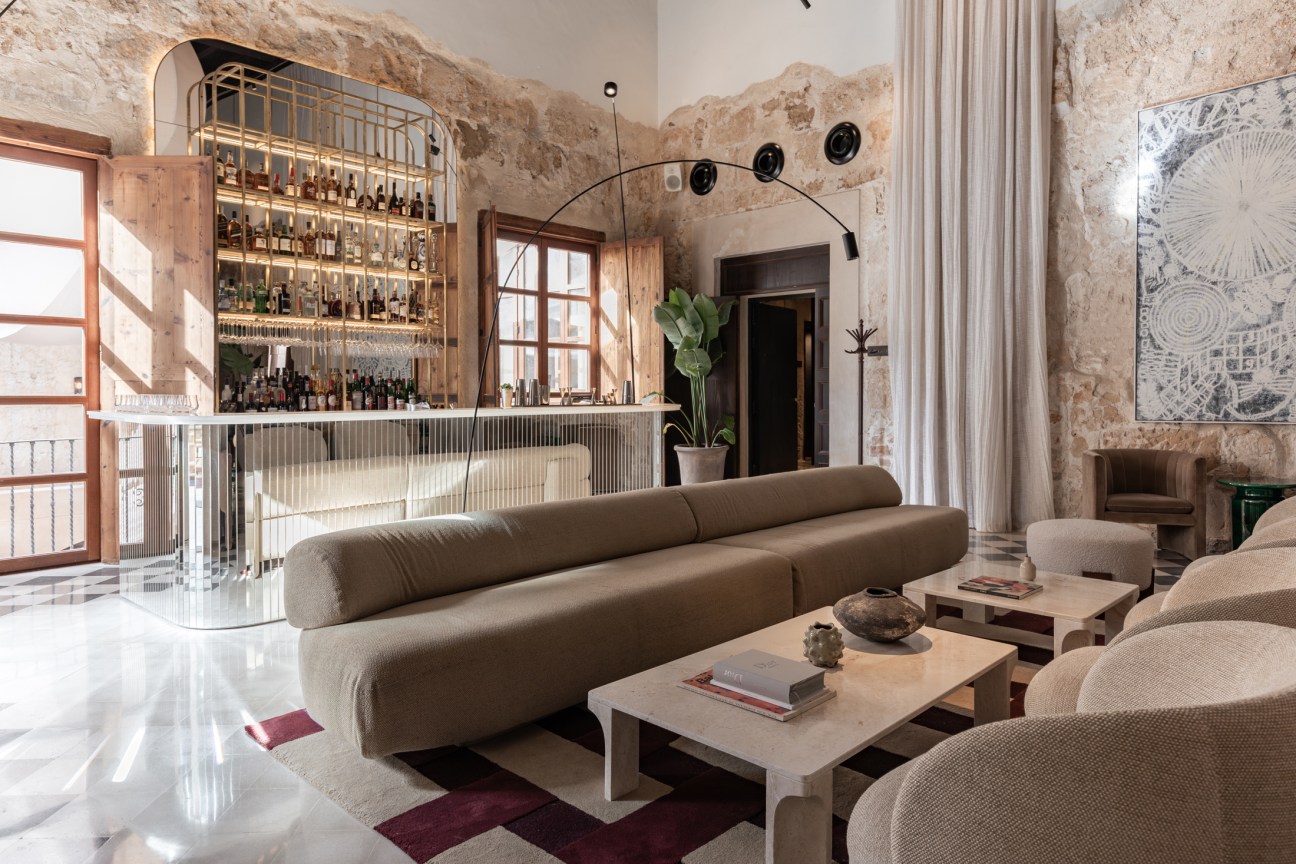
Swedish hotel group Nobis has opened a second outpost in Palma de Mallorca. In 2021 it unveiled its popular Concepció by Nobis project. Its latest space, though, pitches a little higher and has the advantage of being housed in a 12th-century palace, with a large courtyard and roof terraces that offer elevated spots for drinks, sunbathing and escape. The building’s Moorish roots inspired Swedish interior designer Wingårdhs, plus architecture firms Jordi Herrero Arquitectos and Eduardo Garcia Acuña Arquitecto, to employ a riad vibe, with water elements at play on the ground floor. Restaurant, Noi, is already pulling in locals keen to enjoy Mallorcan chef Xema Álvarez’s smart menu. But our favourite space is the high-ceilinged Mirall Bar. Its in-house creations include the Pruna, made with Trigo Limpio vodka, plum spirit, plum, fino (Spanish sherry) and lavender.
nobishotel.es
The Fashion Top 25
When Monocle stops by, the conversation turns to the intricacies of a suit, from the benefits of half-linings and single darts on jackets to top-stitched seams. “We both feel that in Florence they are making the sort of suits that we like to wear,” says Marsh. “And I like my suits to be properly worn, not left hanging in a cupboard.”
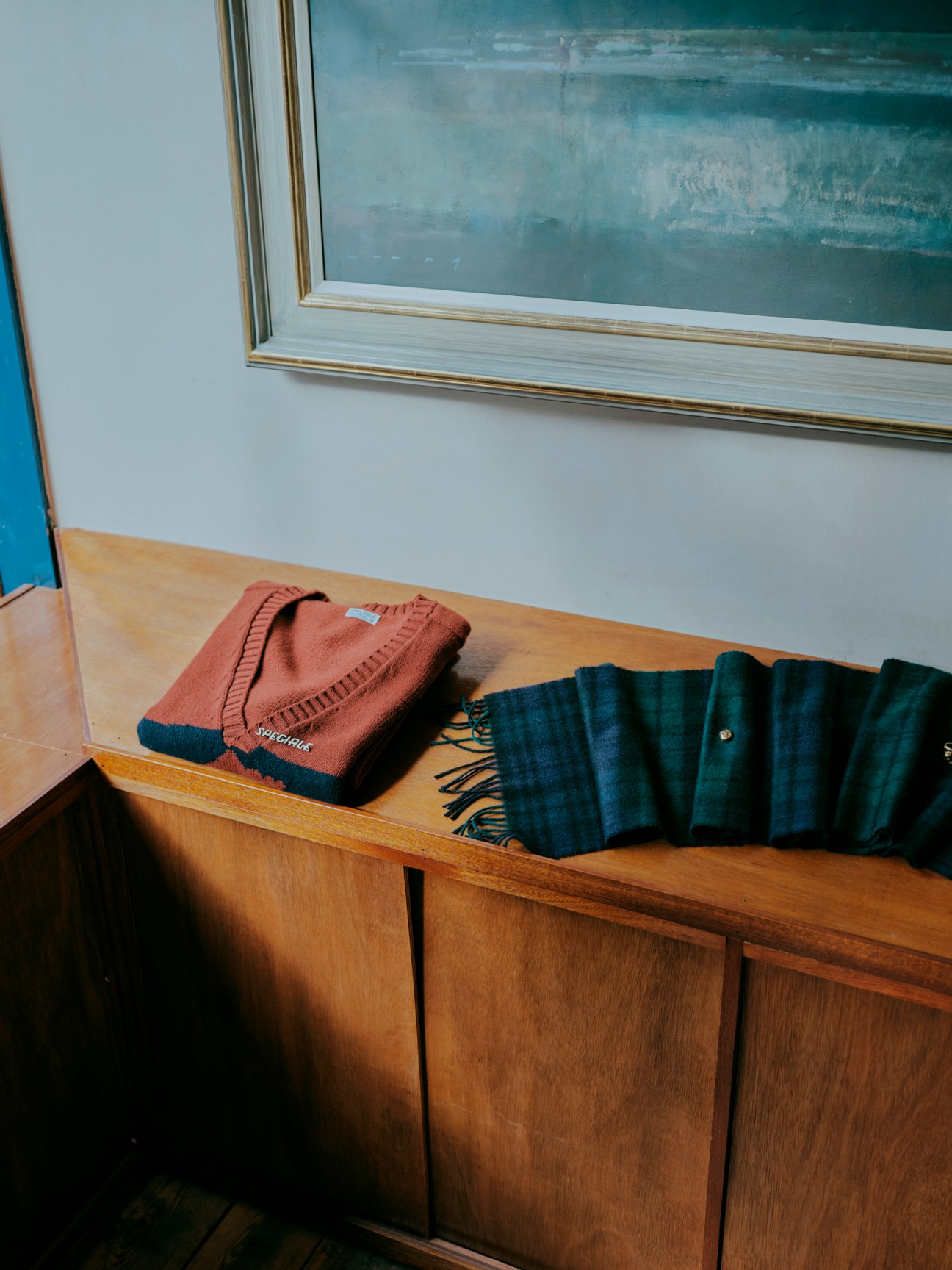
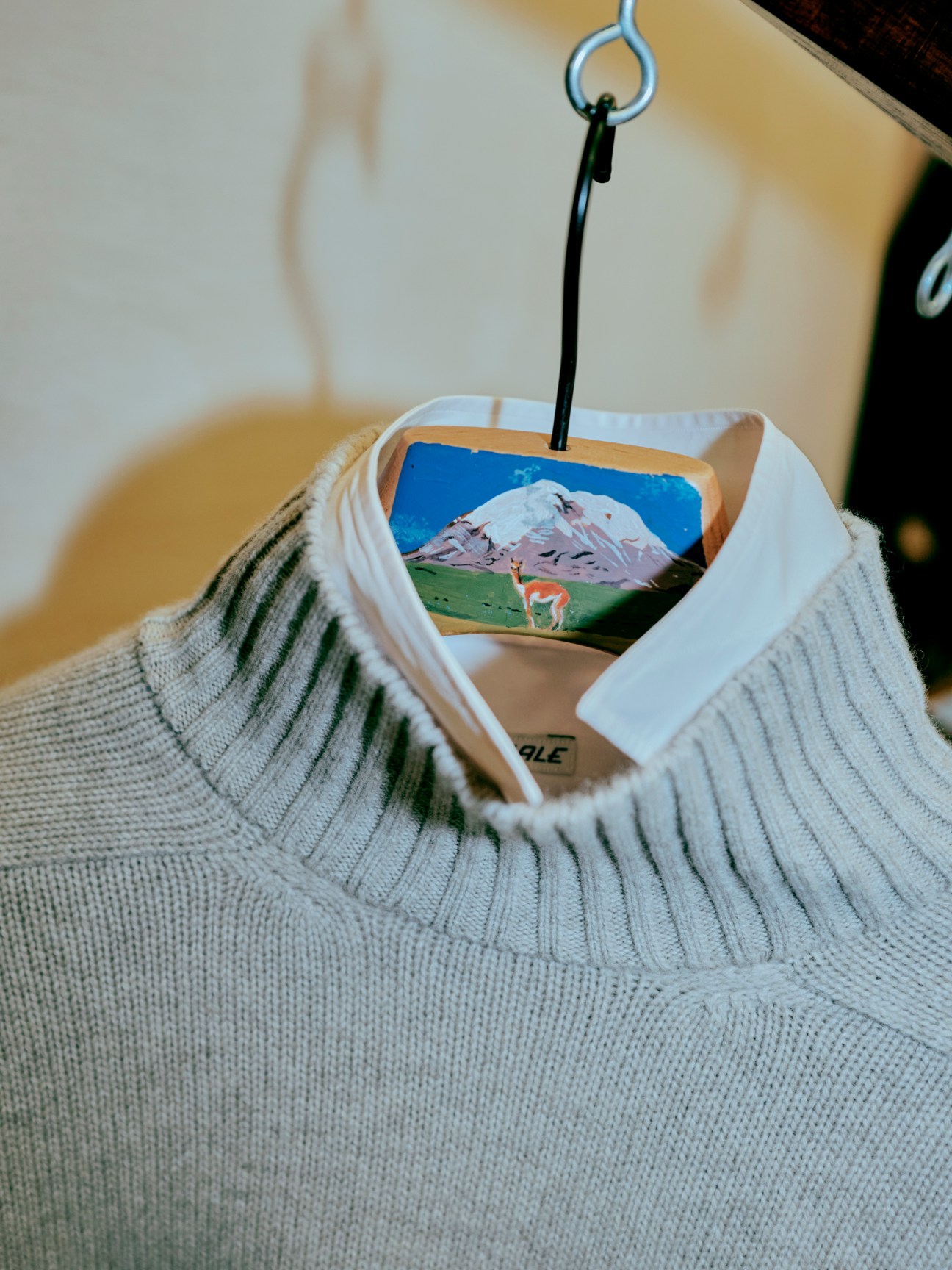
The tailoring studio in the back of the shop is where jackets and trousers are cut, shaped and altered for customers who often come to invest in their first made-to-measure suit. Ready-to-wear is also on offer, with shirts made in Naples, jeans cut in north London, knitwear from Wales and ties from Florence. “We source the very best when it comes to materials,” says Marsh. “Pure cashmere jumpers, pure cotton socks; even if that means stocking fewer items.”
speciale324.com
1.
Feet first
Socks & shoes, Global
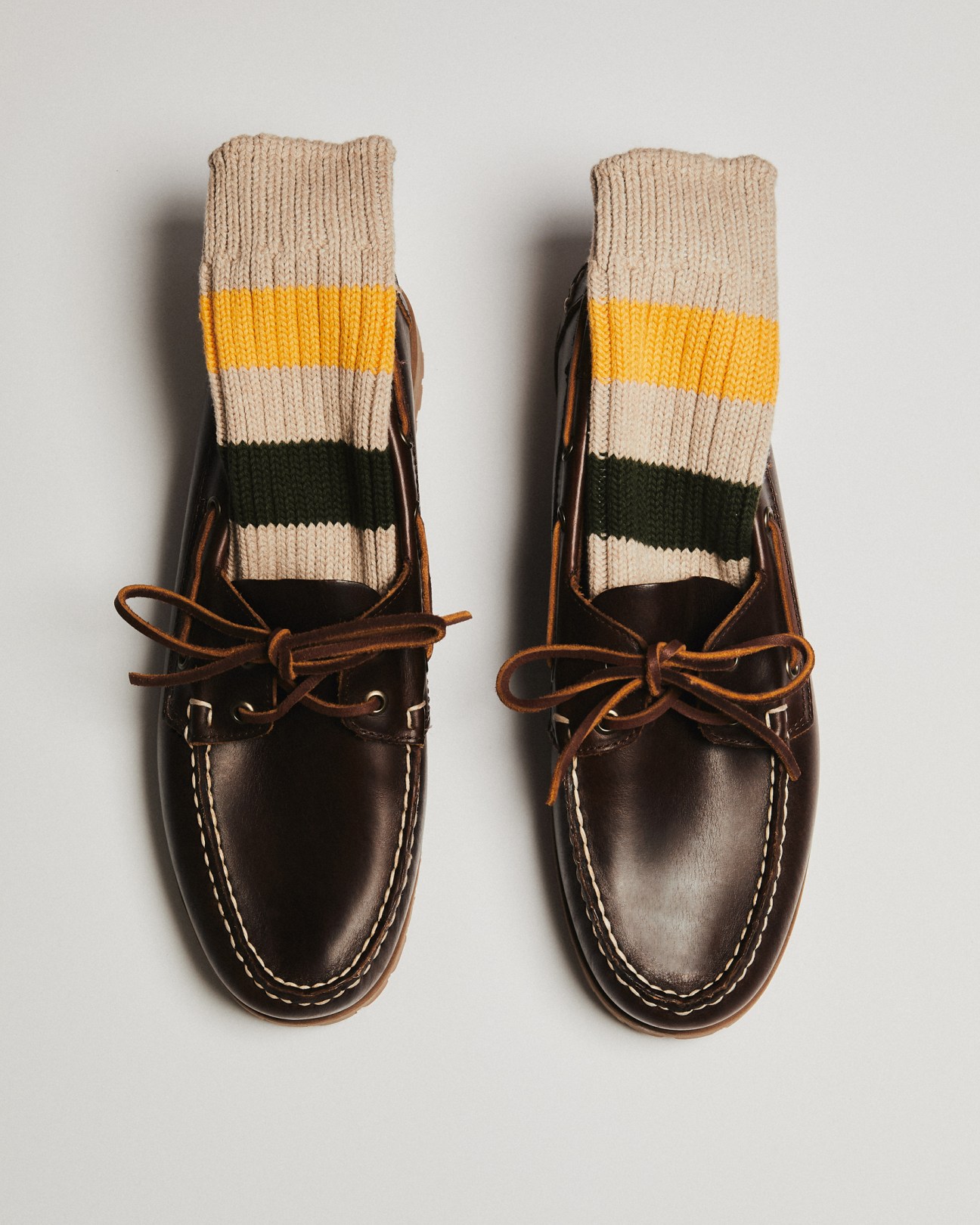
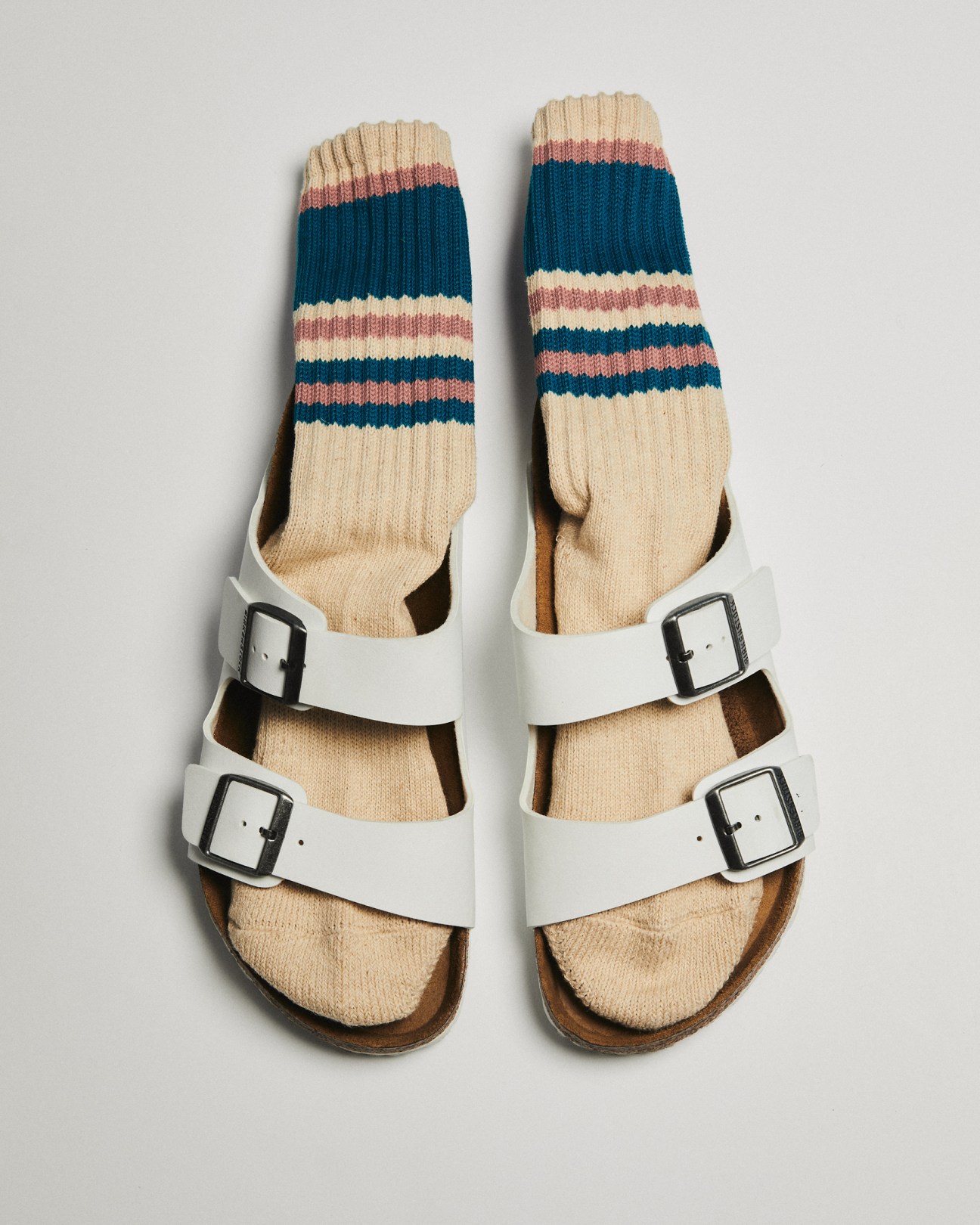
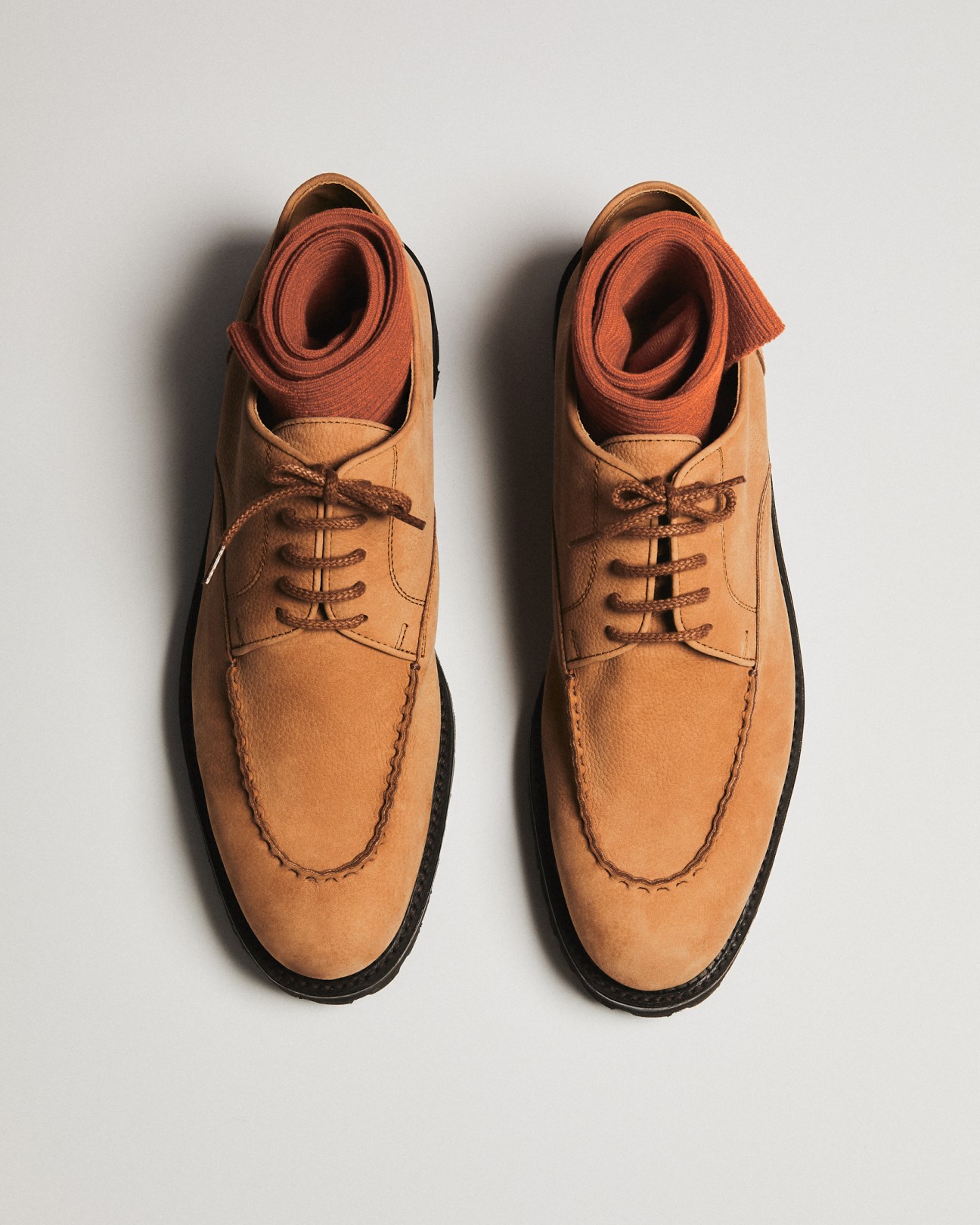
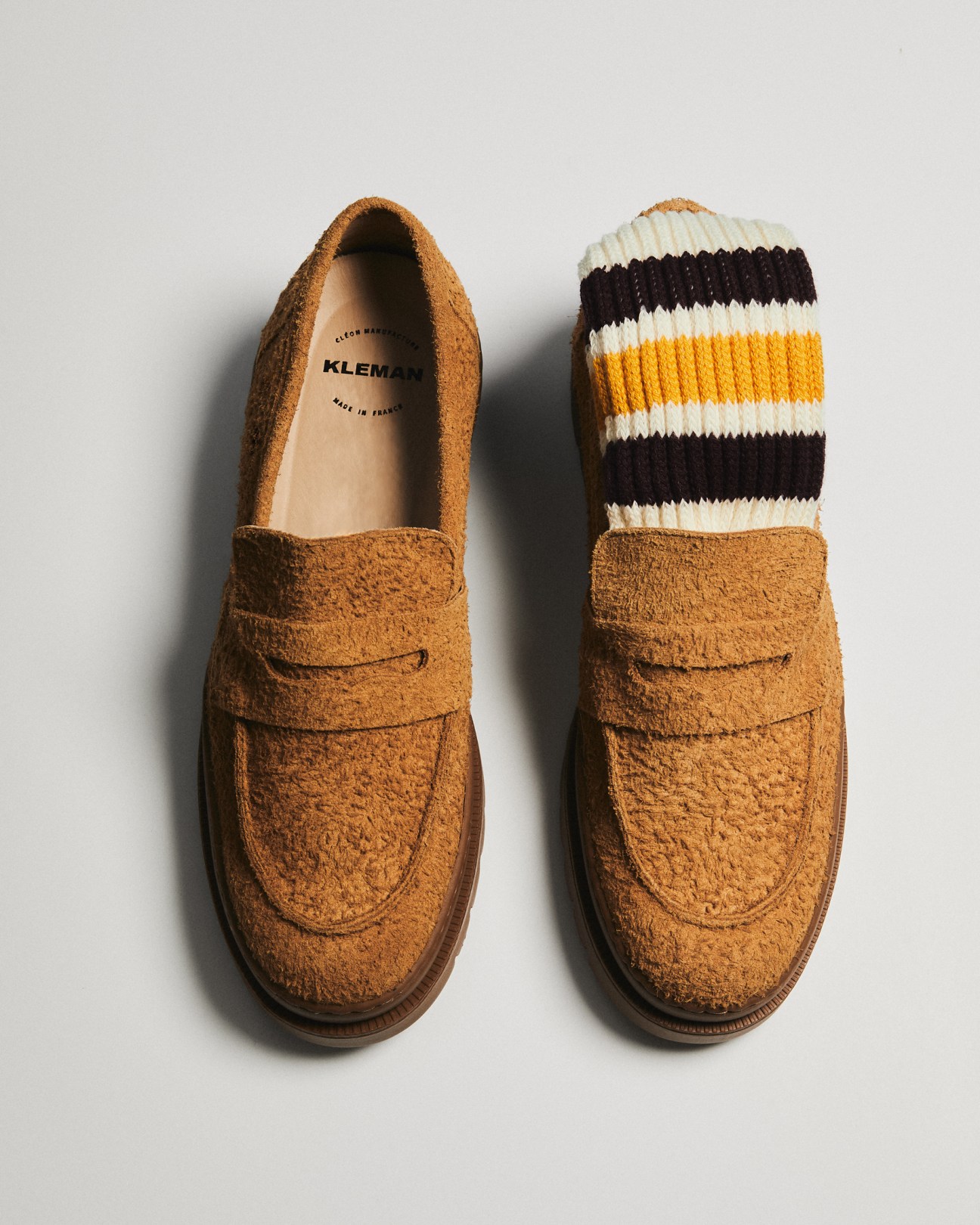
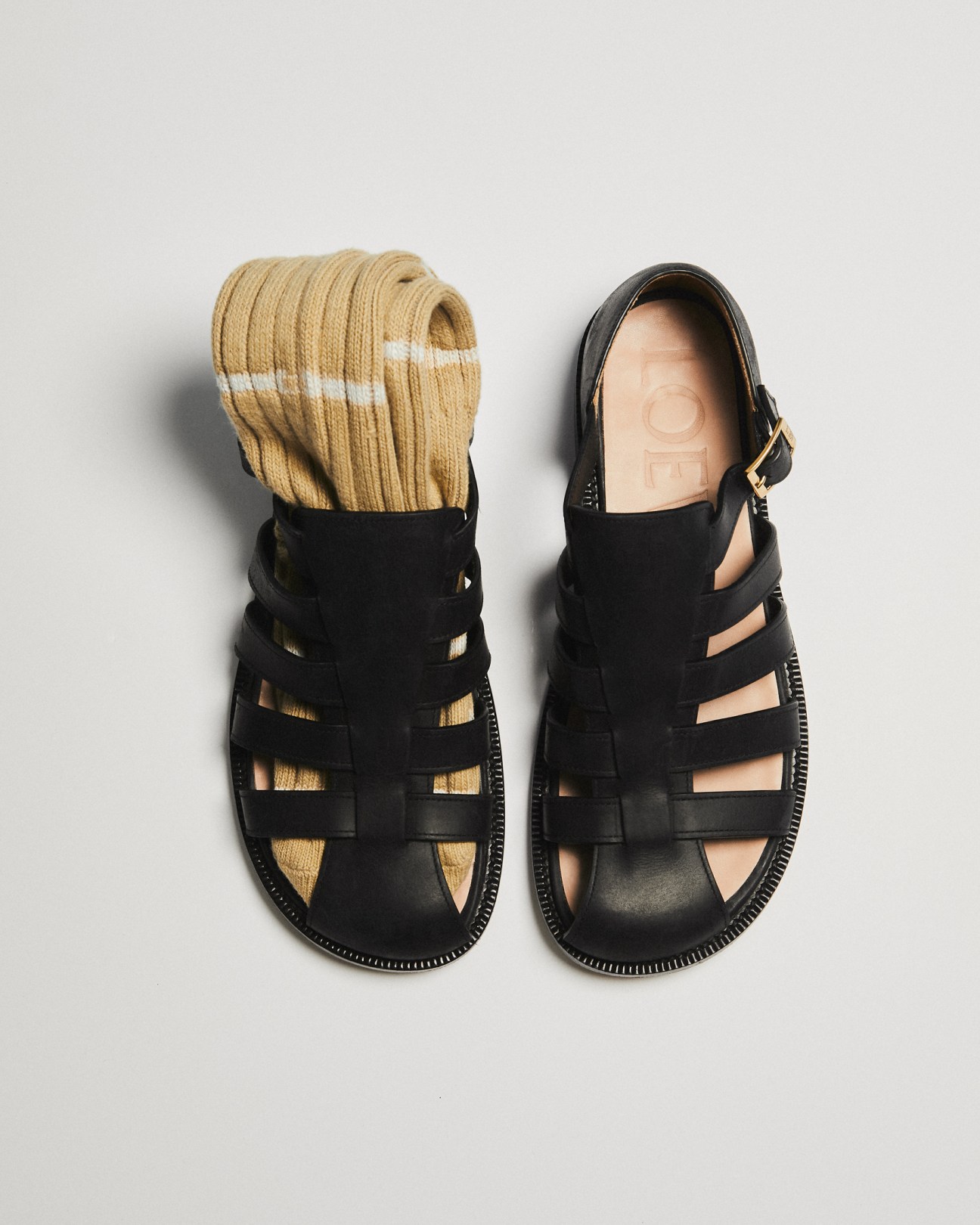
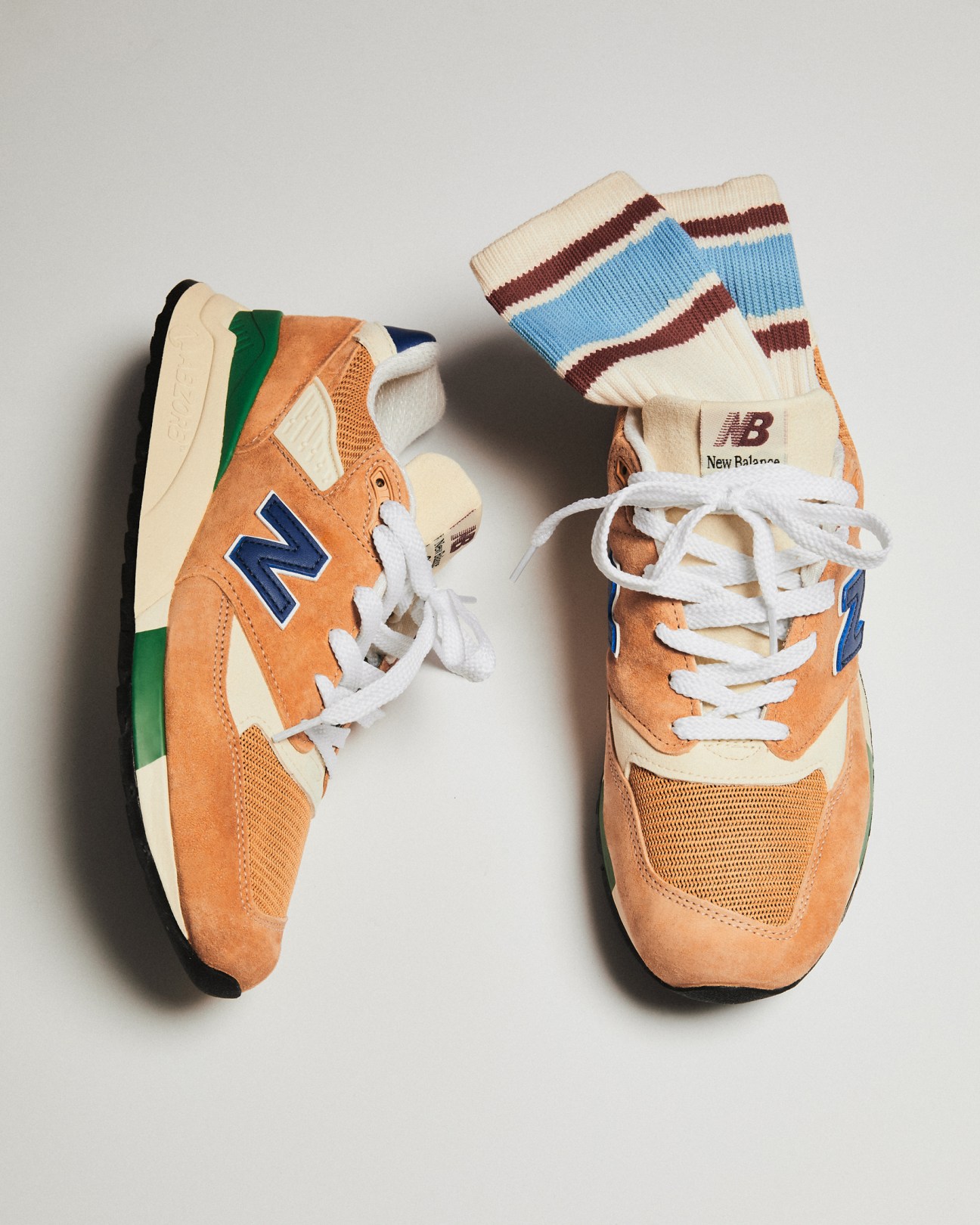
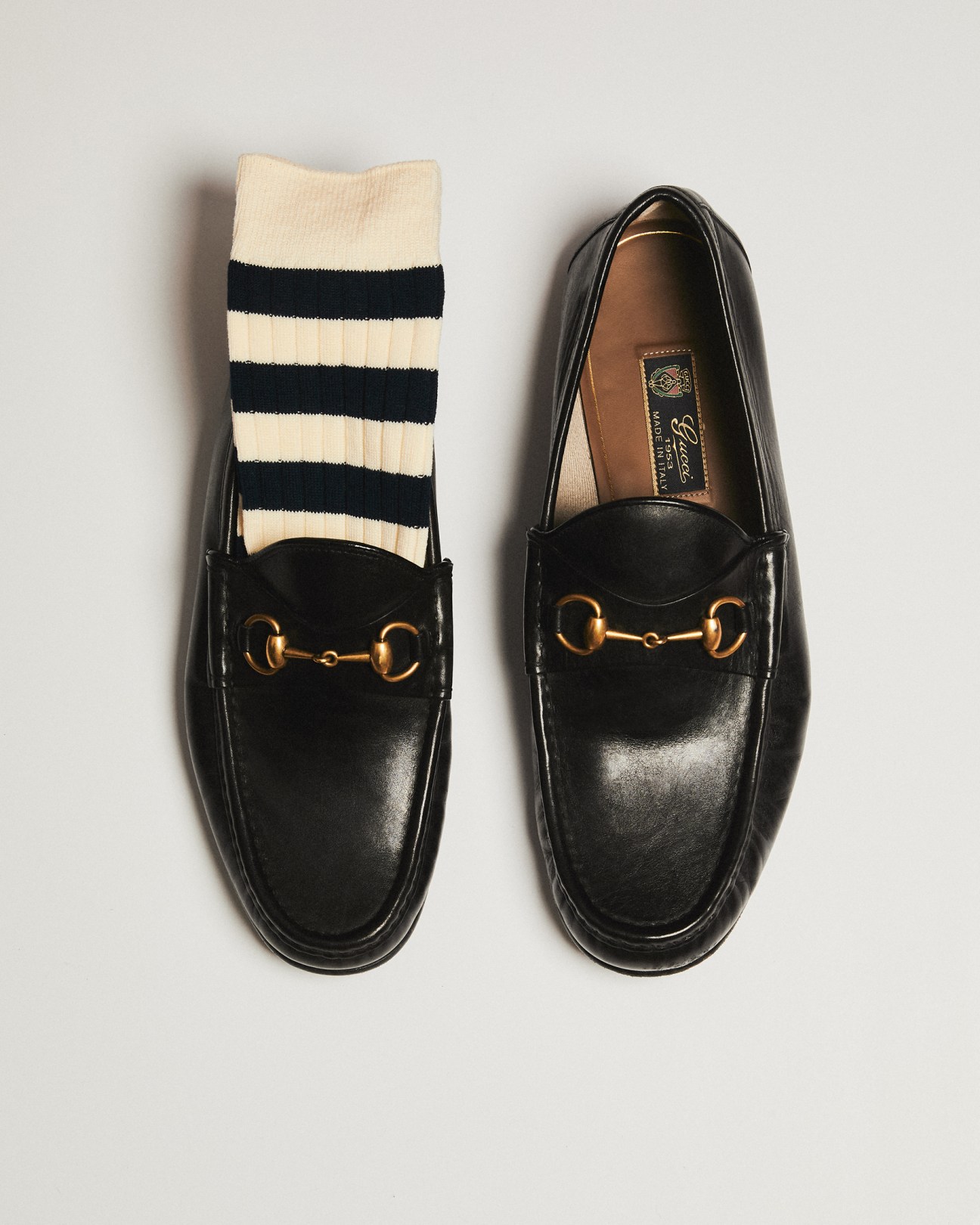
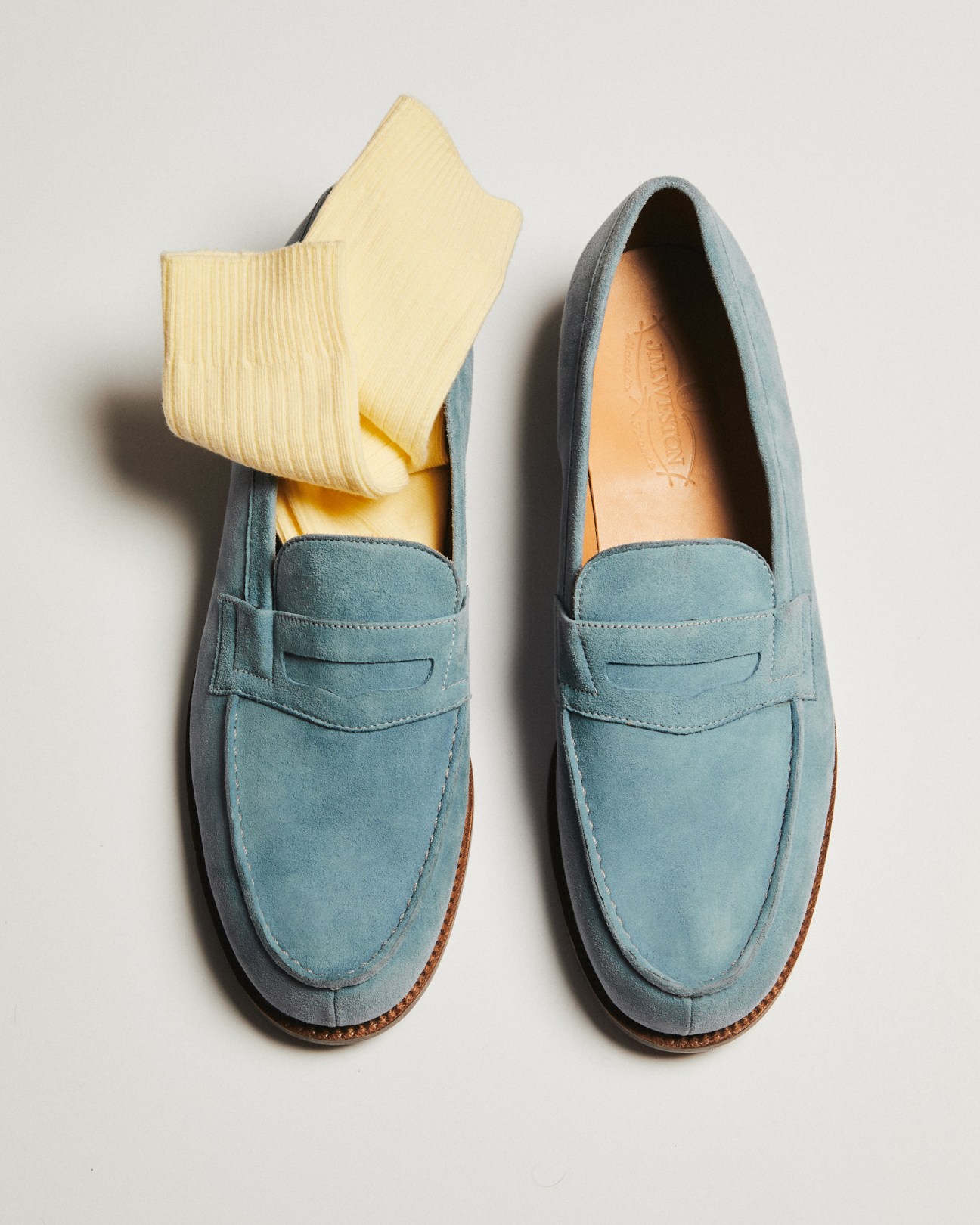
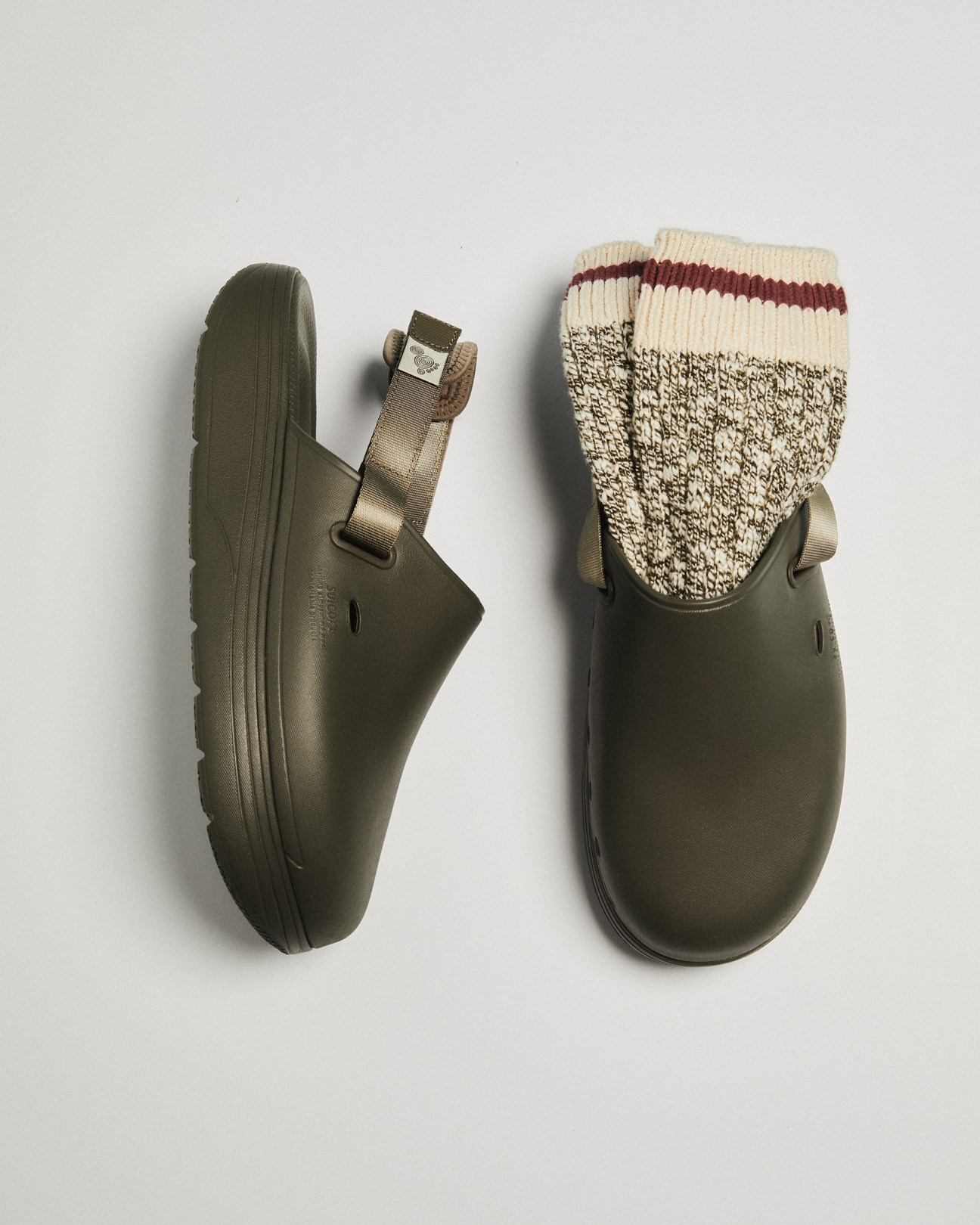
Socks offer the quickest way to introduce a flash of colour to any look. To do it right, pick a shade that complements the palette of your base garments. A pair of blue-toned socks by Marian will bring cohesion to crisp white trousers and a blue shirt. If you’re bolder, opt for a striped Paul Smith pair featuring similar shades of blue. On sunnier days, a pink T-shirt with floral pink-and-green socks. It shows consideration from head to toe.
paulsmith.com; marimekko.com
2.
Solar flair
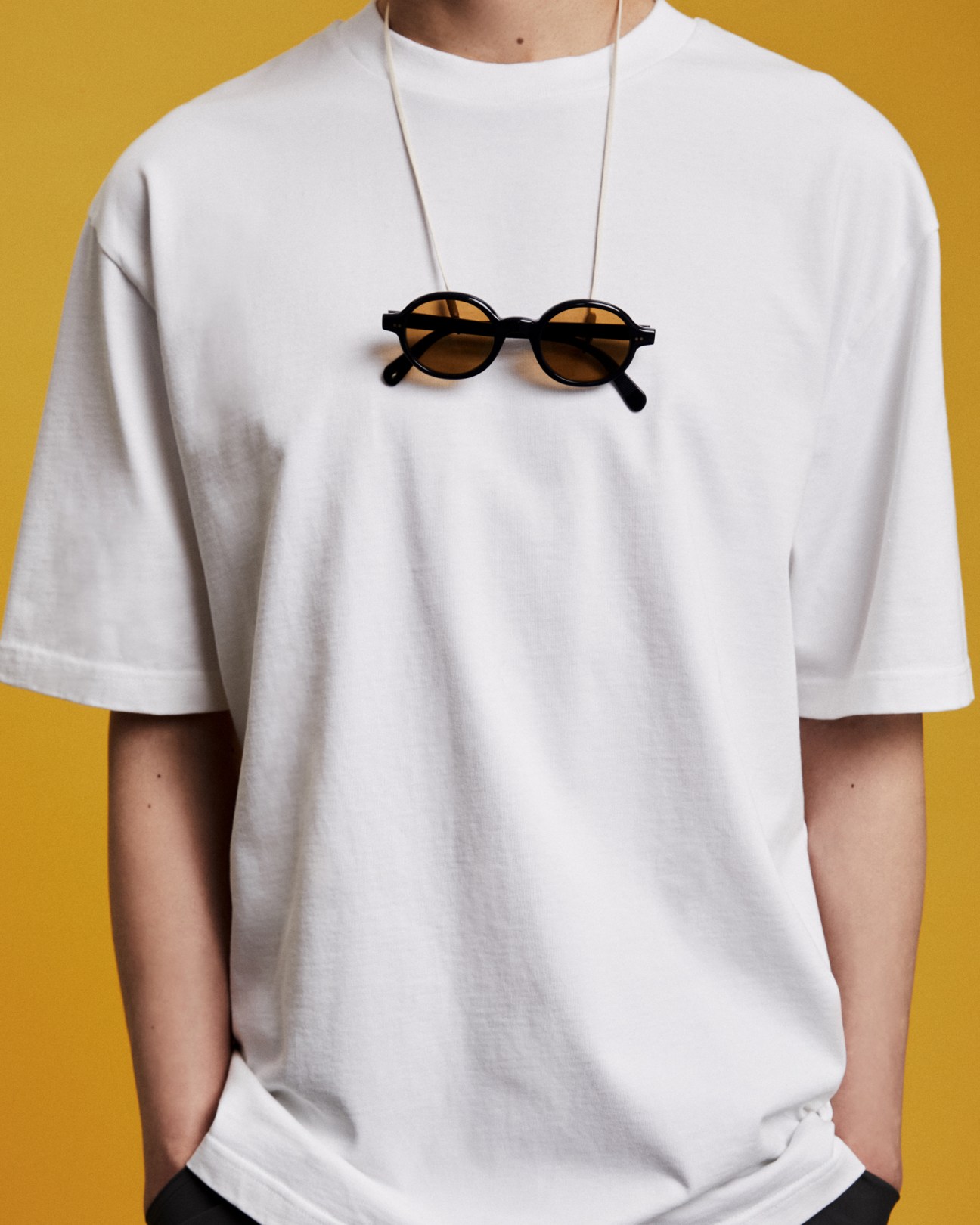
La Paz 3 Lunettes Alf, Portugal & France
Portuguese brand La Paz and France’s Lunettes Alf have teamed up for a line of sunglasses to mark the start of spring. The line was inspired by vintage snow-explorer glasses, according to La Paz co-founder José Miguel de Abreu. “We were amazed by the high quality of Alf’s materials,” says de Abreu. “The frames are made in France with Japanese acetate, riveted hinges and mineral lenses that darken when exposed to sunlight. It’s classic with a contemporary twist.”
lapaz.pt; lunettes-alf.com
3.
Physical space
Ciele Athletics, Canada
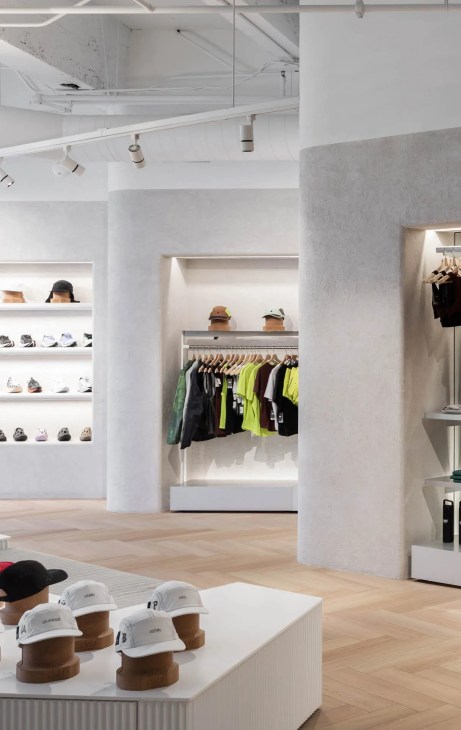
A decade ago, designers Mike Giles and Jeremy Bresnen launched Montréal-based cycling and sports apparel brand Ciele, known for its colourful technical headwear favoured by the city’s cyclists and runners. Now Ciele has opened its first flagship in the Griffintown neighbourhood. The vast space was designed by MRDK and serves several functions: there’s a warm-up area and locker rooms for members of its in-house running club, office and design studios, and a retail space stocking Ciele’s first clothing line. Giles and Bresnen tell Monocle more.
What did the opening of Ciele’s first shop add to the business?
Jeremy Bresnen: The idea of creating a physical space, where people can roll into, meet up and find out what races are happening, felt essential to us.
Mike Giles: It has created a real sense of community. We probably have between 200 and 300 runners in the space on a weekly basis. We host events, movie screenings, product launches.
How did you approach its design?
JB: We wanted this to feel luxurious, warm and inviting. We chose a mosaic entrance that was based on a pattern by one of our artists – a beautiful thing that can’t be replicated.
Is it important that every part of the brand is now under one roof?
MG: You come in in the morning, see everyone and get a better sense of the part that you play in the company.
cieleathletics.com
4.
Formal approval
Dior Homme, France
Dior Homme is doubling down on tailoring, with a new capsule collection that will become part of the label’s permanent line-up. The range celebrates the return of formality, with eveningwear pieces rendered in dandy-esque velvet and silk, as well as looser blazers and chinos in signature Dior colours, such as pewter grey and sky blue, which are more suitable for wearing in the day.
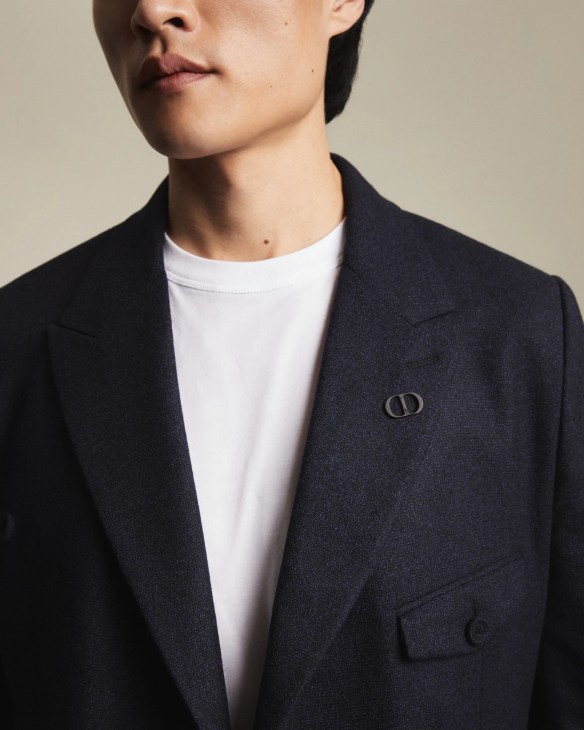
Kim Jones, creative director of Dior Homme, looked to the label’s founder, Christian Dior, for inspiration. Dior was known for always wearing an elegant, slim suit to work and he constructed the famous Bar Jacket (a tailored, hourglass style for women) after the Second World War. Jones has often looked to the Dior archives to inform his menswear designs and he launched this capsule to further highlight the house’s rich heritage in tailoring.
Look out for intricate details in the collection, from the subtle curves on the sleeves of double-breasted jackets to the buttons that resemble the ones on the original Bar Jacket.
dior.com
5.
Labour of love
La Blouse de Lyon, France
La Blouse de Lyon’s Prussian-blue shopfront on Rue Gérando in Paris’s 9th arrondissement offers a subtle clue as to what you will find inside. The deep pigment has long been a symbol of workwear, the type of clothing that this small boutique has specialised in for decades. Ever since it opened in 1937, city carpenters, mechanics and gardeners have been coming here to stock up on hard-wearing overalls, aprons, berets and worker’s jackets.
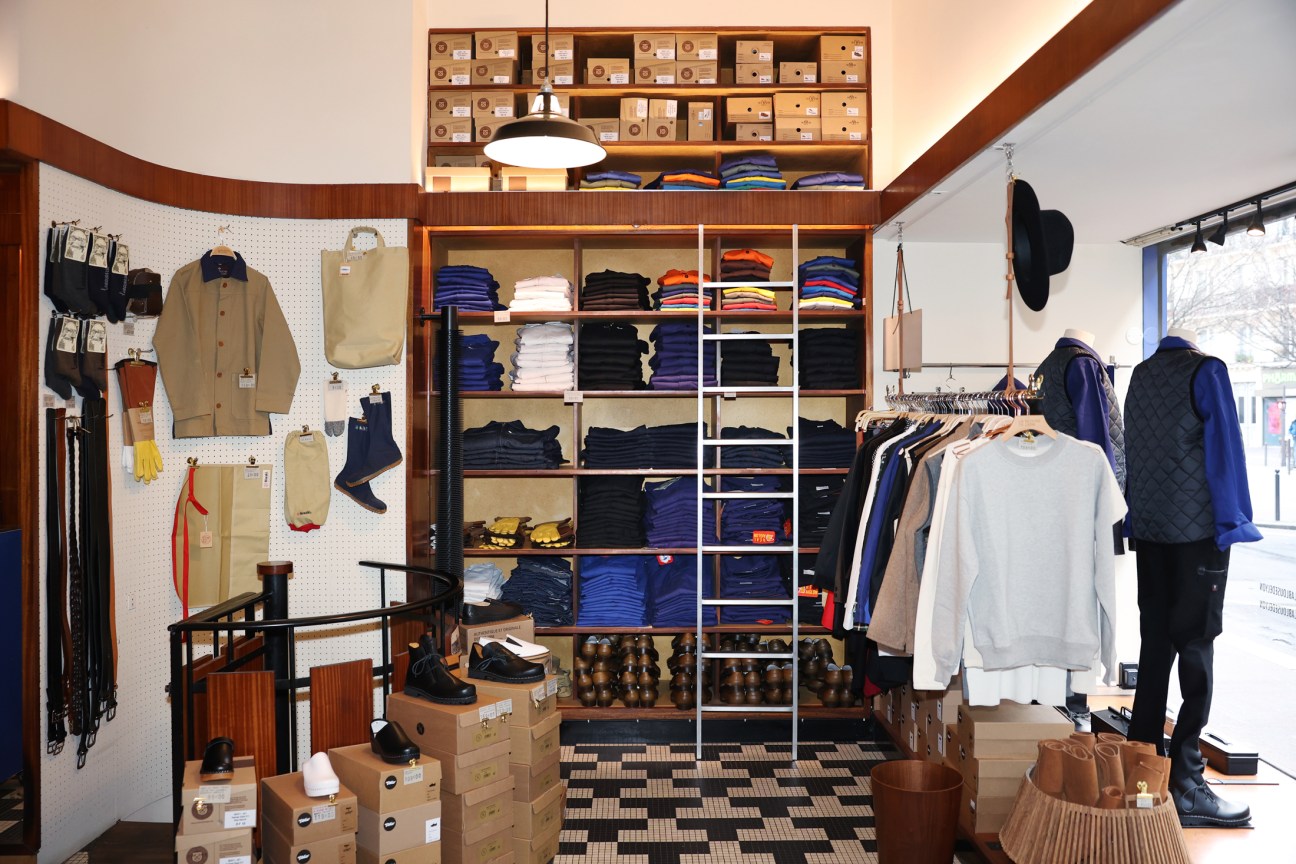
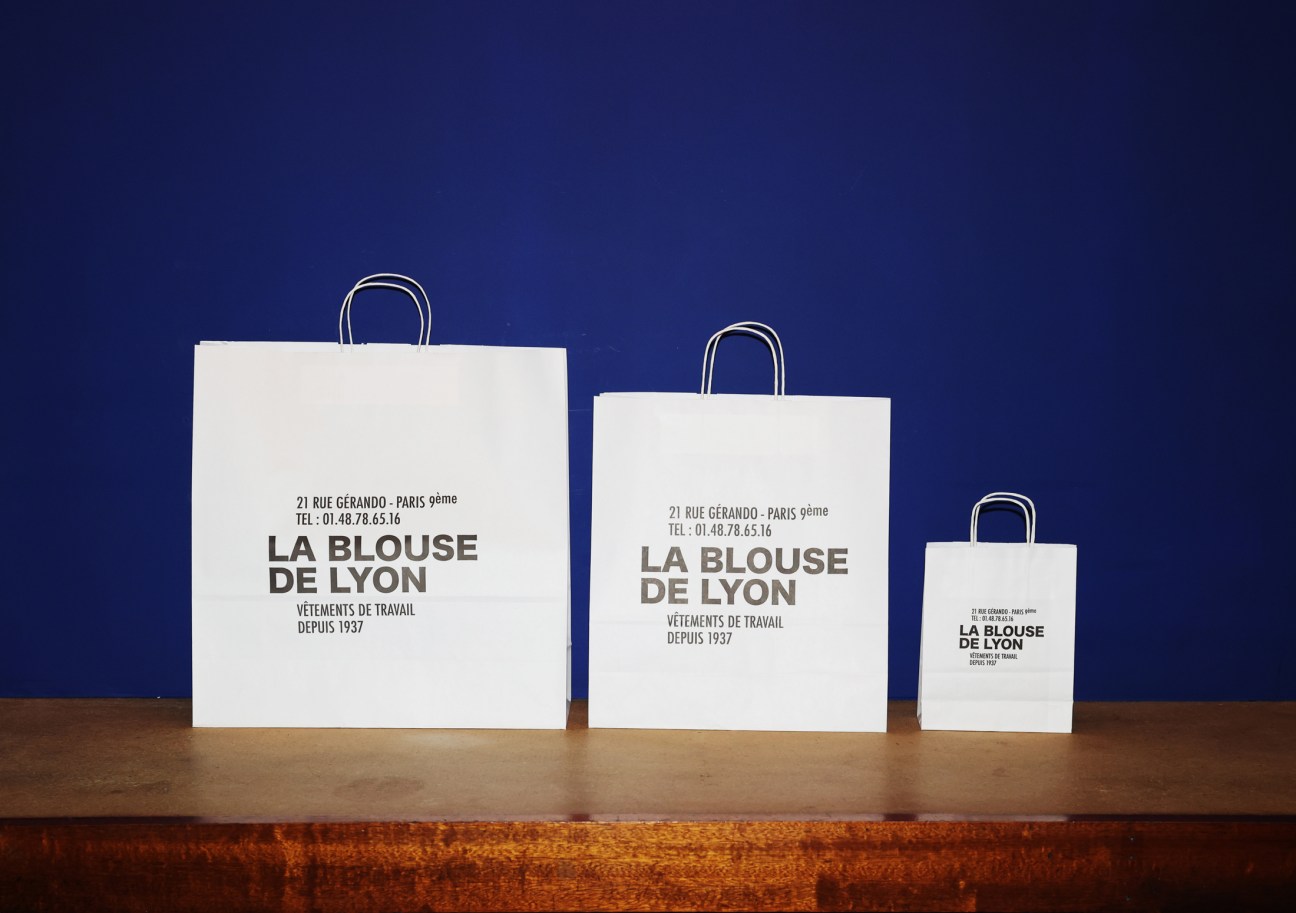
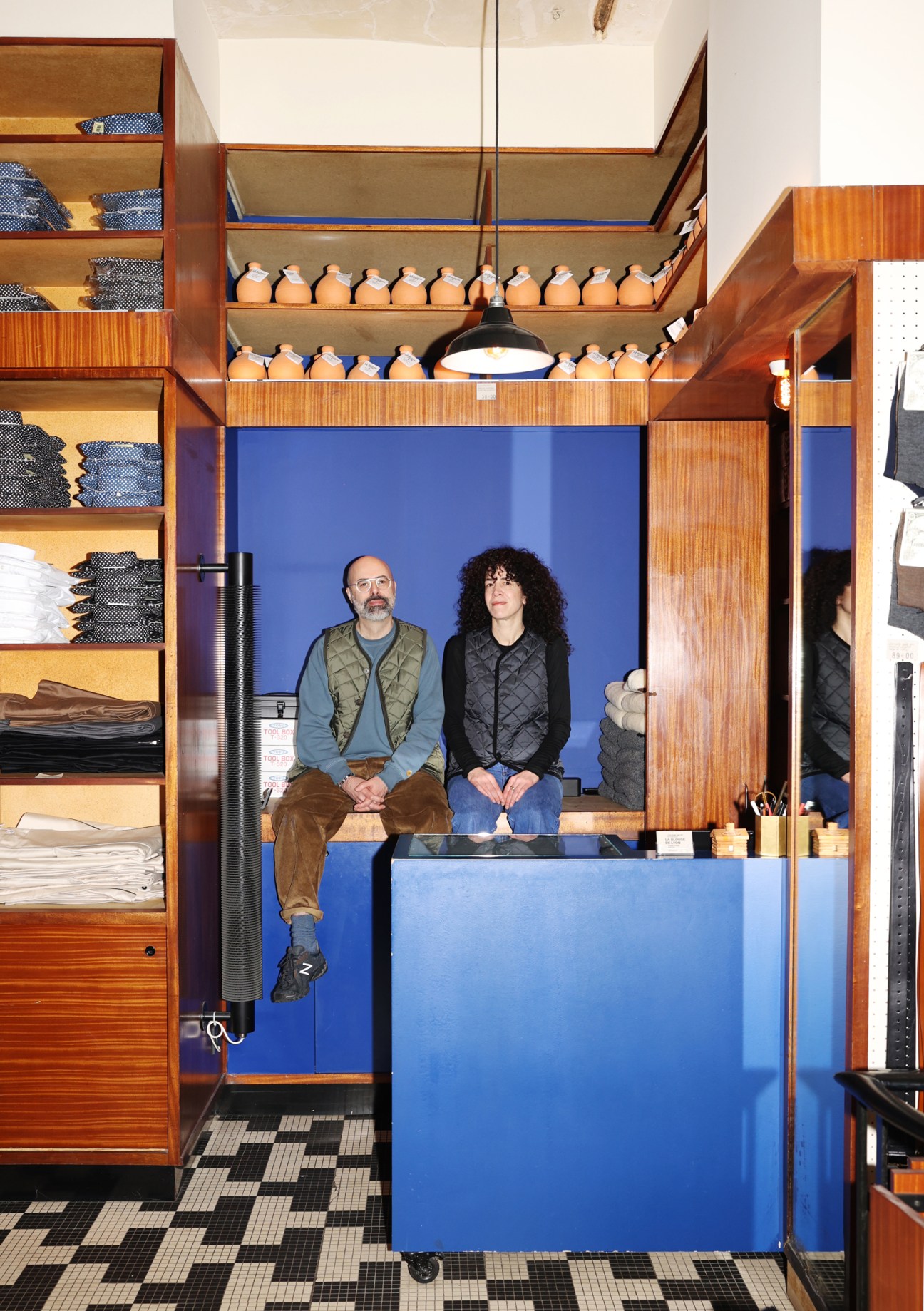
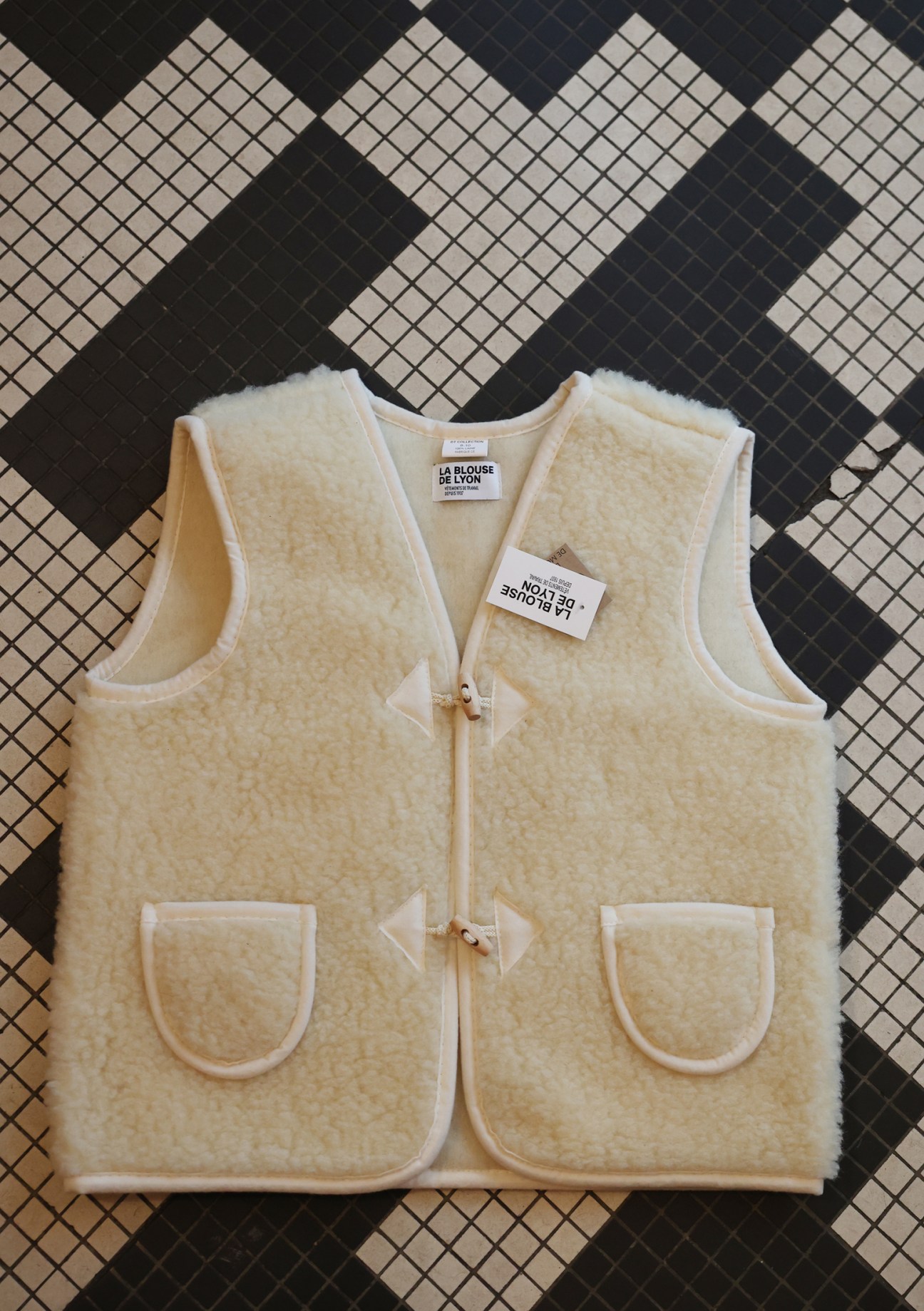
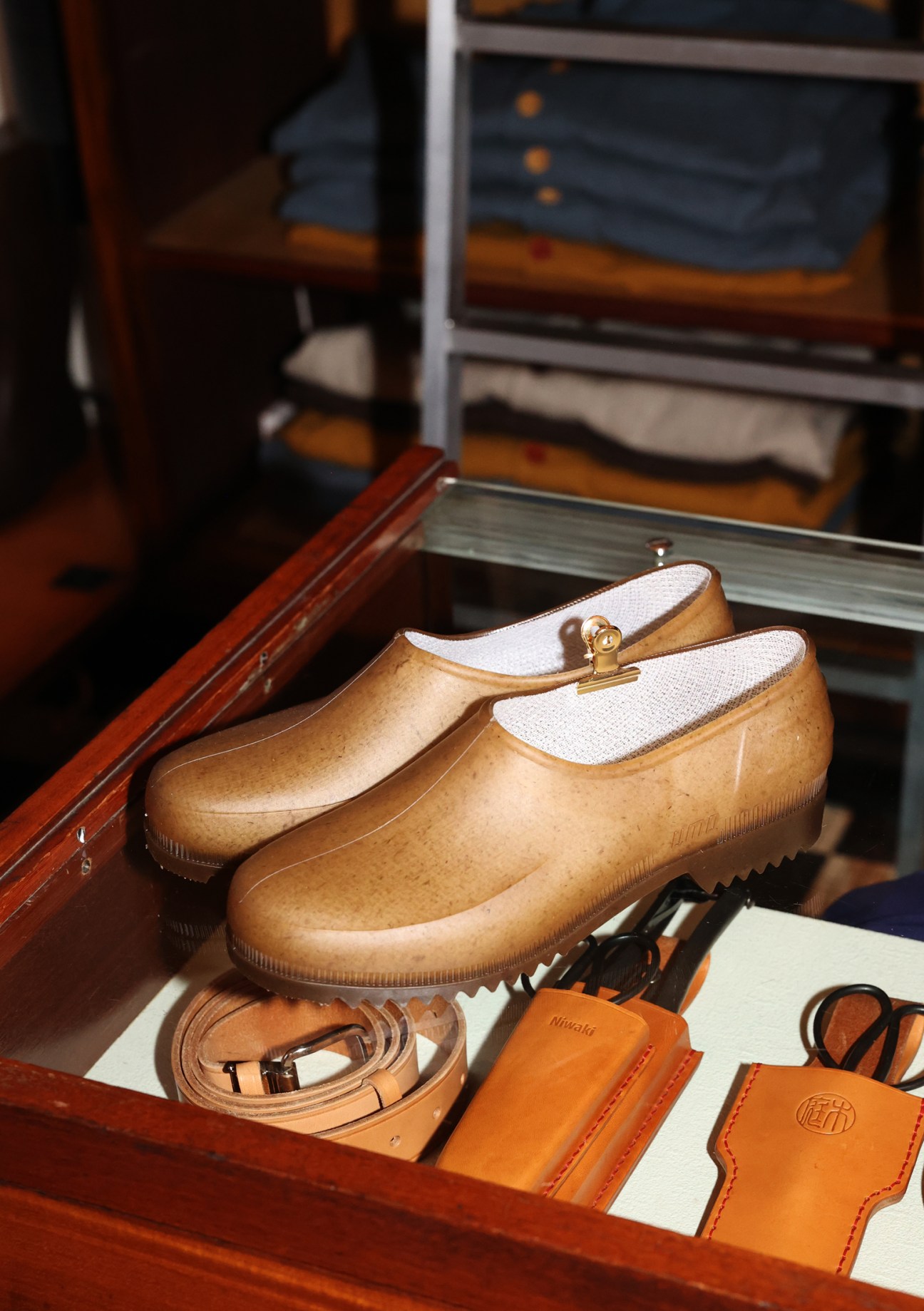
Though the shop has changed hands over the years, its dedication to offering the best in workwear remains undiminished. Gwendoline van Opstal and her partner, Nicolas le Jeune, are the current owners, having taken over the boutique in 2019. While preserving the soul of the place, they have expanded its range by sourcing from manufacturers globally. A well-stocked inventory includes shirts by German brand FHB, pruning shears by Japanese gardening specialist Niwaki and clogs by Sweden’s Troëntorp. “We have identified a new category of clients that I would call ‘new artisans’: natural-winegrowers, farmers who work in sustainable agriculture, cheesemakers or chefs searching for meaning in what they do,” says Van Opstal. “They are the people we dress.”
lablousedelyon.com
6.
Great lengths
Man on the Boon, South Korea
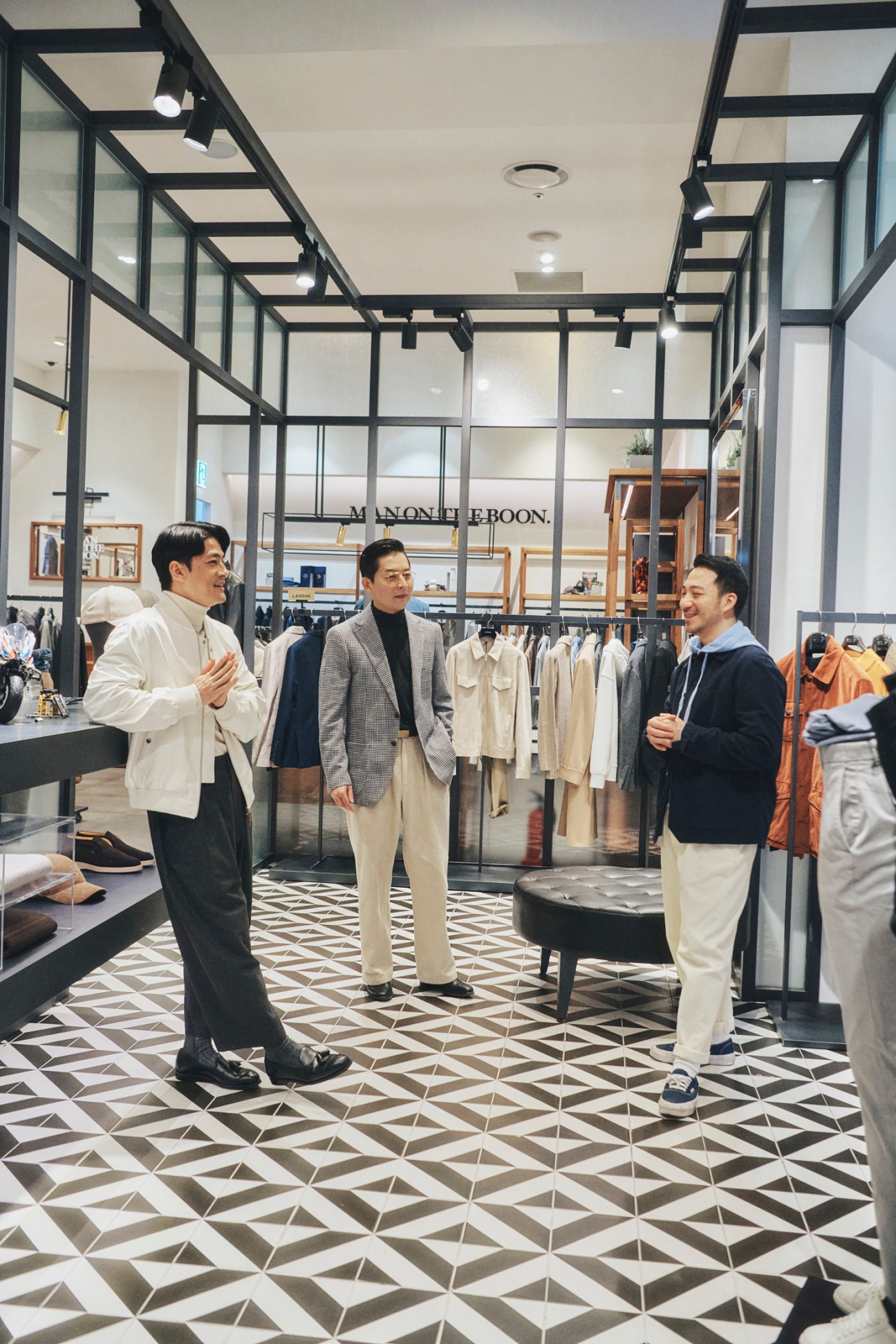
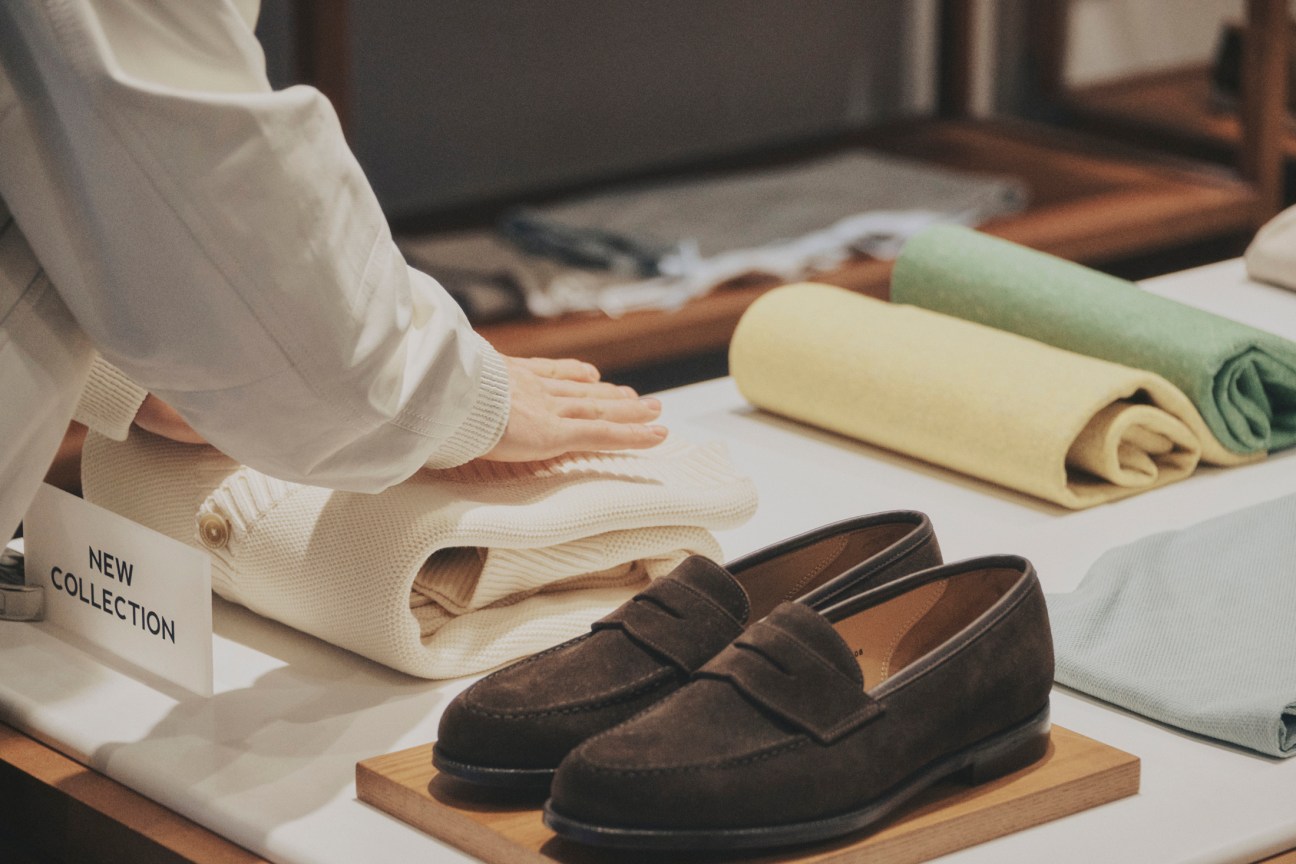
South Korean clothier Man on the Boon has been helping men upgrade their wardrobes since 2011. Today the retailer has refined its strategy to reflect shifting tastes, stocking relaxed yet handsome pieces that work both on and off duty. “Customers want to know how long a piece will last,” says Rick Hwang, general merchandising manager at Shinsegae International, the fashion house in charge of the franchise. “Impulsive purchasing is out.” The retailer is working with Italian manufacturer Maglificio Gran Sasso to create high-quality pullovers, polo shirts and turtlenecks, suitable for easy layering. Further investment in bricks-and-mortar retail is also on the agenda, with a new flagship set to open in Cheongdam soon.
boontheshop.com
7.
Unity of purpose
Labrum, UK
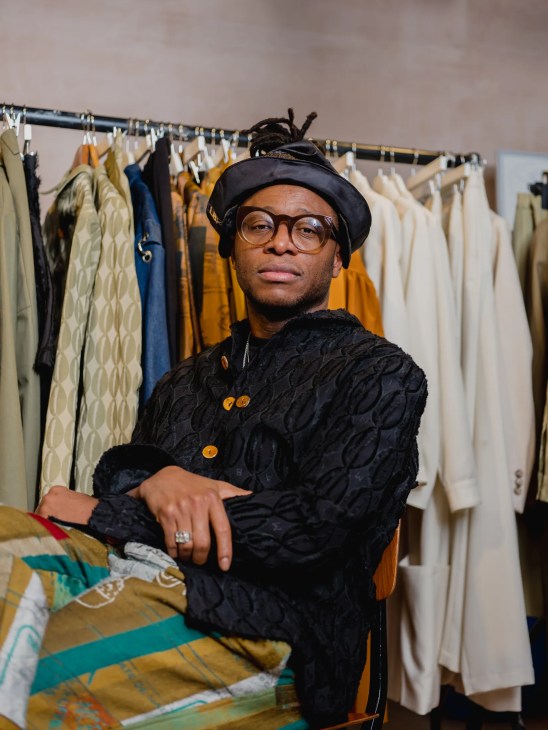
London-based designer Foday Dumbuya stands out in the world of menswear for his ability to merge traditional British tailoring and West African design, instilled in him during his early childhood in Sierra Leone. Here, he talks to Monocle about the power of purposeful clothing.
How have you been utilising fashion’s soft power?
When you bring two cultures together, it ignites a conversation and helps to empower communities. We collaborate with artisans and designers from West Africa as well as British tailors. By mixing their skill sets, there is opportunity for exchange. I brought designers from Sierra Leone over to London to look at how the designers work here, how we create patterns. This cross-cultural conversation is crucial today because it promotes diversity and innovation.
Tell us about exploring the issue of migration through your work.
Migration has been the theme of the brand for a decade. How do people accept each other? We’re not talking about fantasy, these are people’s real life stories. How do people move 5,000 miles away from home to start a new life and embed a new culture within their own heritage? We look at what is currently happening in the world and what needs to be highlighted. I want to push this in a mainstream [context] because when I was growing up, it was difficult to be African and proud of it.
How has London influenced you and your designs?
Every day I walk out of my studio and I am inspired by the people and their dress codes. My aesthetic is rooted in time-honoured techniques and stories that people connect with here.
labrumlondon.com
8.
Reinventing the feel
Loro Piana, Italy
This spring, Loro Piana is launching a new fabric, denim silk, to create the world’s most luxurious jeans. The innovation is part of a collaboration between Loro Piana’s in-house artisans, based in Piedmont, and denim-manufacturing experts from Japan. The result is a featherlight material, made up of 59 per cent cotton and 41 per cent silk, that was used to create five-pocket straight-cut jeans and collarless, double-breasted jackets.
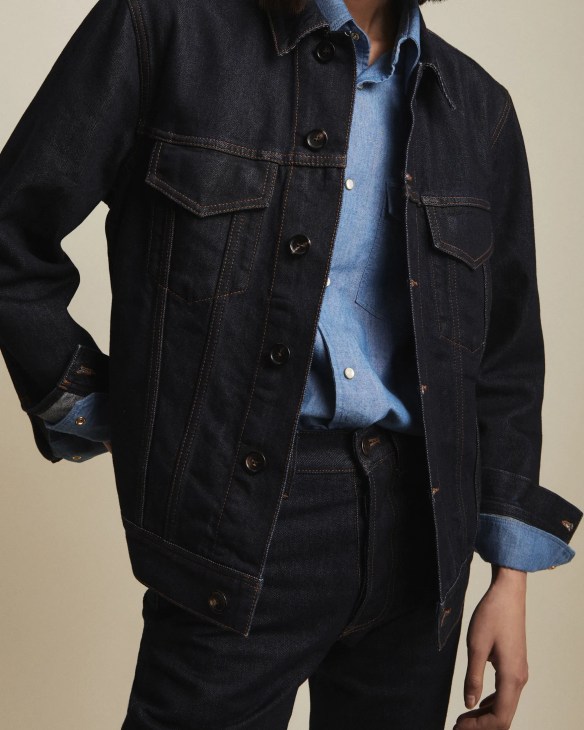
According to Varianini, the launch of denim silk reflects Loro Piana’s determination to invest in textile innovation. “We’re committed to research, excellence and innovation in textile craft,” she says.
loropiana.com
9.
Pump up the volume
Bottega Veneta, Italy
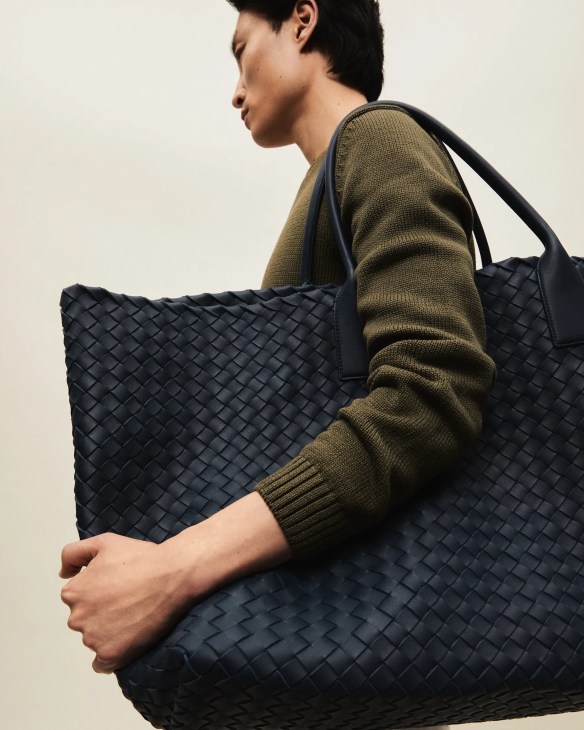
Bottega Veneta’s creative director, Matthieu Blazy, has quite literally been expanding the Italian house’s range of accessories for spring 2024. Inspired by travel, he has created oversized shoulder bags and vast duffles that travellers can carry anything in, from souvenirs to newspapers and a change of clothes. We recommend this extra large tote, rendered in the brand’s signature “Intrecciato” leather, woven by a single artisan over the course of two days. The laidback, slouchy shape of the bag will fit all of your essentials while on the road. bottegaveneta.com
10.
Time honoured
Watches, Global
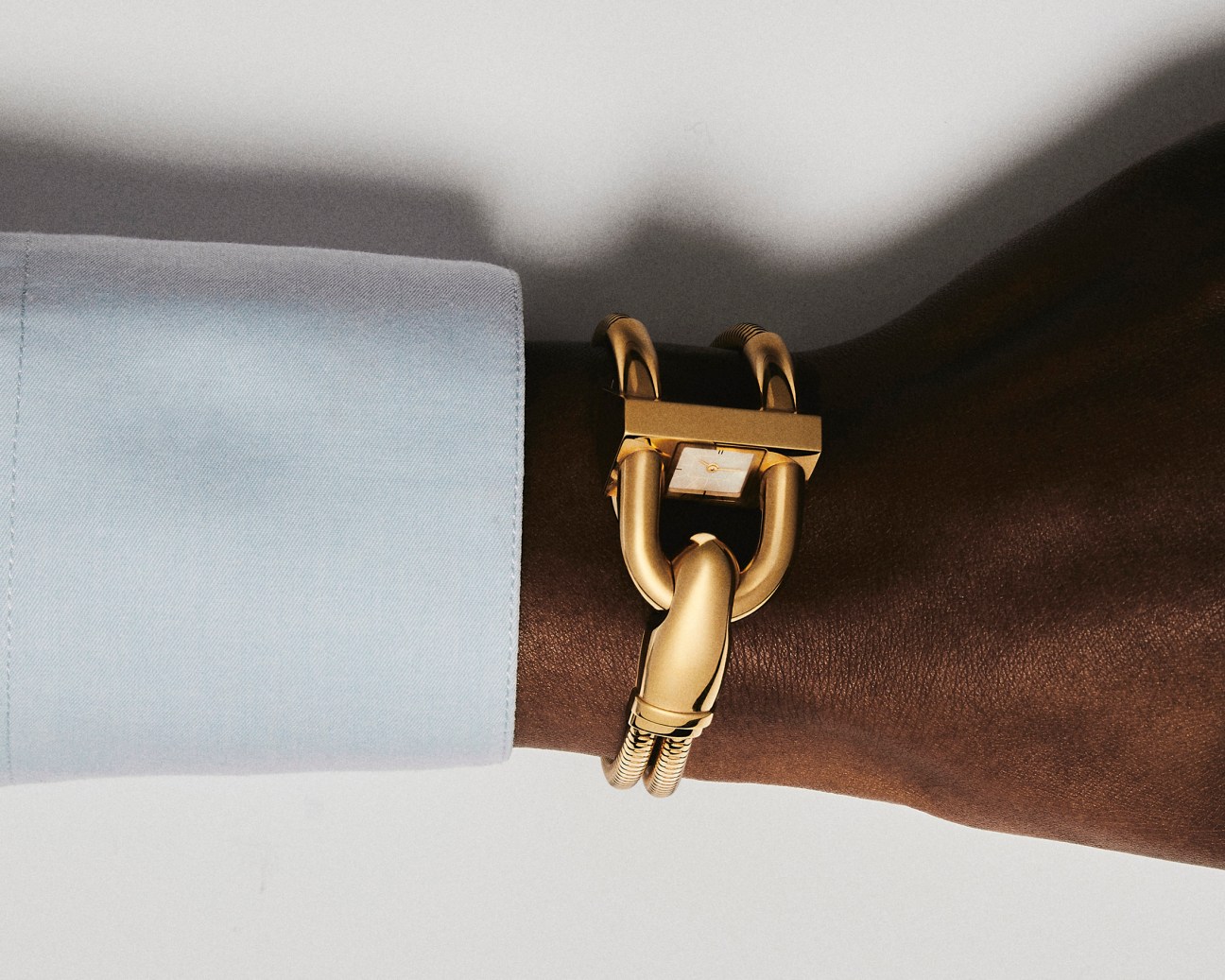
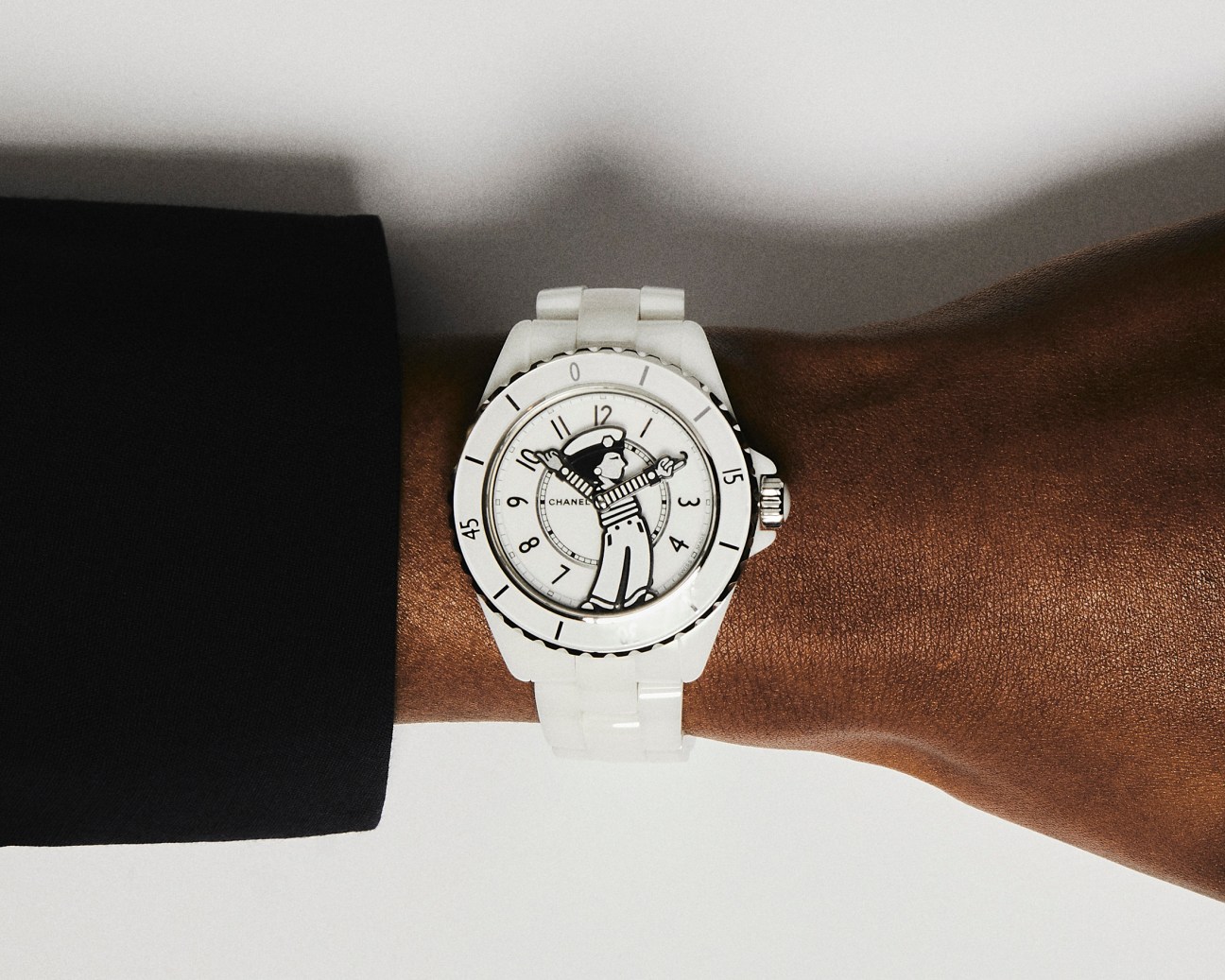
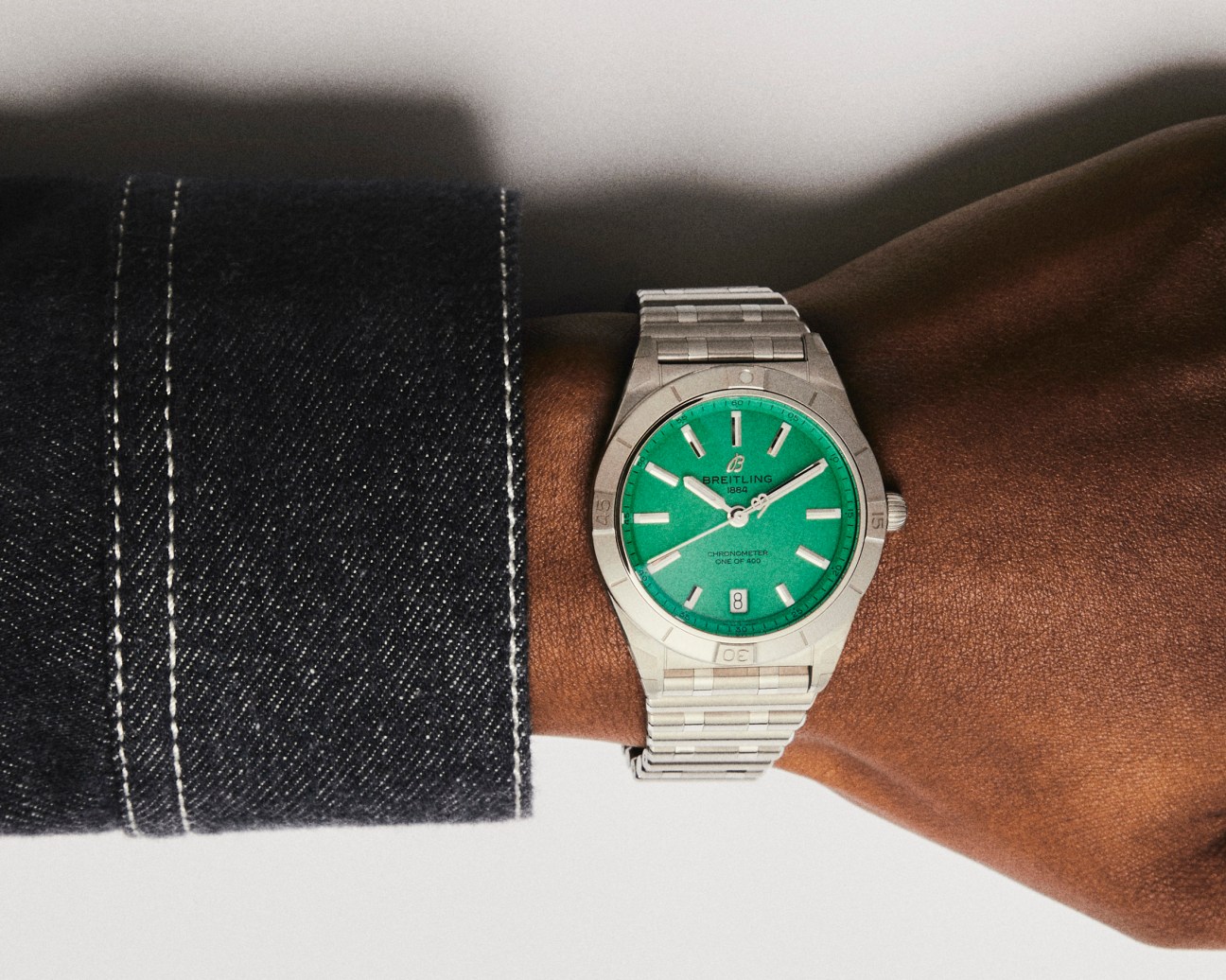
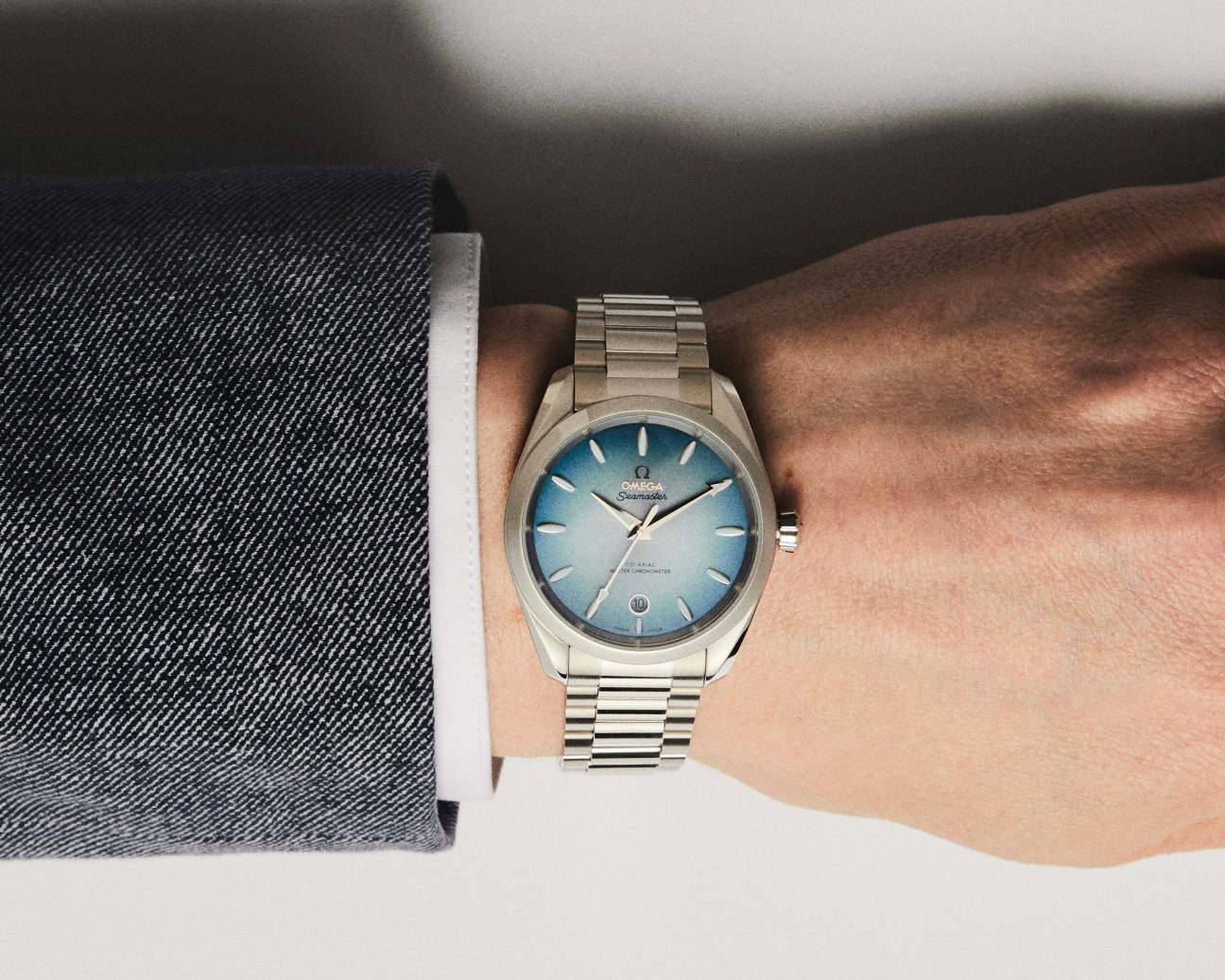
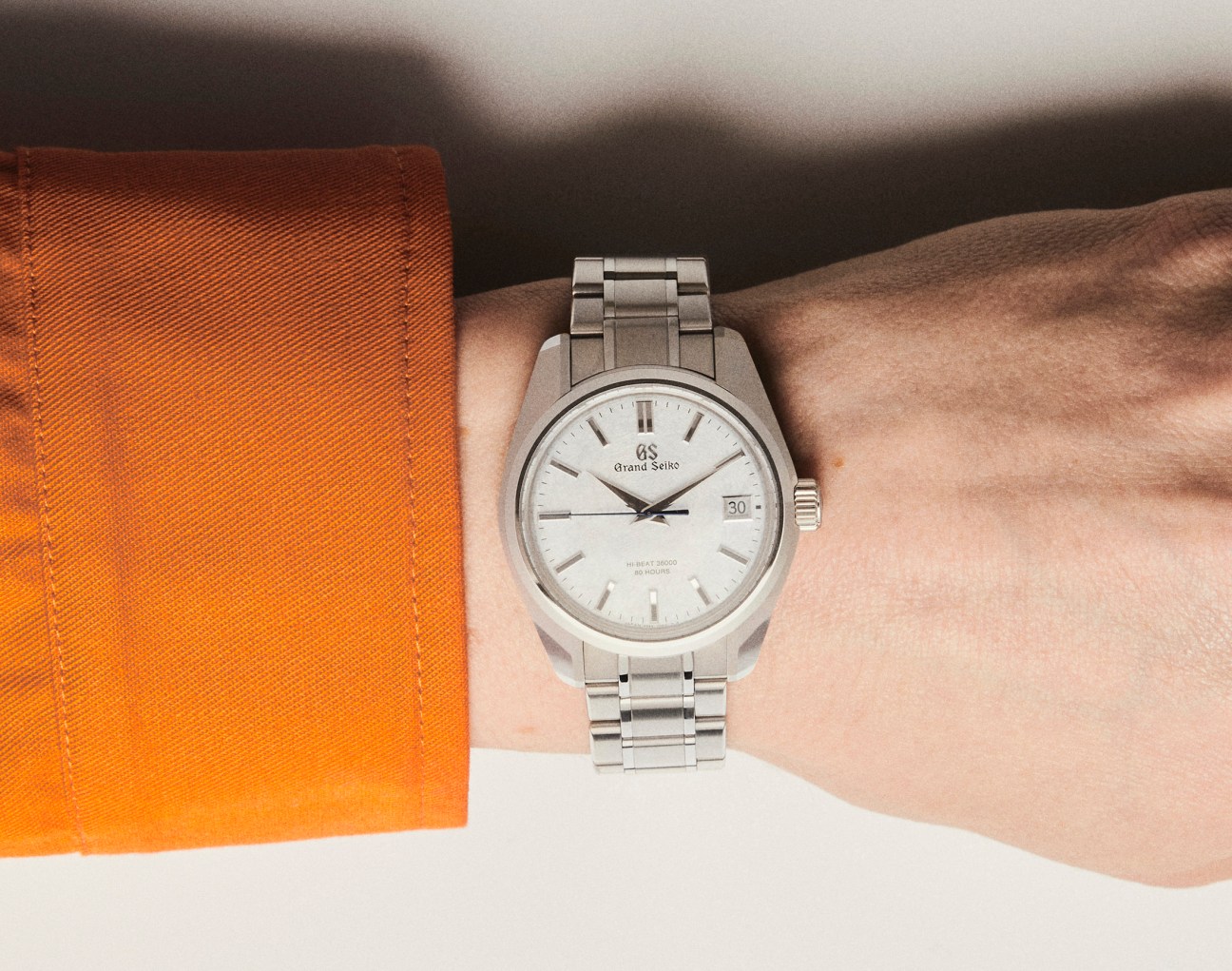
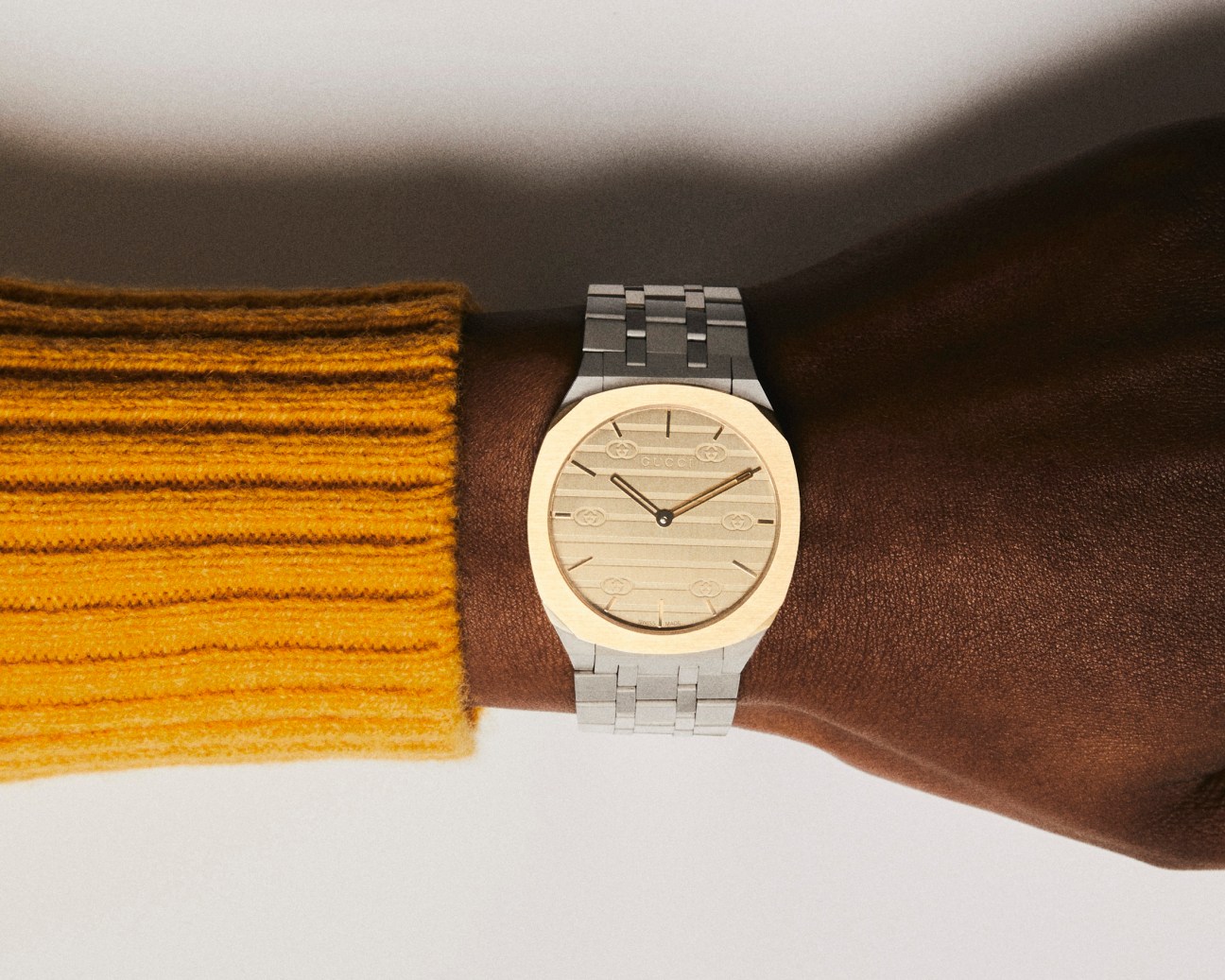
Ties between the fashion and watch industries are becoming tighter, with luxury fashion houses making ambitious investments in the sector. Watch brands too have been opening their doors to fashion designers to renew signature models and create limited-edition items. But the beauty of a timepiece lies in its longevity and you can’t go wrong with a classic design. We have rounded up some of our favourites.
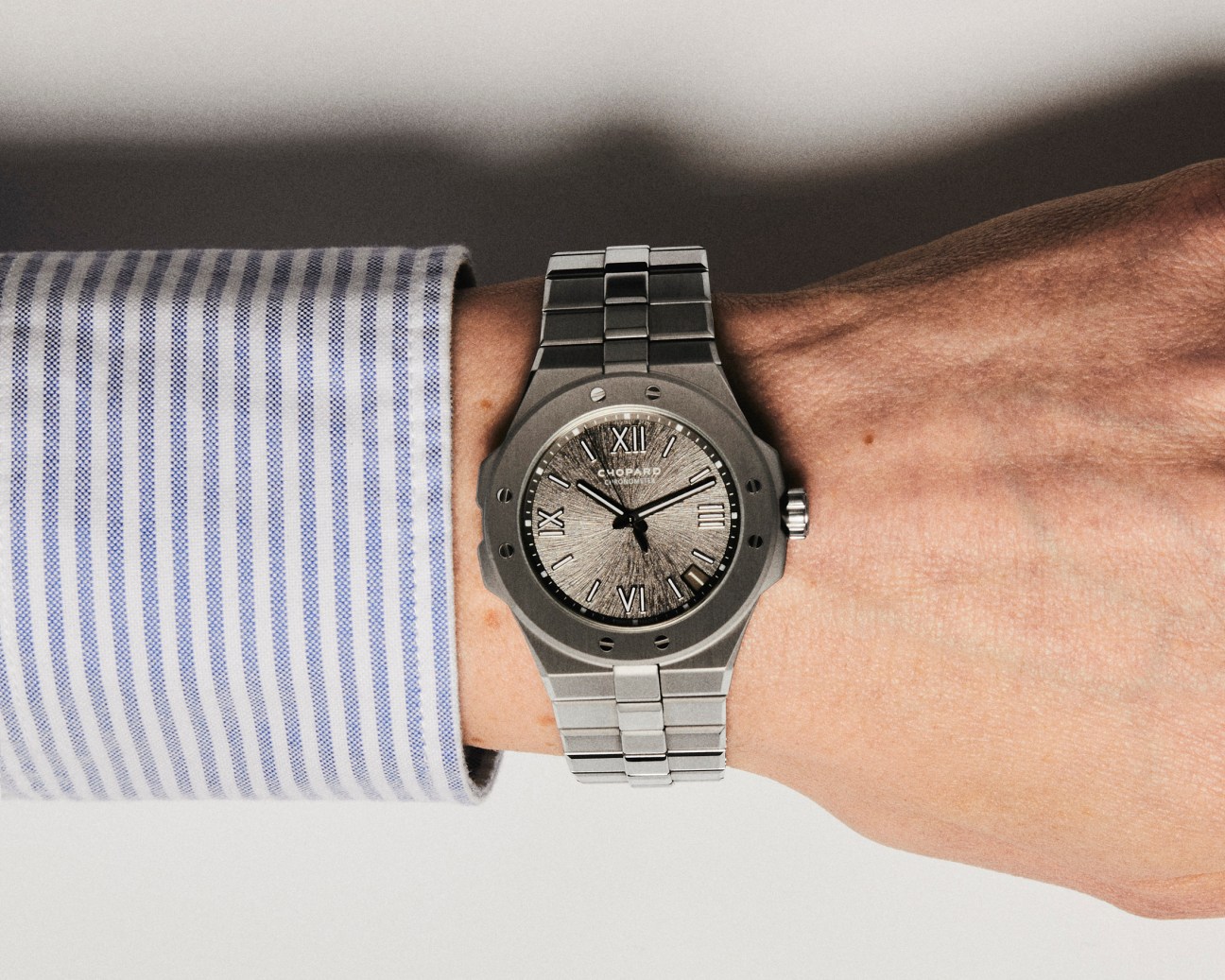
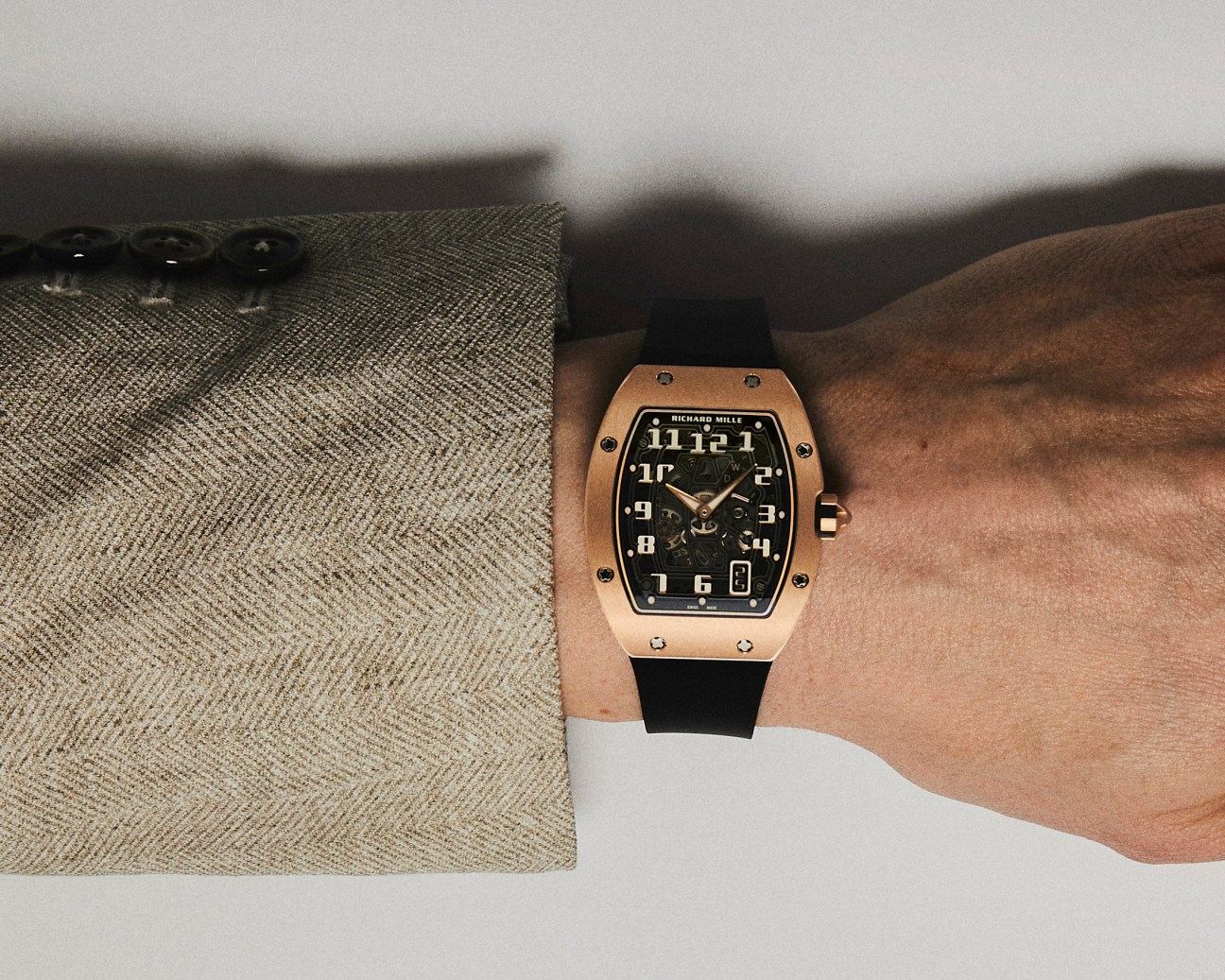

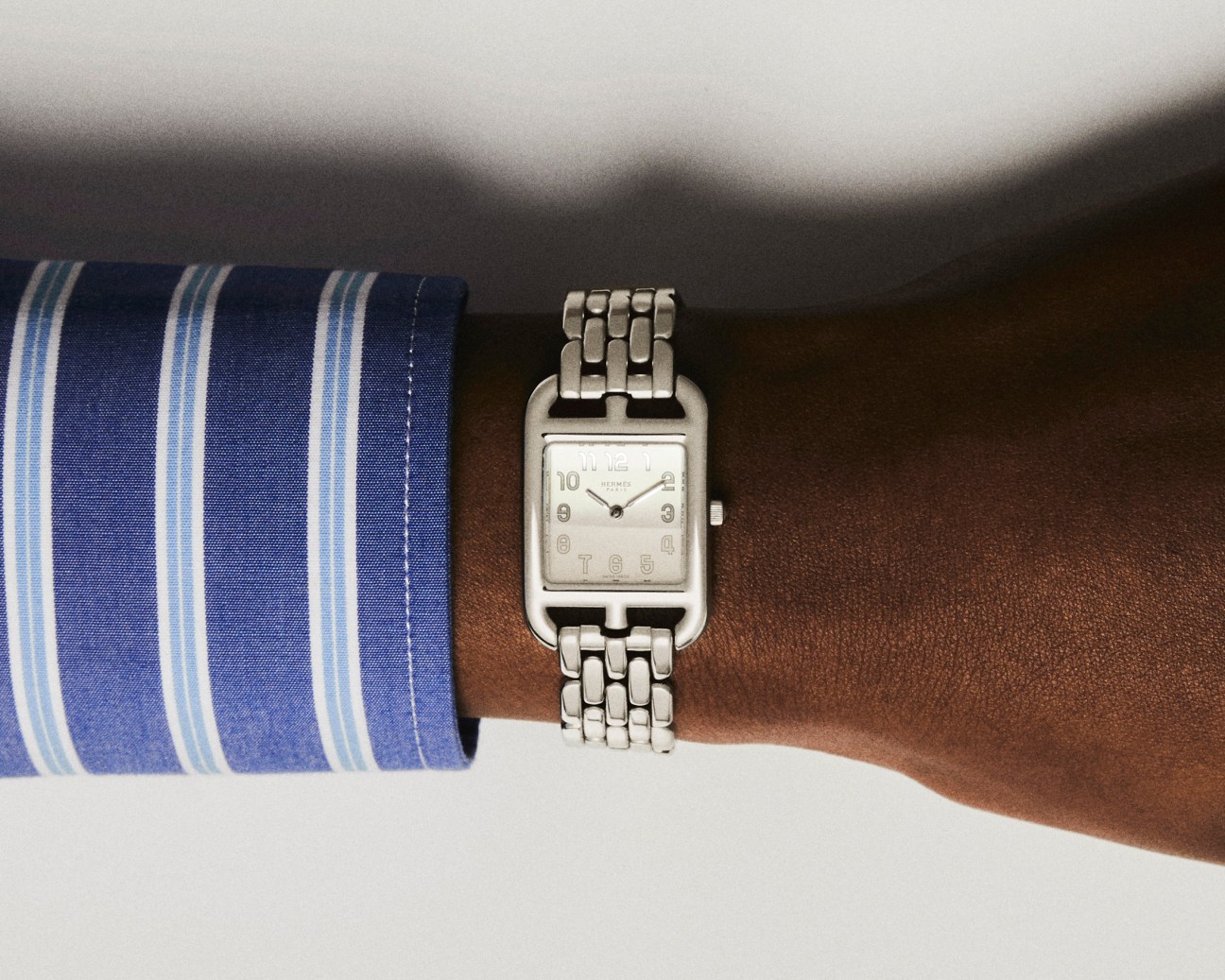
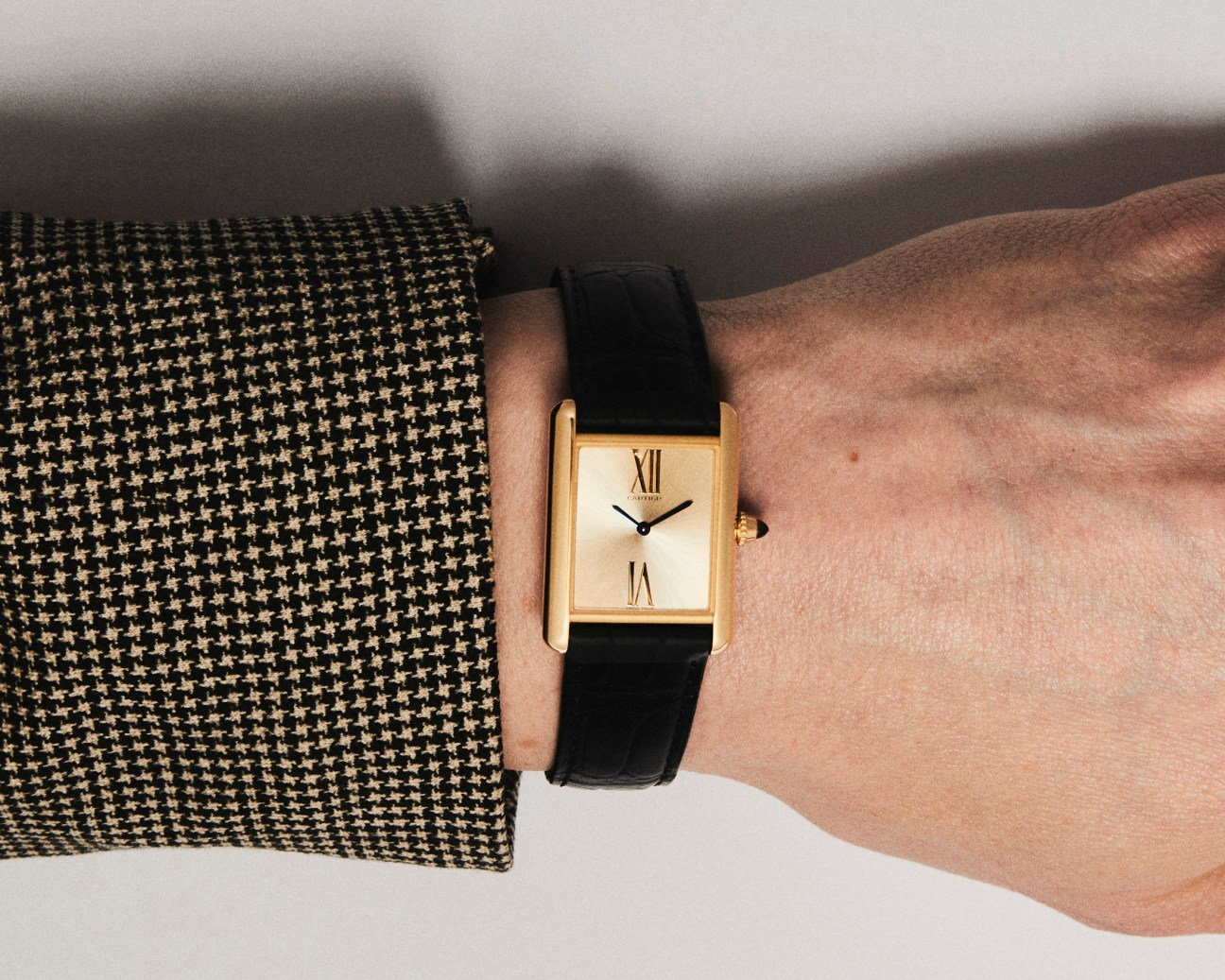
11.
Connecting threads
Signal, USA
Signal is a new retail development in Los Angeles’s Arts District. It brings together several smart multi-brand shops. New York’s by-appointment showroom M5 has opened an outpost here; LA concept-shop stalwart Please Do Not Enter has also moved in, to be joined by multi-brand retailer Departamento. California bon vivants Flamingo Estate are open and there will soon be a café by Berlin’s Concierge.
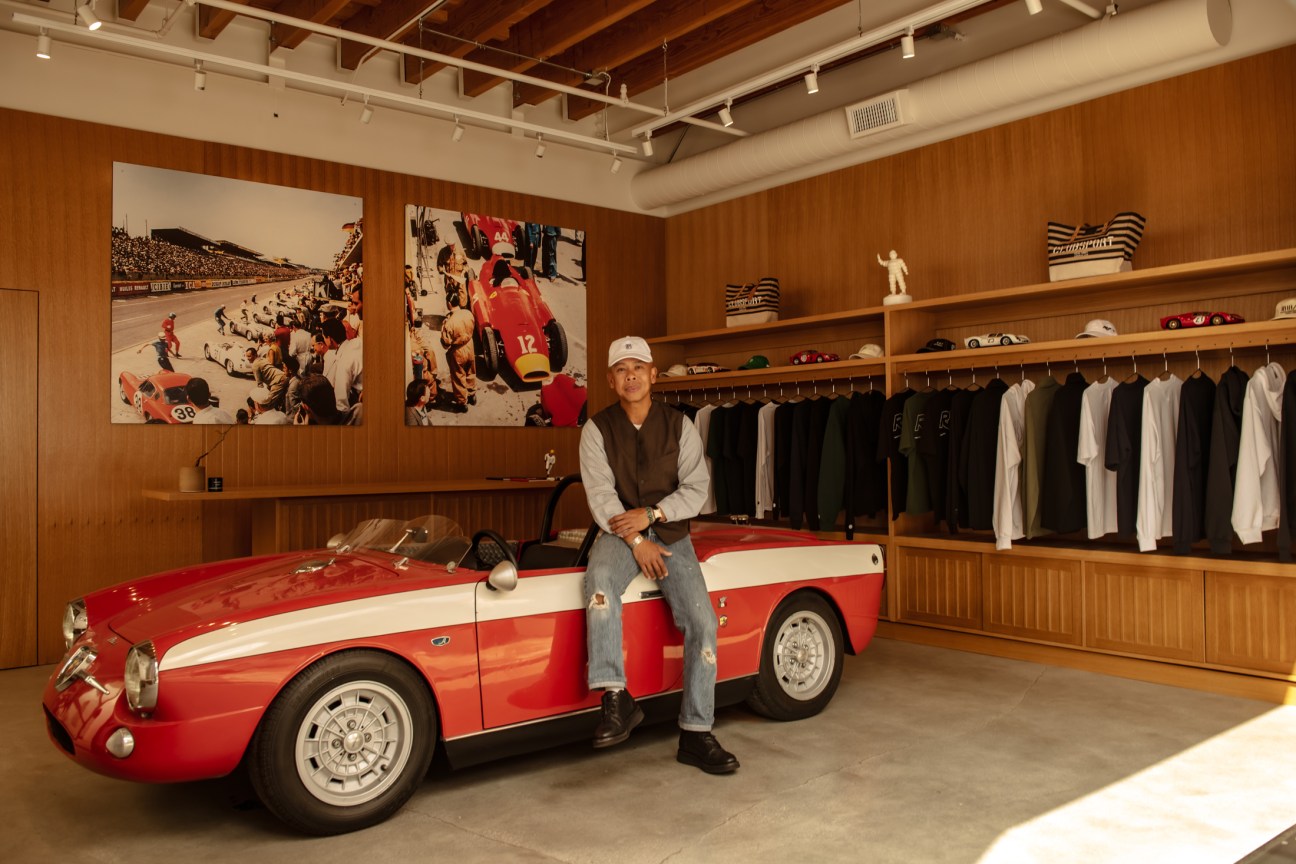
Before the pandemic, this post-industrial area of LA was booming. Dover Street Market had set up shop and the presence of galleries such as Hauser & Wirth attracted a reliable, well-heeled footfall. Signal’s co-founders, Paolo Carini and Raan Parton, say that the project is tapping into the area’s potential for revival.
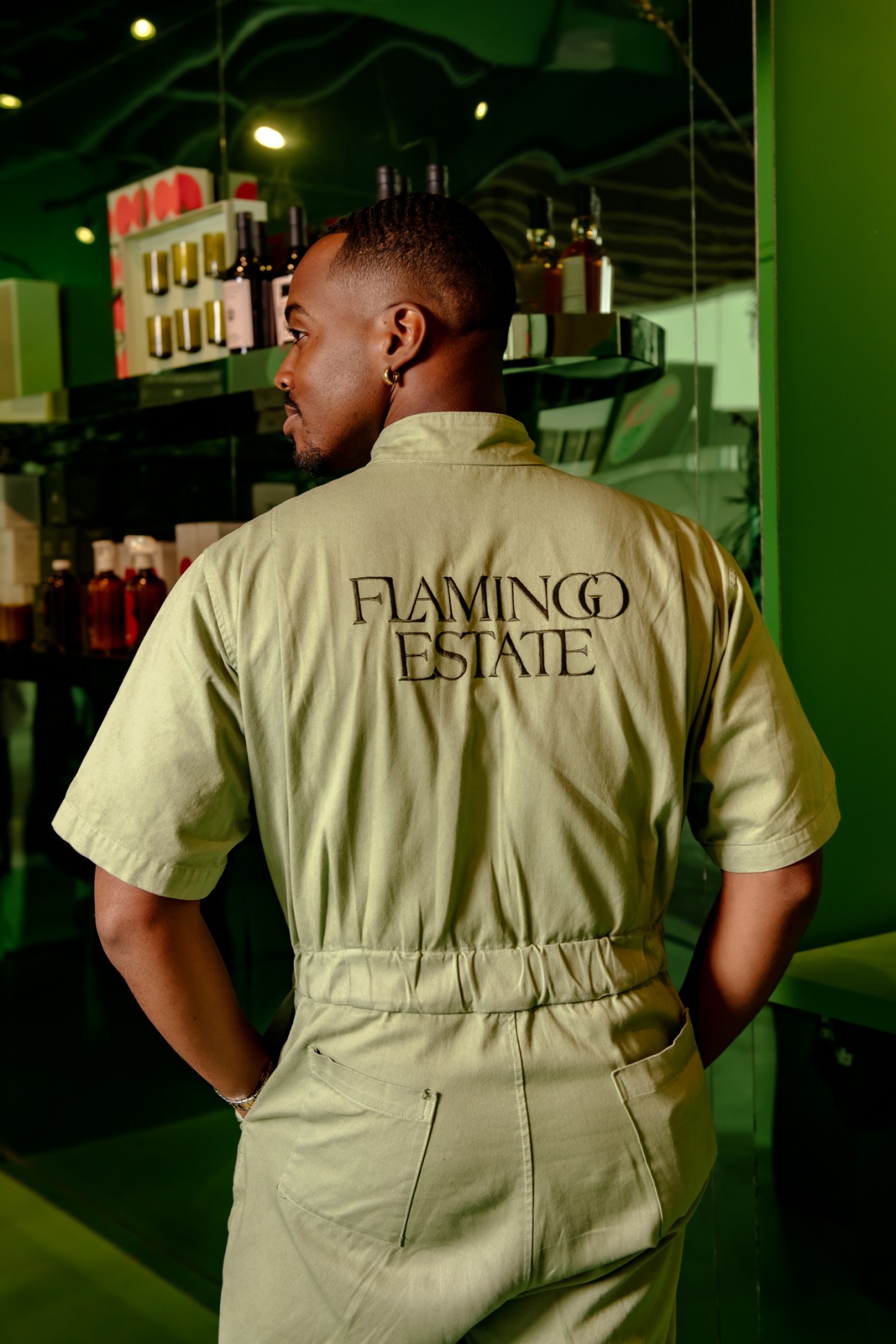
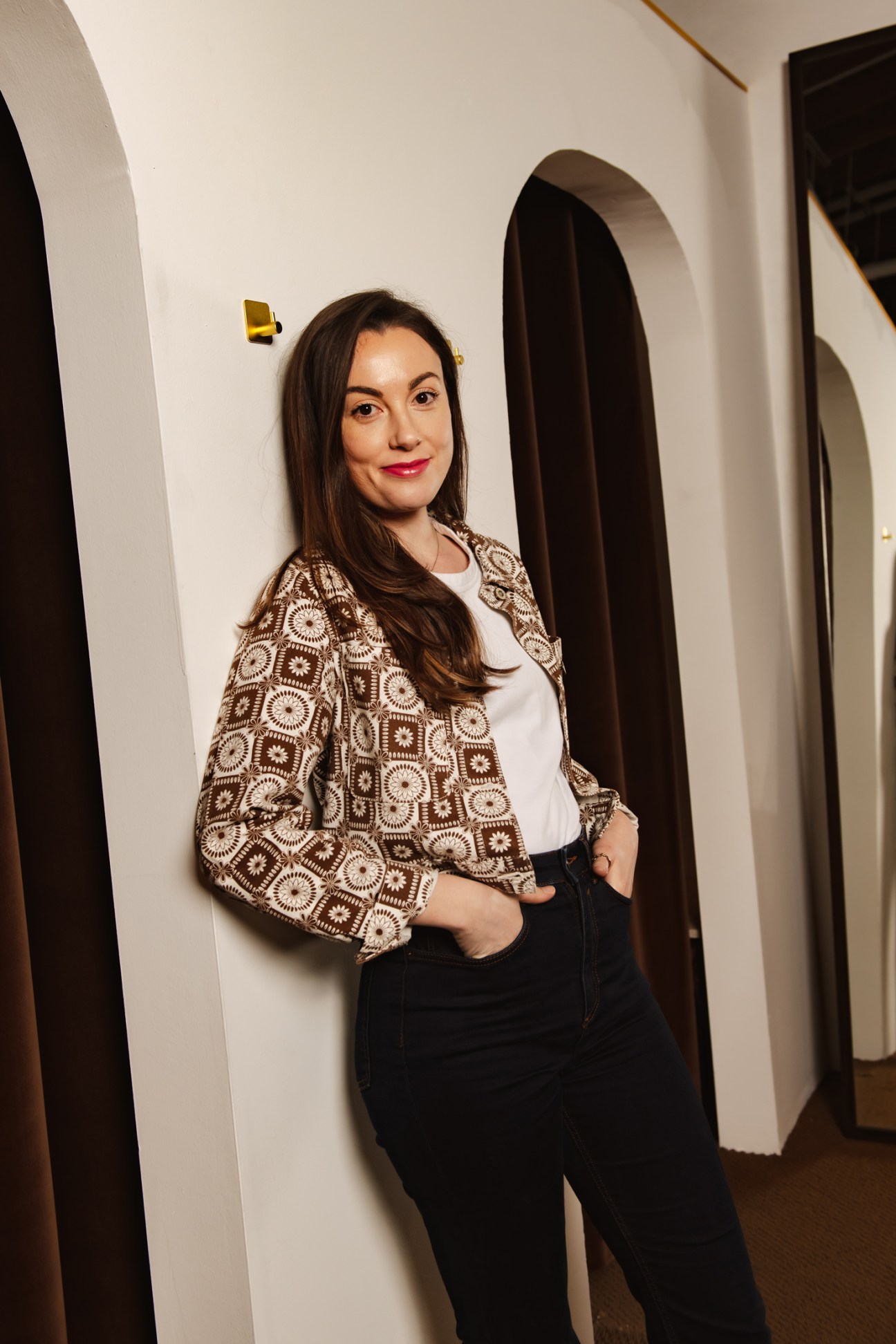
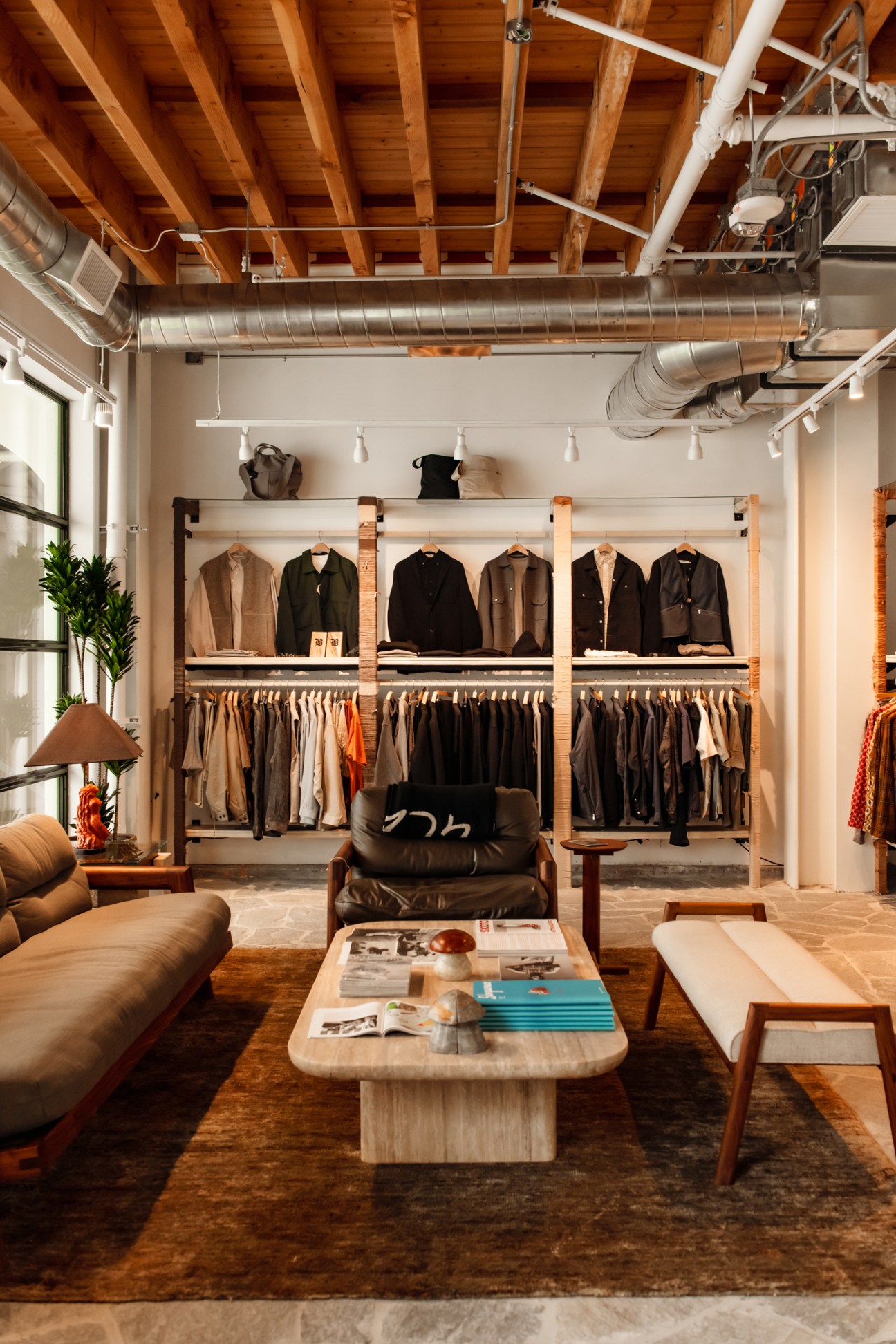
“There are pockets of LA with natural foot traffic,” says Parton. The site has now been reimagined by LA-based Klein Agency, with shopfronts evoking porticoes and stone lanes that run between the buildings. “Parts of LA have natural foot traffic,” says Carini. “But there hasn’t yet been a big idea to anchor many elements under one roof.”
signal-la.com
12.
Top of the form
Róhe, the Netherlands
Róhe was founded in 2021 by Marieke Meulendijks and Maickel Weyers, who set out to honour German-US architect Ludwig Mies van der Rohe and his “less is more” design approach. To achieve that, they built a team of experts in fabric sourcing, draping and construction – quickly making the brand a go-to for seasonless, modern tailoring. “We deconstruct blazers and piece them back together to reinvent classic shapes,” says Meulendijks. Retailers quickly responded to the Dutch label’s timeless approach and started putting in orders. “We want to focus on the old way of making: we use vintage finds to create new lapels, collars and sleeves, where modern meets classic.”
roheframes.com
13.
Natural fit
Play Earth Park, Japan
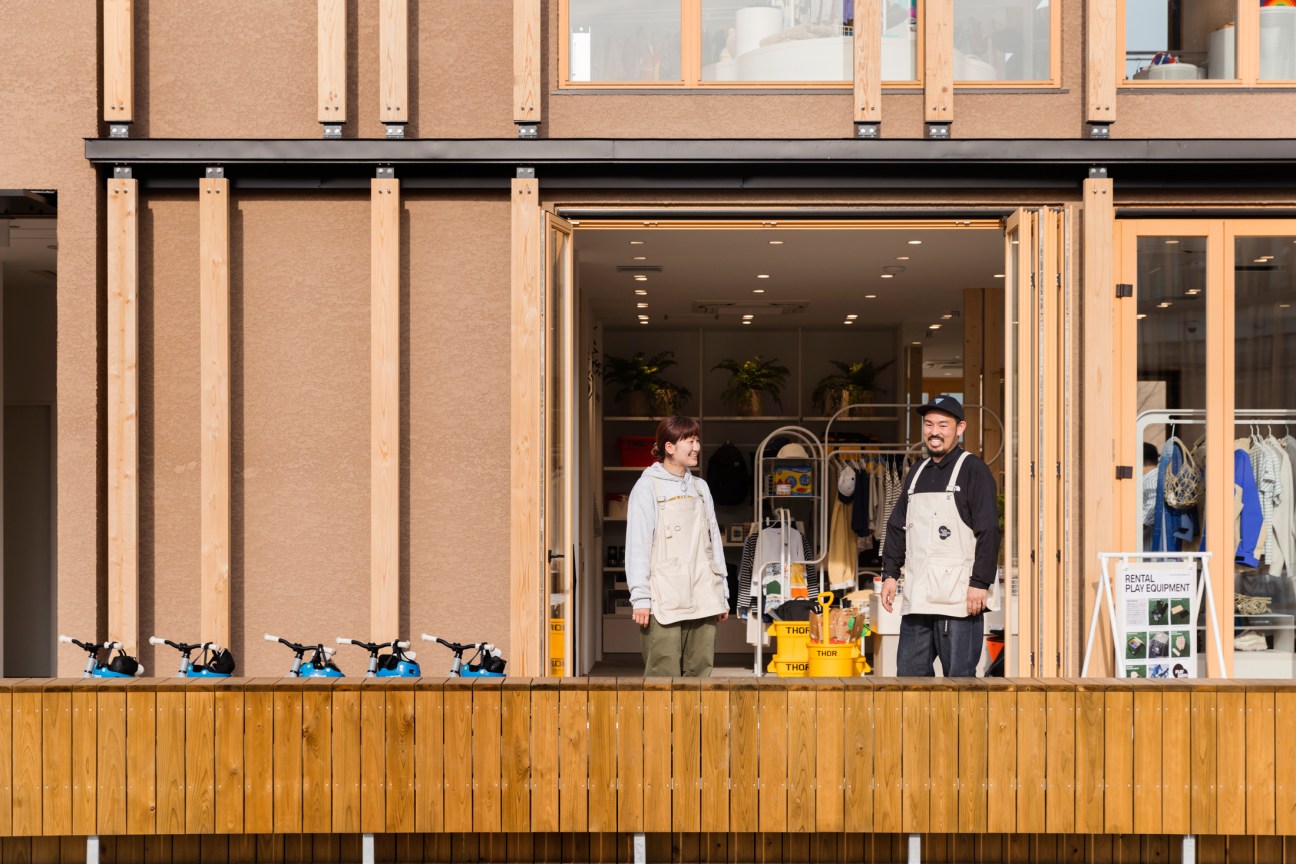
Tokyo’s new Meiji Park opened to the public in January in the shadow of the National Stadium. The project aims to bring nature to an overlooked corner of the city by planting a “100-year forest” and making a park for the community. Among its retail tenants is Play Earth Park Wonder Store, an outdoor shop from sports-apparel company Goldwin. It’s stocked with clothes and accessories from Goldwin’s stable of outdoor labels, as well as original Play Earth Park products and a line of gardening gear from Garage Green Works.
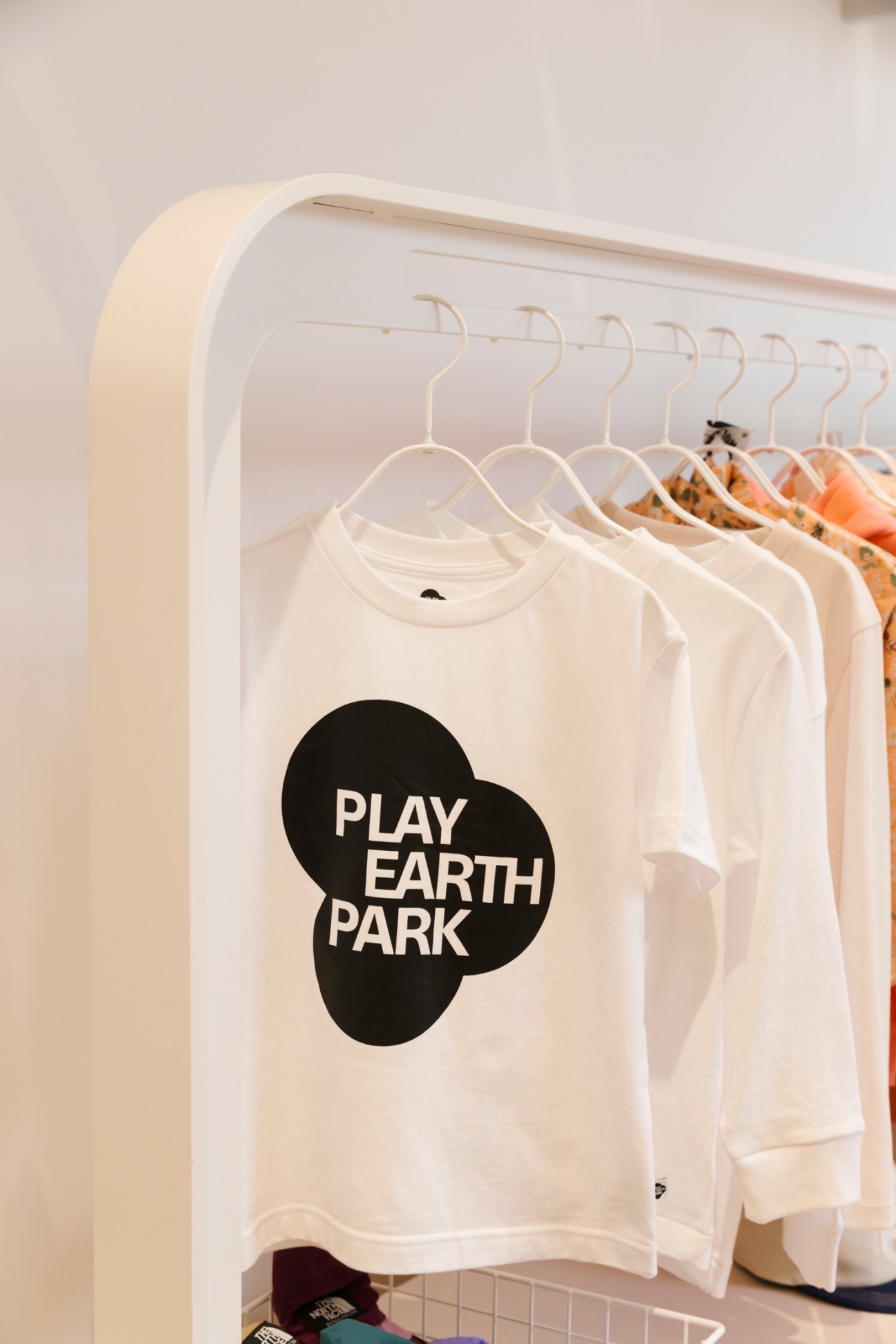
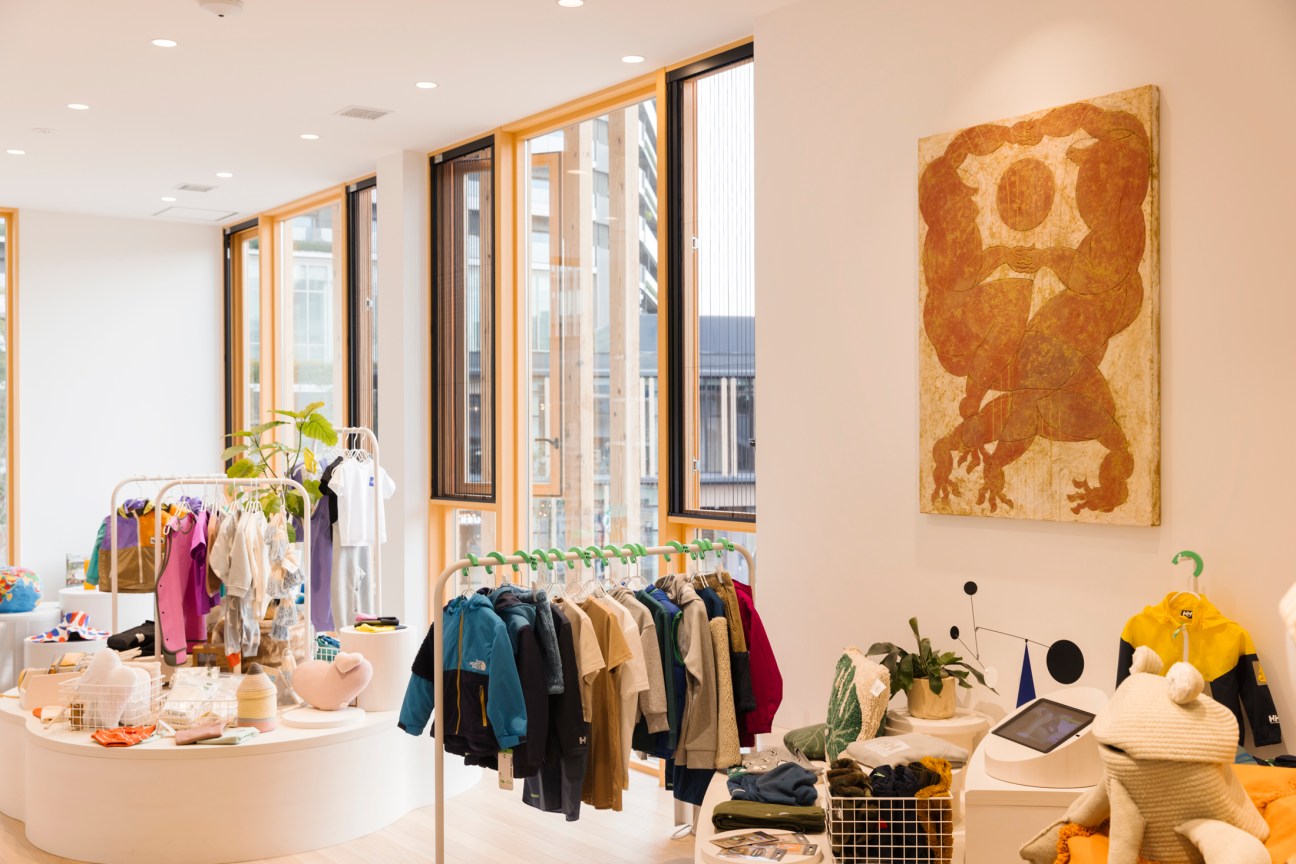
Goldwin will focus on its environmental responsibilities by offering everything from children’s bike rental to a line of recycled garments; a large park and campsite are set to open in Toyama in 2026. “This shop is a trial but the idea is to be doing something good for the planet,” says Goldwin’s Naoki Sugi. “We want to create spaces where people can experience the outdoors.”
playearthpark.goldwin.co.jp
14.
Quality control
Isa Arfen, UK
In 2019, Italian-born designer Serafina Sama stepped back from the fashion industry’s relentless pace, reassessing how she wanted to run her womenswear label, Isa Arfen. “We’re a small operation but I was still conscious of too much fabric and samples being left over every season,” says Sama. She is now back on her own terms. The label’s launches are limited to individual items or small capsule collections. “It’s about pieces that can be added to your existing wardrobe, not new collections,” she says. Sama restarted her label with a range of striped, knitted capes, produced in small quantities in a factory near her west London studio.
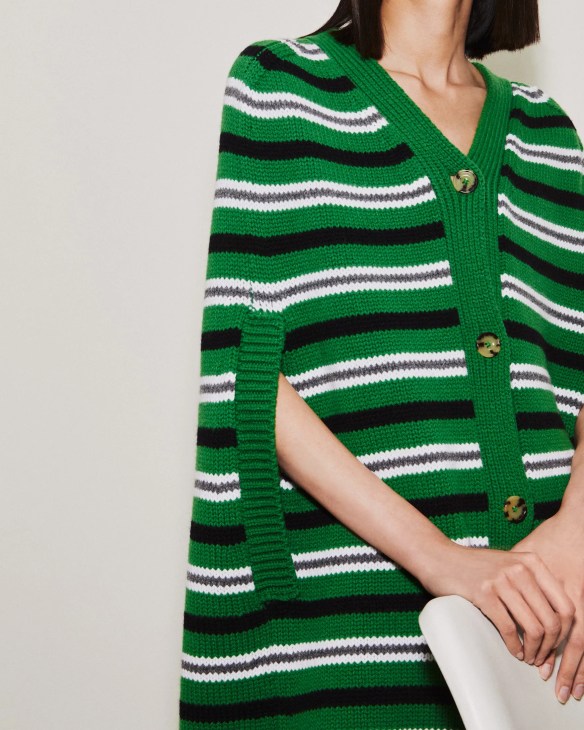
The capes can be layered over a T-shirt and jeans, or styled for more formal occasions, in line with Sama’s conviction to only offer “realistic, relatable and useful” items. “There’s a decadence to the silhouette but it’s very comfortable. I wanted it to feel like something you turn to again and again. That’s what makes good clothing.”
isaarfen.com
15.
Heart on sleeve
ESC, Japan
Before he set up his lifestyle company Elephant Street & Co (ESC), Shinji Komine had been working in brand marketing for some of the world’s biggest corporations, including Apple, Nike and Dyson. “I knew that when I set up my own company, it would have to have a strong ethical dimension,” he says. Two years on, ESC has released its first capsule collection: an easy-to-wear line of T-shirts, hooded waterproof jackets, painter trousers and totes.
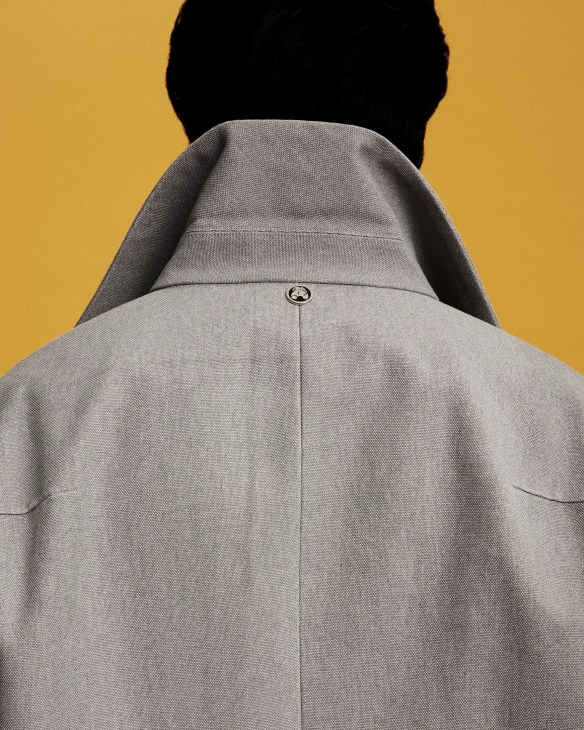
Komine works collaboratively with a small group that includes a fashion-loving doctor, a designer with experience at top brands, and small, Japanese producers. They make garments using natural materials and artisanal techniques. The brand’s core fabric is a traditional Takashima canvas made in Shiga prefecture using unbleached organic cotton, while the dyes come from natural herbs and minerals. Boxy cotton T-shirts are manufactured on shuttle looms in Shizuoka, while the Anthracite nylon collection uses a technical fabric (with a plant-derived coating), developed by Japanese fabric maker Seiren.
ESC’s ethical credentials are impeccable but Komine always keeps fashion central to the project, with streetwear-inspired silhouettes.
esc-tokyo.com
16.
Kick start
High Sport, USA
California-based womenswear label High Sport’s Kick trousers might not appear newsworthy at first glance: a classic, cropped silhouette that comes in an array of colours, from neutral black and navy to more playful gingham patterns. But the flattering silhouette, thick stretch-cotton fabric and absence of hardware – it took founder Alissa Zachary more than four years to perfect the fit – has captured the attention of shoppers who prioritise quality and elegance. Despite the $860 (€795) price tag, Zachary has proven that there’s little price resistance for this versatile design; the trousers tend to sell out as soon as they make their way into shops worldwide. “High Sport has created a pair of trousers that are the perfect luxury staple,” says Clemmie Harris, head of contemporary buying at Harrods, one of the brand’s stockists. “The fact that they come in multiple colours is even better, as customers tell us that one pair isn’t enough.”
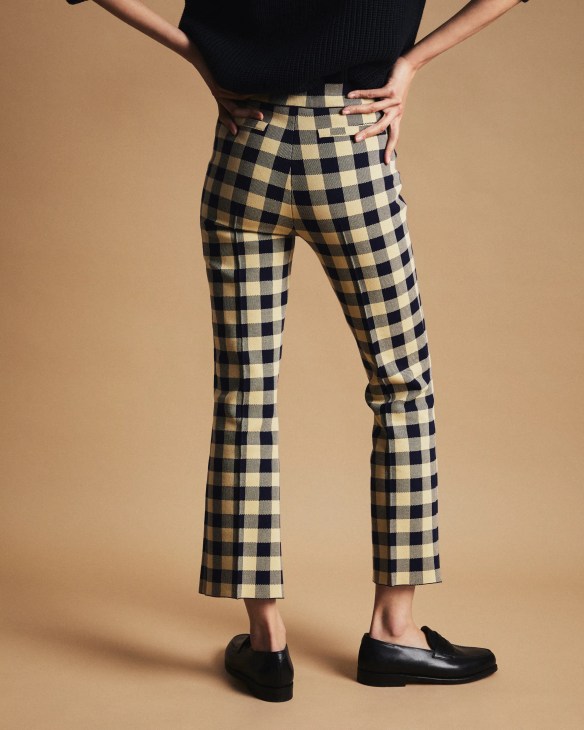
As the brand grows, Zachary is staying committed to only adding items that are as useful as her original Kick design. Along the way, she is creating a business to be reckoned with.
high-sport.com
17.
Redefining luxury
Etro, Italy
Italian fashion house Etro is thinking beyond its bohemian paisley patterns and diving into the made-to-measure tailoring business, with a new space in its hometown, Milan. Discreetly located behind its flagship boutique on Via Montenapoleone, the shop is accessible only by appointment. “The men’s fashion world is changing,” says Etro’s CEO, Fabrizio Cardinali. “January’s menswear shows gave us a clear message about a return to formalwear. At Etro, our connection with tailoring has always been very strong, so we created this space to continue our dialogue with our customers through a personalised service.”
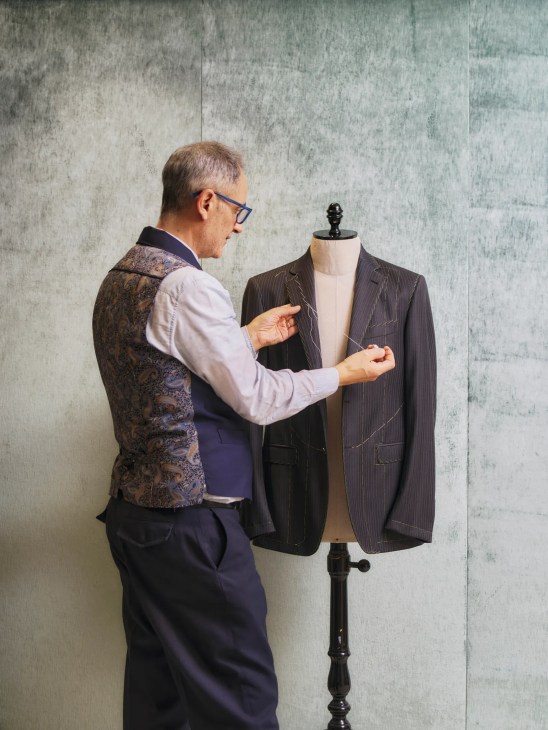
You can now work with Etro’s in-house team of tailors to create fully customised garments. You start by choosing a silhouette; you then adjust them to your tastes by picking from a wide range of fabric swatches, button types and linings. The tailors cut the clothes to a slim, regular or looser fit using materials manufactured by Etro’s partners, including cashmere from Piacenza 1733 and wool from Biella-based manufacturer Drago Lanificio.
“Etro was founded in 1968 as a textile company,” says Cardinali. “Many of our fabrics come from our archive, as well as from our important collaborations with these textile companies.” As the fashion industry continues in its efforts to redefine modern luxury, the return of made-to-measure services and in-person interactions between artisans and customers are steps in the right direction.
etro.com
18.
Delivering the goods
Louis Vuitton, France
As Louis Vuitton’s creative director of menswear, US singer and producer Pharrell has been adding humour, colour and plenty of whimsy to the French label’s collections. In his debut range, which has landed in shops just in time for spring, you’ll find playful touches, such as the way that this leather clutch references the shape of a humble paper lunch bag.
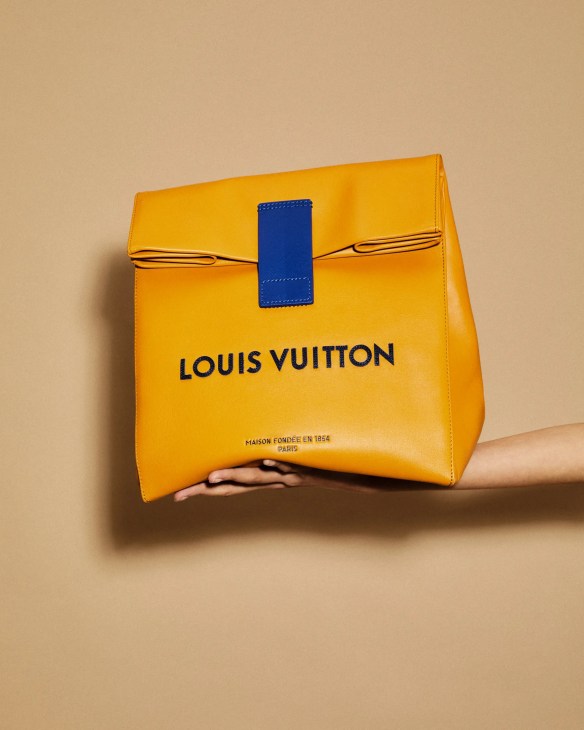
This might represent a new direction for the French luxury house but its commitment to craft remains unchanged. Every clutch is made from soft cowhide leather in a warm, tan shade and is finished with the label’s logo and an electric-blue fastening.
louisvuitton.com
19.
Reform and function
We the Knot, Portugal
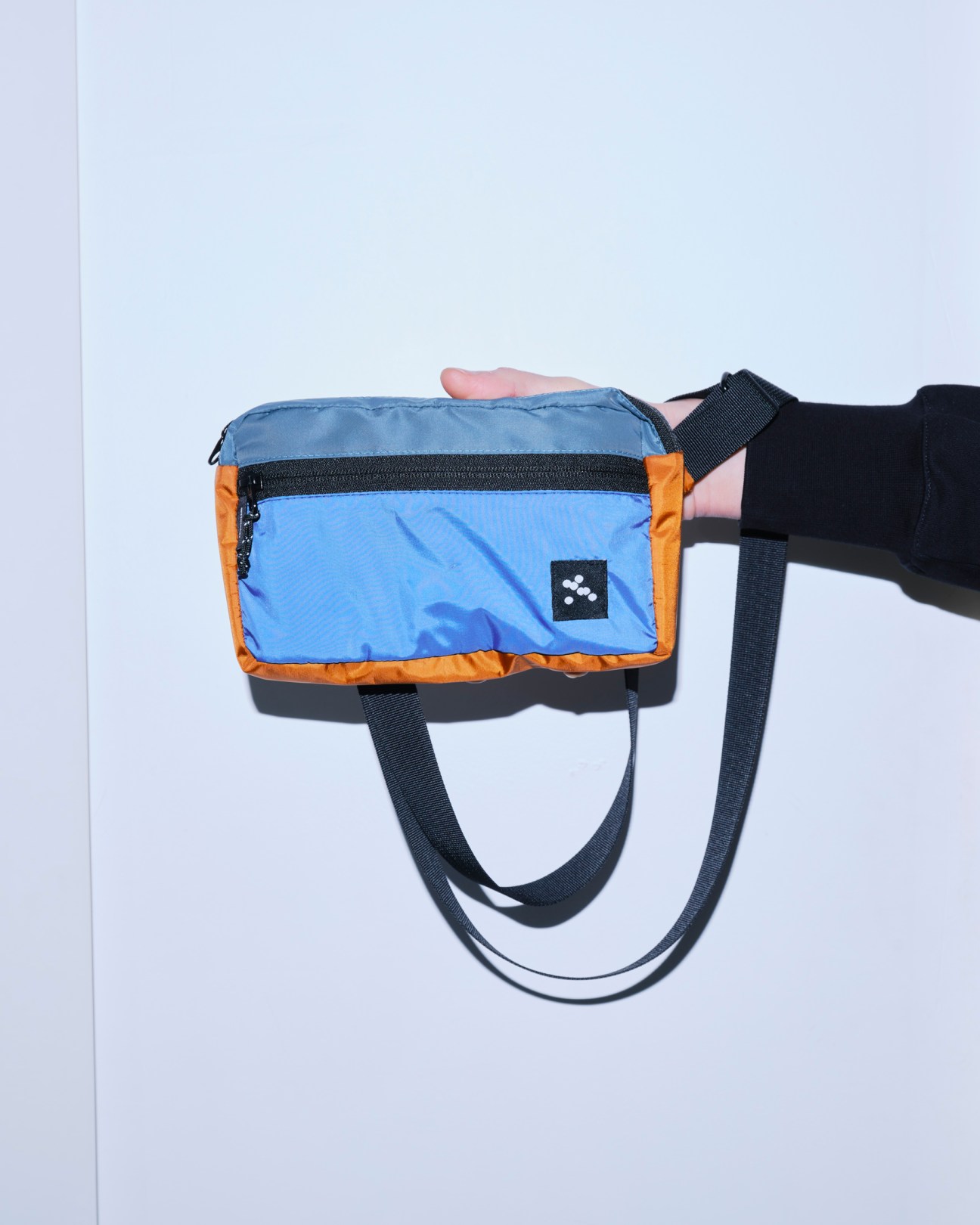
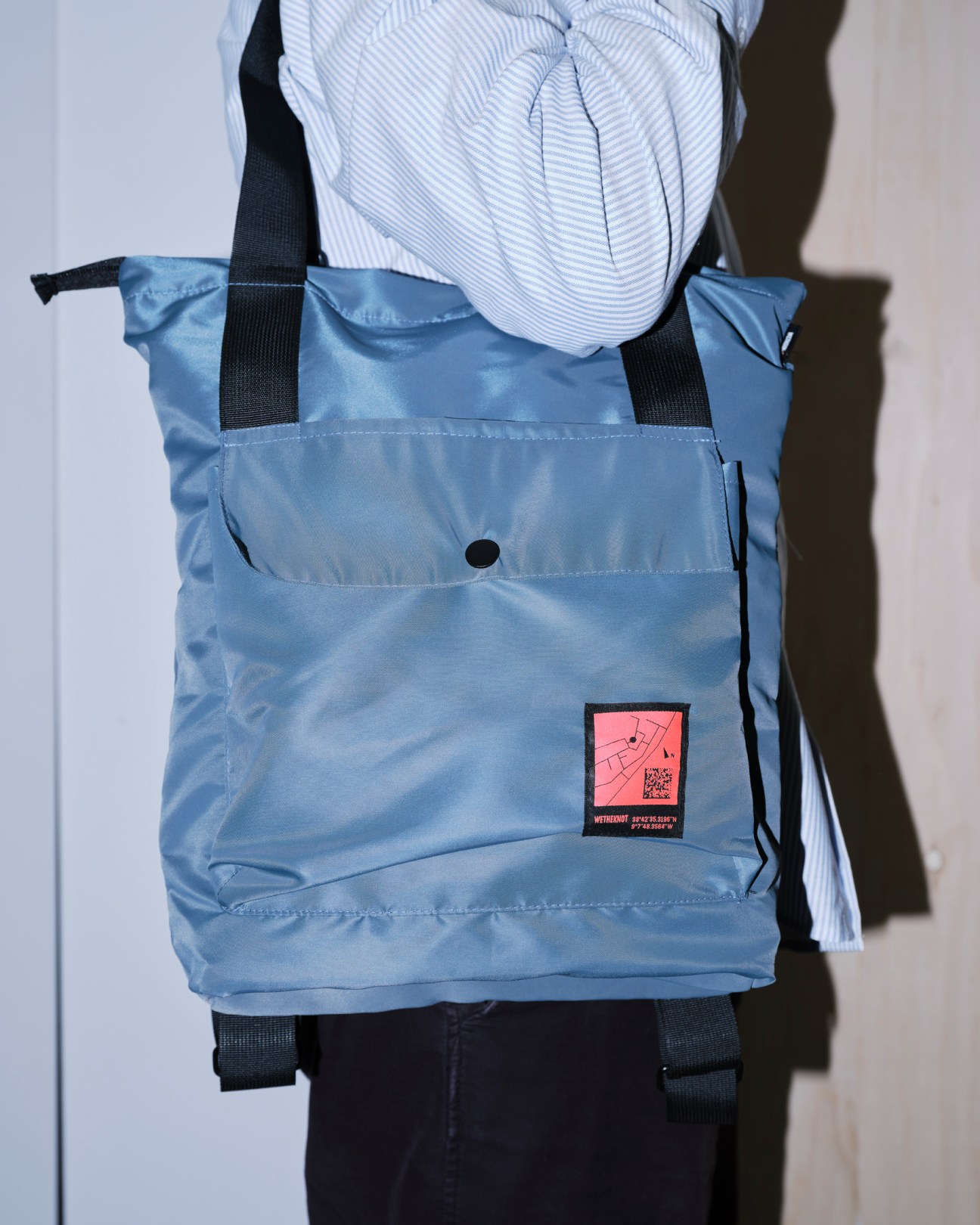
Lisbon-based label We the Knot set up shop in the city’s Alfama district at the end of 2021. “The area has many souvenir shops and restaurants but a distinct lack of high-quality fashion ateliers,” says co-founder Filipe Cardigos. A former graphic designer, Cardigos launched the menswear brand more than a decade ago with fashion designer Sérgio Gameiro, after upcycling an umbrella and turning it into a pair of swim shorts. Since then the duo have worked with Portuguese manufacturers to create a capsule collection of cargo trousers, sweatshirts and chinos made with deadstock materials or organic cotton, recycled nylon and vegan leather sourced from Portugal and Italy.
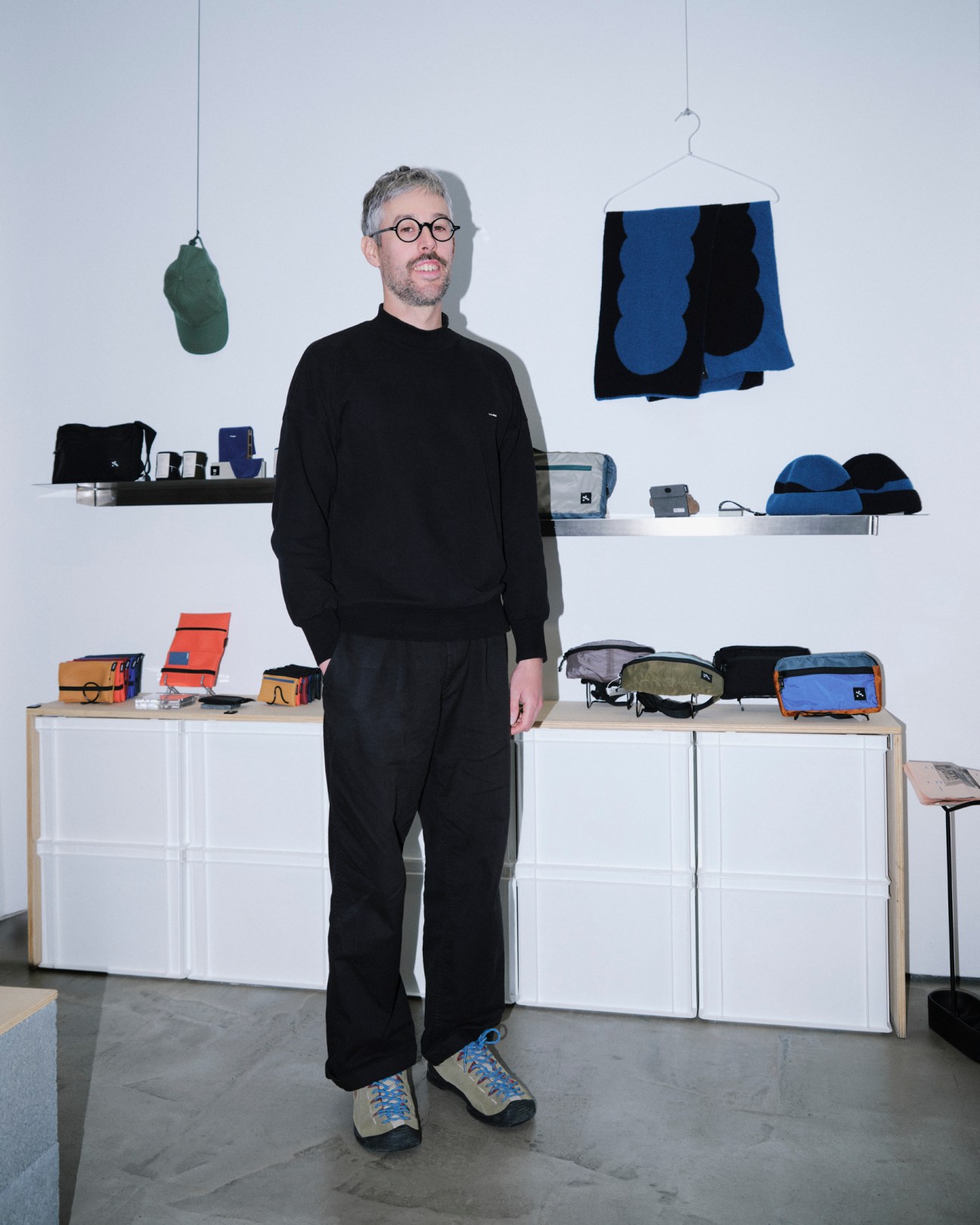
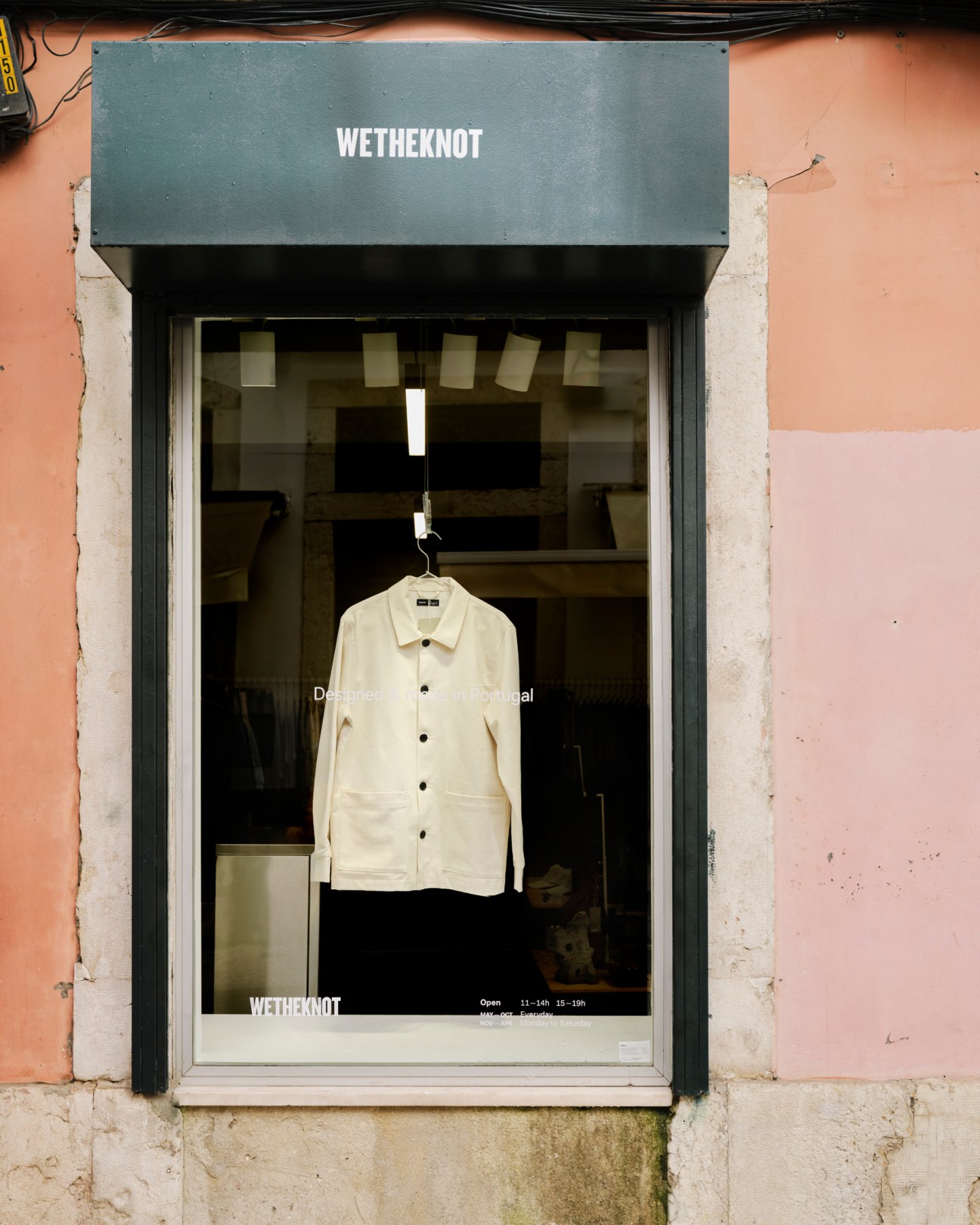
Labels on the brand’s minimalist silhouettes are displayed on the outside of clothing, some printed with a map of the shop’s location; others featuring a Japanese haiku. “We don’t like slogans or branding, so we wanted to show our cultural influences through other means,” says Cardigos.
wetheknot.com
20.
National fabric
100 Hands, the Netherlands
Launched in 2014 in the Netherlands, 100 Hands is on a mission to showcase the finest Indian craftsmanship. Akshat and Varvara Jain, the husband-and-wife team behind the label, drew inspiration from Akshat’s family, who are involved in India’s textile industry.
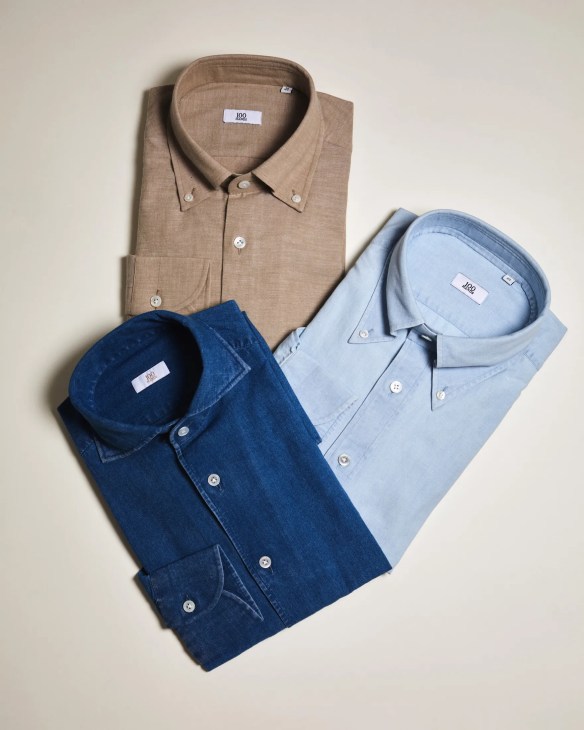
Starting with a small team of 18 artisans in a manufacturing atelier in Amritsar, 100 Hands now works with more than 300 artisans. While expansion is in motion, the original dedication to craft and focus on the classic shirt remains unchanged; the label produces one of the widest ranging collections of shirts on the market, using materials such as linen, poplin and cashmere-cotton. Every shirt takes between 16 and 34 hours to make and is completed entirely by hand.
So far the Jains have focused on working with specialist boutiques globally, including Stockholm’s Lund & Lund, but the brand is now expanding its scope and beginning to partner with bigger department stores, such as Harrods. Monocle plans to replenish its wardrobe with the washed Japanese chambray style from the label’s new spring collection.
100hands.nl
21.
Pulse of the city
Uni Form, South Africa
Luke Radloff, Uni Form’s founder and designer, is endlessly inspired by Johannesburg. “The true style of Joburg is gritty workwear mixed with a lot of traditional clothing,” says Radloff. His studio overlooks a taxi rank where people offer a snapshot of the city’s style as they come and go. “It’s an industrial city and it’s built by the industrial workers,” says Radloff. For Uni Form, he creates workwear-inspired clothing for women: oversized stark white cotton shirts, draped trousers and slinky mohair dresses made using almost entirely natural fibres sourced and produced in South Africa. “I want to promote luxury production in Africa,” says Radloff, who worked for Italian label Marni before moving back to South Africa to launch his own brand in 2019. “I want to push the narrative of Joburg as a style capital.”
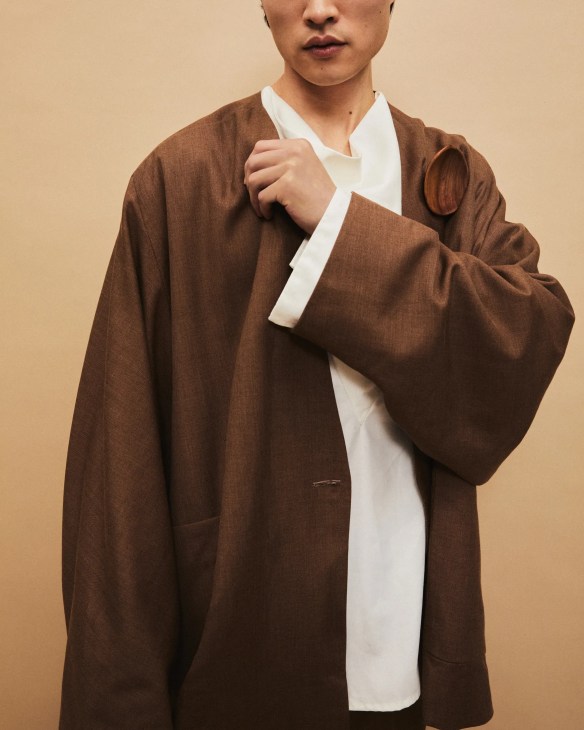
Though many people might not view Johannesburg as a fashion city or recognise the country’s potential in high-end manufacture, Radloff wants to shift that narrative by highlighting regional craft. The brand collaborates with craftsmen who work with everything from hand-woven cottons to mohair, silver and even textile waste, proving that South Africa has a lot to offer when it comes to top-end textile production.
uniformza.com
22.
Shirt stories
Chava Studio, Mexico
Villanti worked in magazines for years in New York before moving to Mexico City in 2019, where her in-laws run a business importing European fabrics from select mills, such as Alumo in Switzerland, to supply the best Mexican tailors. “They had amassed a lot of deadstock, including cashmere and silk, which I began to work with,” she says. To create her pieces, Villanti works with seasoned seamstresses at the family-run atelier, next door to the historic studio of Mexican modernist architect Luis Barragán. “There’s a balance in each of our pieces between very formal elements, such as a cocktail cuff or French cuff, mixed in with a cutaway collar,” says Villanti, pointing to her love of easy, draped silhouettes and lightweight poplin fabrics.
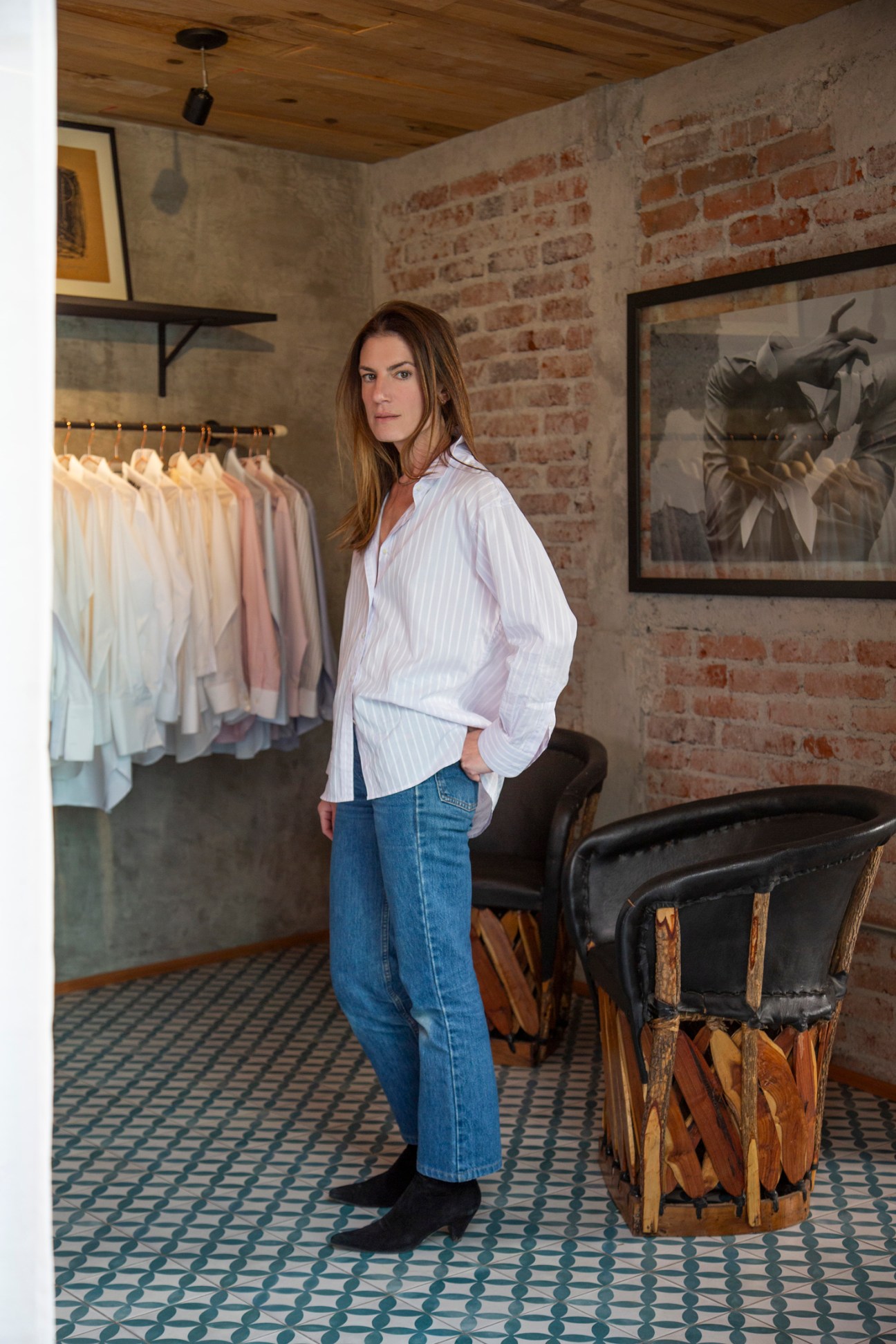
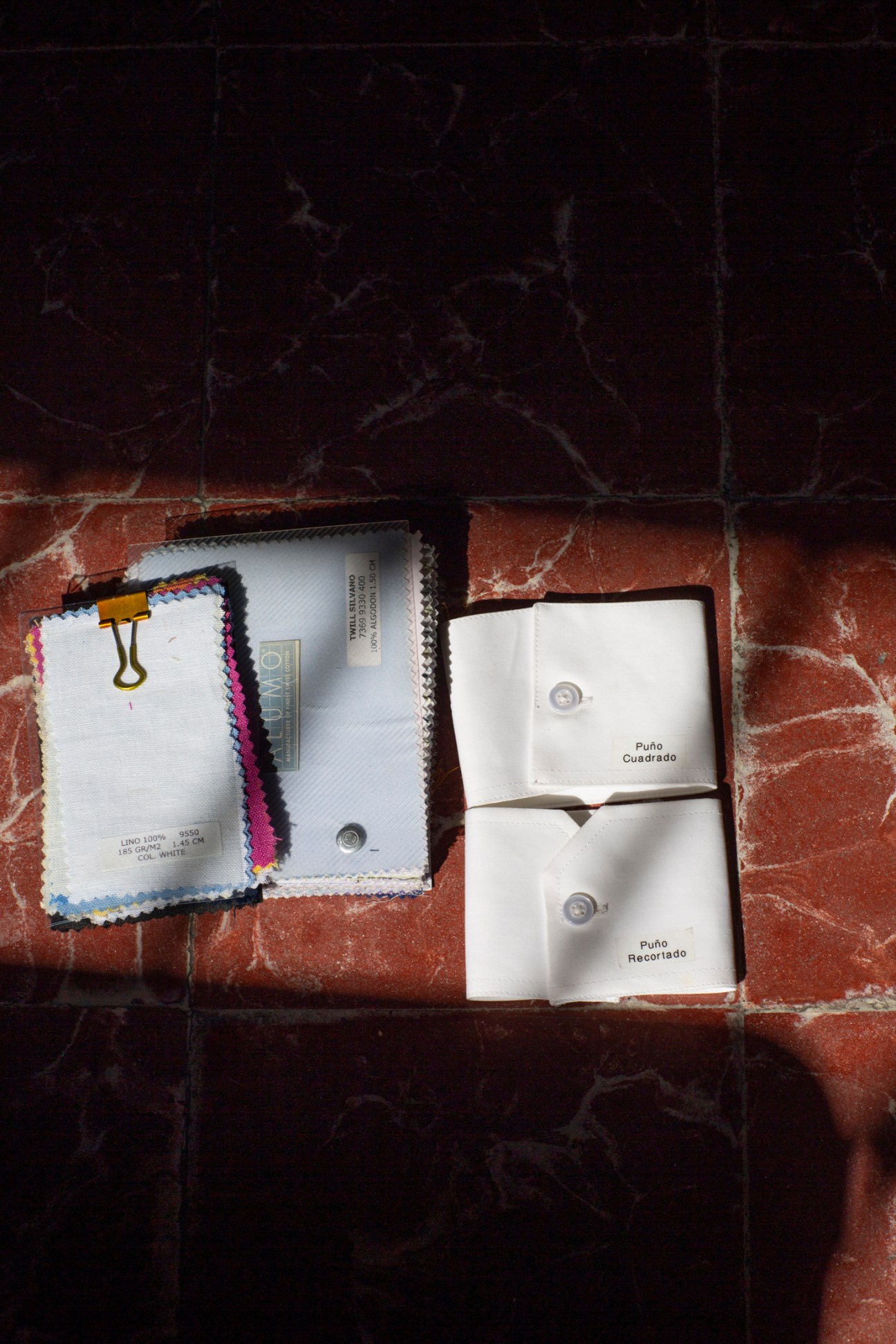
Chava Studio now has clients across the US and Villanti is starting to work on unisex pieces, with plans to turn its showroom in Mexico City into a retail space. “Having a shirt made for a man is a coming-of-age story,” she says. “I wanted to take this experience and feminise it but do it in a way that’s unfussy. That word embodies what we’re trying to do.”
chavastudio.com
23.
High flier
MKDT Studio, Denmark
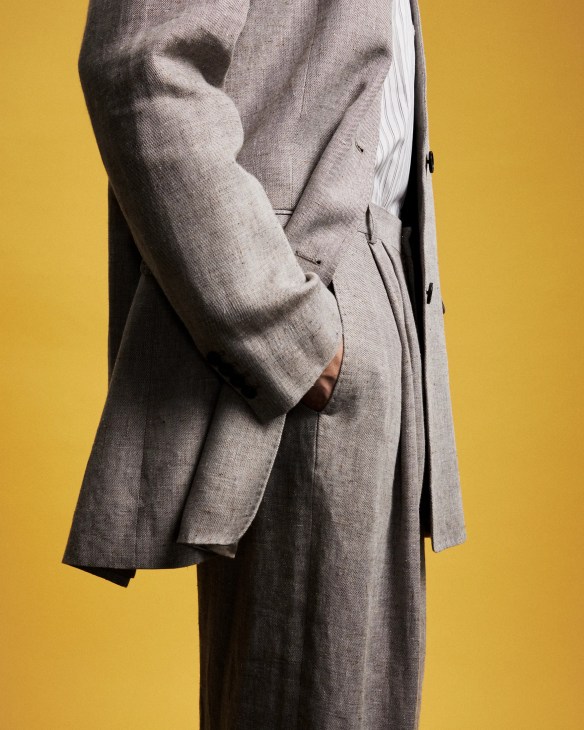
Copenhagen-based label MKTD Studio, founded by Chinese-Danish designer Mark Kenly Domino Tan, is known by its admirers for its sharp tailoring and flair for classic designs. It has begun a new chapter under its creative director, Caroline Engelgaar, expanding into menswear and setting global ambitions. “We want to offer a long-lasting wardrobe for both men and women,” she tells Monocle. “Our customers collect our pieces in the same way that they collect furniture.” She took inspiration from legendary American pilot Amelia Earhart for her latest collection, which features classic aviator jackets, trench coats and loose tailoring. “The range has a retro feel,” she says, explaining how significant the 1920s were for women’s fashion. “It takes you back in time to when women were coming out of skirts, wearing trousers for the first time and developing a new identity.” We recommend one of the brand’s collarless, light-grey suits for a smart spring look.
mkdtstudio.com
24.
Men of the cloth
Speciale, UK
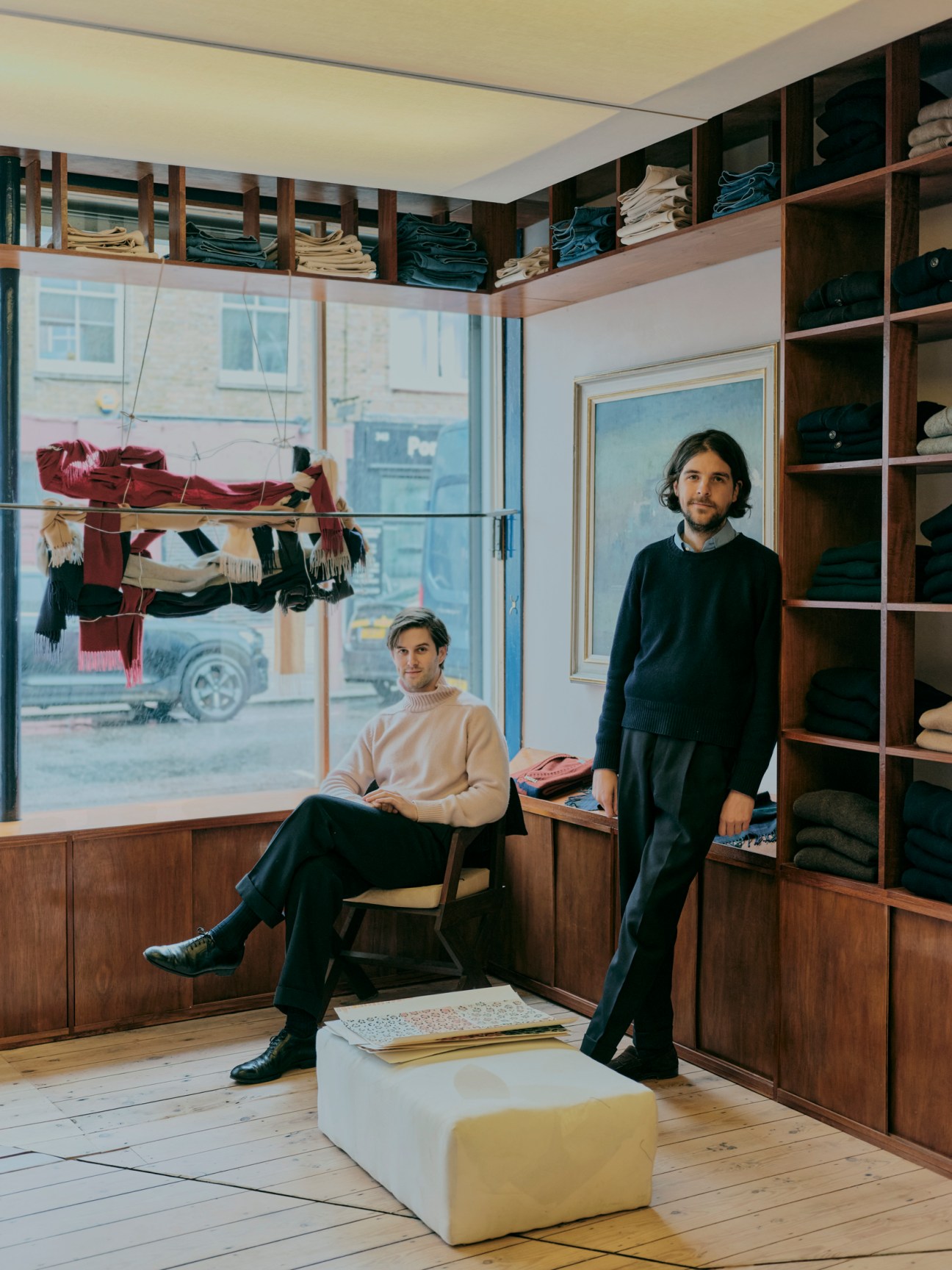
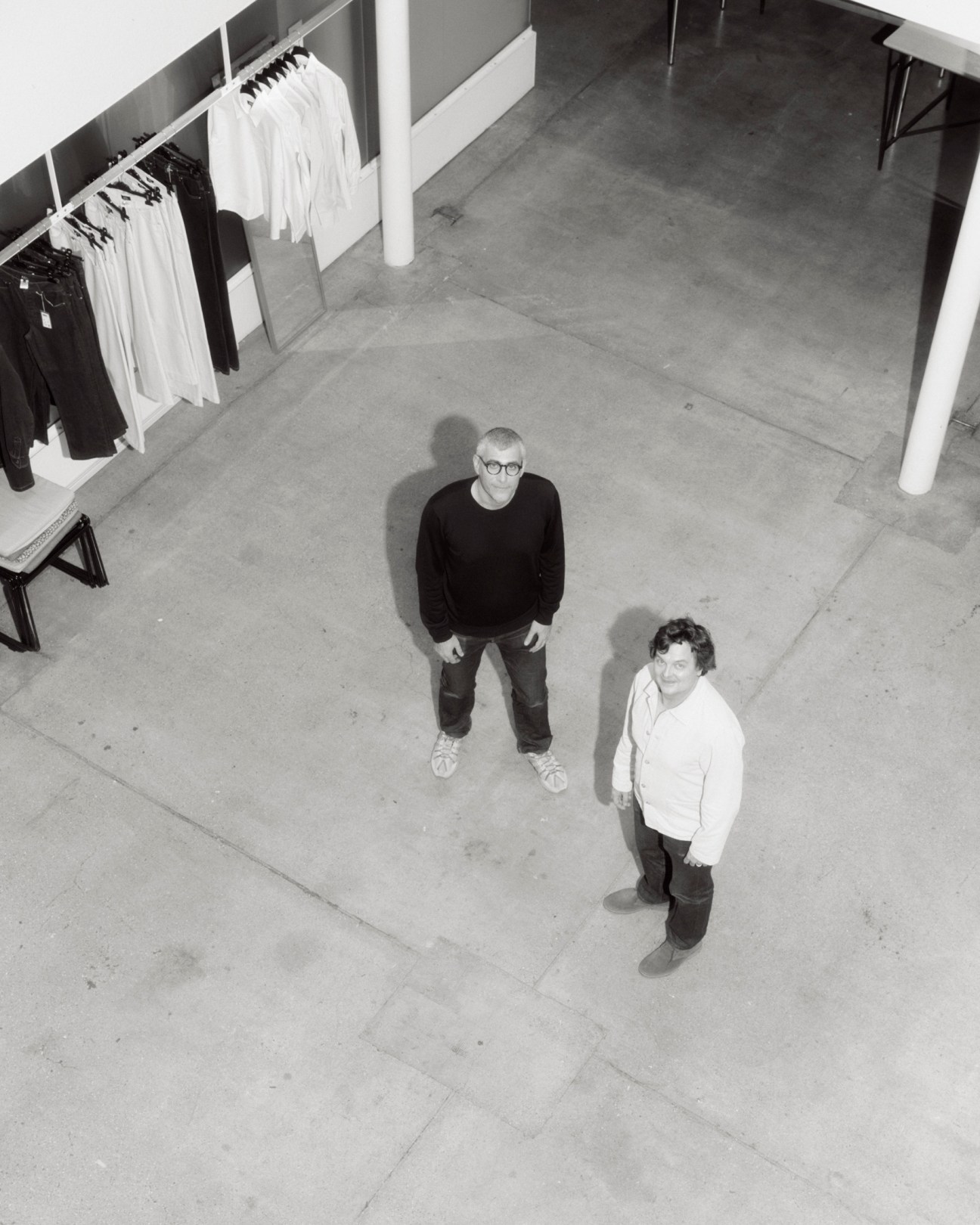
Menswear label Speciale, founded by George Marsh and Bert Hamilton Stubber (both pictured), has brought some Florentine tailoring nous to London’s Portobello Road, home to its studio and flagship shop. Hamilton Stubber leads the retail arm, while Marsh heads up the bespoke business, having trained as an apprentice in Milan and Florence under famed tailor Antonio Liverano.
When Monocle stops by, the conversation turns to the intricacies of a suit, from the benefits of half-linings and single darts on jackets to top-stitched seams. “We both feel that in Florence they are making the sort of suits that we like to wear,” says Marsh. “And I like my suits to be properly worn, not left hanging in a cupboard.”
The idea was to combine the comfort of traditional denim with the elegant draping of silk. “By introducing silk into denim, Loro Piana aims to redefine the boundaries of denim,” says Alessandra Varianini, the brand’s product development and collection merch director. “It is elevated beyond its casual image to a fabric of exquisite refinement and luxury.” She explains that it can take up to a day to produce a mere 50 metres of denim silk, given the complexities involved.
What is the essence of modern luxury today?
The Expert
Alexandra Carl
Stylist and creative consultant
While auction houses have long valued the importance of paintings, cars and watches, they’ve only turned their eye to fashion in recent years. “Collecting fashion is a relatively recent phenomenon,” says the Danish, London-based stylist and creative consultant Alexandra Carl. “But that is changing. Now, when you look at catalogues from Christie’s and Sotheby’s, clothes are almost on the same level as art and antiques.”
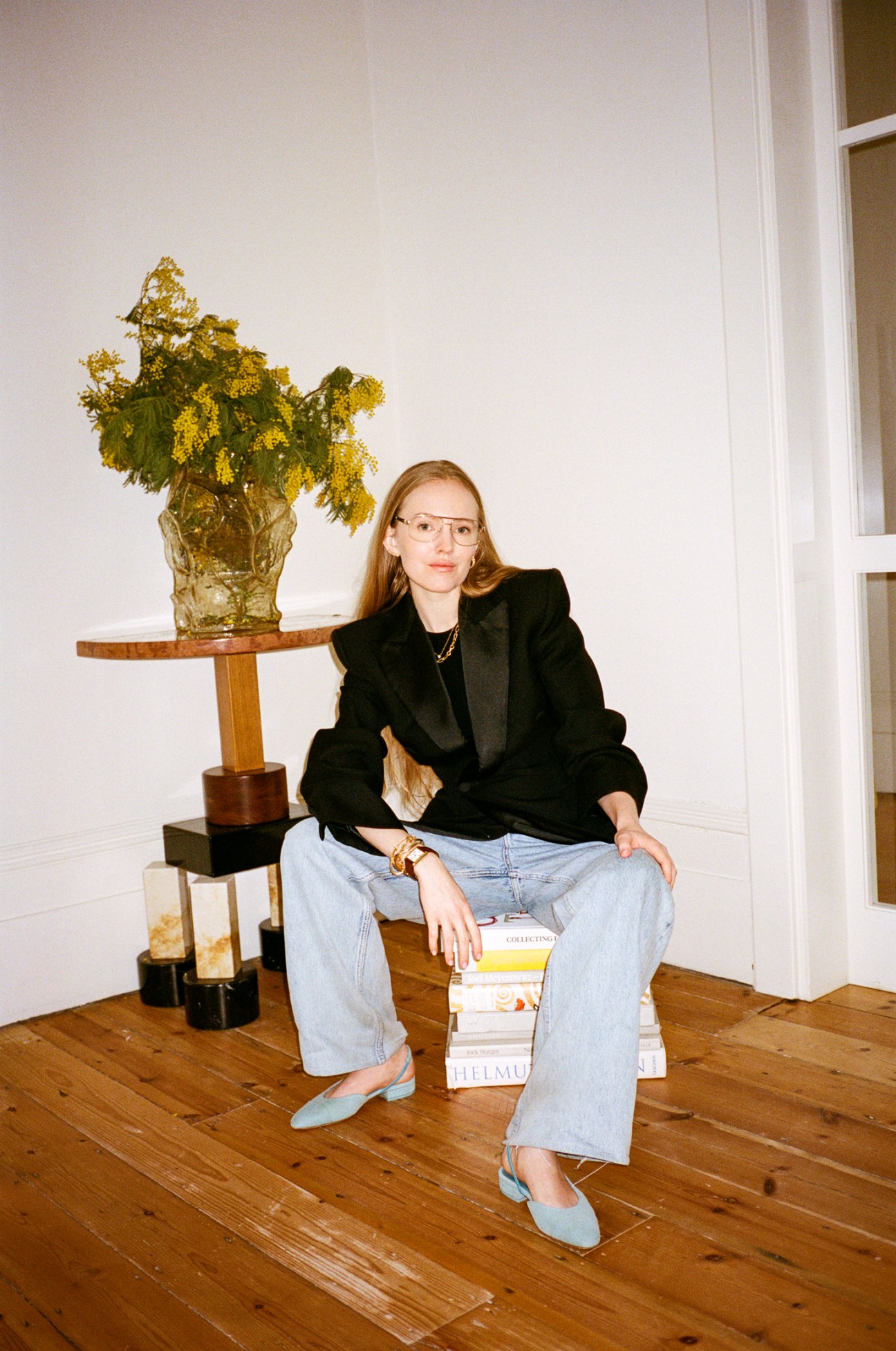
Carl’s new book, Collecting Fashion: Nostalgia, Passion, Obsession, surveys the wardrobes of the people who pioneered this practice, from French fashion designer Michèle Lamy’s extensive Comme des Garçons archive to Berlin showroom Endyma’s Helmut Lang collection. Carl, who has worked with photographers such as Viviane Sassen and Juergen Teller, spent three years travelling around the world to go inside the archives of the most prolific fashion collectors, including the late Azzedine Alaïa, Chanel sound director Michel Gaubert and Carla Sozzani, founder of Milanese retailer 10 Corso Como. Each collection is filled with stories of “the liaison between past and present, history and the moment, affection and consumption,” according to Italian writer Angelo Flaccavento, who contributed to the book, alongside professor and art advisor Dimitrios Tsivrikos, a specialist in consumer psychology. Together with Carl, they sought to shed light on why and how people buy and keep clothes, as well as our relationship with consumption.
Ahead of the publication of her book, Carl sits down with Monocle to talk about her own interest in collecting, her visit to Zaha Hadid’s shoe archive and the process of researching her book and discovering what drives people to fall in love with clothing.
When did you first become interested in collecting and in people who collect?
I grew up with a mum who was a collector. Though she wasn’t collecting fashion per se, she had an interest in clothes and liked buying to invest and keep. As a child, I got to wear her clothes and her influence – along with that of my grandmother, who taught me how to make clothes – is probably where this all comes from.
You are a stylist and creative consultant. Has your job shaped your understanding of collecting?
I do meet amazing people who collect and have archives that I use for research when I work with fashion brands. It’s fascinating seeing their relationships with the items they own because it’s so contrary to the ways in which younger generations [treat clothing]. Nowadays, people buy things for exposure and wait 90 minutes for delivery. Everything is so readily available so you miss out on that element of desire – brands don’t really inspire that in you any more. The people I met [for the book] are interested in building relationships with brands; they are more interested in the hunt. They could wait two years, maybe three, for something. They don’t have this sense of immediate urgency.
Who in particular comes to mind?
Adrian Appiolaza, who is now the creative director of Moschino, was my first introduction to the phenomenon of owning many clothes and not necessarily needing to show them off. People like Appiolaza might only wear the items they collect a few times but they’re happy to take a bank loan to acquire them or wait two years for a certain piece to be shipped in a special crate from Japan. I’m interested in individuals whose parents didn’t have access to collecting but who developed an emotional attachment to it. And it’s not about status – it’s not like they’re showing off items like Birkin bags. It’s more about dreaming of something [for a long time].
How did you go about researching the book?
It was commissioned just before the pandemic so I spent most of lockdown researching, even though I was also pregnant at the time. It wasn’t exactly easy getting access to homes so I spent a lot of time reaching out to people. Then we spent eight months or so travelling around. It got easier at some point as we got to meet people who knew collectors and could help out.
Did any collections stick with you long after you finished researching the book?
Zaha Hadid’s shoe collection was probably the wildest. Apparently there were 5,000 pairs in there but because the archive has not yet been catalogued, that number could be higher. We couldn’t even figure out what brand some of them were: we sent them to Prada and they didn’t know either so I suspect that Miuccia [Prada] had designed some items especially for her. It was very emotional stepping into someone’s life and thinking about what people leave behind.
The Modernisers
Joël Sraer and François-Cyrille de Rendinger
CEO and president, APC
Did the experience shed any light on the psychology of why people collect?
Nowadays a lot of clothes don’t make people feel anything because they don’t have a history. When people have an emotional connection to a piece of clothing and they pass it down, you feel something because [the previous owner] lived a life in it.
When Jean Touitou founded French ready-to-wear label Atelier de Production et de Création (APC) in the late 1980s, the irony was that its pragmatic, understated aesthetic was considered somewhat rebellious. In an age of excess, APC was – and continues to be – a simple offering. At the heart of the label are everyday items, free from excess decoration: Japanese selvedge denim, workwear jackets and perfect cotton sweaters. For the past 37 years, APC has never veered too far from these design classics.
The Paris-based brand was family-owned until 2018 when outside investor Vesper Investissement bought a minority share, helping the business to send its annual revenues above the €100m mark. Now, Touitou is aiming even higher. It’s why, last year, he sold a majority stake in his business to L Catterton, the private equity firm backed by LVMH (it also has investments in global labels such as Birkenstock and Tod’s), while he and his wife, art director Judith Touitou, are staying on.
The ambition is to triple the brand’s revenues with more concerted marketing efforts and new category launches, ranging as far as limited-edition Cornishware, sunglasses and a much-anticipated beauty line called Self-Care, which consists of what Touitou calls “the best possible” cologne, bath and body-care products. “Still, this isn’t going to be a revolution – it’s an evolution,” says François-Cyrille de Rendinger, APC’s president.
De Rendinger is among a number of seasoned APC executives who are staying to steer the brand in its next phase of growth, alongside CEO Joël Sraer. In a joint conversation from their Paris offices, Sraer and De Rendinger tell Monocle about their ambitions to grow APC, which is currently sold in 70 countries, into a fully fledged lifestyle brand – and how they plan to do it all without compromising the brand’s distinctly Parisian DNA.
Now that APC has a new external partner, what changes have you implemented?
François-Cyrille De Rendinger: People have been asking us, “What happened?” But it was a natural process after the pandemic. Jean [Touitou] is in his seventies and he wanted more time to himself. We started to meet private-equity funds and it was very important that whoever bought into APC would share the company’s values. L Catterton understood the three most important elements: the branding, the products and the team’s collective vision. It was quite an easy business plan because APC is a simple company – there’s no ego or politics.
Joël Sraer: We plan to spearhead our expansion plans by cautiously finding the right balance between our wholesale and retail businesses. This year we will open four shops: one in London, one in Madrid and two in Stockholm. The company has tripled in size over the past 10 years but there’s still the spirit of the old days.
APC’s public image has always been low-key. Have you had to rethink your communications?
JS: In the past, the word “marketing” was forbidden at APC. But as the company grows, we understand that there’s a need to adapt so we launched our first marketing department last year. As we get bigger, there needs to be a stronger message about our products and what we stand for as a company.
FDR: There has always been a mystery surrounding APC but we do recognise that it’s necessary for people to better understand what the brand represents. The social media landscape is very crowded and when it’s so noisy, we have to ask ourselves, “How can the customer discover APC?” That’s one of our challenges for the coming year: to communicate the brand’s identity without being too explicit.
APC has a history of unexpected creative partnerships. How do you pick your collaborators?
JS: We release four collections a year and maintain a permanent offering of items that are never discontinued, such as raw denim. On top of this, we generally have three or four “interactions” per year. They are the equivalent of a collaboration but with a more personal approach. They include partnerships with artists across the board, from musicians, designers, actors and photographers to stylists. It keeps things fresh. We’ve also been running a 14-year project with designer Jessica Ogden, who creates one-off patchwork quilts from excess fabric stock. Next, we’re collaborating with [former Chloé creative director] Natacha Ramsay-Levi.
Environmental and social impact has been a priority since the brand’s inception. What initiatives are you working on now?
FDR: The most challenging one is the reduction of carbon emissions. We’ve just concluded a partnership with Carbonfact, a French start-up that specialises in the fashion sector, which helped us hone our understanding of emissions at every stage of the production chain. Since 2020, APC has also provided financial sponsorship to a programme at Paris’s Sciences Po university that promotes the representation of students from underprivileged backgrounds. Members of the APC team, including myself, engage with students from the programme via a series of mentorships.
What is your approach to launching new categories?
JS: Last year we designed a Cornishware teapot with Jonathan Anderson [creative director at Loewe and JW Anderson] and we launched APC Self-Care with six core products. Everything is made in France and developed in-house. Next, we’re releasing a collection of sunglasses. That’s the fun part: APC has the capacity to be in almost every field; it’s becoming a lifestyle brand. We’ll never get bored of the possibilities.
apcshop.com
The Brand Reboot
Benjamin Comar
CEO, Piaget
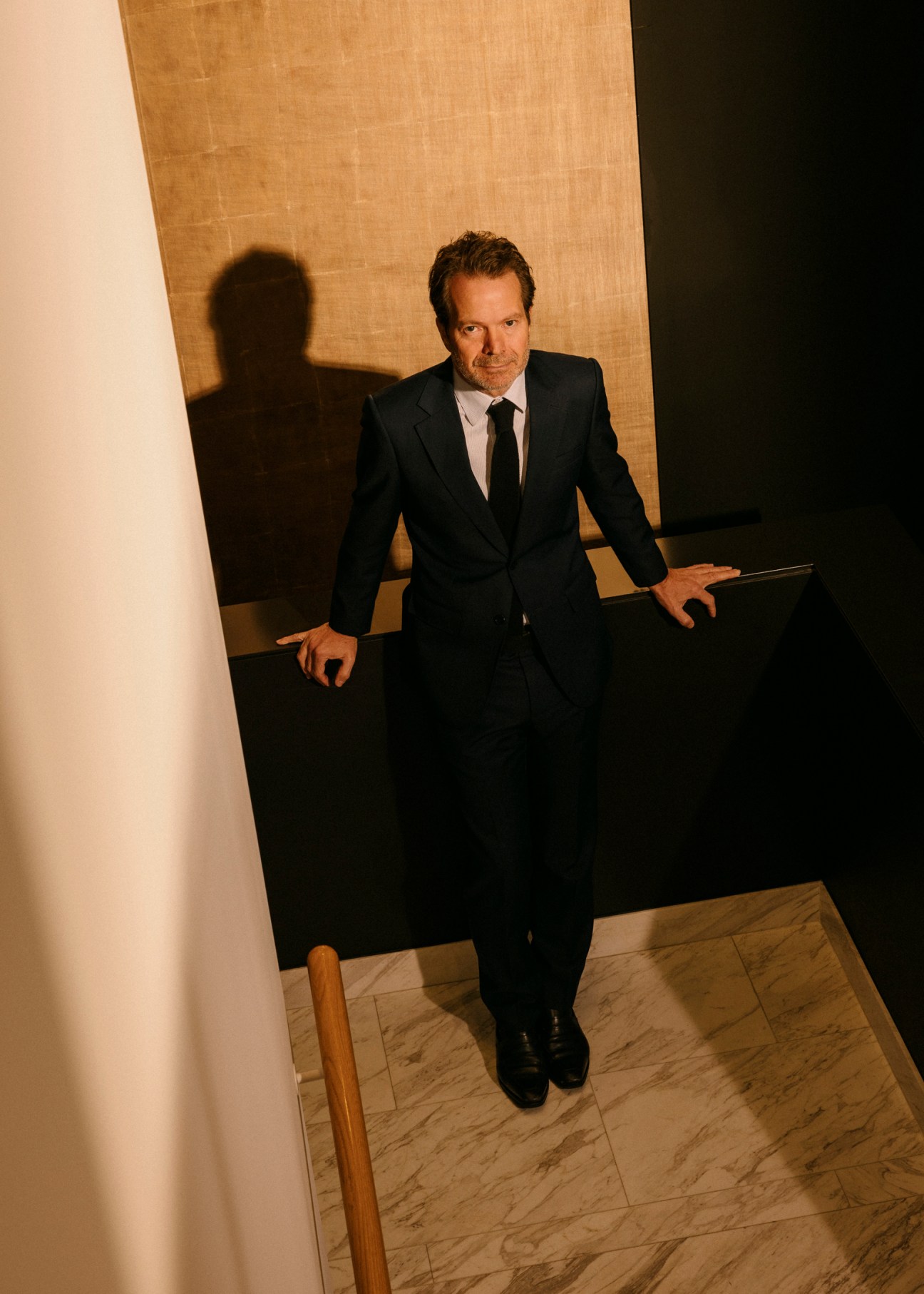
Since becoming CEO of Piaget in 2021, all eyes have been on Benjamin Comar and his ambitious plans to restore the company to its former glory. Founded in the small Swiss village of La Côte-aux-Fées, the company was primarily a movement-maker until a turning point in 1957 when Piaget developed the ultra-thin 9P hand-wound mechanical movement. The 2mm-thick calibre revolutionised watchmaking and Piaget started setting its slim movements into daring watches and jewellery, becoming the go-to maison for the jet set of the Swinging Sixties: Miles Davis, Ursula Andress, Andy Warhol and Salvador Dalí were all fans.
In more recent times, however, Piaget has notably underperformed its fellow Richemont-owned watch brands, such as Vacheron Constantin and A Lange & Söhne. According to latest report by Morgan Stanley and consultancy LuxeConsult, Piaget’s turnover is 2023 was CHF278m (€290m), which represented 3.8 per cent of sales at the group (and an implied market share of 0.7 per cent).
A seasoned luxury executive, Comar is well-placed to revive the brand. The native Parisian started his career at Cartier Japan and Paris in the early 1990s, eventually rising to head of product marketing. After two years in London as deputy CEO of Dunhill, another Richemont-owned brand, he left the group for Chanel. A 12-year tenure as head of watches and jewellery saw Comar build the fashion brand’s presence in the watch and jewellery space, earning watchmaking legitimacy with successful new launches, such as the Monsieur, Chanel’s first timepiece for men.
Following a stint as CEO of the LVMH-owned Repossi, Comar returned to Richemont. He has been galvanising Piaget with a specific focus on creativity – bold designs that bring together the brand’s expertise in both jewellery and watchmaking – and craftsmanship. “Creativity without craft doesn’t mean anything for me in luxury,” says Comar, who has already started attracting the attention of collectors. A new range of jewellery and cuff watches inspired by archival 1969 designs, as well as the brand’s latest high jewellery collection, sold out last year. The industry is equally seduced: in November, Piaget picked up two wins at the Grand Prix d’Horlogerie de Genève watchmaking awards – the only house to take home two gongs – in the ladies and artistic craft categories. Monocle caught up with Comar in Gstaad, where Piaget was launching the new Polo 79, a reissue of one of its most emblematic watches.
You’re no stranger to reviving heritage brands. How is Piaget different?
I learnt a lot at Cartier and Chanel. When it came to Piaget, I was drawn to the brand’s trajectory. It started as a very traditional movement supplier, known for being very rigorous with craftsmanship. It [was expected] to focus on traditional watchmaking but went the other way – towards creativity. When I joined Piaget, I spoke to the family and asked, “What happened to you guys?” They said that they didn’t want to be another watch brand; they wanted to do things that had never been done before. Piaget had collaborations before [they became mainstream] with the likes of Salvador Dalí. I’m fascinated by how this family, from a small village, made something that was creative, bold and audacious.
What does Piaget’s 150th anniversary represent?
It’s more of a kick-off, a starting point to show what Piaget is about. Not in a nostalgic way but in a forward-looking way. I always want to do more, go faster – but luxury is tradition, it takes time and we’re very happy about that. We’ve set the base for what we want to do and now we have to go and seduce our customers.
Why did you choose to launch the Polo 79 now?
Piaget is about paradoxes. The Polo 79 is a sports watch but very dressy at the same time; it’s a day watch but works well for evening; it’s a piece of jewellery but also a watch. It’s also a visible yet chic design – a result of our commitment to the traditions of watchmaking and the rigours of alpine culture.
Rather than watchmaking’s technical features, there is a strong emphasis on image at Piaget. Why is image so important?
You invest a lot when you buy a luxury piece – both money but also spirit, whether that’s love, power or another emotion. It’s about an image you want to show the world or express to yourself. The product has to be exquisite but it is also about the spirit that it represents. You’re buying an experience, a dream, a reward. It’s an emotional purchase more than a technical one. The technique is at the service of the emotion.
The Polo 79 is an all-gold watch, reflecting Piaget’s broader focus on high-end, meticulously crafted designs. In a world of growing economic uncertainty, why do you think these pieces still resonate so profoundly?
Luxury is steeped in tradition and craftsmanship – it has long been about the same techniques, which is reassuring in a world that’s increasingly virtual. Luxury has its roots in tradition and can act as a go-between, balancing traditional craft and innovation. I recently saw the launch of the Apple Vision Pro glasses, which was great, but at the same time you still need a traditional watch.
Do you see Piaget becoming a global brand?
We want to grow but we want to grow in our world. We are not a fashion brand and will never be. The values carried by Piaget are strong: this is a true connoisseur’s brand but there are more and more connoisseurs out there. People are getting more interested in luxury and what it represents: life, enjoyment, tradition. We can speak to all those needs.
piaget.com
MSC reimagines cruise travel with the launch of Explora I, a new luxury vessel
Explora I is a luxury cruise ship that can accommodate 922 passengers and 737 crew – and keeping all those people fed demands a hefty larder. On board are 550kg of Wagyu beef, three tonnes of lobster, €8,500 worth of saffron, 4,000 bottles of champagne (excluding the rare vintages) and 420,000 eggs for two weeks of sailing. That’s not forgetting the 139 cooks making 350 meals an hour during the peak dinner service.
The keeper of this long ledger is Alban Gjoka, the Italian vice-president of food and beverage at Geneva-based Explora Journeys. It is his job to ensure that there are fresh oysters at any latitude, from Norwegian fjords to Atlantic inlets, on a ship that sails all year. Gjoka meets Monocle over dinner in the Med Yacht Club, one of six restaurants onboard the Explora I. He leans back in his chair after polishing off a dessert of sweet caprese. It’s our second day at sea and we’re halfway from Miami to the Dutch Caribbean island of Aruba. Our “sailaway moment” in Florida happened to the piped-in sounds of Andrea Bocelli. Last night, there was karaoke and a Whitney Houston tribute act, which almost led to a group of faintly inebriated travel agents rushing the stage. Some facets of life onboard resemble a traditional cruise but, in other ways, Explora Journeys is trying to chart a new course.
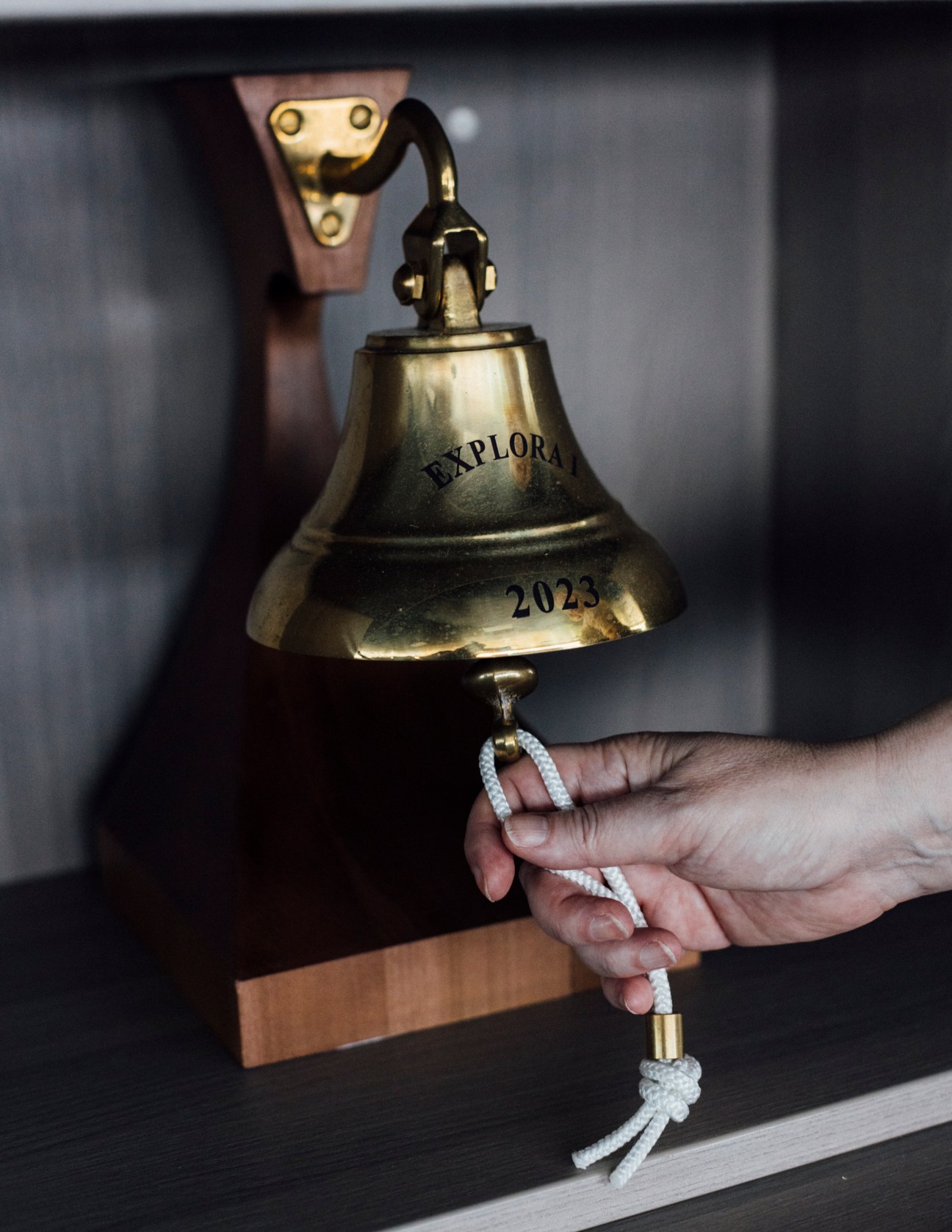
In January, Monocle spent a few days on Explora I, which started sailing in August 2023 (our sister company Winkreative previously helped to shape its branding). It is the latest venture by the Geneva-based MSC Group, a family firm with a fleet of 23 gargantuan cruise ships. With Explora, MSC is trying to attract a new generation to sea and, in doing so, reframe the cruise experience to feel like a high-end, all-inclusive hotel that can whisk you around the world. This is less a cruise, we’re told, more a journey; the staff are recast as hosts, not crew; we sleep in spacious suites and not cabins.
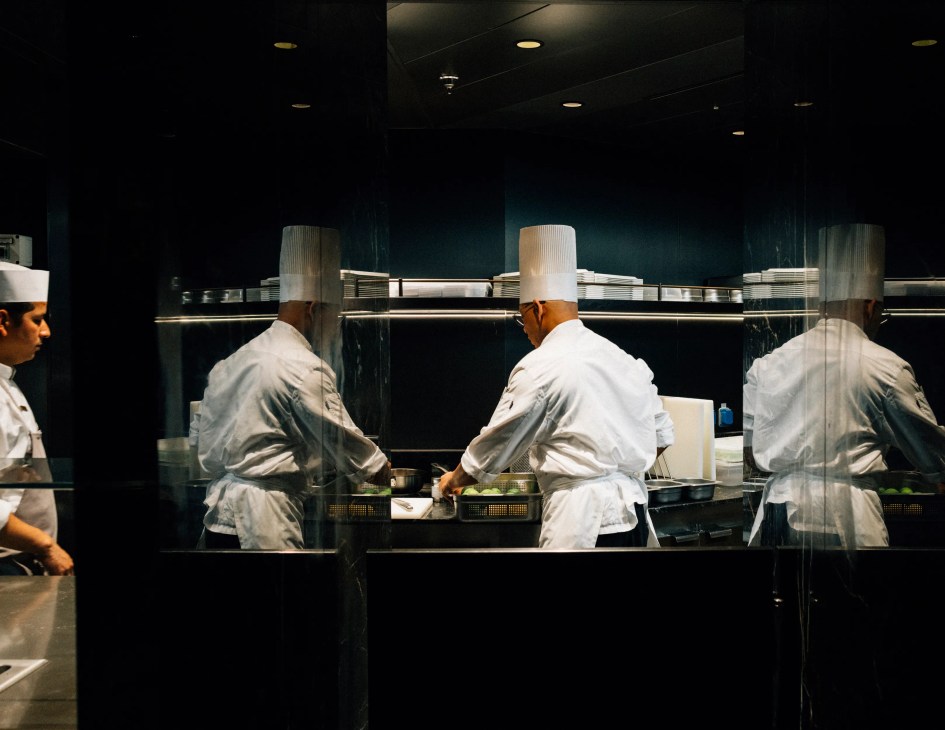
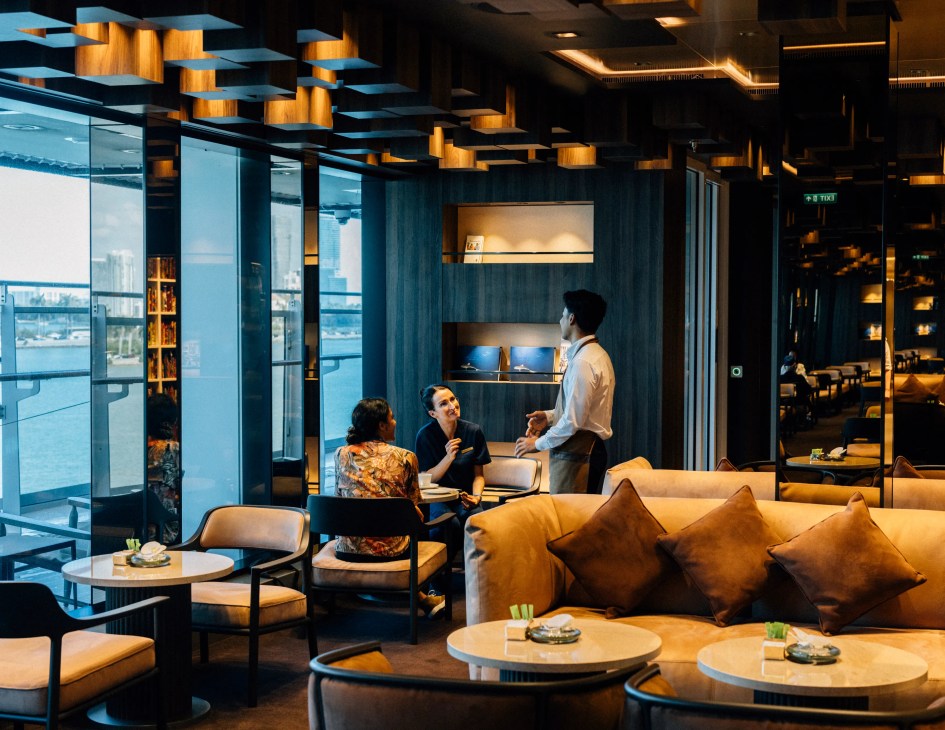
There is a lot of work to be done to change perceptions. Since the 1990s, cruise ships have swelled in size to resemble colossal floating resorts, with waterslides, nightly cabaret and thousands of cabins, all of which would inspire in many travellers – including your correspondent – a sense of dread. Explora I was not this. It’s a big ship, with 14 decks and a casino, yet the experience feels old-school, almost stately, despite the somewhat cruise-y crowd in Hawaiian shirts.
“Don’t talk to me about first seating, second seating for dinner; let me decide when I want to eat”
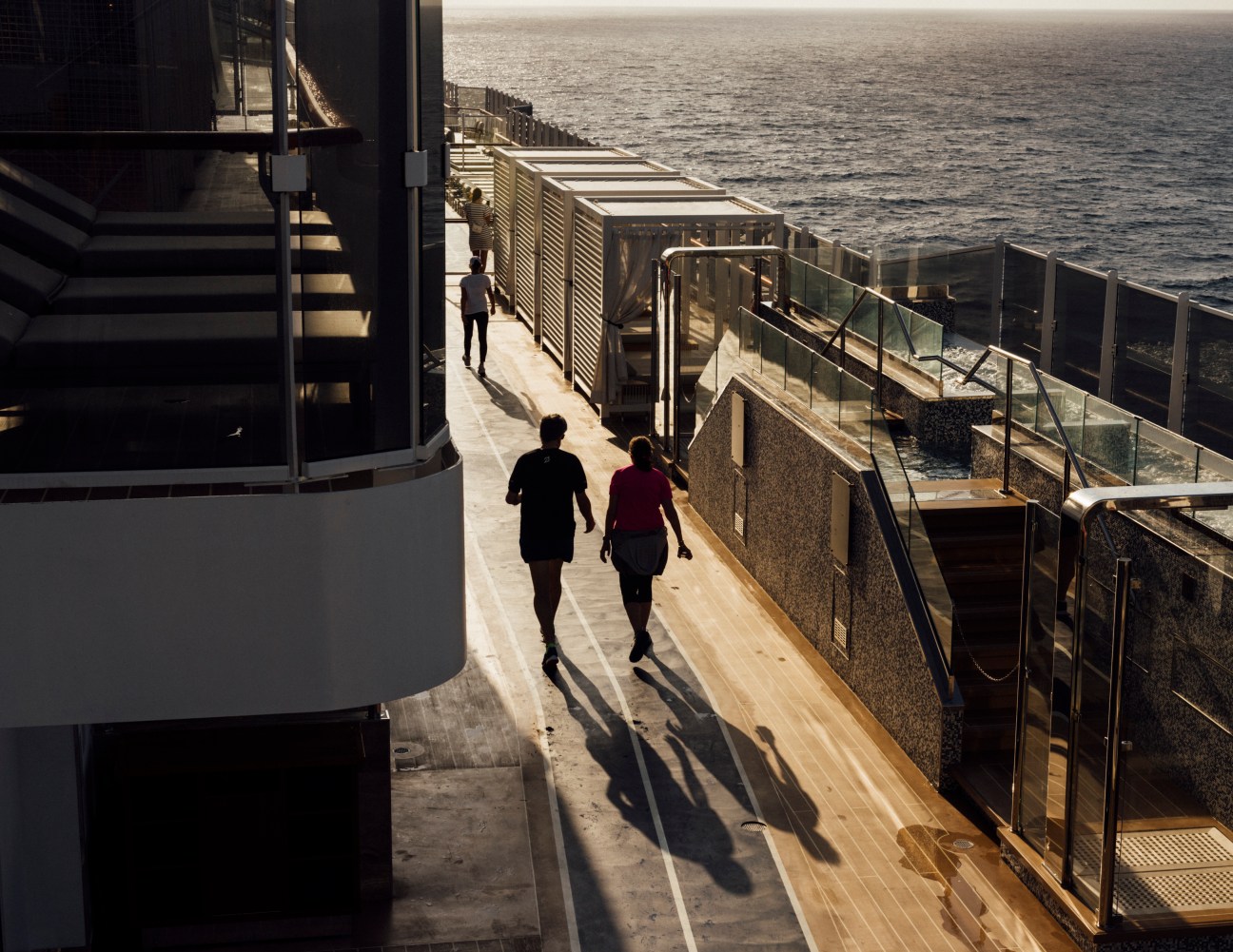
“Don’t talk to me about first seating, second seating for dinner; let me decide when I want to eat,” says Heike Berdos, the German-born general manager, referring to the regimen of dining on big cruise ships. There’s no sharing tables with strangers either. “We’re targeting people who travel well but never thought that cruising was for them.”
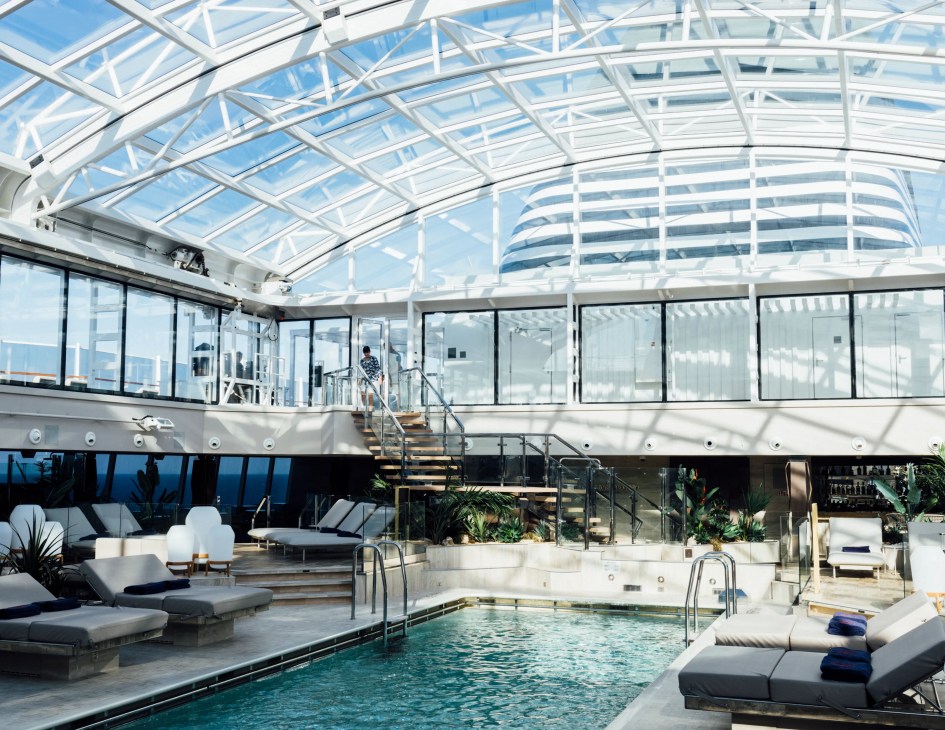
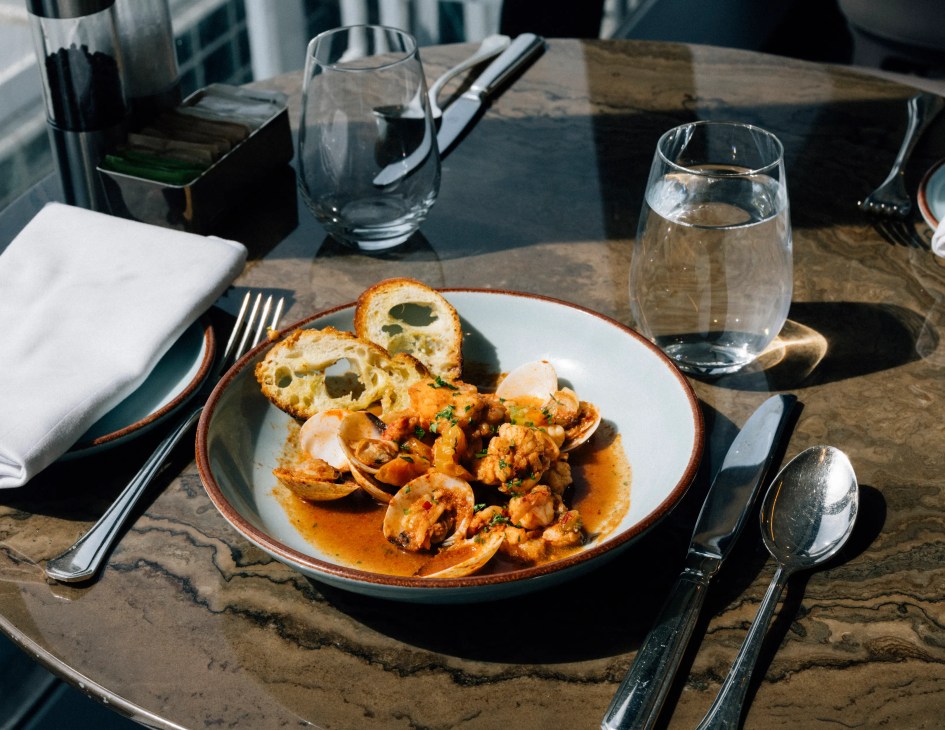
Over good coffee, we meet Emma Bengtsson, lauded Swedish chef at Aquavit in New York. She has taken over the kitchen of Explora I’s Anthologie restaurant, which invites different chefs to create a menu depending on the ship’s location. “My first thought was that it’s never going to happen,” says Bengtsson. “I’ve seen the big cruise ships and the food quality that comes with them.” Yet she has been able to serve the exact caviar dish she makes back in New York and admires the other onboard restaurants. “The hardest thing for me has been sourcing green tomatoes while at sea.”
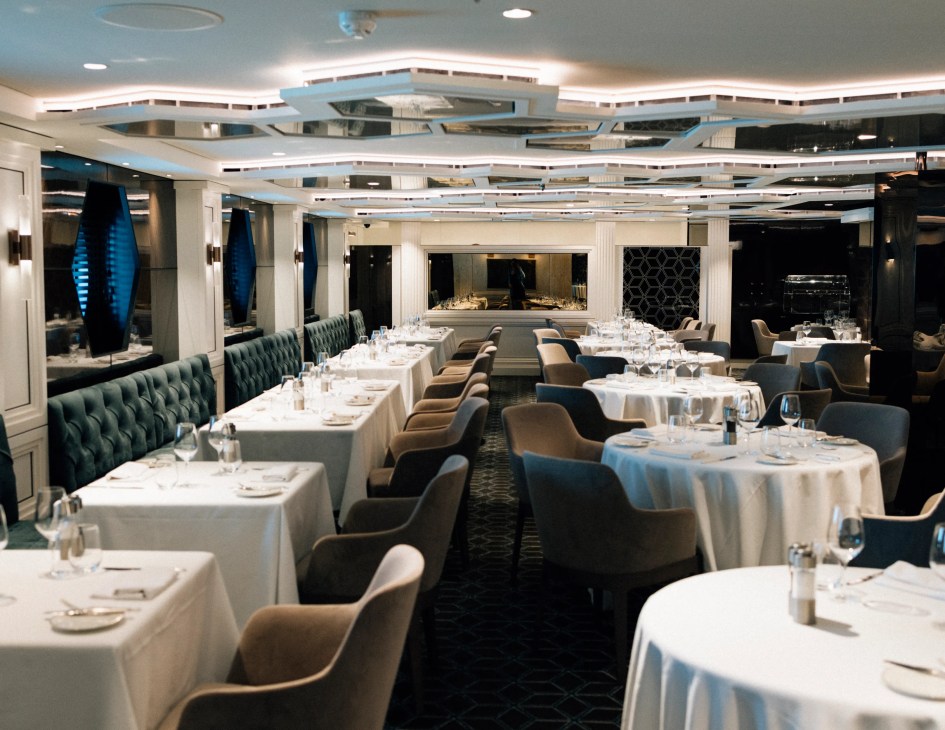
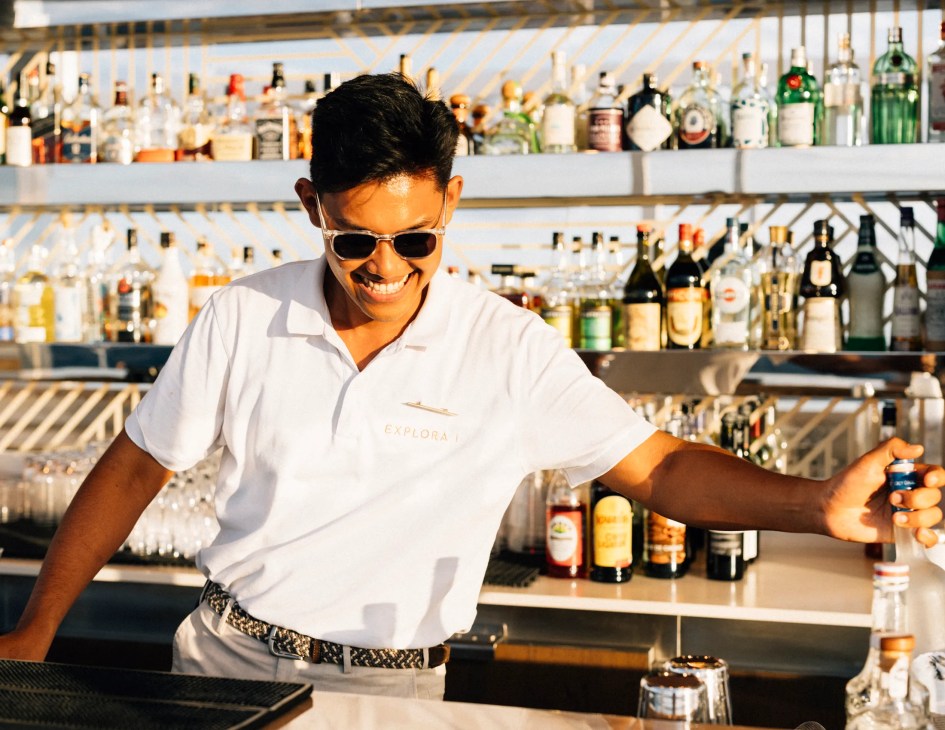
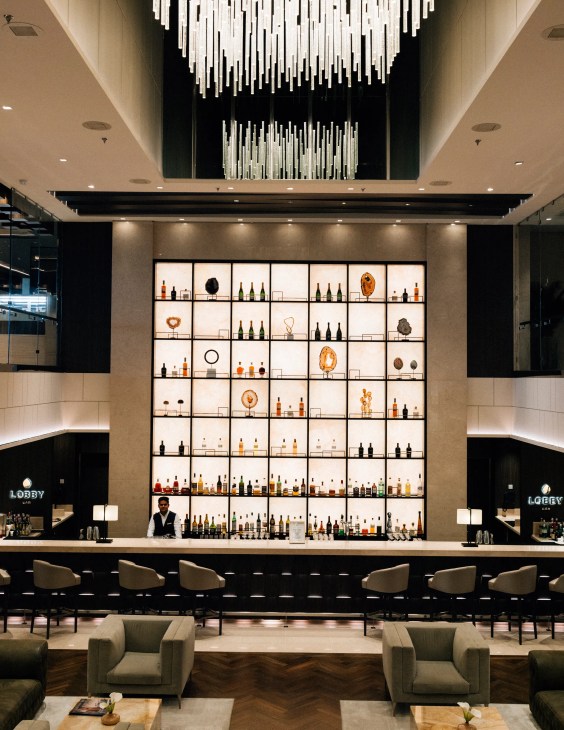
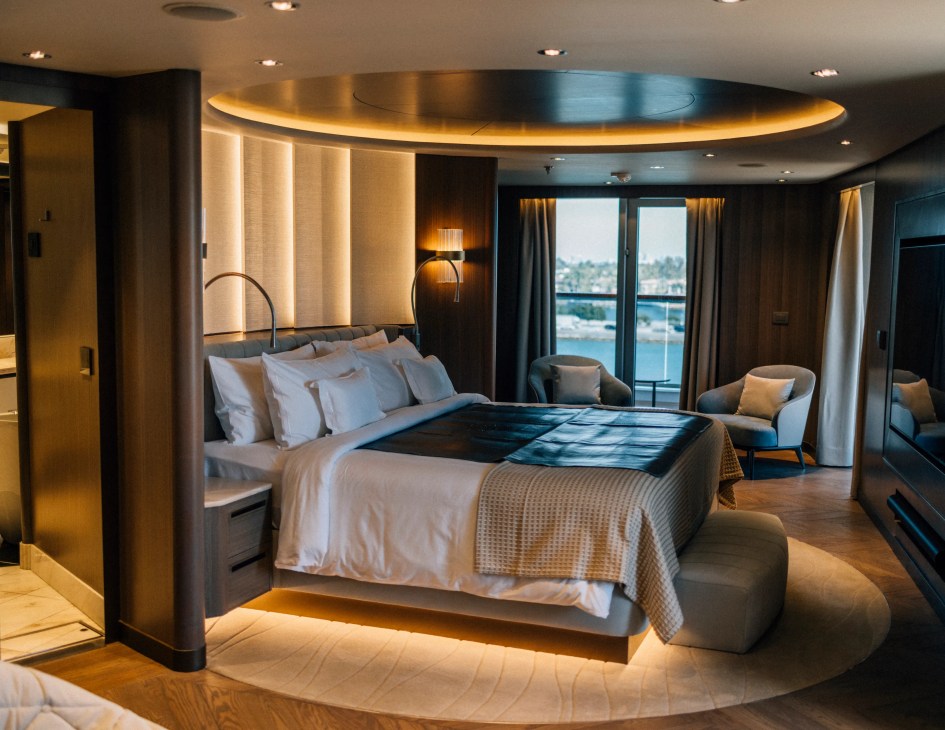
MSC is throwing a lot at this venture. Champagne flows freely, day and night, and there’s an attention to detail, from the fine tableware in the restaurants to the well-fitted cabins (sorry, suites) with his and hers jewellery safes and terraces generous enough for a sunbed. On Monocle’s voyage, there are 1.25 crew members for every passenger. Many were hired new to cruising after working at hotels in the UAE. I Wayan, the Balinese “suite host” assigned to Monocle’s suite, is ever-ready to make bookings, replenish drinks cabinets and deliver sea-legs tablets. The bartenders here remember your preferred tipple.
“We’re targeting people who travel well but never thought that cruising was for them”
Overnight, we chug into Oranjestad in Aruba, a once-quaint harbour that has become a tourist trap thanks to the cruise crowd. There is still a special joy in pulling back the curtains at dawn to find yourself arrived at a brightly coloured town in the tropics.
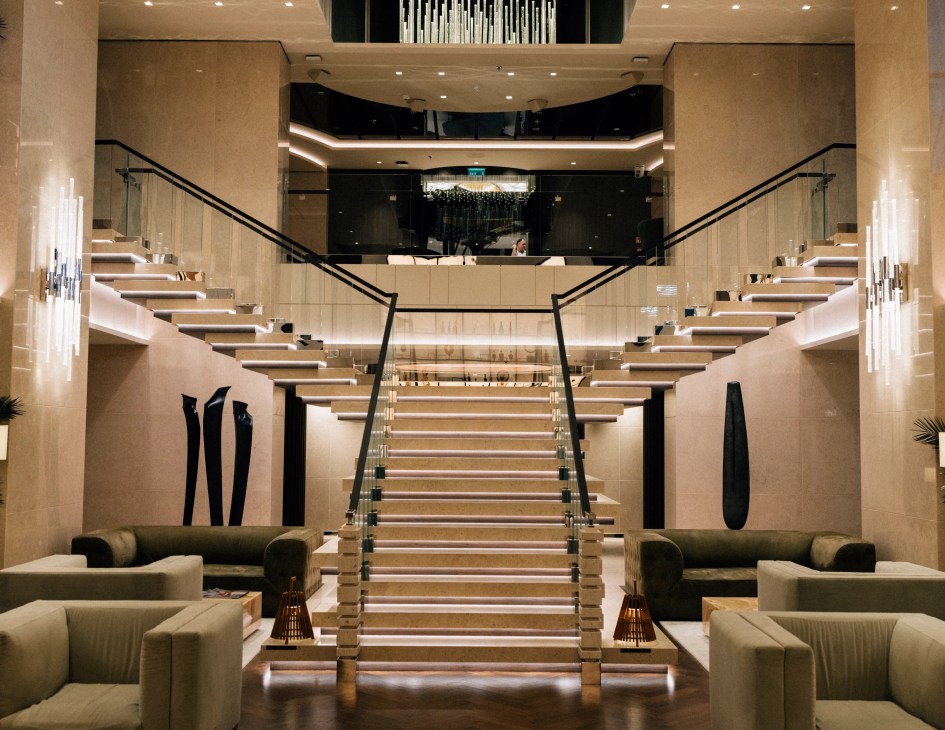
There are more than 300 cruise ships in operation globally but that doesn’t diminish the élan of sailing for those at the helm. “The bridge is like a church,” says first mate Luca Sanna, of the reverential silence of the control room. As well as technical instruments monitoring our position in port, there are religious icons on the walls and a bowl of salt, garlic and chilli to drive away bad spirits (a Neapolitan tradition). It’s still forbidden to whistle on the bridge because it supposedly calls up the winds.
“I always say to our crew that this is not a floating luxury hotel, it’s a ship,” says Captain Serena Melani, who sailed Explora I out of the shipyard. This means safety is the top priority but it’s also a maritime spirit that runs through the culture onboard. “In my experience, guests come back not because the ship they were on was beautiful but because of the crew,” she says. “There must be a human connection.”
What’s on the horizon?
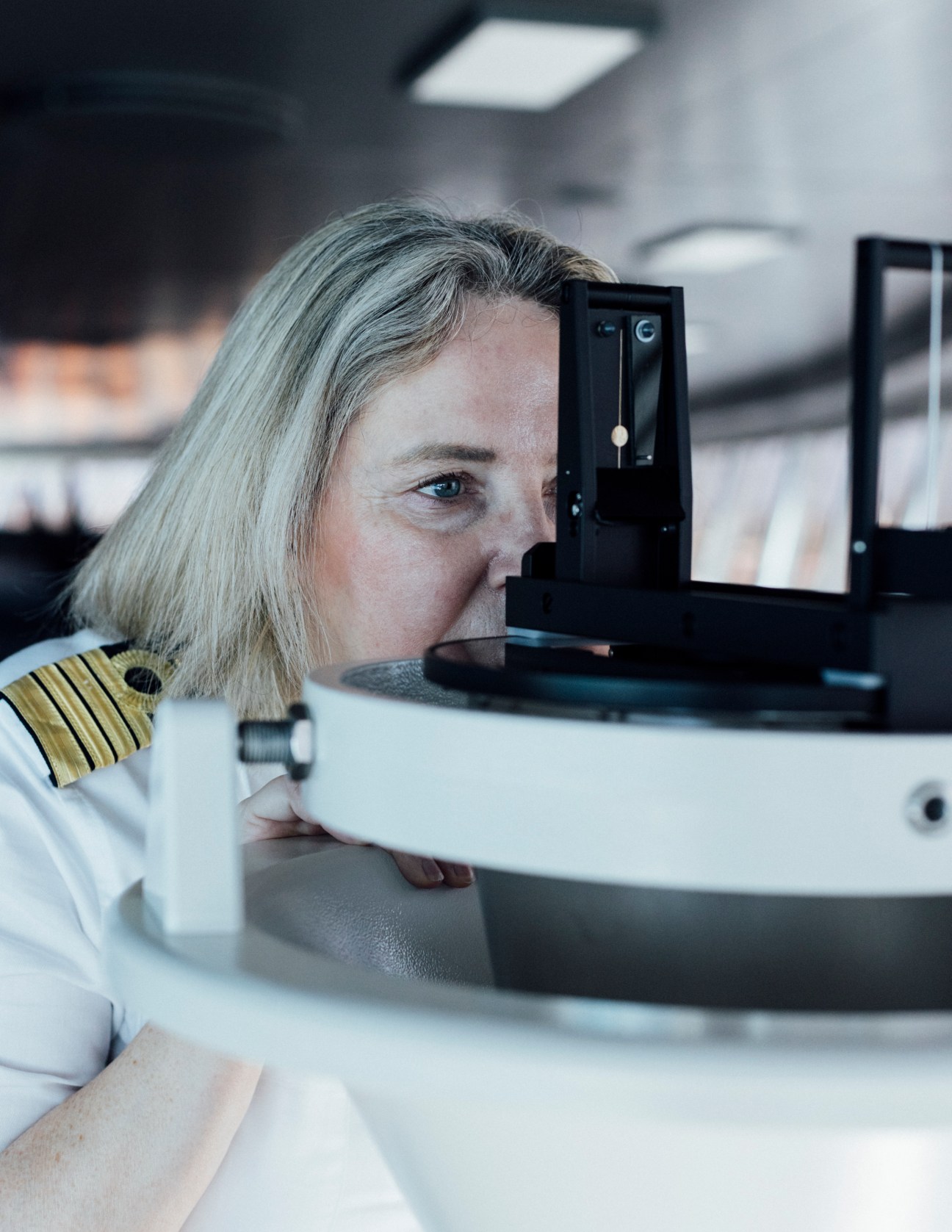
Explora wants to catch the wind of what is currently the fastest-growing tourism sector. Cruising is expected to be worth €14.6bn in revenue this year and a luxury take has been late to the game. Ritz-Carlton debuted a small ship in 2022 and a Four Seasons yacht is currently being built in the shipyard. Explora II sets sail this summer and there’s a plan to have four more identical ships sailing by 2028.
Jil Sander is bringing its modern, understated aesthetic to London
The house of Jil Sander operates in a world of its own, divorced from trends, the fashion industry’s rigorous schedules and expectations for seasonal renewal. Not that it ever really sought to be part of the collective. When founder Heidemarie Jiline Sander presented her first womenswear collection in 1973 in Hamburg, she wanted to address professional women like herself with pared-back, modernist designs: the smartest wool trousers, the most elegant outerwear and the sharpest white shirts. Her debut collection instantly sold out and, soon after, women the world over couldn’t imagine buying wardrobe staples anywhere else.
In the 1980s, Sander decamped to Milan, finding ways to participate in the city’s fashion week on her own terms: her shows were always early morning affairs, her models were fresh-faced and dressed in pared-back looks that could be taken straight from the runway to the streets. She disregarded editors’ preference for late-night events, supermodel appearances and loud design, even if it meant that she rarely made front-page news. She was more interested in making clothes that enhanced the day-to-day lives of men and women – and did just that throughout the 1980s and 1990s, often referred to as the brand’s heyday.
The 2000s were less stable, as Sander stepped down as creative director (she returned briefly in 2003 and 2012). The business changed many hands: from the Prada Group to private-equity firm Change Capital Partners, then Japan’s Onward Holdings Co and finally the current owner, OTB Group. Under OTB, the brand has reclaimed its individualist spirit and, along the way, regained cultural relevance and legions of new, loyal customers. This is thanks to Luke and Lucie Meier, who took over as co-creative directors in 2017. The husband-and-wife team didn’t set out to revive Jil Sander by following the usual branding playbook, often requiring a new logo, a highly publicised ad campaign and drastic change in design direction. They chose to focus on looser interpretations of Sander’s original independent spirit and sense of pragmatism, building a design language of their own – one that is based on intuition, the imagery they are drawn to, the architecture that inspires them and the conversations that they have with each other. “Lucie is always right,” says Luke, jokingly.
The designers stress that they don’t believe in hierarchies. In their studio in Milan, there’s always an open dialogue and they encourage everyone to add their own perspective to the briefs they set at the beginning of each season. “Interestingly, we usually arrive exactly where we set off at the beginning but it’s also important to leave the door open for the unexpected and allow a lot of meandering along the way,” says Luke, who applies the same attitude to his own life and career. Born in Canada, he moved from his home in Vancouver to study finance in Washington and business policy at Oxford University, before studying fashion at New York’s Fashion Institute of Technology and Florence’s Polimoda. He became Supreme’s head designer after a chance meeting with its founder, James Jebbia, and went on to co-found the streetwear label OAMC. Lucie, who spent her early years in the Swiss village of Zermatt, followed a more traditional path into the industry, studying fashion marketing at Polimoda (where the two met) and going on to work for some of the most established houses in Paris, including Louis Vuitton and Dior.
Their experience stretches from rarefied haute couture to mainstream streetwear design, from the offices of dynamic New York start-ups to the ateliers of Paris’s most storied houses and from quaint, countryside living to life in urban, fast-paced fashion capitals. But the couple refuse to attach themselves, or Jil Sander, to any labels, instead bringing the full breadth of their identities and rich backgrounds into their work. “You could say that we’re Canadian and Swiss but we moved around so much in our formative years, it doesn’t feel like we’re from one single place,” says Lucie. “Our studio is the same. It’s fully international and everyone brings their own experiences and points of view.” At a time when brands are doubling down on national identity, the Meiers are going against the grain. “That’s an asset, right?” says Luke.
“Minimalist” is another label that the pair are eager to shed from the Jil Sander brand. Despite their affinity for neutral colour palettes and timeless silhouettes, including plenty of tailoring, they believe that “minimalism is old and boring”, and opt for simplicity or purity instead. “Even if you do something very bold, the approach can still be simple,” says Lucie, while Luke nods in agreement. “Pure or simple doesn’t mean boring, while minimalism can veer towards it,” he says. “You can have something fully embroidered or something in colour but it’s still a pure version of that design. There’s a bit more energy in this approach.”
This is why they always make a point to sprinkle playful details into their collections. Their autumn/winter 2023 range incorporated splashes of pastels, checkerboard patterns and 1990s-inspired colour-block leather, which took everyone by surprise. “The 1990s were a formative time for us, from the music to the cultural exchange that was happening,” says Luke, who is dressed in a pair of black-and-white leather trousers from the collection. “It felt inspiring and positive. I was studying at Oxford, I lived in New York for a while and felt that there was this open dialogue around the world, while now it seems like things are getting more insular and people want to close borders.” For Lucie, who is dressed in the kind of elegant black-and-white tailoring you would more easily associate with Jil Sander, the element of surprise remains important. “People might already expect something when they come to our shows or our shops but we need to exceed those expectations.”
That was also the thinking behind Jil Sander’s new retail concept, formally introduced on London’s Bond Street this year. The aim was to surprise customers by marrying the purist design that the brand is known for with something warmer. “It’s easy to make something simple,” says Luke. “But to do something that’s simple but also has personality, soul and a warm energy is actually very difficult.” “It comes down to considering everything from colour to materials, and the small details such as the curves on the shelving. It all comes together to create this intimacy.”
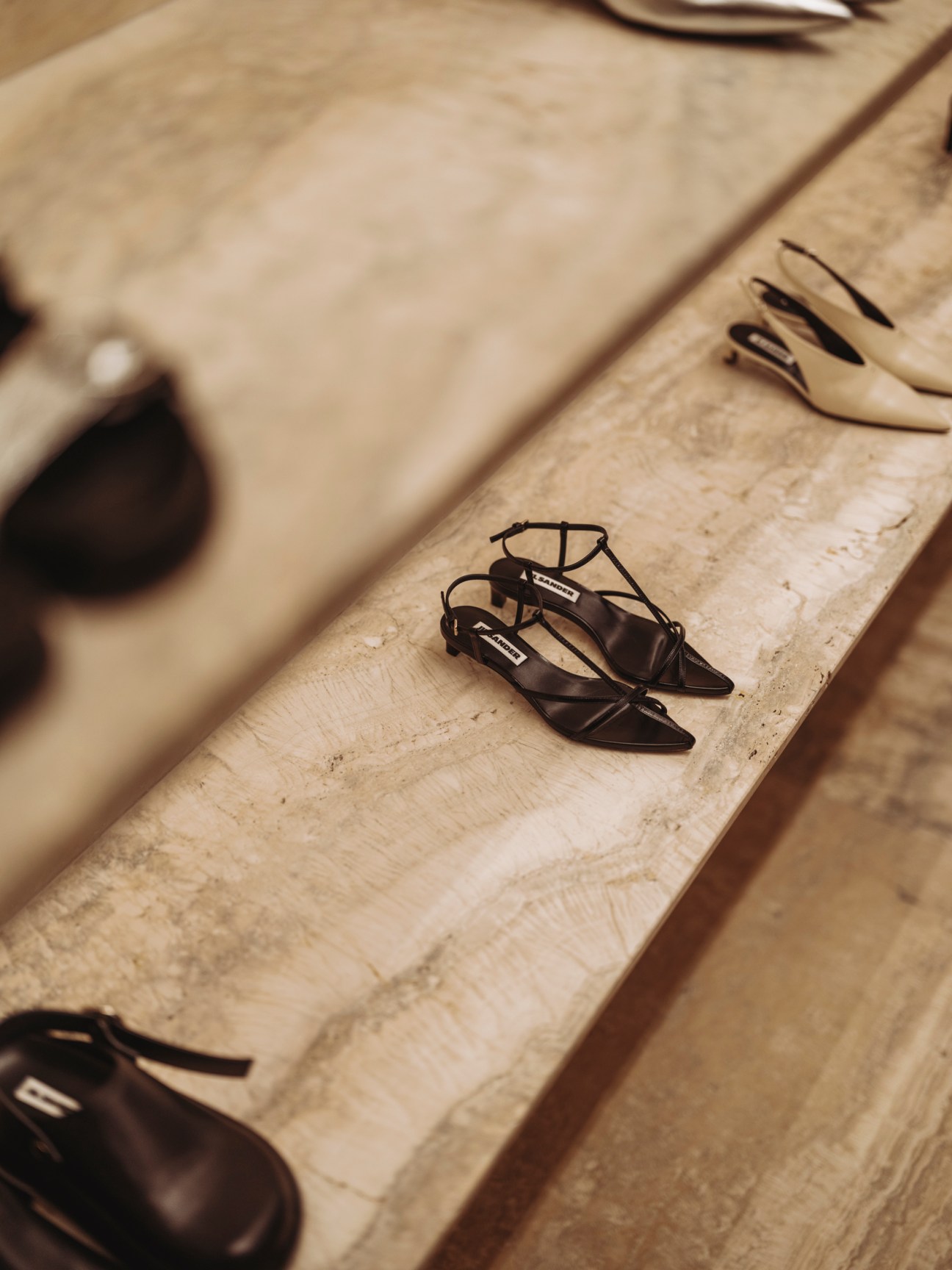
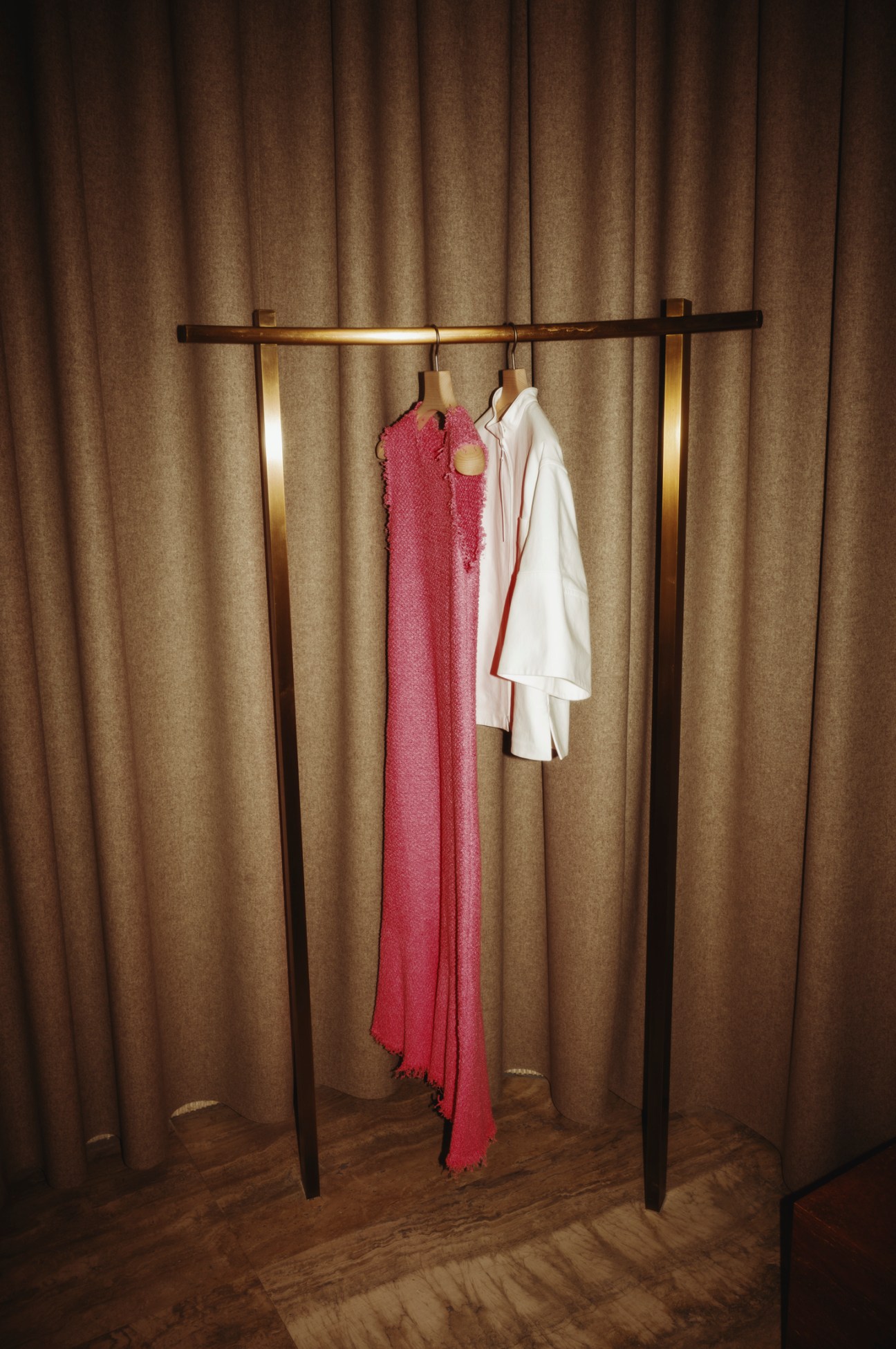
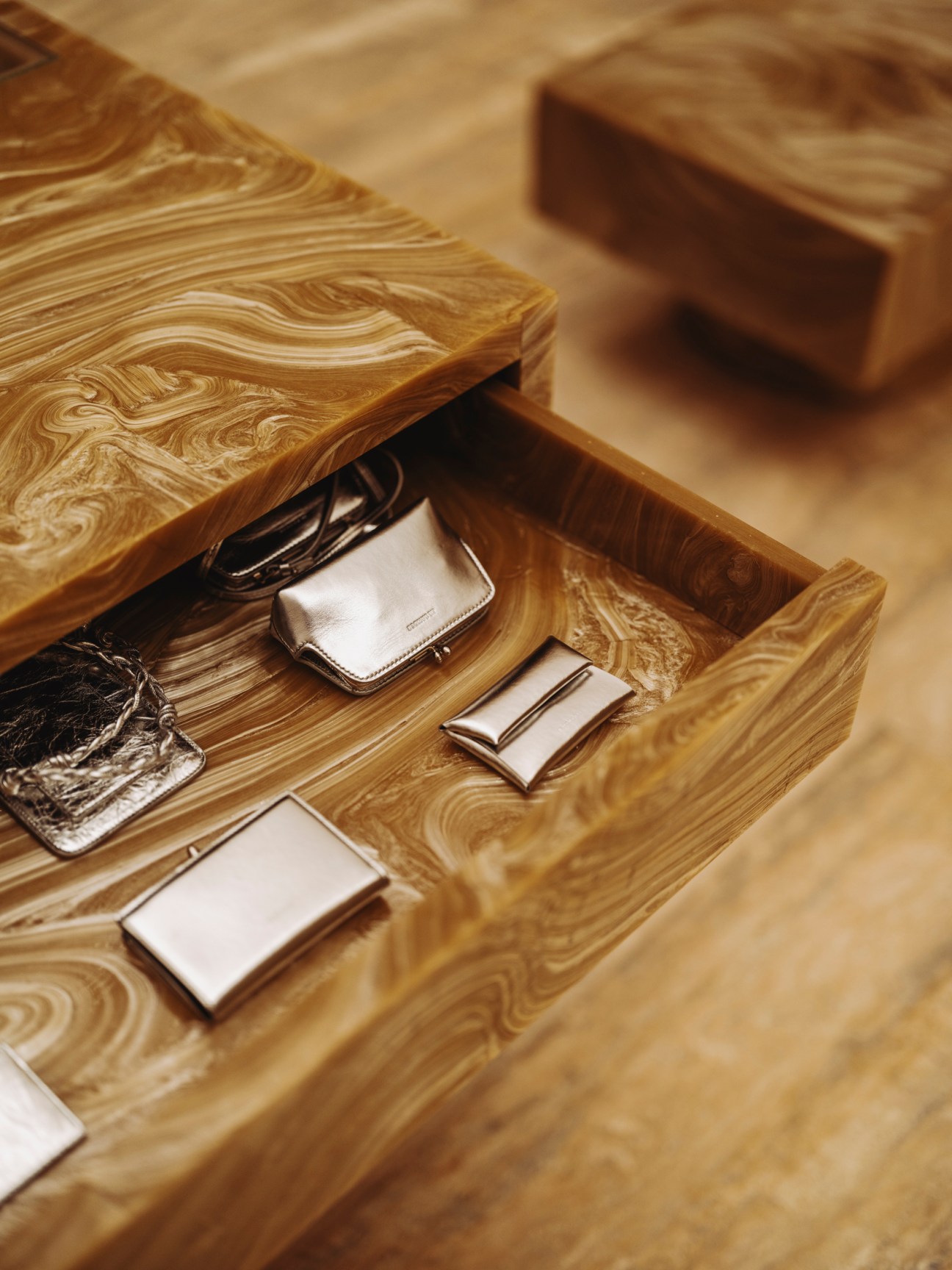
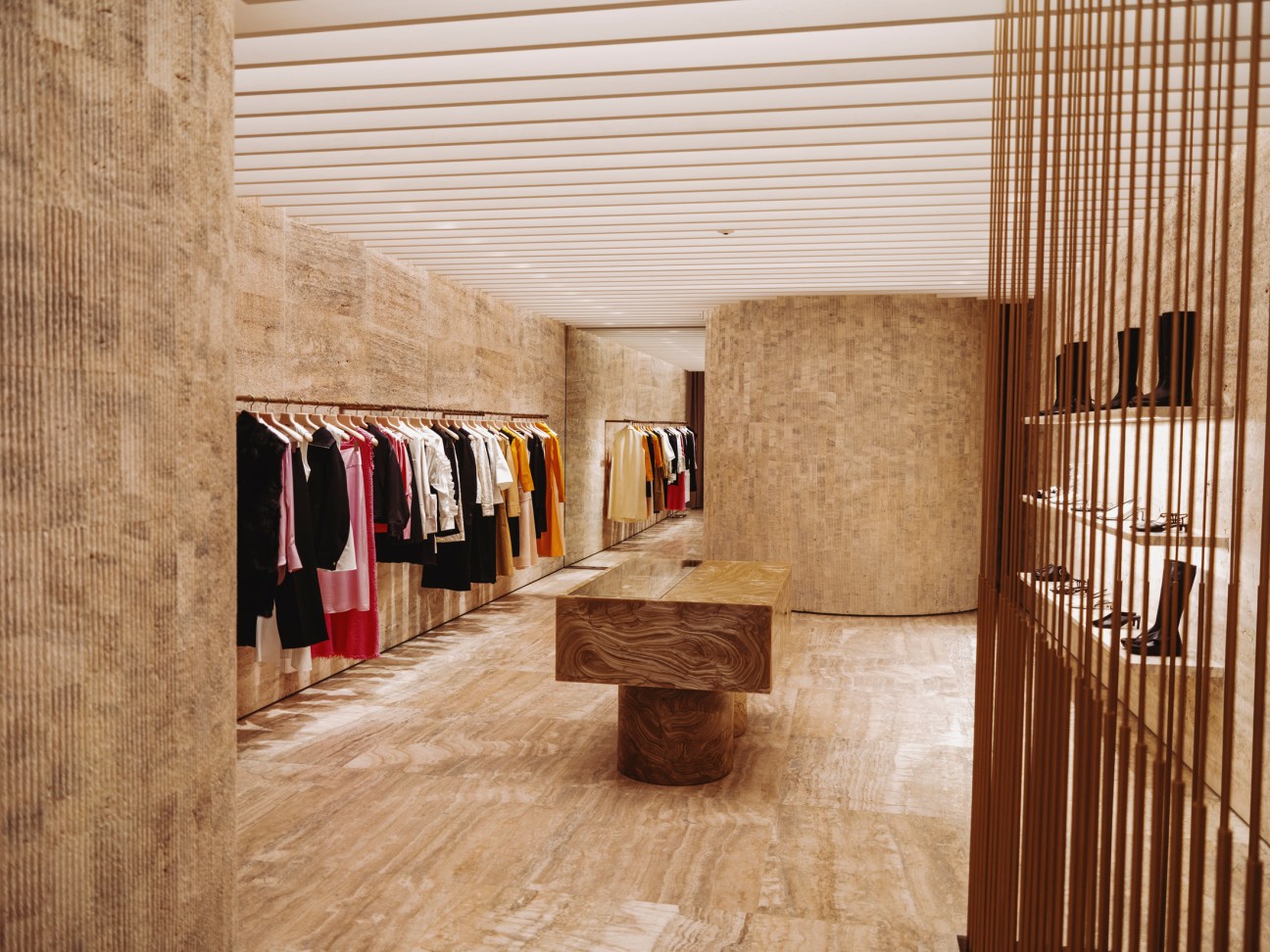
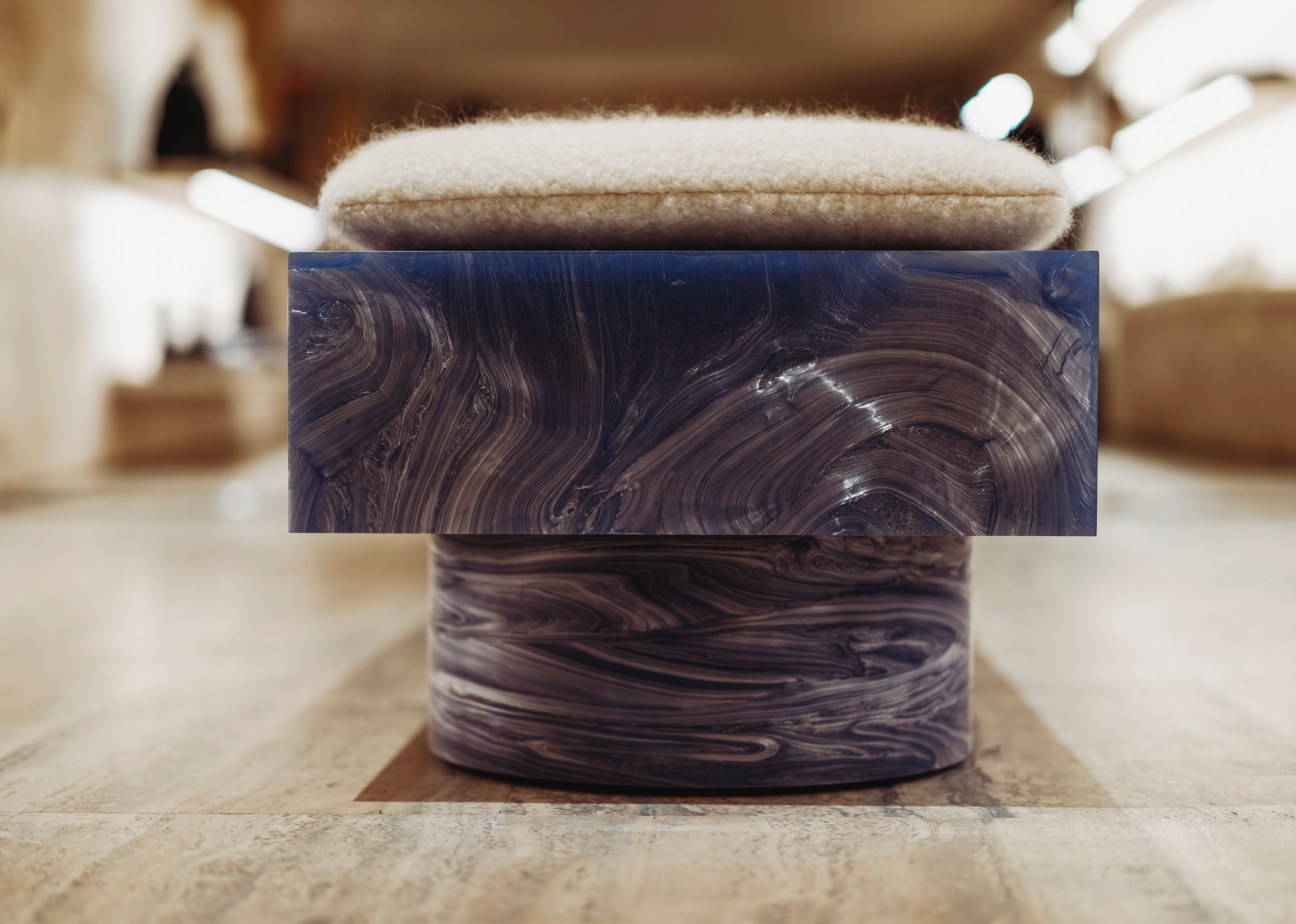
Indeed, the new space feels like a breath of fresh air on Bond Street, where new openings have become less frequent of late. At the door, smiling staff in crisp white shirts set the tone, while inside, the sense of warmth that the Meiers were aiming for is immediately felt through the use of raw travertine, brass poles that create more private, intimate sections and subtle touches of colour, like the pair of silver-blue benches, created using recycled CDs. There’s enough product on display to encourage browsing – a refreshing change from current design trends where shop floors are sparse and boutiques resemble museums. “The idea of slick, quite intimidating spaces is in the past,” says Luke. “There needs to be an element of discovery and you should feel like you’re having a unique experience. The sounds, the interaction with people, need to be at a very high level. This isn’t just a place where you come and pick something up; it’s a place to experience.”
Despite the ephemeral nature of fashion, the Meiers apply this long-term thinking to all their projects, whether retail design, their seasonal collections or their ongoing print project, Jil Sander Publishing. Their latest volume, Manchester, was made in collaboration with UK photographer Chris Rhodes, whose portraits of musicians and DJs, such as Jeff Mills, reflect the designers’ fascination with the 1990s. “We don’t like loud, online [communication],” says Luke. “With print there’s a curatorial element: every page deliberately follows the next rather than having a series of hyperlinks that send you into a labyrinth,” says Luke. “Having the perspective of someone like Jeff Mills about the late 1990s was so interesting because there are so many parallels with what’s going on today. Technology was becoming part of people’s daily lives and there was more information exchange – the difference was that there was more optimism back then. We want to encourage people to think a little bit more like that again, instead of seeing darkness everywhere and thinking that artificial intelligence will destroy the world.”
At a time of global uncertainty, using creativity to inject a dash of optimism into the world is what the Meiers are ultimately hoping to achieve. “We’re not naive enough to think that what we’re doing is saving the world in any way,” says Luke. “But if we can inspire someone, work with great artisans who care about what they’re doing, that’s really important. In the end, it’s about good materials, good people, good design and a rigorous thought process – that’s our medium for commenting on the world.”
North Bennet Street School keeping American craft alive
“There’s something fundamentally human and satisfying about working with one’s hands,” says Sarah Turner, president of the North Bennet Street School (NBSS), which was founded in 1881. A metalsmith and jeweller, Turner is standing in its spacious lobby in Boston’s historic North End neighbourhood. The room doubles as a gallery that showcases handmade objects including a wooden Windsor chair, a Queen Anne writing desk and leatherbound books. These are just a few examples of what the students here can learn to make.
When Monocle visits, the students have just returned for the semester and the red-brick building, a former printing press and police station, is buzzing with the sounds of people tinkering. Some 150 full-time students are enrolled in the school on programmes in everything from bookbinding to violin-making and repair, preservation carpentry, furniture-making, piano technology, jewellery and locksmithing.
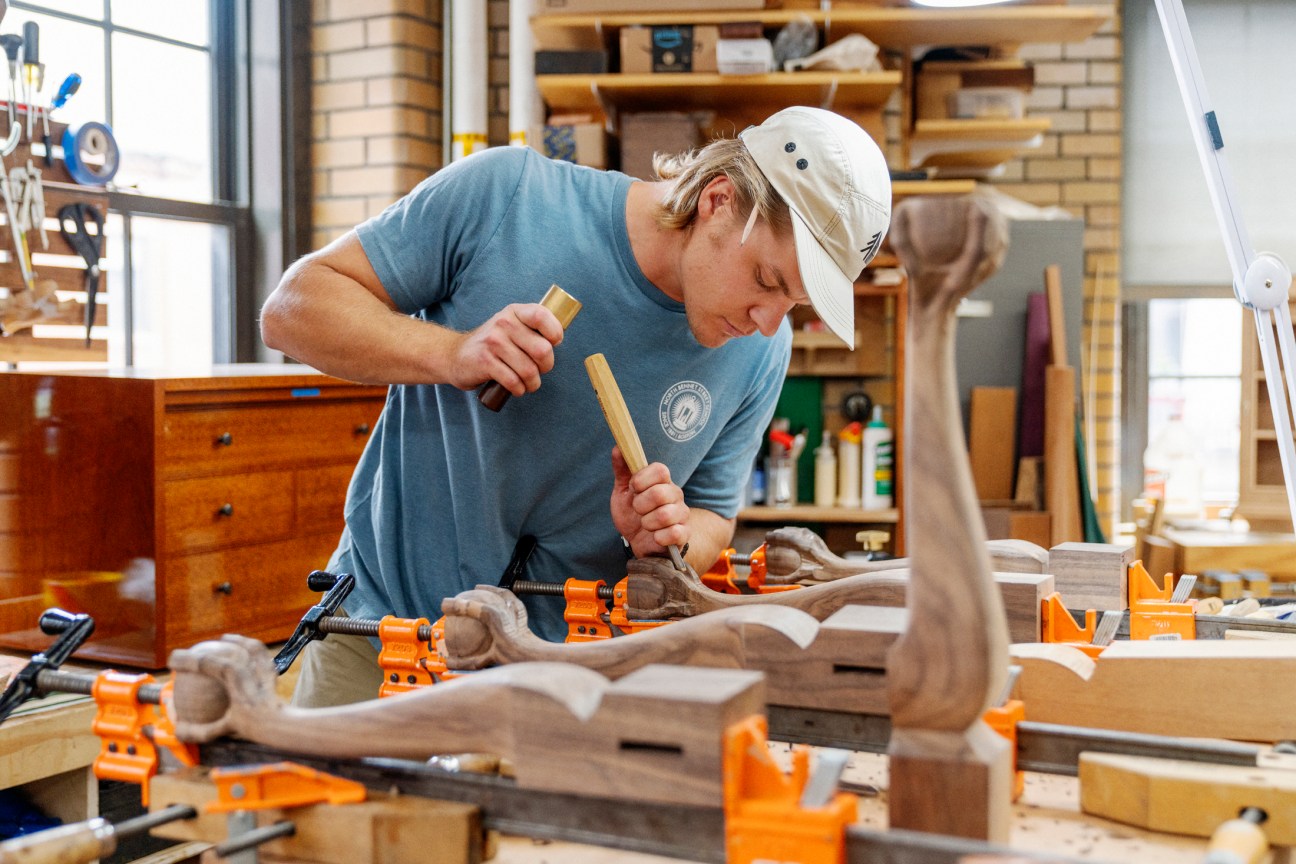
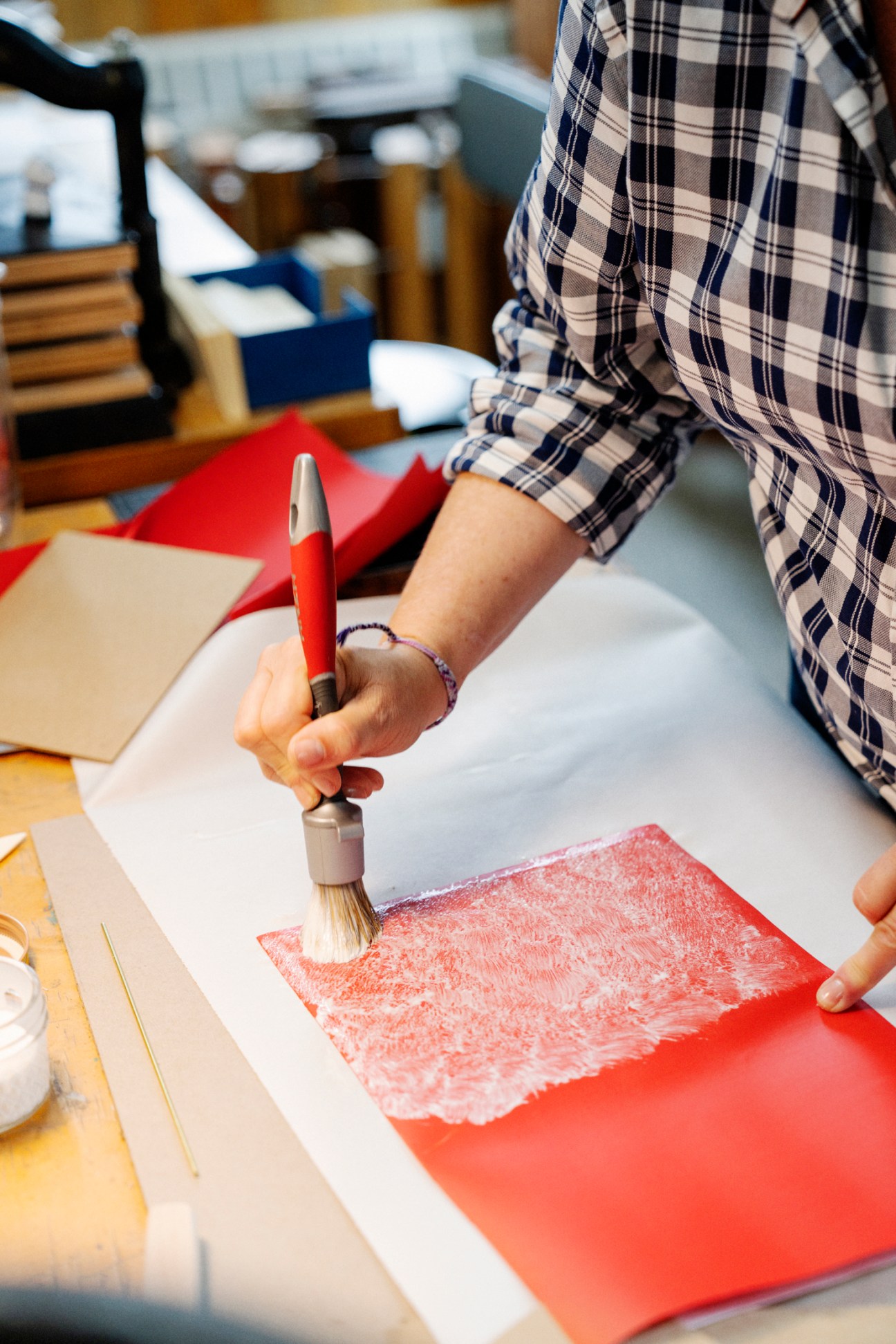
Courses at the NBSS are taught using the Sloyd Method, a 19th-century Scandinavian teaching system designed to cultivate hand skills. The school’s motto – “A good life, built by hand” – reflects this tactile approach. Any modern machine tool that’s used in these workshops is there to supplement handheld ones, not replace them. “We are creating a generation of people who are capable of using the latest technology but who can also use the tried-and-true methods of old-fashioned hand craftsmanship,” says Turner.
As niche and Old World as it sounds, inquiries into courses at the NBSS have increased by 45 per cent over the past three years. Turner has her suspicions as to why. “People are reconsidering how they want to live and we shine a light on an appealing alternative.” Students, she says, are attracted to the idea that it’s possible to swap today’s screens, offices and tertiary academic courses for a seemingly bygone way of life: plying hands to a trade and building a viable career in the wood shop or bindery.
“We are creating a generation who are capable of using the latest technology but who can also use the tried-and-true methods of old-fashioned hand craftsmanship”
First, though, one must become a master craftsperson. No former experience is necessary but those who are admitted must commit themselves to punctuality and put in the hours – sometimes 10 hours a day, five days a week. Despite these rigours, they arrive from across the US and range from recent high school graduates and career-changers to retirees who are ready for reinvention.
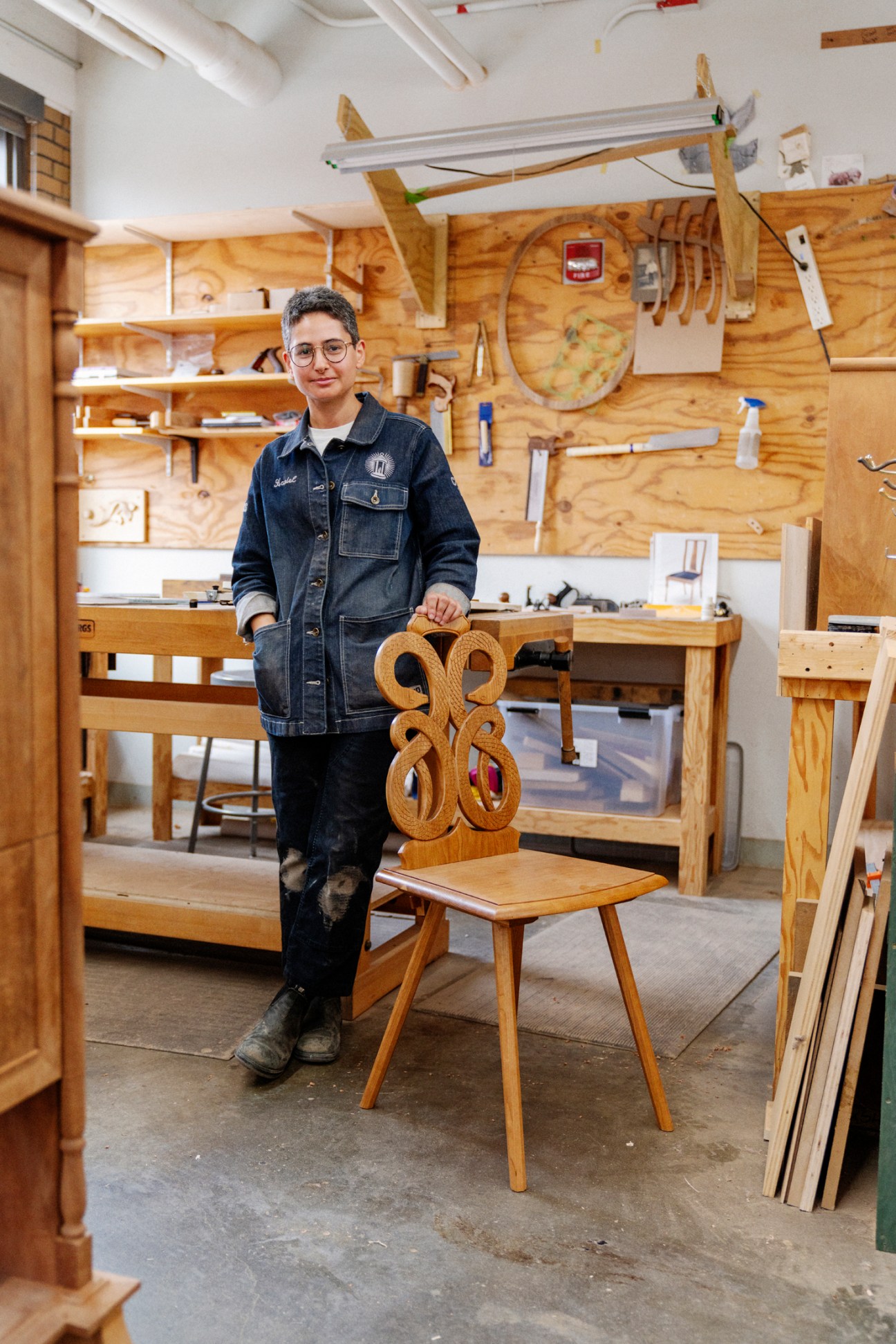
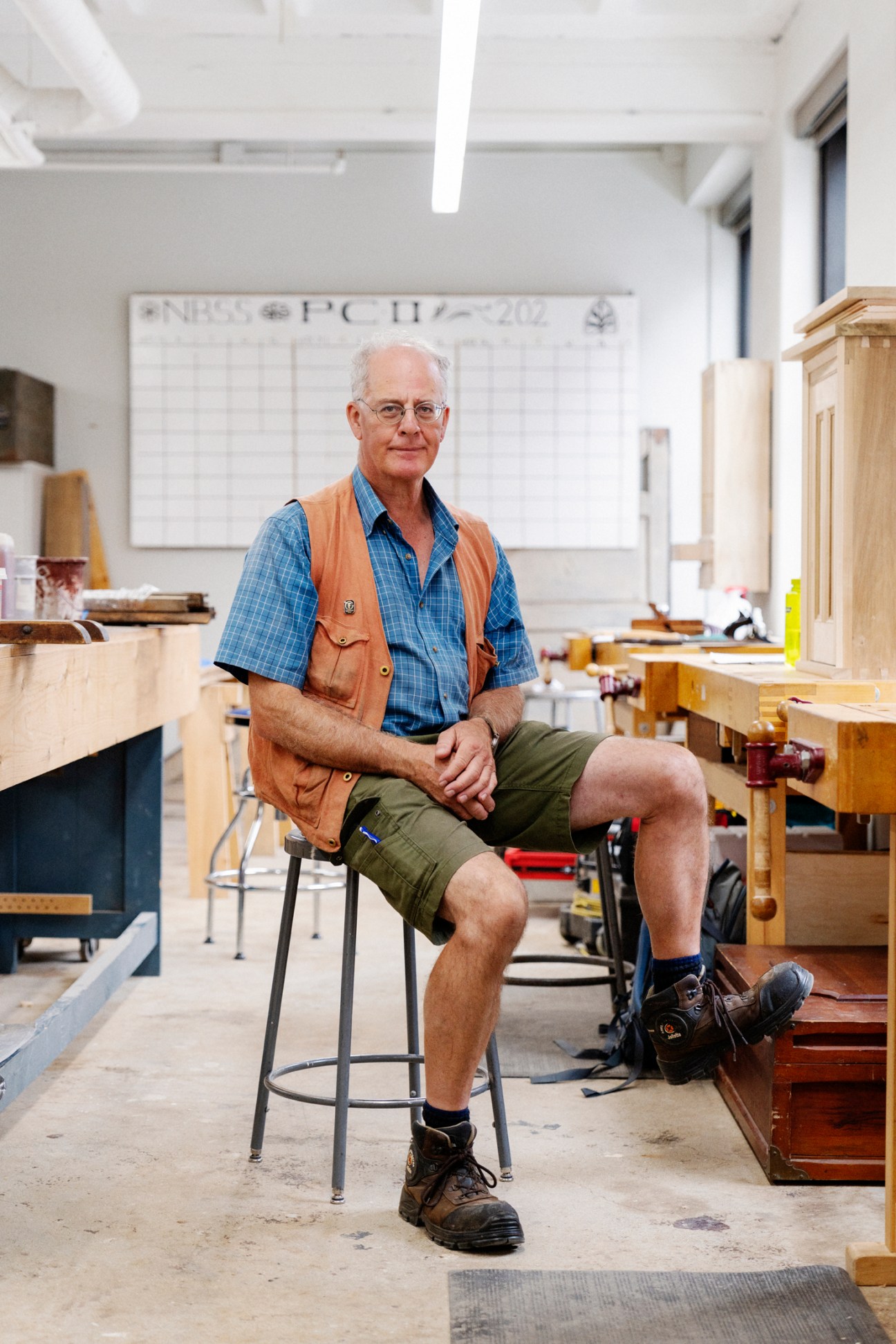
The first class that Monocle visits is preservation carpentry. Here, students learn how to maintain historical buildings – a fitting course for a state and city with so many pre-20th-century buildings. In a large, light-filled room, students mill around heritage window sashes that they are repairing under the watchful gaze of their instructor. They will clean the panels, rebuild them with linseed-oil putty and paint them, before the sashes are returned to Memorial Hall in Charlestown, Massachusetts, an 18th-century landmark.
Among them is Matthew Horn, who left a steady, senior-career technology job at Google to study here. “I feel way more alive working with my hands than when I was staring at computers all day,” he says. Not far away is Maya Meltsner, who relocated here from Washington in order to pursue her passion. “I left my job where I worked as a legal administrative assistant for five years,” she tells Monocle, while manoeuvring around a sash with utmost focus. “And before you ask, no, there’s no going back.”
Elsewhere in the building, in a hushed, slightly darker room, we find the bookbinders. “This is a very Boston programme,” says instructor Jeff Altepeter. “So many poets and writers come from here: Emerson, Hawthorne, Alcott.” Looking around the room, we see a quintessentially bookish crowd: eight people at their lamplit desks, surrounded by stacks of paper and books. Here, they are busily repairing cloth and leather bindings.
Most books today are bound mechanically but collectable editions and leather volumes are often still put together by hand in small batches. Many of these students will go on to be the US’s future binders, who will keep this tradition alive. Among them is India Patel. “I used to work for a private press,” she says. “Though I was dealing with books, no one told me that there was this pathway that involved making them physically.”
As niche and romantic as these industries might seem, graduates leave the NBSS with a strong chance of securing employment: the school maintains a 70 per cent employment rate across the board, with some courses boasting closer to 90 per cent. “This is not an art school; it’s a trade school,” says Turner. “Jobs are paramount. These industries might sound obsolete at a time when everything is increasingly digital but there’s still a need for them. We’re replenishing the talent pool.”
The NBSS’s practical ethos can be traced all the way back to its founding in 1881. Women’s rights and education reformer Pauline Agassiz Shaw set up the institution in order to train immigrants, who were arriving in Boston in their millions in the 19th century. While much has changed since then, the NBSS maintains its original emphasis on hand skills and its commitment to education and jobs.
Woodworking has always been a key focus of the school. Ask any wood-based craftsman in the US and they will almost certainly be familiar with the NBSS. So it is fitting that the furniture-making course is by far the most popular programme. Its headquarters is found on an upper level in a large, U-shaped room.
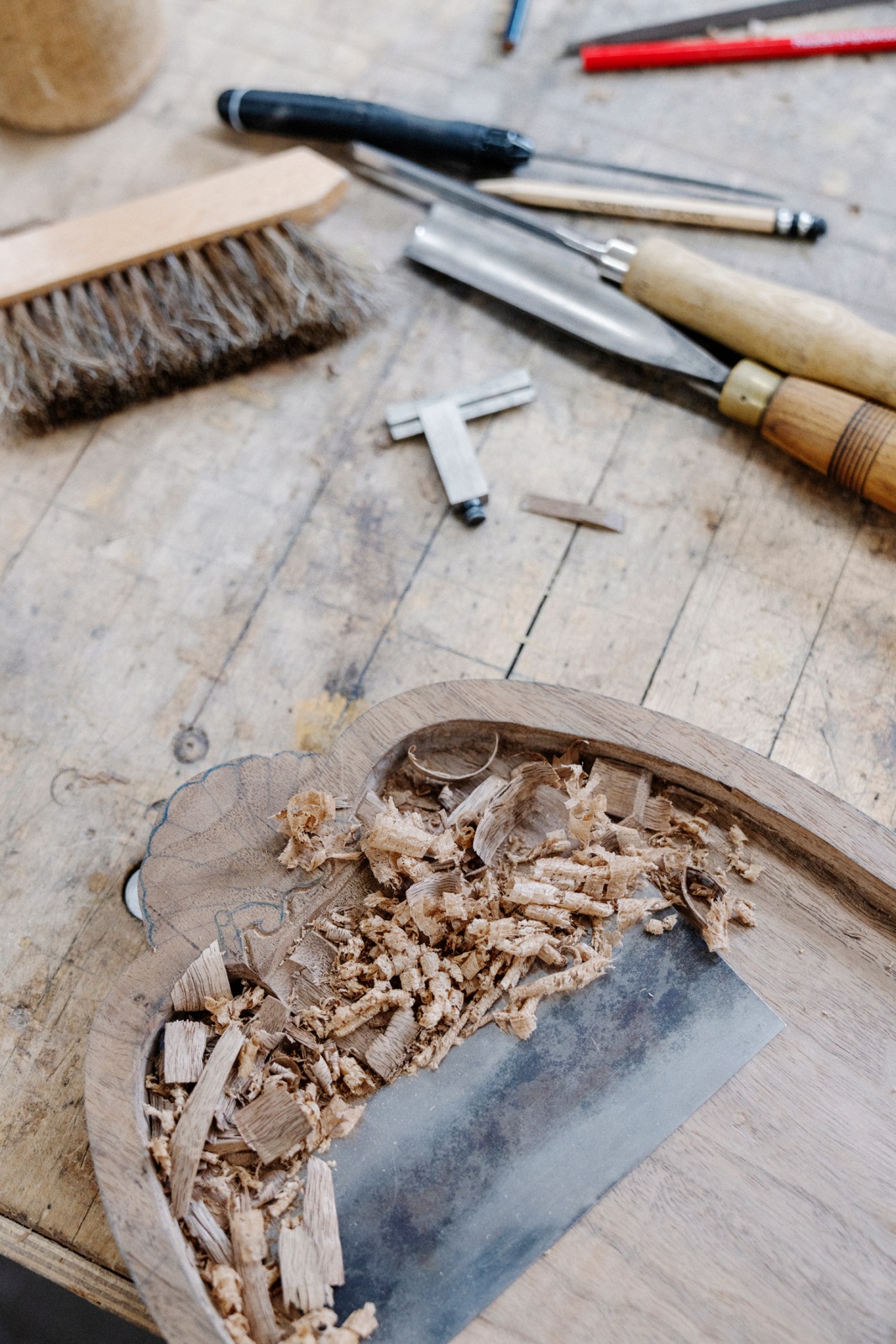
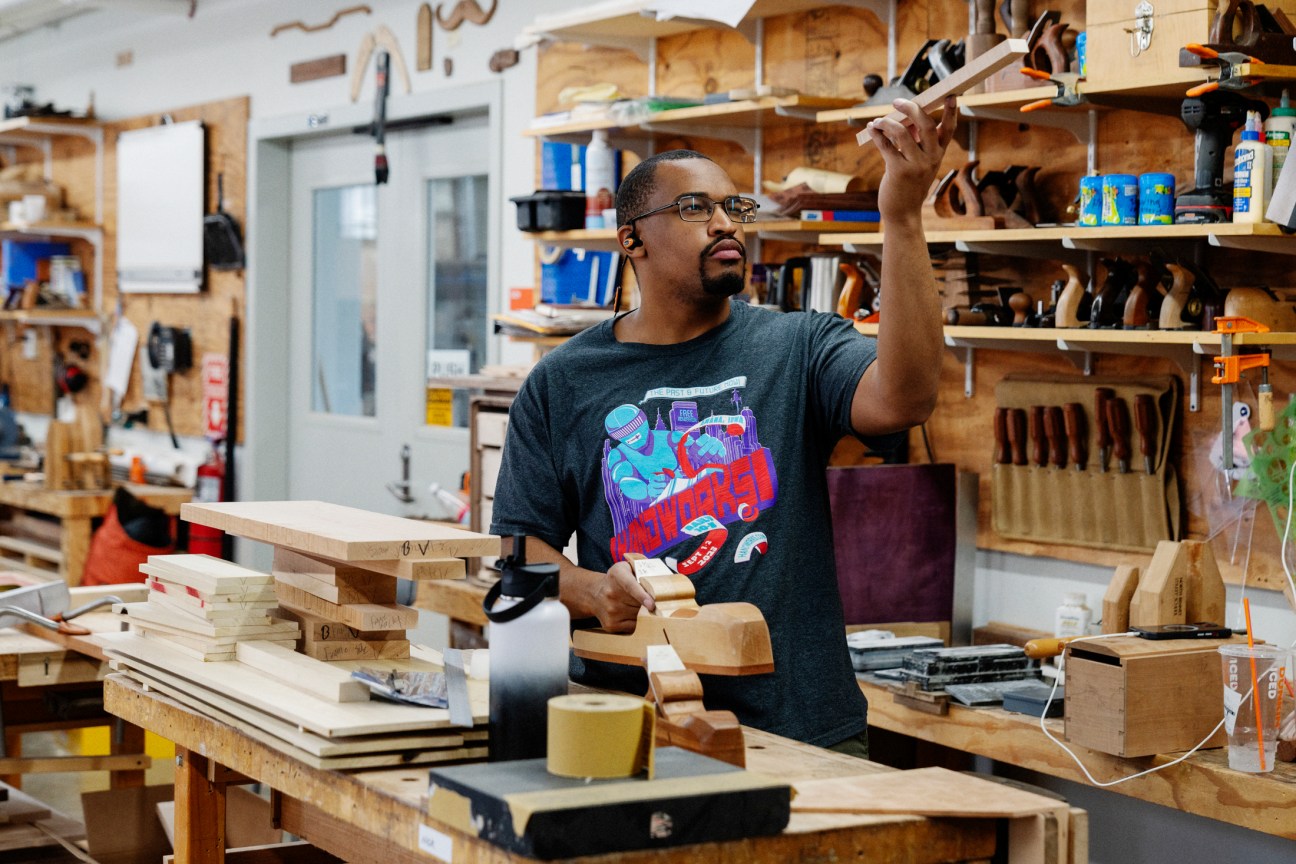
“These specific industries might sound obsolete at a time when everything is increasingly digital but there’s still a need for them”
Today some 20 students are working among the scent of woodchips. In the workshop, Ian Hallowell, who sought out the NBSS as a “college alternative”, is working on a small but highly detailed 18th-century shaving mirror. Another student, Haniel Wides, is at the back of the room, crafting a music stand. “There are things that I was so intimidated by when I first walked in here but now I don’t think much of it,” says Wides. “It feels almost indulgent to have this time to push your skills as far as they can go.”
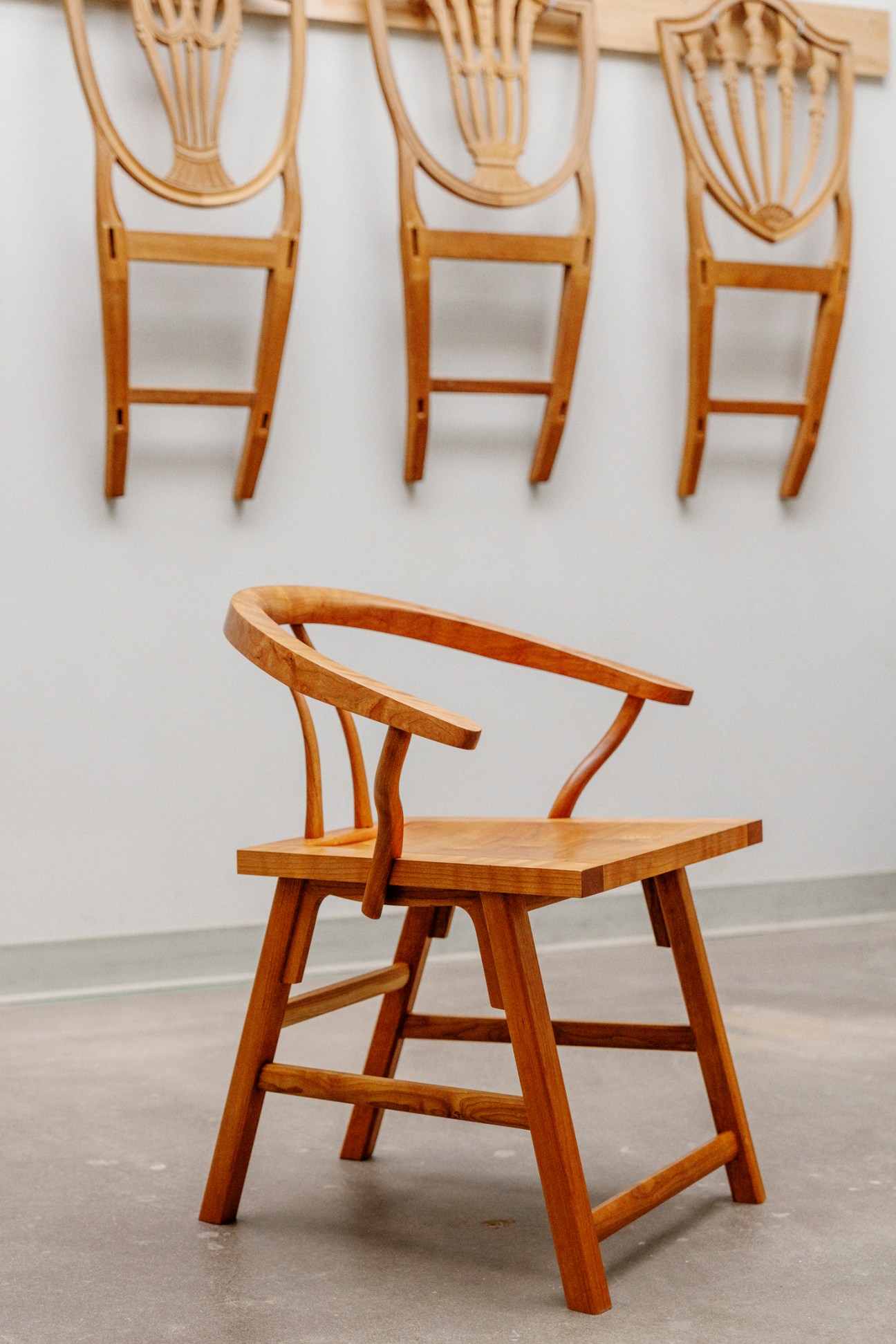
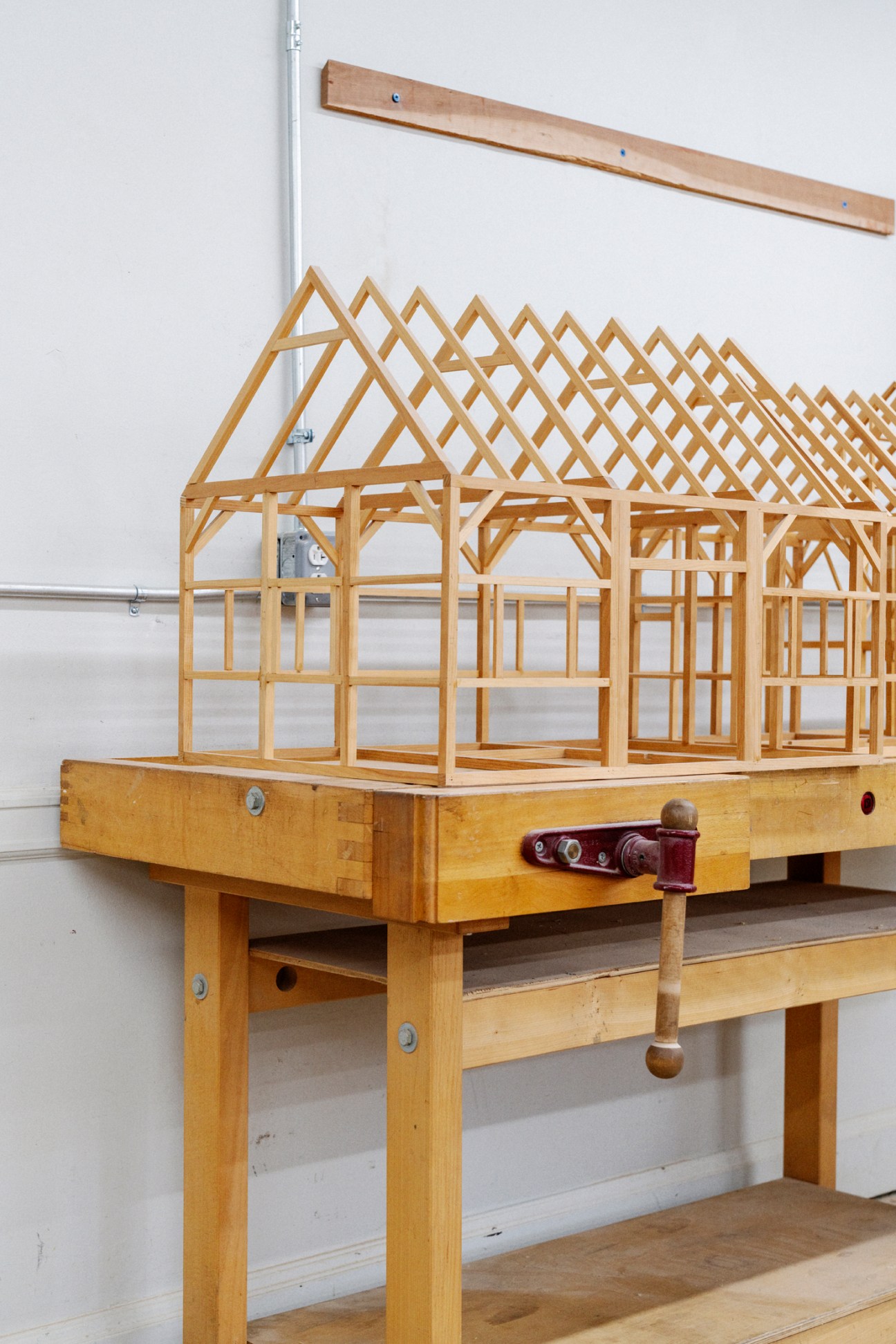
Back in the lobby, as she sees us out, Turner laments the fact that we weren’t able to take in all of the school’s offerings – locksmithing, jewellery-making, violin-making, the US’s last piano-technology course – in one day. It’s a good reason for us to return. Thanks to this school, such crafts and trades have a more secure future.
As Turner accompanies us through the gallery of handmade objects, her parting words are on the role that the NBSS plays in the fabric of Boston. “We sit in a city that has world-class higher education and a long, proud, blue-collar history,” she says. “We are a kind of bridge between those very powerful identities and we attract people from both of those worlds. It makes North Bennet very special. There’s an interplay here that I don’t know exists elsewhere.”
Trading up: America’s skills revival
The US is desperately short of people who can confidently rock a toolbelt. The construction industry reports a shortfall of 300,000 skilled tradespeople, from carpenters to welders, and the scale of demand is triggering a renaissance of the trade school. Enrolment in vocational construction courses is up by almost 20 per cent across the country, according to a report last year by the National Student Clearinghouse. No trade-technical college has the brand recognition of a Harvard or a Yale but the calculation for many prospective students of a skills-based programme is simple: less debt, rising salaries and a surfeit of work, especially given that there are 40,000 national infrastructure projects in the pipeline.
Meanwhile, there has also been a resurgence of so-called craft schools – such as the NBSS – around the US, where students learn how to make things with their hands using time-honoured techniques handed down the generations. The Penland School of Craft in North Carolina, for instance, teaches how to shape wood, work metal and throw clay amid the grandeur of the Appalachian mountains. Penland was founded in the 1920s but, like many such schools around the US offering courses in artisan trades, it has seen a surge of applications in recent years as people seek a new skill that they might turn into a business.
There’s still a stigma attached to the idea of ditching a bachelor’s degree in order to take a different path. But students often report a sense of satisfaction and purpose that comes with learning by doing. It’s increasingly being integrated into forward-thinking architecture programmes around the US, with design-build schools, such as Rural Studio at Alabama’s Auburn University, leading the way. Such approaches teach students how to build a house, from the electrics to the foundations, as well as draw on. Many architecture firms now seek graduates who know their way around a construction site. For those students willing to roll up their sleeves, now is the time to do a roaring trade.
Five classic restaurants proving that great food, service and tradition never go out of style
At their best, great restaurants nourish their neighbourhoods. As venture-capital-backed “concepts” flood the market – with their touchscreens, staff with scripted responses and value-engineered menus that cater to profits rather than to people’s tastes – our most cherished independents need our support. The way we eat might change but the qualities we seek in a restaurant remain the same: we want a pleasant environment where we will be looked after and can eat well. But isn’t there also something especially reassuring in the practised manner of a waiter keeping order as an evening heads off script? Or a maître d’ who remembers your name (and your dog’s), as well as your favourite bottle? Or a chef patron who can sense whether you are in the mood for a chat or want some privacy?
Running a restaurant across decades and generations might not be the straightest path to wealth, fame or riches but the most enduring establishments offer their communities sustenance in more ways than one. These have the common ingredient of care, as well as the grit to resist fads and the temptation to constantly redecorate. Without them, our cities would lose something integral.
So, is there a recipe for prolonged success? First, forget rotating menus and guest chefs. Second, read on for our celebration of the hospitality holdouts that have thrived by catering to needs that won’t change with the seasons.
1.
The Crown Jewel
Kronenhalle
Zürich
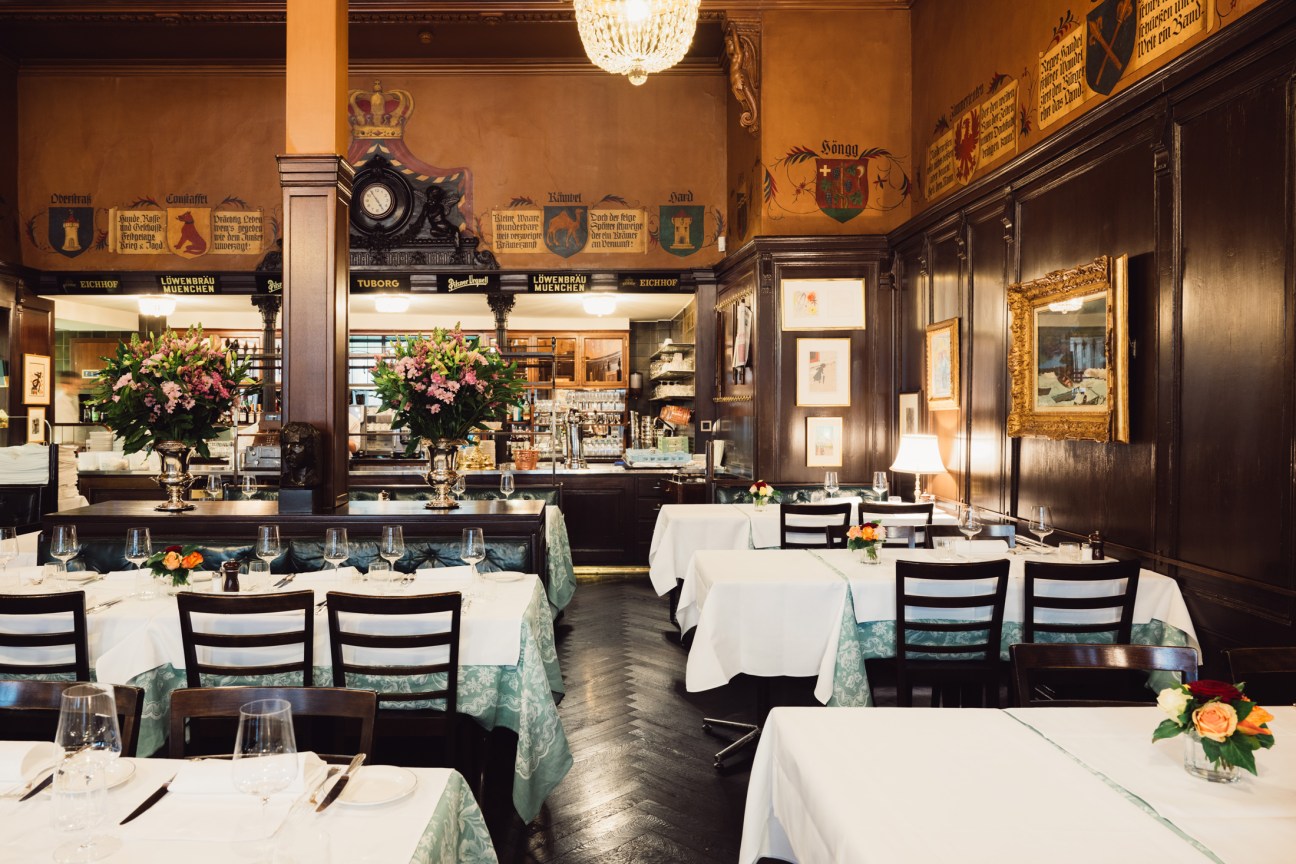
Behind its unassuming façade, Kronenhalle offers a lesson in how food is only part of what makes a meal outstanding or a restaurant remarkable. And you can start learning the secret to its success for the price of a potato rösti and a crisp glass of chasselas. The Gaststube has stood the test of time by sticking to its core principles rather than attempting to offer something for everyone – there are no “concepts” or tasting menus here. That sense of continuity and the service of something bigger is summed up by the wall-mounted portrait of Hulda Zumsteg, who founded the restaurant in 1924: she attentively gazes down at the tables, wearing pearls and an elegant black gown. Her late son, Gustav, continued to serve her takes on French and Swiss classics, while bringing in impeccable art. Visitors can dine alongside the work of painters such as Chagall, Miró and Picasso (many of whom were guests) with their bratwurst or chateaubriand.
The restaurant’s current director, Dominique Nicolas Godat, and his team ensure the upkeep of seamless service that’s solicitous but never shy of reminding visitors of the house etiquette (no video calls, no screens, no athleisure, please). Its head chef, Peter Schärer, has been part of the kitchen staff for more than 30 years. This respect for tradition is crucial to Kronenhalle’s allure. Its guestbooks might brim with the names of illustrious patrons but this isn’t a place for grandstanding. Indeed, regulars tend to use the side entrance, rather than the main one.
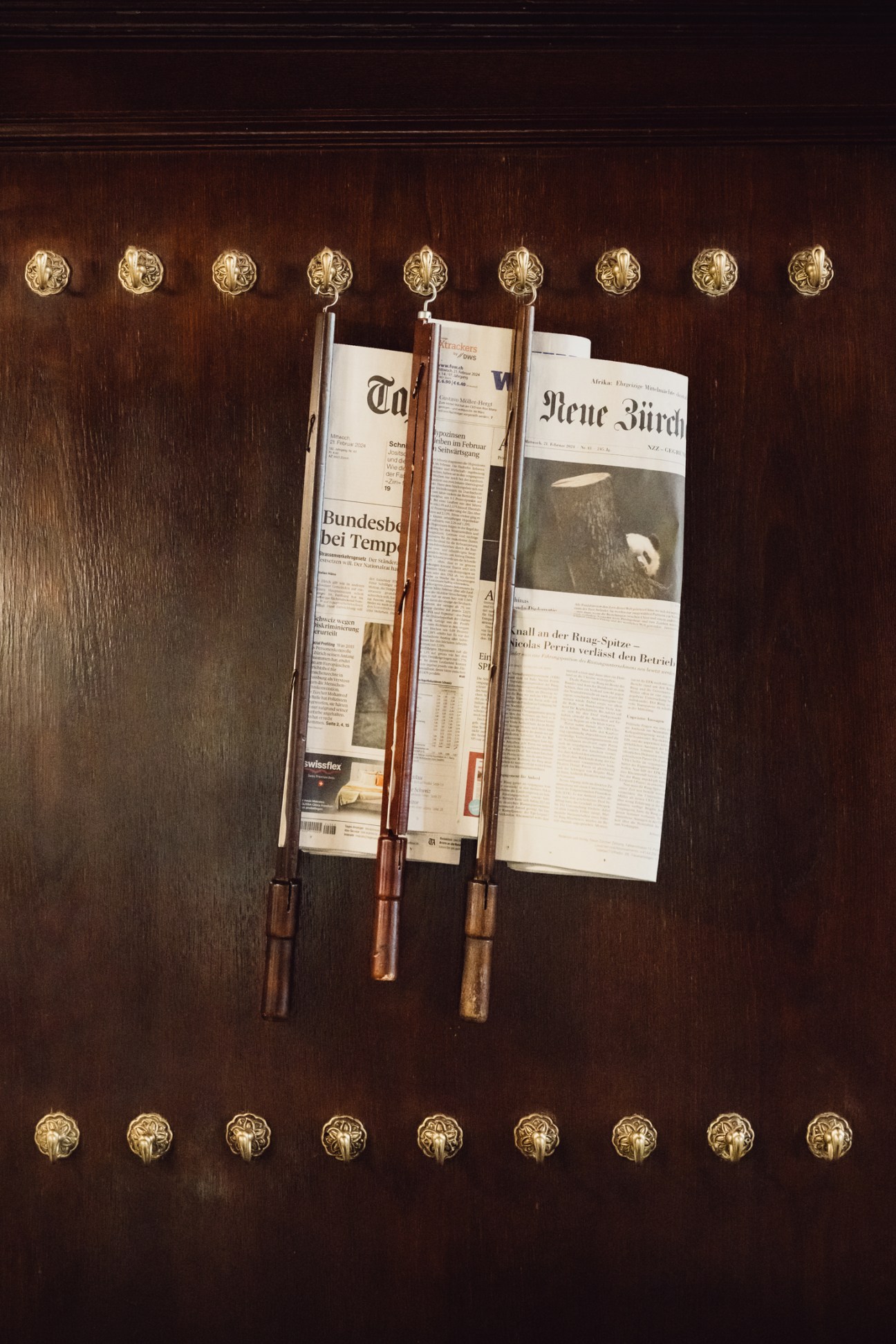
Date founded: 1924
Signature dish: Zürcher Geschnetzeltes (veal in white-wine sauce). Save space for mousse au chocolat with double cream.
Covers: 172.
Employees: 95, including 30 kitchen staff.
Maximum height permitted for dogs: 60cm (so that they can fit under the table).
Known for: Not changing things. Both the signature dishes and the placement of the art are stipulated in Gustav Zumsteg’s will.
How it has held out: Even a weekday lunch has an element of performance and the customer isn’t always right. Kronenhalle has its own rules and customs, and staff aren’t shy to gently remind guests of how to behave.
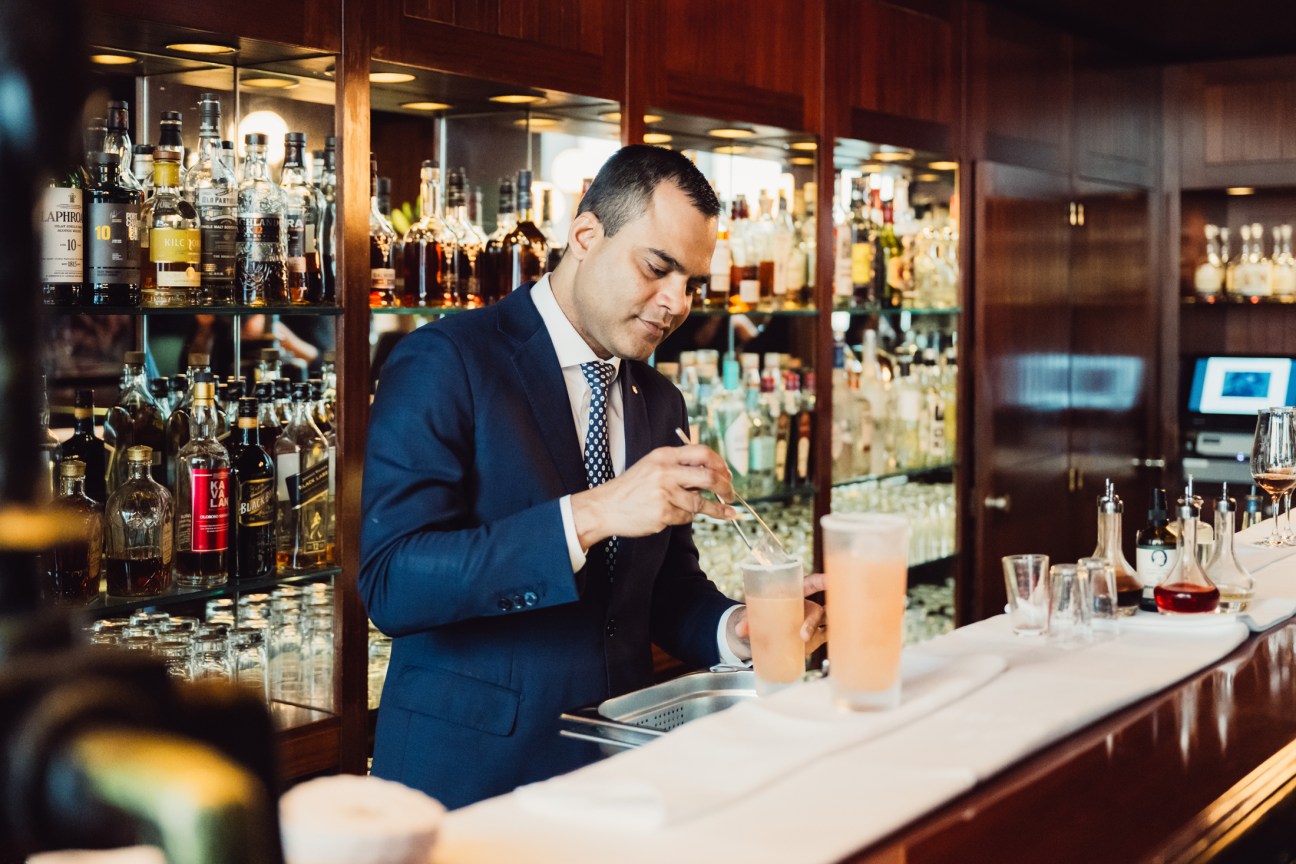
2.
The mid-century master
Café Prückel
Vienna
Much has happened over the centuries since the emergence of the Viennese coffeehouse but it has proven to be a remarkably resilient institution. An inherent Gemütlichkeit (or cosiness) invites you to linger and, unlike in many modern cafés that can be quick to shoo you out, you can linger over a cup of coffee. The flipside? Service tends to be slow and the waiters studiedly condescending, if not outright curt, especially towards those who aren’t clued up on the rules of engagement. But that’s all part of the charm.
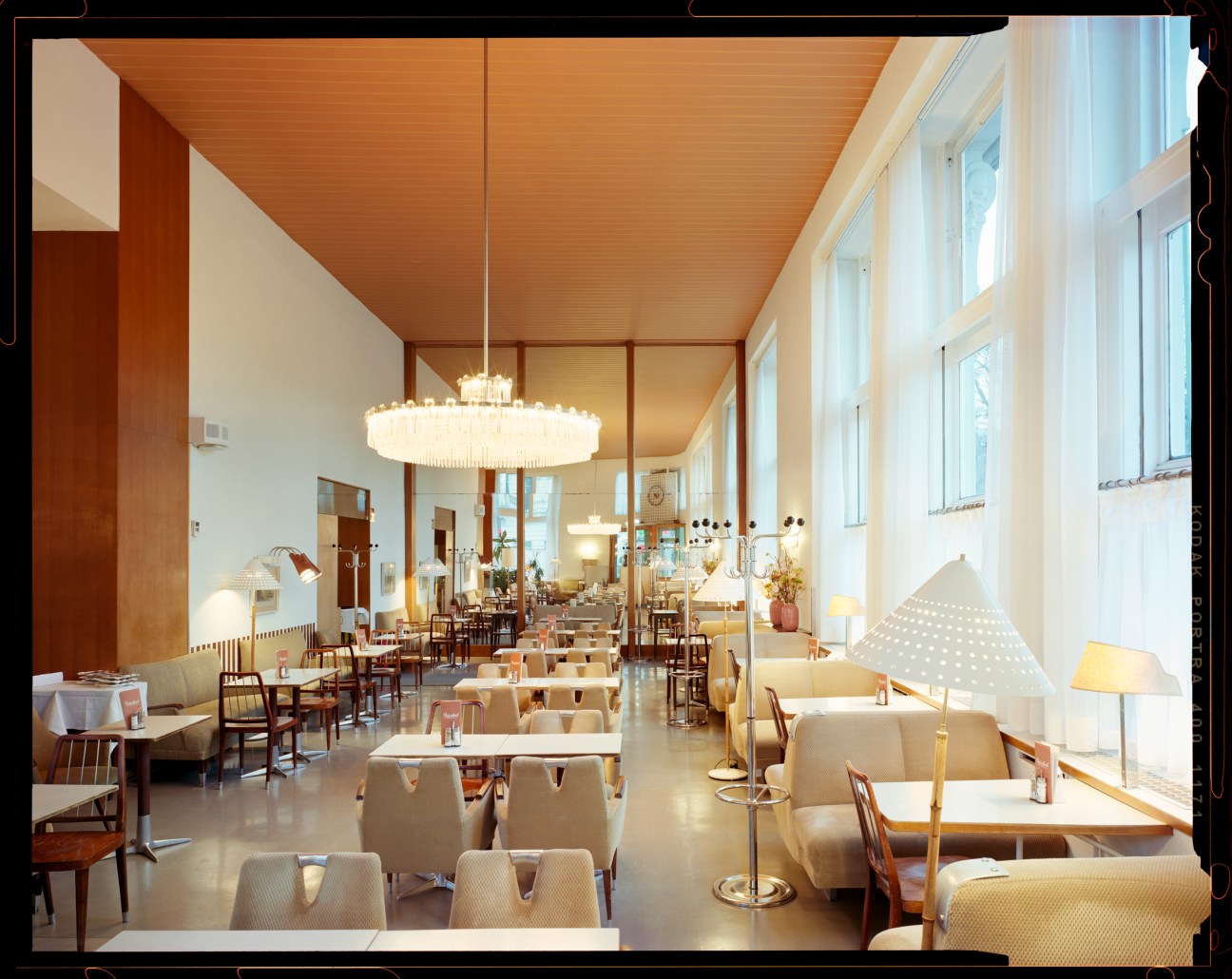
With its vast windows, Café Prückel on the western edge of the city’s Ringstrasse excels in most departments. It opened in 1903 under a different name and in the bright, gaudy style of artist Hans Makart. In 1955 architect Oswald Haerdtl spruced up the interior to include cheerful pastel hues and spindly low-slung furniture, helping the café to stand out from its wood-panelled peers.
Thomas Hahn, one of the three new co-owners who took over in January following the 62-year tenure of Christl Sedlar, is intent on preserving what he first found at Café Prückel. “Tradition is very important here,” he says as elderly Viennese ladies descend on their Stammtisch (regular table) for a game of cards. “It is my third restaurant but my first with this kind of past.” The only real changes slated are to the kitchen equipment; the classic fare on offer, from the schnitzel and goulash to the cakes, will stay the same. Now, where’s the waiter with that coffee?”
prueckel.at
Date founded: 1903.
Signature dish: Pastries and cakes, including Kaiserschmarrn (shredded pancakes) with jam or whipped cream.
Employees: 40.
Known for: Its charming neon sign and the unusual brand of Viennese mid-century design within.
How it has held out: A willingness to go with what works rather than reshaping things to fit modern trends has kept Café Prückel from becoming mere tourist fodder. The interior is listed; Unesco also added Vienna’s coffeehouses to its Intangible Cultural Heritage list in 2011.
3.
The neighbourhood favourite
The Odeon
New York
“We were young and it was kind of a fluke,” Lynn Wagenknecht tells Monocle about the success of the cafeteria that she and Keith McNally took over in 1980. An arts graduate with no hospitality experience, Wagenknecht eventually bought out McNally and brought in two partners, Judi Wong and Steve Abramowitz (the pair behind the West Village’s Café Cluny), who helped to make The Odeon the lively Tribeca institution that it is today.
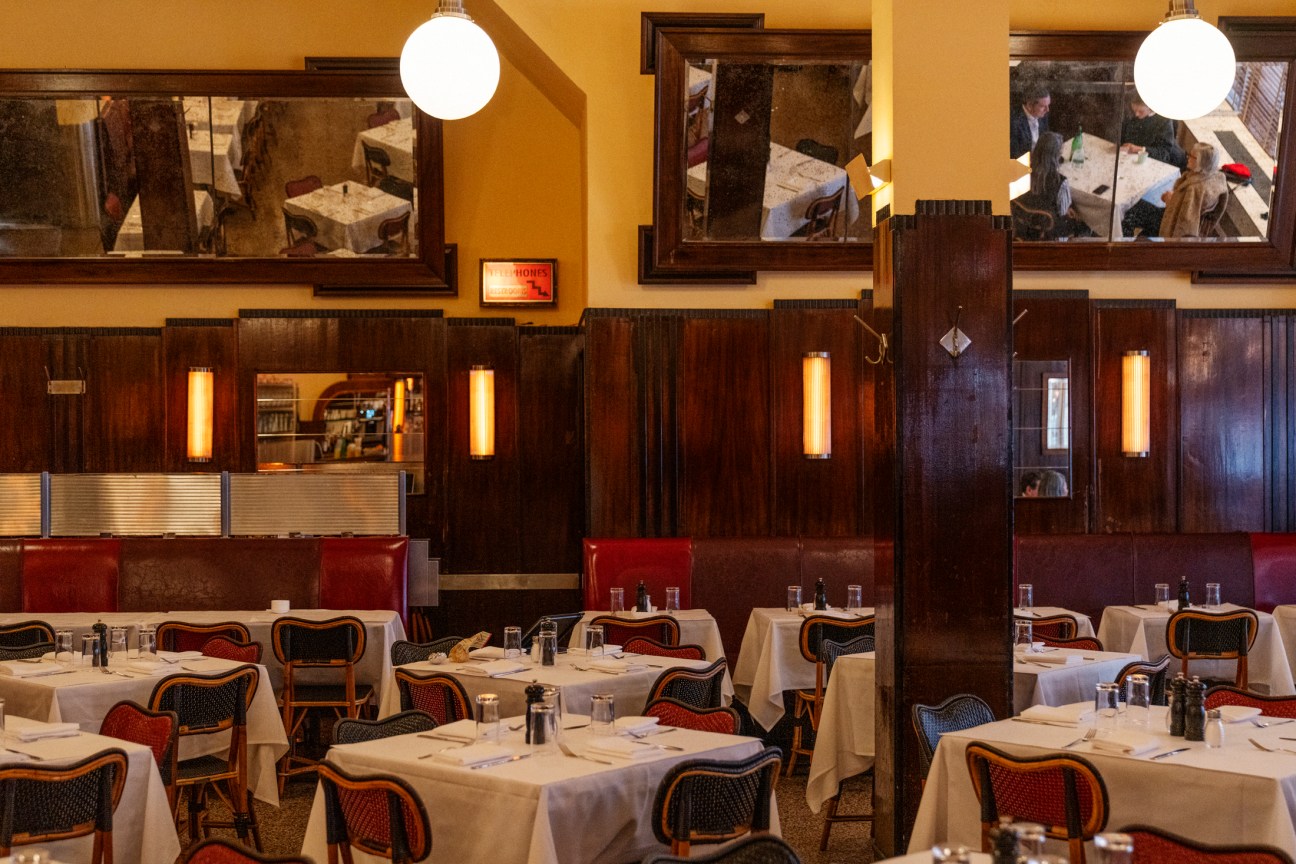
The restaurant is a constant in the ever-changing neighbourhood and takes all comers: thirsty locals, judges and lawyers from a nearby courthouse, celebrities who cosy up in the red banquettes for a martini and steak frites. For Wagenknecht, being here for the community matters. The doors remained open to shelter people and serve firemen during the September 11 attacks.
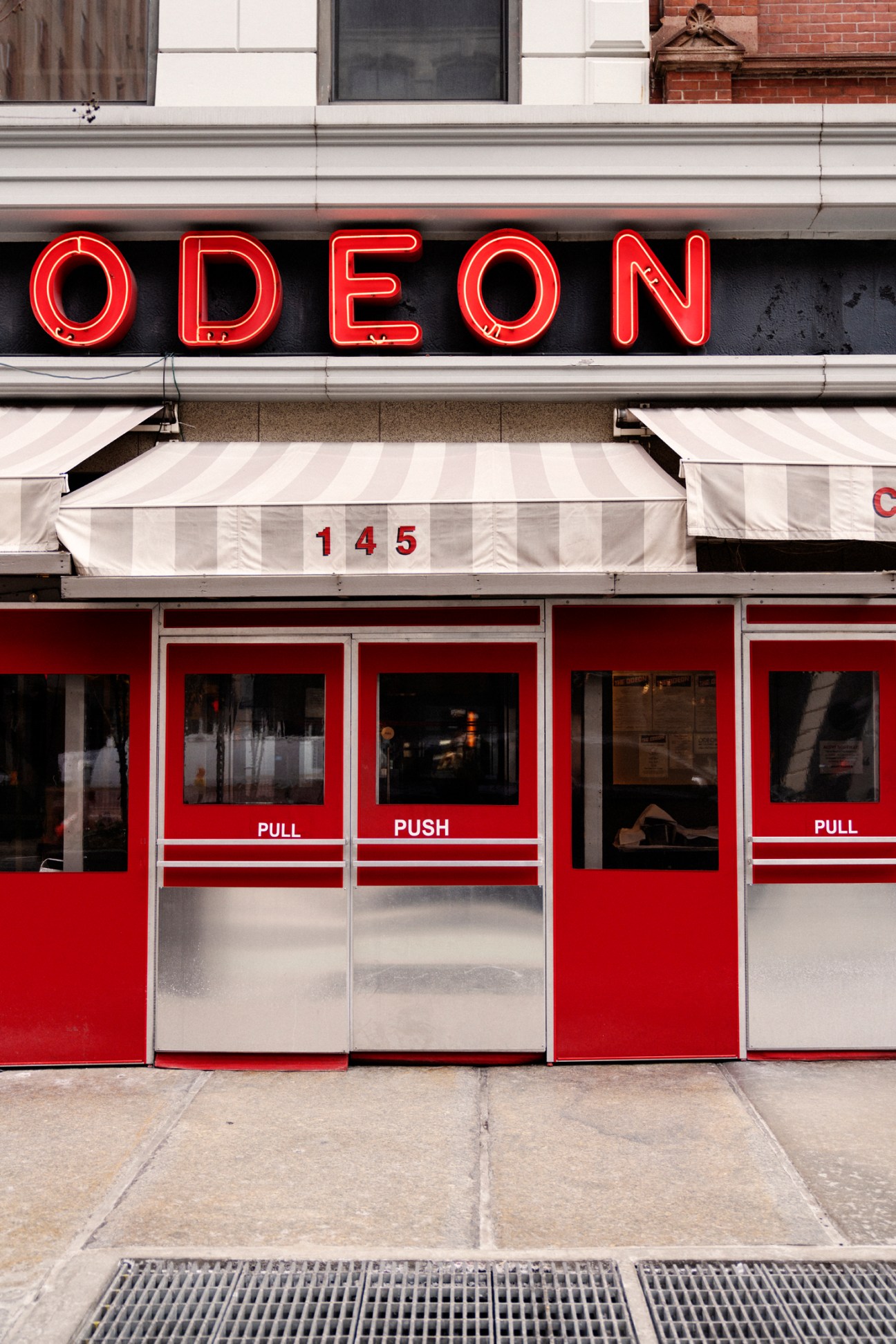
Changes to the interiors have been small: the cafeteria still has the original panelling and globe lights from 1932. “But our goal has always been to keep things relevant and appealing,” says Wagenknecht. In the wild party years of the 1980s, The Odeon would stay open until 04.00; it now closes at a more conservative 23.00. It still serves burgers and omelettes but it has also added to its menu more modish fare, from purple sticky rice to vegan options. Wagenknecht’s secret to running a classic? “Simple,” she says. “This has always been the kind of place where we would want to eat.”
theodeonrestaurant.com
Date founded: 1980 (originally opened as Towers Cafeteria in 1932).
Signature dish: Steak frites.
Covers: 120.
Employees: 136.
Known for: Being a reassuring, reliable presence in an ever-evolving corner of Lower Manhattan.
How it has held out: The owner is also the landlord and never succumbs to fleeting fads.
4.
The always-open sandwich spot
Schønnemann
Copenhagen
“Members of our kids’ generation think of themselves as global,” says Juliette Rasmussen. “But it actually means that they value local specialities more.” She and her husband, Thomas, bought Schønnemann in 2015; the classic lunch restaurant in central Copenhagen was founded in 1877 and is celebrated for its open sandwiches, beer and schnapps. “My generation didn’t eat smørrebrød but today’s young people do.
Between the 1970s and the early 2000s, the cellar restaurant was often at the point of closure. She attributes its renaissance to the New Nordic Cuisine food movement spearheaded by René Redzepi’s restaurant Noma. “He started putting the focus on local food,” she says, while acknowledging the vast difference between the complex fare on Noma’s menu and Schønnemann’s simple, largely unchanging offering. “We Danes went back to our roots. Smørrebrød became trendy again.”
Trendy, perhaps, but part of this restaurant’s charm is that its decor is unaltered by fashion. Rasmussen is proud to employ “real waiters who have time for the guests” but the main attraction is the food: from classic marinated herring to signature dish Madame Schønnemann (calf’s tongue, chicken salad and mustard).
“We aim to have salt, sweet, bitter, umami and sour in every piece,” says Rasmussen. When it comes to smørrebrød, the eternal question is: how many to order? The answer on the Schønnemann website is, “Two is a good base and three should be enough – but with four, you’ll leave with a smile.” It’s advice that has made Danes happy for generations, even as the vaunted Noma announced that it would close at the end of 2024.
restaurantschonnemann.dk
Date founded: 1877.
Signature dish: Madame Schønnemann, which consists of calf’s tongue with chicken salad and mustard on rye, topped with cress.
Covers: 60 across three cellar rooms.
Known for: Smørrebrød and schnapps.
Types of schnapps on the menu: More than 140.
How it has held out: Sticking to its guns.
5.
The city survivor
Sweetings
London
The City of London is a strange, old place where Roman temples sit beneath gleaming skyscrapers. Half a million people descend on the Square Mile every weekday but fewer than 10,000 call it home. As property prices soar across the capital and samey sandwich shops proliferate, it might be hard to fathom how Sweetings, an unassuming 65-cover seafood restaurant founded in 1889, has endured for so long while steadfastly resisting change. You can’t book a table in advance and it doesn’t serve tea or coffee. It’s only open on weekdays and only for lunch (11.30 to 15.00) – the same hours that it kept in the 19th century.
Nevertheless, regulars can’t get enough of this long-unrenovated restaurant, with its wooden wainscotting and nicotine-cream walls offset by linen place settings. Waistcoat-and-tie-clad staff members clip across the terrazzo floor between tables, serving specialities such as the house-cured gravadlax, oysters and Dover sole. When Monocle visits, we hear champagne corks popping and the clinking of pewter tankards carrying black velvets (champagne and Guinness), bound for a table of punters in pinstripes. There are private tables for intimate conversations, communal ones for larger gatherings and barstools from which to see and be seen by colleagues – or perhaps adversaries at rival banks. The restaurant’s current owner, Sue Knowler, took over from her father, Dick Barfoot, in 2019. Like Barfoot, Knowler has refrained from changing anything too radically, embracing Sweetings’ unique personality. Long may this understated approach continue.
sweetingsrestaurant.co.uk
Date founded: 1889.
Signature dish: Skate wing with a caper-and-black-butter sauce. Painter Henri de Toulouse-Lautrec was apparently a fan.
Covers: 65 (41 at the bar).
Employees: 11.
Known for: Black velvet cocktails, native oysters and the Dover sole.
How it has held out: It has maintained a strict, almost obstinate adherence to a simple seafood menu and very short opening times. The interior is also an understated masterpiece – cracks, imperfections and all.