Issues
Affairs agenda: Young Danish entrepreneurs, Ukraine’s therapy gardens and eradicating malaria
Nature: Ukraine
Good sense
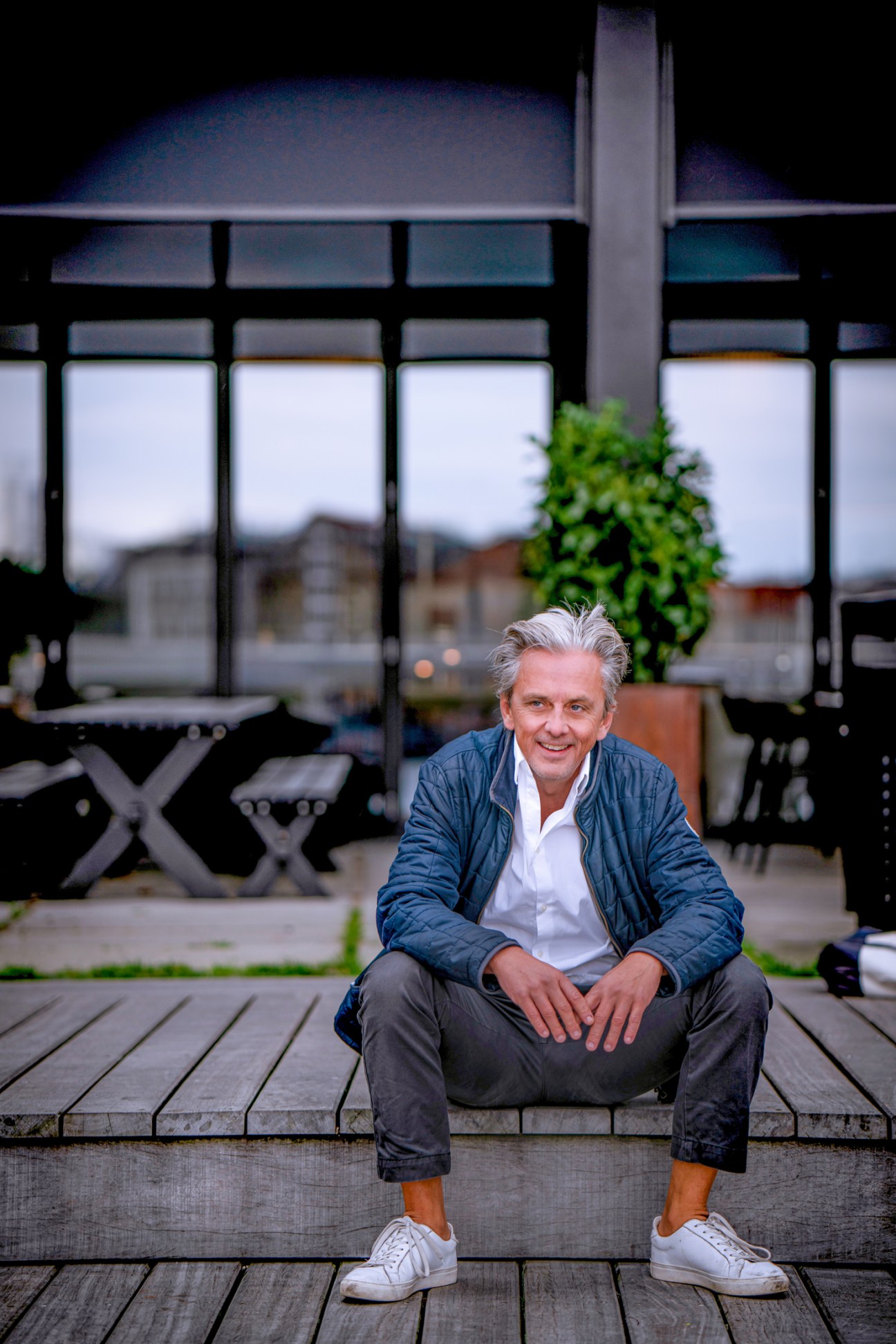
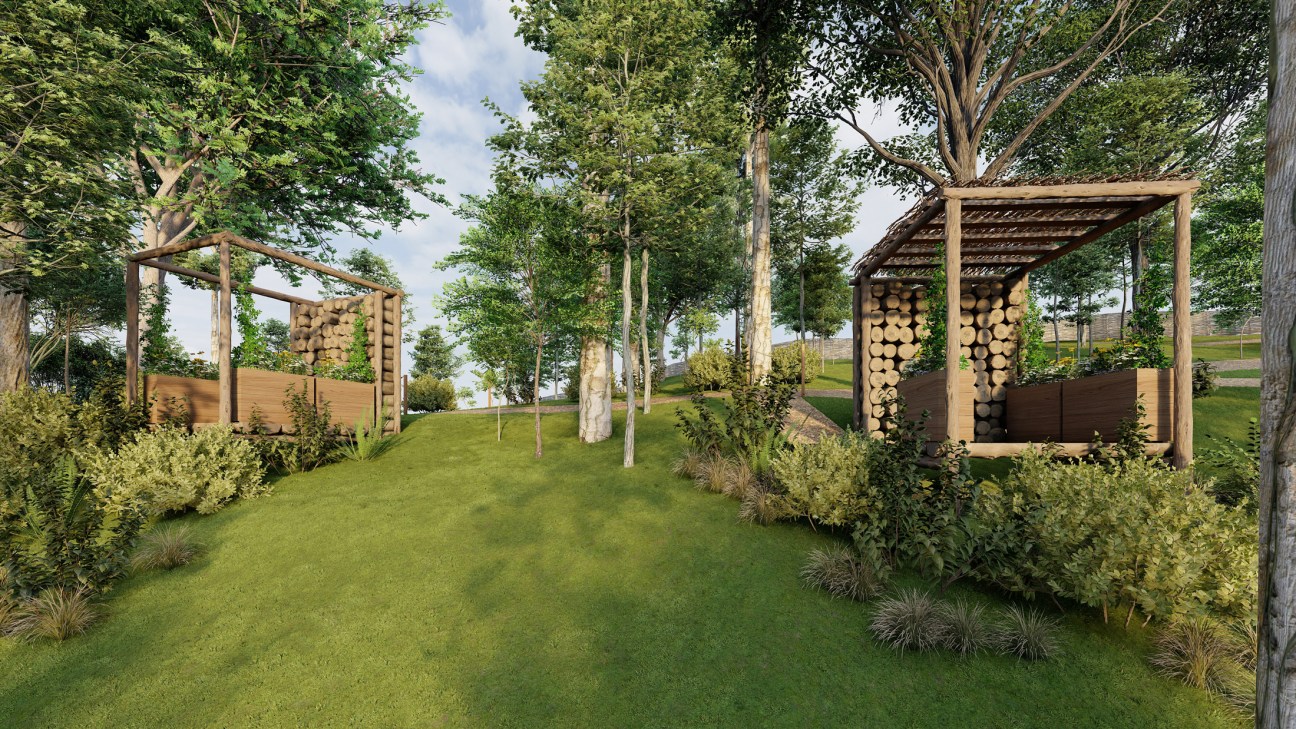
Mikael Colville-Andersen moved to Ukraine in 2022 after answering an appeal seeking bicycles for internally displaced refugees. The Canadian-Danish urbanist, who made his name campaigning to export Copenhagen’s cycling knowhow, is bringing something else from his European homeland to the wartorn country: Nordic therapy gardens. “Places like these have a history stretching back to the Roman empire,” says Colville-Andersen. “Research has shown that when you sit in a garden surrounded by sensory stimulants, stress is instantly relieved.”
Taking his cue from the therapy gardens found in most Danish towns, Colville-Andersen is introducing the concept to Ukraine – even Denmark’s ambassador to Ukraine has helped out in Kyiv. Colville-Andersen and his team will introduce flowing water, aromatic plants and shaded, private spaces to the gardens. The first garden opened next to a psychiatric hospital in Ukraine’s capital in June, with others to follow in Lviv and Chernihiv. “We need to break through to those struggling with their mental health,” says Colville-Andersen. “I want everyone from doctors to architects to see what we’ve done. Then they can build therapy gardens all across the country.”
Business: Denmark
Members on the board
A co-working space mixing surfing and working doesn’t sound like the type of business you would expect to find in Denmark. But “Cold Hawaii”, as Klitmøller on the country’s northwest coast is known, has lured entrepreneurs and remote workers in search of good waves and a better quality of life. As many Danish towns experience an exodus of young people, Klitmøller is booming. “For the past 10 years, more people have come in than gone out,” says Alexander Bengtsen, co-founder of Surf & Work in Voruper, just south of Klitmøller. Bengtsen, who is Danish but was previously living in Portugal, moved here in 2017 to surf and be closer to nature. Shortly after setting up shop, he saw a demand for a co-working space, so quit his remote-working job and opened the area’s first “entrepreneurial house”.
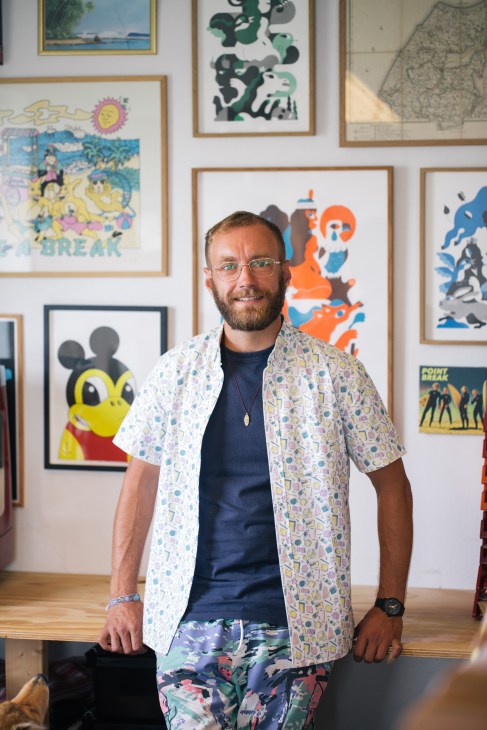
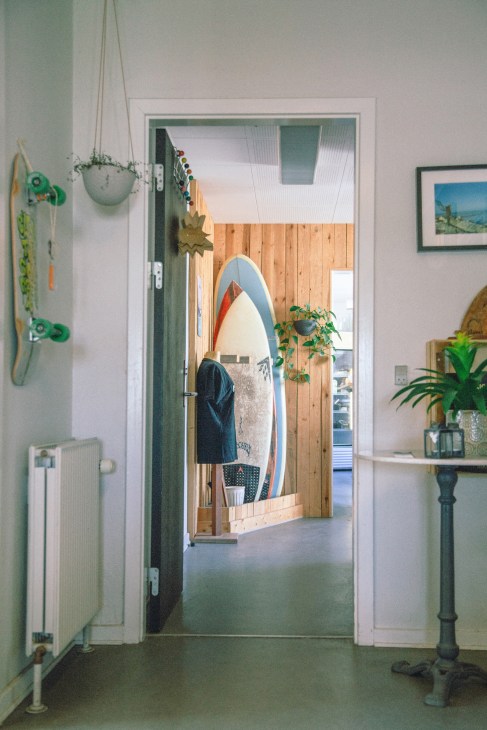
“We’ve attracted people who are tired of city living,” says Bengtsen of Surf & Work’s 40 members. “Most of them come here and start their own thing.” He, for one, has launched an ice-cream company on the side. Among his peers, many of whom have moved from Copenhagen, are coffee roasters, bakers and café owners who share a love for the ocean. “If there are good waves, we go surfing,” says Bengtsen. “Our focus shouldn’t be on work but on what makes us happy.” On Thursdays, many members go cold-water swimming, followed by breakfast at Surf & Work, where they share sourdough bread from a baker who is also a member.
The hope is to expand into a larger space with more amenities. “It’s not a fancy place but we have good coffee and fast internet,” says Bengtsen. And, of course, the wild North Sea just outside.
surfandwork.dk
Environment: Singapore
Green tracks
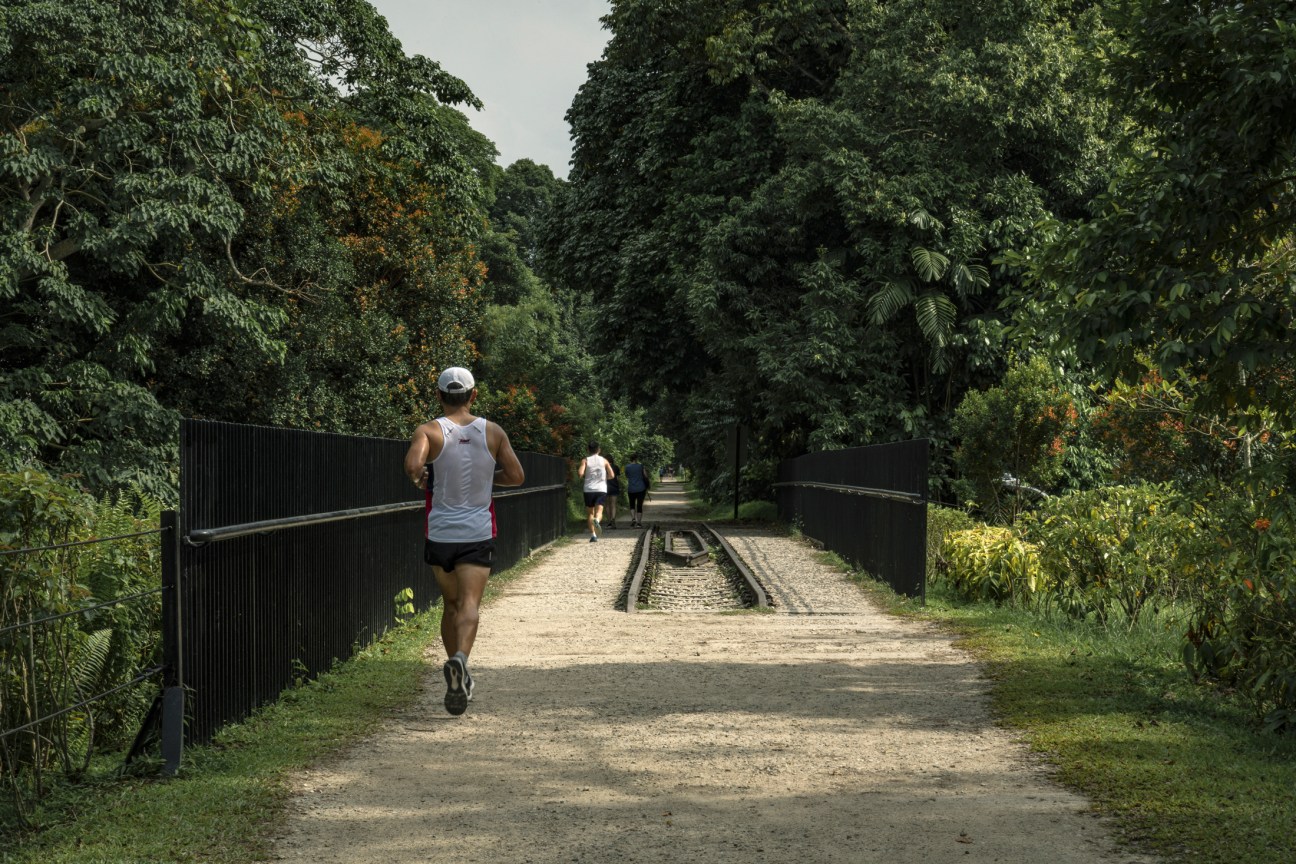
A new section of Singapore’s Rail Corridor opened in April, the latest step in a planned 15-year development of a former railway track into a public park and nature reserve. The 24km trail spans the length of the island, from Kranji in the north to Tanjong Pagar Railway Station on the southern coast. The government has launched a public competition for proposals to redevelop Tanjong Pagar, a 1930s-era rail terminus on the Malaysia-Singapore line that closed in 2011. The station received a heritage designation for its art deco architecture but its future use is uncertain. Options include the addition of restaurants, shops, offices and gardens.
Civic engagement has been vital to the Rail Corridor since its inception. Its existence is something of a historical fluke – for more than a century the land it sits on was owned by the Malaysian government and the trains were run by a Malaysian rail operator. As Singapore developed, high-rises sprung up on the track’s fringes, but the Malaysian-owned strip of green lay untouched. Ownership was transferred to the Singapore government in 2011, when the route’s terminus was moved to the Woodlands Train Checkpoint, endowing the nation with some of the island’s few remaining bits of undeveloped land. The Rail Corridor now contains some of Singapore’s few patches of primordial rainforest, which conservationists have successfully lobbied to have protected. In such a densely populated country, urban greenery is an essential commodity.
Q&A
Hilary Doe
Chief growth officer, Michigan
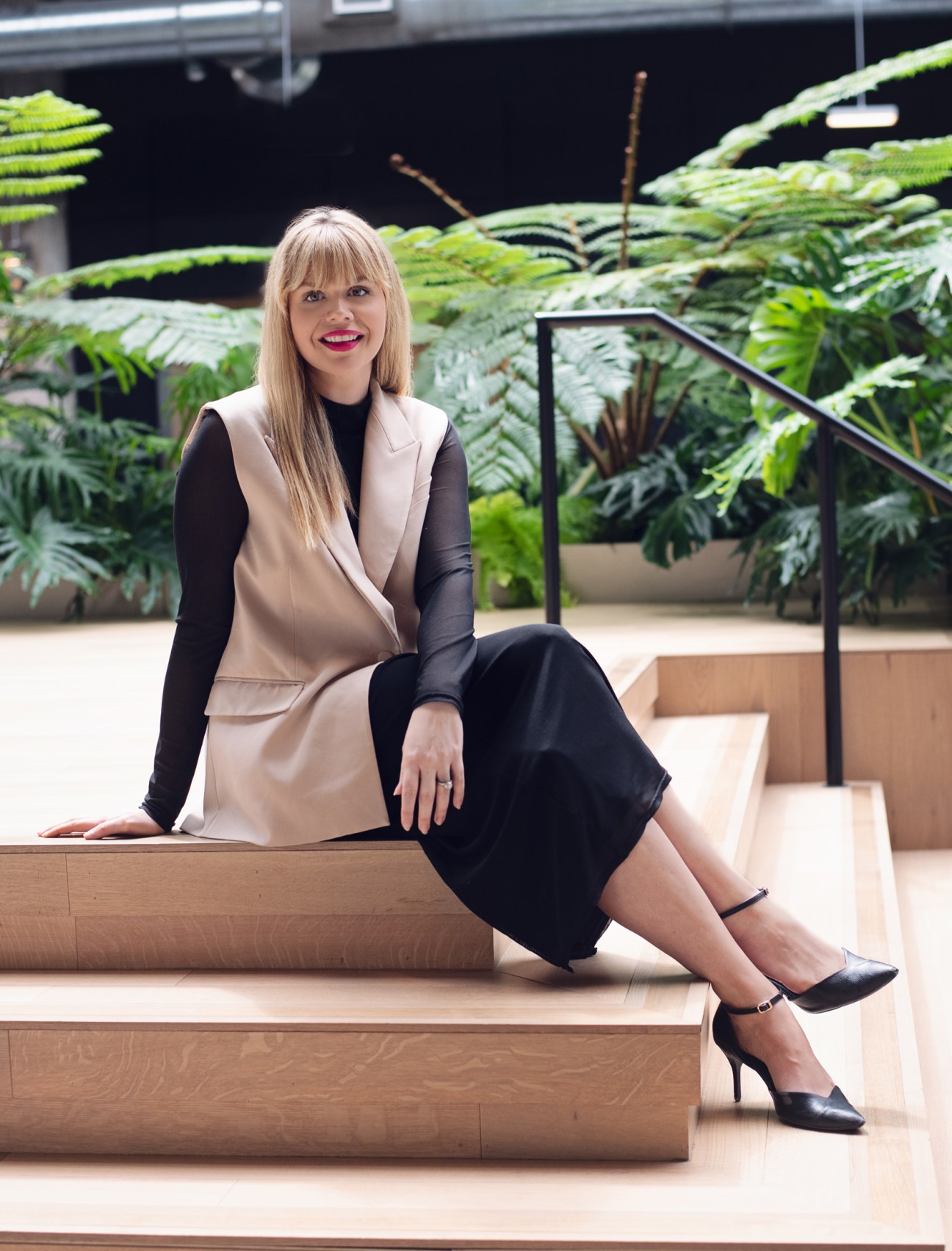
Hilary Doe is the first state official in the US dedicated to population growth. She aims to reverse a projected population loss of 700,000 by 2050.
Why are people leaving Michigan and what are they looking for elsewhere? People want opportunities, of course, but great urban place-making is as important as the number of jobs. In Michigan, we have talent gaps and employers with positions that they need to fill. Many of our fastest-growing peer states have higher taxes than Michigan. Yet they have high and rising median incomes, often driven by the knowledge economy, and they retain their entrepreneurs. That’s what we’re focused on in Michigan: a new fund to invest in entrepreneurs. That said, the metropolitan areas driving growth also tend to be walkable and transit-rich. Take Austin, Texas, which is leading the pack in terms of growth but it’s also struggling with high rents and we’re seeing an opportunity there. Detroit, for example, is growing for the first time in years.
How are you getting the word out about Michigan?
At South by Southwest festival this year, the godfather of techno, Juan Atkins, talked about how Detroit birthed the genre. It’s critical that our state own this campaign. I’ve been going all over the state to sit down with Michiganers and enlist them to share their story with people across the country.
Andrew Mueller on stamping out malaria
A few weeks back, this columnist visited Djibouti on a magazine assignment, which went askew thanks to a bureaucratic snarl-up that obliged the photographer and me to spend a night at Djibouti Airport. It provided me with an intimate acquaintance with the local mosquitoes.
Djibouti has a big problem with malaria. This has grown worse following the arrival a decade ago of a pestilential mosquito species: Anopheles stephensi, originally from Asia. Djibouti, with a population of a little more than 1.1 million, believed it had all but banished malaria but now reports cases in the tens of thousands annually. Despite being crammed full of Doxycycline, I was still pleased to observe, on eventually reaching our hotel, the daily dousing of the grounds with powerful insecticide.
I was even more pleased to read, shortly after returning, of the release in the Djibouti City suburb of Ambouli, a swarm of genetically modified Anopheles stephensi mosquitoes. The altered bugs are males, implanted with a gene that will prevent their female offspring from surviving to adulthood (only female mosquitoes bite). The idea is that this will eventually breed Anopheles stephensi out of existence.
The scheme is led by US-UK firm Oxitec, supported by the Bill & Melinda Gates Foundation, and is a worthy quality-of-life initiative. In 2022, the last year for which the who has figures, 249 million people worldwide contracted Malaria, 94 per cent of whom live in Africa. More than 600,000 may have died. By some estimates, malaria costs the continent €11bn every year in lost gdp. An Africa freed from malaria is likelier to become prosperous, therefore peaceful, therefore less of everyone else’s concern.
When we think of quality of life, we think of improvements in places that are already agreeable. One of the best investments any wealthy country can make in its own quality of life is to invest in someone else’s.
Andrew Mueller hosts ‘The Foreign Desk’ on Monocle Radio.
Design agenda: Paris’s arrondissement culture and Miami’s public-park renaissance
Making an impression
Christophe Delcourt’s Paris showroom
Before housing Delcourt Collection’s furniture showroom, 47 Rue de Babylone in Paris’s 7th arrondissement was home to a photo-developing studio and, before that a piano factory. So it’s no wonder that, when Monocle pushes through the heavy doors leading from the street into the courtyard, there’s an instant sense that this is a space dedicated to craftsmanship.
It was this ambience that attracted Christophe Delcourt when he moved his Paris studio here. “I love its 19th-century-style architecture made from wood and bricks,” says Delcourt of the building housing his office and showroom. “It’s a true atelier made for production.”
It’s an appropriate space for Delcourt to have set up shop, given that he cut his teeth making his own furniture designs by hand, using mostly metal and wood. Today, however, he’s no longer on the tools. Instead, he meets clients in this space, where he draws exceptional furniture pieces and then produces them in collaboration with artisans across France.
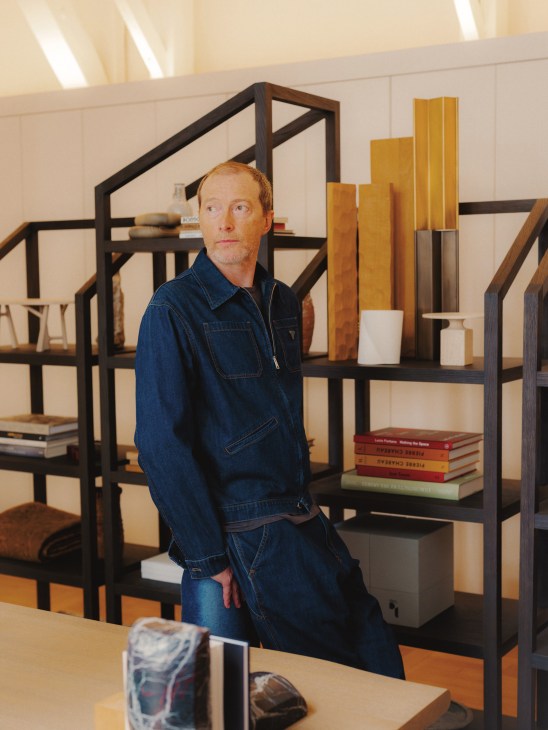
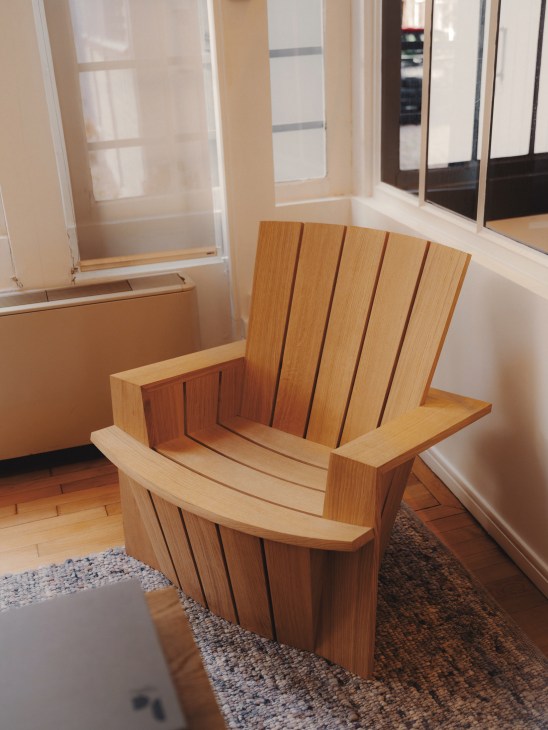
“I used to be shy as a designer – too worried about how the pieces would come together, which limited creativity,” he says. “Today I have a liberated creative process because I am supported by the techniques and know-hows of the artisans I work with; the bigger the challenge, the more they are motivated.”
This love for the complex is easily seen in the pieces around the showroom. The Nin table, for instance, has a long, flat surface, with a base that echoes tree branches in a forest. “I’m lucky to live in the countryside, where there are beautiful trees that were planted 400 years ago,” says Delcourt. “For Nin, I was inspired by a cluster of Thuja trees planted so close together that, over time, the branches have all intertwined.”
Though Delcourt might now live in a rural area and work with artisans across the country, Paris – the city where he was born and raised – still has an influence on his work. He tells Monocle that his vision of Parisian elegance in design is the nonchalant art of mixing pieces from different designers and decades.
In reflecting this ethos, the designer doesn’t show the entirety of his collection in his Rue de Babylone space but rather displays a selection of pieces. “In Paris, we really love the idea of mélange,” says Delcourt. “We mix eras, shapes and materials, and we aren’t afraid to blend the personal objects with signed pieces.”
christophedelcourt.com
Comfort zones
The prejudices of Parisians
Let’s face it, Parisians are prejudiced about many topics: clothes, food, jobs (writes Iban Raïs). But the one thing we’re most judgemental about? The arrondissements. Each of the 20 districts have their own rules, style, architecture and cultural life. And so, the arrondissement that a person chooses to live in says a lot about who they are.
Do you live in the 15th? You probably work in finance and have a penchant for sleeveless puffer jackets. Did you just move to the 6th, in Saint-Germain-des-Prés? You want people to know that you enjoy art and old bookshops, and that you’re happy to pay €10 for a latte at the mythical Café de Flore.
Years ago, I made the decision to move to the 11th. This eastern arrondissement is a village with huge social diversity: artists, students and creative people all live together peacefully in an area stretching from Bastille to République square. Here, you can buy the best baguette in town at Gana bakery and enjoy a delicious coffee at On Partage on Rue de Charonne. A short walk away is Mika’s barber shop, where you can gossip about footballers (he cuts the hair of footballers who play for Paris Saint-Germain).
These opportunities afforded in the 11th are personally significant because they reflect my tastes. Perhaps, secretly, I want people to know that I appreciate a busy food scene and a vibrant street life, and my choice of locale does just that. It’s a reminder that where we live is as much about who we are as who we want to be – something that Paris’s varied arrondissements afford.
Raïs is a writer based in Paris.
Line of vision
Miami’s newest linear park
The newest phase of Miami’s The Underline is now open. Landscape architecture studio Gardner 1 Semler extended the initial stretch completed in 2021, helping to transform the vacant land beneath the city’s elevated railway into what will eventually be a 16km linear park and urban trail featuring protected bike and walking lanes, basketball courts, nature and dog parks. The goal is to reclaim an otherwise abandoned space for the city’s residents.
“It’s a citizen-led movement to transform the way we live in our city,” says Meg Daly, founder of the namesake community group that conceived the project. Daly’s team prioritised community consultation to ensure that the plan serves residents. “This phase went through more single- family residential areas, so our focus became about native planting and bringing back birds, bees and butterflies.”

This brief from Daly resulted in Gardner 1 Semler planting 100,000 native plants and 1,000 trees, increasing canopy cover by 36 per cent; it also added a children’s playground. These outcomes highlight the opportunity that brownfield developments present in our cities, showing how forgotten pockets of urbanity can be transformed to serve the community and wider ecosystem.
theunderline.org; gsladesign.com
Nic Monisse on the need to embellish
I’m prone to exaggeration in my personal life, hamming up stories for comic effect. Professionally, however, I’m careful to ensure that it doesn’t creep into my work (after all, as a journalist, I’m in the business of accuracy). And, when I was a designer in a past life, exaggeration was all but stamped out of me. Simplicity and understatement were the hallmarks of the timeless designs to which I aspired.
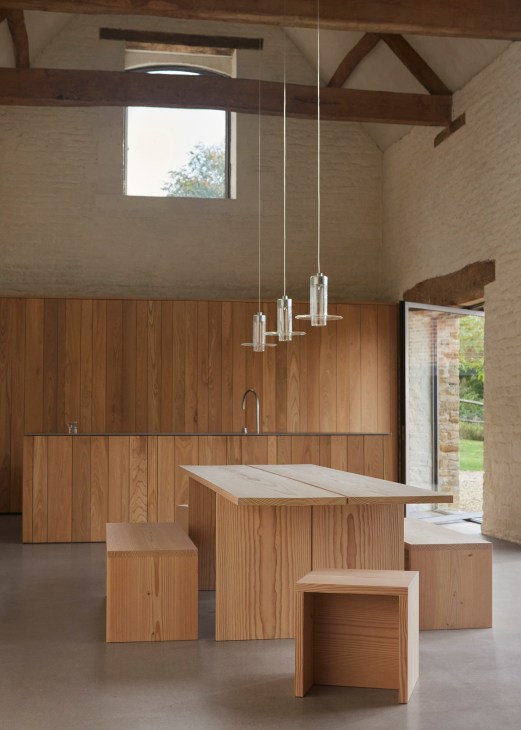
But a recent conversation with John Pawson – the legendary minimalist British designer – turned everything on its head. “I am sometimes worried that I exaggerate too much,” Pawson told me, referring to a portfolio of work that, on closer inspection, includes a host of exaggerated elements. There are galleries with grand stone frontages, offices with striking white walls and, in the case of his own home, 15-metre-long Dinesen Douglas fir floorboards connecting several rooms. The latter led to the creation of a new line of furniture with Dinesen, a Danish timber specialist, featuring dining tables, benches, sofas and daybeds made from impressive lengths of Douglas fir and oak.
“If you stand on these wooden floorboards that are 15 metres long and half-a-metre wide, you feel different,” says Pawson of the decision to use them. “With the furniture too, it’s not some little piece of wood but an impressive piece of timber that can change how you feel.”
However, Pawson is keen to impress that exaggeration needs to be employed in the right place and at the right time. Perhaps it doesn’t have a place in my journalism but maybe I can continue to roll it out at the pub. “Did I tell you about the time I met John Pawson? No? Boy, do I have a story for you.”
Monocle’s Quality of Life survey 2024: The 20 best places to live
This is Monocle’s annual ranking of the world’s 20 most liveable cities. People often ask us how we arrive at such a list, the subtext being: how can you possibly compare something that is as complex and multifaceted as a city with another? You probably know that we aren’t the only organisation that attempts such an endeavour. But while other rankings tend to focus purely on hard data, we take a broader, more balanced approach. Sure, it’s very easy to compare, for example, one city’s GDP per capita with another’s and deduce which is the more successful in that respect. But how often do you consider such a metric when making a judgement about where to relocate, recommend to a friend or visit? Like the cities themselves, our opinions of them are based on a variety of factors – some clearly rational but others less obviously so.
In an age when one can consult all manner of worldly information in an instant, we think that it’s important to take a view – we are, after all, editors. If you want a detailed list of metrics comparing every city in the world, there are plenty of repositories for such things. But if you want to know what a city is like to live, work and play in, then you should ask someone who not only lives, works and plays there but whose judgement you trust too. That’s what we do. We have conversations with our correspondents and contacts who reside in the places that we’re ranking. Then, after consulting the data (yes, there are still many numbers involved) – things such as GDP per capita but also the price of a cup of coffee, whether you can get a decent meal after 22.00 and what time nightclubs close on a Saturday (or Sunday) – we discuss the findings among ourselves. After that, we arrive at our decision.
The final top 20 is a combination of science and, dare we say, art – both statistics and less quantifiable things. It considers the past, the present and the future but especially the past 12 months, and how well we feel that a city has done in that time. Every year we also focus on an area of current debate on what makes somewhere a good place to live. It has been remarked upon that in countries such as the US and UK, life expectancy has dipped and some younger generations, for the first time in history, are expected to live shorter lives than their parents. This year we compared average life expectancies in different cities as part of our ranking: quality also means quantity. As ever, we encourage you to disagree and debate us on the top 20. The more people who question what makes cities good places to live in, the better.
Key metrics explainer
Adopt: Initiatives and policies that would benefit the city.
Drop: Problem areas that are holding the city back.
1.
Munich
Germany’s economic engine.
Position in 2023: 03
Adopt: Improvements in public transport and cycling infrastructure, instead of focusing on expensive tunnels for motorists.
Drop: The habit of awarding municipal jobs to local party members. The practice excludes outside experts.
Population: 1,512,491 (metro: 2,926,802).
Newspapers just for the city: 7.
Average monthly cost of renting a one-bedroom flat: €1,755 (including utilities).
Number of sporting clubs: 694.
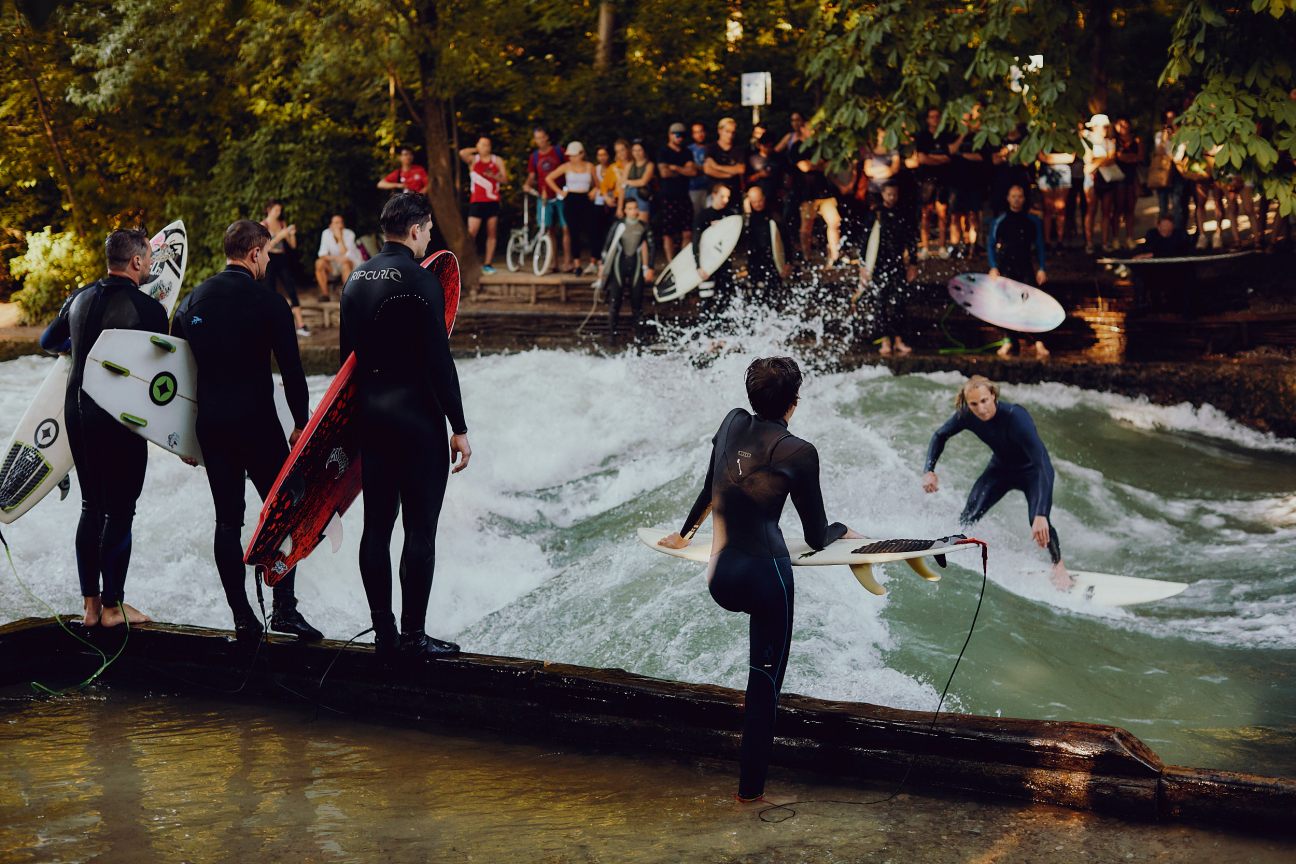
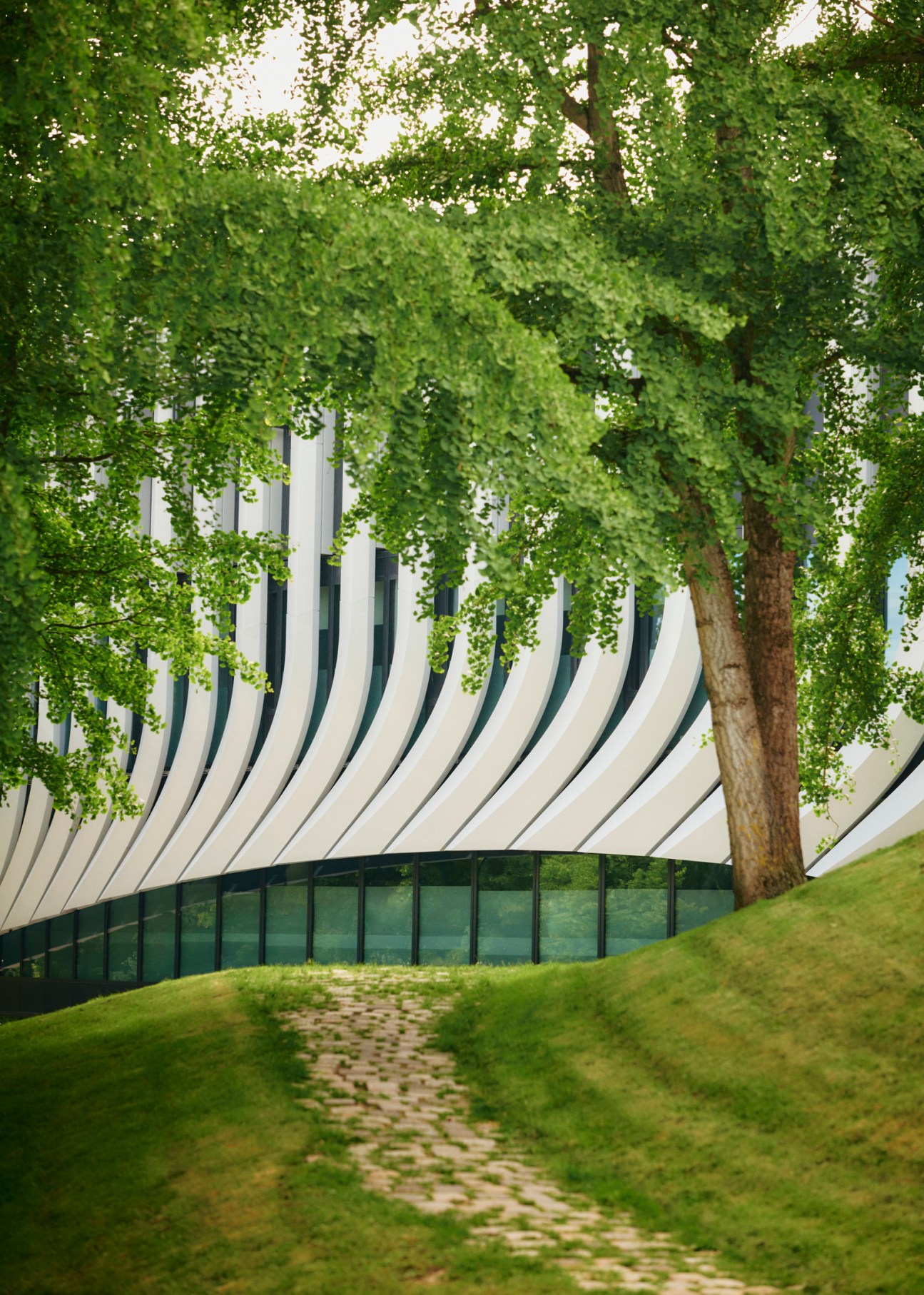
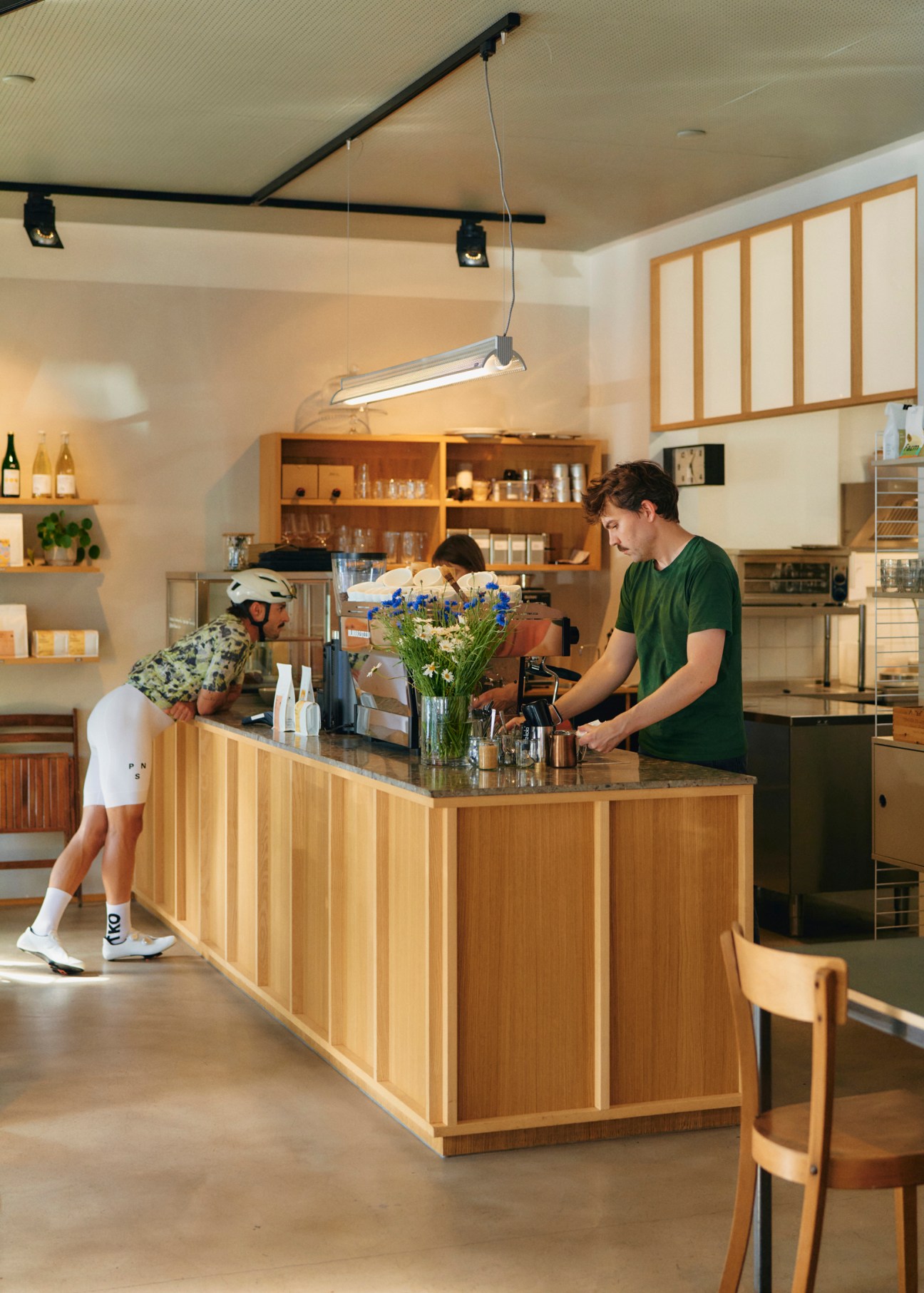
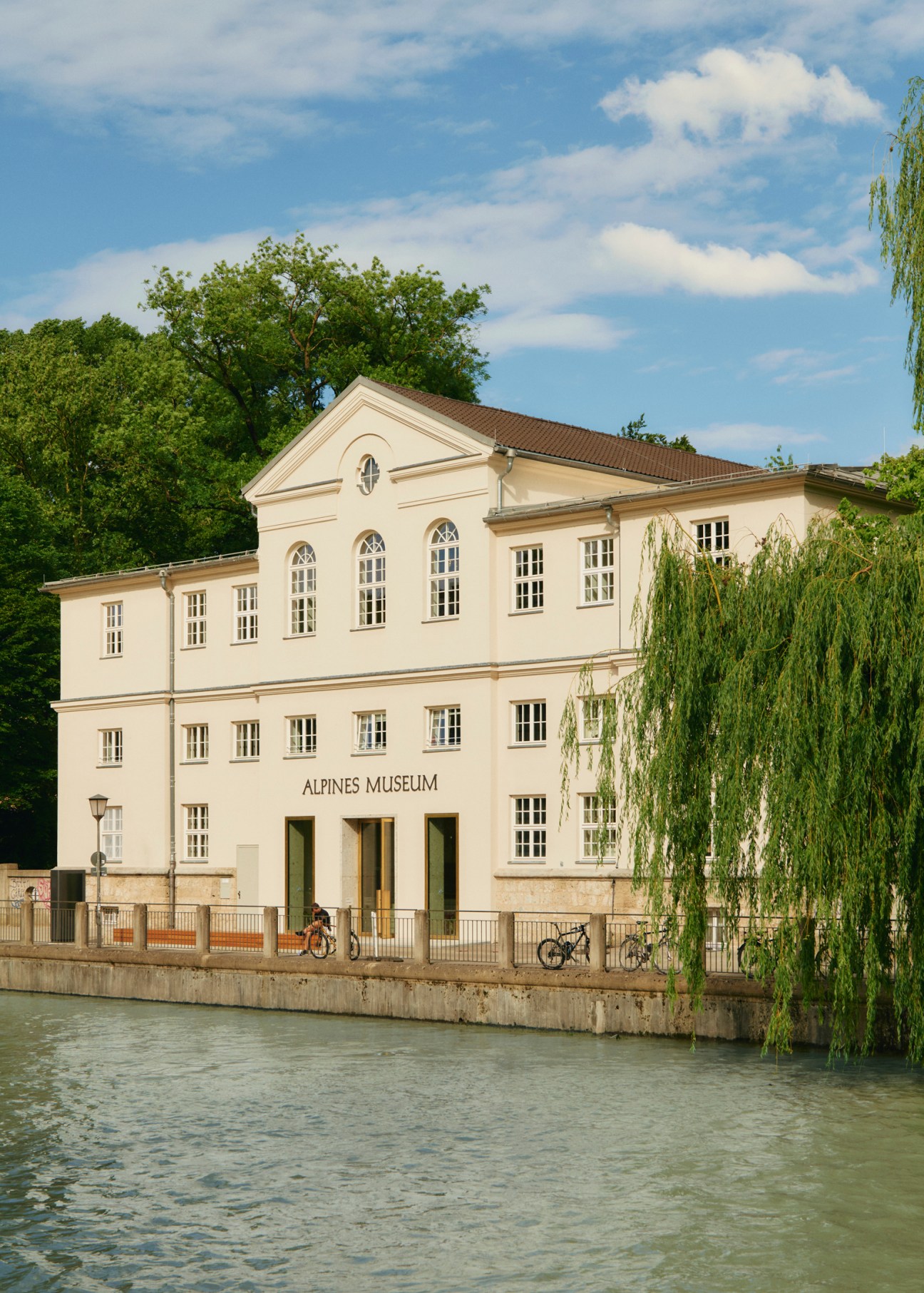
Munich is literally Germany’s most attractive city. Since 2000, the populations of Berlin, Hamburg, Köln and Frankfurt have grown by about 15 per cent – but Munich’s has risen by almost a third. One reason is the city’s economic and intellectual draws. Of Germany’s 40 largest companies, seven hail from Munich. This has probably contributed to its status as Germany’s most expensive city. But talent is nurtured here. In December the city set aside an extra €668m for building and renovating nurseries, pre-schools and schools; with a total budget of €8.4bn since its inception in 2011, it’s Germany’s largest such scheme. On the other end of the academic ladder, the Technical University of Munich and the LMU München are the country’s top-two universities. The city’s proportion of employees with an academic degree is 41 per cent, also Germany’s highest.

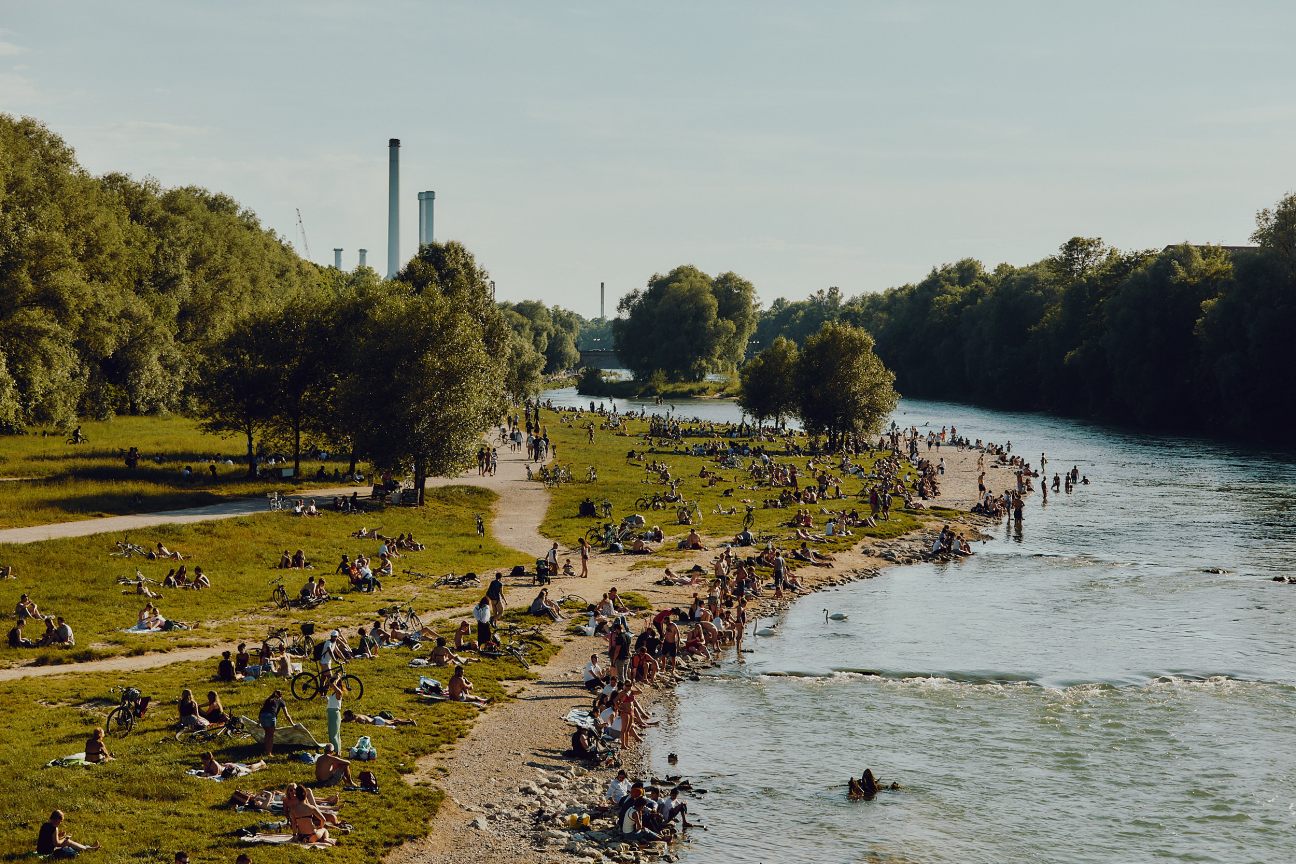
Munich is also the country’s best city for a healthy lifestyle. In an EU ranking of 38 German regions by life expectancy, Upper Bavaria, home to Munich, came first with 82.3 years. One explanation is the city’s access to nature: pristine environs, the river Isar and parks such as the Englischer Garten. New leisure facilities have opened too. Among them is Kunstkraftwerk Bergson, a power station converted into an arts venue. Last year, the city nearly tripled its newly installed solar power capacity with a scheme that supports small panels on private balconies. Munich’s future looks sunny. A worthy winner.


2.
Vienna
The city still improving as it grows.
Position in 2023: 01
Adopt: More than a third of Vienna’s population consists of foreign nationals. City hall should allow permanent residents to vote in council elections.
Drop: The authorities shouldn’t rush to sell off public spaces, such as a much-loved skate park in southeastern Vienna that is currently under threat.
Population: 2,006,134 (metro: 3,004,660).
Number of international destinations served by the main airport: 190.
Electric-car-charging points: 875.
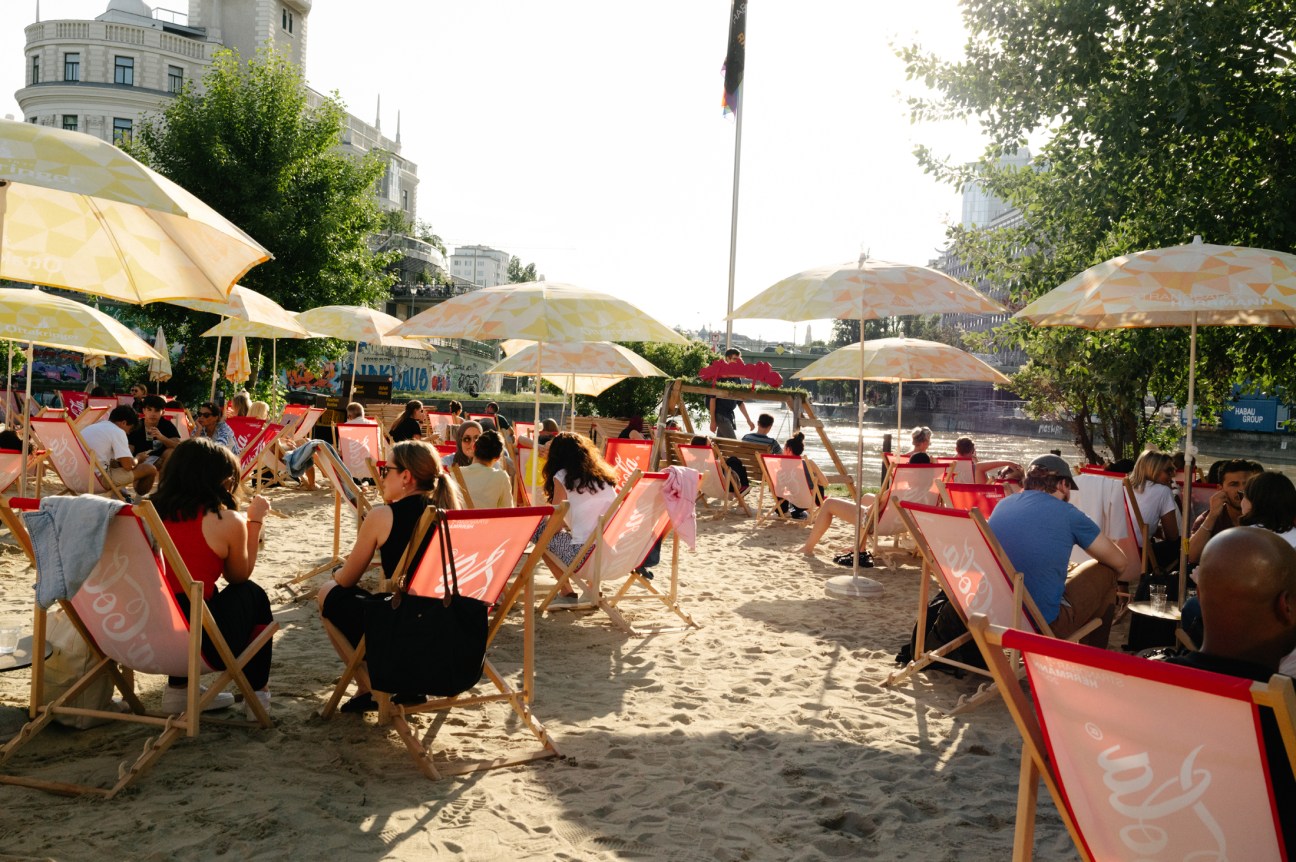
Since topping last year’s survey, the population of Austria’s capital has exceeded two million for the first time since 1910. This growth has taken place as the city works to improve its residents’ access to healthcare and leisure: Vienna has increased its number of mental-health facilities for young people, for example, and has upgraded its public swimming pools. There’s also a new beach on the Danube near the UN office. A place for the diplomatic corps to cool off? God knows they need it.
True to its social-democratic ethos, Vienna continues to impress when it comes to affordable housing. In May the city unveiled its newest Gemeindebau (municipal building) containing 118 flats, the 10th such new-build since the programme was restarted in 2015 after a 10-year hiatus. Another milestone came a few weeks earlier when Austria’s parliament voted to give local councils the power to levy a vacancy tax on owners of empty homes. The measure could mobilise as many as 80,000 properties and help to stabilise housing prices.
Last year, Vienna won the EU’s Best Organic City award, thanks to its municipal food brand, Wiener Gusto, which produces flour, lentils, meat and more. In culture, the Wien Museum reopened in December after a painstaking four-year refurbishment. As a bonus, admission to its permanent exhibition, which tells the city’s history in 1,700 objects, is free of charge, a first for an Austrian museum.
3.
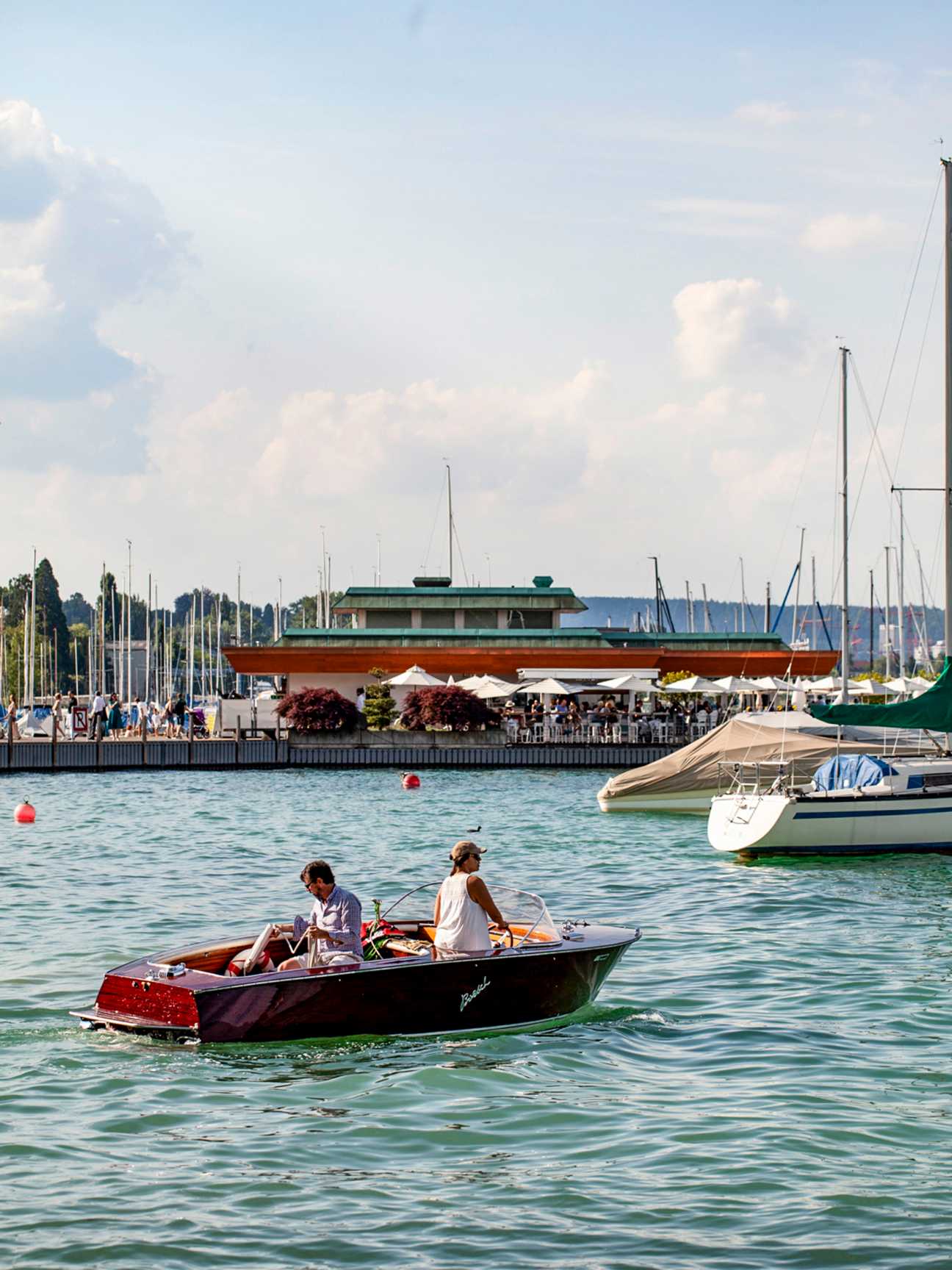
Zürich
The health-conscious harbour city.
Position in 2023: 04
Adopt: A tougher strategy for tackling the city’s out-of-control grafitti problem.
Drop: Zürich’s strict Sunday-trading hours. Liberalising these would bring more life to the city’s streets.
Population: 445,015 (metro: 1,341,246).
Average life expectancy: 81.6 (men), 85.4 (women).
Number of outdoor pools or beaches: At least 16 – plus numerous lakeside swimming clubs.
Percentage of commuters who cycle to work: 21.9.
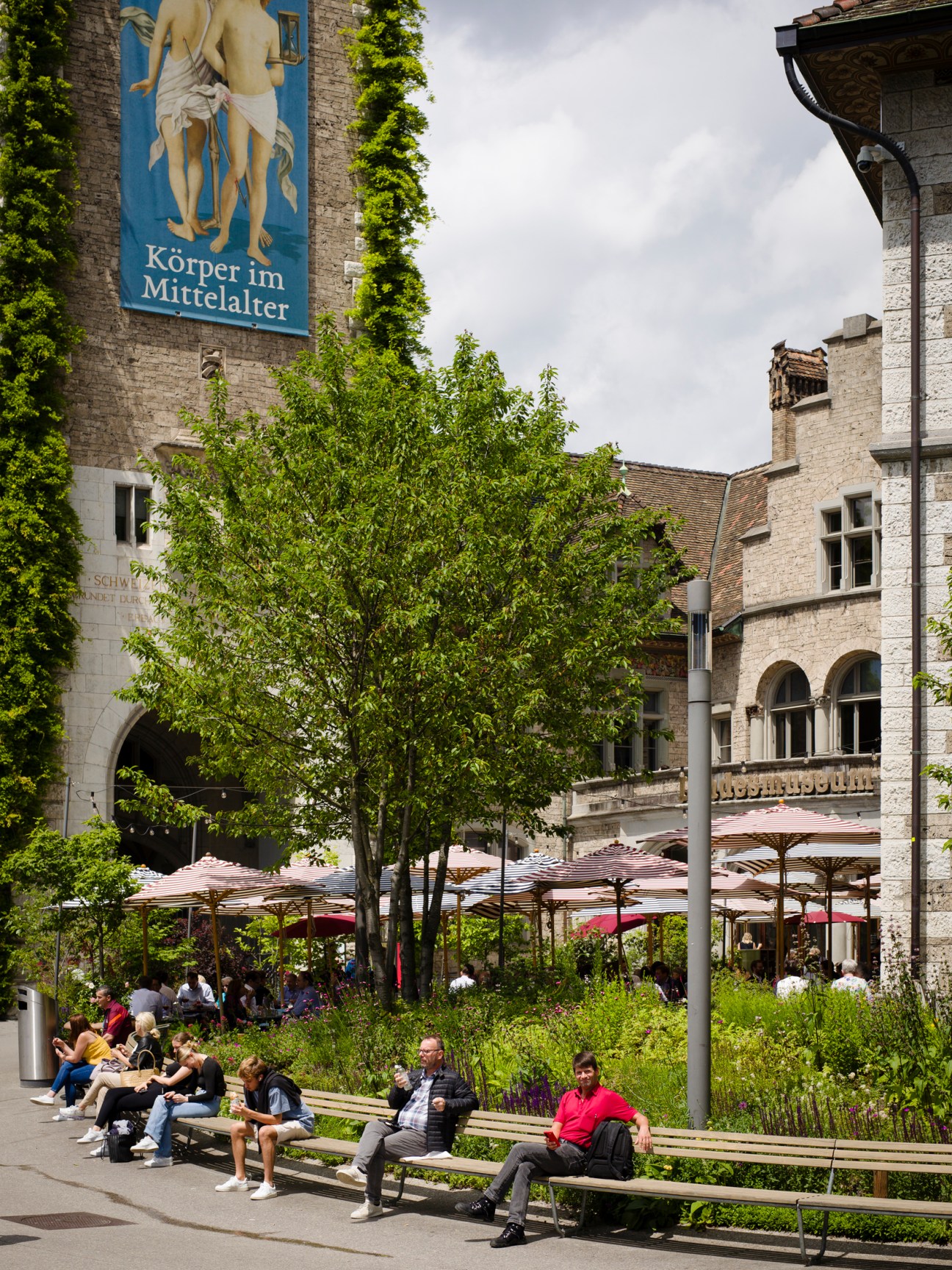
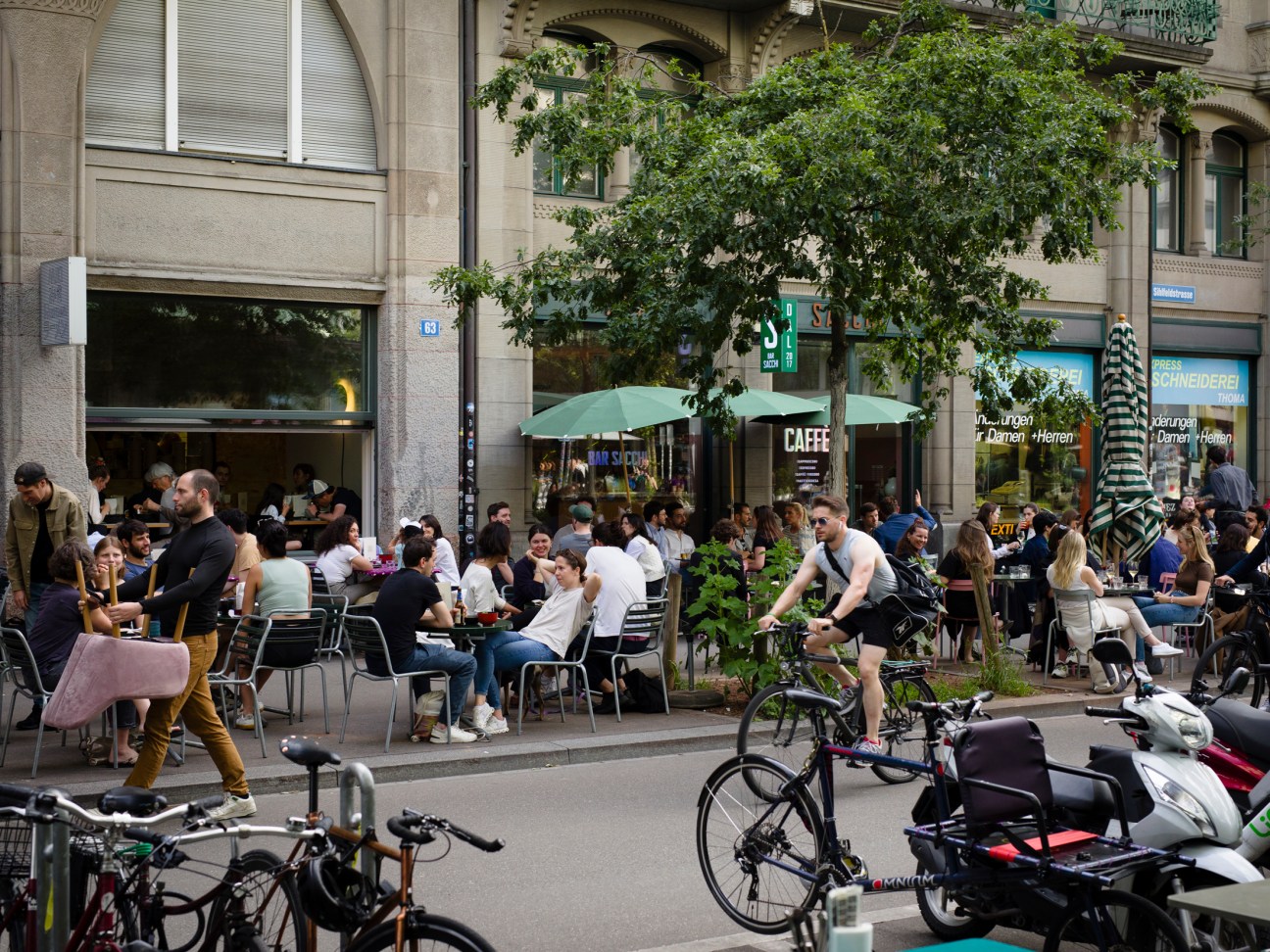
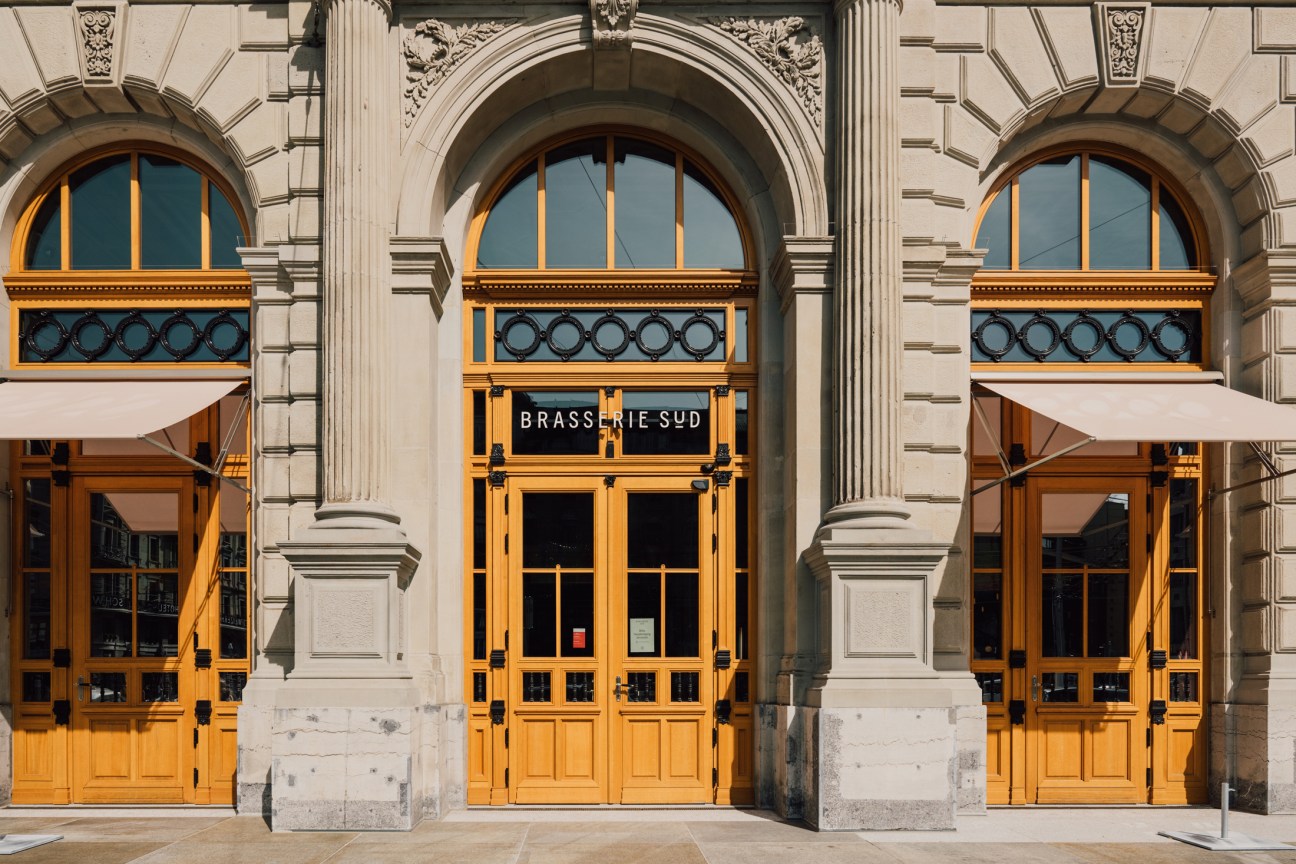
Zürich retains its status as that rare thing: a quaint harbour city in a landlocked country where the trains and trams run on time. But you knew that already. What you might not know is that the city’s food scene is currently benefitting from a new wave of young restaurateurs, many of whom are graduates of Switzerland’s celebrated hospitality schools. This means that the service runs on time too. There has also been a spate of infrastructure projects across Zürich, including new tram lines, refreshed train stations and verdant parks in hitherto lesser-served parts of the city.
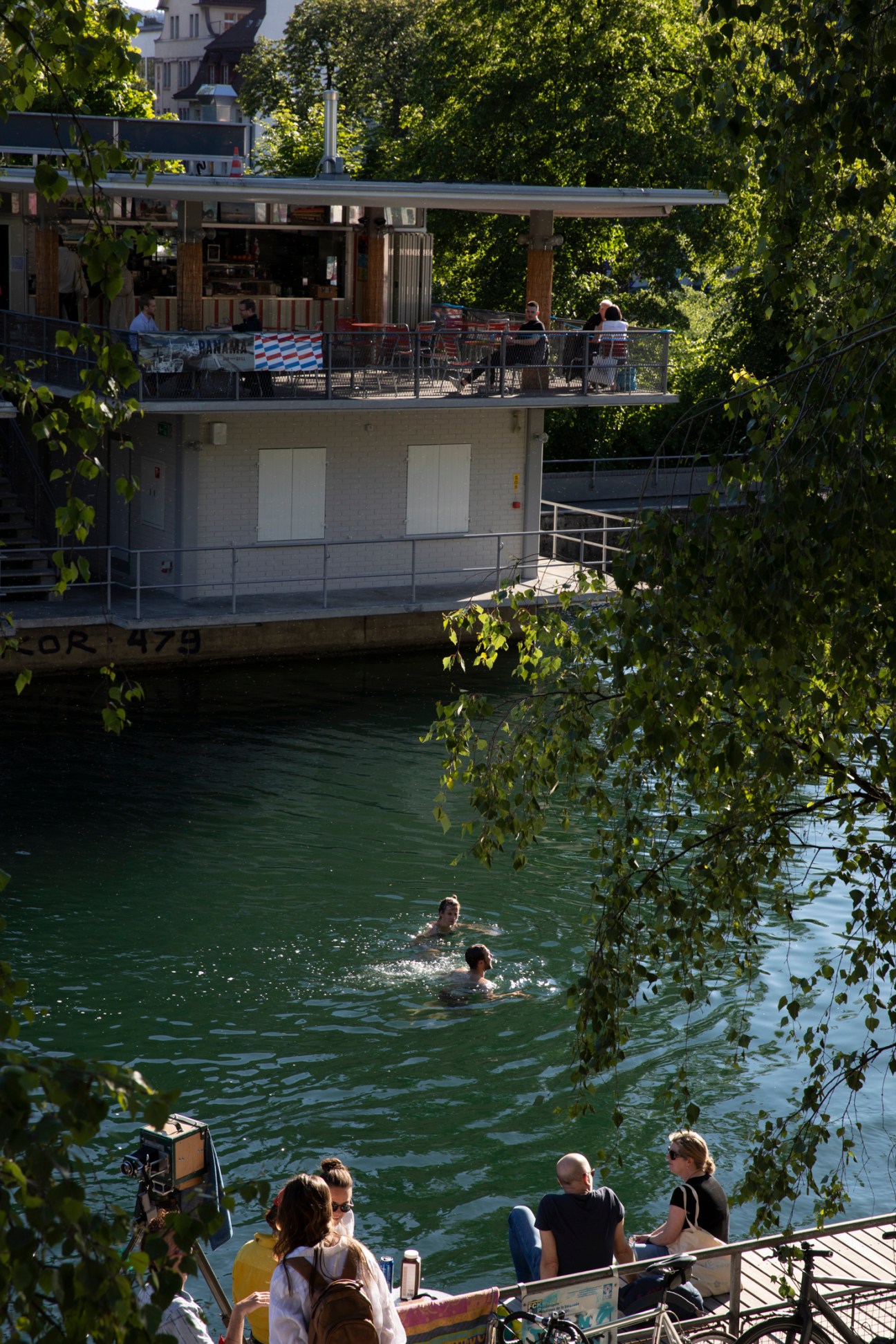

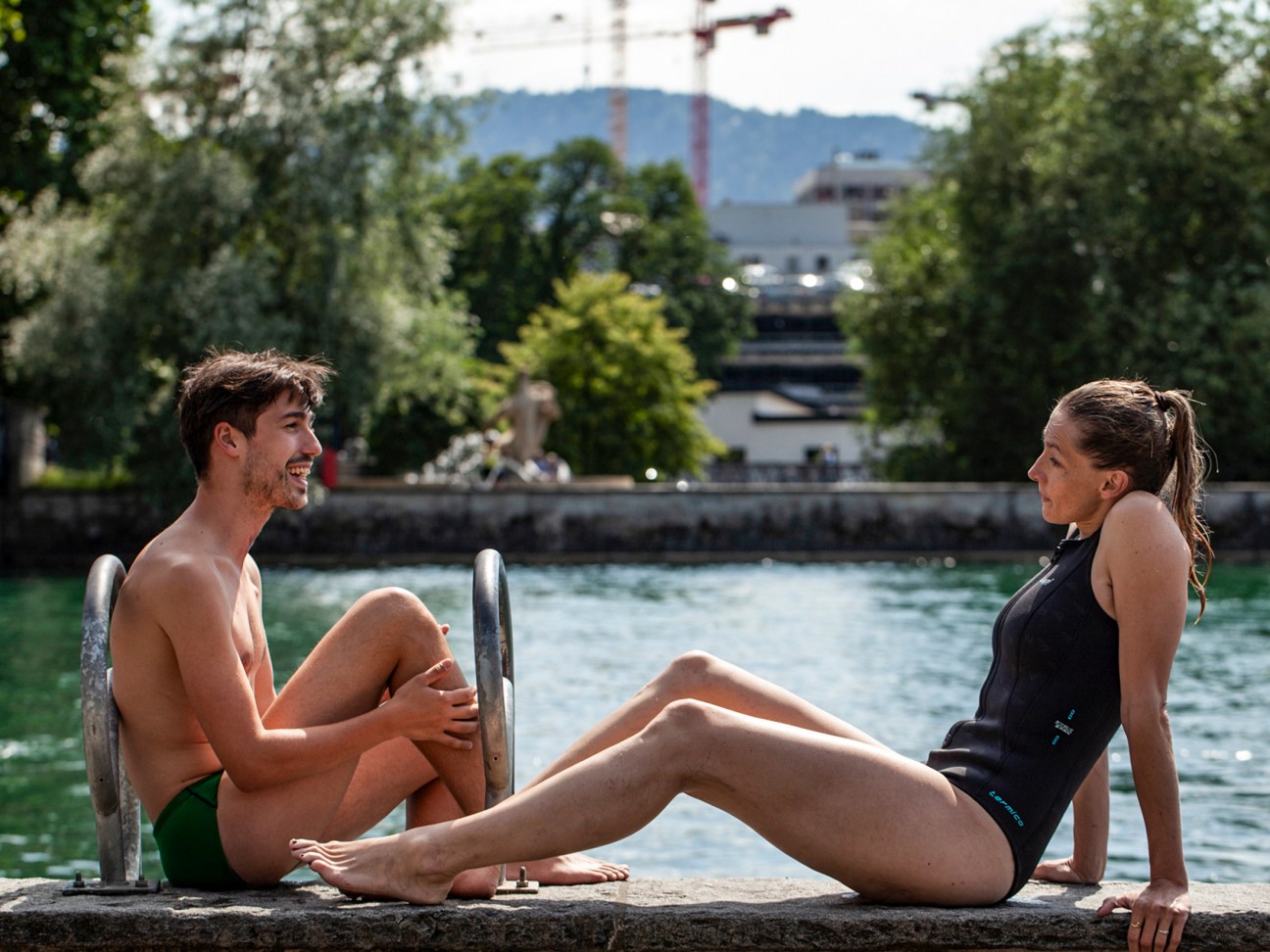
Last year, Zürich had a record number of overnight stays. And it remains a city in which outsiders are keen to put down roots: more than 30 per cent of residents were born abroad. Many were drawn here by the high living standards (and salaries) but also by the opportunity to live a happy and healthy life. Some 76 per cent of the population exercises at least once a week – an impressive statistic that reflects the wide range of walking, swimming and team-sports clubs in the city, many of which are integral to its social scene.

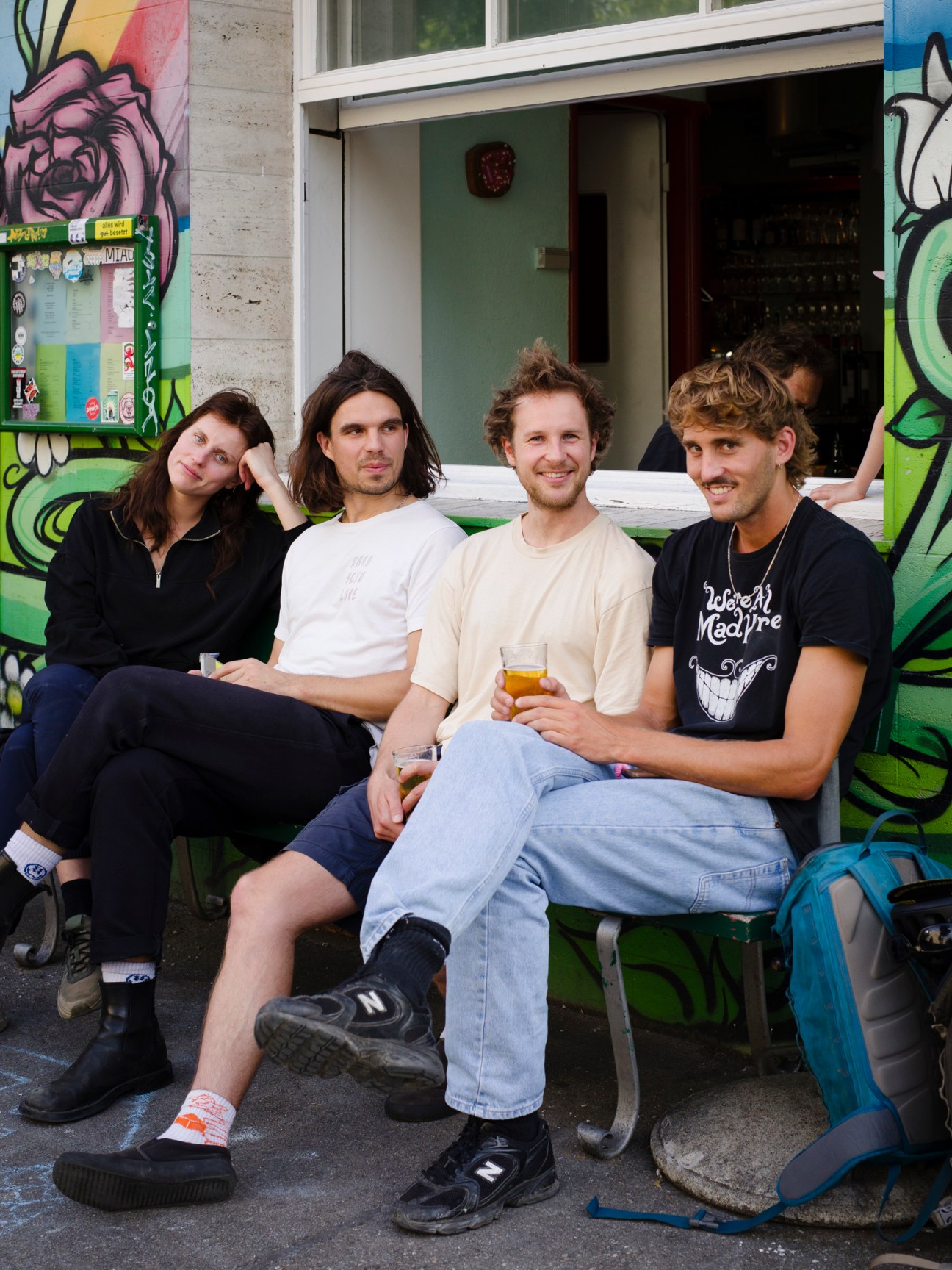
While Zürich’s residents admirably make the effort to stay in shape, the city itself could do with a little extra maintenance: specifically, the authorities urgently need to get a grip on the widespread graffiti problem. If the city wants to win its bid to host next year’s Eurovision Song Contest, it should put on its freshest, cleanest attire.
Come rain or shine
Izmir
When it rains in Izmir, a city on Turkey’s Aegean coast, it pours. Most of its entire annual rainfall comes between November and March, while there’s hardly any at all in July and August. In a city of 4.5 million people built on creaking infrastructure, that means lurching between flooding and droughts. Now a project to turn urban surfaces into sponges is helping to break the cycle.
“Sponge cities” are places that modify every surface where water collects to drain it into storage reservoirs. In the dry months, this supply can be tapped. The idea can be adapted to suit a city’s specific needs. Rain gardens and water-retention parks, designed to channel precipitation into underground filtration systems and storage ponds, also increase green space. Meanwhile, concreted areas such as plazas and school playgrounds can be retrofitted with drainage systems.

Launched in China in 2014, the sponge-city concept has now spread across the world. In 2020, Izmir became the first Mediterranean city to adopt this approach. Since then, it has installed 5,000 water tanks on roofs across the city; in March a school was fitted with rain gardens and collection channels. Seepage tunnels and a pond have been constructed on an agricultural plain that was prone to drought. About 10,000 rain gardens have been planted too.
“Wherever there is concrete, it should be turned into something that can suck up water,” says Tunc Soyer, the city’s former mayor who introduced the project. The target is for 70 per cent of the rainfall to be saved, with car parks and cemeteries eventually converted for this purpose. Soyer says that Izmir’s experiment will benefit the entire country and region. “We need to find a solution soon because this issue will get worse with climate change.”
4.
Copenhagen
The future-ready capital city.
Position in 2023: 02
Adopt: A more courageous approach to new builds. Allow some taller buildings in the city centre (but only if they’re good).
Drop: Rehousing immigrants further out of the city centre and the steady transformation of social housing into upmarket apartments. Though intended to alleviate social inequality, it doesn’t look good.
Population: 659,352 (metro: 1,945,157).
Average monthly rent of one-bedroom apartment: DKK6,500 (€871).
Retail occupancy rate: 93.7 per cent.
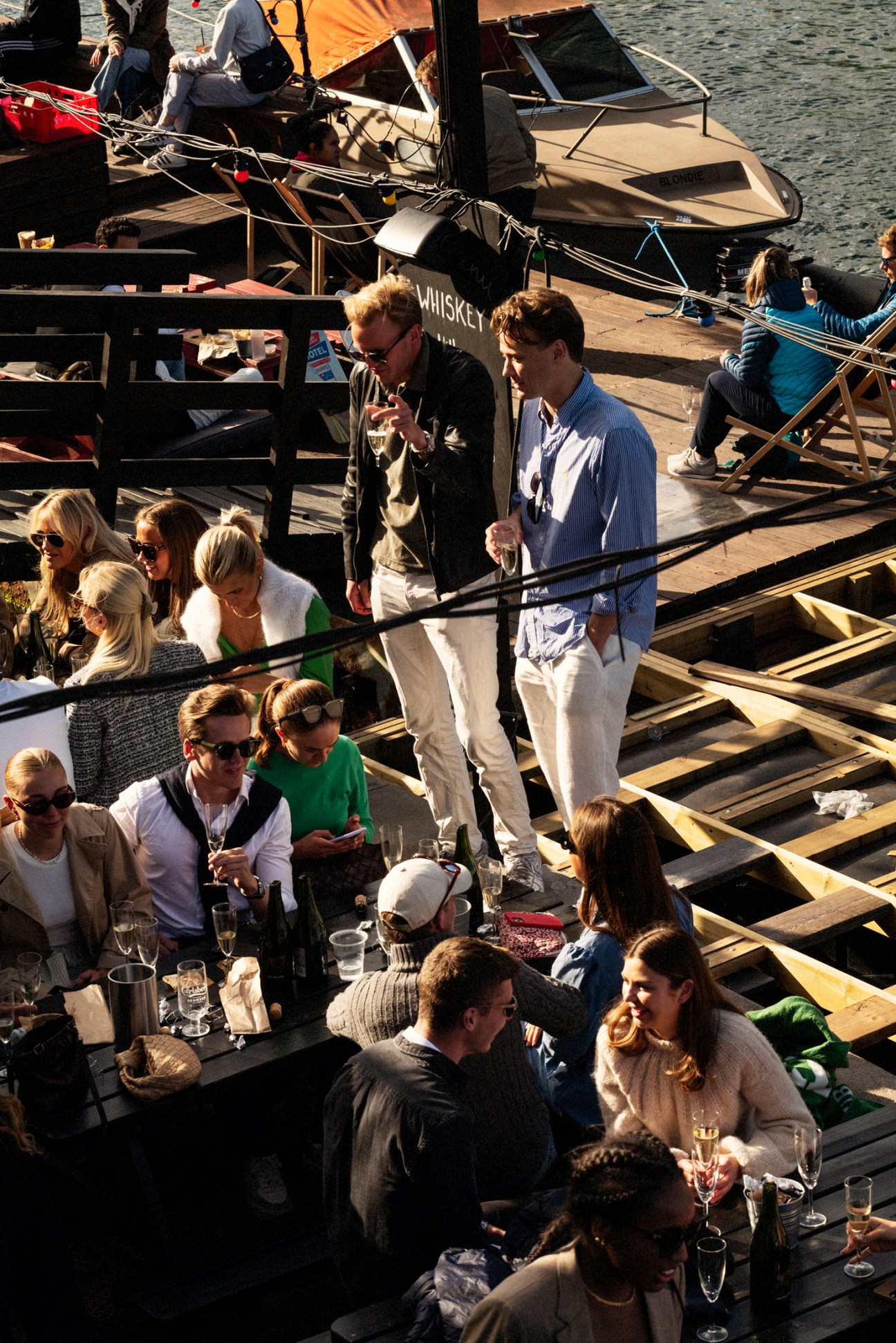
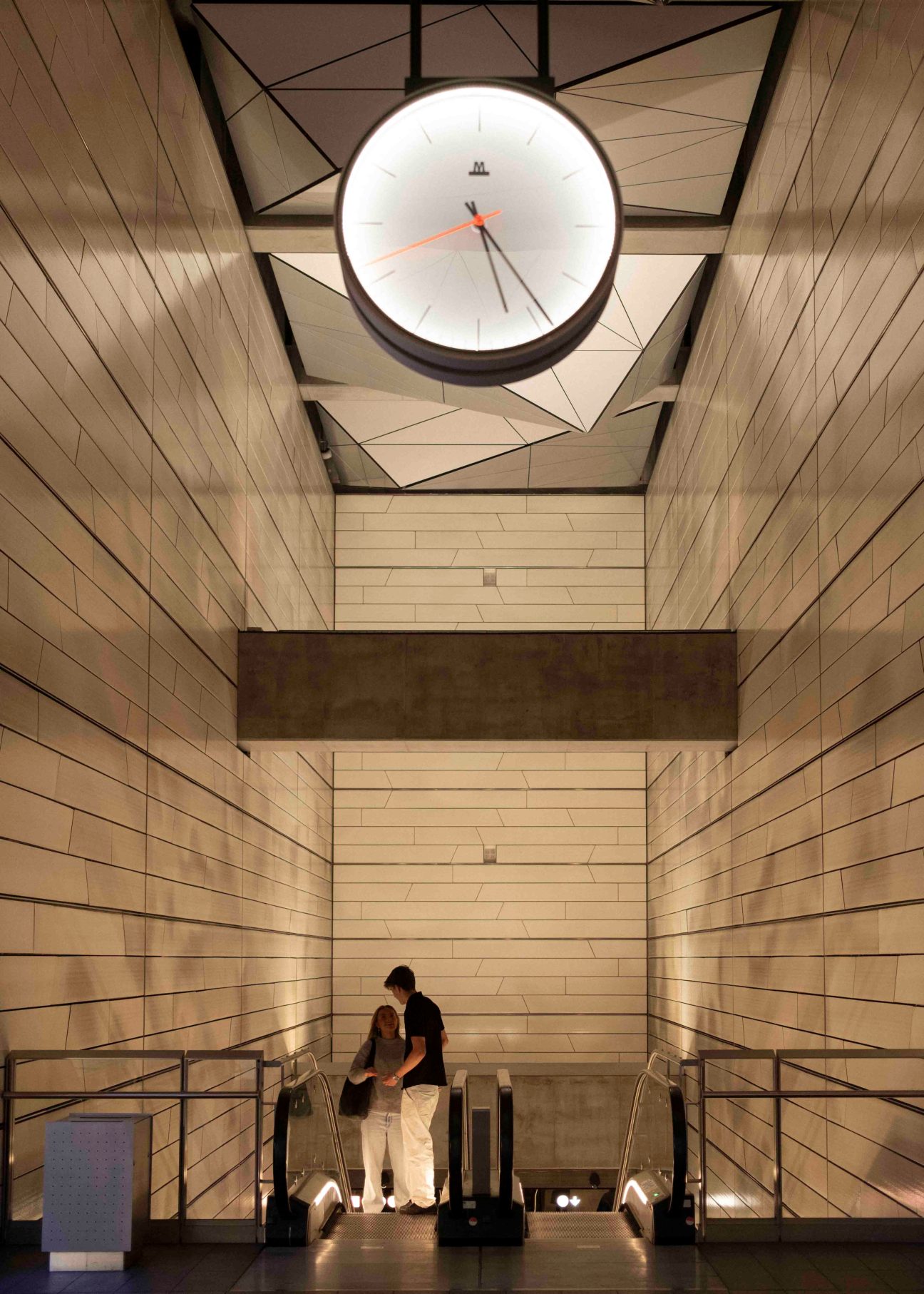
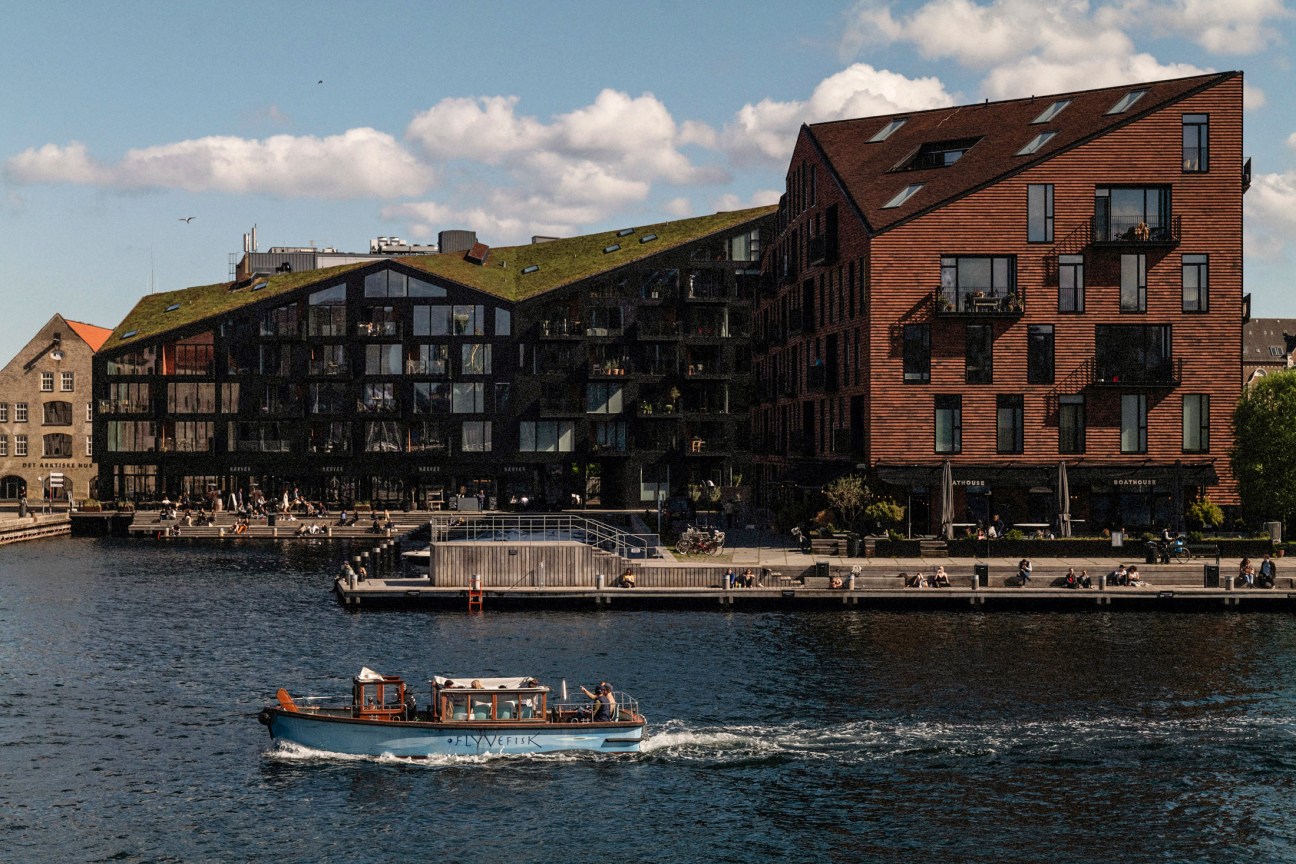
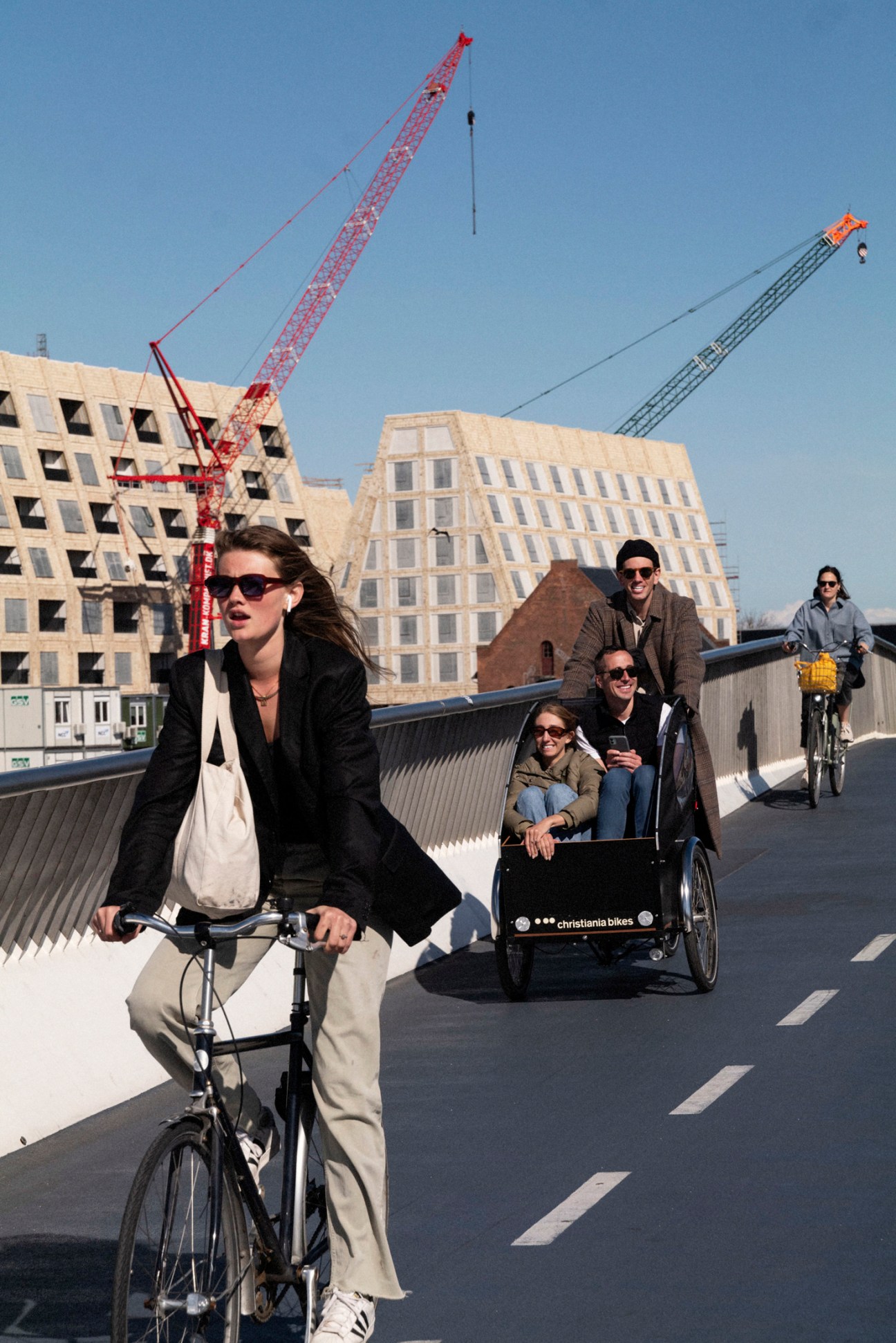
In the 12 months since our last survey, Copenhagen has lost one of its oldest landmarks: Renaissance-era stock-exchange building Børsen, which burned down in April. Needless to say, it will be painstakingly rebuilt. Construction is a theme these days in the Danish capital – a sign of a booming economy. Five new Metro stations will open this year in Valby and, beyond that, Sydhavn, the rapidly growing residential zone on the harbour to the south of the city.
Late last year, Copenhagen opened the new Opera Park beside the Royal Danish Opera House. Designed by Cobe Architects, it has brought some much-needed greenery to the harbour front. But it has also been criticised for its addition of 300 underground parking spaces; many residents feel that the city shouldn’t be encouraging the use of private cars.
The second phase of Copenhagen’s DKK20bn (€2.7bn) expansion onto the artificial island of Lynetteholm began late last year. It will incorporate a ring road and a tunnel beneath the harbour, connecting it to the north of the city. Lynetteholm will also provide homes for 35,000 people, as well as defences from rising sea levels.
Denmark’s first dedicated children’s hospital is under construction, gathering medical services for patients aged 18 and younger under one roof. Designed by 3XN, the €320m project is scheduled for completion in 2026. It’s a big investment in families by a city that’s already well known for its humane generosity.

5.
Madrid
A city mixing business and leisure.
Position in 2023: 08
Adopt: A friendlier policy towards foliage. In the past two years, 9,000 trees have been cut down.
Drop: The plan to illuminate the Manzanares river at night. The rewilded waterway is a delicate ecosystem that could be imperilled by the intervention.
Population: 3,332,035 (metro: 7,005,286).
Independent bookshops: 584.
Life expectancy: 82.5 (men), 87.62 (women).
Michelin-starred restaurants: 22.
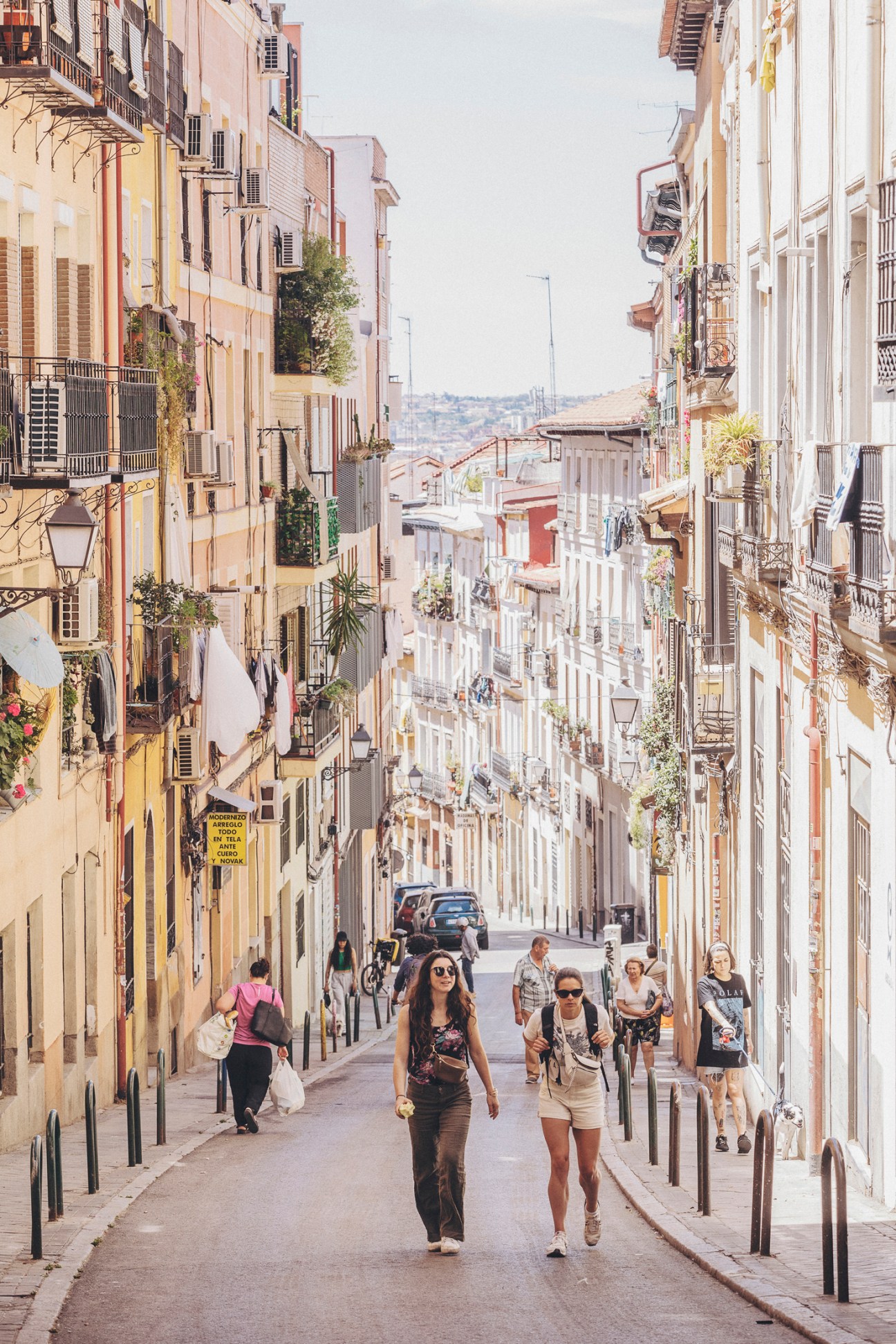
How can a place that’s as fast paced as Madrid also be so good at kicking back? Clues to the city’s most impressive data point – the life expectancy of madrileños is among the highest in the OECD – are easy to spot. People tuck into meals made from fresh Spanish produce on packed terraces. Colour and creative expression pop from shop windows. Sunbathers stretch out in parks and on rooftops.
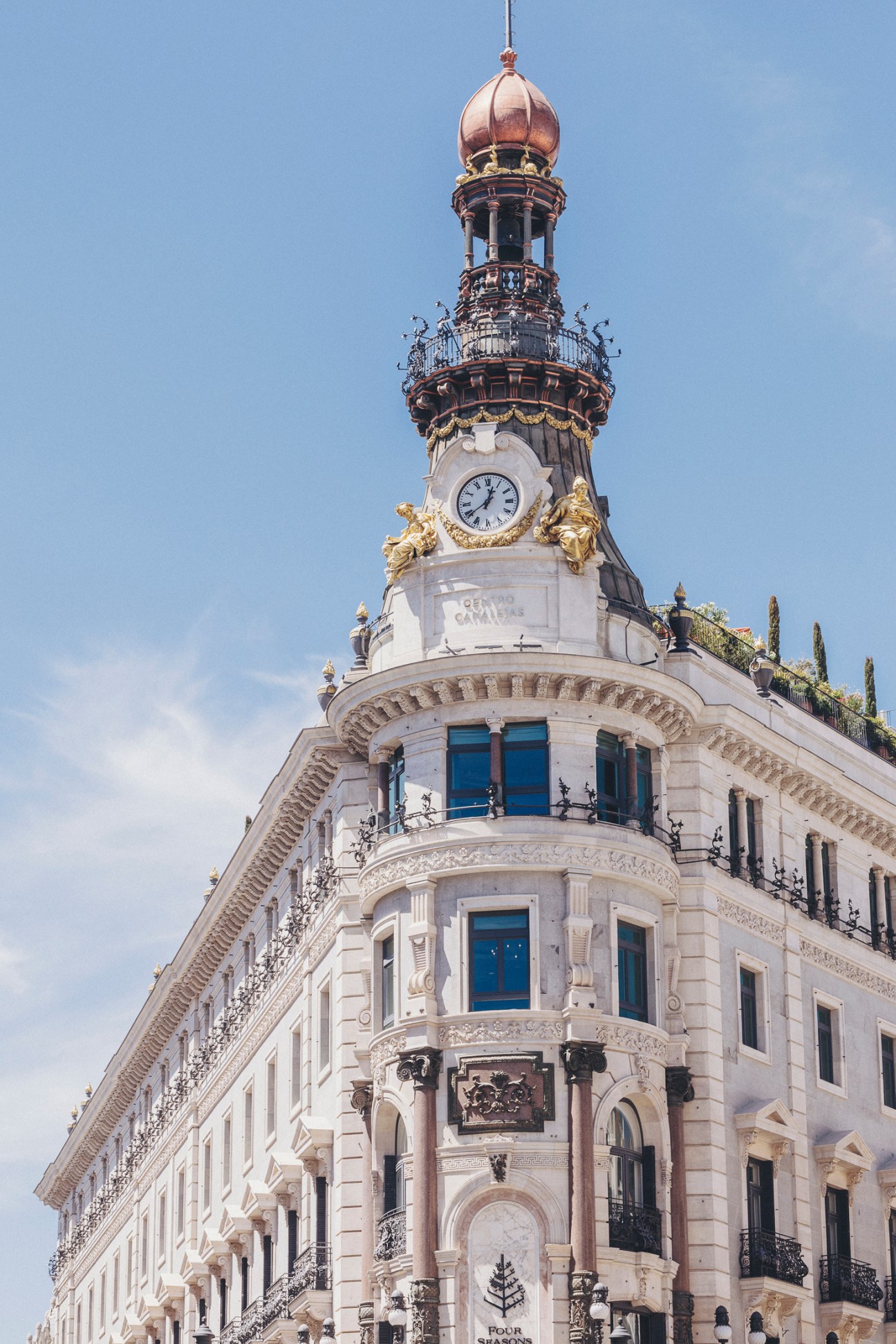
Over the past few years, Madrid has revamped many of its public spaces, making its favourite pastime, el paseo (aimlessly strolling), more pleasurable than ever. Now with wider pavements, more public benches, water fountains and thoroughfares that consider pedestrians, could the Spanish capital finally be giving Barcelona’s urbanism pioneers a run for their money? Upgrades along Calle de Alcalá and the Puerta del Sol, a revamp of the Usera district (known for Madrid’s Chinatown), a soon-to-be- finished green corridor that brings the Parque del Oeste closer to the city centre and a huge new park in Cuatro Caminos all make a persuasive case.
Other factors contribute to residents’ wellbeing. Madrid is the capital of Spain’s sporting prowess, from world-class football to tennis (though the Madrid Open, criticised for poor management, still needs to raise its game). It also boasts a growing network of padel courts, running tracks and open-air gyms. One thing’s for sure: madrileños know how to balance their leisurely lounging with some active lunging.

6.
Lisbon
The ever-evolving melting pot.
Position in 2023: 09
Adopt: More green spaces and places for outdoor recreation.
Drop: Rampant property speculation. The city’s public-housing policies to date have been inefficient and have pushed many younger and middle-income earners out of the inner city.
Population: 548,703 (metro: 3,035,487).
Annual hours of sunshine: 2,799.
Percentage increase in prime rent since last year: 13.9.
Number of international destinations served by the main airport: 132.
In April, lisboetas flooded the streets of their city to mark the 50th anniversary of the peaceful Carnation Revolution, which toppled a fascist dictatorship. Though they’re mild and welcoming by nature, resistance is also part of their DNA. Their current battle? The city is contending with the effects of its own charms.
Beautiful, safe and surrounded by nature, and with attractive tax incentives for expats, the Portuguese capital has become a haven for foreign investment, low-cost tourism and digital nomads in recent years. Lisbon is now prettier, cleaner and more vibrant than ever, benefitting from the energy and money of its new residents. A late-afternoon drink at one of its many small parks is a perfect way to sample this delightful melting pot.
On the other hand, house prices have soared and the city’s rising cost of living is incompatible with some of the lowest wages in western Europe. Lisbon’s dusty, picturesque charms have also been rapidly giving way to luxury hotels and tourist traps.
The city’s authorities announced measures last year to create more accessible housing but, so far, these have had no discernible effect. Meanwhile, a recent decision revoked restrictions on short-term rentals. Though highly walkable, there are major problems with traffic and public transport. In May city hall promised a big boost in the number of bike lanes and an expanded rental-sharing scheme, a welcome move for lisboetas pushed to the edges of the city.
7.
Tokyo
The best that Japan has to offer.
Position in 2023: 06
Adopt: Tokyo needs to keep an eye on its past as well as its future. Too many important buildings are being demolished to make way for unworthy successors.
Drop: The notion that people will take home their rubbish. The tourism boom has been accompanied by a rise in litter: the city urgently needs more bins.
Population: 9,660,461 (metro: 37,115,000).
Number of public parks: 11,982.
Unemployment rate: 2.5 per cent (prefecture).
The Japanese capital is the nation’s economic engine, accounting for 20 per cent of the country’s GDP and half of its listed companies. But it is more than just a money-making machine: it’s also a magnet for the best food, retail and art that Japan has to offer. The challenges facing the country (and its neighbours), such as a greying population and a falling birth rate, are being tackled here. As part of a long-term strategy, the city is focusing on the “three Cs” – children, choju (“longevity”) and community – by supporting those who want to have children, encouraging senior citizens to play a more active role and investing in skills that will equip the population for the future.
Large-scale development continues at an unstoppable pace but amid all the newness, it’s good to see Tokyo acknowledging its remarkable craft heritage. Workshops producing knives or printing textiles mustn’t be allowed to sink under the weight of modern glass and steel. Tourism is now at record levels. That’s excellent news for the economy (the low yen has made Japanese food and shopping even more appealing to visitors). For residents, it’s both good and bad. There’s a mild exasperation that even the most obscure ramen shops and cafés now have long queues; apartment buildings have signs forbidding short-term rentals and taxis can be hard to come by. Still, Tokyo life continues to defy big-city trends: service is polite, the streets are safe and people take pride in their environment.
8.
Melbourne
The thriving all-rounder.
Position in 2023: 10
Adopt: A more concerted effort to scrub up Melbourne’s beaches.
Drop: The city’s overreliance on cars. More – and better – bicycle lanes need to be added, particularly in the city centre. Potential cyclists would feel much more confident if physically separated infrastructure was installed.
Population: 177,396 (metro: 5,207,145).
Number of restaurants in the city: circa 3,500.
Average commute time: 65 minutes.
Annual hours of sunshine: 2,380.
Melbourne hovers near the top of most global surveys of the best places to live: it has world-class amenities, good hospitals and schools, a buoyant economy and a vibrant creative scene. But there’s discontent about housing and mobility. The rental market is squeezed and many are struggling to find a place to live in the neighbourhood of their choice. Areas beyond the middle-ring suburbs are poorly served by public transport, which limits residents’ access to many of Melbourne’s much-vaunted attributes.
The city’s attractions are concentrated in its centre so it’s unsurprising that most want to live within easy reach of them. Earlier this year a tight state budget forced local authorities to postpone plans to build a rail link to the international airport, along with other big infrastructure schemes. The rail link is something that Melburnians dearly want but disagreements over the details have held the project back.
Improvements to infrastructure have continued at pace, in particular when it comes to upgrades to local rail. Melbourne is the capital of Victoria, whose economy grew by 2.5 per cent last year, outpacing all other Australian states. Crime rates are falling, indicating that the rise in income is being felt somewhat equitably.
One thing that Melbourne does well is put its best face forward. Signs of its creative community are visible everywhere. It has excellent healthcare and education options, sprawling parks and top surf beaches a couple of hours’ drive down the coast.
It’s the economy, stupid
USA
Many economists will tell you that the US economy has been growing this year at a surprising rate. And yet, in April, consumer confidence dropped to its lowest level in more than two years. In other words, the US economy is doing well but this hasn’t translated into improvements in quality of life for most Americans – largely because of the country’s high cost of living.
That might be the biggest problem facing Joe Biden ahead of November’s election. Voters rate the economy and cost of living among their top issues and trust Donald Trump to handle them better. They don’t necessarily care if the president has anything directly to do with whether the economy is chugging along or sputtering. It’s about a feeling and, right now, it’s not looking great for Biden.
The public mood is rather contradictory. Americans worry about unemployment, even though the country’s joblessness rate has held steady at less than 4 per cent. They worry about companies raising prices despite wages rising at a similar clip. One area that could be to blame is rent: the cost of housing is rising fast.
Beyond that, Trump’s explanation for why life might feel difficult for so many Americans isn’t inaccurate. Inflation has been declining but, as he puts it, “It’s a lot of inflation when added to the inflation that we’ve suffered.” This view is generally supported by economists. “The cost of living remains high so consumers aren’t feeling the benefits of a strong labour market,” says Joanne Hsu, director of consumer surveys at the University of Michigan’s Institute for Social Research. “Consumers are aware that inflation has eased and labour markets are strong but people still don’t feel that they’re thriving. That’s the key issue.” Fairly or not, Biden’s first term will be remembered as a time of rising living costs – and that’s never good for a re-election campaign.
9.
Stockholm
A city of hope and ambition.
Position in 2023: 05
Adopt: Better use of the city’s 57 bridges. How about some retail or hospitality beneath the traffic?
Drop: Hospital staff having to do overtime, often without pay, which affects them and their patients negatively.
Population: 988,786 (metro: 2,377,081).
Average monthly rent on a one-bedroom apartment: SEK16,398 (€1,465).
Number of museums: 56.
Chain test – how many Starbucks? 3.
Following its lengthy renovation, Stockholmers can at last enjoy Vattentorget, a section of the city’s water-lock area connecting the old town with Södermalm in the south. But it’s not all good news: in the past few months, the housing market has wobbled and levels of gang-related crime have gone up.
Luckily, change could be afoot. House prices are ticking steadily back upwards and those hoping to sell are setting their sights on further recovery over the next few months. As for crime, the police now have a remit that incorporates national co-operation, which many see as a promising strategy. Meanwhile, the city, which is run by a green-red coalition, will enact the world’s first fossil-fuel-free zone later this year, making it a pioneer of implementing robust, on-the-ground climate policies.
Stockholm is a growing city. In 2025 its population is expected to surpass the one million mark. Though housing stock is tight, plans for an entirely new neighbourhood are in the works. At some point in the coming decade, a development will be completed near Bromma Stockholm Airport, a 20-minute drive northwest from the city centre. The project is expected to deliver 22,500 homes and many new jobs.
Optimism is high in Stockholm. Smart new restaurants and shops are springing up to capitalise on the good vibes and returning spending power. The future is looking bright for this northern star.
10.
Paris
The shining cultural juggernaut.
Position in 2023: 12
Adopt: A better cycling culture. Though Paris’s network of bike lanes has recently expanded, it will take a while before two wheels become the norm.
Drop: The bureaucracy, a hindrance to entrepreneurs that can turn even the most quotidian administrative tasks into an Odyssean undertaking.
Population: 2,102,650 (metro: 12,997,058).
Average working week: 35 hours.
Number of City of Paris libraries: 57.
Annual hours of sunshine: 1,735.
It’s a big year for Paris. A perennial cultural high-flyer, the City of Light will be showcasing its bold vision of sustainability and social inclusion as the Olympic crowds descend. Its long-neglected northern suburbs have undergone a major face-lift, luring global powerhouses such as Tesla, while ambitious public-housing policies have helped to ensure a baseline of mixité sociale.
The French capital’s creaking transport network is also undergoing a significant overhaul. The Métro’s expansion is Europe’s largest public infrastructure project; once fully operational, the Grand Paris Express will put the city at the global forefront of urban public transport. The backbone of the new network is the speedy Line 14, which from June takes commuters all the way from Paris-Orly Airport to the new Saint-Denis-Pleyel station in 40 minutes.
The Games, however, have exacerbated the city’s rental crisis. Estate agents are overwhelmed with demand as availability continues to plummet and prices soar. Paris remains one of the most expensive European cities to live in across all property types. Security also remains an issue, with France’s terror-alert warning at its highest level following a spate of incidents across the country in recent months. As much as people in big cities bemoan them, the city’s traditional charms have lost little of their storied allure and are increasingly complemented by a welcome new dynamism.
11.
Helsinki
The leafy egalitarian capital.
Position in 2023: 07
Adopt: With the country now under far-right rule, Helsinki should strive to be a sanctuary that supports foreign talent.
Drop: The area around the central railway station is unwelcoming and feels unsafe at night.
Population: 674,500 (metro: 1,526,778).
Conservation areas: 71 (1,350 hectares).
Level of public trust in police (nationwide): 95 per cent.
Average price of a cappuccino: €3.77.
Number of international destinations served by the main airport: 119.
Helsinki’s enviable lifestyle is the result of several factors. It is among the world’s greenest, cleanest capitals, with a city hall that listens to residents and constantly seeks to improve. It is also safe and egalitarian, and has great schools and other public services.
It has been a mixed year, however, for the Finnish capital. In many ways, life in the city has improved, with the opening of major new transport infrastructure, pedestrian zones and several top-quality restaurants. On the other hand, retail flight has continued and the high street has lacked the oomph that it once had. Quality of life here has also been weighed down by too many roadworks.
This year, the boom and bust in the food and drink scene that followed the height of the coronavirus pandemic has meant that many much-loved establishments have had to close down. However, bars and restaurants have been opening in vibrant neighbourhoods such as Punavuori and Kallio. A new 25km circular light-rail link connecting Helsinki’s suburbs was well received, as was a central cycling tunnel that makes trips downtown less stressful. Turning roads into terraces and cycle paths in the Esplanadi park was a brave move.
But Helsinki needs better retail and a more vibrant downtown. Much of the development, such as new residential areas and shopping centres, takes place in the suburbs, which, combined with high rents, drives people and businesses away from the inner city.
12.
Kyoto
Japan’s treasured ancient capital.
Position in 2023: 16
Adopt: The city needs to spread the word about the wealth of its historic sites and hiking trails away from the centre.
Drop: Kyoto has welcomed visitors for much of its 1,230 years but increasing numbers of hotels and private rentals shouldn’t come at the cost of pricing out the city’s younger citizens.
Population: 1,464,890 (metro: 3.8 million).
Number of art and design schools: 10.
Total overnight stays in 2023: 32 million people.
It’s hard to discuss Kyoto without mentioning overtourism. Tens of millions visit every year, overwhelming the resident population of fewer than 1.5 million. While the influx is good for the economy, it presents its own challenges. The city’s new mayor, Koji Matsui, has pledged to tackle these problems, which include overcrowding on public transport, rubbish on the streets and sprawling queues at some of the city’s temples and shrines.
His solutions include new express buses dedicated to tourist sites and smart bins that alert the sanitation department when they need to be emptied. Some private roads in picturesque Gion have been closed to visitors and Matsui is also considering banning non-resident private cars at certain times of the year.
With much of the available land being snapped up by hotels, the city needs to guard against the hollowing-out of the centre. The resident population is shrinking and high rents are driving Kyoto’s younger generations to the suburbs – the very people needed to keep alive the artisanal skills that the city is celebrated for.
The relocation of the Cultural Affairs Agency from Tokyo to Kyoto signalled the city’s importance. By 2030, there will be new facilities for the restoration of Japan’s historic cultural properties. People want to live in this city for good reason: the depth of its culture, its access to nature and food that is admired within Japan and beyond. It’s a way of life that’s worth preserving.
Swift exit
Singapore
Crowds can be a boon or a bane. At their best, they can make a city come alive but mass gatherings can also be dangerous. The Halloween crowd crush in Seoul that killed 159 people in 2022 is a sobering reminder of this. Singapore is seeking to address the risks of overcrowding using technologies such as drones and patrol robots. But it has come up with some simpler crowd-safety ideas too. For Taylor Swift’s concerts in March, a stage was set up outside a train station to allow an emcee to manage the post-concert exodus. With Swift’s songs blasting through the speakers, he roused members of the crowd to sing at the top of their lungs, before calming them down and directing them to stay behind a line or move forwards. The strategy worked.
Crowd control doesn’t need to be all about standard protocols and contingency plans. Praise for the city-state’s public safety and transport efficiency flooded social-media platforms the week that Swift played in town. “It took us less than 10 minutes to board the MRT,” a concertgoer from the Philippines posted. “You will also be entertained while waiting.”
Well-run mega-events boost a city’s image, increase civic pride and benefit the local economy. It is estimated that the 300,000 fans who attended Swift’s six concerts in Singapore generated almost €350m in travel, hospitality and retail receipts. There are now specific terms for such phenomena: “Swiftonomics”, “the Beyoncé Bump” and “the BTS Effect” refer to the rise in tourist spending when stars come to town.
In Asia, countries from Taiwan to Thailand are building more stadiums and arenas to host megastars in the hope of attracting millions of fans. Cities will do well to think of ways to get large groups of people in and out of these new venues safely, quickly and happily.
13.
Oslo
The compact Nordic powerhouse.
Position in 2023: 19
Adopt: Youth activities that aren’t skiing or football, for which provision already abounds.
Drop: The city’s misguided plans for 125-metre-tall skyscrapers. There are better ways to address housing needs that are more sympathetic to Oslo’s aesthetic.
Population: 709,037 (metro: 1,082,575).
Unemployment rate: 2.4 per cent.
Number of trees: more than one million (two thirds of the metro area consists of forest, parks or lakes).
Average price of a cappuccino: €4.16.
Norway’s capital keeps becoming more liveable. Its new centre-right city council is expected to follow through on the green promises made by its centre-left predecessor, with a big bump in climate funding in its latest budget. Cars are making way for street furniture, outdoor cafés and cyclists. In the past 10 years, some 5,000 parking spaces have been replaced by 153km of bike lanes. There is now also a plan to reduce pollution from cruise ships in Oslo’s inner-city harbour, which will be offered land-based electricity, allowing them to shut down their engines while docked.
Independent bars and restaurants keep popping up and the choice of sensibly priced, high-quality meals is growing. But if you want to splash out, you can choose from 11 Michelin-starred restaurants.
Housing remains a challenge. Sandwiched between the fjord and forests, the city has little room to expand, though many developers have come up with innovative solutions, making use of the smallest footprints between existing buildings.
Oslo has a thriving start-up scene, as well as long-established multinationals. A 19-minute train ride from the city centre, the well-connected Oslo Airport is a delight to travel through, with more than 120 direct flights to the rest of the world. The city still falls behind its Scandinavian competitors in terms of attracting talent, however. What Oslo needs to do now is figure out better ways to communicate its undeniable appeal.
14.
Amsterdam
The sustainable technology hub.
Position in 2023: 13
Adopt: More affordable housing for middle-income households. Too many people are being squeezed out.
Drop: The lightning-fast electric “fat bikes”, which are making the city’s narrow streets feel increasingly unsafe. Banish them.
Population: 921,402 (metro: 2,890,428).
Annual hours of sunshine: 1,780.
Number of international destinations served by the main airport: 327.
Number of overnight stays a year: 26 million.
Amsterdam is investing heavily in sustainable urban development. It has turned a former naval base, Marineterrein, into a hub for swimming, dining and leisure. Meanwhile, many residents begin their day with a dip in the increasingly clean canals.
The city is becoming a tech hub, playing a leading role in the global fintech sector as home to companies such as Adyen and Mollie. Higher-education establishments are investing more than €1bn to establish Amsterdam as an AI centre. Public-health initiatives, such as the deployment of HIV-prevention drug Prep, are paving the way for Amsterdam to become the world’s first city to end new infections of the virus. As a centuries-old trading city, Amsterdam has long attracted immigrants. English is gradually becoming a second official tongue, with government institutions offering services in the language.
However, the city’s popularity is straining its housing market. Amsterdam’s population will surpass a million this decade, with that of the greater metropolitan area reaching three million. The average sale price of a home hit a record €603,173 earlier this year. Transportation challenges persist too, with a rise in cycling accidents prompting major infrastructure investments, including the world’s largest underwater bike-parking facilities. The Green mayor, Femke Halsema, secured another six-year term in February but she will face budgetary pressures from the new populist national government.
15.
Sydney
A harbour city on track for success.
Position in 2023: 14
Adopt: Better, more effective solutions to public housing. Some 57,000 people remain on the waiting list.
Drop: The Sydney Harbour Bridge toll. Commuters are fed up with having to pay to drive across the iconic – but also essential – bridge.
Population: 231,086 (metro: 5,450,496).
Median house price: au$1,627,625 (€996,000).
Number of art and design schools: 7.
Chain test – how many Starbucks? 23.
Popular lord mayor Clover Moore continues to reign over the harbour city, which has had a reprieve over the past 12 months from the bushfires and heavy rain that have caused so much havoc in recent years. In a happy development, Sydney’s inadequate public transport system is at last being addressed with some 113km of new metro railway lines and 16 additional stations. The city’s largest transport infrastructure project, it will link the northwestern suburbs with the city centre and provide access to the second Sydney airport that is currently under construction in the western suburb of Badgerys Creek.
The soundtrack to the past year has been that of roadworks. Though this signals improvement, it has strained the nerves of many a Sydneysider. The Sydney Harbour upgrade, due for completion in 2028, has resulted in heavy traffic clogging the edges of the city, including the Harbour Bridge.
High housing costs have also been exacerbated by a shortage of rental properties. Median rent per unit is AU$700 (€425) a week, up 13.6 per cent, while a one-bedroom apartment in the inner city will set you back AU$800 (€491) a week. The retail and hospitality landscapes are still struggling in the wake of the coronavirus pandemic and as a result of inflation. There are “For Lease” signs in the windows of many high-street businesses and popular restaurants.
Leading by example
Latin America
Latin American cities don’t have a good reputation when it comes to quality of life. Indeed, a recent report by global risk intelligence company Verisk Maplecroft found that the region is home to 60 per cent of the world’s most crime-stricken cities. But its metropolises aren’t all plagued by unemployment, pollution and safety issues. Here are three that are bucking the trend.
Querétaro, Mexico
It might not be the sexiest Mexican city but Querétaro is among the safest. Though run by a conservative government, it has taken a liberal stance on many issues – most notably in 2021, when same-sex marriage became legal. In the past 10 years or so, the population has grown by almost a third, drawing outsiders who are attracted by job opportunities, a manageable cost of living and a slower pace of life.
Barranquilla, Colombia
A port city on the Caribbean coast, Barranquilla has avoided the worst of Colombia’s crime wave. Residents tend to attribute this to civic pride. The city has also embarked on the most ambitious park-building programme in Latin America. Over the past 12 years, successive mayors have created more than 300 leafy enclaves. More than 90 per cent of residents now live within eight minutes’ walk of a park.
Florianópolis, Brazil
Of Brazil’s 27 state capitals, Florianópolis in Santa Catarina is the safest. According to a recent study, it’s also the healthiest. Known for its stunning nature and its buzzing beach scene, Florianópolis has been named Brazil’s most competitive city for business and boasts an exciting start-up scene. It might once have been a party town but many are now relocating here for good.
16.
Barcelona
The vibrant Mediterranean gem.
NEW ENTRY
Adopt: A more effective long-term water strategy that involves residents all the way from the consultation stage.
Drop: Street-art tours – and perhaps the city could start by scrubbing away some of that “art”.
Population: 1,660,122 (metro: 5,105,991).
Number of destinations served by the main airport: 210.
Number of beaches: 7 (4.5km of coastline within the city.)
Annual hours of sunshine: 2,530.
The Catalan capital struggled after it lifted its coronavirus restrictions as a return of tourists en masse generated some unwelcome headlines and led to disgruntled barceloní. But as with other issues that the city has faced, such as petty crime and falling retail-occupancy rates, Barcelona is getting a handle on things through a combination of progressive policies and ingenuity.
Since the beginning of April, for example, visitors have had to pay an increased surcharge of €3.25 on top of the regional tourism tax. This means that those staying in luxury establishments contribute an extra €6.75 a night to the city; day-trippers arriving on cruise ships, meanwhile, have to pay €6.25 a night. While this probably won’t dissuade people from making the trip, it’s a useful revenue earner for city hall to direct towards some of the areas under strain.
Elsewhere, the city’s reservoirs received a welcome fillip from unseasonably wet spring weather, easing water pressures that had become a concern and led to regional restrictions. Ensuring that Barcelona maintains its unique qualities while its population swells with short-term visitors might be a difficult balancing act but the authorities are rising to the challenge. For those looking to plan any kind of event on the Med, from large-scale music festivals to boutique food fairs, Barcelona remains a go-to destination because it is easy to get to and fun to be in. All in all, this city remains a vibrant, diverse and extremely attractive place.
17.
Berlin
The laid-back cultural mecca.
Position in 2023: 11
Adopt: More intercity night trains. Connections to Paris and Brussels have started in the past year and should hopefully become more frequent.
Drop: Fax machines. An astonishing share of the city’s bureaucratic bodies would still rather receive a fax before a telephone call or, God forbid, an email.
Population: 3,755,251 (metro: 5,342,958).
Proportion of population who are renters: 85.
Number of museums: 170.
Electric-car-charging points: 1,649.
Berlin is one of Europe’s greenest capitals but it hasn’t always felt that way. Not long ago, visitors could tell whether they were in the former West or East by seeing if the parks sported a cover of healthy grass. The city has invested in fixing up neglected former-gdr areas with stunning results. Mauerpark has transformed from little more than a dusty field into a verdant pocket of Prenzlauer Berg. East along the river, the Spreepark, once home to a huge beer garden, draws crowds with a fine new restaurant and its abandoned gdr-era amusement park is being converted into an open-air arts space.
It’s easygoing in Berlin. Rents are lower than in many other European capitals and the restaurant scene rivals that of any global city. Berliners no longer have to trek to a lake for a swim; they can jump into the Badeschiff pool in the river Spree or the soon-to-open Flussbad. Hundreds of kilometres of bike lanes keep the city almost free of rush-hour traffic even as it swells with white-collar workers.
This famously gloomy city is sunnier than ever but there are still some dark clouds. Berlin’s cultural sector has been in knots since the outbreak of the Israel-Hamas war last year. In April, a peaceful pro-Palestinian conference was shut down by the police and former Greek finance minister Yanis Varoufakis, who had been slated to speak at the event, was banned from entering Germany. As a place that prides itself on tolerance, Berlin should know better.
18.
Singapore
The global city par excellence.
Position in 2023: 15
Adopt: Later last-order times for restaurants and bars. Singapore’s nightlife has got buzzier in recent years but weekend evenings still wrap up too early.
Drop: The pandemic-era Singapore Arrival Card. Electronic forms are time-consuming and confused travellers crowding around an iPad disrupt the otherwise smooth flow at Changi.
Population: 5.92 million.
Number of restaurants opened in the past year: 3,405.
Newspapers just for the city: 16.
Singapore continues to charge ahead with its urban-redevelopment and sustainability projects, securing its place as one of Asia’s most liveable and forward-looking cities. Construction on government-led initiatives such as the Park Connector Network, a web of pedestrian paths that will eventually criss-cross the whole island, is part of a plan that aims to have every household living within 10 minutes’ walk of a park by 2030. Meanwhile, entrepreneurial initiatives – including New Bahru, a creative and retail cluster in a former girls’ school, and Air CCCC, a restaurant, cooking school and picnic spot in Dempsey – are exciting additions to the bricks-and-mortar shopping and dining scenes.
Singapore Changi Airport slipped in the global rankings this year, losing the “World’s Best Airport” title to Doha. Second place might not seem so bad but Singapore holds itself to high standards. A switch to passport-free security clearance, expected to begin this year, should help to boost its chances next time. Improvements are also in the works for the Malaysia-Singapore land border. With hundreds of thousands of people making the trip every day, often facing long queues and traffic jams, streamlining this journey will be a significant boon for many residents and expats.
Singapore welcomed a new prime minister, Lawrence Wong, in May. Wong is expected to continue in the same vein as his predecessors and he’ll be hoping to prove his mettle in the months ahead.
19.
Milan
The design and business hot spot.
Position in 2023: 18
Adopt: A bigger police presence to get tough on everything from illegal parking to the recent uptick in crime.
Drop: Timidity over a 30km/h speed limit from September. Extending this more widely would be good for the city, reducing the dominance of cars, making the streets safer, less polluted and more attractive to cyclists.
Population: 1,371,850 (metro: 4,985,668).
Number of museums: 90.
Office vacancy rate: 10.8%
Electric-car-charging points: 359.
Milan continues to demonstrate why it’s Italy’s most liveable city. It remains the most bankable in the bel paese in terms of job security and investment. It’s also a leader in everything from the arts to gastronomy; nowhere else on the peninsula offers such diversity. Recent openings include the excellent Dimorestudio-designed Trattoria del Ciumbia, while the new home-gallery-residency Villa Clea in Porta Romana adds a welcome new dimension to the cultural mix.
Alongside the much-touted M4 line linking Milano Linate airport with the west of the city – expected to open fully by September, a little later than originally projected – city hall has been tinkering with a number of smaller interventions that have been improving residents’ quality of life. Bike lanes are being added and piazzas are being redesigned, often with extra pedestrian areas, such as in Piazza Castello. Piazza Duomo has also had a green makeover with its incongruous palm trees replaced by indigenous plants as part of Ermenegildo Zegna’s three-year stewardship of the city’s central square.
Pesky little outliers do remain, most notably an uptick in crime and poor air quality, which dipped to levels as bad as those in New Delhi in February. And while mayor Beppe Sala, in his last term, needs to do more by clamping down on outdated building heating systems, you would be hard pressed to find anyone willing to deny that Milan has got plenty of its pre-pandemic zip back.
20.
Athens
Greece’s comeback capital.
Position in 2023: 17
Adopt: Financial initiatives to help restore more historic buildings. They are an important part of the city’s architectural heritage but are too often left to crumble.
Drop: Parking allowance in the centre. Downtown areas are congested and public transport should be encouraged.
Population: 643,452 (metro: 3,526,887).
Number of outdoor cinemas: 65.
Cost of monthly travelcard: €13.50 (no airport transfer).
Annual hours of sunshine: 2,769.
Last year, Athens established a new tourism record of seven million visitors – a figure that has more than doubled since 2014. It’s more than just ancient ruins drawing them in. The creative scene is livelier than ever, with artists from across the globe moving to the city to make the most of relatively low rents and an abundance of vacant spaces that can be repurposed as galleries or studios. Its culinary reputation is blossoming, with new openings including stylish modern-Greek spot Pharoah and restaurant-cum-bakery Akra.
Despite its cultural resurgence, Athens, like many cities, grapples with urban issues. Pollution is a challenge and disrepair makes pavements treacherous. Public transport also needs attention, though a 15-station metro line, slated to open in 2029, offers hope.
Greece’s recovery from the financial crisis is noteworthy but inflation has placed pressure on households. Rent in Athens has surged by 40 per cent in four years. The threat posed by climate change also feels realer than ever, with Athens experiencing its hottest summer in half a century last year. The election of a new mayor, Haris Doukas, a former professor of energy policy, seems promising in this regard.
All told, the city has come on leaps and bounds in the past few years, establishing itself as one of Europe’s most attractive capitals. The new shorefront Ellinikon development – touted as the continent’s greatest urban regeneration project – is emblematic of a city and country looking firmly ahead.
Wellness is a vague concept. The secret to longevity is more simple than you think
Wellness is an irritating word, isn’t it? It’s everywhere – on shop signs, tote bags and infrared blankets – but what does it actually mean? At May’s Longevity Med Summit in Lisbon (slogan: “Committed to global wellness”), pharmacological enthusiasts and celebrity dentists were giving talks with titles such as, “Proteomic profiling platform for the molecular assessment of lifestyle and age-related implications”. Whenever I asked someone to define the W-word, their slick shtick disintegrated into a jumble of “umms” and “ahhs”. This is wellness’s power: it is indefinable.
Longevity, on the other hand, isn’t such an irritating word – yet. May’s summit, hosted at the gleaming Carlos Lopes Pavilion in the Portuguese capital’s sky-scraping Parque Eduardo VII, is part of a fledgling movement to increase its ubiquity. The speakers’ list featured a constellation of MDs and PhDs, many of whom have dedicated their careers to researching areas of medicine now talked up as the key to prolonging human life. Those doing the talking up aren’t usually as qualified as those who are doing the research. They are people such as Dave Asprey, the blue-light-blocking eyeglass-wearing inventor of bulletproof coffee and host of the podcast Human Upgrade, who is 51 but “identifies” as 39. Or Peter Attia, co-author of the best-selling Outlive: The Science & Art of Longevity, who regularly takes rapamycin, a drug normally prescribed to people who have undergone organ transplants.

Both men, and many others on the longevity scene, enthusiastically perform the role of human guinea pigs – trying out things like blood washing and veganism – in a frenzied attempt to extend their lives. The Lisbon summit reflects a wider attempt to wrest scientific authority from these people while harnessing the commercial potential their popularity reveals. It is mostly a b2b event – the lecture hall is ringed with pop-up stands promoting vitamin supplements, Bavarian clinics and space-age technologies. The most eye-catching of these is RLab, a Shanghai-based manufacturer of medical devices intended to aid longevity such as hyperbaric oxygen and sensory-deprivation chambers. Throughout the two days of the event, a steady stream of people were busy queuing up to give these machines a try.
Unlike the other stands, which usually have at least one semi-medical professional on hand to explain the science behind their product, RLab’s seems to be staffed entirely by marketing and sales representatives. At one point the aroma of Burger King wafts across from the direction of a couple of crumpled RLab employees. It is, of course, a sign of the longevity movement’s growing saleability that the great factories of the Yangtze Delta are now hastily producing its mechanical appurtenances.
Some of the scientific research and treatments on show are staggering but let’s leave proteomic profiling for a moment. Instead, I will focus on the most frequently cited contributors to a long and healthy life preached by the speakers and salespeople at the Longevity Med Summit. It may surprise you, given the vast oceans of drugs and data devoted to understanding the key to a longer life, that none of these is either expensive or arcane. After all the PowerPoints and pie charts, I gleaned that the most scientifically proven things one needs to live longer are good sleep, regular exercise, a balanced diet and a vibrant social life. A Harvard University study, conducted across 85 years and published in April 2023, concluded that strong personal relationships are most likely to cause happiness and contentment, and therefore aid longevity. So the next time your hand hovers above an infrared blanket, pick up your phone and arrange to meet your friends for a drink instead.
Things are looking up for Cuba’s singing street vendors
By mid-morning in Havana’s leafy Vedado neighbourhood, the jostling melodies of the city’s dawn chorus are joined by another group of urban choristers: the voices of the pregoneros. These familiar calls, emanating from Havana’s roaming mobile retailers, are as old as the city itself. Their patter advertises the sale of everything from brushes, buckets and brooms to tamales, television antennae and everything else in between.
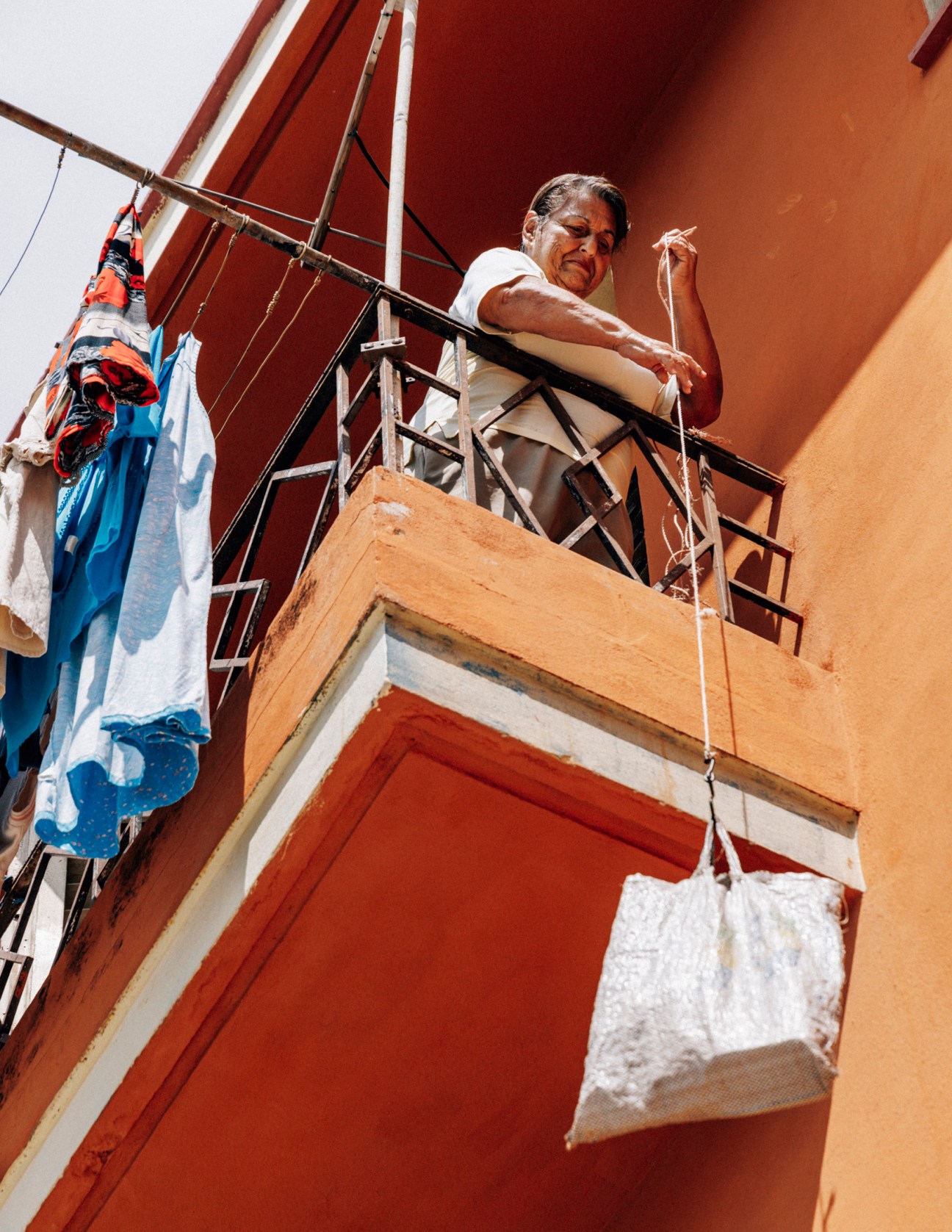
And, like actors who have perfected delivering their lines to the farthest reaches of an auditorium, they know that, in a city of balconies, there are potential customers up in the gods.
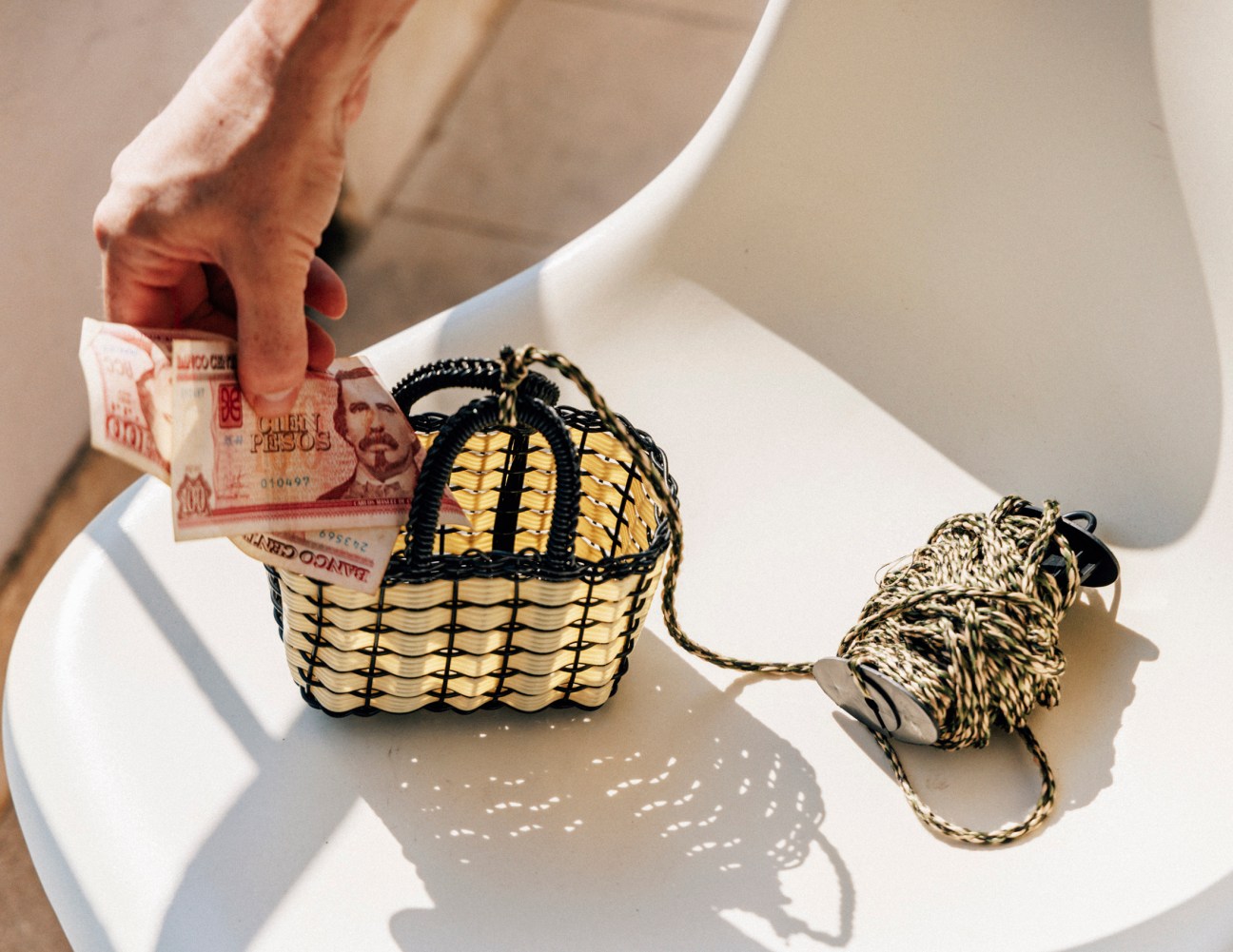
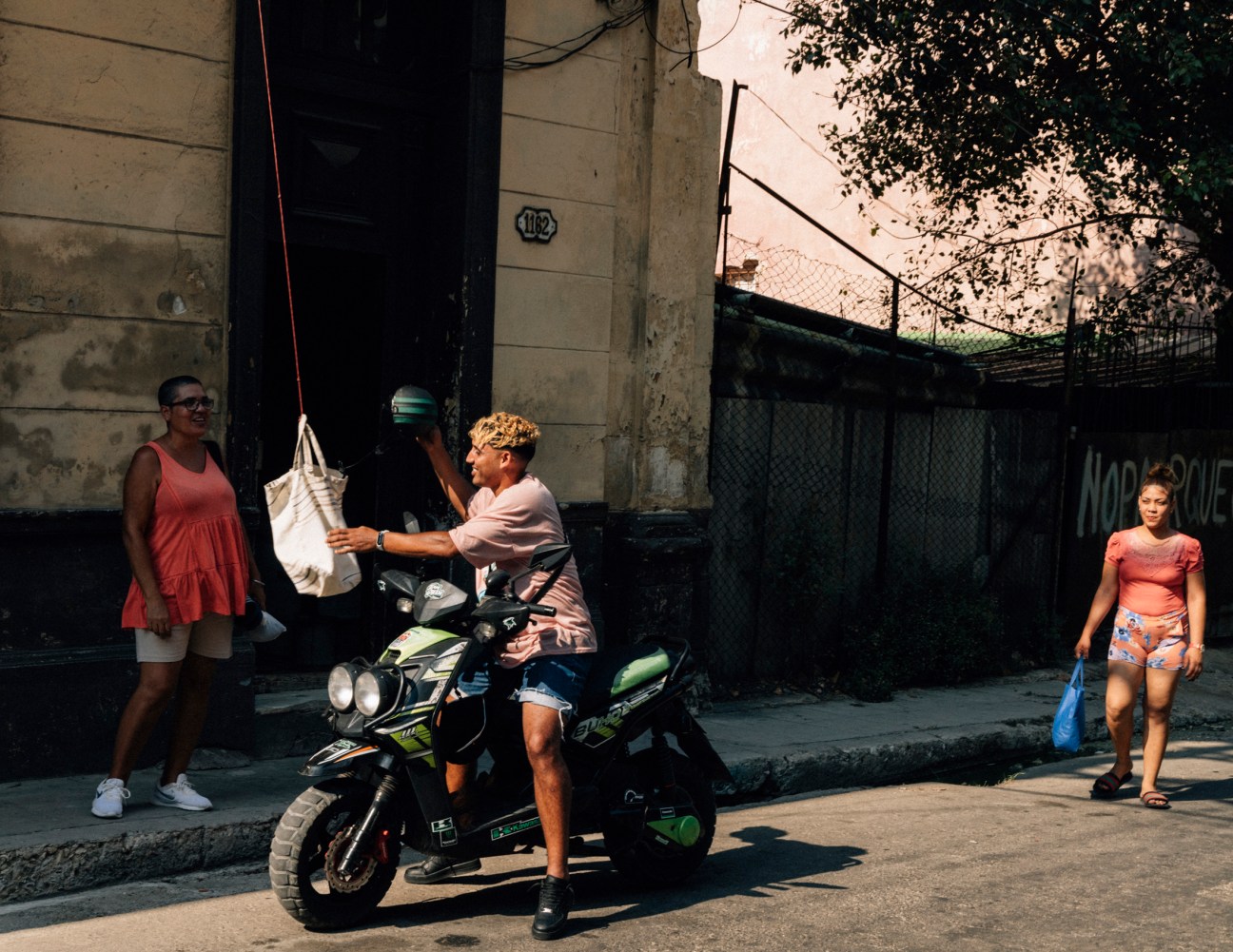
My ears prick up late one morning when a call that I’ve been waiting for soars up to my fourth-floor apartment. It’s advertising fresh-fruit and coconut pies; a local pre-lunch treat. Quickly, I grab a Havana-household essential, a basket tied to a sturdy, plaited string, and try to catch the pie-seller’s attention from my balcony. He scans the sky, sees me and repositions his mobile shop, which has the words “Your Favourite Pie” emblazoned in Spanish on its roof.
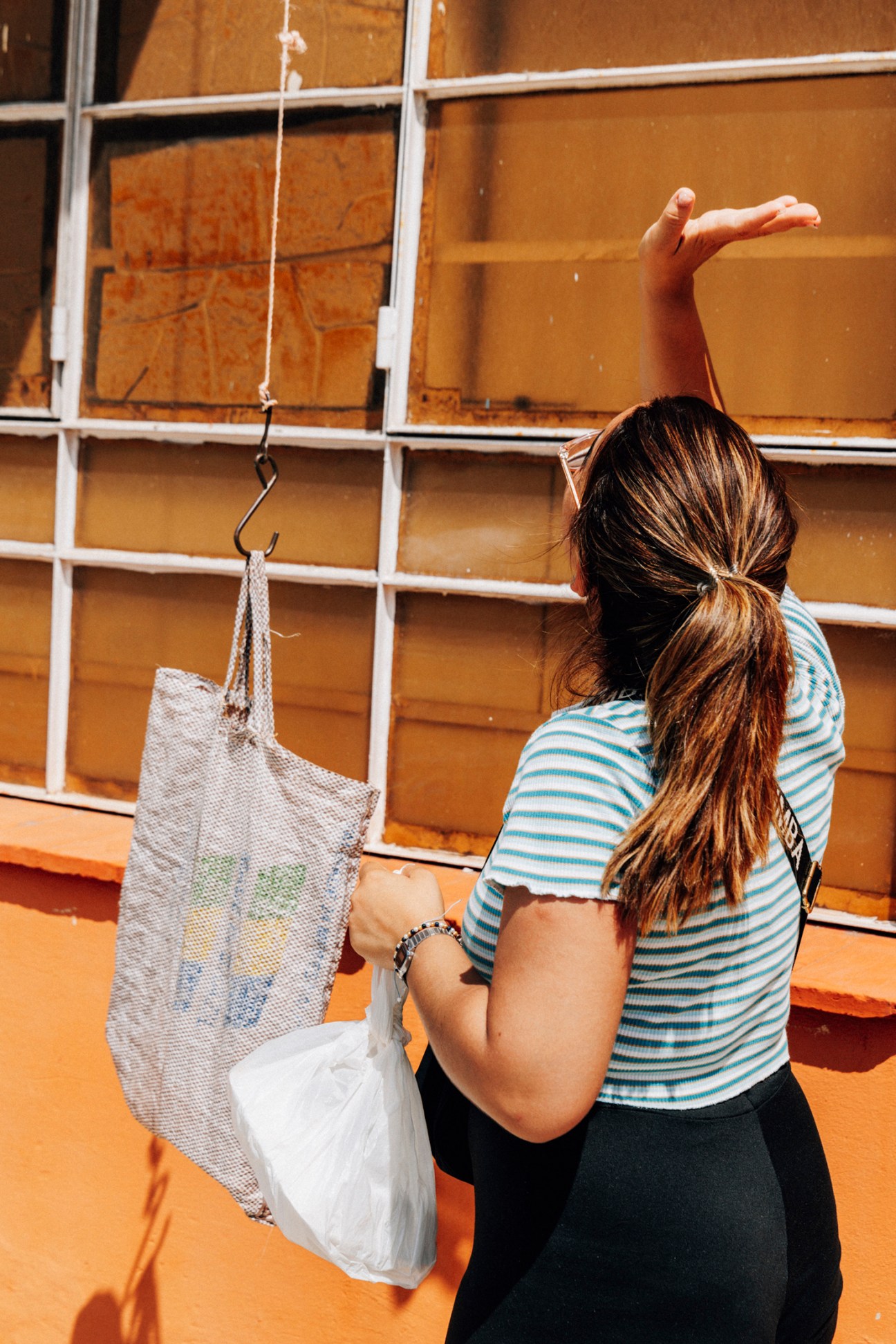
With money in the basket, I lower it down to street level. “How many pies would you like?” the pie-seller says, as the basket descends. “One, thank you; coconut, please.” I tell him. “Only one?” he says, ever the salesman, adding that sometimes he polishes off three family-sized pies in one sitting. I resist and he removes the cash from the basket, sliding a golden, pastry-topped coconut pie into a bag and attaching it to the basket. One pie, it turns out, was not enough.
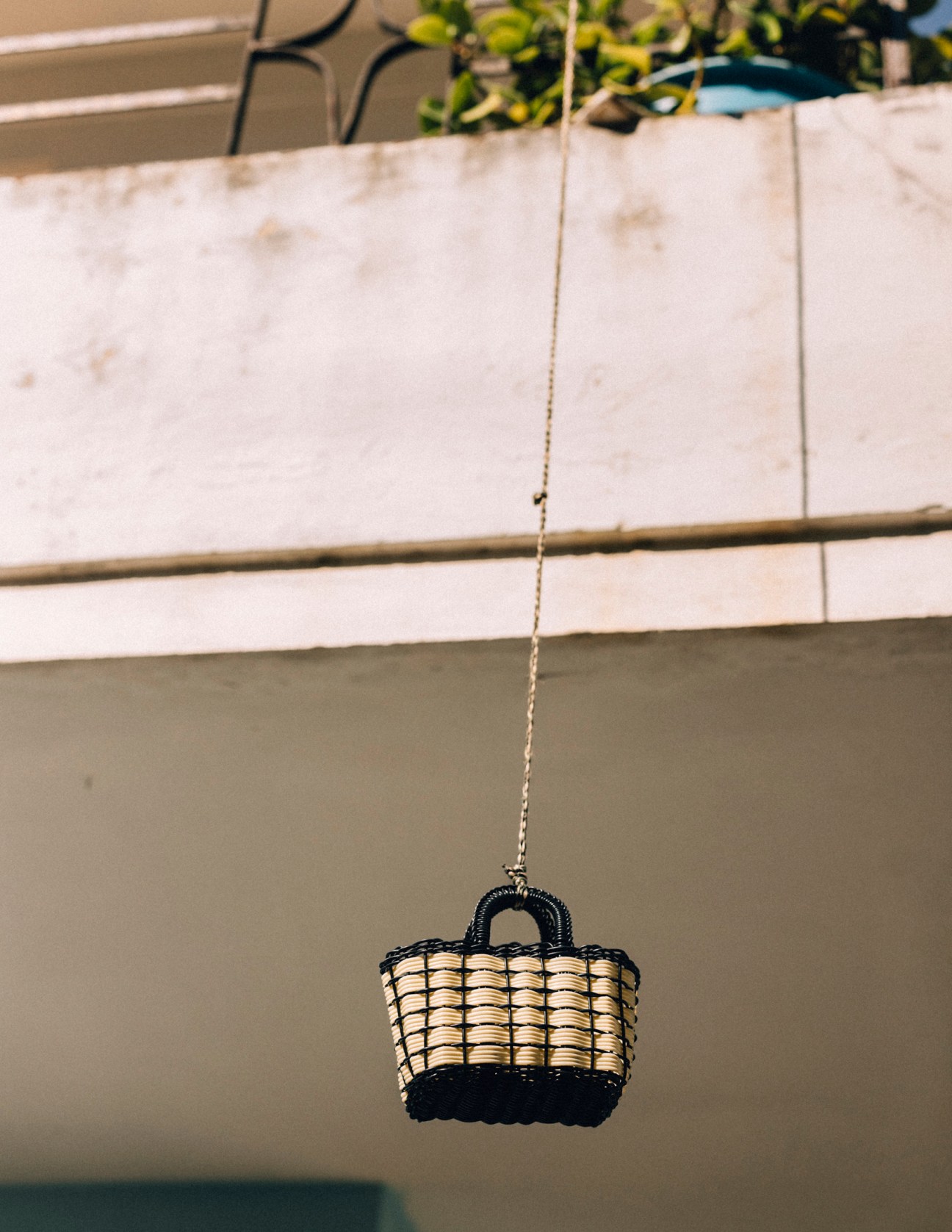
This street-to-balcony mode of commerce is a long-standing fixture of Havana’s informal retail economy. Historically, the pregoneros only provided daily necessities but some newer Cuban delivery businesses are getting in on the action. In a national economy where the full ownership of private businesses by Cuban entrepreneurs was only legalised by its communist government in 2021, this development is changing the urban fabric of the city as well as the daily routines of its residents.
“It’s a new version of an old idea,” says Marta Deus, who developed Mandao, Cuba’s first mobile food-delivery app, in 2019. Its couriers, most of whom carry-out their deliveries by bicycle, are now a familiar sight across the city. Mandao was conceived by Deus as a way of consolidating a method of retail that has existed in Havana for centuries. “The innovation is that now you can get so many things delivered to you quickly at home,” says Deus, noting that the pregonero’s format of delivery has not been encroached upon but simply expanded and complemented. “Havana also has an older population,” she adds. “And most of the residential buildings don’t have elevators, so it’s a much easier way for people to get what they need.”
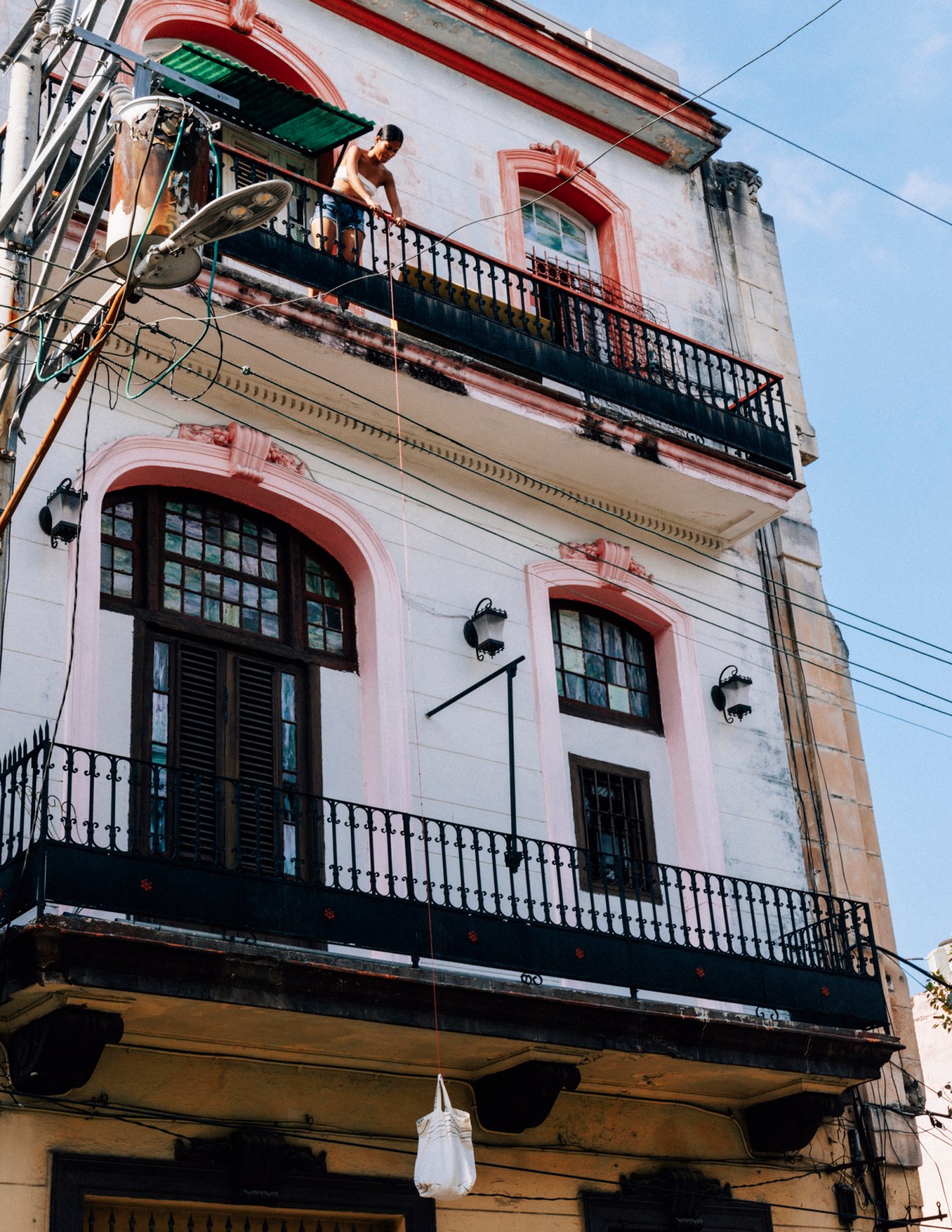
Havana’s balconies also reflect the city’s long history. Told through architectural chapters, the grand verandas mark Spain’s presence in Cuba during the 19th century; the contours of the art deco apartment buildings were built in the 1920s as part of former president Gerardo Machado’s push to modernise; the box balconies that rose after that echoed Soviet architecture. “In colder countries, life unfolds inside the house,” says Deus. But Cuba’s balmy climate looks set to sustain balcony living, and Havana’s time-honoured trading technique, long into the future.
One big family: How one Italian hotel makes guests feel at home
Stretching along three hectares of shoreline on the Lombardy side of Lake Garda, it’s of little surprise that Villa Feltrinelli is a hotel that does just fine when it comes to staff retention. Alongside the magnificent 19th-century sand-and-orange turreted villa — all wood panelling, frescoes and Murano glasswork inside — a walk through the grounds takes in two moored hotel boats, a swimming pool, olive and lemon trees, and plenty of private nooks. “Most of my staff have been with the hotel for 15 years or so,” says the hotel’s Swiss general manager, Markus Odermatt, who is dressed in a beige seersucker jacket. The fact that Odermatt takes a dip in the lake every morning at 07.00, even in winter, from his home further down the lake might have contributed to the fact he’s been with Villa Feltrinelli for more than 20 years.
The hotel might be grand and discreet but Odermatt says that it “feels like someone’s house” rather than your traditional grand hotel. For much of its life, until the late 1990s, the villa was the private pile of the aristocratic Feltrinelli family, who proved to be colourful characters to say the least. Family patriarch Carlo was a successful businessman, while his son Giangiacomo founded the Feltrinelli bookshop chain found throughout Italy (Giangiacomo also became involved in armed left-wing activism, dying in murky circumstances in the 1970s).
Since 2001, Villa Feltrinelli has been welcoming guests in its 20 magnificent suites. Alongside original furniture, everything else is bespoke and handmade in the Bel Paese for the hotel, something that Odermatt calls “a work of art”. Part of the way in which Villa Feltrinelli provides great service is through the sheer number of staff on hand: a team of 90 are charged with going above and beyond for a maximum of 40 guests. “Everyone has the hotel motto emblazoned on their chest,” says Odermatt. “It makes people feel important.” The key, he adds, it’s not just about how staff treat the hotel’s guests but also how they treat each other. “Everything we do is the opposite of what a normal hotel does.” —
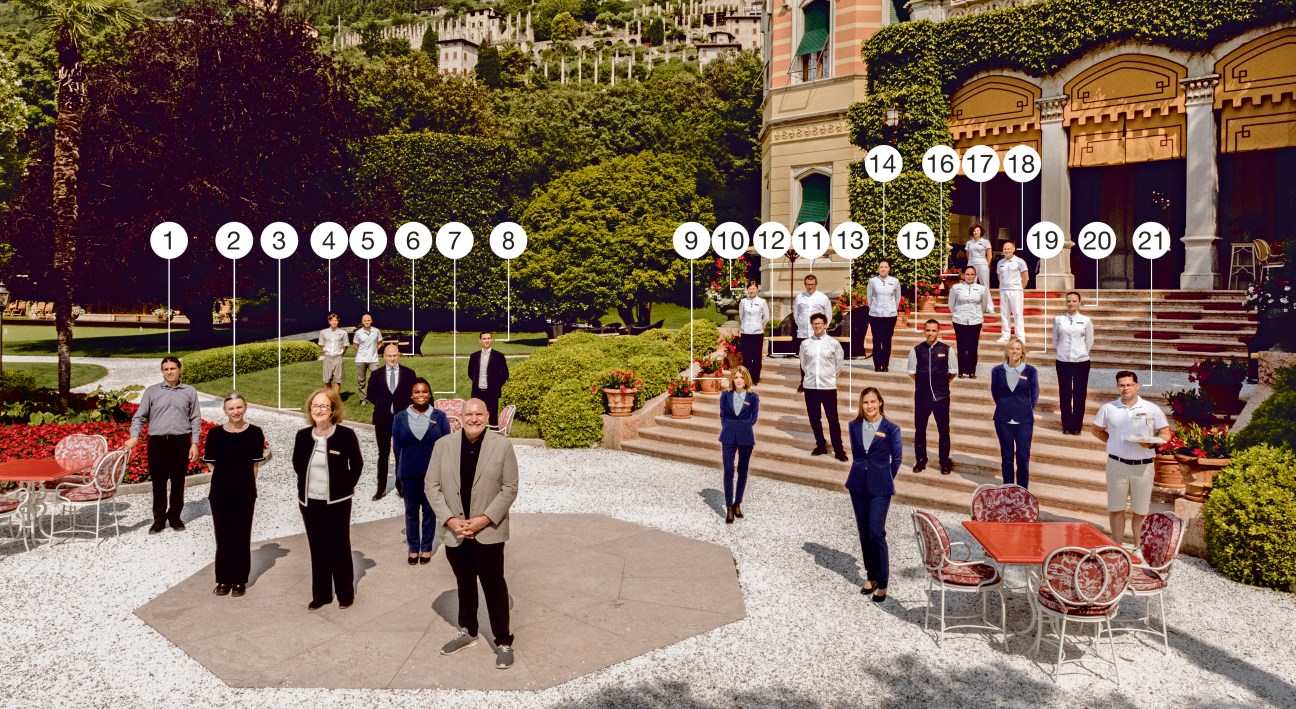
Markus Odermatt
General manager, (front and centre)
Born in Switzerland, Odermatt has been general manager of Villa Feltrinelli in Gargnano, Lake Garda since it opened in 2001. He started his career in his homeland, working for several years in the F&B scene. He moved into hotels in Mexico, where he moved next, working for Casa de Sierra Nevada and the Small Luxury Hotels of Mexico Group. In the West Indies, he played a key role in establishing the exclusive Grace Bay Club in the Turks and Caicos Islands.
1
Max Ferrara
Maintenance manager
“Ensures flawless facility operations”
2
Romina-Maria Florut
Cleaner
“Prepares and presents the laundry of clients perfectly”
3
Piera Donola
Head housekeeper
“Ensures impeccable cleanliness and comfort”
4
Daniele Vezzola
Boat skipper
“Guides Riva cruises on Lake Garda”
5
Matteo Lonati
Head gardener
“Supervises the hotel’s grounds and 30,000 flowers”
6
Tiziano Ghitti
Head maître’d and sommelier
“Curates exquisite dining and wine experiences”
7
Rose-Myrtha Regis
Receptionist
“Always greets guests with a smile”
8
Alessandro Bosco
Restaurant manager
“Delivers exceptional dining experiences”
9
Giuliana Nieddu
Reservation manager
“Plans and ensures the perfect stay for every guest at the villa”
10
Liga Sierina
Waitress
“Elevates service in our two-Michelin-starred dining room”
11
Michele Della Torre
Sous chef
“Second-in-command in the kitchen and oversees exceptional food-quality control”
12
Stefano Baiocco
Executive chef
“Crafts culinary masterpieces, helping earn our two stars”
13
Alessia Micheletti
Assistant to general manager
“Supports executive efficiency and operations”
14
Alessia Vannelli
Waitress
“Her style is efficient and impeccable”
15
Noureddine Hragua
Houseman
“Welcomes and assists guests on arrival warmly and efficiently”
16
Holainy Costanza Duarte
Waitress
“On duty early every morning to serve guests breakfast with aplomb”
17
Elisa Cerutti
Spa therapist
“Provides rejuvenating and therapeutic treatments”
18
Raul Morelli
Masseur
“Ensures relaxation and wellness”
19
Sigrid Jehle
Resident manager
“Overseas daily operations and guest satisfaction”
20
Evi-Sabrina Savu
Waitress
“Her gentle manners charm guests”
21
Andrea Carobene
Poolboy
“Maintains a pristine poolside experience”
Spend the night: How Tallinn kept the party going through economic crisis
Natalie Mets knew that it was only a matter of time before she became a politician. But in the end it happened “accidentally”, she says. For more than a decade, she worked in culture and music management in and around Tallinn. Mets had spoken for years about how the Estonian capital needed its own night mayor; the local government, she believed, was indifferent to the city’s nightlife and didn’t appreciate its economic and cultural benefits. Then one evening, during Tallinn Music Week, a festival-cum-industry-fair, she ended up at a party with the country’s former president Toomas Hendrik Ilves. They were still talking when the hosts had gone to bed. “He was really eagerly saying that I had to join the Social Democratic Party,” says Mets. So she did. And when the party entered Tallinn’s local government coalition in 2021, she was appointed to her dream job.
Tallinn is relatively small, with a population of less than 500,000, but it punches above its weight when it comes to nightlife. Hall, its flagship techno club, hosts not only local DJs but the best from around the world, including many who usually play at Berlin behemoths Berghain and Tresor. The likes of German DJ Marcel Dettmann and Detroit collective Underground Resistance are attracted to Hall, founder Elena Natale explains, because it’s one of the few places left in the world with an authentically “diy” ethos. Tallinn’s size has encouraged the formation of a friendly, tight-knit scene. “Whenever you go into a nightlife place, it’s only a matter of minutes before you meet the owner,” Mets tells Monocle. “It all just feels like an afterparty at someone’s apartment.” (An afterparty where you might meet a former president.) “It feels like a city where you can know your neighbours,” says Jirí Mališ, a Czech transplant who moved to Tallinn in 2020 and is now assistant manager at speakeasy-style bar Whisper Sister.

The city’s nightlife – more intimate than in western European club hotspots such as Berlin and Amsterdam, and still cheaper – is attractive to foreigners too, whether they’re long-term expats or simply tourists in town for a long weekend of dancing. Tallinn is well served by its airport, which flies direct to more than 50 destinations. And currently under construction is Rail Baltica, a high-speed rail line linking the Baltic states of Estonia, Latvia and Lithuania with Poland. Due to partially open in 2028, it will invigorate travel to and from the Baltics – and allow potential clubbers from abroad to get home without having to lug their sore heads and aching limbs through airport security.
Mets’ appointment came as Tallinn faced a challenge: how to keep world-class nightlife going through tough economic times. Between 2011 and 2021, Tallinn’s population grew by 11.3 per cent. The city led Estonia’s tech-fuelled economic miracle – the country is now home to more billion-dollar technology “unicorns” per capita than any other European nation. The branding of one of them, the ride-sharing firm Bolt, adorns the sides of many of the cars roaming the capital. This all helped Estonian real incomes to grow by 44.8 per cent, the third-highest level in the oecd, from 2007 to 2021. Tallinn became a destination for young go-getters from the rest of Estonia and beyond – in 2020 the country even introduced a digital nomad visa, allowing anyone in the world who earns more than a certain amount a month (currently €4,500) to live and work remotely there for up to a year. All those go-getters wanted places to party. Nightlife figures talk of a golden era beginning around 2015. Roman Demtšenko, a veteran live-music promoter, says that those years heralded “a revolution in the cultural scene”. Natale, who set up Hall in 2017, says that the city’s start-up mentality “was very good for us”.
But the years since the pandemic have been trickier. Estonia’s geographical position and its dependence on food and fuel imports mean that it was badly affected by the economic shockwaves from Russian’s full-scale invasion of Ukraine. Inflation hit 19.5 per cent in 2022, while the recession that started the same year isn’t forecast to end until 2025. Many nightlife venues haven’t survived this rocky period. Sveta, a much-loved club co-owned by Demtšenko, shut at the end of last year, in part due to financial pressures. It has been “one crisis after the other”, says Natale. The city is hardly unique in this regard: night-time economies around the world have been badly hit by the pandemic and more recent cost-of-living pressures.
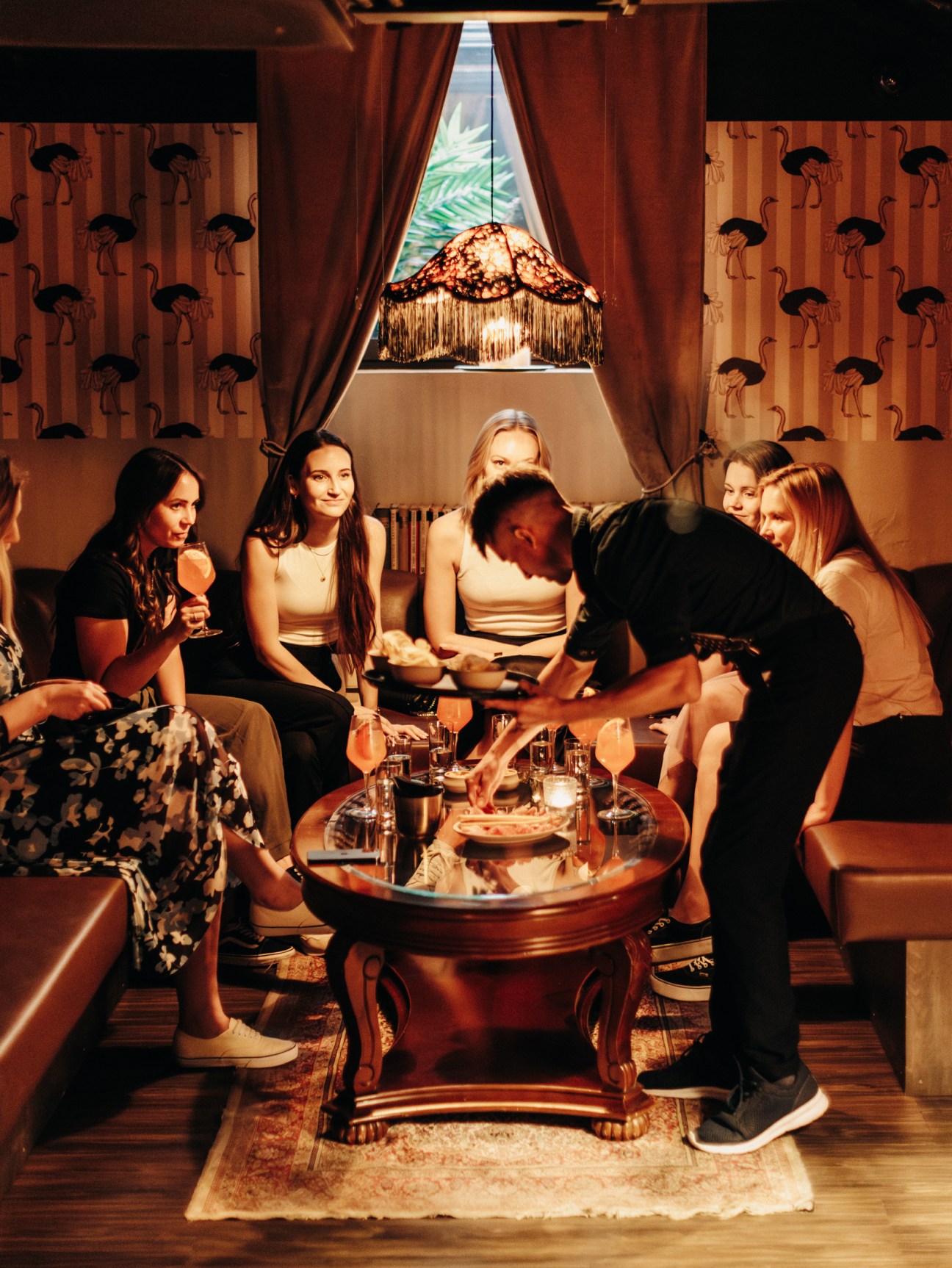
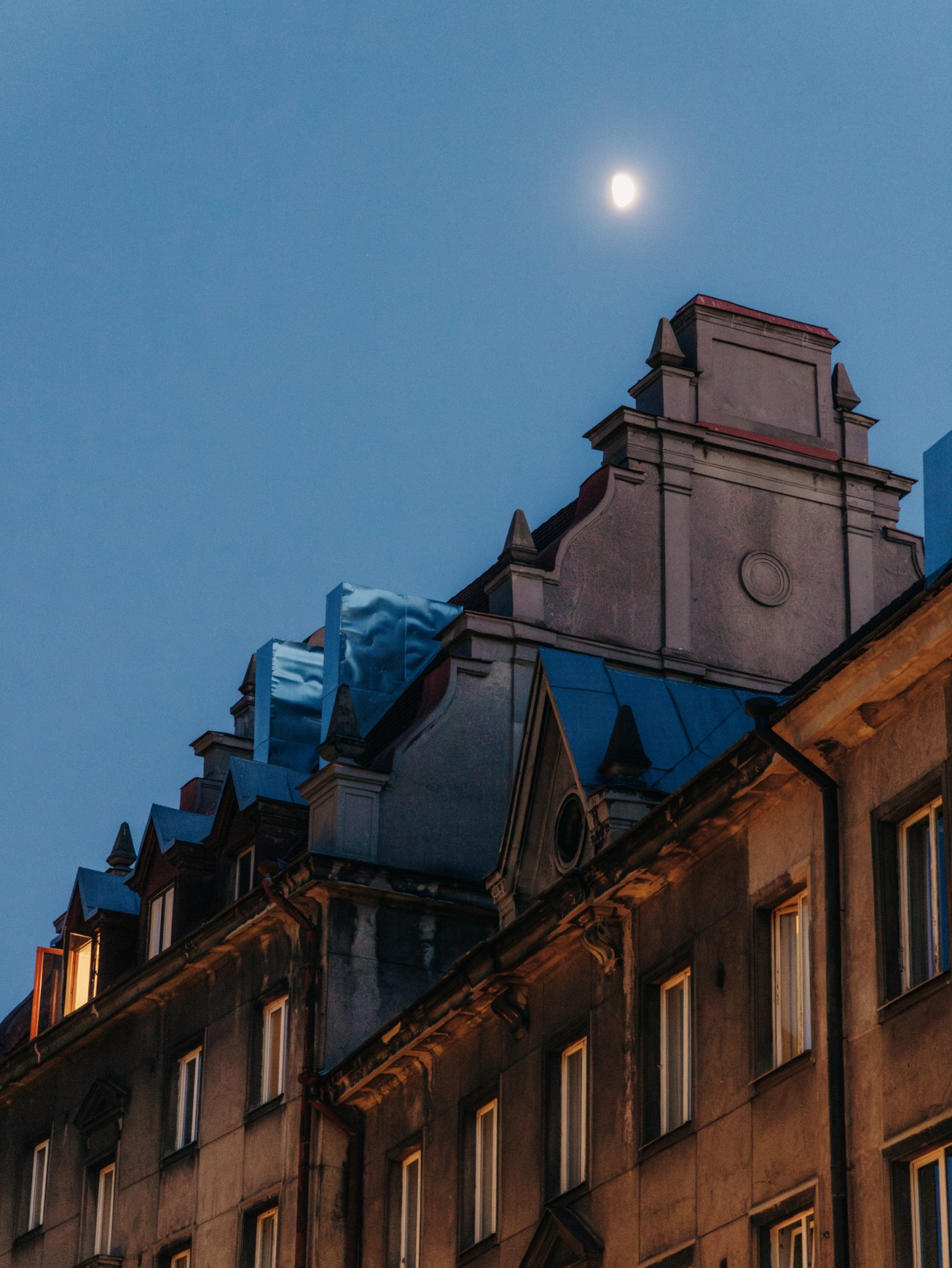
Nearly three years since her appointment, Mets’ work on precisely this issue has attracted the attention of Urbact, an EU-funded urbanism institution, which included Tallinn in a recent survey of the bloc’s nighttime economies. The city is “a great laboratory for innovation”, says Simone d’Antonio, the study’s author. “It is doing a lot of things that can set an example, not only for the other Baltic capitals but also for other medium-sized cities in Europe.” Mets spent her first six months in office “explaining [within] the city government itself why [her] position is needed” – in 2022, for example, Tallinn’s nightlife-related sectors employed 14,792 people and generated a taxable turnover of €738m. One early priority was a fund offering grants of up to €30,000 a year to live-music venues. Tallinn also used to be the only EU capital without any public transport running through the night but, after a successful 2023 pilot scheme, it now has a network of weekend night buses. In the spring sunshine, the Estonian capital is picturesque, even sleepy. Modern buildings are broken up by streets of traditional wooden houses that give some neighbourhoods a rural feel. Tourists sit in the cobbled streets of the medieval Old Town nursing tall, gleaming glasses of lager. But the city stirs to life when the sun goes down, especially in its northern quarter. Telliskivi Creative City, just northeast of the Old Town, has led the way: since 2007 a cluster of nightlife and cultural destinations has been built up in a complex of former industrial buildings.
At Fono, a cosy bar in the area, Monocle meets Mark and Villiam, two 27-year-old native Tallinners. Mark, a software engineer at payments company Wise, says that the spot “is as fresh as you can get”: in May, Fono opened a dance floor, Fonoteek, in the adjoining space. Further north is Paavli Kultuurivabrik (“culture factory”), a venue set up in June 2023 by Demtšenko. It has already been admitted to Liveurope, an EU-backed association of 24 of the continent’s best concert venues. For Demtšenko, economic issues were an opportunity as well as a challenge: Paavli Kultuurivabrik occupies a former fish cannery, which he snapped up on a 10-year contract after the previous tenant, a firm that exported to Ukraine and Russia, went bankrupt after the 2022 invasion. Since then the site has hosted everything from Swedish punk to poetry readings.

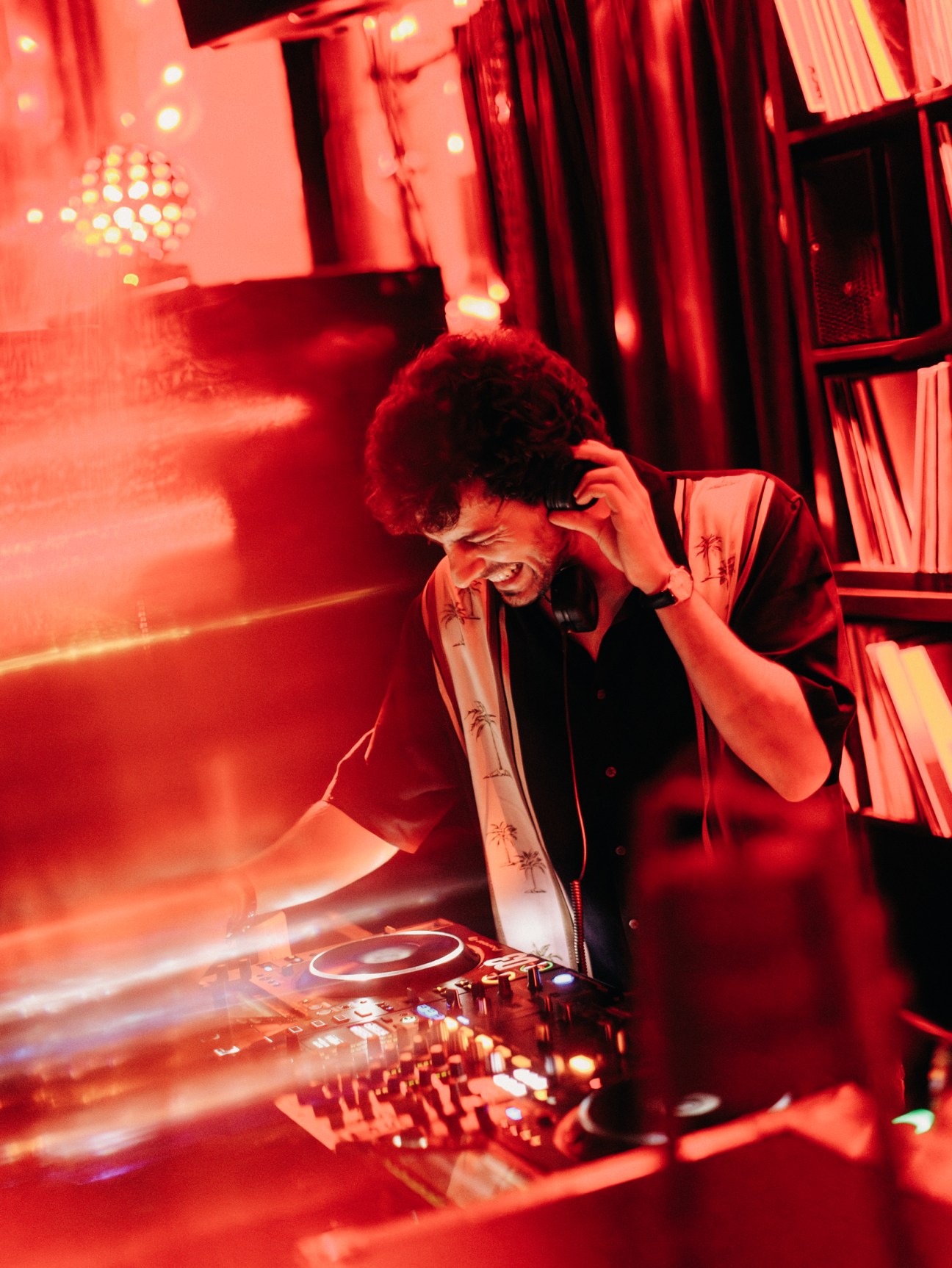
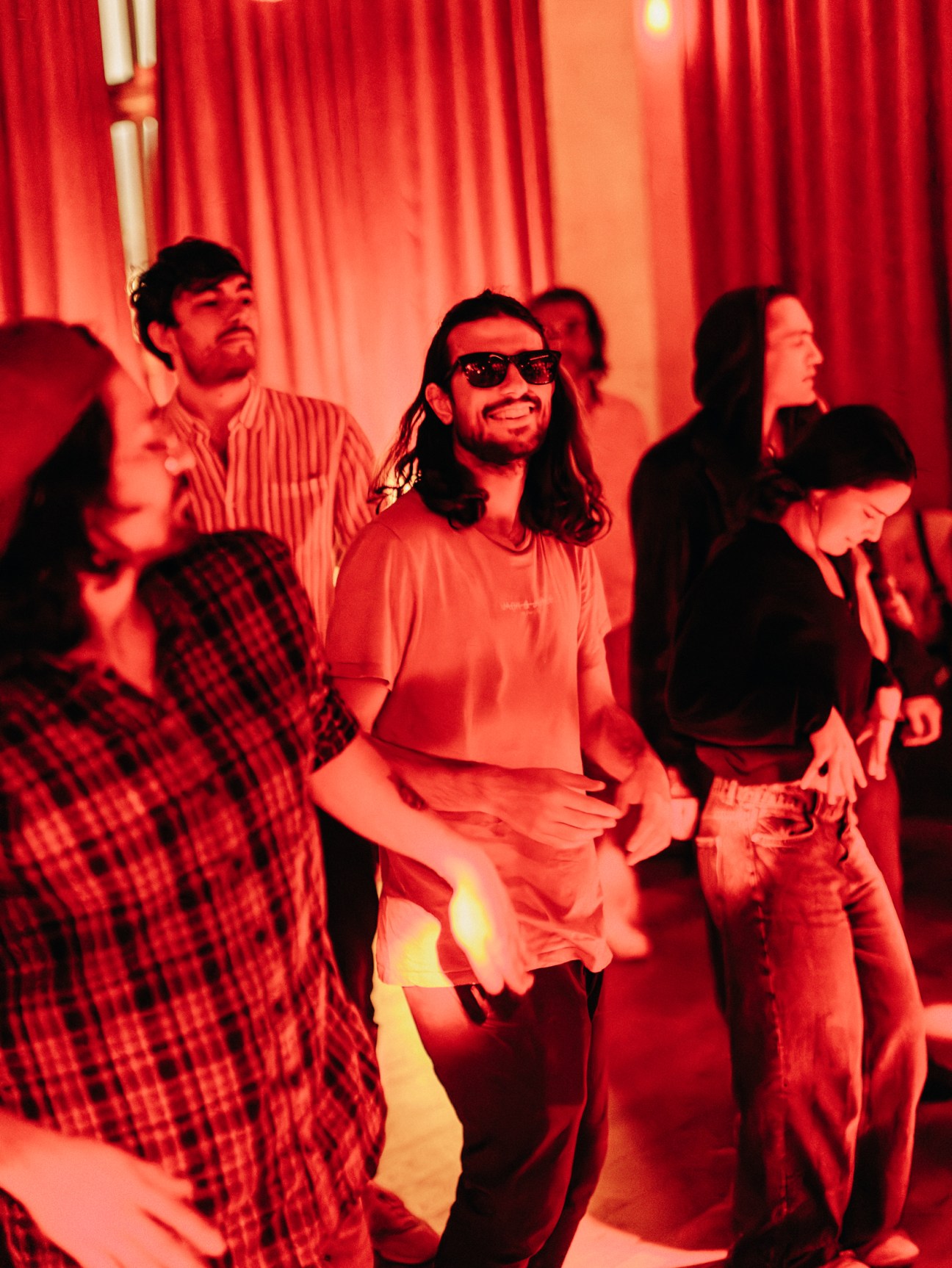
When Monocle visits Paavli Kultuurivabrik’s outdoor space – a riot of flowering trees and red-and-yellow tulips – Demtšenko gestures over the fence at the building projects that surround the venue on almost every side. Northern Tallinn is following the classic development arc: first the cultural venues move in, attracted by cheap rents, then come residential blocks. Hall occupies a hulking industrial building that used to serve as a clubhouse for dock workers next to Port Noblessner on the Gulf of Tallinn, where the city meets the Baltic Sea. Since the club opened, the port has filled up with smart modern apartments.
Mets is currently working on measures to stop venues being shut down when residents of newly built apartments complain about noise. Not that the relationship between development and cutting-edge culture is always negative. Ivo Arro, an architect in the city government’s spatial planning and design department, points out that the developers near Hall used the area’s cultural amenities as a selling point. “Estonian people, their taste has evolved,” he says. “They’ve travelled more, seen the world more – new generations, they have different ideas of what they want in the city.”
Tallinn’s nightlife also has a unique political dimension. Owing to the country formerly being part of the Russian empire and the Soviet Union, about a third of the city’s population is ethnically Russian. If you clamber into a Bolt, there’s a good chance that the driver will have their app set up in Cyrillic. These Russian-speakers tend to live parallel lives to the Estonian majority; most don’t even speak Estonian. But club culture can transcend the language barrier. Mets recently wrote a master’s thesis on the topic; her research found that nightlife “is perhaps one of the best ways to integrate Russian- and Estonian-speaking youth”. Demtšenko knows this first-hand: he is ethnically Russian and became fluent in Estonian only when he started getting involved in Tallinn’s music scene. The government throws “shitloads of money” at integration, he says, but nothing is as effective as people hanging out and bonding over music.
Giving temporary visitors a similarly warm welcome is one way Tallinn’s nightlife scene plans to ride out the current economic winter. Mets wants the city to become a destination for “high-quality tourists” who’ll party at the weekend but also go to museums and restaurants. Hall is diversifying its programme beyond weekend club nights by hosting concerts by the likes of the Estonian Symphony Orchestra and opening a restaurant to the public. “The way you survive is to offer a space for everything,” says Micaela Saraceno, Natale’s daughter, who DJs at the club.
On the Friday night when Monocle is in town, Hall’s main room is filled with thumping techno and strobe lights. The following afternoon is a touch more relaxed: the team are setting up tables for a staff dinner on the leafy terrace, which doubles as the smoking area. Someone’s dog and someone’s toddler gambol about as trays of freshly baked focaccia are produced. It might not be typical Baltic fare but Natale is half-Italian, so good food is non-negotiable. Among those helping are Micaela and her sister, Alessia, a duty manager at Hall. The club is a family business. “It’s all very logical and natural.” Natale, who presides over Hall’s literal and metaphorical family as an affable matriarch, has even started to see the children of regulars coming to nights. “It’s a village here,” she says. “A dancing village.”
Europe’s nightlife hotspots
Braga: Portugal’s third-largest city has seen its tourism business increase fivefold over the past decade. Since being named European Youth Capital in 2012, it has invested in venues that stay open into the night. A 24-hour nursery serving university and hospital employees provides for the night economy’s prosaic needs.
Málaga: The southern Spanish city recently banned the sale and consumption of alcohol in public spaces between 22.00 and 08.00, drawing people back into bars and discouraging irresponsible drinking. Since 2019 the city has organised activities between 22.00 and 02.30 on Fridays and Saturdays for local youth, including museum visits.
Paris: The French capital boasts more than 15,000 bars and restaurants, and more than 600 venues that stay open later than 02.00. Since 2014 its nightlife has been managed by a municipal night council, whose policies have included clamping down on non-reusable plastics in venues and campaigning for better understanding of sexual consent at clubs and festivals.
Culture agenda: How Studio Ghibli might inspire urbanists and the revival of a former factory in Ljubljana
Cinema, Japan
Brought to life
Identifying the rustic locations that inspired a Studio Ghibli animation is a game that fans like to play. The picturesque fishing town in Ponyo is based on Tomonoura in Hiroshima prefecture. Meanwhile, the leafy forest in My Neighbour Totoro is modelled on Sayama Hills in Saitama.
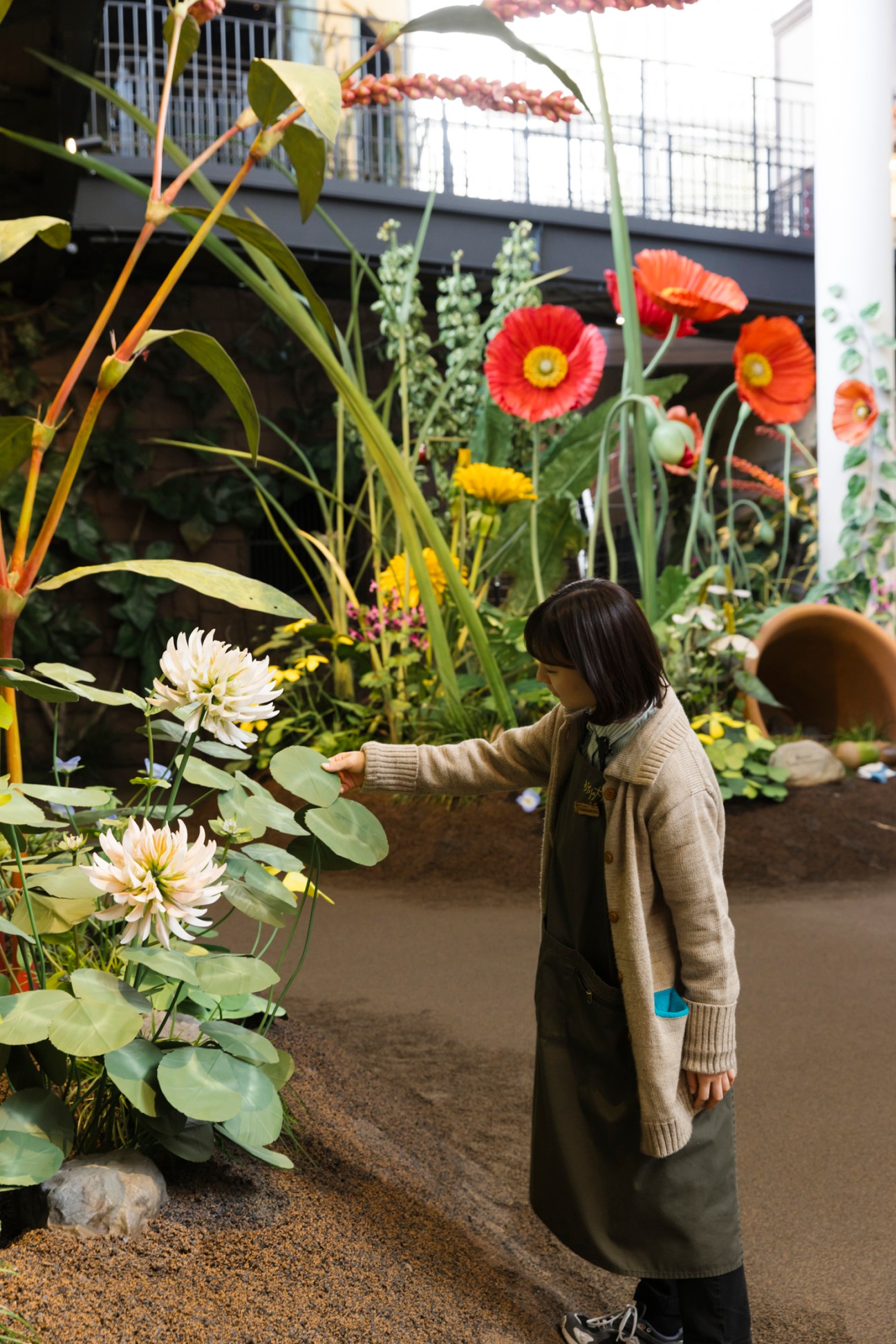
Director Hayao Miyazaki’s urban world is equally thrilling. His extraordinary eye for detail zooms in on the unconscious elements that make Japanese cities so distinctive. It’s less about landmarks than about the sense of scale, street signs or even the railings that skirt the road.
Many of Miyazaki’s most memorable locations have been figments of his imagination. Films such as Howl’s Moving Castle and Kiki’s Delivery Service occupy a specific part of the Ghibli worldview; their cities are part-European, part-fantasy, and wrought with such precision that viewers could almost believe that they exist. At Ghibli Park, the studio’s theme park in Aichi, buildings from those places have been brought to life. There’s the bakery that Kiki worked in – the architectural details perfectly replicated, the baked goods real – and there’s her little attic room. And over here’s the hat shop from Howl’s Moving Castle, recreated as though Sophie, its heroine, had just stepped away from her work.
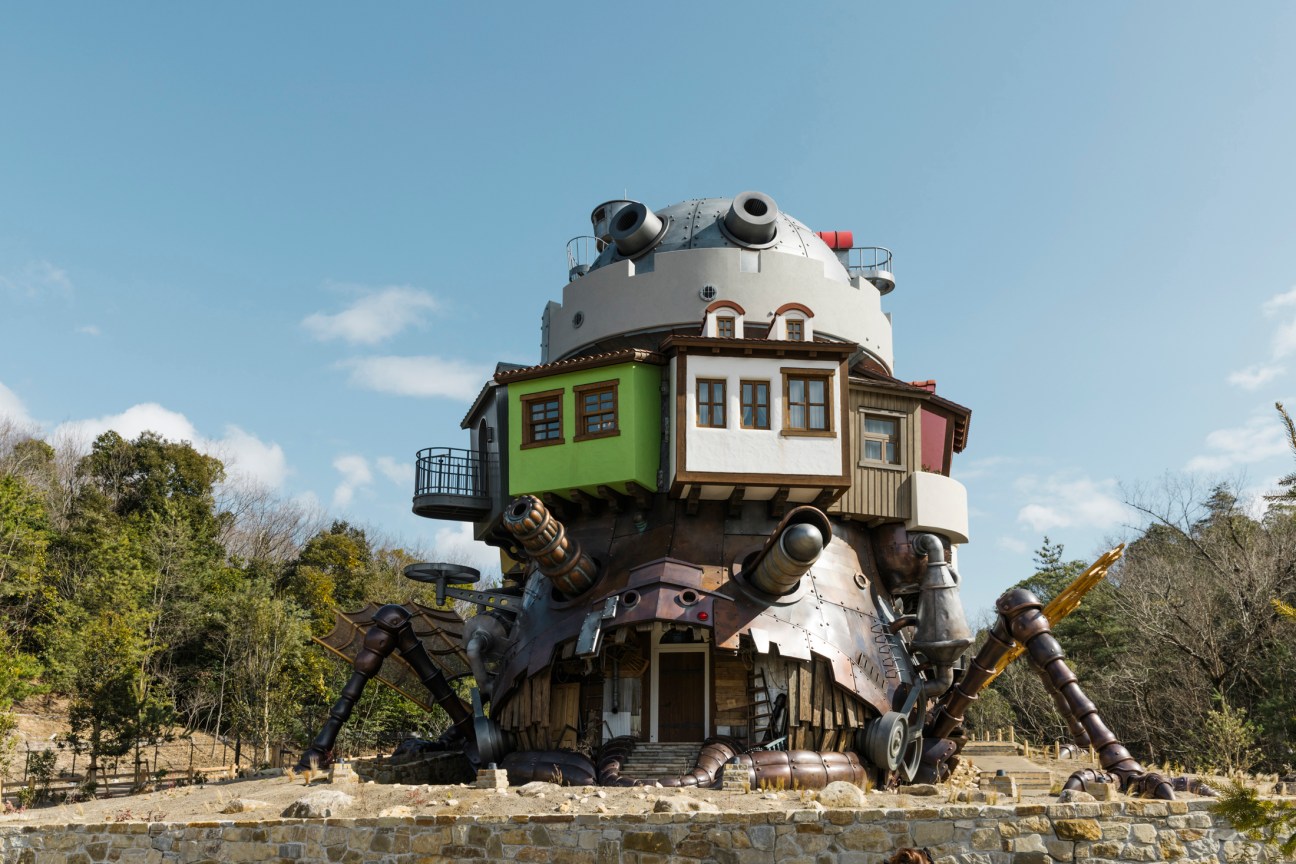
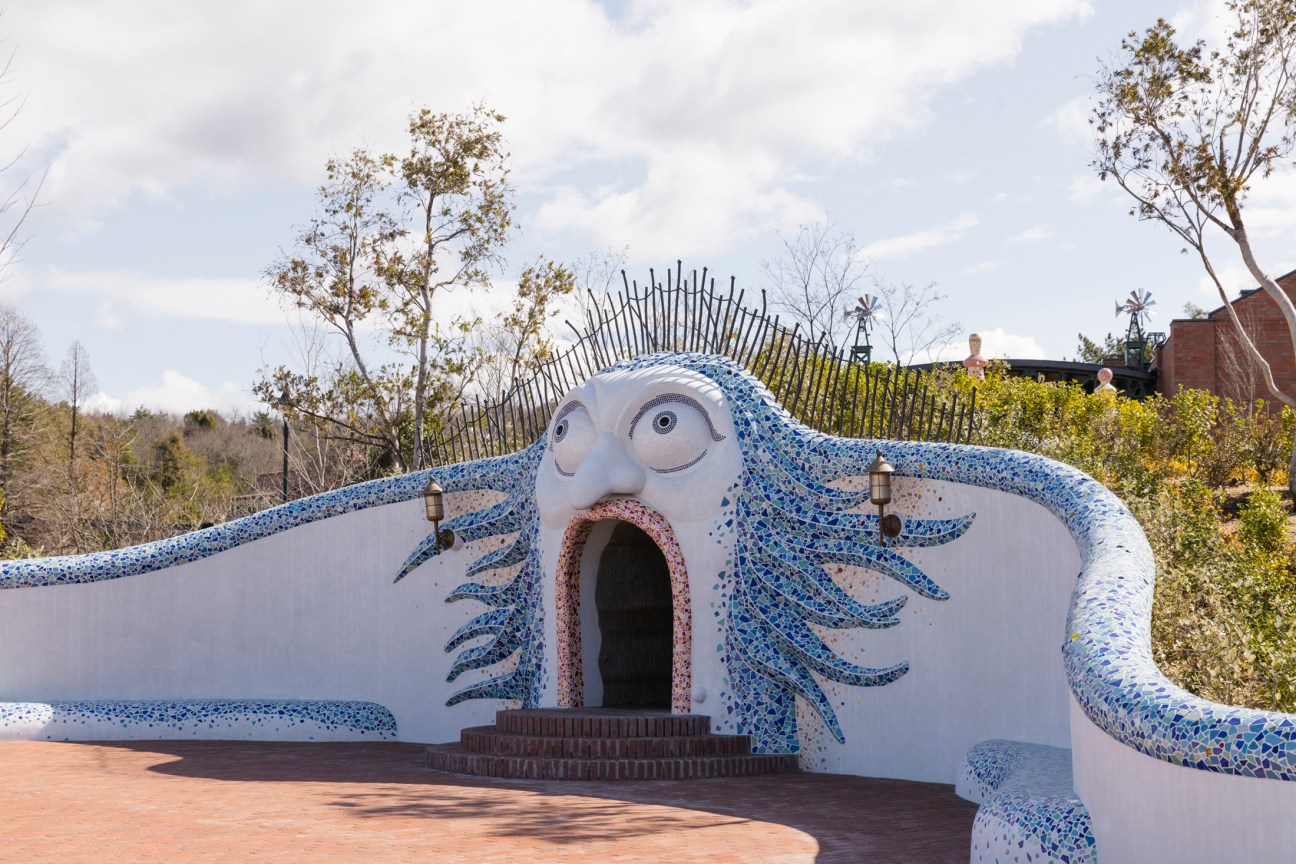
Like any good theme park, Ghibli Park is an escape from the grime of any actual city (less of a contrast in Japan where streets are low on crime and litter). Some consider Miyazaki to be an unsung urban designer, citing examples such as Koriko, the imaginary city in Kiki’s Delivery Service, with its lively streets and old-fashioned low-rise buildings.
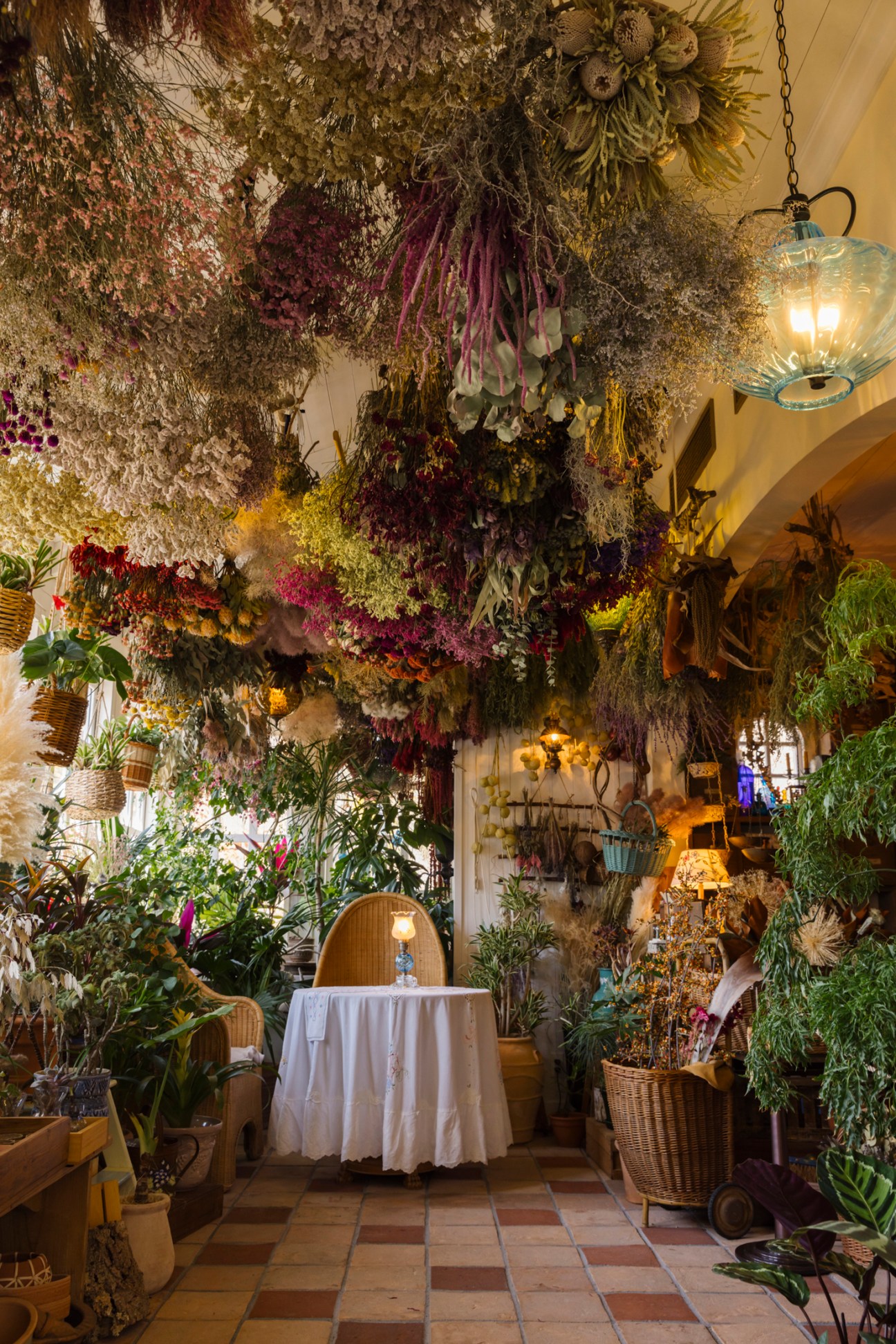
Ghibli Park opened partially in 2022 but Goro Miyazaki, Hayao’s son and the director of the park, opened the final section this spring. Even if you had never seen the films, you can enjoy the experience. Howl’s Castle clanks and steams, Kiki’s washing is hanging on the line. It’s a relaxingly analogue outing and visitors are encouraged to walk between attractions. There are no rides, apart from a merry-go-round where visitors can twirl at a stately pace to a suitably Ghibli-esque tune.
The exoticism and completeness of Miyazaki’s urban vision has long piqued the interest of the Japanese viewer. Perhaps its time that some architects, urbanists and property developers took a closer look for inspiration too?
Read next: AI imitations could never replace the art of Studio Ghibli
Industrial magic
Guy de Launey steps inside a historic former bicycle factory in Ljubljana to explore Center Rog, a new creative hub seeking to democratise a culture of making.
The wheels are turning again at the old Rog bicycle factory in Ljubljana. But this is no longer the facility that provided self-powered mobility to citizens of Tito’s Yugoslavia. Today the new Center Rog is facilitating different forms of production. The city authorities have carried out an extensive and remarkably rapid transformation of the site since they controversially repossessed it in 2021 from the squat that had occupied it for 15 years. The heritage-listed façade of the original 1951 structure remains intact, facing the Ljubljanica river. But the other side is all glass, giving a clear view of the facilities within.
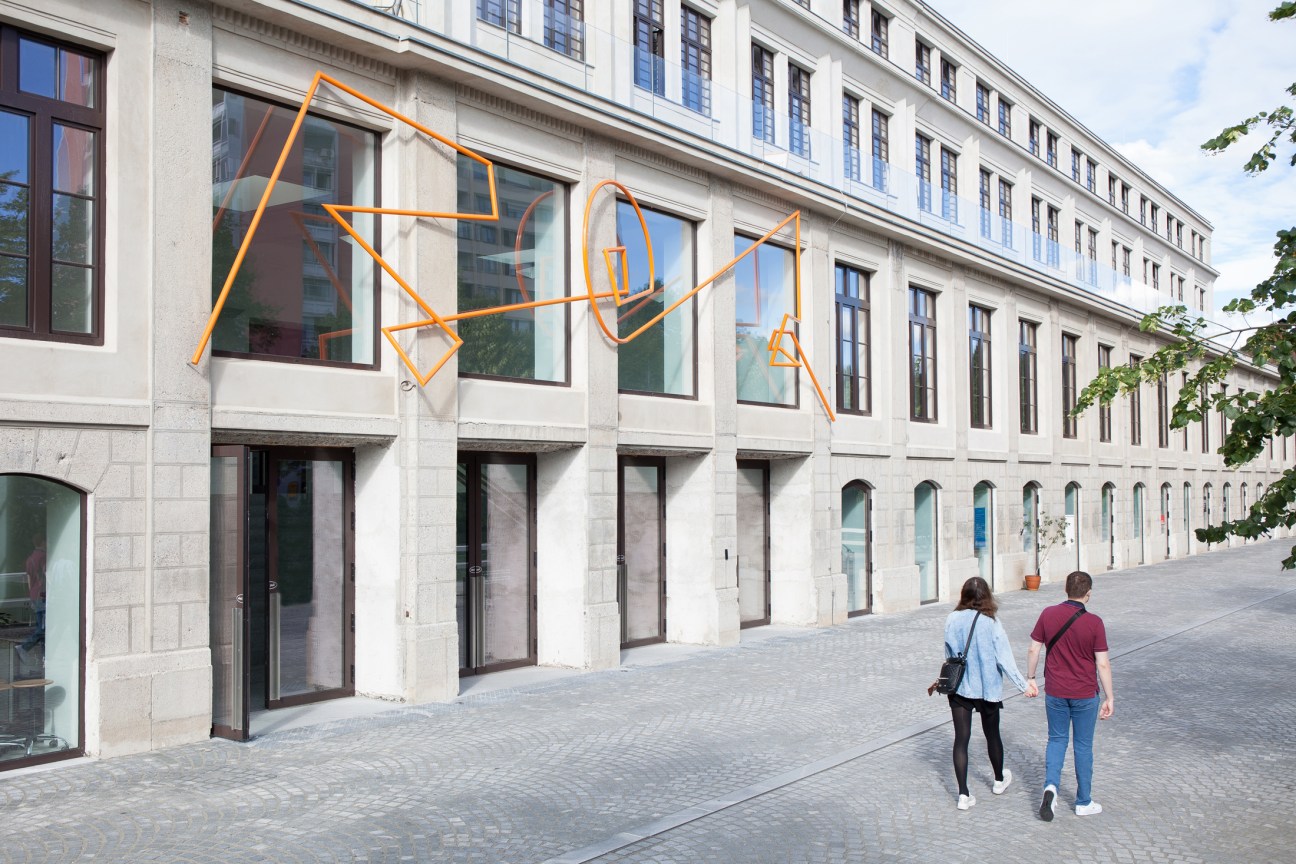
“It’s a place where we turn ideas into products,” says Center Rog’s director-general, Renata Zamida. “We don’t just facilitate the projects of professional creators and makers. Anyone is welcome to work here, turning their ideas into tangible objects.”
The amenities include “production labs” on the ground floor, work studios on the second and third floors, and artists’ residences on the top level. The first floor houses a branch of Ljubljana’s public library that holds 20,000 items in its almost 300 sq m space; there’s a children’s section, a classroom and a newspaper reading room there too. Zamida says that this encourages people who might be unfamiliar with (or intimidated by) the idea of a “creative hub” to stumble across people and facilities that could help to unlock their creativity.
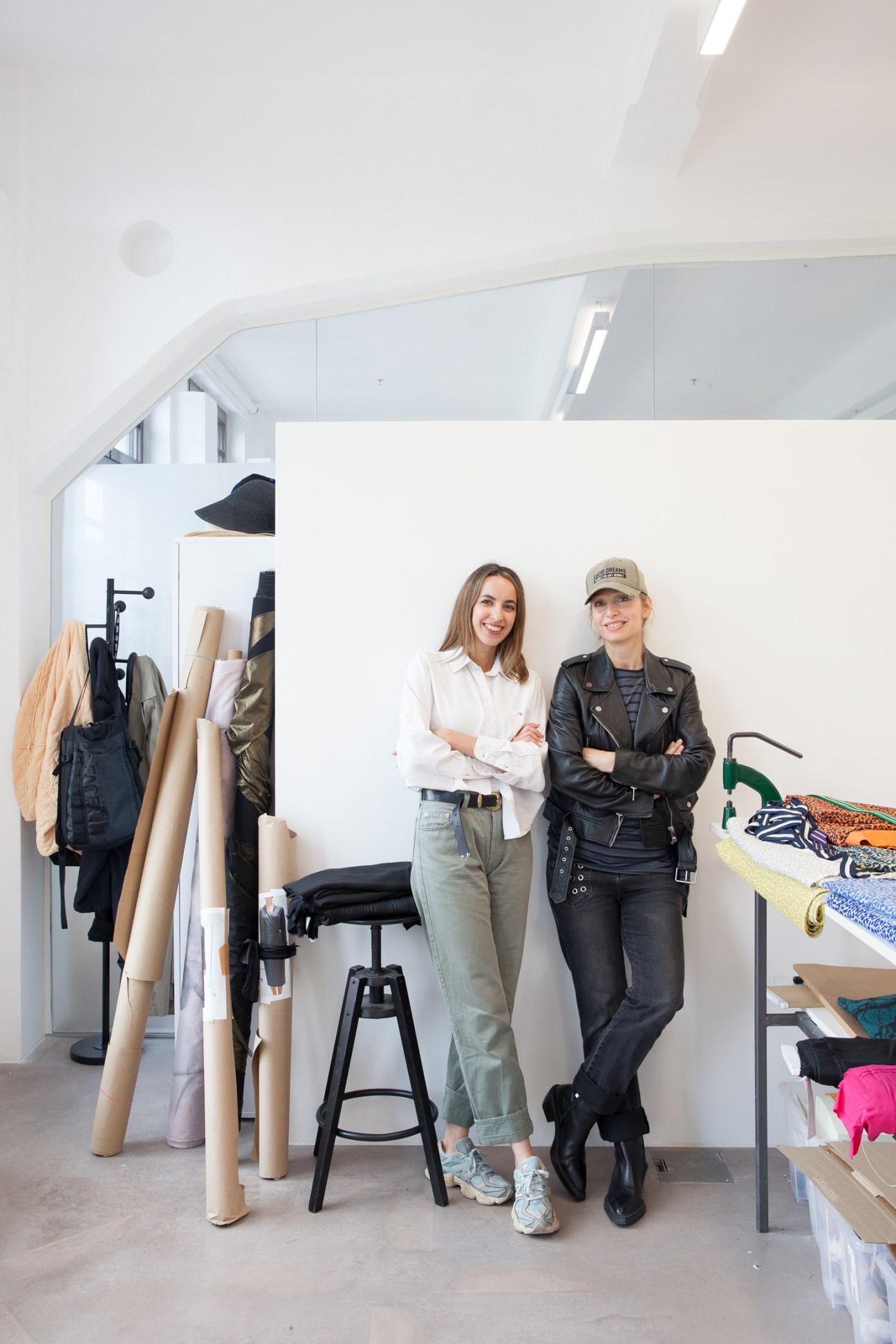
A standard membership fee of just €15 a year opens the door to Center Rog’s nine production facilities. The FabLab has rows of 3D printers, laser cutters and soldering stations. Adventurous interior designers can “learn how to make furniture from mycelium” at the Green Lab. And the Food Lab’s offer of “experimental research and the conquest of new skills” can be tailored to anyone, from home cooks to professional chefs.
The occupants of the generously sized studios, which are granted rent-free for a period of one to three years to projects deemed worthy, also take full advantage of the labs. They are currently creating everything from sustainable snacks to a high-performance electric boat and Center Rog’s version of vertical integration lets them move quickly from concept to production without so much as leaving the building.
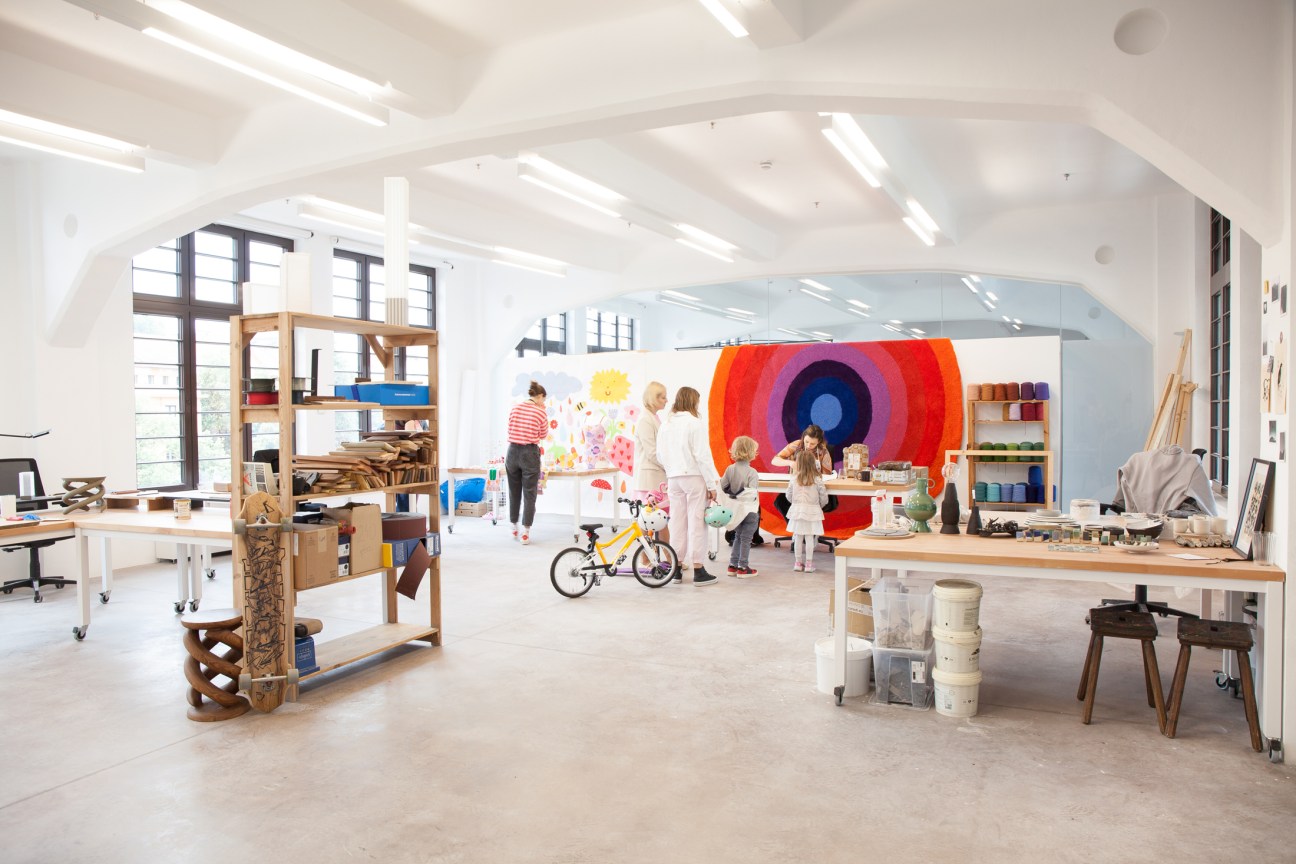
“It’s perfect,” says industrial designer David Tavcar, who is creating a range of furniture from deadstock metal. “I can draw something on a computer and then go down to the workshop, where I can produce my own prototypes. I’m completely hands-on.” So far, more than 1,200 people have become members of Center Rog, well beyond the management’s five-year plan. In the old bike factory, a creative revolution is under way.
What’s on Monocle’s July/August radar: Architect Isay Weinfeld and the Paris Olympics
How to live: making a stand
Read all about it
Barcelona’s News & Coffee kiosk is showing that good newsstands can boost a city’s quality of life.
How did you acquire this magazine? If you’re a subscriber, I hope it arrived at your home or office in a timely manner. If not, did you buy it at the grocery store? Favourite bookshop? If you picked it up at your neighbourhood newsstand, how were the shelves looking? Were there other titles you wanted to buy? Did you come across anything new? Or did you leave thinking that there were too many phone chargers and fridges full of energy drinks?
In many markets, the newsstand has all but vanished. Shop signs that promise news and magazines often lead to shelves stuffed with tat, tourist knick-knacks or novelty items that will soon end up in landfill. Fortunately, some are fighting back.
The rise of the hyper-specialist news and book outlets – such as Lisbon’s Under the Cover, London’s Magculture and Stockholm’s Papercut – is nothing new. But once dependable kiosks that have closed or are bursting with rubbish for football fans and school tours are also finding saviours. On a Tuesday morning in June, the News & Coffee kiosk in the heart of Barcelona is bursting with life: locals stop by for their daily papers, students snap up limited copies of Popeye and others pause for coffee. A few metres away, co-founder Gautier Robial is making a case for more branches. “People want to read things on paper,” he says. And he’s right.
With plans to open in other markets (there are currently outposts Barcelona, Madrid, Valencia and London), cities seeking a boost might want to look Robial up. He can add culture and commerce to street corners in need of activity.
Isay Weinfeld’s recipe for architectural excellence
Are you curious to know the essential ingredients that are required to design a good building? Well, according to award-winning Brazilian architect Isay Weinfeld, all one has to do is stop for a bite to eat. “There’s a very traditional diner in São Paulo called Frevo and the perfection of its Beirute sandwich – which is made up of pita bread, lettuce, cheese and roast beef – is what I aim to achieve in architecture,” says Weinfeld when speaking to Monocle for “The View From”.
“It has an impeccable combination of colours, textures, forms, layers, temperature, moistness and crunchiness. The pleasure I have at the first bite is indescribable – and that amount of pleasure is what I wish for people to feel when entering a room I designed.” Weinfeld’s suggestion is a delicious source of inspiration for any architect or designer short on creativity. And it’s also a great local recommendation for anyone feeling peckish in Brazil’s biggest city.
Arnaud Champenois
Senior vice-president, global brand & marketing, Belmond
Arnaud Champenois on getting into the spirit of summer.
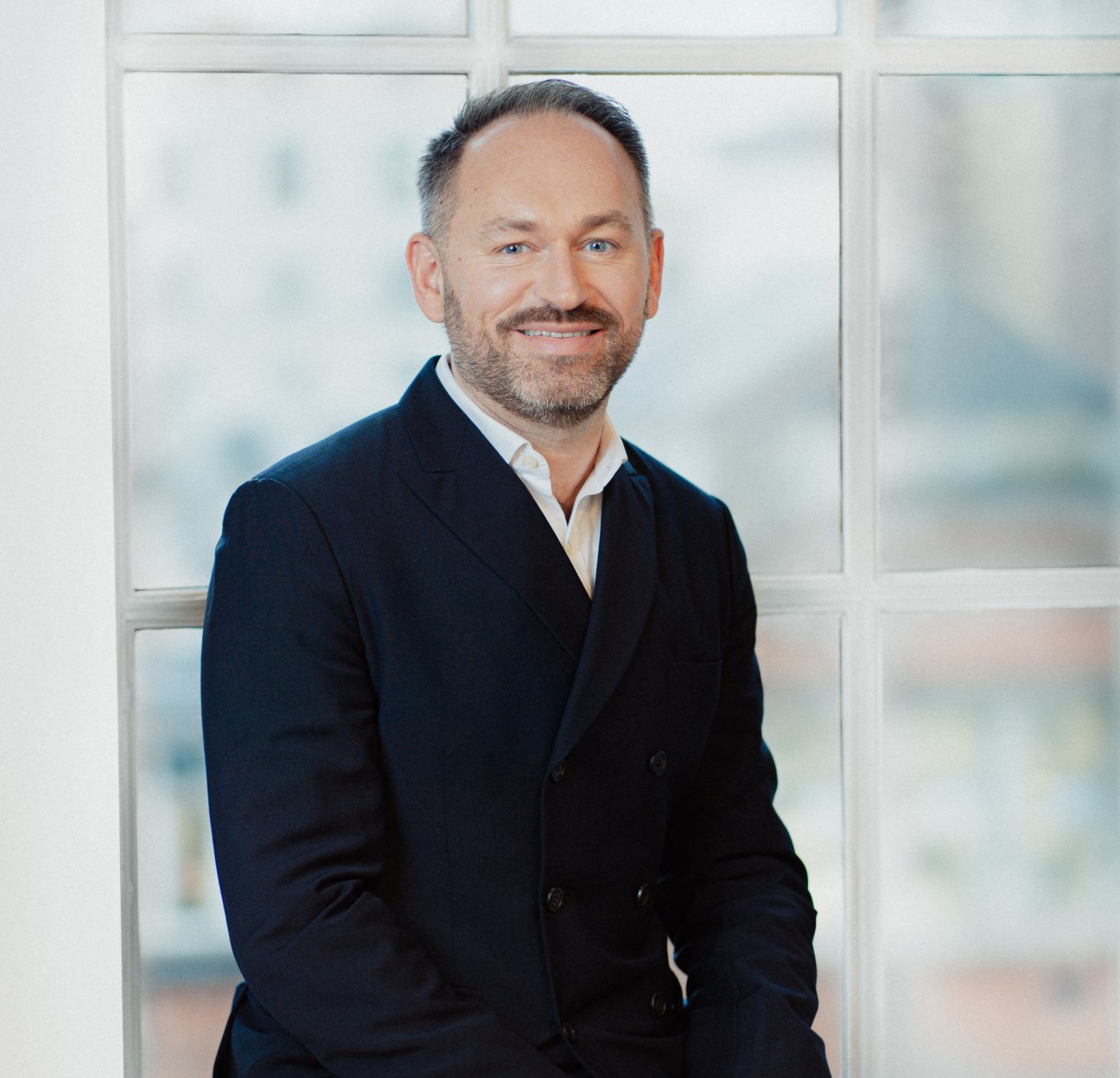
What developments are you observing in the travel industry?
Train travel is huge. All of our trains [including the Venice Simplon-Orient-Express and the Royal Scotsman] are fully booked this summer. Italy is still a key destination. We’re launching a new property in Sardinia, Romazzino, and a beach club in Sicily at Villa Sant’Andrea. Otherwise, Mexico is booming and so are the Nordics.
And where will you be?
I’m doing a week in Greece for the islands’ raw beauty and then the west coast of France, in Brittany and Biarritz. I like the waves and the wind.
Will you be packing any books?
I just bought a book by young Irish writer Oisín McKenna called Evenings and Weekends. It’s a contemporary portrait of a new generation of Londoners. I’m also into mythology and the Roman empire so I’ll be reading Mémoires d’Hadrien by Marguerite Yourcenar.
Magazines and newspapers?
I’m a magazine obsessive. I love Monocle and especially the summer newspaper, Mediterraneo. I also like Fantastic Man and Cabana Magazine for interior design. For newspapers, The New York Times and Le Monde.
Ultimate summer film?
Call Me by Your Name is like summer on steroids; you can feel the warmth of Italy. I love Éric Rohmer; Pauline à la plage is the iconic summer film. And I’m looking forward to seeing La chimera with Josh O’Connor, set in Tuscany.
News splash
Our updates from the European continent’s coastlines reveal Renzo Piano’s Genovese regeneration, Louis Vuitton’s culinary venture on the Côte d’Azur and a Greek initiative to minimise sand hassles.
genoa
Solid footing
Italian architect Renzo Piano’s Waterfront di Levante renovation project is taking shape, with the seaside walk opening in time for summer. This landmark development for the Ligurian capital should breathe new life into an underutilised area of the city.
st tropez
Riviera touch
French fashion house Louis Vuitton is again opening its summer restaurant in St Tropez. At the White 1921 Hotel, French chef Arnaud Donckele is teaming up with pâtissier Maxime Frédéric to deliver a menu inspired by the distinctive aromas of the Mediterranean.
greece
Line in the sand
Greece is improving its seaside capacity by restricting sunbeds on many public beaches. While this poses a problem for businesses that rent out sunbeds and umbrellas, it ensures that beaches remain clear for all while preserving the wild nature of sunny regions.
Ambassadors at large
To dine and dash is lamentable behaviour. But bolting from a restaurant without settling one’s bill is not usually the stuff of diplomatic spats. It became so last year when footage of Italian tourists scarpering from a diner in Albania went viral and attracted the condemnation of Albanian prime minister Edi Rama. His Italian counterpart, Giorgia Meloni, hoped to redeem her nation’s honour by covering the €80 tab.

The idea that a national leader is morally on the hook for the conduct of their fellow citizens abroad is an interesting – and potentially expensive – one. In recent times Meloni’s country could have invoiced Switzerland’s president and Germany’s chancellor over vandalism wrought upon the Colosseum by tourists. (“A sign of great incivility,” harrumphed Italian culture minister Gennaro Sangiuliano, to which the accused nations seem to have been too ashamed to respond.)
A UK prime minister would have reason to feel anxious about the precedent that Meloni set. Young British men have been the target of advertising from Amsterdam begging them not to come. Spain’s Balearic and Canary Islands are seeing protests against “rowdy” tourists, locally understood as synonymous for “British”.
UK ambassador to Spain, Hugh Elliott, perhaps anticipating a summer answering for his boorish compatriots, has pleaded with holidaymakers to “behave responsibly”, and rightly so: when we travel abroad, we are all ambassadors for our countries.
Hot off the press
It’s officially summer in the northern hemisphere. From the sun-soaked beaches of the Mediterranean to the mountains of Colorado, here’s what’s in our diary for July and August.
First up, Monocle Radio will be setting up a studio éphémère in Paris to report from the summer Olympics. Expect interviews with athletes but also urbanists, designers and Parisians who we think are worth tuning in for.
In the US, our correspondent Greg Scruggs will be covering the inaugural Bloomberg Green Festival in Seattle and meeting environmental and climate luminaries from 10-13 July. Then our LA-based bureau chief Christopher Lord will be at the Aspen Security Forum from 16-19 July to talk to security chiefs, intelligence services and defence ministers about the state of the world.
But it’s not all conferences and no play. Our man in Milan, Ivan Carvalho, will be finding out what’s worth writing home about from the Sicilian seaside town of Ortigia. Happy summer and see you in September, everyone.
Three things you’ll learn
In this issue, Monocle’s correspondents have reported on hospitality, architecture, fashion and more. Here are three takehomes to get you started.
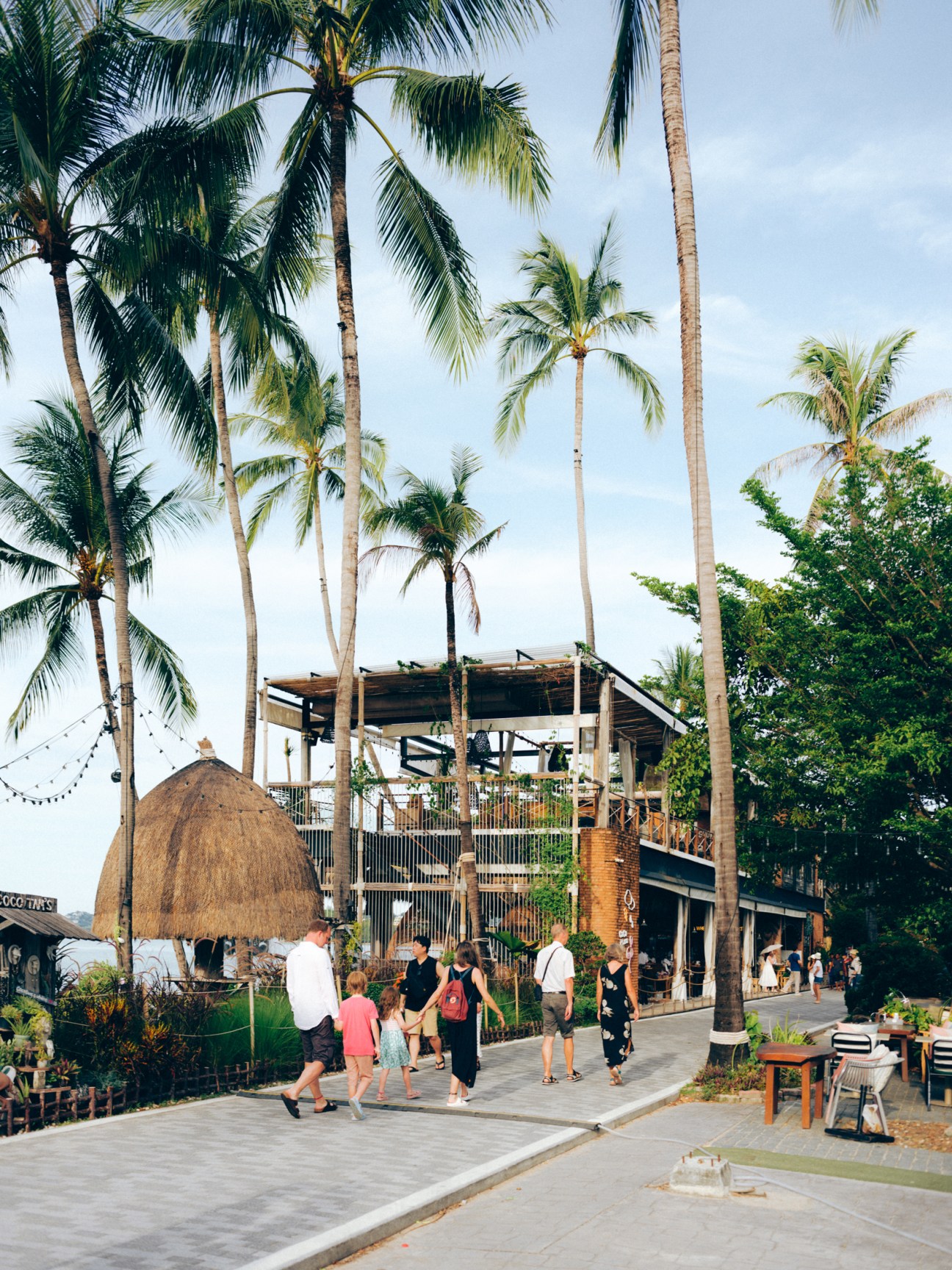
1.
Thailand’s second-largest island is buzzing
Circled by the brilliant waters of the Gulf of Thailand, Koh Samui is gearing up to be Southeast Asia’s hottest destination. Monocle meets the people who have journeyed from all over the world to set up new hotels, bars and restaurants, and add a little vibrancy to the island’s natural beauty.
2.
Olympic projects can be built to last
When Monocle visits Munich’s Olympic Village, we find a thriving community, surrounded by greenery and open space. But when it was completed in time for the 1972 Games, it was never a given that the construction would stand the test of time. We talk to the architects who perfected Bavaria’s Olympic legacy and ask what it takes to design for the future, not just the present.
3.
Changing scene can shake up your style
From the line-up of impressive designers on our fashion pages, it’s clear that there is something special about island life. Finnish-born fashion designer Cecilia Sörensen is certain that relocating to the island of Mallorca has lent a breezy feel to her pieces, while Margaux Varnavidou’s now-signature laidback Smock shirt would never have been possible without a move to Cyprus. Soak up some inspiration for the summer and beyond.
This celebrated Brazilian architect finds inspiration outside of the blueprint
“I don’t find any inspiration in architecture at all,” says Isay Weinfeld, reclining into an armchair with a smile. “It’s something that I’ve been practising for the past 50 years but it’s not the most important thing in my life.”
The ebullient, septuagenarian Brazilian architect is talking to Monocle in London, where he’s working on the renovation of a heritage building for Brazilian hotel group Fasano. But, despite being in town to discuss this work and his approach to architecture, he first wants to talk about his favourite films. “Playtime by Jacques Tati is the best film of all time,” he says, adding that Federico Fellini, Kantemir Balagov and Yorgos Lanthimos are among his favourite directors. “I am a very strong consumer of movies. But music is also a big passion of my life – theatre, dance, art and fashion too. And one of the strongest things about myself is an appreciation of humour.”
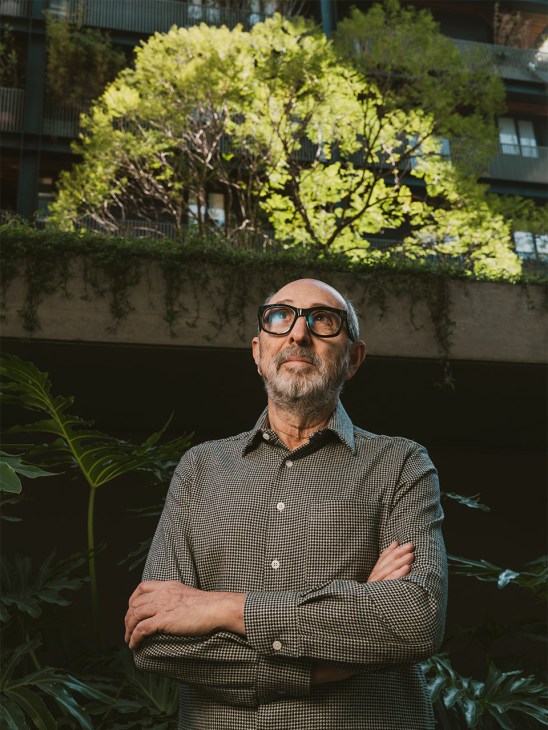
For one of Brazil’s most celebrated contemporary architects, whose work includes the Edificio Oito, a verdant residential building in São Paulo, the Jardim on New York’s High Line and Rio de Janeiro’s Havaianas shop, it might come as a surprise to hear that his discipline of choice is not his first love. But he has always had a restless creative instinct. While studying architecture at São Paulo’s Universidade Presbiteriana Mackenzie in the mid-1970s he began making short films, eventually winning prizes at festivals in Gramado, Brazil and Huelva, Spain. A passion for music has seen him befriend artists such as Radiohead’s Thom Yorke and has resulted in him designing sets for concerts and theatrical performances. More recently he has completed a degree in creative writing and developed a loyal social media following that regularly view his videos, which humorously highlight urban issues in São Paulo.
The diverse set of interests might explain his approach to architecture, which is reflected in a portfolio that includes residences, discothèques, restaurants, hotels, office buildings and cultural centres. It’s a body of work that is as varied in typology and style. “You have to look for new solutions that will surprise you as a designer,” says Weinfeld. “Then you can surprise people.” It’s a refreshing sentiment that’s pertinent given the number of architecture studios that have developed signature styles, which are then rolled out in cities across the globe. “I always want to do something new in my work; I don’t want to have a formula and repeat myself,” he adds before doubling down with, appropriately, a cinematic analogy. “Directors such as Woody Allen, who is one of my favourites, have been doing the same films for their whole life. Then there are the likes of Stanley Kubrick, who has done many genres of film – historical, war, science-fiction – where everything is completely different. I don’t want to compare myself to him but that’s the approach to work that I enjoy.”
When pressed on whether the architecture industry should step out of its comfort zone, Weinfeld is keen to point out that this is simply his personal preference. He is, however, eager to point out that humility still remains an essential architectural building block that should be the foundation of all practice. “Architecture, for me, is about taking out the ego, respecting the clients and the site,” he says. “It’s not about speaking louder to show that you’re important.” He stresses that architecture is a service industry, where practitioners shouldn’t be treated as deities. It’s an outlook that, perhaps, has been cultivated by Weinfeld’s manifold creative endeavours and where a good life is about more than simply making a nice building. “Architecture is a funnel for all my interests,” he says. “I don’t take myself seriously… but I do my work in a very serious way.”
The CV
1952: Born to Polish immigrants in São Paulo
1973: Establishes his namesake design studio while still a student
1974: Completes first short film in partnership with architect Márcio Kogan
1975: Graduates with a degree in architecture from São Paulo’s Universidade Presbiteriana Mackenzie
1983: Wins award at film festivals in Brazil
1998: Finishes the Casa Tijucopava residence in Guarujá, Brazil
2003: Completes first hotel for the Fasano group in Brazil
2009: Wins Mipim AR Future Projects Awards for his 360º Building residential project in São Paulo
2020: Graduates with a degree in creative writing from São Paulo’s Instituto Vera Cruz