Issues
The art of the amble: Exploring the social rituals of evening walks across Spain, Italy and Greece

The Italian tradition of la passeggiata is so much more than the mere act of walking. It is a custom so deeply ingrained in the nation’s psyche that, wherever you might find yourself in Italy, you will see smartly dressed residents strolling and mingling in the late afternoon or after dinner to grab a cooling gelato. People promenade – and there really is no rush. They’re there to see and be seen, swap news and gossip. It’s the journey, not the destination, that matters.
The tradition has found a foothold among the Spanish too, who partake in el paseo, while the Greeks have the peratzada. Monocle mingles with the crowds on three leisurely meanders as the day winds to an end but before the evening’s revelries begin.
1.
‘El paseo’
San Sebastián, Spain
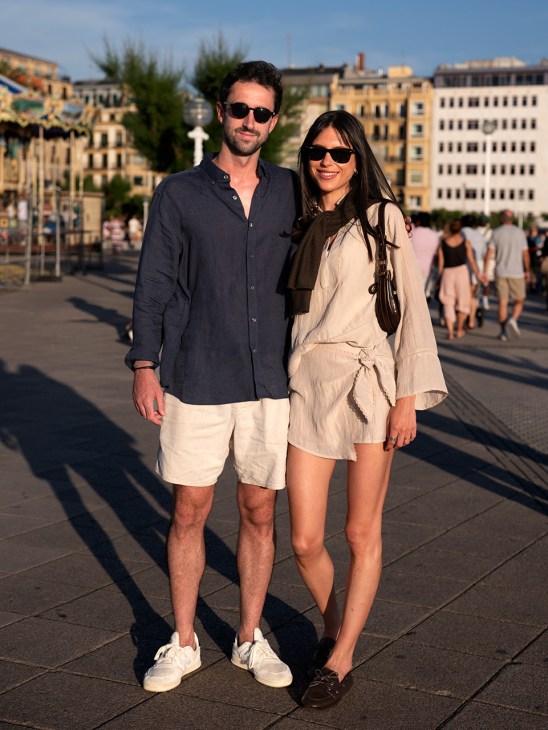
When Monocle asks those ambling along San Sebastián’s Ondarreta esplanade where they’re heading, the answer, more often than not, is “nowhere in particular”. They aren’t being evasive. They’re simply doing what Spaniards do best. “Dando el paseo” – taking a stroll – is a national pastime during which the destination doesn’t matter. Instead, the focus is entirely on the journey.
This city, known as Donostia in Basque, has more than one paseo a day. The first is in the morning, before the rising sun warms the pavements. This stroll is about kicking both body and mind into gear. With 26.6 per cent of residents over the age of 65, the city has one of Spain’s biggest senior populations. It joined the World Health Organization’s Age-Friendly Cities framework in 2010 but an active and inclusive lifestyle comes naturally here.


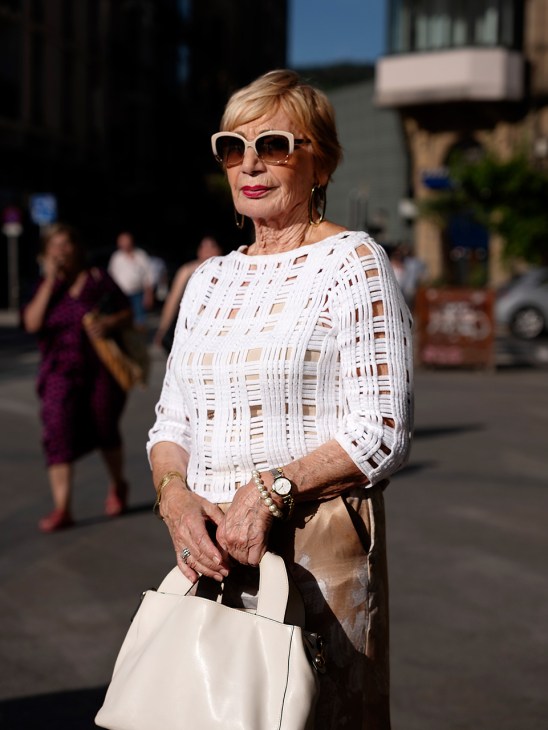
As well as the morning stroll, there’s its after-dinner cousin. Partly intended to aid digestion, this paseo can be a touch romantic too. But Spain’s main stroll happens between 19.00 and 21.00, before dinner. It’s healthy, social and, most importantly, cultural – an aimless meander that keeps the country connected and moving. In San Sebastián, there’s an unspoken consensus that you should look your best: think sophisticated señoras and smartly dressed señores with no Lycra or leisurewear in sight.
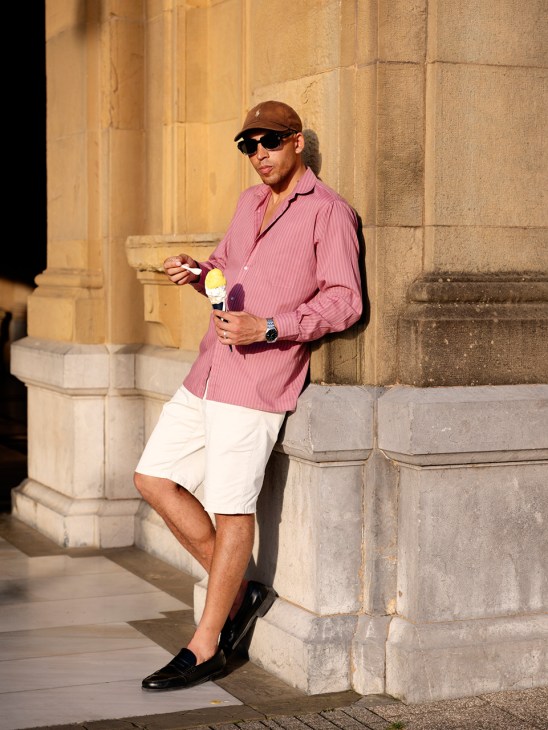
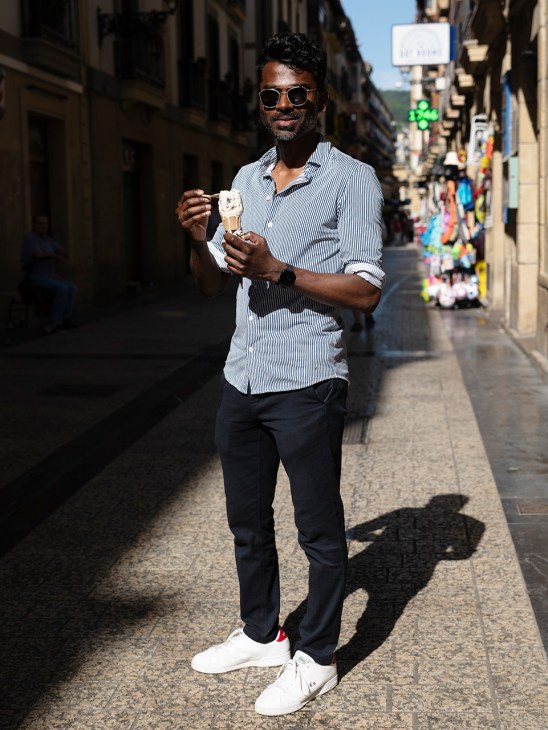
It’s a warm evening so we find walkers sticking to the cooler streets of the old town. Elegantly dressed, Karmele Kaperotxippi tells us that she’s “just passing through”. In head-to-toe pink, Maite Recalde says she’s on her way to buy a bikini but has taken the long route “to soak in the energy”. Jonathan Oloniluyi-Abel Rodrigo is likewise in no hurry, apart from when it comes to eating his ice cream before it melts.
Back on the ornate and curved esplanade of La Concha beach, we meet a mix of young couples, chatty amigas and dog walkers. Ana, Jorge and Gizmo have stepped out to “dar una vuelta” (take a walk).
There’s also a spirited side to walking along this beach, one of the busiest stretches of the Camino de Santiago: among the aimless amblers are those on pilgrimages. San Sebastián is one of the most beautiful stretches of the religious route. We meet Vivek Bhasin from Himachal Pradesh in India; he tells us that he regularly takes long walks across the globe. His last pilgrimage was 1,200km long. “It’s a reflective path and a way to savour time,” he says. Thankfully for him, this section of the Camino de Norte (Northern Way) is a little shorter at 803km.
Back in mid-20th century Paris, situationist thinkers such as Guy Debord romanticised the unplanned stroll as the dérive – the act of drifting. They created an art movement around observational walks – an early and sociopolitical take on mindfulness. In Spain, however, strolls aren’t so intellectually freighted. The paseo is a simple, universal pleasure in which one steps onto the street to reconnect with the world, strut a little, chat a lot and see and be seen.
As the sun sets and the evening rolls on, the footfall along San Sebastián’s streets begins to decrease. But the city’s wayfarers will no doubt be back tomorrow, ready for another day of wandering nowhere in particular.
2.
‘La passeggiata’
Pietrasanta, Tuscany
Once the summer sun softens to a golden haze, the pedestrianised streets of tiny Pietrasanta become the stage for the urban choreography of la passeggiata – a pleasure stroll that requires no destination. Instead, it’s a leisurely civic ritual and a refreshingly analogue social network that continues to connect local life.
La passeggiata has deep roots across Italy, with promenaders in couples and small groups traversing the main piazzas and shop-filled streets of towns and cities – most commonly in the evening hours before dinner, when the day’s work or beach visit is over and bars begin serving aperitivi. The point is not to seek solitude but rather to participate in public life among fellow denizens. The ritual remains especially entrenched in small towns where the sense of community is still palpable.
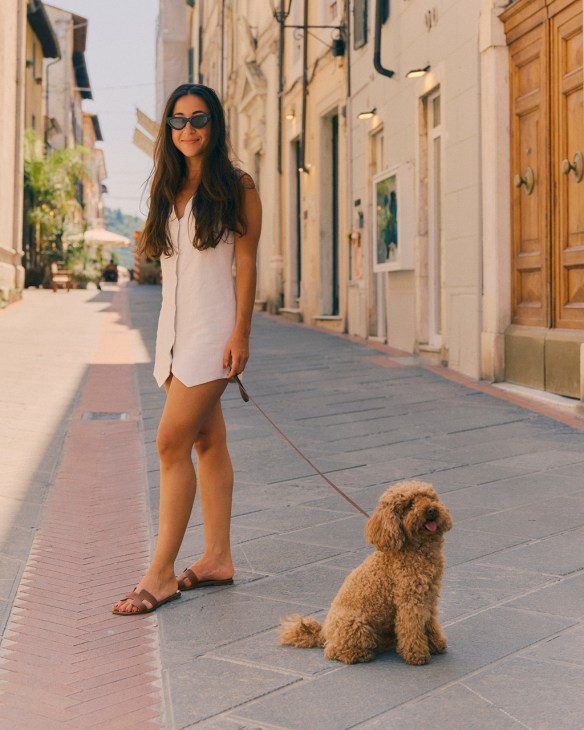

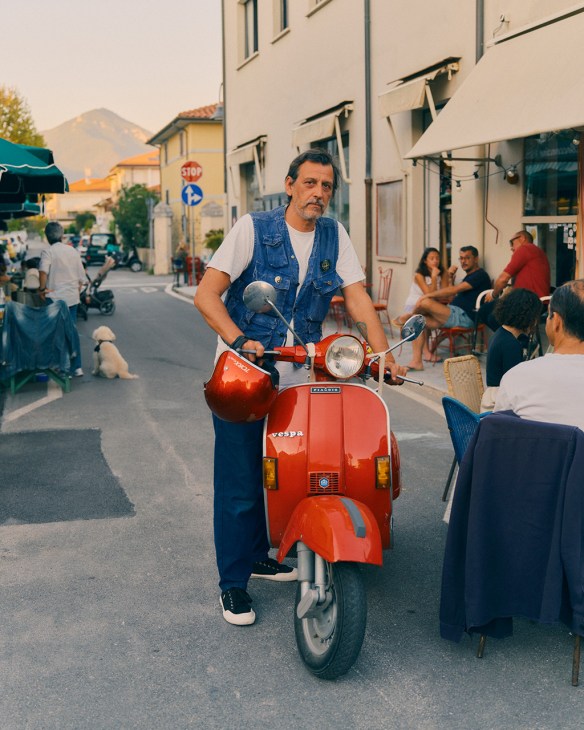
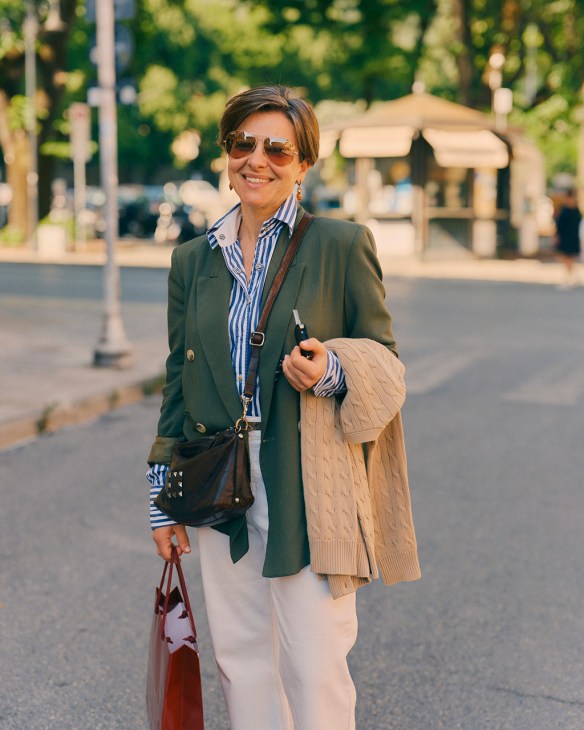
In Pietrasanta, as in many seaside spots, the summer meander is an essential part of the day’s rhythm, elevated by the town’s singular character. Located by the mountains that yield the world-famous Carrara marble, the district has a long history of stone carving and the bronze casting of sculptures. These credentials have rendered Pietrasanta a magnet for artists – Isamu Noguchi, Fernando Botero and Igor Mitoraj all maintained studios here. The town’s public spaces are rich in art, from the train station’s Kan Yasuda sculpture and Botero’s church frescoes to the monumental works installed annually in the main piazza.
Alongside museums, such as the Igor Mitoraj foundation and the Museo dei Bozzetti, Pietrasanta’s compact criss-cross of streets is home to dozens of art galleries. “Even people from neighbouring towns like to come to Pietrasanta for a passeggiata because there’s so much art to look at as you walk,” says Sara Ferron Cima, c0-founder of Bloc Studios, which works with marble from nearby quarries. “Strolling through town is a chance to marvel at all the beauty around you,” says her husband, artist Paolo Ciregia, who points to the art but also to the proximity of the mountains, sea and forested hills.
The central area is lined with distinctive independent shops: La Stramberia’s Tuscan-made hats; Santa Riva’s dapper men’s selection; Thanks Dad, with its in-house clothing line. But it’s the enduring presence of artists and artisans that preserves the town’s rare authenticity. “This is a small working community of skilled craftspeople and artists,” says designer Marco Guazzini, who moved to the area after holidaying here for years. He is enjoying a beachside aperitivo. “You see faces you know when you walk around and that keeps the town human.”


“A passeggiata and an aperitivo – that’s how we end the day whenever we can,” says his tablemate, architect Andrea Leonardi, who usually has his son in tow, kicking a football through the town with the other kids.
Head down to Marina di Pietrasanta, the town’s seaside quarter, and you’ll find roads edged with marble yards and stone depots before reaching the row of vintage beach clubs that front the sand. Along the car-free promenade, locals on bicycles drift by while others are on foot – freshly changed from the beach and ready to take part in the languid spectacle.
3.
‘Peratzada’
Chania, Crete
As Chania’s heat dissipates, its old harbour starts to fill up. Families, hotel guests, students and elderly couples emerge to begin their peratzada. Taken from the Greek word pernao, meaning “to pass by”, the peratzada is an amble that includes a few key stops along the way – for a coffee, beer, meze or, when the temperature starts to rise, vyssinada, a soft drink made with sour cherries, sugar and water, served ice-cold.
“There are many different stretches that I pick for my walk, depending on my mood,” says 33-year-old architect and photographer Nikos Kouklakis, who returned to the Cretan city from Vienna nine years ago to renovate his grandmother’s apartment in the old town, where he now lives. “But there’s something special about starting here [in the harbour], in the openness of the waterfront.”
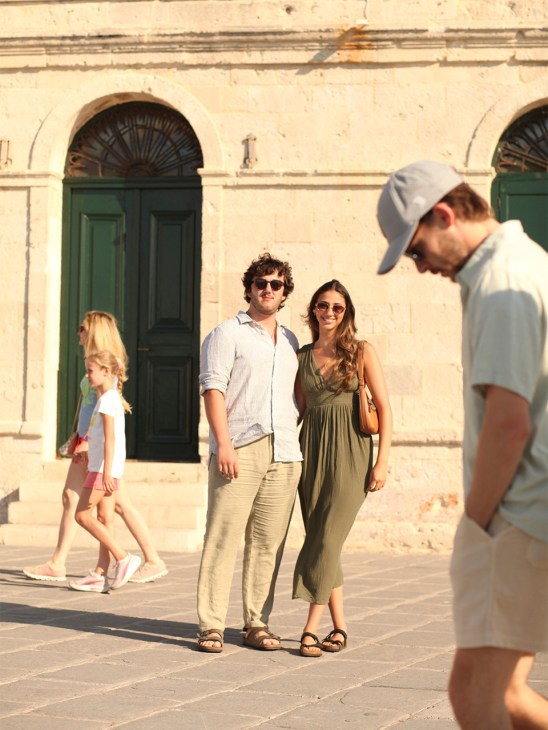
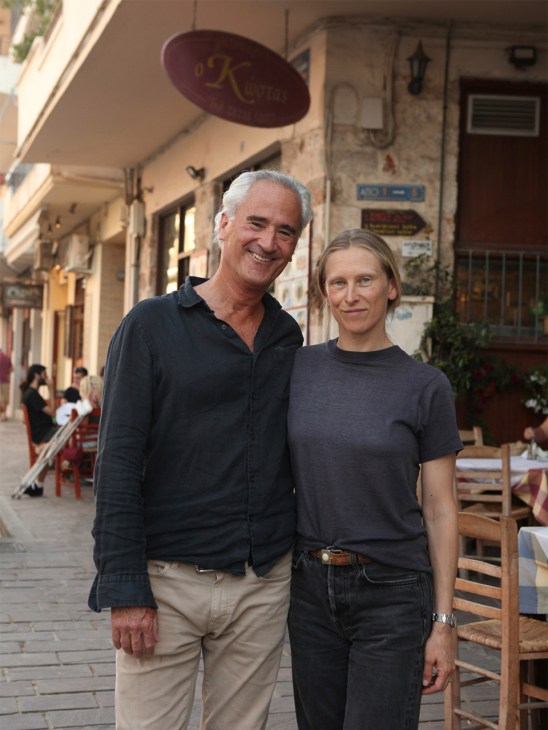

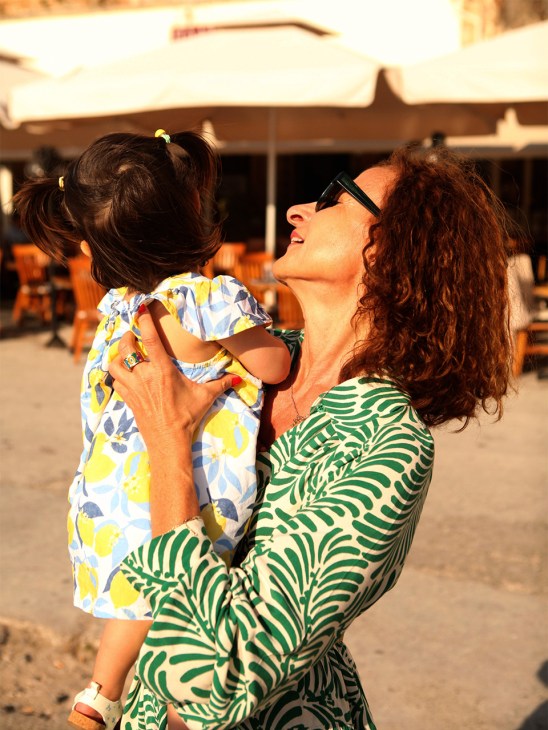
This evening, the city’s layered past, which includes Venetian, Ottoman and Byzantine periods, appears briefly unified in the shimmering glow. Few Mediterranean promenades pack so much history into such a short distance: within 10 minutes, the walk passes the Ottoman mosque of Yali Tzami, with its distinctive domes, Venetian warehouses and shipyards, and small Byzantine churches. But far from being an open-air museum gazing wistfully at the past, it feels more like a lively urban stage. Cafés occupy old customs houses; Venetian mansions are now boutique hotels; and tavernas spill on to former dockyards. In Neoria, the long, arched shipyards where Venetian boats were once built and repaired, fishermen now moor their vessels beneath the stone arches.
Chania’s most beloved peratzada often begins on the waterfront. But for locals in the know, it disperses into a series of routes. “We enjoy meeting visitors and getting to know them,” says entrepreneur Nikos Tsepetis, owner of Ammos Hotel and Red Jane bakery. “But that doesn’t mean our volta [walkaround] doesn’t have a few twists and turns that only we know.”
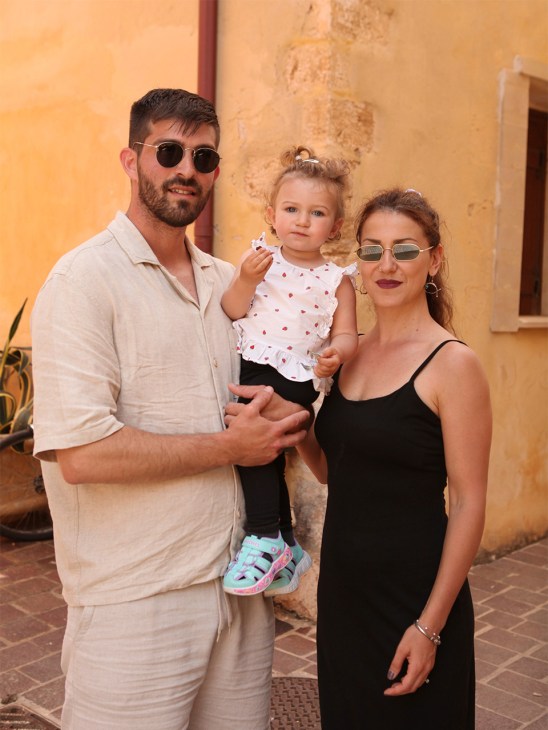

One of the best-known detours climbs up to Rosa Nera, a 19th-century neoclassical mansion on Kasteli Hill. Now controversially occupied by squatters, it remains one of the city’s most accessible viewpoints. “My favourite walk after a ramble on the waterfront is climbing up the steps here,” says 35-year-old hotelier Zaira Apostolaki, the owner of Aisha Hotel, which opened in 2024 on the hill. “I love sitting at the makeshift café at sunset.” From Kasteli Hill, the walk often continues through the lanes behind the harbour. Around Mhairadika, a corner of the city named after the old knifemaking workshops that still line the street, people are sipping early evening drinks with a view of the towering Venetian walls. The city’s various routes then converge on Splantzia Square, in the old Turkish neighbourhood.
At the square’s centre stands the Church of Agios Nikolaos, a building dating back to the 14th century that features a slender Ottoman minaret rising beside the church’s bell tower. It’s a testament to the many influences that the city has absorbed. “My favourite time here is at dusk, when tables spill across the square beneath the plane trees,” says Alkida Metai, a fourth-year architecture student. The perfect end to an unhurried promenade.
How a city splashed out on staying cool: Zürich’s best fountains
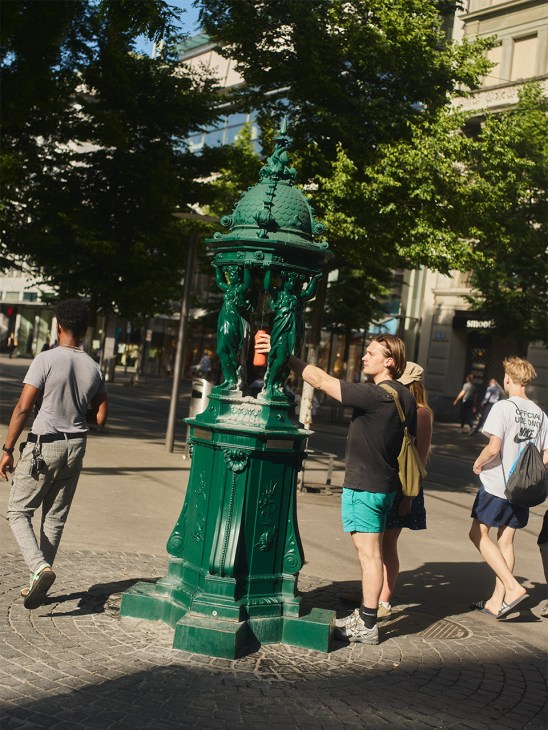
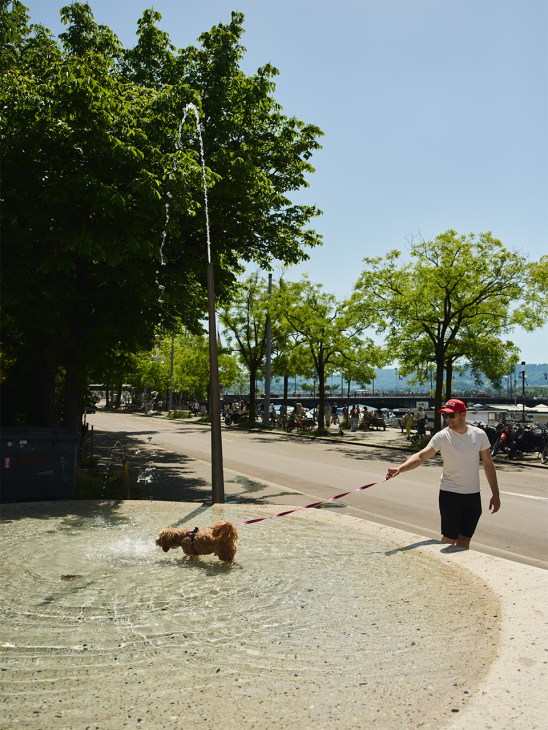
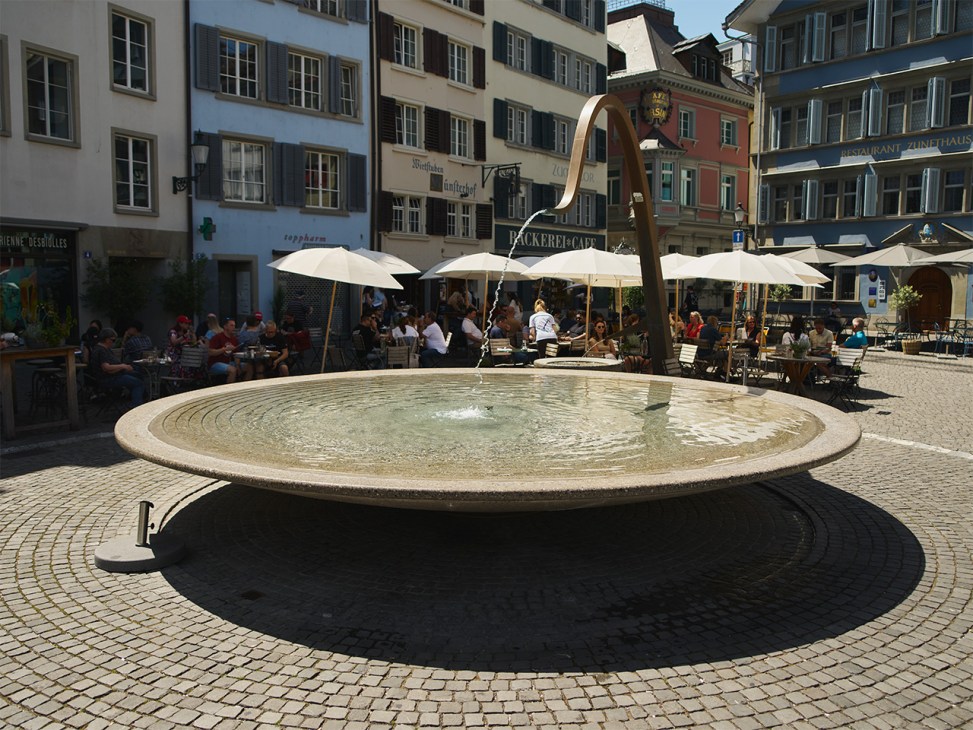
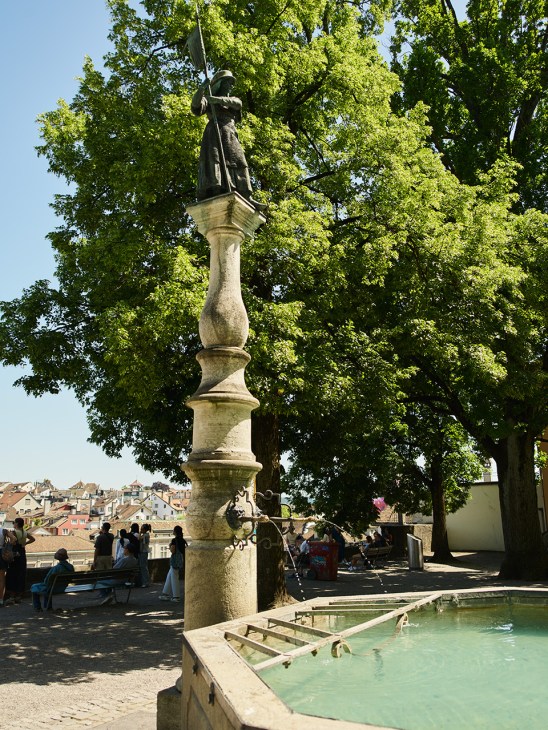
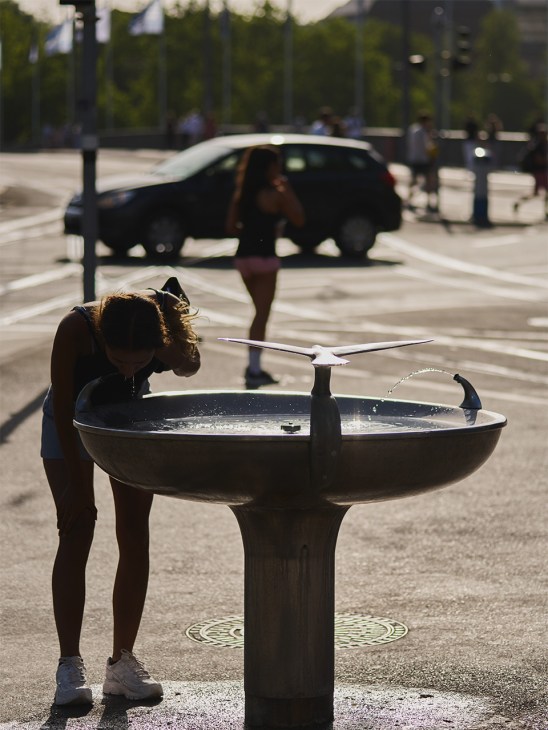
You’re never far from a drinking fountain in Zürich but the infrastructure has taken generations of investment. There are more than 1,200 in the Swiss city, which means that there are almost 266 for every 100,000 residents. (Basel has 143 per 100,000.) Ranging from abstract installations to slick 21st-century models, their designs are diligently documented by the city’s authorities in a series of district-by-district fountain guides.
Beyond their aesthetic appeal, Zürich’s fountains play a vital role in the urban fabric, especially in the warmer months. Whether a place to cool off between daytime errands, perch while enjoying an evening drink with friends or cycle through on the way home after a long day of work (as residents often do with the Europuddle on Gustav-Gull-Platz), they are landmarks for residents to interact with.
A tour of Zürich’s fountains on a summer day will offer a wellspring of inspiration to urban planners who want to make a mark on their own cities as temperatures rise. Here, we present some of Zürich’s finest fountains. Enjoy.
Further reading:
Monocle’s complete city guide to Zürich
The people’s charter for living well in cities: 13 rules for oafs, oiks and rapscallions
As an idea, the city charter predates even the earliest national constitution. The first was probably the one that William the Conqueror endowed the City of London in 1067. It promises, in part, “Every son shall be his father’s heir after his father’s death and that I will not [let] that any man do wrong to you. God yield you.” It was an early attempt to make the social contract an actual contract – to formalise the arrangement under which the government promises to furnish law and order and the opportunity for citizens to prosper, in return for which citizens must undertake to observe the basics of common decency that make urban life possible. One doesn’t have to spend too long in some urban centres to notice that substantial numbers of people have forgotten that the privilege of living in a great city endows responsibilities as well as rights.
It’s high time, therefore, that the city charter enjoyed a comeback. The model I have employed here is the Charter of Privileges granted to the inhabitants of what is now Pennsylvania and its territories by Governor William Penn on 28 October 1701; the arbitrary capitalisations are a homage to the spirit of that age. The gravitas of our charter will be further enhanced if the reader imagines that it is cosigned, as Penn’s was, by at least one person called Phineas.

I.
Whereas it would obviously be Preferable if Cities would run themselves and Citizens would behave themselves, the Course of Human Affairs demonstrates that neither can be taken for granted; Accordingly, this Charter codifies the Rights and the Privileges attendant upon Life in this City.
II.
Because no People can be truly Happy if the Government or anyone else makes a thing of who or what they Believe, Worship, Wear, Read, Think, Say or Love, it shall be the first duty of the Government and the Citizens to leave everyone the heck alone so long as they keep the noise down.
III.
For the well governing of this city, an Assembly shall be regularly chosen from among the People, consisting of Citizens of Virtue, Wisdom and Ability or, failing that, broadly competent Administrators who will get the Bins collected and can be trusted not to loot the treasury – but don’t come running to the city Founders if you elect Yahoos and Dingbats who turn out to be Yahoos and Dingbats.
IV.
Whereas none of that will pay for itself, a Tax will be Levied in part from the Citizens, mostly from Operators of Overlarge Vehicles out of all Proportion to the City Avenues and the Reckless wielders of Umbrellas on crowded footpaths.
V.
Know ye that Cyclists and Cycling shall be encouraged with all of the City’s wherewithal. Know ye also that Cyclists who fail to halt their Velocipedes at red lights and ride on footpaths shall be Flogged with Knotted ropes.
VI.
Know ye, while we’re up this way, that Companies that hire Cycles out to the Public or retain Cyclists to deliver Comestibles, shall be held Accountable for the Behaviour of operators of their Machines.
VII.
Know ye that Rapscallions who apply daubs to public Statuary and railway stations shall be compelled to scrub surfaces clean while Townsfolk pelt them with Turnips.
VIII.
Know ye that Oafs and Oiks who berate fellow passengers on the city Omnibuses with discordant noise from Devices shall be made to get out and Walk.
IX.
Whereas life in a city is for living, Citizens shall be enjoined to do exactly that, rather than Filming or Photographing every Single thing that they Do. Your everyday Activities, while obviously important to You – and Good Luck with them – are not Remotely interesting to Anyone Else.
X.
Know ye that the right of the People to Assemble in support of whatever Bees beset their Bonnets will not be Abridged but try not to be a Jerk about it.
XI.
Know ye that Trees and Parks are an Inestimable public Good so we’ll plant loads of them.
XII.
Know ye that Building Permissions will be Denied to Designs devoid of Grace, Attractiveness and Generally Pleasing Aspect. Nobody wants to look at a box park.
XIII.
Notwithstanding other considerations, the Inhabitants of the City shall separately enjoy all other Liberties, Privileges and Benefits, granted jointly to them in this Charter, any Law, Usage or Custom of this Government heretofore made and practised, or any Law made and passed by this General Assembly, to the Contrary hereof, whatever… Not really sure what any of this means, to be honest, but Phineas said that it would wrap things up nicely.
About the writer:
Andrew Mueller is a contributing editor at Monocle and host of The Foreign Desk on Monocle Radio. He has visited dozens of cities in at least 90 countries, and ranks Philadelphia very highly among them.
How Dubai, New York, Paris and Shenzhen are building their flying-taxi networks
During a recent flying-taxi demonstration between Manhattan and New York’s John F Kennedy International Airport, I glimpsed the potential future of this heavily hyped mode of transport: an electric aircraft taking of downtown, effortlessly crossing waterways, highways and urban blocks and reaching its destination in about seven minutes. For anyone who has sat in traffic, nervous about missing a flight, it will feel like liberation.
But this isn’t just a New York story. Dubai is preparing to launch air-taxi services too. In Japan, a demo flight offered the striking image of a flying machine sailing across the sky against the backdrop of Mount Fuji. South Korea and China have also held trial flights, with planned routes and early operational frameworks in place. The flying taxi no longer exists exclusively in sci-fi or a technology company’s promotional video. It is becoming a pressing question for cities. Can the sky become a part of civic infrastructure?
The answer to that question is complicated. If flying taxis only serve a few wealthy people, leaving everyone else on the ground, they’ll become a new form of urban privilege. Those below will continue to sit in traffic, while the rich pass silently over their heads. That’s not an improvement in a city’s overall quality of life. It’s inequality lifted into the sky.
Dubai is expected to be the first to launch an integrated commercial air-taxi network with California-based Joby Aviation, linking the airport, the marina, downtown and leisure districts. It’s a very Dubai move: make the future bookable and close to a hotel lobby. The project’s lesson is that the aircraft is just the most visible part. The harder work takes place below: regulation, creating airport links, dealing with noise, ensuring safety and gaining public trust.
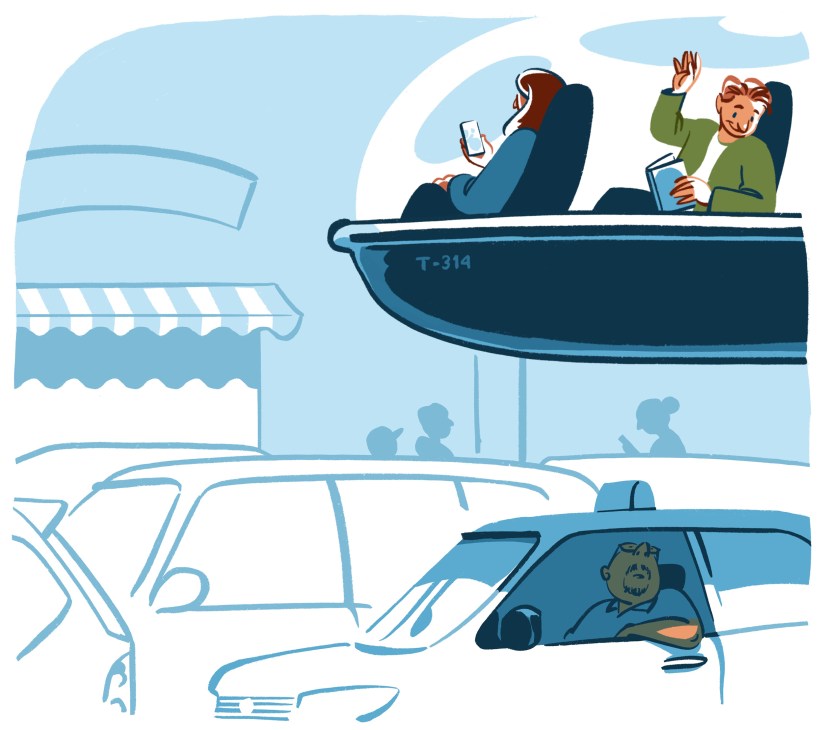
The US is taking a broader, perhaps more useful route. Its Advanced Air Mobility (AAM) pilot programme is spread across multiple states, instead of focusing on a single launch city. New York and New Jersey provide the urban airport-and-heliport nous; Texas offers regional ambition; Florida and North Carolina bring cargo, medical response and local connectivity to the table, while Albuquerque is focusing on autonomous flight.
At Delta Air Lines’ centenary event last year, Joby’s aircraft sat quietly beside decades of commercial aviation history. It was an unusual but telling image: a small electric air taxi placed within the story of one of the US’s oldest carriers. Delta’s investment in Joby and its planned airport connections in cities such as New York and Los Angeles suggest that flying taxis are moving out of start-up renderings and into the infrastructure, passenger-experience and branding strategies of mainstream aviation.
China’s technology-fuelled metropolis Shenzhen offers a different kind of beginning. Ehang’s autonomous passenger aircraft are likely to appear first on short, controlled routes: scenic flights, local demonstrations, tourism loops; journeys that feel more like a cable-car in the sky than a taxi in the clouds. It might sound modest but that’s a useful trait in aviation. Before a city turns the sky into a street, it needs routes that are safe and limited.
Paris offers another useful lesson: patience. Its Olympic air-taxi dream with German aerospace company Volocopter was delayed by certification issues. That failure might be more instructive than another glossy video. After all, cities can announce the future quickly but aviation certifies it slowly.
Together, these examples suggest that the leading cities aren’t simply asking whether taxis can fly. They are asking whether a city can absorb these vehicles: into its airports, roads, regulations and insurance systems, as well as the public imagination. Mobility becomes useful when it stops being exciting. Nobody applauds a lift ride, a ferry crossing or an airport train. They matter because they are reliable and predictable. The flying taxi of the future should be the same: not a spectacle but a quiet function within the city’s transport system. In other words, they’ll truly take off when they come back down to earth.
About the writer:
Eding Yi is a Hong Kong-based aviation law scholar, legal adviser, pilot instructor and advanced air mobility researcher. His work connects aviation, law, finance and urban systems, exploring how cities and airspace are set to evolve.
A shore cure for urban fatigue: How Sydney, New York and Kobe are rethinking their waterfronts
Waterfronts often serve as connection points in urban environments. When designed well, such spaces function as ecological buffers, economic engines and public spaces where communities can gather. But arriving at such a point requires vision, investment and ambition to reimagine precisely what a shoreline can be. Here, we examine three cities that have done exactly this: Sydney, reinvented through industrial infrastructure; New York, restored through environmental intervention; and Kobe, reshaped through civic and landscape design.
1.
Sydney Fish Market
Sydney, Australia
It’s 06.30 and the operations centre at the new Sydney Fish Market is in full swing. At one terminal, a worker is washing mud crabs in a deep sink; at another, fish are being checked for freshness. An aquatic bounty sits on slabs of ice: tuna, snapper, barramundi, tiger prawns. Workers push the market’s signature blue crates through the wide lanes, deftly avoiding some tourists – even at this early hour, there is a tour group coming through, learning about how the market functions. It’s all part of a grand architectural plan. Unveiled in January, this is the largest fish market in the southern hemisphere.
“We have turned an introverted industry inside out,” says Fred Holt, partner and Australian director at architecture firm 3XN. The international outfit, headquartered in Denmark, designed the building in partnership with Australia’s BVN Architecture and landscape firm Aspect Studios. The trio has produced a design that serves the public and industry, with a blurred activity programme headlined by a market hall that accommodates fishmongers, speciality shops, cafés and restaurants.
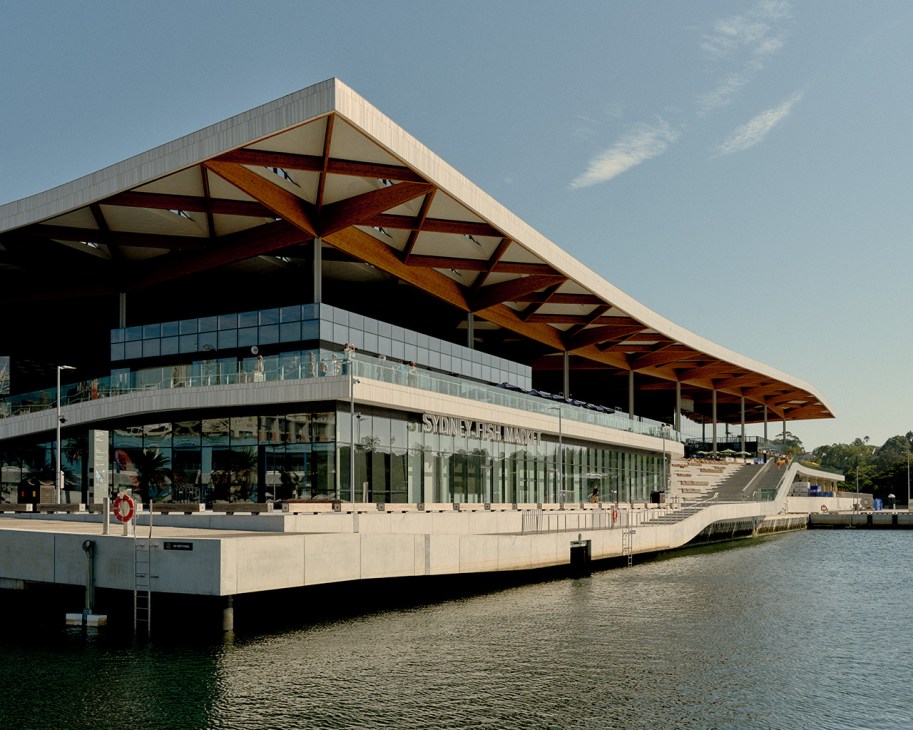
In a similar vein, the behind-the-scenes operations of the market have been foregrounded: the cold storage rooms are set on ground level and visible to anyone driving or walking past. Visitors can also see the auction hall, though circulation flows have been smartly designed to separate the daily operations of the working fish market from the public. “We’re putting the back-of-house operations on display,” says Holt. “We’re making the theatrics and intense choreography of seafood trading part of the public experience.”
As if to prove the point, Holt welcomes Monocle to the auction hall early on a summer day, whose cloudless blue sky promises scorching heat. It’s surprisingly quiet: about 40 bidders sit at desks in the hall, which is lined with glass windows and cascading rows of seating that make it reminiscent of a university lecture theatre. Coffees in hand, they stare intently at computer screens at their terminals. The auction uses a Dutch system, involving a clock that ticks down until a winning bid is made. Occasionally the contenders groan loudly when they’re outbid, otherwise the only sounds are gentle murmurs.
Far from simply being innovative in terms of inviting the public into an industrial market, work has also been done to link the site to the city. The building is set on Blackwattle Bay in the inner-city suburb of Glebe, along a 15km foreshore walk that starts near the Sydney Opera House. Part of the brief was to connect the building with this walk through a waterfront promenade. “The building is shaped to respond to this request,” says Holt. “The ground level has sweeping stairs to draw people up but also provide a place for Sydneysiders to just enjoy the view.”


It’s a view that the city’s inhabitants are well acquainted with: the building is a replacement for the former fish market, which, since opening on an adjacent site in 1966, had been a fixture of Sydney’s economic, cultural and tourist map. The new structure builds on this storied legacy but while adding a layer of architectural significance – it has already been described as the city’s most outstanding harbourside structure since the Opera House. Appropriately, the fish market’s roof, which looks like a wave coated in fish scales, is well on its way to icon status too. The design was informed by practical requirements: it needed to be low-lying to avoid obstructing the nearby Moreton Bay fig trees.
An undulating form proved the best solution, allowing natural light and ventilation to flow through the space, while collecting rainwater for later reuse. It’s a savvy design that means the building gives back to its tenants. “The Sydney Fish Market is actually owned by the industry for people who actually support it,” says Gus Dannoun, the operations manager at the market, who has worked here for more than 40 years. “One half of the business is owned by the licensed commercial fishermen through a trust, and the other half is owned by the tenants and merchants who operate from this site. It’s a truly industry-owned operation.”
It’s a situation that Holt is perfectly happy to acknowledge, adding that his work has built on it. “The fish market is two things,” he tells Monocle, as he wraps up his tour of the building. “It’s an operating fish market but it’s also a Sydney institution.” By 09.00 the public spaces have filled up – there are people walking dogs, buying flowers and coffees, gathering around an oyster shucker to watch him work, and, of course, buying plenty of fish. “It’s Sydney’s living room,” adds Holt.
View Monocle’s complete city guide to Sydney.
2.
East Side Coastal Resiliency
New York, USA
When the $1.45bn (€1.25bn) East Side Coastal Resiliency project is completed in 2027, the waterfront along lower Manhattan’s East River will look significantly different to the one that was destroyed by Hurricane Sandy in 2012. The ambitious 15-year project, named the Big U, is being built to a master plan by Bjarke Ingels Group and One Architecture and Urbanism. It is defined by a 16km stretch of park and public realm, featuring flood protections (such as a tidal gate chamber, floodwalls and elevated parkland) designed to safeguard New Yorkers from future storms and tidal floods, while also providing abundant public amenities.
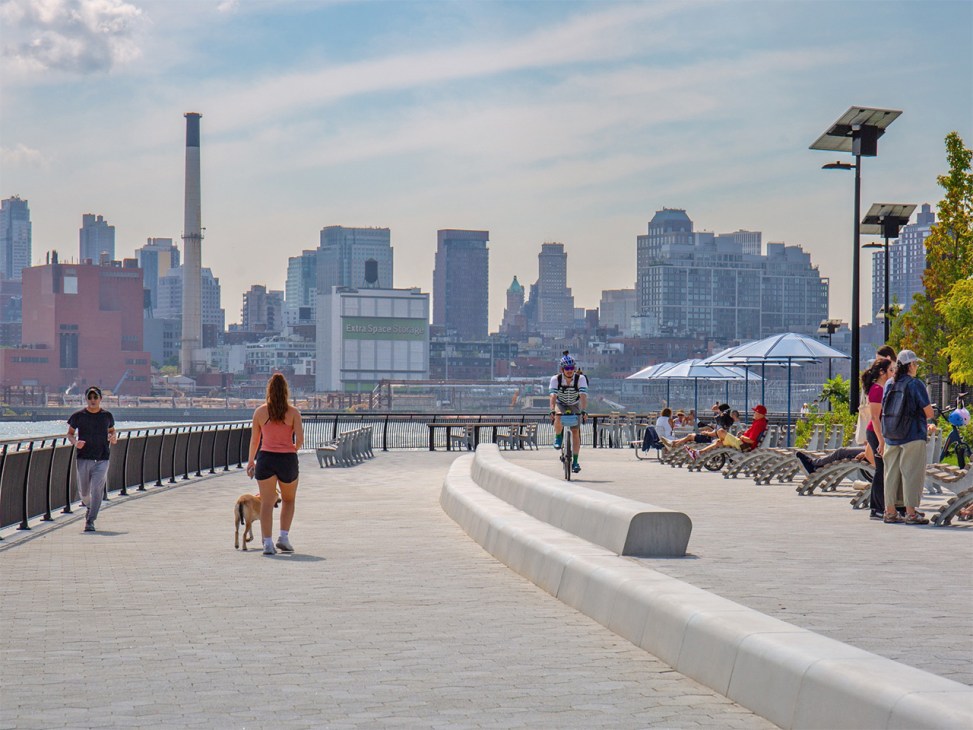
“It’s an archipelago of parks forming an elevated, undulating new landscape – a ‘parkipelago’ if you will,” says Ingels. “Each island of green is devoted to a use and character decided by the community. Rather than separating the city from the waterfront, we’ve designed a public realm that invites people in.”
Its crown jewel is the 4km-long East River Park, which is being transformed into the Lower East Side’s most vibrant civic space. Those who visit the site this summer will hear the hum of construction at the park’s northern end. But they will also be able to visit the most recently opened section (pictured) south of the Williamsburg Bridge.
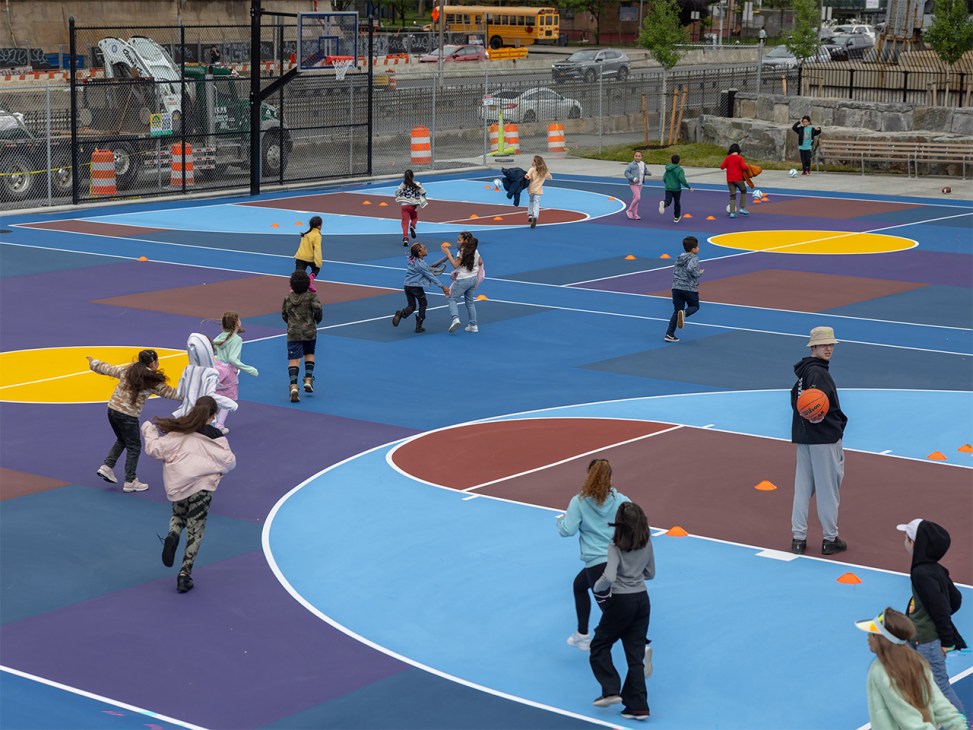
Elevated above the floodplain, it features lush planting, sports courts and spots for the community to gather in, fields, lawns, nature and water play areas, an amphitheatre and an extended esplanade for walking, running and cycling. “It protects, connects and inspires,” says Ingels. “Proof that the future of our cities can be both safe from floods and full of life.”
View Monocle’s complete city guide to New York.
3.
Tottei Green Hill
Kobe, Japan
Fifty years ago, the Japanese port of Kobe had multiple inner-city piers lined with cargo ships. Times have changed: an earthquake in 1995 caused extensive damage to the waterfront and today’s larger container vessels now dock offshore. Architect Tomohiro Hata was tasked with transforming the tip of the centrally located No 2 Pier into a space for Kobe’s citizens. “Our first thought was an outdoor theatre where people could gather,” says Hata. Inspired by the Teatro Antico di Taormina, a third-century BC amphitheatre in Sicily, Hata set about creating a venue that made sense in a modern Japanese metropolis.
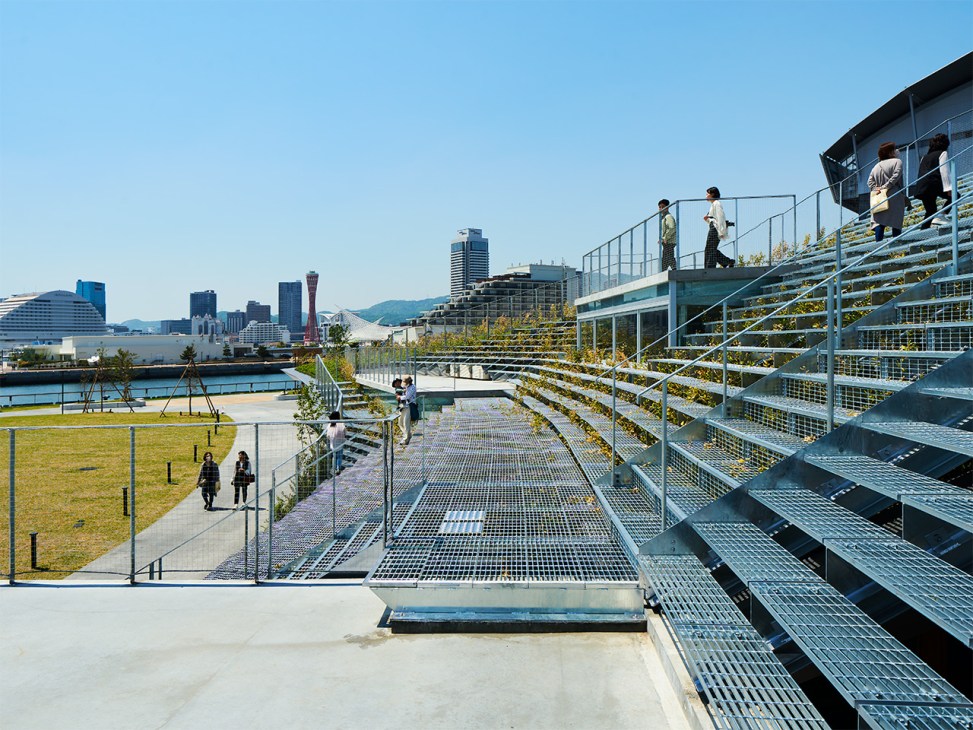
The city of 1.5 million is sandwiched between the Seto Inland Sea and Rokko mountains. “When you walk through Kobe, the dense concentration of high-rise buildings makes it difficult to understand the connection between the sea and the mountains,” says Hata. Once you reach the waterfront, however, the region’s dramatic topography reveals itself. The brief called for a large public space so Hata designed a grassy plaza before raising one corner by 11 metres, creating a hill that opens up to those panoramic views.
Hata’s idea to combine an outdoor theatre and a manmade hill demanded complex engineering. “To realise the hill, we used moisture-retaining lightweight soil and planted two varieties of bamboo grass of differing heights, capable of withstanding harsh seaside conditions.” The design allowed for rapid drainage of seawater even when exposed to large waves. For the theatre part, stepped platforms made from metal grates float above the planted slopes, allowing sunlight to reach the vegetation below while providing spaces for people to sit. The empty space within the hollow hill can be used for events in all weathers.


It’s an impressive reinvention of a piece of unwanted urban infrastructure – and Kobe has embraced it. Hata thinks that the idea could work elsewhere too. “People are drawn to waterfronts,” he says, “It suggests a universal quality that extends beyond the context of Kobe.”
Why does everyone want to be a member of Madrid’s Real Club de Campo Villa?
It’s 08.30 and slivers of sunlight shine through the pines of Madrid’s Real Club de Campo Villa. Its general manager, Juan Carlos Vera Pró, starts the day with a lap of the grounds in his Volvo. At about 250 hectares, the prestigious country club sprawls across rolling hills between a busy highway and the Manzanares river. The architecture, sport facilities and golfing greens cling to Madrid’s past but the club’s popularity – it currently has 35,000 members and a long waiting list – proves that it’s very much a part of the present. “We are always thinking of ways to improve our installations,” says Pró, who stops to show Monocle the busy driving range.
Appointed in 2019 by the incoming mayor, Pró swapped national parliament, where he had held a seat for 26 years, for the club’s copious sporting arenas. Here, there are 240 horses, an equestrian club, hockey, croquet and padel, as well as 34 tennis courts. Pró says that he spends a lot of time handing out trophies. “Last week I awarded more than 600 kids participation medals for a hockey tournament.”
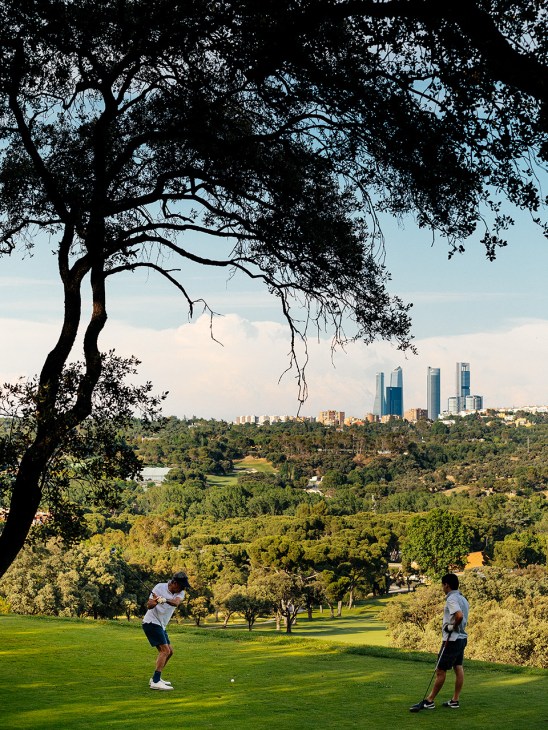
Only five minutes’ drive from the city centre, these tranquil lawns are among the best places in the Spanish capital to disconnect from the daily grind. We are shown the site where a planned virtual training centre will help the club’s 14,000 golfers to improve their swing. To ensure that the putting schedule is fair, there’s a lottery-like system that was “developed to alleviate any squabbles around availability – and to prove that there’s no favouritism”, says Pró. It makes sense: some 6,000 members are expected to pass through the gates this coming weekend.
These days, the club provides escape from stress but its history reflects the complexities of Spain’s past political turmoil. In 1930 a group of well-to-do youngsters, including a duke and a count, were so disgruntled by price hikes at another country club that they founded this establishment on their own land. Some adjoining hectares from the crown were added too. A year later, following the declaration of the Second Spanish Republic, the land was ceded to the local government. When the Spanish civil war ended in 1939, it was turned into a private institution until 1984, when today’s public version of the club was launched, and – in a move that reflected the new open spirit of Spain – 6,000 new members were admitted.
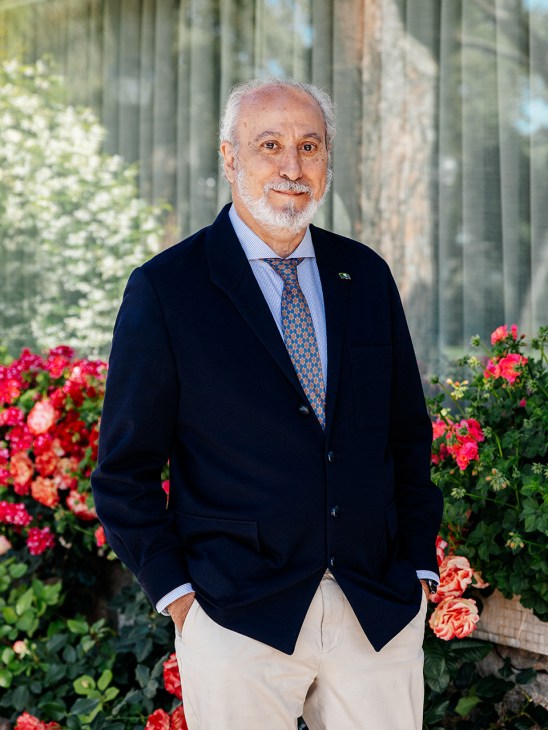
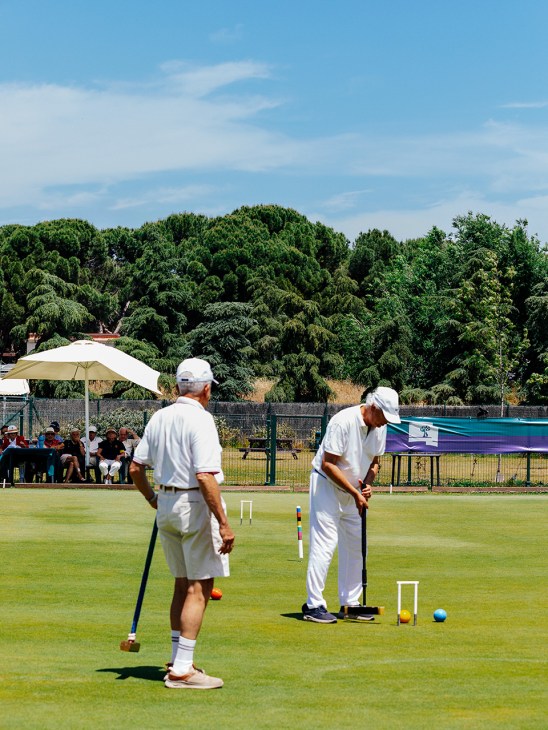
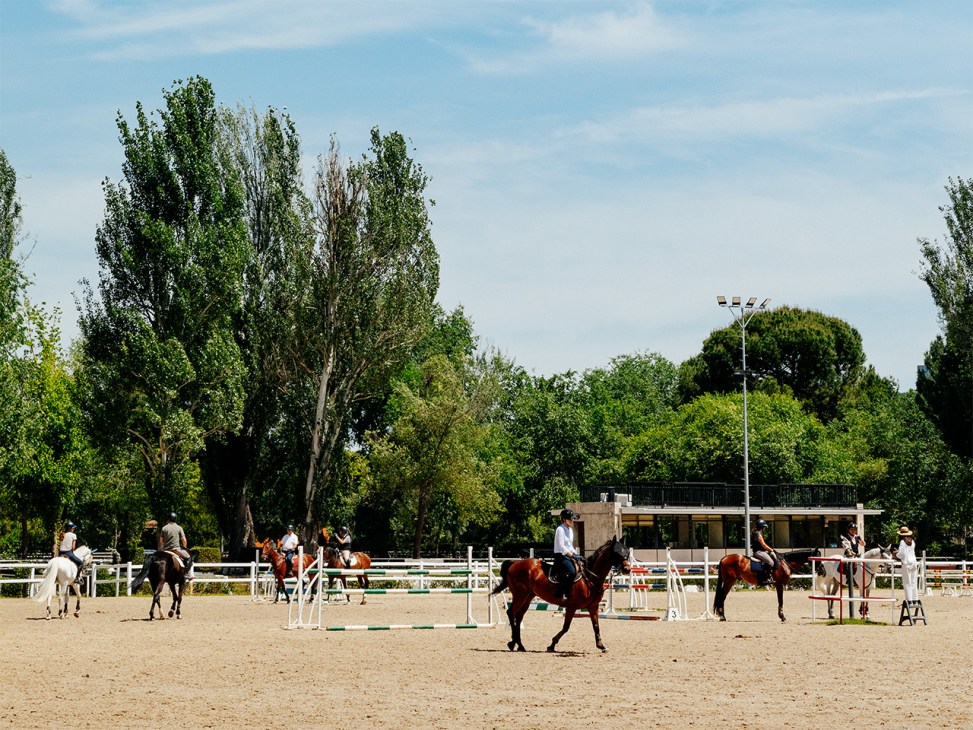
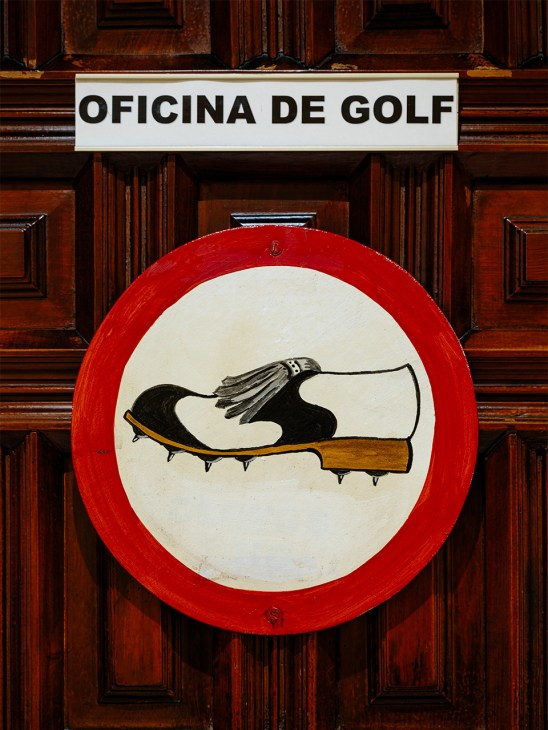
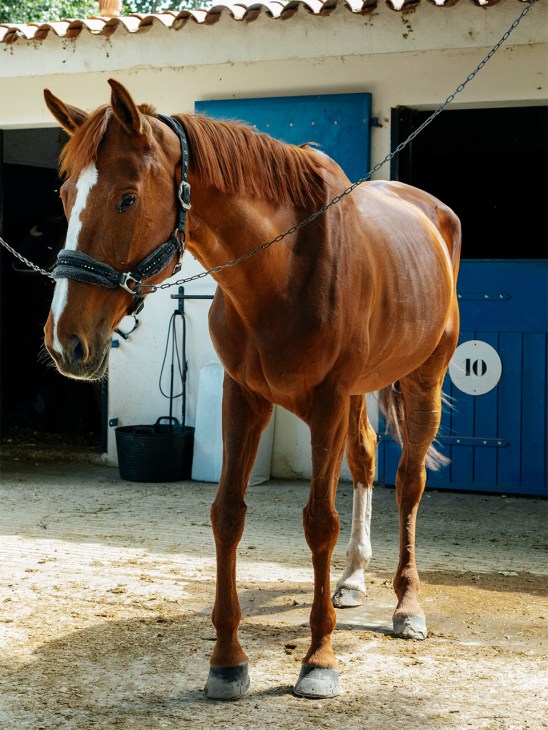
Officially, Real Club de Campo Villa is owned by Madrid City Council, which has a 51 per cent stake, with the remainder split equally between the national heritage department and the Royal Spanish Equestrian Society. Annual memberships are priced at €950, though new admissions have been frozen for several years. Monocle is told that fresh places are only made available when there is a voluntary renouncement or a death.
An exception was made, however, for Rafael Nadal, who was recently made an honorary member after hosting a charity tournament at the club. Last year, Spain’s king bestowed a royal honour of sporting excellence, prompting a small but regal change to the club’s logo.


Meanwhile, at the Chalet de Arriba – Real Club de Campo’s event space, which is known colloquially as Club Social – the scent of jasmine perfumes the air and a perfectly framed view of Madrid’s skyline can be seen across the valley. Designed by architect Luis Gutiérrez Soto in 1931, the clubhouse possesses a frozen-in-time feel, lending it an embassy-like charm.
In the afternoons, tables fill with friendly games of bridge and canasta. Inside the adjoining café, people read newspapers, while others sip cortados sitting on leather chairs made by Spanish firm Casa & Jardin. Outside, on the driving range, the crack of an eight-iron sending the ball skywards is the only sound you can hear.
How The Lobb Club became Bangkok’s coolest tennis hangout
As the padel craze sweeps the globe, tennis remains a smash hit in Thailand. In wealthy Bangkok neighbourhoods, courts rival swimming pools. One of the Thai capital’s seemliest new openings is The Lobb Club, which started out with a conversation between five friends on holiday in Mallorca. Enamoured with the Spanish island’s approach to socialising around racquet sports, this group of young entrepreneurs decided to create something similar at home, roping in two more friends.
The founders spent six months trying to find a plot of land near Sukhumvit Road, Bangkok’s main artery, before settling on Yan Nawa, a residential district in the south of the city. The up-and-coming area is near the central business district and home to an increasing number of high-rise property developments and international schools. This colourful take on a classic sports and social club, which opened in March, has transformed a former metals warehouse into two courts, five tennis simulators, a pickleball court and an ice bath. The Lobbar restaurant overlooks the on-court action and invites players to enjoy a post-match feast of Thai rice dishes, including pad kaphrao (stir-fried beef with a fried egg) and khao khai khon (creamy omelette). “We want to create a place in Bangkok to hang out and play sports,” says co-founder Ruchchapa “Pung” Jaochakarasiri, who intends to turn an empty building adjacent to the clubhouse into a wellness facility.
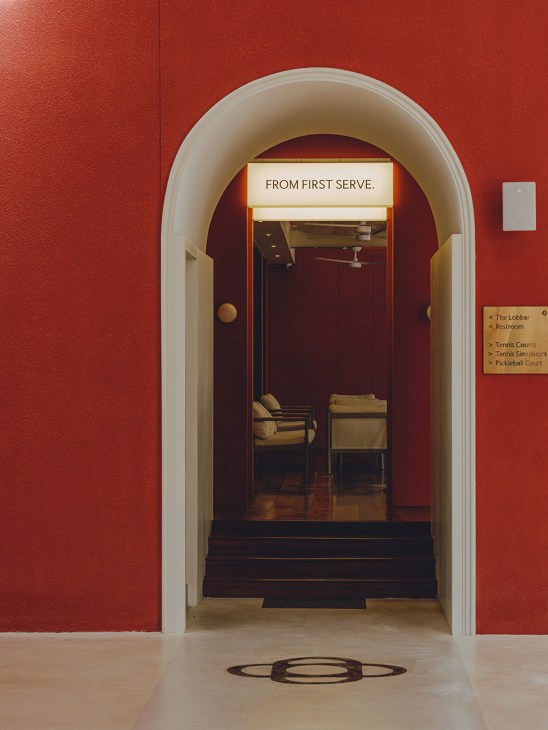

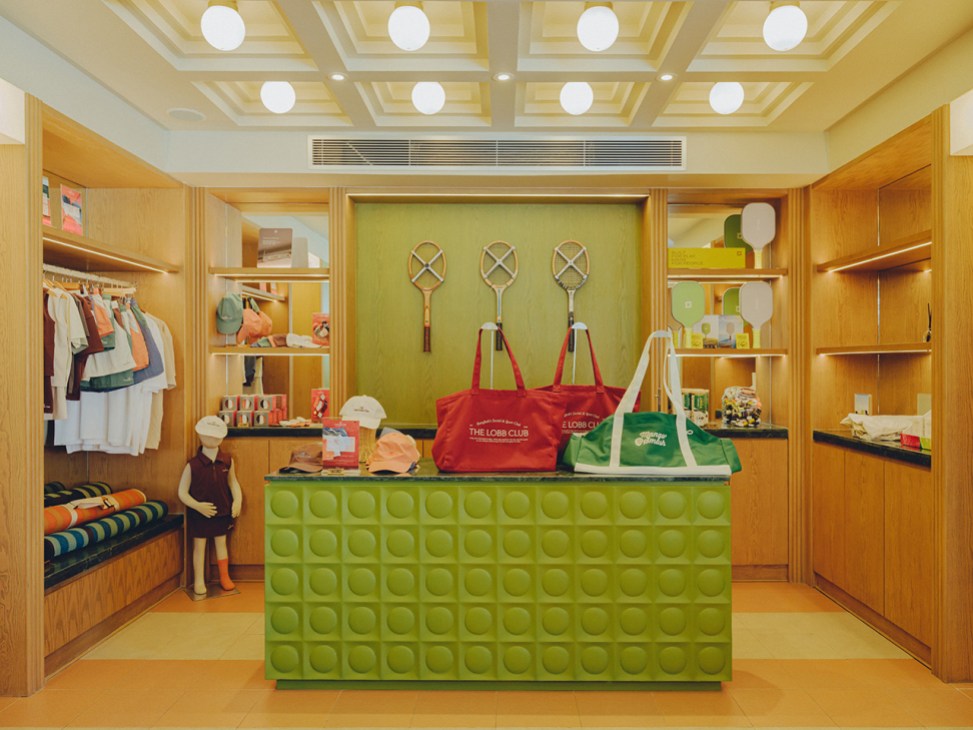
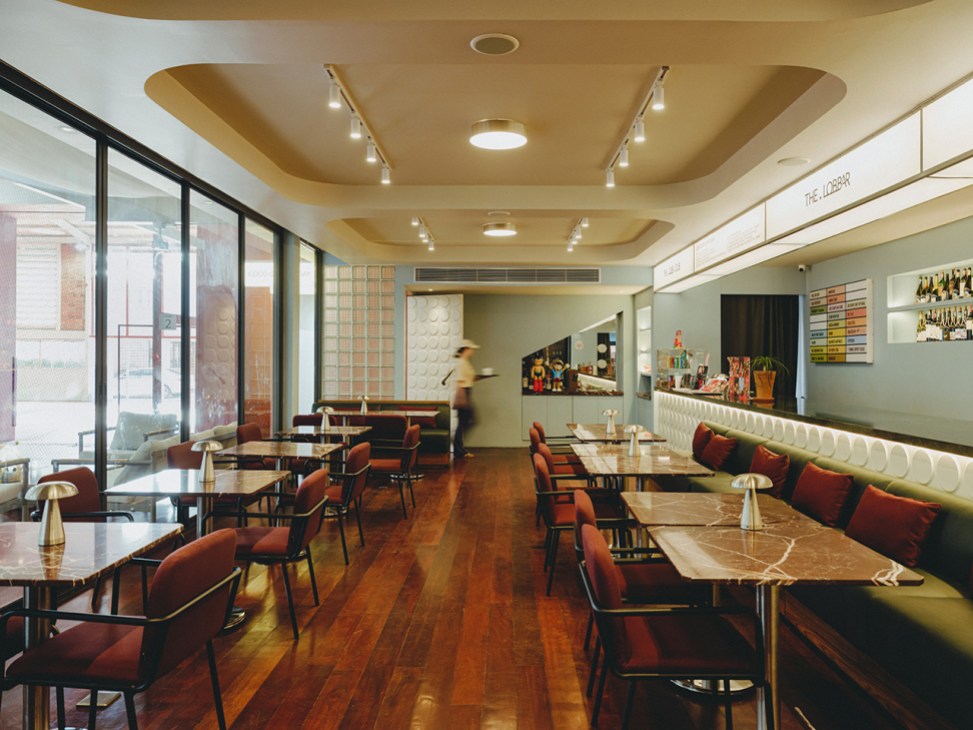
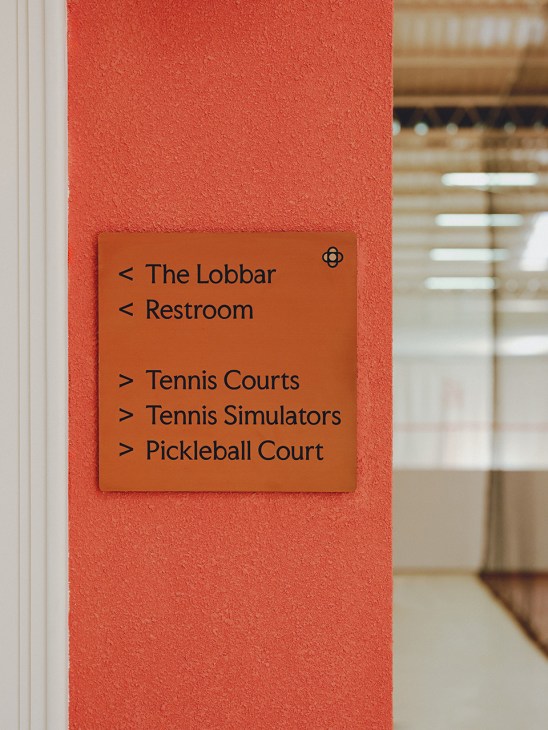
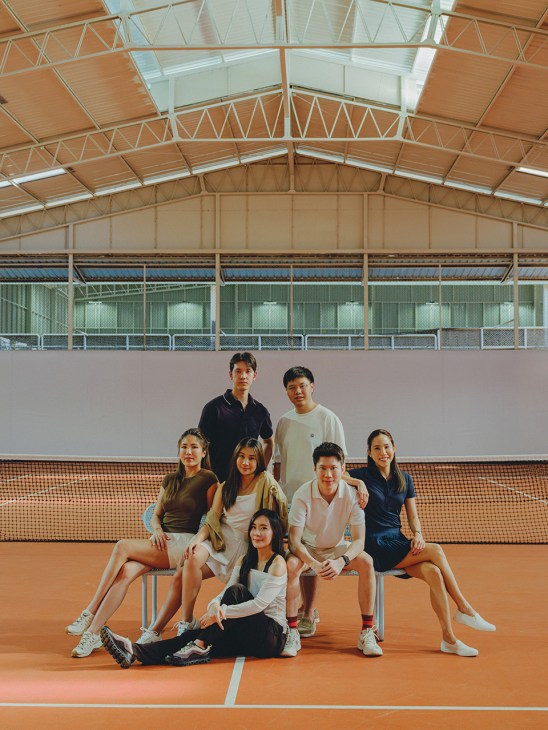
The 29-year-old architecture graduate heads to the club after her day job at a property developer. Most of the owners work full-time – the club draws on each of their skill sets, from branding to marketing. And it has paid off. A few months in and The Lobb Club has become a popular destination for workers aspiring to be the next Paradorn Srichaphan, Thailand’s most famous tennis pro. Booking a court is already competitive and there is talk of a second outpost as landowners with vacant plots vie for a slice of the action.
Fashion label +351’s Lisbon café kiosk lets you get to know the brand over coffee – and a game of backgammon
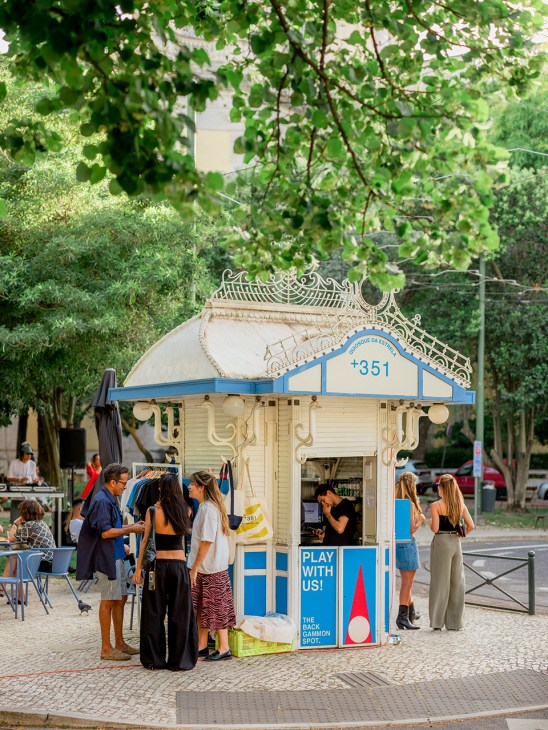
The quintessential Lisbon street scene isn’t complete without a quiosque – one of those small huts that you’ll spot on squares across the city, serving drinks and simple snacks. Here, residents and visitors can grab a takeaway espresso or perch on stackable Gonçalo chairs for a chat with friends.
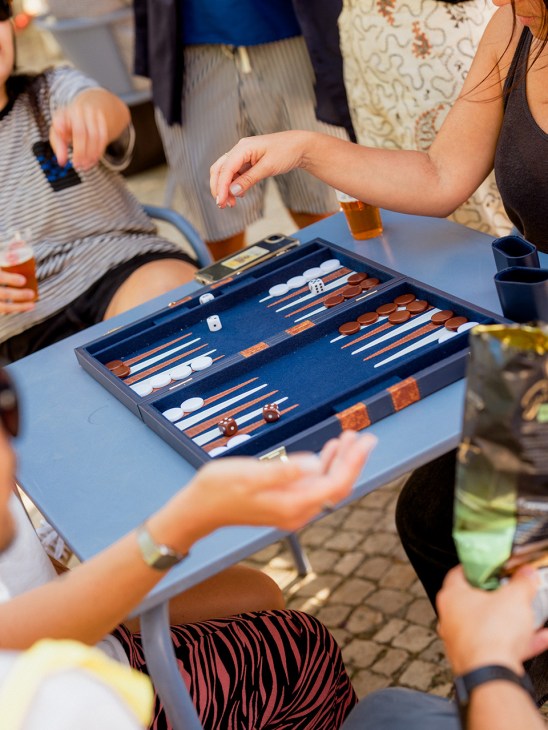
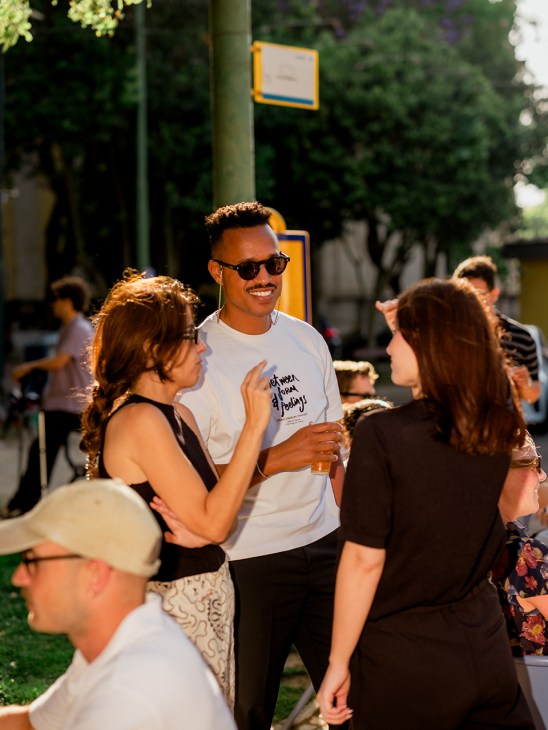
These islands of urban activity have always been important to Lisbon native Ana Penha e Costa, the founder of fashion label +351. “They’re great neighbourhood meet-up spots where people can gather to unwind and socialise at any time of day,” she says. That’s why the designer has taken on the lease of a classic quiosque in front of Estrela Park and painted it a fetching blue and white. It offers coffee and beer, plus pastries from Isco bakery, alongside +351’s cotton T-shirts, caps and sweatshirts featuring prints inspired by gammon. Visitors to the kiosk, which is open from Wednesday to Sunday between 13.00 and 20.00, can even play a casual game of backgammon – sometimes with the designer herself.
Her next play? Penha e Costa plans to host DJ sets and happy hours (something she has already experimented with at her Rua da Boavista boutique in downtown Lisbon). “It’s a great way to interact with people who might not know my brand, while also giving them a taste of Lisbon city life.”
plus351.pt

+351 quiosque in numbers
2014: +351’s founding year
€1.10: The cost of a bica at Penha e Costa’s kiosk
17.00: Happy hour begins
15 to 30 minutes: Average length of a casual game of backgammon
Further reading:
Monocle’s complete city guide to Lisbon
Inside Galeto, Lisbon’s legendary counter-culture classic
How homegrown talent and old-school buildings created a retail revival at New Bahru, Singapore
In the food hall, Fico, the pasta kiosk by Puglian chef Mirko Febbrile, has already sold out. Walk-ins waiting for a spot at the izakaya-style Dumpling Darlings have streamed into Stacked Store for some retail wandering while they wait for their table. At gelato boutique Parlour, customers find themselves in a long line with time to deliberate: mango-passion fruit or coconut sorbet? It’s Friday night at New Bahru and the place is full.
While shops struggle for survival around the world, the Lo & Behold Group in Singapore has alighted on a business model that’s drawing enviable footfall and catching the imagination of local brands. It’s also attracting the attention of envious international developers and city planners who want to understand how it has created a vibrant food and shopping concept that’s adding to the city’s quality of life and entrepreneurial vitality.
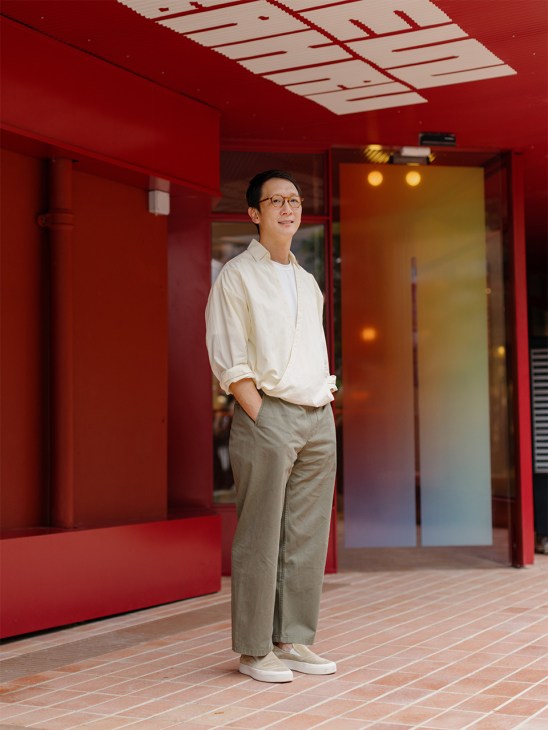
Wee Teng Wen, Lo & Behold’s founder, launched the first elements of New Bahru in 2024. His retail and hospitality cluster – on the compound of a former school and an adjacent garment factory on the city’s Kim Yam Road – quickly took off and now attracts two million visitors a year. And Monocle is here tonight for the opening party of the final components of New Bahru: the Factory Block and School Hall. The Factory Block, adapted by Shanghai-based architects Linehouse, adds a communal dining hall and a floor for retail and casual dining. The design is a homage, says Linehouse’s co-founder Alex Mok, to the department stores of yesteryear that have lost their place to modern malls.
On this opening night, the place speaks for itself. Queues aren’t just forming at the door. There’s also a waiting list for prospective tenants. New Bahru now houses 62 brands across F&B, retail, wellness, hospitality, culture and craft. More than 90 per cent are homegrown independents. The few international names, such as Japan’s Beams, which has opened its first directly operated Southeast Asian flagship here, arrived with the Factory Block.
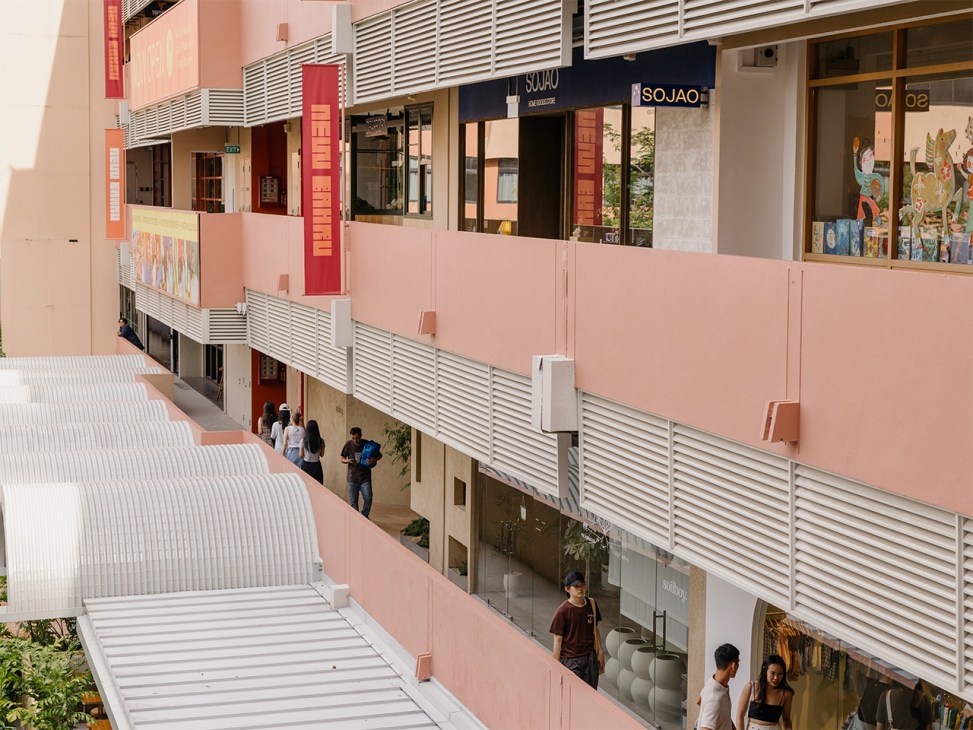
Global names matter for homegrown tenants because, says Wee, they broaden who walks through the door. “Someone who comes for Beams will leave having discovered three or four local brands. That kind of cross-pollination is exactly what the cluster is designed to do.”
Many businesses here arrived with little or no physical presence: some are online brands making the leap to bricks and mortar, while others have first-time founders still finding their footing. For the ambitious and independent, New Bahru offers below market rents and longer leases than what’s typical. “These things buy a young brand the room to breathe, rather than spend every day fighting to make next month,” says Wee.
Lo & Behold’s networks, marketing and programming muscle, grown over two decades, also come with the lease. “A founder shouldn’t have to figure all of that out alone,” says Wee. “We bring this to the table so they can stay focused on their craft.”
newbahru.com
Further reading:
Monocle’s complete city guide to Singapore
From Singapore to Tokyo, here’s what clean cities get right

In Singapore, the cleaning never stops. Between all the sweeping, rubbish clearing, hose downs, grass cutting, tree pruning, repair work, renovation and repainting, maintenance feels relentless. It’s sometimes performative: the lift gleams most brightly when an MP visits. But the result is a city that’s enviably spotless.
The unpleasant state of the country’s public toilets, however, remains a persistent issue. Government taskforces and a restroom association are working to fix the problem, aided by etiquette posters, star-ratings systems, smile-or-frown feedback panels, deep-cleaning grants and penalties for offending premises. Enforcement extends to inside the cubicle: on paper, if not in practice, there’s a fine for forgetting to flush.
In the war on rubbish and poor hygiene, Singapore might be closer to victory than most other metropolises. Paris has been fighting its own public-toilet battles for far longer. A pipi sauvage (wild peeing) is a local habit that’s as old as the city; to address it, the French capital has deployed uritrottoirs, street urinals that resemble flowerpots. And to deal with dog mess, it sent in Motocrottes (literally “Crudmobiles”): a now-retired scooter fleet that vacuumed pavements. Despite such efforts, the Métro hasn’t shaken its historic reek and pooch-related pavement hazards persist.
Across the Channel, fly tipping has become brazen: London recorded 480,000 incidents from 2024 to 2025. The city is combatting this with drones, name-and-shame campaigns and fines but, according to the Local Government Association, the penalties don’t match the severity of offences. Tony Travers, the associate dean of the London School of Economics’ School of Public Policy, has a word for where this can lead if it continues unchecked: “grotification”. The term, intended to contrast with “gentrification”, describes the decline of streets and neighbourhoods into squalor.
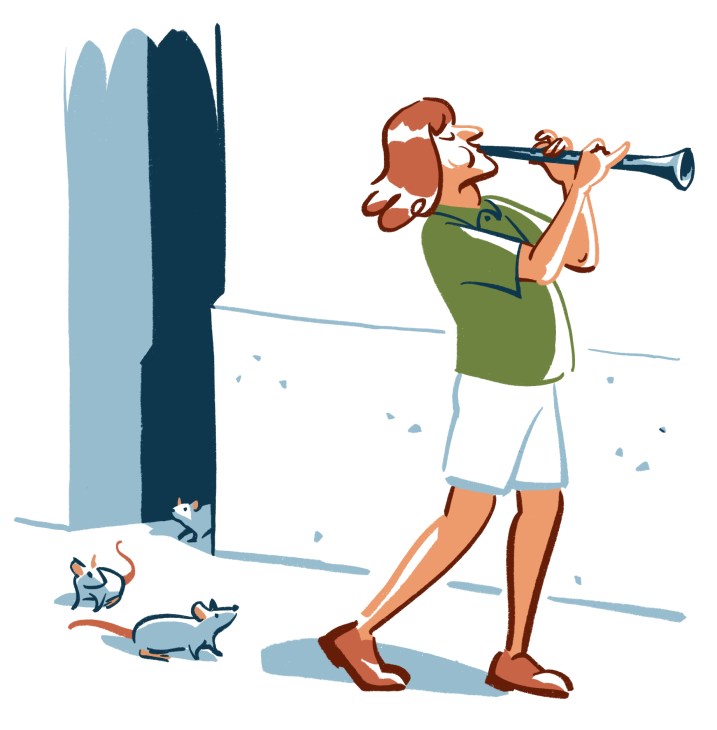
By the start of this decade, New York had lived with rubbish and rats for so long that these had stopped being seen as problems and become accepted as facts of life. In 2023 the then mayor, Eric Adams, declared cleaning up a priority and appointed a “rat tsar”, a (human) director of rodent mitigation. He followed this with his “Get Stuff Done” campaign; its centrepiece was a “Trash Revolution”, in which sealed bins replaced loose rubbish bags and surveillance cameras were deployed to catch illegal dumpers. The pavements became passable again and the rodent population declined.
There has been plenty of improvement but the job remains unfinished. The rat tsar has left office and the work of getting stuff done is now on the to-do-list of the current mayor, Zohran Mamdani. “In the wealthiest city in the wealthiest nation in the history of the world, no New Yorker should have their sidewalks covered in garbage,” he has said. Let’s see what happens.
If even the world’s richest and most cleaning-obsessed cities still struggle to stay free from grime and litter, what hope is there for the rest? Kigali is an interesting case study. Today it is considered Africa’s greenest, safest and cleanest city. Significantly, Rwanda called on Singapore’s urban planning firm Surbana Jurong to draw up the strategy. But the city’s cleanliness isn’t just the achievement of politicians, planners and an army of sanitation workers. Every last Saturday of the month, the capital pauses for a mandatory community-service programme called Umuganda. Shops and roads close, and everyone – or, at least, enough people to make a difference – rolls up their sleeves. Critics see it as authoritarian but Kigali’s transformation is hard to dismiss.
Then there’s Japan, which takes an enlightened, educational approach, rather than resorting to fines, public shaming or decrees. Its people have internalised the ideal of cleanliness to such an extent that it has become cultural. Children take responsibility for looking after their classrooms. Fans pick up rubbish when leaving even the rowdiest baseball game. Volunteers descend upon Shibuya in central Tokyo on weekend mornings to clear what the night has left behind. People’s upbringing instils a sense of duty that keeps the whole country tidy.
Every city needs to educate its residents about how to maintain their neighbourhoods and give them the right conditions to do so. And it requires good infrastructure, such as bins that are regularly emptied. But most importantly, it must foster a sense that these things matter and inspire people to leave things a little better than they found them.
About the writer:
Yvonne Xu is a design and culture writer, and a regular Monocle contributor, based in Singapore. She is also the author of Shui and Mù, the first two books in a five-part series on the five elements.