Issues
Coasting it: Beer-mat designs that can build your brand
Summer in the city means enjoying more meals outdoors, so we set our correspondents a quick challenge over the past month: bring back the beer mats and coasters that catch their eye. At Monocle we’re sticklers for the way that a little canny design, a well-chosen hue or material might make the difference between creating something you see, savour and maybe even steal as a memento – and an item that blends into the background. Here are a few of our favourites.
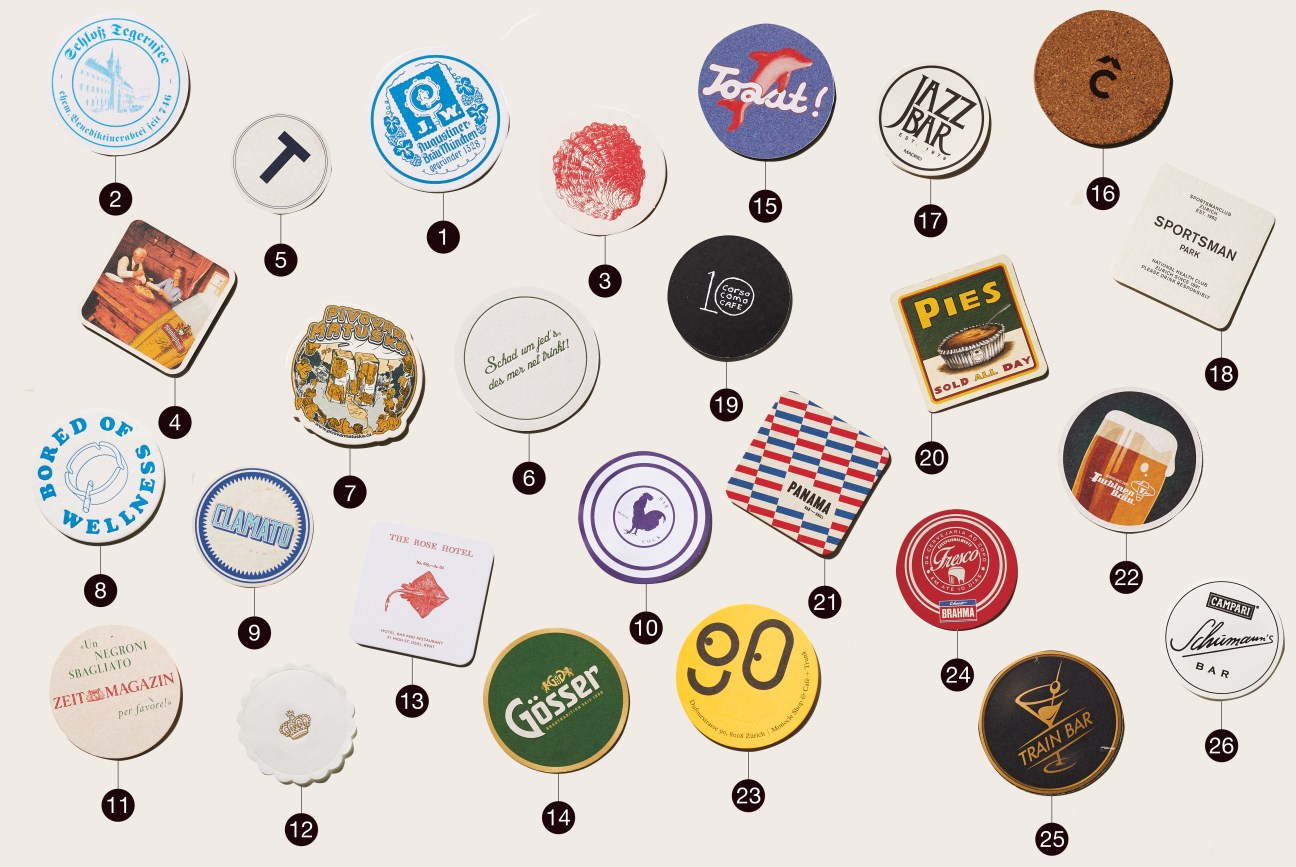
1.
Straight from the Augustiner-Bräustuben in Munich
2.
German gem from Herzoglich Bayerisches Brauhaus
3.
The Cow in London’s Notting Hill
4.
Reininghaus brewery, Graz
5.
Bar Termini, London’s Soho
6.
Privatbrauerei Ulrich Martin in Schonungen. Translation? “It’s a shame for anyone who doesn’t drink!”
7.
Czech mate: Matuška brewery
8.
A tongue-in-cheek number from UK illustrator Mr Bingo
9.
Paris seafood specialist Clamato
10.
Madrid’s Bar Cock is always worth crowing about
11.
Milanese mainstay Bar Basso
12.
Simplicity itself: a scalloped offering from Zürich’s Kronenhalle
13.
The Rose Hotel in Kent
14.
Göss has made beer in Styria, Austria, since 1860
15.
Roter Delfin, Zürich
16.
A corker from JNcQUOI Avenida in Lisbon
17.
Does exactly what it says on the mat, Madrid
18.
Zürich’s Sportsmanclub
19.
10 Corso Como Café Porta Garibaldi, Milan
20.
Mayfair’s Guinea Grill
21.
Panama in Zürich is a favourite with our editors when the mercury rises
22.
Still in Zürich with Turbinen Bräu
23.
This summery number is our own attempt from our café at 90 Dufourstrasse
24.
Companhia Cervejaria Brahma from Brazil
25.
Something from onboard the SBB bar
26.
Munich institution Schumann’s. Grab a spot in the garden at the back and enjoy
How Thailand’s backpacker island is remaining authentic in the spotlight
For better or for worse, Alex Garland’s 1996 novel The Beach (and its 2000 film adaptation) pinned Koh Samui firmly on the backpacker’s map of Southeast Asia. Nearly 30 years on, Thailand’s second-largest island is preparing for another moment in pop culture’s spotlight that symbolises how it has matured into a destination known not only for its white sandy beaches but also its increasingly upmarket bars and hotels.
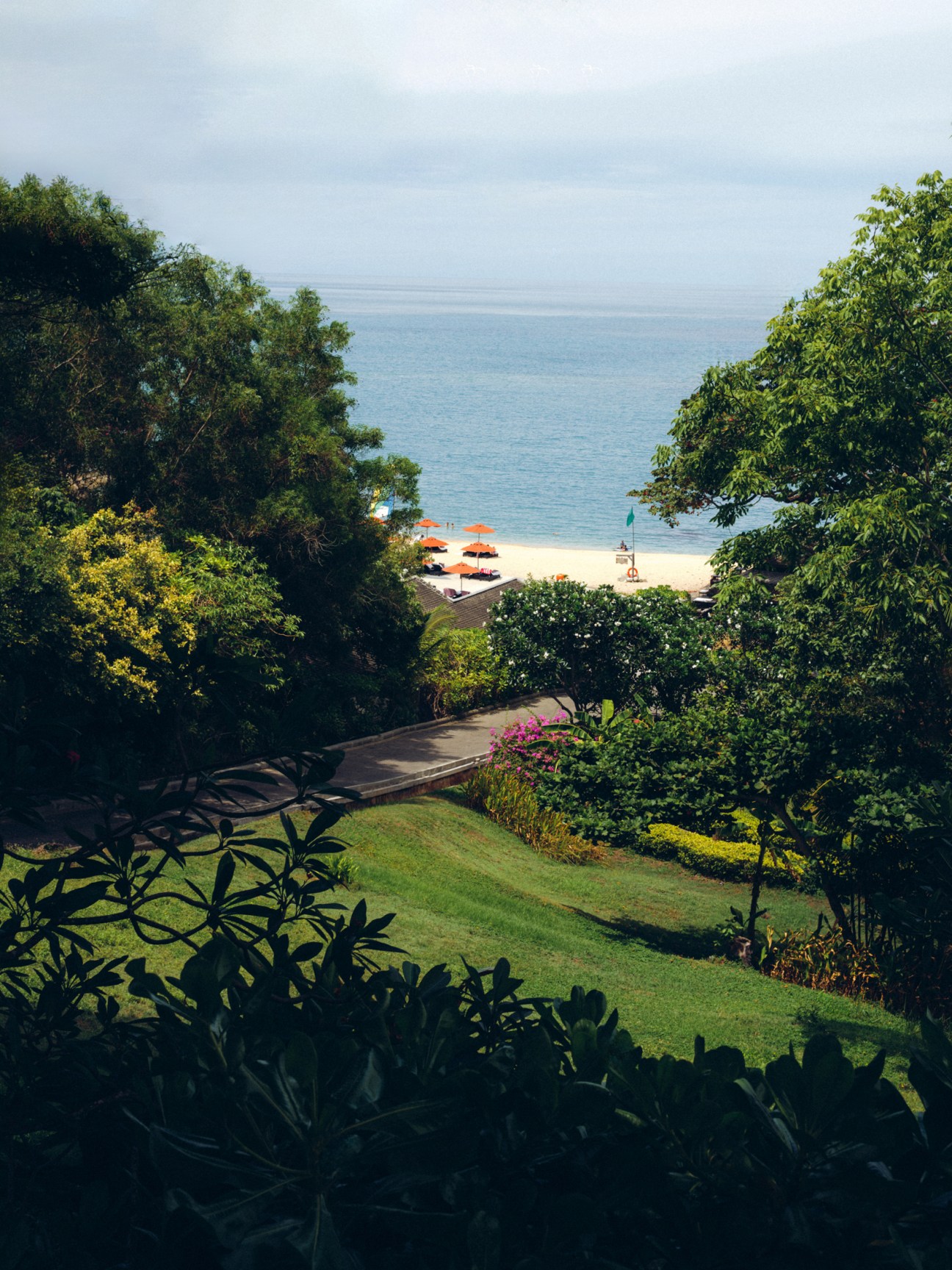
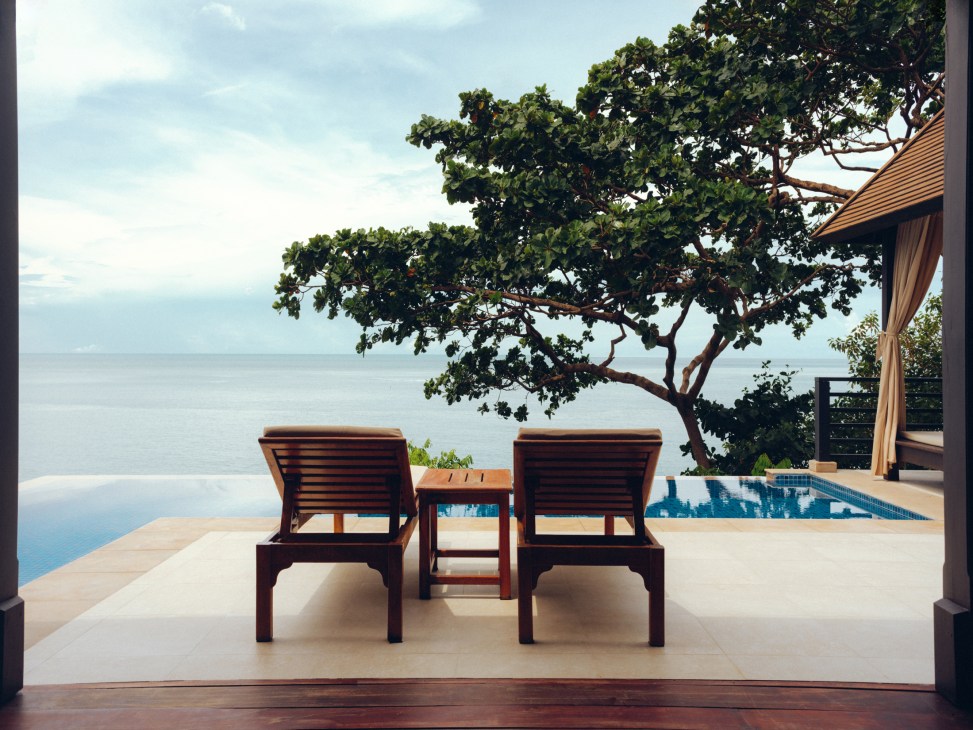
The main action in the third season of hit HBO series The White Lotus was filmed earlier this year at the Four Seasons Resort Koh Samui. The fictional hotel guests who we see on-screen hint at the better-heeled travellers who now occupy the island’s smarter spots along the coastline. Even backpacker haven Chaweng Beach has transformed into a more appealing proposition with the arrival of upmarket hotel brands such as Sala and the newly opened Marasca.
Driving around the entire island takes about one hour, along a 55km main road. The east coast around Chaweng Beach is more developed than the west but it’s still hard to spot a building rising above four storeys (there’s also a 12-metre height restriction on structures close to the beach). “Samui has retained its tropical-island feel,” says Englishman Mark Harrison, hotel manager at Garrya Tongsai Bay, Koh Samui’s first luxury resort. Harrison has worked at Tongsai Bay for more than 20 years and, in that time, he saw the transformation of Thailand’s largest island, Phuket.
The country’s central government wants to turbocharge Koh Samui’s economy in a similar way. Headlines about cruise terminals and land bridges to the mainland are, however, nothing new. Extending the airport runway to allow larger planes to land is the most likely infrastructure project but even that proposal has yet to take off. Bangkok Airways owns Samui International Airport and operates almost every flight to and from the island. A small fleet of 144-seater Airbus A319s flies on the only direct international routes to Hong Kong and Singapore.
Monocle arrives from Bangkok on an ATR 72-600 turboprop with a fun tropical livery. Ticket prices are relatively high by Thai standards but residents get special rates and the hospitality industry is surprisingly sanguine about Bangkok Airways’ near-monopoly. At a time when tropical islands from Phuket to Bali are struggling with overtourism, Bangkok Airways could be Koh Samui’s best defence; a filter against runaway success that might upset the delicate balance that tourism here is striking.
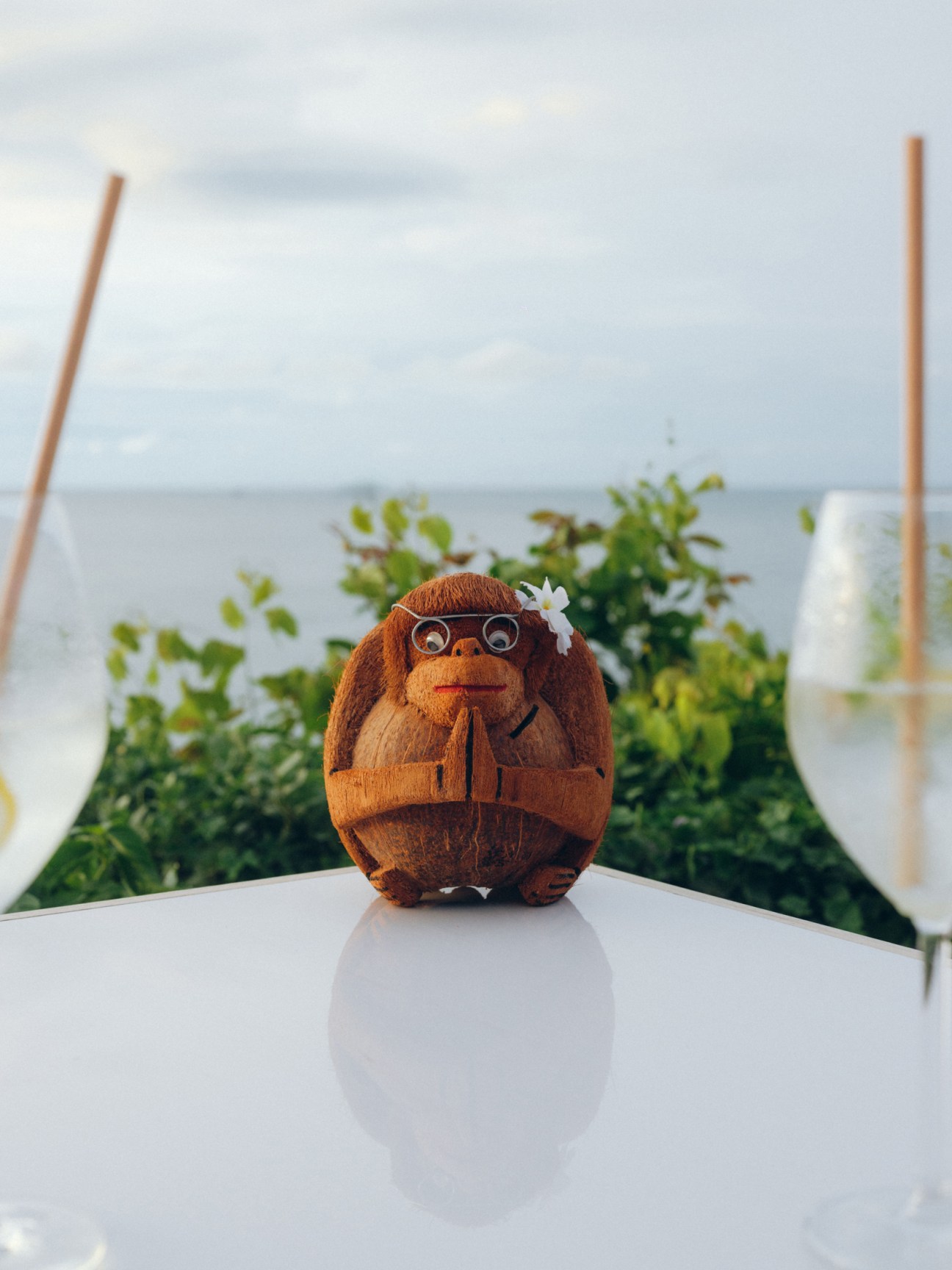
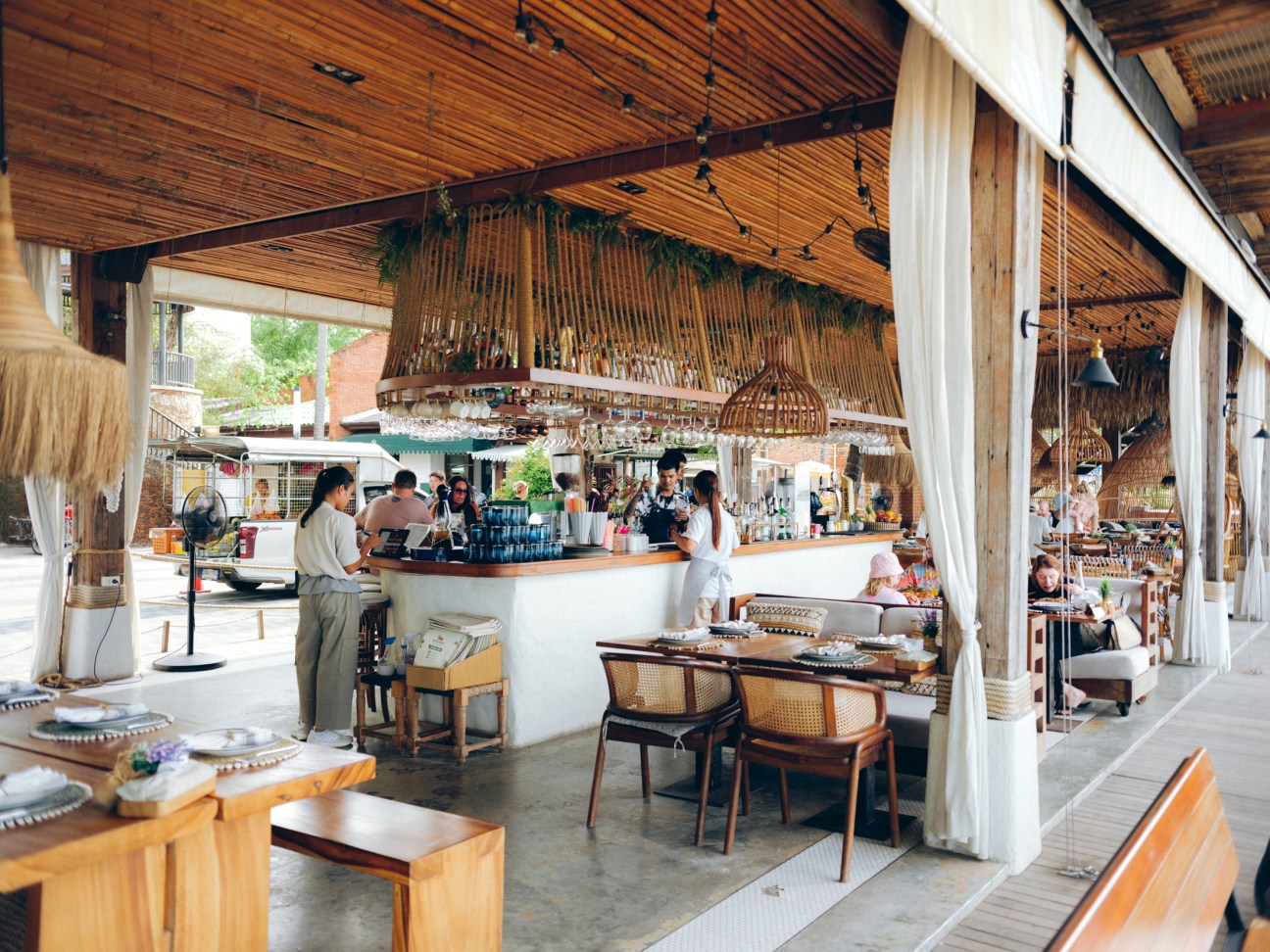
Beach bar Coco Tam’s offers a breezy introduction to Koh Samui’s ever-evolving and increasingly sophisticated hospitality industry. Founder Tam Chotechurangkool started out in the northern beach town of Bophut with an ice-cream stall and two beanbags before graduating to cocktails and adding a coffee shop and restaurant. A new bar will be ready for high season in July and August. “I really want to expand,” Chotechurangkool tells Monocle as we sip fresh juice from young coconuts and gaze out at the Gulf of Thailand. Conscious of the competition, the 40-year-old Bangkok native shares his designs for a Bali-style beach club, which was put on hold by the coronavirus pandemic. “Samui needs another good beach club,” he says.
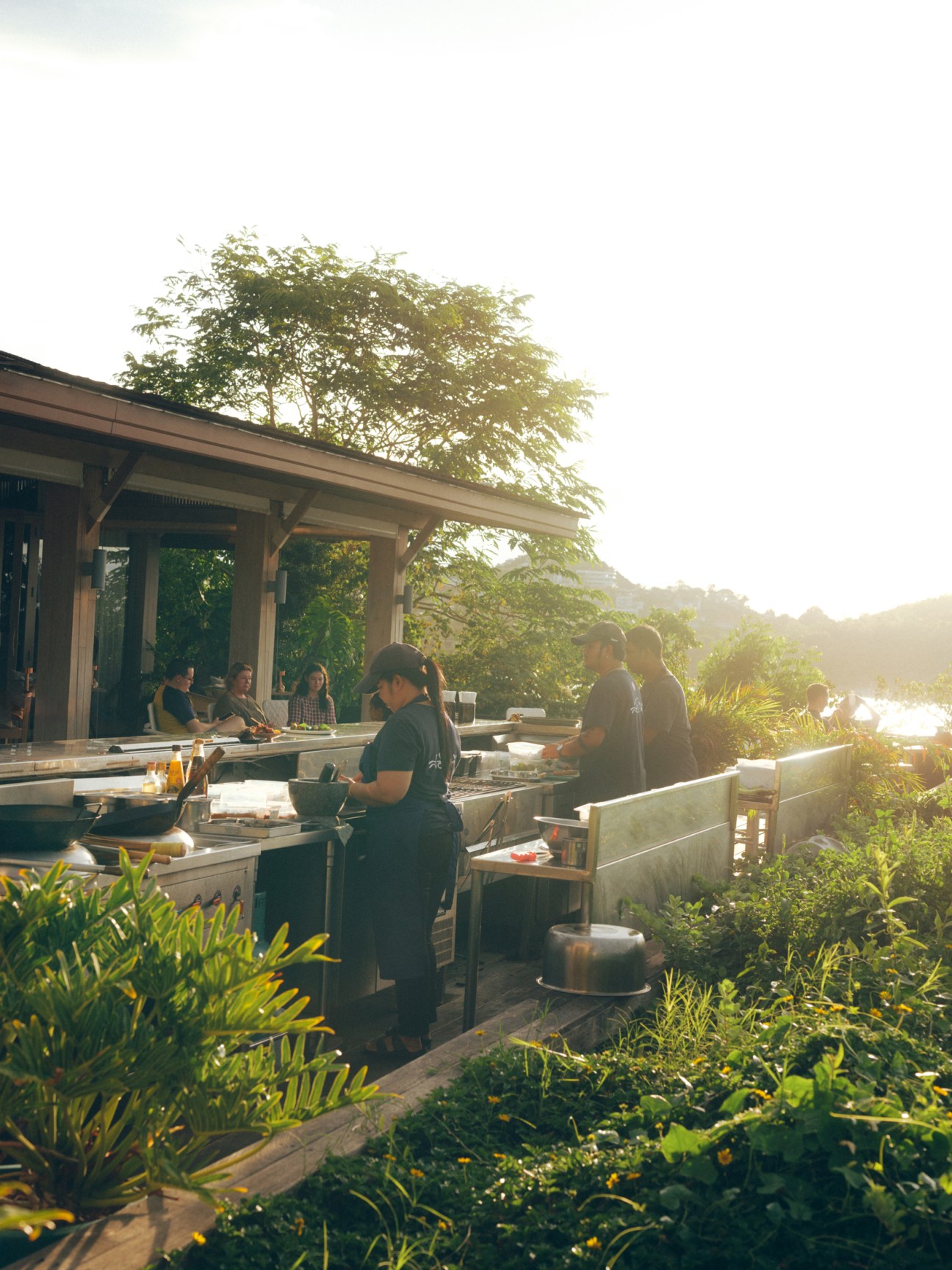
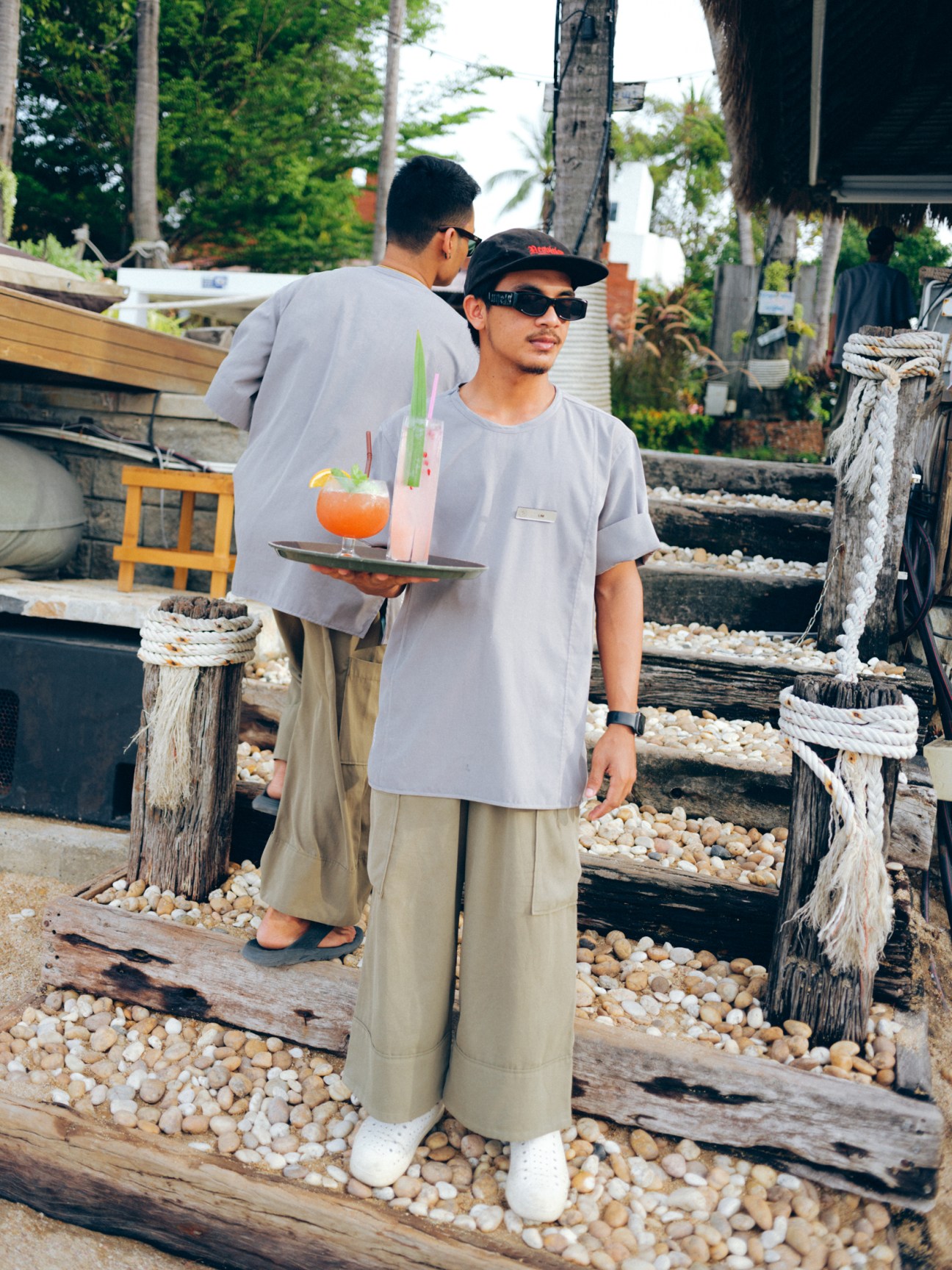
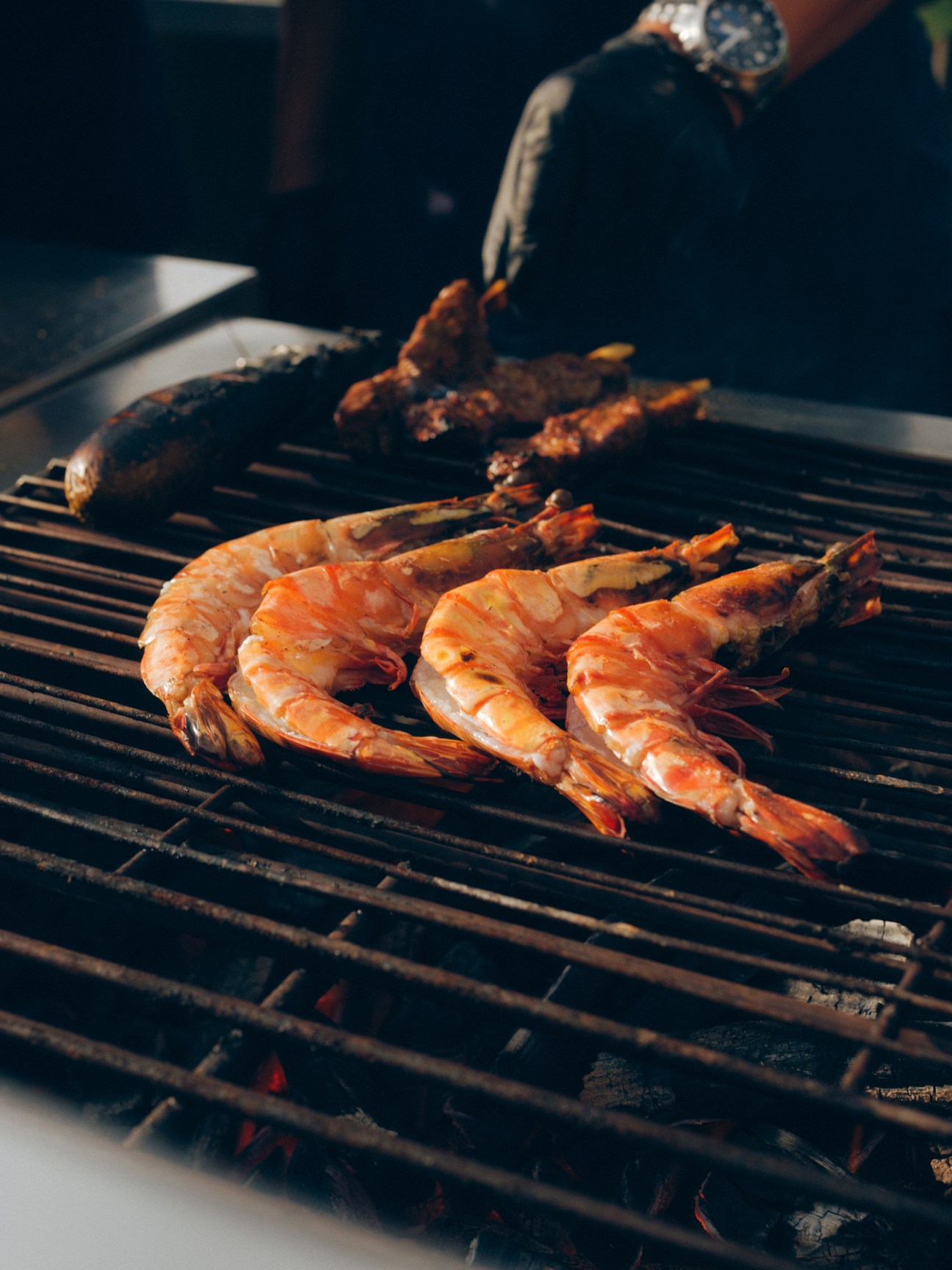
Coco Tam’s is among a small but growing number of bars and restaurants tempting visitors to venture outside of their secluded five-star villas and help the destination feel more connected and complete. Some of the best examples have been opened by newcomers. Australian Leandro Panza arrived in 2016 after quitting his job as executive chef at Sagra in Melbourne. “I was done with it,” says Panza at his seafood restaurant, Two Fishes, which has an ever-changing menu that reflects the catch of the day. Two Fishes recently moved into a purpose-built beachfront building a short drive from the original address in Fisherman’s Wharf. Version two has room for a pizza oven, a pastry station and a table for hand-rolling fresh pasta. There’s also a bar, where you can enjoy wine from the cellar.
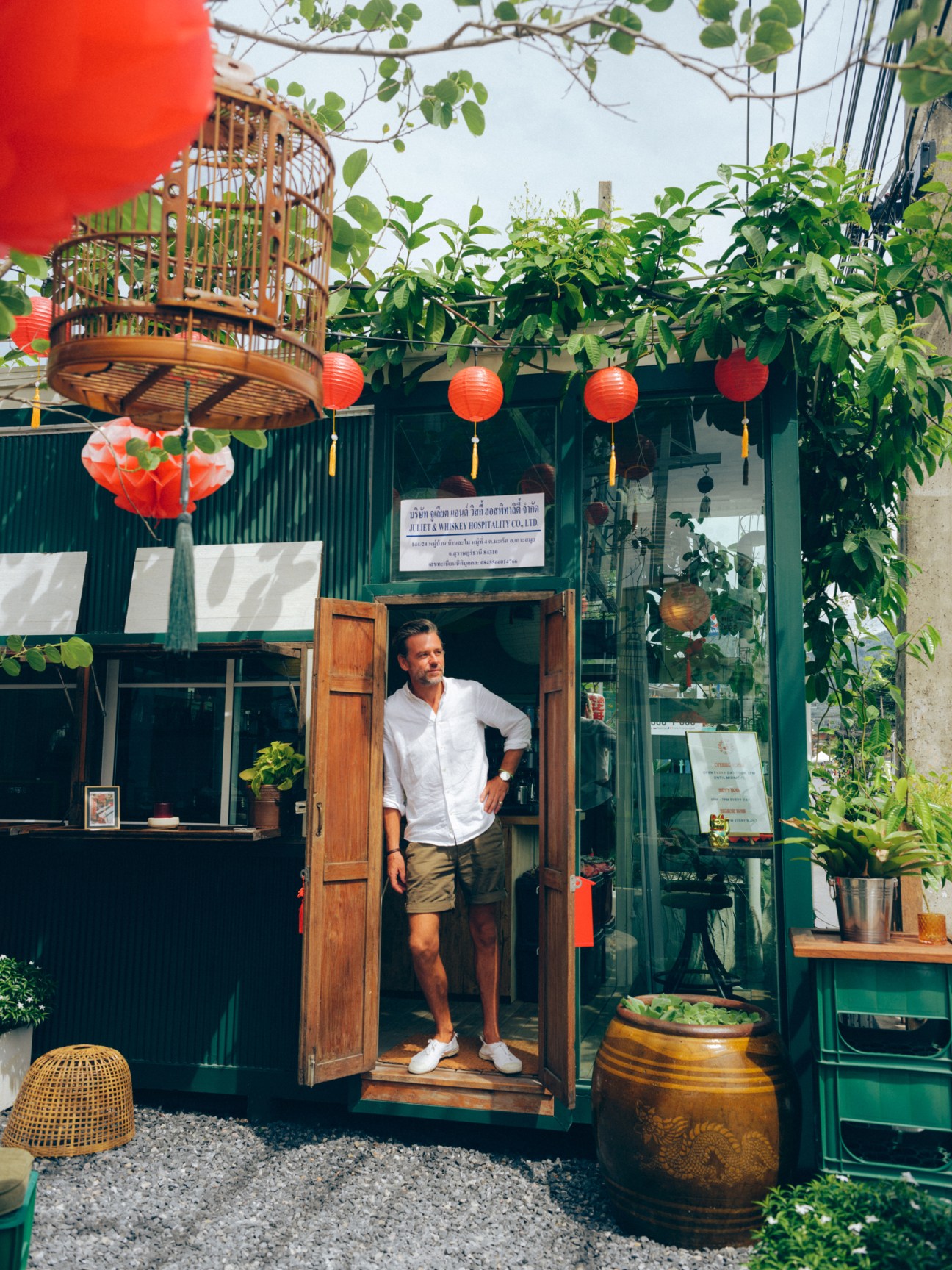
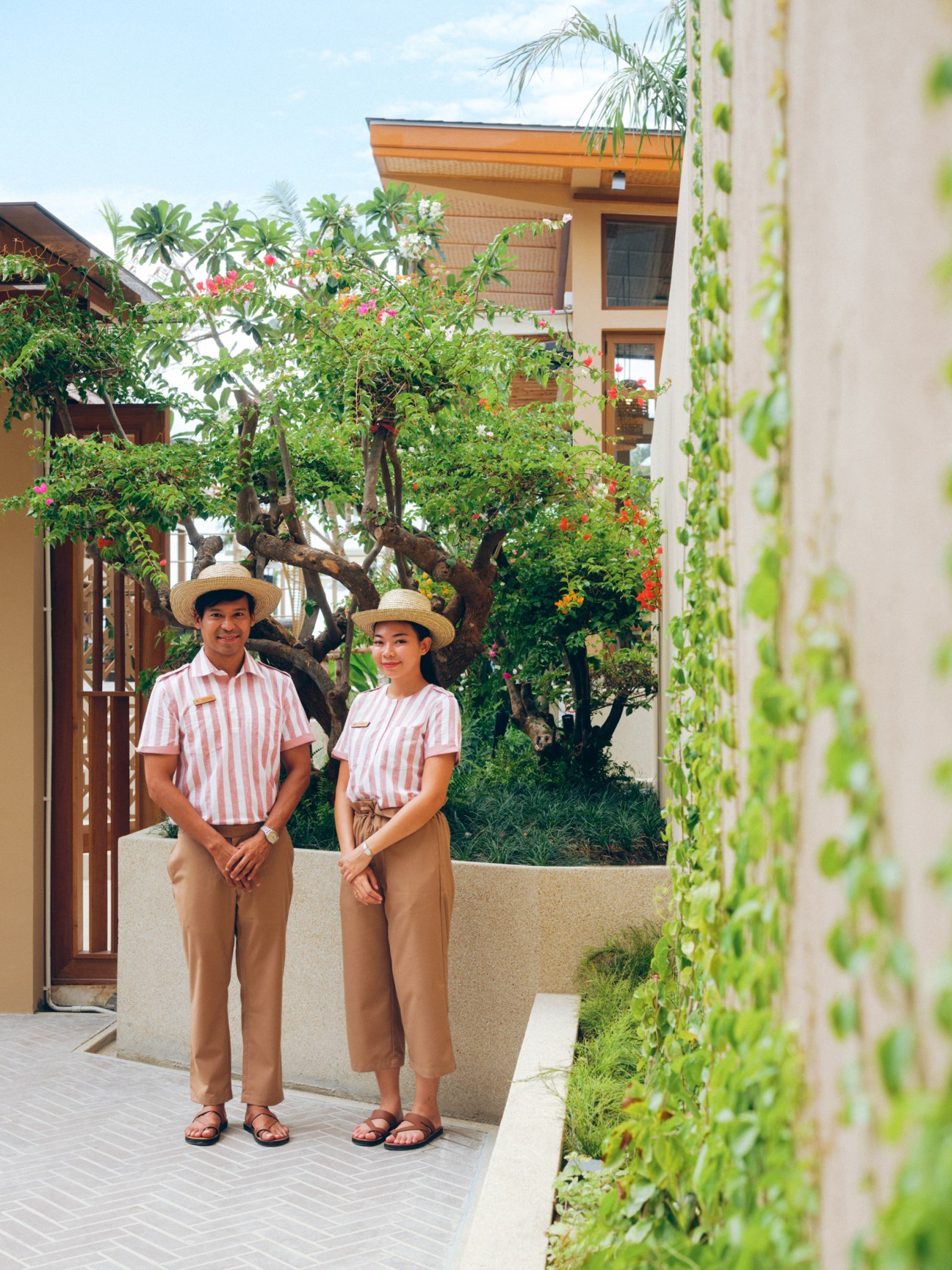
Panza’s passion for his adopted home is shared by fellow Antipodean William Norbert-Munns. The Kiwi entrepreneur moved his family to Koh Samui in 2021 when the strains of operating more than 20 bars and employing 90 staff in Cambodia’s capital, Phnom Penh, prompted his doctor to prescribe him some fresh air and a year of restorative walks along the beach. “More people have come to visit us here in the past three years than in our entire 16-year stay in Cambodia,” he says, looking relaxed in his island uniform of shorts and T-shirt. Unable to sit idle for long, the 46-year-old opened House of Suzy in February. The cocktail bar caters to the residents of Lamai, a neighbourhood that’s popular with French expats (as well as yoga schools and Thai boxing gyms). “Samui is discreet and not flashy,” says Norbert-Munns, who chose Lamai for its international schools and hospitals. During Monocle’s visit, he gives us a peek at his ideas for a family home across the street. He surely won’t be the last to fall for Koh Samui’s tropical-island charms and affordable lifestyle. The White Lotus, when it airs in 2025, is sure to bring a new generation of travellers to Koh Samui but these explorers are more likely to have a bit of money in their back pockets than a rolled-up copy of The Beach.
Getting here
Bangkok Airways was the only airline flying into Koh Samui until May, when Scoot started daily flights from Singapore. International arrivals tend to connect via Bangkok and the short onward leg from either of the Thai capital’s two airports takes just over an hour. Tickets are considered expensive by many Thais, who either swerve Koh Samui or fly to Surat Thani International Airport and transfer via ferry. November is stormy and best avoided.
Koh Samui address book
Stay
Garrya Tongsai Bay
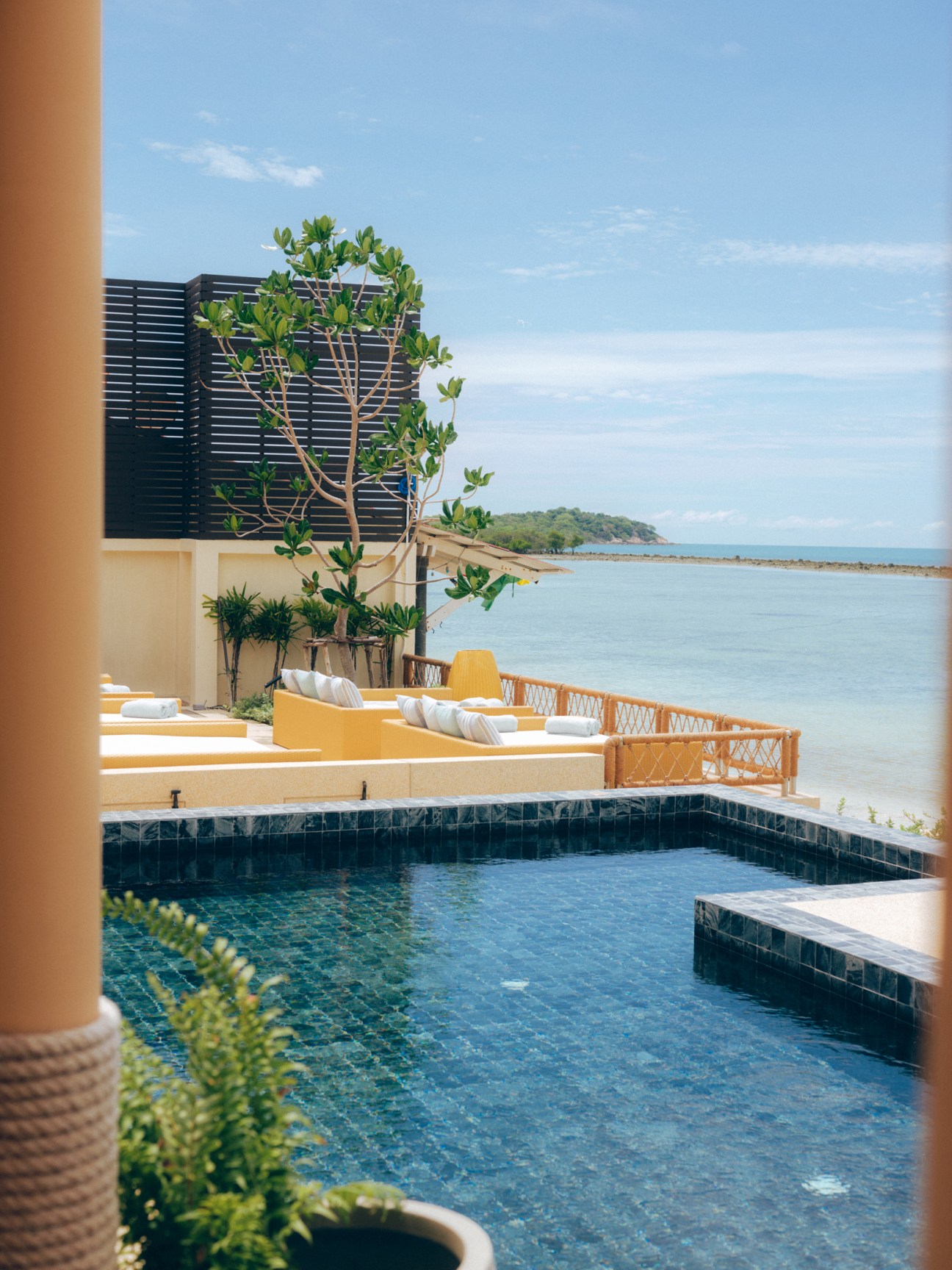
The island’s original five-star resort recently became Thailand’s first Garrya hotel, a boutique brand under the Banyan Group. Its private beach offers one of Koh Samui’s best swimming spots.
garrya.com
Kamalaya
Hotels with private villas are de rigueur on Koh Samui but this tranquil retreat on the southeast coast is particularly salubrious. It’s a sanctuary for flying in, flopping out and forgetting about city life.
kamalaya.com
Shop
Sisters of Siam
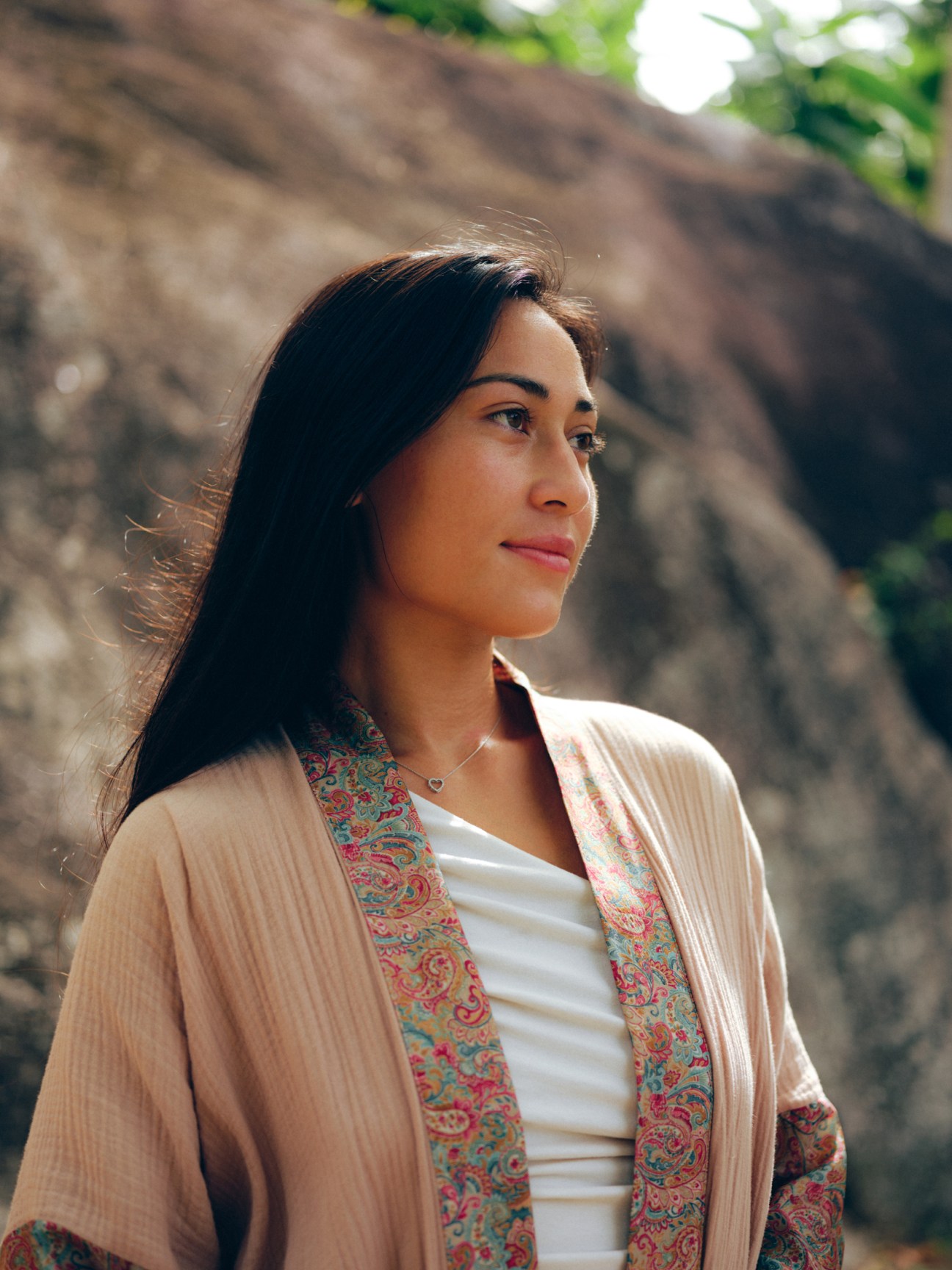
A Samui-born fashion brand specialising in beachwear, founded by Fairlyta Promtho. Select resorts across the island including the Conrad stock its popular, made-in-Thailand kimonos; you’ll also find them in Promtho’s multi-brand boutique in Lamai.
sistersofsiam.com
Samui Health Shop by Lamphu
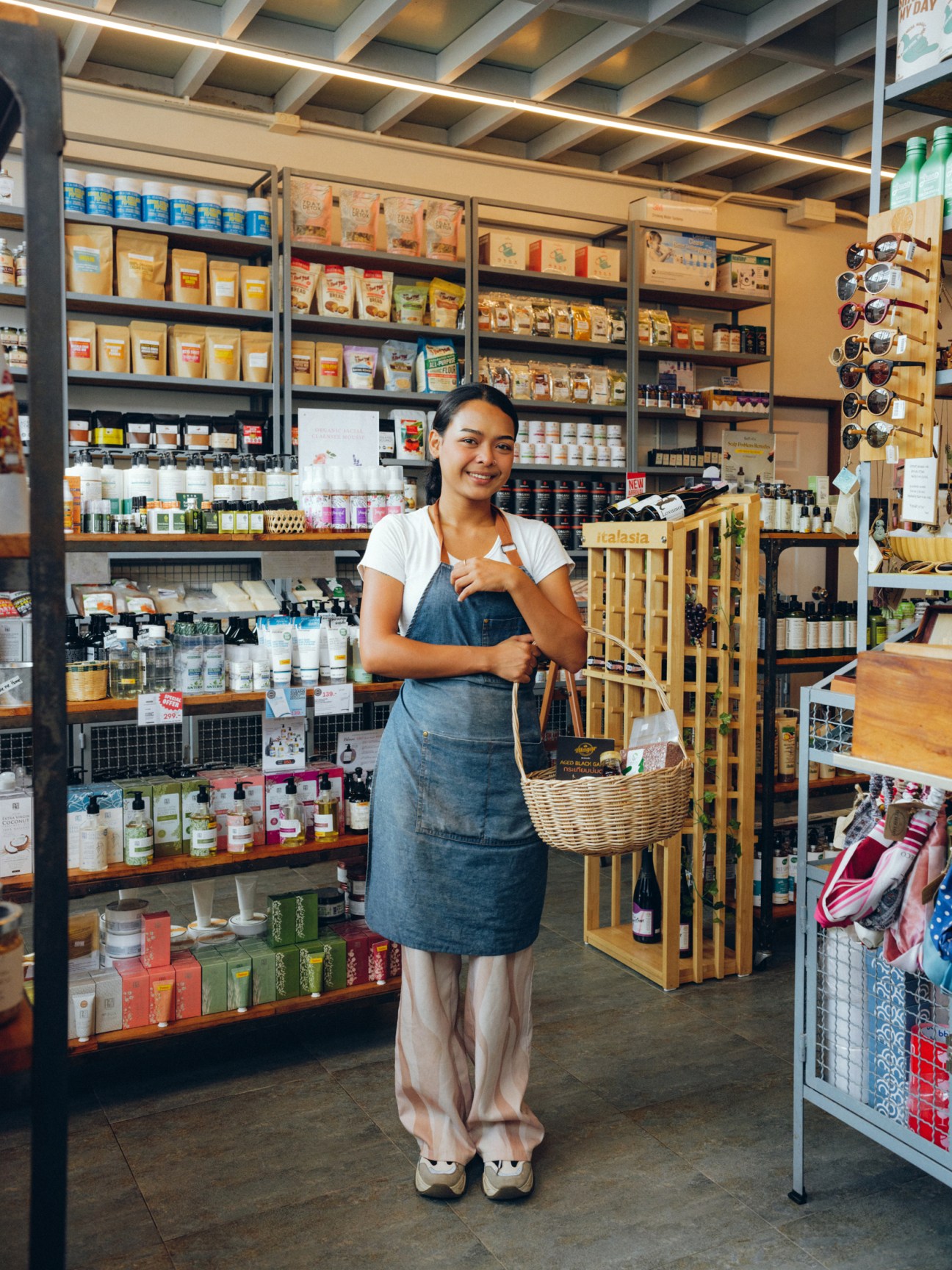
Across the road from Lamphu Kitchen (a go-to lunch spot among cross-legged yogis), this shop stocks a mix of health foods, bathroom essentials and sustainability-minded Thai products.
samuihealthshop.com
Asia Books
Shopping mall Central Festival Samui has a branch of Thailand’s main bookshop chain and there’s also one at Samui’s one-of-a-kind airport. Arrive earlier than you otherwise might to wander along the open-air shopping avenue.
asiabooks.com
Coffee
Local
A quiet spot on the water’s edge, Local offers good coffee with an even better view. Boys Organic Coffee in Taling Ngam offers a similar set-up on the opposite end of the island. Head to Flo near Chaweng Beach for a more familiar, in-town experience.
Bo Phut Beach
Eat
Long Dtai
Southern Thai flavours shine at this hotel restaurant, a collaboration between Aussie chef David Thompson and Cape Fahn, a luxury resort that occupies its own private island. Chefs grill skewers and seafood under the stars. The dinner settings are comfortable and casual.
longdtai.com
Vikasa Life Café
Residents and holidaymakers alike swear by the café at this conveniently placed yoga retreat. A healthy, plant-based menu is served with beautiful sea views.
vikasa.com
Something sweet
Lamai Coconut Ice Cream
Coconuts are everywhere on Koh Samui, including in the best ice cream. Lamai Coconut Ice Cream’s flagship café is behind the main street, while its white Suzuki van is usually parked at Lad Koh viewing point. Rossini’s dairy ice cream goes well with a dip at Crystal Beach.
175, 35 Maret, Koh Samui District, Surat Thani 84310
Read next: The Monocle City Guide to Bangkok, featuring the very best hotels, restaurants and retail spots in the Thai capital
Interview: How Edo López’s hospitality group grew from a single diner to a global phenomenon
Edo López is hooked on opening new ventures. “I get addicted to it, because it’s about creating something and each one is different,” he says, over the insistent rhythm of Japanese music playing in his sushi restaurant. “If it was just a case of ‘copy and paste’ then it would be so much easier.” It explains why López’s hospitality empire, the Edo Kobayashi Group, has expanded so rapidly. Starting with Rokai, a tiny Japanese diner in Mexico City in 2013, López now has ventures on three continents, comprising 30 Japanese-influenced restaurants and bars, mostly in Mexico City, plus a ryokan. He also has a hand in more hotspots in cities such as Madrid and Miami, as well as in Shibuya, in the heart of Tokyo. It’s no wonder some are saying that this restaurateur could be the next Nobu.
The name of his group, Kobayashi, comes from his mother’s side of the family. López’s grandparents fled to Tijuana from California in the 1940s at the height of the Second World War, a dark chapter in US history when citizens of Japanese origin came under the suspicion of the government and were put in internment camps. Imagining and opening restaurants, López tells Monocle, is his way of exploring his roots. We meet in Sushi Tatsugoro in the St Regis hotel in Mexico City, which has huge windows behind the counter with a view of the street’s purple-flowered jacaranda trees. Blowing and bright in the spring breeze, these trees were planted in the 1930s at the behest of Tatsugoro Matsumoto, a former gardener to the imperial palace in Tokyo. After emigrating to Mexico, he was hired by Pascual Ortiz Rubio, the president at the time, to give the capital’s main boulevard stateliness and colour.
Mexico City has no shortage of izakayas and Japanese canteens; some add local spice into their rolls and robata. López doesn’t dabble too much in fusion. Instead, he explains, he wanted to share a pure experience of the cuisine and the “simpleness” of dining done well in Japan. It is about being fastidious with ingredients, seasoning and chefs but never fussy.
Behind a sliding door in Mexico City, Le Tachinomi Desu is a standing bar where regulars prop themselves up over crisp wine or Omurice that’s indulgently heavy on the truffle oil. Upstairs is Tokyo Music Bar, where the bartenders mix drinks and spin vinyl. López’s recent opening in Madrid is Mateo Honten, which he describes as a cocktail bar-meets-tavern. His best-loved places capture the easy hospitality of a true Japanese public house; somewhere to drop in and stay late.
Though he started out as a chef, López doesn’t say much about the food. Instead, he steers the conversation to people and places that have inspired him, from the omakase masters he has met and, in some cases, brought onboard, to hunting down the best Japanese restaurant in Bogotá. Here he talks to Monocle about his journey so far and the future of the Edo Kobayashi Group.
You have had a hand in more than 30 restaurants. What inspired the first?
I’ve wanted to run restaurants all my life. With my first opening, Rokai, I wanted to bring purity to Japanese food in Mexico City. I began with just a bar, two tables and a small refrigerator for wine. That was it. At first it was hard but, luckily, the Japanese embassy was only two three blocks away; word spread.
How did you expand from there?
I opened a second place in Mexico City that served only ramen. The next eight restaurants came quickly: I did a joint venture in the States and then four restaurants followed over there. I have the new one in Madrid, and, with my business partners, I’ve done some hotels too.
Has building these restaurants been a way to explore your family roots?
Exactly. I was born in Tijuana and always felt lost in translation. I was a junior Olympic swimmer when I was young; I spent a lot of time around Americans but never felt American. Then, in Tijuana, I wasn’t Mexican, either. I began to work in music and that took me around the world. In every country, I would seek out underground Japanese restaurants or go to the homes of Japanese families. When I opened my own restaurant, I wanted bring that “real” taste here in Mexico. To get it right, I used to smuggle fish into Mexico, carrying it back from Los Angeles in bags. I’d smuggle in wasabi too.
Have you found any connection between Mexican and Japanese food?
I don’t know much about Mexican food. I know what a tortilla is but not how to make one. It’s one of the hardest kitchens in the world. That said, I fell in love with the seasonal approach to food in Japan and that’s found in Mexican cooking too: there’s a season for every ingredient.
Did your investors come in early?
My business partners didn’t come on until I had about 10 restaurants. I began with $50,000 of my own money. Whatever I saved, I put it back in. It was fun, you know, like playing cards – opening another one, another one, another one. At one point I said, “When am I going to fail?” And, of course, you need to fail once.
What advice would you give yourself starting out?
It’s a business but when you have some love for it, it’s going to mess you up. You have to be a little bit of an asshole to have that on you.
Is your ambition to be the next Nobu?
No. I started my first restaurant when I was 32 and now I’m 45. I was a bit too late to the prom for that.
Yet you’re running restaurants on four continents. How do you manage?
You can have a big army but you must have generals you can trust.
Is Mexico City a good place to test an idea?
You can see how many young chefs are working here now. They’re constantly building relationships outside Mexico. Then you have Tao [Group Hospitality], which has opened a Ling Ling here; Nobu is here. I’m proud when people from outside Mexico open here.
What’s next?
I have an exciting opportunity in Mexico City and some offers in Europe and the UAE. To do that, I would be looking back to my first restaurant.
Berluti goes for gold in tailoring for Team France at the 2024 Olympics
When LVMH announced its partnership with the Paris 2024 Olympic Games, it was expected that the houses under its vast portfolio would get involved and add their famous luxury branding to the event. The announcements about Louis Vuitton designing trunks to transport the medals and torches, and jeweller Maison Chaumet designing the medals themselves, came as little surprise. But the choice of Berluti, one of the quieter labels in the lvmh portfolio, to dress Team France during the Olympic and Paralympic opening ceremonies was less expected, even among the Berluti team. “We’re one of the smaller [LVMH] maisons,” says Vanessa Le Goff, Berluti’s collection director. “Dior and Louis Vuitton are usually the big stars, so dressing the French athletes for the Olympic and Paralympic opening ceremonies offers a huge opportunity for us to be more visible.”
For this reason, Le Goff and the members of the atelier she leads in Paris didn’t think twice about taking on the responsibility, despite the challenges it presented: creating more than 1,500 outfits using some 8,000 metres of eco-certified fabrics and catering to each athlete’s body shape to ensure a perfect fit. “We worked from sizes 3XS to 6XL and designed shoes ranging from [European] sizes 35 to 56, which is very new for us,” says Le Goff. “That’s why, from the beginning of the process, we met with the athletes to understand their needs.”


Many of these conversations would go on to inform the final design of the opening ceremony’s uniforms: elegant midnight-blue suits with collars featuring the colours of the French flag, remixed in the house’s trademark patina. Female athletes will wear a sleeveless version of the tuxedo jacket and choose between trousers or a silk wraparound skirt. The looks are finished with Berluti’s signature woven Shadow sneakers in a similar navy hue, or the flexible Lorenzo leather loafers. “From the very beginning of the process, we considered every detail – for instance, we chose a wrap skirt so that it can be altered easily and didn’t use any pleating because it’s uncomfortable for athletes in wheelchairs,” says Le Goff. “And the sleeve length is adjustable to make it easier for athletes. We’re experts in this field and can adjust quickly.”
Knowing that the athletes could be standing in the sun for more than eight hours during the opening ceremony, Le Goff and her atelier’s number-one priority was to ensure Team France’s comfort. It’s why they chose breathable cotton-silk and wool fabrics with added stretch, and why they will spend the days in the lead-up to each ceremony making alterations to fit all 1,500 suits on every athlete individually. “We had to produce many of the pieces before knowing who would make it to the ceremony,” she says. The impeccably fit finished garments are a testament to the craft know-how of Berluti, one of the few houses in Paris still offering bespoke services for men’s shoes at its Rue Marbeuf atelier, as well as tailoring services at its Rue des Sèvres atelier on the Left Bank. “We want to show the house’s exceptional savoir-faire in ready-to-wear but also shoes, which is where the journey started,” adds Le Goff.
That journey began back in 1895, when a young Alessandro Berluti moved from his native Italy to Paris to practise his trade as a shoemaker, starting with lace-up court shoes. His clients included Jean Cocteau, Marcello Mastroianni and Andy Warhol. In the past 15 years, under the leadership of Antoine Arnault (who now serves as chairman of Berluti while also performing a wider role within the LVMH group, with Jean-Marc Mansvelt taking over as ceo), the house began to offer a full look, including leather goods and ready-to-wear. Aside from the technical knowledge that went into constructing the garments, Le Goff also sought to ensure that the designs channelled the sense of elegance synonymous with French and, in particular, Parisian fashion – hence the focus on the deep Tricolore blue, tuxedo dressing and slim silhouettes typical of French-style suiting.


“You have to combine elegance and comfort, while still looking French,” says Le Goff. It’s this concept of “chic à la Française”, she adds, that has been missing from recent Team France uniforms. “The French team wasn’t dressed by a fashion house in the past. You would look at the Italians dressed by Armani and the US team dressed by Ralph Lauren, and the French team said that they didn’t feel they looked as good.” At first, the French athletes accustomed to living in sportswear couldn’t imagine themselves in a sharp suit. But a few fittings with Le Goff’s team were enough to change their mind. “They now feel proud to be dressed by Berluti and it affects their overall mindset.”
As part of the process, Berluti also consulted with the Paris 2024 Organising Committee and the French National Olympic and Paralympic Sports Committees, as well as stylist and former Vogue France editor-in-chief Carine Roitfeld. “It’s important to have an external point of view on the ceremony; it will be watched by billions of people,” says Le Goff. “Carine was a perfect match because she has a very French touch. We have to be proud to be French.” Le Goff hopes that, on the big day, the athletes feel so good in their new suits that they go on to “win a lot of gold medals for France”.
Berluti is coming out as a winner too. When the athletes of Team France walk along the Seine on 26 July for the Olympics’ opening ceremony – and on 28 August down the Champs-Élysées for that of the Paralympics – sporting fans tuning in from across the globe will become more familiar with the brand’s name. “It’s a very niche, very special house – almost like a club,” says Le Goff with a smile. “When you enter our world you fall in love because it isn’t about fashion, it’s about the expertise of the maison: the patinated shoes, the bright leathers that you can’t find anywhere else. It has audacity. We of course hope that now more people will discover this world and come and visit us.”
Coast to clothes: Fashion labels that tailor to an island lifestyle
1.
Mirèio
France
Margaux Varnavidou has spent more than a decade working for luxury groups such as LVMH and living in busy cities including New York and Paris. Her husband, Paul-Henri Bayart, meanwhile, pursued a career in finance. Both were operating at the same lightning-fast pace but, in 2020, they pressed pause. During the coronavirus lockdowns, they began spending more time in the Mediterranean, between Bayart’s native Provence and Cyprus, where Varnavidou’s maternal family is from.
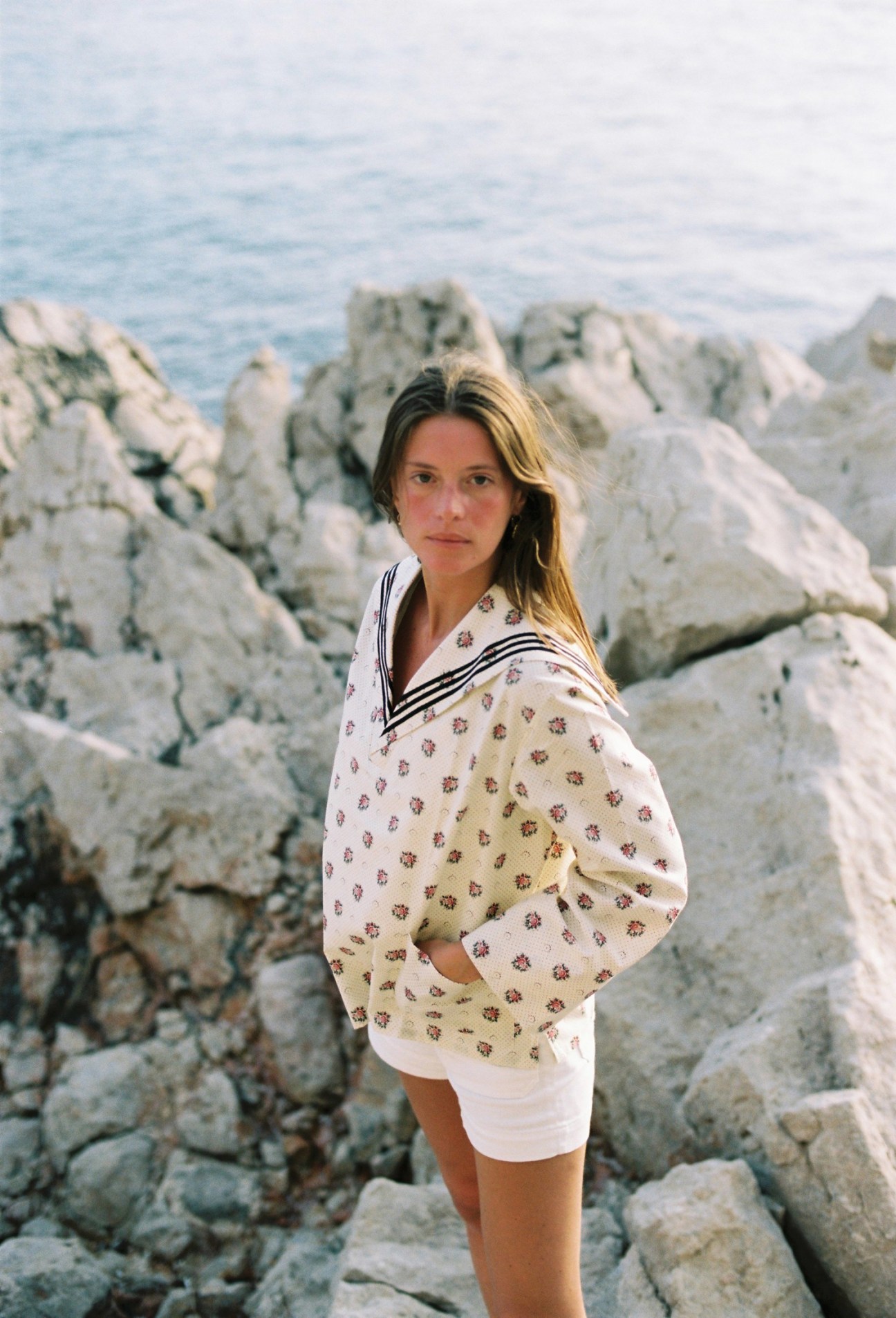
The sunshine, slower pace of life and proximity to the sea inspired the couple to get creative and embark on their first joint project, Mirèio – a fashion brand inspired by their mutual Mediterranean heritage and the region’s sunny, carefree spirit. “Despite our different backgrounds, we were both passionate about clothing first and the Mediterranean second,” says Varnavidou.
After nearly two years of researching, gathering inspiration from living by the sea and visiting flea markets, they debuted Mirèio with their now-signature Smock shirts. These laidback designs can be thrown over a swimsuit but also layered with a T-shirt for breezy island evenings. They’re made from a sturdy cotton fabric and feature charming Provençal prints, rendered more contemporary by their unisex, boxy silhouettes. “We love Provençal prints but everything in the market felt outdated – we wanted to rework these patterns into more modern, comfortable designs,” says Varnavidou. “The inspiration came from a traditional French sailor jacket that my husband’s grandmother used to have in her wardrobe. My husband used to wear a lot of [these jackets] too, so we created what we wanted to wear personally.” Some of the Smocks for women feature a playful, extra large sailor collar, while unisex styles feature a shorter, classic one.
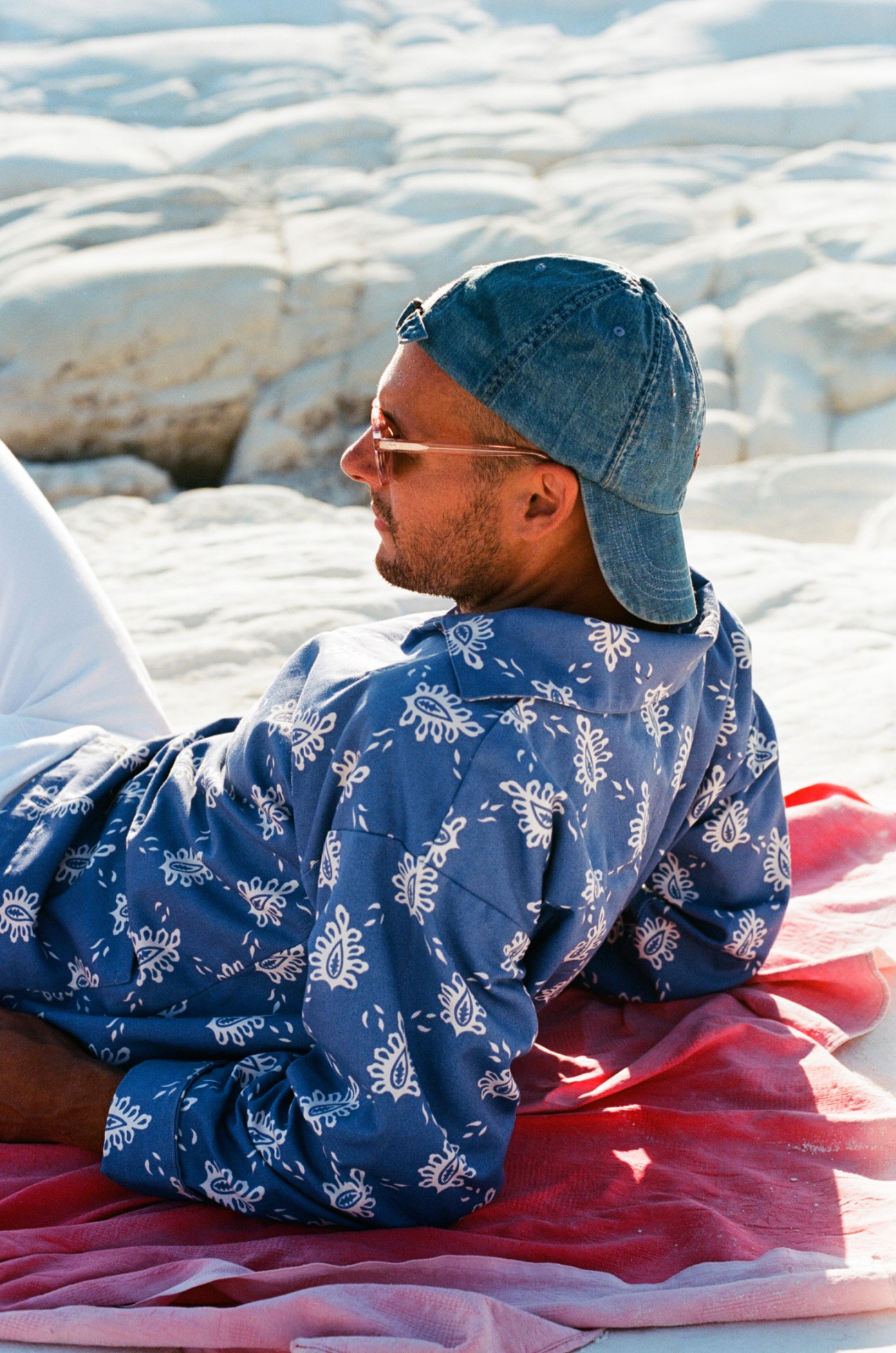
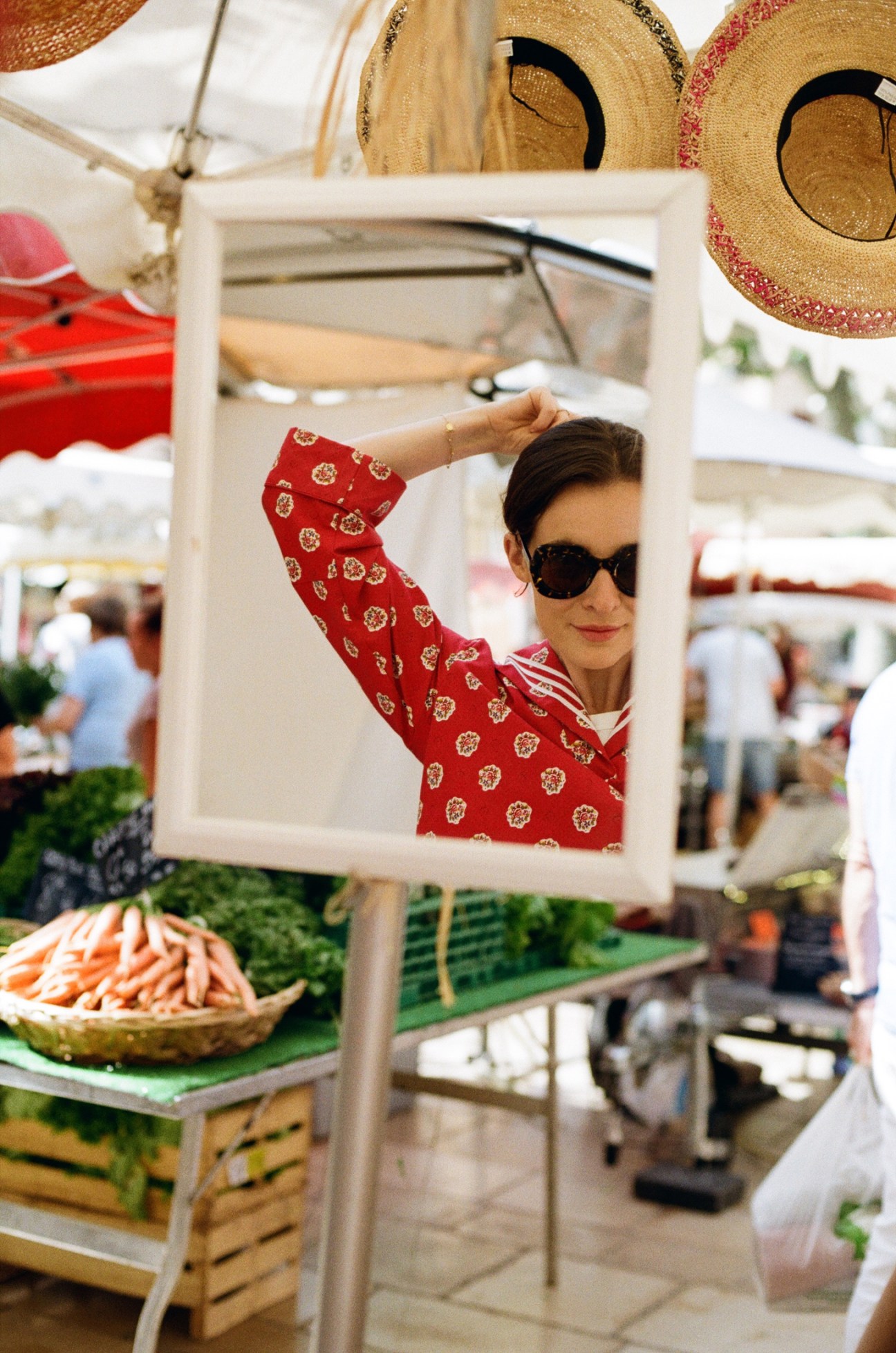
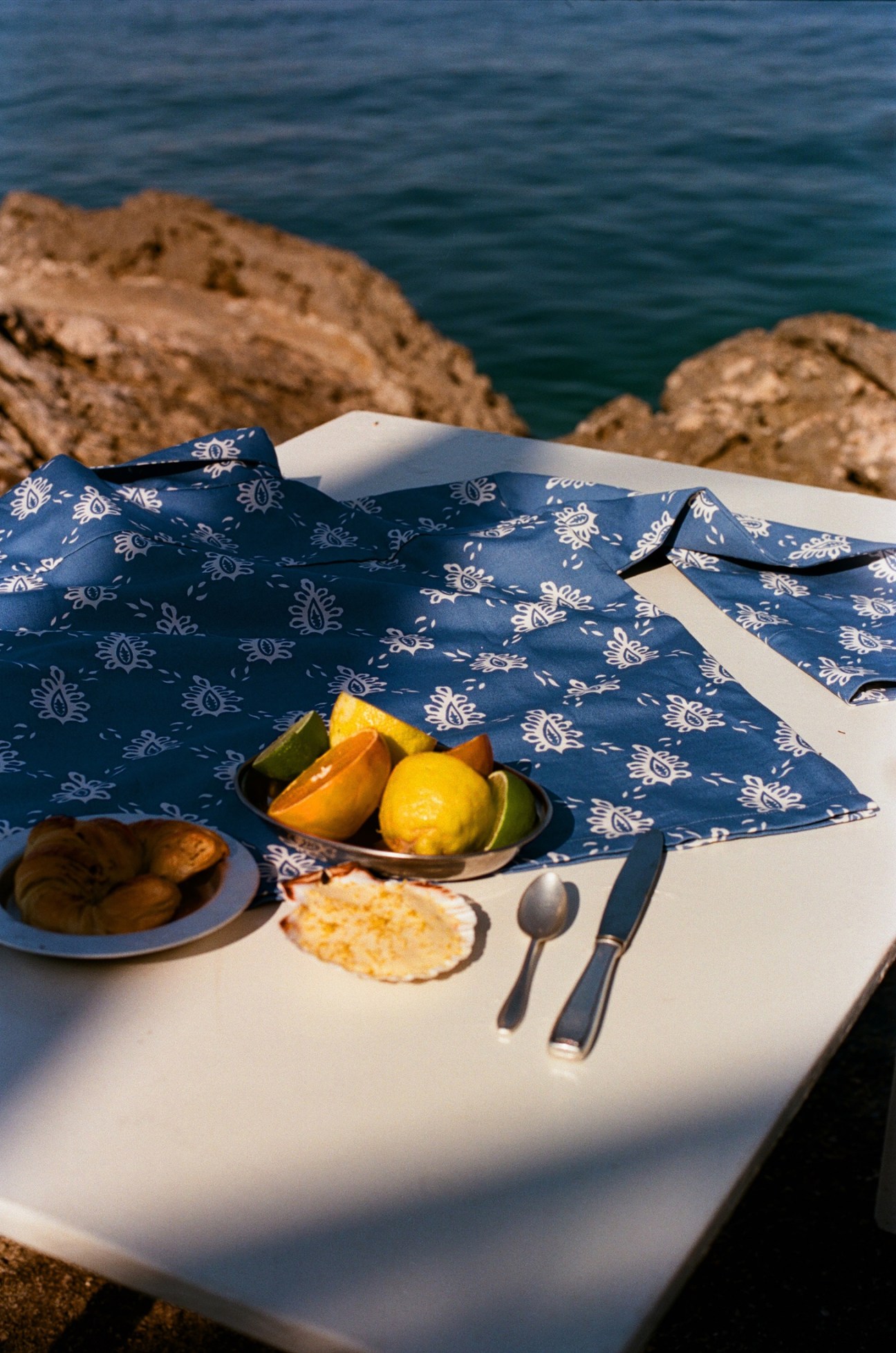
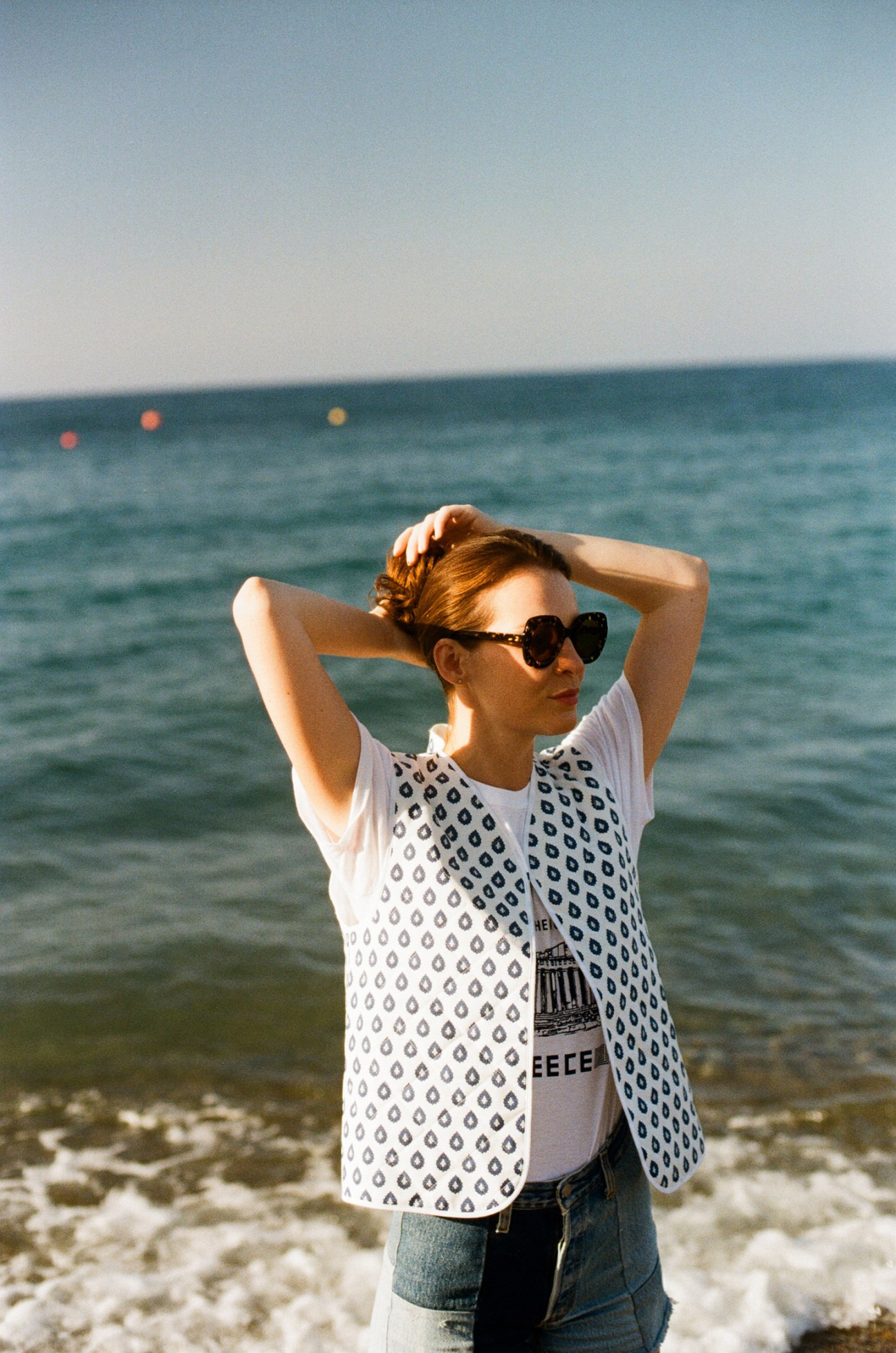
The south of France was the central reference point for the couple as they were dreaming up the concept for Mirèio, the Provençal form of the name Mireille. “That’s the name of my husband’s grandmother and the title of a famous Frédéric Mistral poem about two lovers coming together, which resonated with us,” says Varnavidou, reminiscing of recent roadtrips that took them from Arles to St Tropez and Marseille. The fabrics for the collections are sourced from a manufacturer in Saint-Étienne-du-Grès that has been operating since the early 19th century and specialises in traditional printed textiles.
“The mission is to revive and celebrate the spirit of the Mediterranean but also its unique savoir-faire. Even if it’s expensive to produce here, we have to stay true to our ethos.”
Varnavidou’s Cypriot heritage – her family is from the town of Famagusta and now lives in Larnaca – and time spent on the island also had a role to play when it came to shaping the label. After all, there’s a shared language across the region, centred on joy, generosity and openness. “We are true children of the Mediterranean and love the entire region from east to west,” says Varnavidou. “The lifestyle touches every part of our lives, from the music we like to our children’s names. It’s not just a source of inspiration for the brand.”
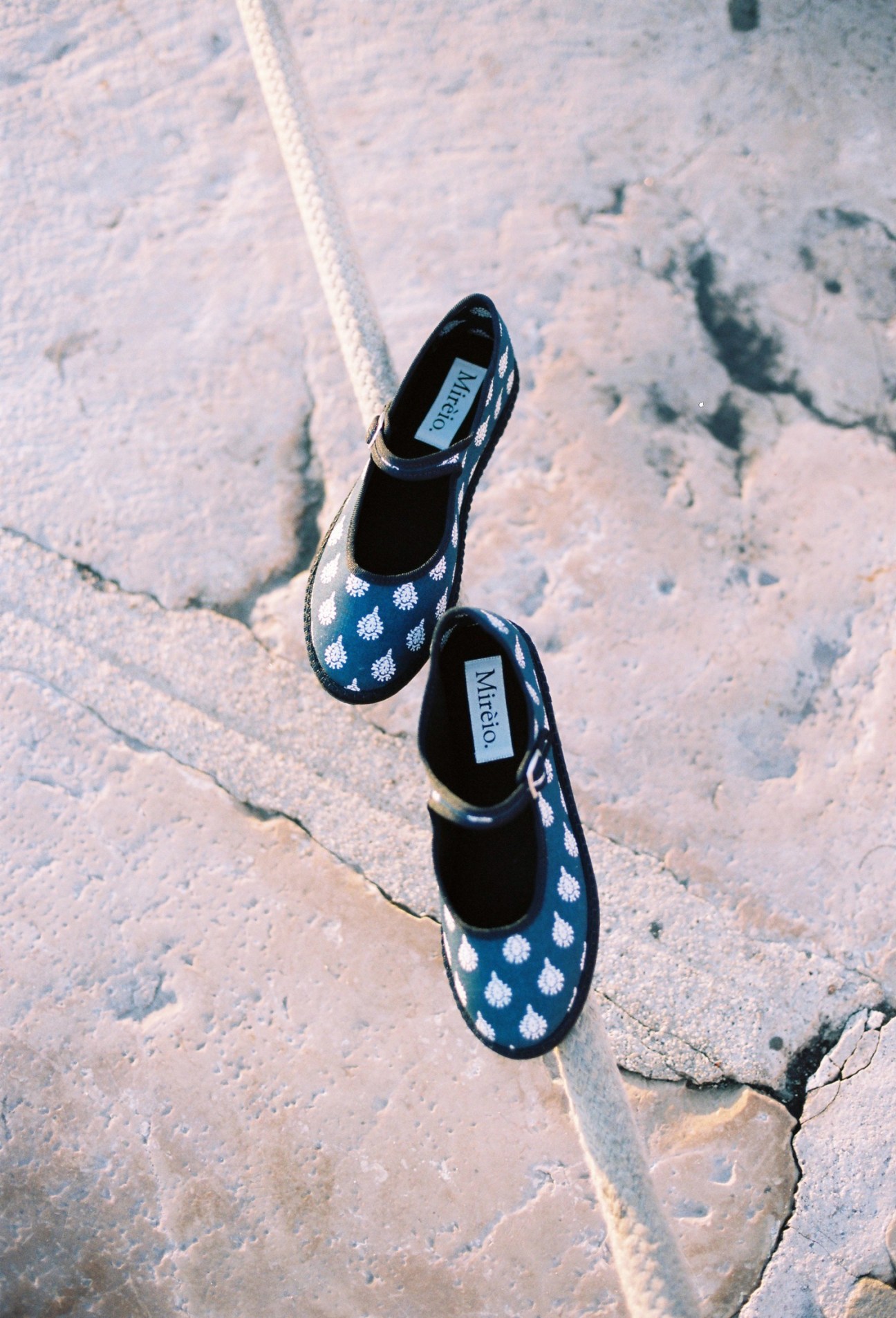
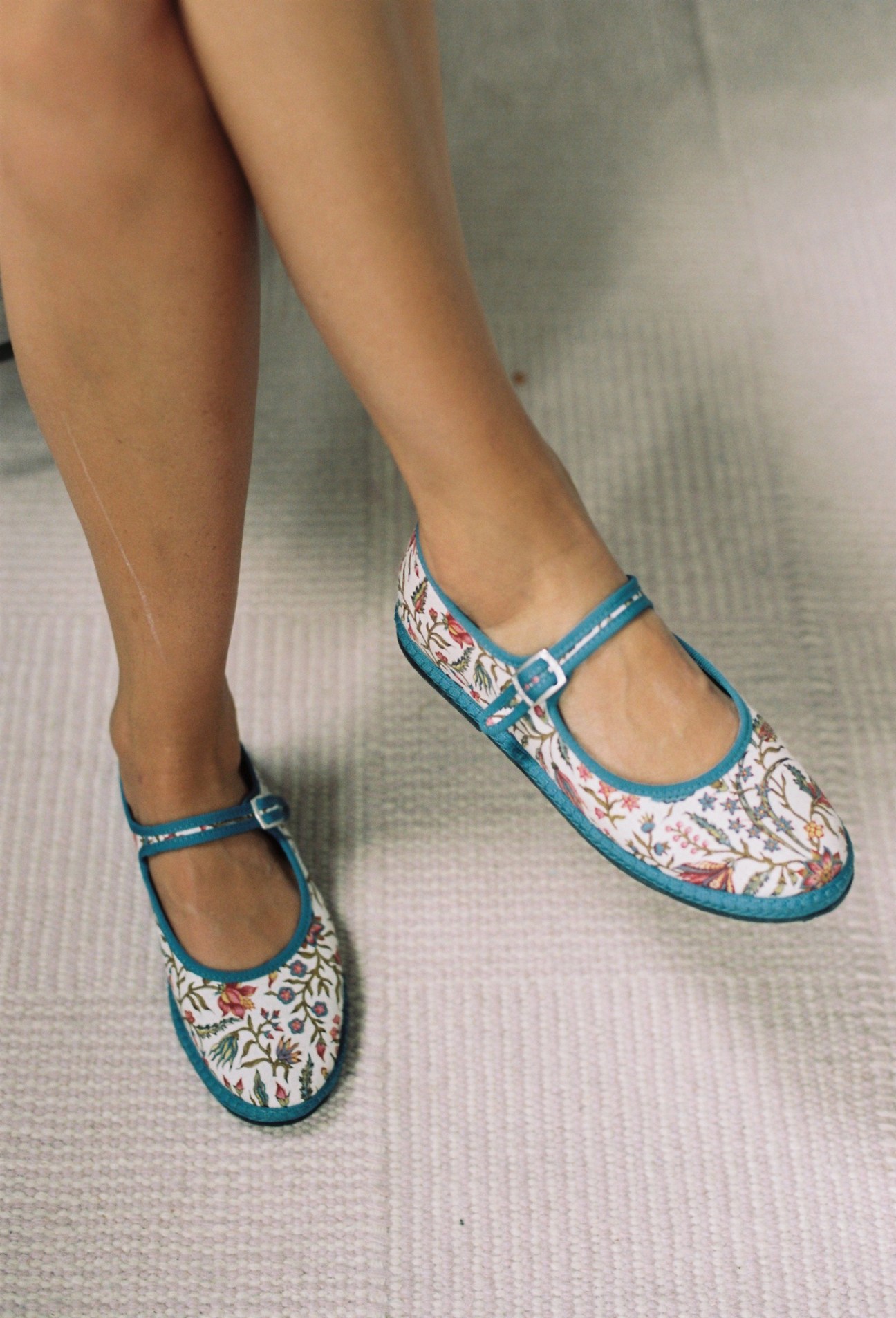
It’s why last year, the couple also chose to open Taverna, a Cypriot restaurant, in Paris’s 11th arrondissement, serving all the dishes that Varnavidou enjoys when spending summers on the island. “The two projects feed each other,” she adds. “Taverna has a stronger Cypriot identity but we wear the Smocks in the restaurant and often use Mirèio as inspiration for the decor; it’s a full Mediterranean ecosystem.” Just like the couple gave the traditional sailor jackets a modern twist, they have also been working to add their own take on traditional, almost outdated, dishes that you would only be able to taste in a Cypriot grandmother’s kitchen, such as tava baked lamb.
Delicious island food, year-round sunshine and traditional cotton textiles have all helped to bring Mirèio to life and attract the interest of multi-brand boutiques, including Les Galeries Tropeziennes in St Tropez, Joyeuserie in Hong Kong and Bon in Tucson, Arizona, which now stock the label. But perhaps the most important inspiration the couple took away from living across the Mediterranean is the region’s flair for slow living – and working. They make a point not to design big seasonal collections and prefer to gradually introduce new pieces, or “surprises”, as they call them, every few months – the latest being an elegant sleeveless vest. “This isn’t a Parisian brand,” says Varnavidou, who is preparing trips to St Tropez, Cyprus and the Greek islands this summer. “We want to work at a slower pace – it’s a way to turn every piece into a signature. We always return to Cyprus as a family but also make sure that we explore other parts of the region to keep decoding the local lifestyle and inspiring our designs.”
mireio-paris.com
2.
Cecilia Sörensen
Mallorca
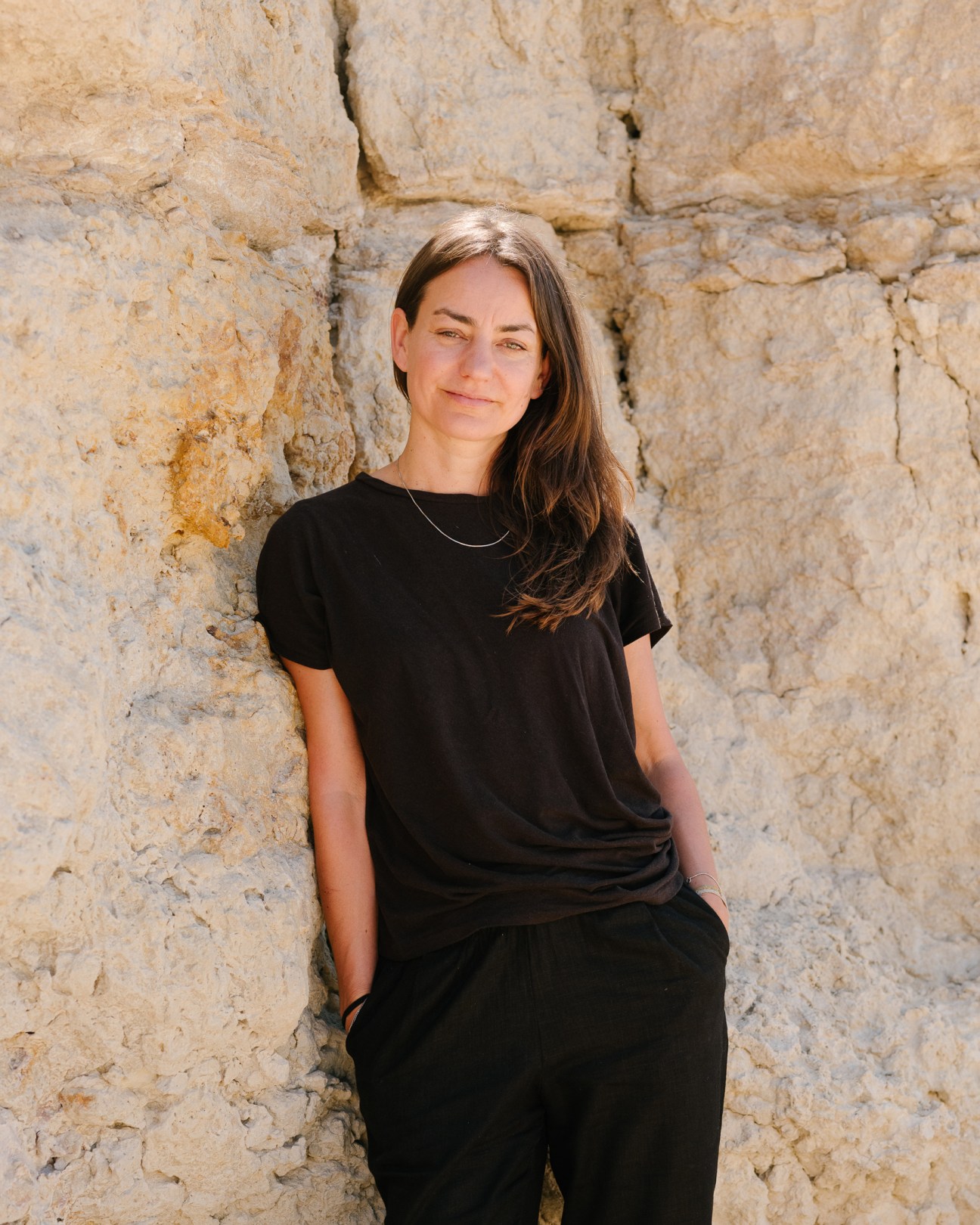
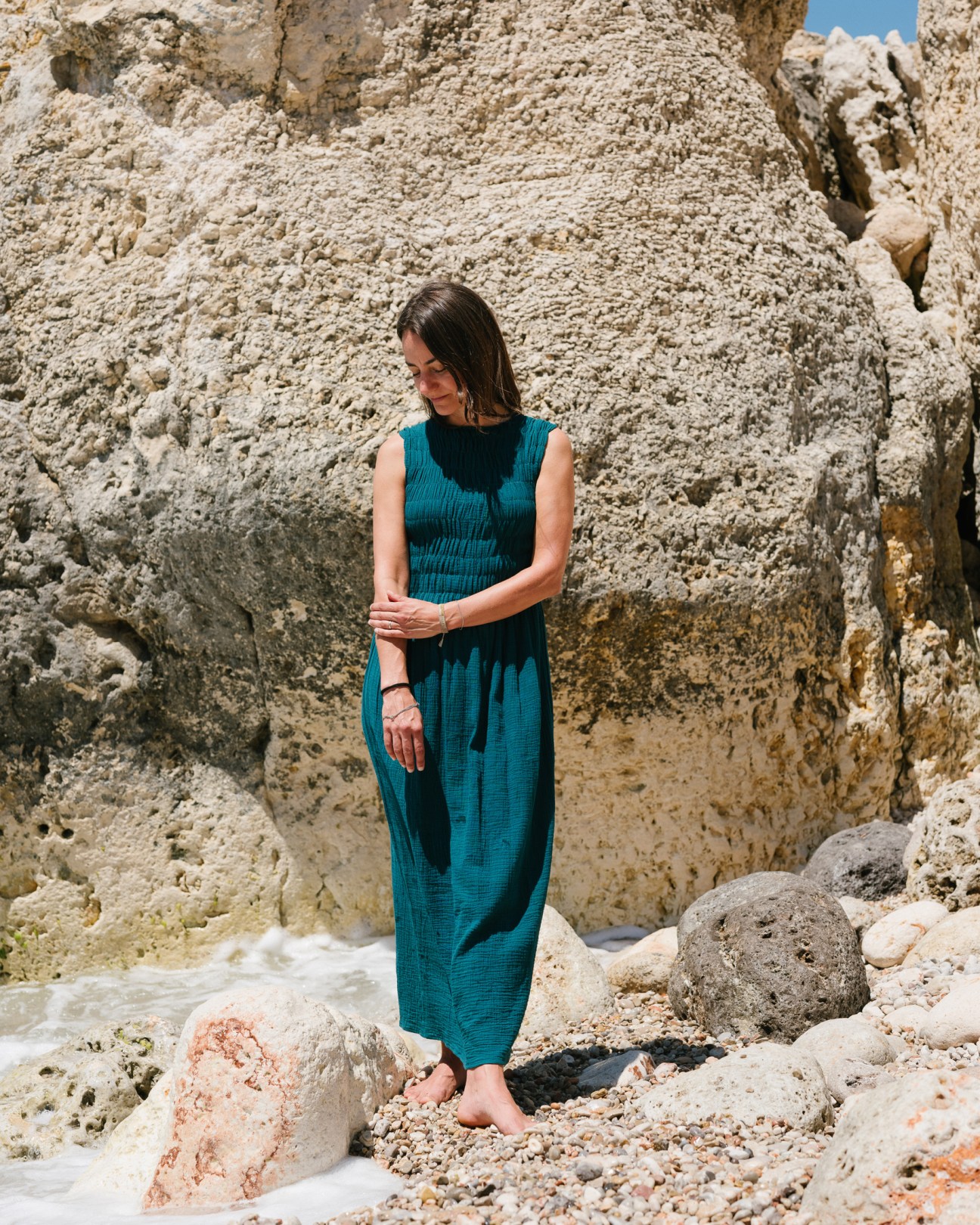
Finnish-born, Mallorca-based fashion designer Cecilia Sörensen’s clothes evoke a breeziness that’s synonymous with island life. “Being in Mallorca relaxes my designs,” she tells MONOCLE. “Everything is more laidback and slow here. If I were designing my collections in Finland, they would be more austere and stiff.” Loose dresses made from cotton muslin – ideal for throwing over a swimming suit – and kimono-inspired jackets cut to a boxy fit quickly became her signature styles. They’re romantic yet, at the same time, rooted in reality.
After learning the craft of tailoring in Helsinki, Sörensen decamped to Barcelona, where she launched her namesake brand in 2002. Six years ago she relocated to Mallorca with her husband and children, and settled in a village in the Tramuntana mountain range that makes up the northwest of the Balearic island. “Mallorca is special,” says Sörensen. “It almost hurts to travel because I miss the mountains when I’m not here.” At her workshop a 20-minute drive from her home in Alaró, Sörensen works with five seamstresses to produce every item in her seasonal collections, using cotton from a family-owned mill in Barcelona, as well as linen, jacquard and wool sourced from Spain and Italy.
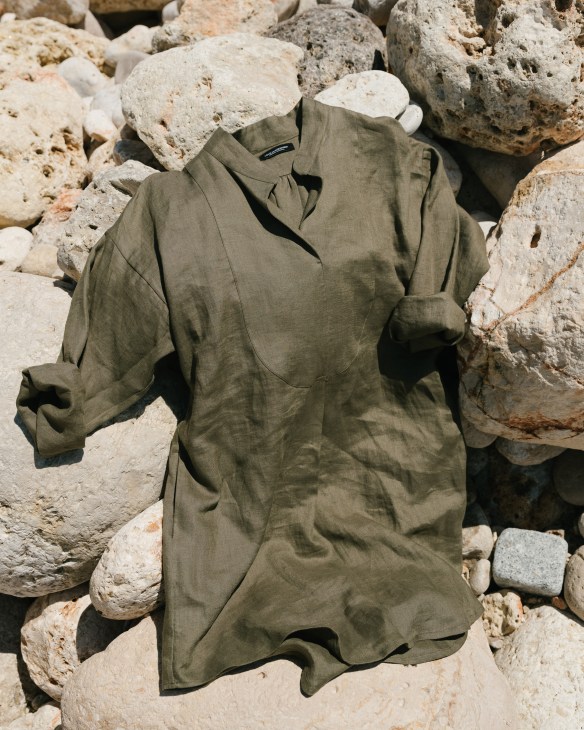
“I cut the first pattern and make the prototype, then the seamstresses take it from there,” says Sörensen. There’s a lot of back-and-forth during this stage, with some designs dialled down and details, such as the internal pockets of waistcoats, tweaked to perfection.
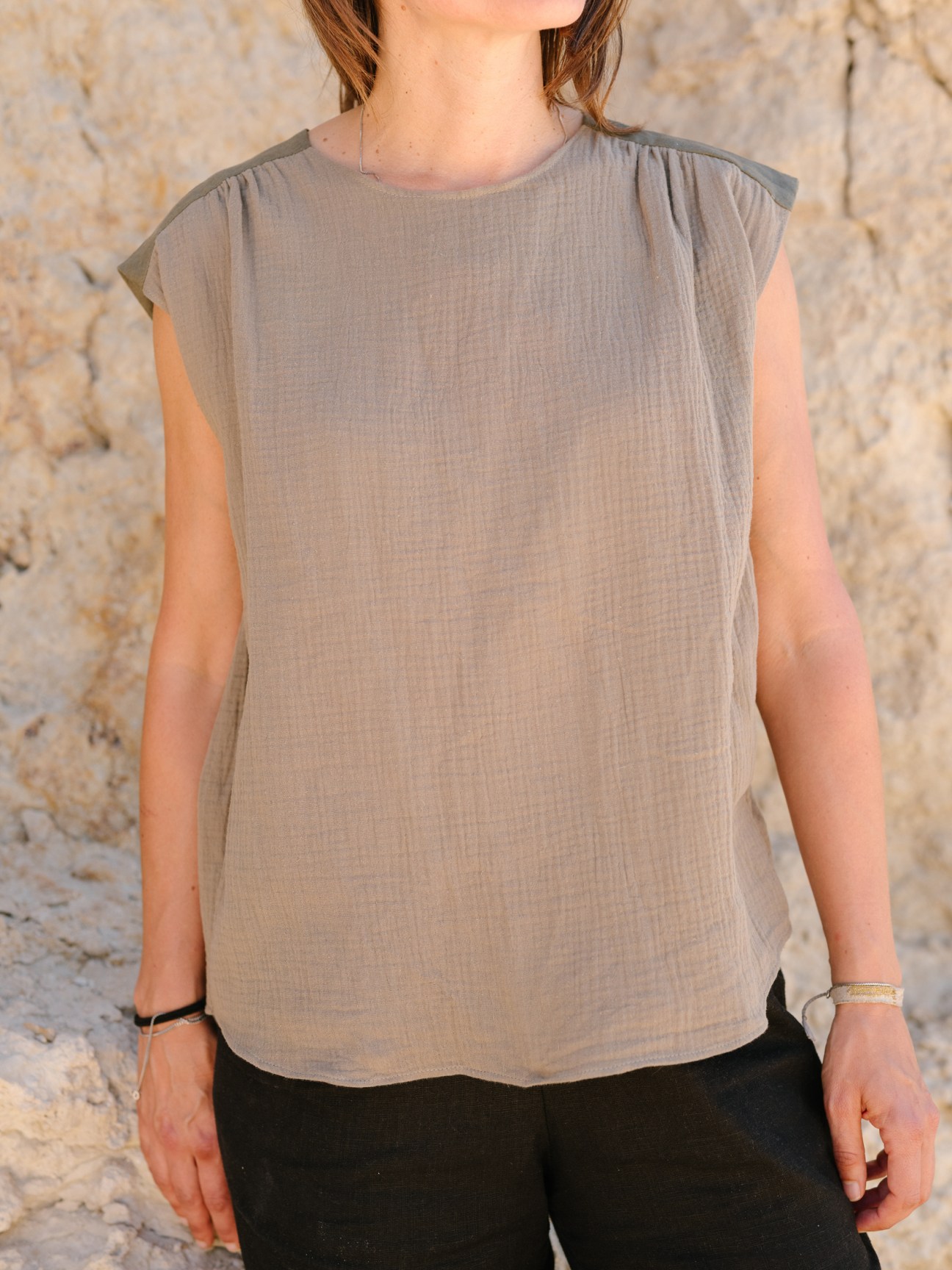
Such attention to detail is aided by her commitment to keeping operations close to home and producing everything, from start to finish, on the island. “It would be less expensive to produce in Barcelona but it’s important to do it here.” The designer has even been known to hand-deliver orders, cycling directly from her atelier to the boutique in Palma that carries her label – another attempt to work responsibly and minimise her carbon footprint.
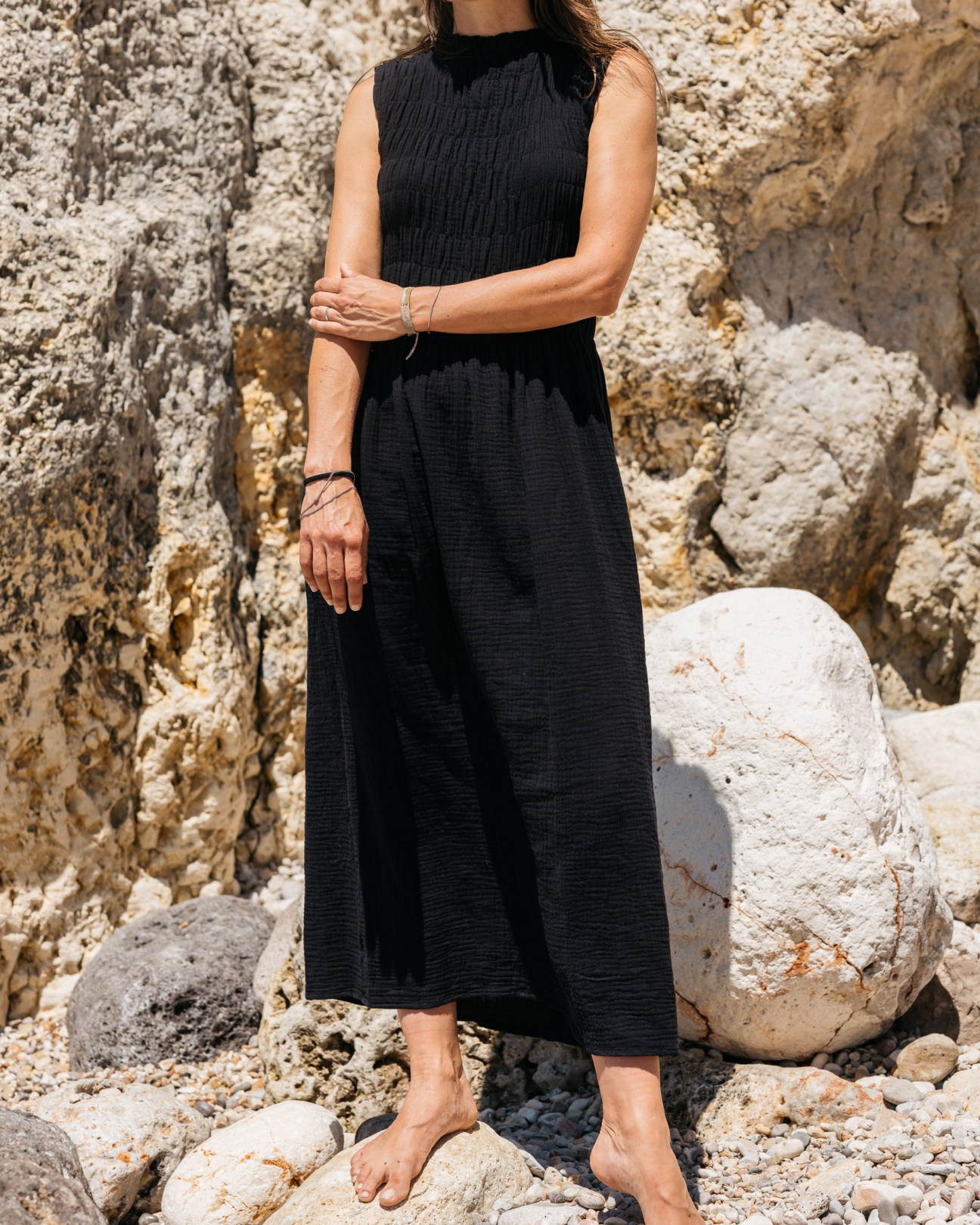
The label is stocked beyond Mallorca, in a number of independent boutiques in Austria, Germany, Belgium and the US. Buyers are drawn to Sörensen’s carefree designs, particularly her shirt dresses and oversized blouses, all rendered in earthy terracotta and yellow tones reminiscent of Mallorcan sunsets. Even the darker knitted vests and linen overshirts carry the island ease that Sörensen has come to embody. “I’ve lived in Spain on and off for 20 years now,” she adds. “I hope that my designs can offer something that feels grounded in reality and the local community, rather than the stereotypical white linen outfits for expats sipping white wine.”
ceciliasorensen.com
3.
Isole & Vulcani
Italy
Filicudi is a small island in the volcanic Aeolian chain north of Sicily, a pyramid of lava-made land where there are no cars, no streetlights and a mere 200 or so residents.
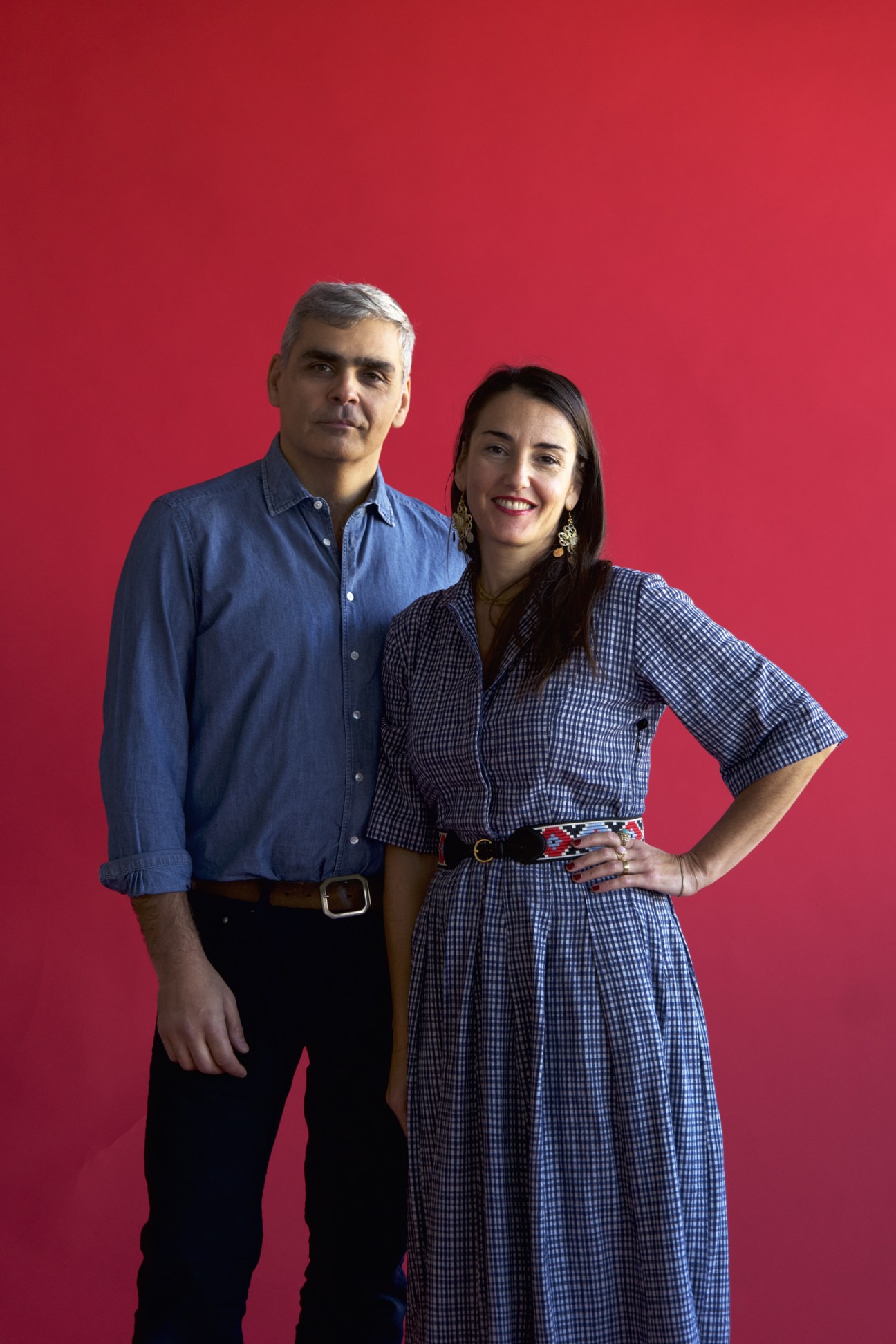
Swimwear brand Isole & Vulcani was born here in 1989, when Daniela Fadda put together her first designs using just cotton and knots. Today, Cristiano Fini, Fadda’s son, maintains the brand with his wife, Sara Goldschmied, its designer and daughter of jeans pioneer Adriano Goldschmied. Naturally, the couple met and married on Filicudi. “We’re obsessed,” says Fini. “The island is our favourite place.”
To respect the brand’s idyllic land of origin, Isole & Vulcani collections offer some of the most responsibly made swimwear on the market. Unlike most commercial swimwear, which is made from synthetic fibres such as Lycra, nylon and other plastics, the label uses certified Italian-made organic cotton-jersey and natural dyes, with minimal elastic. “It feels completely different on the skin to plastic materials,” says Fini.
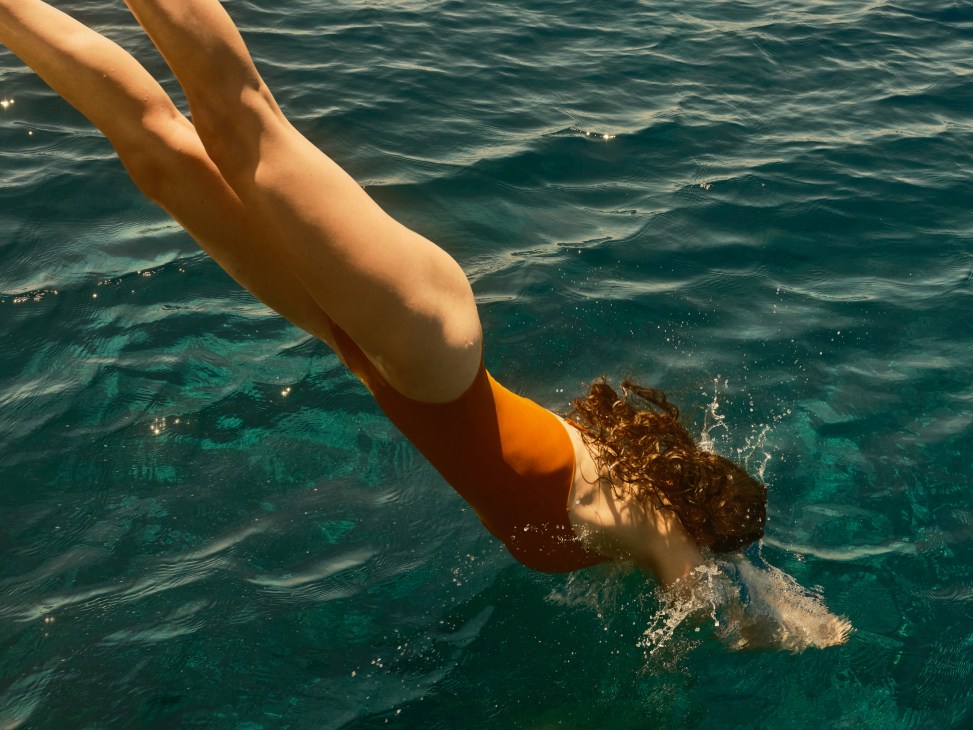
The natural dyes also create a palette of soft, earthy hues – marsala, berry, olive – that mirror the landscapes of the island. Most summers, the duo also release printed and special-edition styles in collaboration with other design talents, such as Marta Ferri and even Adriano Goldschmied.
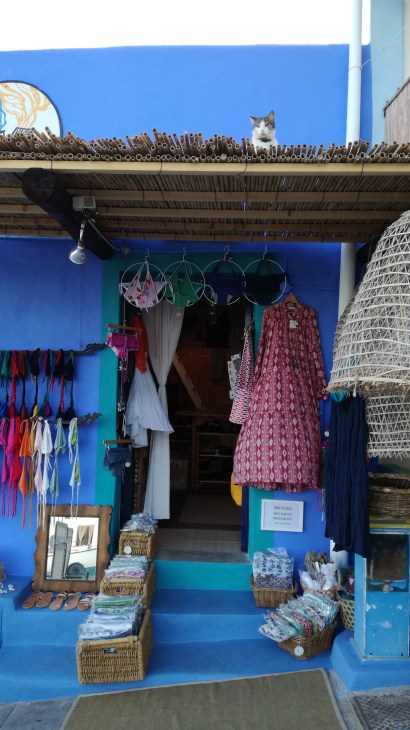
The brand has a flagship shop in Milan but its Filicudi boutique is still going strong. Manufacturing has come a long way since Fini’s mother ran the brand. Originally, the suits lacked stitching because sewing machines and electricity were hard to come by here. Though that’s no longer an issue today, Fini and Goldschmied still ensure that only the minimum of seams are stitched with a machine – all in the name of honouring Filicudi’s raw beauty.
isolevulcani.com
Zeus + Dione’s co-founders on reconnecting with Greek craft traditions
It shouldn’t come as a surprise that as you approach the Zeus + Dione eyewear laboratory in Kryoneri, a northern suburb of Athens, you spot goats, wild boar and the odd cow wandering around the pine-tree- dotted meadows. This is a brand born out of a desire to reconnect with craft traditions and nature, as well as forge partnerships with the best local manufacturers.
Twelve years since its inception, the business co-founded by Dimitra Kolotoura and Mareva Grabowski-Mitsotakis, Greece’s current first lady, has revived abandoned silk factories and employs artisans across the country to embroider kaftans or create woven fabrics on traditional wooden looms. Naturally, the brand has always thrived on summer wear, starting with a line of handmade leather sandals and expanding to breezy linen tailoring, as well as the most elegant beachwear and cotton shirting, which immediately brings the Mediterranean sun to mind. Kolotoura, an ambitious businesswoman with global expansion plans, has always been working on developing the brand’s collections and completing the Zeus + Dione look.
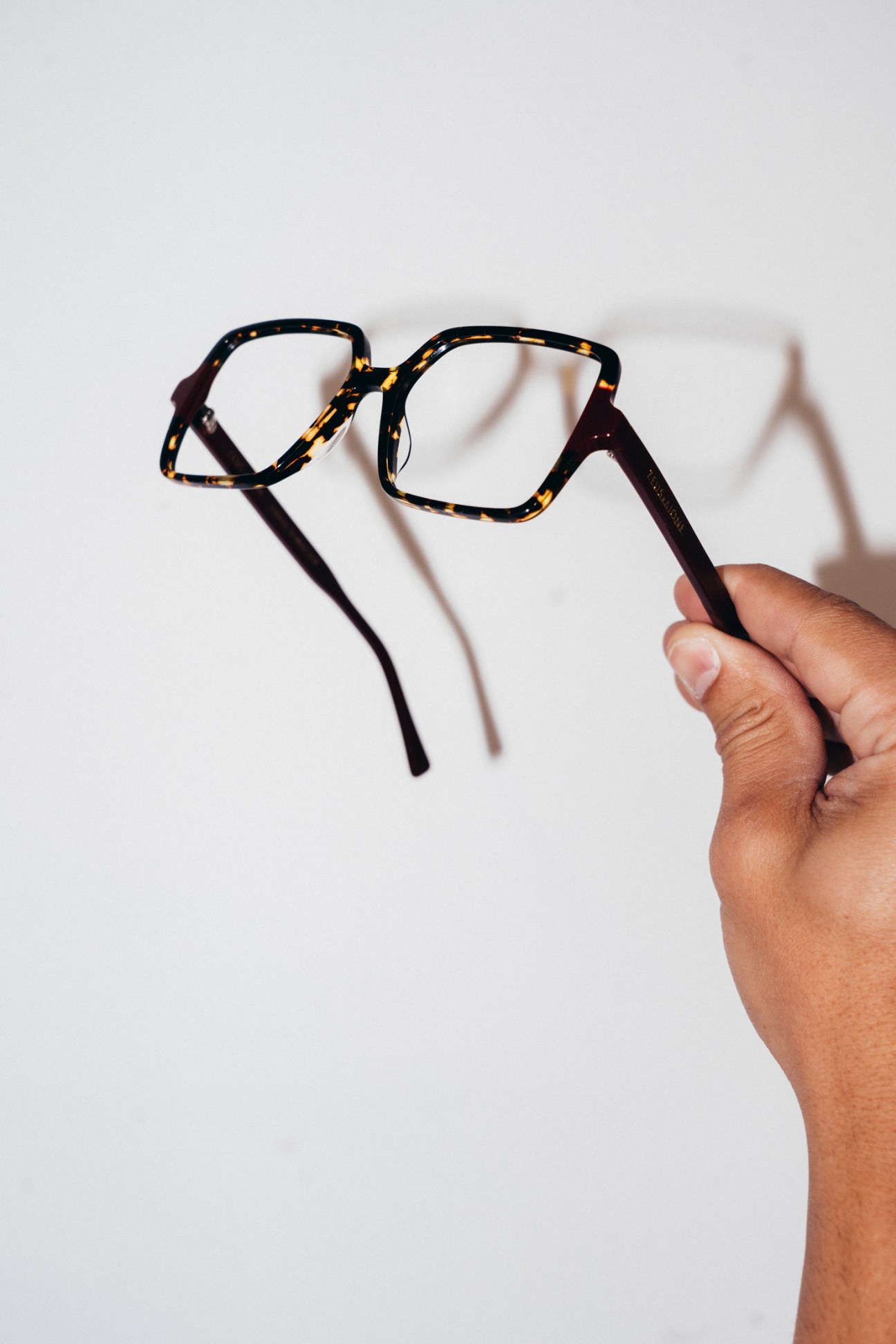
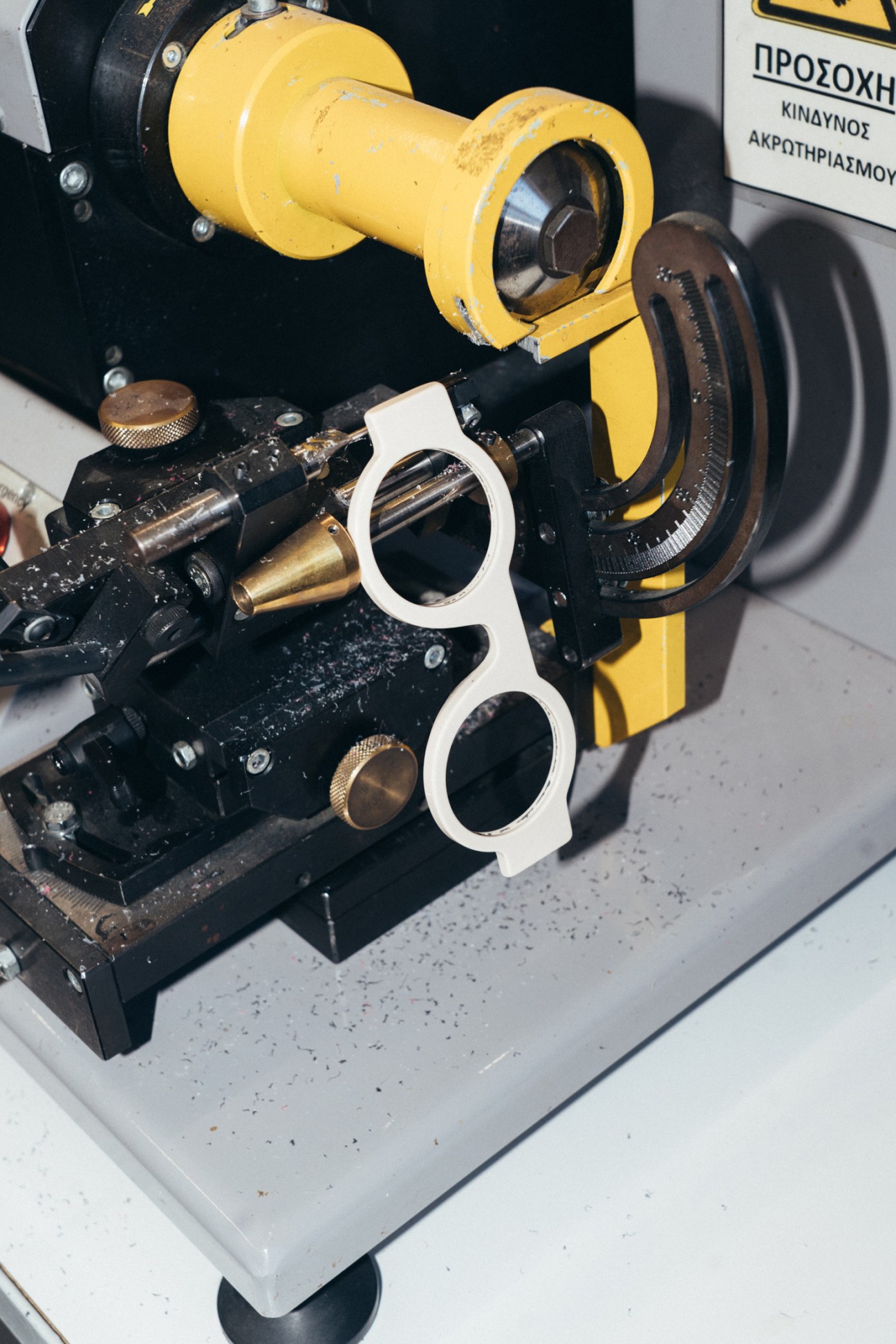
Sunglasses were at the top of her agenda. The sun shines brightly year-round in Greece, so shades are as essential as your wallet or keys when you leave the house. “I always had a passion for sunglasses,” says Kolotoura. “Eight years ago, when I decided that we should expand into eyewear, everyone in the office looked at me as though I were crazy,” she says. Rigorous research and a commitment to the brand’s “Made in Greece” ethos led Kolotoura to the Nea Optiki, an Athenian artisanal factory specialising in high-end, handcrafted eyewear.
The facility opened in 2013, as a response to Greece’s economic crisis of the 2010s and the closure of eyewear factories in Italy. Consulting with industry friends from across the Mediterranean, Nea Optiki co-founder Costas Destounis decided to purchase the machinery from the abandoned factories across Italy and, alongside his brother and cousin, bring luxury eyewear manufacturing to Greece. Since then the trio has assembled a team of experts – employees are trained for several months before they can join the team on the factory floor – and begun crafting eyewear that has won a reputation for its handmade qualities and green credentials. The factory roof is covered with solar panels, harnessing the sun’s energy to power the machinery in what is the only carbon-neutral factory in Greece.
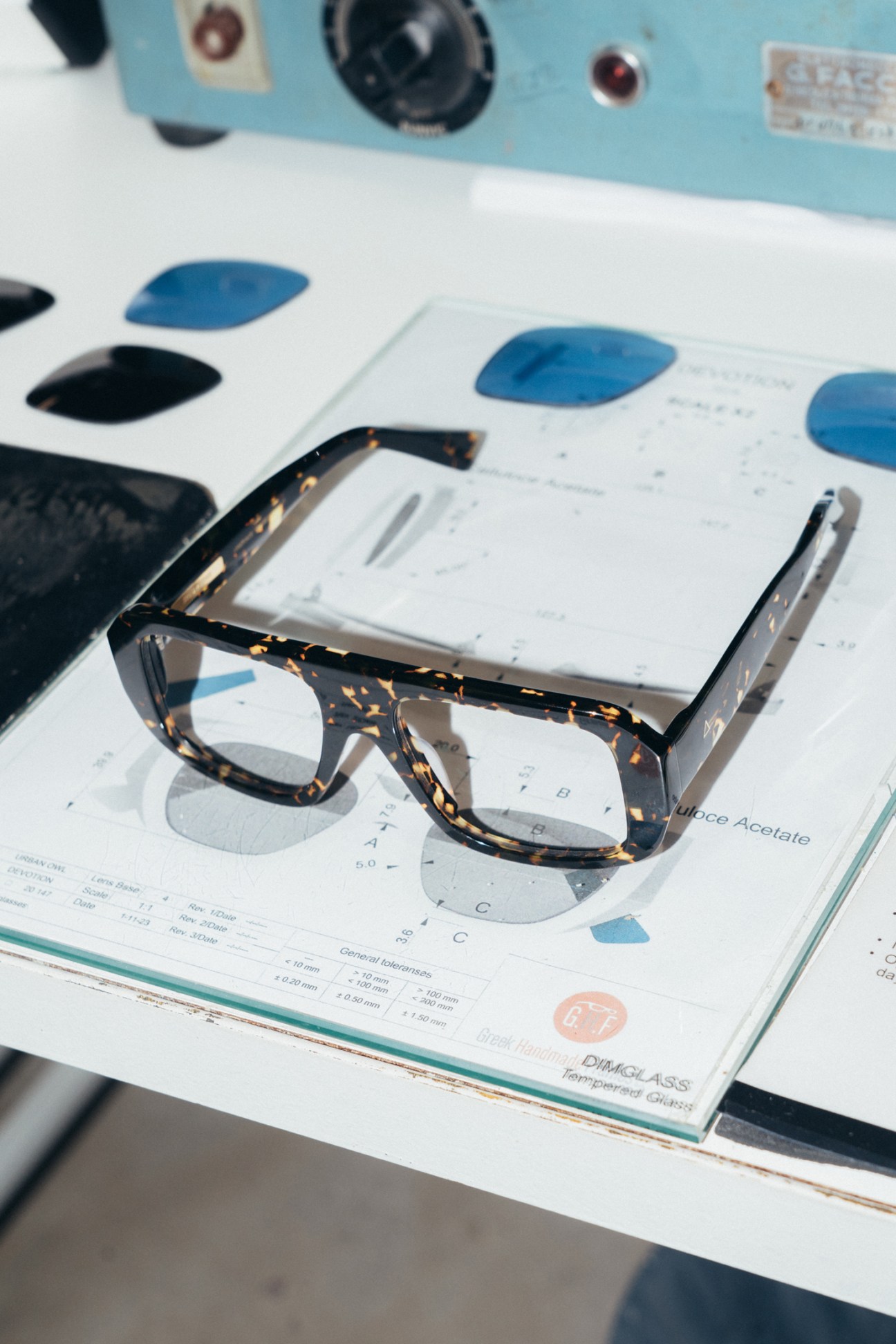
“We began with 500 square metres of factory space,” says Destounis, speaking above the roaring sound of the workspace’s many tumbling machines. “Since then our production facility has tripled in size to 1,500 square metres to meet the demand we have for the eyewear that we produce.” Inside the vast hexagonal devices are thousands of perfectly polished wooden frames. They are buffed through four different types of tumbling equipment for 24 hours each time, before heading to the room next door for a final hand polish.
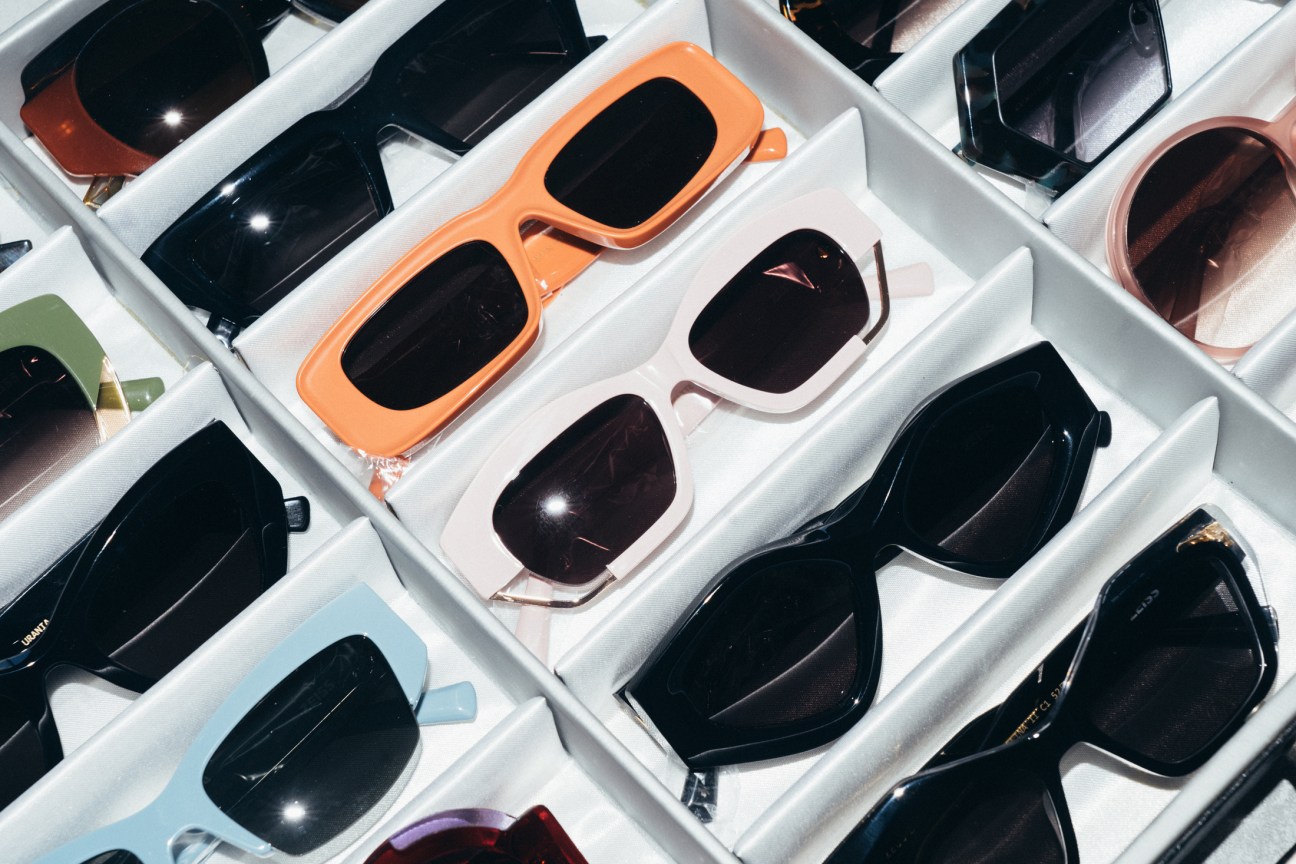
The partnership with Zeus + Dione, which includes both manufacturing and distribution of the label’s sunglasses collections, has played a key role in the factory’s expansion, allowing Destounis to employ and train even more staff. “We had an extremely good chemistry from the start,” says Destounis of his collaboration with Kolotoura. When the Apollo – their first frame design, combining acetate and metallic details – consistently sold out and prompted fast-fashion copies, he knew that he was onto a good thing. Now Zeus + Dione sunglasses are sold across Europe and the US, from department stores such as Harrods in London and Saks Fifth Avenue in New York to popular multi-brand boutiques in Athens, including Aesthet.
“I proposed that Zeus + Dione design a full collection of sunglasses that we could then distribute across Europe,” he says, explaining how he works closely with Kolotoura on designing the frames. “It’s very rare to have the brand so involved in the design process but because Dimitra has such strict and high standards about the brand identity, all the design happens as a collaboration,” he adds, ordering a coffee for Kolotoura without needing to ask how she takes it.
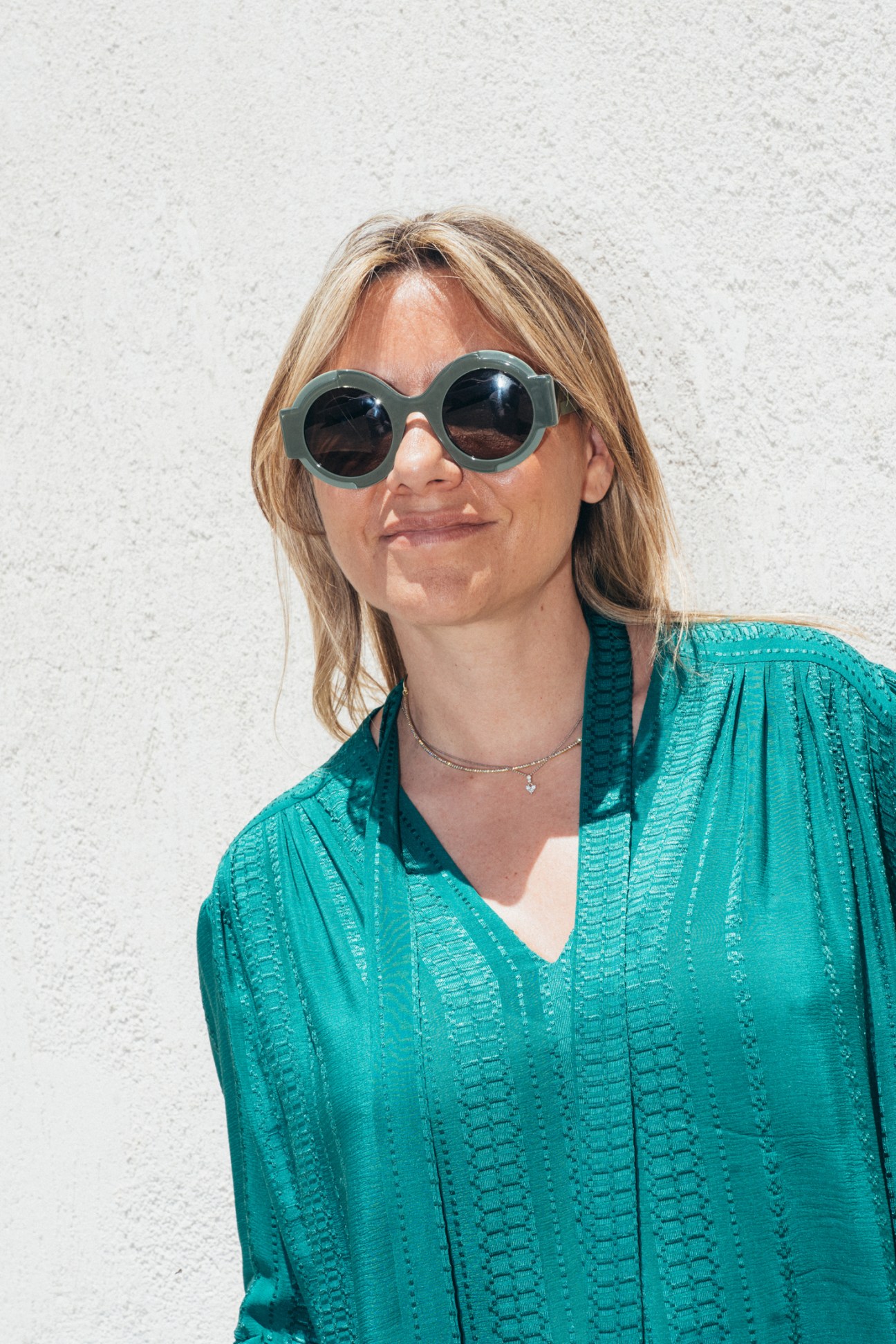
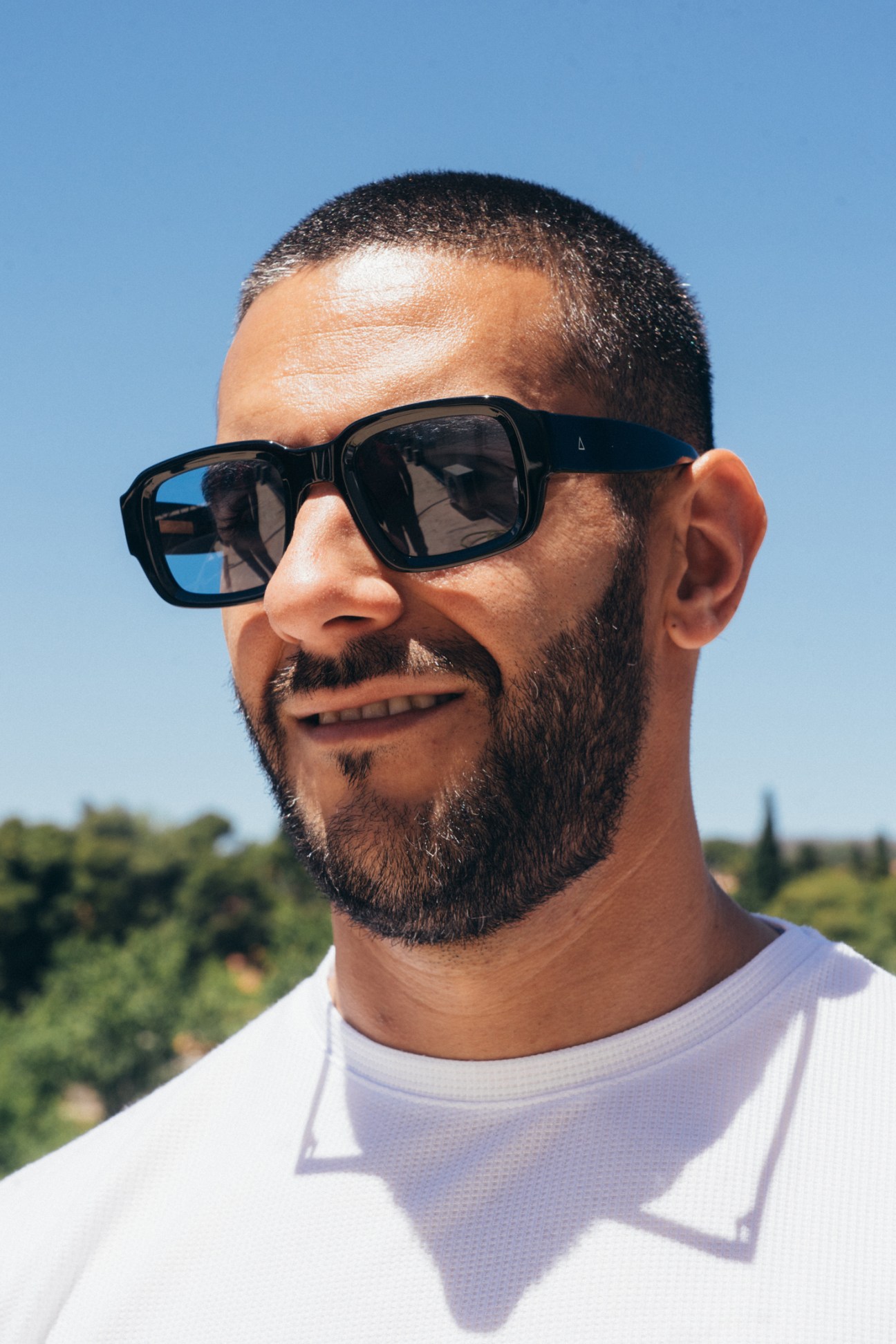
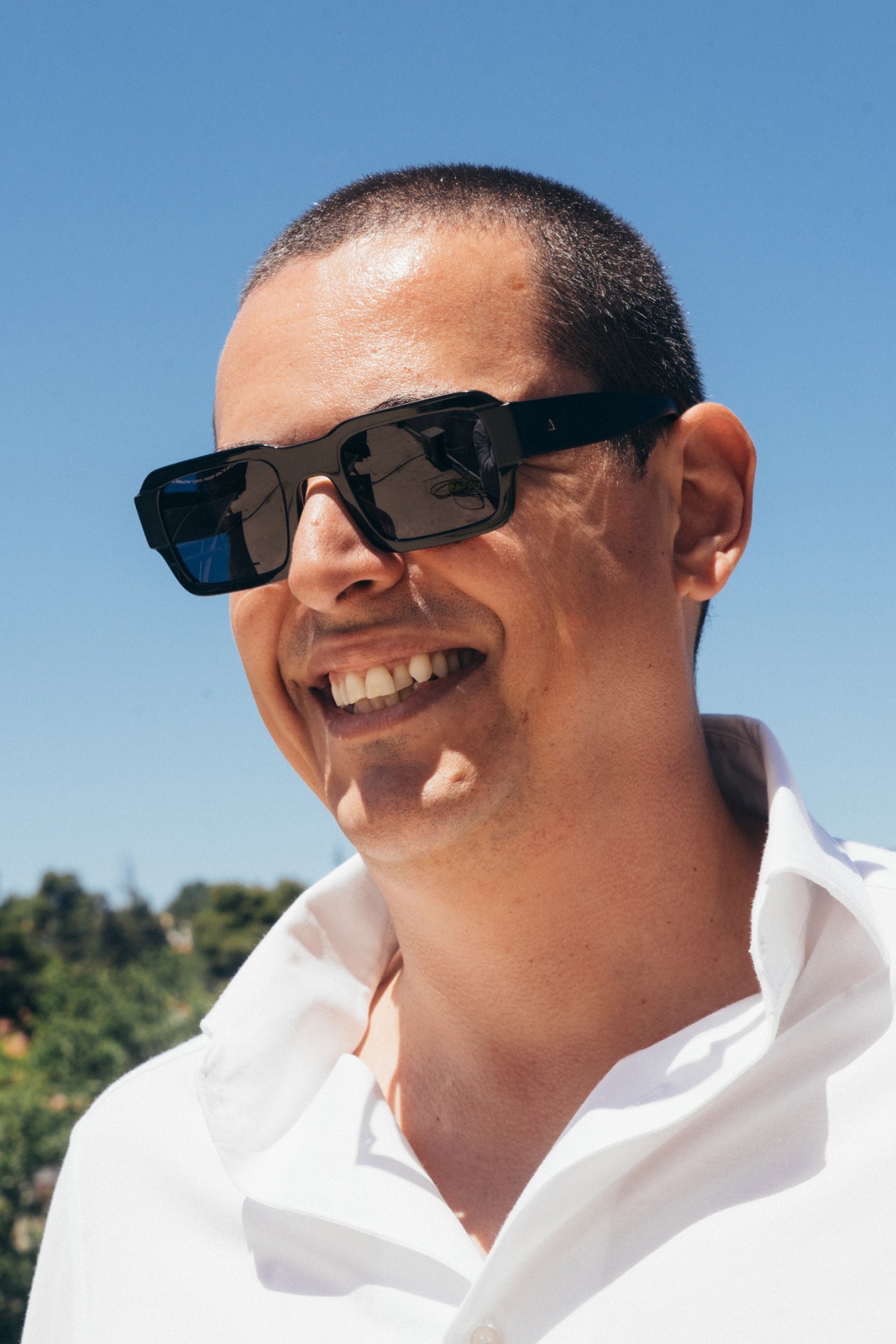
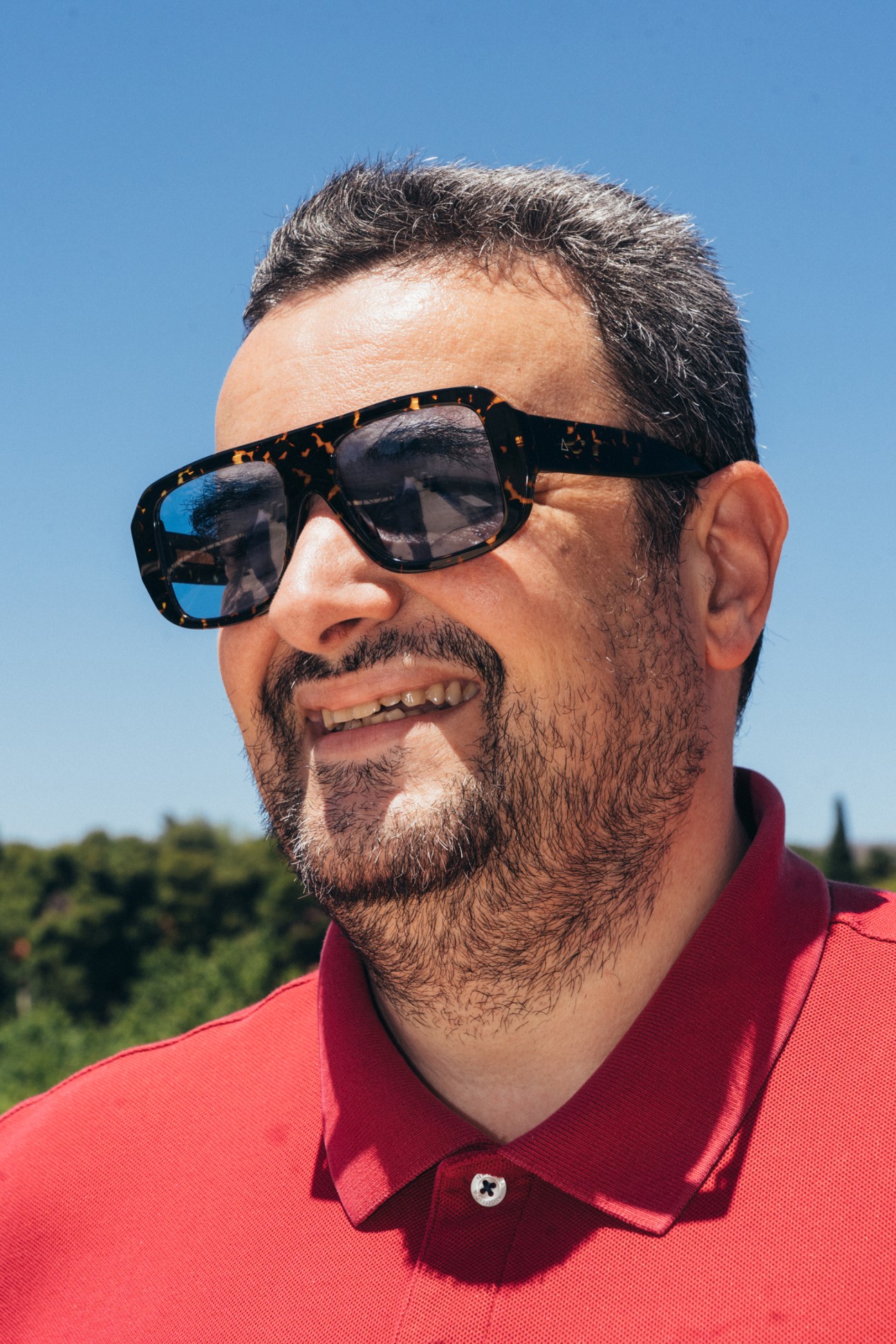
Such close-knit partnerships are rare in the eyewear industry. Fashion labels tend to licence their sunglasses collections to the conglomerates that dominate the market and often become divorced from the creation process. Instead, Kolotoura and Destounis have fostered a different type of relationship – one which is now paying off. The pair’s designs are bolder and more individualistic than anything else in the market, helping the company to attract clients in search of distinctive styles who continue to bring new business to Nea Optiki.
Collections range from colour-block frames and cat-eye styles in punchy hues to elegant, geometric forms such as the “Thalassa” (Greek for sea). It is a playful, pick-and-mix of eyewear to suit a variety of situations, whether you’re looking to make a statement for your next beach holiday or opting for a more discreet item for summers in the city, there’s something for everyone.
Kolotoura admits she had a feeling the project would work out, as soon as she stepped inside Nea Optiki. “I went to a couple of small workshops and kept hearing, ‘No, it can’t be done,’ when I shared my ideas,” she says. “Kostas immediately liked the concept and expressed an interest, so I knew that I had found the right person.”
The Zeus + Dione co-founder has come a long way since launching the brand in 2012, at a time when Greece was still grappling with financial upheaval, a global media slammed its politicians and speculation mounted about a “Grexit”. At that time, a project that celebrated the country and its traditions seemed laughable, yet Kolotoura and Grabowski-Mitsotakis (who has now exited the business) felt that it was time to get creative and shift public perception. “When the situation in Greece was bad and we were represented on the world stage in such negative light, it created an anger inside me,” says Kolotoura of her initial motivations.
Even though they had never designed for a fashion label before, they had a vision that was equal parts romantic and forward-thinking, blending elements of ancient Greek and folkloric traditions with modern silhouettes.
Working with an in-house design team, the pair’s initial collection of sandals quickly expanded to ready-to-wear pieces, which have now been joined with covetable collections of eyewear. All are overseen by Greek-Austrian designer Marios Schwab, who joined the brand as creative director in 2020. Kolotoura admits that Schwab had declined an earlier offer to join the company but her determination to redefine the image of Greek fashion paid off.
“We were happy working women [before launching the business] but, at the same time, very passionate about our country,” says Kolotoura, as she takes Monocle on a tour around the facility, proudly admiring the team and the eye-catching frames they are working on. “Being able to support Greek crafts is the most satisfying part of the job.”
zeusndione.com
Dione’s top models
An elegant rectangular-shaped design, inspired by the statement silhouettes worn by Aristotle Onassis. We are opting for the classic, midnight-blue frames, perfectly offsetting the black lenses. Odysseus: These sunglasses are as timeless as the stories of the mythological King of Ithaca they were named after. The thin square frames are suitable for any occasion and come in classic shades of dark burgundy and brown tortoiseshell. Refreshingly, they’re also logo free – aside from the label’s discreet emblem, a minuscule gold square on the temples. Leonidas: A unisex, aviator style given the Zeus + Dione treatment, with subtle engraving on the bridge that highlights the handwork the team of artisans at Nea Optiki applies on every single design. Arethusa: A style to make a statement in. These oversized, square frames are one of the top sellers in the label’s eyewear range, featuring acetate and metallic details on the frames – juxtaposed materials are one of creative director Marios Schwaab’s design signatures. Ino: Experimenting with bold, asymmetric shapes is a big part of the brand’s success formula when it comes to sunglasses. The Ino style is testament to that, featuring diagonal lines that add an element of surprise. Try the Yves Klein blue version – ideal for long days at the beach.
Tour accessories label Cinabre’s Paris guest apartments
In Paris’s Cité Bergère, a small and thoroughly charming pocket of the 9th arrondissement, is French brand Cinabre’s treasure trove of handmade silk ties, lapel pins, slippers and dressing gowns, showcased among vintage cocktail shakers, vinyl records, antique furniture and framed drawings. In the entrance is a marquee with blue and white stripes, and bright-red piping, which gives way to a reception area, complete with a concierge’s desk. At the back, a honey-hued, wood-panelled space houses drawers that are brimming with silk “Made in France” wonders. Look closer and you might see an embroidered image of French former footballer Zinedine Zidane on a tie.
Cinabre is opulent and a little irreverent, excessive without being overwhelming. It’s high and low. “If you’re a purveyor of bow ties and dressing gowns in the 21st century, you can’t take yourself too seriously,” Alexandre Chapellier, the French-Swedish founder of Cinabre, tells MONOCLE. “I like to modernise what are considered more serious, traditional accessories – and do it with panache.”
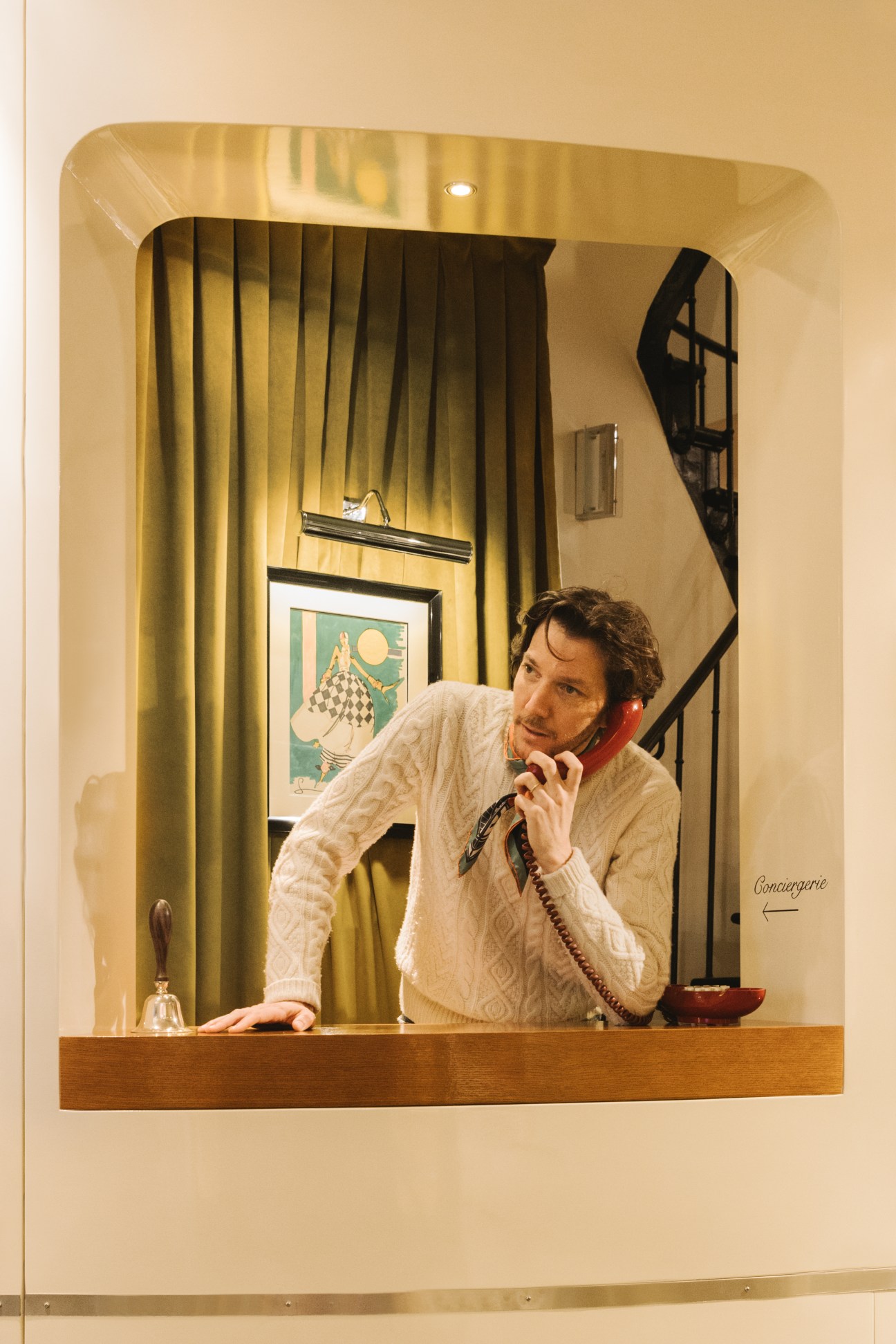
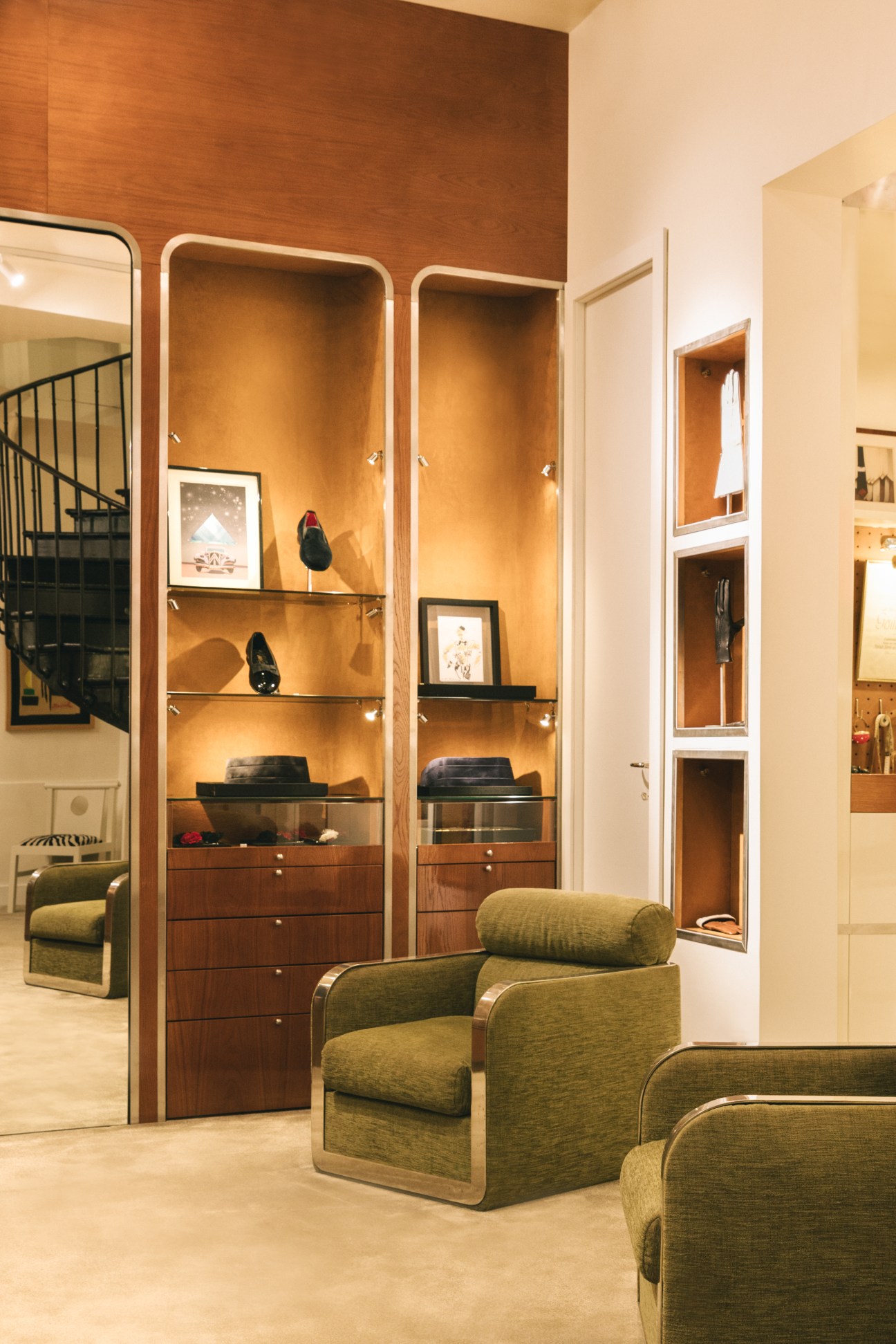
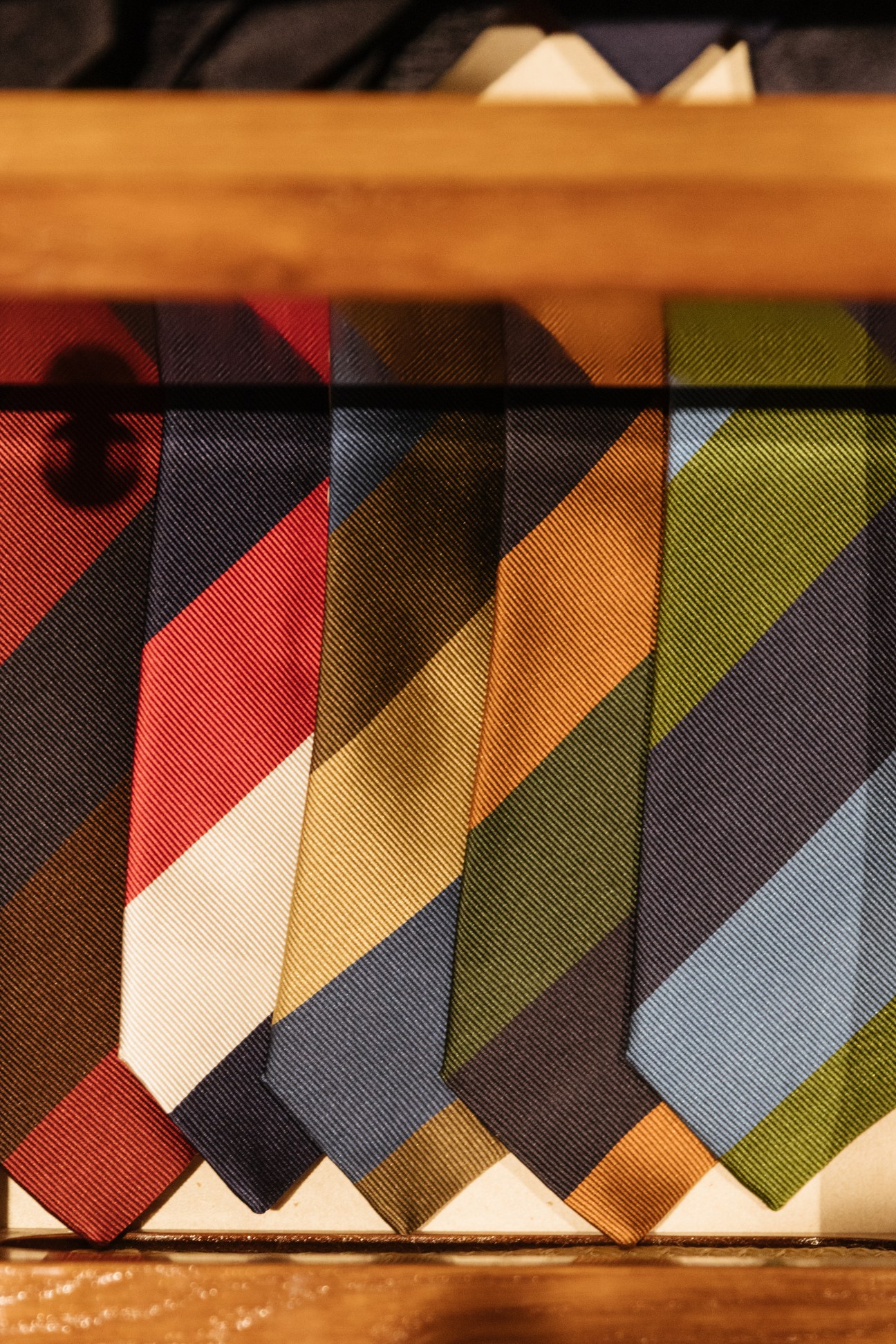
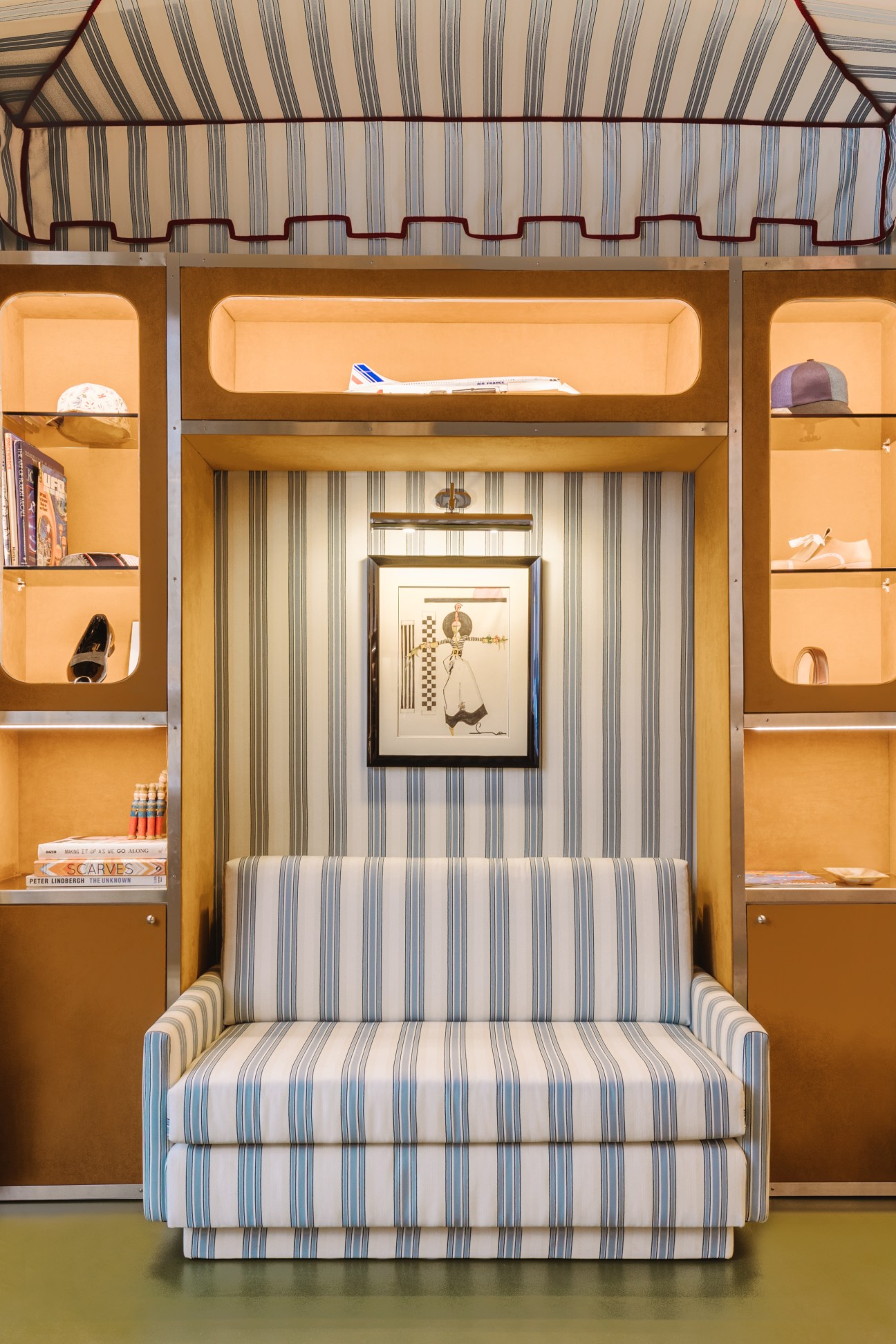
What began in 2011 as a passion project soon gained traction when one of the label’s first clients, Karl Lagerfeld, picked out Cinabre items at the now-shuttered multi-brand shop Colette. The label gained more visibility when it was added to the rails of Parisian department stores Le Bon Marché, Neiman Marcus in the US and Isetan in Japan. US musician and producer Pharrell Williams, who is currently the creative director of Louis Vuitton menswear, was then photographed wearing a textile Cinabre boutonniere fastened to his suit’s lapel.
Then the label reached another milestone: in 2016 it was given the opportunity to provide a young politician called Emmanuel Macron with a tie. After winning the presidential election the following year, Macron chose Cinabre as his official purveyor of silk ties. “I thought that it was a friend of mine pranking me when I got that call,” says Chapellier. “For a small, ‘Made in France’ artisanal brand such as mine, it’s the equivalent of a presidential warrant. We went to the Élysée Palace to present our products and since then we have worked with ministers and the French delegation to the UN.” Today the president’s bailiffs, or huissiers, can be seen in the background of the Élysée sporting Cinabre bow ties handmade from Swiss cotton.
“For our small atelier in the Loir-et-Cher department, two hours outside Paris in the French countryside, it’s a huge source of pride,” says Chapellier. “We have third-generation artisans passing down their savoir-faire and the craft of making a tie, which is an extremely technical skill.” Every tie is hand-cut and made using the highest-quality Italian fabric. “We want to bring back a sense of generosity in our products. What’s nice about working with old-school accessories such as bow ties is that people are often purchasing them for an occasion, such as a black-tie wedding or birthday. We’re specialists in items that are no longer obligatory. It’s a choice to wear a bow tie today.”
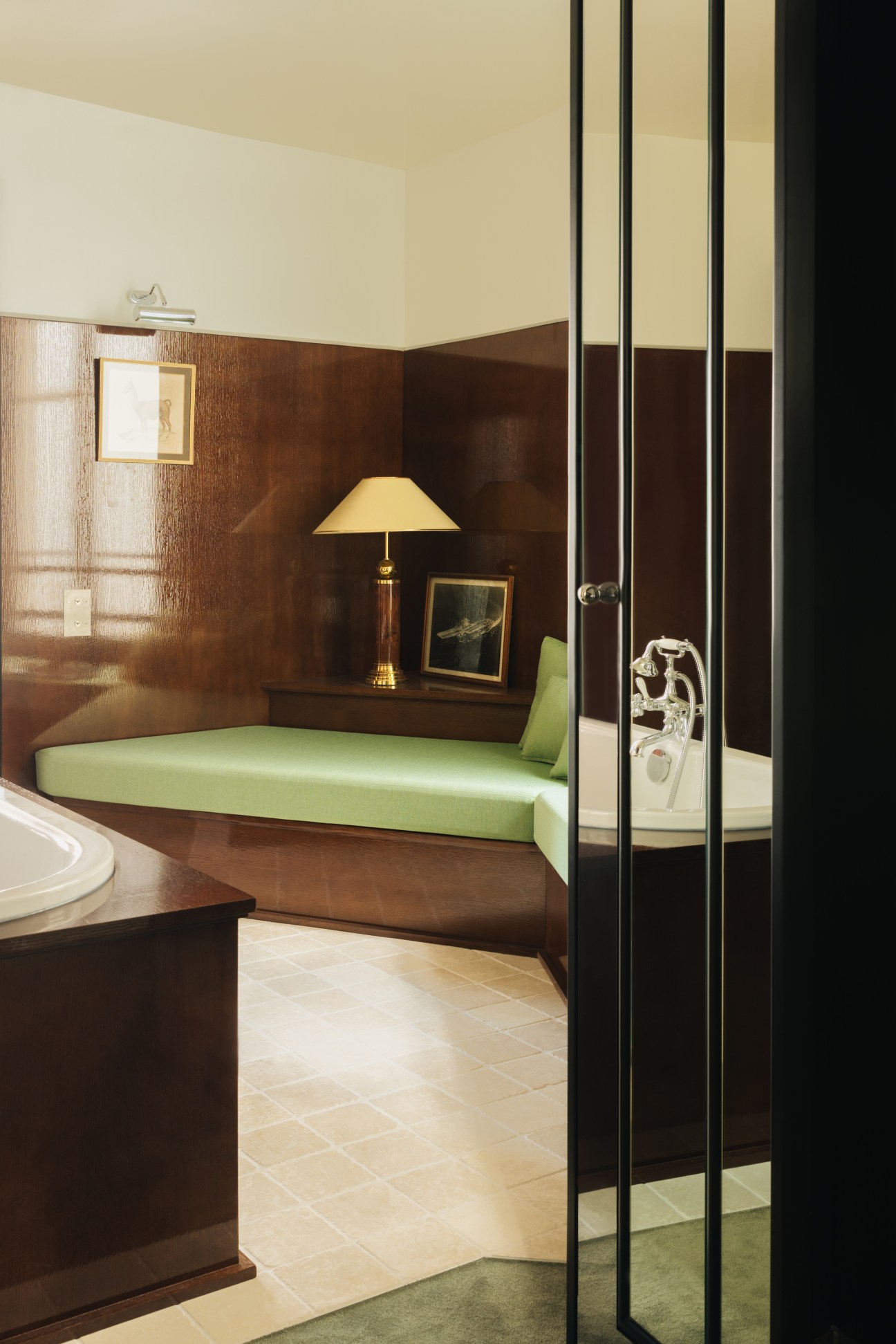
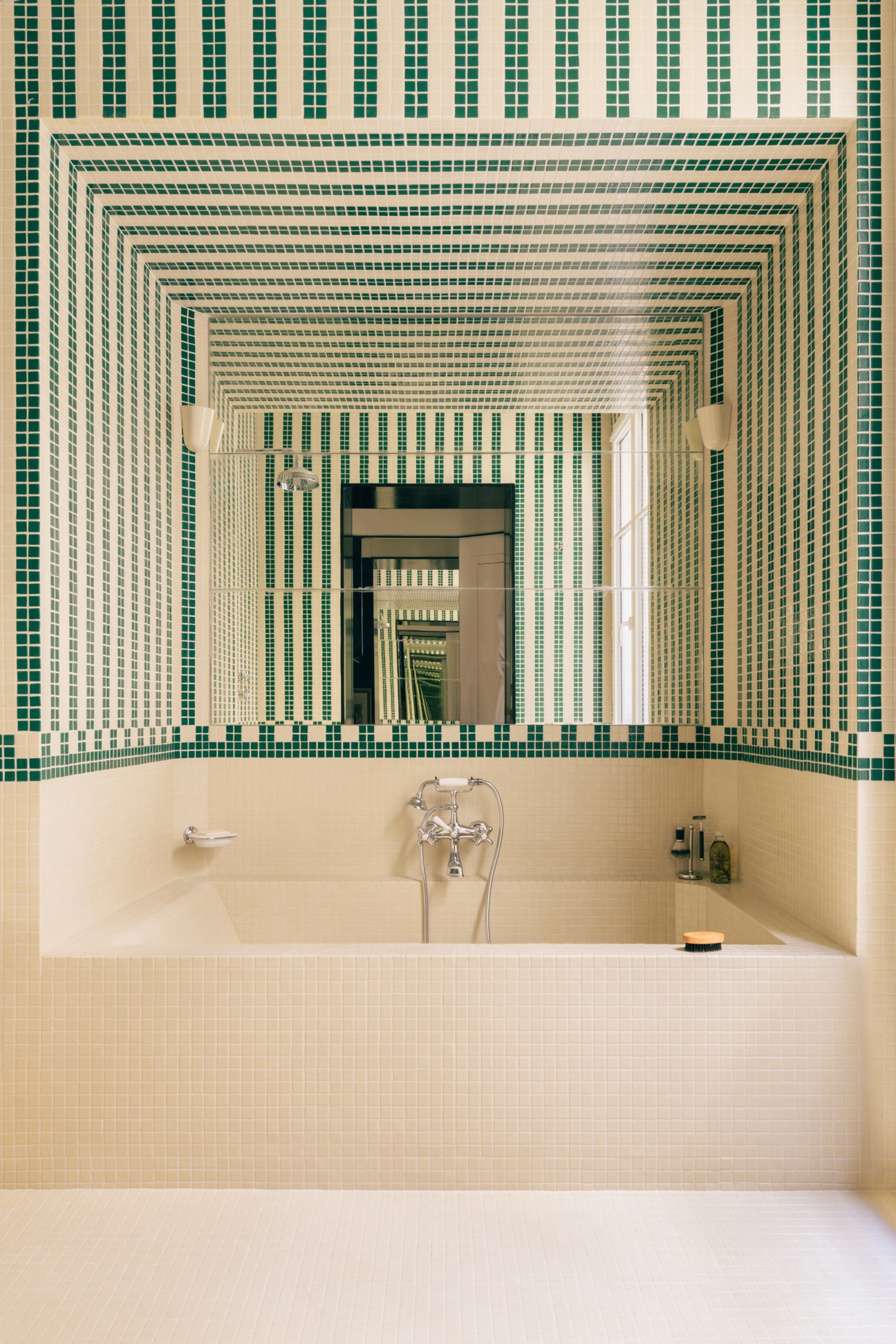
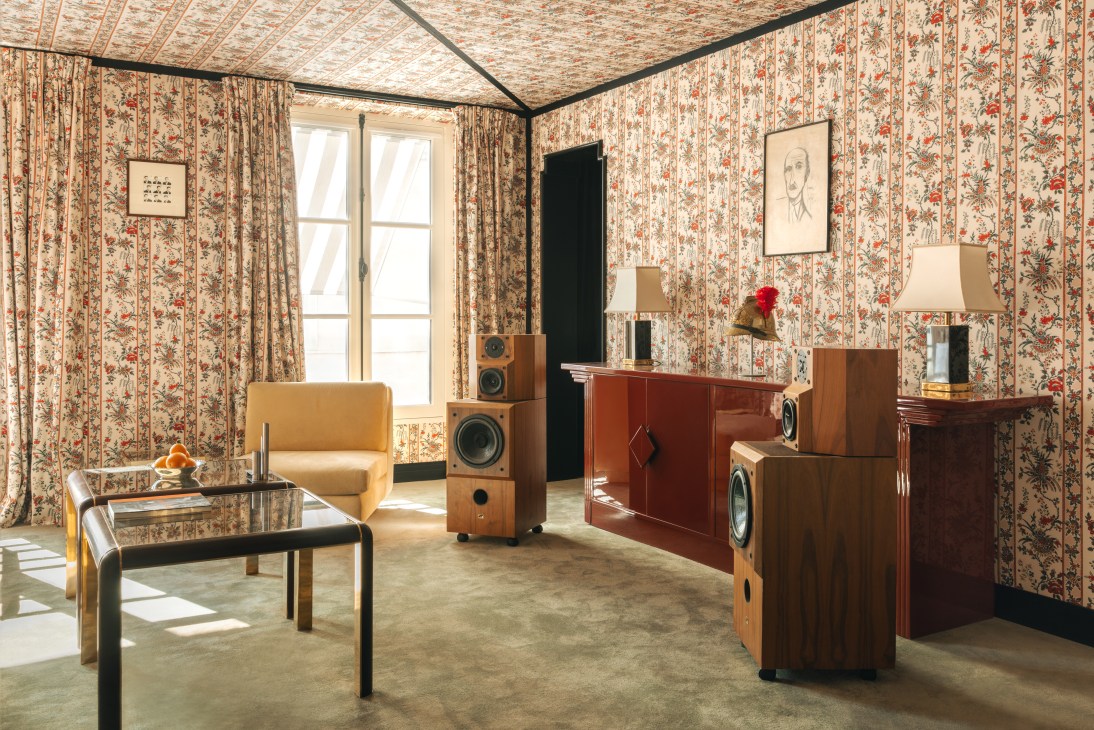
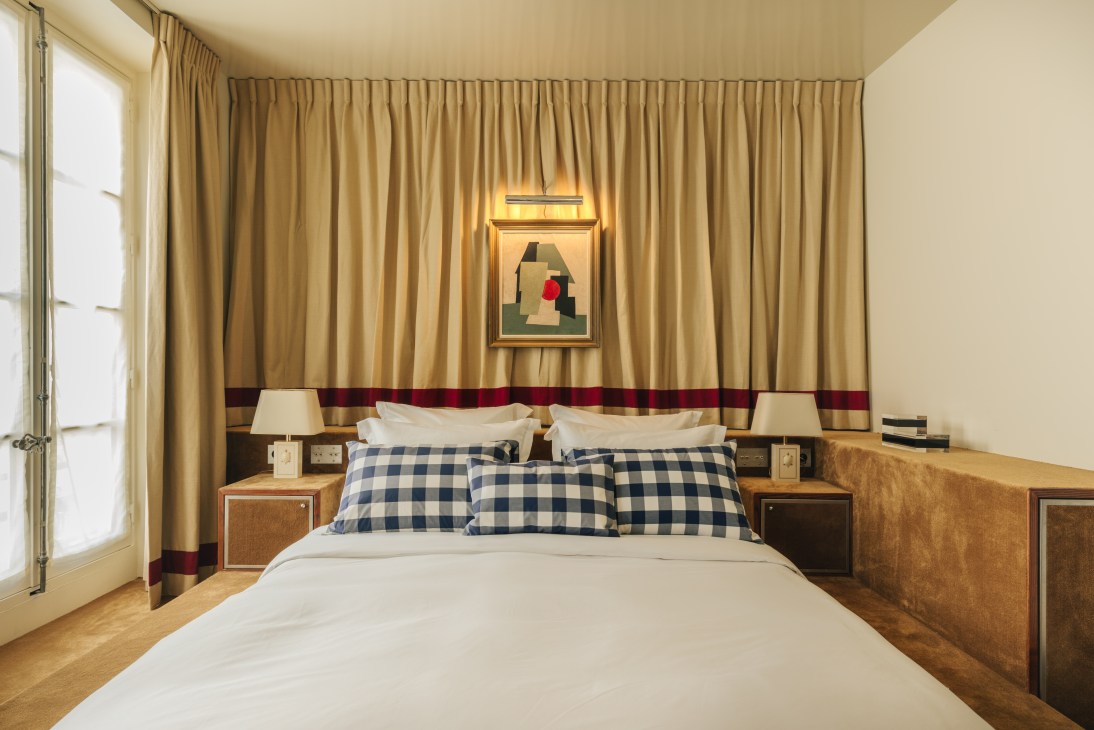
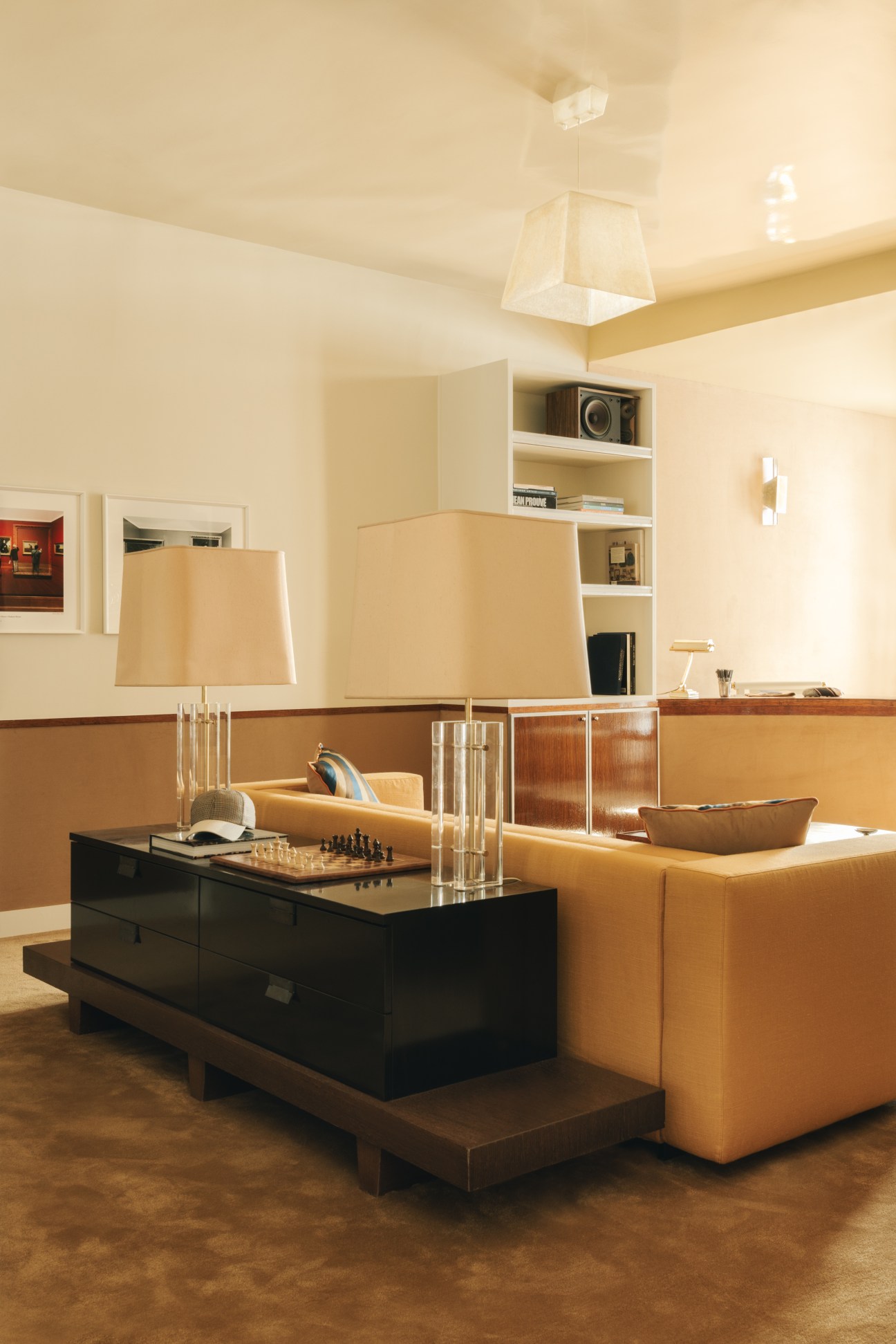
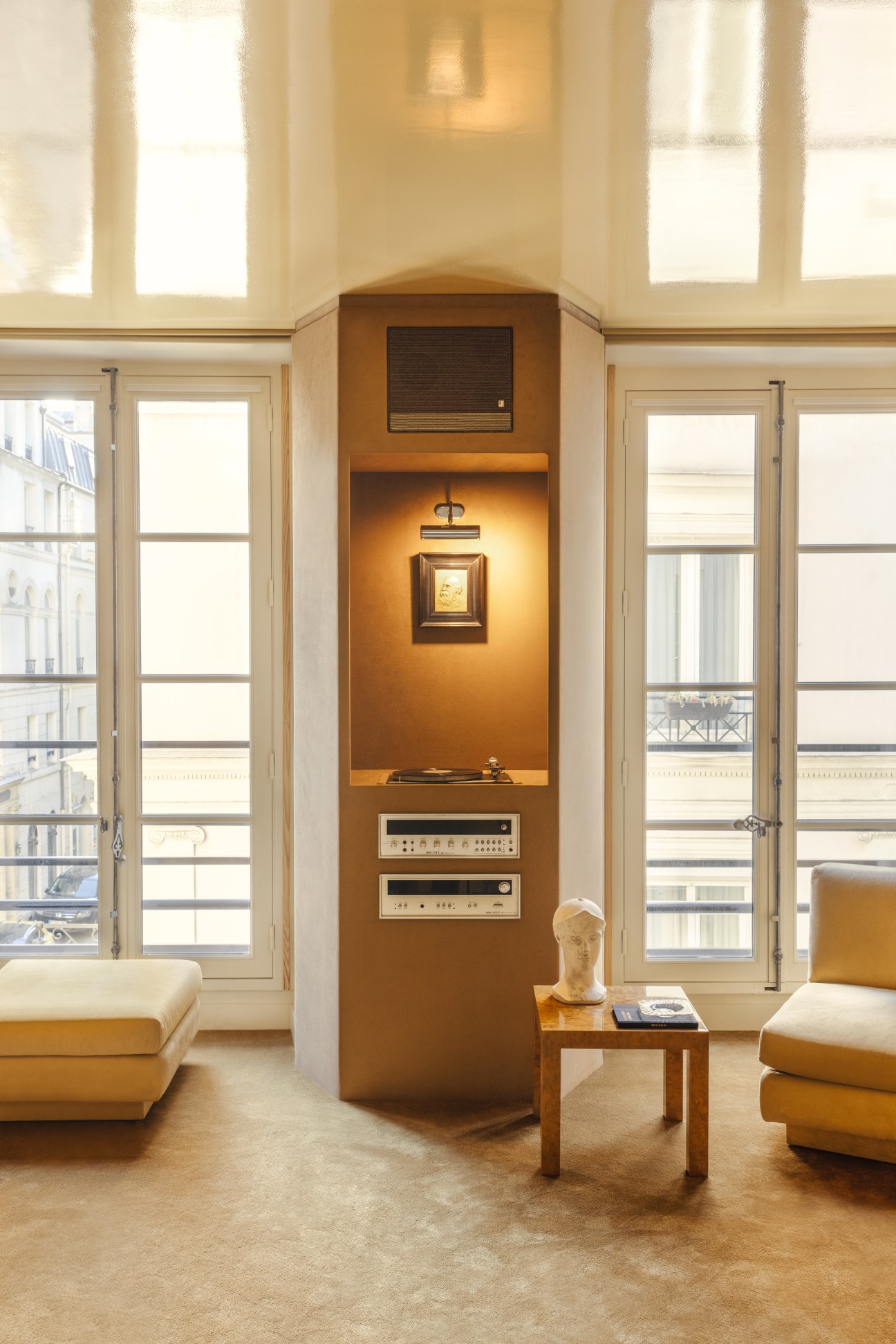
Last November, Chapellier opened Les Suites Cinabre: two guest apartments above the shop. The brand worked with Paris-based firm Necchi Architecture to create rooms that are a natural extension of the Cinabre brand, with plenty of character, colour and charm. There, visitors are offered the opportunity to embrace the lifestyle of a Cinabre gentleman, complete with velvet-lined slippers. “We wanted to shake up the straightforward retail model,” says Chapellier. “Today a shop needs to offer more than just a product. We wanted to go a level above.” In the coming months, the company will launch a range of perfumes candles, as well as a foray into ready-to-wear with a line of shirts, jackets and trousers. If it’s fit for a president…
cinabre-paris.com
The road to Denmark’s emergence as Scandinavia’s design powerhouse
Since the turn of the 20th century, design has a been a strong export for Nordic countries. Denmark, Finland and Sweden have been particularly fruitful, producing creatives such as Arne Jacobsen, Eero Saarinen and Svenskt Tenn’s Estrid Ericson, respectively. But, in recent years, Denmark has emerged as the standout leader in the region.
In Sweden, the Stockholm Furniture Fair, the region’s industry gathering of choice, has in the words of Stockholm mayor Karin Wanngård, “had a couple of difficult years”, which has resulted in the city opting to sell the fairgrounds.
Finland, meanwhile, after exporting the likes of Alvar and Aino Aalto, is now seeing its brands and fairs actively up the ante: heritage glassware specialists Iittala recently went through a rebrand to appeal to a more international audience. Meanwhile, Helsinki’s flagship fair, Habitare, introduced a globally focused trade section at its 2023 edition in an effort to attract visitors from across the world. All of this begs the question: in a contest to determine the Nordic’s top design powerhouse, would Denmark now win?
Great Danes
The legacy names, innovative studios, visionary designers and creative agencies augmenting the country’s long-established design scene
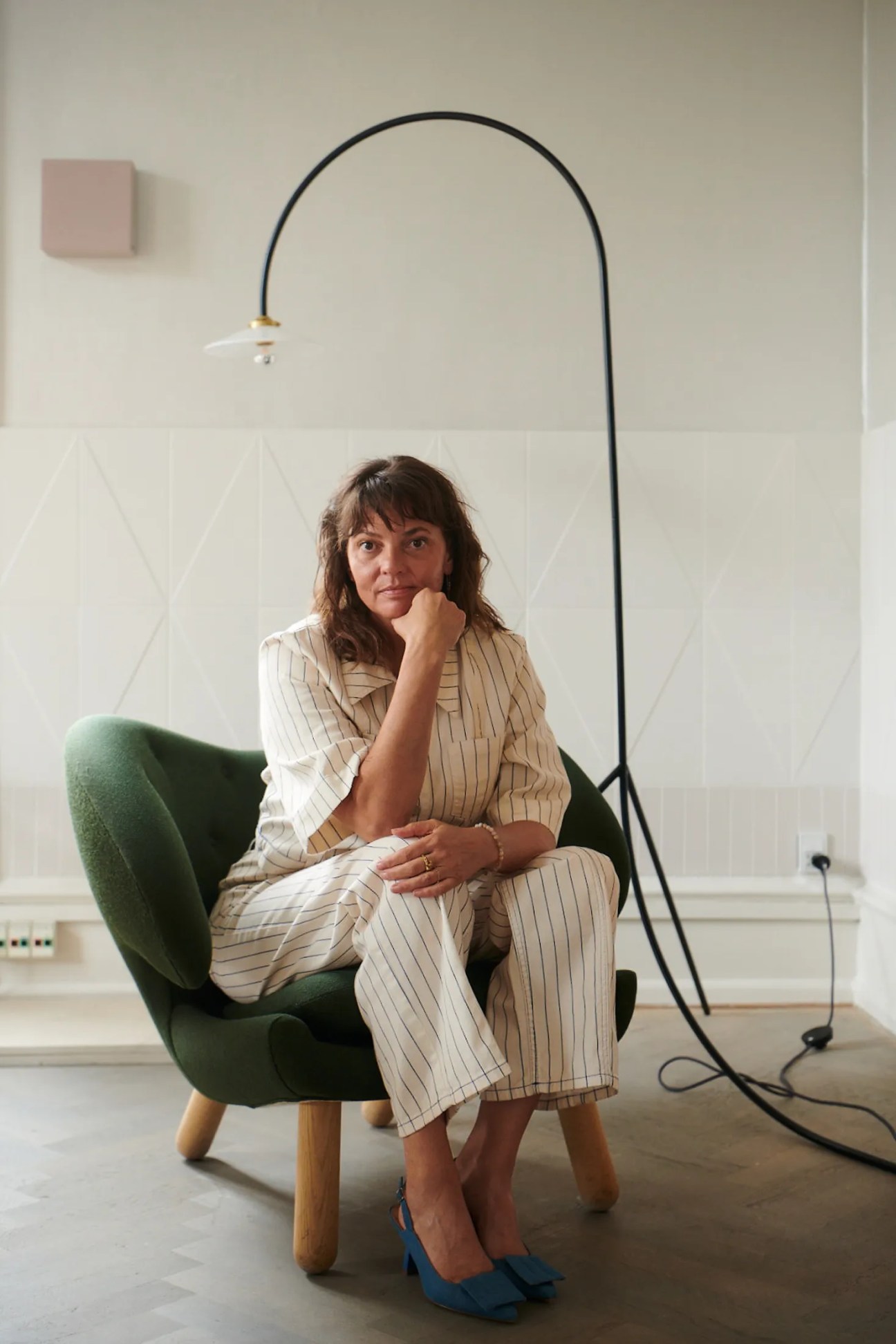
“We understand design on so many levels in Denmark,” says Maria Bruun, one of the new and award-winning stars of Danish furniture design. “It is so deeply rooted in us through everything we are exposed to, from the cycle lanes to the signage.” Monocle meets her in her Østerbro showroom, where she’s gathering pieces to send to a new exhibition in Jutland, to discuss the rise of the new generation of Danish design. “Design has been a huge part in creating good social structures here.”
Over the past 20 years, there has been an explosion of talent and success in Denmark. Today, design permeates every aspect of Danish industry and society, significantly boosting the economy and the quality of life here. But where did the wave start? Was this the Danish equivalent of South Korea’s government-supported Hallyu?
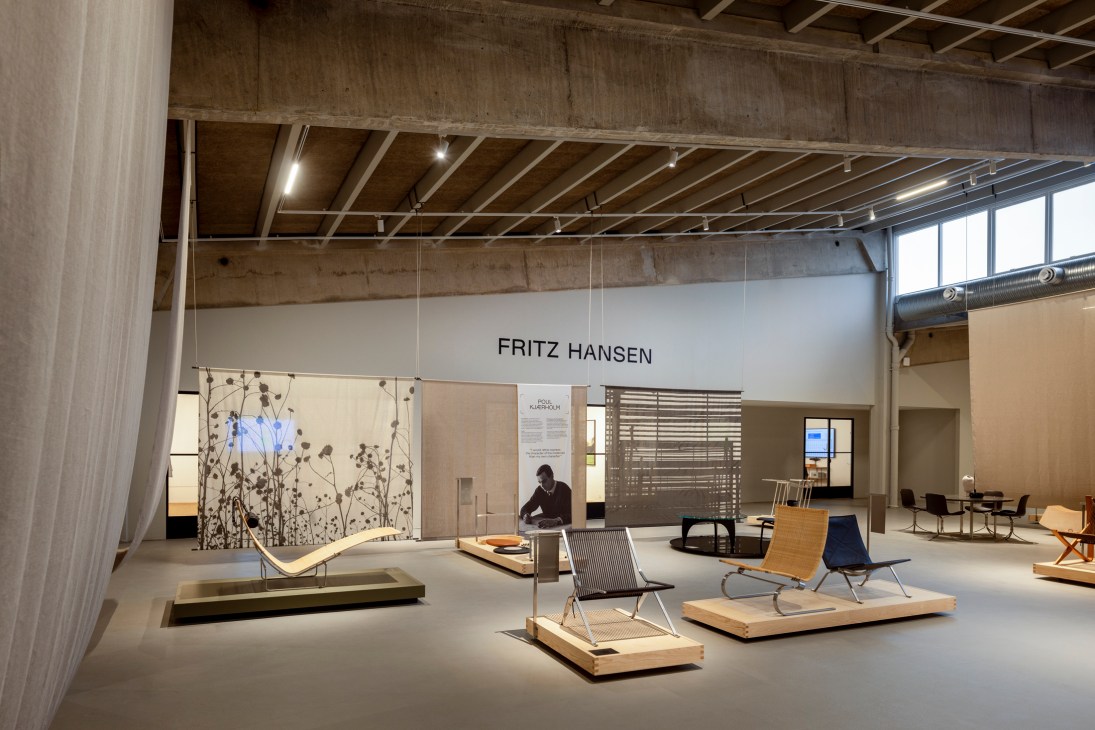
The country’s well-documented mid-century design heritage provided a foundation. “Danes have design in their DNA,” says Signe Byrdal Terenziani, CEO of Copenhagen’s 3 Days of Design – now the Nordics’ leading design festival.
“One reason is that, long ago, our government decided to support the industry by using Danish furniture in public spaces, waiting rooms and hospitals.”
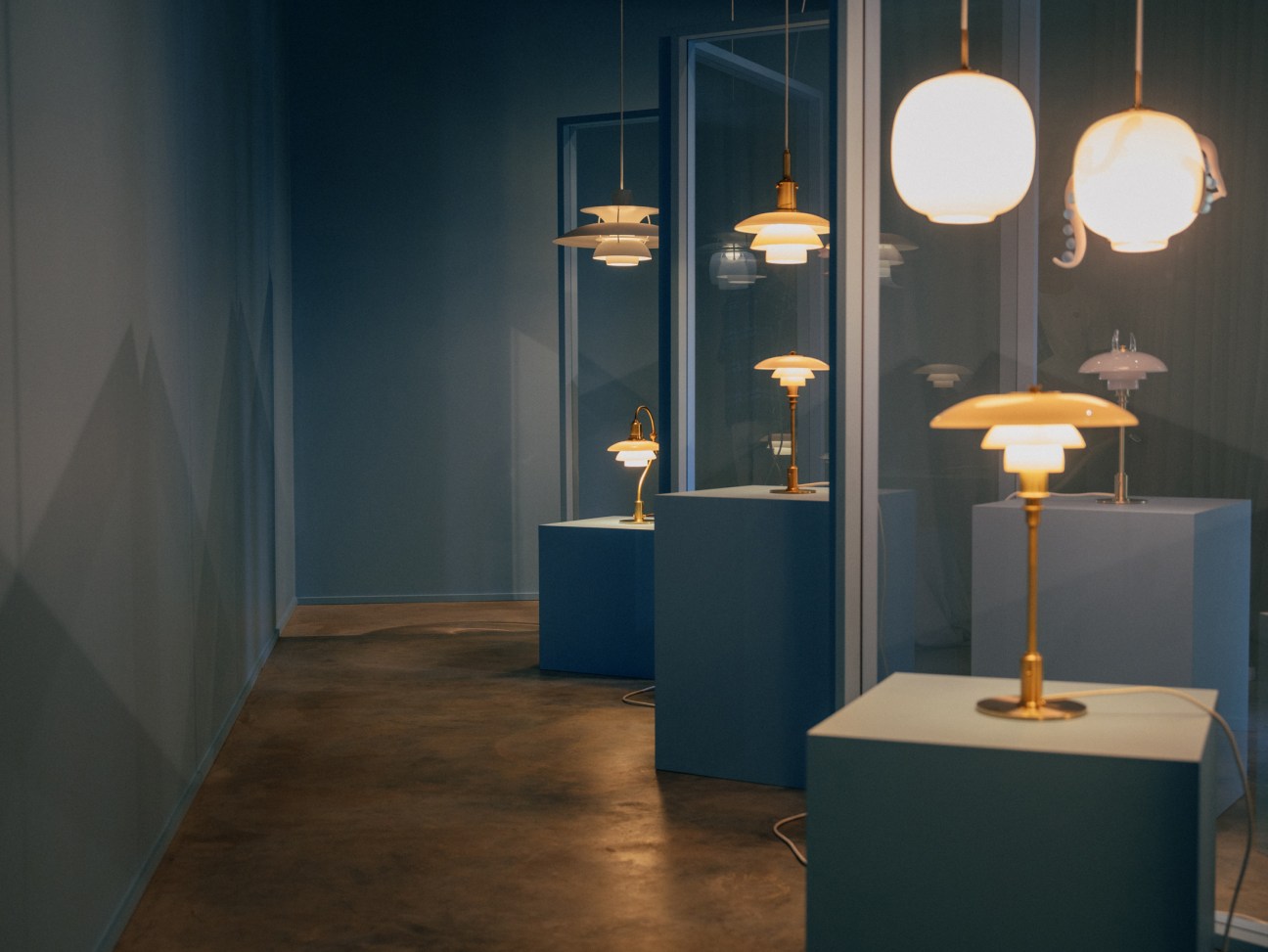
3 Days of Design
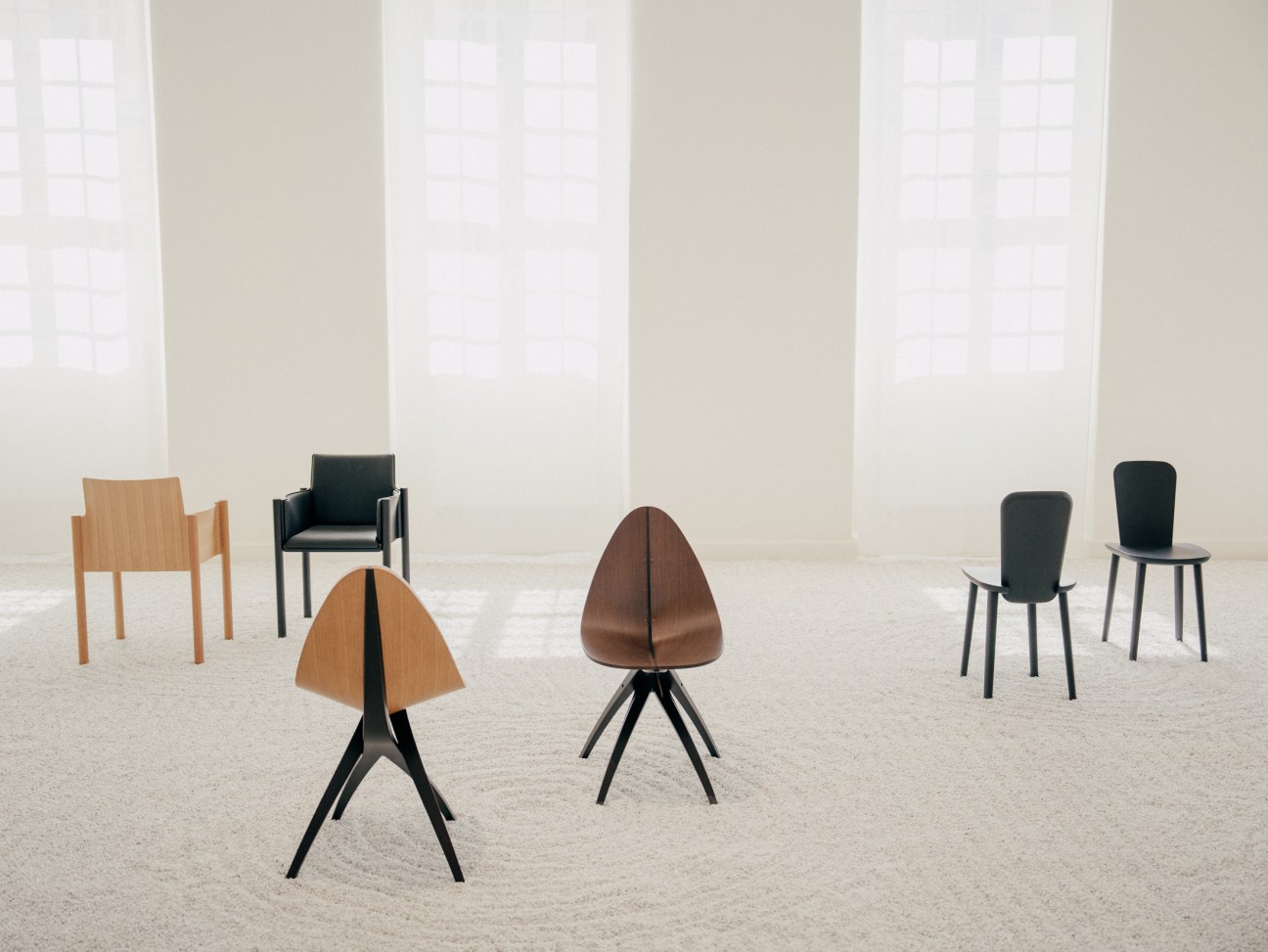
Founded in 2013, this event brings together 400 exhibitors every June, including local firms Vipp and Louis Poulsen, and global brands such as Koyori. It’s Scandinavia’s flagship design event, with furniture brands and independent creatives showing in galleries, halls shops, showrooms and churches around the Danish capital.
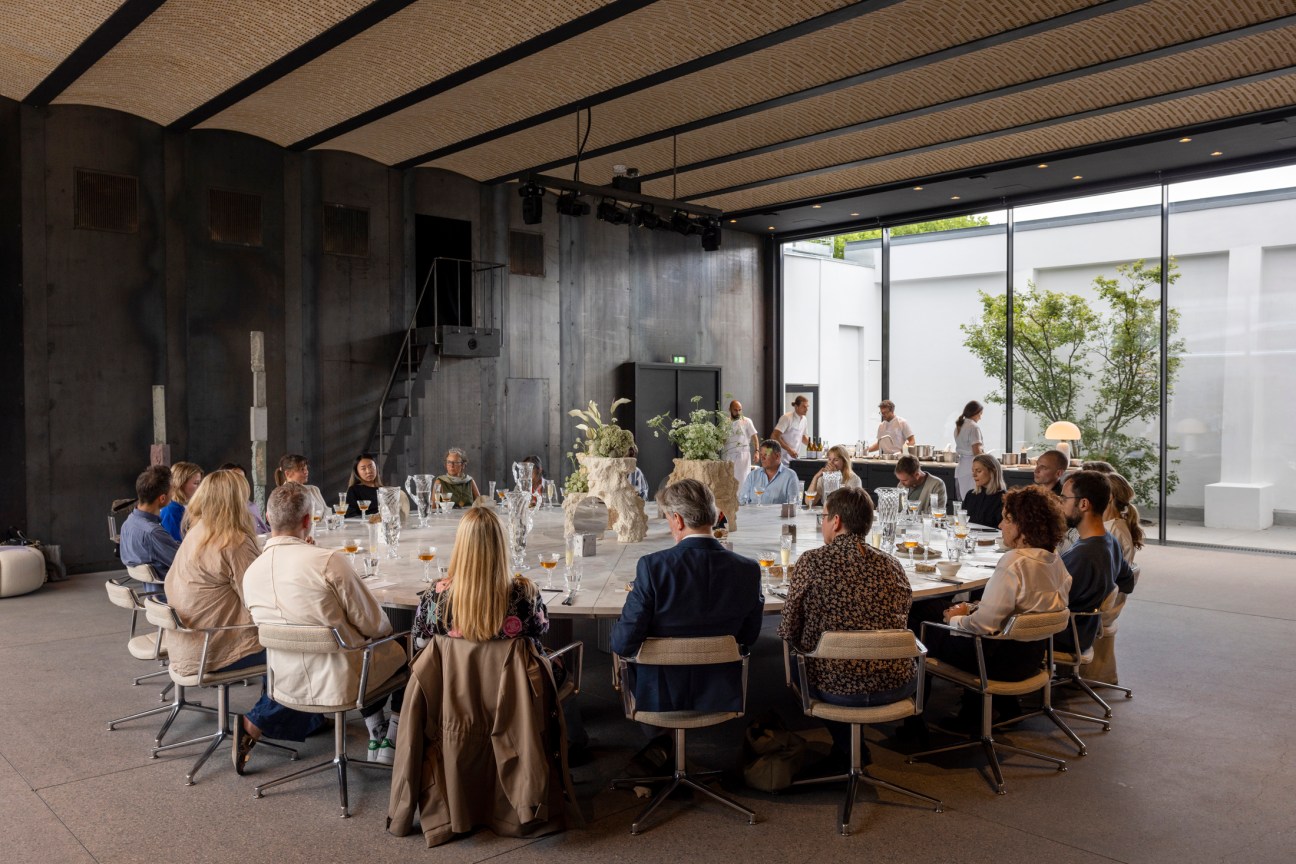
Wickie Meier Engström, director of textile recycling company Kvadrat Really, agrees. “My generation grew up with Arne Jacobsen chairs in our schools, Poul Kjaerholm in our banks. We are a whole nation brought up with very good design,” she says. “In the 1960s, using great designs in public buildings was a way for the expanding welfare state to show their citizens they were taken care of,” adds Henrik Taudorf Lorensen, who founded sustainable furniture brand Takt in 2018.
There are no net curtains in Denmark, so one of the great pleasures of visiting is marvelling at how well the locals live. Or, yes, snooping. You still see mid-century classics in many homes: the soft light from a Le Klint lampshade falling on a jazzy Finn Juhl sofa that cost more than a car; a PH lamp spotlighting a Børge Mogensen Sled chair for which you would gladly exchange a kidney.
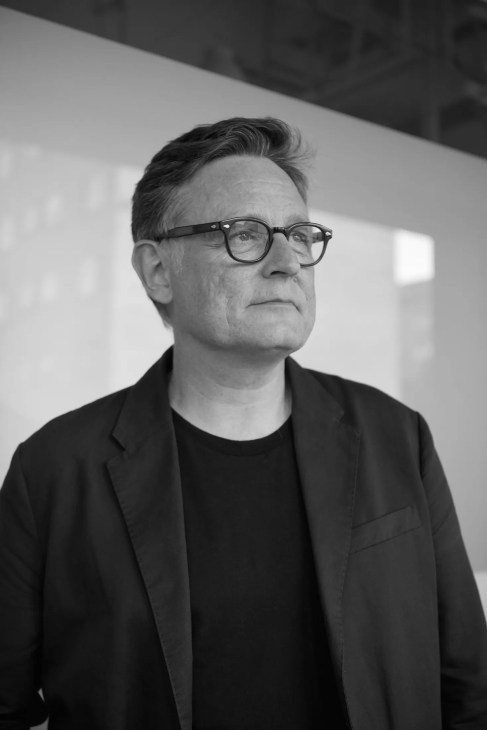
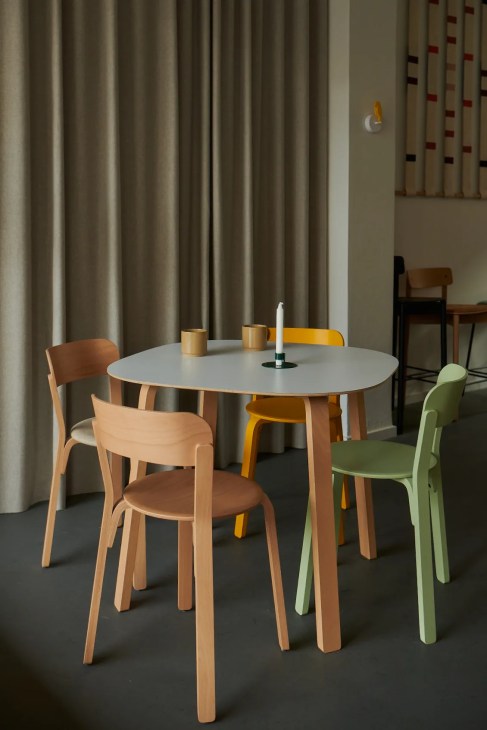
Sustainability
Pushing circularity and sustainability is a shared cause across the Danish design scene, with brands actively improving their green credentials. Case in point: Takt. Founded in 2018, it makes repairable or modifiable furniture with transparency over cost. It has a mark-up of two times its production cost, instead of the typical five time increase

But you will also encounter great contemporary design elsewhere too. It’s everywhere, from the moment you land at Copenhagen’s Kastrup, cross the Hørning hardwood parquet floors of the arrivals hall and pass directly to the driverless Metro, before wafting smoothly into a city where, thanks to local urban design guru Jan Gehl, humans are prioritised over cars.
Travel beyond the capital and you can enjoy the extravagance of an elegantly lit motorway bridge, visit spectacular museums such as Henning Larsen’s Moesgaard in Aarhus, or admire the clear yet characterful typography of train platform signage. Turn on the TV, meanwhile, and prime time on dr1, you can currently catch series five of one of the most hotly discussed shows of recent years: Danmarks Naeste Klassiker (Denmark’s Next Classics), in which up-and-coming designers compete to create – you guessed it – a new chair. Danes don’t just live with great design; they discuss it, fret over it, laud and applaud it. And that makes all the difference.
Spend some time here and you will also experience less tangible forms of thorough-thought design at work: the systems and strategies that help the country function so well; the design that positions the Danes among the richest people in the world per capita even though they work the fewest hours of any OECD country; the kind of design that means this supposedly agricultural nation of 5.9 million is home to the world’s largest shipping, toy and pharmaceutical companies.
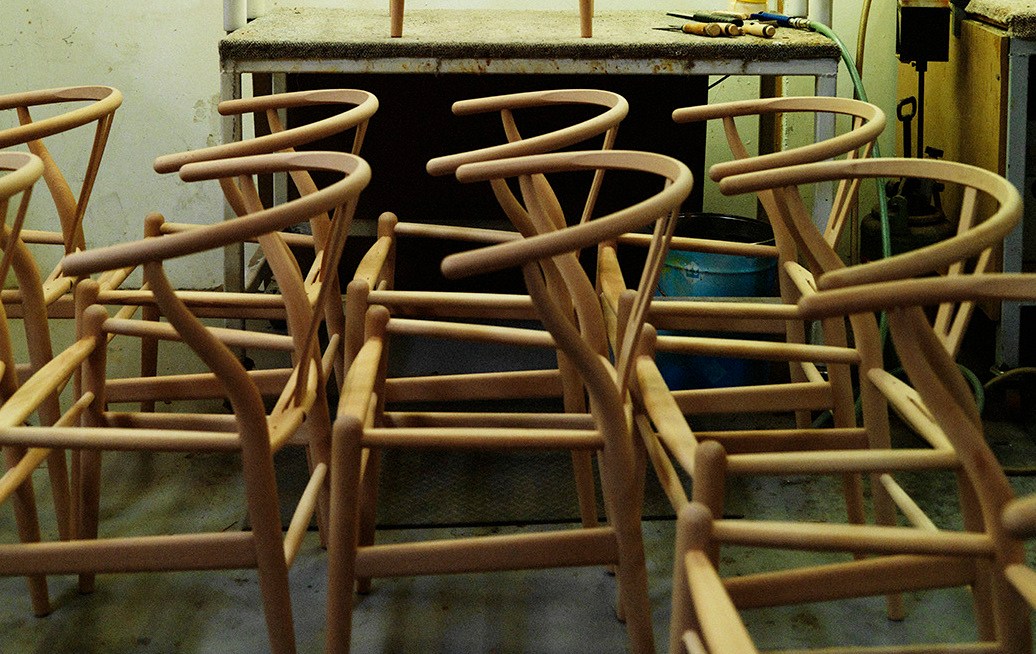
It’s big in beer, clothing, green energy, facility management and robotics too. Their pharma giant, Novo Nordisk, is the largest company of any kind in Europe in terms of share value. Novo, whose growth almost single-handedly kept Denmark out of recession last year, reportedly employs several times more designers than any of the largest design companies. This is nothing new: the great master builder Arne Jacobsen used to design its factories, its furniture and its in-house magazine. Design seemingly pervades every aspect of business and private life here.
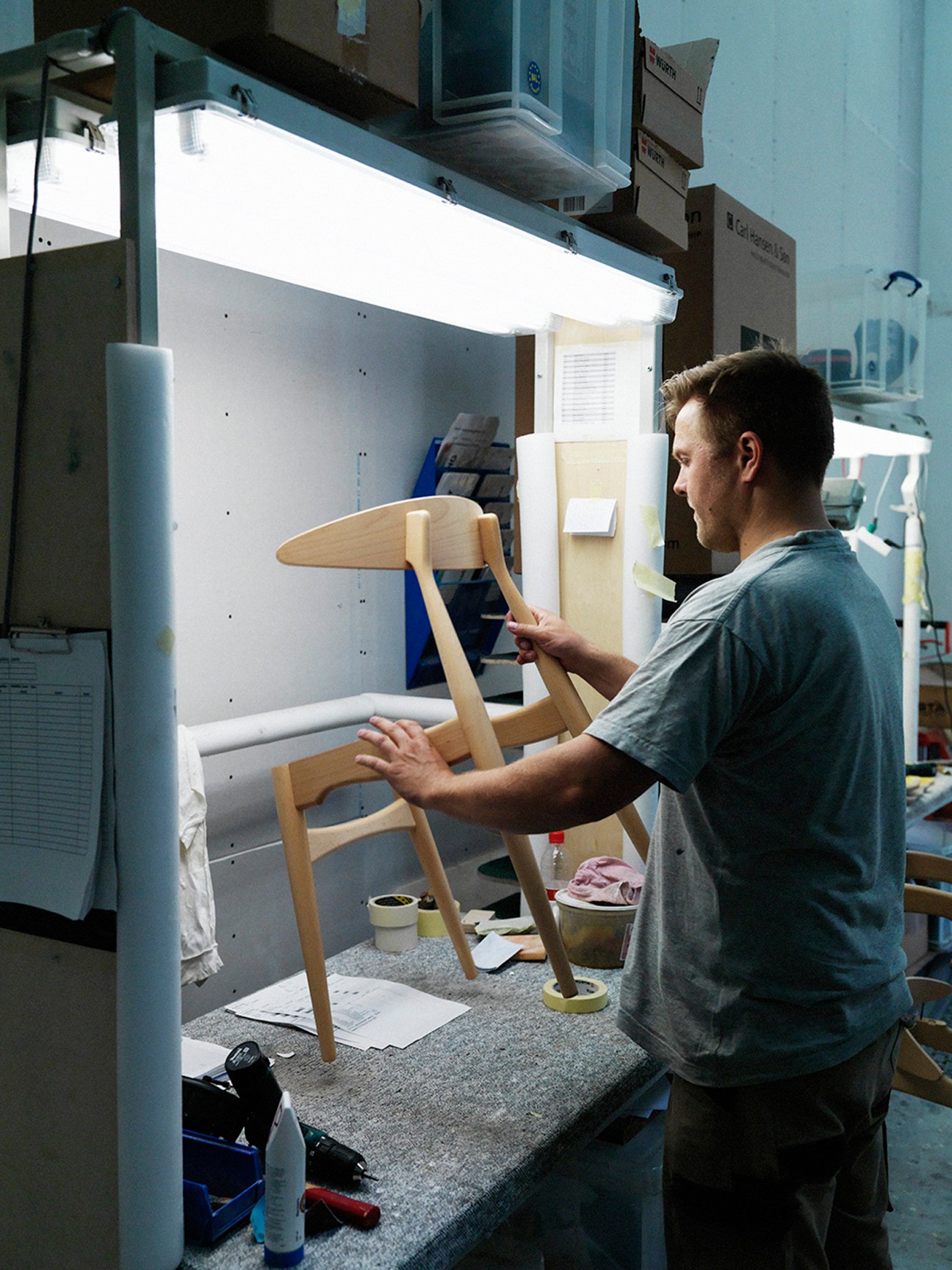
According to public-private marketing organisation Creative Denmark, last year the combined creative industries generated a revenue of €57.1bn (total Danish GDP is €373bn). That figure has grown by 34 per cent since 2014 and more than 60 per cent is directly from design-related activities. But these days, it is more difficult than ever to properly quantify the whole contribution of design to the Danish economy because this new design boom permeates everything, from top to bottom.
Heritage brands
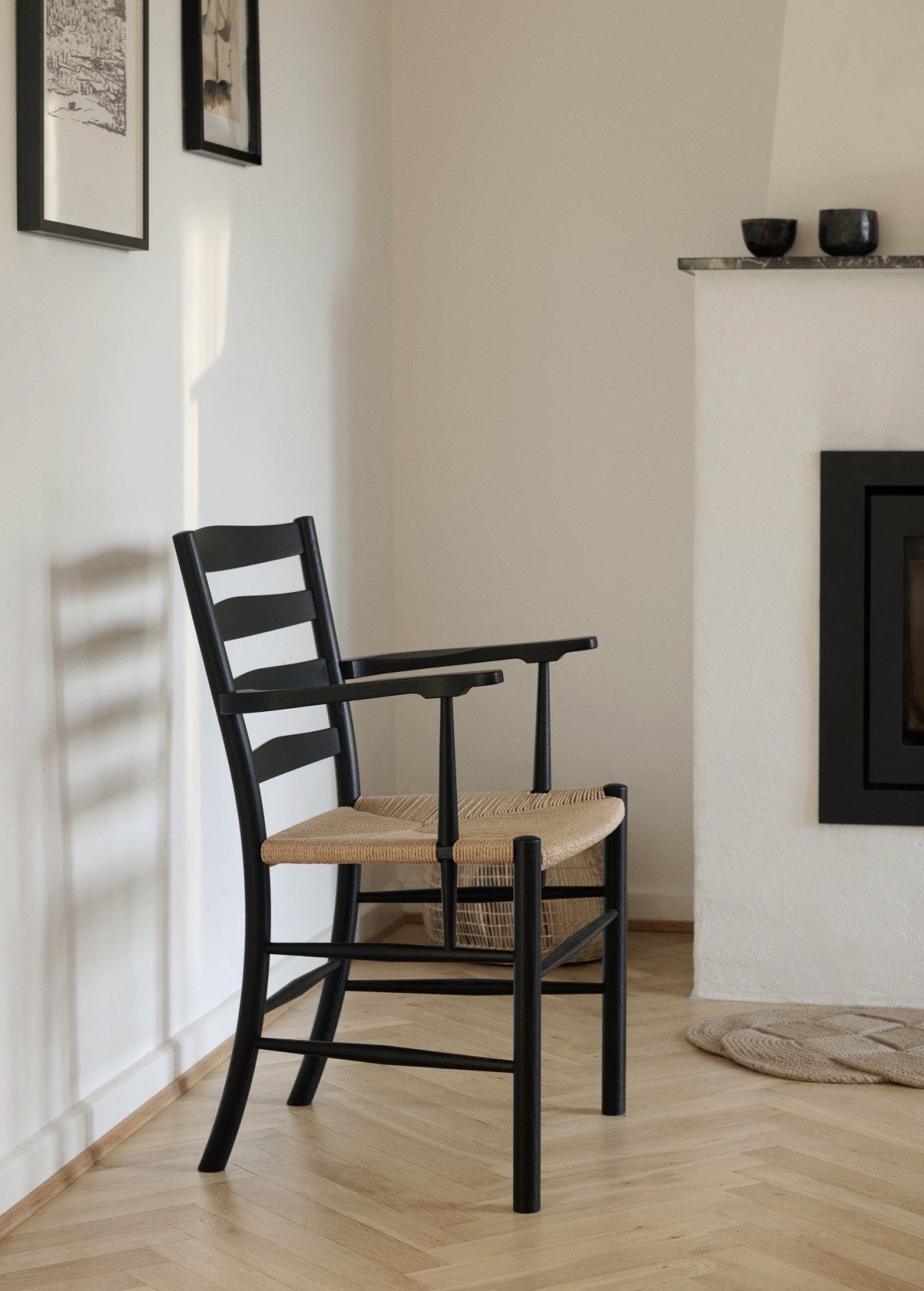
From the late 19th century to the 1960s, Fritz Hansen, Fredericia, Carl Hansen & Søn and Kvadrat established Denmark as a global design destination. It’s a legacy that they’re building on, with initiatives like Kvadrat Really, which turns textile waste into hardboard for furniture production, tabletops and felt.
But it wasn’t always this way. For decades those mid-century titans of design were more of a burden than an inspiration. “A discussion we had for a long time in the design community was that Arne Jacobsen was so broad that nobody could pass him,” says Bo Linnemann, founder of Kontrapunkt, arguably Denmark’s leading brand agency of the past 40 years. Monocle meets Linnemann and his son, Philip, a partner at the firm, at the former’s home (which just happens to be the house and studio that Jacobsen built for himself in Klampenborg in 1951). Linnemann, however, believes the current generation of Danish designers are finally moving beyond the legacy of Jacobsen and his peers.
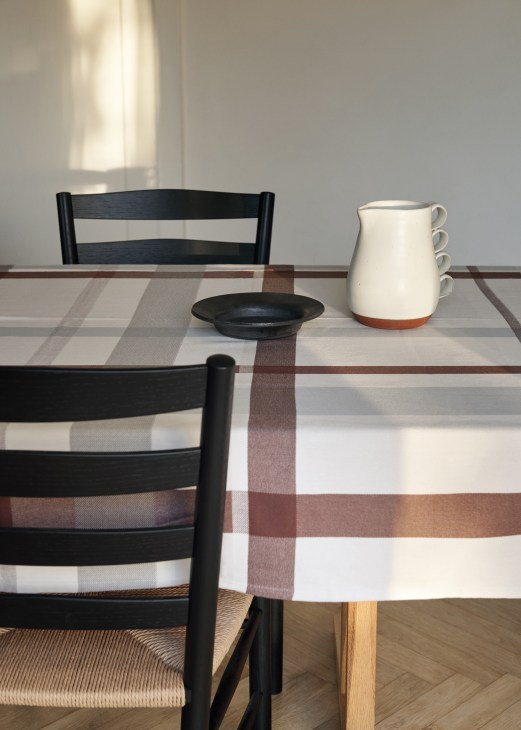
One visible manifestation was the rise of furniture and homeware companies such as Hay and Muuto, which brought high-quality Danish design to the high street in the 2000s (both were subsequently bought by US furniture giants). Bjarke Ingels, now a world-renowned architect, founded his studio, BIG, in 2006, with its first iconic building, 8 House, completed in 2011. Key fashion names such as Stine Goya, Henrik Vibskov and Ganni emerged, the latter pioneering mass-market sustainable fashion. Multi-disciplinary design studios such as Norm Architects and OEO, and furniture companies like &Tradition, Frama, Mater, and Menu (now Audo) redefined contemporary Danish interior style. DesignIt, Kontrapunkt, Barkas and e-Types made huge waves internationally in strategy, brand design and typography. And a shoutout, too, to Vipp, which somehow turned a pedal bin into a lifestyle.
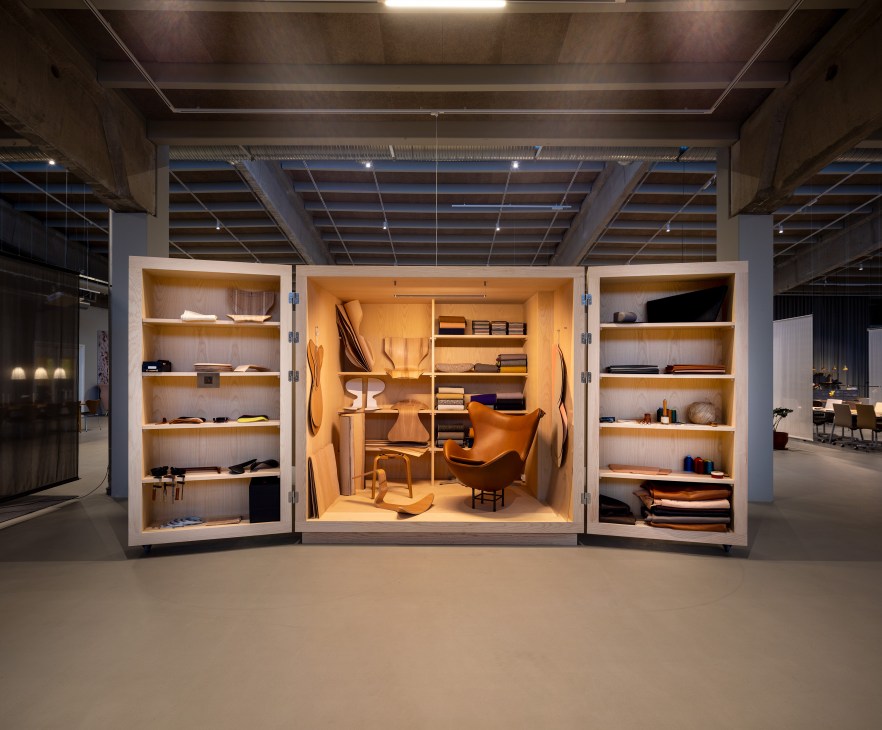
The great industrial designer Cecilie Manz came to prominence around this time too, as did Dorte Mandrup, one of the country’s most acclaimed architects of the past 20 years. And crucially, two new trade fairs blossomed that transformed the way their industries spoke about the world. The biannual Copenhagen Fashion Week (which runs alongside the Copenhagen International Fashion Fair) is a leader in sustainability in the industry. Meanwhile, furniture-focused 3 Days of Design shirked presentations in trade halls for sunny showcases in showrooms and galleries in the middle of Copenhagen’s summer.
There is a consensus that the one thing we are definitely not looking at here is a government-driven Danish Hallyu. “It came from industry and creativity first,” Ditte Lysgaard Vind of the Danish Design Center tells Monocle. “We are independent, for instance – and 3 Days of Design has never had government grants.”
“The government produced a growth plan for the creative industries in 2019,” says Lukas Eedes, who is responsible for fashion at the (partly government-funded) Creative Denmark. “That was a bit late, if you ask me. But the creative industries were already riding a wave by then.”
The state may not have initiated anything but it has always offered financial and advisory support for small companies and start-ups in the creative fields. “The government does a lot with export initiatives around the globe,” says Jacob Nannestad, who co-founded Umage, a furniture and lighting company with an emphasis on sustainability, in 2008. He has recently been in London and Seoul with other Danish brands as part of a government promotion. “The government helps make smaller companies stronger by bringing us together in a joint export project.”
Another key source of state support is the DKK29.4m (€3.94m) awarded to crafts and design annually by the Statens Kunstfond (the Danish Arts Foundation, part of the Ministry of Culture), as well as other money donated by charitable foundations, of which there is an extensive ecosystem in Denmark. The Danish welfare system plays its part too, of course. Not only are university tuition fees paid but students receive DKK5,500 (€740) a month. Upon graduation, there are decent unemployment benefits and other welfare provisions if need be. As Marie Grønkaer, co-founder of graphic design collective Alexis Mark tells Monocle on a visit to its street-level studio and event space on the edge of Nørrebro: “It’s a huge factor that you are paid to study – you have no loans to pay off. And you have the freedom to fail.”
In terms of the design education itself, a dramatic change in approach at the turn of the century seems to have been another catalyst behind the boom. “From 2000, we included research in education – and that was a paradigm shift,” says Mathilde Aggebo, dean of design at the Royal Danish Academy of Architecture, Design and Conservation. Design went from being a practical, craft-based education to a more rigorously academic course. “Our superpower in Denmark is the artistic,” says Aggebo. “But it needs to be combined with the latest knowledge, and now our students know what they are talking about, they know where in the design process they are and can analyse and reflect.”
This shift to a more academic-oriented design education might explain the simultaneous rise to prominence of the social sciences within design and architecture. “We think of ourselves as in the centre of the triangle of anthropological thinking, design thinking and strategic thinking,” says Louise Vang Jensen, co-CEO of Is It a Bird, a pioneering strategic design agency with ongoing partnerships with Danish giants such as Maersk, Carlsberg and Velux windows (and a very cool open-plan office in a converted garage in Valby). Is It a Bird’s work starts with the end-user – their needs, their context – using extensive social scientific research to help companies form their products. For the past decade, Is It a Bird has helped to hone Novo Nordisk’s patient-centric. “In our view, innovation doesn’t start with a great idea for a thing,” says Vang Jensen. “It starts with empathy and being curious, being aware of not knowing.”
Bo Linnemann (whose Arne Jacobsen home Monocle returns to) sees that humility as a key characteristic of the Danish approach. “Something I see when we work abroad is that our designers tend to listen more to their clients. We try to understand the challenge rather than come with a solution we believe will work.” Philip Linnemann traces this back to the 1970s. “It’s rarely talked about but the co-operative design movement that was founded here became participatory design in the USA, which became design thinking,” he tells Monocle.
New generation
Brands such as Hay, Muuto and & Tradition are producing high-quality furniture and homeware, complemented by rising talent such as Maria Bruun, who works at the intersection between art, architecture and design.
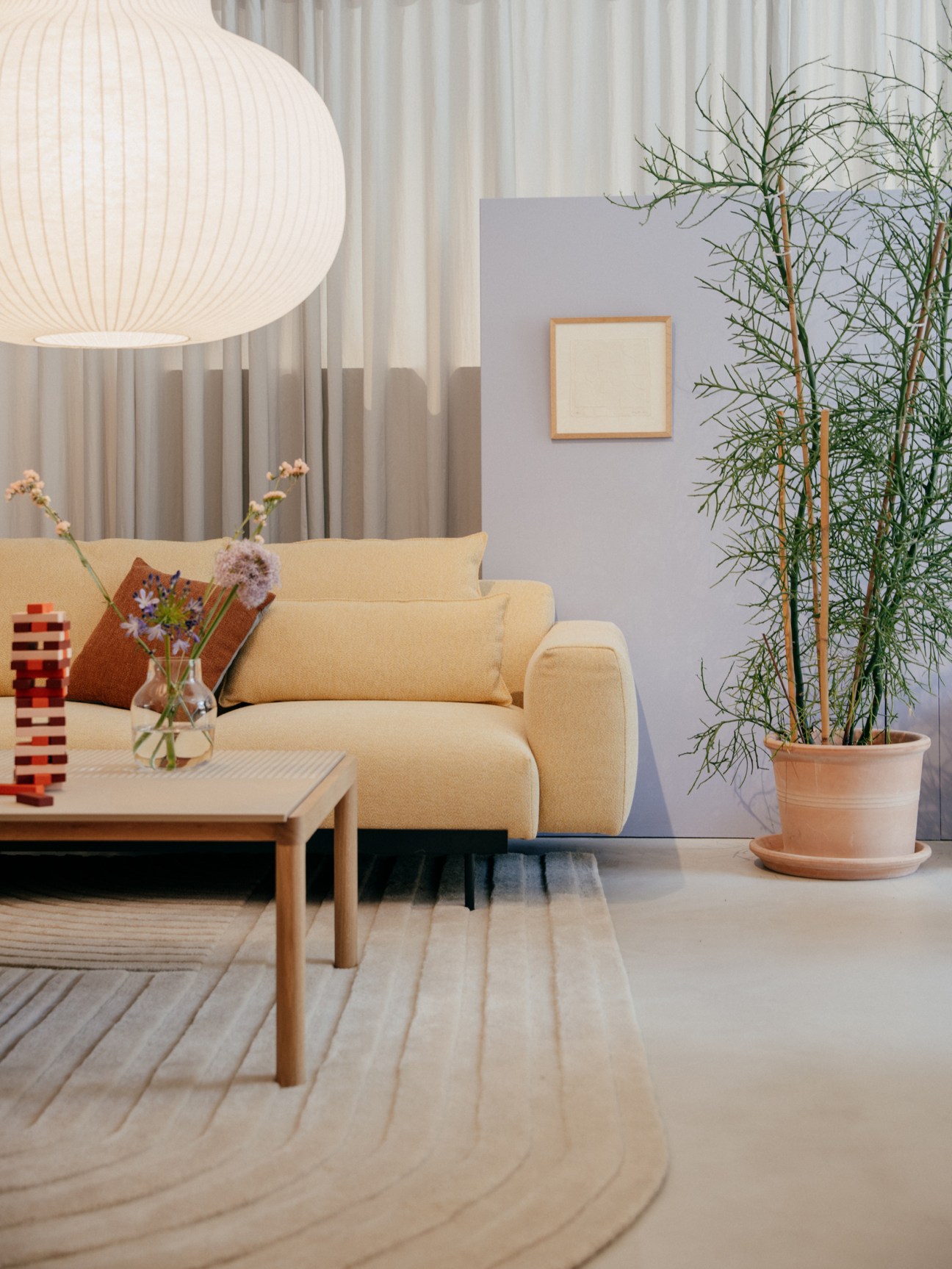
Bo Linnemann is a certified legend in Danish typography and brand design. His clients include Novo Nordisk, Lego, the Danish royal family, the government ministry identities and numerous museums and municipalities. It is he that the Danes have to thank for that wonderful train service font, Via, for instance. He also has an interesting take on what happened in Denmark to spark the new boom. “I give a lot of credit to the Dogme 95 film movement and the Noma project. Both raised awareness of creativity in Denmark and influenced the design community.”
Noma, with which Kontrapunkt also worked, has been cited by many as a major catalyst for the surge in Danish design. “That passionate group of people inspired others, like the ripples on a pond,” says 3 Days of Design’s Terenziani. “There is a symbiotic relationship between food, restaurants and interior design that Noma showcased,” agrees Kristoffer Li of Alexis Mark.
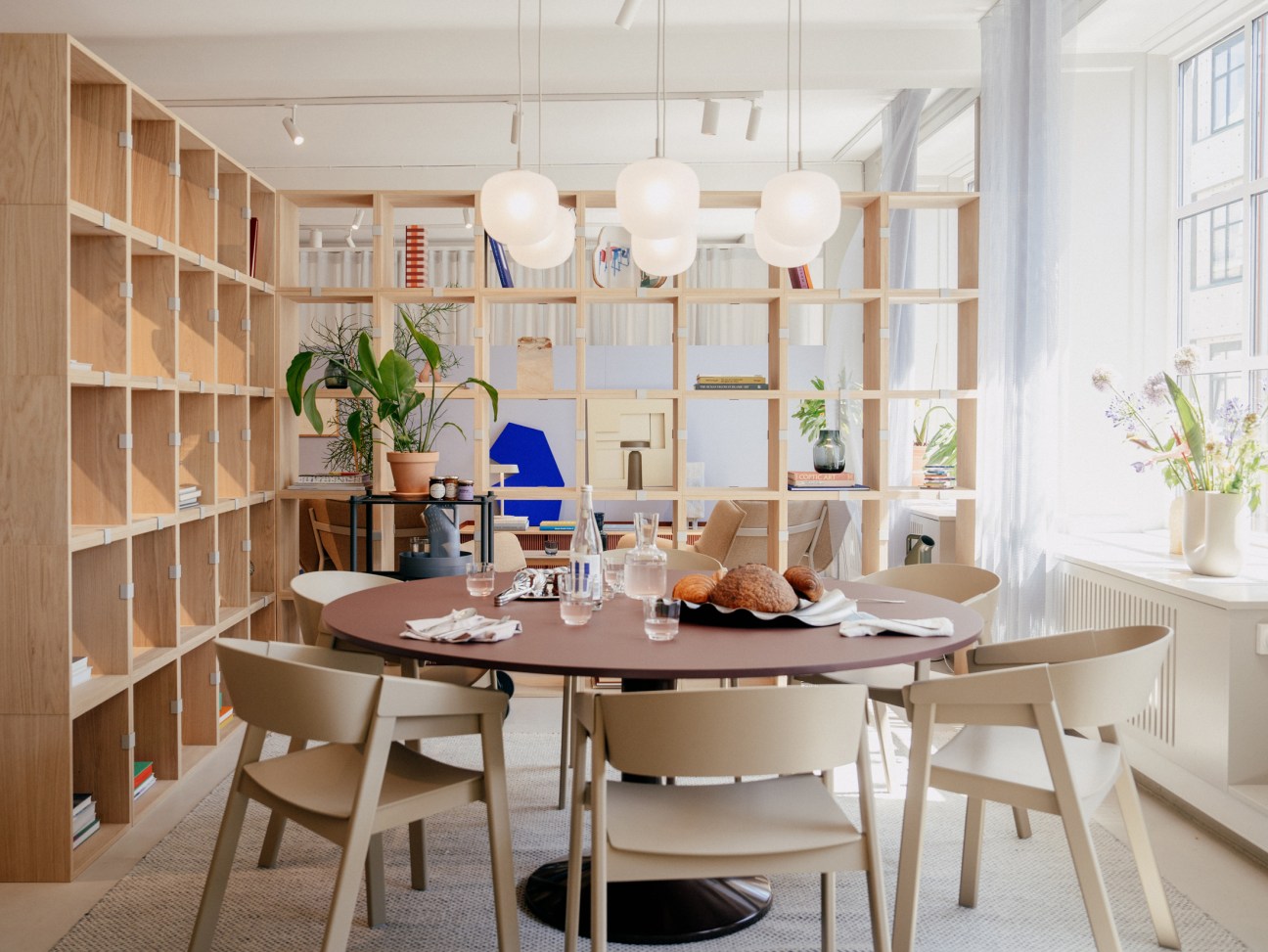
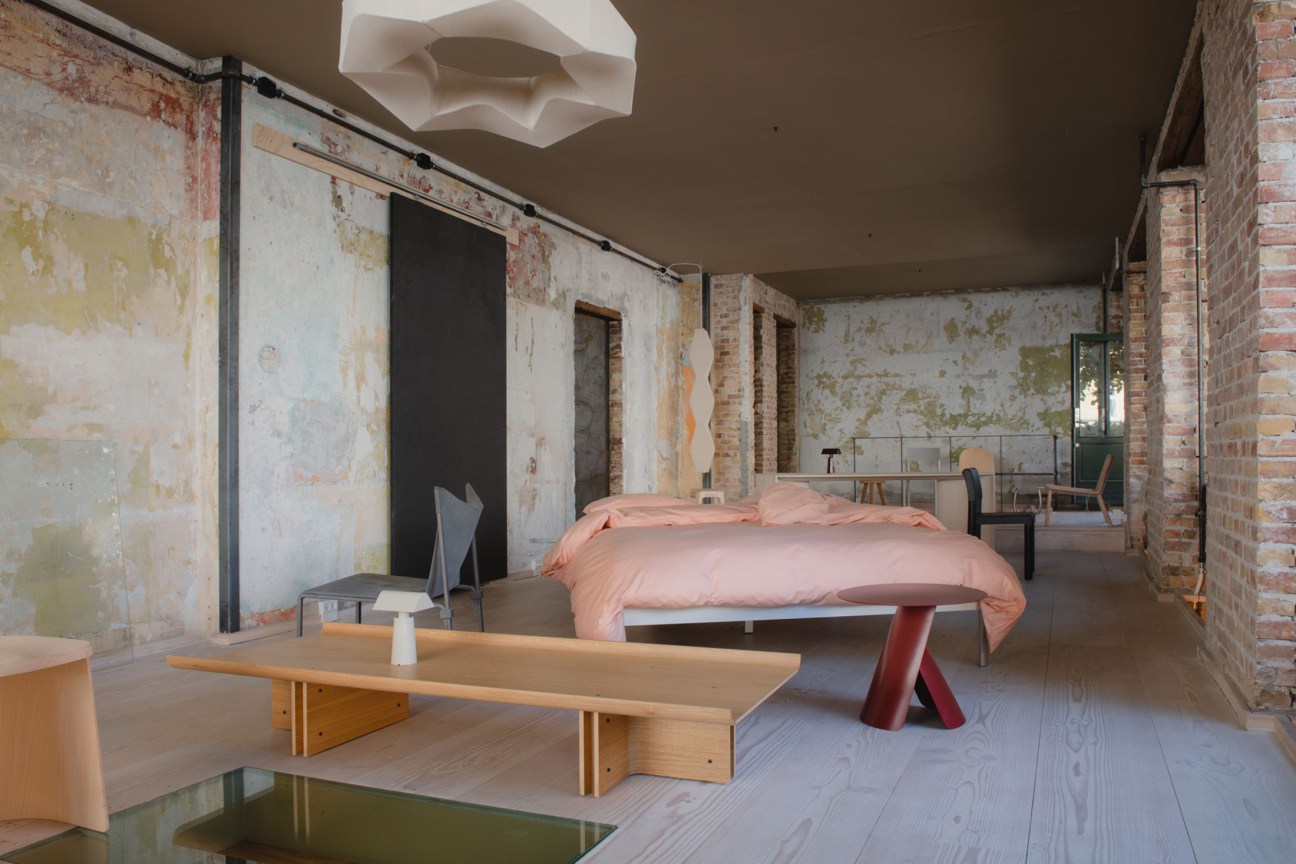
There was definitely something in the air in Denmark at the turn of the century, then. But there were seismic shifts happening globally too. In 2008, the economic crash and eurozone crisis disrupted an unprecedented period of growth and consumption. Around the same time, Denmark took up semi-permanent residence at the top of the United Nations’ World Happiness rankings. With rampant capitalism no longer so appealing either economically or environmentally, the whole world wanted to know the little nation’s secrets.
Emerging talent
Denmark’s strong social safety net inadvertently helps to nurture talent. Initiatives like Refugio, a shared studio space founded by furniture maker ReFramed and design practice Asca Studio, provide a welcome space for this young community. Designers such as US-born Cassandra Bradfield, founder of Asca Studio, and Italian-Uruguayan designer Matteo Fogale work here.
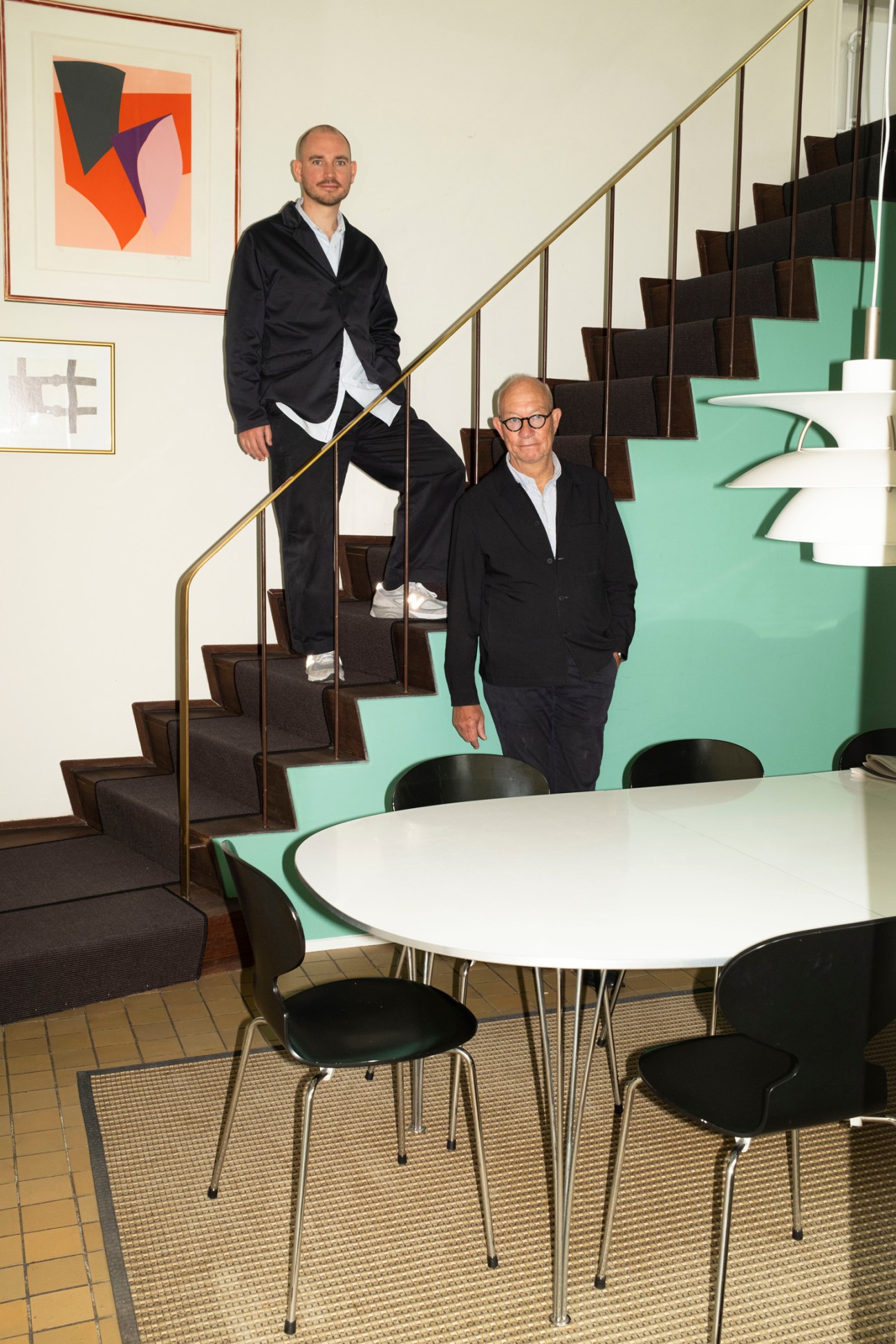
Graphics, branding and strategy
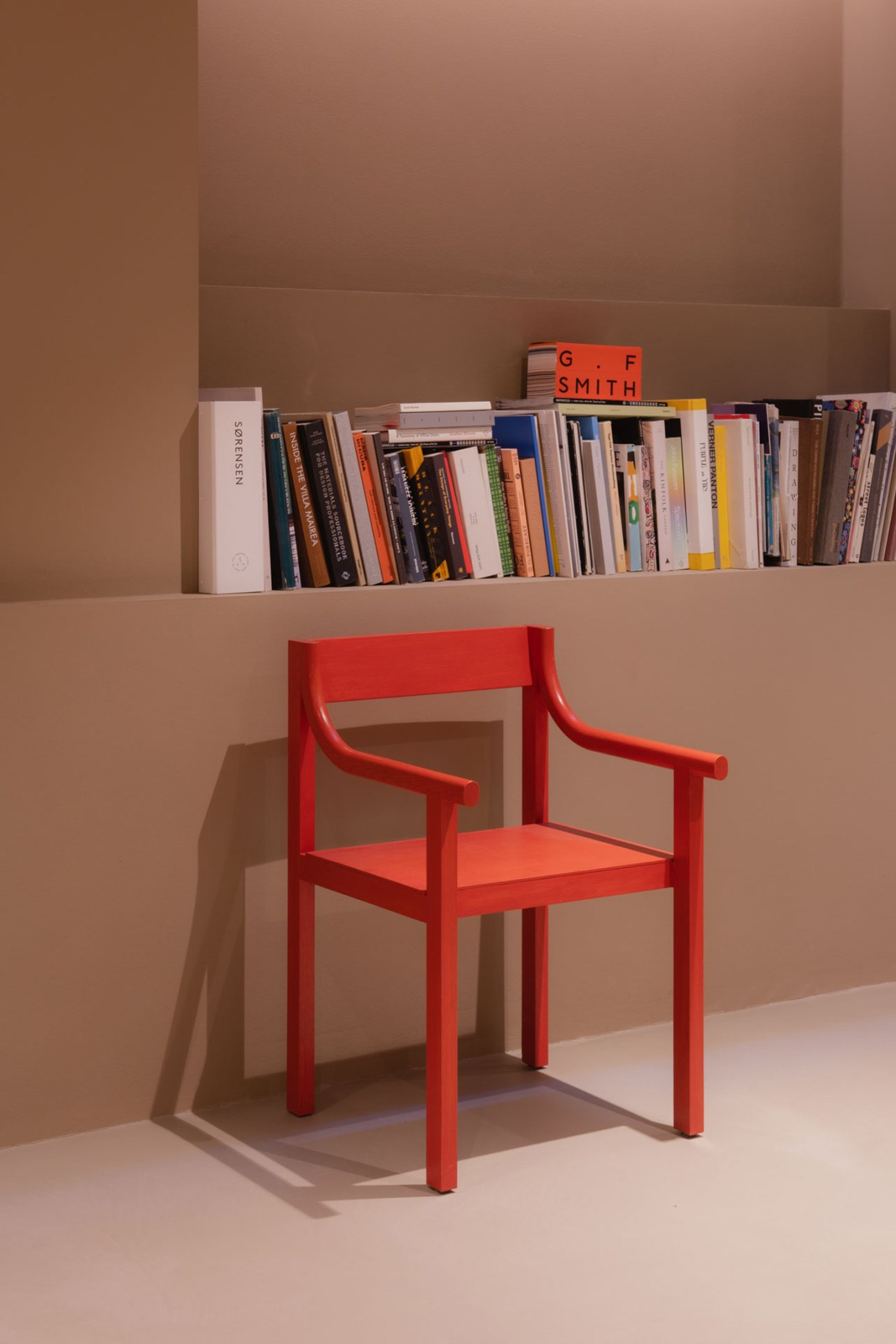
Alexis Mark produces award-winning typography, visual identity work and publications. There are also the likes of Is It A Bird, led by Louise Vang Jensen, which consults on strategy, and world-famous brand agencies such as Kontrapunkt.
Serendipitously, around this time, other Danish creative fields such as fine arts, film and gaming stepped up to play a valuable role as a shop window for the country’s design. DR’s globally successful drama series – in particular political drama Borgen and noir thriller The Bridge, a co-production with Sweden’s SVT – didn’t just depict a progressive, economic- and gender-equal society and open democracy, they also showed the world the refreshingly simple, functional, yet elegant way the Danes live. Did you happen to catch the Poul Henningsen Artichoke lamps and Mogensen sofas in fictional prime minister Birgitte Nyborg’s beautiful home and office?
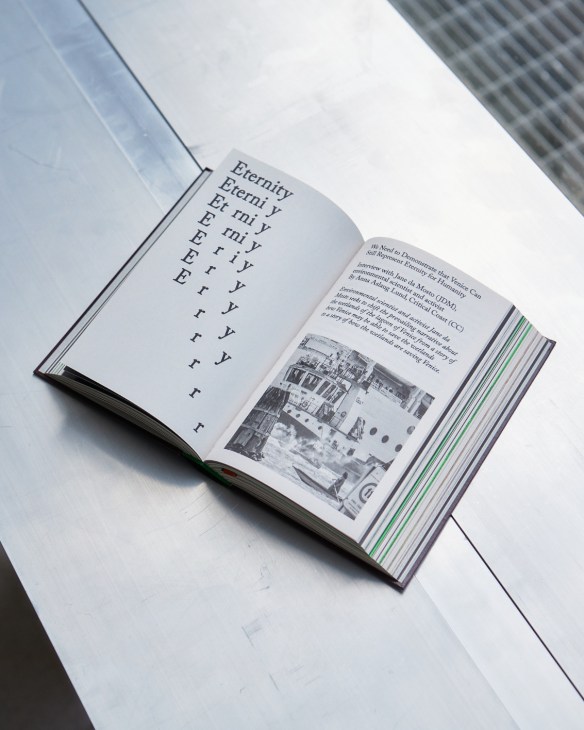
The future challenge is, of course, climate change. “The sustainability focus has thrown new energy into the mix,” says Charlotte Engelund Thomsen of Creative Denmark. “Danish design is still aesthetically strong and functional but many companies are adding a new layer of sustainability.” For Terenziani, it’s imperative that the future of Danish design also involves human sustainability. “I would love designers to challenge the way we live. Be open to what scares us, because that’s how we learn and move on instead of just talking about, ‘We have this new couch in this new colour’.”
Aggebo also foresees a crucial role for designers in the green transition. “Good design can make sustainability high-status, it can seduce people to do differently.” It’s a point that Engström of Kvadrat Really agrees with. “Sustainability brings a new aesthetic and a new price point,” she says. “A new design language is emerging.”
And it’s this new design language that is being pushed not just by those in Denmark’s design industry but also the swathe of businesses – from pharmaceutical giants to shipping firms and globally renowned architecture studios – that readily employ and engage with the nation’s designers. As a result, Denmark has pulled ahead of its Nordic neighbours, helmed by a happy blend of talent, priorities and circumstances – a position that the design-obsessed Danes look set to consolidate.
The essential survival guide on how to beat the heat in the city
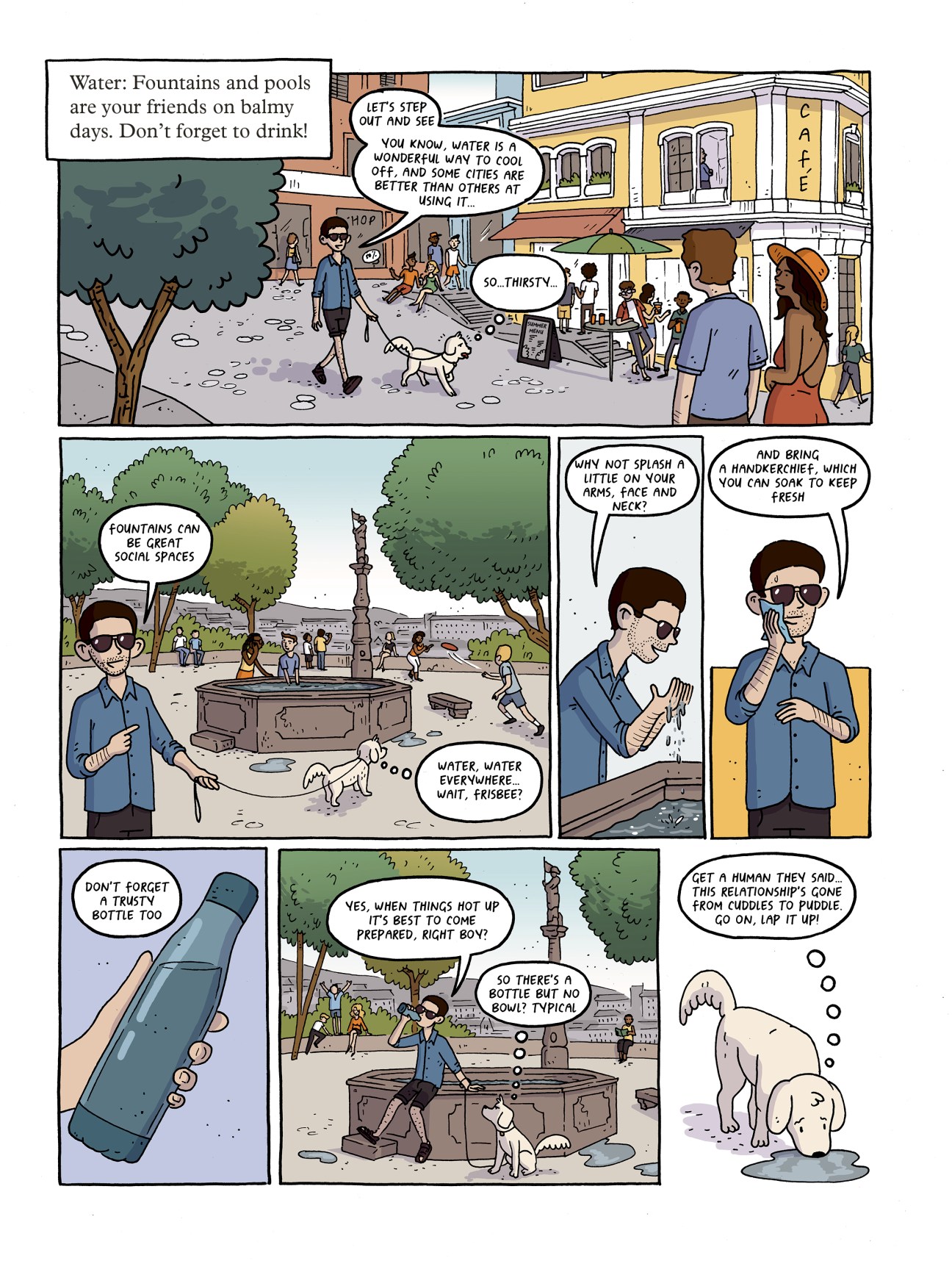
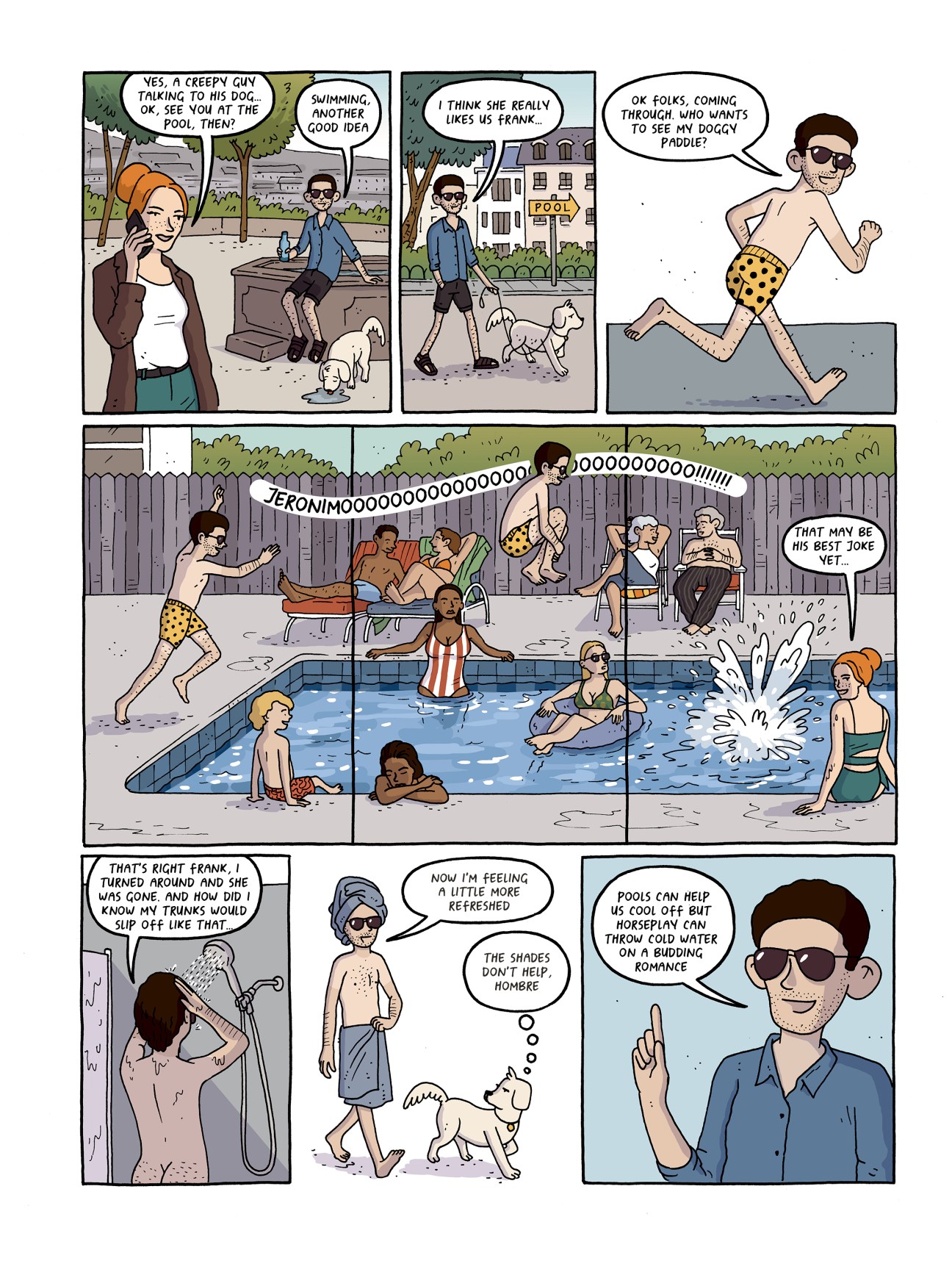
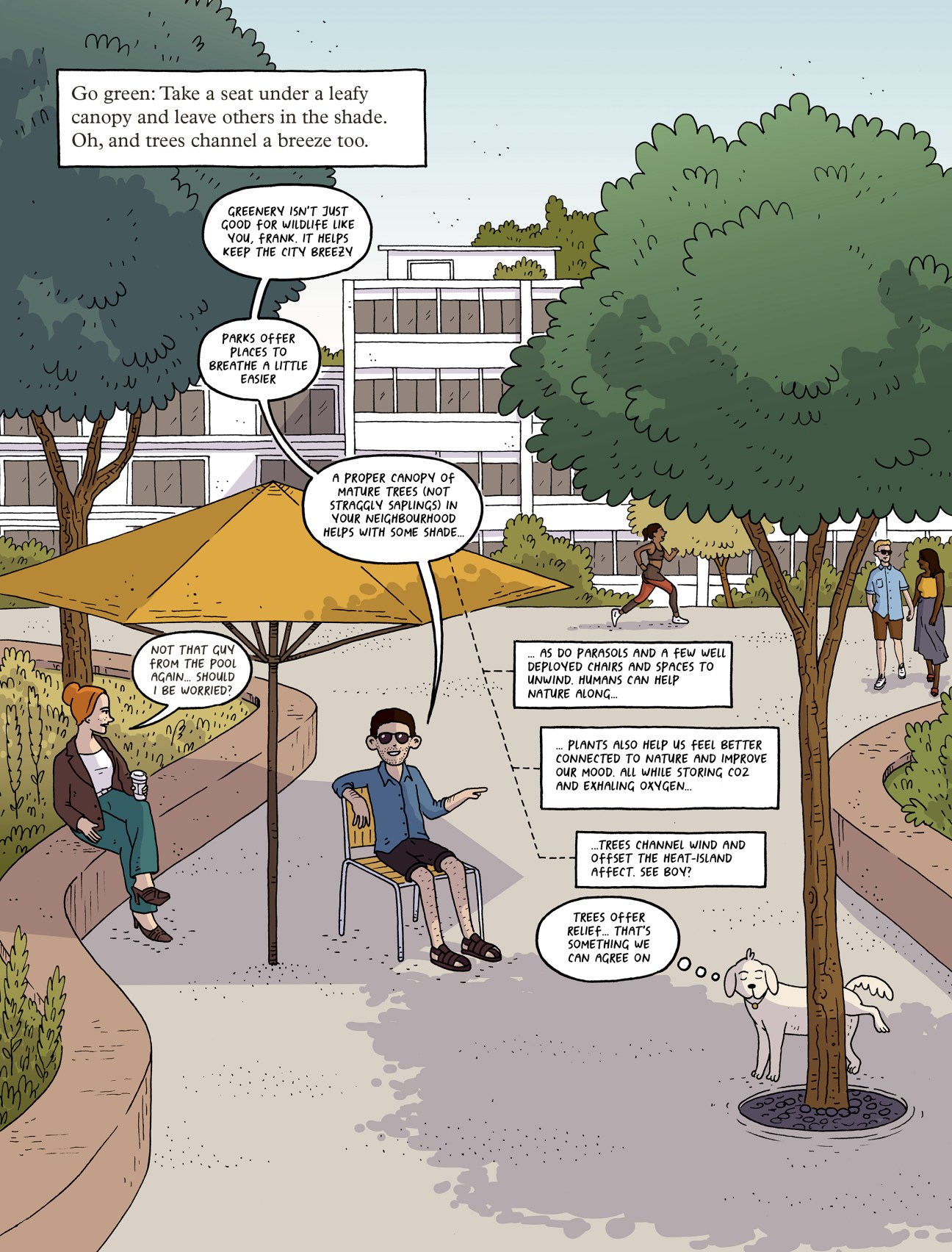
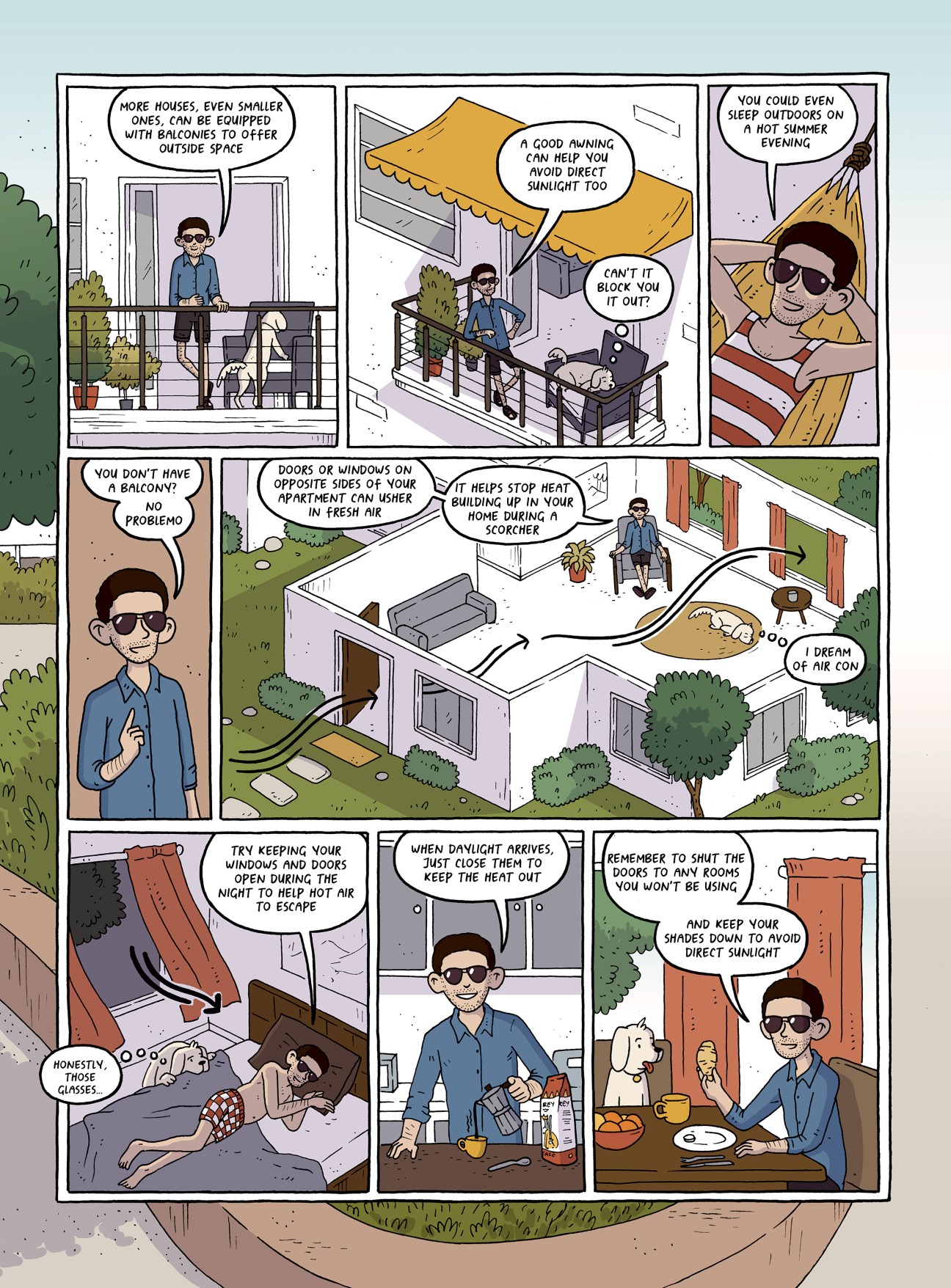
While people in cooler climes often can’t wait for warmer weather, many cities need to adapt to stay productive and comfortable when the heat hits. Some wisdom is age-old (channelling a breeze, blocking direct sunlight) and some is part of a growing body of newer evidence (greenery to counter the heat-island effect). All will be necessary to help cities survive hotter summers and unpredictable weather.
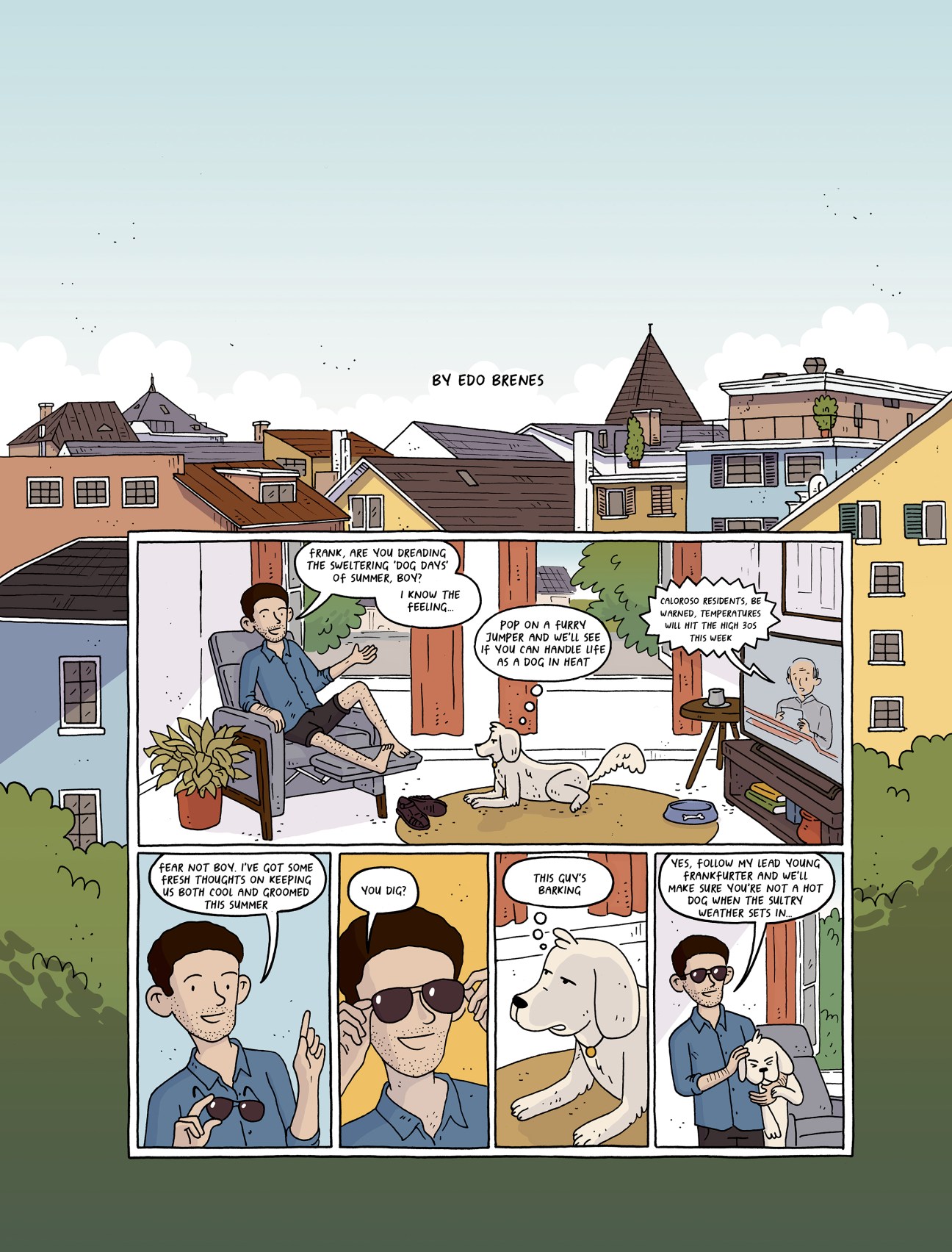
The good news is that there are global benchmarks to draw on. Singapore’s garden city credentials, Venice’s drinking fountains, Zürich’s lake and awnings or the whitewashing of Aegean buildings. Every little helps. So we asked visual artist Edo Brenes to take us through some of the ways in which we can all stay cool this summer.
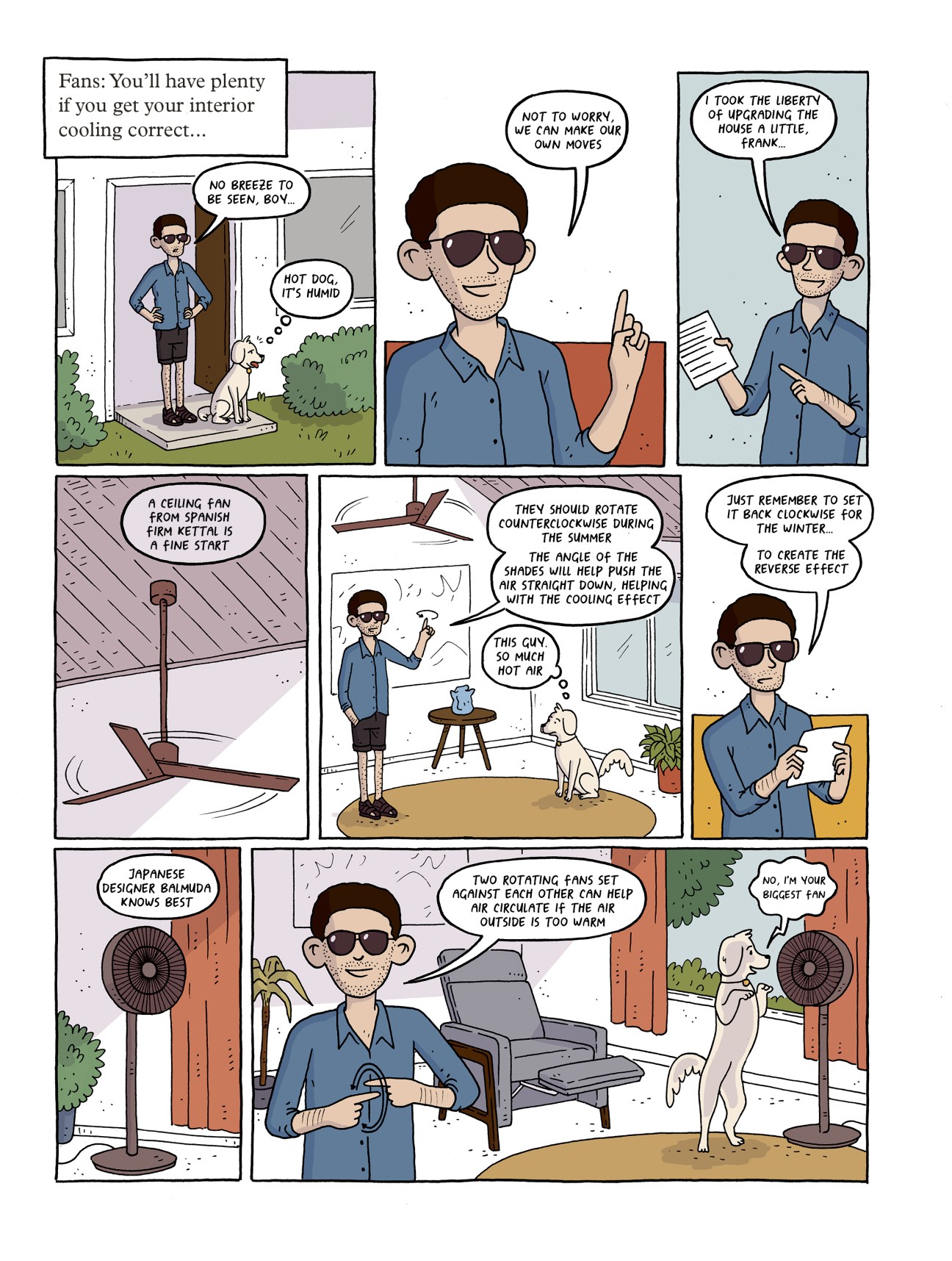
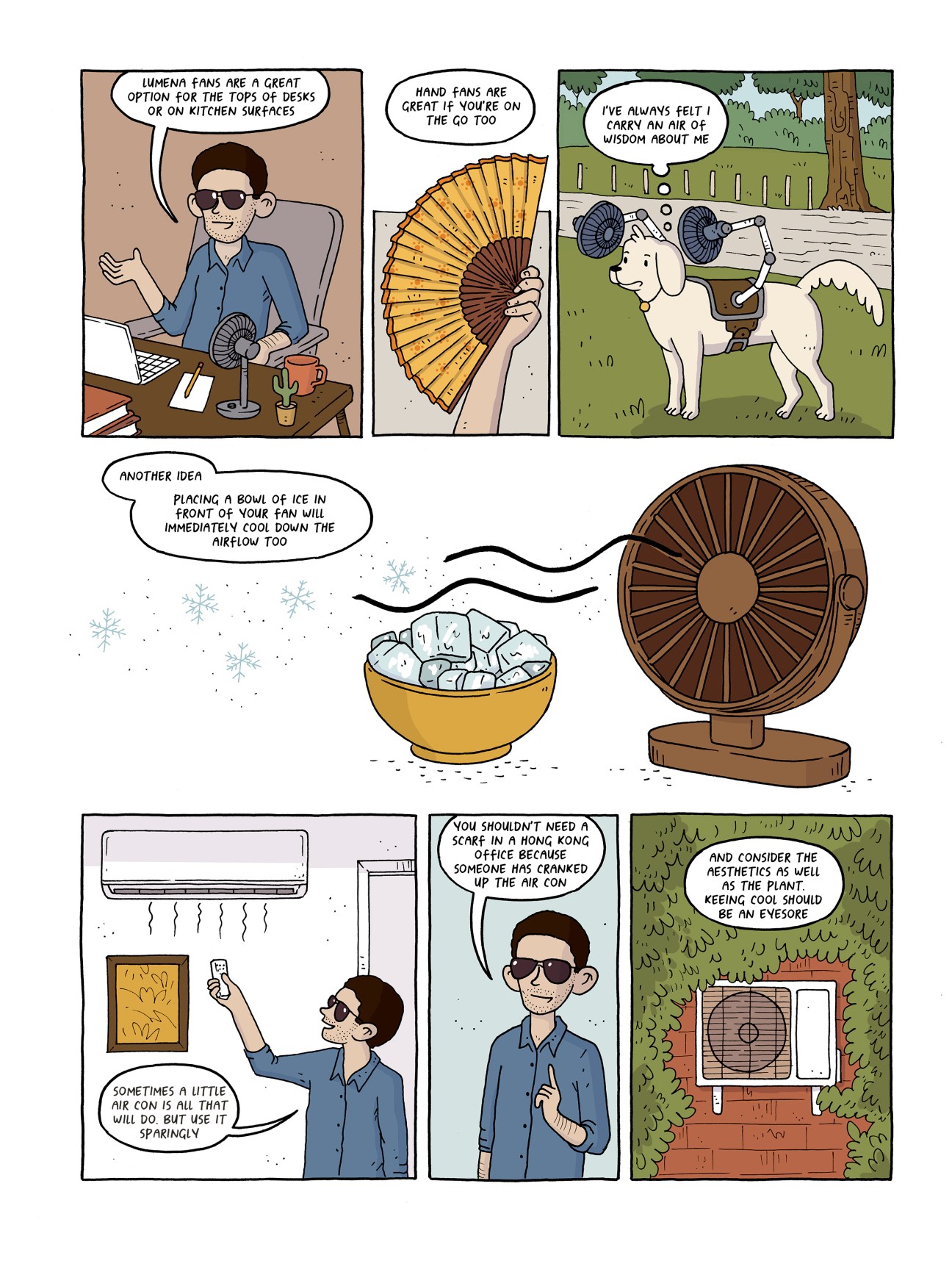
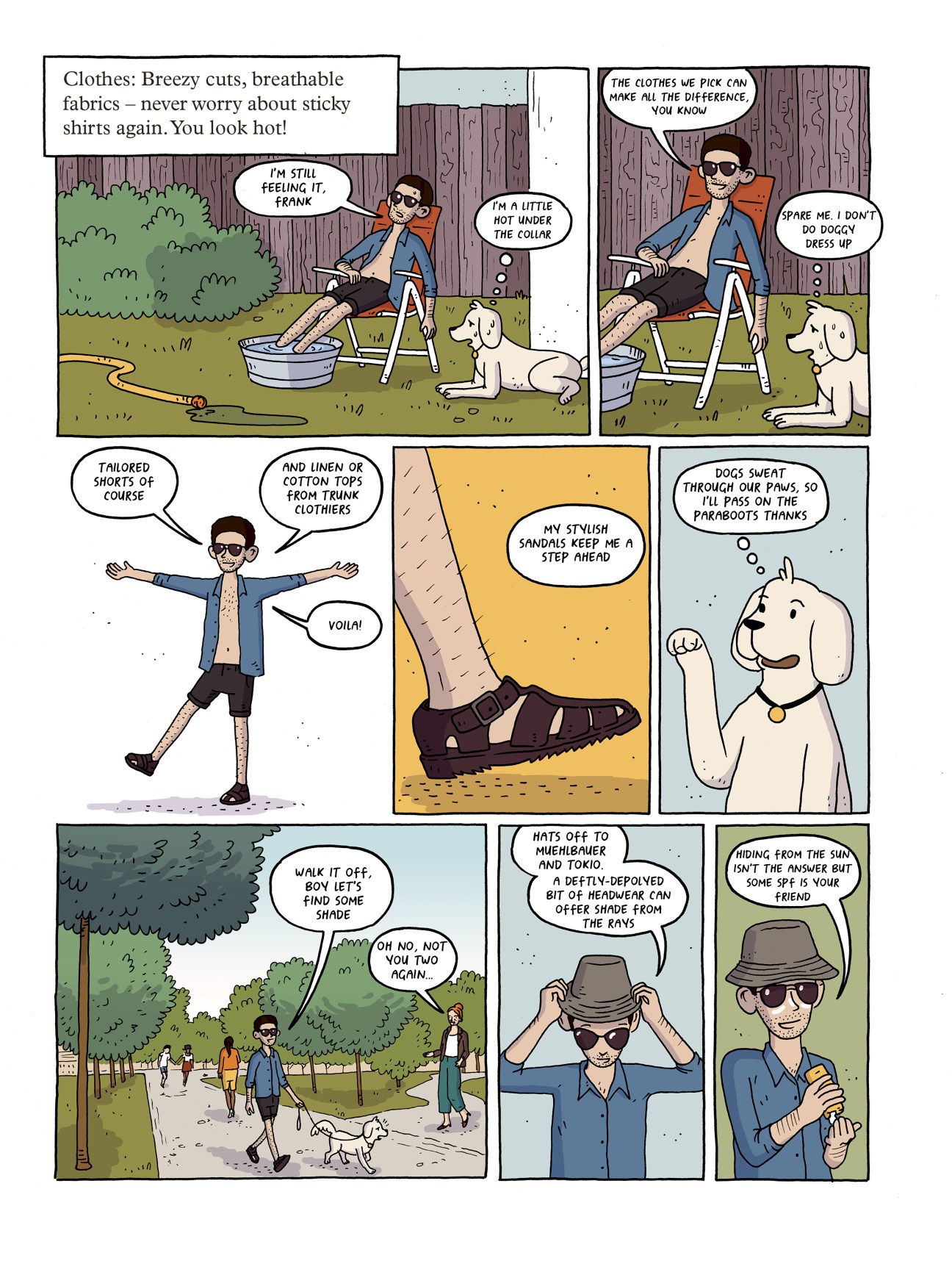
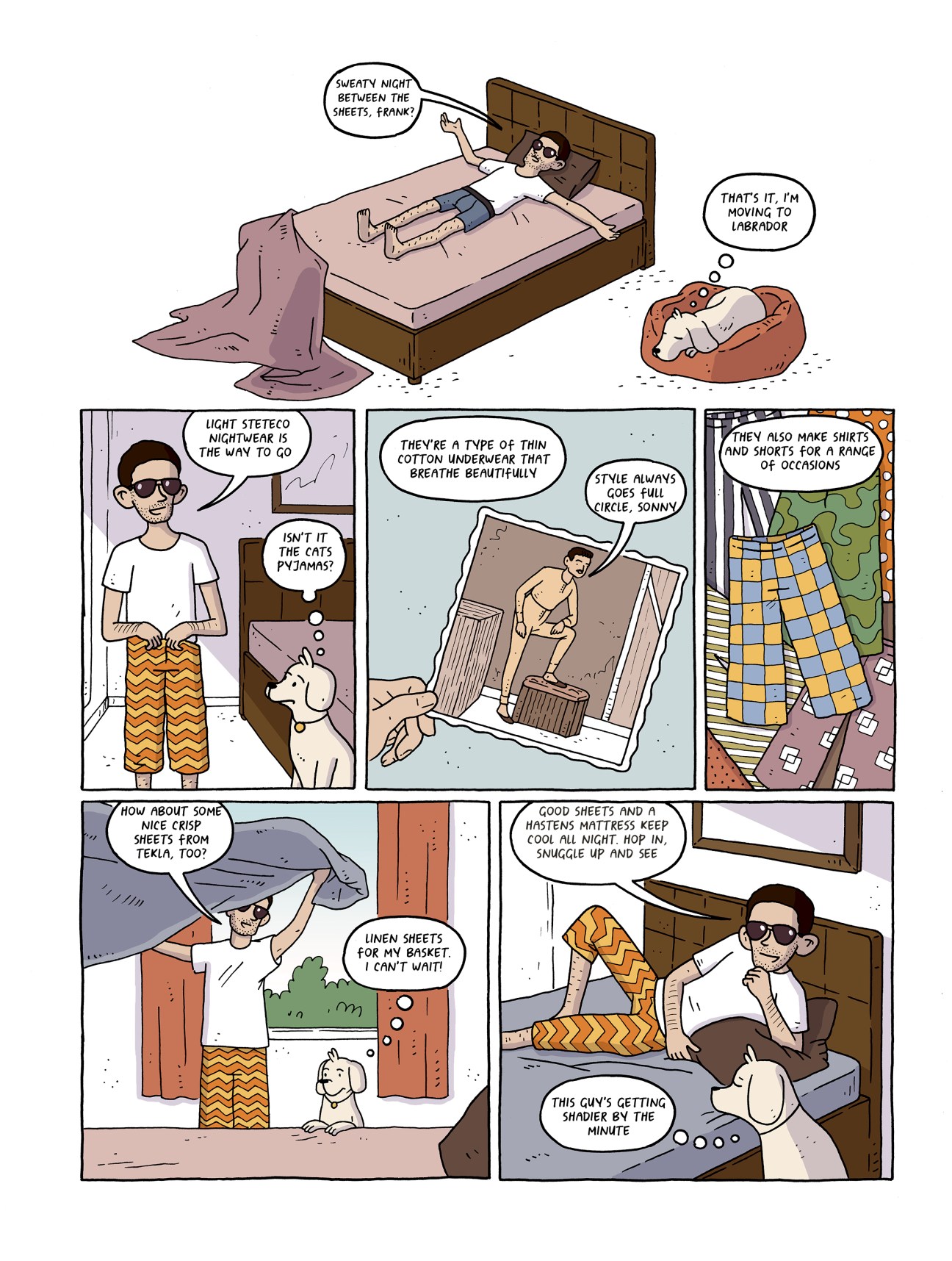
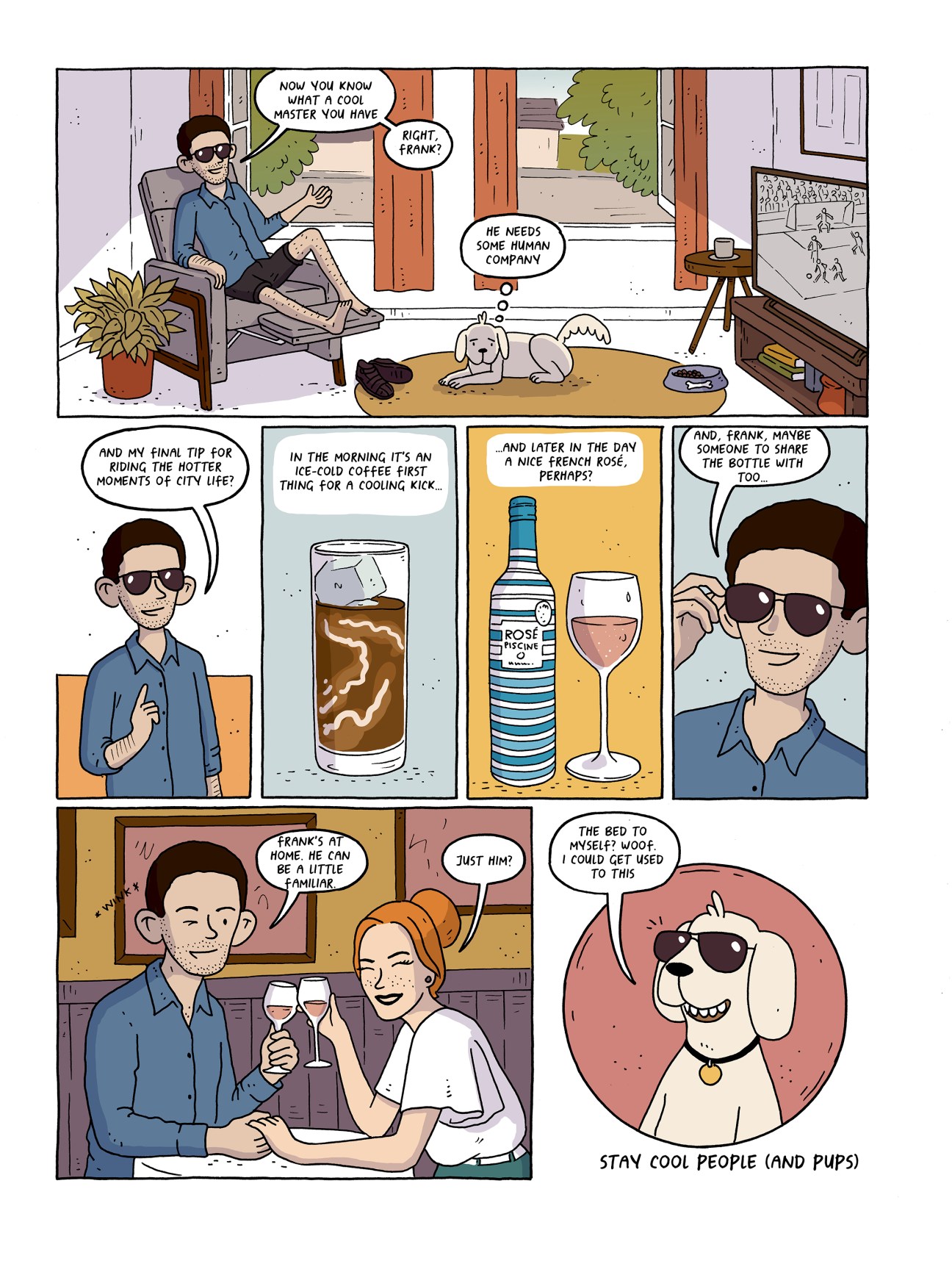
Five-star retail experiences from across the Mediterranean
Sunny travels offer you the chance to explore new, more carefree versions of yourself – and your wardrobe. You might pick up a punchier fragrance, swap your classic watch for a bright-yellow waterproof Swatch chronograph or experiment with new patterns. But when you return home, these purchases often feel out of place. So you store them away, together with your memories of the trip.
If that scenario feels familiar, it’s probably because, until recently, most resort destinations had little to offer beyond souvenir shops stocked with everyday necessities for forgetful travellers and mass-produced beachwear. Having made enough bad shopping decisions, today’s holidaymakers are seeking more meaningful items that are unique to the place that they’re visiting but will also enrich their lives when they get back home.
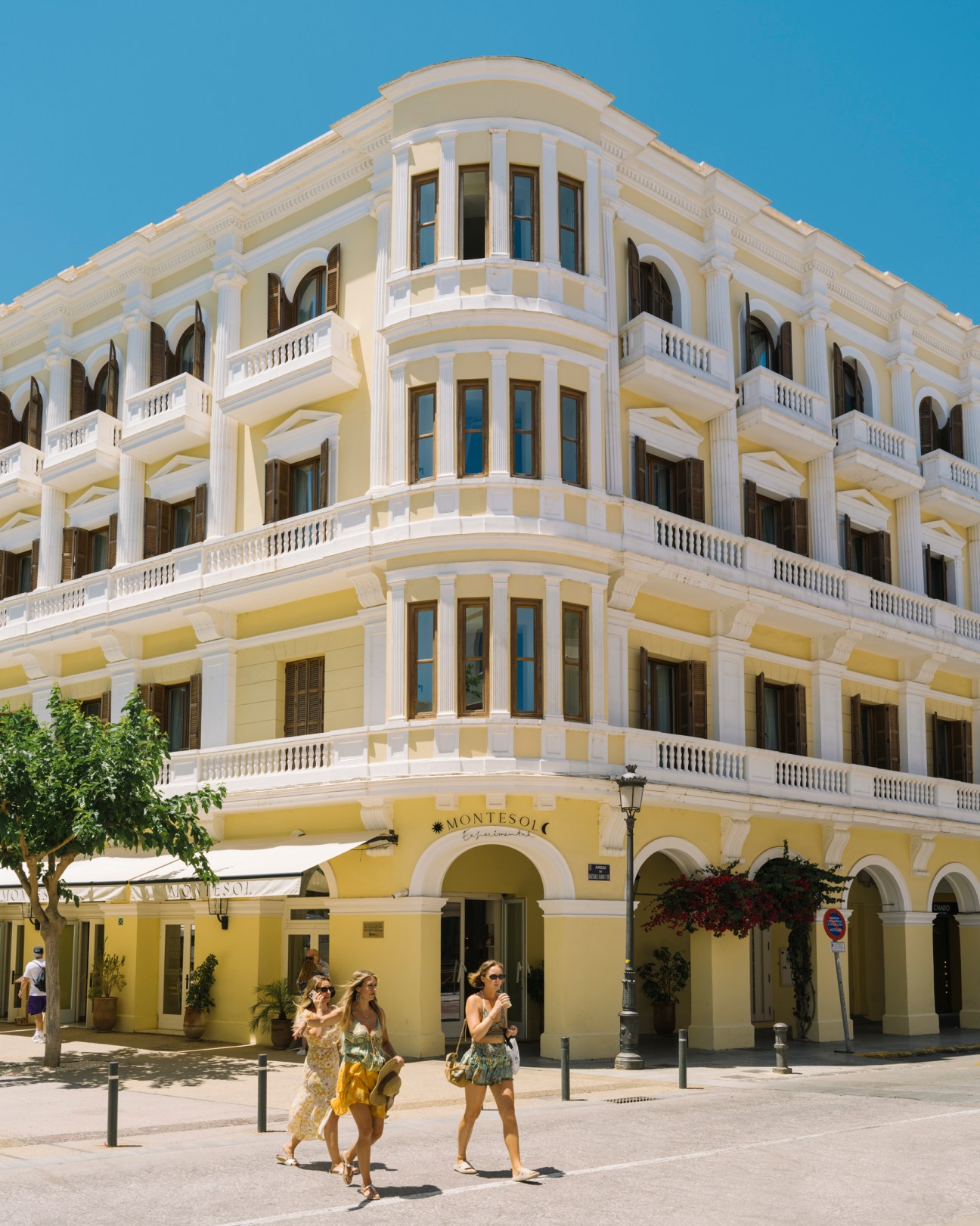
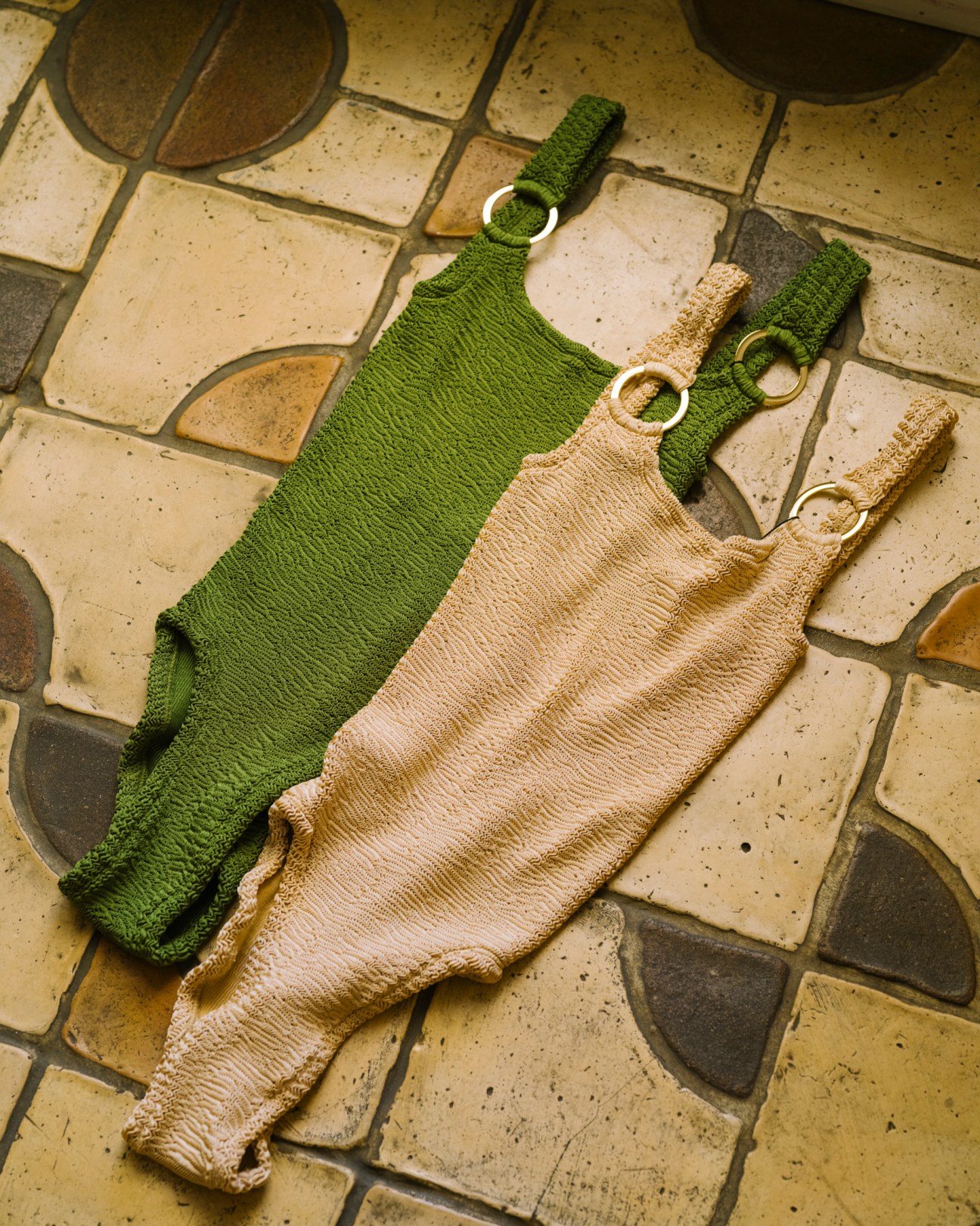
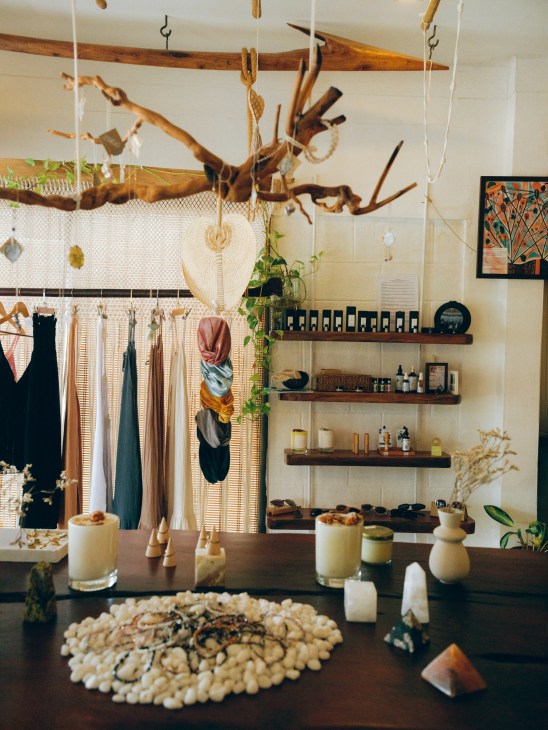
Hoteliers have spotted the opportunity and have started to put more effort into satisfying guests’ appetite for purchases on the road. Retail is no longer just an afterthought. Where once, even in the most luxurious establishments, hotel boutiques were usually confined to badly lit corners and run by third-party companies, many have now evolved into thoughtfully designed retail spaces employing in-house creative teams to curate one-of-a-kind fashion selections, home decor and locally produced beauty products. These boutiques have become an important part of the hospitality experience, helping to lure people in, just as the right restaurant atmosphere or a signature drink on a bar menu might.
Here, Monocle speaks to the creative directors, buyers and entrepreneurs who have taken up residence in sunny locations around the world, upgrading hotel boutiques in places such as the Greek isle of Paros, Italy’s Porto Ercole and the Cayman Islands.
1.
Bohemian exhibits
Montesol Experimental
Ibiza, Spain
The Montesol Experimental hotel opened in the heart of Ibiza’s Old Town last year in a building that dates back to the early 20th century. “When we had the opportunity to get the oldest hotel in Ibiza, a Unesco World Heritage site, we were thrilled,” says Pierre-Charles Cros, co-founder of the Experimental Group, which also owns the island’s much-loved Experimental Beach club. The building was renovated by Parisian designer Dorothée Meilichzon, who used pastel colours to capture Ibiza’s sunny, bohemian spirit.
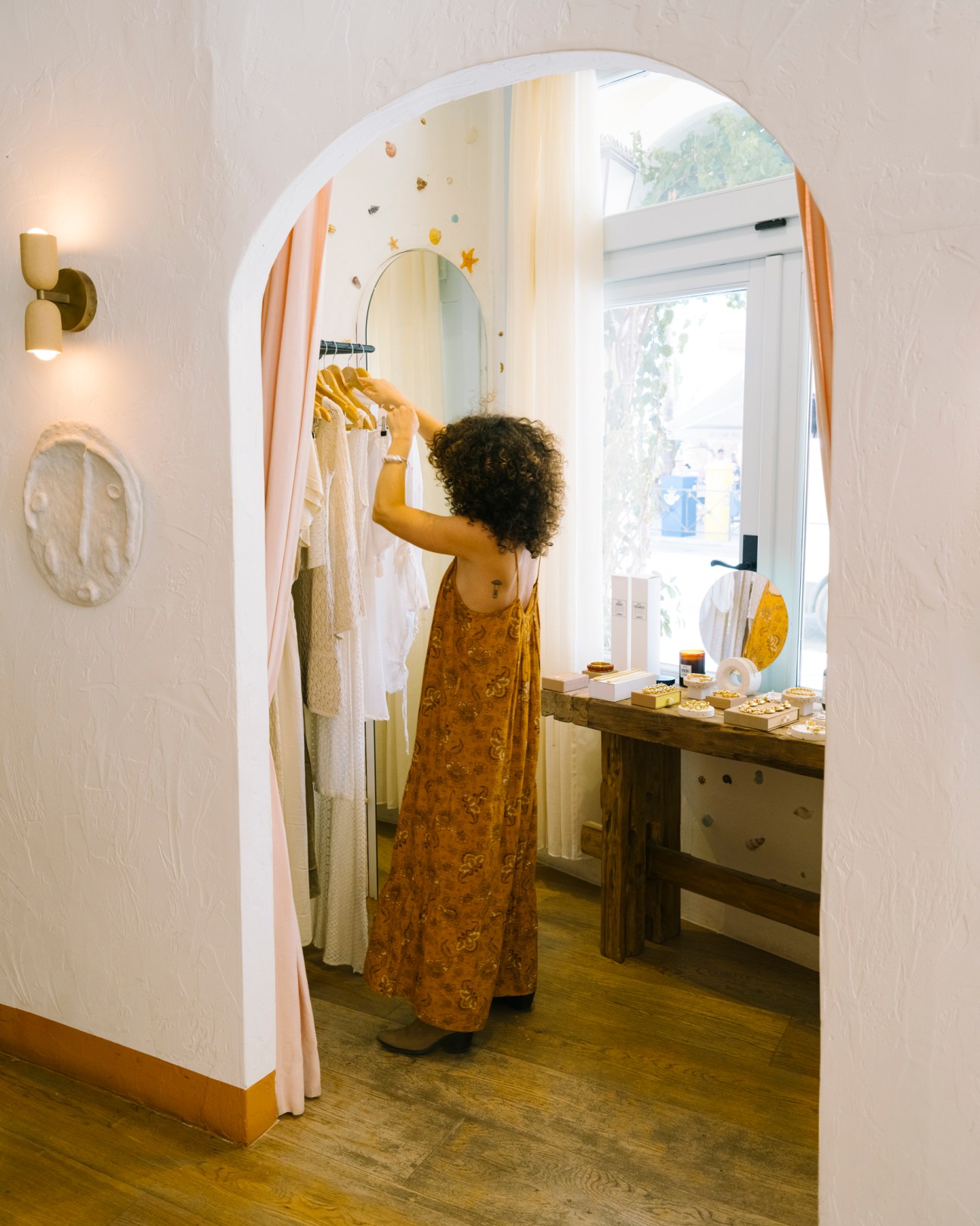
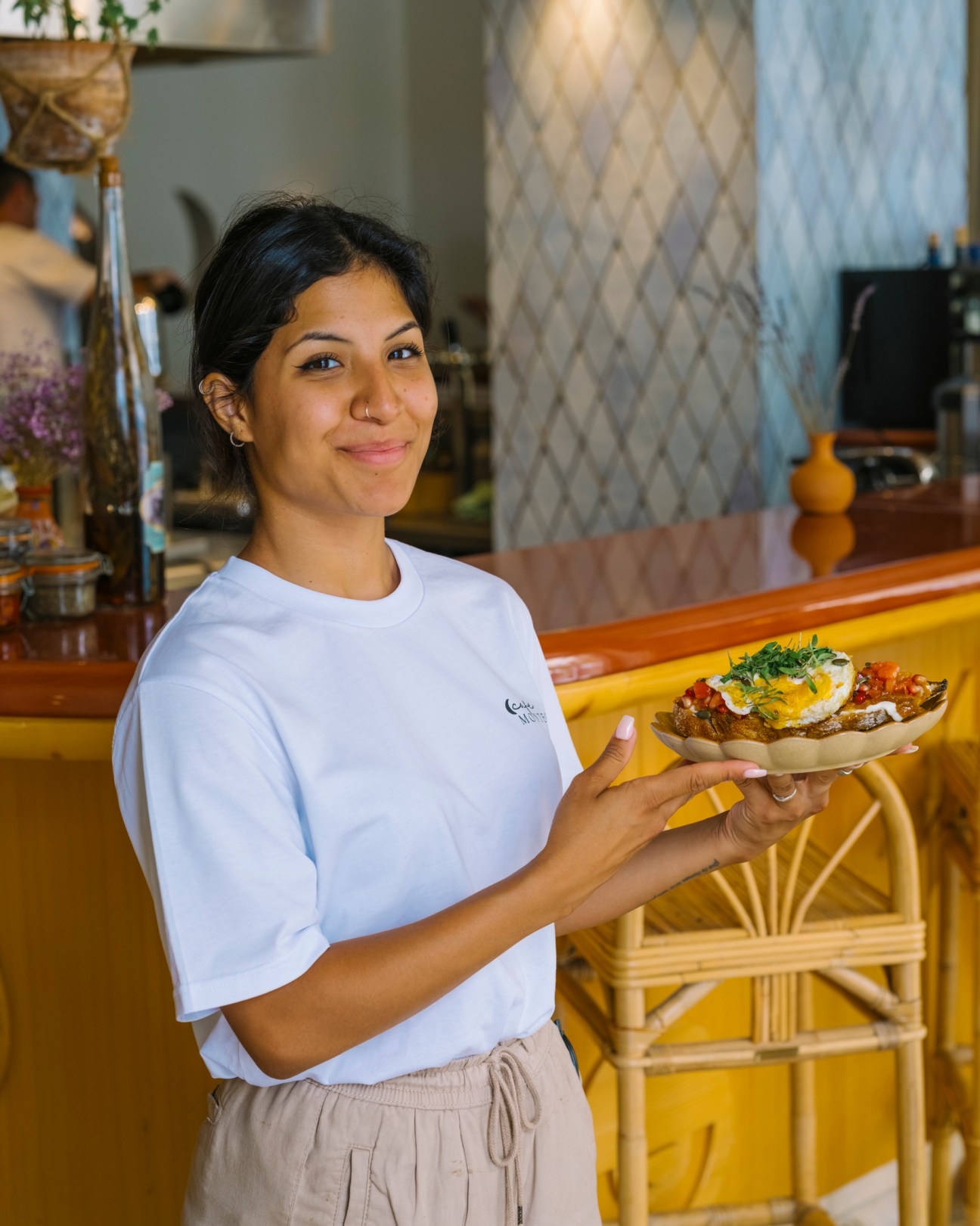
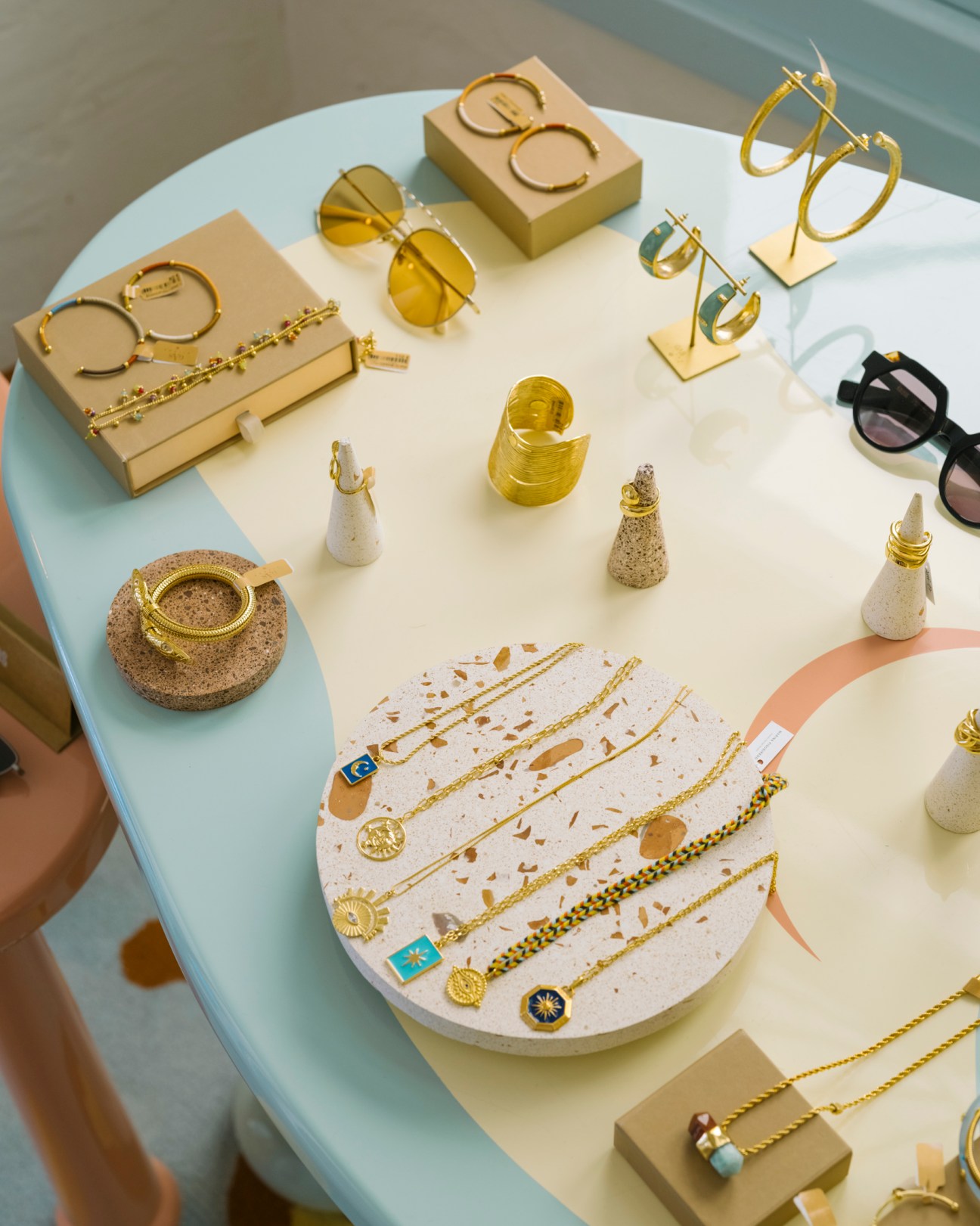
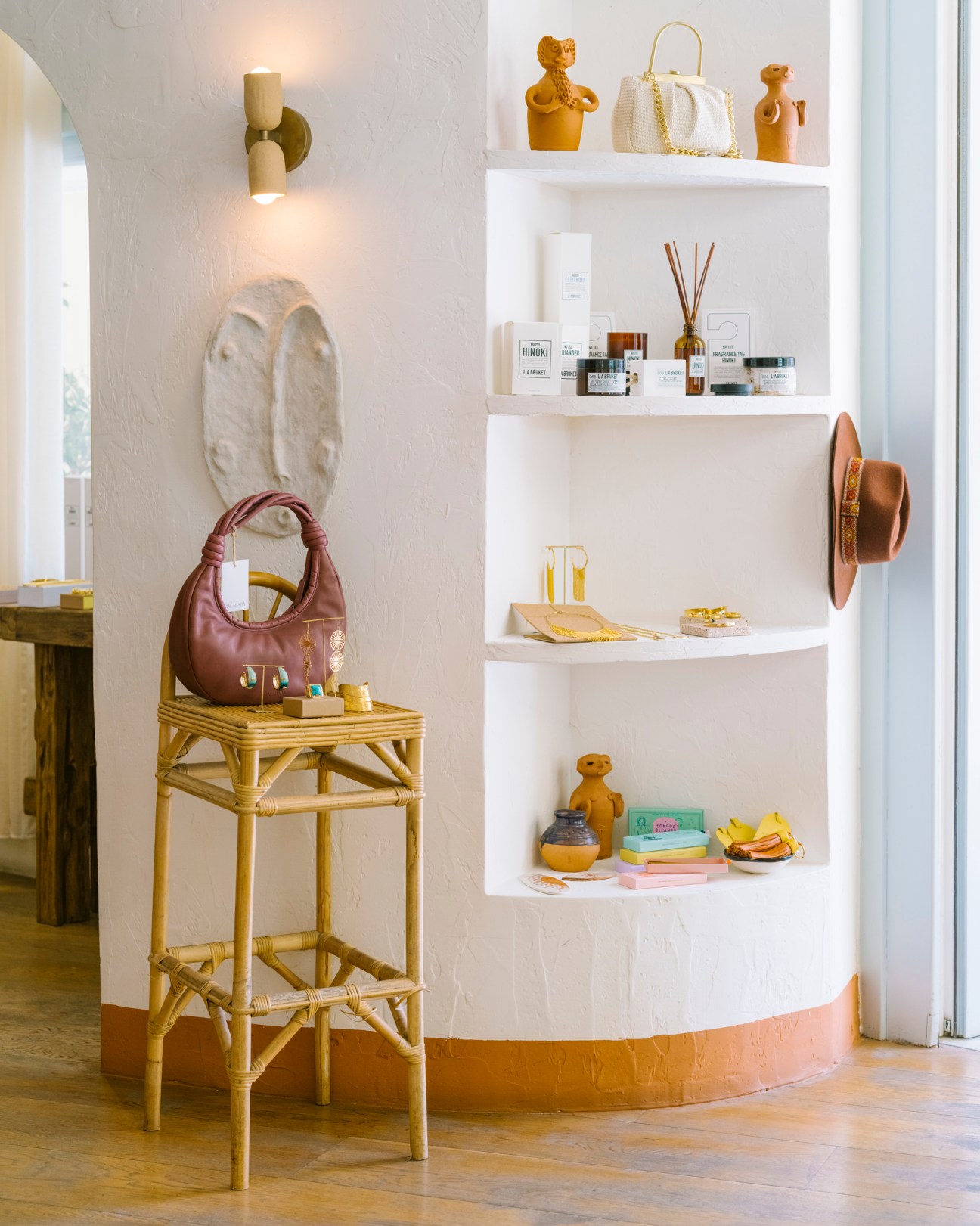
Special attention was paid to the boutique, which you’ll find by the hotel’s entrance. Cros saw a chance to use the space as a window into the Montesol experience, providing a taste of the best that Ibiza has to offer. The challenge was in creating the most interesting space possible within the compact area. “We wanted to showcase a selection of items that changes several times throughout the season and features a wide range of local talent,” says Cros, pointing to the rows of colourful kaftans lining the limewash walls, leather bags by Spanish brand Malababa, handwoven jackets by Gypsy Truck and gold jewellery crafted in nearby workshops.
“If you make it too practical, it stops being about presenting a curation and doesn’t really inspire anybody,” says Cros. “Building a strong hotel brand extends to retail. It’s yet another dimension of the service that you offer guests to ensure that they remember you after they have gone home.”
montesolexperimental.com
2.
Heart of the country
Hôtel Crillon le Brave
Vaucluse, France
Since Hôtel Crillon le Brave was established in 1989, its owners have considered shopping to be an important part of the customer experience. “We have always had a retail corner,” says general manager Dagmar Lombard. However, it was only when fashion and property entrepreneur Patrick Pariente acquired the premises 30 years later that it introduced a dedicated boutique space filled with Made in France keepsakes.
Overlooking the countryside of Vaucluse, 35km northeast of Avignon, the boutique offers guests glimpses of the village’s surroundings before they even step out of the 17th-century hamlet. Its rails are lined with souvenirs such as silk scarves crafted in northern France by Inoui Editions, linen dresses from Luxe Provence made between Provence and Paris, and embroidered cotton blouses from Valentina Store produced in an atelier a few kilometres away in Malaucène.
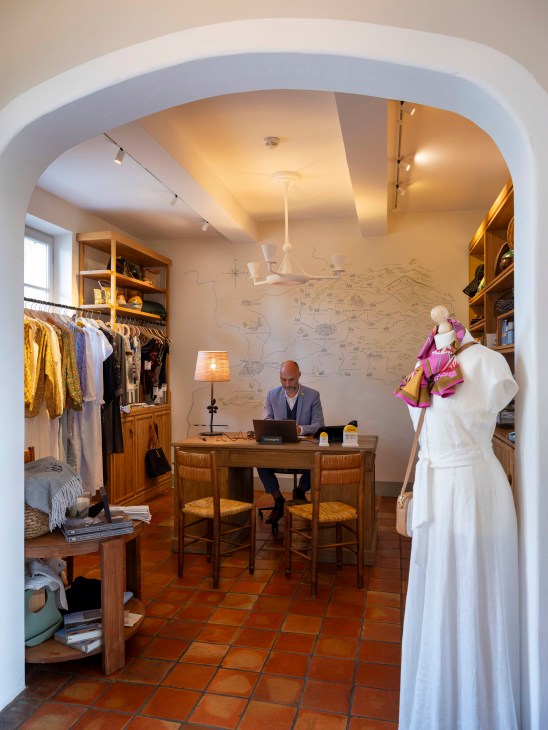
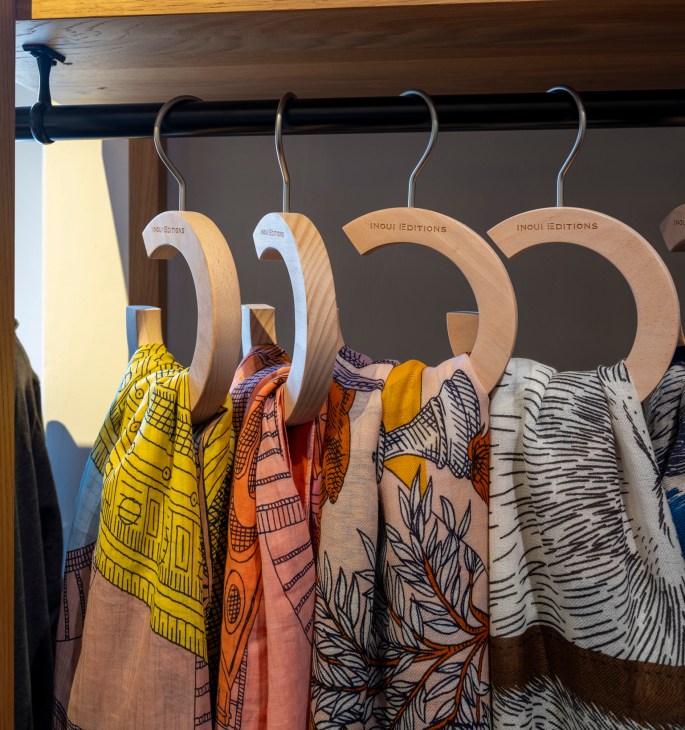
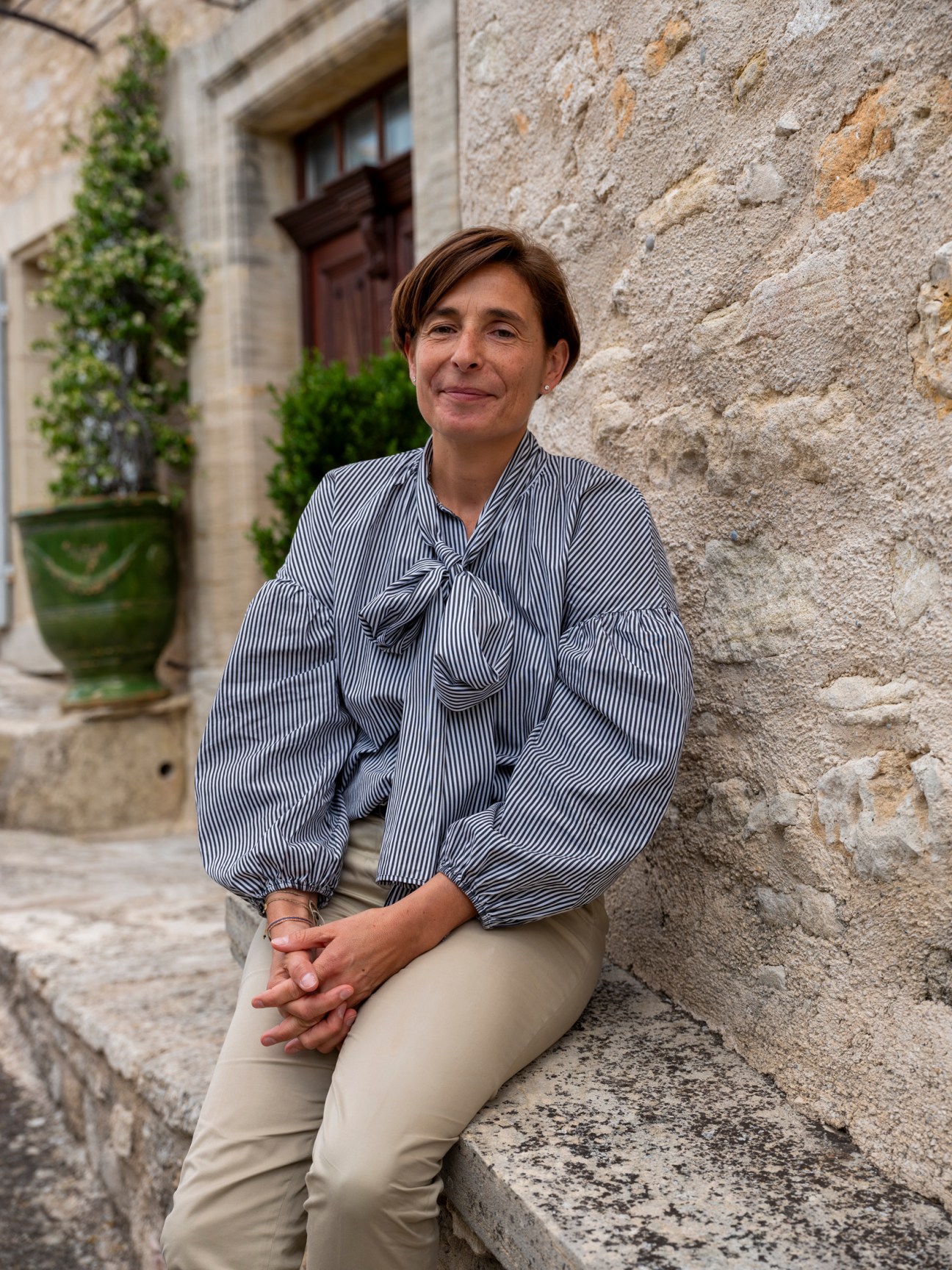
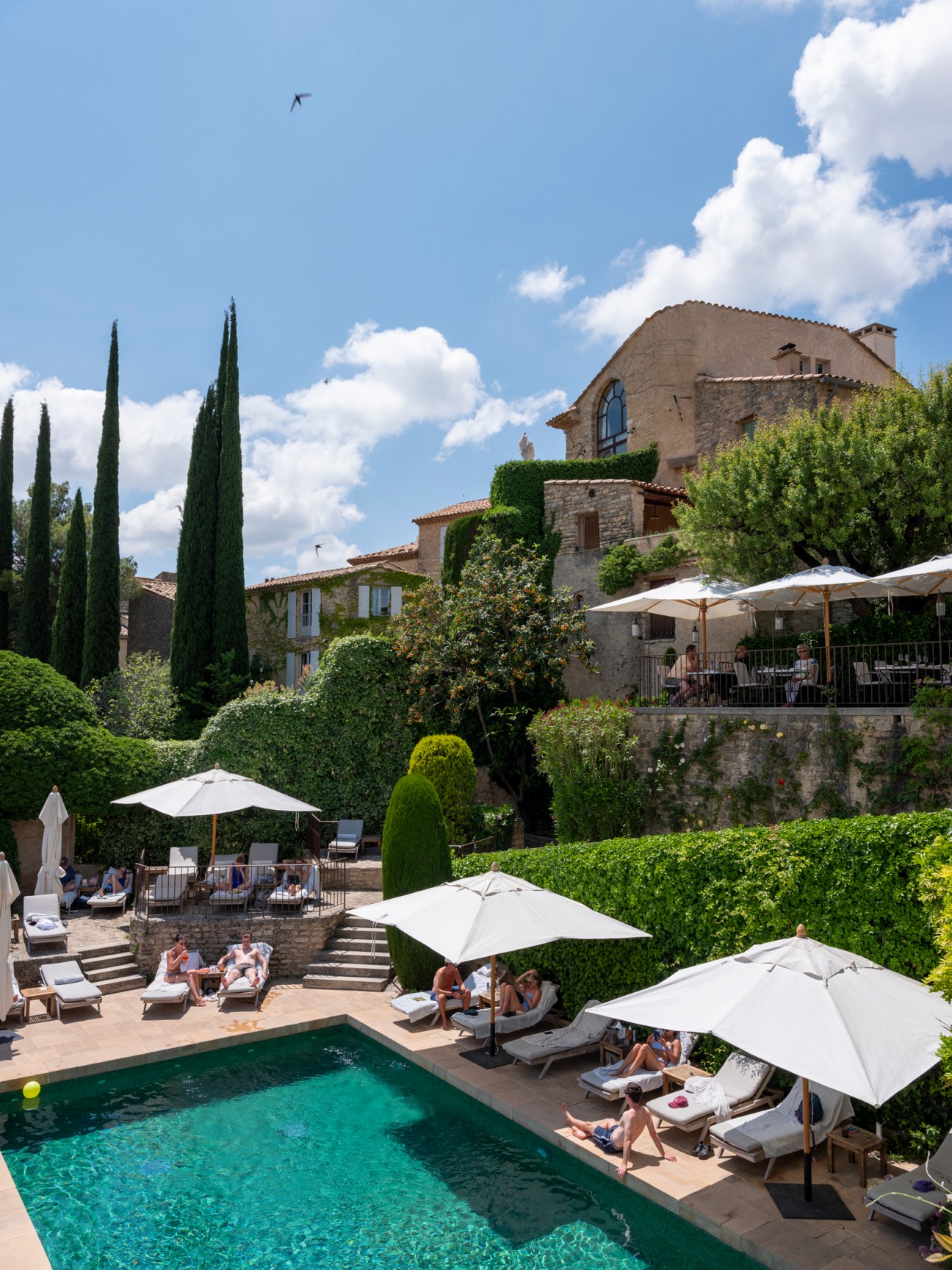
As well as highlighting the region’s savoir-faire and skilled couturières, the in-house Hôtel Crillon le Brave collection of wicker baskets, espadrilles and outerwear has proven to be an effective communications tool, spreading the word for the luxury hotel group, which has outposts in Saint-Tropez, Paris and Méribel. Every space takes inspiration from its surroundings; in Crillon le Brave, this translates to rustic shelving, Génoise-tiled floors and luscious pots of lavender. “As a family-owned hotel, we like to tell a story through the brands that we stock,” says Lombard.
maisonspariente.com
3.
Caribbean collection
Dolores at Palm Heights
Cayman Islands
Urban fashion capitals no longer have exclusivity when it comes to brand collaborations. Today, you can find limited-edition items by the likes of Wales Bonner, Tekla and Bode even in the Caribbean. In the Cayman Islands, the founder and creative director of the Palm Heights hotel, Gabriella Khalil, regularly teams up with some of fashion’s most in-demand names for the hotel’s shop, Dolores.
The boutique stocks exclusive items such as sarongs by Christopher John Rogers and striped pyjamas by Danish giant Tekla. New York-based Bode even adapted the hotel’s towels into smart terry jackets. “We have collaborated with Bode on our uniforms from the very beginning and, since then, we have also designed our first collection with them,” says Khalil. “Art, design and fashion has always been a part of our ethos.”

Khalil also prioritises designers and brands from the Caribbean. “I launched Dolores with [crochet knitwear specialist] Diotima because the label’s clothes are made between Jamaica and New York, and now we’re collaborating with [Jamaican-US label] Theophilio,” she says. “We want to involve people who are making waves in fashion but we’re also in the Caribbean, so we need our items to reflect that.”
The hotel’s line of merchandise, Palm Heights Athletics (PHA), consists of branded shorts, jumpers, socks and, soon, a range of pha sunglasses. “We want to provide items that people will use when they go home, not just on holiday,” says Khalil. “I was nervous about launching a hotel shop at first but I have surprised myself with how passionate I have become about Dolores.”
palmheights.store
4.
Exclusive experiences
Il Pellicano
Porto Ercole, Italy
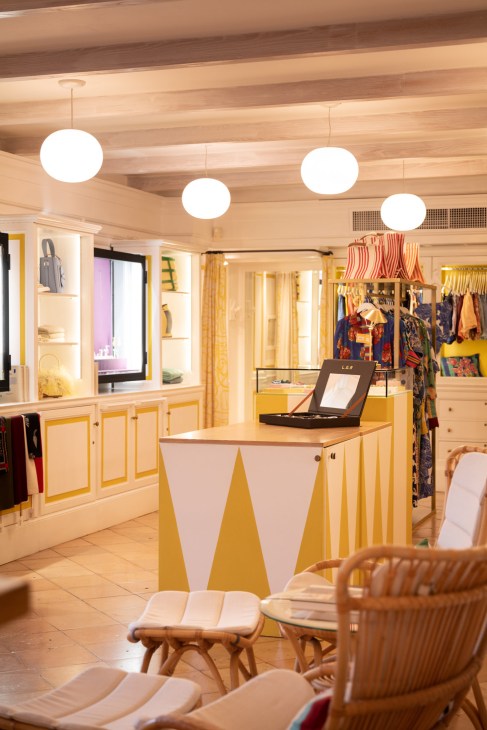
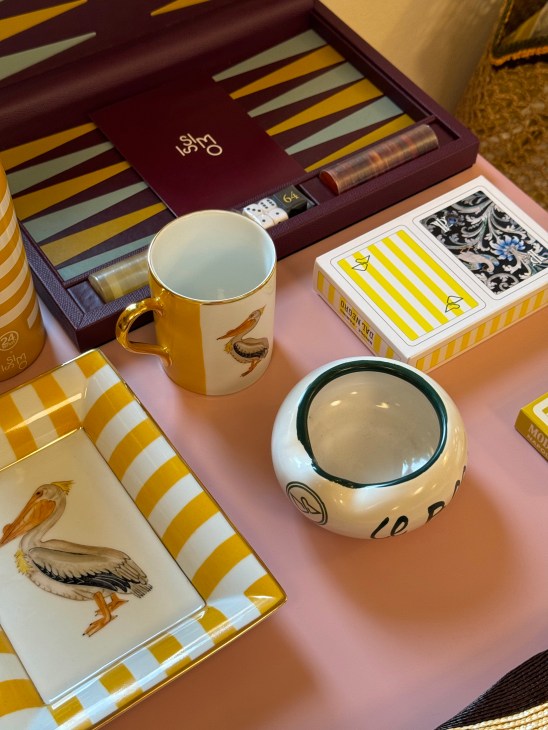
Tuscany’s Argentario coast is best known for its clear waters and rugged cliffs. For Marie-Louise Sciò, it’s also home. Her family has been running Il Pellicano here since 1979. The hotel was opened in the 1950s by a US socialite and a UK aviator as a haunt for their glamorous friends, and has always had a certain magic associated with it.
Sciò, who took over as CEO and creative director in 2011, wanted her guests to be able to take some of that magic home with them. So she opened the Pellicano boutique and began curating collections that capture the hotel’s old-school elegance. “The boutique was born of a desire to extend the Pellicano’s charm into a shopping experience,” she tells Monocle. “I wanted a space where guests could find items that resonate with our philosophy.”
Joy is central to this – hence the bright interiors, complete with pink cabinets and sunny accents. Sciò, who is her own best customer, mixes artisanal Italian brands such as Florence-based Loretta Caponi, best known for handcrafted bedding, with more established names including Métier, a London-based leather-goods label. In 2020 she launched Issimo Corner, a dedicated space for limited-edition products designed for Il Pellicano in collaboration with Scio. The exclusivity enhances the hotel’s five-star offering.
issimoissimo.com
5.
House specialities
Loja boutique at Casa Mãe
Lagos, Portugal
When former investment banker Veronique Polaert opened Loja boutique at Casa Mãe hotel in southern Portugal, she envisioned a retail destination in its own right and wasn’t discouraged by the lack of comparable shops in the region. Polaert was born in France and has lived in London and Los Angeles. Not being native to the area allowed her to take a risk in a city where change happens slowly. “Locals said that the concept wouldn’t work because Portugal’s hotel retail industry tends to focus on items considered useful for guests staying at the hotel, while our boutique was about decor,” says Polaert, who works with artisans across the country to design exclusive items for the boutique and promote Brand Portugal.
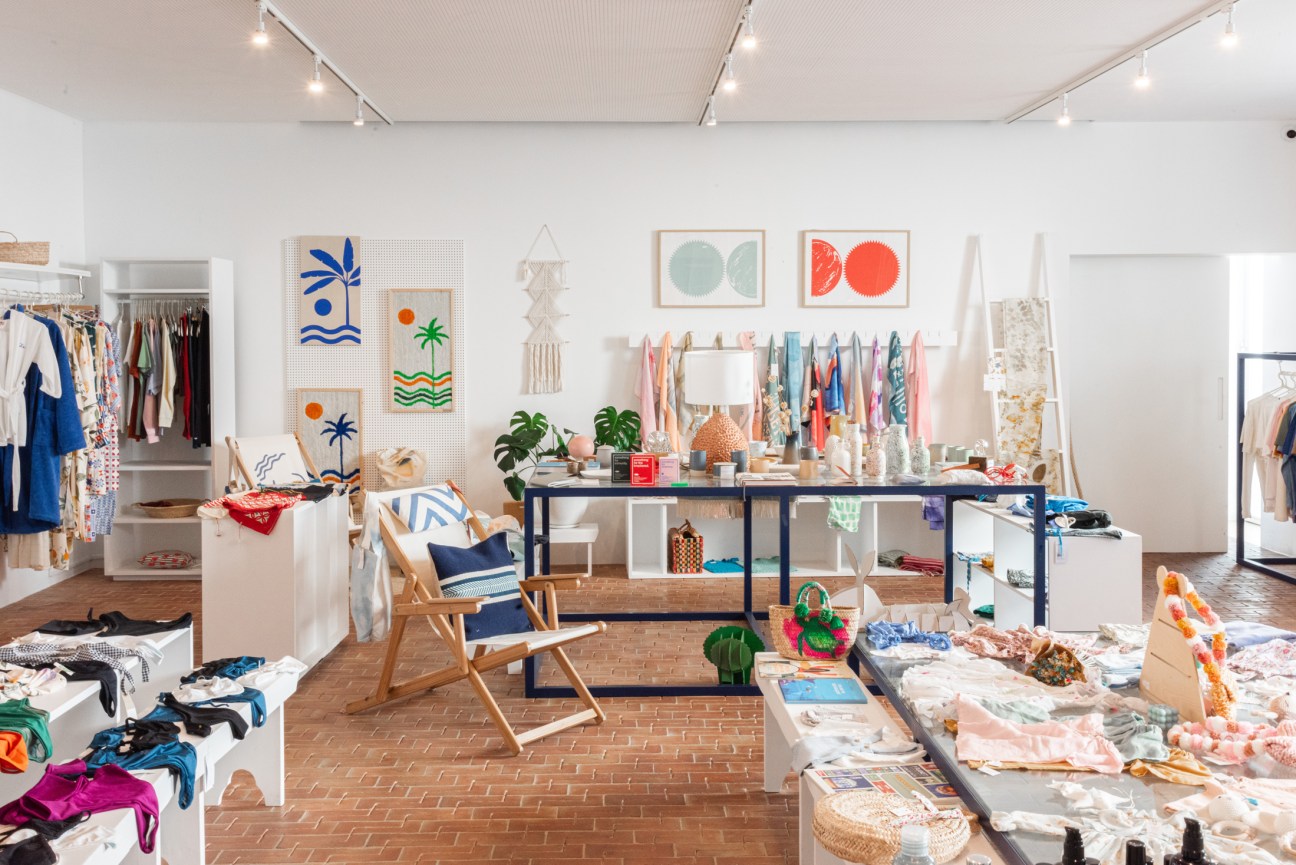
Loja stocks limited-edition collaborations with furniture designers, textile ateliers and marble sculptors, including stoneware pieces by Braga-based Atulipa and colourful cotton beach towels by Futah, made in the northern Douro region. Polaert’s commitment to Made in Portugal also extends to the boutique’s interiors: she worked with Algarve-based firm Alberto Rocha on the custom tiles, while weaver Teresa Gameiro created jute rugs for the entrance. As for the staff’s smart uniforms, they were designed by Porto-based label La Paz, whose maritime-inspired garments also line the shop’s rails.
“We curate a selection that reflects our sunny aesthetics,” says Polaert, who sees value in creating a sense of place and telling the stories of the region with her wares. “The trend of promoting local craftsmanship in hotels remains a niche concept but I like to think that Loja is proof that hotel retail can go beyond a mainstream approach.”
casa-mae.com
6.
Retail romantics
Anthologist at Cosme
Paros, Greece
Andria Mitsakos has been working in the hospitality industry since the 1990s, helping to shape the communications strategies of a wide range of hotels, from Coquillade Provence and El Mangroove in Costa Rica to Phaea Blue Palace in Crete. “I remember the gift shops of the 1990s, which were stacked with things that you would never buy or necessities such as sun cream,” says Mitsakos. “We have moved through a number of different phases since then. For a while, hotel boutiques didn’t exist, then the big brands came in and started renting the retail space. Today we’re returning to authenticity.”
What does authenticity look like when it comes to resort retail? “Items that have a sense of place, are exclusive to the area and tell a story of local craft,” says Mitsakos. She recently moved to her native Athens from the US and opened her by-appointment showroom, Anthologist. The shop is brimming with such products: think leather and brass belts for cinching caftans, gold and blue enamel jewellery paying homage to the Aegean sea, vintage textiles, komboloi bracelets handmade using glass beads and customised stationery.
This summer, Mitsakos will take Anthologist on the road with a boutique at Cosme hotel on Paros, hoping to meet travellers who share her passion for artisanal fashion. “People aren’t looking to buy the same items that they can purchase at home,” she says. “In summer resorts in particular, purchases are driven by emotion.”
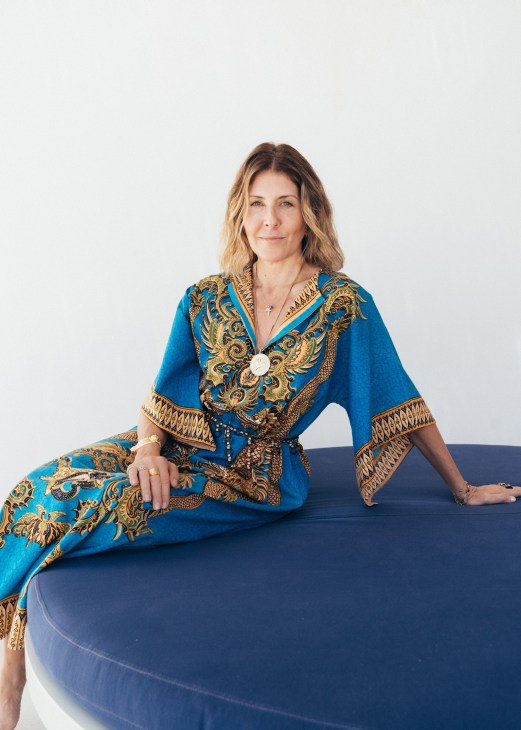
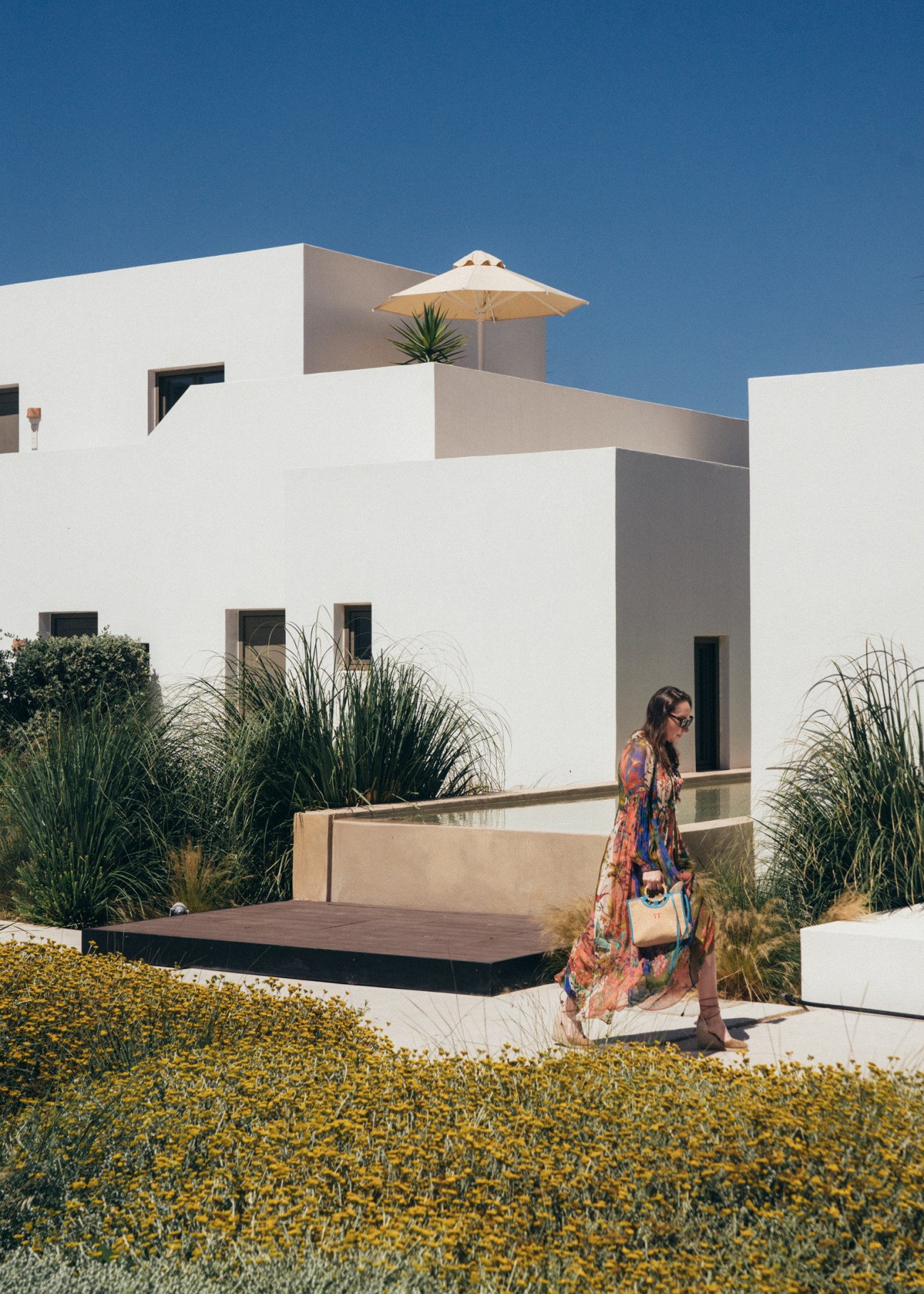
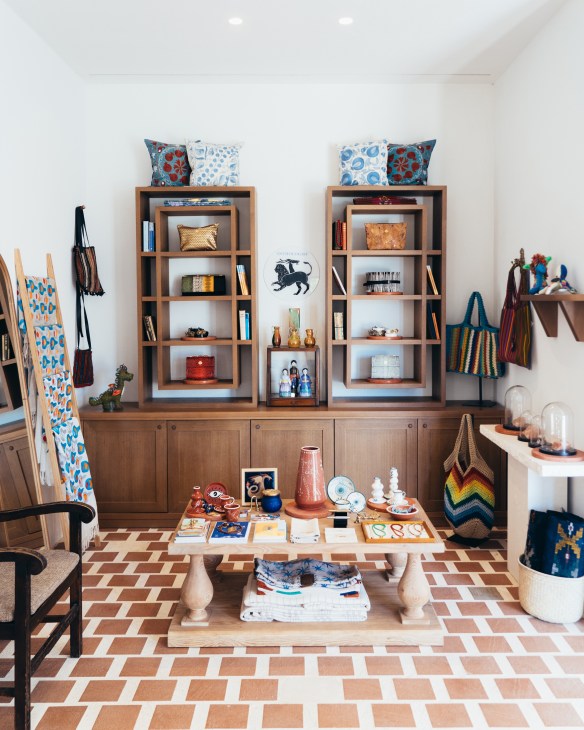
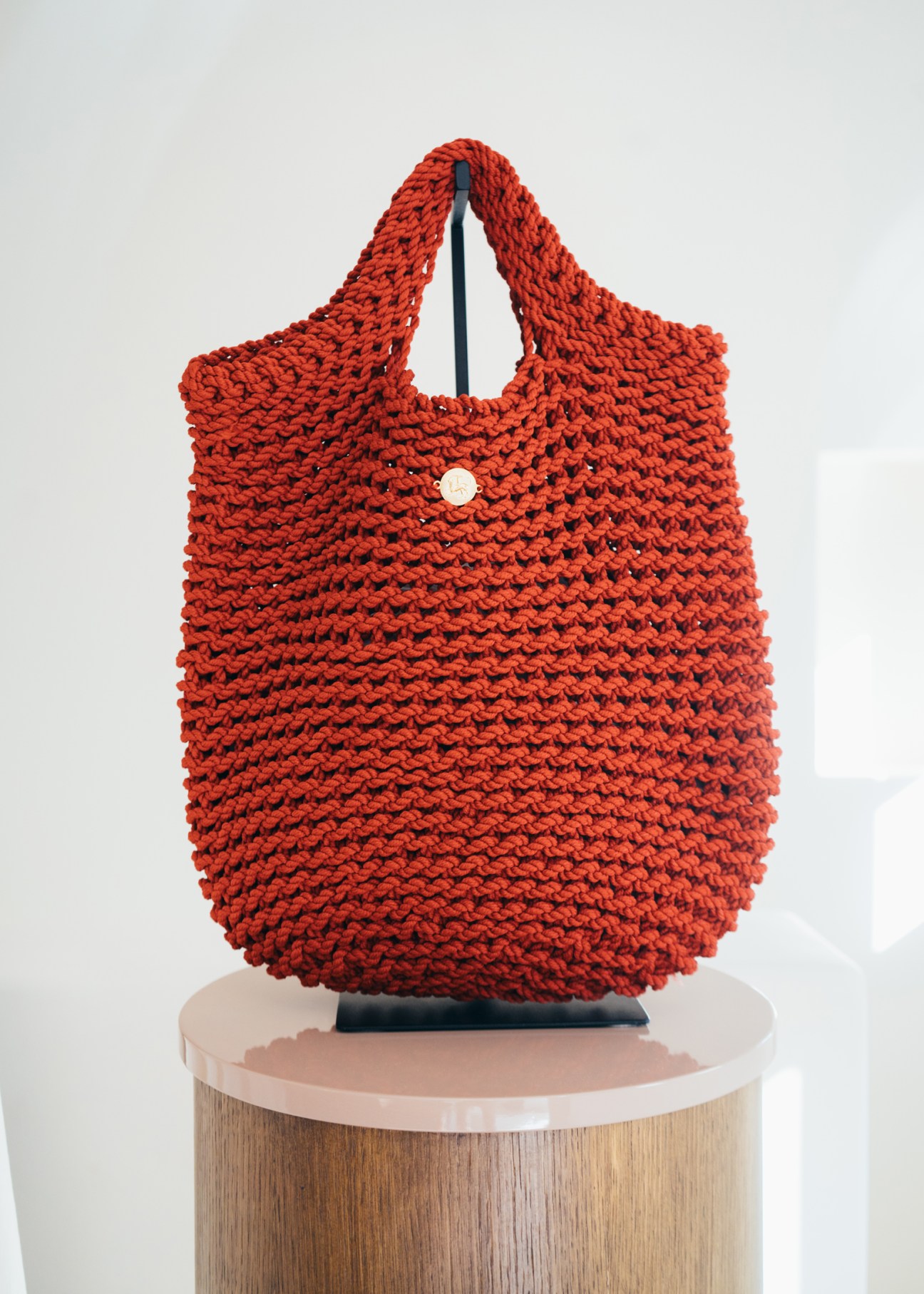
Cosme is located in Naoussa, a village at the heart of the island. Mitsakos’s space is in the middle of the lobby. “It’s completely open, with no lock and key, and no opening hours,” she says. “You just pass through, rather than having to open a door and commit to spending time inside.” She points to a new trend in hotel retail that is all about creating more inviting shopping spaces. “It’s like being in someone’s closet. As you walk past, you might try on a blouse or pick up a beautiful bracelet. It’s a poetic approach that takes me back to the era of the grand hotel.”
Because it’s in a summer outpost, the shop’s selection naturally caters for hot weather but Mitsakos also sprinkles in home decor pieces such as hand-blown vases or year-round fashion items such as kimonos to ensure that customers will still use these purchases long after they fly home with them.
Even as resort retail evolves, established luxury names will always dominate a part of the market, says Mitsakos. “Travel is aspirational. People want to spend while they’re on holiday, so this is an easy way for the big brands to gain access to a new clientele.” Yet people are now seeking out intimate experiences, creating more space for concepts such as Anthologist to pop up. “Ours is a very romantic approach to retail,” says Mitsakos. “I picture someone coming in, buying stationery and a beautiful pen, writing a letter and tucking it into their lover’s bag before leaving for the airport.”
anthologist.com
Bringing it all back home
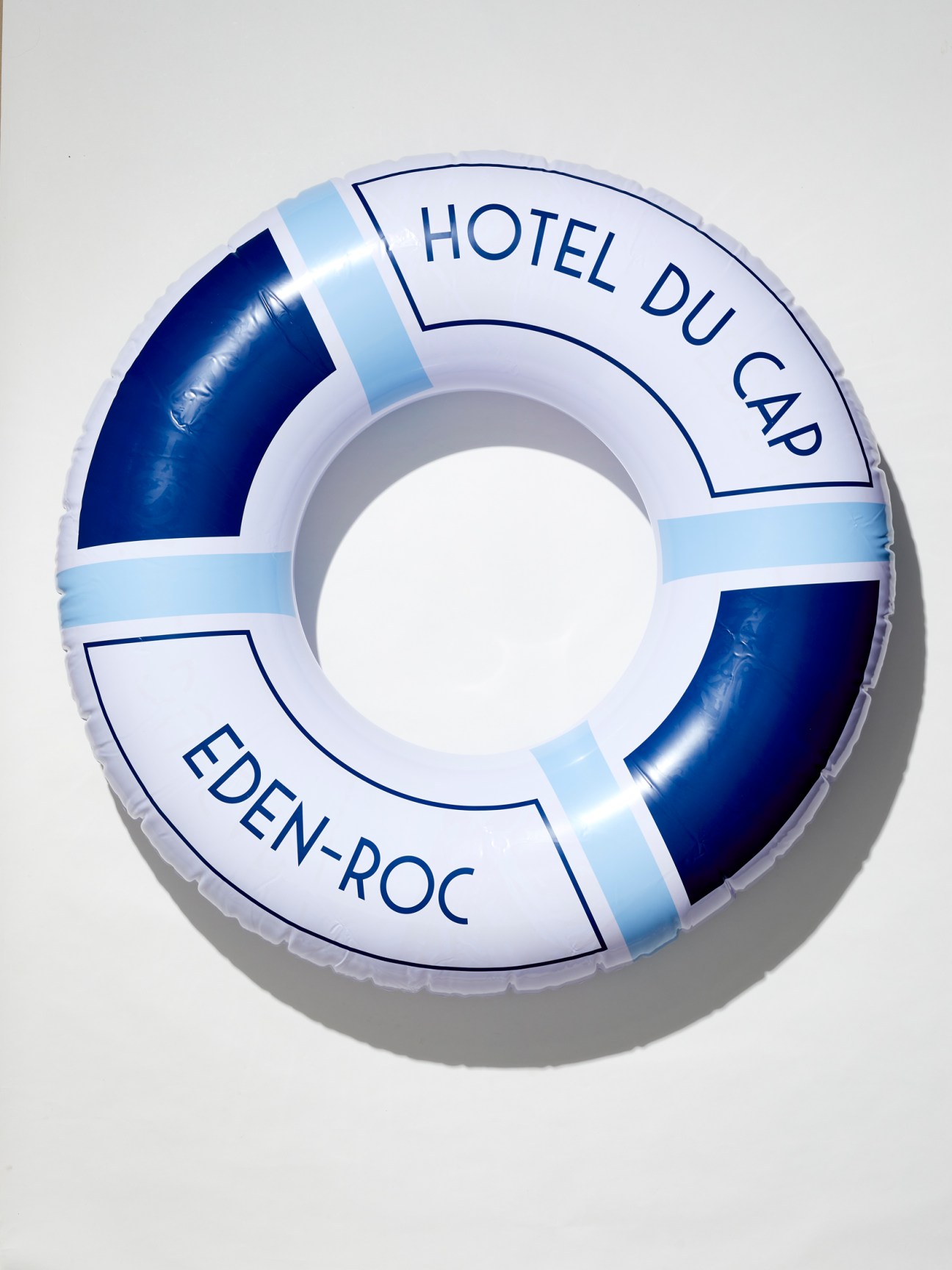
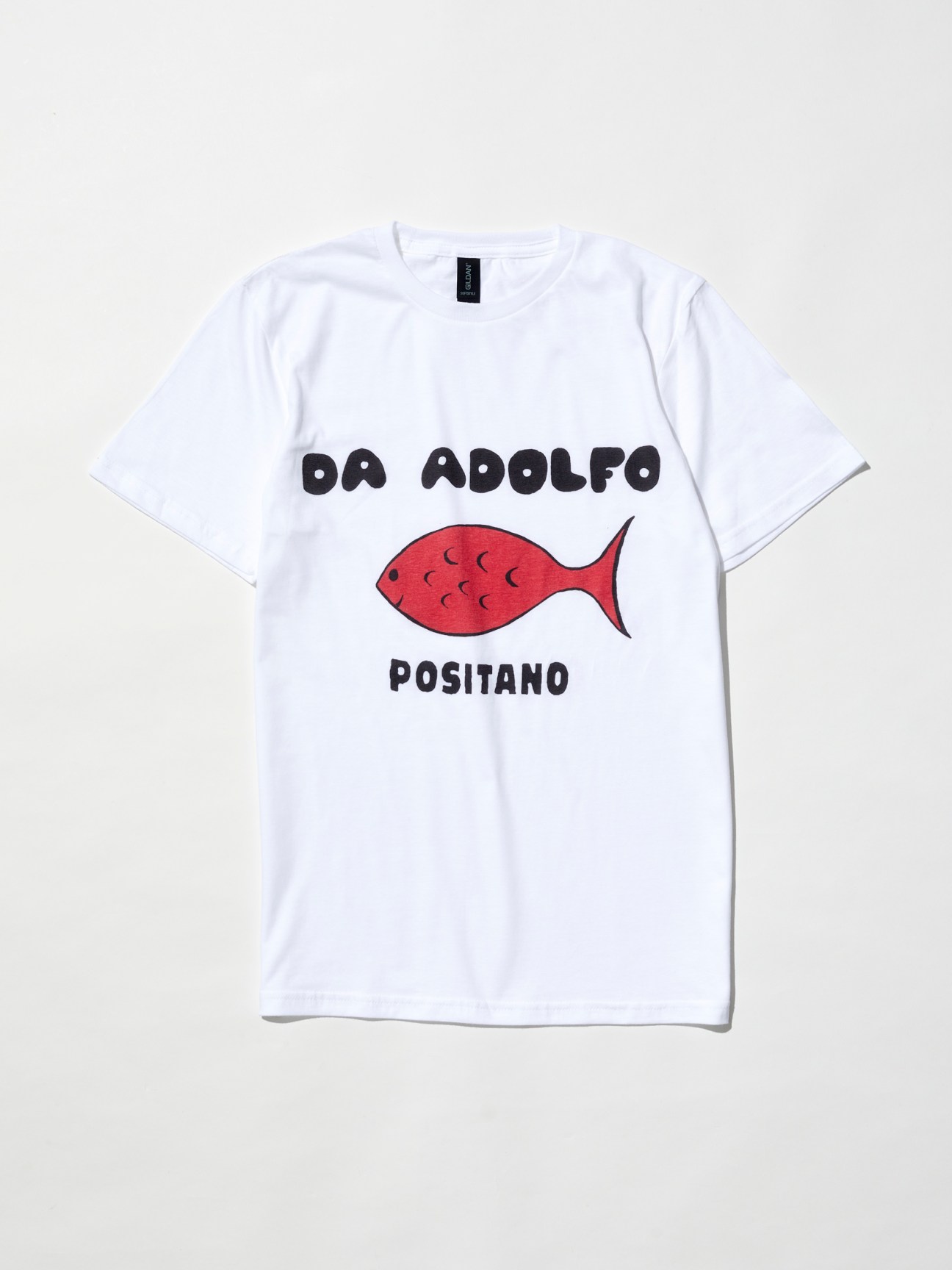
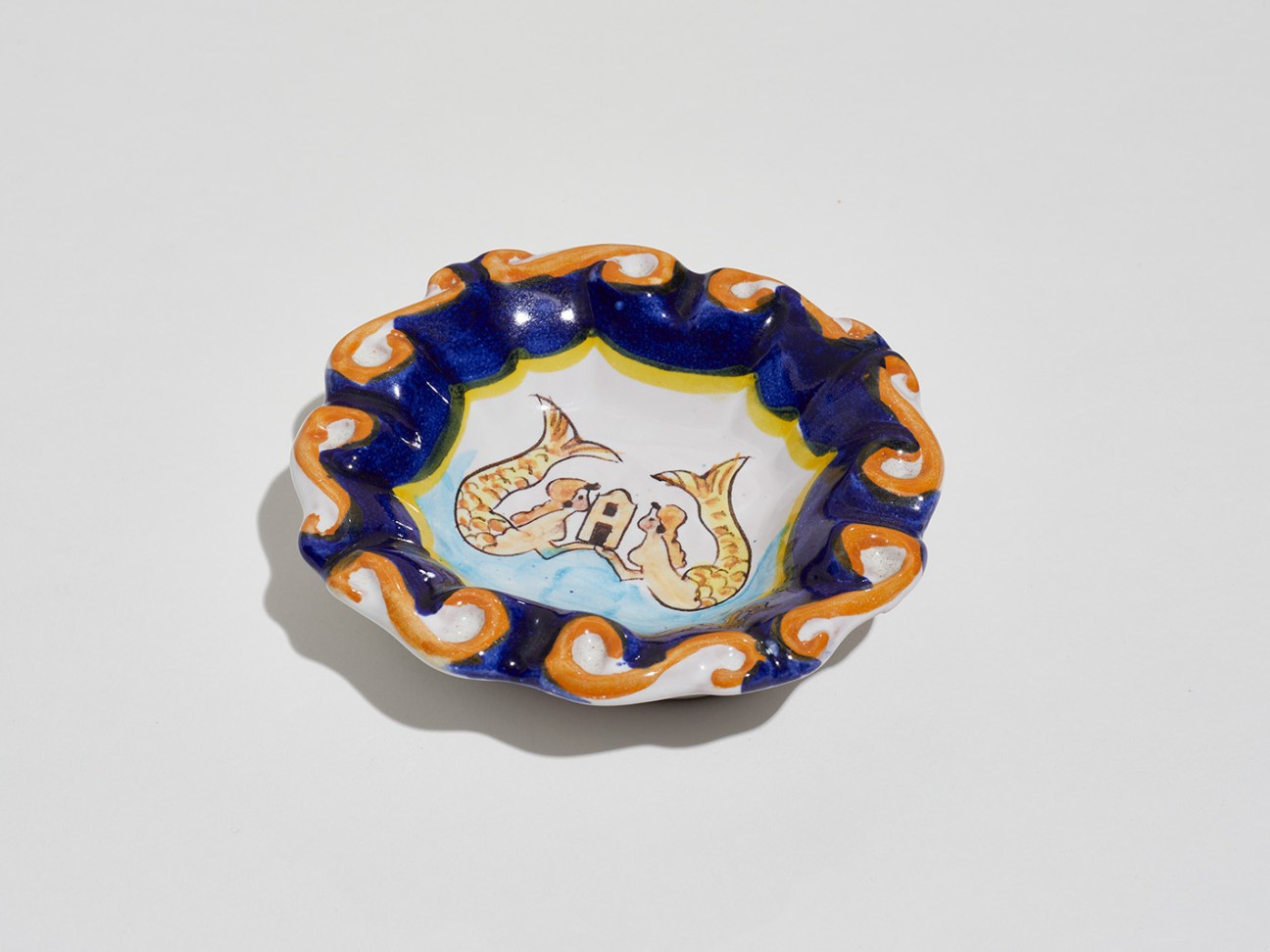
Few things can bring back memories like a holiday purchase, however small – even a T-shirt or a cap picked up on your travels can revive moments spent in the sun if they feature, say, the logo of your favourite summer resort. “Hotel merchandise is so popular because it represents an experience,” says Francesco Sersale, head of business development and marketing at the family-run Le Sirenuse hotel on the Amalfi Coast. “It’s a marker of having been somewhere.” Given their limited availability, items such as a graphic T-shirt from Positano seafood restaurant Da Adolfo, featuring its widely recognised fish motif, or a tote bag from Les Roches Rouges hotel on the Côte d’Azur could be considered more exclusive than many designer accessories. Here are three must-have items from the Mediterranean.