Issues
What motels say about the American life
Along America’s highways you come across a country no longer visible in New York, Los Angeles or San Francisco. Everyday life here has little to do with the concerns of those in big cities, where people drink coffee with oat milk, a bouncer reminds you to behave appropriately when entering a club and men with beards introduce themselves with their pronouns at parties for fear of being addressed incorrectly. This other America is symbolised by the motel, which is a quintessential US institution. The word motel is a portmanteau of “motor” and “hotel”, which also describes its purpose. The long, one- or two-storey buildings offer car travellers a rather low-threshold entry to somewhere to stay overnight before moving on – a bed with a parking space in front of it.
In this sense, motels are the epitome of freedom and adventure. You can’t avoid them on a roadtrip. You might drive hundreds of miles on straight roads with the radio turned up loud but as night and tiredness set in you might be drawn in by the promise of bright signs reading “Melody Ranch Motel”, “Death Valley Inn” or “Motel 6”.
Only the lit-up words “No vacancy” indicate that you should drive on. They come from the time before the internet. The fact that there are no rooms available is not a big deal, as there will be other motels. People haven’t historically chosen a motel for its special location, much less its interior design: reservations are unnecessary. A motel is on the way. You take what comes or move on to the next one.
Places of mischief and the uncanny
Many motels still in business in the US have seen better days. It’s precisely this shabby and worn-out look that makes them so charmingly anachronistic today. In luxury hotels, everything seems untouched, sterile and clean, right down to the ribbon around the toilet lid. When you enter a motel room, however, you can almost smell the stories that have taken place within the four walls.
There might be a table and chair, two plastic coat hangers, a large bed with a thick mattress that can – for better or worse – also feel alive. There’s a fitted carpet. A small, fenced-in pool in front of the window, deserted in temperatures of 40c. A few streets away, you’re likely to find a gun shop. There is coughing all night through the thin walls. On one side, there is the mysterious sound of furniture being moved for some unknowable but nonetheless intriguing purpose.
The guests who visit from their mobile homes stuff the pockets of their xxl trousers with packaged biscuits at breakfast and sip filter coffee from paper cups in silence. The people at the reception of the often family-run motels are impossibly friendly in that inimitably American way. When you leave, someone named Bill or Susan always shakes your hand and wishes you a safe onward journey with apparent sincerity.

Motels are a reminder of the past perhaps because they remind us of so many American films and novels, whose atmosphere they have shaped, and which have in turn been shaped by them. Maybe that is why we romanticise them. They are part of pop culture, usually places of doom and the uncanny, like the Bates Motel in Alfred Hitchcock’s Psycho, where Janet Leigh takes her carefree shower. In the Coen brothers’ Fargo and in David Lynch’s Lost Highway, the motel serves as a hideout for criminals and secret lovers. Ridley Scott lets friends Thelma and Louise stay at the Oklahoma City Motel, where the former is seduced and robbed by a handsome cowboy.
You wouldn’t be surprised, nor disappointed, to see the travelling woman in the red dress from Edward Hopper’s painting Western Motel behind a window. She sits on a sofa, her suitcases ready, her car waiting in front of the window in the bright sun. Motels attract lonely people who are trying to escape from themselves.
Miranda July’s daring love suite
According to The New York Times, there were more than 61,000 motels in the US in 1964. They became popular after the construction of the highway network in the 1950s and 1960s. Interstate highways have since crossed parts of the entire country from north to south and west to east. Today, there are said to be about 16,000 motels left. But now, in a way that few might have predicted, motels are having a moment, the newspaper claims. Younger people are discovering motel culture and its aesthetics. Not just on their travels: some are even buying run-down motels and renovating them. On Instagram, motel fans admire the refreshed design of the originally modest inns. This is also being shown in television series such as Motel Makeover and Motel Rescue.
US filmmaker, artist, and writer Miranda July celebrates the motel in the same way in her new novel On All Fours. The first-person narrator, an artist, invests $20,000 of prize money to renovate a cheap motel room in a Los Angeles suburb where she is stranded on her roadtrip. She transforms it into a suite with fragrant soaps, fluffy designer towels and velvet armchairs in order to experience a wild affair within it.
The bourgeois bohemians might move into the motel and paint over its cloudy walls. They might add a new layer to what came before them, while also perhaps preserving it. In the old motels, however, life goes on just as it ever did. You close the door to your room, return the key at first light and drive off early in the morning with the quiet feeling of having gotten away.
This article was first published in the ‘Neue Zürcher Zeitung’. Translated by Monocle and edited for clarity and length.
About the writer:
Based in Zürich, Schmid has been a part of Swiss newspaper Neue Zürcher Zeitung’s editorial team since 2015. She has also been an editor at Annabelle and deputy editor in chief at Das Magazin, and is the author of several books.
Interview: Woo Youngmi, founder of Wooyoungmi and Solid Homme
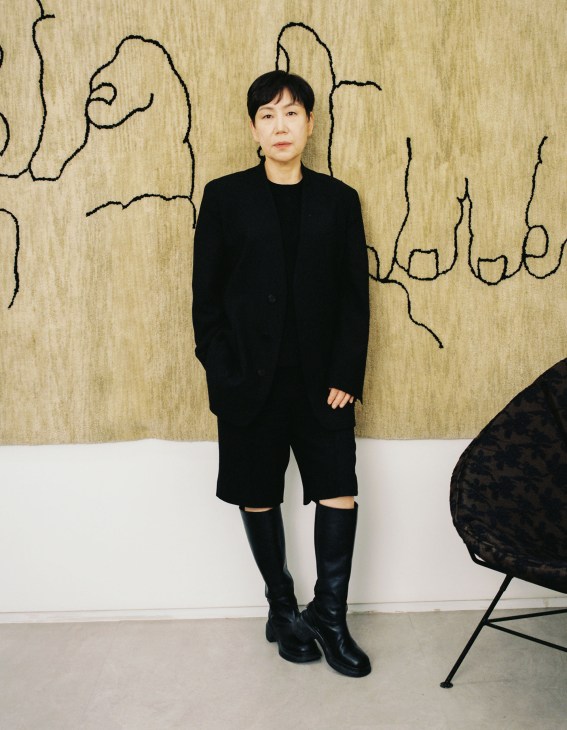
Woo Youngmi says that she has always done things recklessly. In 1988, when South Korea was just emerging from military rule, she debuted Solid Homme as one of the nation’s first design-led menswear labels, introducing new shapes and silhouettes into what was then a fashion hinterland. She didn’t stop there. In the early 2000s she left Seoul, where she had achieved critical and commercial success, for Paris, where she re-established herself. “I just couldn’t envision the next 20 or 30 years only working in Seoul,” she says.
Woo arrived in the French capital without a game plan. She debuted her second label, Wooyoungmi, focusing on higher-end luxury, and became the first South Korean designer to take part in Paris Fashion Week. Within a few years, the designer became a respected figure on Paris’s runways and established partnerships with department stores such as Le Bon Marché and Selfridges.
Today the Korean Wave has swept across the world and global audiences are familiar with the country’s flair for sharp tailoring, as well as its catchy pop music, gripping films and innovative skincare. Woo, who has contributed to the phenomenon, remains a market leader: her Wooyoungmi shows are always oversubscribed in Paris and praised for offering fresh ideas on tailoring, workwear and, lately, uniform dressing. The brand has also been broadening its scope to include jewellery, accessories and womenswear and has opened a new Paris flagship on rue Saint- Honoré, a stone’s throw from the boutiques of Chanel, Dior and Loro Piana – a signal of the designer’s growing luxury ambitions.
monocle visits Woo at her company’s Seoul headquarters, where her autumn collection (a mix of wide-leg denim, tweed suits and drop-shoulder suede jackets) is displayed alongside tapestries depicting the work of Basque artist Eduardo Chillida. She tells us about her relationship with Paris, her design philosophy and her constantly evolving creative drive.
Why did you choose to move to Paris from Seoul when its menswear scene was then quite limited?
I didn’t think in those terms. I just asked myself which city had an open mind for a young designer and the answer was Paris. People were saying that Milan was the centre of the world for menswear but that has changed since then. Still, I was very lost when I arrived. I had never felt that kind of helplessness up to that point but I had made up my mind so I jumped into it headfirst. I felt as though I was up against a huge wall but what could I do? I just had to keep going.
You were the first South Korean woman to design menswear and you have since expanded into womenswear. How did you make those choices?
Every designer’s identity comes from within so it can feel uncomfortable to make something that one can’t personally wear. But I found that if it isn’t for me, I can be a lot more imaginative. I decided to start creating womenswear too but only after turning 60. When you put yourself in the frame of mind of thinking about what you want to wear, your designs can become narrow because you’re projecting who you are and who you aspire to be. At this age, I feel fortunate that I can design womenswear without constraints.
Let’s turn back to the 1990s, when South Korean men began having more disposable income and developed a taste in fashion. What was that like?
There was menswear before me but it was extremely conservative. I was almost committing heresy with my designs. People would say that it’s neither feminine nor masculine, a kind of “soft” menswear. But I didn’t give it too much thought. I was only 30. How much strategy do you think I had back then? I just did what felt right.
What do you think about the Korean Wave?
I see it as the culmination of various cultural categories such as K-pop, K-food and K-films. Over the past 70 years, South Korea has undergone rapid economic development but before that we had a long history that cultivated a unique culture. We had a wealth of content; it just hadn’t been introduced to the world until recently. The fashion industry should ride this wave well. I hope that a group of designers who can represent and explain South Korean fashion – not just me – will form a strong, united presence in the global market.
You have been focusing on suiting and uniform dressing in recent collections. Why is the concept of a uniform becoming appealing again?
It’s a reaction to the fatigue brought on by the long dominance of streetwear. There’s a renewed appreciation for elegant, well-put-together clothing. Fashion, by its nature, is driven by a desire for novelty. But the key to sustaining a brand’s identity lies in creating something new while not being carried away by trends.
Why did you decide to open your new Paris shop in such a prime luxury spot?
Our first shop was in the Marais, a youthful area, and it made sense financially. But I now felt that it was the moment to move closer towards luxury. But, for me, luxury isn’t about price: I wanted to go up a level and that meant going to rue Saint-Honoré. That decision felt pretty reckless but once again we just went for it.
wooyoungmi.com; solidhomme.com
Why travellers are heading north to Norway’s Lofoten Islands – a hidden gem of the wild and windswept north
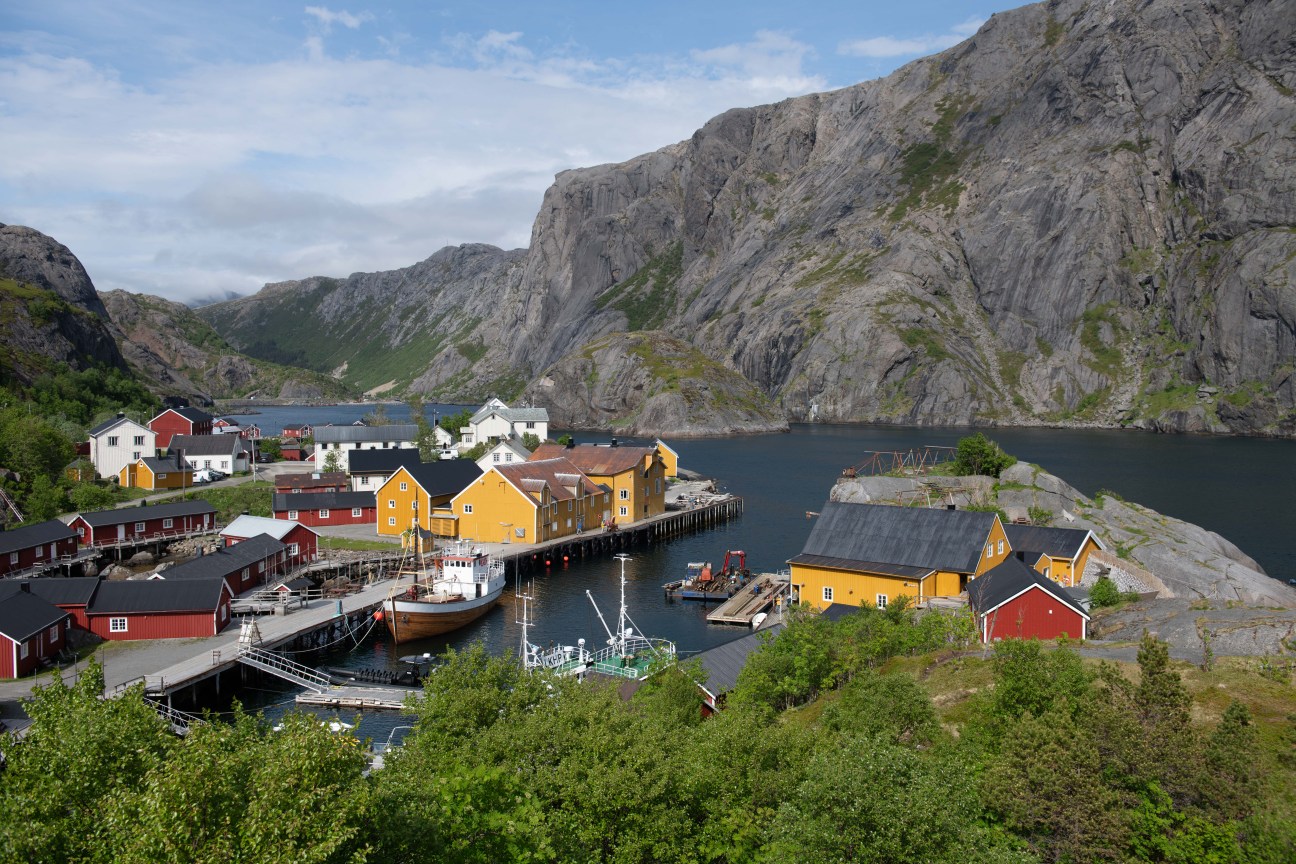
If you’re on holiday in Nusfjord, you’ll likely have come far. You’ll probably have changed planes in Oslo, boarded another in Bodø and ended up careening over the crags of Norway’s northwestern coast in your little Dash 8 turboprop, where the dark islands look like whales breaching in the brine. Then you’ll have dipped a wing toward the Lofoten archipelago, where the bays are turquoise and the summer grass is green. You’re in the cock’s comb, almost at the top of mainland Norway and well into the Arctic Circle, to find Nusfjord: a beautiful nook in the world’s second-longest coastline (Norway is still some 100,000 kilometres behind the weathersome cliffs of Canada). This neck of the Nordic woods and its latitudinal brethren are hot because they’re cool: as southern Europe’s sizzle has turned to crackle, eyes are looking northward for a calmer balm and some old-fashioned weather. So, if you’re here and you don’t speak much Norwegian, you’ll likely have come far. Phew, you have arrived.
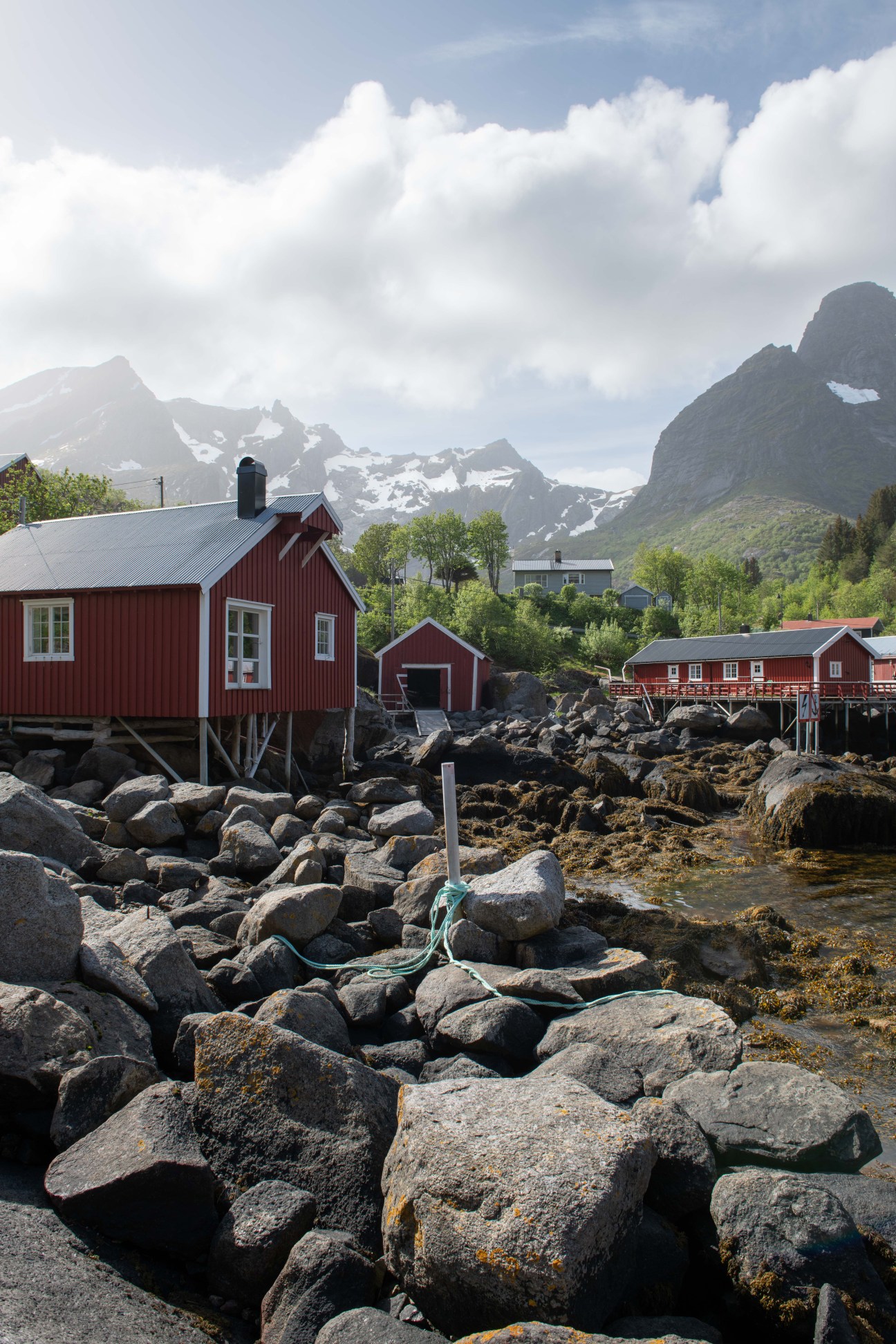
Nusfjord was a fabled fishing village for a thousand years, a haven on a wild coastline where boats could be safely moored and cabins built to house the hundreds of fishermen who’d rowed for days and weeks on high seas to reach this specific spot, staying for months to catch, dry, store and sell their cod. Renata Johansen, born and raised in the village, puts it better. “Every January to March the skrei has been coming down from the northern sea with his girlfriend to find the marriage bed with the perfect temperature for making babies,” she says. “What was irresistible for the fish was irresistible for the fishermen, too.”
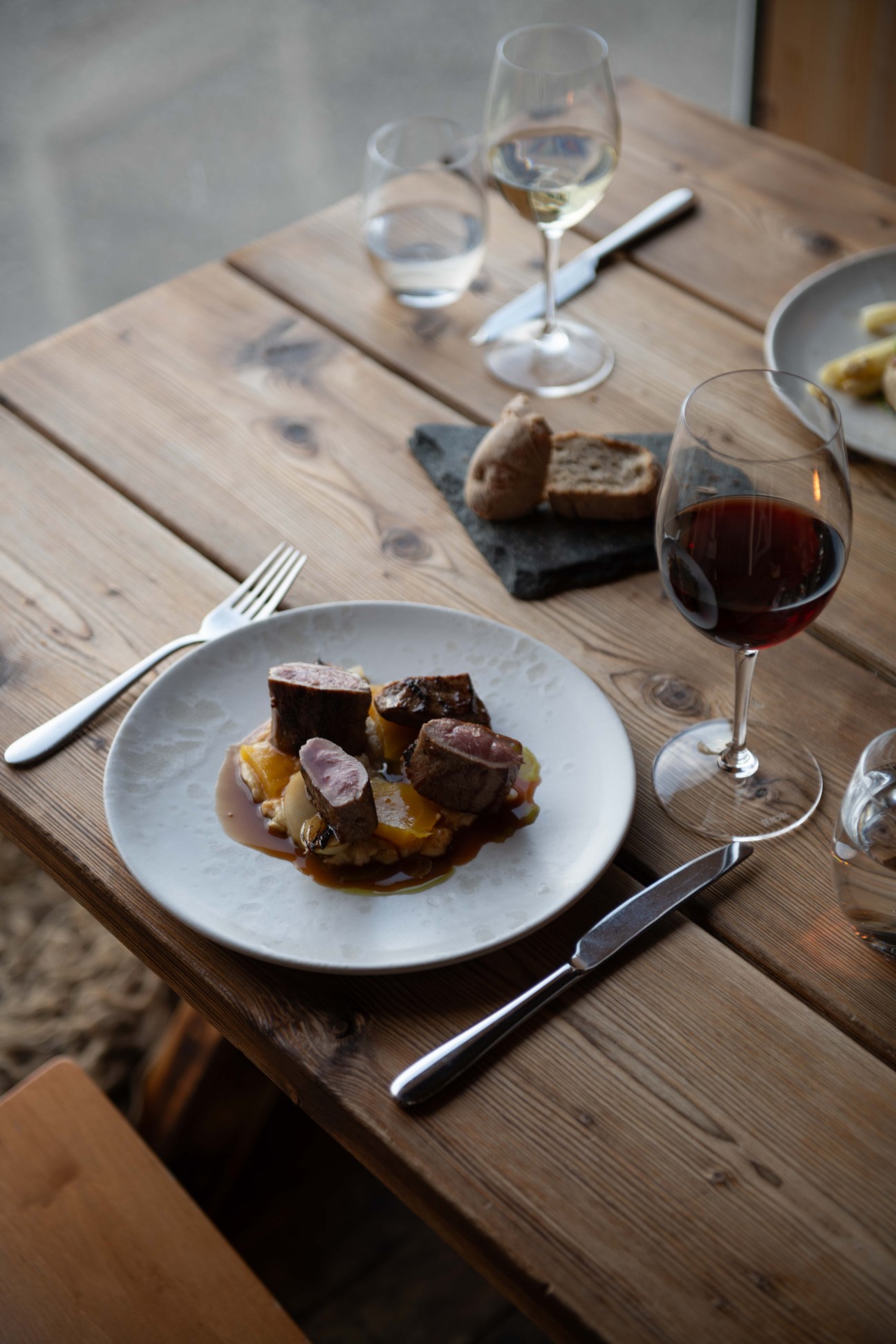
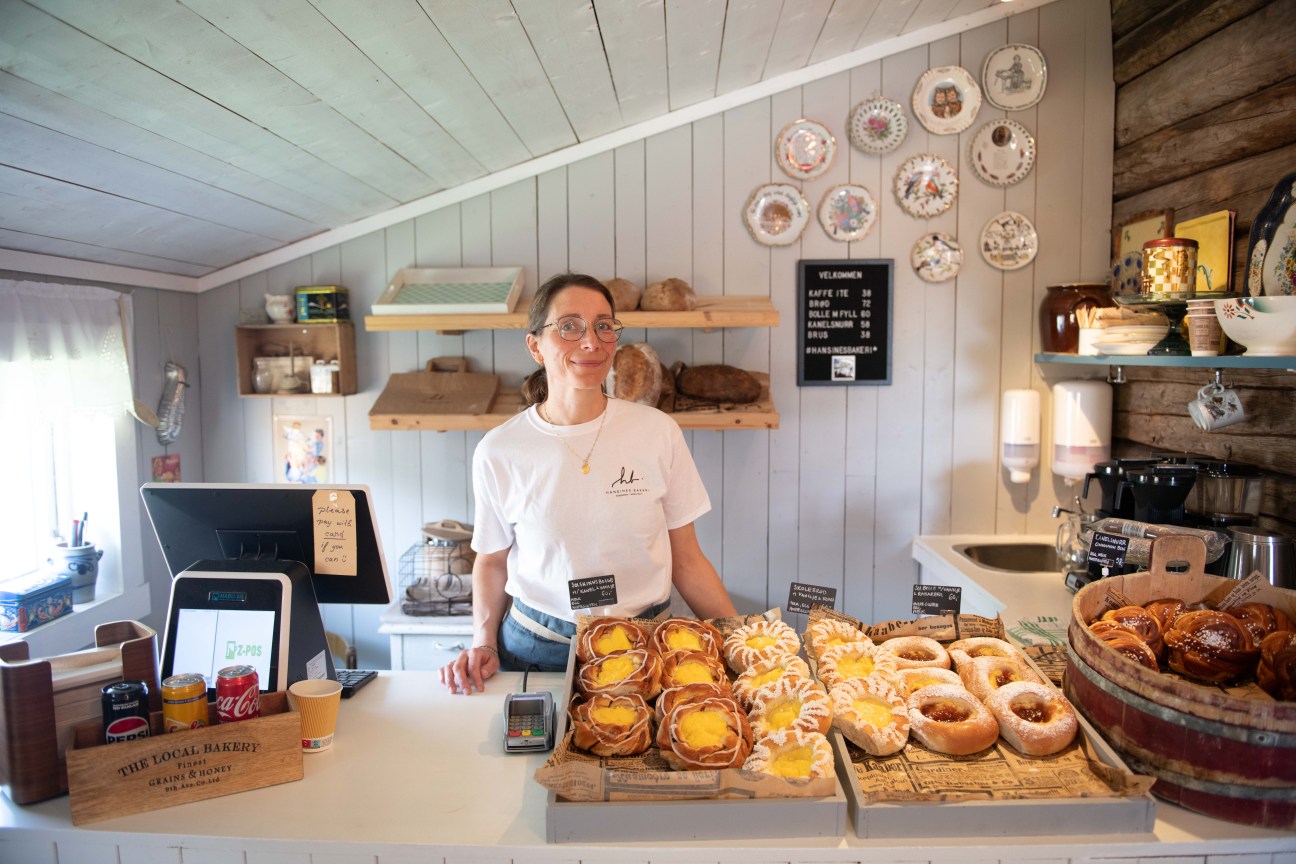
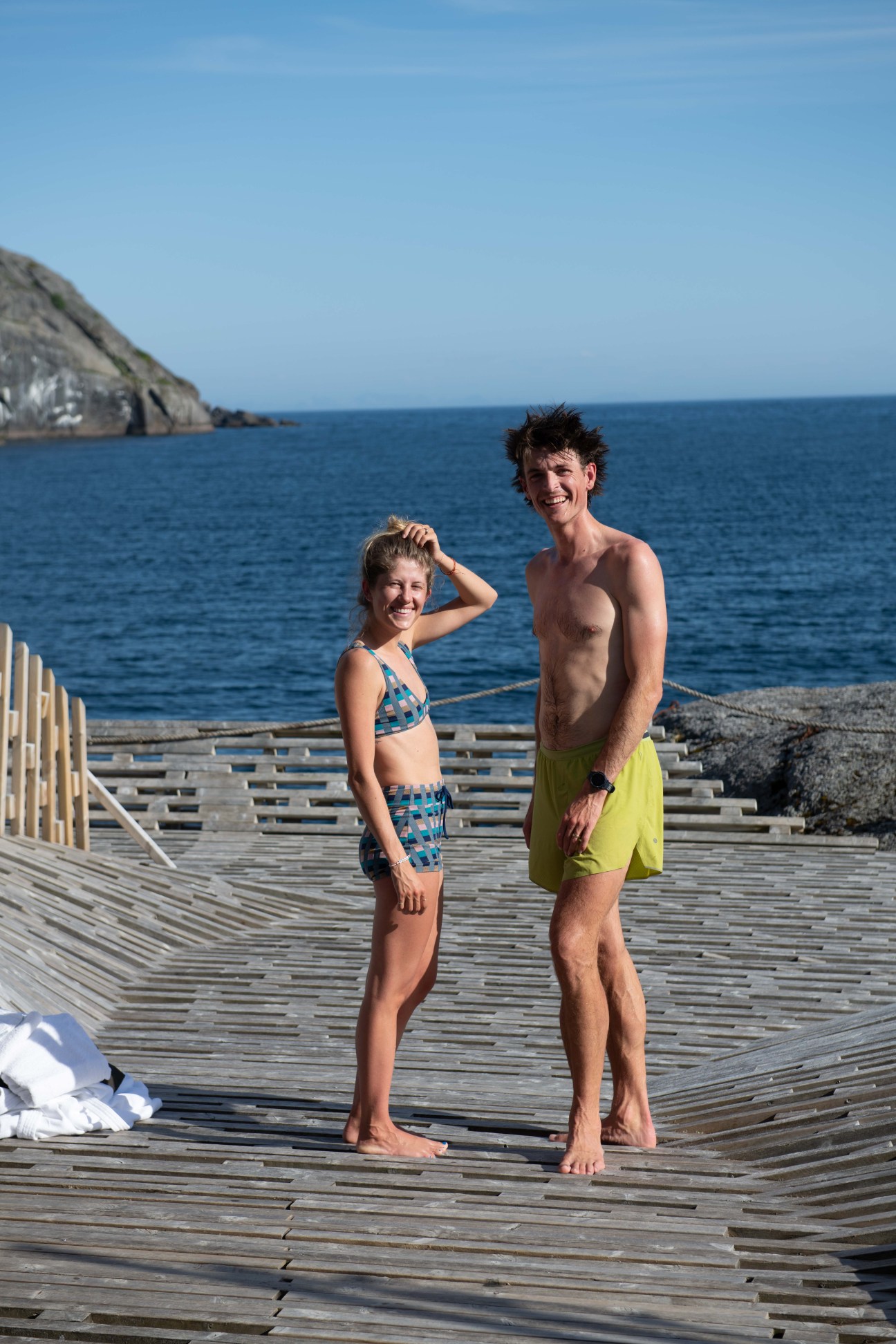
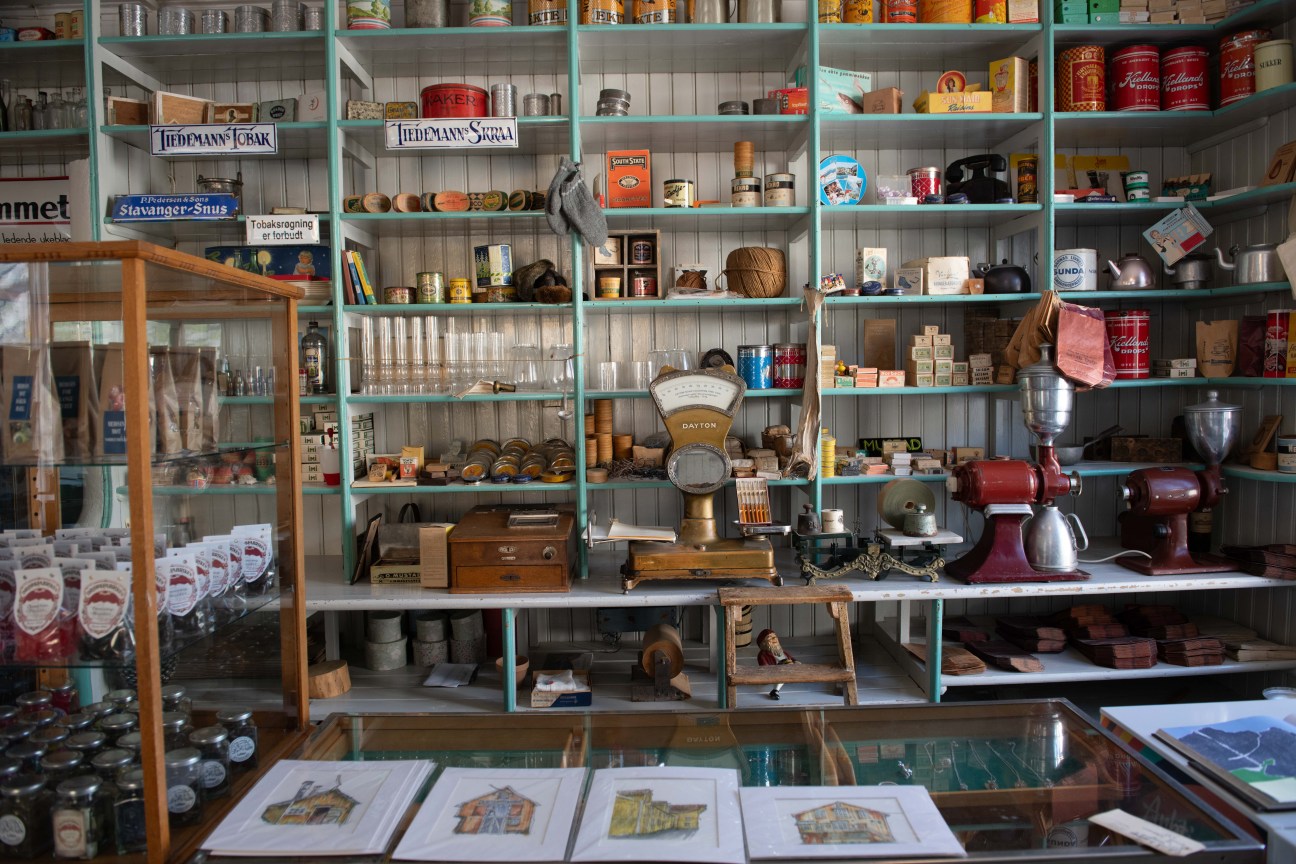
Johansen is the front-of-house manager for what Nusfjord is now, which is still what you want on reaching a haven but in a very different way: a beautiful resort in which the rooms are calm, luxurious revamps of those old cabins and the administrative office for the weighing and selling of fish is now the very fine Restaurant Karoline. The rest of the village offers a swoon-inducing on-site bakery, the landhandleriet shop and café for sandwiches, coffee and local crafts, an art gallery patronised by Norway’s Queen Sonja, a museum, a pub-and-pizza joint and a sauna that’s best enjoyed after a jump in the bloody freezing sea. It’ll toughen you up but not to the point that you’ll be like Johansen or one of her family. “Growing up here, the only child labour that was allowed in Norway is cutting the tongue out of the cod’s head. I bought myself a nice boat and a big motor with the money but we don’t offer it as an activity here for guests nowadays,” she says with a chuckle.
We’re soon out on the water – high above the cod – with Fred Ravneberg, Nusfjord’s general manager, his big laugh, a couple more members of his team and Caroline Krefting, whose family own Nusfjord. “In fact most of what you can see – even the mountain,” she says, with a smile that’s both proud and shy of any boastfulness. We’re out on the RIB boat for a tour that’ll take in the incredible sea eagles that nest and hunt around the bay and the Nusfjord estate’s small, private island with its very own small, private house, whose nickname seems to have stuck on the resort’s official literature: The Isolated Fisherman. But first, why get there slowly when you can rip around on that twin-engine RIB? A boat in the shape of a waterski and which appears to have been designed – and certainly today piloted – with the same thrills and spills in mind. It’s fast as hell and loves to get airborne off the waves. Lifejackets are hugged as the cold spray rains down. Greater still is the pure animal buzz of the big birds; the pair of sea eagles riding high on the updrafts above us, before swooping down on the waves to snatch a talon-full of what might well have been the leftovers of my fish. On we bounce and fly and bounce. The eagles regard us with a patient eye, then turn on their tail feathers for home and their young.
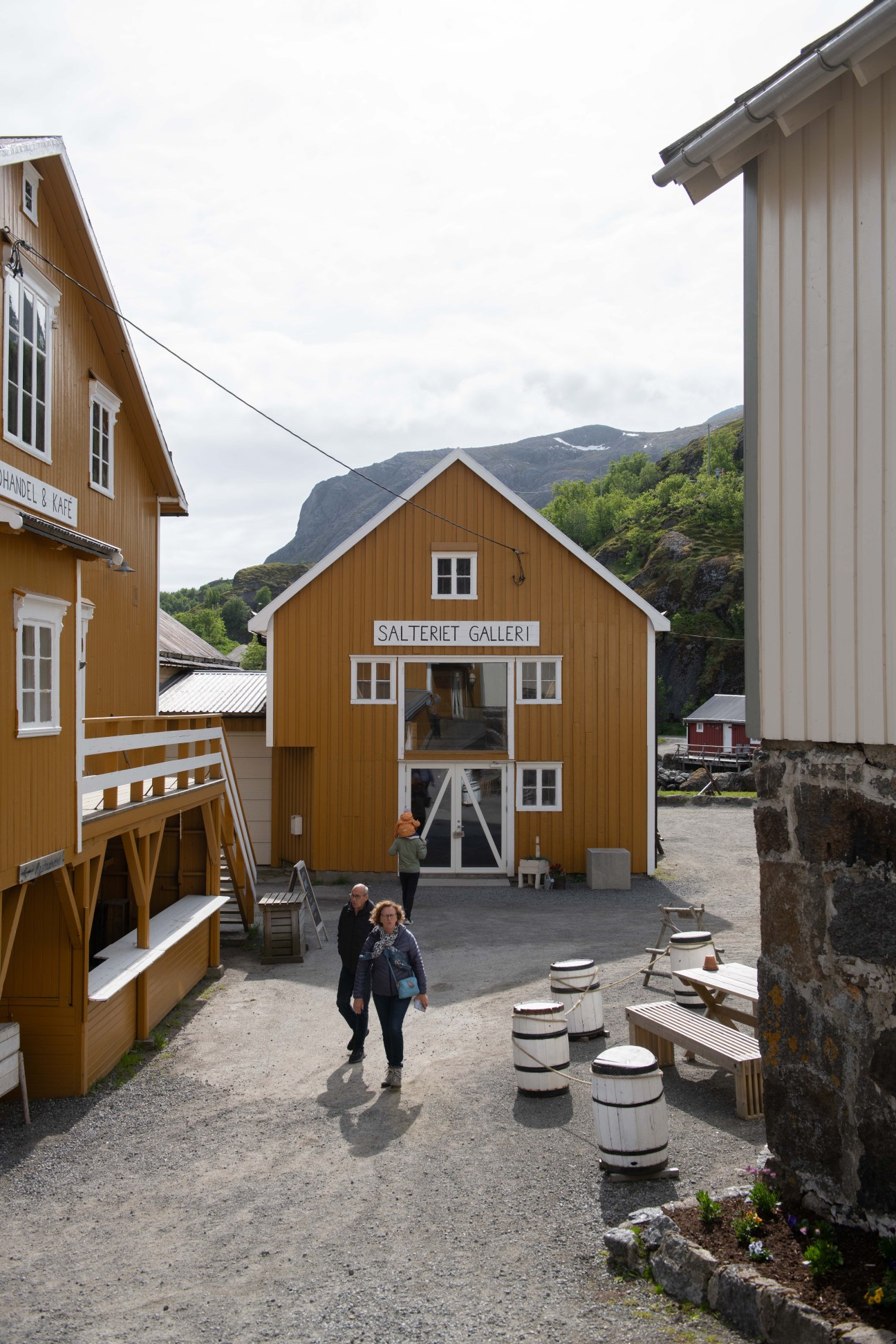
“We started this adventure eight years ago and now I feel both very grateful and very proud,” says Krefting. She is smiling into the sun’s dazzle as it dances off the sea, through the island pines and sitting room windows of the cosy cottage that, in June at least, does little justice to the name of The Isolated Fisherman. “Being here gives me a new perspective on life every time,” says Krefting. “In January we were skiing up on the mountain with wild views at 1,000 metres; where else can you see the sea from a mountaintop and almost ski down to it? And now we’re here right next to that sea and it’s another experience, to do with the season and the weather and the magic of this place.”
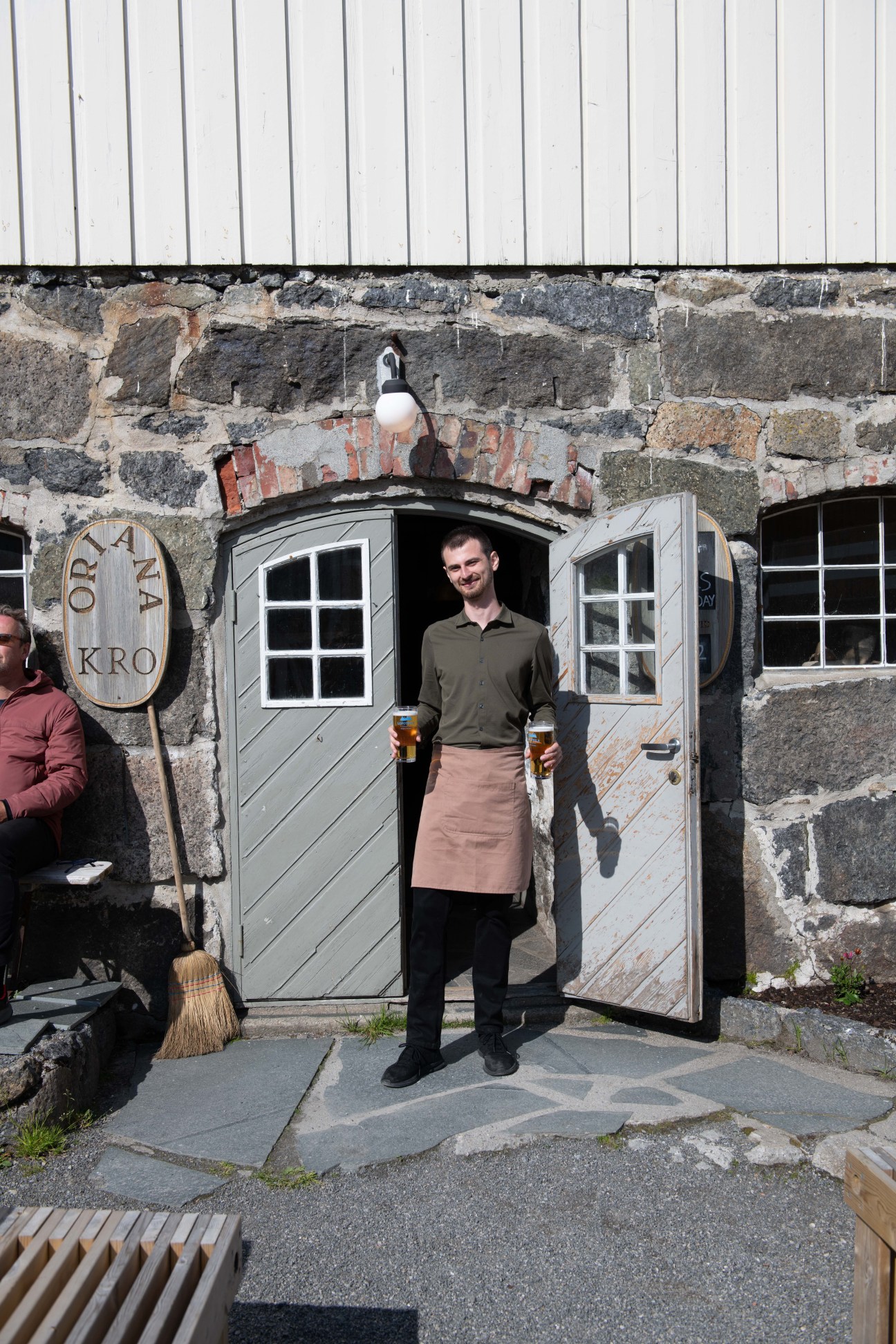
After the Krefting family bought Nusfjord, Caroline and her mother-in-law have ensured the accommodation and resort-wide fixtures and fittings have gone from a cheap-ish hotel-standard approach that made nothing of the cabins’ original layouts to a high-quality, low-volume, classily reserved Nordic style – all quiet luxury, cool and calm. Nusfjord, despite not having a road until the 1950s (it’s the sort of perfectly preserved picture of a place that you might stamp on a Norwegian biscuit-tin), had been inundated with camera-wielding coach-trips until the rethink and refurb. Now the village is still open for people to have a look and a coffee and poke about but some subtle yet firm pressure has helped bid the coaches adjø. There seems to be an honesty and a tenderness to the relationship between Krefting and, for example, Nusfjord-born Johansen’s family. Krefting talks of the “great warmth, great stories, great laughs” that go with the territory here and that she feels fortunate to have been involved with. “We also just had this goal which is about authentic experiences,” she says, “and that you don’t need to choose between comfort and nature – I hope we’ve woven both together here.”
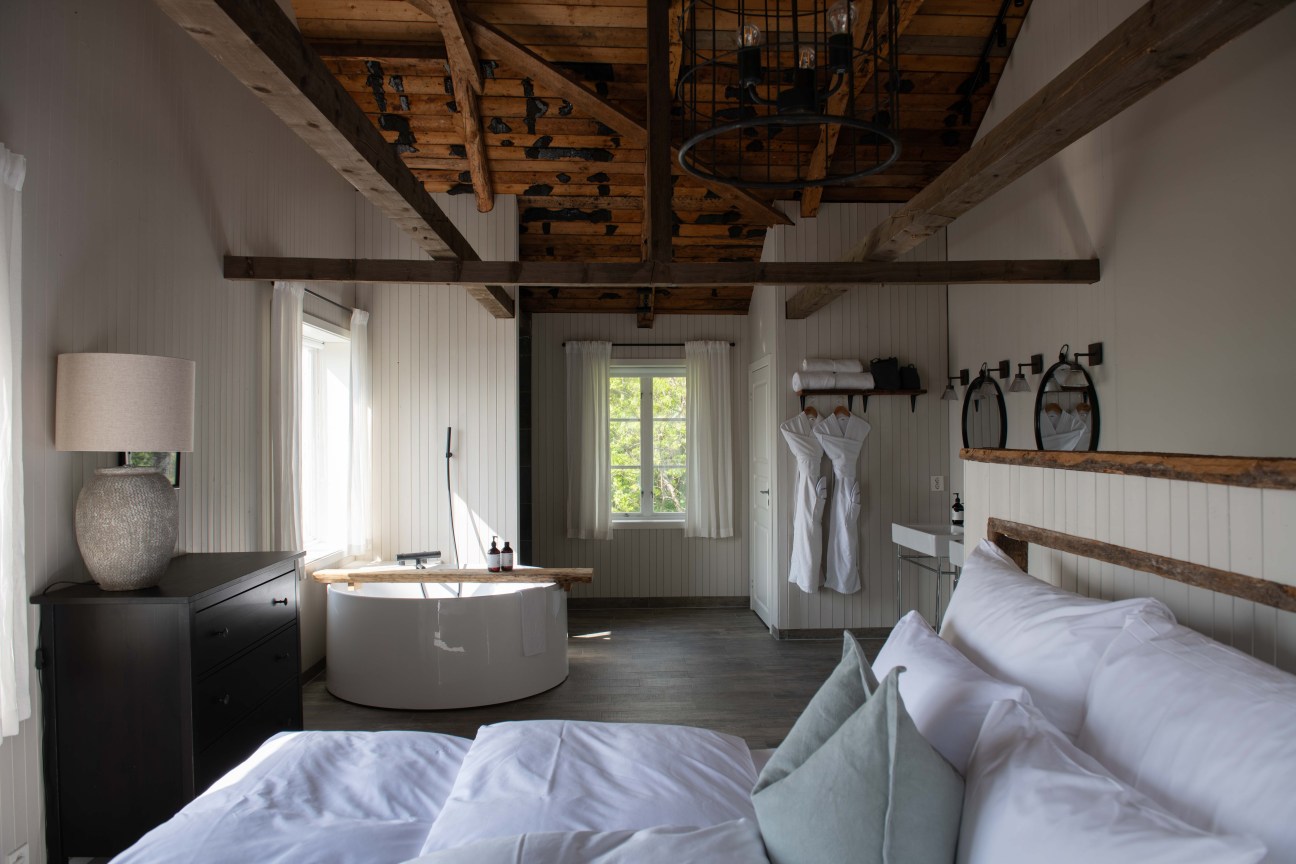
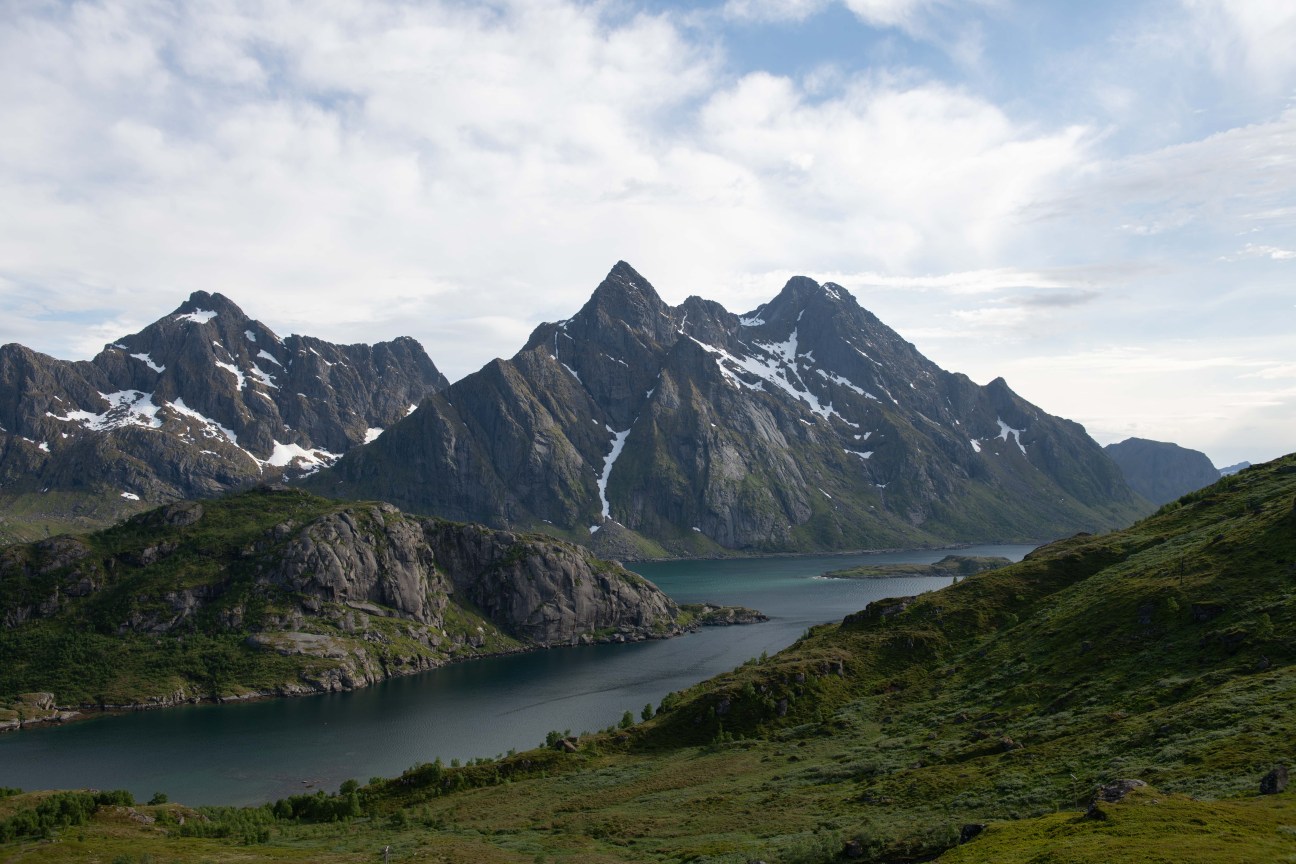
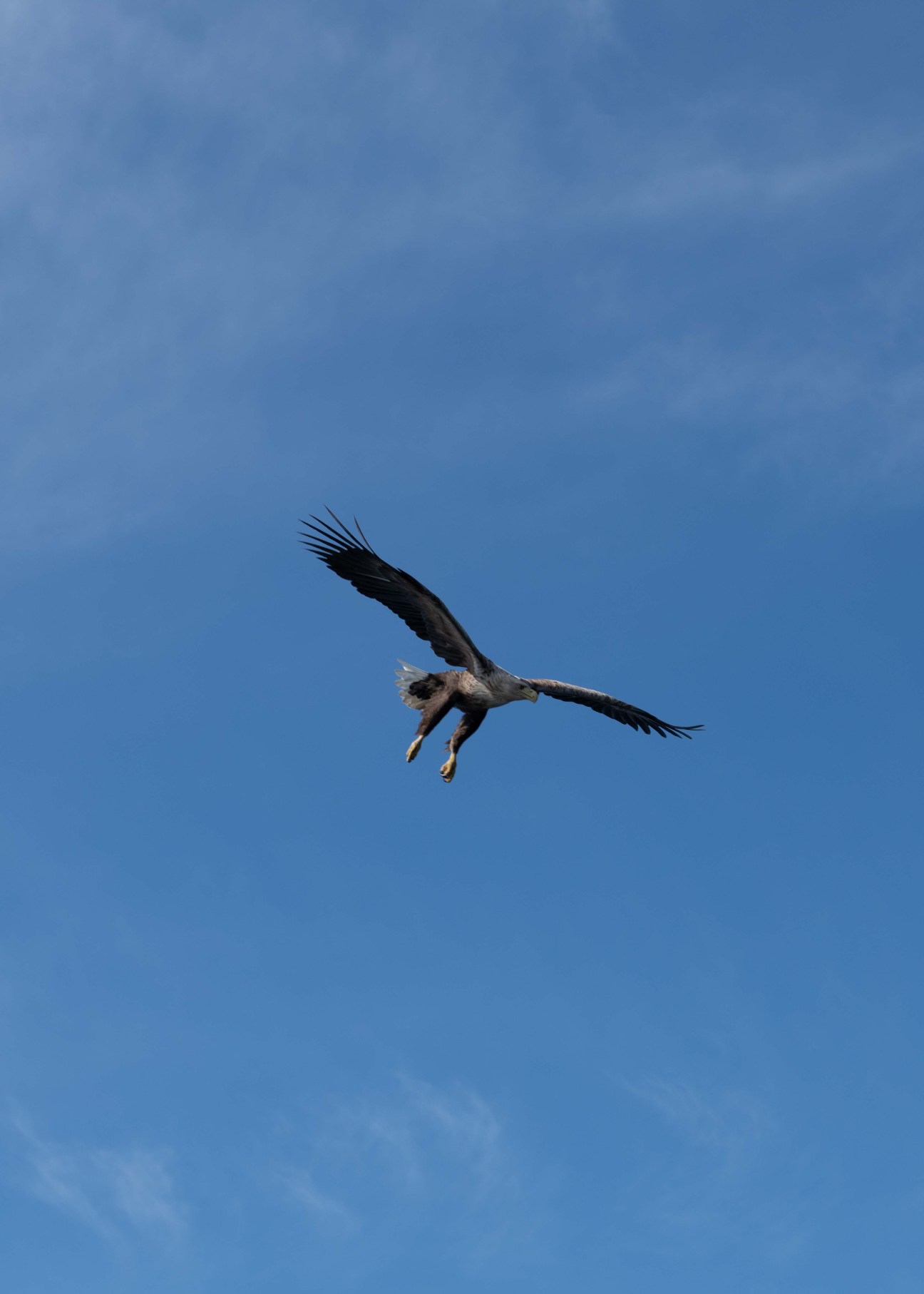
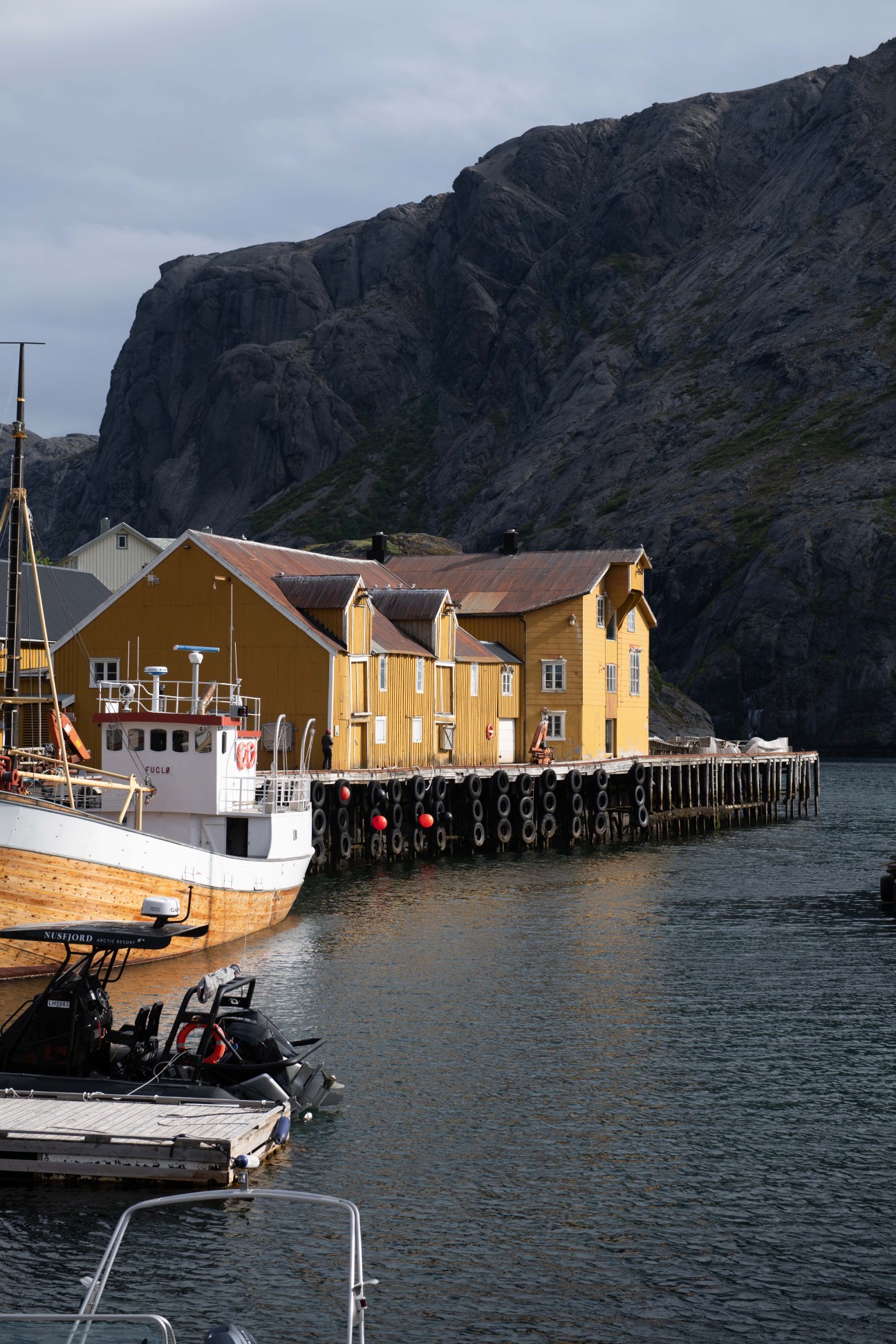
The weaving has indeed wrought a happy tapestry. Nusfjord’s village-first, hotel-later atmosphere is achieved through the open-air museum style of the resort but also by the charming staff, almost all of whom live here. Of course Nusfjord’s Nordic spa boasts a suite of treatments but maybe it expects you to have also broken a sweat outside of its sauna. Anyone for an adventure?
“Haha! You’re in!” says Ravneberg, big laugh on full beam, on our fishing trip aboard Elltor, the resort’s handsome boat. “Now wind him in, nice and smooth.” Out of the mill-pond-still of Nusfjord’s bay, we’re reeling again on the swells of the Norwegian Sea. A light breakfast seemed a wise choice: eyes on the horizon, breathe through your nose and focus on being flattered as a half-decent fisherman by a man who knows more than you about the ways of cod, coalfish, hake and halibut – and not because they were presented on a bed of samphire under Restaurant Karoline’s candlelight last night. There’s some angling banter about how I must have got lucky last night to be so lucky with the rod this morning, which we’ll let fly away on the Arctic breeze. Suffice to say, a respectful haul was had. Gutted, cleaned and into the ice they go, in order to be delivered to a beaming chef on dry land later. Fish soup, sir, caught by yourself? Ooh, ja vennligst.
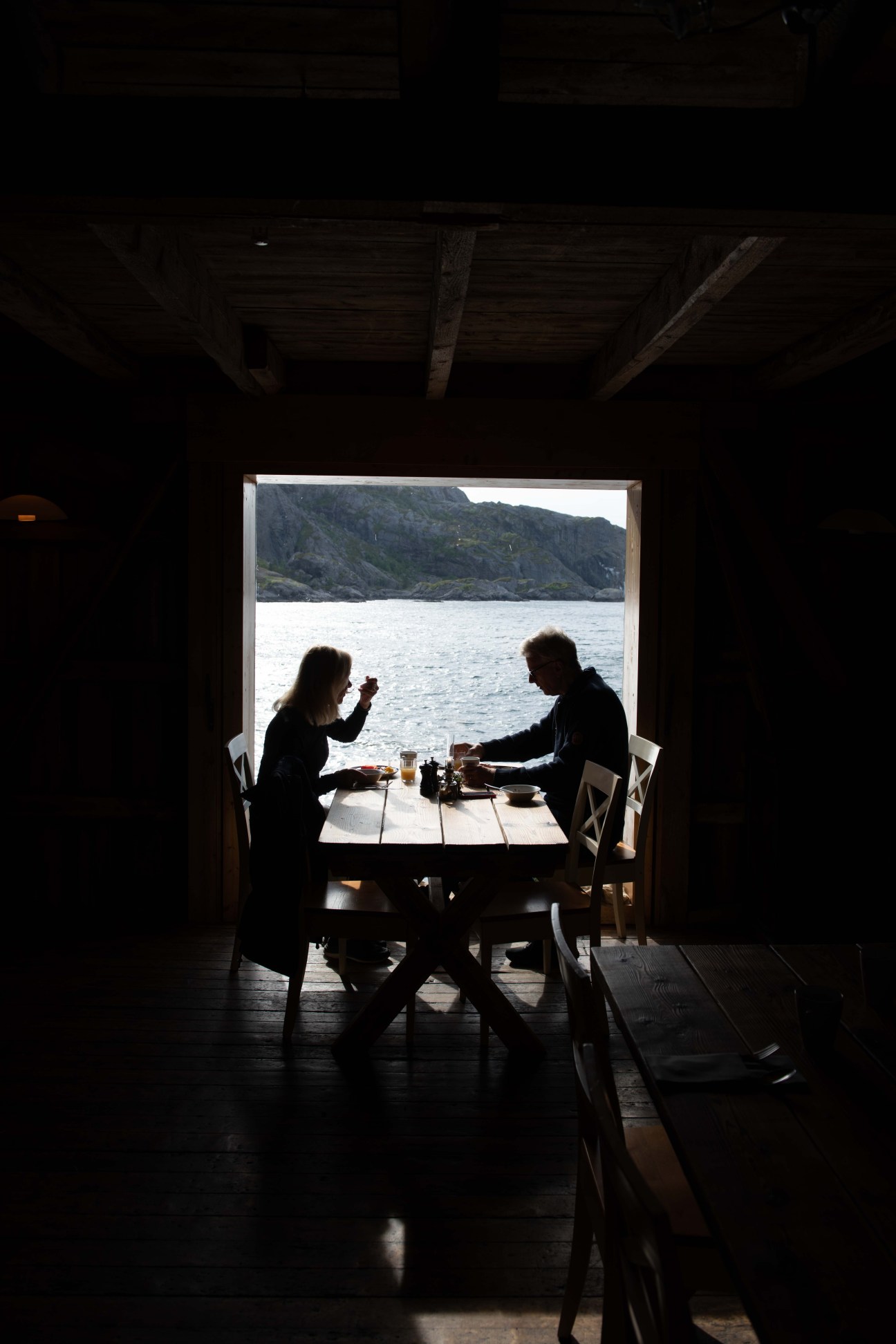
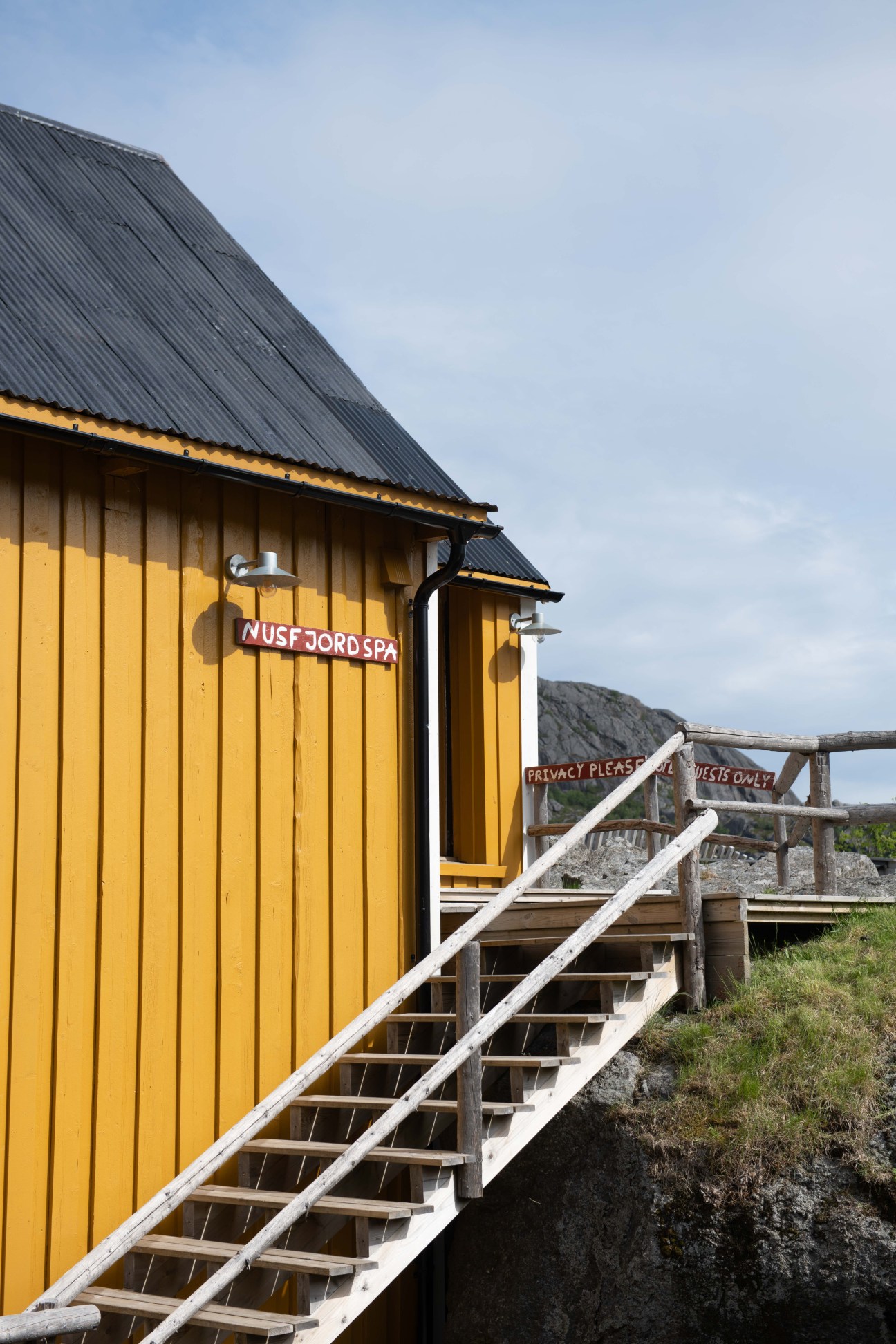
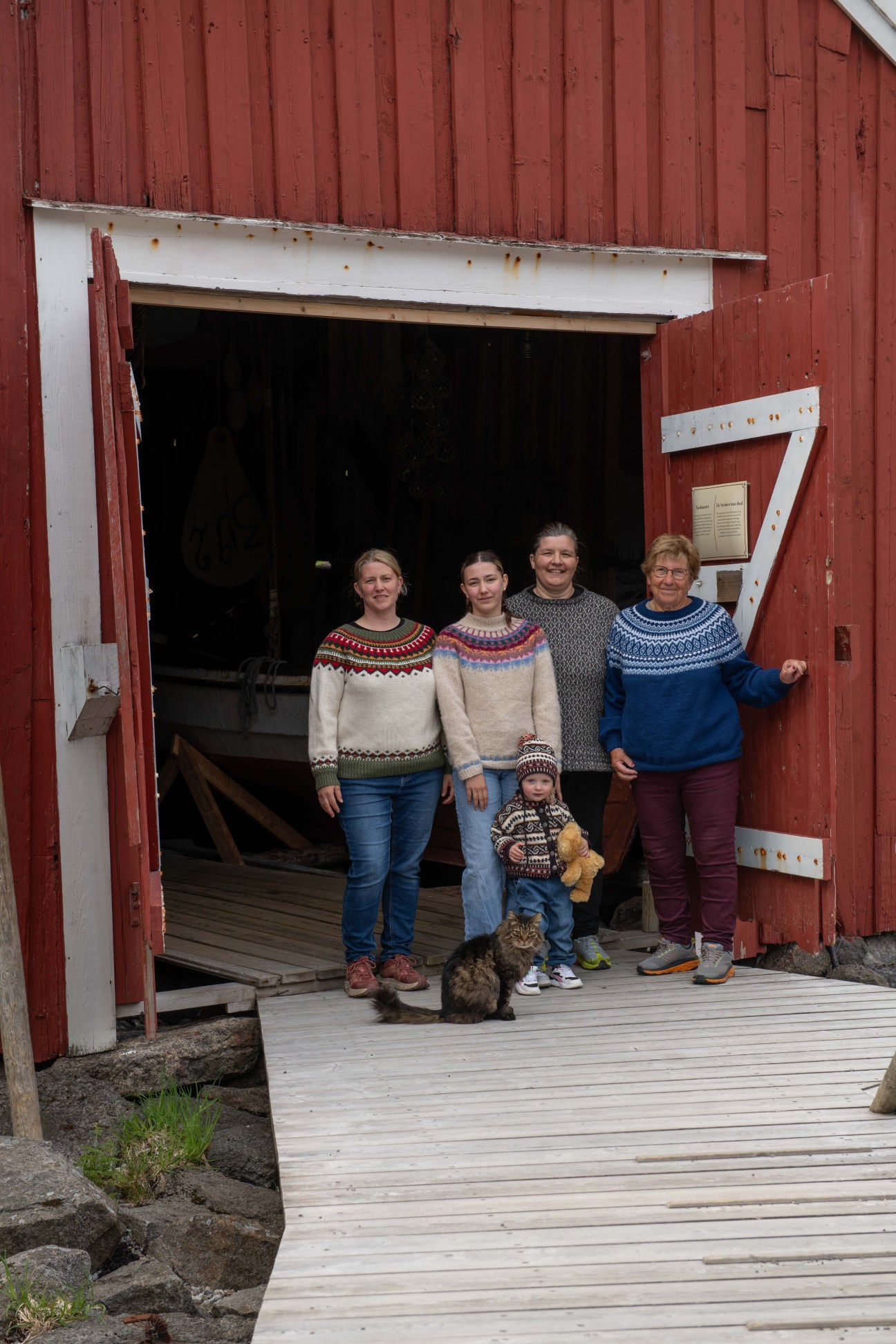
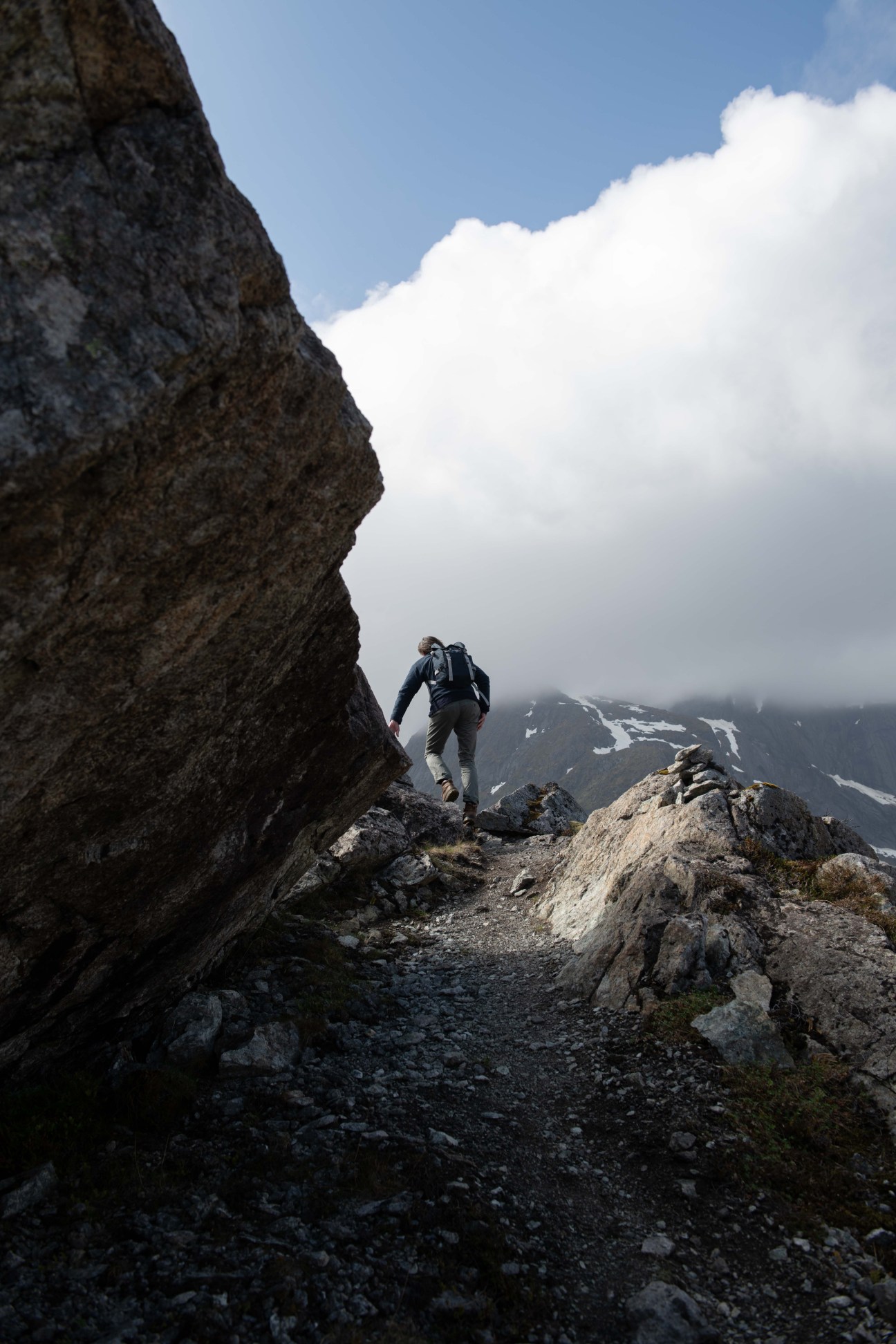
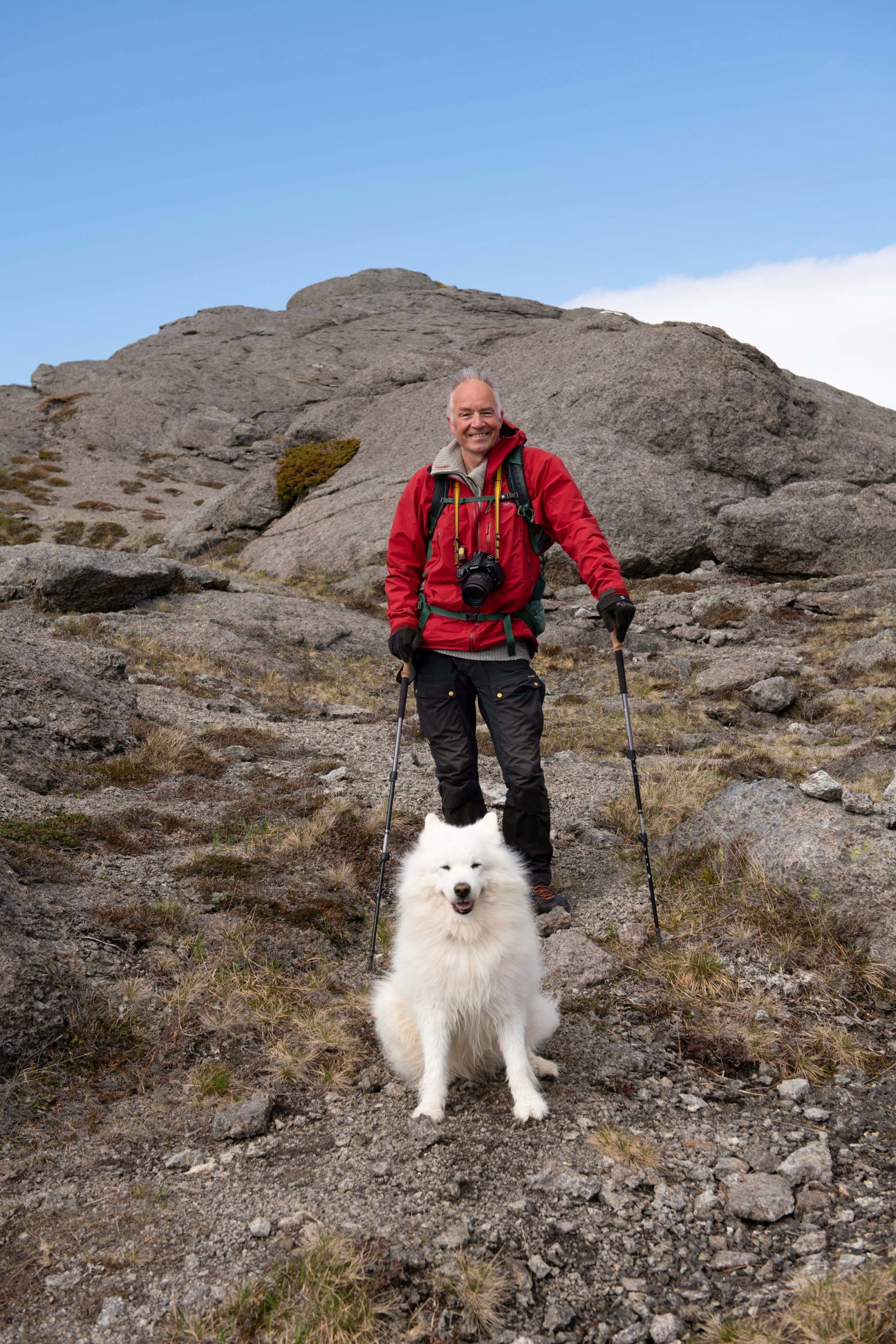
The nature is really the thing. For all the laid-on activities, as lively or contemplative as they might be, the best thing photographer Ivar and I did was walk to the summit of the huge hill that looks over the village. It’s a decent hike, complete with knee-deep June snow in parts. The reward is the view at the top, the beer at the bottom and the kinship of walking together. Dinner at Restaurant Karoline – mostly fished, reared or grown nearby – was manna, a rum nightcap was nectar and the cabin and the bed – just right, just perfect – were heaven. That and the journey because you may well have come a long way but phew: you have arrived. nusfjordarcticresort.com
What to pack
You’ll want to indulge in all things Nusfjord on your trip, and that means dressing for the Nordic summer during the year’s middle months and being ready for almost anything for the rest of the year. The summer in Nusfjord typically means 10C to 15C but it can easily get up to 20C or dip into single figures when the wind has an edge. Take a bathing costume for the hot tub and a dip in the Arctic Sea (the sauna at Nusfjord is also swimmers-on); waterproof hiking boots; and a good rain jacket and hiking trousers (not the swishy kind, for the sake of Odin’s beard). And pack an eye mask: 24-hour sunlight can be as maddening as it is intriguing.
What to see
The Lofoten archipelago is a place of jaw-dropping beauty. Leknes, where we landed, would be a good spot to hire a car or you may wish to start further east into Norway to drive the length of the snaking peninsula, to end at the western tip and the succinctly-named Å. Along the route you’ll see many stunning beaches where you might do a double-take at the sight of plucky surfers in inch-thick wetsuits. Unstad beach is a popular spot to watch before getting a lesson courtesy of the Lofoten Surfsenter, where “Jack Frost”, the Lebowski-like local guru and proprietor, will regale you with tales of surfing among the ice floes in winter.
Three books to get you in the mood
‘A Woman in the Polar Night’ by Christiane Ritter
The 1930s memoir of an Austrian woman who left urban comforts behind to live with her explorer husband for a year in a shack in Arctic Spitsbergen. This classic of travel-writing witnesses months of near madness before her conversion to the Arctic’s lunar beauty.
‘The Ice Palace’ by Tarjei Vesaas
A strange and allegorical coming-of-age tale about two girls on the brink of becoming young women in postwar rural Norway. Are Siss and Unn separate girls or halves of the same character? A sharp shock of powerful storytelling – the equivalent of a psychological ice-bath.
‘Kon Tiki Man’ by Thor Heyerdahl
This is about the late, great Norwegian explorer and ethnographer rather than about his home country but there is much of the Nordic temperament in Heyerdahl’s unfussy prose. It describes an 8,000km cross-Pacific odyssey that he undertook on a hand-built raft in 1947.
Richard England’s architectural world in Malta
The prolific octogenarian writes poetry, draws cityscapes and is currently penning a book based on biblical characters. Over his six-decade career, he has created a captivating body of colourful, dreamy, postmodern delights. Along the way, England has reimagined religious spaces, challenged the island’s prevailing styles and breathed life into cities the world over. Monocle heads to Malta to meet the maestro and find out more about his career, ideas and inspiration
“Some of my favourite music is by Eleni Karaindrou,” says Richard England, hitting play on an album by the Greek composer. The octogenarian architect is welcoming monocle into his home in St Julian’s, a small enclave on the east coast of Malta. “My grandmother introduced me to the music of Enrico Caruso as a child and it stuck. I now have a collection of 12,000 records. My family says that I suffer from a condition called ‘tenoritis’.”
England is one of Malta’s most influential designers. His accolades include 11 International Academy of Architecture (iaa) Awards and the iaa Grand Prix; he was also made a Maltese Officer of the Order of Merit for his work. While we’re here to talk architecture, it’s clear that this visit will be about more than just bricks and mortar. Glasses of whisky are poured and a spread of hobz biz-zejt (a Maltese entrée of crusty bread topped with tomatoes and olive oil) is laid out, as England describes the creative endeavours that he is currently pursuing. “If I rest, I rust,” he says.
There’s his daily ritual of drawing cityscapes and landscapes (“Despite computers, the bridge between mind and paper is still best crossed by the hand”), and work to be done on a book featuring the biblical figures of Cain and Judas (“I wrote one on Lazarus, who must be the most frustrating guy in the Bible – he spends four days in the afterlife, then comes back and tells us nothing”). There are poems too and, of course, architecture – he has just completed a striking meditation garden and chapel in the Maltese town of Santa Venera for Christian organisation Dar il-Hanin Samaritan. There are similarities across his creative practices. “Both writing a poem and making architecture are about building,” he says. “With poetry, it’s using sound and silence, and with architecture, it’s using solid and void. They have the same aim: to uplift the spirit.”
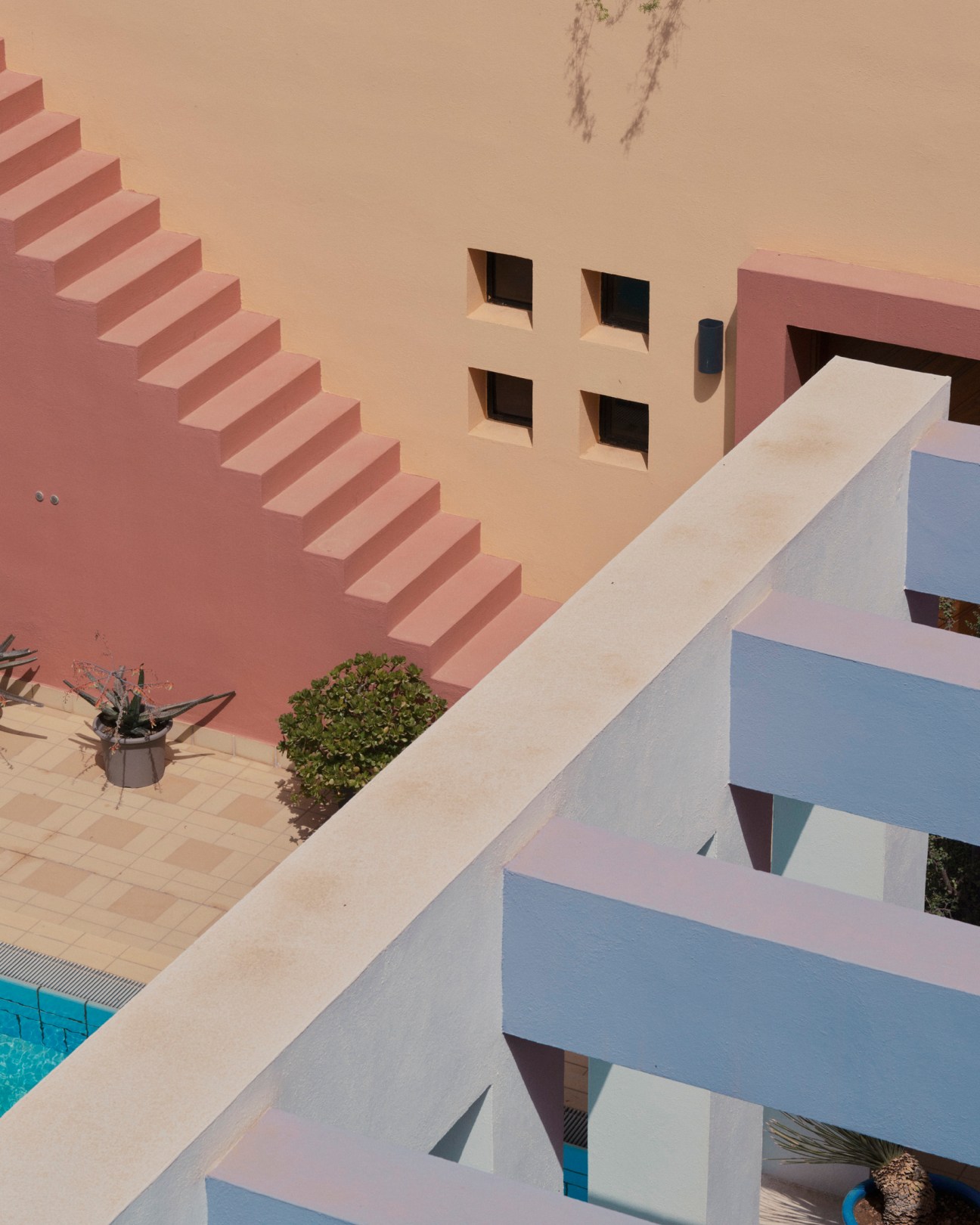
Born in Sliema to an architect father, England graduated from the University of Malta’s architecture school in 1960, before continuing his studies at the Politecnico di Milano. While there, he worked as a student architect in the studio of mid-century master Gio Ponti. “I was very lucky because with Ponti, you would be at the drawing board and he would come and spend 45 minutes with you, discussing whether a detail should be this way or that,” says England. Other famous architects would also come through the studio door: Scarpa, Nervi, Neutra, Gardella, Albini.
England returned to Malta in 1962 with a glowing letter of recommendation from Ponti. It was then that his father, Edwin England Sant Fournier, who was one of Malta’s best-known designers at the time, gave his son a first commission: a new church in the hamlet of Manikata. “At the age of 23, I started designing it,” says England of the project, which ultimately took 12 years to complete. “At first, the villagers didn’t like the design because they wanted a dome that was bigger than the neighbouring village’s.” They soon came around to England’s vision, which was inspired by Malta’s megalithic temples and girna, the circular stonewalled storage structures found in the island’s agricultural fields.
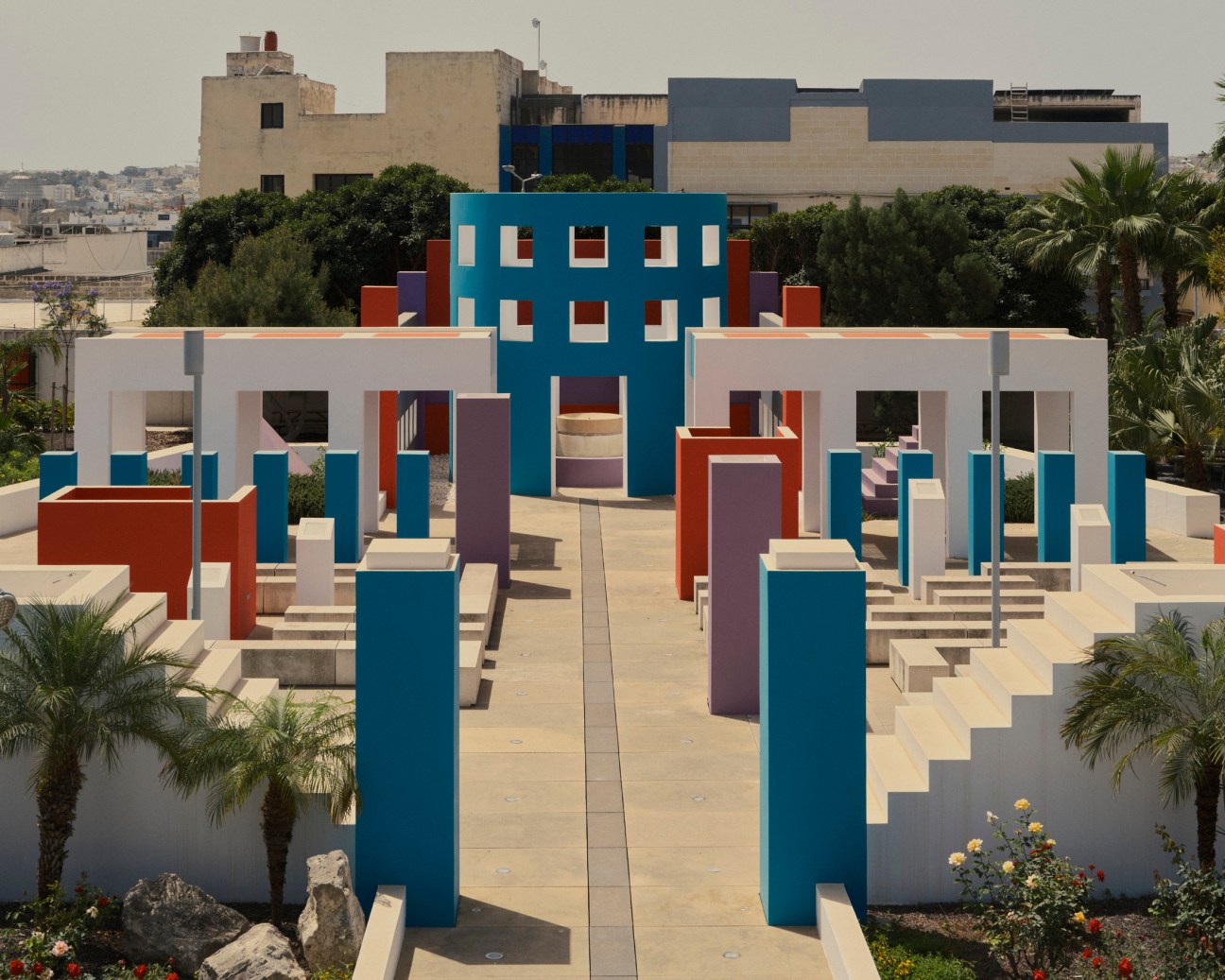
Finished in earthy tones and furnished with a bespoke altar, lectern and chairs, the parish church was hailed as a masterpiece of modern regionalism upon its completion in 1974. “The archbishop didn’t like it, especially the wall made from rubble and field stones behind the altar,” says England, laughing. “I told him that I would plaster it but didn’t, hoping that, at 88 years old, he would forget. When he visited the church a few weeks later, he quietly grabbed my arm and said, ‘I see that it’s difficult finding a plasterer in Malta.’”
The church – and its break from the island’s baroque religious architecture – put England on the map but he was keen to evolve his practice. “My first period of architecture was about regionalism, which was of its time but also of its place. I was practising what William Blake said: you become what you behold. It was almost instinctual but such an approach needed an intellectual overlay.” This came in the form of the creatives who arrived in Malta in the 1960s, with whom England collaborated. There was architect Basil Spence of new Coventry Cathedral fame and abstract painter Victor Pasmore, along with zoologist and surrealist Desmond Morris.
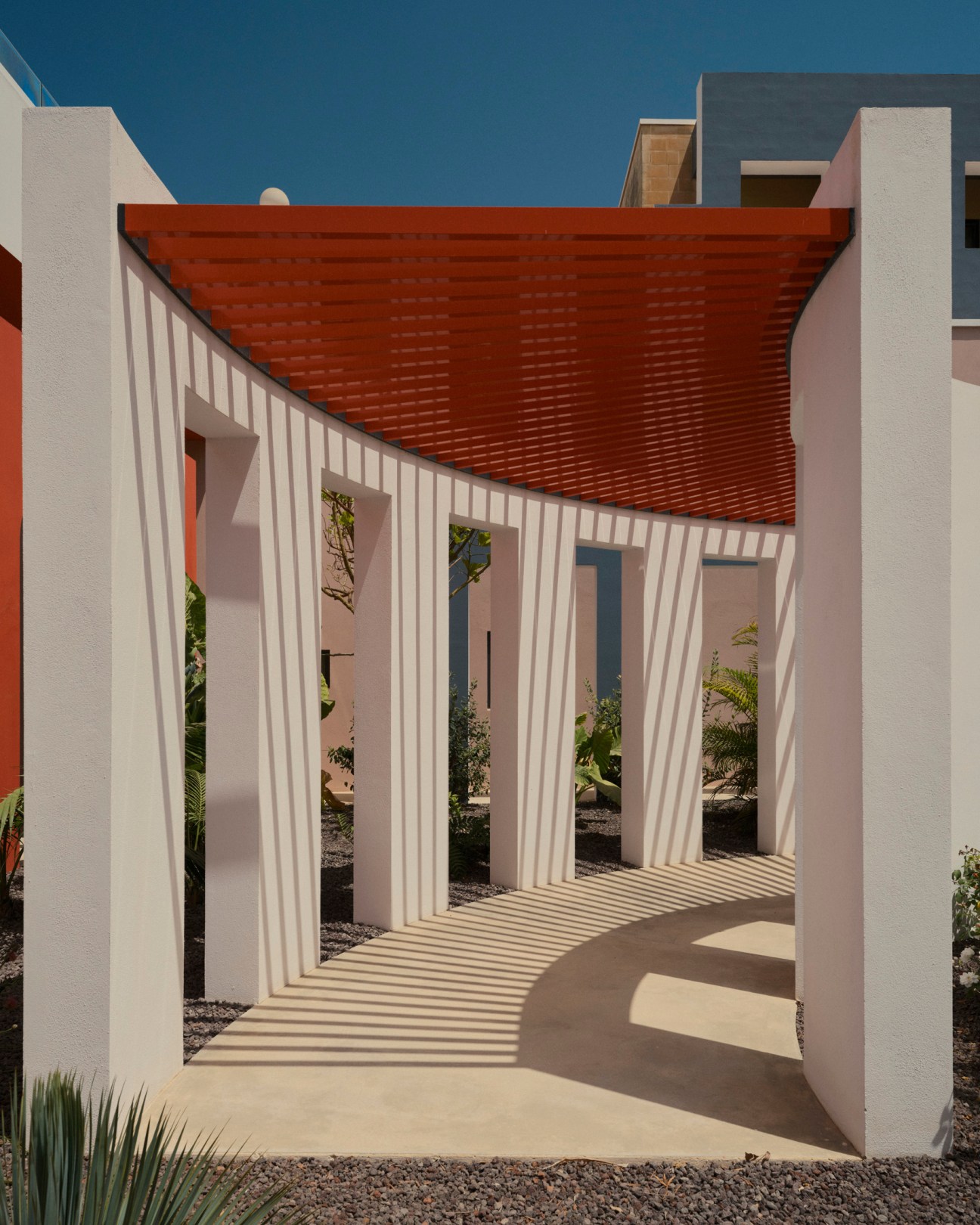
In addition, the architect began winning overseas commissions and requests. He was invited by Baghdad’s city architect, Rifat Chadirji, alongside others such as Robert Venturi and Ricardo Bofill, to help develop a new vision for the city in the early 1980s. There were character-building experiences associated with the project, which matched England’s rise to prominence. Flights were routinely rerouted to Oman, which would result in a 21-hour bus ride to the Iraqi capital, crammed in the vehicle with chickens and goats. On one occasion, England was dragged from a taxi when security services spotted him taking a snap of the Baghdad Conference Centre. Held at gunpoint, he was interrogated and left in a jail cell overnight before earning his release by exposing the film and thereby destroying the photos. There were similar run-ins in Saudi Arabia and Kazakhstan (in the latter’s capital, Astana, an aide to the mayor, reminded England to be careful when disagreeing with the city’s leader, since he had been an Olympic wrestling medallist).
Such experiences helped England to develop an appreciation for the character of a place. It’s an ethos embedded in the architect’s now-signature style – one that has become a benchmark for Maltese architecture. “Vitruvius said that architecture is about firmness, commodity and delight – or venustas in Latin,” says England. “Firmness and commodity relate to construction but while many people translate venustas to mean ‘beauty’ or ‘delight’, for me, it refers to atmosphere. It is felt by all senses – oral, aromatic, somatic and possibly also gustatory.”
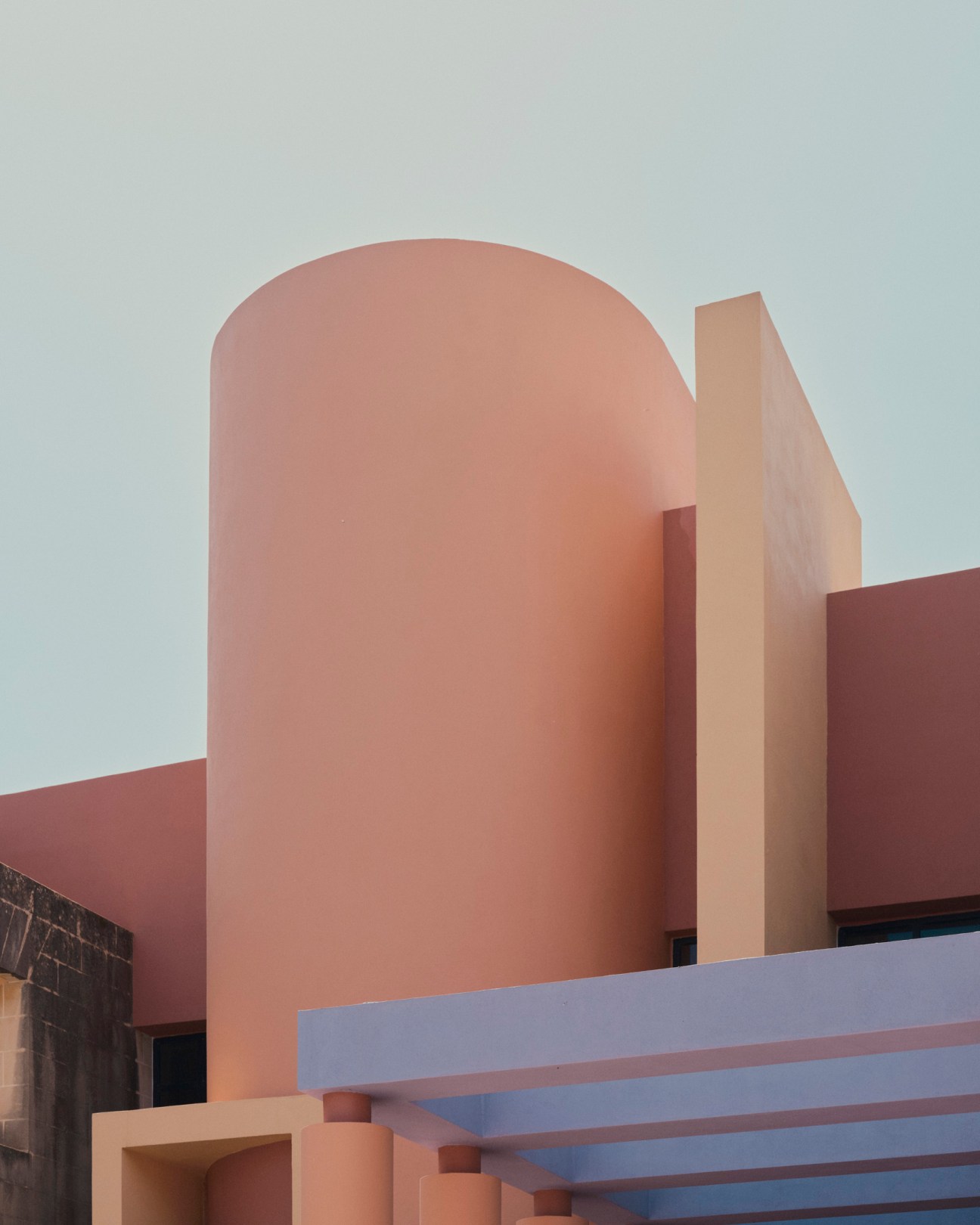
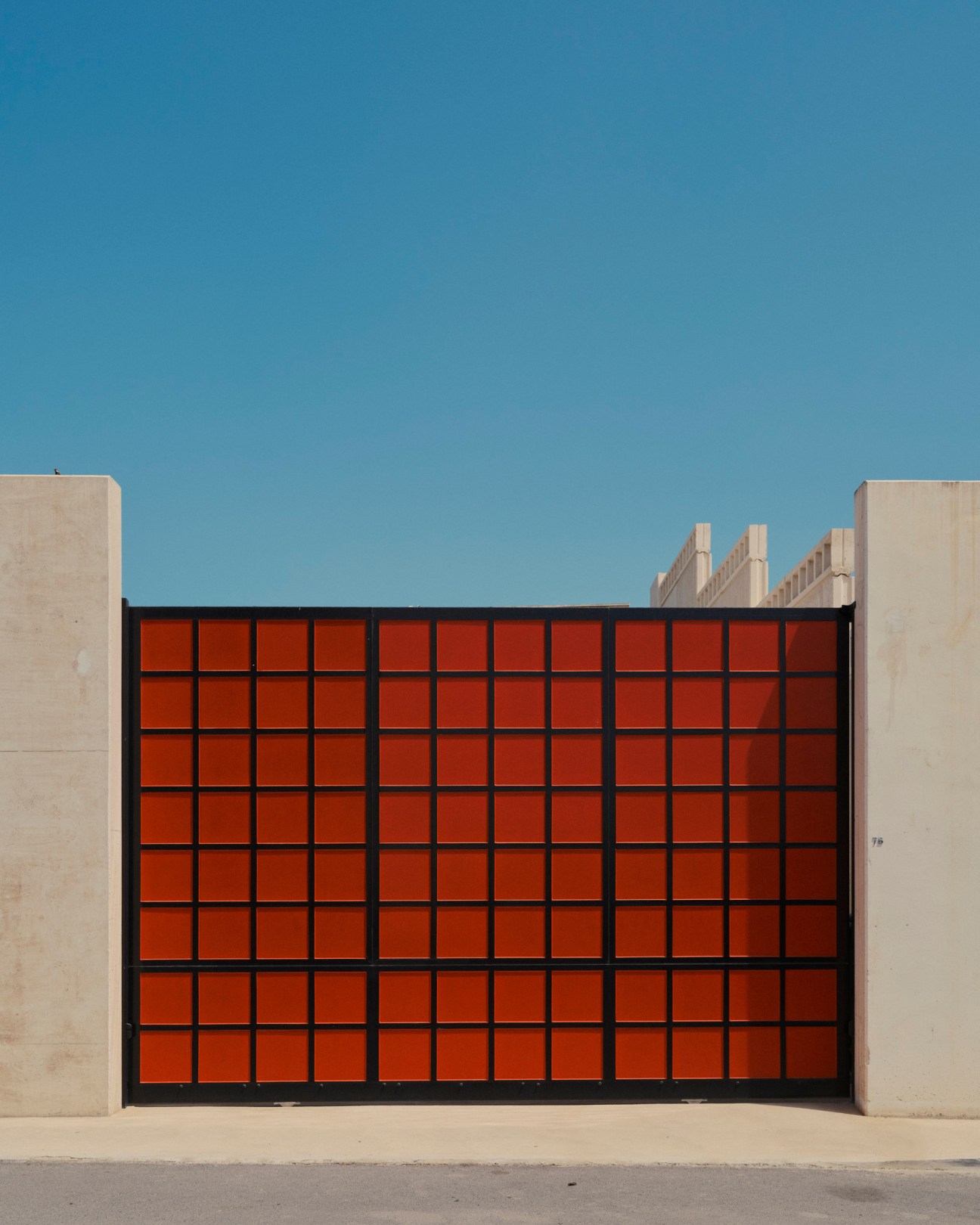
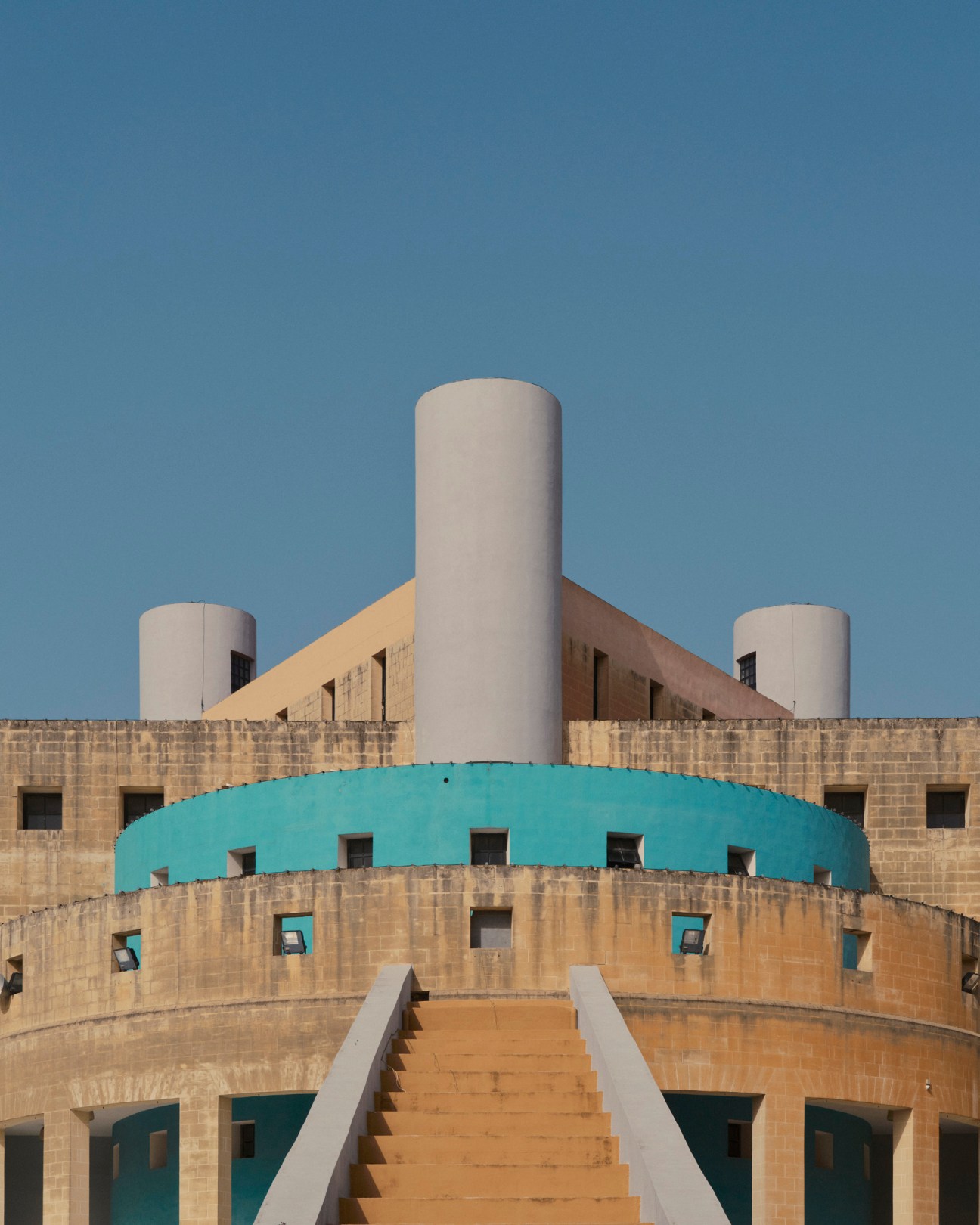
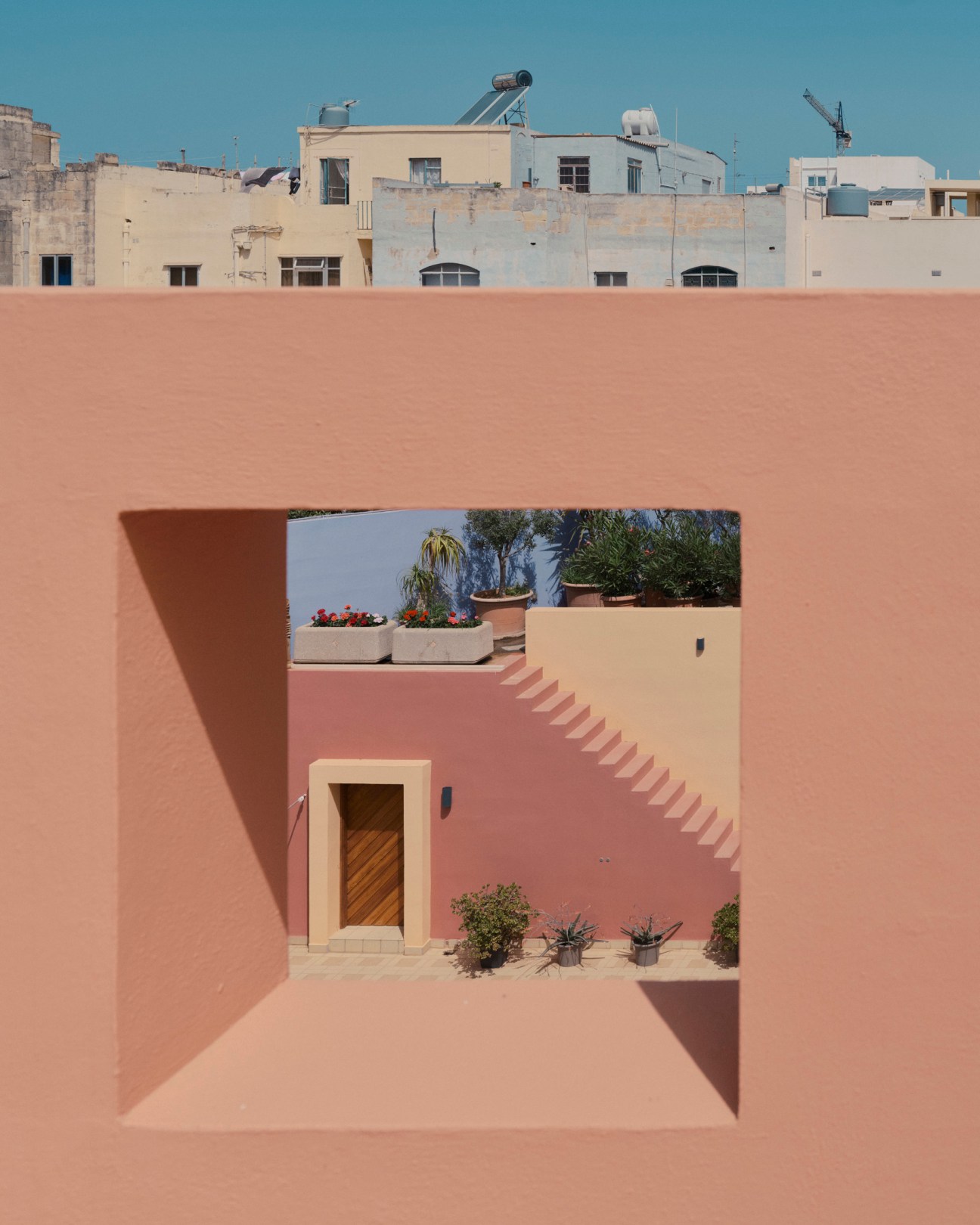
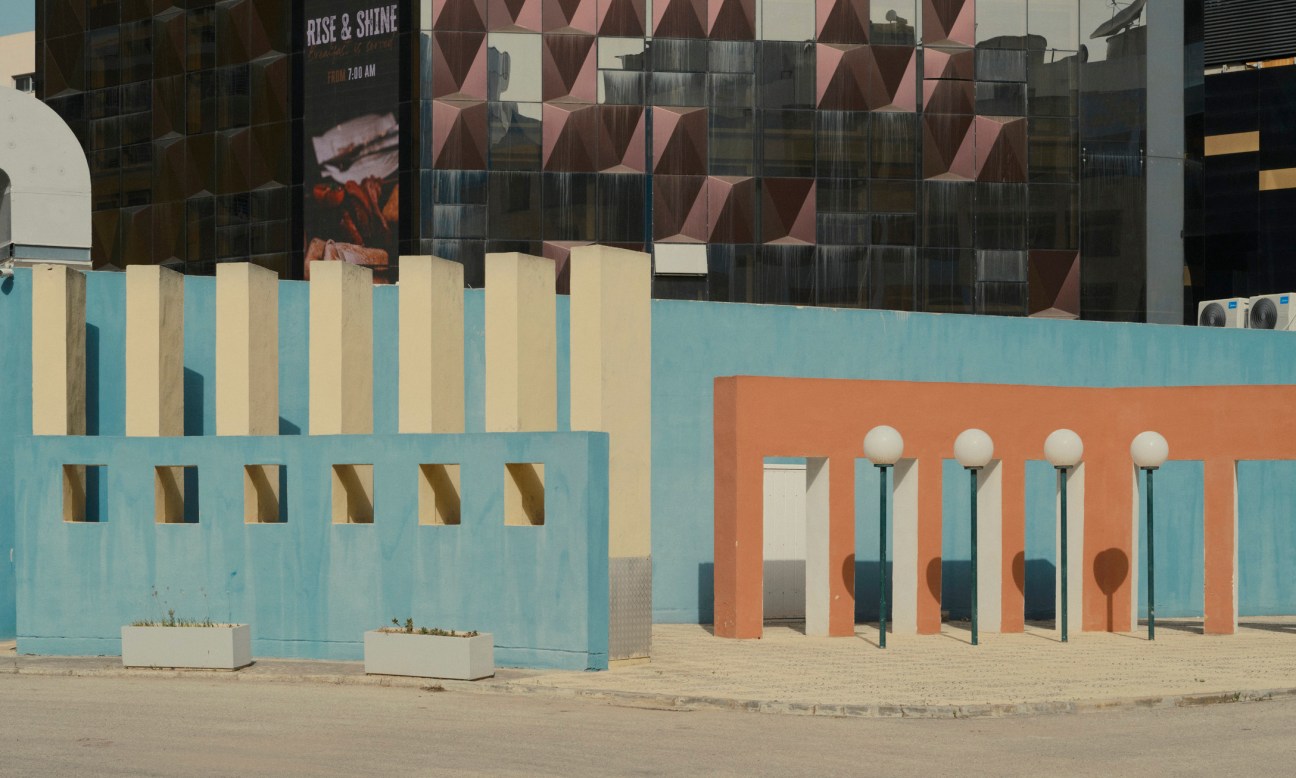
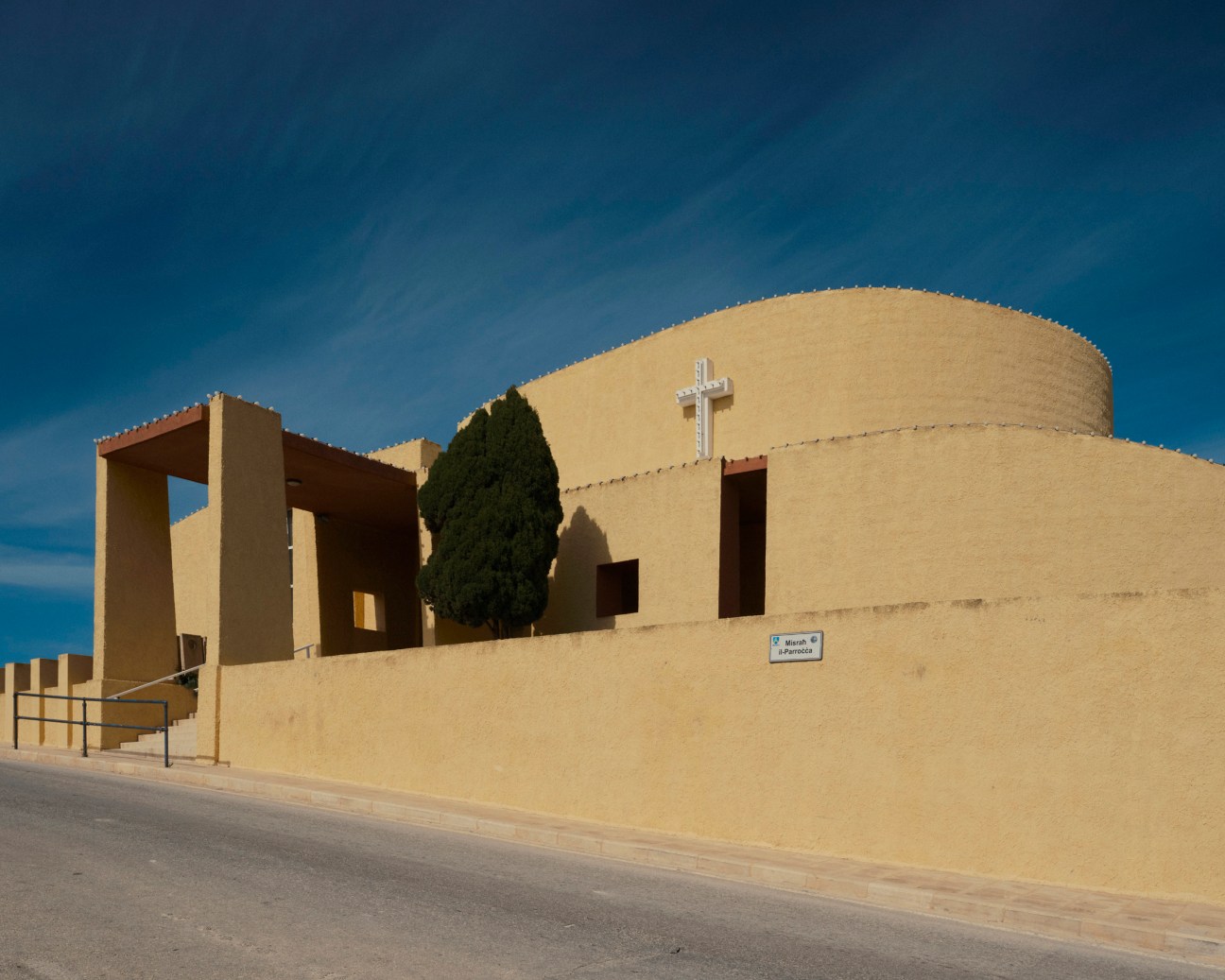
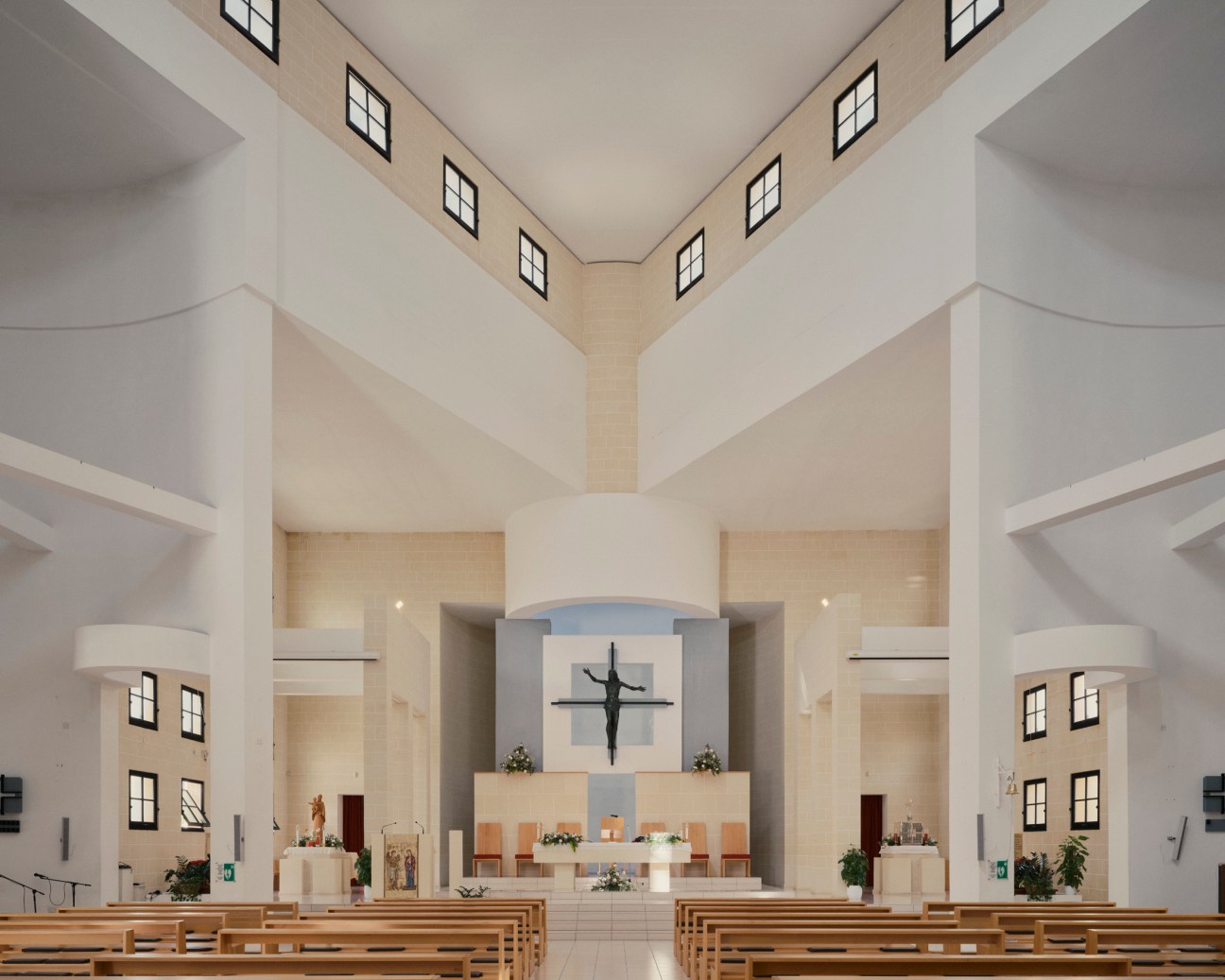
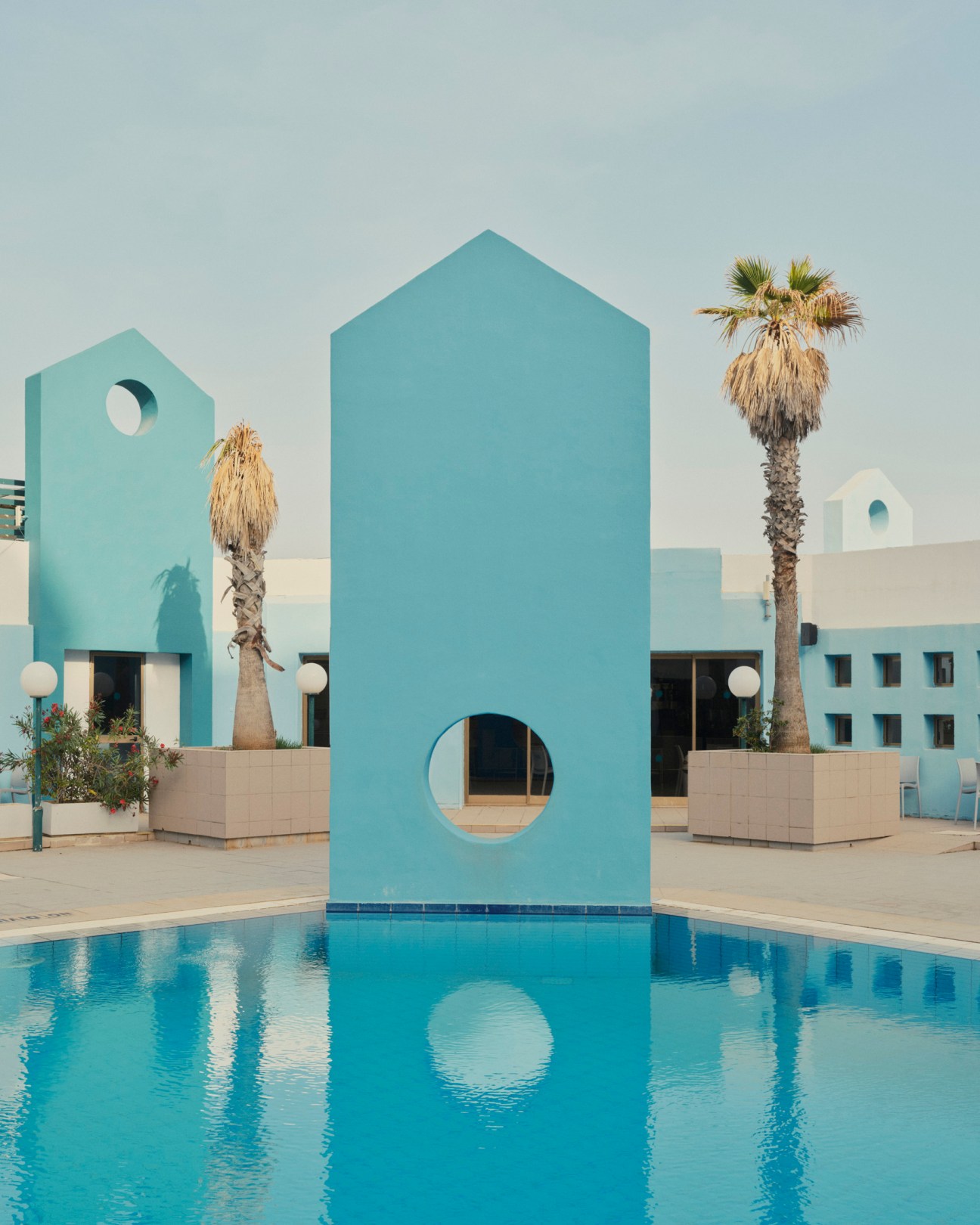
By the 1980s, England was creating unique atmospheres using surreal compositions of volumes and planar surfaces made from exposed Maltese stone and reinforced concrete. These also included pastel-coloured surfaces, punctuated by arched, rectangular and square openings.
Examples of the style, which are still standing, include private gardens and residences such as 1982’s Garden for Myriam (dedicated to his wife) and Villa G in Siggiewi. His public buildings include the mirage-like Aquasun Lido hotel pool built in 1983 and the Spazju Kreattiv, a cultural centre that opened at the turn of the millennium. Places of worship feature prominently in his portfolio too, including the Church of St Francis of Assisi in Bugibba and several projects for Dar il-Hanin Samaritan.
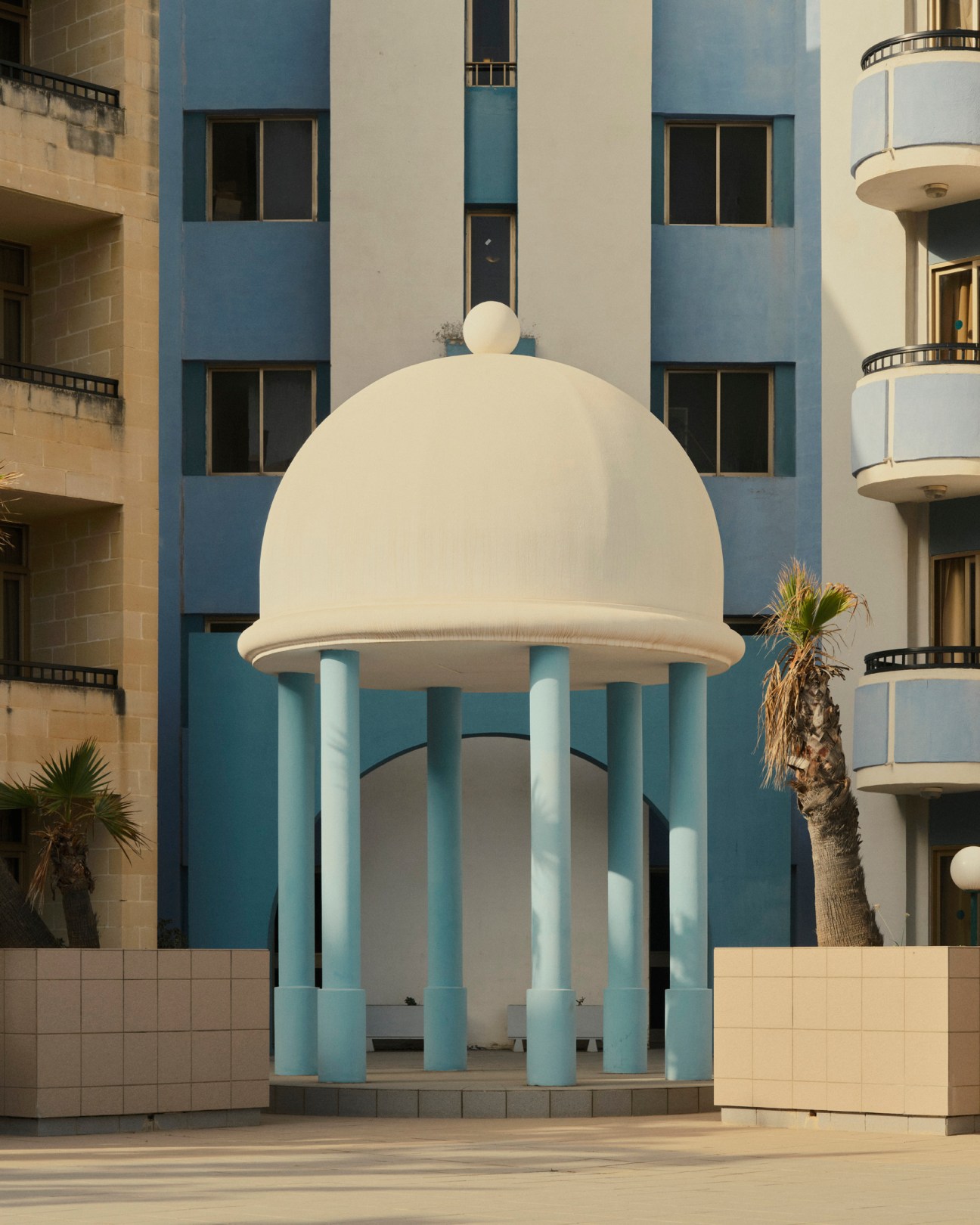
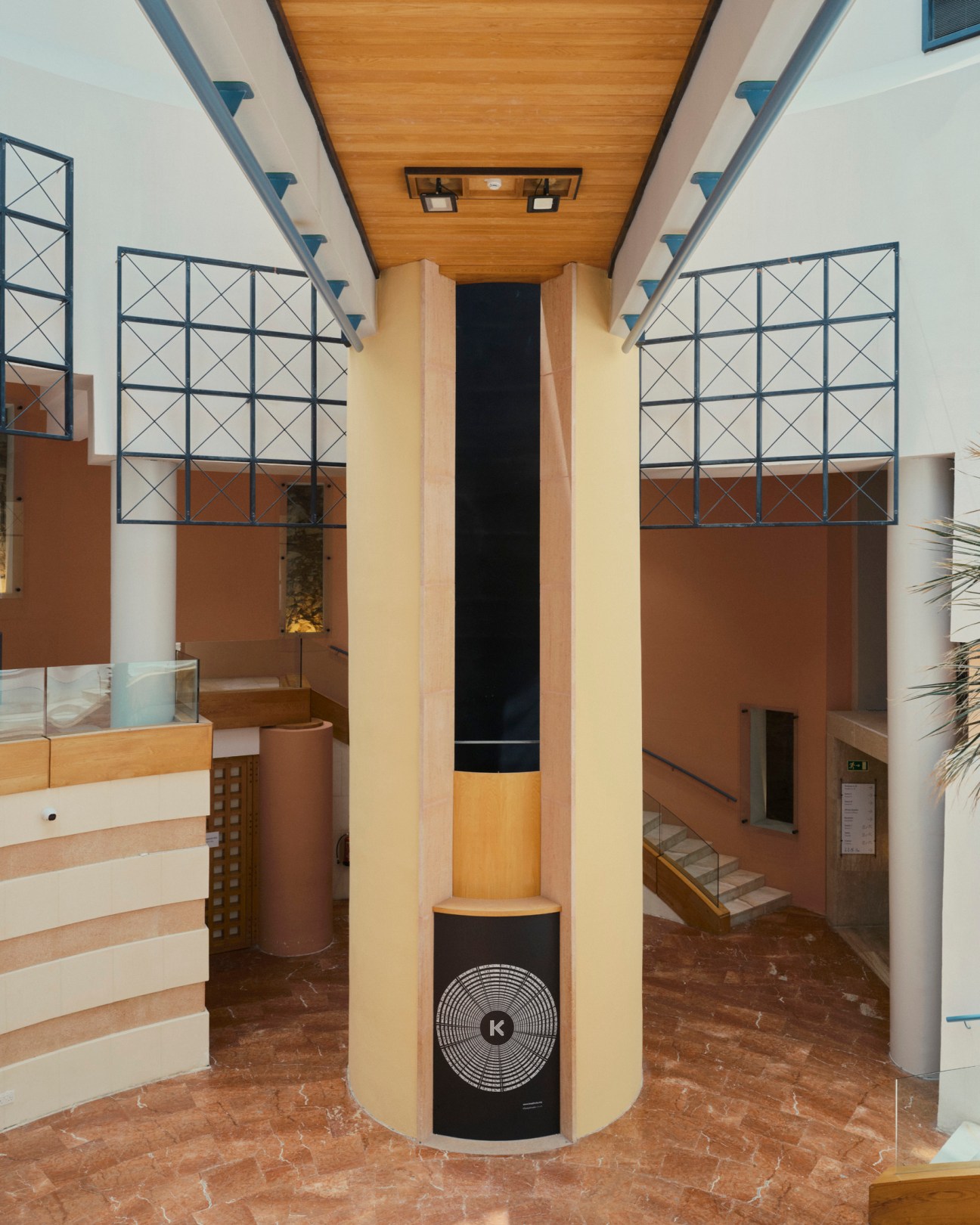
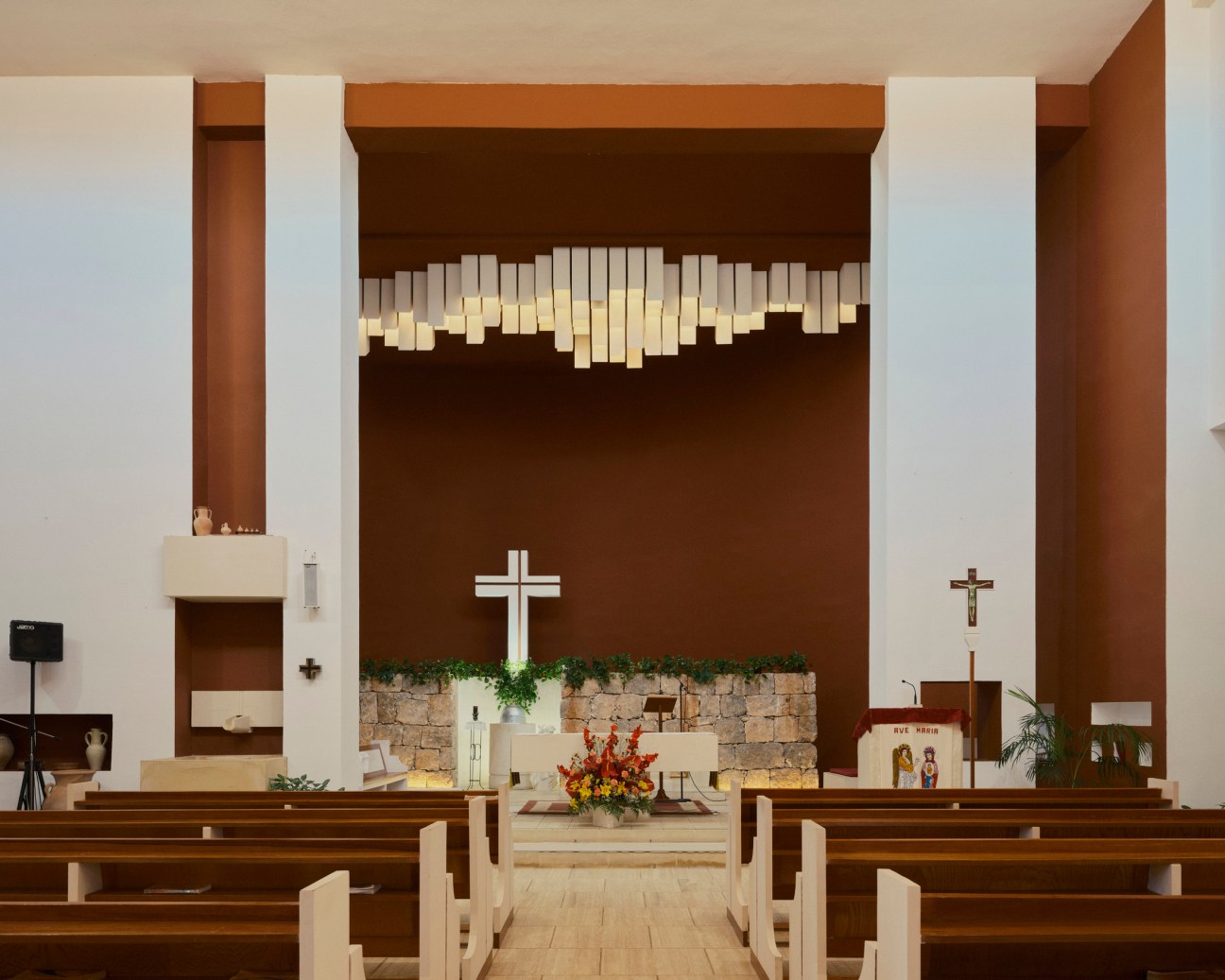
When England is quizzed on his legacy, he is carefully optimistic. “It’s not for me to judge but, hopefully, future generations will look at projects such as these as something that beautifies the island, that moves the spirit and elevates the soul.”
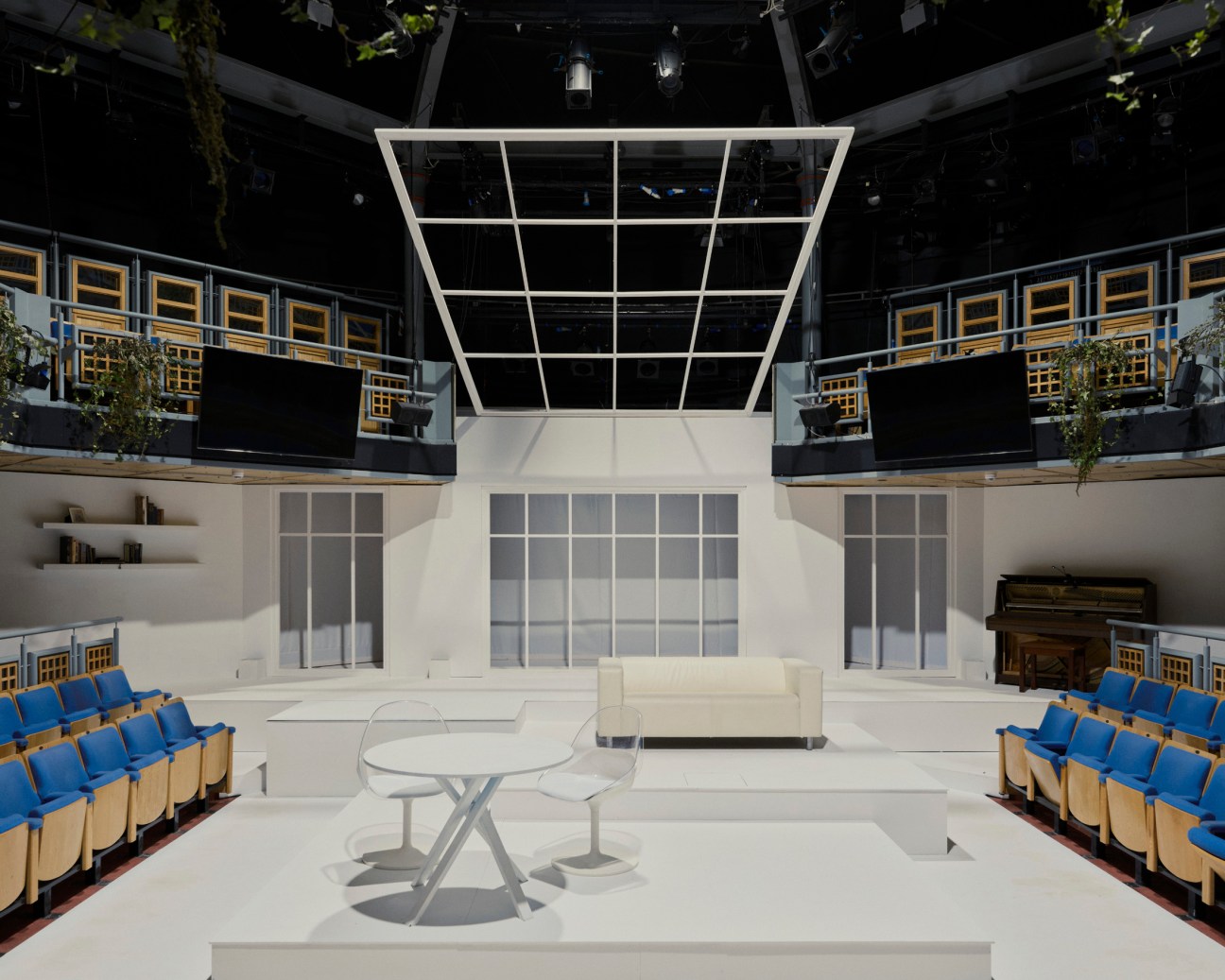
Judging by the numerous homeowners who opened the doors of their residences and the priests who ushered monocle in through their parish entrances at England’s request, it seems that this appreciation is already firmly established on the island. Even though many England-designed buildings have been knocked down or altered beyond recognition, there are thankfully those that are still standing, despite being something of a labour of love to maintain. “My architectural philosophy might well be defined in the words of Tennessee Williams – ‘I don’t want reality, I want magic,’” says England, reflecting on his portfolio. “Another of my favourite quotations is, ‘Those who dance are always thought insane by those who don’t hear the music.’”
Rest assured that, should you visit and experience some of England’s works, you’ll feel the magic and hear these metaphorical melodies. And if you’re lucky enough to visit them with England himself, he might even play you one of his favourite tenors too.
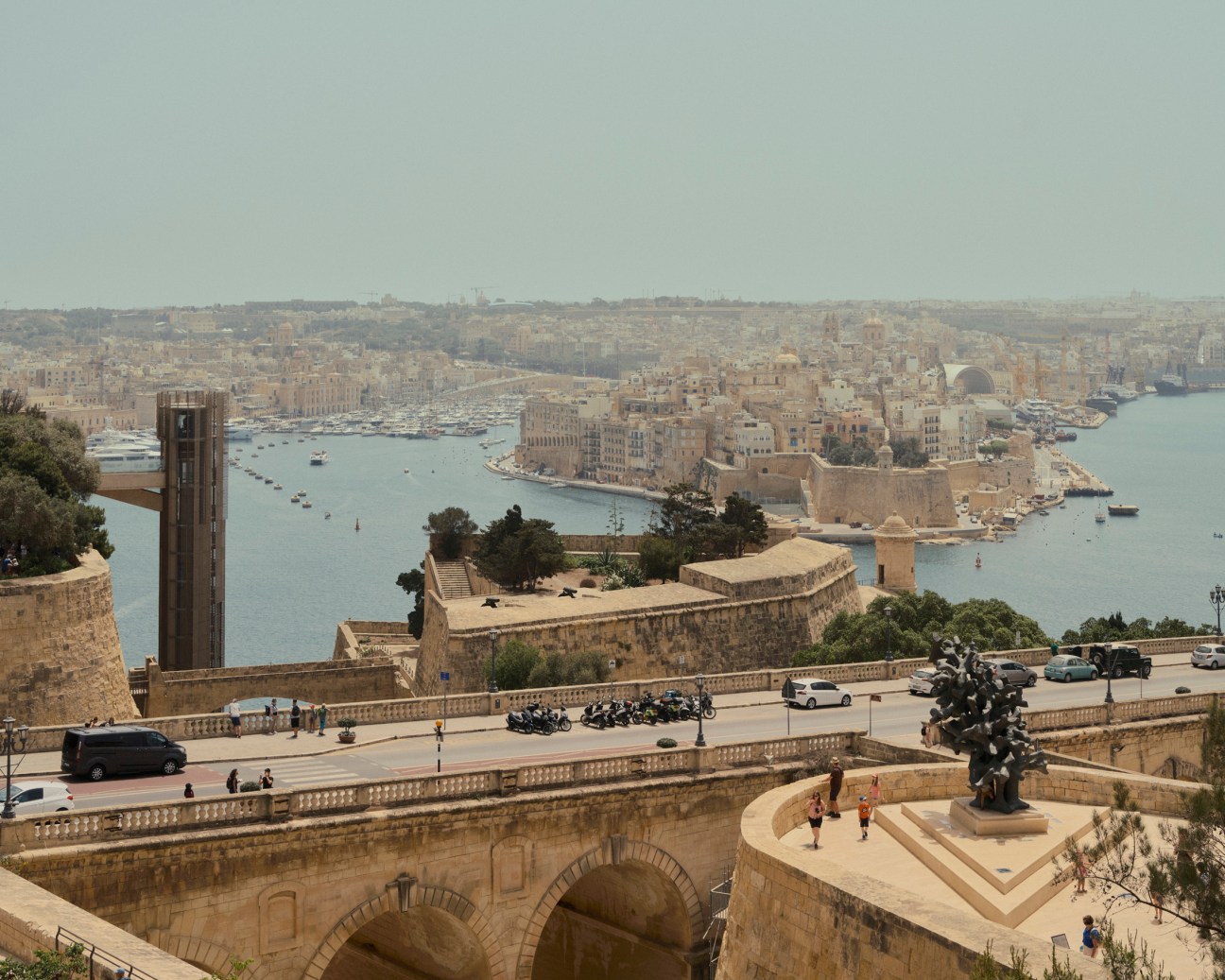
Richard England’s selected Maltese portfolio
Parish Church of St Joseph
Manikata, 1974
A modern masterpiece, inspired by Malta’s mix of ancient and agricultural landscape.
Garden for Myriam
St Julian’s, 1982
Abstract forms, reminiscent of surreal paintings by Giorgio de Chirico, define this garden.
Aquasun Lido
Paceville, 1983
Freestanding walls and follies surround this hotel pool, creating a mirage-like effect.
Church of St Francis of Assisi
Bugibba, 1993
A large geometric form rises out of the earth towards the heavens.
Villa G
Siggiewi, 1994
A private commission.“We changed the position of two doors and then built the house.”
Spazju Kreattiv
Valletta, 2000
England transformed the Knights’ Period property into a spectacular cultural venue.
Dar il-Hanin Samaritan
Santa Venera, 2014-present
A series of projects has been completed for this religious organisation, including gardens and chapels with sculptural elements that play with light and shadow. New additions include a landscape completed with glass artworks by the architect’s son, Marc England.
Interview: Vittorio Angelone on what makes something funny, and permission to laugh
After moving to London from Belfast to train as a classical musician, Vittorio Angelone made the less-than-obvious switch to stand-up. The Italian-Irish comedian has since performed all over Europe and enjoyed sell-out runs at festivals including the Edinburgh Fringe. He’s currently on tour with a new show that pushes boundaries – and buttons. “I sit in a funny place wherein old people call me a woke snowflake and on Tiktok young people call me right-wing,” he tells Monocle.
Angelone is at the coalface of comedy that pushes boundaries; it’s a challenging position to be in at the moment, as puritans are policing what we say and even the most mundane celebrity can find themselves publicly humiliated for a mistimed joke. Here, he explains his philosophy behind making comments on society through comedy. If you don’t get it, maybe that’s your problem.
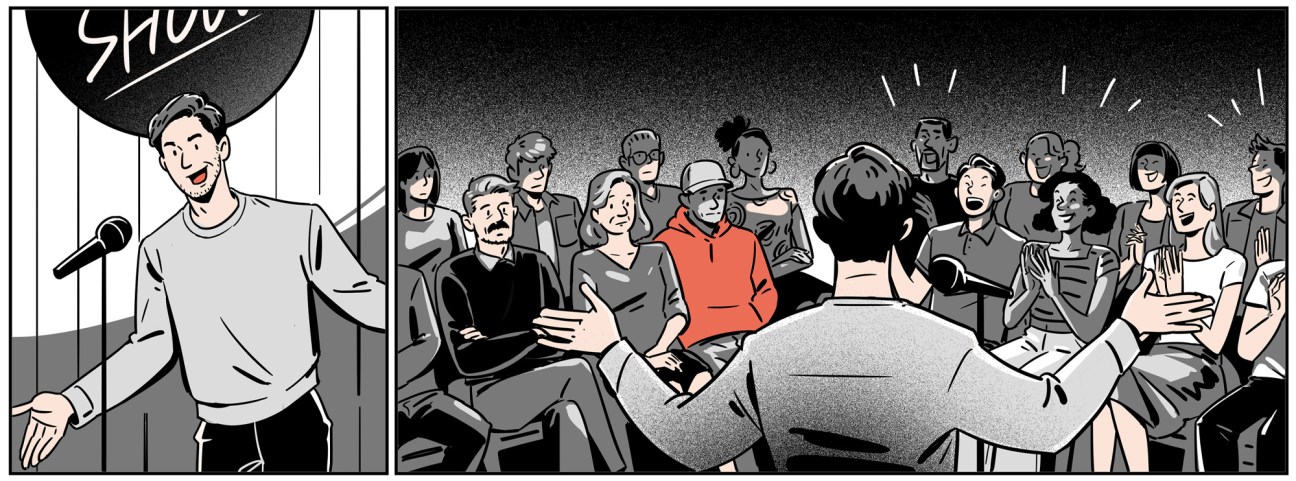
Have we got too precious about what we can and can’t laugh about?
Some think that this is the case but I don’t agree. It’s good that we’re a bit precious. Comedy doesn’t work unless there’s a sense of preciousness because all jokes are a simple formula: tension and release. For something to be funny, you need people to think, “Are we comfortable talking about this?” As with any other art form, there needs to be a little discomfort for the pay-off to be worth it. If nobody was ever tense or concerned about any topic, nothing would be funny.
But a bigger concern, more than individuals being precious or getting upset, is that people might be laughing at a joke for the wrong reason. An audience, for instance, might be laughing because they agree with the thing that you’re trying to poke fun at. When you’re making fun of bigoted ideas or racist ideas by highlighting them in a certain way, some people might laugh thinking, “Finally, somebody said it.” That means that you have to be strict with yourself and know that not all laughs are the ones that you’re going for.
Does a comedian have a responsibility to make sure that a joke is received in the right way?
This is one of the big frustrations that I have with some big-name Netflix comedians. These comics – and people do it beyond comedy too – say trigger words that make certain audience members think, “Yeah, they’re poking the wasps’ nest.” But they’re not actually saying anything transgressive. They’re just saying the words “immigrant”, “black” or “gay” but none of it means anything because they’re pandering to this false idea of transgression. It frustrates me when comedians say, “It’s just a joke,” or “I’m not making that joke,” when they use these words. You know what sort of laugh you’re getting.
Take Michael McIntyre. There’s a bit in one of his Netflix stand-up comedy specials where he talks about the Northern Irish accent, which I don’t find funny. I grew up in Belfast. He impersonates a Northern Irish person, putting on an accent and going cross-eyed, painting all Northern Irish people as stupid.
Context matters. If someone like Anthony Jeselnik, a US comic who has branded himself as offensive, made that same joke, it would be funny. That’s because the whole point of Jeselnik’s jokes, the reason why people go to his shows, is that he says things that are awful, wrong, offensive and bad. In contrast, McIntyre’s shtick is his presentation of things in a way that suggests that what he’s joking about is something that we all agree on – and that’s why his Northern Irish joke landed so horribly with me. He wasn’t getting a laugh because he was saying something that’s funny for its offensiveness. Rather, he’s getting it because lots of people in the audience think that Northern Irish people are stupid and an accurate representation of them is to be cross-eyed and make noises.
So are there topics that we can’t joke about?
I don’t think there’s anything that I’m allowed to talk about that other people aren’t. That’s not a very interesting way to make art. A broader cultural conversation, with more voices, is always a better one. I’ve seen comedians make jokes about Northern Irish people and be very funny. I’ve seen comedians make jokes about Northern Irish people and be very offensive. It depends on what angle you’re coming from – and this applies to making jokes more broadly, not just stand-up. You need to understand where your perspective comes from and how that comes across to people.
Often, when I make jokes about contentious issues or about groups of people, I’m the butt of the joke and it’s my misunderstanding, my getting it wrong, that is the point of humour. My job is to joke about topics in a way that isn’t mean, nasty or bullying. Whether you’re a comedian or not, a good rule is to ask yourself: would you tell the joke if the people it was about were in the room? If that stops you from making the joke, you shouldn’t go ahead.
What’s the best way to deal with a joke not landing?
It’s important to remember that you can’t determine whether a joke is funny based on one person. I have jokes about broad lgbtq issues and I have had hundreds, if not thousands, of queer audience members laugh hard at them. Still, I’ve had friends in the queer community say that they don’t like the jokes. That’s to be expected of any group of people. No social or cultural group is a monolith. Just because one queer person dislikes my joke, it doesn’t mean that they speak on behalf of the whole community, in the same way that if one person from that community does like it, you can’t assume that making the joke is OK – because they might both be idiots.
Why tell jokes that might push a crowd’s buttons?
People are at their funniest when an audience is taken to a place in their mind where they might be uncomfortable or nervous. It’s exciting when they think, “I’m not sure how I feel about this topic,” before having a big laugh about it. That’s what I’m trying to do. I try to take audiences to places where they might feel discomfort before making them feel good at the end, so that they can maybe think about those things with less trepidation in the future. It means that, hopefully, they’re more comfortable the next time they think about race or gender or sexuality or any number of things where they were once uncomfortable. Through comedy, I can show them that it doesn’t have to be scary and that you can get out the other side without getting it all wrong. But it’s a very hard thing to do and, as long as you’re not deliberately trying to upset someone, you need to have permission to get it wrong.
What role does an audience play when it comes to finding what’s funny?
The audience needs to have permission to get it wrong too. What I love about stand-up comedy is that it’s one of the only art forms where the audience takes the same risk as the performer. For example, if I say a joke that might be deemed controversial, maybe about something that most people wouldn’t admit to thinking or wouldn’t admit to experiencing or wouldn’t admit to being concerned about, then I am opening myself up to embarrassment. If nobody laughs, then I feel like an idiot and I’m ostracised in the room but if everybody laughs, then my making that joke has made the whole room go, “Oh, thank God, someone else feels like that. I was worried that it was just me.”
However, if only one person in the audience laughs, which is the risk that every audience member is taking when they laugh, there are two embarrassed people in the room, me and that person. It’s risky because by laughing you’re saying, “Yes, I agree with what you said,” which means that the person laughing is taking the same risk as the person telling the joke – and that’s what makes telling a joke so exciting and why we need things to be precious about. Without this tension and release, none of it would be very fun.
The Agenda: Design
Retail design: Mexico City
Seeing the light

Italian optical retailer Retrosuperfuture is bringing its collection of elegant eyewear to Latin America with the opening of its first flagship shop in Mexico City. For this new retail space in the leafy Condesa neighbourhood, Dutch design studio Cloud has created a stainless steel-clad space. “We took inspiration from the architecture of a bank vault,” says Cloud’s Paul Cournet. “The metal-cladded walls are organised for all types of storage and display, with the centre of the space left as a void.”
It’s a sleek way for the brand’s customers to peruse its collection with a full-length mirror offering buyers a chance to reflect on potential purchases while also bouncing light through the space. The atmosphere within is enhanced by a giant lightbox on the ceiling, which reflects the ambience of a sunset to create a warming retail environment. It’s a combination of features that not only makes a visit here an enjoyable shopping experience but provides Retrosuperfuture with an inviting space in which to build a community. “The central void can be turned into a dance floor, a bar or a stage for performances,” says Cournet. “It’s a new place to gather for the city and for its social experiments, all under the ethereal ceiling.”

On Design
Nic Monisse on: The need to embellish
Do we need urban planners? This question was recently posed to me by a Geneva-based architect who had been tapped to help master-plan the last pocket of undeveloped land within the city’s limits. Explaining why he was involved in the project, he said that the authorities were looking to architects, rather than planners, to mastermind the scheme because the latter typically only operate on one scale. City hall felt that planners too often thought about the big picture, seeing cities as a series of “zones” and “movement corridors”, detached from the people inhabiting and using them.
I tend to agree. A problem that I frequently encountered when I was working as a landscape architect was planners who were more focused on numbers showing how people flowed and moved across a city, rather than what the experience was like on the street. The planning departments that I worked with felt that it was enough to have a diagram that highlighted where a bike lane was and how many people were using it, rather than investigating whether people might want to ride along such a path – or if they were just doing so out of necessity. Interrogating this quality is essential for delivering friendly, liveable cities.
That’s not to say that architects aren’t guilty of focusing solely on their plot (there are plenty who create insular buildings that don’t speak to the surrounding context) but rather that planning, while essential to city making, often misses a trick when those who practice it don’t think holistically and at a range of scales.
Herein lies a solution – doing away with the “specialist”. A good planner, it seems, shouldn’t only be a single-minded, specialised one but a creative with an understanding of architecture, furniture design and sociology. In short, to deliver well-rounded spaces, we need fewer Robert Moses types (the big-picture planner responsible for bulldozing large swaths of Manhattan in the 1960s in the name of efficiency) and more total designers, such as mid-century master Ernesto Rogers, who once declared that he wanted to design everything from “a spoon to a city”.
Taking such an approach should create cities and neighbourhoods that work on multiple levels, with consideration given to everything from the placement of furniture to the positioning of buildings. Geneva – should the architects fully execute their vision – might soon be the perfect example.
Urbanism: Slovakia
New tricks
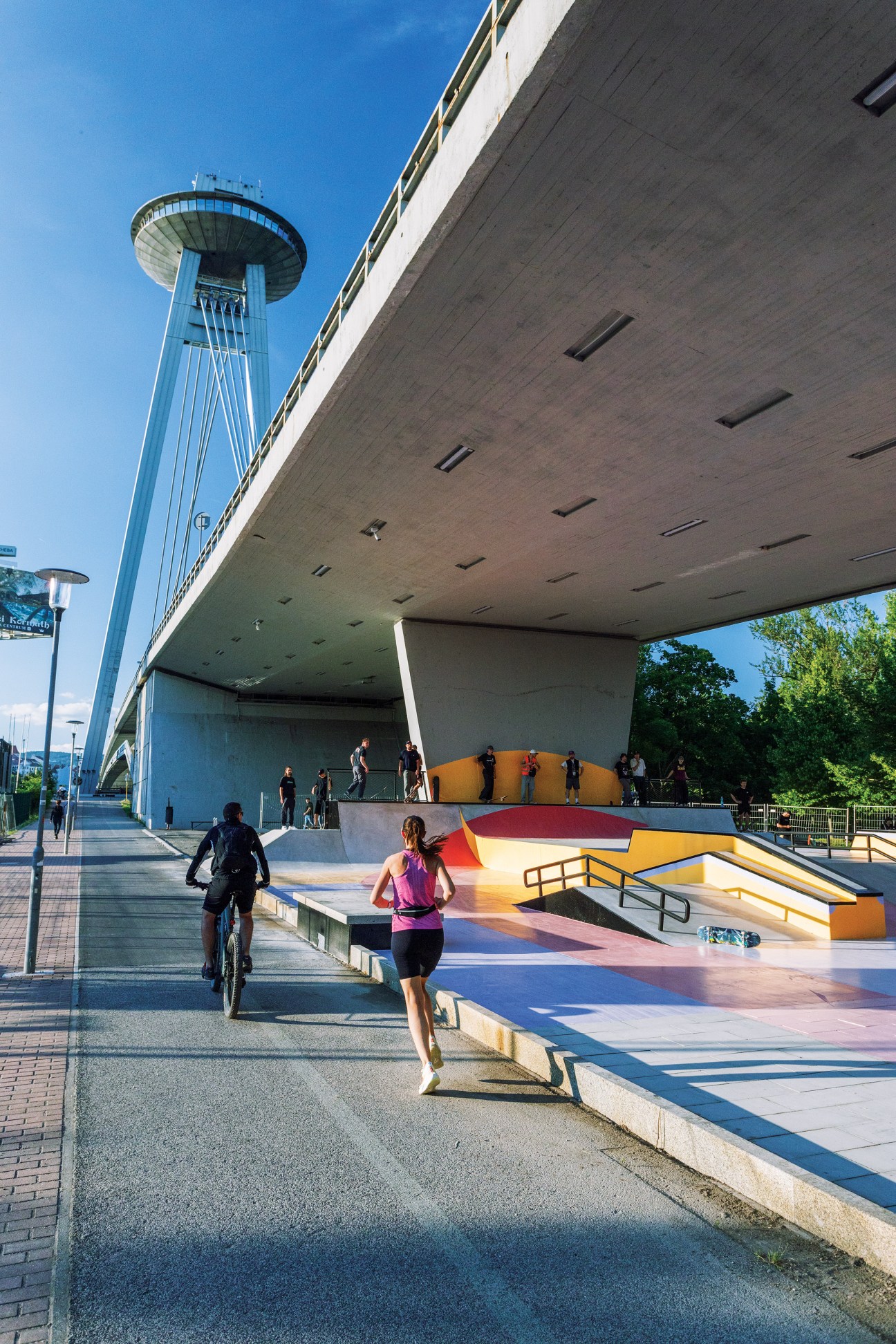
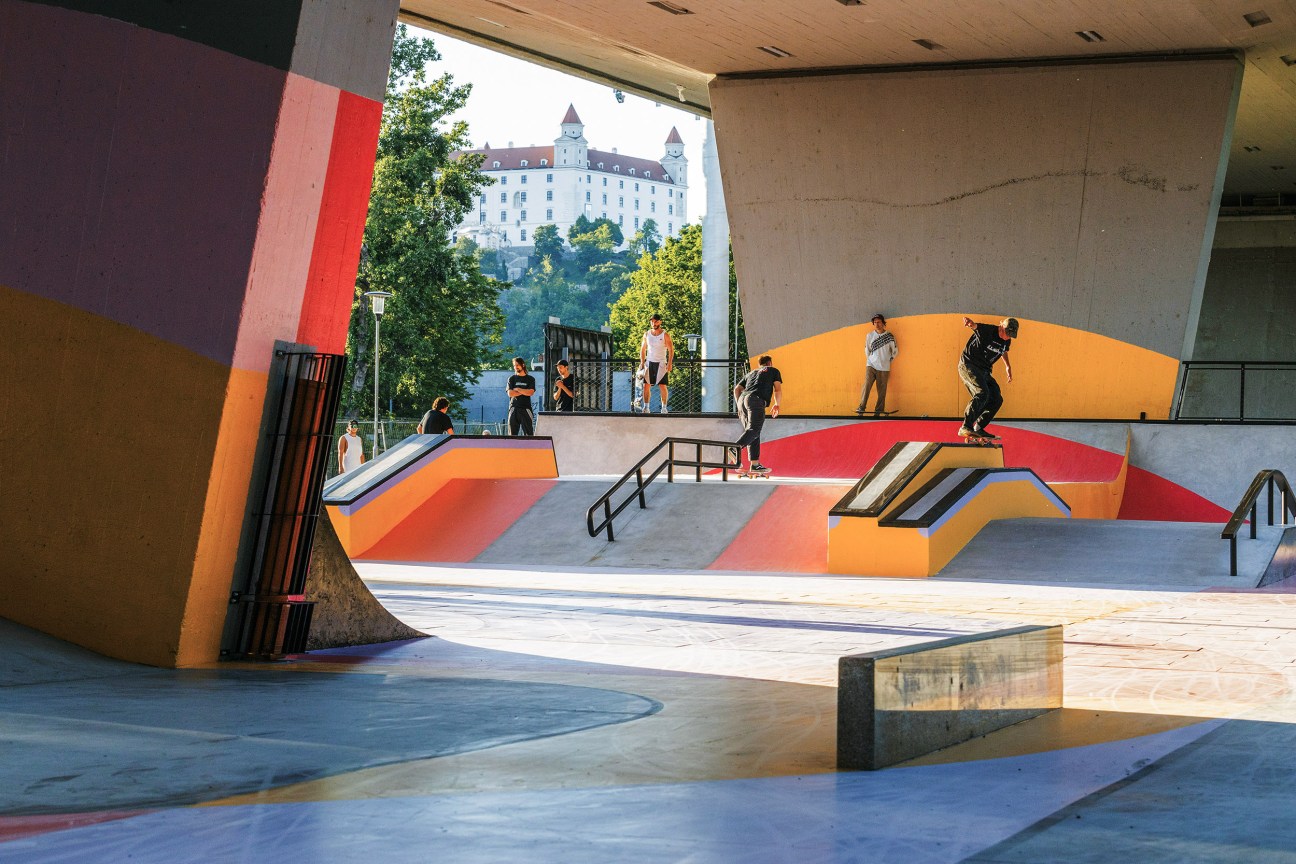
When architect Matúš Vallo was elected as mayor of Bratislava in 2018, he had a “blueprint” for the city that outlined which landmarks needed a revamp. On the list was the Most snp Bridge – or rather, its cavernous underbelly. A plan was hatched to turn the area crossing the Danube into an Olympic-quality skatepark and recreation area, with Czechia-based u/u Studio tasked with the pep up.
“Vallo told us that the city was missing spots for outdoor exercise,” says Martin Hrouda, an architect who runs u/u Studio alongside Jirí Kotal. “The area under the bridge was a brownfield site but it had so many advantages.” However, the protected status of the bridge posed problems to the flow that a skatepark requires. “It was difficult but we incorporated the bridge’s pillars in our design,” says Kotal.
As well as attracting skaters, the development has brightened up what was once a grey zone of neglect. It also underlines the fact that Vallo, now into his second tenure, might just be onto something with his blueprint.
Urbanism: UK
Comfort zone
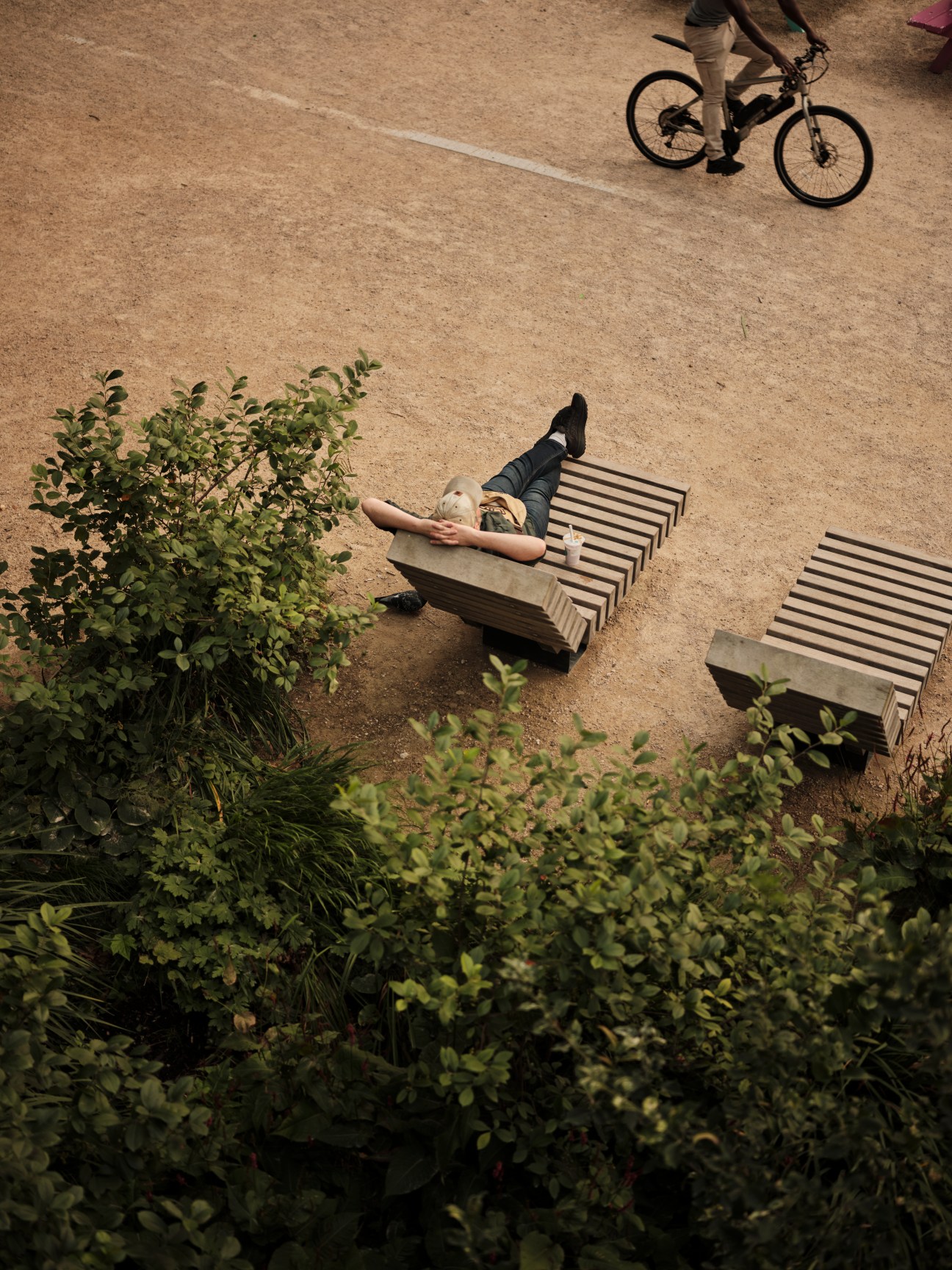
The busy junction at the heart of London’s Elephant & Castle neighbourhood is the epitome of a car-centric concrete mess. But adjacent to this intersection, the newly revitalised Elephant Park, completed to the design of international firm Gillespies, is providing a much-needed moment of calm.
When Gillespies started work on the project 10 years ago, the green space was surrounded by building sites, says Giacomo Guzzon, the practice’s head of planting. “At night, a gate would be locked to stop people from entering.” Now, when monocle visits on a warm autumn evening, there’s no sign of a gate, with the designers’ ambition to add permeability to the area’s urban fabric fulfilled. “We wanted to allow people to easily walk across the park, to access the shops and restaurants at the bottoms of the tower blocks that front onto it.”
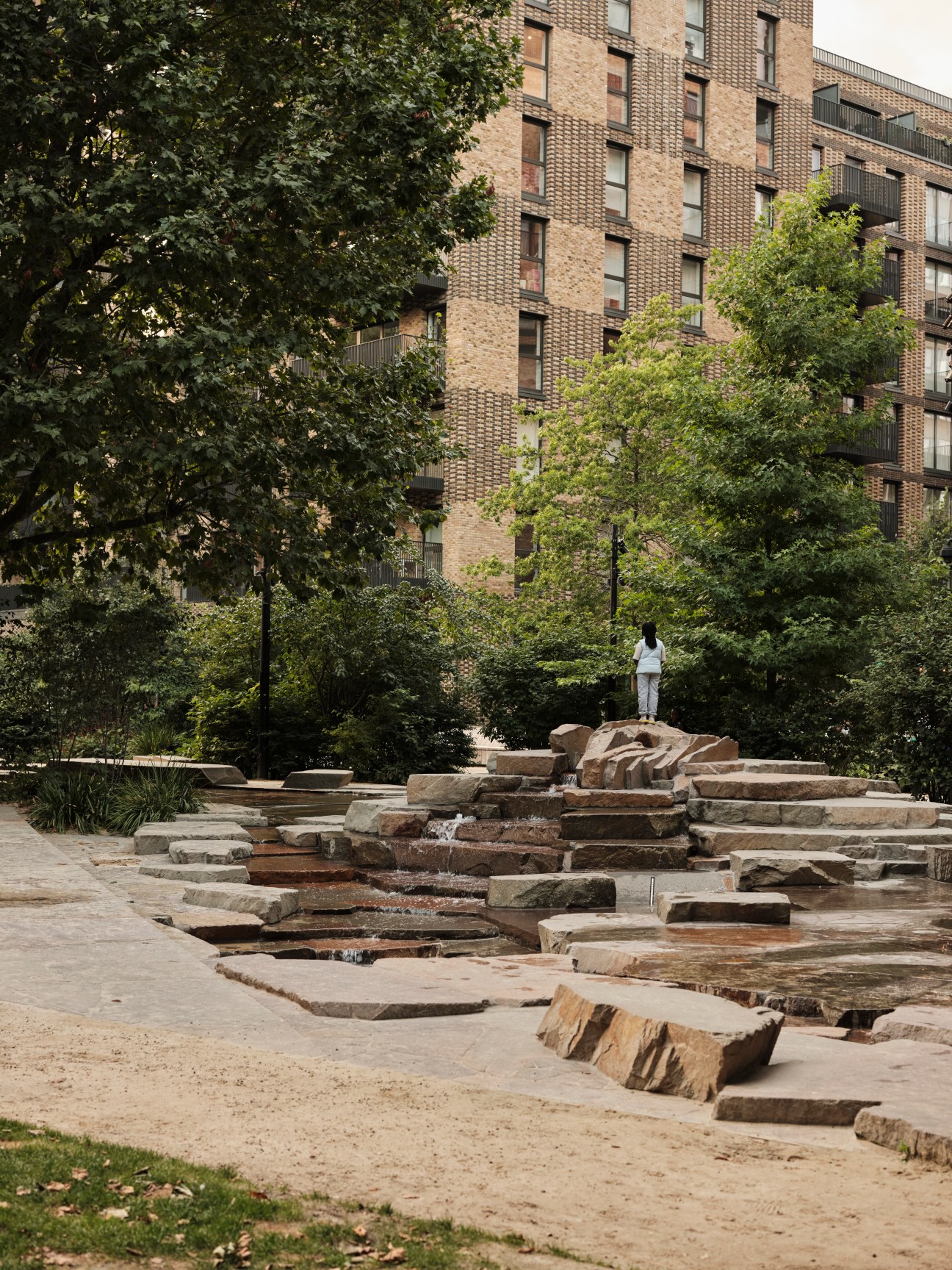
Highlights of the green space include verdant planting that abuts the adjacent cafés and a playground and water-play area that’s a hit with local children. The effect, despite the popularity of both, is instantly calming. “In the evenings, when the kids are gone, it’s soothing to hear the sounds of the water,” says Guzzon. Office workers can often be spotted dipping their bare feet into the water.
This flow of people of all ages and walks of life is a big part of the site’s success, Guzzon explains that this is thanks to the abundance of opportunities for interaction, whether at the café or on the playground. “It’s key to creating lively cities.”
Design: UK
Just the ticket
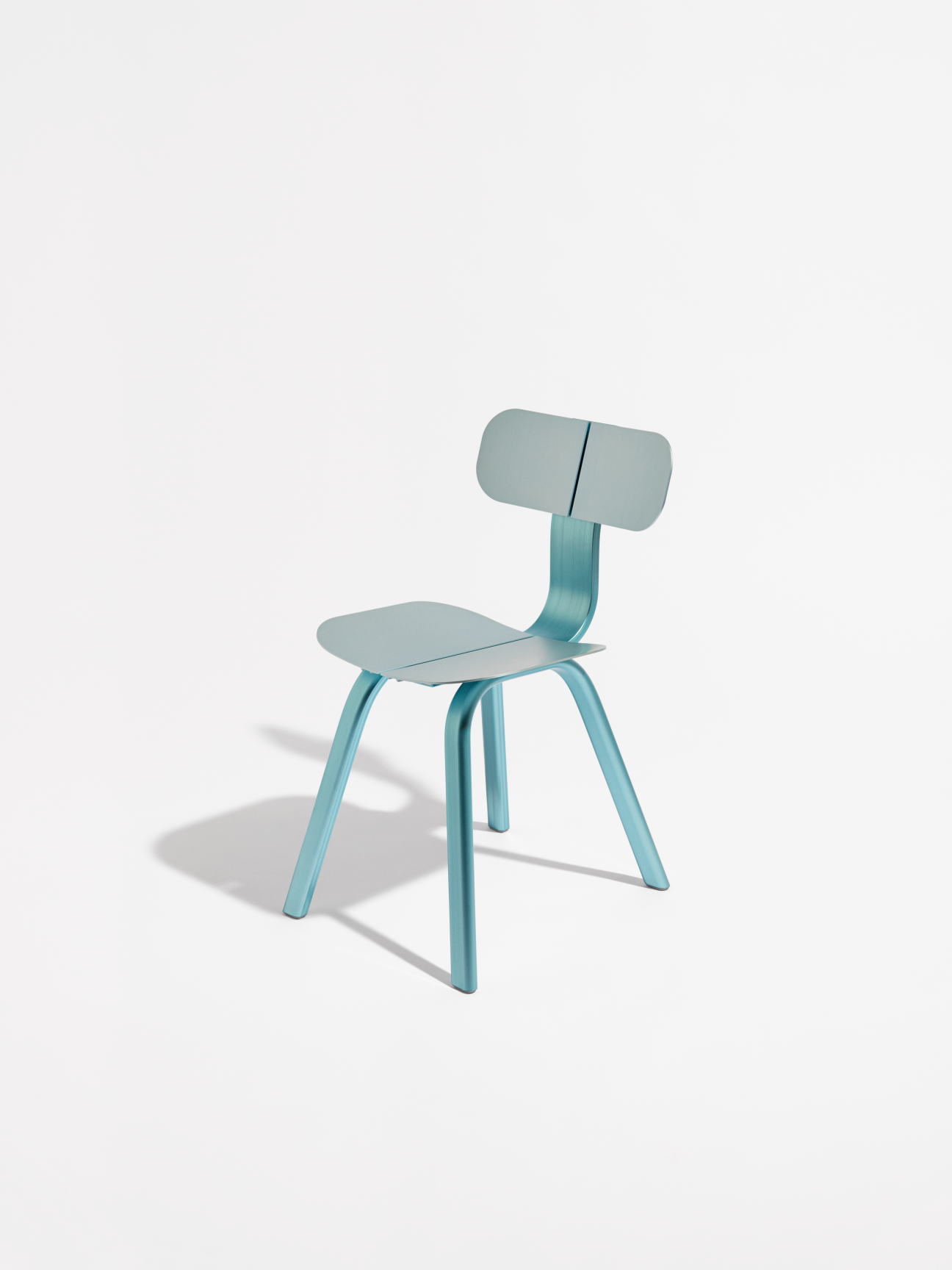
Too often, when a piece of furniture is made from recycled materials, it can lack the polish associated with virgin finishes. UK designer John Tree’s Billet Chair is a pioneering chair made from 100 per cent recycled post-consumer aluminium. Using material provided by Oslo-based Norsk Hydro, the chair is held together by a clip hidden on the back; its extruded-aluminium profiles are devoid of fixings or adhesives. Its sensitive use of materials and the simplicity of its construction ensure that the chair can be fully recycled again at the end of its life.
johntree.net
Unique aircraft
In the September print edition of monocle magazine, we published an interview with Warja Borges about her brand Unique Aircraft, which, due to a regrettable editorial oversight, contained misquotations of Ms Borges and incorrect information – namely the brand name and relevant project costs. This is the corrected interview.
Warja Borges holds an engineer’s degree in interior architecture. She worked at German studio Reiner Heim Aircraft Interior Design. In 2010 she founded Unique Aircraft. Working with major companies, Borges has designed all kinds of aircraft from smaller business jets to large Boeing/Airbus-type planes for private clients, governments and heads of state.
What is the typical budget range for the aircraft you work on?
Working on a business jet, clients’ requests are mostly refurbishments. Costs range from €500,000 to €2m, including the outfitting. My core business is one-of-a-kind interiors for large aircraft, planning the interior configuration from scratch. The range is huge, depending on the complexity of the interior, technical requirements and materials used; starting at about €30m for narrow body, up to €200m for a wide-body aircraft. The main drivers for the budget are the technology and manpower.
What are the usual (and unusual) requests from clients?
A usual request for a Boeing or Airbus-type aircraft would be a main lounge area with a combination of seating and dining, ensuite master bedroom, galley and crew area, guest seating or bedroom and an additional lavatory. Sometimes we do get the request to implement some beloved items or features.
What is most important when designing an aircraft’s interior?
The basic is to know the certification regulations and limitations and engineering constraints. The focus is on the passengers, their comfort and needs. With this in mind, my approach is holistic, stimulating senses to create an overall and unique flying experience.
unique-aircraft.com
The Agenda: Affairs
The Foreign Desk
Andrew Mueller on: Bibi’s lost opportunity
On 18 October last year, 11 days after Hamas killed more than 1,200 people in Israel, Joe Biden spoke in Tel Aviv and urged Israel to learn from US mistakes after 11 September. “Shock, pain, rage,” he said. “An all-consuming rage. I understand and many Americans understand. But I caution this: while you feel that rage, don’t be consumed by it. After 9/11, we were enraged in the United States. And while we sought justice and got justice, we also made mistakes.”
The first anniversary of 7 October will pass while this issue of monocle is on newsstands. In that time, Israel – specifically Benjamin Netanyahu – has paid little heed to Biden’s counsel. But what if he had? In the immediate aftermath of the massacres, Israel had the world’s sympathy. It also had an opportunity. A full-scale assault on Gaza was perhaps the likeliest option but it wasn’t the only one. Israel would have been entitled to reinforce its border with Gaza. It might reasonably have declared it would hunt down those responsible and deliver them to one kind of judgement or another. And there Israel could have paused.
The media would have had nothing to report but the funerals of Israel’s dead, the sorrow of their families and the plight of the hostages taken by Hamas. It would have bought time for the hostages and placed upon Hamas all the responsibility for their wellbeing. The group might have indulged in the kind of gloating that would have underscored their malevolence. Israel could have asked Hamas’s allies which side they wanted to be seen to be on. The answer might well have strengthened Israel’s recent diplomatic meshing with Arab nations, and further isolated Hamas as insane and intransigent.
Netanyahu has repeatedly floated the line that Israel is fighting on behalf of the democratic ideal against a modern fascism – and on four fronts, if one also counts Hezbollah in Lebanon, the Houthis of Yemen and their patron Iran. He has also complained that Israel, when it defends itself, is held to different standards than other countries. But democracies should be held to different standards, not least by themselves.
Andrew Mueller hosts ‘The Foreign Desk’ on Monocle Radio.
Diplomatic spat
The party’s over
Who vs who:
Brazil vs Nicaragua
What it’s about:
The failure of Brazil’s ambassador to Nicaragua to attend a party. Brasília’s man in Managua, Breno de Souza da Costa, had been invited to a wingding to celebrate the 45th anniversary of Nicaragua’s Sandinista revolution, which toppled ghastly dictator Anastasio Somoza and brought to power Daniel Ortega, currently in his second lengthy stint as Nicaragua’s president and not improving with age. Ambassador da Costa was instructed not to attend by Brazil’s president, Luiz Inácio Lula da Silva (pictured). Ortega then instructed da Costa to pack his bags and, by way of return, Brazil has slung out Nicaragua’s ambassador, Fulvia Patricia Castro Matu.

What it’s really about:
Lula and Ortega are almost exact contemporaries, born two weeks apart in 1945, and would once have been regarded as natural allies: rumbustious leftists who had both taken bold stands against miserable military juntas. Lula still gets on pretty well with other comrades of their generation, especially former Bolivian president Evo Morales and outgoing Mexican president Andrés Manuel López Obrador. But while Lula has – mostly – grown more pragmatic with age, Ortega has made the tediously familiar journey from red-bereted rebel to authoritarian crank. Lula has been especially vexed by Ortega’s harassment of Catholic clergy.
Likely resolution:
It might blow over. There are suggestions that Lula took a free swing at Ortega to deflect criticism that he’d been soft on Venezuelan president Nicolas Maduro – though Lula didn’t acknowledge Maduro’s claims to have won Venezuela’s recent election, he didn’t go as far as some Latin American nations and formally recognise the country’s opposition. Ridiculous and sinister as Ortega is, he is also useful to other Latin American leaders looking to define what they are not.
Water: Ethiopia
Dry outlook
November heralds the onset of the Nile Basin’s dry season but Egyptians and Sudanese are sweating about the months ahead. Operators at the recently completed Grand Ethiopian Renaissance Dam filled its reservoir for the fifth time over the summer, prompting fears that hundreds of millions of people downstream will soon find themselves short of water. Decade-long talks between Cairo and Addis Ababa to negotiate a binding agreement on dam operations broke down in March and show no signs of resuming, while Khartoum is too mired in civil war to participate meaningfully.
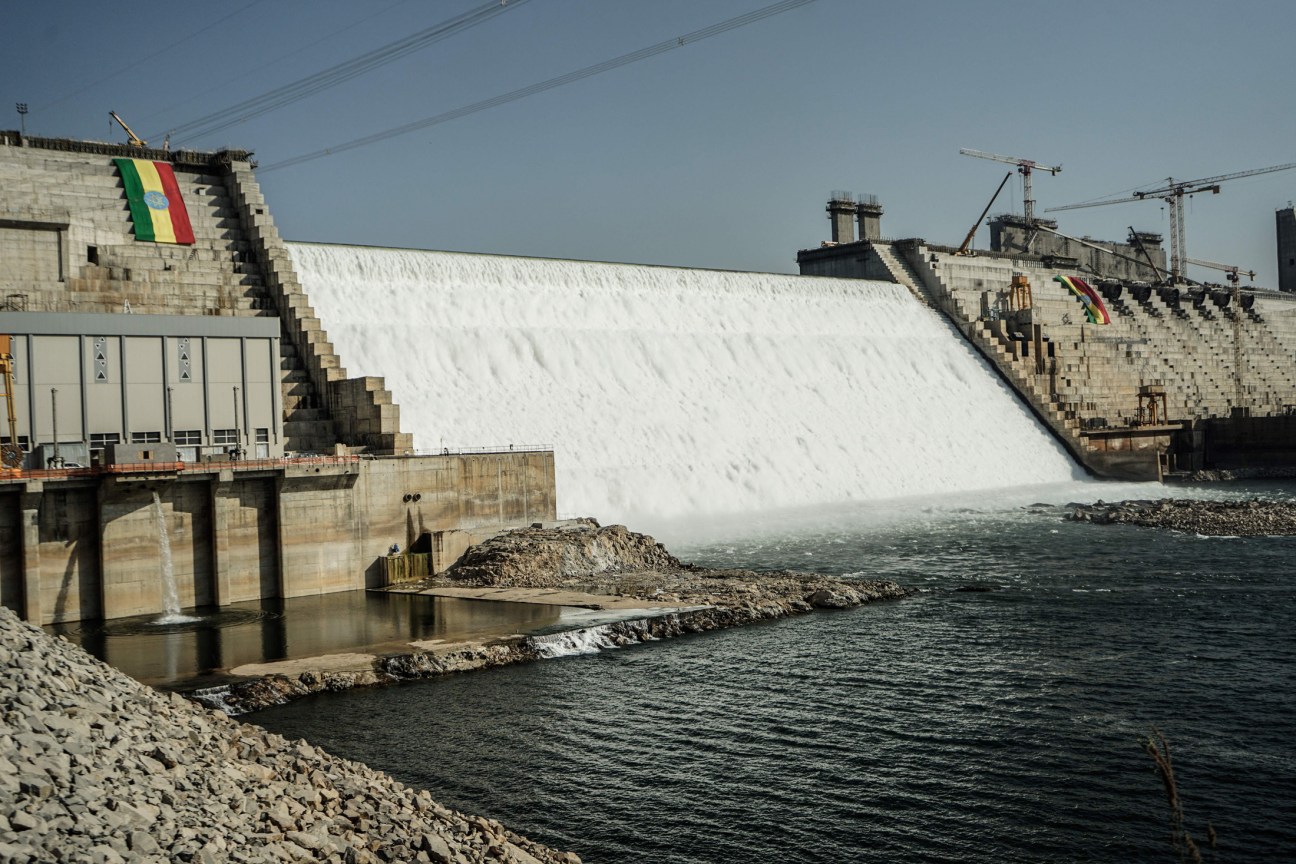
Africa’s largest hydroelectric dam is a source of national pride for Ethiopia, itself emerging from internal conflict and looking to flex its muscles as a regional power player. But Addis’s insistence on acting unilaterally while its downstream neighbours are vulnerable has soured relations. Ethiopia made the surprise announcement to construct the dam in April 2011. Cairo’s latter-day protestations that the project is “illegal” haven’t convinced it to change course.
“Ethiopia has been opaque, Egypt has been dogmatic and Sudan has been caught in the middle,” says Middle East analyst Natasha Hall of the Center for Strategic and International Studies. “Water causes a great deal of anxiety and panic. If there isn’t some kind of trusting relationship between the riparian neighbours, it could simply amount to conflict.” And conflict is something the war-ravaged and drought-ridden region could ill afford.
Immigration: The Netherlands
Too much Dutch?
If you thought the Oranje Legioen at recent international sports events looked overwhelming, brace yourself. In August, the Netherlands welcomed its 18 millionth inhabitant, an event that was represented live on its statistics bureau’s website by a ticking over digital clock. While previous population milestones have been greeted with national jubilation (the song “15 Miljoen Mensen” by Fluitsma & Van Tijn went to number one in the Dutch charts in 1996), the latest met with a more negative response. In fact, Geert Wilders – leader of the far-right Freedom Party, which won the most votes in last year’s general election – said that “the Netherlands is full”.
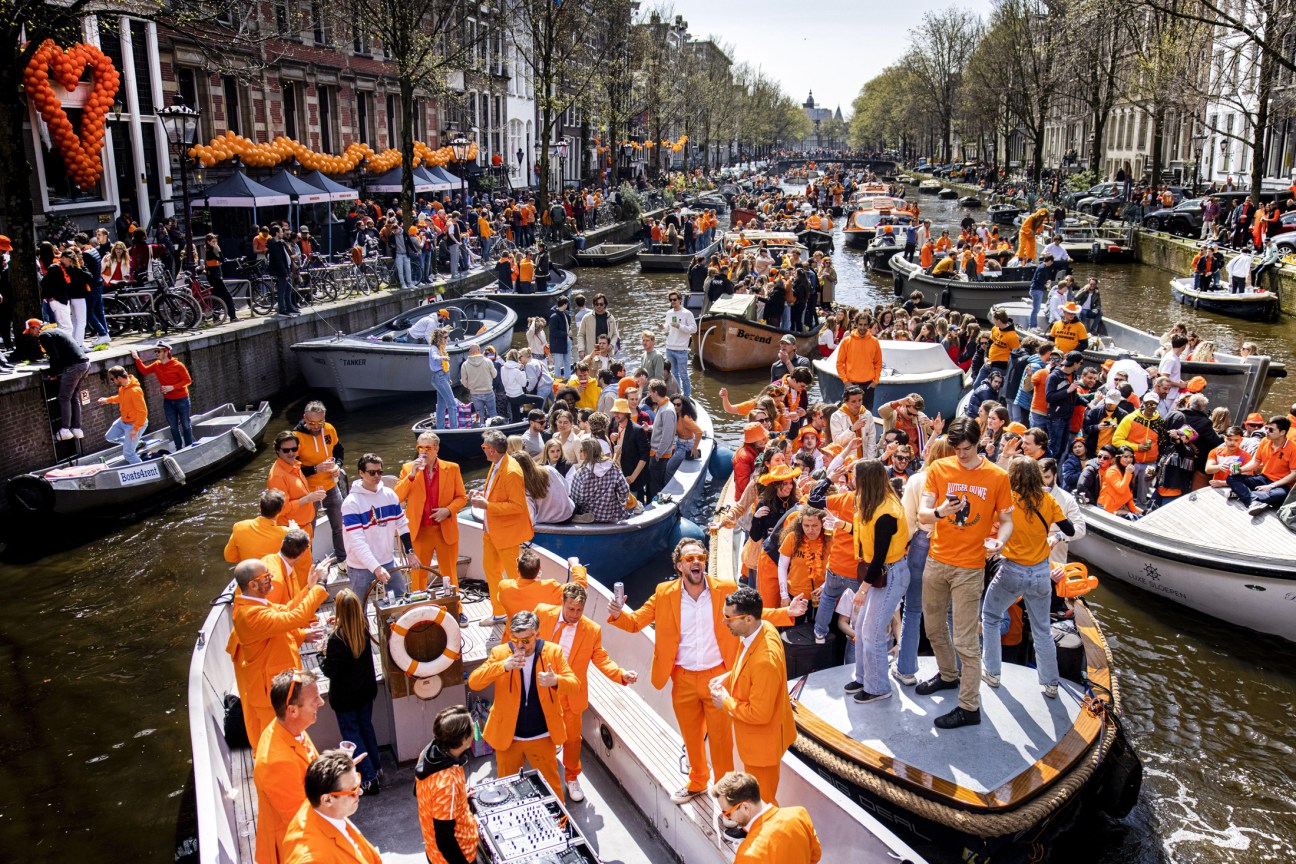
Already Europe’s most densely populated country (excluding Monaco, Vatican City and Malta), the Netherlands is more like a giant city made up of uninterrupted urban sprawl. Its growing population makes it an outlier on the continent, where many nations are struggling with the consequences of depopulation. Its economic success – it is now the EU’s fifth-largest economy – marks it out as unusual too. Immigration has fuelled recent growth but it has also exacerbated a severe housing crisis. More people may mean more workers but it also means more consumers, creating a complex and paradoxical cycle of growth and labour shortages.
Projections suggest the Dutch population could hit 23 million by 2050 – equivalent to squeezing another 19 million people into the UK. Solutions for dealing with this include building vertically and reclaiming more land from the sea, fixes that have worked in other densely populated places, such as Singapore. At the density of the Asian city state, the Dutch could house some 273 million people. Imagine that at a football match.
In The Basket
Sea Eire

In the basket: One multirole naval vessel
Who’s buying: Republic of Ireland
Who’s selling: tbc
Price: €300 million
Delivery date: tbc
The confirmation that Ireland’s modest Naval Service will purchase a multirole vessel is a startling statement of intent by the country’s department of defence. It’s not just that such a ship, able to launch helicopters and deploy troops by sea and air, would be Ireland’s biggest vessel – it might effectively be Ireland’s only vessel. Lately Dublin’s meagre fleet has been substantially marooned by technical issues and personnel shortages. Of its four Samuel Beckett-class patrol ships, only one of them is on duty most of the time; two second-hand patrol ships bought from New Zealand are not yet operational. It would also represent an all-too-rare suggestion of seriousness from Ireland where maritime security is concerned. The country, responsible for 16 percent of the EU’s territorial waters, refuses to join Nato and spends barely 0.2 per cent of its gdp on defence.
Calendar: Global
Diplomatic bag
As memories of the northern hemisphere summer begin to recede from diplomats’ minds, here are a few things that will sharpen them again ahead of a busy end to the year.
1 October
Secretary-General Rutte
Brussels, Belgium
Mark Rutte assumes the Nato hotseat at a critical time for the world’s largest military alliance. With competing blocs forming elsewhere and the potential November election of Donald Trump – who has previously threatened to withdraw the US from the alliance – Rutte will have to deploy all of the political nous that saw him become the Netherlands’ longest-serving prime minister.
6—11 October
44th Asean Summit
Vientiane, Laos
The Association of Southeast Asian Nations, a union of 10 neighbouring states, is becoming increasingly significant as both a collection of rising economic powers and a bulwark against Chinese meddling in the Indo‑Pacific. This year’s summit, to be held in the capital city of one of Asean’s poorest nations, will focus on China as well as Myanmar, a recalcitrant member state currently suffering from a number of humanitarian and political crises.
22—24 October
16th Brics Summit
Kazan, Russia
Over the past year, much has been made by western commentators of the Brics’ supposed malevolent, or at least disruptive, geopolitical intentions. Despite the controversial setting of Russia for this year’s summit, the organisation will be welcoming four new member states in the shape of Egypt, Ethiopia, Iran and the uae. This will swell the ranks of the Brics to nine (Brazil, Russia, India, China and South Africa are already members); meanwhile, up to 17 applicants (including Belarus, Pakistan and Thailand) remain on the waiting list.
What you’ve missed. Autumn 2024.
1.
Hospitality: Hotel
The revamped mountain hotel
The Brecon: Adelboden, Switzerland
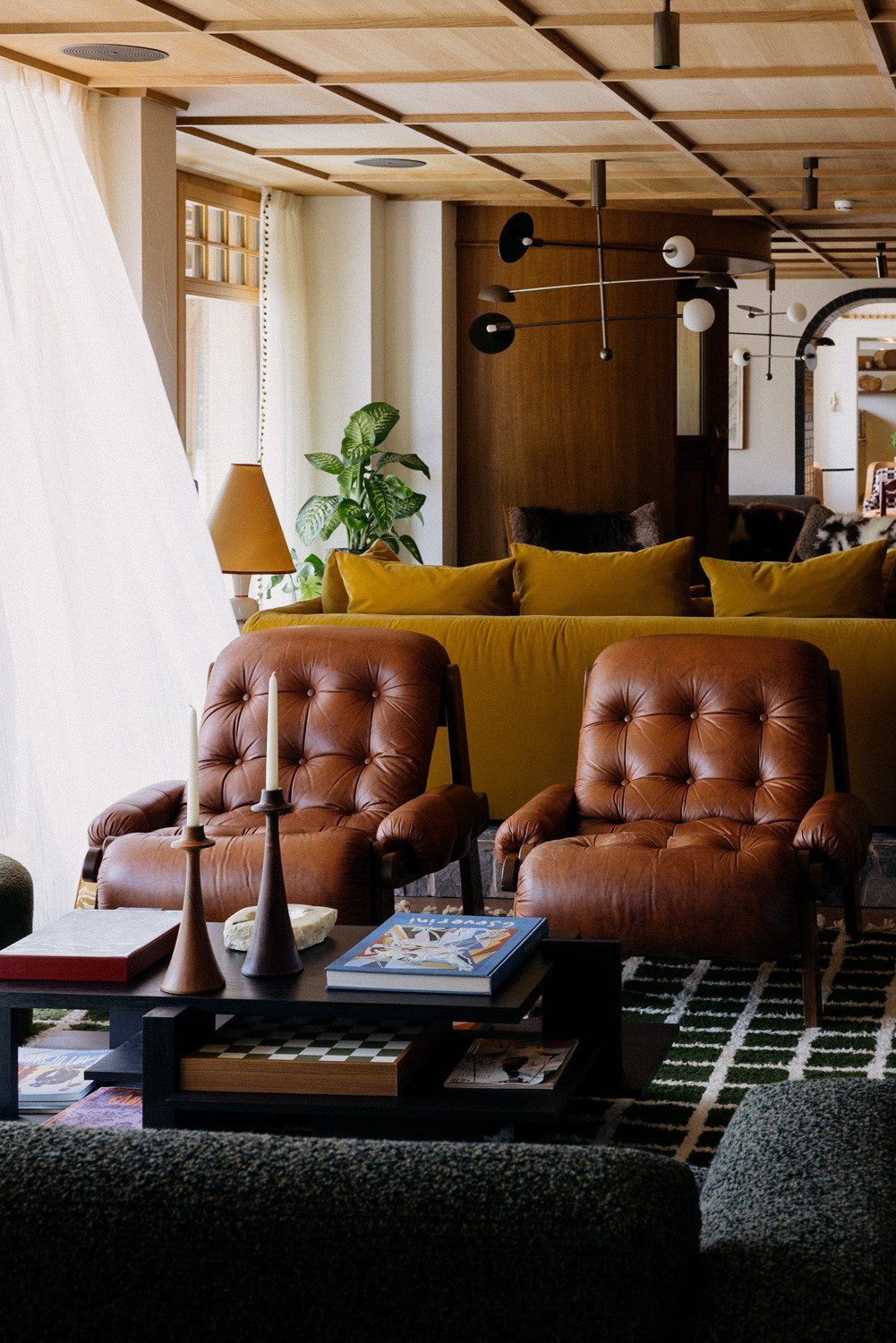
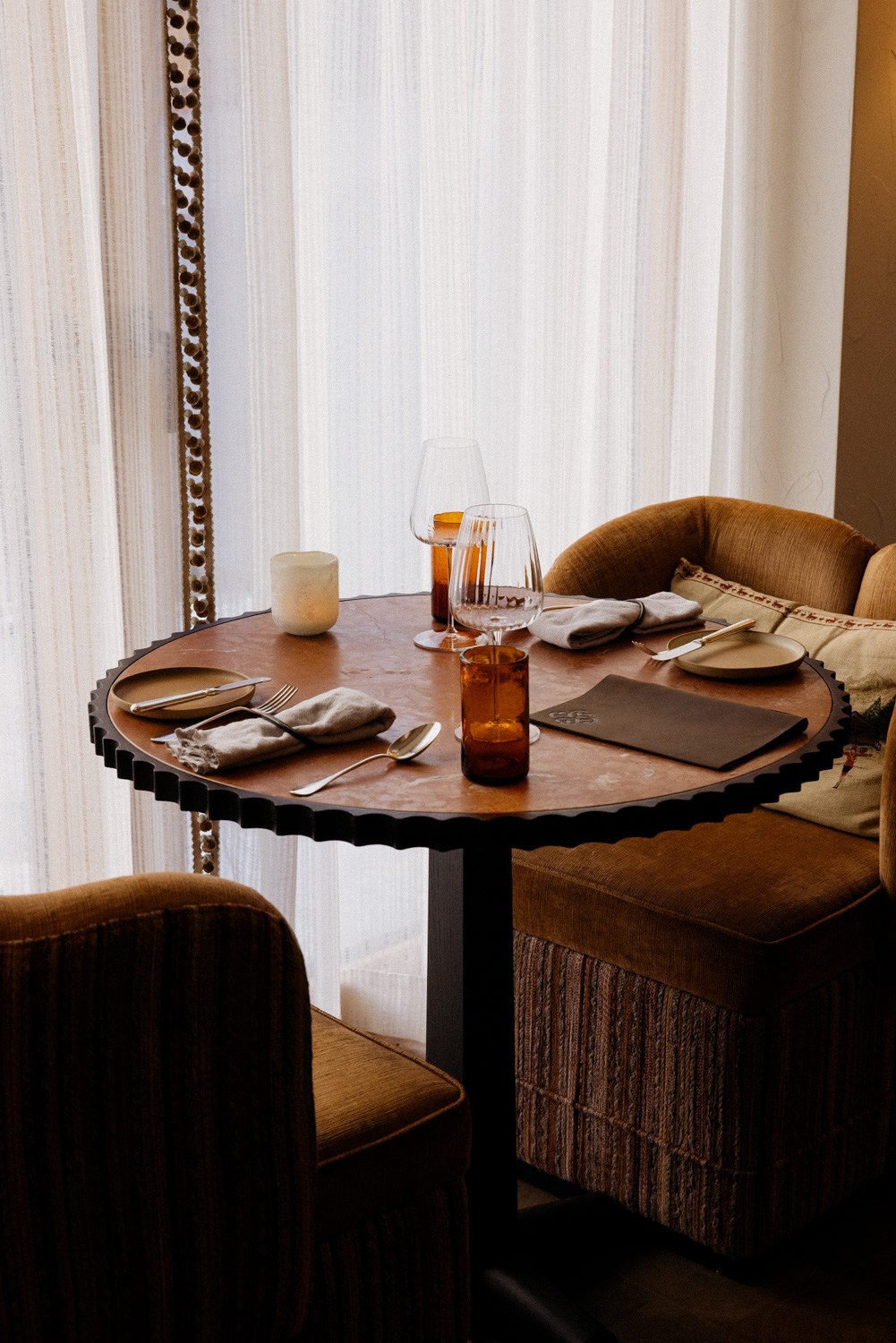
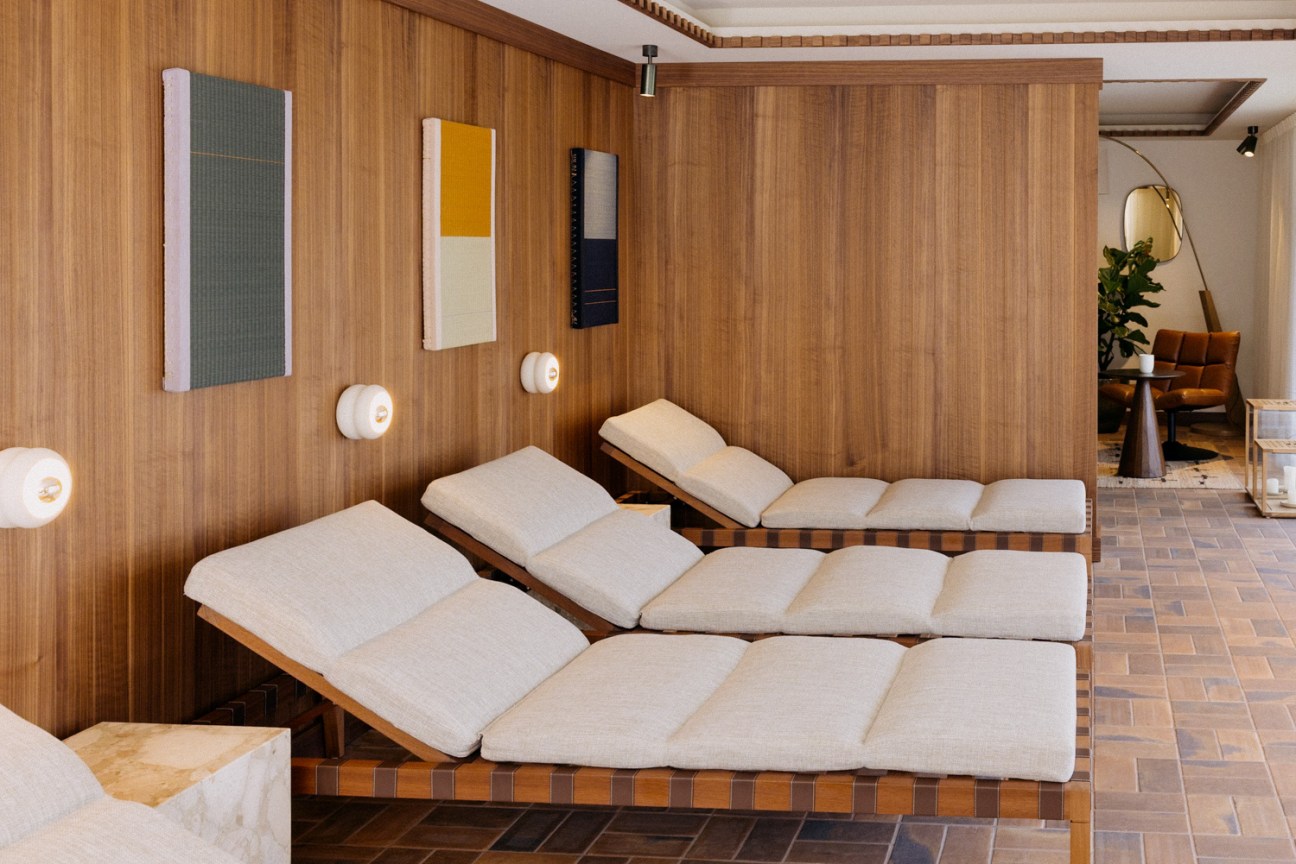
The Swiss alpine village of Adelboden high in the Bernese Oberland is surrounded by fresh water and snow-frosted massifs, and has a down-to-earth approach to hospitality. Snuggled among the fir trees is The Brecon, a chalet-turned-guesthouse built in 1912, which quietly reopened this summer, offering an old-school charm that is a world away from the more homespun corners of Adelboden. Instead, it goes heavy on stone flooring, textured woollen upholstery and leather trims. Its décor has a pared-back palette that allows the eye to wander towards the natural beauty without veering too far from the comforts of a traditional timber-clad Swiss cottage. “My family has been coming to Adelboden since I can remember,” co-owner Grant Maunder tells monocle. “I want guests to feel that sense of staying in a generous home.”
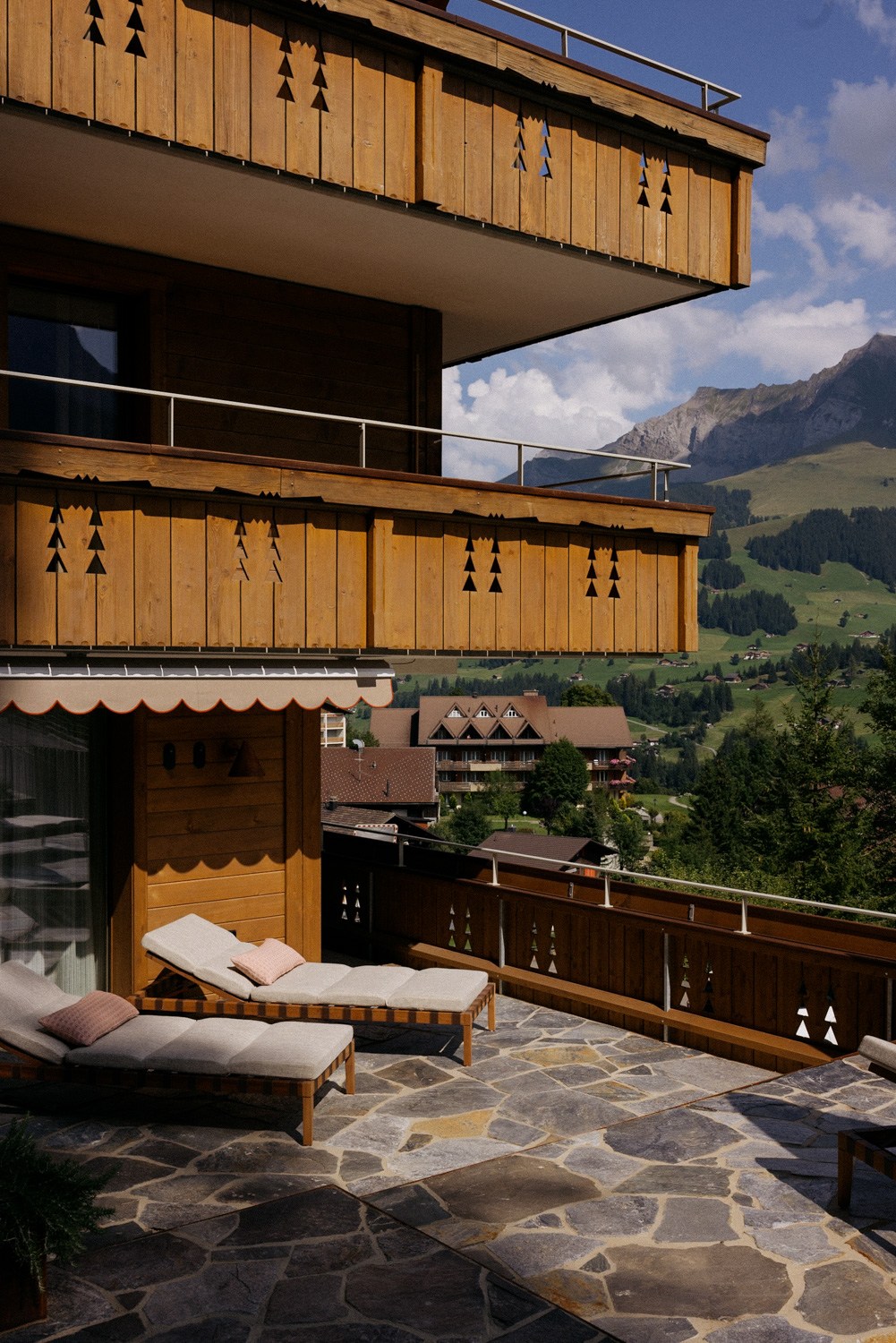
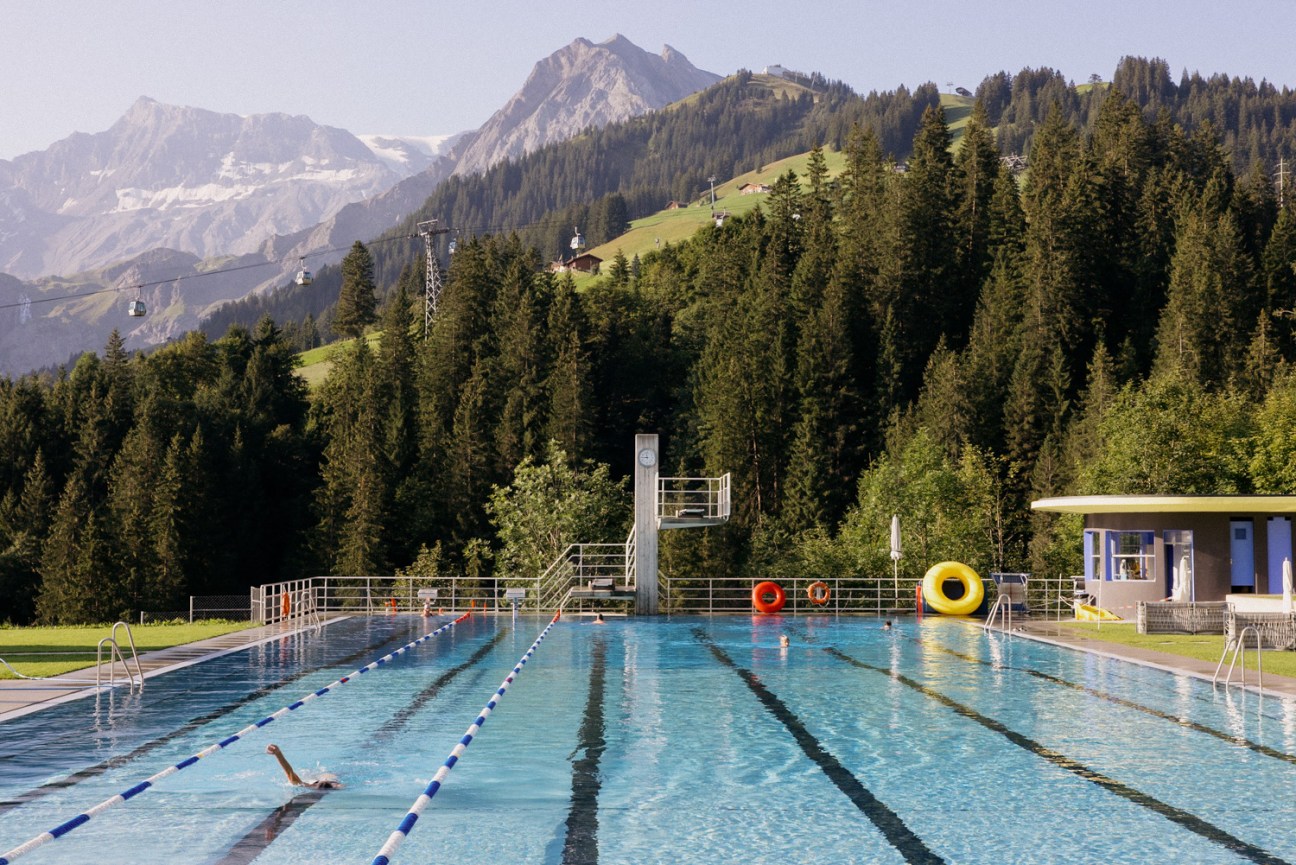
Designed by Amsterdam-based studio Nicemakers, the 22-key retreat, formerly known as Waldhaus (meaning “forest house”), has an Olympic-sized outdoor pool that looks onto the dramatic Wildstrubel mountain range. But the outdoor wonders don’t stop at the view. Days in Adelboden are best spent on the pistes of the region’s three ski areas during the winter months and following the hiking trails during summer – after which you can shrug off the day’s sporting pursuits with a visit to the sauna.
thebrecon.com

2.
Retail: Shop
The department store reimagined
House of Shinsegae: Seoul, South Korea
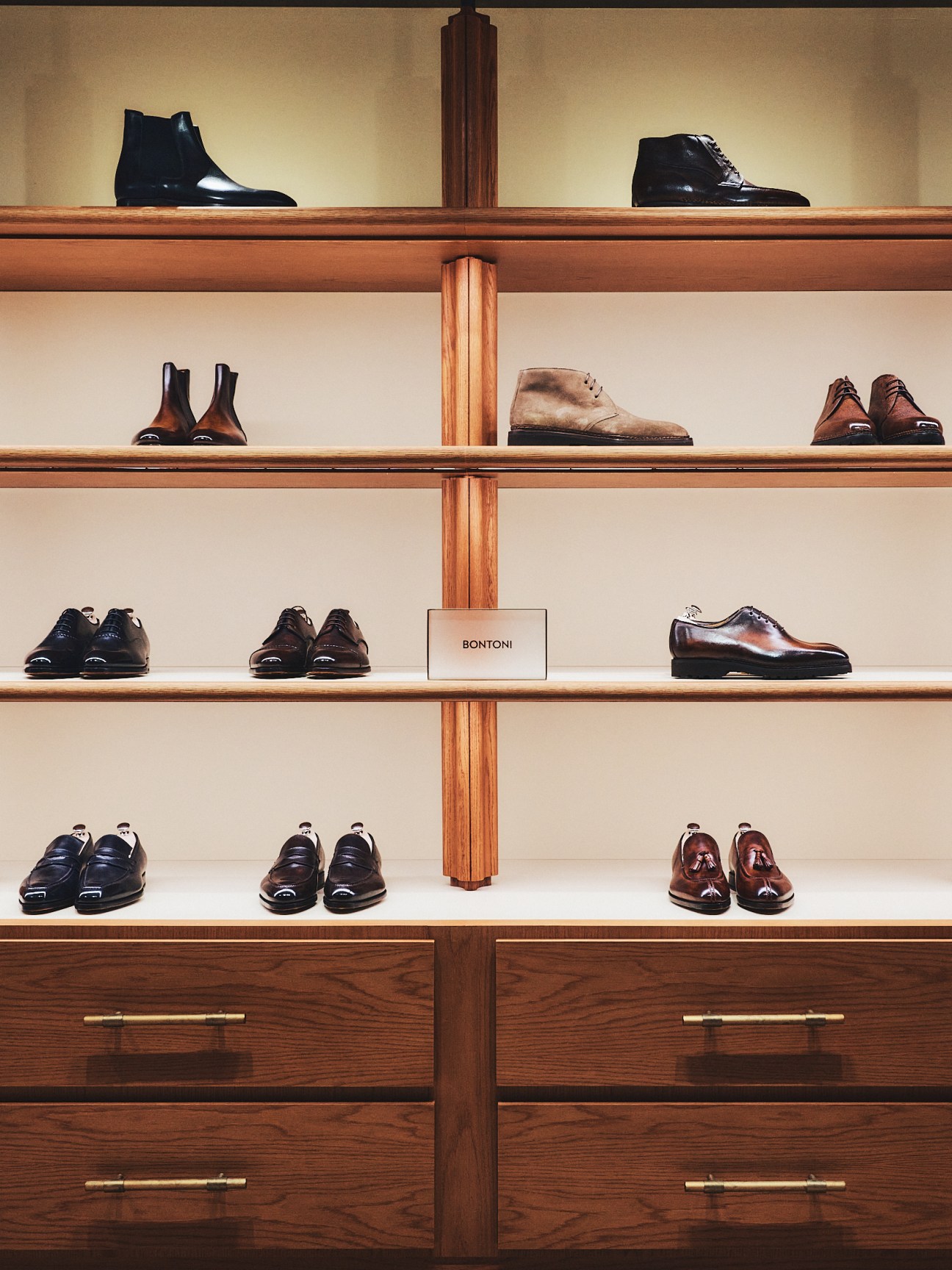
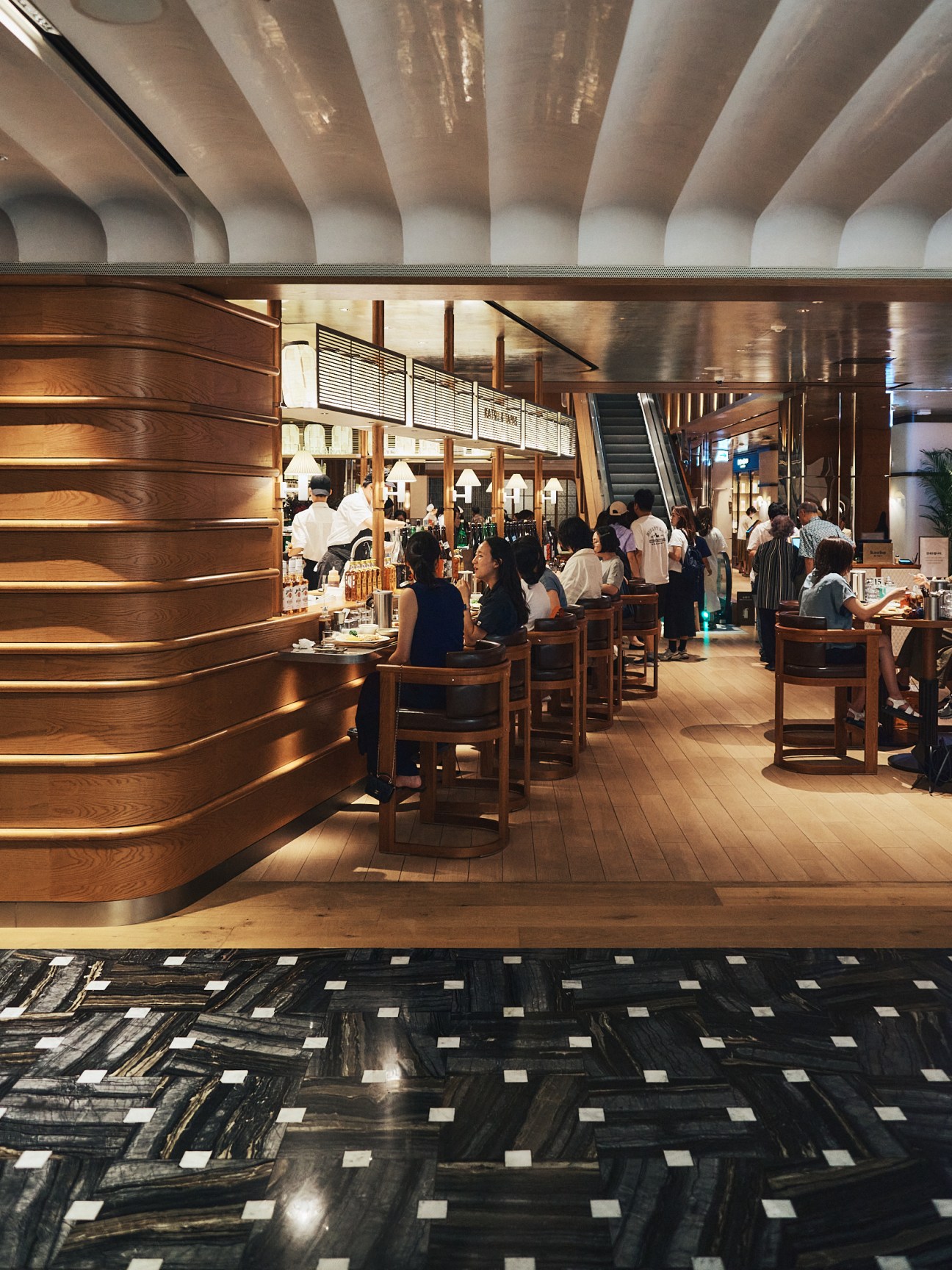
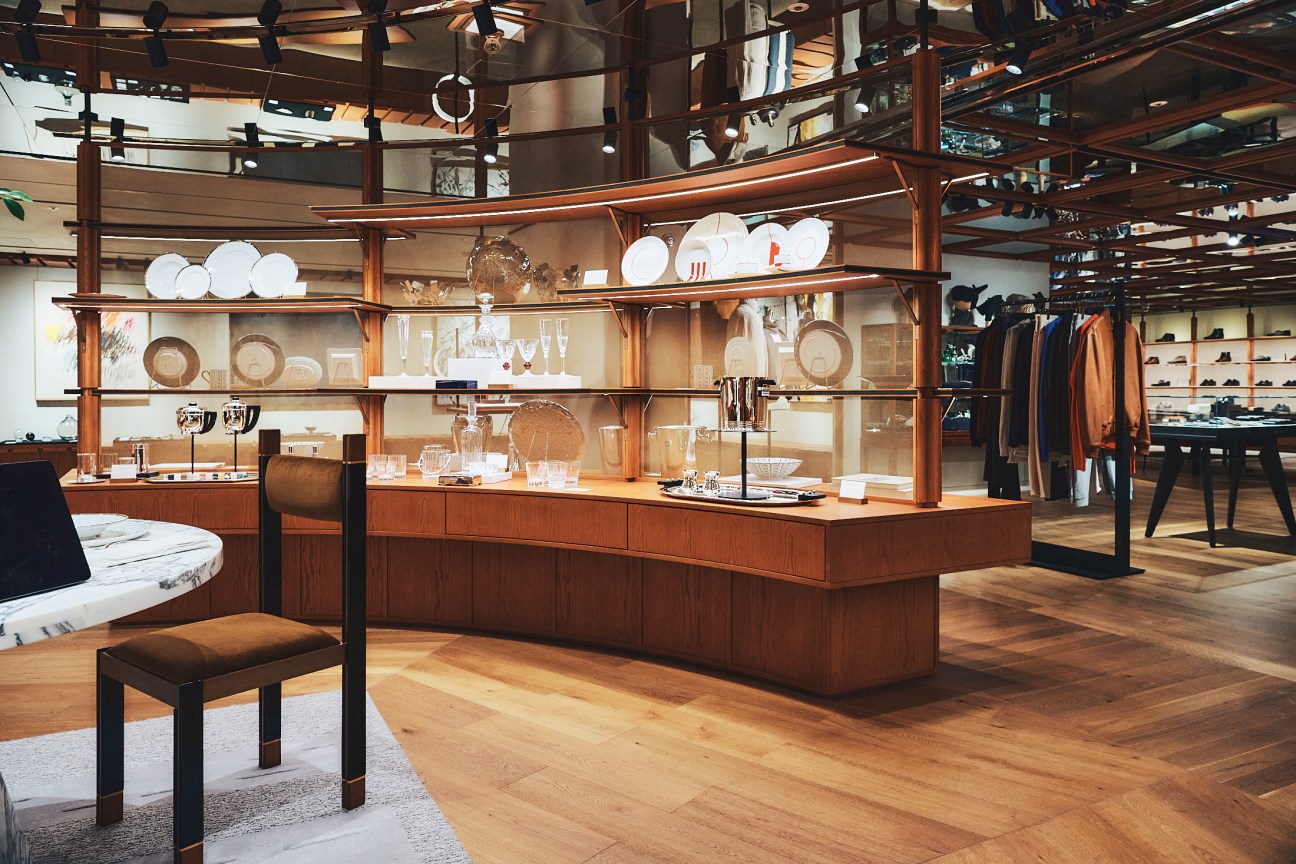
Over the summer, South Korean department store Shinsegae opened the House of Shinsegae, a new food and retail space in Gangnam, Seoul. The vast food hall houses 12 restaurants, a wine shop and a new branch of South Korean multibrand favourite Boontheshop. Casual fare and fine dining are both on offer. You’ll find artisanal pasta and ice cream but most of the restaurants specialise in local and Japanese fare. Head to Kikukawa, the first South Korean outpost of a fourth-generation Tokyo eel-rice specialist, or go to Jaju Hansang to sample Korean dishes dreamed up by Shinsegae’s own Korean Cuisine Research Institute.
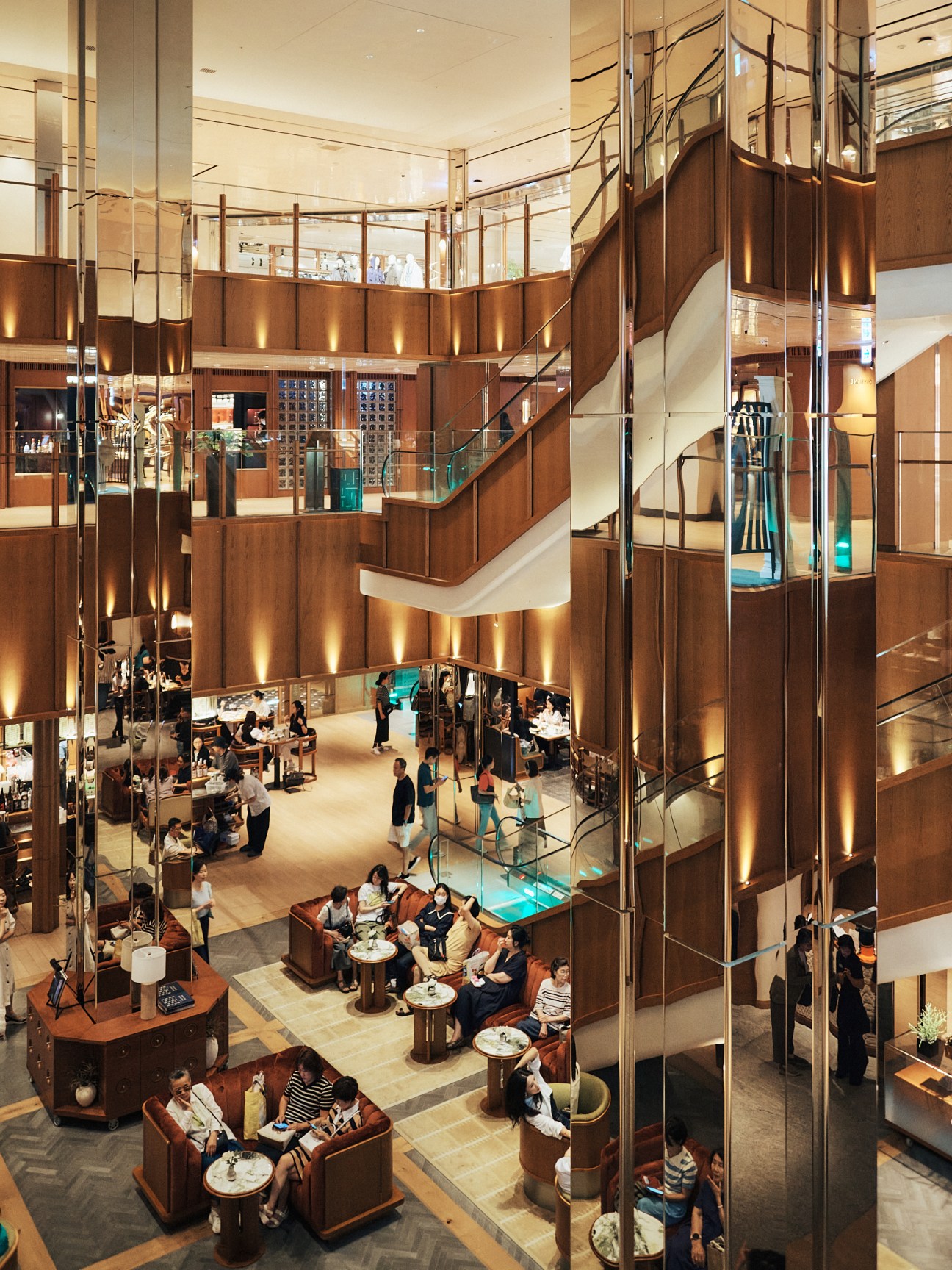
During the renovation, which began in 2021 after the closure of the Shinsegae Duty Free shop, the brand opted for a redesign inspired by luxury hotels. The restaurants and an upper-level mezzanine converge around a central “lobby” with gleaming mirrored columns and tawny-coloured private booths. There isn’t a communal bench table in sight – rather, customers can dine on omakase at kitchen counter seats or in private dining rooms. The lights are dimmed at cocktail hour and House of Shinsegae stays open late, encouraging customers to sit back and sip. The pick of the bunch? Yoon Haeundae Galbi for Korean beef ribs.
shinsegae.com
3.
Hospitality: Hotel
The Riviera revival
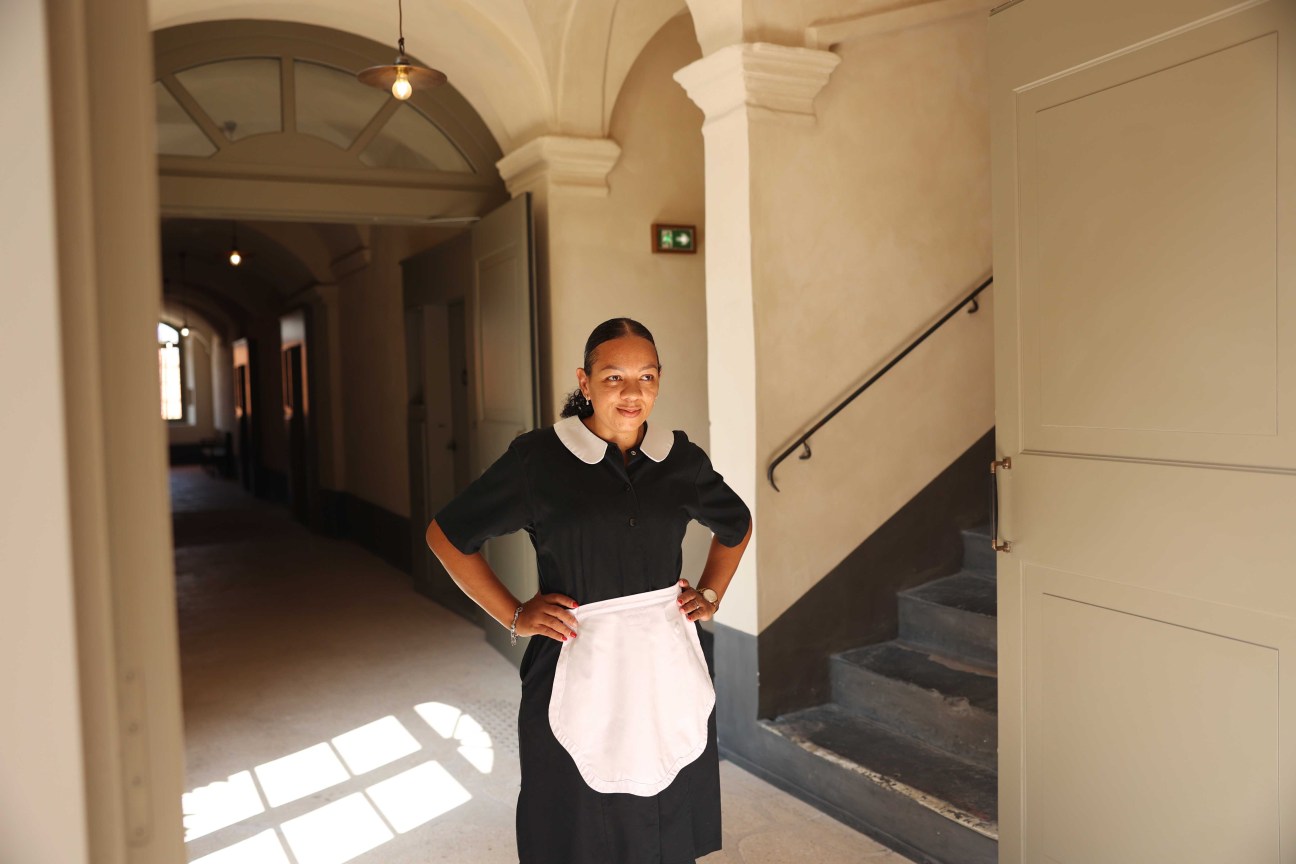
Hôtel du Couvent: Nice, France
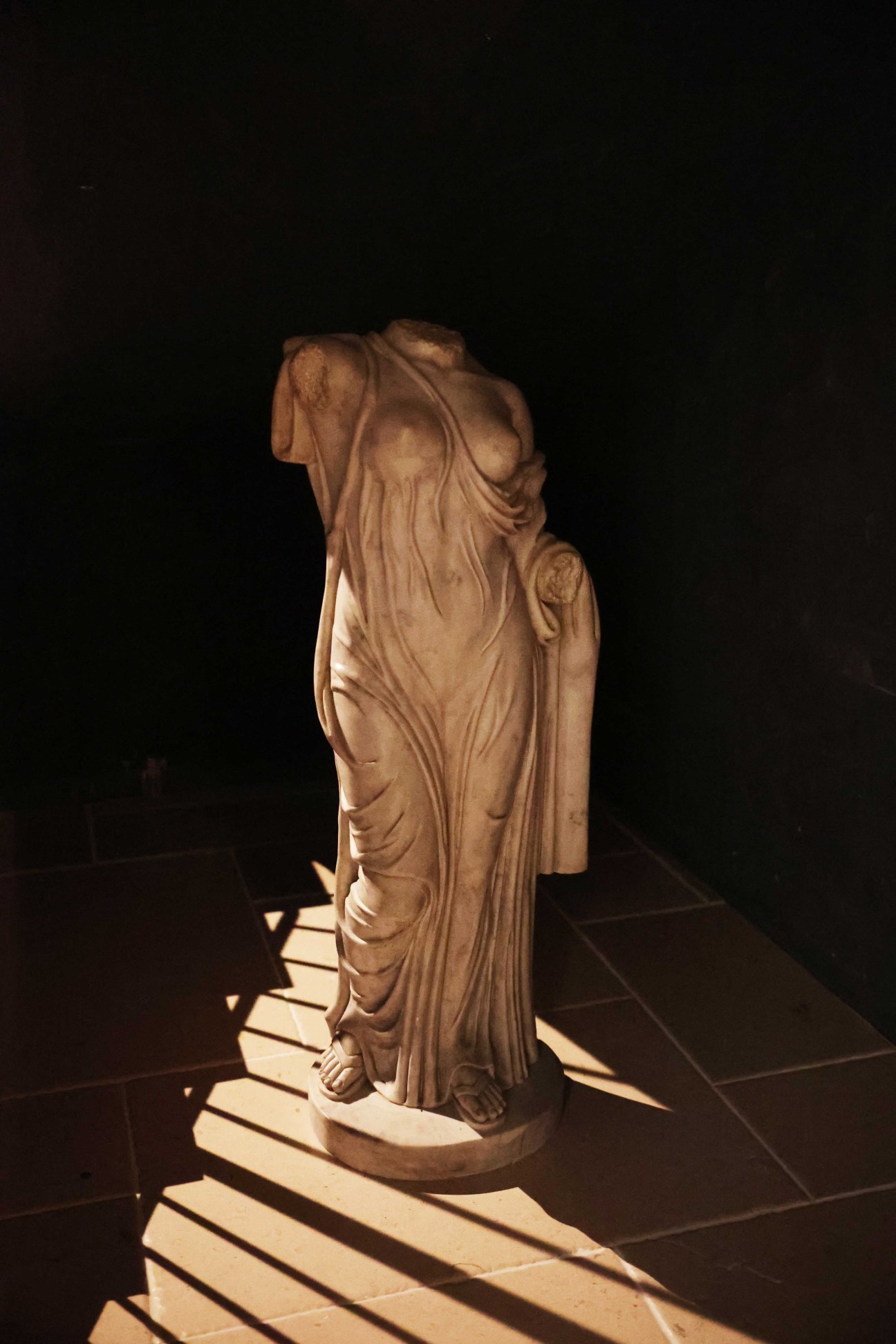
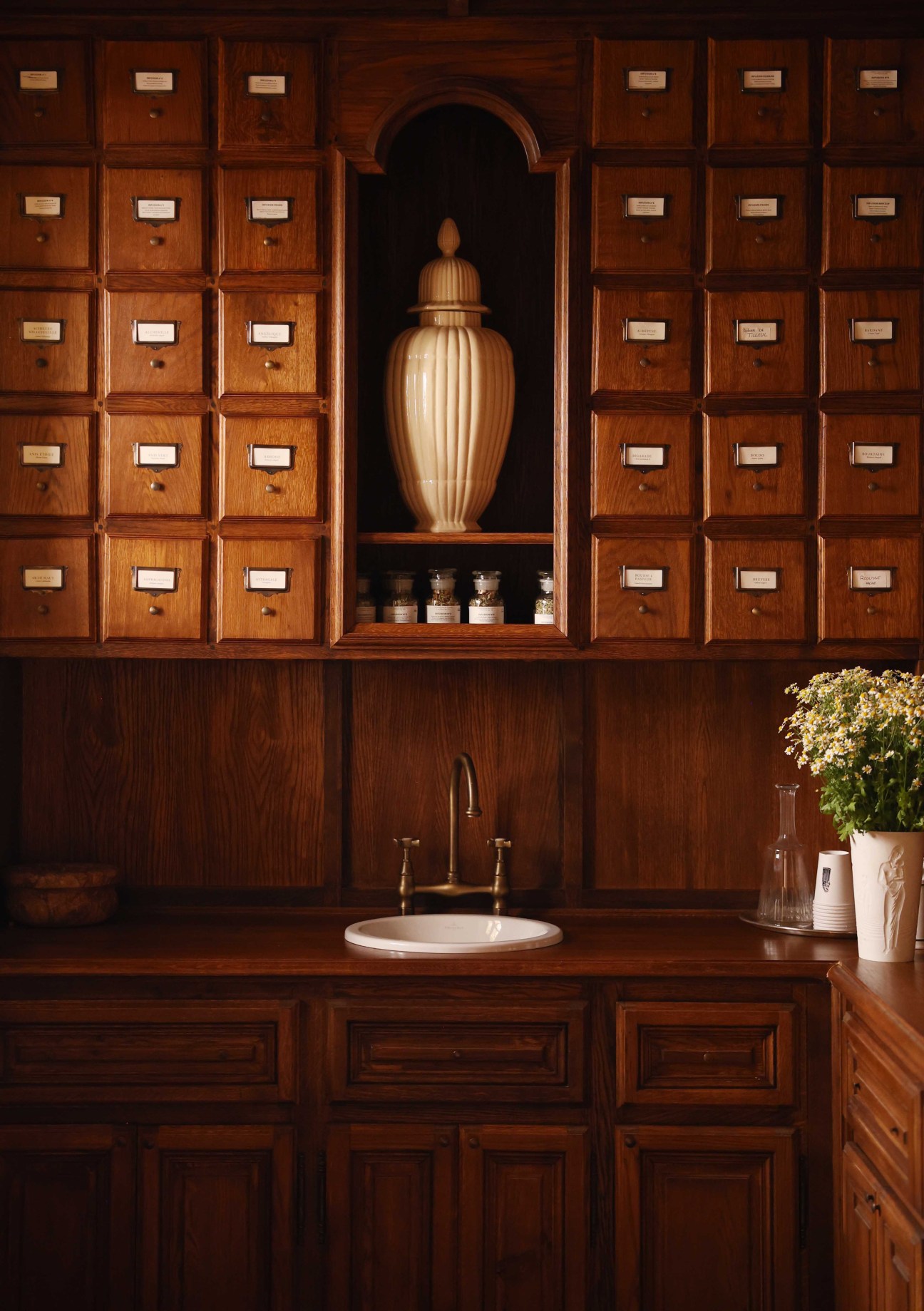
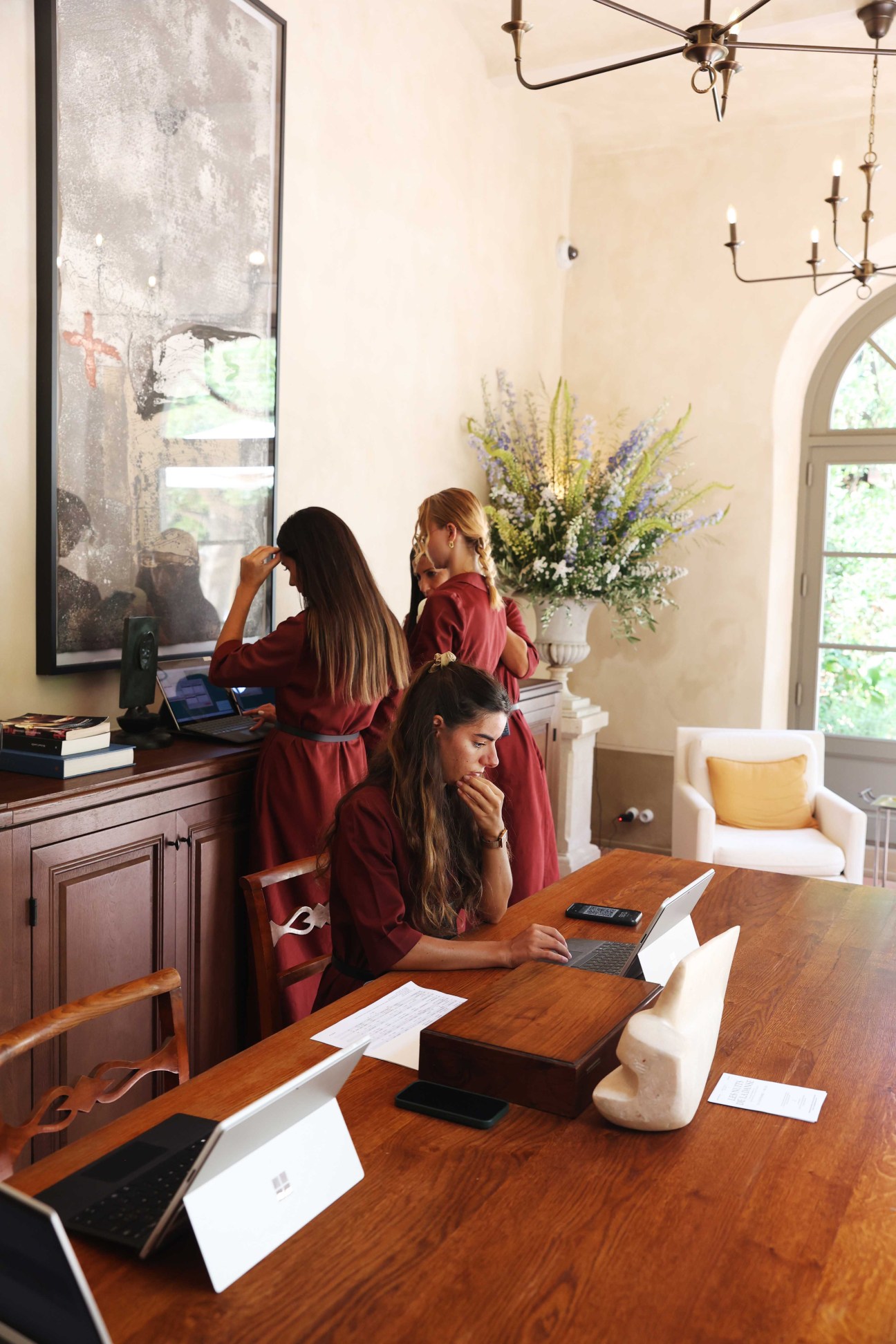
“I’m not a hotelier,” says Valéry Grégo. “I just do hotels.” He does them rather well too – at least, if the 88-key 17th-century convent-turned-hotel in Nice is anything to go by. This isn’t Grégo’s first creative overhaul; his Perseus Group was also behind Les Roches Rouge in Saint-Raphaël and Le Pigalle in Paris. However, it’s a project that brought a lot of pressure. “The mayor called me,” says Grégo. After a persuasive conversation, the hotelier agreed to commit to what would become a 10-year restoration project.
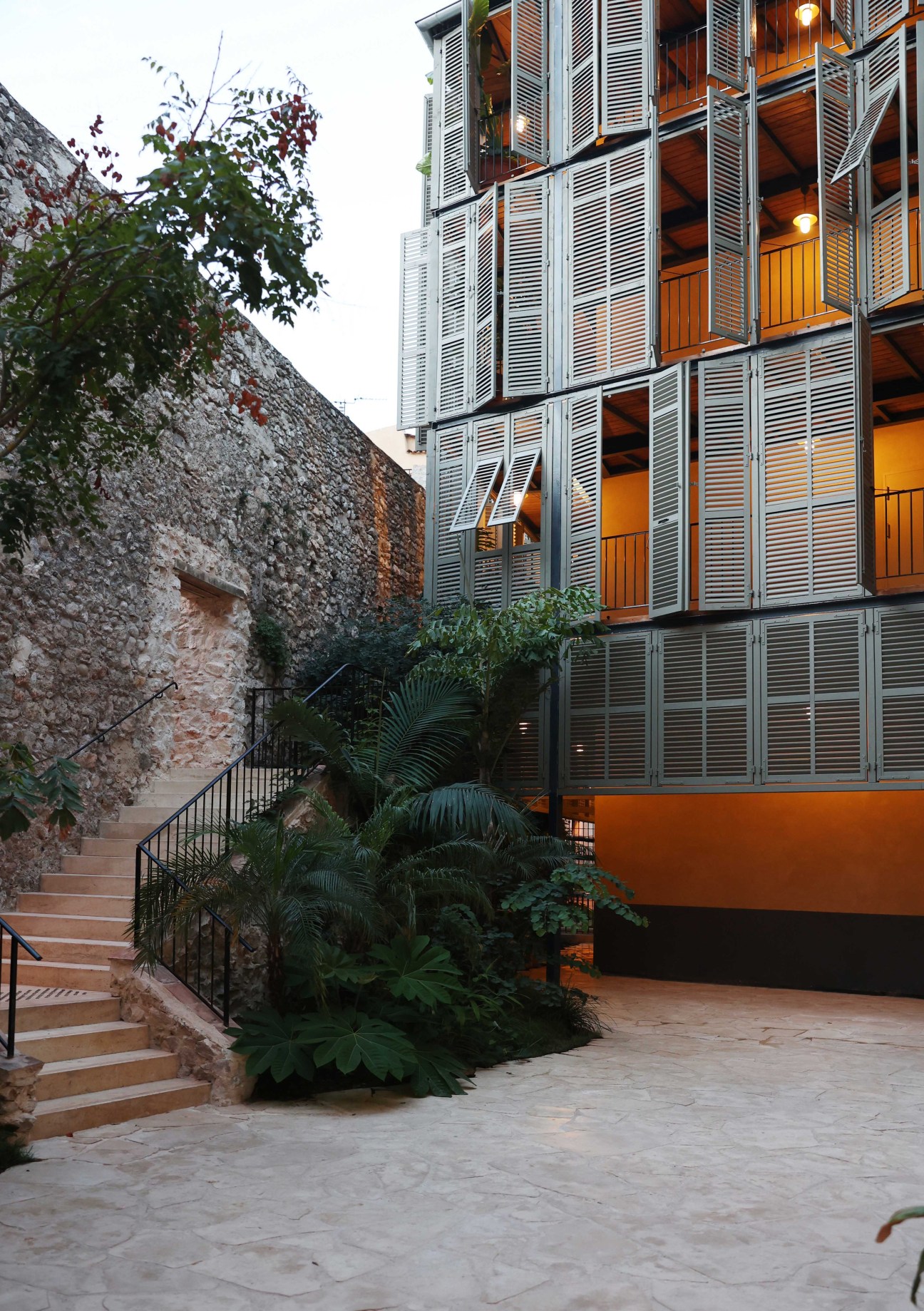
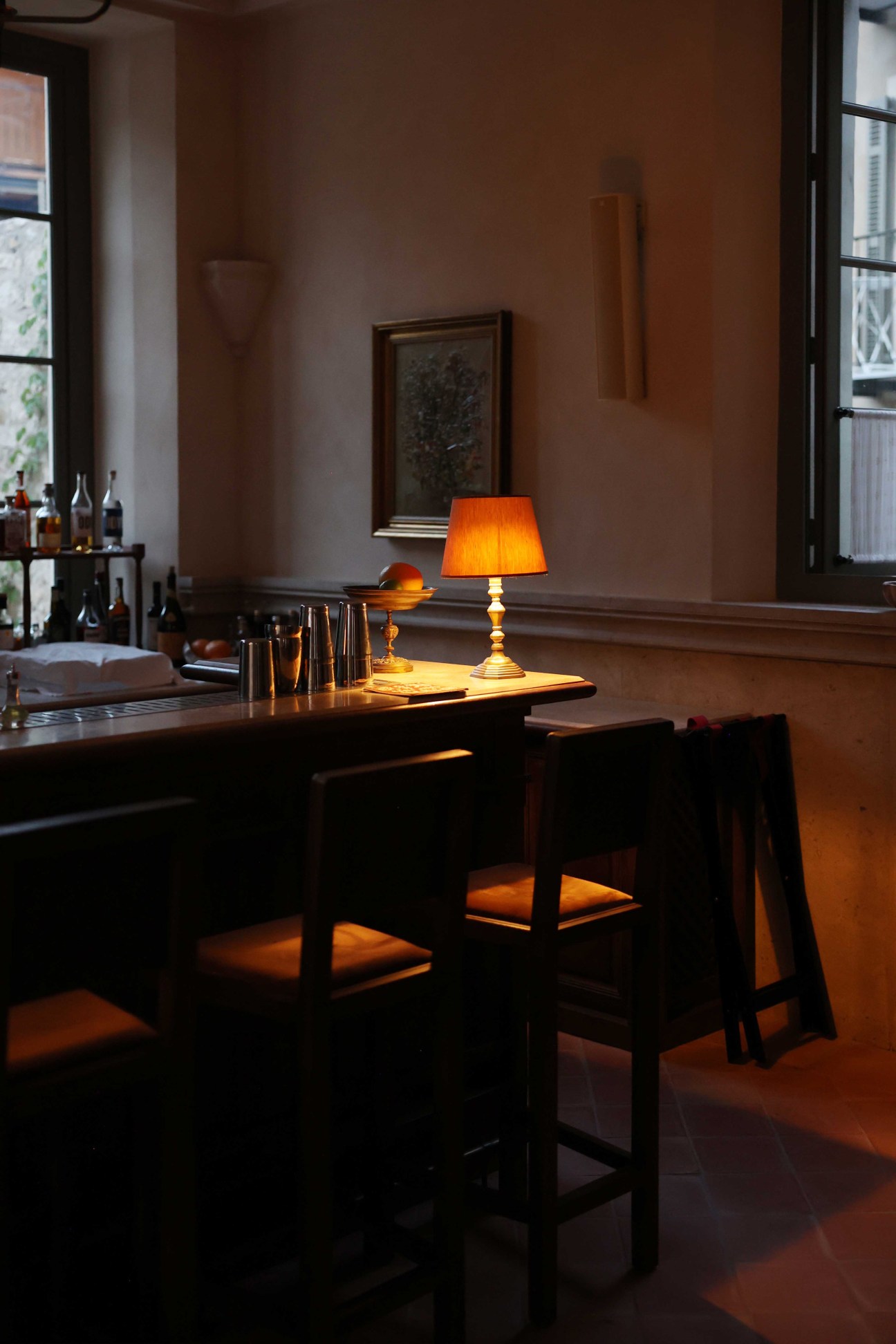
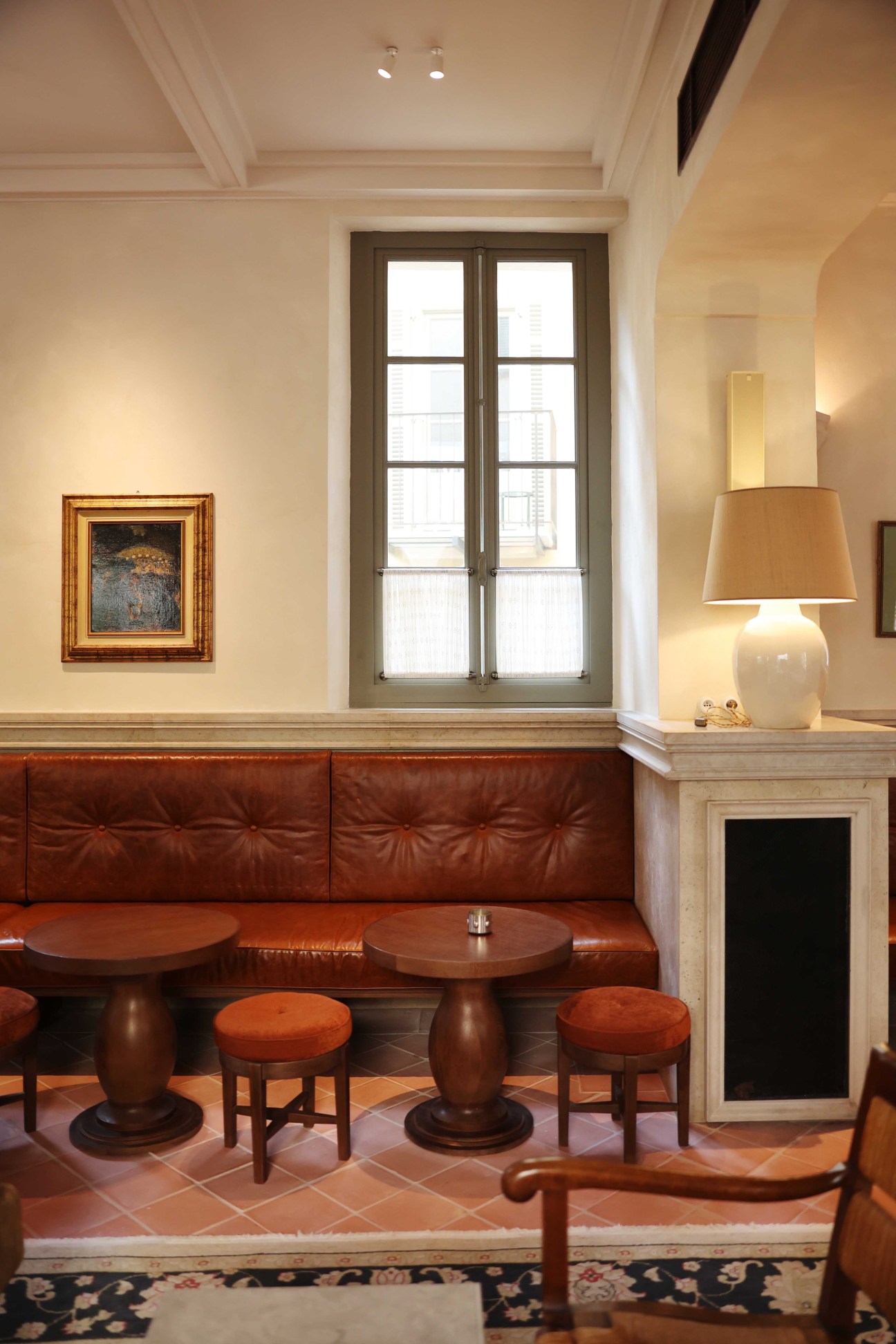
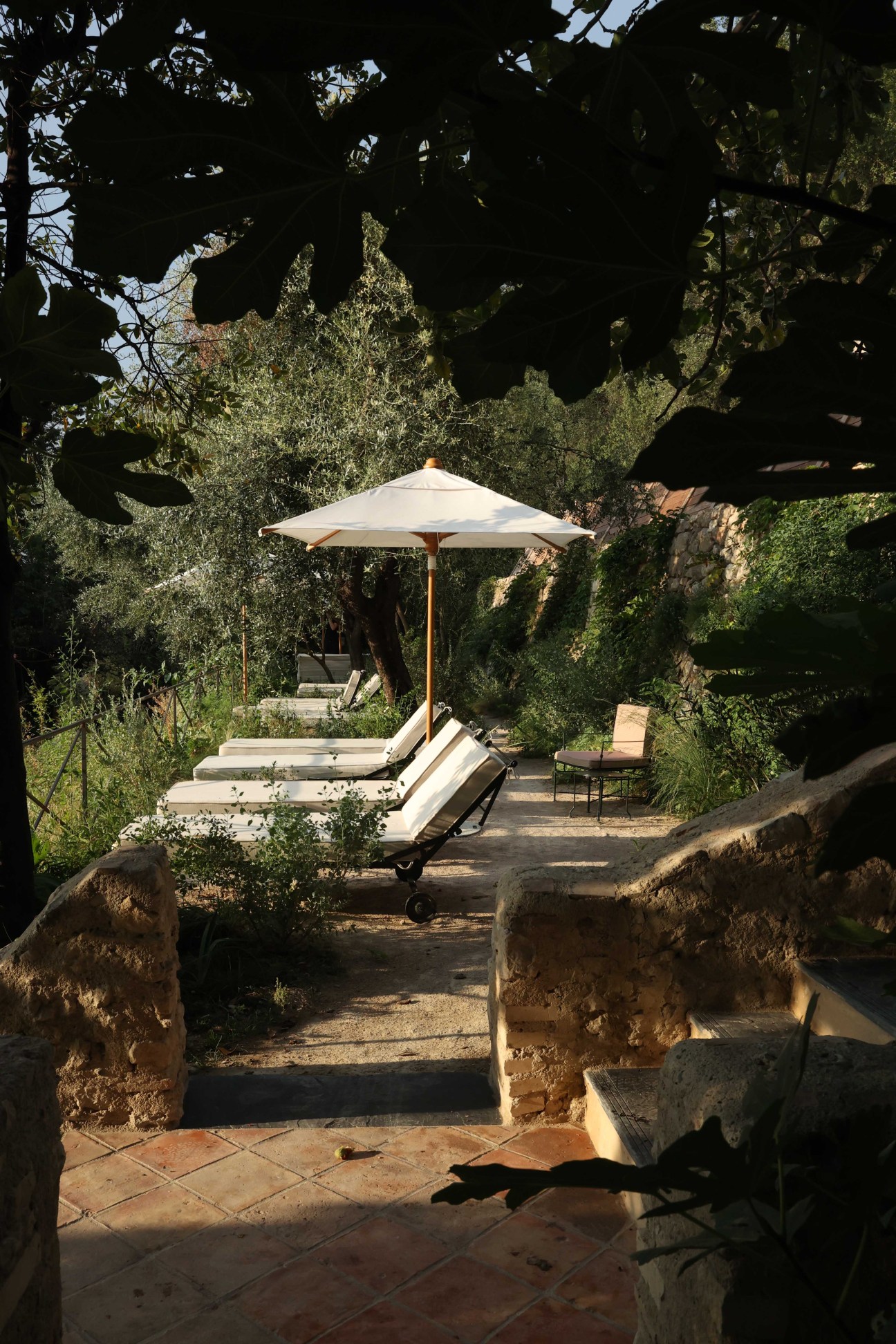
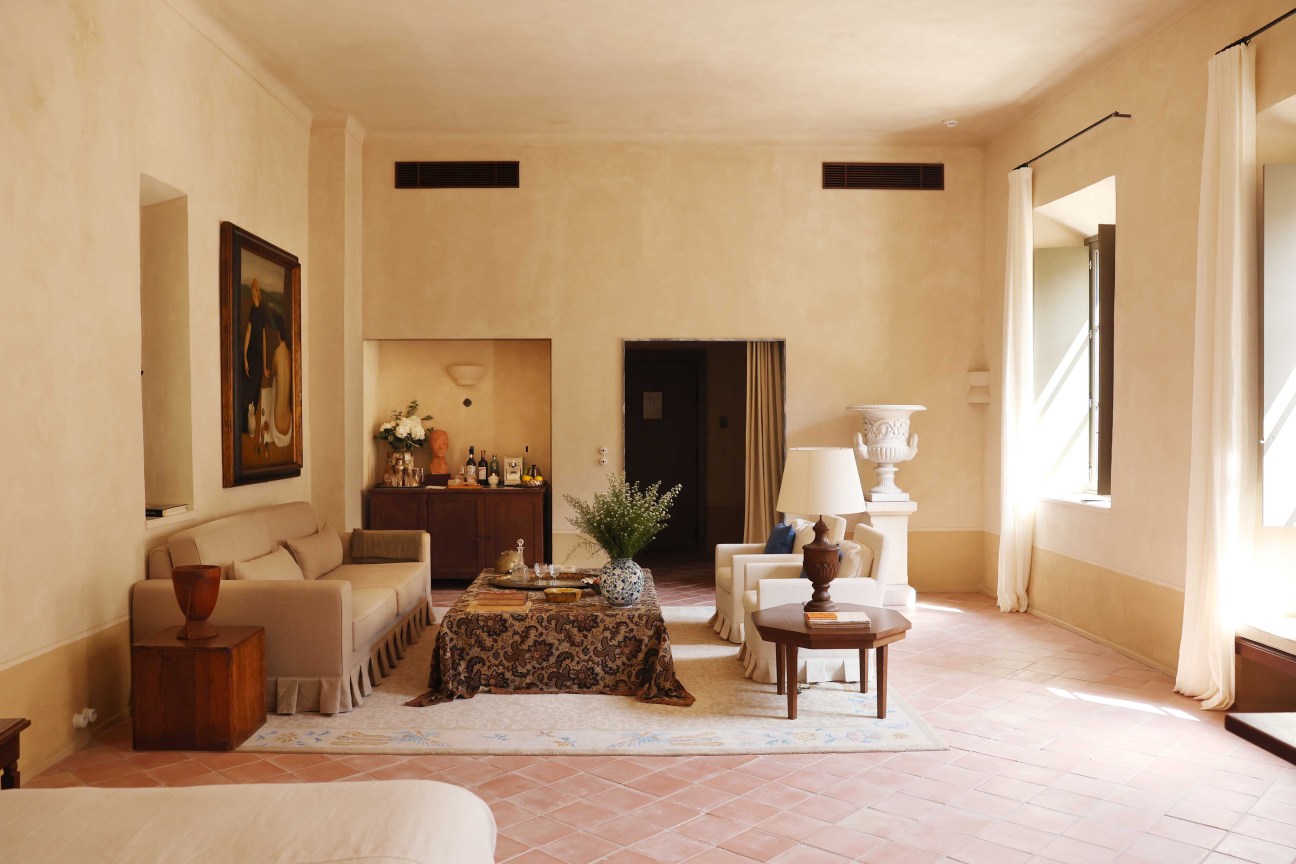
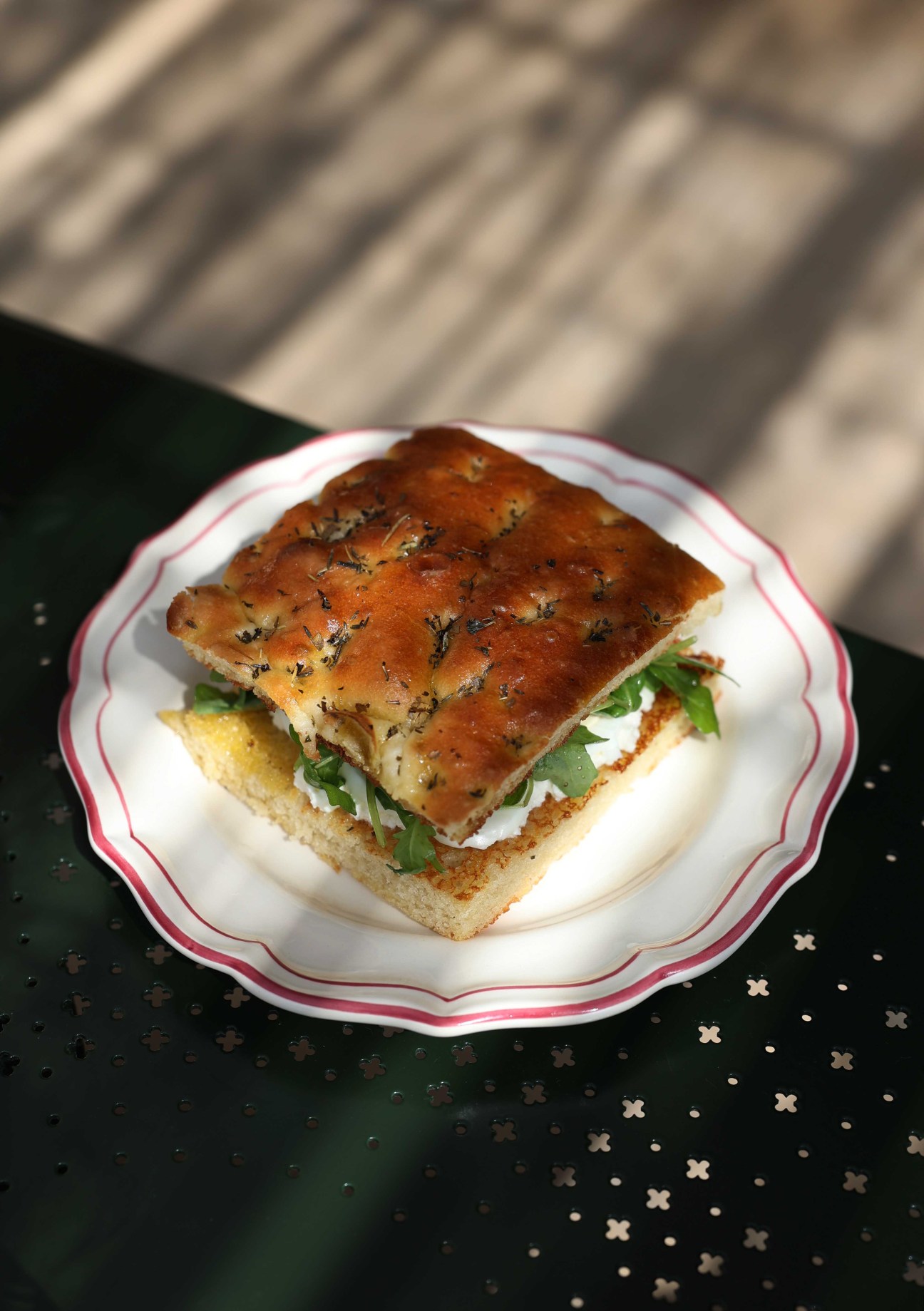
The crumbling building was only part of the brief: creating a community around it was also crucial. Charlotte de Tonnac and Hugo Sauzay of Paris firm Festen were drafted for the interiors: thick, cream-washed walls and terracotta floors and lots of linens, thick-cut marble and vast beds. In the restaurant, chef Thomas Vetele prepares hearty, tasty food made with produce from the area; electric green-pea tarts, fritto misto and rice pudding are on the menu when monocle visits. Perhaps the most special space is the garden – a terraced, stony sanctuary peppered with orange and fennel trees and lined with sweet-smelling jasmine.
hotelducouvent.com
4.
Fashion: Backpack
The bag to grab
Zattu: Japan
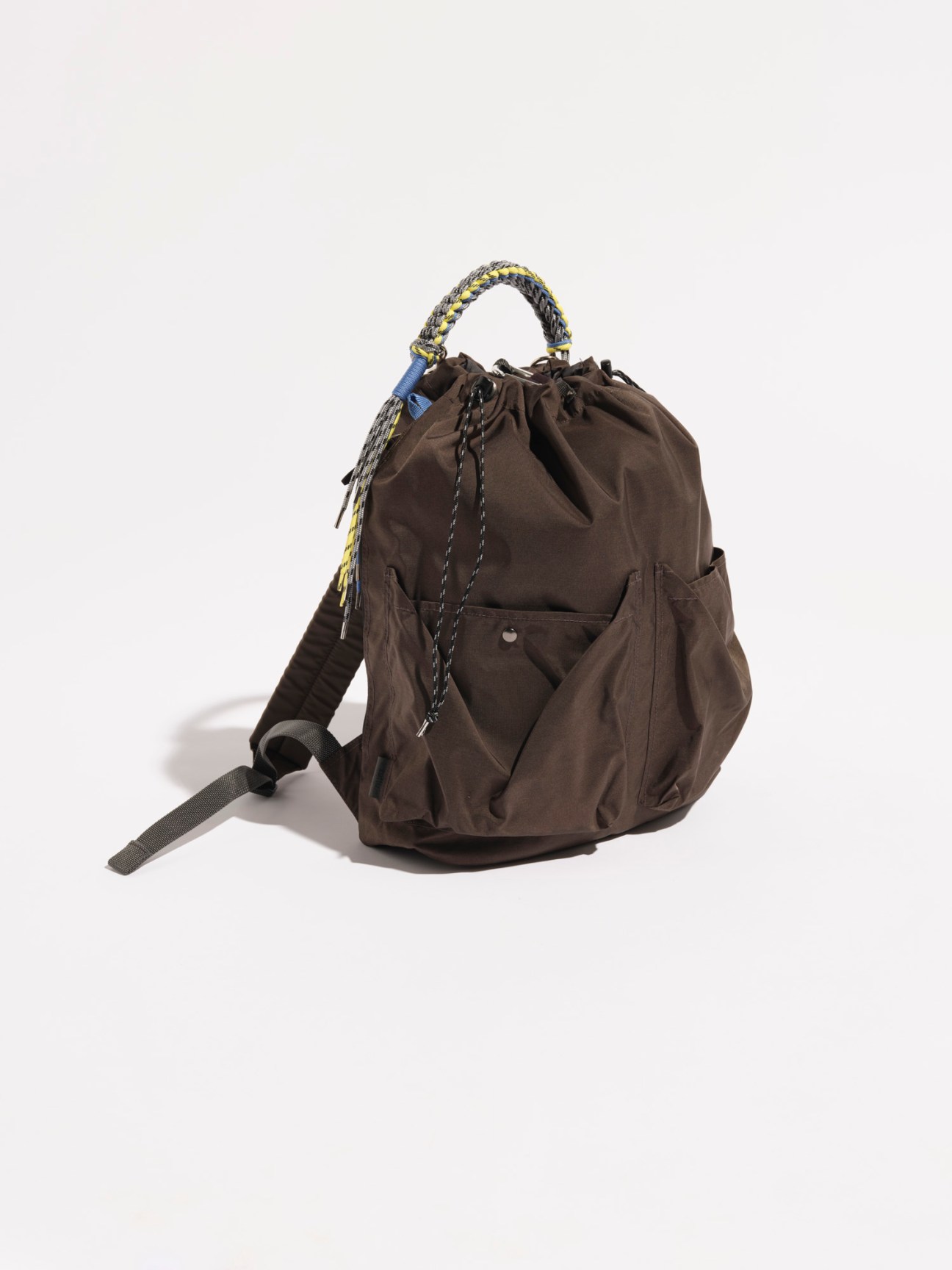
Zattu’s handsome, Japanese-made totes and backpacks are winning fans across the globe for their subtle style and hardy construction. The brand makes its carry-alls out of durable materials including Cordura nylon with plenty of internal pockets, snap buttons on the outside and a distinctive climbing-rope detail. Bag one now before everyone else cottons on to their charms.
zattu.jp
5.
Beauty: Moisturiser
The cream that beauty editors are talking about
Moussse: Switzerland
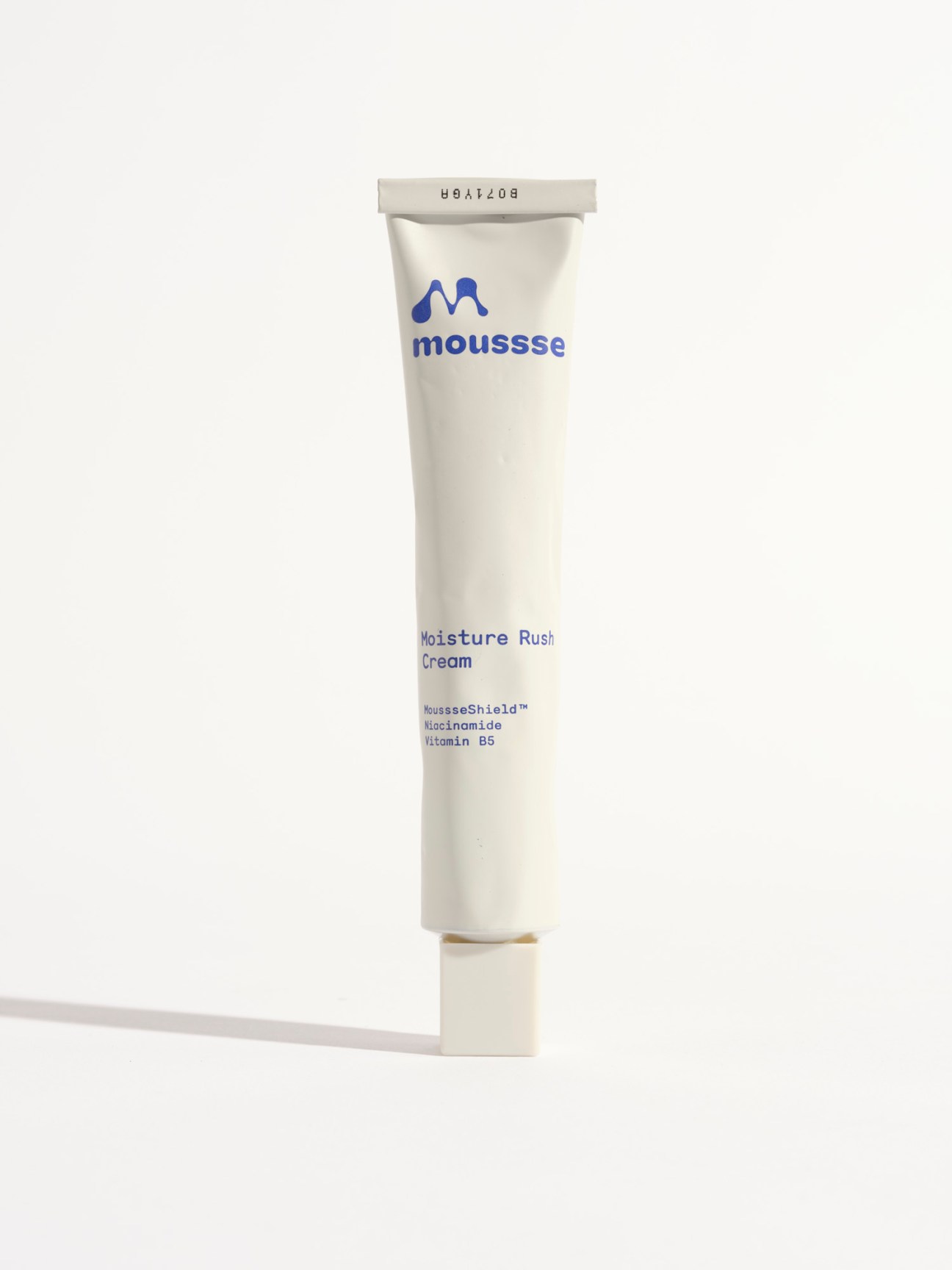
This launch is part of an ambitious new venture by Swiss-based Hélène Guttmann Chammas and Daniel Guttmann, formerly the ceo of Düsseldorf-based Dr Barbara Sturm. It offers targeted skincare for those living in cities. Moussse’s debut is a moisturising cream that protects the skin from pollution, UV radiation, smoke and stress damage.
moussse.com
6.
Furniture: Chair
The perch to purchase
Tangali chair: Italy & India
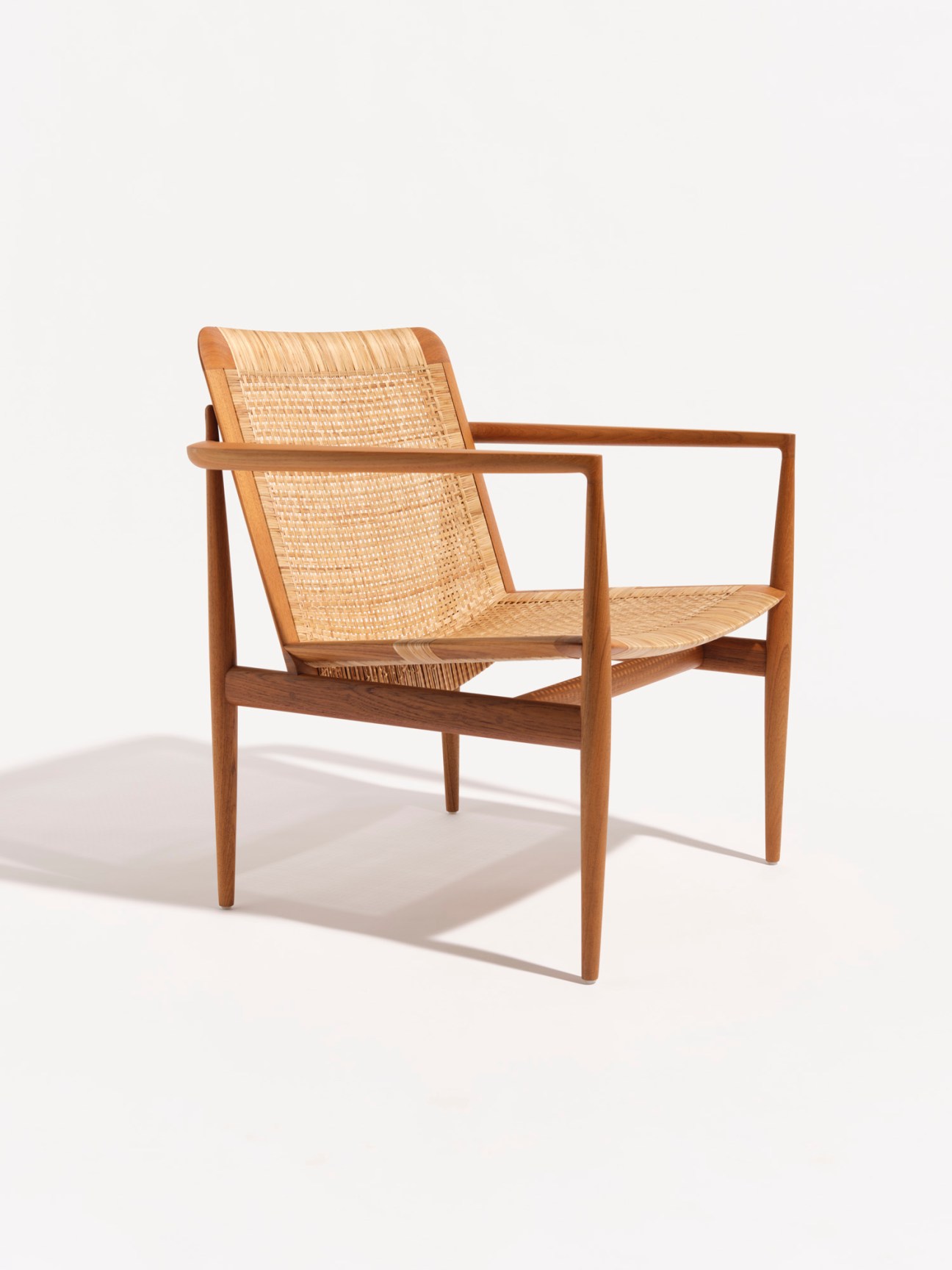
Designed by Milan-based duo Inoda + Sveje, the Tangali modular chair embodies a spirit of collaboration and quality craftsmanship. Produced in India at Phantom Hands, a Bangalore-based workshop, the chair showcases the skill of expert artisans who developed a special cane-weave pattern especially for the seat and backrest of this model.
inodasveje.com
7.
Material: Wood
The 1960s design that collectors crave
Pine furniture: Scandinavia
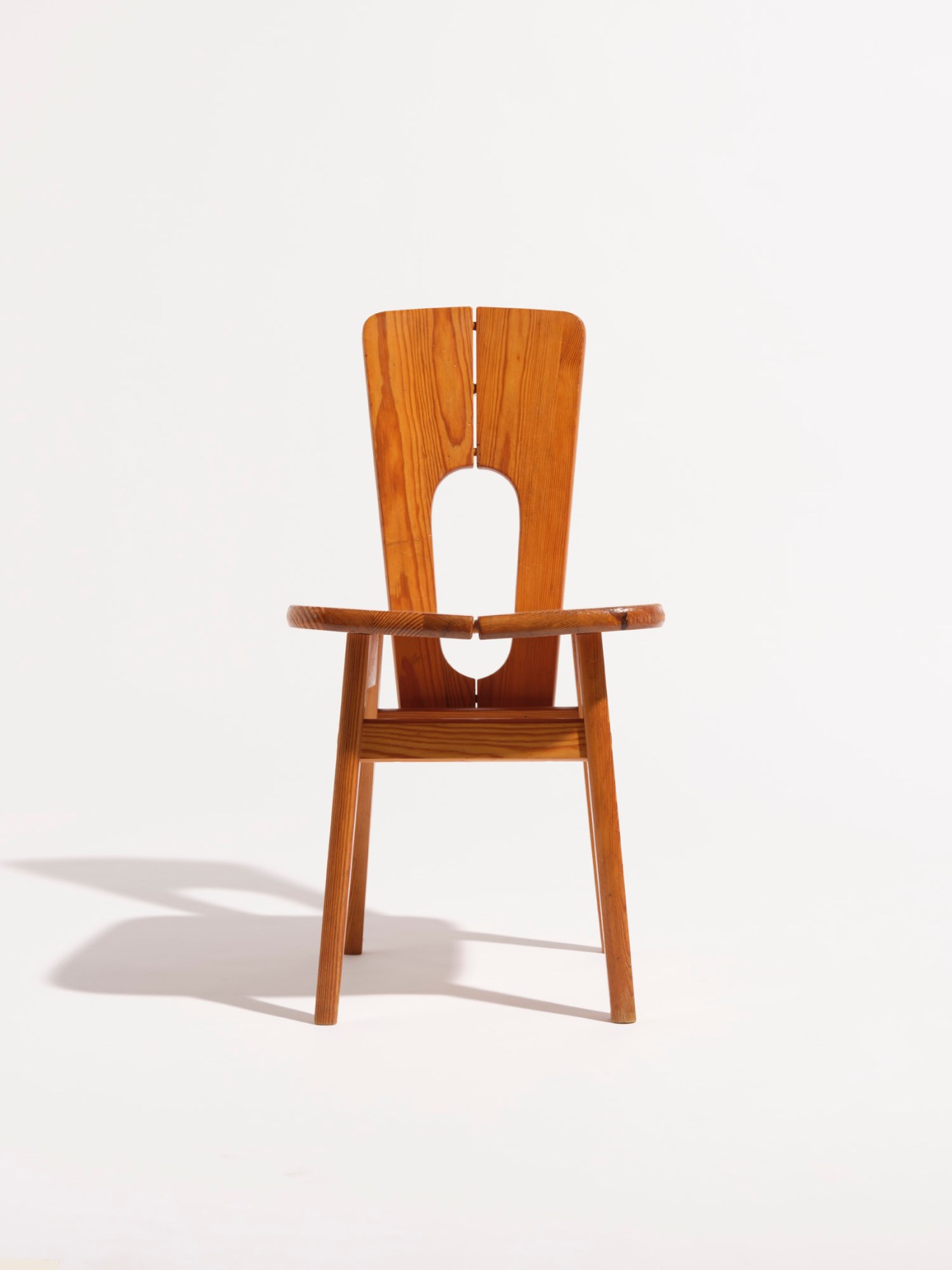
Long viewed as cheap, pine is changing in people’s perceptions. Today young brands such as Helsinki-based Vaarni are shifting the narrative by using it for tables and chairs in bold forms inspired by mid-century pieces. It’s helping to turn collectors’ attentions to original pine furniture from the 1960s and 1970s. Case in point: this dining chair by Ilmari Tapiovaara from London-based Chase & Sorensen.
chaseandsorensen.com
8.
Culture: Books
The Spanish novel that you need to read
‘Living Things’: Spain
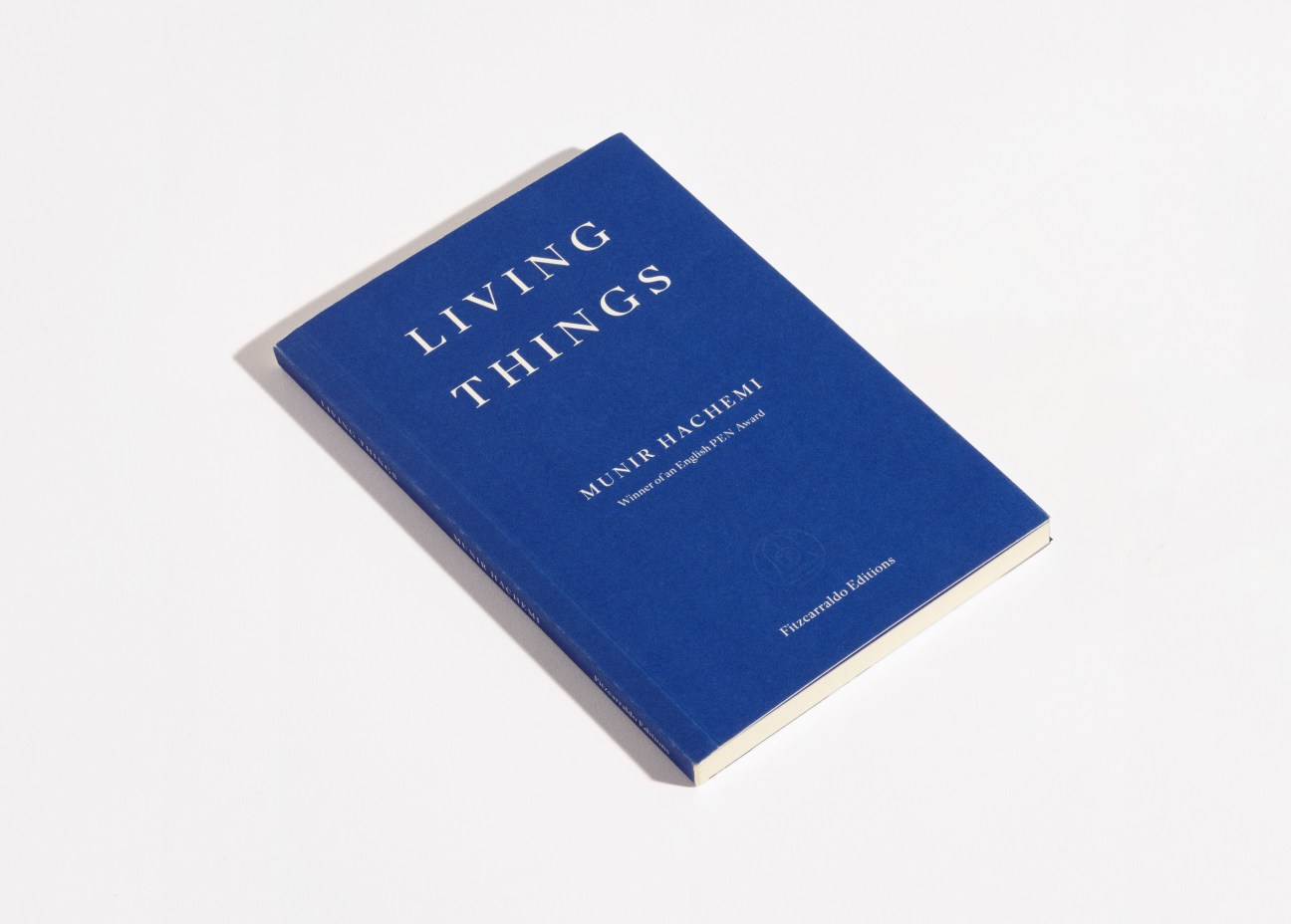
Munir Hachemi’s debut novel wasn’t a hit in Spain when it arrived in 2018 but has since become a sleeper smash. “It was intended to be an ironic kind of autofiction: tribute and parody,” says Hachemi. An English translation is just out. “English is still the most powerful language of the world.”
fitzcarraldoeditions.com
9.
Furniture: Lamp
The illuminating find
Nox light by Astep: Copenhagen, Denmark
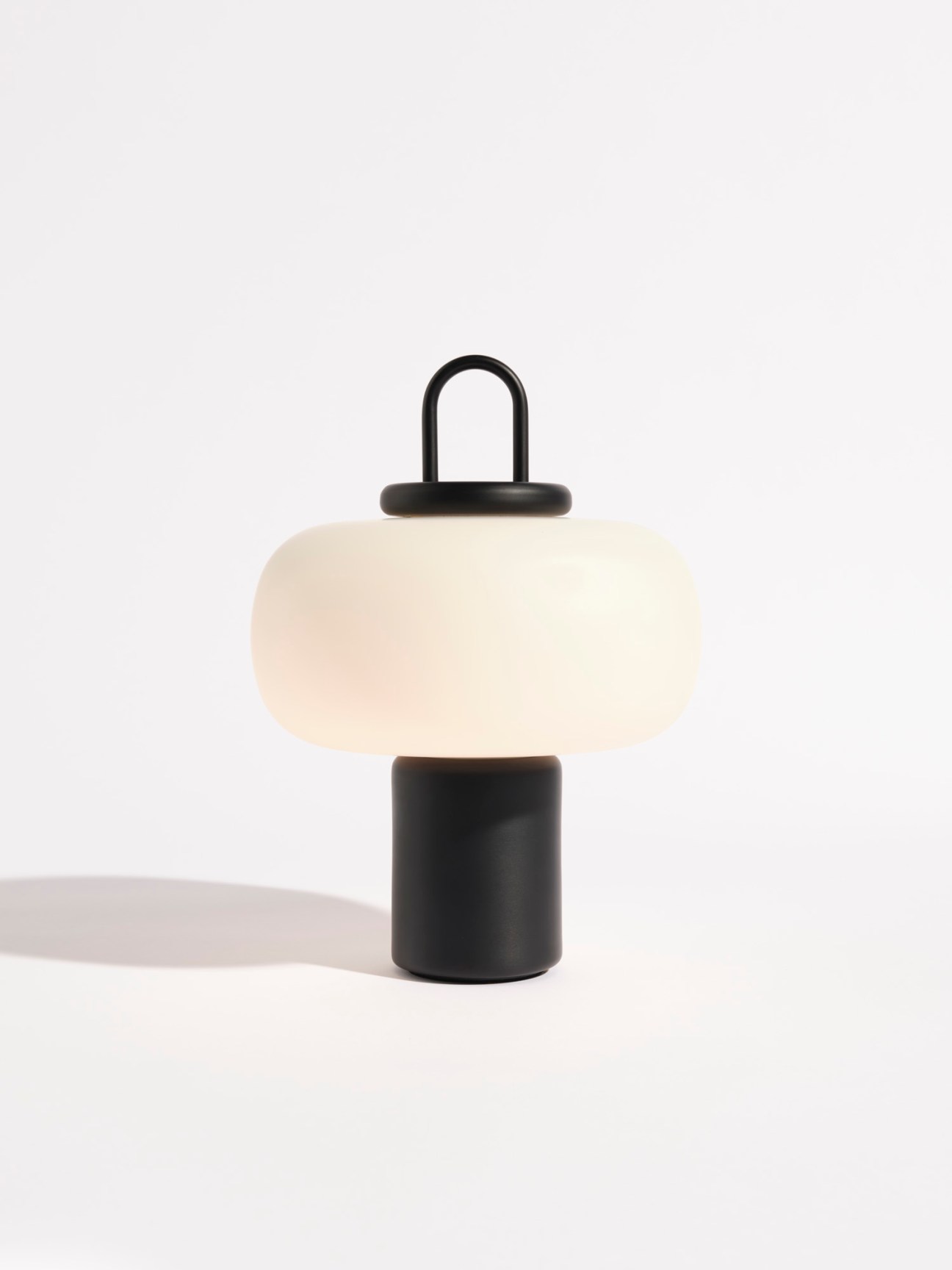
Astep’s new Nox lamp combines playful forms with practical portability. Composed of a tubular aluminium body, a mouth-blown opaline glass bulb and a simple, elegant handle, it can be carried and placed wherever light is needed. There’s also a dimmer, allowing it to provide calming mood lighting or serve as a more focused reading light when placed on a bedside table.
astep.design
10.
Design: Packaging
The tinned treats turning heads
Casa Marrazzo: Florence, Italy
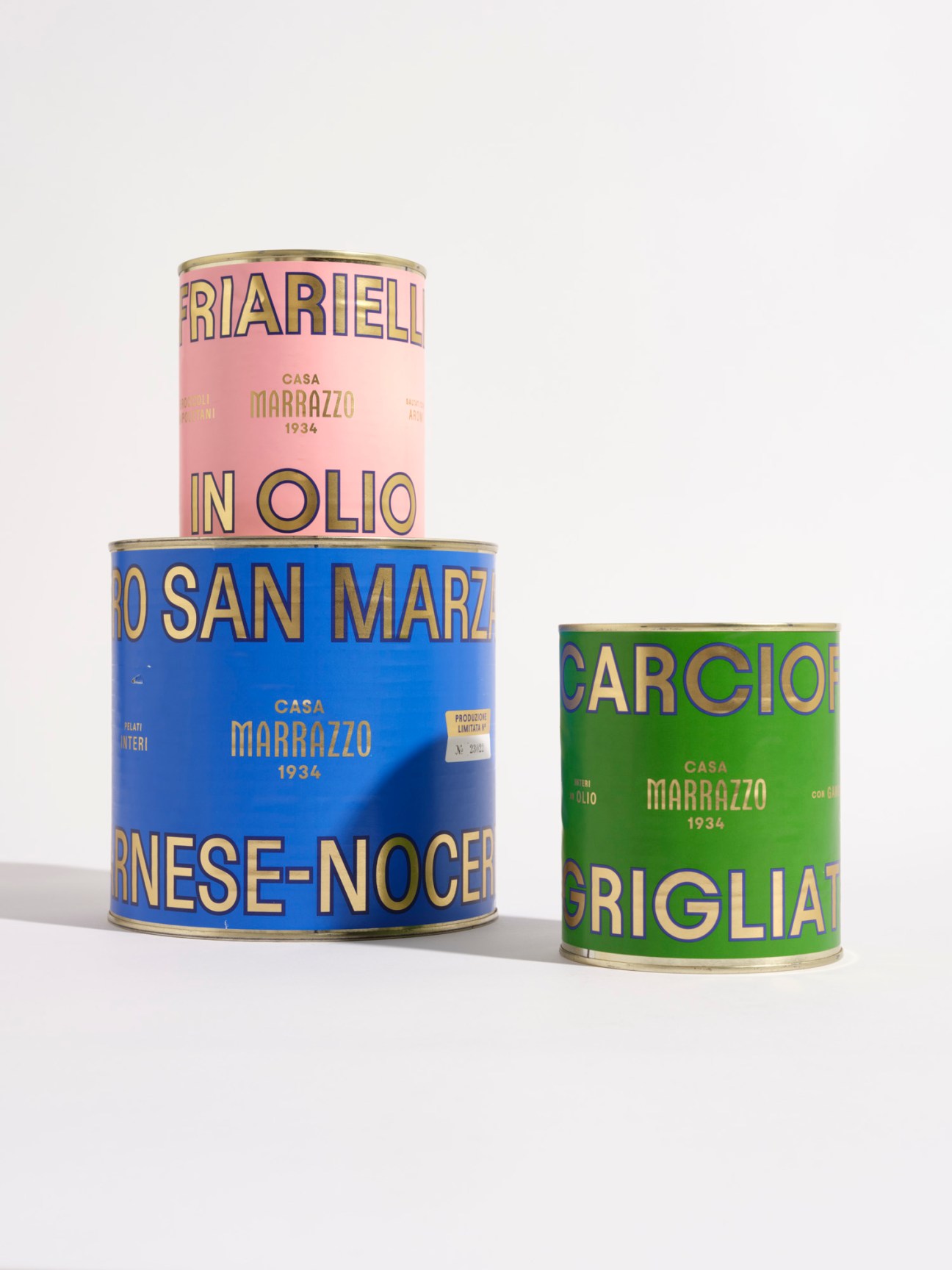
Florence-based Auge Design is behind one of 2024’s best rebrands. It has reimagined the look and feel of Casa Marazzo’s tinned tomatoes (and other vegetables), which have been given colourful labels and retro gilded type, reflecting the brand’s 90-year history and southern-Italian roots.
auge-design.com
11.
F&B: Wine
The bottles beloved by those who know
Rosa 32: Saint-Tropez, France
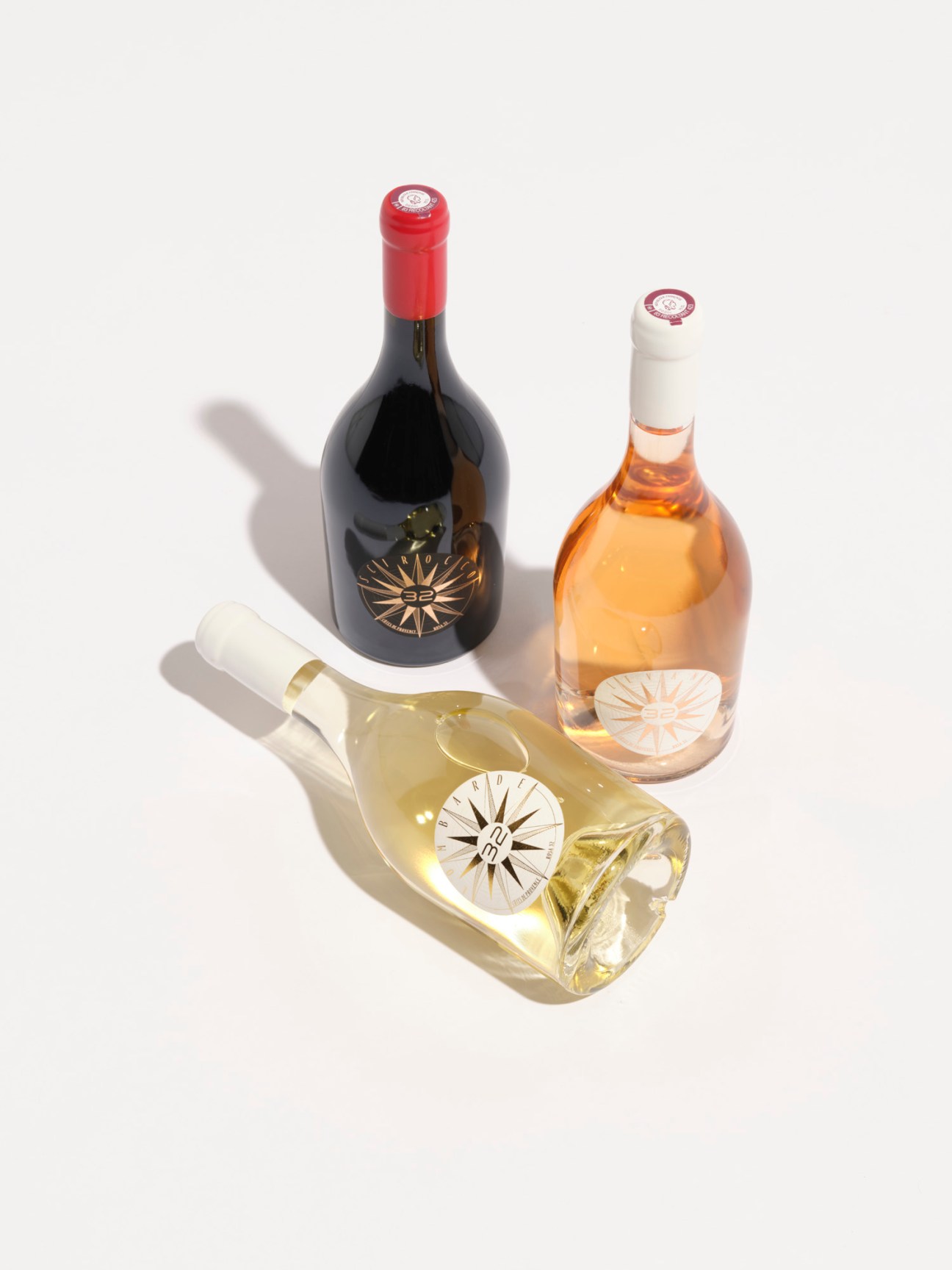
Rosa 32’s founder, Florestan de Rouvray, thinks that Provence has more to offer than just the pink stuff. “The region produces crisp white wines and fragrant reds,” he says. “I wanted the brand to reflect this.” The cuvées are produced on the Massif des Maures but are now on sale in places from Zürich to Saint Barthélemy.
rosa32.com
12.
Aviation: Airport
The US hub worth touching down at
Portland International Airport: Portland, Oregon
US airports have a new bright spot. Following the recent upgrade of New York’s LaGuardia, Portland’s main terminal has been updated with a flair and a mindfulness that feel native to the state. The project, driven by zgf Architects, expands the airport’s capacity while embracing new approaches to design and craft, paired with an empathetic, passenger-focused approach. When monocle visited just before the formal opening, we met our guides amid the loud, liminal space of construction. Stepping through a guarded door felt like crossing a portal into something magnificent. The centrepiece of the new terminal is a wooden roof that both taps into the spirit of the Pacific Northwest and breaks the aesthetic codes of modern airports.
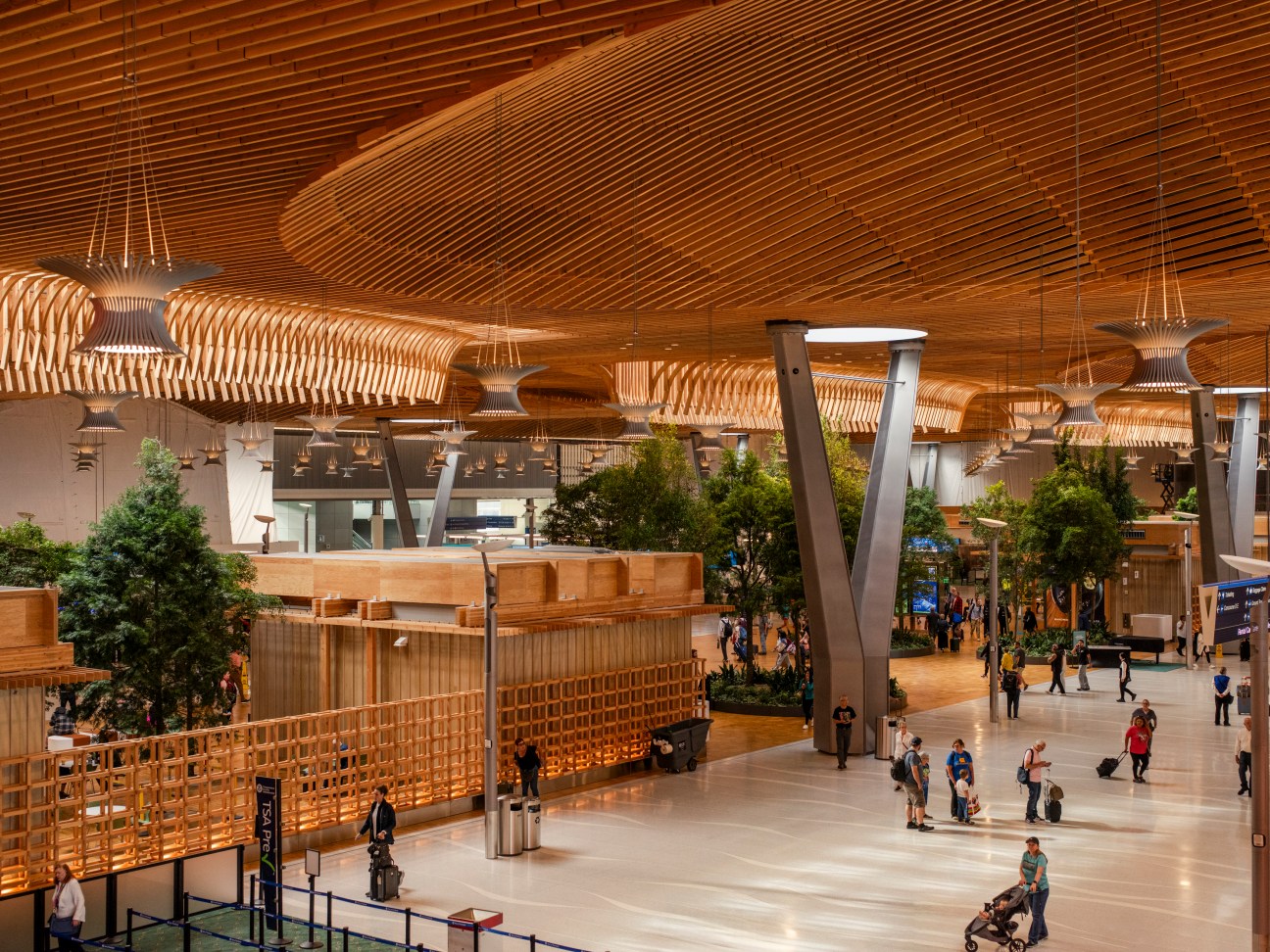
“The wood roof is beautiful but it provides many benefits beyond aesthetics,” says Sharron van der Meulen, managing partner at zgf. “The structure enables long, column-free spans that help to provide clear sightlines for passengers and allow space for future evolutions and expansions without significant construction.”
The locally sourced wood, all from within 500km of the airport, also significantly lowers the terminal’s carbon footprint compared to traditional steel construction. Beyond the airy, open feel, the analogue approach to construction creates something that soothes the senses: unlike cavernous airports where sound travels, the wood dampens noise and creates a subdued, less stressful environment.
According to zgf, that was the goal. The team sought to emphasise positive physiological and psychological outcomes for occupants throughout the space. “We put a lot of thought into how we could leverage biophilic design principles to support a positive passenger and employee experience,” says Van der Meulen. “There’s the roof, of course, but also the 5,000 plants placed around the terminal and the 49 skylights that provide 60 per cent of the terminal’s daylight.” Other barely noticeable touches add to the effect. Loudspeakers for passenger announcements are mounted at head height, rather than booming down from above.
One of the most vivid friction points for air travellers, security, was thought through down to the screening machines that require passengers to remove nothing from their bags. Lighting design and climate control for screening areas were carefully considered – no more sweltering summer queues – as well as the “recomposure” areas with benches and table tops of various heights as travellers proceed through screening.
The empathetic approach doesn’t just apply to travellers. Gene Sandovol, a design partner at the firm, tells me during the walk-through that it thought deeply about the tsa employees, seeing them as important stakeholders, and studied the patterns of their day to figure out how to improve their experience. Even the private screening areas, normally an afterthought in airports, are designed with soothing lighting.
The terminal used future-facing sustainability principles, taking what zgf describes as a “use what you can” approach, carefully analysing existing structures and systems for potential reuse or upgrades. This strategy allowed it to double the terminal’s passenger capacity while achieving a 50 per cent reduction in energy use.
13.
Hospitality: Rental
The beachside house to rent
Kona Kahlua: Melbourne, Australia
Say the words “beach holiday” to anyone who grew up in Australia and they’ll likely picture a very specific house. It will have a skillion roof and taupe-hued bricks. Inside, there might be a blend of flooring – linoleum for the kitchen, parquetry for the living room – watched over by lacquered cabinets, vinyl couches and panelled walls. Tragically, the bathroom might be carpeted. Ever since these beach houses proliferated across Australia in the 1970s, they have defined the summer holidays.
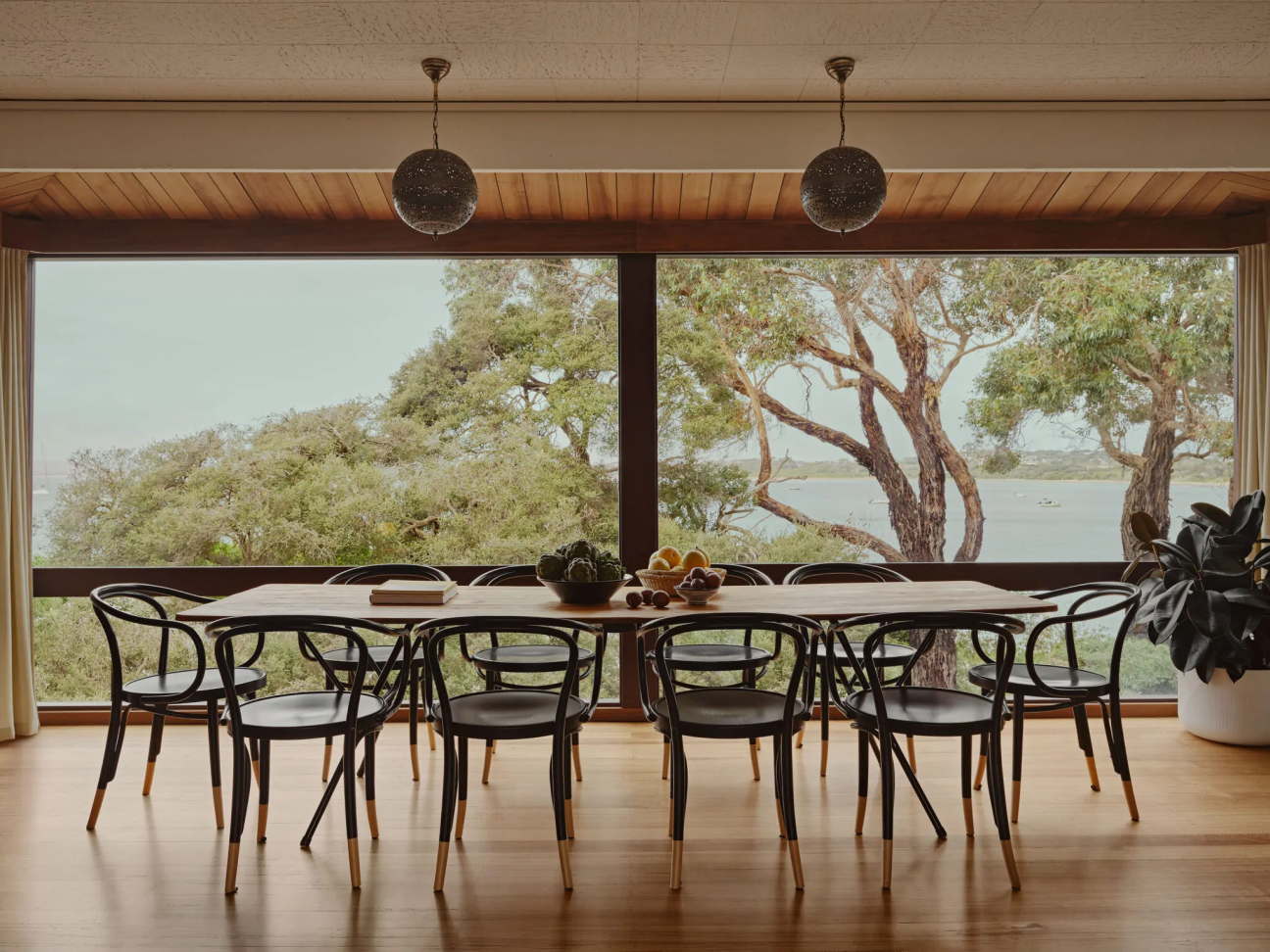
Kona Kahlua in Sorrento, on Victoria’s Mornington Peninsula, is a classic of the genre: a place where later modernism meets the Aussie coast with a generous sprinkling of tiki affection on top. It was recently refurbished, preserving yet enhancing its mid-century chops. “It’s a 1970s gem that’s very practical and comfortable,” owner Siobhan Blewitt tells monocle. “We wanted to protect that integrity, because Sorrento doesn’t need another new house.” Kona Kahlua’s original owners’ love for Hawaii reverberates throughout: from the tiki carvings and bamboo on the walls, beds and doors, to the bathroom’s palm-patterned wallpaper. “It was a luau party house and definitely a slice of the past,” says Blewitt. She and her husband, Chris, retained as much as possible.
Across its five bedrooms and two storeys, Kona Kahlua comfortably accommodates 10. With its sublime views and a backyard spilling straight out onto the sand, it’s primed to keep hosting – and defining – summer beach holidays.
konakahlua.com
14.
Retail: Shop
The Spanish brand with designs on your dwelling
Zara Home: Paris, France
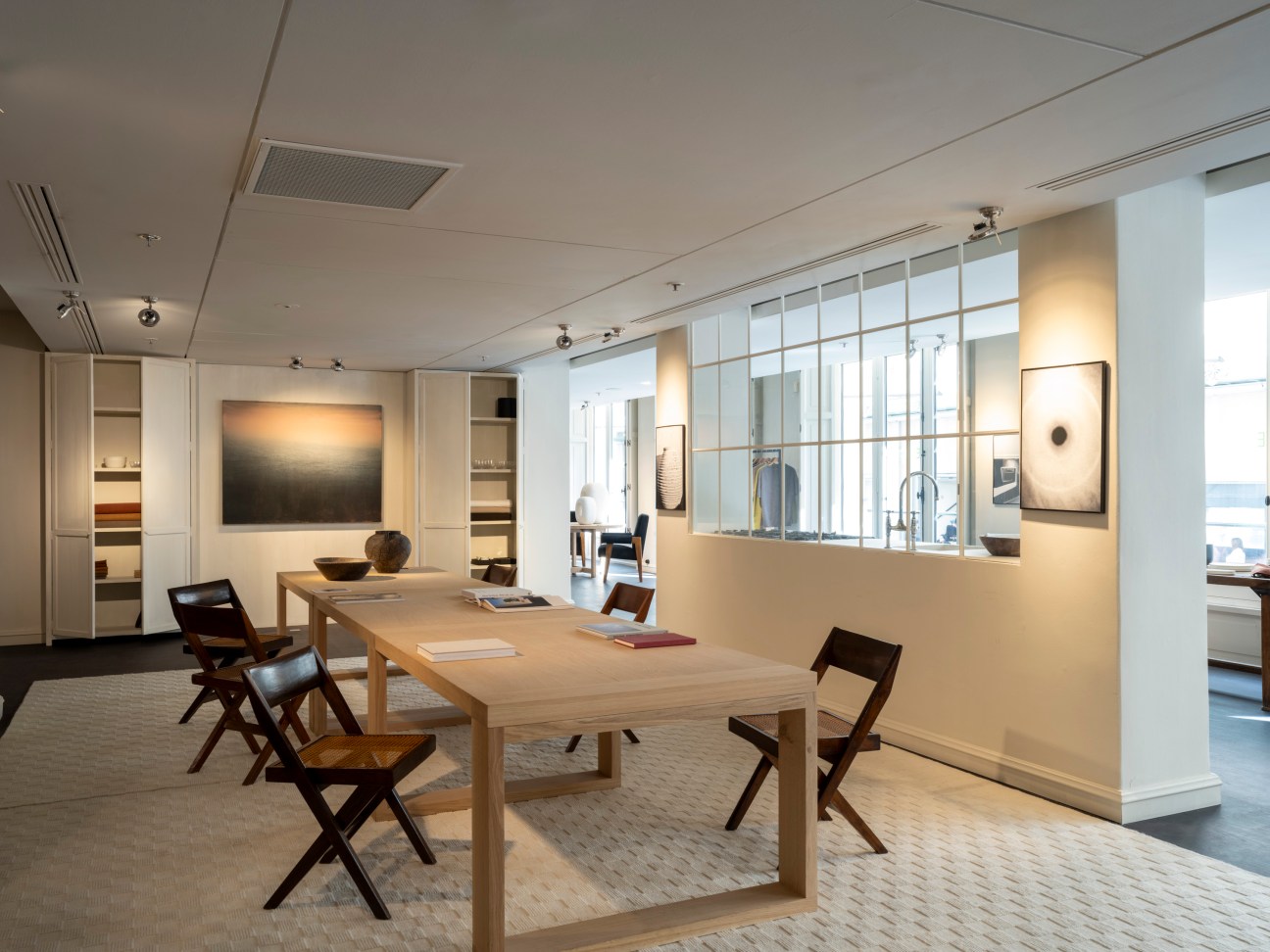
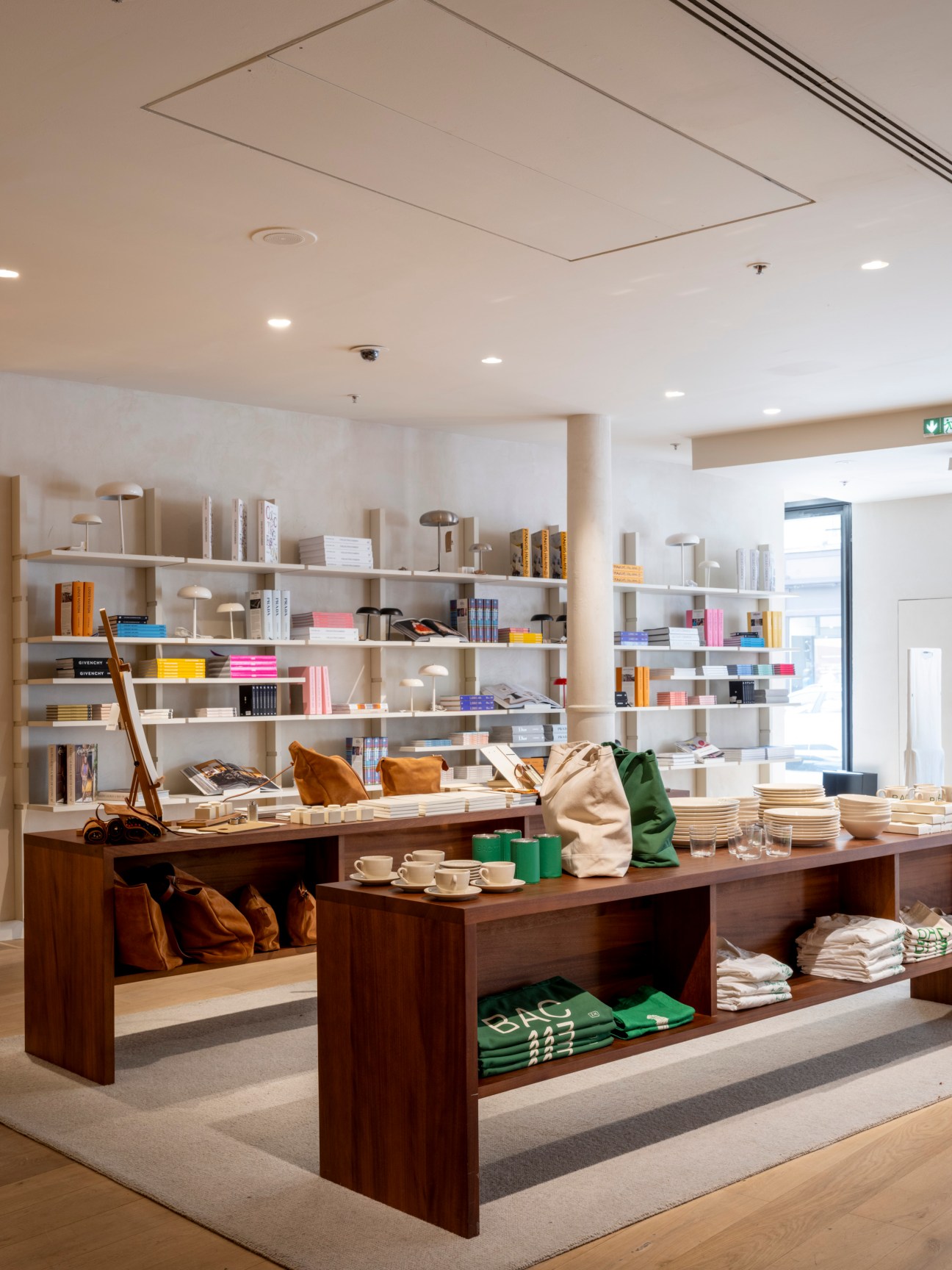
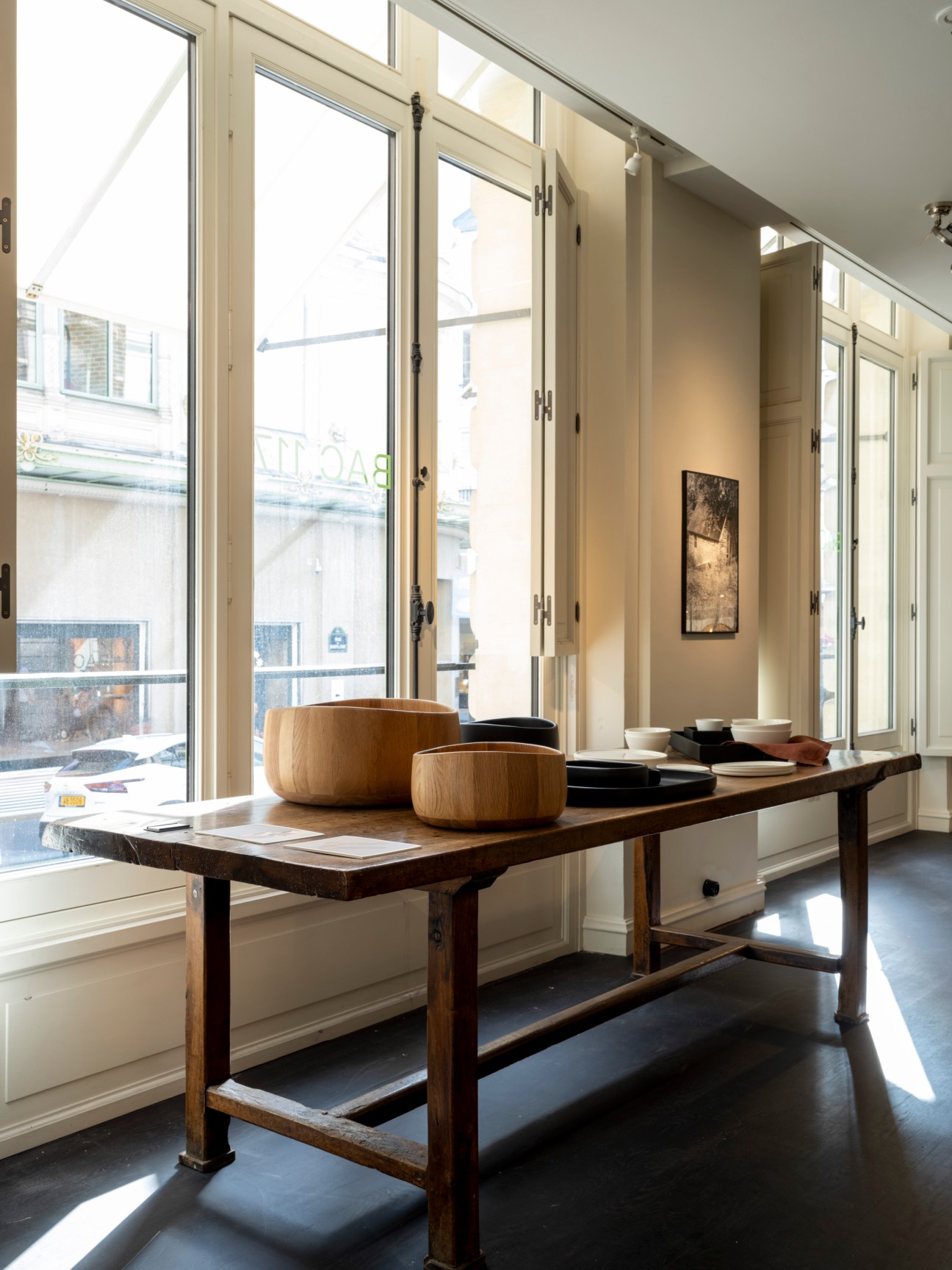
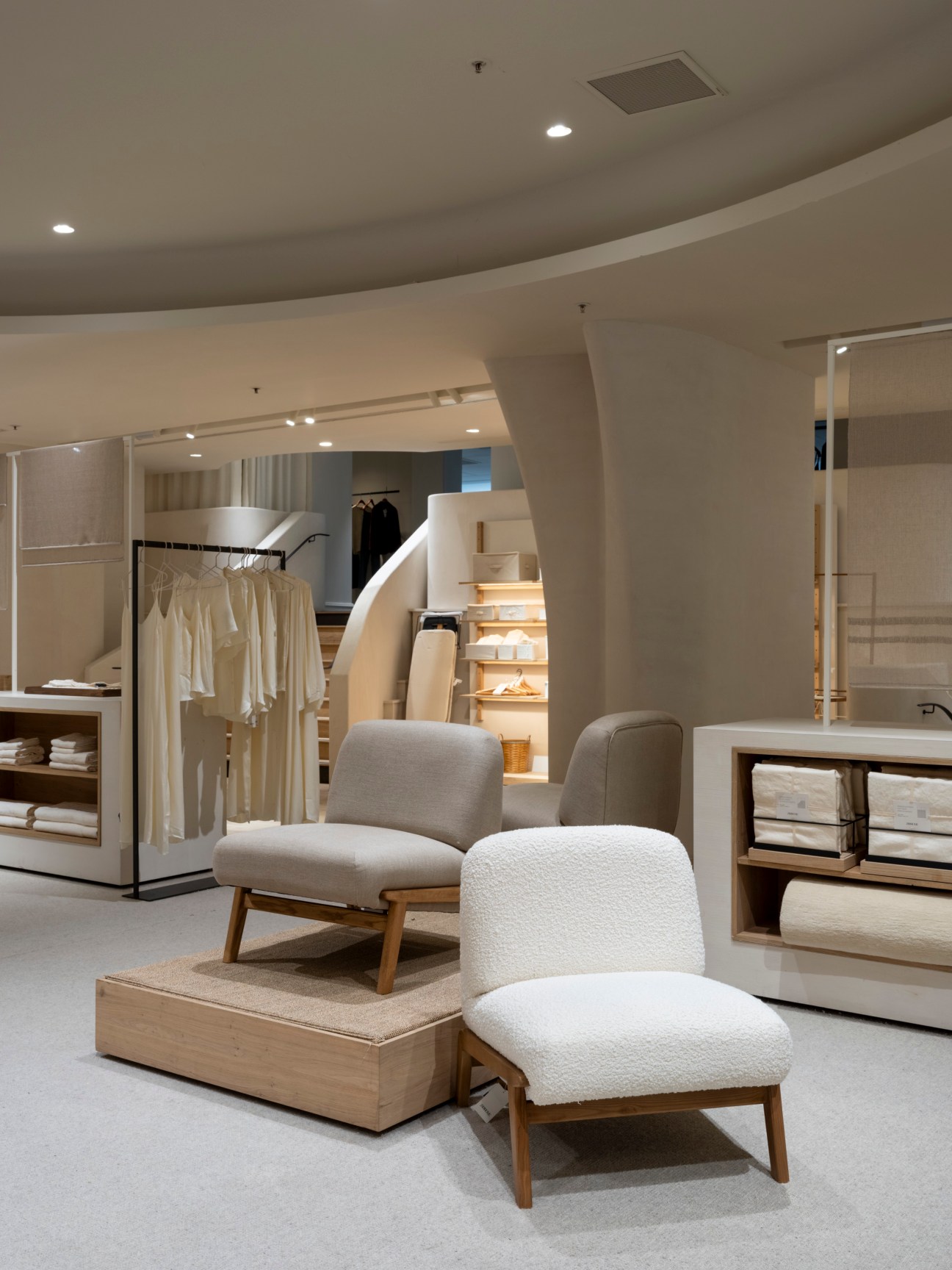
Zara Home’s aim to move upmarket is perfectly reflected in its pop-up flagship at 117 Rue du Bac, which it will occupy until next spring. Nestled in the well-heeled 7th arrondissement, opposite iconic department store Le Bon Marché, the space unfolds over three floors and two mezzanine levels. Guests are greeted with a space for collaborations with those such as florist Nina Charles. There’s a hook-up with Parisian favourite Café Dose for coffee and a snack, a bookshop and a personalised, while-you-watch printing and embroidery service offering monogrammed totes bearing the 117 Rue du Bac branding (courtesy of Atelier Saint-Lazare, winner of a 2024 monocle Design Award).
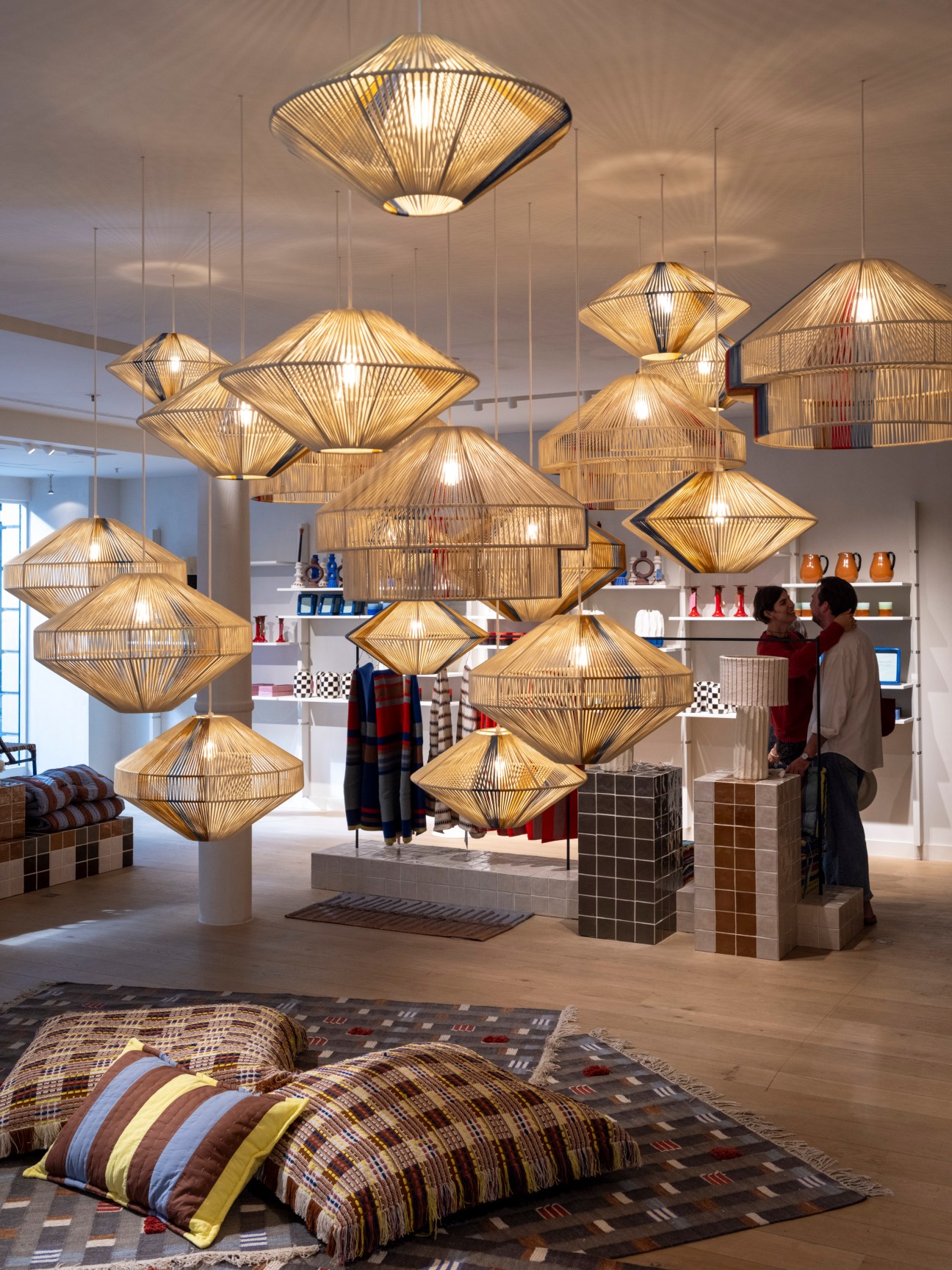
At the top of the restored spiral staircase, you’ll find L’Appartement, a space kitted out like a rather fetching Parisian pied à terre, complete with furniture for Zara Home by Belgian architect and designer Vincent Van Duysen, antiques and design classics from Galerie Patrick Seguin, including a desk by Pierre Jeanneret. Elsewhere you’ll find dressing-room-like spaces housing a sportswear capsule collection, pieces by Zara Woman and smaller “Editions” collections of furniture and homeware. On the lower level, things are a little dimmer: the focus is on bedroom furniture, textiles and a children’s playroom. Inditex-owned Zara Home might have 400 shops in 60 countries but it’s looking particularly at home in Saint-Germain-des-Prés.
zarahome.com
15.
Hospitality: Rental
The smart new rooms above the restaurant
Casa Teo 2: Mexico City, Mexico
Chef and restaurateur Enrique Olvera’s career has been devoted to food – and he has always been attracted by the idea of hotels and hospitality. Running restaurants in Mexico, New York, Los Angeles and Madrid, Olvera is often on the road and uses his trips to workshop what the perfect restaurant with rooms could look like. “I carry a notebook and write down what I would do [if I were to open one],” he says.
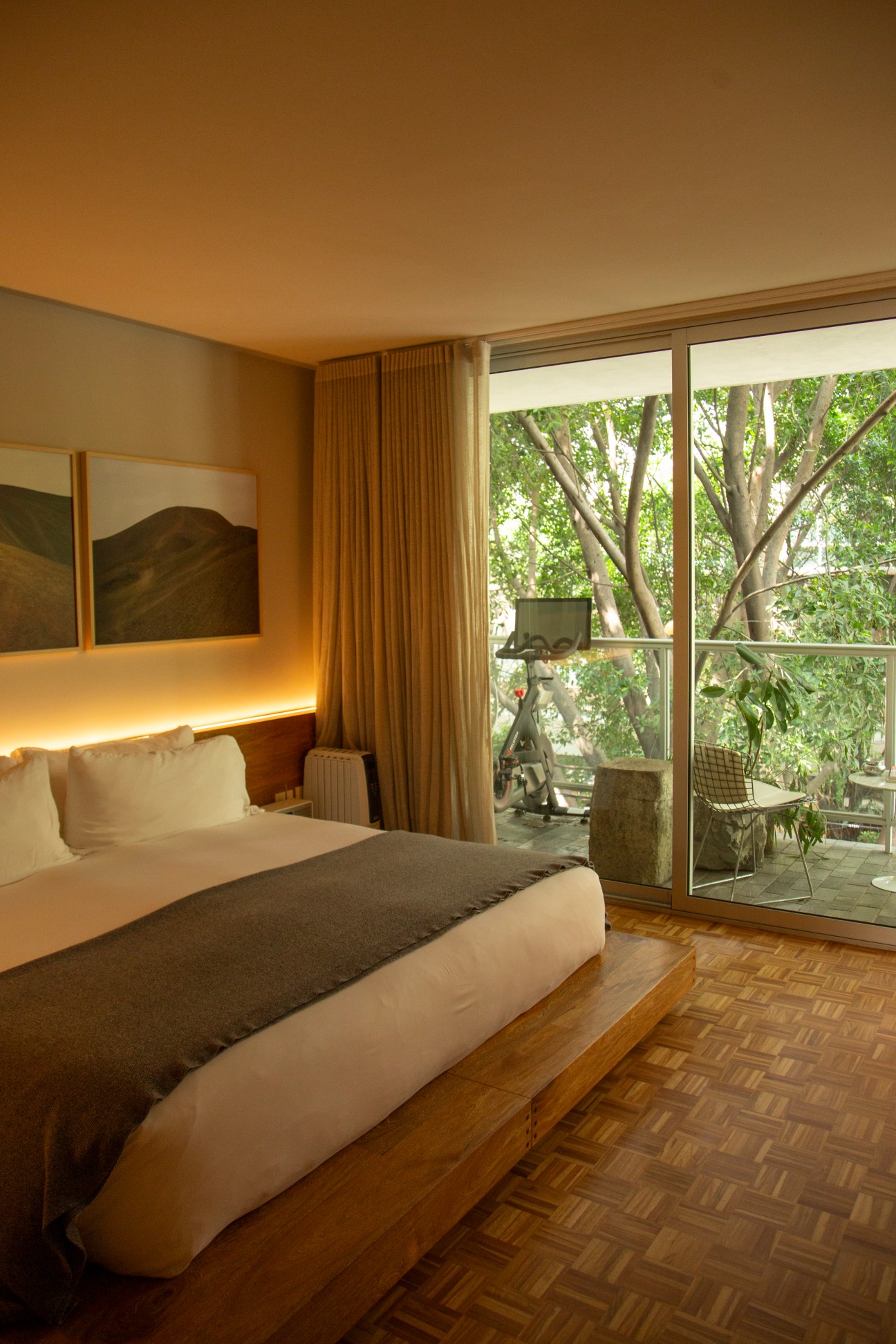
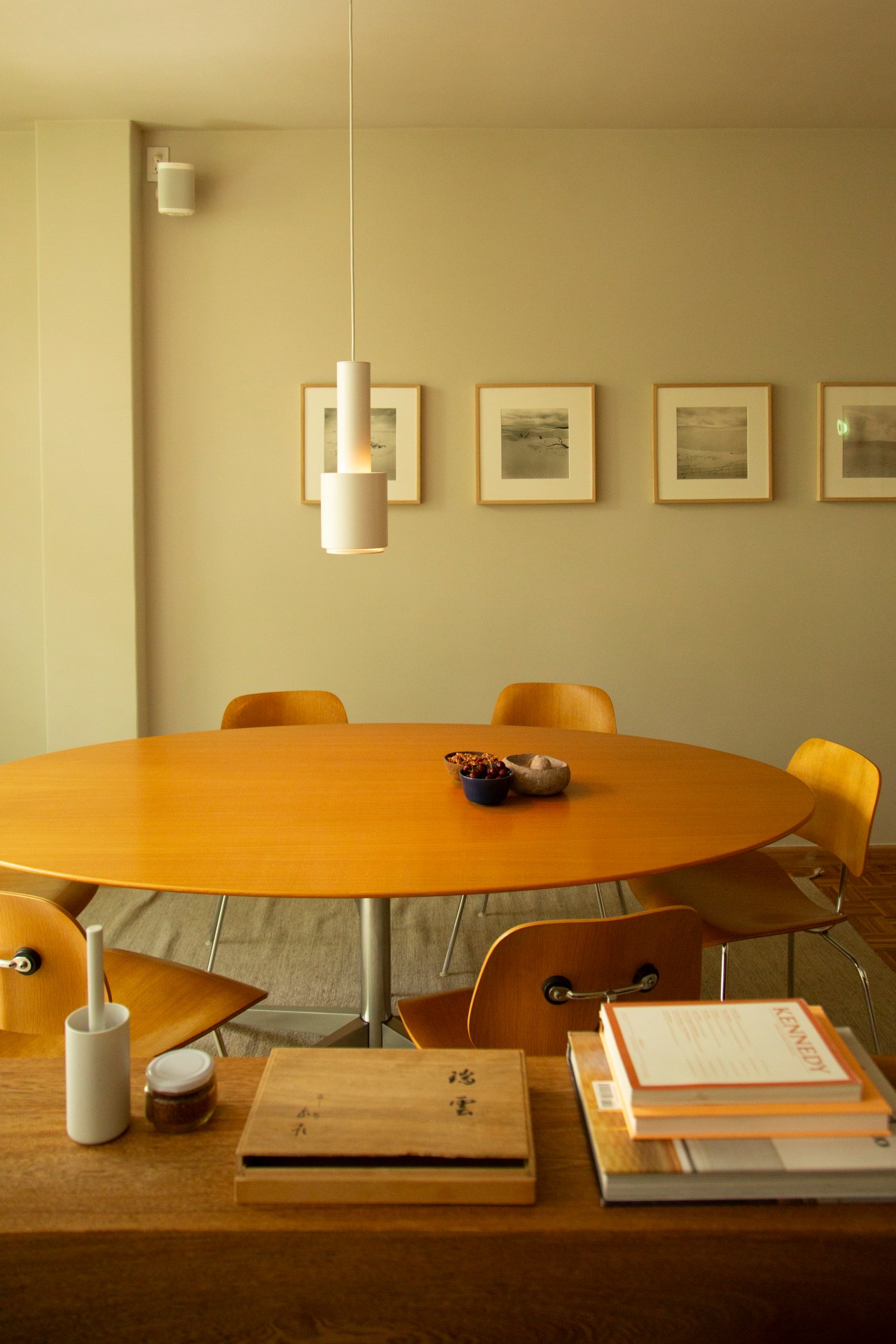
Though a full-blown hotel isn’t on the cards yet, Olvera is creating a series of rentable spaces that serve as extensions of the Olvera brand: both Casa Criollo in Oaxaca and Casa Teo in Mexico City opened recently. What you might have missed was the quiet opening of Casa Teo 2, a new three-bedroom apartment above Olvera’s mezcal bar Ticuchi in Polanco. Inside the third-floor apartment, it’s hard to believe that you’re in one of the world’s busiest cities. The understated rooms have wooden floors and panelling, soft curtains and plenty of plants.
The Mexico City-based chef has always had an eye for interiors, which is evident at his restaurants, such as Pujol. “We always try to have a peaceful atmosphere and use natural materials,” says Olvera, who designed Casa Teo 2 himself and lived there before opening it to the public. Guests checking in will have access to things that Olvera loves: records, coffee and even homemade banana bread, sourdough, fresh yoghurt and fresh mangoes on arrival.
teo.casa
Brand image, urban geese, and the perfect shot – stories of city life and corporate culture
Tyler Brûlé on why brands need to take back control of their image
In the past few weeks, uniforms and guidelines have become leading topics among clients. Over dinner in Zürich, a ceo asked me to find out how a competitor was able to keep staff looking so well groomed while he was fighting a running battle about whether or not female staff should have to shave their legs or if male staff could wear jangly earrings. Meanwhile, in Toronto, a global hospitality group told me that it was struggling to define itself as premium because too many staff members were resisting guidance about what to wear. I keep hearing the same questions: “How did we let things get so baggy? When did we lose our courage to fight for our brand?”
I usually interject with the reminder that the uniform is alive and well in many parts of the world. “But how do we get back to where we were 10 years ago?” clients would ask. In the case of the company in Toronto, I said that it would require its board to jettison some inclusivity initiatives in favour of brand preservation. Such advice used to be met with spasms of wincing but it’s now clear to most that something has to give. Many companies are weighing up how to bolster their customer base and build brand loyalty through superior products and service delivery rather than political gestures. The Toronto executive summed it up best. “We have lost our best people because they were embarrassed by colleagues showing up for their shift in slippers,” he said. “It all happened on our watch.”
Waste not…
Anyone who has recently ventured into a park or spent a day at the beach in Helsinki knows that the city has a problem. Or 5,338 problems, to be precise. That’s how many geese the authorities say have made their home in the city and its leisure areas. Not only can these geese get aggressive but their faeces litter much of Helsinki’s coastline. To make matters trickier, this particular species, the barnacle goose, is protected by the EU, meaning that Helsinki has had to come up with some rather innovative ways to deter them…
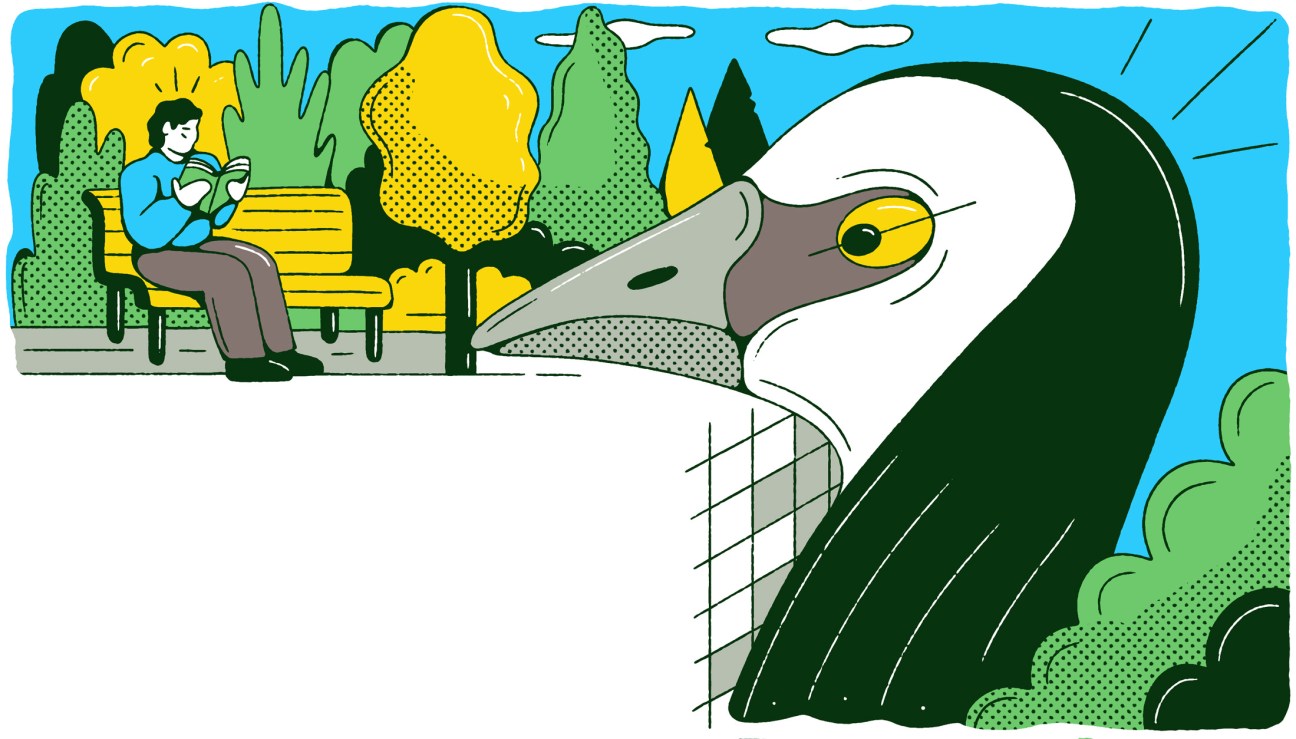
This summer, the Finnish capital experimented with fencing in, not birds, but humans. It turns out that the urban geese, despite having wings to fly with, opt to walk in cities rather than become airborne. However, by installing fences just high enough so that the geese can’t be bothered to jump over them has meant Helsinki has turned to enclosing areas in parks en masse for people to enjoy without the birds bothering them. And, so spoiled are these urban geese that show a preference for manicured lawns, that this has also resulted in the city to curb cutting the grass in certain parks.
Some have suggested a softer strategy: adaptation. If we are to coexist with the geese, let’s at least have better tools. Helsinki recently launched an open competition to design a more effective shovel for the 45 city officials tasked with collecting the geese’s waste. We’re waiting for those results to drop soon.
The government has promised to help as well. In its policy programme, it says it will allow people to hunt for barnacle geese. Some skilful EU-level diplomacy is needed first, but in a country that boasts more than 300,000 active hunters, it would be an effective solution. We’re just not sure how many people would enjoy hanging out in parks with bullets flying around.
Perfect shot
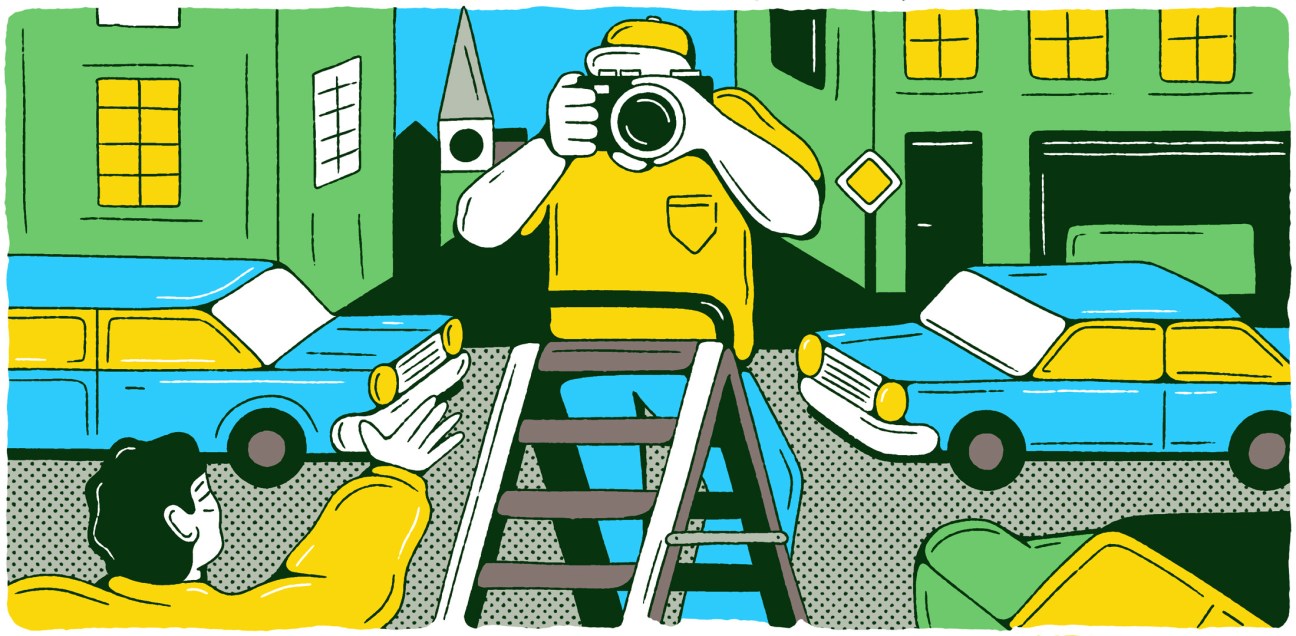
A fleeting visit to the verdant Alpine Austrian town of Bad Ischl might sound like an idyllic trip to the land of The Sound of Music, but reporting trips are never as tranquil as one might imagine. Coordinating the calendars of 12 members of the region’s cultural programme to find a convenient time for a group shot (see page 44) is a challenge in and of itself. The selected time for the photoshoot happened to be during rush hour and the location – chosen for its quaint Austrian spires to create an atmospheric backdrop – happened to be a through road. It made for an amusing episode of role play as a school crossing patrol officer when I found myself halting residents on their way to work, apologising in broken German for blocking their way. Meanwhile the photographer, perched on a rickety stepladder for a privileged viewpoint, took the 10-second break in the traffic to snap as many pictures as possible. When it comes to getting that perfect shot for a monocle feature, we’re prepared to move mountains – and a number of cars.
Editor’s letter: Andrew Tuck on moving forward
Mobility, the way we get from A to B, has become a source of surprising friction. Fisticuffs even. Some of the biggest confrontations are taking place in our cities, where moves to pedestrianise streets and encourage more people to cycle have been met with unusual responses. Politicians have waded into the urbanism debate to depict such seemingly innocent transport shifts as left-wing plots or middle-class conspiracies to deny working folk access to their cars. How did it come to this? And how do you find a way through the politicking and barracking to find a consensus?
These were some of the questions that our foreign editor, Alexis Self, had in mind as he headed to Brussels, a city that’s become a veritable urbanism battleground. After a period that has seen cars removed from much of the downtown area and the creation of numerous new green spaces, most visitors to the city would be impressed by its transformation – the city with a rap for being a bit dull and home to far too many EU bureaucrats is actually a rather splendid cultural capital. Who could be opposed to any of this, one might wonder?
Well, as Alexis discovered, the creation of this walkable, cycle-friendly city was enough to dethrone many politicians in June’s regional parliamentary elections, as parties that had spoken out in favour of car owners over cyclists took the majority of votes. It’s a fascinating report that reveals the complexities and compromises at play in the urban-mobility conversation.
Luckily not all mobility tales end up with ballot-box battles. In our global survey, we also take time to ride Sydney’s new metro line, visit the Detroit of the Balkans and discover how an automobile touring club became a major player catering to Austrian cyclists and running medevac services across the country. Then, in our Design pages, Nic Monisse oversees the assembly of our ideal train set-up, from carriages to stations. (We knew that train set was a good ‘secret Santa’ gift.)
But none of these stories unfold in a vacuum. Every sector of the mobility industry is being shaped by social and legislative pressures. That’s particularly true in the auto trade, where the demand for environmentally cleaner vehicles that don’t cost a fortune and can be driven nippily around congested cities has given rise to a cavalcade of tiny, often electric, options. It’s a similar story when you look at the cargo-bike boom in places such as Switzerland, where people want to get themselves and their shopping home affordably under their own steam. So while this is Monocle’s Mobility Special, it’s also a report on how we want to live – and the innovators making it possible.
But it’s not all horn-honking and bell-ringing. There are also a few stories that unpack very different aspects of what makes a country harmonious. In the Affairs pages, our Bangkok bureau chief, James Chambers, attends Thailand’s school for diplomats and meets the nation’s foreign minister as he investigates how the country keeps its admirable engaged neutrality with the region’s many powers. James even learns how to lay a table for a state banquet. Meanwhile, Ed Stocker visits Lithuania to attend its quadrennial Song Celebration, which this year featured 37,000 people chorusing the nation’s most treasured tunes – a coming together that has delivered an epic and mellifluous Expo.
As ever, though, there’s much more afoot at Monocle than merely making magazines. We are in full planning mode for this year’s Quality of Life Conference, which will take place in Istanbul from Thursday 10 to Saturday 12 October. It’s a moment in the calendar where we bring readers together for a day of talks and debates, peerless hospitality and a deep dive into our host city. You can find all the details at monocle.live/conference or by emailing our head of events, Hannah Grundy, at [email protected]. Whether you arrive via Turkish Airlines or Bosphorus ferry, you will be well looked after.
Finally, if you’d like to send thoughts or clever mobility tips to me or the team, you reach me on [email protected]. Safe travels.