Issues
State of the art: Six important new museums to visit in 2025
1.
Museu de Arte Contemporânea Armando Martins
Lisbon, Portugal
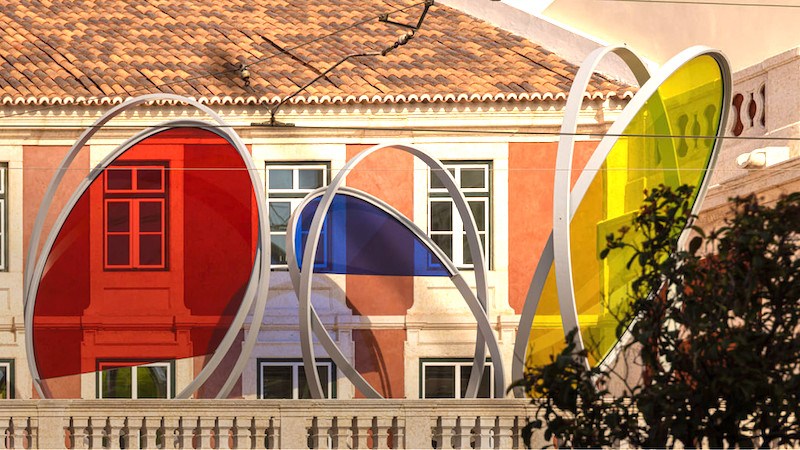
Lisbon’s new cultural hotspot, the Museu de Arte Contemporânea Armando Martins (Macam), is housed in the 18th-century Palácio Condes da Ribeira Grande a five-star hotel. It is both a gallery and a hotel – the first of its kind in Europe. Founder Armando Martins’s private collection of 600 artworks decorates the walls of both the exhibition areas and the hotel rooms. “This creates an immersive cultural experience,” says Macam director Adelaide Ginga. A night spent in the deconsecrated-chapel-turned-bar before jumping into bed with a masterpiece is an experience indeed.
macam.pt
2.
Fenix
Rotterdam, Netherlands
Fenix, a new museum devoted to telling stories of migration through art, will open in May in a former warehouse in the Katendrecht district. While the collection will include chastening photography of refugee camps, lighter pieces will also be scattered throughout. One such example is American artist Red Grooms’s mixed-media, soft-sculpture New York bus, in which visitors will be encouraged to take a seat alongside brightly painted passengers made from foam. “It’s important that the museum stays grounded,” says director Anne Kremers. “And it’s essential that people embrace it locally, in addition to being an international museum.”
fenix.nl
3.
Naoshima New Museum of Art
Naoshima, Japan
If art is meant to inspire and revive, what better setting for a gallery than a hilltop perch overlooking the waters of Japan’s Seto Inland Sea? This new Tadao Ando-designed museum, which will open as part of the Benesse Art Site Naoshima, will focus on contemporary Asian art, with its inaugural exhibition featuring works by Takashi Murakami and Cai Guo-Qiang. “It’s not about one museum but an integrated collective of museums sitting in harmony with the islands’ nature and community,” says Benesse Art Site Naoshima’s international artistic director Akiko Miki. “That’s what makes it unique.”
benesse-artsite.jp
4.
The Hip Hop Museum
New York, USA
A museum to celebrate hip hop could only ever have one proper home: the Bronx. “This authenticity can’t be replicated elsewhere,” executive director Rocky Bucano tells monocle. With MCs, DJs, breakers, graffiti artists and other cultural leaders at the helm, the museum will honour pioneers of the art form. As well as showcasing memorabilia and rare artefacts, The Hip Hop Museum will have an in-house radio studio and a theatre for performances from emerging talent and well-known artists. “It’s not just about commemorating the past,” says Bucano. “It’s about grounding the story in its original soil; inspiring the youth who still call these streets home.”
thhm.org
5.
Museum of West African Art
Benin City, Nigeria
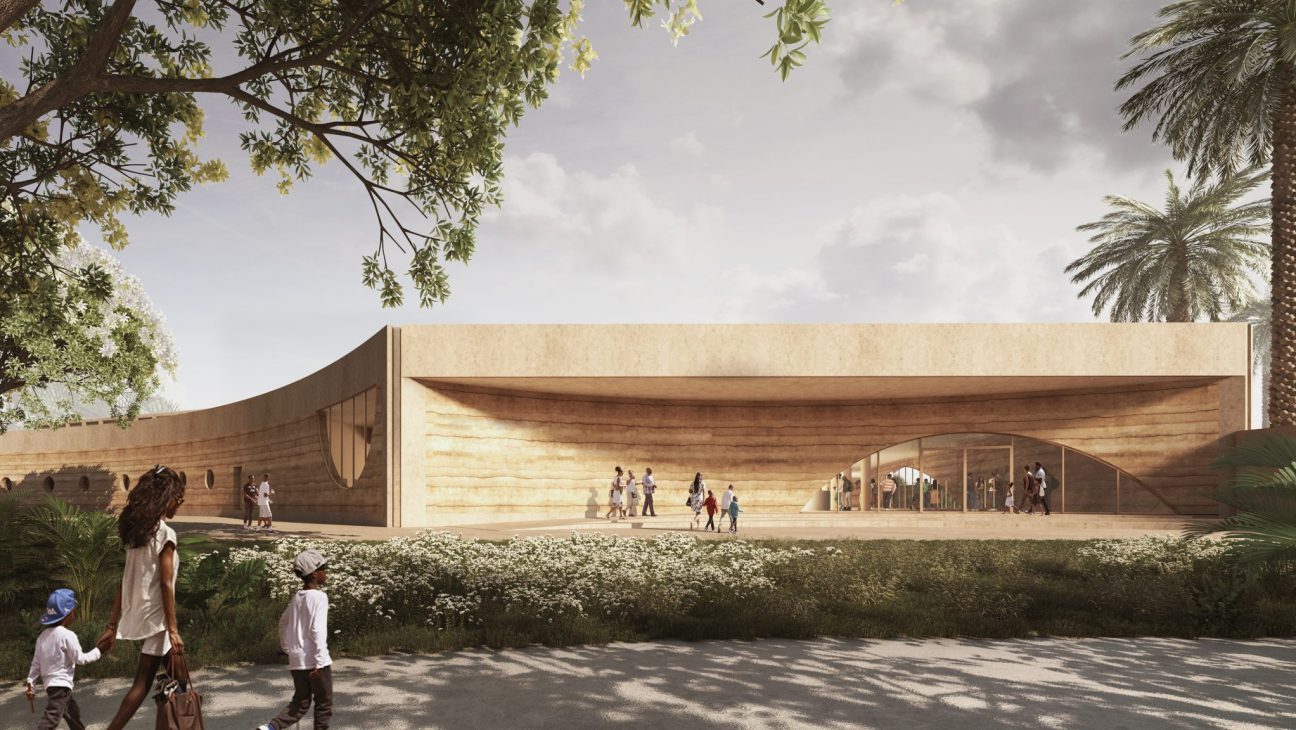
The tangle of buildings that make up the Museum of West African Art (Mowaa) are clean-lined, low and surrounded by trees. As well as exhibition spaces, the campus hosts a science lab, research facilities and a guesthouse. Though its location in Nigeria’s Benin City might provoke debate about returning the Benin bronzes to Nigeria, Mowaa has not been built as the artefacts’ future home. Crucial to the project is creating practical infrastructure for research, while also serving contemporary artists’ needs. “Mowaa is a statement to the world,” says director Phillip Ihenacho. “It is a vehicle to more firmly ensure that West Africa is part of global art practice and recognised for its contributions.”
wearemowaa.org
6.
TeamLab Phenomena
Abu Dhabi, UAE
Founded in Tokyo in 2001, TeamLab is an art collective that is represented internationally by Pace Gallery, placing it in the esteemed company of artists such as David Hockney and Mark Rothko. While TeamLab’s digital installations lack the tactile qualities of a Rothko canvas, they are similarly immersive, using cutting-edge technologies to create renderings of larger concepts. The collective’s vast new 17,000 sq m space will provide these artworks with a home in Abu Dhabi’s Saadiyat Cultural District – an island destination that also includes branches of the Louvre and Guggenheim. By embracing innovation, TeamLab might just steal the spotlight from these established institutions.
teamlab.art
Swipe less to see more: The importance of experiencing culture in person cannot be downplayed
Last year almost half of the world held up a finger in the breeze, hoped for the best and voted in elections to decide its future. Over the next 12 months a dizzying array of new museums will open with an eye on the very nature of truth, viewed through the prisms of immigration, repatriation, artificial intelligence and more – topics not unrelated to the choices made in 2024. Perhaps you’re thinking, “Wouldn’t it have been nice if we had been given a little more time to learn about these things before choosing our fate?”
Museums have been enjoying a golden age in building, refurbishment and attendance since the turn of the millennium and the transformation of knowledge from something that’s largely stored in books and artefacts into information that’s principally stored digitally and available everywhere, all at once. While convenient, however, screen learning and screen knowledge are also incomplete and two-dimensional. The growing power of bricks-and-mortar, glass-and-steel museums – and an increasing desire to convene with the physical – has accompanied the rise of the virtual and is its temporary rejection. When you visit an exhibition, your phone stays in your back pocket unless you want to snap some shots of the works on display. You might have heard about a show online but you queued to see it in person. The point is that you had to see it in the flesh. You encountered the real thing. Doesn’t that feel good?
I sensed this victory of the physical over the virtual during the Christmas holidays while visiting Antwerp for some misty meandering over the medieval cobbles of the Old Town and out to Zurenborg’s art nouveau marvels. I found two museums with very different offerings open during this period of seasonal closures: the MoMu fashion museum was showing Masquerade, Make-Up & Ensor alongside a fascinating slice of its princely permanent collection, while the Museum Mayer van den Bergh did its stolid thing with artefacts and masterpieces from the collection of 19th-century art historian Fritz Mayer van den Bergh.

At the latter museum, the great collector’s treasures of gothic and northern Renaissance art, as well as a haul of altarpieces and Christian statuary, artefacts and sundry odds and ends, are displayed “salon-style” – in other words, all over the place. It’s a charming cacophony of winsome annunciations, sorrowful crucifixions, very non-Lutheran ecclesiastical glitz, greengrocer-fresh still-lifes, stern and playful portraits, and both the impish and utterly unhinged sides of Pieter Bruegel the Elder.
Bruegel’s “Twelve Proverbs on Wooden Plates” is a wry, annotated take on peasant logic. It features gems such as, “I am rebellious and sullen so I run with my head against the wall,” accompanied by a picture of said rebellious character crunching his noggin into a solid-looking edifice, and, “No matter what I attempt, I never succeed; I always piss against the moon” (image: crestfallen bloke indeed urinating towards an unattainable lunar body). The artist’s infamous “Mad Meg” gets a room to itself and, if it were in a lesser institution, would probably come with a trigger warning: “Contains images of a disturbing nature, including bowler-hatted spider people, the horrors of war and men with spoons up their bums.” But this isn’t a lesser institution and so the museum’s homepage features instead a photo of two wholesome Belgian mothers pointing out scenes of carnage to their little ones.
Joking aside, the whole place is a mad joy and home to small wonders, such as the clerk who takes your €10 while softly swearing at his computer (“Told you this was better than the internet,” he might be saying) or the little “Highlights” book that you get to keep as a souvenir. From the art to the rooms heavy with old brown wood and the dust on the chandeliers, it’s the real deal and gloriously subjective. It’s one collector’s love of art and artefacts laid out for your viewing pleasure. If you like it, great; if you don’t, there’s a Zara Home an eight-minute walk away.

The joy of being there was also in evidence around the corner at the MoMu. Dark wood, light walls, a playful way with lines of sight and a great wash of natural light from a partially glass roof make the museum a beguiling place to pass through, and its stylishly appointed café is a wonderful lunch spot. But there’s a whiff of municipal neutrality to the permanent, public parts of this institution that you hope will be alleviated by the temporary shows and their designers, who are so fond of making whole new worlds in which to fit their exhibitions’ ideas.
So it was with Masquerade, Make-Up & Ensor, a stunner of a thing that was full of ideas, excellent materials, clever staging and subtle lighting. Its supremely confident curation successfully combined its potentially awkward ingredients – explorations of the look and meaning of theatrical masks, interrogations of beauty in art and the desire to change our faces with make-up, a glance at the beauty industry in marketing and the media. All while putting these on the aesthetic and psychological terrain of the funny, sad, grotesque and beautiful paintings of Belgian surrealist, expressionist and not-quite exhibitionist James Ensor.
I’m mindful that that’s a mouthful but there was a lot going on. In certain respects, it was a very adult show that was also studded with runway and fashion footage, photography, make-up and lookbook captures from the 1980s and 1990s. Most of the other visitors on the day that I attended were teenage girls accompanied by women who I presumed were their grandmothers. I was interested by just how few smartphone photos I saw being taken of the exhibits or the wall texts but there was a lot of excited and whispered Flemish chatter on which my English ears could not successfully eavesdrop.
The show was fascinating but so too was witnessing other people’s fascination up close and in person. I sensed that the ideas around female beauty that it probed would soon profoundly affect many of my fellow visitors. I can’t imagine how anything of the sort could be staged except in the bewitchingly physical style with which this show was executed. So, yes, you had to be there.
Last autumn I was fortunate enough to receive a preview of two new museums in nearby Rotterdam. The Nederlands Fotomuseum is moving to a new site in what was once the gargantuan Santos coffee warehouse in the unlovely but up-and-coming dockside Katendrecht district. Its archive is one of the world’s largest repositories of photography, with more than six million items. The museum will show many of these and have a restoration department as part of its permanent collection, as it were – an observable, perhaps even visitable part of the building. In an era when image manipulation can be highly political and is obviously dangerous, a museum department dedicated to sprucing up photographs for the better, performing its task transparently, is a clever and somehow very Dutch idea. Despite these iconoclastic leanings, the museum is highly likely to become an icon in its own right.
A stroll down the old dockside took me to what will be Fenix when it opens this May – a museum about migration that is being built in what was once the world’s largest warehouse and up to its Iain Sinclairs in psychogeographic relevance. It sits next to one of Europe’s first Chinatowns, now a highly multiracial neighbourhood, and is over the harbour from the former headquarters of the Holland America Line, on which so many Dutch emigrants steamed westward to secure succour. It’s a proper in-and-out club.
Immigration is something that appears to be changing Western European politics decisively and so this museum, led by its thoughtful and probably necessarily forthright director, Anne Kremers, will be a topic of much debate. It’s an essential visit for anyone with even a passing interest in the stories behind the myths and the headlines, then and now. Immigration is a topic whose relevance is burning enough to fill this museum’s cavernous spaces and the works announced so far seem as witty, smart and suggestive as the realities of some of the stories that will doubtless be housed in this great hangar of compassion are harsh.
I would argue again that this sort of thing can only be done in a physical place. As with photographic manipulation or telling subtle stories about the nature of beauty, or “simply” showing off a collector’s passions, the viewer’s proximity to the stuff is vital. The online world is full of fevered fictions that are never less than certain on either side of an argument. Subtlety, depth, discussion? You’ll get them here, in a place, not there in the virtual realm.
Of course, you’ll also sometimes get utterly stupid wall texts, wrong-headed curatorial notes and obfuscatory art speak in museums but you can see the painting that they’re discussing in its big, gold frame and decide for yourself whether, for example, it’s about rich people liking horses in 18th-century England or it’s secretly about how awful it is that some people had horses and other people only had donkeys, if they possessed a beast with a leg in each corner at all. Because though you might not be an expert and may be persuaded by a crazy claim, you can see the painting in its three dimensions. And you might also go home and read more about it in a book and come to something adjacent to the truth.
Museums are transformative. From children making learning a lifetime habit after quaking in awe at the cathedral-long blue whale in London’s soon-to-be-revamped Natural History Museum to the many canny culture and tourism boards reviving their regions with the addition of a bright, new cultural centre, museums can change both people and places. When the Guggenheim Foundation unveiled its Bilbao institution in 1997, millions of visitors and millions of euros were drawn to a tired and unloved city in Spain by a building considered excitingly avant garde. This set in motion the museum mania that is perhaps only now beginning to reach the end of its super-cycle. You had to see Frank Gehry’s curved, crinkled titanium-and-steel masterpiece to believe it – and so people did, in droves.
In the grand projet that is Abu Dhabi’s Saadiyat Cultural District, the Guggenheim is preparing to open a new museum of a similar design by the same architect. The Emirate is right to expect lightning to strike twice and the project’s ambition is big, bold and brave. It sits on an island nestled close to other cultural hot spots, including a Louvre designed by Jean Nouvel and the soon-to-open Zayed National Museum, named after the nation’s founder, Sheikh Zayed bin Sultan Al Nahyan, and designed by Norman Foster.
On another island in Japan’s Seto Inland Sea, the Naoshima New Museum of Art will open this spring, showcasing the work of contemporary Asian artists in a building designed by the chalk to Gehry’s cheese, Tadao Ando. These institutions and a long list of others, whether ancient or modern, are all about place, experience and context. You will be in the realm of the senses, reaching out and touching the world – the real one.
There’s a lovely museum and concert hall on the Sussex coast called the De La Warr Pavilion. It’s a well-kept 1930s modernist building, which is rare in England. I once went to an exhibition there and met the curator, who was perhaps near the beginning of her career. She skipped down the beautiful staircase and told me why she had wanted to work there. It’s a good place, of course, but really, she said, it was because of the staircase, designed some 85 years previously – its precise incline and flow, the quality of pleasure afforded by the gap between riser and tread. The joy that it gave her made her certain that this was the right place to be. It was the absolute satisfaction of the building’s physicality. Of course!
So, the right place to be is in front of just one work, looking and seeing; seeing how others look; wondering how you might seem. There are other worlds in museums and you might just find yourself in them too. Museums are community, communication, communion. And, yes, they might help us to make better decisions and know more – and lift us out of ignorance. You won’t find that somewhere that’s nowhere, will you?
How might the war in Ukraine end?
On 24 February, Ukraine will observe the third anniversary of Russia’s full-scale invasion. Vladimir Putin’s mooted 72-hour lightning conquest of Kyiv has deviated somewhat from schedule. In less deranged times, a European democracy menaced by Moscow might have welcomed the inauguration of a Republican president: Ronald Reagan did not stand before the Brandenburg Gate in 1987 and say “Mr Gorbachev, re: this wall, whatever.” But Ukraine cannot make any assumptions of such support where Donald Trump is concerned. Given his desire to force a swift resolution, Kyiv – and the rest of Europe – needs to start thinking about the best possible outcome that could be wrought from the present circumstances.
The vastly preferable conclusion to hostilities remains a complete collapse of Russian lines and/or a change of leadership in the Kremlin, prompting an end to this entire monstrous folly, as well as a richly deserved reckoning for Putin. But many more Ukrainian lives could be lost – and much more of its allies’ money spent – waiting for this to occur. However, if the imperative is to work with things as they are, there are some grounds for cautious optimism. The parameters of a ceasefire deal are not difficult to imagine. Russia would keep, more or less, what it holds but at a cost of hundreds of thousands of needless casualties, billions of squandered dollars, the reserves of whatever international respect it might previously have enjoyed and its president’s dwindling travel options, circumscribed as they now are by an icc arrest warrant. Nevertheless, few voices in Russia would dare dispute Putin’s claim of a tremendous victory.
The rest of Ukraine could edge towards the EU, though probably not into Nato. The model might be akin to post-1945 Germany, split between a democratic, progressive West – host to a hefty foreign military presence – and a depleted East, held hostage by Moscow. In the short term, this would at least end Ukraine’s horrendous suffering. In the long term, given that there is no record of people enjoying life under Russian dominion, we might be able to look forward to the day when the people of occupied Ukraine pull down whatever statues Russia cares to put up. —
Andrew Mueller is the host of ‘The Foreign Desk’ on Monocle Radio.

The real value of design fairs is in the craft and emotion – not just the after-parties
Let’s be real: the year only really starts in February. Now is the perfect time to set your agenda for 2025 and mine is packed with industry fairs and festivals. People often ask why I go to so many of these design events. Aren’t these just manufactured fun (excuse the pun)? Or brands flogging their newest products? An excuse to party with everyone from the industry? The answer is yes and while I love a jolly, these gatherings are also a vital bellwether of the industry.
Take the year’s first two major design events in Paris: Maison&Objet (16 to 20 January) and Matter and Shape (7 to 10 March). Both put the spotlight on innovative independent practices and a French design scene characterised by small-scale manufacturing. Size, perhaps, isn’t everything – and this network of smaller brands and makers are creating a robust design economy in France. Here a handful of big international brands (Ligne Roset, Roche Bobois, Fermob) are complemented by smaller, more nimble makers who work with high-quality materials and craft traditions.
Moving on to Milan for Salone del Mobile and Milan Design Week (7 to 13 April), you’ll find that change is afoot. The fair is no longer dominated by heritage Italian brands that established it in 1961. Fashion brands (Loewe, Hermès, Bottega Veneta) now use their budgets and craft expertise to cross into design, staging showcases akin to enormous immersive art installations. This tells us two things: that people crave “an experience” in terms of both presentation and products (“A well-versed, nuanced audience is looking for a product that will evoke an emotion,” designer Samuel Ross told me at last year’s Milan Design Week). And that fashion brands are often well-equipped to make furniture thanks to their manufacturing expertise.
And at this year’s Venice Biennale’s International Architecture Exhibition (10 May to 23 November), curator Carlo Ratti is going to build on similar themes. Here architects will be invited to collaborate with creatives beyond their profession to explore ways of working that are grounded in practical solutions.
In the year ahead, I expect smaller brands to rise to prominence and more products and experiences designed to elicit emotional responses. Plus, an architecture community that starts to look beyond its own discipline for inspiration. And where will I be? At the afterparty, of course. —
The Pentax 17 film camera is bringing a digital generation back to analogue
When camera designer Takeo Suzuki first suggested to his bosses at Ricoh Imaging that they make a new Pentax film camera, he was met with an awkward silence. Ricoh had acquired the iconic Japanese camera brand from the optical-glass company Hoya Corporation in 2011 but film-camera production had been abandoned in Japan; there hadn’t been a new Pentax model since 2003 and Ricoh’s focus was now fully on digital. “I just remember everyone seemed to freeze,” says Suzuki from the Pentax Clubhouse in Tokyo. Despite his colleagues being unsure, Suzuki managed to win them over. He persuaded them that they would be doing something completely fresh: making a film camera for the modern era, aimed primarily at a young smartphone-literate generation who don’t have a clue how to load film, let alone have the patience to wait for photographs to be developed. “I was one of those people who froze,” says Makoto Iikawa, an engineer. He started out as a sceptic but ended up leading the development team of the Pentax Film Camera Project, which created the Pentax 17, the company’s first film camera in 21 years.
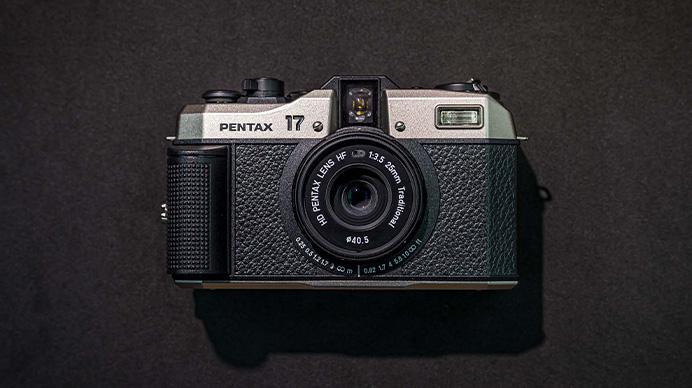
Suzuki and Iikawa were joined by Yoichi Nomura, a lens whizz, and Shinichiro Sanada, whose job was initially to turn dog-eared technical drawings for film cameras into a more usable 3D format. Suzuki had some older cameras in mind for inspiration – the Ricoh Auto Half from the 1960s and the Pentax Espio – but there was no existing mould for this new camera. “We had to start from zero,” says Suzuki.
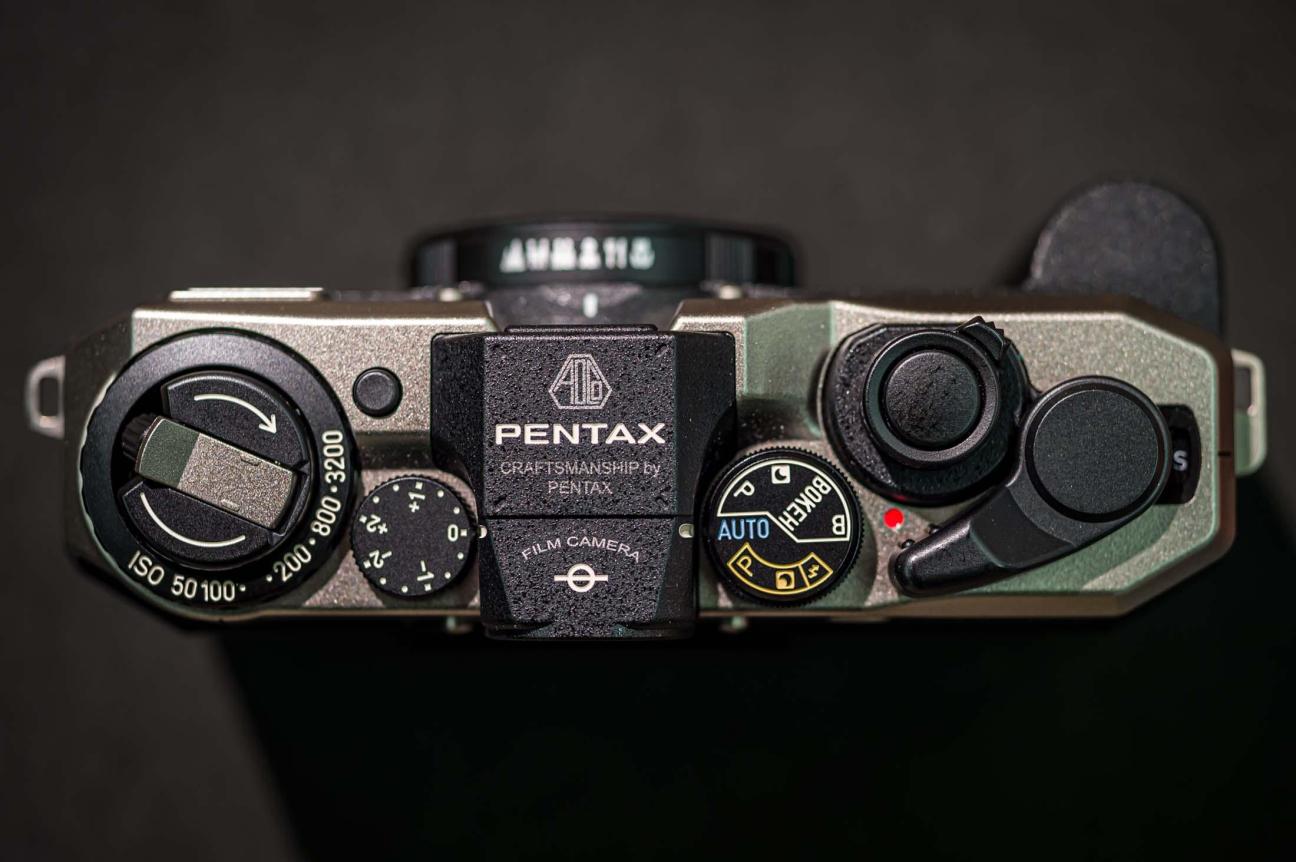
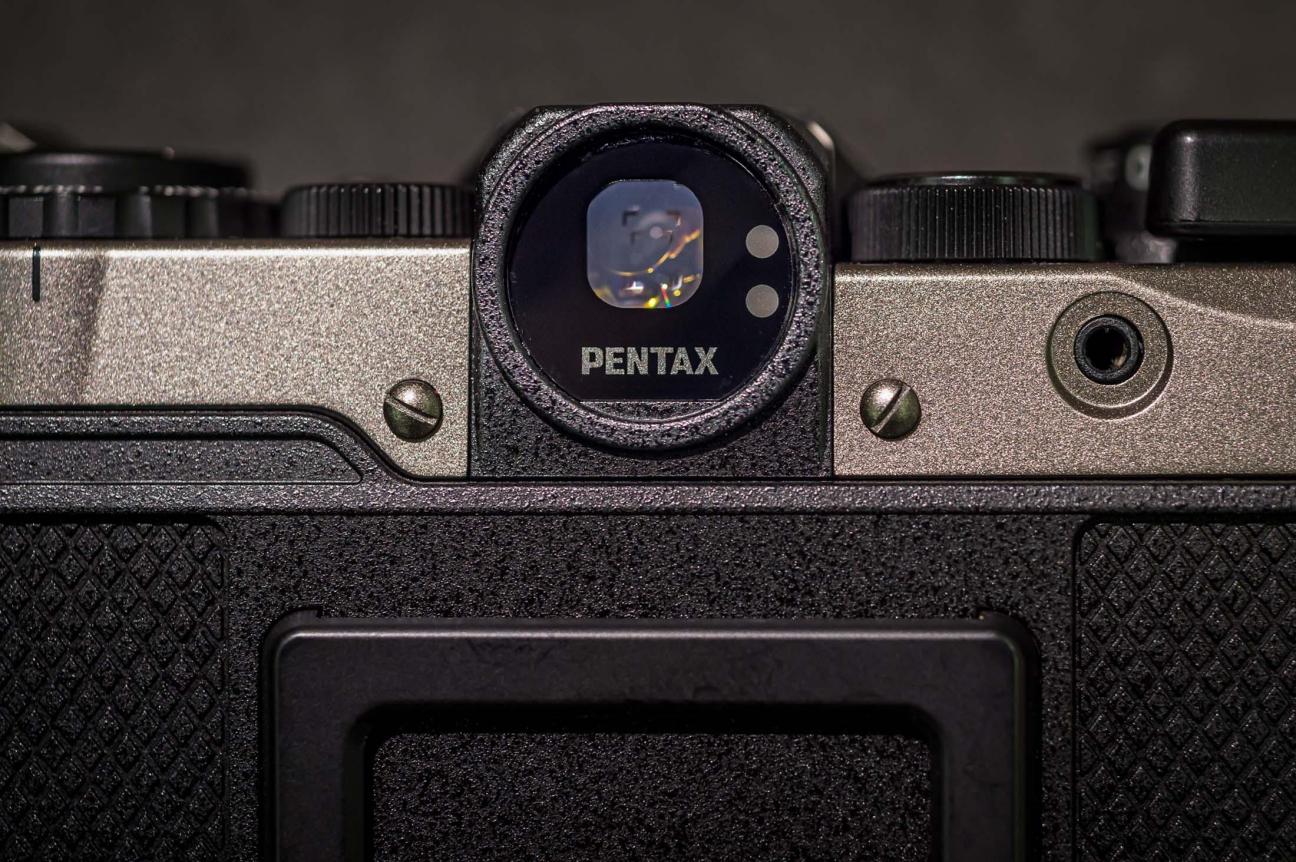
Suzuki made some key design decisions that set the Pentax 17 apart from other film cameras on the market. Unless turned on its side, it takes pictures vertically, which is good for viewing and sharing on smartphones (Suzuki knew that this would be a must for younger users); it has a simple fixed lens with manual focusing, which offers autonomy without demanding too much technical know-how, and it uses a half-frame film format (it takes two shots per frame, which doubles the number of pictures that can be taken on each roll of 35mm film). “Half-format cameras were big in the 1960s and 1970s when every family only had one camera – they were just more economical,” says Suzuki.
Suzuki was certain about one thing: having a manual advance mechanism. Sanada took advice from the one person at Ricoh who had worked in film cameras and then dedicated himself to perfecting the length of the lever and the satisfying sound as it winds the film forward. “It took a few attempts to get it just right,” he says. The Pentax 17 has blown open the possibilities for film cameras and shown that film photography can co-exist with, and even take inspiration from, smartphone cameras. “You can get the perfect shot with a smartphone but a film camera allows you to explore and mess up,” says Suzuki. “There’s a good synergy in having both.” — ricoh-imaging.co.jp
Instant gratification
Ricoh isn’t alone in combining smartphone-inspired features with film. Here are three other models taking instant snaps to the next level.
1.
I-2 Camera
Polaroid
Polaroid has recently introduced the I-2, which has an ultra-sharp lens, manual controls and Bluetooth to link up with printers and photo apps.
polaroid.com
2.
Instax Wide 400
Fujifilm
The Instax Wide 400 is twice the size of the popular Instax Mini. It offers instant high-quality prints and features a manual timer for easy group shots.
instax.com
3.
Lomo’Instant Wide Boston
Lomography
Instant cameras were once limited by a single lens. The Wide Boston comes with three lens attachments, offering flexibility on instant film.
lomography.com
How screens have rewired our brains – and why putting pen to paper matters
Experienced typists write more quickly and efficiently on digital devices than by hand. The technology also helps them to edit, structure, organise and distribute their work. That’s why tapping away on keyboards is usurping the act of putting pen to paper. Handwriting, some say, is withering as though it were a neglected plant or dying out like an endangered species. Its survival can only be ensured through care. But is it something that we must protect – and, if so, why? Even analogue nostalgists surely accept that cultural practices can lose their importance and value over time. We would all rather be operated on with a laser beam than a hand axe.
Handwriting’s decline can be dated back to the mid-1870s, when US gun manufacturer Remington launched the first commercially successful mechanical typewriter. Its benefits were clear – it allowed people to write letters more quickly and legibly – but warnings about the decline of culture and morality followed almost immediately. One sceptic even criticised the technology for threatening masculinity by replacing the pen as a “symbol of male intellectual creation” with a machine. But progress marched on unhindered. “Today we write more for private and professional reasons than ever before,” says Zürich-based linguist Andi Gredig. “We just do it less often with pen and paper.” People still rely on pens, mainly for notes, to-do lists and greeting cards, “as well as for signatures, which are still necessary in many official and legal contexts”, says Gredig. However, they’re less often used for long, coherent texts.
That is unlikely to change. In Switzerland, where I live, primary schools are paying less attention to handwriting than ever before. Calligraphy lessons have long been abandoned and handwriting is no longer assessed. Decoration has ceased to be a priority: the Swiss basic script, which can be written quickly and is designed for clarity, has replaced ornate cursive script in all German-speaking Swiss cantons. Their curriculum, meanwhile, simply requires that pupils “learn to write legibly and fluently in their own handwriting”.
Beat Schwendimann, the head of education at an umbrella organisation of teachers in Switzerland, thinks that this is enough. “Teaching time is limited,” he says. “The range of subjects taught is broader than it used to be, when it consisted of reading, writing and mathematics.” When pupils write at school, it’s no longer exclusively in German or on paper. “They still write by hand but they mostly use a computer or a tablet, as will be the case in their professional lives.”
Finland has received top marks from the Organisation for Economic Co-operation and Development’s Programme for International Student Assessment, which evaluates educational systems by measuring 15-year-olds’ scholastic performance. In 2016, the country caused a stir when it relegated handwriting in schools in favour of computer skills in order to prepare pupils for the digital world.
“Writing is one of the most complex skills of the human hand,” says Heinz von Niederhäusern, a retired psychomotor therapist from Zürich. “Handwriting is as individual as a fingerprint and deeply personal.” Though its appearance can be greatly affected by the situation of the writer, Von Niederhäusern doubts that one can accurately assess a person’s character from it. In the 1970s, however, graphologists attempted to do just that, as part of the recruitment process for companies – even though graphological reports don’t meet scientific standards.
“Writing is not only a product of cultural evolution but also its driving force,” says Von Niederhäusern. The Sumerians began using cuneiform script and the Egyptians came up with hieroglyphs more than 5,000 years ago. With the advent of the first writing systems, complex societies emerged that recorded their laws and rules. The Phoenicians developed an alphabet with 22 consonants in about 1200 bce. The Greeks adopted it, added vowels, improved its legibility and made writing more precise. This development expanded their communication options and promoted abstract thinking. The Romans then adapted the Greek alphabet and created the Latin one, and spread it throughout their vast empire. It still forms the basis of our writing today.
Medieval monks copied religious and scientific texts, preserving knowledge and promoting intellectual development. Influenced by the ideas of the Enlightenment, public schools that systematically taught reading and writing emerged in Europe in the 18th and 19th centuries. “The extent to which writing and thinking are interrelated is shown by the fact that in some of these schools only reading was taught, not writing,” says Von Niederhäusern. “The authorities considered the latter to be too subversive.”
With the invention of Gutenberg’s printing press in the mid-15th century, writing shifted to mechanical processes, which made it easier for people to access written material. Such developments didn’t diminish the magic of writing by hand – that is, until typewriters revolutionised everyday office life and, more recently, smartphones reimagined most other forms of communication.
Von Niederhäusern’s thumb and index finger grasp a pen and hold it like tweezers. The middle finger acts as a support, while the ring and little fingers are slightly curled up to help hold the pen. Joints bend and stretch; a dance begins. With gentle pressure, the wrist performs a pendulum movement inwards, then outwards. The hand and forearm move to the right. Eighteen small and 15 long muscles, 16 joints from the wrist to the shoulder and 24 bones are involved in this seemingly simple task.
“No other organ of movement is as finely tuned and versatile as the hand,” says Von Niederhäusern. With the slightest uncertainty in movement, a line can become wobbly, the letter might tilt or the image become unclear. By contrast, when someone types the letter A or Z on a computer, all it takes is a finger to press on the corresponding key. Even if you hit the key while you’re tipsy, a perfectly formed letter will appear. The typist’s state of mind leaves no trace on the display but this process won’t inspire an idea that might encourage a typing frenzy. That’s the crux of typing quickly on a keyboard. Your brain’s motor and cognitive processes remain inactive until you begin to type.
Children who write letters by hand remember their appearance more easily. They associate the sound of letters or phonemes with the movement and feeling of the pen scratching on the paper. But even subtle things such as the smell of the cleaning product in their classroom become part of their memory. “This creates a fine-meshed neuronal network in the brain,” says Lutz Jäncke, a neuropsychologist at the University of Zürich. When we write with our right hand, it activates the left half of the brain, where motor skills and language are located. All of the information that is needed for writing converges here. “The communication channels are efficient and the brain processes it so quickly that it can link a lot of other information to it,” says Jäncke. When typing, however, the information has to switch between the two halves of the brain because both hands are involved. This is a process that is prone to disruption, in which a lot of information is lost and “fewer connections are made”.
Jäncke compares the neural network in our brain to a fishing net. The tighter it is, the more it catches. This strengthens memory and enables more unexpected associations. Thus a scent of a cleaning product (or the taste of madeleines dipped in tea) can suddenly be linked to a thought. These fine details become anchored in the memory and encourage imaginative ideas. The slowness of writing by hand promotes this process and enhances our thinking, memory and creativity compared to the speed of typing. “Those who write by hand get more out of their lines and circles,” says Jäncke.
All of this is supported by several studies. One of the best known is by two US psychologists, Pam Müller and Daniel Oppenheimer. In 2014 they investigated how students’ handwritten and digital notes affected their learning. When asked about pure factual knowledge, there was no difference between those who wrote by hand and those who typed. But there was a gap when it came to conceptual knowledge, such as the question of how Japan and Sweden differed in terms of social justice. Those who wrote by hand came out on top. This was because they summarised what they had heard in their own words instead of writing things down word for word. “Our lazy brains, which are reluctant to put in much effort, tempt us to do this when we type on the keyboard,” says Jäncke. Even when laptop users were instructed not to take word-for-word notes, they still did worse in terms of conceptual knowledge than those who wrote by hand. What they typed tended to resemble half-digested ideas – not so conducive to learning or independent thinking.
Finns are no longer focusing solely on typing in schools. They have recognised the benefits of handwriting in class. Many schools now combine handwriting and digital writing to support balanced development. Swiss writer Martin Suter experienced something similar in the 1950s, when his school attempted to “correct” his left-handedness. His teacher gave up after the third lesson. Suter was left feeling unhappy about his handwriting. That’s why he almost exclusively used a keyboard from an early age. He wrote journalistic pieces on ball-head typewriters, advertising slogans on a machine with a correction key, a screenplay on an ibm computer and novels on Apple devices. He produced 13 books, all written in the Courier typeface, which resembles typewriter text. Then his wife was diagnosed with cancer. Accompanying her to her examinations, Suter decided that he wanted to carry less paper with him. So he began to revise the novel that he was working on, Melody, in waiting rooms on a hybrid device – a tablet that combines handwriting with the advantages of the digital world. It converts text written with a pen into type and creates, as Suter says, “a distanced typescript”. After reading Melody, his wife said that it was different from what he usually writes. “It was more relaxed, more like a handwritten letter,” he says. He also wrote crime novel Allmen and Mr Weynfeldt in this way.
What’s special about his tablet is the writing surface, which imitates the feel of paper and can only be used to jot down and manage readable information. There’s no internet browser, freeing him from online distractions so he can concentrate fully on his text. He is currently using the device to finish his next novel, Anger and Love, which will be published in April.
He calls his hybrid writing “unplugged”. Is this the future? If it is, it won’t entirely be about handwriting, typing on a keyboard or a hybrid device. Mixed forms will emerge. Artificial intelligence has already made it possible to dictate words straight into text form. This is even faster than typing but requires “an enormous amount of work from the brain”, says neuropsychologist Jäncke. “Everything that you want to say has to be thought out in advance and structured in its basic outline,” he adds. However, AI can also automatically polish or even complete sentences. And yet, though it’s much slower and more time-consuming to formulate your ideas by hand, anyone who forgoes that old-fashioned process altogether will miss out on the chance to capture those thoughts that flower only when you’re writing them down. —
A version of this article originally appeared in ‘Neue Zürcher Zeitung’. It was translated by Monocle.
“I despise the idea of comfort for an artist” – Audrey Diwan on eroticism in film
Early in the morning, as Paris begins to wake, Audrey Diwan likes to draw the curtains in her living room and watch a film. “It’s the best time of day for it,” she says, welcoming Monocle into her 9th-arrondissement apartment. She projects films directly onto a niche in the wall. On the floor next to the fireplace are piles of DVDs. “There are only two shops in Paris where you can still rent them. I go to Le Vidéo Club de la Butte in Montmartre, which is a magical place. It has films that you can’t find anywhere else.”
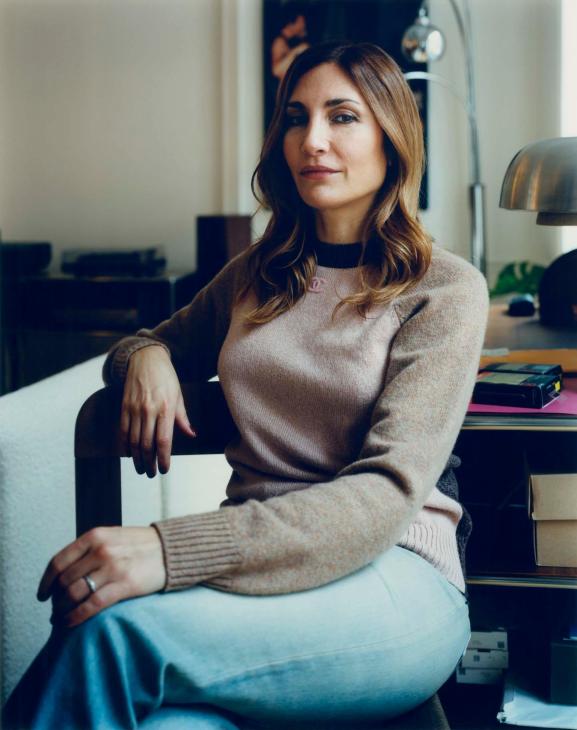
Diwan shot to fame in 2021 when she won the Golden Lion at the Venice Film Festival for L’Événement (released internationally as Happening), based on French writer Annie Ernaux’s 2000 memoir of the same name. It chronicles the author’s experience of struggling to get an abortion in the 1960s. L’Événement captured the zeitgeist, sparking conversations about a topic that remains taboo for many. The decision to adapt the book at that moment now feels prescient. In 2022, less than four months after the US Supreme Court overturned Roe vs Wade – the landmark ruling that had made abortion a constitutional right in America – Ernaux became the first French woman to win the Nobel Prize in Literature. Then, in March 2024, France revised its 1958 constitution to enshrine the right to terminate a pregnancy as a guaranteed freedom.
Diwan’s deft ability to address societal issues originates, in part, from her work before film. She studied journalism and political science, and began her career as an editor at Éditions Denoël. She then worked at magazines such as Glamour and Stylist. She has also published several novels, including La Fabrication d’un mensonge (“The Making of a Lie”) and De l’autre côté de l’été (“On the Other Side of Summer”). Today she continues to write as well as direct. She recently worked on the screenplay for The Stronghold, a Cédric Jiménez-directed film about Marseille’s criminal underworld, as well as Valérie Donzelli’s romantic comedy Just the Two of Us.
In 2024, Diwan became one of 11 people selected to join France’s newly revamped Oscar selection committee. The overhaul came as the country sought to win an Academy Award in the best international feature category for the first time in more than 30 years. “Deciding on a film was a heavy weight on our shoulders,” says Diwan. “How do you know what the right choice is?” The committee eventually selected Emília Perez, a musical by Jacques Audiard, for this year’s awards. “Watching films and talking about them is my life,” she says. “Audiard is a giant of French cinema. To win best picture would be great but we would love to receive best international picture because it’s symbolic. Many filmmakers here deserve more attention.”
Audrey Diwan’s pick of new films to watch:
1.
‘L’Histoire de Souleymane’
Boris Lojkine
This immigration story will “change your whole perception of the world”, says Diwan. “You can’t look at people on the street in the same way after seeing it.”
2.
‘September Says’
Ariane Labed
Labed’s directorial debut explores the bond between two teenage sisters.
3.
‘Misericordia’
Alain Guiraudie
“It’s an unexpected piece that sets itself up as a thriller in the French countryside,” says Diwan. “It is unlike anything you’ve seen before.”
Diwan’s third directorial feature, Emmanuelle, is a remake of Just Jaeckin’s 1974 softcore hit, which was based on a book by Thai-French novelist Emmanuelle Arsan. Unlike Jaeckin’s version, Diwan presents her film from the titular character’s point of view, restoring Arsan’s focus on female agency. It’s a brave choice but Diwan doesn’t shy away from a challenge. “I despise the idea of comfort for an artist,” she says. “When I find the right project, I have to feel as much fear as desire. Those are my two essential ingredients.” She couldn’t finish watching Jaeckin’s film adaptation. “I obviously wasn’t the intended audience,” she says. In her reinterpretation, Noémie Merlant, known for Portrait of a Lady on Fire and Paris, 13th District, steps into the role of an older Emmanuelle who roams the halls of a luxury Hong Kong hotel in search of a way to reconnect with her lost sense of pleasure.
“When I read the book, I thought, ‘What is eroticism nowadays – does it still exist?’” says Diwan. She began to see the project as an opportunity to explore how young people relate to one another in the digital age. In many ways, Emmanuelle is a natural continuation of her work on L’Événement. Both films challenge cultural taboos about women’s rights, sexuality and the struggle to reclaim control over their bodies. “There is a strong feeling of shame in the films,” says Diwan. “I talk about bodies that are broken.” The making of Emmanuelle also shows how things are changing on French film sets in the wake of the MeToo movement. Diwan and Merlant worked with an intimacy co-ordinator, a role that is now common in Hollywood but is still new in France.
On-screen intimacy is frequently treated with a frustrating lack of nuance and Diwan is determined to change this. “I’ve read so many screenplays that simply state, ‘And then they have sex,’” she says. “That’s where the problem is. You would never say, ‘And then they have dinner.’ You would explain what’s going on during that dinner, what kind of interactions you expect.” Too often, she says, filmmakers avoid discussing these scenes with the cast and crew, which leads to improvisation. It’s a risky approach that can create superficial results or even dangerous situations. “When you don’t know what you’re looking for – when a scene is only included because you want to see people having sex – you’re in trouble,” she says.
Diwan thrives on films that spark meaningful discussions. “It’s always good to challenge people’s expectations,” she says. “Those are the journeys that I prefer when I’m in the audience. You can love it or hate it but a strong reaction means that you can have a conversation. An open discussion – that’s what cinema should be.” —
Interview: Brazilian actress Fernanda Torres on bringing resilience to life in ‘I’m Still Here’
In 1986, Fernanda Torres became a Brazilian icon after winning the best actress award at Cannes for her role in Arnaldo Jabor’s Love Me Forever or Never. Here, she tells Monocle Radio about her latest film, I’m Still Here, set during Brazil’s military dictatorship. The film is already one of Brazil’s most successful-ever features and has been nominated for three Oscars, including Best Picture and Best Actress for Torres.
The film tells the story of Eunice Paiva, who became an activist after her husband disappeared during the country’s military dictatorship.
When did you first learn about Eunice Paiva?
It was through her son Marcelo Rubens Paiva’s 2015 book [I’m Still Here is based on his memoir of the same name]. I watched interviews too. She was persuasive but always gentle and intelligent.
You have just won a Golden Globe for your performance in the film. How important was the recognition?
It was made [during the Bolsonaro years] at a time when the arts were under attack in Brazil. I’m so happy that people of all religions and political beliefs are proud of our culture and going to cinemas to see it.
You’re well known for your comedy roles. Did you enjoy returning to drama?
I thought I was lost to drama! No, not really, I don’t separate genres that way. I’ve done theatre, musicals, and comedy, but of course, my recent TV roles made me widely known as a comedian. Then Walter gave me this incredible gift: a role in a deeply humanistic, profound drama.
What’s special is that a new generation of Brazilian teenagers is watching this film and learning about the dictatorship, often for the first time. They’re discovering history through a family that could be their own. That humanistic approach to storytelling is rare. It might take another 25 years for a film like this to happen again.
‘I’m Still Here’ is out now in Brazil and the US, and will soon be released across Europe. For the full interview with Fernanda Torres and Walter Salles, listen to Monocle Weekly above, or on Apple Podcasts and Spotify.
Aviation updates: Greenland opens for business while South Korea spends big on defence
New York’s seafood fans and Icelandic hoteliers can both expect to feel an effect now that Nuuk, Greenland’s capital, has an international airport. Larger planes, such as Air Greenland’s Airbus a330-800, can now fly to the southwest coast of the self-governing territory, which – despite Donald Trump’s recent bluster – is part of the Kingdom of Denmark. Previously, travellers to Nuuk had to stop, often overnight, at Keflavík in Iceland or at Kangerlussuaq, the former US air base in Greenland. Twice weekly flights to New York (a mere four hours away) with United Airlines, and to Copenhagen three times a week with SAS, are scheduled for take-off this year.
This being Greenland, wider geopolitical factors have played a part in the new dkk2.5bn (€340m) airport, the country’s largest-ever infrastructure project (which will open shortly before another airport at Ilulissat, 500km north of Nuuk). In 2018 a Chinese construction company had expressed an interest in building the airport but the Danish government stepped in with partial funding and as guarantor on a loan.
The airport is likely to have a significant effect on the country’s fishing industry, which is hoping for an export boost from sending fresh produce to New York, and on tourism: visitor numbers are expected to almost double to 105,000 during the summer. Nuuk’s location is, however, more vulnerable to the weather than Kangerlussuaq, so visitors might still have to enjoy the occasional overnight stay in the departure lounge.
In the basket
Four Boeing E-7 Wedgetail early warning and control aircraft
Who’s buying: South Korea
Who’s selling: The US
Price: $4.9bn (€4.7bn)
Delivery date: tbc

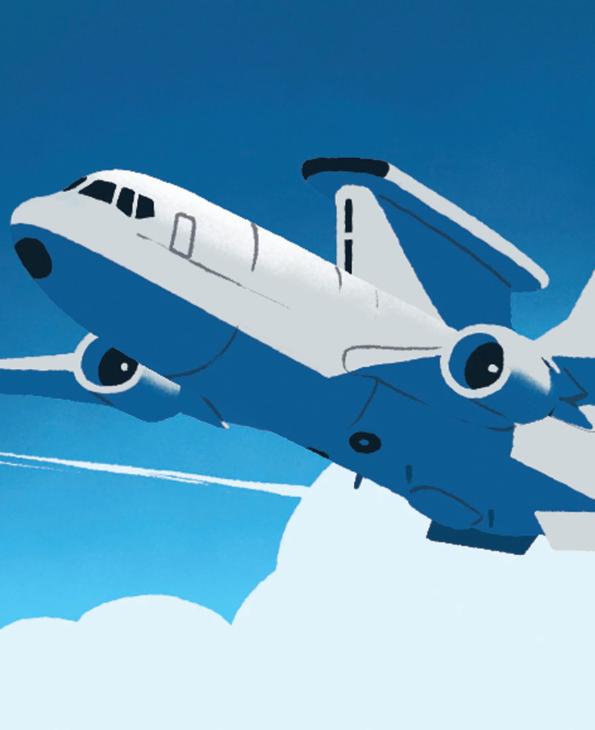
For obvious reasons, South Korea spends big on defence – $45.2bn (€43bn) in 2024, which is projected to swell to $54.7bn (€52bn) by 2029. Even amid that largesse, this is a significant purchase. The e-7, based on the 737 airframe, is an upgrade on Boeing’s venerable e-3 Sentry, replacing the e-3’s revolving roof-mounted radar dome with a rectangular monolith with superior capabilities. The Northrop Grumman-made sensor can furnish a constant picture of target movements, rather than intermittent glimpses as the radar rotates. The E-7 is also operated by the US, UK, Australia and Turkey. South Korea already flies four E-7s and will be hoping that this doubling of the complement will bolster its ability to keep eyes on its volatile northern neighbour.
Editor’s letter: “Tales of teamwork and togetherness can uplift us all,” says Andrew Tuck
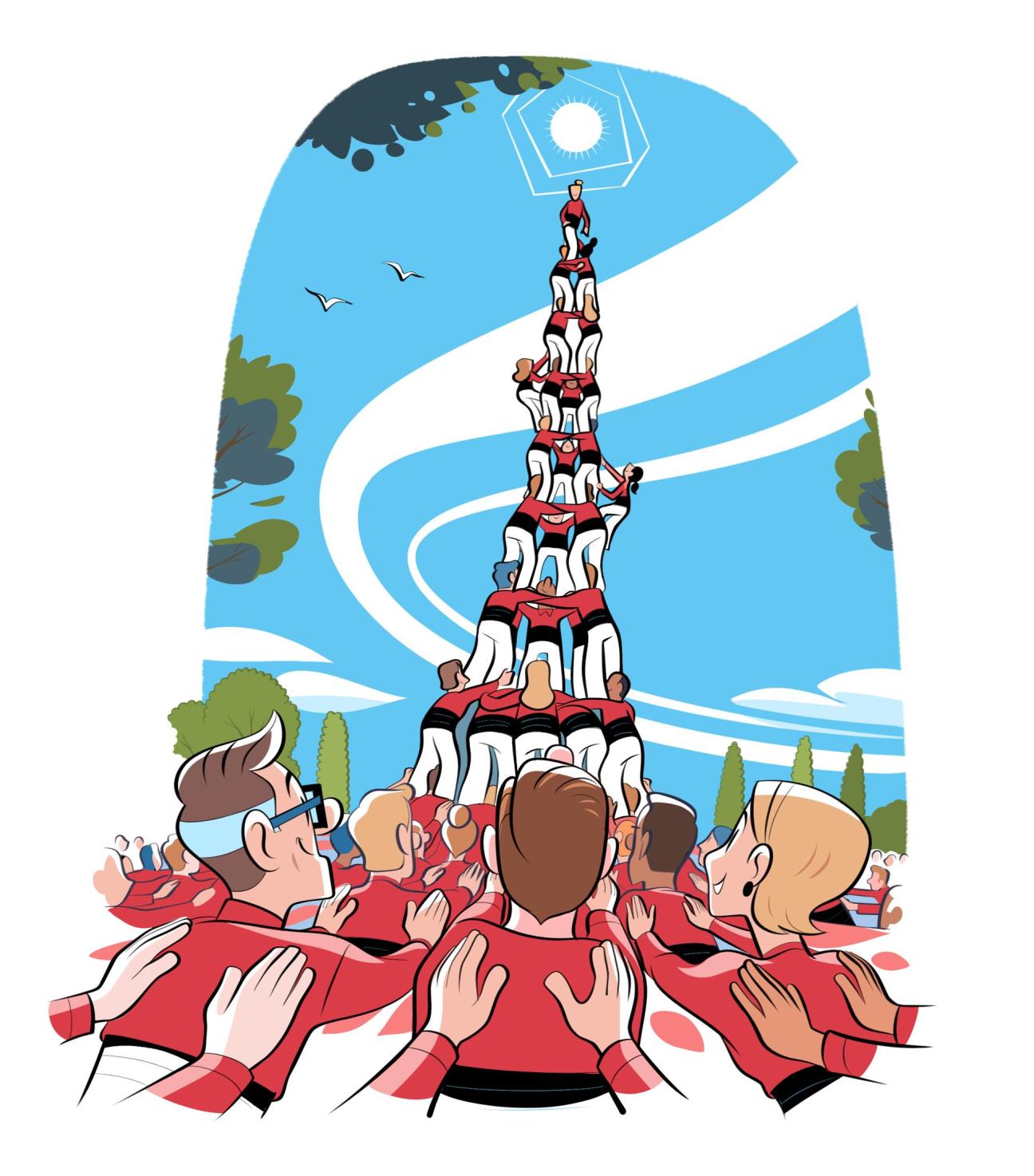
It’s one of those epic events that we had been meaning to cover for years, yet somehow it never made it to the page. But this time, finally, we were there for the biannual castells competition that’s held in the Spanish city of Tarragona. The castells in question are towers constructed from tiers of people, with each level balanced on the broad shoulders of the folk below. To triumph in the competition, you need to make a tower that’s tall (the highest castells can reach a giddy 10 storeys) but also complex. To achieve this, you must place the sturdiest adults on the lower levels and allow the nimblest and lightest to occupy the upper tiers – often the peak position is taken by a very young child.
The event has taken place since 1932 but, in recent years, the number of teams, or colles, taking part has grown apace – in part because of the way these towers represent Catalan identity at a time when many have sought independence for the region. But whoever you are, wherever you’re from, whatever your politics, the pictures of the castellers (taken by Julia Sellmann) are moving, uplifting (literally). It’s because those towers depend on trust, on the ability to endure, to collaborate and to rely on youth to win the day. The castells are living metaphors. Those strained shoulders, those pulsating veins, those taut muscles say, “This is what we can achieve when we work together.” I am seeing a castells workshop for every business hoping to grow, every community in search of harmony – it would be better than some paintballing team-building exercise.
The power of photography to deliver stories, to hold our attention, is also explored in our culture lead, which delivers a guide to buying photography. In a world where apps, AI and clever camera phones allow even the numptiest of us to take a reasonable picture, what makes a great work stand out? And why do images at auction command such varied prices? Our culture editor, Sophie Monaghan-Coombs, has come up with the answers.
In recent months we have been slowly rethinking how the magazine works, from looking at new formats for the cover to adding new regular features. There’s another change this issue. During our Paris edition of The Quality of Life Conference, we held a session called “The Concierge”. The format was simple and fun. The editors donned sweatshirts emblazoned with the crossed-keys symbol sported by concierges worldwide, and delegates were invited to ask us any travel-related questions that came to mind – but on one condition: that they got out of their seats to bang a hotel-desk-style bell.
Since then, The Concierge has been a radio series, a feature in our Weekend Edition newsletter and a returnee panel at all subsequent Quality of Life Conferences. Now it’s a section in the magazine, taking over the pages previously occupied by Inventory. It even gets a new paper stock and, importantly, the actual concierge comes to life in the style of a French illustrated comic (he’s a cool guy).
The enterprise has been overseen by Monocle’s editor, Josh Fehnert, who delivers a line-up of stories that runs from Viennese sausage stands (there are many sausage puns, the Würst you can imagine) to a guide to modern hosting. Yet the new head of The Concierge is a refusenik when it comes to getting on stage for the live sessions (he sometimes claims that this is because he’s a nervous soul; other times that the sweatshirt is too restrictive). But we’ll gloss over that as it’s a time of year when goodwill should be the go-to sentiment; when we should all find our inner casteller as we pull together for some seasonal cheer and community spirit. So from all at Monocle, here’s wishing you a great Christmas and a towering success of a new year.
If you would like to send ideas, reflections, suggestions, please email me at [email protected].