Issues
Vatican diplomacy tested as US-Cuba deal unravels
Among the flurry of announcements made by Joe Biden at the end of his presidency was something that caught many by surprise: the decision to remove Cuba from the list of state sponsors of terrorism. In return, Havana agreed to release 550 prisoners, many of whom were jailed for taking part in anti-government demonstrations in 2021.
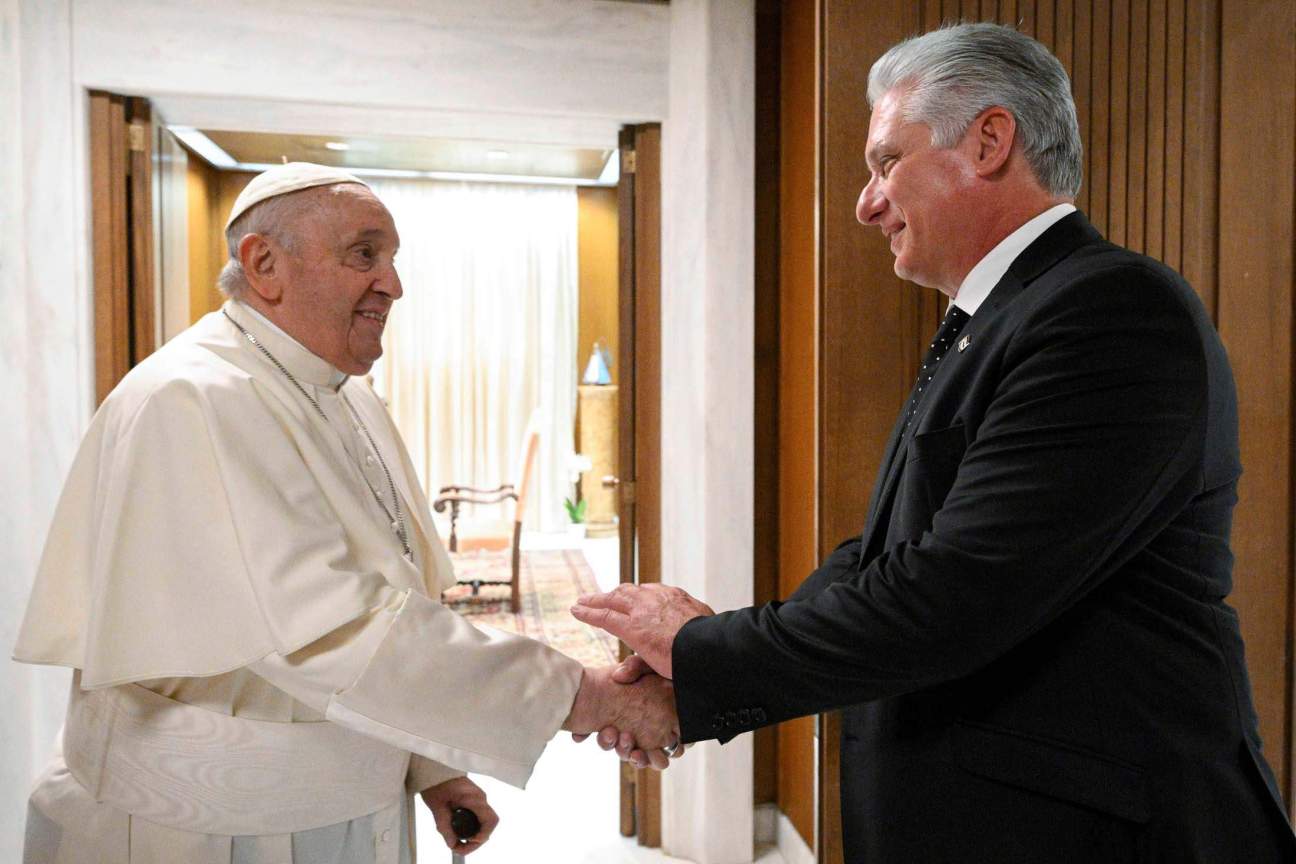
Cuba’s economy has been hit by US sanctions and increasingly inconsistent supplies of fuel, funds and food from its traditional allies in Russia, Venezuela and China. Biden’s move promised a glimmer of hope, particularly for Cuba’s fledgling private sector, which has been particularly hard hit by the economic downturn. And though Donald Trump reimposed US sanctions on Cuba during his first day in office, Cuba’s president Miguel Díaz-Canel (pictured, on right, with Pope Francis) appears to have maintained its side of the deal by pressing ahead with the prisoner release.
This is probably because of the standing of the third party that brokered the original deal: Vatican City. “What is interesting in a diplomatic sense is the Holy See’s perceived neutrality,” Michael Higgins, a professor of Catholic history at the University of Toronto, tells monocle. “It’s why countries that have no history of Catholicism still want ambassadors to the Holy See.”
The Vatican has diplomatic links with 182 countries. While its diplomats’ recent attempt to reset US-Cuba relations has been undone, their work has become more valuable as international relations have deteriorated. “In a world that constantly seems on the road to collision, you need stabilising powers,” says Higgins. As the world gears up for a year of potentially complex peace negotiations in Ukraine and the Middle East, the parties involved might benefit from seeking divine intervention.

Interview: ‘L’Express’ CEO Alain Weill on rebuilding France’s iconic news brand
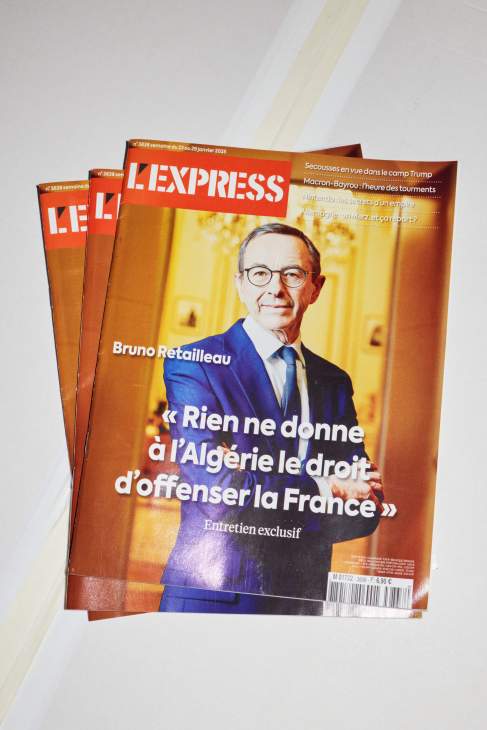
“There is a fire at L’Express,” said French media mogul Alain Weill when he took the helm of the historic Paris-based news magazine in 2019. L’Express was in a deep financial crisis and one CEO after another had failed to turn around its fortunes. Before arriving at L’Express, Weill had played a key role in building up French radio giants nrj and rmc, and later founded BFMTV (France’s answer to CNN). Six years and several rounds of layoffs later, L’Express is back from the brink.
In 2024 it turned a profit for the first time in years and now has ambitious plans for a European edition aimed at audiences beyond France’s borders. Monocle catches up with the softly spoken, quietly self-assured ceo in the newsroom, noting that his blazer’s red-stitched buttonhole discreetly reveals his status as a knight of France’s prestigious Ordre de La Légion d’Honneur.

Is ‘L’Express’ out of the woods, financially?
It’s not over. I would say that we are halfway there. Today the company’s books are balanced but we must reinvent the future of the magazine. It’s not a mission that is specific to L’Express; it’s an obligation for all titles around the world. AI is coming and free information is both plentiful and high quality.
Tell us about your plans for a European edition.
We already have an audience of subscribers, which is made up of opinion leaders, leaders of the economic world, scientists, teachers, politicians and professionals. This readership throughout Europe is similar: a German business leader has the same concerns as a French business leader and the same desire for information. We want to develop across Europe with talented journalists writing European stories and using technology to publish our content in all 24 languages of the European Union. This will also be a way to attract a younger audience as young people often know Europe better than their parents. They’ve had the opportunity to travel and European values appeal to them.
What will this change look like in practice?
We will have 30 per cent original content but will also develop a relationship with L’Express France. Of the French edition’s content, 70 per cent can be used for the European project, with a Europeanised translation using AI. The content that will come from L’Express France will already be very European and not France-centric analysis or Europe as seen from France. It will come from journalists representing all nationalities of the European Union. And we want to look for the best experiences in Europe. Why does education work in Finland? Why is healthcare better in Germany when per capita spending is not higher? We are already well positioned when it comes to coverage of Europe, liberalism, democracy, science, technology and climate. This is where we want to excel.
Alain Weill’s CV
1985: Becomes director of the NRJ FM radio station network at the age of 24
2000: Takes over radio station RMC
2005: Founds BFMTV, France’s leading 24-hour news channel
2017: Becomes the CEO of Dutch media company Altice
2019: Takes over as majority shareholder of L’Express
How do you balance opinion and news?
When I took over [French FM radio station] RMC, we made it a 100 per cent opinion radio station but it wasn’t partisan. rmc is still a radio station that gives a voice to all French people and allows all kinds of opinions. I think that this is necessary. It does not support one side over the other. Today if you think of [French TV channel] CNews, it is an opinion channel but it supports one political camp. Regulation needs to change because soon TV will be broadcast on digital platforms where there is less oversight. A publication like L’Express is liberal and pro-European; it defends democracy but that doesn’t mean that we can’t give a voice to people who think differently. To make up our own minds, it’s important to subject them to other ideas and other points of view.
You were part of the earliest days of French FM radio. What did you learn from that time?
Jean-Paul Baudecroux, who was the founder of NRJ and a visionary, understood how the radio market was going to evolve. He went looking for models in the US and it worked. NRJ has been a success from the start. And the adventure I had at nrj was exceptional because the whole team felt like we were changing the sector. In the media, and the audiovisual sector in particular, the models are often American because competition there has been tougher for longer. Private radio in the US existed even before the Second World War but in Europe it appeared in the 1980s. So NRJ is inspired by American music radio. And BFMTV was inspired by CNN. I’ve always liked drawing inspiration from models that work.
‘L’Express’ timeline
1953: L’Express is founded by Jean-Jacques Servan-Schreiber and Françoise Giroud
1950s to 1960s: The magazine becomes known for its left-of-centre, anti-colonialist positioning and features writing by Albert Camus, Jean-Paul Sartre and Françoise Sagan
1977: Founder Servan-Schreiber relinquishes control of the publication
2015: L’Express is bought by Franco-Israeli media magnate Patrick Drahi
2023: Alain Weill now owns all the company’s shares
2024: Paid circulation is 139,652
Might Trump tempt California to secede in the aftermath of LA’s wildfires?
In 2017, as Donald Trump prepared to enter the White House, California’s leaders went on the offensive. They would, they said, use the power of the world’s fifth-largest economy to stand up to the president, serving as what then-California governor Jerry Brown described as a “beacon of hope to the rest of the world”. If Trump blocked the climate research that was key to the state’s environmental agenda, Brown threatened, “California will launch its own damn satellite.” There has been little of that swagger from Sacramento this time around. The wildfires that tore through Los Angeles less than two weeks before Trump’s second inauguration have blindsided California’s leaders. The Democrats who preside over the state now find themselves begging Republicans in Washington to deliver the type of basic aid that the federal government ordinarily doles out to those affected by natural disasters.

Such catastrophes usually elicit a sense of unity but the fires have revealed deep divisions. Many in Trump’s party responded to the suffering in Los Angeles with glee, making dubious claims about the city’s firefighting budget and the management of its reservoirs to feed a longstanding caricature of left-wing mismanagement. Even as the fires raged, prominent Republicans looked for ways to pin the destruction on the Democratic politicians who occupy all of California’s state offices and the mayoralties of most of its large cities. (It is one of 15 states where Democrats control both the governor’s office and legislative supermajorities.) LA was burning, Republicans said, because Democratic politicians spend more time protecting illegal immigrants, criminals and endangered species than their own citizens. “Everyone is unable to do anything about it,” Trump said in his inaugural address. “That’s going to change.”
Trump has spoken of Chicago, Detroit and even New York in similar terms but none has found itself as reliant on his goodwill as LA. The short-term fight will be over emergency aid and whether Congress attaches conditions that compel changes to the Californian environmental policies that Republicans blame for the fires. Trump will have difficulty fully abandoning LA, which is due to host the Olympics in the final year of his presidential term. He was in office when the Games were granted to the US and is certain to shuffle around the host city in 2028 with a smile on his face. A man who prides himself on a knack for construction will be eager to boast about his role in saving the Olympic city rather than blame local politicians for its ills.
But the next four years are likely to be painful for California as it struggles to rebuild while seeing its national government as an obstacle not a partner. Indeed, those who run the US now treat the state – which is home to one-eighth of its population and responsible for one-seventh of its GDP – as something of a distant, wayward colonial territory. A January announcement from Trump about how his White House would deal with the entertainment industry was telling: “It is my honour to announce Jon Voight, Mel Gibson and Sylvester Stallone to be special ambassadors to a great but very troubled place: Hollywood.” Californians might soon have an opportunity to express whether they share that sense of detachment. The so-called CalExit movement tried but failed to place a secession plebiscite before voters during Trump’s first term; now it is trying again. If it succeeds in qualifying, Californians would vote on the state’s secession from the US in November 2026 – almost exactly halfway between the wildfires and the Olympic moment, when Trump will want to brag about LA’s rise from the ashes.
LA-based Issenberg is Monocle’s US politics correspondent.
Interview: Giovanni del Vecchio on Giorgetti’s journey from classic to contemporary
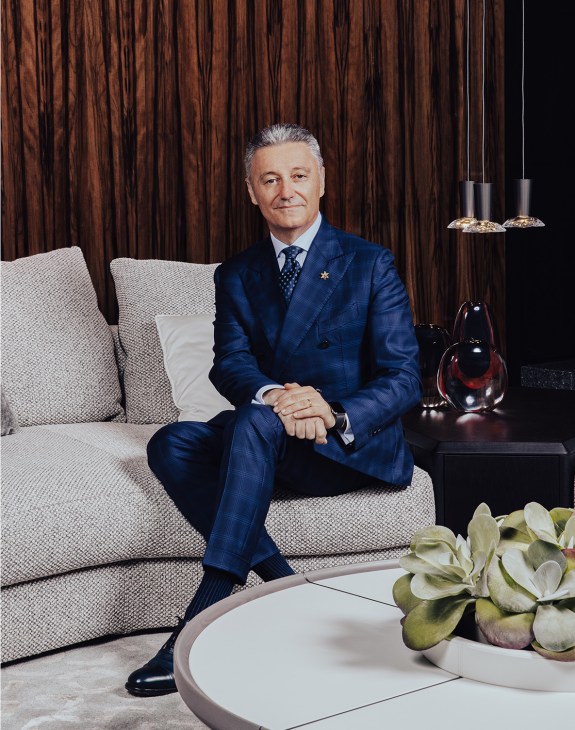
Despite its 126-year history, Brianza-based furniture maker Giorgetti is anything but complacent. The Italian firm is continuing its transformation from a more classical design brand to one rooted in the contemporary. We asked its CEO, Giovanni del Vecchio, about this transformation.
Giorgetti has talked about a contemporary evolution. What does that mean?
Evolution – and not revolution – has been one of the pillars of our strategy since the company was acquired [by Italian private equity fund Progressio] in 2015. Back then it was probably thought to have a higher attention from the Asian markets than the European or American ones. This is the reason why we have tried to let the company evolve into more contemporary design but it’s also part of our tradition. Even in the early 1980s, Giorgetti launched the Matrix collection: an incredible, out-of-context range made up of colourful pieces and innovative shapes. This need for continuous evolution has always been part of our make-up.
How do you continue to build on this legacy?
One of the directions that we have been taking is to keep collaborating with some of the designers who have been working with us for many, many years. When we start a collaboration, our objective is for it to be long-term because when you learn how to design a Giorgetti piece, we want you to keep doing it.
How do you ensure that Giorgetti doesn’t only look to the past?
We have two other directions. One of these is to collaborate with young designers. This is a commitment that the company must make – giving opportunities to young designers to approach established brands and use the research and development competencies that we have in order to grow their expertise and their design proposals. And the other direction we have is to work with architects who are not really into product design but are helping us to identify how product can become a tool to develop architectural solutions.
Tech corner: Three releases to keep on your radar
From sleek new smartphones to high-tech accessories, this roundup features some of the latest innovations that combine style with cutting-edge functionality.
Whether it’s Samsung’s revamped Galaxy with improved AI and photography, Technics’ impressive in-ear headphones with seamless connectivity, or Oura’s slimmed-down ring with advanced health tracking, these gadgets are designed to elevate your everyday life.
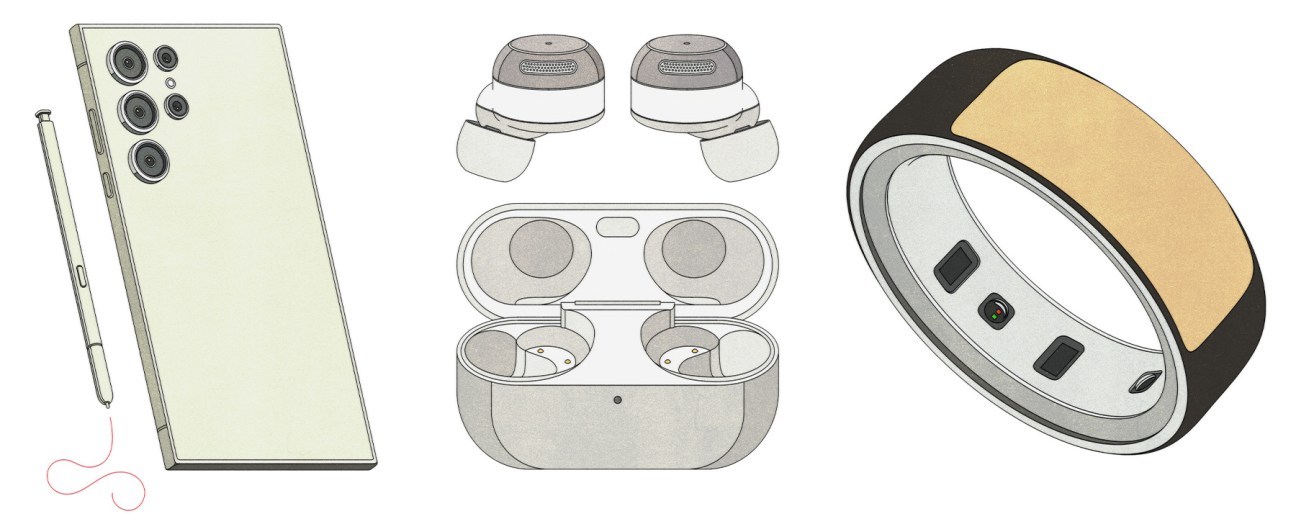
From left to right:
Samsung Galaxy S25 Ultra smartphone
The rounded corners of this phone give it a welcoming new look but the tower of cameras on its back remains in place last year’s S24 Ultra. There’s now a faster processor, better photographic sensors and the next version of Galaxy AI, including the Now Bar, which shows apps on the lock screen and can even tell you when to leave home to catch that flight.
samsung.com
Technics EAH-AZ100
Technics describes these new in-ear wireless headphones as reference class and they do sound impressive, with direct, clean and balanced audio. They also have a cute design and active noise-cancelling, and pair with three different gadgets so you can connect them as you move from your phone to your laptop, for instance.
technics.com
Oura Ring 4
Finnish firm Oura’s new ring is slick and slim with sensors that are flush, making it comfier. Sleep tracking remains key and Symptom Radar can even alert you if you’re coming down with a cold before you’ve even sniffed.
ouraring.com
Recipe: Halloumi with spiced honey, lemon yoghurt and plums
Swiss chef Ralph Schelling developed this dish while cooking at a villa in the Greek town of Porto Heli last summer. It puts the satisfyingly chewy texture and tangy flavour of halloumi at its centre. Pair this starter with seasonal salads for a sweet and savoury contrast.
ralphschelling.com
Serves 4 as a starter
Ingredients
Olive oil, for frying
2 sprigs rosemary
4 garlic cloves, lightly crushed
½ red chilli, lightly crushed
2-3 tbsps honey
Sea salt and black pepper, to season
100g Greek yoghurt
1 lemon (zest and juice)
150g halloumi, drained
2 handfuls of cherry tomatoes, halved lengthwise
2-3 plums, sliced into bite-sized pieces
2 tbsps extra-virgin olive oil

Method
1.
Heat the olive oil in a pan. Strip the rosemary leaves and add them to the lightly crushed garlic and chilli. Sauté for about 5 minutes.
2.
Add the honey and half a teaspoon each of salt and pepper to the pan, then turn off the heat. Infuse for 15 minutes.
3.
Mix the Greek yoghurt with the lemon zest, lemon juice and a pinch of salt in a bowl.
4.
Cut the halloumi into strips, pat dry and fry in a little olive oil over a medium heat until golden brown (3 to 5 minutes).
5.
Quickly sauté the tomatoes and the fruit, then mix with a bit of the spiced honey.
6.
Spread the yoghurt mixture evenly on plates or bowls. Arrange the fried halloumi on top, then garnish with the sautéed plums and tomatoes.
7.
Drizzle with some olive oil and sprinkle with a little flaky sea salt to taste. Serve.
Editor’s letter: Navigating uncertain waters with optimism
We are living at a moment when the only thing that’s predictable is the unpredictable. Unforeseen events come hurtling towards us from every angle, each with the potential to rattle the world order. Russia’s war in Ukraine, the fall of Bashar al-Assad in Syria and South Korea’s constitutional crisis all happened when most people were looking the other way. And these tectonic shifts have the potential to affect so much more than state relations; they also shape global trade, how we travel, the culture that we consume and even how confident people feel when they get up in the morning.
To help Monocle readers move through any potentially choppy waters, we have appointed a new security correspondent who joins the magazine and Monocle Radio from this issue. Gorana Grgic, who is also a senior researcher with the Swiss Euro-Atlantic Security team at eth Zürich’s Center for Security Studies, opens this month’s Agenda section by unpacking all of the forces at play right now and arguing that, “only by staying informed, anticipating change and finding ways to adapt and respond can we navigate the uncertainties ahead and hopefully contribute to shaping a more secure future”.

You’ll also be hearing more from Grgic, and other new and established Monocle voices, in the coming months at monocle.live. Because while these might be interesting times, Monocle has a host of important projects for the company in play and a key one of these will be the launch of an enhanced digital experience. I won’t give too much away now but delivering our common sense, solutions-driven view on everything from urban design to social change will be central to our plans.
There’s some other house news to share. As you will have read in these pages, Monocle opened its first office in Paris last year and now we are on the cusp of revealing a new shop and café space in the city (and we are already moving to a new, larger office too). One of the many benefits of having a growing team in the city is that it helps to shape the whole tone of the company. From the beginning we have always strived to be a global brand rooted in Europe. Now, with HQs in Zürich and London and a sizeable presence in Paris, that’s easier than ever.
Reading the page proofs for the February 2025 issue – with stories from all over the world, not just France – I was struck again and again by the number of people who see a problem and step forward with a solution; by the range of civic and business leaders, designers and architects who refuse to accept just a mediocre solution, who insist on setting improved benchmarks. That’s why we hope that this issue will give everyone hope and an injection of ambition as we dive into 2025.
A prime example of this is the University Children’s Hospital Zürich by Swiss architects Herzog & de Meuron. The building makes extensive use of timber, embraces nature and strives to put children first in all its planning decisions. As our story says, it creates “a place for treatment but a sanctuary for children, their families and staff. The building feels like a warm embrace – a hospital that saves lives while improving people’s life quality.” It’s remarkable.
That same determination to come together to affect meaningful change is also evident in our report on how Kansas City revived its downtown. Back in the early 2000s, about 13,000 people lived in the heart of the city; now, according to the city council, more than 122,000 people work in the greater downtown area and office occupancy is at 86 per cent. And among the elements that helped to change the narrative were good urban-planning decisions that were citizen-led.
Elsewhere in the issue you’ll discover how an emblem of African optimism has been revived in Addis Ababa, why a spate of museum offerings shows how we can still come together because of art and storytelling, and why you should keep using a pen and paper every so often if you want to maintain a healthy brain (this letter might be handwritten next issue). Enjoy.
If you want to stay ahead on all of Monocle’s news and views, make sure that you’re subscribed to our newsletters, The Monocle Minute and Weekend Editions. And if you have any ideas and solutions that you’d like to share, or have feedback to give, remember you can always contact me at [email protected]. —
Can big pharma be good pharma? The quiet scientist behind Ozempic, Wegovy and radical weight-loss jabs
“I really don’t like the description ‘miracle drug’,” Lotte Bjerre Knudsen, chief scientific advisor at Danish pharmaceutical company Novo Nordisk, tells Monocle. “The medicine gets misunderstood or overhyped.” No one can accuse Knudsen of hyping her work. She remains little known outside her sector and few have heard of her even in Denmark – but how else would one describe a revolutionary treatment for both diabetes and obesity that looks increasingly likely to provide advances in treating heart disease, kidney damage, Alzheimer’s and perhaps cancer too? Even if you’re unfamiliar with Knudsen and her team, you will have heard of the world-changing medicines that they have developed: Ozempic, used to treat diabetes, and Wegovy, its obesity-treating sibling.

The former, in particular, has achieved a cultural reach beyond any branded drug since Viagra. Celebrities make jokes about it at Hollywood award ceremonies and the Kardashians have name checked it; the prevalence of the appetite-suppressing medicine has been linked to restaurants’ declining revenues, as well as the return of skinnier models to the pages of fashion magazines. Airlines are reportedly anticipating fuel savings because its passengers will weigh less as a result of taking Ozempic.
The 60-year-old Knudsen joined Novo Nordisk in 1989 after studying biotechnology at the Technical University of Denmark. She began researching GLP-1, a molecule that occurs naturally in the intestine and was known to increase insulin levels and lower blood glucose. There’s a popular myth that Knudsen was only working on a treatment for diabetes and that Ozempic’s effects on obesity were an unexpected bonus. “No, no,” she says in her modest open-plan office. “It wasn’t discovered by chance. We were always interested in obesity.”
She and her team might have been interested but the same can’t be said for everyone around them. Novo’s then ceo, Lars Rebien Sørensen, made the now embarrassing pronouncement that there was “no business” for the company in weight loss. The wider pharmaceutical industry considered obesity drugs to be something of a taboo following several scandals in the 1980s. “Lars is good at making fun of himself about this,” says Knudsen. “But he was a phenomenal leader. He gave me the resources that I needed. I only discovered years later how provocative all of this was to some people in the industry – first, that we were making an injectable diabetes treatment that wasn’t insulin and, second, that we were also taking that approach with obesity. But I am a very resilient person.”
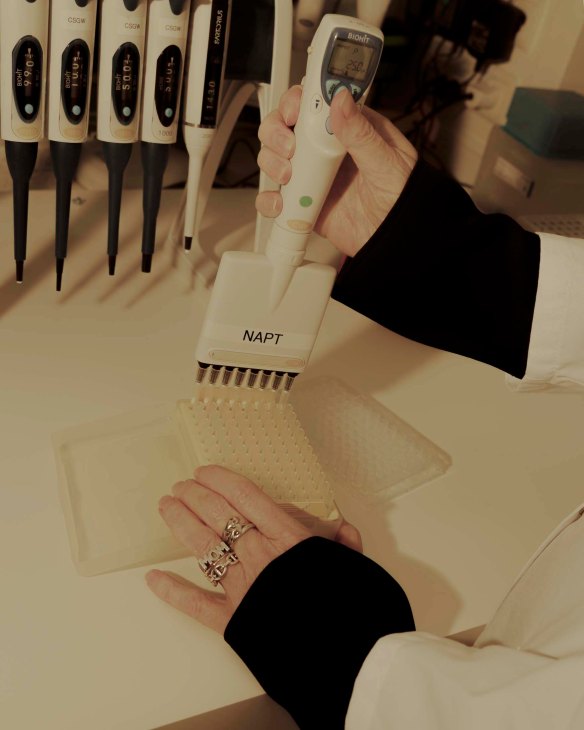
In 1996 there was a major breakthrough: the first analogue of GLP-1. Then came the identification of the correct fatty acid to bind GLP-1 to albumin in the blood so that it could stay in the body longer than its natural counterpart. (This required testing 4,000 options.) The final incarnation of the molecule, semaglutide, remains active in the body for up to a week. It was launched as Ozempic, an injectable diabetes treatment, in 2018. Further headlines came with the publication of the results of its 2021 trials for obesity: test subjects experienced a reduction in bmi of more than 15 per cent.
Last year, Knudsen celebrated her 35th anniversary at Novo Nordisk. The drugs that she has helped to create are enormously profitable with an 84 per cent margin and are responsible for 69 per cent of the company’s revenue. Novo Nordisk is now Europe’s largest company by capital valuation and in recent years has almost single-handedly kept Denmark out of recession (indeed, its value is larger than the country’s annual GDP). The contribution of Ozempic and Wegovy to the nation’s soft power is hard to quantify but they have enhanced its reputation as a pharmaceutical, fintech and science leader. Presumably senior management threw a huge party for her and cast rose petals before her every day? “No, they don’t throw rose petals,” she says. “We have so many fantastic people and I try to share the glory with as many of them as possible. I received the same bonus as anyone else who has been here as long. To celebrate, I just invited 10 people to my local Italian restaurant.”
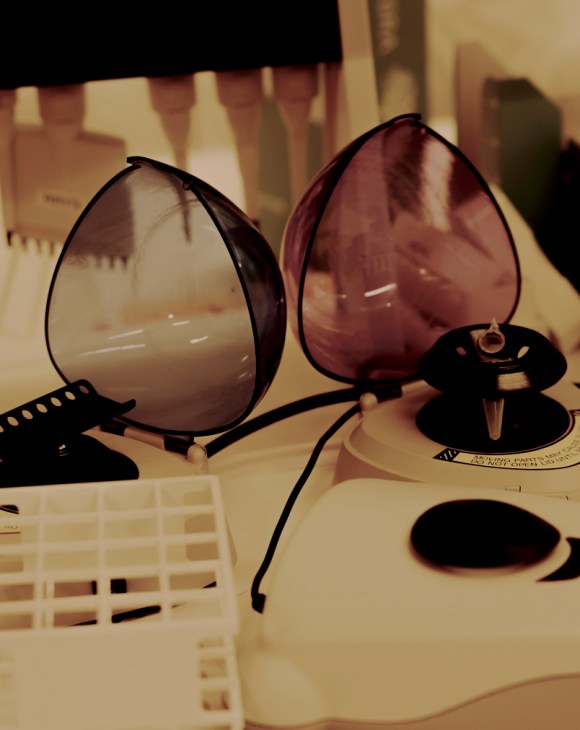
When we meet in Novo Nordisk’s research centre in a light-industrial zone west of Copenhagen, Knudsen has just been awarded the Lasker Prize, sometimes called “America’s Nobel”, for clinical research. There’s talk of her one day winning the Nobel. “I don’t think about that,” she says, shaking her head. “That’s not my purpose. You normally get that after decades of work. I was wholly surprised when Lasker called.” Knudsen commutes from her flat near Copenhagen Central Station by the S-train and seems to have no conspicuously extravagant habits. She has no intellectual property rights over her discoveries and has never asked for a raise. “We have little inequality in Denmark,” she says. “At Novo, we have a high level of psychological safety so I’ve always felt very free to speak my mind and take risks. The company is about being patient-centric and ethical. The leaders have always thought about how they wanted to inspire people to be creative.”
Novo Nordisk is controlled through voting rights by Novo Nordisk Fonden – the world’s largest charitable foundation with a value of €149bn, making it twice the size of the second-placed Bill and Melinda Gates Foundation. But it’s still a for-profit company. Knudsen tells Monocle that she is delighted by the colossal sums that her discoveries have generated because they mean that she can ask for more research funding. But what if, for example, they were to discover a permanent cure for diabetes, say, or obesity? Surely that would be an act of monumental self-sabotage?
“If you really believe in your own strategy, that you need to be patient-centric, you have to be involved in that,” she says. “Otherwise, you aren’t a cutting-edge company.”
Novo Nordisk isn’t immune to the controversies that attend Big Pharma, such as the high costs of its drugs and its influence on the medicine and research industries. The side-effects of Ozempic are well documented and include nausea and vomiting. A recent study showed that most users stop taking it after two years and put on weight again. Meanwhile, there’s growing competition from, among others, US company Eli Lilly’s Zepbound, which is reportedly more effective as an anti-obesity drug. A Novo spokesman says that the market is big enough to accommodate rivals: 500 million people suffer globally from diabetes and a billion from obesity. By 2035 more than half of the planet is projected to be overweight. In 2021, Novo Nordisk launched Ozempic in China.
There’s a broader issue: that the drug is a band-aid for a far larger problem, our corrupted food system in which industrial food companies bombard us with addictive, ultra-processed combinations of fat, salt and sugar. Ozempic works in two ways: by “tricking” the brain into believing that it is satiated and by slowing digestion so that you feel fuller for longer. Doesn’t it deny us our free will? “That’s a really good question,” says Knudsen. “We need to understand it better, which is why I would like more funding into obesity research. I would say that you can train your free will but only if your genes and your society – as well as the food industry – let you. Medicine is one way to help people but the environment is also important, so we need to talk about prevention and healthy living.”
Knudsen is mostly a vegetarian and believes in regular exercise. As for the future applications of her discoveries, she can’t comment but has said that the data on semaglutide’s ability to reduce the risk of cardiovascular disease is “phenomenal” – partly because it lowers inflammation, which suggests that it could have other major applications.The company is investigating its effectiveness against Alzheimer’s too; she tells Monocle that there’s “a lot of mouse data but no clinical data”. The clinical data is scheduled for release this year.
Success doesn’t appear to have gone to Knudsen’s head. But as Monocle leaves, it occurs to us that one day her career might be given the Hollywood treatment. Who would play her on screen? “Connie Nielsen,” she says, without hesitation. A Danish screen star playing a Danish star of science? Seems like good casting.
Addis Ababa’s recently renovated Africa Hall is a symbol of the continent’s unity
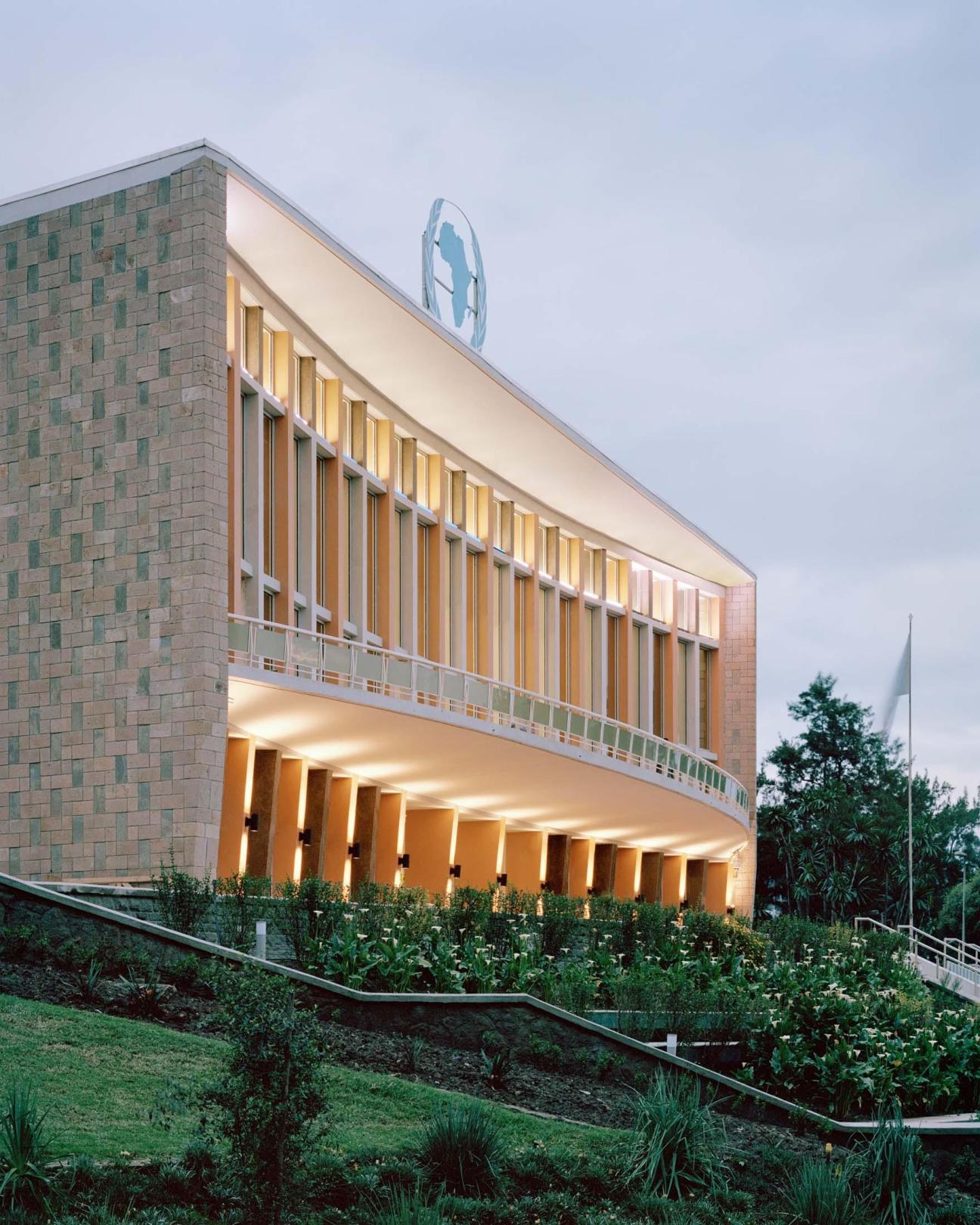
The world is filled with buildings erected primarily as symbols. Some are impressive; others are not. When Emperor Haile Selassie of Ethiopia inaugurated Addis Ababa’s Africa Hall in 1961, it hit the sweet spot between symbolism, functionality and form. Designed by Italian architect Arturo Mezzèdimi, the HQ of the United Nations’ Economic Commission for Africa (ECA), whose mandate is to promote the economic and social development of its member states, became a beacon of architectural modernity for an entire continent, while heralding the transformation of Addis Ababa from, in the emperor’s words, a “great village” into a “truly great capital”, and acting as a lodestar for African political co-operation. That’s why the brief for the building’s renovation, issued in time for its 50th anniversary in 2011, was weighted with historical expectation; and why its subsequent transformation has lent it renewed symbolic value.
In 2013 the commission for the work was awarded to a Brisbane-based team from Architectus Conrad Gargett. “It was a first for us to work in Africa,” project architect Simon Boundy tells Monocle. “But the UN being an equal-opportunity employer, we established that we were the most qualified and experienced for the job.”
One of the first things that the firm did was hire Mewded Wolde, a fresh-faced architecture graduate from Addis Ababa, to be its point person on the ground. It then asked her to provide accurate measurements in order to build a scale model of the building. “Eleven years ago, we didn’t have all of the modelling software that we have today,” says Boundy. “A few years later, when we got a 3D-scanning machine, we overlaid our scan onto the model and it was remarkably accurate.” Accuracy became Architectus Conrad Gargett’s watchword. The hardest thing about renovating a protected building is the lack of freedom to make major alterations – a restriction compounded by the 21st century’s near-exhaustive list of health and safety regulations. “If you’re a heritage architect, you want to preserve and conserve the building,” says Boundy. “But on the other hand, you have still got to modernise it and keep it relevant by making it accessible and safe. Otherwise, it doesn’t get used.”
Africa Hall in numbers
Year completed:
1961
Original construction time:
18 months
Overall area:
75,000 sq m
Re-inaugurated:
October 2024
Size of ‘Total Liberation of Africa’, a stained-glass artwork by Afewerk Tekle:
150 sq m
Number of bespoke original furniture pieces created by Arturo Mezzèdimi:
500
Number of new mosaic tiles fabricated to replace the deteriorating façade:
13,000,000
When the building’s horseshoe-shaped plenary hall was built, 26 African countries were represented in the ECA. By 2011 this number had risen to 54. As a result, Mezzèdimi’s original wooden seating had to be sacrificed. “We designed new joinery using these old architectural drawings,” says Boundy. “This meant that we were able to make something contemporary that could house audiovisual conferencing and voting systems, while also ticking the box for accessibility.”
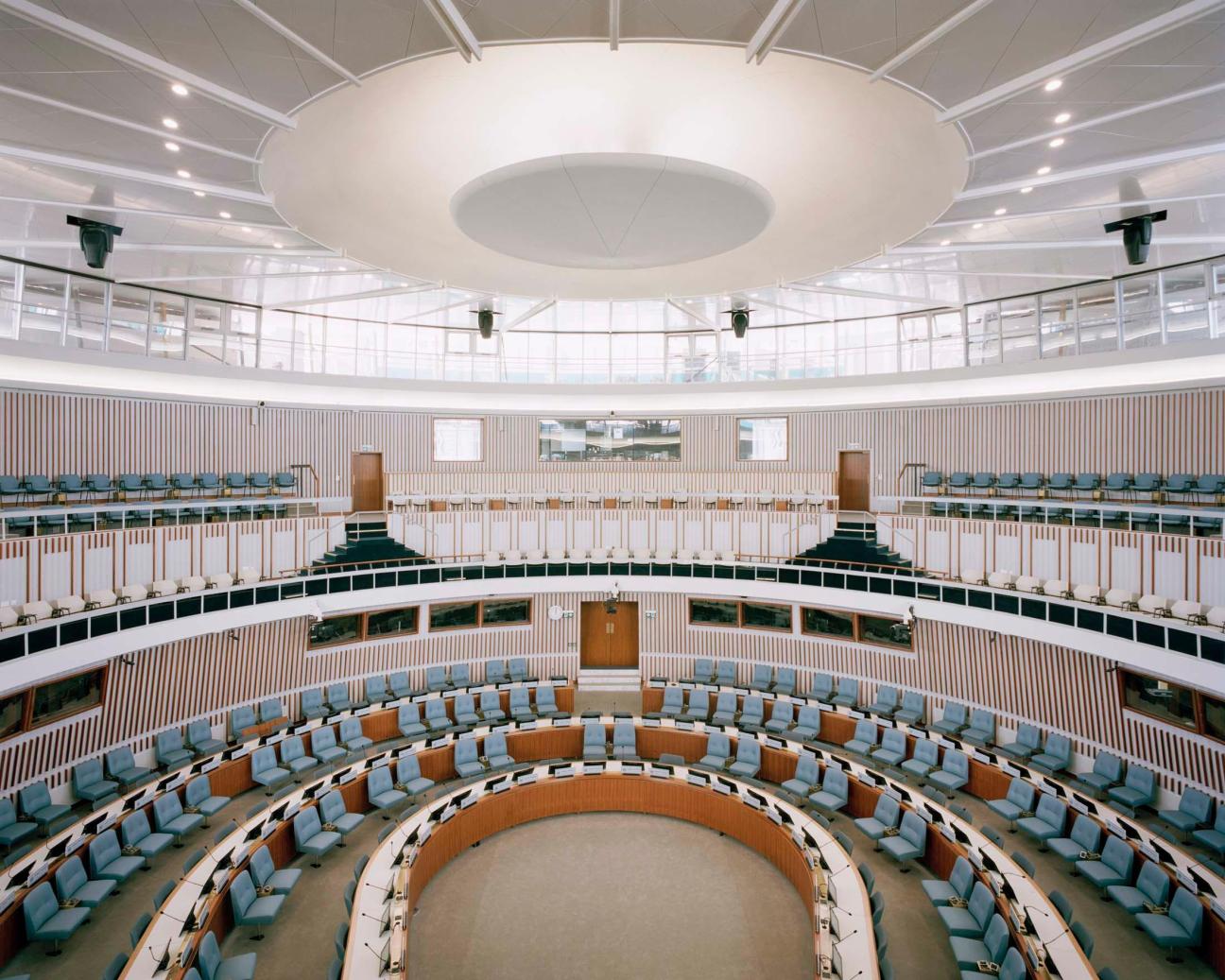
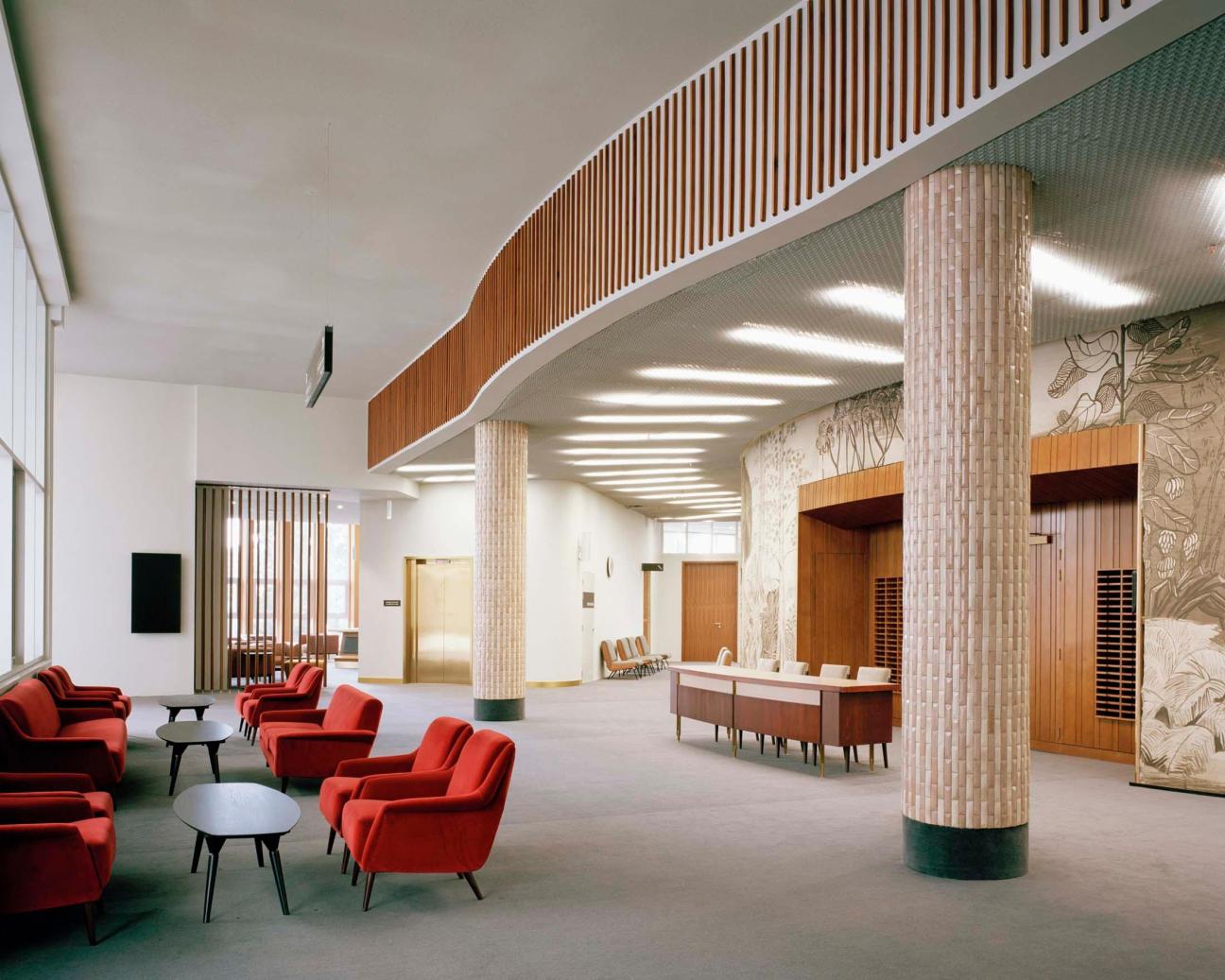
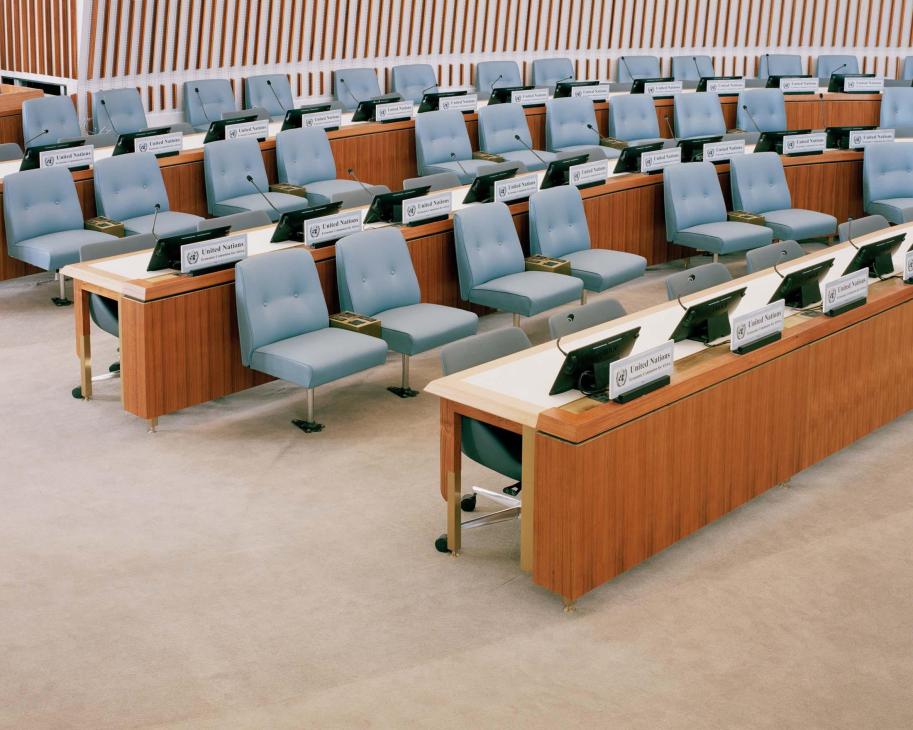
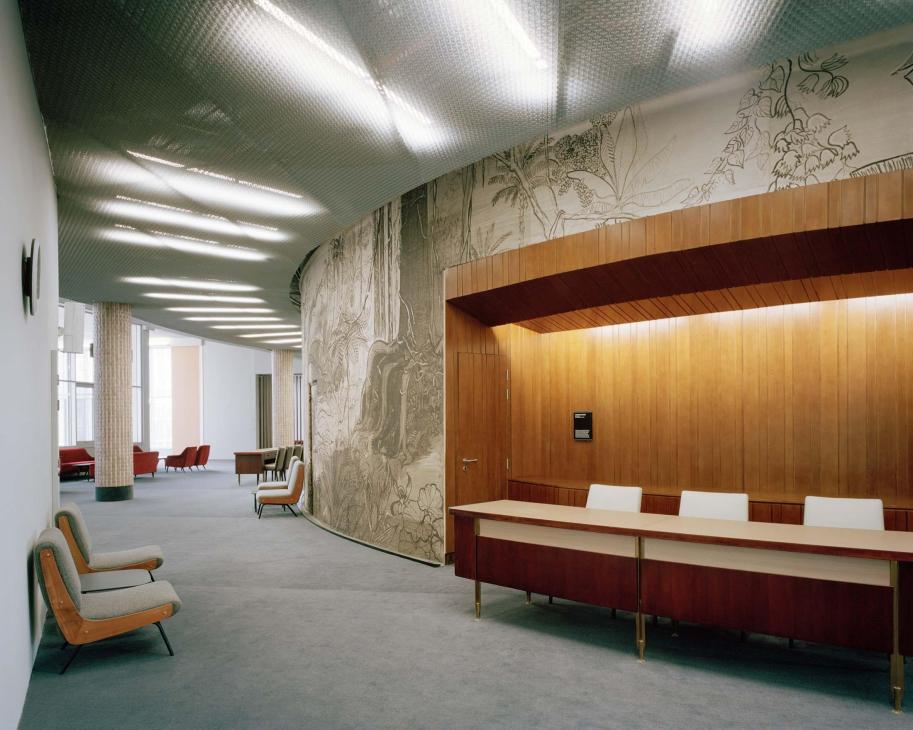
Any additional box-ticking was concerned with preserving the space as much as possible, even if that required painstakingly producing like-for-like replacements of features that were deteriorating. The mosaic tiles on the exterior of the building had to be removed to address structural degradation, so 13 million new ones were fabricated using the original ceramic material and replicating their textured profile and brown, orange and off-white colour scheme. The building’s entire façade was then reglazed to improve its energy efficiency and structural integrity, while the landscape garden, and its fountains, garden beds and integrated stairs, were completely refreshed and reinstalled.
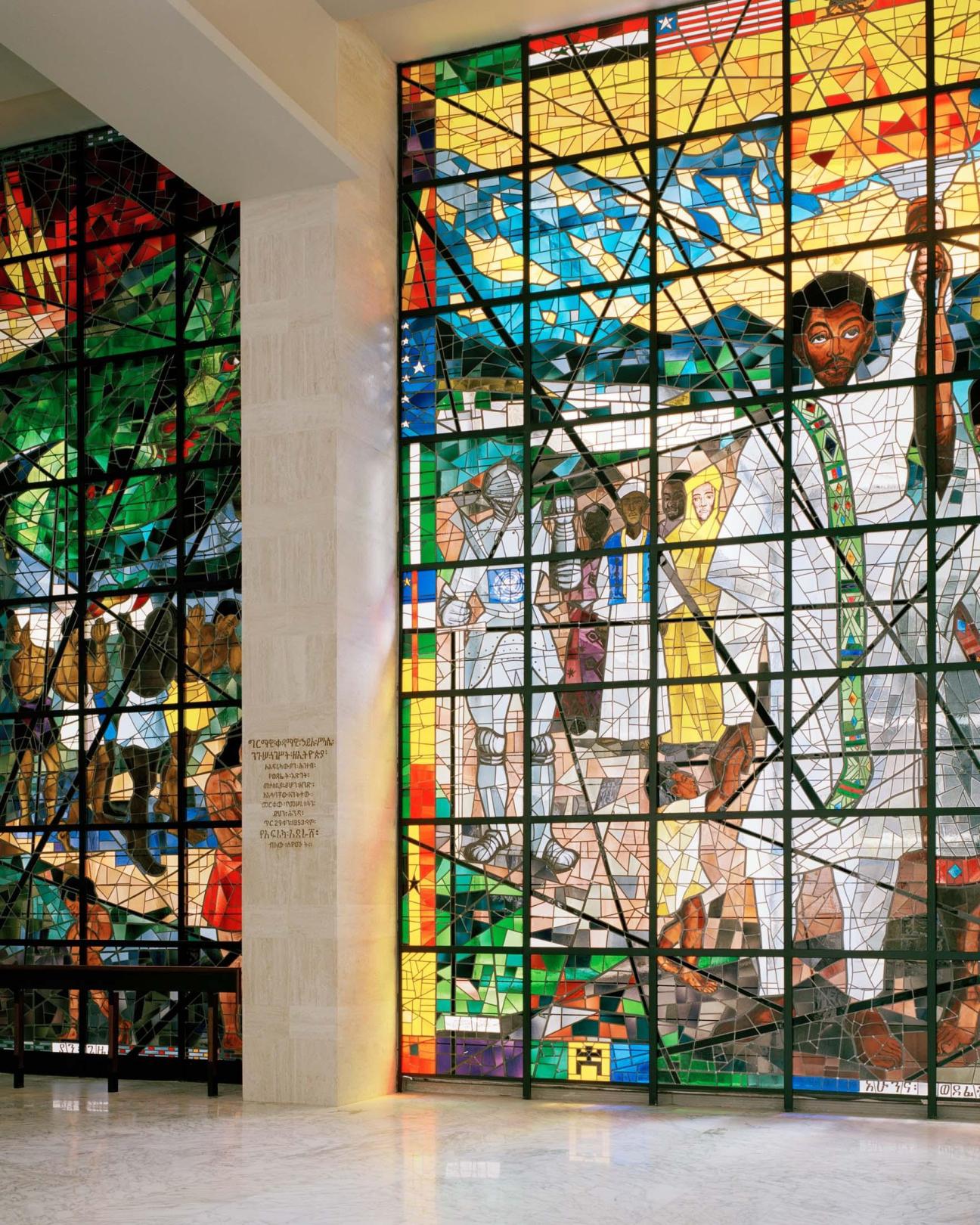
But the jewels in the building’s crown are its integrated artworks. The most famous of these is the 150 sq m stained-glass triptych “Total Liberation of Africa” by Ethiopian artist Afewerk Tekle. The dazzling work, which features scenes from the continent’s history, was made by Studio Atelier Thomas Vitraux in Valence, France. Architectus Conrad Gargett enlisted Emmanuel Thomas, the grandson of the original maker, to restore it.
A mosaic artwork depicting fearsome African fauna, which was removed soon after the building was opened, was also recreated using archival drawings and photographs. Meanwhile, 500 pieces of bespoke modernist furniture, designed by Mezzèdimi, were spruced up and returned to their intended positions. “From the cafeteria to the rotunda, every space had a designed furniture piece and a specific colour palette,” says Wolde. “It’s very difficult to find a building these days with integrated artwork, let alone on this scale.”
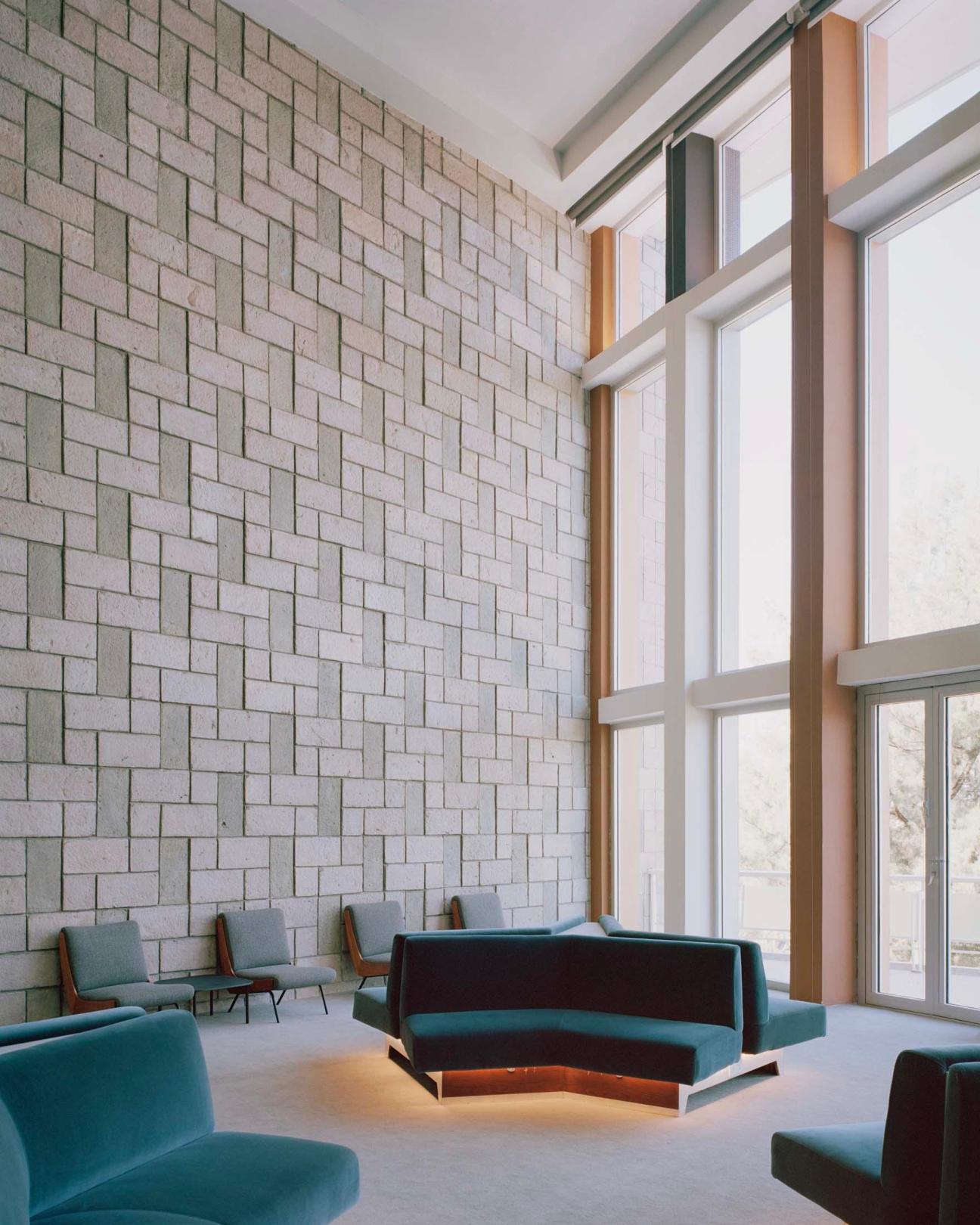
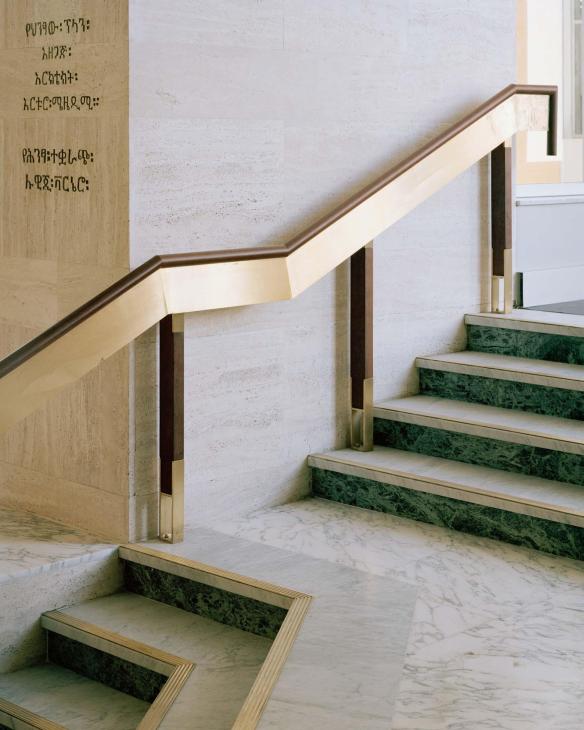
It would not be hyperbolic to describe this building as the crucible of 20th-century African integration. Two years after its inauguration, the leaders of 33 states across the continent signed the Charter for the Organisation of African Unity (oau), while basking in the polychrome splendour of Tekle’s stained-glass window. The oau was the precursor to the African Union, which is also headquartered in Addis Ababa. Among the latter’s founding principles is a pledge to promote “unity, solidarity, cohesion and co-operation” among African countries. Such sentiment was born in the heady days of decolonisation, when nations pulsed with the optimism of splendid autonomy that Africa Hall represented. Unfortunately, much of the hope that powered the building’s construction has been tempered through the continuation of seemingly interminable strife across the continent, not least in Ethiopia, which continues to suffer from the aftermath of a bloody civil war in its Tigray province.
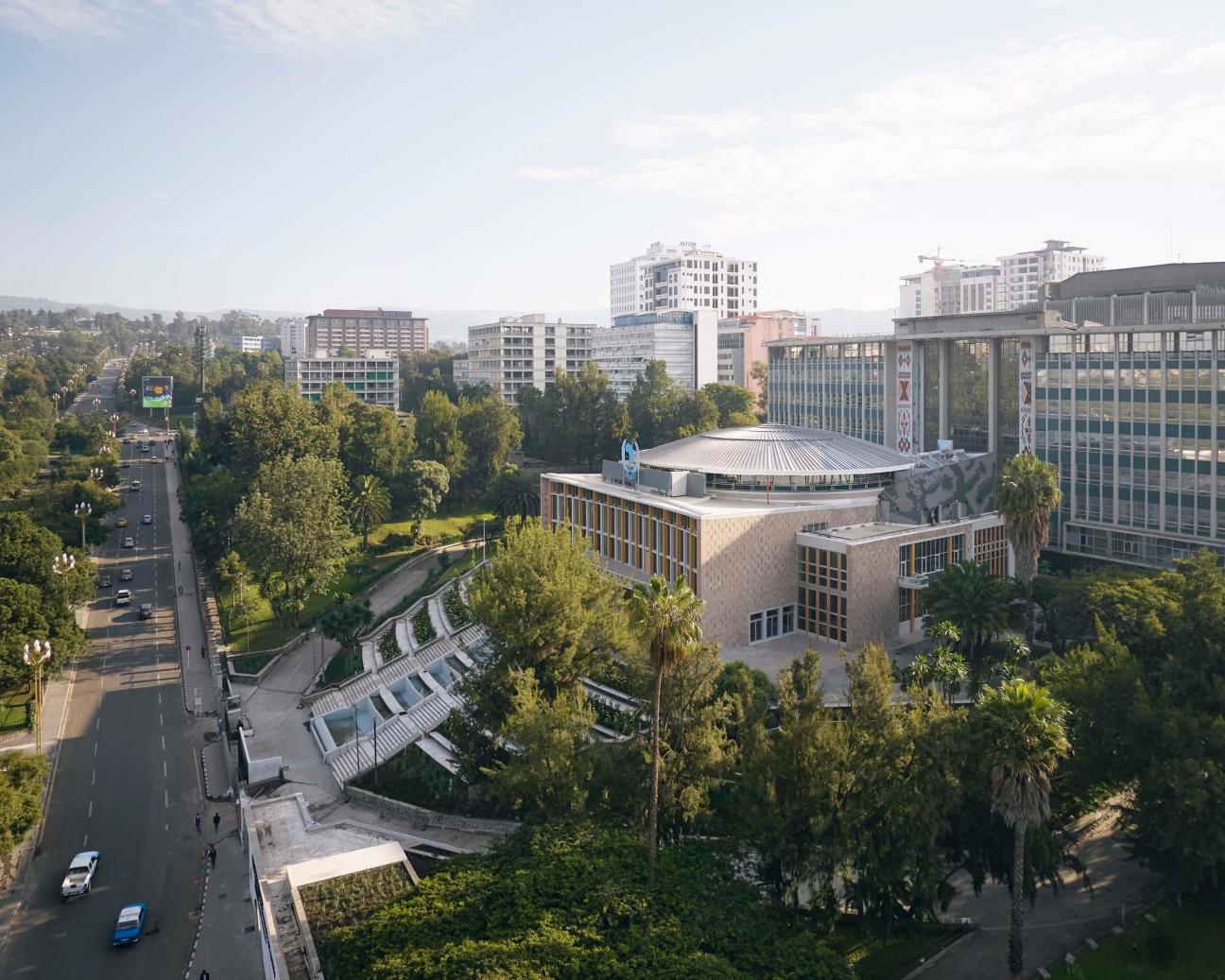
But Wolde believes that Africa Hall’s refurbished state, unveiled in October 2024, augurs some sunshine on the road ahead. “This building will be a symbol of what renovation can bring back to life – how we can look back at our history and reimagine our future,” she says. As symbolic buildings go, it doesn’t get much more potent than that. —
Three other unsung HQs
1.
International Seabed Authority
Kingston, Jamaica
The vast windows of this tropical modernist edifice gaze out on the sparkling Caribbean Sea. Its occupants moved here in 1994; since then, the importance of the intergovernmental body has grown, especially in recent years as deep-sea mining has become a hot topic across the globe.
2.
Interpol
Lyon, France
Since French president François Mitterand inaugurated this glassy postmodern HQ in 1989, the membership of the world’s largest international police organisation has grown from 150 to 194 countries.
3.
Palace of Nations
Geneva, Switzerland
Inaugurated in 1938 to house the League of Nations, this dazzling neoclassical building is now home to the United Nations Office at Geneva, where an array of the organisation’s agencies regularly meet. Among its many splendid spaces is the 754-seat Human Rights and Alliance of Civilizations Room, which features a ceiling sculpture by Spanish artist Miquel Barceló.
Kansas City shows the world how to save a CBD
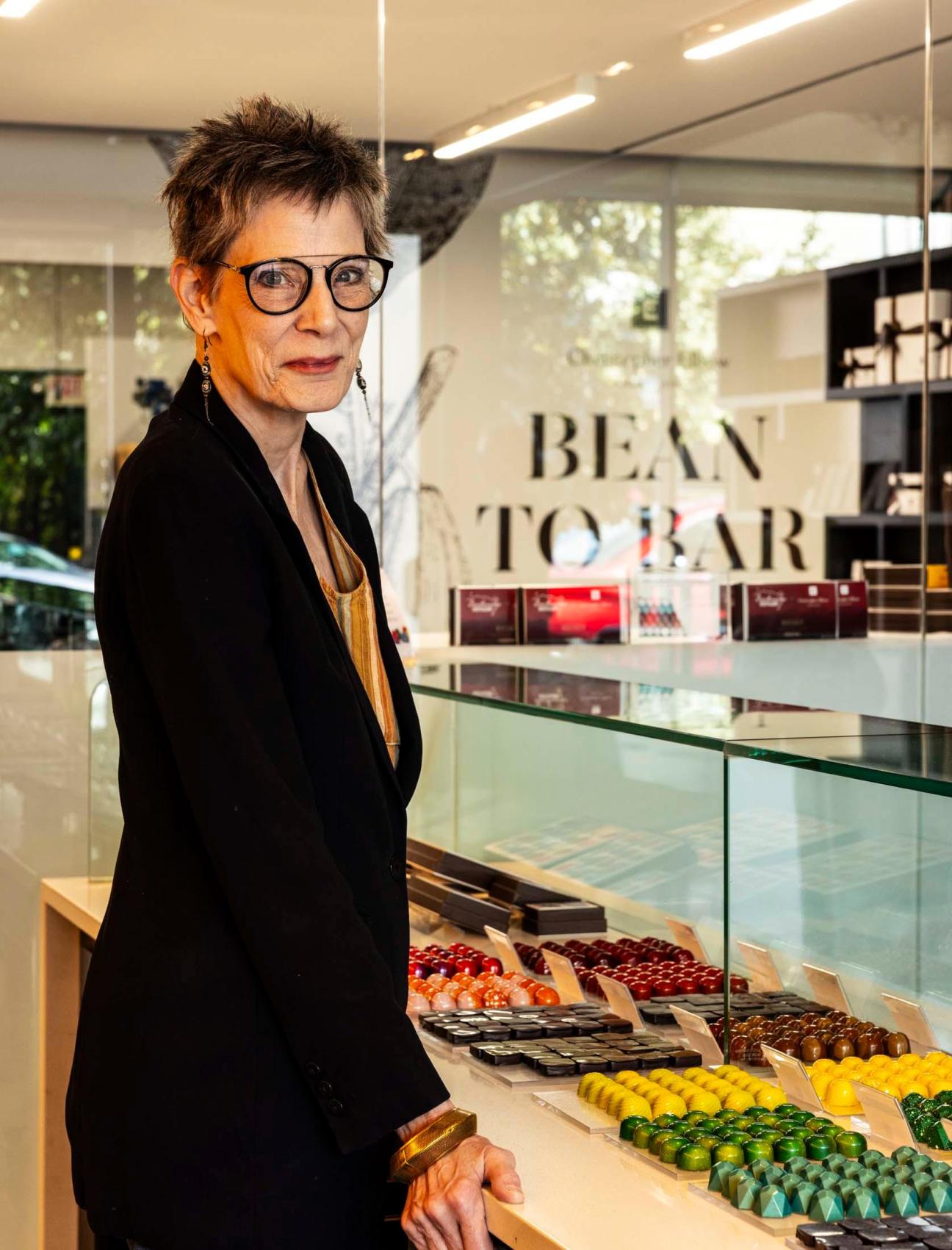
“I’m originally from Los Angeles but the answer wasn’t there for me,” says Brian Kim, who runs a string of successful coffee shops in Kansas City. Kim has called the Midwestern metropolis home for more than 10 years. He tells Monocle that he chose to base himself here because it offered him “breathing room” to get his ideas off the ground. “That’s partly down to the cheaper cost of running a business,” he says. “People here also have a lot of enthusiasm for local things.”
Kansas City sits almost perfectly in the middle of the US, straddling the Missouri-Kansas state line. For a long time it had an unenviable reputation. During the mid-20th century, its downtown became a place that was almost exclusively for doing business and residents were gradually edged out to the suburbs. The city centre became a drive-in, drive-out area where the car reigned supreme; by the early 2000s, the downtown population had dwindled to a mere 13,000.
Over the past 20 years, however, there has been a steady reversal of Kansas City’s fortunes. Today it has one of the fastest-growing city economies and downtown populations in the country, and is being talked about as a model of urban renewal. According to the city council, more than 122,000 people now work in the greater downtown area and office occupancy is at about 85 per cent. This compares to a nationwide average across major metropolitan areas of about 50 per cent. At a time when even the great coastal cities are facing the existential threats of desolate office blocks and crime-blighted downtowns, Kansas City can offer a few pointers.
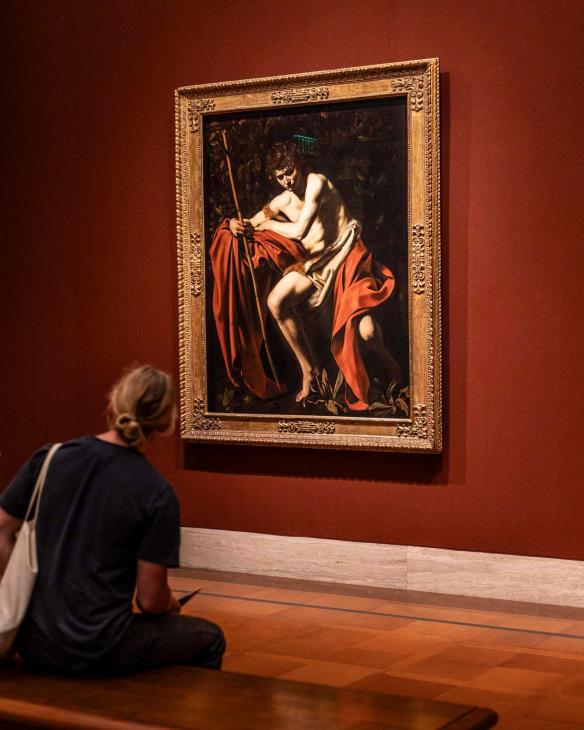

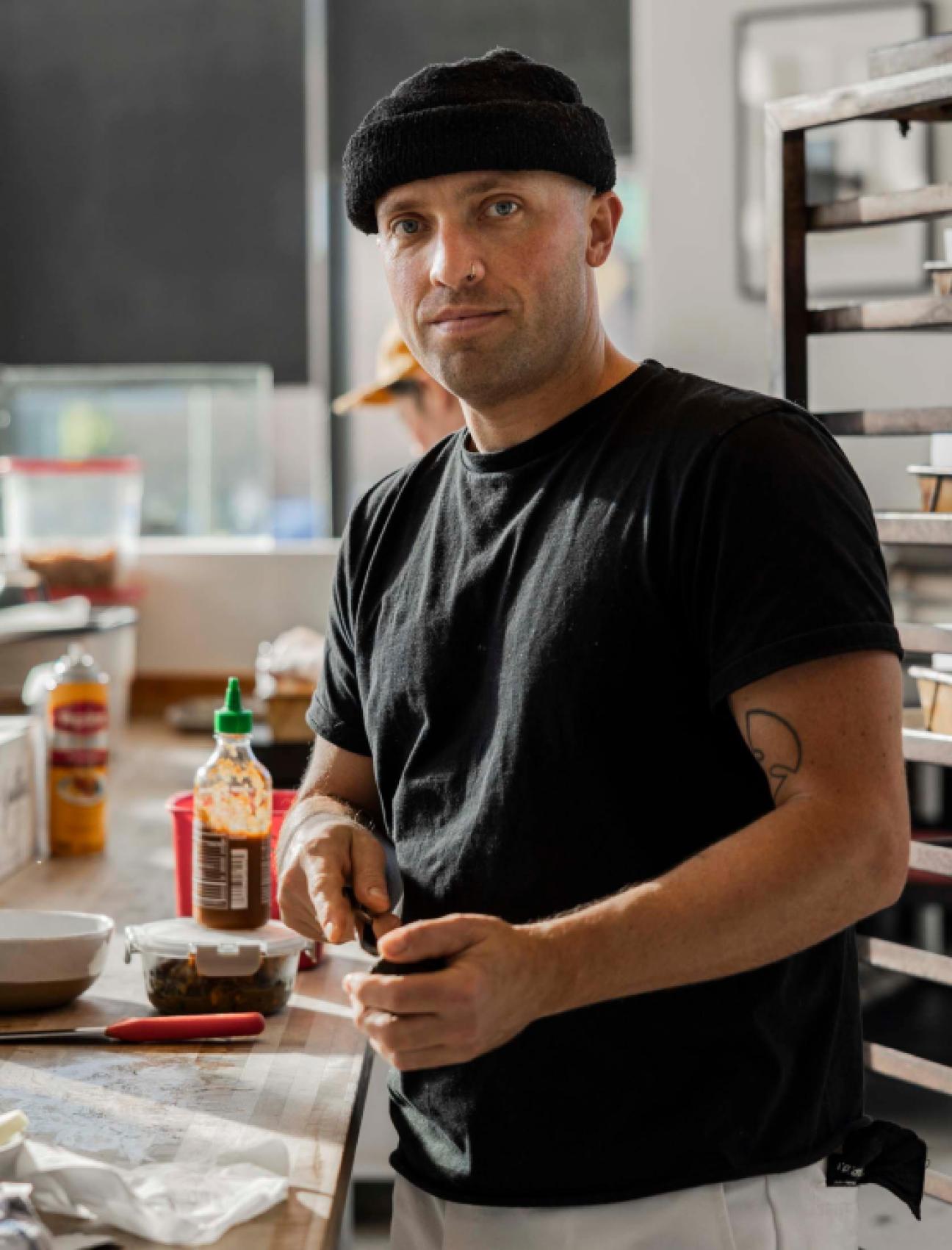
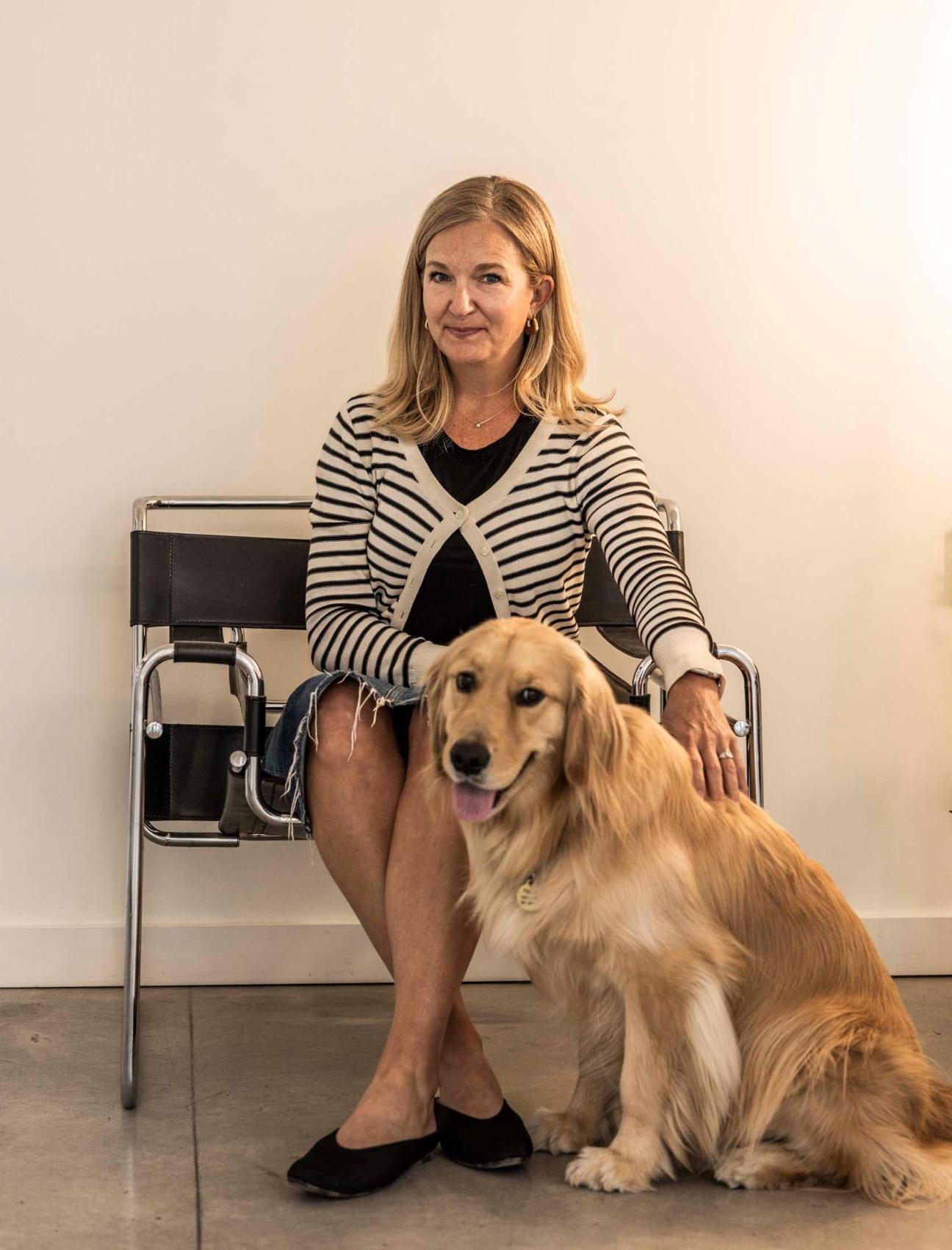
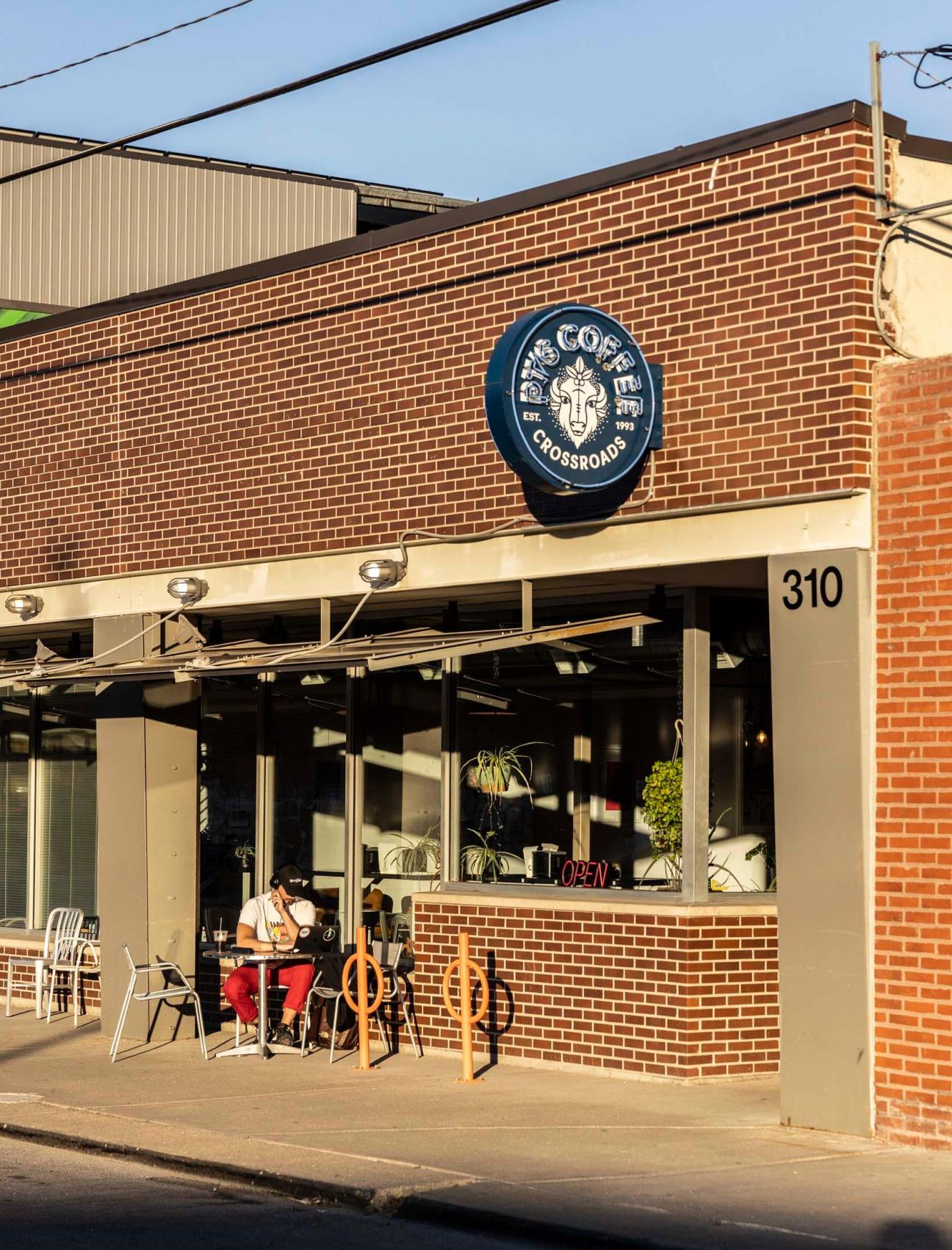
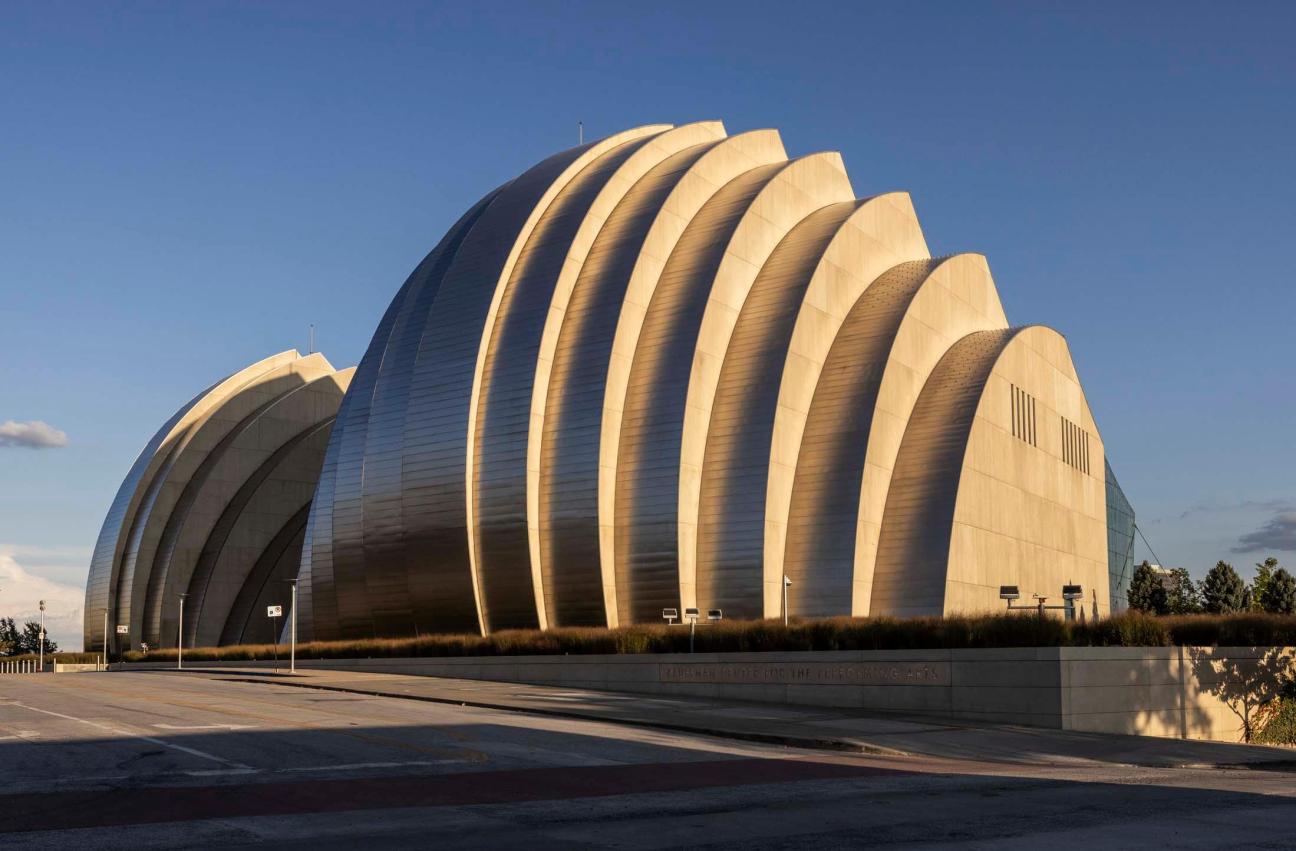
Things began to change when the state government and private investors decided to invest more in the city’s downtown and its housing stock. Since 2002 it has poured more than $10bn (€9.8bn) into the central business district and many of those moving to Kansas City end up living and working in the centre, which boasts the largest residential population of any Midwestern city. Over the past two decades, more than 50 office buildings have been converted into roomy apartments, showing that this can be done successfully, while former industrial areas such as the Crossroads district have had many of their 20th-century brick warehouses transformed into mixed-use developments comprising housing, creative offices and independent shops, bars and restaurants. Meanwhile, the light-rail streetcar system, launched in 2016, is being expanded and is scheduled for completion later this year.
Why the Paris of the Plains is back
The simple principles that turned around Missouri’s biggest city.
1.
Invest in downtown
Kansas City leaders poured money into upgrading the housing and commercial stock in the cbd and were unafraid to turn unused offices into spacious apartments.
2.
Keep historic, family-run businesses close to home
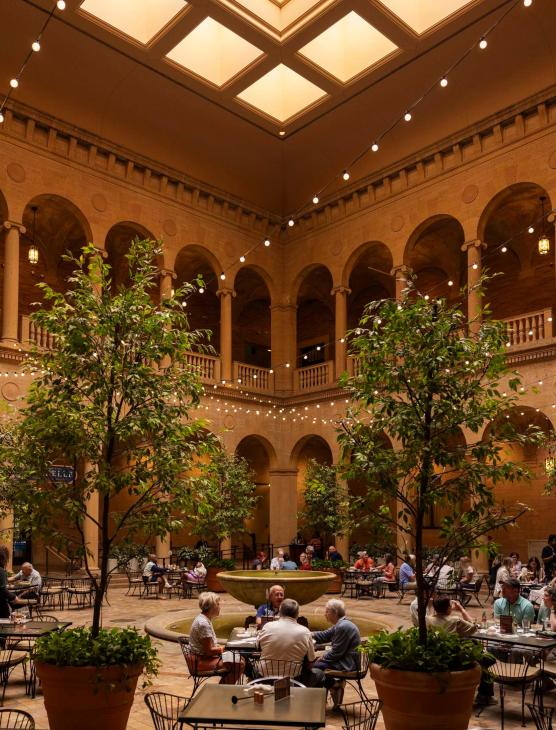
Historic department stores such as Halls have remained part of the fabric of downtown, taking advantage of a growing footfall.
3.
Get people moving
Investments in a new light-rail network in 2016 have paid off, with people getting out of their cars.
4.
Make old buildings work harder
The revitalisation has been guided by the idea of “reuse and restore”.
5.
Put those who live there in the driving seat
Some of Kansas City’s best ideas came from citizen-led initiatives, from enticing entrepreneurs to set up shop to making the city centre more liveable.
Raven Space Systems, a start-up based in the central West Bottoms neighbourhood, is developing capsules that can be used to shuttle cargo back from space and has won contracts from Nasa and the US Air Force, among others. Its co-founder Blake Herren recently secured millions of dollars in funding and was lured to Missouri from Oklahoma by an initiative that provides financial support, office space and mentorship to early-stage technology entrepreneurs for a year if they move to Kansas City. The scheme is run by the Downtown Council of Kansas City, a private, nonprofit body that has driven much of the change here in recent decades. “It’s about making the city a place where people feel welcome to come and try out ideas,” says Tommy Wilson, who oversees the programme. The citizen-led group’s “Imagine Downtown KC 2030” blueprint involves creating more green spaces and enhancing the urban core’s public transport and walkability. “We’re Kansas City residents ourselves,” says Wilson. “It’s far easier to be motivated when it’s your home that you’re improving.”
As a historic crossroads for agriculture, Kansas City has a long history of affluence that’s reflected in the skyline. Rows of art-deco brick buildings were erected during the boom years of the 1920s and 1930s, when the city became known as the “Paris of the Plains” due to its profusion of contemporary architecture and riotous jazz scene. These buildings have been given a new lease of life as shops, a gallery, a wine bar and a brewery. Kyle Evans runs Penrose, a hole-in-the-wall espresso spot. “I left Kansas City in 2013 but, after almost 10 years living in the Bay Area, I decided that it was time to come home,” he says. “When I got back here, I wanted to drink good coffee but also do something meaningful.”

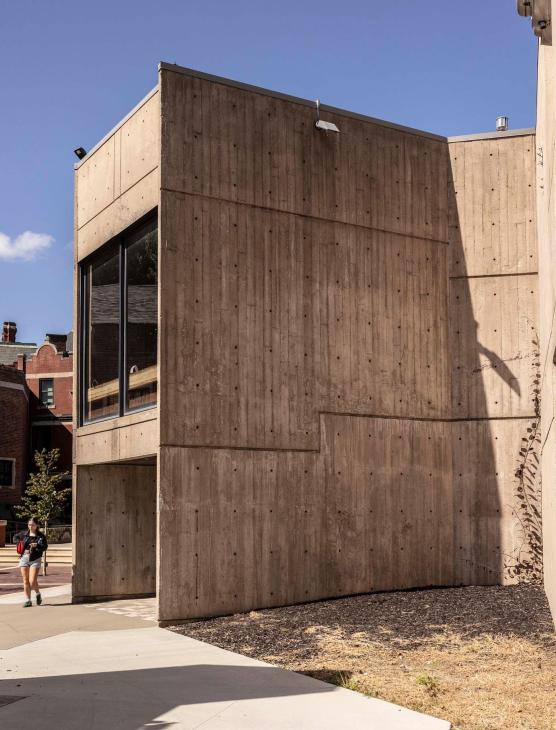
Once one of the world’s largest cattle- trading hubs, the West Bottoms district is now known for a range of trades. Inside a modernist building is Kem Studio, an industrial design and architecture firm. “This is a city that takes design seriously,” says Jonathon Kemnitzer, who co-founded the studio in 2004 with Brad Satterwhite. He tells Monocle that they considered basing themselves in a larger city but Kansas City won out. “It’s so easy to meet with civic leaders here and make things happen,” he says. The studio’s team is now revitalising swaths of land on the banks of the Missouri river. “More than ever, there’s a sense that it’s empowering to be in the Midwest,” says Satterwhite. “There’s space to think here, as well as land to develop.” —