Issues
A peek into a Hector Barroso-designed house made from locally sourced materials in Valle de Bravo, Mexico
“You feel like you are right there. It’s the light that draws you in.” Hector Barroso is describing the work of French impressionist artist Claude Monet, who has cast a long shadow on him. The Mexican architect, who leads his namesake studio in Mexico City, could well be describing his own work, which draws heavily on art and literature for inspiration. “As you enter, the first room you come to is a living room,” he says of Casa Catarina, a newly finished residential project by his studio. “It’s quite dark, almost like a cave, but light from the garden encourages you to go out and have a dip in the pool.”
A weekend retreat set in Valle de Bravo, a rural enclave for the well-heeled just a few hours’ drive from Mexico City, Casa Catarina sits on a plot of land the size of two soccer pitches and comes with its own reservoir. Water, therefore, features prominently in the project: a swimming pool runs parallel to the house and a reflective pool sits perpendicular to the building.
Seen from above, the residence is arranged in a V-shape, pointing down a gentle slope towards the reservoir. One wing contains bedrooms for the client’s family, while the other – at the request of the client – is a self-contained guest wing that can easily be closed off when not in use.
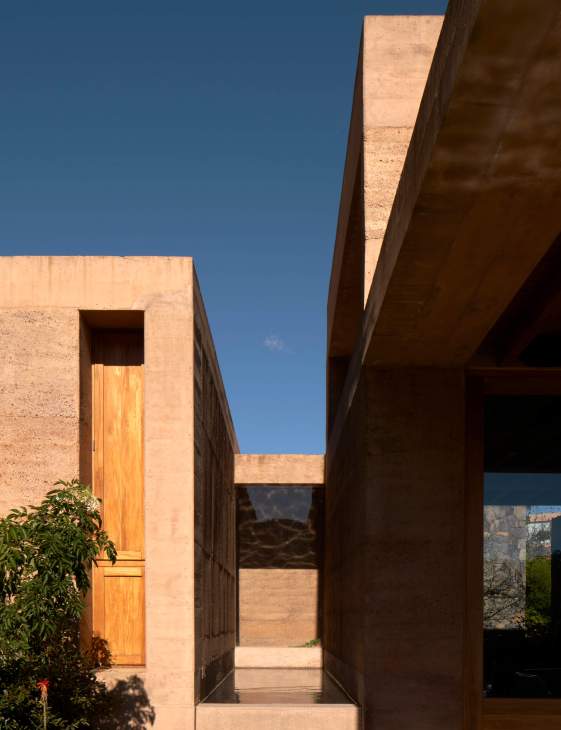
These wings spread out elegantly, recalling the shoin-zukuri building complex at Katsura Imperial Villa in Kyoto, which follows the same layout (lyrically dubbed “the flying geese formation” in Japan). And it’s this comparison, when Monocle visits, that prompts Barroso to enthuse over another source of artistic inspiration: In Praise of Shadows by Japanese author Tanizaki Junichiro. “The book changed my life,” says Barroso. Published in 1933, Tanizaki critiques the rapid changes sweeping through the country at the time and laments the old Japan, which was in touch with, in his mind, a subtler and more refined aesthetic taste. Such an outlook is reflected in Barroso’s work, which is rooted in simplicity and a return to basics.
For proof of such an approach, one only has to look at the building’s layout: rooms are successively set back from one another, appearing as a series of interconnected cubes. These are pierced with light and greenery, with each communal space facing the garden, which is carefully arranged with endemic plants and shrubs. To enhance natural light further, the architect has incorporated an enclosed garden next to each bedroom’s en suite. Numerous corners exposed by the house’s staggered plan are finished with floor-to-ceiling glazing, some perfectly framing views of the magnificent rocky cliff beyond the garden, known as El Peñon. This move ensures that both the gardens and landscape become parts of the architecture.
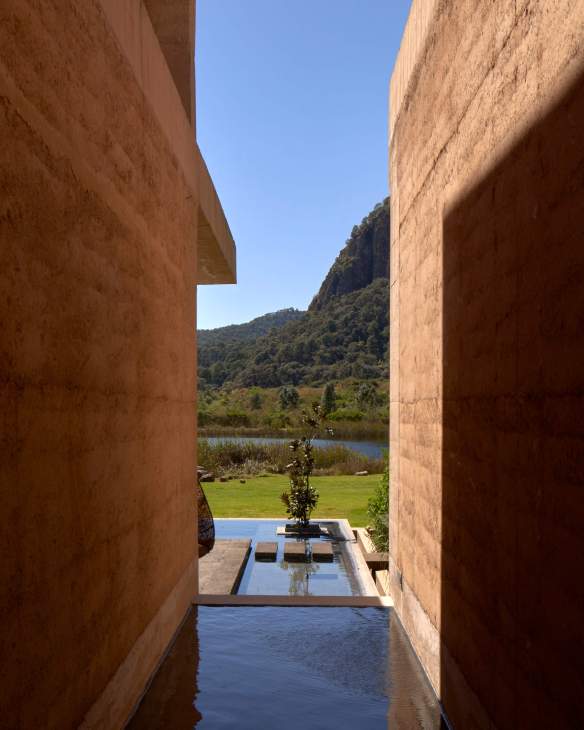
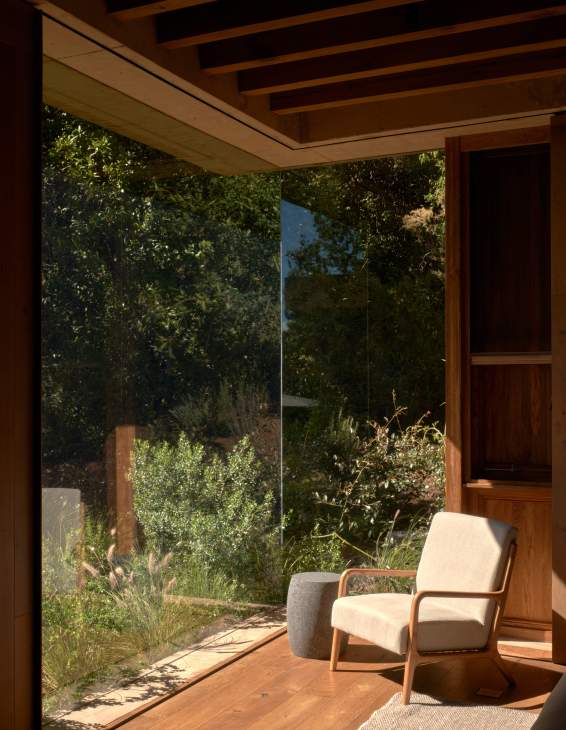
Simplicity is also embedded in Casa Catarina’s structural form. The building hugs the ground closely, only rising at the edge of one of the wings – where a sitting room has been added on top of the principal bedroom for the client to enjoy tranquil moments – and at the centre of the structure, where two double-height communal living rooms can be found. “[Having side-by-side living space] is very Mexican,” says Barroso, explaining that the living room closer to the garden acts as “an in-between space”, half-way indoors and half-way out. “It’s because we have a brilliant climate here, so people want to spend a lot of time outdoors.” Throughout the year the sunlight, reflected by the pool, bounces off the deep recesses framing the wall-to-wall windows, and is gently directed back into the communal rooms.
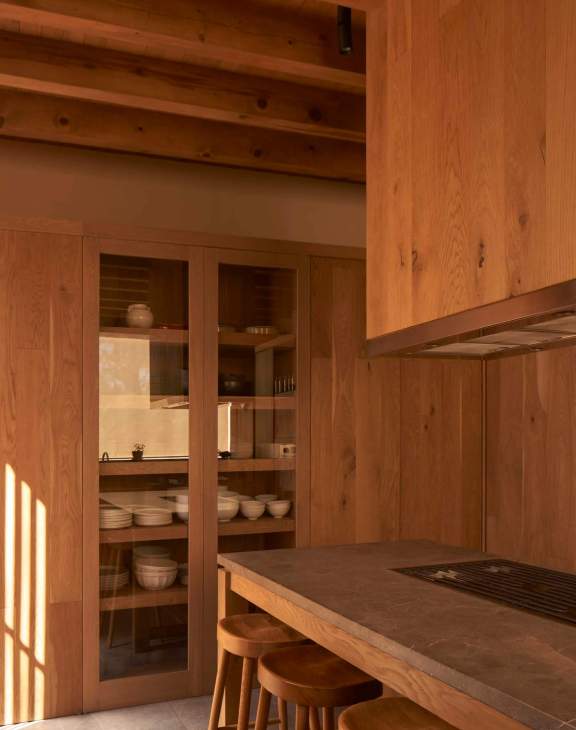
Enhancing this straightforward design ethos are the home’s sparsely decorated interiors. Walls are finished with cream-coloured stucco, while wood features prominently throughout – pine for the ceiling beams and oak for the doors, shutters, window frames, bespoke shelves, cabinets and flooring. Barroso engaged Renzo, an 85-year-old Italian carpenter who normally lives in Oaxaca, for his precise woodwork. “In Mexico, there is no industrial standardisation, so we rely on craftsmen like Renzo to work flexibly,” says Barroso. “He is amazing. He would keep on tweaking the wood until suddenly – bang – the glass fits perfectly into the frame.” Despite the balmy climate, a stove has been inserted into the corner of the living room to fend off any winter chill. The Santo Tomás marble used for the kitchen worktop is the only feature that stands out. It is dark grey, with white veins like a flash of lightning in the night sky.
Barroso says that with this project, in addition to simplicity, he began to think more about sustainability too. The façade incorporates rammed earth, oak and stone sourced nearby, “mimicking” the landscape. The concrete, essential for structural support and used in the roof slab to shield the rammed earth from rain and erosion, has been locally pigmented to match the colour of the earthen walls.
But Barroso’s love affair with soil is not new. The architect has previously built an entire stadium with rammed earth in the Mexican state of Baja California Sur. “The soil in Valle de Bravo is very different from Baja California Sur. The colour of soil here is richer due to the different climate,” says Barroso. “I employed a local construction company, Taller AF, to work on Casa Caterina, because of their knowledge of the soil. That was important.”
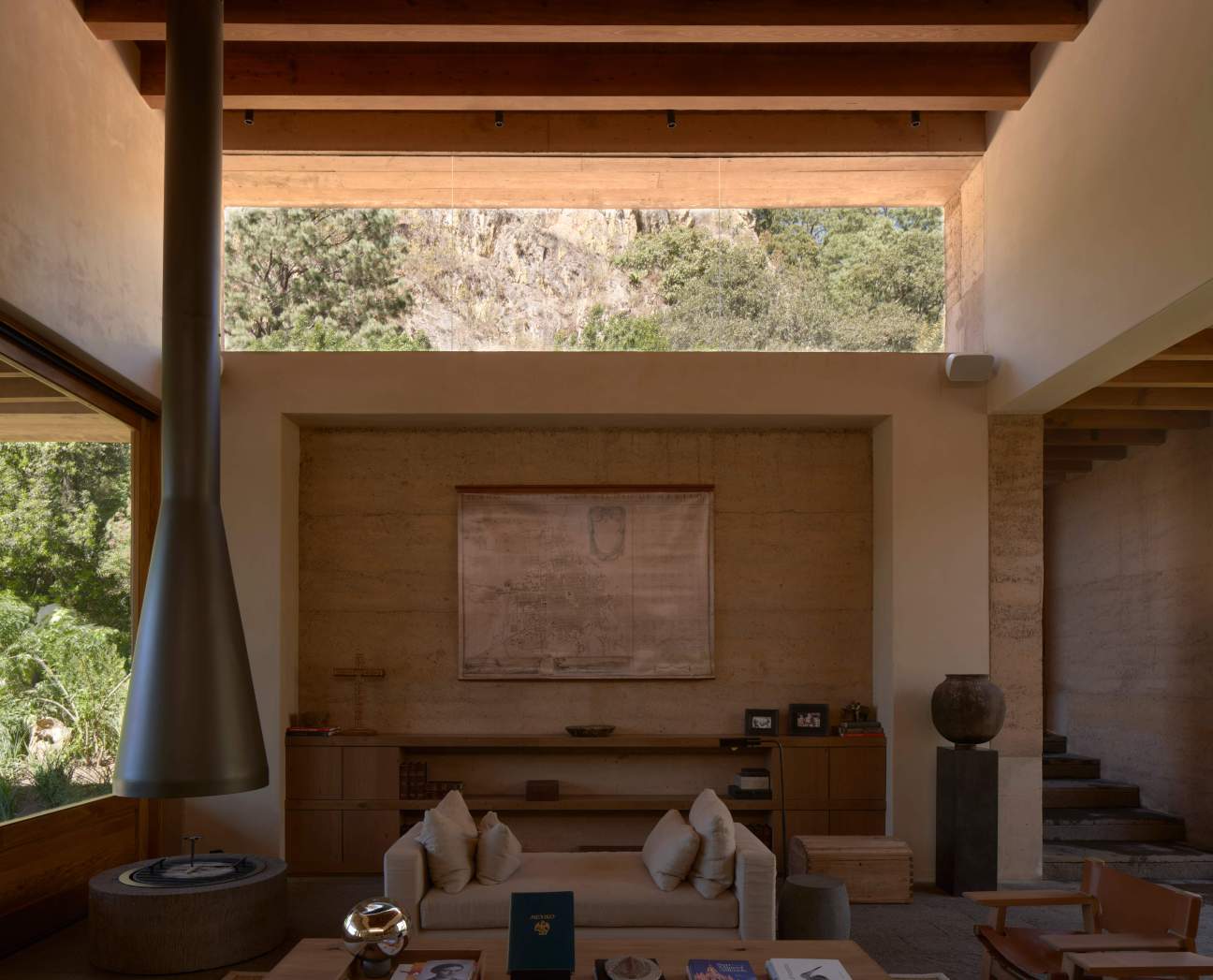
The resulting material, with its crisp, sharp edges, rivals the allure of exposed concrete and has a smaller carbon footprint. Rammed earth is labour-intensive but fire-resistant and seismically strong. Temporary frames must be set up, then soil is poured in and compacted until it is as hard as stone. After each layer dries, the process is repeated until the desired height is achieved, leaving lines on the façade that tell the story of this meticulous process. “The Great Wall of China was built with rammed earth,” says Barroso enthusiastically. “Once built, such structures are very strong. They last for ever. I want my buildings to be around for a long time and acquire patina.”
This might explain why Casa Catarina, despite being brand new, feels as though it has always been there. The knots in the pine and the roughness of the stone, incorporated into the façade, terrace and pools, all add to its timeless quality. Transplanted elsewhere, however, would the architect’s buildings retain the simplicity, material honesty and openness of Casa Catarina? “It’s about understanding the land first,” says Barroso.
Indeed, sketches produced by Barroso for this project reflect the essence of his thinking. They are made with pencil, sometimes with a hint of colour – yellow to indicate sunlight, green to indicate vegetation – and are simple in nature, appearing as a cluster of dark black lines. Appropriately, and perhaps as expected, they share visual similarities with drawings made by Claude Monet. In Casa Catarina, this source of artistic inspiration and an embrace of a simple, sustainable outlook has resulted in a house that feels both fresh and as though it has always been there – a rare feat in contemporary architecture.
tallerhectorbarroso.com
Interview: Swedish ambassador to Finland, Peter Ericson
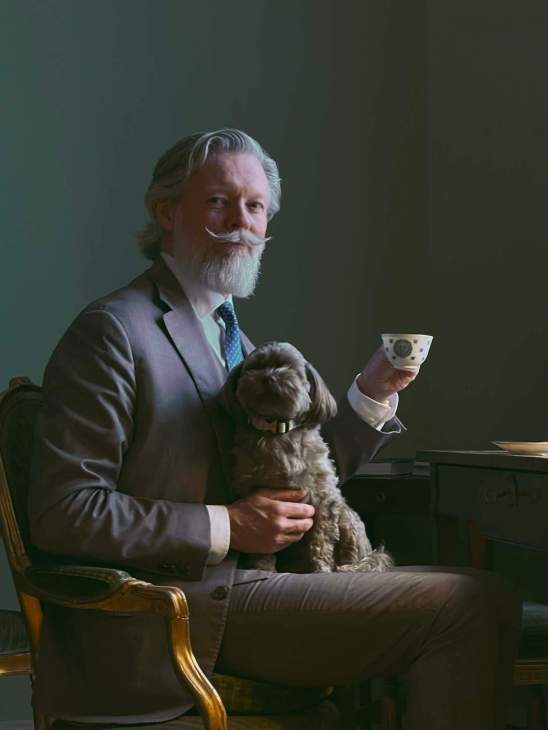
With his handlebar moustache and sharply tailored suit, Peter Ericson doesn’t look like your typical ambassador. But the man who became Swedish ambassador to Finland in May 2024 is one of his country’s top diplomats. We meet him in Helsinki to discuss his role and countering Russian aggression in the region.
Is your post more important now that Finland and Sweden have joined Nato?
Helsinki has always been an important ambassadorial post for Sweden. But the global security landscape has made co-operation more critical. The reason the Swedish foreign ministry wanted me in Helsinki was for my experience regarding Russia.
What is the future of the relationship between Nordic nations and Russia?
Engaging with Russia like we did in the 1990s is no longer possible. We need to constrain its ability to harm us. Even with Putin gone, Russia will be adamant about confronting the West.
Does Nato need a larger presence along the Russian border?
Russia’s war in Ukraine, particularly in places such as Bucha and Irpin, has shown us that we cannot cede territory in the hope of later taking it back with reinforcements. We need to defend every inch of Nato territory – and Sweden has a major role to play in this.
Where football and furniture collide: Orior
Breakfast, bright and early at Strandfield café and farm shop in Dundalk, a few kilometres from the Republic of Ireland’s border with Northern Ireland. Over the first cup of the day’s conveyor belt of milky tea, Monocle is being schooled in the improbable link between soccer and the isle’s high-end furniture design. Orior’s gregarious creative director, Ciarán McGuigan – dressed in a New York Mets cap, a neckerchief and a gilet – is explaining how the furniture brand’s current leadership all met on the football pitch at Savannah College of Art and Design in the US state of Georgia.
Sports scholarship student McGuigan, a right-footed centre back, became close friends with Jean Morana, Orior’s current head of design, as well as Jordan Trinci-Lyne, a former semi-professional striker from Cheshire who is now managing director, and group coo Richard Langthorne. “I realised that my [sporting] career wasn’t going to go anywhere,” says McGuigan, who studied film and TV, and had a spell as a college soccer coach. “But I fell in love with Savannah.” The friends, mostly hailing from Europe, would go on to forge the ambitious mindset that Orior has today.
McGuigan, now in his mid-thirties, left his football career behind when he took over the Orior family business from his parents, Brian and Rosie, in 2013 – though they remain heavily involved. The furniture company had been ticking along, servicing an Irish clientele, without setting the world alight. McGuigan knew that Orior had the potential to be much more and reoriented it, highlighting the craft of the Irish makers who work on its pieces, which range from sofas and credenzas to coffee tables and vases.

Orior has a great origin story. Brian and Rosie, Irish Catholics born on different sides of the border, decided to leave in the 1970s during the worst years of sectarian violence, and moved to Copenhagen. They did multiple jobs, cleaning hotels as well as working at a fast-food restaurant opposite the Tivoli Gardens theme park. It was during their stay that Brian, who studied upholstery at school, fell in love with furniture.
When the couple returned to Ireland, they were in no doubt about what to do with the money that they had saved during their stay in Denmark. “There were no jobs here back then so we had to create our own,” says Brian, when Monocle joins him for pizza and jet-black pints of Guinness at Dundalk’s Mo Chara pub, raising his voice to be heard over a pub quiz. Orior – named after the street that Brian grew up on – was established in 1979, with Brian at the helm designing and making pieces that had a mid-century feel. But it’s under his son’s leadership over the past decade that the business has thrived.

Inspired by the time that he had spent in Georgia, McGuigan decided that Orior needed to cross the pond. He moved its branding, design and sales leadership to New York, with manufacturing remaining in Ireland, and focused on selling Orior’s Irish heritage into the huge US consumer market. “When you think of furniture, Ireland doesn’t come to mind,” he says. “It’s pretty cool that Orior’s pieces are made here.” The US now accounts for 87 per cent of business, though the brand is now keen to start growing the Europeans side, which currently accounts for about 10 per cent of sales.
Over the two days that Monocle spends with McGuigan and Trinci-Lyne, who are on one of their regular visits from New York to check in with the team, we delve into the brand’s dna, criss-crossing the fluid Irish borderlands in the sunshine from the Republic into Northern Ireland, as euros switch to pounds and mobile phone coverage bounces between providers. When not in the Big Apple, McGuigan, his wife Logann and their young son live in a converted fishing hut in Omeath, on the edge of Carlingford Lough, which is south of the border. At lunchtime, we sit down for fish and chips at a pretty ivy-clad stone cottage in Newry, north of the border, where Brian and Rosie first lived when they set up Orior. Today their daughter Katie, who has recently returned from working in fashion in London, lives and works here. She is part of the family firm, designing rugs and doing other creative work.
Orior might have a fancy home in New York – including a showroom on Mercer Street in Soho, which opened in 2022 – but its soul is very much at the utilitarian headquarters and upholstery centre in Newry, where the bulk of Orior’s staff work. McGuigan has the business acumen and the confidence to focus on the US – and a raconteur’s ability to hold court – but this is where much of the brand’s hard graft takes place. When Monocle visits, apprentices are stapling the wooden frames of sofas. Upstairs, leather is being carefully wrapped onto Bembo credenza parts, a beautiful piece with brass feet and handles.

It’s here, among the industry, that Brian comes every day, more comfortable putting his hands to work than being asked to articulate his backstory. He’s busy upholstering a low-backed, chunky leather Shanog sofa – his original design from 1979, brought back into the collection in 2019, the year that the brand relaunched. “Dad was in here at 07.00, dying to finish that sofa,” says Katie.
You might think that there might be some friction between the new guard, with their US education and cosmopolitan ways, and the old timers. Instead, it plays out in plenty of banter and mickey-taking. For McGuigan it’s all about the craic, an Irish word that is never far from anyone’s lips, meaning to have a laugh or a good time. He tells a story of going back to the factory from New York once and saying that he was going to get something out of the “trunk”, a pin-drop moment that caused the whole factory to stop at his Americanism. “The juxtaposition of the showroom in Soho and seeing where it’s made; it’s like chalk and cheese,” he says. “It’s refreshing coming back and having the piss taken out of me.”


McGuigan calls Orior a “family-and-friends company” revolving around his father, who trains everyone who passes through the Newry doors and, according to his son, is still the brand’s “north star”. There are workers hailing from 12 families here, from a total of some 65, and trying to work out who is related to whom is a dizzying exercise. We bump into warm and welcoming Aunt Gertrude, a seamstress, in the warehouse’s kitchen and later Uncle Pete, who is head of Irish sales. Brian’s neighbour, Pedar Jackson, has worked in upholstery for more than 40 years and his son Neil has also joined the company.
When an Orior delivery van arrives, McGuigan jumps up into the cab and starts bantering with driver Shane (whose brother, Harry, handles installations), a rolled-up cigarette dangling from his lips. The Newry complex is also home to Orior’s original showroom, where it’s possible to see the evolution of the brand. There are Brian’s mid-century-inspired archive pieces, which have been given a contemporary tweak, such as the Mozart chair that now has thicker wooden legs and a cross-stitch detail in the middle of the upholstery. And there are more recent releases, such as the Corca table – a combination of a three-legged cast-bronze body and a round crystal top – and the solid-stone Marmar coffee table. These newer pieces wouldn’t have been possible without a network of craftspeople from across the isle. McGuigan calls these makers “beyond important”.
A case in point is Alan McConnell, who is based a short drive from the factory and walks out to meet us with his German shepherd, Layla, in tow. McConnell presides over a business started by his grandfather more than 60 years ago, which specialises in working with natural stone (there are huge cutting wheels with sharp teeth inside his factory). S McConnell & Sons’ normal fare is anything from building façades to headstones, so working with an Irish furniture brand has been somewhat of a departure. “There’s no room for error and it has to be top-notch,” he says. “When you see the finished product, there’s a certain amount of pride.” When Monocle visits McConnell’s factory, his colleagues are sanding down Orior’s curvaceous Umber tabletop and starting to cut the four tear-drop-like table legs for the Easca coffee table, a job that takes about eight hours. The coffee table comes in one of Orior’s signature stones: multi-hued Irish green marble that is extracted in Galway, on the Republic of Ireland’s western coast. “Carrara marble from Italy is 200 million years old,” says McGuigan. “But this stone is 850 million.”


There are also makers further afield. In Cork, a four-hour drive south of Newry, father and son Mick and Darragh Wilkins are part of a crew of makers who have been essential to Orior’s recent evolution. The duo are artisans in the truest sense of the word – they don’t have a website and rely on word of mouth. They work in a former farmstead in Kilnaglery, where they run a small bronze foundry out of an A-framed barn.
“A lot of learning the craft was by trial and error,” says Darragh, as he pulls a visor down over his face. They are working on Orior’s Corca side table, which is cast in five parts. It’s a complicated process that involves a mould made from resin and sand, covered in graphite and alcohol to protect it from the orange molten bronze being carefully poured at a temperature of 1,150c. Darragh says that McGuigan just “showed up at the door one day” and that was the start of the relationship. In fact, Monocle fails to find anyone who is yet to be won over by the Orior creative director’s effervescence and enthusiasm; he’s clearly up for the craic but tenacious enough to not take no for an answer. Glass sculptor Eoin Turner, whose studio is located a short drive from the Wilkins’ workshop, confesses happily that the second time McGuigan came to try to convince him to work with the brand he brought “a very comfortable carrot” in the form of an Orior sofa.

Turner, a colourful character who studied fine art and worked as a fisherman, marches around the studio he shares with his wife, Lorraine, as he shows us around. For Orior he makes the Easca and Corca tabletops using recycled Irish crystal that gets melted down, reformed and fired in a huge kiln. “It has unique air bubbles in it,” says Turner, running his hands over the Easca’s surface, which has a resin-like feel to it.

The sculptor has recently started his own foundry and is clearly important to Orior’s future as the brand continues to push the boundaries of Irish craftmanship while preserving traditional techniques. McGuigan calls Turner a “mentor” and part of the firm’s ambition is to open a large new factory, by 2027 or 2028, in the hope of bringing makers like Turner in-house and have them train new talent. It will be a big investment and all part of Orior’s continued drive to make itself an established international brand and put Irish furniture on the map.
Orior is in the lucky position of being part of a larger group, which means that some of its outgoings can be offset against the success of its less sexy contract-furniture operation. But as McGuigan says, Orior is “the jewel in the crown” that has the potential to grow its catalogue and move in new directions.
Monocle stops with McGuigan and Trinci-Lyne for one last pint of Guinness and something to eat before heading to the airport. The 12 prototypes that the brand is set to work on this year are discussed, with talk of adding beds and mirrors to the line-up. “We’re in a good spot right now,” says Trinci-Lyne, taking a sip of his pint. It’s hard to disagree.
oriorfurniture.com
More than just games: The role of stadiums in revitalising cities
I was in Rome during the recent Derby della Capitale, the face-off between the city’s two big football teams, Roma and Lazio (writes Stella Roos). It was a reminder of the force with which stadiums shape cities: the evening air smoky and electric; everyone in the neighbourhood keeping score based on the roars coming from the stands.

Hundreds of new arenas are being built worldwide. When designed as functional parts of the urban fabric, they can animate a city. Casablanca is building the Hassan II, a 115,000-capacity stadium set to become the world’s largest; in Paris, buyers bidding for Red Star FC are promising to spruce up the team’s historic Stade Bauer as a spur to economic growth in Saint-Ouen-sur-Seine; in New Orleans, Trajan Architects’ $560m (€540m) renovation of the Caesars Superdome has brought investment and energy.
In Santa Giulia, Milan, the first stadium by David Chipperfield Architects will be finished this year. The 16,000-capacity covered arena will host hockey at the 2026 Winter Olympics and later serve as a sports and cultural venue. “A stadium has so many technical aspects,” says lead architect Leander Bulst. “Yet it needs to be expressed in a way that people can relate to.” The designs evoke ancient amphitheatres. Now, as then, stadiums bring crowds and energy to a city. Done well, they can be game-changers.
A roadtrip through the Peloponnese: Greece’s rugged, scenic heartland
With its four “fingers” stretching out into the Aegean, the Peloponnese is a defining part of Greece’s geography: its hand-like shape helps to make the country’s outline immediately recognisable on a map. Yet its shores have long been under-explored by those international visitors who, after landing in Athens, hop straight onto a ferry bound for one of the country’s islands. Perhaps unsurprisingly, this largely unspoilt area has instead served as the setting of many a Greek childhood summer – and, in recent years, it has been luring back nostalgic domestic entrepreneurs seeking to give it a well-deserved update.
The drive from Athens to Corinth, which sits on one side of the isthmus dividing the mainland from this sizeable peninsula, is only an hour long. But the scenery soon becomes more rural and the roads wilder. Most will know this territory as the home of Sparta, the much mythologised rival to Athens in antiquity. But the Peloponnese’s role in Greek history begins long before that, as the seat of the Mycenian civilisation during the last phase of the Bronze Age. Many cities that signify Greekness abroad can be found here, including Olympia, the birthplace of world’s most renowned sporting event, and Kalamata, known for its olives.
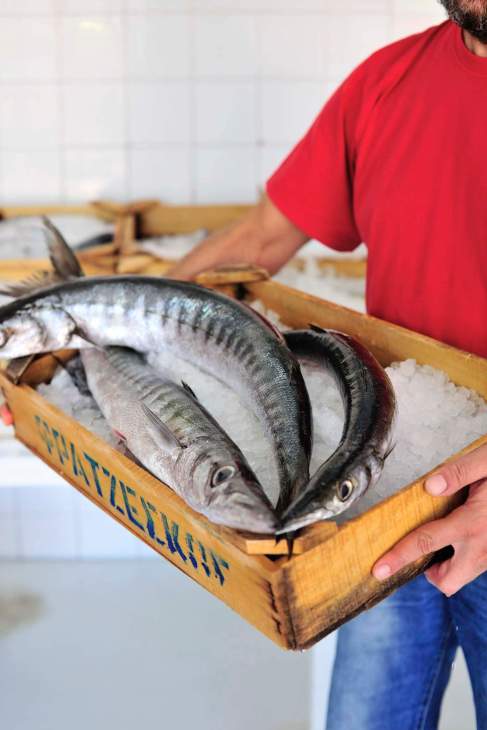
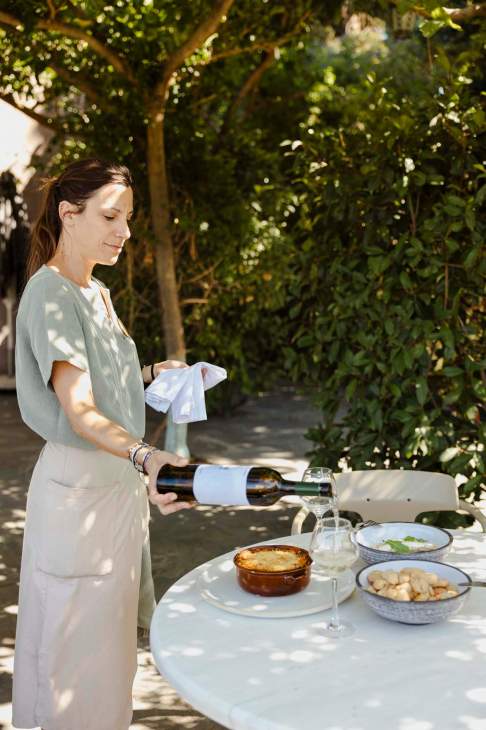
While many who head to the Cyclades relish the chance to avoid driving on holiday, the Peloponnese rewards an old-school roadtrip approach. You’ll have to get behind the wheel to reach some of the remote villages and thick pine forests, which later descend into semi-deserted coves.
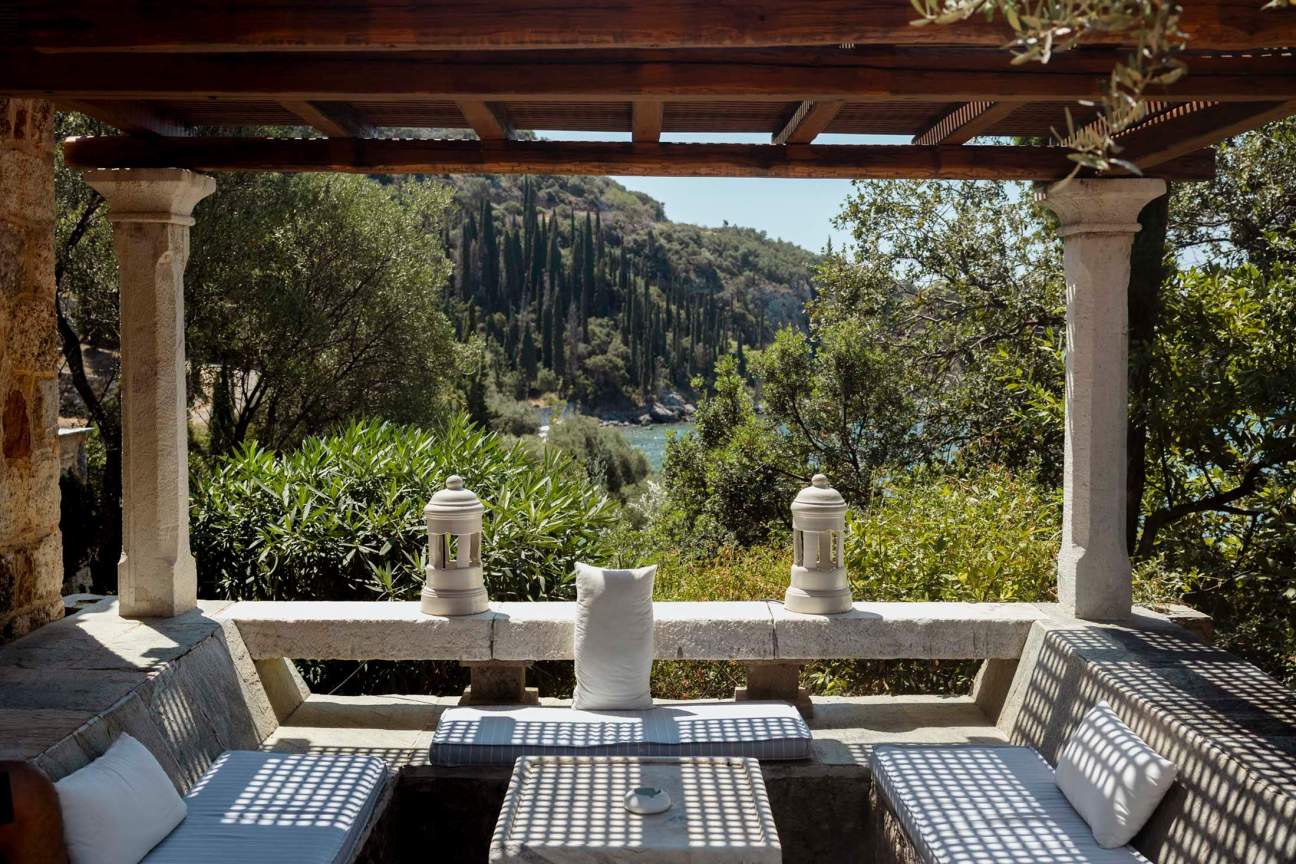
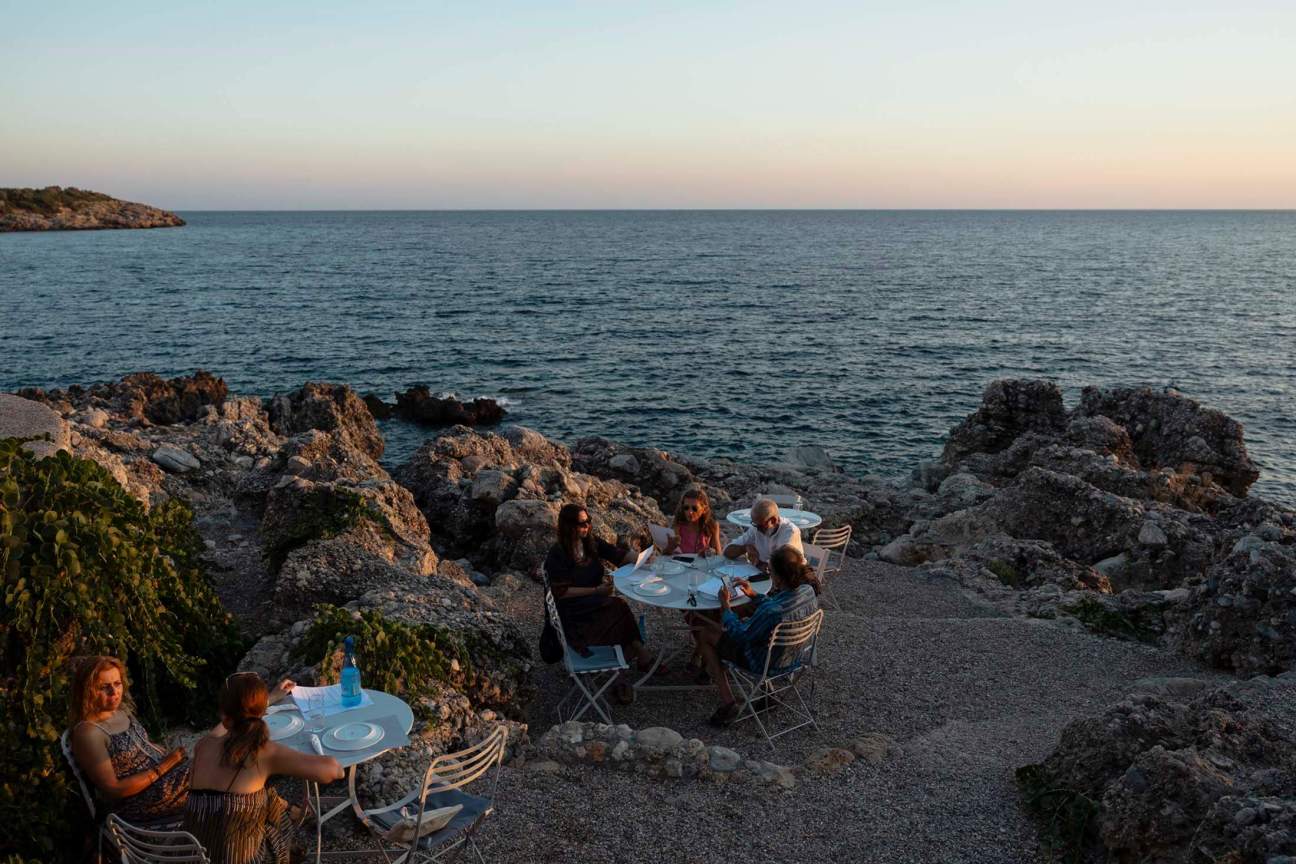
The region is a combination of starkly different terrains. You can start your day in the mountainous wilderness of Arcadia and soon be scattering your towel on the pebbly shores of the Argolic Gulf. The Mani peninsula, the Peloponnese’s middle finger, is said to have the area’s most spectacularly crystalline waters. Though grand hotels clinging on to steep hills can make for dramatic accommodation options, this is a place of rustic guesthouses, where the sun filters through olive groves and afternoons are soundtracked by the hypnotic buzz of cicadas. Lunches at old-school tavernas are practically mandatory, though many ambitious chefs are rethinking the region’s traditional fare. Here is our pick of the essential stop-offs to explore.
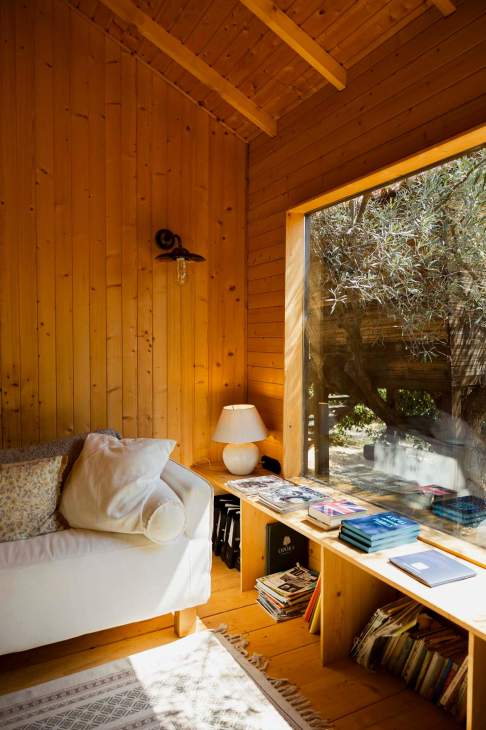
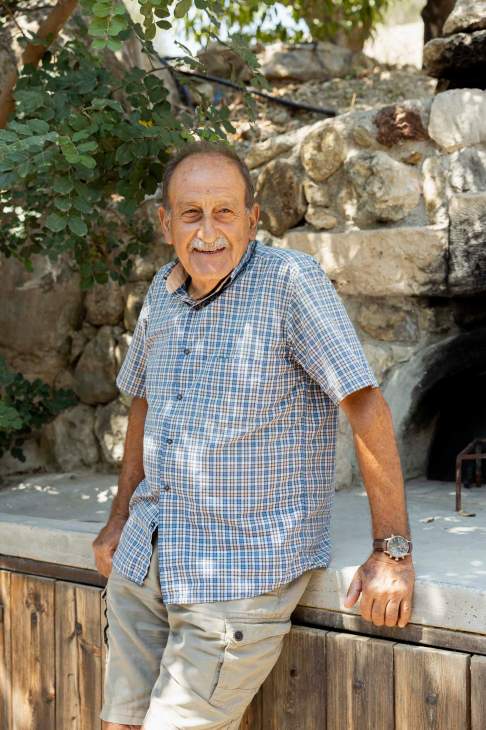
Stay: Kinsterna Hotel, Monemvasia
This hotel near the town of Monemvasia is housed in a 17th-century mansion that looks out to the Aegean. The surrounding farm, vineyard and olive groves supply the kitchen with oil, wine and fresh produce.
kinsternahotel.gr
Stay: Opora Country Living, Nafplio
Owner Konstantinos Markidis decided to renovate his family’s traditional stone farmhouse in 2015. Tucked away in the hills, this guesthouse has a handful of self-contained rooms, as well as a delightful pool.
oporacountryliving.com
Stay: Amanzoe, Porto Heli
High up on a hill on the Argolis peninsula, this Aman property is designed with Hellenic simplicity in mind. Made up of marble-clad villas and column-lined, Parthenon-like pavilions, it nods aesthetically to the Acropolis and its temples.
aman.com
Stay: Laspi, Pefkali
A brutalist-inspired construction made up of two villas on a hillside on the northern Peloponnese coastline. Inside, the raw concrete is balanced out by warm interiors.
laspi.life
Eat: Mple Kanarini, Kalamata
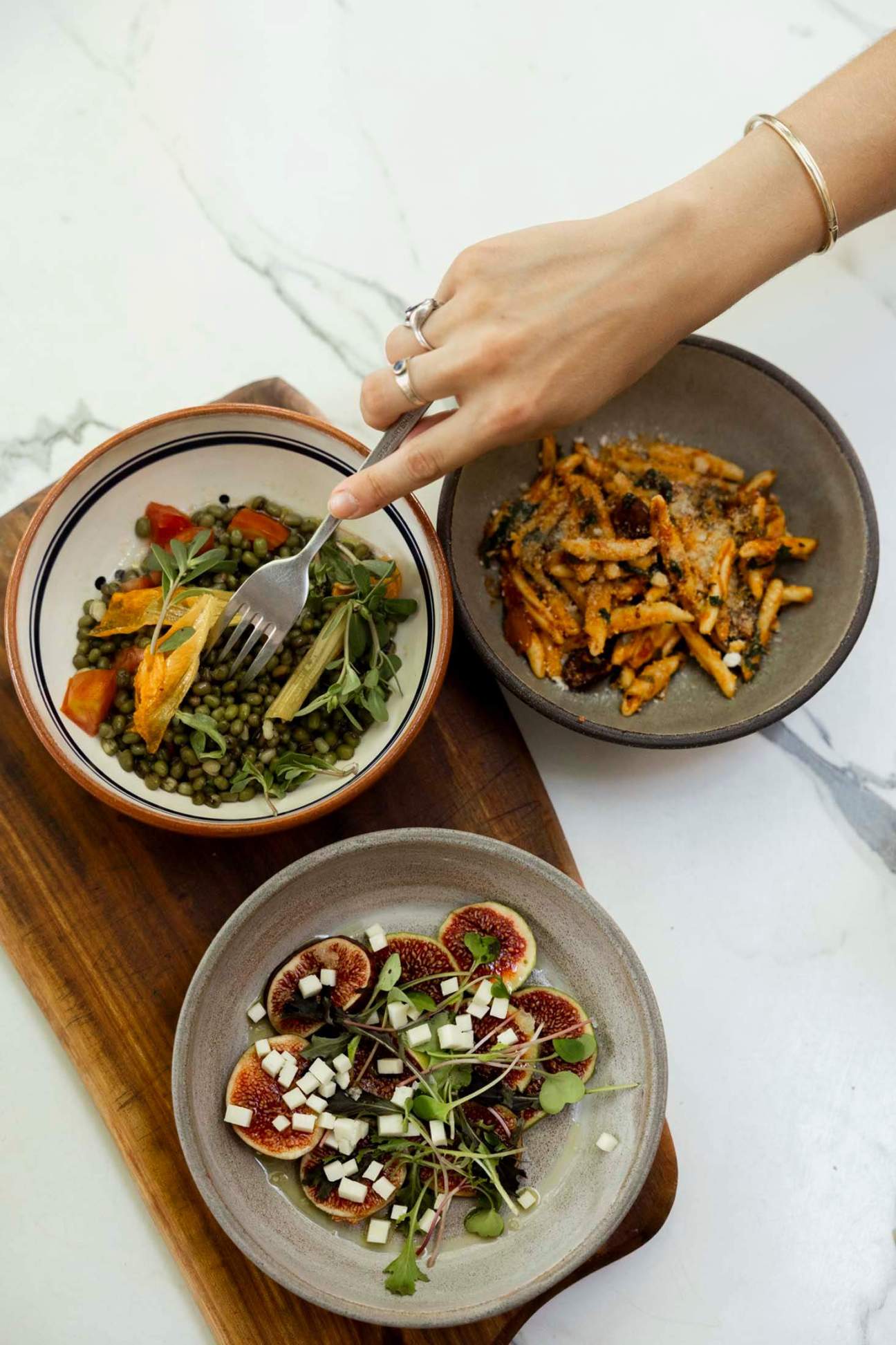
After a stint working abroad, chef Konstantinos Vasiliadis returned to his hometown of Kalamata to celebrate the bounty of the southern Peloponnese. Signature dishes, such as stuffed courgette flowers in tomato sauce, reimagine traditional staples.
Kritis 34, Kalamata
Eat: Lela’s Taverna, Kardamili
Giorgos Giannakeas has been running this restaurant alongside his brother since taking over from their mother, Lela, who established it in 1983. The menu now offers more contemporary options but the taverna’s spirit of easy hospitality has not changed.
lelastaverna.com
Spa: Euphoria Retreat, Mystras
The region’s celebrated Byzantine churches provided inspiration for the centrepiece of this spa resort: a cave-like thermal pool painted in shades of blue and green.
euphoriaretreat.com
Getting here: Though the cities of Kalamata and Patras have airports, Athens is far better connected. The drive from Attica can become part of a well-planned roadtrip.
Read next: The Monocle City Guide to Athens, featuring the very best hotels, restaurants and retail spots
Pushing the boat out: Vancouver repurposes homes as an alternative to demolition
Vancouver-based Renewal Development has an innovative solution to Canada’s housing shortage. The company identifies detached single-storey homes across the city that are slated for demolition and, instead of knocking them down, transports them by road (and sometimes by barge) to communities outside Greater Vancouver. The reinstalled bungalows are then modernised; in order to maximise land use, basement suites are often added before the homes are brought to market.
“Some of these houses were only built about five years ago or were refurbished in the past decade,” says Glyn Lewis, who founded Renewal Development after a career as a political advisor in Ottawa and the US. “They are in good condition so demolishing them doesn’t make sense. Some 3,000 single-family homes are torn down every year, so we thought that we could give them a second life elsewhere.”
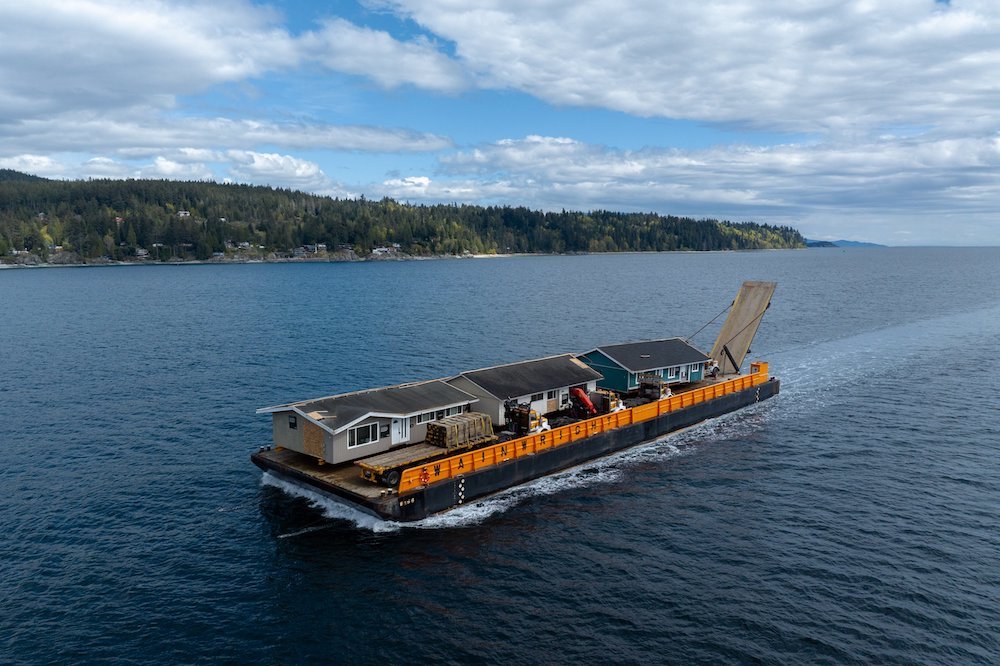
Renewal Development’s practice of picking up entire houses and hauling them where they’re needed is a novel idea in Canada. Other countries – such as New Zealand, which rezoned several residential districts in its big cities in 2016 – are rolling out the infrastructure required to relocate detached homes and make way for larger developments. “Vancouver moves about 50 houses a year,” says Lewis. “But we should be moving 200 to 300. If we’re ambitious, many urban areas across North America could be moving in that direction.”
renewaldevelopment.ca
Inside Bau, the key industry event for builders, architects and developers
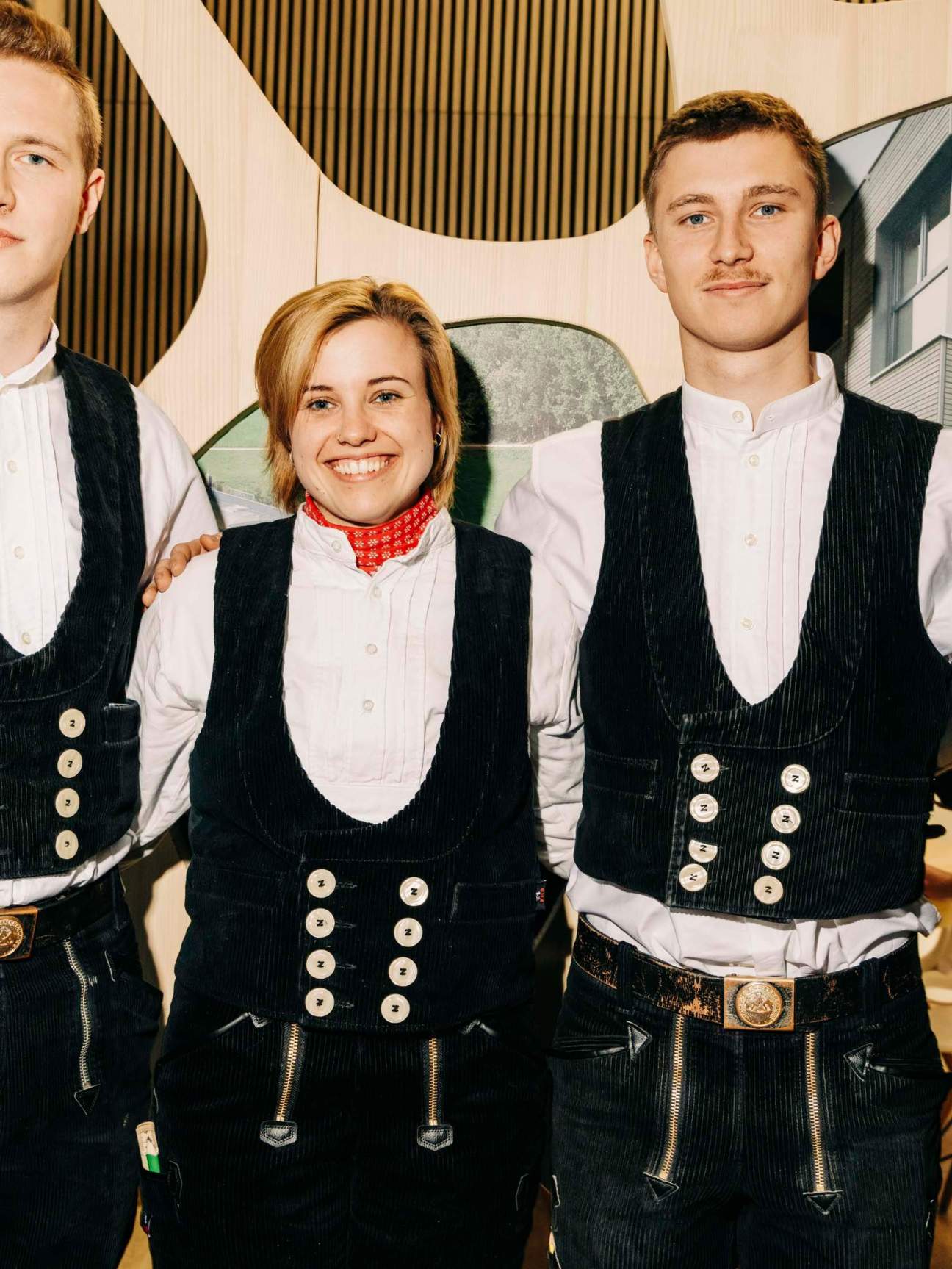
At Bau, a biannual get-together in Munich for builders, architects and developers, you will find Bavarian brickies in journeyman cords, a crowd applauding a remote-opening double-glazed window and an Oktoberfest-like atmosphere where steins of beer are emptied among sanitaryware and an occasional outburst of Schlager on the sound system.
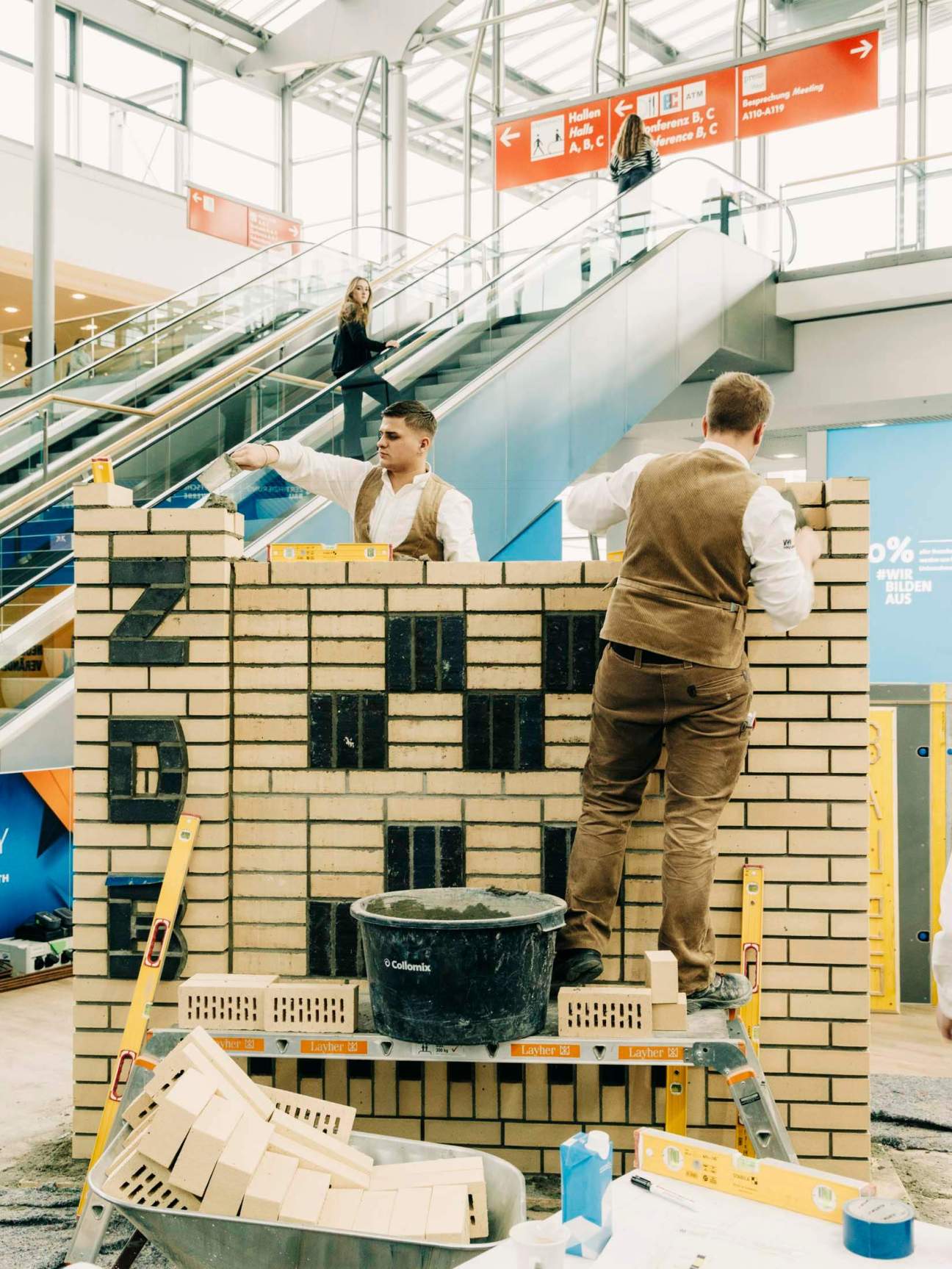
With hangar-sized conference halls dedicated to aluminium, glass and ceramics, Bau digs deep into the nuts and bolts of the build- ing industry. But it’s more than a sum of its parts; it’s also a sense check for where the sector is heading and who has smart ideas, as told by the people who make the structures that we live with. “Beautiful shutters, better life” is one prominent brand’s slogan.
“Resources, and how to reuse them, is the big topic this year,” says Mario Lenzen, a German salesman from Kellerer ZMK. He’s standing beside the company’s patented product: a pile of bricks stuffed with tiny pellets of repurposed polystyrene for a bit more insulation and a bit less expenditure.
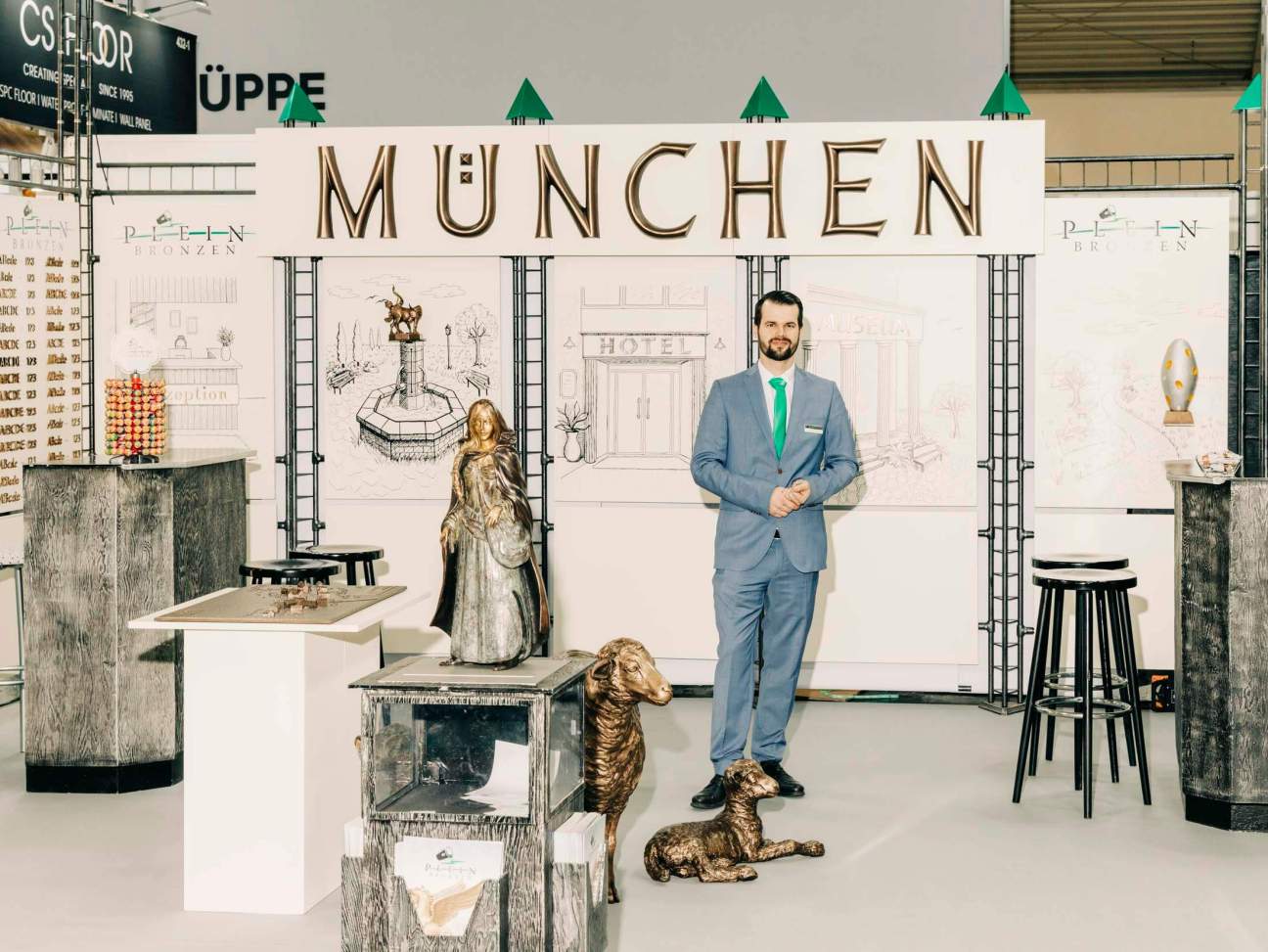
Ideas and inspirations abound. There’s Berlin-based Ecolocked, which mixes cap- tured carbon into cement, and Alicante-based architectural ceramics firm Tempio affixing elegant, glazed façades to major projects around the world. “Germany is in a difficult economic position, France as well,” says Carmen Molina, export manager at Cerámica Mayor. “But Spain is booming.”
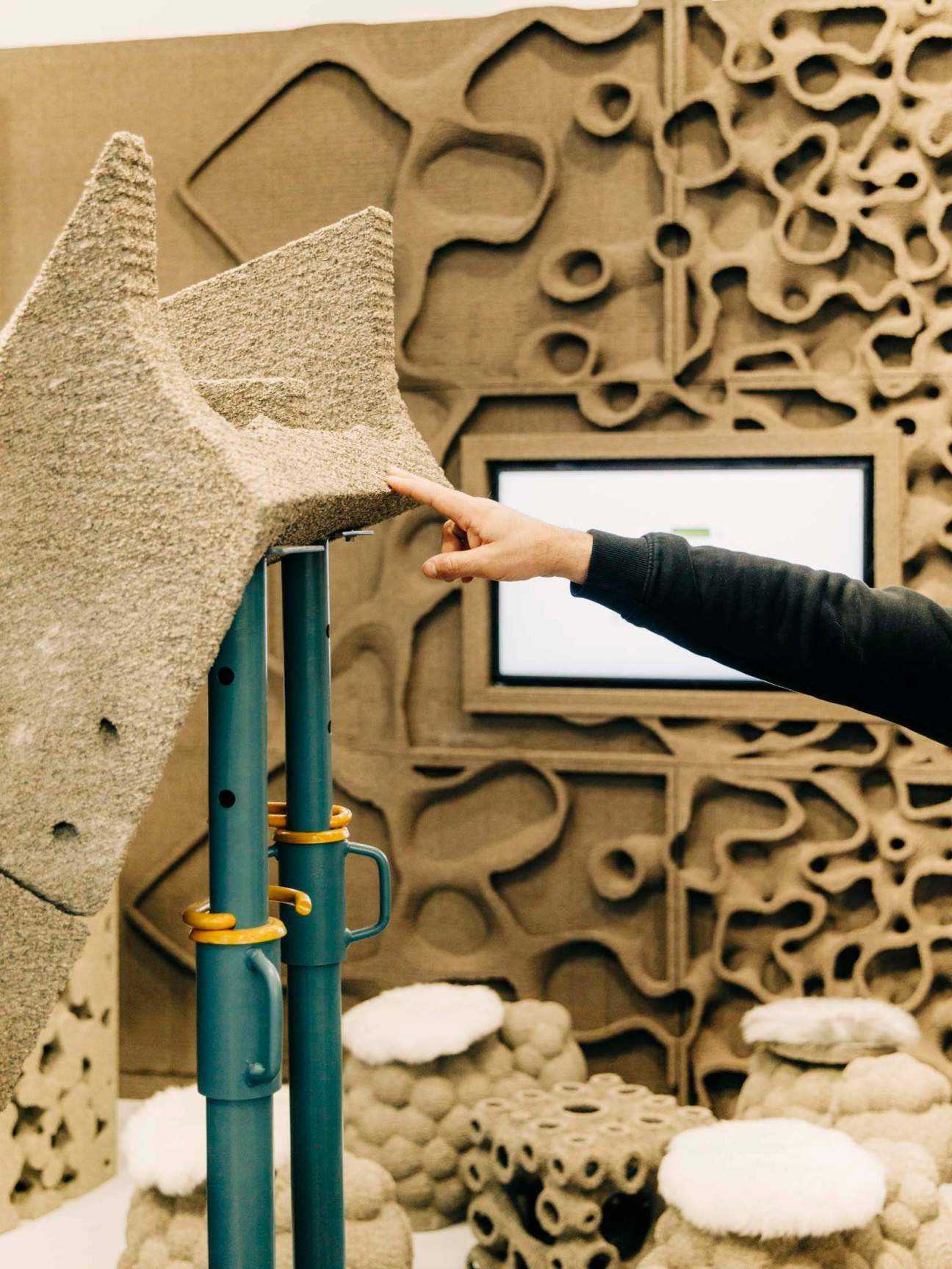
It’s similar to the sentiment among the woodworkers of Eastern Europe. Slovpol Wood is doing a solid trade with its tactile slabs of Polish oak made in the village of Pietrowice Wielkie, while Estonian firm Arcwood is carving out a niche: its beams of cross-laminated timber – all sourced from forests around the Baltics – artfully bend into triumphant archways.
While the economic travails of Bau’s host nation were never too far from exhibitors’ minds, the trade show is also a reminder of the engineering heft that Germany still commands in construction, with a backbone of Mittelstand family-run firms. Sommer, makers of bulletproof glass, debuted its first curved façade complete with an assault rifle and accompanying bullets to show how much firepower it can withstand. Over at the booth of Schmitt + Sohn Elevators, the sixth-generation of the family Schmitt is on hand to explain how the business is on the up. “The elevator is the most secure transportation vehicle in the world,” says Roland von Hinüber, who married into the Schmitts. “If you feel quality metal by pushing a real button or touching walls that are not plastic, it is reassuring.” Now that’s an elevator pitch.
bau-muenchen.com
Foreign aid isn’t charity; it’s an investment in global security. Slashing it is a dangerous political shortcut
For a certain sort of political leader, there is no easier win than taking an axe to foreign aid. For a start, foreign aid goes to foreigners, to whom supporters of this certain sort of political leader are generally indifferent. While those voters seethe that colossal quantities of their money are shipped overseas, the certain sort of political leader knows that the amounts are, in the grand scheme of things, tiny.
It is unsurprising that the United States Agency for International Development – US Aid – has been an early target of US president Donald Trump, via his hatchet man, Elon Musk. US Aid’s name contains the word “international”, which is nearly as toxic a word in some quarters as “foreign”. It accounts for a rounding error of about $50bn (€48bn), or only a little more than Musk spent on a social-media platform.
Many US voters, however, all but believe that their money is shovelled out of aircraft flying over Africa, Central Asia and the Middle East. Polls have found that Americans estimate that about 25 per cent of the federal budget is spent on foreign aid; it is, in fact, about one per cent.
International aid is not charity; it is an investment – and one that pays for itself, time and again. In episode 573 of Monocle Radio’s The Foreign Desk, we spoke to Andrew Mitchell, former minister of state for development and Africa from 2022 to 2024 during the last Conservative government. The UK’s foreign aid, he told us, “makes Britain safer and more prosperous because it makes the poorest and most difficult parts of the world safer and more prosperous”.
Even the most rugged isolationist should be able to absorb this point. It might also be worth considering who is in favour of the US withdrawing from this field; among those offering their congratulations is Russia’s former president Dmitry Medvedev. If the West doesn’t get involved, then someone else will.
Andrew Mueller is the host of ‘The Foreign Desk’ on Monocle Radio.
‘The Brutalist’ proves architecture can be as captivating as any art form
It’s a Tuesday night and I’m surrounded by cinemagoers who have turned out to see The Brutalist at the Barbican Centre, London’s most celebrated brutalist building. “This is great for architecture,” I think, as I tuck into my popcorn.
As an art form, architecture has a bit of a reputation problem. Its lengthy academic pathways can make studying it off-putting for many. In everyday life, people’s views on buildings are only sought when councils want feedback on development plans. We’re also accustomed to accepting mediocre, poorly designed environments, from badly lit supermarkets to dingy train stations.
To change this, the discipline needs to find ways to communicate why it is important – and why people should care. And that’s what The Brutalist does. By the time this column is on newsstands, director Brady Corbet’s feature will have likely picked up at least one of the 10 Academy Awards for which it has been nominated.
Other films have touched on architecture before: think Nora Ephron’s 1993 romcom Sleepless in Seattle, about a widower architect finding love, or Parasite, Bong Joon-ho’s Oscar-winning 2020 thriller set in a strikingly austere residence. The difference here is that Corbet uses both architect and architecture as his film’s protagonists. It tells the story of László Tóth, a Hungarian refugee loosely based on Marcel Breuer and Erno Goldfinger, who travels to the US after the Second World War and introduces brutalism to North America. When Tóth’s concrete walls frame a crisp, blue sky, the audience gasps; there’s a collective intake of breath when a modernist library is revealed in a renovation scene.
After the screening, I hear people walking out of the film discussing the trauma that Tóth experiences but also how the on-screen architecture affected them. I pass a couple talking about commissioning their own light-filled library. The Brutalist is a great PR campaign for architecture. It encourages us to demand more from our environments and reminds us to take delight in great buildings – not just at the cinema.

Meet the fashion week specialists: Hidden talent from five fashion capitals
Runway shows are fleeting affairs but every 10-minute spectacle requires months of careful thought and arduous preparation. Out of view of the front rows, there are teams of highly skilled specialists who play fundamental but rarely celebrated roles in every fashion week. You’ll find them in London, Milan, New York and Paris, working in cramped backstage areas or bustling offices until the early hours of the morning. These are often hectic, fast-paced environments but they are where a lot of the creative magic happens.
Here, Monocle goes behind the scenes in the five major fashion capitals to catch some of that action and pay homage to the unsung heroes of fashion weeks.
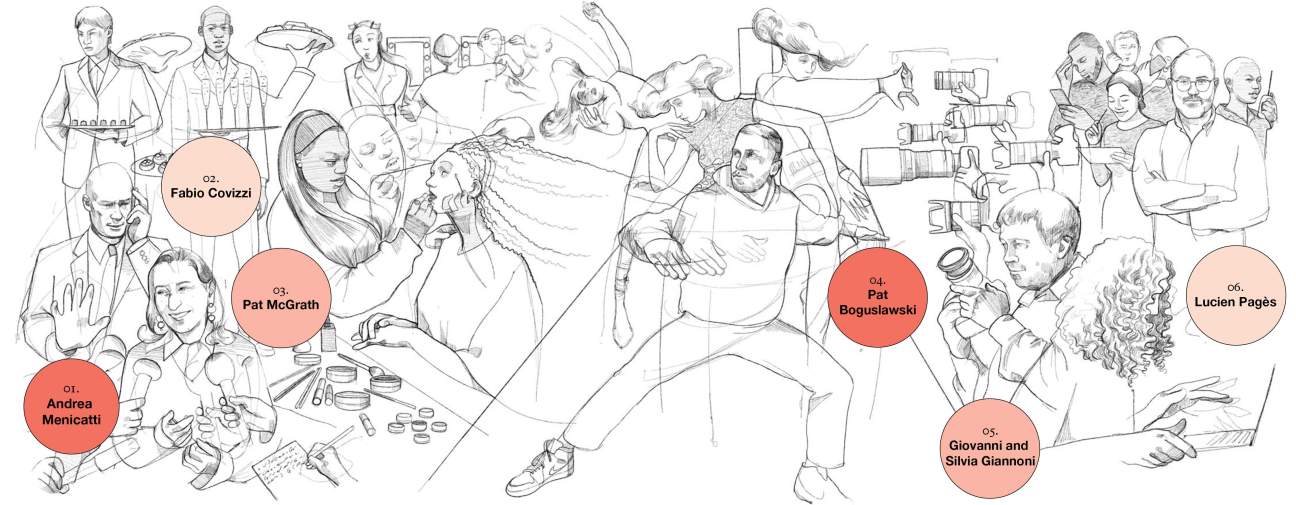
1.
The caterer
Andrea Menicatti
Milan
Post-show celebrations are almost always followed by champagne – even before noon – along with quick bites for the models, photographers and journalists backstage. Perhaps unsurprisingly, Milan holds first place when it comes to fashion-week hospitality. Here, you can expect to be served delicious focaccias, mini-bowls of pasta or biscotti on silver trays. Miuccia Prada is known as one of the city’s best hosts, thanks in no small part to the cheerful and generous catering by Marchesi 1824, the historic Milanese pastry shop now owned by the Prada Group.
Its CEO, Andrea Menicatti, ensures that every Prada show culminates with waiters serving trays of bubbly, chocolates and the crustless salty butter and cucumber canapés that are such staples of the brand’s events that habitués call them “Prada snacks”. “It’s a team effort, serving a large number of people with different needs and tastes,” says Menicatti. Contrary to popular belief, fashion people do eat.
2.
The security chief
Fabio Covizzi
Milan
Even among Milan’s immaculately dressed fashion crowd, Fabio Covizzi stands out. He’s easy to spot with his shaved head and sharp suits from the likes of Fendi, Prada or Ferragamo. At shows, many guests wonder how he can move so seamlessly between guarding the entrance, escorting guests to their seats and fending off over-eager fans from celebrated designers such as Miuccia Prada during their post-show interviews.
“I sleep very little,” says Covizzi, who tells Monocle that he typically works on seven or eight runway shows a day, plus events and evening cocktails, during fashion weeks. Covizzi’s company, Eventservices, employs more than 350 security guards, who are divided into various teams that he oversees. The process requires months of advance planning to ensure that those 10-minute performances go smoothly. “I started in 1984 with the very first Dolce & Gabbana show,” he says, adding that he has worked at more than 2,000 such events. “I still love this job. Otherwise it would be impossible to be so attentive.”
3.
The make-up artist
Pat McGrath
London
You’ll spot Pat McGrath and her team of make-up artists backstage at the biggest shows in Europe’s main fashion capitals, from Versace’s in Milan to Miu Miu’s in Paris. In her signature black headband, she has a calm presence even amid the pre-show pandemonium when dozens of models are waiting to sit in her make-up chair. Over the years she has created ancient Egyptian-inspired looks for Christian Dior Couture, added petals on models’ eyelashes while working with Pierpaolo Piccioli at Valentino and caused a sensation when she transformed John Galliano’s Maison Margiela models into porcelain dolls with glass-like skin – an artistic and technical feat involving airbrushed layers of gel finish.
Even as her career reaches new heights (she now has her own make-up label and was named a dame of the British empire for her services to beauty), she remains a reassuring backstage figure. You might hear her team members referring to her as “Dame Pat” when they need her to pass a brush or add her finishing touches to a look.
4.
The movement director
Pat Boguslawski
New York
Models’ mesmerising runway struts don’t happen by accident. The man adding flair to many of their performances is former model and dancer Pat Boguslawski, who now works as a movement director. “I knew that there was a gap in fashion since the 1990s,” he says. “I wanted to be the person to bring energy back to the runway.” After walking for the likes of Alexander McQueen, he had ideas for how to enhance fashion shows with more stagecraft. “The magic is in the combination of dance and acting,” he says. “You need to see characters, not just movement – otherwise, the clothes aren’t believable.”
Boguslawski’s most celebrated moment took place at last year’s Maison Margiela Artisanal show by John Galliano for which models prowled around in a theatre-worthy runway performance. The piece of advice that he dispenses most frequently could apply to anyone. “Be confident, be yourself and have fun,” he says. “That way, people will remember you.”
5.
The pit photographers
Giovanni and Silvia Giannoni
Florence
During every fashion week, thousands of runway images are disseminated online, to be pored over by buyers, editors and fashion enthusiasts across the globe. None of these would exist were it not for the skilled runway photographers who you’ll see positioned at the end of each catwalk, sometimes shouting at guests to uncross their legs as the lights go down – anything to get the right shot.
Italian-born Giovanni Giannoni has been a steady presence in the pit for more than 20 years. A pioneer in the transition from film to digital photography on the runway, he has worked as the in-house photographer for brands such as Louis Vuitton and shot for industry publications including Women’s Wear Daily. After he takes the photographs, his partner, Silvia, selects the best images for every look, swiftly editing and archiving them. It’s a carefully choreographed job that takes them to Milan, Paris, London and Tokyo for months at a time, all in the name of fashion.
6.
The PR maven
Lucien Pagès
Paris
The night before a fashion show, fleets of press officers – often dressed in black and holding walkie-talkies – are up late finalising seating charts, confirming interviews and negotiating access with fashion editors. Among the busiest communications specialists in the business is Lucien Pagès, who works between New York, London, Milan and Paris, and spearheads public relations for about 60 runway shows every season. To ensure that his clients get the visibility that they deserve, Paris-based Pagès divides his staff between events yet also puts in plenty of personal face time.
“I have to work a lot but I take things day by day, level by level, like in Super Mario Bros,” says Pagès. “I’m lucky to work with a young team that’s excited about fashion and their job. Still, it’s like co-ordinating something that’s a cross between a ballet and an army.” His survival tips? Being in bed by midnight and abstaining from drinking at parties – even though those that Pagès holds are always unmissable.