Issues
Hot property: 10 new buildings shaping their neighbourhoods
The smart people in property right now know that building the building isn’t enough, and that the best structures are engines of street life and commerce. This is the guiding principle of Monocle’s annual Property Survey this year.
That’s why we are kicking off with 10 extraordinary developments from around the world that have uplifted, inspired or energised their neighbourhoods. The key metric for us is that these new landmarks and sought-after addresses, many of which were completed in the past six months, are entwined with the life of the city around them, whether reinventing a run-down quarter or simply bringing a fresh shape to a historic part of town. Our cities need new monuments to progress, whether that’s in terms of building cleaner or working smarter. But savvy developers and architects know that to succeed they need to bring the city and its people along for the ride.
1.
Making a city more confident
Yarrila Place
Coffs Harbour
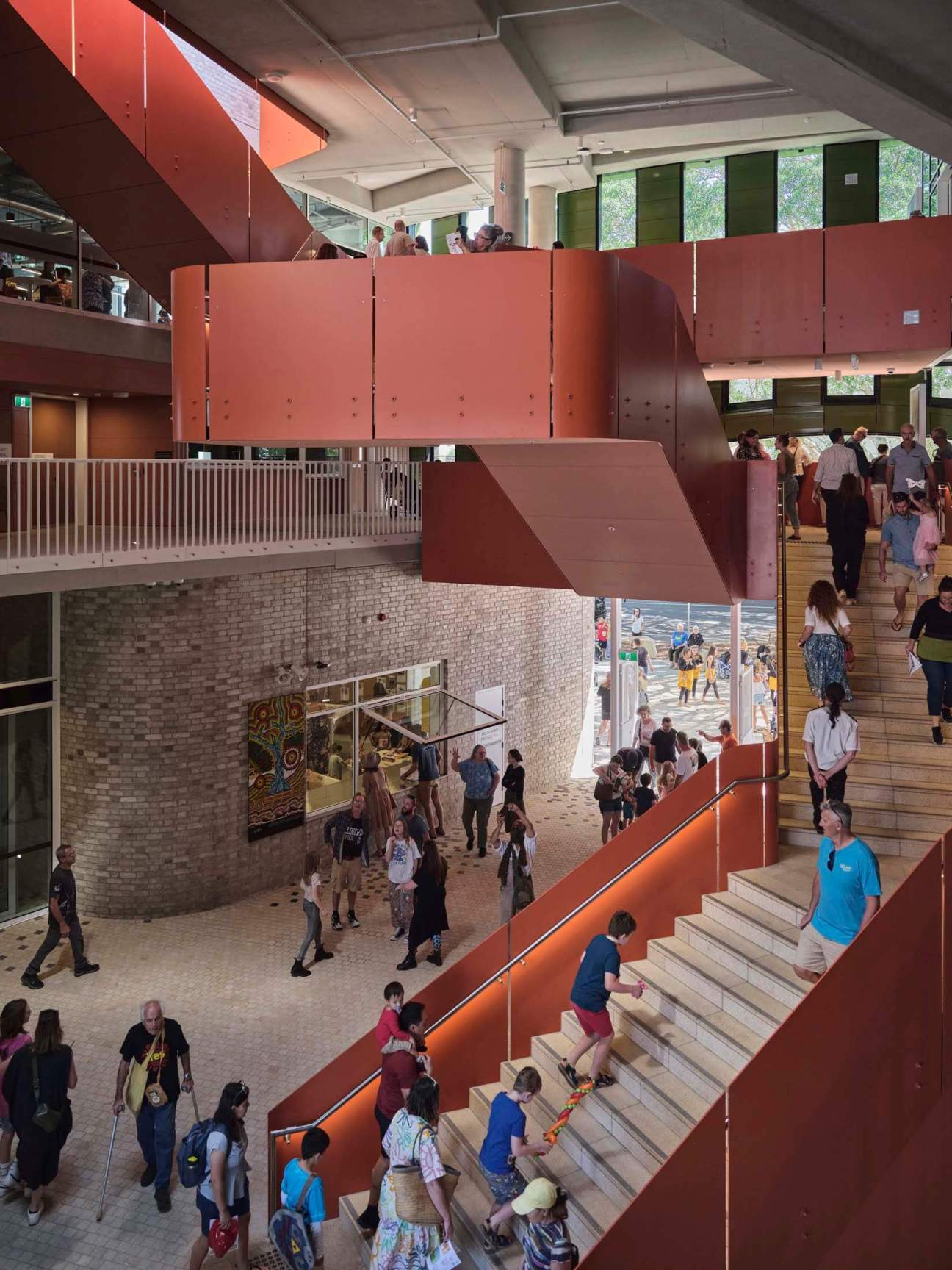
Like many smaller, windswept communities on the east coast of Australia, Coffs Harbour has long had humble notions of itself. “That’s what we wanted to challenge with Yarrila Place,” says Matthew Blair, principal at architecture studio bvn and lead architect for the cultural complex, home to a museum, library and council services. Blair, who grew up in the town, remembers the project being discussed and tabled over the 1980s and 1990s but held up by political lethargy and a lack of funding. “We worked under a key set of principles; chief among them was, ‘We are more’,” says Blair. “There is a sense in Coffs Harbour that culture, art, museums are not for us, because we’re not Sydney. We wanted to shift that.”
Yarrila Place has a forest-green-glazed ceramic façade and, at the heart of the building, an open-air atrium with benches shielded from the sun and rain. Its structure mimics the topography of the verdant hinterland and the coast. “These idyllic little towns had forgotten how great they are,” says Blair. “They lost their spirit of optimism. And this project was a way to show – or rather, reveal – that again.”
2.
The building for all
Təməsew̓txʷ Aquatic and Community Centre
New Westminster
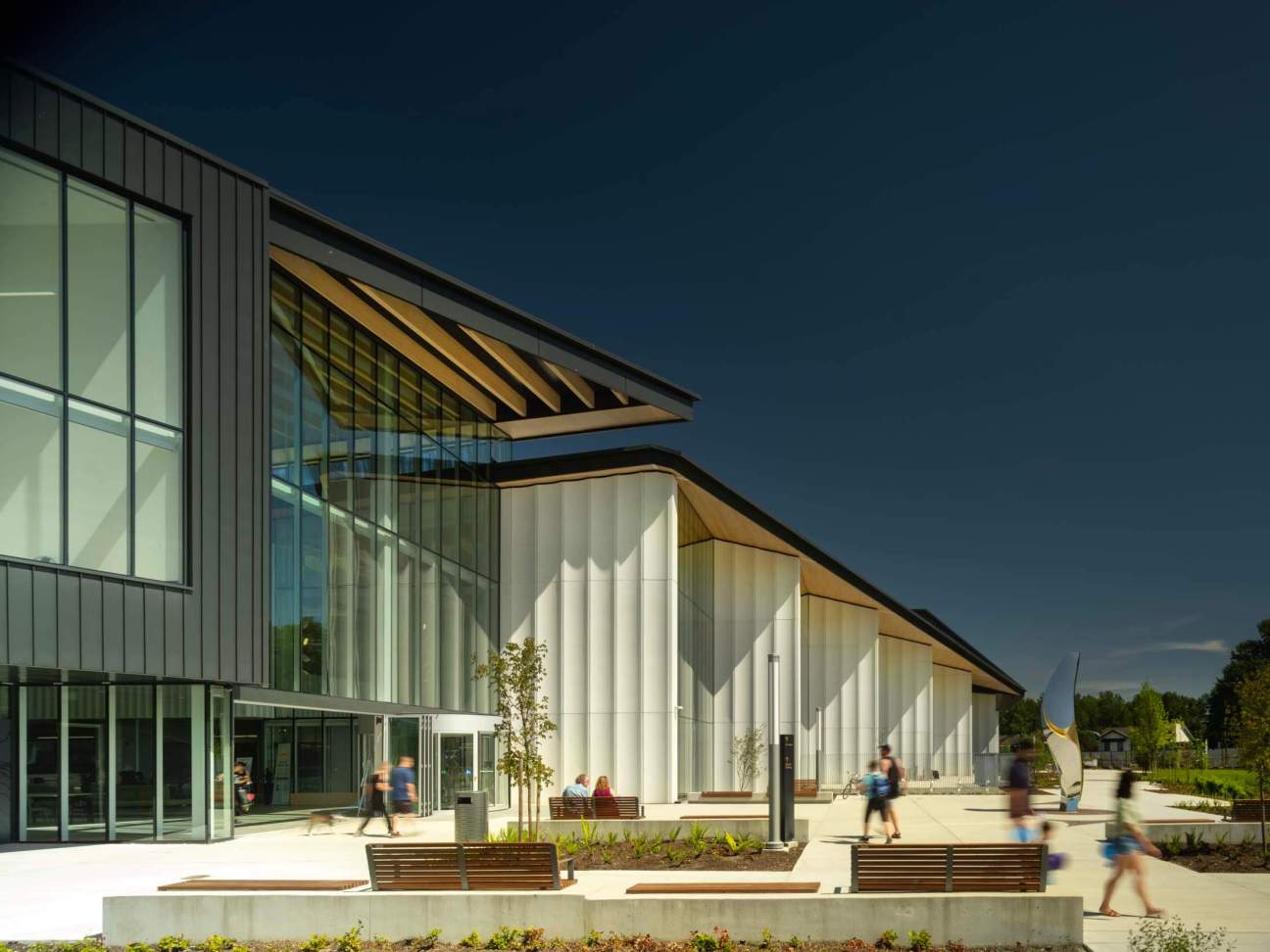
New Westminster, a city near Canada’s sweeping Pacific coastline, is making a splash thanks to a new civic building, a public swimming pool. “There was a need for a home for the community,” says architect Paul Fast, a principal at studio hcma Architecture & Design, which drew up the new complex. “We wanted to bring the facility to life as a place for people to gather socially.”
Taking its name (pronounced, loosely, “tomas-out”) from a First Nations language and referring to the homes of sea otters, the swim and recreation centre replaces the Canada Games Pool, which hosted swimming competitions during the Commonwealth Games in 1973. “It was beloved by many,” says architect Ali Kenyon, principal at hcma, so the design had to be something that residents felt invested in.
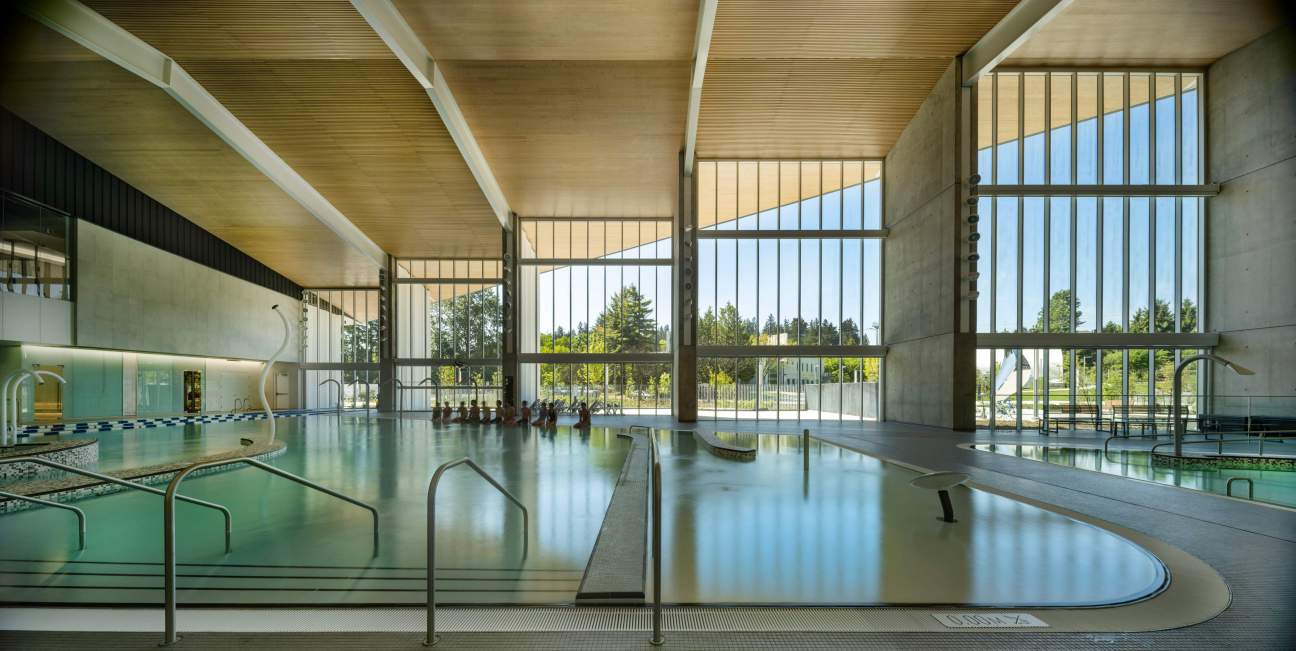
Rendered in wood sourced from around British Columbia, the centre has a large, light-filled central lobby, with a glass-fronted entryway that’s retractable in the warmer weather and opens up the airy interior to the verdant public plaza outside. “It’s both a park and a building; they’re unified,” says Kenyon.
3.
Boosting the CBD’s fortunes
The Henderson
Hong Kong
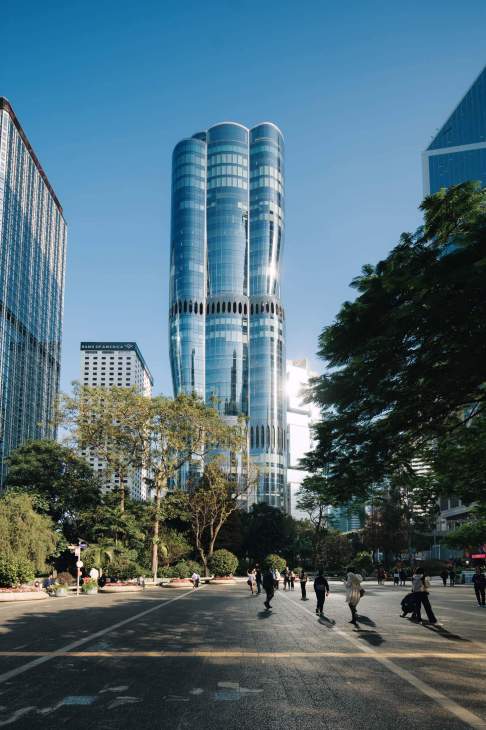
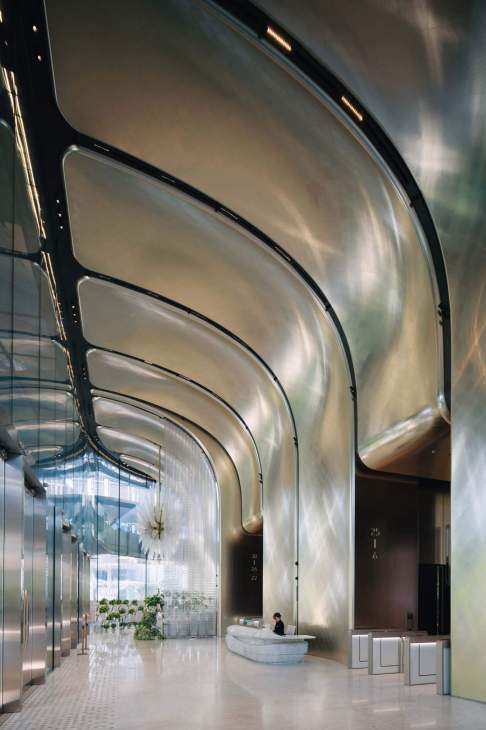
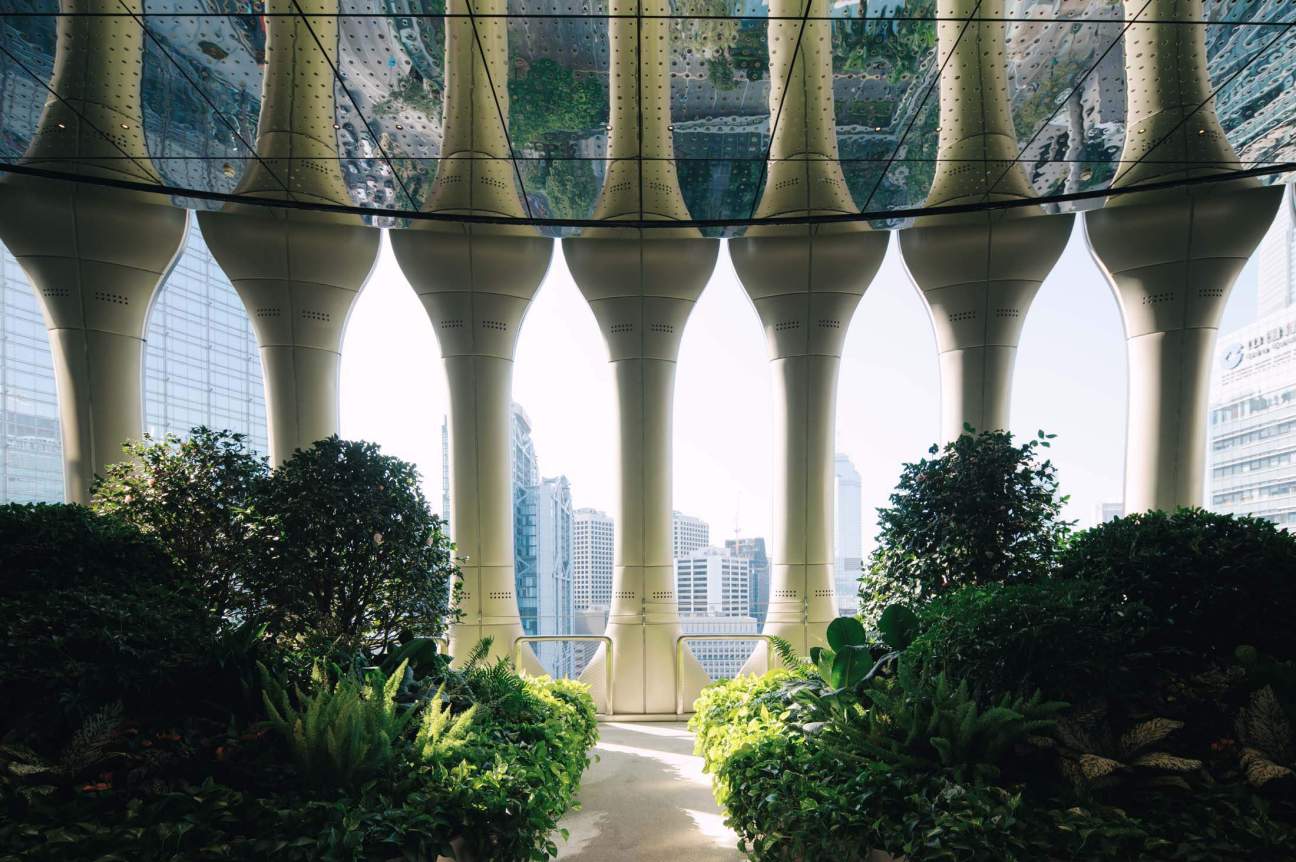
The undulating façade of The Henderson evokes an orchid, Hong Kong’s official floret and a fitting motif for a building that’s helping the city’s central business district to blossom again. For years, Hong Kong has struggled with high vacancy rates in its top-tier office spaces. Yet about 60 per cent of The Henderson was leased ahead of opening, with four floors taken by auction house Christie’s for its new Asia-Pacific base. Designed by Zaha Hadid Architects, the site comprises commercial offices and a landscaped garden.
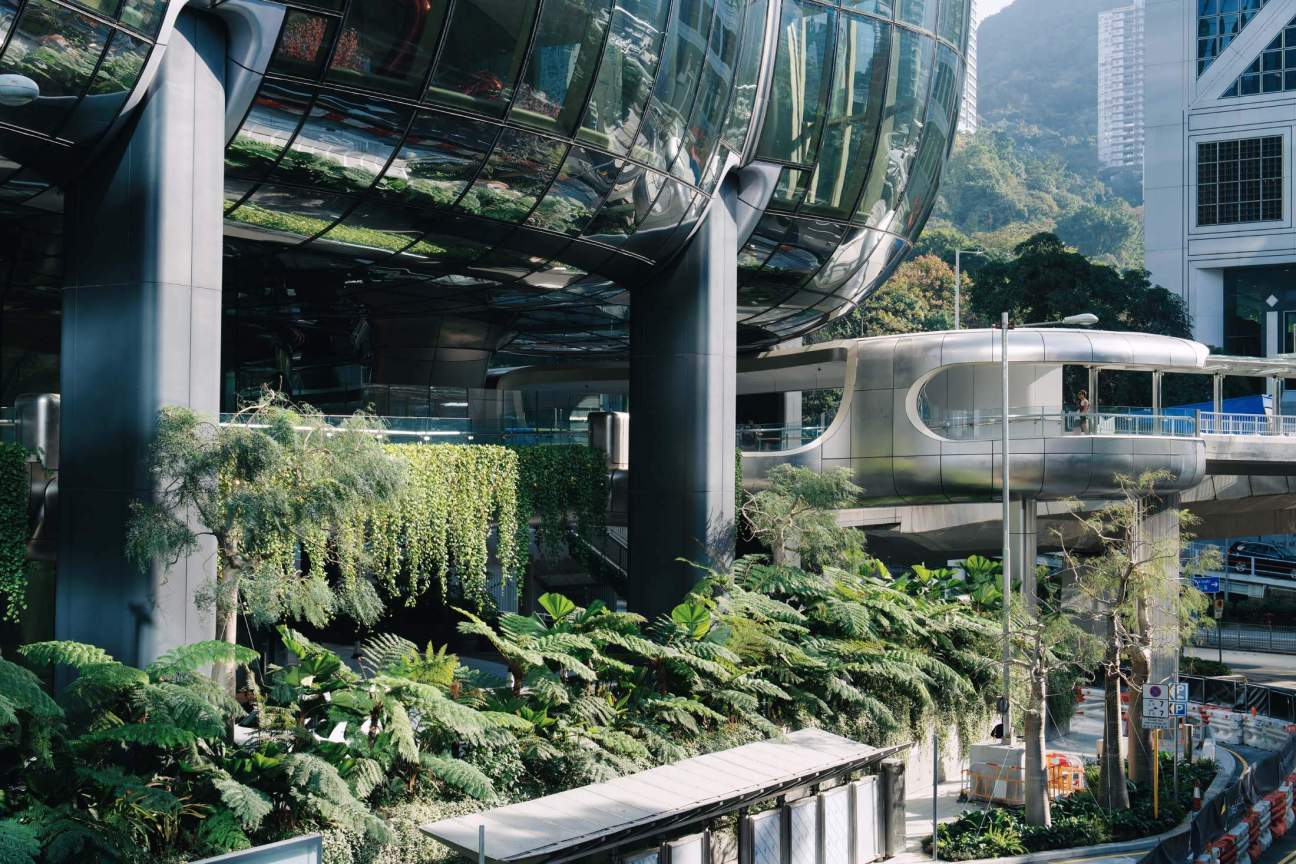
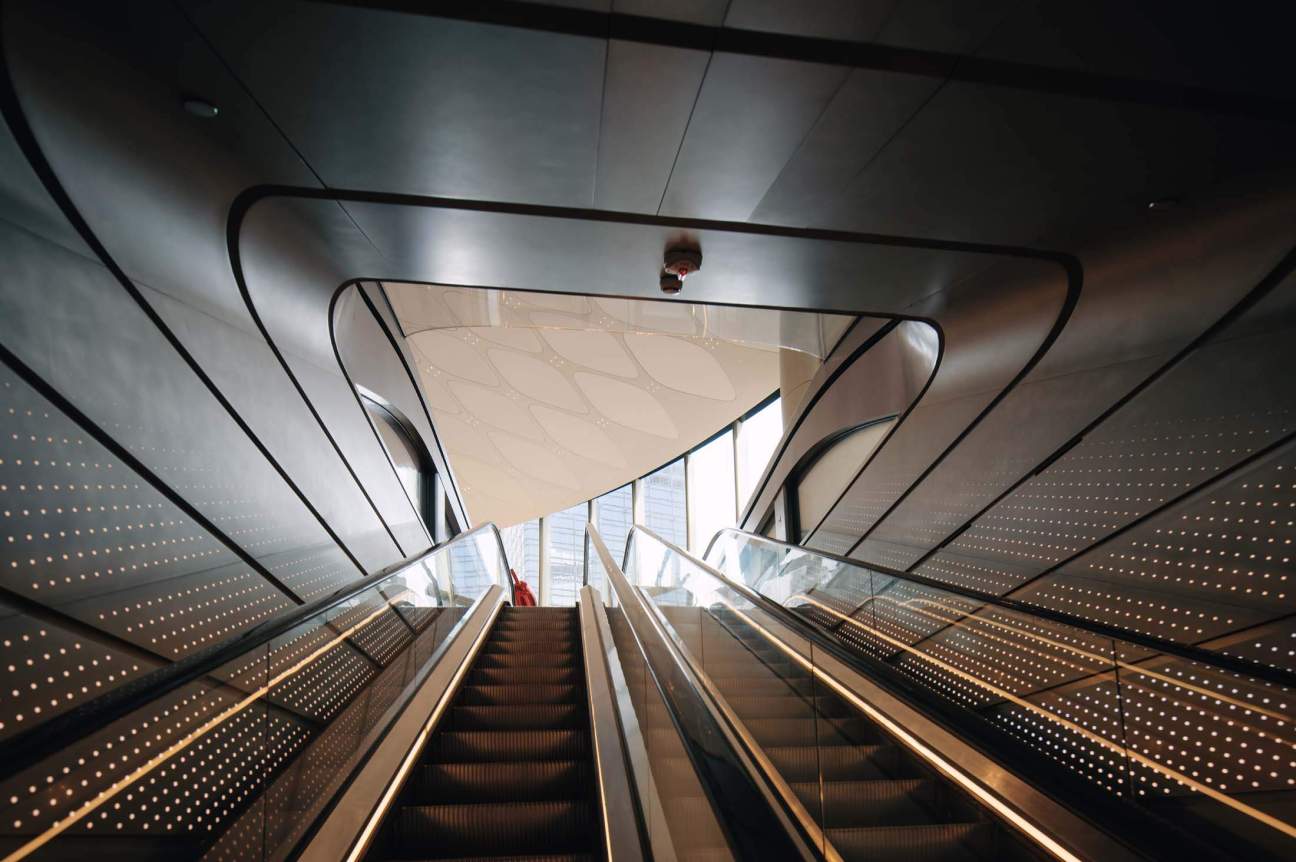
“We wanted to push the boundaries of design and construction technology,” says Kevin Ng, senior deputy general manager at Henderson Land Development Co. To that end, office windows can be opened to let in humidity-controlled air from outside and the 22nd-floor sky garden has lush foliage, a jogging track and space for yoga classes with a city view. The tower works because it is not an isolated business; instead it is woven into the fabric of the city. At its base is a footbridge connecting to underground trains and nearby parks.
4.
Turning the tide
Sollys
Lyon
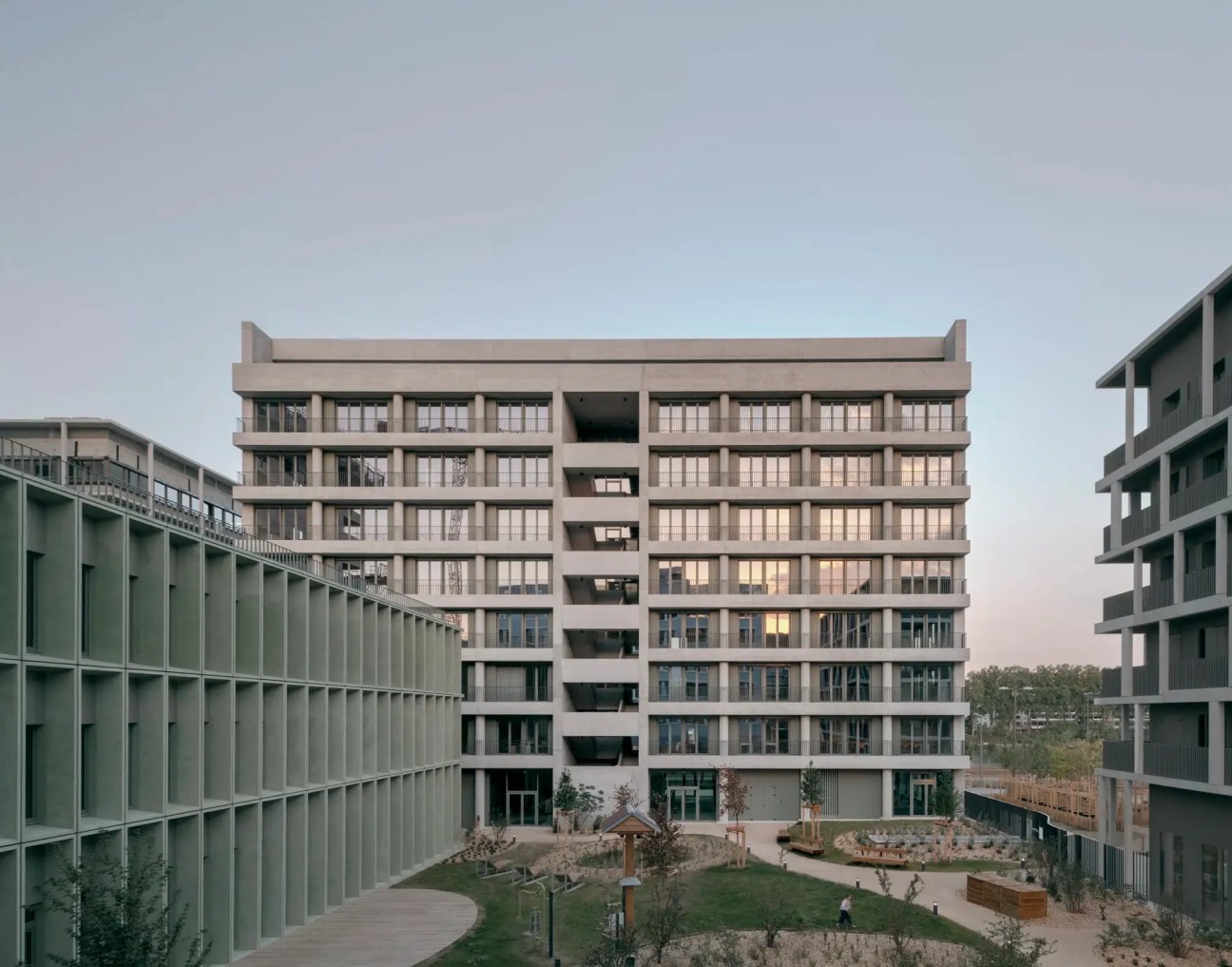
“We created a new city in the heart of the old city,” says Laetitia Alfonsi, operations director at French developer Bouygues Immobilier and lead for the recently completed Sollys project in Lyon. Rather than expanding into greenfield land, this complex – residences and offices, as well as retail and health facilities – was constructed on a prime plot in La Confluence, a former industrial wasteland at the southernmost tip of the Presqu’île peninsula, where the Rhône and Saône rivers converge.
Sollys is the latest chapter in a wave of redevelopment that began more than a decade ago. What was once a three-hectare wholesale market is now home to multiple buildings, with the most recent completed in late 2024 by David Chipperfield. “The ambition was to create a mixed-use quarter with a focus on social and environmental sustainability,” says Chipperfield, whose work couples an aesthetic coherence of concrete and timber-clad structures with renewable-energy systems. Community is at the core of the design; the development has social-housing units as well as courtyard gardens for residents.
5.
Throwing a curveball
Meander
Helsinki
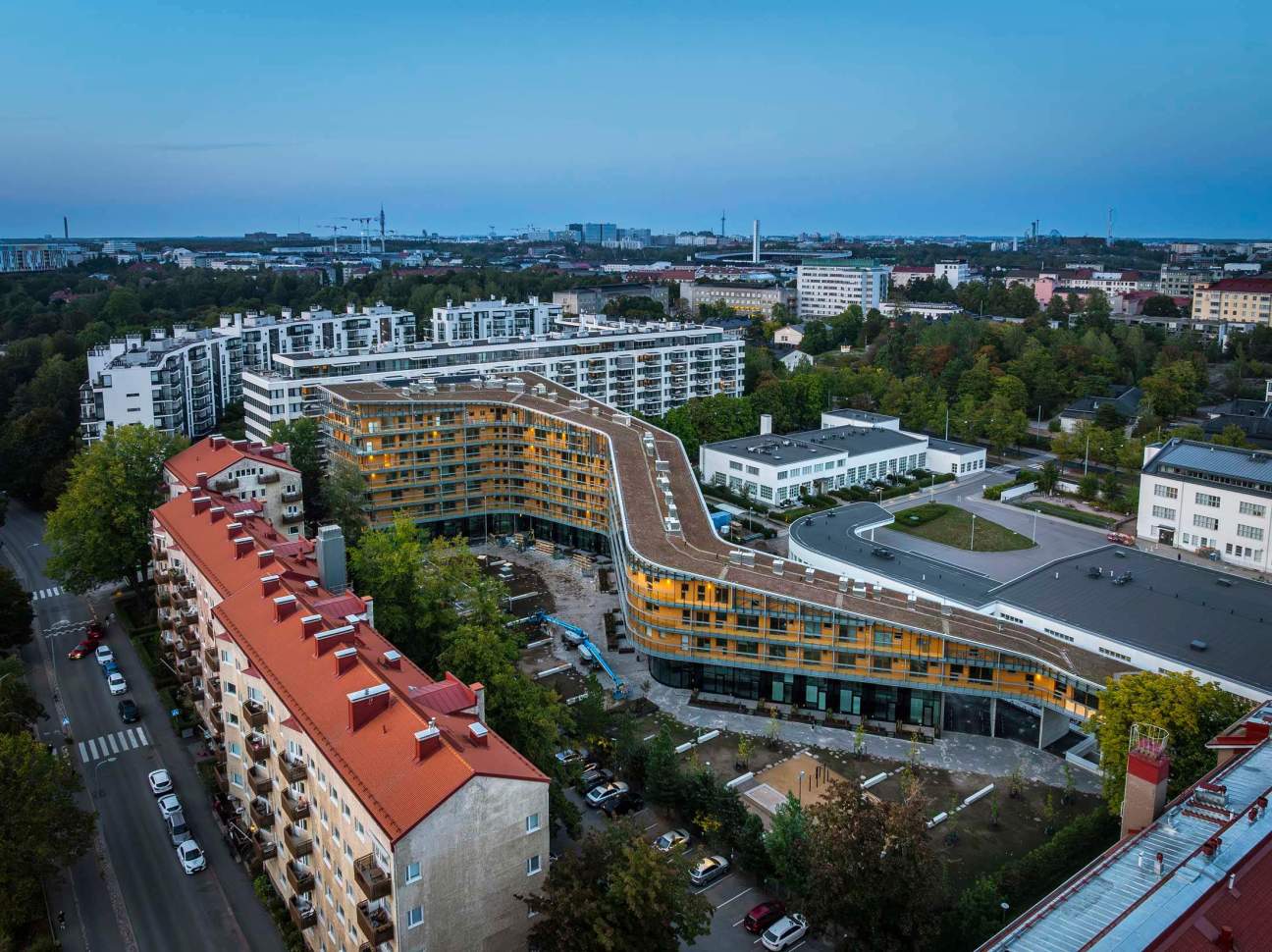
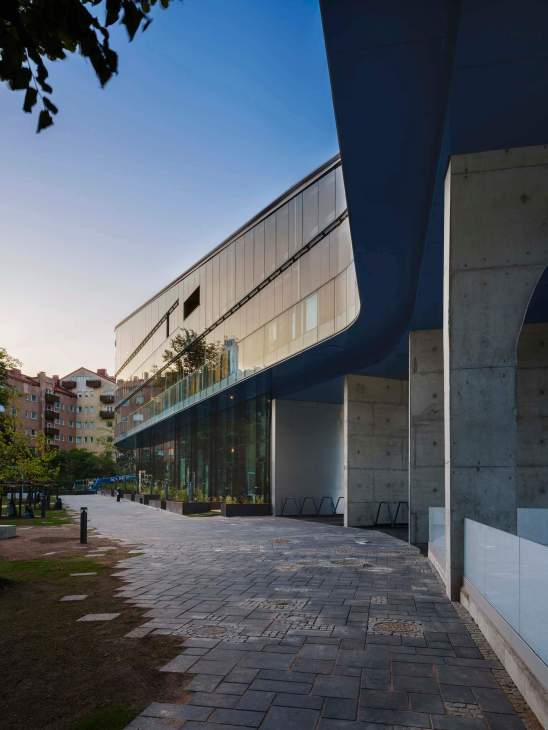
In Taka-Töölö, a historic if sleepy quarter of Helsinki, a new building is shaking things up. Meander, consisting of 115 apartments, was designed by US architect Steven Holl. Its sculptural, river-like design and influx of new residents is drawing fresh attention to this area of former barracks and neoclassical homes. Commissioned by Newil & Bau, a developer with a focus on community-based living, Meander has a wine cellar, a 12-seat cinema and a communal sauna. It has attracted younger residents to Taka-Töölö, plus many new bars and restaurants.
6.
Giving life to a new neighbourhood
Baan Trok Tua Ngork
Bangkok
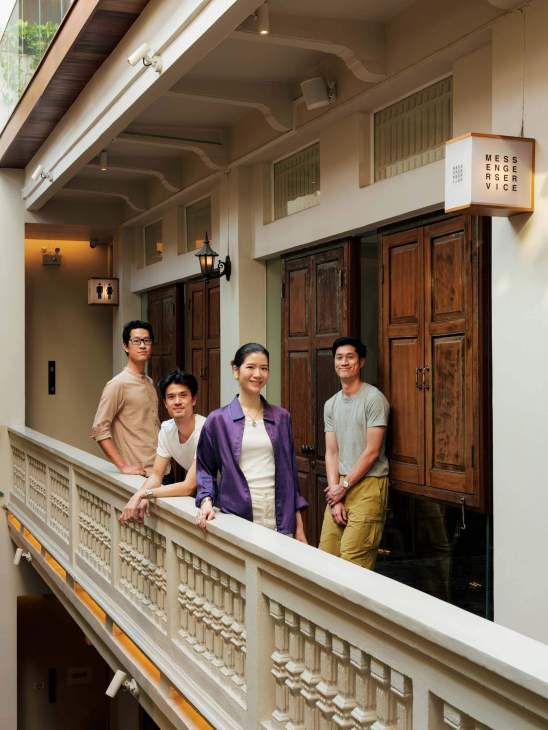
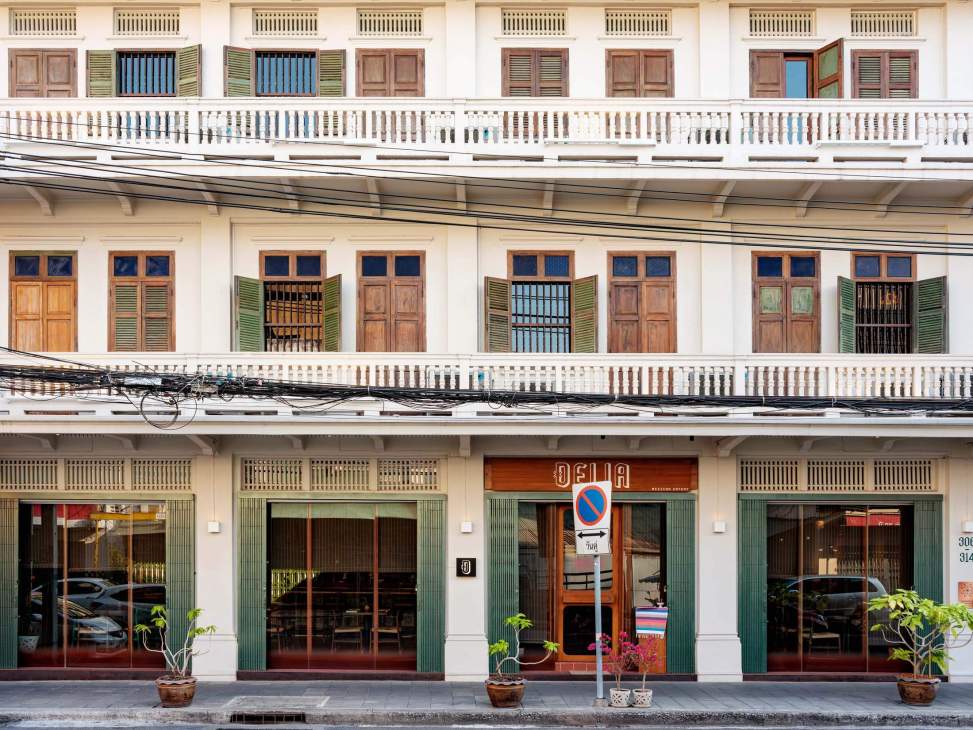
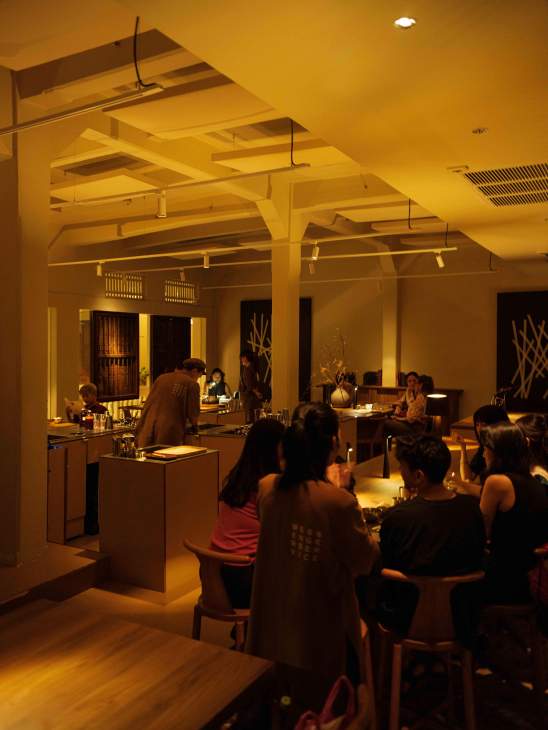
When their ancestral home in Bangkok’s Chinatown was due to be spruced up, the Assakul siblings – Win, Sun, Sandy and Sea – took the opportunity to chart a new path for the neighbourhood.
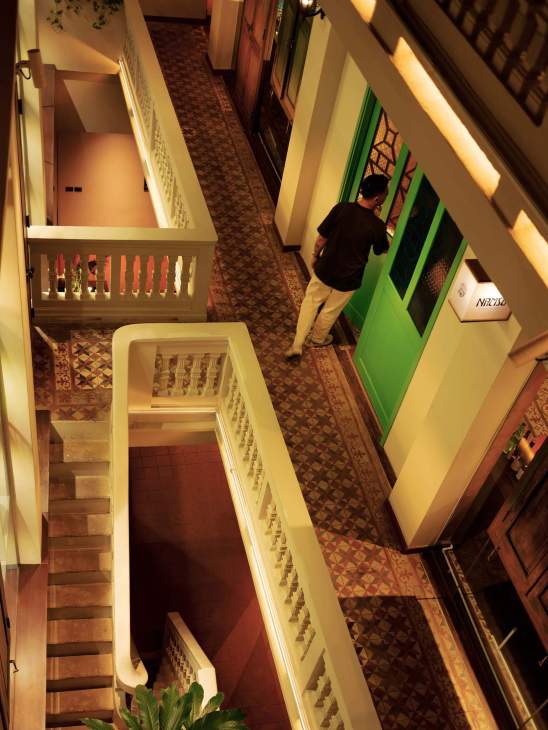
“We reimagined it as a community space for Chinatown that could set the stage for sensitive development and cultural creativity,” says Win. The family worked with Bangkok-based Stu/d/o Architects to restore the building, which reopened in 2023, and create spaces for up-and-coming businesses to rent. From maintaining the historic shopfront to retaining old teak doors and the spiral staircase, they sought to create a beacon for the district that preserved the old while making way for fresh possibilities.
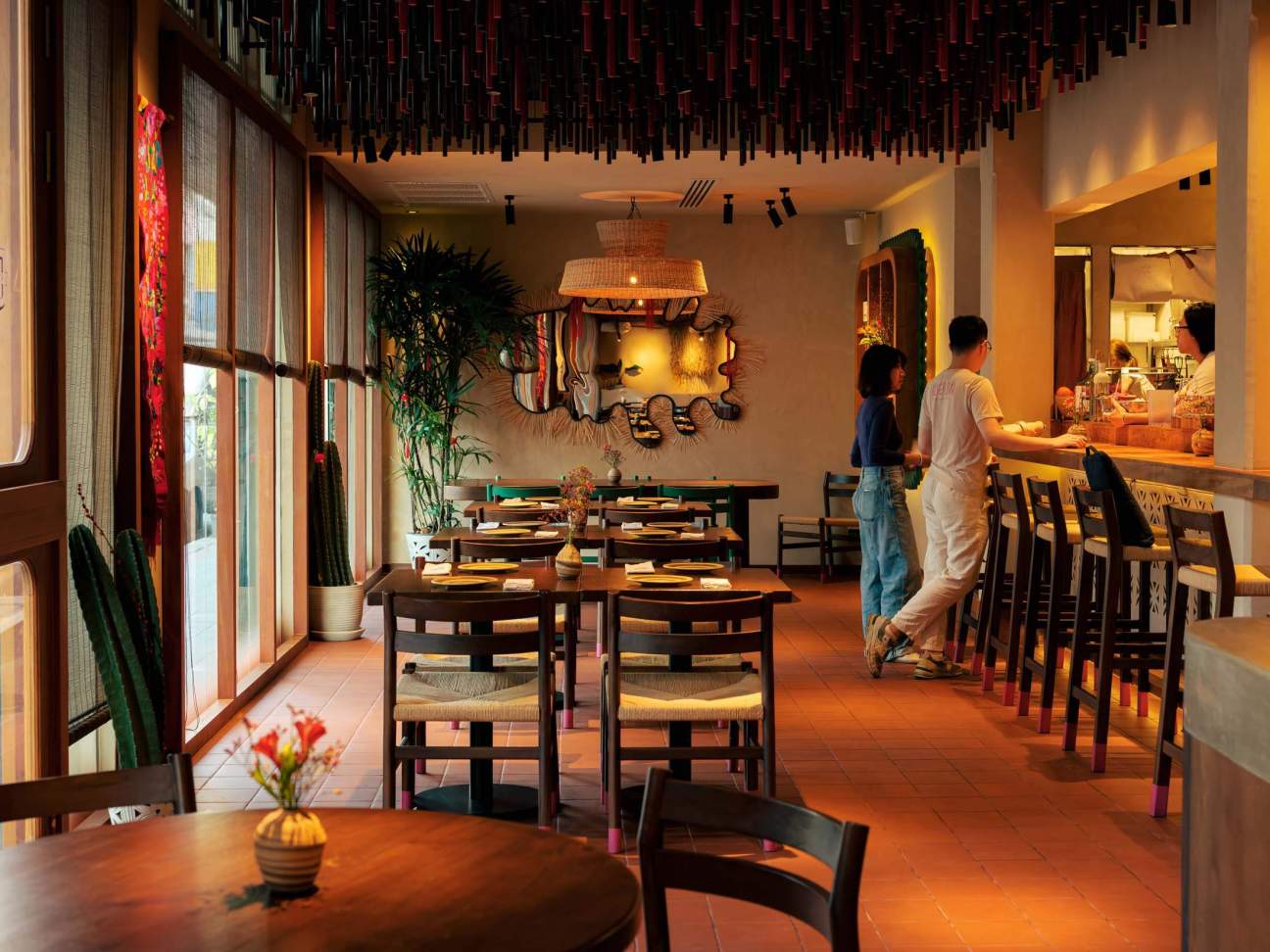
“To respect the existing businesses in Chinatown, we only considered concepts that brought something different,” says Sun. Tenants include Delia’s authentic Mexican fare, and Namsu’s modern spin on Asian cuisine. Baan Trok Tua Ngork helped to lead the way for a revival of Chinatown as other renovation projects, such as creative hub The Corner House, have since opened.
7.
Firing an industry
Forskaren
Stockholm
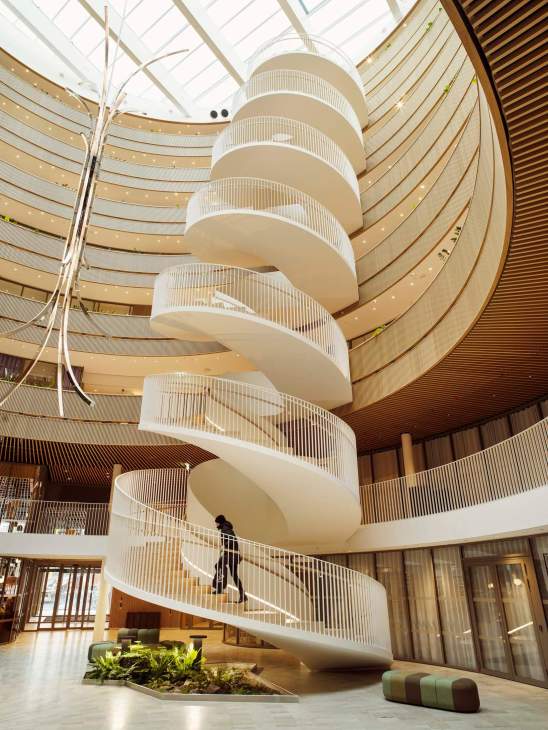
Forskaren is the flag-bearer for Hagastaden, a new area just outside Stockholm city centre that’s dedicated to the life sciences industry. Danish practice 3XN Architects designed the bulbous, wood-accented office building, which opens with a spectacular atrium and an elegant spiral staircase that connects its seven floors. Here, scientists from some of the top firms in the industry, including cancer-care-research outfit Elekta and ITB Med, are busy at work in labs behind large windows. Vectura Fastigheter, the property developer behind Forskaren, intends Hagastaden to be a place where the best minds in life science can mingle with politicians and investors.
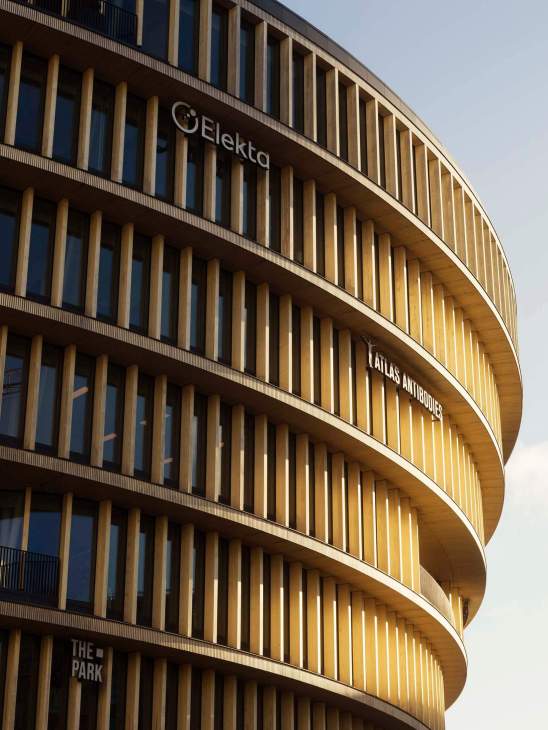
“The days when property developers only leased floorspace are gone,” says Vectura’s CEO, Joel Ambré. “It’s not sustainable to have huge office buildings busy between 08.00 and 17.00 but empty the rest of the time. Our clients sign on with us because we give them more than walls and a view.” To deliver on this promise, Forskaren hosts events, talks, art exhibitions and live music in the evenings. “We’re providing space for the companies and visionaries who could change the world,” says Ambré.
8.
Going green
Carmichael Residences
Mumbai
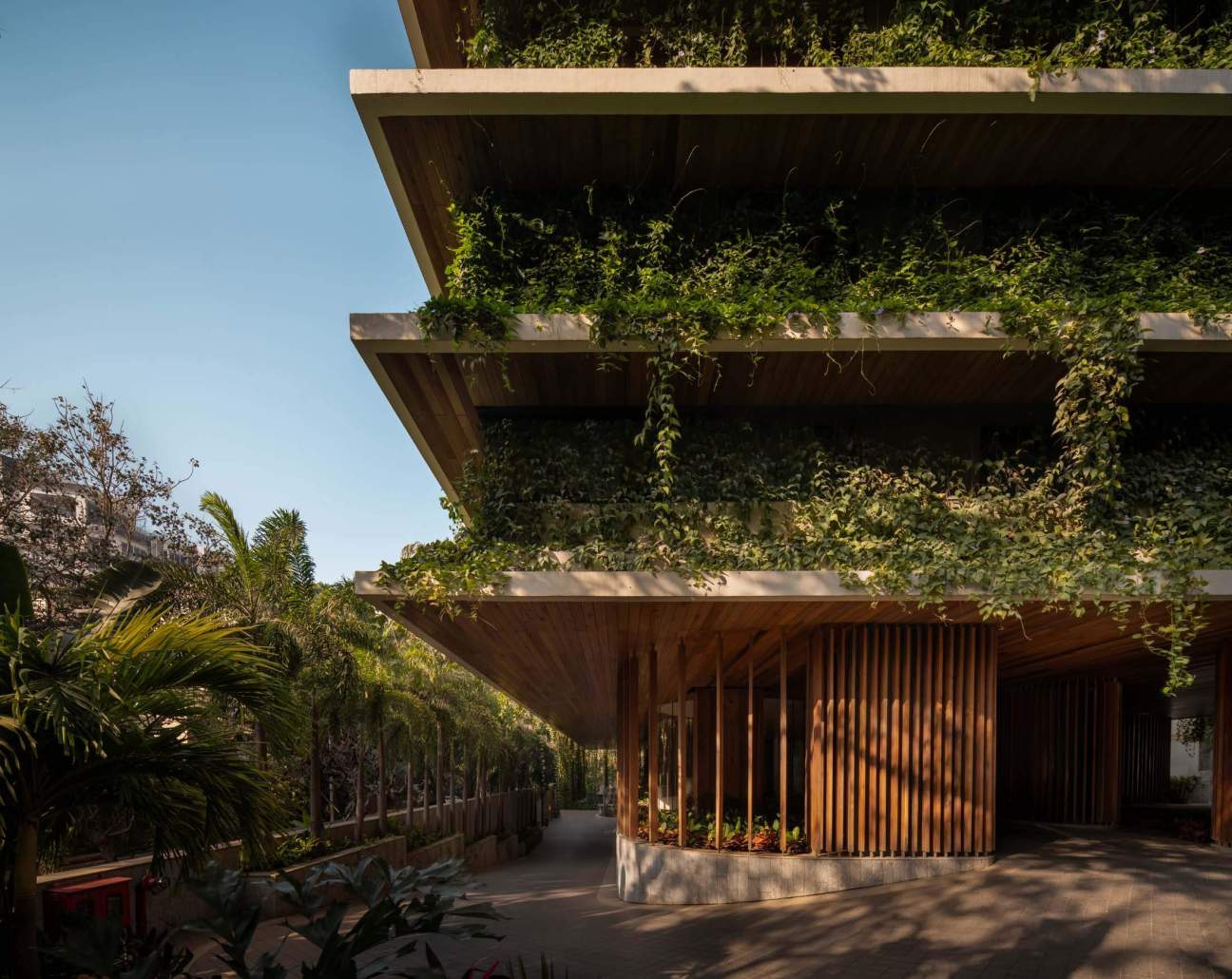
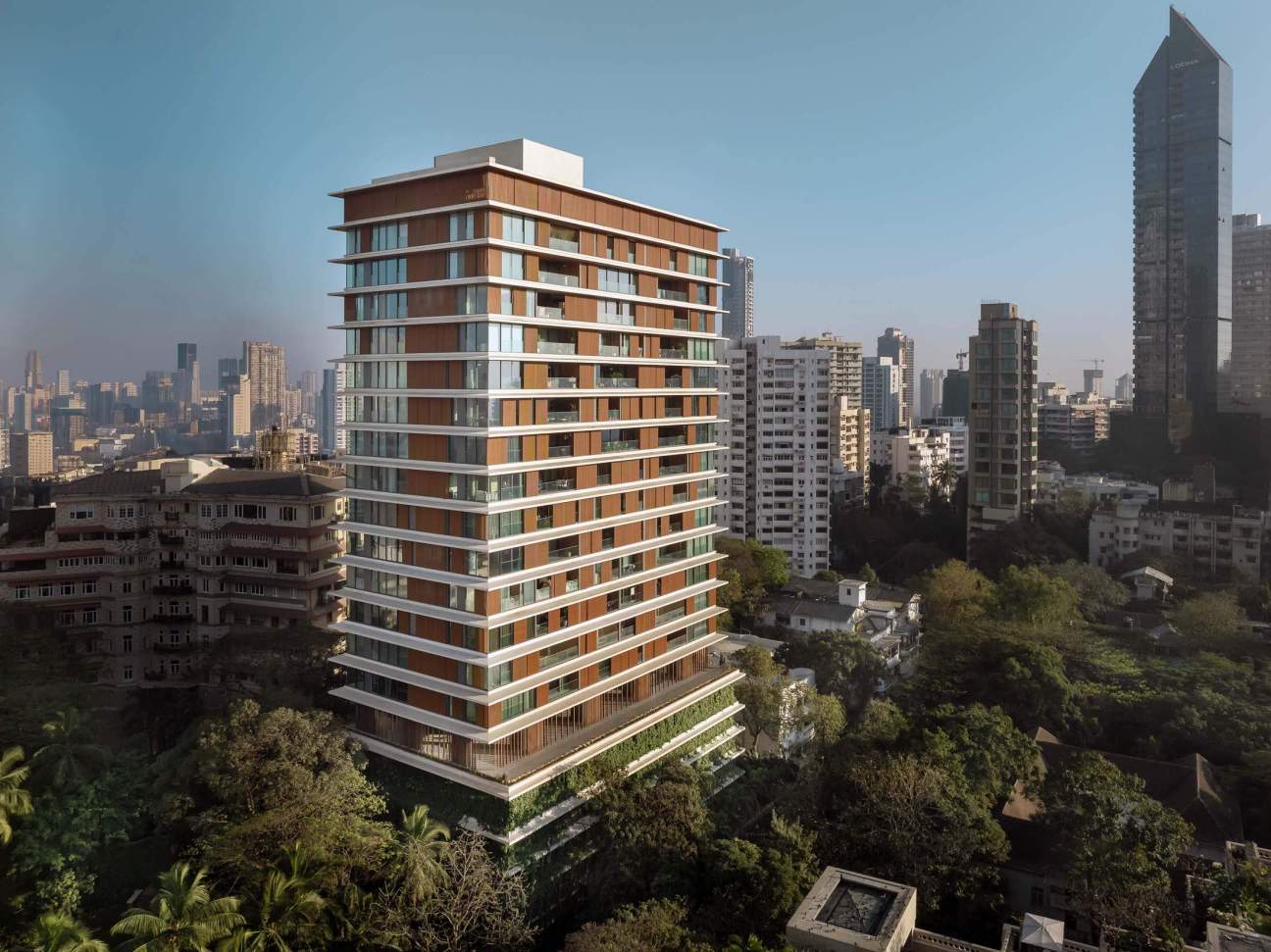
The affluent enclave of Tardeo in South Mumbai is known for its historic low-slung bungalows and splendid gardens. When Skidmore, Owings & Merrill (SOM) was tasked with designing a high-rise apartment building in the area, the architects looked to its verdant neighbours for inspiration. At 21 storeys, Carmichael Residences is a towering addition to the skyline but its cedarwood façade is sympathetic to the surroundings, with tropical plants that trail from every floor. “We paid close attention to the site’s context, leveraging the existing gardens and greenery to become part of the expression of the building,” says SOM’s design principal Peter Lefkovits. The design – with its overhangs that offer cover during monsoon rains – is rooted in Vastu, a set of architectural principles rooted in Hindu thought that emphasise balance and natural forms.
9.
A new course for the docklands
Cruquius Island
Amsterdam
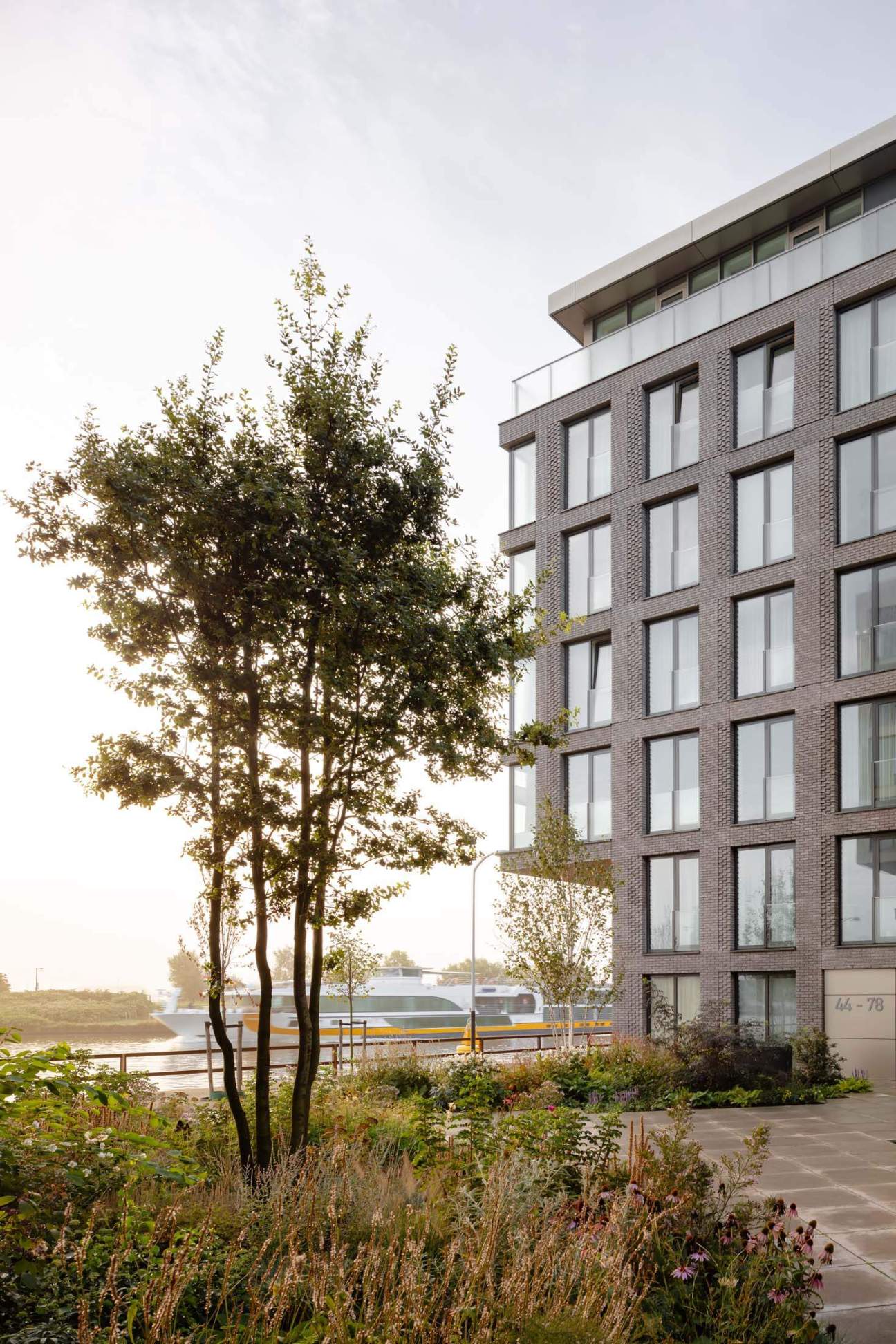
Amsterdam’s Eastern Docklands had become a neglected stretch of crumbling warehouses and bygone shipyards until its startling redevelopment, which began in the early 2000s. The jewel in its transformation is Cruquius Island, an artificial peninsula. The development, which was completed late last year, fans out like an amphitheatre, giving many residences an uninterrupted view of the Amsterdam-Rhine Canal. This helps ground the neighbourhood in its links to maritime trade, while the waves lapping against the quay enhance the peninsula’s retreat-like atmosphere.
Once home to factories, Cruquius Island has been reimagined as a residential hub, offering about 415 homes and commercial spaces, with a third of the rentals zoned as social housing. Every home has private outdoor space, be it a balcony or a garden, and the old quaysides have become inviting promenades, giving a sense of street life and bustle. In summer, residents can even swim in the harbour. “The urban plan was shaped collectively, between architects and the developers,” says Irma van Oort, a partner at kcap, the firm behind the design.
10.
Shaking up the skyline
Populus
Denver
The stately public buildings in Denver’s downtown have a new neighbour: Populus, a 265-key hotel that opened in October, with a façade that mimics a Colorado aspen tree. For Denver property developer Urban Villages, the eye-catching hotel – by architects Studio Gang – offered a chance to shake up a staid downtown skyline and create a fresh-faced icon.
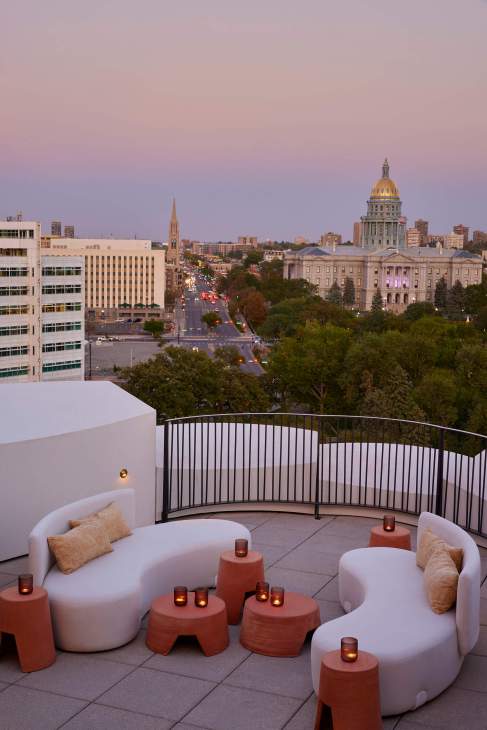
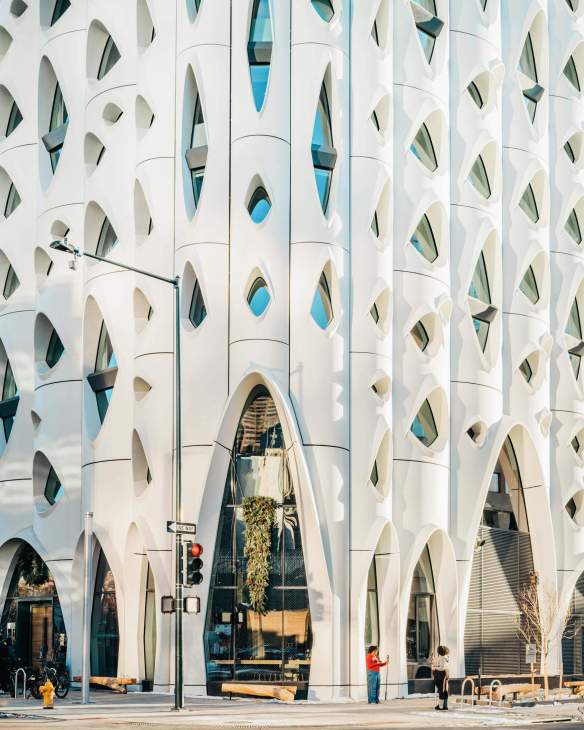
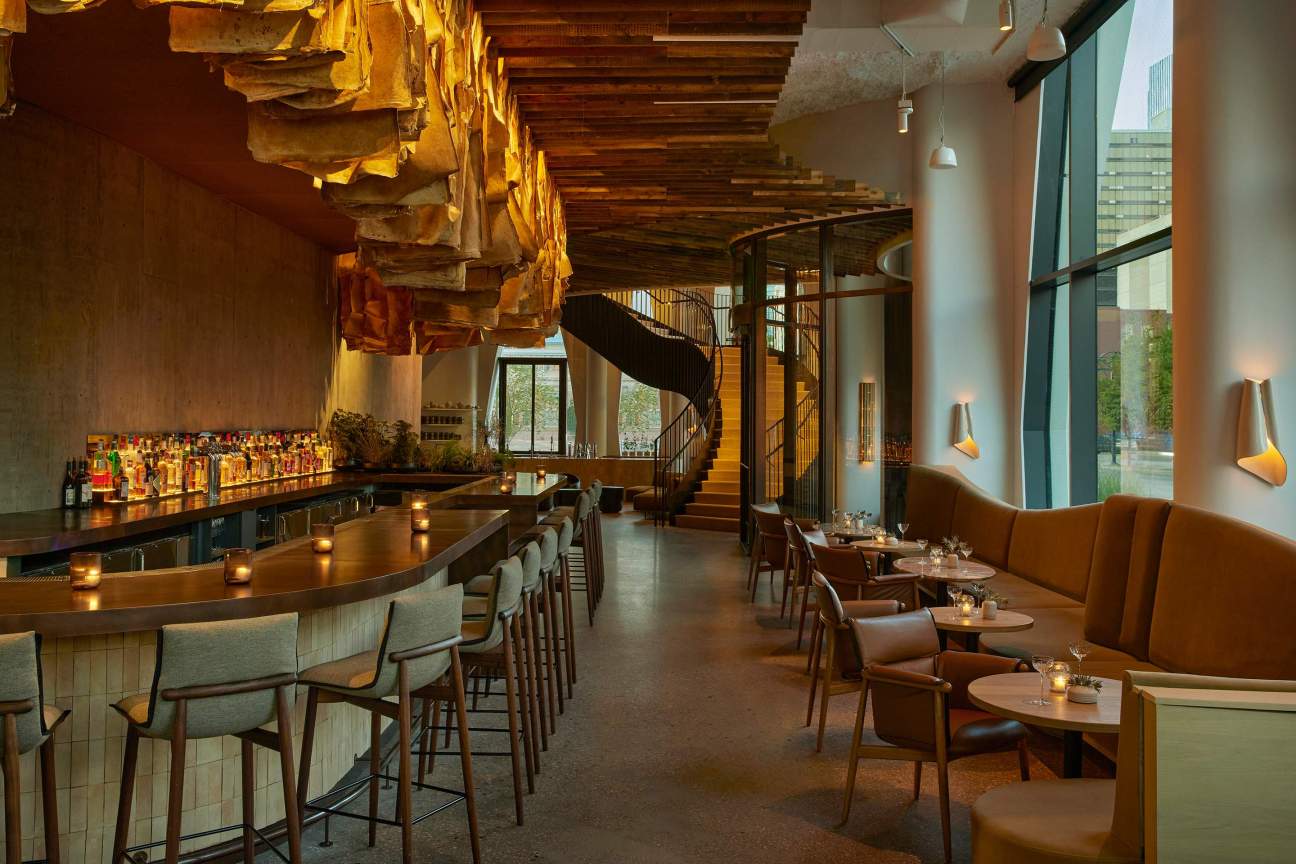
“Denver has matured to become a Tier 1 US city,” says Urban Villages’ president Jon Buerge. “But all the new buildings in downtown look the same.” Populus sits at one of the city’s busiest intersections and is visible from the steps of the state capitol, enticing visitors from across the Centennial State for a drink at the rooftop bar or to check in for the night. “You have the opportunity to define the city through the buildings you create,” says Buerge.
Inside the former home of Enver Hoxha, transformed into a vibrant artists’ residence
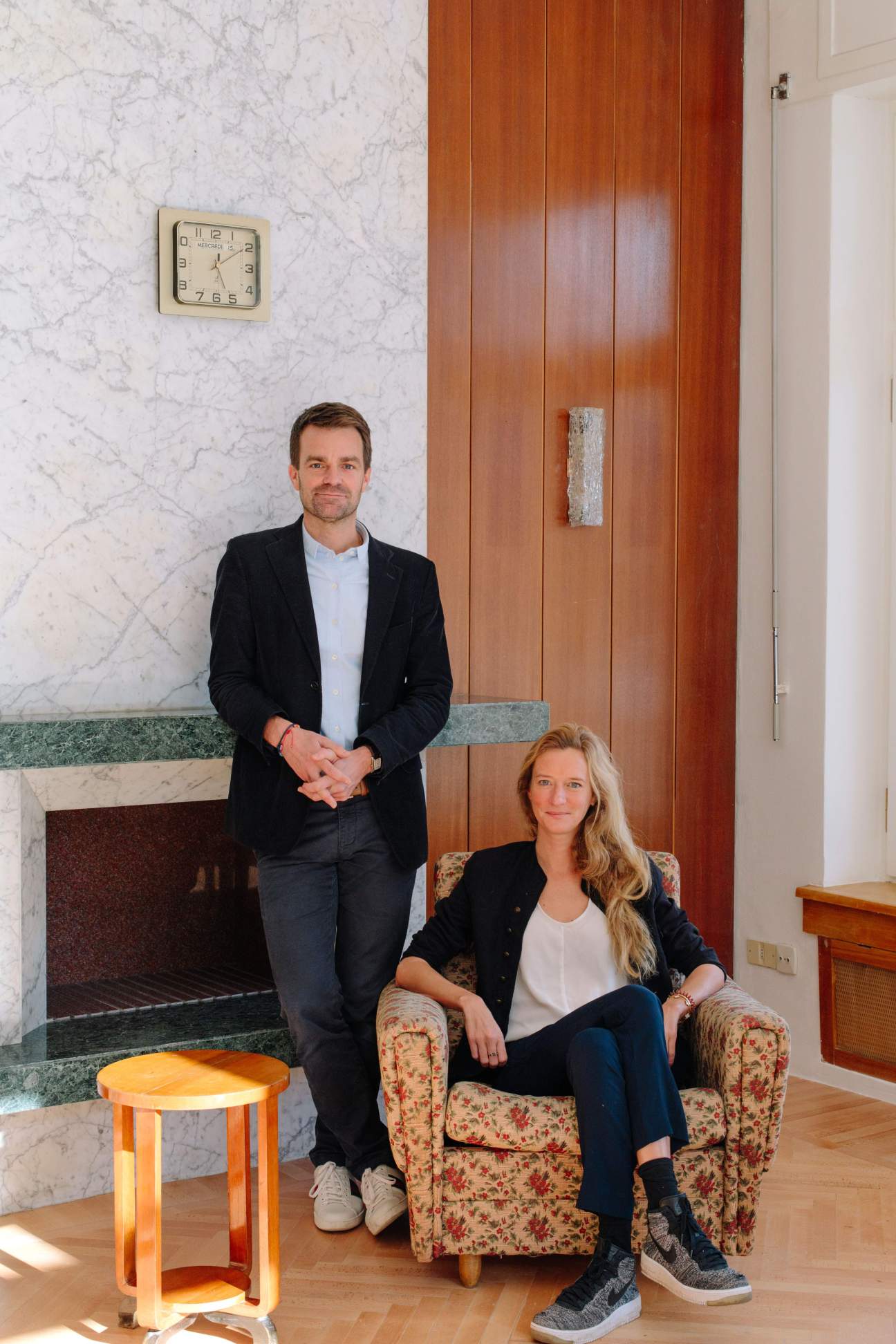
“This place was a ghost in the middle of the city,” says Nita Deda as she opens the metal gate of Vila 31. There are workers milling in the garden, putting finishing touches on the newly renovated space. A caravan belonging to one of the artists in residence is parked off to one side. “The atmosphere has shifted since the artists arrived; it’s like the air is lighter,” adds Deda, who heads up the property’s cultural programme. Once the home of dictator Enver Hoxha, who governed Albania from 1944 until his death in 1985, the house has been newly converted into an artists’ residence in partnership with French art foundation Art Explora. In January, seven artists arrived, who will each stay for a three-month spell. “This is one of the first artists’ residence in Tirana and really the first project of its kind in the Balkans,” says Vila 31’s head of development, Bisej Kapo. “We’re putting Albania on the international scene and creating a new and exciting artistic network.”
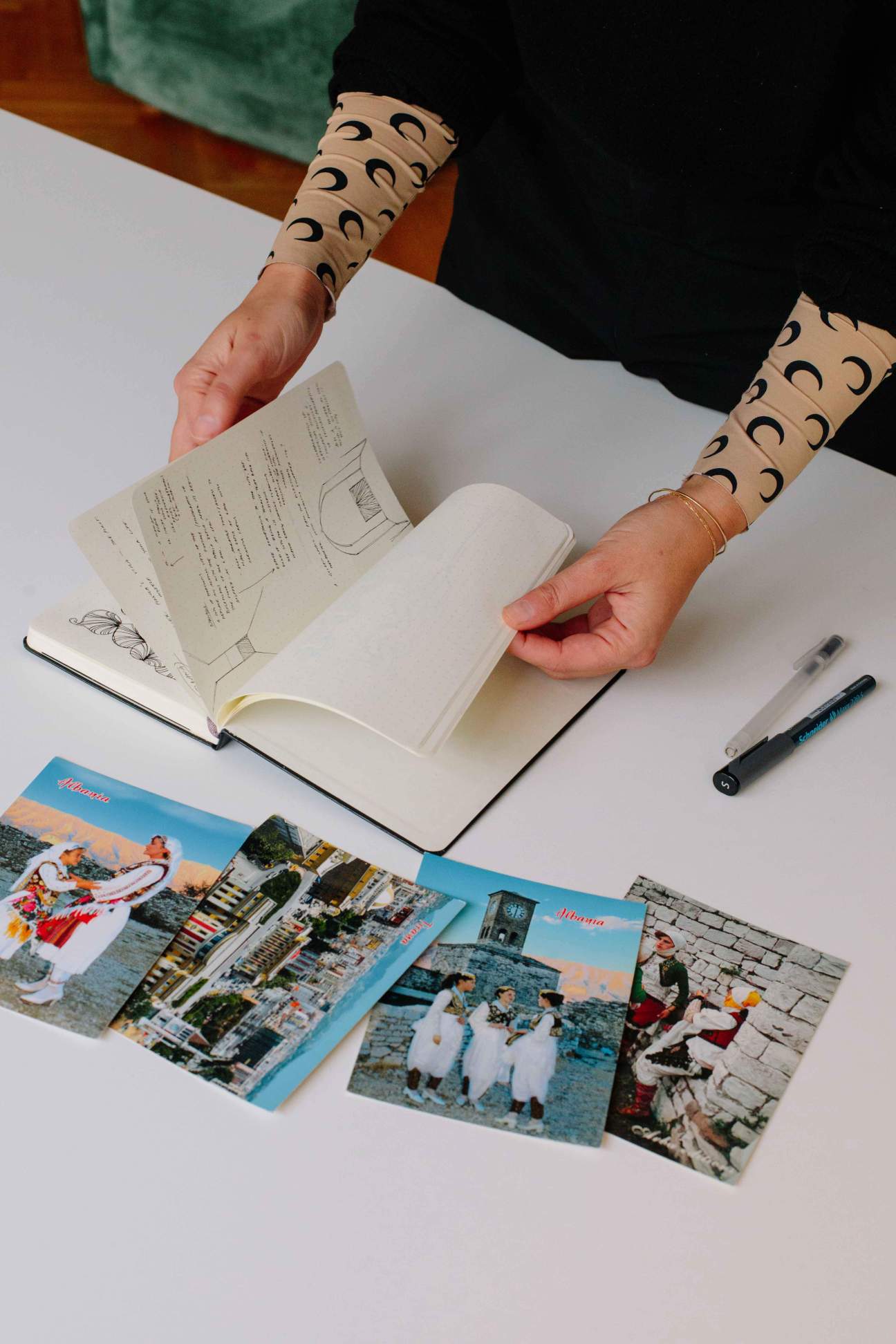
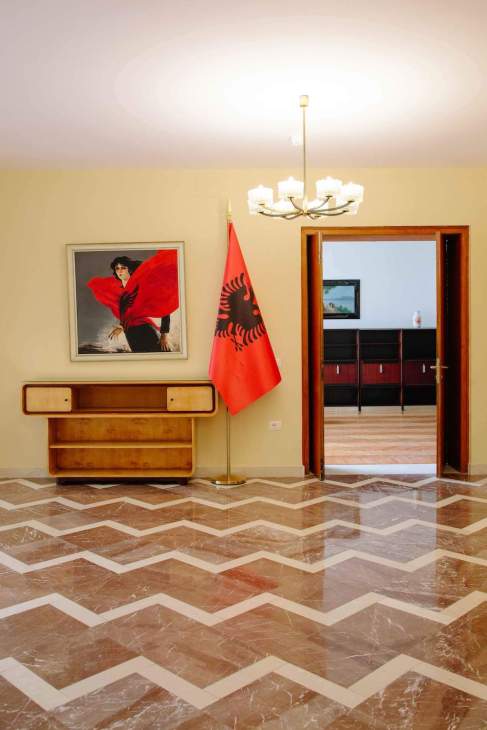
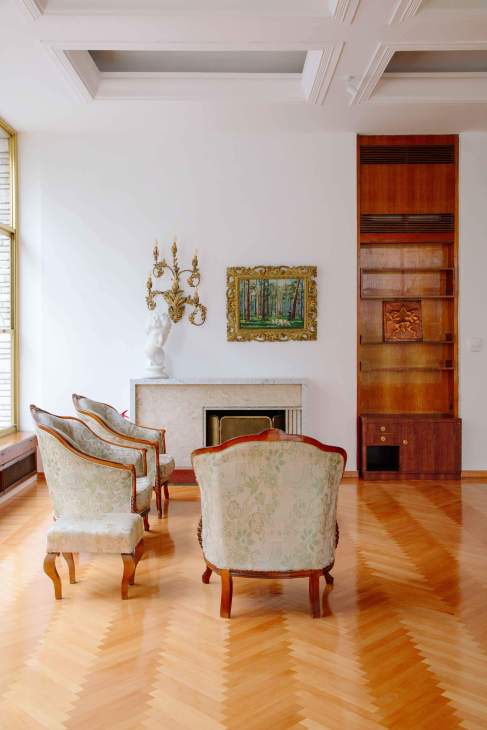
Vila 31’s marble-floored hallways exude decadence, the walls painted in soft pastel hues. But the weight of history here is heavy. A Stalinist dictator, Hoxha’s legacy is defined by his paranoia and the violent state-of-siege isolation that he forced the country into. While in power, Hoxha banned religion, restricted travel and outlawed private property. Political assassinations and labour camp sentences were common. Forty years since his death, families continue to look for their loved ones among mass and unmarked graves. “It’s still so difficult to talk about. It’s hard to find the right words,” says Kapo.
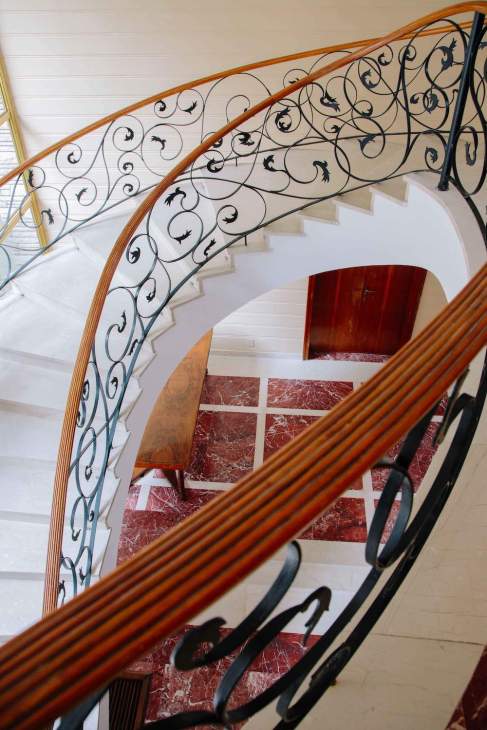
The residence is in Tirana’s Blloku neighbourhood. As Hoxha ascended to power, he moved to the area, which was then known as New Tirana. By the end of the 1940s, the neighbourhood was made accessible only to high-ranking party members and was guarded by armed security, earning the name Blloku i udhëheqësve (the leaders’ block). Publicly, its inhabitants strove to convey the image of a tight-knit community of elites. In reality, double-crossing reigned and houses and plots of land regularly changed hands as different party members fell out of favour.
So it was with Vila 31, built between 1972 and 1973. Hoxha brought in architects, engineers and technicians charged with getting the house, dubbed “Object X”, in a state fit to satisfy his exuberant and distinctly modernist taste. Supplies were covertly imported from Europe and Italian technicians were brought in to install fixtures unseen elsewhere in Albania. The result was a 2,500 sq m residence – complete with pool and home cinema – that mixed local and Western architecture. “The villa’s completion in 1973 coincided with a dark period in Albania’s cultural history,” says historian Elidor Mëhilli. “Hoxha launched a vicious attack on what he deemed liberalism in the arts and culture. As his designers sourced furnishings from Western catalogues and installed amenities at the pinnacle of luxury, he publicly condemned Western influence in music, art and architecture.”
Vila 31 was inhabited by Hoxha, his wife, sister and the families of his grown children. They stayed after Hoxha’s death in 1985, only leaving the house at the fall of Albania’s communist regime in 1991. Since then, Vila 31 has been mostly off-limits, its windows obscured by dark curtains. The house became a monument to a painful period of history – a place that passers-by would avoid looking at. “This is a space that, until now, has meant censorship, darkness and the lack of freedom,” says Deda.
Blloku has kept its name but the district is now a vibrant part of the city’s culture and nightlife. Around Vila 31, restaurants, bars and hotels are thriving. The whole city is in construction mode with cranes punctuating the skyline against the backdrop of the snowy Skanderbeg mountains. The authorities in Albania – as in many post-communist states – have been faced with the question of what to do with the period’s architectural heritage. In 2023 the Pyramid of Tirana, once a museum dedicated to Hoxha, reopened as a Youth IT centre.
The idea for the Vila 31 artist residency was born in 2021 when Art Explora founder, Frédéric Jousset, met with Albania’s prime minister, Edi Rama. “They realised that they shared common values, in particular in regard to the importance of art as a bridge between people,” says Art Explora artistic director Blanche de Lestrange. Though based in Paris, the foundation is turned towards Europe at large. They brought in Lucie Niney and Thibault Macra, founders of nem Architects, for the renovation. The Paris-based studio restores heritage buildings and has completed significant cultural projects in France, including the Pinault Collection’s artists’ residence. “This building required extra humility on our part, not just in regard to the complex history but also our position as foreigners coming in to work on it,” says Niney.
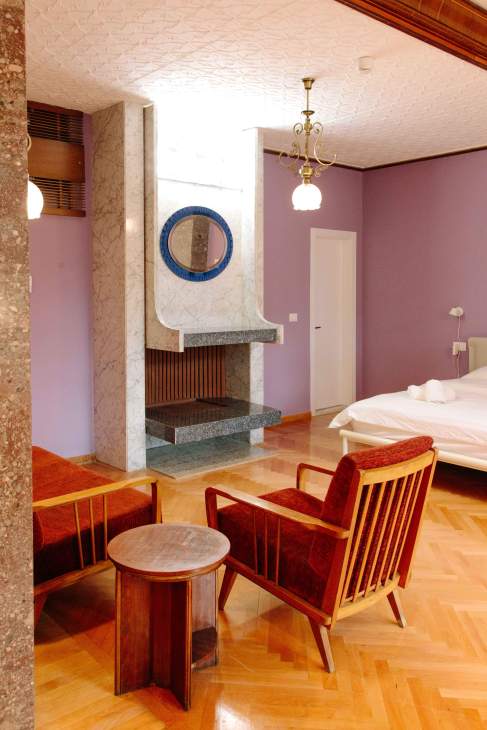
Though Vila 31 had been abandoned for decades, the architects were surprised to find a well-preserved time capsule of the 1970s inside, complete with wood-panelled walls and sculptural fireplaces. Once the utilities were updated, the floorplan was rearranged to accommodate the artists and the residence’s administrative team. “One of the changes we made was to turn Hoxha’s private bedroom, office and bathroom into the common dining and office areas for the residents. We felt that it was a way to avoid creating nostalgia and truly subvert them by turning them into places of community, joy and creativity,” says Niney. The original wall colours were kept, when possible, as well as the vast array of kitschy colourful tiles. The furniture found on site, including floral-wallpapered sound-proof doors and retro television sets, was restored.
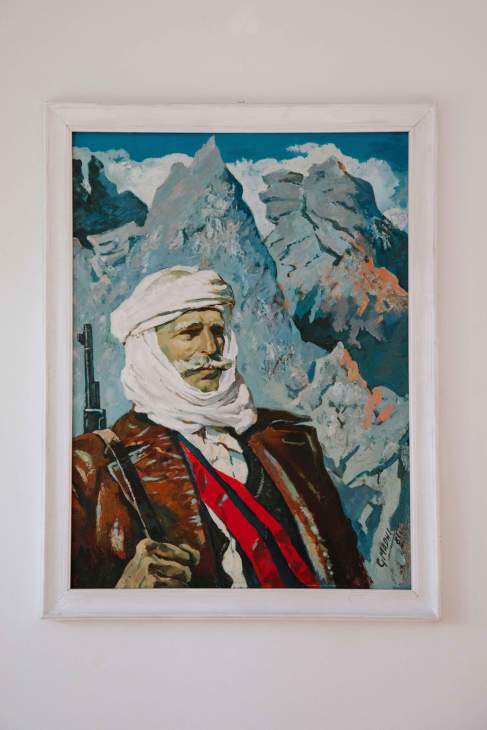
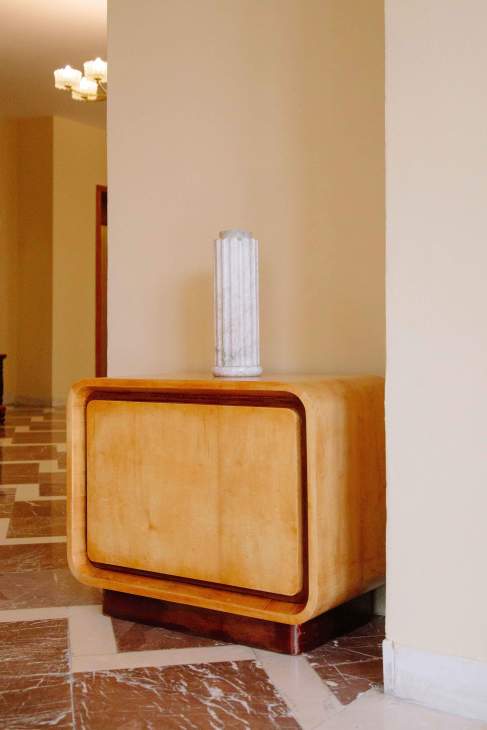
Every resident of Vila 31 is given a private apartment, comprising a bedroom, bathroom and a living and work area. The first to arrive from the inaugural cohort was the Ukrainian artist Stanislava Pinchuk. It was an experience she will remember forever. “I couldn’t sleep, so I just walked around the rooms and corridors in the dark, completely alone in this eerie house,” she says.
Born in Kharkiv but now based in Sarajevo, Pinchuk’s work, which includes sculpture, video documentary and photography, focuses on the legacy of oppression. “Coming here was a way to find a missing puzzle piece for myself, especially now when, as a Ukrainian, there is so much reckoning with history and its effect on our present.” Here, Pinchuk has had to weigh the cruelty of Hoxha’s regime against the family life that coexisted within these walls. “I found Disney stickers on the tiles in the bathroom, which belonged to one of Hoxha’s grandchildren; it’s truly Hannah Arendt’s banality of evil,” she says, referring to the German philosopher’s famous phrase about the ordinariness of the people who committed the atrocities of the Holocaust. While here, Pinchuk will be examining the figure of the monster and one of her sources is Hoxha’s library, including books on French existentialism, science fiction and the supernatural. “I want to look through his banned books and the worldly pleasures that he allowed himself while punishing Albanians,” she says.
Fellow resident Gerta Xhaferaj’s project is also intimately related to the house. “During my studies as an architect, I always heard about the tunnels built during the dictatorship which connect this villa with other spaces in the city,” she says. “I’m going to work with the architects to check their status and hopefully create temporary installations inside them.” Born and raised in Tirana, Xhaferaj hopes that the renovation of Vila 31 will be cathartic. “My goal is to convince my friends to come here and see the changes for themselves,” she says.
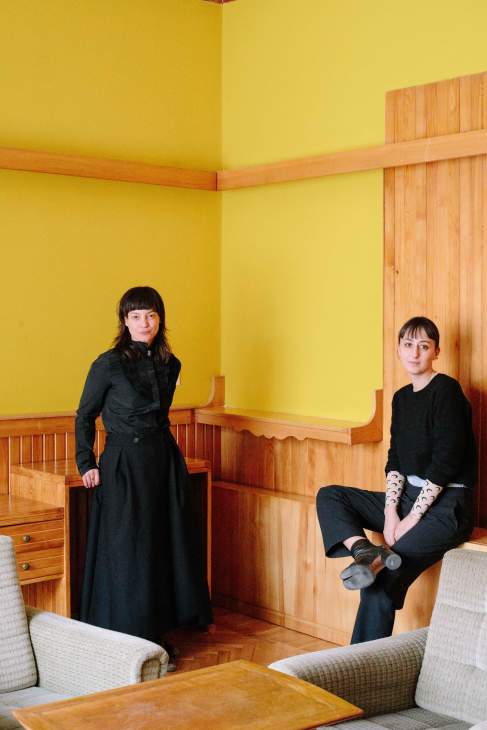
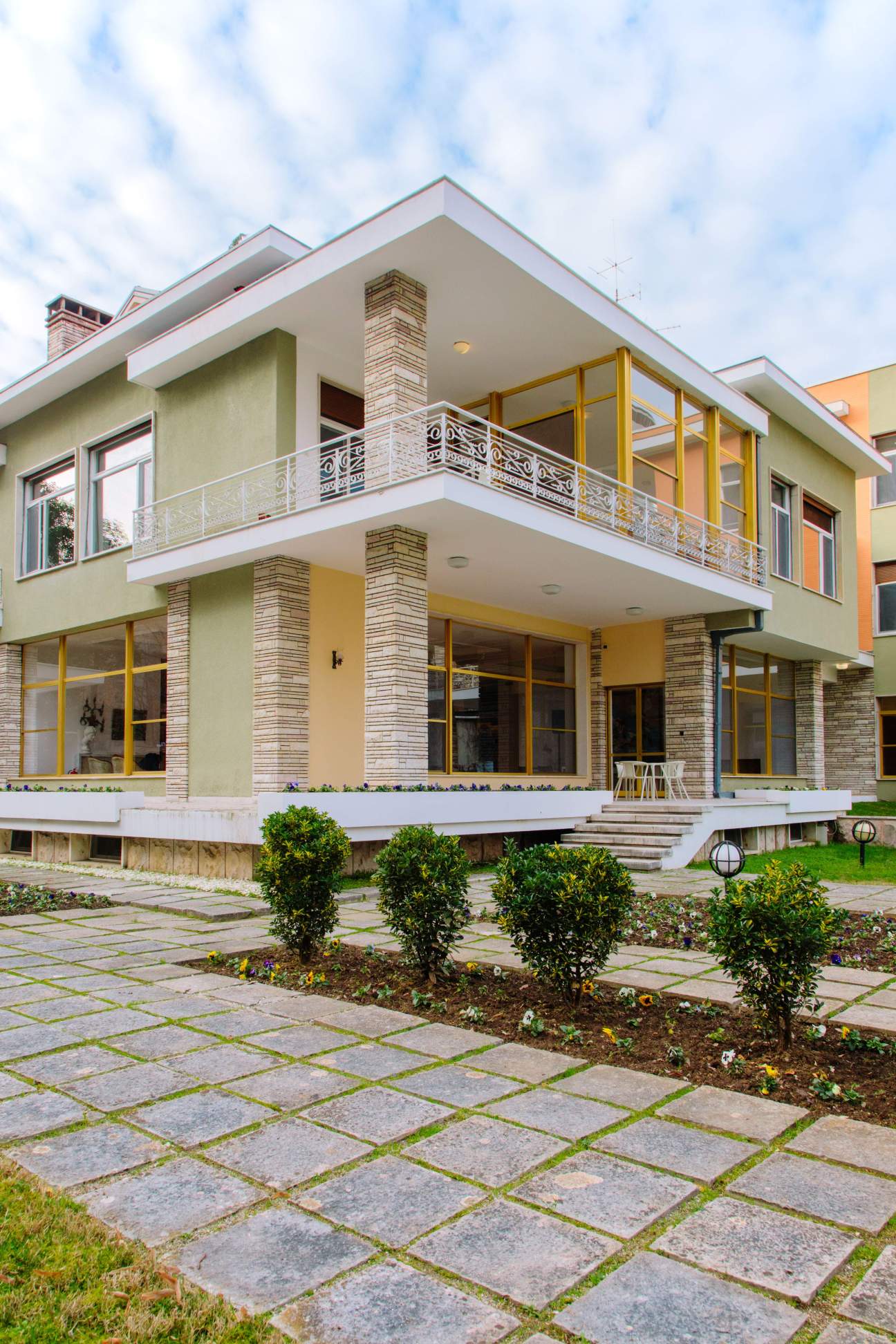
When Monocle visits the house in January, it feels eerily empty, with rows of bare shelves. As the programme evolves, the hope is that artists will fill Vila 31 with colour and objects that they’ve made during their stay. In April the first open studio will take place. “I would love to see this house explode with people and with ideas,” says Kapo. The ghosts of Vila 31 won’t be exorcised completely but its new residents will add more layers to the history of the building, painting a new – brighter – vision for the future of Albania.
artexplora.org
Cable network: Taking a ride on San Francisco’s moving landmarks
Annie Washington, born and raised in San Francisco, makes one thing clear as we step into the racing-green interior of her cable car. “This middle section belongs to me and me only,” she says, pointing to a large metal lever and a mass of cogs below. monocle’s request to try piloting Washington’s cable car is firmly rebuffed, which is almost certainly for the best. “I’ve driven a bus and a trolley but there’s nothing more difficult than this cable car,” says Washington, only the sixth woman to get behind the stick in the system’s 150 years. “I’ll tell you this: I don’t need to go to a gym.”
Washington pulls hard on the big lever and a tonne of metal creaks into life. With a clatter of bells from a co-pilot at the back of the car, we’re off, whisked forward out of the Hyde and Beach turnaround and down one of San Francisco’s pyramidal hills. We move at a clip, clattering through busy intersections with a vintage vigour that stops cars, pedestrians and a few self-driving taxis in their tracks.
In a city synonymous with tech, where the next generation of AI firms stare down from the billboards, the cable cars speak to San Francisco’s analogue soul. The network was founded by gold rush-era entrepreneur Andrew Smith Hallidie, who set out to build an alternative to the horse-drawn streetcar, and created the world’s first cable-car system.
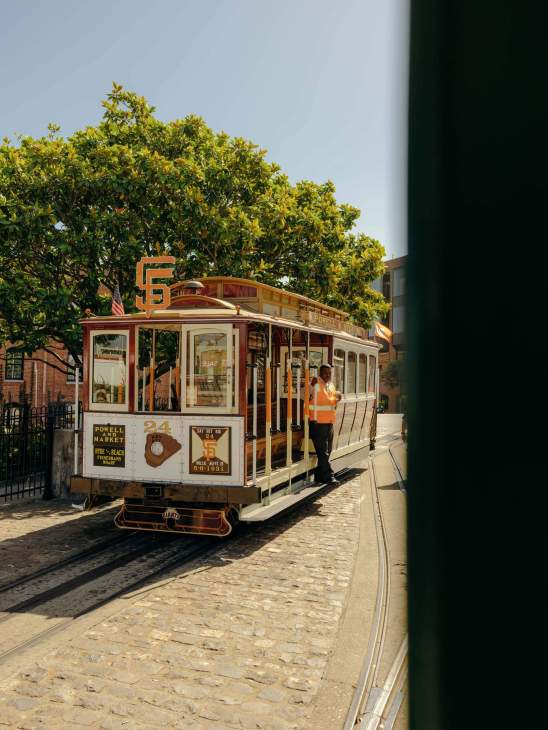
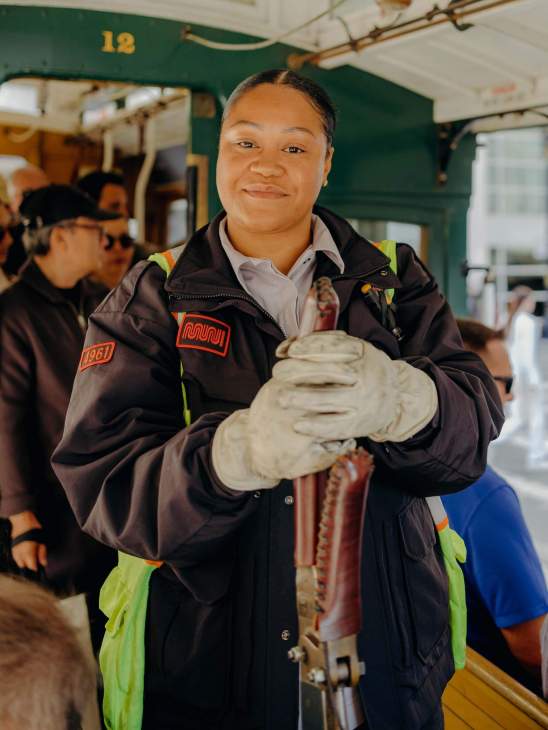
It remains an incredible feat of engineering. In the Cable Car Barn, which is also a museum, four huge wheels are constantly winding mile after mile of metal cable that drips with hot oil. This cable is threaded beneath the city streets and when Washington pulls on her metal lever, she hooks the car onto the cable, which drags us forward funicular-style. For that reason, drivers are known as the “grip”.
Most passengers are tourists but the cable cars still serve as hop-on-hop-off commuter carriers. As we barrel our way downtown, Camilla, who is on her way to see her sister in the city, comes on board. “I was waiting for a rideshare car for ages, so now I’m cabling,” she says, settling on one of the wooden benches.
In Chinatown, Monocle disembarks to join another cable car, where Dwayne Norfleet is training a new recruit in the “craft” of gripping. “You have to be able to handle these cars in any weather – and handle the public at the same time,” he says, directing trainee Shalissa Worlidge in the unenviable task of reversing a car down a particularly steep hill; a delicate balance of riding the grip and the brakes. “Just ease it out now,” says Norfleet.
At the rear of the car, conductor Brian Sickles is on the bells, directing the grip on this tricky manoeuvre. One ring means stop, he says, two means go and an insistent rhythm signals the grip to keep going.
“My father did this job for 31 years,” says Sickles, who grew up in Chinatown to the soundtrack of cable-car bells. He recalls the 1980s, when a dilapidated system was almost dismantled before then-mayor Dianne Feinstein stepped in to save it. “These cable cars are a moving landmark.”
Iter, the nuclear-fusion project proving that multilateral collaboration still works
“In a few years this will be the hottest place in the known universe,” says Sabina Griffith, a communications officer for international research and engineering organisation Iter, gesturing at a huge metal pillar, Monocle is in a cavernous assembly hall located about 30km north of Aix-en-Provence, staring at a partially constructed tokamak, a type of fusion reactor that might provide a panacea for the world’s energy problems. The heat inside tokamaks – which can reach about 150,000,000c, or 10 times as hot as the core of the sun – pushes atoms to fuse, which generates vast amounts of energy. Crucially, they produce negligible carbon emissions and almost no radioactive waste.
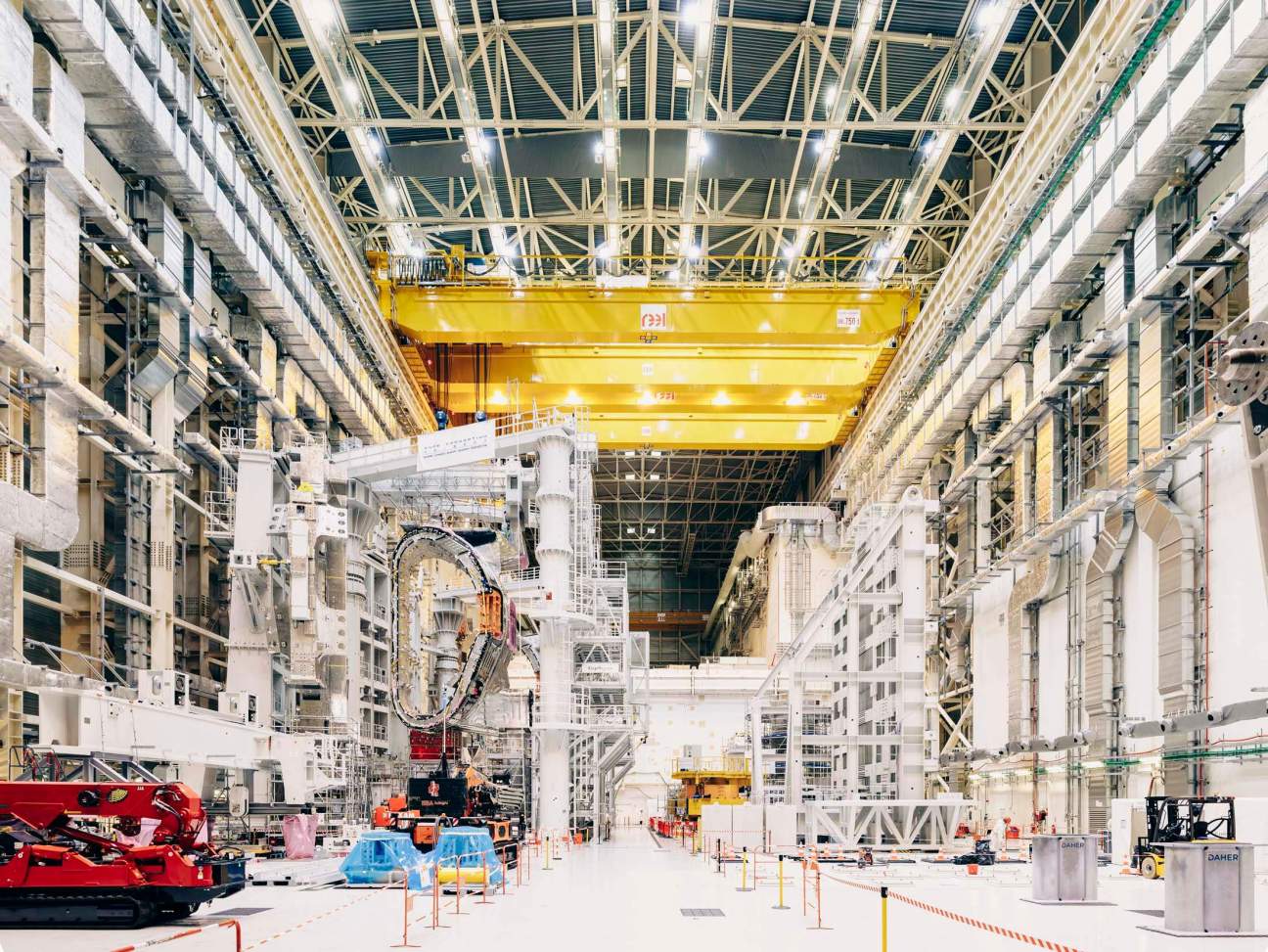
Iter, originally known as the International Thermonuclear Experimental Reactor, is developing one such device that has been described as “the sun in a bottle” because of its enormous power. Upon completion, it will be the largest tokamak ever made, weighing 23,000 tonnes, about twice as much as the Eiffel Tower, and generating 500 megawatts of power – enough to provide energy for as many as 500,000 homes. “We are challenging mother nature’s forces,” says Griffith.
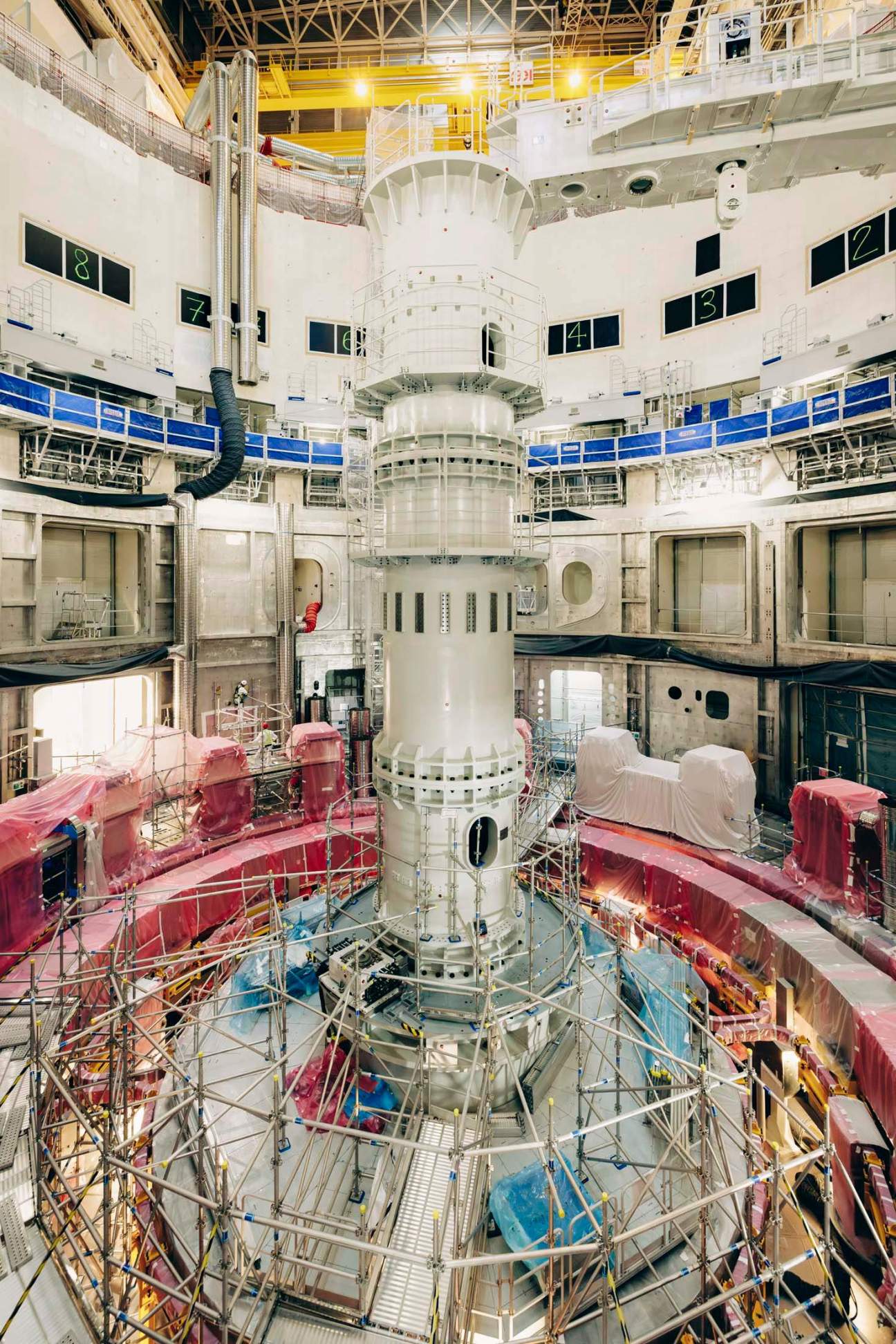
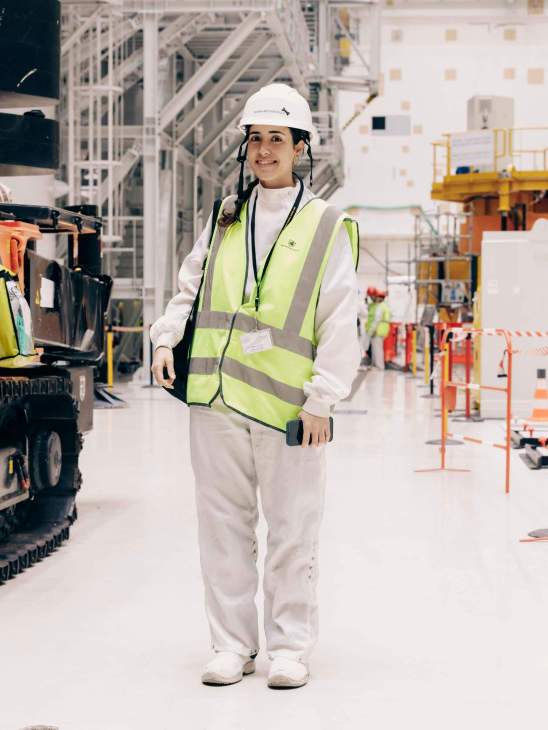
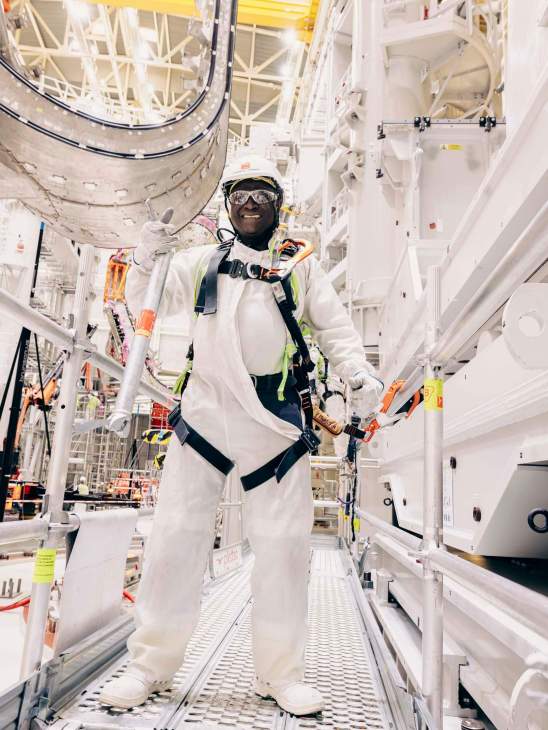
For now, however, Iter’s tokamak remains a work in progress, crisscrossed with hundreds of pieces of scaffolding and attended to by 2,000 engineers and scientists, and more than 1,000 construction workers. The project is pushing the boundaries not just of science but also of multilateral co-operation: the workers here represent the brightest and best from 33 countries, including the US, China, Russia, the EU member states, Japan, South Korea and India. However, as a result of logistical, bureaucratic and scientific challenges, Iter is currently well behind schedule. Originally set to be turned on this year, the prototype is now due to come online in 2034.
At a time when there is an urgent need for large-scale carbon-free energy, the pace of Iter’s progress has been frustrating for those desperate for a technological fix to the climate crisis. In 2024 global emissions hit new heights and it was the warmest year since records began. Yet effective international co-operation to address the problem is almost non-existent. Last year the UN’s marquee climate conference, Cop29, yielded more controversy than concrete action, while countries such as the US and Germany are continuing to rely on highly polluting coal. Iter is a “moonshot” attempt to create an almost limitless, large-scale source of clean energy but it has always denied being a silver bullet. Is the problem that a fusion breakthrough is out of reach – or is Iter’s progress just slower than it could be?
A growing number of entrepreneurs think that it’s the latter. Since the advent of generative AI, fusion power has become something of a buzzword. Large language models such as Chatgpt depend on huge data centres to operate; the anticipated explosion of AI usage is expected to significantly increase the demand for electricity. As a result, technology companies have been scrambling to increase their supplies. In September 2024, Microsoft announced a 20-year-deal to restart the Three Mile Island nuclear power plant in Pennsylvania, the site of the US’s most infamous nuclear disaster. Meanwhile, several nuclear-fusion start-ups, such as Helion Energy, claim that they will be up and running within this decade.
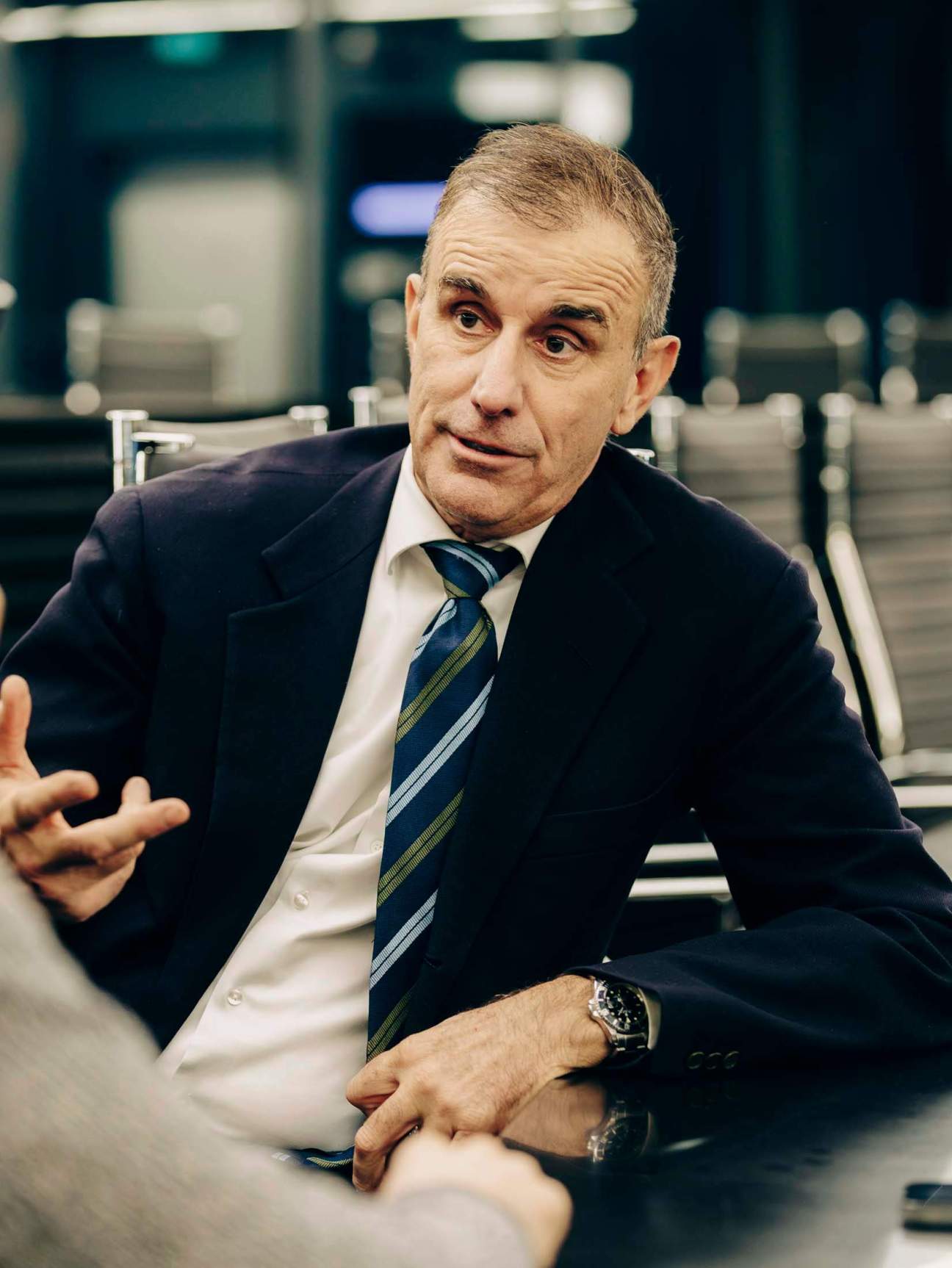
When Monocle asks Pietro Barabaschi, Iter’s director-general, about these start-ups, his face lights up. “I work in this field to make fusion a success,” he says. “If somebody succeeds, I’ll be very happy.” The Italian engineer took the helm in late 2022 after the death of his French predecessor, Bernard Bigot. Barabaschi inherited the difficult task of managing the world’s high expectations while encouraging further investment.
For now, the project resembles an expensive dream. Iter’s launch estimate of €5bn was revised up to €20bn in 2016; the US Department of Energy, a key partner, projects that its final price tag will be closer to €60bn. With the US pulling out of multilateral climate-related endeavours, Iter’s ballooning costs have caused dismay, as has its delayed completion date. And even when it’s finally activated, it won’t be plugged into the power grid, meaning that it will never provide energy to a single home. Iter’s aim, rather, is to demonstrate that it’s possible to build thermonuclear reactors that emit no carbon, create benign waste and can be turned off with the flick of a switch, making them much safer than conventional forms of nuclear power. “We have to prove that we can operate a fusion reactor safely on a large scale,” says Griffith.
Tokamaks are not a 21st-century invention. The first was built in the Soviet Union in 1951; indeed, Iter is a product of that long-dissolved nation. In 1985 the country’s final leader, Mikhail Gorbachev, proposed an international collaborative project to develop a huge thermonuclear reactor to then-US president Ronald Reagan, at a time of thawing relations between the two powers.
But 35 years after the end of the Cold War and the collapse of the Soviet Union, international co-operation is fraying to an extent that even a goal as noble as limitless clean energy seems under threat. US financial support for Iter has had its ups and downs over the years: during the Obama administration, for example, there was a stoppage of payments. Funding gradually returned during Donald Trump’s first presidency and, under Joe Biden, shortfalls from previous years were made current. Since then, however, Trump has returned to power, vowing to increase fossil-fuel extraction while rowing back on his country’s climate commitments. Is Barabaschi worried about Trump 2.0? “There are rough seas ahead,” he says. “We have to have evidence of progress. That’s really the substance.”
To the east, another of Iter’s founding nations is also at odds with its collaborators. The invasion of Ukraine has made Russia an international pariah state and the Ukrainian Academy of Sciences has called for any scientific collaboration with Moscow to stop. So, how has the war affected the project? “There has been no change,” says Barabaschi. Indeed, kicking Russia out was never on the table. The country is making crucial reactor components and, besides, there is no mechanism that allows for such a banishment. “There have been some indirect effects on execution,” says the director-general. “But this project maintains strong cohesion between all members.”
Russia has been under restrictive EU sanctions since 2022 and the additional paperwork and diplomacy required to ship components to and from the country have caused long delays. But this has not deterred Barabaschi or his colleagues. Even at the best of times, Iter’s multilateral nature means that it must contend with not only scientific but also operational and bureaucratic complexity. The participating governments are individually responsible for commissioning specific components of the reactor. Each nation must then ship these often gargantuan parts to France.
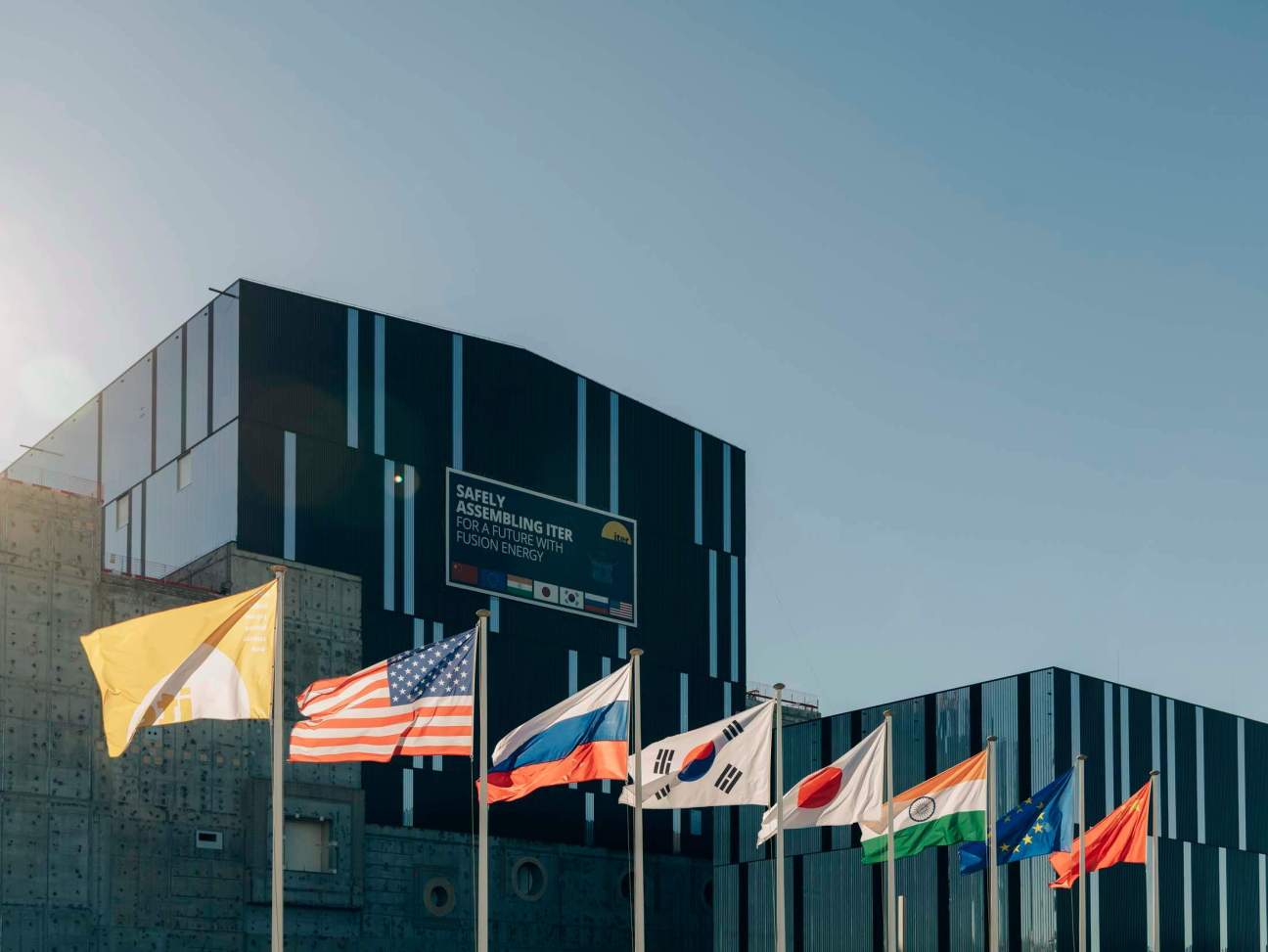
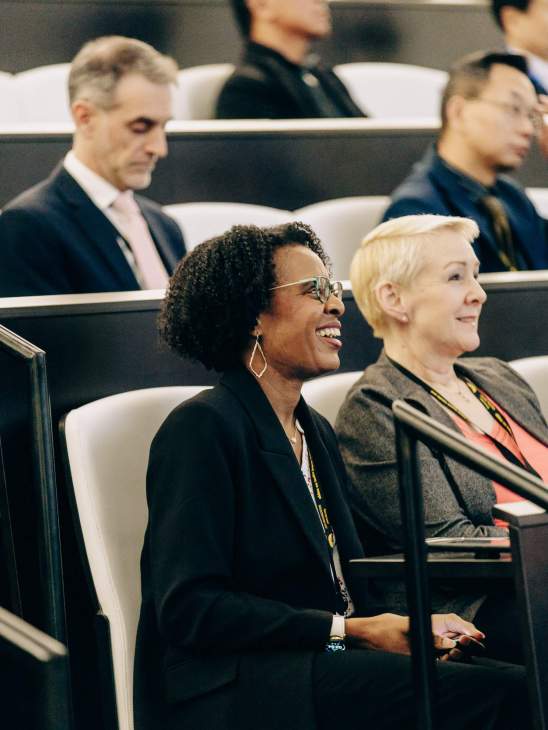
The elaborate choreography of hi-tech manufacturing and convoluted shipping is overseen by Iter’s council, within which representatives from every member government seek proof that their nation’s money is being put to good use. Monocle’s visit coincides with one of their meetings. At Iter’s headquarters, a two-minute drive from the tokamak assembly hall, the red carpet has been rolled out and delegates pose for photos in front of a row of neatly arranged flags. Behind the closed doors of the council chamber, the 2025 budget is being debated. While Barabaschi makes his pitch the cafeteria line is abuzz with anxious gossip. After lunch we overhear one scientist whispering to another, in Latin, “Habemus budgetum” (“We have a budget”).
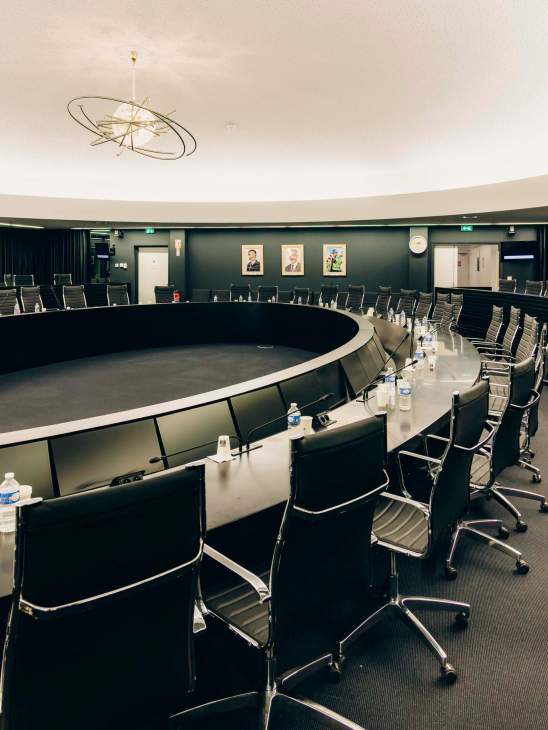
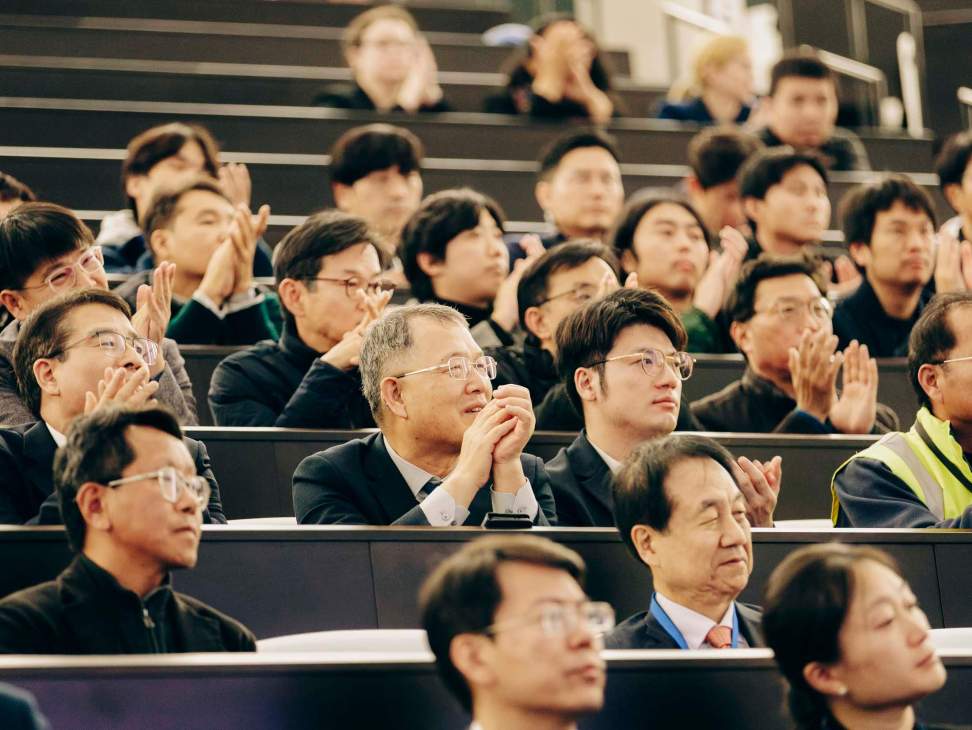
Later, at an all-staff meeting, Barabaschi announces to a relieved crowd that the necessary funding has been secured to keep the lights on for another year. After his speech he sits down with Monocle in the council chamber beneath a large, atom-shaped chandelier. “I don’t have much hair left but I must have lost another few hundred today,” says the director-general, leaning back in his chair. “When I joined two years ago the situation was quite difficult.”
At the time, parts of the tokamak that had been painstakingly installed had to be removed and the project was sliding backwards. “We had to stop the assembly phase and do some important repair activities,” he says. “So 2024 was the year when we had to show that the project was back on track.”
Iter has undergone a reorganisation under Barabaschi’s leadership and, after a staff reshuffle, it was able to meet all of its spending targets for the first time last year. That was enough to seal the deal for 2025 but soon Barabaschi will need to persuade his funders all over again. “What helps,” he says, “is that everybody agrees on the importance of the goal.” Griffith chimes in, “Some very senior scientists come to our meetings. They’re more than 90 years old but they don’t give up.”
Ahead of a ceremony celebrating the arrival onsite of South Korean and European segments of the vacuum vessel – sections of the future “bottle” that will hold unimaginable heat – Barabaschi congratulates his troops on their perseverance. “Part of this vessel came from Russia and part came from India,” he says. “The Iter project was [full of] ideas on how to complicate [already] complicated affairs.” The crowd responds with knowing chuckles.
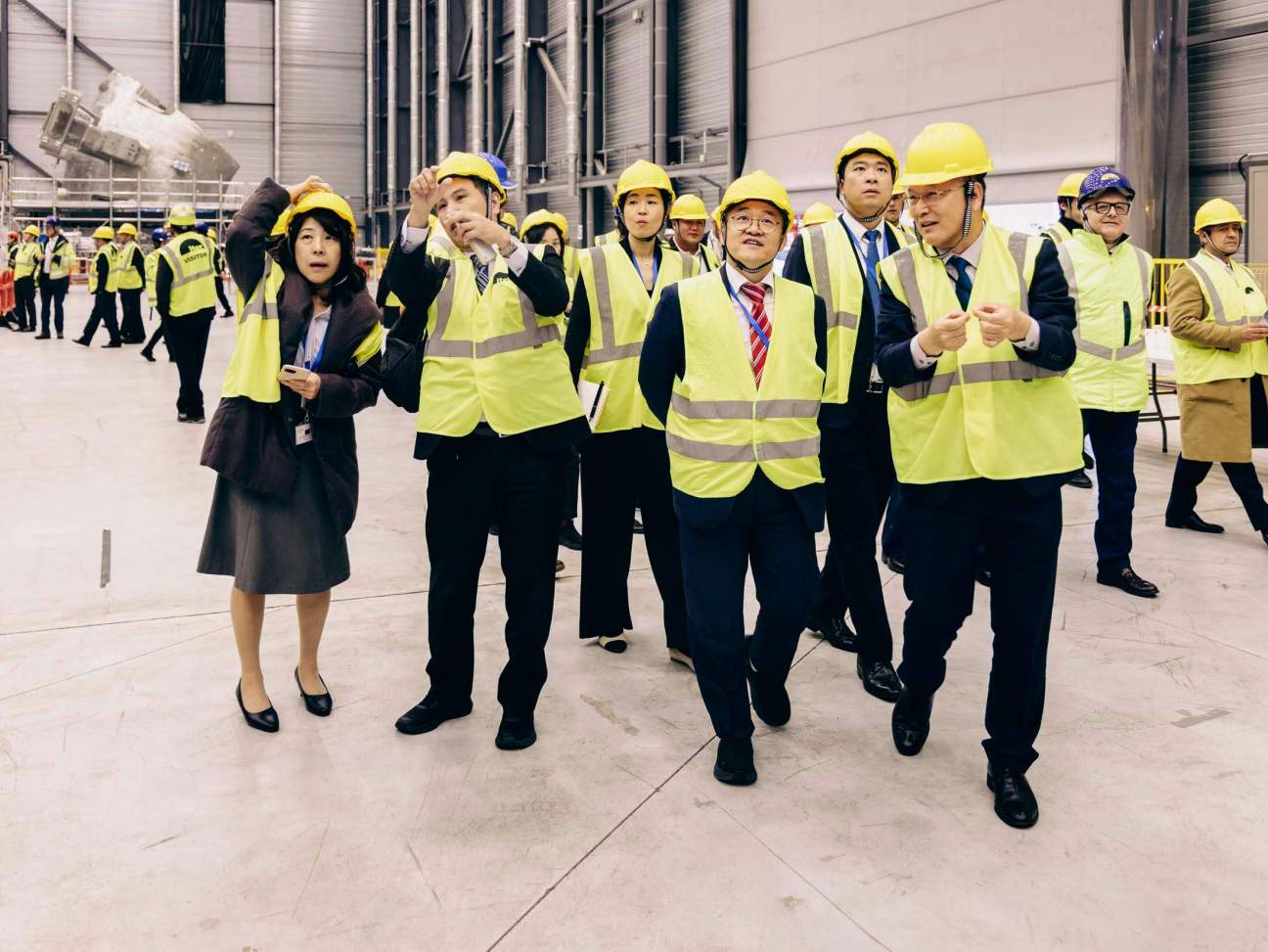
Next, we head over to the storage facility for a cake-cutting in front of the gigantic, glimmering modules. The dessert is topped with rice-paper replicas of the new components. Under the bright warehouse lights, Kijung Jung and his staff tuck in. Jung is the head of Koda, the agency that co-ordinates South Korea’s contributions to Iter, which was responsible for the delivery of four new sections. “The celebration today is really emotional for me because the manufacturing of our vacuum vessel sectors took almost 14 years,” he tells Monocle. “You cannot imagine how difficult it was.”
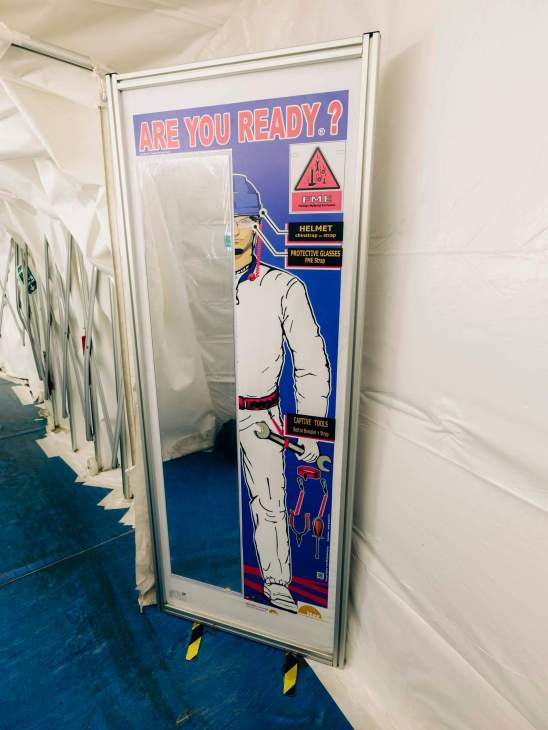
Later, as Griffith drives us down a road that snakes through the Iter complex’s 39 buildings, she gestures towards the giant assembly hall behind us. “Less than 20 years ago this was nothing,” she says. In a speech, Reagan once praised the kind of individual “who plants trees in whose shade he will never sit”. That’s the spirit in which he teamed up with his arch-rival, Gorbachev, to launch a programme from which he knew he could never directly benefit either politically or personally. Will Iter’s tokamak be switched on in a decade as planned? How much higher will its costs climb? Barabaschi and his colleagues can only take educated guesses as they are butting up against the upper limits of human knowledge.
“This is research,” says Griffith. “It’s not like you think of something, hand it over to the industry, plug it in and then it just works.” Since Iter isn’t designed to run continuously for decades, far more research and development on factors such as the durability of materials is needed before fusion power stations can become practical. Realistically, this project won’t fix the climate crisis on its own. It might even be left in the Provençal dust by a new generation of streamlined private start-ups.
But, in important ways, Iter has already succeeded. The agency’s name isn’t just an acronym: it’s also the Latin word for “the way” and the project has charted a path for others to build on its progress and learn from its mistakes. Perhaps as importantly, at a time of darkening geopolitical clouds, it is demonstrating every day that international co-operation to address the existential threat of climate change is possible in a fractured world. To isolationists who say that multilateralism is dead, Iter offers a red-hot retort.
iter.org
Rugs to riches: How carpet-making traditions form the backbone of communities from Japan to Sweden
Here are three firms that show why we should care more about what lies beneath our feet.
1.
The heritage maker
Yamagata Dantsu
Yamanobe, Japan
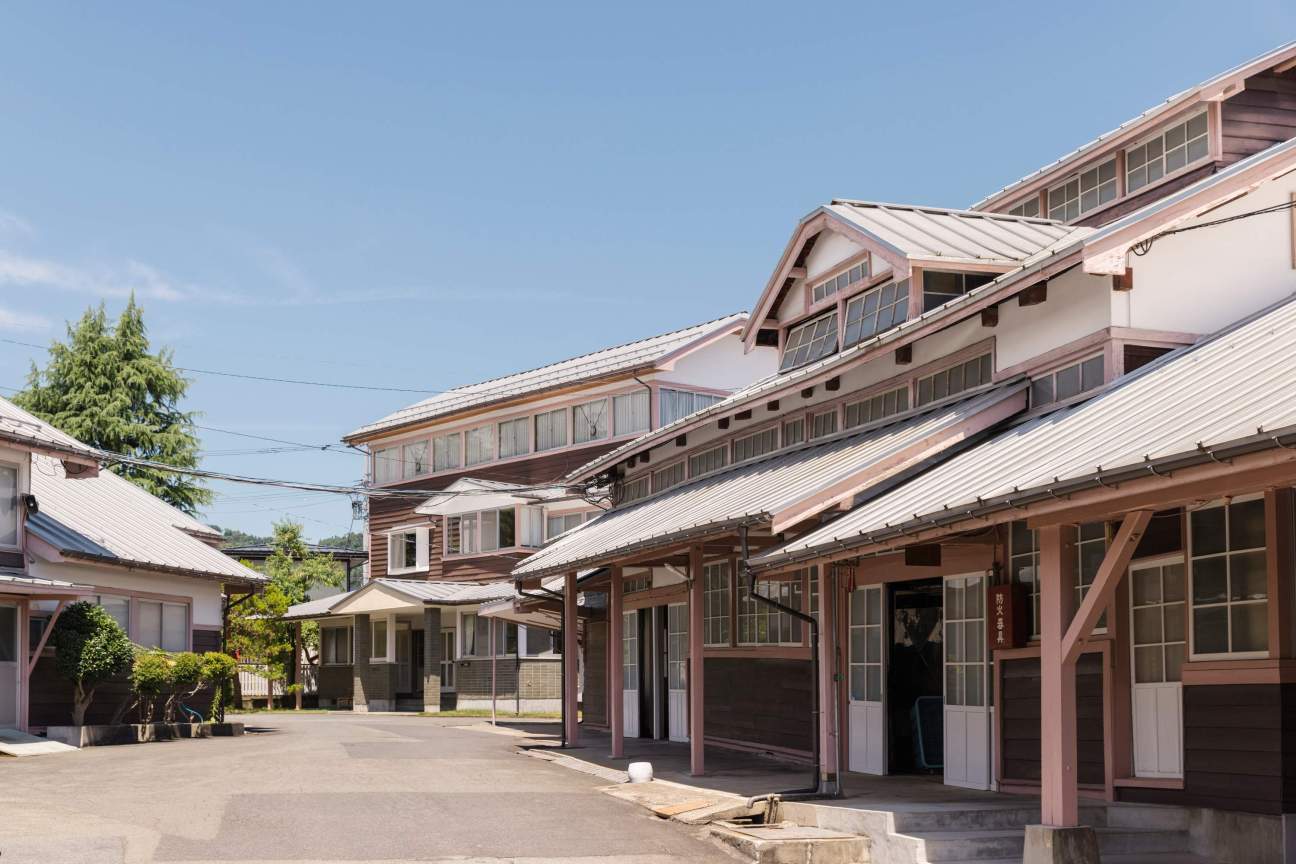
If you happen to be strolling through the lobby of Kabukiza – Tokyo’s most famous kabuki theatre – or the main lobby of the Rihga Royal Hotel in Osaka, a hulking landmark in the centre of the city, look down. Beneath you are some of the most dynamic, colour-saturated carpets that you can find anywhere in the world. The swirling patterns feature phoenixes and giant maple leaves in vibrant, autumnal hues. Inspired by nature and crafted with exceptional skill, these incredible carpets are the work of one small company in the north of Japan: Yamagata Dantsu, officially known as Oriental Carpet Mills, which has been in business since 1935.
Yamagata Dantsu’s factory in the rural town of Yamanobe is made up of a well-preserved cluster of pink wooden buildings from the late 1940s, which live on as though oblivious to the rollercoaster of Japan’s postwar economic period. When monocle visits, the mood is cheerful but hushed. A team of women, who make up 90 per cent of the workforce, concentrate on the detailed work that has earned them commissions to carpet Japanese government ministries, executive boardrooms, public buildings, hotels, embassies and palaces. When the Japanese cabinet meets today, ministers sit at a wooden table and rest their feet on a soft Yamagata Dantsu carpet.
It’s appropriate that the firm’s name references its own prefecture, as concern for (and pride in) its community has been built into the business from day one. In the 1930s the area was hit by cold weather, poor harvests and a gruelling recession. Junnosuke Watanabe, the company’s founder, was running a cotton-weaving business and decided to take action to help the flailing local economy. In 1935 he invited seven Beijing-based craftsmen specialising in Chinese dantsu, an East Asian rug-weaving tradition, to come to his obscure corner of Tohoku to pass on their skills. Some two years later, the first Yamagata Dantsu rug emerged – and the path for Yamanobe and its people was set. Today the business is run by Hiroaki Watanabe, grandson-in-law of the founder, and his sons Atsushi, Takashi and Naoshi.
Hiroaki’s sons are building on the legacy of a company that rose to fame off the back of two products. The first, hand-knotted dantsu, involves a technique that sees individuals painstakingly hand-tie individual threads of wool onto a cotton warp at a pace of about a few centimetres per day. The other, hand-tufted dantsu (also known as “Crafton”), has been produced by Yamagata Dantsu since 1965. This approach sees workers use a special tufting gun to insert wool threads into a stretched cotton cloth.
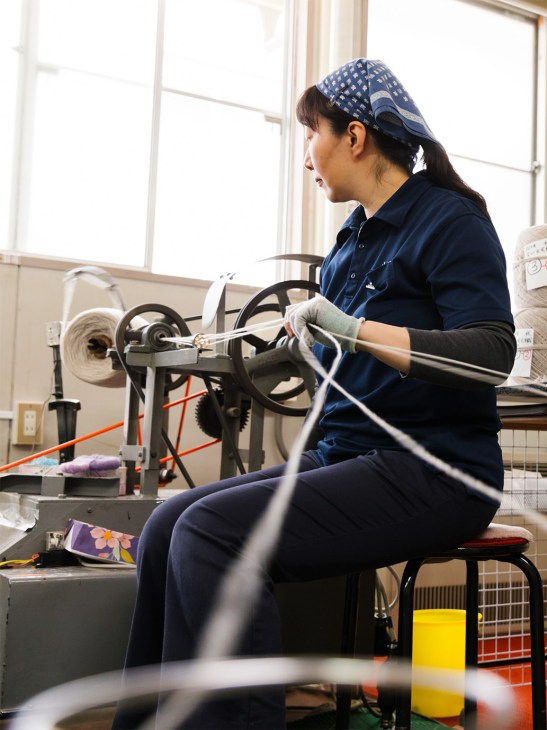
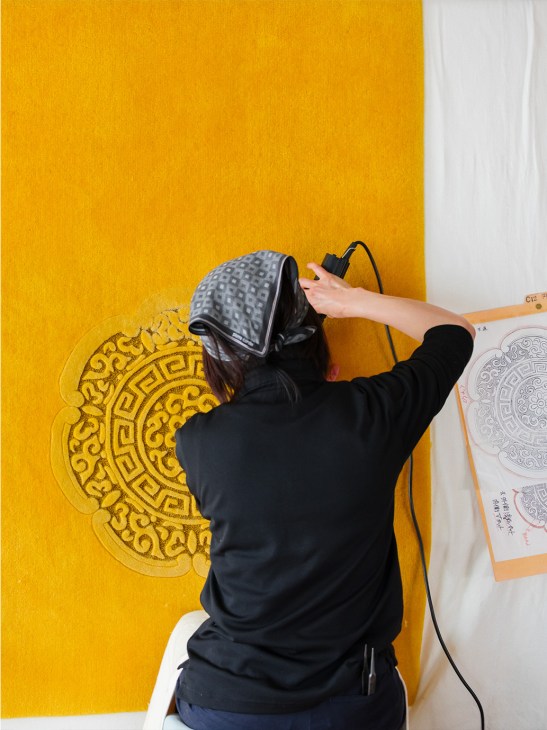
When Monocle visits, two women are knotting slender woollen threads together to make hand-woven dantsu. “These carpets are very, very dense,” says Takashi. “They require about 10 times the number of threads that you would normally expect. Though the technique originated in China, it was adapted to suit the Japanese lifestyle. Hand-woven dantsu are perfect for walking on without shoes as they’re soft in texture but firm underfoot.” The carpets are given their distinctive three-dimensional look and texture during the next stage of the rug-making process, when they are carved by hand with small knives and scissors. It’s a high-pressure procedure in which one mistake can ruin an entire rug. As Monocle passes through, workers are also cleaning a vintage rug, which eventually emerges as good as new.
The restoration of this rug hints at the longevity and ubiquity of the brand across Japan. As the country’s postwar economy grew, the workshop’s brilliantly colourful carpets were installed everywhere from the foreign ministry to the prime minister’s residence. Yamagata Dantsu made rugs, carpets and wall hangings for all the big names in mid-century Japanese design and architecture, including Togo Murano, Kenzo Tange, Isamu Kenmochi and Yoshiro Taniguchi. Late French designer Charlotte Perriand visited the workshop on her first trip to Japan in 1940 and made an original, hand-woven rug the following year. Both the Vatican and Japanese royals have been important patrons too. When architect Junzo Yoshimura designed the new Imperial Palace in Tokyo, he commissioned Yamagata Dantsu to make large quantities of plain and patterned hand-knotted carpets.
But it hasn’t always been smooth sailing for the company. During the period when Japan was under US occupation following the Second World War, materials were in short supply. But the firm discovered a way to weave the roots of the kudzu tree into thread and continued to make hand-woven carpets, some of which eventually graced the command room of General Douglas MacArthur’s headquarters in Tokyo’s Hibiya neighbourhood. Another 200 carpets were woven with wool taken from military uniforms and delivered to the Imperial Hotel in Tokyo. Those efforts paid off and the business was allocated a supply of imported wool. Exports boomed and the US market clamoured for “Fuji Imperial Rugs”, as the carpets were known overseas.
Despite these successes, there have been recent tremors: in 2011 the Tohoku earthquake nearly forced the company to close. “The economy was hard and when times are tough great products like ours become luxuries,” says Hiroaki. “The craftsmen were getting older too, so I was thinking about shutting down the business.” Thankfully, the owner persisted. The workshop is training young people again, many of them locals.
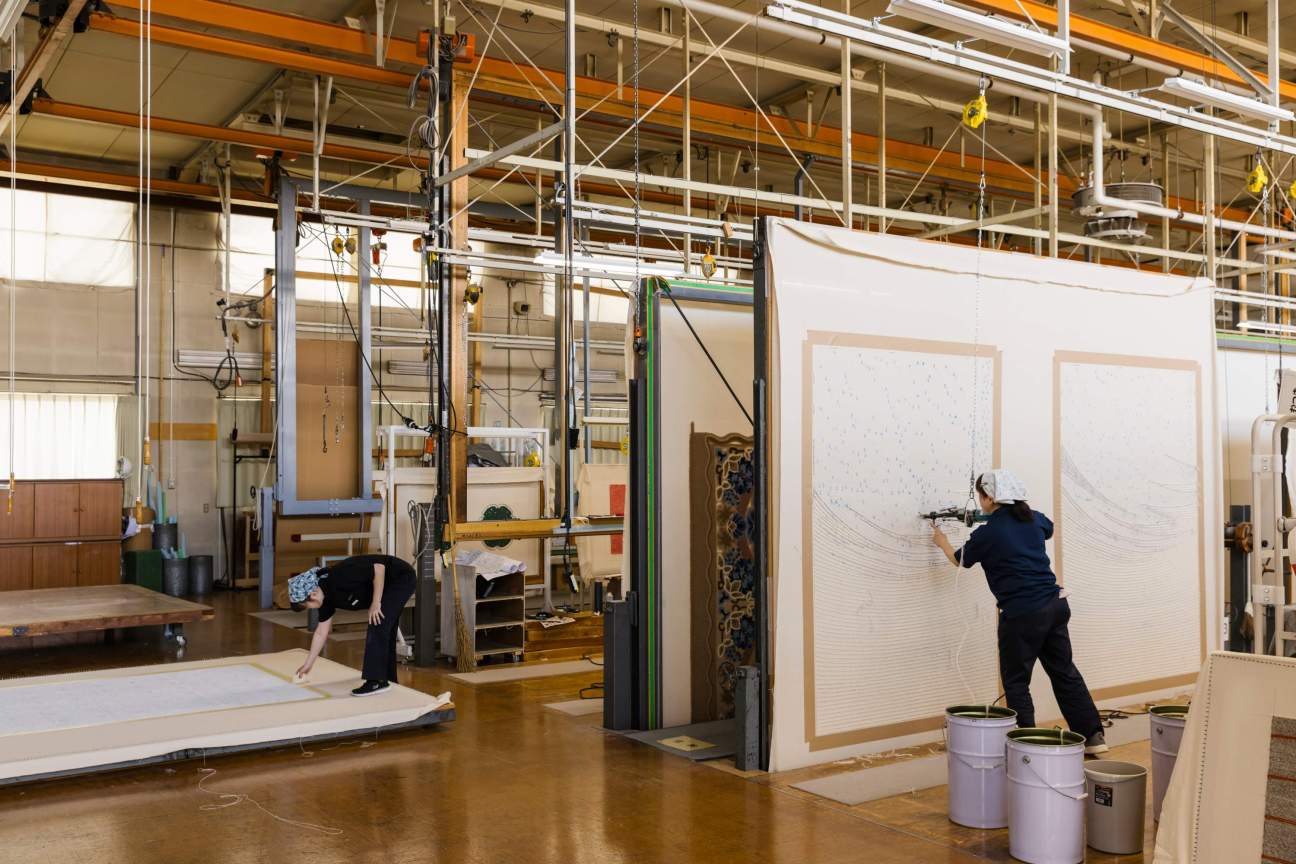
Hiroaki’s sons have brought their own enthusiasm to the brand and there is now a showroom in Tokyo. Though the company still receives big commissions – it was called on to create rugs for the new Kyoto State Guesthouse – construction budgets are not what they used to be. The business has since had to look beyond its traditional customer base to appeal to a more global audience. “We wanted to create something that would interest more people in the interior-design world,” says Takashi. As such, the firm has been collaborating with designers and artists on special-edition rugs. The business recently launched New Crafton, a line that focuses on smaller, supersoft rugs made from fine-count wool in contemporary neutrals selected by Tokyo fashion label Yaeca.
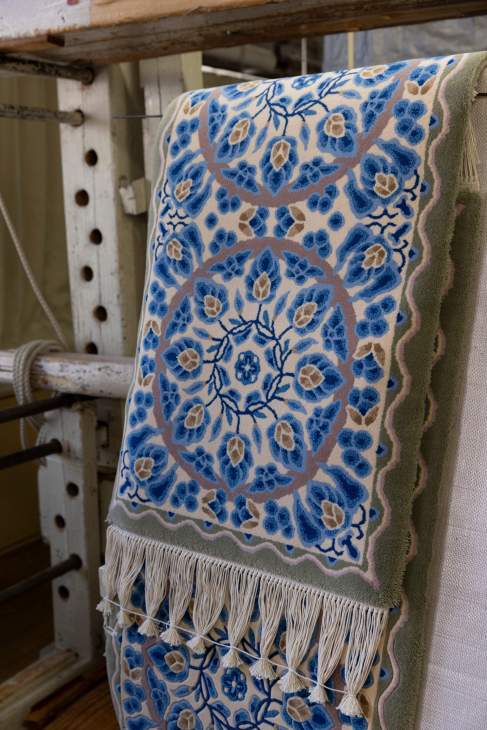
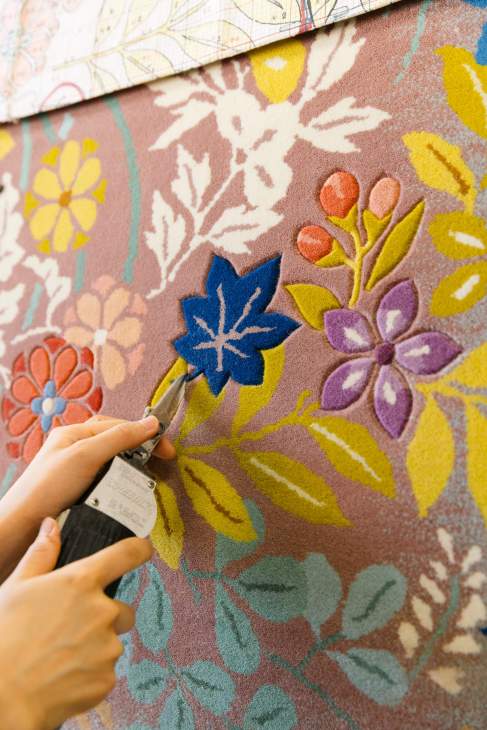
The refreshed approach has led to increased brand awareness among young Japanese creatives such as interior designer Teruhiro Yanagihara, who, in 2023, commissioned soft rugs for fashion label Mame Kurogouchi’s new shop dressing room in Aoyama. When the Rihga Royal Hotel lobby was refurbished in 2019, the workshop set about making the vast leaf-covered carpet that can be found there today. It’s a recreation of the same carpet that had been installed in the hotel decades before but with a design refresh by emerging Tokyo-based studio Torafu Architects. Yamagata Dantsu craftsmen also spent two and a half years making hand-embroidered carpets with a multi-coloured Phoenix pattern for architect Kengo Kuma’s Kabukiza theatre rebuild.
In January the firm launched the Yamagata Dantsu Archives collection, a series of rugs that were originally co-created by the company and other designers, and have long been out of production. These include four carpets devised by designer Isamu Kenmochi for the lobby of the Keio Plaza Hotel, which opened in Tokyo in 1971. These retro revivals are helping to bridge the gap between Yamagata Dantsu’s heritage and its embrace of modernity.
“I feel optimistic about the future”, says Hiroaki, surveying a room filled with memorabilia and photographs of the company’s history. These images document a success that stems not only from making unique carpets but also from a commitment to community, the preservation of traditional skills and constant innovation. Yamagata Dantsu continues to prove that by taking such an approach, creative firms can weather economic hardship, war and natural disasters – and still make beautiful products.
yamagatadantsu.co.jp
2.
The perfect match
Jaipur Rugs and Shyam Ahuja
Jaipur, India
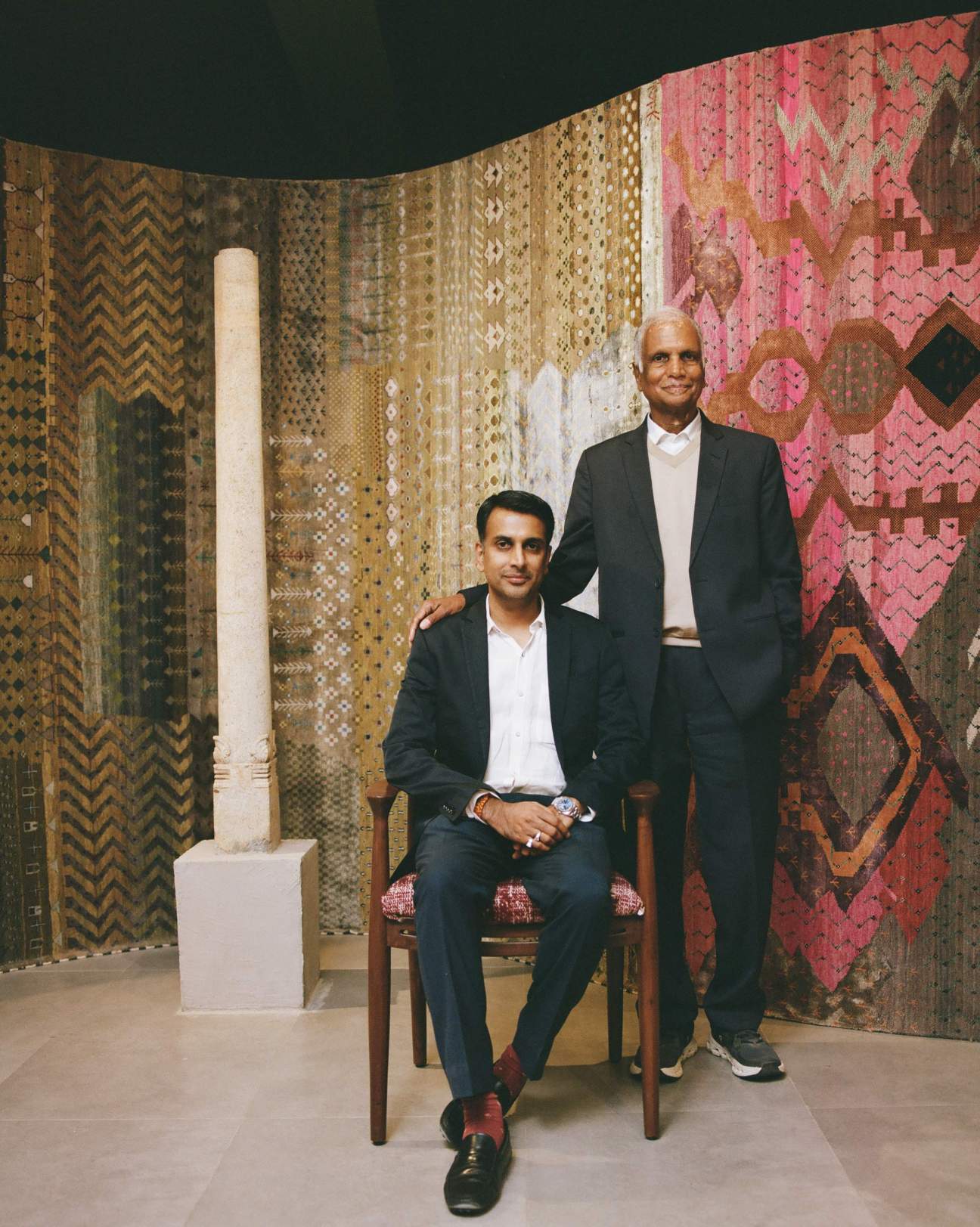
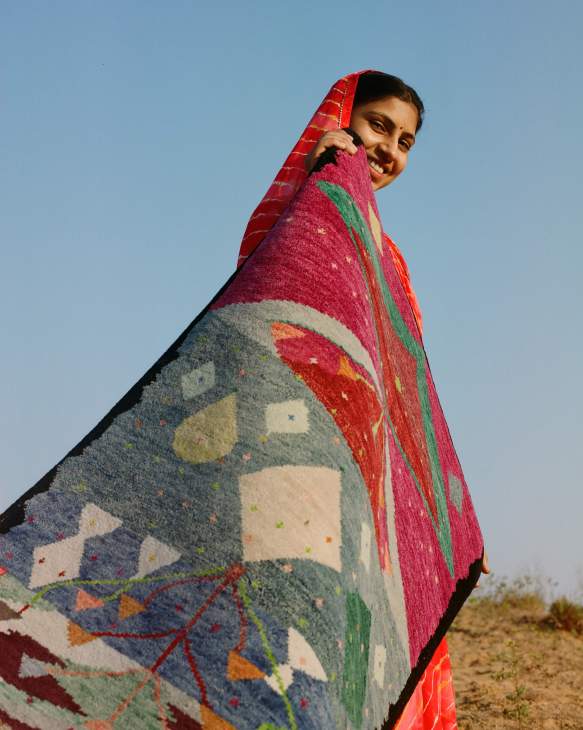
On a sun-soaked rooftop on the outskirts of Jaipur, India, a young woman hums a folk tune as she sews the edges of a hand-knotted carpet. Around her, fellow artisans wash, stretch, and snip rugs in a multitude of shapes and colours. This frenzied activity seems apt for an employer whose star is on the rise. Jaipur Rugs has, since it was established by Nand Kishore Chaudhary in 1978, grown to become one of India’s largest handmade-carpet manufacturers. And it is now set for further expansion following the acquisition of fellow Indian rugmaker Shyam Ahuja.
“Initially, we questioned the decision,” says Yogesh Chaudhary, the second-generation director of Jaipur Rugs. “Did we need another brand? But when I considered the business potential and the amazing legacy of Shyam Ahuja, I realised that it was a great opportunity for us to bring the company back to its former glory.”
Shyam Ahuja was founded in 1963, long before India’s economic liberalisation in the late 1970s. It was then that the business and its late, namesake founder placed India on the international artisanal-carpet map. Ahuja’s unique approach to colour and design saw him transform the dhurrie, a flat-woven floor covering from northern India, into a collectible item, which was eventually owned by people such as Jacqueline Kennedy Onassis, Anna Wintour and Gianni Versace.
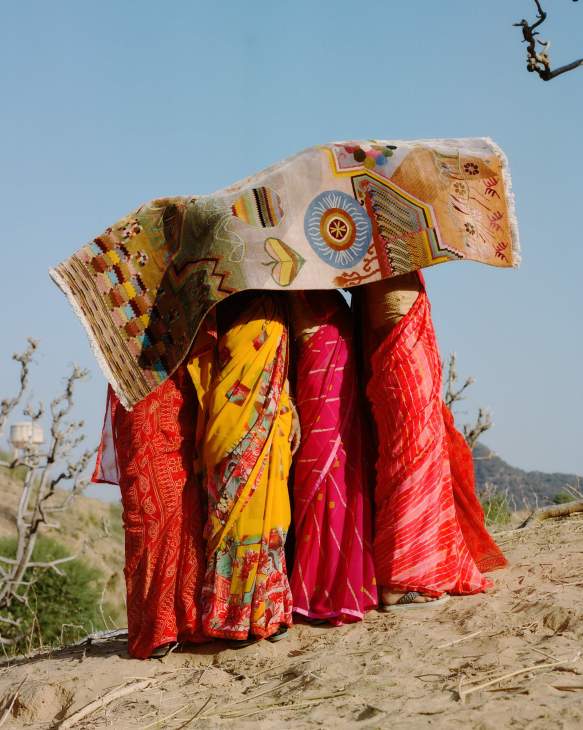
While this latest move will see Shyam Ahuja rely on Jaipur Rugs’s industry expertise, the two companies will operate independently from each other. Jaipur Rugs will balance its more antique and traditional carpets with a contemporary look, working with emerging designers to create bold forms and unexpected patterns. Though Shyam Ahuja is still determining its new direction, it will lean on its archive to craft rugs to pay tribute to the brand’s storied heritage.
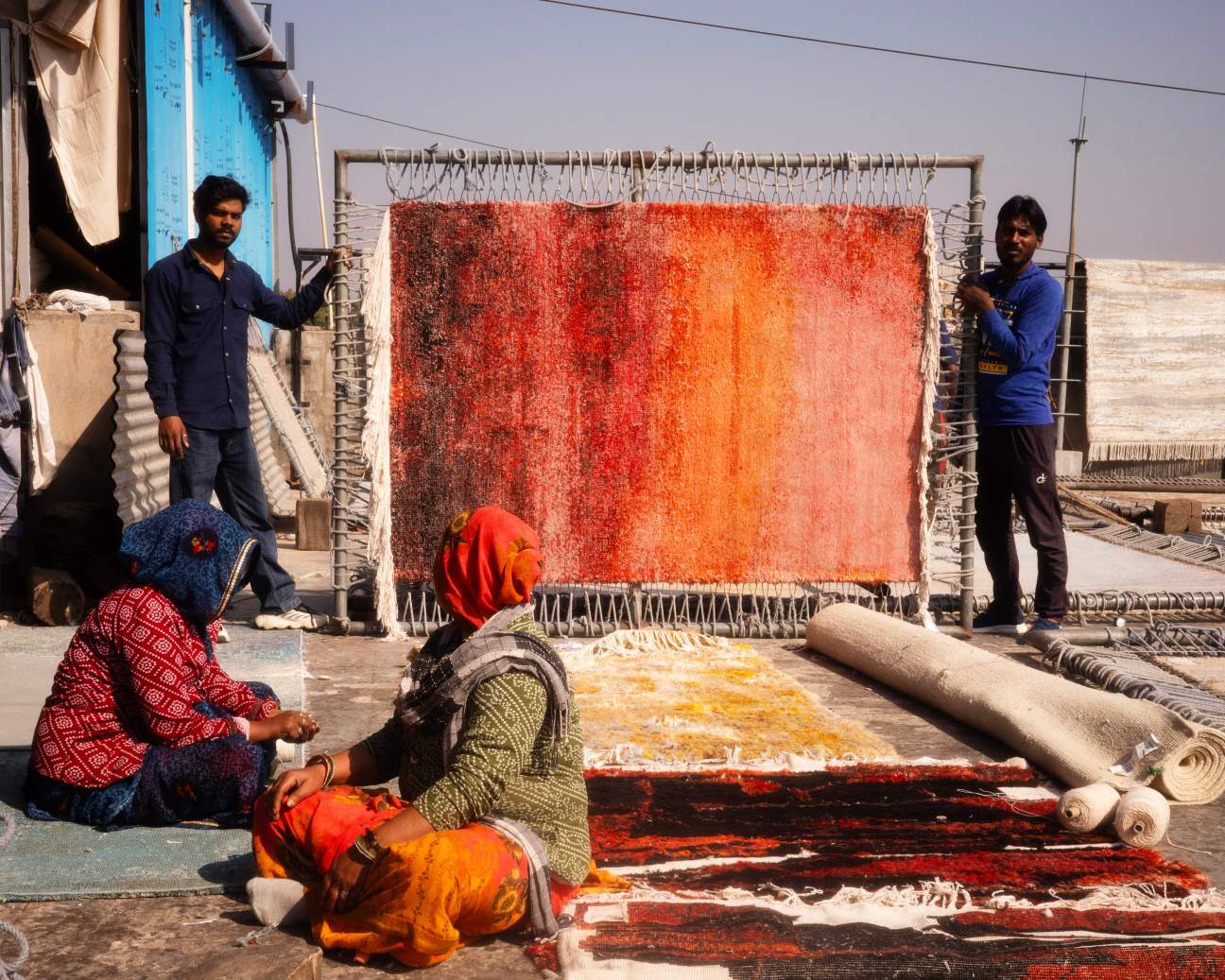
In recent years, Jaipur Rugs has worked with the likes of multidisciplinary artist Lorenzo Vitturi, Chanel-owned yarn-maker Vimar 1991 and architect Hiren Patel. “Creative people are central to our innovation,” says Chaudhary. “Some of Lorenzo’s work weighed up to 100kg and had threads coming out of it that were a metre long. It pushed the dimensions of what our artisans are capable of. Back when Shyam Ahuja started, however, its focus was on timelessness. I have been told that Ahuja used to make ads without putting his brand name on them. He believed that if the right people saw them, they would know. That’s how strong his design language was.”
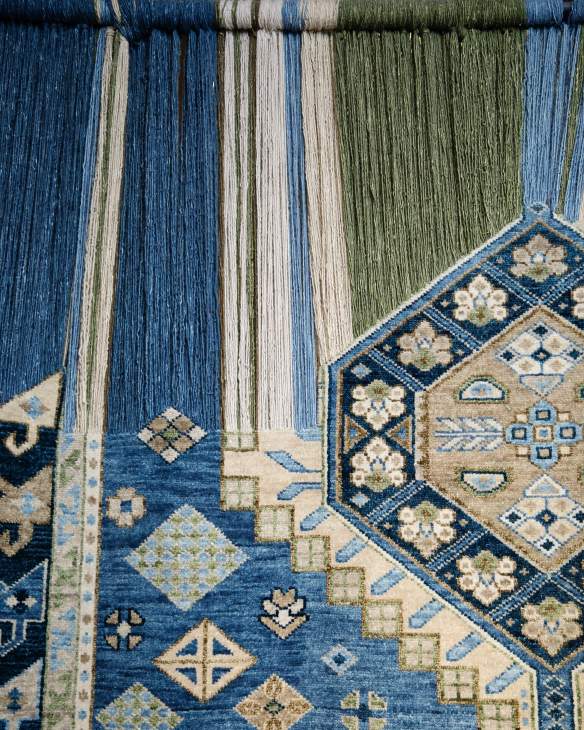

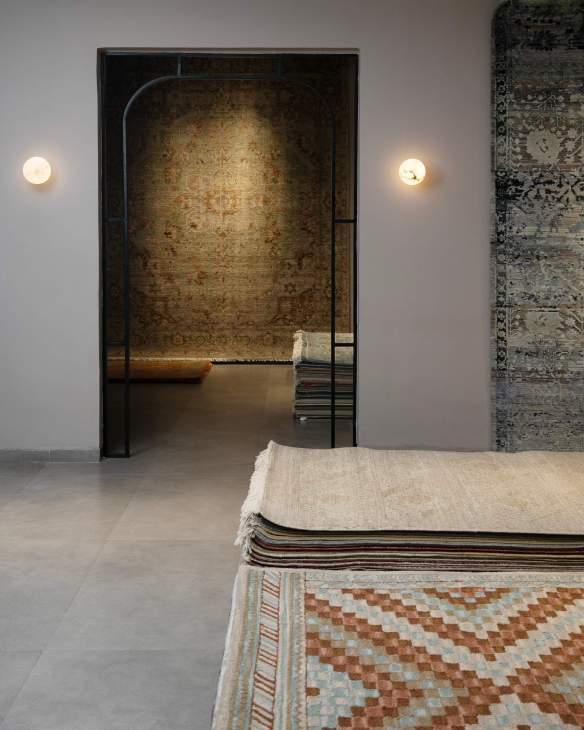
Jaipur Rugs’ acquistion of Shyam Ahuja is a boon for the carpet-making industry in India. In a country that has become a manufacturing hub for international labels, it’s good to have makers that are based in the same communities as their workers. This community-minded approach plays into Jaipur Rugs’ longstanding brand outlook. Historically, Rajasthan carpet makers came from communities that were regarded lower down the caste hierarchy than that which Nand Kishore Chaudhary, Jaipur Rugs’ founder, came from. But he decided early on in his career that the business would go against caste norms and empower skilled artisans. “Back in the 1970s my own relatives would refuse to shake my hand or welcome me into their homes because I worked with these people,” says Chaudhary. “But I maintained that my artisans were human too. I decided to tell their stories to the people who wanted to buy the products that they made.”
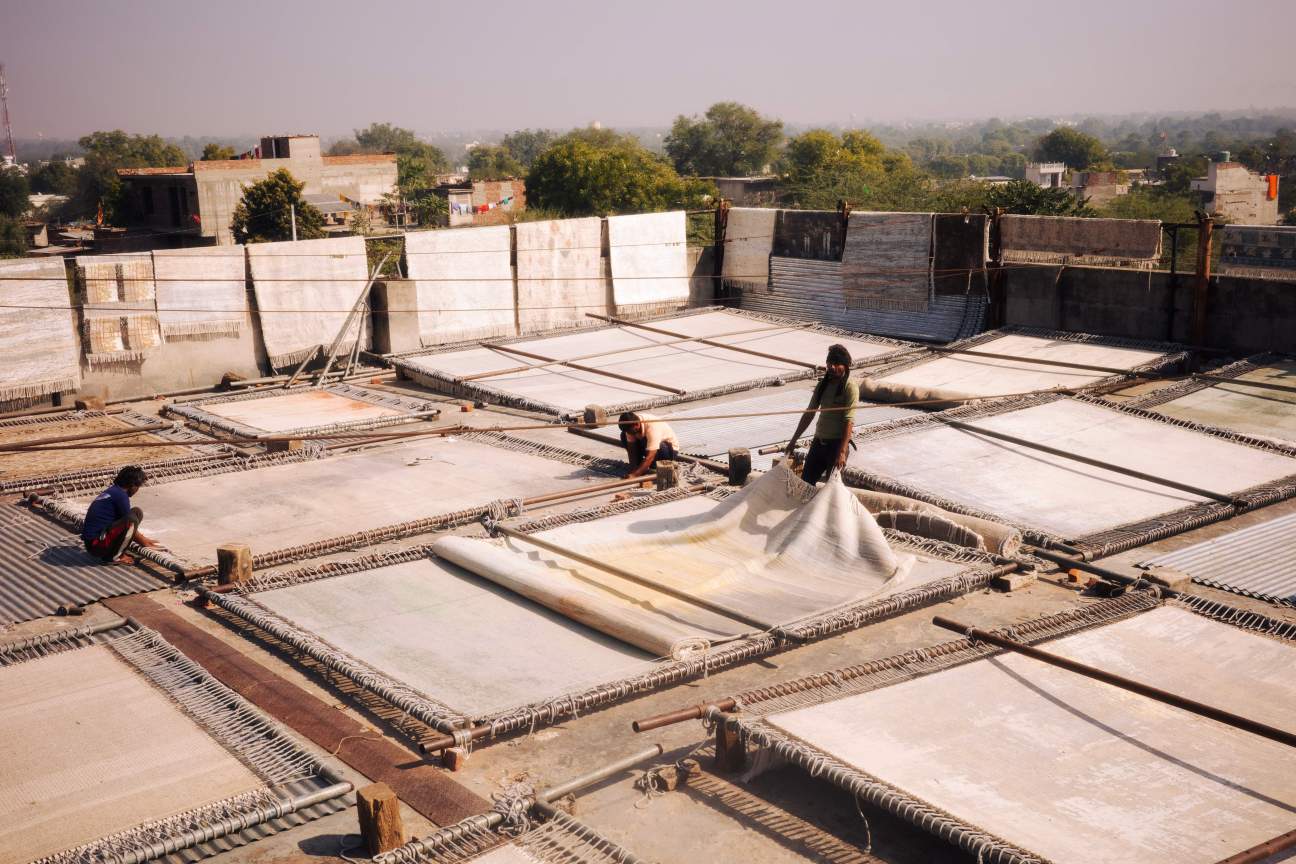
As part of its business model, Jaipur Rugs’ philanthropic arm, the Jaipur Rugs Foundation, trains new recruits in carpet-making, helping hereditary artisans to improve their skills. It also provides financial support to those who want to set up looms in their own homes. Today almost 85 per cent of Jaipur Rugs’ workforce is made up of women, many of whom are financially independent – no mean feat in a society that is achingly patriarchal. “When I started Jaipur Rugs, I wanted to connect my passion to my business,” says Chaudhary. “I think that I have achieved that goal. And now with Shyam Ahuja on board, we will create history.”
jaipurrugs.com; shyamahuja.com
3.
The changemaker
Kasthall
Kinna, Sweden
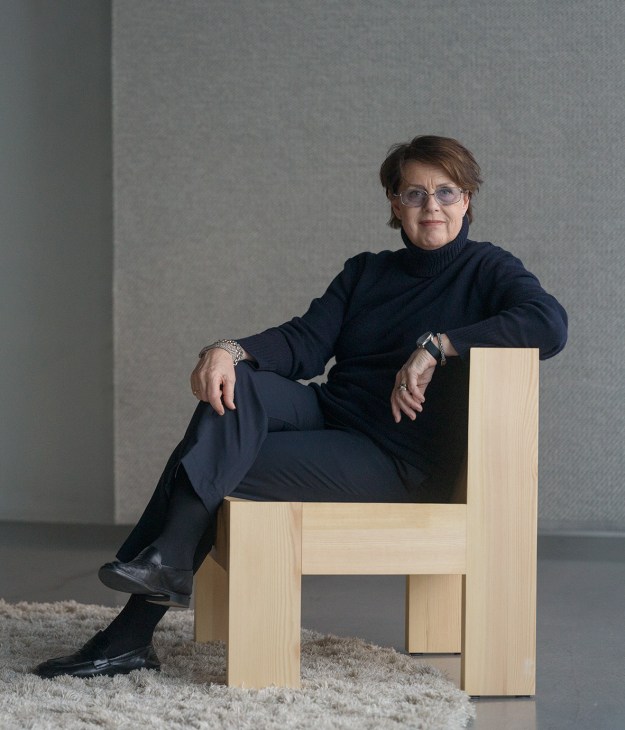
Sweden’s Kasthall has been crafting rugs of exceptional quality and design since 1889. The firm’s factory in Kinna – an hour’s drive southeast of Gothenburg – is a well-established hub of textile innovation. This year the company will celebrate its 136th anniversary with a new chapter. Mirkku Kullberg, an industry veteran who runs multidisciplinary design consultancy Glasshouse Helsinki, has stepped in as CEO, bringing a wealth of experience from previous leadership roles at Finland’s Artek, Switzerland’s Vitra and Italy’s Poltrona Frau.
Kullberg’s appointment signals a renewed focus on international expansion for Kasthall, at a time when the global rug market is experiencing a renaissance. Following its 2023 acquisition by Network of Design – a Nordic furniture group that includes String Furniture and Grythyttan Stålmöbler, and on whose board Kullberg also serves – the company is looking to its newly minted ceo to tap in to its potential. Here, Kullberg tells Monocle that this will involve material innovation and an evolution of the brand’s identity.
You come from a multi-disciplinary design background. Why take a role at a company that specialises in one product?
I really like brands that have an archive and design legacy. But I thought that Kasthall’s legacy was becoming a burden: it didn’t know how to interpret its heritage for new generations. I’m not great at creating organic business growth. I’m better at shaking things up and bringing people along – and that’s what I want to do at Kasthall.
What does ‘shaking things up’ look like at Kasthall?
Kasthall didn’t know how to position itself. It is a luxury product. But we also need to redefine what luxury means for Kasthall. We talk about this in a way that invokes a sense of beauty and natural, high-quality materials, which I think are the biggest luxuries in the world. In the context of our rugs, this means that we have to be more innovative in terms of bringing in new materials. Though we’re already doing amazing work with wool, we need to be exploring the potential of different types of textiles. Our factory has the capacity to work on everything from the spinning to dyeing of yarns. Sharing this knowledge can help us to attract international designers from across the globe because creative people want to be close to manufacturing; they want to work with those who are making things.
So keeping control of your production is key to ensuring the quality of your product while also attracting design talent?
Logistics and supply chains have become incredibly important. During the coronavirus pandemic, this was the most vulnerable part of many industries. With the current geopolitical climate, I think that this will remain the case. There’s also something to be said about having your own specialists. Some people have worked in the factory for 25 to 30 years; one of them even has a Kasthall logo tattooed on his hand. These people understand how to treat the materials and machines, and combine technology with classic techniques in a contemporary way.
What does innovation mean for rug-making today?
Innovation is always related to material technology. But the way that we work with rugs in an interior-design setting is changing too. The industry has been focused on chairs for so long, which is super boring. But I believe that this hyperfixation is finally coming to an end and people are starting to look at the floor space again. Rooms need several framing elements. We need to think about bringing textiles back into our environments. Rugs do both of these things.
kasthall.com
Dive into history: The art deco charm of Paris’s Piscine Pontoise
Few places provide a better swimming experience than Paris’s Piscine Pontoise. With its yellow walls, blue decorative motifs and glass roof, this art deco pool in the 5th arrondissement is a jewel of the city’s architectural heritage. Designed by architect Lucien Pollet, whose works include the Piscine Molitor (now an M Gallery hotel) and Piscine Pailleron (in the 19th), the Pontoise has been open to the public since 1934 and has earned a place on the city’s list of historical monuments. But wear and tear had left the pool in a state of disrepair and the city of Paris closed its doors in 2019 for some much-needed renovations.
Pierre Marchand Architectes, a studio specialising in heritage buildings and restoration, took on the work. “We wanted to bring back the core elements that made this pool unique,” says Pierre Marchand. “Mainly the notion of light and transparency, which had been completely lost due to the glass-roof damage.” The project was a balancing act between technical upgrades and the building’s historic integrity. “The pool is 33 metres long,” says Marchand. “It’s an atypical length but a stylistic choice from Pollet, which we had to work around.”
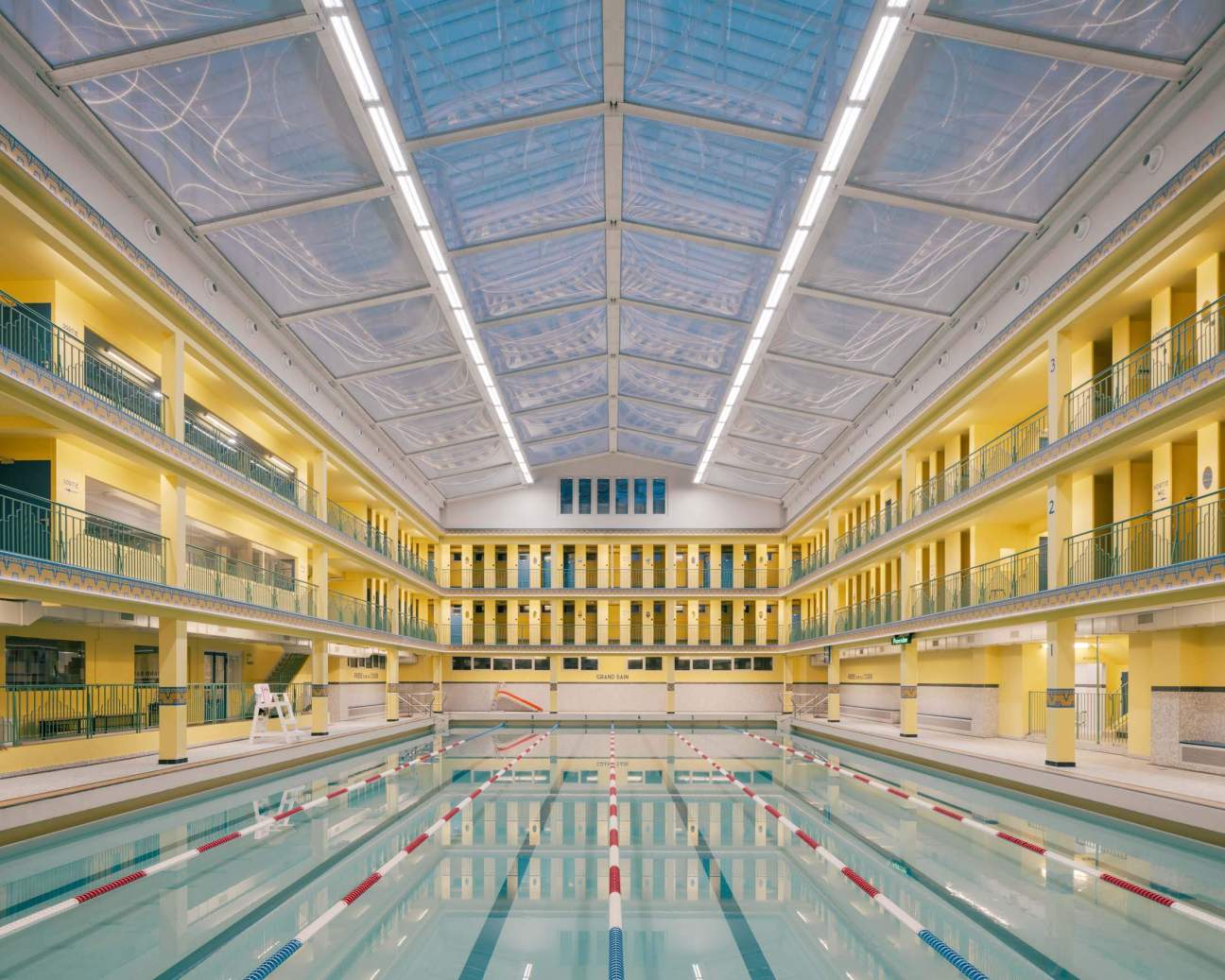
Beyond the structural work, the aesthetic renovation of the Piscine Pontoise required the expertise of paint-restoration specialist, who uncovered the layers of paint to ensure a perfect match. They also brought back the original letterings of the pool’s signage, which Marchand incorporated into the new space. “We voluntarily kept the old expressions ‘Messieurs’ and ‘Dames’ instead of the contemporary ‘Hommes’ and ‘Femmes’,” he says. “We were also allowed by the council to have our own colour and signage, instead of the standard City of Paris ones”.
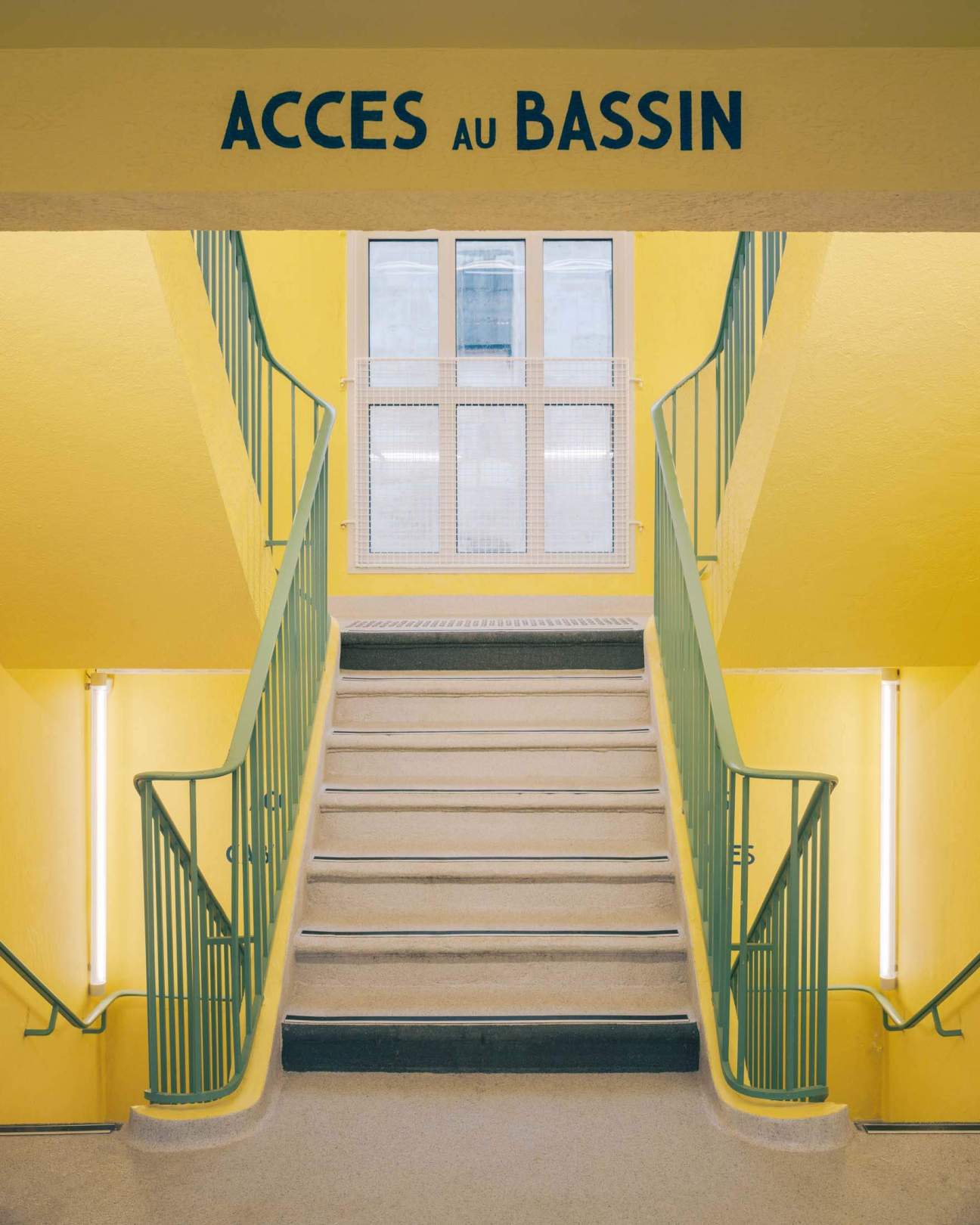
The result is a bright and welcoming space complete with a gym, sauna and squash court. For Marchand, extending the life of the pool in the heart of the Latin Quarter meant ensuring the continuity of the life around it. “The pool is a small building but people have an emotional attachment to it because it has been a meeting point for so many years,” he says. A swim at the Piscine Pontoise is a dive into the small pleasures of the French capital, enjoyed by generations of Parisians. “A 1930s bathing suit isn’t required,” adds Marchand with a grin. “But you are welcome to use them for historic effect.”
Opening times:
06.30 to 22.45 on weekdays and 09.00 to 18.45 on weekends
Renovation budget:
Between €10m and €12m
Depth of the pool:
1.4 metres to 2.8 metres
Average water temperature:
27.6C
Shades of yellow used:
Jaune Rousseau for the masonry and Jaune Delaunay for the changing rooms
Other colours used:
Bleu Garonne for the woodwork and Vert Souvenir for the ironwork
Films shot at the pool:
Le Fabuleux Destin d’Amélie Poulain by Jean-Pierre Jeunet; Trois Couleurs: Bleu by Krzysztof Kieslowski; Tanguy by Étienne Chatiliez; and Nelly et Monsieur Arnaud by Claude Sautet
Read next: The Monocle City Guide to Paris, featuring the best hotels, restaurants and retail spots in the French capital
How banning vehicles is transforming Tempe into the US’s most walkable city
Late last year, Gabriela Vargas was apartment hunting with her husband in Tempe, a midsized city in Arizona, when she came across a new development called Culdesac. “I fell in love with the layouts,” she says, sitting in the complex’s beer garden. As they were about to sign the lease, her husband asked her what they would do about their car: the lease specified that Culdesac was a walkable community with no provision for parking. As the mother of a two-year-old with another child on the way, Vargas was reliant on their vehicle. “OK,” she said, “let me think about this.”
It’s a decision that most Americans never have to make. According to data from the US Census Bureau, 92 per cent of households in the country owned at least one car in 2023. Nationally, there’s an estimated seven parking spaces for every automobile. Meanwhile, only 12 per cent of residential blocks are in walkable neighbourhoods.

Ryan Johnson, the co-founder and ceo of Culdesac, says that the development is “the first car-free neighbourhood built from scratch in the US”. When it opened in May 2023, Johnson was its first resident. About half of the seven-hectare site has since been developed; when all 760 units are completed, Culdesac will be home to about 1,000 people. It’s fast becoming a proper community and a prominent case study for a style of living – walkable and less reliant on driving – that opinion polls show is desirable among buyers but is vanishingly rare in the US market.
According to Johnson, among the reasons why there aren’t more walkable neighbourhoods is that zoning mandates have separated the places where people live from where they work and shop; meanwhile, rules for “parking minimums” have created islands of developments surrounded by vast car parks. It’s almost “illegal to build them”, he says. Culdesac obtained exemptions from sympathetic city officials.
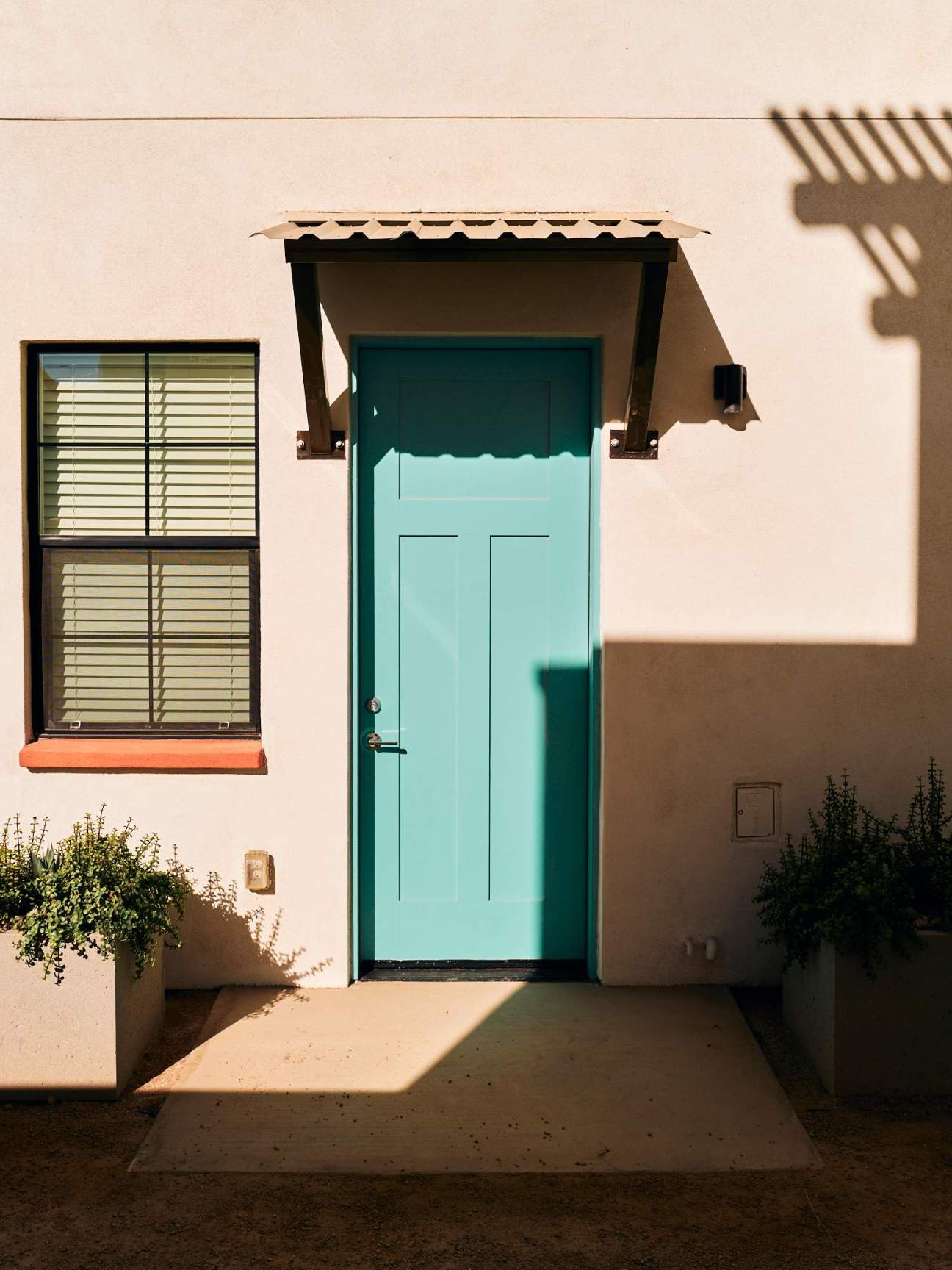
Apart from an area near the entrance that accommodates visitors’ vehicles, there’s “not a drop of asphalt” on the site, says Johnson. Instead of conventional streets, little paths of crushed gravel lined with cactuses and succulents wind between the low-rise buildings, which are painted white to reflect the sun. The structures are also set close together to provide shade, which is welcome in a state where you can expect more than 300 days of sunshine a year. Meanwhile, packages and letters are delivered to postboxes near the gym, rather than to residents’ front doors. This has led to plenty of spontaneous socialising as people pick up their mail. “A lot of Americans want to live this way,” says Johnson. “It is legislation that holds them back.”
For Europeans familiar with Italian village squares or Dutch woonerfs, what’s happening in Tempe might seem unremarkable. But in the US, where a third of Sun Belt cities are covered in car parks (with their attendant “heat island” effects and flood risk), this looks like a quiet revolution. Creating walkability in US developments often requires extensive retrofitting or building from the ground up – even if the bones of an older, more pedestrian-friendly urbanism are still there, buried beneath years of car-centric planning. Culdesac is now bringing a version of its Arizona model to other states across the US, while similar pedestrian-focused communities are popping up in Texas and California.
For Vargas, who ultimately signed the lease, other benefits have more than made up for whatever she lost from giving up her car. She says that there’s a feeling of connectedness at Culdesac, where residents participate in everything from outdoor markets to Friday-night cornhole games.
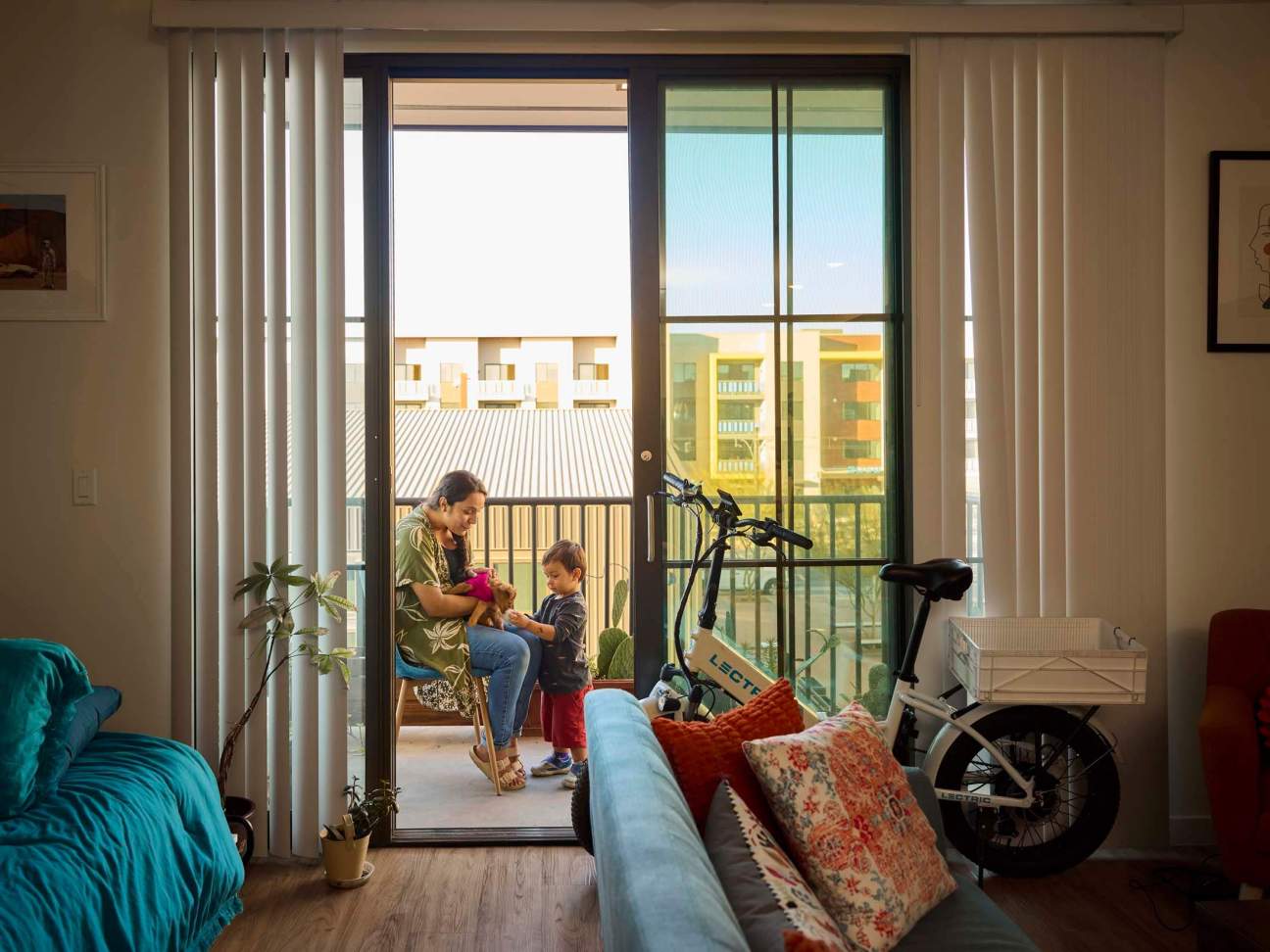
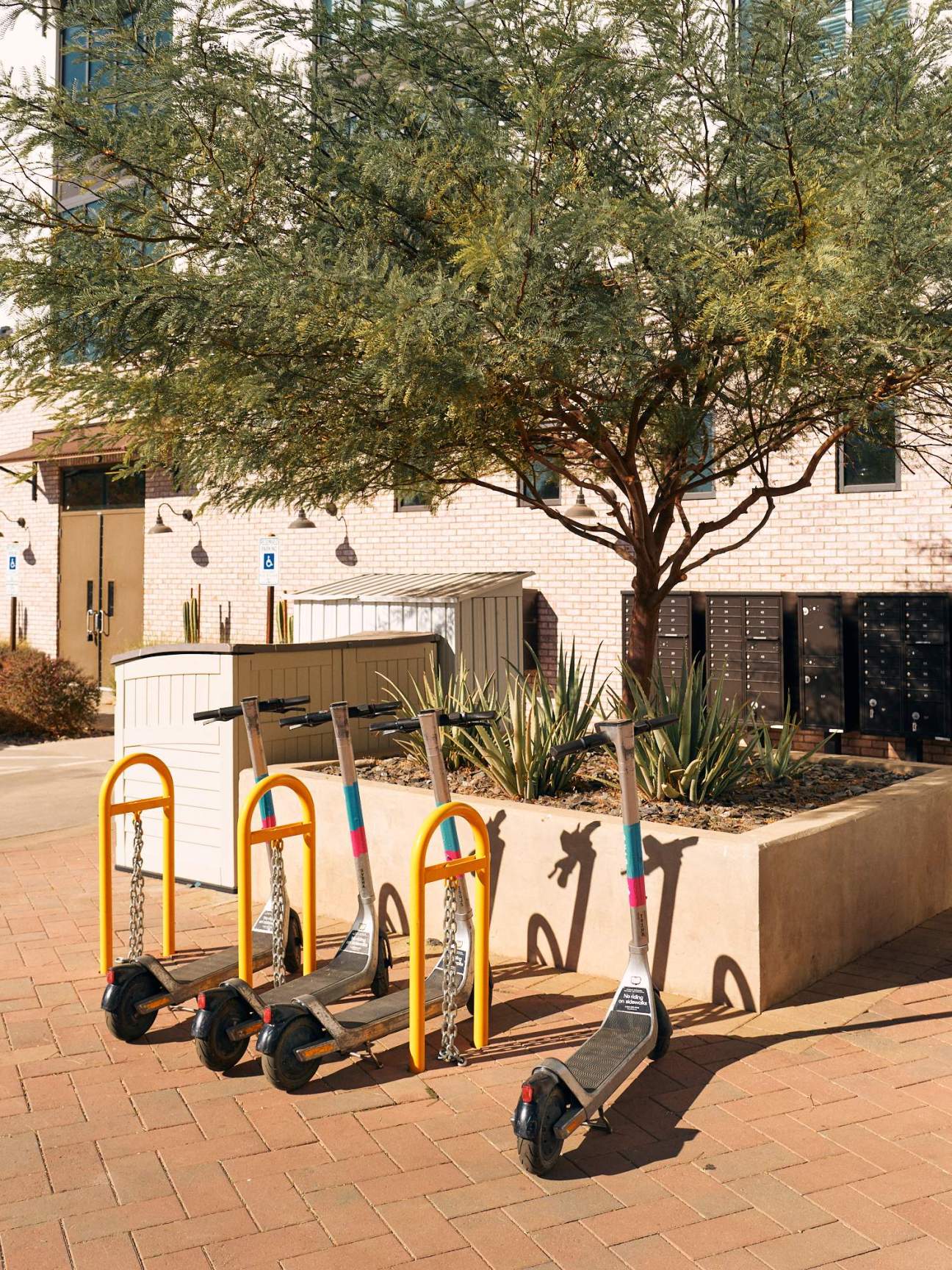
While there are whispers that a few of the residents keep cars off-site, the people who Monocle speaks to say that they rely on a variety of transportation options to get around. Most notably, there’s the light rail system, with a stop just outside the complex (Culdesac successfully lobbied Phoenix City Council for discounted passes for residents). The first 250 residents were given an e-bike from Lectric, one of the US’s largest manufacturers, which is headquartered in the Arizonan capital. There are discounts for Lyft’s ride-share cars while, for grocery-shop runs, an electric vehicle in the car park can be rented by the hour. Mobility “isn’t just about how a person gets around but how things get to them too”, says Johnson. Culdesac residents are “power users” of delivery services such as Instacart.
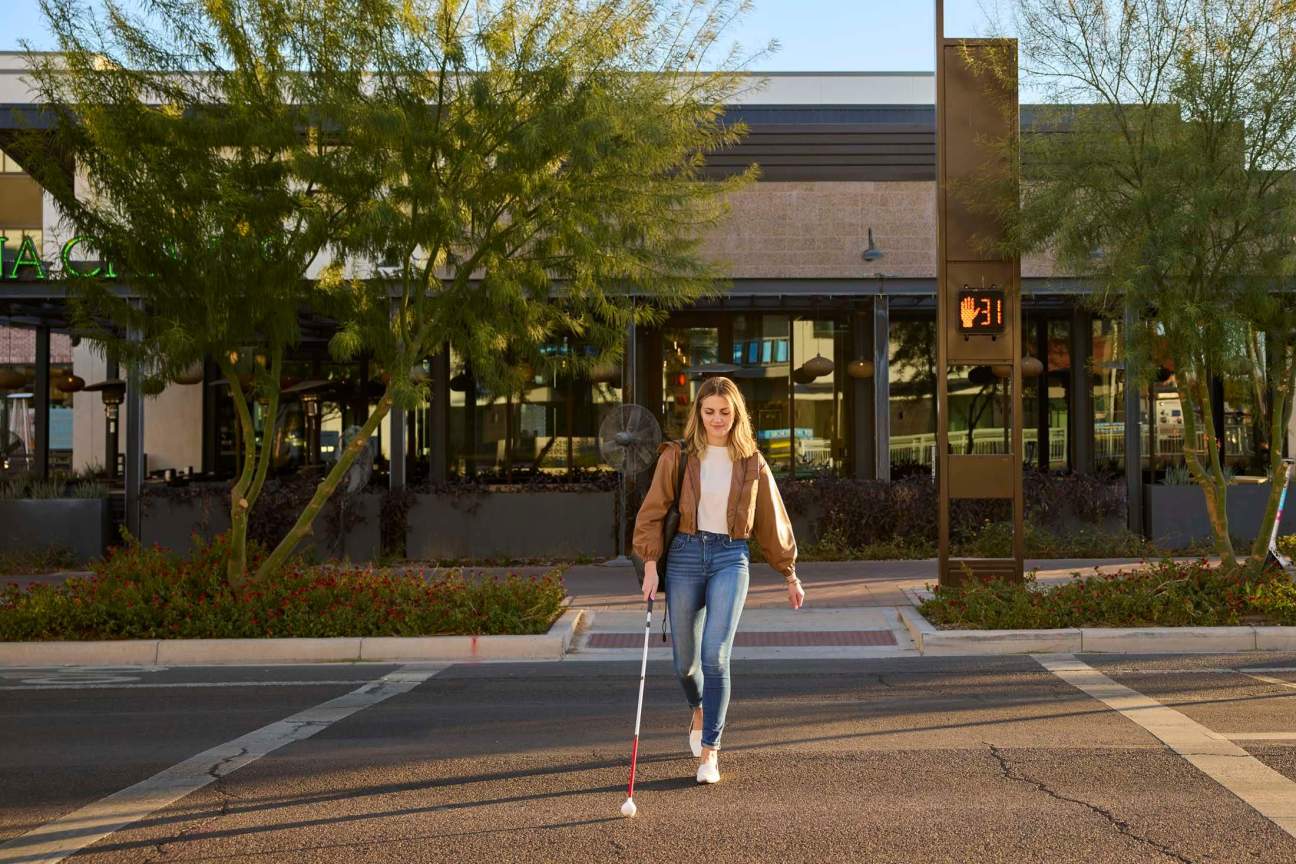
All of this is a boon to residents such as Electra Hug, a 24-year-old high-school guidance counsellor who has a very real need for car-free living. “I lost my vision at 16 and have never had the opportunity to drive,” she tells Monocle. She moved to Tempe from her home state of Michigan (“Everything back there is just cars and highways”) in search of freedom and independence. “I wanted to be able to do things on my own terms,” she says. For her, that meant easy access to light rail and Culdesac’s other transport options. While the car has long been a symbol of freedom and independence in the US, Culdesac offers an alternative vision: freedom from owning a car, the independence to get around in other ways.
Despite Culdesac’s futurist zeal, much of it is arguably a throwback. The light-rail line that runs outside the complex recalls the Phoenix Railway Company, a streetcar network that ran in the city until 1947 when it (and similar systems across the US) was scrapped in favour of automobile-oriented development. Culdesac’s mix of housing and retail, its “gentle density” and desire to create moments of neighbourly serendipity come from the postwar playbook of one of Johnson’s heroes, urbanist Jane Jacobs, who eschewed large-scale planning in favour of a more organic approach, comparing city street life to a “ballet” full of improvisations.
So far, it seems to be working. One measure of that success is all of the development that’s taking place in the surrounding area. “People want to live in a walkable neighbourhood and they also want to live next to one,” says Johnson. But David Levinson, a professor of transport at the University of Sydney, believes that projects such as Culdesac will be hard to expand widely in the US, more because of “in-built market preferences than regulations, though these matter too”. Still, he says, “I like market-based experiments and it will never expand widely if it is never tried.”
Culdesac in numbers
760 units will be on-site once construction is complete.
1,000 residents will eventually live here.
2018: The year in which Culdesac was founded.
$200m (€191m): The amount that was raised to build the mixed-use neighbourhood development.
150 parking spaces are available for use by visitors.
The promise of Culdesac, as well as its potential limitations, can be seen in a new project not far down the road in Mesa. Site 17 is a notoriously bleak area that has been vacant for decades. The company has inked a deal to redevelop it into 1,000 residential units and up to 4,645 sq m of retail space. This proposal is not car-free but “car-lite”, with just 800 proposed parking spaces. On the other side of the country in Atlanta, the company has two “pocket-neighbourhood” townhouse projects under way. It had also been tapped for the redevelopment of an eight-hectare site adjacent to the city’s Beltline, a 35km loop of connected walking and biking trails, but the agency funding the project recently pulled out.
Property development is already a tough game and swimming against the current can make the task feel Sisyphean. Yet Johnson is undeterred. He tells Monocle that he used to get “laughed out of the room” for his vision of car-free living but, these days, he’s invited to conferences where developers listen receptively when he tells them, “Building structured parking is a mistake.”
The transition from car dependency to walkability won’t happen overnight, he says, but prioritising motorists isn’t the best investment in the long run. He gestures broadly at the community forming around him in the desert. “This is something that’s built for where things are going,” he says. “It’s built for what people want.”
culdesac.com
Solid foundations: Three firms redefining the future of development
1.
The intrepid CEO
Meean Dy
Manila, Philippines
Park Villas in Metro Manila is on course to become one of the Philippines’ most prestigious addresses. The 51-storey tower is being built in Makati, the capital’s salubrious central business district, by developer Ayala Land. With only one unit occupying each floor, the property’s luxury flats (or “villas”) are selling for more than €8.2m each.
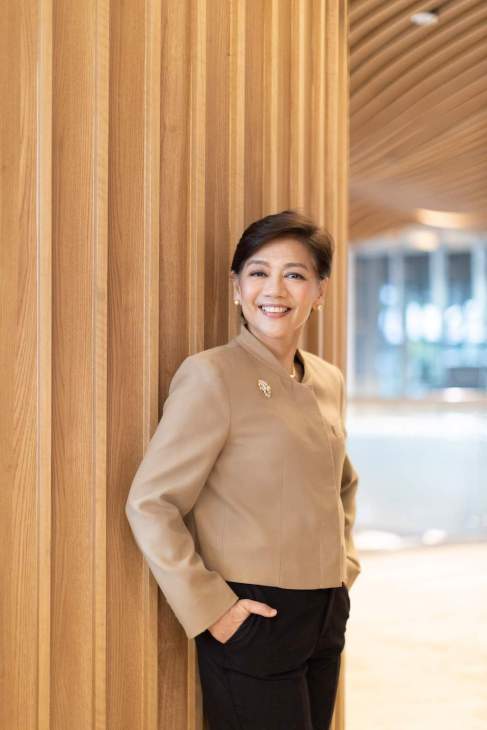
“This country has never seen an offering like this,” says Meean Dy, Ayala Land’s 54-year-old CEO, speaking to Monocle from her office a short walk from the Park Villas construction site. Dy attended the groundbreaking ceremony last July with a silver shovel in her hand. “We are continuing to test the limits of this market,” she says.
The high-end residential market in the Philippines is booming and Ayala Land is leaning into this sector – or, as Dy sees it, returning to its roots. The property firm – a listed former subsidiary of one of the country’s oldest companies, Ayala Corporation – master-planned and developed Makati after the Second World War, before branching out into more affordable homes catering to the country’s growing middle classes.
“The premium segment doesn’t rely on mortgages so it is less sensitive to interest rates,” says Dy, who is coming off the back of a “great year” (Ayala Land enjoyed double-digit growth in 2024) and expects more of the same over the next 12 months. Most buyers are Filipino but many of them work overseas. “Filipinos are global citizens,” she says.
The company has gone from being a net acquirer of land to averaging 800 hectares of new developments per year, serving consumers’ demands for convenience, sustainability and healthy living. Shopping centres are being overhauled, new office towers opened, hotels launched and residential estates developed.
The rapid pace of change might still not be fast enough for Ayala Land’s restless CEO but the long-term fundamentals are in the company’s favour. The Philippines is Southeast Asia’s second-fastest-growing economy, behind Vietnam. Meanwhile, the “business-friendly” government is tapping the private sector to fix the country’s notorious infrastructure problems. “We remain bullish about everything that’s going on here,” says Dy. “We have a young, productive population that will drive consumption and investment.”
2.
The local developer
Larry McGuire,
Austin, USA
Larry McGuire never set out to build a property portfolio. “We just wanted to buy old buildings, not knock them down, and house them with our businesses,” he tells Monocle. But over the years, McGuire has amassed a collection of 24 restaurants, two shops and a hotel across the US with the firm that he co-founded, mml Hospitality. It’s in his home city of Austin where McGuire’s work is having the greatest effect. Last October, mml broke ground on a corner lot called Sixth & Blanco, the first Texas-based project for Swiss architecture practice Herzog & de Meuron.
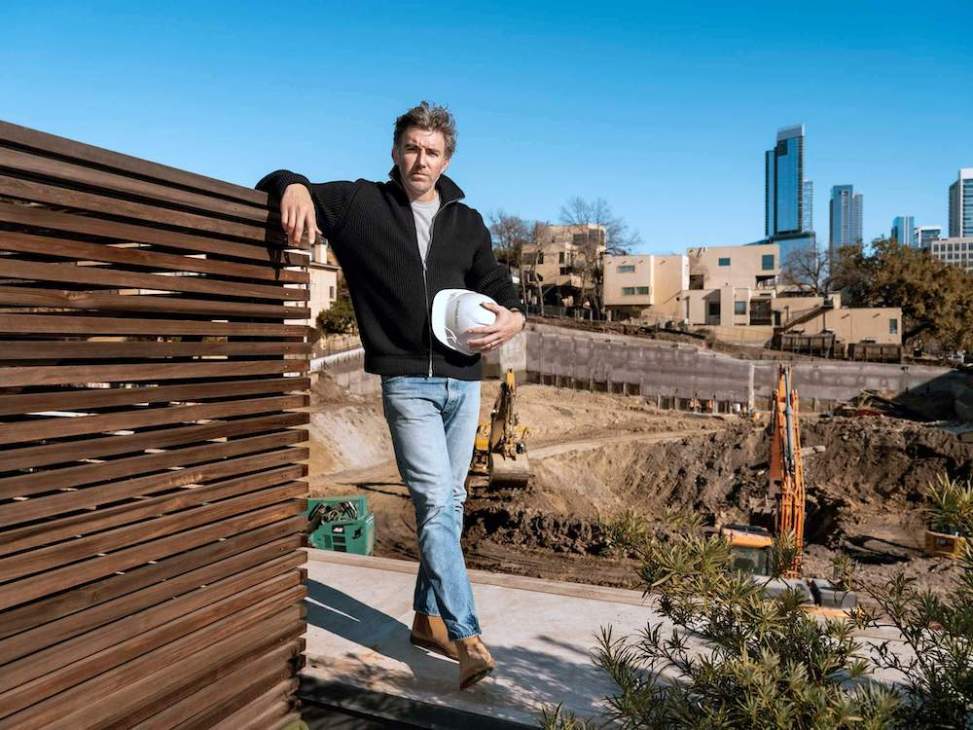
The mixed-use neighbourhood includes a 57-key hotel, 10 apartment buildings, art galleries, a social club, restaurants and retail spots. The design weaves new construction around existing craftsman bungalows while creating public courtyards and passageways. McGuire’s ambition is to turn Sixth & Blanco into Austin’s ultimate high street.
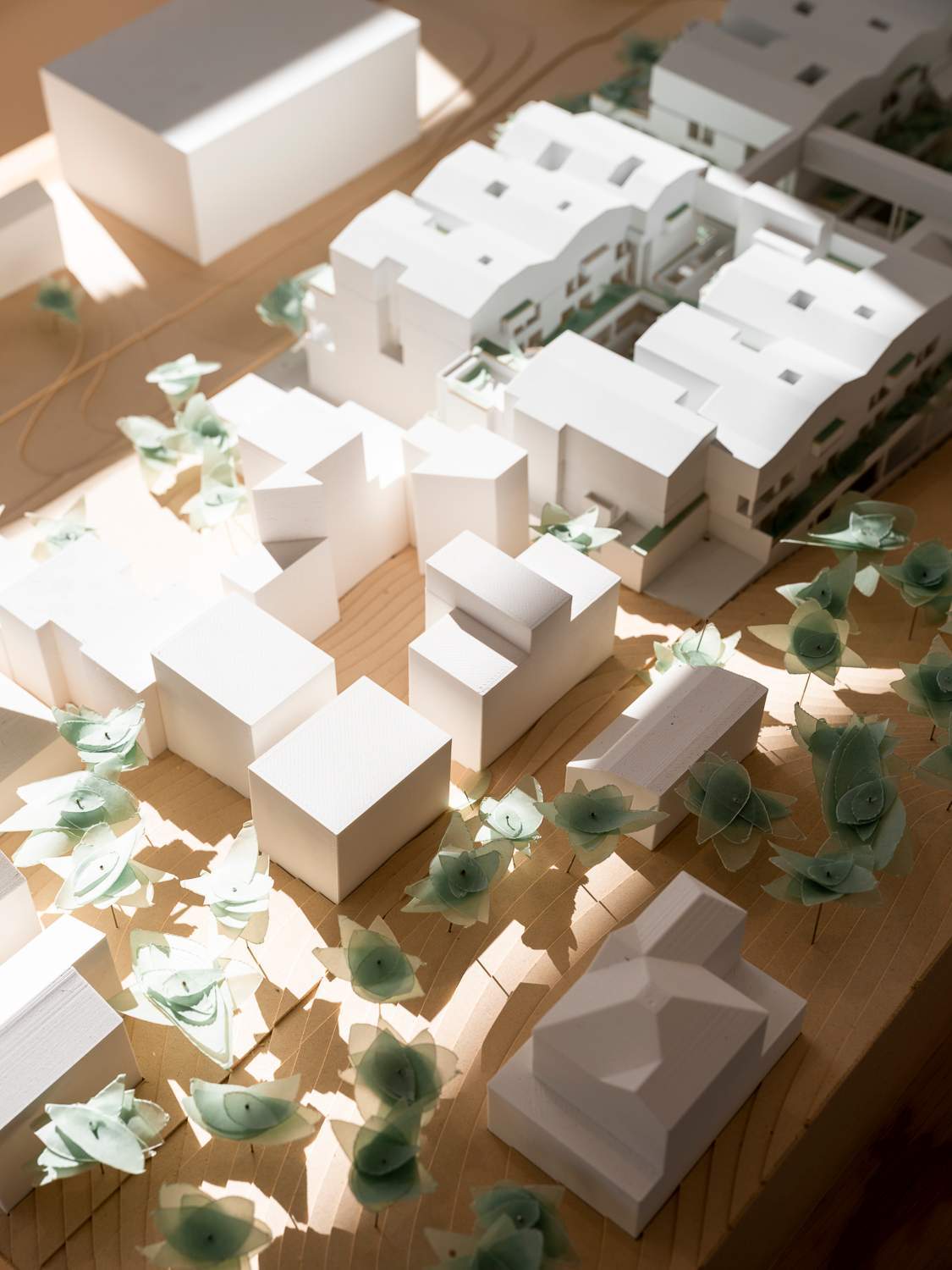
The project is impeccably timed. It is taking shape against the backdrop of an extraordinary influx of people into Austin. The city’s growth and evolution are driven by the boom in its technology sector, which is keeping pace after more than 10 years. McGuire is catching that wave with his new development but is also trying to solve a conundrum. “How do we maintain the ‘Austinness’ of a project while doing something of an international design calibre?” he asks.
McGuire imagines residents of the affluent Clarksville district dropping by Sixth & Blanco for a pastry at the Swedish Hill Bakery, an mml brand, and rubbing shoulders with overseas visitors staying at the hotel. He hopes that shoppers from across the state will pull up for one-of-a-kind retail offerings too.
Austin is increasingly attracting out-of-town developers and this has given McGuire’s work a new sense of purpose. “As a local developer, our job is to maintain the integrity of what makes Austin cool,” he says. “This is still a great place for divey Mexican food even though there’s a Hermès shop. That’s the crux of what the city is going through.”
sixthandblanco.com
Yuta Oka
Good Soil Inc, Japan
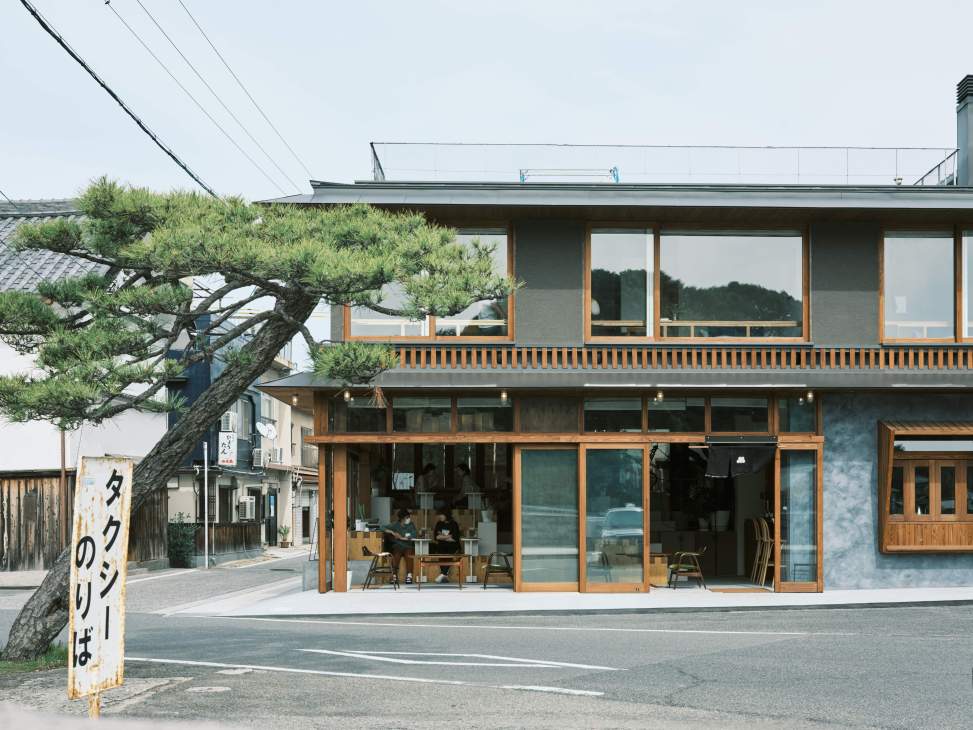
From hotels and cafés to a public bath, the projects of developer Yuta Oka and his company, Staple, have helped to rejuvenate areas across Japan facing major challenges such as depopulation. Now he’s joining forces with Sumitomo Mitsui Trust Bank to create Good Soil Inc, which will bring together institutional investment and local stakeholders, and serve as an engine for sustainable development.
What does Staple do?
We create vibrant, high-density, walkable neighbourhoods. Our ambition is to spark excitement about places while nurturing their culture, nature and economy.
Tell us about your tie-up with Sumitomo Mitsui Trust Bank.
We share the goal of creating ecosystems in which small-scale developments can thrive, mixing living with tourism. We invited Ken Isono, the ceo of renewables company Shizen Energy, to be a board director. Our aim is to integrate development with local energy production.
Which is more effective, the public or private sector?
Many municipalities in Japan are being forced to scale down services such as social welfare and infrastructure maintenance. Government and local authorities play a crucial role but the private sector has the agility and creativity to fill the gaps.
good-soil.inc
3.
The future-focused family
Sordo Madaleno
Mexico City, Mexico
Sitting in his sleek Mexico City office, Javier Sordo Madaleno Sr explains how the work of his family architecture practice has closely tacked to the fortunes of his country. “My father founded Sordo Madaleno in 1937,” says the principal of both the firm and Soma, one of Mexico’s leading developers. “Then, in the 1960s, he developed this city’s first shopping mall at Plaza Universidad.” The practice flourished during Mexico’s golden era of economic growth, investment and urban development, creating some of the capital’s most important mixed-use environments.
The Mexican capital is again booming. In 2023 the city received €10.7bn in foreign direct investment, nearly a third of the record-breaking total that the country secured that year. But the path that the economy took to get to this point hasn’t always been smooth. Sordo Madaleno has thrived through downturns and other hurdles by focusing on high-quality developments in premium locations that are less affected by turbulence in the broader economy. Soma, the development firm that the family founded and took public in 2021, has also allowed it to self-fund projects and get them off the drawing board. “If you are creating real estate, you are thinking about the future,” says Madaleno.
Recent projects include the Park Hyatt complex, a 33-storey mixed-use development in the Polanco neighbourhood and the city’s Soho House social club. An expansive residential development in the capital’s fast-evolving Colonia Juarez area is now nearing completion. This expanding portfolio is well positioned to benefit from the capital’s uptick in tourism. “Today, Mexico City is far more dynamic than it was eight years ago,” says Javier Jr, one of Madaleno’s three sons who are partners in the business. “The gastronomy has changed and a lot of foreigners live here.”
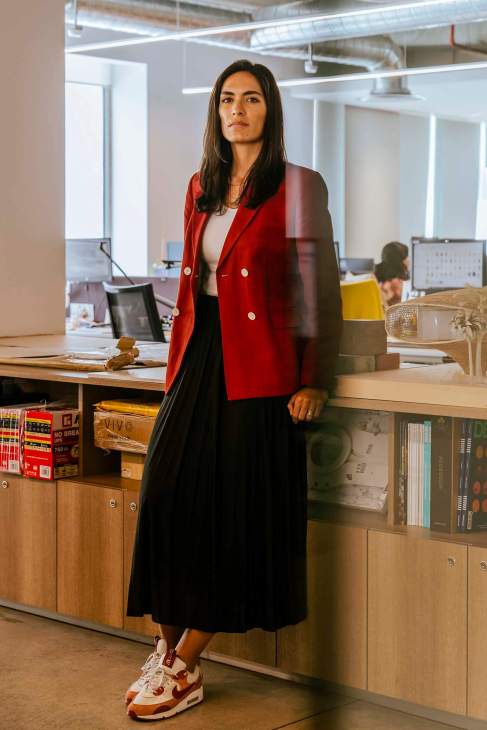
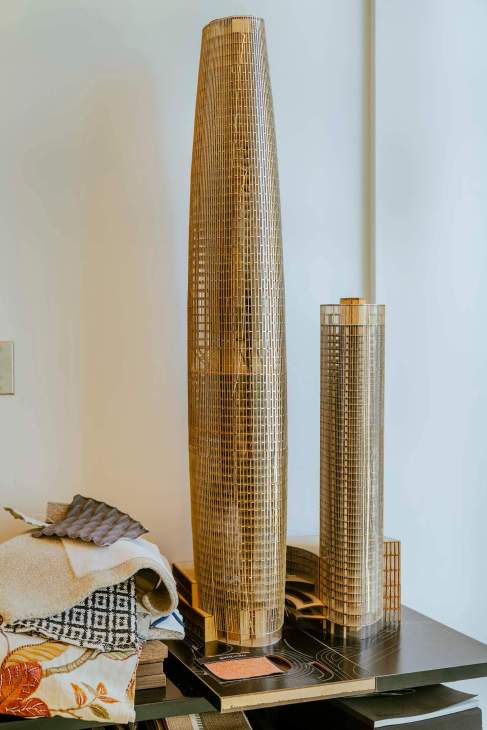
Sordo Madaleno has long helped to guide Mexico City’s evolution but it is now also setting its sights on overseas expansion. Last year the firm opened a London outpost. “There are opportunities in the UK,” says Fernando, another of Javier’s sons, who heads up the new office. “We are working on projects in continental Europe too.” The dynamism that is drawing affluent new arrivals to Mexico City is piquing interest in Sordo Madaleno’s services in Europe and the Middle East. “People want to bring Mexican culture to other parts of the world,” says Fernando.
sordomadaleno.com
Ricaurte Vásquez on how he is safeguarding the neutrality and future of the Panama Canal
Five years ago, Ricaurte Vásquez, a 72-year-old economist who has twice been Panama’s finance minister, was a happy retiree, “stubbornly opposed to the idea of having a formal job” again. But then the board of the Panama Canal asked him to apply to be its administrator – and the rest is history. The position has huge economic and symbolic importance to the Central American nation. The 80km freshwater canal, which runs from the Pacific to the Atlantic, employs 8,500 people, handles 5 per cent of global maritime trade and accounts for 8 per cent of Panama’s GDP. Yet it was US-owned and run for 85 years from when it began operating in 1914 until 31 December 1999.
In January it was back in the news when US president Donald Trump said in his inauguration speech that his country needed to “take back” the canal, claiming that it was a bad economic deal and that Panama had allowed China to control it. Trump claims that Hong Kong-based Hutchison Port Holdings, which operates two ports here, threatens the canal’s neutrality clause, signed when its ownership was transferred to Panama. Though the statement might sound like populist bombast, it has led to frantic negotiation and US secretary of state Marco Rubio chose the small isthmus as the location of his first state visit.
Vásquez’s office is inside a building on a raised vantage point with a commanding view of the waterway. Like the canal, it was built by the US and from the outside it resembles a government building that you might find in Washington. Inside, the rotunda features elaborate murals depicting scenes of men cutting through the jungle and building the canal, which was completed 10 years after then-president Theodore Roosevelt encouraged Panama to cede from Colombia. Though Panama has always had a deep affinity for the US, the latter’s presence here is complex and has frequently been the subject of protest.
Relaxed and smiling, Vásquez talks to Monocle against a backdrop of containers and cranes outside his window as a green vessel makes its slow passage down the canal. His mood is conciliatory and he prefers to talk about matters such as extreme weather than the off-the-cuff remarks of a leader to the north.


What do you make of Trump’s allegations of Chinese control of the canal? Those containers we see outside the window are in one of the ports operated by a Hong Kong-based corporation.
I hope that this will be resolved in an intelligent matter and I trust in the president’s prudence. I do think there are things he can bring to the table. Some of the US complaints are valid and we must recognise that.
Such as?
Levels of corruption. Odebrecht [a corruption scandal that originated in Brazil] did a lot of harm to Latin America. We are still not cured of it.
Panama broke off relations with Taiwan in 2017 and established them with China. Does China have a strong presence in Panama?
Yes, China has a presence in Panama. Our president, José Raúl Mulino, has ordered an audit of these ports. We shall wait for the results. If everything is above board, there is nothing for China to worry about. But it is true that the culture of some companies, where bribing is part of the way of doing business, came with them to Panama.
There was apprehension when the canal became state-owned in 1999. Yet last year you handed President Mulino a cheque for $2.5bn [€2.4bn].
The Panama Canal Authority has done it well. We have been responsible and we have not taken sides. The reason why the neutrality clause in the treaty was important, and remains important, is for the continuous operation of the Panama Canal in times of war and times of peace, open to vessels of all nations. This means that despite the role we have globally, Panama doesn’t get drawn into situations that have nothing to do with us.
Did your experience in the public and private sectors stand you in good stead for this role?
My experience working at General Electric had a significant effect on what I bring to the Panama Canal. I saw a huge, extremely successful US icon go down [during the financial crisis between 2008 and 2010]. You don’t want the same thing to happen to the Canal. I saw what happens to companies as successful as General Electric when they don’t evolve. The Panama Canal has been an organisation run by engineers all its life. I arrived and said, “We’re going to do things differently.” You have to become disruptive. What we have done over the past five years is based on brainpower; it’s beyond infrastructure. For example, we became extremely creative in the way that we handled prices and economic value when dealing with drought.
How did that work? A drought in 2023 slowed the crossing of ships significantly.
During the drought, everyone was saying to us, “What is going on? Prices are going through the roof.” Well, we had let the market decide. The Panama Canal, thinking as a business organisation, introduced a new way. We have always worked with two systems: a first-come, first-served basis, and a reservation-based system. Not any more. Now everyone needs a reservation; every day we auction open reservation slots and during the drought we had a surge in auction prices. Also, from October to December 2023, we generated revenue from water scarcity. We applied a congestion premium on vessels over a certain length depending on the availability of water that day. Anyone who’s a businessperson – and that includes the current president of the US – understands how supply and demand works. We all want market forces to perform and allocate resources until the moment that it works against you.


You applied economics to climate change?
Exactly. For centuries, we did not pay for what we took from nature. Now nature is claiming back all those externalities that were not included in the overall economic cost of doing things. We’re going to start paying now. This is an organisation that is climate dependent. We operate on fresh water – the only major global maritime route that does so – and that puts the Panama Canal at a disadvantage. So we added a price to water.
Climate change is here to stay. You are going to have to be disruptive again, aren’t you?
That means changing the concept. So far the Panama Canal has moved vessels by water. What if the Panama Canal moves cargoes by land, by doing transshipments and making a land bridge to complement the water one? By doing so, we would reduce water dependence and enhance reliability. We would also expand capacity. We need to be thinking outside the box of maritime structures and complement maritime operations. That’s why we acquired 22,000 hectares to protect the environment and our biodiversity, and to build a transshipment facility on 12 per cent of that land to make us less water-dependent. It’s going to take five to 10 years to finish but we have to ensure that we have the elements in our toolbox, including reservoirs to enhance the reliability of the waterway. Complementing activities that do not require water for operation will anticipate what could happen with the climate in the next 50 years.
Do you think that this helps to protect the Panama Canal from other governments and maintain its relevance?
It does. We looked at market conditions and saw that there was potential there. We have quantified the possibility. The value of alternative transportation systems is nothing different to what Panama has done throughout five centuries. The Spanish conquistadores used the Chagres river, known as the Camino de Cruces. Then in the 1800s it was a railroad. In 1914 it became the Canal. So if you look at it from a long-term perspective, Panama’s role has not changed. Only the technology has changed. The fundamental role that Panama plays in the world has remained the same. Panama has been a bridge to the world, from the time of the Conquista to today.

Panama’s motto, ‘Puente del mundo, corazón del universo’ [Bridge of the world, heart of the universe], seems to be a double-edged sword.
What other country of four million inhabitants and 75,000 sq km has the relevance that Panama has in the world? And with the same consequences that any disruption to it – such as a drought – can bring to world trade?
How can the Panama Canal stay being Panamanian and not come under the control of the US again or the influence of China?
Can you show me any of these complex global conflicts that are actually being fought on the soil of any of the belligerent countries? Russia’s conflict is mainly in Ukraine not Russia. And China’s is in the Pacific islands. These political struggles and conflicts, as in the case of the First and Second World Wars, are being ignited in areas that are not necessarily the major powers in the conflicts. So here it comes once again. The role that Panama plays in the world – being so small and in the middle of international, global titans – how do you play out that situation? Panama became an independent republic because of the Canal. So it’s very much a part of who we are. We Panamanians have to understand the role of the Panama Canal – the role we have played in the past and the role that we would like to play in the future. The Panama Canal brings a responsibility. We play the role of a bridge to the world. Because it’s here, and because we do it every day, we don’t realise how important that is.
Facts and figures
Traffic and trade on the Panama Canal
1. Number of boats that have used the canal since its inauguration in 1914: 1.2 million
2. Countries that use the canal the most: the US, China, Japan
3. The canal links up with 180 maritime routes, 1,920 ports and 170 countries
4. Number of crossings made by large vessels in 2024: 9,944
5. Panama’s revenue from the canal, 1913-1999: $1.88bn (€1.82bn)
6. Panama’s revenue from the canal, 2000-2024: $28.2bn (€27.3bn)
7. Estimated tariff for crossing the canal for a regular vessel: $129,585 (€125,554)
8. Estimated tariff for the largest vessels: $620,400 (€600,653)
9. Total cost of crossing the canal for a large vessel, including all tolls and other maritime costs: $1.4m (€1.34m)
10. Year a liquefied natural gas tanker first crossed the enlarged canal: 2016
11. Canal length: 80km
12. Number of canal employees: 8,500
13. Cost of reserving passage along the canal: from 12,000 Panamanian balboas (€11,547) for a regular boat, up to 100,000 Panamanian balboas (€96,227) for the largest
14. Most popular merchandise on the canal: petroleum and derivatives, container shipping, grain
Thailand’s Khao Yai Art Forest is uprooting contemporary art from galleries and planting it into nature
Thailand’s newest cultural landmark, the Khao Yai Art Forest, is a far cry from a conventional sculpture park: there’s much more to it than just manicured lawns and geometric shapes. Instead, it offers what Stefano Rabolli Pansera, the institution’s founding director, calls “land art 2.0”. “Thailand requires a new museum model,” he says, as he shows Monocle around the hilly terrain in a golf cart. “We are trying to avoid the conventional paradigm, which has become obsolete.”
The Italian architect-turned-curator, who curated Angola’s award-winning pavilion at the 2013 Venice Biennale, moved to Thailand two years ago to lead the project for Marisa Chearavanont – an art collector, philanthropist and member of one of the country’s wealthiest families. The pair met in 2019 when Pansera was working at the St Moritz outpost of Hauser & Wirth, where he oversaw the sale of 200 artworks once owned by collector Giuseppe Panza to Chearavanont. “Panza collected very minimalist works and I have a similar sensibility,” she says. When she acquired the pieces she had no idea what to do with them but, four years later, she returned to Pansera. Chearavanont had had an epiphany: she would start a museum on a former tapioca plantation three hours northeast of Bangkok, where she could share her collection with the public and exhibit new, site-specific works too.
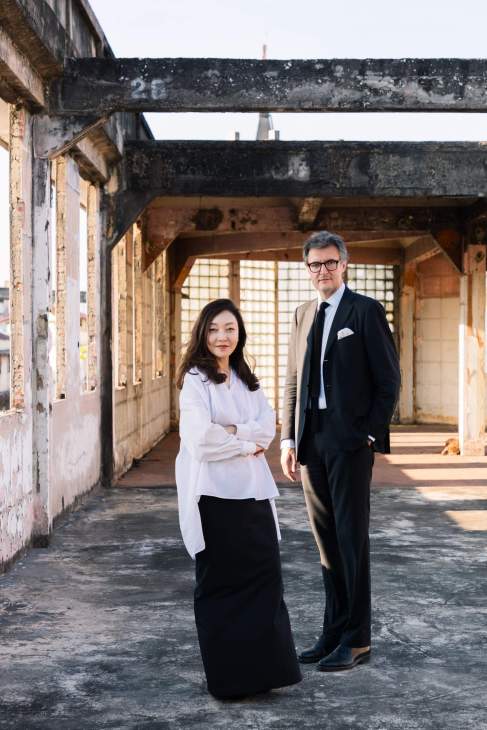
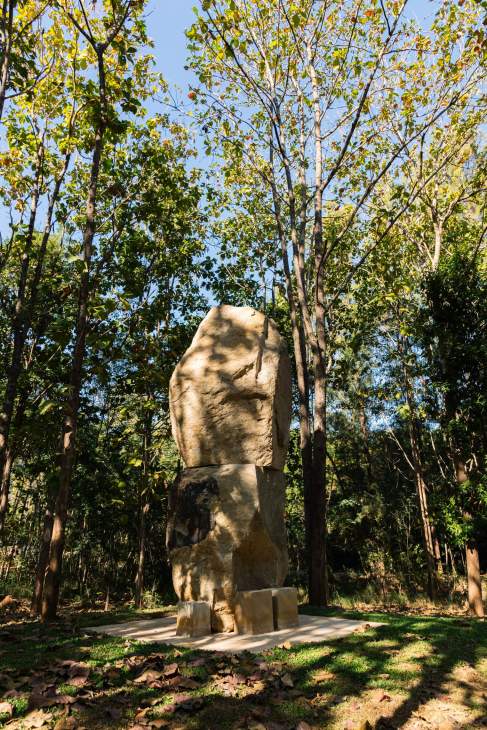
Pansera packed his bags and was soon jetting around the world to commission works for the site. Among them is nonagenarian Japanese artist Fujiko Nakaya’s “Fog Forest”, which blankets a hillside at Khao Yai with a water-vapour mist created using nozzles in the ground. “Nakaya reveals latent forces that we don’t see, such as wind, pressure and temperature,” says Pansera, who takes delight in running in and out of the artificial fog.
Pansera wants to add a major piece to the 85 hectare site every year or so; the next will be a giant work by Colombian artist Delcy Morelos, who is creating a 400-metre-long table and a floating roof for eating and meditation. “To commission is to learn from these artists,” says Pansera, who has taken the wheel of our golf car from a nervous colleague to drive through a muddy patch of ground.
Until May visitors will be greeted by Louise Bourgeois’s nine-metre-tall bronze and steel spider sculpture “Maman”, which usually stalks the entrances of major art institutions across the globe. But from June most of the artworks and installations here will be more subtle and disguised. A video installation by Thai artist Araya Rasdjarmrearnsook, “Two Planet Series”, can be found in a clearing in the woods; viewers sit on logs to watch footage of a group of Thai villagers in a bamboo forest observing an Edouard Manet masterpiece. Meanwhile, a painting by German artist Martin Kippenberger is inside a bar created by Scandinavian duo Elmgreen & Dragset that opens only one day a month.
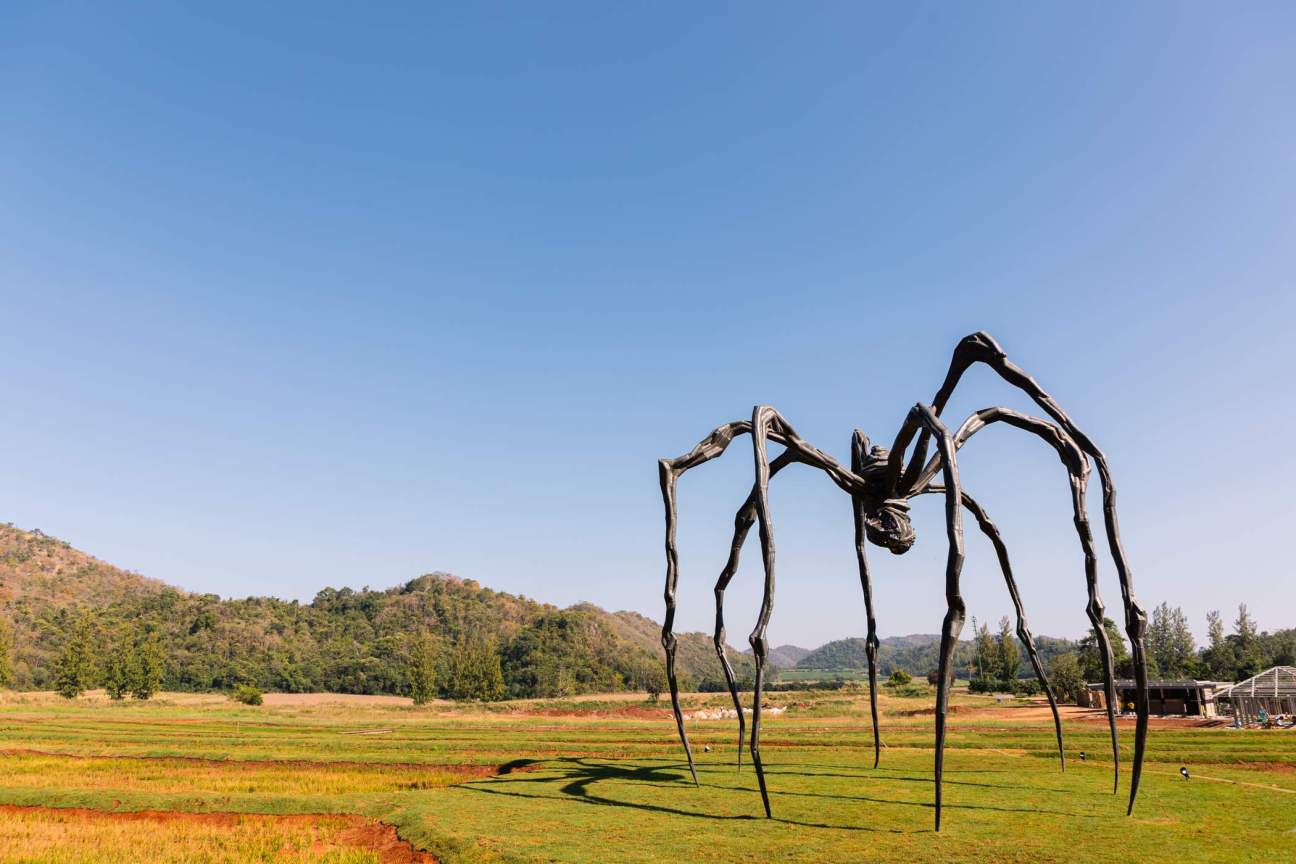
As our golf cart arrives at Francesco Arena’s 40-tonne stone sculpture “God”, Pansera recalls how the Italian artist chose this clearing in the forest by tramping through the undergrowth, stripping off his Metallica T-shirt and tying it around a tree trunk to mark his preferred spot. “My greatest curatorial desire is that when people enter the forest, they are surrounded by art without even knowing it,” says Pansera.
Though the Panza collection brought Pansera and Chearavanont together, only one piece from it is on display for the Art Forest’s opening: a stone sculpture by UK artist Richard Long, which occupies a sunny hilltop. Pavilions will eventually be built to house additional works that are less able to withstand the elements and others will be shown at the Bangkok Kunsthalle, the Art Forest’s sister venue in the Thai capital. It’s there that Monocle meets Chearavanont a day after our Khao Yai trip. Pansera convinced her of the need to have a base in the city to funnel visitors to the mountains, so she acquired a former printworks that is now being reshaped, with plans for an open-air cinema on the roof. The museum held its first show in January 2024.
During our visit, Yoko Ono’s interactive artwork “Mend Piece” is on display and visitors are making their own sculptures out of glue, tape and broken crockery. Ono’s work was on loan from a South African foundation; this reflects Chearavanont’s move away from owning and acquiring to commissioning and displaying works held in storage. “Four or five years ago I started telling people that I’m not a collector any more,” she says.
Originally from South Korea, the 60-year-old Chearavanont has been involved in several major museums across the globe, including M1 in Hong Kong, where she and her husband lived for more than 20 years. In the 1980s she married into the Chearavanont family, which controls the century-old Charoen Pokphand Group – Thailand’s largest private company, focused on farming and food production. After raising four children, Chearavanont concentrated her efforts on building schools and helping to feed the underprivileged. It was only after the coronavirus pandemic confined three generations of the Chearavanont clan to the family’s estate in Khao Yai that she landed on the idea of creating an outdoor destination where people could enjoy artworks from her collection.
“I want to be an art sharer and invite artists here to be inspired and create something that I can share with all Thai people, as well as international visitors,” she says. Her investment in her adopted country seems to be working. “I used to travel back to Hong Kong a lot. But now, Hong Kong comes to me.”
art-forest.org
Call of the wild
Five cultural institutions set among nature that are worth tagging onto your next city trip.
1.
UCCA Dune, Beidaihe
300km east of Beijing
ucca.org.cn
2.
Arario Museum, Jeju
450km south of Seoul
arariomuseum.org
3.
Ju Ming Museum, New Taipei
44km north of Taipei
juming.org.tw
4.
Las Casas Filipinas de Acuzar, Bataan
147km west of Manila
lascasasfilipinas.com
5.
NuArt Sculpture Park, Bandung
148km southeast of Jakarta
nuartsculpturepark.com
Read next: The Monocle City Guide to Bangkok, featuring the very best hotels, restaurants and retail spots in the Thai capital