Issues
Why one unassuming US grocery chain is a perfect lesson in the power of community building
Stewart’s is a chain of 400 convenience stores across New York state, New Hampshire and Vermont that seems to appeal to everyone. It’s where contractors grab coffee at dawn (some branches open at 04.30); where people in retirement go to buy the paper; and where Daniel Day-Lewis is rumoured to grab an eggwich (four million-plus sold in 2024). When my Brazilian friend visited from São Paulo, she declared Stewart’s “the best hangout in town”.
With burgundy branding and beige interiors, little about Stewart’s has changed in 50 years. So unwavering is its identity, it now feels dependable, trustworthy, familiar and oddly comforting – a cultural glue.
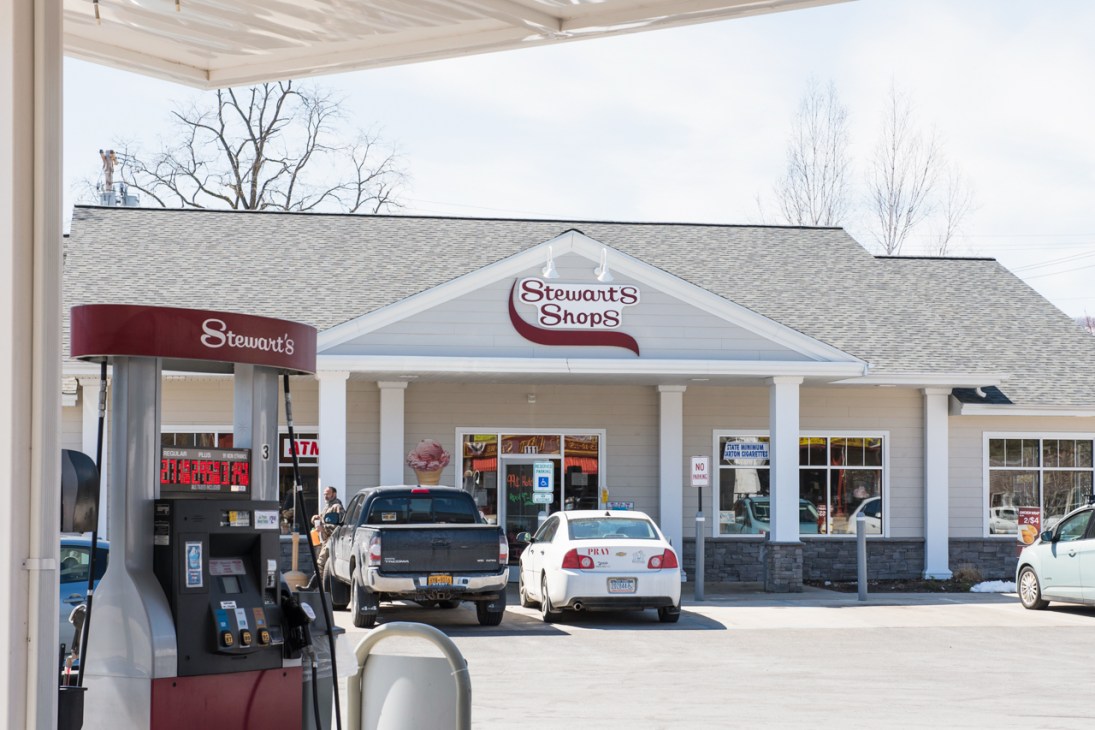
Starting as a family-owned dairy nearly 80 years ago, Stewart’s has been built by the Dake family into an $877m (€806m) empire pulling in $2.5bn (€2.3bn) in annual revenue. Forty per cent employee-owned, with a workforce that stays, Stewart’s thrives on relationships and vertical integration – farms that are just 20 minutes from its plant. The eggs are fresher and cheaper than any neighbourhood shop, while the milk, which goes from farm to cooler in 48 hours, has been rated the best in New York state.
So what can upmarket grocers take from Stewart’s? Stop chasing reinvention, trends, influencers and “new arrival” products. No one goes to Stewart’s for the aesthetics but the food is consistent, fresh, delicious and affordable; the coffee is hot, the eggs are cheap and the milk tastes better than at your average health-food shop. Its employee stock programme has minted 199 millionaires. Stewart’s, with its unshakable presence and consistency, has managed to stay unremarkable yet essential.
Gardner founded ‘Modern Farmer’ magazine and is Monocle’s former Americas bureau chief.

Turning the tide: The shipbuilding company reviving a small Midwest town
Wisconsinites are well accustomed to harsh winters but the deep freeze that descends upon the northern part of the Midwestern US in the first months of the year can test even the hardiest. When the temperature dips to minus 34C, schools close and workplaces shutter. Yet in tiny Marinette, a town on the icy shores of Lake Michigan, some 2,000 welders, fitters and engineers report for work as usual to build the next generation of American warships.
Founded in 1942 to bolster the US Navy’s war effort, today the Marinette yard is helmed by Italy’s state-owned shipbuilders Fincantieri, which acquired this frozen outpost in 2009. It’s a far cry from Fincantieri HQ in Trieste, which launches ships into the much more clement Adriatic Sea, but it has caught the changing tide of a once-dying American industry and is investing in the Rust Belt.
Fincantieri is the largest shipbuilder in Europe and owns an integrated network of yards from Genoa to Palermo, which churn out cruise ships, submarines, off-shore wind-support vessels and luxury yachts. Over the past 20 years, however, it has expanded its reach across four continents with 18 shipyards. In 2009 the firm’s CEO Giuseppe Bono, eager to break into the market of Nato’s largest naval power, spotted an opportunity that larger US shipbuilders had overlooked: a somewhat forlorn outpost on Wisconsin’s Great Lakes, which had access to the Atlantic Ocean and several modest contracts with the US Navy. Fincantieri acquired Marinette Marine that year, along with another shipyard 35km across the water in Sturgeon Bay, for $120m (€115.6m). Since then, the firm has invested $400m (€369m) in new facilities and infrastructure, with climate-control systems that keep the assembly lines at 15C even in the dead of winter.

“We’ve never lost a day due to bad weather,” says Marco Galbiati, CEO of Fincantieri Marine Group, the firm’s US subsidiary. In tailored houndstooth trousers, black loafers and white dress shirt, the Italian executive sticks out among his fleece-clad Midwest counterparts. Nevertheless, he is at home in the shipyard and is proud to give Monocle a tour of the expanding facility. In a hangar-sized building, we watch as hunks of steel are cut and welded onto a gargantuan hull destined for a ship in Saudi Arabia’s naval fleet. Then we are ushered into an even more cavernous space completed last year to accommodate Fincantieri’s mammoth new project: the construction of the US Navy’s first Constellation-class guided-missile frigate, the skeleton of which is taking shape before our eyes.
Galbiati, who worked his way up Fincantieri’s corporate ladder in Italy before moving to Washington, makes regular visits to Wisconsin to ensure that the company’s trademark “system of yards” process of shipbuilding is working smoothly. “The idea of ‘system of yards’ is about flexibility and to smooth out the peaks and valleys of shipbuilding production,” says Galbiati. In practice, this means that a facility in Sturgeon Bay cranks out ships’ bows while a purpose-built aluminium construction plant in Green Bay fabricates the superstructure. These modules are then shipped by barge to Marinette, where they are welded together into a hull.
This multi-site production process happens in the same way whether it’s at the Great Lakes or between Fincantieri’s cruise ship-manufacturing shipyards on the Adriatic. It’s what has turned the storied company into a true global powerhouse – and a potential saviour of US shipbuilding as it attempts to recapture its glory days. “We build for customers who need complicated ships that require skilled workforces,” says Mark Vandroff, the outgoing CEO of Fincantieri Marinette Marine, which operates the shipyard. The only type of seaworthy vessel that Fincantieri doesn’t make, he explains, is container ships. “We don’t build boxes to haul boxes.”
Shipbuilding was once a symbol of American industrial might. During the Second World War, the US built aircraft carriers in a matter of months. Today a new carrier takes eight years. But from its lowest point in the 1980s, when some 40,000 production jobs disappeared, shipbuilding is now a rare subject of bipartisan agreement in Washington. The Navy’s $1trn (€962bn) procurement plan calls for more than 100 new vessels over the next 30 years, and production is expected to peak in the next decade. This presents a lot of potential work for a dwindling number of active shipyards.
From Saab to Hyundai, foreign firms have been lining up to enter the world’s biggest defence market. But getting on the Pentagon’s books is notoriously difficult, especially in an industry dominated by large, historic US players. Wisconsin might be out of the way, with ports that freeze over for three months of the year, but the Marinette shipyard has allowed Fincantieri to get a firm foothold in the US market. All of this makes it well-positioned to tap into a lucrative revival of the industry.
When it took over the shipyard in 2009, Fincantieri inherited a contract to build 16 nimble, multipurpose craft for the Navy’s littoral combat ship (LCS) programme. While the LCS was ultimately a choppy project, it required Fincantieri to hire 1,000 people in the US, and proved to the Navy that it could build at scale. This helped Fincantieri land a bonanza deal to build 10 frigates worth $5.5bn (€5.3bn) in 2020 and has ensured steady work for decades to come. It will need to recruit another 500 workers over the next two years to ramp up the construction efforts that have re-energised this Rust Belt town. “In this area, either you work here, your family works here or your best friend works here,” says Fincantieri’s Bethany Skorik, a Marinette local.

Today the shipyard looks very different from when Fincantieri took over. The company is bringing state-of-the-art shipbuilding practices across the Atlantic. These include importing a measure of automation – which proved effective in Italy to recruit younger welders by offering work that couples traditional skills with new technology – and recent innovations that reduce the physical demands of shipbuilding, such as installing exoskeletons to help with the backbreaking work of painting gargantuan hulls.
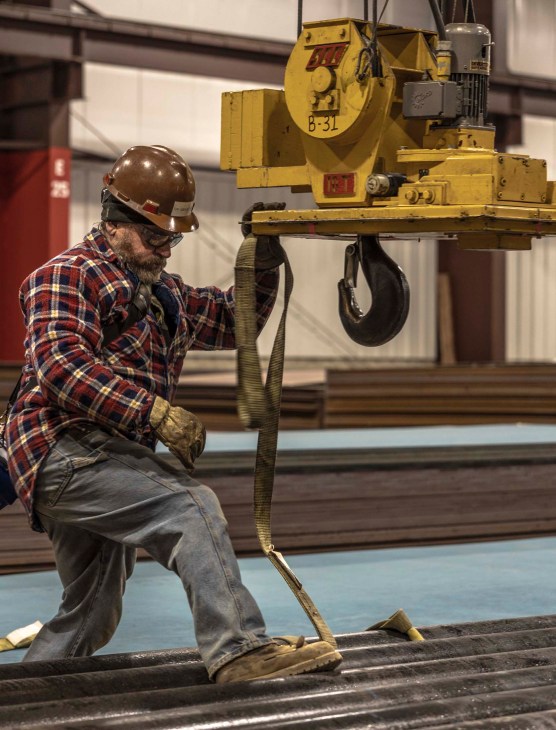
Shipbuilding remains an intense job: manoeuvring steel sheets weighing upwards of 1,800kg with the help of magnetic cranes and welding with blowtorches that send sparks flying. Nevertheless, these jobs are a chance to pursue the American dream. A high-school diploma is sufficient to land a steady job at the shipyard with wages that can support a family and pay for a house. The so-called Badger State of Wisconsin runs the oldest technical college system in the US and a marine trade school sits just outside Fincantieri’s gates in Marinette. The company is recruiting at full speed across the state as the market for skilled tradespeople is extremely tight.
There are only about two dozen people from the parent company in Wisconsin – a mix of Italians, Norwegians and Romanians – but many more come for multiweek rotations. It means that there’s now an espresso machine installed in the Marinette corporate office alongside the pot of filter coffee, and that a nearby food shop stocks San Pellegrino. Americans who have never travelled abroad are sent to Italy for training. “It’s been such a change for a small town in Wisconsin that didn’t have an international footprint,” says Skorik. “People are much more open-minded. You’ll even hear Wisconsinites speaking a bit of Italian.”
On mastering the art of selling
Much of this issue is devoted to the designers responsible for the fine lines of elegant tables and comfy chairs, the families in countries such as Italy and Spain that commission and manufacture these objects, and the spaces that they occupy. But how does a sectional sofa or suspended lighting grid find its way into an apartment or corner executive suite? Who explains the virtues and value of “Made in Brianza” versus “Procured in Bangladesh”? And who can turn a just-launched office chair into a star on the showroom floor rather than an item destined for the chop in the next range review?
While I’m all for celebrating design talent, I’m just as keen to shine a light on all of those talented people who are masters at the art of selling. These are the individuals who are passionate about a product’s story, its journey from drawing board to production and, most importantly, the needs of the client. The world’s most innovative brands can bring as much beauty and craftsmanship to market as they like but there’s little point if they don’t have strong sales teams that can close a deal.

I recently completed an apartment project in Lisbon. The seemingly straightforward act of ordering pieces or reception rooms, the terrace and the kitchen was transformed by having the right salesperson who knew how to collapse delivery times and specify colours that were no longer in production. Along the way, I was also introduced to smaller manufacturers and more nimble producers whose work will not only grace the parquet but also these pages.
Editor’s letter: Andrew Tuck on dressing for the times
The way we choose to dress reveals something of ourselves and also our priorities, while holding a mirror to the times that we live in, reflects our editor in chief, Andrew Tuck. As well as surveying the designers, brands and items that you should know this season, our fashion issue looks at how clothing can stitch us together as a people – whether we’re in Paris, Milan or the shattered cities of Syria.
This is our fashion issue – which means that Natalie Theodosi has had a busy month. In between attending the season’s runway shows, our fashion director has been tracking down new talent, designers on the cusp and creators of products that will turn heads (and stand the test of time) for our Top 25. From a pair of polished Korbinian Ludwig Hess men’s shoes to Saint Laurent’s reinvention of the double-breasted suit, she has you covered.

A good fashion director requires an eye for aesthetics and an ability to articulate how this dynamic, complex industry works. The role also involves understanding that fashion doesn’t stand apart from the world but stitches it together. How we dress reveals who we are and what we think matters, and reflects the times that we find ourselves living in. You’ll find evidence for this beyond the fashion section this month.
In our business pages, Ed Stocker, our man in Milan, meets Morten Thuesen and Letizia Caramia, the founders of uniform company Older. The company started as a ready-to-wear fashion brand in Paris but the couple grew disillusioned with the scene. They changed tack when they spotted the need for good uniforms in kitchens, bars and shops run by people trying to add quality to every experience, to do things better than before. As Stocker reports, “You will see these uniforms in establishments all across Milan, from the bespoke all-black look of retailer 10 Corso Como to the beige aprons used at ceramics producer Officine Saffi Lab and the long-sleeved navy Rudo jackets, complete with woven logo labels, worn by staff at gourmet food shop Terroir.” Older’s looks have taken off with a younger generation of entrepreneurs who know that a uniform can help to make people feel part of a team and broadcast to customers the message, “I am here to help.” It’s such a great antidote to those establishments where you can hardly tell the staff from the customers and are at constant risk of mistakenly asking a fellow diner whether they could perhaps get you another bottle of the nice red. It’s all about showing that you care – and it’s why you will find our café teams looking the part too.
Over the years we have returned again and again to the topic of Syria, a country and a people with so much potential. For this issue’s Expo, we sent our Istanbul correspondent, Hannah Lucinda Smith, and photographer Emin Özmen to Damascus to see how the nation is faring following the fall of Bashar al-Assad. As we went to press, there were reports of violence between the new government’s security forces and Alawite Assad loyalists, as well as civilian deaths – but money, especially from Turkey, is now coming into the country to help rebuild its shattered cities and the people we meet have hope. So far, the transitional president, Ahmed al-Sharaa, has managed to hold the disparate groups in his coalition together. Perhaps that all-black military uniform that we see in this Expo has also helped to present a unified front.
Thank you for reading Monocle. If you want to send me an idea or share a story, please email me at [email protected]
Style Directory: Our top 25 seasonal styles
We present the top designers, creatives, products and brands on our radar – from the irreverent bursts of colour on a new Prada trainer to Saint Laurent’s fresh take on double-breasted blazers. Plus: the luxury watches making us tick.
1/25
Tod’s
Italy
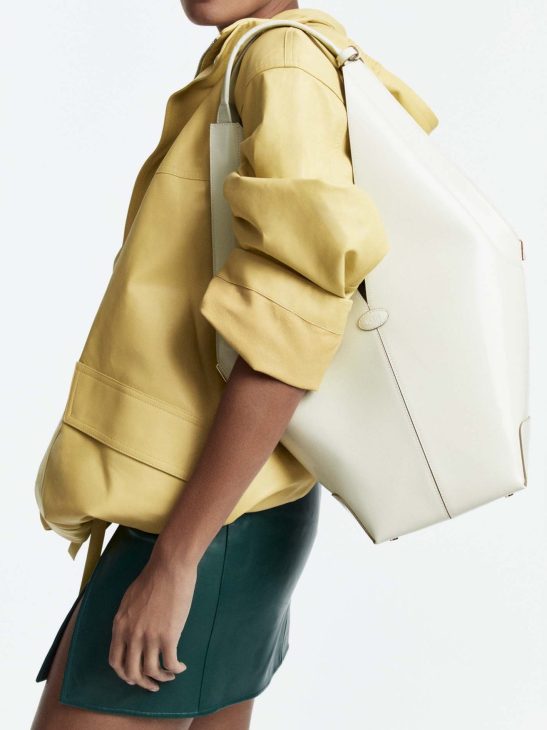
Tod’s has been an authority in leather goods for decades but ready-to-wear has made up a smaller part of its business. Things are changing under Matteo Tamburini, its recently appointed creative director. For spring he is combining lightweight tailoring with breezy cotton shirts, draped dresses and pleated leather pieces. His sunny colour palette has also been a crowd-pleaser. Expect Tamburini’s star to rise even higher in his new role.
tods.com

2/25
Informale
Australia
Melburnian menswear label Informale is bringing Neapolitan flair to its home city. After working for luxury labels such as Zegna and Gucci, Steve Calder, the brand’s co-founder and creative director, decided to introduce a more relaxed suiting approach to Australia, chiming with the country’s sunny lifestyle. “Men here want to dress up but aren’t necessarily comfortable in a suit,” says Calder. “So we started to make linen trousers that can be worn with tailored blazers. And from there, we grew through word of mouth.”
Informale’s core collection includes shirts, utility vests, knitwear and high-waisted tailored trousers that capture the smart-yet-breezy look that Australians do best.
The brand’s main atelier is in Melbourne; it also works with specialists in the city, as well as shirt-makers in Naples. “We move at a slower pace but it works in our favour,” adds Calder. “I like a brand that has a romantic story behind it.”
informale.com.au

3/25
Marie Marot
France
After several years working in the film and communications industries, Paris-based Marie Marot decided to launch a business based around shirts. Her label offers appealingly oversized pieces in versatile shades of blue, white and pink, as well as classic check patterns and bright-yellow stripes for the sunnier months.
Marot is her own best customer. You might spot her cycling around the French capital in one of her classic blue garments, often worn under a gilet.
Over a coffee on Place des Vosges, she tells Monocle that she is committed to perfecting her signature designs, which she sells through her online shop at competitive prices.
Sometimes Marot updates her collections with new hues or adds details such as ruffled collars. Mostly, however, she ignores seasonal trends and shuns fashion’s endless search for novelty. “A lot of people bring on investors, expand their collections too quickly and work with hundreds of retailers,” she says. “I want to take it slow and enjoy my life. It’s a much more honest approach.”
mariemarot.com

4/25
Prada
Italy
For their spring/summer 2025 menswear range, Miuccia Prada and her co-creative director, Raf Simons, have added bright pops of colour to their usual dark-grey and chocolate-brown tailored trousers, slim cardigans and leather coats. What they’re seeking to capture is a sense of “optimism”, “freedom” and “fantasy”: monochrome looks are broken up by nylon and suede trainers in hues including sunny yellow and forest green. “It’s the opposite of grandness,” says Prada. “There’s too much of that around.”
prada.com
5/25
A Presse
Japan
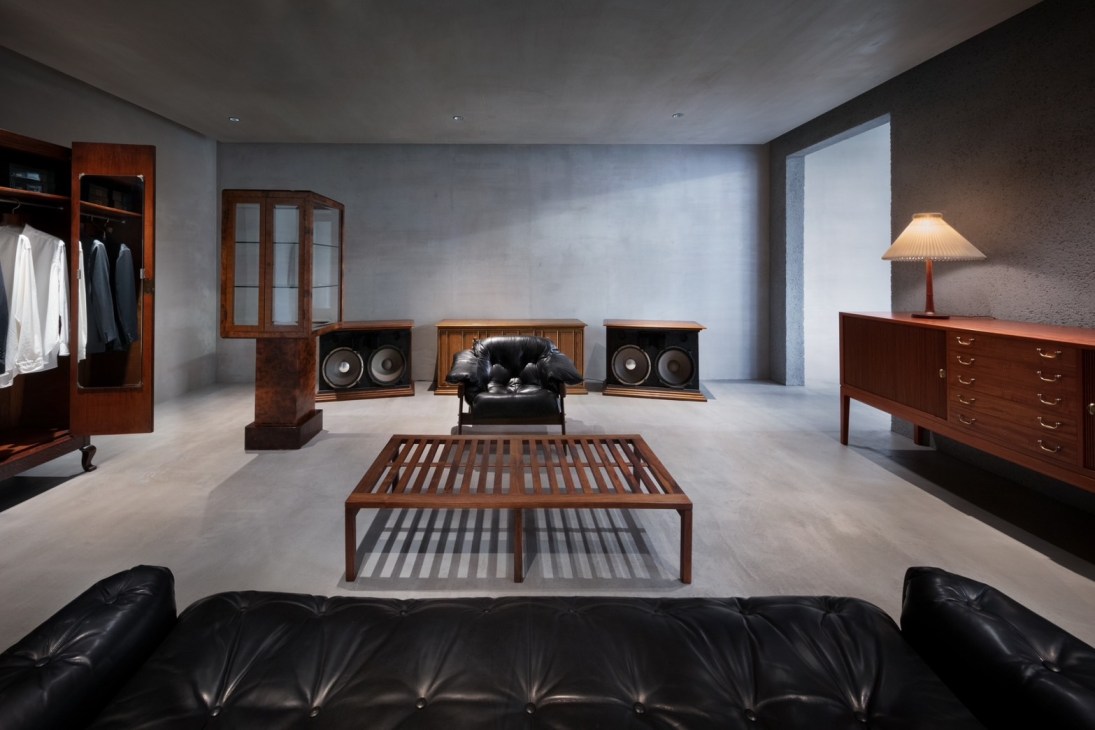
Kazuma Shigematsu has been collecting mid-century furniture for decades: wooden chairs, decorative objects and cabinets from Scandinavia and Japan, as well as France, Brazil and the US. “I like to mix cultures and tastes but there’s always the same feeling,” he says from his Paris showroom, where a postmodern chair with leather cushions sits in the corner. Vintage furniture from the 1950s and 1960s also captures the spirit of Shigematsu’s fashion collections for A Presse, the label that he founded in Tokyo in 2021. “I spent years consulting for larger companies and I was tired,” he says, referring to the ever-increasing pace of the fashion industry.
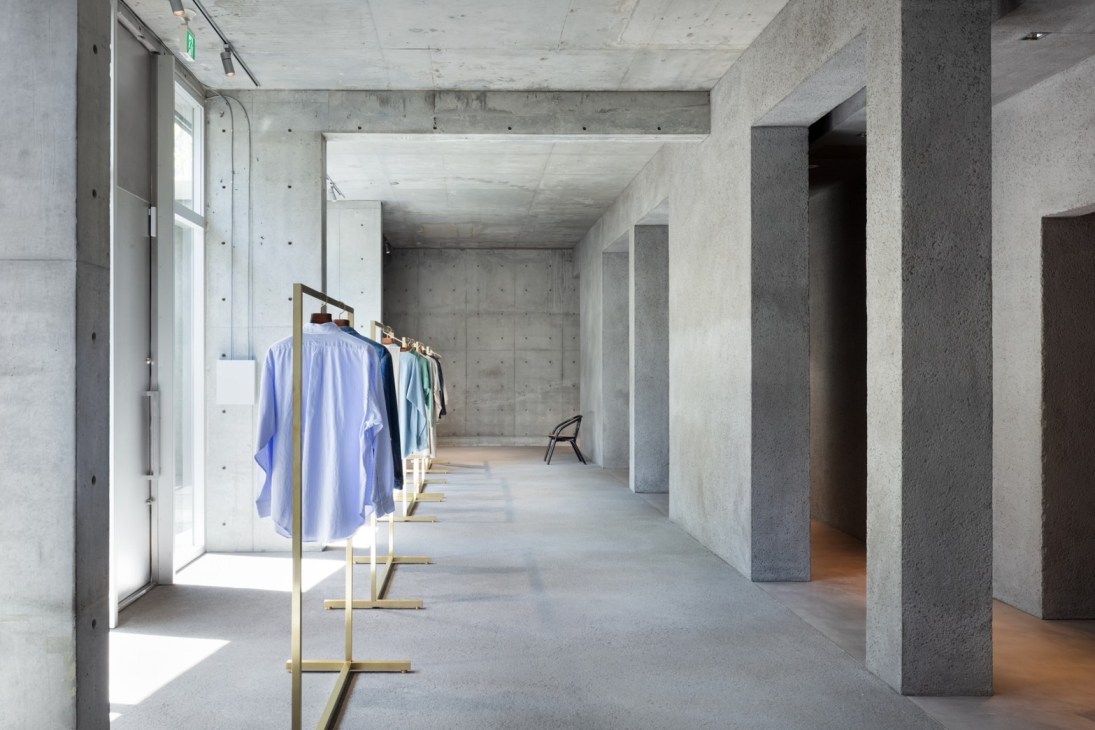
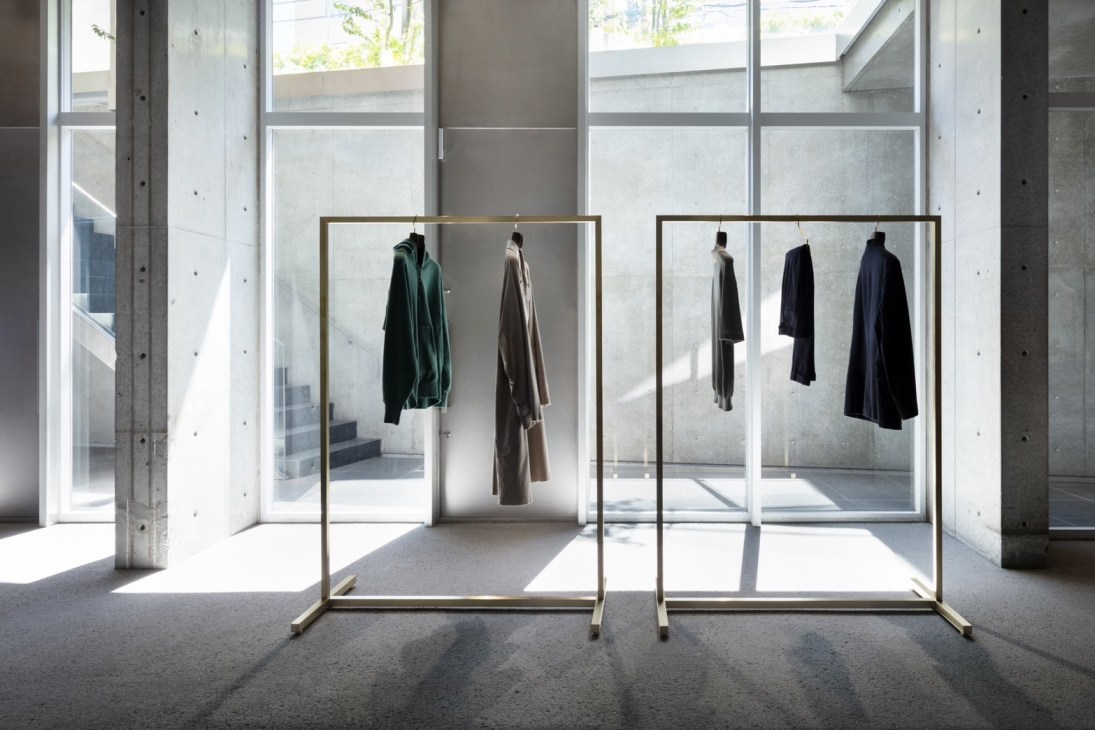
A Presse’s model is the antithesis of mass manufacturing, with limited-edition items designed to improve with age. Shigematsu believes that fashion shoppers should think of themselves as collectors. When it comes to quality, there’s little distinction between a handcrafted wooden chair and one of his leather jackets or workwear-inspired trousers. Silhouettes are executed to perfection, the stitching is done by hand and even the garments’ hangers are hand-carved. “The market has become too much about marketing and logos,” says the designer. “My concept is about understatement and not dressing for others. These clothes are for you.”
While Japan is known for its commitment to craft, this level of artistry is still unusual. “There are many Japanese brands but most are in the middle range,” says Shigematsu. “That can be a good thing but there’s too much focus on price points, cost-saving and marketing.” In such a context, the vintage flair and limited nature of A Presse designs are a breath of fresh air. The label has attracted an international clientele of connoisseurs (the US is one of the brand’s strongest markets) and larger retailers are knocking on its door. But distribution remains limited. A Presse has a few global partners, including e-commerce site Mr Porter, but the best way to access its wares is to visit its Shibuya flagship, where concrete interiors meet thoughtfully selected furniture and meticulously crafted wardrobe classics.

6/25
Salomon
France
Think of Salomon and what comes to mind is technical outdoor gear. Recently, however, the Annecy-based sportswear brand, founded in 1947, has been gaining traction in fashion too. Thanks to collaborations with luxury labels such as MM6 Maison Margiela and New York’s Sandy Liang, Salomon’s trainers have become coveted accessories. The brand’s latest launch, the XT-Whisper, made its debut during Milan Fashion Week. An updated version of the XT Hawk trail style, it has been redesigned with slimmer soles for more urban environments.
salomon.com

7/25
La Collection
Belgium
“Minimalism is the very essence of well-made clothes,” Florence Cools, a co-founder of Antwerp-based brand La Collection, tells monocle. “Every stitch is visible when the overall look is clean so everything needs to be perfect.”
To ensure that each item meets La Collection’s exacting standards, the brand prioritises natural fabrics, from fine Italian wool to raw silk spun on some of Japan’s oldest looms. These are fashioned into sculptural yet effortless-looking silhouettes – think column dresses in crepe silk, recycled-wool longline coats and linen hourglass blazers.
To finish off the look, Cools has also been working on a new range of gold jewellery, made by hand in the Antwerp diamond district.
“We are doing things the old way but with a fresh design perspective,” says Cools, who often draws inspiration from the works of German-American architect Ludwig Mies van der Rohe and Italy’s Carlo Scarpa. “I can’t walk through a city without looking at the lines, the structures of buildings and colour palettes,” she adds.
A passion for art has also made its way into La Collection’s universe. When you visit the label’s Antwerp flagship, expect to see Cools’ signature black-and-white creations alongside works of art by emerging UK-Belgian painter Eleanor Herbosch, Barcelona-based Aythamy Armas and Japanese artist Kiichiro Ogawa.
lacollection.be
8/25
Marie Adam-Leenaerdt
Belgium
After graduating from Brussels’ La Cambre art school in 2020, Marie Adam-Leenaerdt quickly found work at luxury houses such as Balenciaga. Three years later she debuted her namesake label and found almost immediate success, thanks in part to her experimental silhouettes, sharp tailoring and ability to put on a good show. Department stores including Bergdorf Goodman in New York and Stijl in Brussels bought her pieces; in 2024, LVMH nominated her for its annual design prize.


Last year she presented her collection in Parisian brasserie Terminus Nord, serving her guests oeufs mayonnaise while models walked down a makeshift runway. A recent show in March was held at the Galerie Paradis, where she lined up design and standard office chairs for people to sit on. “It raised interesting questions about the transience of fashion versus design,” says Adam-Leenaerdt. She hopes that her work will become collectable and transcend time. “I don’t want to reinvent things every six months,” says the designer. “I’d rather perfect a solid base. And I like dual structures: it’s about questioning how you can create two items in one. Having a Belgian heritage means prioritising ideas before aesthetics.”
marieadamleenaerdt.com
9/25
Connor McKnight
USA
Since launching his eponymous brand in 2020, Connor McKnight has made a name for himself with his sharp suits and ability to combine references ranging from vintage sportswear to 1930s suits. He is intrigued by utilitarian aesthetics, technical details and experimental fabrics, including vintage sleeping bags and South Korean military canvas tents.
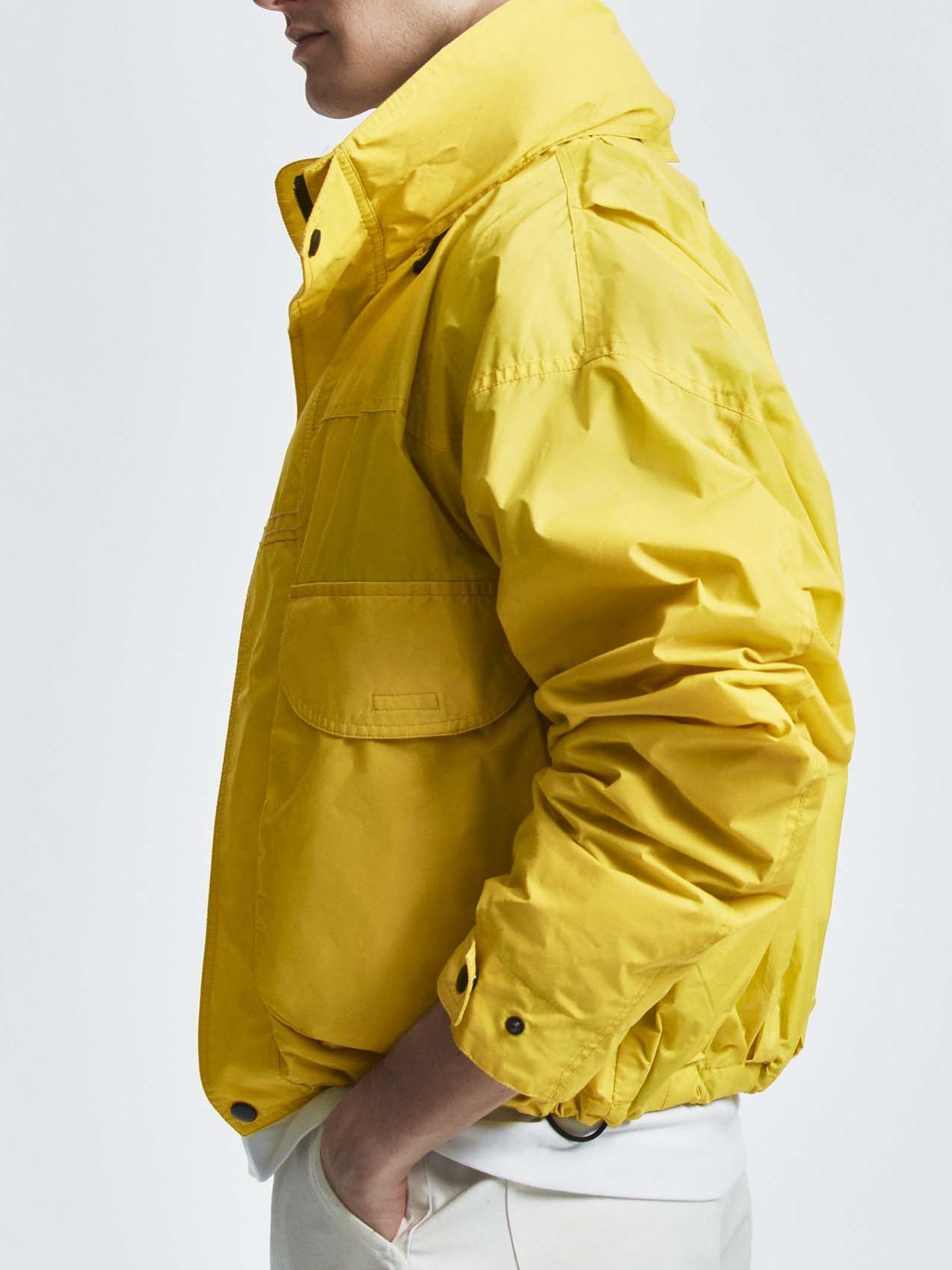
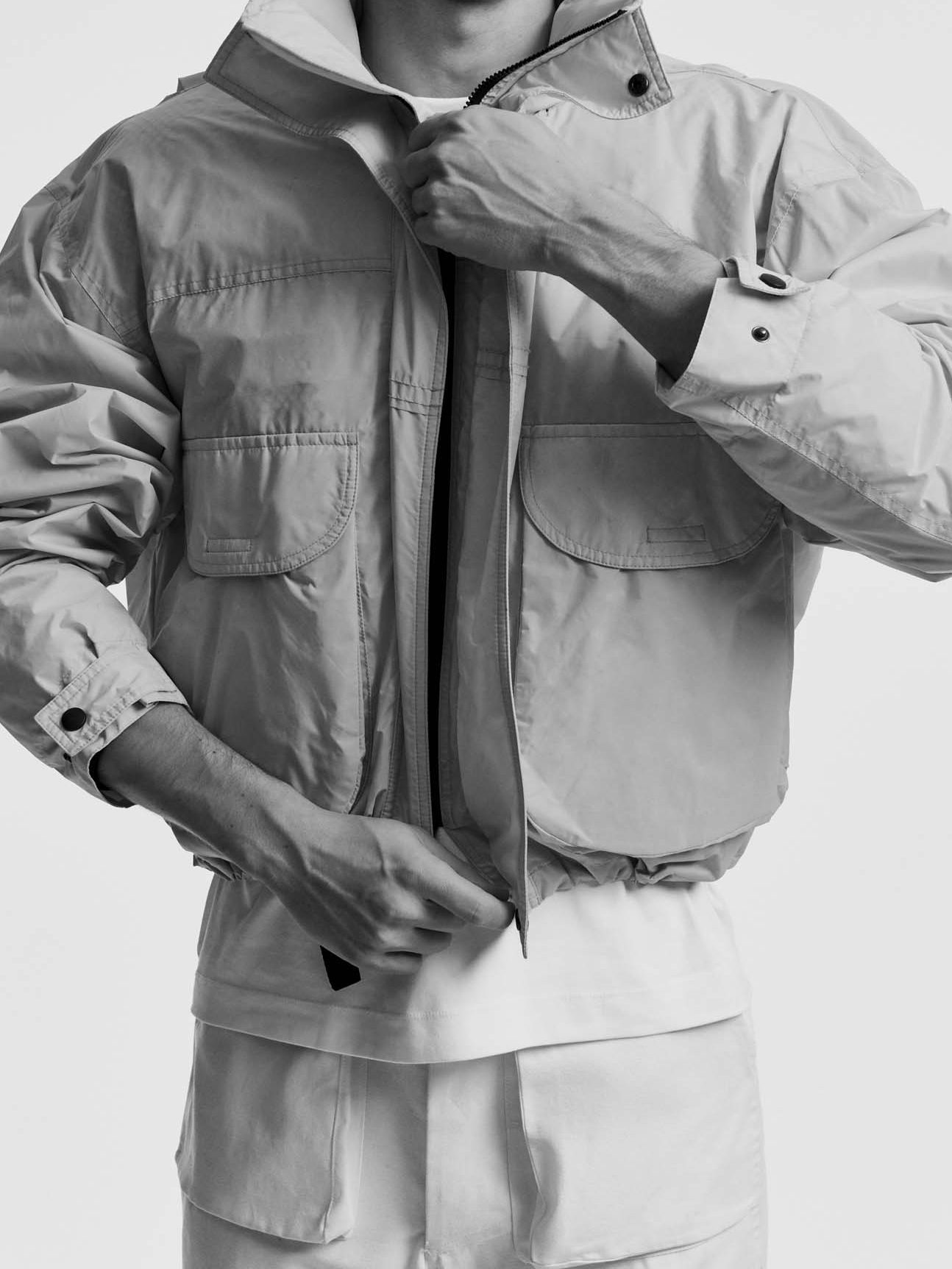
“A lot of my work stems from everyday life and what I call ‘the times in between’,” he says. “There’s a lack of clothes that you want to put on, that will get you through your day and stand the test of time. Being able to have comfort and functionality is almost a luxury.” This combination is evident in the brand’s cashmere-and-merino sweaters and its double-breasted jackets, which walk the line between classic and modern. “A lot of things have been made before so my approach has been to refine and elevate.”
connor-mcknight.com
10/25
Nikos Koulis
Greece
Jewellery designer Nikos Koulis has opened a new Athens flagship. “After a decade in the Kolonaki district, which has a bustling mix of shops, cafés and restaurants, relocating to Voukourestiou Street was both a strategic choice and an organic evolution,” says Koulis. The new space, designed with London studio Bureau de Change, reflects Koulis’s ambitions to work with design and jewellery connoisseurs; labels from Hermès to Prada and Cartier have long been based in the area.


Koulis has built an international reputation for his unusual stones and art deco designs. The new flagship reflects his flair for contrast and artful interiors. “My jewellery caters to individuals who don’t feel the need to conform,” he says. “They know exactly what they want.”
nikoskoulis.com
11/25
Ven Space
USA
When Chris Green opened his multi-brand menswear boutique, Ven Space, in Brooklyn’s Carroll Gardens last year, he knew exactly what kind of business he wanted to run: an intimate neighbourhood shop with a steadfast loyalty to the bricks-and-mortar experience. Ven Space, which stocks a thoughtfully selected range of luxury clothing, shoes and accessories, doesn’t offer online shopping; if you want access to its meticulous curation, you have to come in. Green is on the floor every day. “Retail has drifted away from the idea of the shopkeeper,” he says. Ven Space (ven means “friend” in Danish) is open to the public from Wednesday to Sunday, while Mondays and Tuesdays are dedicated to private appointments.


On the shop floor, you’ll find a mix of brands, such as Japan-based Auralee or Dutch label Camiel Fortgens. T-shirts from Our Legacy sit beside Dries van Noten button-downs and even the shapely ceramics dotted around the boutique are for sale. Green, who is a longtime resident of Carroll Gardens, hand-picks every item, guided by his personal taste rather than seasonal trends. “I don’t want to be everything for everybody,” he says. “If you try, you lose the strength of your idea and your point of view. So I started by thinking about what I would actually want to wear.” His commitment has paid off. Despite opening just six months ago, Ven Space has already gained a devoted following, with regular customers popping in to snag new launches. “We pride ourselves on getting to know the people coming through the door,” says Green.
ven.space
12/25
Q&A: Tolu Coker
UK

Coker is a British-Nigerian fashion designer who founded her brand in 2021. She draws inspiration from her Yoruba heritage while injecting a modern sensibility into tailoring. She is also among the semi-finalists for this year’s prestigious LVMH Prize. Here, she talks about the importance of putting emotion back into design and the art of tailoring.
What is your design process?
I lead with feeling. My research always starts with conversations and imagery but when I start creating, it becomes more instinctive. It’s similar to being in a state of meditation. I also consider the notion of value: the way we value clothes goes beyond the item itself. In fashion, this is usually equated to a high price point to create aspiration but there are also other factors to consider, such as our emotional connections to clothing. These are my starting points.
How do you approach tailoring?
Continuous fittings play a big part. I’m always thinking about form and how the body feels when it’s enclosed in something. When you’re designing it can be so conceptual that you forget that it’s about dressing people. Your process isn’t more important than the process of someone stepping into the garment.
What are your tricks of the trade?
There are zips or exaggerated sleeves that I often turn to. I’m always adding pockets to dresses. I love comfort and functionality.
tolucoker.uk

13/25
Bambou Roger-Kwong
France
“It’s all about the shape of a garment,” says Bambou Roger-Kwong, a former stylist who founded her eponymous label in 2022 in Paris. Her attention to detail, background in styling and mixed heritage (she was born in Paris to a Chinese mother and French father) inform her collections, which feature seemingly simple designs that can easily be transformed with a knot or a strategically placed button.
“When you look at a piece on the hanger it can seem basic but it’s all about the styling,” says Roger-Kwong, pointing to her signature pieces such as apron dresses and button-embellished wrap skirts.
They are all produced in a family-run factory in Portugal, using deadstock fabrics sourced from LVMH-owned facilities. Ceramic accessories, handcrafted at the designer’s Paris studio, add the perfect finishing touches.
bambourogerkwong.com

14/25
Gajiroc
South Korea
In the world of luxury menswear, influence is quickly shifting from large-scale runways and globally recognisable names to under-the-radar specialists, technicians and craft obsessives. At Paris Fashion Week men’s, the most exciting moments took place away from the catwalks and celebrity front rows and inside intimate, often hard-to-find showrooms. South Korean designer Gi Tae Hong’s set-up in the 10th arrondissement, was one such space.
In a compact, serene apartment, Hong invited editors and buyers to discover his chocolate-brown alpaca coats, left undyed to be extra soft; mud-dyed sweatshirts, handcrafted on Japan’s Amami island; and cashmere knits from Italy. “I aim for the best quality and best fabrics,” says the designer, who previously worked with San Francisco-based Evan Kinori.
When he moved back home, he wanted to create an antidote to the mass-produced, commercial lines that had taken over South Korea. He dedicated his early training to craft, learning everything from shoemaking to pattern cutting and shirtmaking. “When I can’t find someone to craft my designs, I just do it myself,” he says.
gajiroc.com
15/25
Convenience Wear
Japan
Convenience stores, known as konbini, are an indispensable part of life in Japan, though they have mostly shunned fashion. This changed when Family Mart, the country’s second-largest chain in the sector, teamed up with designer Hiromichi Ochiai to launch Convenience Wear. The clothing line started small but rarely has a brand taken off so fast: its unisex crew socks flew off the shelves, with 1.4 million pairs being sold in a year. “In Japan, the konbini represents a feeling of stability and safety so I wanted to express this very clean image,” says Ochiai, who worked with graphic designer Takahiro Yasuda and his team Cekai on the line’s sleek branding. “In many ways, the konbini is a difficult environment for selling clothes,” he says. “There’s so much going on and the 24-hour lighting is tough.” That’s why his designs focus on simplicity and functionality. You can now buy everything from Convenience Wear T-shirts to sandals and handkerchiefs.
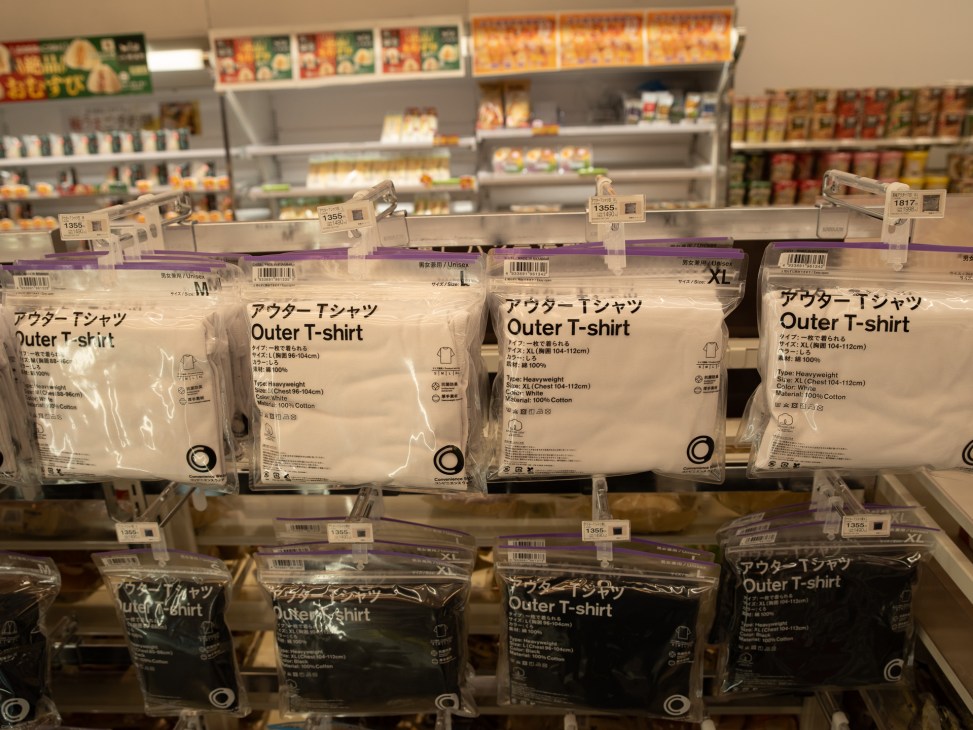
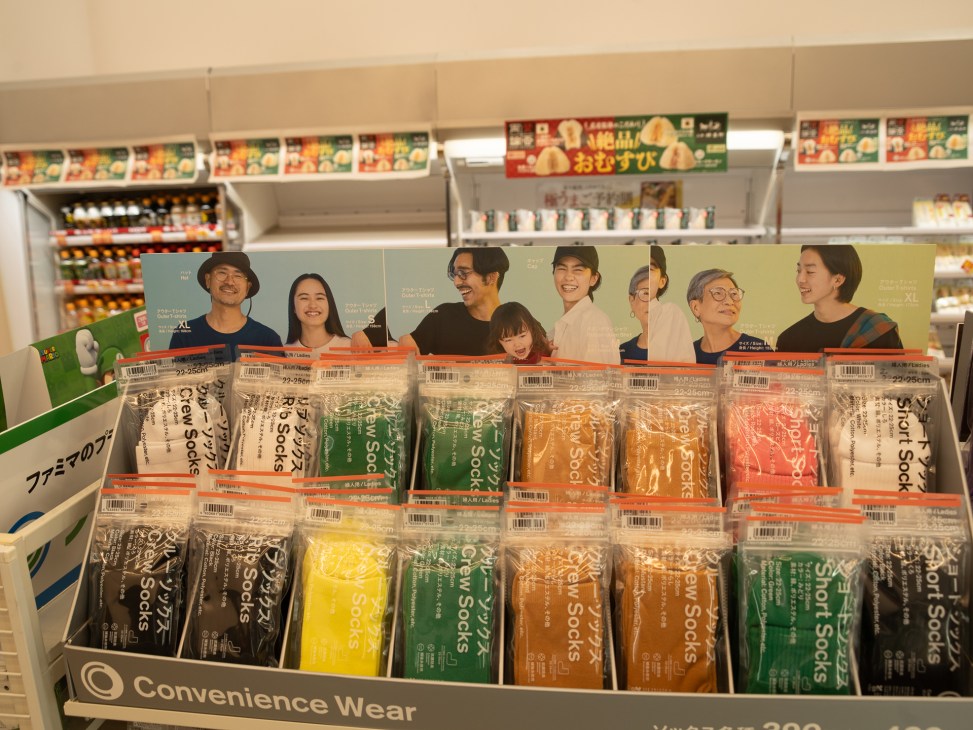
Ochiai, who has his own label, Facetasm, is already thinking of new categories, such as trainers. “We want products to be simple enough for people of all ages, occupations and nationalities to understand immediately,” he says. With Nigo, Kenzo’s celebrated artistic director, now also on board as the wider company’s creative director, expect to see more product collaborations, refreshed shop interiors and bold marketing campaigns from Family Mart.
family.co.jp
16/25
Lafaurie
France


Lafaurie is a study in Parisian style. “It’s the art of standing out without going over the top,” says Théo Lafaurie, who co-owns the menswear label with his brother, Pablo. The brothers inherited the label from their father and have continued to build on its commitment to high-quality manufacturing by working with the family’s network of artisans and manufacturers in Europe. They have finessed relaxed blazers and trousers that provide an elegant alternative to formal tailoring. “We like to play with dress codes and provide suits that aren’t too tailored or formal,” says Théo.
lafaurieparis.com

17/25
Saint Laurent
France
Even amid the slowdown in the luxury market, the desirability of Saint Laurent’s clothing hasn’t waned, mostly thanks to the way that the brand’s creative director, Anthony Vaccarello, constantly reinvents its codes. For spring he recreated the tailored uniform of founder Yves Saint Laurent: double-breasted blazers with broad shoulders and pleated trousers, paired with patterned ties and black-framed glasses. It’s a simple yet effective formula that makes a compelling case for a sharp jacket.
ysl.com
18/25
Watches
Global
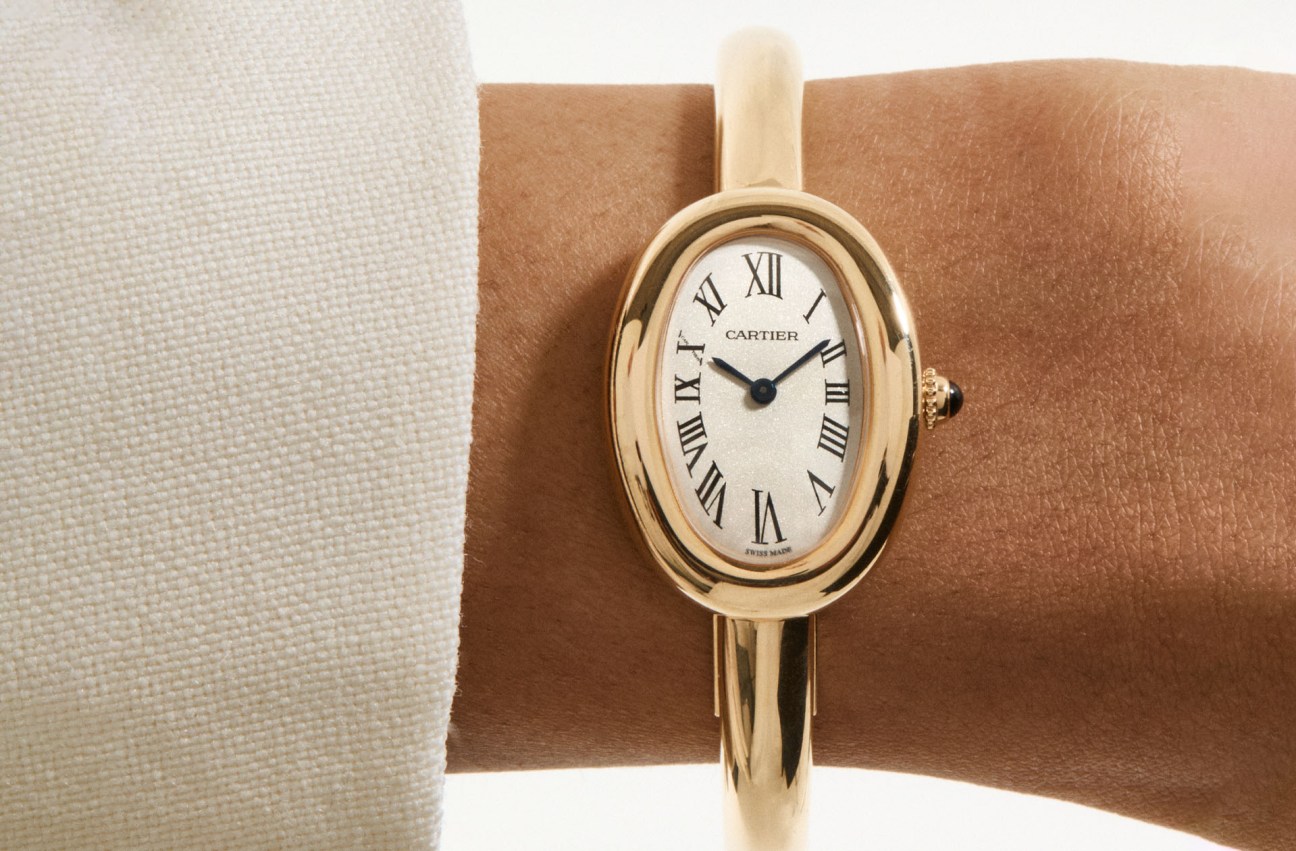
Bold or understated? There’s something for everyone in this timely spring selection of watches. Cartier’s Baignoire, with its sleek oval face, is a modern-day classic, while Longines’ Mini Dolcevita features an alligator strap that will bring a touch of restrained elegance to your wrist.
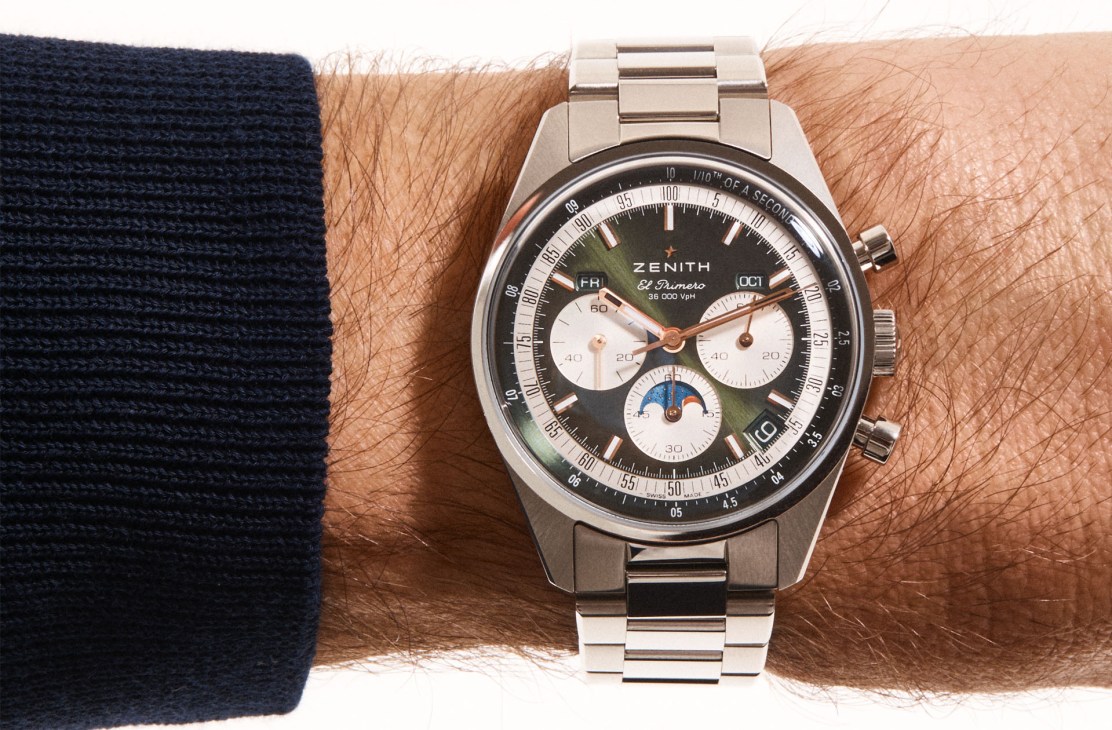
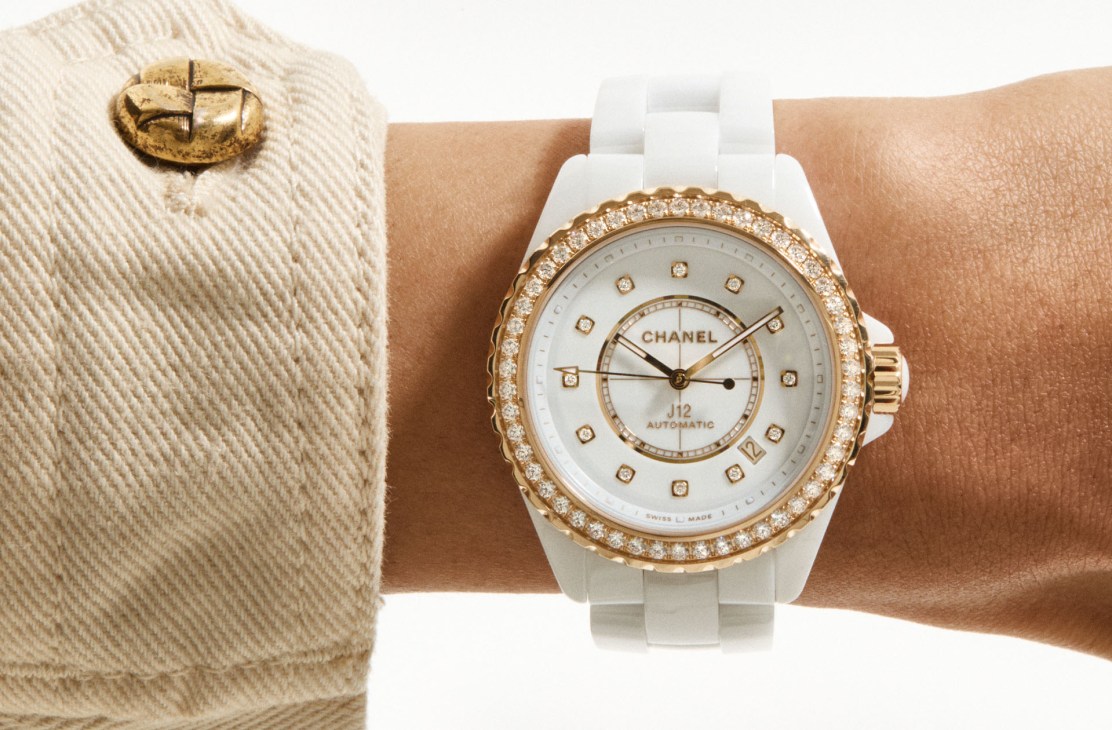
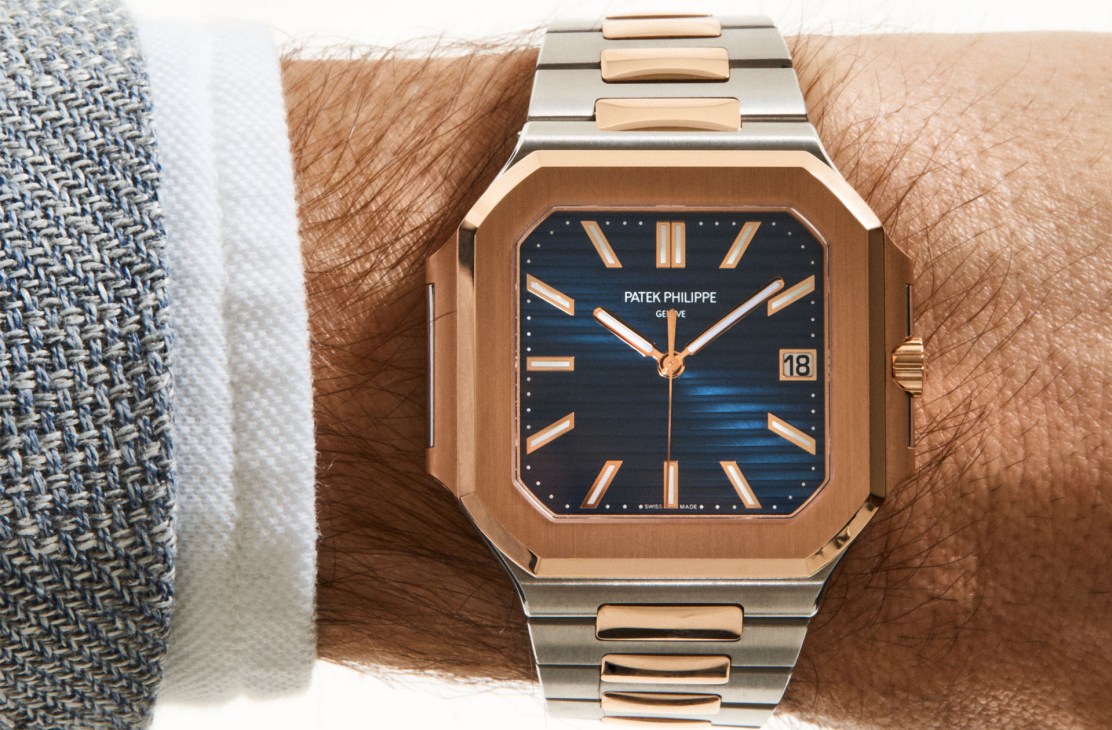
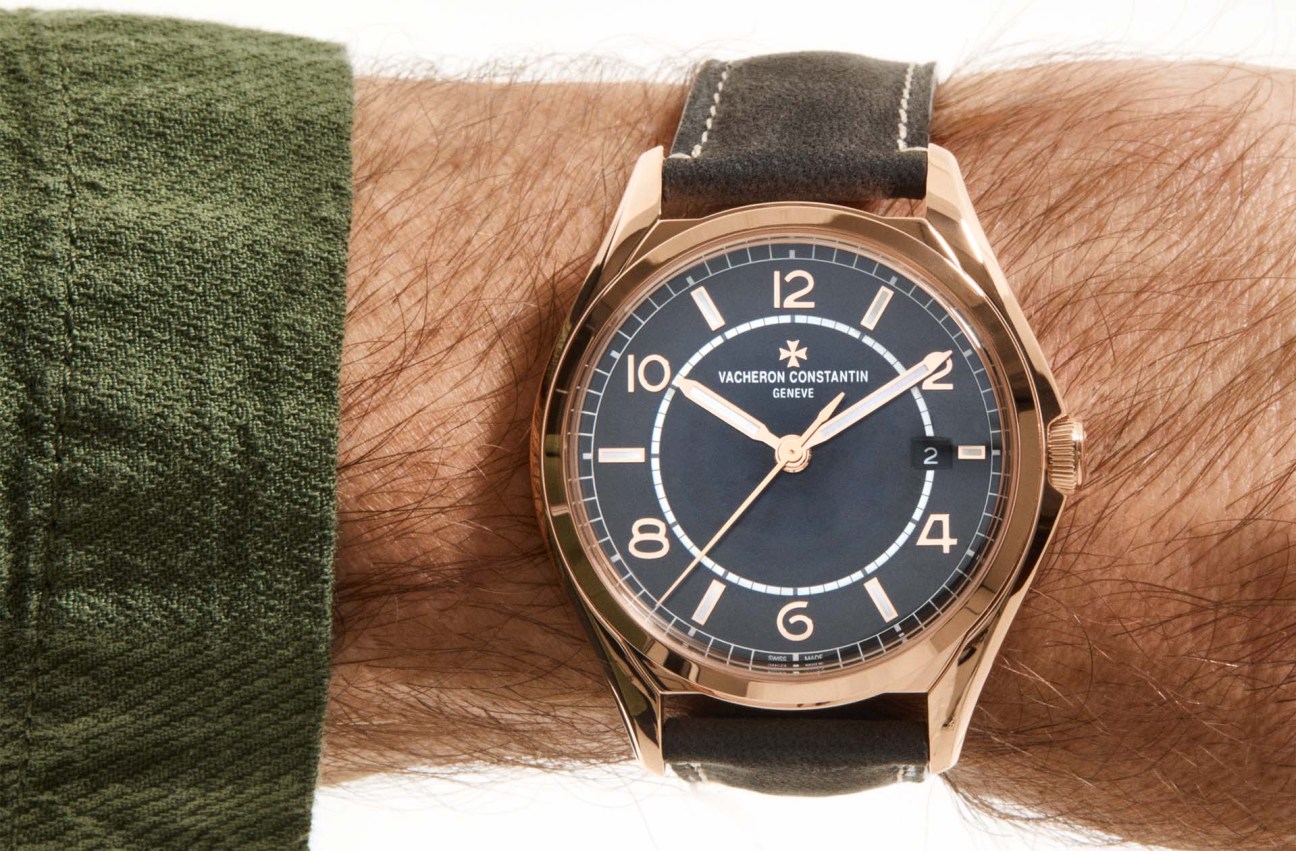
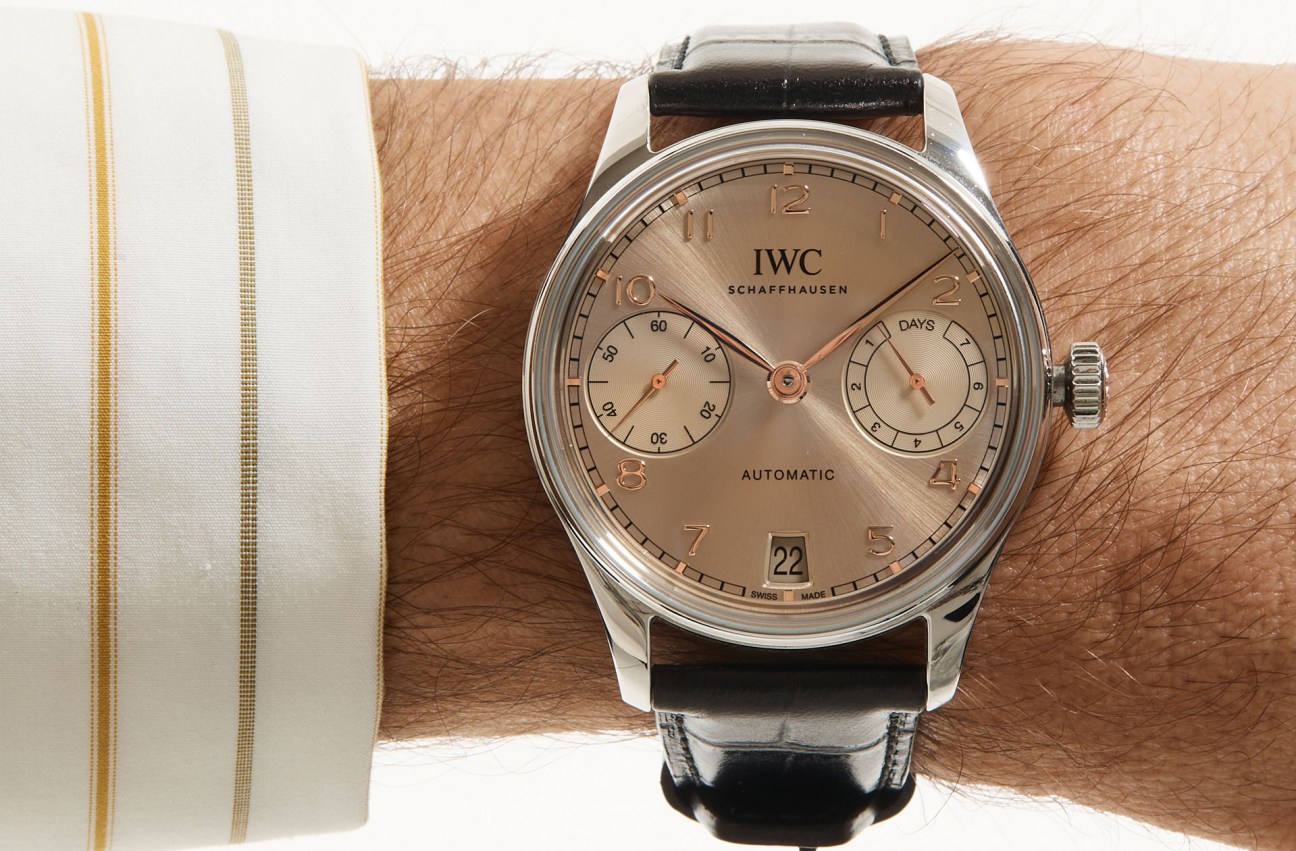
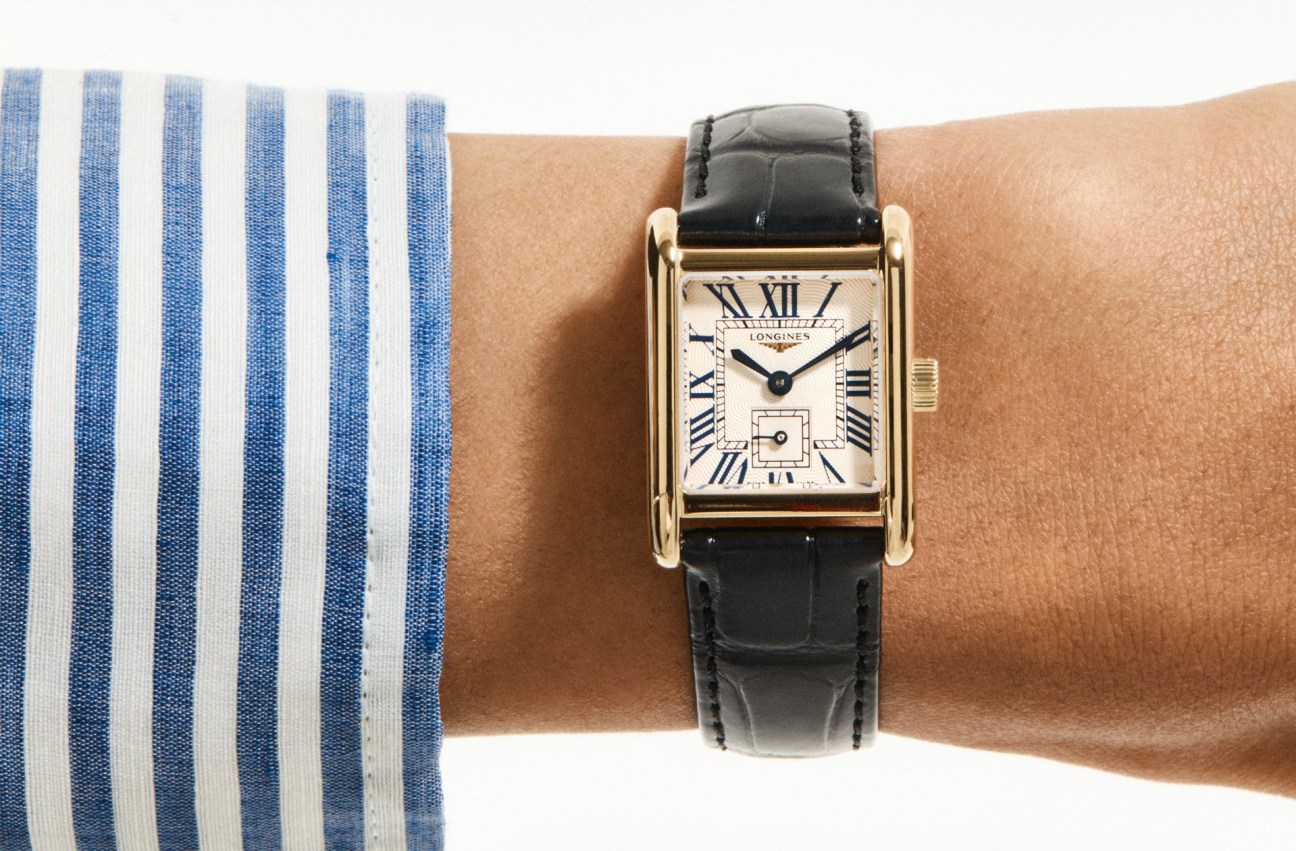
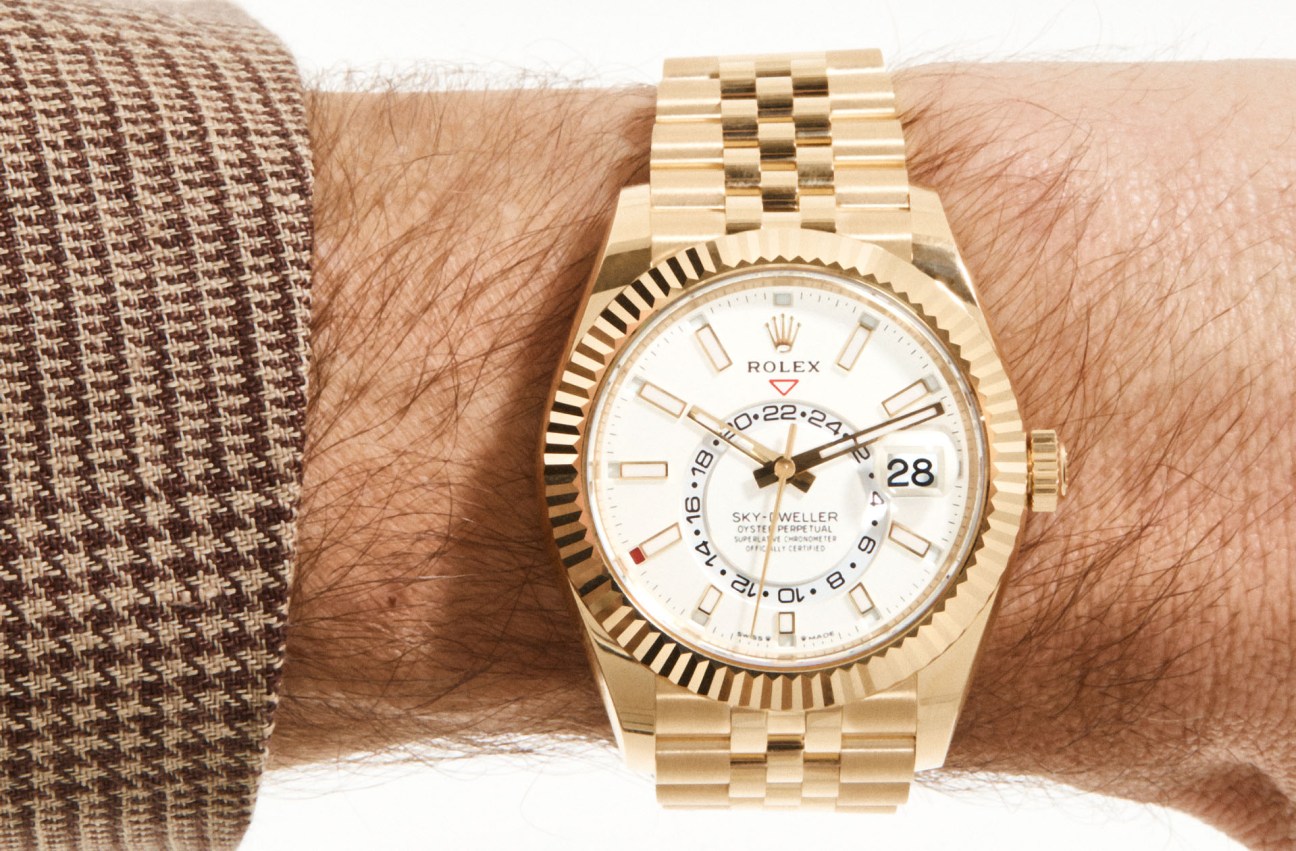
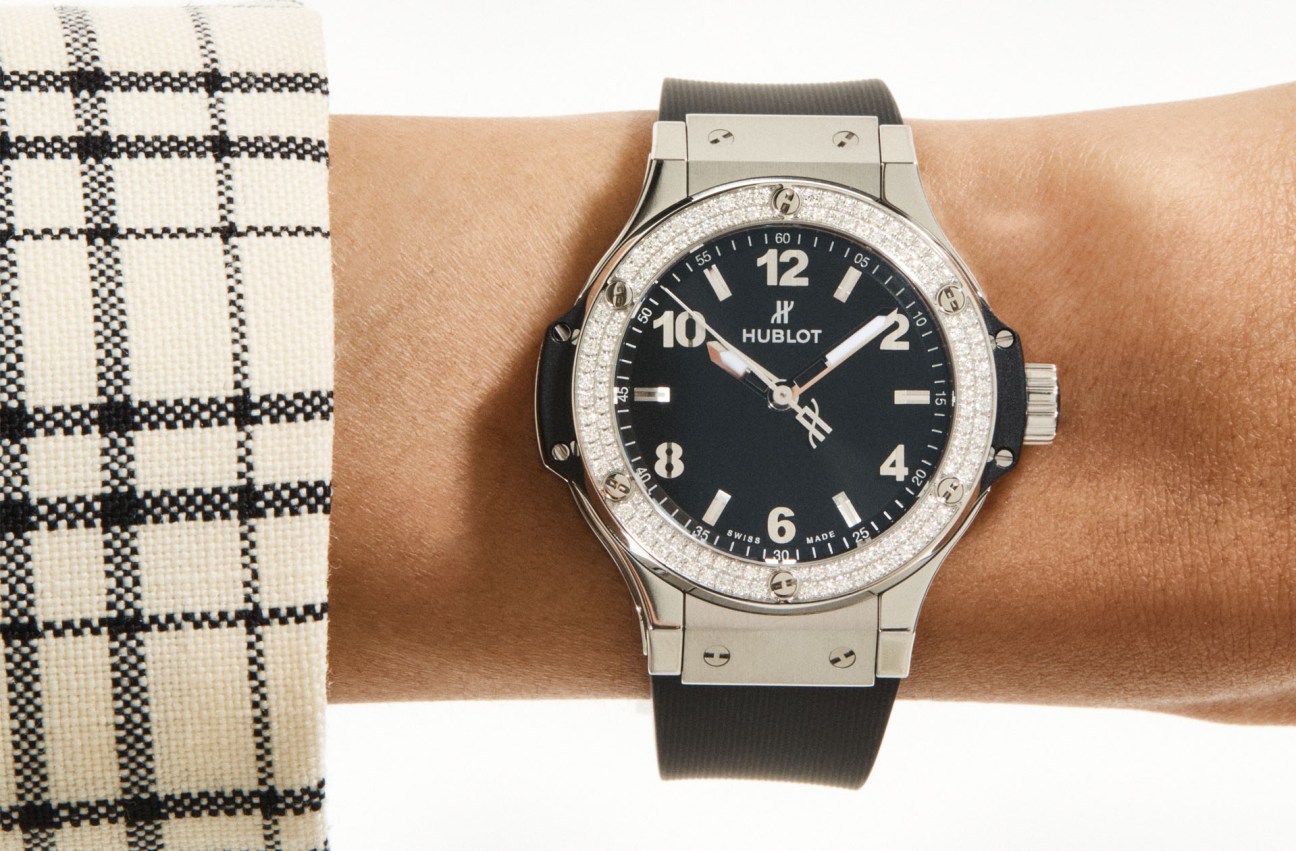
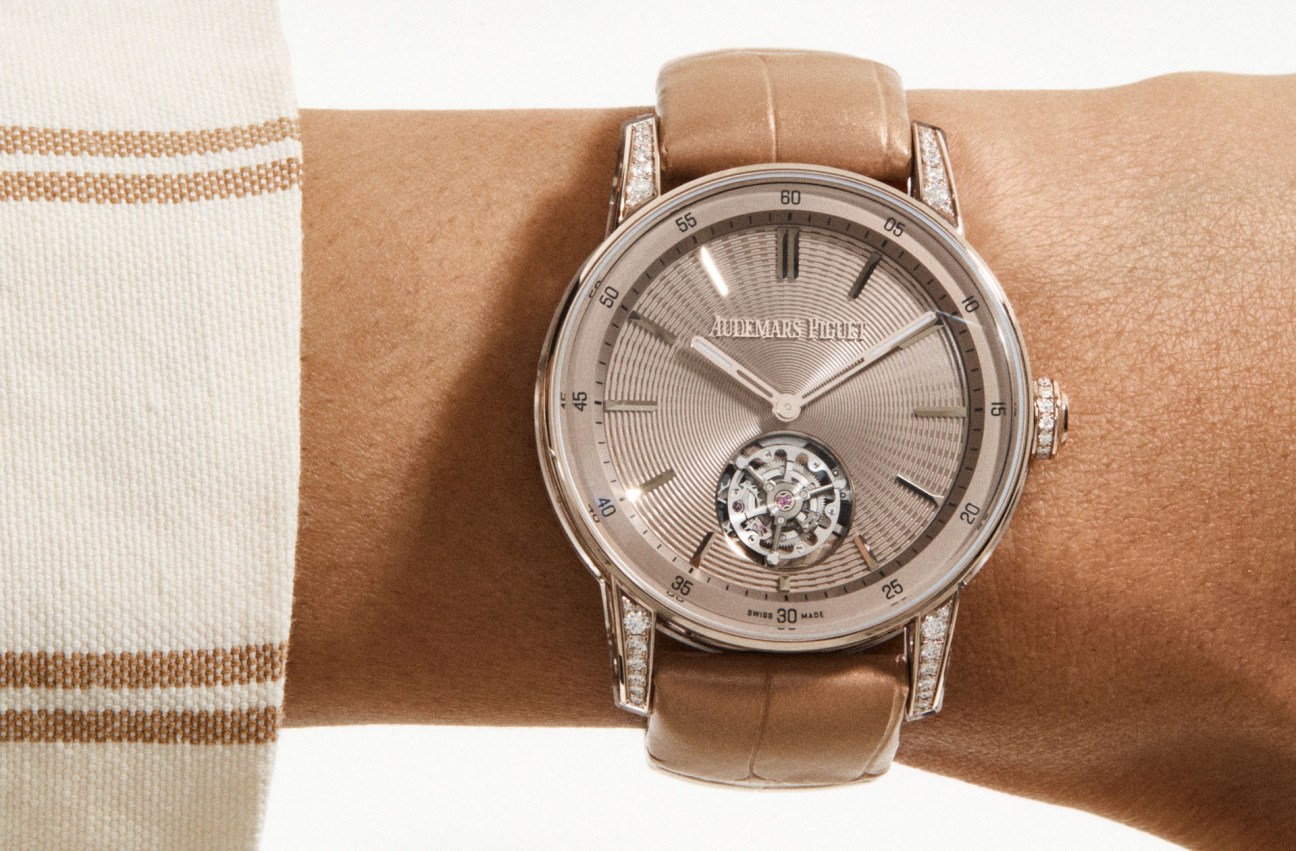
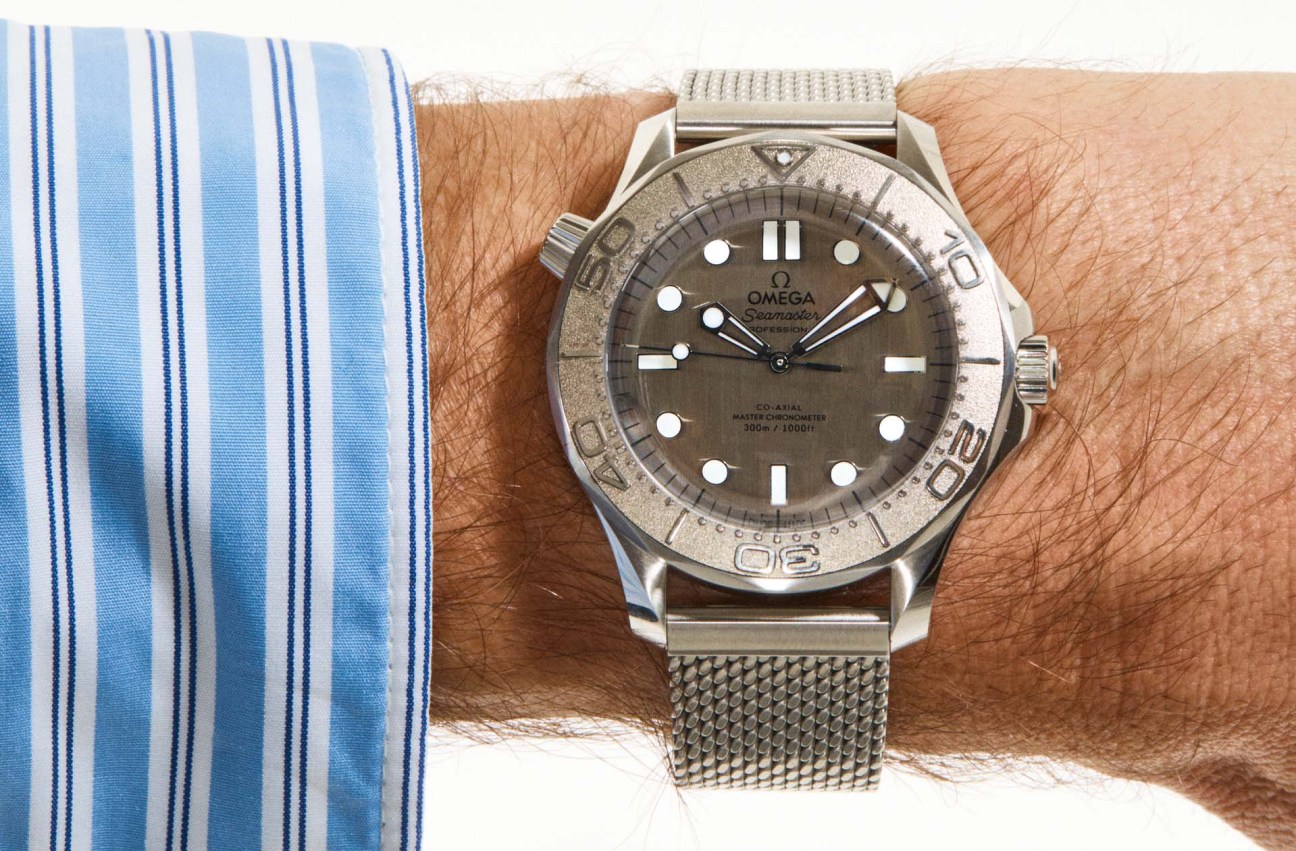
If you want diamonds, look to Chanel’s J12 Diamond Bezel watch, which marries highly resistant ceramic with precious stones. This dazzling combination can also be seen in Hublot’s aptly named Big Bang watch, which contrasts a steel base with diamond details.
cartier.com; longines.com; chanel.com; hublot.com
19/25
Neighbour
Canada

When Saager Dilawri founded multi-brand boutique Neighbour in Vancouver’s Gastown district in 2011, he sought to create a sartorial hub for people who were interested in craftsmanship without the pretension. “New York shops felt a little too cool for school,” he tells Monocle. “I wanted an approachable space, where someone could come in to talk to me about clothes and I could learn from them too.” At the time, there were only a handful of menswear boutiques in the area, focusing on streetwear or premium luxury. “I have always been more interested in Scandinavian design so I felt that I could offer [customers] a different option,” he adds. Since then, he has introduced numerous brands to Canada, including Swedish stalwart Our Legacy.
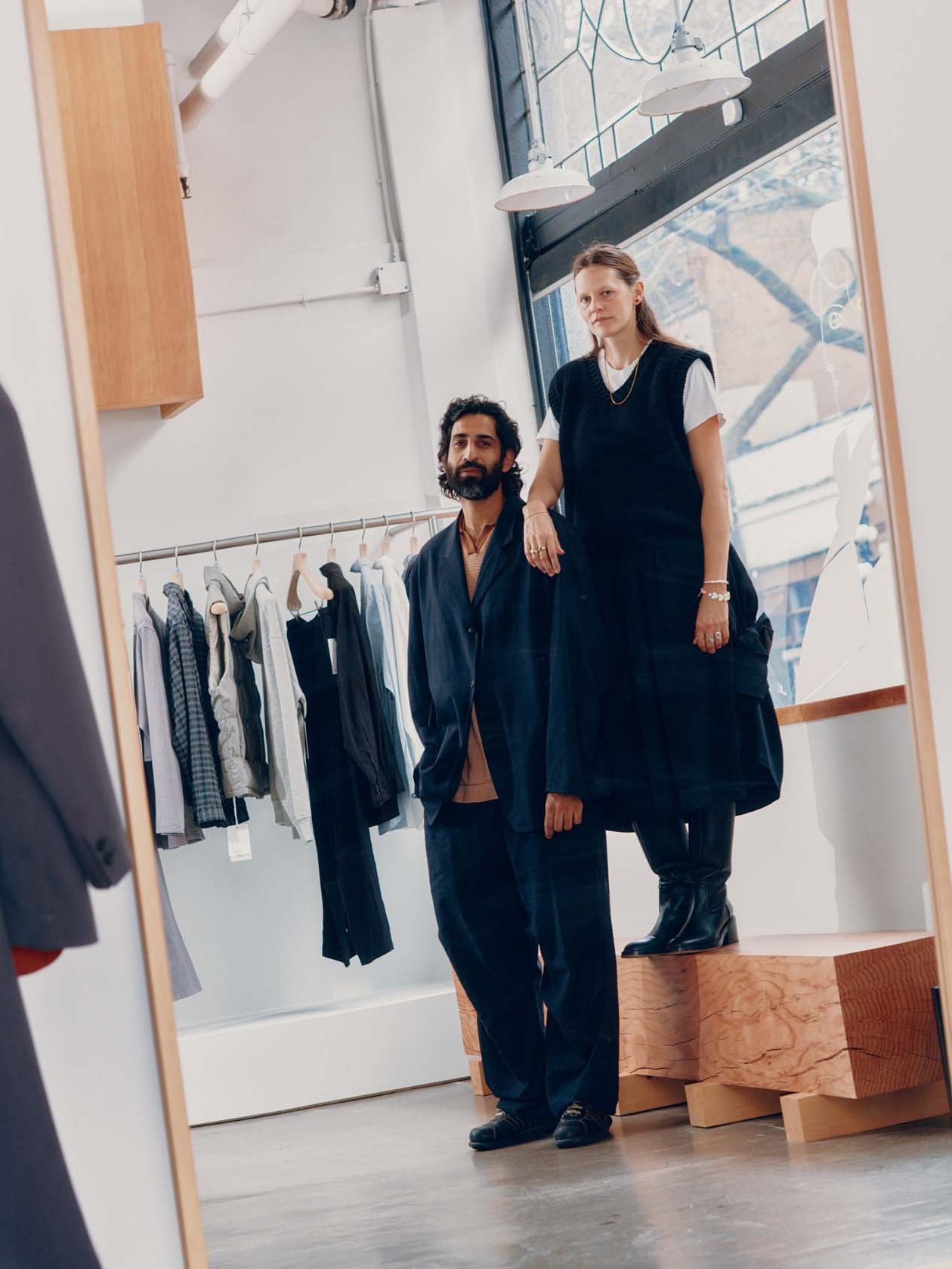
His love for high-quality fabrics also led him to Japan, where he forged partnerships with labels such as Auralee and Comoli. For a business that operates locally, it has a decidedly global perspective – a reflection of Vancouver’s diverse make-up.
His online shop, often featuring atmospheric imagery from Tokyo’s yokocho alleys, has become a point of reference for menswear veterans across the globe. “When we started, most brands didn’t have an online shop, which gave us an opportunity,” he says. This combination of storytelling and craft is what keeps customers returning to Neighbour. “People want something different,” he says. “They want to know about the story behind the brand. That’s not going to go away.”
shopneighbour.com

20/25
Gucci
Italy
Italian label Gucci might be going through a period of transition following the exit of creative director Sabato de Sarno in February but its heritage continues to win over luxury audiences. This spring the brand is returning the spotlight to its Bamboo bag, a house classic that dates back to 1947. It is being reissued in a variety of new shades, from classic black and ancora red to a seasonally appropriate green.
Silk scarves have also played a pivotal role in Gucci’s history. In the 1960s, Rodolfo Gucci commissioned the Flora silk scarf as a gift for actress Grace Kelly.
The house’s new scarf collection, The Art of Silk, features illustrations by nine artists. Take a leaf out of Kelly’s book and tie one of the scarves loosely around your neck, pairing it with a white shirt.
gucci.com

21/25
That’s So Armani
Italy
Italian fashion house Armani is enjoying something of a renaissance. The brand has recently celebrated the opening of its New York flagship, the renovation of its Via Manzoni outpost in Milan and a collaboration with US label Kith. Now a new line called That’s So Armani has made its debut. Featuring sleek, mostly monochromatic tailoring cut from high-quality materials such as vicuña wool and cashmere, the collection includes double-breasted blazers, trench coats and knitwear that will bring a touch of Milanese elegance to any wardrobe.
armani.com

22/25
Chloé
France
German designer Chemena Kamali has breathed new life into Chloé, reinvigorating the brand with the free spirit and relaxed elegance that its founder, Gaby Aghion, was known for. The brand’s spring/summer collection consists of a range of easygoing crochet sets, maxi dresses and lightweight trench coats, which are paired with shell-shaped jewels and charming pillbox hats. These are looks to relax in while embracing carefree spring days.
chloe.com
23/25
KLH
Germany


When shoemaker Korbinian Ludwig Hess opened a workshop on Berlin’s leafy Hohenzollernplatz in 2017, he started hanging the shoe lasts that he made for his clients on the wall. Some eight years later more than 200 sets line three sides of the atelier. They represent the well-heeled clientele that come to klh for bespoke dress shoes, Chelsea boots and ballerina flats, all of which are made using old-school techniques and require a six month wait. “It’s more about quality and aesthetics than about tradition,” says Hess, who honed his craft by working for Austrian shoemaker Rudolf Scheer & Söhne. “Machines just can’t do things as well as we do.” Hess can make a welted Viennese dress shoe as well as anyone but has also carved out a niche with boots and loafers that have slightly pitched, Western-style heels. He wants to recreate the feeling that he had when he bought his first pair of cowboy boots at the age of 16. “I remember putting them on and suddenly walking differently,” he says. “[The right shoes] can change who you are.”
klh-massschuhe.com
24/25
Cristaseya
France
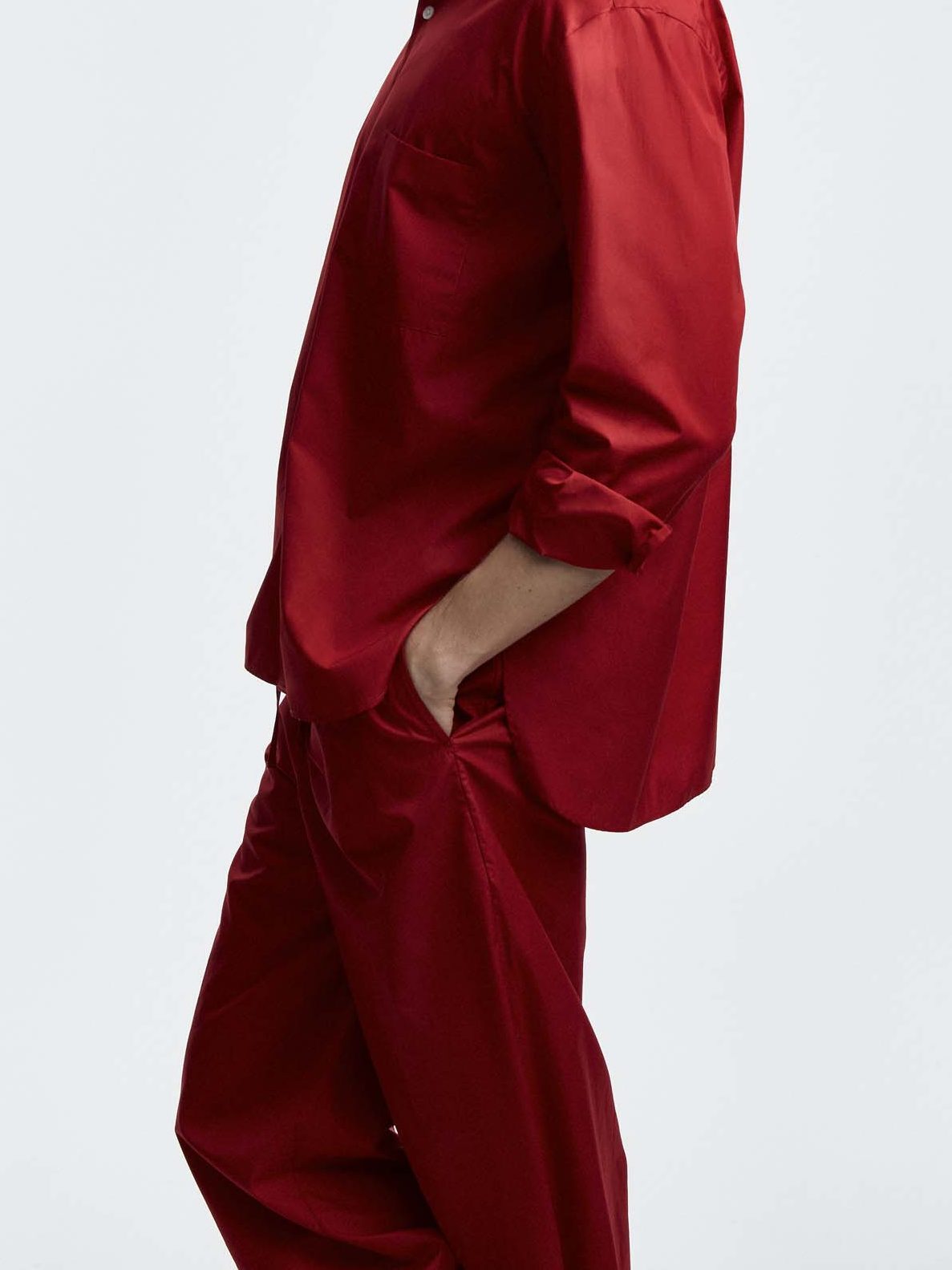
Cristina Casini always asks herself what she would want to buy if she were a customer at Cristaseya, the Paris-based ready-to-wear label that she founded in 2013. “When I started I looked at everything that I owned for the cut or fabric,” she says. “Then I set out to make pieces that you could wear all of the time – clothes that would make you feel powerful because they were both elegant and comfortable.” More than a decade later, this remains an accurate way of describing the brand’s largely unisex clothing, which consists of oversized shirts, tapered trousers and tailored jackets.
To highlight the timelessness of the label’s designs, Casini works on only two editions per year, which feature a mix of new releases and reissues of existing designs. “Brands have to change so fast these days,” she says.
“Our customers feel tired of the overconsumption of fashion today. We prefer to focus on quality.”
The best way to shop for limited-edition Cristaseya designs is by appointment at the brand’s showroom-cum-boutique in Paris’s 9th arrondissement. It’s here, at the label’s industrial chic home, that Casini’s flair for intimate shopping and craftmanship becomes most evident. Signature fabrics, from Japanese washi-wool blends and denim from Marche to knits from Casini’s mother’s atelier in Reggio Emilia, can only be fully appreciated when seen in person.
cristaseya.co

25/25
Bottega Veneta
Italy
Bottega Veneta’s second collection of fine jewellery builds on last year’s debut. We have our eye on the label’s Alchemy set. The necklace holds 380 diamonds, as well as 19 black onyx and 19 green agate stones. It is handcrafted over a period of 15 days by the house’s expert artisans in Vicenza.
bottegaveneta.com
Europe’s draft debate: Should the continent reintroduce conscription?
The speed with which the Trump administration has withdrawn US security commitments to Europe, at least verbally, has been a wake-up call. But even before Trump’s re-election, Russia’s full-scale invasion of Ukraine had prompted European nations to boost defence spending, acquire advanced weaponry and enhance industrial production. Yet one pressing challenge remains now as then: a lack of numbers. Ukraine’s struggles to maintain troop levels in a prolonged conflict have highlighted Europe’s recruitment issues. Nato planners currently assume that, in the event of a Russian attack on a European member and the subsequent activation of Article 5, the 100,000 US soldiers stationed on the continent would be swiftly reinforced by up to 200,000 more. Without this commitment, Europe might require an extra 300,000 troops under unified command as well as a short-term annual defence spending increase of at least €250bn to deter Russian aggression. But how will they get those troops?
Many European countries abandoned mandatory military service following the end of the Cold War. In recent years, debates around a return to conscription have reignited across the Old Continent. Since the start of Trump 2.0, these have increased in fervour. Supporters argue it could help to build military reserves, strengthen civil-military relations and enhance resilience in times of crisis. Northern and Eastern European countries are often cited as models, as many Baltic and Nordic nations retained some form of mandatory service after the USSR collapsed or reintroduced it in response to the growing Russian threat. But despite its potential benefits, conscription is far from a universal solution. Each country must navigate distinct political, demographic and strategic circumstances.
For democracies, public sentiment remains a hurdle. In 2024 a Gallup poll revealed that only 32 per cent of EU citizens would be willing to fight for their country in the event of war. Opposition was strongest among younger age groups: 59 per cent of Germans aged 18 to 29 rejected the idea in a poll commissioned by the magazine Stern. According to a YouGov survey from 2024, resistance is particularly high in the UK, with a third of respondents aged 18 to 40 stating that they would refuse military service even in the event of invasion. Much of this reflects the problem of “strategic cacophony”. Public attitudes towards conscription are strongly influenced by perceptions of security: the more severe the threat, the greater the public support. In Latvia and Estonia, for instance, initial resistance to conscription shifted significantly after February 2022. The former has now reintroduced it while the latter has widened compulsory military service.
On the other hand, some Nato military officials have voiced apprehension about the effectiveness of large-scale conscription programmes. These concerns stem primarily from the challenge of properly integrating conscripts into professional military outfits, which have had access to superior training and equipment. While these issues have not deterred a few European countries, such as Croatia and Serbia, from pushing ahead with programmes reinstating some form of mandatory service, others such as Germany have proposed alternative policies designed to address the manpower issue. Some are straightforward, such as making professional military service more attractive through financial and other incentives. Others are more innovative, including efforts to expand voluntary service and integrate reservists into roles beyond conventional operations, such as critical infrastructure protection and maintenance, or cybersecurity. Many of these non-mandatory options can also be seen as compromises. Politicians of different stripes are reluctant to push their populations into “prewar mode”, fearing how they might react.
Ultimately, whichever path a given European country chooses to pursue, it must do so with the understanding that the US security guarantee can no longer be taken for granted. Conscription is merely one of the means to an end; what is clear is that ensuring long-term security will require a much broader societal shift. As Ukraine has demonstrated – and many Europeans are yet to realise – national defence is not solely the responsibility of professional armies. In times of existential threat, citizens will be required to protect and sustain the war effort.
Grgic is Monocle’s security correspondent.
Why are we walking so quickly?
We live in cities, at least in part, to go fast. In his 1903 essay “The Metropolis and Mental Life”, German sociologist Georg Simmel wrote that cities confront us with “the swift and continuous shift of external and internal stimuli”. He suggested that, in contrast to the “slower, more habitual, more smoothly flowing rhythm” of rural life, urban environments drill into us the rapid “tempo and multiplicity of economic, occupational and social life”. So it’s no surprise that people in cities such as New York tend to walk at a fast clip. But here’s the thing: those brisk pedestrians have been getting faster. That’s one of the findings in a recent working paper by a group that includes economist Edward Glaeser and architect Carlo Ratti, published by the US National Bureau of Economic Research. What might seem like a minor data point about people’s perambulations is actually suggestive of a host of changes, not just in New York or in cities themselves but in the wider culture.
The researchers took a series of time-lapse films of various city streets, made by urbanist William “Holly” Whyte in 1980. He had a penchant for using the technique of direct observation to understand how people in cities behave, with the goal of improving those places. What he learned informed the design of innumerable successful urban spaces, including New York’s Bryant Park. The researchers then compared a series of videos made in the same spots in 2010 – from a corner of Bryant Park to Boston’s Downtown Crossing – with those by Whyte. Because the process is hugely time-consuming, the researchers used AI to conduct the analysis.

What they found was striking. Thirty years on, urban pedestrians were walking, on average, 15 per cent more quickly. Fewer people could also be described as “lingering”, from 43 per cent in 1980 to 26 per cent in 2010. There was also a decline in people forming groups on the street – either preplanned meetings or spontaneous encounters. “People are now spending less time in public spaces and moving through them at a faster pace,” the researchers concluded.
In terms of New York, the speed increase was arguably foreseeable, based on some broad findings about how people walk. A 1976 paper published in Nature journal found that the size of a place’s population had the strongest influence on residents’ walking speeds. The researchers argued that crowding resulted in “increased levels of personal stimulation”, which compelled people to walk faster to reduce it. And what happened in New York over the 30-year period covered by the pedestrian study? The population grew by some 15.6 per cent – the same percentage increase, curiously, as pedestrians’ average speeds.
In a 1999 study, psychologist Robert Levine highlighted another key factor in people’s “pace of life”: money. The richer a city was, the faster its residents would walk. “Faster-paced places will tend to be more economically productive,” wrote Levine, “which then raises the value of time and, subsequently, the pace of life.” In Manhattan, personal income per capita increased nearly fivefold between 1980 and 2010. By that measure, it’s a wonder that people on Sixth Avenue haven’t broken into an outright sprint.
The walking-speed finding correlates with the widespread sense that life is moving ever faster. In his 2013 book Social Acceleration, German sociologist Hartmut Rosa noted that it was easy to see how, in sheer technological terms, things had sped up. “We produce, communicate and transport not just faster but also more than previous epochs,” he wrote.
All of this, argued Rosa, was accompanied by a less legible but no less significant feeling of social acceleration, “a heightening of the tempo of life in the sense of a rise in the episodes of action and experience per unit of time” – think of all those notifications clogging up your phone. The result was that even though people statistically had more free time, they subjectively felt busier. And they were multitasking in new ways; the pedestrians of 1980s New York did not conduct phone calls or chat on apps such as Facetime while getting around. If people were walking more quickly, it might have had something to do with the sense that they were only keeping pace.
The question of whether an increase in pedestrian speed is a good or bad thing is complicated by the dual nature of pavements as both transit systems and human places. New York’s pavements, for example, offer a remarkably efficient, if sometimes overcrowded, way to move people. Whyte found that one congested pavement in Manhattan processed 38,000 people on foot in a 12-hour period. The adjacent parking lane, meanwhile, which consumed an equal amount of urban space, was taken up by 12 parked cars, carrying just 15 people.
So people moving faster means progress, right? Yet it’s hard not to think that something is being lost in this social acceleration. Urbanist Jane Jacobs once compared city pavements to a ballet – not a “simple-minded precision dance with everyone kicking up at the same time, twirling in unison and bowing off en masse” but a more intricate production in which “the individual dancers and ensembles all have distinctive parts, which miraculously reinforce each other and compose an orderly whole”.
Do we want our pavements to be sociable slow-food trattorias or ghost kitchens staffed by harried gig workers? “The ballet of the good city sidewalk,” wrote Jacobs, “never repeats itself from place to place and in any one place is always replete with new improvisation.”
Were we to film today’s pedestrians, some 15 years on from the National Bureau of Economic Research’s paper, one wonders what new patterns and improvisations would be revealed. Are we moving even faster or have we reached a kind of terminal velocity? Did lingering increase thanks to one of the enticing parklets that New York has carved out of road space? Did the death of newsstands, shoeshine stands and the like reduce the convivial friction of the street? Did the dining sheds that popped up at the height of the coronavirus pandemic enhance street life or simply get in the way? And how did the pandemic-related shifts in working arrangements affect the pavement ballet? If you’re only going to your Midtown office twice a week, do you even have time to meet a friend on a street corner for lunch or are you exchanging texts over a sad desk salad?
“Life moves pretty fast,” as the hero of John Hughes’ 1986 teen comedy Ferris Bueller’s Day Off put it. “If you don’t stop and look around once in a while, you could miss it.”
About the writer:
Vanderbilt is a journalist and regular Monocle contributor. He is the author of Traffic:Why We Drive the Way We Do and is currently working on a book about airports.
Sniffing out trouble: Why canines are still top dogs for airport security
Deep inside the sprawling Lackland Air Force base in San Antonio, Texas, is the headquarters of the Transportation Security Agency’s (TSA) Canine Training Center (CTC), where Monocle rolls up on a foggy day to see a man about a dog. Or, perhaps we should say, several dogs. If you have seen a working canine in a US airport, there is a good chance that it, as well as its handler, has spent as long as four months here, undergoing an intense training regimen. The 300-plus dogs that are trained here every year are split into two groups: those that search planes, vehicles and other stationary objects, and those that search people. Unlike the detector dogs employed by agencies such as US Customs and Border Protection, which can search out drugs and money, or “biosecurity” dogs in countries such as Australia, trained to look for undeclared agricultural items and invasive species, CTC dogs are looking for just one thing: explosives.
“We are the world’s largest canine explosive-detection programme,” says Zebulon Polasek, the director of the CTC, while standing in the facility’s lobby on a rug emblazoned with the US flag and a pack of dogs. TSA spokesperson Patricia Mancha adds that, for obvious reasons, the agency does not divulge which specific explosives its canines are trained to detect. But it can be assumed that these include widely used plastic explosives, such as C-4 and the chemical compound PETN, a favourite of Al-Qaeda, that featured in an abortive 2010 plot in which printer-toner cartridges bearing explosives were placed on board a ups cargo plane and two Qatar Airways flights. Nor does the agency publicise the details of any successful operations.

In one of the few glimpses behind the two-way mirror, TSA did report in 2023 that a canine team at Southwest Florida Airport flagged a potentially suspicious employee who, it turned out, had been at a shooting range and was bearing trace elements of gunpowder. But this is hardly at the higher end of the security-threat level that the agency deals with on a daily basis. The TSA was created as a response to the September 11 attacks as a way of centralising, and thereby improving, security at US airports. But as the threat has evolved, so too has the canine training. The 2001 “shoe bomber” and the 2009 “underwear bomber” episodes, for example, necessitated an expansion of focus. “The dogs were used to inanimate, stationary targets such as carry-on bags that didn’t move or breathe,” says James Kohlrenken, the CTC supervisory training instructor. “We came up with how to teach dogs that people are productive ‘items’ to search.”

Given that sniffer dogs will be working in busy, complex travel hubs, with a massive array of stimuli, verisimilitude is key. “It’s important to get them used to the things that they’re going to see out in the airport,” says Frank Duque, a training instructor. “If there’s something that’s going to bother them, we would rather see it early.” So CTC has a variety of simulation environments, including a large warehouse space resembling a baggage-claim area, replete with a conveyor belt; a room filled with two rows of worn airport seating; another that looks like an airport’s kerbside outdoor space; an airport parking lot; a transit rail car and even several decommissioned aeroplanes for onboard searches. And, since airports are filled with noise and people, CTC plays recordings of airport sounds (“I think that they’re on Spotify,” says Corvis Littleton, the CTC’s deputy director) and fills its spaces with people hired as temporary role players for the day. Monocle watches as a brown-and-white spotted German shorthaired pointer eagerly follows the trail of “passengers” pulling empty luggage as they make their way through an imaginary security check while a pair of fans helps to direct any odour the dog’s way. Why not just round up TSA personnel to be actors?
“The dogs are so smart that they can sense who works for the TSA,” says Mancha. Even the limited number of role players – and luggage – is a challenge, as the dogs will begin to pair certain odours with certain people and bags. At airports, with their multitude of people and smells, the “dogs don’t have the opportunity to generalise”, says CTC trainer Ryan Kelly. Every minute brings new people from new places, carrying new things. The dogs that graduate from the CTC – about 80 per cent of each class – will join one of the 1,000-strong K9 teams distributed across some 100 US transportation hubs, most of them airports. Occasionally, they will be dispatched to special events, such as the Super Bowl. At this year’s NFL showpiece, TSA teams inspected the 83,000-seat Caesars Superdome in New Orleans before kick-off. While the TSA shares no details of any successful canine operations, the entire CTC programme owes its existence to a very highly publicised case. On the morning of 7 March 1972, the New York headquarters of Trans World Airlines (TWA) was advised, via an anonymous phone call, to inspect a rental locker at John F Kennedy Airport (JFK). Inside was a note warning that bombs on four twa aircraft would be detonated over six-hour intervals unless $2m was placed in two duffel bags and transferred to the unknown caller. TWA scrambled into action, ordering any airborne planes to immediately head for the closest available airport. One of those flights, a Los Angeles-bound Boeing 707, was sent back to JFK.
There, minutes before detonation, a police officer with a bomb-sniffing German shepherd named Brandy found a sizeable chunk of C-4, the plastic explosive, in a large black briefcase labelled “crew”. The plot, one of many amid the infamous golden age of skyjacking, was no hoax. The next morning, a bomb blew out the cockpit of a different TWA plane, which had landed hours before, as it sat – fortuitously unoccupied – on the tarmac at Las Vegas’s McCarran International Airport. In the end, the ransom was never delivered and to this day the identity of the plotter remains a mystery. But their actions had immediate effect: the creation of the Federal Aviation Administration’s Explosives Detection Canine Team. A year later, 40 sniffer-dog teams were stationed across more than 35 airports. The programme continued to grow, via various bills and a more complex security environment, into today’s CTC (housed at Lackland, it turns out, because the base is also home to the 341st Training Squadron’s Military Working Dog programme, which trains canines in explosives and narcotics detection).


Today, the TSA works with five dog breeds, from pointers to Belgian Malinois, with which it has “found a good return on investment”, says Polasek. Dogs are divided between “pointies” and “floppies” – depending on the shape of their ears – with the latter tending toward passenger-facing roles and the former straightforward explosive detection. This has more to do with human perception than any of the dogs’ abilities. “If you have a big German shepherd at a checkpoint and you’re with your family, that’s a little different from having a floppy-eared lab,” says Polasek. “We try to stick with the pointy ears in traditional law enforcement – that’s from a public acceptability point of view, not that they’re better at one than the other.”
While the dogs do have incredible perceptual abilities, they still need to be rigorously trained. Dogs arrive at CTC from a select list of breeders after passing some initial testing. There is a sweet spot, age-wise, for a rookie canine. “It has to be at least a year old,” says Polasek. “But two is ideal.” Before student handlers arrive, the dogs are “pre-trained” for six to eight weeks to learn how to work a room and how to smell one odour. This is done according to classic “conditioned stimulus” animal-training principles, pairing a reward with a successful identification. Curiously, no food is ever used, just a tennis ball. “Using food works,” says Polasek. “But when you’re working with dogs that are in an airport environment, there’s food everywhere.” A food-trained canine might get distracted enough by the plethora of refreshments in an airport to take their nose off the job. This is also one of the reasons why the TSA warns passengers not to pet airport dogs.
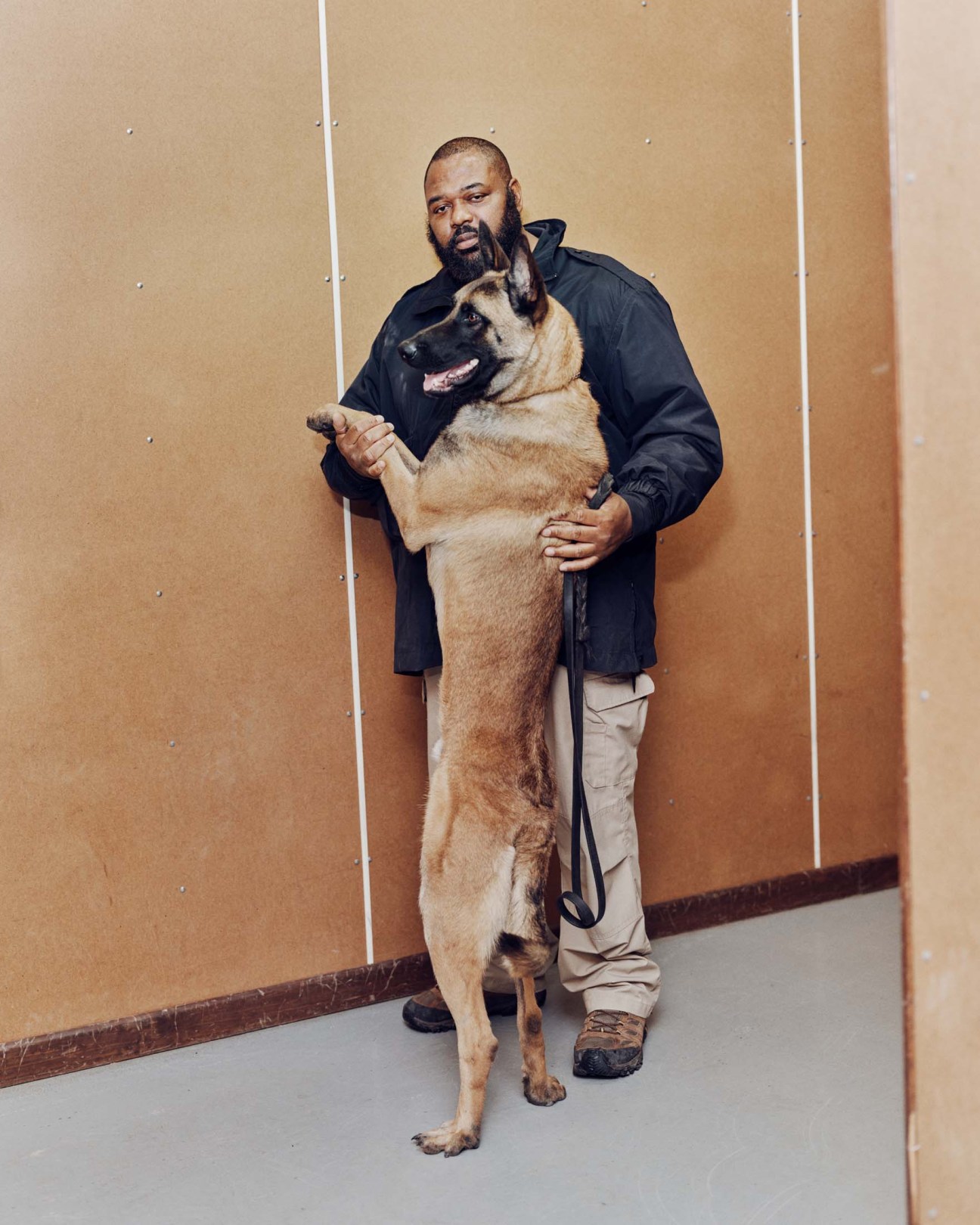
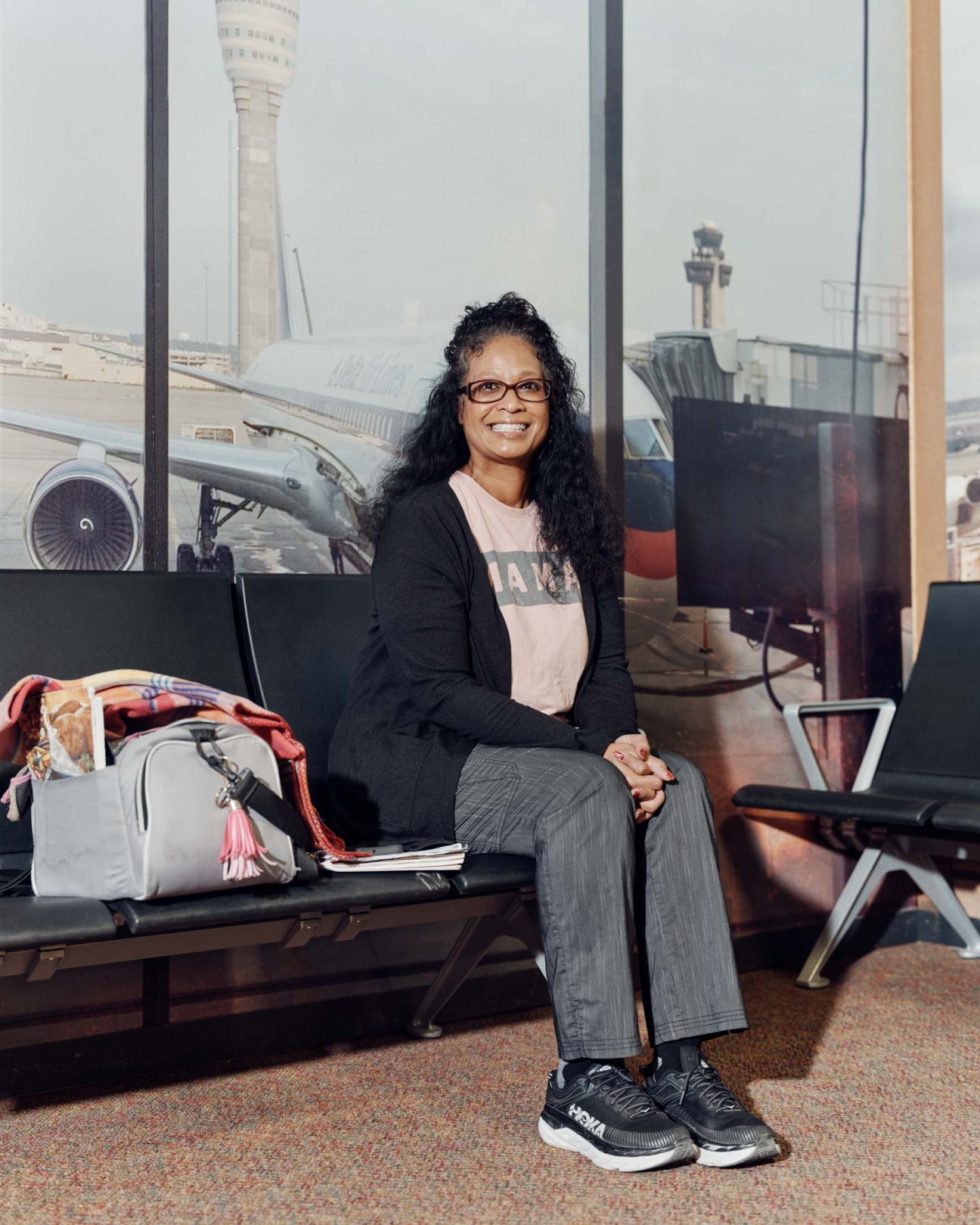
“Our floppy-eared dogs, they love to be petted,” says Justin Panter, a former TSA canine handler and now an instructor at CTC. “And if you start petting them, they may value that more than their job.” For dogs with sufficient “drive”, as trainers call it, the ball is payment enough. Monocle is taken to one of the 20 barrack-like buildings that, in addition to the headquarters, belong to the CTC. There, in a room whose interior has been outfitted with aeroplane-style seating (ashtrays in the armrests betray its vintage) a CTC trainer has a two-year-old German shorthaired pointer named Mondo (as in the military, each dog also has an identification number, in this case H604) on a lead. Mondo is moving quickly in and out of the rows of seats, his tail a flurry of motion. At one seat, he becomes particularly excited – and then sits.


“The sit is one of the passive responses we use to indicate if there’s an explosive odour,” says Duque, his trainer. A dog will show “change” with all sorts of novel behaviours but the sit, itself rigorously trained, represents the definitive response. A tennis ball is proffered to the dog’s exceeding delight. Once the canines are sufficiently trained, they will be introduced to an incoming class of students. One of the first rooms that handlers will enter has a tableful of fluffy toy dogs, which allows students to become proficient with a harness and leash without the time-consuming squirminess of a German shorthaired pointer. “You rarely see one hold still, at any age,” says Panter.
Incoming students are paired with a variety of dogs, with instructors looking for an eventual match. They think about the characteristics of the breed, from personality to environmental considerations (a long-haired shepherd might not be ideal in the heat of Phoenix, Arizona, for instance). But, most importantly, they look for rapport between a dog and handler. Successfully tapping into a canine’s powerful sense of smell requires a handler to be perfectly in tune. When mistakes happen, it’s typically on the human side. “Read the change, make the call” reads a poster hanging in a CTC classroom. “We know the dog has the confidence to alert that there’s some sort of danger ahead,” says deputy director Littleton. “But there’s always going to be a student who potentially doesn’t trust that dog or doesn’t want to shut down the lane because it’s going to affect the airport.”


The variability of human-dog interactions, as well as the costs involved in training and maintaining large numbers of canine teams, has prompted a search for automated means of detection. Koniku, a California-based start-up working with Airbus, has been developing a neuro-technological approach that can mimic the olfactory work of dogs. As it points out, its technology is already in use – by dogs – but “canines cannot be scaled”. Still, there’s no sign that the canine teams are going anywhere for the time being. As a report from the US Department of Justice notes, “compared to technology-based ‘sniffer’ systems, dogs have the advantages of superior mobility and the ability to rapidly follow a scent directly to its source”. These are particularly important, the report notes, “for explosives detection applications that involve a significant search component”, such as at airports. Dogs have one other advantage: their very appearance acts as a psychological deterrent for potentially bad actors.


Polasek compares the dogs that eventually make it through the programme and into an airport (at a cost of more than €28,500 each) to professional athletes, carefully scouted and groomed to perform at a high level for a relatively short career – most dogs will age out after about eight years in the field (they are often then adopted by their handlers). “That’s how much effort goes into the veterinary care, the diets, the training,” says Polasek. And at least once a year, they will get a refresh of their training. “There’s no off-season,” says Polasek. “And they’re constantly in the play-offs.”
How Older made restaurant uniforms cool again
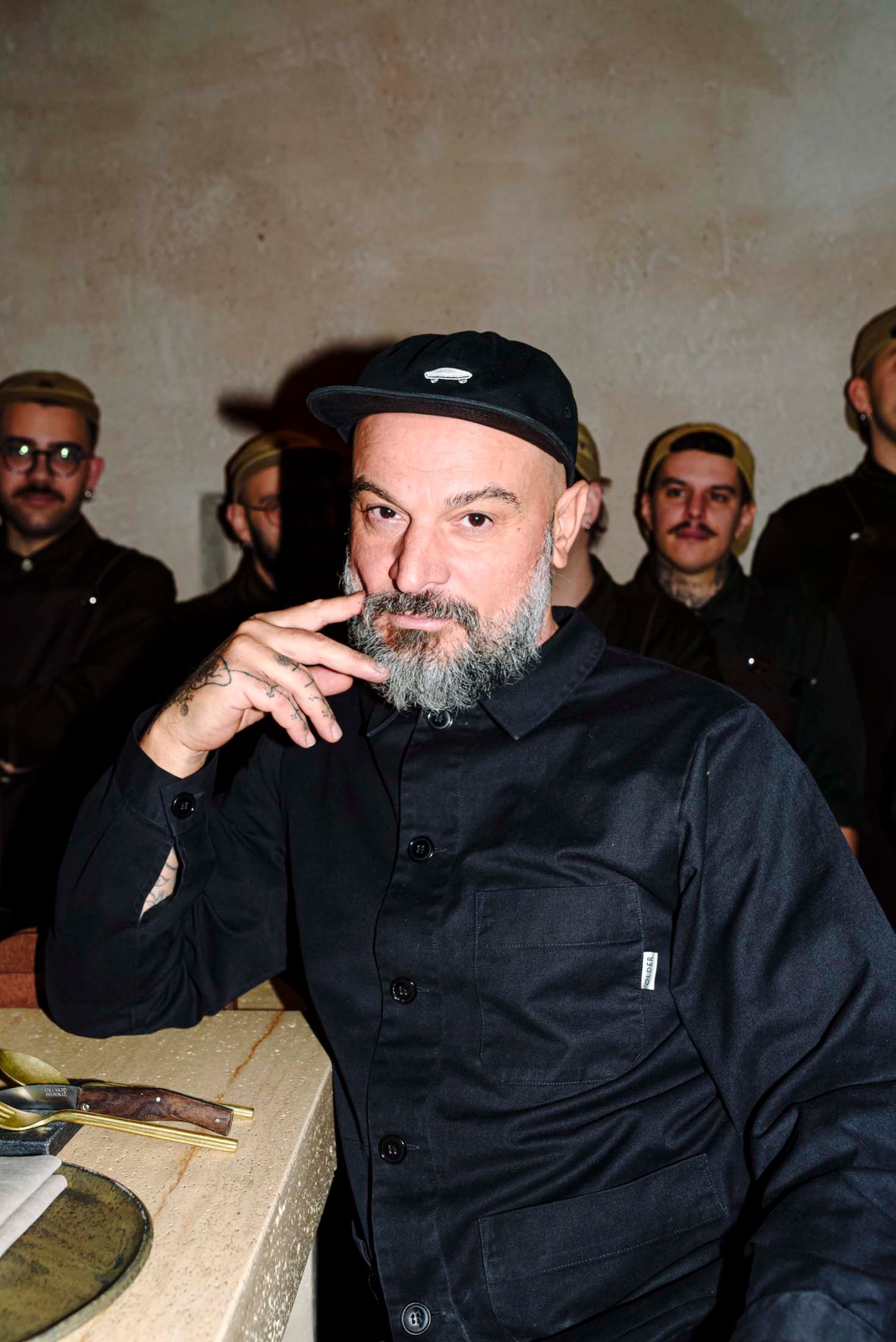
Morten Thuesen has a specific soundtrack for uniform fittings. Up on the fifth floor of a period apartment building just off Milan’s Corso Indipendenza, 1990s Japanese ambient music is spinning on a record player stationed on top of a striped Carolino drinks trolley made by the studio. In one corner of the showroom and living space, near a reupholstered Anfibio sofa from Alessandro Becchi, models are trying on the studio’s latest bespoke collection: “Made in Italy” uniforms for positions from front desk to outdoor agent, made specially for the spring reopening of Belvedere Hotel on Lake Como.


Hospitality uniform supplier Older’s unwritten mission statement is to get away from stuffy looks pedalled by bigger, more traditional firms. Founded in Paris in 2013 and relocated to Milan since 2019, fashion school graduates Thuesen, originally from Denmark, and his Tuscan partner Letizia Caramia head the operation. The pair met working for Alexander McQueen in London before moving to France.
Business has been what Thuesen modestly calls a “slow, steady burn”. In the past 12 years, Older has built up a staff of nine and more than 400 clients, including 10 Corso Como in Milan, Sushi Park by Saint Laurent in Paris, The Hoxton Hotel Group in London and DDD Hotel in Japan. “We’ve never had a PR or spent on marketing,” says Thuesen, explaining that the brand has grown by word of mouth. “It has been incredible.”


Older’s approach immediately appealed to Giulia Manoni, Belvedere’s co-owner, who attended the final fitting for the collection with her friend, the hotel’s management assistant Alice Bellomo. Coming in blacks, greens and blues depending on the job, the uniforms are striking, with pleated details that reference the hotel’s architecture. That’s not to say that Older puts style over substance: the pleats have been sewn in such a way that they don’t need ironing and the outdoor jacket’s hood and sleeves can be removed to suit the season. “The other companies are very regular and the fabrics not very nice,” says Manoni. “Plus, I make choices based on the people behind the project.”
Manoni isn’t the only person to have been won over by Older’s founders. If attending a fitting feels like you’ve been welcomed inside their home, that’s because you have: the couple live in an adjoining part of the apartment with their young son. Matteo Pancetti, co-owner of Porta Romana’s Yapa restaurant, whose staff wear Older uniforms, remembers visiting and bonding with Caramia over shared Tuscan roots. “It’s very urban, it’s minimal,” he says of the Older look. “I’ve always compared it to a Carhartt for the kitchen.”
Still, things could have been different. Older started as a ready-to-wear fashion brand in Paris but the couple grew increasingly disillusioned with the scene. At a New Year’s Eve dinner in Copenhagen, surrounded by chefs and architects, they hit on the idea of uniforms, noticing a gap in the market for good-looking garments at the sorts of places they liked to visit. “It came out of need,” says Caramia. “And we needed a good idea.”
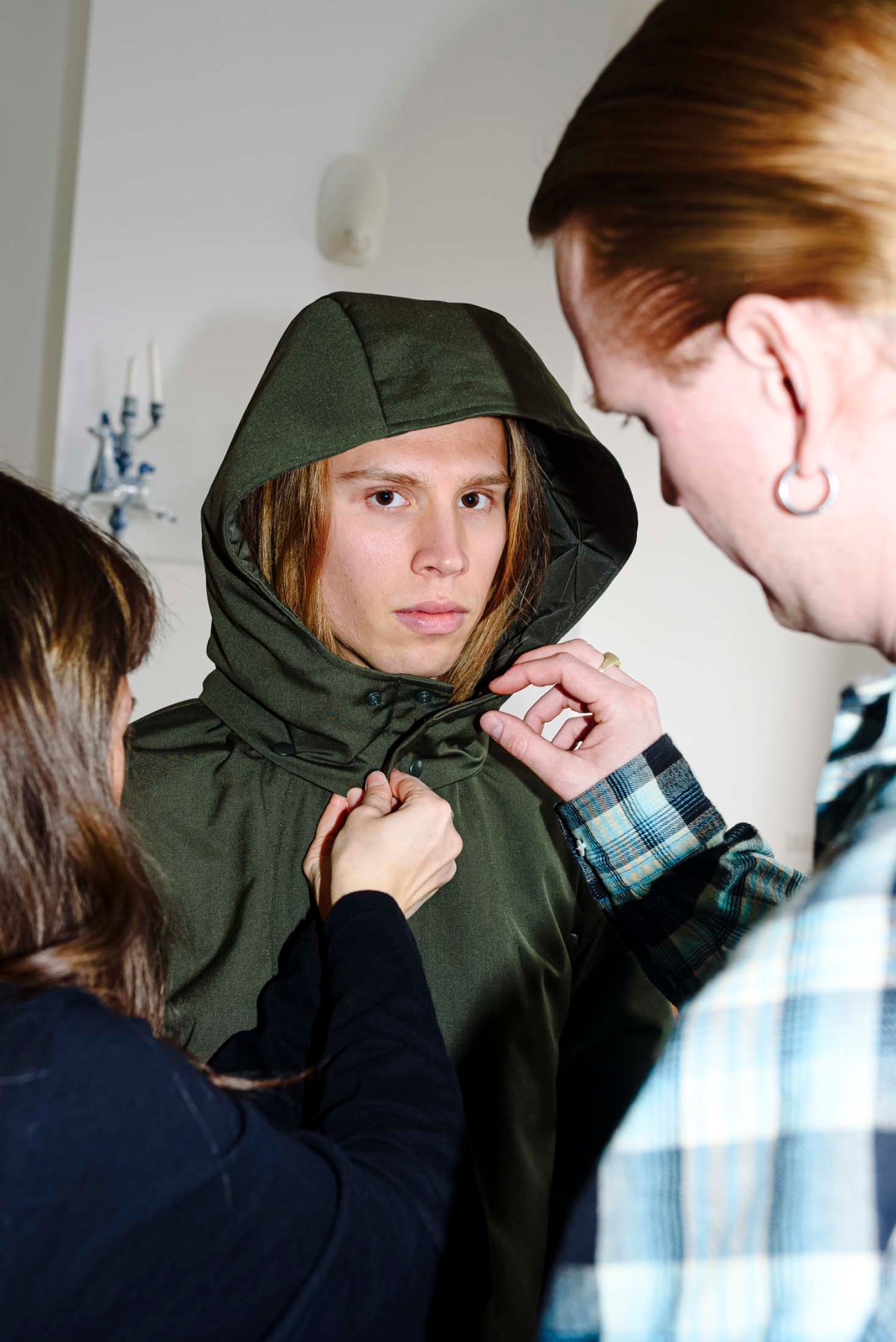
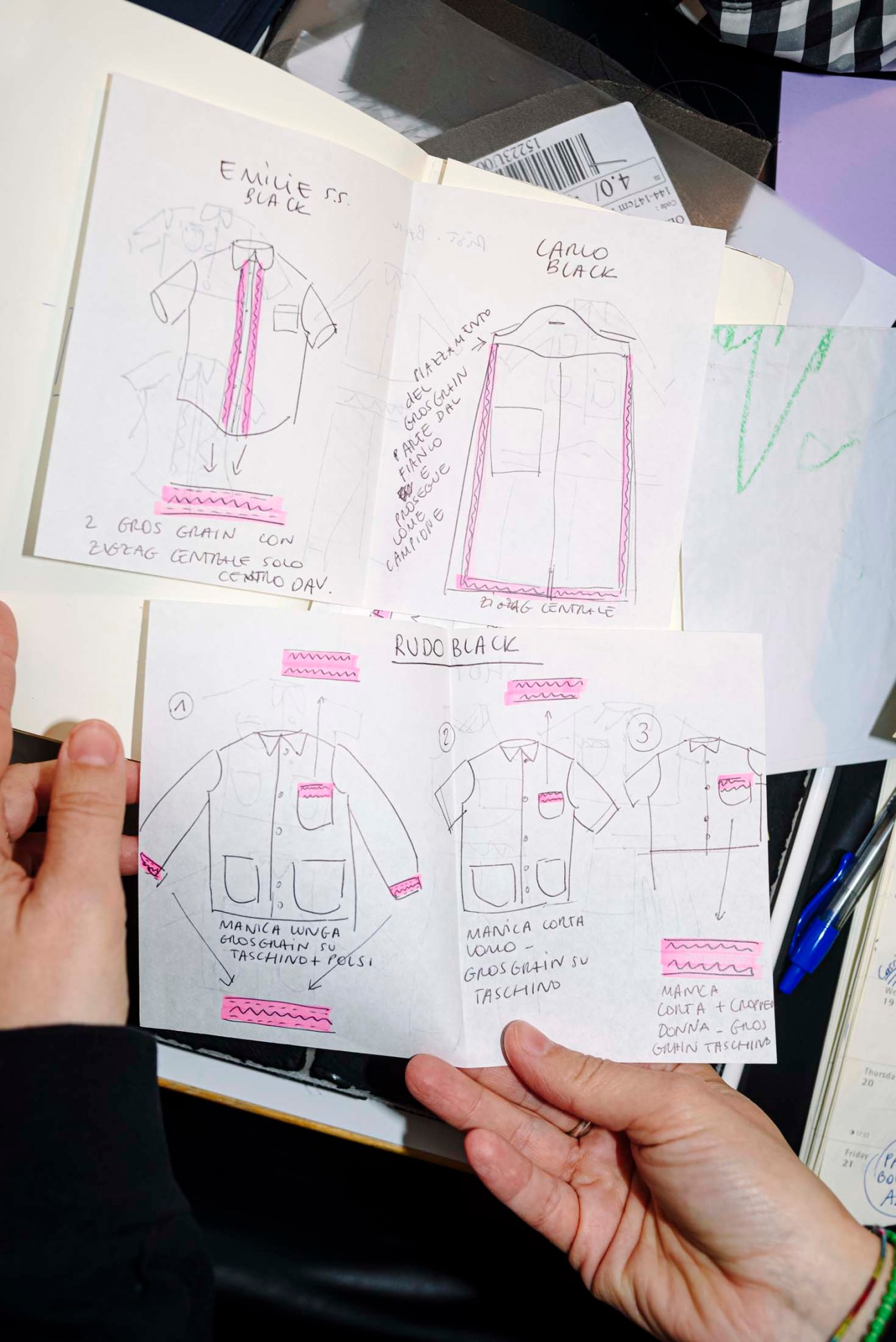
Older now has 75 EU-made pieces in the permanent collection, not to mention bespoke options. But the founders had to learn a lot on the way. With their first client, Restaurant 108 in Denmark, they soon realised that cotton uniforms didn’t stand up to chefs’ scrutiny. Since then, Older has developed a stain-resistant fabric that is easy to care for. The permanent collection uses a gabardine sourced near Rome, which mixes organic cotton with recycled polyester in three weights and six colourways.
You will see these uniforms in establishments all across Milan, from the bespoke all-black look of retailer 10 Corso Como to the beige aprons used at ceramics producer Officine Saffi Lab and the long-sleeved navy Rudo jackets, complete with woven logo labels, worn by staff at gourmet food shop Terroir. But Older’s uniforms aren’t always about the most visible member of a hospitality team. Thuesen says that the studio’s utility belt, the Frits, is the studio’s “love child”. And equal attention goes into the outfits for room cleaners and dishwashers. “Those are two of the most important positions,” adds Thuesen. “I like the idea of them becoming iconic.”
As Older continues to move in new directions, including a recent b2c uniform capsule collection with Japan’s Facetasm, it remains committed to growing organically, with no outside funding and with the couple very much at the centre. “Letizia is very creative and Morten contributes the intellectual and research part,” says Valentina Ciuffi, curator and co-founder of Milan Design Week’s Alcova platform. Ciuffi commissioned Older to make uniforms for her staff and even featured a large Older-made cabinet in last year’s show – a reminder of the studio’s design versatility. Today its furniture is represented by Milan’s Nilufar gallery, while the pair recently wrapped up a silk-screen exhibition at Milan’s Dropcity.
Despite the need to try new things, though, Older’s founders still come back to uniforms. “If we get bored, we do something else,” says Caramia. “But we always happily return. Ultimately, what we love most are clothes.”
olderstudio.com
Older around town
With buyers from Switzerland to South Korea, Older also has a diverse clientele on its doorstep in Milan.
1.
10 Corso Como

The concept store changed ownership last year. The new leadership decided that its staff needed a new visual identity – cue Older’s bespoke, all-black uniforms for the café, shop and gallery space.
10CorsoComo.com
2.
Yapa
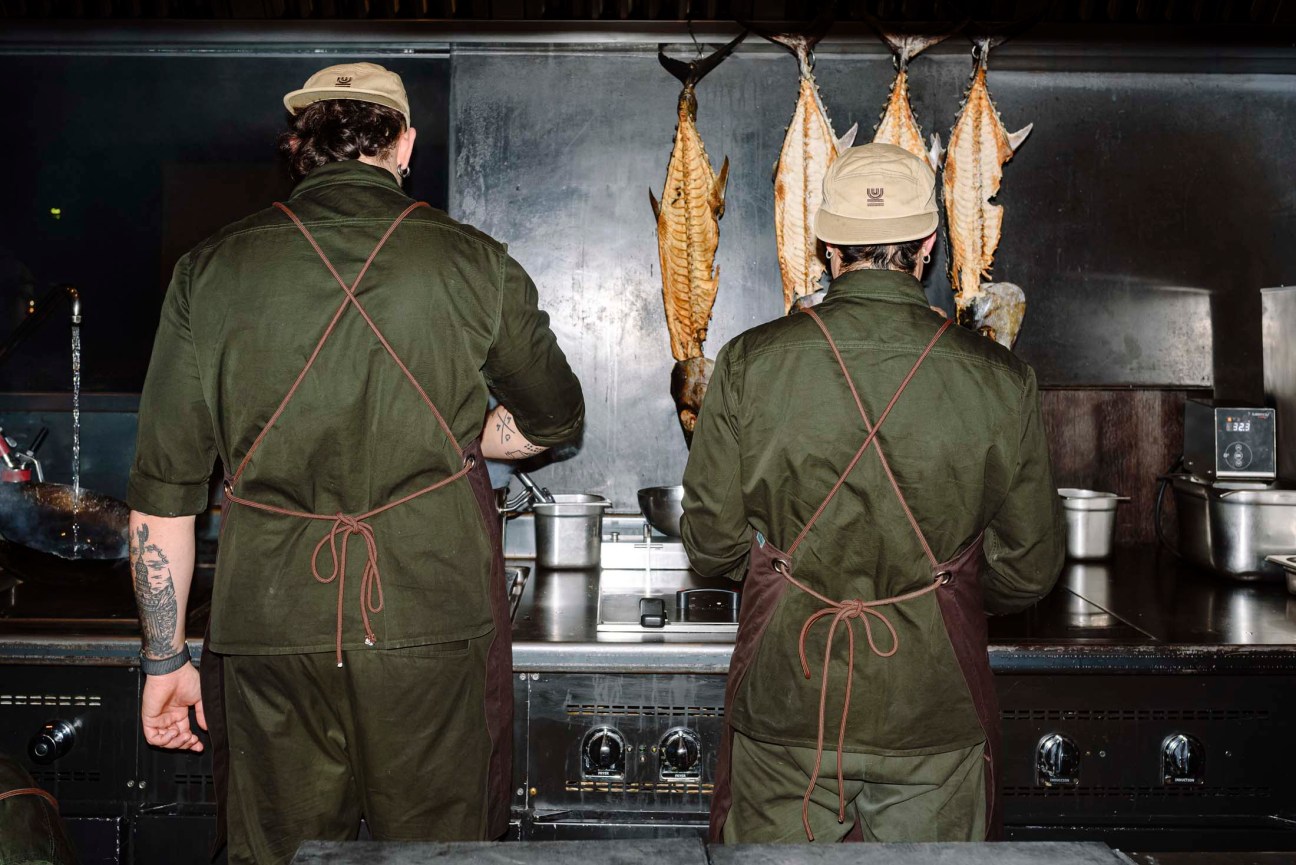
Yapa uses Older’s Olafur aprons for staff in its open-plan, customer-facing kitchen. Three front-of-house staff wear Older’s Matteo trousers. “They’re not heavy,” says owner Matteo Pancetti. “They’re beautiful.”
ya-pa.com
3.
Terroir

Gabriele Ornati, owner of the food shop that opened in 2017, gladly stocks Older’s clothes, plus a bag he designed with them collaboratively. Staff wear the Hans aprons and Rudo jackets, the latter with a bespoke woven logo label.
terroirmilano.it
4.
Officine Saffi Lab

This “lab” near the Isola neighbourhood is the commercial arm of the ceramics design foundation of the same name, its clients include Bottega Veneta. Director François Mellé calls his staff’s Older aprons “stylish but also functional”.
officinesaffilab.com
5.
Sandì
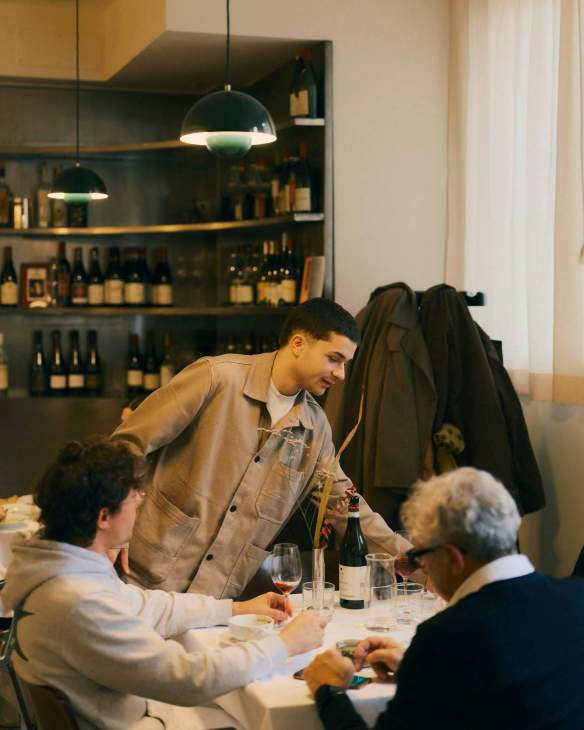
In this small, family-run restaurant with a twist (see Issue 181), kitchen staff wear Older’s white Cuban shirt and Harry trousers; front of house wears the Rudo jacket in navy and Giulia trousers in grey.
Via Francesco Hayez 13
How Moda Operandi’s co-founder is changing the face of luxury ecommerc
In the mid-1990s, Lauren Santo Domingo was one of those lucky New Yorkers who managed to secure a highly coveted assistant position at American Vogue. She could have easily continued climbing the masthead (she was later promoted to be an editor) and enjoying the perks of the job – access to fashion shows, Vogue’s famous samples closet and designers’ inner circles. But she had a different vision, fuelled by her passion for bringing people together. It has long been common knowledge in the fashion industry that her dinner parties – usually involving caviar, stiff martinis and relaxed smoking policies – are not to be missed.

In 2011 she co-founded Moda Operandi, an online trunk show business that offers customers the kind of privileges previously only available to magazine editors: meeting the designers and ordering full looks straight from the runway. It’s a novel business model that was quickly embraced by luxury shoppers worldwide, allowing Santo Domingo to expand to new categories such as homeware and raise multiple rounds of funding.
Like many e-commerce businesses, there have also been setbacks, from severe sales slowdowns to the closure of all physical showrooms during the pandemic. But unlike some of its competitors, Moda Operandi has been able to weather the storm, buying out its private equity investors, hiring a new executive team and continuing to offer some of the best curations in the market.
Today the company “has never been stronger”, according to the ambitious entrepreneur. She has also been taking advantage of the renewed stability at Moda Operandi to take on more challenges, as artistic director of Tiffany & Co. Home and founder of a new fund, St. Dominique Capital. Her first venture? An investment in The Row, a label that is quickly becoming the pinnacle of American luxury. Here, she explains how she plans to keep up the momentum.
Tell us about the initial idea for Moda Operandi.
The fashion industry has really enriched my life, and it’s [an experience] I’m always happy to share. I wanted to give customers first choice because they enjoy fashion and want to be part of the beginning of the cycle. We’re still the only ones who are making the fashion runways accessible and letting people experience the head-to-toe runway look rather than just seeing a pair of trousers hanging on a rail.
How important is meeting these customers in person? Are there any plans to reopen your physical showrooms?
During the pandemic we weren’t doing anything in-person for more than two years, so we decided to pause that side of the business. But now, we’ll be focusing on opening in the US; New York, Los Angeles and Miami are definitely a priority. Following Brexit and the changes in Hong Kong, those markets have become less of a focus for us given the increasing difficulties in doing business there.
What is your take on the broader luxury industry challenges at the moment? Is there an effect on Moda Operandi?
When Moda launched, department stores had all the power but then there was a shift, with power being handed to the luxury conglomerates. Now they’re both really struggling [to cope] with their sizes. For us, there’s an advantage in being independent and more nimble. A lot of the struggles that the industry is having are also a result of [prioritising] hype versus quality and relying only on big names.
You are just as passionate about homeware. Tell us about the business’s expansion into the category.
We used to do these beautiful tablescapes to stand out from the typical fashion events and people were asking to buy the tablecloths and plates from our parties, so we launched our own capsule collections and built the category from there. Typically, entertaining has been attached to etiquette and a very traditional, old world. What we did wasn’t about formality or rules; it was focused on colour, great fabrics and creative expression.
Is that what drew you to take on the artistic director role at Tiffany & Co Home?
There’s a side of me that appreciates a real American sensibility – I’m a devotee of that world and Tiffany is such an iconic, heritage brand that’s embedded in the American psyche. This blue box has become synonymous with so many life milestones and there’s an opportunity to see this brand translated for the next generations.
You’ve also been investing in some of the brands you’ve been working with. Why did you decide to also add investor to your CV?
I don’t care where a venture capitalist sits, they’re never going to have the intel and the data on these brands that I do. I have a front-row seat and the ability to understand whether a brand is a one-hit wonder, or has some creative longevity. We are also looking at investing via Moda Operandi, as we have so much at our disposal to push these businesses, from a wholesale force, to merchandising and warehousing experience. Taking an equity stake just incentivises us to be a better partner.
Do you think that fashion brands will be better off partnering with industry veterans rather than private equity investors? What was your experience with Moda?
We were all drawn to the private equity boom for a while – and don’t get me wrong, it was fun while it lasted. Everyone thought that they could become a unicorn but there’s a reason why unicorns are so rare. At their core, our businesses need to be about customers and designers. We put our private equity days behind us at Moda and since then we’ve been able to really hit our stride. Private equity investors had some success with the grocery sector in Canada and they thought that they could apply the same logic to fashion, given the seasonality of the product. But our industry doesn’t work like that; this business is about instinct and relationships. We were lucky to get out alive.