Issues
Comic relief: The artisans keeping the art of manga-making alive
You might not have noticed the revolution that’s occurred in the world of Japanese manga in the past 15 years – unless you were looking closely. The comic-book art form that traces its roots back to the witty, whimsical images of the great Ukiyo-e woodblock print artists, has moved squarely into the digital world. Manga, once available only on paper, is moving unstoppably from print to mobile phones and tablets. Not only that but the manga that are still printed on paper have undergone their own technical transformation. In the blink of an eye, an army of skilled typesetters – the people who put the words into manga – has been replaced by digital technology.
There’s no need to worry about the industry itself; the numbers are still huge. Manga sales generated a staggering ¥704.3bn (€4.3bn) in 2024 – the first time they had topped ¥700bn and up 1.5 per cent on the previous year. This accounted for 44.8 per cent of Japan’s entire publishing market. But to understand how the industry is changing, you need to dig into those numbers. Digital manga sales have nearly doubled since 2019, last year totalling ¥512.2bn (€3.2bn) or 72.7 per cent of the market, while sales of physical comic books and magazines dropped 8.6 per cent over the same 12-month period, coming in at ¥192.1bn (€1.17bn). Manga lovers are still eager to get their weekly fix but it’s more likely to be downloaded onto a device than read in the chunky paper comics that are sold in convenience stores and bookshops.
One person closely following this shift has been Masashi Kinpachi Okamoto, who has worked for Shueisha, one of Japan’s most renowned manga publishers, since 1994. Shueisha has many hit titles, none more so than the juggernaut One Piece, which has sold 500 million volumes since it came out in 1997. It is the best-selling manga by a single author. As he was overseeing the transition to digital production and the creation of Shueisha’s vast digital archive, Okamoto realised that the move away from paper was closing the chapter not only on the printed product itself but on the skills required to make it. Even the artists have gone digital. “The number of manga artists who still draw on paper with pens has become increasingly rare,” says Okamoto. Like any true fan, he wanted to preserve those techniques for posterity and came up with the Shueisha Manga-Art Heritage project, which would use specialised printing techniques to make limited-edition versions of manga artworks, which are then made available to buy. A new genre, manga art, was born and Shueisha opened its own gallery in Azabudai Hills in Tokyo in 2023.
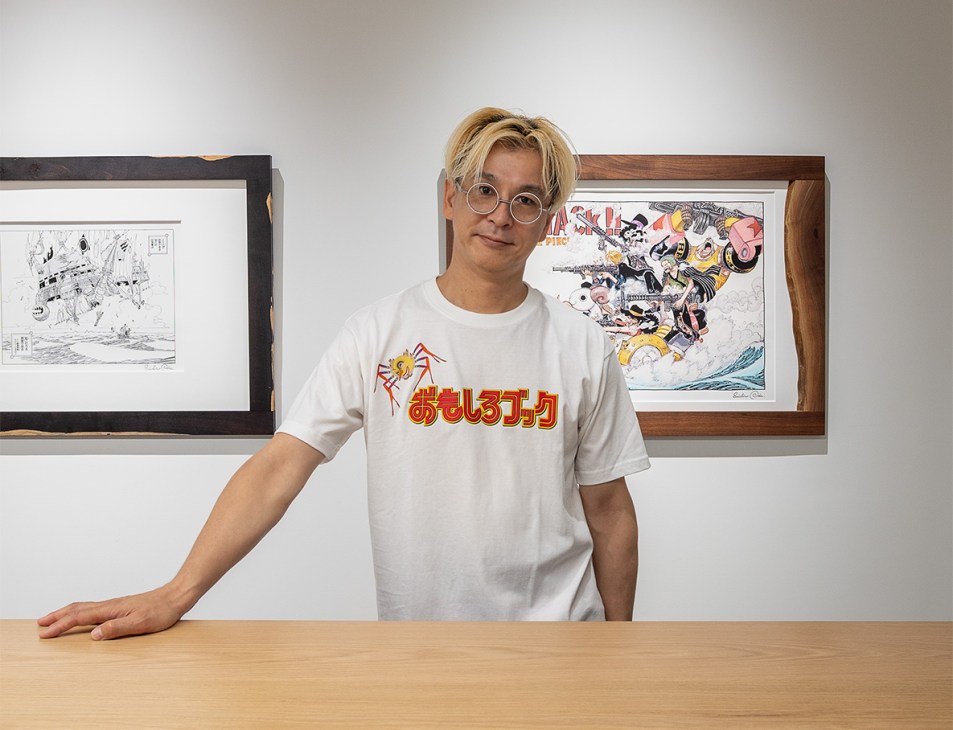
Shueisha, which was founded in the 1920s, has a rich back catalogue to draw from. It has been publishing manga since 1949, beginning with monthly magazine Omoshiro (Fun) Book for Boys and Girls, which included such titles as Shonen Oja and was a runaway success. Today, its titles include a manga anthology magazine Weekly Shonen Jump, which has been going since 1968 and is heading towards sales of eight billion copies. As part of one of Okamoto’s gallery projects, he created a new Omoshiro Book with artist Keiichi Tanaami, who remembered waiting every week for the original as a schoolboy.
The Azabudai Hills gallery is divided in two, with one area for exhibitions and the other a small showroom for perusing available artworks. Drawers are filled with exquisite works by big-name manga artists such as Eiichiro Oda, Tite Kubo and Go Nagai. Regular manga printing is already unique in Japan – the cover of One Piece uses five to seven colours, for example, more than any other country would even consider. But the works on display at the gallery are even more vibrant. Okamoto collaborates with the best paper suppliers in Japan and overseas to find the perfect backdrop for the pieces, whether that’s handmade Echizen washi from the Iwano Heizaburou paper mill or Velvet Fine Art Paper from Epson.

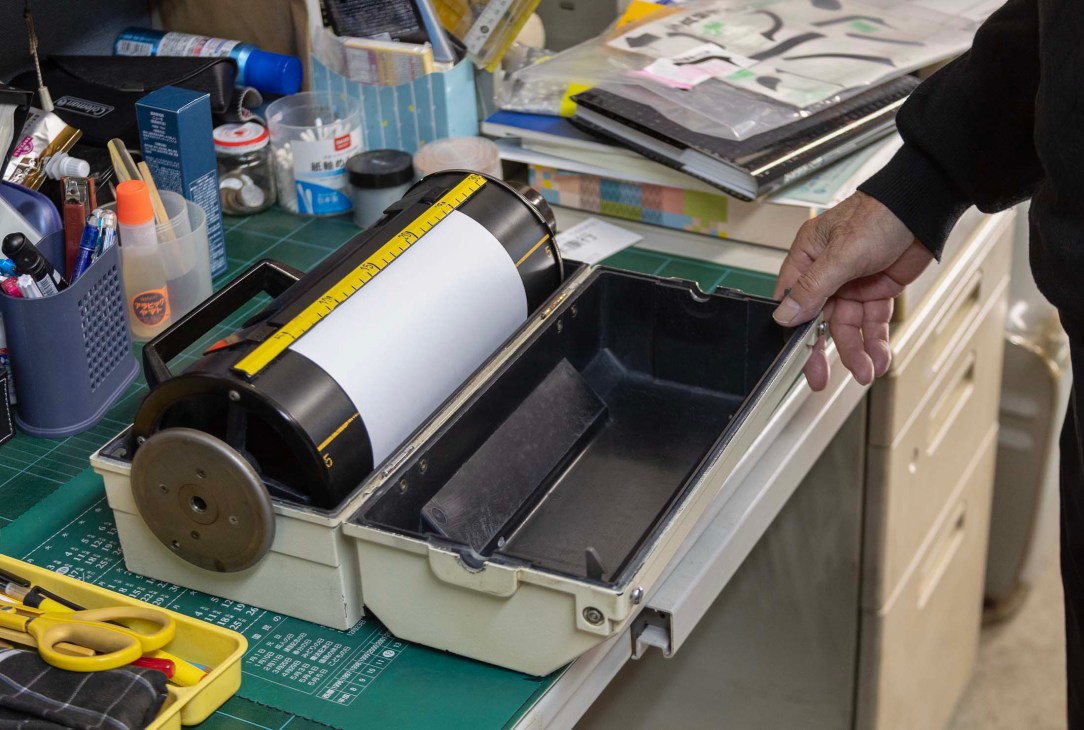
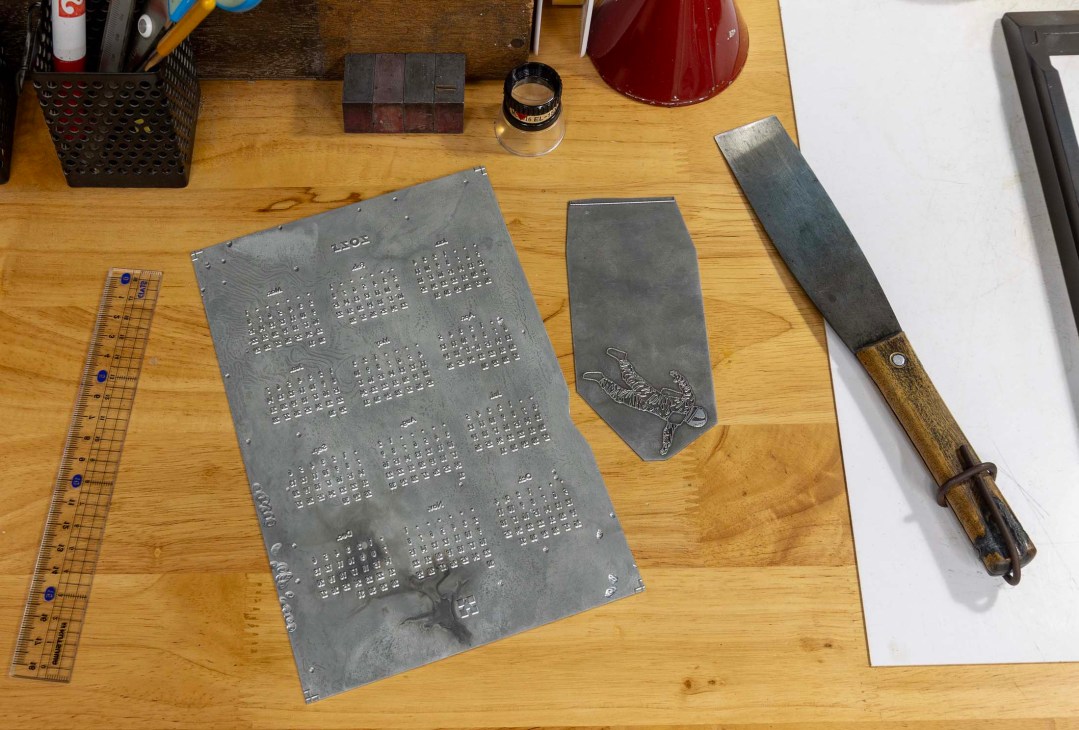
Understanding how the manga production process has altered at such a breakneck pace requires some sense of what it used to be. “After the war, it was common to etch the original artwork onto a metal plate, cut out the speech bubble areas and then embed the letters,” says Okamoto. “After 1970, metal gave way to phototypesetting, which involved pasting the words into speech bubbles on the original artwork before the whole thing was turned into a prepress film that could then be printed.” In the mid-2000s, the skilled work of phototypesetting was gradually rendered redundant by the arrival of typesetting software and digital fonts. The final blow came circa 2010, when the whole convoluted process of making printing plates from film plates was no longer necessary; they can now simply be created directly from digital data.
Though the printing of Shueisha’s big circulation manga continues much as it has since the 1970s (rotary printing for those who are interested), everything up to that stage has gone digital. “The typesetting and plate-making processes have been digitised, and companies that can do metal typesetting or phototypesetting don’t really exist anymore,” says Okamoto. An industry that employed tens of thousands and was key to manga production has all but disappeared.
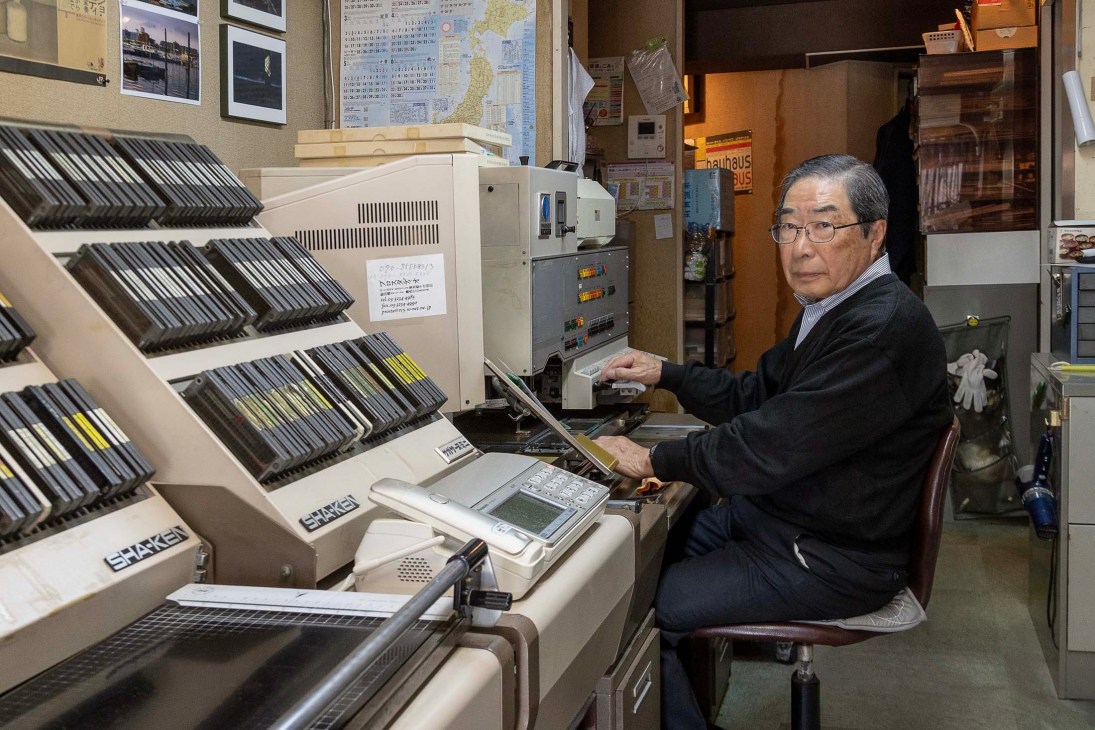
Yasuo Komai is the only phototypesetter still working in Tokyo. When Monocle visits him in his compact studio, a similar machine to the one he uses – a sprawling contraption from the 1980s made by once-dominant Japanese type foundry Shaken – is appearing in an exhibition about the history of printing in Japan. Komai has spent his 60-year career creating the words for everything from book covers to adverts and, from time to time, manga. “Phototypesetting was ideal for manga, where you don’t always have the same fonts or size of lettering and the words change in size depending on speech or emphasis,” he says.
There is a strong sense that Komai is a living piece of a rapidly disappearing past, a man whose skills should be treasured as much as any more obvious traditional craft. Operating the sizeable machine is an impossibly laborious process for the novice – but Komai has decades of experience and works with deft precision, able to judge the precise font, size and spacing for any story or book cover. There’s no room for error since the characters are printed directly onto photographic paper but there’s a human touch and sensibility that he feels a computer can’t replicate.
“Digital is certainly a simpler process but phototypesetting has a freedom that allows for creativity,” says Komai. “The designer will give us instructions but we can fix things that someone else might not even notice and make the whole design more coherent. I bring my own colour to the work. Some authors still specifically request typesetting for their book covers – they know that the quality and dimensions they want can’t be achieved with digital fonts. One problem is that it’s hard to get the materials now – film paper and so on.”
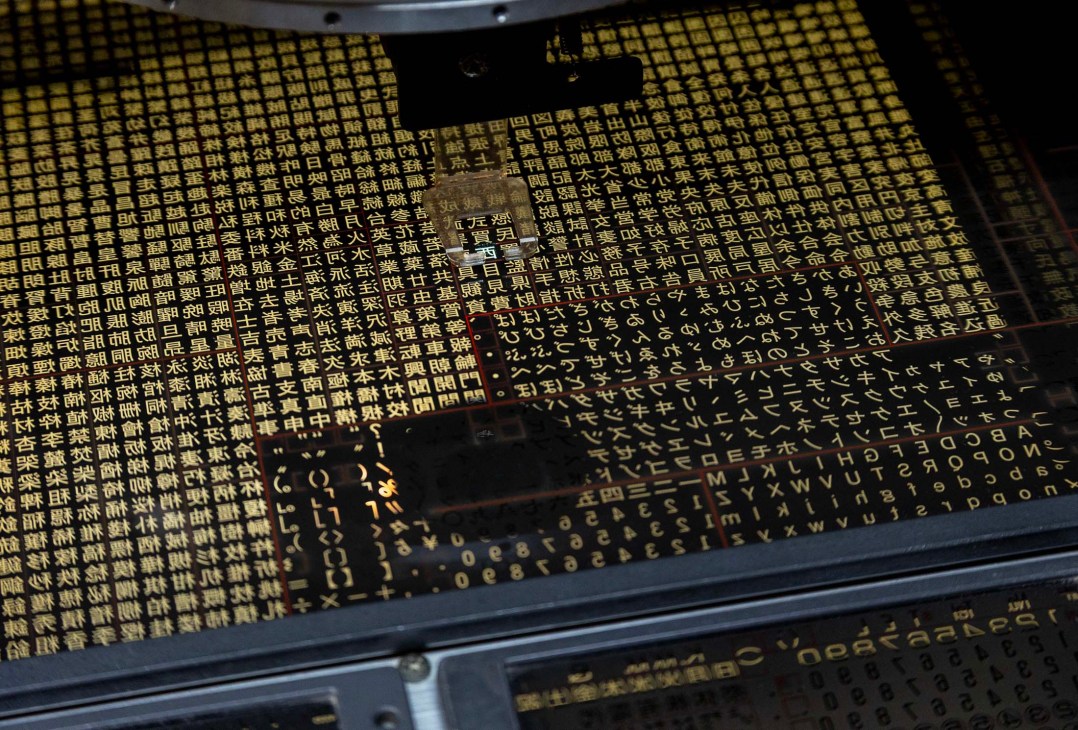
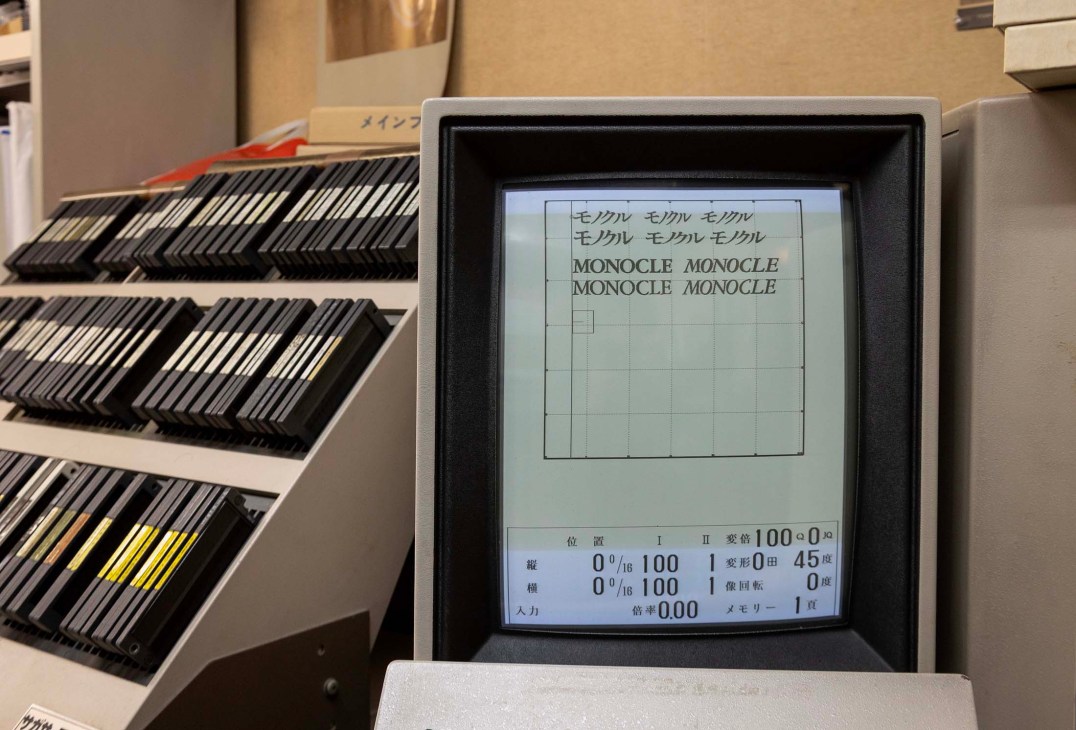
Sensing the near extinction of this skill, Okamoto called on Komai to fire up the phototypesetter to create the words for a new manga from the studio of legendary artist Fujio Akatsuka, which was then exhibited in the Shueisha gallery. Okamoto wanted this done the old-fashioned way. “We asked Komai-san to do the phototypesetting and asked the artist, Yoshi Katta, to use pen and paper,” he says.
Okamoto is also working with a young Tokyo printer, Hiroshi Munakata, who has a 1969 Heidelberg letterpress machine that almost fills his studio in Kagurazaka. When he was setting up the heritage project, Okamoto looked for someone to print on a letterpress machine but could only find a firm, in Nagano, which subsequently closed. He searched again and met Munakata, who had just bought his old printer. “Nobody wanted it,” he says. “It’s a dying technology and most people thought it was too old-fashioned.” Not Okamoto, who has commissioned several pieces from him including a work from One Piece and pages of Keiichi Tanaami’s vibrant Omoshiro Book.
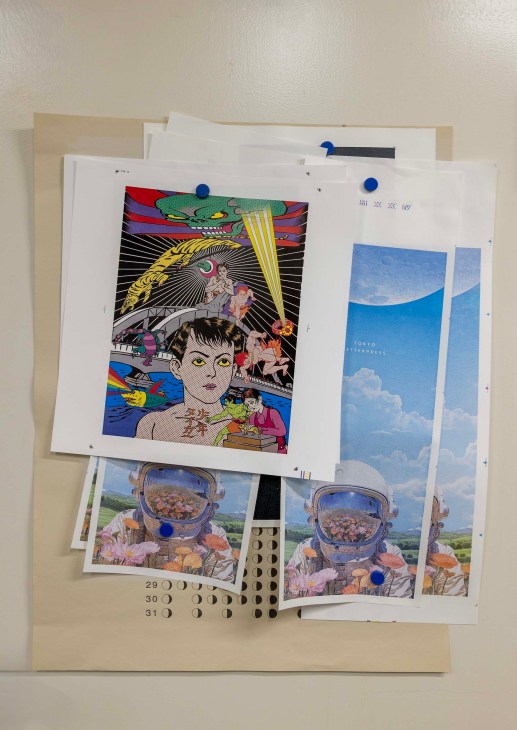
Manga production is a collaborative process and the raw artwork is just one part of it. “Manga is ultimately created with the purpose of being printed,” says Okamoto. “But the original manuscript is an intermediate work, not the final form. Simply printing what is stored in a database wouldn’t have the power of a finished piece. By using advanced printing techniques to maximise the appeal of the original artwork, limiting the production quantity and enhancing its rarity – that’s when it becomes what we’re calling manga art.
“Until now, discussions about manga have mostly focused on the author, the story or the images; the production process is rarely mentioned,” adds Okamoto. “By creating works with letterpress and other printing techniques, I hope that we’re preserving and showing off these techniques.” He’s thrilled that people from different walks of life buy pieces from the gallery; some works are so popular they’re sold by lottery. “Buyers come from Japan and overseas; not only manga fans but art collectors too,” he says. “It’s been interesting to see people who come in and say, ‘I’ve never read One Piece but I want to buy this because it’s a great piece of art.’”
mangaart.jp
Hot tickets: The best of this month’s cultural releases
Film
Motel Destino
Karim Aïnouz
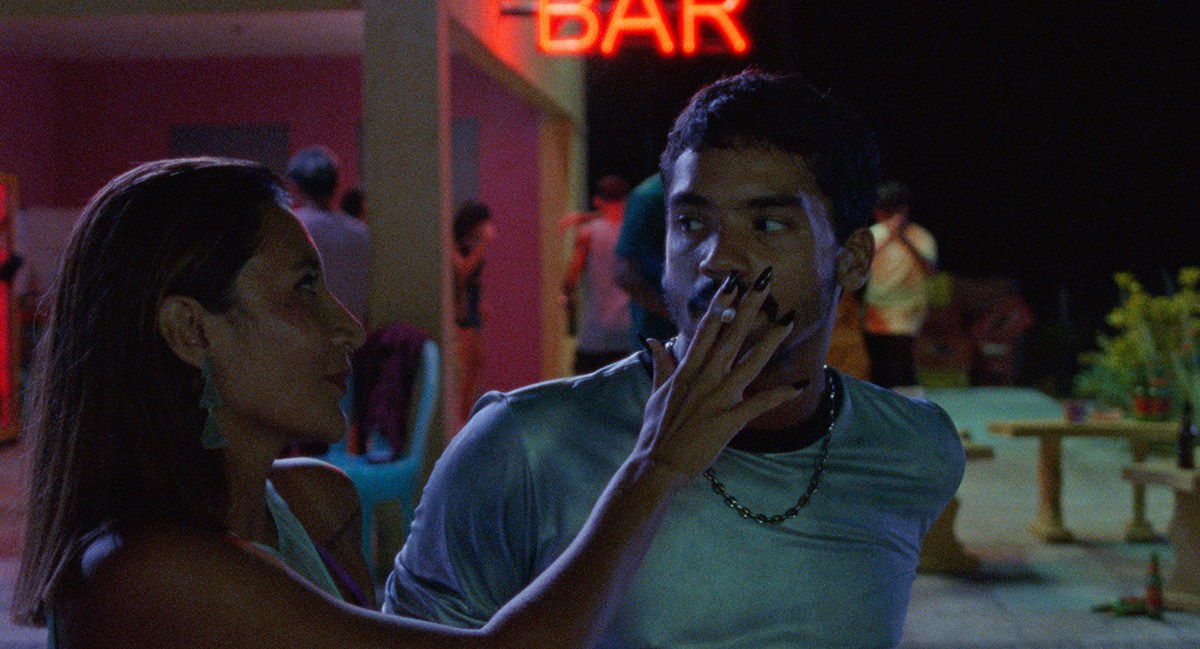
Having made its debut at the 2024 Cannes Film Festival, this Brazilian erotic thriller from director Karim Aïnouz is finally getting a wide release. After a hit goes wrong, on-the-run low-level gangster Heraldo (Iago Xavier) arrives at the titular motel and finds himself caught up in a dreamy steamy love triangle with its married owners Dayana (Nataly Rocha) and Elias (Fábio Assunção).
‘Motel Destino’ is released on 9 May
Riefenstahl
Andres Veiel
Leni Riefenstahl is best known for directing Triumph of the Will, a striking Nazi propaganda film. She has been endlessly debated since, questioning whether it’s possible to spin beauty out of evil. But what is not up for debate is her effect on cinema, creating an aesthetic of fascism that influenced everything from Star Wars to The Lion King: a legacy explored in this incisive documentary.
‘Riefenstahl’ is released on 9 May
The Phoenician Scheme
Wes Anderson
Beloved auteur Wes Anderson returns with this globe-trotting espionage thriller. Regular collaborators Benicio del Toro, Willem Dafoe and Bill Murray are in tow, along with some intriguing first-timers, including Michael Cera, Riz Ahmed and Mia Threapleton. The tone is darker than Anderson’s typical work but, as with all of his films, artful symmetry, cool costuming and deadpan humour are guaranteed.
‘The Phoenician Scheme’ is released on 23 May
Books
Small Boat
Vincent Delecroix, translated by Helen Stevenson
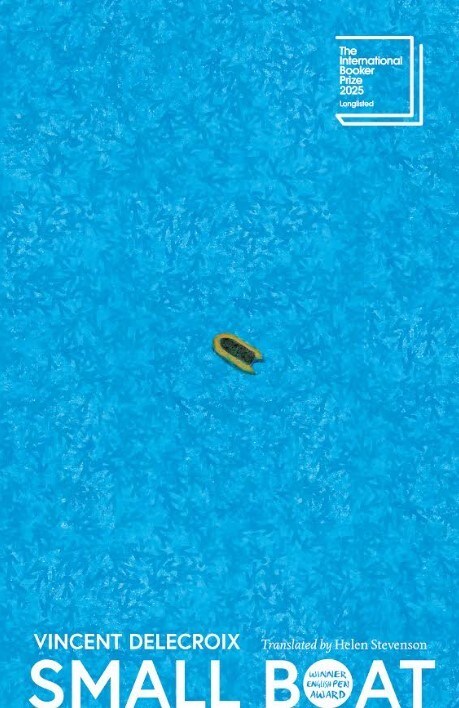
Based on a real event, the sinking of a dinghy carrying migrants across the English Channel in 2021, which led to the loss of 27 lives, Small Boat imagines the subsequent questioning of a radio operator who fielded calls from the vessel at the Cap Gris-Nez marine rescue centre. Delecroix’s urgent novel examines her decision not to send help. It is a work of striking empathy.
‘Small Boat’ is out now
Things in Nature Merely Grow
Yiyun Li
“There is no good way to say this,” Li’s memoir begins. They are the words of a police detective bringing the news that Li’s son, James, has killed himself. This happened in 2024, seven years after James’s brother, Vincent, took his own life. Li does not offer uplift – “One should never evade facts,” she writes – but her meditation on death and grief is extraordinarily powerful.
‘Things in Nature Merely Grow’ is published on 20 May


Suspicion
Seicho Matsumoto, translated by Jesse Kirkwood
Author and publisher Roberto Calasso once called Seicho Matsumoto, who is best known for crime fiction, “the Simenon of Japan”. In this new translation of a taut 1982 novella,
a former Tokyo hostess seduces a businessman. After their wedding they are involved in a car crash; he drowns, she survives. The question is whether the defence lawyer who takes her case is helping an innocent woman or falling into a moral quagmire.
‘Suspicion’ is published on 29 May
TV
Carême
Apple TV1
Marie-Antoine Carême was history’s first celebrity chef. He baked Napoleon’s wedding cake, orchestrated feasts for the Russian tsar and for the British prince regent in Brighton. A luscious series directed by Martin Bourboulon explores the life of this impoverished orphan turned culinary genius and unexpected imperial spy.
‘Carême’ is released on 30 April. For our interview with director Martin Bourboulon, turn to page 50
Pernille
Netflix
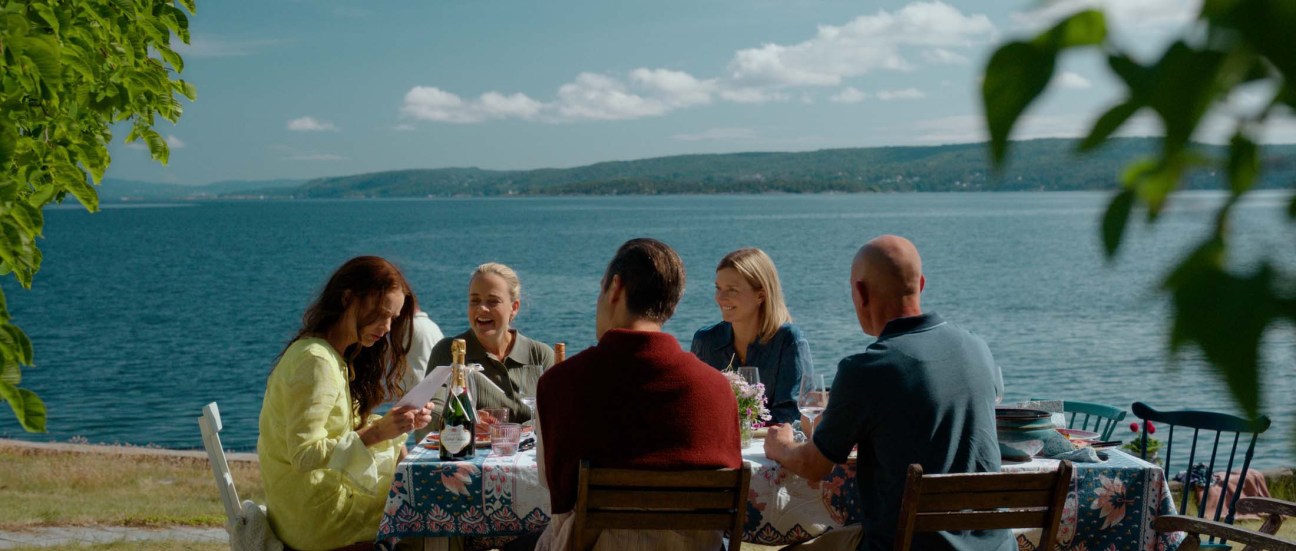
Henriette Steenstrup’s comedic creation, middle-aged single mother Pernille, has become something of a national treasure in her native Norway. Also known by the title Pørni, Steenstrup’s series, now in its fifth season, serves up affable, down-to earth chaos.
‘Pernille’ season 5 is released on 15 May
Murderbot
Apple TV1
Apple TV1’s wry adaptation of Martha Wells’s Nebula and Hugo Award-winning book series stars Alexander Skarsgård as a security android who hacks its own systems and achieves free will. Yet, as it turns out, it would much rather be left alone to watch its soap operas than turn on humanity.
‘Murderbot’ is released on 16 May
Music
Journey Through Life
Femi Kuti
Femi Kuti continues to release the kind of kinetic and jubilant protest music by which his father, Nigerian legend Fela, made his name. But on his latest album, Kuti is looking inward. During this up-tempo escapade through his 62 years of innocence and experience, the veteran saxophonist deals out life lessons amid his trademark Afrobeat.
‘Journey Through Life’ is released on 25 April
Lotus
Little Simz
One of the UK’s biggest breakthroughs of recent years returns, having steadily sharpened her voice across five albums, secured a Mercury Music Prize in 2022 and performed triumphant at last year’s Glastonbury (as well as starring in Netflix drama Top Boy and appearing as herself in a Spider-Man film). Her sixth album looks set to seal her superstar status, with an ambitious global genre stew, such as on the percussive lead single “Flood”, which features Nigerian singer Obongjayar and South African rapper Moonchild Sanelly.
‘Lotus’ is released on 9 May
Plaeygirl
MØ
Danish singer MØ was at the forefront of Scandinavia’s glacial synth-pop wave of the 2010s. Her fourth album marks a career rebirth – complete with Alice Cooper-style face paint. Plaeygirl is full of expertly produced synths and big electro beats. It’s not unlike Charli xcx’s Brat gone a bit goth.
‘Plaeygirl’ is released on 16 May


Art
Christian Marclay: The Clock
National Gallery of Iceland, Reykjavík
A 21st-century masterpiece, The Clock is a 24-hour supercut of 100 years of film and TV history. Every new minute is marked by a clip displaying or mentioning the exact time. Marclay spent three years scouring archives to find each one. For its Icelandic debut, the gallery will stay open all night twice, including on the summer solstice, so that visitors can immerse themselves in the rhythms of the work – or simply set their watches by it.
‘The Clock’ runs 2 May to 22 June
Lorna Simpson: Source Notes
The Met Fifth Avenue, New York
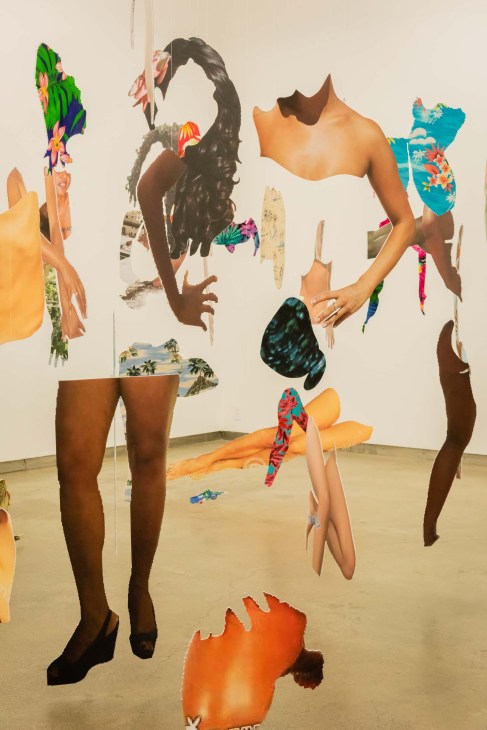
Whether working in painting and photography or text-based wall sculptures, Lorna Simpson always puts people at the heart of her examinations of race, gender, time and memory. This overview of her 40-year career also carries recent highlights from her Special Characters series. The “source notes” of the title are her found images, often cut from vintage magazines.
‘Source Notes’ runs 19 May to 2 November

Photography
The Lure of the Image
Fotomuseum Winterthur,Winterthur
The popular Swiss photography museum reopens after a two-year renovation. This group show draws on three years of online experimentation and dialogue between artists and researchers. ASMR videos and memes will be employed to make serious points about the seductive appeal of photography.
‘The Lure of the Image’ runs from 17 May to 12 October
Meet the team behind Milan’s Salone de Mobile
“As a child, I remember the anticipation leading up to the opening day of Salone del Mobile,” says Maria Porro. “I saw the passion of the people in my family company and I understood its great power.” As a fourth-generation director of her family’s namesake firm – one of the brands that founded Salone del Mobile Milano in 1961 – Porro maintains a deep respect for the annual furniture fair. Held every April and widely considered the design industry’s most significant global gathering, it is the anchor event of what is unofficially dubbed Milan Design Week.
Porro’s appreciation of Salone del Mobile is evidenced by the fact that she is now its president, a position she has held since 2021. “I wouldn’t say that it was a childhood dream to take the role, more a crazy decision,” says the Brianza-based Porro with a laugh when monocle meets her and her team outside the Castello Sforzesco in Milan. “I didn’t put myself forward but was elected from the board committee. I said ‘yes’ because Salone has been so important to so many companies.”
That importance lies in the business opportunities that the event creates. In recent years some 370,000 visitors from more than 100 nations have come through the doors of Lombardy’s Rho Fiera trade halls where Salone is held. Some 2,000 brands from over 35 countries show their sofas, chairs, tables, lighting, homeware and household appliances in an area the size of 30 football pitches. Despite the event’s scale, the work is done with a compact team. “It’s a wide-ranging group including a board of directors, operations managers and a technical team responsible for the fair’s layout,” says Porro, adding that every exhibitor’s stand is assessed for technical, functional, sustainable and accessible requirements.
“It’s a busy year-round operation,” she says. “We’re already working on next year’s edition and even planning for 2027. But it has created an ecosystem that fuels jobs, design innovation and international business opportunities – and strengthens Milan’s role as a global design hub.”
salonemilano.it
Maria Porro
President, Salone del Mobile Milano
The first woman and youngest-ever Salone president, Maria Porro represents a sector in which her family has worked for generations. Her team also plays a key role in giving back to the event’s home city, Milan. “Our cultural programme is a long-lasting project,” says Porro. “We host events and special exhibitions, often in collaboration with local institutions.” This year, in line with its cultural ambitions, the Salone del Mobile team commissioned various works including a lighting installation by Robert Wilson at the Pietà Rondanini museum inside Castello Sforzesco (pictured).
1. Barbara Conte
Sales manager
Two decades of working with historic and emerging companies.
2. Patrizia Malfatti
International press office manager
In contact with over 6,000 journalists all year round.
3. Gabriele Fraschini
Chief financial officer
He’s not just about numbers: he plays various instruments.
4. Carolina Sciomer
Relationships & institutional events
Ensures the correct execution of institutional ceremonies.
5. Giulia Halabi
PR events & communications adviser
An attentive and precise prompter.
6. Riccardo Giannì
Head of digital product
Manages services for companies and visitors.
7. Susanna Legrenzi
Press & communications strategy adviser
Co-creator of the first scientific analysis of Salone’s impact
8. Marva Griffin
International relations ambassador & founder/curator of Salone Satellite
The mother of more than 14,000 young designers.
9. Tito Armellini
Commercial manager
Works with furniture companies to make Salone great.
10. Elisabetta Gaiaschi
Technical office manager
Spends time between signs and displays, rules and imagination.
11. Paola Magro
International sales manager
Always seeking new ideas across the world.
12. Gianfranco Marinelli
President of FLA Eventi
Looks to the past to improve the future.
13. Monica Molinari
Head of international business development & events
Develops opportunities, connections and events.
14. Andrea Vaiani
Exhibitions director
Ensures that the fair is meticulously planned.
15. Annalisa Rosso
Editorial director & cultural events adviser
Drives Salone’s talks, texts and events.
16. Marilena Sobacchi
Press office manager
Shapes the way we read about Salone
17. Luca Adornato
Marketing & communications director
Balancing the ‘dos’ and the ‘don’ts’ of communication.
18. Marco Sabetta
General manager
‘We’ll make it’ is his motto.
Meet the people cooking up a contemporary twist on Taipei’s traditional breakfast shops
In Taiwan, breakfast can be a rushed affair. On the curb in front of a street-food vendor, you’ll see scooters hastily parked as their riders, helmets still fastened, queue beside smart office workers and uniformed students, waiting for their turn to order. Now and then, a retiree or an idle auntie claims a low plastic stool, savouring their choice with unhurried ease. But for many, breakfast is eaten on the go as they sweep through the city.
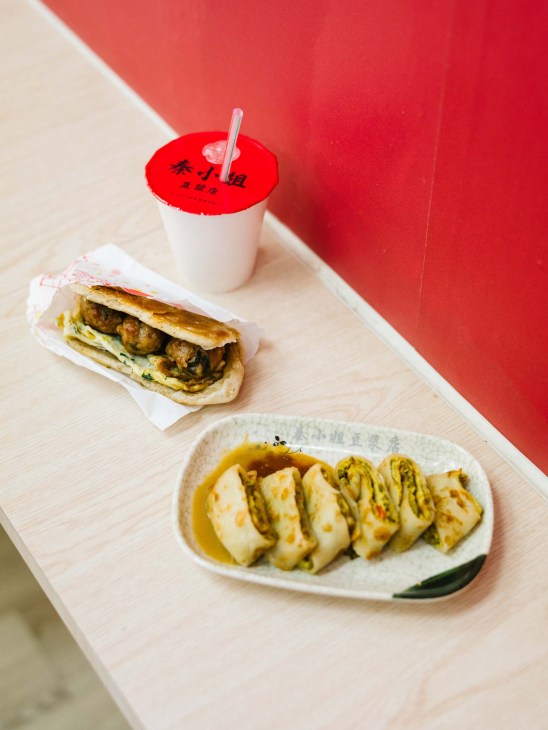
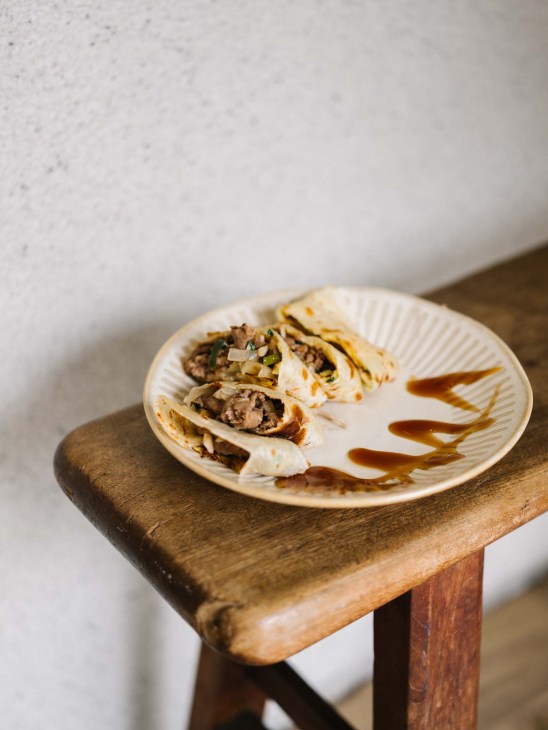
The Taiwanese breakfast shop is a product of the region’s postwar history: its origins lie with the steady flow of wheat that came as part of Cold War-era aid programmes from the US and also with the arrival of mainland Chinese refugees who knew precisely what to do with it. Until then, rice, not wheat, was the island’s staple stodge and the latter was a foreign commodity, largely unfamiliar to most. For breakfast, wheat flour was used to make long, deep-fried dough sticks, flaky flatbreads or pillowy buns. Sometimes the flatbreads were rolled up with spring onions and an egg to form a dan bing, a morning staple. The first breakfast shops in Taiwan were street stalls, stacked with layers of bamboo steamer baskets and bouquets of fried dough sticks. Eventually, bricks-and-mortar locations began to crop up, though many maintain a certain simplicity: they tend to be humble, utilitarian spaces where food is prepared on a single stainless-steel flat-top griddle facing the street.
“Dan bing is usually pan-fried but we deep-fry ours,” Cheng Hsu-Chong, the second-generation owner of the Chongqing Soy Milk and Fried Egg breakfast shop, tells Monocle. The 50 year-old institution on the edge of a traditional market has neither a front wall nor a door. Why deep fry? “It’s faster,” he says. “And it tastes better.”
The main action takes place at a vendor cart in front of the shop, where Cheng’s son is poised over a fryer. He drops a thin flatbread speckled with spring onions into the bubbling oil, then cracks an egg into the fryer. As the bread crisps and expands, he folds it around the egg, lifting it from the oil, before adding a diced pickled daikon radish. With a swift motion, he hands it over to the cashier, who finishes it with a few generous shakes of ground white pepper. The dan bing is paired with a hot cup of sweetened, freshly brewed soy milk, a popular drink at Taiwanese breakfast shops.
The precise origins of the dan bing, which is more like a light puff pastry than fried dough, remains as murky as the bubbling oil from which ours has just emerged. In Mandarin, dan means “egg” and bing means “flatbread”. It is thought to have originated in Taiwan as an extra-thin riff on the spring-onion pancake. Variations exist, some more crêpe-like than others.

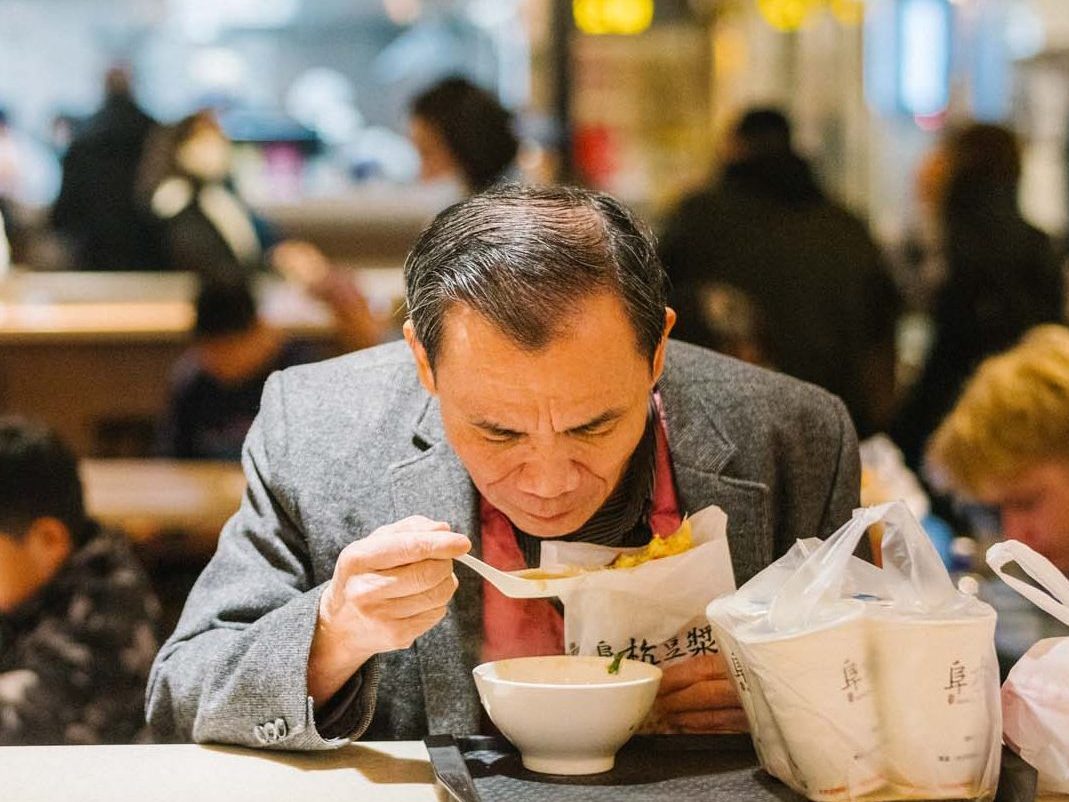
“Many people use the batter method but we just roll it out from dough,” says Qin Hui Lin, the owner of Miss Qin’s Soy Milk Shop. “It’s what I grew up with.” Qin’s parents came to Taiwan by way of the eastern Chinese province of Jiangsu during China’s civil war and she grew up eating dan bing stuffed with chopped-up fermented long beans, served with finely minced chilli and a thickened soy sauce flavoured with bean curd. It’s one of the specialities at her family’s shop, which began as a modest stall under an awning 76 years ago and has since expanded into two adjacent shopfronts. One of them, positioned on a street corner, has a deli-style counter, while the other is for those who want to eat in. A solid wall divides the two areas.
Qin’s son, who is now in charge, refreshed the shop recently with a new coat of paint and professionally taken photos of the dishes, displayed both on the menus and in the décor. The food bears plenty of influences from the family’s Jiangsu heritage. Among the highlights are the lion’s head meatballs, a dish that consists of pork with soy sauce and spices. “The meatballs were originally just for the staff but our customers liked them too and now they’re one of our signatures,” says Qin. Traditionally served in a broth with cabbage leaves, they’re now sold by Qin in a sesame-dotted flatbread that resembles a meatball sub. “You have to keep adapting,” she says.

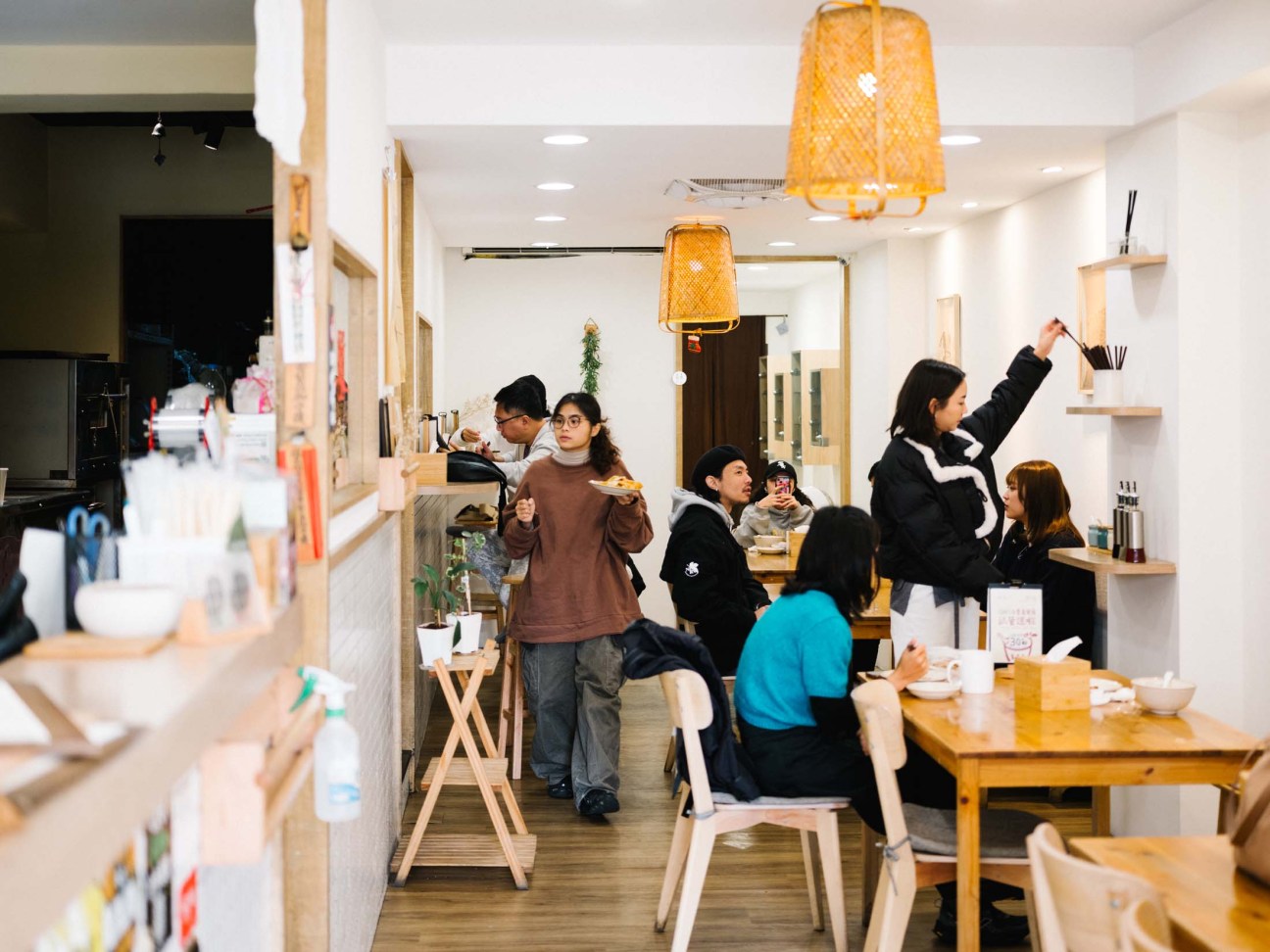
Despite such willingness to adapt, most breakfast shops have remained little changed for decades. That said, a new wave of younger entrepreneurs is taking a different approach. You’ll find Lao Jiang’s House, which is open 24 hours a day, seven days a week, not in an old market but on the edges of Taipei’s financial district. The owners are five friends who quit their day jobs to start the business after the coronavirus-related lockdowns.
“Most of us have worked at traditional breakfast shops at some point,” says co-owner Din Tsung-Hsiung. “We just wanted to create something a little different.” Servicing mostly white-collar workers during rush hour and late-night club-goers on the weekends, Lao Jiang’s House has a menu that offers all of the classics but with subtle updates. For example, there’s a dan bing stuffed with spring-onion-scented beef instead of just egg and another with a rice-paper exterior. “It’s stuff that we want to eat ourselves,” says Din.
What to order
‘Dan bing’
Thin flatbread flecked with spring onion, wrapped around an egg and cut into bite-sized pieces.
Soy milk
Served warm, this breakfast-shop staple is made from freshly ground soy beans and comes in sweetened or salted varieties.
‘You tiao’
Fried dough stick with a golden-brown, crispy exterior and a light, airy centre.
‘Shao bing’
Sesame-crusted flatbread.
‘Fan tuan’
Rolls made using sticky rice and packed with pickled vegetables, meat and egg.
What makes Lao Jiang’s House stand out is its décor. With white tiles, light-wood trimmings and solid timber tables, it looks more like a Western coffee shop than a traditional breakfast shop. The space has been carefully designed to encourage diners to linger. Across Taiwan, the idea of a more design-forward breakfast space – albeit with the same level of comfort as the original breakfast shops – is gaining traction. Few do it as effortlessly as Nite-Nite Breakfast, a newcomer that has quietly entered the scene. Tucked away in the Neihu district, it has floor-to-ceiling glass windows and is branded with a smiley-face logo with bright-yellow accents. The dining area is spacious and flooded with natural light, a deliberate counterpoint to Nite-Nite’s often cramped competitors.

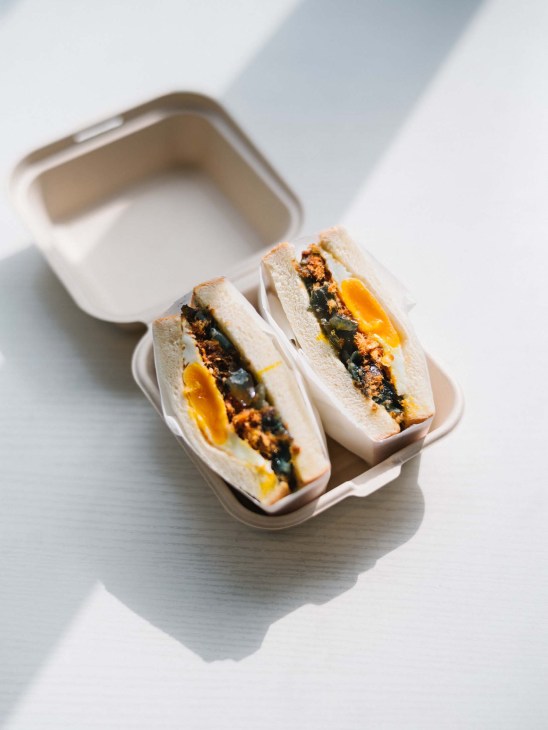
“Most breakfast shops are on busy street corners. We chose this spot to help people to unwind,” says Jane Hu, a marketing manager – a position that few old-school breakfast shops employ. When Monocle visits on a Monday afternoon, the shop is full of diners sitting down for their meal. The menu is full of unexpected flavour combinations. There’s a mapo tofu dan bing, stuffed with tofu, minced meat and fermented chilli sauce; we’re also tempted by an egg sandwich featuring pork floss – dehydrated pork with a candy-floss-like texture – and century egg, a preserved duck egg with a distinctive blackish hue.
Traditionalists might scoff at new establishments of this kind (as well as at the tendency of their clientele to take photos of their food) but they are attracting footfall. Perhaps this evolution of the breakfast shop is a quiet rebellion against the sameness of so much brunch culture, with its bland avocado toasts, or the relentless pace of Taipei’s commuter hours? That’s something to discuss over a dan bing, anyway.
Address book
Chongqing Soy Milk and Fried Egg
Known for its deep-fried ‘dan bing’.
32, Lane 335, Section 3, Chongqing North Road
Fu Hang Soy Milk
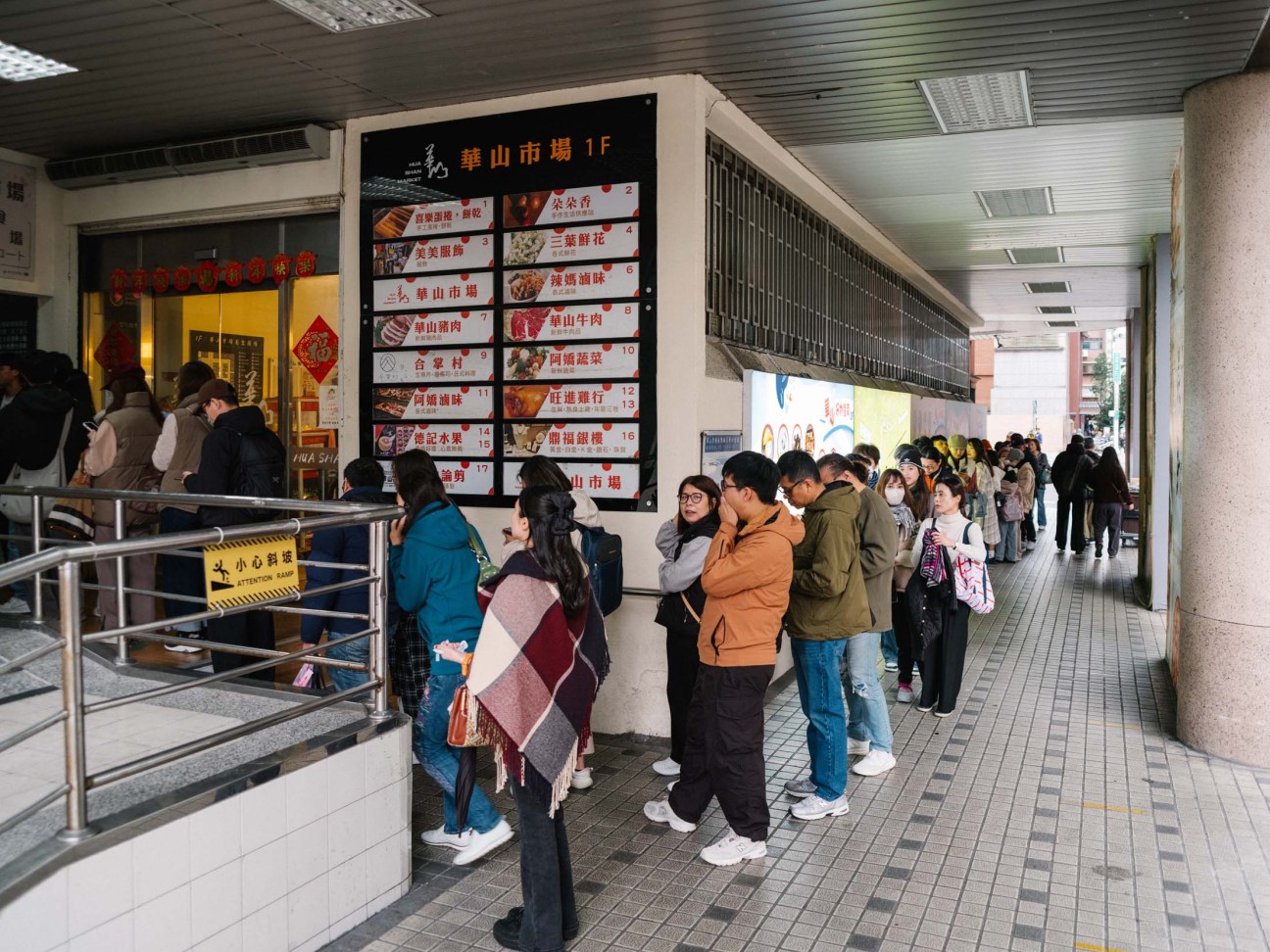
A traditional favourite with long queues.
108, 2nd Floor, Section 1, Zhongxiao East Road
Lao Jiang’s House
Open around the clock, all week.
110 Yanji Street
Miss Qin’s Soy Milk
Try the signature ‘dan bing’ with long beans.
7-6, Yanji Street
Nite-Nite Breakfast
A quiet place with quirky flavour combos.
37, Lane 127, Gangqian Road
Meet the founders of Sasuphi, the womenswear brand that’s equal parts professional and chic
“This is a new vision of power dressing,” says Sara Ferrero, pointing to lightweight cashmere cardigans, satin tube skirts and breezy crêpe-de-Chine shirts by Sasuphi, the womenswear label that she co-founded in Milan with Susanna Cucco in 2021. Ferrero and Cucco are widely known for their exceptional taste and stellar CVs, which include executive positions in some of the city’s most established fashion houses. Ferrero, a former investment banker and consultant, worked as CEO of Valextra and Joseph. She was also a general partner at Neo Investment Partners, leading the private equity firm’s investments in beauty and fashion; and remains a board member at Ferragamo. Cucco has spent decades working as an art director for companies such as Max Mara.
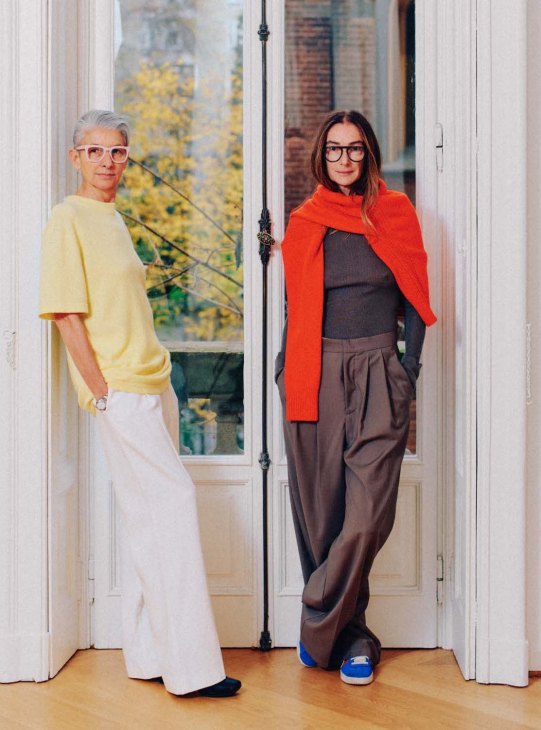
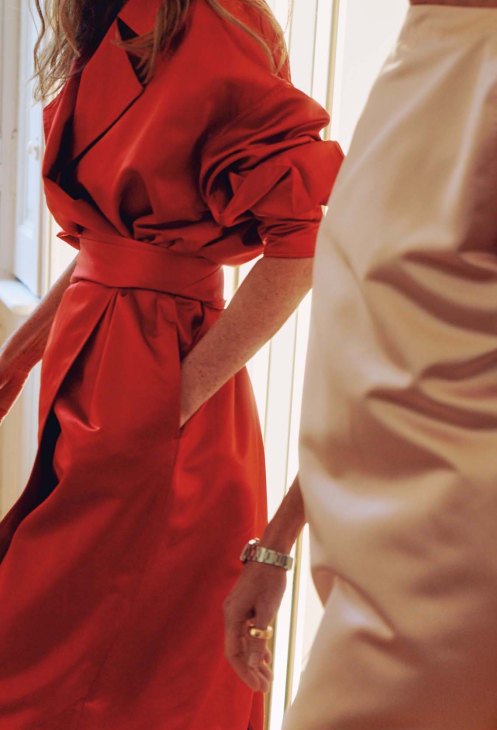
Even after seeing the output of some of the biggest houses in the world, both Cucco and Ferrero felt that the luxury fashion market was missing a sense of pragmatism – bold designs that can still fit into day-to-day life. “Fashion designers create according to their vision, not according to what women want to wear to feel good,” says Cucco, also pointing to fashion’s perennial obsession with youth culture. “We thought that there was space for women like us who are not necessarily young; people who work, who have meetings in the day and events in the evening,” says Ferrero.
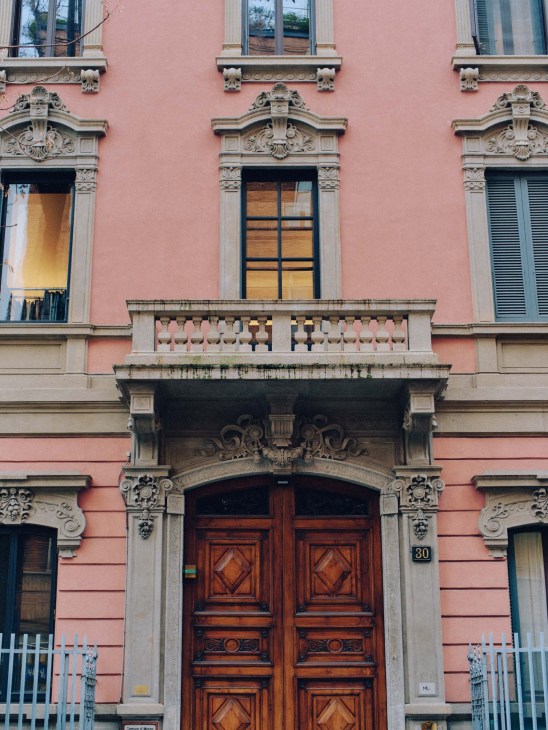
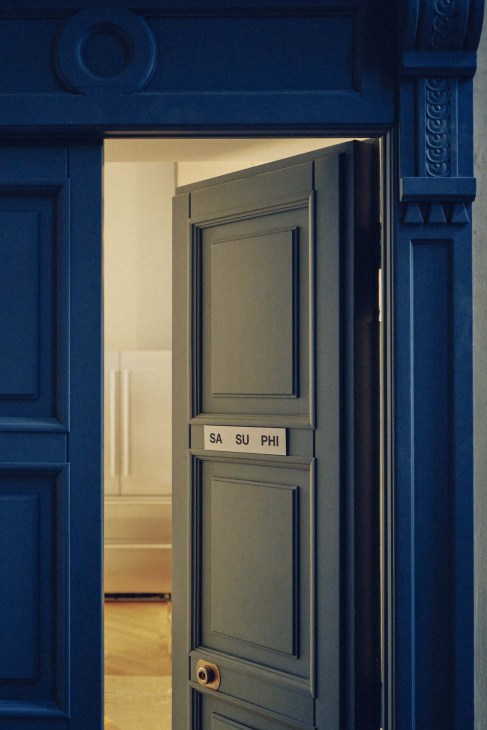
That’s how Sasuphi was born – from a desire to offer well-made, adaptable clothes that won’t go out of style in just a few months. “The market is insulting the customer when it offers clothes that become irrelevant after one season,” says Ferrero. Instead, Sasuphi makes pieces that “you don’t want to let go”. Designs from previous seasons remain part of the collections, styled with new-season creations, the focus always being on clean-lined silhouettes inspired by architecture rather than fashion trends. “Living in Milan, you’re surrounded by buildings by some of the best talents of the 20th century, and that shapes how you think about design,” says Ferrero. “Architecture is also about functionality,” she adds, while sitting at the long conference table of Sasuphi’s showroom-cum-studio, which occupies the sunny first floor of one of Milan’sgenteel residential palazzos in Brera. “We bring the geometry of architecture to our clothes.”
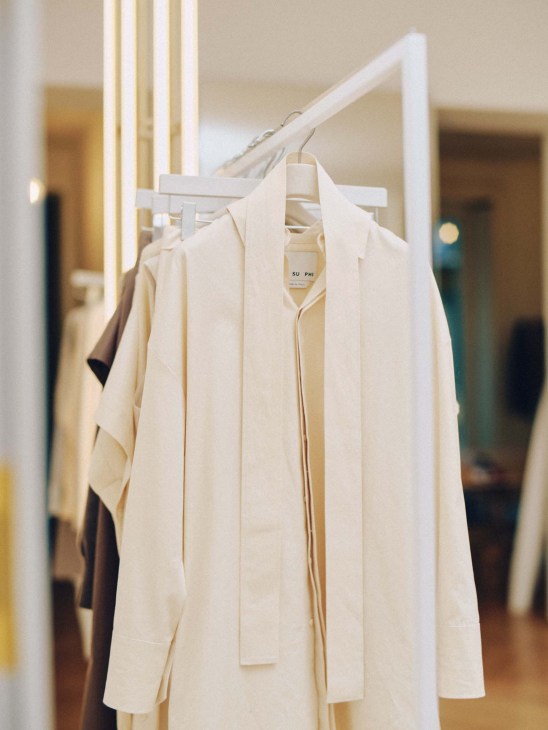
Close inspection of their pieces reveals outstanding Italian fabrics sourced from the country’s best textile makers: thick silks from Ratti in Como, finespun cashmere from Cariaggi, heavy cotton shirting from Albini and wool from Zegna’s famous facility in Piedmont. “As Italians, we want good ingredients,” says Cucco, who firmly believes that everyone deserves to wear natural materials. “They’re luxurious on the skin, plus they breathe in the summer and retain heat in the winter – the original tech materials.”
Despite the pair’s industry connections, Sasuphi launched without investors and without a marketing team. “We needed independence in order to follow our values,” says Cucco. “And it’s working.” The brand is now available in more than 50 top outlets worldwide, from Net-a-Porter to Bergdorf Goodman, and sells out quickly.
For spring the label’s collection focuses on a potent, mood-boosting colour palette, from poppy red and periwinkle blue to hyacinth pink. Colour is a form of “gentle power”, says Cucco, who wears pink-framed glasses.
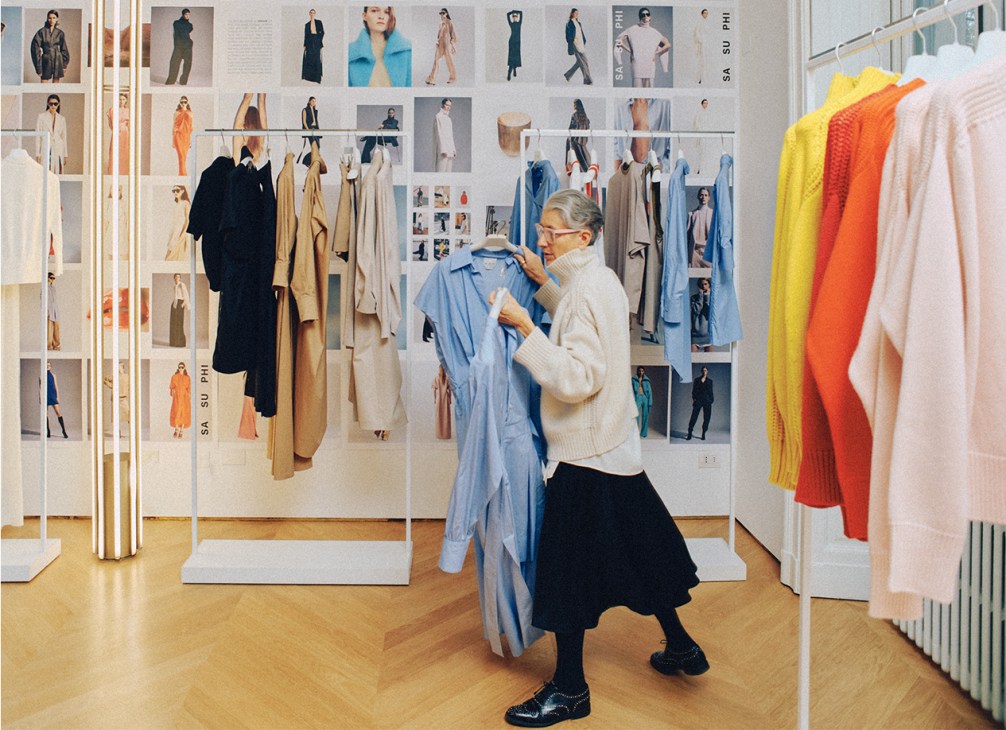
The line also includes lightweight, fuss-free styles, from silk trenches to voluminous knits and silk T-shirts, which can be easily layered, becoming the cornerstone of any spring wardrobe. As the two women pull items from the showroom racks – white trousers that button down the sides, a butter-yellow shirt dress, a silk khaki T-shirt – they restyle themselves as they go, creating various combinations with every garment. That’s the best way to wear Sasuphi.
Ferrero and Cucco also demonstrate how adaptable their designs are by taking them on the road and hosting trunk shows around the world. “As a small company, this is the best way to generate interest,” says Ferrero, explaining that even the smallest in-person trunk show creates opportunities to connect with customers, share stories and showcase the garments’ artisanal quality. “You don’t need 100 million followers on social media. You don’t need followers, period. You need fans. You need 1,000 people who believe in you and buy your products.”
sasuphi.com
US philanthropist and billionaire Nicolas Berggruen’s plans to reshape global power dynamics
Nicolas Berggruen is adamant that ideas have always been more attractive to him than material wealth. “I was always more interested in philosophy and politics,” says the US philanthropist and billionaire. “But I took a long detour into business.” The detour to which Berggruen refers is a decades-long career in private equity and property, achieved by buying repossessed buildings in New York. He created Berggruen Holdings in 1985, now one of the world’s most influential investment companies. But the pinnacle of his life’s work came in 2010 when he founded the Berggruen Institute, an independent think-tank based in Los Angeles, which he has personally endowed with some €460m. The foundation now has offices across three continents and the backing of influential members, including France’s former president Nicolas Sarkozy and erstwhile Google CEO Eric Schmidt. “You have to recognise your gift,” says Berggruen. “I don’t think I would have been a very talented politician, but I believe I can be helpful in my own way through the Institute.”
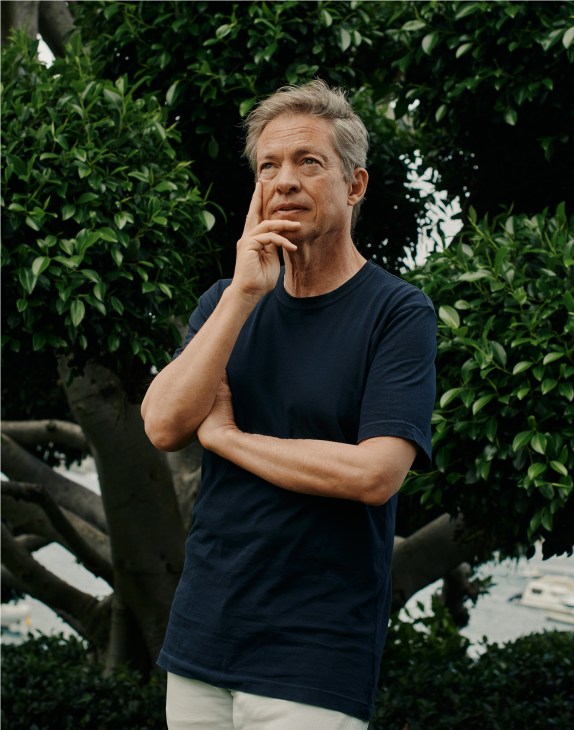
Born in Paris in 1961 to German art-dealer Heinz Berggruen and actress Bettina Moissi, Nicolas has always been surrounded by fame and glamour. In 1978, at the age of 17, he moved to London to train under property developer Max Rayne before crossing the Atlantic to New York to study. It was during the Big Apple’s finance boom of the 1980s and 1990s that Berggruen amassed a fortune from investing in property, stocks and hedge funds, which today amounts to about €3bn.
There were signs of Berggruen’s rebellious nature early on when he was expelled from boarding school. But in 2000 he took it one step further. Selling off all his properties and belongings (bar the private jet) to travel the world, Berggruen earned himself the ironic moniker of “homeless billionaire” and surrounded himself with an eclectic cadre of intellectuals and policymakers. “We became this little brains trust and started to think about subjects such as democratic and capitalist reforms,” he says. “And out of that came the Institute.”
Today the institute has a substantial reach. Publishing the Berggruen Governance Index that analyses the quality of life in more than 145 countries, it also holds a $1m (€920,000) annual prize for philosophy, on par in monetary terms with the Nobel Prize. It has facilitated talks between China’s Xi Jinping and Western policymakers, and in 2022 hosted its first summit in Venice to discuss a worldwide approach to borderless issues such as climate change. The issue of globalisation has long troubled Berggruen. “The worldview I grew up in was one led by the West, dominated by liberal values,” he says. “Frankly, that’s over. The opportunity for the next 20 years is for problems to be dealt with at a local level rather than by some far-off power that doesn’t understand your culture.”
Berggruen’s next step is to graduate from “homeless billionaire” to an abbot fit for the 21st century as he works on a growing network of “secular monasteries” – his term for the Institute’s centres. Current sites include a 1920s building on the campus of China’s Peking University, as well as a 180-hectare plot of land near the Getty Center in the Santa Monica Mountains. Reflecting on his work so far, Berggruen concedes that he gains as much as he gives. “I learn a lot from the project, so in a way it’s quite selfish,” he says. “But it works.”
The CV
1961: Born in Paris.
1981: Graduates from New York University with a degree in finance and international business.
1985: Founds Berggruen Holdings in Los Angeles.
2010: Sets up the Berggruen Institute.
2012: Co-authors first book, Intelligent Governance for the 21st Century, with Nathan Gardels.
2021: Inaugurates the Berggruen Institute’s European HQ in Venice.
2025: Launches Berggruen Press, debuting with a collection of essays titled The Planetary, edited by Nils Gilman.
Cultural agenda: Johannesburg photography, media impartiality and author Katie Kitamura
The week that I began to think about this column, Jeff Bezos announced that the opinion section of The Washington Post, which he owns through a holding company, would start focusing on articles about “personal liberties and free markets”. Pieces opposing those views, he suggested, would not be published.
That’s a bad idea. A key part of my job as the editor in chief of Folha de São Paulo, Brazil’s largest and most influential news outlet, is to ensure that articles opposing the paper’s views see the light of day. Our columnists, for example, are a team of about 200 writers whose political views span a broad spectrum.
The role of newspapers such as Folha or The Washington Post is not to imitate the echo chambers of the big social-media platforms but rather to present a smorgasbord of ideas – think of it as wandering through the public square of professional journalism. Reasserting a narrow set of beliefs over and over can dull critical thinking and, in the worst cases, lead to radicalisation. My predecessor used to say half-jokingly that Folha shouldn’t be “a newspaper for cardiac patients”, meaning that we should surprise our readers at least a couple of times per edition, taking them out of their comfort zone. That’s what we strive to do every day through nonpartisan, pluralistic journalism.
As well as giving voice to all perspectives, we cover those in power with the same critical rigour whether they are from the right, centre or left. “Pau que bate em Chico bate em Francisco,” as the old Portuguese saying goes. That roughly translates as, “What’s good for the goose is good for the gander.” The slogan of The Washington Post is “Democracy dies in darkness” – but it can also die in the unison of thought.
Dávila is the editor in chief of ‘Folha de São Paulo’, a 104-year-old Brazilian newspaper with more than 900,000 subscribers.
Q&A
Katie Kitamura
Author
New York-based novelist, journalist and critic Katie Kitamura was longlisted for the National Book Award and the Pen/Faulkner Award for her 2021 novel, Intimacies. Kitamura’s fifth book, Audition, tells the story of an actress who meets a compelling yet troubling young man. Here, Kitamura discusses her favourite writers and moral ambiguity in fiction.
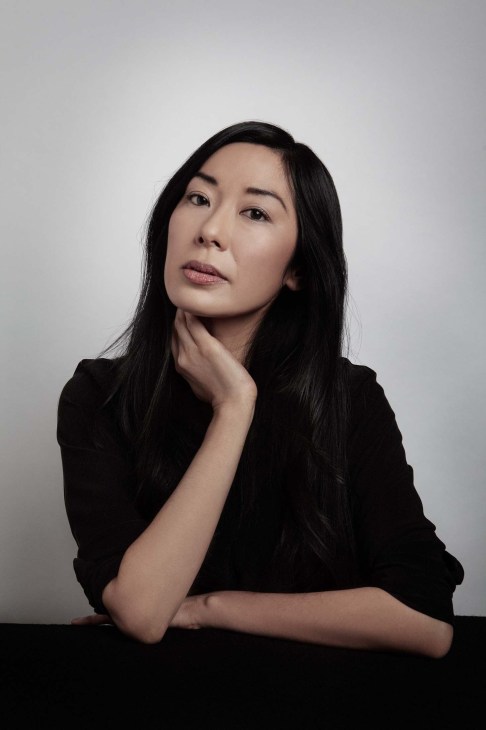
The protagonist of ‘Audition’ is an actress. What drew you to this profession?
I have always been interested in performance. She is someone who plays many roles in her life. That’s something that all of us can relate to.
Your books often explore moral and narrative ambiguity. Why?
I am very rarely drawn to stories in which things are cut and dried. I like books that are open to interpretation. In a lot of ways, the work of a novel is to make the reader a little uncomfortable. I wouldn’t want to write a book that I felt was cosy.
Who are some of your favourite writers?
I love Marguerite Duras and Javier Marías, a Spanish writer who sets up situations with impossible ethical questions and makes the reader live in those spaces. Kenzaburo Oe is also important to me.
‘Audition’ is published by Riverhead Books.
In the picture
Photography
Johannesburg
While many publishers are looking for ways to scale back their operations, Trevor Stuurman, the Johannesburg-based founder and creative director of photography platform The Manor (and editor in chief of its magazine), is doubling down. Last year he expanded the brand by launching a new gallery; in February, The Manor was a media partner of the Investec Cape Town Art Fair, Africa’s biggest art event.
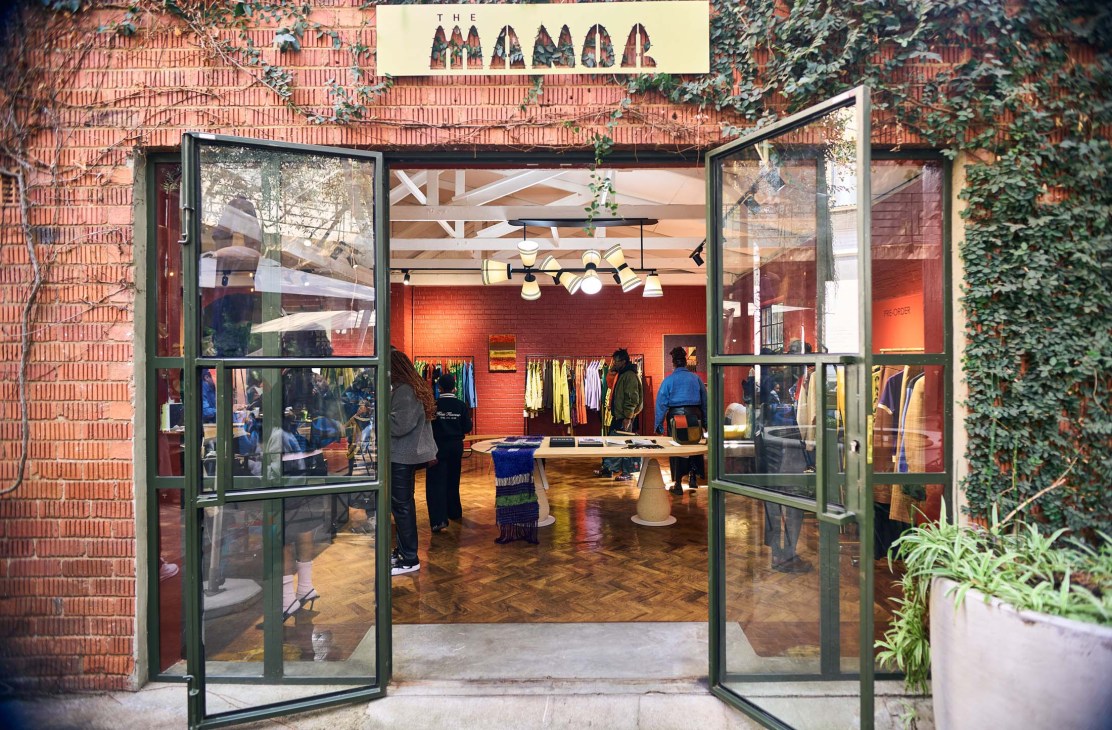
“Africa is rich in stories and talent but there sadly aren’t enough platforms and spaces to showcase and archive them,” Stuurman tells Monocle. That’s where his gallery comes in. Visitors can stop by the permanent space to pick up a copy of his magazine, which highlights local talent such as singer Thandiswa Mazwai and actress Zoë Modiga.
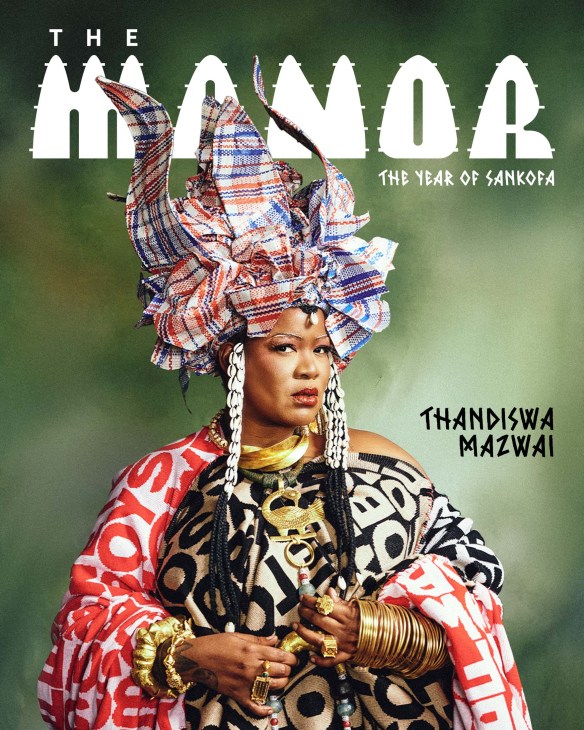

The gallery has shown pieces by creatives from across the continent, including artist Jakinda Mshindi Boya and photographer Lebogang Tlhako. “We have built a beautiful ecosystem here that promotes creativity, content and community,” says Stuurman. “Ultimately we would love to see The Manor as a long-lasting cultural institution and museum of art.”
themanor.africa
The six restaurants that you should be booking this month, from Copenhagen to Sydney
1.
Riviera
Copenhagen
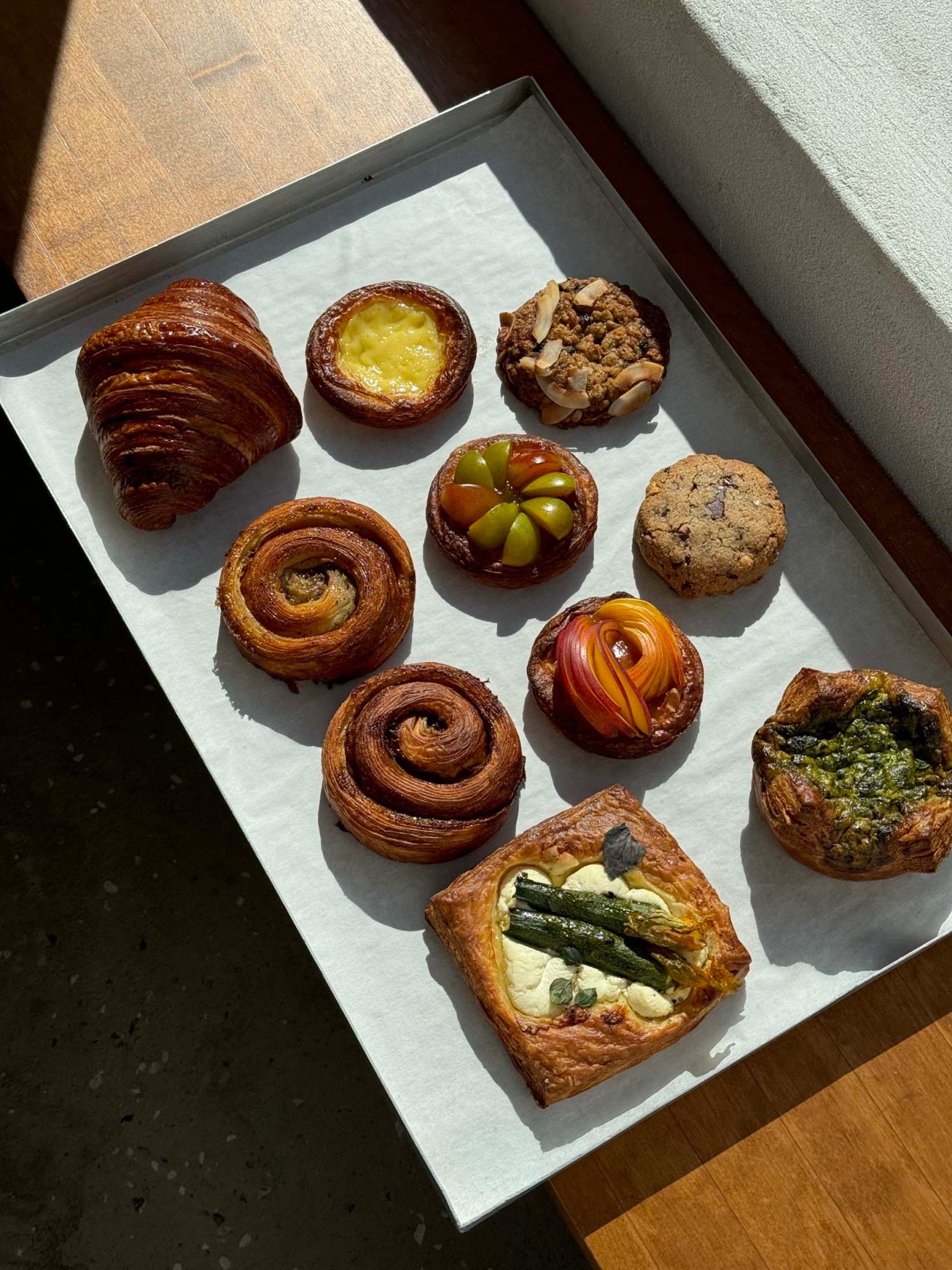
Chiara Barla, the Italian chef at Apotek 57, the café by design store Frama, has recently opened a new spot, Riviera, in Nansensgade. Inside the former 1960s bakery, a Frama-designed central trestle table invites customers to sit side by side, Copenhagen-style.
On the menu are Danish fastelavnsboller buns, figs and Parma ham on homemade sourdough and spandauer pastries. “Most of our dishes are prepared in the same oven in which we bake our bread, which is at the heart of the bakery itself,” says Barla. Don’t leave without trying her pistachio croissants.
framacph.com
2.
Derrel’s
Sydney
The sign at the door reads, “Derrel’s, Nana never cooked.” Grandpa Derrel was the chief cook in chef Brendan King’s family. This Anglo-Indian restaurant is named for King’s grandfather, who inspired the diner and the menu at the inner western-Sydney suburb of Camperdown.
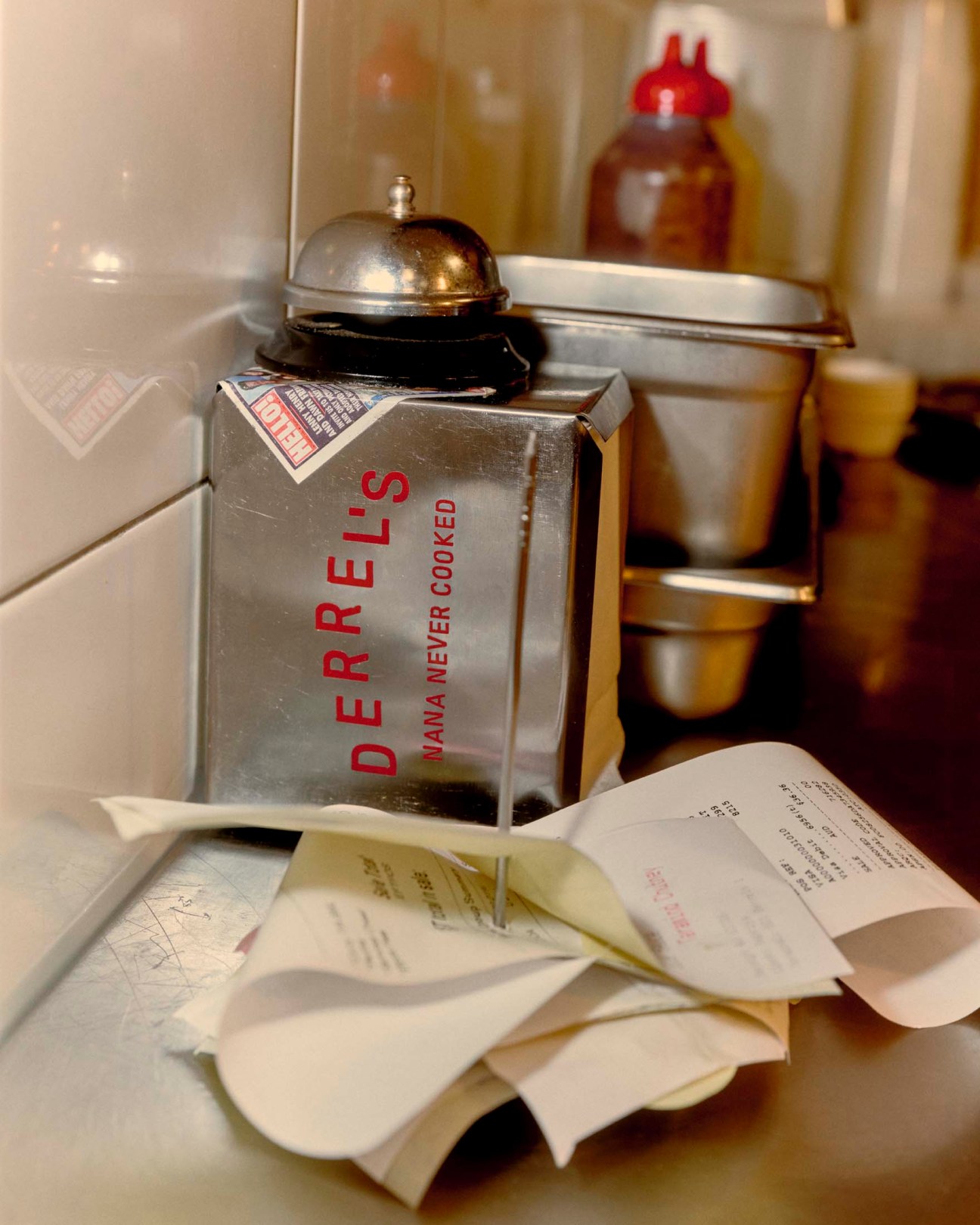

Known with fondness locally for its late-night bites, Derrel’s is busy from its 17.00 opening time – often with a queue out the door – and serves until midnight. For residents, staff from the nearby hospital and students from the university, it’s a bastion of hope in a city that rarely has kitchens open past 21.00. “Reserved” signs predominate but you can either call ahead or wait for space then order at the counter. Make sure you don’t miss the samosa chaat: smashed samosas on a spicy chickpea curry, minty yoghurt, coriander, chilli and a tamarind chutney.


Follow it with a half tandoori chicken plate with a side of chips (a bowl of butter chicken gravy to dip them in can be added to your order) and a bright tomato and cucumber salad laced with cumin. Or why not try a simple tray of butter chicken with roti and rice, washed down with a mango lassi? And it’s not just the food that’s refreshing at Derrel’s – the service is lively and fresh too.
89 Parramatta Rd, Camperdown
3.
Bouchon Carême
Helsinki
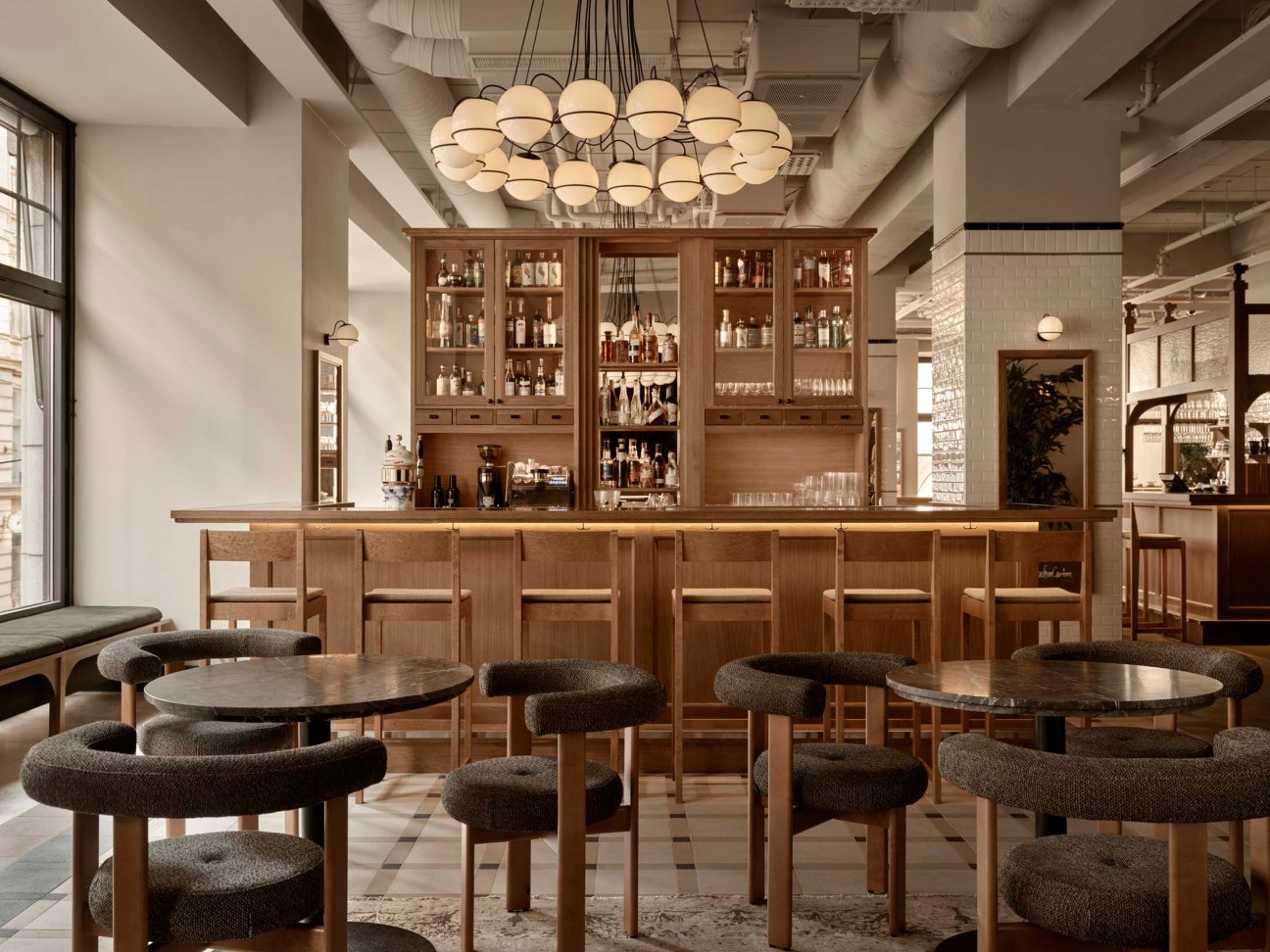
Drawing inspiration from Lyonnaise fare, Bouchon Carême features hearty and full-flavoured Gallic-style dishes. “Lyon is the cradle of French gastronomy,” says chef Hans Välimäki, its founder. Ample use of natural wood and soft light lend the restaurant the air of an unpretentious bouchon.
bouchoncareme.fi
4.
Pluto
Berlin
There’s no shortage of wine bars in Berlin, a city now enjoying a glass with the fervour once reserved for craft beer. In Prenzlauer Berg, Pluto draws a devoted crowd. This is partly down to the pedigree of its founders, Vadim Otto Ursus and Sören Zuppke, who made a mark on Berlin’s culinary scene with Otto in 2019. “With Pluto, we wanted to create a place where strangers might find themselves sharing a bottle at the bar,” says Ursus.
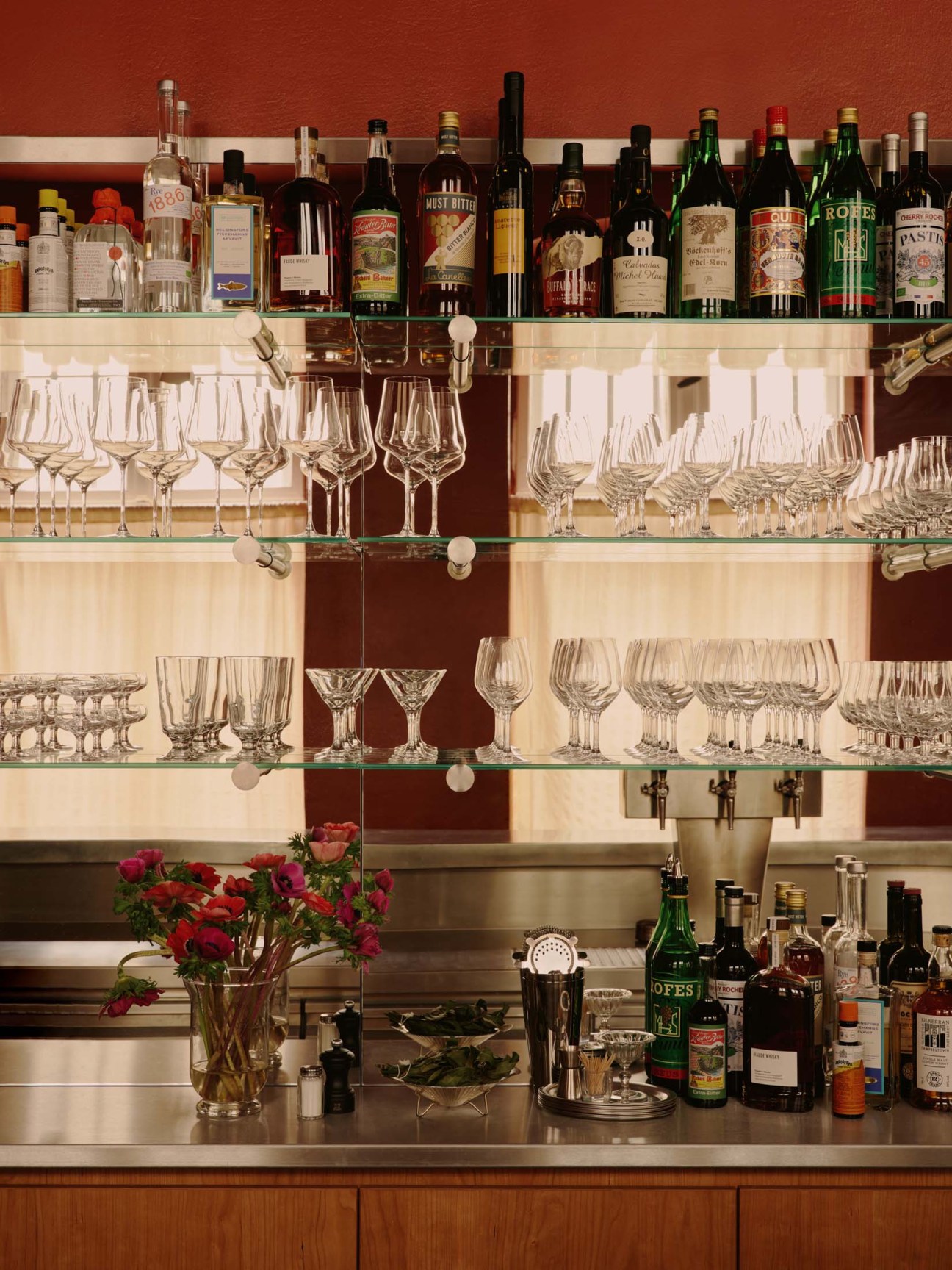
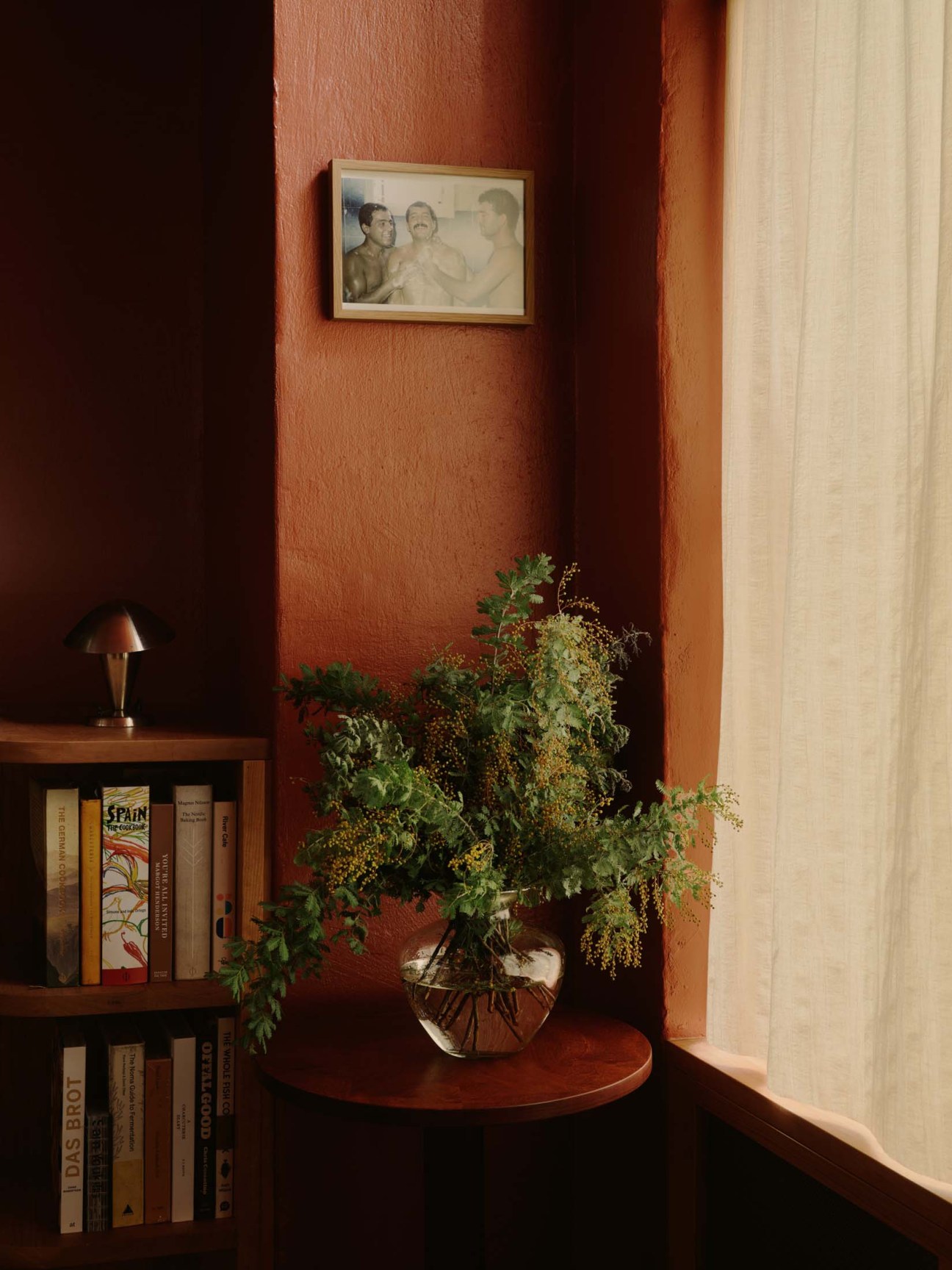
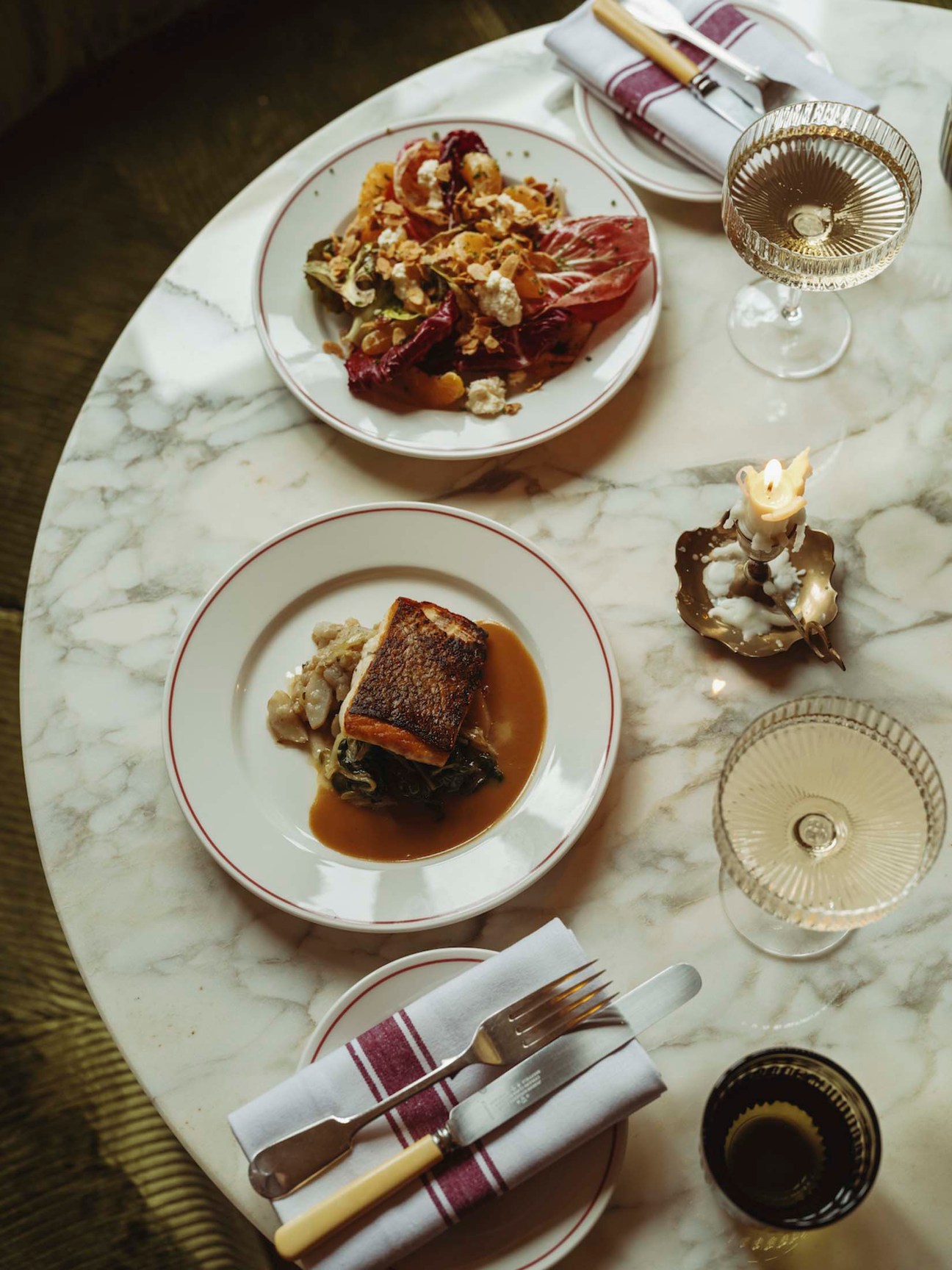
With ties to organic farmers in Brandenburg, the menu stays true to classic bar fare but with the odd adventurous twist: think fromage de tête, a veal tongue salad or a fiery mussel escabeche. The winelist reflects years of research on small biodynamic producers across Europe. Perhaps the most un-Berlin thing about Pluto? No reservations.
pluto-berlin.net
5.
Don’t Tell Dad
London
“London’s independent bakery scene is incredible but Queen’s Park has yet to see a standout – and it deserves one,” says restaurateur Daniel Land, who recently opened Don’t Tell Dad in the northwestern enclave of the UK capital.
Customers who arrive at the bakery early will find burnt-lemon tarts, brown-butter-and-hazelnut croissants and wild-garlic-and cheddar twirls. Come nightfall, a candlelit bistro-style ambience beckons, with dishes by ex-Noble Rot chef Luke Frankie.
donttelldad.co.uk
6.
Souen
Tokyo
Tea master Shinya Sakurai wanted to revive an appreciation for traditional Japanese tea shops without the fuss. “You used to be able to smell tea being roasted everywhere but these businesses have been disappearing,” he says. So he transformed a former sweet shop in Tokyo’s Setagaya ward into Souen, which opened in January.
In contrast to the Sakurai Japanese Tea Experience in the Minami-Aoyama district, Souen has a more casual setting. Original seasonal blends are the focus, while various leaf teas, matcha lattes and tea cocktails broaden the appeal. Teas are served in ceramics made by Kagoshima-based potter Shuo Iwakiri. A selection of sweets is produced in-house.
3-17-11 Wakabayashi, Setagaya, Tokyo 1540023

Design agenda: A Shigeru Ban monograph, Buenos Aires’s colourful regeneration and more
Shigeru Ban: Complete Works 1985 – Today (published by Taschen) celebrates the work of one of Japan’s best-known contemporary architects. Ban studied in the US in the 1970s and 1980s, where he was influenced by American modernism. His first large-scale international work was the Centre Pompidou-Metz in northeast France, which opened in 2010 and was modelled on a Chinese bamboo-woven hat; others, such as the timber-clad Swatch/Omega Campus in Switzerland, soon followed.
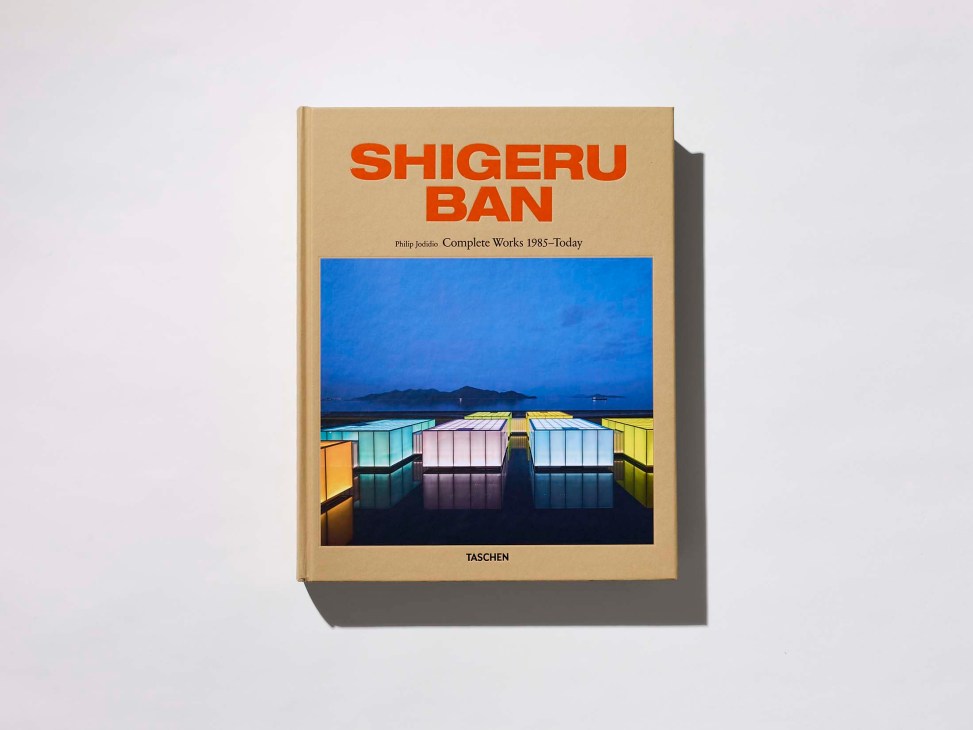
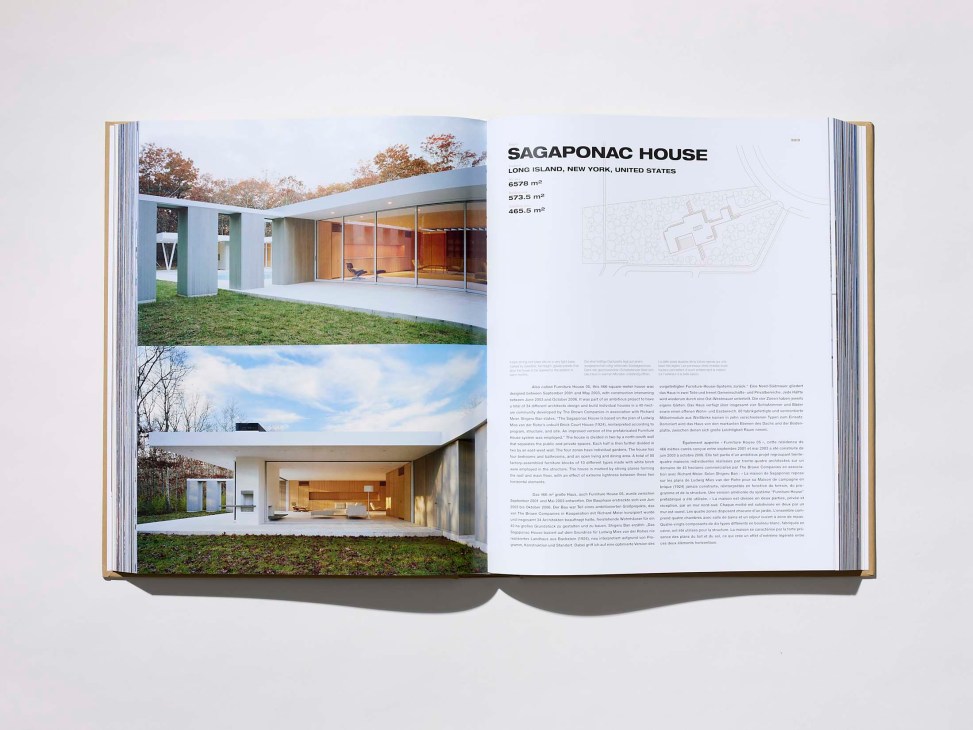
Remarkable is Ban’s ingenious exploration of materials, such as the use of rigid paper tubes as structural elements. He has employed them in the creation of emergency structures in times of ecological or manmade crises, from Fukushima to Ukraine. “Designing temporary housing for disaster relief has become as integral and meaningful to my work as creating museums or high-end residential projects,” says the architect, whose work was recognised with a Pritzker Prize in 2014. This hefty tome is appropriately sized for such an important living architect.
taschen.com
Architecture: Paris
Q&A
Past and present
Pierre-Yves Rochon
Architect
For more than 45 years, French designer Pierre-Yves Rochon has been bringing timeless elegance to the interiors of clients such as Waldorf Astoria and chef Alain Ducasse. At this year’s Salone del Mobile furniture fair in Milan, he is presenting “Villa Héritage”, an installation distilling his decades of experience and taste-making.
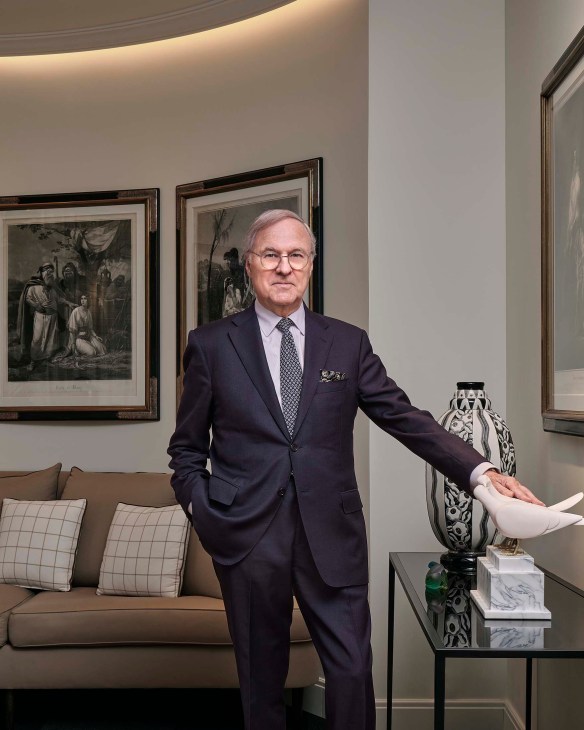
How do you approach heritage in your designs?
I try not to be influenced by trends, which are just moments when the majority thinks the same thing. But heritage is different. It’s not nostalgia. It allows you to choose influences that speak to your sensibility.
Can you tell us about your installation, ‘Villa Héritage’?
The idea is to show just how well different periods of Italian architecture and interior design, as represented by a selection of Salone’s exhibitors, can exist together. We combined their most beautiful creations with the goal of creating an experience in which light, texture and sound come together to create emotion.
What do you hope visitors will take away from it?
I hope that people will reflect on the idea of transmission, of how the past informs the present and allows us to imagine the future.
For more news on Salone del Mobile, pick up a copy of Monocle’s dedicated newspaper, ‘Salone del Mobile Special’, available to purchase at The Monocle Shop or to read online here.
Furniture: Paris
Room service
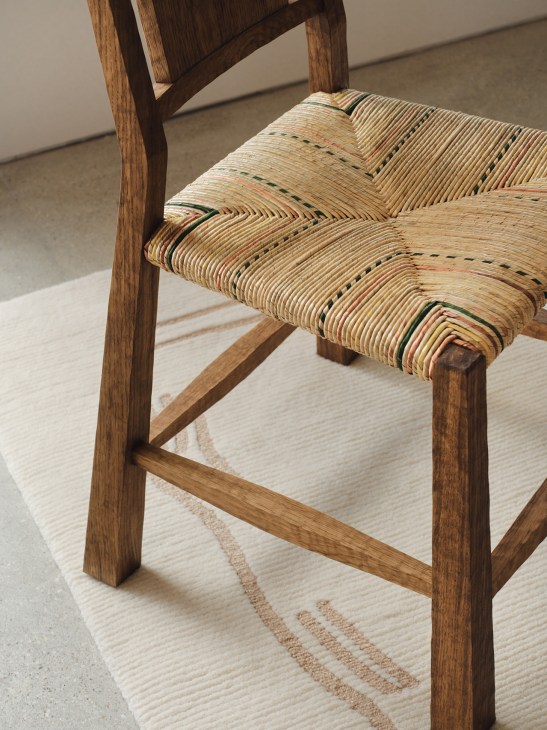
Interior designers frequently design bespoke wares for clients but it’s rare that such pieces are put into industrial production. Thankfully, one of France’s most celebrated designers, Pierre Yovanovitch – whose work spans furniture, lighting and interiors – bucks the trend.
Visitors to his Paris gallery are able to peruse his 2025 collection, with highlights including the Eze Chair, which has tapered legs and an earthy rattan seat; and the Daniel Armchair, with rounded arms that resemble gently worn river stones. To give visitors a sense of how the works might fit into their own home, the gallery-like space – a former fashion atelier, redesigned by architect Jean Nouvel – is filled with a selection of contemporary art lit by an overhead atrium.
pierreyovanovitch.com
Urbanism: Buenos Aires
District Champions
Playón de Chacarita, a neighbourhood in Buenos Aires, has been given a facelift at the behest and under the direction of its residents. Argentinian design firm Región Austral worked with the community to identify quick urbanism fixes as part of an initiative named Playón Red. “Urban design must always respond to the needs and aspirations of residents,” says Soledad Patiño, co-founder of Región Austral. “They hold invaluable knowledge about their territory, providing insights that external professionals could never fully grasp.”
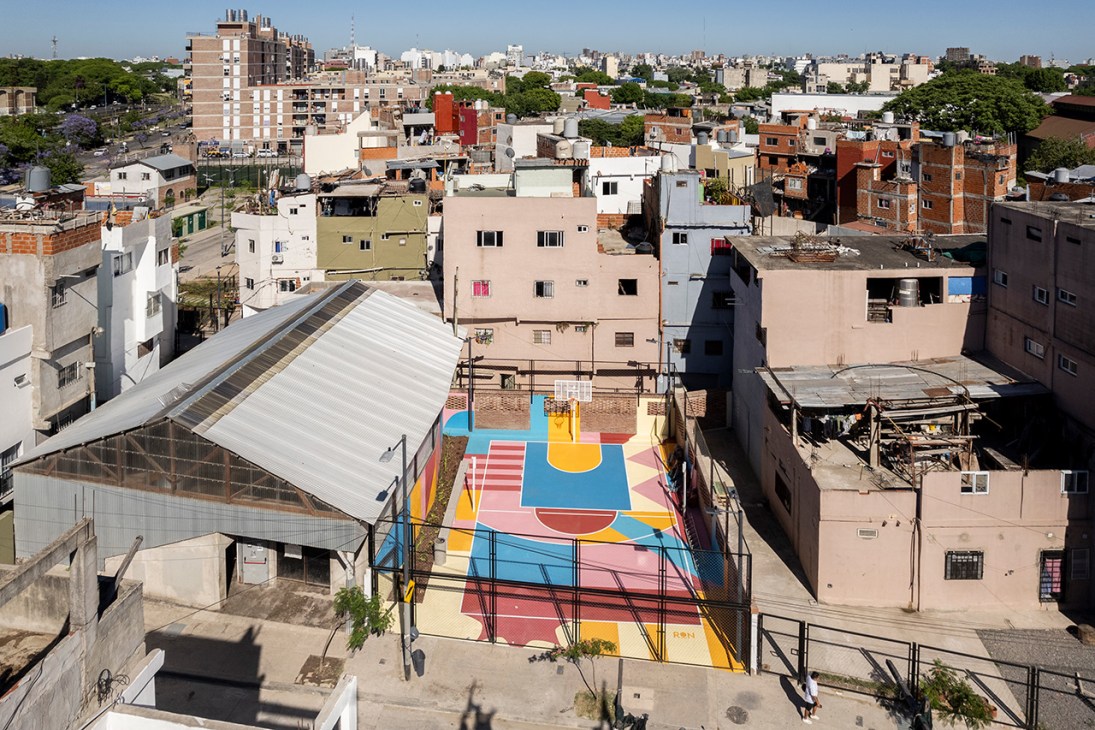
In Playón de Chacarita, those insights included a need for security, space for sports and cultural activities, and the addressing of environmental and sustainability concerns. To respond to this, the studio identified appropriate sites to create a passage-like courtyard between homes, a pocket park that doubles as a rain garden to offset flooding, and a sports court splashed with colour. According to fellow Región Austral co-founder Stefano Romagnoli, sometimes the simplest fixes are the ones to turn to. “In many of our projects, we have used vibrant hues to reinforce local identity and create visual landmarks,” says Romagnoli. “Colour goes beyond aesthetics; it fosters a sense of belonging.”
regionaustral.com
Inside the fighter-jet school where virtual technology is your wingman
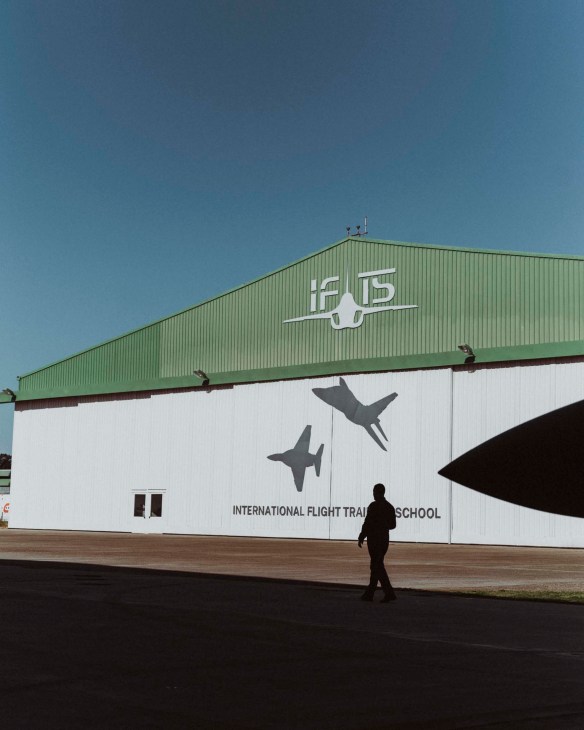
Wishing a fighter pilot a good flight isn’t the done thing, apparently. Stefano Centioni, a former Italian Air Force (IAF) pilot who now works for the country’s largest defence contractor, Leonardo, winces at the suggestion. “That’s the sort of thing that you say to a Ryanair pilot,” he says. We’re at the International Flight Training School (IFTS) in Sardinia, a collaboration between the public and private sectors that is aiming to become top gun in the niche of fighter-pilot training. The school is based in the IAF’s Decimomannu Air Base, nestled in undulating scrubland a short drive from the city of Cagliari. As Europe works to scale up its arms-production capabilities in a bid to wean itself off its over-reliance on the US, Leonardo is expected to benefit. Currently Europe’s third-largest defence company, it is branching out into new areas, from aerospace to training, which is where IFTS comes in. The array of national flags flapping in the breeze in front of the reception indicates how many nationalities make up the facility’s student and teacher corps, which are as diverse as a Sardinian beach in summer. Opened in July 2022, the facility cost Leonardo more than €200m to build, an investment that the company hopes will be rewarded when pilots return to their home countries waxing lyrical about Italian technology and expertise.


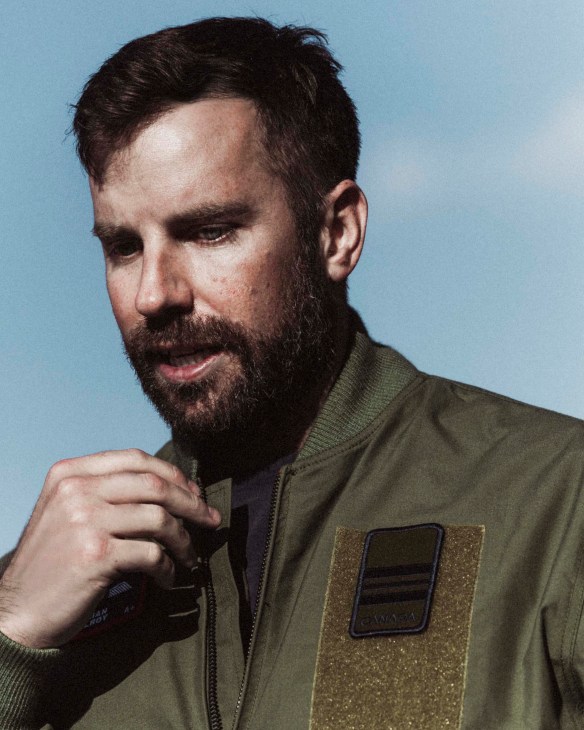
Centioni, whose blue jumpsuit signifies his affiliation with Leonardo, is the school’s head of flight training organisation. Here, instructors come from both the private sector and the military. The IAF handles areas such as the syllabus, training and testing, while Leonardo – in partnership with a Canadian company called cae that specialises in flight simulation – looks after logistics, planes and maintenance. The school’s mix of flight time and computer-based training has been popular. Teaching is done in English and, to date, 13 nations have sent students for the nine-month course, including Spain, the Netherlands, Qatar, Saudi Arabia, Japan and Singapore.
The IFTS moved from Puglia, where it was originally based, to Sardinia to take advantage of the island’s larger airspace. When Monocle visits, a site has been identified for two new housing blocks that are scheduled to be finished by the end of 2025, adding 40 units to the 58 that already exist for non-Italian cadets – a sign that the IFTS is currently oversubscribed. For Lieutenant Colonel Marcello D’Ippolito, the school’s commander, dressed in green to show he is still in the armed forces, its success is down to know-how. “This is the world’s most advanced fighter-pilot school,” he says. “The quality of Italian training is accompanied by another field of Italian excellence: defence, through Leonardo. Excellence plus excellence.”
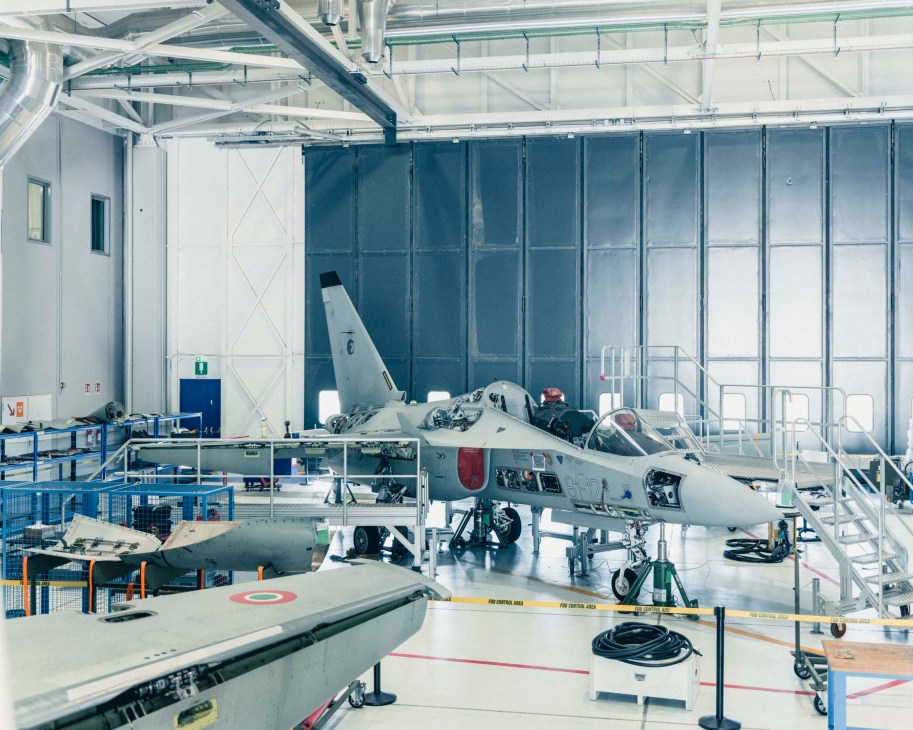
The ace up the IFTS’s sleeve is its aircraft: Leonardo’s twin-engine, tandem-seat M-346 AJT, built with training in mind. Released in 2013, it’s both technologically advanced and well tested. When students arrive in Sardinia, they already have their military wings but haven’t yet progressed to flying a jet. Monocle heads out onto the tarmac in a fleet of black Mercedes-Benz vans with a small group of international students and teachers for one of the 35 mock missions that fly from the school every day. Everyone is wearing their standard-issue flight clothing, which self-inflates inside the craft when necessary, putting pressure on the body to prevent G-force-induced blackouts. Every pilot also has a survival kit that includes water, chocolate and a radio.

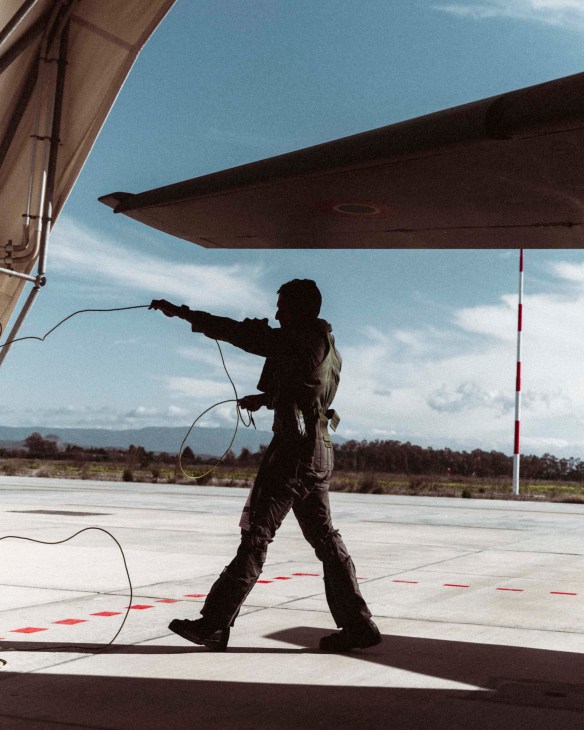
A pair of jets taxi to their takeoff positions. There’s the smell of fuel in the air; a heat haze hovers over the asphalt and the roar of the engines bounces off the nearby maintenance building. Soon the aircraft are up and away.
“When you come here, the most beautiful thing that you see is the plane,” says Centioni, who is one of 40 teachers at the school. “It’s great but there’s a whole system of simulation connected to it too.” IFTS instructors are keen to point out the benefits of the LVC network, which stands for “live, virtual and constructive”. Alongside the real and the simulated components of their training (cadets split their time evenly between the two after a first month spent entirely on the ground), there’s the “constructive” part, which involves teachers sending virtual enemies from a control room to the radar of a real plane or to simulators. The ability to have war games of this multi-modal nature is a key advantage.

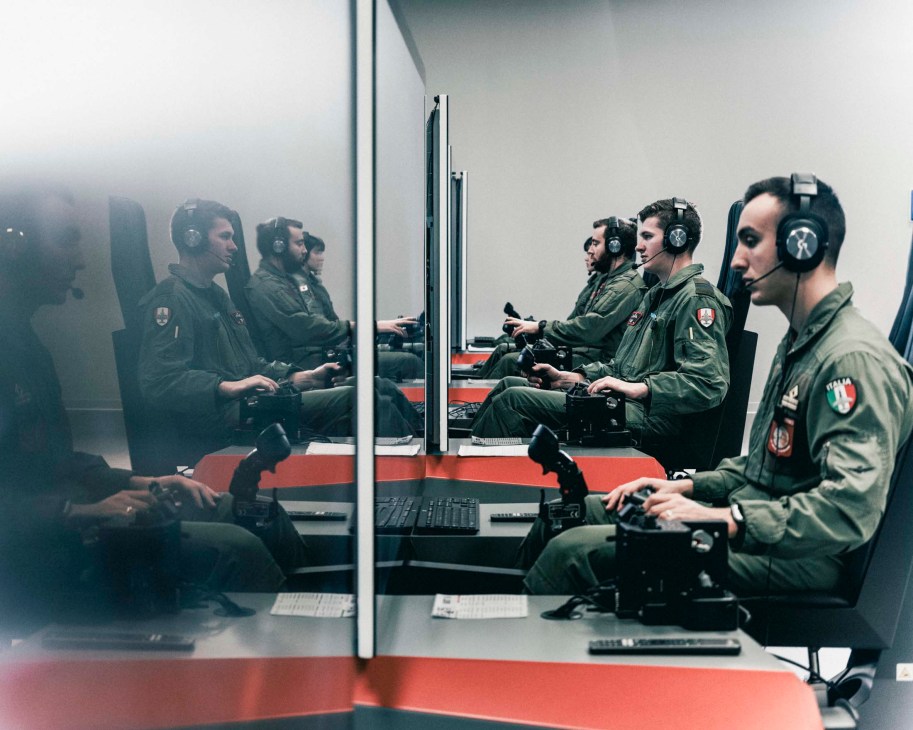
Centioni guides Monocle around the complex, showing off the three levels of the flight-simulation trainer. The entry level is full of students sitting behind screens wearing headphones and toggling HOTAS (hands on throttle and stick) controls, just as they would in an aircraft. The cost at this level is low, says Centioni, and students can come here whenever they want to practise, using swipe cards for entry. The second level, which needs to be booked with a teacher, involves a cockpit that is a replica of a real fighter jet’s. The final stage, which Monocle tries, is a capsule that closes around the trainee featuring a 360-degree screen. Though the simulator remains fixed to the ground, it fools the brain as the horizon shifts, inducing dizziness in novices. “Your stress levels go up,” says Centioni. “But that’s positive as it’s linked to performance.”
The IFT’s pitch to air forces is that they’ll save money in the long run if they send their pilots here. It’s a case that some of the establishment’s top brass make to Monocle over a buffet lunch in the school canteen, which includes a Middle Eastern food corner and plenty of international cuisines to cater for the school’s diverse intake. “Because other nations are using older trainers, there are things that pilots can’t practise until [much later] so they end up spending a lot more,” says Giovanni Basile, the managing director of Advanced Jet Training, the joint venture created by Leonardo and CAE. The M-346 allows students to practise things such as laser-guided bombing and dogfighting on a dedicated training aircraft earlier in their period of instruction than many other programmes. The US, which doesn’t currently send students to the IFTS, trains its pilots on the T-38 Talon, a jet first unveiled in the 1950s that doesn’t have the same capabilities. Boeing’s next-generation T-7A Red Hawk is on its way, with five delivered to the US Air Force so far, but there have been problems and delays. The UK, meanwhile, has retired most of its Hawk T2 trainers, which date back to the 1970s, and sends some of its young guns to Sardinia.



Monocle heads over to one of the student accommodation blocks which, with its front-desk reception, feels a little like a hotel. We visit the apartment of James (students’ surnames can’t be published for security reasons), a trainee pilot from the UK whose room is decorated with a Lego model of Nasa’s Discovery space shuttle and a thirsty-looking pot plant. Like all of the students we meet, James is happy to be doing what he sees as important to his training. He says that the M-346 is fast and manoeuvrable, with fly-by-wire controls that make it easy to use. “The jump to get to where we are now has been bigger [than in more conventional pilot training],” he says. “But from here to a front-line jet, it’s smaller.” As Stefano Centioni describes it, “It’s like going from a BMW to a Mercedes.”
Despite recent moves by the UK and EU to increase defence spending, some nations have sought to make savings by opting out of the advanced jet-training phase and having cadets jump from a simple turboprop aircraft to a combat-ready supersonic jet – which has led to concerns over their lack of airmanship. “The advantage that Western forces have over our adversaries is arguably not technology but the fact that we train our pilots much better,” says Justin Bronk, a senior research fellow at London’s Royal United Services Institute. “Skimping on training risks throwing the baby out with the bathwater.”
That’s where the IFTS believes that it can play a crucial role. “We are the first people using an advanced trainer to manage complexity,” says Colonel Gianfranco Liccardo, commander of the 61st Wing Air Base in Puglia that the IFTS belongs to. “We have years of competitive advantage.” Still, Liccardo recognises that other nations will catch up sooner or later, which is why the school needs to stay ahead of the pack. Spain, for example, has already signed a memorandum of agreement with Turkey to receive 24 Hürjet advanced trainers from Turkish Aerospace Industries; deliveries could start in 2028. Centioni agrees. “Nokia and Motorola thought that they were the best, then Apple arrived,” he says. “We don’t want that.”
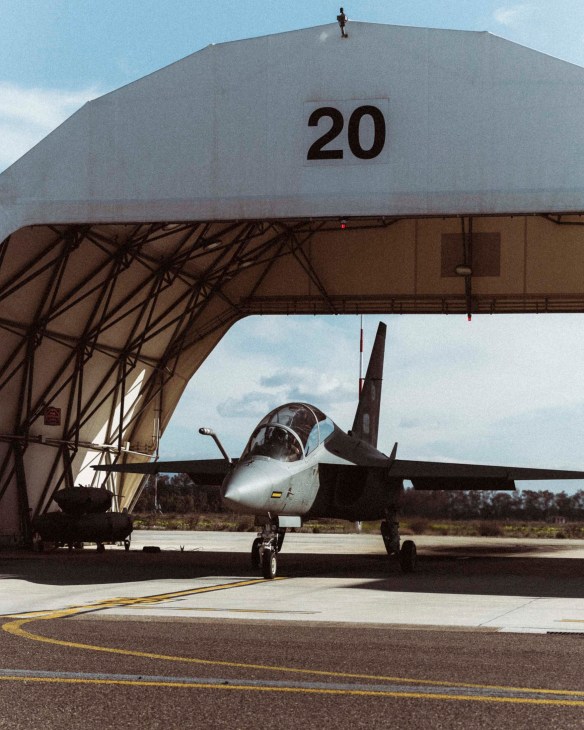

The IFTS’s plans to stay relevant include taking the augmented-reality training experience to the next level by having a hologram of virtual enemy jets appearing in a pilot’s helmet vision – an innovation that Leonardo is working on with US company Red 6. There are also plans to update the M-346 with a “Block 20” configuration that will include new digital and artificial-intelligence features. It isn’t just the global reputation of Italy’s defence capabilities that’s at stake in all of this. There’s also a bottom line to serve, as you would expect given that one of the IFTS’s partners is a for-profit defence company (albeit one whose largest shareholder is the Italian government). Giuseppe Recchia, the head of Leonardo’s IFTS business unit, sits down with Monocle in the school’s ground-floor café, near a sign that reads “Our hearts have wings”. He says that nations have bought M-346 trainers off the back of their ifts experience, including Singapore and Qatar; at the end of last year, Austria purchased 12 of the combat-ready Fighter Attack versions. However, Leonardo also sees another business opportunity in the “huge demand for training worldwide”, says Recchia. The school is part of the company’s move into being what he calls a “solutions provider”. With European defence firms still dwarfed by their US counterparts, such as Lockheed Martin and RTX, Leonardo’s services arm is part of its plan to be an integral EU defence player, a move laid out in the five-year plan that it published in 2024. The figures are heading in the right direction. Last year’s revenue was up 16 per cent on 2023’s at €17.8bn and the trend is expected to continue. “We have 12 international customers at the school,” says Recchia. “If they appreciate our level of service, we can strengthen our reputation worldwide.”
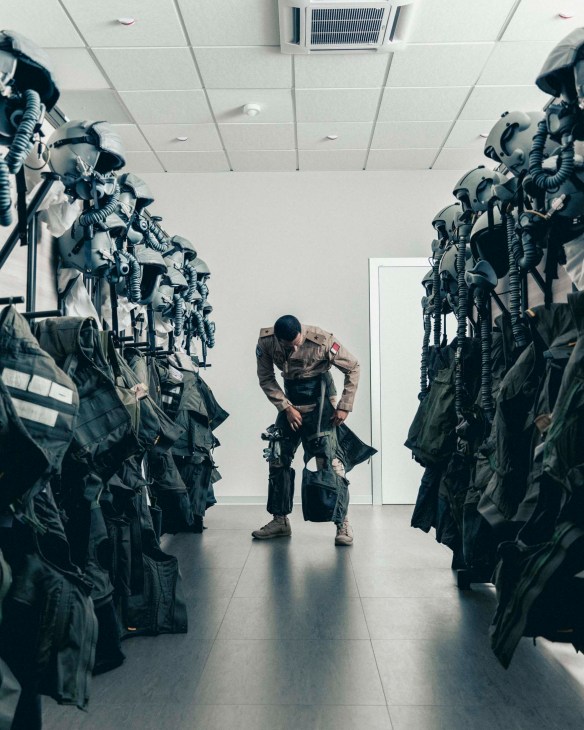

As well as the Sardinian base expansion, there’s the possibility of other campuses in different parts of the world in the future. For now, the focus is on keeping the current facility running smoothly. The biggest concern for students is learning to spell everyone’s names, says a Canadian cadet called Ben, who tells Monocle that he is following in his fighter-pilot father’s footsteps. He recently had his first M-346 flight, accompanied by a German instructor. “Because you eat, sleep, train and work out here, it removes all other obstacles,” he says, sitting in the lobby of his housing block. “That means you can focus on being your best.”
IFTS in numbers
13 countries have sent students to train here.
130,000 sq m: Size of the campus.
70: Number of students.
40 instructors from 12 countries currently oversee the course.
600-700: The average number of flight missions per month.
7: Total number of basketball and padel-tennis courts on the site.
25 metres: The length of the indoor swimming pool.
Better together
Leonardo has earmarked several strategic partnerships as part of its growth plan, including building tanks with Germany’s Rheinmetall in a joint venture. But most significant is the Global Combat Air Programme (GCAP), a collaboration between Leonardo, the UK’s bae Systems and Japan’s Mitsubishi Heavy Industries. The three companies aim to deliver a next-generation stealth fighter jet by 2035. An agreement was reached in 2022 and a GCAP company was formed at the end of last year, with plans for a UK headquarters. The plane will make use of supercomputing, artificial intelligence and cyber-resilient data links, among other technologies, with an initial order of 350 expected by 2035. GCAP isn’t the only programme of its kind. France, Germany and Spain have their own jet collaboration called Future Combat Air System, with a delivery date set for 2040.