Issues
Tech corner: Four innovative releases to buy now
1.
Fujifilm GFX100RF
The latest release from Fujifilm builds on the classic design of its hugely popular X100VI camera. The larger, medium-format 102-megapixel sensor on this camera produces remarkably detailed images, while the 28mm-equivalent fixed lens is suitable for both landscape and close-up shots.
fujifilm.com

2.
Bowers & Wilkins PX7 S3
The latest over-ear headphones from UK audio brand Bowers & Wilkins are the PX7 S3. The sound is as clear as ever, the noise-cancelling feature is exceptional and, unlike some models with swipe controls, these headphones have reassuringly returned to physical buttons.
bowerswilkins.com

3.
Google Pixel 9a
Every year, Google releases a phone that is a more affordable version of the previous autumn’s flagship. The Pixel 9a is an all-new design and makes use of Google’s many AI features. It also has a decent battery life and a fast processor, and comes in colour tones ranging from quiet to bright.
store.google.com

4.
Ampler Nova Pro
Estonian brand Ampler makes exceptional e-bikes that cleverly hide the battery inside the frame. The ride on its new model is smooth and supportive, with plenty of power to help you glide uphill. It has a USB-C charging port, so that you can use a laptop charger to charge the bike.
amplerbikes.com

Illustrator: Hao-Yun.
Design agenda: Souvenir wallpaper, green urbanism in Abu Dhabi and a Q&A with JJ Martin
Shades of green
UAE
With an arid climate and an average annual temperature of about 29C, Abu Dhabi isn’t known for its greenery. But there has been a blossoming of leafy recreational spaces in the city courtesy of Danish architecture and design firm SLA’s work on 104 new neighbourhood parks. Scattered across Abu Dhabi’s Khalifa City, Mohamed Bin Zayed City, Al Ain and Shakhbout suburbs, 74 hectares of sandy ground have been converted into places for exercise, sports, nature experiences, socialising or a simple stroll. “The parks create a sensuous and hyperlocal framework for Abu Dhabi’s inhabitants and their social lives,” says Rasmus Astrup, design principal and partner at SLA. The project builds on the six parks that were completed in 2023 (and won one of Monocle’s Design Awards).
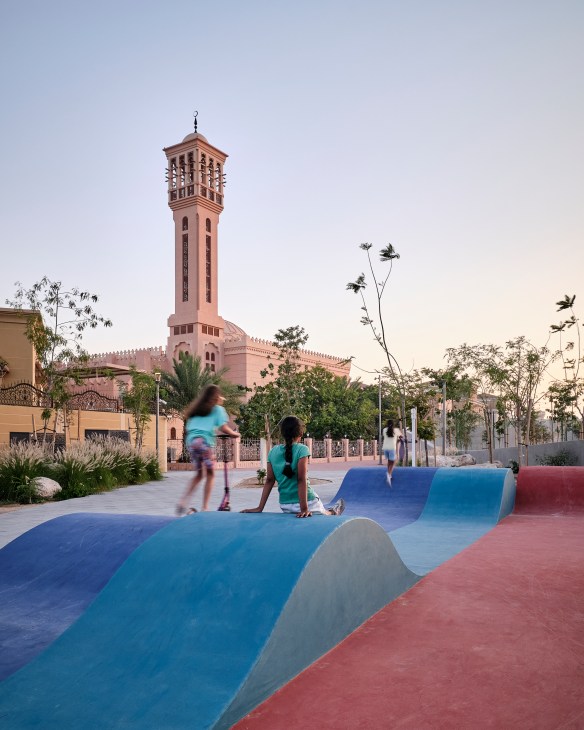
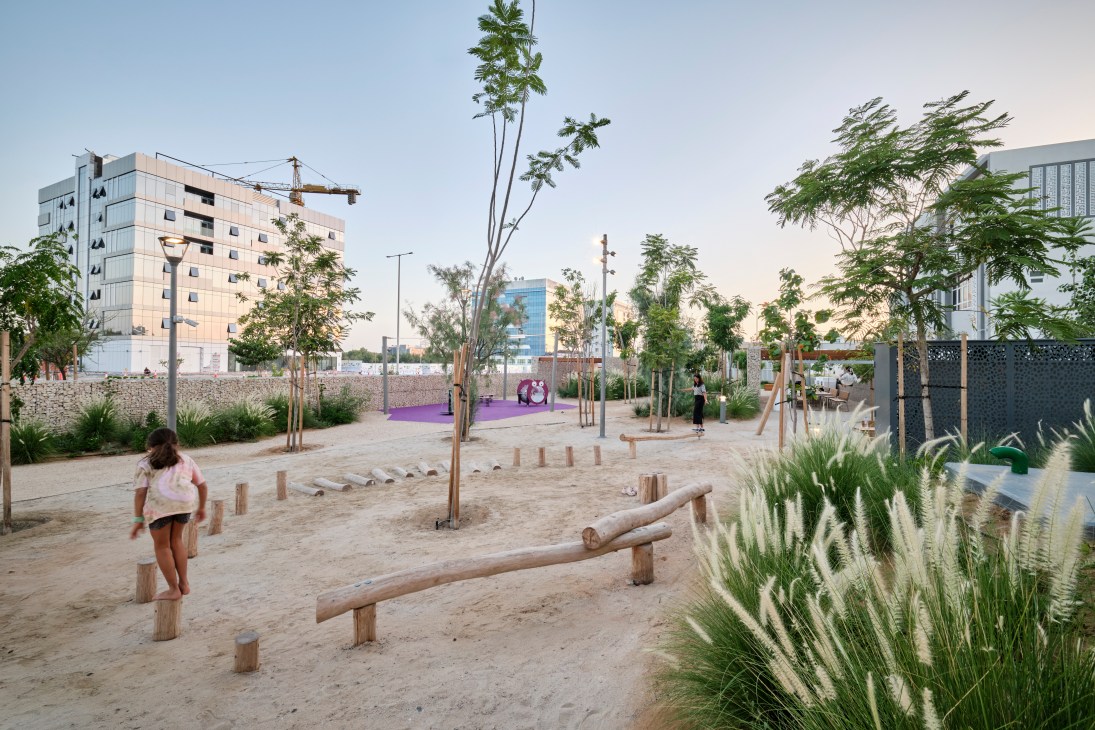
The project put the experiences of residents front and centre. “Our aim was to introduce a new way of designing liveable and social communities in Abu Dhabi,” says Astrup. Varying in size from pocket park to plaza, the spaces include multi-use sports courts, dog-friendly areas and forested zones. SLA’s ambition for leafy coverage in challenging conditions is part of what makes the parks a benchmark in the region. “We want to keep pushing the boundaries of landscape architecture in the Middle East and beyond,” says Astrup. “We can address the region’s climate challenges, from drought and heat to thunderstorms and carbon emissions, creating urban spaces that improve quality of life for all.”
sla.dk
Q&A
JJ Martin
La Double J
JJ Martin is the California-born, Milan-based founder of homeware brand La Double J. This year, Martin unveiled a new five-storey headquarters in the Navigli area of Milan. Here, she tells us more.
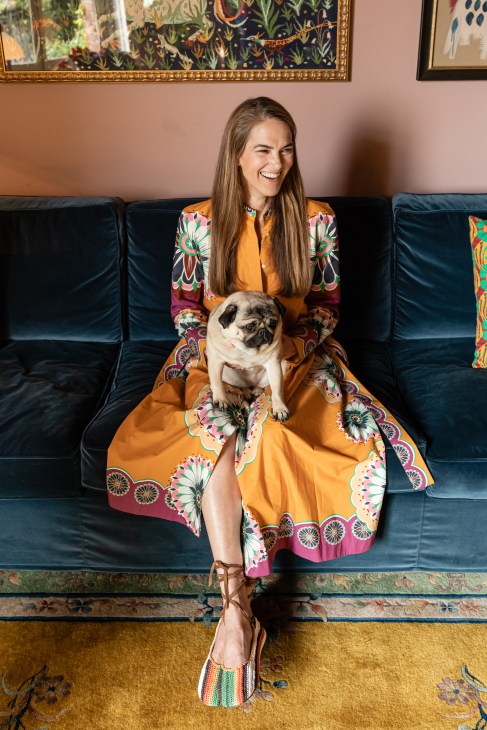
Tell us about your Milan HQ.
In the past 10 years my company has gone through a few iterations, starting as a vintage seller and documenting the unique style of Italy. Then we moved into ready-to-wear and [ended up in] homeware. So the company has grown and it’s the first time that we’ve come together in one space with all of our employees, a proper showroom, our archives, a photo studio and a rooftop deck dedicated to activities for our community. We’re trying to make this more than a commercial enterprise. It comes from the heart and it’s something that we really believe in.
Which markets are you looking to expand into?
Despite the tariffs I still believe in the US. We understand that Asia doesn’t represent the growth opportunity that it once did and Europe remains sluggish. The tariffs are a big hit but at the same time it’s a good time to be a “Made in Italy” brand, rather than something that’s pretending to be Italian but actually made in China. We’ll raise prices a little but we have the margins to do so because our prices are fair to begin with. We’re honest about the quality and the price. We’ve opened in Palm Beach and are opening in Dallas in September. Our shop in Los Angeles burnt down so we’re looking for a new one, as well as a place in New York.
What’s your advice for people looking to start a design business?
Find your authentic imprint. There’s so much product and so many services out there. You have to do something that will strike a chord and be different to what everyone else is doing. To do that, you need to look inwards, not outwards. What is it that gets you excited and jazzed up? That’s your unique spark, which needs to infiltrate the business. Otherwise, it won’t have a superpower effect. Every successful entrepreneur I have met is obsessed with their own unique, weird thing. It needs to come from you, not market research.
ladoublej.com
Wander walls
USA
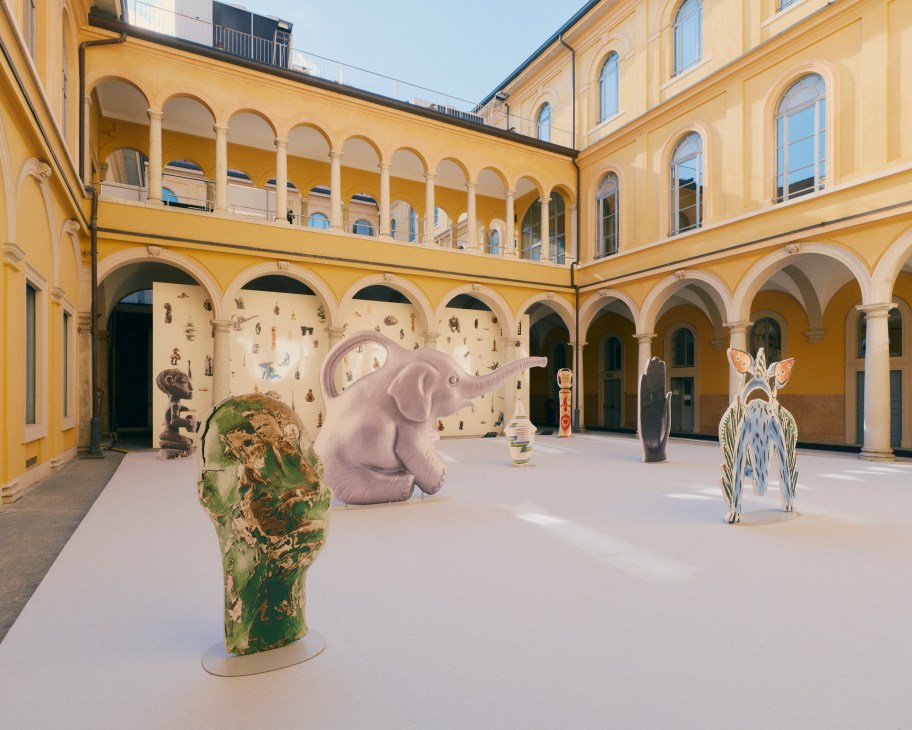
What to do with souvenirs from your travels? Do you actually use your teapot from Japan when you want a hot brew or display that vase from Murano on a shelf? For Stephen Burks and Malika Leiper, the duo leading US design practice Stephen Burks Man Made, the answer was to turn them into a decorative wall covering. Working with Calico Wallpaper, the duo transposed their knick-knacks from their cross-continental travels into a 2D wallpaper design that they called Particulaire.
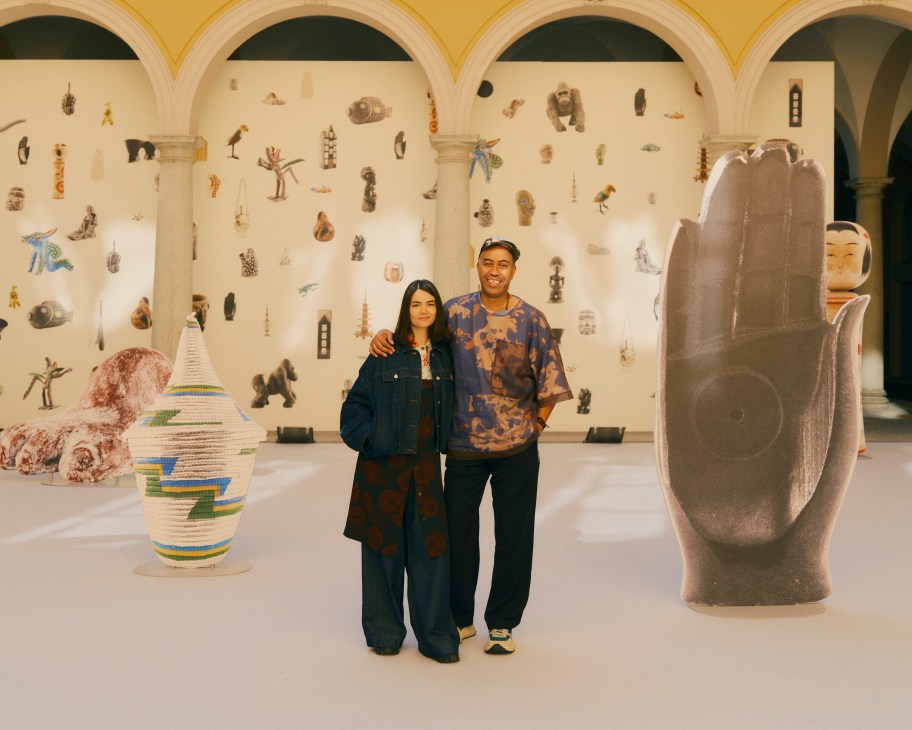
“We started by looking around our home and asking ourselves, ‘What do we decorate the rooms with?’” says Burks. “The answer was objects from our travels. They tell a story both about us and the cultures that we have interacted with.”
Working with the wallpaper firm, which is based in Upstate New York, the creative duo used photographed renderings of their personal mementoes to create a graphic pattern that puts objects from across the globe into conversation while bringing plenty of personality to a room. “The gorilla image is from a young man who we met in Rwanda carving wooden figures. But we also took inspiration from Japan, Senegal, the Dominican Republic and even Brooklyn,” says Burks of the wallpaper. “Our travels are a way for us to get closer to acts of making that involve different techniques and materials,” adds Leiper.
To present the project the two firms created a bespoke mural at the Istituto dei Ciechi in Milan during the city’s recent design week. Since the launch, the Particulaire wallpaper has been made available in 10 colourways ranging from neutral hues to a maroon and sage green. If you find yourself gazing at an unused teapot or vase, perhaps try reaching out to Calico Wallpaper: they might just be the foundation for another unique collection of wallpaper.
stephenburksmanmade.com; calicowallpaper.com
Outside the box
Italy
Can upcycling be made to feel sophisticated? Japanese design powerhouse Muji thinks so. During Milan Design Week it presented its Manifesto House – a modular home in the city’s Brera neighbourhood. Designed by Paris-based Studio 5.5, the six-part building (entrance, studio, bedroom, kitchen, bathroom and garden) was made from materials that are both visually appealing and eco-friendly: plywood for the structure; corrugated steel for the roof and recycled textiles for insulation.
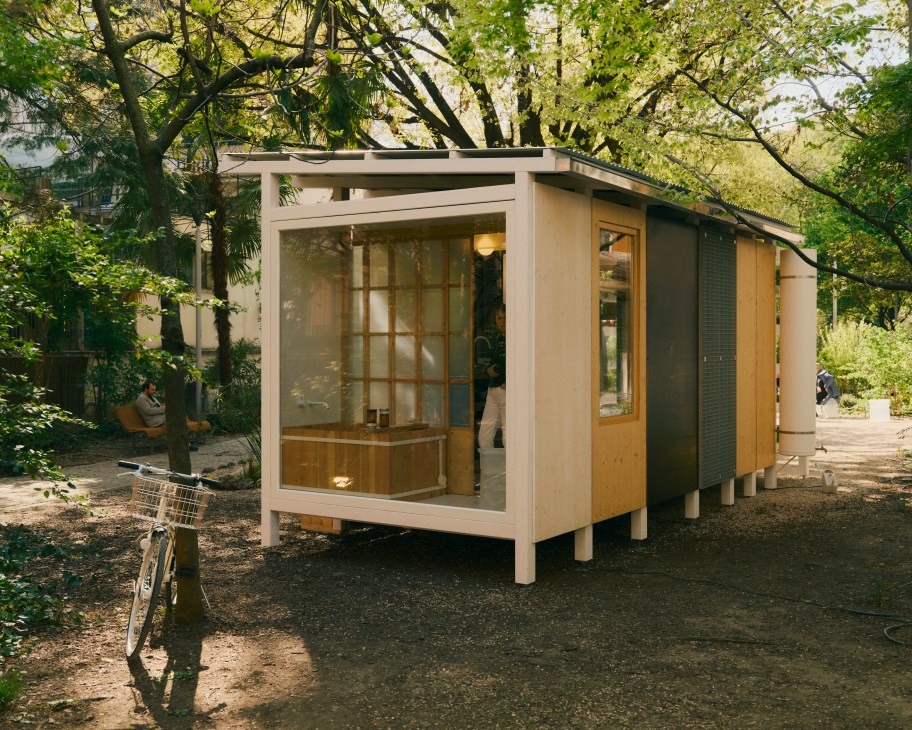
The ambition? To show a prototype for cities struggling with housing shortages. The concept house made clever use of limited interior space, while the roof was slanted to collect rainwater to irrigate the edible plants lining the garden module’s trellises. Studio 5.5 also created accessories, 12 of which were made from repurposed Muji products: a coat rack assembled from a bin lid and two soap-pump bottles; or a birdhouse made using a steel bookend and wooden drawer. Assembly instructions could be found on Muji’s website, enabling everyone to create their own objects from preloved items. “It’s a reminder that, rather than extracting new materials, we can create new things from existing ones,” says Studio 5.5’s co-founder Claire Renard.
While the project is conceptual, the designers are considering commercial possibilities. “It’s inexpensive, small and shows how we can live responsibly and happily,” says Jean-Sébastien Blanc, another Studio 5.5 co-founder.
muji.eu; 5-5.paris
Tunnel vision
Australia
Vipp, which rose to fame with its pedal-bin design, built its first guesthouse in 2014 to demonstrate how its products can transform and enhance a home. Its latest venture, Vipp Tunnel, is a structure in Australia that reveals its ability to enhance the landscape too. Perched on a hill on Bruny Island, off the island of Tasmania, the tunnel-like form is built to the design of Hobart-based studio Room11.
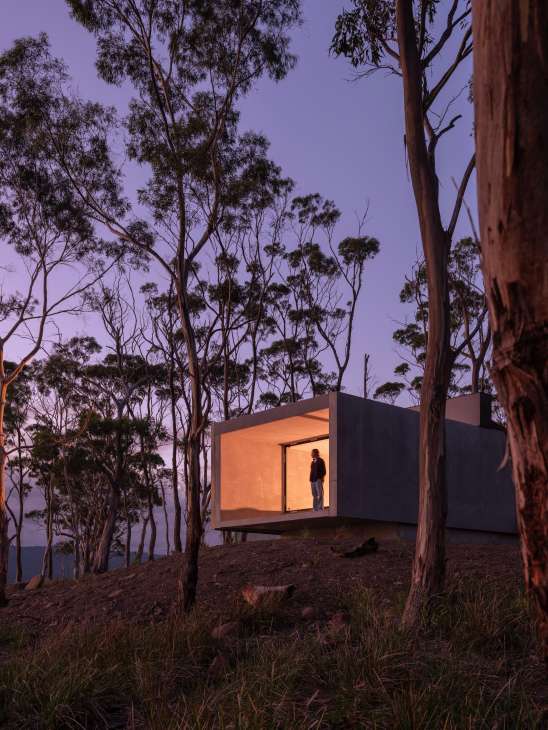
The brutalist-inspired structure is defined by expansive walls of glass and subtly recessed steel doors, which frame views of the sea and mountains. Natural light streams in through carefully placed lightwells, creating an airy, bright atmosphere. An atrium courtyard separates the main living areas from the principal bedroom, while a glazed door at the end of the structure frames a terrace, which is suspended above the rugged terrain.
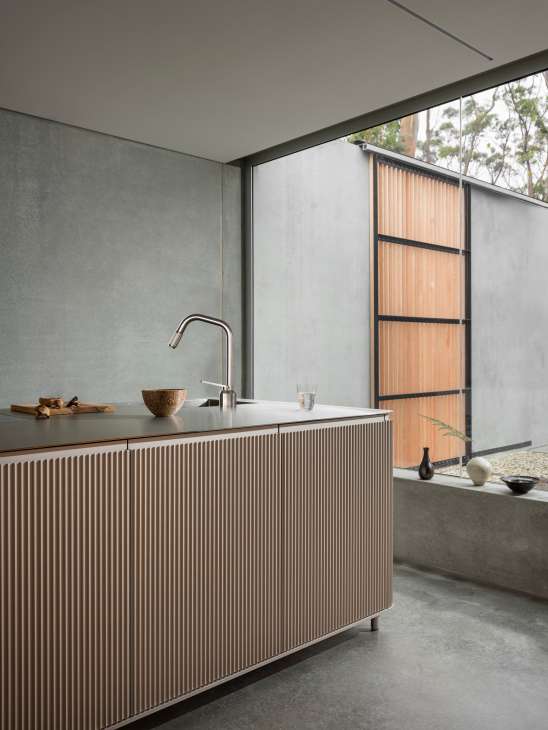
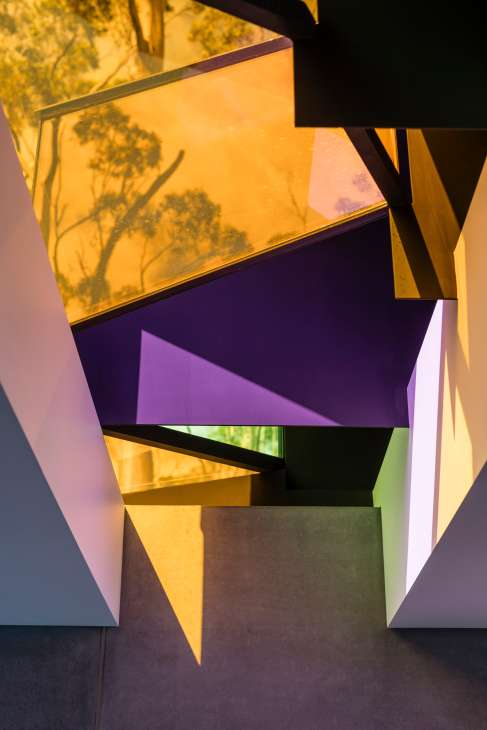
It’s a carefully considered composition that puts guests at the heart of the landscape. “The dramatically elongated proportions of the structure respond to the landscape by purposely framing the water with a broad expanse of glass,” says Thomas Bailey, director of Room11. “The user finds themselves in the extraordinary, natural landscape of Tasmania’s Bruny Island.”
vipp.com
Affairs agenda: Two new rail lines in Tunis, Norway’s latest battle tank procurement and European ammunition production
Defence: Europe
Ticking time bomb
During the years of relative peace that followed the end of the Cold War, Europe’s ammunition stockpiles atrophied. When the continent scrambled to send materiel to Ukraine after Russia’s full-scale invasion of the country in 2022, it found that its shelves were almost bare. Moscow is now churning out almost three million artillery shells annually, about three times the combined output of Europe and the US. But Europe’s problem runs deeper than output. The continent manufactures almost no TNT, a widely used component of high-grade military explosives. One of the few domestic producers, Poland’s Nitro-Chem, is prioritising the country’s own armed forces, which are expanding, as well as highly lucrative international orders, such as one signed to supply the US military between 2027 and 2029.

Other continental TNT makers are stepping up. In Sweden, arms producer Swebal is setting up a TNT plant west of Stockholm with the stated aim of helping to boost Nato’s resilience. Meanwhile, in Finland, Forcit is investing more than €200m in a TNT facility on the country’s west coast. Finland’s defence minister, Antti Hakkanen, calls the project is of “major importance for increasing European ammunition production” and key to maintaining support for Ukraine.
Necessary for this push is the €150bn in loans proposed by the European Commission (EC) as part of the ReArm Europe/Readiness 2030 initiative presented in March, which offers up to €800bn in defence spending. In April, the European Parliament Committee on Legal Affairs unanimously opposed the EC’s attempt to fast-track the plan without full parliamentary oversight. But can Brussels afford to take its time, when securing components such as tnt is essential to providing the weaponry that Europe needs to stay secure? If production doesn’t increase, the continent’s rearmament plan could blow up in its face.
In the basket
Bang for your buck
In the basket: 24 K9 Thunder self-propelled howitzers
Who’s buying: Norway
Who’s selling: South Korea
Price: €470m
Estimated delivery date: 2026 or 2027

This is a repeat purchase for Norway, which previously took delivery of 28 K9s and 14 K10 ammunition resupply vehicles to keep their barrels fed with 155mm shells. As Europe has set about rearming, the K9 has done excellent business for South Korean company Hanwha Aerospace. Other customers include Estonia, Finland, Poland and Romania. There is little doubt about the K9’s purpose for Norway: to deter Russia from getting any funny ideas about the High North land border that the two countries share. The K9 has tremendous mobility and has already proven itself in cold conditions; India’s army has deployed them in the freezing heights of Ladakh on the Chinese border. And they work where it counts too: Ukraine has used Polish-supplied Krab howitzers, which feature a K9 chassis and a 52-calibre gun made by bae Systems.
Politics: Athens
Q&A
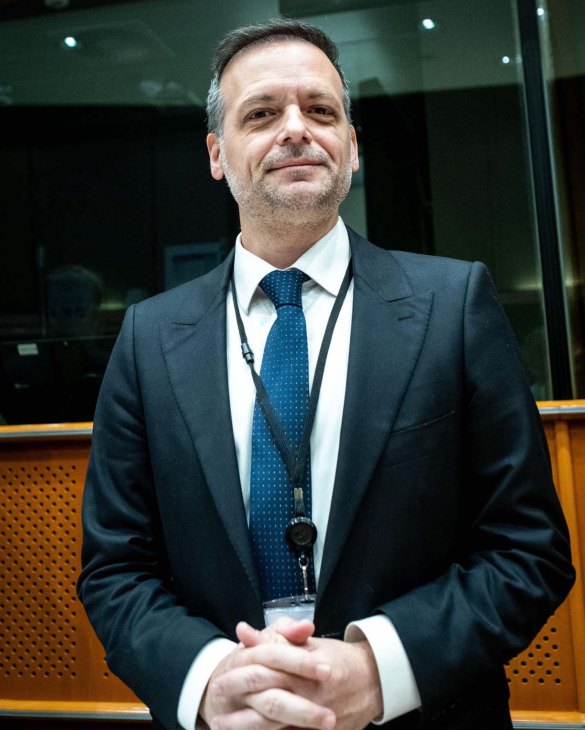
Haris Doukas
Mayor of Athens
When Haris Doukas was picked as centre-left party Pasok’s candidate for Athens’ 2023 mayoral election, he was a political unknown. The 45-year-old won on an ecological platform centred on lowering temperatures in the city. Monocle sat down with Doukas at the Mipim property fair.
How is your plan to make Athens cooler progressing?
When I was running for mayor, I said that I would try to reduce the city’s temperature by 5c within five years. That went viral. I pointed out two things that we could do immediately: plant trees and use new materials for roads. We’re engaging people [with these plans].
How big a problem is overtourism?
We’re struggling. We are now Greece’s number-one destination. We carried out a study that identified neighbourhoods that were oversaturated with tourists and stopped Airbnb in those areas. We also stopped extra bonuses for new apartments and extra square metres for hotels that are meant to be green hotels.
How are you creating more affordable housing?
We’re running two programmes: one with subsidies for families and young people, and another with subsidised rents. We’d like to have the opportunity and capacity to build new houses. So we need regulation and money.
Transport: Tunis
Inside lines
In recent years, Tunis has opened two new rail lines intended to reduce commuting times between the periphery and the centre. The city’s Réseau Ferroviaire Rapide (RFR) network now boasts 28 Hyundai Rotem electric trains, the result of a project that kicked off in the early 2000s with support from international lenders. These included the EU and the Agence Française de Développement, plus private companies such as Germany’s Siemens and French engineering firm Systra.
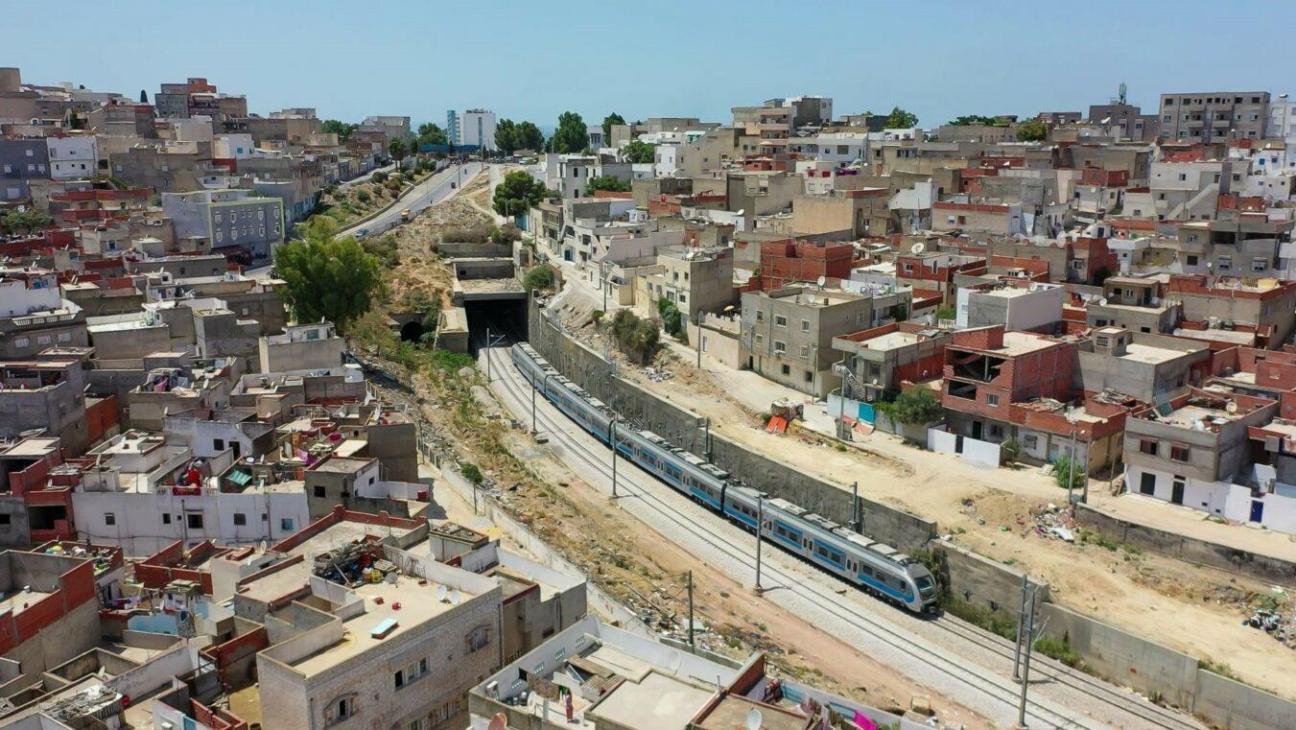
The network has proved extremely popular with Tunisois. Last year, RFR’s Line E alone carried seven million passengers in a city with a population of about 700,000. “This rail network is a concrete and effective solution to desaturate the Tunisian capital and is a new reference point for the Maghreb region,” said Faiçal Chaabane, Systra’s senior vice-president for Egypt and North Africa. The latest service to open is Line D, which upon completion will be 19km and connect settlements northwest of Tunis, such as Le Bardo and Gobâa, with the capital. Travelling from the latter now takes just 15 minutes, compared to at least an hour before the new train. On day one, 10,000 passengers got on board.
The next stop for the RFR will be Lines C and F, which will expand the network to about 85km, further linking the major population centres on Tunis’s outskirts to the city centre. If all goes well with the project’s financing, the works should be completed in 2027. Full steam ahead.
Cultural roundup: Mubi moves into book publishing, a petrol station turned gallery in Germany and a Q&A with Martin Bourboulon
Music: Singapore
Loud and proud
Singaporean DJ and entrepreneur Kavan Spruyt found his calling in Berlin. While working for Ostgut Booking, the agency that secures resident artists for the city’s legendary nightclub Berghain, he noticed a lack of diversity in the global electronic-music scene. “There were barely any people of colour on the festival bills,” he tells Monocle.
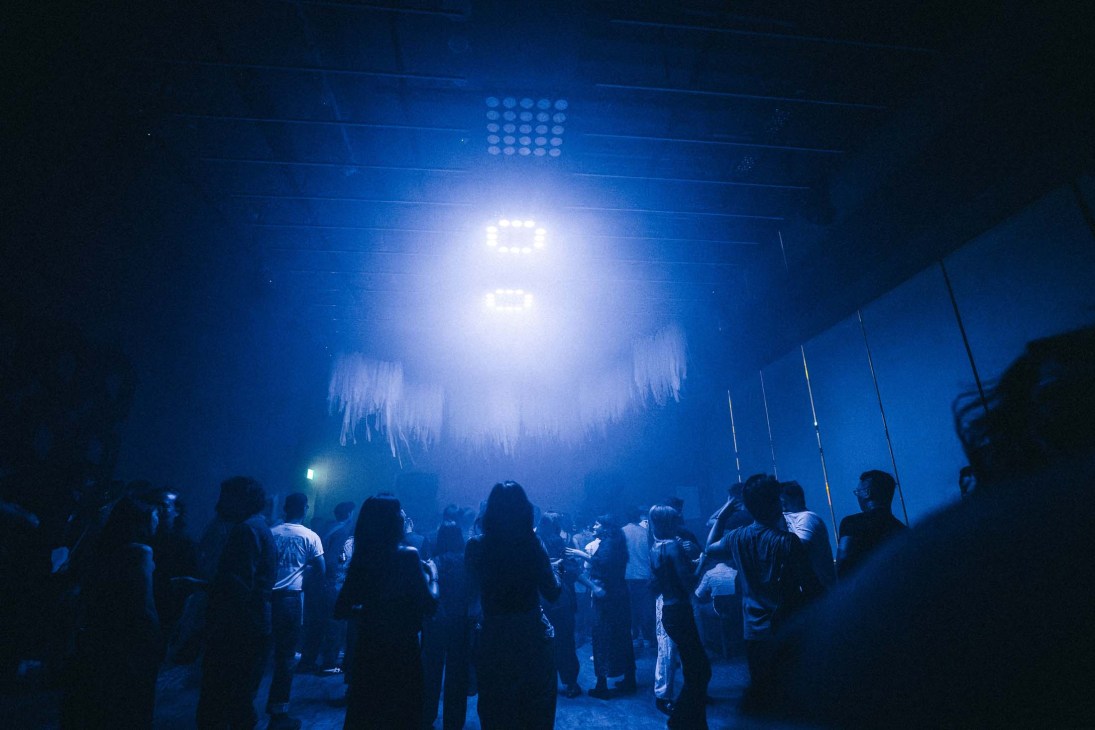
Spruyt decided to step up as an advocate for Southeast Asia’s electro musicians and opened Rasa in Singapore’s city centre. The 6,000 sq ft space comprises a dance floor, a lounge and a cocktail bar. “I saw the need for a brand that syncs with our identity and represents Southeast Asia to the rest of the world,” says Spruyt. To create a venue that’s worthy of his ambitions, he brought in Berlin-based architecture firm Studio Karhard – Berghain’s masterminds – to design the space. The top-notch fit-out includes Kvadrat acoustic curtains and speakers from TPI Sound that are hand-assembled in the UK.
Two years in the making, Rasa finally opened its doors earlier this year. The stage has been set for Southeast Asian acts to showcase their region’s ever-evolving sound. Artists are increasingly putting cultural inflections into their music, from Thai percussion instruments in producer Sunju Hargun’s tracks to the tropical tinkles in the Midnight Runners’ Indonesian disco. “We know all the rules of the trade and have since learnt how to break them,” says Spruyt.
rasaspace.com
Media: Norway
In safe hands
Trine Eilertsen on how Norway’s media has retained the public’s trust.
Across much of the Western world, confidence in editorial media is declining – but not in the Nordics. In terms of trust, Norway’s media is among the highest-ranked worldwide; at the height of the coronavirus pandemic, when it fell elsewhere, we saw a significant rise. We’re a small society with low inequality, making our country a good breeding ground for this kind of trust. But are there lessons from Norway that could help other nations to increase positive attitudes to their own media?
Politicians here view local media as a useful arena for disseminating information and increasing voter engagement. This understanding of its value ensures that public money – about the salary of one journalist per paper every year – is given to local media in areas too small to be able to support a full newsroom. As in other countries, the consolidation of individual brands into larger groups has saved many Norwegian news outlets. While consolidation might threaten the freedom of a newsroom elsewhere, the editor in chief’s independence is stated in Norwegian law. Decisions about content lie with the editor and the editor alone. Authorities, owners or other forces can’t influence what we publish.
We were also early adopters of digital technology. This has enabled us to develop a more direct relationship with our audience. Our readers tend to come straight to our website, rather than through social media, which makes us less affected by platforms’ algorithms. Meanwhile, paid online subscriptions are popular; indeed, Norway’s audience has the world’s highest propensity to pay for news.
All serious Norwegian editors abide by the national press’s code of conduct and anyone can make a complaint to the ethics commission. The members of the latter are other editors and ordinary people who discuss whether the code has been broken. If it has, editors are obliged to publish a correction. Like every media outlet, we still have to fight for our audience but these are some of the reasons why, when readers come to us, they can rely on what we say.
Eilertsen is the editor in chief of ‘Aftenposten’, Norway’s leading printed newspaper in
terms of circulation.
Publishing: UK
Picture perfect
Fresh from a banner year in which Coralie Fargeat’s satire The Substance took the world by storm, London-based streaming platform, production company and film distributor Mubi is launching its latest venture: a publishing arm focusing on books about cinema and the visual arts.


Mubi Editions’ first release, Read Frame Type Film, is a collaboration between film curator Enrico Camporesi, graphic-design historian Catherine de Smet and designer Philippe Millot. Drawing from a research project initiated at the Centre Pompidou in Paris, it explores the affinity between film and typography.
“We are challenging ourselves to do something different and surprising for the audience,” says Daniel Kasman, Mubi’s vice-president of editorial content. “That means looking for the unexpected, for what is unusual and delightful. It’s hard to do but the surprise is the goal.”
‘Read Frame Type Film’ is published on 22 May.
Television: France
Q&A
Feast for the eyes
Martin Bourboulon, director
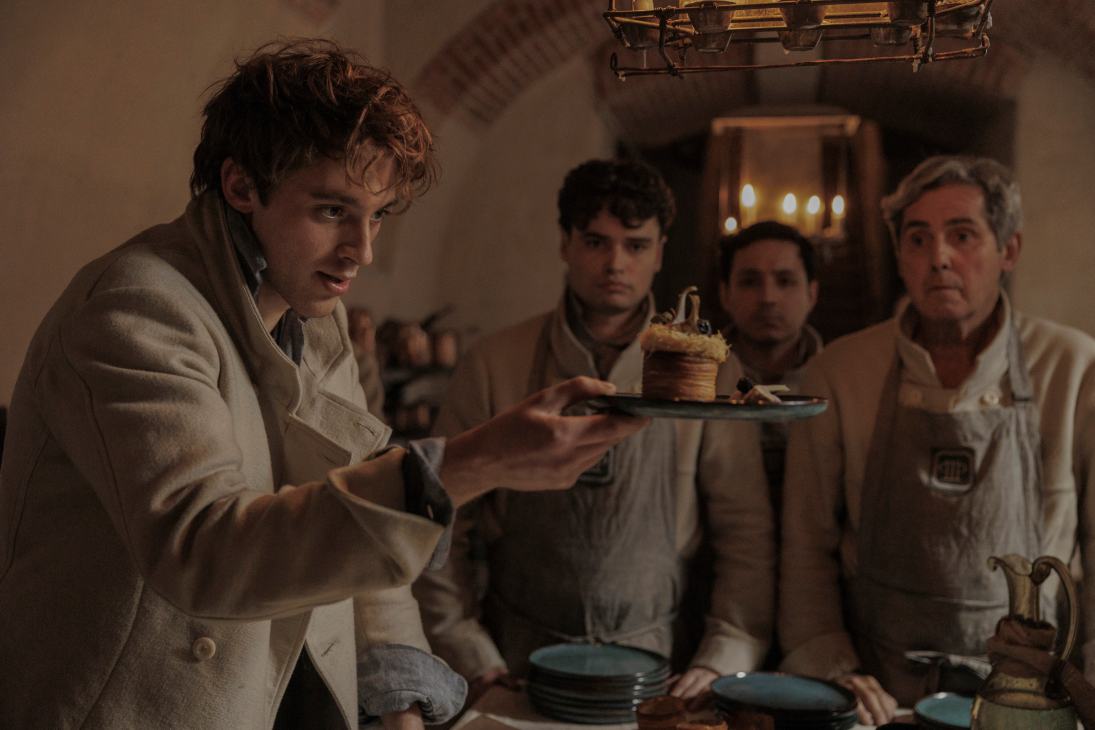
Marie-Antoine Carême was arguably the world’s first celebrity chef: in the 19th century he served European royalty and some of the leading politicians of his era. Carême, a new drama on Apple TV1, brings his story to life. Its director, Martin Bourboulon, tells us about putting pâtisserie front and centre, and showing off Paris’s beauty.
Why is Marie-Antoine Carême a good subject for a TV drama?
I wanted to bring a modern vision to his story but was also excited to work on a show with a range of different themes: politics, food and sex. Carême is a chef but also a spy. It’s a French show for a global audience.
How did you approach directing the kitchen scenes?
You have to find a good rhythm between the plot and those precious moments in the kitchen. When we were showing Carême making the dishes, we took our time with a lot of close-ups.
Paris is almost a character in the show. How crucial was it to immerse viewers in the city?
It was important for us to show Paris, especially with wide shots, because it’s so recognisable to an international audience. But it was difficult because it’s 2025 and our story took place two centuries ago. In some of the beautiful wide shots, if the camera had turned a little to the left, the vision of an old Paris would have been spoiled.
Art: Germany
Life’s a gas
Just a stone’s throw from the Swiss Galerie Judin, which moved from Zürich to Berlin’s Potsdamer Strasse in 2008, is its striking new collaboration with the US-founded Pace Gallery. “It’s an urban oasis,” says Pay Matthis Karstens, co-owner of Galerie Judin.
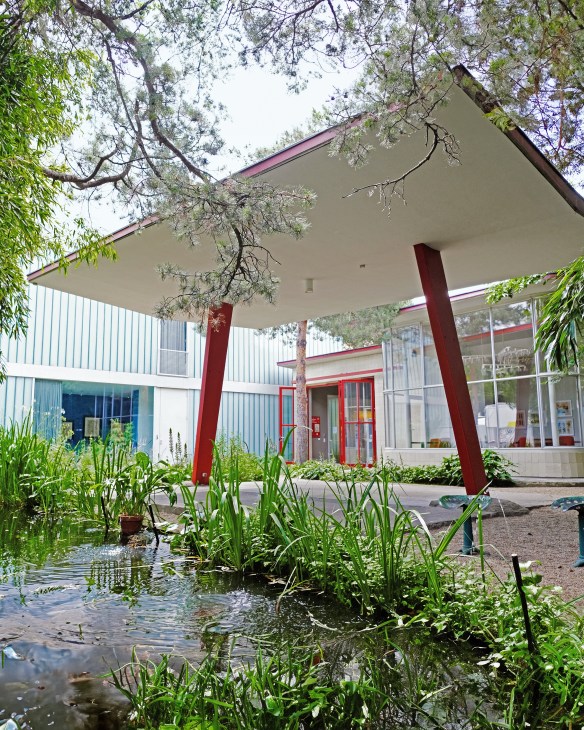
The exhibition space, café and bookshop is based in a converted 1950s petrol station in the buzzy Schöneberg district. Buildings of this kind were once a common sight across Berlin but many have fallen into disuse and disrepair. Indeed, the site that was chosen for this project was abandoned in 1986 but was renovated 20 years later; it served as an architect’s home and then a museum until late last year. Now, Pace Gallery and Galerie Judin are its proud custodians and the floor-to-ceiling windows that once looked out at fuel pumps and bmw Isettas instead frame a peaceful courtyard.
“It has a certain meditative feeling,” says Karstens. “You have the sounds of chirping birds and the trickle of water. It’s not that the city totally disappears but it creates moments of calm.”
The garden is framed by tall stalks of bamboo and a water feature putters in the centre. Inside the old filling station that used to sell petrol and cigarettes, Pace and Judin will take turns organising exhibitions. The mélange of businesses at this new spot encourages Berliners to slow down and take time to absorb the art – to sit, ponder and discuss what they have seen. It’s much more rewarding than just getting your fill and zooming off.
The exhibition space opened to the public in May. For more details about what’s on, visit: pacegallery.com and galeriejudin.com
Music: New Zealand
Chaos theory
On his new album, Te Whare Tiwekaweka, Marlon Williams sings in a language that he can’t quite speak. “In 2019 I had a melody floating around my head that I couldn’t shake,” he tells Monocle. “It suddenly became clear that it was a Maori melody – like the songs from my childhood.”
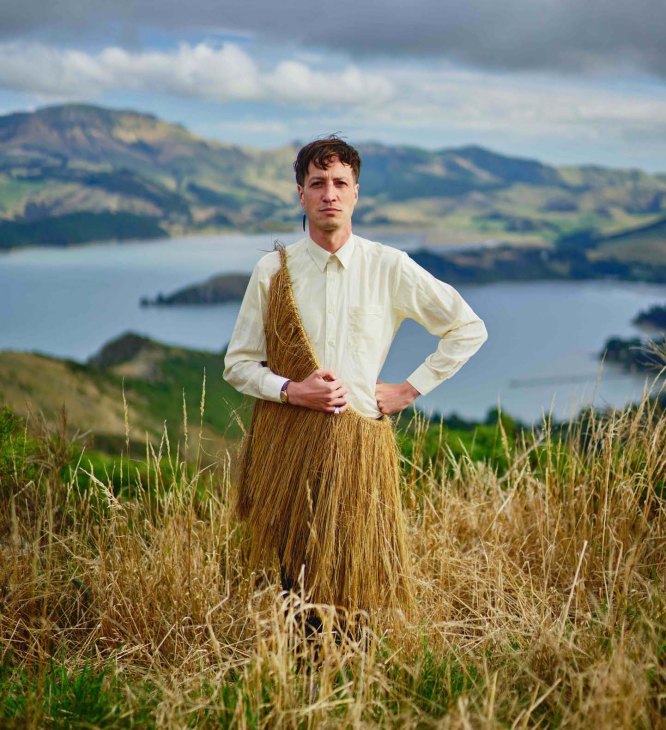
Williams’ parents are from two Maori tribes. Though the musician went to a Maori language school at the age of five, he later stopped using the language. “My language skills are limited,” he says. “But I muddled my way through, adding lyrics, and the song was so pleasant to sing that it gave me the gumption to commit a whole record to the Maori language.”
The project was inspired by Williams’ emotional homecoming after touring his 2022 album, My Boy. “When I came home I saw a charcoal drawing at my mother’s house depicting
a tall, slender man in a top hat returning to a villa at night,” he says. “This man is approaching a ladder and carrying a suitcase full of money – British sterling. I identified strongly with the image of this rakish man coming home, returning with a bag of foreign currency. I asked my mother about the drawing and she said, ‘I was pregnant with you when I drew this.’ It immediately became a central part of the record.” The image is now the cover art for TeWhare Tiwekaweka.
The album’s title comes from a Maori proverb that roughly translates as “messy house”. “I’m a bit of a messy person on the most fundamental level,” says Williams. “For me, it really speaks to the seed of creation and how new things come out of chaos. Nothing interesting ever comes out of something clean.”
‘Te Whare Tiwekaweka’ is out now.
It’s time to embrace the season with new styles from the Monocle Shop
Summer camp-collar shirt
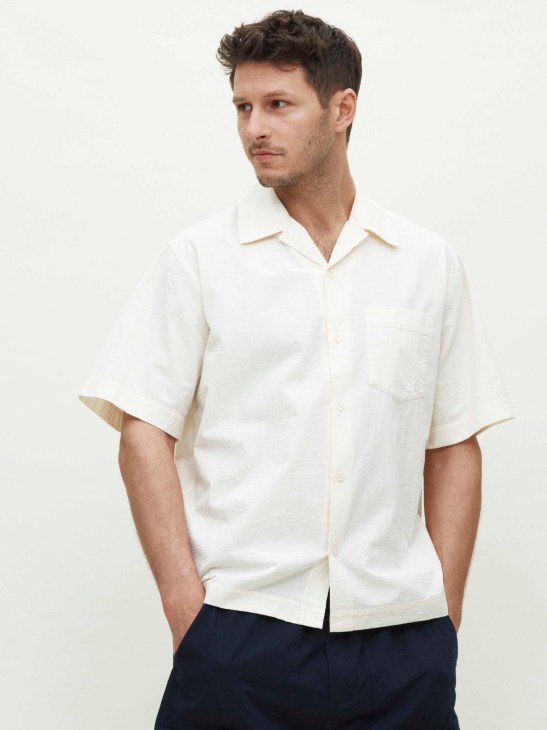
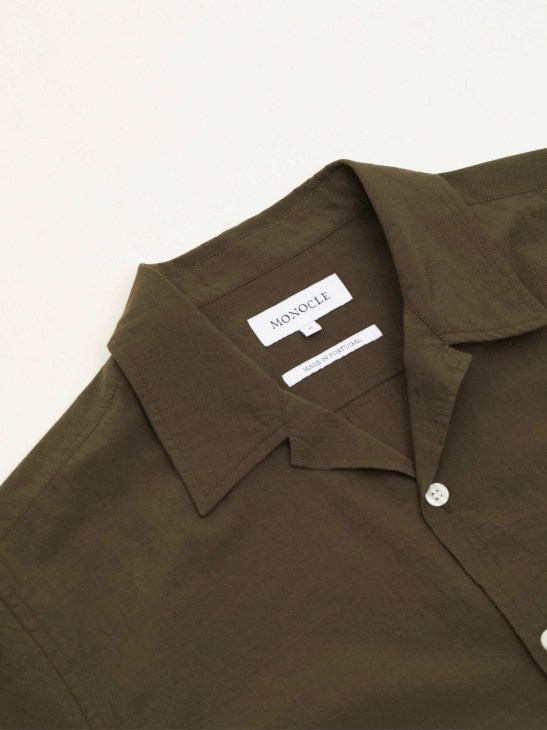
The Monocle summer camp-collar shirt is is washed to create a crinkled texture and a soft, timeworn feel, and it fastens with mother-of-pearl buttons. Made from organic cotton woven in Japan, this breathable style layers effortlessly for hot summer days.
€175.00
Colour: Ecru or olive
Material: 100 per cent cotton
Made in: Portugal
Oxford popover shirt


A versatile addition to any wardrobe, this popover strikes a balance between the casual comfort of a polo and the refined look of a dress shirt. Tailored from the same fabric as Monocle’s oxford button-down, it has a sleek collar and mother-of-pearl buttons.
€165.00
Colour: Blue stripe or white
Material: 1oo per cent cotton
Made in: Portugal
Cotton twill cap


Top off your look with this colourful, versatile cap. Made in California from 1oo per cent twill, this signature Monocle cap in gold, dark green or navy features an embroidered Monocle branding to the front and a tonal Monocle logo at the back. It’s perfect for walks through cities, a round of golf or simply masking a bad hair day.
€70.00
Colour: Gold, dark green or navy
Material: 1oo per cent cotton
Madein: USA
Summer cotton overshirt


Turn to Monocle’s take on this seasonal favourite. This overshirt delivers on both style and comfort. Made from organic cotton and woven in Japan’s Nishiwaki region, it has a natural washed finish, patch pockets and Corozo buttons.
€245.00
Colour: Olive or navy
Material: 1oo per cent cotton
Made in: Portugal
Editor’s letter: Andrew Tuck on what goes in to making Monocle
Many journalists reach a fork in the road where they have to decide whether to press on as a reporter or to start along the route of becoming an editor. (As you know, a fork has more than two prongs and there is another option: to just get the hell out of this ever-changing, always demanding profession.) Long ago I chose the editor route but with a nice side order of reporting whenever it made sense. For this month’s issue, for example, I dispatched myself to the Mipim property trade fair in Cannes. Early on in my career I saw how much fun and influence editors had and also how the good ones both played to their strengths and acknowledged their own weaknesses. There’s nothing worse than an editor who always thinks that they are the best person for any reporting mission: assigning is the watchword.
As in most businesses, there’s a clear hierarchy at magazines, Monocle included. While Tyler is clearly the admiral of the fleet, my fancy position as editor in chief comes, at least, with some imaginary epaulettes and a jaunty hat. But when we are putting together an issue, it’s all about working as a team, listening to different perspectives, commissioning the best journalists and photographers, writing and rewriting headlines and fine-tuning the pace and rhythm of the magazine.

To be a part of all of these decisions is why someone chooses to be an editor. Of course, Matt, our photography director, knows more about his domain than I do but, after years spent working together, he’ll hear me out if I think that the “select” from a shoot needs to change. Lewis, our rarely riled chief sub editor, will let me amend headlines and help nudge a story one way or the other in a final edit – though I would never do battle with him on rules of grammar. As we approach the deadline for sending an issue to press, hundreds of small choices are made at pace and hopefully we steer everything to a good place.
Then, on the day that the magazine heads to the printers, editors and the leads in the commercial team gather for what we call “the flip”. On a large TV screen, we get to see a digital version of how the magazine will look with the ads now in place. It’s a final chance to check whether there are any strange adjacencies – whether an image on an advert too closely matches the one on the editorial page that it’s next to. And then it’s over to the production team and the editors have to sit back (or, rather, start another issue). After about 10 days, we get the first boxes from the printers and discover whether our ideas, decisions and conversations have delivered what we hoped for.
In this issue you’ll find our Design Awards, organised by that section’s editor (and committed writer), Nic Monisse. There’s an interview with Femke Halsema, the mayor of Amsterdam, commissioned by our foreign editor, Alexis Self, that dives into debates about legalising drugs, sex work and over-tourism. There’s also a look at the future of the grocery shop, co-ordinated and corralled by executive editor Christopher Lord. Our fashion director, Natalie Theodosi, has commissioned a feature that looks at why couture houses are heading to the Chanakya School of Craft in Mumbai. And there’s an epic Expo that seems to have involved just about everyone, looking at places of contemplation and their role in these harried times.
All are the outcome of numerous editorial meetings, story-list finessing by Josh, art direction by Rich and a-second-to-decide moments at the printers by Jackie. It’s the work of a group of people who see in magazines the chance to tell a story, to find the harmony between words and pictures, and to engage, entertain and inform you, our reader.
The Monocle Design Awards 2025: All 50 winners

Best armchair
Flair O’ Maxi by B&B Italia
Italy
The Flair O’ Maxi is a new iteration of B&B Italia’s 2021 Flair O’ chair – and the rightful winner of our best armchair award. We love it for its simplicity: its stately plinth and swivel combined with comfortable padding. “The key idea for this particular form was ‘lounging’,” Monica Armani, the chair’s designer, tells Monocle. “But that’s a very broad notion. Last year, suddenly inspired by Italian dresses from the 1960s, I decided to change the proportions of the seat.”
bebitalia.com

Best bar
Bar Vitrine by Frama
Denmark
Designed and run by furniture brand Frama, and with a menu devised by a former Noma chef, Bar Vitrine occupies a 1960s-era brutalist building. “We loved the space’s uniqueness,” says Frama founder Niels Strøyer Christophersen. “We wanted it to feel warm, like entering someone’s home or kitchen.” Dark and light wood interiors balance the exterior’s metal and stone. A communal birch table is at the bar’s centre, while tables along the windows are complemented by Frama’s 01 chairs.
barvitrine.dk; framacph.com
Best portable light
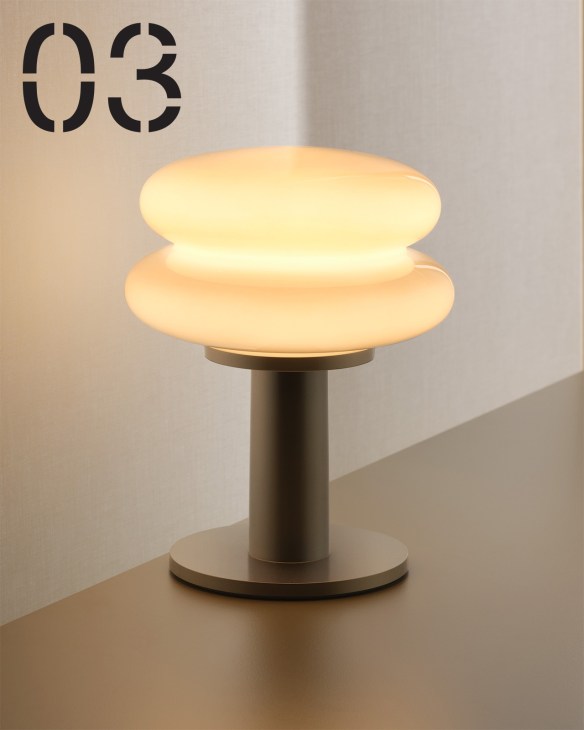
Snowman 15 Portable by ILKW
South Korea
The Snowman15 Portable marks South Korean lighting brand ILKW’s wireless debut. This design features a polycarbonate resin shade, giving it a balloon-like, join-free silhouette. Kwon Sunman, creative director of ILKW, says he developed the portable light for adaptable and outdoor use. “The body, shade and integrated led, which is capable of producing a wide range of colour temperatures, all come together,” he says. The lamp not only replicates natural light but can evoke different atmospheres according to its owner’s mood.
ilkwdesign.com
Best in the kitchen
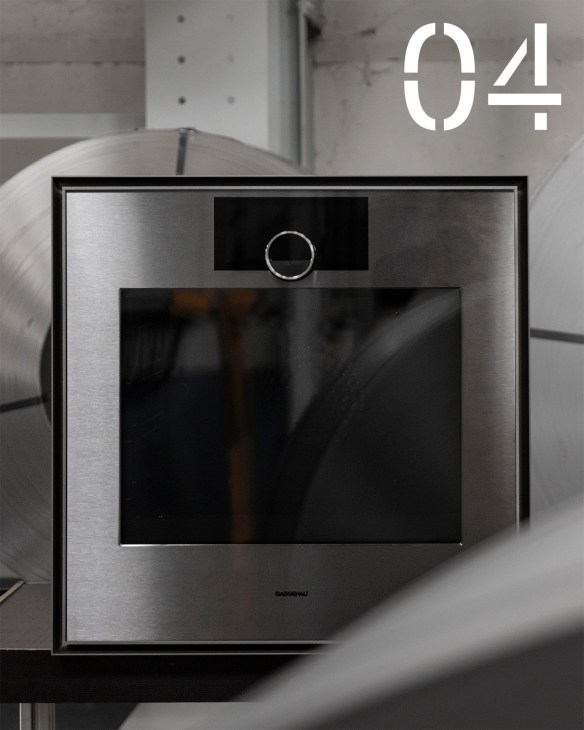
Expressive series oven by Gaggenau
Germany
German home-appliances manufacturer Gaggenau’s latest is a sleek oven from the Expressive Series. “The kitchen is now often part of the living room,” says Gaggenau industrial designer Alexander Stuhler. “That means you might have a view of it from your sofa. So it’s important to design appliances that you want to look at.” Here, that means a simplified user interface, smooth joints and a floating control ring – a combination that lets you show off your cooking skills and your taste.
gaggenau.com
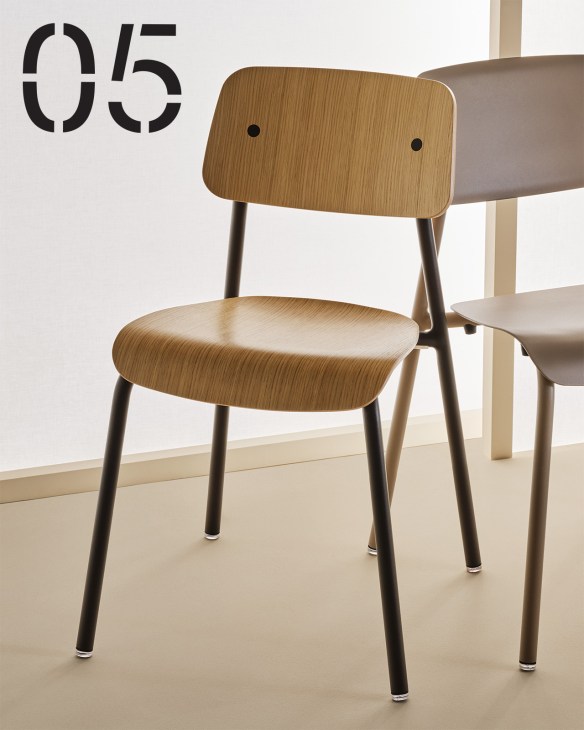
Best for versatility
Studie chair by Fermob
France
Fermob’s versatile oak-and-metal Studie chair is the perfect stackable number. It was created by French designer Tristan Lohner as a seat that’s fit for the dining room but just as easily used in other situations. “When I pick up a pencil, I aim to get closer to the concept of service,” says Lohner. The concept of service is wonderfully broad. We can see this chair in a French bistro, an auditorium or piled up five-high after a party.
bebitalia.com

Best bookshop
Good Company Bookshop
Portugal
Good Company Books is a newcomer to Lisbon’s bookshop scene, focusing on English-language titles and serving coffee, baked goods and wine. “We missed the kind of space where you can sit down, read a book, work or meet a friend over coffee,” says American-born Samuel Miller, who opened the bookshop last November with his Brazilian partner, Giovanna Centeno.
goodcompanybooks.com
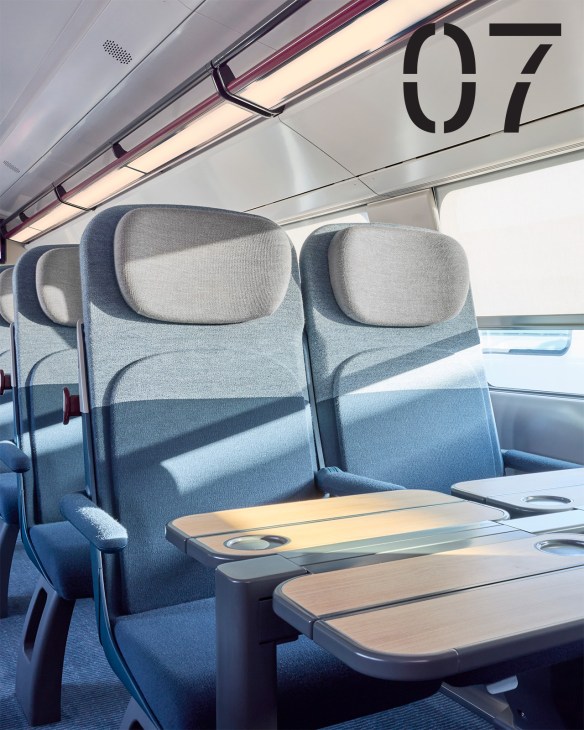
Best train fit-out
TGV InOui by Nendo and Arep
France
French state-owned rail service SNCF’s soon-to-launch TGV InOui trains have a new look, courtesy of France’s Arep and Japan’s Nendo. This is principal Oki Sato’s first transportation design and it features curved surfaces, a modular layout, warm lighting and a muted palette – its understated elegance a welcome departure from other trains’ utilitarian monotony. Our favourite detail? The lemon-yellow lamp from TGV’s prior design remains, but with a bulbous shade typical of Nendo’s playful style.
sncf-voyageurs.com
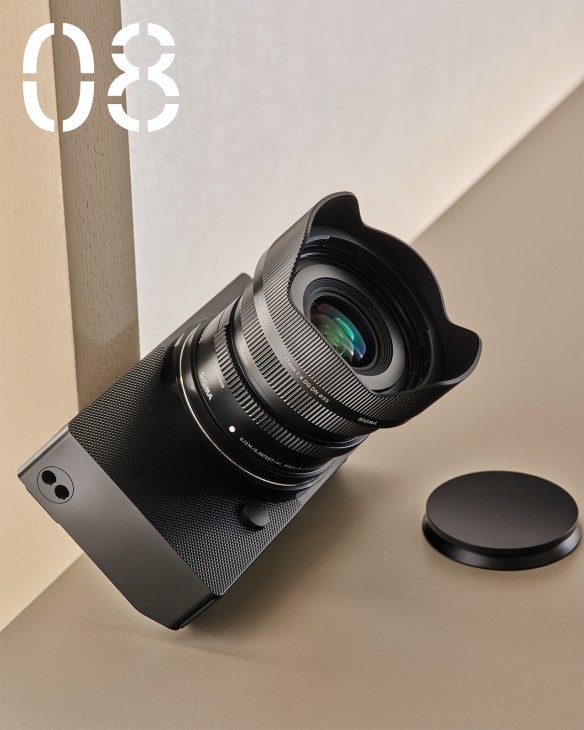
Best camera
Sigma BF
Japan
For its combination of austere beauty, technical prowess and ease of use, we salute the Sigma BF, a digital camera from the iconic Japanese lens maker. Sigma CEO Kazuto Yamaki had a very specific aim in mind: a return to the beginnings of photography, when a camera was no more than a lens and a black box. “For a lens manufacturer like us, the lens is the true star,” says Yamaki. “We felt that the camera body should be as simple as possible, much like the camera obscura.”
sigma-global.com
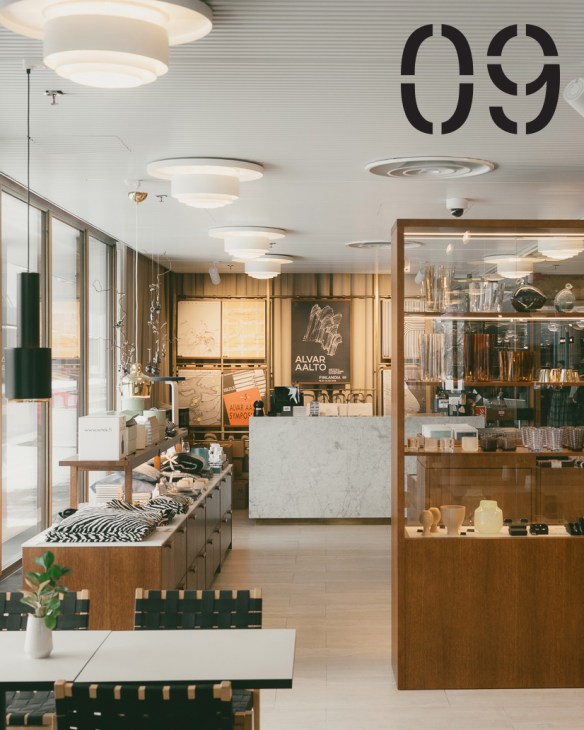
Best hospitality fit-out
Finlandia Hall by Fyra
Finland
Though a central part of Helsinki’s cityscape, Alvar Aalto’s 1971 Finlandia Hall always felt remote to the city’s residents, who knew it only as a conference centre – until now. Finnish design studio Fyra has opened it up to the public with a new bistro, café and shop. The bistro features original Aalto chairs and lighting, complemented by marble tables and an oak bar. The café and shop are bathed in natural light. “When you design for a protected building – and an Aalto one, no less – you’re a custodian of heritage,” says Eva-Marie Eriksson, Fyra’s co-founder. “But this building isn’t a museum. Ensuring that it’s used is the best way of honouring Aalto’s legacy.”
fyra.fi
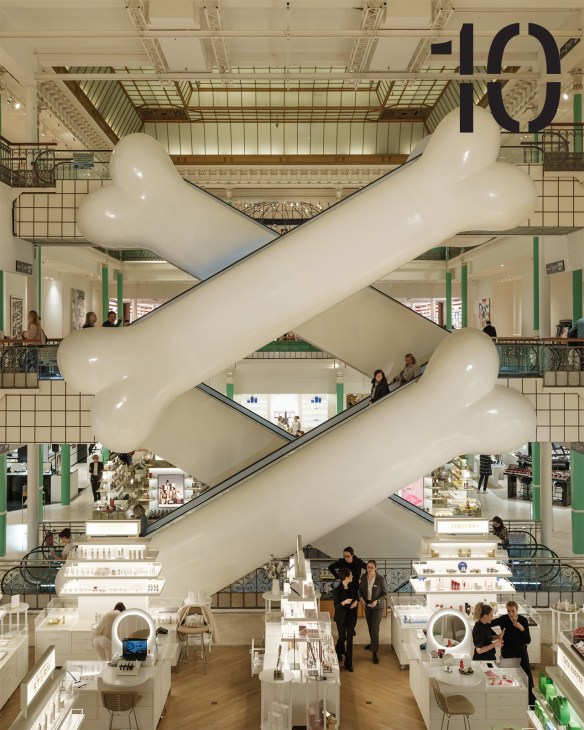
Best retail installation
‘Je t’aime comme un chien’ by Le Bon Marché
France
Le Bon Marché’s retail installation “Je t’aime comme un chien” was a love letter to dogs of all shapes and sizes. The pedigreed Paris department store was given a fetching makeover recently, featuring cutouts of hounds, mastiffs, retrievers and poodles gazing longingly towards the treats on offer. The commercial team unleashed its creativity, assembling an impressive assortment of items for dogs and their owners from more than 200 brands. These ranged from Barbour raincoats to a poodle-motif necktie from Cinabre. “It was the exhibition that generated the most enthusiasm among both our staff and our customers,” says Elodie Abrial, Le Bon Marché’s commercial director.
lebonmarche.com

Best in production
Kasthall
Sweden
Founded in 1889 in Kinna, a historic textile hub in southern Sweden, Kasthall continues to operate from the same factory and design studio where skilled artisans and designers bring every rug to life.“Our factory in Kinna is the heart of our brand,” says CEO Mirkku Kullberg. “The artisanal pride and generational expertise in our team define us. Without them, we would lose not just our legacy but our identity.”
kasthall.com
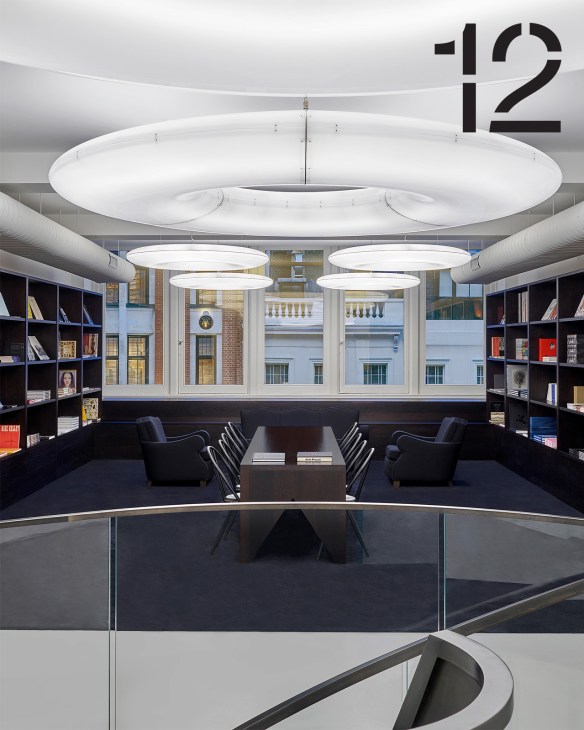
Best retail addition
Alaïa’s London café and bookshop
UK
A new café and bookshop on the top floor of French fashion house Alaïa’s London flagship is a welcome development in the retail landscape. An aluminium table occupies the centre of the café, which serves flat whites and matcha lattes with pastries from London bakery Violet. The bookshop is curated by the team behind Claire de Rouen, a popular east London spot for titles on art, photography and fashion.
maison-alaia.com
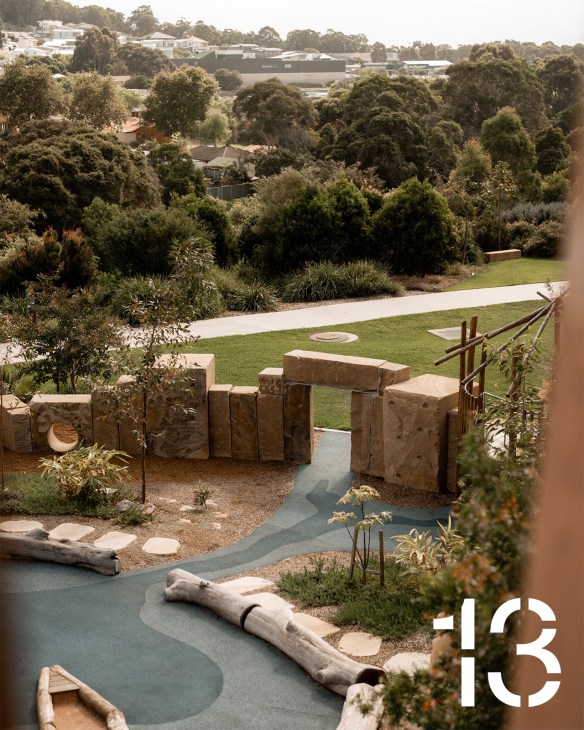
Best playground
Yirran muru playspace
Australia
When Shellharbour’s town council planned an educational space to recount the local Dharawal Aboriginal people’s history, they tapped landscape architect Fiona Robbé for a playground design. “You should experience a good playground for its own sake but a deeper didactic meaning is there if you want it,” says Robbé of the project, whose design functions as a miniature map of the Dharawal people’s region. Blue zones represent the nearby ocean and lake, sandpits symbolise the beach and coast, and a large stone semicircle represents the Illawara escarpment.
architectsofarcadia.com.au
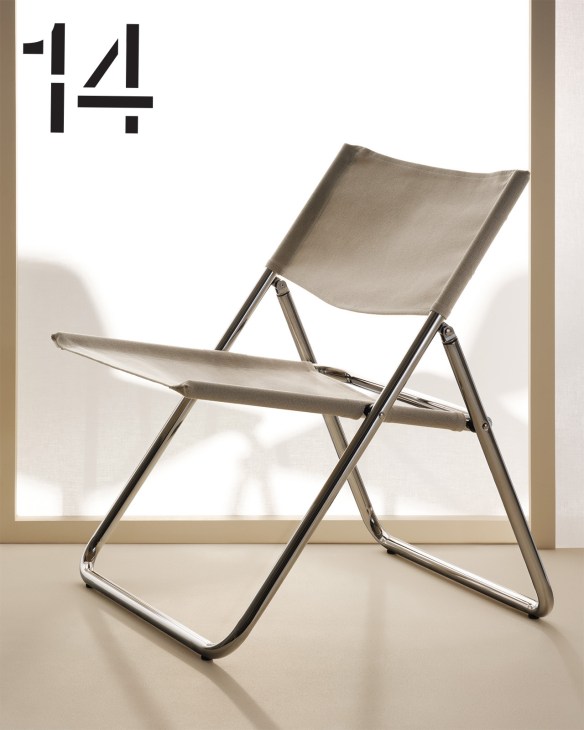
Most democratic design
Mofalla Easy chair by Ikea
Sweden
Swedish furniture company Ikea has built an archive of accessible, democratic design since 1943 – and from this, back by popular demand, is the Mofalla chair. First made to the design of Denmark’s Niels Gammelgaard in 1978, this foldable number features a simple, appealing combination of canvas and chrome.“It’s also very practical,” says Karin Gustavsson, the project’s creative lead. “I believe that there’s always a need for lightweight, easy-to-use furniture for extra seating.” And thanks to Ikea, this example is available to everyone.
ikea.com

Best branding
27/4 by Yorgo & Co
France
Graphic designer Yorgo Tloupas’s branding work on entrepreneur Paul Dupuy’s 27/4 building in Paris creates a sense of cohesion across the drinking-and-dining hub’s three floors. Tloupas developed bespoke signage and typography for everything including customised fire-safety notices and alcohol-licence information. “The overall effect works on a subconscious level,” says Tloupas. This impressive attention to detail sets a benchmark.
27quatre.com; yorgo.co
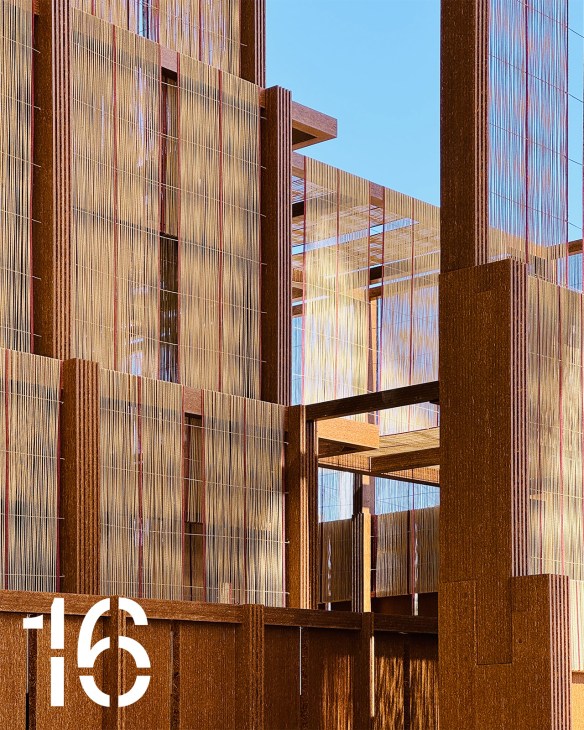
Best artistic installation
‘On Weaving’ pavilion
Saudi Arabia
“It’s a given that places of worship are spiritual and ethereal,” says Charles Kettaneh, co-founder of East Architecture, referring to the practice’s modular musalla – an open area used for prayer in Islam. Titled “On Weaving”, it’s an exploration of the idea of transience, adds Kettaneh’s fellow co-founder, Nicolas Fayad. “Musallas have never been studied as architectural typologies,” he says.
eastarchitecture.net; akt-uk.com
Best incubator
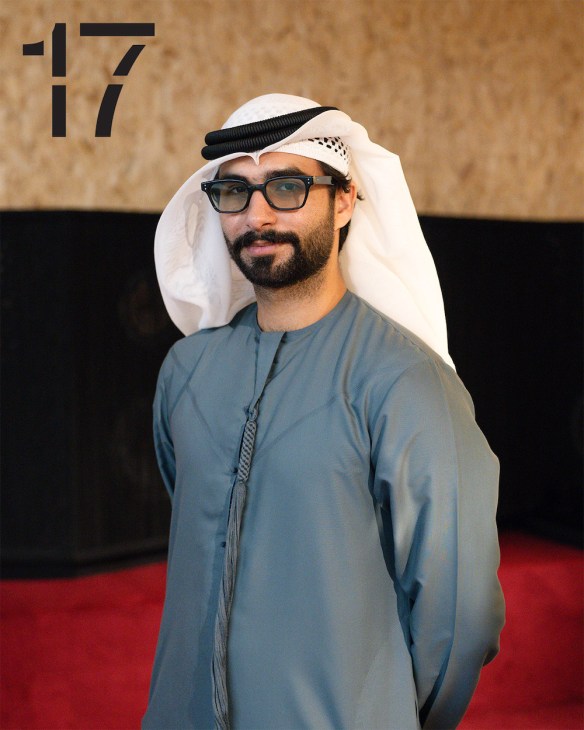
UAE Designer Exhibition
UAE
Cities such as Abu Dhabi and Dubai have long imported star architects and designers from across the globe for major works. But the UAE Designer Exhibition, which took place during last November’s Dubai Design Week, is shifting the narrative. “We want people to know that design’s potential here is quite large,” says Omar Al Gurg (pictured), who curated the most recent exhibition, spotlighting 30 local talents. About 22,500 visitors saw the show, helping to change the Gulf’s design narrative.
dubaidesignweek.ae
Best hi-fi
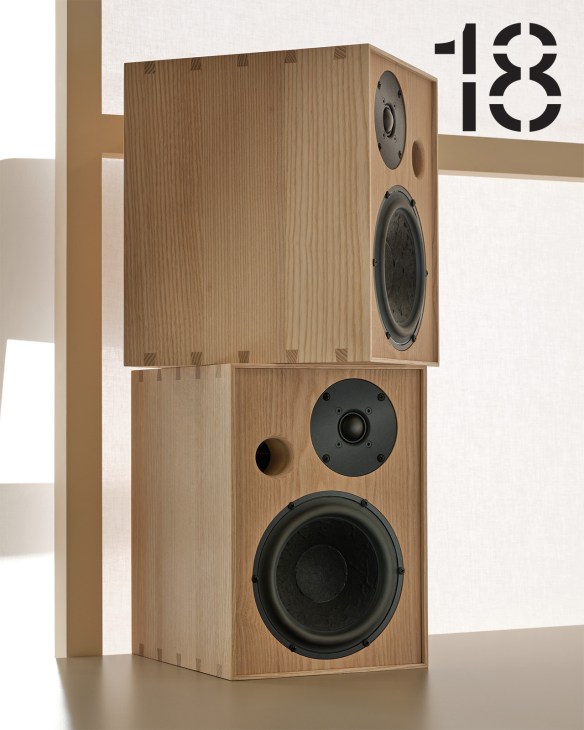
RA03 by Rudy Audio
Denmark
Monocle spotted Rudy Audio when it debuted at last year’s 3 Days of Design festival in Copenhagen: we were taken by its gorgeous speakers, amps and turntables with chiselled surfacing and exquisite joinery. A collaboration between Søren Rose Studio, furniture maker Københavns Møbelsnedkeri and a Danish technician, this hi-fi features speakers hand-made in Denmark by Scan-speak. “We went the road less travelled,” says Søren Rose, the founder of his eponymous studio.
rudyaudio.com; sorenrose.com
Lifetime achievement
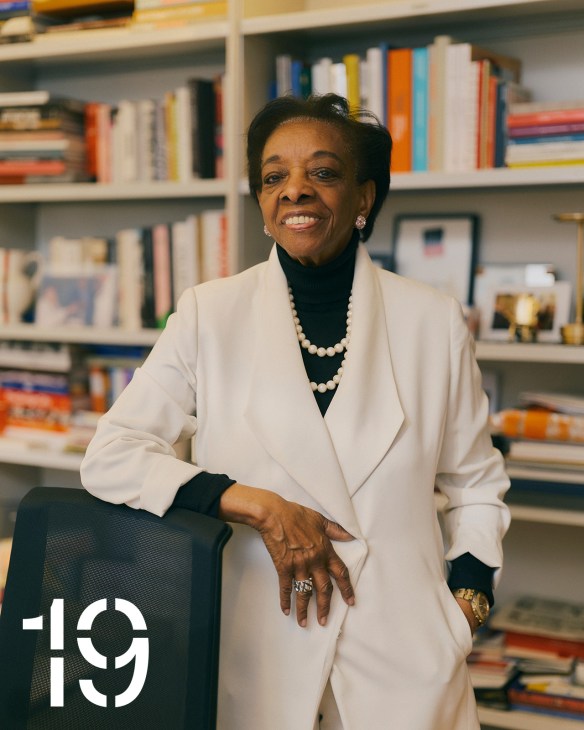
Marva Griffin
Italy
For more than 25 years, Venezuelan-born, Milan-based curator Marva Griffin has been helping to develop design talent from across the globe. In 1999 she founded Salone Satellite, an exhibition within Milan’s Salone del Mobile trade show that spotlights projects by young practitioners under the age of 35. It has nurtured the careers of designers such as Cristina Celestino, Sebastian Herkner and Oki Sato – an on-going achievement that’s worthy of celebration.
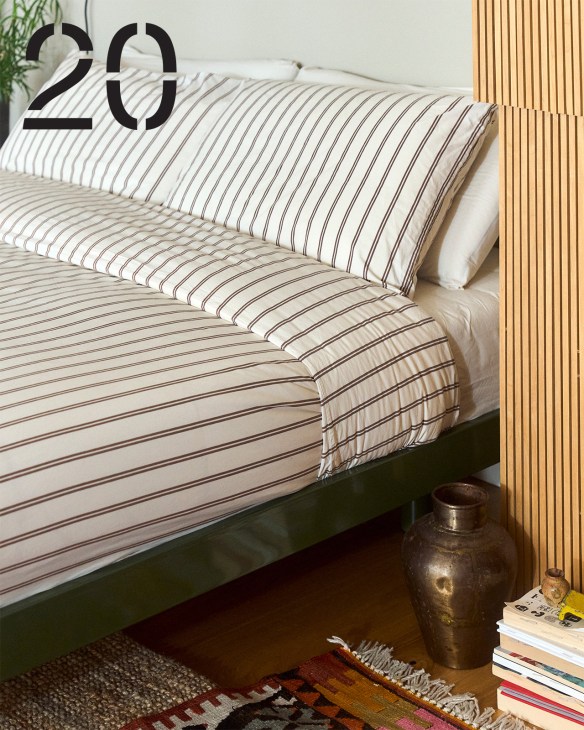
Best bedframe
MC-1 by ReFramed
Denmark
It pays to be flexible in the bedroom. Copenhagen-based practice ReFramed’s sleek and modern MC-1 bedframe is a case in point. Created in collaboration with Swiss industrial designer Michel Charlot, it features a chunky steel frame that holds the mattress and four simple cylindrical legs. There are two powder-coated finish options (ivory or moss green) and sprung slats that are supportive and remain flexible for added comfort.
reframedbrand.com
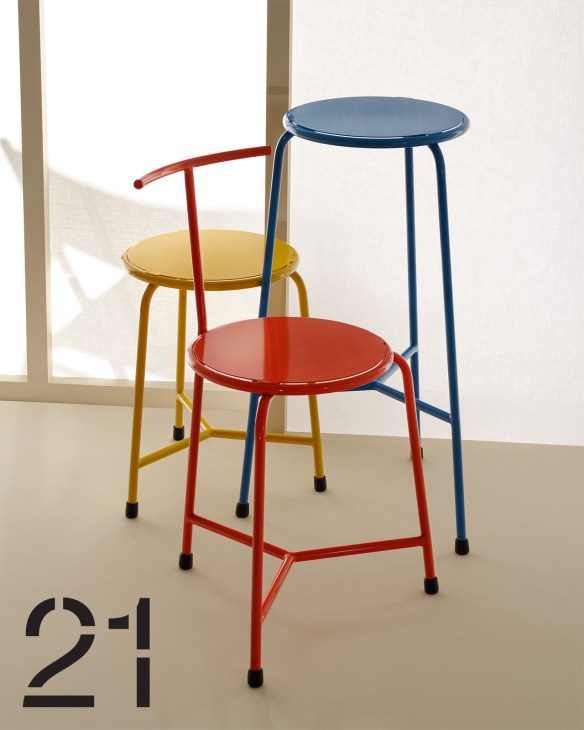
Most playful design
Aço collection by Ghome
Portugal
“I don’t think about products but rather what they can do to the spaces that they inhabit,” says Gonçalo Prudêncio, founder of Portuguese design firm Ghome. Case in point: Aço, which exudes playfulness through bold shapes and colours.
ghome.pt
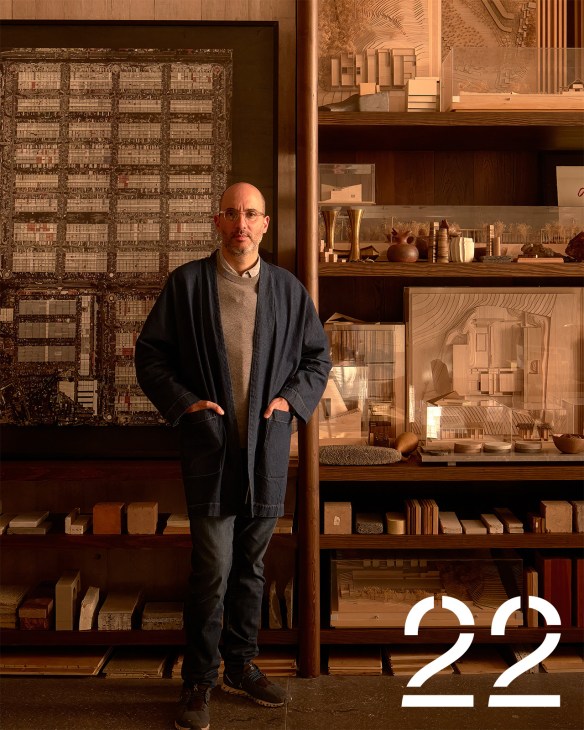
Residential architect of the year
Manuel Cervantes
Mexico
It’s appropriate that we’re meeting Manuel Cervantes, our residential architect of the year (though his practice encompasses much more), in his studio. “I live next door, so it’s an extension of my home,” says Cervantes. His residence and studio is filled with books, artwork and objects that “shape the way that we discuss projects”, says the architect. “It’s a space for thinking and connection, not just work. Sometimes it’s easier to communicate an idea with a painting or a material sample than through a drawing.”
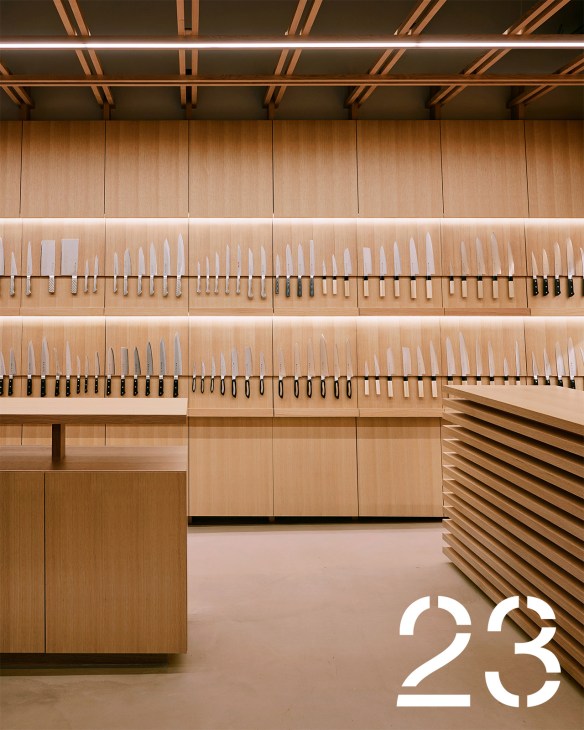
Best retail display
Tojiro Knife Gallery
Japan
At Tojiro Knife Gallery in Osaka, every detail is a celebration of traditional Japanese craft. In particular, the design riffs on yoroi-bari cladding, a method of construction inspired by samurai armour that involves weaving metal plates with silk or leather cords. The knives are lined up on magnetic shelves, held up by clever notches. “If a product is exceptional, the space must be equally refined,” says the shop’s designer, Katata Yoshihito.
tojiro-japan.com
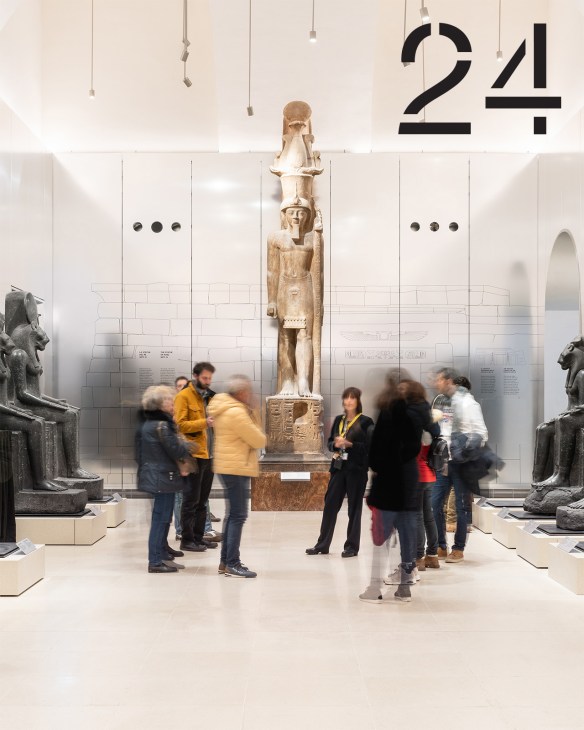
Best exhibition design
Gallery of the Kings
Italy
Museums of ancient history can sometimes feel a little dusty and stale. That’s why the bold and unconventional Gallery of the Kings at Turin’s Museo Egizio caught our eye. David Gianotten and Andreas Karavanas – Partner and Project Architect, respectively, at the Dutch architecture firm OMA – designed the layout in collaboration with Andrea Tabocchini Architecture. “These statues hold a lot of importance and we didn’t want to keep them in the dark,” says Gianotten.
oma.com; andreatabocchini.com
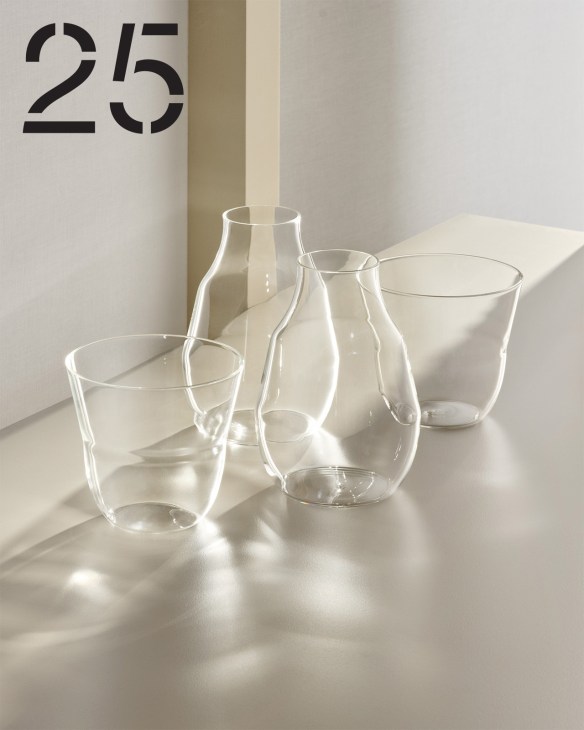
Best glassware
Fit by Aldo Bakker for J Hill’s Standard
Ireland
Dutch designer Aldo Bakker’s on-going collaboration with J Hill’s Standard, an Irish maker of contemporary cut crystal, is underpinned by their shared admiration for form and the use of glass. Their cup-and-carafe combination, named Fit, can be stacked and comes in three colours: grey, clear and opaque ochre. “We want to re-establish the glass industry in Ireland,” says Anike Tyrrell, the founder of J Hill’s Standard. “We’re not interested in revisiting what’s already been done a thousand times.”
jhillsstandard.com; aldobakker.com
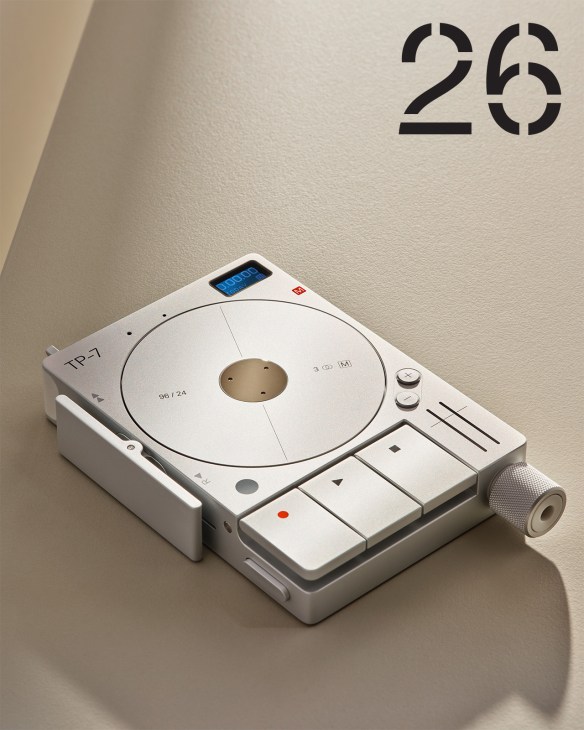
Best gadget
TP-7 field recorder by Teenage Engineering
Sweden
Teenage Engineering’s palm-sized TP-7 audio recorder has us wondering how we ever went without it. Its centrepiece is a motorised “tape reel” that allows you to pause recordings, control the menu navigation and more. This highly intuitive device is making waves.
teenage.engineering
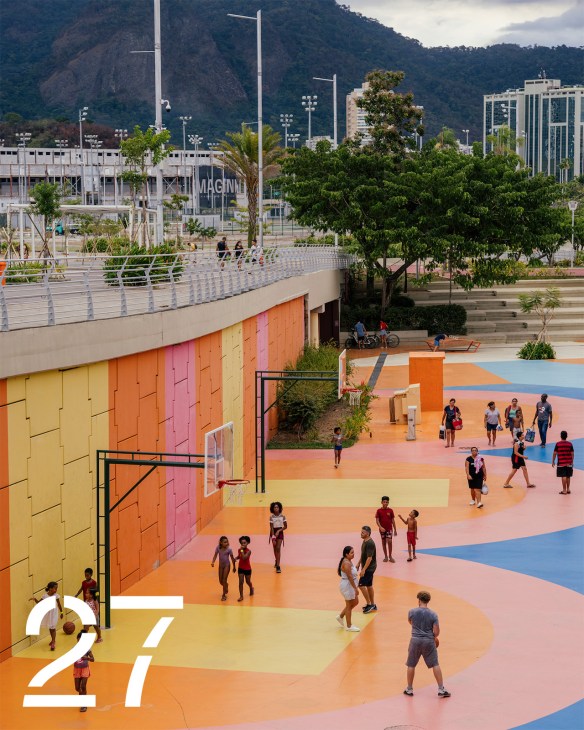
Best project evolution
Rita Lee Park by Ecomimesis
Brazil
All too often the Olympic Games leave host cities an urban legacy of white elephants. Not so in western Rio de Janeiro, where the landscape architects at Ecomimesis Soluções Ecológicas transformed the grey pedestrian thoroughfare that was the Olympic Way into a fun and colourful park named after the late Brazilian queen of rock, Rita Lee.
ecomimesis.com.br
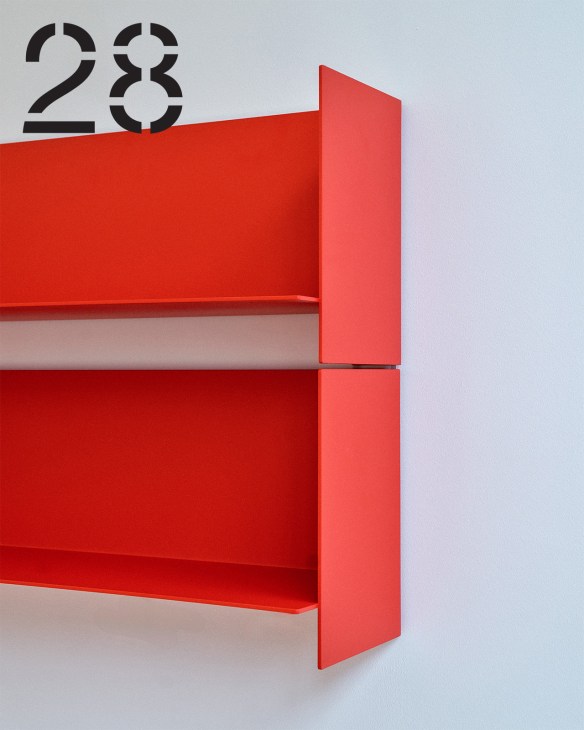
Best storage solution
Util
Portugal
When it comes to steel storage solutions, options tend to fall into two extremes – either industrial-grade efficiency or uninspired, budget-friendly office staples. Enter Util, a Portuguese brand striking a balance between functionality and elegance with a thoughtfully curated and design-conscious collection.
thisisutil.com
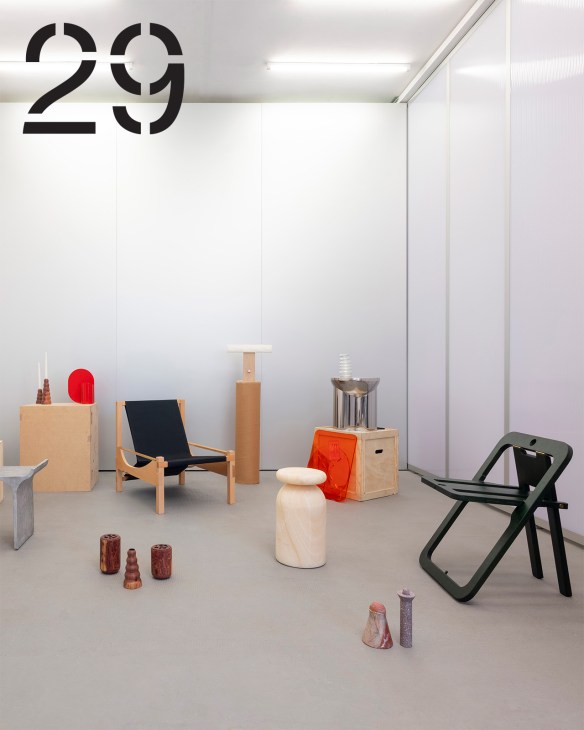
Best design partnership
Holder Objects
Chile & Germany
Berlin-based design store and gallery Holder Objects brings new and archival Latin American design to Europe. This exchange stems from the Chilean duo behind it, Trinidad Davanzo and Camilo Palma. “Latin America’s unique geographical position is a bridge between European, indigenous and African influences,” says Davanzo. Eminent talents on the duo’s radar include Venezuelan architect and designer Jorge Suárez-Kilzi and Italian-Uruguayan maker Matteo Fogale.
holder-objects.com
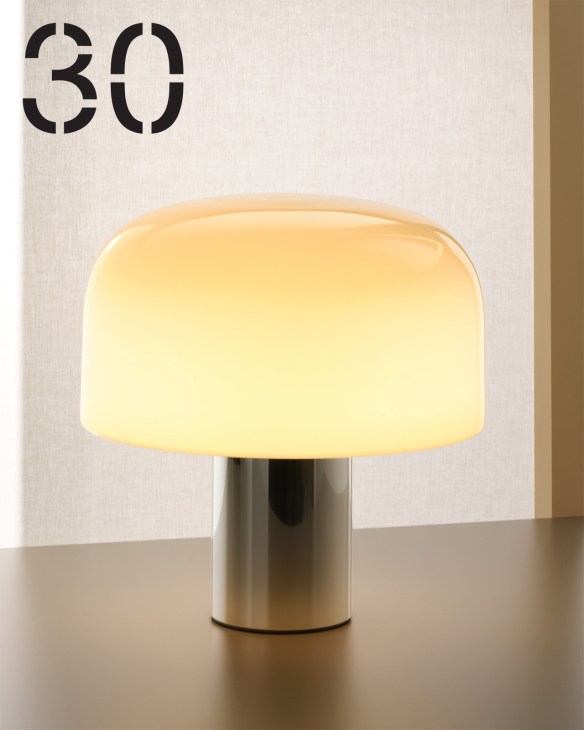
Best lamp
Bellhop Glass T by Barber Osgerby for Flos
Italy
The familiar shape of UK studio Barber Osgerby’s Bellhop Glass T throws a warm, uniform light wherever it sits thanks to its layers of opaline glass. The new iteration of the lamp is also dimmable: when turned down low, the glow it gives is almost ethereal. “I wanted to concentrate on a light that can act as a central focal point in a space, that enhances an environment rather than just illuminating it,” says Osgerby.
flos.com
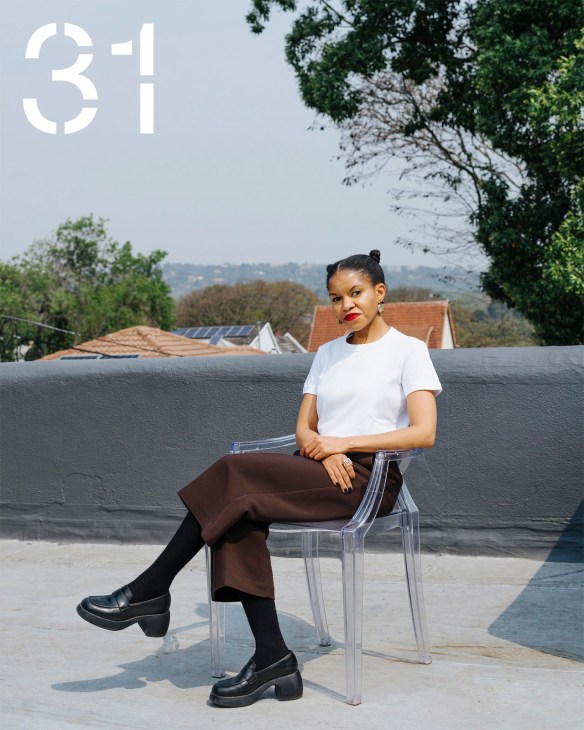
Curator to watch
Zanele Kumalo
South Africa
Zanele Kumalo is an invaluable member of South Africa’s design scene, platforming the work of local creatives through her work as curator of Design Week South Africa – a new fair that took place for the first time last October across Johannesburg and Cape Town. “What drives me is helping young creatives find a firmer footing in places where they haven’t had access,” she says. “There’s such a wealth of talent in this country.”
Design Week South Africa’s strength lies in Kumalo’s curation that includes emerging talent as well as bigger players. Although in its early days, the fair has already garnered international attention – and it has also fostered domestic pride.
designweeksouthafrica.com
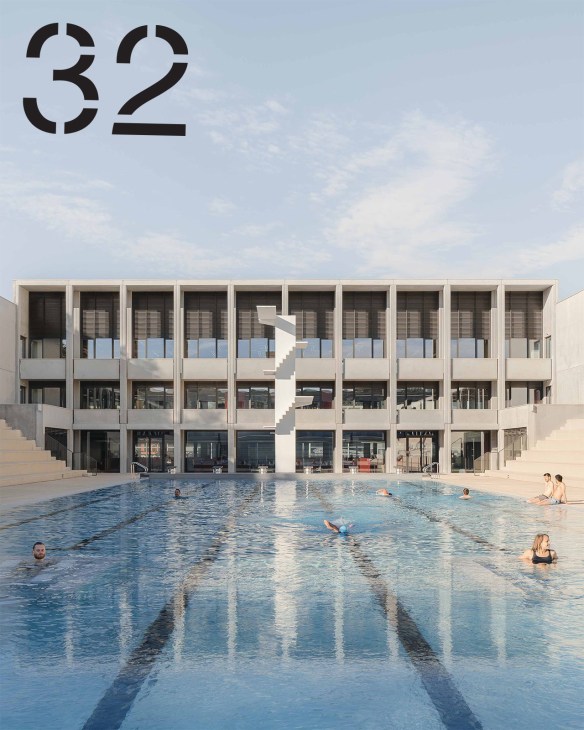
Best sports facility
Gerland Aquatic and Sports Centre
France
When Lyon-based 4_32 Architecte was tasked with updating a 1930s outdoor pool in their hometown’s Gerland sport complex, the architecture firm was guided by a desire to enhance the experience of sport for people of all abilities and ages.
The scope of the project involved retaining the 10-metre diving tower and the 33-metre pool as well as building offices and training facilities for the city’s professional rugby club. “What made this project interesting is that we needed to accommodate a wide spectrum of people, from young swimmers to high-profile athletes, all in one place,” says the practice’s co-founder Claire Bertrand. “The result aligns with the vision of Tony Garnier, the site’s original architect, who believed sport was part of a healthy lifestyle and should be accessible to all.”
432.archi
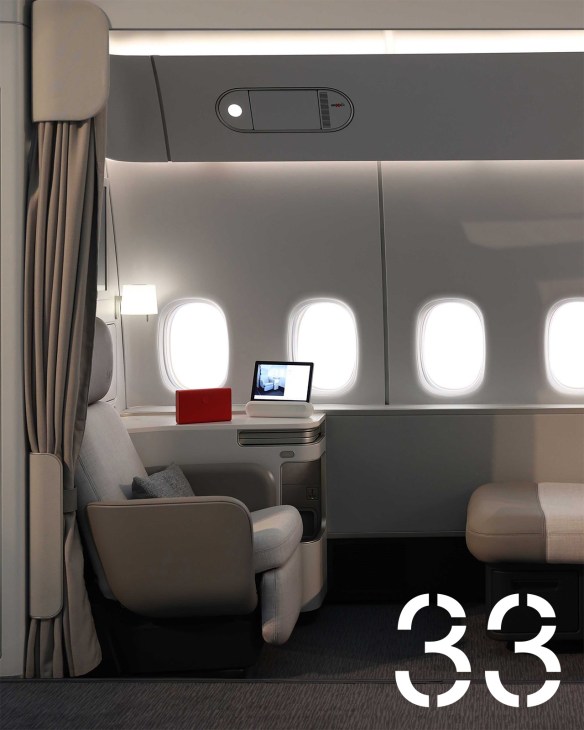
Best first-class cabin
La Première by Air France
France
When Air France unveiled its new first-class cabin, La Première, in March, expectations were sky high. They were met. We’re most impressed by the airline’s ability to design a new seating solution that feels spacious. The muted tones, red accents and curtains remain but a full 3.5 sq m of space – 25 per cent more than before – has been added. “It’s very elegant and fits the brand,” says Benjamin Smith, Air France-KLM’s CEO. “We are quite confident that we can remain at the top of the European space in first class.” Air France spent three years refining the suite, which features a chaise longue that can transform into a two-metre-long bed. La Première’s new cabins take flight from Paris to New York this spring.
airfrance.com
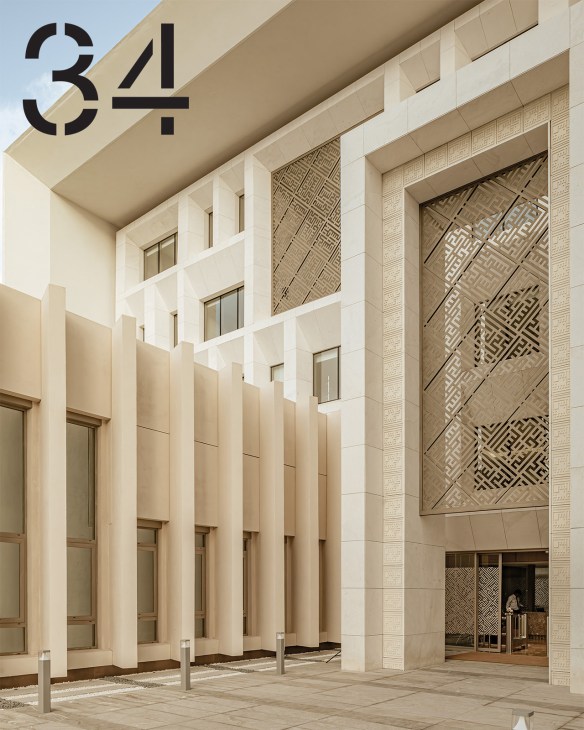
Best civic building
Siège du Conseil de la Concurrence
Morocco
Reflecting centuries-old heritage in the design of a new building is a tough brief. But Rabat-based Prism Architectes have found a way to meld traditional details with contemporary requirements in its design of new headquarters for Morocco’s Conseil de la Concurrence, an institution that aims to ensure transparency in the country’s economic relations.
Key architectural features include a méchouar (a central area inspired by traditional pathways), courtyards and shading devices. These features are enhanced by the use of stone, wood and intricate metalwork that reference Morocco’s traditional vernacular.
prismarchitectes.com
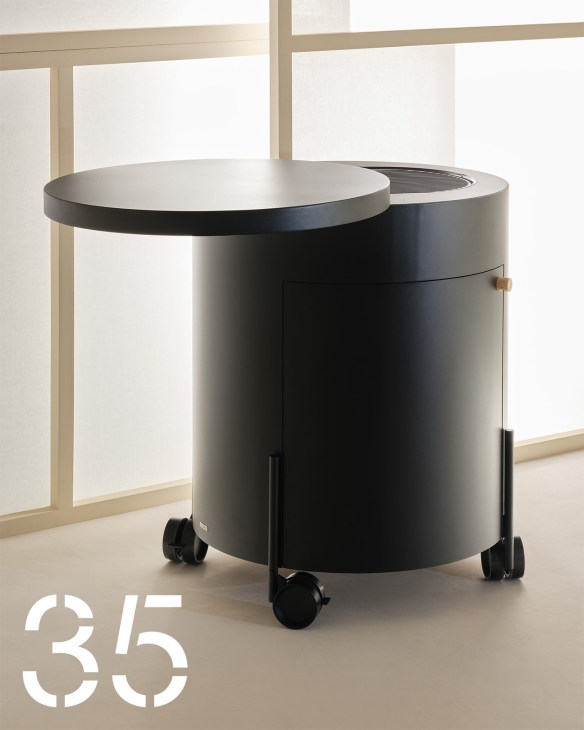
Best barbecue
Phil by Ethimo
Italy
Italian design brand Ethimo and Maltese-born designer Gordon Guillaumier’s concept for an outdoor kitchen just made your next summer barbecue significantly better. Part of the Phil collection, which includes a sink and induction-hob option, this sizeable, cylindrical grill-on-wheels is available in an olive green or a sepia black, with pleasing teak details. We think that Phil is the perfect summer party guest – free enough to go where the evening takes him but decorous enough to know exactly what is needed and when. Phil has us longing for a hot day when we can sizzle some steaks and throw back an ice-cold spritz. This is outdoor design at its best: uncomplicated, efficient and tailored to improving people’s lives. Bring on the summer.
ethimo.com
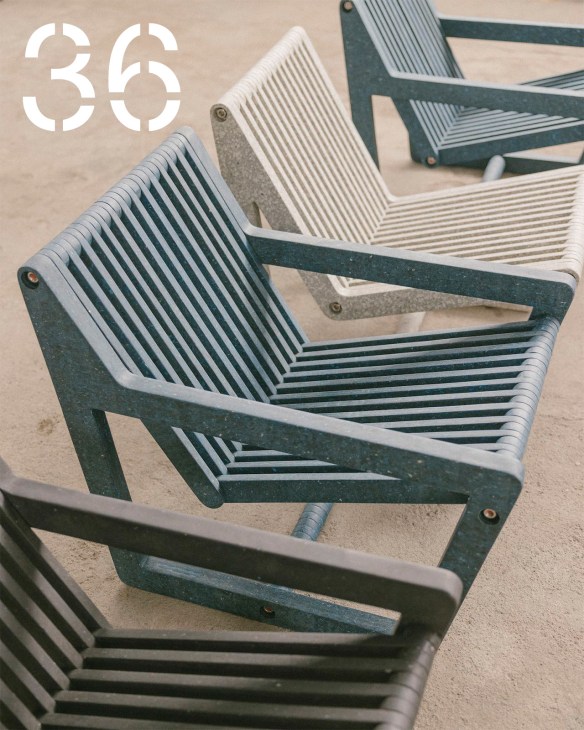
Best material innovation
Sungai Design
Indonesia
Since Gary Bencheghib and his siblings co-founded the river clean-up nonprofit Sungai Watch in Bali in 2020, they have collected more than 2,000,000kg of plastic waste. Rather than sending it to landfill, they have been transforming it into chairs.
The manufacturing process involves cleaning each plastic bag and melting them into uniform sheets that can then be sliced and layered to build furniture. “We launched a product that was 100 per cent made from recycled plastic, to carry as much weight as possible,” says Bencheghib. “It’s a symbol of how much plastic we’re collecting from rivers.”
sungaidesign.com
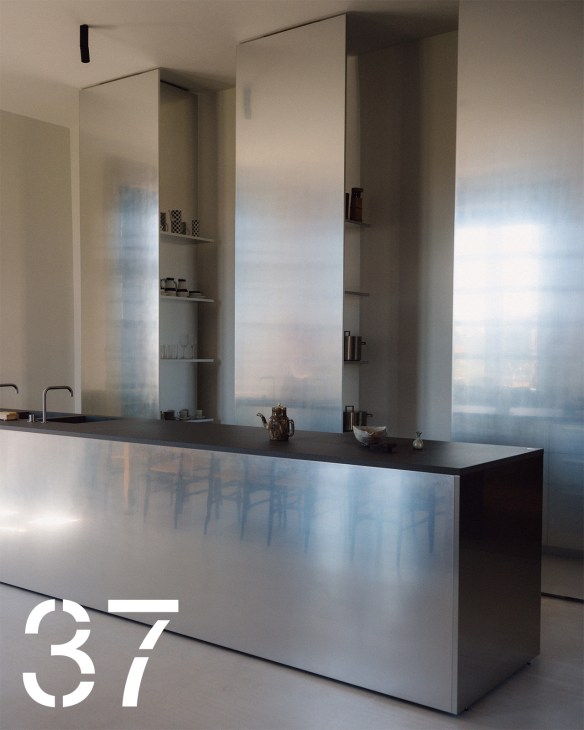
Best community initiative
Casa Ria by David Chipperfield Architects
Spain
Chipperfield’s Fundación Ria, a contribution to his adopted city of Santiago de Compostela in northwest Spain, has a new headquarters in what was once a sanatorium. Casa Ria is intended for use by the non-profit to contribute to sustainability initiatives and quality of life in Galicia. It’s also a base for David Chipperfield Architects Santiago.
fundacionria.org
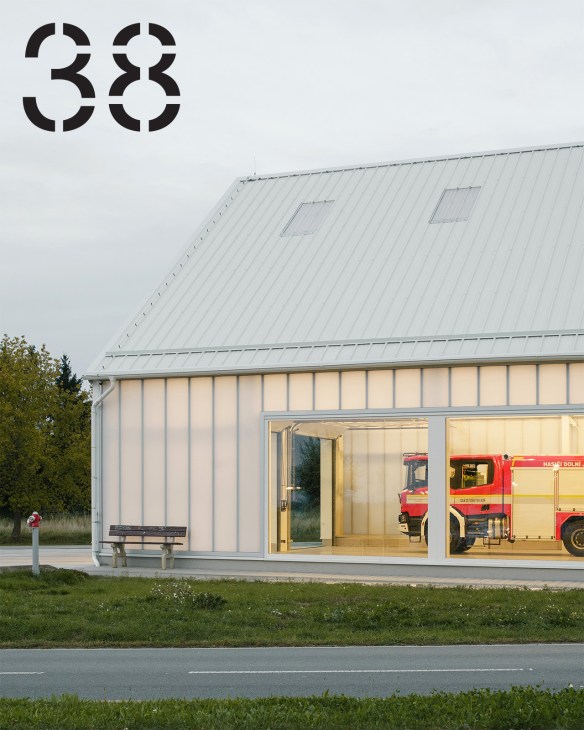
Best emergency facility
Jircany Fire Station by SOA Architekti
Czechia
Czech studio soa Architekti’s redesign of Jircany Fire Station has turned what could have been an isolated storage space for vehicles and hoses into a place where essential workers and the community overlap. Located in Psáry, a town that’s a 30-minute drive south of Prague, it’s a luminous polycarbonate-façade structure.
s-o-a.cz
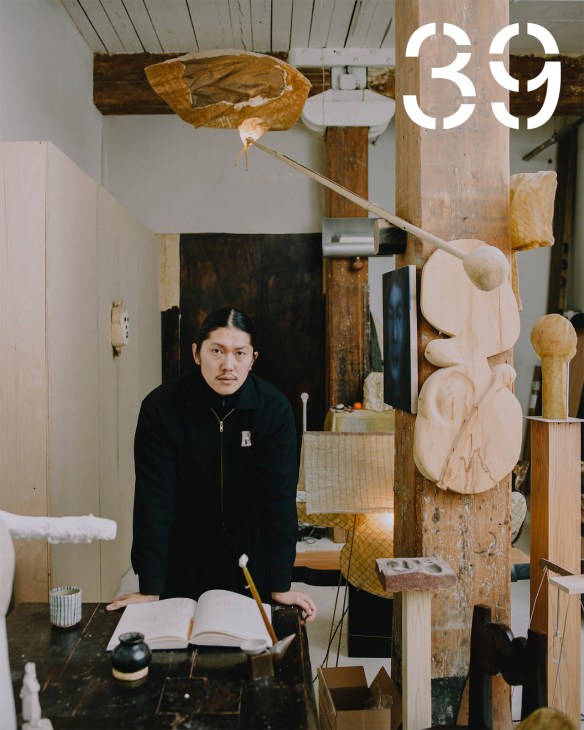
Emerging designer
Minjae Kim
South Korea & USA
Minjae Kim works across interiors, furniture, sculpture and art, in Seoul and New York. His work straddles the line between the practical and the artistic.
“I favour objects that reveal the layers of their creation, permitting one to discern their formation, in contrast to those flawless products that merely inspire admiration,” he says. “I contend that the presence of imperfections, rather than a pristine finish, cultivates an aura of ‘breathing space’.”
minjae.kim
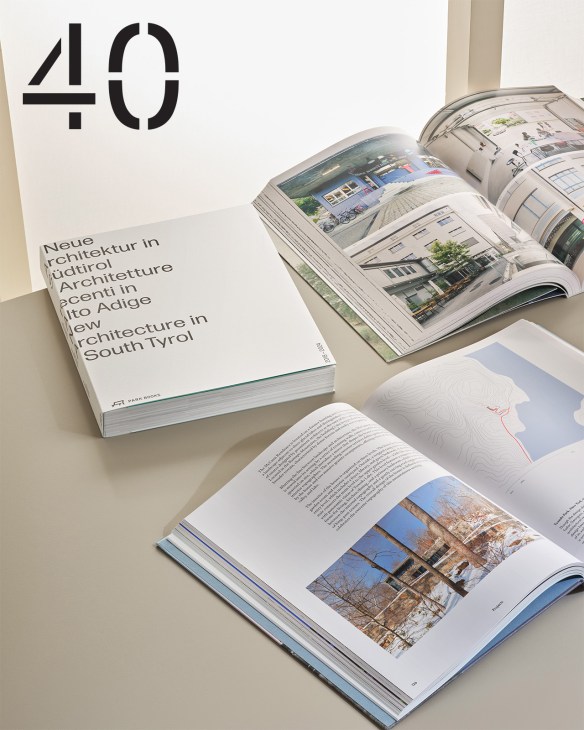
Best imprint
Park Books
Switzerland
Zürich-based architecture and design imprint Park Books makes publications that are both sources of knowledge and beautiful objects. “Inspired by Swiss craftsmanship, we pay close attention to the materiality of every book while engaging with the topical issues of design,” says Julie Cirelli, its Stockholm-based director.
Established in 2012 as an affiliate of Scheidegger & Spiess, Park encourages an exchange of ideas between authors, architects and readers that continues long after the publication date.
park-books.com
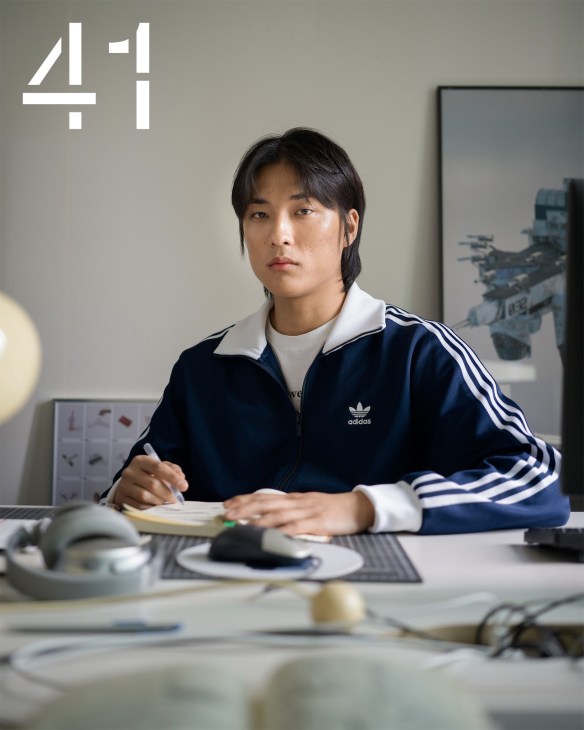
Graduate to watch
Changhwi Kim
South Korea
Driven by empathy and an insatiable curiosity, Changhwi Kim creates products that go well beyond what is expected. Fresh from design school, Kim is a nuanced observer of people and everyday objects, and he aspires to build a better, more playful world. We meet him to discuss his graduation project, “Ed!t”, in his collaborative workspace, Creative Group 297.
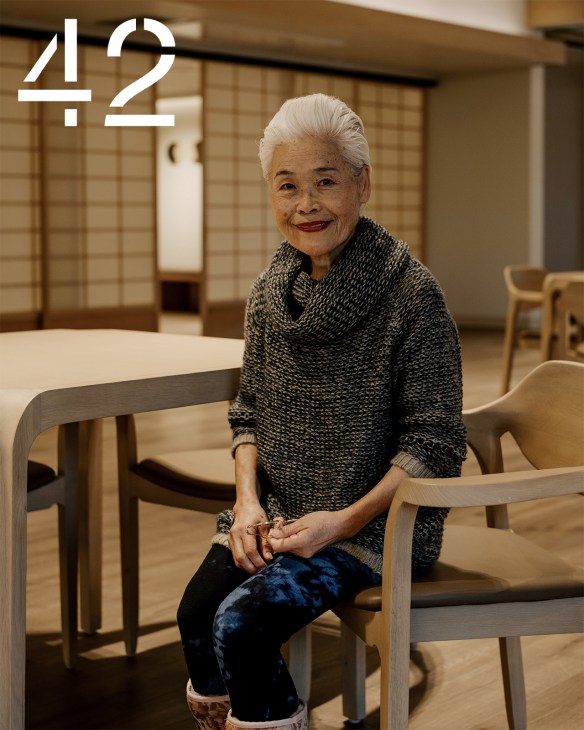
Best for seniors
Little Tokyo Towers by OWIU
USA
Home to 301 one-bedroom apartments for seniors, Little Tokyo Towers in Los Angeles shows how assisted living spaces can be uplifting. Design studio OWIU renovated communal areas, making simple adjustments, such as custom seating, homely lighting and space-defining shoji screens.
owiu-design.com
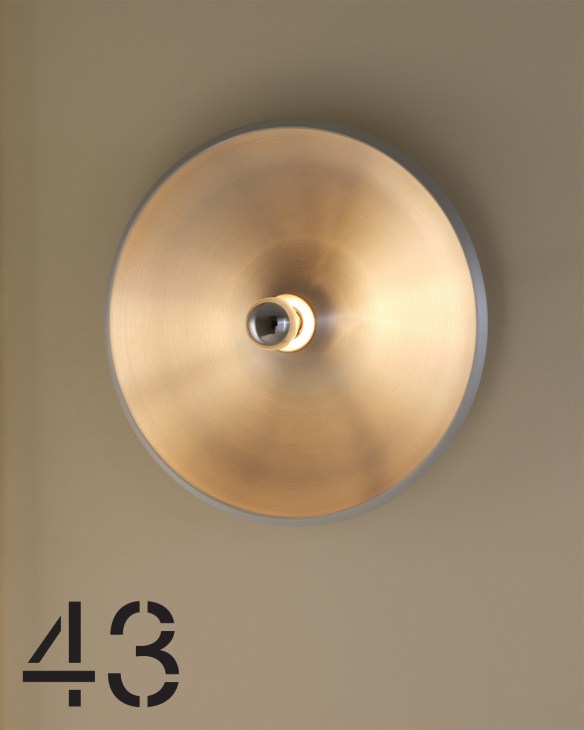
Best modernisation
Astep Model 262
Denmark
According to Alessandro Sarfatti, the third-generation owner of Danish-Italian design company Astep, his grandfather Gino was a “purist”. Sarfatti is modernising his family firm’s mid-century designs, including Gino’s Model 262, a striking light fixture in which the light bulb sits cradled in the curve of a sleek aluminium disc. Originally created in 1971, the design has been updated to meet 21st-century needs and conform to Astep’s exacting standards as a certified B Corp. It’s chic, functional and energy-efficient – and shows that the past can be both celebrated and modernised.
astep.design
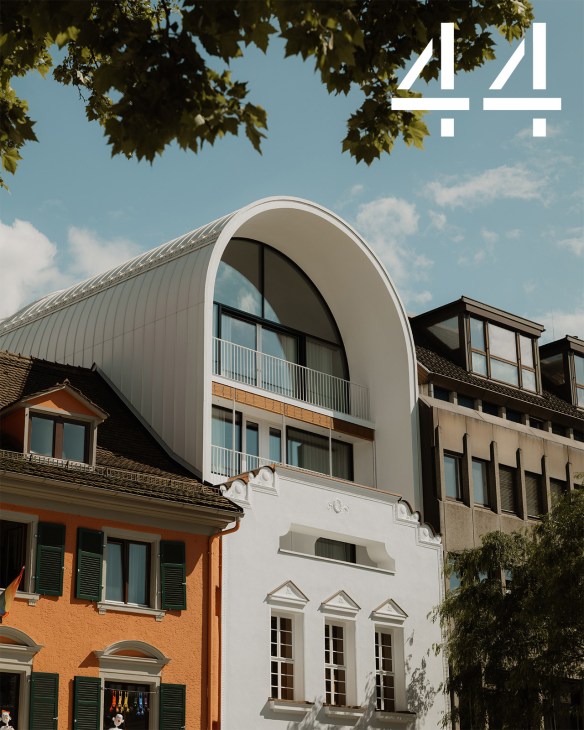
Best new hotel
Stadthotel Kleiner Löwe
Austria
A celebrated Swiss practice, Bregenzerwälder craftsmen and a couple seeking a lifelong investment came together to convert a 17th-century brewery into the Stadthotel Kleiner Löwe, an elegant eight-room guesthouse. Lisa Rümmele and her partner, Johannes Glatz, convinced Herzog & de Meuron to take on the renovation. The building’s centuries-old façade has been preserved but a modern annexe has been added on top. It’s a fine hospitality addition to the Austrian stretch of Lake Constance.
kleinerloewe.at; herzogdemeuron.com
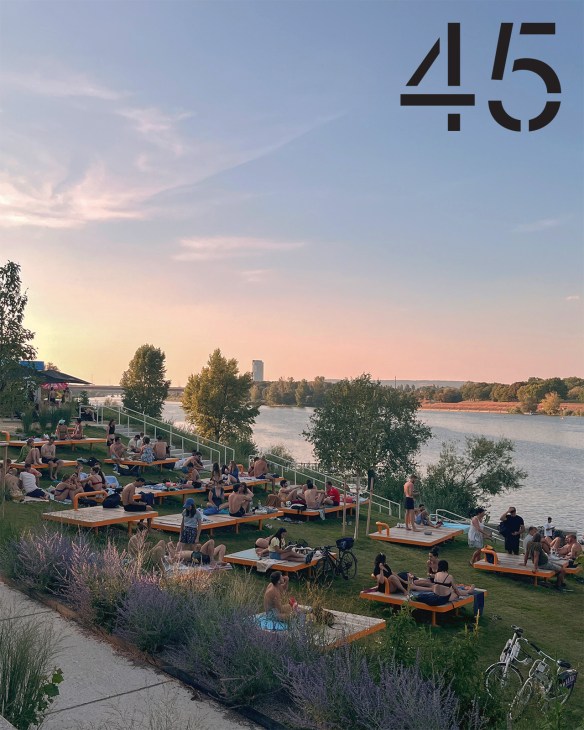
Best public space
Pier 22 by Mostlikely Architecture
Austria
Vienna’s Danube Island is an artificial stretch of land created in the 1970s and 1980s as a flood protection measure. “When they built it, they didn’t have any idea of what else it should be,” says Mark Neuner, the founder of Viennese architecture firm Mostlikely. Last year the practice completed the first phase of its Pier 22 project on the island. Facing Vienna’s tallest building, the DC Tower 1, it’s the recreation space that the city has long needed, despite its strong tradition of bathing beaches and swimming pools.
mostlikely.at

Best for contemplation
Raj Sabhagruh
India
The Raj Sabhagruh in Gujarat is a meditation complex designed by Serie Architects, a firm based in Mumbai, Singapore and London. Built for Jains, the vast construction is dedicated to providing the optimal conditions for samayika, one of Jainism’s key tenets, meaning the pursuit of spirituality through 48 minutes of concentrated silence.
serie.co.uk
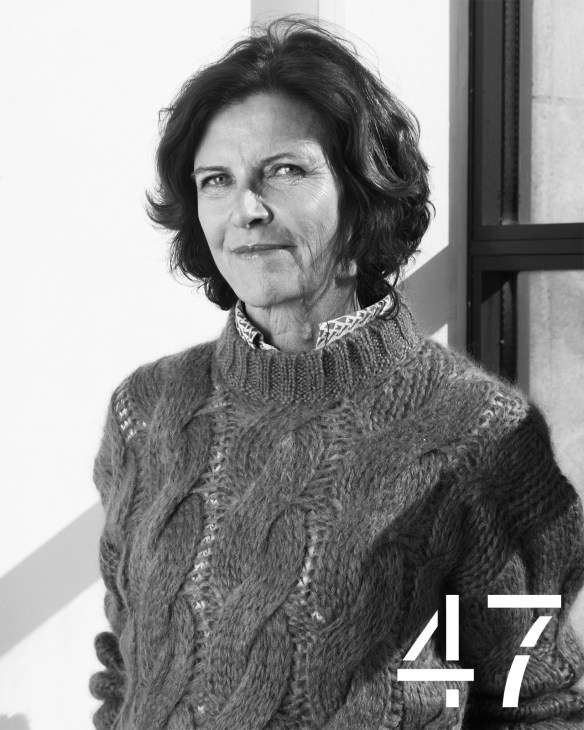
Civic architect of the year
Jeanne Gang
USA
Jeanne Gang established Studio Gang in 1997 and has since become renowned for spaces that connect people, their communities and the environment. “Our core principles come through in how we approach every project, starting with what’s already there,” says Gang, who recently expanded the California College of the Arts. “That doesn’t just mean context in a traditional sense. It also means people, geology, history or existing buildings. With the Verde tower in San Francisco, for instance, we considered how the building contributes to the public realm. If a place is designed well, people will want to be there.”
studiogang.com
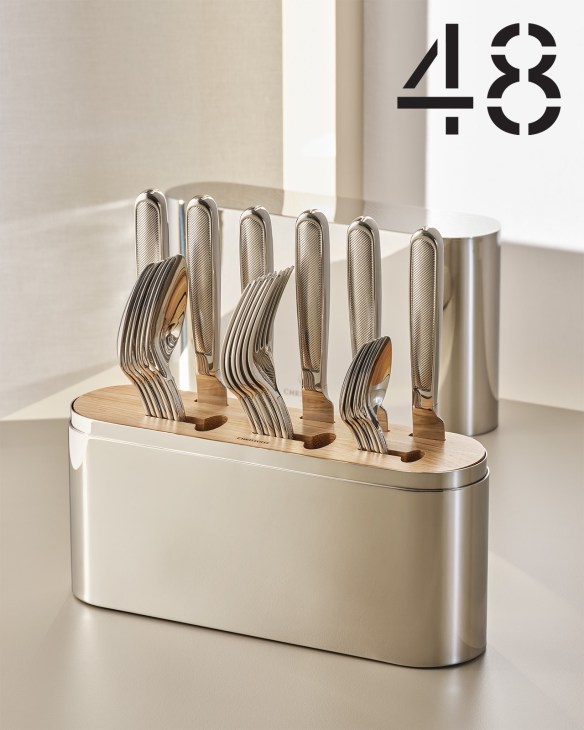
Best cutlery
Concorde by Christofle
France
The Place de la Concorde in Paris is symbolic of French fraternity. So it’s a fitting source of inspiration for Christofle’s well-established Concorde silverware collections, designed for use at parties. Housed in a white-oak-and-steel case, the cutlery draws deeply from the brand’s heritage. A milleraies pattern lining the utensils’ handles provides a contrast between gloss and matte finishes. These knives, forks and spoons are a pleasure to hold.
christofle.com
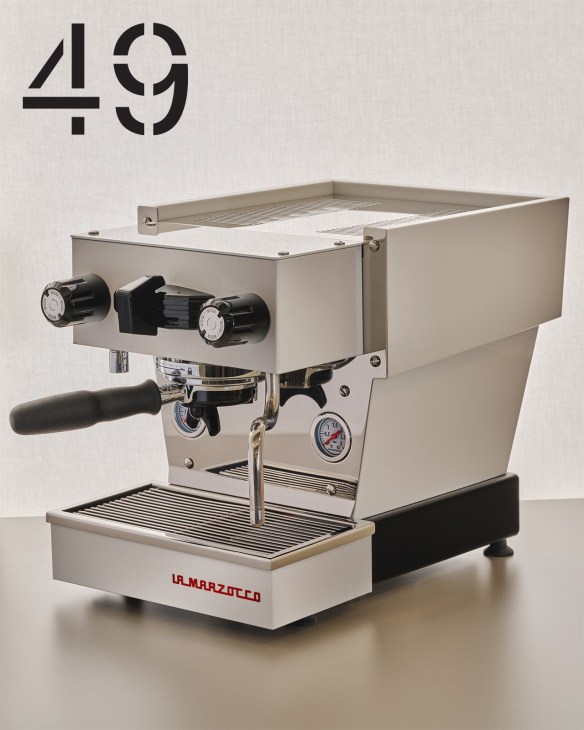
Best for coffee
Linea Micra by La Marzocco
Italy
This compact version of La Marzocco’s barista-approved coffee machines allows you to make café-level flat whites at home. “The Linea Micra is designed to offer the same performance as our commercial machines, scaled for home use,” says Stefano Della Pietra, La Marzocco’s head designer. The coffee machine’s clean-lined aesthetic reflects the manufacturer’s Florentine roots, particularly the architectural legacy of the Renaissance – making the Linea Micra an elegant and eye-catching addition to your kitchen countertop.
lamarzocco.com
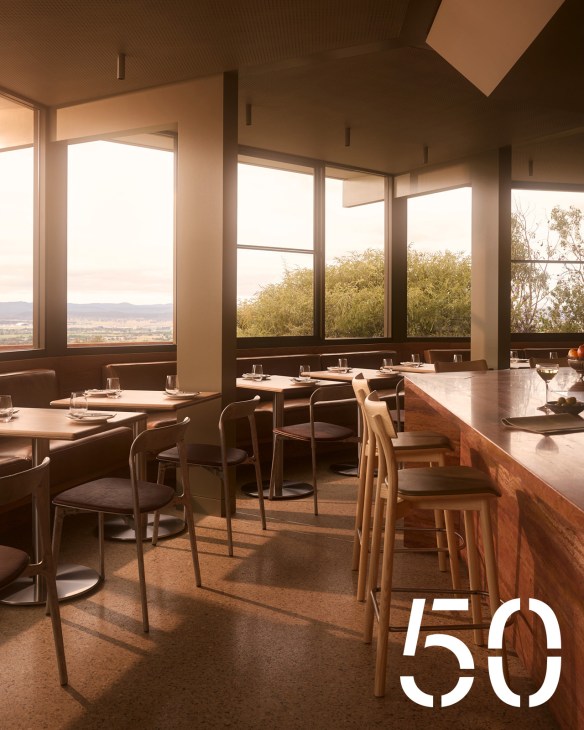
Best renovation
Lunetta by Acme
Australia
With its panoramic views of Canberra, the 12-sided restaurant building at 60 Red Hill Drive has been a city landmark since its completion in 1963. Originally designed by Czech architect Miles Jakl, it was reimagined in 1981 by Italian-born Enrico Taglietti, who added futuristic convex bay windows. Now, after three years of closure, the building has reopened as the home of two dining spots: Lunetta and Lunetta Trattoria.
lunetta.au; acme-co.com.au
What the winners receive
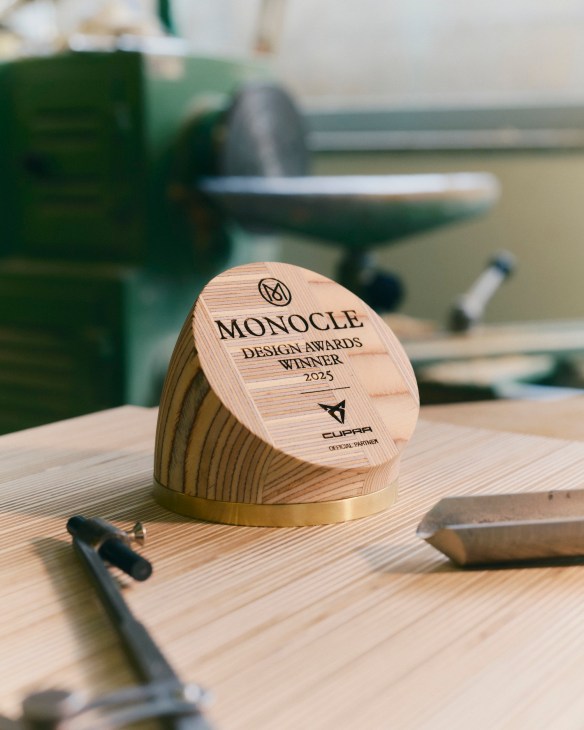
The award by Harry Thaler
Merano
Harry Thaler has crafted the trophy for the Monocle Design Awards since its debut in 2021, working with the Tscherms-based workshop of Martin Klotz to refine its curved timber form. For the 2025 iteration, Thaler opted for plywood as the primary material, reflecting human ingenuity; the laminating of several layers of timber veneer make a product that is lighter than solid wood. The trophy, which can be used as a paperweight, is a testament to thoughtful design that is celebrated by these awards, which this year are supported by Cupra Design House.
A note from Cupra Design House:
Design has always been at the heart of everything that we do at CUPRA. It shapes our identity, defines our language and runs through every innovation and experience that we create. For us, design isn’t just about form; it’s about emotion, energy and defying convention. Every line, texture and detail in our cars is an expression of our rebellious spirit.
Inspired by collaborations with like-minded brands who also see design as a space to inspire the future, we push further into new, unexplored territories.
From the materials that shape our cars’ interiors to the bold ethos that inspires our sportswear collection, every step that we take is a testament to our passion for design – a passion that transcends the automotive world and speaks to ingenuity, innovation and human connection.
An inside look at the process behind choosing Monocle’s Design Awards
Another year, another iteration of the Monocle Design Awards, in which we celebrate the best in the sector over the past 12 months. While the full report can be viewed here (or in the pages of the magazine), this column offers a moment to reflect on the key themes that our team observed during our prize reporting.

1.
Focus on France
This year, France has picked up a record seven of the 50 awards. It’s a testament to the high value that the country places on impeccable design. My suspicion is that this comes from the fact it still prizes highly specialised production, rooted in the tradition of the atelier.
2.
Look back in wonder
Many brands are showing that the past can be a springboard for innovation. The likes of Ikea, Flos and independent outfit Astep have refreshed works that have enjoyed enduring success in previous decades, adding contemporary modifications to bring them up to speed for modern life.
3.
Leaders matter
Good design can only make a difference if there are people to champion it. It’s why we’re celebrating leaders such as Marva Griffin, who has nurtured generations of talent through Salone Satellite, and Zanele Kumalo, whose recently launched Design Week South Africa has elevated the status of the discipline in the country.
4.
Invest in the little things
We often talk about designers overseeing the creation of everything “from the spoon to the city”. It’s the former that I want to spotlight here. Investing in the small things can have an outsized effect. Take, for example, Christofle’s Concorde cutlery set. Holding a well-made knife and fork can enhance a meal, which in turn can elevate an evening – and your overall sense of wellbeing too.
5.
Let there be light
We have a record number of lights featured in this year’s edition. We cover everything from wall-mounted sconces to lamps and more. Why? Well, there are few objects whose output can have such an immediate effect on our lives. Light affects our health, energy levels and mood. You might as well invest in a good one.

Monocle’s rundown of five grocery stores reinventing food retail
Grocery shopping often feels like a chore. But across the globe, smart retailers are showing that it can offer far more than just loud packaging, harsh strip lighting and busy, unappealing displays. Here, Monocle meets a few entrepreneurs who are going the extra mile to entice and excite their customers, whether by offering fresh, locally sourced products or by scouring the world for the best brands and suppliers. Some of these retailers are neighbourhood institutions, while others service a smaller niche. The common thread, however, is an understanding of food’s power to nourish communities as well as individuals. Many people now rely on delivery apps, while the big supermarket chains seem to be growing increasingly impersonal. The following businesses are reminders that there’s value in creating more meaningful, intimate retail experiences.
1.
The pleasure emporium
Lighting the way
Epic, France
When shoppers enter French supermarket chain Epic’s flagship shop in Paris, they are greeted by the sight of a huge chandelier. Assembled from 4,000 clear glass jars, it casts a warm glow over a bounty of dried fruits and nuts. “We were aiming for a ‘wow’ effect,” says Franck Hadjez (pictured), Epic’s co-founder and principal buyer. “But we also wanted it to draw customers in towards the back of the shop.” Deep within Epic is a section dedicated to what Hadjez calls “pleasure groceries” – an aisle offering more than 50 kinds of hot sauce, an alcove of olive oils from across the Mediterranean and about half a dozen beautifully illuminated sections dedicated to regional delicacies from across the globe. The shop stocks a wide selection of cheeses rarely found in other French supermarkets too, including a Corsican soft variety with a coating of wildflower petals.


Hadjez, his brother Jordan and cousin Steve are second-generation grocers. All three began their careers elsewhere but ultimately joined what Hadjez describes as the “more human-centric” family business. They had been franchisees of UK multinational chain Marks and Spencer for eight years; its outposts included a location in the heart of the Saint-Germain-des-Prés neighbourhood. In the years following Brexit, Marks and Spencer’s French outposts began to close, forcing the Hadjez clan to decide what they wanted to do with their prized 6th-arrondissement location.
The result was Epic’s first shop, for which Hadjez partnered with French retailer Monoprix to sell everyday essentials, complemented by a vast selection of delights sourced directly from small producers. These range from Emirati camel-milk chocolate to Monegasque gin. The business model might be unorthodox but it has allowed Epic to grow. “I can offer my premium products at a lower price than a fine-foods grocery shop, where margins are higher because they’re all it sells,” says Hadjez. Epic takes its name from the word “epicurean” – a nod to the pleasure-seeking disciples of Greek philosopher Epicurus – but the moniker also refers to the traditional French épicerie.


The success of the shop in Saint-Germain-des-Prés (its revenue in 2024 was about €8m) emboldened the Hadjez family to transform its Galeries Gourmandes outpost – another of its historic locations, adjacent to Paris’s wealthy western suburbs – into the new Epic flagship. This shop opened in October 2024. “We are looking at opportunities in other French cities,” says Hadjez. “We’re even considering franchising Epic elsewhere in Europe.”
epic-paris.com

Our picks from Epic’s shelves
1.
Al Nassma Camel Milk Chocolate
A creamy treat from the uae-based producer.
2.
Las Chachitas
Mexican-style salsa made in the south of France.
3.
Noam
A light lager from a young brewery in Munich.
4.
Oliu Ottavi
Olive oil from Corsican groves.
5.
Porthos sardines
Canned fish from Portugal.
monocle.livement:
Returning a sense of discovery to grocery shopping requires personality in both the selection of products and the layout.
2.
The new normal
Going with the flow
LoSurdo’s, Australia

LoSurdo’s has been trading fruits and vegetables in Sydney for two generations. Originally founded in 1957 in Double Bay, the grocers moved to a suburban mall called Chatswood Chase on the other side of the Harbour Bridge in 1981. The business later relocated again and opened outposts in Lane Cove, Northbridge, Macquarie Park and North Sydney.
Earlier this year, LoSurdo’s returned to its roots by opening a vast flagship shop in Chatswood Chase, featuring a dazzling array of fresh produce from across Australasia, as well as a delicatessen, a fishmonger and a section for dry goods. It doesn’t quite reinvent the business but it’s a testament to the power of good design.
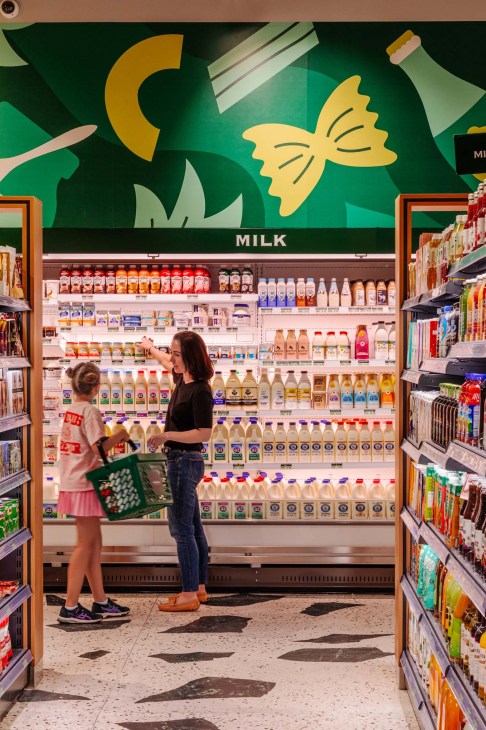
“I first worked with co-founder Domenic LoSurdo in the 1990s on the original shop here,” says Mark Landini, the founder of Landini Associates, which worked on every facet of the new shop, from the signage to the uniforms. “This has been a 32-year-long relationship. Domenic had seen a florist that I had designed in this shopping centre. I had learned that florists spend two hours every morning taking flowers out of the fridge and then two hours at the end of the day packing them back in. So we built the shop so that you closed the doors in the evening and the whole thing became a cool room.”
That kind of thinking was crucial to the design of the new LoSurdo’s in Chatswood. “Consideration of customer flow was key – how a patron moves through the space,” says Landini. A team of six designers worked on the complete experience, encompassing every customer touch point from branding and interior design to lighting and packaging, which makes use of the brand’s signature colours, green and white. “Efficiency was the starting point,” says Landini. “The look of the space was the last part we considered.”
The designer, who was Terence Conran’s creative director at Habitat in the 1990s, applies what he learned in premium retail to his work on grocery shops and supermarkets. His previous clients include Loblaws at Maple Leaf Gardens in Canada and Italy’s Esselunga group. “Esselunga allowed us to reinvent how supermarkets operate,” he says. “They now have the highest turnover per square metre for a supermarket in the world – more than Walmart. No one else has really changed how supermarkets work since they were first invented in Memphis, Tennessee, in 1916.”
After Domenic LoSurdo retired in 2000 his son Rob, who was a commercial pilot by training, took the reins of the family grocery business. In December 2024, however, Rob suddenly passed away and his wife, Summer, took over.
Monocle spoke to Rob as the finishing touches were being made on the new shop – his sixth collaboration with Landini on a grocery project. “Mark understands balancing the needs of the customer with functionality, including spacious aisles for users’ comfort and space for merchandising,” he said. “It’s a fine balance.”
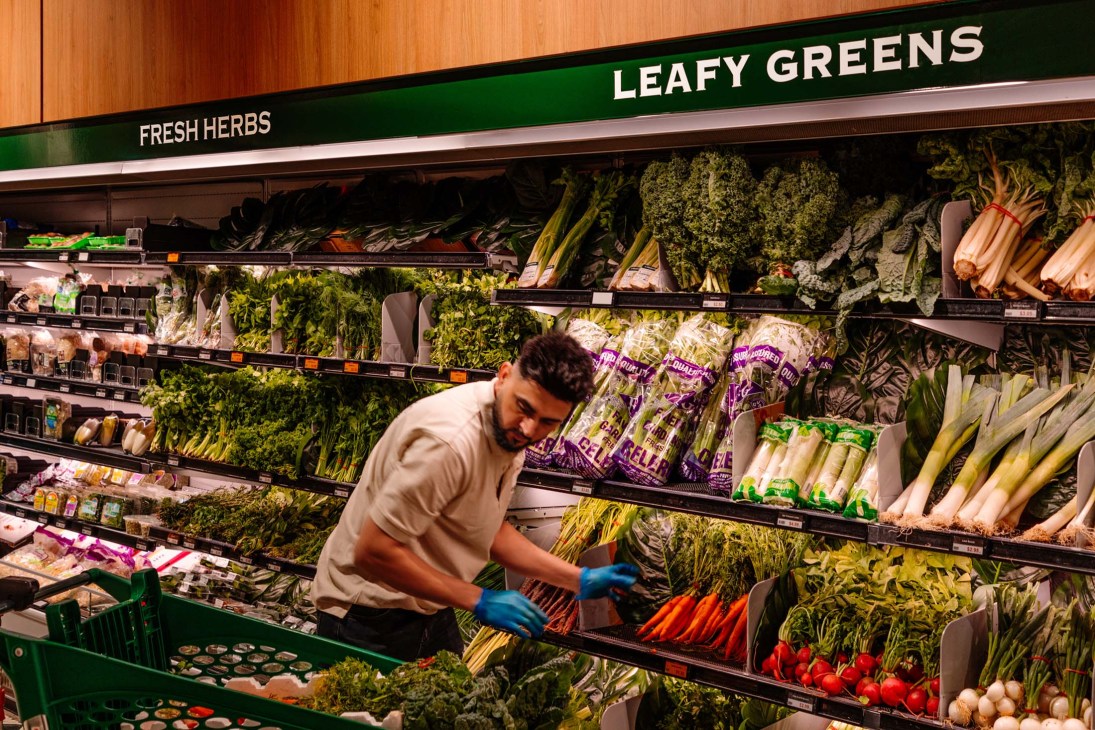
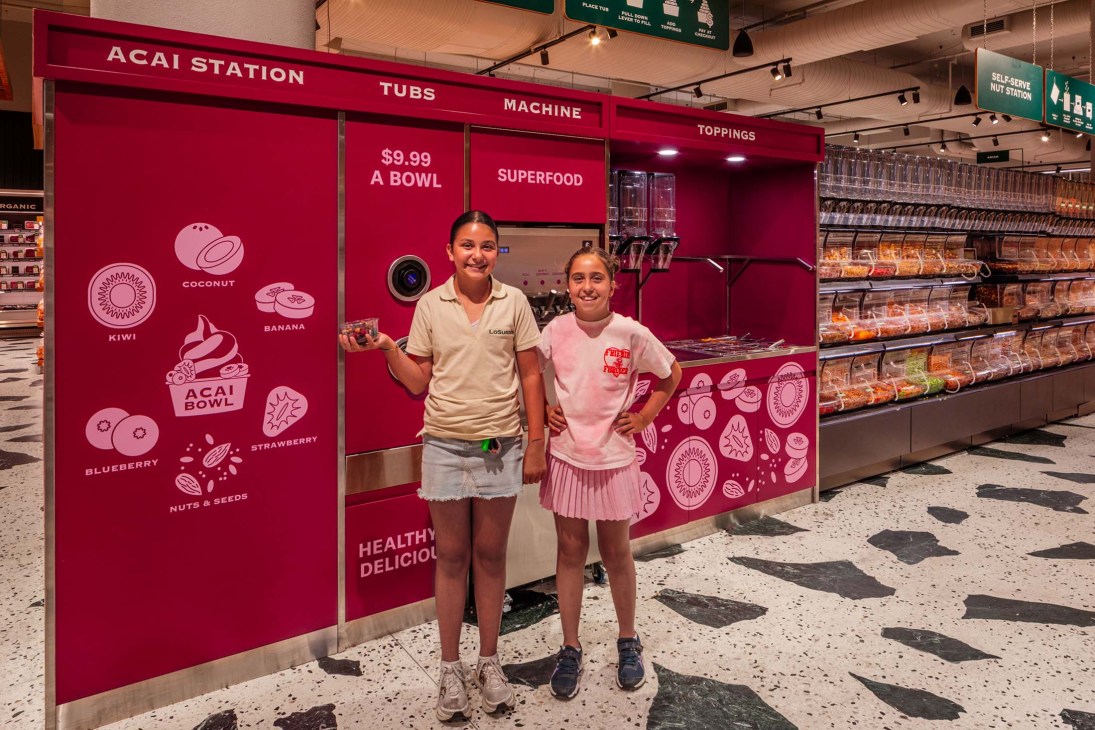
The new LoSurdo’s outpost was inspired by Peck, a storied institution in Milan, says Landini. “We wanted to create a place that celebrated the love of food in a similar way.” About 85 per cent of the practice’s work is global and a significant proportion of its work comes from purveyors of food that are looking for fresh ideas. “We have become known for reinventing the normal.”
shop.losurdos.com.au; landiniassociates.com
monocle.livement:
Bringing in an external design firm can be risky for a storied family business. But finding a studio with deep retail experience can help you to tell your story and freshen up your identity.
3.
The personal touch
Out of the past
Alma, Denmark
When Danish supermarket chain Irma closed its doors in 2024 after 138 years, there was an outpouring of grief from its loyal customers. But according to Alfred Josefsen (pictured), its CEO from 1999 to 2012, its decline began in 2016 when its buying department was integrated into parent company Co-op’s organisation. “Its selection ended up much the same as the other supermarkets,” he tells Monocle.
Josefsen presided over Irma’s heyday, when customers adored its own-label lines, spacious shops and attentive service. Now he has launched a new brand, Alma Madmarked, whose first shop in Frederiksberg opened in March this year. “We want to attract young people and families who once thought that Irma was unaffordable,” he says.
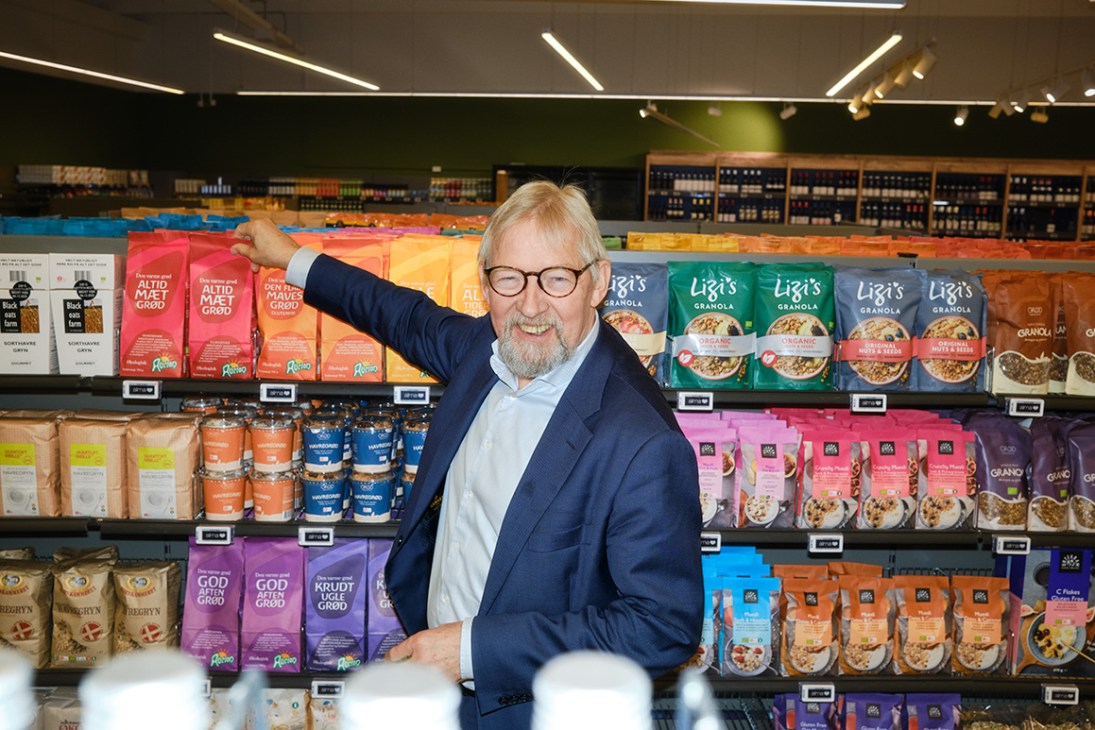
Products adorned with Irma’s distinctive logo, a girl in a blue dress, were design classics and much-loved souvenirs among Japanese tourists. Alma’s logo – a blue heart – is similarly appealing. Meanwhile, the distinctive design of the brand’s interiors is intended to entice a new generation of shoppers. While meat will still be sold, Alma wants to inspire Danes to adopt a more plant-based diet. It will also avoid ultra-processed foods.
Above all, Alma prioritises customer experience. (There’s not an automated checkout in sight.) And the name? “My grandmother was called Alma,” says Josefsen. “She was born in 1906 and what she would have eaten would have been grown by her family and was probably organic. She inspires me to help people have a better understanding of what they’re eating.”
almamad.dk
monocle.livement:
Building a relationship with customers takes time – but a focus on shoppers’ experience will pay off in the long run.
4.
The wheeler dealer
On the road again
Migros, Switzerland
With sales of CHF32bn (€33bn), Migros is now one of Switzerland’s largest supermarket chains, with almost 790 outposts across the country – but its story has humble origins. A century ago, Gottlieb Duttweiler turned a fleet of five Ford Model Ts into mobile supermarkets. Families would line up every week, waiting for the Migros bus to arrive. To mark its centenary, the company is reviving its grocery van, which is touring the country this year with 100 of its bestselling own-brand products.
Migros timeline
1925: Seeking to bring high-quality, well-priced food directly to the people, Swiss politician and entrepreneur Gottlieb Duttweiler launches Migros’s fleet of grocery buses.
1926: Migros opens its first bricks-and-mortar shop in Zürich.
1945: By the end of the Second World War, the Migros buses offer 320 products.
1964: The range expands to 500 items.
2007: Migros retires its fleet of grocery buses.
2025: The iconic van is resurrected as part of Migros’s centenary celebrations and a tour across the nation begins.
“Migros has always travelled to the people,” says Philipp Kuonen, the bus tour’s manager. Known as the Merci Bus, it will roam the cantons of Appenzell and Jura, before continuing to Zug, Geneva, St Gallen and Graubünden, handing out each region’s bestselling Migros product to shoppers there as a token of thanks for their loyalty.

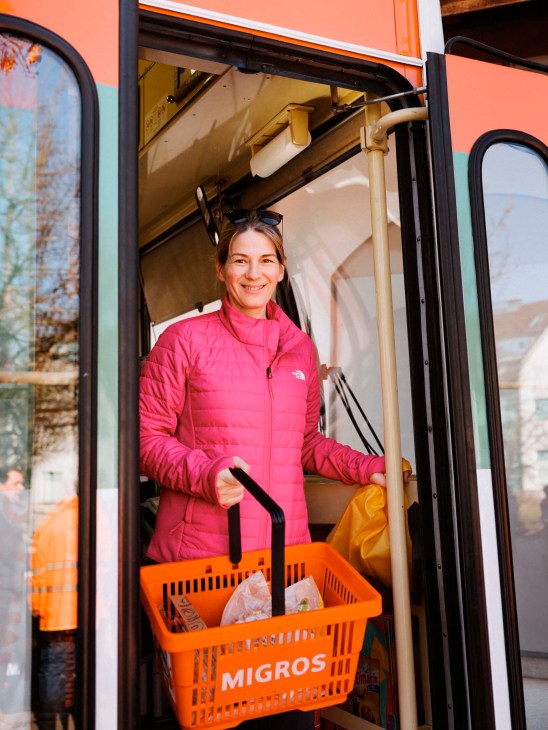
The bus revival isn’t just a gimmick. At a time of fierce competition among Swiss supermarkets – with newer brands such as Coop’s Fooby muscling in with new openings in Zürich – Migros needs to stake out its territory. The bus is a way to remind customers in this landmark year that the brand has deep roots in the Swiss countryside, where it sources delicacies from cervelat sausage to emmental cheese. It’s also a signal of the firm’s ambitions for the future. There are 140 new outposts planned over the next five years, as well as a refresh of 230 existing shops.
When Monocle visits the Merci bus on its maiden voyage, shoppers and children wait in line, just as people did in the past. The original narrow vehicles opened up on both sides, revealing shelves holding coffee, rice, sugar, croissants, soap and coconut oil. Duttweiler stipulated that prices should sit somewhere between wholesale and retail, and every product was emblazoned with Migros’s orange M logo – a distinctive brand identity that earned the business the nickname “the Orange Giant”. Migros might have grown bigger than Duttweiler ever imagined but it’s his devotion to domestic produce and fair prices that has kept the show on the road.
migros.ch
monocle.livement:
Getting out and meeting customers is a powerful brand-building exercise. Migros is returning to its roots at a moment of fierce competition from other Swiss supermarkets.
5.
The local treasure trove
Spoilt for choice
Annam Gourmet, Vietnam
“We are growing along with the country,” says France-born Eric Merlin, who co-founded Annam Gourmet in Vietnam in 2000 with his wife, Ha. The Merlins oversee 14 supermarkets, 900 staff and an annual turnover of about €46m. The group’s Montclair brand makes everything from sausages to sorbets. Signage at Annam Gourmet shops is in both Vietnamese and English but local customers outnumber expats.
The Merlins met in Hanoi in the 1990s when Eric was working on his travel agency. Ha decided to venture into food retail soon after giving birth to the first of their four daughters. At the time, Vietnam’s GDP per capita was about €370 and there were concerns over
food security. Soon after opening the first shop, Ha was fielding requests from friends and chefs to stock specific products. “Annam Gourmet wasn’t meant to become a chain,” she says. “At first we were bringing in items that we had bought from European supermarkets by hand because we couldn’t get access to wholesale prices.”
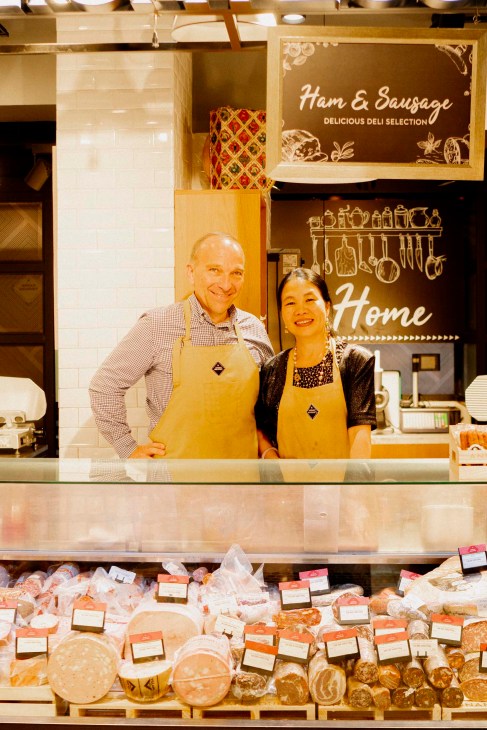
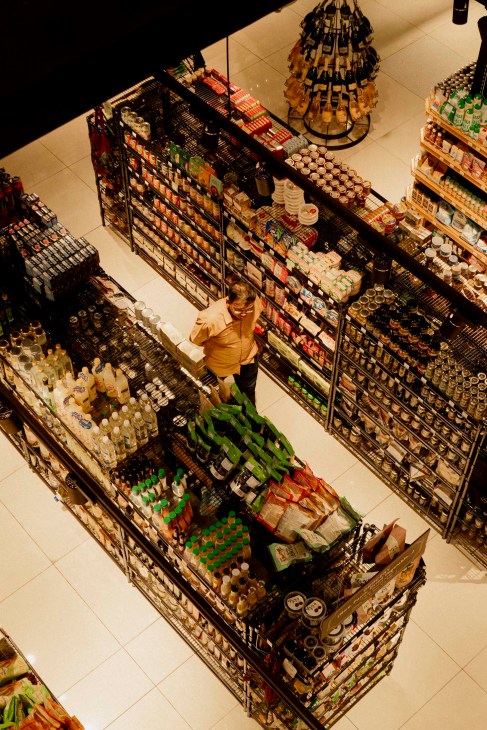
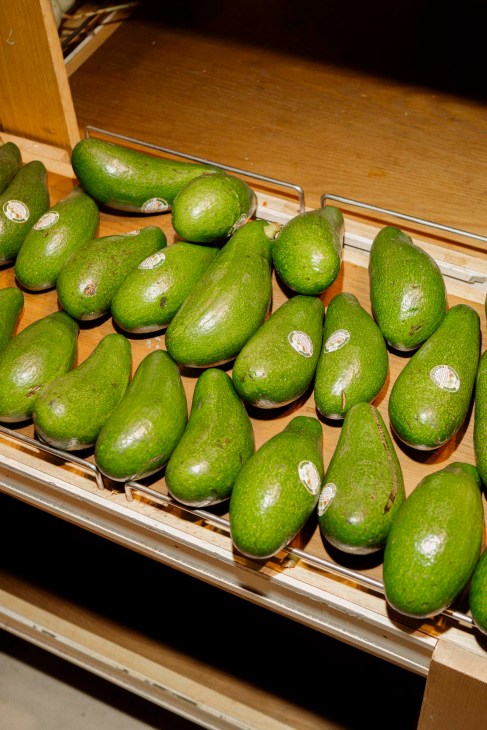
Today, Vietnam’s GDP per capita exceeds €3,900 and Annam Gourmet sells plenty of local fruits and vegetables, alongside Bonne Maman jam and Barilla spaghetti, imported into the country by sister business Annam Fine Food. “The quantity of sales and the quality of products are intrinsically linked,” says Eric. “If we didn’t attract a lot of footfall, with people buying the fruits, fish, cheese and meats, they wouldn’t be as fresh and we wouldn’t be able to stock so much.”
In one of Annam Gourmet’s Ho Chi Minh City shops, Eric talks proudly about stocking 17,000 products and points out the high shelves that tower over two young, basket carrying shoppers browsing a cornucopia of wafers, crackers and biscuits. Choice entices people inside and delivers the profit margins that allow the business to price-match everyday essentials.
Annam Gourmet’s big break came in 2015 when Singaporean property developer Keppel approached the Merlins to open their first full-scale supermarket in the basement of the Saigon Centre, a premium shopping mall. The couple flew to France to recruit a team with retail know-how and spent two years building the supply chain and cold storage infrastructure necessary to operate a delicatessen, a bakery, a butcher and a fishmonger. “I love the idea that sharing something relatively cheap, such as a big, beautiful piece of bread and some good, salty butter, can create a certain lifestyle and a wonderful moment with friends,” says Eric.
annam-gourmet.com
monocle.livement:
Annam Gourmet succeeds because of its owners’ passion for food. The importance of cooking in both French and Vietnamese households is reflected on the shop floor, where every aisle and fresh-food counter offers a sense of luxury escapism.
Fertile ground: Lanzarote’s business boom
Lanzarote is known as the “island of 1,000 volcanoes” and its dramatic landscapes are vivid reminders of nature’s power. “Don’t worry – only one of the volcanoes is considered active,” says longtime resident Adrián Nicolás von Boettinger, as he leads Monocle through Lagomar, an architectural marvel built into an old rock quarry. At first glance, Lagomar’s façade barely registers as part of a building. The semi-subterranean structure features rooms, tunnels and terraces; only the balconies, stairs and footbridges, which cut into the rock surface, offer a sense of structure, while looking like beads of icing flowing down the side of an uneven cake.
Lagomar encapsulates how Lanzarote, the easternmost of the Canary Islands, has grabbed the design world’s attention since the 1960s with its idiosyncratic combination of oddity and invention. Its lava-hewn landscapes are arresting spectacles that can help to unlock architects’ imaginations; the inhospitable landscape, however, also prompts sobering civic discussions. The island has long been grappling with questions of how to live within its limitations and make the most of tourism without being overwhelmed.
With his sister, Tatyana, Von Boettinger took over the Lagomar property from their parents, architects from Germany and Uruguay, who bought the cliffside home in a state of disrepair in 1989. “There was so much mystique surrounding the building that they put down a deposit for it without even stepping inside,” says Tatyana, who adds that it was once home to Egyptian film star Omar Sharif.

After a gun-toting squatter was politely paid to leave the premises, the site underwent several years of structural improvements. In 1997 the house finally reopened as an architectural museum; more recently it was renovated as a restaurant, bar and music venue (plans for an artist’s residency are also in the works). It’s a microcosm of the island’s identity crisis: a vision for the future that’s firmly anchored to the past.
Lagomar is unique but in some ways it isn’t alone. Since the 1960s the island has walked a tourism tightrope in order to transform an agrarian society into a modern one, while trying to balance economic and ecological sustainability. From the 1960s to the late 1980s, artist and sculptor César Manrique was the island’s visionary-in-chief and, in effect, its architectural art director. Aghast by the postwar construction boom on neighbouring islands Tenerife and Gran Canaria, Manrique championed an ethos for Lanzarote that honoured the landscape, preserved tradition and resisted harmful development. He also designed scores of the traditionally inspired structures hewn into the island’s almost extra-terrestrial looking rocks.

Manrique’s less-is-more vision often sat uncomfortably with the island’s financial and political ambitions. The tourism sector, in particular, bridled at the idea of being constrained by an artist’s whims. Over the years, many hotels of varying standards were built and entire coastal towns turned into holiday resorts – much to the chagrin of Manrique, who agitated for restraint until his death in 1992.
To some, the artist and sculptor’s message was nuanced and prescient; to others, however, it was plain confusing. The house where he lived between 1968 and 1988, built into a petrified lava field, is now the base of his eponymous foundation. Among its exhibits is a video of Manrique warning about the island’s existential decay and criticising various beachfront hotels, mostly in front of the kind of visitors who stay in such places. It’s unclear whether his fervent approach was persuasive or just made those listening feel unwelcome.
“It’s not tourists that people are tired of,” says restaurateur Georgia Coles. “We love them and live off them. The problem is the tired model of tourism.” Today is the soft-opening of her new venture, La Lapa, and the first-day fluster is palpable. Coles steadies the ship, keeping an eye on the hungry guests in the dining room, while telling Monocle about some of the local tensions in the front bar. “In summer the taps in some of Lanzarote’s towns run dry but then we see hotels’ water supply safeguarded,” she says. “Residents can feel like their concerns are secondary.”
This delicate balance – between local and visitors’ interests, between too many tourists and too few – is on everyone’s lips. “Lanzarote teaches you how to live with very little,” says Zoe Barceló, an art director from Alicante who started a new life here with his partner, Geo Giner, a fashion designer from Barcelona. They tell us about their previous work lives, in which demanding deadlines meant more than 10 hours of screen time a day. “This is sort of a pre-retirement,” says Giner with a grin, gesturing at his surroundings. Looking for a rental property, the couple found a run-down toolshed and perrera (a house for hunting dogs). They have transformed both into an impressively appointed modern home and studio.
“We have seen more people coming to the island looking for peace, sometimes silence,” says Giner. But life didn’t stay quiet for long for the pair, whose new landscape-inspired clothing brand, Latitud Fuego, taps into the surf culture that’s thriving in coastal towns such as Caleta de Famara. Selling pieces sourced mainly from Portugal but embroidered by a Lanzarote-based artist, they started with 200 garments, which quickly sold out. The couple also juggle consulting work with other small businesses, helping to upgrade menus, signage and merchandise. “Manrique remains an inspiration,” says Barceló. “His legacy gives the island a conscience.”

For those working Lanzarote’s crater-strewn land, Manrique-style ideas of minimal intervention are more than just theoretical, given how difficult it is to cultivate crops here. Self-taught winemakers Eamon López O’Rourke and Laura Fábregas Camacho are the married couple behind a winery called Cohombrillo. The 13-hectare site hosts bi-weekly tastings in a garage. “Our techniques help us to make do with very little,” says O’Rourke. “We try to stay attuned to the limitations and wisdom of the land. Lately, we have been getting a lot of visitors from Japan who are curious about how we cultivate the volcanic soil.” He points to a pallet loaded with 300 bottles earmarked for export to Asia, underlining what that means for business.
María José Alcántara Palop is the director of MIAC, a fort turned-modern art museum, as well as of Lanzarote’s biennale. The current edition, which runs until 30 June, features excursions around volcanoes that morph into panel discussions and performances staged inside “teleclubs” – rural bars known for bringing the first televisions to the island’s remote villages. “Lanzarote needs more artists and more spaces – to be more courageous and insistent, even in the face of resistance from a bureaucracy that’s stuck in its ways,” says Palop, who worked with Manrique when he was younger. “He taught us to be bold, to honour the island’s singularity. He envisioned Lanzarote as a beacon for creativity.”

Yves Drieghe and Bert Pieters swapped their 20 sq m rooftop garden in Belgium for a 20,000 sq m hillside farm near the town of Los Valles. They refurbished the farmhouse, transforming it into a residence for writers, painters and makers that they named Hektor. Guests are encouraged to adhere to the island’s logic. “Small is beautiful,” says Drieghe. “Nature and the locals require respect.” The farm has gradually also become a kind of animal shelter, with a donkey, a duck, two pigs, some sheep and Frits the dog wandering the grounds.
Older generations of residents have been welcoming of new arrivals, as long as they respect the island and its people. “In our case, we held up a mirror to the beauty of their community and what they did so well,” says Drieghe, pointing to farming practices that harness the soil’s mineral richness despite the paucity of rainfall. “Meanwhile, artists bring with them new visions about what the island is and what it could be.”

Prior to this, Drieghe and Pieters ran an agency overseeing big projects, a small magazine shop and a café. “It’s no wonder we were stressed,” says Pieters, laughing. They apply their new stripped down life philosophy to the artists staying in Hektor, who don’t have to submit works at the end of their residency. “We have removed all of the pressure,” says Drieghe. “The same goes for us: there’s no intention to expand.”
Lanzarote address book
Stay
The Martínez family turned the estate of César Manrique’s grandfather into the 20-key César Lanzarote hotel, operated by the Annua Signature group. There’s also Casa de Las Flores, Palacio ICO and Buenavista Lanzarote. Serviced residences such as Villa Tenor offer more privacy.
Eat
Kamez í was awarded the island’s first Michelin star. Its Basque founder and architect Koldo Agurren designed a row of sea-facing domed structures where guests can enjoy a drink before tucking into a dinner prepared by no fewer than 16 chefs. Other high-end restaurants, such as SeBe and La Tegala, have more of the playful flair that the Canaries are known for. La Lapa in Arrecife is a fresh take on a traditional seafood café. Further south, Bodega de Uga offers an excellent wine selection and satisfying meaty dishes.
Drink
Winemaker Cohombrillo’s tasting sessions offer more than just insights into wine and cheese: they also reveal aspects of the island’s character. Hand-picked grapes are carried down the mountain on foot. “I call our type of viticulture ‘heroic winemaking’, because it has an enhanced human touch,” says co-founder Laura Fábregas Camacho. Also visit micro-brewery and bar Cervezas Nao in Arrecife.
See
A tour of Manrique’s architectural masterpieces is essential. With architect Jesús Soto, he made fantasy a reality in standout works including Jameos Del Agua, Mirador del Río, the MIAC museum’s sea-facing restaurant and the Monumento al Campesino.
Getting your bearings
The easternmost of the Canary Islands, Lanzarote (population: 163,000) is 125km off the north coast of Africa and 1,000km south of Spain. Its capital, Arrecife, is in the south. The airport serves 84 European destinations. Taxis are fine for towns but the best way to see the island is by renting a car.