Issues
Your autumn style edit: Weather-proof picks and smart layers


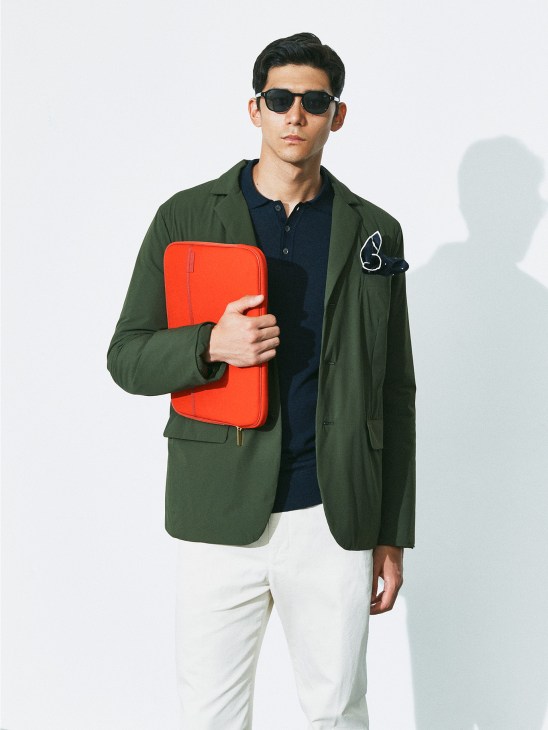


Stylist: Kyoko Tamoto
Hair & makeup: Hiroshi Matsushita
Model: Frederico Takahashi
How locals saved and reinvented a modernist Junzo Sakakura building
Walk below the “White Phoenix” castle of Iga-Ueno and history is never far away. There are rows of old townhouses and shops selling traditional ceramics, while the Iga-ryu school of ninjas and 17th-century poet Matsuo Basho are widely celebrated. This summer, however, it’s an icon from a more recent era that’s renewing interest in this part of western Mie prefecture.
Built on a gentle slope by the castle, the former Ueno Municipal Office was designed by Junzo Sakakura, one of Japan’s finest modernists, whose impact on life in the postwar era extended to numerous civic projects in regional Japan. Completed in 1964, the low-rise building merges with the landscape, welcoming Iga’s citizens rather than looking down on them. It has long been a beloved architectural icon. When it faced the prospect of demolition in 2008, a local movement led by former mayor Sakae Okamoto ensured its preservation. It was designated as a cultural property in 2019, laying the foundations for the creation of a destination for local residents and visitors alike.
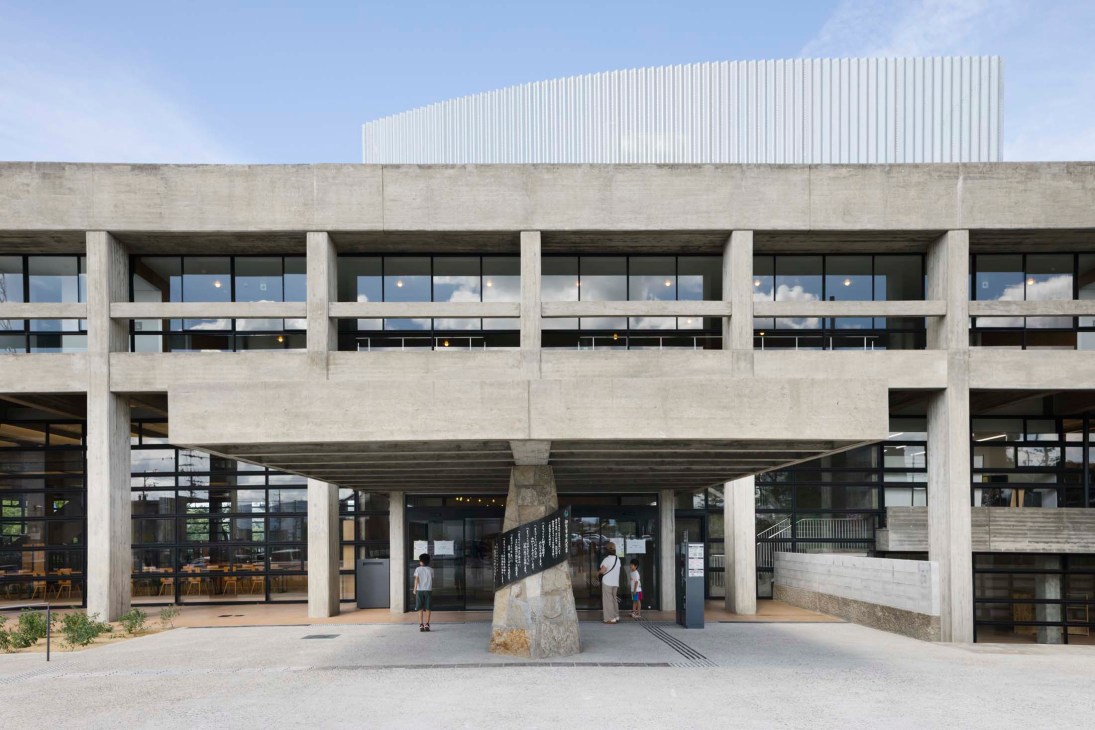
Junzo Sakakura’s ‘architecture for humanity’
Sakakura trained under Le Corbusier before rising to fame with his prize-winning Japanese Pavilion at the 1937 Paris International Exposition. He later became a leader of postwar modernism, working across public and private commissions with a core philosophy of “architecture for humanity”. In Iga, his buildings included schools, a community centre and a park rest area, many of which have not survived. Aside from the former Ueno Municipal Office, projects that have now been preserved include the Museum of Modern Art in Kamakura and the International House of Japan, designed with Kunio Maekawa and Junzo Yoshimura.
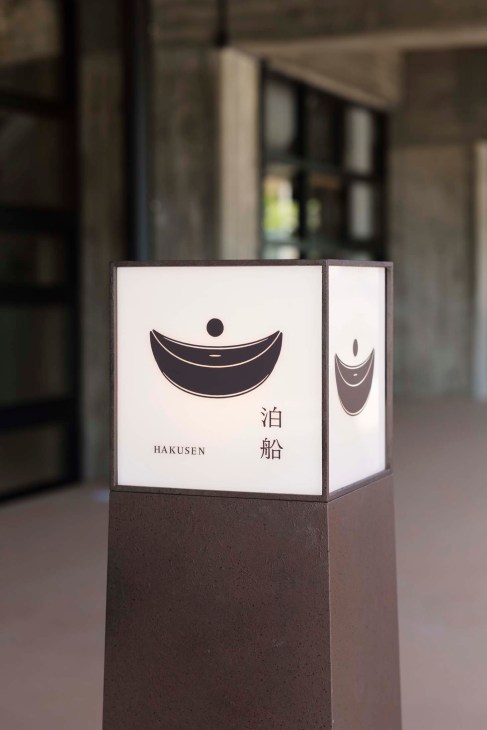
Working closely with the local government, Iga-based Funatani Holdings developed plans for Sakakura Base, a culture complex with a hotel, an Iga-brand shop and a public library. The first phase of the project includes Hakusen, a 19-key hotel on the second floor. Its design was led by Yohei Takano and Sachiko Morita of Tokyo-based studio Maru Architecture, which also oversaw the building’s renewal and the design of the library.
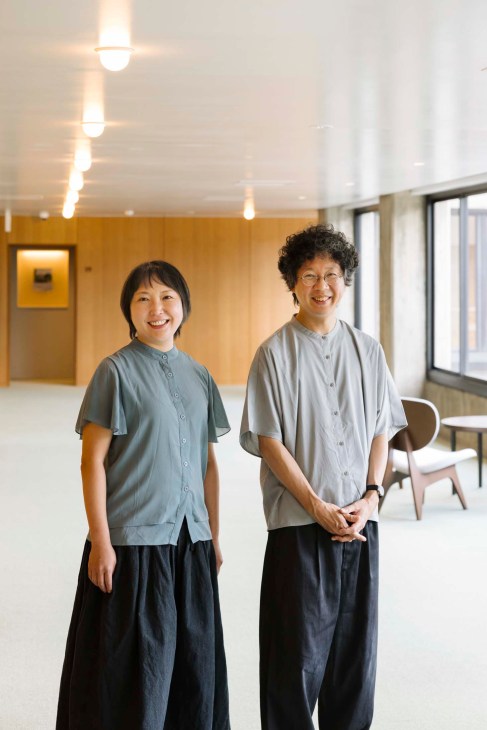
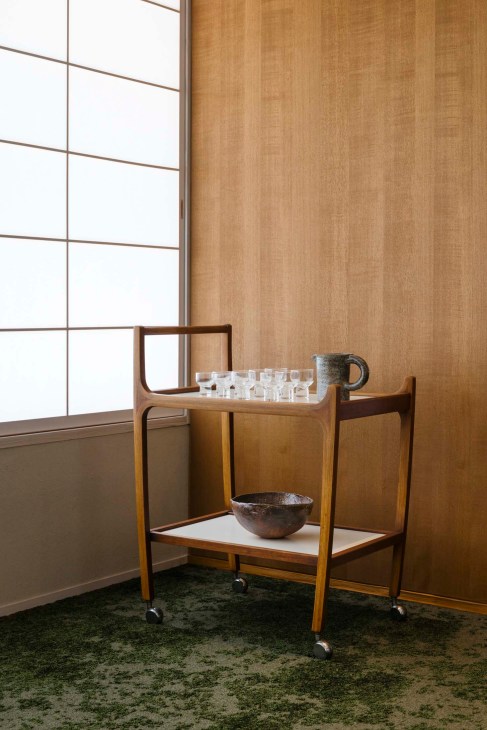
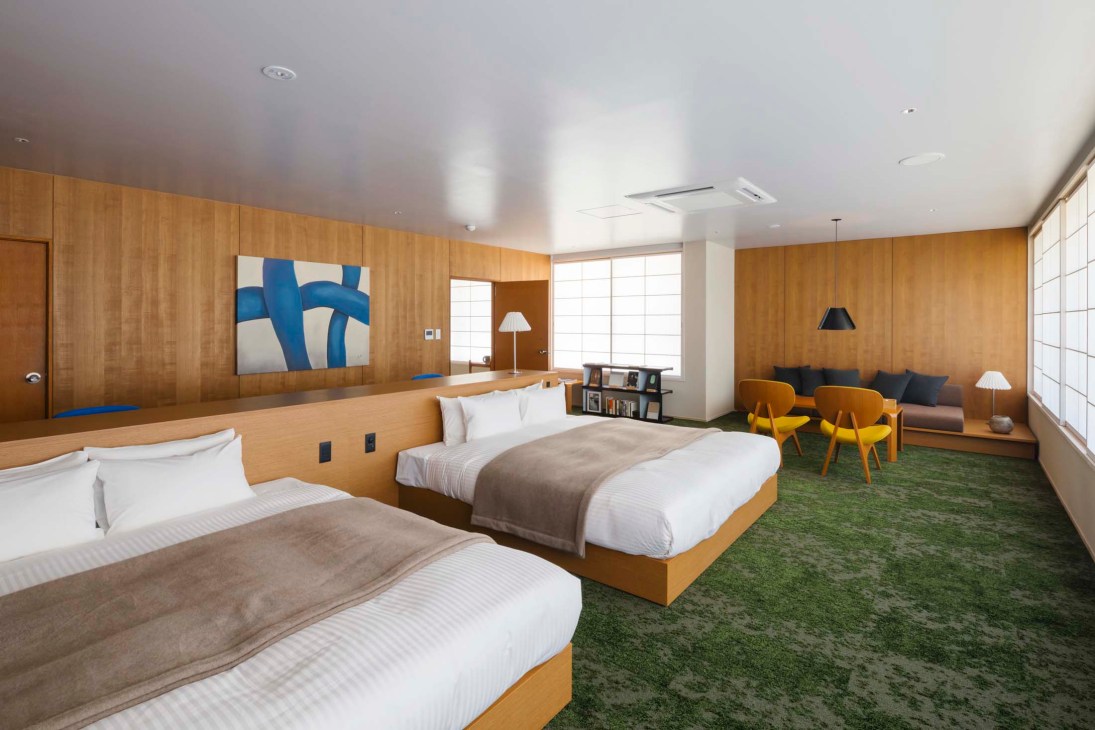
“Junzo Sakakura was one of Japan’s greatest architects, so there was a bit of pressure,” says Takano. “The building felt like Sakakura’s at first but, over time, the boundaries between his work and ours became less clear. Our aim was to seamlessly connect the old and the new.” Yet the architects quickly found out that bringing a 60-year-old heritage-listed building into the present era was not without its challenges. Sakakura’s largely passive design – the building originally had no air-conditioning – had to be updated, leading to the creation of spaces that transition from calm interiors to the external surroundings.
“Sakakura really valued circulation, so he created details that catch your gaze as you move through the building,” says Morita, pointing out the variations in grain on the wood-pressed concrete pillars. “Even the same materials are given different textures in different places, drawing you in deeper and deeper.”
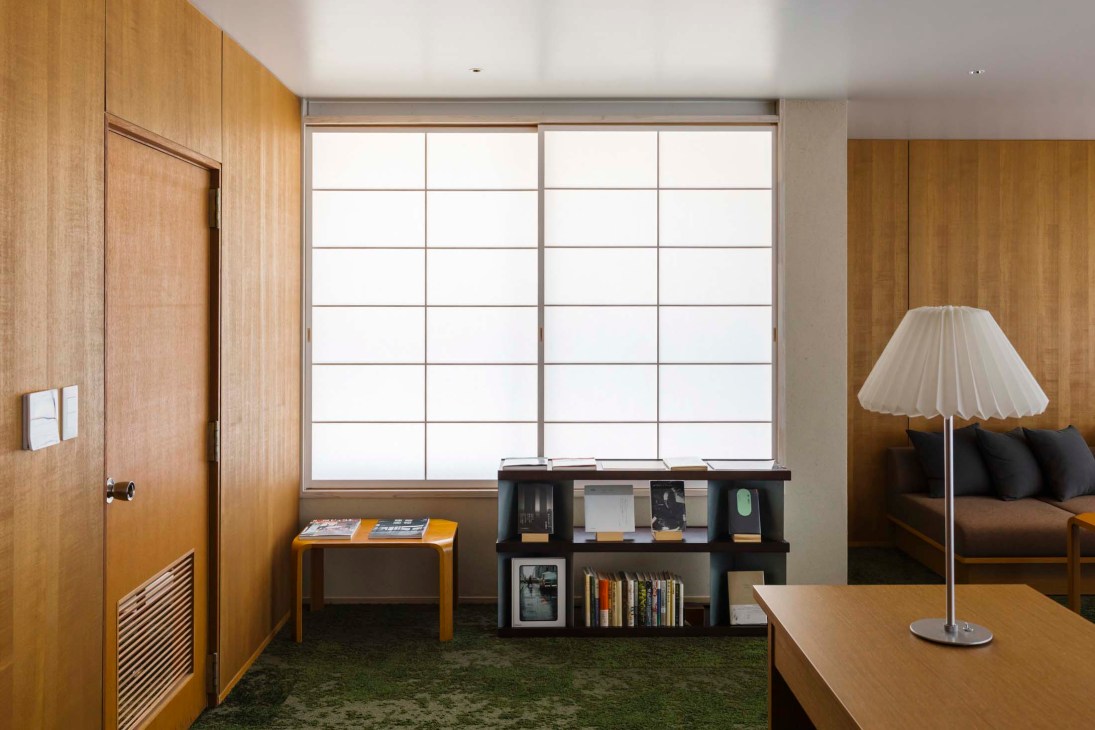
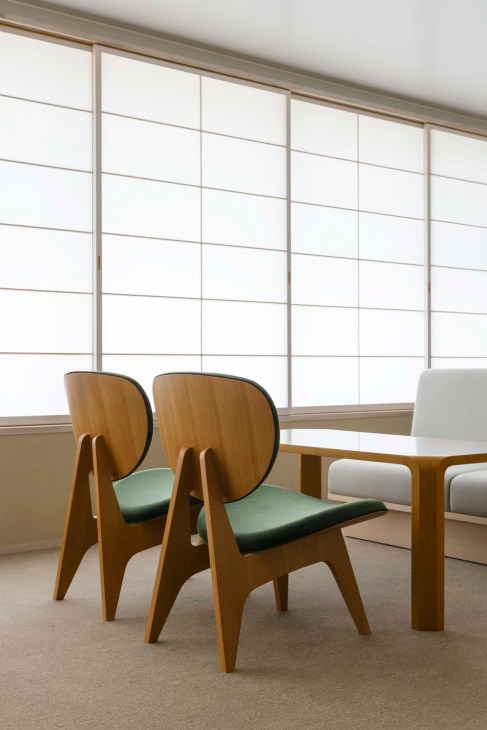
From the Hakusen Suite, the former mayor’s office, all the way around the perimeter, the guest rooms feature ash-wood veneer, sakan plasterwork and shoji panels in harmony with restored heritage materials. A mix of new and vintage furniture from Tendo Mokko, designed by Sakakura Associates architects and engineers, adds further character, alongside art curated by Shunsuke Kato of Shigaraki-based Nota&design. “This building has survived due to the strength of its architecture, so I was intent on finding works with a quality that will remain powerful a century from now,” says Kato. Three young artists with roots in Mie prefecture were selected: Masaomi Yasunaga, whose ceramic glaze mosaic takes pride of place at the reception; Lena Fujimoto, who lends her abstract paintings; and Taro Tsubota, whose wood-fired vessels and objects appear throughout the rooms.
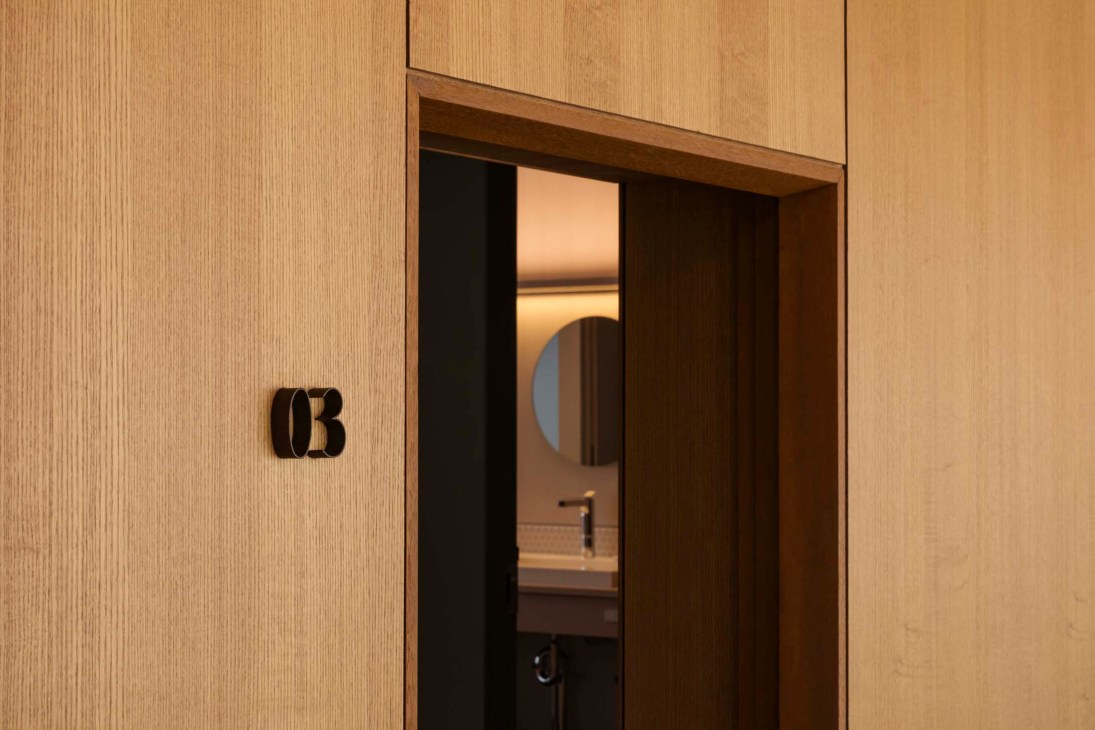
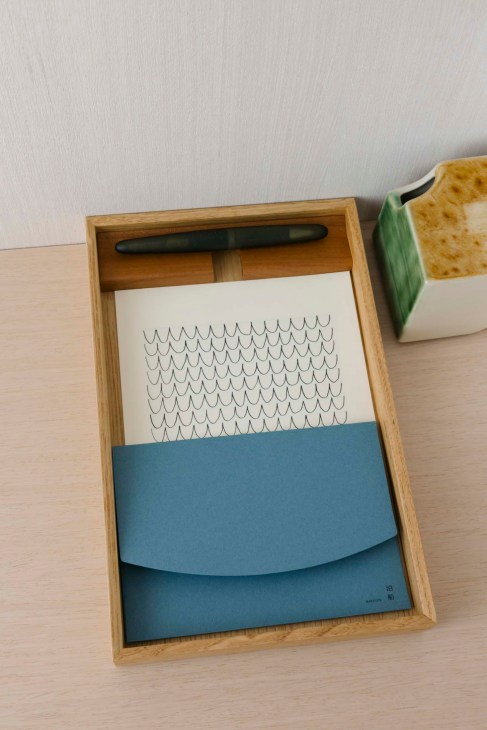
The local flavour extends to Iga-made products, including Nagatani-en ceramics, amenities from 101-year-old Kimura Soap and room numbers designed by UMA/Design Farm. There’s also ample reading material: architecture, modernism and art titles can be found in every room. Once the ground-floor library opens next spring, plans are under way for hotel guests to become honorary members, able to borrow titles to enjoy in the comfort of their room or in the reading lounges.
“The hotel’s concept is a ship on a lake of words. I want people to arrive here at this dock and not worry about time, enjoying their stay before embarking on a new voyage,” says Iga local Takashi Wada, who joined the hotel as hotelier. “This building has always been here, watching over us. I hope that, just like me, the children walking past on their way to school will want to work here when they grow up.”
Getting here
Iga is best accessed by car. The drive takes an hour from Osaka and 90 minutes from Kyoto or Nagoya. Your journey will give you a chance to explore pottery towns and the surrounding nature. Train and bus links are also available.
Iga address book:
1.
Omori
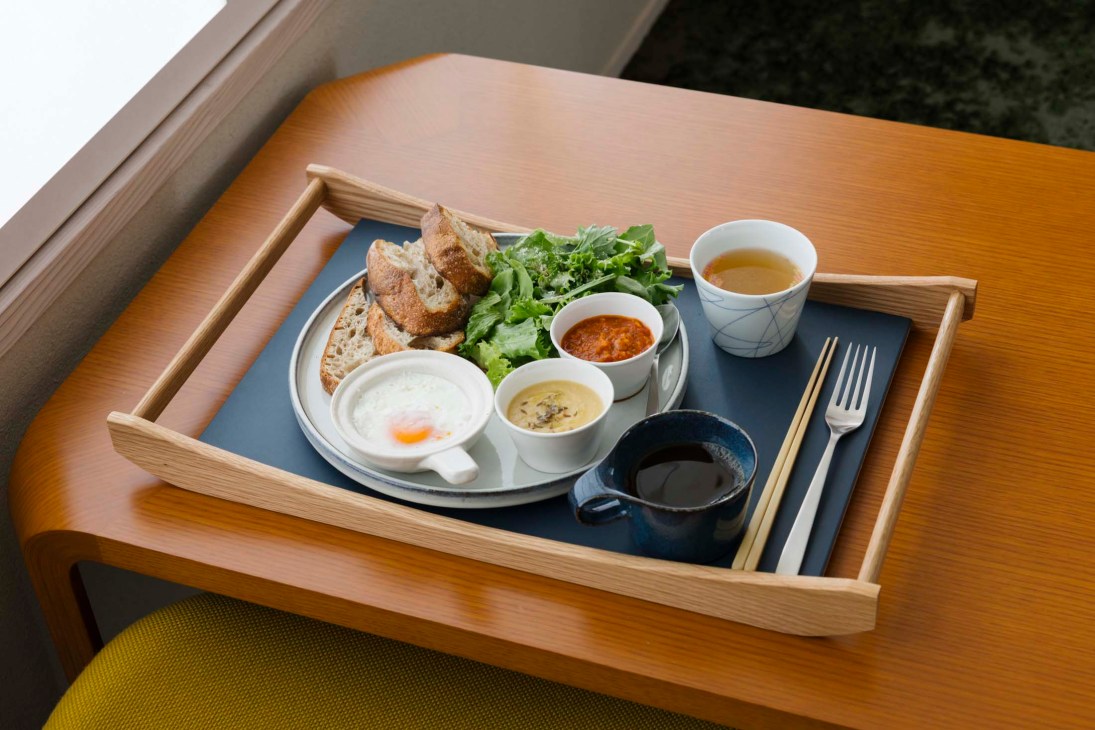
Yoshinori Omori’s counter-only diner has 10 seats and a blackboard filled with daily specials. He is also behind Hakusen’s breakfast service.
Shintenchi M, 23 Uenomarunouchi, Iga
2.
Ris
Italian omakase (chef’s choice) restaurant in a townhouse showcasing locally sourced Iga beef and seasonal produce.
ris-iga.com
3.
Minomushi-An
The reconstructed thatched-roof hermitage of Iga-born poet Matsuo Basho, who is considered the greatest haiku master in history.
basho-bp.jp
4.
Ichinoyu
A neon-signed sento (bath house) with floral-tiled baths and a Showa-era atmosphere. The heritage-listed building dates back to 1926.
ichinoyuiga.com
5.
Gallery Yamahon
Tadaomi Yamamoto’s gallery and café in the northern pottery town of Marubashira is essential for craft fans.
gallery-yamahon.com
How a remote Swedish vineyard became a must-visit winery, hotel and spa
Daniel Carlsson was right to act on his dream of creating something unexpected in the middle of the countryside in southwest Sweden. With his siblings Linda and Mattias, he has transformed his grandparents’ organic milk farm (which was among the first in the country) into Ästad Vingård, a spa and hotel with an organically certified vineyard and a Michelin-starred restaurant called Äng. “This is the kind of place that I love to visit when I’m travelling,” Daniel tells Monocle. “I wanted to build that right here in my family home.”
The Carlssons tapped Copenhagen’s Norm Architects to design their hotel, Sjöparken, and Äng restaurant, both of which are understatedly Scandinavian delights. They planted their first grapes in 2011 and only reaped a good harvest seven years later. “We live in hectic times,” says Daniel. “It felt special to work on something that can’t be rushed.”
Two microclimates – one inland, one coastal – make for a unique wine matured in steel or French oak barrels and aged according to a traditional method involving a second fermentation once bottled. “Sweden can become a wine-producing country,” says Daniel. “We don’t have to be small-scale any longer. We’re making a great wine that can compete on the world market.”
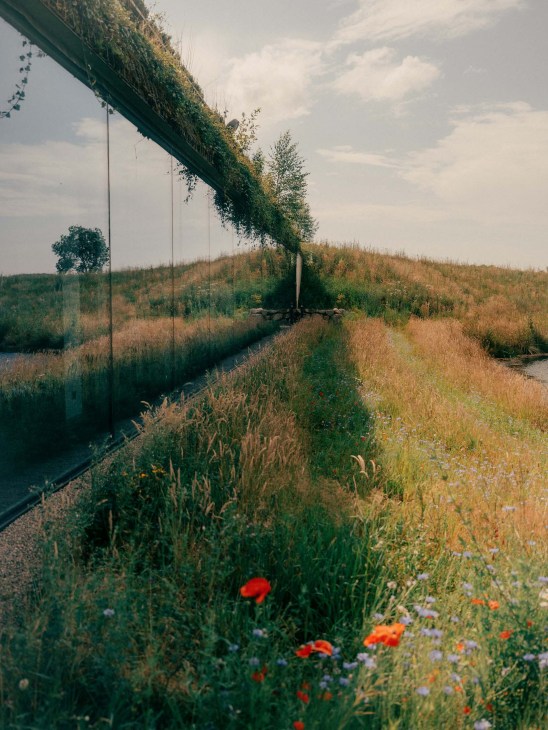
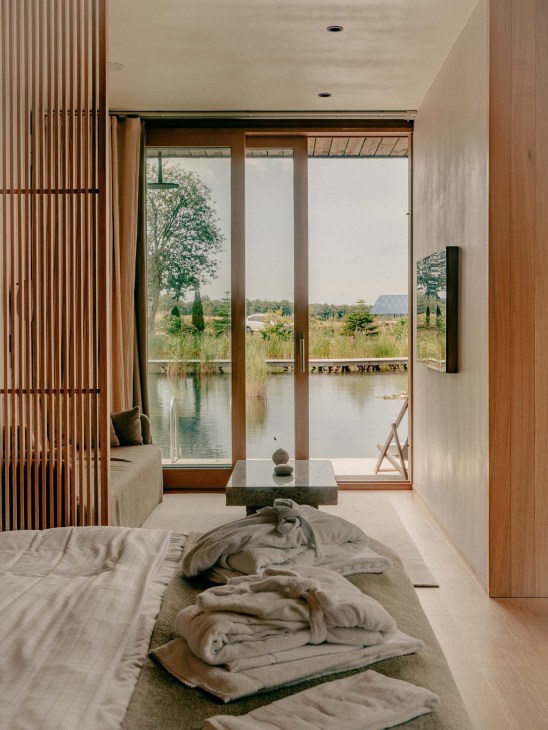

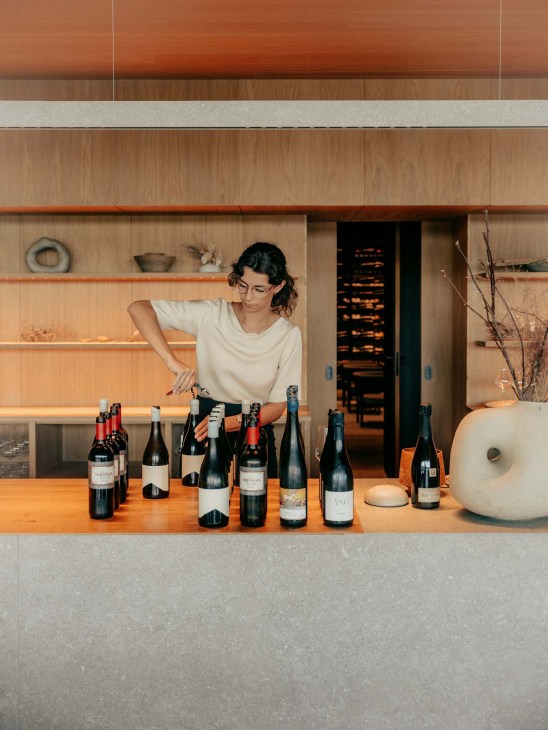
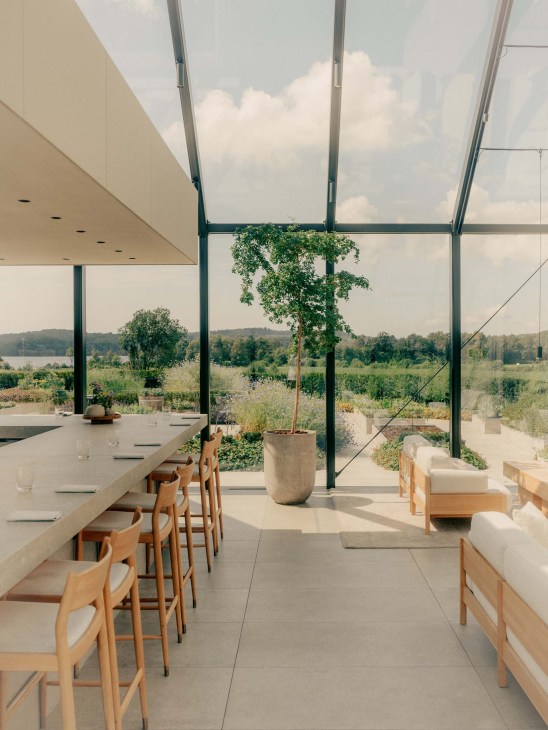


Uncorking opportunity
Small-scale producers long struggled for access to Systembolaget, Sweden’s government-owned chain of liquor stores (geared towards selling alcohol responsibly), with a monopoly on selling alcoholic beverages. Luckily, a new rule was introduced in June 2025 (in effect for the next six years) that now makes it possible for alcohol producers in the country to sell directly from vineyards or breweries when purchases are made in conjunction with an event such as a wine-tasting or a concert.
The commute: Join José Miguel de Abreu biking from Porto to the central Ribiera district
In the first of a new series joining people we admire on their way to work, we hitch a ride with Portuguese entrepreneur José Miguel de Abreu, co-founder of menswear brand La Paz. As a keen surfer and photographer, De Abreu has an eye for the sublime.
He uses his short scoot east from his home in the riverside neighbourhood of Lordelo do Ouro to the central Ribeira district to study the light on the water, stop at a portside café to see what the locals are wearing and unplug a little before the day ahead.

Ah, you’ve got a helmet on, so perhaps you’re not walking to work. Tell us about your vehicle of choice.
It’s a BMW c400 GT motorcycle that I’ve had for the past two years. It’s on the bigger side so perfect for riding in the city.
A soundtrack? Are there any headphones under those flaps?
That’s not possible, I’m afraid. I’ve got to listen out for other vehicles. An accident in a car could leave you with a few scratches. On a motorbike, you’re a little more exposed.
And for the day, what reading material do you bring?
I’ll always pack a book as well as my computer. I’m reading A Whole Life by Robert Seethaler and The Way of the World by Swiss photographer Nicolas Bouvier. I also pack Público, a Portuguese daily, to keep me informed.
Best time to beat the traffic?
In Porto it’s about 08.30. There’s lots of investment in transport for commuters and there are a few metro lines under construction. But right now, there’s a lot of congestion because often only one lane on most roads is available. So it gets busy in the morning; a journey of 4km could take 40 minutes. People in cars get stuck – that’s why I ride.

Any pit-stops?
Most mornings there’s an espresso at Paparoca da Foz, a café in the port where the Douro River meets the ocean. I soak in the atmosphere and see the locals; it’s very different to the city centre.
And, since you’re in the business, let’s talk outfits. No leathers?
In winter, I’ll wear a heavier jacket, which helps with safety. Usually it’s just the clothes I’m wearing that day.
How is Porto’s road etiquette?
Drivers here don’t beep their horns too much. They’re pretty polite and respectful. Even so, if you’re on a motorbike like me, you have to keep your eyes peeled.
Some people see the commute as a means to an end but you seem to enjoy it. What’s the best bit?
The view. There’s water everywhere, with bridges taking me over the river and the ocean on the horizon. In the evening the light on the waves is beautiful.
Kone: The Finnish lift company moving two billion people a day
“We talk about thinking outside the shaft,” says Jussi Herlin, vice-chair of Finnish lift-engineering firm Kone’s board of directors. He is the fifth genaration of his family to help steer the company; his father, Antti Herlin, is chairman of the board and former long-time CEO. “We build lifts and maintain them – but our real job is designing how people move through built environments,” says Jussi.
Founded in Helsinki in 1910, Kone now operates in almost 70 countries and employs more than 60,000 staff. Its products move a staggering two billion people every day. When Monocle visits Kone’s high-rise headquarters in Espoo to meet 41-year-old Herlin (pictured), we’re told that he is waiting for us on one of the building’s upper floors. So we take one of the company’s signature lifts, which glides silently up 16 storeys and politely pings before its doors slide open. Beyond the HQ’s plate-glass windows are sweeping views of the Baltic Sea and Finland’s coastal archipelago.
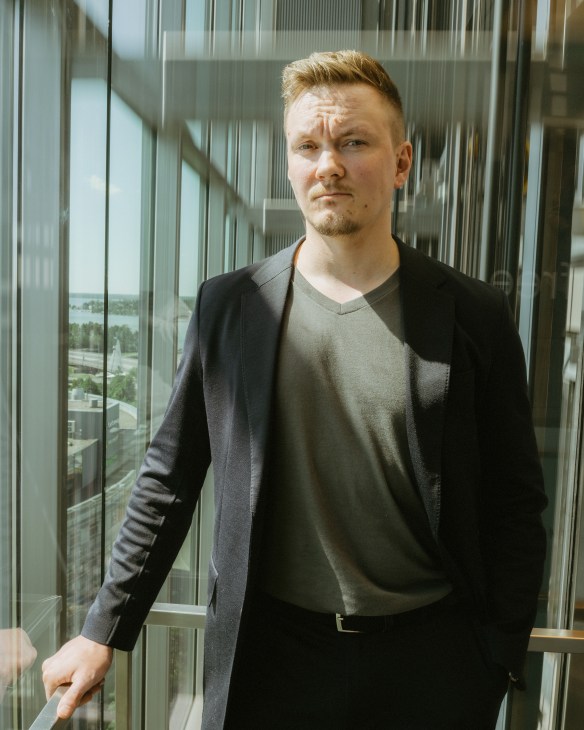
Herlin’s great-great-grandfather bought Kone more than 100 years ago, when it was just getting started in the business of lifts. The Herlin family, one of northern Europe’s wealthiest dynasties, has been associated with Kone ever since, both for being its biggest backer and for running the firm for most of its history. The company, which has an annual turnover of about €11bn, manufactures and services lifts, escalators and automatic doors, and prides itself on being a Finnish export. It has continued to service Ukraine’s lifts in metro stations, hospitals and residential buildings throughout the country’s war with Russia. “Functioning lifts are essential infrastructure, especially when cities are under stress,” says Herlin.
The increasing digitisation of how buildings operate is Kone’s next frontier and the firm is hoping to rise to the challenge. Its elevators now connect to the cloud and communicate in real-time with building systems, maintenance teams and, increasingly, with users themselves, to help anticipate maintenance needs, shorten wait times or even turn on the air-conditioning in your office as you enter the building. Sensors monitor everything from vibration and temperature to acceleration and door cycles to ensure smooth travel and to optimise energy use.
These inputs help predict breakdowns and optimise performance. “We can see how a lift behaves over time,” says Jussi. “We use AI to predict issues before they happen and make maintenance proactive. This improves reliability and reduces downtime.” Kone has also opened up its systems to third-party developers, allowing smartphones, delivery robots and more to interact with its lifts.
Elevators are often described as the world’s safest form of public transport. Kone’s business has hinged on providing reliability at scale. Its systems operate in the background of daily life, helping billions of people to get around without thinking twice. But the company’s ambition goes beyond just being dependable behind the scenes. “Our one clear aim is to shape the future of cities,” says Antti Herlin. “We know cities and have enabled them to grow taller, more energy efficient and more accessible for more than a century.”
Kone in numbers
Founded: 1910
Active in: About 70 countries
Number of people who use Kone products every day: 2 billion
Employees: More than 60,000
Annual turnover: €11bn
Patents filed: More than 3,000
According to UN projections, by 2050 about two-thirds of the world’s population will live in urban environments. Kone sees plenty of opportunity in helping this mass of people to go about their lives smoothly. One of the firm’s innovative products is Office Flow, which offers touch-free access through turnstiles, mobile elevator calls (allowing users to summon and control lifts using a smartphone app) and real-time wayfinding. Meanwhile, Kone’s flagship DX Class elevators feature built-in connectivity, through which third parties can connect its elevators to the likes of service robots, accessibility guidance systems and other advanced people flow solutions. In mass transit, Kone is piloting digital modelling software in metro stations in Helsinki, blending sensor data from escalators and corridors to model crowd patterns. This works to prevent bottlenecks and improve commuter experience at peak hours. “AI is revolutionising urban infrastructure and services,” says Antti Herlin. “We are constantly looking at how we can add technology to what we sell and our ways of working.”
In addition to Kone’s 3,000-plus patents, Herlin points to milestones such as the development of the “machine room-less” elevator in 1996 as evidence of Kone’s ability to lead, not just follow.. One of its latest innovations is Ultrarope, a carbon-fibre hoisting solution that reduces the weight of elevators and allows them to travel further using less power. Another example is energy recovery, in which lifts are equipped with regenerative drive technology, which can recover up to 40 per cent of power used and put it back into the building’s electrical grid.
As cities become more vertical and digital, the way that people move within them is becoming increasingly important – and complex. Kone’s answer is to build tools that are elegant, intuitive and all but invisible. Its products seek to make movement feel seamless, whether you’re stepping into a metro station, navigating an airport or returning home at the end of the day. “That we move two billion people per day is not just an abstract statistic,” says Jussi. “It’s a human reality. And our job is to make every one of those journeys feel effortless.”
Five places to see the Finnish firm’s ascent
1.
New Haven
USA
Kone helped to transform Hotel Marcel into the first net-zero hotel in the US by modernising its lifts, which now return excess energy to the building’s power system.
2.
London
UK
From the Jubilee Line to the Elizabeth Line, Kone has helped to make the Underground accessible, reliable and ready for millions of passengers per day.
3.
Kuala Lumpur
Malaysia
Kone installed more than 100 lifts and escalators in the Merdeka 118 skyscraper, including some of the fastest in the world.
4.
Kunshan
China
As part of a major urban-renewal project, Kone upgraded more than 2,000 lifts in eight months, improving life for more than 50,000 households.
5.
Auckland
New Zealand
To support growing visitor numbers at the 328-metre Sky Tower, Kone upgraded the lifts to handle long travel distances and strong winds while maintaining a smooth ride.
The unmissable films, exhibitions, books and music for September 2025
Art
Prism of the Real: Making Art in Japan 1989-2010
The National Art Center, Tokyo
If 1980s Japan looked like a vision of the future from afar, the view was markedly different on the ground. While the technology boom brought financial stability, globalisation shook things up creatively. Here, works by more than 50 artists and collectives wrestle with these contradictions.
‘Prism of the Real’ runs from 3 September to 8 December
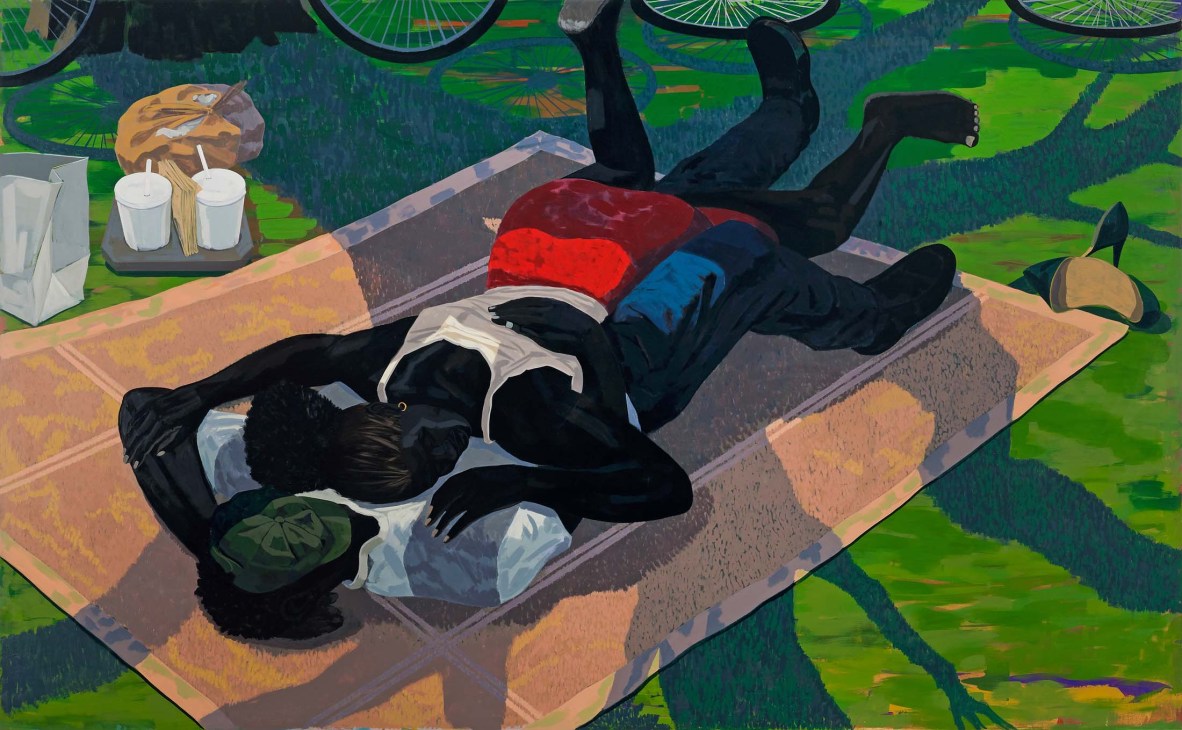
Kerry James Marshall: The Histories
Royal Academy of Arts, London
US artist Kerry James Marshall’s striking, large-scale paintings co-opt the visual language of white Europeans such as Seurat and Manet to tell the stories of black history. This exhibition of 11 bodies of works – more than 70 pieces in total, including eight new and unseen depictions of the African slave trade – is his largest showing in Europe to date.
‘The Histories’ runs from 20 September to 18 January 2026
Film
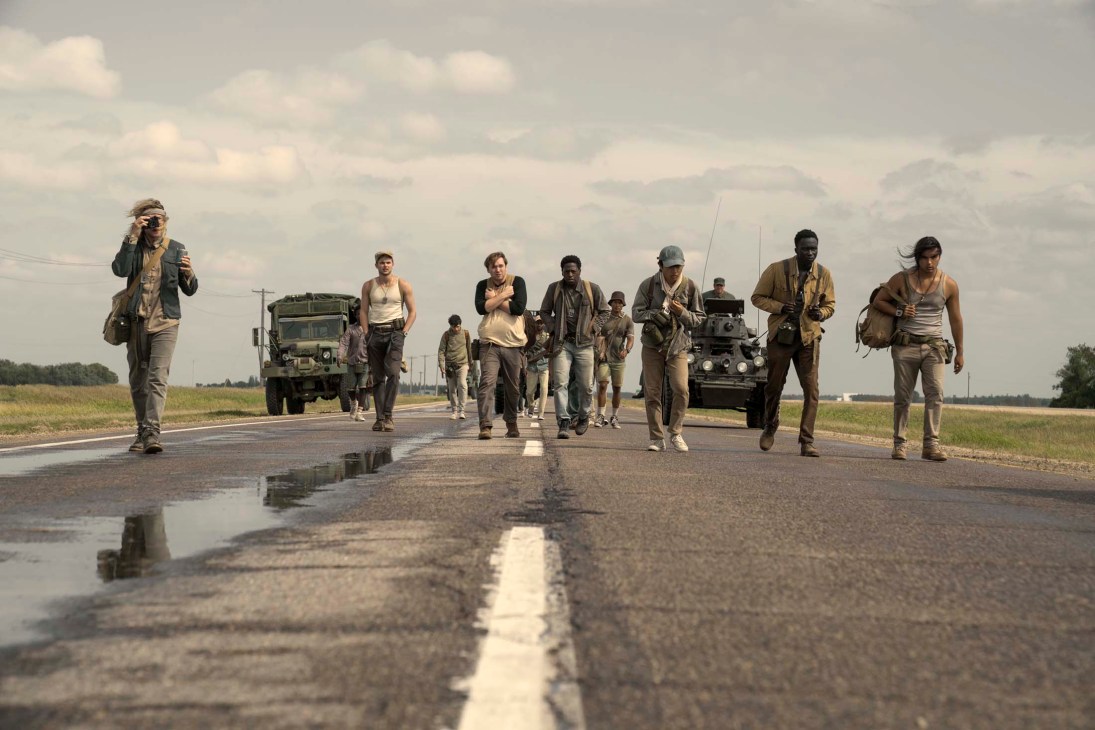
The Long Walk
Francis Lawrence
Having directed four of the five films in The Hunger Games series, Francis Lawrence takes on another dystopia. In this Stephen King adaptation starring Cooper Hoffman, David Jonsson and Ben Wang, 100 boys must walk until only one remains. If they stop or slow down, they will be executed. It’s surprising that this wretched tale – one of King’s first novels – took so long to reach the screen but it arrives in an era when narratives about human cruelty feel more plausible than ever.
‘The Long Walk’ is released on 12 September
Spinal Tap II: The End Continues
Rob Reiner
Legacy sequels often suffer from a hollow self-mythology that drowns out the actual joke but the first Spinal Tap already introduced us to a band convinced of its own hype. The original cast returns to play a group that’s well past its prime. Cameos from real rock royalty blur the mockumentary line but the film understands that ridicule and reverence have always lived side by side in rock’n’roll.
‘Spinal Tap II’ is released on 12 September
The Glassworker
Usman Riaz
Pakistan’s first hand-drawn animated feature is an exquisitely crafted film that balances the intimate and the political. An artisan’s son and a colonel’s daughter meet across a widening gulf of class and ideology that threatens to tear both their relationship and their country apart. The film wears its Studio Ghibli influence on it sleeve but its message feels distinctly relevant.
‘The Glassworker’ is released on 19 September
Books
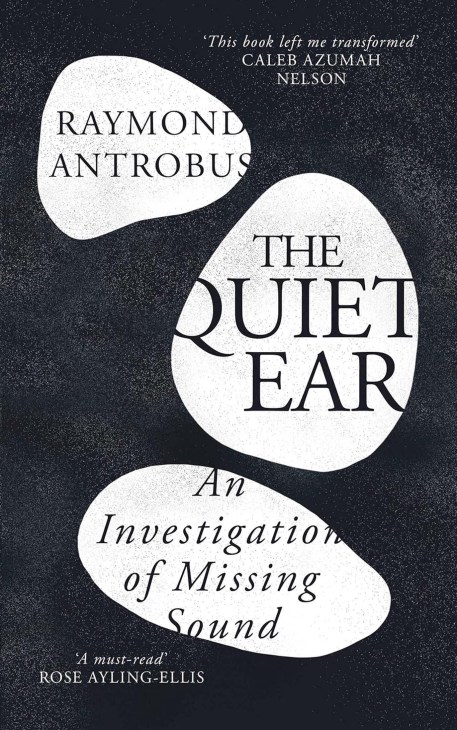
The Quiet Ear
Raymond Antrobus
Poet Raymond Antrobus long struggled with shame and anger while trying to find a language to fully express his experience of deafness. In The Quiet Ear, he intertwines his story with those of deaf cultural figures whom he discovered in adulthood. Part memoir and part cultural history, it is at times a difficult read but it’s an essential work that will hopefully help to shift attitudes to deafness.
‘The Quiet Ear’ is published on 28 August
Amity
Nathan Harris
Slavery in the US might have officially ended following the civil war but Nathan Harris’s second novel, set in the late 1860s, offers a glimpse of a society that still wanted black Americans in bondage. Harris writes with a sparseness and beauty that mirror the landscape of Mexico, where servant Coleman searches for his sister June, who has run away from their old master, Mr Harper, in pursuit of a better life.
‘Amity’ is published on 2 September

Cursed Daughters
Oyinkan Braithwaite
The irresistibly titled My Sister, the Serial Killer launched Nigerian-British novelist Oyinkan Braithwaite onto the literary scene in 2019. Her follow-up, Cursed Daughters, was worth the long wait. It tells the story of Eniiyi, the latest member of her family living under a curse that condemns daughters to heartbreak. When she falls in love, it’s time for her to finally stop ignoring the gloomy legend.
‘Cursed Daughters’ is published on 25 September
TV
The Girlfriend
Amazon Prime Video
In The Girlfriend, Robin Wright plays a mother with an unhealthy interest in her son’s romantic life. When a beautiful young woman (House of the Dragon’s Olivia Cooke) arrives on the scene to steal her son’s heart and potentially ruin his life, she becomes jealous and suspicious. There’s plenty of salacious double-crossing in this sleazy, erotic thriller with deplorable yet sexy characters.
‘The Girlfriend’ is released on 10 September
Black Rabbit
Netflix
This New York-set show stars Jude Law as a restaurateur and owner of the eponymous Black Rabbit, who finds his meticulously organised life turned upside down when his chaotic brother (Jason Bateman) reappears, wanting to be let back into the family business. After financial difficulties come knocking, the siblings are forced to consort with the criminal underworld, with resentment and bitterness building with every passing hour.
‘Black Rabbit’ is released on 18 September
Task
Sky/HBO
Still thinking about the moody and captivating 2021 hit Mare of Easttown? Its creator, Brad Ingelsby, is back with another procedural thriller, this time set in Philadelphia. It stars Mark Ruffalo as an FBI agent and former priest who is tracking a thief whose motives are far more complicated than greed alone. Tragedy hangs in the air as the story unfolds, blurring the line between right and wrong.
‘Task’ is released in September

Photography
New Photography 2025: Lines of Belonging
The Museum of Modern Art, New York
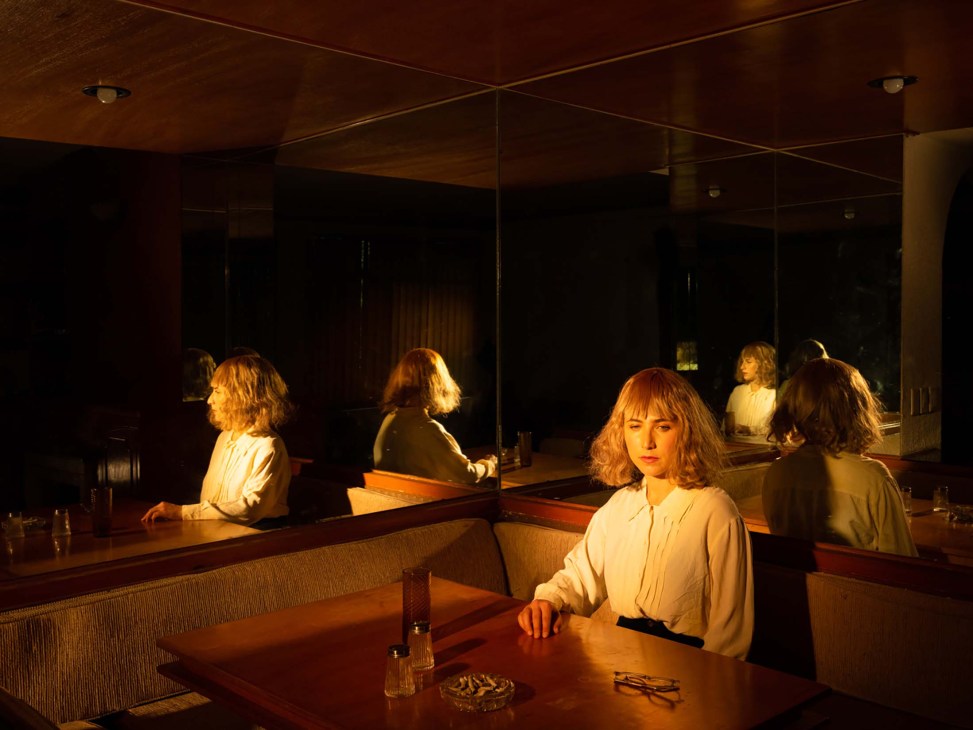
Marking 40 years since the first New Photography exhibition was held at New York’s Museum of Modern Art, this anniversary edition features artists from four cities, including Johannesburg and New Orleans. The images from Mexico City could prove to be the most arresting, thanks to Sandra Blow’s unflinching portrayals of the LGBTQ+ community and Tania Franco Klein’s cinematic vignettes. And make sure that you don’t miss Nepalese visual artist and curator Sheelasha Rajbhandari’s artfully embroidered scenes from Kathmandu.
‘New Photography 2025’ runs from 14 September to 17 January 2026
Music
Myd
Mydnight
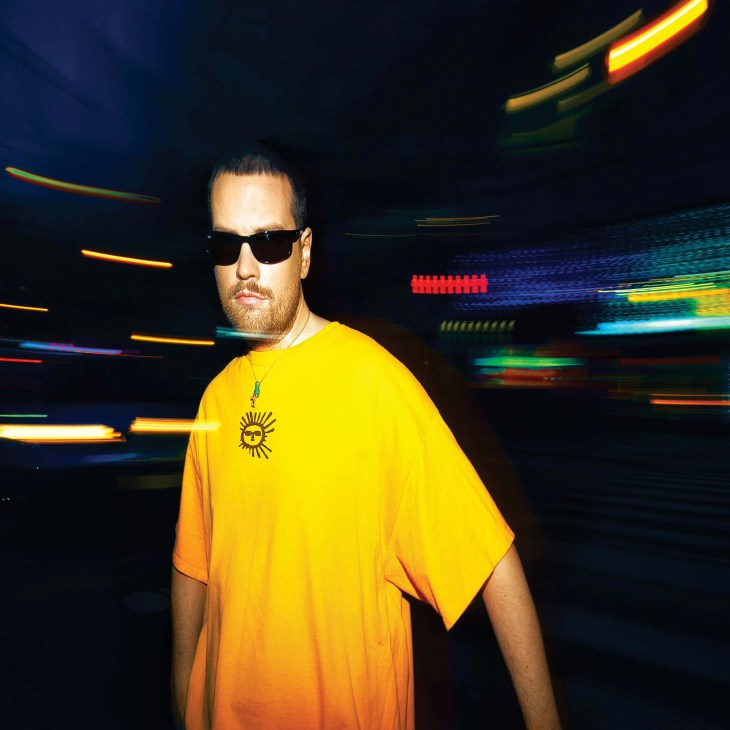
French DJ, producer and singer Myd has brought together a sparkling cast of collaborators for this dancefloor-ready album. Channel Tres shines on “All That Glitters Is Not Gold”, while Calcutta features on the gentler “9am”. “Song for You” is an Ibiza anthem in the making. Mydnight was informed by Myd’s recent globetrotting and we’re sure that the samba beats on “So High” were inspired by a long night out somewhere sweaty.
‘Mydnight’ is released on 29 August
Saint Etienne
International
Sad news for fans of English trio Saint Etienne: the group’s 13th album will be its last. Unlike The Night, the band’s previous release, International is a poppy electronic album produced by synth-lover Tim Powell (formerly of Xenomania). The record is full of soaring highs and emotive lows with lively early-1990s sounds on tracks such as “Brand New Me” and a tearjerker of a closer, “Last Time”.
‘International’ is released on 5 September

Parcels
Loved
Berlin-based Australian band Parcels is back with another happy-go-lucky album full of scintillating grooves. The euphoric “Yougotmefeeling” is an eminently danceable delight. The languid “Summerinlove” (yes, all the tracks are written this way) is another highlight. Parcel’s sunny sounds have attracted many fans, who will be flocking to see them on tour in Europe and North America this autumn.
‘Loved’ is released on 12 September

Images:
Netflix, Peter Kramer/HBO, Christopher Raphael/Prime, Murray Close/Lionsgate, Kerry James Marshall/ Patrick L Pyszka, Tania Franco Klein
Isaia: The Italian tailor bringing Neapolitan style to the world
“I knocked on so many doors in the US without much luck but now it’s our most important market,” says Gianluca Isaia, the CEO of Neapolitan tailoring company Isaia. Founded as a fabric shop by his grandfather, Enrico, in the 1920s, the business quickly evolved into a bespoke tailoring workshop and was supplying suits across Italy by the 1960s. Gianluca began as a tailor’s apprentice in his grandfather’s enterprise before moving to sales. He took over in the 1990s, redirecting the company towards a largely global clientele.
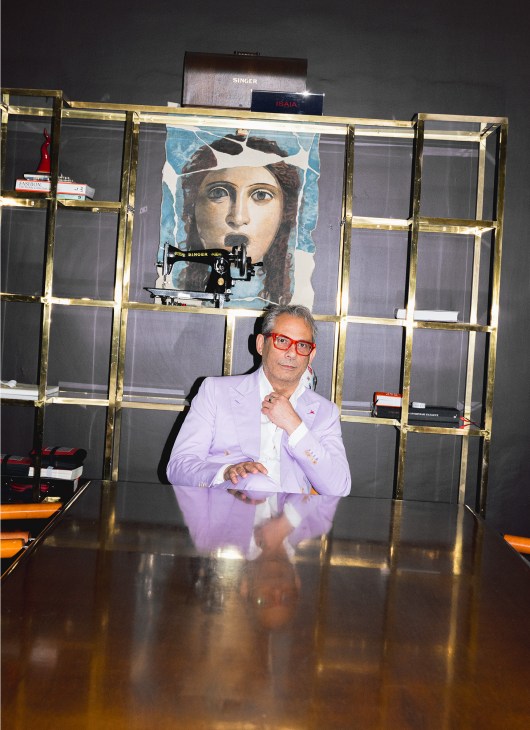
Under Isaia’s watch, the label has established a network of boutiques across the US, with outposts in New York, Chicago, San Francisco, Los Angeles and Palm Beach, Florida. Italy now makes up just 10 per cent of the business, which saw €90m in revenues last year. And Isaia is only getting started. More shops in Washington, Zürich and Paris are planned, each designed to offer a taste of the brand’s Neapolitan spirit.
Its flagships usually feature a bar and piano in the same coral hue as the brand’s logo, turning the shop floor into a space where customers can order a bespoke suit (which comes with a personalised label and a hanger featuring the client’s name), socialise and enjoy an aperitivo. “Naples has something that sparks desire – a quality that can’t be copied,” says Isaia, who is dressed in a double-breasted blazer with hand-stitched shoulders, his sandals peeking out beneath matching trousers.
In recent years there has been a renewed appreciation of Neapolitan tailoring, which is known for louche silhouettes and soft shoulders. Parisian heritage houses, such as Balenciaga, have offered interpretations of the wearer-friendly tailoring of the Neapolitan jacket. Isaia has naturally doubled down on its signatures, waving the flag for its home city’s style sensibilities and venturing into new categories to offer a full “Made in Naples” look.


The brand’s recent success includes a highly anticipated womenswear collection. The line debuted during the January edition of Milan Fashion Week with a runway show, which was held inside the historic Circolo Filologico Milanese and received much praise for making Neapolitan wardrobe staples available to a female audience. Relaxed herringbone suits, double-cashmere coats and liquid-silk shirts made their way down the runway, signalling the brand’s ambitions to carve a space for itself in the competitive world of women’s fashion. Isaia’s commitment to “Made in Naples” quality remains as strong as ever. While many labels outsource production, it has invested in a mill in the Piedmontese textile hub of Biella and begun producing more exclusive fabrics. The factory at the company’s headquarters employs more than 300 artisans who oversee the production of every ready-to-wear category. Suits, knits, button-down shirts, denim, ties and leather goods are all manufactured in-house.
On the factory floor, the team wears matching, aubergine-coloured T-shirts embroidered with the brand’s signature coral branch: a symbol of luck in Naples. The whirr of sewing machines is the soundtrack to artisans hand-sewing pockets and cutting out the silk shapes of ties. Around a table, women stitch buttonholes, each requiring 10 minutes of concentration. Isaia employs 60 embroiderers. “You can only find this level of detail in the south of Italy,” says Giuseppe Crispo, Isaia’s production manager, pointing to the soft shoulders and slanted barchetta pockets that distinguish Neapolitan jackets from other varieties. “This world is disappearing.”
This is why the company has set up a new tailoring school and apprenticeship scheme that will help to secure its future, as well as the region’s reputation as a leading player in the fashion industry. “Naples’ tailors exalt the shape of the person wearing their jackets and aren’t afraid of bright colours,” says menswear commentator Fabio Attanasio. “Like a vintage watch or car, the Neapolitan jacket offers a certain unmatched pleasure.”
isaia.it
Isaia in numbers
Years in business: 125
Family generations: 4
Revenue in 2024: €90m
Retail shops: 22
Number of in-house artisans: 323
Time to make a blazer: 13.5 hours
Minutes to hand-stitch a buttonhole: 10
The Monocle Concierge: Where to eat, shop and stroll in Kowloon


Click here to enjoy Monocle’s complete city guide to Hong Kong
Digital decency: 10 rules for better online behaviour
Technology is everywhere, but our acceptance of its ubiquity is taking a toll: on our health, wellbeing and the quality of our conversations. Did digital media kill our discourse, or did we just let it? Do we need to spend every minute glued to a screen, barking down the line or listening to tinny gibberish on a phone speaker? Of course not, and the tech-peddlers aren’t exactly pinning us down and forcing us to do so either. So perhaps it’s time we all sought a better balance ourselves.
With this in mind, I’ve whipped together a manifesto for a more dignified relationship with all things digital, from occasionally leaving our devices behind to being a little kinder and more cautious online. So, pop your phone on silent, take out your earbuds, ignore your emails for a moment and read on for ten ideas about firming up the online social contract.
1.
Have some perspective.

Just because you have an opinion (about the news, your neighbour’s haircut or the warranty of the lawnmower you just bought), it doesn’t mean you should broadcast it to the world. So much of what’s smeared online to shame people and companies could be as easily solved with a friendly note, a jot of patience or a deep breath and a tap on the delete key.
2.
Have heart.

So you’re having your say – great. But did the person that you’re pursuing or decrying deserve the condemnation? Are they the problem or someone who can solve it? Would you have been so thoroughly and unsparingly rude in person? What if the person you’re haranguing knew your name and was standing in front of you? The anonymity of the internet tends to make interactions harsher at a moment in history when a little give and take is much more useful.
3.
Forgive and forget.

OK, so whoever you were taking a pop at did deserve it after all. But will pursuing a point publicly prove much? Do you feel better? Remember that it’s a human on the receiving end of your indignation: often a college-fresh social media manager, a naïve young girl or boy, or just someone doing their best to wade through the bilge and ire of below-the-belt comments and trolling. Think twice and give people the benefit of the doubt.
4.
Have some humility.

Those white lies once reserved for CVs or after a third glass of wine have seeped onto websites, posts and online proclamations. Maybe you are a Productivity Jedi or an Online Experience Gatherer – and here’s a photo of you swimming in a friend’s pool necking free champagne… Social media has inflated our sense of self but it’s possible that the world isn’t all that impressed.
5.
Don’t overshare, part one.
Secrecy is all too scarce a resource. Today, despite what most people tell you, you’re a person not a brand. Get a good night’s sleep and switch off now and again. No one wants to see too much – of you, your home, those dark unexcavated, barely formed opinions that you’re blurting out at the same time as you’re committing them to the public record. Keep a little mystery, have a little dignity, maintain some allure.
6.
Watch your tone.
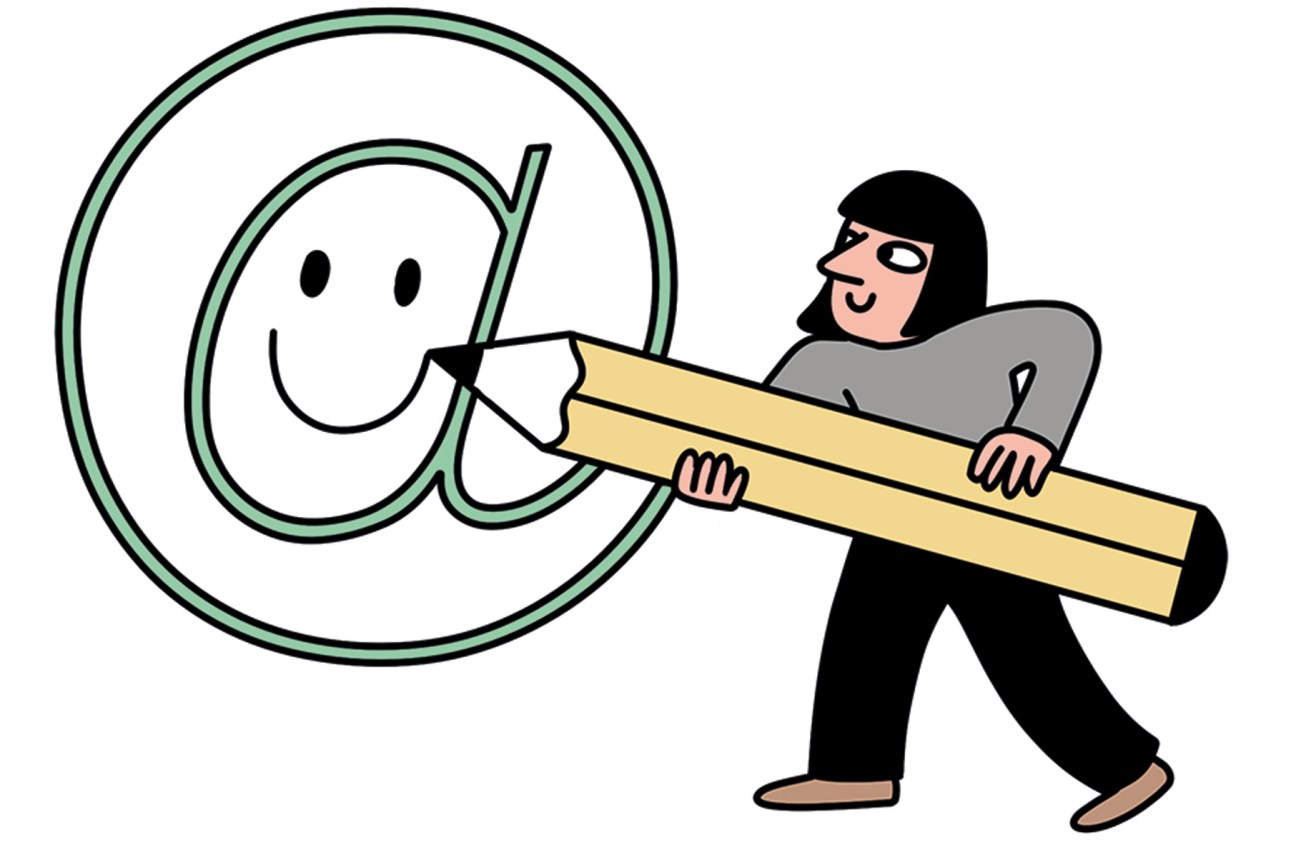
Emails are oddly ambiguous ways to communicate and passive-aggressive behaviour is quickly amplified if you don’t check yourself. Take special pains to be clear and pleasant. No excuses, no-one’s too busy for manners and a little decency can go a long way – we’d all feel less stressed if the people on the other end of the keyboard were more positive, polite and kind.
7.
Don’t overshare, part two.

Fewer emails will make everyone happier. Everyone’s busy – even more so as our work pursues us into our homes and leisure time. When it comes to work, we all need to think more carefully and ask, “Does that last missive need sending?” The office might be paperless but it hasn’t gone away; it has morphed into vast energy-intensive servers packed with useless data, nowhere emails and round-robins that were never opened. Be sparing.
8.
Be humane.

You’re talking through a phone not to one. It’s too easy to forget the human at the other end. Instant messaging is excellent for efficiency but it takes more than a phone in every pocket to overcome our hardwired human (and hard-to-emulate-online) sense of trust and camaraderie. Don’t cut and paste a response; say something and mean it. Also, marketeers and mass emailers, there’s nothing less flattering than an automated reply or, worse, a cookie-cutter response with the wrong name at the top.
9.
Ask permission.

Not everyone wants to be in your home movie, your advert, your brand launch, your family video-call quiz, your panoramic phone shot or your selfie. Spare a thought for the passerby who didn’t consent to star in your self-made, one-person psychodrama. Take pictures and capture the important moments, by all means – but leave others out of it unless they have agreed to participate.
10.
Seek out both sides of the argument.

The internet doesn’t do nuance but you can. Algorithms guide us to people who agree with us and our echo chambers become ever more entrenched to the point of polarity: we don’t recognise the people we disagree with or the common ground we share. That’s dangerous – and it’s up to us to solve it. You might not get a full concession to your opinions. The important thing is how you conduct yourself – and when you decide to walk away.
Monocle’s Quality of Life Survey 2025: The 10 most liveable cities in the world
10.
Tallinn
Best for start-ups
Estonia’s capital continues to attract entrepreneurs seeking Nordic-style living without the high price tag.
The Estonian capital is well known for its leafy streets, medieval architecture and raucous nightlife – but it’s increasingly gaining a reputation for its close-knit entrepreneurial network and world-leading digital infrastructure.This is aided by the fact that nearly everyone speaks English, rents are affordable and it’s a mere 10-minute drive from downtown to Tallinn airport, which has direct flights to 60 international destinations. Throw into the mix Europe’s highest number of unicorns per capita, a dense network of venture-capital firms and a steady pipeline of technology talent, and Monocle’s 2025 Best for Start-Ups award feels like a shoo-in.
“Estonia is particularly good for digital infrastructure,” says Martin Sahlen, who moved from New York to Tallinn to launch fintech business Alvin.ai. “It’s a very entrepreneurial country and there is less red tape.” He set up his company in the district of Telliskivi, the epicentre of Tallinn’s vibrant start-up scene, where co-working spaces such as Lift99 sit alongside excellent and affordable restaurants and bars, such as Pudel and Juniperium, and a growing number of museums and cultural venues, including Fotografiska.
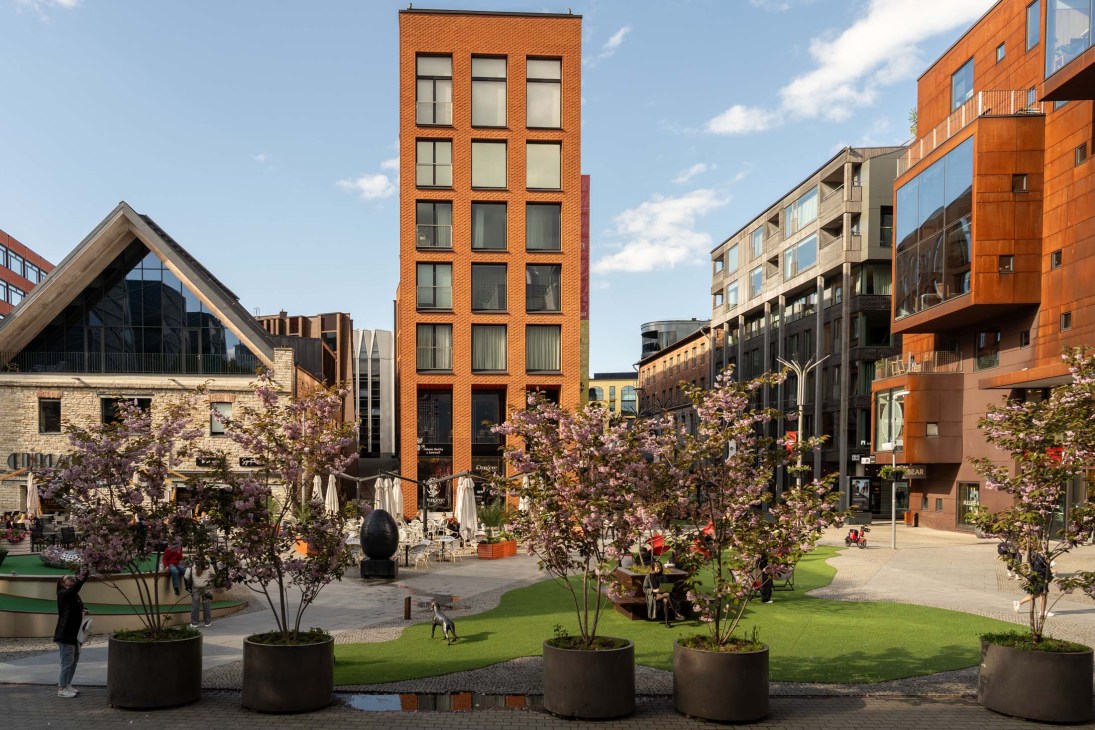

Another draw for entrepreneurs is Estonia’s e-residency programme, through which non-nationals can open and manage an EU-based business entirely online, no Estonian address or presence required. Almost everything, from company registration to tax filings, is handled digitally, which means that the actual starting-up process can take just minutes. Taxes, meanwhile, are only applied when profits are distributed – a boon for early- stage reinvestment.
Yet Tallinn’s real draw is its people. “We are really like a community,” says Irina Tokareva, a hub administrator at Lift99. “All foreigners are friends from the first minute.” According to Tokareva, approachability defines the culture here. “You don’t need to book a call through two assistants,” she says. “You can just write to them and say, ‘Hey, I’m building this and I’d love to show it to you,’ and they’ll answer.”
This openness extends to the top of government. Like his predecessors, Estonia’s prime minister, Kristen Michal, has hosted round tables with start-up founders to better understand their needs. Public support is structured too: Startup Estonia, a government-backed initiative based in Ülemiste (another business zone that’s home to dozens of start-ups), plays a central role in connecting newcomers to networks, resources and funding. “If you look at the people who are building new start-ups, they often have backgrounds in multibillion-euro businesses such as Skype, Wise, Pipedrive and Bolt,” says Mirjam Kert of Startup Estonia. “Since 2010, more than €4.5bn has been invested in Estonian start-ups, 92 per cent of it from foreign investors.”
“I chose Estonia because it’s in the same time zone as Kyiv and it was really cheap compared to, say, Berlin or London or New York,” Ukrainian founder Alexander Storozhuk, who relocated his media-technology firm PRnews.io here, tells Monocle in his office at Porto Franco, looking out at the dozens of boats bobbing in Tallinn’s sunny harbour. Safety and quality of life were decisive factors too. “My eight-year-old daughter walks home alone from school and I’m always confident of her safety,” says Storozhuk. Between the agile public services, a highly international founder base and the Nordic-style liveability (minus the price tag), Tallinn punches well above its weight. For founders looking for speed, support and a city where big ideas travel fast, Estonia’s capital is a smart place to start.
1. Population: 461,000 (metro: 550,000)
2. Number of international destinations served by airport: 44
3. Average top-tier office rent: €22 per square metre (2023)
4. Personal income tax: 22 per cent
5. Average price of a cappuccino: €3.60
9.
Tokyo
Best for cleanliness
Tokyo’s spruce streets and responsible citizens set the benchmark.
For a city of 10 million people – and that’s just the 23 central wards – Tokyo is bafflingly clean. (The population balloons to 44 million if you take in the greater Tokyo area.) To understand why, look at how the Japanese capital operates in the morning. Rubbish vans trundle along residential streets, with binmen jogging alongside their vehicle as they grab bags of meticulously separated household refuse. Meanwhile, an army of kanrinin, the caretakers who look after Tokyo’s apartment blocks, mop entrances and put out rubbish. Shopkeepers and café owners spruce up the area in front of their establishments, picking up any stray litter and cigarette ends (banning street smoking has improved that situation no end).
Volunteers are also out in force. In fashionable Omotesando, a band of hairstylists from some of the dozens of salons in the neighbourhood are in green bibs, picking up litter before opening time. Over by Shibuya station, another group of volunteer helpers – schoolchildren and pensioners – are tackling the detritus on one of the world’s busiest pedestrian crossings.
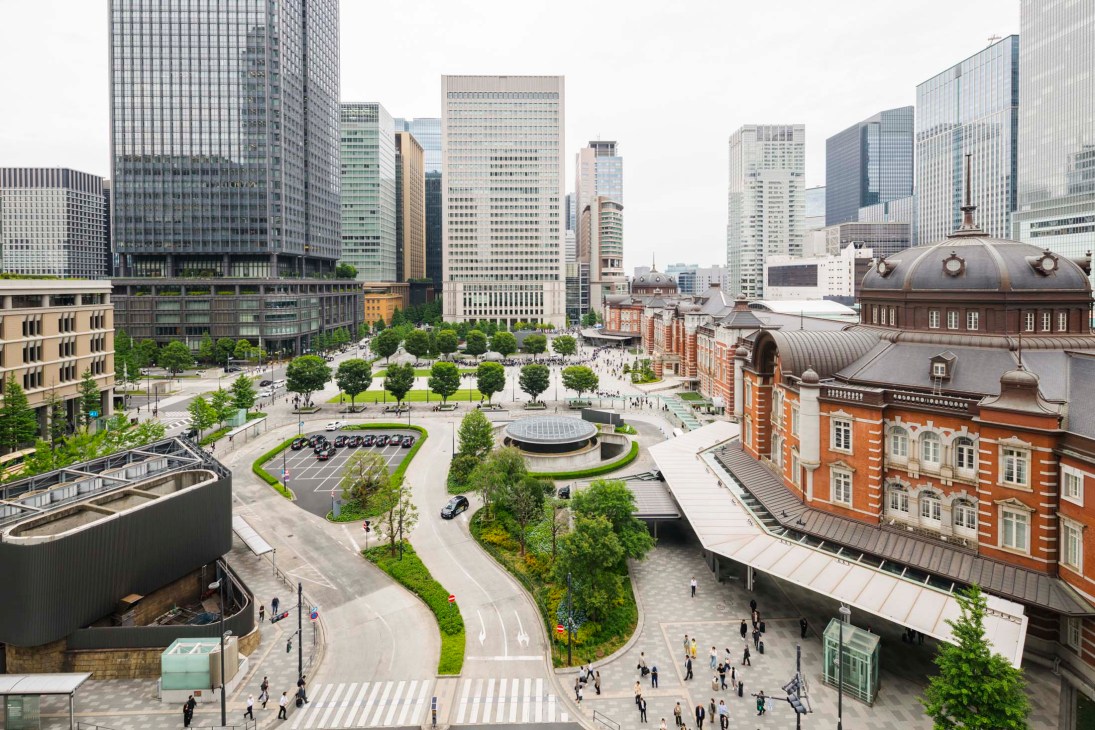
The lack of street bins is no surprise to anyone who lives here (most disappeared after the deadly sarin gas attack in 1995) and people expect to have to look after their own litter. The sticking point has come with the arrival of unprecedented numbers of tourists who are not necessarily on the same page garbage-wise. It’s not that visitors are looking to dump rubbish but they’re often unsure what to do with their plastic cups and bottles. Overflowing bins are never a good look so refuse-flattening smart bins are being introduced to busier streets and tourist sites.
Public toilets have had a major upgrade in Shibuya with the Tokyo Toilet project, in which 16 creators (including architectural A-listers such as Tadao Ando and streetwear legend Nigo) designed public conveniences that not only look good but come equipped with Toto Washlets and are kept spotlessly clean by a team of people who wear natty boilersuits (as seen in Wim Wenders’ film Perfect Days). Architect Kengo Kuma designed one comprising five wooden huts in Shoto Park. He called it a “public toilet village that is open, breezy and easy to pass through”. The project’s organisers consider clean, well-lit, fully accessible public toilets essential to any city and even “a symbol of Japan’s world-renowned hospitality culture”.
As in every city, there’s graffiti in Tokyo (though not in the same quantities as elsewhere). Clean & Art, a group led by artist Ken Sobajima, is on a mission to eradicate the blight. Passers-by applaud Sobajima and his team as they paint over unwanted scrawls and restore walls. “I used to think that nobody cared,” he says. “But once I talked to people, I discovered that everyone was bothered by it.”
As with most aspects of daily life in Japan, there are deeper philosophical reasons for this preoccupation with spotlessness. Shinto, Japan’s native religion, demarcates clean and unclean spaces, a division that affects everything from the sumo ring to the home. Children absorb this distinction between clean “inside” and unclean “outside” early.
All of this isn’t to say that there’s no rubbish in Tokyo but, overall, it’s much tidier than other cities of a comparable size. Tokyo spends a fortune on keeping things presentable. The Clean Authority of Tokyo’s waste management budget for the central wards is ¥105bn (€640m) this year, of which ¥83bn (€507m) is dedicated to cleaning. But the secret to the city’s sparkle is that it’s not simply the work of city employees: it’s a collective job.
1. Population: 14,000,000 (metro: 41,000,000)
2. Number of public toilets: 53 per 100,000 residents
3. Annual municipal solid waste produced: three million tonnes
4. Recycling rate: 20 per cent (nationwide)
5. Number of municipal green spaces: 159
Click here to enjoy Monocle’s full city guide to Tokyo
8.
Lisbon
Best for safe streets
Crime rates continue to fall in this sunny metropolis by the sea.
Speak to one of the hundreds of thousands of Brazilians who call Lisbon home – the largest immigrant community in Portugal – and safety will almost certainly emerge as one of the reasons for their move. In this respect, Lisbon has become the gold standard for many. Europeans and Americans who have recently flocked to the city also cite security as an important factor in staying. “I can walk down any street at any time without having to look behind my back,” says George Dellinger, who moved here from New York in 2022. “I don’t feel vulnerable. There’s a sense that people look out for each other.”
Lisbon has evolved over the past decade from a somewhat sleepy town into a dynamic European capital and it has impressively done so without compromising on the safety of its residents. Crime in the capital is consistently low compared to other European cities; Portugal’s latest annual homeland security report indicates that in 2024 there was the steepest drop in the crime rate (excluding the anomalous pandemic years) in more than 10 years: a fall of 7.6 per cent in Lisbon’s metropolitan area. It also points to a 1.8 per cent decrease in violent crime, with even bigger drops in the city proper.
That said, statistics don’t always tell the full story. Safety is also a collective sentiment and, recently, a few widely publicised violent incidents have rattled some sectors of society and inflamed political rhetoric. Lisbon’s mayor, Carlos Moedas, has acknowledged the public’s unease and called on the government for increased policing in the city.
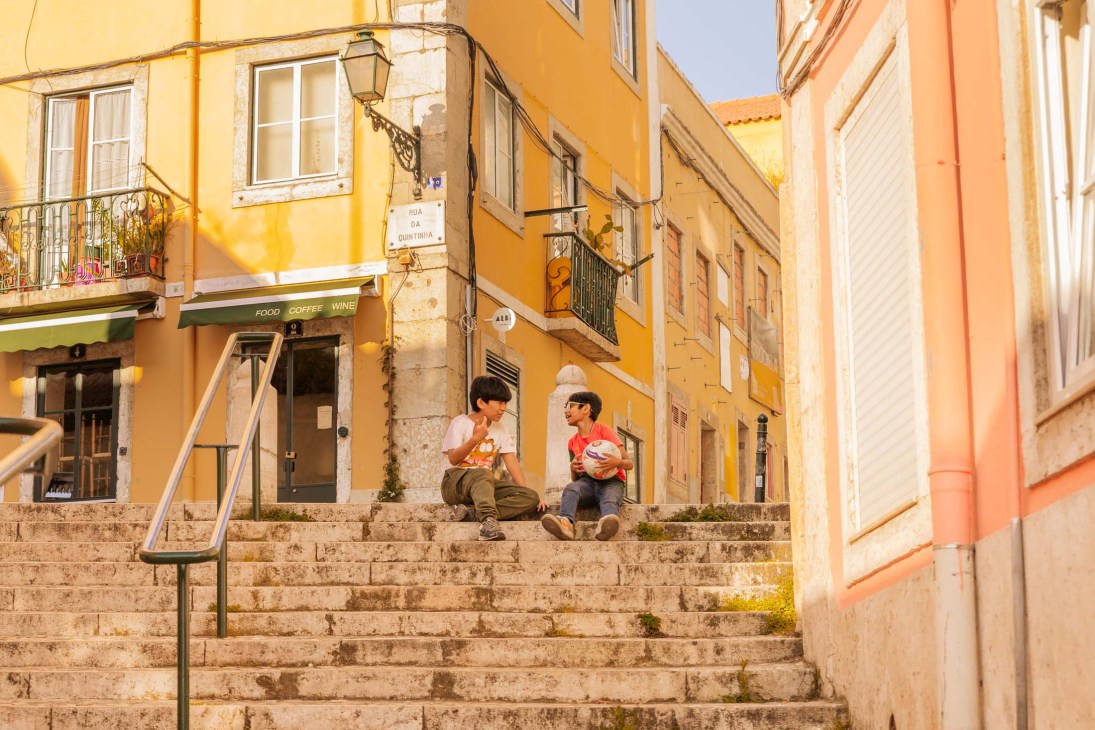
But, as ever in Lisbon, a lot of emphasis has been placed on community policing, a preventive and participative approach that has garnered attention from across the globe. In contrast to the stock response of cities faced with security issues – more CCTV or increasingly heavy-handed policing – Lisbon invests in more integrated forms of safety that put trust and a human presence at their centre. Police officers are assigned to neighbourhoods for the long term, fostering familiarity with citizens and partnerships with neighbourhood associations and social services. The constant dialogue between these groups means that the police are better equipped to address problems as they arise and deal sensitively with issues around drug use or homelessness through dialogue.
Like any city shaped by tourism, Lisbon has pockets where petty theft is common, especially in the historic downtown areas. But when it comes to the kind of ambient, everyday safety that allows one to move through public space without thinking too much about it, Lisbon continues to offer a rare kind of freedom. An intuitive way to grasp this is by noticing how schoolchildren make their way through the city. They’re often unaccompanied, navigating public transport and streets with an ease that recalls a different era. For parents it’s a powerful indicator. “The number of times I’ve left my purse on the pram while running after my boy in the park… I would never think of doing that in London,” says Perrine Velge, who moved from the UK capital to Lisbon in 2020.
Another indicator can be seen when going out at night. Like other Mediterranean cities, Lisbon has a late-night culture that is dominated not by heavy-drinking young people but a relaxed mix of ages. Eating out, strolling home or sharing a glass of chilled white port in a neighbourhood bar remain part of everyday life, unmarred by disorder. Feeling physically safe in some Western cities is no longer taken for granted, if indeed it ever was. Lisbon is a rare outlier.
1. Population: 567,131 (metro: 3,049,222)
2. Number of municipal police officers: 6,700
3. Murder rate: 1-2 per 100,000 inhabitants per year
4. Year-on-year reduction in reported crimes: 7.6 per cent
5. Number of additional CCTV units planned this year: 99
Click here to enjoy Monocle’s full city guide to Lisbon
7.
Mexico City
Best for conviviality
Mexico City is attracting those seeking quality over quantity.
For many people in Mexico City, the weekend officially kicks off at about 14.00 on a Friday. In the leafy neighbourhoods of Condesa and Roma, streetside cafés and restaurants fill with residents and visitors alike, seated at tables spilling onto the pavements. Food has always been an important part of Mexican culture and people here have access to a good bite no matter their budget, whether it’s tacos from a street vendor or silver service. A long lunch is more than just eating: it’s an opportunity to savour time with friends and family, embracing the tradition of sobremesa – an unhurried meal in which diners linger around the table for hours.
Mexico City’s laid-back attitude, which extends far beyond the dining table and into everyday life, is luring many from afar. The city’s population grew by 600,000 between 2019 and 2023 – much of that influx from the US and Canada, countries to where Mexicans have traditionally emigrated. It’s proof that the city’s way of life is catching on. “The people here value quality of life above many things,” says Adolfo López-Serrano, a resident and founder of communications company Base Agency.
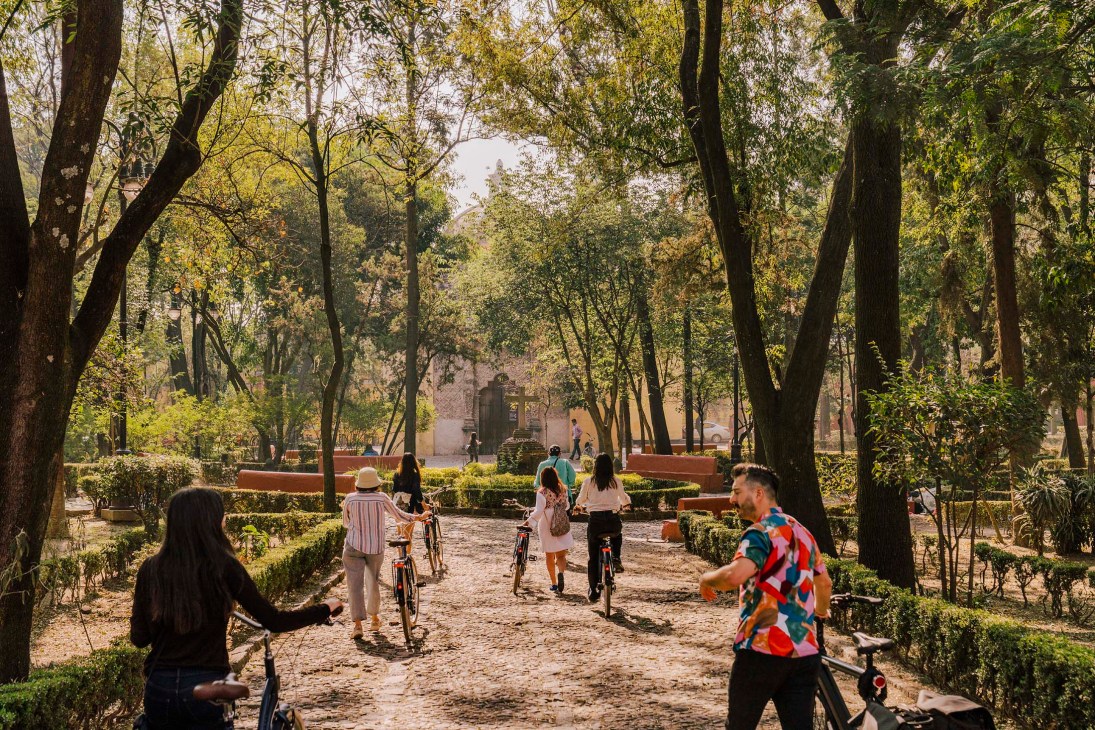
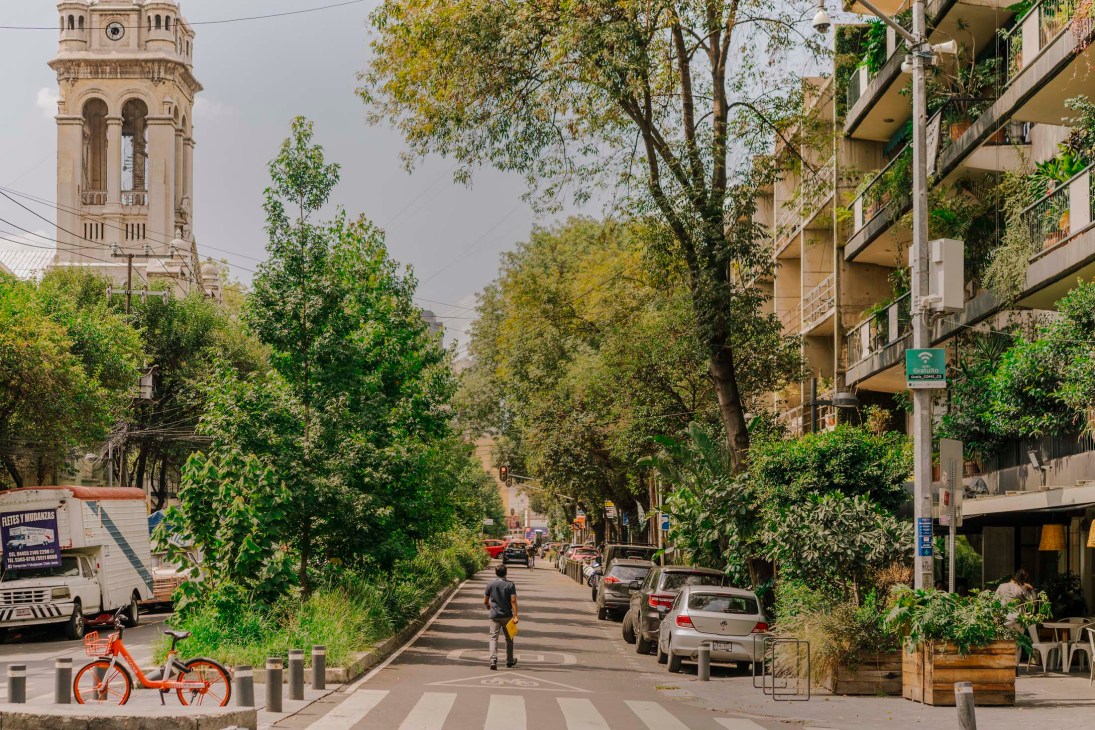
Despite being one of the biggest and most hectic cities in Latin America, many neighbourhoods here, such as Condesa and Coyoacán, offer a small-town feel, with inhabitants waking to the sound of birdsong. “The urban fabric is very nice and there’s also great architecture,” says Rodrigo Rivero Borrell, founder of property developer Reurbano. He notes that neighbourhoods around the Paseo de la Reforma were developed consciously, with wide avenues.
“The city is designed for movement, with walkable streets and good public transportation in the central areas,” says López-Serrano. There are almost 400km of bike lanes, which is remarkable for Latin America, and the Metro, with 12 lines covering more than 226km, is the second largest on the continent. The city also has one of the best-connected airports in the region, with direct flights to more than 100 destinations, including London, Los Angeles, Madrid, New York, São Paulo and Tokyo.
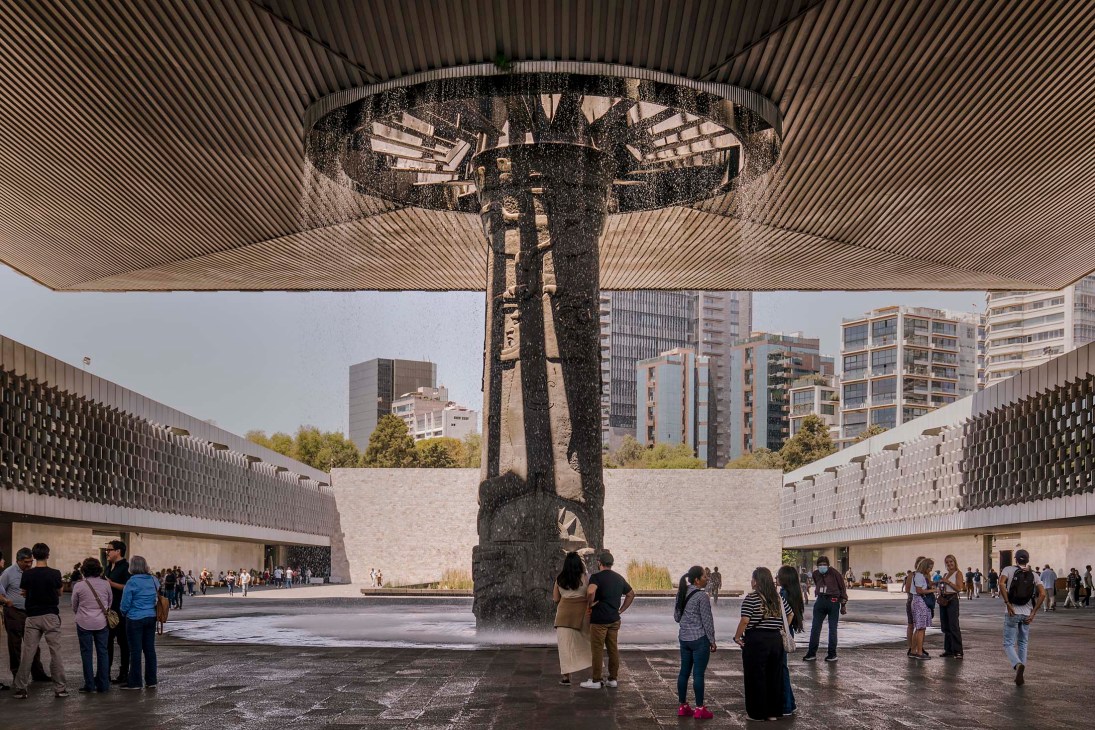
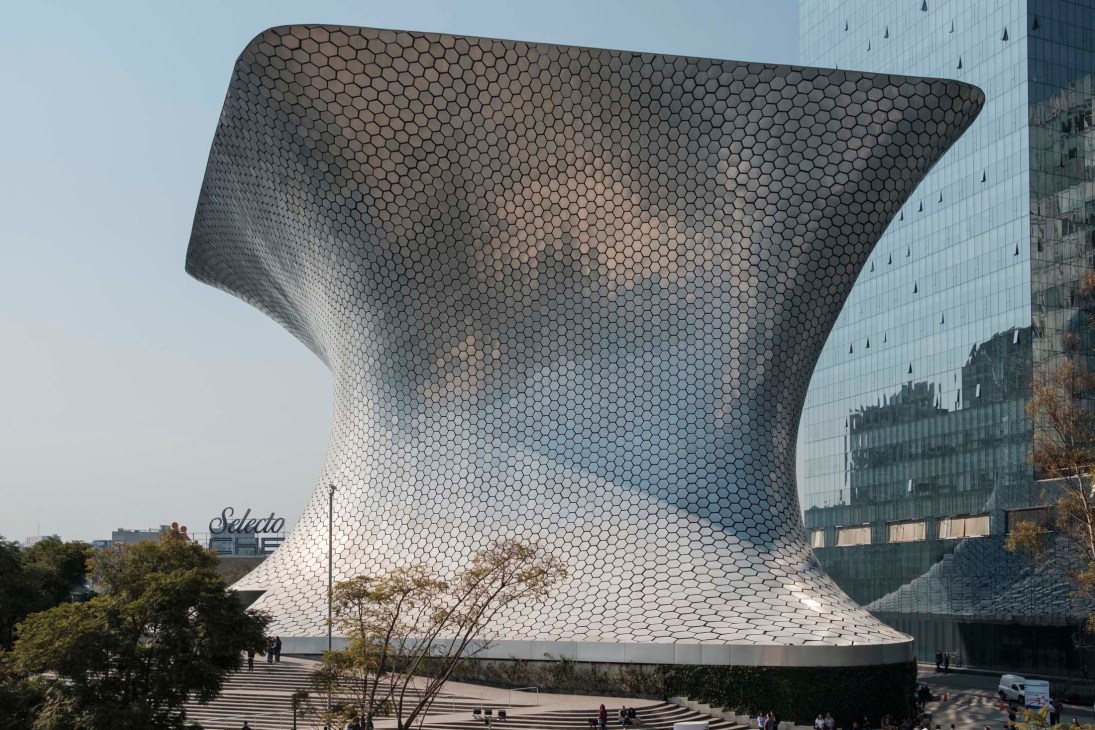
Outsiders tend to find Mexico’s capital very inviting. “Being a Latin society, it’s a welcoming place,” says Rivero Borrell. “People want to engage.” It’s also ideal for those seeking to build a business. López-Serrano describes it as “a city where chaos and order happen at the same time, creating the perfect playground for creatives and entrepreneurs”. He adds that in Mexico City, “You can be scrappy and resourceful, and push boundaries. Yet the standards for design, culture and innovation are remarkably high.”
Certain neighbourhoods are astonishingly green. In an effort to improve air quality and mitigate the effects of climate change, more than 44.2 million trees, shrubs and ground covers have been planted throughout the city since 2019, according to Mexico City’s environment ministry. “The central areas are well serviced in terms of parks and public spaces to maintain a healthy lifestyle,” says Rivero Borrell. Being outdoors is woven into city life and you’ll always find people walking their dogs, exercising or dancing salsa in one of the 244 parks or plazas here. There are few better ways to foster a sense of community.
1. Population: 9,209,944 (metro: 23,146,802)
2. Typical closing time for bars: 03.00-04.00 (on weekends)
3. Number of stations on Mexico City Metro: 195
4. Average price of a house: MX$3.9m (€178,000)
5. Number of public museums: More than 180
Enjoy Monocle’s complete city guide to Mexico City here.
6.
Zürich
Best for mobility
The city that spawned its own transport model isn’t resting on its haunches.
In 2024, Verkehrsbetriebe Zürich (VBZ), the body that owns and operates Zürich’s transport network, recorded approximately 304 million annual passengers across its buses and trams – a 2.1 per cent increase on the previous year. For Switzerland’s largest city, which has spawned a set of much-imitated but never bettered mobility policies known collectively as the Zürich Model, it was further proof that superiority need not induce complacency. The most appealing cities reflect the best things about their nations (as most of this line-up can attest) but perhaps nowhere is that more in evidence than on Zürich’s transport network, which exudes a Swiss air of efficiency. “Where else do passengers greet you when they’re getting on and off?” asks Sinan Yigitler, a bus driver who moved to Zürich from Germany with his family. Could it be that a calm, clean and cheap transport experience makes passengers more cheerful?

An enduring symbol of Zürich is its tram network. Pale blue and white, these sleek road trains glide through leafy boulevards and along lakefront promenades, the doleful clang of their bells and the soft whoosh as they pass providing the city’s muted soundtrack. Since 2002, Zürich’s buses have run for 24 hours on weekends, ferrying home the stragglers from bars and clubs as the city settles into silence.The Zürich model grew out of a realisation on the part of the city’s government in the 1960s and 1970s that it had to offer public transport of a high-enough standard to tempt commuters out of their cars and so avoid gridlock on its streets (nearly 280,000 people commute into Zürich every day a number not far off the city’s population of 360,000).Today, 327 intersections are equipped with sensors that detect approaching vehicles and adjust signals to prioritise the transit of trams and buses over cars.
But the city’s ambitions go well beyond trams and buses. The Zürich Model places great value on modal split, meaning that all facets of the network must be constantly improved to ensure the vitality of the whole. Under the government’s 2030 bike plan, the number of cycle lanes and cyclist-first traffic lights are due to be expanded, while its 2040 mobility strategy focuses on connecting the fast-growing northern and western suburbs to the rest of the city. Projects such as the Tramtangente Nord, a planned orbital tram line that binds outer districts without passing through the city centre, aims to improve capacity where it’s needed most.
“We need to redistribute street space to give more room to pedestrians and cyclists,” says Simone Brander, the head of Zürich’s civil engineering and mobility department. This ethos is deeply felt by the people who operate the system too. “It’s an important part of my life and the people here are like my second family,” says Astro Ajvazi, a VBZ instructor who trains the next generation of tram operators.
1. Population: 448,664 (metro: 1,450,000)
2. Annual public transportation ridership (2024): 665 million passengers (11 per cent increase on the previous year)
3. Proportion of tickets purchased on mobile phones: 70 per cent
4. Number of sensors monitoring traffic throughout the city: 4,500
5. New cycle lanes currently planned or under construction: 130km
Click here to enjoy Monocle’s full city guide to Zürich
5.
Vienna
Best for housing
The Austrian capital’s architecture and social housing stock are the envy of the world.
In October 1930, Vienna’s socialist mayor, Karl Seitz, gave a speech at the opening of a new housing block, the Karl-Marx-Hof. “When we are no longer here, these stones will speak for us,” he said. Today the building that he was inaugurating is probably the best known of Vienna’s Gemeindebauten, social housing that has become emblematic of the city’s high quality of life. Nearly a century on, some 6,000 Gemeindebau flats are still built every year, in a continent where many cities have given up on the principle of social housing. The new ones are less monumental than their forebears but the tradition of naming them after eminent public figures remains. Karl-Seitz-Hof opened in 1931.
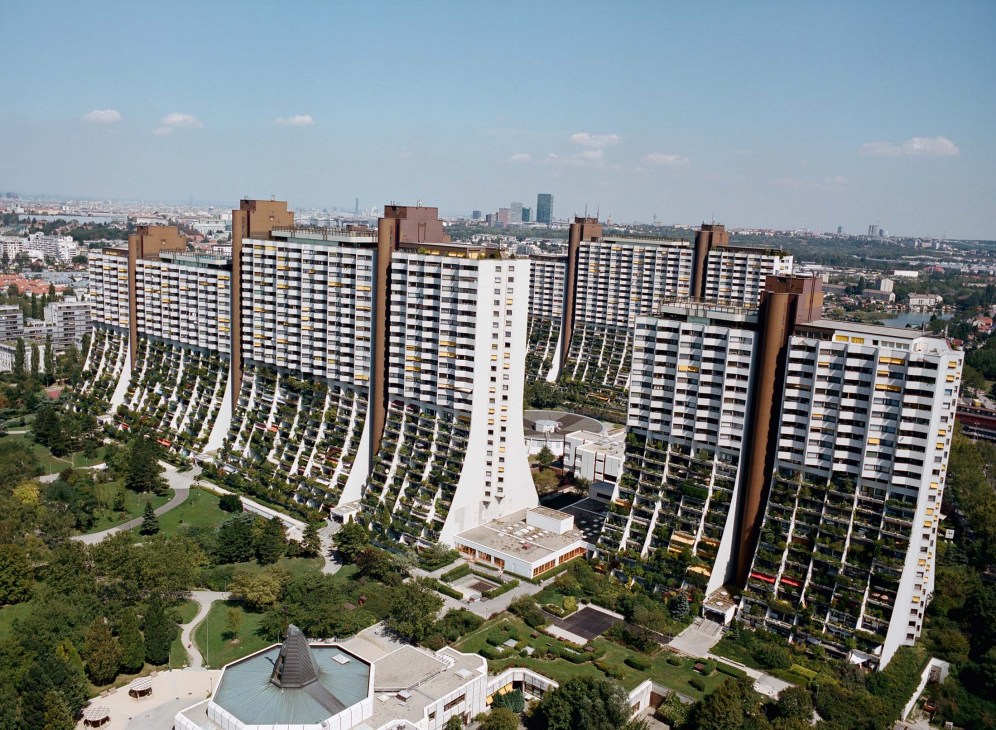
Housing authorities have also stuck to the principle of distributing council flats across all districts to prevent economic segregation. Another key plank of urban cohesion is the comparatively generous income cap for applicants: €59,320 a year for a single person and €88,400 for a couple at the time of writing. The upshot is that more than half of Vienna’s two million residents live in some form of subsidised housing, whether in Gemeindebauten or state-supported co-operatives. One of the better-known examples of the latter is the sprawling Alterlaa complex (pictured) in the city’s south, home to about 10,000 people and an architectural pilgrimage site for many visitors to the Austrian capital.
Freelance journalist Susanne Jäger has lived in her 43 sq m council flat in the heart of old Vienna since 2014. She also spent part of her childhood in municipal housing. “The Gemeindebau programme has always been part of my life,” she tells Monocle in her Fischerstiege apartment, which is across the road from Vienna’s old city hall. On the ground floor is an office of the Social Democrats – the party of Seitz and the current mayor, Michael Ludwig – alongside a bookshop and an after-school care centre for residents. Jäger hadn’t planned to stay long but the low rent – about €370 a month without utilities a decade ago, now €420 – persuaded her otherwise. “I was never offered a better deal,” she says. She is also struck by the city’s efforts to support tenants who are in difficulty. In her hallway, a poster from city hall reassures residents that they won’t be left in the lurch if they fall behind on payments. “Vienna is the only landlord that tries to keep you in rather than kick you out,” says Jäger.
Of course, social housing is only one strand of Vienna’s mixed housing stock. Roughly a third of the population lives in privately rented flats, with one in five of those in buildings constructed before 1945 – the so-called Altbauten (“old builds”). Most are solidly built, with thick walls, high ceilings, grand tiled entrances and fabulous façades (especially the Jugendstil buildings from the 1890s and 1900s). Balconies or terraces are rarer but there’s often a large courtyard, or Hof, and sometimes a private back garden. The Altbauten are highly sought after, with prices per square metre ranging from about €6,200 in the eighth district to €19,000 in the first. Rents, however, are far more manageable, hovering between €14 and €20 per square metre for both old and new.
Vienna is still very much a city of renters and their rights are staunchly defended, especially in older properties. Homeownership is fairly modest compared to other European capitals, accounting for less than 20 per cent of the population – though that might soon change. Though construction has slowed somewhat, attractive new developments are springing up citywide: in the Nordbahnviertel, near the Danube, on the site of an old railway station, and in Aspern Seestadt on the northeastern fringe. The latter is one of Europe’s largest urban development schemes. In a city where housing is treated as a right rather than an asset, these particular Neuebauten attract less local ire than they might elsewhere.
1. Population: 2,005,760
2. Average proportion of income spent on rent (for a one-bedroom flat): 21 per cent
3. Proportion of population in social housing: 60 per cent
4. Average rental cost: €3.87 per square metre (social housing), €10.40 per square metre (private sector)
5. Number of new social housing units built per year: 6,000-7,000
Click here to enjoy Monocle’s full city guide to Vienna
4.
Barcelona
Best for urban greening
The Catalan capital is proactive about enacting radical policies and its approach to the environment is achieving solid results.
After three years of drought, the return of rain to Barcelona this spring was more than just a meteorological relief: it marked a moment of renewal for a city that’s doing more than most to stay in step with nature. The Spanish phrase “En abril, aguas mil” (“In April, a thousand rains”) was uttered with smiles, as residents joked about living in London or Paris. And when the sun came back out, Barcelona looked greener than ever, in more ways than one.
Faced with issues such as increasingly regular water shortages, pollution and population density, the city adopted a strategy to green its streets and public spaces. The flagship Superilles (Superblocks) initiative – first proposed by environmental researcher Salvador Rueda and trialled by city hall in 1993 – has rethought car-dominated intersections in favour of people-first places lined with trees, shaded areas and space for community life to blossom.
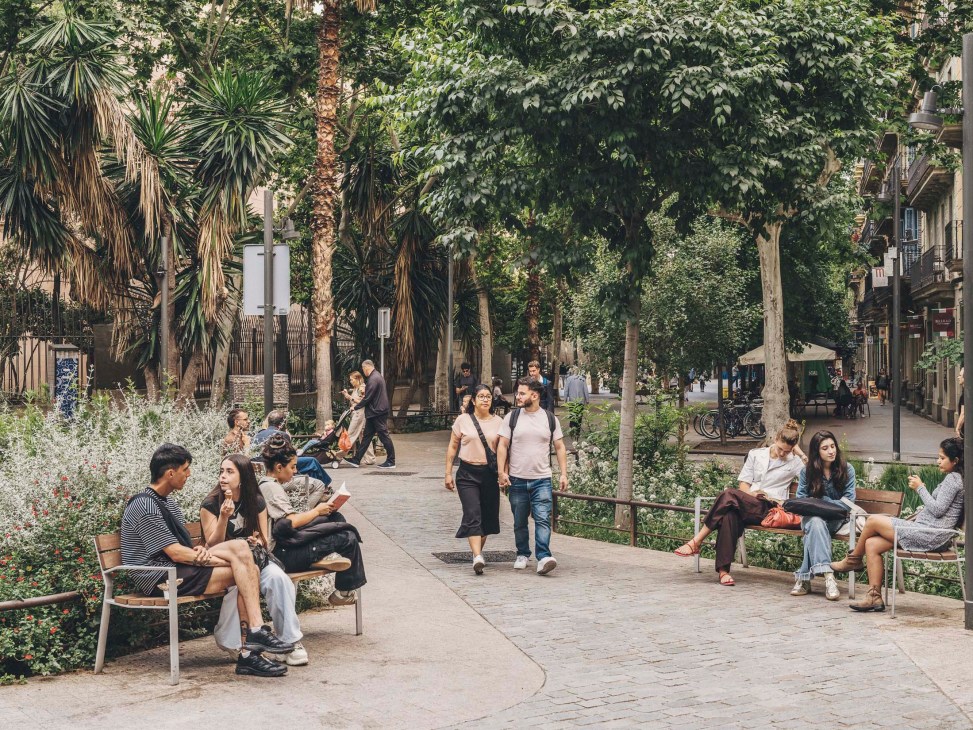
On a recent morning, the intersection of Girona and Consell de Cent streets, now a bustling square, was busy with people chatting on benches, tourists sipping coffee on the terrace of Bar Betlem and older folks pausing for respite from the sun under a plane tree. In Barcelona, life happens on the street. If you offer residents space to socialise, they’ll use it. The shift away from cars brought less visible but real benefits, including a 22 per cent reduction in co2 emissions, preventing hundreds of deaths each year. Small businesses on newly pedestrianised streets also had an increase in footfall as people chose to walk these greener, cooler, calmer routes. Bird life has benefited too. There are now more than 80 species nesting across city parks.
Alongside the broader Pla Natura scheme for planting is the new Parc de les Glòries, a 4.3-hectare green space with broad promenades and more than 9,000 sq m of vegetation. The redevelopment brought swaths of land into community use, planted more than 1,000 trees and stitched together a new green corridor in the heart of the city. But the strength of Barcelona’s approach is in smaller, more targeted solutions. Participatory digital tools for citizen feedback, such as Decidim, have helped residents to have a bigger voice in shaping their city. “Barcelona also shows how micro-greening solutions, such as pocket parks and green roofs, can offer access to nature even in compact areas,” says Amalia Calderón Argelich, a post-doctoral researcher at the Barcelona Lab for Urban Environmental Justice and Sustainability. “Inclusive design practices – such as improved lighting, accessibility and safe park layouts – are adaptable models for dense cities.”
Liveability is the aspiration but, as in many great cities, there is a tension between plans and outcomes. In the Poblenou neighbourhood, where the 22@ project transformed an industrial zone into a gleaming district of green avenues and modern infrastructure, property prices have soared by almost €3,000 per square metre in just 10 years. With this shift has come accusations of gentrification with the loss of the neighbourhood’s former identity and the displacement of its residents. “Though greening plans are ambitious, gaps persist,” says Calderón Argelich. Gentrification and “touristification” remain hot topics as every new park can trigger a rise in house prices. Without some protective policies and civic oversight, says Calderón Argelich, well-meaning projects risk undermining the equity that they aim to promote. “Resilience depends on protecting these frameworks from political volatility.”
1. Population: 1,600,000 (metro 5,300,000)
2. Total area of municipal green spaces: 2,784 hectares
3. Total reduction of carbon emissions due to the Superblocks programme: 22 per cent
4. Number of stations on Barcelona Metro: 165
5. Total distance of cycle lanes in city: 268km
3.
Athens
Best for nightlife
The Greek capital is never boring and one of Europe’s few truly 24-hour cities.
More than 15 years since a debilitating debt crisis, the Greek capital has become the discerning night owl’s stamping ground. The country’s economy grew by 2.3 per cent in 2024, which, while not exactly stratospheric, is enough to elicit envious glances from its Western and Northern European counterparts. Athenians now speak of those dark days of high inflation and unemployment as being in the past and, in hindsight at least, it seems that this ancient city was able to turn adversity into opportunity, kick-starting a cultural renaissance that has transformed abandoned spaces and post-industrial areas into some of Europe’s most exciting nightlife spots.
At 02.00 on a Friday night, people fill Menaichmou Street in the buzzy Neos Kosmos neighbourhood, glasses in hand. Their laughter and chatter compete with a wall of sound emanating from the street’s many establishments, including natural wine bar Epta Martyres and spritzeria Bar Amore. It’s the same story on Meandrou Street in Ilisia, where Junior Does Wine rubs shoulders with Quinn’s; and Vissis Street, once known only for its hardware shops, which is now home to cocktail hub Kennedy among other excellent bars. All typify the way that an infusion of young, creative people from across the globe has invigorated a once slightly sleepy and rundown city. “In the summer, everyone spills out onto the street,” says Eleni Georgiou, a young jewellery designer. “The atmosphere is lively yet laidback. It’s like the whole city becomes one big open-air gathering.”
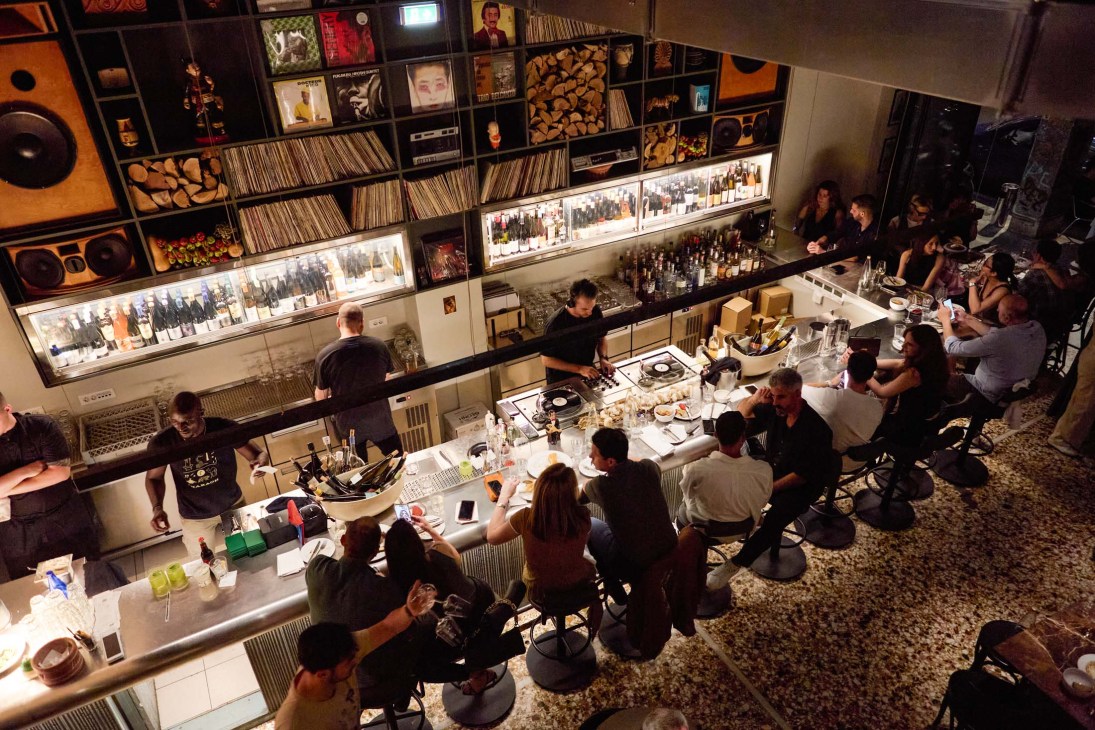
A relaxed attitude towards licensing laws might be assumed as a given in this part of the world but Athens’ laissez-faire approach is born more of political than geographical circumstances. After the fall of Greece’s military junta in 1974, a country that had been denied individual freedoms was fierce about protecting its hard-won rights.Twenty years later, in 1994, a stern-faced minister for public order, Stelios Papathemelis, introduced a law mandating nightclubs to close at 02.00 to rein-in a perceived air of permissiveness. Contravention of the “Papathemelis Law”, as it came to be known, became a badge of honour in Athens and today clubs, especially in areas such as Exarchia, stay open as long as there are people inside having fun.
A post-pandemic boom in tourism has transformed Athens from a stop-off en route to the islands into a destination city. In 2024, 7.9 million people visited the Greek capital, a 12 per cent increase on the year before. Many of these came to see the Acropolis but others were here to experience a place that is being explicitly marketed as a 24-hour city. The Athens Metro – which is being significantly expanded with the construction of the new Line 4 – runs from 05.00 until 02.00 on weekends. Anyone looking to travel between 02.00 and 05.00 will find that taxis are both cheap and plentiful.
Though an influx of affluent foreigners has led to a rise in prices, especially in the property market, Athens remains affordable compared to other European cities – a glass of wine costs, on average, less than €6. Starting a meal at 22.00 is not unusual for Greeks, especially during the hot summer months, and when you eat late, you drink, dance and go to bed late too. It’s not just the hardcore ravers who leave the clubs at 07.00 in July. Those coming out blinking into the dawn light might take a trip to Metaxourgeio for a restorative spanakopita (spinach pie) or gyro, while, for the more adventurous, there’s always the short metro ride to the beach.
Whereas many other cities, especially in Europe, have been on a trajectory of diminishing nightlife returns over the past 10 years, Athens is dancing to a different tune. As Nena Dimitriou, writer of the weekly “Café-Bar” nightlife column in the Athenian daily Kathimerini puts it, “No one is ever bored in Athens.”
1. Population: 643,452 (metro: 3,638,281)
2. Average price of an Aperol spritz: €7.50
3. Weekend opening times on the Metro: 05.00 – 02.00
4. Average closing time of bars: 02.26
5. Number of stops on the Athens Metro: 66
Click here to enjoy the full Monocle city guide to Athens
2.
Madrid
Best for health
A favourable work/life balance and delicious food are a winning formula in the Spanish capital.
On a sunny Friday morning in late May, Madrileños of all ages roam the counters at Mercado de la Paz, browsing fresh fish caught that morning, glowing red tomatoes and cheese from all four corners of the country. This Salamanca institution is one of dozens of mercados in the Spanish capital – food markets found in almost every neighbourhood that hint at why Madrid’s citizens are such a healthy bunch. The city has the highest life expectancy (86.1 years) of any metropolis in Europe.


These figures are down to a unique combination of assets – meteorological, economic and social. Excellent weather and food, strong intergenerational bonds and a natural gregariousness mean that residents work to live rather than live to work. “Socialising is very Madrileño,” Manuel Martínez-Sellés, the president of the city’s Official College of Physicians, tells Monocle. “Keeping physically and intellectually active benefits both the quantity and the quality of life.”
Then there’s the city’s excellent healthcare. Spain is renowned for its public hospitals, which combine the best in training with an almost unparalleled (in Europe, at least) system of data-gathering. As a result of decades of centre-right dominance, the Madrid region now has the highest private health-insurance coverage in Spain about 37.5 per cent. “Good public-private collaboration often allows for more efficient and decisive medicine,” says Martínez-Sellés. “In Madrid we have the best hospitals in Spain, 11 medical schools (more than many European countries), the nation’s leading biomedical research centres, strong and responsive primary care, shorter waiting lists for surgery than in other regions, very active prevention and early diagnosis programmes, and exemplary out-of-hospital emergency services.”
But Madrileños know that health is about more than medicine. Their wellbeing is rooted in socialising and outdoor activity, and this includes, for many, a regular glass of wine and slice of jamón ibérico. Walk Madrid’s plentiful plazas on any night of the week and you will see children kicking a ball around while the adults enjoy el paseo, the traditional twilight stroll, or knock back a crisp glass of beer. A quarter of Spaniards smoke and alcohol remains a part of daily life but an acceptance of the importance of these things at a social level is part of what makes the people of this city such an outgoing – and therefore longer-living – bunch.
Spanish urban planning has helped communities to flourish and loneliness is less common than elsewhere. “Healthy ageing is about enabling people to continue doing what they value as they grow older,” says Vânia de la Fuente-Núñez, a doctor, anthropologist and expert in ageing. “It shifts the focus away from simply having or not having a disease and instead looks at how well a person functions and feels in their environment.” De la Fuente-Núñez serves on the board of Grandes Amigos, a Madrid-based non-profit that promotes intergenerational relationships and addresses social isolation among older people. The organisation runs a volunteer network that promotes interaction between people of all ages and support for the elderly.
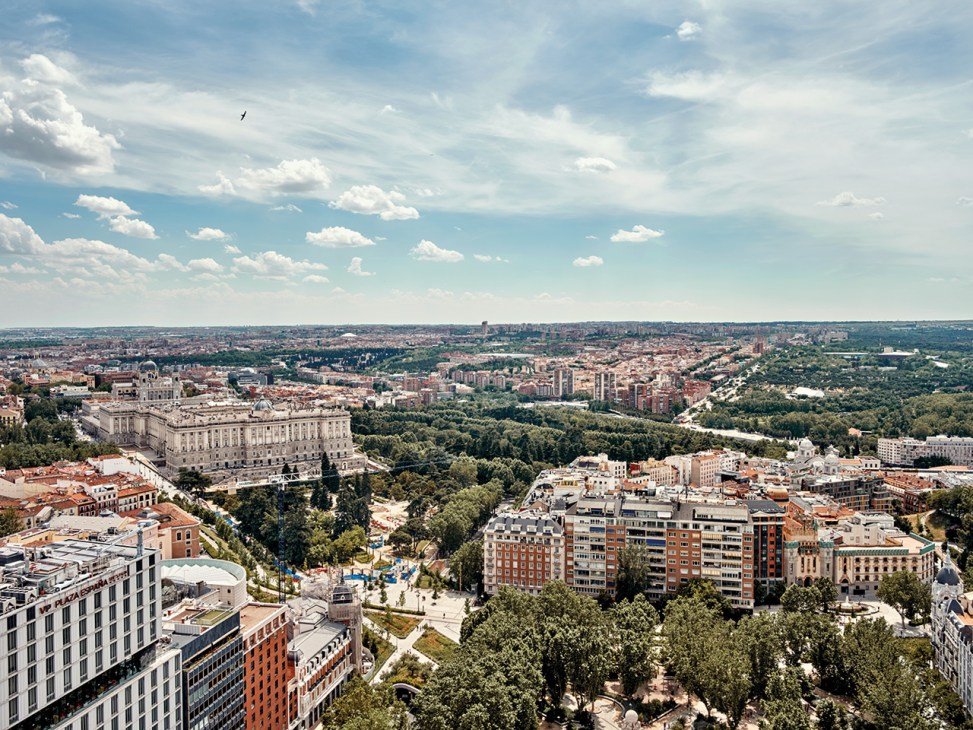

Of course, all of this jollity is more than helped by the weather. With as many as 3,000 hours of sunshine a year, Madrileños are often to be found exercising, jogging or cycling around the city’s 60 sq km of green space, swimming in one of its 25 public pools or playing tennis or padel at one of the 698 public courts. For less sporty residents, simply wandering the city’s streets on a sun-soaked evening is a life-enhancing, and possibly extending, experience.
1. Population: 3,460,491 (metro: 6,798,000)
2. Life expectancy: 86.1
3. Number of municipal food markets: 45
4. Number of medical schools: 11
5. Average retirement age: 65.5 (women), 64.7 (men)
1.
Paris
Best all-rounder
Our city of the year. The French capital’s strengths are multitude.
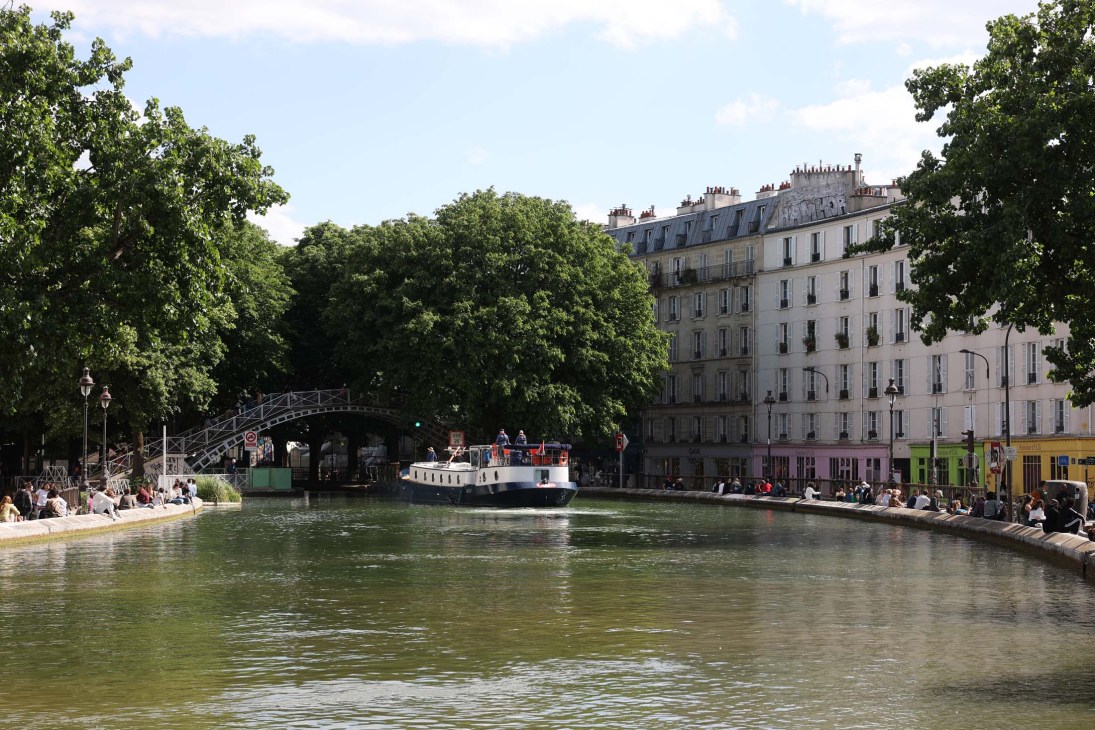
“I can honestly say that there’s no city in the world in which I would rather live,” says Charles-Antoine Depardon, an architect and advisor on urban development to Paris’s city council, as he strolls through the Tuileries on his way to work at the Hôtel de Ville. “It is an extraordinary cocktail.”
Depardon might be biased but on a spring morning, as the French capital’s avenues resound to the click-clack of hard leather shoes on spruce concrete, it’s hard to argue with him. Last year’s Olympics provided Paris with the platform to showcase its chic 21st-century self. The city delivered a rousing performance that also served as a fitting coda to a decade of revival under mayor Anne Hidalgo, whose ambitious (and, sometimes, controversial) urbanism interventions have made it cleaner, greener and safer, while maintaining and protecting the things that give it its inimitable charm. Paris in the 21st century looks a lot like it did in the 20th century but that’s a large part of the appeal. And today it is also a more international, outward-looking city than it has ever been.
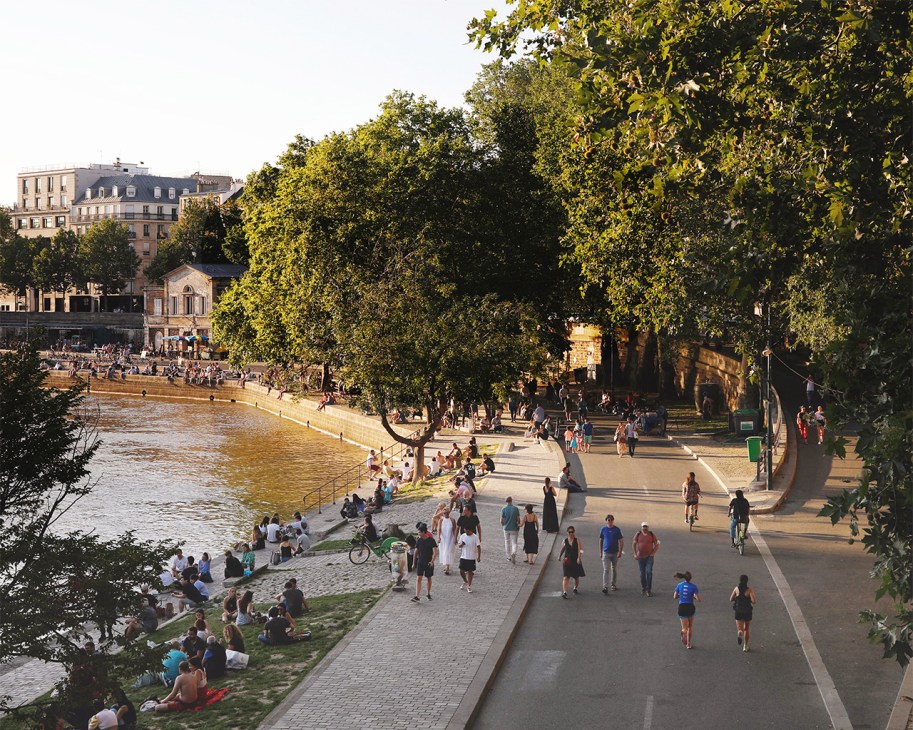
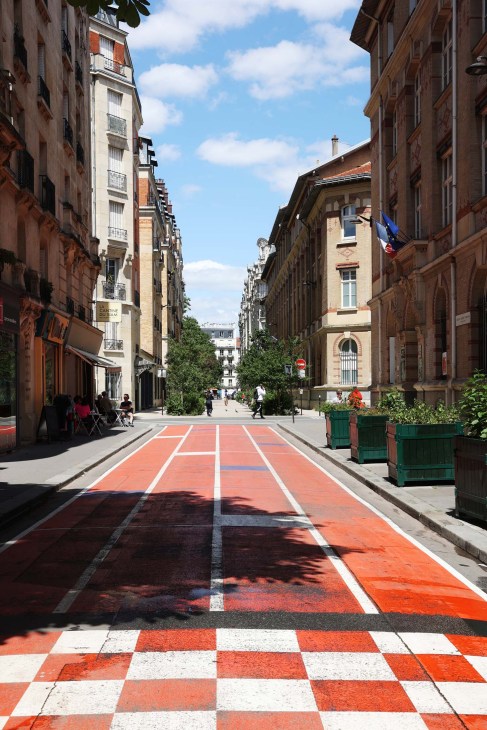
One of the most notable changes has been the huge expansion of the cycle-lane network, which led to bike usage doubling between 2023 and 2024, and the overhaul of the once-creaking Métro, the backbone of which is the speedy new Line 14. This takes passengers from Paris-Orly Airport in the south to the new Saint-Denis Pleyel station in the north in just 40 minutes.
Meanwhile, in its bid to become the greenest major city in Europe, Paris has embarked on a gargantuan effort to plant 170,000 trees by 2026. At the time of writing, more than 120,000 are in the ground, many of which will be used to cultivate new urban forests, such as the one inaugurated in June 2024 at the Place de Catalogne. “Paris is a far more pleasant place to live today,” says Lindsey Tramuta, a journalist who hosts a podcast called The New Paris and has called the 11th arrondissement home for 19 years. “It was always a beautiful city to walk in but that’s even more the case now.”
When Baron Haussmann reimagined Paris in the 19th century, he made its streets more spacious and airy, and therefore less susceptible to disease and crime. Today there remains a steadfast commitment to prioritising quality over quantity when it comes to designing the urban environment. The draw of the city’s cultural behemoths – such as the recently renovated Tadao Ando-designed Bourse de Commerce – remains world-beating, as does its retail prowess.
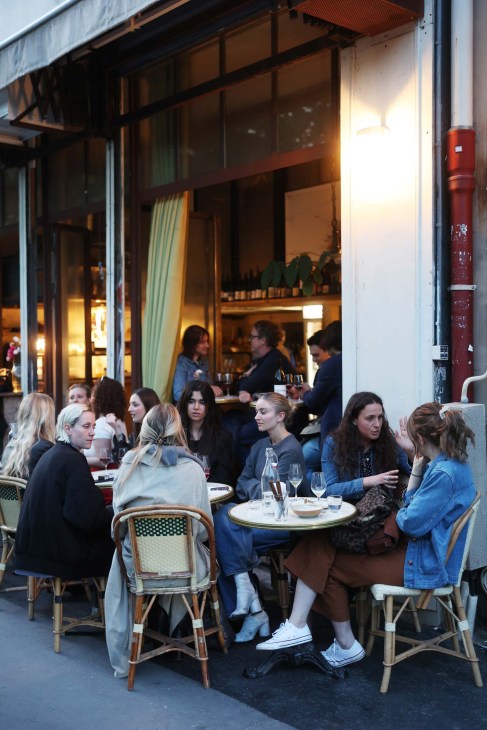
All of this, combined with the policies of the country’s most pro-business president in a long time, has helped Paris to draw and foster enough talent to snatch London’s double crown as Europe’s top venture-capital city and its leading technology hub. “Paris lends itself far more to an office-based culture than cities such as San Francisco or London,” says Jordane Giuly, the founder of fintech company Defacto. He points out that the French capital’s gentle density is conducive to cross-pollination between start-ups and preferable to the vast distances that one needs to traverse in its rivals.
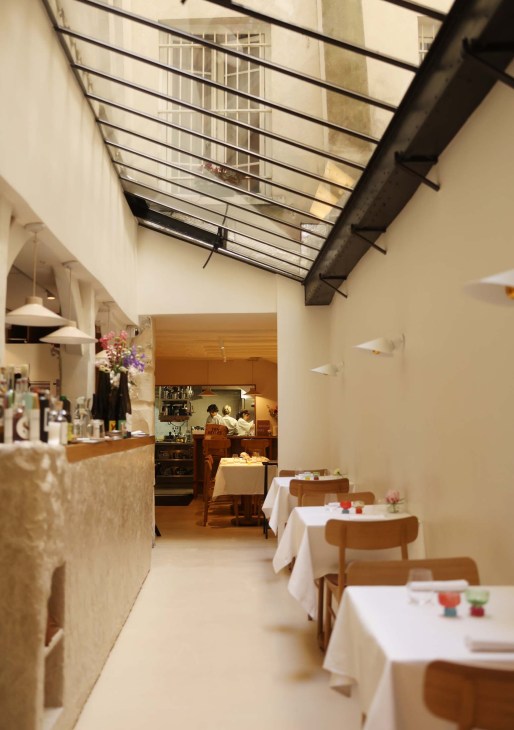
That said, even with the recent business boom, property prices in Paris have fallen over the past two years. Though some areas remain pricey, the city has largely kept its soul, in large part due to housing policies that have helped to keep low-income residents and their businesses in the heart of the city. More than a quarter of Paris’s inhabitants live in social housing, while small businesses, such as neighbourhood butchers and the city’s famous independent bookshops, have benefited from measures protecting their existence. This idea of mixité sociale (socially and economically diverse districts) has also helped to inject new life and dynamism into a gastronomic scene that had begun to feel threatened by rivals – and now some waiters, like many of the new business owners, are even happy to speak English. C’est la vie!
1. Population: 2,048,472 (metro: 12,271,794)
2. Average working week: 35 hours (mandated by French law)
3. Number of Michelin-starred restaurants: 123
4. Cycle lanes: more than 1,000km
5. Number of museums within city limits: 136
Click here to enjoy the full Monocle city guide to Paris