Issues
Danish textile brand Tekla’s new London store boasts beautiful Scandi-British fusion
Danish textile brand Tekla’s first venture beyond its homeland is a handsome template for international expansion. In Marylebone High Street (close to Monocle’s Midori House), the new shop invites customers to explore tactile cushions, crisp organic-cotton bed sheets and terry-towel bathrobes. “On the pragmatic side, London is an important market for us and has been for many years,” says co-founder Kristoffer Juhl. “Then there’s the more inspiring side, which is the cultural importance of the city.”
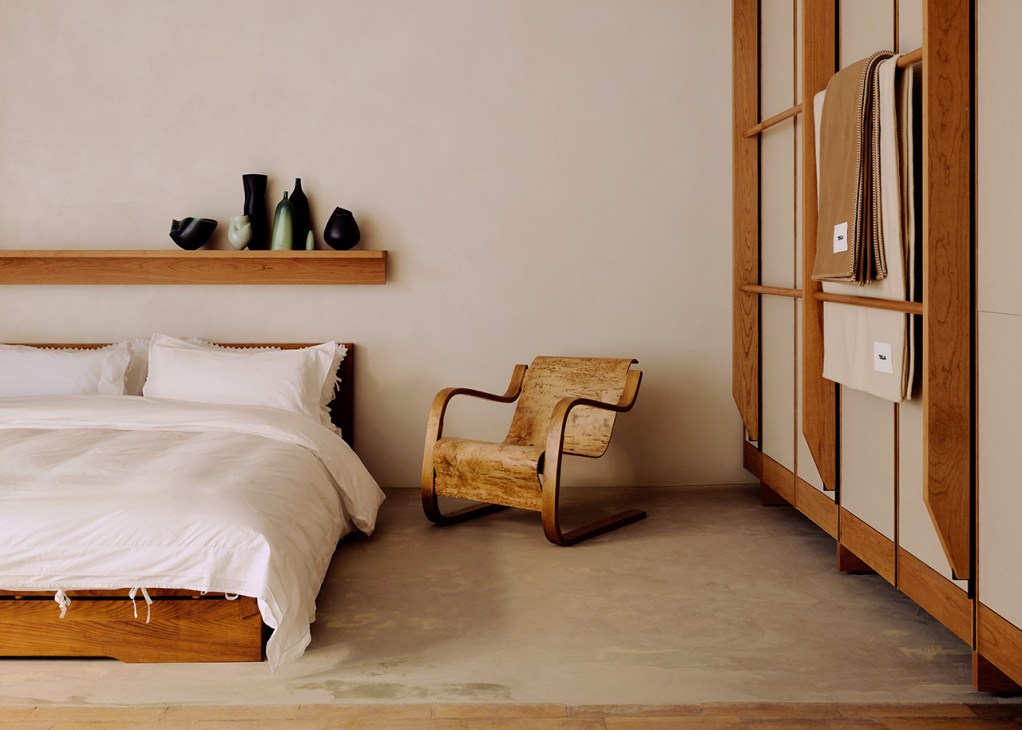
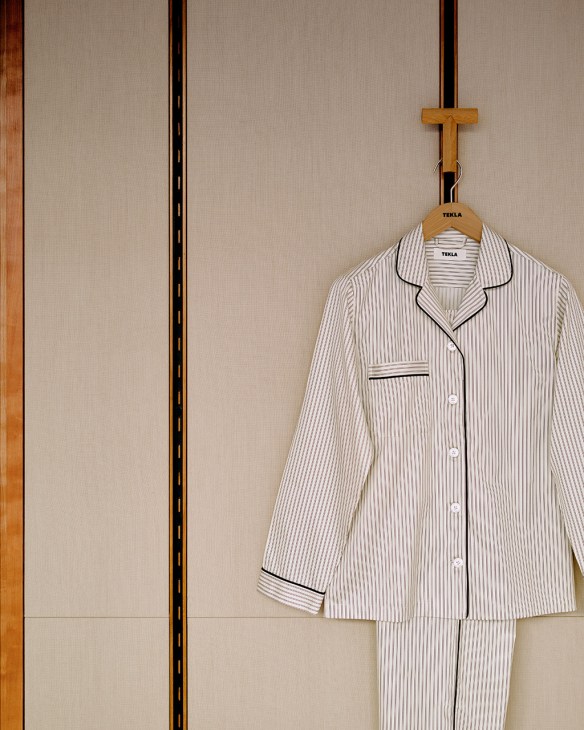
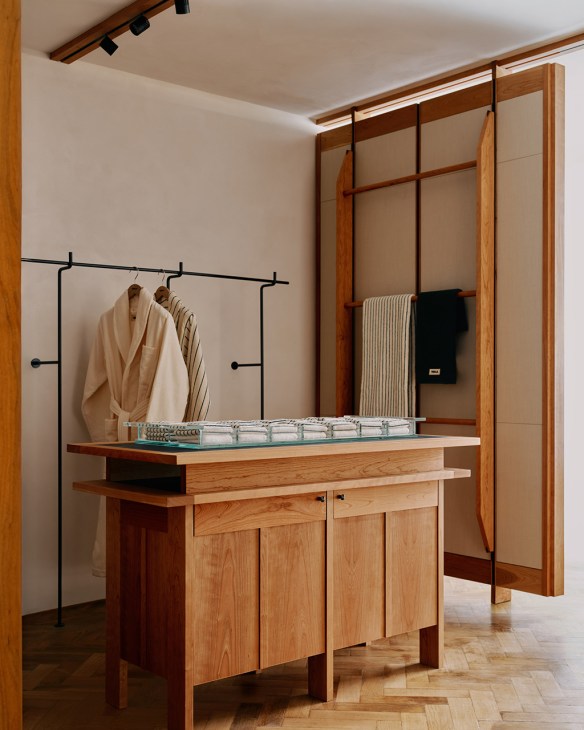
For the shop’s interiors, Tekla tapped the Copenhagen-based architecture firm Mentze Ottenstein to combine Danish aesthetics with British craft. The result is a wood-panelled space with herringbone oak parquet and pared-back storage systems inspired by Victorian cabinetry. “We sought inspiration in historic homes, in particular Kettle’s Yard in Cambridge,” says Alexander Vedel Ottenstein, co-founder of Mentze Ottenstein. The shop also needed to provide a clean slate to stage future releases. “Our main assignment was to make the products come to life,” he says. “So we kept it simple.”
teklafabrics.com
This article is from Monocle’s March issue, The Monocle 100, which features our editors’ favourite 100 figures, destinations, objects and ideas.
Read the rest of the issue here.
How ‘Articles of Interest’ became a go-to podcast for fashion history
The fashion industry moves at a relentless pace that doesn’t always allow for deeper analysis, especially when the immediate focus is on new collections or commercial appeal. But for those seeking a more insightful, research-driven take on the history of fashion – or the current sociopolitical consequences of the industry – Avery Trufelman’s podcast Articles of Interest guides its listeners down rabbit holes as varied as clerical vestments, chromophobia and the rise of outdoor apparel in everyday environments.
“I work on longer timelines,” the New York-based Trufelman tells Monocle. “I’m not really into fashion, I’m mostly confused by it.” What began as a spin-off of popular design podcast 99% Invisible in 2016, Articles of Interest is now, a decade on, an important resource for fashion journalism. One episode might be years in the making. Often a single conversation will spark an idea. “I’m always collecting tape,” she adds. “I reach out to designers, visit exhibitions. When you talk to people working in the industry – the pattern makers, the designers – everyone is fascinating.”

It’s an investigative approach to storytelling that is rigorous, often delving into the intricacies of a production chain or the sociological issues that arise with a given topic. For example, Trufelman opined that French president Emmanuel Macron’s unexpected outing in mirrored sunglasses in Davos recently could be read as the deployment of an “involvement shield” – a concept that was coined by sociologist Erving Goffman in 1963. It describes behaviours (such as wearing a cap or listening to music) that help to ward off unwanted interactions. “Sunglasses were developed as a type of protection shield from each other with the rise of the city and the urban environment,” she says. Or maybe, as Macron himself insisted, he had a harmless eye infection.
Whatever the truth behind the shades, Trufelman’s investigations always make for a great yarn. Going beyond surface-level questions of aesthetics, Trufelman provides a form of education that is accessible to a wider audience and not driven by any commercial agenda. “A given theme always emerges from a real, genuine question,” she says with a smile.
Listen to an episode:
This article is from Monocle’s March issue, The Monocle 100, which features our editors’ favourite 100 figures, destinations, objects and ideas.
Read the rest of the issue here.
Asics reinforces luxury strategy with expansion of Onitsuka Tiger in Japan
Tottori, one of Japan’s least populated prefectures, has several claims to fame – a 16km stretch of sand dunes among them – but most importantly, perhaps, it’s the birthplace of Kihachiro Onitsuka, the founder of sportswear giant Asics. Now, in a full-circle moment, the company has put the spotlight on this quiet corner of the country, reinventing a shoe-making facility as the Onitsuka Innovative Factory (OIF), the first dedicated production base for the label’s fashion brand Onitsuka Tiger.
At OIF, the “mother factory”, about 160 people will produce 280,000 pairs of shoes a year, broadcasting Onitsuka Tiger’s techniques to the world, and provide training and technical support for the label’s overseas manufacturing sites. “Craftsmanship is something that can’t be replaced by AI or fully conveyed through data,” says Ryoji Shoda, Onitsuka Tiger’s global head. “At this factory, skills and sensibilities are passed from person to person, from hand to hand, and from one generation to the next.”
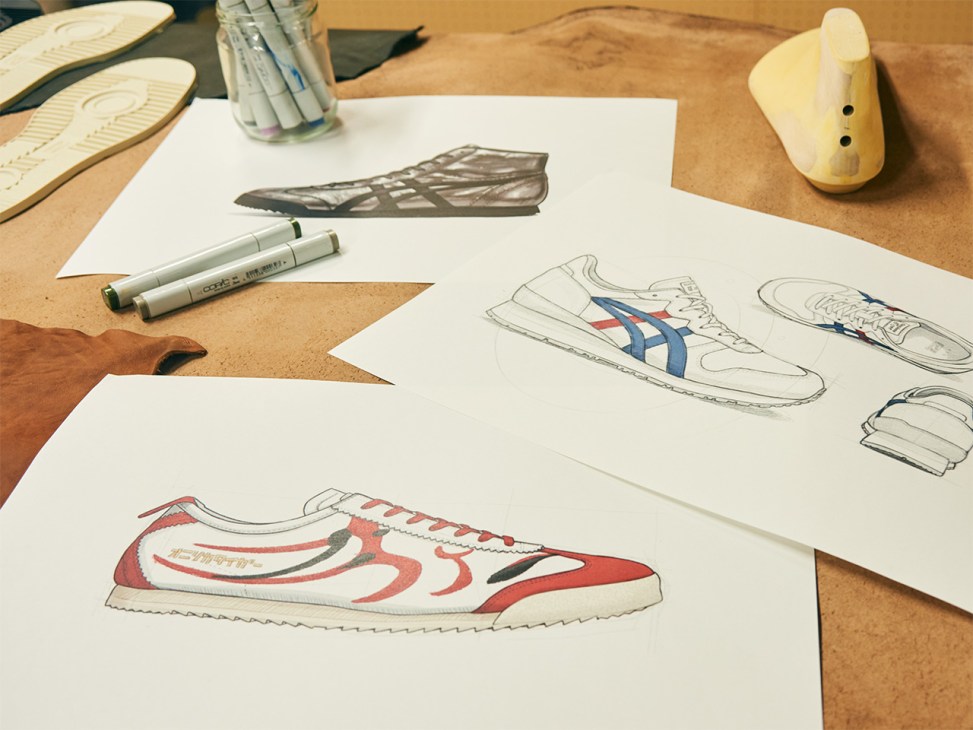
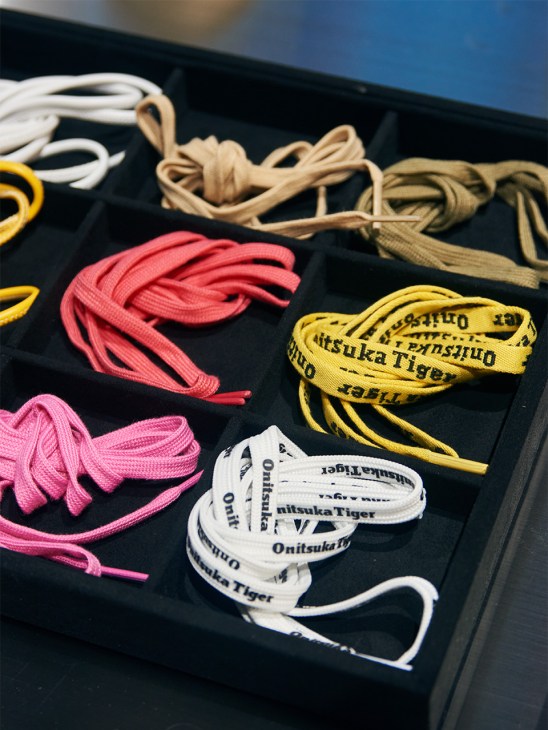
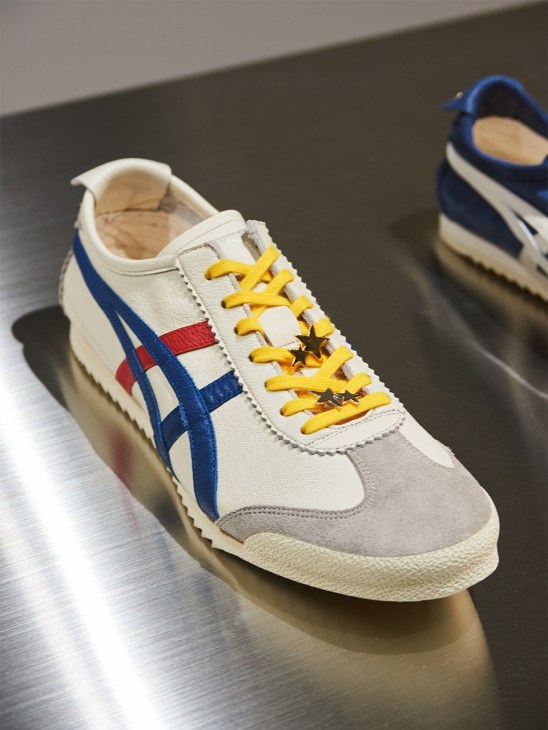
The company, which was founded as Onitsuka in 1949, hit its stride with basketball and running shoes in the 1950s and became Asics (Anima Sana In Corpore Sano, or A Sound Mind in A Sound Body) in 1977. The Onitsuka Tiger name was revived in 2002, with the reissue of classic styles such as the Mexico 66, Ultimate 81 and Nippon 60. The Mexico 66 reboot was propelled by Uma Thurman wearing a pair in Quentin Tarantino’s 2003 film Kill Bill. Sales of Onitsuka Tiger shoes haven’t stopped since and were projected to reach ¥120bn (€653.5m) in 2025, an impressive increase from ¥45.6bn in 2019.
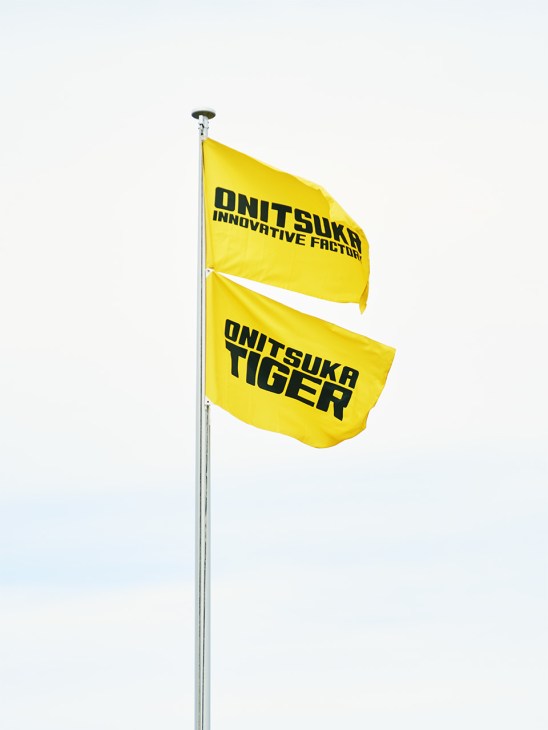
The building’s bright yellow and black exterior is unmissable, while the new facility covers the full span of production, from design and manufacture to a gallery and shop, which will offer the world’s only custom-order Onitsuka Tiger shoes.
A tour of the pristine factory reveals Onitsuka’s exceptional manufacturing. Over in the “crafted processing building”, shoes are being washed and hand scrunched to give the leather a pleasingly irregular texture. “We don’t place priority on mass production,” says Shoda. “This facility possesses a high level of hand-finished craftsmanship that can’t be achieved at overseas factories or at other domestic sites, particularly in secondary processes such as washing, bleaching and foil stamping.”
Close to the factory floor there is a display of vintage models and shoes that Onitsuka has made with luxury brands, such as Versace and Givenchy. Shoda is adamant that it won’t pair up with just anyone. “Our collaborations are guided not by sales but by a shared pursuit of brand value,” he says. “Each partner is chosen with care and discernment and this thoughtful approach won’t change.”
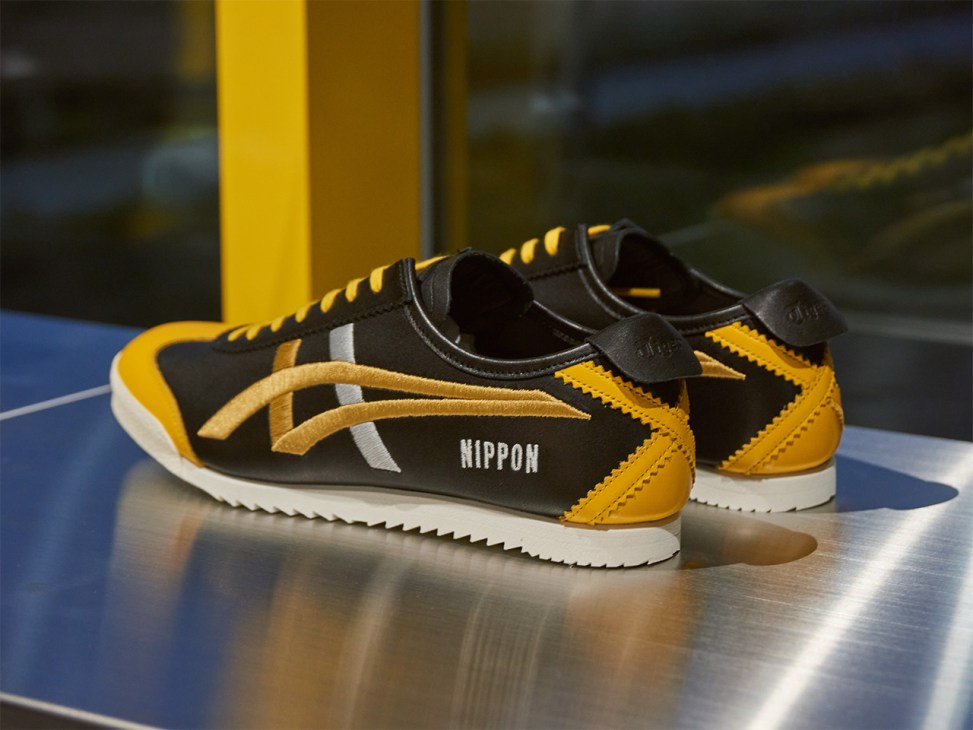
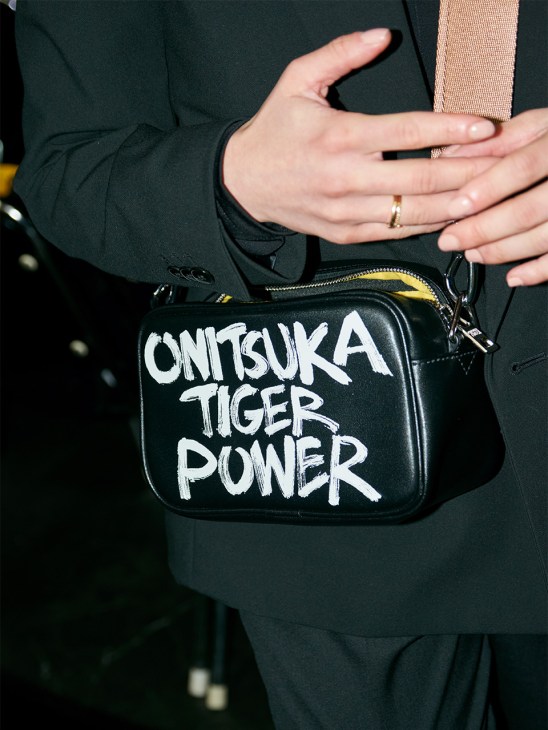
Shoda is reshaping Onitsuka Tiger as a luxury label whose reach will go beyond apparel. “We aim to create experiences that allow people to feel the brand not only through what they wear but through all five senses.” Four Onitsuka Tiger fragrances, devised by Mark Buxton, launched last year, and a Ristorante Onitsuka Tiger concept, conceived by acclaimed chef Yoji Tokuyoshi, is scheduled to open in the Milan shop this September. A flagship opened on Paris’s Champs-Élysées last year.
The ambition is for OIF to boost the local economy through employment and training, as well as bringing tourists to the region. “As a Japanese brand, it’s important for Onitsuka Tiger to have a dedicated factory in Japan,” he says. “It enables the exquisite craftsmanship and the refined, understated sense of beauty inherent in Japanese culture to be reflected in every product.”
onitsukatiger.com
This article is from Monocle’s March issue, The Monocle 100, which features our editors’ favourite 100 figures, destinations, objects and ideas.
Read the rest of the issue here.
How curator Olivier Gabet brought fashion back into focus at the Louvre
When Olivier Gabet staged Louvre Couture in 2025 – the museum’s first fashion-led exhibition in its 230-year history – the curator ushered in new possibilities for the venerable institution. “Fashion is part of artistic creation,” he tells Monocle. “It’s a form of expression in the pursuit of beauty, just like art.”
That said, it has long been absent from the museum’s concerns. “Fashion has never been within the Louvre’s remit but, at the same time, fashion is central to the Louvre,” says Gabet, who is director of the department of decorative arts. “It’s a place of inspiration for many creators, including fashion designers.”
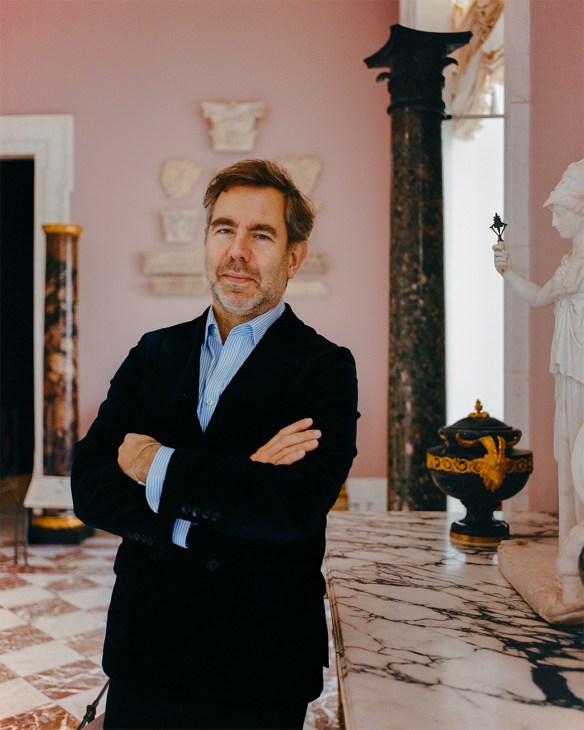
In the hierarchical world of art history, where art forms and even types of paintings are traditionally ranked in order of importance (a portrait, for example, trumps a landscape), such a statement is revolutionary. “This hierarchy is still powerful in museums, though it is being upturned by the demands of the public,” says Gabet. “Fashion is everywhere and therefore more accessible, especially in a city like Paris. This creates an affinity for visitors who come to a fashion exhibition but otherwise wouldn’t necessarily feel welcome in a museum.”
Though the Louvre only offers general-entry tickets, Louvre Couture is estimated to have drawn in more than a million visitors over a seven-month period. Now the exhibition is on show at the Museum of Fine Arts in Houston.
As a curator, Gabet demonstrates an ability to use fashion to draw connections with other forms of art and paint a broader picture by bringing in a wider context of history, literature and architecture. Before joining the Louvre, Gabet was director of Paris’s Musée des Arts Décoratifs, where he staged numerous exhibitions, including Christian Dior: Designer of Dreams in 2017 and Cartier and the Islamic Arts in 2021. A knack in creating conversations about historical topics in a contemporary context makes Gabet a curatorial force, as well as a champion of fashion’s place in museums.
As for what’s next, he hints that he has several ideas for exhibitions but finding the right moment is crucial. “There is no obligation to create a fashion-led exhibition every year and any future project needs to be fine-tuned to the Louvre’s collection, which is one of the most fabulous of its kind in the world,” he adds. “There’s a lot of negative talk about the Louvre since [the robbery that took place last] October but it remains the greatest – and most visited – museum worldwide. It’s a permanent source of inspiration.”
This article is from Monocle’s March issue, The Monocle 100, which features our editors’ favourite 100 figures, destinations, objects and ideas.
Read the rest of the issue here.
How 1842 port house Niepoort made a successful pivot into table wine
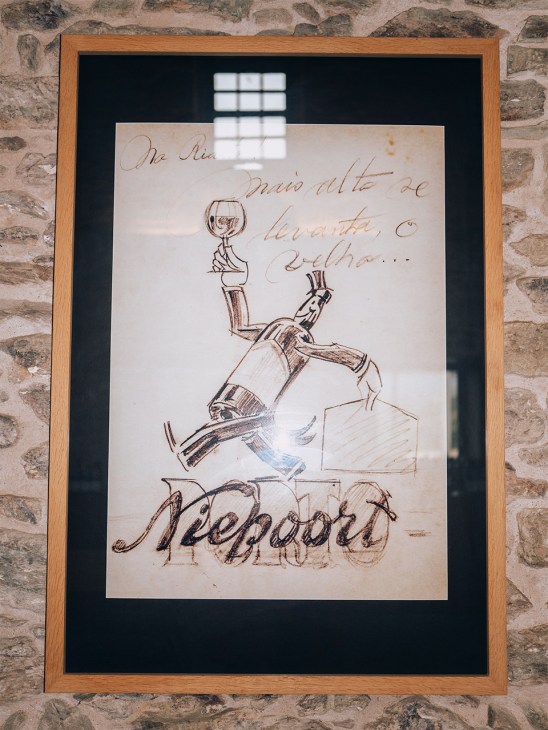
The Niepoort family, originally from the Netherlands, occupies a unique place in the world of Portuguese wine. Their brand carries the hefty weight of tradition, particularly in port, which the company has sold since 1842, but it also has a long tradition of experimentation that has quietly kept the business not only relevant but also exciting for almost two centuries.
One turning point came in the late 1980s when, under the leadership of Dirk Niepoort, the family’s irreverent fifth-generation owner, the company acquired its first estate: until then, it had bought grapes from others. It then ventured away from fortified wines to unfortified ones. The shift transformed the brand’s trajectory – today about 70 per cent of its production is table wine – and helped to reposition the Douro region as a place capable of much more than the sweet stuff. “Moving into table wine wasn’t contradictory; it actually helped our port production,” says Daniel Niepoort, Dirk’s son, who now helms the oenology side of the business. “Not many people realise how much time it takes to make port – we’re talking 20 or 30 years.”


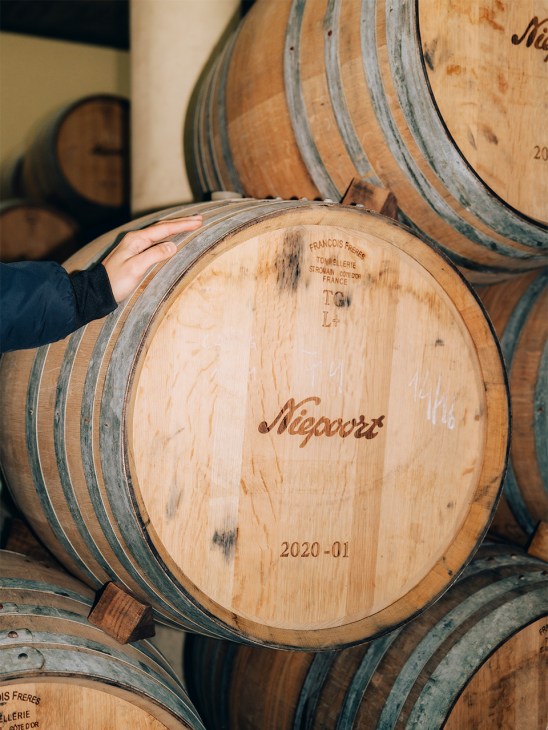
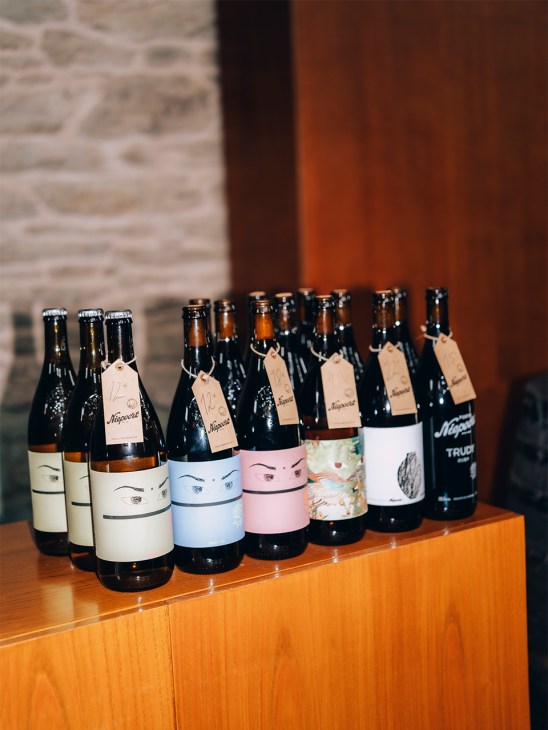
Since then, the company has grown, acquiring more land throughout Portugal and beyond, with fresh, low-alcohol and reasonably priced vintages released alongside its renowned and robust ports. Though Niepoort continues to be one of the staunchest champions of winemaking in the Douro, it hasn’t stopped dabbling in seemingly discrete worlds, from a fledgling tea business to kombucha. “If you stick to one thing, it’s easy to get blinded,” says Daniel with a smile. “It’s fun to try new things.”
niepoort.pt
This article is from Monocle’s March issue, The Monocle 100, which features our editors’ favourite 100 figures, destinations, objects and ideas.
Read the rest of the issue here.
Keeping it cool: Seasonal styling for a smooth transition
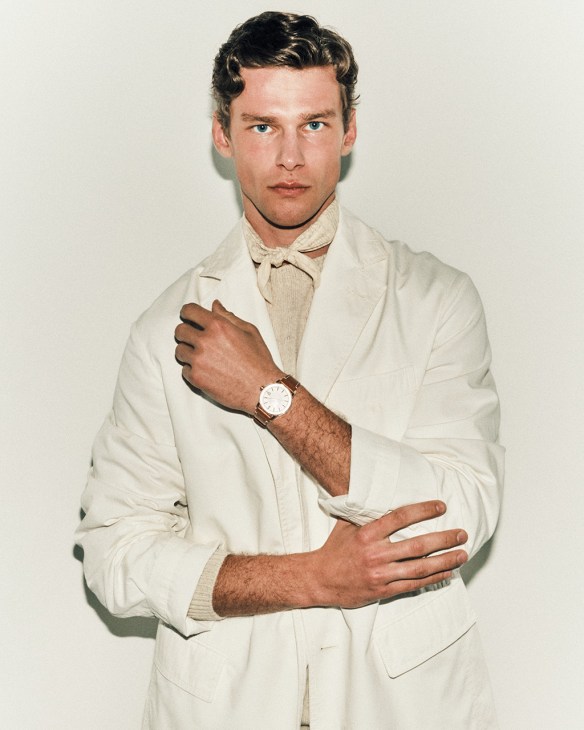
Watch by Audemars Piguet
This self-winding timepiece comes with a sleek, silver-toned dial and cognac-hued leather strap. Understated and functional, this watch is a calm, confident design statement.
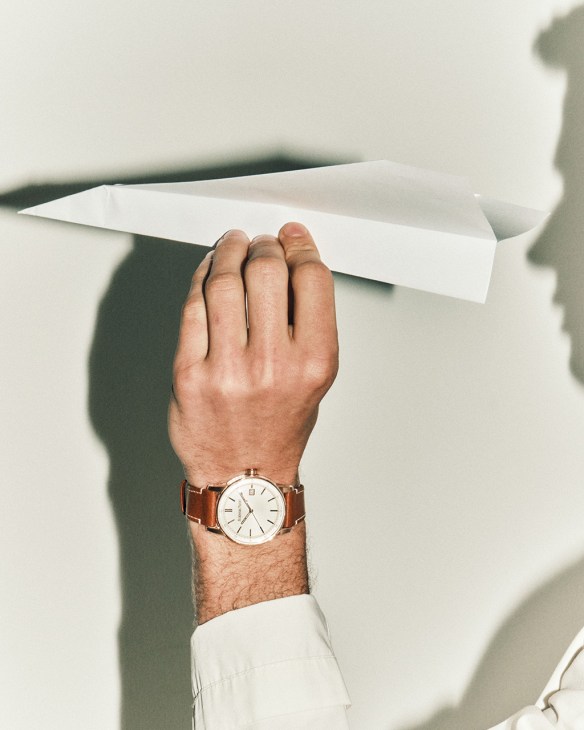
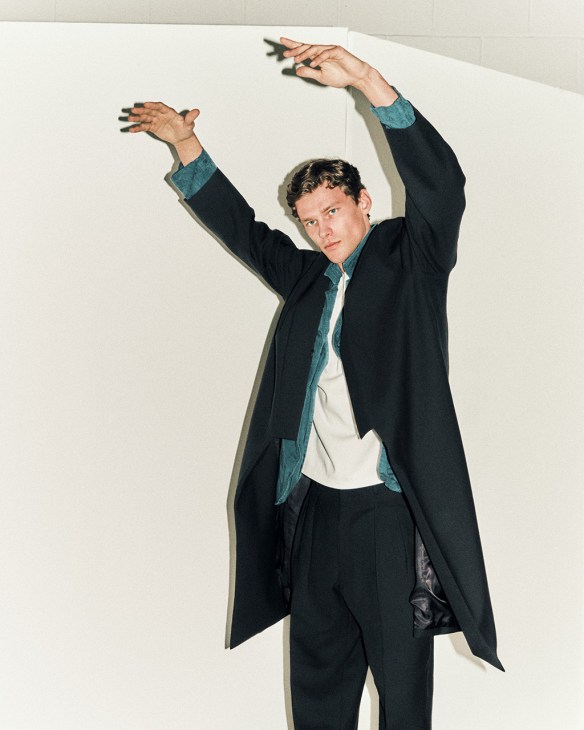
Coat by Rainmaker
Japanese designer Kohichi Watanabe’s label Rainmaker creates impeccably cut menswear for the daily commute. His take on a wool coat is our top pick for a spring layer.
Umbrella by Church’s
Spring showers call for a trusty umbrella. We like this tartan number by Church’s, which has a whangee bamboo cane handle.

Knitted tie by Cinabre
As we welcome the return of a formal approach to dressing for work, a tie is the ultimate accessory to signal a willingness to get down to business. Knitted in Germany on looms using techniques that date back hundreds of years, this silk version by Parisian label Cinabre comes out on top.

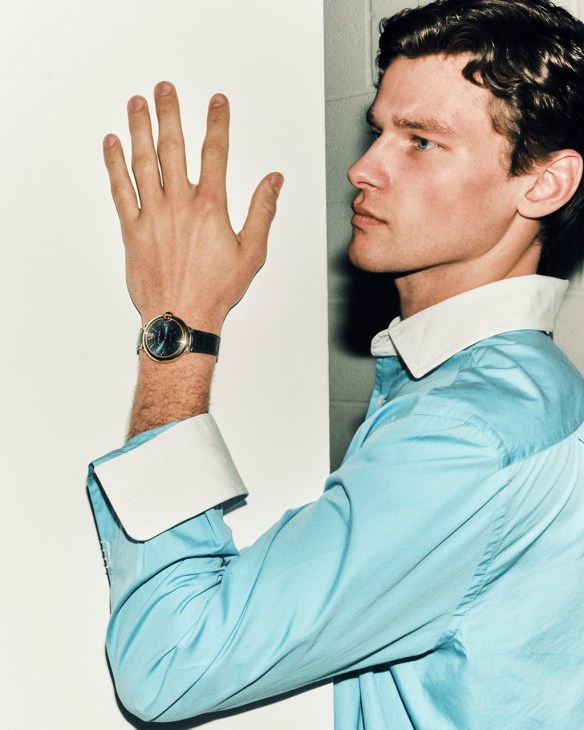
Watch by Cartier
The round curves of Ballon Bleu by Cartier make timekeeping a pleasure. It features a deep-blue dial and a crown adorned with cabochon sapphire, which is offset by a yellow-gold case.
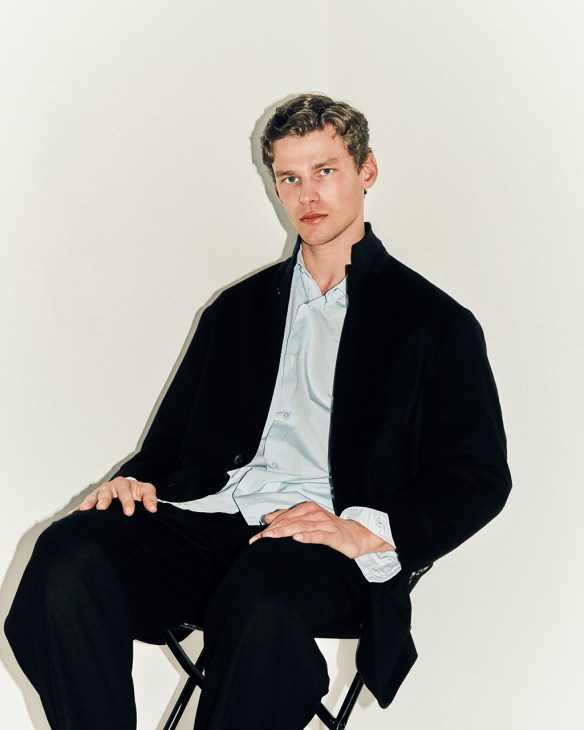
Suede jacket by Auralee
Auralee is the Japanese brand gaining a following with fashion insiders who appreciate simple cuts, high-quality materials and carefully selected colours. This suede blouson is a case in point: made from thinned lamb hide, its shape combines softness with just the right amount of structure.

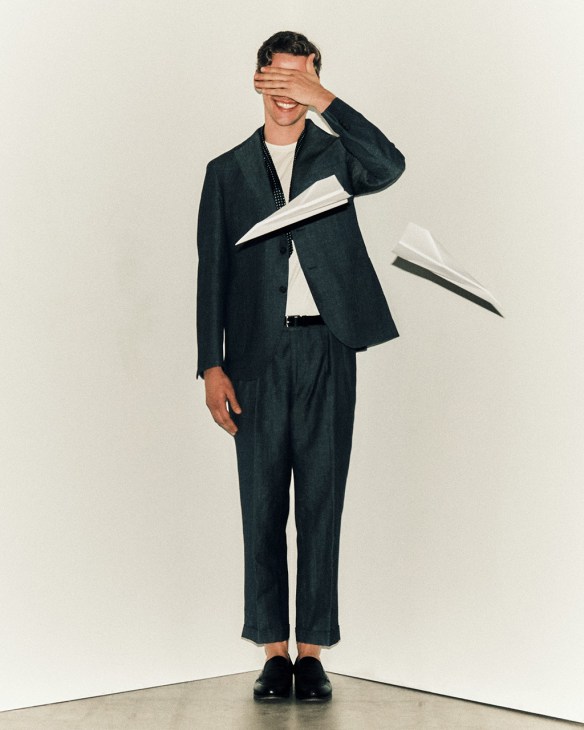
Suit by The Workers Club
Investing in a smart suit can help you to elegantly breeze through your day, from breakfast meetings to after-work drinks. We recommend this smart set by UK brand The Workers Club.
Sunglasses by Dunhill
These round-frame sunglasses are engineered in Japan using a dark-brown acetate with a smart hobnail motif, a Dunhill signature. We’ll keep these on hand for when the sun is at its zenith.

Stylist: Kyoto Tamoto
Hair & Make-up: Hiroki Kojima
Model: Jan Willem Loer
Set build: Robin Shepherd
This article is from Monocle’s March issue, The Monocle 100, which features our editors’ favourite 100 figures, destinations, objects and ideas.
Read the rest of the issue here.
The most beautiful condiments to line your kitchen cupboards (and stomach)
1.
Maggi Würze
Switzerland
Founded by Swiss entrepreneur Julius Maggi in the late 19th century, the Maggi brand has long been enhancing stews, soups, curries, casseroles and more with its flavoursome seasoning. Made using wheat protein, the umami-rich vegetable reduction is sold in 113 countries and is also available as a powder or a cube.
maggi.co.uk
2.
Chimac Kimchi Ketchup
Dublin
Spice up your burger and fries with this Korean-inspired kimchi ketchup from Chimac, founded by Irish restaurateurs and condiment makers Sofie Rooney and Garret FitzGerald. An honourable mention goes to fellow Dublin foodsters White Mausu’s Peanut Rayu – a moreish chilli oil with peanuts and sesame.
chimac.ie, whitemausu.com
3.
Kalles
Sweden
This beloved fish-roe paste has been packaged in the same toothpastelike tube since 1954. A staple in Sweden, it’s excellent on eggs and in sandwiches. There’s nothing fishy about this strong projection of Swedish culinary sensibilities.
kalles.se
4.
Glug Extra Virgin Fresh Olive Oil
Jaén, Spain
Made from peppery Andalusian picual olives, Glug is a bold, bright and gratifying olive oil for cooking or drizzling. Plus, the fun squeezy bottle beats conventional screw caps when it comes to avoiding messy olive oil residues.
getglug.com
5.
Moutarde de Meaux Pommery
Meaux, France
Locals will tell you that Meaux, not Dijon, has been the epicentre of grainy French-mustard making since the 18th century. The Pommery’s vinegary, coarse version goes well with roasted meats, charcuterie and vinaigrettes. The stoneware jar keeps the mustard from drying out and makes for a rustic addition to the kitchen cupboard.
moutarde-de-meaux.com
The man who remixed Japan: How M-Flo rapper Verbal went from the Tokyo club scene to global CEO
Multi-hyphenates rarely achieve equal success across their different ventures. But not so for Verbal, a Tokyo-based rapper, music producer, saké promoter and fashion CEO who has worked with the likes of Nike, Off-White and Louis Vuitton and helped to disrupt Japanese pop music’s rigid conventions.
To get a sense of his signature sound, listen to “Eko Eko”, a song released in June 2025 by his group, M-Flo. The track features Verbal and his groupmate, Taku Takahashi, alongside South Korean hip-hop artist Zico and Japanese vocalist Eill. They vocalise over a galloping beat, plaintive synths and guitar chords, switching between Japanese, Korean and English lyrics.
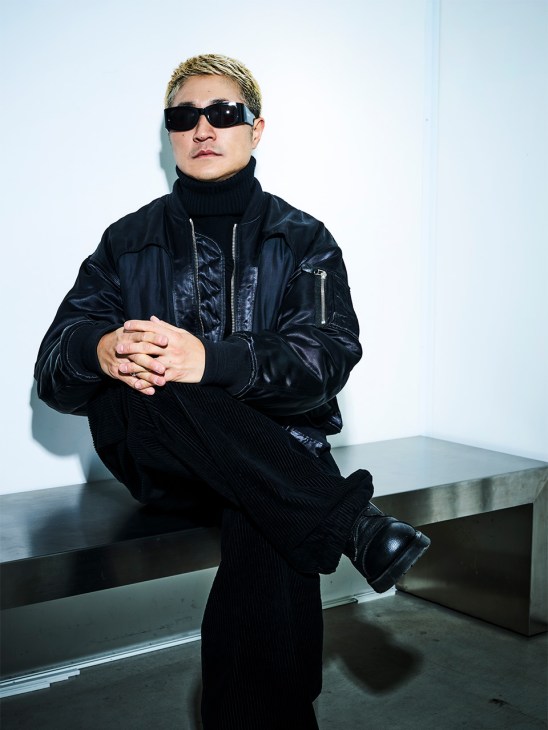
The track – which features on the group’s 10th album, Superliminal – is typical of Verbal’s output. Genre-bending and language-crossing, it straddles cultures and musical styles. It is J-pop, K-pop, hip-hop, R&B and electronic dance music all in one. Verbal has been at it since 1999, when he and his M-Flo bandmates, Takahashi and singer Lisa, released “Been So Long”, a song that fused R&B-style vocals, rap and electronic beats with Japanese and English lyrics. “In the late 1990s in Japan, hip-hop was hip-hop, R&B was R&B and rock was rock – you couldn’t leave your territory,” says Verbal. “We weren’t abiding by any of those rules. We didn’t even know that there were rules.”
In addition to being a member of M-Flo, Verbal and other Japanese rappers and DJs formed the Teriyaki Boyz in the early 2000s, collaborating with talents such as Daft Punk, Pharrell Williams, Busta Rhymes and Kanye West. Even now, the hybrid sound that Verbal and his cohorts pioneered permeates the tunes of younger J-pop and K-pop musicians. And that’s only a fraction of Verbal’s recent creative output.
When not in the studio, Verbal heads streetwear-inspired brand Ambush, which he co-founded with his partner, Yoon Ahn, the company’s creative director. What started in 2008 as a pop-art jewellery project has become a clothing, bag and accessories brand with five shops in Tokyo and Osaka. At the brand’s Shibuya office mood boards and racks of clothing samples crowd one room. Verbal shows us around, wearing a black Ambush MA-1 bomber jacket and matching turtleneck sweater with a prototype diamond-encrusted chainlink ring on his finger. He describes how he likes to obsess over details, whether it be for new Ambush releases or planning his upcoming music shows in Tokyo.
Ambush took its first collection to Paris in 2015 and held its first runway show at Milan Fashion Week in 2022. It has collaborated with labels such as Nike, Uniqlo, Bulgari, Moët & Chandon and Undercover, and, in early 2020, it became part of the Milan-based New Guards Group, an early investor in Off-White. “We decided that we needed a global expansion partner that could help us with the retail and wholesale strategy,” says Verbal.

Last year, amid restructurings at New Guards and its owner, Farfetch, Verbal and Ahn took back control of Ambush in a management buyout. Verbal describes the five years under New Guards as “a crash course in business, legal and finance”. He and Ahn also clarified their roles under the ownership, with Ahn serving as designer and Verbal in charge of the nuts and bolts. This includes looking at materials and liaising with factories and collaborators, while keeping an eye on trends. “As a brand, we feel so much stronger now,” he says.
You would think that Verbal would be too busy to juggle more but in 2025 he launched Sōmatō, his small-batch saké brand. Verbal came across Takahashi Shuzo, a 141-year-old brewery in Misato, Akita prefecture, while helping an overseas fund look for distressed assets in Japan to invest in. After hearing from the brewery that it wanted to stay independent, he suggested the new saké brand, which it now produces for. “This is how you should talk to artisans around Japan: ‘We want to retain your legacy but also energise it,’” he says. “The mayor [of Misato] thanked us for bringing new life to the brewery.”
The saké project isn’t out of character for Verbal. A third-generation South Korean who was born and raised in Japan, he is a product of Tokyo’s international schools; he is fluent in English and Japanese, as well as in the musical language of US hip-hop and R&B. His ventures tend to draw on his unique status as an insider whose background means that he understands Japanese culture but isn’t constrained by it. “I think of myself as a cultural translator,” he says.
1999: M-Flo releases seminal track “Been So Long”
2008: Verbal and his wife, Yoon Ahn, launch design project Ambush
2015: Ambush shows a collection in Paris for the first time
2025: Verbal and Ahn launch Japanese saké brand Sōmatō
2026: M-Flo to release Superliminal, the group’s 10th album
Read next: The Monocle City Guide to Tokyo, featuring the best hotels, restaurants and retail spots in the Japanese capital
Editor’s letter: Our February issue is here to explore movement and new beginnings
There’s something about the passing of another year that gets our readers thinking about change. “Am I,” they wonder, “in the right career? Could I find a better spot to run my enterprise from? Should I upend my life and switch cities or nations?” For some, the moment passes and home comforts override the desire to switch things up. But for many, this is the moment to move. This issue is designed to show what’s possible and how to make the leap.
Our February edition begins with the topic of migration. Across the Western world, public sentiment around the issue has hardened, with politicians ushering in tighter controls, promising voters that numbers will fall. The pace of arrivals has made some people uncomfortable, especially if they are in communities that are economically challenged and see little benefit from welcoming new people.

Our opening pages include an interview with Spain’s minister for migration, Elma Saiz, who explains why her country is following a different path. To keep the economy growing (it expanded 2.9 per cent last year) and offset the effects of an ageing population, Spain needs to pull in at least 250,000 new migrants every year, according to government figures. Even though most of these are Latin Americans, making assimilation easier, migration is now the number-one concern for Spanish voters. Can the country continue with this policy?
We also get a perspective on the growing passport collections of high-net-worth individuals who want to avoid paying taxes. As someone who only has a single passport, I have always been jealous of my colleagues, even my partner, who have a spare national identity tucked away in a drawer. I’d like to be a person who has the right to live in Europe and waltz through passport control. Yet our report makes you wonder whether it is acceptable if your allegiance is to your accountant and not to your nation. In the meantime, you can find out why an African passport has become a desirable addition to the line-up.
There are many more takes to discover on making a move. There’s a great report on Riyadh’s Diplomatic Quarter, where we meet the ambassadors living in this compact, walkable neighbourhood. Diplomats are used to being sent on a new mission every four years and the story lends a fascinating insight into how they manage to leap from culture to culture and seize the opportunity.
We also look at logistics (we’ll show you how to fly a dead whale halfway around the world) and the benefits of taking on an HQ move (you’ll get a sneak preview of Bonhams’ fresh New York base). There are even neighbourhoods to move to, a Caribbean city attracting global talent and the stories of people who have switched careers.
The desire to find opportunities over the horizon is natural. Monocle has thrived because it has been able to dispatch staff to bureaux around the world and attract global talent. But that doesn’t diminish the debate about migration. What’s essential is that the issue is discussed, facts are brought to the fore and fair decisions are made. Though, in the meantime, if anyone knows how I might get another passport, do let me know. You can contact me at [email protected] or any of our team (we list all of our email addresses on the masthead).
Re-examining migration beyond the headlines: Why do people move?
Of the many issues roiling our politics, migration appears to be the most important, at least to voters. In large Western countries, most of which have high inward migration, opposition to it is upending the political status quo, resulting in the rapid rise of right-wing populist parties whose raison d’être is to severely limit the numbers of people coming in. Even in smaller nations without large immigrant populations and more of a tradition of emigration than immigration, such as Hungary and Poland, the issue has come to dominate politics.
Whether they are on the right or left, political parties feel that they must take a position. In places such as the UK, France and Germany, historically centre-left parties have largely followed their traditional working-class voters to the right, aping the policies and rhetoric of the insurgent populists. This has created an environment in which it feels as though the only stance to take on immigration is to be against it. And yet, this same bipartisan position is being taken in a world that is more mobile than ever – with people able (and desirous) to travel across borders in record numbers. Adding to the cognitive dissonance is the reality that humans are by nature migratory and migration has defined our history; indeed, countries such as the US, now the leading voice of international anti-immigration, were formed by it.

It would not be radical to suggest that the subject is not as straightforward as it is made out to be. Beyond the headlines of out-of-control irregular migration and voter dissatisfaction, millions of people successfully emigrate every year and many governments welcome them with open arms.
Throughout Monocle’s February edition, we explore this hottest of hot-button issues. Here, we survey who is moving and why, and list 10 countries that are courting immigrants in specific professions (it might surprise you). Then we look at the wealthier people (many from rich countries) who are acquiring citizenships (many of poor countries) using financial means and their reasons for doing so. Finally, we travel to Madrid to meet Spain’s migration minister and discuss why her government is setting high targets for the number of people who it wants to attract.
Putting down roots
It’s not all about money.
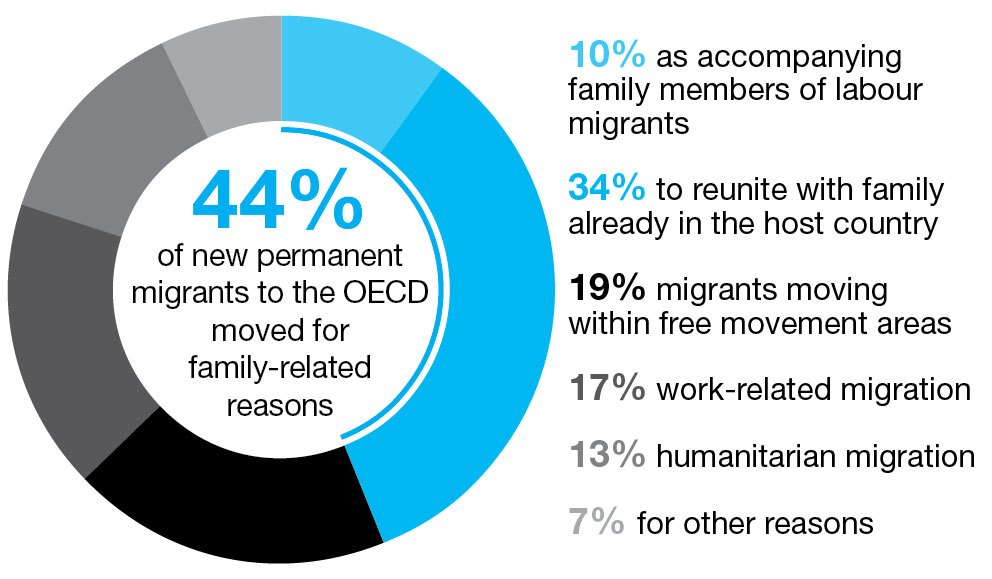
Public perceptions of migration can be warped by the extremes: overcrowded boats of refugees at one end of the spectrum and billionaires’ doomsday redoubts at the other. In most cases, however, people move for more prosaic reasons. “The number-one criterion is family reunification,” says Jean-Christophe Dumont, the head of the international migration division at the OECD’s Directorate for Employment, Labour and Social Affairs. “It accounts for 40 per cent of migration to OECD countries and about 70 per cent of regular migration to the US.”
The second-largest category of entry for migrants is work. As the demands of the labour market have changed, so has the profile of people who relocate for a job. With advanced economies increasingly requiring a skilled workforce, the level of education among migrants has risen. “About a third of migrants to OECD countries now have tertiary education,” says Dumont. “This reflects rising levels of education worldwide but also the fact that migration is costly. People who have the skills and means to make the move tend to be better educated.”
A corollary has been women making up a higher share of those moving countries than ever. “In the 1970s and 1980s, labour migration was mostly about supplementing the workforce in industrial sectors, such as the automobile and metal industries, which mostly employed men,” says Dumont. “Now the demand is greater in industries where women are more prevalent, such as the healthcare and service sectors. We are also finding that tertiary-educated women from low-income countries are using migration to improve their prospects, which might be limited at home.” In some countries with selective systems, the share of those with tertiary education is higher in migrants than among the native population.
Decisions over whether or not to move for work are often more complex than a matter of simply chasing the highest salary. “It’s not so much the wage that makes the difference but the longer-term opportunities for career development,” says Dumont. “If I’m thinking of migrating for work, the prospects for my children in the new country are also important.”

Remote working – an insignificant blip
A new type of labour-related migration is also becoming increasingly common: people working remotely in one country for companies or clients based in another. Until recently, working remotely on a permanent or semi-permanent basis was mainly the preserve of self-styled “digital nomads”, a subculture dominated by those in the technology sector. The coronavirus pandemic changed this, causing the rapid expansion of out-of-office working across white-collar industries. Many are taking advantage of their new geographic freedom to move to a different country without losing their jobs.
This has created a new set of challenges for immigration policymakers. “Some countries are simply clarifying rules around tourist visas to make it clear whether visitors are able to work remotely,” says Kate Hooper, a senior analyst at the Migration Policy Institute, a Washington-based think tank. “Others have introduced dedicated digital-nomad visas but these tend to be more of a marketing tool and uptake has been low. Most people still choose to simply work while on a tourist visa. It’s easier, quicker and often cheaper.”
Portugal rolled out a highly publicised bespoke digital-nomad visa in 2022 and Spain followed suit in 2023. These schemes, however, have not made a particularly noticeable difference: the Iberian nations have been issuing about 20,000 digital-nomad visas a year, compared to about 1.5 million other kinds of tourist and short-stay visas.
Hooper says that the growth of remote working has resulted in migration-related policy issues that go far beyond visa definitions. “Where will people be taxed – are they establishing a legal presence in another country?” she asks. “If you’re signing contracts in a new country, are you exposing your company to local labour and employment laws? How portable are pensions? Remote work is the future but there are different systems that need to be updated to keep up with that trend. A lot of employers are shy about exposing themselves to risks in these grey areas.”
How migration protects wealth
High-net-worth individuals (HNWIS) face yet further considerations when it comes to migration. The main issue is whether they should live in the same place as their money. “Our industry is called investment migration but most of our clients don’t physically relocate,” says Dominic Volek, the group head of private clients at consultancy Henley & Partners. Nonetheless, more and more HNWIS are seeking to cultivate a strategic presence in various far-flung locations.
“We talk about ‘geopolitical arbitrage’: it’s about hedging against risks at home while capitalising on opportunities offered by other countries,” says Volek. “An American family we work with might attain residence in Costa Rica, citizenship in Europe, a Caribbean passport, a UAE Golden Visa and permanent residence in New Zealand. All of this means that they’re properly hedged against who knows what might happen in all of these jurisdictions. Since the Russia-Ukraine war, we’ve even been having discussions with families in Europe about conscription. We launched a citizenship programme in Nauru last year. The first family we worked with who received a Nauru passport was German. And why would these people want citizenship of a tiny South Pacific island without moving there? To avoid their child getting pulled into a war.”
Ten countries that want you
Looking to start afresh somewhere new? Many nations are offering work visas to those with specific skills.

1.
Fishmongers
Sweden
It might have many lakes and a vast Baltic coastline but Sweden is lacking fishmongers. A 2023 government report into at-risk sectors suggests that knowing your way around a rainbow trout could now gain you a work permit.
2.
Musicians
Germany
Germany’s artist visa allows musicians, including DJs, to apply for long-term residency. The only requirements are that the applicant must be based in Berlin, can provide a detailed CV and has a clear financial plan for the years ahead.
3.
Ambulance drivers
Denmark
Denmark’s immigration policies received much attention last year for limiting inward numbers. The country’s latest list for in-demand skilled workers features 57 professions, including ambulance driver.
4.
Film-makers
Japan
Japan offers a special visa for film-makers, painters and poets to work in the country for between six months and three years. But any aspiring Kurosawas should know that competition is fierce – only about 300 applicants are accepted each year.
5.
Chimney sweeps
Austria
In Vienna, every home’s chimney must be inspected by a Rauchfangkehrer once a year. These chimney sweeps’ responsibilities extend to assessing boilers and hot-water tanks. Any skilled German-speaking sweep can apply for a work visa.
6.
Arborists
Australia
According to the Australian government’s most recent review of labour shortages, the nation is lacking skilled arborists. Tweaks to the country’s relatively restrictive immigration laws mean that employers can now use the “skills in demand” visa to hire much-needed tree experts.
7.
Architects
Vietnam
A new Vietnamese state decree has made hiring foreign engineers and architects a priority. The new talent visa affords architects special entry, along with investors, university researchers and public sports figures. It comes as the country embarks on several large infrastructure projects.
8.
Bakers
Canada
Bakers looking for more dough should consider heading to Canada. The country has launched an international campaign to attract bread makers, confectioners and pastry chefs. Provinces that are in particular need include Ontario, British Columbia and Alberta. Time to lay down some flour.
9.
Thai chefs
New Zealand
Thai cuisine is now global – and one country that can’t get enough of massaman curry is New Zealand, where the government has set up a special visa just for chefs migrating from Thailand. Once their application has been approved, they are welcome to stay for four years. Grub’s up.
10.
Radiographers
South Africa
South Africa has suffered an acute brain drain of medical professionals, many of whom emigrate to the UK. The inclusion of radiographers on the country’s list of critically understaffed jobs means that any qualified applicant will gain 100 points towards their SA General Work Visa.
Read next: How holding multiple passports is shaping a new global citizenship reality