Issues
‘Posters are more than just images on paper.’ Susan Reinhold, the poster dealer elevating prints to fine-art status
In 1972, Susan Reinhold bought a vintage art deco poster for $500 – about $3,500 (€3,000) today – from Madison Avenue art-book dealer Robert Brown. Then she called a poster gallery in London, which quoted her twice the amount for the work, designed by French artist Charles Gesmar for cabaret singer Mistinguett. A poster dealer was born. She convinced Brown to go into business with her; together they ran Reinhold Brown Gallery for decades in New York, before relocating to Ridgefield, Connecticut.
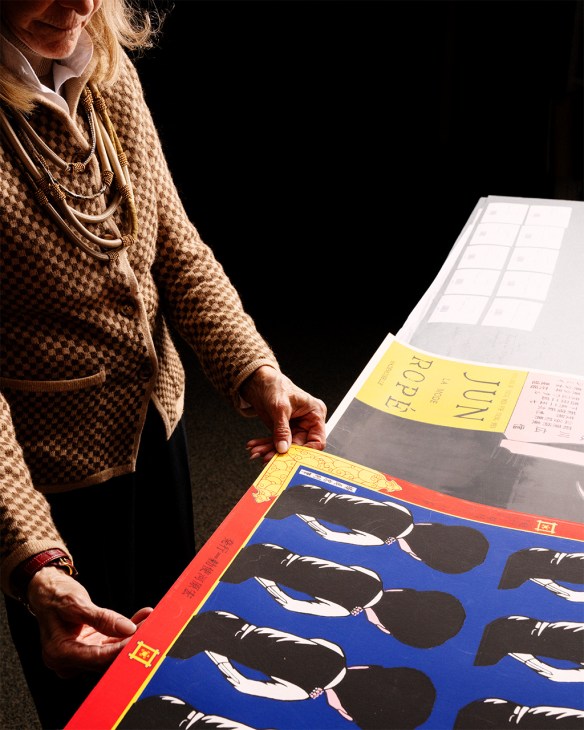
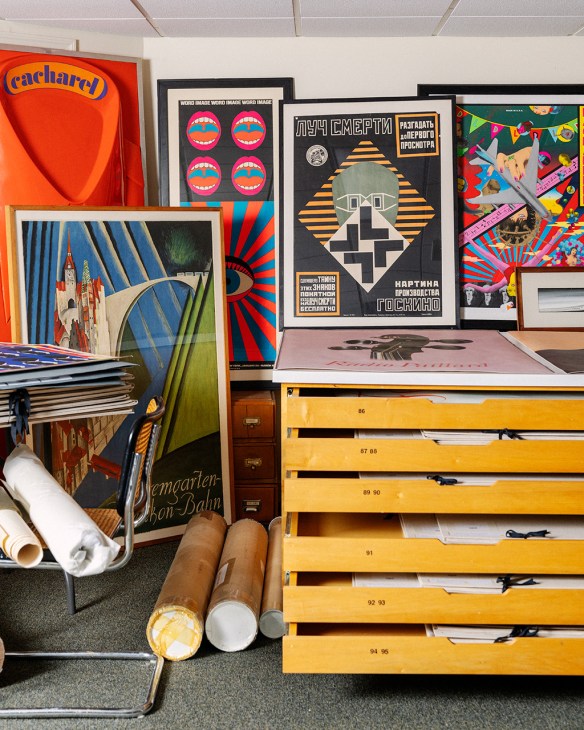
The gallery remains a global clearing house for rare posters. While other dealers and collectors in this field usually organise their wares based on subject matter – such as advertisements for films or those for cars – Reinhold does so in terms of artistic movements: Bauhaus, dada, futurism, constructivism and so on. “Posters are more than just images on paper,” says Reinhold. “They’re works of art and design that teach you about history.”
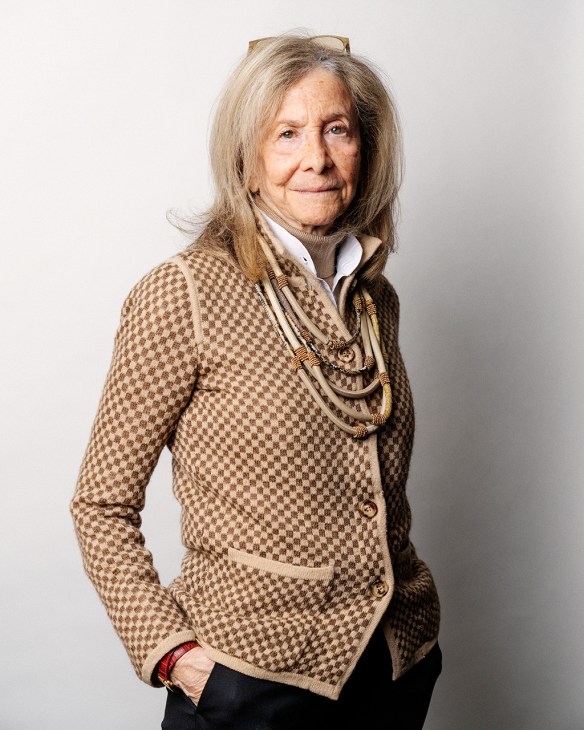
The poster gallery is also one of the few that specialise in originals, meaning designs that were specifically created for the medium, rather than reproductions of a painting, in their first printing. There are often fewer than a dozen extant copies of a treasured poster from the late 19th to the first half of the 20th century. Over the years, the gallery has sold to Moma in New York and London’s Victoria & Albert Museum, as well as to the late Condé Nast chairman Si Newhouse and fashion designer Ruki Matsumoto.
Rare posters generally range in price from $1,000 (€856) to $100,000 (€85,600). Some, however, have sold for far more. The Los Angeles County Museum of Art acquired Charles Rennie Mackintosh’s 1896 work “The Scottish Musical Review” for a six-figure sum, while the Reinhold Brown Gallery brokered similarly big sales for two designs for Fritz Lang’s 1927 film Metropolis. The robot poster is now the world’s most valuable printed film ad, estimated at about $1m (€853,000). While film buffs are charmed by Metropolis’s cinematic heritage, the appeal for Reinhold was the stylings of designer Heinz Schulz-Neudamm. “I like posters that are intellectually challenging, not just pretty pictures,” she says.
Susan Reinhold on where to start:
1.
Do your research
“Go to a bookshop or library to get an overview of the history of the poster. Acquire ones that are hard to find, visually compelling and resonate with you.”
2.
Only buy originals
“Don’t buy posters that are a reproduction of a painting, sculpture or photograph – and avoid later reprints.”
3.
Condition matters
“This is true until rarity takes over. The rarest posters have the highest chance of holding their value and appreciating.”
Thinking of starting your own art collection? Design Miami CEO Jen Roberts has some tips
Design Miami, the world’s leading platform for collectable design, marked its 20th anniversary last year and has never been busier. It will hold an exhibition in Seoul in September and its fourth Paris edition in October, while a new Dubai show is planned for 2027. Monocle sat down with its CEO, Jen Roberts, to find out how purchasing habits are evolving and what advice she has for prospective buyers.
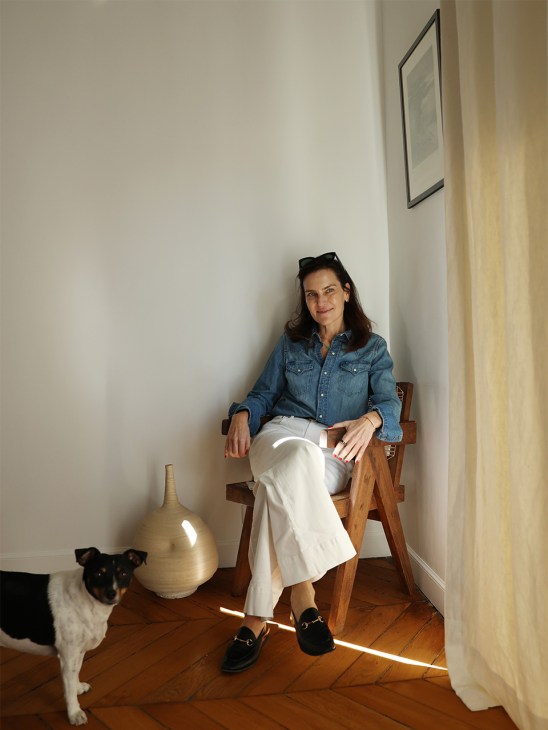
How does buying collectable design differ from acquiring an artwork?
I’m not sure that there’s really much of a difference. For the fairs, it’s simply a question of scale. Design Miami has a welcoming spirit that you might not encounter at one of the big art events. The best thing to do is to look at what appeals to you, then start asking questions.
What distinguishes the European and US markets?
There’s a deeper understanding of the history of design here in Paris but there’s more awe and delight in Miami. The majority of the show is contemporary design in the US show, whereas here it’s the haute couture of the design world and mostly historical.
Should people approach collectable design as an investment?
When I started out in the business decades ago, it was frowned upon to talk about collecting as an investment. Things have changed since then but you still have to buy a piece because you love it. Maybe it will retain its value or go up – but it might not.


Why is collectable design becoming increasingly popular among younger people today?
They want to express their unique ways of living and the easiest means of conveying that is with what they put in their homes. Also, during the coronavirus pandemic, everyone spent so much time at home and the design market boomed. The effect hasn’t gone away.
In what other ways have habits changed?
Designers are coming from regions that were not in the spotlight in the past. We did our first show in South Korea last year, a country that has an incredible history of craft, and there’s a lot of young talent there now. We’re seeing more designers and curators from the Middle East too.
Jen Roberts on whose work to buy:
1.
Emerging designers
“French designer duo Marie & Alexandre will be fun to follow.”
2.
An overlooked designer
“It’s well worth investigating the work of people such as Italian architect and designer Gae Aulenti, who died in 2012. We don’t hear much about her.”
3.
Japanese designers from the 1960s and 1970s
“Laffanour Galerie in Paris and Barcelona’s Side Gallery are good places to look.”
Further reading:
What Design Miami’s Dubai debut means for the Gulf’s creative economy
Art advisor Yuki Terase on how to build a great collection in the digital age
“Asian collectors don’t play by the book,” says art adviser Yuki Terase. “They’re very eclectic.” Many of the younger generation, she adds, have lived in both the East and the West, just like she has, and so are shaped by their multicultural backgrounds. Born in Japan and raised in the UK, Terase worked for Morgan Stanley in Tokyo, then spent a decade at Sotheby’s. It was there that she pioneered celebrity auctions for fashion designer Nigo and K-pop star TOP, and went on to oversee record sales for Yoshitomo Nara and Yayoi Kusama in Hong Kong as the auction house’s head of Asian contemporary art.
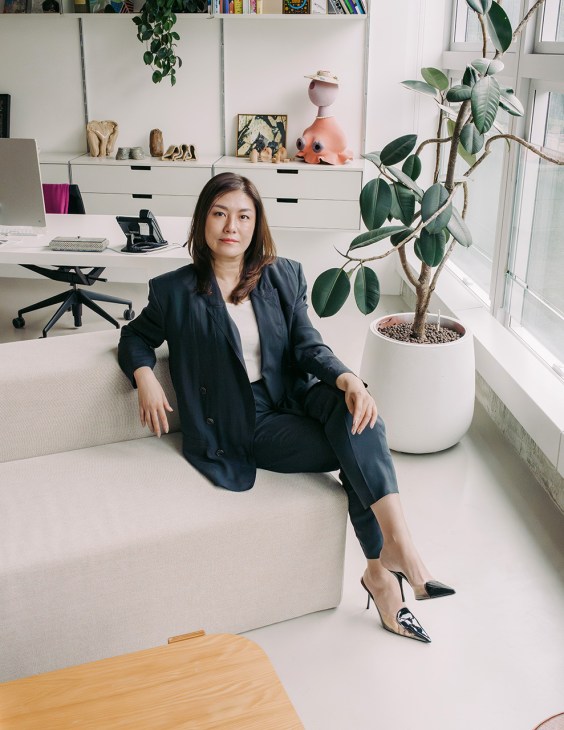
Today she leads Art Intelligence Global (AIG), an art advisory firm that she co-founded with fellow Sotheby’s alumna Amy Cappellazzo. Based between New York and Hong Kong, they help clients to build their collections and navigate market shifts.
“The coronavirus pandemic was a time of speculation – collectors invested heavily in emerging artists,” says Terase. “Now they’re going the other way. They want artists with life experiences that they can connect with.” Value, she says, comes from narrative, history and provenance. Terase points to a resurgence in interest in ancient work, classical antiques and even dinosaur fossils. “People increasingly want artefacts that we can’t produce any more,” she says. “It’s an answer to AI.”
This focus on historical pieces, combined with rising demand from Asia, means that the supply for collectors is limited. But that’s what makes things so fascinating for Terase. “Even with all of the money in the world, you’re not guaranteed to be able to build the greatest collection,” she says. “It’s democratic and a lot of work. There are no short cuts.”
Yuki Terase on building a great collection:
1.
Identify what you like
“It’s like when you want to become a musician. You can have the best tutors in the world but you still need to practice. Go to museums, galleries and fairs, and see as much as you can.”
2.
See the world
“Plan trips with the aim of discovering new cultures. I love the Art Collaboration Kyoto (ACK) fair. And who doesn’t love going to Kyoto in the autumn?”
3.
Invest in the past
“Interest in antiques, old masters and things such as dinosaur fossils will only continue to grow, especially among younger generations of collectors.”
Antiquities collector James Perkins invites guests at Parnham Park to holiday among dinosaur fossils
The question of how one sources a megalodon doesn’t really cross James Perkins’ mind. “Someone says, ‘Oh, you need to talk to him – he does all of the museums in England and worked on the Harry Potter films,’ and one thing leads to another. You don’t just nip into the local Jaws shop and come out with a megalodon. It doesn’t happen overnight.”
Perkins is a co-founder of Fantazia, a UK-based music-events company and record label. Collecting runs in his family; his mother was an antiques dealer. At the age of 14, he spent his paper-round money on a bust of Apollo. Whether buying a stuffed giraffe or the remains of an 18-metre-long megalodon, he approaches every purchase with the same collecting logic. Now, Perkins is working on his biggest project to date: the restoration of Parnham Park, a Grade I-listed 16th-century manor house on England’s south coast.
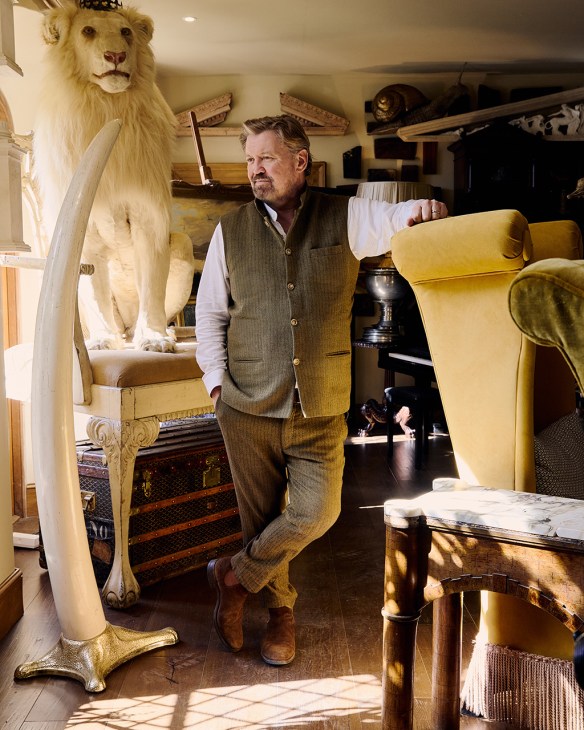
In 2017 a fire tore through the building, burning for four days until the roof caved in and the floors buckled. The original stone frontage held, though the wisteria climbing the southern façade looks as though it might be the only thing keeping the wall upright. The place is spooky, otherworldly and magnificent.
Architect Thomas Heatherwick is among those working on Parnham Park’s restoration. The Perkins family already lives in part of the house, firmly installed amid the scaffolding and the dust. The walled garden restaurant, meanwhile, has become a destination for the area’s residents. The long-term plan includes outbuildings, a lake house and event spaces. A multi-conceptual hospitality destination is slowly rising from the rubble.
Perkins calls Parnham Park’s aesthetic – the tasselled chandeliers, feathery masks and four-poster beds of Wolf Hall proportions – “elegant decay”. His collection of plaster sculptures, spanning some 4,000 pieces, is a tribute to houses that no longer exist. “It’s rather like Sir John Soane’s Museum,” he says. It’s an apt comparison: Soane, a neo-classical architect, filled his London townhouse with salvaged items and curiosities, then left it as it was for posterity. Perkins is doing something similar, only louder and with dinosaurs.


Parnham Park is a short distance from Dorset’s Jurassic Coast, 153km of shoreline so rich in terms of geological history and fossils that it has Unesco World Heritage status. Palaeontologist Mary Anning roamed these cliffs in the early 19th century, pulling ichthyosaurs and plesiosaurs from the rock face. The fossilised remains of ammonites the size of dinner plates still emerge from the mud after rain. Perkins often discovers them in his garden. “We probably found 20 last week.”
At Parnham Park, three pterodactyls will soon hang from a ceiling, lit to throw shadows on the walls and set the mood at dinner parties. The resident triceratops is currently on loan for an exhibition. The megalodon is having its jaw reconstructed and its body finished in papier-mâché that has been aged to a formaldehyde yellow; it will be suspended in the great hall like a prehistoric blimp. “The problem with dinosaurs is that they’re quite large,” says Perkins. “Even in a big house, it isn’t easy to fit a T-rex.”
His ambition extends beyond the walls of the property. “I want to inspire people to collect things,” he says. “They don’t have to be valuable. I used to fish plaster casts out of skips.” Perkins sources his objects himself, travelling to fairs and meeting dealers across the globe. His vision for Parnham is something between a country house and a natural-history museum – a place where children come for educational stories during the day and their parents settle in for supper by candlelight at night. “I haven’t seen it done before,” he says.
James Perkins on finding one-of-a-kind objects:
1.
Source them in person
“It’s important to see what you are buying. Buy what you can afford and trust your gut feeling. Value comes later.”
2.
Avoid big-city fairs
“In general, the closer you are to the capital, the higher the pitch fees – and prices will reflect that. If you’re in the UK, the distance from London matters.”
3.
Hunt for what looks out of place
“I have often bought things from the corner of a little sale that nobody else wanted.”
Anthony Gallery founder Easy Otabor on his cross-genre approach to collecting artwork
For Easy Otabor, acquiring an artwork is often an extension of an existing relationship. Entering his flat in Chicago’s Fulton Market district, Monocle is greeted by the works of artists and designers with whom the gallerist and collector has collaborated or built friendships over the years. Near his dining table, for example, is a delicate painting with rough-hewn edges by Chicagoan Dabin Ahn, nestled between a Tom Sachs stereo and a text-based piece by Nigerian artist Toyin Ojih Odutola.
“That’s usually how I think of my collection,” he says. “Are these by good people? Would I enjoy having dinner or working with them?” A piece might remind Otabor of his early support of a now-lauded artist or a pivotal moment in a friend’s career.

Otabor’s eclectic sensibilities are as evident in his collecting as they are in his own work, which spans fashion, music, design and art. He studied business at university and later fashion merchandising but it was working as a buyer under US designer Virgil Abloh and streetwear pioneer Don C that launched his career. In 2019, Otabor returned to his hometown of Chicago from Los Angeles and founded Anthony Gallery, where he pairs artists who typically wouldn’t show together, such as Andrew J Park and Sydnie Jimenez, or Barbara Kruger and Tony Matelli. “Building bridges” is how Otabor describes his curation; his approach is defined by a diversity of mediums, styles and subject matter. “I don’t want to be boxed in,” he adds.
Otabor doesn’t distinguish between art and design, and collecting is something that he has always done (he parted with a big trainer collection before shifting to art). A focal point of his living space is a custom Ensemble Dune Modular Sofa by Paulin Paulin Paulin that blankets the room in a roiling sea of royal purple. Every 18 months or so, he shuffles the pieces. “I love conversation starters,” he says. One of the joys of collecting, he finds, is discovering new ways of seeing objects through the eyes of friends.


Anthony Gallery, which has outposts in Chicago and Amsterdam, will soon expand to Tokyo. Otabor’s personal collection, meanwhile, will undoubtedly reflect his growing reach. He lives by the oft-repeated mantra that you should only buy what you love and adds, “How does it make you feel to wake up to? No matter where I am or what home it goes into, it has to be something that makes me feel good.”
Easy Otabor on sharpening your collecting instincts:
1.
Allow your taste to evolve
“I might still like something that I bought 15 years ago but there’s also a chance that I have outgrown it. Give yourself room to grow.”
2.
Let people know why you’re collecting
“Make it known that you’re not a reseller. Talk about community and who’ll encounter the piece at your home or office. At the end of the day, artists just want their work to be seen.”
3.
Get acquainted with the top galleries
“As well as my own, my favourites include David Kordansky Gallery, Sprüth Magers and Jeffrey Deitch.”
Collector by chance: How Pertti Männistö became one of the world’s most accomplished Alvar Aalto archivists
Many serious collections start by chance. Pertti Männistö’s hoard of Alvar Aalto furniture and glassware is a case in point: he didn’t set out to become one of the world’s top collectors of the Finnish designer’s work. “When I moved from the countryside to Turku in 1991, I would go to design auctions with no particular goal,” he says, sitting on a 1940s Armchair 34 at his home in southwest Finland, where he lives with his wife, Kirsti Toikka. “There was Aalto everywhere but nobody paid much attention to it.”
Then something changed. After spotting a prototype Aalto armchair in a private home and buying it for 350 Finnish marks (less than €60), Männistö went to the library the next morning, where he read everything that he could about Aalto and his wife, fellow designer Aino, as well as their furniture company, Artek. “Once I fell in love, I bought their pieces almost in a panic,” he says.

In the three decades since, his collection has grown so large that he claims to own more prototypes by the designers than Finland’s Alvar Aalto Museum. Much of it is in storage and only a few pieces are on display at home. “About 95 per cent cannot handle daily use,” he says. “These are historical objects now.”
Männistö’s focus is on early Aalto furniture – from 1928 to 1965 – before manufacturing processes became more standardised and mechanised. The appeal, says the collector, lies in the richer finishes, the hand-worked surfaces and the patina that has developed over the decades. “New furniture doesn’t age in this way or gain the same spirit,” he says. Among Männistö’s rarest pieces are prototype lighting designs that never entered production, a one-off chair for a 1946 show in Zürich and a Maison Carré armchair – one of only two, signed by Alvar. He also owns about 100 of the designer’s iconic three-legged stools.

In the 1990s those stools could be picked up for the equivalent of a few euros. Now international demand has supercharged the market. Basic pieces remain attainable but prototypes and early rarities require what Männistö calls “detective work”. To track these down, you need access to a network of dealers, descendants and collectors across Europe and beyond.
Männistö suggests looking beyond Alvar. “People should appreciate his wife, Aino, too,” he says. “They made everything together.” Asked whether new Aalto discoveries are still possible, he doesn’t hesitate. “Always,” he says. “Prototypes and one-offs are still being found. That’s the beauty of it.”
Pertti Männistö on how to hunt for Aalto pieces:
1.
Build a library first
“Prioritise printed catalogues and books over internet listings, where Aalto misinformation is common. The process of authentication starts with comparing dimensions, materials and production details with documented originals.”
2.
Buy the early works
“Earlier Aalto furniture is made from better materials and has richer finishes. It has more long-term value.”

3.
But don’t limit yourself
“Finnish modernists such as Werner West and Ilmari Tapiovaara were designers whose furniture remains undervalued compared to the Aaltos’. It’s worth looking further afield.”
How the world’s middle powers are adapting to a new era of weaponised interdependence
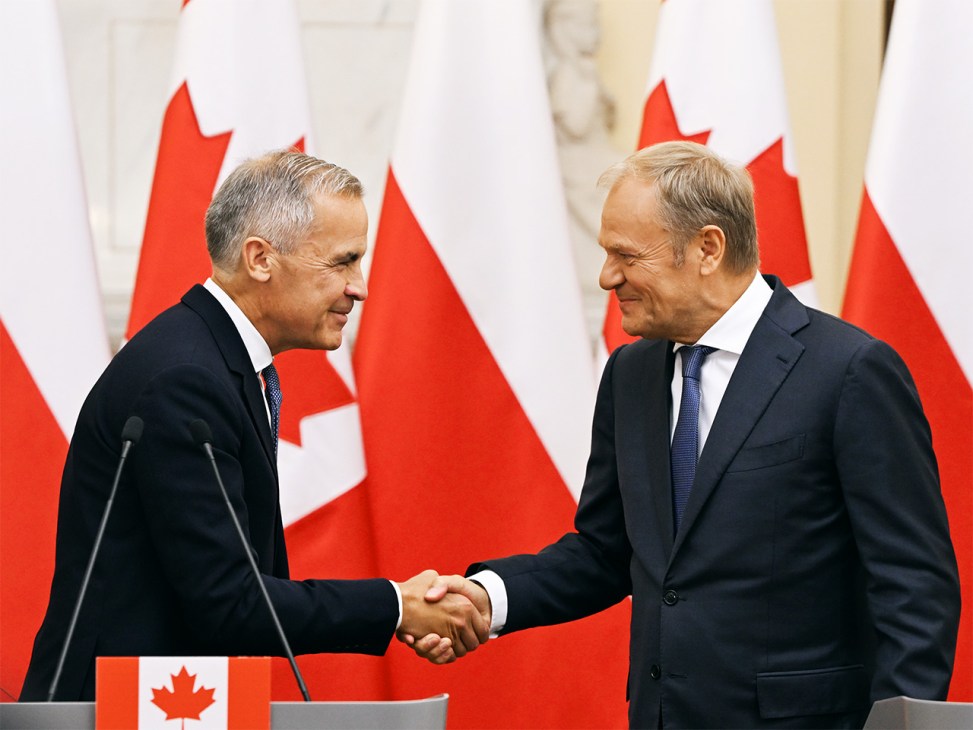
The speech that Canada’s prime minister, Mark Carney, delivered at the World Economic Forum in January continues to reverberate in policy and strategic debates. His diagnosis of a world defined by “rupture” was more than just a striking turn of phrase. It acknowledged that the comfort blanket of the rules-based order is fraying and middle powers can no longer assume geography and goodwill will insulate them from great-power rivalry.
Canada has accordingly deepened economic ties with the EU, advanced defence co-operation with countries such as the UK and is expanding trade and security links across the Indo-Pacific region. These are practical steps to build resilience through diversification and co-operation.
Financial systems and supply chains, once seen as the conduits of globalisation, are now routinely used for strategic leverage. In such a world, resilience is a governing principle: diversify trade, harden supply chains, invest in domestic industrial capacity and build multiple external partnerships to avoid overdependence. Carney’s language on the need for “coalitions that work” captures the shift well. From Aukus and the Quad to ad-hoc Ukraine support groups, the pattern is clear – smaller, purpose-built formats that deliver where larger institutions struggle.
Not all middle powers are playing the same game. Some remain invested in preserving the existing order, especially among US allies and partners. Australia is a case in point. Even as Canberra strengthens its ties with Tokyo, Seoul, Ottawa and Europe, it continues to anchor its strategy in its alliance with Washington. But among the same allies, there are diverging views on how central the US should remain, how much autonomy is realistic and how to manage an ally that can be as transactional and coercive as it is strategically useful.
Others are more revisionist. The expansion agenda of the Brics group reflects an effort by some to reshape parts of the global order, in areas from development finance to currency use. But even here the picture is mixed. Countries such as India and the UAE nurture close links with both status-quo-oriented powers and their rivals, keeping active ties with the US and Europe while engaging with China and Russia. The result is a dense, often untidy landscape of overlapping loyalties.
There is, however, a logic. A growing body of thinking points towards “negotiated pluralism”. Stability, in this view, rests on a system that looks more like a mosaic, with multiple coalitions doing different jobs. Recent policy moves bear this out and there are reasons for optimism. The coalitions assembled in support of Ukraine show that middle powers can lead efforts to act collectively when the stakes are clear. The EU’s push to strengthen economic security is increasingly paired with outreach to Indo-Pacific partners. Discussions around regulatory alignment hint at the emergence of cross-regional economic architectures.
European co-operation in defence is also expanding outward, with new partnerships extending as far as Japan, South Korea, India and Australia. Middle powers are not a substitute for great power consensus, nor should they pretend to be. But in a fractured world, they can still play a stabilising role.
The commute: Take the London Underground with Broadsheet founder Nick Shelton
Melbourne native Nick Shelton is the founder of Broadsheet, an online culture, hospitality and lifestyle platform that also publishes print magazines. Its various editions cover cities including Adelaide, Melbourne and Sydney – and now London, where he moved last year. We join him in Notting Hill for his morning caffeine hit, before jumping on a Circle Line train to Broadsheet’s offices on the Strand.
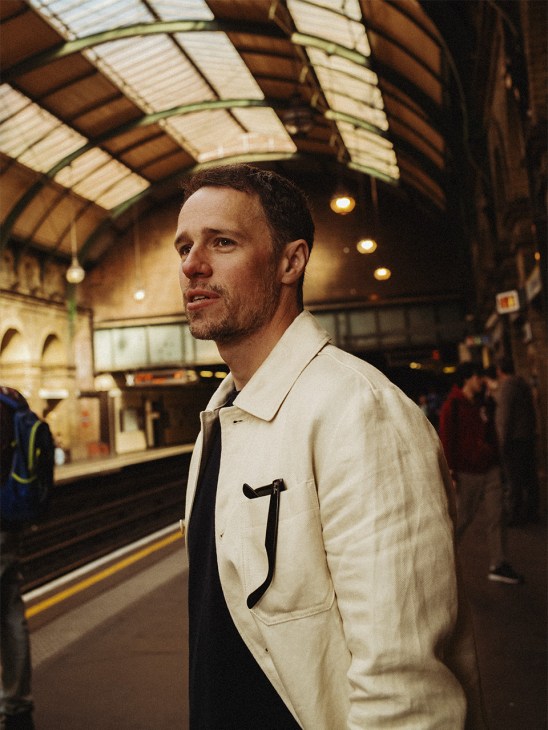
Which brands do you reach for in the mornings?
Trunk and Slowear are mainstays for dressing smartly but comfortably. During my working day I spend a lot of time zipping around town on a Lime bike, going to meetings in Fitzrovia, Marylebone or Mayfair, so I have to take that into consideration.
What’s first on your morning itinerary?
At about 08.00, I get a cortado at Granger & Co in Notting Hill. I like to sit at the counter and catch up on what my Australian team has been up to overnight. I’m also good friends with the owner, Natalie Elliott. She has been a huge supporter of what Broadsheet is doing in London and stocks the latest issue of our magazine in her restaurant.
Why Notting Hill?
Natalie recommended the area when we were looking. London is a city of interconnected villages but this area is a village in and of itself, with local businesses, restaurants and a European community. I can’t think of a comparable neighbourhood in Melbourne.
It’s time to hop on the Circle Line. What will you be listening to?
Two podcasts: Acquired tells the stories of how companies were founded and People vs Algorithms focuses on how culture and technology are transforming.


Other than ‘Broadsheet London’, which publications are you reading?
The Australian Financial Review for news and The New York Times Magazine for culture.
Do you find inspiration during your morning journeys on the Tube?
After getting up to speed on the Broadsheet articles that have been published online in Australia overnight, I have a 45-minute commute to digest them – and then to translate them into ideas for our London edition. In Melbourne, my commute was just 10 minutes by car. While it was quicker, it didn’t give me a chance to let my mind wander. London is fizzing with cultural energy right now and we have an opportunity to tell these stories.
This is our stop. What made 180 The Strand the right location for Broadsheet’s offices?
We’re in a building that’s an interesting creative and entrepreneurial hub in the heart of central London. Plus, food is very important to us and spots such as Toklas Bakery and Corner Shop at 180 The Thames are just around the corner.
Who’s in the office when you arrive?
At the moment, we’re a small team of about 10 in London. It’s like running a start-up in reverse: we already have the infrastructure and a team of 80 in Australia and now we’re establishing ourselves in a new city.
broadsheet.com
How Jetzt is bringing member-funded journalism to Austria
Cronyism is a stubborn problem in Austria, a country where party allegiance runs deep. In 2021, then-chancellor Sebastian Kurz resigned amid allegations that his allies had used public funds to buy favourable coverage. Kurz denies both but the scandal cast a harsh light on a media landscape in which major publications were known for their political leanings rather than fair reporting.
When independent digital media platform Jetzt began its pre-launch membership drive last spring, endorsements from would-be readers on its website stressed one thing above all: that Austria needed an objective journalistic voice unburdened by political affiliation. The outlet’s name, which means “now” in German, is intended to convey that urgency. Media diversity and journalism are enormously important for democracy,” said Corinna Milborn, one of the country’s best-known television anchors, in her support video.
By November, Jetzt had secured the 5,000 subscriptions that it required to get started. Its business model resembles that of Danish outlet Zetland, in which paying members exert a direct influence on what is reported. In fact, Jetzt’s publisher, Florian Novak, was inspired by Zetland’s chief executive, Tav Klitgaard, after hearing him speak at a conference in Vienna in 2023.
Klitgaard explained how it all worked: in the spirit of less is more, there were only a handful of stories a day published in both written and audio form, a discussion forum and a dedicated app to round off the experience. Novak was impressed: “I always wanted media like this, happening right on my smartphone.” An alliance was forged, with Zetland helping to get Jetzt off the ground.
As a result, the websites and apps of both outlets look almost identical, featuring the same clean layout, colourful navigation blocks and integrated audio playback. An annual subscription to Jetzt costs €189, roughly the same as Zetland’s. Both prioritise mobile use, with about 70 per cent of traffic at Jetzt coming through its app.
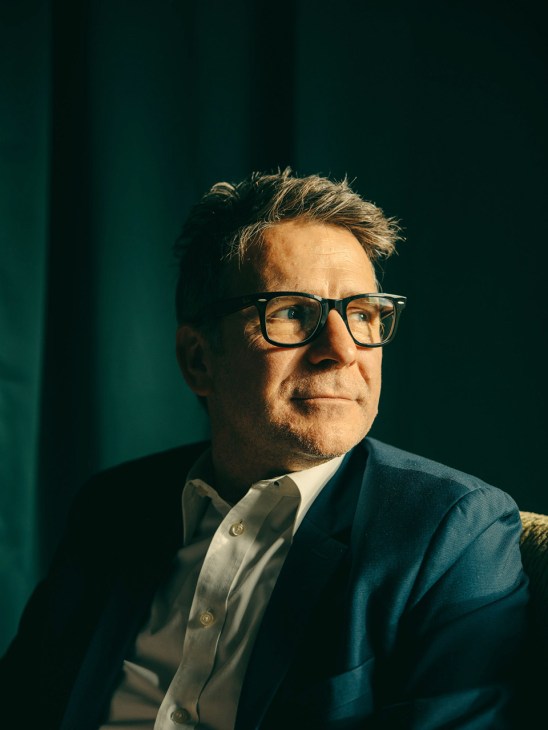
Novak is in his early fifties and twinkles with youthful enthusiasm. Although he studied law and completed a PhD a few years ago, he has long been fascinated by journalism. He laughs as he recalls his first venture – a newspaper – which appeared when he was just eight, thanks to a photocopier at the practice of his father, a doctor in Upper Austria. More serious ventures followed.
In 1997 he co-founded Radio Energy Vienna, one of Austria’s first commercial stations, before launching LoungeFM in 2005. He sees Jetzt as his most important project to date, with a mission to counter the role of social media as a source of news. “I look at my 19-year-old daughter and I think Austrian media are not mastering the so-called digital transformation properly,” says Novak. “And if nothing happens, we will have huge problems 10 years from now.”
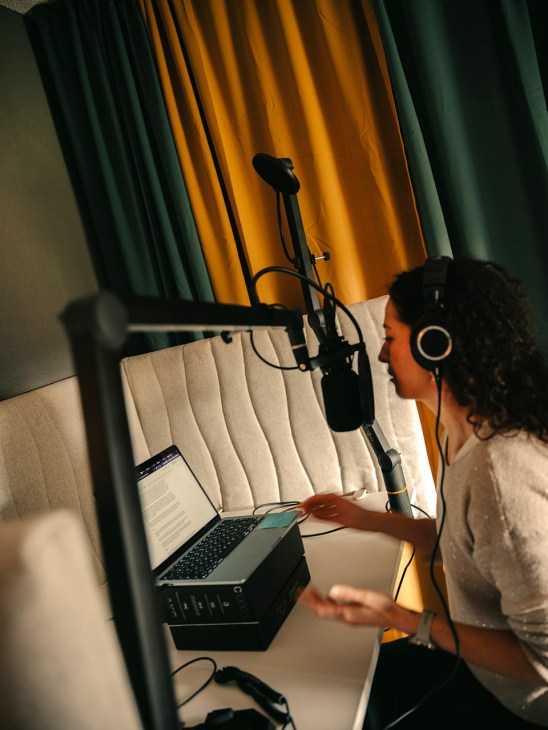
Jetzt’s offices are housed in Vienna’s 1930s Funkhaus, the former radio headquarters of Austria’s national broadcaster, ORF. In spaces once occupied by ORF’s bilingual German-English station FM4, Jetzt now uses three of its former studios – spruced up with second-hand vintage cupboards and plush, green-yellow armchairs – to record its audio and video output.
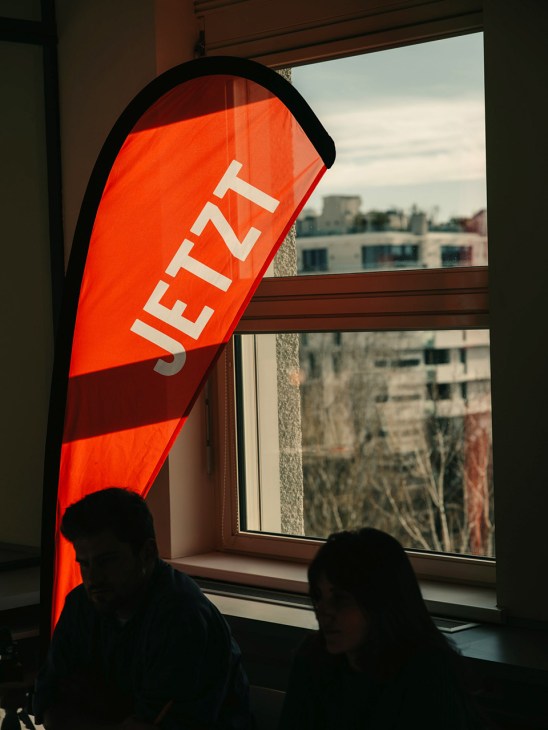
The website’s reportage is focused on domestic and international news, covering stories on a diverse range of subjects, from Austria’s alarmingly high femicide rate to the conflict in Iran. Jetzt’s star contributor is Bulgarian journalist Christo Grozev, who is known for his deep dives into the murky world of Russian espionage as part of investigative group Bellingcat. He co-wrote Jetzt’s launch essay, headlined “Dirty Water” – an investigation into an Austrian wastewater disposal facility allegedly linked to Russian military intelligence.
Other Jetzt stories include one about Jordan Mechner, creator of the cult computer game series Prince of Persia and the son of an Austrian Jewish family who fled following the country’s 1938 annexation by Nazi Germany. Another tells the story of an organic farmer in Austria’s westernmost Vorarlberg region, who faced stigma for being the son of a Moroccan soldier who helped to liberate Austria in the Second World War. However far removed in time, what all these stories share is a determination to show their relevance – and their relation – to the present.
That same impulse runs through Jetzt’s audio work, which includes not only voiced versions of written stories, complete with sound effects and music, but also news highlights in the mornings and afternoons. Austrian journalist Pia Miller-Aichholz presents the afternoon bulletin, the B-side. “We want to show the bigger picture behind every story,” she says after recording her latest round-up. “For me, as both a producer and consumer of news, this is the best way not to be inundated with information.”
Jetzt’s membership is growing steadily but it’s too early to say whether, like Zetland, the website will be profitable. For now, Novak’s pitch to his investors is simple: Austria has a problem with its media and he has a solution.
Jetzt in numbers
€189: Cost of an annual subscription
70 per cent: Readers who use the dedicated app
20: Staff headcount
‘Le Figaro’ at 200: Legacy and innovation in French journalism
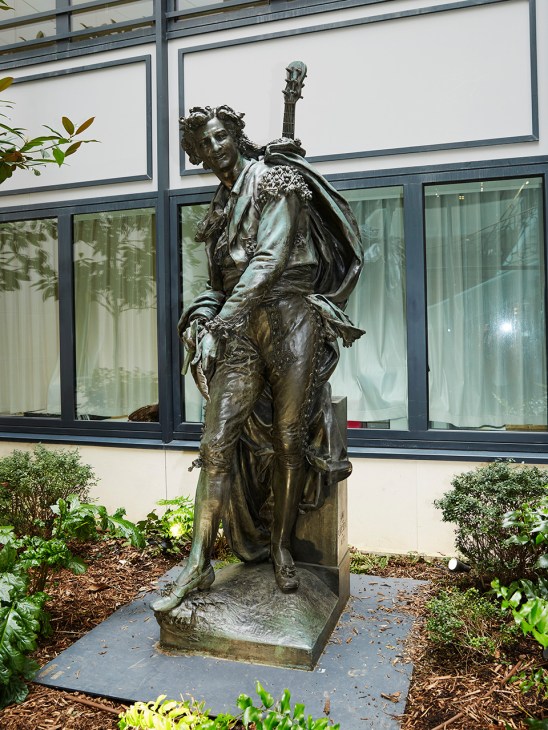
In 1826 two free-spirited twenty-somethings, Maurice Alhoy and Étienne Arago, decided to start a weekly newspaper in a dingy building on Paris’s Boulevard Saint-Germain. They named it after the raffish hero of playwright Pierre-Augustin Caron de Beaumarchais’s The Barber of Seville, Figaro – three syllables that roll off the tongue. In a crowded marketplace, however, the publication struggled to break through.
The tide turned in the 1850s when Le Figaro was taken over by Hippolyte de Villemessant, an editor with plenty of business nous and fresh ideas. It has been a mainstay of French life ever since and now has 450,000 subscribers, 320,000 of whom are digital readers. The rest receive the print edition six times a week. In total, five million people visit lefigaro.fr every day, making it France’s biggest news site.
Today the newspaper’s offices are in a Haussmannian building on Rue de Provence. Two golden Fs adorn the entrance; behind the revolving doors is a spacious hall. On the storeys above, 500 full-time journalists cover everything from politics to culture and lifestyle.

The editor in chief’s office, a modest space strewn with books, is on the third floor. Alexis Brézet, its occupant since 2012, is refreshingly unpretentious and speaks passionately about the publication. It has been a few months since Le Figaro’s three-day bicentennial celebrations at the Grand Palais, which were attended by 60,000 people. “This is an exceptional moment,” says Brézet. “There’s no other national newspaper in France that has 200 years of history.” Rival paper Le Monde, for example, was founded in 1944.
Brézet’s official title is directeur des rédactions (“head of newsrooms”) because he oversees content across multiple formats. Alongside the print edition are the website, the app and both weekly and monthly supplements (including Madame Figaro, Le Figaro Magazine and Le Figaro TV Magazine), as well as podcasts, in-person talks and a TV channel launched in 2023. “Everything’s moving more quickly,” says Brézet, who adds that the paper has changed more in the past 20 years than in any other period of its history. He has been blessed – or cursed, depending on how you look at it – to be here for this transformation.
Brézet joined the paper in 2000 as its deputy editor, then progressed to become the editor in chief of Le Figaro Magazine. For the past 14 years, he has steered the publication’s wider editorial operation. Brézet compares his role to that of a conductor: he relies on “many section leaders, like in an orchestra”. He chairs two meetings a day. At the first, his team schedules the day’s web stories and outlines the next print edition. During the second, the following day’s web coverage is planned and the newspaper’s front page is finalised.



Le Figaro has long had a reputation for being right-wing. Brézet prefers to be more precise: the paper is liberal (in the traditional sense, not the American one) and conservative. Both labels, he admits, are loaded in France. “We must reclaim them,” he says. “We say that being liberal doesn’t mean we’re awful and that being conservative doesn’t mean we’re fossils.” Instead, he explains, Le Figaro is liberal because it “supports business and believes in public debate”, and conservative because there are “a lot of things to protect in our model of society, our culture and our art of living”.
Ideas matter to Brézet. When he became Le Figaro’s editor in chief, he revamped the comment pages and created an online opinion offshoot, Figaro Vox. “We couldn’t just do op-eds from ambassadors or MPs,” he says. “We sought out intellectuals.” With contributions from the likes of Bernard-Henri Lévy, Eugénie Bastié and Thierry Breton, Le Figaro is now a driving force in French intellectual life. When Emmanuel Macron reads the paper, which he does most nights, he starts with the comment pages.
Next year, France will go to the polls to pick Macron’s successor. The establishment right – long the natural readership of Le Figaro – is at a crossroads. Some argue for a union with the far-right Rassemblement National (RN) to form a dominant conservative bloc. Others see this as a betrayal of everything that the centre-right is supposed to stand for. During the 2024 parliamentary elections, Brézet wrote an op-ed arguing that the RN’s policies are “in many respects concerning” but that La France Insoumise was far worse, with its “antisemitism, Islamo-leftism, class hatred, fiscal hysteria”. Some Le Figaro journalists published a letter voicing their opposition to Brézet’s piece and how it had represented “unprecedented support for the RN”. In the end, nothing came of it: Brézet issued no retraction. Instead, he sent a reminder to staff about his editorial philosophy.
As he sees it, there is a crucial distinction between political parties, which have voters, and newspapers, which have readers. “Our role is to bring together readers and enlighten them,” he says. “After that, they are grown men and women. They can do what they want.” Brézet’s conception of journalism is at odds with the increasingly popular idea that publications have a duty to be partisan. “Newspapers are not schoolmasters – we aren’t here to issue voting instructions,” says Brézet. “Our views vary from one writer to another. What matters is that as many readers as possible find themselves in that diversity.”


While most people read Le Figaro online, print still matters. According to Brézet, France’s economic and political leaders like to read Le Figaro in its paper edition. “Print is a bit like haute couture,” he says. “When Bernard Arnault [CEO of LVMH] or Emmanuel Macron have something to say, they won’t say it on Facebook or a website. They want to be in Le Figaro and on the cover.”
Such scoops generate advertising euros. Le Figaro is a rarity among French publications in that it makes money. (The paper is owned by the Dassault family, which also owns Dassault Aviation and Dassault Systèmes.)
Brézet’s goal now is to grow the subscriber base. Le Monde is ahead with about 600,000 subscribers, though it has fewer online visitors. Brézet doesn’t think of it as a competition. “There’s room for everyone,” he says. Ultimately, all newspapers are “fighting for fair remuneration for our content, which is being scraped by social networks, search engines and platforms”. And, of course, there is the threat of AI too. Le Figaro is working with software company Perplexity to create a search engine that draws on the paper’s 200-year archives. But Brézet is adamant that the publication won’t publish AI-generated content – whether text, images or illustrations – which would damage the trust of readers.
When Brézet writes articles, he does so by hand, using a fountain pen. Ink bottles dot his bookshelves. Does writing make him more credible as an editor in chief? “There’s that side of it – showing your teams that you still know how to do the job you’re asking them to do,” he says. “It’s a good thing, from time to time, to say that the boss has written something and it’s not too bad.” But, for Brézet, writing is more than just a leadership strategy. It’s a calling. “At some point, you have to write – you have to pull things out of yourself,” he says. “For me, that’s my life.”