Issues
Plane sight
Business aviation is coming off one of its most successful periods after the pandemic drove legions of wealthy individuals to fly privately for the first time. But it’s not all rosy as we look ahead to the rest of 2023 and beyond. Economic headwinds are a concern – not so much for the ultra-high-net-worth individuals, who will certainly continue to fly privately, but for corporations that might be trying to cut costs or simply feel that the optics of business jets doesn’t fly when they are facing a turbulent economy and the potential of staff layoffs. Meanwhile, some of those people who took up flying privately because of the pandemic are returning to premium cabins on commercial airlines. The hopes that the industry might have harboured of converting these people for life seem, in many instances, to have been misplaced.
Concerns about sustainability also dog this part of the aviation industry. How many litres of fuel it is acceptable to burn to transport a handful of people in a business jet is a question being asked more frequently – often by shareholders. Then there are the supply-chain issues that continue to hit hi-tech, complex manufacturing in an especially pronounced way. Manufacturers can’t deliver aircraft on time and deadlines for development programmes have slipped.
And yet, despite all of this, the industry looks robust. Order books at every major manufacturer are full. New models are being rolled out with ever more exciting passenger comforts, impressively long ranges and significantly lower fuel burn. The next iteration of the European Business Aviation Convention & Exhibition (Ebace) takes place in Geneva from 23 to 25 May. It will be a moment for the industry to say, “We’re here, we’re still going strong and we’re addressing some of the more sticky questions.”
Visitors will see that electric and hydrogen propulsion are being applied to light aircraft much earlier than they are to big commercial people carriers. And for those larger aircraft that can’t rely on battery power now, the use of sustainable aviation fuel is the order of the day. All of this means that, even though there are significant challenges ahead, business aviation stands primed to be at the leading edge of technical innovation. In fact, from the looks of what is being shown at Ebace, it already is.

This Israeli game-changer ushers in the era of electric flight

A flagship business jet that is built for comfort over ultra-long distances

This ultra-long-range jet can fly nonstop from New York to Hong Kong

The North Carolina manufacturer is set to have another top seller

Buyers can create a bespoke helicopter with the UK firm
Talking points at Ebace
Airbus ACJ TwoTwenty
Airbus’s private-jet arm, acj, is betting big on the executive version of its a220, formerly the Bombardier C-Series. Though we don’t have real-world data yet (the aircraft will go into service this year), it promises to be a natural fit for anyone after a high-performance, long-range business aircraft. The key reason: stated fuel burn is only slightly higher than other large-cabin or ultra-long-range jets, even with a much larger cabin. The TwoTwenty is capable of flying from London to Los Angeles nonstop and if you’re kitting out your TwoTwenty in Toulouse, acj now has a customer centre where buyers can do a virtual-reality walkthrough of their aircraft, swapping details as they go.
HondaJet 2600
Widely loved for its simple, car-like cockpit, reliability and efficiency, the HondaJet continues to be very popular as it evolves. Honda Aircraft Company has been rewarded with the highest sales figures in the light-jet category five years running. After debuting the Elite S model last year, everyone is looking forward to more details about its next generation 2600 Concept, which the firm has billed as representing the next phase of the company. It’s expected to be able to fly across the US from coast to coast, which would be a monumental achievement for a light jet.
Dassault Falcon 10X
Dassault’s new flagship business jet won’t be ready for Ebace (it’s expected to start flying in 2026) but its halo effect on the company is not to be ignored. Built as one of the most capable and comfortable business jets ever, with hi-tech features for both pilots and passengers, and an ultra- long range of nearly 14,000km, it is eagerly anticipated. And don’t let the 10x overshadow its little brother, the 6X, which is due to enter service this year; it offers the same wide cabin with a lower range. Orders are pouring in.
Bombardier Global 8000
A new ultra-long-range business jet from the Canadian manufacturer based on the Global 7500, the 8000 offers a luxurious cabin with up to four zones for work, sleep, dining and more – and, most importantly, a top speed of Mach 0.94 (1,152km/h) and a range of 14,631km. This means that it’ll be a serious asset to anyone who wants to fly nonstop and quickly between the likes of Dubai and Santiago or New York and Hong Kong. It’s due to enter service later this year – good timing as Bombardier expects deliveries to be up 15 per cent overall in 2023.
Electrical upstarts and suppliers
Pay close attention to the smaller manufacturers and suppliers present, especially at the Ebace Innovation Pavilion. Its these firms that will be driving business aviation forwards and ensuring that there is a future for private jets even as climate concerns grow. That could take the form of new light aircraft but is more likely to be boosted by the suppliers of critical pieces such as propulsion systems. Small players to watch include electric vertical take-off and landing (evtol) manufacturers, including Slovakia’s AirCar, and electric-propulsion-system developers, such as US firm Ampaire.
Embraer’s next move
With its successful portfolio of aircraft from the light jet Phenom to the mid-range Praetor and up to the bigger Lineage series, Embraer is a staple of the business-aircraft sector. But all eyes are on its next move: it is set to decide on several new models to launch as part of its sustainability push this year. This could include an innovative design under its Energia concept programme for high-efficiency turboprops that look nothing like any other aircraft on the market and be a desirable application for business aviation with a lower carbon footprint.
Eviation Alice
This uniquely shaped battery-powered Israeli aircraft took its maiden flight in 2022 and all eyes are on Eviation to see whether it can successfully certify and market the Alice to commuter airlines for short, emission-free hops. But this is also potentially a game-changer for shorter-distance business aviation without the guilt of burning lots of fuel to travel locally. Keep in mind that the vast majority of private-aircraft usage is on shorter trips. There is still a long road ahead to certification but in the meantime we can appreciate the Alice’s pleasing lines and cheer Eviation on as it helps to make electric flight a reality.
Hill Helicopters HX50
Even as the evtol industry continues to grab headlines, proper helicopters are still very much in demand. And the hx50 from Hill Helicopters, due to take to the skies for the first time this year, is especially compelling. These gorgeous machines are designed for private owners who want to fly themselves around (or hire a pilot). Customers are invited to visit the UK manufacturing site after purchase to work with the engineers and create something truly bespoke. And for the successful individual who has it all, what could be better than your own helicopter, kitted out down to the last detail. A helicopter licence is famously tricky to get but it’ll be worth the effort to fly the hx50.
Fair assessment
Following the latest successful edition of the planet’s premier furniture fair, we sit around the table to select the 15 designers, firms and pieces that caught our eye at Salone del Mobile.
1.
Esther de Vos
Designer
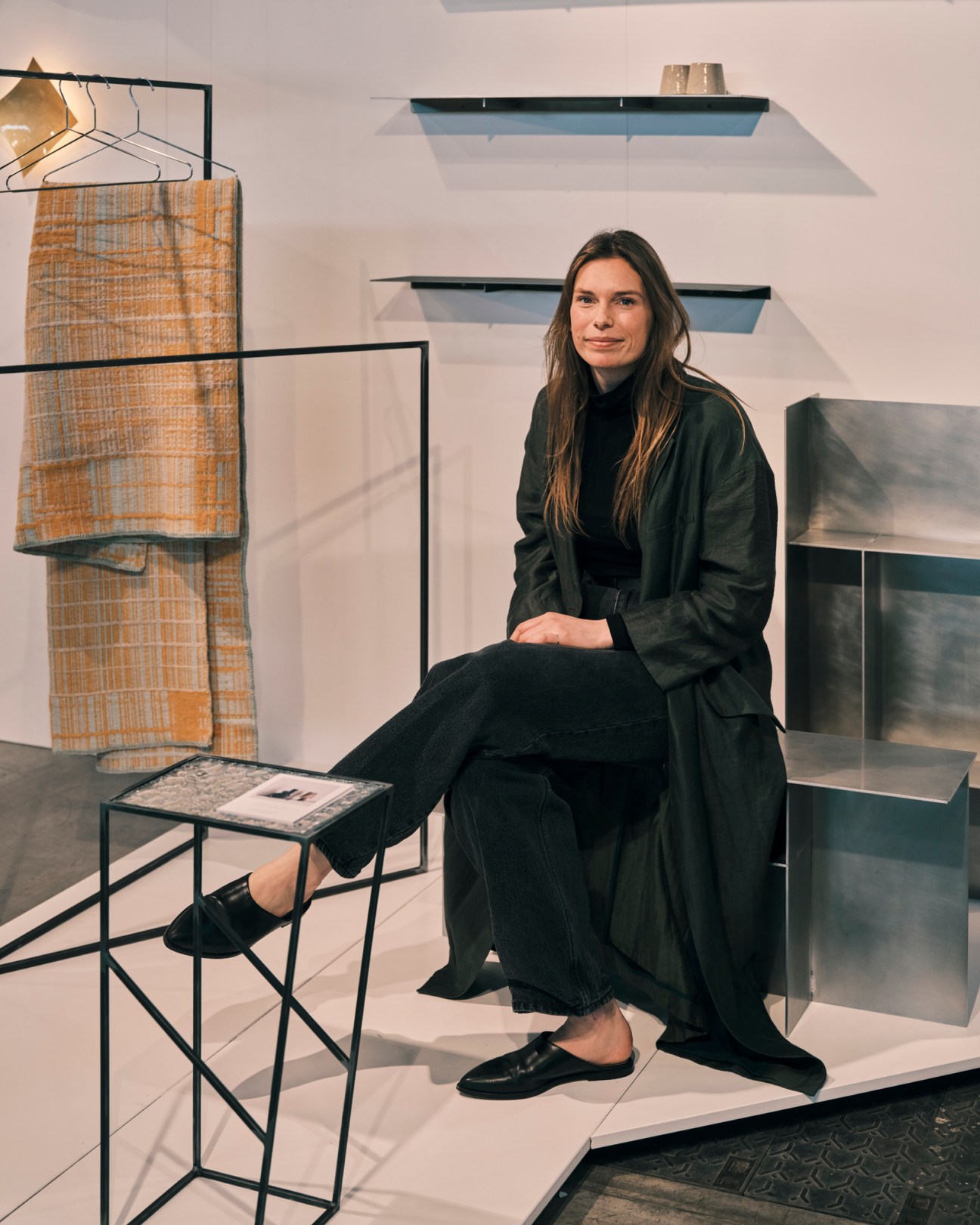
Leuven-based designer Esther de Vos’s handmade steel-and-glass magazine racks and shelves were at hit a Salone Satellite, which is dedicated to emerging designers.
estherdevos.be
2.
Haze by Nanimarquina
Rugs
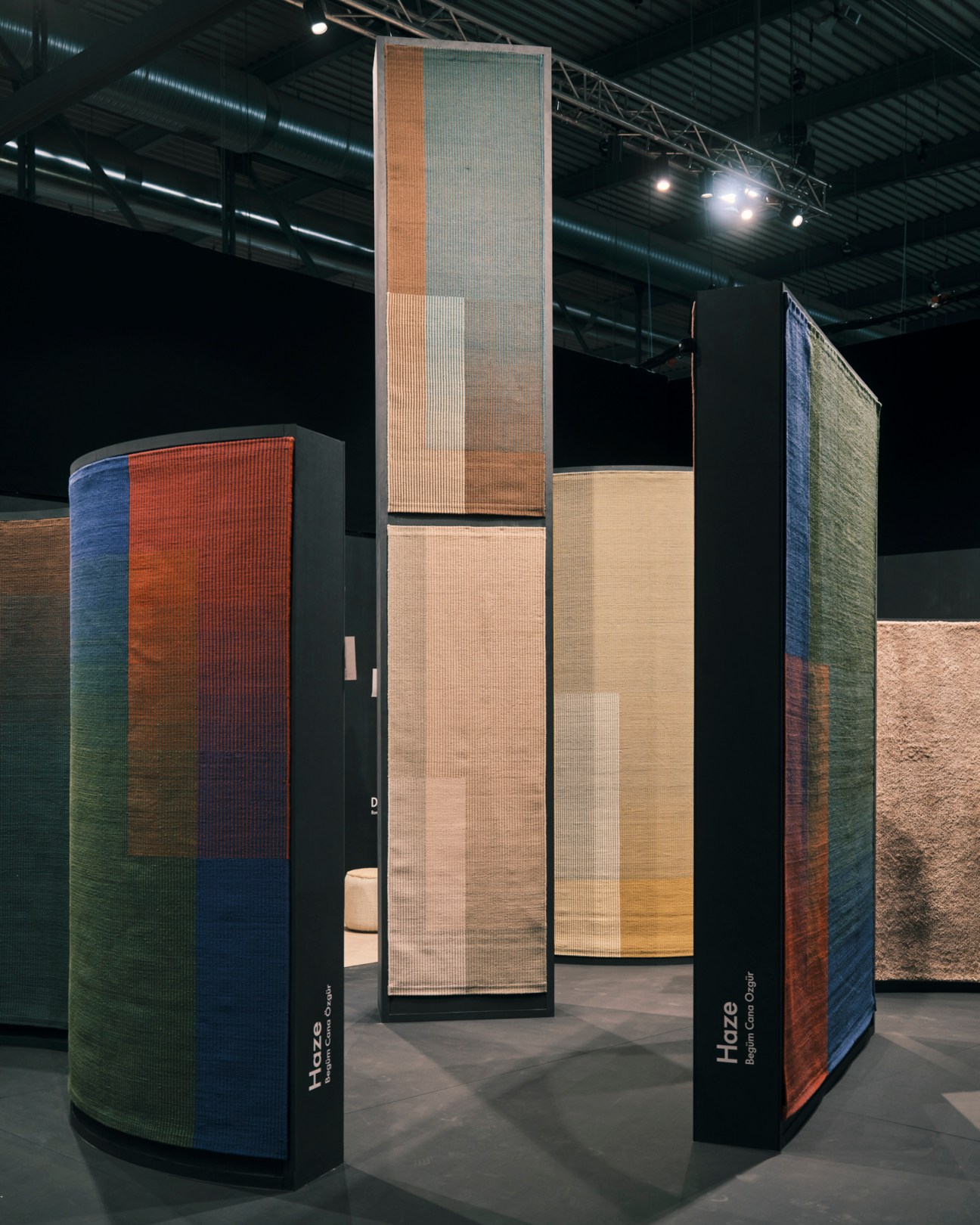
Turkish designer Begüm Cana Özgür used a weave of half New Zealand wool and half Italian wool to create these rugs for Barcelona’s Nanimarquina. The colours contrast with and then melt into each other, and the outcome is a stunning feature for living rooms and offices alike.
nanimarquina.com
3.
Workmates by Flos
Lighting
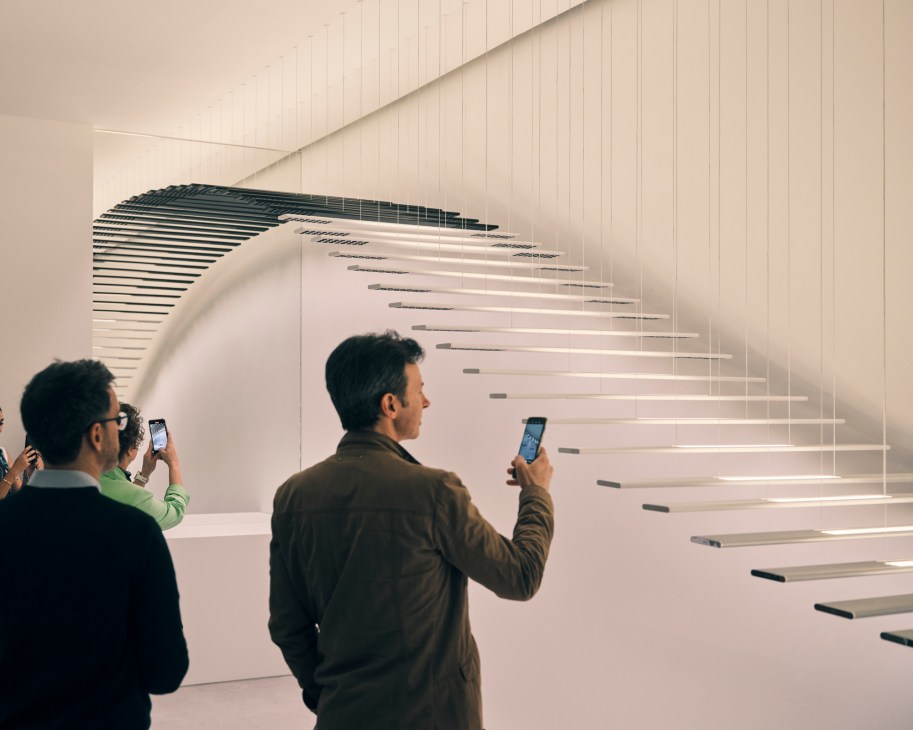
New suspension, track and floor lamps by Flos are intended to provide glare-free lighting in the workplace. The thin lines of the design bring an airy quality to an otherwise powerful lighting solution.
flos.com
4.
Linea and Materic by Porro
Furniture
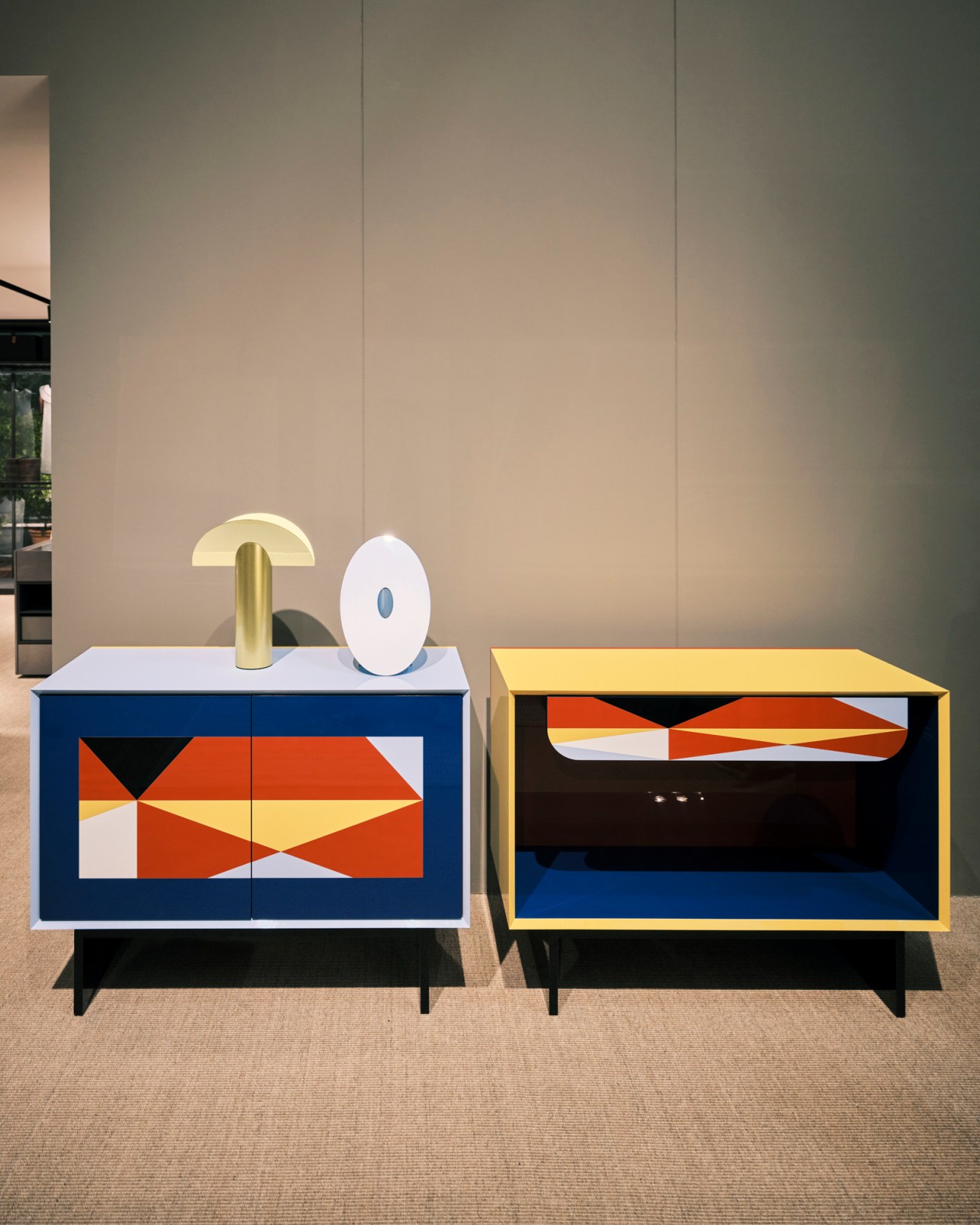
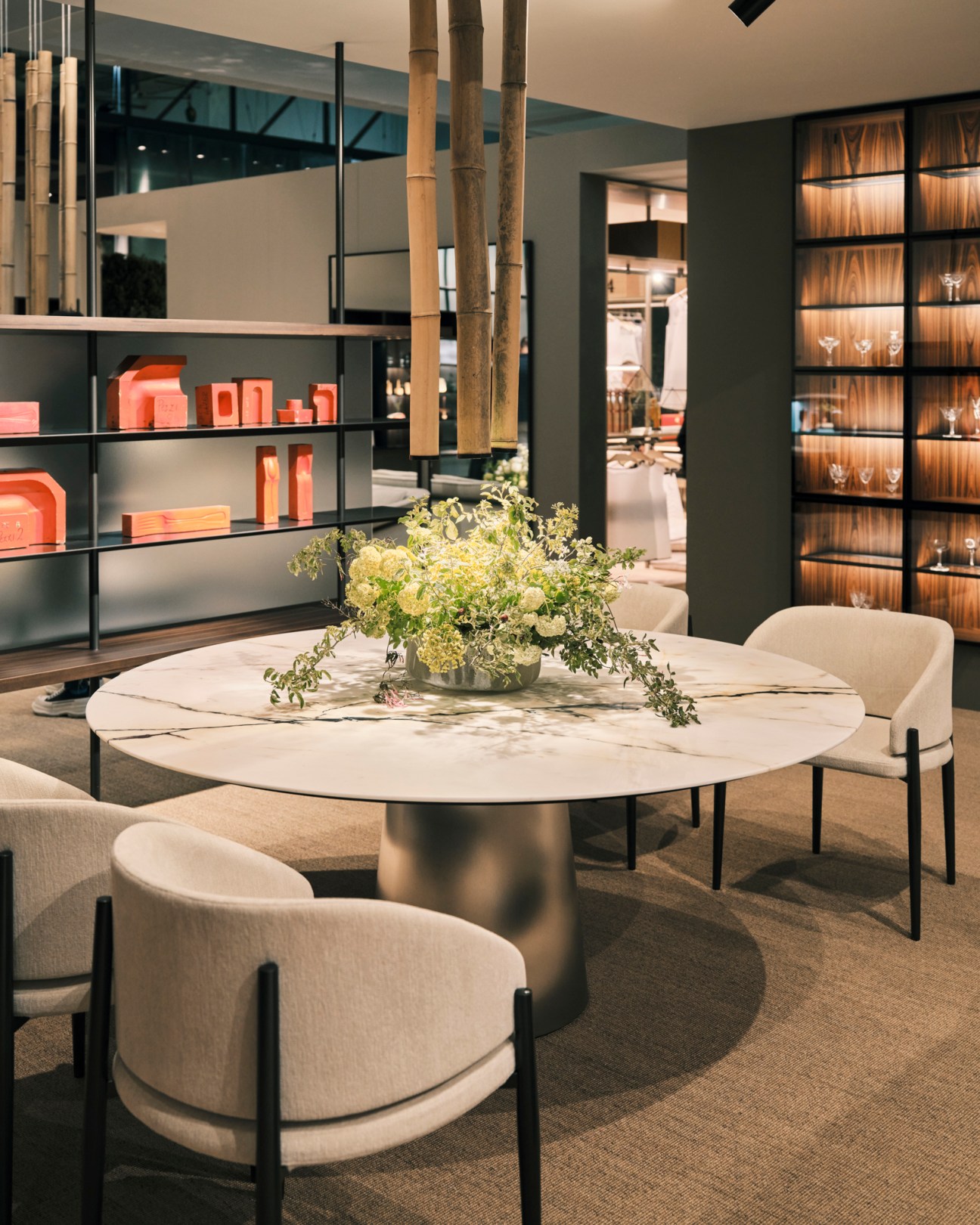
The late Alessandro Mendini played a key role in postmodern Italian design. His playful Linea cabinets, now put into production by Porro, have colourful cellulose surfaces that bring energy to any room. Also for Porro, Piero Lissoni’s dining table, made from Paonazzo marble, has a tapered round tabletop and truncated cone base in stainless steel – a blend that lends it a futuristic look.
porro.com
5.
Tatami Refab Project by Honoka
Sustainable materials

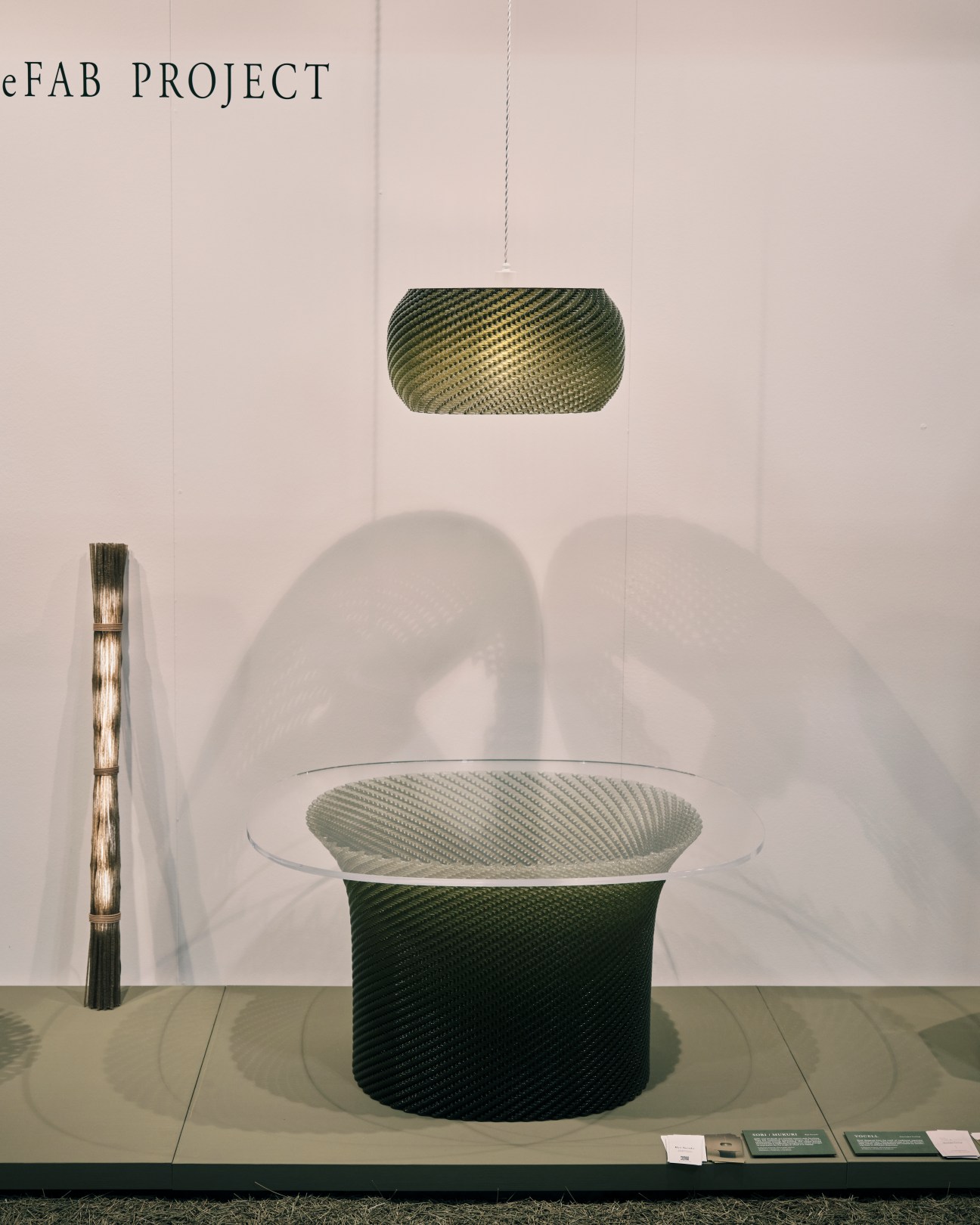
Japanese product-design collective Honoka has been developing new materials by mixing biodegradable resin with discarded tatami mats (composed of Igusa grass). It’s a development project that not only reduces waste but creates a beautiful new material for making new mats and other furniture.
honoka-lab.jp
6.
Kobo and Meriggio by Flexform
Outdoor furniture
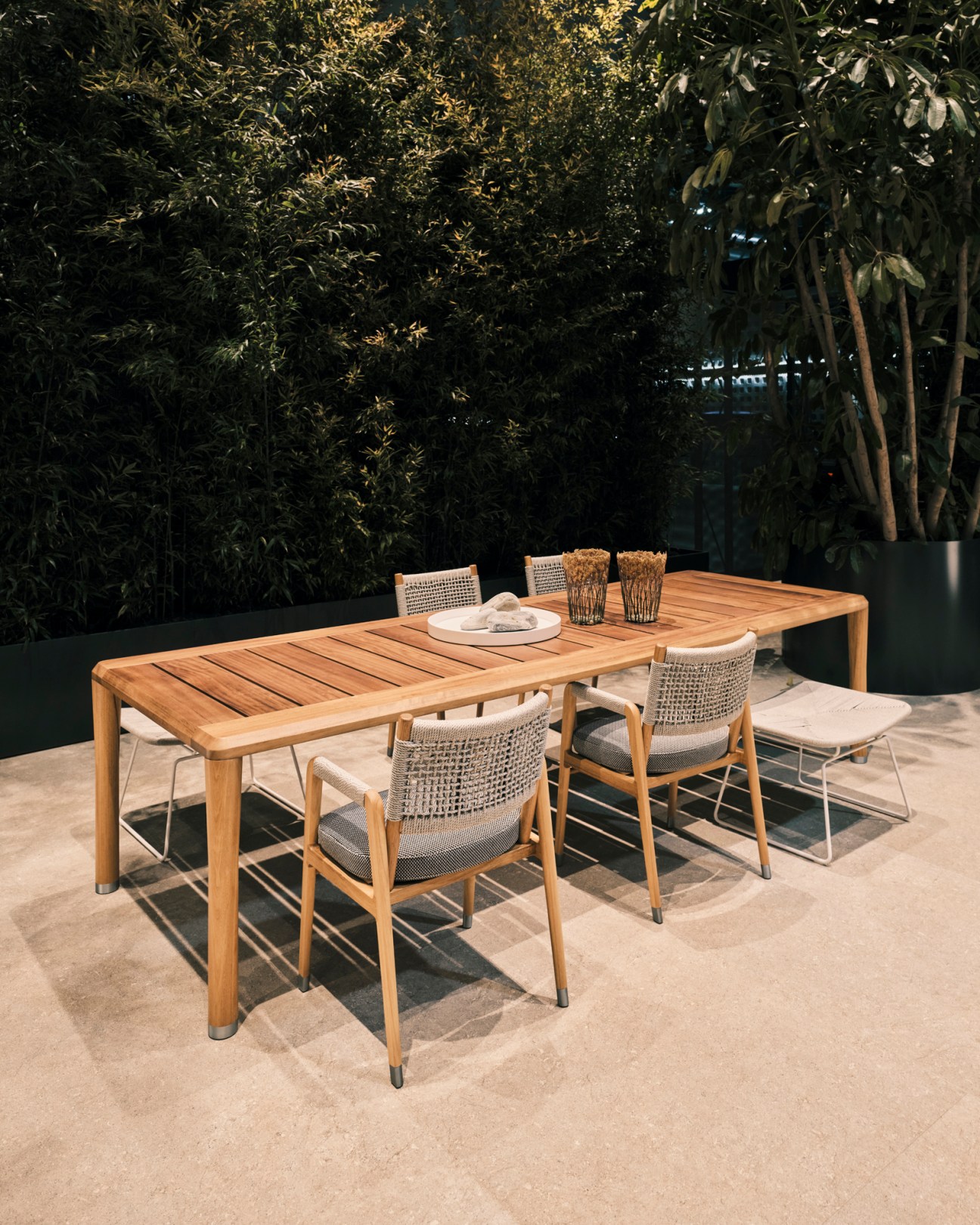
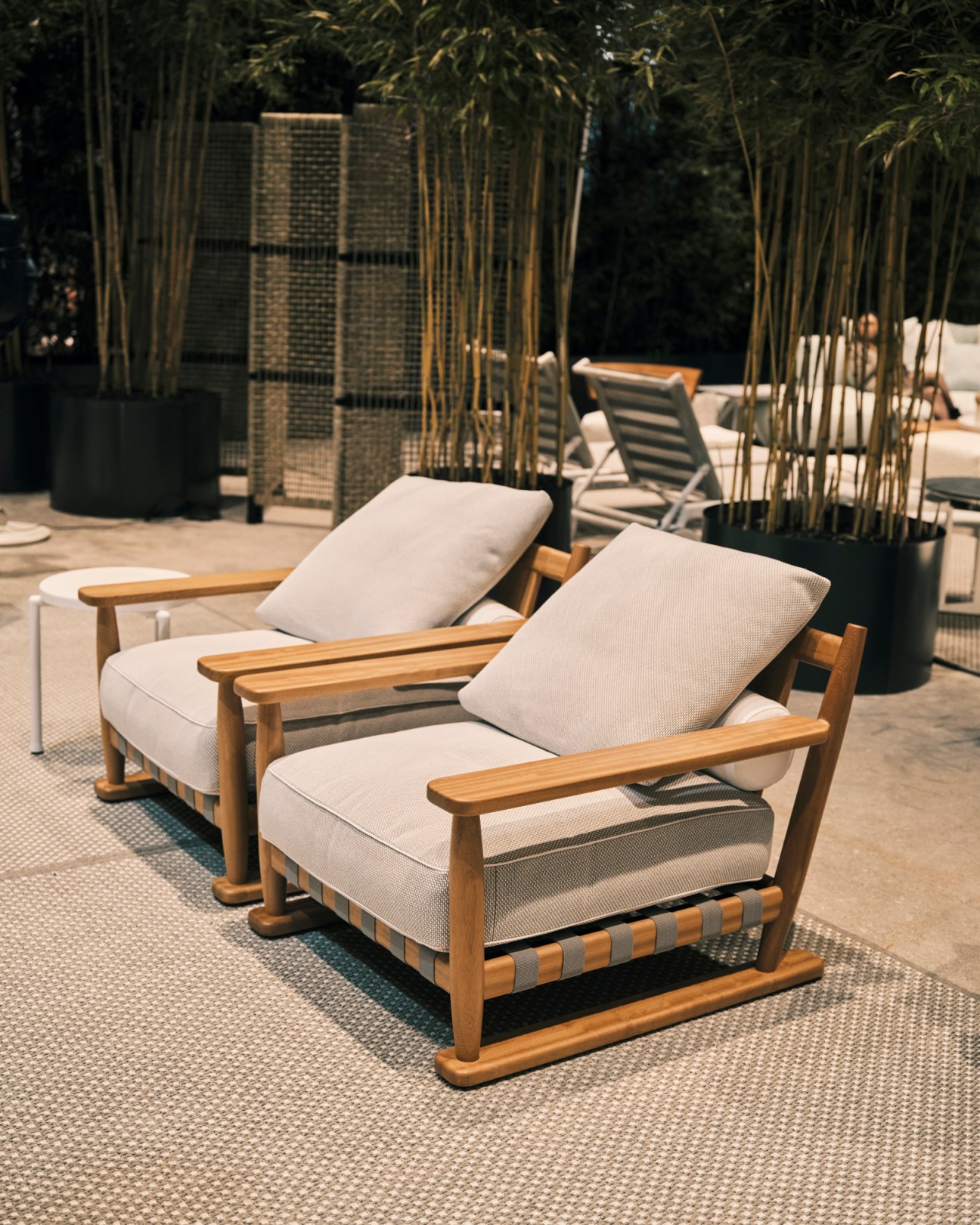
Flexform’s outdoor Kobo table is made from solid iroko, a sturdy African hardwood, meaning that it can handle large communal meals – or being danced on at cocktail parties. Meanwhile, long-time Flexform collaborator Antonio Citterio’s Meriggio armchair has an appealingly glam retro look that hides clever innovations, such as a sled-like base – also made from iroko – on thermoplastic spacers, protecting the timber from moisture.
flexform.it
7.
Kall M by Kettal
Office booth
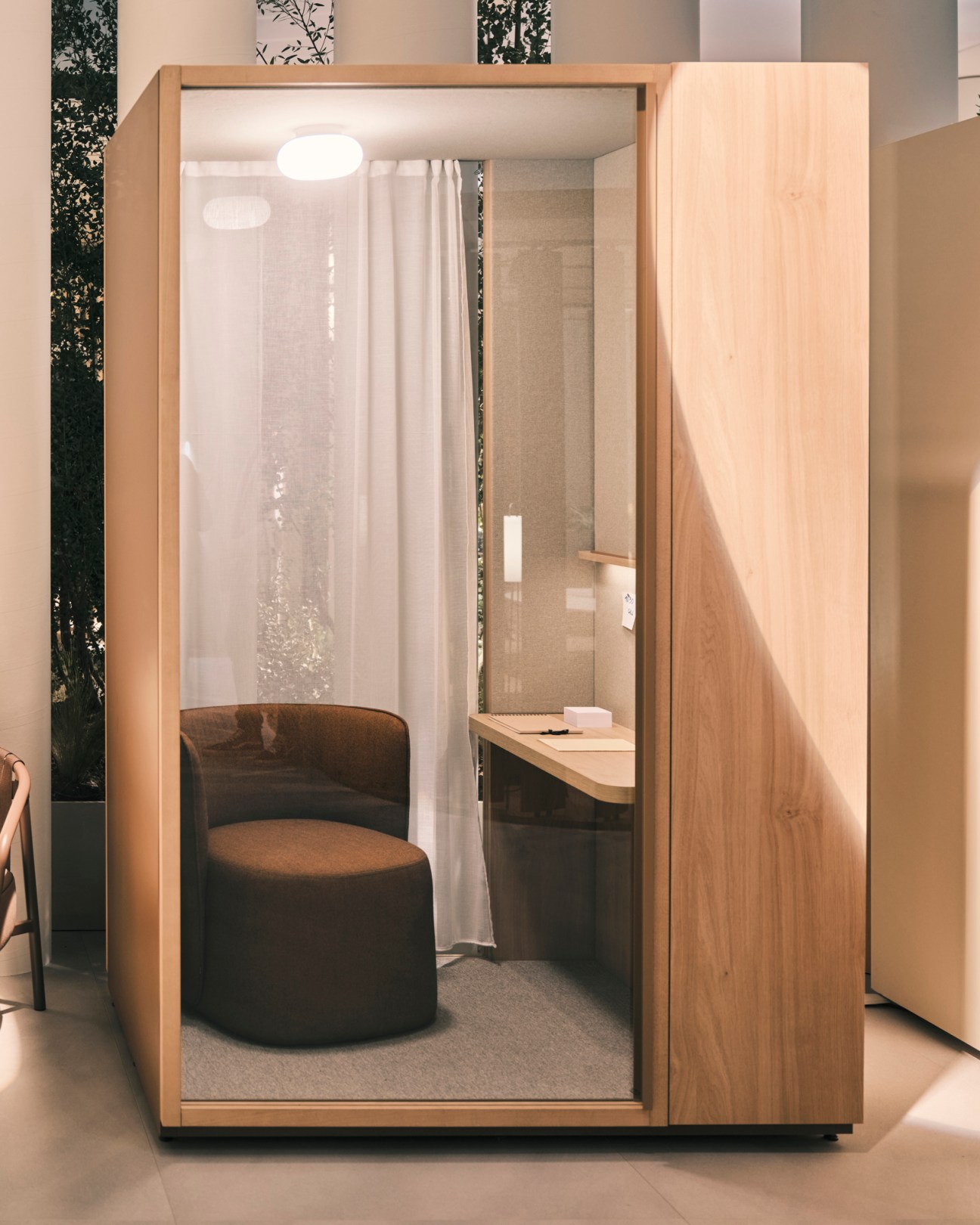
This smart solution for a modern telephone booth would make a welcome addition to any open-plan office that lacks spaces for making private calls or recording live radio. Available in a range of sizes, Kall comes with an adjustable desk, overhead lighting and the option of a swivel chair.
kettal.com
8.
Spaghetti chair by Alias
Furniture

The Alias booth at Salone del Mobile stood out thanks to its spirited installations and a liberal use of UV lights. This reissue of a 1979 design by Giandomenico Belotti, made from chromed steel and woven pvc, takes inspiration from spaghetti twirled around a fork – a good fit for any dinner table.
alias.design
9.
Superblocks by Minotti
Sideboard
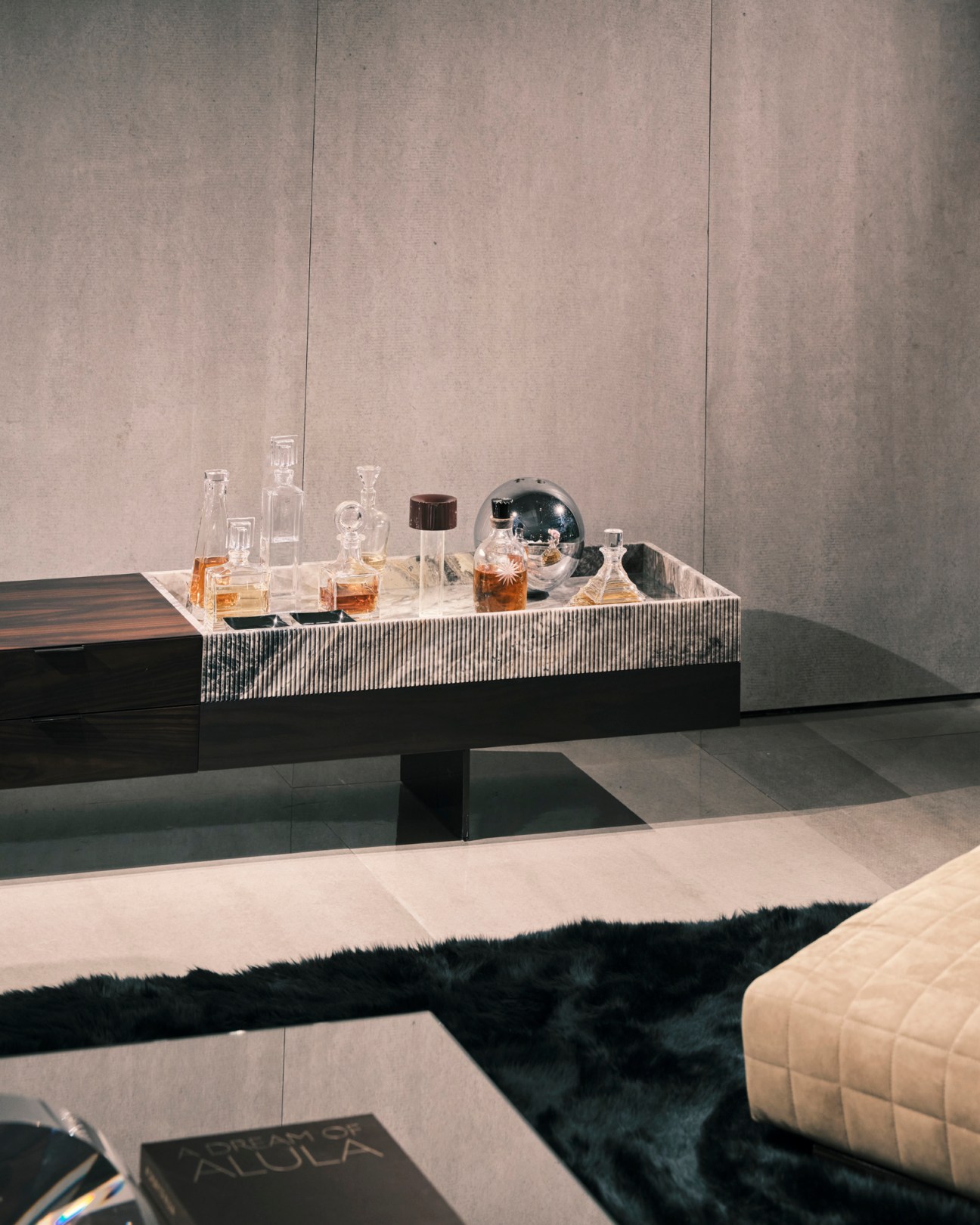
Brazilian architect Marcio Kogan has translated his love of rationalist architecture’s boxy shapes into smart furniture for Minotti. This low Superblocks sideboard is made from palisander wood and rests on metal blades; it also has a granite storage area for drinks – or keeping a bottle of saké or two.
minotti.com
10.
Curve by Poliform
Beds
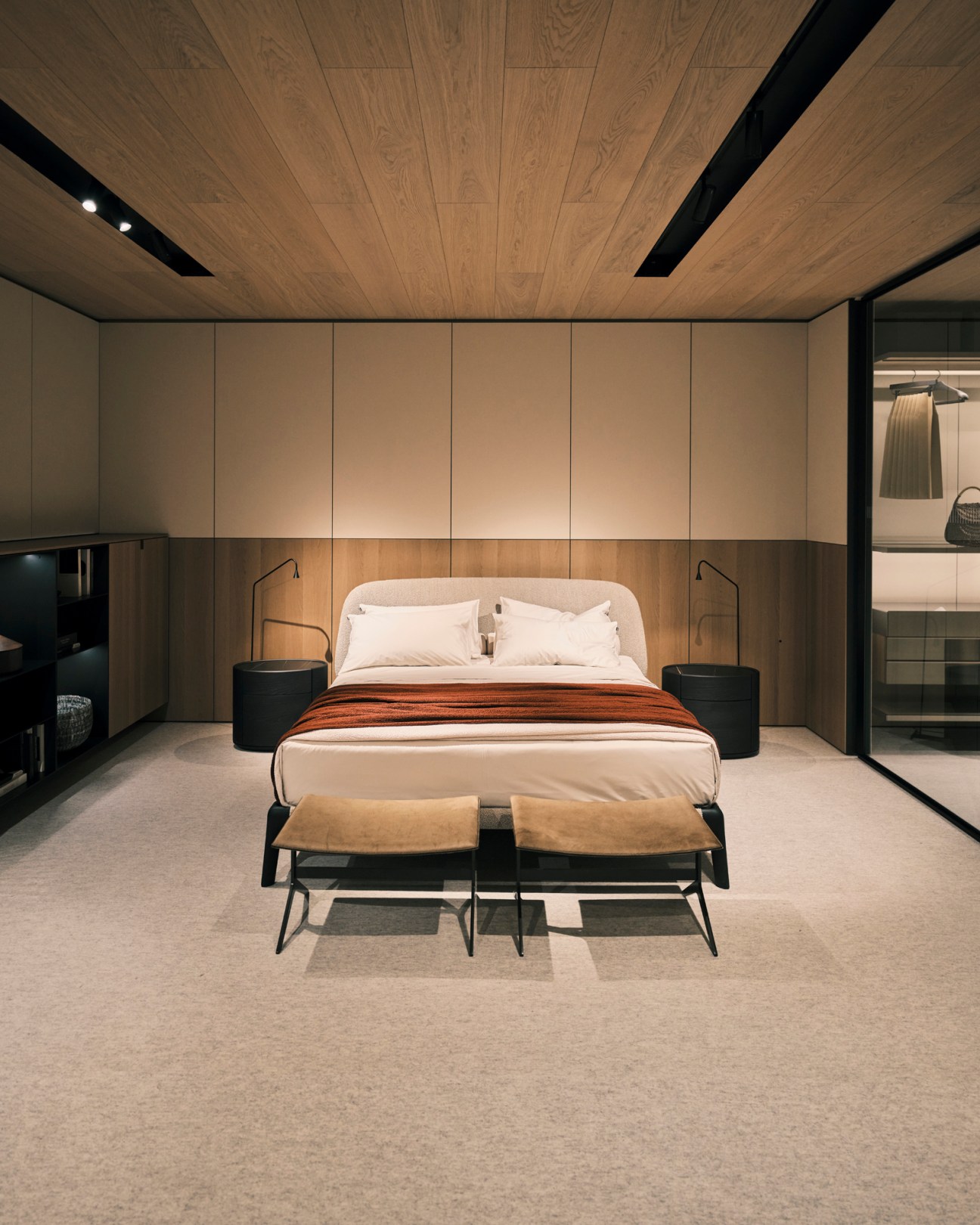
Brianza-based Poliform has many beds in its collection but Curve by French designer Emmanuel Gallina is a standout. The frame comes in black elm and spessart oak, while its padded headboard can be upholstered in a range of fabric and leathers, enabling it to be personalised to its owner’s taste.
poliform.it
11.
W103 Sempé by Wästberg
Lamps
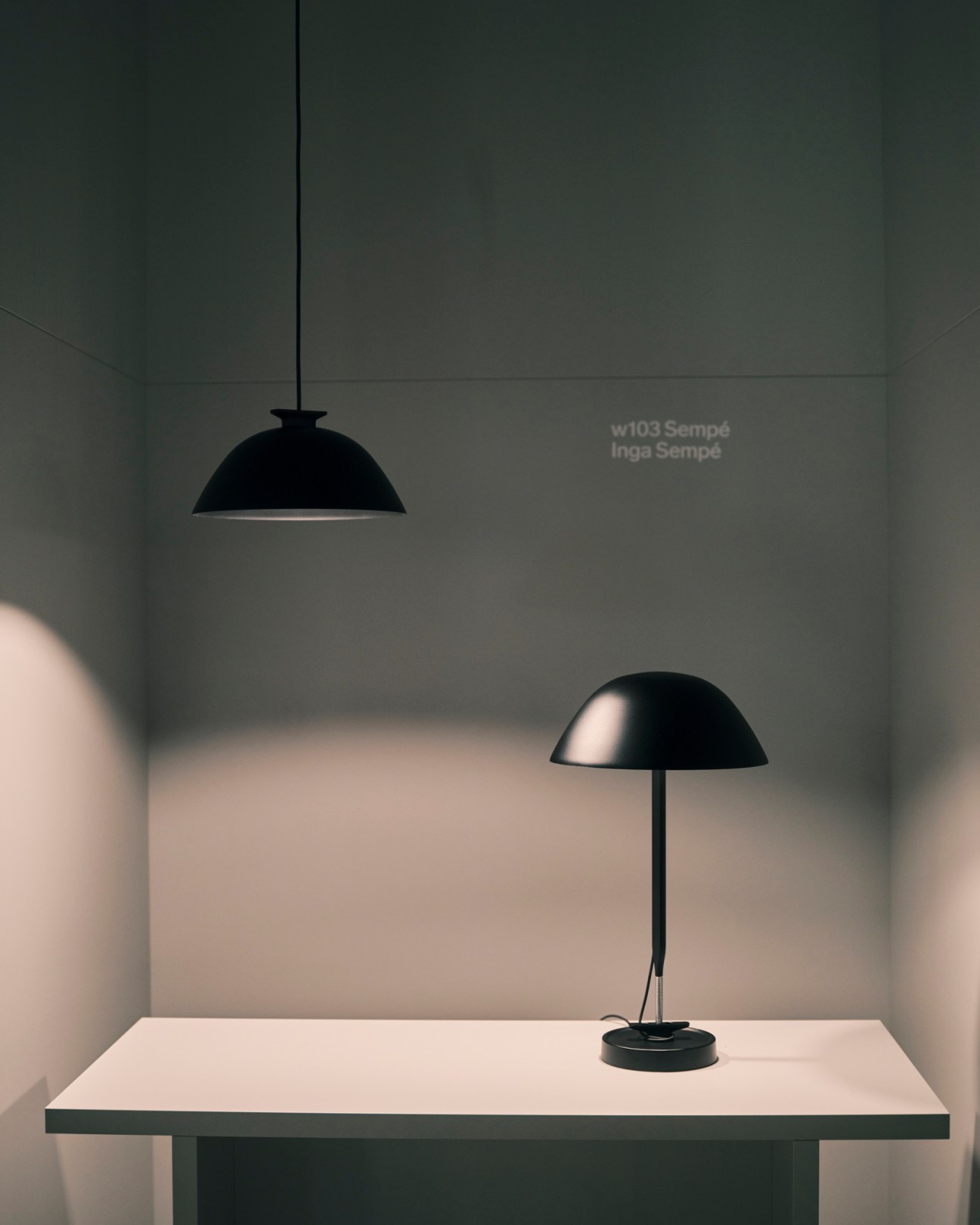
This lamp combines sturdiness and a lightness of form thanks to its hefty base and slender steel arm. The sleek aluminium shade comes in an array of colours and can be adjusted at different angles.
wastberg.com
12.
Run by Technogym
Treadmill
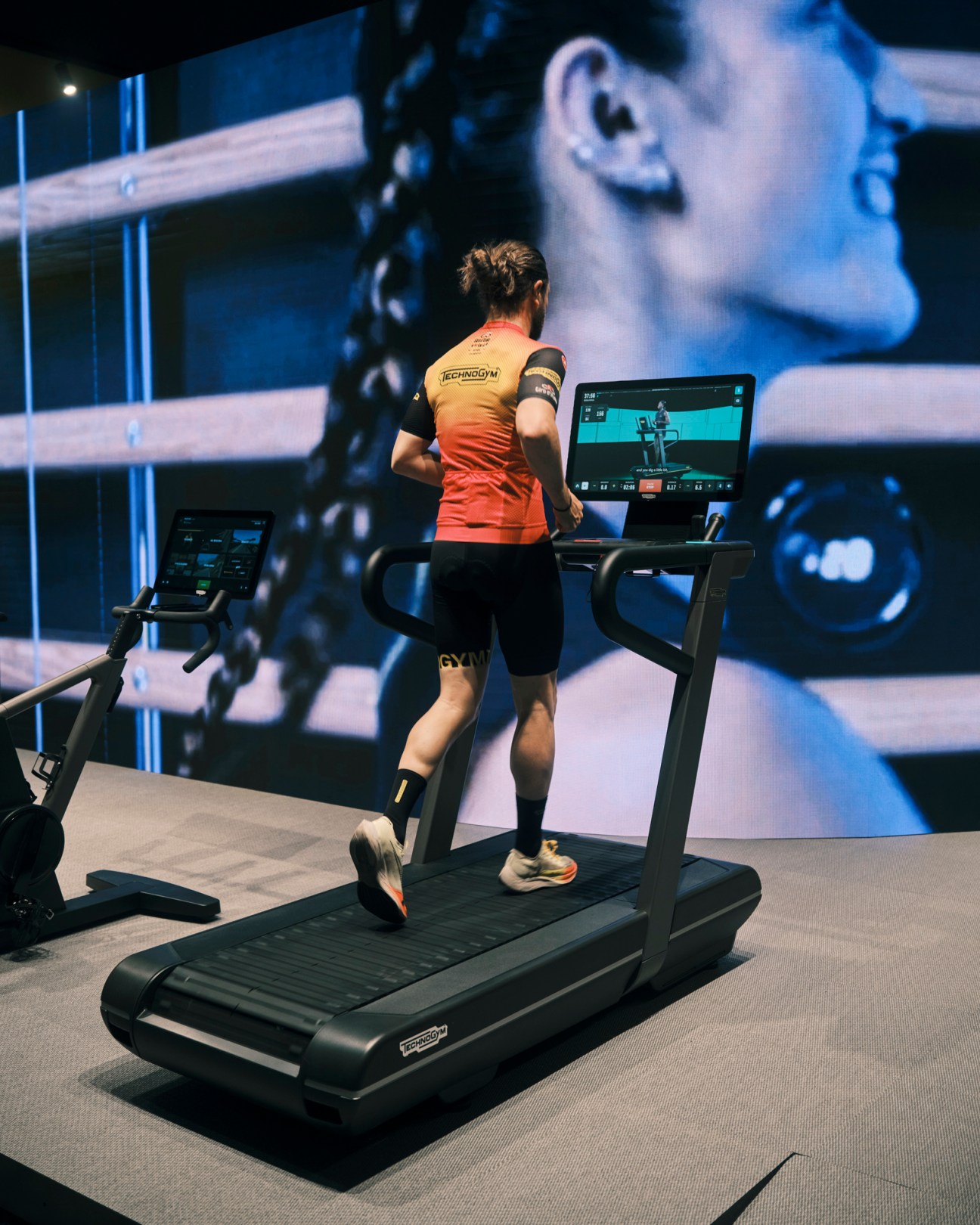
Technogym played to its strengths at Salone by showcasing its sports equipment with the aid of professional runners utilising its Run treadmill. The display showed that a good-looking home-gym setup needn’t be hard work.
technogym.com
13.
Luca Nichetto
Designer
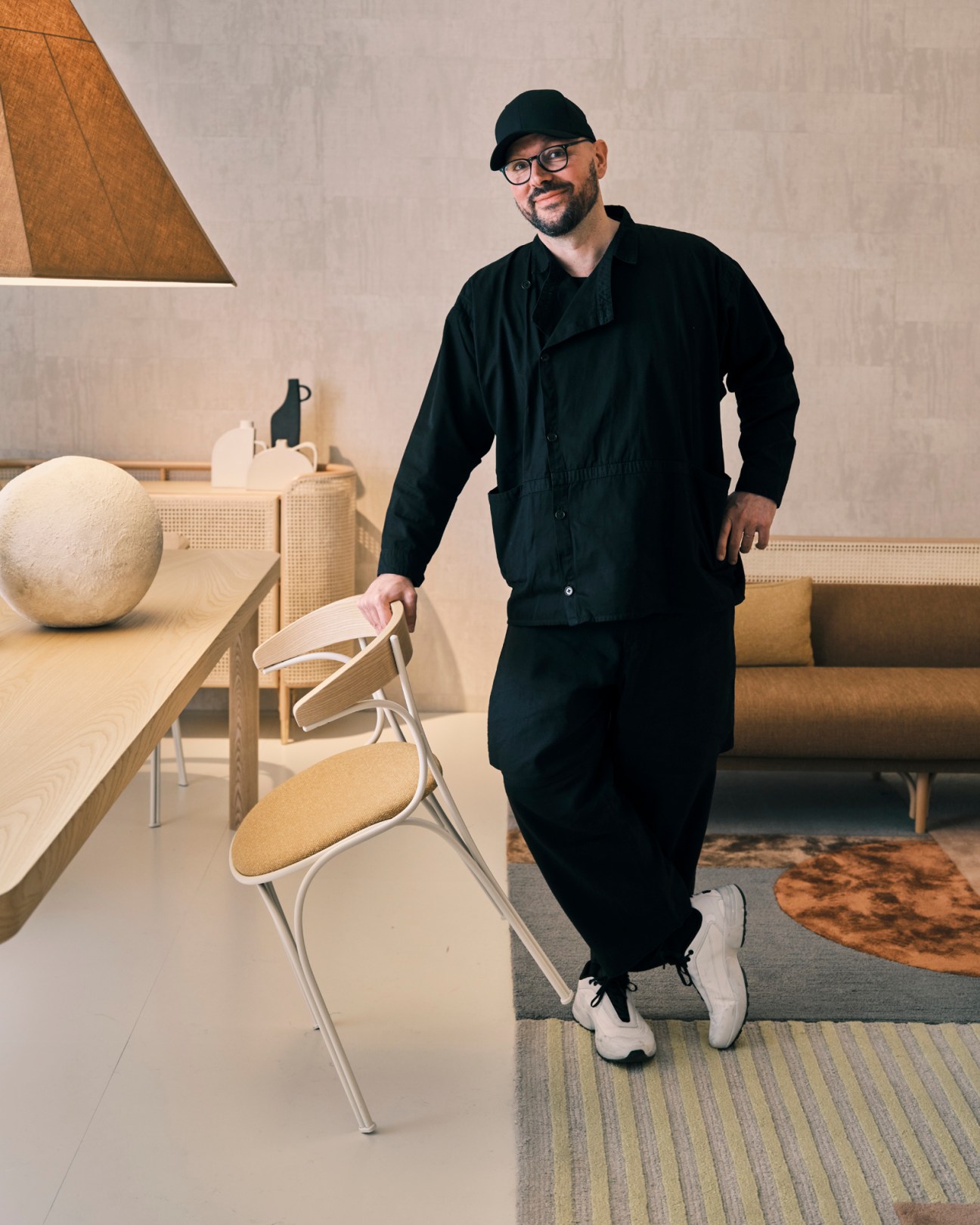
Industrial designer Luca Nichetto applied the look of steam-bent wood – a signature of Austrian furniture firm Gebrüder Thonet Vienna – to a different material for this body-hugging chair. “We used metal but wanted to retain a Thonet design language,” he says.
nichettostudio.com
14.
Lightwood and T1 by Maruni
Office furniture
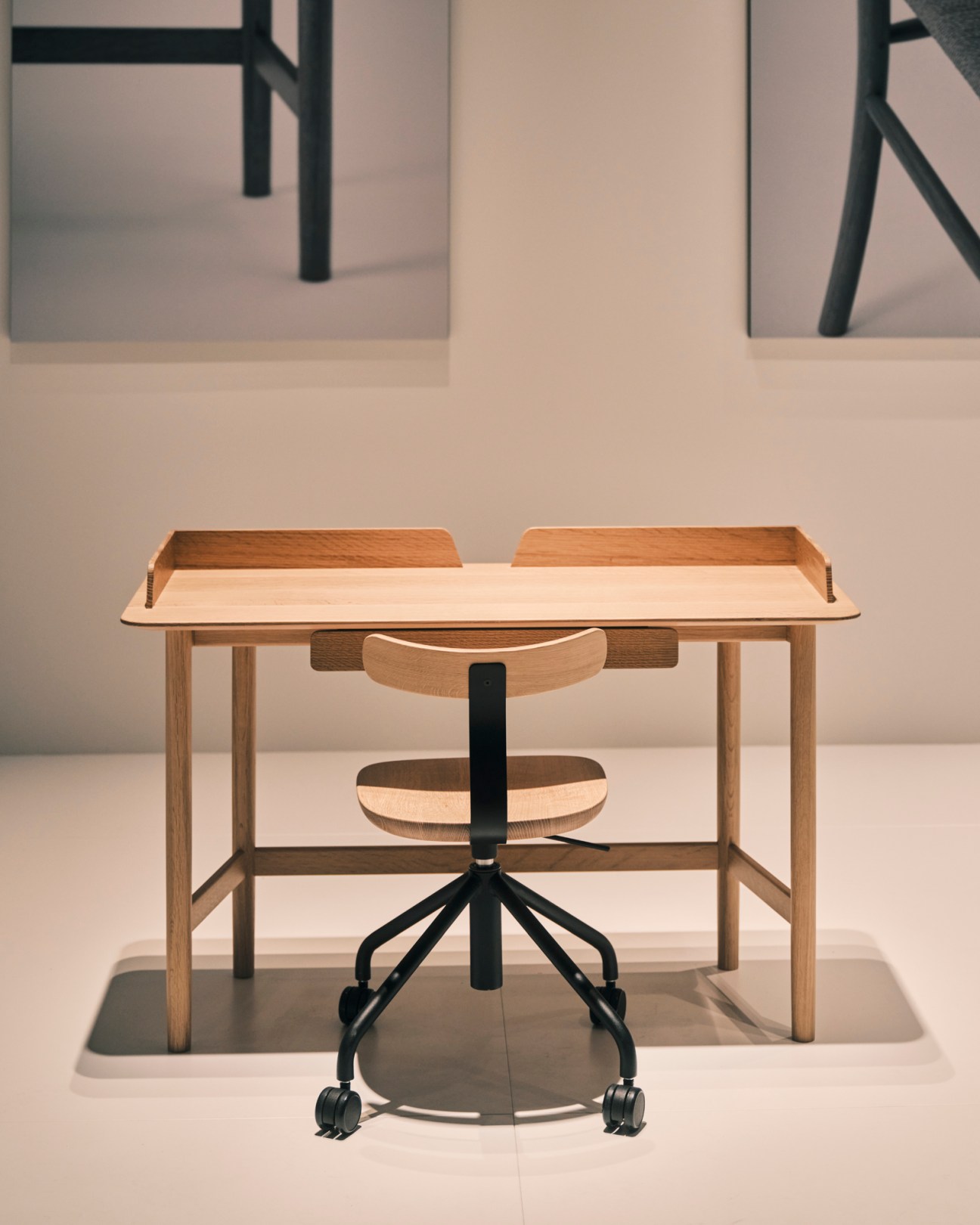
Jasper Morrison’s office furniture for Hiroshima-based Maruni doesn’t feel corporate, making it ideal for home or hotel room. The simple forms of the Lightwood desk and T1 task chair ensures that they can fit into different environments too.
maruni.com
15.
Paf Paf by Mattiazzi
Dining chair
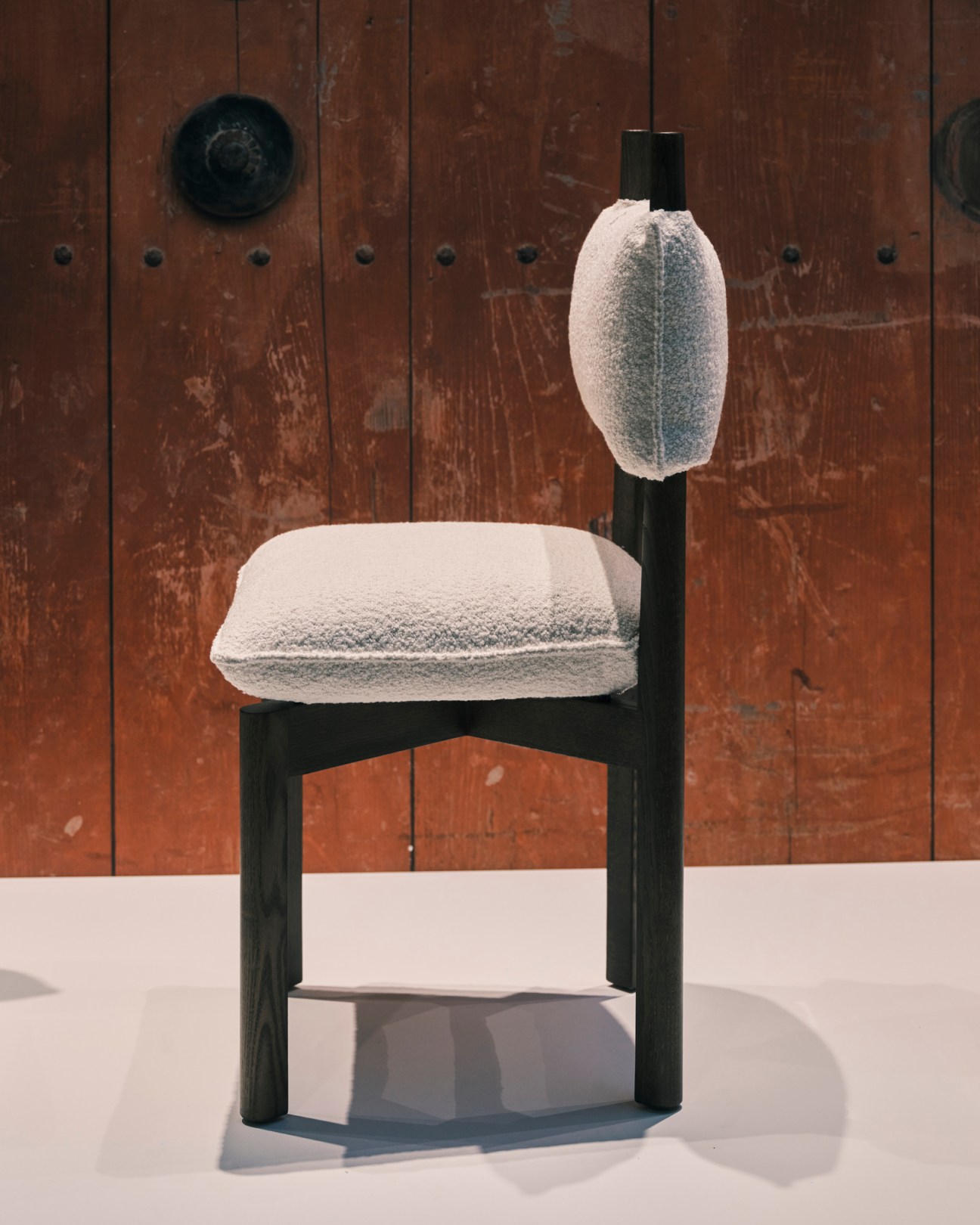
Italian architect Marialaura Irvine’s playful dining chair for Mattiazzi is made from an ash frame and finished in a dark stain, with removable upholstery cushions in Kvadrat textiles. In contrast to its sturdy form, the wooden chair is soft and inviting to sit on – making long dinners appetising.
mattiazzi.EU
Telling storeys
1.
Curating the future
Lesley Lokko
Venice Biennale’s International Architecture Exhibition is back. For the next five months in the pavilions of the famed Giardini della Biennale, the halls of the flagship Arsenale building and other venues across the city, the best minds in design will showcase how we might build a better world. Across the following pages, we provide a guide to the exhibition and an insight into the works of some of its key participants. To find out how the event is charting the future course of architecture, we start by talking to its curator, Lesley Lokko.
By selecting the theme and the participants, the curator of the Venice Biennale’s International Architecture Exhibition is responsible for directing the discussion at the world’s largest congregation of architectural talent. In 2023, that honour has fallen to Ghanaian-Scottish architect Lesley Lokko. Raised in Accra, Lokko graduated from The Bartlett School of Architecture in London in 1992 and has since enjoyed a career that has been far from conventional.
Over the course of 30 years, she has founded two design institutes (Johannesburg’s Graduate School of Architecture and the African Futures Institute in Accra), written 12 best-selling novels and worked on three continents. It’s a blend of practice, academia and storytelling that leaves her well-placed to lead the conversation around her chosen theme of “The Laboratory of the Future”. The aim is to turn Venice into a living workshop where architects and creative practitioners will, in her words, “imagine for themselves what the future can hold”. She tells us more.
Tell us about the theme’s development.
There’s a kind of strapline to “The Laboratory of the Future”, which is, “Africa is the laboratory of the future.” Africa is the continent with the youngest population, so most Africans have their lives in front of them. This creates a certain kind of energy. Africa is exploding with potential, talent and creativity. The continent and the diaspora were in my mind when I was thinking about the theme for the Biennale but I didn’t want to put that story front and centre. Taking “Africa” out of the official title gave us a way to open what is happening in Venice to the rest of the world. The “laboratory” is meant as a kind of workshop; it’s less to do with the nuts and bolts of making things and more to do with ideas.
This laboratory will include 89 participants, more than half of whom are from Africa or its diaspora. Why has their story not been told before?
When you grow up in Africa, you don’t really have a sense of yourself being African because everybody around you is African too. You only become African when you leave. The word “Africa” is the veil through which we are always seen but it’s also the veil through which we look. I was interested in bringing together a group of people who know what it’s like to be both behind that veil and with it removed.
Many architects in that position – such as David Adjaye, Mariam Issoufou Kamara and Francis Kéré – are finding global renown. How has working in Africa set them on this path?
Working in contexts that are unstable politically, economically and sometimes socially, as is the case in much of Africa, does make you a different kind of designer. Add to this the infrastructure on the continent – we live without consistent electricity – and it means that you don’t take for granted the infrastructure that is being built all the time. As a designer, you prioritise slightly different things and you think about the environment in slightly different ways. I’m hoping that this exhibition will show that it’s possible to do that and still be phenomenally imaginative and creative.
How is this perspective relevant to non-African participants?
When I think about Africa, I can’t think about it without the diaspora. For much of the African middle class, the relationship between Africa and former colonial countries is a physical one; it’s not just someone on the end of the telephone or a video call. Sometimes the money that a person is earning outside the continent is the money that sustains half a village back here. As such, people have it in their minds that they can go “there” and become somebody; and the diaspora also has an idea of what “home” is like back in Africa. There’s this traffic all the time between “there” and “here” that alters one’s sense of scale, time and distance. This is something that many people around the world can relate to; migration is the theme of the 21st century. Many of the things that Africans have been experiencing quite intensely, over quite a long period of time, are now being experienced by the rest of the world.
Through your curatorship, how do you begin to explore these global themes?
To be a curator, you must have a strong sense of a narrative but also have a feeling for the physical. It’s not unlike writing a novel; you have certain threads that you want to pull out in the story of the exhibition. For me, with a literary impulse, curating the Biennale started with the titles for the various components of the exhibition. Once that was set, it was a bit like a book with five or six chapters: I had to work out how I was going to fill them.
Tell us how you did it.
I knew that this would have to be an exhibition of parts because the story is very complex. Off the back of “The Laboratory of the Future” theme, we needed to start by talking about decolonisation and decarbonisation. These are two sides of the same coin but they’re not always expressed or understood that way. You can’t go at both ideas with the same focus all the way through with 100 participants; it would be too complex. So I broke it down into six subgroups, or components, very early on and they haven’t changed [see right].
What do you hope that people will take away from the Biennale?
I’ve always been interested in the idea of spaces where people come together to work something out. To get practitioners, an audience and the curatorial team together to work out what we all understand by “The Laboratory of the Future” seemed to be a rich starting point. At the end of the Biennale, I’m hoping that we’ll have a strong sense of what it was like to have taken part in this experiment, whether as a spectator or as a participant.
The six components of ‘The Laboratory of the Future’
1.
Force Majeure: In the Central Pavilion of the Giardini, this component will feature the work of 16 practices that represent the unstoppable force of African and diasporic architecture and design. It’s a celebration of the continent’s best.
2.
Dangerous Liaisons: In design circles, there is a seemingly endless conversation about what is and isn’t architecture. This component features 37 discipline-crossing creatives, who show how other fields, from art to landscape, enhance architecture.
3.
Curator’s Special Projects: This hand-picked selection of practitioners highlight the role that architecture plays in gender development, agriculture, climate change and more.
4.
Guests from the Future: Dedicated to young African and diasporic designers, the 22 exhibitors in this component respond to the notion of decolonisation and decarbonisation.
5.
Carnival: A six-month cycle of events, lectures, films, discussions and performances, all open to the public. The hope is that this will broaden the thematic discussion beyond the national pavilions and halls of the Arsenale.
6.
College: In the first-ever Biennale College of Architecture, Lokko will be joined by 15 professors to hold a series of experimental studios, seminars and lectures for 50 young architects in summer.
2.
Representing concerns
National pavilions
A highlight of the Venice Biennale is the national participations, which sees the countries involved nominate a curator who pulls together a showcase that responds to both the event’s theme (in 2023, “The Laboratory of the Future”) and the most pressing architectural concerns that the particular nation is facing. This year, 64 countries will be represented with many showing in dedicated pavilions in the Giardini. Here’s our pick of the bunch.
Social Friendship: Meeting in the Garden
Holy See
Sitting on a little island across from San Marco, the Abbazia di San Giorgio Maggiore was once, along with Venice itself, a focal point of power in the Christian world. With a history stretching back more than 1,000 years, the Benedictine monastery is still in operation, though over recent centuries the number of monks has dwindled to two. For the next five months, the Vatican has opened a corner of its quarters to the public. The exhibition, Social Friendship: Meeting in the Garden, commissioned by Cardinal José Tolentino de Mendonça and curated by Roberto Cremascoli, is only the second time that the Holy See has participated at the Architecture Biennale. “We invite visitors to care for the planet as we care for ourselves and celebrate the culture of encounter,” says Cremascoli.
Entering the abbey via a long, stone corridor, visitors can make out a larger-than-human figure beckoning at the other end. A procession of sombre sculptures by Portuguese architect Álvaro Siza – two in marble and nine more in wood – lead out into a walled garden. Among the monastery’s vegetables, herbs and chickens, Studio Albori has built structures using demolition-waste timber to provide biennale-goers with seating and shade. In a city flush with splendours old and new, this down-to-earth show is a reminder that it is the simple stuff that counts in the long run.
Abbazia di San Giorgio Maggiore, Venice
Fertile Futures
Portugal
Commissioned by Portugal’s Directorate-General for the Arts, the country’s pavilion investigates the management of fresh water on the Iberian peninsula. Called Fertile Futures, the showcase casts a critical eye on the issue, by building case studies around seven locations in Portugal, including the Tâmega basin the Lagoa das Sete Cidades, while also acknowledging that the country isn’t alone in facing water scarcity issues. “The planet’s existence depends on water and the way that we use it can tell us a lot about different societies’ quality of life,” Andreia Garcia, head curator of the Portuguese pavilion, tells Monocle.
In addition to the exhibition, the pavilion will also welcome a series of conventions, called Assemblies of Thought, where the public can talk with designers and consultants about the issues explored by the pavilion. The first was held in Lisbon, prior to the biennale, and will be followed by assemblies in Braga, Faro and Porto Santo this year.
Garcia says that broader conversation is essential as governments everywhere should be looking to the regions most affected by climate change for guidance on how to tackle future crises closer to home. “Our analysis, which uses the national context as a starting point, is still universal at its core,” he tells Monocle. “We all share these problems.”
Palazzo Franchetti, Venice
Children’s Forest Pavilion
Lithuania
A near-constant at the Venice Biennale are national pavilions that address architecture’s relationship with nature. Leading that charge in 2023 is the Lithuanian entry, which looks at the country’s paradoxical relationship with its forests: they are treated as either a robust material source for the construction industry or an untouched natural landscape offering reprieve from the urban environment. To tackle this complex and contradictory issue, a childlike curiosity has been applied to Children’s Forest Pavilion.
Curated by Jurga Daubaraite, Egija Inzule, Jonas Zukauskas, co-founders of design-led research and residency programme Neringa Forest Architecture, the exhibition brings together works and findings developed in parallel to outdoor activities held with children in woodlands in Lithuania and Finland. “We wanted to look at how we speak to children so that we empower them to think for themselves, explore their creativity and see the beauty of thinking about the future positively,” says Zukauskas.
Children’s Forest Pavilion will have a life beyond Venice. After the Biennale, the exhibition will be brought home to Nida. Zukauskas and the team hope that it will introduce thinking of forests as negotiated spaces where no single actor has a central stake.
Campo Tana, Castello, 2125, Venice
More pavilions to see:
1.
United Arab Emirates, Aridly Abundant
The exhibition space will be turned into a desert environment, creating a backdrop for provocations that show how architecture can better work with arid landscapes. Arsenale
2.
Singapore, When is Enough, Enough?
The Performance of Measurement
The nation-state’s entry will explore how we can evaluate the intangible aspects of a city to make them more people- friendly. Analogue plotting machines will mark data on long calligraphic scrolls. Arsenale
3.
Egypt, NiLab – The Nile as Laboratory
Africa’s only stand-alone pavilion is curated by a team from universities in Egypt and Italy. They will share lessons about building better based on studies of development along the world’s longest river.Giardini della Biennale
4.
Australia, Unsettling Queenstown
Settlements called Queenstown are found across the former British Empire. This installation weaves together real and fictional Queenstowns to explore relationships between people and the environment.Giardini della Biennale
5.
Brazil, Terra
How do indigenous and Afro-Brazilian populations feature in the country’s cultural discourse? This display considers human relationships with the earth and geographies. Giardini della Biennale
3.
Building bridges
European Cultural Centre
The Venice Biennale inspires a host of satellite exhibitions to pop up alongside it in the Lagoon City. Chief among them is the European Cultural Centre’s flagship showcase, Time Space Existence, which, inspired by the international architecture exhibition, highlights the latest innovations and encourage better built environments.
“We are a playground of experimentation for architects to test their ideas,” says Lucia Pedrana, exhibition organiser for the European Cultural Centre – Italy (ECC). It’s a sunny spring morning, shortly before the opening of the 18th Venice Architecture Biennale, and Pedrana greets Monocle under a brick arch that straddles the entrance to a 16th-century palace in Venice’s Cannaregio neighbourhood. The days before, a crew of construction workers laid the bricks for the self-balancing arch, modelled after Brunelleschi’s dome in Florence, while wearing virtual-reality headsets that supplied step-by-step instructions. The befuddled builders served as guinea pigs for a collaboration between Princeton University and architecture firm SOM, which looks to revive age-old construction methods by way of augmented reality (AR). “It was amusing,” says Pedrana. “But it worked.”
The AR arch is only the parting shot for Time Space Existence, the ECC’s biannual satellite exhibition to the Venice Biennale. The title is fittingly broad for the show, which presents more than 200 projects spread out across two palaces, Palazzo Mora and Palazzo Bembo, as well as the Giardini della Marinaressa. There is no set theme for each venue but the curatorial team of the ECC (a private organisation without ties to the EU) invites architects, research institutes, photographers, product designers and artists from around the world to submit a piece or demonstrate a project that they are working on. “We want to open the door to all kinds of projects and only later draw out common themes,” says Pedrana. “It becomes a snapshot of contemporary architecture.”
With such an ambitious remit, a visitor wading through the labyrinthine floors of the two palazzos is bound to feel a little overwhelmed: here’s an MIT investigation into the geography of tourism; there are photos reflecting on time, space and existence by Kengo Kuma. Apart from a handful of commissioned artworks, participants must fund their installations independently, which results in some sections feeling slightly slapdash and others a little corporate. But the jumble imbues the display with surprises, such as at Palazzo Bembo, while a sober retrospective of German firm Gerber Architekten leads straight into a room full of surrealist sculptures by Mexican artist Pedro Friedeberg.
Time Space Existence was first organised in 2012 and now forms a decade-long archive of architectural research. “Throughout the years, there’s a narrative that continues,” says Pedrana. There are also specific and sometimes surprising threads that emerge from the submissions. Two years ago, many were thinking about digital design; this year, Pedrana says, the key themes are novel materials, “trans-species design” (which considers non-human life) and population displacement. To see a hopeful answer to the latter, head to the Giardini della Marinaressa by the lagoon, which the ECC has turned into a public sculpture park. Here stands the result of a workshop in Madrid in summer 2022, where the Norman Foster Foundation, supported by Swiss building-solutions firm Holcim, tasked 10 architecture students with designing housing for longer-term refugee camps. The issue has only become more urgent since then, after the February earthquakes in Turkey and Syria. “In response to these crises, you have to very quickly create camps,” says Foster. “But the reality is that families can spend literally decades in a tent that is supposedly temporary.”
The first built prototype to result from this Essential Homes Research Project is shaped like a triangular tube with everything inside that a small family might need, including a bathroom, kitchen, sofa and beds. Built from timber and wrapped in a Holcim-made concrete carpet, which is rolled out and fixed in place by spraying it with water, the idea is that these sturdy, modular houses could be flat-packed and assembled on site in just one or two days. “It’s designed nicely, obviously, because it’s Norman Foster,” says Edelio Bermejo, head of R&D at Holcim. “It also provides comfort, well-being, dignity and the chance to create a community.”
Both Bermejo and Foster emphasise that there is still a long way to go before the design is useful on the ground: the prototype took a team of builders about a week to put together. Nevertheless, it proves that Time Space Existence is serving its purpose as a testing ground for ambitious architectural ideas. “It’s an exploration and it provokes discussion on the key issues, which are refugee housing and protection for the homeless,” says Foster. “That has to be positive.” — sro
‘Time Space Existence’ takes place at Palazzo Mora, Palazzo Bembo and Giardini della Marinaressa, Venice, from 20 May to 26 November.
ecc-italy.EU
4.
Growing influence
Demas Nwoko
“Architecture is a regional art,” says Demas Nwoko, speaking to Monocle from his residence and studio in Idumuje-Ugboko, his hometown in southern Nigeria. “Architecture should differ from geographical zone to geographical zone, and the shape of the interior should be determined entirely by the way of life of the people using the space.” Such ideas have resulted in the 88-year-old artist and self-taught architect being honoured with this year’s Golden Lion for Lifetime Achievement, the Venice Biennale’s most prestigious award.
Nwoko first rose to prominence as a founding member of Nigeria’s Zaria Art Society in 1958, a student group that blended Western and African art traditions in their work. Decades on, in a much more globalised world, Nwoko still frowns upon importing any idea wholesale. He believes that architects should look to, and develop, local knowledge, building culture and identity. In the Nigerian tropics, Nwoko’s enclosed but ventilated buildings are designed to moderate the sun, heat and rain. They are also resource-conscious; some of them are constructed from stones or bricks made from laterite soil that’s excavated onsite. And, practical as he is, Nwoko also acknowledges that built works need to grow and develop alongside their inhabitants.
Today the octogenarian is revisiting the New Culture Studio in Ibadan, a design and performing arts centre that he began building as his own residence and studio in 1967. “It was never a solid piece of design but was added to over the years as needs arose,” he says of the evolved building. Having honoured Nwoko with the Golden Lion, it seems that this is an approach to architecture that the Venice Biennale will be hoping others emulate.
An exhibition of Nwoko’s work can be viewed at the Stirling Pavilion in the Giardini della Biennale.
5.
Home from home
Hood Design Studio
To open the biennale display in the Central Pavilion of the Giardini, curator Lesley Lokko has tapped 16 design practices from Africa and its diaspora to present their work. Called Force Majeure, the dedicated showcase will offer creatives such as Walter Hood, founder and principal of Hood Design Studio, the chance to explore human connections to places and landscapes.
For California-based landscape designer Walter Hood, Charleston and the surrounding Low Country in South Carolina is an enduring source of fascination. The area is home to the Gullah Geechee people, who are descendants of the transatlantic slave trade. They developed (and retain) a language, cuisine and cultural practice – and their story anchors Charleston’s International African American Museum, which opens in June. Hood designed its memorial garden and returned to this landscape and region for inspiration for his two-part exhibition Native(s).
Hood’s ambition was to challenge the notion of belonging and question what it means to be native. He explains that both the Low Country and Venice are ideally suited for unpacking this. For the exhibition’s interior component, Hood is displaying two models of basket houses that he designed in response to pressures facing Phillips, a Gullah Geechee settlement in north Charleston. As families grow in Phillips, they carve out plots for new houses from palmetto forests deeded to their ancestors upon emancipation in the 19th century. The landscape also provides the raw material for sweetgrass baskets, sold by the Gullah Geechee on country roads, which are destined for infrastructure upgrades. Naturally, one of the exhibition’s houses is inspired from sweetgrass basketmaking and the other inspired from the structure of palmetto trees. The exterior component consists of wood columns slotted alongside the concrete pillars of Carlo Scarpa’s Sculpture Garden. While Venice’s architecture is famed for its masonry, the city is propped up by wood pilings. Hood sourced the chestnut for his installation from the same company that provides most of Venice’s replacement pilings.
His installation begs the question: is the palmetto tree more native to the Low Country than the basket-weaving tradition brought across the Atlantic? Are concrete columns designed by the beloved Italian architect more native than the city’s hidden pilings?
“I’m hoping that this investigation will help us to articulate the idea of ‘native’ in a way that is more inspirational and less pastiche,” says Hood. “Everything we don’t like isn’t ‘native.’” Through hardwood and grasses, Hood’s designs disarm any such hostility.
Close encounters
AMAA
A key showcase at this year’s Arsenale is ‘Dangerous Liaisons’, which will highlight the practice of 37 designers working across disciplines. In that number is Veneto-based amaa, a studio that proves art and architecture are perfect partners.
Architects Alessandra Rampazzo and Marcello Galiotto set up amaa, a collaborative office for research and development, in Venice in 2012. In 2015, a second office was opened in Arzignano, which is in the heart of the Venetian plain, an hour inland from Venice. “We started by recovering an old electric motor and water pump factory, turning it into a café, retail space and studio,” says Galiotto. “The project showed how you could turn an abandoned industrial structure into a meeting place and immediately, new commissions came in. In a sense, Arzignano gave us an architectural playground.”
Recently, several of amaa’s large-scale projects are being realised, including the art organisation Atipografia’s Threshold and Treasure gallery, which is tucked in between luscious hills, tall pines, industrial buildings and the mediaeval castles of Arzignano. It’s this quickly growing portfolio that drew the attention of the curatorial team of the biennale, who invited the studio to participate in Dangerous Liaisons, an exhibition that celebrates designers working across disciplines.
For Amaa, art is close to its heart. When Monocle visits its studio ahead of a tour of its projects in Arzignano, a wall-covering art installation in mixed wood and ceramics acts as a backdrop to a series of sculptural models cast in concrete, which is on display across the enormous industrial floor.
“These wall pieces are made by an artist who always works with us called Alessandro Neretti,” says Galiotto. “He reuses found materials and sculpts them.” amaa’s close collaboration with artists over the years includes works by artists from northern Italy, such as Arcangelo Sassolino and Andrea Bianconi, who they’ve turned to in order to enhance their architecture’s spatial and atmospheric qualities. “The way art addresses the experience of the user – and achieves a grasp of eternity – is instrumental to the development of our projects,” says Rampazzo.
For proof, Rampazzo and Galiotto point to Threshold and Treasure gallery. Set in an early 20th-century printing house, the gallery’s pavilions reveal the art – and the site’s history – gradually thanks to the staggered placement of walls and doorways. “I get goosebumps in here,” says Galiotto as he walks through the main hall. “The current exhibition by artist Diego Soldà is a series of artworks that enhances our architecture. Three-dimensional paint sculptures made up of thousands of layers of paint, cut or sliced, perfectly echo our philosophies.”
We walk upstairs to the gallery office and Rampazzo and Galiotto spontaneously buy two works from the exhibition. “The art is making the architecture react and live; that is what the collaboration between art and architecture is all about.”
Mixing things up
amaa isn’t alone in crossing disciplinary practices. Here are three other studios showing as part of Dangerous Liaisons that are worth knowing.
1.
Liam Young
Looking to develop a vision for a new urban environment? The Australian-born director is your go-to, using film to tell stories and design the cities of the future.
2.
Office for Political Innovation
Need an architecture office willing to challenge the status quo? Turn to this Madrid-based firm, which blends design with research and bold environmental practices to deliver projects that break the mould.
3.
Dream the Combine
Far from delivering stock-standard buildings, the New York firm collaborates with filmmakers and fabricators to create works that blend art, architecture and cultural theory. The result? Buildings that create otherworldly experiences for their inhabitants.
Images: Simone Bossi
Soul supplier
When Maria Lemos started spending more time in Athens, she sensed change in the air. “Like-minded people were moving to the city, the food scene was transforming, the art scene was different – it just felt right,” she says. Over the past few years, Lemos has been making frequent trips to her hometown to work on the opening of Pagostas, a guesthouse on Patmos island, with her husband, Gregoris Kambouroglou. A retailer at heart, Lemos quickly began imagining what an Athenian iteration of her London boutique, Mouki Mou, would look like – and when she found the right spot on the hillside Plaka neighbourhood, she signed a lease long before she could come up with all the answers. “The location we found felt so unique that the decision was instinctive,” says Lemos over coffee. “It’s completely off the grid – it feels like you’re on an island but you’re in the centre of Athens.”

Plaka is a pedestrianised area best known for its narrow, cobblestone streets where neoclassical homes and family-run tavernas meet long rows of souvenir shops, catering to the crowds of tourists hiking up to see the Acropolis. “There’s such interesting architecture all around,” adds Lemos. “You see the new and the old, the good and the bad – that’s the dichotomy of Athens.” Nowhere is this reflected more than on the corner of Diogenous Street, where the new Mouki Mou Athens has opened its doors just in time for spring. The shop is housed in a concrete 1970s building, while nextdoor is the oldest house in Athens.
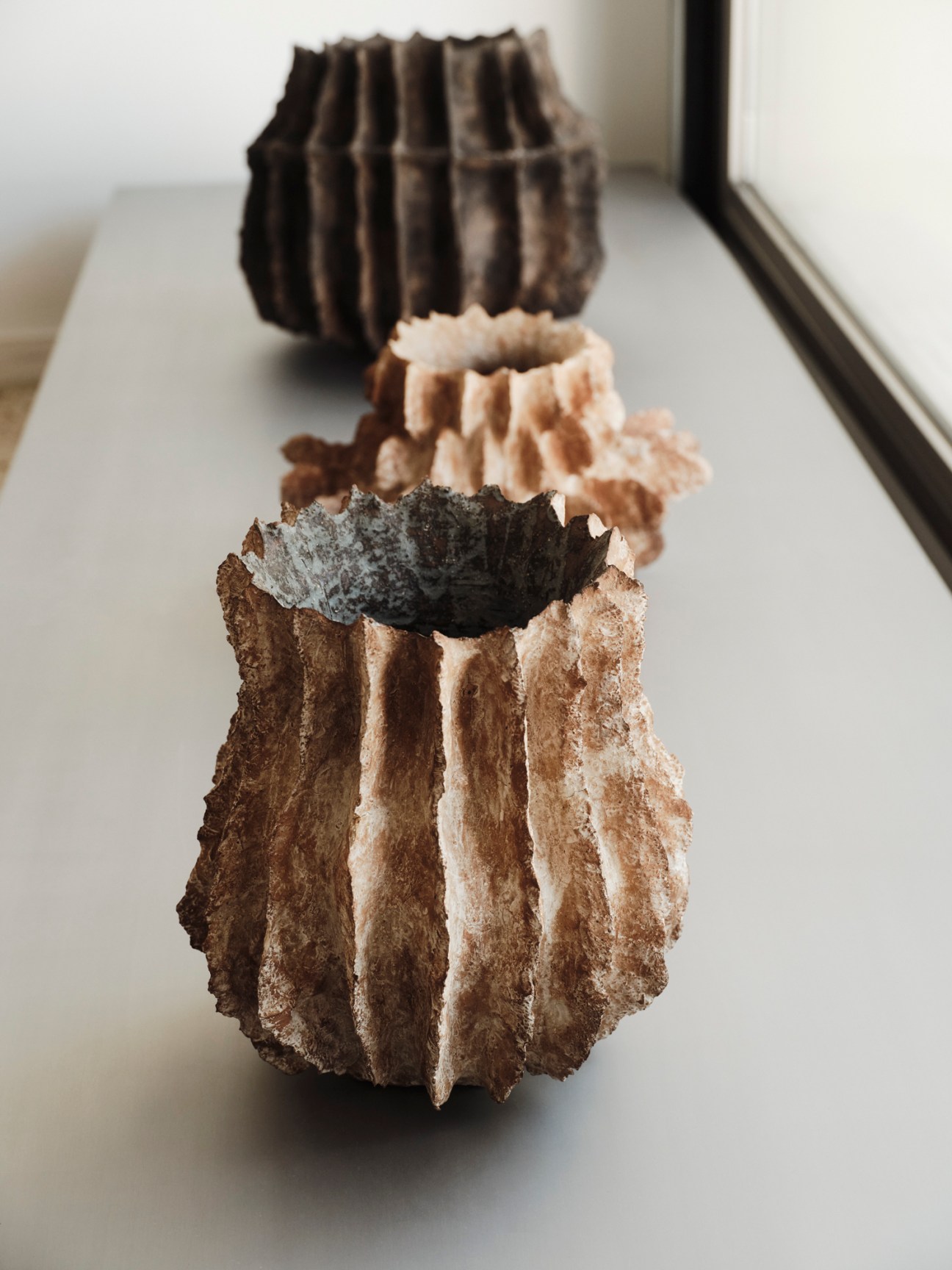
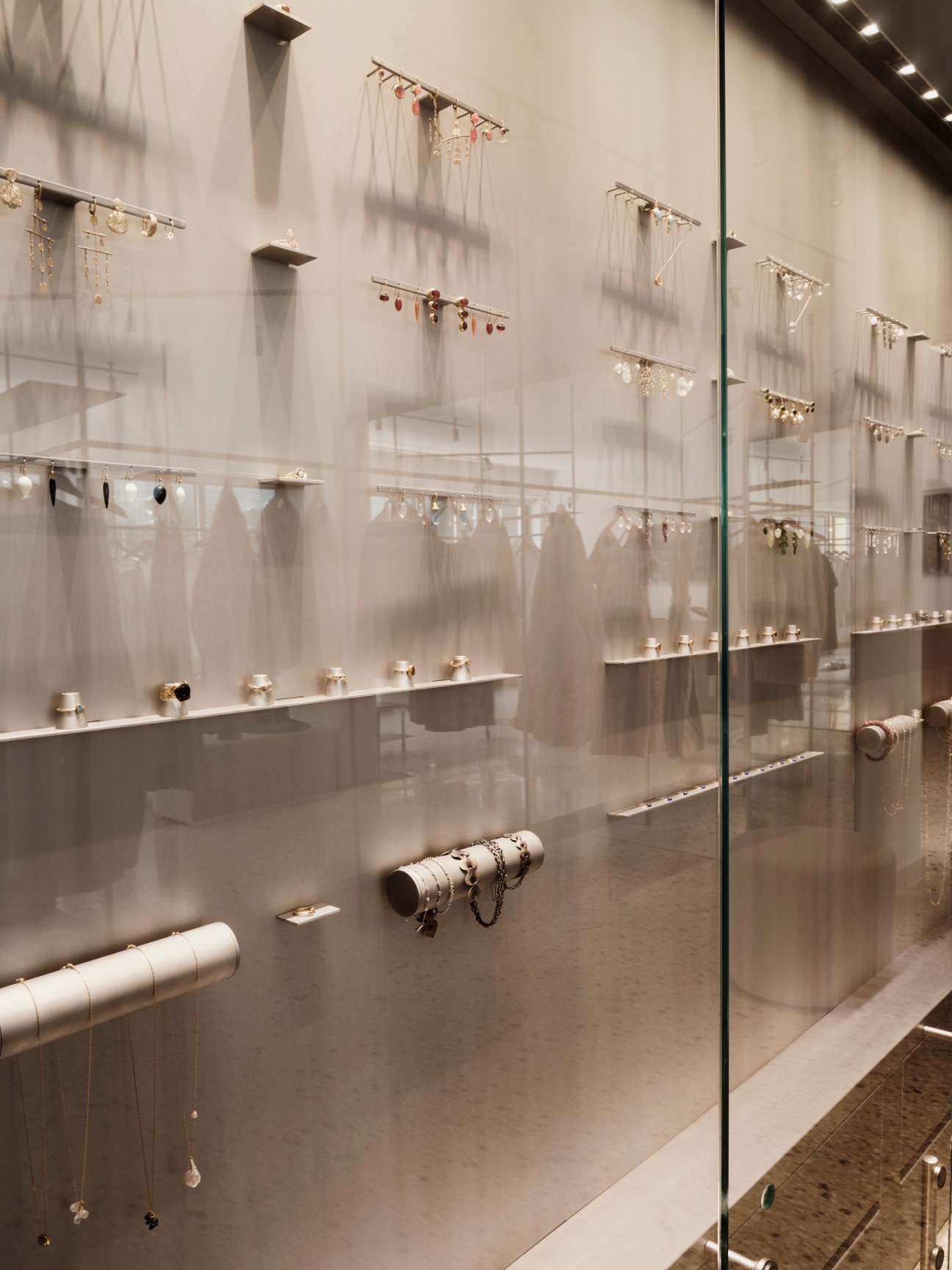
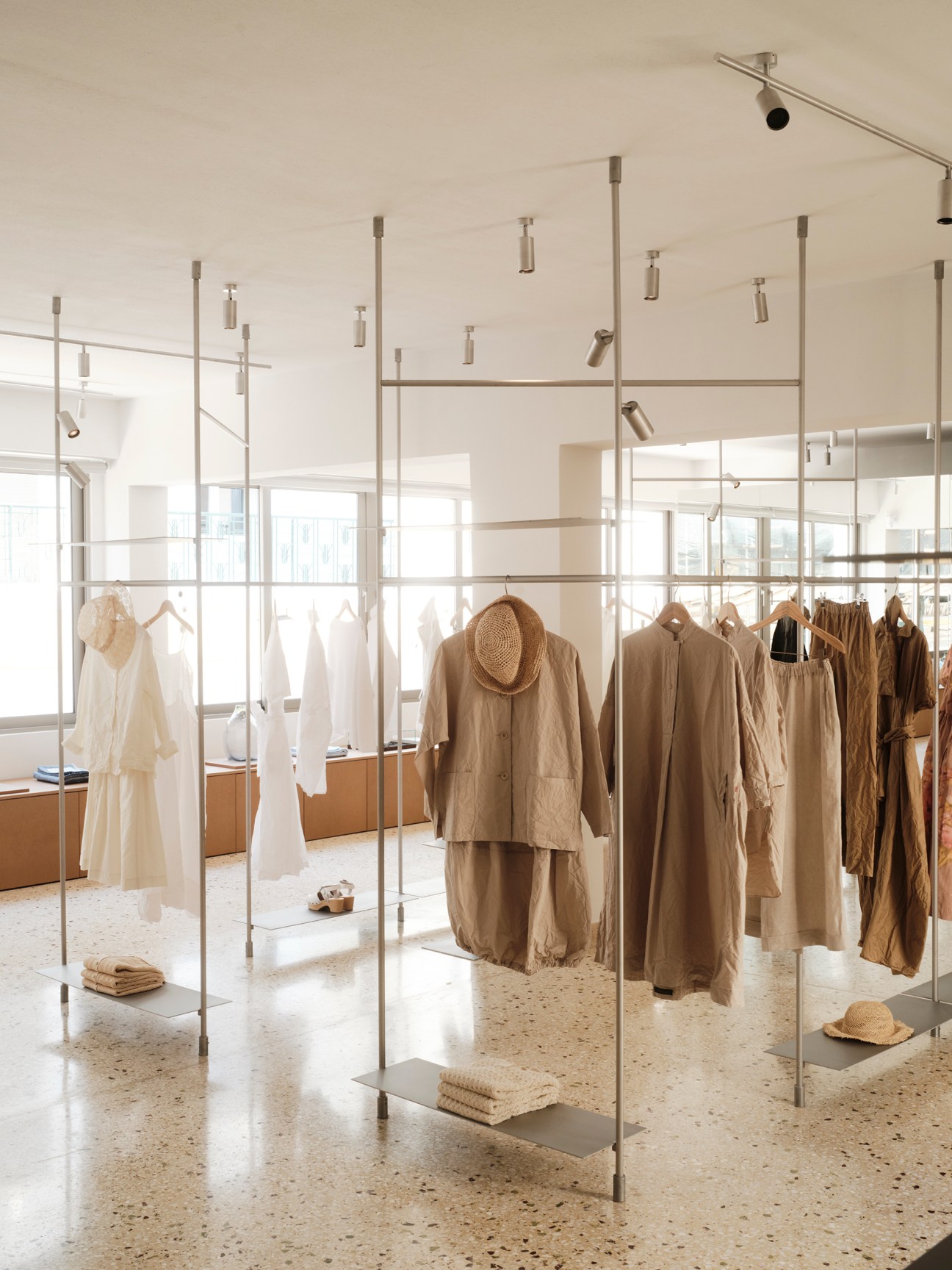
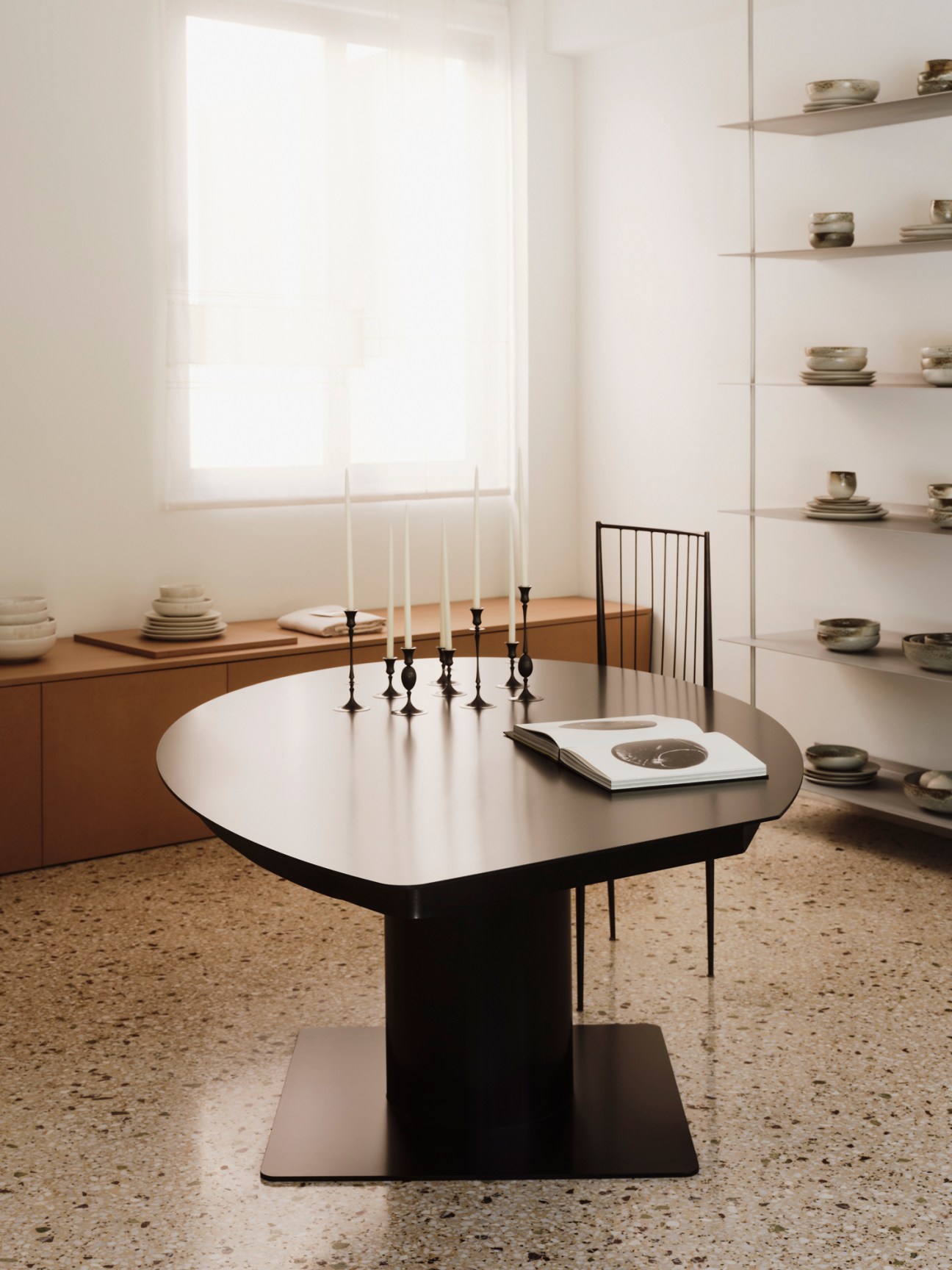
Lemos gave free rein to Thessaloniki-born designer Leda Athanasopoulou, who chose to let the period architecture of the building define the shop’s interiors, which feature repurposed terrazzo floors and aluminium and mdf accents. “Athens isn’t just about the ancient world,” she says. “It’s about the modern world too. And this location captures both.”
The works of some of Greece’s most skilled craftspeople, from technicians to lighting designers and carpenters, is on display here – the pièce de résistance being a metal table by Eleni Vernadaki, an artist who Lemos considers a “living legend” and whose work she has been collecting for years. A pair of ceramic lace paintings by Vernadaki are mounted on the walls, while vertical jewellery cabinets are dotted throughout and showcase exclusive pieces by some of Greece’s most established jewellers, including Fanourakis and Ileana Makri. Their designs sit next to international names, such as those of New York-based Gabriella Kiss. “We’re not only after Greek names,” adds Lemos. “We want to have a point of view that fits the country. Greece is about simplicity and minimalism, and less is more.”
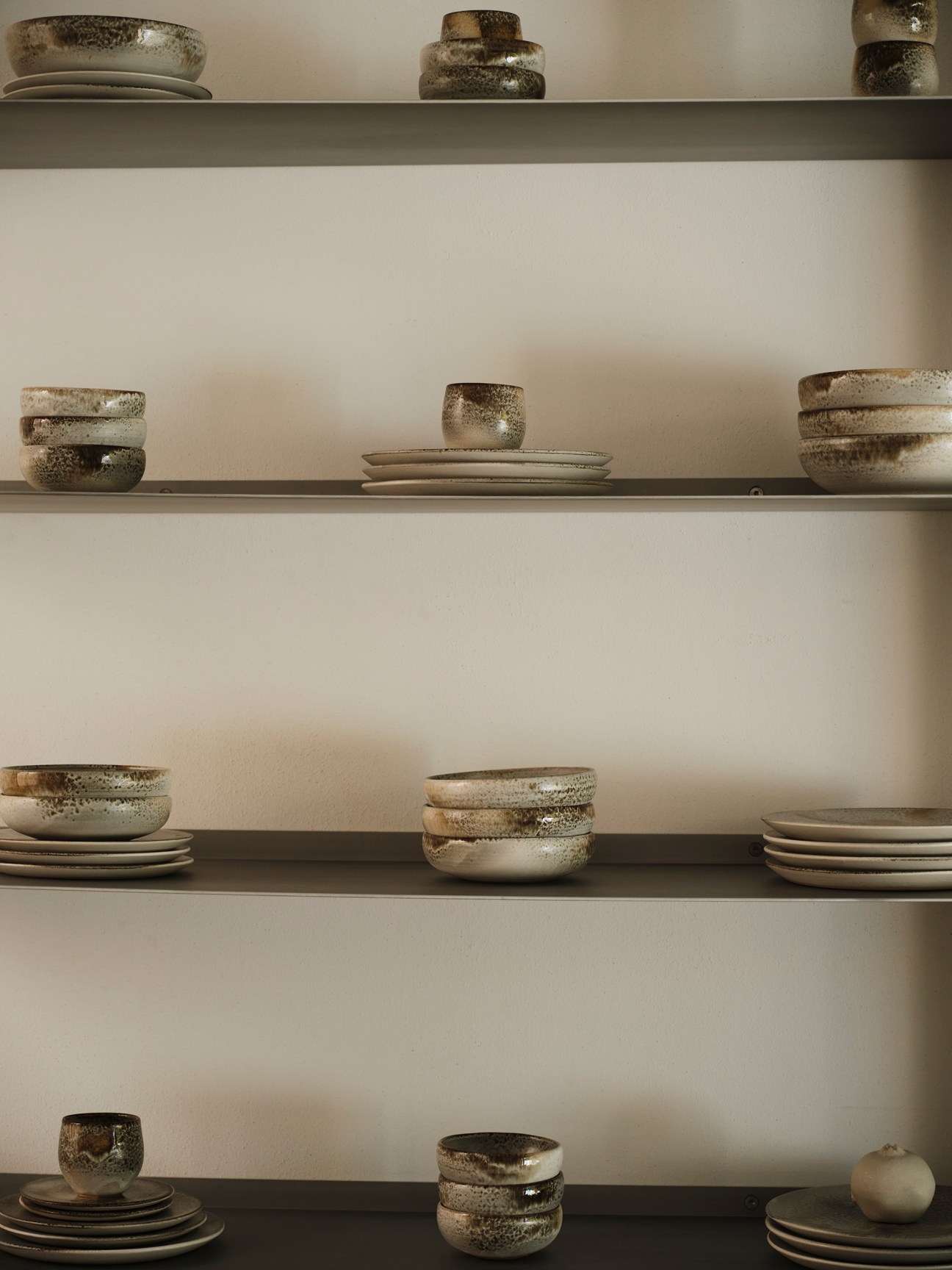
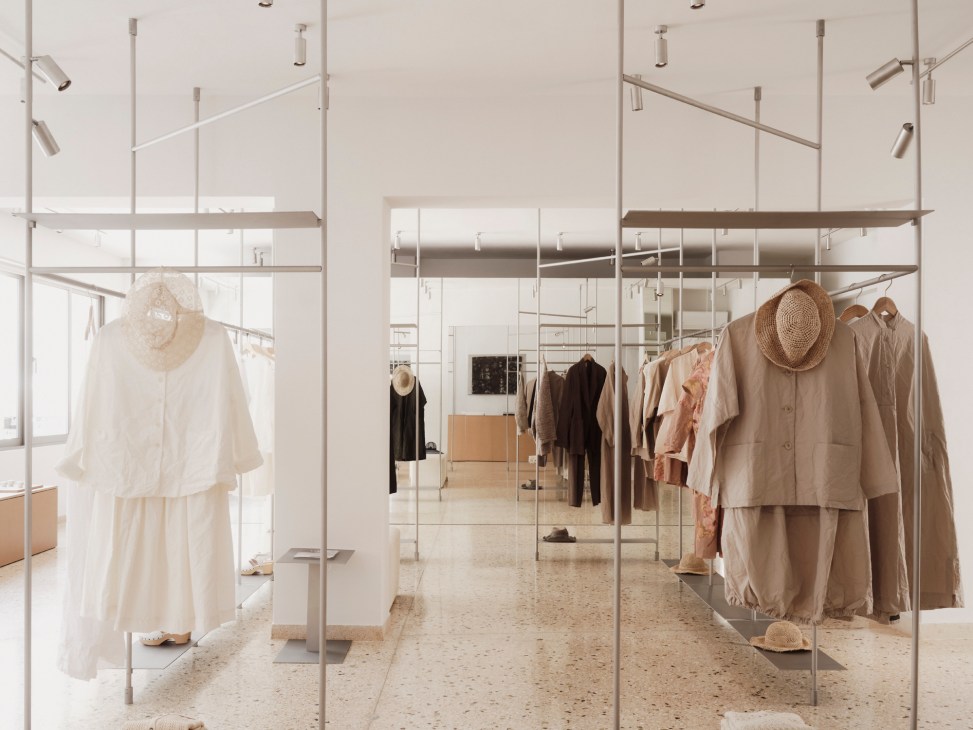

Above the shop floor, a 160 sq m terrace boasts panoramic views of the Acropolis. “It’s a real viewpoint,” says Lemos. “So we put an enormous amount of work into planting the terrace and were able to transform what looked like a cement football pitch into a space that feels alive and can soften the area’s overall landscape.” Though there’s no product on this green rooftop, it’s an integral part of the business because of its potential as a spot for the local creative community to meet and share ideas. “This can’t just be a retail space,” says Lemos. “People should be able to sit on the roof and grab a coffee or a drink in the evening.” Lemos plans to kick off the summer season with a book signing for Argentine photographer Miguel Flores-Vianna’s latest title, Haute Bohemians. “I’ll be back in Athens regularly for such events. We want to ensure that it’s a living shop, not just a space that sells things.”
But the shop does sell a handsome selection of homeware, jewellery and womenswear, handpicked to reflect Lemos’s slow-fashion ethos. “We’re much more concerned with lifestyle and textiles – our customers shop for pieces that they will be able to keep for the rest of their lives,” says the retailer, pointing to workwear jackets by French brand Casey Casey and tailoring by Fforme, a New York label by Paul Helbers, a former menswear designer for premium luxury label The Row. The shop’s team has a deep understanding of these brands’ stories and the luxurious material compositions of their products, ensuring that the information can then be passed on to customers.
“You often see the finished product but don’t understand how it’s made,” she adds. “We want to educate shoppers and give the makers a voice. That’s why we’re also planning to use our roof terrace as a hub for customers to meet these wonderful people and understand what they do. It will be a cross between a gallery and a shop.”
Having already built a loyal community around Mouki Mou London, which opened on Chiltern Street more than 11 years ago, Lemos is confident that she’ll find a similar audience of Athenians and international visitors who share her appreciation for craft. “We don’t want world domination,” she says, adding that to be successful, retailers should identify their niche and detach themselves from market trends. “The key is finding our customer base and servicing them really well. You need to feel liberated and just love what you do. If you don’t create a shop with soul, people will choose to buy online instead.”
Lemos’s independent, cosmopolitan spirit is helping to introduce a more mindful approach to shopping for one’s home and wardrobe. “That had been quite lost in Athens,” she says. “But today there is a growing Greek audience that appreciates design that’s artistic and has a certain purity. It gives me carte blanche to rediscover my hometown.”
moukimou.com
How Puig turned perfume into a luxury empire
L’Hospitalet de Llobregat is a world away from the warren-like streets of Barcelona’s Gothic Quarter. A short trip southwest of the centre, the suburb is more functional than picturesque: a new-build symbol of Catalonia’s economic clout. Up on the executive floor of Puig Tower, a glass-and-steel skyscraper designed by Pritzker-winning architect Rafael Moneo, president and CEO Marc Puig is easing himself onto a sofa and preparing to talk about how his family firm has become one of the biggest luxury-industry success stories in recent history.
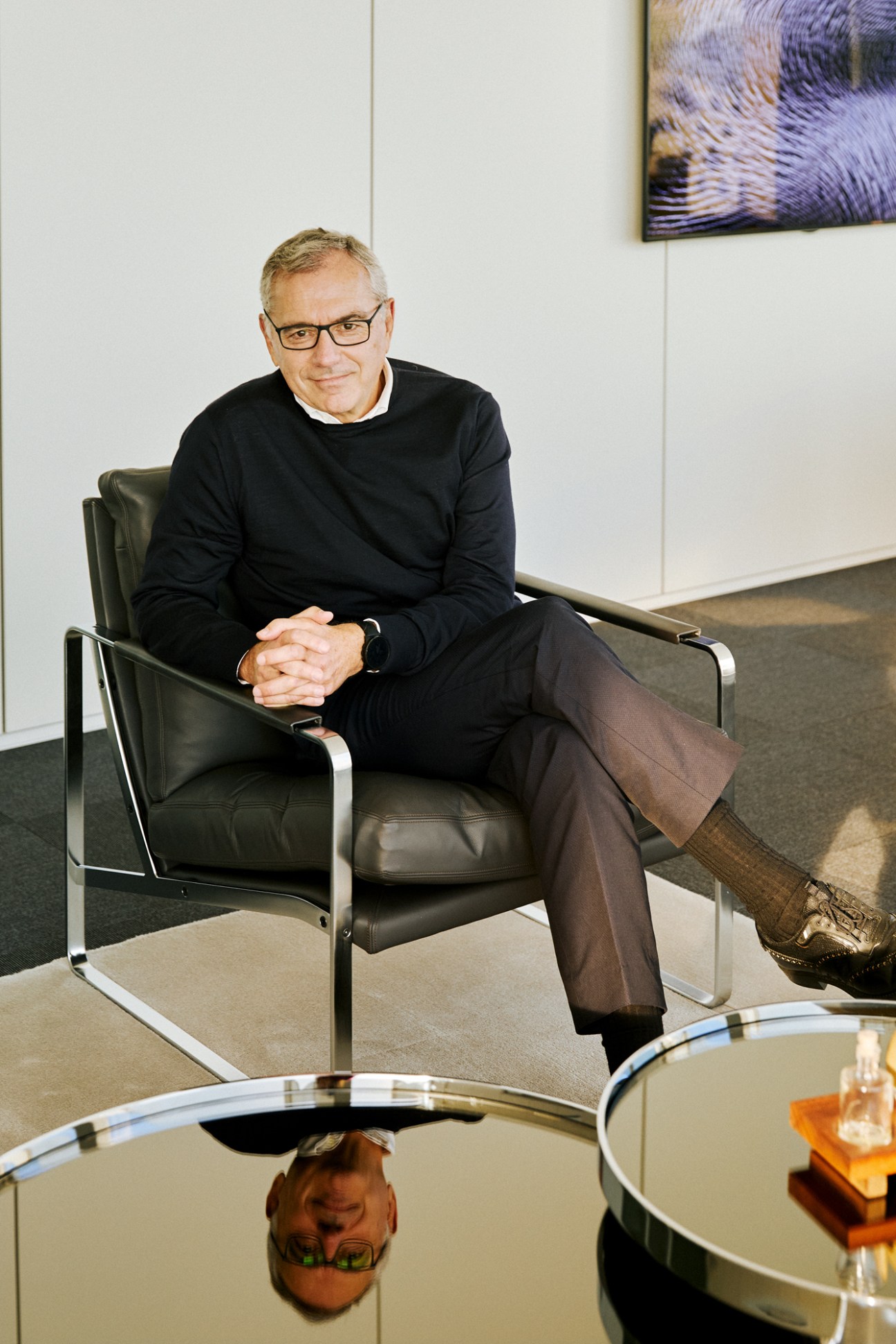
Over the course of a century in the business, Puig (pronounced “poodge”) has grown from fragrance-maker to branch out into fashion and now make-up, wellness and skincare. “We keep expanding because if you don’t grow, you go backwards,” says Puig, dressed in a white, open-neck shirt. Today the company has a portfolio of 17 brands – 13 of which it owns – spanning 10 different countries. These include household names such as Paco Rabanne, Jean Paul Gaultier and Carolina Herrera. Swedish beauty brand Byredo and renowned Antwerp-based fashion label Dries Van Noten have been some of the newest additions to the Puig portfolio. Before these acquisitions, both brands were founder-led businesses that thrived on their independent status and were therefore seen as being unlikely to sell – but Puig proved otherwise.
Getting them on board have been big wins, highlighting how the family-run firm has been able to earn founders’ trust and scale these brands without compromising their integrity. “Partnering with Puig, a company with a proven track record of developing founder-led brands, will help us realise our full potential across product categories in a way that truly resonates with the culture,” says Byredo founder Ben Gorham, who sold a majority stake to Puig last May, in a deal that valued his business at $1bn (€906m).

Puig shows little sign of slowing down, claiming a bigger stake in the fashion market by revamping dormant brands such as Nina Ricci and continuing to invest in the art of perfumery. If proof of concept were needed, Puig’s financial results speak for themselves. In March the group announced its annual figures for last year, which showed a robust balance sheet. With revenues of €3.6bn, its post-tax income was €400m, up 71 per cent on the previous year. So now is the time for Puig to step out of the shadows in the way that its French counterparts lvmh and Kering have been doing for years.
“We want to be more outspoken about who we are,” says Puig. And while he says that the group’s focus, for now, is consolidating current brands, ruling out further acquisitions would be unwise. The company’s healthy balance sheet explains its CEO’s relaxed demeanour today but there was a time not long after Puig took over as chief executive when things looked rather different. By his own admission, the business had been spreading itself too thin and trying to do too much in too many categories. “An organisation can do a limited number of things well,” he says. Tough decisions needed to be made, which included closing half of the company’s factories and honing its focus on fashion and high-end fragrances. A goal was set to grow the latter category’s global market share from where it stood, at 3 per cent, to 10 per cent – a benchmark that it reached last year.
Puig’s success hasn’t simply been about streamlining; other savvy business moves have also reaped dividends. The first was the decision to move away from a licensee model, in which it was historically contracted by big-name brands to produce their fragrances. Puig’s second winning move was to consciously get bigger, by setting out to acquire new names. The beauty sector was bound to consolidate, in the CEO’s eyes, with smaller players either disappearing or being acquired. And that meant that Puig needed to reach what he calls a “critical mass”. Luca Solca, a senior research analyst for global luxury goods at Bernstein in Geneva, puts it another way. “There are a lot of fixed costs in this business so scale is very important,” he says. “You don’t want to be a dwarf in the land of giants.”


As monocle heads into Puig Tower, past a perfume bottle sculpture by famed Catalan artist Joan Miró, the busy team behind the success story is revealed. Desks peppered with prototypes and sample photography are spread across multiple floors, accommodating the company’s 600-strong workforce in Barcelona (it has 10,000 employees worldwide). The perfumery area and creative lab on the 18th floor have a more serene feel, resembling a hotel lounge more than an office, with cream sofas, slatted-wood room dividers and shelves stocked with neatly arranged fragrance bottles. The space was designed as a small lab for the group’s brands to visit and develop ideas – and stands as a reminder that, at its core, Puig is still first and foremost a fragrance company.
Overseeing these proceedings is senior perfumer Elisabeth Vidal, who has been with the firm for 30 years. She is part of a team of in-house perfumers split between Barcelona and Paris, and works on high-profile fragrances that before launching can take up to three years to develop and as many as 3,000 trials. According to Vidal, a vital cog in this process is the marketing department, which is there to “inspire” the perfumers. Its role is also a reminder that selling perfume goes beyond scent alone, something that Puig seems to have understood early on.
That’s where fashion comes in: though still a relatively small part of the Puig business, it is arguably its most high profile and feeds directly into the fragrances cash-cow. “It’s about creating a desirable brand – and in order to do so you still need to put on fashion shows,” says Iria Pérez Gestal, director of Spanish media platform Modaes. “Aspiration is still achieved through fashion, not through the pure smell of a perfume.”




This approach has been at the core of Puig’s new business strategy – giving the firm a leg up on its competitors, which tend to run fashion and beauty divisions separately. “We build the image of a brand through fashion and translate that into the fragrance world,” says Puig. That’s why when Paco Rabanne needed a boost, the group put more effort into developing its ready-to-wear collections. It has also been helping the fashion labels in its portfolio to enter the fragrance fold. Last year, Dries Van Noten launched its first beauty line: a set of 10 unisex perfumes and 30 lipsticks. The range had the same personal and artisanal feel as Van Noten’s fashion collections, with the designer working with Puig’s perfumers to translate the smells from his garden into perfume.
Puig has also been expanding into other niche segments over the past decade – a move aimed at addressing shifting consumer tastes that have put natural ingredients top of the agenda. In the past few years it has embarked on an acquisitions spending spree to target smaller skincare, fragrance and make-up brands, including bringing Colombian natural cosmetics name Loto del Sur and India’s wellness-focused Kama Ayurveda into the fold.
But perhaps its boldest move was the June 2020 purchase of the UK’s Charlotte Tilbury, something that London-based luxury analyst Mario Ortelli says reflected “a long-term view on the market”. Long view or otherwise, it was a watershed moment – Puig’s largest acquisition to date and made during the height of lockdown when the future was far from certain. Though the purchase figure hasn’t been disclosed, Charlotte Tilbury had been valued at more than €1bn, meaning that Puig paid an eye-watering sum. “That was a difficult decision,” says Puig. “And [yet] there was no hesitation.” With the make-up and skincare brand’s continuing success – and its expansion in China – the acquisition is already looking like a shrewd move.
While these new purchases clearly have an eye on emerging or expanding markets such as Latin America or Asia, that is only part of the story. An equally important piece of the puzzle is having direct control over retail, rather than relying on third parties. Puig’s newest stablemates all have direct-to-consumer elements, either through e-commerce or bricks-and-mortar retail. Kama Ayurveda, for example, has 60 existing shops in India and plans to expand internationally. After getting the nod from the communications director sitting in on the interview, the CEO reveals that the brand will soon be opening in London, while Van Noten has opened a store in Los Angeles and three in China since partnering with Puig.
Even as it achieves larger scale, the group still prides itself on making leftfield moves that keep the market on its toes. That might mean naming 27-year-old London-based Harris Reed as creative director at Nina Ricci and giving him carte blanche to revive the dormant house (more to do with his “positivism and optimism” than his age, according to Puig’s CEO). The company has also demonstrated a consistent ability to keep brand founders in the picture, from Carolina Herrera and Jean Paul Gaultier before they retired to Van Noten and Tilbury. “Though management might be harder than when you have 100 per cent control, Puig keeps them on board, and I think it’s better for the business,” says Modaes’ Pérez Gestal.
Puig is also betting on innovation as a differentiator. Not all its initiatives have worked out – a collaboration with Bosch to make perfume at home was a flop – but some feel as though they have genuine potential to shake up the industry. One of the more intriguing things you can do at Puig HQ is stick your nose into one of the company’s AirParfum machines. A smelling device sold to retailers for between €4,000 and €13,000, it sprays a quick hit of perfume through a central halo and, unlike traditional diffusers, doesn’t use alcohol. This apparently allows the user to avoid smell saturation, which often happens when assaulted by an army of sprayers in department stores. AirParfum has also been trialled in cultural settings such as Madrid’s Prado Museum, with visitors using it to zoom in on images of Peter Paul Rubens’ and Jan Brueghel’s paintings and sniff the flora and fauna depicted (tip: avoid the musky civet at all costs).
AirParfum is part of a family of innovations aimed at demystifying the world of fragrances, including investment in cataloguing more than 20,000 perfumes through brand-agnostic, open-source website Wikiparfum. There is also an ambition to crack the old conundrum of selling smellies online, by creating “scent visualiser” software that allows users to see the smelling notes of a fragrance.
For all the technological leaps forward, perhaps Puig’s biggest innovation is an old-school managerial decision: the Puig family recently decided that the next generation would not be occupying leadership positions. It’s a move that many family-run businesses ought to be taking for the greater good of their enterprises but often fail to do (lvmh CEO Bernard Arnault, who has given all five of his children leadership positions from early ages, are you listening?).
Marc will soon have a new skyscraper opposite the existing HQ to populate as the company continues to grow, and he recognises the need to “open up to more potential talent” rather than relying on a small clan. While he might be relieved not to have to ready himself for a messy family succession battle, he’s also not in a rush to go anywhere. “It’s exciting to be in this company right now,” he says, shifting position on his executive-floor sofa. Success, one imagines, smells rather good.
Images: Getty Images, Tekever
Gardening leave
Niwaki × Oliver Spencer
UK & Japan
London label Oliver Spencer has collaborated with Japanese gardening brand Niwaki to create a collection of gilets, shirts and jackets that will stand up to hours spent in nature or tending your garden.
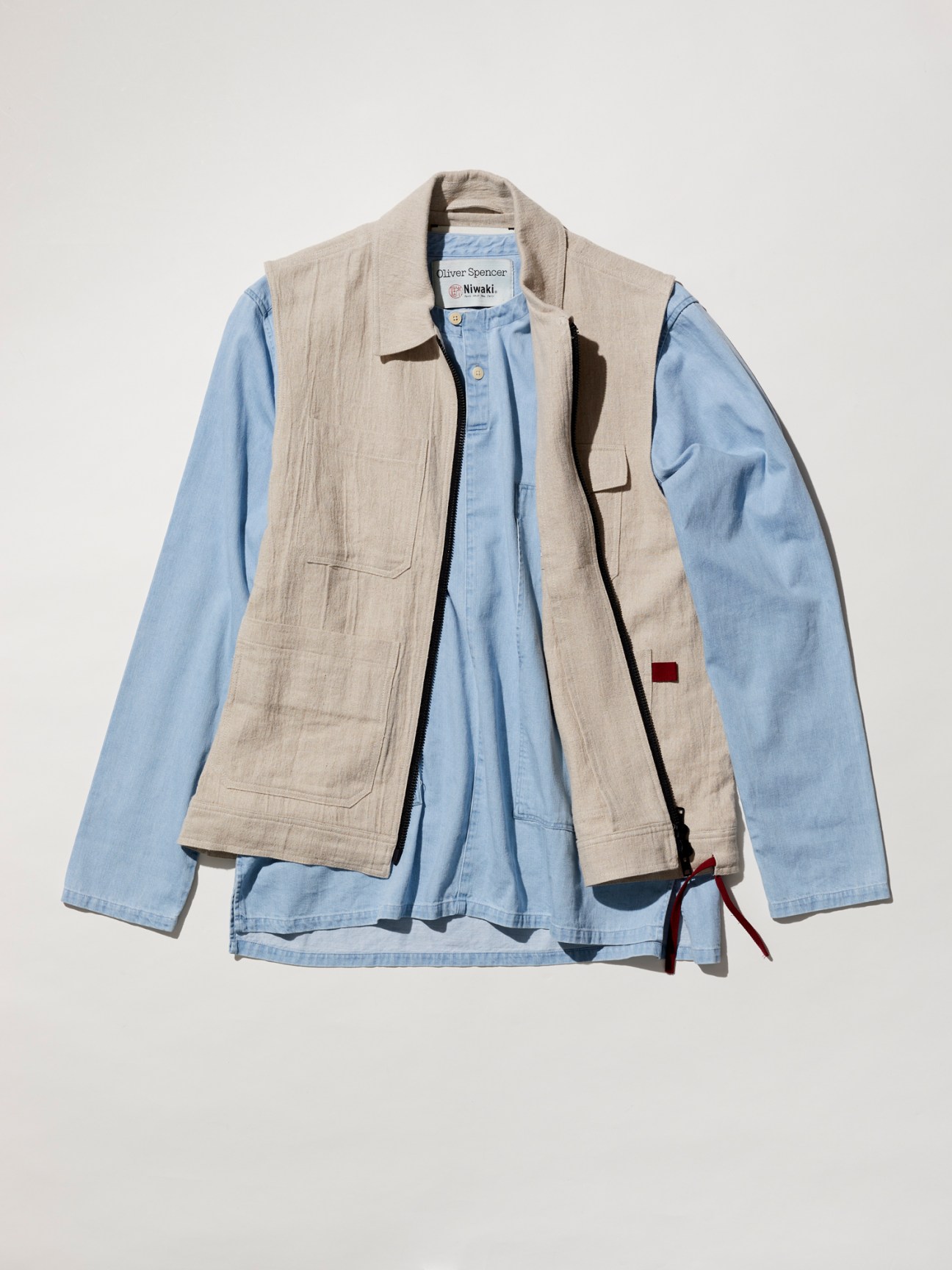
The gardening jacket features five front pockets for smaller tools and seed packets or, for non-gardeners, your keys and wallet. “I wanted the jacket to have a boxy artist silhouette so that it’s comfortable when moving around but also looks contemporary,” says Spencer. This is utility wear for those committed to the art of gardening, as well as anyone who wants more practicality from their warm-weather wardrobe. The collection also features a denim smock-shirt with Japanese-inspired stitch detailing and an overshirt with semi-hidden buttons that won’t snag on plants.
oliverspencer.co.uk; niwaki.com
Dior × Parley for the Oceans
France & USA
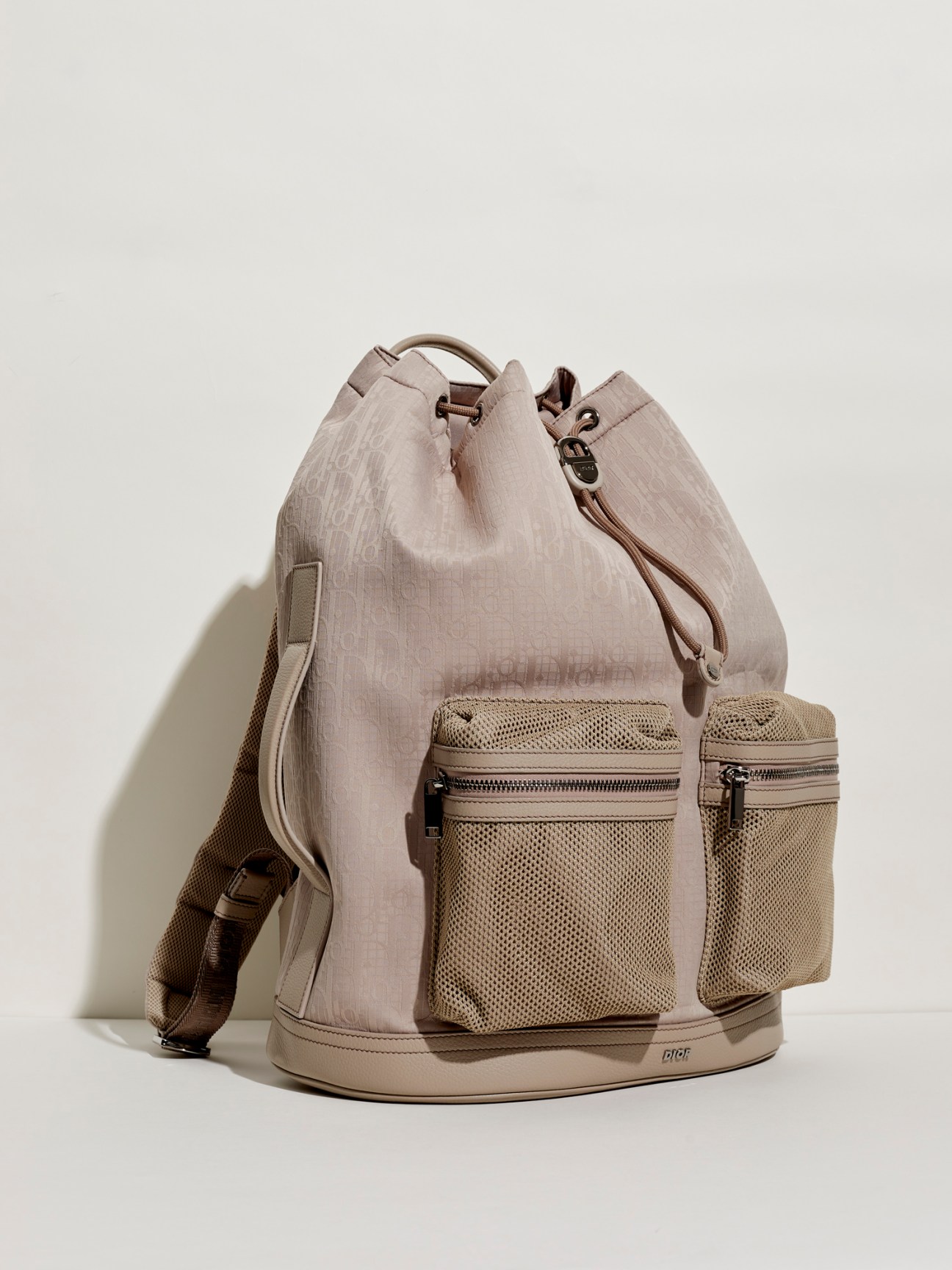
Dior has launched a new eco-friendly beachwear collection in partnership with environmental organisation Parley for the Oceans. What began in 2019 as research into developing yarns and fabrics from marine plastic waste has developed into fully fledged luxury collections featuring bucket hats, backpacks, shorts and lightweight tailoring. “Wearing a piece by Dior × Parley is an act of rebellion,” says Cyrill Gutsch, CEO of Parley for the Oceans. “It shows you want to solve the environmental issues we are facing.”
Hermès H08 Watch
France
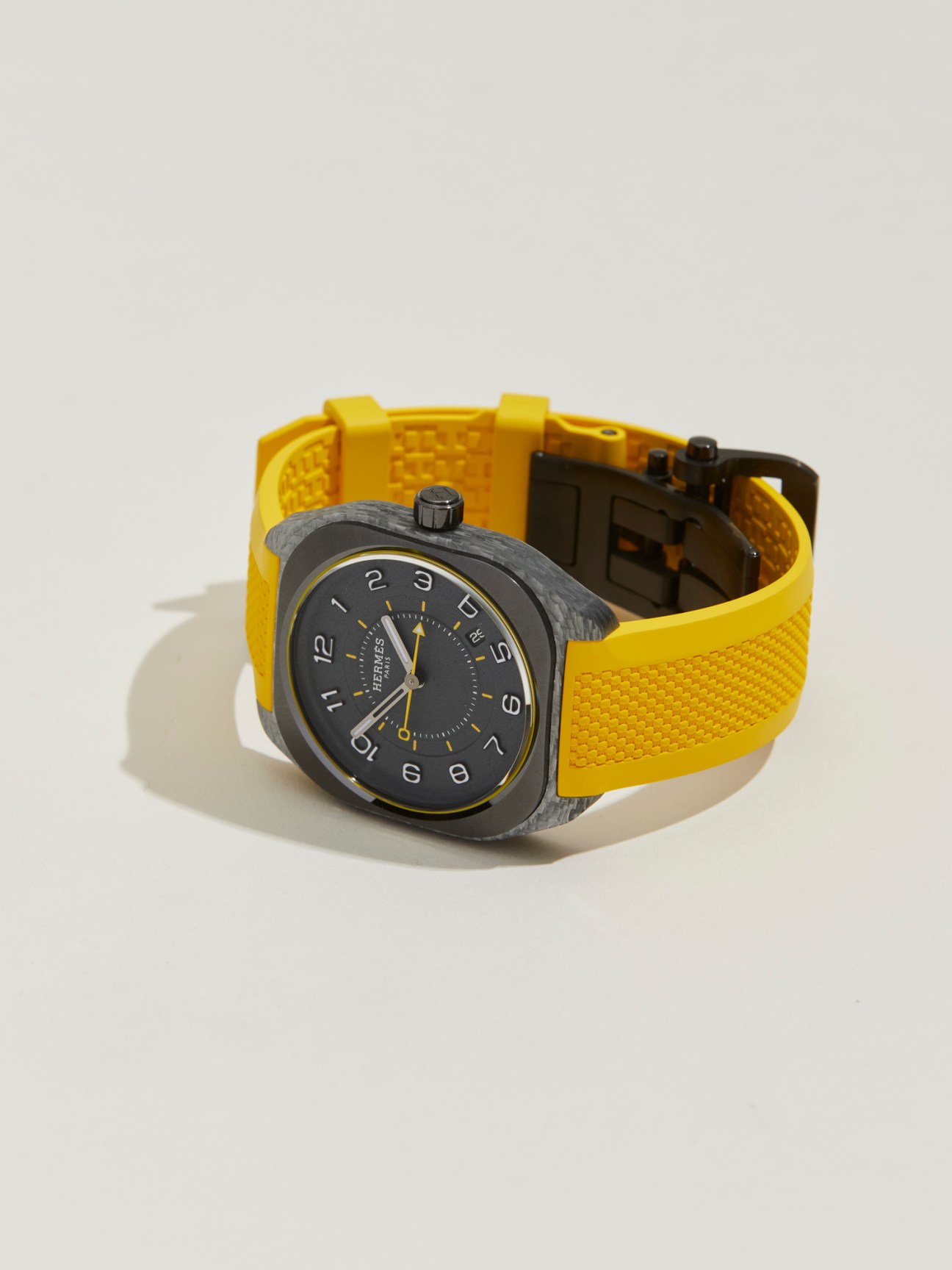
The sporty h08 watch is a recent addition to Hermès’ collection of timepieces. The French luxury house has reworked its original h08 model, adding a glass fibre case coated in aluminium and slate powder. Water-resistant features and straps in sunny shades make it ideal for summer days.
hermes.com
Contre Allée
UK
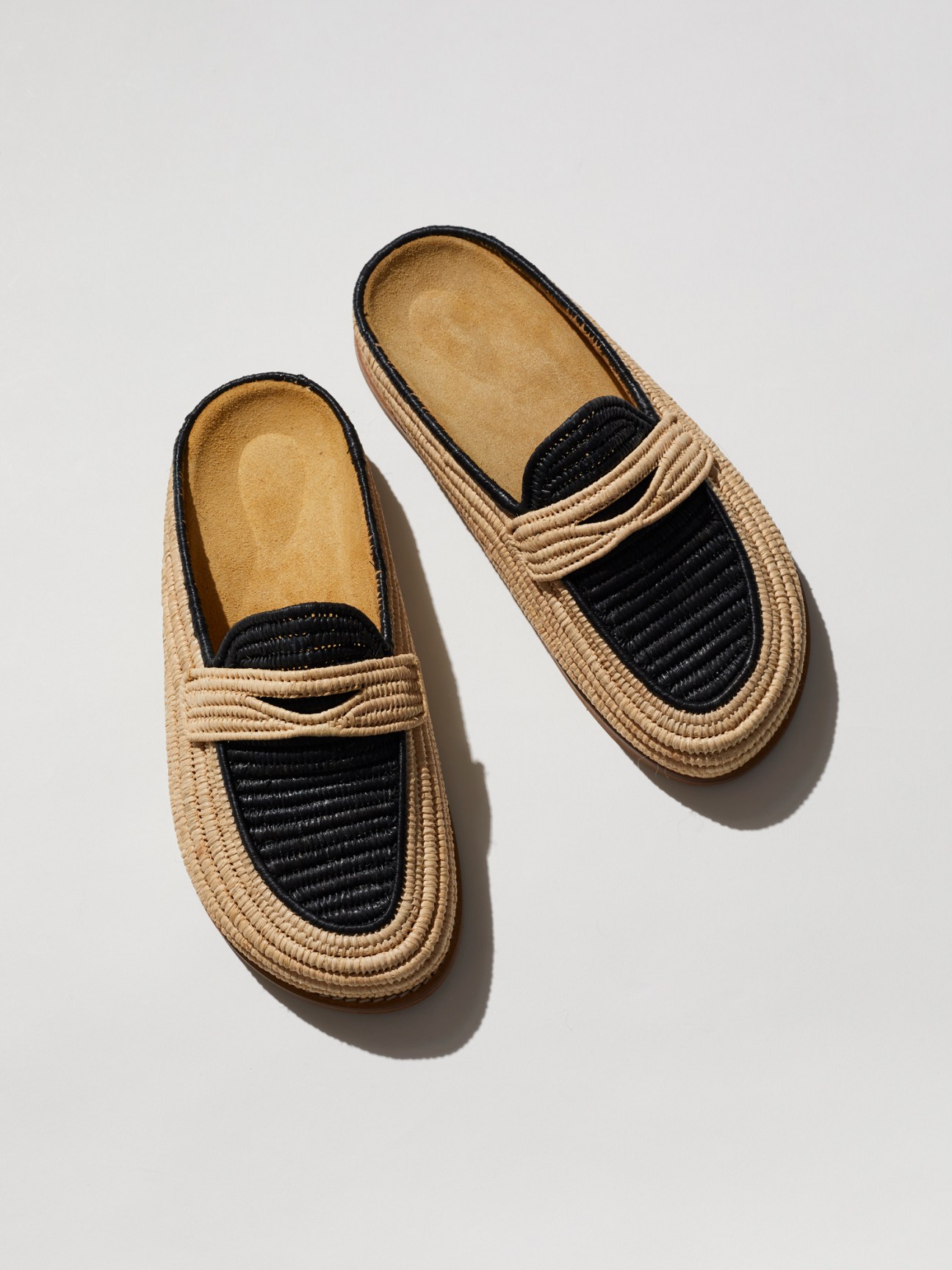
After travelling around Moroccan medinas, designers Marouane Haial and Anne Epagneul were enamoured by the country’s craft heritage and locals’ commitment to using all-natural materials such as raffia. They returned home to London and went on to launch Contre Allée to introduce Moroccan craft to the wider fashion market. They now work with a wide network of artisans across Morocco to create elegant loafers, handwoven using raffia. Each pair is made to order and requires a full day’s work to complete. We recommend investing in a colour-block, backless pair for summer.
contreallee.co
Haulier International
Australia
Jeremy Hershan launched his apparel and accessories label Haulier International in 2020 with a series of elegant, meticulously crafted tote bags. “I wanted to create a timeless product that would be hardwearing and purposeful,” he says. Hershan spent the better part of a decade working in luxury fashion houses in the UK before returning home as the head of design at Australian outfitters RM Williams.

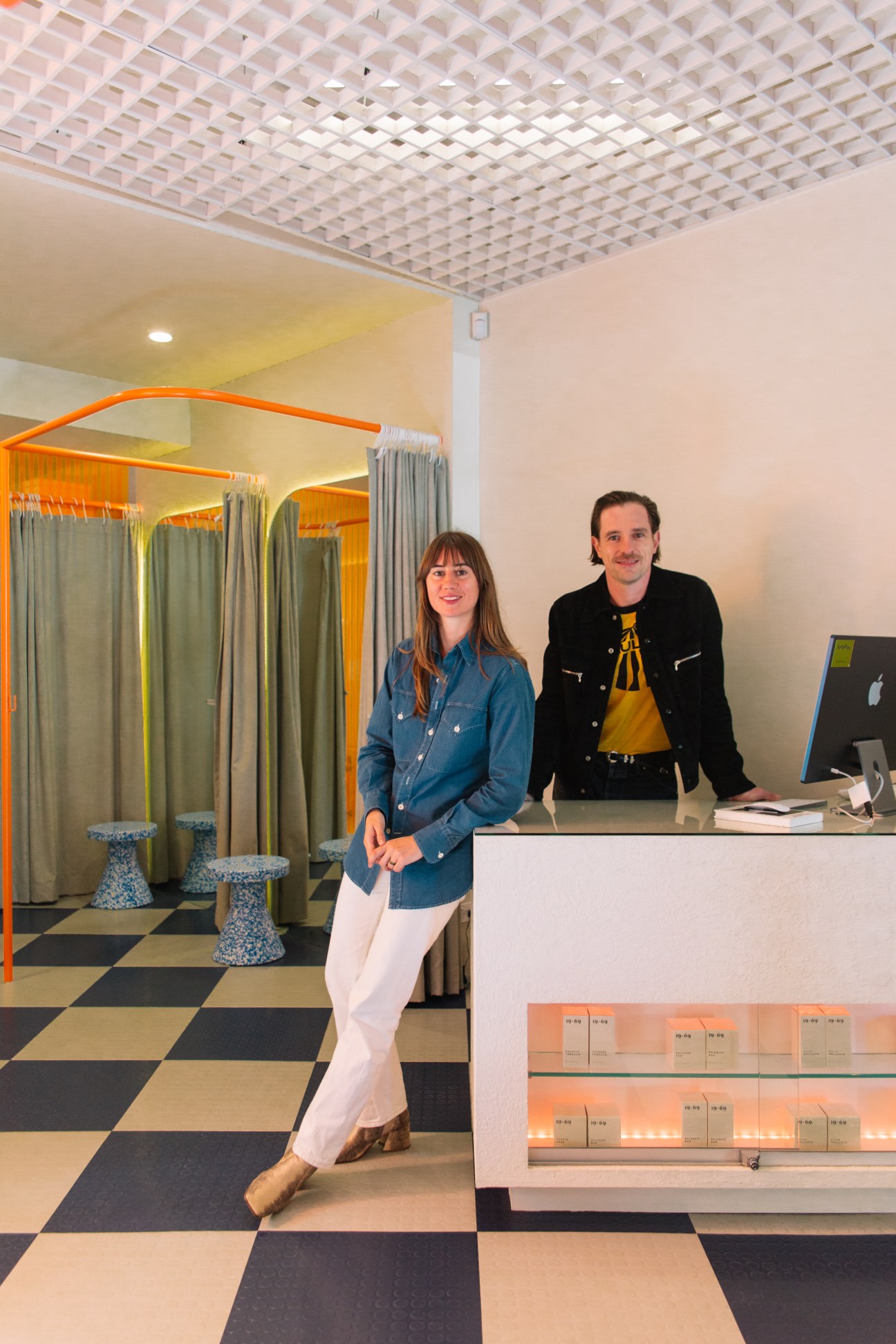
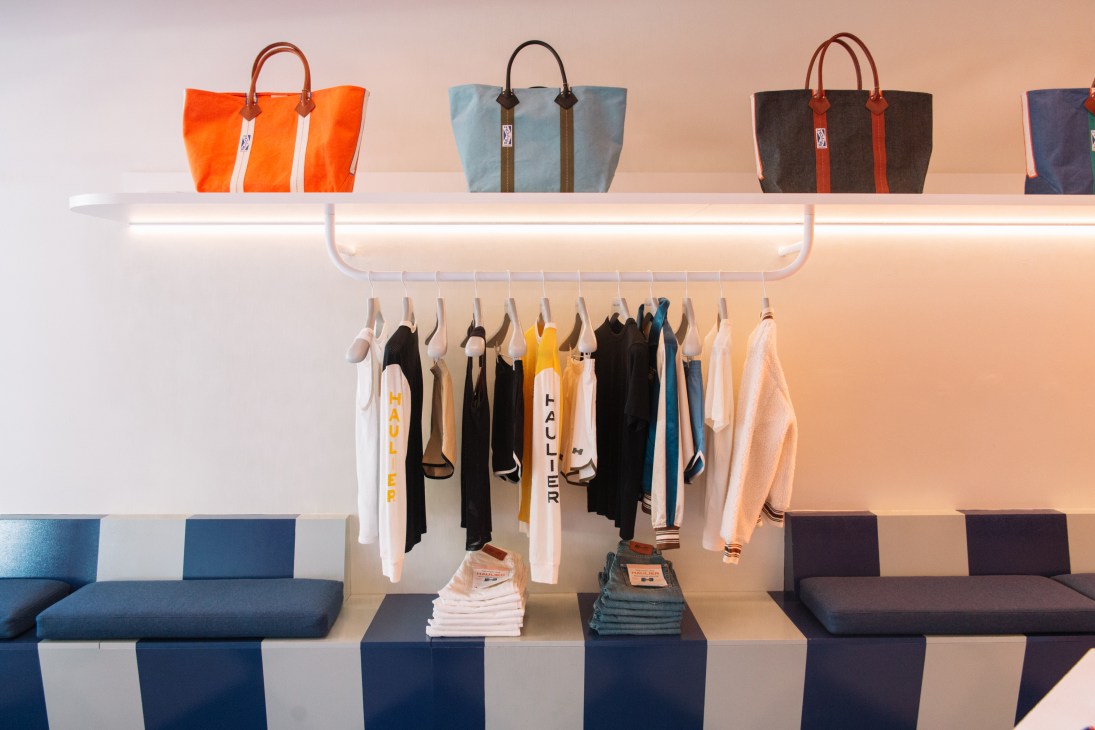
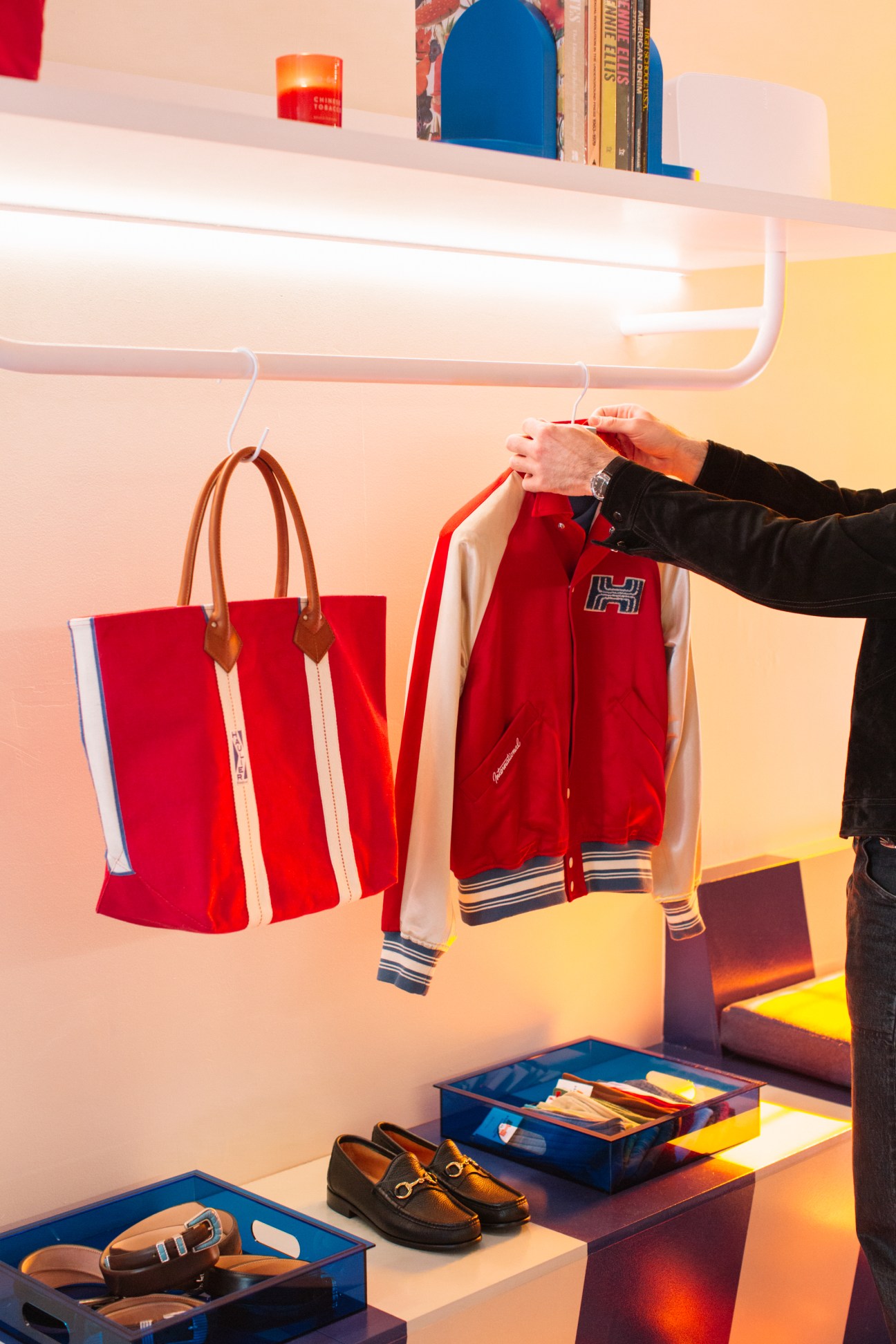
Manufactured in small-scale Portuguese factories, Haulier’s signature totes are handmade in “almost bulletproof” fabric and woven on mid-century shuttle looms similar to those used to produce Japanese denim. “I don’t believe that modern technology can replicate the beauty of traditional workmanship,” adds Hershan. “Our system means that we can set the exact dimensions for each bag’s pattern, avoiding any negative space and eliminating waste. It’s a slow, measured process.”
The roomy bags are made from a sturdy selvedge canvas with supportive webbing based on a material that Hershan found on the straps of an old French air force bag. “Our bags do have a holiday suitability but they are all-purpose,” he says. “The more they’re used, the more character they adopt. I love products that tell stories after time and wear.”
Haulier has now branched into clothing, which is notable for its nostalgic nods to 1970s airline travel and classic athletic style. A new flagship in Sydney sets the scene with interiors that call to mind a vintage aeroplane terminal. Hershan’s top pick? “Our Canyon Motocross T-shirt is made from a mesh cotton inspired by old sportswear fabrications.” Pack it in your tote and you’ll be good to go.
haulier.international
Fateeva
Austria
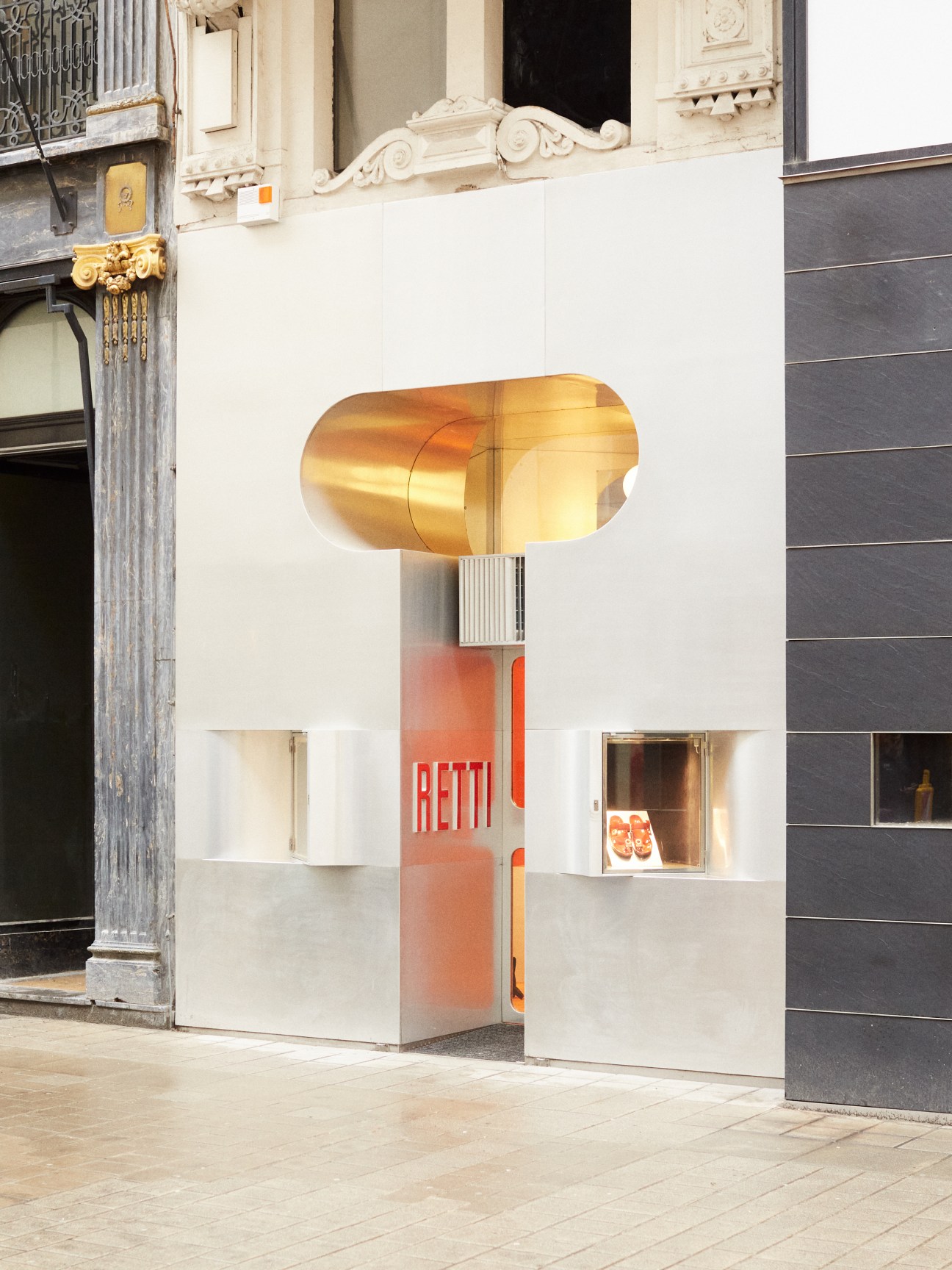
The most eye-catching façade on Vienna’s main shopping street has to be that of the former Ratti candle shop. Designed in the 1960s by architect Hans Hollein, it stands out thanks to its stainless-steel shopfront. After a long hiatus, the Kohlmarkt space is back open for business and in May and June it will house the pop-up shop and atelier of Elizaveta Fateeva, whose label offers minimalist shoes and clothes made from deadstock materials.
The Viennese fashion designer talks to Monocle about finding the right home for her minimalist designs.
How did you get the chance to move into this icon of Austrian architecture?
This shop was renovated two years ago and is now in exactly the same state that it was in the 1960s. It’s very hard to find a permanent tenant who can move in without changing anything inside, because the space is under landmark protection. It’s a generous step to give it to an emerging sustainable brand from Vienna. [Firms like ours] aren’t usually represented on this street.
What makes the space a good match for Fateeva?
It looks small from the outside but when you enter you get a feeling that you’re in Star Trek. I didn’t want to overwhelm it with too much product but everything I do is so minimal that it fits with the interiors. The more time I spend here, the more ideas I get.
What will your customers find in-store?
I come from an accessories background: I started my label with only three designs for men’s sandals, which you’ll find in the new shop. I’ll also present my collection of unisex clothing made from upcycled materials. During the pop-up, I’ll look for people to collaborate with, on shoe design for example, and create new editions from month to month.
fateeva.net
Quick smart
Tried and trusted
Foxtrot, Chicago
It’s sometimes said that every overnight success is a decade in the making. As Chicago’s convenience-store-cum-café Foxtrot proves after 10 years in the business, sometimes it also takes time to get the recipe right.



What started as co-founder Michael LaVitola’s “dream digital-only corner shop”, stocked with products from his favourite Chicago artisans delivered in an hour or less, has grown into a nationwide brand. What’s more, it’s moved beyond the confines of the screen and now offers charming retail spaces too.
With 15 shops in Chicago and 11 in Washington, Dallas and Austin, LaVitola plans to end 2023 with more than 30 locations. The expansion is helped by a $185.4m (€170m) war chest. Is Foxtrot where he thought it would be after 10 years? “To see what we have built, what the team and brand have become, is amazing,” says LaVitola from Foxtrot’s new shop in the heart of Chicago’s Fulton Market District. “But we’re truly just at the beginning of it all,” he adds, noting that we are a stone’s throw away from the brand’s first-ever shop and warehouse in the West Loop.
So why move into physical spaces if you’re starting a convenience service? “A gathering space people go to, a place to get the things that they buy most often, a beautiful environment with good music, friends and people around – that’s really what people have been after,” says LaVitola. “The products we sell are secondary to creating a neighbourhood space where people want to be. We knew that customers needed this.”


Foxtrot’s product mix includes local favourites but also things you wouldn’t find elsewhere: there are gummy sweets from Malmö alongside coffee from West Town in Chicago and a bottle of sparklingly good pét nat wine from South Africa’s Swartland. “We have one $25 [€23] cabernet, one $15 [€14] rosé,” LaVitola tells Monocle. “We try to find the best product at each price point. If you have confidence in our picks, then you’re much more likely to take a risk on a new product.”
Taking inspiration from Japan’s well-stocked convenience stores, Foxtrot decides carefully what to stack on its shelves. This keeps customers coming back time and again but also attracts small, honest and interesting brands looking to work with good partners.
So the Foxtrot formula works but is there anything that LaVitola is worried about when it comes to expansion? “We’re not sure yet,” he says. “Foxtrot works on a corner in Fulton Market here in Chicago. It works in Georgetown, in Washington and in Dallas. The products can change but at the end of the day, it’s about great coffee, great wine and tasty treats.” He smiles. “I think people everywhere want that, right?”
foxtrotco.com
German bites
Schmatz, Tokyo
Sitting in the Nakameguro outlet of the German restaurant chain that he co-founded in Tokyo, Marc Luetten looks the picture of success. The restaurant is buzzing, sausage platters are flying out of the kitchen and German draft beer is being served in elegant glasses. Today, 31-year-old Luetten heads up Schmatz, a thriving company with 36 restaurants in Japan, 700 staff and nearly a million customers a year. But none of this was guaranteed when he and 36-year-old Christopher Ax left careers in venture capital to follow their dream of starting a business.
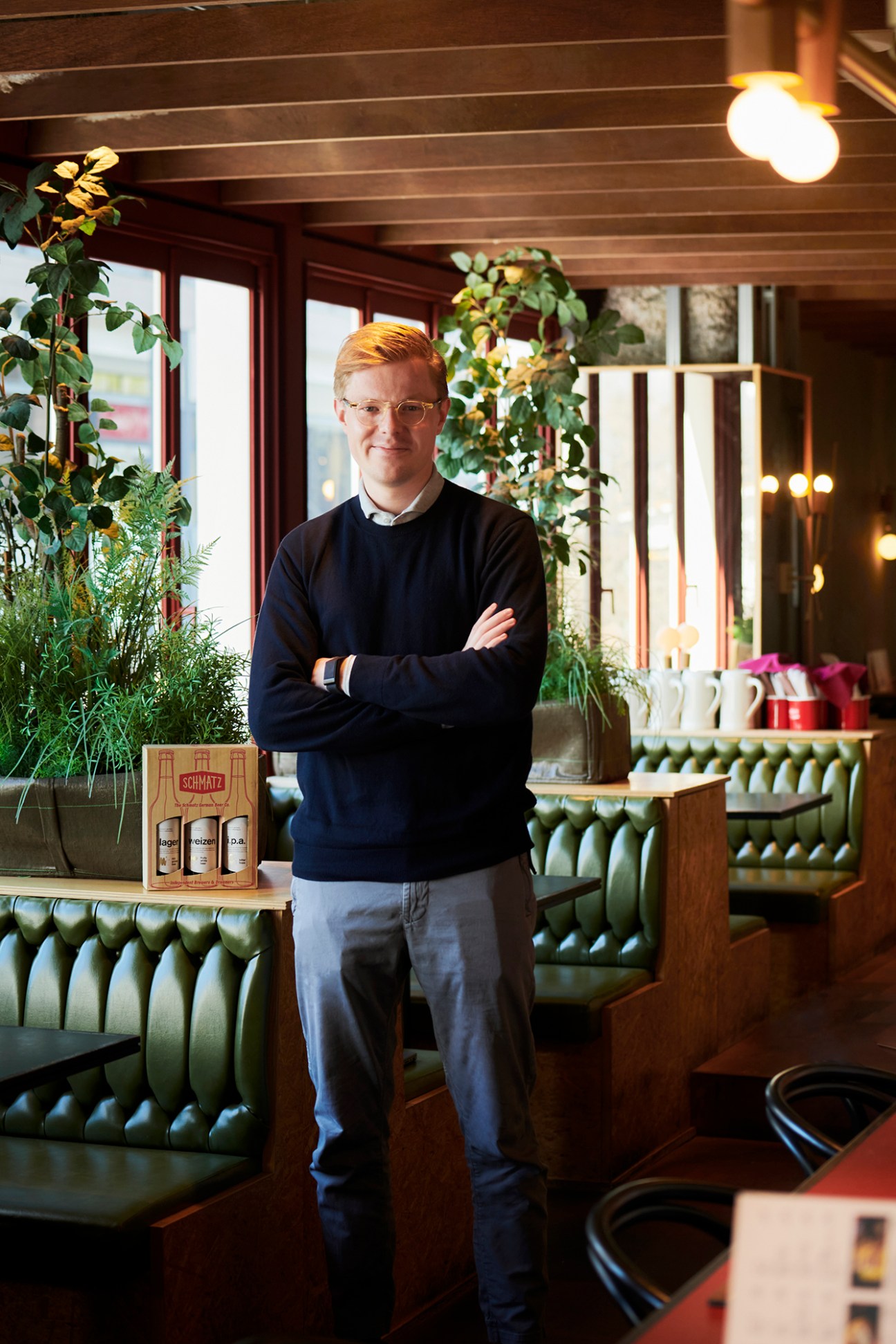
Luetten and Ax had known each other since childhood; their families lived on the same street in Hamburg. Both had gone into banking and happened to wind up working in New York at the same time. While they enjoyed their jobs, both wanted to build a business and came up with the idea of doing it together. Japan, where they had (independently) spent time, was a shared passion, as was food; Luetten loves to cook while Ax’s family owned an organic farm.
They threw various ideas around but kept coming back to their core interests: food and Japan. “At first we thought that this [food] idea was just too far-fetched and we put it to one side,” says Luetten. “But then we both remembered that when you say ‘Germany’ in Japan, people think of sausages, beer and cars. We asked, ‘Why is there no cool, modern or accessible German brand out there?’”
Even though they had no experience in food or hospitality, the plan to bring German food and beer to Japan started to take shape. The entrepreneurial duo headed to Tokyo in 2013 armed with a slender budget of ¥2m (about €14,000), which covered the cost of a second-hand food truck and meagre living expenses. In three months they were under way, grilling sausages and serving beer at a farmer’s market in Aoyama in central Tokyo. “There were hard days when the weather was cold and we didn’t sell a single sausage,” says Luetten. “But it was fun and even those times teach you the realities of the business.”
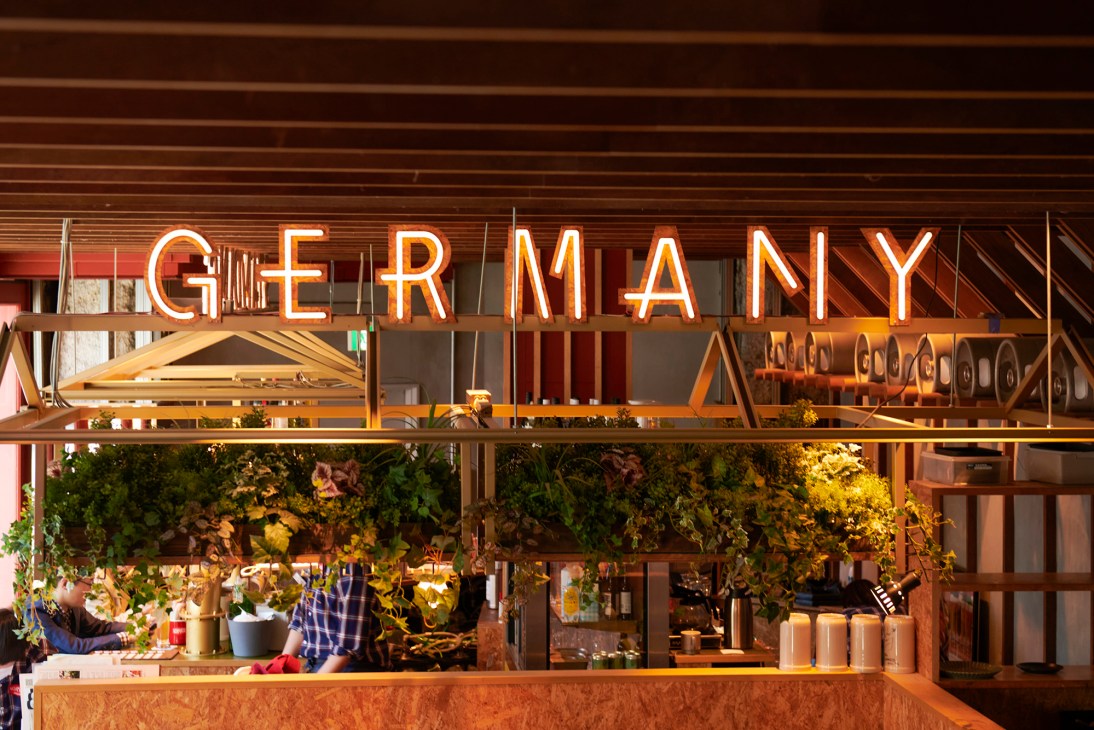
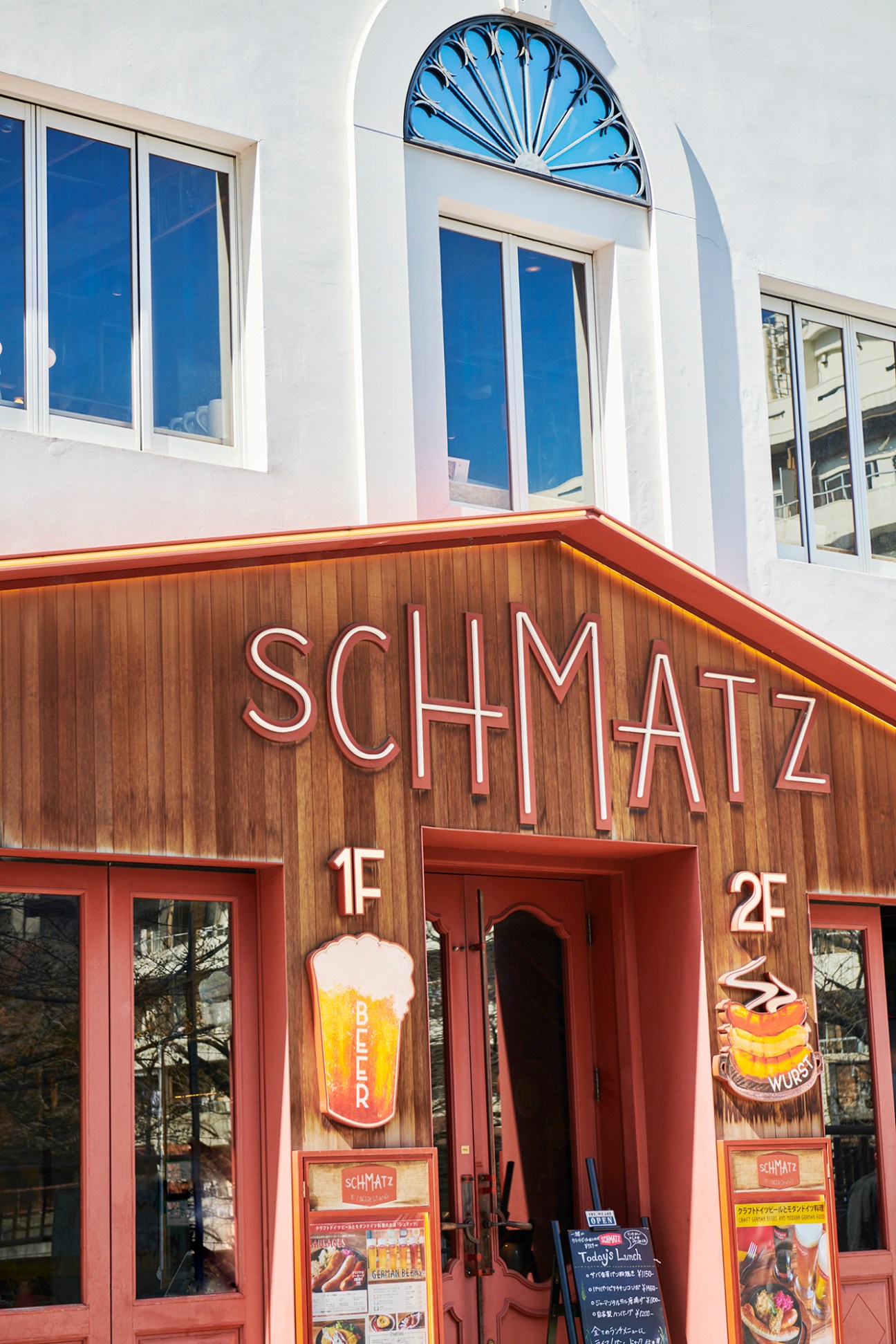
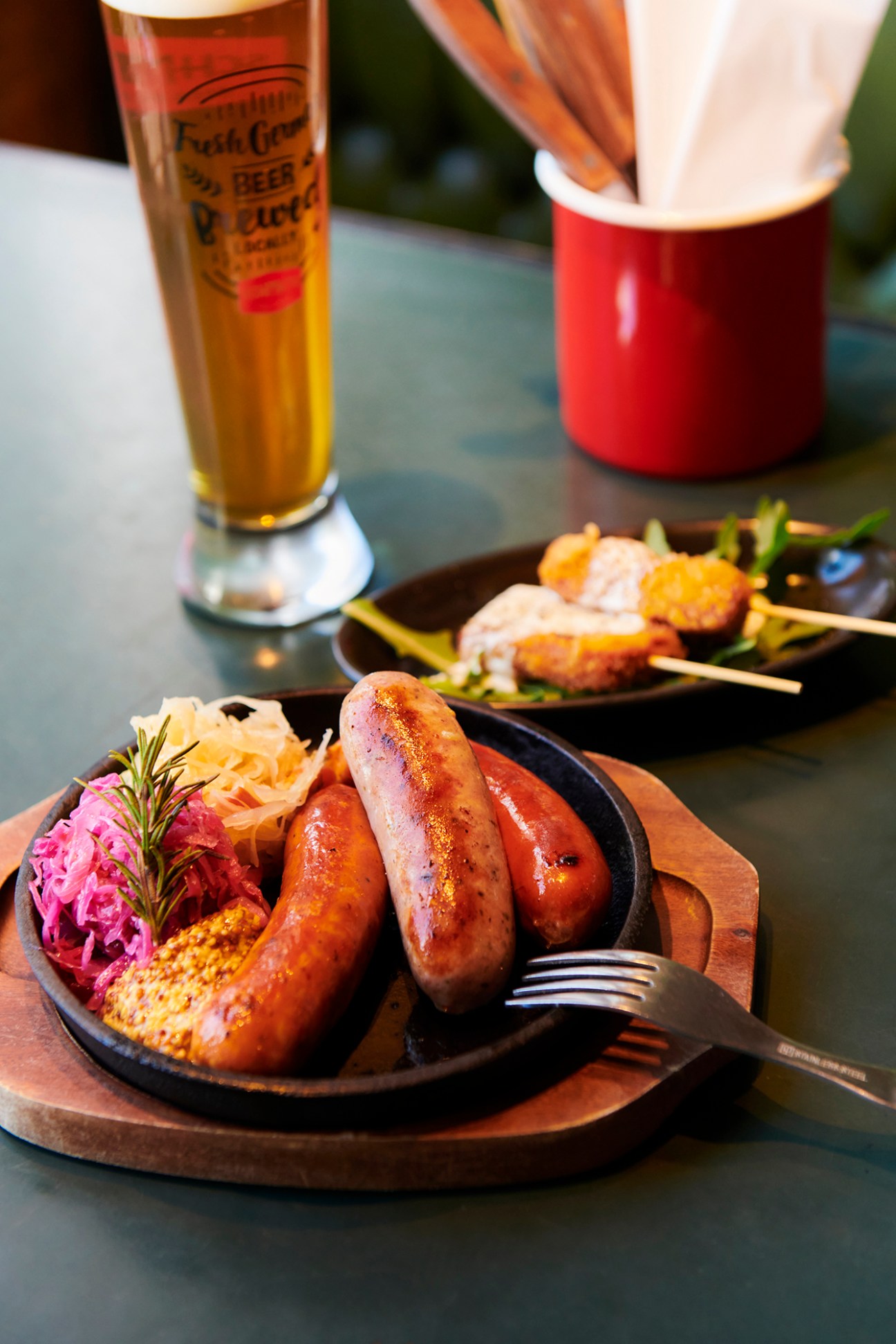
Six months of food-truck experience became the basis of a solid investment pitch. Having secured the funding, Luetten and Ax opened the first Schmatz restaurant in Akasaka in Tokyo in 2015. Getting the menu right was the priority. “All of the sausages are made 100 per cent in the authentic German way,” says Luetten. Some are imported but most come from a Japanese supplier that has perfected the German sausage (with a little less salt), even sending people to the wurst’s homeland to study. Schmatz also works with small-scale sausage makers who create niche products in Japan. “As the largest German restaurant group here, I feel that it’s our responsibility to support these producers.” Beers, meanwhile, are made to Schmatz’s specifications with partners in Germany.
The initial plan was for 100 Schmatz restaurants and outlets opened at speed over the first few years. Then the pandemic gave the founders time to reassess. The idea now is to grow slowly and focus more on the experience, grounding the restaurants in their communities and responding to local interests. “We don’t want to be another cookie-cutter chain,” says Luetten.
schmatz.jp
Hot off the grill
Croq’Michel, Toulouse
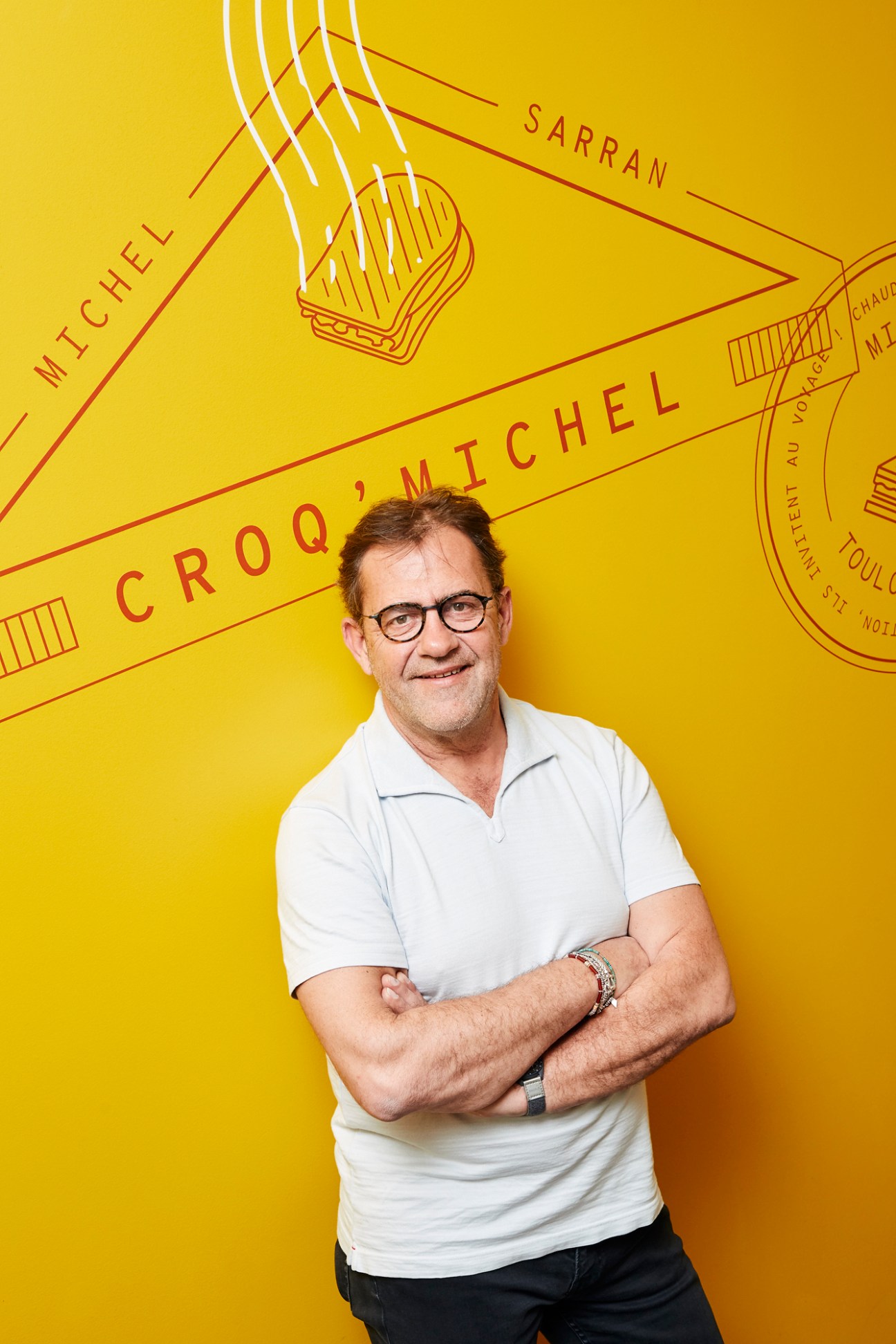
The sandwich toasters have barely been fired up at Croq’Michel, Toulouse’s latest takeaway spot, but already loyal croqueurs have been drawn in by the reputation of its Michelin-starred chef and founder, Michel Sarran. From the cries of the chef’s name from passers-by to a teenager requesting a selfie, it’s clear that Sarran is a celebrity here.
The chef’s prominence is largely due to his appearance as a judge on cooking show Top Chef, as well as his eponymous restaurant that has been tempting Toulouse’s foodies for the past 25 years. That his latest project is a takeaway venture is no mean feat in a country that sees long, languid meals as sacrosanct.
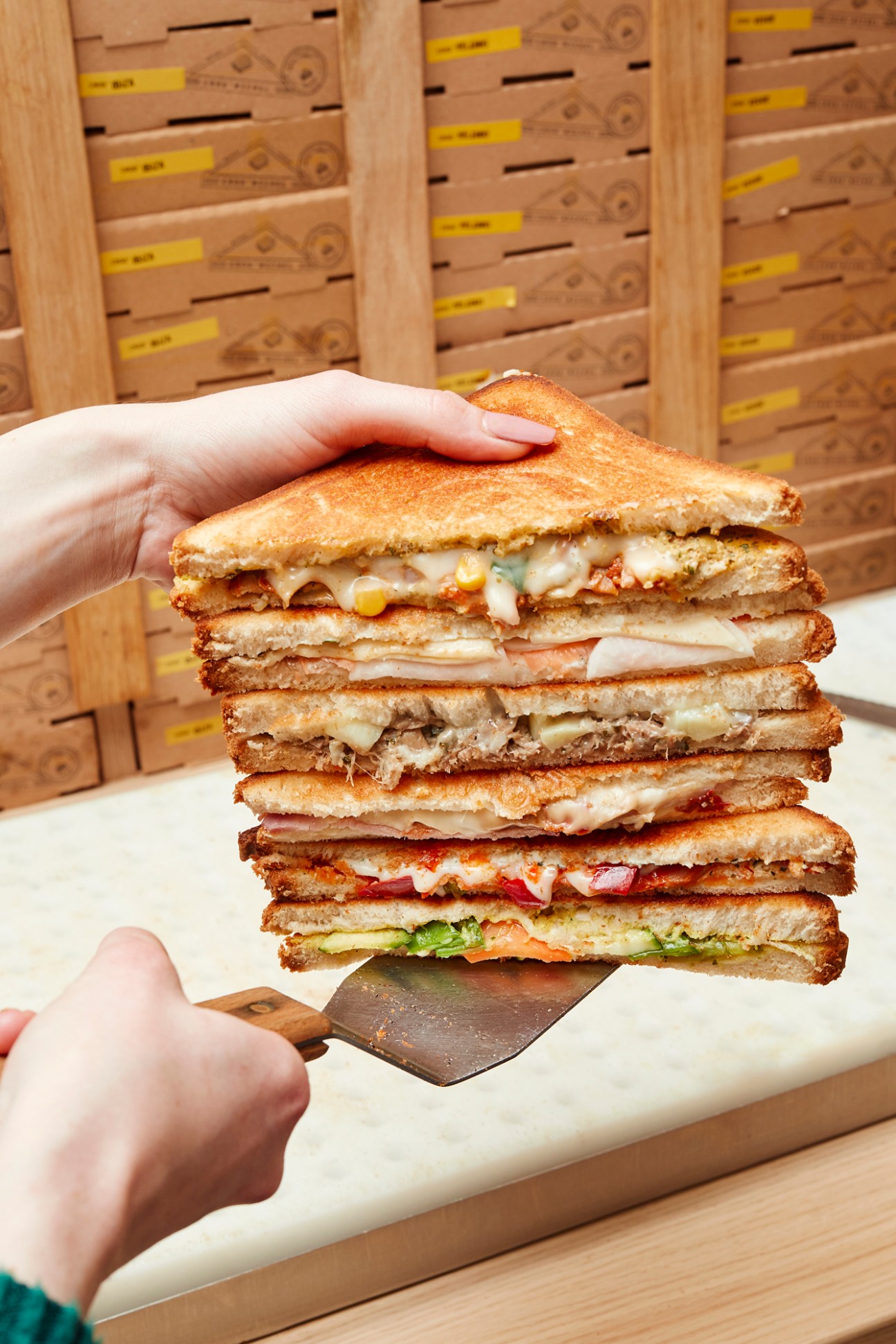
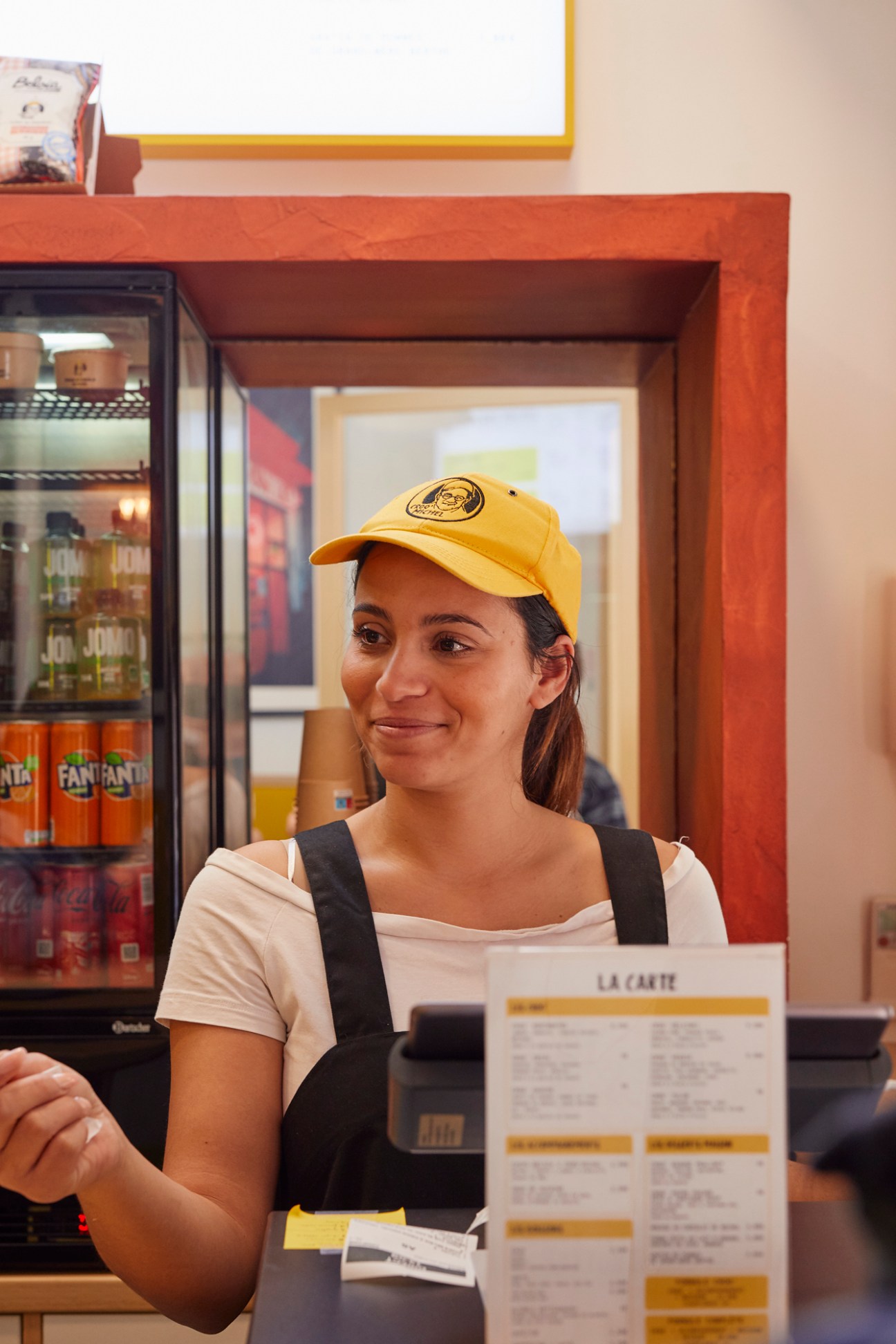

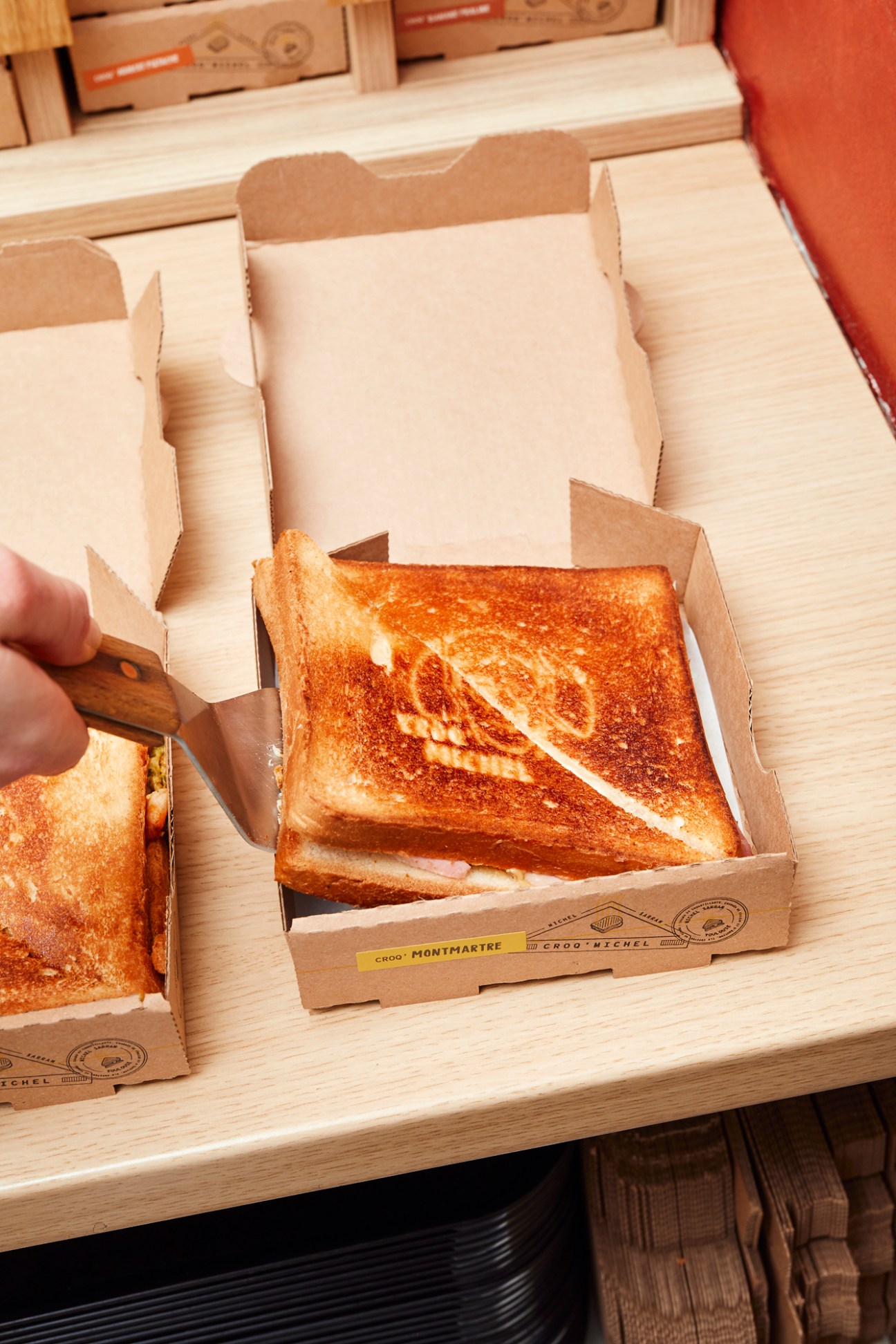
The inspiration for Sarran’s croque monsieur takeaway came during lockdown when his restaurant shuttered, leaving him with surplus truffles that he put in sandwiches for healthcare workers. He named the venture after himself but also after the creator of the original croque monsieur, Michel Lunarca. The result: a pandemic-proof hole-in-the-wall serving up a host of imaginatively filled croques, embossed with a logo featuring Sarran’s smiling face. No wonder he’s so recognisable.
But the chef’s creations aren’t the traditional French croque. The ham, gruyère and béchamel combo has been replaced with unorthodox fillings. One bestseller is the Croq’Gascon, filled with duck confit (a nod to Sarran’s native Gascony), while the Croq’Ibiza, where he has a second home, contains spicy chorizo and nutty manchego. Meanwhile, the limited-edition Croq’Marseille, available on the summertime Paris-Marseille route, was a collaboration with France’s national rail company, SNCF. “Life is a risk – if we don’t take risks we stagnate,” says Sarran. “We have this impression of French food being high quality but we also enjoy popular food here. So why not try to make high-quality fast food with French roots that’s fun and unpretentious?”
croq-michel.com
Pastures new
Casino
New York
The Lower East Side has seen a host of new restaurant openings over the past few months. The liveliest and most fun is Casino, from the founder of Primo’s and Mr Fong’s. Swing by at 17.30 and you’ll see the first guests fly in. By 19.30 the place is packed with people sipping spritzes and tucking in to bowls of pasta. In a city where tables change as quickly as the lights in Times Square, it’s rather rare that you can linger at a restaurant without feeling hurried.
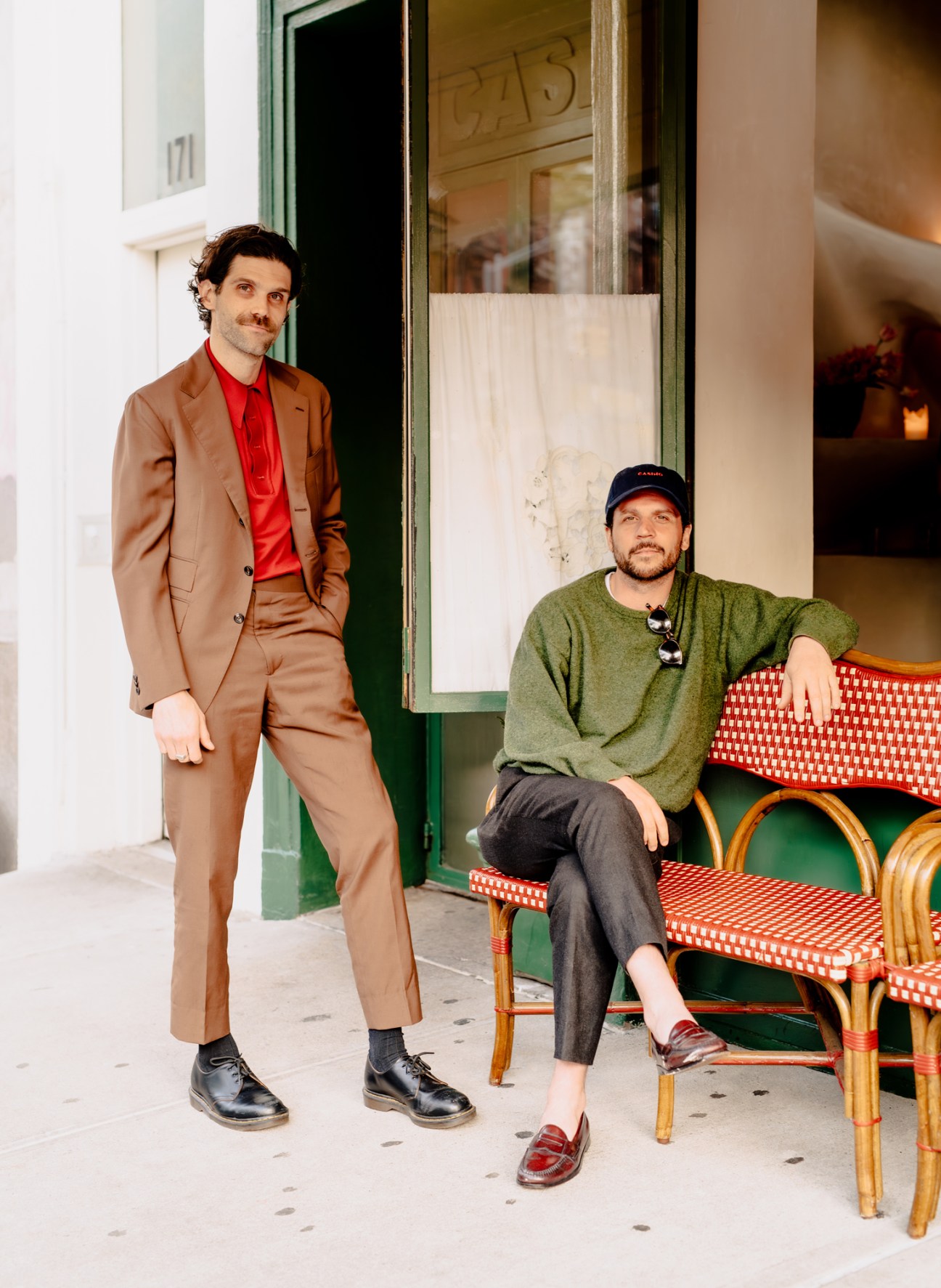
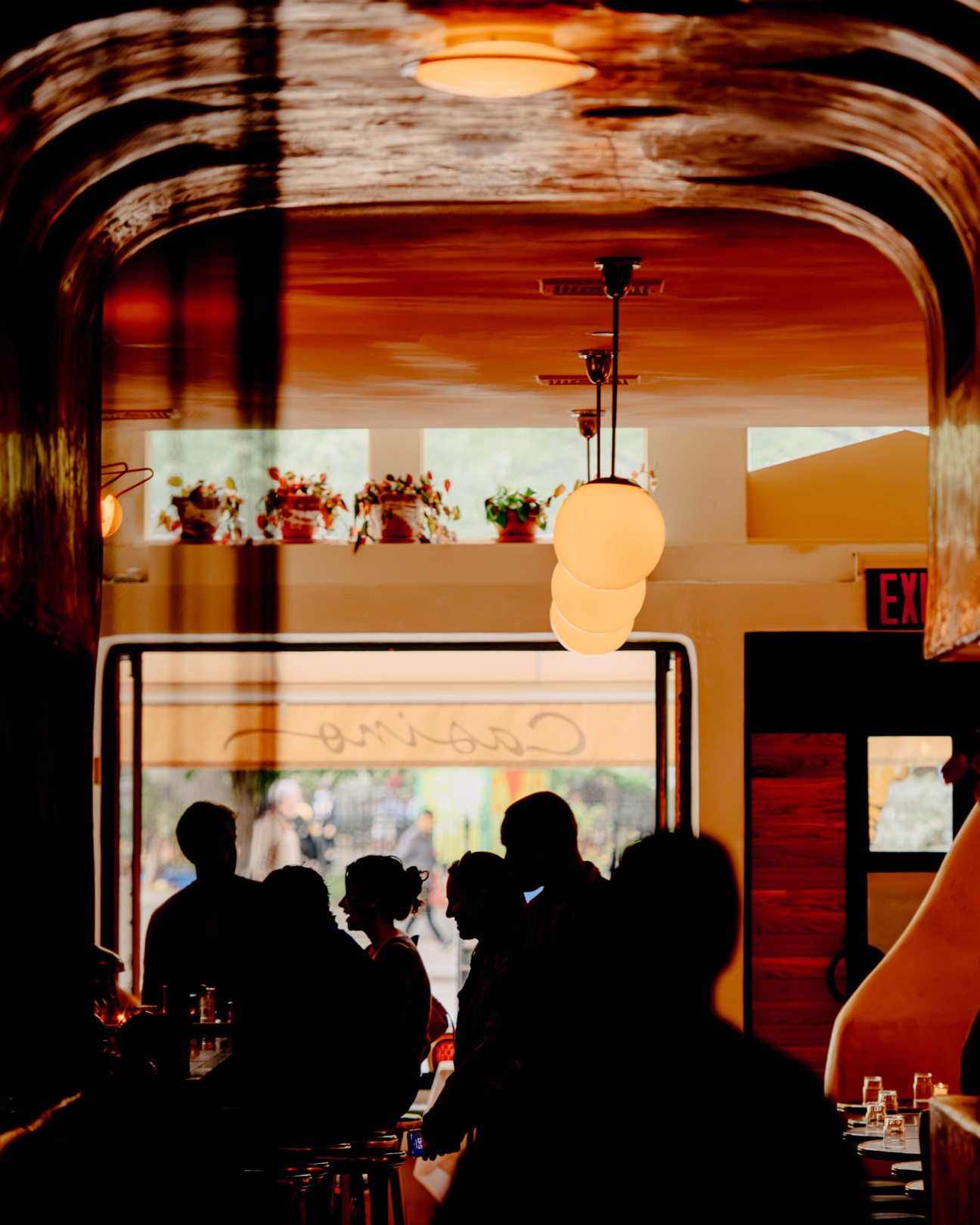
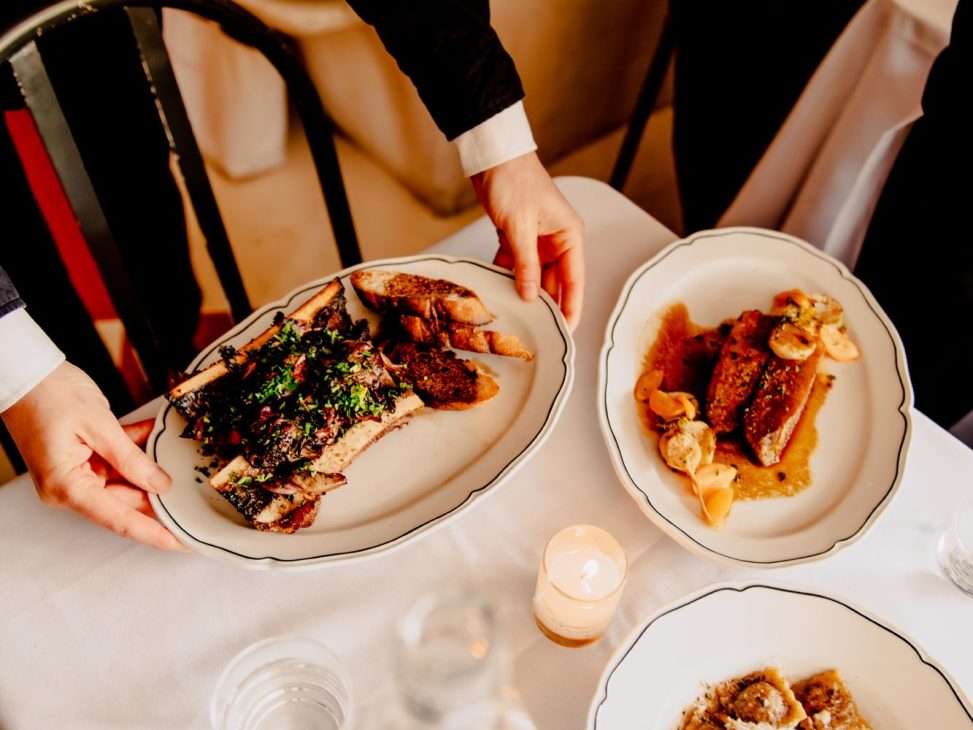

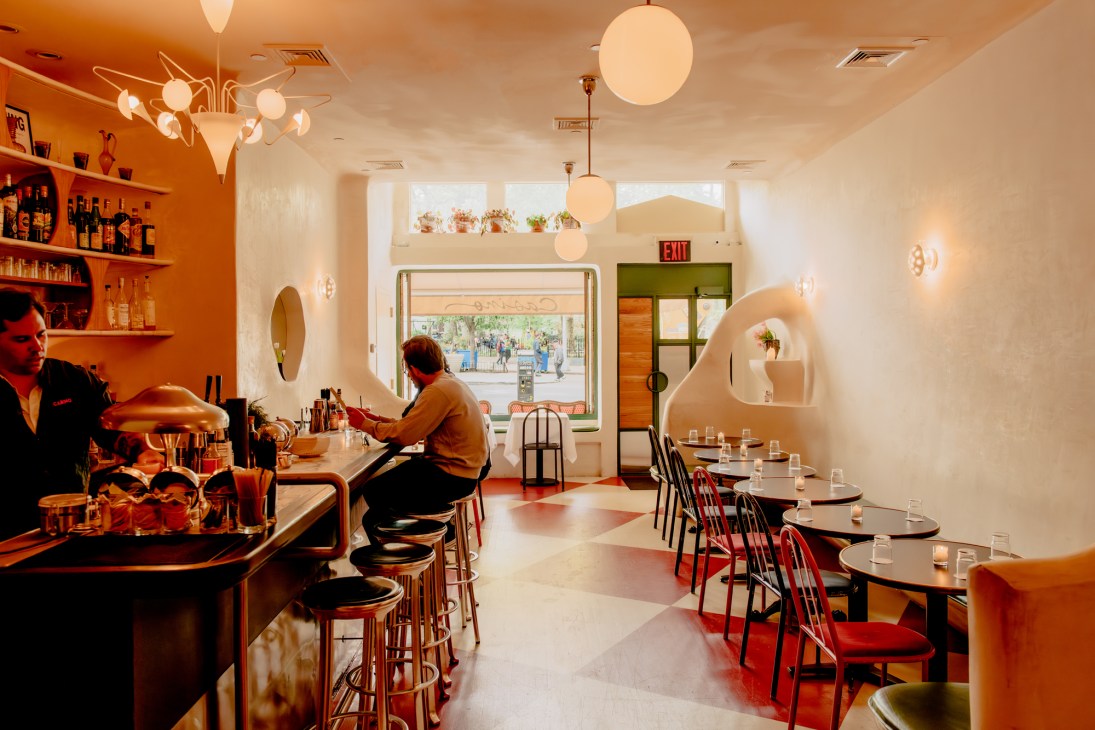
For owner Aisa Shelley, spontaneity is important to the concept. “My favourite restaurants always have a walk-in bar,” says Shelley, who has kept the rear dining room for reservations and the front café for walk-ins. Given that the restaurant was inspired by a road trip from the south of France to Italy, the laid-back atmosphere makes sense and sits in direct opposition to that of the stuffier restaurants nearby. “I fell in love with that Riviera feel,” says Shelley as he shows Monocle around. That feeling is reflected in the design by Camilla Deterre. The café is bright, with bistro tables and light, curved walls that nod to the work of Mexican architect Javier Senosiain.
The dining room is more sophisticated, with dark hues, slick red booths and pressed white tablecloths. “A lot of the design references 1970s eco houses,” says Shelley. And if Casino’s interiors don’t transport you, the menu will – think whole roast turbot with capers and lemon, wood-roasted prawns with garlic and chilli, and bucatini pasta with clams. “The space isn’t supposed to be anything; it’s supposed to feel like something. And that feeling is whatever you get on vacation.”
casinonyc.info
Recipe
Kimchi pancakes
This simple take on a Korean classic has plenty of tang. The recipe serves one as a main or two as a starter. Enjoy.
Makes one large pancake
Ingredients
For dipping sauce:
1 tbsp light soy sauce
1 tbsp rice vinegar
1 tsp toasted and ground sesame seeds
1 large pinch Korean chilli powder or Japanese ‘shichimi’
1 large pinch sugar
For pancake:
2 medium eggs
1 tbsp water
1 tsp light soy sauce
75g plain flour
30g potato starch or cornflour
3 tbsps toasted sesame oil
50g garlic chives, chopped into 5cm lengths
100g kimchi, roughly chopped
Method:
1.
Mix the dipping-sauce ingredients in a small bowl.
2.
Put the eggs, water and soy sauce in a separate bowl and beat well. Pour the flour into a third bowl and make a well in the middle. Add the egg mixture and whisk until thoroughly combined.
3.
Heat 2 tbsps of sesame oil in a small frying pan. Add the rest of the ingredients to the pancake mix and stir well, then transfer into the pan. Cook for about 3 minutes on each side over a medium heat. Pour a tablespoon of sesame oil into the side of the pan and let the oil to go underneath the pancake. Cook for a further 30 seconds on each side to make the pancakes extra crispy.
4.
Remove the pancake from the pan and cut into four pieces. Serve warm with the dipping sauce.
ayanishimura.com
Stereo
Zürich
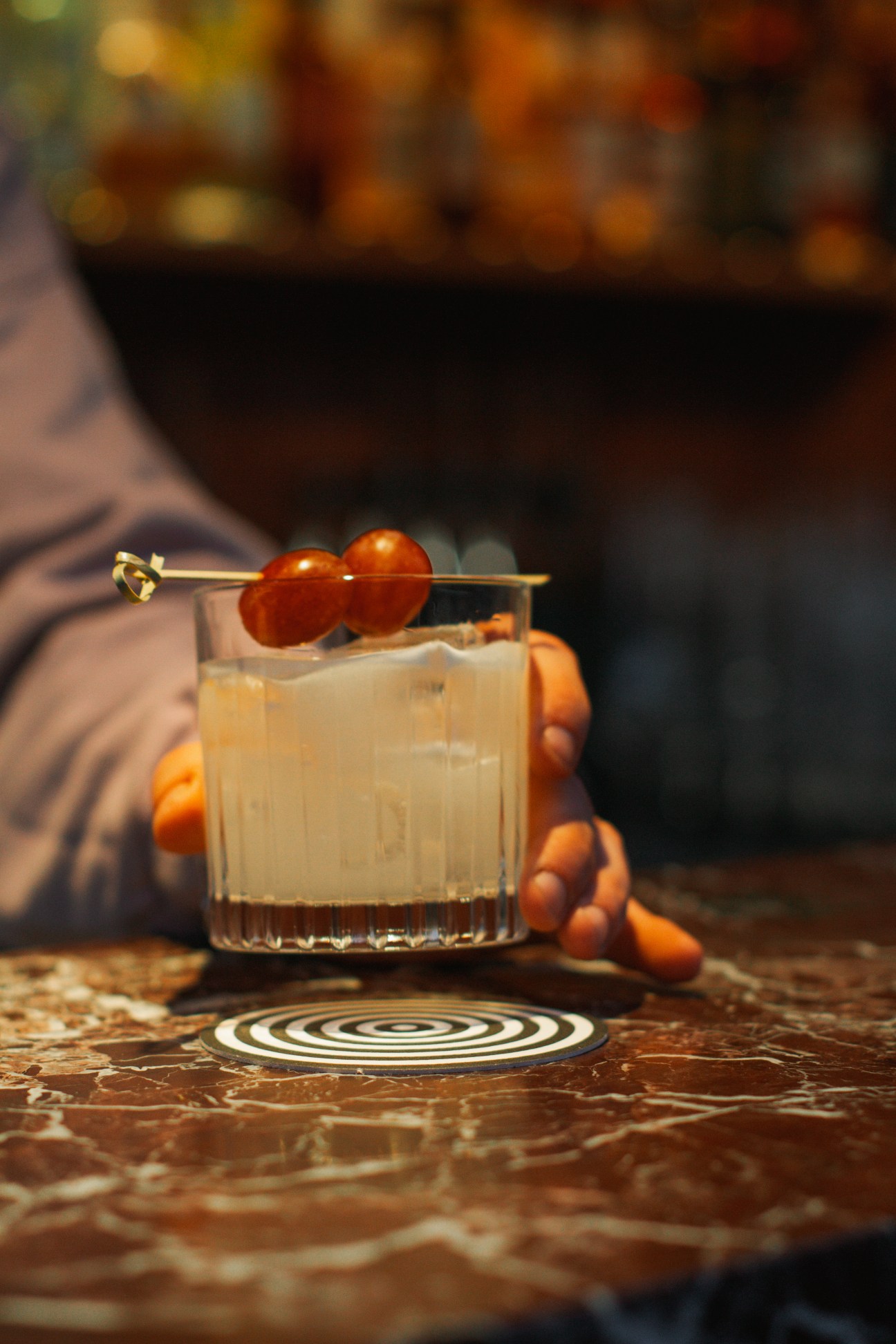
While many recent openings here focus on casual dinners, quiet soundtracks and intricate cocktails, Stereo instead cranks up the volume. On Wednesdays the music comes from the bar’s own record collection but on weekends it welcomes some of the city’s best guest DJs and the line-up proves that Zürich’s music tastes have matured beyond 1990s electronica. The interiors were developed with furniture-maker Walter Möbel and harness just the right amount of light. Be warned: time flies at Stereo, right up until 04.00.
stereo-bar.ch
Cozinha das Flores
Porto
Over the past decade, chef Nuno Mendes has brought a taste of his native Lisbon to London in several restaurants, including a stint at the Chiltern Firehouse and his own venture, Lisboeta. This year he’s back in Portugal but not on home turf. With Cozinha das Flores, Mendes’s first restaurant in Porto, the chef pays homage to the richness of northern Portugal’s often-overlooked cuisine. “The flavours are so unique up here,” he says. “The climate is colder and the produce and the way of working with it is entirely different than in the south.” That produce makes its way into the menu’s whimsical twists on traditional recipes.
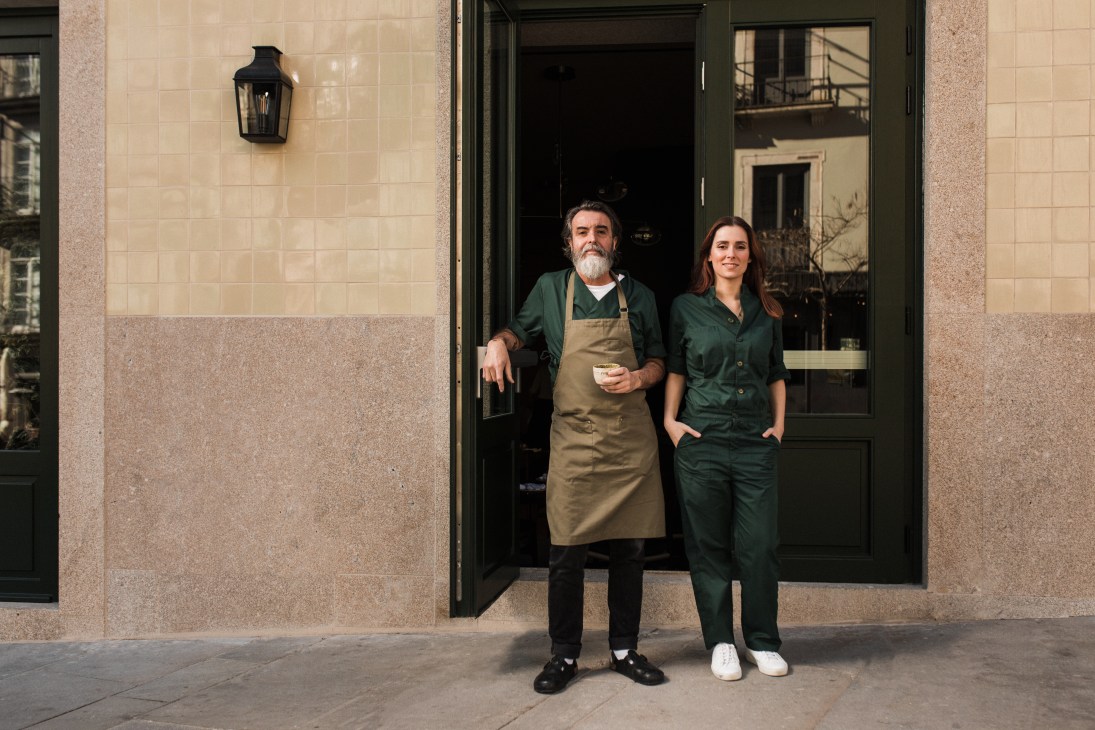
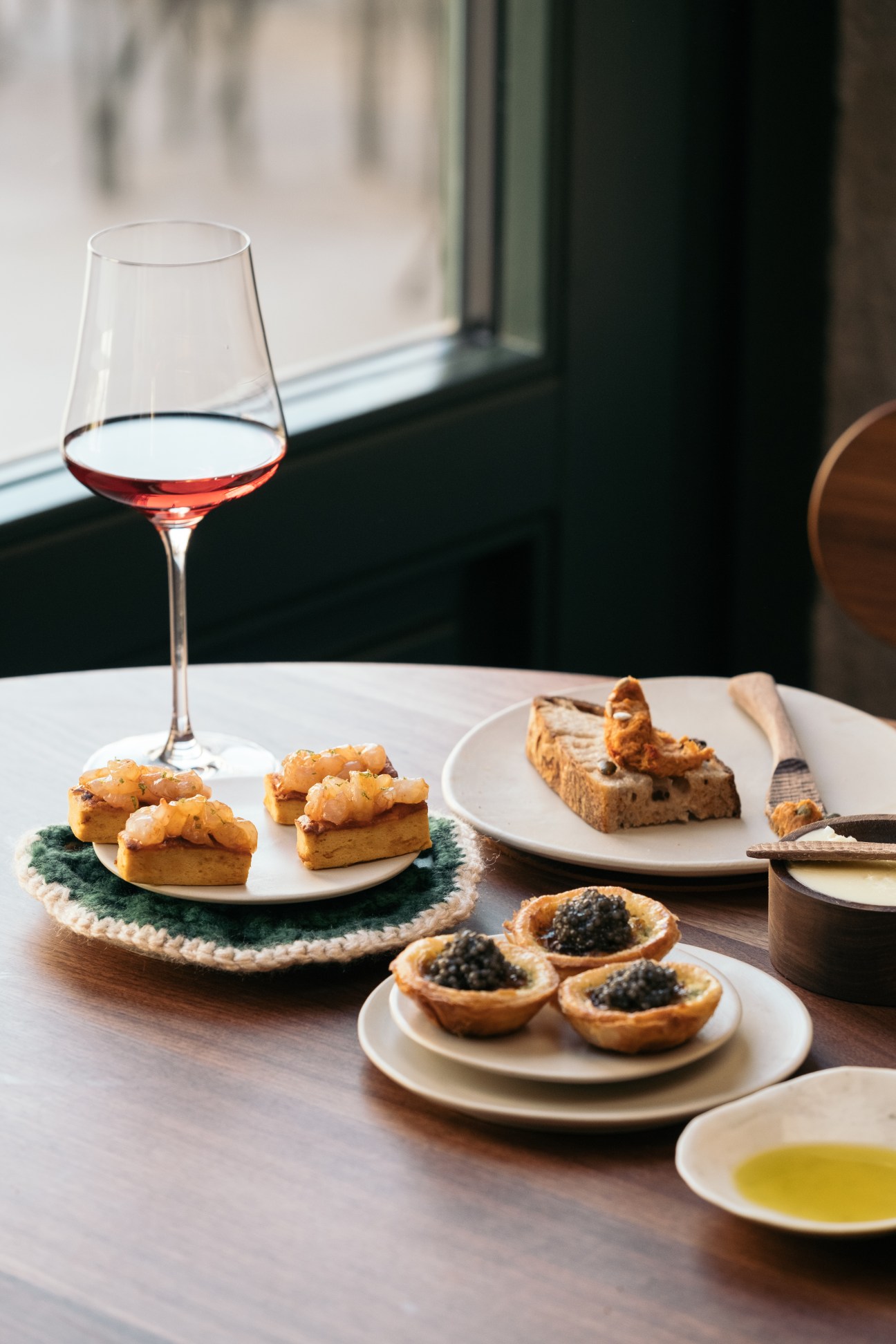
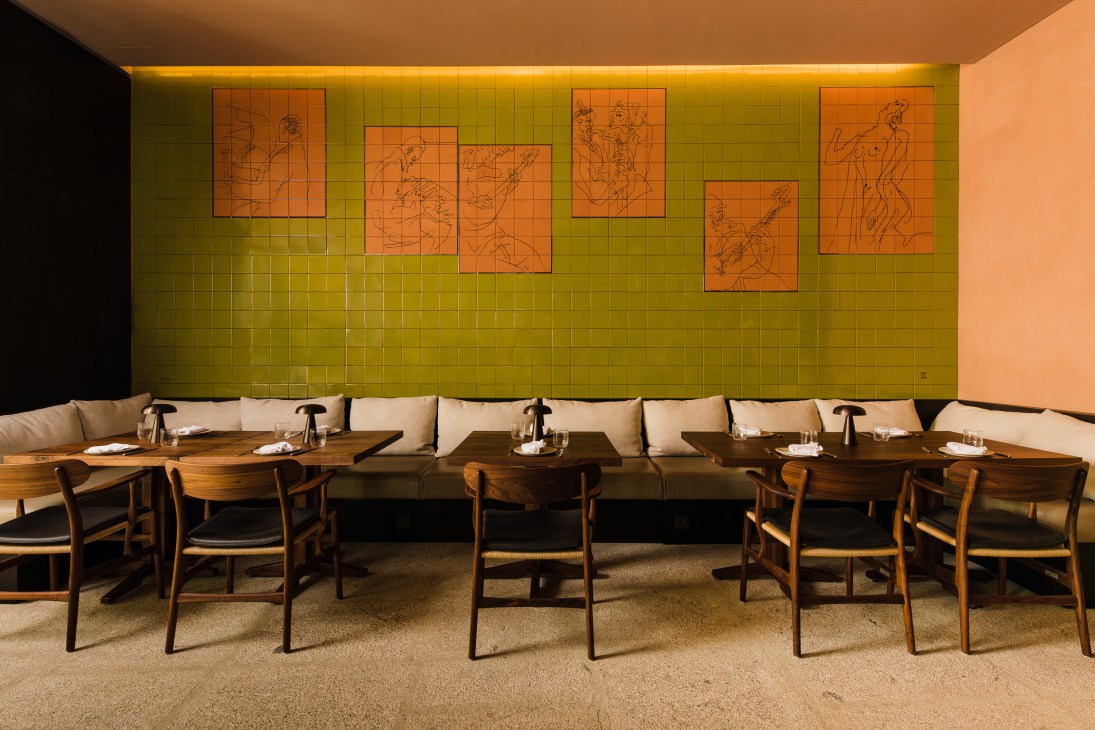
One such turn sees Mendes adding prawns to the pão de ló, a Portuguese sponge cake, as a reference to the dish’s history in 15th-century Japan. Eccentricities aside, “the intention is first and foremost to create a dynamic and fun space,” says Mendes. Designed by Space Copenhagen, it features a bar, Flôr, and an Álvaro Siza mural. The Pritzker-winning architect and Porto native captured the lively yet laidback nature of the city through the use of musical motifs. “Ultimately, I would love this to be a place that Portuenses are proud of,” says Mendes.
cozinhadasflores.com
Songbook
Tokyo
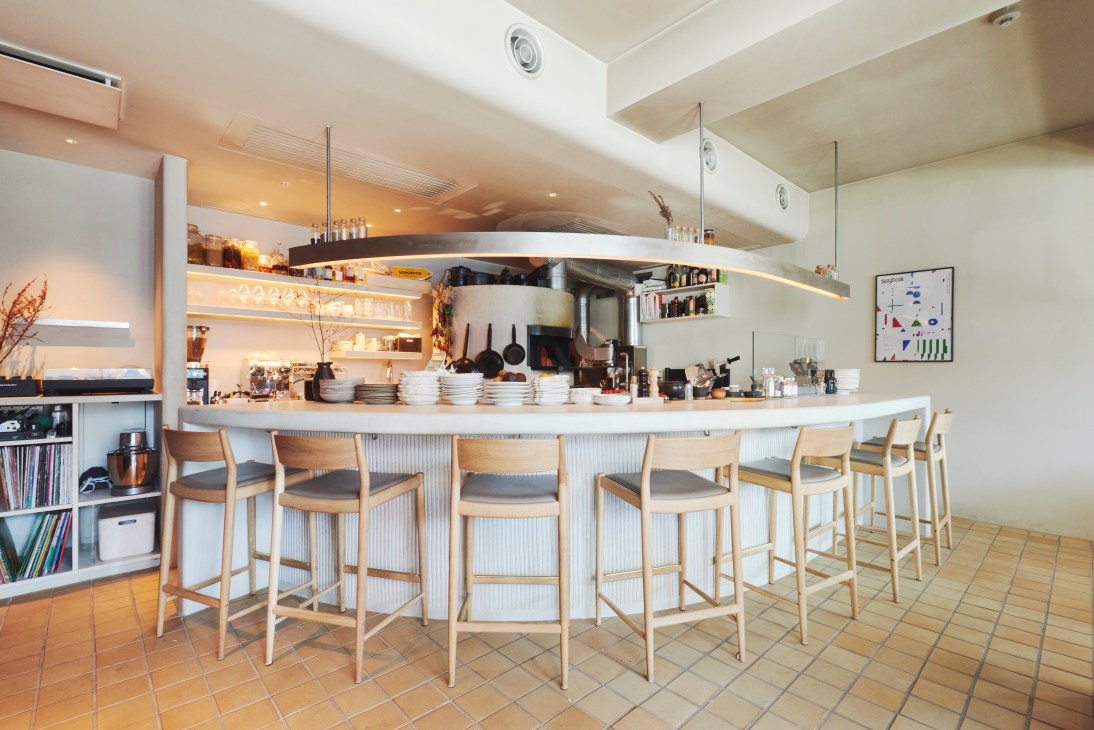
Opened in December in Setagaya Daita, this small, 15-seat restaurant is the latest from Kyohei Nishi, the chef behind popular French bistro Neki in Nihonbashi Kabuto-cho. Kyoto-born Nishi is a fourth-generation chef and a culinary thoroughbred, and having trained in Alsace and served in gallic restaurants in Kyoto and Tokyo, he brings a knowledge of French cooking to his Japanese menu. “I cook Japanese ingredients on a wood fire,” he says, smiling from behind the bespoke pizza oven. “I serve simple dishes but there is a lot of work involved.” He sources the best seasonal ingredients and the changing menu might include capon from Kagoshima or salad with kinkan citrus fruit and parmesan. But don’t forget to try the pizza too.
5-10-7 Daita Setagaya-ku
Nature’s bounty
In Italy, April is the month when winemakers gather to hone sales strategies and talk business. While the vast Verona trade fair Vinitaly dominates national headlines, smaller events focused on sustainable approaches to viticulture are growing more influential. As tastes change, fairs such as Summa are becoming increasingly important.
Organised every year by South Tyrol’s Alois Lageder winery, the two-day fair gathers more than 100 producers, many of whom are friends of the Lageder family and all committed to the principles of organic agriculture. The tasting rooms are inside historic buildings on the family’s estate in the village of Magrè.
Producers from Italy, Austria, Germany and further afield take up booths in rooms with frescoes, antique furnishings and vaulted ceilings – a welcome change from the stuffy confines at conventional fairgrounds. “It’s an exceptionally curated selection of vignerons in an epic setting,” says first-time visitor Nuno Bico of Porto-based importer Vigner On, who was particularly impressed with the rieslings at the stand of Ökonomierat Rebholz, a winery from Germany’s Pfalz region.
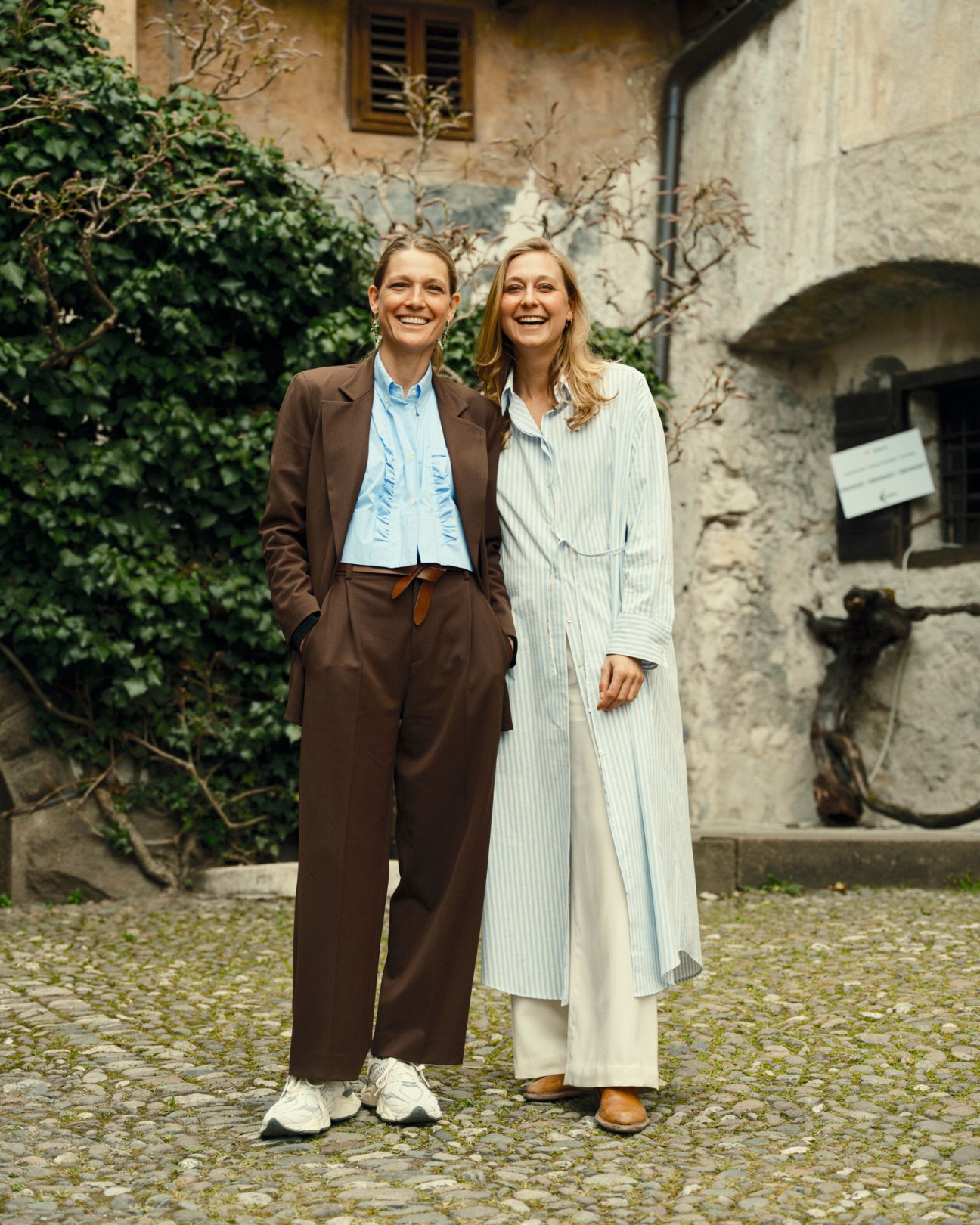
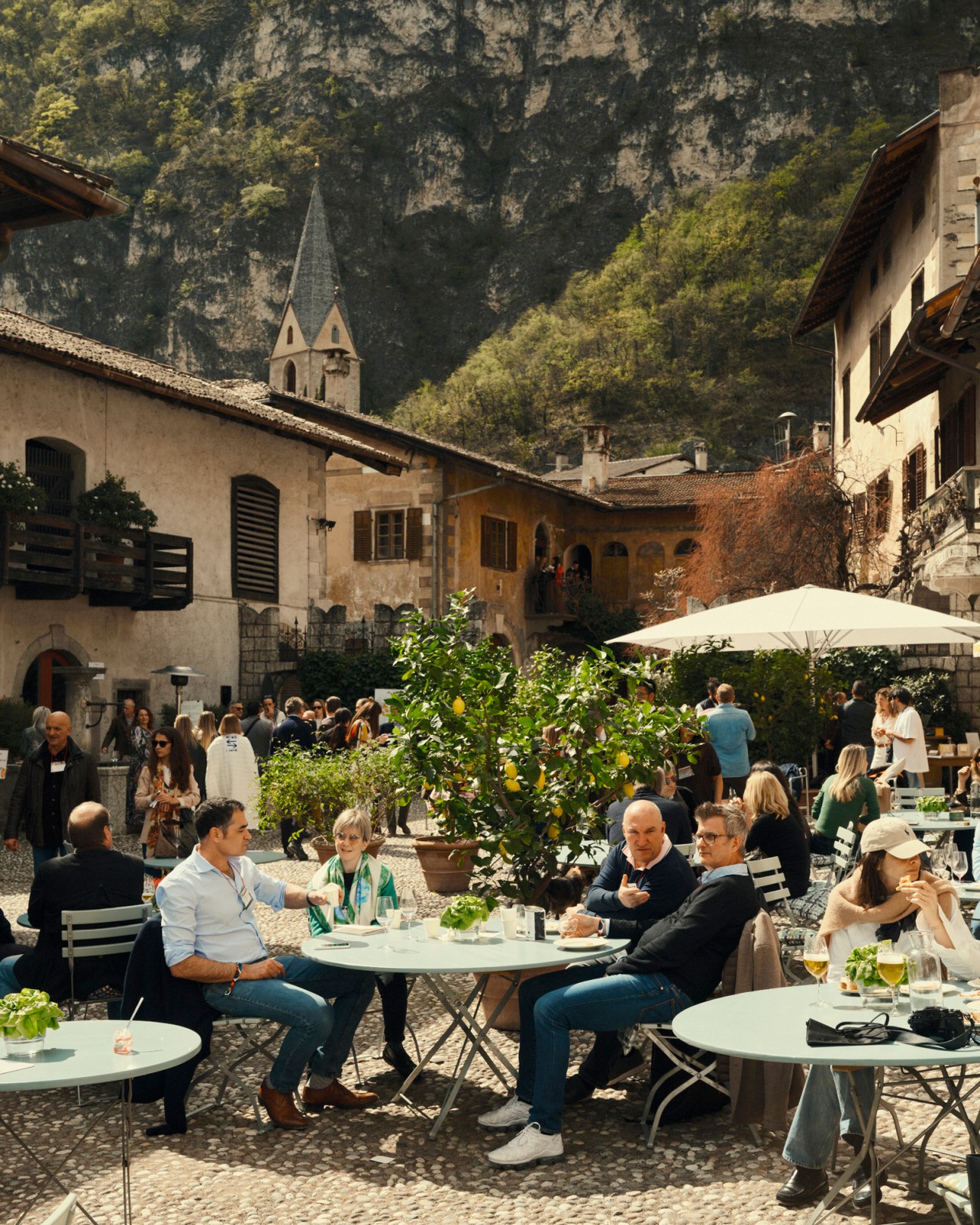
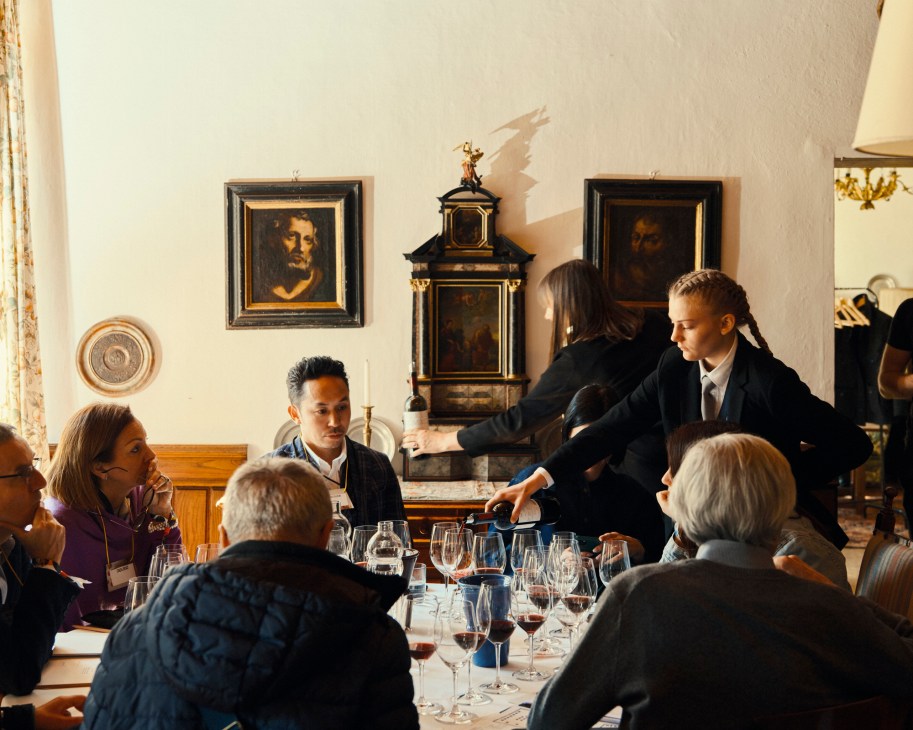
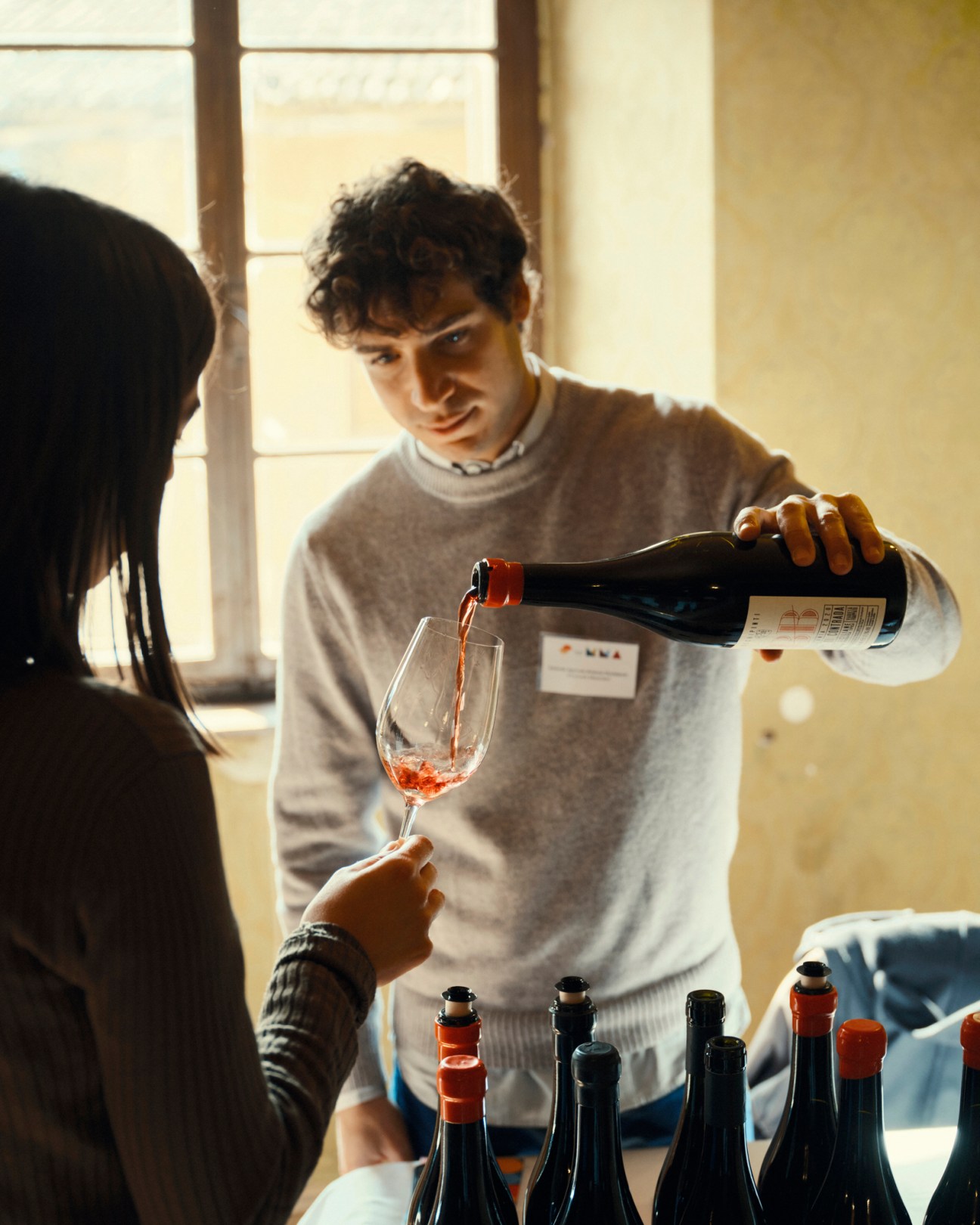
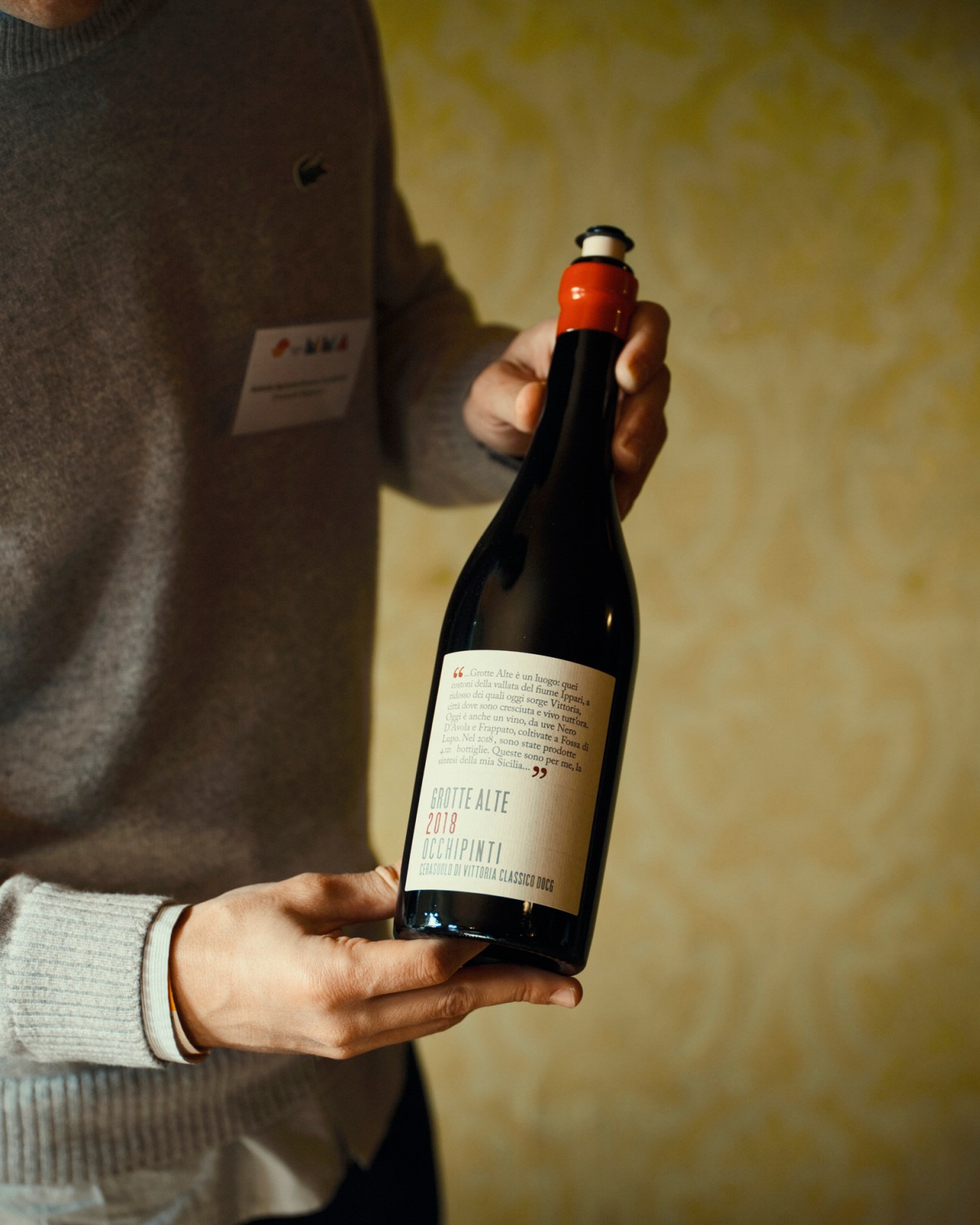
Among the other discoveries at this year’s outing were winemakers from Burgenland in the east of Austria. These include Rosi Schuster and Wachter Wiesler, who brought bright and fresh blaufränkisch, a red varietal that’s becoming increasingly popular with sommeliers across Europe. “The grape has the finesse of a burgundy with the structure of a Piedmontese barolo,” says Roland Velich of Moric winery.
Biodynamic winemaking, which the Lageder family has adhered to for 20 years, was on display. For instance, industry heavy hitter Elisabetta Foradori, a veteran winemaker from Trentino known for her work with the local red grape teroldego, which she ages in amphorae, was in attendance. Female-led wineries were well represented too: Sicilian producer Arianna Occhipinti was showing her island varietals, including frappato and grillo, which she grows without pesticides or chemical fertilisers.
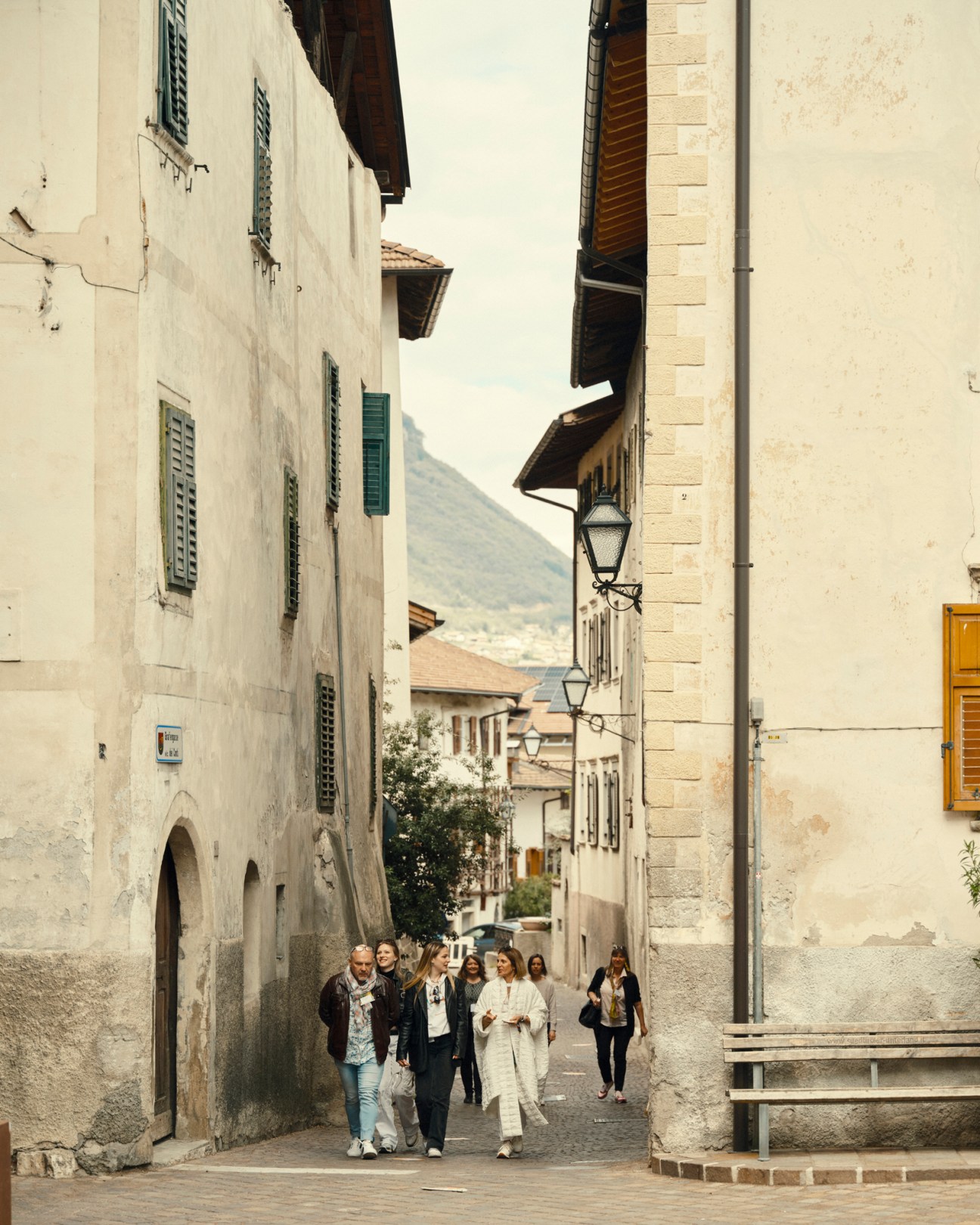

First-time exhibitor Anna Jorgensen of Cortes de Cima, a Portuguese winery in Alentejo, was keen to talk about biodiversity and traditional winemaking methods. Based in Vidigueira, an area with a 2,000-year history of producing wine in talha (large clay vessels), Jorgensen presented her palhete wine, an easygoing mix of syrah and viognier. “It’s a more innovative talha wine, taking whole bunches of syrah grapes that we cover with fermented white grape juice in the talha and then leave to infuse in there for a week before we press.”
Beatrice Giardini of Villa Venti had at the ready the latest vintage of primo segno, made from sangiovese in vineyards in Romagna near the Adriatic. “It’s different from Tuscan sangiovese, which is planted at higher elevations, as they play more with the austerity of the tannins and we play with fresh fruit and minerality,” she says. It was yet another sign that wine distributors and the public in attendance were in search of fresher reds that leave a lighter footprint on the environment.
summa-al.EU
Wine finds from Summa
Here are a few of our favourite finds from South Tyrol and further afield. There’s something at Summa for everyone this summer. This is what’s in our hamper.
Quinta da Lomba Garrafeira Branco 2016 by Niepoort
Fontanasanta Manzoni Bianco 2021 by Foradori
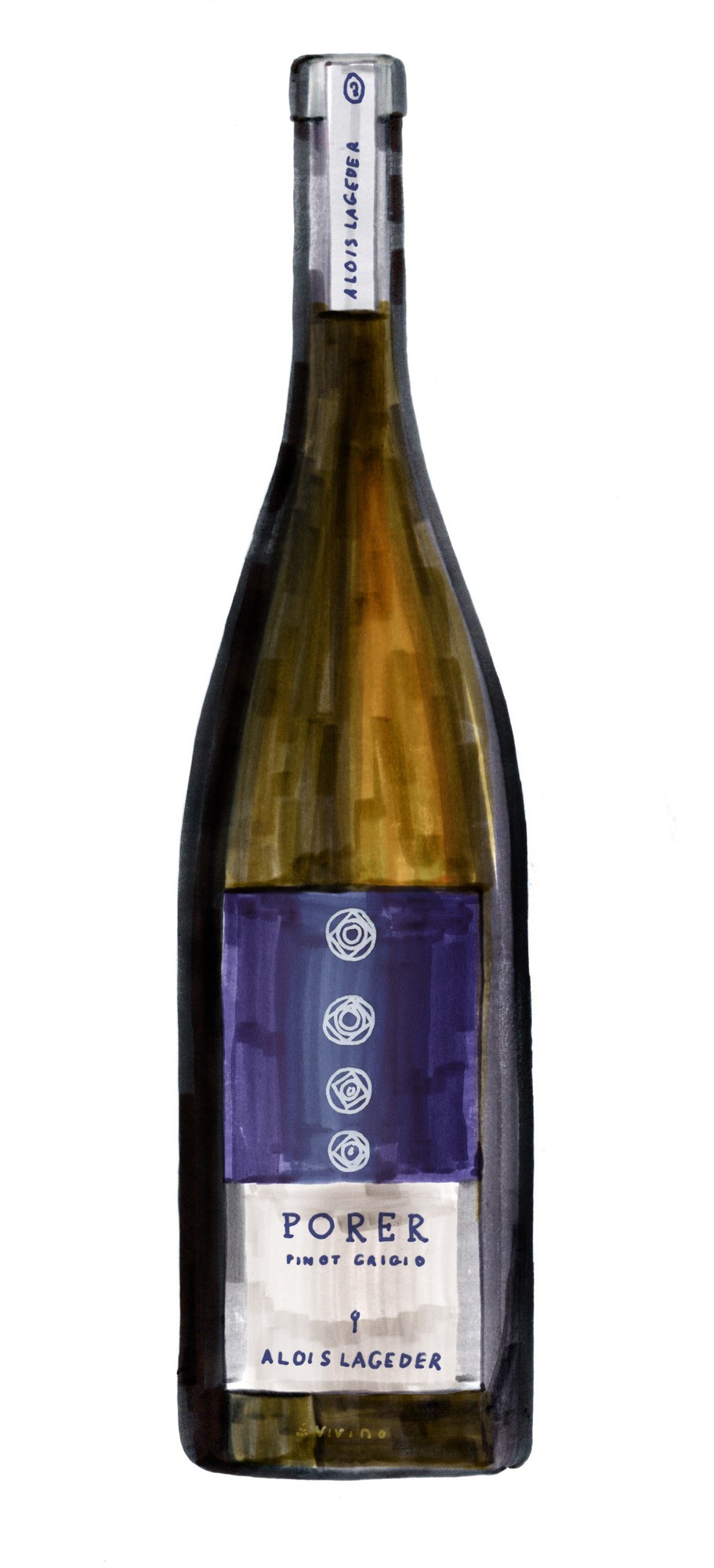

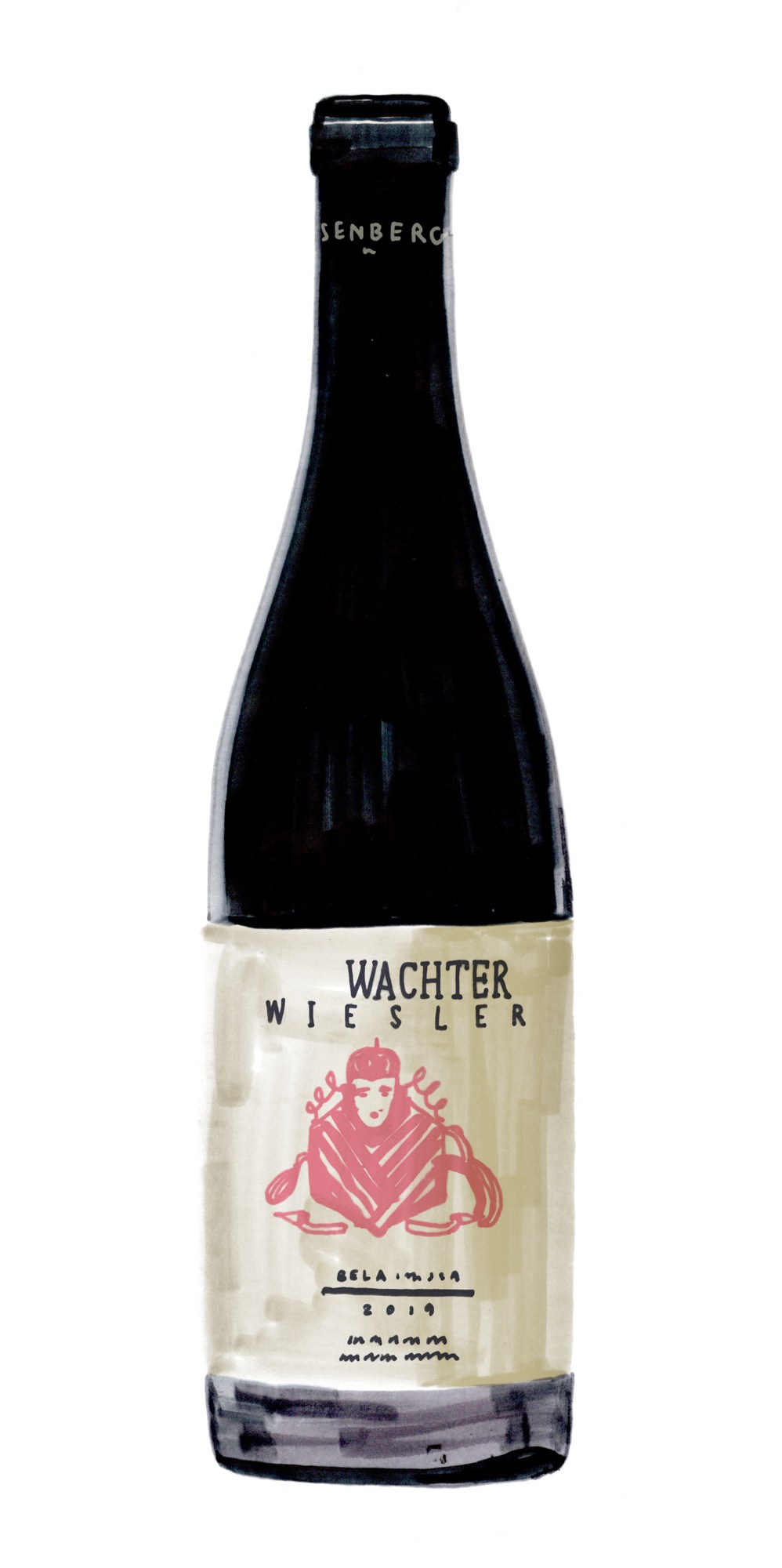
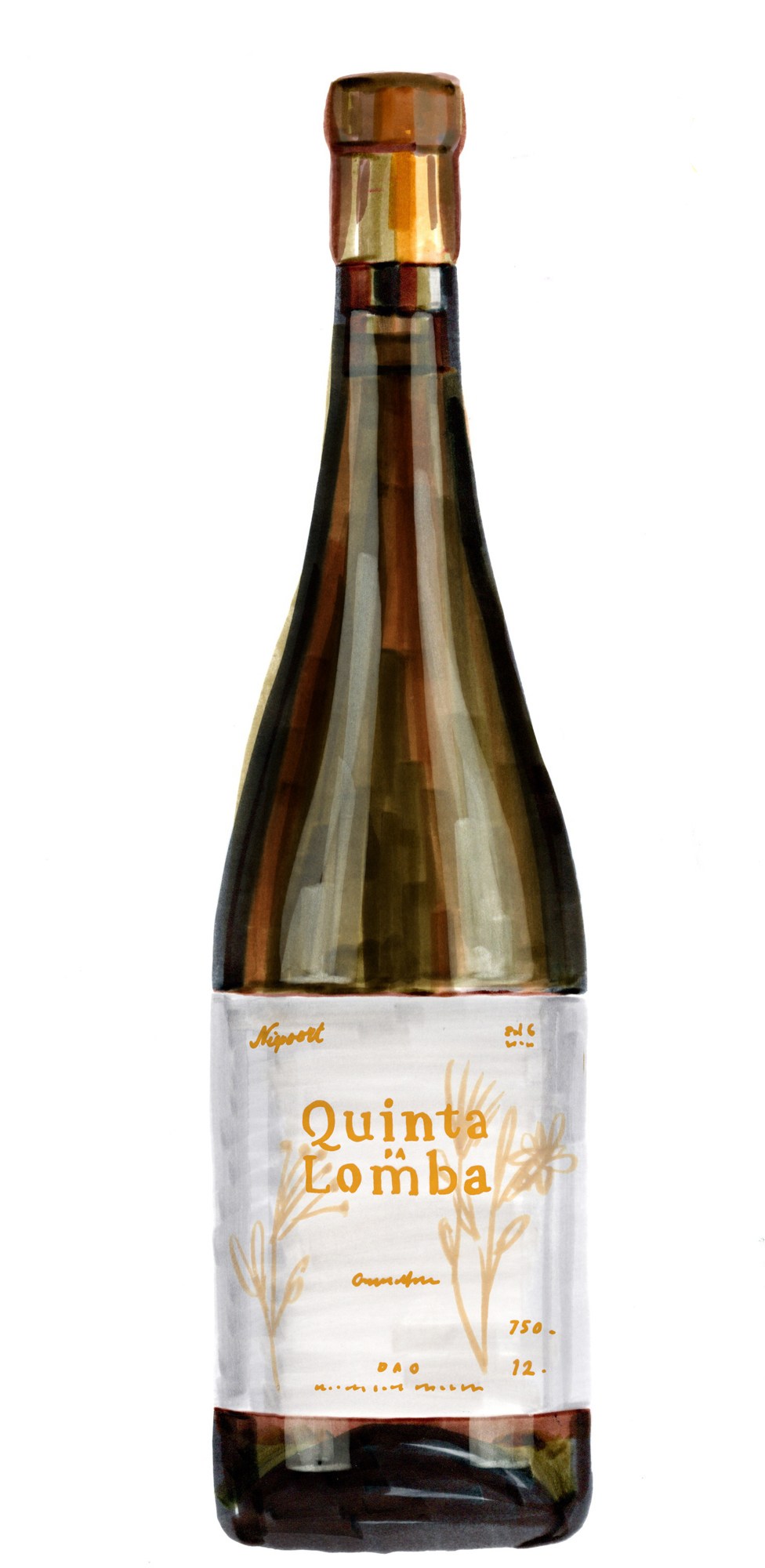
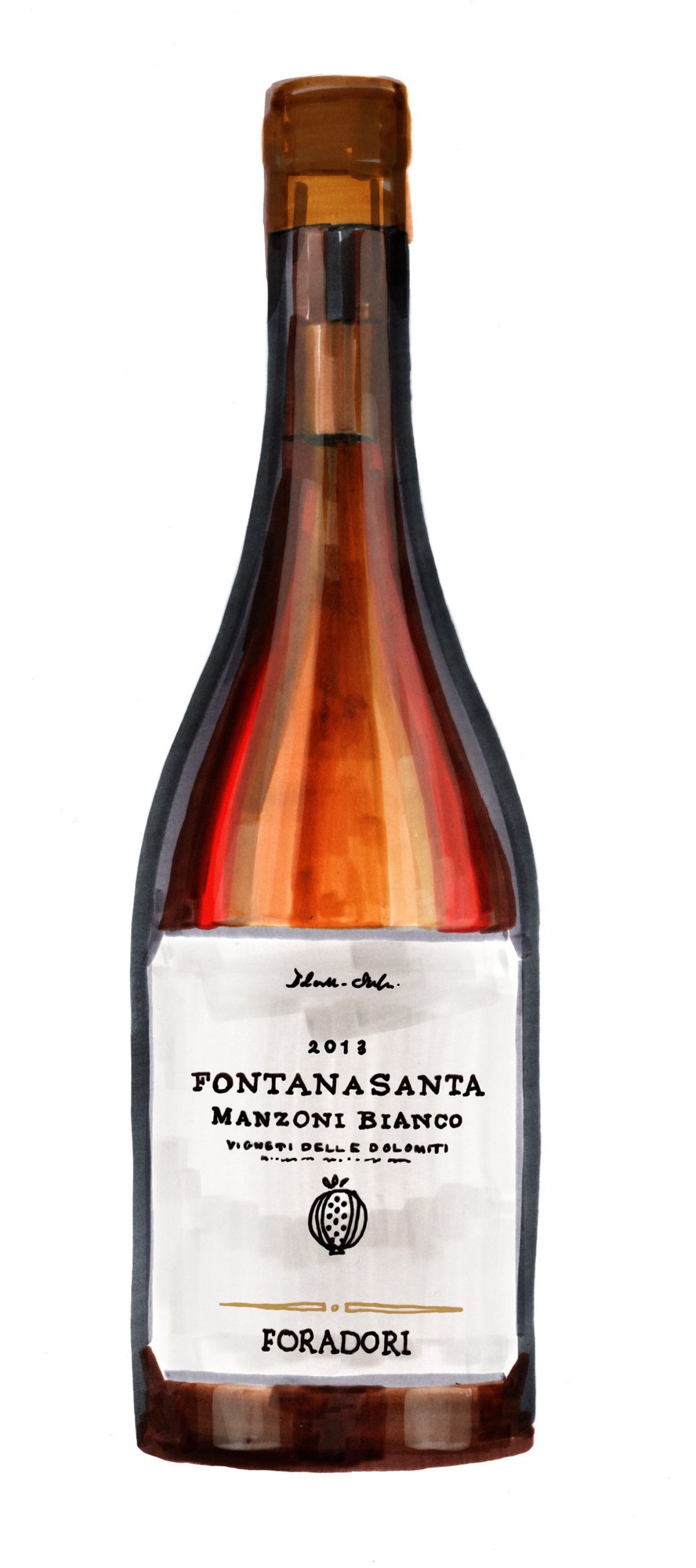
Sound advice
R1S Smart Radio
Ruark

With its grey lacquer case and walnut grille, Ruark’s latest tabletop radio, the R1S, is as elegant as it is advanced. Though compact, it delivers plenty of volume and has a rich, warm tone. It offers DAB, DAB+ and FM radio alongside online stations; you can also play music from your phone on its speaker via Bluetooth.
ruarkaudio.com
Ear (2)
Nothing

In-ear headphones need to look good as well as sound good. As with London-based electronics company Nothing’s earlier models, the design here goes big on transparent coverings: internal components (in the stalk of the earbud, for example) are visible. The earpiece is a glossy white, with three sizes of tip to ensure a snug fit. The Ear (2) also offers active noise-cancelling, so you’ll be able to hear your music above the din of your commute. The earbuds are Hi-Res Audio certified, which means that they can handle the highest-quality sound files.
nothing.tech
Era 300
Sonos

This wireless speaker from Sonos looks more like a hat box than a music source but its curious shape is the result of the woofers and tweeters inside that pump out sound multidirectionally, making it capable of room-filling “spatial audio”. As with all Sonos speakers, it’s simple to set up and can be connected with other devices. You can also wirelessly pair two Era 300s for more stereo separation or, for an impeccable home-cinema effect, use them as surround-sound rear speakers in conjunction with a Sonos soundbar connected to the TV.
sonos.com
Images: Getty Images, Tekever