Issues
Let’s dance
Un été Français
Songs from today’s most exciting French artists
1.
Tirer la nuit sur les étoiles
Etienne Daho and Vanessa Paradis
Two music icons perform a delightful ode to warm, starry nights.
2.
Avec toi
Magenta Club featuring Lola Le Lann
A French-language take on 1998’s iconic “Music Sounds Better With You”.
3.
Le tourment d’amour
Francky Vincent
This perfect summer song is also the soundtrack of director Claire Denis’ masterpiece Beau Travail.
4.
Dance’O‘Drome
Yuksek
Another ecstatic hit from the music producer.
5.
Toupies
Rob & Jack Lahana featuring Catastrophe
A great slice of electro pop from the duo’s debut album, Summercamp.
6.
SMS
Aya Nakamura
A buzzy, infectious song from one of France’s biggest music exports.
7.
Tristesse
Zaho de Sagazan
French chanson meets electro in this intimate, original track.
8.
Rêve
Adèle Castillon
The former member of Videoclub impresses with powerful synths.
9.
D’ici là
Flavien Berger
A gentle, elegant tune.
10.
Tout ira mieux demain
Hervé
Introspective pop from one of France’s best current talents.
Maritime beats
Gentle, breezy songs to listen to before a dip in the ocean
1.
Pyjamas
Benny Sings featuring Remi Wolf
The Dutch singer goes full bossa nova in this smooth track.
2.
Lagoas de Ruanda
Tapioca
This Belgian-Brazilian duo, based in Kigali, draw on their many geographical influences.
3.
Infinite End
Maxime Denuc
Electronica with sleek harmonies.
4.
Super Ego
Babe Rainbow
A sunny piece from the Aussie surf-psych rockers.
5.
Summer Jammin’
Inner Circle
You can’t go wrong with 1990s reggae.
6.
Femmes Pays Douces
Raphaël Toiné
Some of the best zouk synth from Martinique.
7.
Paraiso
Pearl & The Oysters
Whimsical song about being stranded on a desert island.
8.
Dreams
Caixa Cubo featuring Xênia França and Zé Leônidas
Brilliant Brazilian jazz complete with warm vocals and a nod to r&b.
9.
Charm
Rema
The summer belongs to this Nigerian superstar.
10.
Ndikhale
Bongeziwe Mabandla
Magical Xhosa electro-soul.
Magical sunset
Perfect tunes for warm summer evenings
1.
Maracuya Massage
Stuzzi
Fruity disco from the Swedish singer.
2.
Pelle Di Luna
Franco Esse
Mediterranean beats from Rome.
3.
Brasilian Skies
Masayoshi Takanaka
Japanese city-pop with a Lat-Am influence.
4.
Enjoy Your Life
Romy
A blissful, euphoric celebration of existence.
5.
Lost in Sunshine
Sophie Ellis-Bextor
Cool vocals for a celebratory track.
6.
Lipstick Lover
Janelle Monáe
Laid-back, sensual reggae beats.
7.
Miami Beach
Rigoberta Bandini
A fun song inspired by the Spanish singer’s trip to Florida.
8.
Massa Den
Fatoumata Diawara
A wonderful track by the Malian singer.
9.
Dance the Night
Dua Lipa
Everyone’s going to be talking about the Barbie film this summer – and listening to its excellent soundtrack too.
10.
Amor e Sexo
Rita Lee
The late Brazilian Queen of Rock always charms.
Evening seduction
Music to savour with a drink in hand
1.
That! Feels Good!
Jessie Ware
Ware’s disco, which is full of wild joy, is always worth falling for.
2.
Amante Amore
Mina
A sensual, stunning tune from the Italian icon.
3.
Stiekem
Maan featuring Goldband
Electro-pop earworm from the Netherlands.
4.
Offline
Lie Ning
A tongue-in-cheek, sexy song about the joys of logging off.
5.
Blue
LaTour
An atmospheric dance track that’s a throwback to the 1990s.
6.
Steamy Windows
Tina Turner
Pay tribute to the music legend with this daring funk piece.
7.
Emorio
Trinix & Fafá de Belém
Uplifting summery tune with vocals by a Brazilian diva.
8.
Eye
Aminé and Kaytranada featuring Snoop Dogg
Retro-sounding, synth-heavy hip-hop piece.
9.
Summer Voyage
Pleasure Voyage featuring Done
Best enjoyed at a beach club, late at night.
10.
Dive
Olivia Dean
A soulful track from an artist on the up.
Discoteca paradiso
For a hot night on the tiles
1.
Padam Padam
Kylie Minogue
Kylie delivers an infectious hit yet again.
2.
Gigi in Paradisco
Dalida
Dalida is always welcome at Monocle’s discotheque.
3.
Lyckotårar
Lovad
Perfect Swedish pop.
4.
Make Italo Disco Great Again (Tutorial Mix)
Romain FX
A lesson in how to produce the perfect Italo disco.
5.
Angelo (Space Ghost Remix)
Brijean
Dreamy, cosmic disco.
6.
So Hard So Hot
Alison Goldfrapp
We love Goldgrapp as a band but Alison’s solo track is also a delight.
7.
Give Me A Break
Vivien Vee
A gift to the dance floor, straight from Trieste.
8.
Furore
Paola & Chiara
The Italian duo is back.
9.
Solo
Blanka
A bit cheesy but what’s not to love about Poland’s Eurovision 2023 entry?
10.
Miracle
Calvin Harris with Ellie Goulding
Trance from the 1990s is back – and we don’t mind.
On the road
Songs to listen to with the car windows down
1.
So Low
Ruta MUR
One of Lithuania’s most exciting artists delights with a 1980s-inspired tune.
2.
Stumblin’ In
Chris Norman & Suzi Quatro
A classic perfect for a singalong.
3.
Meant To Be
Jayda G
Another chilled track from the Canadian DJ.
4.
I Wanna Be Myself
Don Laka
South African synth-disco at its best.
5.
Monkey Business
Ryusenkei & Hitomitoi
Great contemporary Japanese city-pop.
6.
Down Under
Men at Work
Any decent road trip needs a few surefire hits.
7.
Música Ligera
Ana Mena
Groovy Spanish pop by this actress-cum-singer.
8.
Furðuverur
Systur
Icelandic folk by this trio of sisters (and former Eurovision contestants).
9.
Sad Flower
Reinizra
This mega hit from the Thai dream-pop group is one for the romantics.
10.
The Narcissist
Blur
The British band is back with one of its best singles in some time.
Monocle Radio
To listen to the playlist, find Monocle Radio on Spotify – or tune in live to Monocle Radio for many more songs besides.
Roll with it
Before designer Jirawat “Bote” Benchakarn launched his JBB menswear label in 2007, shopping in Bangkok was often limited to drab, ill-fitting business attire sold in department stores or edgier fashion that would look out of place in most office environments. “There was a big gap in the market,” says Benchakarn, whose day begins with a coffee in his room at the Grand Hyatt Erawan. He stays at the hotel in downtown Bangkok during busy periods – a regular occurrence for a company with international operations and a staff of six.
The Grand Hyatt is also where JBB made its retail debut with a single rack of white shirts, placed inside his friend’s jewellery shop in the hotel’s basement. Bangkok, which combines the dynamism of an urban city with year-long heat and close-knit creative communities, is the perfect stage for such unlikely opportunities. The city also offers a low-risk entry into retail – even today, you’ll often spot racks of clothes by up-and-coming designers at the back of a film-camera shop, for instance.
Benchakarn started out designing and producing the kind of well-cut shirts that he wanted to wear himself, quickly expanding to his signature blazers and pleated trousers. The style has since turned into one of the dominant menswear looks in Bangkok and his sartorial influence is now readily acknowledged across the city.
But more than a decade on, the 45-year-old Thai designer is ready to give his label a head-to-toe makeover: launching new patterns, loosening up familiar cuts and rethinking manufacturing. “I have a new direction that I want to create,” he says, flicking through pencil sketches in his notebook. After popping into another room, he emerges in some of his new designs: a forest-green chore jacket over a heavyweight cotton T-shirt and pleated black shorts. “My new clothes are more relaxed but they still have a strong silhouette,” he says. “When you wear them, you don’t feel sloppy.”
It was a production issue that sent Benchakarn back to the drawing board last year. When one of his factories ceased operations, he decided to discontinue his popular tailored jackets altogether and re-evaluate. “I had to move on and think about my brand’s fundamentals,” he says. “What is JBB without the tailored jacket? Will it be the end or not?”
He set a new direction by asking the right questions and staying close to his customers. His own style also became a point of reference: the chinos that he used to wear as a fashion student in San Francisco in the 1990s (often worn two or three sizes too big with a tight belt) inspired a new iteration of his elegant pleated trousers. “We still use the same tailoring techniques; it is just not as constructed as before.”
Variations of the new styles have already started making their way to the JBB boutique in Gaysorn Tower, an upscale office building in the Pathumwan district. The pocket-sized shop accounts for about 90 per cent of all sales, while online customers around Southeast Asia, Hong Kong and Australia make up the rest. Some of Benchakarn’s new designs involve subtle changes to trouser cuts, while others, such as an open-collared, two-tone Havana shirt with a mint-green trim are more eye-catching. A short, khaki jumpsuit practically jumps off the rack. “It’s the Steve Irwin look,” says regular customer Cholathan Cheovarisajja, a marketing executive, referring to the Australian naturalist. “I prefer timeless clothes that are low key and I can wear for years and years,” adds Cheovarisajja, who sought out JBB as a student. Thailand’s top universities require male students to wear a white shirt and black trousers on campus, so looking trim comes down to the cut of the fabric and the small details. “JBB introduced me to linen trousers,” says the 26-year-old, who began spending more on his JBB wardrobe after graduating.
The physical experience of the shop is certainly one of the secrets to the brand’s success. Whether it’s coming in to browse every month or popping by ahead of every business trip, men from an array of backgrounds make a point of visiting this space year after year. Previous customers include fellow fashion professionals, chefs, business owners and even high-profile Thai politician Pita Limjaroenrat. They all insist on trying things on; they want to feel the texture, to see how it fits and to get advice – another regular tells Monocle that JBB staff treat him “like family”.
Benchakarn has always designed according to the needs of this group of busy, smartly dressed men in Bangkok’s tropical climate. “I have to create my own seasons,” says Benchakarn. The weather doesn’t encourage wardrobe updates – locals tend to move from air-conditioned cars to climate-controlled offices, wearing lightweight linens all year – so Benchakarn bets on smart design to keep JBB desirable. “I have to create the mood so that people keep shopping here,” he says.
As far as menswear design is concerned, Benchakarn describes himself as self-taught. He studied fashion at San Francisco’s Academy of Art University at a time when the syllabus only offered womenswear courses. After graduating in 2001, he spent four years as a menswear buyer before stepping out on his own. As JBB’s sole designer, he finds inspiration in materials rather than mood boards and collages. “If I can’t see the fabric, I can’t design,” he says, while giving Monocle a tour of his stockroom – a museum of cloths that he has picked up on his travels. About 80 per cent of JBB’s fabrics come from Japan, while the remainder are sourced in Italy and South Korea, the latter having caught Benchakarn’s attention with unusual and unexpected colours. A few rolls have just arrived from Seoul, including a now familiar shade of mint green.
Of the multiple departments that the designer must oversee at his own company, manufacturing has been causing the most headaches. Virtually every piece of clothing carrying the JBB label is made in Thailand. This means that Benchakarn, an evangelist for quality control, can cast a watchful eye over the handiwork and request changes.
Until now he has relied on a cottage industry of individual seamstresses, working exclusively for him in small workshops. But as his ageing workforce retires, he has had to move some of his production to the Thai Yamaki clothing factory, which is one of the few facilities nearby that can live up to his exacting standards. A 90-minute drive west of downtown Bangkok, this is a larger but equally considered operation: shoes are left at the door and inside, more than 200 workers – mostly women from the area – are cutting fabrics, sewing shirt collars and inspecting finished pieces. Most large clothing factories have left Thailand for cheaper locations in neighbouring Laos or Cambodia but Yamaki’s Japanese owners continue to make clothes in the Thai capital for discerning brands in Japan and the US.
Benchakarn has brought a sample shirt along and dives straight into a discussion about buttonholes. “Menswear for me is very technical. There isn’t a lot of detail so it all comes down to the fit, fabric and finishing,” he says. “My customers don’t have to know all of the processes and pain that I have to go through to find fabrics and work with factories but when they put my clothes on, they will feel the difference – that’s what keeps them coming back.”
Back in central Bangkok, a small sample rack in the JBB office offers a glimpse of the future. A mint-green, zip-up windbreaker hangs alongside matching shorts, a few striped dress shirts and some pleated linen trousers. In August, Benchakarn is expecting a delivery of his new T-shirts (striking, colour-block designs with drop shoulders and wide collars) from Seoul. These are the first JBB items to have been made in South Korea. He lifts up a sample to show off the finish on the hem, which features vintage single stitching instead of the traditional double stitch.
It’s this type of detailing that keeps him ahead of his competition and justifies his price tags: a standard white linen shirt costs 3,790 baht (€100). It’s also why Benchakarn remains sanguine about the arrival of international chains such as Muji and Cos in Bangkok. “In the long term, it has helped me grow and I’ve learned how to make my clothes look better,” he says. “If I didn’t have that type of competition, I might have still been making the same things that I was making 10 years ago.”
The final items on his sample rail are two vintage pieces used for research: a cotton lab coat and a woman’s cardigan with green lining, picked up at a flea market in France. “I’ve been trying to make knitwear but I was never satisfied with what I had,” he says, while running his fingers along the rounded collar. “I hope this time I will be able to launch successfully.”
The definition of success for other brands might be driving revenue or growing their footprint but Benchakarn is a designer at heart and his focus is on expanding the JBB collection without compromising on his principles. “My dream is simple,” he says. “It’s to provide everything for my customers, a complete, head-to-toe collection.”
Standing tall
The marketing material captured the mood. “Valencia is on the move,” declared the bold typeface, as developers drummed up the hype for the city’s first residential high-rise. “A building can be a symbol of optimism,” it continued. “In fact, Torre Ripalda is just that.” A photo of the soaring concrete structure, in its first phase of construction, gave a glimpse of a novel new building in the normally conservative port city. A loquacious kicker invited the burgeoning middle class to be part of “an utterly modern beginning that speaks to a dynamic Valencia, one in service of a future full of hope and dreams”.
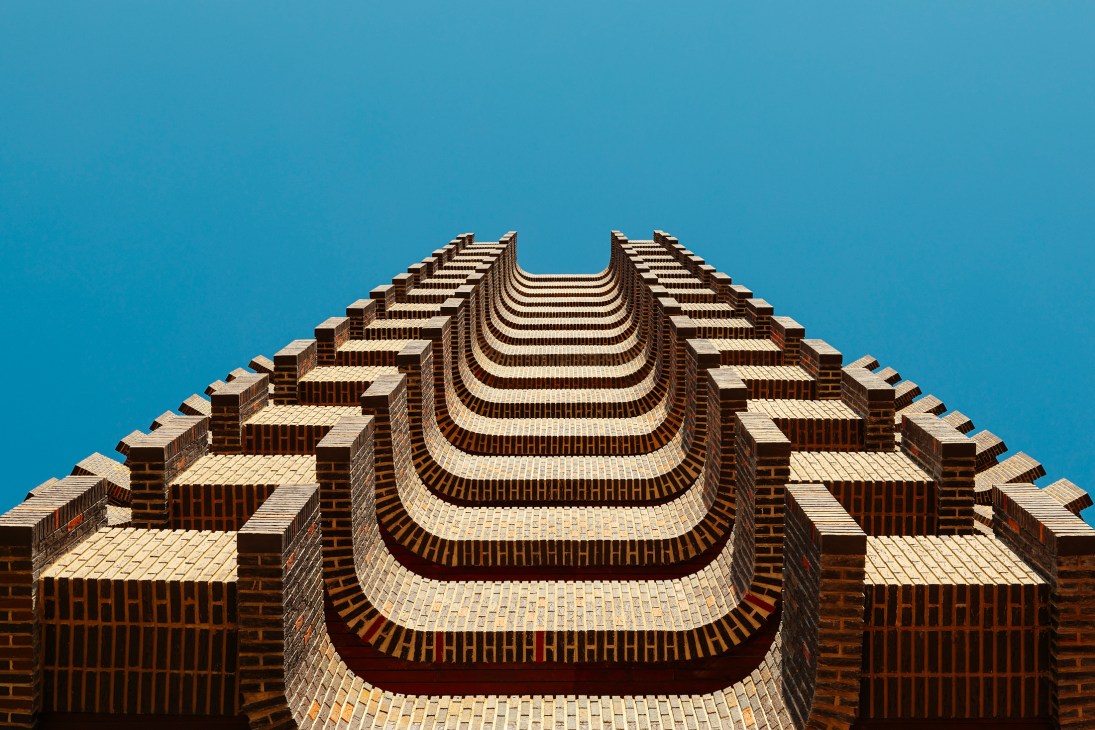
This was the late 1960s and Valencia was indeed marching into a new era, marked by mass construction and a fresh influx of money. Rising dramatically from what was then mainly farmland, this quirky block of 84 apartments would quickly become a symbol of a new way of building and living. But, like any dramatic cultural shift, there was early opposition.
A trade-off between past and future marred the building’s construction before the first brick was even laid: a dilapidated palace – often derided as pastiche or Disneyesque – was demolished to make way for the project. The site’s aristocratic owners were lacking liquidity and took inspiration from the construction boom in the nearby coastal hotspot of Benidorm, where Spain’s dictator, General Franco, was opening up the city to foreign tourism in pursuit of cash. Property development was quickly proving to be the new pathway to prosperity.
For some locals, the sacrifice of the site’s original architectural patrimony in pursuit of the bottom line was an outrage. Others argued that the housing complex’s three curving wings could offer a solution to accommodate the city’s growing middle class. To do so, it was recognised that people would need to be persuaded to buy into the notion that living in a high-rise didn’t mean compromising on space, comfort or material quality.
In an inspired move, a trio of self-assured architects was enlisted to bring this vision to life. Fresh out of university, Antonio Escario, José Antonio Vidal and José Vives Ferrero embodied the type of newly educated, upwardly mobile tenants that the developers hoped to attract. Provincial city rivalry played its part too, as the young architects angled to put Valencia on Spain’s contemporary design map.
Having returned from a trip to Japan, Escario felt inspired. “The technology, modernity and mere fact of having travelled to another country – still rare for Spaniards in the 1960s – invigorated my father,” says Javier Escario, who worked at his father’s studio from a young age and would later become an architect too. “Even the idea of a high-rise was a polemic,” he says, musing on his father’s architectural anomaly. “Great effort was therefore made to convince potential middle-class homebuyers, who were more accustomed to classic housing, that high-density living was the new contemporary lifestyle and the ultimate status symbol.”
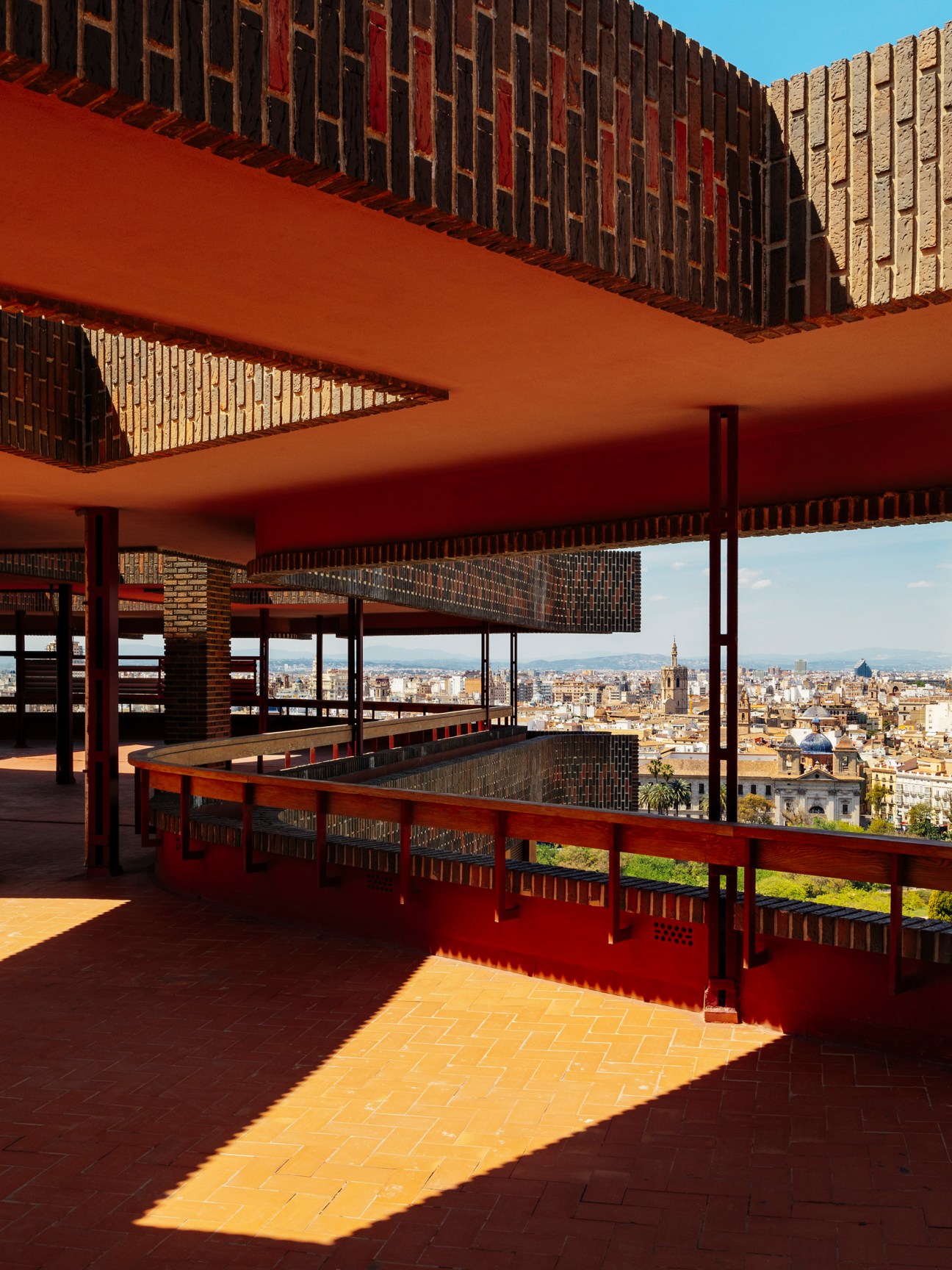


Completed in 1973 after four years of construction, Torre Ripalda’s apartments were organised around principles of privacy and comfort, both of which updated conventional Spanish ideas of luxury. Advertised as the first building in Valencia with centralised air conditioning, many of the apartments were up to 300 sq m (a little larger than a tennis court), dimensions almost inconceivable for residential blocks today. Vestiges of an older era were also incorporated. Most of the apartments came with separate service entrances, sleeping quarters for “the help” adjoined the kitchens and electronic buzzers were dotted around to call for speedy domestic service.
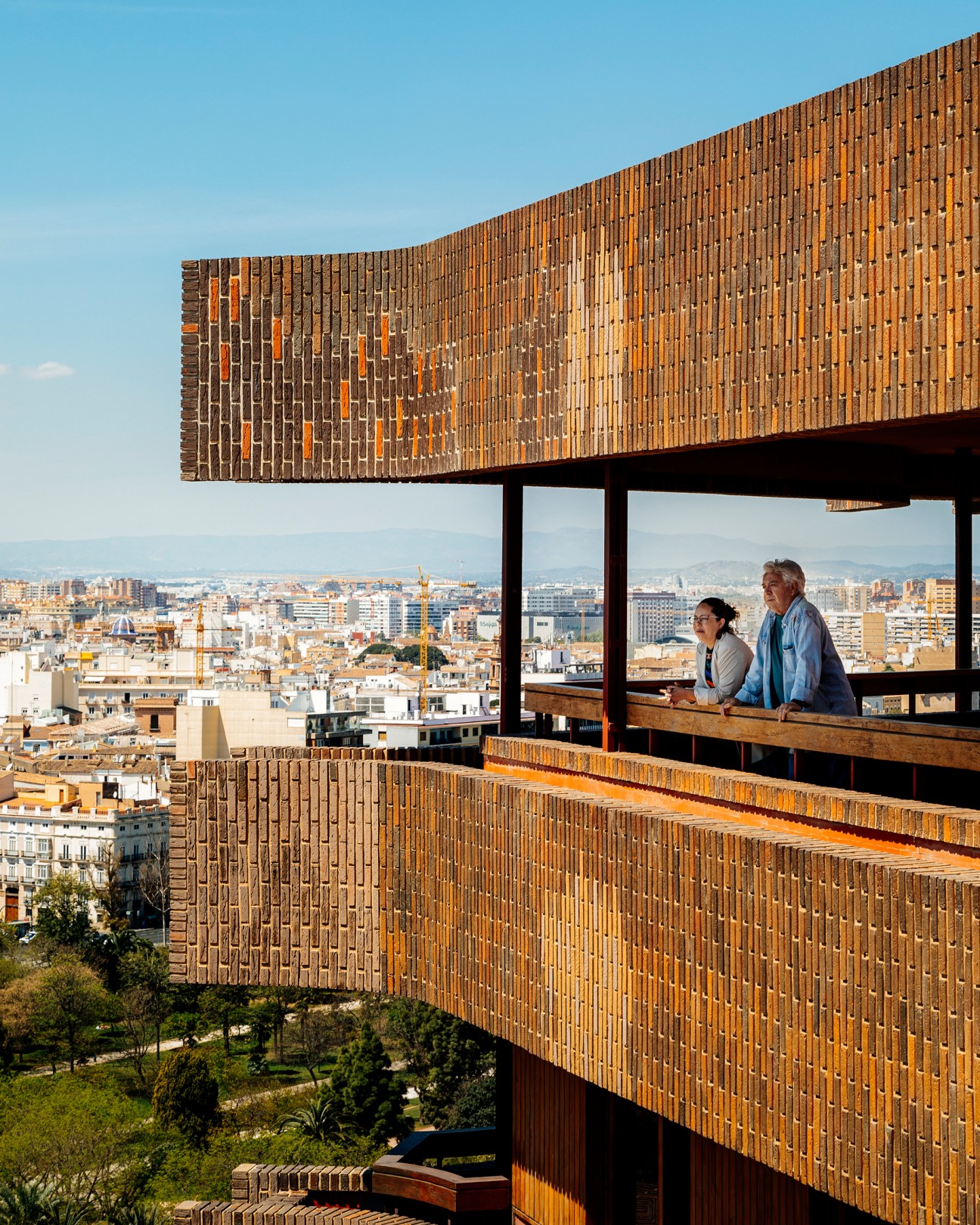
Transversal in more ways than one, the layered exterior was clearly influenced by Antonio Escario’s time in Japan. Lifting onlookers’ eyes skyward with an undulating ladder of bold brickwork, it wasn’t long before Valencianos began calling the temple-like building “La Pagoda”. The colloquialism stuck, supplanting Torre Ripalda with unofficial aplomb.
Bricking together the vernacular elements of an ancient shrine, avant garde creature comforts and nods to esoteric ideas such as animism (the belief that a spiritual essence possesses objects, places and creatures), the building is grounded by the architects’ preference for strong natural materials. The walls of the amply-sized terraces were clad with durable American pine. An early adoption of organic architecture saw planter boxes incorporated into the ledges, allowing vegetation to sprout and spill down the 14-storey structure’s accordion-like sides (though a water leakage problem decades later prompted the residents to vote to remove these plants). Wooden sliding doors, windows and other fixtures were custom-made and fitted by a team of skilled artisans. They were designed and made to such a high standard that most are functioning just as well today.
The building’s three distinct lobbies are embellished with wooden bannisters that emulate the curvature of the exterior façade. Complemented by a generous ensemble of mirrors and stonework, the interior’s natural textural qualities have only elevated the building with age. Another mesmerising element comes into focus in the evenings: as the dark hue of the patterned brickwork catches the light of sunset, the entire building radiates with a vivid red. This prolonged moment suddenly transforms a very private bastion into a glowing public beacon that begs to be noticed.
“I like that the essence of the building has been protected and maintained,” says María Cano, who was raised on the sixth floor in an apartment bought by her grandfather. “A doctor and avid art collector, my grandfather’s friendship with one of the architects convinced him to buy right at the beginning.” A former ballerina who now produces cultural events, Cano praises the effect on her childhood of being able to play in the surrounding parkland. Having four bathrooms to share with her parents and siblings, and the added security and convenience of 24-hour doormen, also made life much easier. “When I was younger, I was slightly embarrassed to admit that I lived in such a privileged, emblematic building,” says Cano. “This reputation for being a place for affluent, important people, remains.”
For proof, Monocle walks across the street to Kiosko La Pérgola – one of Valencia’s most beloved alfresco bocaterías (sandwich bars). “This barrio, El Pla del Reál, has been the province of wealthier people since I can remember,” says one of the zippy waiters. While a proximity to finance seems to be a common vocational thread for La Pagoda’s residents (Monocle meets bankers, economists, notaries, property magnates and hears the name of a local politician), many still venture down from their high tower to rub shoulders with the €5-sandwich crowd. “We’ve been serving this barrio since 1961,” says the waiter – a reminder that the neighbourhood was a more humble spot before La Pagoda kicked off its dramatic transformation.
Ironically, much of the urban development that has since sprawled around this eccentrically designed edifice was spurred by a confidence sparked by its own construction. But the decades of property speculation that spread across the region in later years were more myopic, sadly disregarding a future vision that aimed to please residents over developers.
Built with imaginative foresight, La Pagoda still stands tall, prizing ample space and the right to seclusion as key to well-adjusted urban living. Such considerations needn’t be the exclusive province of the privileged. More than half a century later, the integrity of this high-rise residence’s materials – and its ideas – are as solid as ever.
Meet the locals
María Adela
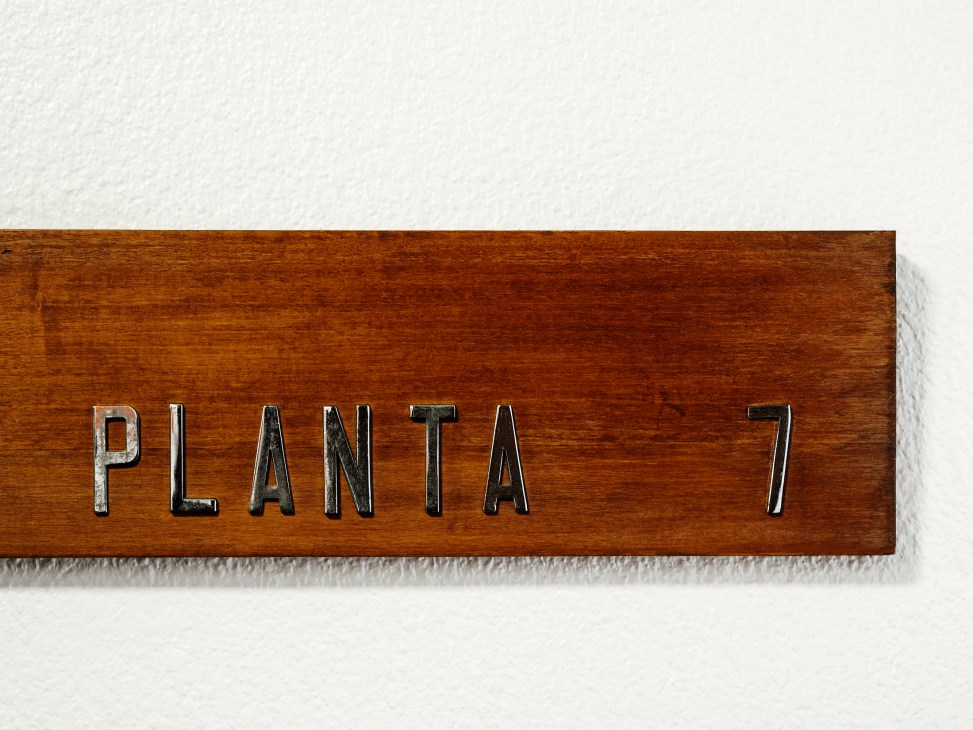
Seventh floor
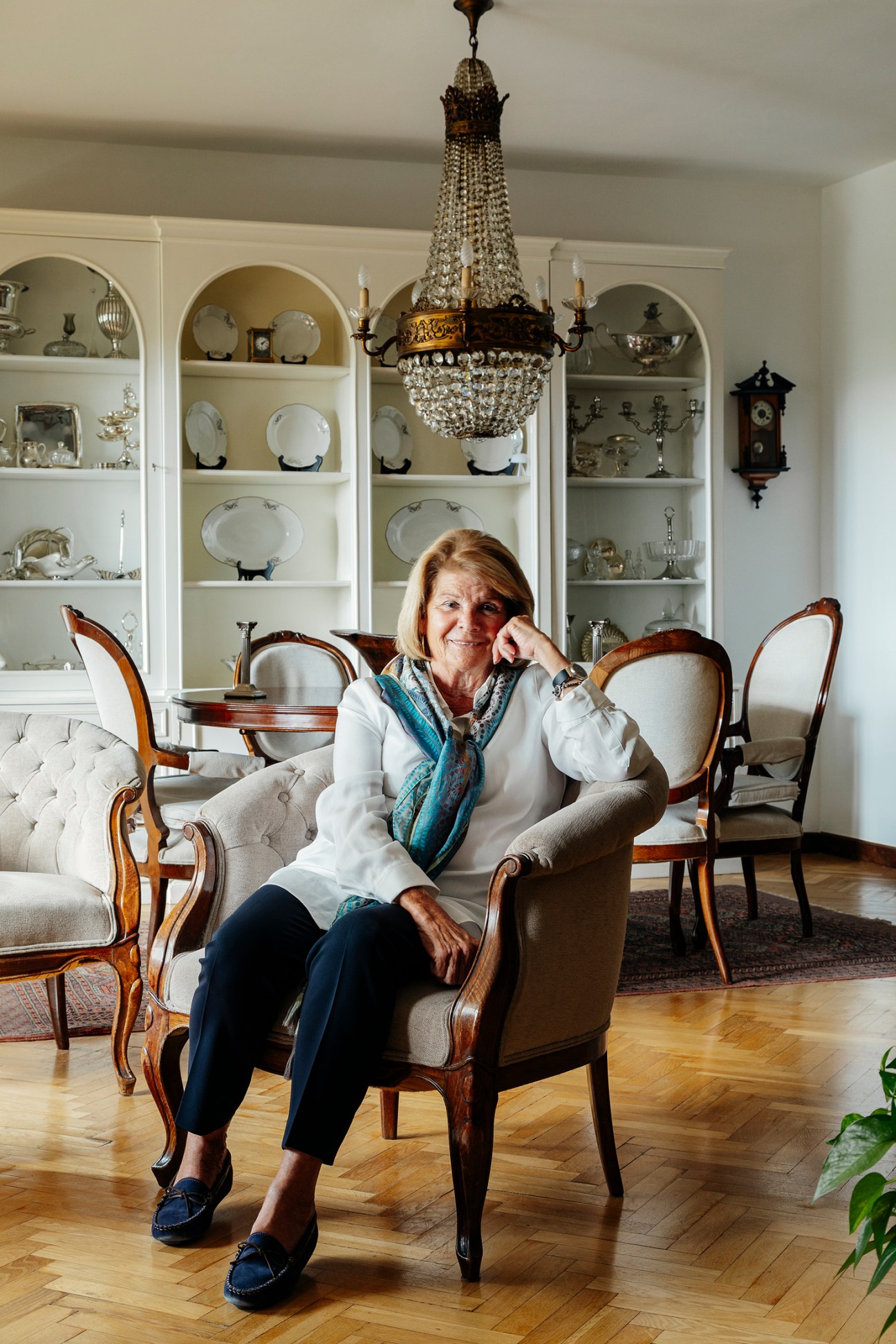
“My husband and I were one of the original 80 families, making us some of the longest remaining residents. The apartment was a wedding gift from my father-in-law. We raised our five kids here. Our home is unique: one of the few without a service entrance and, as far as I know, the only duplex. We also have a fireplace but it’s never used because I wouldn’t want the smoke to bother any of the neighbours who use the rooftop to dry their laundry.
To live surrounded by so much greenery is sublime. My children are all grown up and keep asking me to move to their side of town. It would be difficult for me to leave all the surrounding trees and leafy vistas, though. Besides, we’re not very fond of change.”
Pepe Cano
Sixth floor
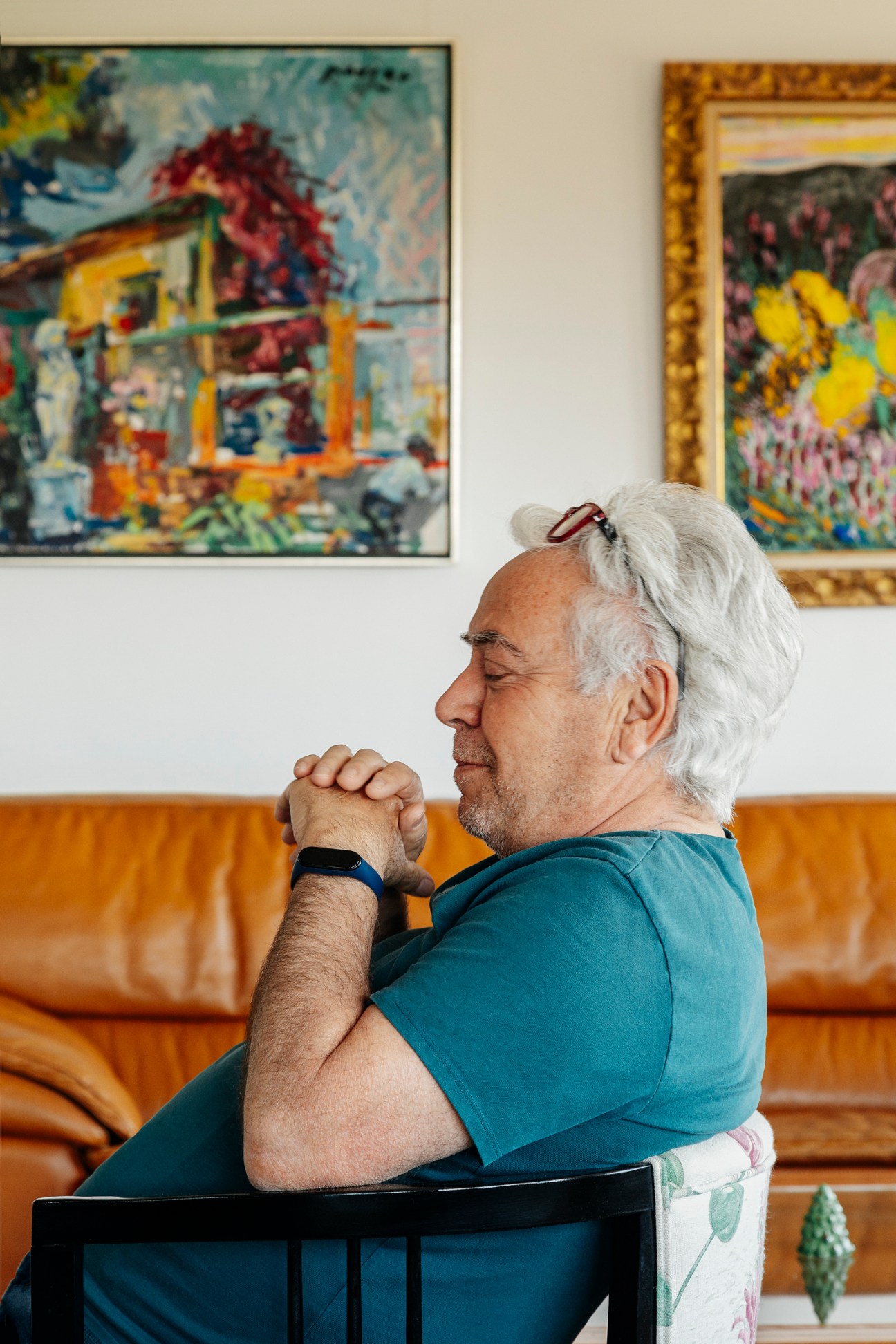
“This is a joyful place to live. I moved here when I was 35, taking up residence in my father’s investment property after he had a bad experience with some tenants. At that time, I was one of the youngest people in the building. We’ve watched Valencia change and expand at our feet. When the authorities announced a multi-lane highway project along the former riverbed, I was the first to take to the streets in protest. Thankfully, it’s now a park [Turia Gardens] designed by Ricardo Bofill.
This is not a building of shared experiences. It was designed to accommodate private, affluent people. The prominence of service entrances and the structure’s division into three sections reflect this. In fact, the only time a lot of neighbours meet is up on the rooftop terrace during Fallas [Valencia’s pyrotechnic spectacle, which takes place every March].
Three generations of my family have lived most of their lives here. We have no complaints. It has been a very happy, comfortable life.”
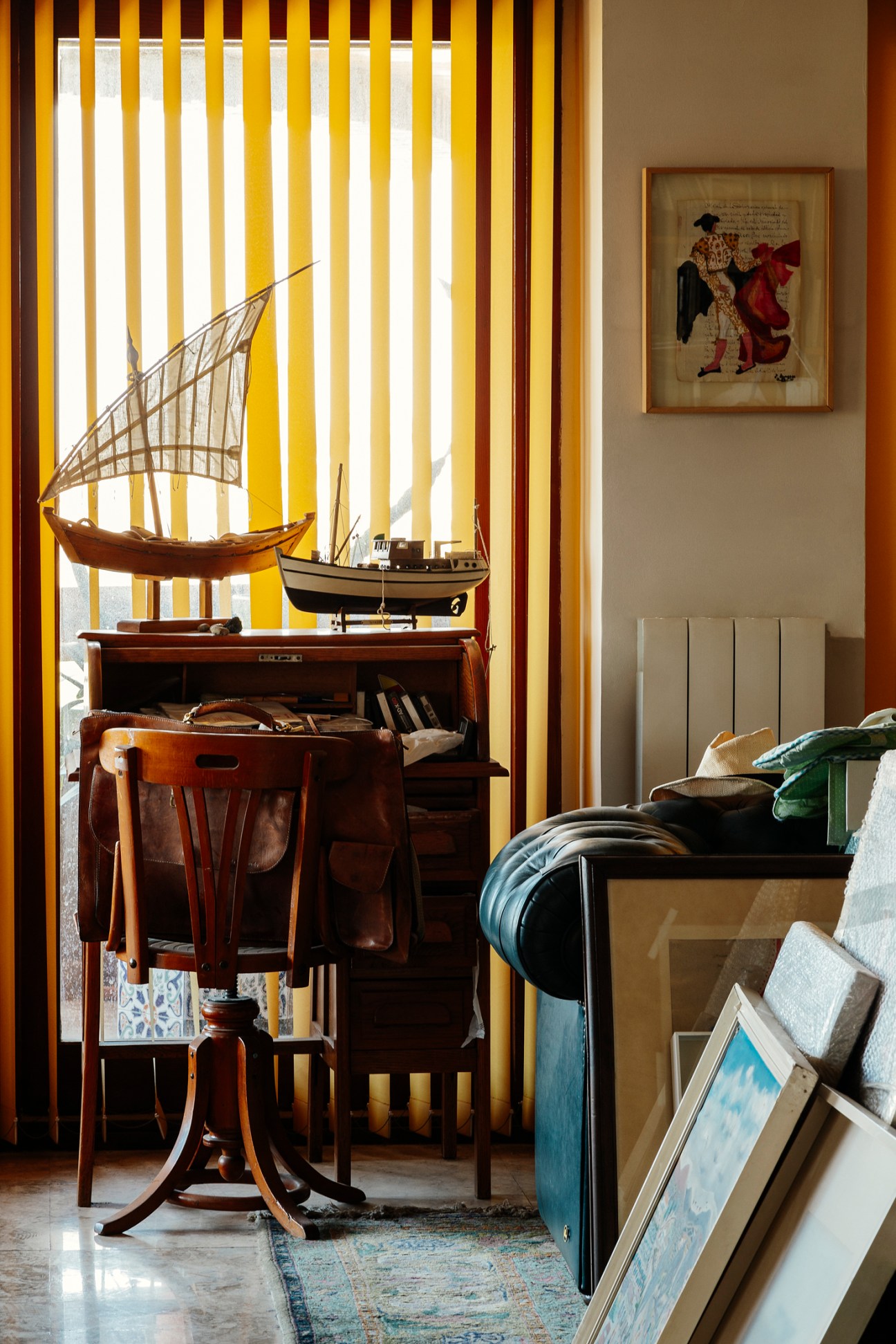
Vicente Benlloch Piles
Tenth floor
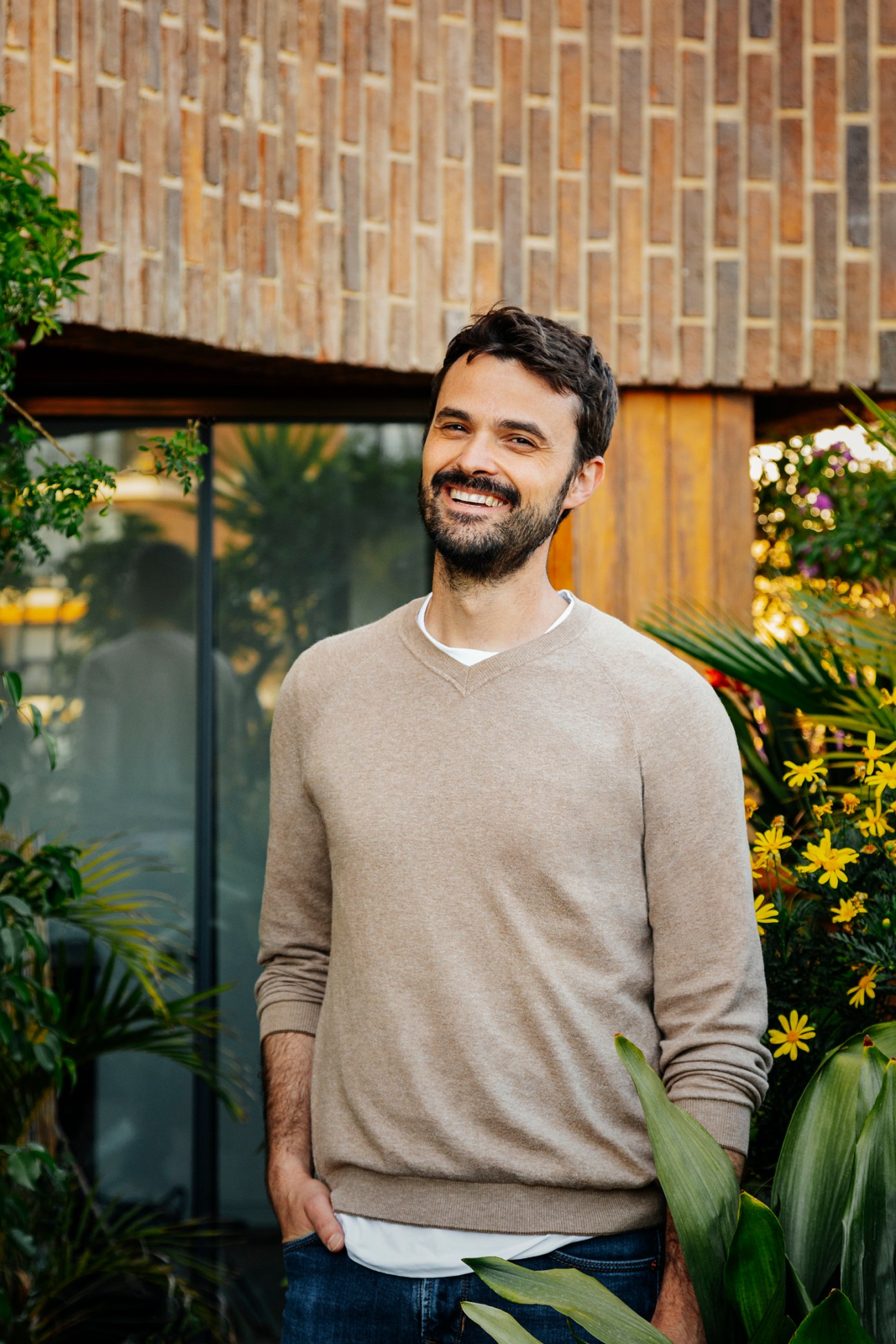
“My architecture practice, Tambori Arquitectes, refurbished this apartment. It was a challenging process. The interiors hadn’t been altered since the 1970s and strict restrictions protect the façade and exterior fixtures.
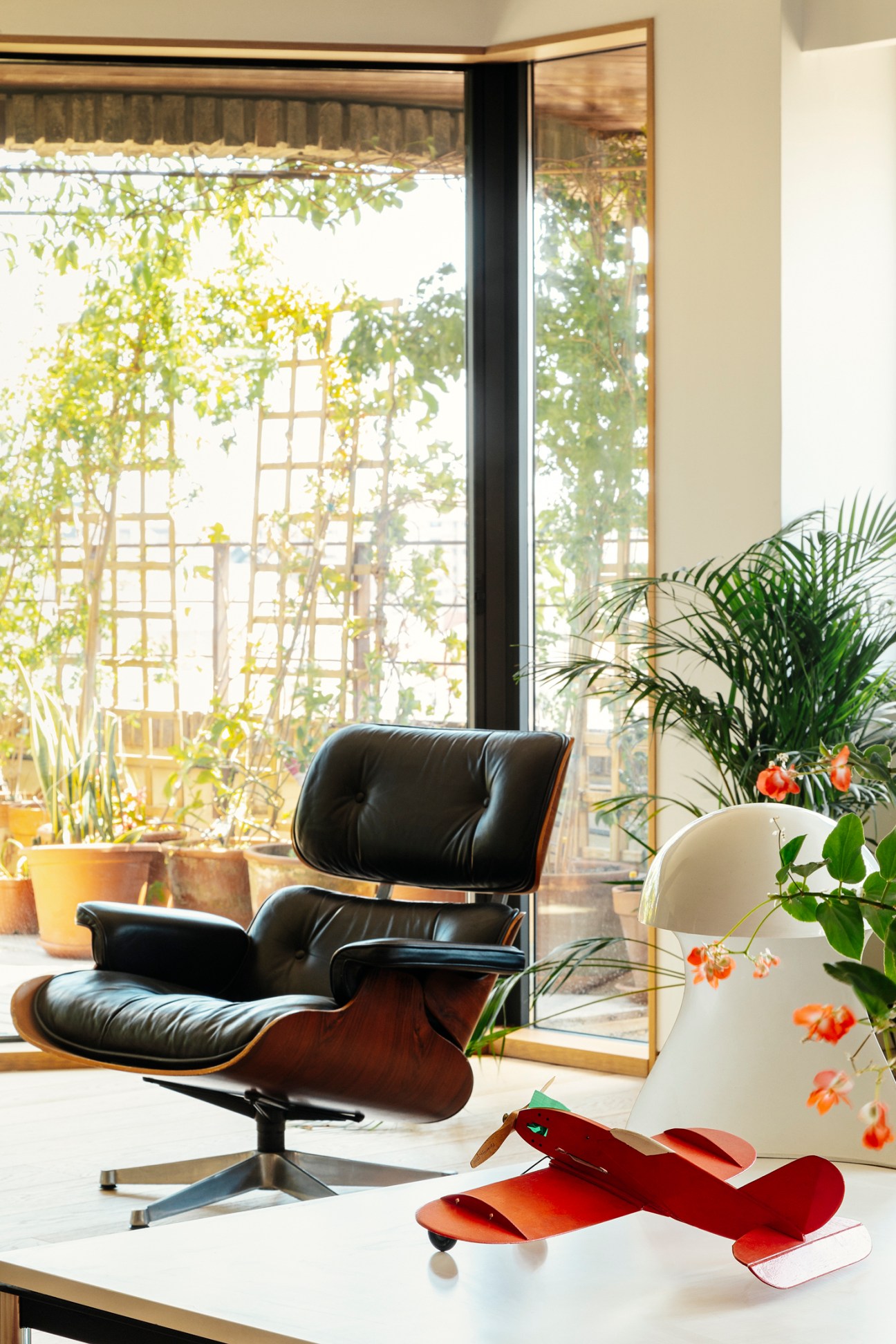
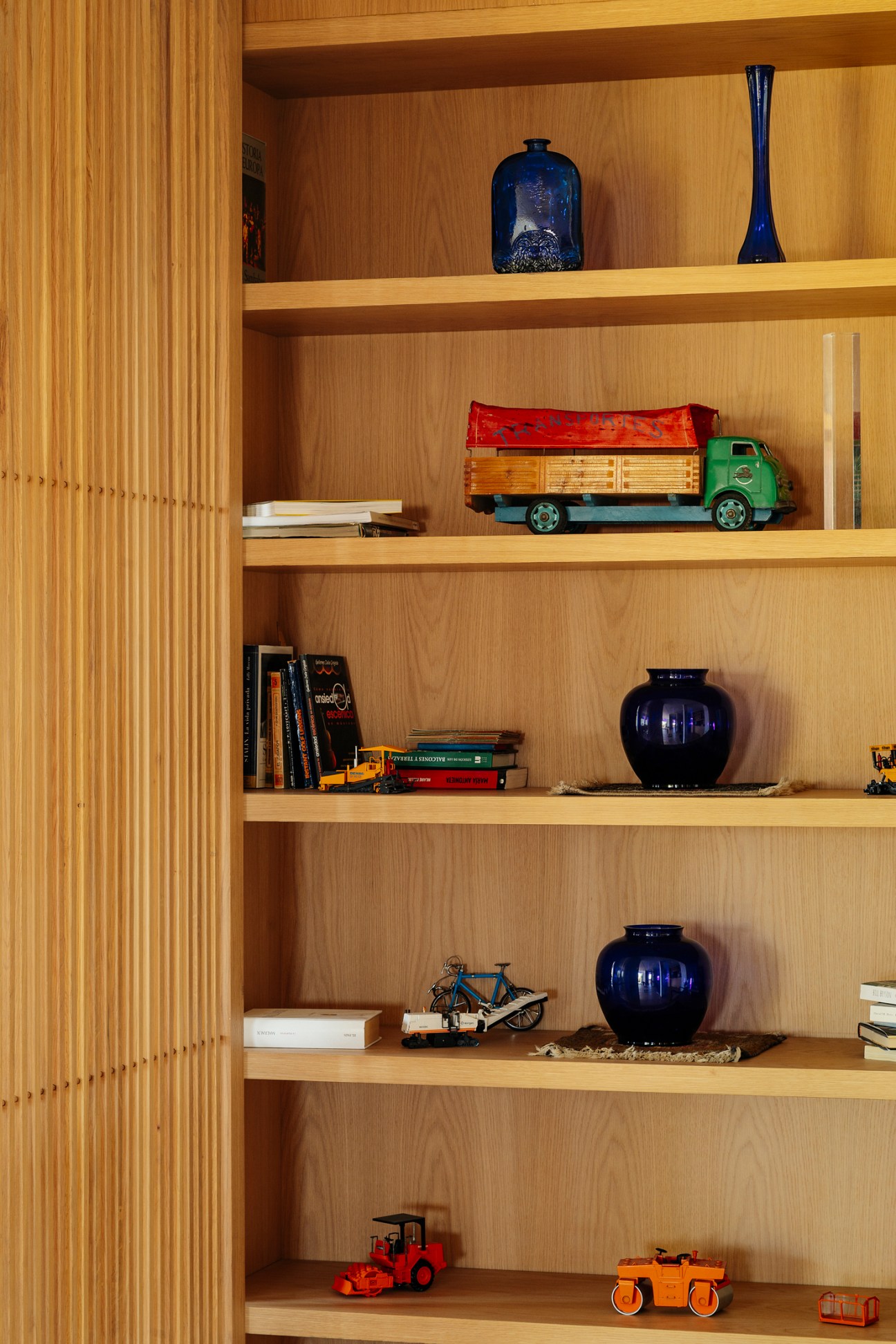
The walls of the original bathrooms were fitted out in fabric and included painted ceramic details. Library shelves were lined with leather-bound volumes. Everything was extremely classic. Completed in 2019, the renovation uncluttered each space with cleaner, more contemporary surfaces. Sliding oak dividers were added to give more flexibility to the open-plan living room. My client was adamant that every room preserved the visceral connection to the view so that every window feels like a framed picture of the cityscape.”
Valencia’s top spots
1.
Patacona Beach
Valencia’s northern beach is the city’s best metropolitan swimming spot. Its esplanade is also packed with outstanding restaurants for a post-swim meal. Our pick of the bunch? The calamares at Restaurante Luz de la Luna.
2.
Turia Gardens
After the Turia river flooded in 1957, the city made the savvy decision to divert it and turn its original bed into gardens, complete with playgrounds, sports courts, floral displays and cycle paths.
3.
Ciutat de les Arts i les Ciències
Valencia isn’t wanting for outstanding architecture. The Santiago Calatrava-designed Ciutat de les Arts i les Ciències (City of Arts and Sciences) – a futuristic architectural ensemble that houses a museum, cinema, opera house and aquarium – is arguably the pick of the bunch.
4.
Institut Valencià d’Art Modern
Spain’s first modern art museum remains one of the country’s key cultural players.
5.
Fallas
A sense of civic pride and celebration is essential for building a strong community and the traditional Fallas festival does just that. Sculptural artworks known as falles (ranging from 4.5 metres to 14 metres in height), are set alight in a frenetic pyrotechnic display during the annual festivities in March.
Sowing the seeds
Tucked into a bustling block in Berlin’s multicultural Neukölln district, Spore House manages to look simultaneously inconspicuous and inviting. At street level, vast floor-to-ceiling windows open to an airy space filled with colourful artworks, lush plants, a cosy café and plush seating.
This structure, opened in April, is the “institutional anchor” of Spore Initiative, a philanthropic organisation with a mission to care for the planet, collaborating with global communities to ensure that ancient knowledge about living in harmony with nature doesn’t get lost. “The core premise of Spore is how to create a space where culture comes in to serve priorities set by people at the forefront of environmental regeneration,” says founding director Antonia Alampi, who’s also an art curator.
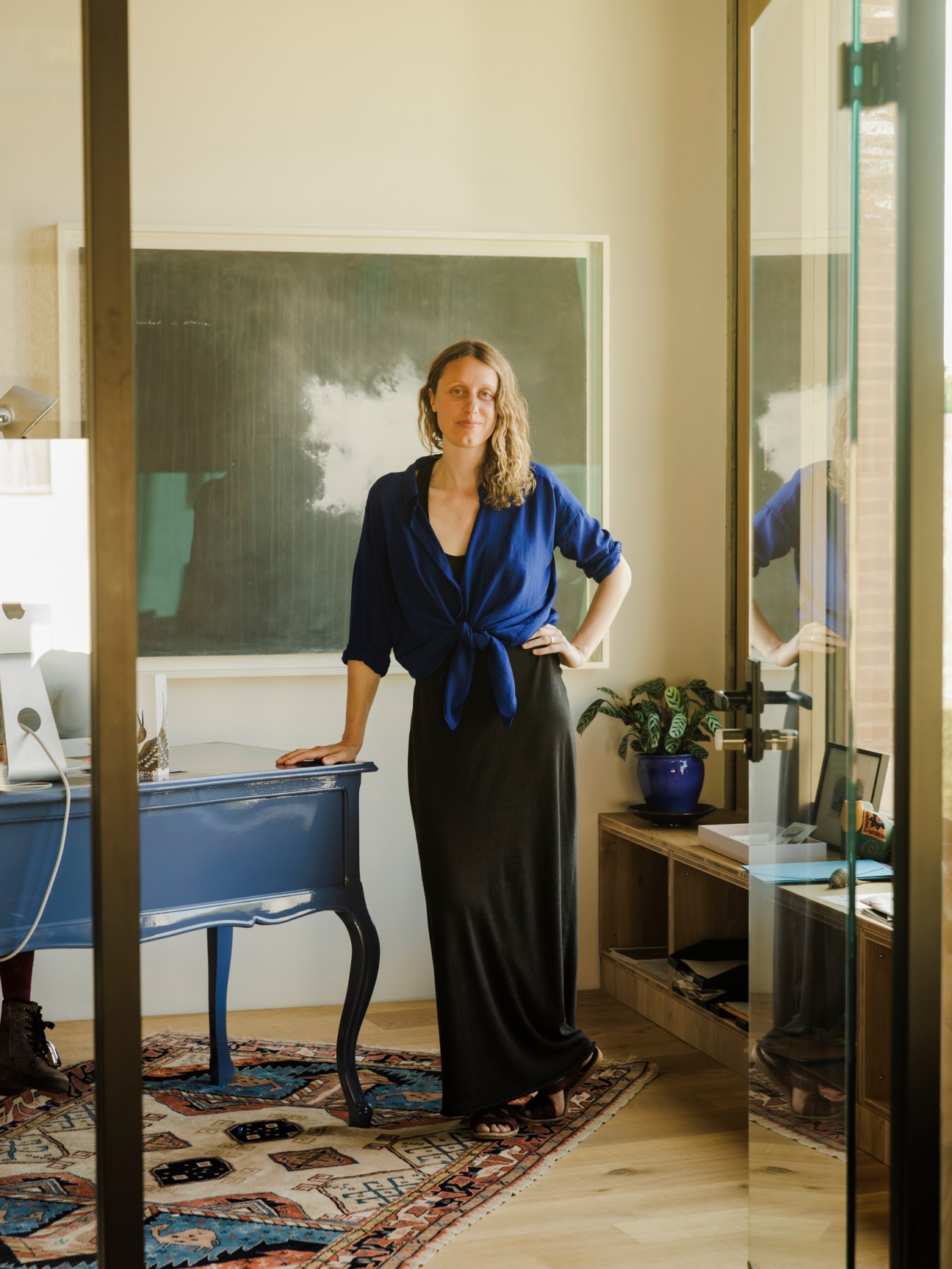
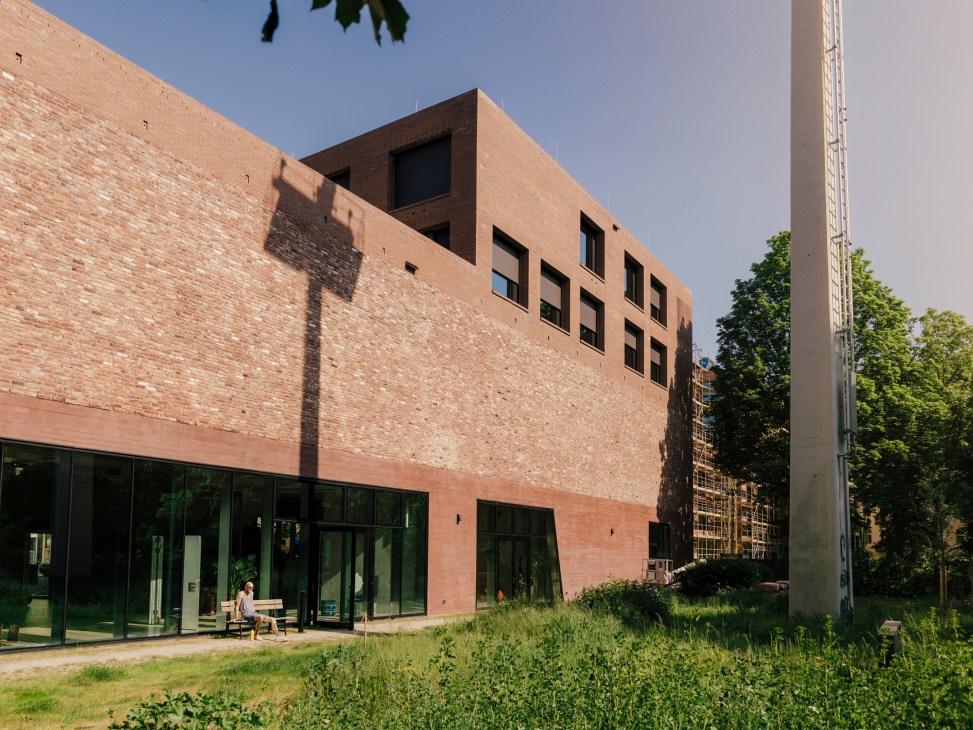
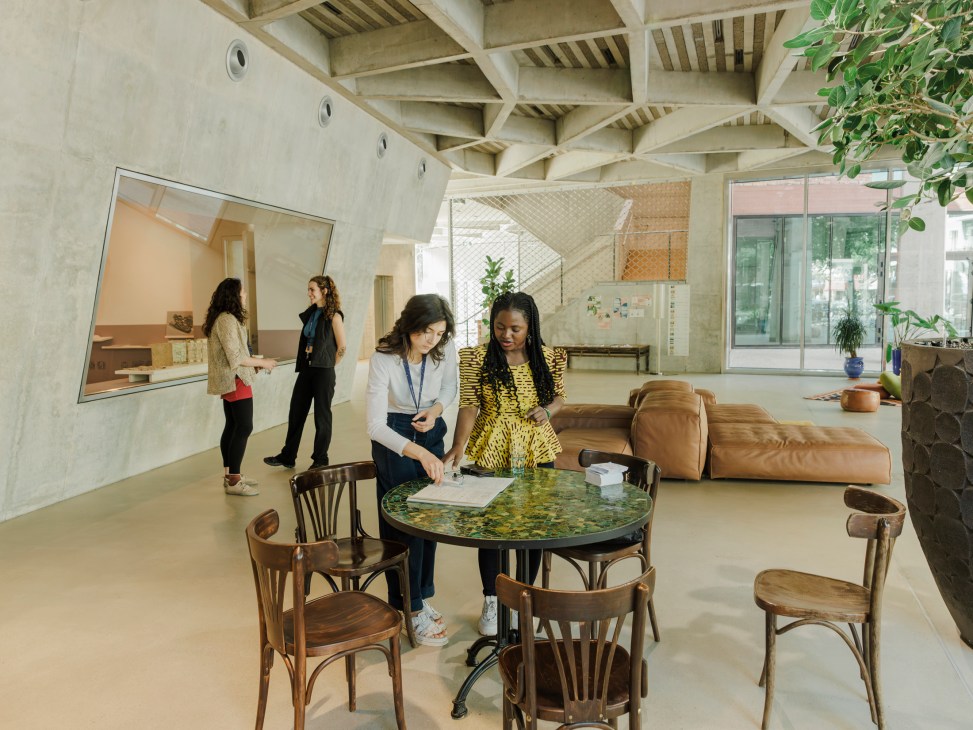
The building’s sweeping, raw concrete interiors (by aff architects, which used recycled bricks for the façade) hold multiple exhibition spaces and an auditorium for concerts and events. On Spore House’s upper floors there’s a library with books, for children and grown-ups, about ecology, as well as apartments for resident artists and fellows. A large terrace overlooks a rear garden where Spore is growing crops and medicinal plants for workshops about nutrition. Everything in the house is made by craftspeople or sourced secondhand.
Spore is funded by founder Hans Schöpfin, a German entrepreneur who saw the need for promoting environmental justice. Spore’s initial activities took place in Mexico City and in the Yucatán peninsula; this new building in Berlin has allowed it to create a space where lessons from the Global South can take root elsewhere. Even before opening to the public with an event-filled weekend attracting hundreds of Berliners, Spore began holding ecological workshops with children (weekdays are still reserved for activities and school visits). Groups work in the green space headed by Marco Clausen, the founder of the beloved Prinzessinnengärten community gardens in Berlin. Until December a group exhibition called Kuxaán Súum reflects on a Mayan prophecy about repairing a “living rope” broken by Western colonisation; there’s also a programme of radio shows and panel discussions. All events are free.
And the name? Spores are “seeds” produced by fungi, ancient and vast systems that maintain life as we know it but are generally invisible to the eye. Much of Spore Initiative’s work happens similarly under the radar but will ultimately grow into a wide-reaching network linking speakers from Central America to environmental groups in Berlin to share knowledge.
Though it’s set in a densely urban neighbourhood in a European capital city, Spore House feels like a connecting point. “We think of it as a place where knowledge and practices that have been marginalised are put back in the centre,” says Alampi. “That’s why it’s so beautiful.”
spore-initiative.org
Reel to Wheel
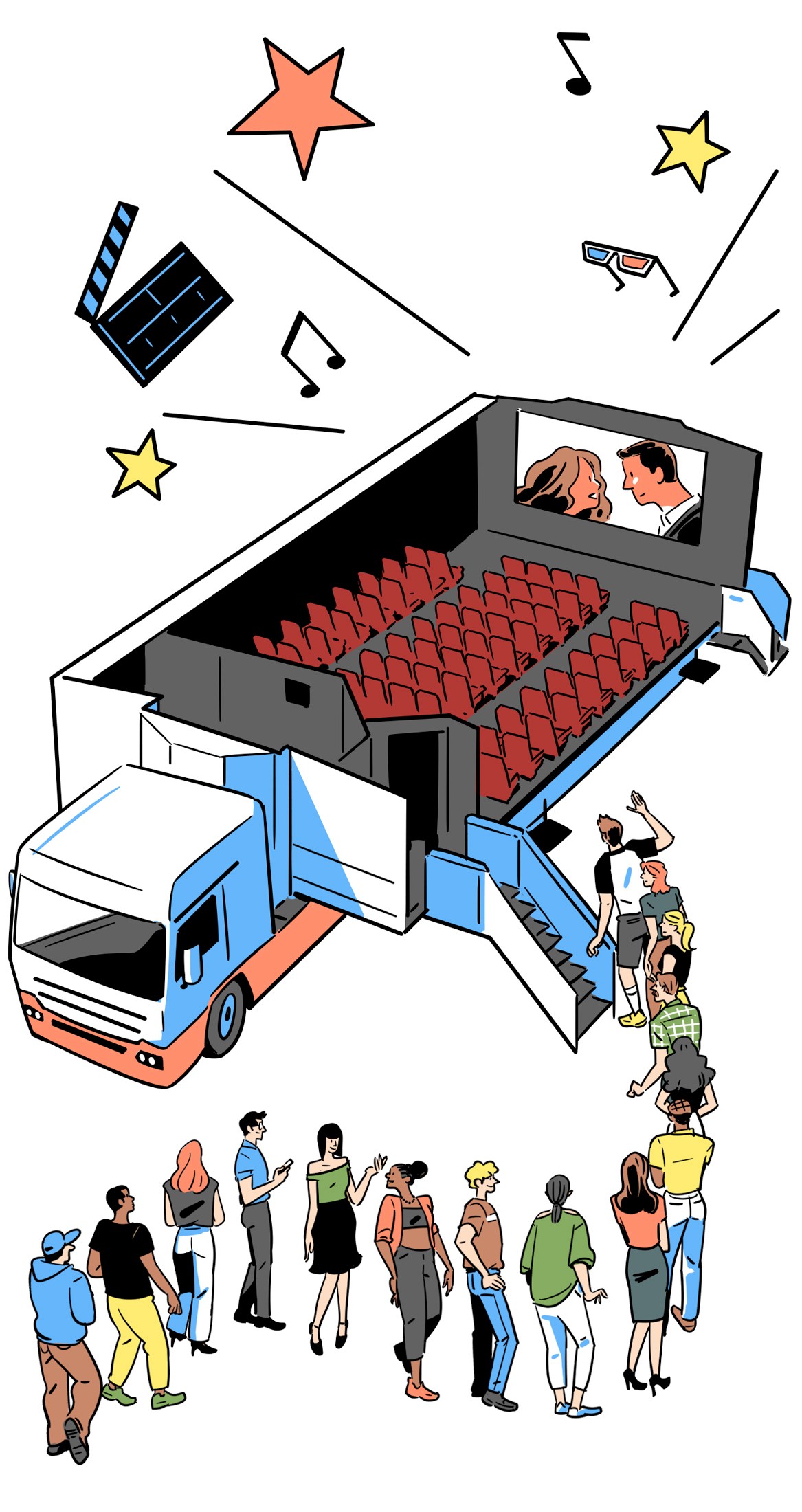
In Centre-Val de Loire, in central France, you don’t go to the cinema; the cinema comes to you. Cinémobile, a travelling screen housed in a lorry, has been serving the region’s small villages for more than 30 years. Once a month, the lorry parks up in a town centre and opens its wings, revealing a salon kitted out with plush red seats and Dolby surround sound. “We wanted it to be a real cinema, not just a projector in the town hall,” says Philippe Germain, the general director of Cicilic, the Centre-Val de Loire’s cultural agency. Over the course of the day, different people climb inside: teenagers here to catch the latest blockbuster, parents entertaining their children and enthusiasts debating the month’s movie selection. Recently, Cinémobile started leasing a truck to help a similar initiative in Scotland, where it will head to the Highlands and remote islands.
At the project’s heart is a belief in the power of culture to bring people together. “How do we live with each other?” says Germain. “How can we be good citizens? We can learn this thanks to cinema.” Some stops on the Cinémobile tour no longer have social spaces such as bars or grocery shops, so the truck can act as a place for community-building. “It’s not a huge thing,” says Germain. “But it’s important that it exists.”
cinemobile.ciclic.fr
Cities with no limits
Saskia Miller
on how fictional representations of cities in films such as Metropolis and Black Panther can cast light on the issues facing the ones we actually live in.
In fictional cities, anything is possible: flying cars, abundant clean energy, housing for all. In real cities, it seems, even installing a new cycle lane can be challenging. Yet despite the wide gap between fantasy and reality, imaginary cities can still inspire urban planners to pursue a better future.
“I am deeply convinced that art and fictional thinking are valuable engines and generators of ideas,” says Annett Zinsmeister, a Berlin-based architect, artist and author of Constructing Utopia. “By creating fictional cities, you free yourself from limitations. With fiction, you can think and actually do anything in the design. And that’s just not possible in real life.”
In her work, Zinsmeister aims to create “real fiction”, an in-between space of experimentation. She also encouraged her design students at Stuttgart’s State Academy of Arts and Design to think into the future: “To design the seemingly impossible as a possibility, even if it is in small steps.”
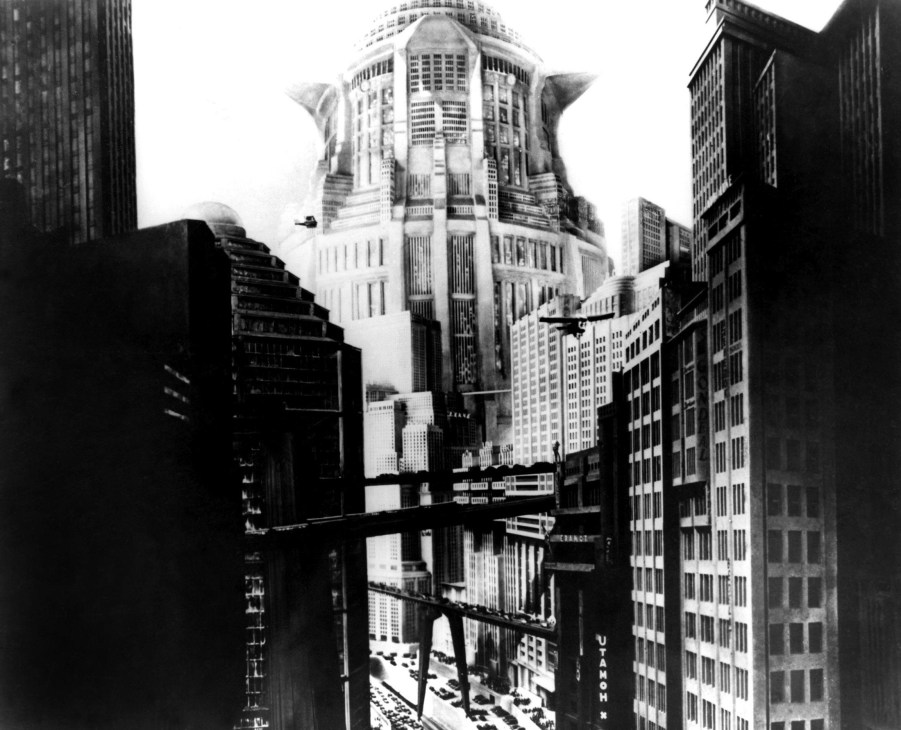
While thinking up an ideal urban plan might sound appealing, Zinsmeister emphasises that most utopian narratives aren’t actually utopias but dystopias. The latter convey warnings rather than solutions, encouraging us to take a different path than the one we’re on. Take the harrowing vision depicted in the 1927 silent film Metropolis, upon whose dark perspective many subsequent movies have been modelled. Based on the story by German writer and actress Thea von Harbou, the vertical architecture of director Fritz Lang’s city cleaves the poor and the wealthy into sharply different realities: a downtrodden class of workers toil underground while the privileged enjoy a life of oblivious leisure above.
Often, dystopian and utopian urban visions are simply two sides of the same coin – a deterrent against one thing, and an argument for the opposite. In the Afrofuturist urban utopia of Marvel’s Black Panther films, for example, the dynamic of privilege depicted in Metropolis is reversed. Here, global power lies in the hands of the traditionally marginalised – and its cities reflect this alternative version of reality.
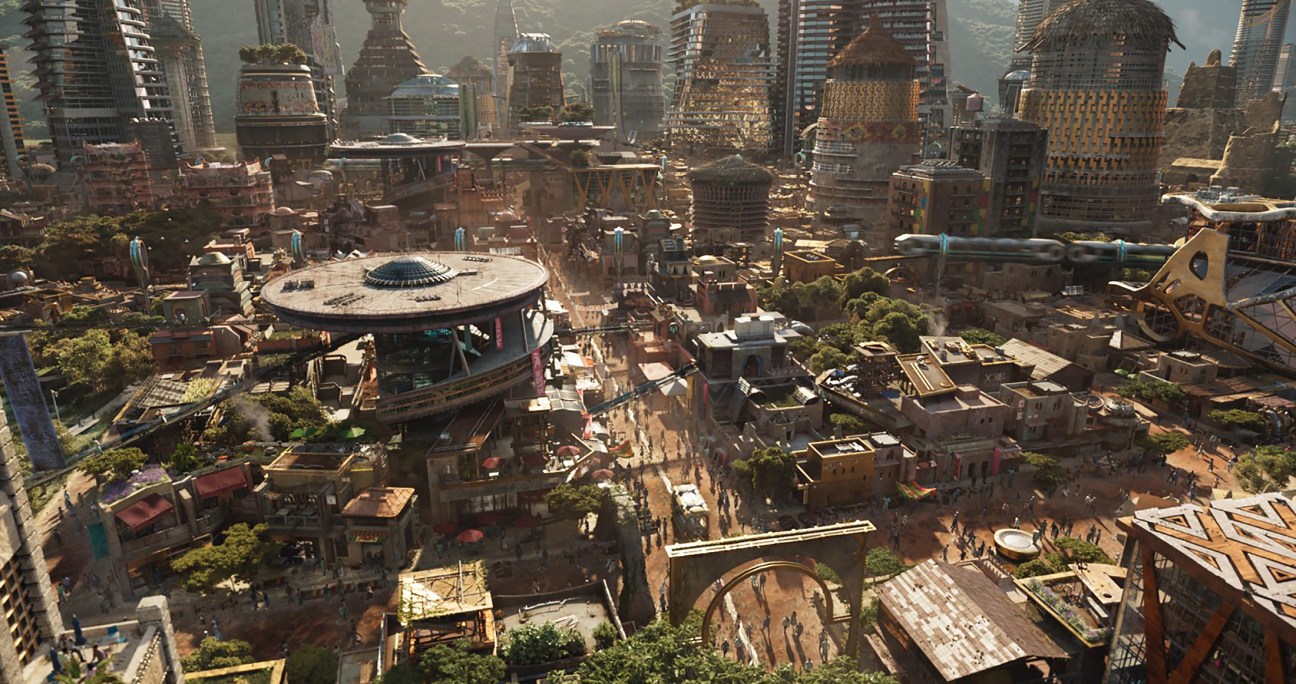
In creating the cinematic architecture of Black Panther, Oscar-winning production designer Hannah Beachler drew on history, real and imagined, to dream up an African city untouched by slavery. Golden City is the capital of the once-hidden country of Wakanda, whose people use a potent metal called vibranium not to destroy rival societies but to protect their own. The capital is futuristic yet human: its emissions-free magnetic-levitation train is technologically advanced, while its bustling street markets capture the vibrant energy of a thriving, socially connected place. In an important touch, a dedicated records hall saves all the precious details of every resident’s past. In an interview at the 2018 CityLab summit, an annual gathering of city leaders, Beachler revealed why she felt so strongly about addressing a real-world wrong through a fictional right. “I felt that way because I never knew my history,” she said. “I didn’t know my ancestry, I didn’t know how far back it went. I don’t have that but I could give it here in this fantastical world.”
Whether utopian, dystopian or something in between, fictional cities prompt questions about the spaces we live in: must some people sleep on the street so that others may live indoors? Should we invest in flying cars or more mass transit? Is that new cycle lane really such a stretch? “The best science-fiction narratives in literature and film are pioneers,” says Zinsmeister. “They think ahead of current developments, events, situations and problems and project 30, 50 or 100 years hence.” Perhaps a radically different urban future isn’t that fanciful after all.
Saskia Miller is a Berlin-based journalist who works with the Bloomberg CityLab summit and ‘The New York Times’.
IMAGES: Marvel Studios, Alamy
In their element
When Jonas Salk, the American virologist who developed the polio vaccine, founded The Salk Institute in 1960, he told architect Louis Kahn to create a facility “worthy of Picasso”. Kahn clearly succeeded. Nestled between a lemon grove and the shimmering Pacific Ocean, the San Diego-based non-profit research organisation’s concrete headquarters are a remarkable backdrop. “Physical beauty is one of the reasons I love working here,” says Gerald Joyce, who joined The Salk Institute as president in early 2023. “But mostly it’s the unfettered scientific ambition: when we’re not gazing at the ocean, we’re thinking science.”
Within the walls of this modernist structure, researchers work on a bevy of endeavours to improve quality of life around the globe, from mitigating climate change to extending the human lifespan, as well as developing new methods to fight cancer. Since its inception in the 1960s, the institute has been affiliated with six Nobel Prize laureates; the next one could well be in the midst of those gathered around Joyce today. The team is now assembled in the courtyard discussing life, science and their research under the Southern California sun.But most of their usual working day is spent in the building’s open-plan laboratories.
The communal set-up might be common in creative offices but for many scientific disciplines – where specific instruments and high levels of ventilation are often required – the idea is more novel. According to Joyce, labs that implement the open-plan model tend to reap the benefits.
At Salk, the feature has helped foster a crucial skill over the years: collaboration. “Kahn and Salk hatched this idea,” says Joyce of the building’s design. “They didn’t just want the institute’s headquarters to be a beautiful place; it also had to be an environment grounded in teamwork. They didn’t want anyone getting closed off in their own research because science, at its best, is about teamwork.” Joyce is reminded of this every day. “We make greater advancements and can tackle the really big challenges more thoroughly when we work together.”
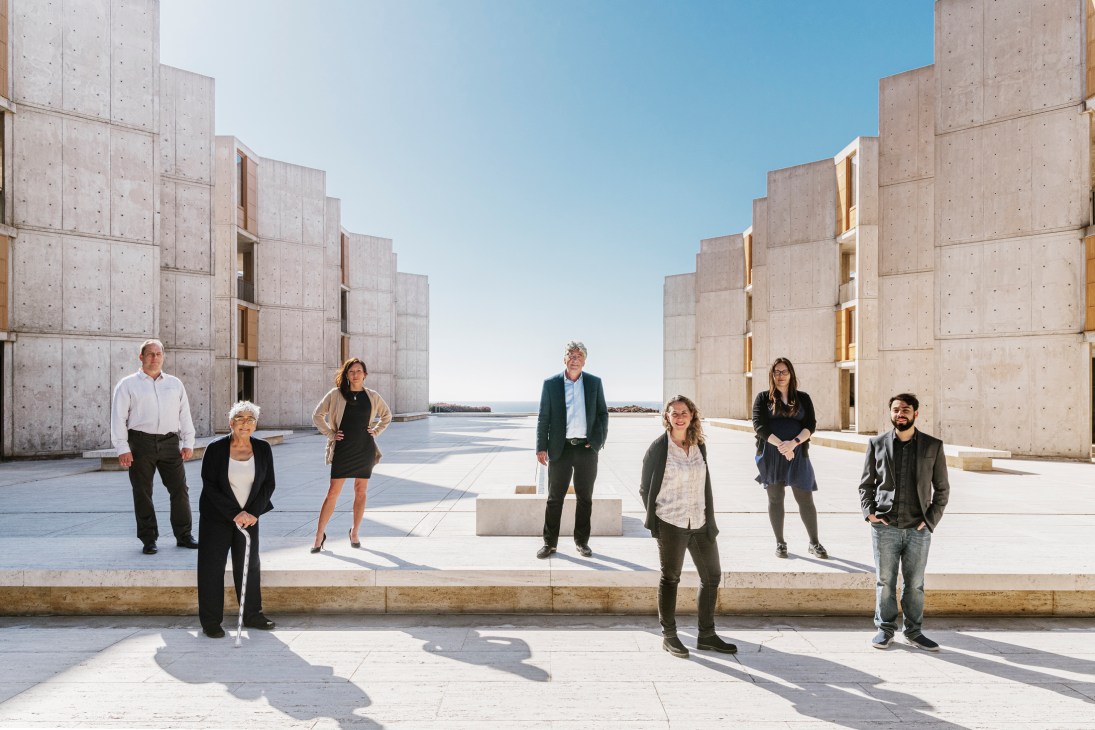
Gerald Joyce
President
Born in Kansas and raised near Chicago, Joyce earned a medical degree and PhD at the University of California. His love affair with Salk started years before he became its president: he even held his wedding in the institute’s courtyard. “It’s easy to love this place if you love science,” he says. He researches chemistry and biochemistry.
1.
Jan Karlseder
Biology of ageing researcher
“Uncovers mechanisms of cellular division to improve interventions for ageing and cancer.”
2.
Joanne Chory
Plant biologist
“Optimises plants that store carbon in their roots to help mitigate climate change.”
3.
Kay Tye
Neuroscientist
“Dissects the brain circuits that guide emotions and behaviours.”
4.
Susan Kaech
Immunologist
“Studies how immune cells fight viruses and cancer.”
5.
Dannielle Engle
Cancer researcher
“Explores ways to target and treat pancreatic cancer.”
6.
Talmo Pereira
Computational biologist
“Develops computational models to study animal behaviour, brain function and plant growth.”
The balance of shine and grime: A snapshot of life in Jiangjin
Chinese cities are not renowned for being tidy places but my first experience of visiting the country since the pandemic was a reminder that this is no bad thing. Jiangjin is a satellite city of Chongqing in which about a million people live on the banks of the Yangtze and the doorstep of modernity. Down by the water’s edge, residents wash the dust from their clothes (the style is more 1990s Hong Kong than present-day Seoul), while cargo ships sail by and fighter jets soar overhead. Fruit sellers and knife sharpeners peddle their wares from carts; just don’t try to pay in cash.
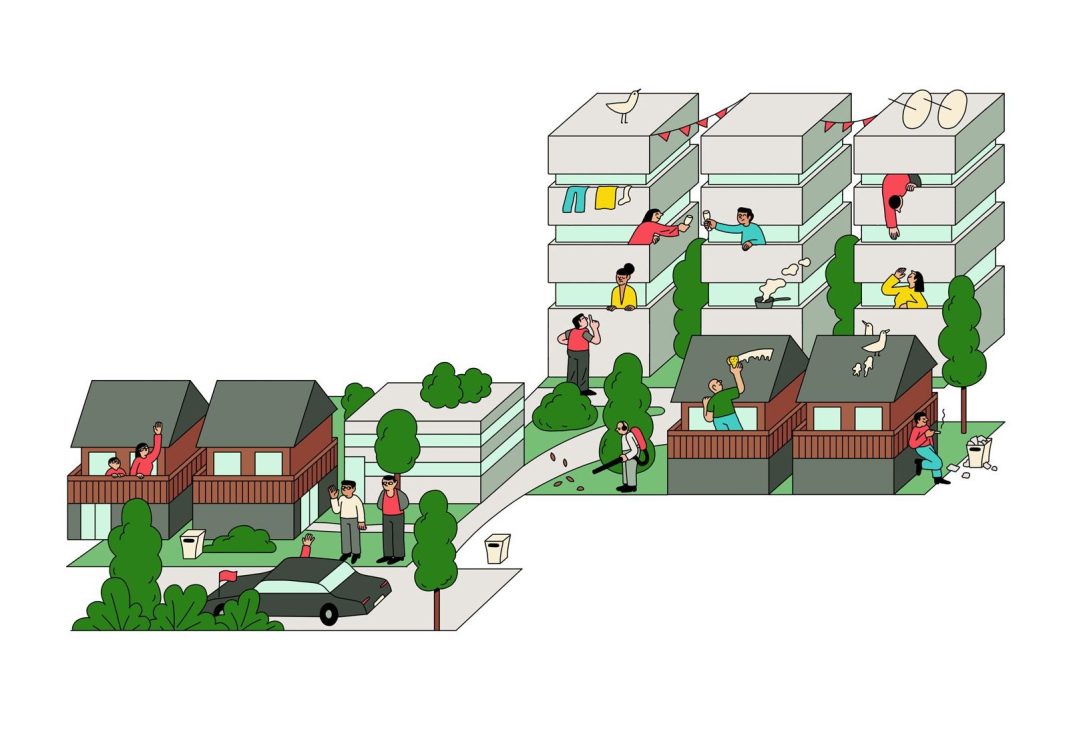
When I arrived for a two-week stay earlier this year, much of the population seemed to be mobilised for a huge beautification campaign, adopting the type of mass- participatory approach that only authoritarian countries can really pull off. Everywhere I walked, paving stones were being repointed, communal areas in apartment towers covered with a fresh lick of paint and falling leaves plucked from the air before hitting the ground. If the work teams wearing red armbands were not busying themselves with the big clean-up, they were standing vigil, watching out for incivility. Men continued to chain-smoke but there were no discarded butts to be found. The lack of litter and loutish behaviour made the place feel like a film set. A fake Chinese city. The type of Potemkin village that North Korea reserves for overseas visitors.
My first guess was that the big man from Beijing must be making a visit, or at least a member of his senior team. I was right about the inspection. The inspectors, though, were not from Beijing but from a clean-city competition – and Jiangjin was in the running. The next day I watched in astonishment as the driver of an expensive car was denied the opportunity to illegally park. A fierce lady in volunteer uniform had sprinted down the road at the first sight of potential foul play. The car owner duly departed. No swearing, no altercations, no entitled antics.
Those of us who enjoy visiting China value the warm hospitality and wicked sense of humour that comes without any pretence; rules are there to be worked around and little is ever truly immaculate. Fortunately, this urban charade didn’t last. Almost as soon as the last inspection vehicle rolled out of town, I spotted the first cigarette butt on the ground. Then another. Then another. Pretty soon the red arm bands had all come off, the mahjong games had returned and the whole city went back to normal. A million minor transgressions and a collective sigh of relief.
No mayor or provincial leader could admit as much but there is something about a bit of dirt and disobedience that brings cities to life, no matter where they are in the world or what political system they operate under. Singapore is the archetypal clean city. It is heaven to some and a dystopian theme park to others. When I think of my favourite cities – New York, London, Istanbul, Hong Kong, Bangkok – most have a thin layer of grime within easy reach. They are shiny in some areas, grubby in others. Public transport is my principal exception to this. Subway trains in Asia tend to be immaculate and riding in a clean carriage – something that unites Hong Kong, Singapore and Bangkok – makes for a much safer and more enjoyable ride than the equivalent experience in the West. Jiangjin recently welcomed its first overground rail line and passengers sit obediently on board like schoolchildren in the front row of class. Civic pride should be encouraged and litterbugs publicly shamed but a little rough around the edges makes a city human, and humane.
James Chambers is Monocle’s Asia editor, based in Bangkok.
District nursing
Bangkok City Hall looks out at a 21-metre-tall religious structure known as the Giant Swing. Nicknamed the “bellybutton of Bangkok” due to its central position, the historic landmark is a useful reference point for the city’s governor, Chadchart Sittipunt. The athletic 57-year-old, who was swept into office last May in a landslide election win, views his hometown as a human body made up of arteries and capillaries. The major arteries are the lines of the extensive subway network that has transformed Bangkok this century, elevating it in the eyes of business travellers and tourists above Southeast Asia’s other congested capitals. The capillaries, meanwhile, are what happens at the end of the line; the parts of the city that most visitors don’t encounter, where crowded communities lack access to quality education and healthcare.
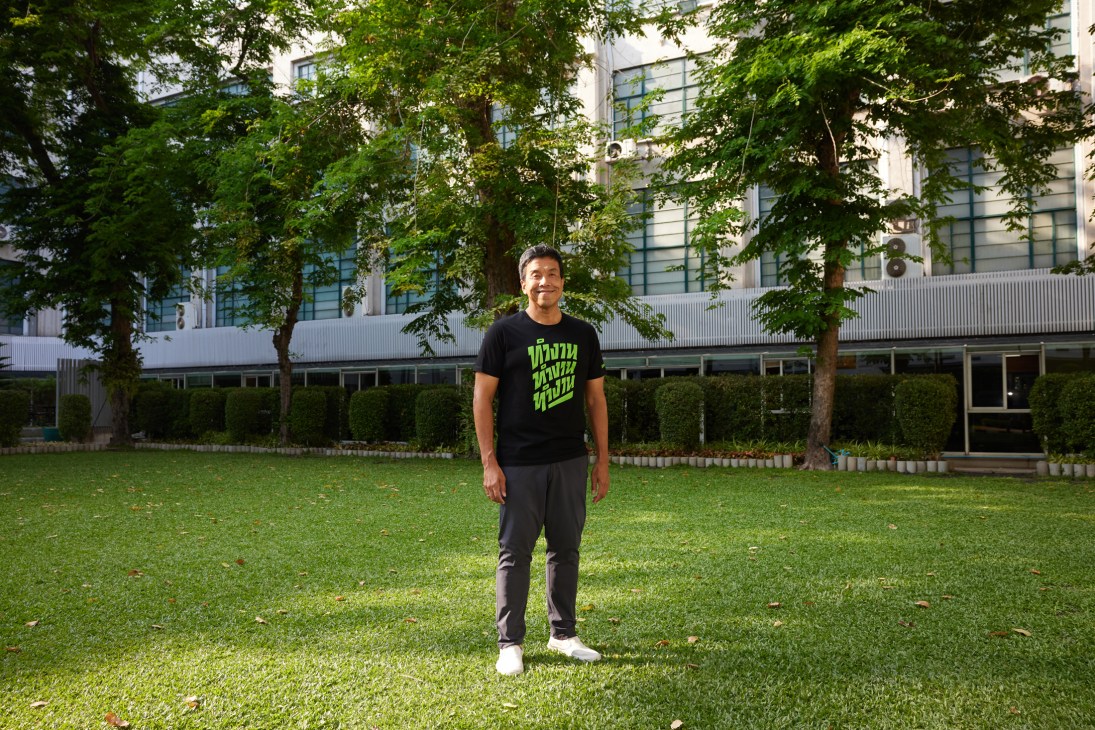
“Our philosophy is to focus more on capillary issues – the small things that make a big difference to people’s day-to-day lives,” says Sittipunt from his office at City Hall in Bangkok’s Phra Nakhon district. “You are happy if you can afford to live next to the train. It’s the grassroots people on the periphery who really need the Bangkok Metropolitan Authority [bma].” His proudest achievement so far is the launch of a platform called Traffy Fondue: city residents can report an issue via an app, see who at City Hall is dealing with it and keep track of how long they are taking to fix the problem. The system crashed on its first day under the weight of 20,000 complaints. Most items relate to pavements, lights, rubbish and street-food vendors. “These are all minor things that can have a big effect when they are never fixed,” says Sittipunt, a former academic and businessman who landed in politics a decade ago when prime minister Yingluck Shinawatra asked him to be her transport minister. “I told my team that 250,000 complaints are not our weakness; it just shows that people are starting to trust us. They are complaining because they feel that we will fix it for them.”
Traffy Fondue was originally created by the national government but left idle. Sittipunt is open to using what’s already available and getting the most out of his 79bn baht (€2.13bn) budget. Other examples of his pragmatic policymaking include designating seven existing sites across the city for public protesting, including “People’s Square” in front of City Hall, and spreading outdoor music beyond Bangkok’s central Lumpini Park. Performances now happen all over Bangkok, throughout the year. “We have artists who need venues to perform, we have audiences who want to listen to them, and we have so many beautiful places left unused,” he says. “Bangkok is just incredible and it’s a big return for minimal investment. People feel that the city is changing when they feel that there are other things to be doing than simply going to shopping malls.”
Sittipunt began formulating his anatomical approach to Bangkok, focusing on lots of little problems rather than a few big projects, when he stood for prime minister in the 2019 election – his first time running for public office and the first free vote in Thailand since the 2014 military coup. Pheu Thai, his party at the time, won the most seats but was kept out of government by a coalition led by former army generals. Three years later, he decided to run in the gubernatorial election as an independent. In doing so, he not only ousted the military-appointed incumbent, foreshadowing similar results in Thailand’s general election this May, but won in every one of Bangkok’s 50 local districts.
The campaigning might have finished but he continues to visit a different district almost every weekend. It’s an exhausting schedule but his commitment to being a leader for the whole city instead of just the privileged centre has kept his approval ratings sky high; mention of his name elicits almost universal approval veering on fandom. Can he keep up this blistering pace for the rest of his four-year term? Yes, he says, smiling and wearing a black campaign T-shirt that has three Thai words emblazoned on the front in bright green: “work, work, work” (pictured). “When I ran for the campaign, I put one motto up on the whiteboard: ‘It has to be fun.’ If it’s not fun, then you’re doing something wrong and you won’t be able to carry on.”
Bangkok tends to rise early and the governor leads by example. Before sunrise, Sittipunt can often be found jogging around Lumpini Park without security. These dawn runs are characteristic of his energetic style of leadership. His accessibility speaks to his reputation as a man of the people. Bangkok-born and raised, Sittipunt grew up in the Thong Lor area of the capital when the land, which is now populated by expats and wealthy Thais, used to be crisscrossed by canals (khlongs) and cows; cattle from a nearby farm would wander into the family’s garden. Half a century later, quality of life is one of his key priorities and bringing greenery back to Bangkok is a central part of this.
Although 15-minute cities are all the rage in Europe, Sittipunt is “starting small” with 15-minute parks. His team has secured more than 100 plots of land and finished 26 parks. “We are trying to create a green space or sporting area near every community,” he says. “We want to make people healthier and this way they can walk or exercise close to home instead of having to travel to a big park, such as Lumpini or Benjakiti.”
Despite the focus on making thousands of small changes, collectively they add up to a big ambition. Sittipunt’s goal is for Bangkok to break the top 50 in the world’s liveability rankings. He devours books on the subject of leadership and brings back lessons from benchmarking visits to other cities around the globe. “You can’t make a city more liveable by regulations alone,” he says, citing What We Owe Each Other, Minouche Shafik’s book about social contracts and the importance of civic responsibility. “Many of Bangkok’s problems, including corruption, come from thinking about yourself and not about public property.” Mild mannered and seemingly unflappable, selfishness makes him angry but he is optimistic about the future. “Right now we are trying to do some garbage separation,” he says. “About 10 per cent of the population are part of the programme and it is gaining momentum. The new generation feels more social responsibility and our role is to make it easier for them to make a change; if we want them to walk more, we need to improve walkways and air quality.”
Pollution has become a major talking point too. Thailand and its neighbouring countries were blanketed in smog at the start of this year with worse-than-usual levels of harmful particles in the air. The regional health crisis brought home the environmental challenges facing most city leaders and underlined the particular limitations of the Bangkok governor. Powerless to stop farmers burning fields in the borderlands, Sittipunt’s hands are also tied by a series of overlapping roles and responsibilities. The bma controls the pavements, for instance, but not the roads, traffic lights or notorious overhead wires. An unconstrained Sittipunt would like to relocate the port of Bangkok and bring in a London-style congestion charge, both of which require approval from his boss, the prime minister. Bangkok is the only city in Thailand with an elected leader and the governor falls under the purview of the central government. Though Sittipunt claims to have a good working relationship with the outgoing military leaders, the appointment of a new government this summer, involving democratic parties such as Move Forward and Pheu Thai, would provide fresh opportunity for collaboration and reform. “It’s possible for us to have more authority so we can deal with issues such as traffic jams and pollution levels more efficiently. But it might take years to expand the governor’s authority and it has to be passed by the national parliament,” he says, diplomatically. “I became governor, so I have to accept these constraints.”
For now he is focusing on what he can fix. The bma is responsible for educating half of the children in Bangkok. “People are the most important asset for us, not buildings or roads,” he says. “Improving the quality of teaching will make the future better.” Some 80,000 employees are on the bma payroll and the governor wants to shift their focus away from pleasing him to serving the people. Having inherited “a typical Thai bureaucracy” with a traditional mindset, he has spent his first year trying to speed up decision-making and root out corruption, which he describes as “the elephant in the room”. Clearly not afraid to ruffle feathers, he is also pushing ahead with a long-proposed plan to move the bma to another part of Bangkok. It might not have been his idea to relocate but he certainly has the energy, determination and political capital to see it through. Just before speaking to Monocle, Sittupunt was chairing a committee meeting about the future use of the current 1950s building in Phra Nakhon. A new museum has been mooted. “This is the centre of Bangkok and it was founded by King Rama I,” he says. “If we can turn this place into a public space for everyone, not just our staff, then it becomes more valuable.”
Living the dream in Monocle’s fantasy city
Monocle’s perfect city is at once a daydream and a rallying cry for people to consider their urban spaces more closely. We’re keen to draw attention to some overlooked opportunities to enrich city life. Yes, we know the importance of affordable housing stock, green spaces and human-scale buildings. But how about surprises? Might that derelict car park or wasteland be a pop-up swimming pool, outdoor gym or community theatre? Cities need to be fun. So let’s break new ground and take a tour of Monocle’s model metropolis.
1.
The community kiosk
Space for refreshment
Street life
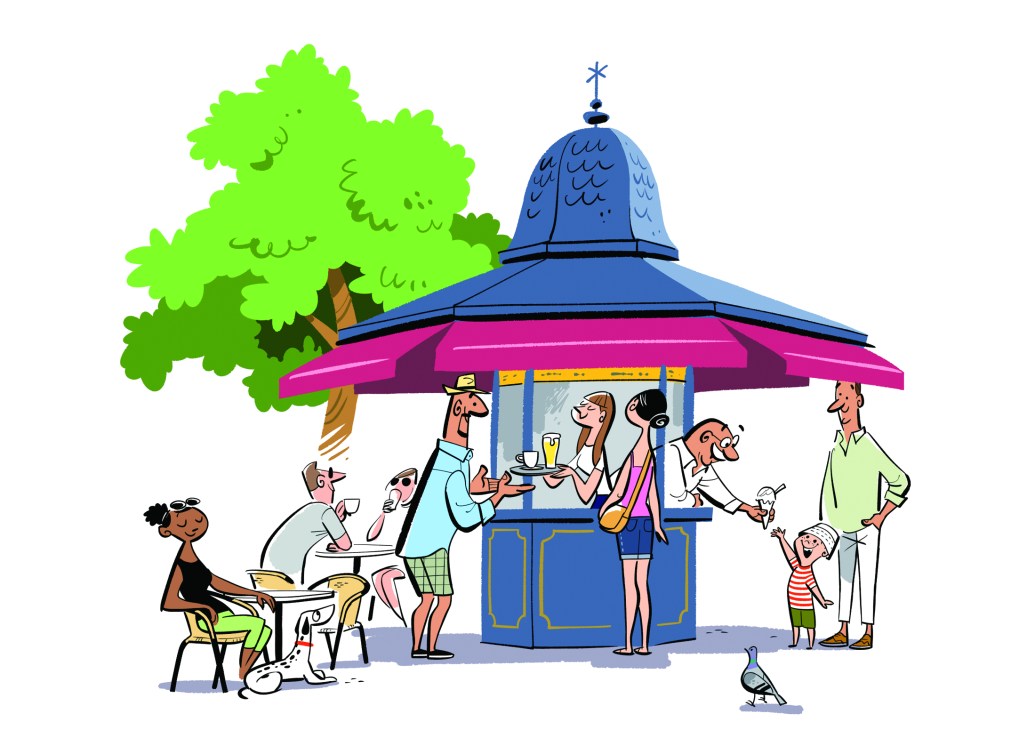
We’ve always looked admiringly at Lisbon’s quiosques as places to congregate for a bica (Portuguese espresso) or a chilled suco de maçã (apple juice). In our ideal city, there are trees, a breeze and a decent canopy under which to recline. Plus, some sturdy wooden street furniture from Brno-based Mmcité on which to settle. There’s also room to leaf through a newspaper, natter with friends and enable the children to let off steam in the square. So many “must-see” city stop-offs are ho-hum: often boring bits of infrastructure rather than real places to meet. So what can be done to enliven squares, piazzas and pedestrianised areas? Somewhere to sit, some shade and something to sip. Simple.
2.
A base on the banks
Somewhere to splash out
Leisure

Not all cities are blessed by beautiful beaches. But somewhere to strip off and take a dip can transform urban life and be a great social leveller too. See how Stockholmers seek out secluded corners of Lake Mälaren and Varsovians clink glasases on the banks of the Vistula – these are places to commune. Our ideal city has plenty of spots to paddle, from lidos to a lake and a clean harbour, plus a beach within a short hop. Water can cool tempers and combat the heat-island effect created by all that concrete; not to mention that there’s something transformative about the power and presence of water. A trip to Lake Zürich, Vienna’s Gänsehäufel or Copenhagen’s harbour on a hot day will cure you of your cynicism.
3.
The pleasing public toilets
Gentle relief
Infrastructure
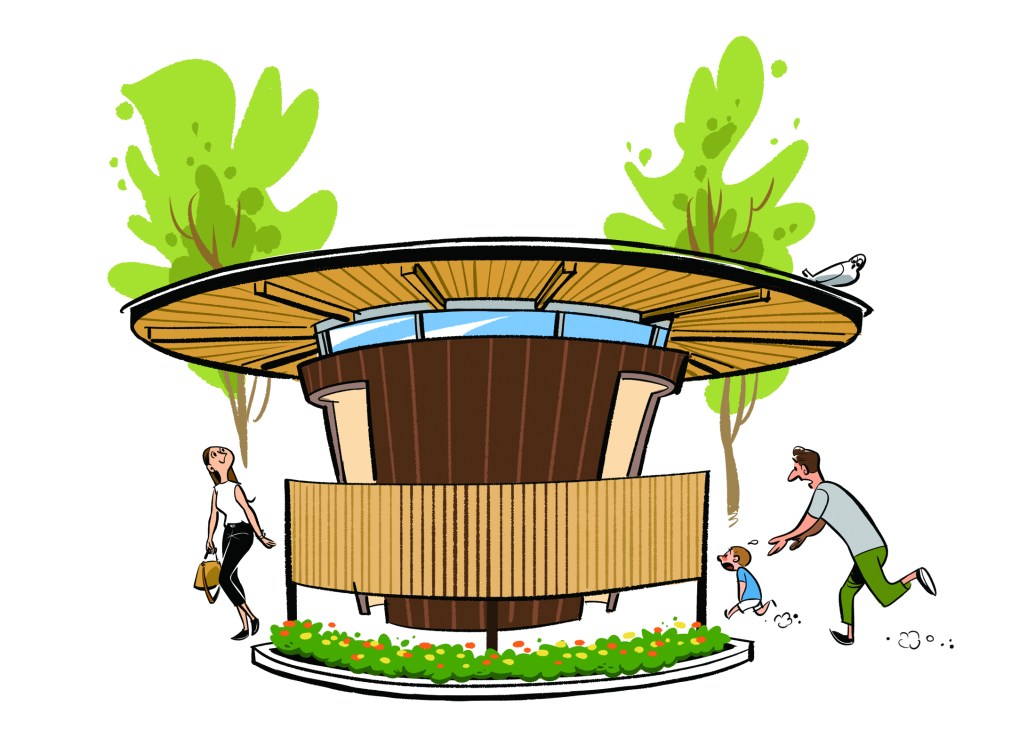
When nature calls, good design should oblige, and we’re flush with ideas on this one. Our editors have been impressed by Tokyo’s investment in public conveniences, which are clean, airy and always immaculately kept, so you’ll never be caught short. Our perfect city will start with a series of guest-designed loos by our favourite designers’ studios. Toyo Ito will make one in the main park; David Chipperfield is in talks to take the museum quarter; and Tosin Oshinowo and Isay Weinfeld are on the long-list for stops on the main drag. Let’s just say we’re on a roll. Better public services are sorely missing in many cities – let’s get to the bottom of it.
4.
The alfresco additions
Balcony bonus
Architecture
Our perfect city follows Turin’s example by lining public spaces with porticoes and loggias that offer covered walkways and some shade from the elements. In private homes and developments, we’re also keen on bringing the outside in with generous balconies on which to drink, dine and enjoy the fresh air.
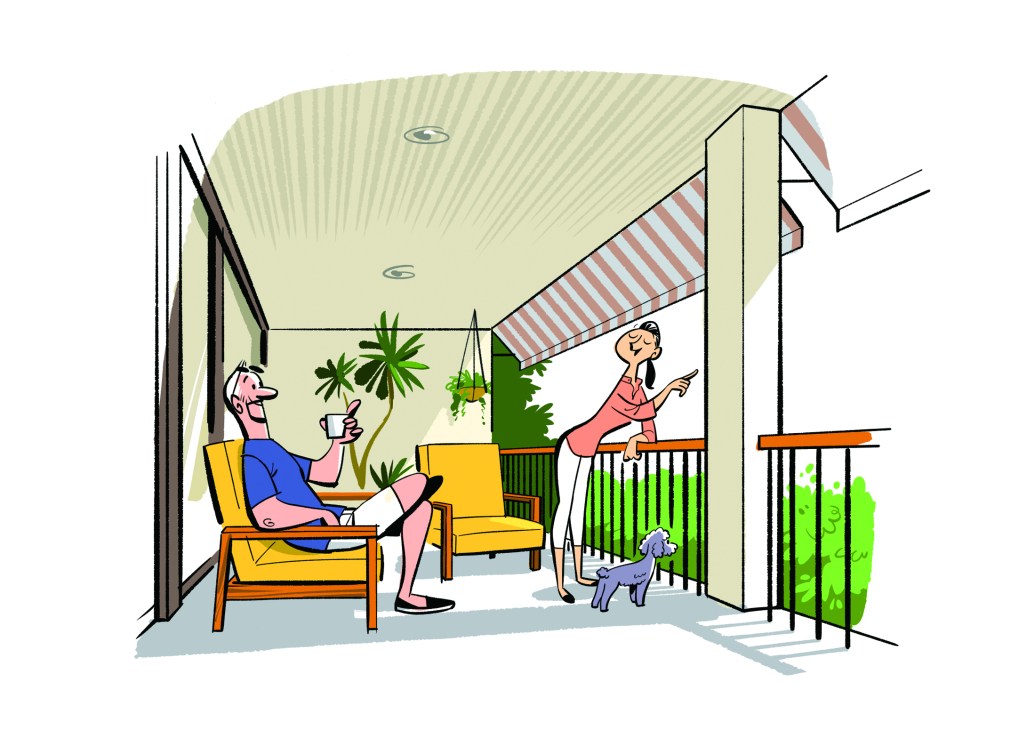
More outdoor spaces, even for those without a ground-floor berth, adds some security in the form of extra eyes and ears on the street. We’ve also stuck to Danish urbanist Jan Gehl’s rule of thumb that residential buildings shouldn’t stray too much higher than five floors or they risk their connection to life at street-level. High-rises in glass-and-steel towers with windows that won’t open are very sad indeed.
5.
The appropriately lit space
Warm street lighting
Infrastructure

It’s time for a switch. We’ve taken great care to get the light right in our ideal city – and that starts with a contract from the canny folks at Barcelona’s Urbidermis and a clever tie-up for the rollout with French firm JC Decaux (which knows a thing or two about a decent bus stop too). Come nightfall, that means warm wattages, which offer security and visibility but don’t dazzle you into submission with the cold, blueish glare of many ill-thought-out leds. Think streetlights, not searchlights. Our point isn’t to be mawkish or sentimental about a candlelit past – but cities including Paris and London have repurposed their comely old lanterns to cast a more sustainable glow.
6.
A visible identity
Better branding
Marketing
A clear visual identity can help a city to gel its image and give people something to rally behind. Picture something simple embossed flags, licence plates, civic buildings and buses. A simple logotype, colourway or pattern can go a long way without travelling far. For a masterclass, it’s hard to see beyond Lisbon’s distinctive coat of arms (two ravens perched either side of a ship), Zürich’s simple blue-and-white insignia and the sheer breadth of beauty in Japan’s prefectural logos. Each of the Japanese regional crests feels totally distinct, contains a clear colourway and is often accompanied by a decent backstory about a plant, animal or founding myth. Oh, we might need a city mascot too.

7.
The night-time hubbub
Spaces to revel in
Entertainment

Cities aren’t quite silent yet but quieter electric cars, tighter construction rules and snitty neighbours have conspired to make them more sombre than ever before. This lull in the urban din has, in turn, made residents even less tolerant of bars or clubs with the temerity to ply a later trade. That’s a bad road. In our ideal city, there are still spaces for ateliers where people clatter and make things – and we’re encouraging a buoyant, boisterous night-time economy. That means leaving spaces for people to clink glasses outside, having rooftops to party on and protecting businesses that moved in before the moaning neighbours. Staying up until sunrise occasionally is a pleasure of city life. If you’re so against that, you might prefer it in a village.
8.
The tram network
Streetcar-shaped desire
Transport
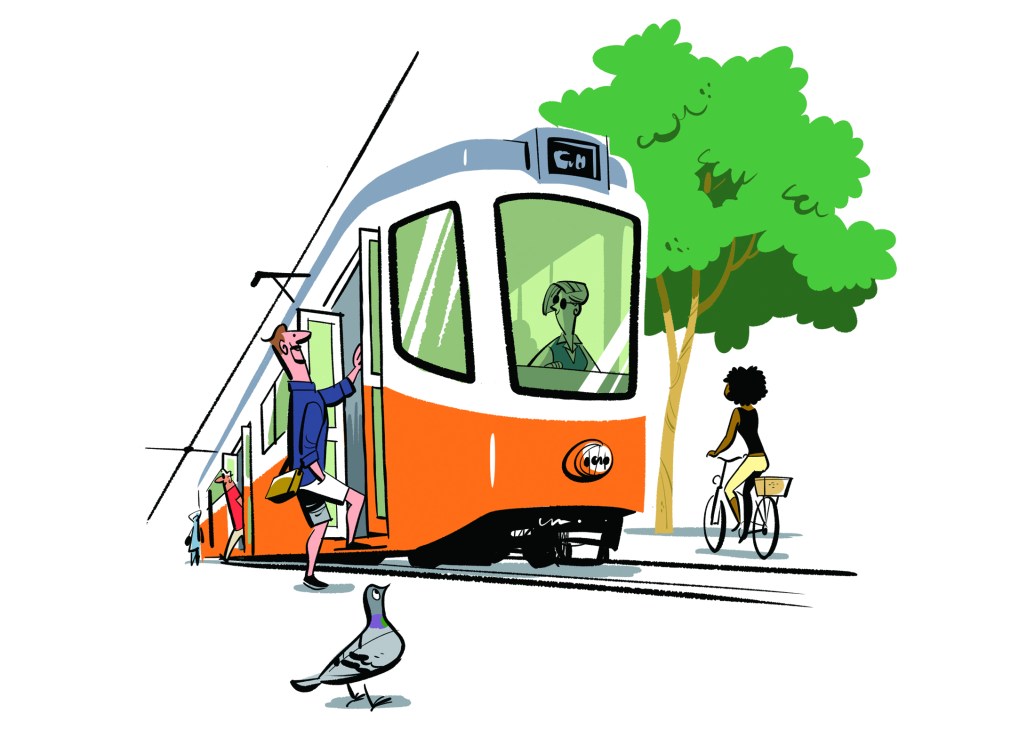
Too many trams were torn out of city centres when the car came to prominence – but perhaps it’s time to get back on track? A swift, well-maintained Siemens fleet that’s boldly branded (like, say, those red-trimmed numbers in Vienna) will help to stem traffic, reduce emissions and keep more people moving. The smooth ride will be appreciated by older folks and children, especially on uphill slogs. Our ideal service runs around the clock and has a few lines crisscrossing the city centre but no fiddly ticketing to contend with. Any questions? Well, there’s always a driver and conductor on board and well-designed maps to hand (and to censure loud phone users). Whether you’re paying by card, cash or a city travel card, our civic-minded residents value the honour system that’s humane. No one is flinging grandma off if she forgets her handbag. Everyone here is heading in the same direction.
9.
A civil code on the road
Streets ahead
Transport
Compromise is a two-way street and Monocle’s perfect city embraces many ways to travel. Yes, there are leafy streets with ample and well-kept pavements for pedestrians but also lanes for cycling and space for cars (to drive and park in) and buses too. Crucially there’s an onus on getting along.
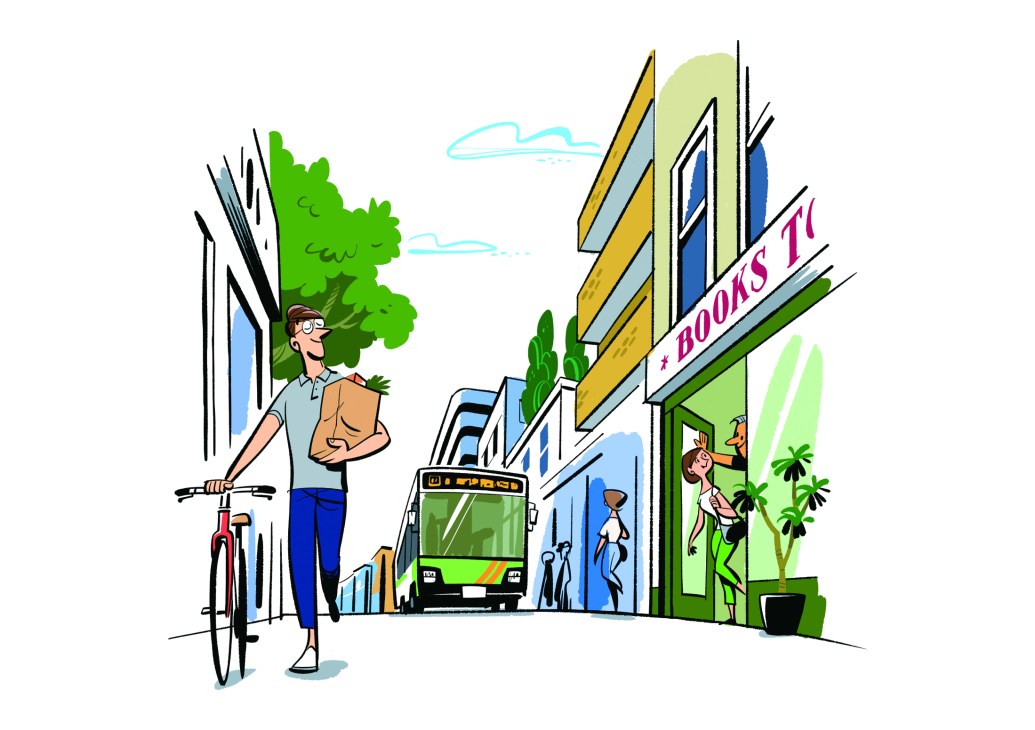
That starts with cycling proficiency at a young age. Motorists – imagine this – give way willingly. Buses and trams only really take the main roads, and the city has an unhurried air. The order is kept by steeper fines for speeders and badly behaved cyclists, plus traffic lights that change slowly, enabling dodderers and families to cross safely. We’re taking some cues from Tokyo’s Tomigaya. Oh, and people here are engaged, aware and able to tear their gaze away from their phones long enough to identify a ball bouncing near a road or a light turning amber.
10.
The wild side
Space to grow
Nature
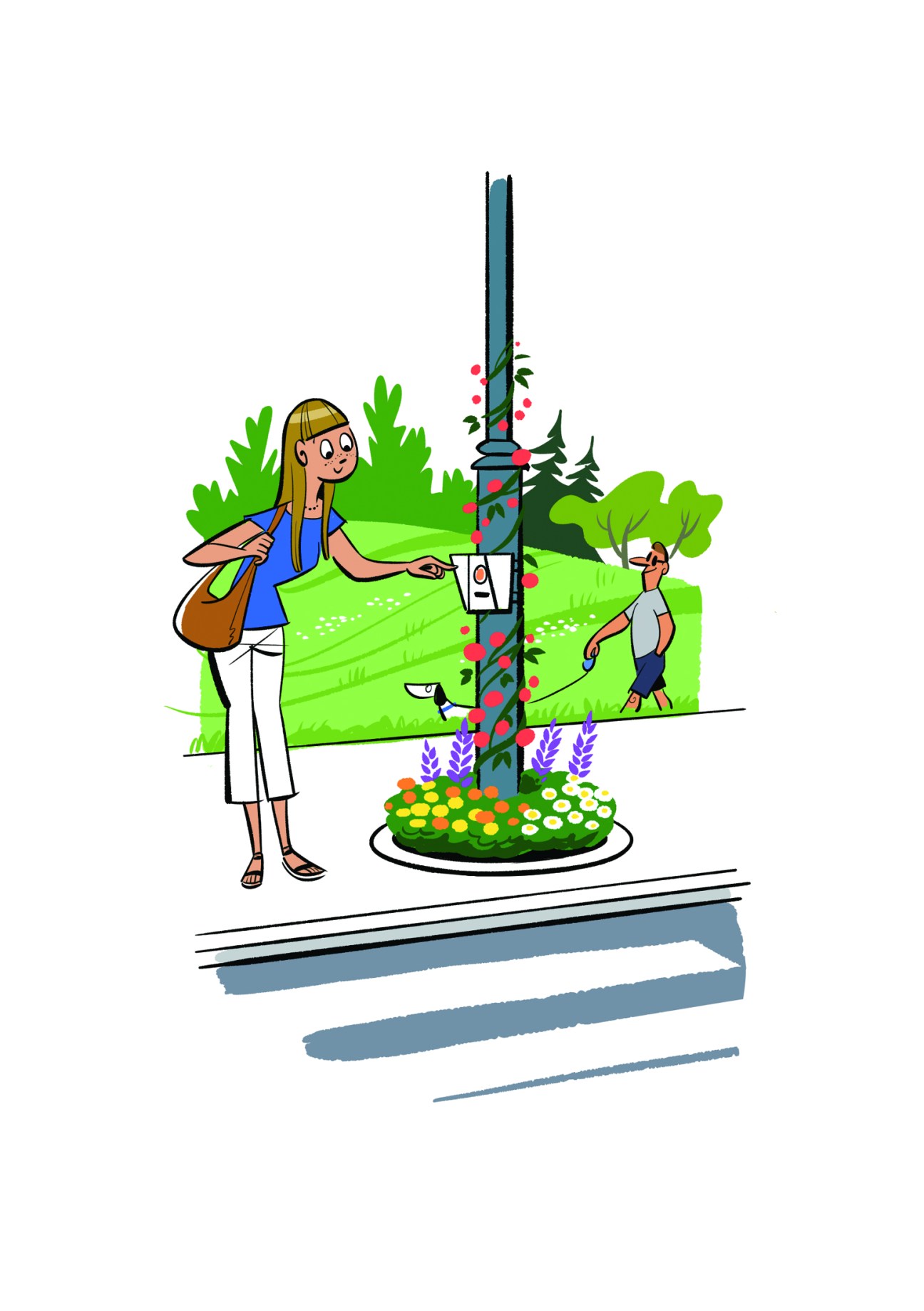
Parks are vital but how about letting verges, roundabouts and the fringes of railway lines grow thick with nature too? Our city doesn’t preen or manicure every inch of nature and knows that such a policy is better for biodiversity than “green walls” that need endless watering before they curl, brown and die (here’s looking at you Perth). Won’t ivy or a few well-adapted wildflowers do? We’ve also looked to see where we can bring nature into existing structures, from bird bricks, in which our feathered friends can nest, to community allotments with cabins where it’s agreeable to while away a sunny day (the Danes do this enviably).
11.
The regulated ride rentals
Scooting off
Transport
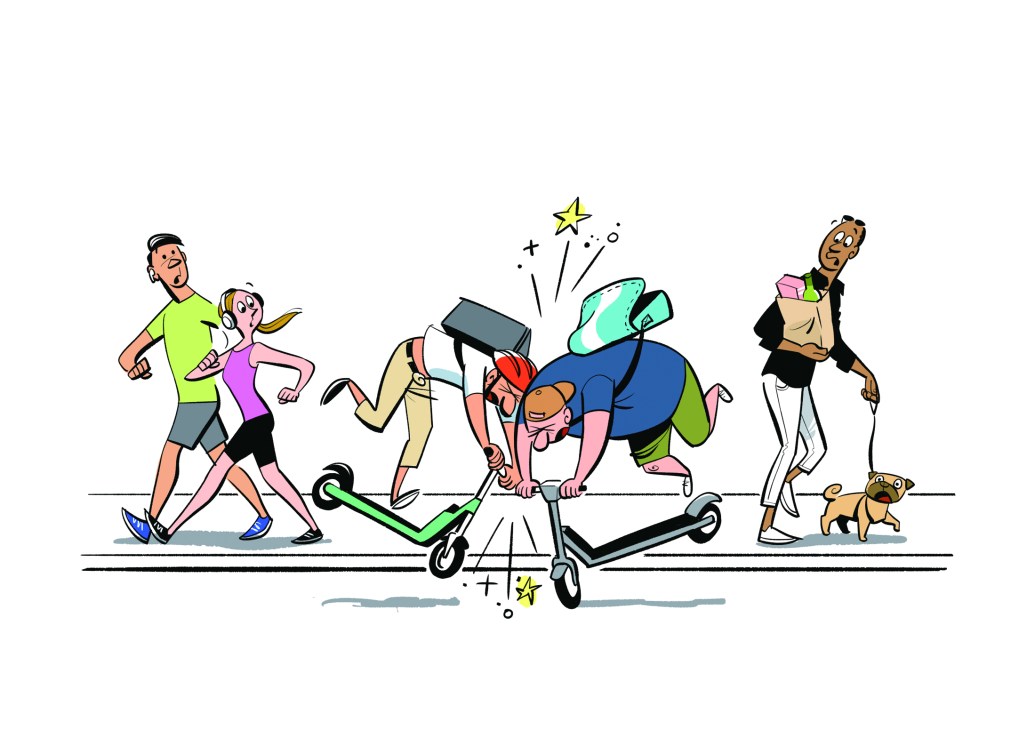
There’s something important that we didn’t mention about getting about. Yes, we’re talking to you in the suit and you in the Lycra with your headphones on. Zipping around on e-scooters, unicycles or skateboards is, we can confirm, a bad look if you’re over the age of 10. As such, we’ve outlawed anything similar and severely limited the providers that operate in the city. Ride hailing is allowed but most prefer our taxis. We’ve even developed technology that traces the rental bikes we use so they don’t “accidentally” end up in a canal, blocking doorways or strewn across pavements. Let’s take responsibility for the pile-up.
12.
The food hall
Market value
Retail
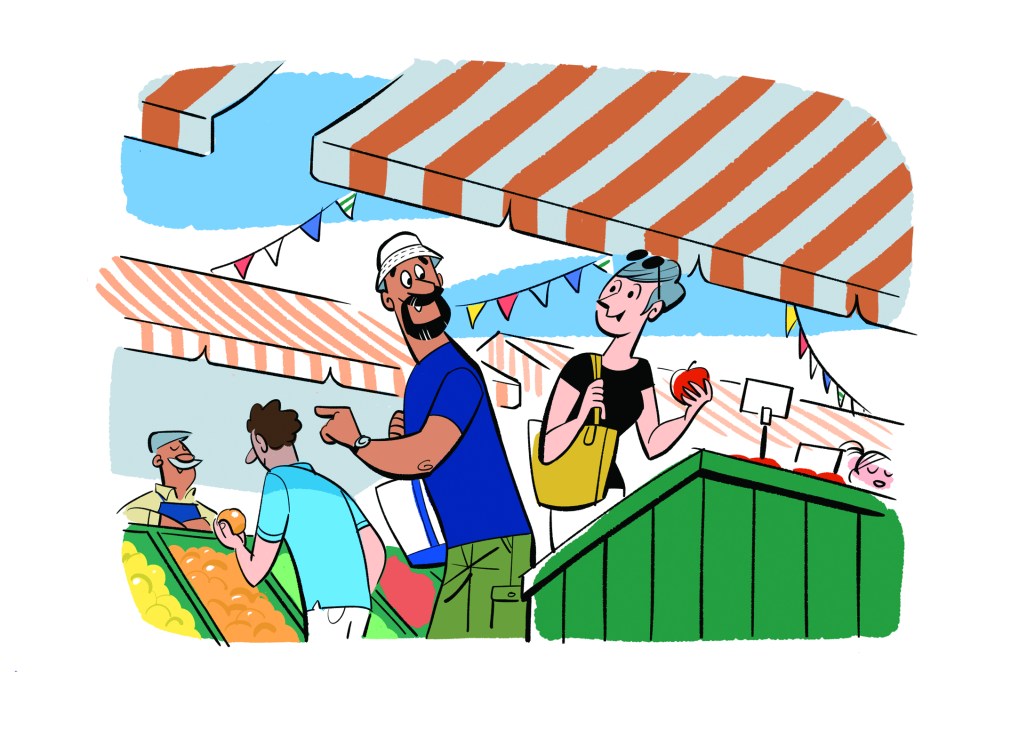
As retail rentals plummeted after the pandemic, some canny planners realised that food nourishes neighbourhoods. A good market like ours can do many things, including tempting footfall, making city residents healthier, providing a platform for culinary talent and connecting farm-fresh produce with hungry punters. Some cities renovated older spaces, such as the Mercado do Bolhão in Porto or the revamped halls across Helsinki. But new spaces can also grow in overlooked industrial sites such as Sydney’s Carriageworks. Our market sells produce and has proper on-site restaurants, as well as hosting cookery classes, knife-sharpening workshops and wine tastings.
13.
The involved inhabitants
Take pride
Community
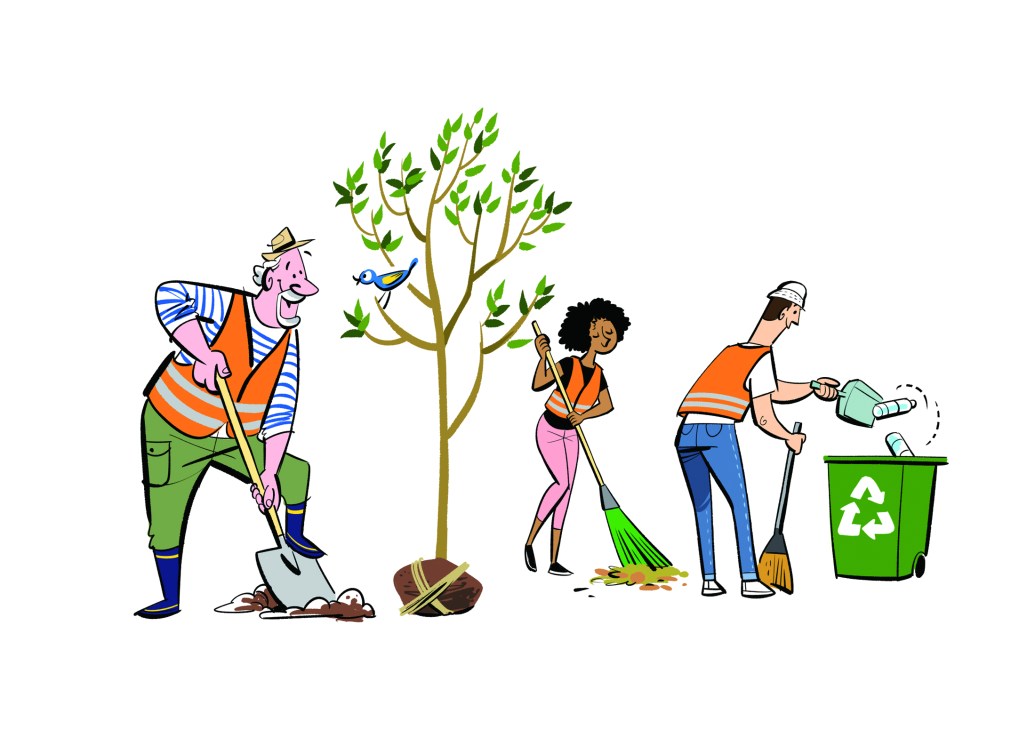
Sometimes social capital can pay dividends in unexpected ways. Our city council is fastidious about planting shapely, mature trees and keeping their leaves from blocking drains in autumn. We run a world-beating recycling system and address residents’ and businesses’ concerns on the day that they’re lodged. In exchange, people feel vindicated in taking some responsibility for the spaces around their homes, in their neighbourhoods and near their workplaces. Our city takes pride in the impressions it makes on visitors, long-term neighbours and new residents.
14.
The graffiti-free environment
Scrub down
Street life
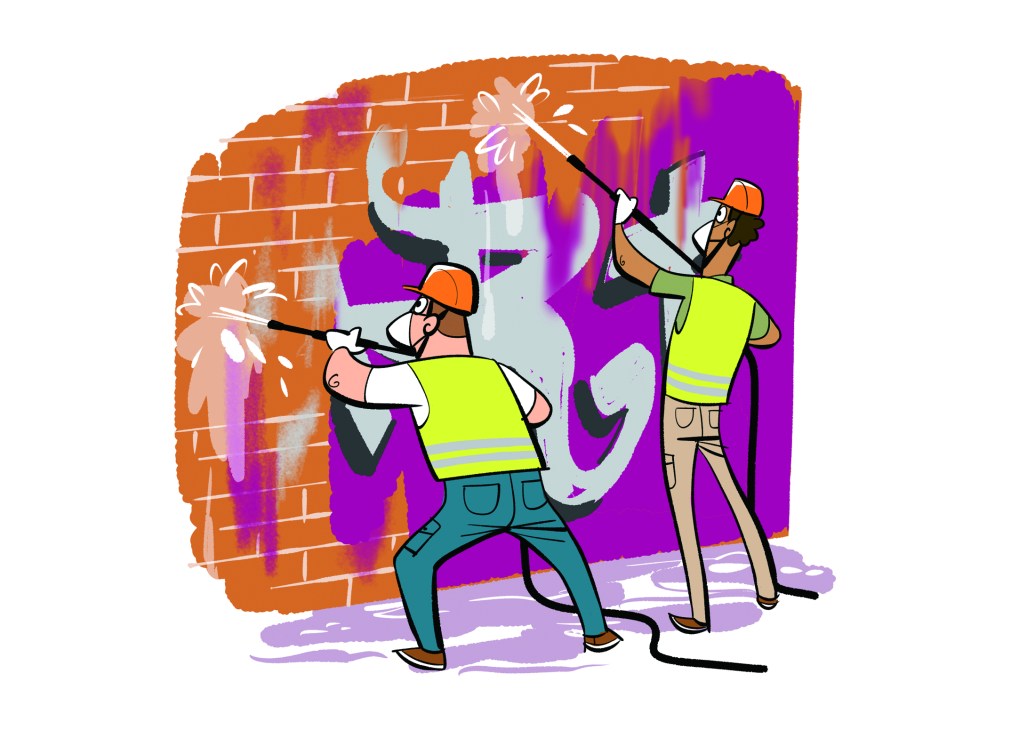
Our well-funded cleaning team keeps the city spick and span but we’ve also invested heavily and taken a position on keeping so-called “street art” off walls, trains and away from public spaces. Why? Despite the estate agent’s arithmetic that graffiti equates to an interesting neighbourhood, it really doesn’t. Not every wall needs a mural. It’s mainly just scruffy. Most of the mindless daubing is thoughtless at best and a nasty surprise for the victim at worst. Our crack team of cleaners are on alert and deal with most issues before the paint dries (see page 30). We’re not so harsh on the “artists” we catch though: the standard punishment is an afternoon or two scrubbing walls and repainting the work of other offenders.
15.
The healthy high street
Delivering a solution
Retail
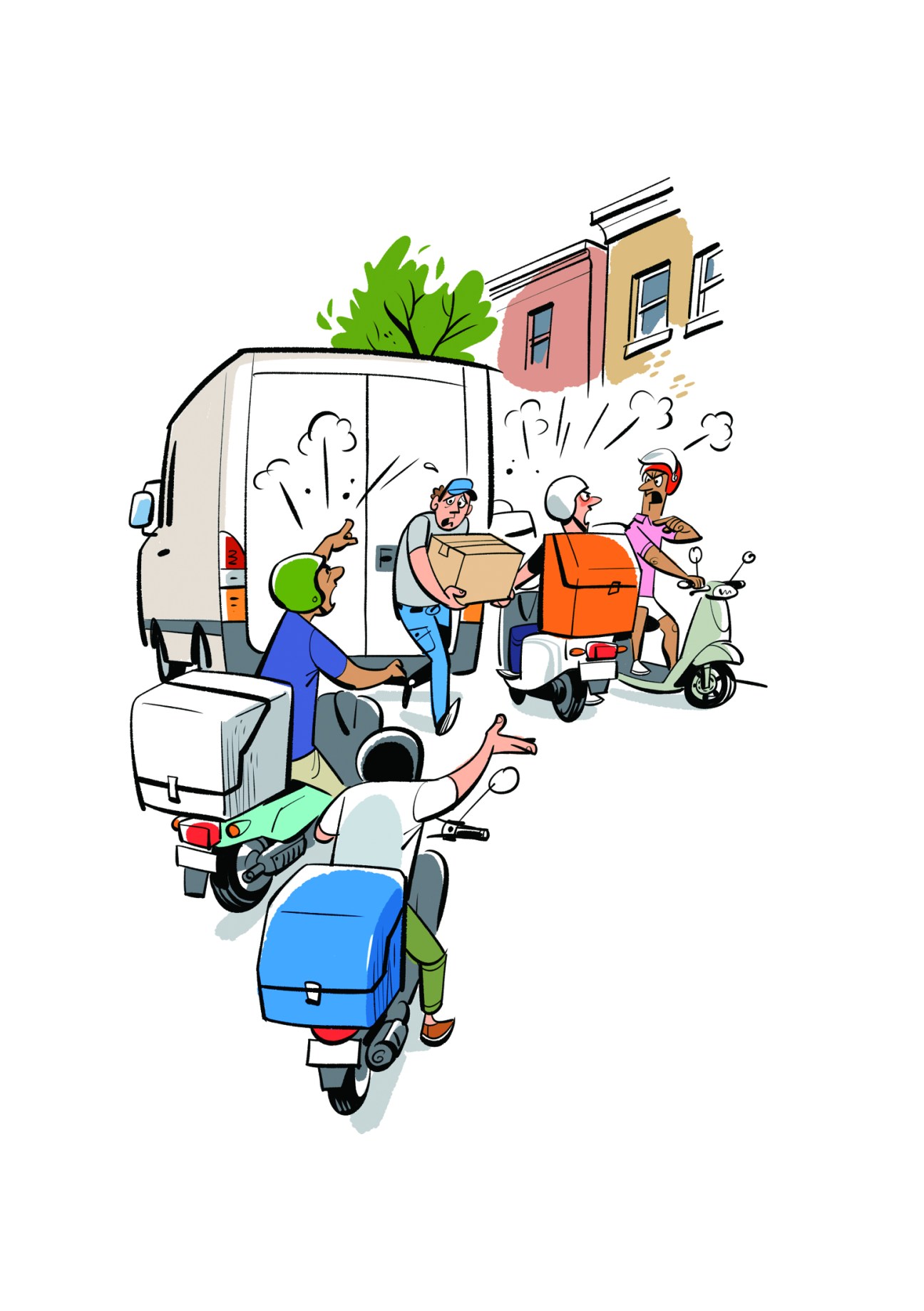
Keeping the high street healthy means stopping cities from being turned into a series of warehouses frequented by couriers and postal vans. We’re all for the convenience of quick deliveries but we’ve also decided to level the playing field and levy a tax on companies that don’t have a proper retail footprint. With any luck, other cities will follow. The effect is twofold: fewer delivery trucks clogging the streets and a higher incentive for those businesses to take proper retail spaces and enrich the life of the city rather than speeding past it in a blur of cardboard boxes. That’s how a city can really deliver.
16.
The small-scale shops
Bricks and mortar
Retail
Done right, retail in the real world is still an easy sell. Our ideal city has plenty of sunny little boutiques stocking well-made wares. The secret? We’ve incentivised smaller spaces with cheaper, more flexible rental agreements so that anyone can afford to set up a small business. If things go well, they can move on up or take another space and employ even more people.
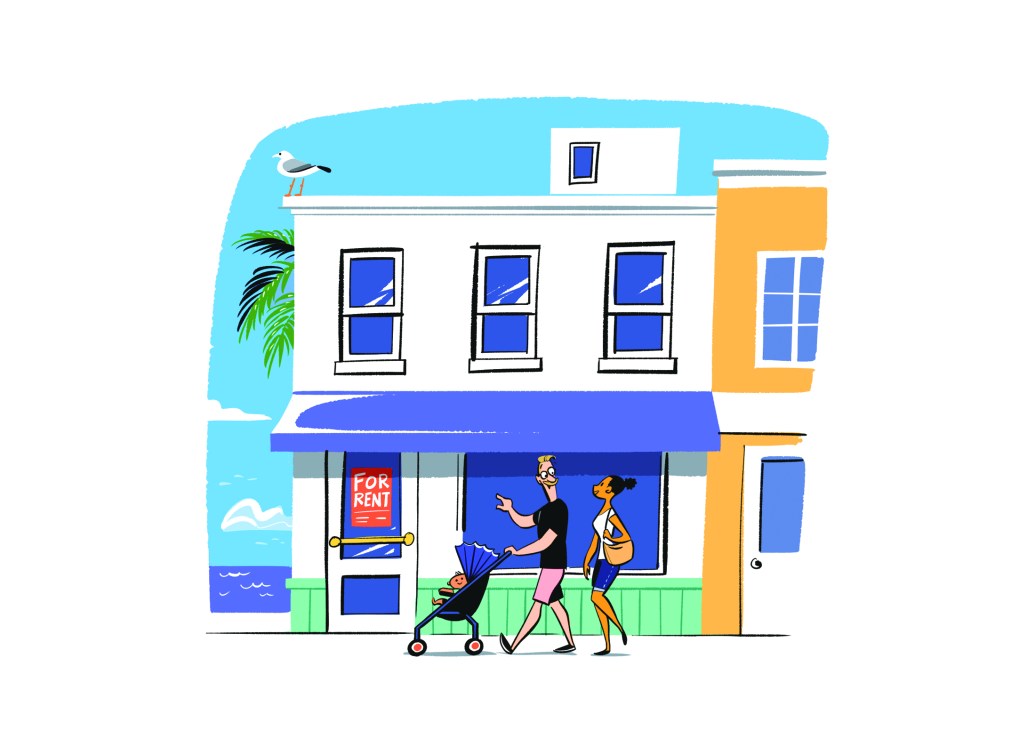
If not? Nothing ventured, nothing gained. We also give our grants to inspiring young retailers. A few businesses did go big but it was always the point for most to remain small, unique, honest and interesting. We’ve resisted importing a mall or purpose-built precinct for now: keeping our high streets hale and healthy is a priority, which means breaking the hold of chains that pay poorly and don’t fit the city.
17.
The destination station
Valuable connections
Transport
Our train station adds a sense of arrival to the city when you pull up at its platforms (like Milano Centrale). Transport hubs act as first impressions for visitors and a “welcome home” for others, so we’ve given ours a facelift but kept some of the grandeur of yore. You can set your watch by departures and arrivals. And unlike most stations, there’s a proper newsstand, independent deli and sandwich shop, as well as fast wi-fi and an absence of vice and uproar that defines most city hubs today.

18.
The cool interiors
Breeze in
Architecture
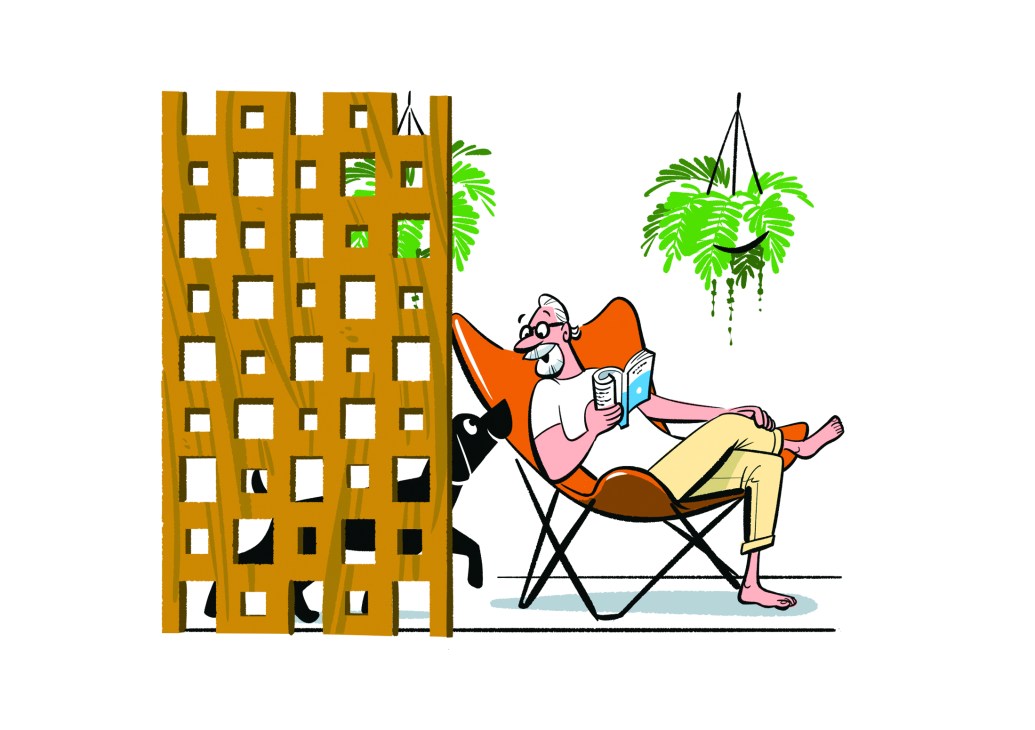
Cities are simmering and noisy air-con units are adding pollution to the climate conundrum. Ways to fight back include more greenery, flowing water and bringing a breeze to buildings that would otherwise absorb the heat. Taking our cues from tropical architecture means encouraging a through-flow of air. How about adding Brazilian Cobogó bricks to let the cooling zephyr waft through? Capturing rainfall while considering humidity and where the sun hits makes homes more resilient, sustainable and comfortable.
19.
The people-oriented police
Use the force
Public services

It’s not authoritarian to want to show some presence on the beat. Our immaculately turned-out police force is a dab hand at directions, helping the elderly with their shopping and seeing to it that everyone feels secure and safe. Our bike-mounted boys and girls in blue cover ground quickly and their presence on saddles helps as a deterrent to the small amount of crime in our law-abiding city. Our city police aren’t portly, cherry-cheeked, out-of-puff volunteers when trouble emerges; all must pass a rigorous fitness exam to patrol the streets. Many of the team speak multiple languages but all are fluent in good manners and civility. Welcome to the neighbourhood.
20.
The smart schools
Start them young
Education
Our city has a rich history but we’re also keen to invest in its future. That begins with beautiful kindergartens and schools. It’s important that education doesn’t happen in packed portacabins by main roads and under strip-lighting. So much of schooling – and the lessons that stick with us in life – is about what we feel rather than what we’re told.

In this respect, we’ve tapped Spaniard Andrés Jaque of Madrid’s Reggio School and the Moroccan team behind Rabat’s Jacques Chirac School. That’s how to invest in spaces that excite as well as educate. There’s a lesson there.
21.
The meanwhile city
Space for surprises
Development
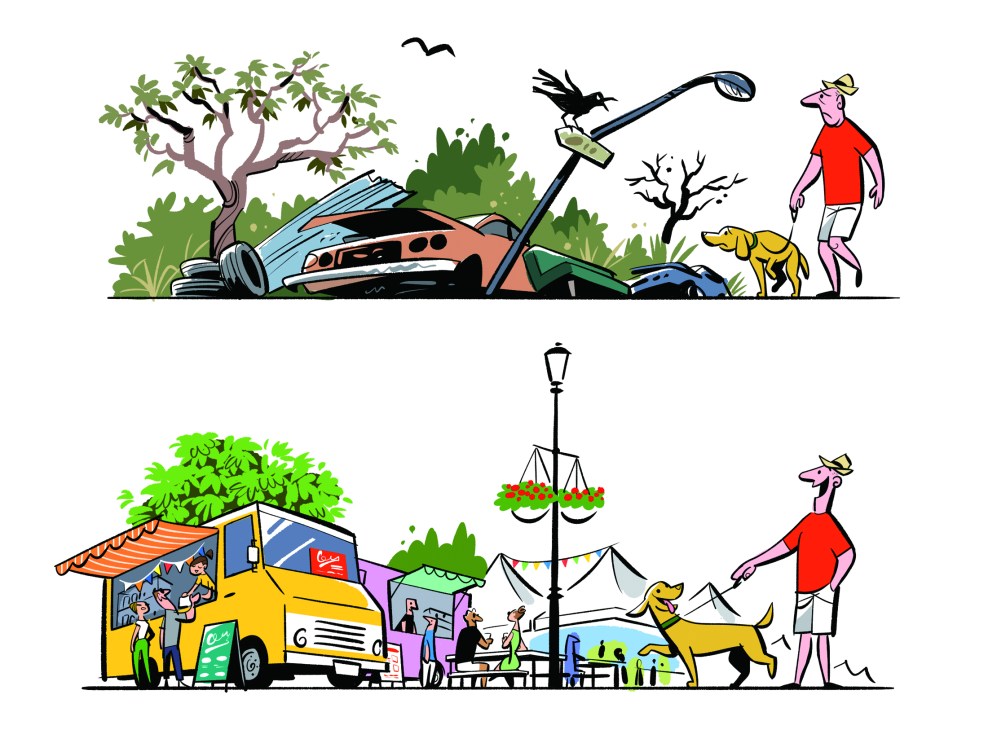
What if that car park, derelict space or tyre fire was a pop-up swimming pool, outdoor gym or community theatre? Maybe next month it could be a space for screenings, street food or a flea market? That’s the idea of the Meanwhile City, which came from Petro Marko (see Expo). It means using spaces before (and as) they’re developed for new uses, encouraging landlords not to chain up, padlock or fence off areas that could be put to profitable new uses. In our ideal city there’s a long list of canny initiatives lined up to add life to forgotten corners of town. Coming up? A summer sauna club.
22.
Flexible housing stock
Mixed-use buildings
Architecture
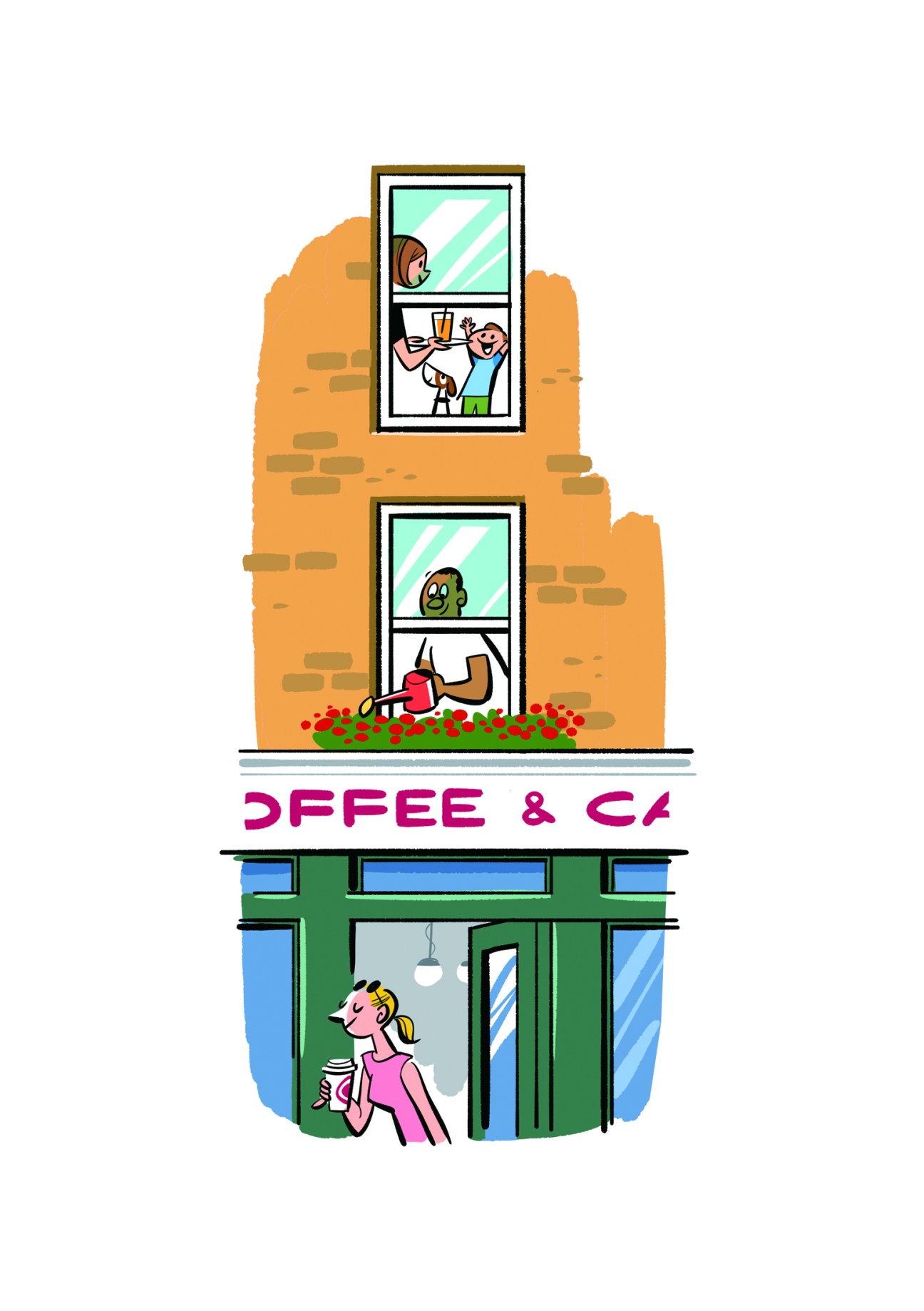
Home means different things to different people and families come in all shapes and sizes. So we’ve embraced a range of architectural styles, cherishing what’s there but ensuring that developers don’t skimp on new builds, then disappear once they’re signed for. Our town has a backbone of sturdy brick terraced houses – many with shops below – which have been repurposed to a range of sizes. Elsewhere are newer builds with character, older villas and houses to suit most tastes. Plus integrated social housing, of course.
23.
The word from on high
Rooftop revival
Development
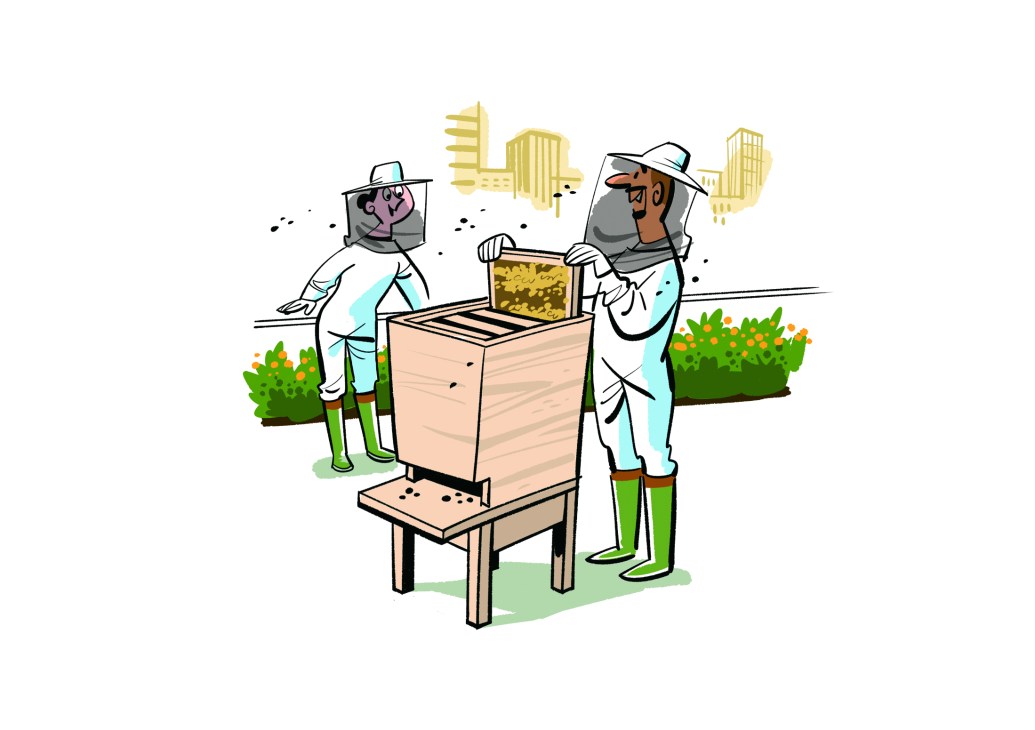
We’re elevating our expectations of unused roof space. Developers already pop solar panels, rainwater-capture systems and planting on most roofs. We’re also well on the way to self-sufficiency and better biodiversity thanks to urban gardeners, allotments and a few well-placed bird bricks. We’ve developed a side hustle selling the city’s lavender-scented honey from our many thriving apiaries and just approved licences for new rooftop restaurants and bar spaces. Things are looking up.
24.
A place for everyone
Space to play and ponder
Leisure
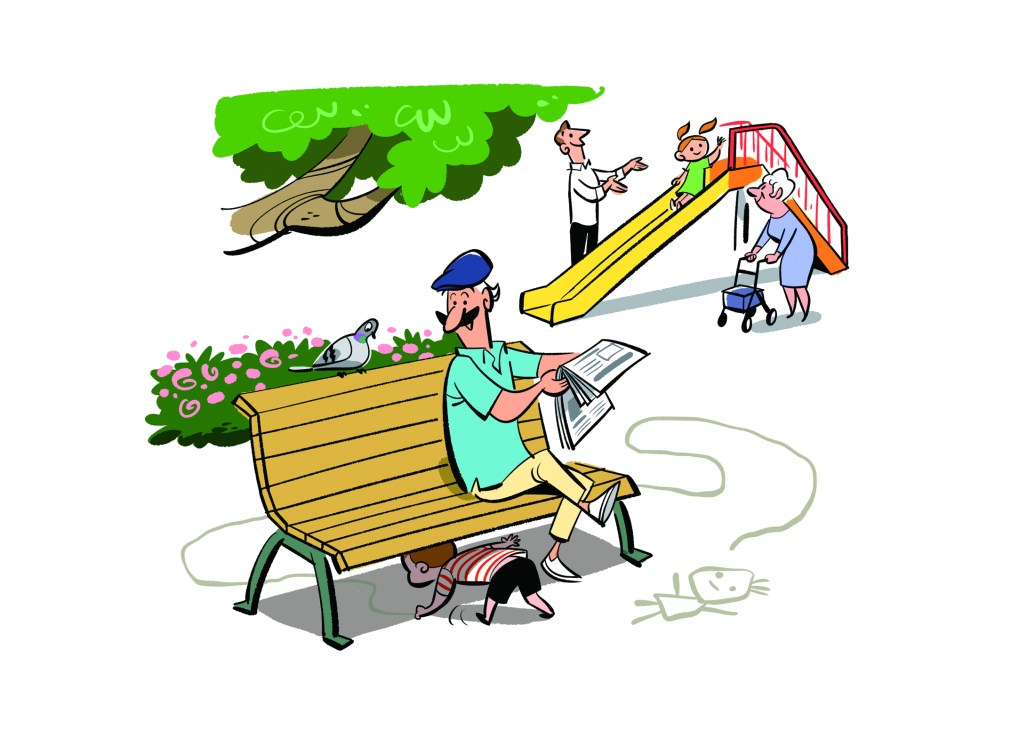
Designing for all ages starts with wide, even pavements for ambling, pedestrian islands in roads to offer slower walkers more time to cross and somewhere shady for the elderly to read the paper. We’ve also built adventure playgrounds, inspired by Gärten der Welt and Park am Buschkrug in Berlin, with water, slides and sandpits for children. The spaces are leafy, fenced-off and have room to run, play and doodle in chalk.
25.
The right connections
Time to get lost
Transport
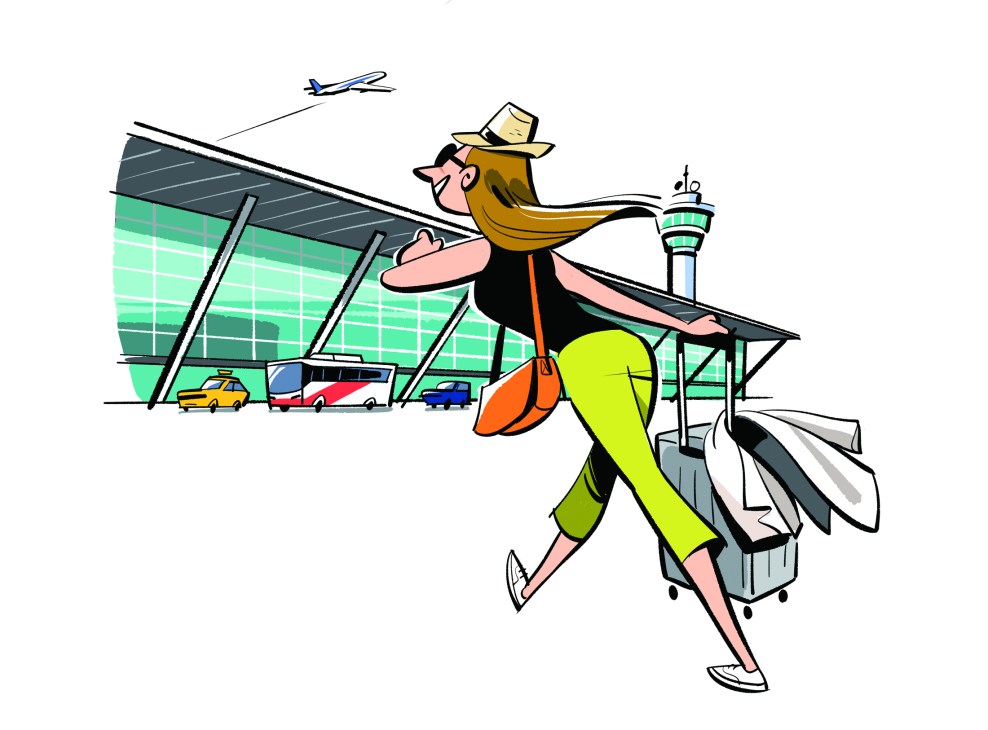
We love our city but the ease of zipping off for a weekend elsewhere or to connect with colleagues adds to its charm. Monocle’s perfect city is served by a brisk, regular express train to our little airport and the zippy connections haven’t gone unnoticed either. Last year we welcomed a record number of visitors (and a little handy investment). Other people, it seems, have been studying our success rather closely. You too might have found some benchmarks, nudges and reasons to reflect on what your own city hits and what it’s missing. Until next time, safe travels. Come back any time.
Slow burners
1.
Woven wonders
Joanna Louca, Cyprus
Joanna Louca was first introduced to the art of weaving when she moved to London from her native Cyprus in the 1990s to study textile design. “It was the process of turning a raw material into a finished garment that intrigued me,” says Louca.
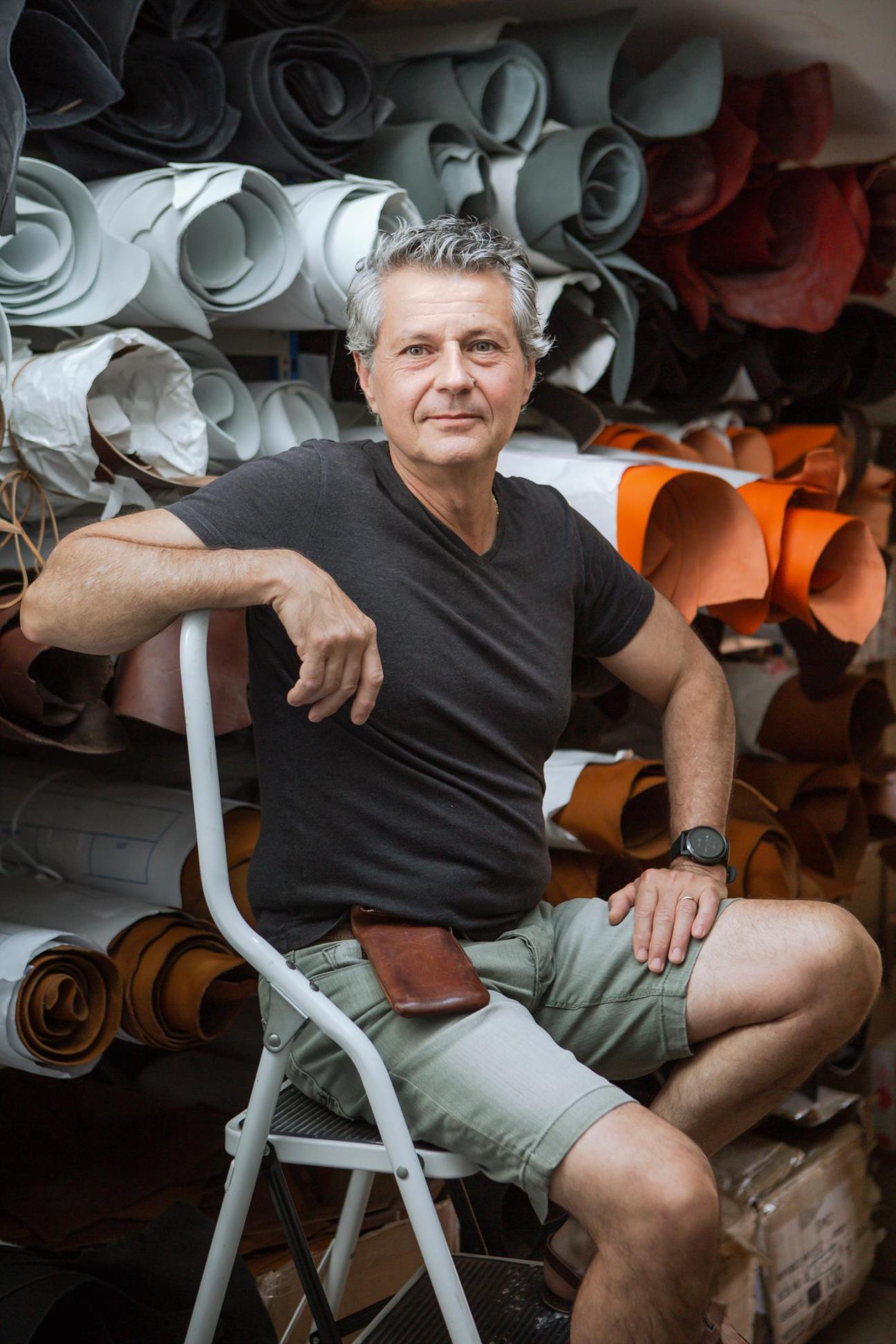
The designer spent hours at her loom during those early years, perfecting weaving techniques. Moving back to her hometown of Nicosia, she sought to “isolate and create”, experimenting with colours, patterns and yarns to develop her own signatures. “It’s a slow, meditative process,” she adds. “You follow the formulas or break them as you go along.” Her fabrics – raw, textured and punctuated by geometric shapes and natural colour palettes – have been turned into one-of-a-kind fashion pieces, scarves and, recently, larger-scale art pieces that have featured everywhere from hotels in Guangzhou, China, to Homo Faber in Venice. She is also working with Berlin-based retailer Andreas Murkudis on an exhibition of woven wall pieces, debuting during Berlin Art Week this autumn.
Louca has struck a balance between the slower lifestyle of Cyprus and international ambitions. “There’s a lot of hidden beauty on the island: the proximity of the sea and the mountains, the sacred archaeological spaces and the mesmerising rose gardens that you pass by daily,” she says. “But you need to create a cocoon around you.”
These days she is mostly found in her studio at the edge of the Old Town, which is “bursting” with new weaves. “The atelier is visible on the street, so friends will often drop by and we’ll smoke a cigarette or have a coffee outside,” says Louca.
joannalouca.com
2.
Best in shoe
Rondini, Saint-Tropez
For classic leather sandals look no further than Rondini, which has been manufacturing them in the southern resort town of Saint-Tropez since 1927. “Even as a child, I was often in the atelier doing little tasks,” says owner Alain Rondini, the founder’s grandson, who took over the business in 1983. “I had the manual skills, so it was easy for me to start working with my father.” Almost a century after the workshop was established, it remains a family affair: the team of 22 staff includes Rondini’s nephew Xavier and daughter Clara, who oversees the brand’s website.
Rondini is known for its classic Tropéziennes flat sandals that feature four or five straps across the front and another behind the heel to hold the shoe in place. Other styles include the unisex Sahariennes and the elegant Serpent sandals – the latter created by Alain’s father Serge Rondini for his wife Roseline.
The sandals are made onsite at the Rondini atelier, which is now spread over three floors. This proximity to the shopfront means that sandals can easily be adjusted to a customer’s foot or well-loved pairs can be brought in for repairs. Even as head of the company, Alain likes to join in the manufacturing process, sewing a pair of soles or cutting pieces of leather. “I have remained an artisan,” he adds. “This is what I enjoy – that and contact with our customers, year after year.”
Today Rondini receives orders from around the world but remains a small-scale enterprise. “I have never wanted to distribute my sandals to other stores,” says Rondini, adding that he has turned down offers by potential sellers to scale up production. “I am moving forward at my own speed, which enables me to live in tranquillity.”
rondini.fr
3.
Wicker lady
Mariamélia, Porto
Wicker accessories are abundant in Porto, yet the art of basketry is in decline. Filipa Cruz, a Porto-based creative, founded her wickerware label Mariamélia almost a decade ago to address that very issue. Scoping out a network of six ateliers in Braga, Porto, Barcelos and the Algarve, she works with artisans across the country who make her line of wicker designs such as hats, baskets and objects for the home by hand. “It’s an interconnected network because today there aren’t many craftsmen who have these ancient skills,” says Cruz.
A rural craft that grew out of necessity, wicker baskets were used by fishermen to transport their catches. Mariamélia baskets are crafted using the same wicker techniques and materials such as rattan reeds, traditionally sourced from wetlands and salt marshes. The brand’s tall rattan baskets hail from an atelier in the Algarve. “It used to be called an octopus basket because it was used to carry fresh octopus,” says Cruz. Straw hats are another brand signature and Cruz makes sure to offer a range of sizes. “I like how universal the hats are,” she says.
Former graphic designer Cruz has a keen eye for detail. She has grown the brand’s community across Portugal and abroad, and Porto has proven to be an ideal setting for her independent business. “It behaves like a big city because of the tourism industry but deep down it is a small town with plenty of local business,” says Cruz. This forward-thinking business is helping to bring artisanal tradition back to life.
mariamelia.com
The Opener
The Mild West
Comment: QOL ranking
You might have noticed that this year’s Quality of Life ranking is an exclusively European and Asian affair, with considerable jumps and drops at the top. Mexico’s Mérida is on the up (see page 70) but there are no US or Canadian cities – why not?
When it comes to the core of our Quality of Life Survey, absence of crime in daily life figures large. Let’s face it, there’s nothing like a car-jacking, violent break-in or mall shootout to ruin your day, unsettle the community and put an entire city on edge. US cities that once attracted top and future talent are now being shunned by Asian investors who fear for their safety and parents who don’t want their children being caught in campus crossfire.
Violence aside, US and Canadian cities are also in need of solutions to revive hollowed-out urban cores as offices remain empty and downtowns wither. While there is considerable movement in rethinking office buildings and reconfiguring empty business hotels, it’s going to take considerably more in the way of creative solutions to animate once-vibrant cities.
On the positive side, there are plenty of benchmarks across the world that show how crime can be tackled, the homeless housed and neighbourhoods kicked back into gear. In the meantime, many European cities are benefitting from the arrival of US lifestyle refugees and their accompanying capital: Milan, Zürich, Lisbon and Madrid are all seeing an influx. While wealthy arrivals create spikes in housing prices, they also bring fresh ideas and create jobs – and these are forces that further improve quality of life. For the full list, see page 50.
Nom de boom

Kyle, a town of about 57,000 lying 35km south of Austin, features on few, if any, Texas tourist itineraries. It cannot compete with the Alamo in San Antonio, nor Paris’s cinematic history, and cannot rival Houston’s connections to the Moon. And it has never cradled the childhood of any legendary rockstar – statistically astounding, given Texas’s rich musical heritage. But Kyle does have a name that, the city surmises, it shares with enough people to earn it a place in the global consciousness.
In May, Kyle invited anybody called Kyle to descend upon the town, for its fourth attempt to claim a world record for the largest number of people with the same name ever gathered in one place (punctiliously specifying that Kiels, Kylers, Kylies and, indeed, Kylees were ineligible). The benchmark to beat was the 2,325 Ivans who assembled in Bosnia’s Kupreski Kosci in 2017.
Tragically, Kyle fell short. But though the town hasn’t yet set a world record, it has hit upon a means for otherwise unremarkable conurbations to generate publicity. And there is no need to spend money on name tags.
Pesto alla Chicagonese?
From the correct way to cook carbonara to what ingredients are allowed to go on pizza, it’s common knowledge that Italians are serious about their food. Genoans are no exception. The Italian authorities in the city recently seized more than seven tonnes (7,000kg) of Giovanni Rana pesto at the Genoa port after officials found that its labels did not conform to EU regulations.
Why? Because DOP Genovese basil pesto should come from Genoa – and the pasta sauce in question had been produced more than 4,500 miles (7,000km) away in a suburb of Chicago. It is, of course, not the first time food has caused problems at international borders. Belgian authorities recently destroyed more than 2,000 cans of Miller High Life because of its slogan (the American brand famously markets itself as the “champagne of beers”) and France is still contesting a US judge’s decision that states that “gruyère” can refer to any type of cheese. Politics aside, there’s a reason why parents tell their children not to play with their food. Grub, it turns out, is no laughing matter.
Reporting from…
Monocle has a network of correspondents in cities around the world. Our brief dispatches include potential forward motion in Thailand, community farming in London and shades of truth in Los Angeles.
Bangkok
Forward to progress?
Months after heading to the polls, Thai voters will finally find out who their next prime minister will be. Progressive party Move Forward won the most seats but Thailand’s political establishment may thwart its attempts to effect real change.
London
Farm foods
The London Borough of Hounslow will convert eight hectares of unused council land into allotments to teach children how to grow food. As Londoners struggle with living costs, here’s hoping that the scheme bears fruit.
Los Angeles
Light and shade
A new bus stop sunshade piloted in LA has left the city red-faced as only a few people can fit under it at a time. Called La Sombrita (or “little shadow”), it has nevertheless shone a light on the need for proper bus shelters – or at least a few more trees.
Property theft
Wandering around gallery and museum exhibitions, people often see paintings or artefacts that they want to take home – that’s what the gift shop is for. Cinema, though, doesn’t really have an equivalent – and yet some people won’t stop until they get the real thing. Thievery of props is a common occurrence in Hollywood, where to this day several crimes remain unsolved. Here, we’ve rounded up a list of cinematic thefts that feel stranger than fiction.
1.
No place like home
In 2005, Dorothy’s ruby red slippers – worn by Judy Garland in the 1939 version of The Wizard of Oz – went missing from a museum in Grand Rapids, Minnesota, Garland’s hometown. It took the authorities more than a decade to find the culprit.
2.
The man without the golden gun
In 2008 a gun featured in the 1974 James Bond blockbuster, The Man with the Golden Gun, was stolen from Elstree Studios in Hertfordshire. The thief was never caught.
3.
Thick as thieves
Last year life imitated art when about $320,000 (€300,000) worth of equipment was stolen from the Paris set of the Netflix heist show Lupin. The group of about 20 thieves set off fireworks across the set to cause a distraction and cover their tracks. Fortunately, no one was hurt.
Wanted: Legal Eagles
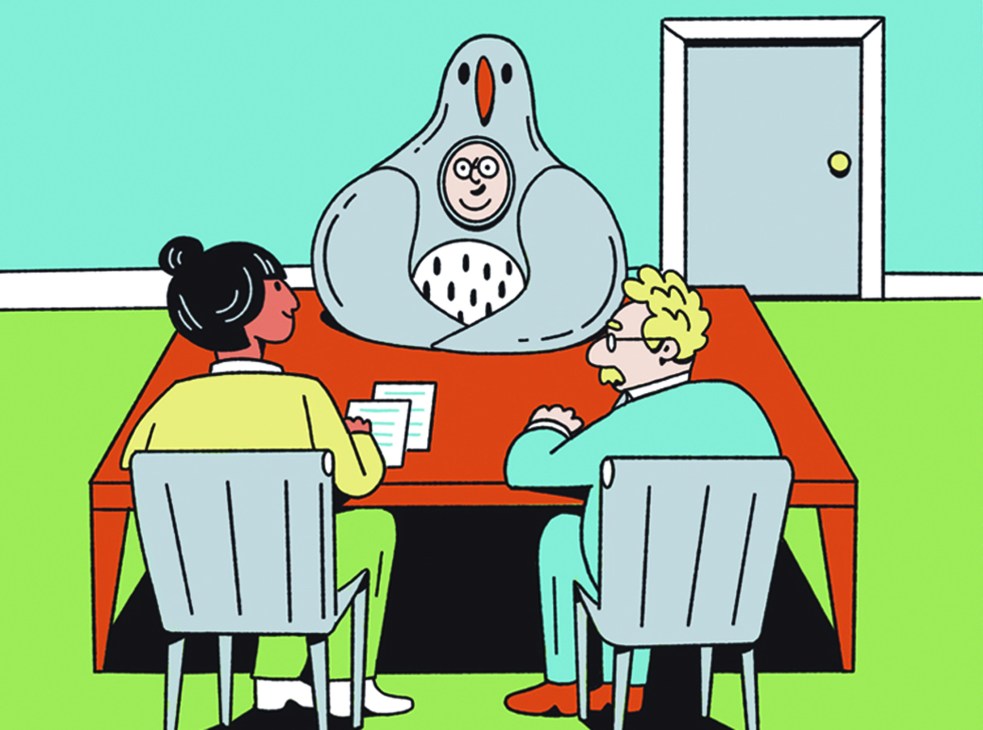
Zookeepers in the UK city of Blackpool are taking on the seaside resort’s peckish seagulls. The birds, who brazenly steal food from visitors and animal enclosures, have long been wreaking havoc on the city’s zoo, which has previously attempted to deter them by flying eagle-shaped kites and installing statues of various birds of prey.
To combat these persistent winged menaces, it is now recruiting people willing to work as “seagull deterrents”. Applicants will be asked to dress up in bird costumes to shoo away the pesky critters. The job ad requests that those applying are “outgoing”, “energetic” and “excellent flappers” – a love of feathered friends, or animals in general, is not a requirement.
The Interrogator
Leïla Slimani
Paris
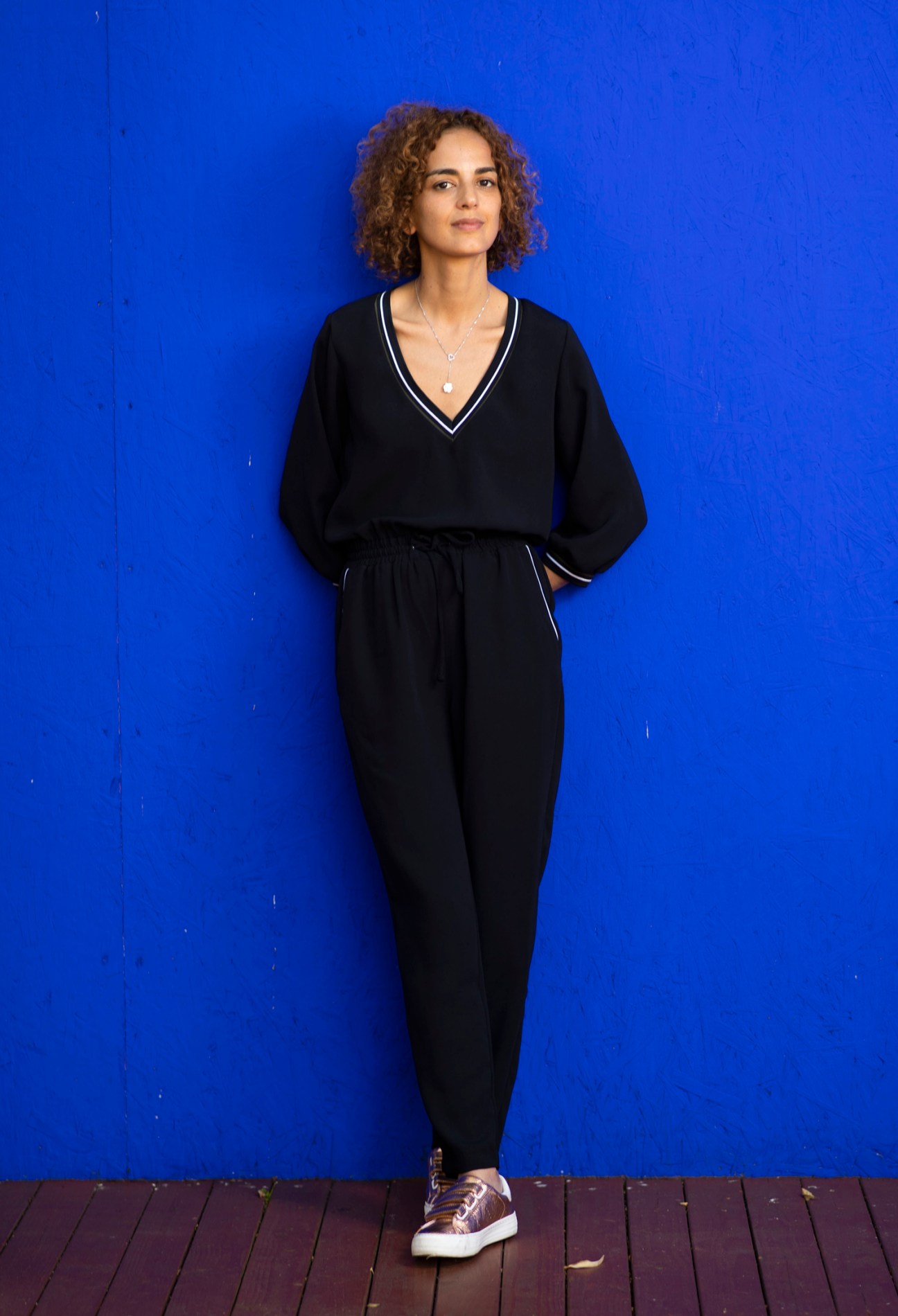
The first Moroccan woman to win the prestigious Prix Goncourt, author and journalist Leïla Slimani, was appointed Emmanuel Macron’s Francophone affairs representative in 2017. This year she will serve as the chair of judges on the International Booker Prize panel.
Here, she tells us about her favourite bookshop in Tangier, a film by Karim Aïnouz and her vibrant new novel, Watch Us Dance. The book follows a group of characters as they adjust to life in a newly independent Morocco in the 1960s – a world that’s precarious but nevertheless overflowing with possibilities.
Your newest novel is set in Morocco. Why did you choose to set it in your home country?
As a child, I had to identify with characters called Mary or John. Today, I’d like European readers to identify with characters called Amine or Aïsha. It’s important to put countries such as Morocco, Algeria and Tunisia on the literary map.
What were you trying to capture by setting your new novel in the 1960s?
The generation of my protagonists had a great desire for modernity because they were in contact with the West, with Europe and the US. They read a lot, they listened to rock’n‘roll and they could see a man walking on the moon. It was a moment in which they believed that everything seemed possible. Today things are much more pessimistic; we live in a sort of dystopia.
Your books have been published in more than 40 languages. How important is it that your work gets translated?
What’s amazing about being a translated writer is that, even if you are speaking in a foreign language, everyone understands. Literature is universal.
Which novel in translation would you recommend?
I loved the US author Ayad Akhtar’s Terre natale [Homeland Elegies], which was recently translated into French.
Do you have a favourite bookshop in Morocco?
Les Insolites, in Tangier.
Any film recommendations?
The Invisible Life of Eurídice Gusmão by Karim Aïnouz.
‘Watch Us Dance’ is out now.
Rodent to ruin
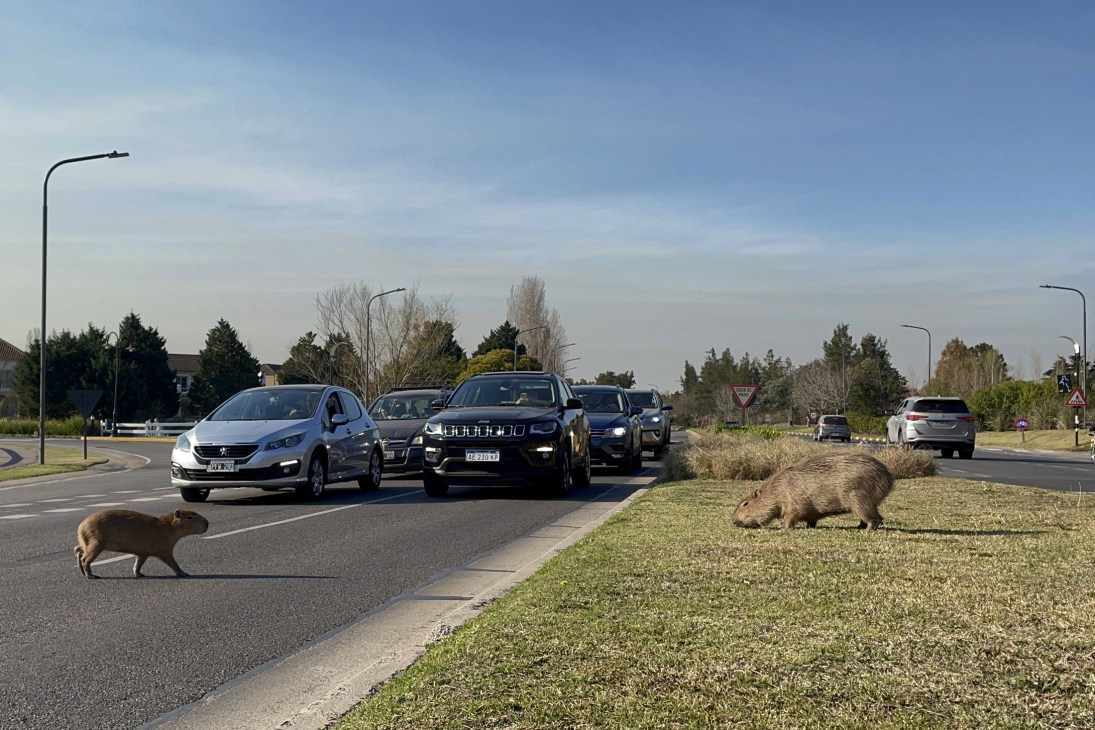
Capybaras are a South American internet sensation. In recent years thousands of fan pages dedicated to these giant rodents have cropped up on Brazilian social media. But the city of São Paulo isn’t as fond of them: it recently announced a plan to sterilise a herd living by the Pinheiros river.
Its reasoning? It seems that capybaras can transmit diseases and cause traffic accidents when they dash across roads. Scientists believe that if the population continues to increase at its current rate, the animals could start fighting for territory. Still, the decision drew the ire of Paulistanos, many of whom enjoy spotting them while stuck in slow-moving traffic. But they might change their minds if a herd of them shows up in their garden.
IMAGES: Getty Images, Shutterstock