Issues
Regent bets its electric sea glider can reshape coastal travel
The arrival of a futuristic new aircraft can create hype and excitement but there’s a lot of “vapourware” in this business too. That’s the term for when a start-up touts an electric plane or a flying taxi in a fanfare of 3D renders only for the idea to fizzle out and, eventually, evaporate. Regent’s sea glider could still be one of those stories. Yet at the firm’s headquarters in Rhode Island, you come nose-to-nose with its Viceroy sea glider, even if this one is a mock-up made from wood. “What we’re hearing from investors is, ‘We’re done with CGI, we need to see proof of these vehicles,’” says aeronautical engineer Billy Thalheimer, who co-founded Regent in 2020 with Michael Klinker. “For us, proof also means having humans on board. That’s why we’re moving so fast to a full-scale prototype: we expect to be flying by next year.”
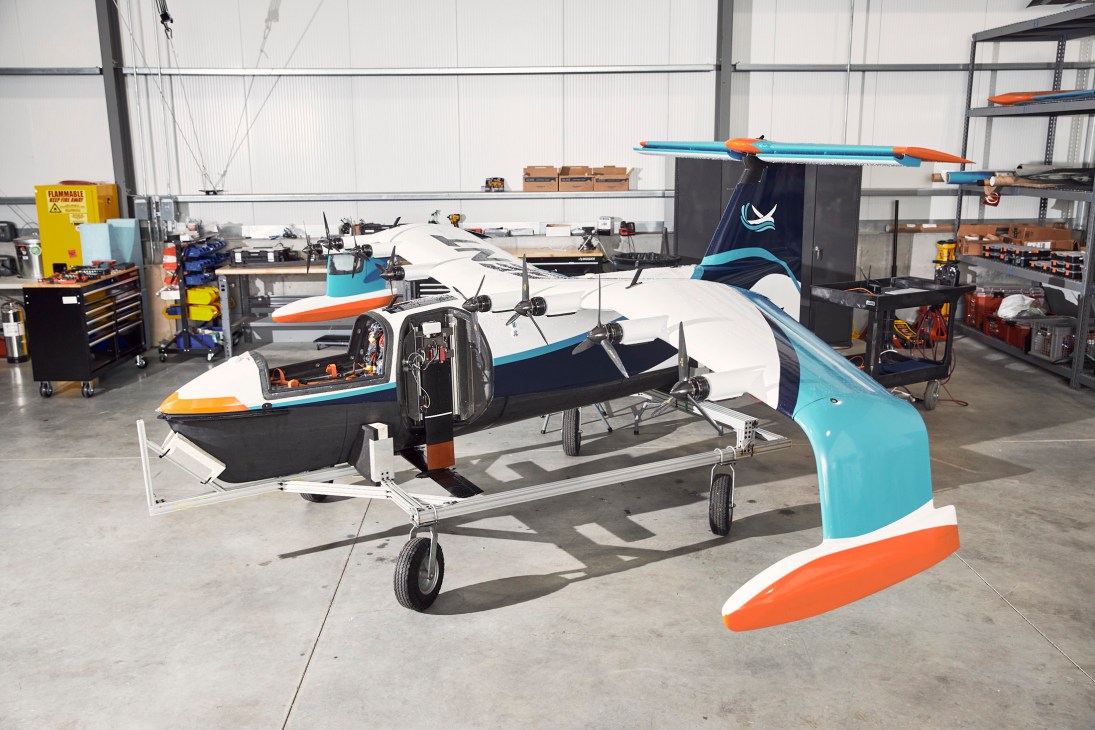
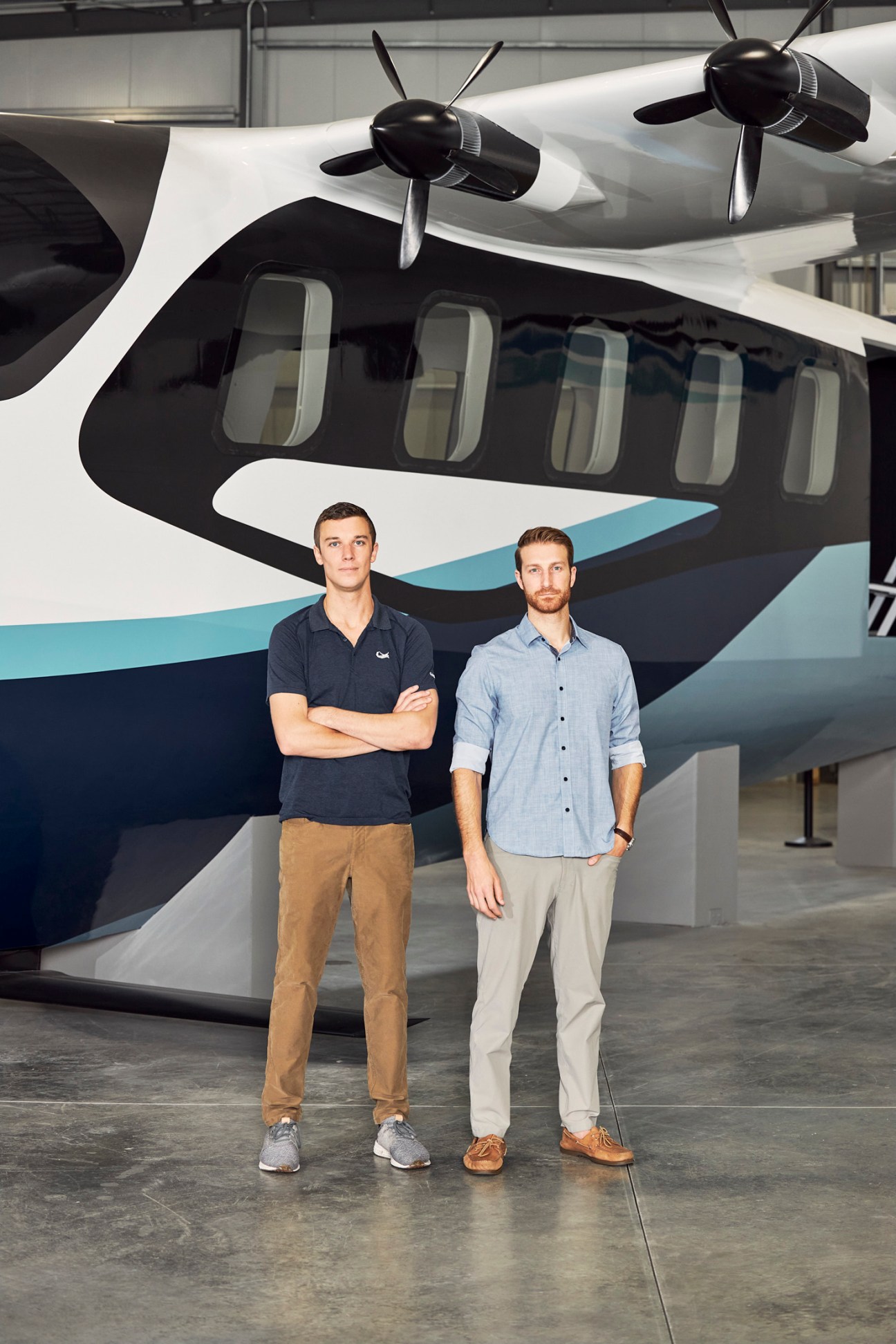
Thalheimer is an enthusiastic ambassador for the Viceroy. He and Klinker designed it after meeting at MIT and working together for years at Boeing. Regent already has orders for more than 400 sea gliders, comprising almost $8bn (€7.1bn) of sales (though the company will not disclose how much a single vessel costs). Meanwhile, defence manufacturer Lockheed Martin has made a strategic investment in Regent, seeing military applications for this sea glider. A vast factory is in development just down the road from the HQ and its new director of manufacturing previously worked for US spacecraft manufacturer SpaceX.
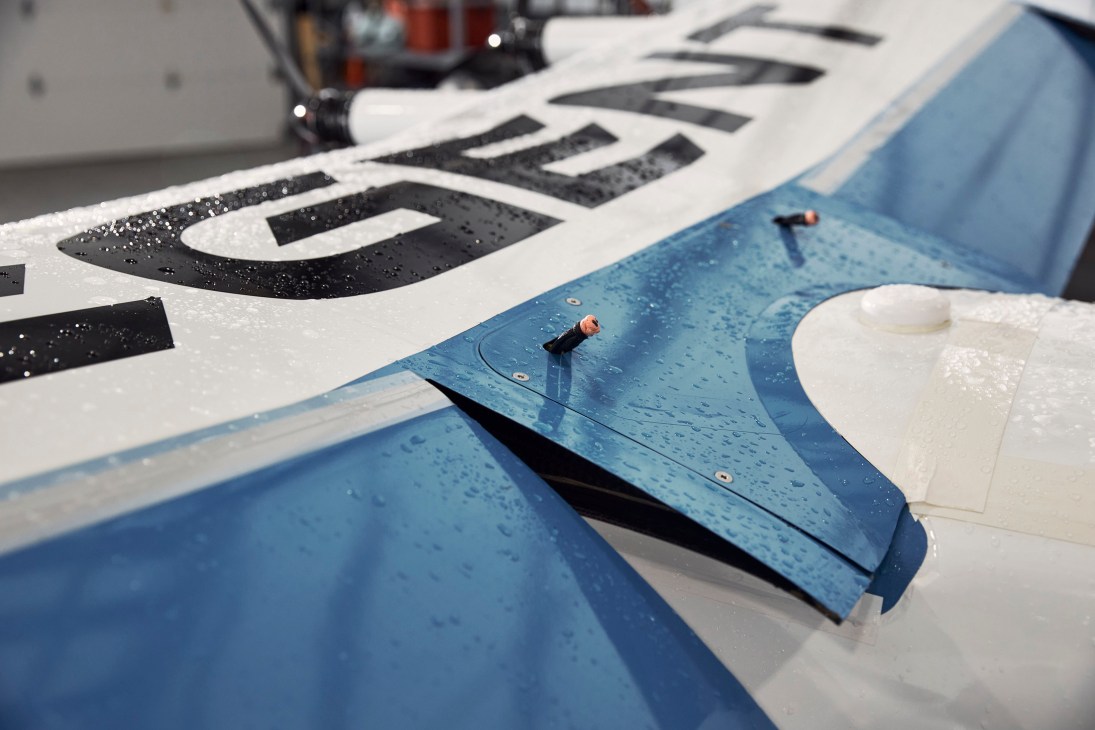
In the workshop stands a quarter-sized version of the Viceroy, nicknamed “Squire”, which commenced sea trials on the Narragansett Bay last September. The wings are still wet from a test flight at dawn and, if the real thing makes it to market by 2025, Regent believes that it will revolutionise how coastal and island communities get around. Fully electric, the Viceroy has a range of about 300km – think Manhattan to the Hamptons, Boston to New York – and the luxuriantly large windows of the 12-seater are more like those found on a train than an aircraft. “You can bring it right up to the harbour or marina and board just as you would a ferry,” says Thalheimer. “You don’t need to get there an hour before either.”
The Viceroy is limited to only flying over water and so is more like an airborne ferry than a typical plane. It has caught the eye of island-hopping commuter carrier Mokulele Airlines in Hawaii, which has bought a fleet. Brittany Ferries in France has signalled that this sea glider could make for a nippy way to get travellers across the English Channel. (A 100-seat sea glider, called the Monarch, is also in the works.) Thalheimer estimates that the Viceroy could do the 290km route from Providence to New York in an hour, with a $60 (€54) ticket each way. That sounds ambitious. “But so much of the cost of aviation on short routes is about maintenance,” he says, as we peer into the simple motor affixed to a carbon-fibre propeller. “With this, there’s no oiling and you don’t need to take apart a jet engine.”
Regent is betting on efficiency to keep costs down. The Viceroy was inspired by watching pelicans fly over water. These sea birds glide just above the waves and harness an uplift from the surf, which minimises drag and allows them to stay aloft using a fraction of the energy. Regent’s sea glider operates on the same principle – what’s known as the “wing-in-ground” effect: it uses sensors to maintain a constant altitude of about nine metres above water, which gives it a boost that the engineers say can make it clock in 45 to 50 knots – about 92km per hour – at full speed. That’s just slightly faster than the America’s Cup racing yachts that carve up Rhode Island’s bays.
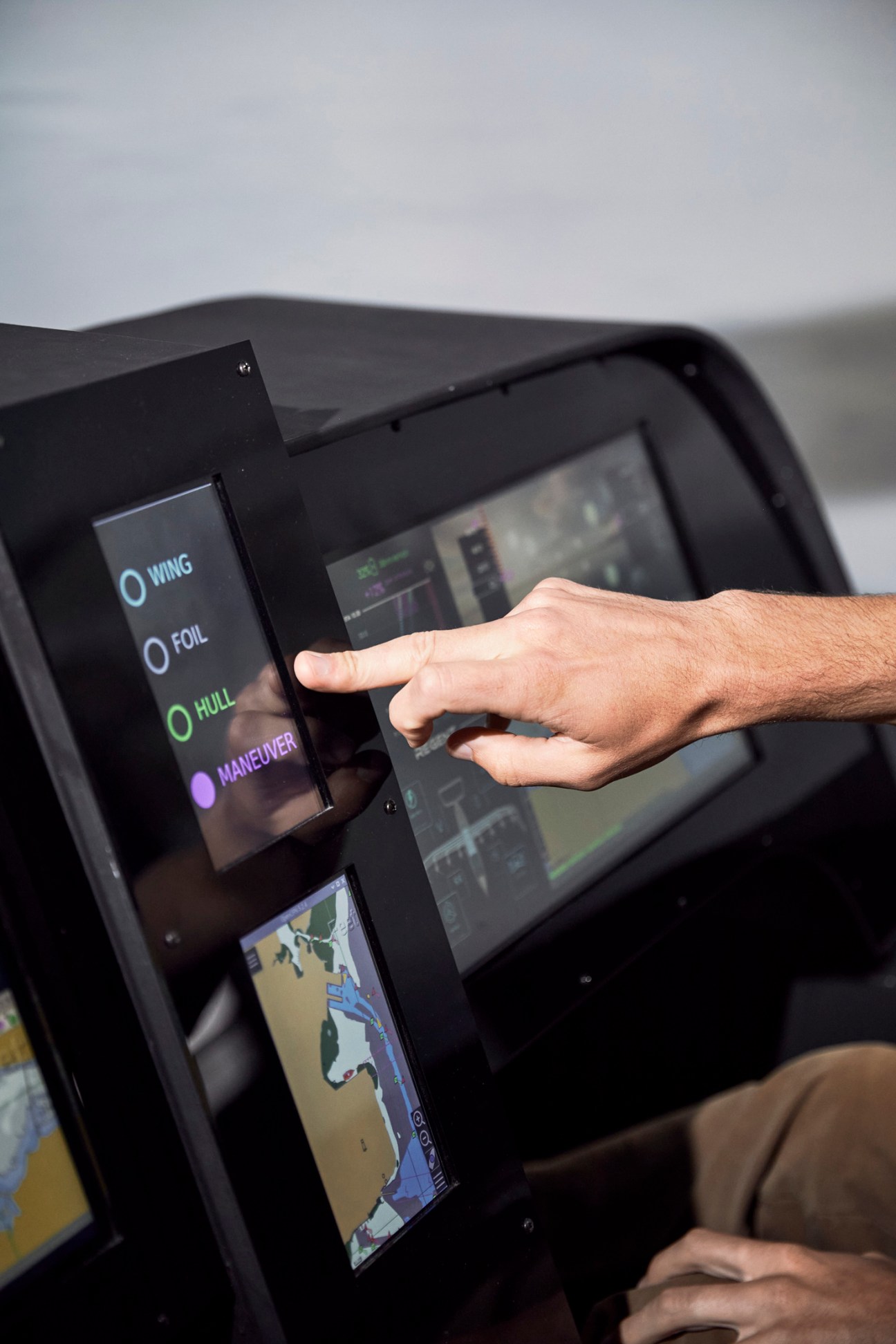
Monocle is shown to a cockpit simulator that allows customers to pilot a Viceroy anywhere in the world. On a panoramic screen we see a sunny day on Narraganset Bay. The interface in front of us was designed for ferry captains, with a simple joystick used to bank left and right. As we click up through the throttle, the chair rumbles and we lift onto the foils and gently into the air.
It’s not all plain sailing. Regent is working with the US Coast Guard with the aim of attaining certification for its craft but the Federal Aviation Administration is still mulling over whether it might certify it as a plane too, which would drastically increase costs.
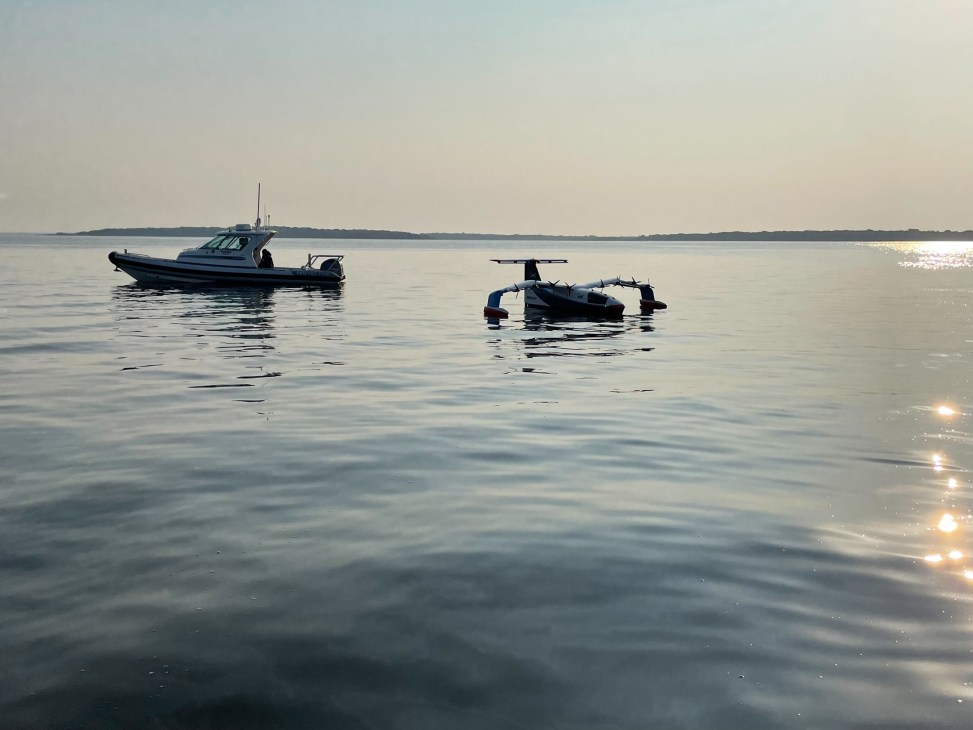
If that happens, the investment from Lockheed Martin could prove vital because the US military does all its own certifying. “When you look back to the Second World War and the island-hopping campaigns towards the end, this is what a [potential] Indo-Pacific fight might have looked like,” says Chris Moran, vice-president at Lockheed Martin Ventures, the firm’s investment arm. “We’re looking at vehicles that would support that.” Moran sees the Viceroy more as a logistics and supply-line vehicle than a fighter but Regent has mocked up a quarter-scale version in Marine Corps grey that looks formidable.
The Viceroy and the Monarch will be electric, despite Lockheed’s concerns that troops in the field could be left reliant on battery power. But Regent is working with Lockheed and other defence partners to explore sustainable fuel technologies that might allow sea gliders to travel distances of up to 1,000 miles. By the end of the decade, Thalheimer believes, battery technology will have scaled up enough that they’ll be able to fly from Los Angeles to San Francisco on a single charge.
Some parts of this business are going ahead on a wing and a prayer but the crew isn’t leaving anything to chance when it comes to safety and testing. Thalheimer recalls watching the Squire’s first successful take-off and landing. “What struck me was how similar it looked to the CGI that we made in the earliest days of the company,” he says. “We’re turning what was, to some extent, vapourware at the beginning – this vision, this dream – into reality.”
Cabin fever
There’s no hard and fast rule about when the alcohol starts to flow at Hamburg’s Aircraft Interiors Expo (AIX). By mid-afternoon, stands have begun to host delegates ready to loosen ties and tongues – and likely get the bulk of the day’s deal-making done. Lufthansa Technik, the design and maintenance arm of the German aviation giant, organises a “beer call”, while Recaro Aircraft Seating’s drinks are accompanied by a saxophonist. Having a well-stocked bar is clearly the key to an auspicious fair. “It’s almost like a fraternity; it’s a really tight community,” says Aix’s British events director, Polly Magraw. “All the top 100 commercial airlines come here, year after year.”
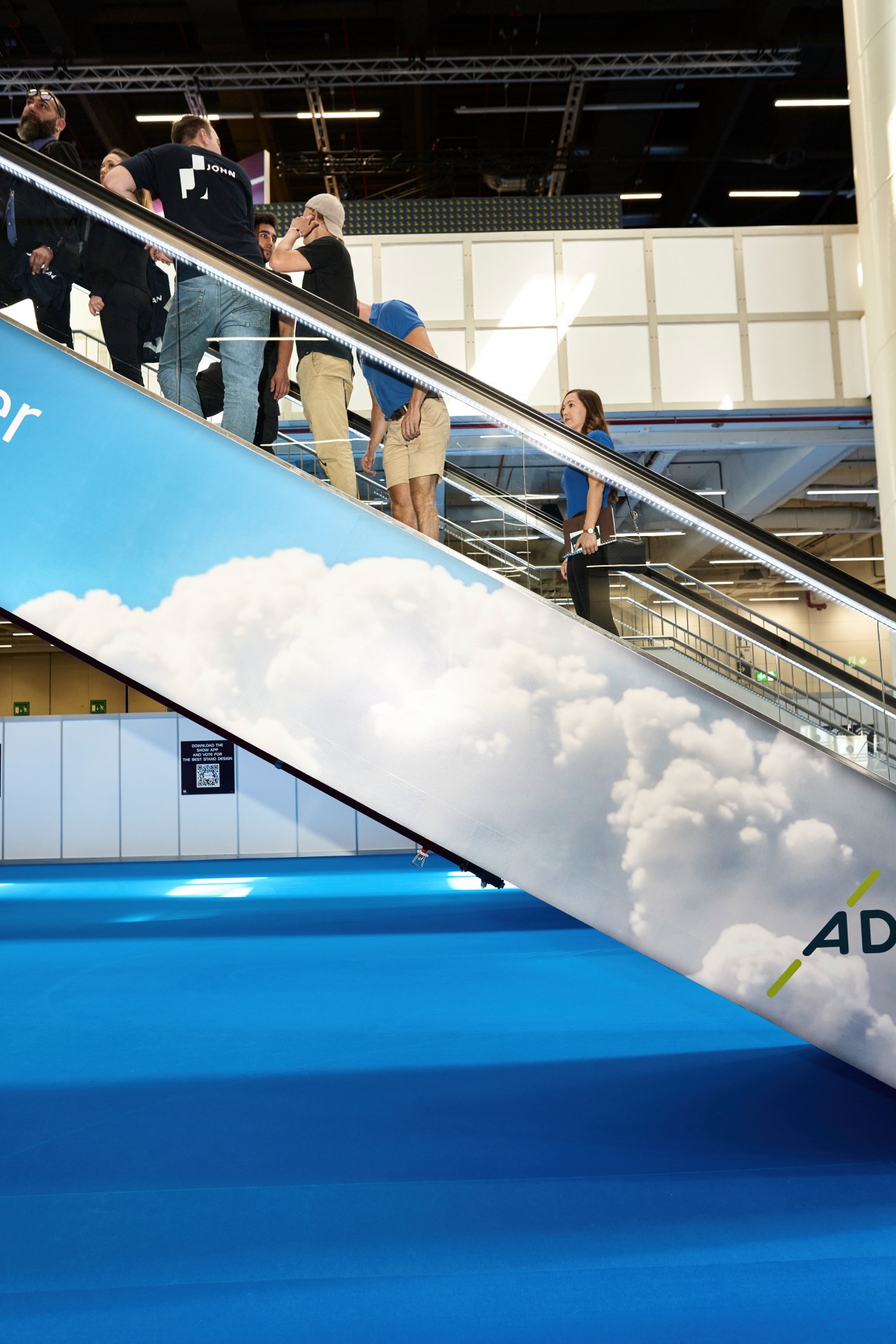

aix and its concurrent sister event, the World Travel Catering & Onboard Services Expo (WTCE), offer a deep dive into the minutiae of the aeroplane cabin experience. Its niche of suppliers, manufacturers, designers and caterers see anchor floor fittings, led-lighting sequencing and optimised ceiling architecture where the average punter might only see seat rows, TV screens and overhead bins. It’s no exaggeration to say that these three days of talks and meetings in Germany’s second city help to shape what flying will look and feel like in the years to come.
Magraw talks about the “resilience of the industry” after the bumpy ride of the past few years. Clearly things are starting to return to schedule. Wandering the whitewashed trade hall buildings of Hamburg Messe in June reveals a show that is busy without ever being overwhelmingly so, despite the breakout parties. With people wanting to travel and airlines recuperating the money they lost, the demand is certainly there, even if there are still supply-chain issues. Delegates clearly come to aix knowing who they want to talk to and what they need to get done.
Alongside the agreements, the expo services airlines’ increasing desire to personalise their brands, a trend also populating life away from aircraft fuselages. “Not a lot of people even really know what aeroplane they’re on, right?” says Andy Mason, the California-based vice-president of product development at Panasonic Avionics, standing in front of a wall of the company’s new screens. “But the cabin is where [airlines] can differentiate.”
That is where Panasonic comes in. Mason is showing off the company’s new in-flight entertainment. Ranging from 13in (33cm) in economy up to 42in (107cm) for first-class, the screens are the first to use colour-popping organic led technology in 4K resolution, which Mason calls a “quantum leap” forward. The new Astrova software platform makes it easier for airlines to customise content and offer what Mason calls “engagement beyond entertainment”.

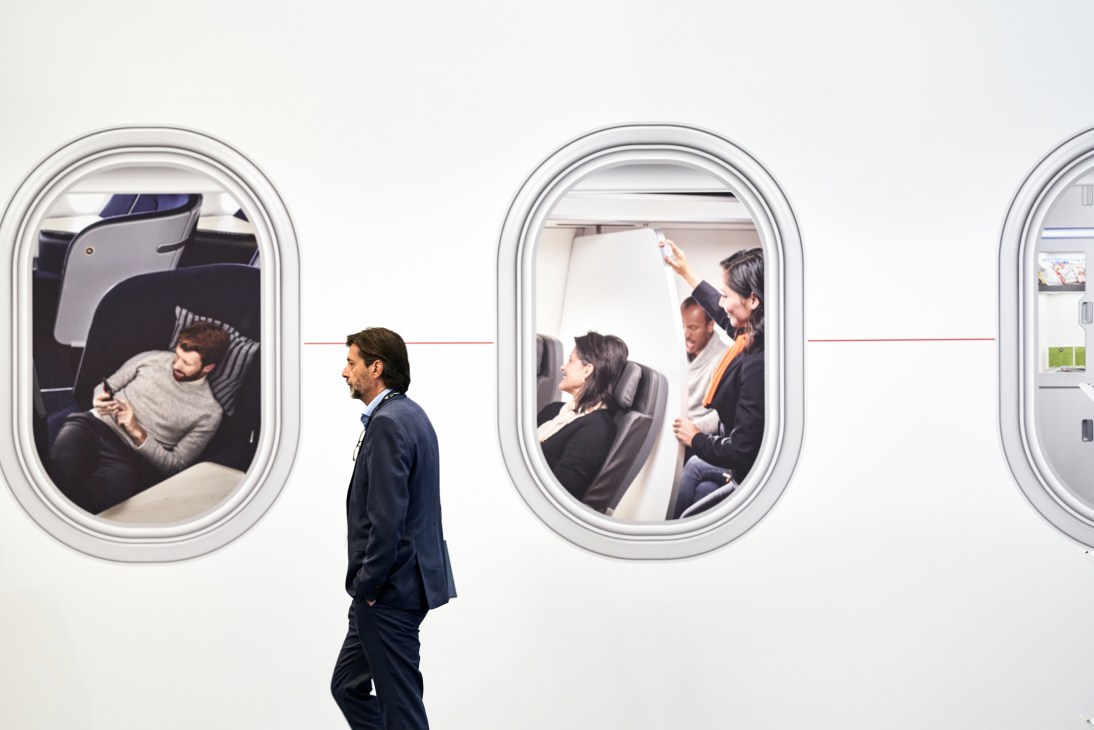
While Mason is adamant that seat-back screens are making a comeback, even if Europe is more reticent than the US and Asia, the real brave new world that aix reveals is how onboard connectivity is set to ramp up – bad news for anyone who enjoyed that last offline refuge up in the sky. Though not the only company doing it (Elon Musk’s Starlink is another player), OneWeb could be changing the way we connect to the internet; it’s working with distribution partners such as Panasonic to make it happen.
For Nick Maynard, marketing director for mobility, OneWeb is helping firms “deliver on the promise of a connected airline”. Since 2019, OneWeb has launched 648 low-Earth-orbit satellites, which he says will deliver high-speed internet anywhere without the latency issues experienced when connecting onboard using only traditional satellites that are about 30 times higher up. The US’s Alaska Airlines is expected to start using the technology next year.
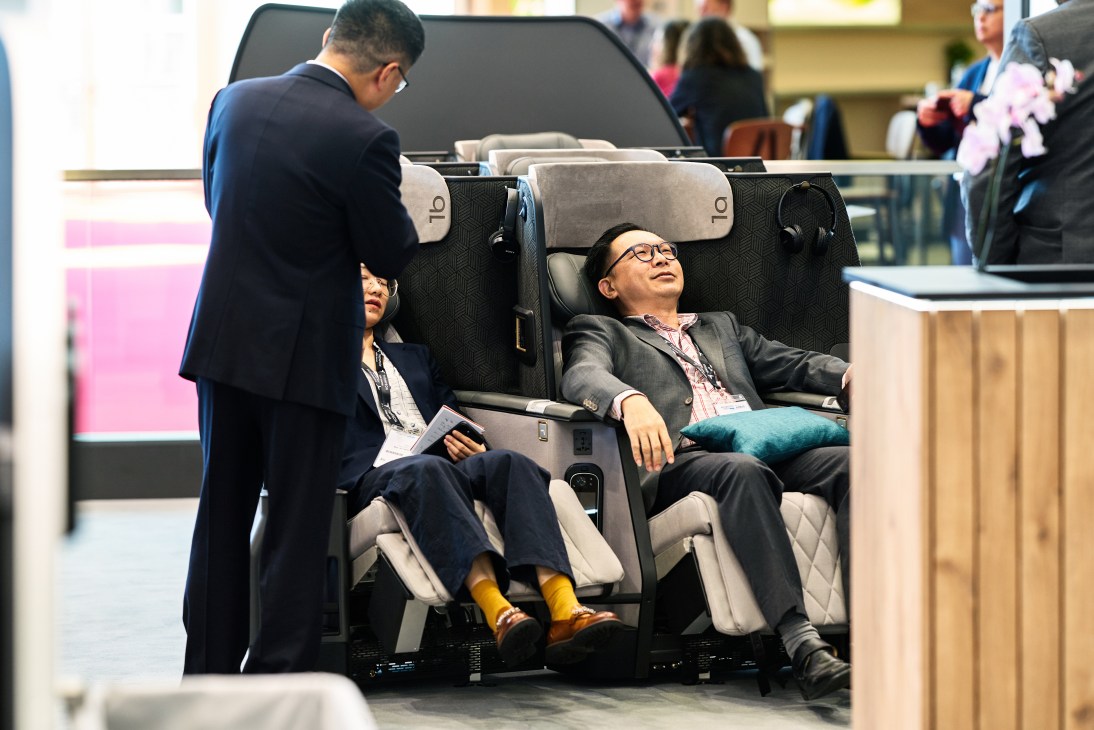
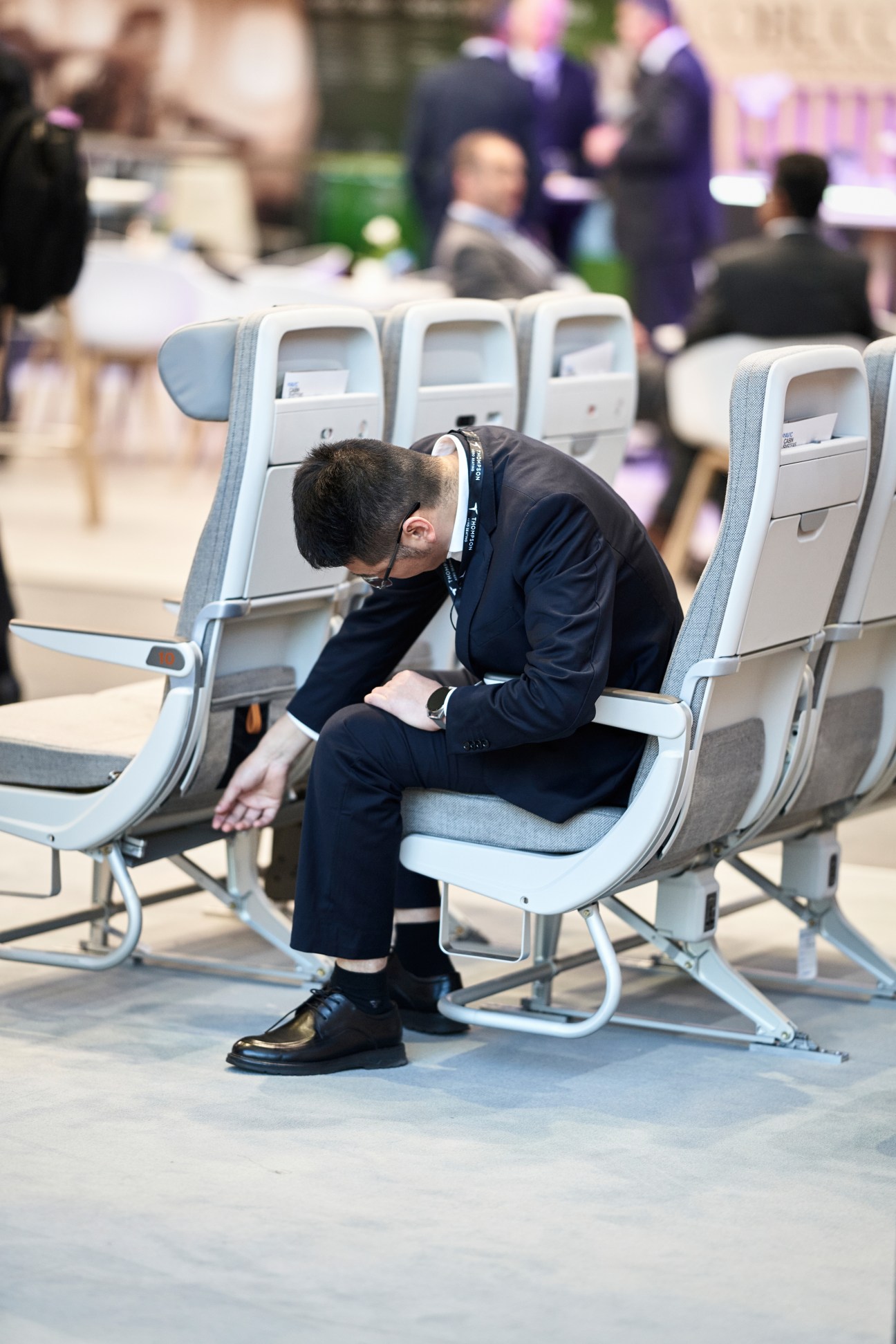
From plane-makers to seating manufacturers, everyone seems to want to roll up to aix with either a prototype or an interactive experience. Monocle finds itself sitting inside a full-size recreation of Boeing’s wide-bodied 777x interior – set to enter service in 2025 – as Brenna Wynhof, regional director of cabin marketing, coos at the “cotton-candy gradients” of the lighting system’s sundown effect. There is also a semi-transparent announcement monitor from Airbus – allowing crews to see through it from one side towards the passengers – and Recaro Aircraft Seating’s Business Class prototype, featuring headphone-free audio built into the seat, where you can feel the bass ripple around your back.
Perhaps the biggest punt is being taken by Italy-based aviation company Aviointeriors, which has come up with a pilot and passenger seat called “Seaty Flyer” for electrical vertical take-off and landing (evtol) aircraft. Small, helicopter-like electric craft are billed as the next big thing in urban mobility but they’re yet to take off – literally. For Aviointeriors, aix is a vital place to get face-to-face feedback from industry insiders who can touch and feel a product, even if there are plenty of specifications and regulations to be worked out. Regular plane seating is still the core of the firm’s business but there’s logic in taking a chance on evtol, argues engineering adviser Gaetano Perugini. “It’s better to be present today,” he says. “When the market explodes, we will already have experience.”
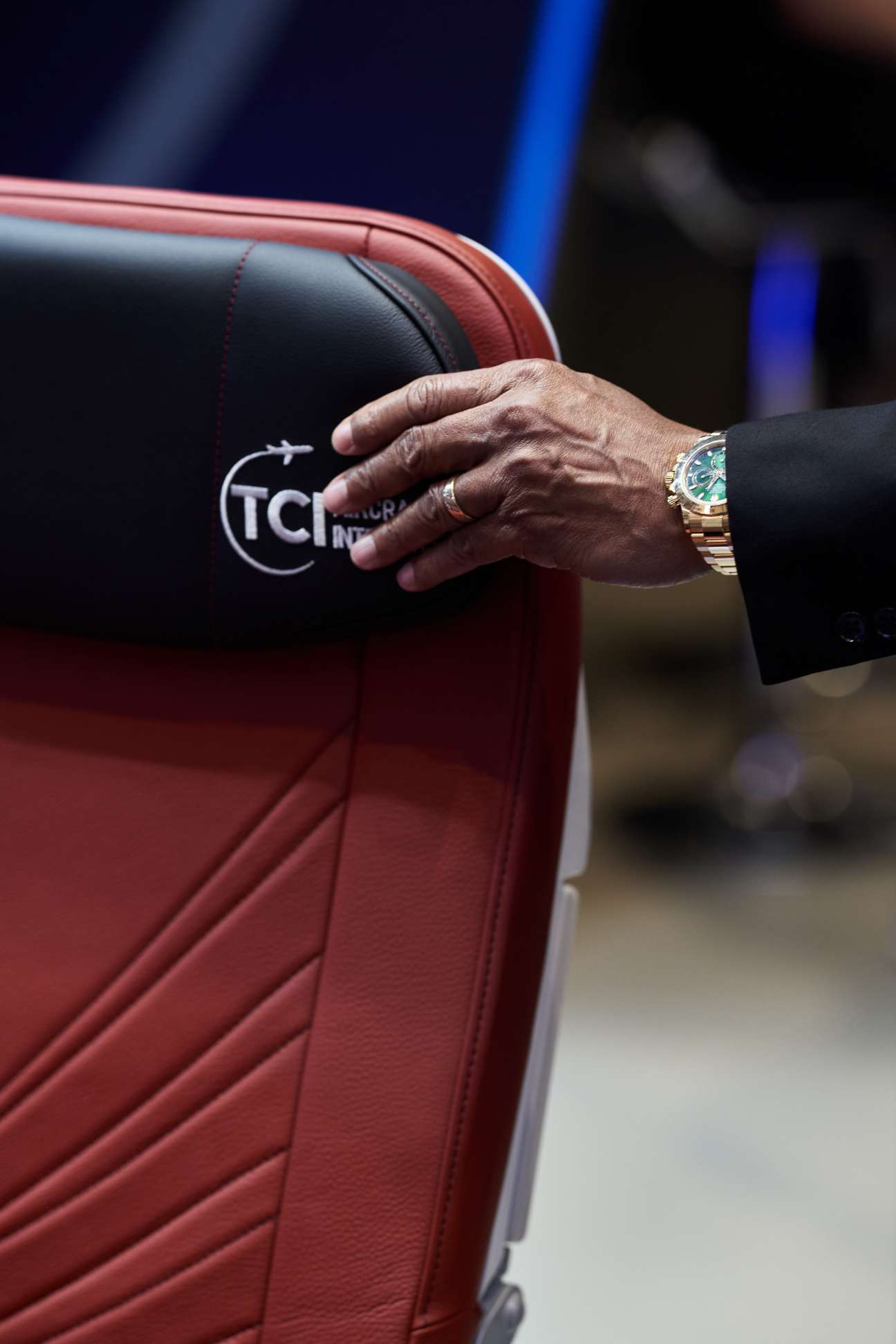
Many of the innovations on display in Hamburg aren’t, however, aimed at new segments; they are plays on existing ideas, often with tweaks to make flying more environmentally friendly. An interiors expo, by its very nature, can’t address the elephant in the room – engine fuel itself – but there are plenty of what event director Polly Magraw calls “quick wins” for those in the business of cabin furnishings, from reducing the weight of fixtures (so that a plane is lighter and consumes less fuel) to recycling materials.
You can’t walk very far at aix and wtce without seeing or hearing the word “sustainability”, applied in every possible context. There are sustainable materials for seats, sustainable waste disposal solutions and sustainable prototype cups partially made from agave. One feels a little sorry for the ice company promoting individually wrapped ice packets: it seems to have misread the room.
While some of the sustainability claims on display are questionable, one company that is looking to shake things up is Northern Ireland’s Plaswire, which works across different industries recycling plastics (its biggest client to date is Danish wind giant Ørsted). It only launched its aviation product in June but Plaswire claims to have a solution for plastic offcuts and even end-of-life fuselages, using its technology to turn them into a polymer that can then be a replacement for precast concrete in the construction industry. “We’re the only company that has addressed this problem,” says CEO Andrew Billingsley, from his stand. “We can’t change what comes out of the back end of the engine very easily but we can deal with the actual aircraft.”
It’s easy to get stuck in the weeds in Hamburg. But it’s also equally possible to zoom out and see the macro trends. Whereas privacy might be increasingly important after the pandemic, there seems little evidence that germophobia has left a mark on cabin interiors. aix does, however, offer further proof of the ever-reducing presence of First Class in favour of more profitable Business seating. And while much of aix is dedicated to the premium end of the market, there is a hint that some of its perks might filter down to coach, if Air New Zealand’s bunk-bed concept, called “Skynest”, is anything to go by.
The trend towards airlines using narrow-bodied planes for longer-range missions also looks set to stay, offering new challenges about how to get the most out of space. “What airlines have are problems,” says Anthony Harcup, senior director of airline experience at Teague, a design consultancy based near Boeing in the US’s Pacific Northwest. “And problems, to us, are design briefs.” Harcup and his team spend their days thinking about how to make a cabin feel airy and spacious, how seats can be redesigned to create more leg room and how people are going to feel after spending 10 hours on board. “Sometimes it takes a vision to inspire people,” he says. Our onboard experience might one day be all the richer for it.
The next AIX and WTCE will run from 28 to 30 May 2024.
aircraftinteriorsexpo.com; worldtravelcateringexpo.com
In the driving seat
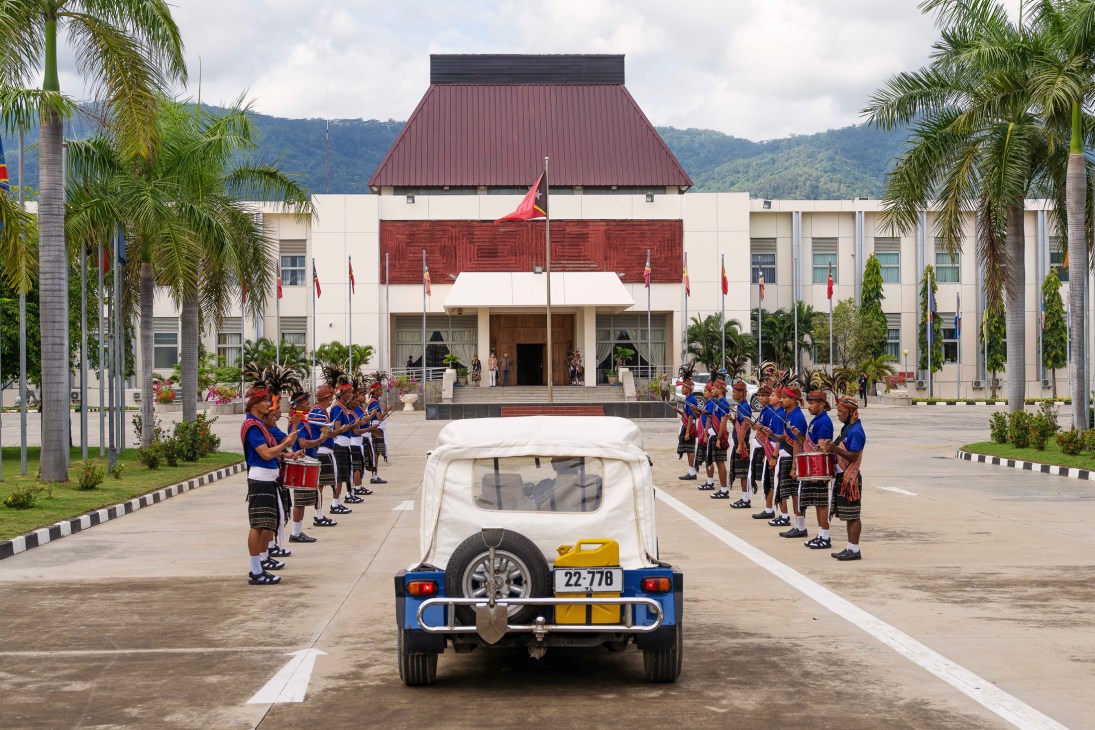
José Ramos-Horta, president of Timor-Leste, doesn’t behave like a leader who has narrowly survived an assassination attempt. The Nobel Peace Prize laureate buzzes around the capital city of Dili in a bright blue Mini Moke, a lightweight British utility vehicle with a convertible canvas top and no windows or doors. On his daily commute to the Nicolau Lobato Presidential Palace, his security detail trails him in a grey Mitsubishi as he weaves through traffic – motorbikes, yellow taxis, 4x4s, rainbow-hued microlets (minibuses) – and leans out to signal a turn or wave at an excited child.
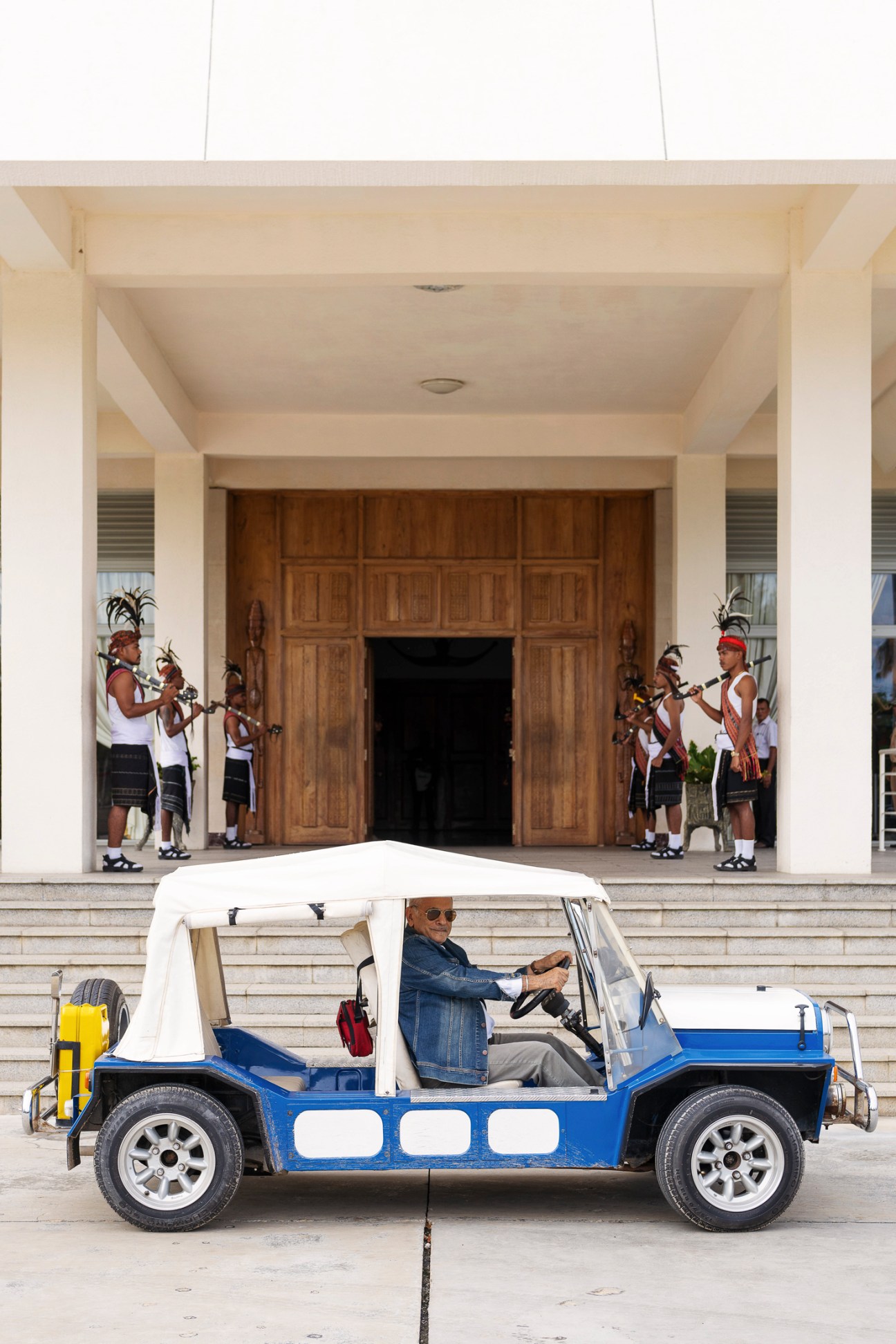
“Some of my staff didn’t understand my thinking,” says Ramos-Horta as he drives. “They had this view that the president is very solemn. I have a different concept of power. Leaders have to be accessible to the people and portray an image that the country is safe. I drive my own car and I go places. I go to a restaurant. I go to a café. I go out in the evening to have a drink somewhere with friends.” A frequent refrain, yelled in the direction of the Moke as it trundles down the street, is “Bomdia, avo!” – “Good morning, grandpa!” in Tetun, the local language. Ramos-Horta says the “avo” caught on about five years ago. The 73-year-old grumbles good-naturedly to Monocle about the nickname, then shouts back: “Bomdia!”
Timor-Leste, a small nation occupying one half of the Southeast Asian island of Timor, is one of the region’s most vibrant democracies, with high voter participation, a committed free press and, at least since Ramos-Horta was shot in 2008, a relatively peaceful political climate. The majority-Catholic country has a petroleum-reliant economy and a youthful population of 1.4 million. Its governing institutions are also young, having emerged just two decades ago from the ashes of Indonesia’s brutal 24-year occupation, which followed a declaration of independence from Portugal in 1975. Ramos-Horta spent the occupation in exile, lobbying for independence. His 1996 Nobel Peace Prize, jointly received with Timorese bishop Carlos Filipe Ximenes Belo, led to a resurgence of global attention for Timor-Leste and helped bring about Ramos-Horta’s lifelong goal in 2002: the establishment of his homeland as a sovereign nation.
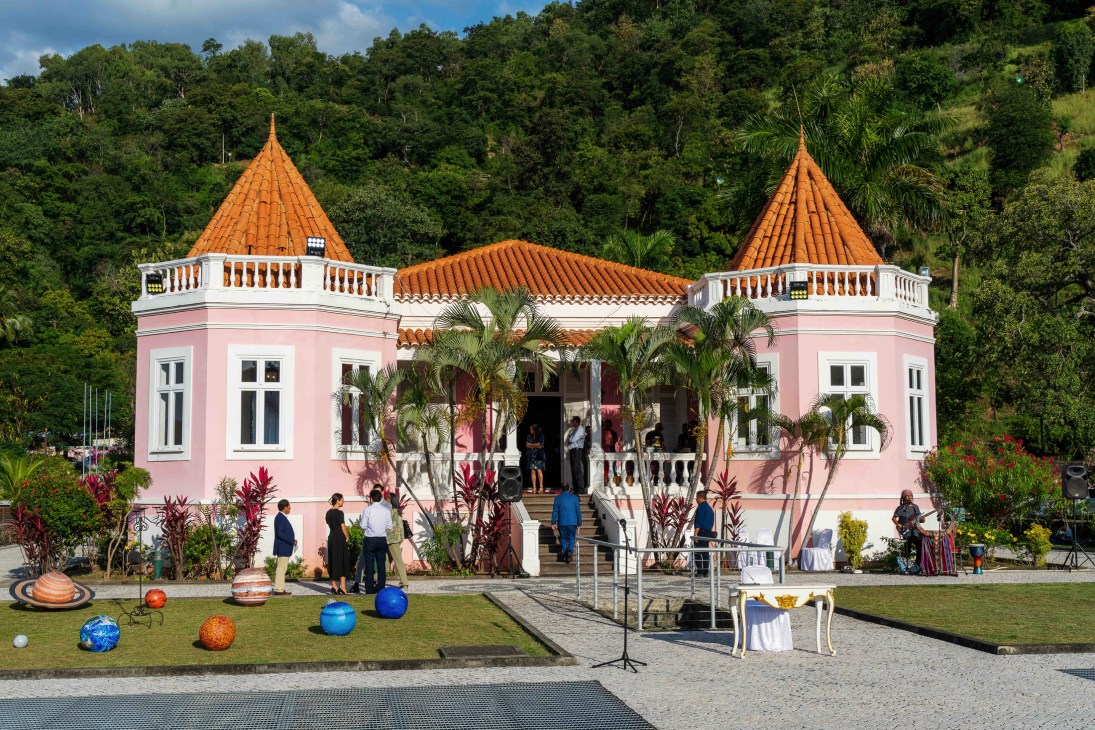
The president noses the Moke, which he bought secondhand in Australia and fixed up himself, past a line of guards in feather headdresses who bang drums on his arrival. After being elected in April 2022 with 62 per cent of the vote, he decided that the gates of the presidential palace would stay open all week. A few neighbourhood children are splashing around in the small pool outside the main building; others race across the grass and holler greetings at the president as he parks his car. This is Ramos-Horta’s second term. It was during his first, in 2008, that he was gravely injured in a failed coup. Now, as head of state once more, he is focused on reducing poverty, strengthening ties with the world’s major economies and securing a place for Timor-Leste in international organisations such as the World Trade Organization (WTO) and the Association of South East Asian Nations (Asean). The National Congress for Timorese Reconstruction (CNRT) backed Ramos-Horta in 2022; its victory in parliamentary elections this May placed resistance hero Xanana Gusmão in office as prime minister. Control of both branches of government should mean more stability, less deadlock and a jumpstart on developing untapped gas fields in the Timor Sea.
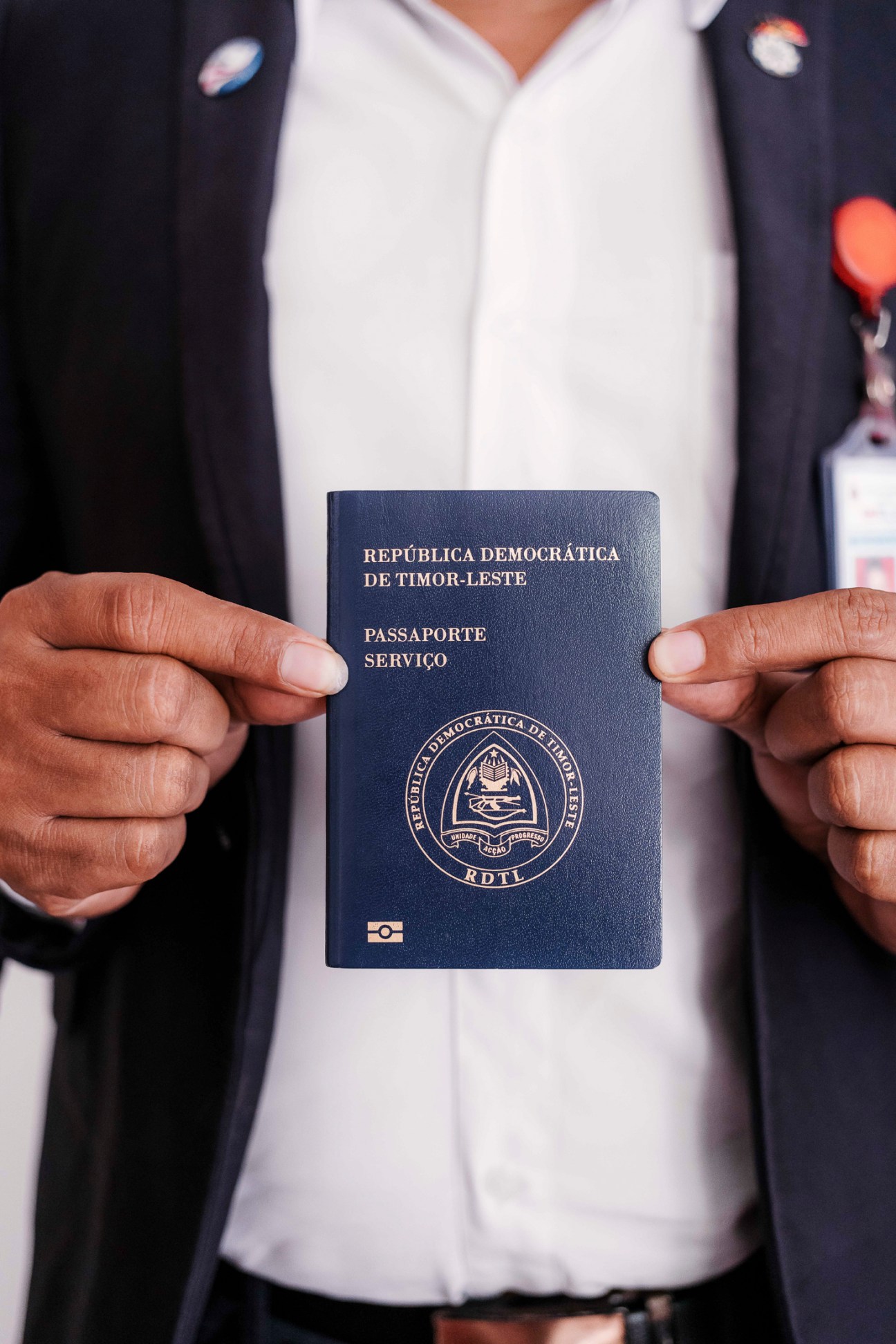
Asean membership will confer economic integration and educational opportunities for Timor-Leste, which has a GDP that’s about a fifth of the bloc’s current smallest economy, Laos. In late 2022, Asean granted Timor-Leste admission in principle, meaning that it will attend meetings as an observer before gaining full membership. In a symbolic twist, Indonesia, Timor-Leste’s erstwhile invader and now staunch ally, is this year’s chair. Timor-Leste’s democratic bona fides will make it an important new voice in Asean as the regional bloc grapples with the ongoing crisis in Myanmar and manages relations with the US and China at a time when the superpower rivalry threatens to sweep countries across Asia into its dragnet.
Ramos-Horta’s many years as an exiled diplomat, pacing the halls of the UN headquarters in New York and travelling the world to win support for Timor-Leste, mean that he has met almost every world leader of the past 50 years. Despite the idealism at the core of his life’s mission – a David and Goliath struggle for independence and freedom – he is often labelled a pragmatist, in particular when it comes to China. He welcomes Chinese support and investment, while many of Timor-Leste’s Western allies – the US, namely, but also Australia and parts of Europe – are experiencing a deterioration of relations with Beijing. A few minutes’ drive from the usaid office in Dili is a football field with signs that read “China Aid For Shared Future”. “We can handle the regional rivalries,” says Ramos-Horta. He is sceptical of the idea that China’s ambitions threaten the global order. “The Chinese know that peace, stability and prosperity in China depend on the prosperity of the region and the world. China developed thanks to the US and European economies. So the idea that China wants to dominate the world – well, no country nowadays can dominate the world.”
Ramos-Horta makes it clear that a good relationship is not an endorsement of a political system. “I don’t equate the US with China,” he says. “We are a democracy and a very active democracy. We very strongly adhere to human rights. So when I say we try to be neutral, yes, we don’t want to take sides in a conflict but we have more shared principles and shared values with our immediate neighbours in Australia and Indonesia, and with Europe and the US.” At the Asean summit in the Indonesian fishing town of Labuan Bajo in May, Timor-Leste made its debut appearance and Asean leaders released a road map laying out the financial and legal obligations that the country must fulfil before becoming a fully fledged member. Ramos-Horta once said that joining Asean was “harder than getting into heaven”. He first sought membership for Timor-Leste in 1974; now the process is finally under way.
“It’s very important for our regional trade and for investments,” he says. “We would no longer be a small country of 1.4 million people; we would become a market of 700 million people with a joint GDP of $3trn [€2.7trn]. It’s great visibility and it will push Timor-Leste to develop.” It is also an important political symbol in a region where being in Asean is almost synonymous with being Southeast Asian. Timor-Leste officially applied for membership in 2011 but the application languished for a decade. Countries including Singapore raised doubts about Timor-Leste’s readiness, such as whether it had enough English speakers (Asean’s official language) to send to meetings. Ramos-Horta is sanguine about the delay. “Today we are far better prepared,” he says. “There are so many meetings, more than 1,000 a year, on every issue we can imagine, from agriculture to zoos. Anything.” The biggest challenge, he adds, is “to be constructive, effective and not to disappoint our Asean colleagues. For the Singaporeans, everything is numbers. It’s not that they don’t care but they’re very strict and they didn’t think that Timor-Leste could handle the pressures of being a member. But we Timorese work better under pressure.”
Also on the horizon after years of uncertainty is the potential development of the Greater Sunrise gas fields in the Timor Sea, which could net billions of dollars. The project has been held up by disputes between the Australian and Timorese joint venture partners over where to pipe the gas. Ramos-Horta is hoping to reach an agreement this year about connecting the pipeline to Timor-Leste, rather than Australia, which would allow construction and commercial operations to follow in the next decade. Australia is Timor-Leste’s nearest neighbour after Indonesia and one of its most important bilateral relationships. The country is home to a large population of overseas Timorese, and Darwin was a base for the resistance-in-exile during the occupation. Australia led a pre-independence military stabilisation force and maintains a large aid presence and a defence co-operation programme.
In September 2022, Ramos-Horta travelled to Canberra to sign a new defence pact for increased military co-operation. “The relationship has been through ups and downs, there’s no doubt about that, particularly in relation to the Timor Sea oil and gas agreements,” says James Batley, who headed Australia’s mission in Dili between 1999 and 2002 and served as its first ambassador to Timor-Leste. Nevertheless, he says, the bilateral relationship is important to both sides. “We have a very strong stake in Timor-Leste, in its viability as an independent country. It’s one of our closest neighbours. Australian governments want to see Timor-Leste succeed.”
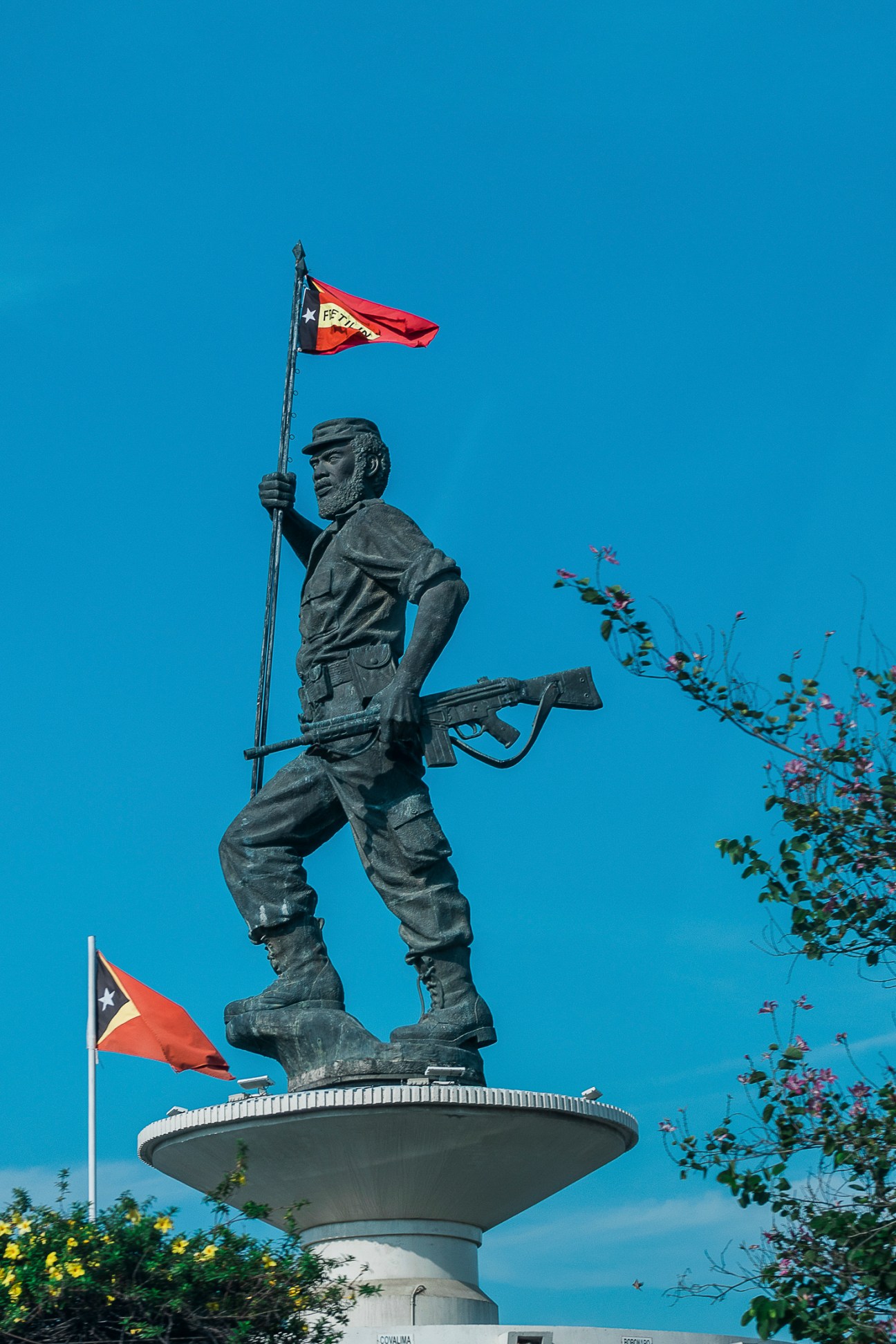
Timor-Leste is a small nation whose fate, until 21 years ago, was dictated by the whims of much larger ones. For half a millennium it was a Portuguese possession, 15,000 sq km of land in the middle of the Dutch East Indies where Dominican friars and Iberian sandalwood traders came to spread the word of God and make a bit of money. In 1974 the Carnation Revolution foisted democratic rule onto Portugal and its overseas empire unravelled. Portugal’s African colonies declared independence and in 1975 so did Timor-Leste, led by an early iteration of Fretilin, the pro-independence movement of which Ramos-Horta was a founding member. Cold War paranoia and concerns that an independent Timor-Leste would inspire domestic secessionists prompted Indonesia, under military dictator Suharto, to invade in 1975. It was the start of a long, bloody occupation. About a quarter of the population died in bombings, executions and enforced starvation; most of Fretilin’s leadership was tracked down and killed. Ramos-Horta left three days before the invasion to plead his country’s case to the UN. He was 25 years old, the youngest person to ever address the Security Council. He would not step foot on Timor again until 1999.
Suharto’s downfall in 1998 paved the way for a long-awaited 1999 referendum offering Timor-Leste “special autonomy” within Indonesia. Almost every eligible voter cast a ballot and nearly 80 per cent opted for full independence. In response, Indonesian soldiers and pro-integration militias razed Dili and other towns, massacring and forcibly displacing civilians. An international peacekeeping unit intervened and Timor-Leste was governed by the UN until 2002. “There were no cars, nothing,” long-time Timorese civil servant Vicky Tchong recalls over a cappuccino and a cigarette in Cantina Matak, an outdoor café behind the presidential palace that serves free meals to schoolchildren. Tchong helped to establish Timor-Leste’s foreign ministry under Ramos-Horta and later served as ambassador to China. She remembers bumping into two Portuguese journalists in Dili in 1999. “They had left a satellite phone, which was still functioning,” she says. “It was the only phone we could use to communicate with abroad.”
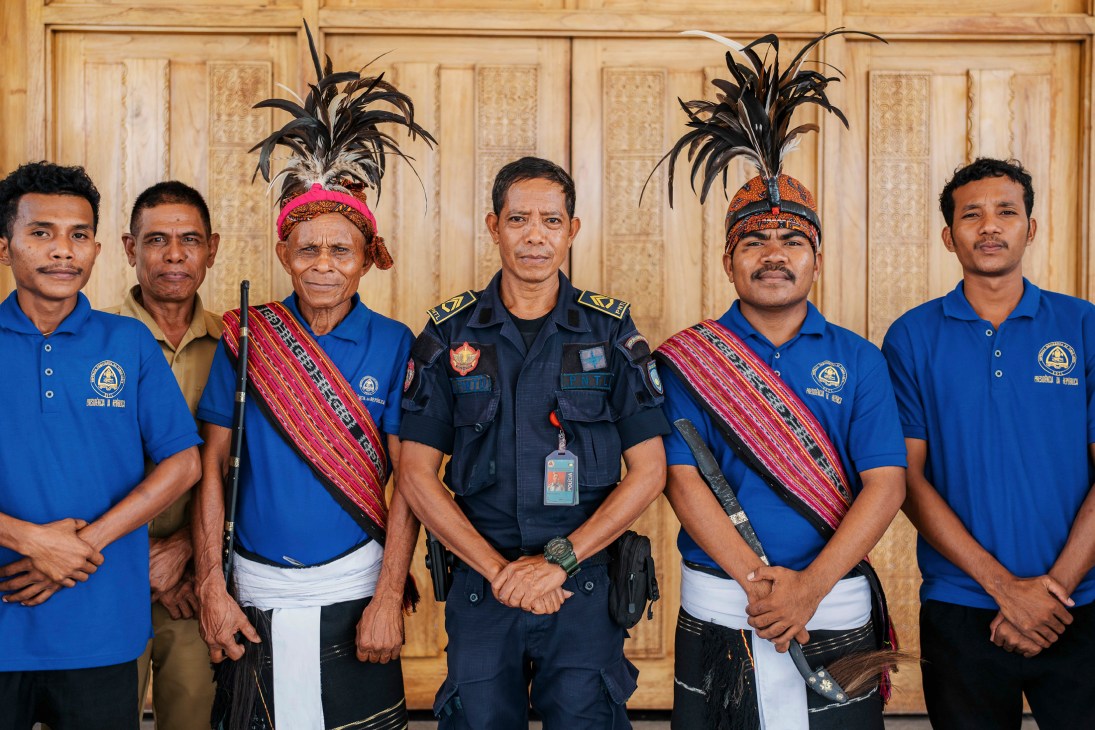
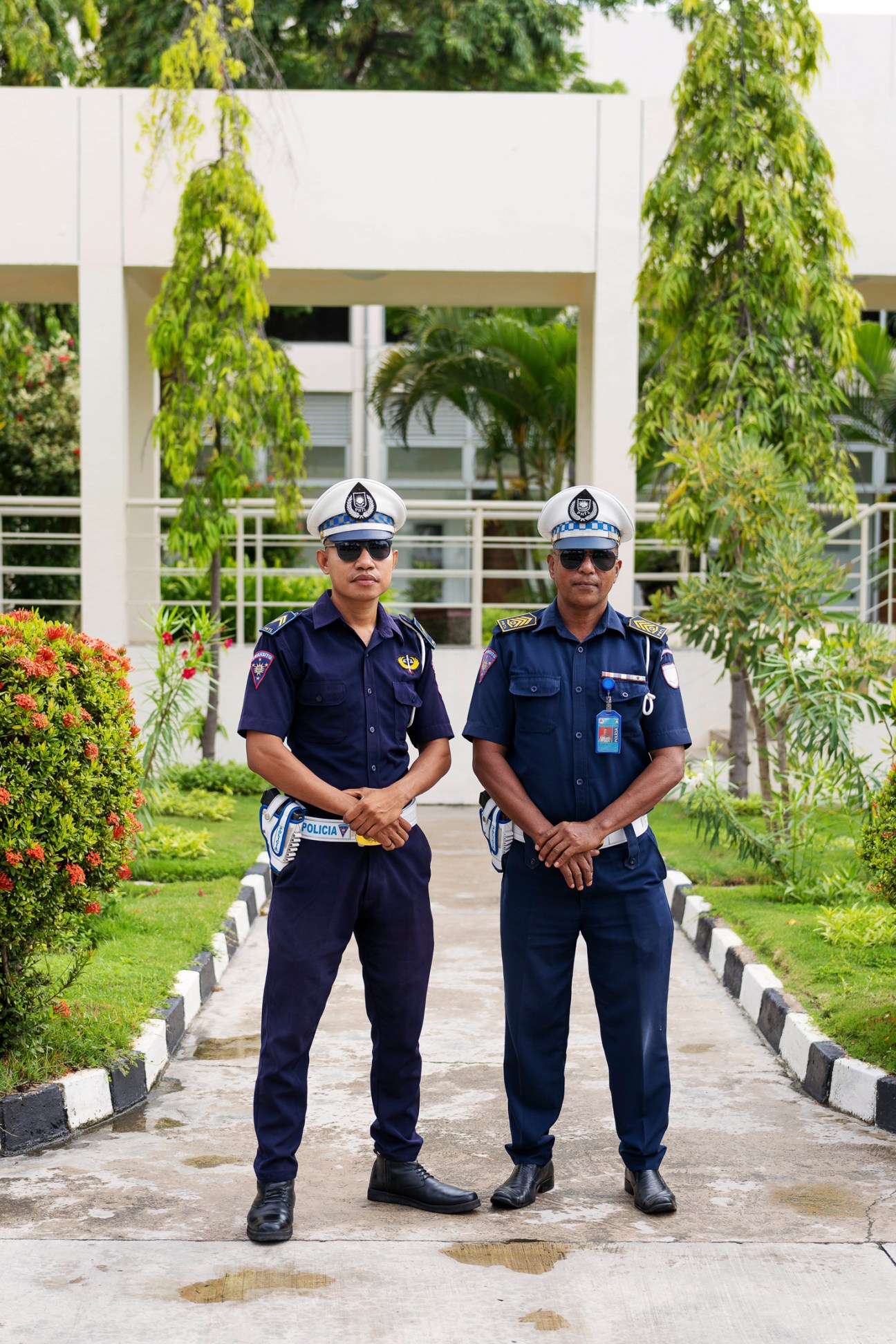
The majority of the buildings in Dili were burned to the ground, including churches and homes. Vital infrastructure – electricity, water, telephone lines – was demolished too. “A great deal of the fabric of the city was destroyed,” says Batley. Today the Timorese capital is peaceful. On a sunny afternoon by the harbour, high-school students huddle in giggling groups under the shade of a banyan tree; a silver-haired coconut seller slices fruit for thirsty pedestrians; fishing boats and ferries stream across the sea. Timor-Leste is the only country in Southeast Asia with a “free” rating from US think-tank Freedom House and it is ranked 10th in the world on the Reporters Without Borders press-freedom index. About 40 per cent of parliamentary seats are held by women and the constitution prohibits the death penalty and life imprisonment. “It’s a real success story that Timor-Leste can tell: the fact that it has held democratic rule and that different leaders from very militaristic backgrounds have respected [election] results,” says Claire Smith, a senior lecturer at the University of York who researches democratisation in Southeast Asia. “It’s a testimony to their respect for the democratic process, which you don’t see in many post-conflict countries around the region.”
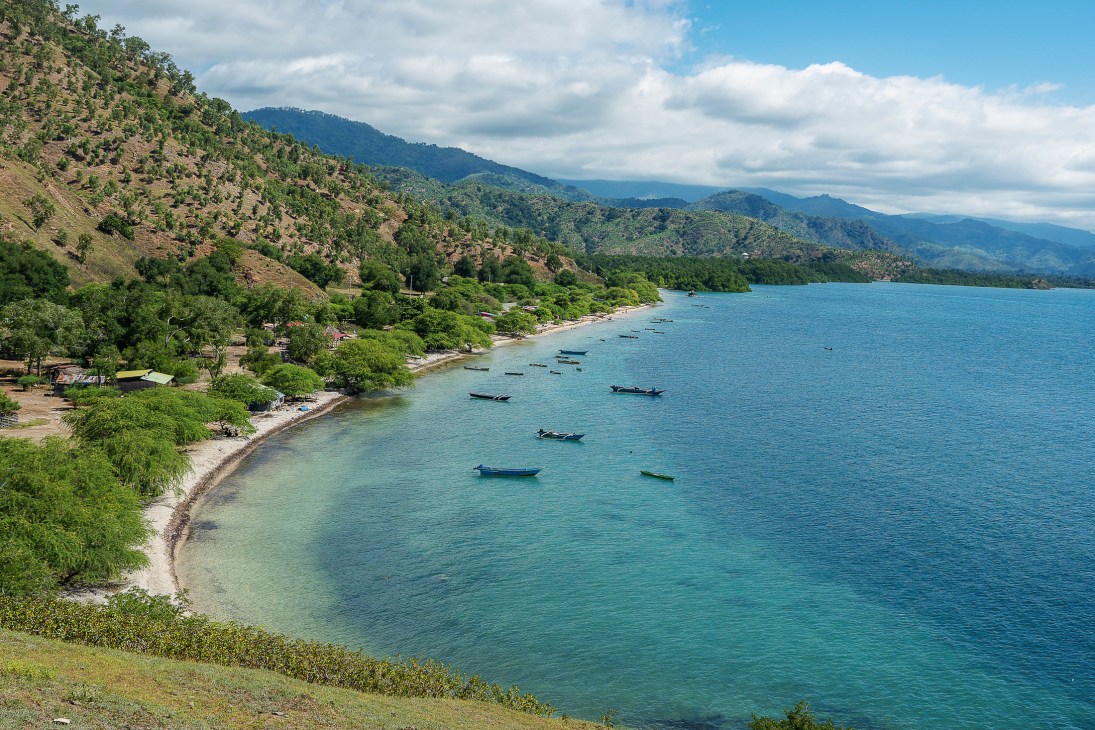
Eastward on the coastal road from the harbour, the city abruptly becomes countryside. On the left are the turquoise waters of the Wetar Strait and the island of Ataúro shimmering in the distance; its pristine beaches and abundant marine life, including some of the world’s most biodiverse coral reefs, have made it a prime attraction for divers. Back on the mainland, there are plans to expand the airport runway, and a Hilton will open in 2024. It will be Timor-Leste’s first international hotel. Last year Singaporean developers announced a 550-hectare resort complex west of Dili; the $700m (€625m) project is the largest foreign investment in the country to date.
The road winds up lush green hills where villages nestle between spindly palms and banana trees, and goats scamper up cliffsides. In the distance, under a dollop of rain clouds, are the mountains where resistance fighters hid and fought for a quarter of a century. Now the slopes are blanketed with plantations of coffee, the country’s most important export after oil and gas. Further inland are other markers of change: a gated compound emblazoned with the logos of PowerChina and Sinohydro, two Chinese state-owned construction and engineering companies; a Heineken factory with billboards that proclaim “#1 Multi-Beverage Factory in Timor-Leste”; a swathe of rehabilitated mangrove forest, replanted to restore damaged ecosystems.
Development is afoot but old challenges persist. Timor-Leste’s labour force participation rate is much lower than regional peers, with many people still mired in subsistence agriculture. “Our poverty rate is still the highest in the region,” says Guteriano Neves, a Dili-based policy analyst. He advocates for better-focused spending on education, infrastructure and agriculture, and improved policies for private investment and land use. Neves is optimistic about the younger generation’s “risk-takers” launching small businesses. He gestures around the seaside café in which he is sitting with Monocle, where foreign embassy staff and young Timorese office workers chat over lattes and banana bread. “So many coffee places and restaurants in Dili right now come from the youth,” says Neves. They are politically engaged as well. “Us Timorese, we have a strong sense of ownership of the government. We have a responsibility towards this country.”
Timor-Leste normalised relations with Indonesia almost immediately after independence and declined to pursue war crimes claims in an international tribunal. Instead of shunning Indonesia, it is deepening ties with new investment treaties and pledges to increase economic activity in the border region. “They could have simply turned their back and forever forgotten about Timor-Leste,” says Ramos-Horta. “No, they turned around and extended a hand of friendship.” He is speaking from his house on Robert F Kennedy Boulevard, where chickens and goats wander the driveway and a deer snoozes underneath a car. (The road was unmarked when he moved in, so he named it after a political idol.) On the breakfast table are copies of foreign magazines; the polyglot statesman also keeps up with Timorese newspapers and reads Le Monde and some Brazilian dailies. On the shelves, Che Guevara’s memoirs abut Lee Kuan Yew’s; there are books on Ottoman history, China’s economy and US foreign policy, as well as a Spanish edition of Plato’s Republic and a Jean-Paul Sartre play in French. “Very hard to understand,” says Ramos-Horta, muttering.
He is wary of how historical feuds can imperil nation-building, impair diplomacy and corrode relationships. He credits Gusmão’s immediate insistence, which he supported, on forgiveness and reconciliation, even in the face of atrocity. Twenty-one years after independence, almost every family has a direct relative who died during the occupation. Ramos-Horta himself lost four siblings. “Human beings are human beings,” he says. “You don’t forget the past, whatever it is, particularly when it’s tragic. No one is talking about legislating or decreeing reconciliation. It comes from the heart and mind of individuals.” In this regard, as in many others, Ramos-Horta is leading by example.
Pushing the boundary
Ulaanbaatar’s Chinggis Khaan International Airport gleams in a lunar landscape that’s bare but for a few bands of roaming animals. On the drive into town, Monocle’s fixer and translator, Batbileg “Babi” Sukhbaatar, cheerfully informs us that the highway connecting Mongolia’s capital to its new airport – both opened in 2021 and built with Japanese money – is the first in the country on which it is illegal to ride a horse. We barely see another soul, hoofed or otherwise, until we hit the city and the traffic.
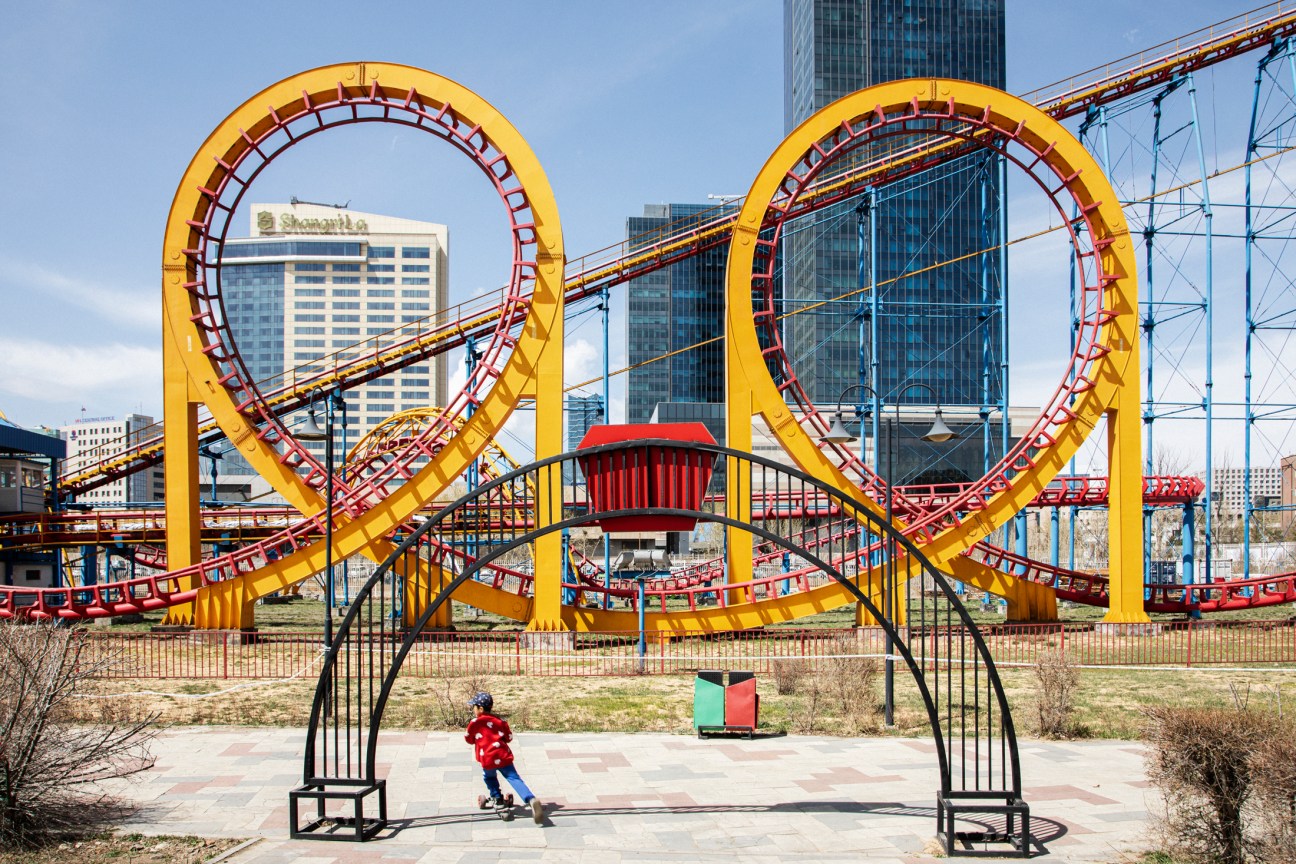
At 07.00 on a Sunday, Ulaanbaatar, the capital of the second-least densely populated country on Earth (after Greenland), is in gridlock. It is a cliché to describe somewhere as a land of contrasts. But despite Mongolia having fewer people per square kilometre than almost anywhere else, its capital, where over half of the population lives, is badly overcrowded, with almost comically awful traffic. Though it has a proud culture of nomadism and a religion, Shamanism, devoted to the worship of nature, Ulaanbaatar is the world’s most polluted capital, while nearly 100 per cent of Mongolia’s exports come from the extraction of abundant natural resources (mostly coal, lithium and copper). And while it is a young country – more than 65 per cent of the population is under 35 – this vast mineral wealth is concentrated in the hands of an aged oligarchy.
That said, a few of these same problems might be viewed, in economic terms at least, as consequences of success. Mongolia is rapidly urbanising because the economy is growing: its gdp per capita recently surpassed $5,000 (€4,500). Its modern rulers have been canny, leveraging Mongolia’s resources to attract money from its neighbours while selling itself to Western nations as a democracy in need of support in a part of the world not famed for such things – a tactic known as the “Third Neighbour” policy.
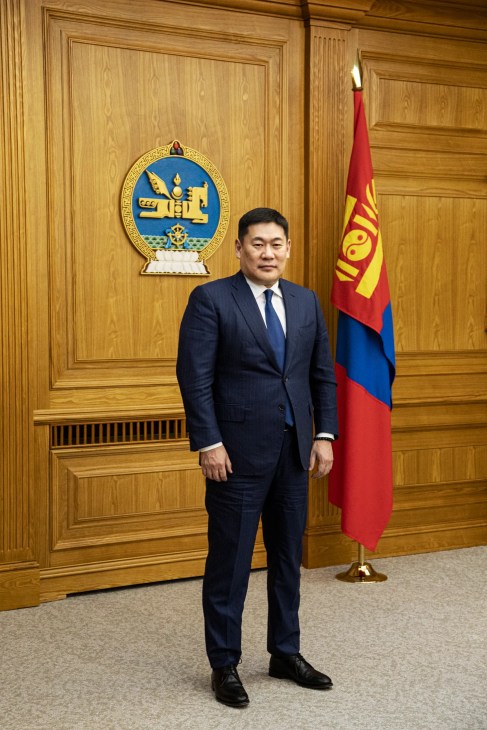
Indeed, with the immediate neighbours that Mongolia possesses, its leaders need to be canny. As Luvsannamsrai Oyun-Erdene, the country’s 16th prime minister since it transitioned from a communist dictatorship to a parliamentary democracy in 1990, puts it, “Mongolia has great peculiarities as it is located between China and Russia – 95 per cent of our exports go to China and we are 100 per cent reliant on Russia for our energy.” It’s a tricky position to be in and one that has been made more difficult through Russia’s invasion of Ukraine and China’s increasingly confrontational foreign policy. So far, Mongolia has managed to navigate these choppy geopolitical waters but as the fallout from Western sanctions drifts across its northern border, its economic dependency on Russia is beginning to sting.
Moscow’s ejection from international payment systems has made it difficult for Ulaanbaatar to pay for its energy, while Mongolia’s treasury has missed out on “navigation fees” from airlines now banned from Russian airspace. Monocle’s journey to the country demonstrates the complicated nature of this new dispensation. Waiting to take off in Istanbul, the plane’s simulated route map shows a northeasterly trajectory directly over the Crimean Peninsula. “That can’t be right… can it?” we ask the man sitting next to us. It wasn’t, thankfully. But by journey’s end, the jagged nine-hour-long green line on the screen served as testament both to the circuitous nature of our route and the very literal way the rest of the world has found around the Ukraine conflict. It’s a circumnavigation that Mongolia does not have the luxury of.
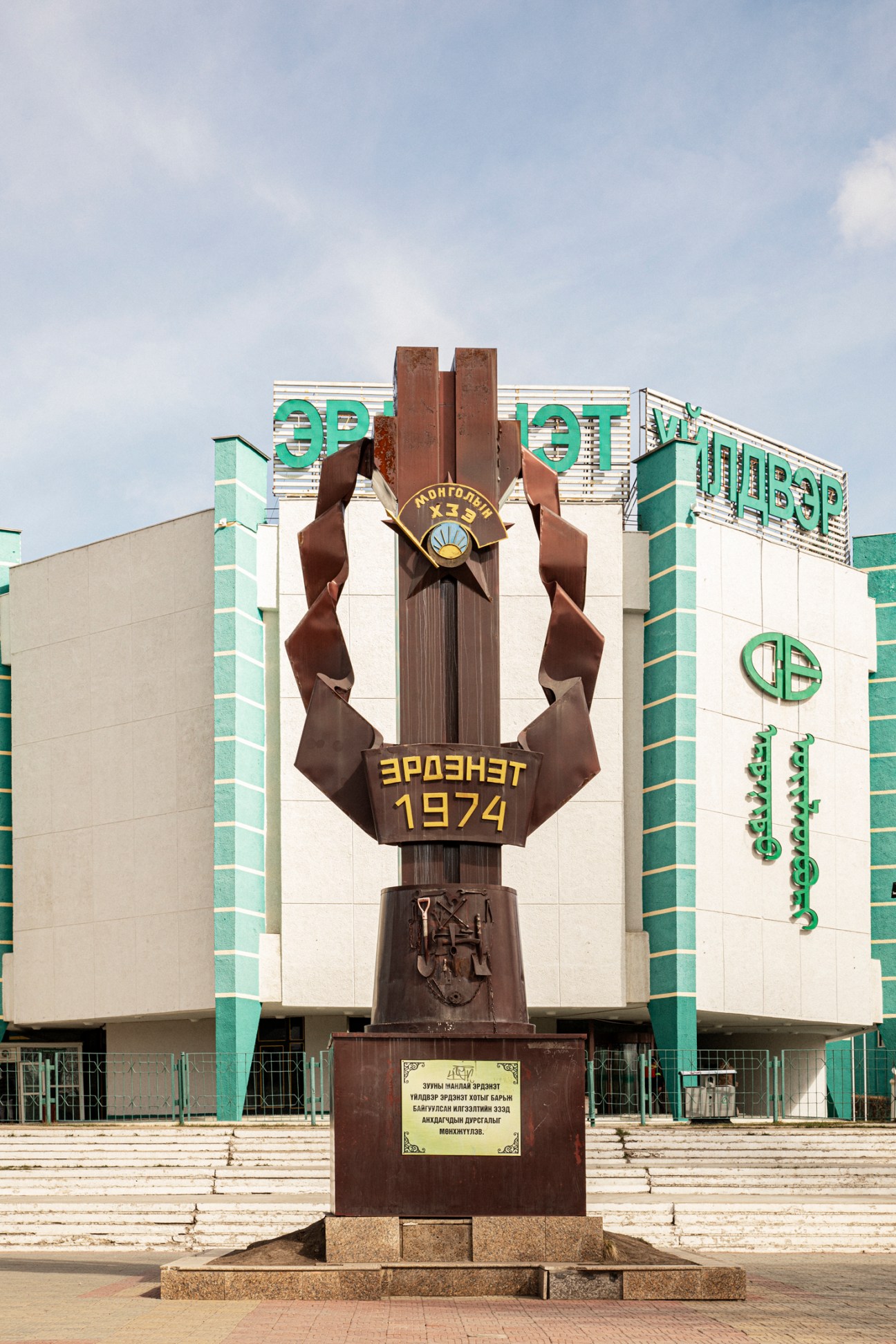
On top of the economic repercussions of the war, which included inflation of nearly 20 per cent last year and a consequent 20 per cent drop in the value of the Mongolian togrog, thousands of men, mostly from the Russian republics of Buryat and Tuva that border Mongolia, have fled south to avoid conscription. “Maybe 12,000 Russian men have come here since the war began,” says Yury Kruchkin, a Russian journalist based in Ulaanbaatar. We meet Kruchkin, a leading figure in Ulaanbaatar’s Russian community, in the wood-panelled bar of the Bayangol Hotel, a shabby socialist-era tower that was for a long time Mongolia’s only hotel. He came to the country in the 1980s to work as an engineer at the massive Erdenet copper mine, the source of 90 per cent of Mongolia’s wealth during socialism. His co-workers included Oleksandr Zelensky, a computer scientist and father of the current Ukrainian president, who brought his young family to live in Mongolia for four years.
“I organised a Mongolian language club and Zelensky’s father visited every week,” says Kruchkin wistfully. “He was smart, a pioneer of Mongolian computation.” Like Kruchkin, Zelensky was one of thousands of Soviet citizens who came to work in Mongolia, a satellite state that was never officially part of the Soviet Union. Both were members of a diaspora that left a legacy viewed mostly favourably today due to its contribution to the country’s culture and economy. But this legacy is being tested by Vladimir Putin’s war in Ukraine.
Kruchkin describes Ulaanbaatar’s Russians as “divided” over the invasion and, though by no means a dissident himself, he has published a new Russian-Mongolian dictionary to assist those fleeing the fight. Part of the reason why the language barrier is fairly easily surmountable is because Mongolia adopted the Cyrillic alphabet in
1941 after encouragement from Moscow. This, combined with the fact that Buryat and Tuvan Russians share a historical cultural affinity with their Mongolian neighbours, has made the country an attractive destination. Still, after much toing and froing, three Buryat men due to meet Monocle pull out at the last minute citing some vague uncertainty. Are Russians in Mongolia scared of being deported? “Not really,” says Kruchkin. “They usually stay for a month and then go to Thailand or Vietnam.” It seems unlikely that shadowy fsb agents are keeping tabs on their countrymen in Ulaanbaatar. “Mongolia is very open,” says Kruchkin. “Right or wrong – anything goes.” His casual response betrays an astonishing truth: of all the former socialist Central Asian states, Mongolia is the only one that has managed to transition to genuine democracy.
The health of this democracy is apparent in Monocle’s meeting with the prime minister, which is moved several times to accommodate late-night parliamentary debates on constitutional reforms. But it is perhaps most colourfully demonstrated by Mongolia’s rumbustious media culture. The country has a constellation of private news networks vying for its citizens’ eyeballs. And though the state-run Mongolian National Broadcaster initially echoed Moscow’s description of the Ukraine war as a “special military operation”, debates for and against the invasion play out nightly among the country’s coiffed pundits. Their ambivalence is matched by the population at large. Partly this is due to geography. Despite their shared socialist past, Kyiv feels (and is) a long way from Ulaanbaatar. But it’s also due to the largely positive way that Russia is viewed for having hauled Mongolia up from near-feudalism to become an industrialised urban society in the 20th century. And in the 21st century, Russia’s cordial relations with Mongolia could be regarded as one of Putin’s few foreign-policy successes.
In November 2000 the new Russian president became the first of his country’s leaders to visit Mongolia since Leonid Brezhnev in 1974. Three years later, Putin agreed to write off 98 per cent of Mongolia’s Soviet-era debt (about €10.4bn). Then in November 2010 he wrote off another 98 per cent, this time of post-Soviet debt. Coupled with a new visa-free regime, which led to a revival of tourism and trade between the two neighbours, these actions greatly bolstered Russia’s standing in Mongolia. Putin’s charm offensive paid off in September 2019, when he and Mongolia’s then-president, Khaltmaagiin Battulga, signed a treaty that officially upgraded the two countries’ relationship to a “permanent comprehensive strategic partnership”, which included a pledge not to participate in “blocs or military-political alliances” or “any actions or support of such actions” against the other. When he put pen to paper, Battulga probably wasn’t expecting the treaty to be so searchingly tested so soon. Does this document forbid Mongolia from condemning Russia over Ukraine?
“We have expressed our position at the UN that as long as this war goes on it is negatively affecting the whole world,” Oyun-Erdene tells Monocle, without hiding his amusement at the mention of Battulga’s name. The former president is an eccentric mogul and judo obsessive whose close ties with Putin were part of a plan to cultivate a strongman image at home. Battulga’s rise and fall is further proof of Mongolia’s frenetic political system, in which leaders are lucky if they serve their full terms without being wrestled to the mat by an adversary.
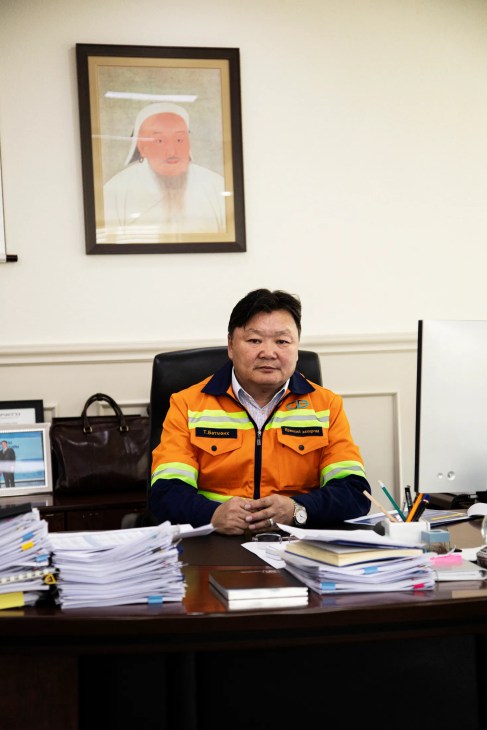
Oyun-Erdene, who has a postgraduate diploma from Harvard, is a more sober figure, focused less on flaunting his physical prowess and more on developing his country’s economy. He has written a manifesto entitled Vision 2050, which aims to make Mongolia a developed economy by the middle of the century. “In 2023, our growth is projected to be 7.9 per cent and our GDP per capita has just reached $5,000 [€4,500],” he says proudly. “If you look at the Asian Tigers – Singapore, South Korea, Taiwan – once they reached $10,000 [€9,000] per capita their social problems became more solvable.” Oyun-Erdene has some pressing social problems to deal with too. Rapidly urbanising Mongolia is suffering several urban maladies in extremis.
Take a lift a few storeys above the traffic-choked streets of Ulaanbaatar and you will see that the hills surrounding the city are dotted with tens of thousands of brightly coloured shacks and white tarpaulin-clad yurts. These are the ger districts, the slums named for the yurts that are a symbol of the country’s identity as well as the challenge of raising the prosperity and quality of life for much of the population.
Almost every Mongolian owns a ger (which translates as “home”), whose easy construction and portability are essential to the country’s traditional nomadic way of life. When rural dwellers, often nomads themselves, move to Ulaanbaatar, they bring their families and their gers, pitching up in the hills looking for a better, more sedentary life. These districts, which have swelled to hold more than half of the city’s population, have no sewage system or electricity – every ger contains a coal-burning stove at its centre. For most of Ulaanbaatar’s long, bitterly cold winters, the world’s coldest capital is subsumed in thick black smog.
In one district, monocle meets Chimgee, who lives in a ger with three generations of her family. Its blank exterior gives no clue of the profuse colour – hand-drawn posters, family portraits, piles of toys – within. Like many of her neighbours, Chimgee suffers from chronic bronchitis, a fate she is keen for her grandchildren to avoid. Sometimes the pollution is so bad that she forbids them from going outside. It’s almost summer but Chimgee still gets through at least two bags of coal a week. “All the politicians talk about reducing pollution but nothing ever changes,” she says.
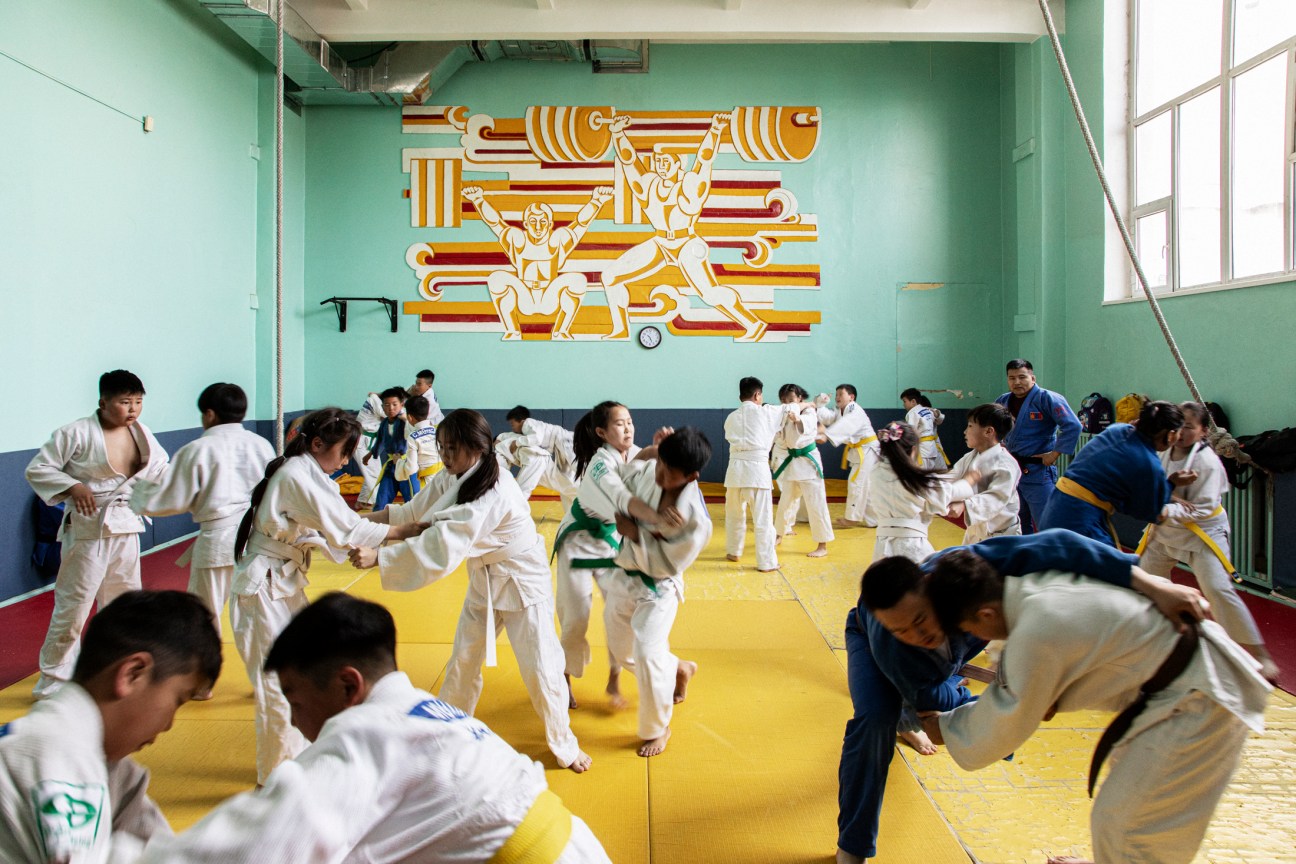
Chimgee is well aware that, along with every one of her fellow ger district dwellers, she is contributing to the pollution problem. But she also knows that Mongolia is a vastly unequal society with a resource-extracting oligarchical elite who get richer while their poorer compatriots choke. Like the pot of salty milk tea that Chimgee has primed for guests, the latter group’s anger occasionally boils over. This was the case in December 2022, when thousands of Mongolians descended on the government palace to protest the theft of billions of dollars of state-owned coal by corrupt officials. Hordes of mostly young people poured into the city’s main Sükhbaatar Square, where they camped out for weeks in temperatures that plumbed minus 30c. A nervous government eventually announced several high-profile suspects (including former president Battulga), at which point the crowd dissolved almost as quickly as it had materialised.
Oyun-Erdene claims that constitutional reform, which will increase the number of MPs in the State Great Khural (Mongolia’s parliament) from 76 to 126, is designed to combat corruption by loosening the grip on the legislature of a small number of party grandees. Some have disputed whether creating more parliamentarians able to be corrupted is the best way to prevent corruption but the prime minister also has a less controversial plan for ensuring that Mongolia’s mineral wealth is shared among its people. “We are in the process of creating a national wealth fund,” he says. “Thirty-three per cent of revenue [from natural resources] will be given to development in three areas: education, health and housing.” Much will depend on whether Oyun-Erdene, himself a scion of the elite, can establish this fund. If not, it’s doubtful his government would survive another bout of unrest such as last winter’s.
For now the prime minister talks up potential solutions to his people’s plight: a metro system or ring road to alleviate Ulaanbaatar’s traffic problem, while diversifying away from burning coal to ameliorate pollution. Despite a push to increase tourism and attract more international film productions to the country, these plans are all dependent on resource extraction that involves, among other unsavoury things, closer ties with Russia.
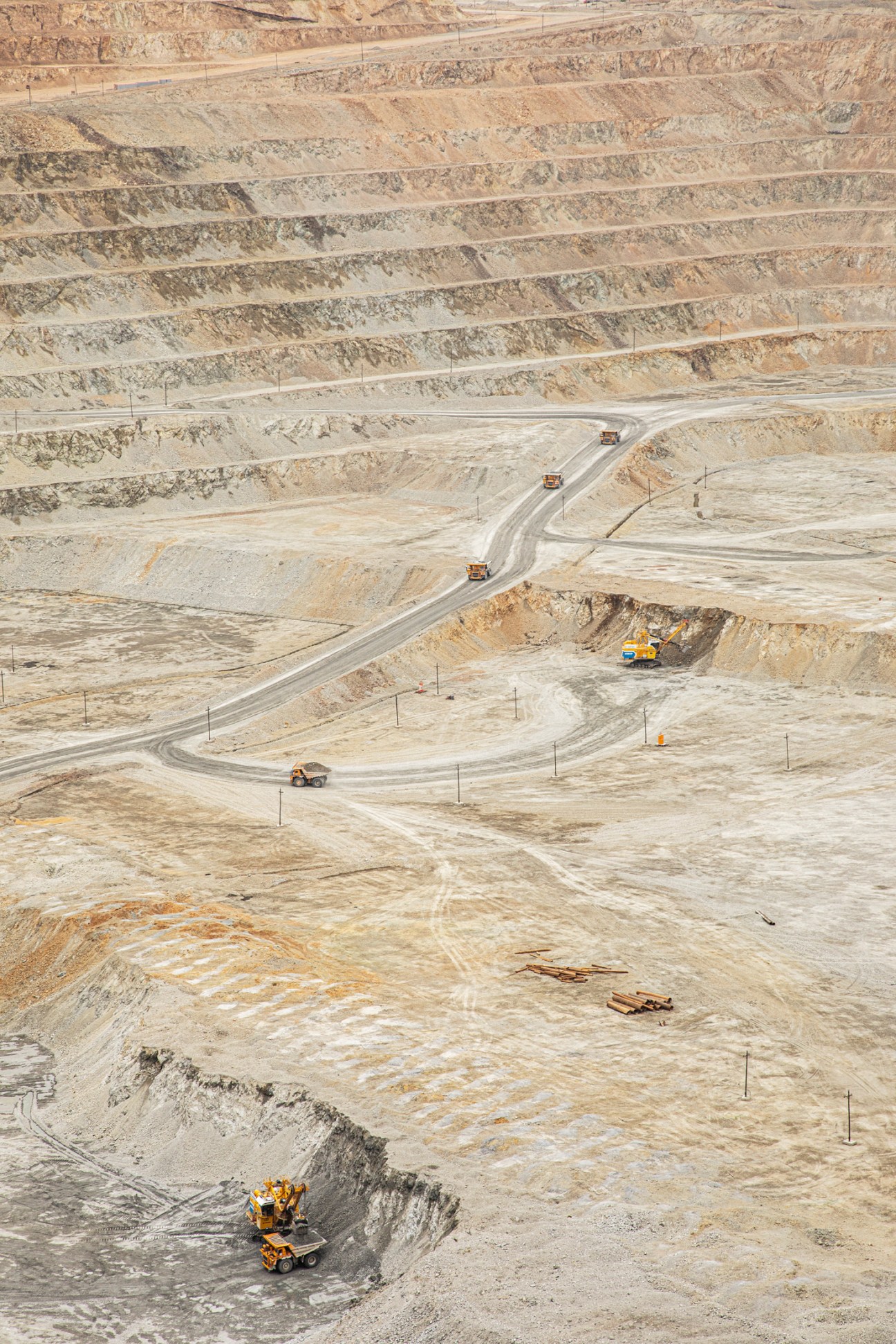
Last September, in the Siberian city of Vladivostok, Oyun-Erdene and Putin agreed in principle to the construction of a gas pipeline connecting Russia and China through Mongolia. The Power of Siberia 2 (pos2) pipeline would enrich Ulaanbaatar’s coffers by an estimated $1bn (€890m) a year in transit fees and attract thousands of construction and maintenance jobs. Ready access to natural gas could also help to reduce pollution. But critics have argued that the pipeline would leave the country more vulnerable to pressure from its neighbours. Indeed, Ukraine’s status as a transit country for Russian gas to western Europe was often used by Moscow to punish Kyiv.
Undesirable? The prime minister disagrees. “Mongolia has a goal to be a transit country and a corridor between Europe and Asia,” he says. “This pipeline has been part of intense talks since before the situation between Russia and Ukraine.”
Oyun-Erdene refuses to concede that pos2 might make his country vulnerable to coercion. Perhaps he can’t afford to. At the moment, Mongolia is happy to play East and West off against one another, even taking advantage of a deterioration in relations between Australia and China to become the latter’s sole supplier of coal. This tactic has served the country well in the past but is now high-risk as the world potentially splits into factions. Sinophobia has always been used by politicians here during elections but with Beijing stoking tensions in the Taiwan Strait, many Mongolians believe that an expansionist China could have designs on them too. “Mongolians think that after Taiwan, they are next,” says monocle fixer Sukhbaatar. But when asked about Taiwan, Oyun-Erdene is less equivocal than over Ukraine. “Mongolia follows the UN Charter, which says that Taiwan is part of China,” he says. “And Mongolia doesn’t comment on the domestic affairs of other countries.”
It’s a sensitive subject and, as in its relationship with Russia, Beijing holds all the cards. Since the full-scale invasion of Ukraine, the importance of China as a buyer of Russian oil and gas has vastly increased. But despite Putin’s desire to sign off on pos2, Beijing is holding up the deal to extract more favourable terms. During a visit to Moscow in March, Chinese premier Xi Jinping refused to discuss the project, even cutting his trip short to avoid it. It’s difficult to imagine Mongolia being the beneficiary of more protracted negotiations over the pipeline.
If the Sino-Russian alliance were to become one half of a new world rift, Mongolia would be even more isolated than before. Oyun-Erdene believes what he describes as a “new Cold War” must be avoided at all costs. “It will go on longer than the first one,” he says. Instead of beefing up their militaries and forming new alliances (such as the Aukus pact between Australia, the UK and the US), developed countries should use the money to help poorer ones, he says. “We should have a mechanism in the UN to control defence spending. People don’t want more weapons and there’s a feeling that leaders are not the great statesmen they were before.” It’s unclear to whom he is referring but Oyun-Erdene sees the Ukraine conflict as a neighbourly spat that has gotten out of hand. “I have compared the situation in Ukraine to a family divorce; should the child follow the father or the mother?” Is the US the mother and Russia the father? He smiles. “The irony is the kid usually follows the mother.”
Unlike Ukraine, Mongolia isn’t desperate to split from its overbearing relatives. In fact, to survive in its modern guise, the country is hoping for reconciliation on a global scale. After all, the next divorce could be even messier.
The decline of nomadic life
Mongolian culture venerates the country’s land and the livestock that sustains its people’s meat- and milk-heavy diet. Until the fall of communism, it is likely that most of the population still lived traditional nomadic lifestyles, raising livestock and moving with the seasons. But in recent years, due to a combination of economic and climatic factors, hundreds of thousands of nomadic families have moved to Ulaanbaatar’s ger districts, the capital’s crowded and polluted slums. As well as exacerbating social problems, this massive internal migration is threatening a way of life that is intrinsic to one of the world’s few remaining nomadic countries.
Mongolia is experiencing the dire consequences of rising global temperatures. Since 1940, the average temperature has risen by more than 2c, leading to a marked increase in the number of extreme summers and winters. During the former, unusually dry weather means that the grass that livestock graze on doesn’t grow, while extreme winters (when temperatures can drop below minus 40c) kill even the most fatted calves. Between 1999 and 2010, extreme weather led to the deaths of more than 20 million livestock and slums in Ulaanbaatar swelled, more than doubling its population.
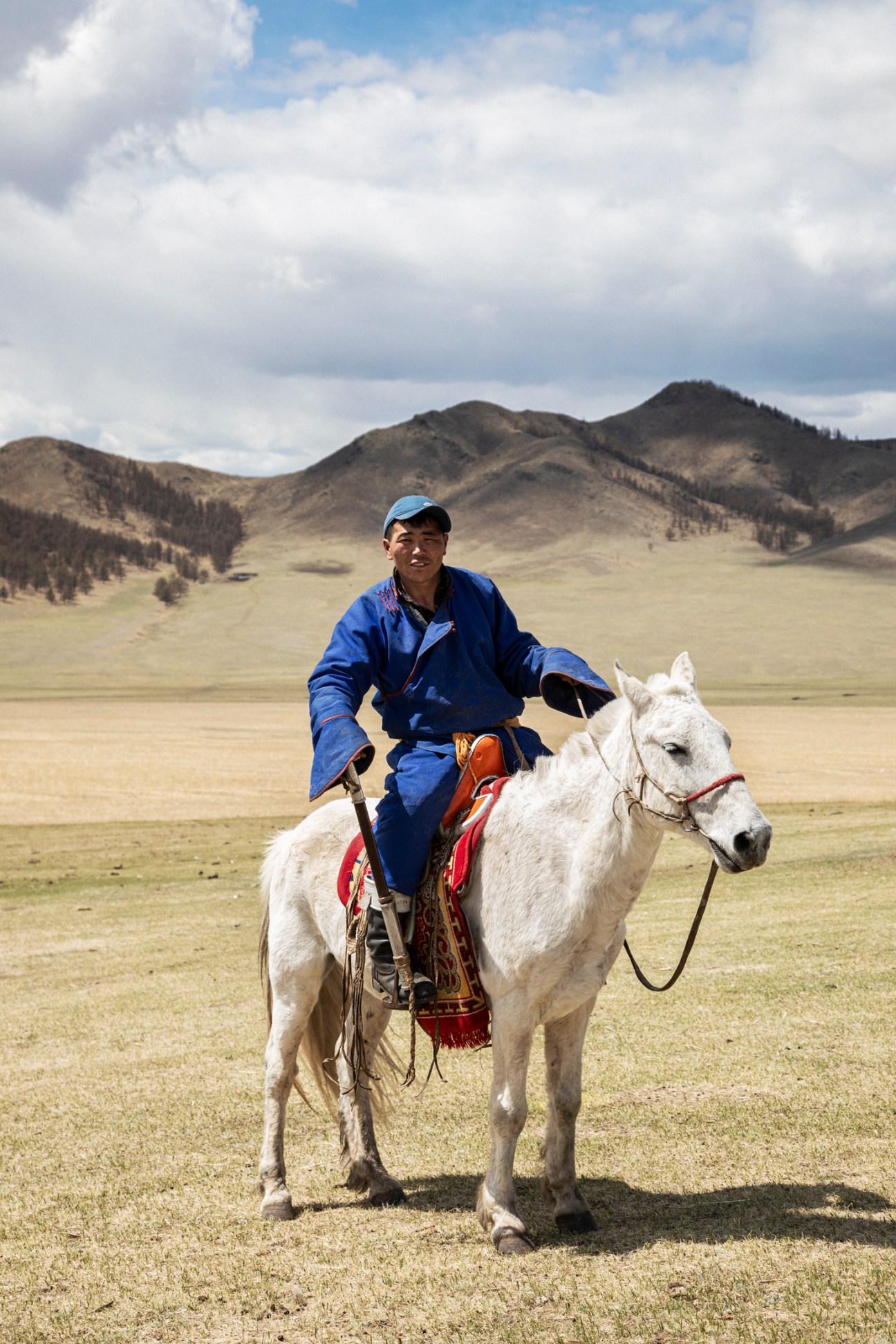
Outside Erdenet, monocle meets Lkhagvaa, a nomadic herder who lives with his wife, Bolortuya, two daughters and their goats, horses and sheep. Their ger, a wedding gift, is decorated with the totems of nomadism: embroidered portraits of Chinggis Khan – the famous Mongol warlord and nomad – and others featuring the five Mongol “jewel animals”: horse, goat, sheep, camel and yak. Lkhagvaa (pictured) had to move from the east of the country to be nearer to the markets that bought his animals for their wool and meat. To get here he travelled for 30 days on horseback, leading some 100 goats and sheep. It’s certainly a tough life but when asked whether he will follow many of his fellow herders in moving to Ulaanbaatar, he smiles and says: “Why, so I can live in squalor surviving from loan to loan?”
Wings for hire
Unpredictable weather makes travelling between Denmark’s remote islands by sea difficult. But local airliner Copenhagen Air Taxi has been providing Danes with a solution for decades. Regularly operating a fleet of two Britten-Norman b-2 Islanders that can carry up to nine passengers on each journey, the family-run business seamlessly connects Copenhagen with the popular holiday destinations of Anholt and Laesø, normally a multi-hour train and ferry ride away. “When you fly with us, you can show up 15 minutes before departure and get to the islands in less than an hour,” says the airline’s CEO Jimmy Arly Larsen from his office at Roskilde Airport, which is a short drive from the capital. “It’s that simple.”
A love for aviation runs deep in his family’s blood. Larsen’s photographer grandfather rented a small aircraft to take aerial shots of Copenhagen and started chartering flights in 1961. Not long after, friends and acquaintances wanted to follow in his footsteps. “They came to him to learn how to fly,” Larsen tells Monocle.
Today, as well as operating its fleet, the airline runs one of the country’s most prestigious flight schools. Larsen and his team believe that their emphasis on high-quality and in-person education is what sets them apart from other institutions. “Many courses today take in lots of applicants, which makes it harder to have one-to-one sessions,” he says. At Copenhagen Air Taxi, training is always hands on and classes are small; the airline even gives new pilots a chance to join the team right after graduation. “No other school in Europe currently offers this,” adds Larsen.
This model – and the constant flow of new talent it provides – has enabled Copenhagen Air Taxi to keep expanding both at home and abroad. After recording a surge in demand for domestic travel during the first years of the pandemic, the company introduced commercial Boeing 737s to its fleet, which operate charter flights to Greece – a first for the business. “Things are going well,” says Larsen. “All there’s left to do now is spread the word.”
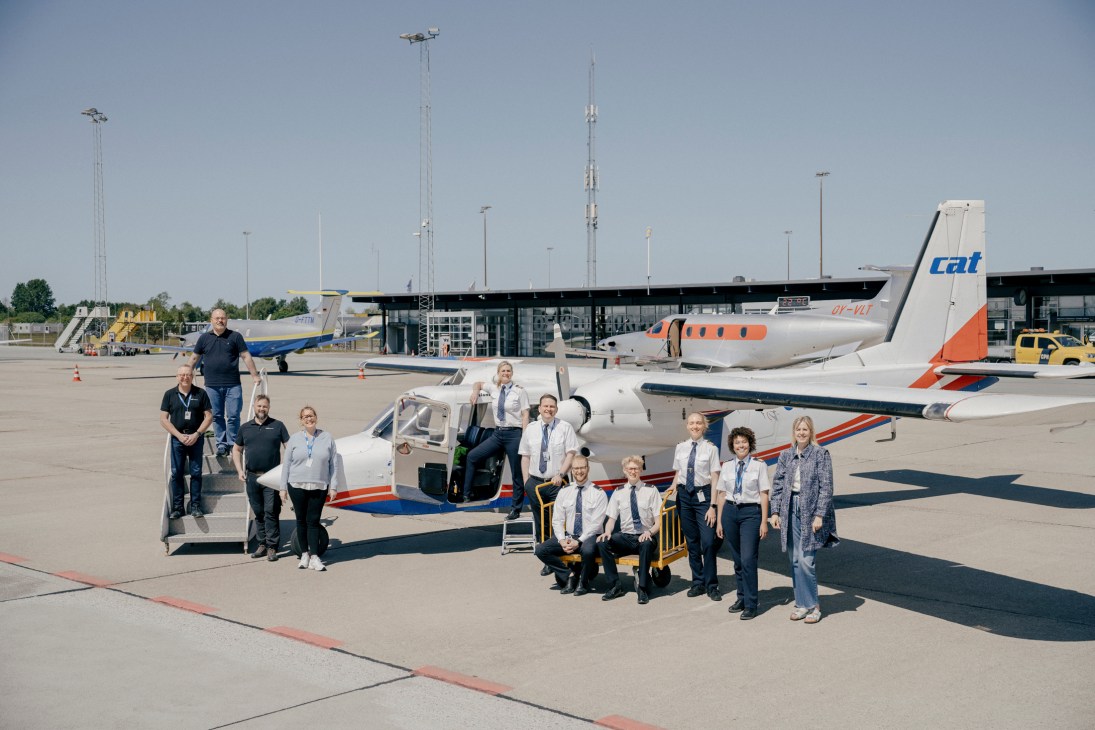
Jimmy Arly Larsen
CEO of Copenhagen Air Taxi
Larsen, who joined the family business 24 years ago, recently took over his father’s role. A trained pilot himself, he is now in charge of everything from leading the airline’s business strategy to flying scheduled services – both to nearby Danish islands and overseas. “That’s the beauty of joining a small business like ours,” he says. “You get to do everything.”
1.
Eric Lon Huber
Deputy for our technical manager
“Maintains our fleet.”
2.
Jesper Terp
Director flight OPS
“He’s is in charge of our commercial flights. Jesper is also captain and examiner on the Boeing 737.”
3.
Rune Tau Christensen
Logistics Manager
“He takes care of buying spare parts for our fleet.”
4.
Dorte Nicolaisen
Operations manager
“She oversees daily operations and scheduling.”
5.
Jeanni Kimmer Nilsson
Chief flight instructor
“Larsen’s sister. Part of the third generation of Copenhagen Air Taxi. Jeanni works as a pilot and instructor and flies 737s.”
6.
Christian Winberg Mortensen
Student pilot
“Started in May 2022 and will qualify as a commercial pilot in May 2024.”
7.
Jeppe Schack Vikkelsø
Student pilot
“He joined the school last August and will qualify as a commercial pilot next year.”
8.
Cassandra Petersen
Pilot
“She also flies our scheduled flights to Anholt and Laesø.”
9.
Lise Chedu Hansen
Pilot and flight instructor
“She flies to the islands of Anholt and Laesø and is also a first officer on our Boeing 737.”
10.
Dorthe Lyngholm Larsen
CFO
“Apart from overseeing finances, she’s also Jimmy’s wife.”
Jimmy Arly Larsen
CEO of Copenhagen Air Taxi
Larsen, who joined the family business 24 years ago, recently took over his father’s role. A trained pilot himself, he is now in charge of everything from leading the airline’s business
strategy to flying scheduled services – both to nearby Danish islands and overseas. “That’s the beauty of joining a small business like ours,” he says. “You get to do everything.”
The view from Ada Limón: Freeing verse
Ada Limón, the US poet laureate, still remembers the first poem that she fell in love with. “It was Elizabeth Bishop’s ‘One Art’,” she says. “I had seen it in a test when I was 15. About the same time, I started working in a bookshop in Sonoma, California, where I was born and raised.” There, Limón would browse the shelves and discover other poets: Lucille Clifton, Pablo Neruda, Sharon Olds, Philip Levine. She often thinks back to reading Bishop at school and wonders what it was that first drew her in.
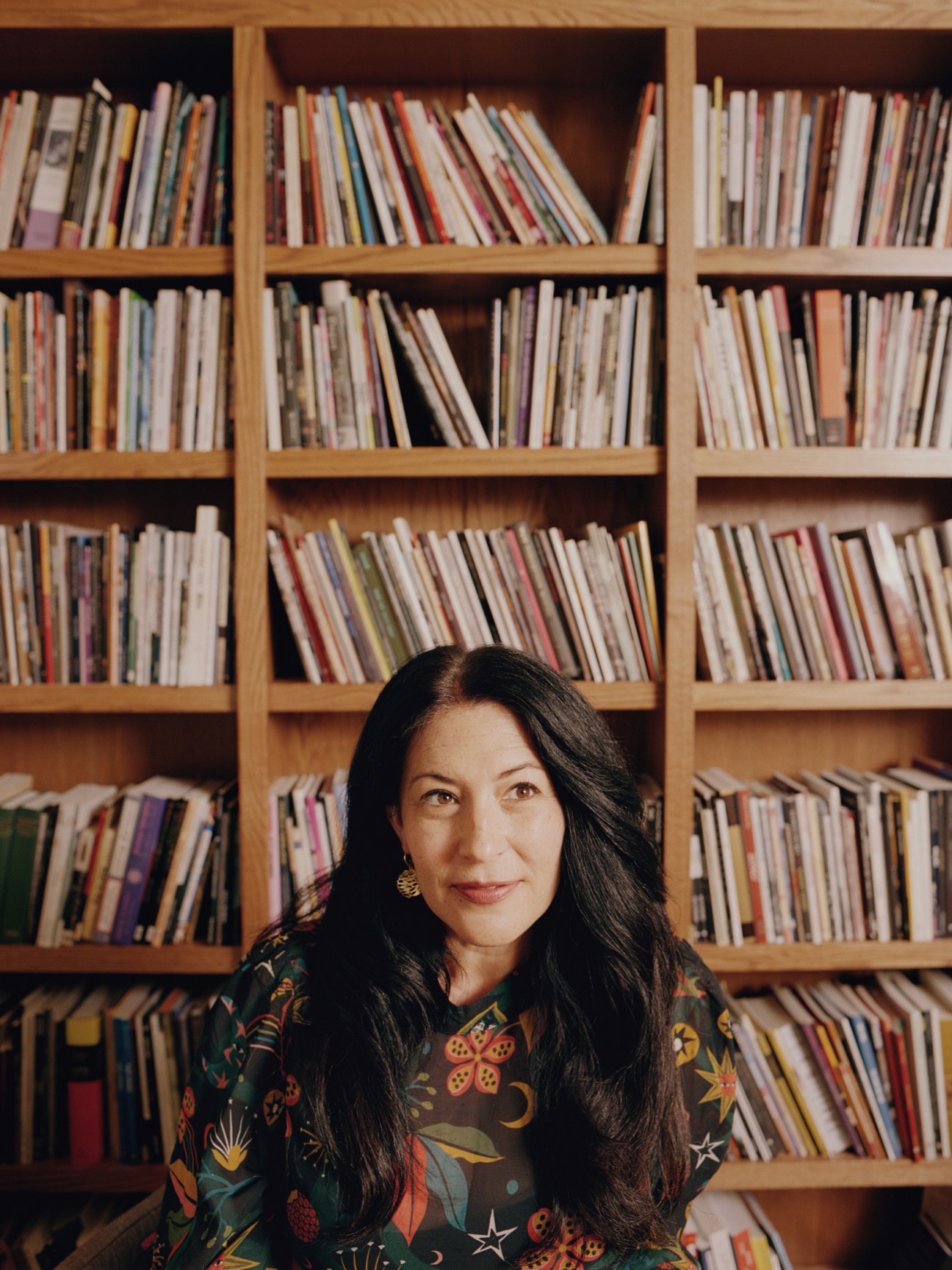
Bishop’s “One Art” explores the “art of losing”: the things that we misplace (keys, watches, hours badly spent) and how we come to accept their absence. It’s a topic that Limón, whose poetry often tackles grief, is familiar with, though she is more preoccupied with the business of keeping. “One of my biggest fears has always been that the world is passing me by and I haven’t been paying attention,” she says. So, in her poetry, Limón makes a point of noting small, everyday details: rain clouds gathering, groundhogs, her dog eating a sugar snap pea. And since publishing her first collection, Lucky Wreck, in 2006, she has found that other people enjoy thinking about these things too.
Over the years, Limón’s commitment to chronicling the seemingly mundane has garnered her legions of readers and several prizes, including the National Book Critics Circle Award for Poetry and the prestigious Guggenheim fellowship. Named the 24th US poet laureate in 2022, she was appointed to an unprecedented second two-year term in April.
Limón, who believes in poetry’s capacity to heal and bring people and communities together, has always endeavoured to make it more accessible. In her second term as poet laureate, she hopes that she can continue to make that happen. “We have this gap where we think of poetry as either something that we teach children, that can rhyme and be beautiful, or as something that’s really dark and depressing,” she says. “There’s nothing in between. But I’m interested in showing people what it feels like to find the full range of human emotion in poetry: there are poems that can hold rage, poems that can hold fear and uncertainty, and poems that can hold hope. All of those things can be true.”
To encourage people to engage with the form, Limón struck up a partnership with the US National Park Service and the Poetry Society of America earlier this year to present poems – as well as writing prompts to inspire new poetry – in several green spaces across the country. “It’s not just about reading a poem in nature but about making your own poem,” she says. “How many times are we sitting somewhere but remembering past wounds or a weird conversation with a friend – or just having a hard time being present?” It’s easy to be in a beautiful place and not pay attention, says Limón. “But if you can actually take a moment and look at your surroundings, it becomes a way of saying, ‘I’m here!’”
Learning how to be present is a lesson that Limón has learned the hard way. “Like many of us, I spend a lot of time with my own fears and anxieties,” she says. “But if I can notice the maple tree outside – if I can notice the variegated dogwood, the crepe myrtle and how it’s growing, what it needs – it takes me out of myself and out of my own mind,” she says. “That’s really useful in reminding me that I’m part of something.”
The CV
1976: Born in Sonoma, California.
2001: Receives a master’s from New York University, where she was taught by Sharon Olds and Philip Levine.
2006: Publishes her first book, Lucky Wreck.
2018: Her fifth collection, The Carrying, wins the National Book Critics Circle Award for Poetry.
2022: Appointed as the 24th US poet laureate.
2023: Reappointed as poet laureate for a two-year term.
2023: Nasa plans to send one of her poems into space.
The wool pack
It is a hot day on the rocky outskirts of Granada when shepherding instructor Covadonga Miralles opens the doors to a barn where some 150 sheep are running in circles. Talking over their bleating proves challenging and getting her students’ full attention is nearly impossible. But Miralles doesn’t mind. This is not exactly a regular classroom, after all.

Today’s lesson is part of a 540-hour training course at the Andalusian Shepherds School, where students come to learn a combination of practical and theoretical skills. As the number of young people willing to stay in their small communities and take over their family businesses in rural Spain continues to decrease – a trend that is just about wiping some places off the map – these sessions will start to play an increasingly bigger role in determining what the area’s future will look like. After all, imparting knowledge of the art of shepherding to a new generation encourages people to fight this phenomenon and so safeguard Spain’s disappearing rural economy.
“Rural depopulation even affects the environment,” says director Francisco de Asis Ruiz Morales, motioning towards the sun-bleached fields of grass that we pass on the drive up the Sierra Nevada leading to Miralles’s ranch. “Think about when a fire breaks out in a rural, empty area. For generations past, a shepherd would be able to spot it and then call the firefighters.
Founded in 2010, the project – which receives 90 per cent of its funding from the EU and another 10 per cent from the regional government of Andalusia – has trained more than 150 shepherds since it started, 30 per cent of whom are women. That total number will no doubt increase in the future: in 2018, demand for the course was triple the number of places available.


Most students are from Andalusia and already have shepherding experience. In fact, many have parents who are shepherds and most will inherit their land. But there are practical benefits to formal education. For one, proof of course completion often facilitates access to EU funding when graduates begin running their own ranches.
Unlike the rest of the group, Marisa Vergara is not from Andalusia. “I’m originally from Menorca and first learned how to work with animals – horses, in particular – with my grandfather,” she says. “Then I worked on a cattle ranch and a goat ranch, where we made cheese. But shepherding culture in Menorca is very limited because it’s such an isolated place.” So she made the decision to leave the island and learn the trade here.

When Vergara’s partner got a job in Granada, she enrolled at the school. Looking back, she made the right decision. “This course has taught me a system that is very different to the one I knew before,” she says. “When I started working with goats, I used to be an autodidact of sorts: I learned everything myself. Here they give you a theoretical base. Of course, you still learn things by yourself but you have that grounding going into the future.”
While every student takes something different from the course, there is a shared understanding within the group that life as a shepherd is not easy. Walking with a flock of sheep or goats through the hills for hours on end can be lonely. And unsociable hours often take a toll on shepherds’ wellbeing. Even so, the lifestyle can feel liberating. “We dedicate a lot of time to this,” says Miralles, pulling her cap down to shield the bottom half of her face from the sun. “But I love the freedom it gives me; you don’t get that in any other job.”
The Opener
How to live: QOL conference
The list
Tyler Brûlé on what to expect at Monocle’s Munich jamboree: the Quality of Life Conference.
If you were among the first to the newsstand or letterbox to grab your September issue, then you might have the perfect window to secure one of the last seats at our Quality of Life Conference in Munich, which starts on 31 August. Here’s what you can expect:
1. A very warm Bavarian welcome at Schumann’s – a proper Munich classic.
2. An opportunity to mingle and meet delegates from around the world.
3. A world-class conference setting at Allianz’s global headquarters.
4. An outstanding panel of speakers discussing the importance of domestic and global security.
5. Our pick of top architects out to solve the most pressing urban problems.
6. Monocle editors dressed in Lederhosen and Dirndls. Feel free to join us!
7. The high point (if you’ll allow me): my conversation with Lufthansa Group CEO Carsten Spohr.
8. A proper road map on where mobility, in all its forms, is heading.
9. A host of unique makers and brands from the region for your shopping delight – all lined up by our team.
10. The best chefs and bartenders to look after you, right through to when we wrap at lunchtime on 2 September.
With more than 25 speakers and over 30 monocle crew on hand to keep things running smoothly, we look forward to welcoming you. Hannah Grundy can answer any questions at [email protected] and you can secure your seat for this event at conference.monocle.live. Tschüss!
Close encounters of the absurd kind
The tinfoil-hat lobby recently racked up a big win when former intelligence official David Grusch claimed that the US government has been covering up evidence of ufos for decades. Allegedly, military personnel have been retrieving and storing crashed spacecraft that, according to Grusch, they have attempted to reverse engineer in a secret arms race for alien weaponry. Other blockbuster revelations include a Second World War cover-up involving Pope Pius xii and a “malevolent” alien interest in nuclear sites. Grusch has also claimed that some of these extraterrestrial craft contained “dead [alien] pilots”, which, if true, would put a dark spin on the plot of ET.

Are these claims evidence of non-human intelligence, or human non-intelligence? Sceptics have pointed out that it is unlikely that advanced civilisations able to build the technology to propel themselves through space would all flub the landing. But it’s not entirely unbelievable that even superhuman technology might not be able to handle parallel parking.
Win some, lose some
The announcement of the wrong winner is often better remembered than the announcement of the right one: there is something grimly compelling about the astonished despair of the suddenly unfrocked, the bewildered joy of the rightfully anointed.
The startling mess made of the leadership election of Austria’s Social Democratic Party is a case in point. Having announced that its new leader was Burgenland governor Hans Peter Doskozil (pictured), the Social Democrats were compelled to announce 48 hours later that their new leader was in fact Traiskirchen mayor Andreas Babler. The muddle, it turns out, was due to a “technical error” in a spreadsheet.
Let’s hope that when news of the blunder reaches the US, it won’t furnish the likes of Donald Trump and other paranoid, delusional sore losers with another explanation for the otherwise inexplicable reluctance of majorities to elect them.
Better safe than sorry
We are nearly 150 years into the age of the automobile. And in that time, a broad consensus has developed on what cars should look like – the optimum number of wheels, the easiest means of access, the seating arrangements and so forth.
Every so often, however, someone attempts to struggle free from the constraints of conventional wisdom or common sense. This year has seen the release of, for example, Hyundai’s Ioniq 5, with wheels that turn 90 degrees to enable sideways manoeuvring, and bmw’s i Vision Dee concept car, the exterior colour scheme of which can be customised via e-ink film.

This year’s oddest design to date, however, is surely the Rezvani Vengeance (pictured), a surly suv seemingly aimed at Americans who are anticipating the apocalypse. It can be equipped with everything from bulletproof windows, smokescreens, gas masks, blinding lights, and electrified door handles to electro-magnetic pulse protection. Evidently the school run must continue even in the event of a nuclear attack.
Strange sommeliers
The differences in quality between many Michelin-starred restaurants are increasingly becoming imperceptible. But the advent of the so-called water sommelier might give some places an edge. Studying luxury bottles of water like oenophiles analyse fine wine, these experts are advising restaurants on how to source the best h2o.

And they are part of a bigger trend: in recent years, restaurateurs have been employing all kinds of sommeliers to help improve the quality of their products. Here’s a taste of the strangest ones.
1. Tea sommeliers
Steeped in the ancient practice of Chinese tea culture, these experts tend to prioritise artisanal, small-scale brewing processes.
2. Olive oil sommeliers
Droughts might be halting the cultivation of olive crops across the Mediterranean but this is only increasing the product’s appeal across the globe. Olive oil sommeliers identify impurities and advise their clients about flavoursome pairings.
3. Saké sommeliers
The consumption of rice wine in Japan has waned of late but international demand for saké is currently at an all-time high. Now sommeliers are helping non-Japanese saké lovers to pick their poison.
Esperanza Spalding
USA

US bassist, singer and songwriter Esperanza Spalding has no less than five Grammy awards under her belt. The most recent was for her eighth album, Songwrights Apothecary Lab, featuring work written and recorded in her travelling music laboratory in collaboration with different musicians, researchers and practitioners. This year Spalding released another captivating record, Alive at the Village Vanguard, alongside jazz pianist and composer Fred Hersch. Here, she tells us about her favourite bookshop, a market in Portland and the Brazilian musician Milton Nascimento.
Do you have coffee or tea in the morning?
Neither. I have dandy blend – a coffee substitute made from dandelions. I just like the flavour and I have it with oat milk and a little bit of maca powder.
What are you currently humming in the shower?
Lately I’ve been humming tunes by Milton Nascimento.
A favourite farmers’ market?
I love a market for artisans, cultivators and artists of colour in Portland called Come Thru Market.
Any book recommendations?
I’m reading Sylvia Wynter’s We Must Learn to Sit Down Together and Talk About a Little Culture: Decolonising Essays 1967-1984. It’s a great resource. I always recommend [environmental biology professor] Robin Wall Kimmerer too. My favourite bookshop is Unnameable Books in Brooklyn.
What are you working on now?
I’ve been on tour with Fred Hersch. Since then I’ve been in the studio working on all the little in-between unsexy things that make up an album. I’ve also been working on this city sanctuary project that I co-steward [a retreat in Portland for artists of colour].
Highway to Hel
At the furthest reach of the slender peninsula that buffers Poland’s Bay of Puck from the Baltic Sea is a resort called Hel. For many years, bus company pks Gdynia has amused itself and its passengers by applying the route number 666 to the vehicles that make the trip. But no more. In response to citizens concerned by the connotations of the number, pks Gdynia has agreed to change it. It is a foolish decision. The 666 number brought in revenue for the bus company and the region from tourists who came just to ride the route.

pks Gdynia should reverse this and perhaps even consider soundtracking the journey with appropriate selections from the works of ac/dc, redone as mazurka versions of “Highway to Hel”, “Hel’s Bells” and “Hel Ain’t a Bad Place to Be”.
Editor’s letter: Time for change
We love summer, finding time to swim, nap in the shade. But we also like summer because it’s a moment to regroup, rethink and get ready for the rest of the year. And that’s why this issue has been designed to give you a helping hand off the sunlounger, a gentle entry back into the world of work, your city, your life. It’s an issue about what happens when you get out in the world – something that some folk have shied away from in recent years as companies have cut travel budgets, moved to remote working models and generally created an atmosphere where adventure is just a little frowned upon.
Now, we are all for a cosy home and a sustaining neighbourhood but sometimes it’s only when you change your routine, make the effort to dress up for a business lunch (yes, thankfully, they are still a thing) or jump on a boat, a bike or a plane, that exciting things happen as your ideas and prejudices are challenged and new experiences absorbed. This magazine is an invitation to do all of these things.
Alexis Self, our foreign editor, certainly went on an adventure when he headed to Mongolia to discover how a country wedged between Russia and China – but with key Western connections too – manages to keep them all just about happy and its independence intact. During his stay, Lex managed to meet everyone from the prime minister to herdsmen, all keen to meet a reporter who had gone the distance to be there.
This month’s Affairs pages also include our writer Naomi Xu Elegant’s interview with the president of Timor-Leste, José Ramos-Horta. Not only does she get to see how this 73-year-old has steered his nation to membership of Asean but also got to cruise around the island with him in his dinky Mini Moke car.
Travel and mobility are surveyed in depth in this issue as we look at how Portugal took the crown to become the biggest bicycle producer in Europe as it tapped into reshoring trends and changing commuting patterns that put the emphasis on two wheels – even if, ironically, Portugal remains a little slower on the switch from cars to bikes. And that Mini Moke isn’t the only tiny runaround in this issue. Our Europe editor at large, Ed Stocker, heads to Turin to see the factory producing the super-compact Microlino, a mini-EV that turns heads and allows owners to navigate bustling cities with relative ease. He even takes one for a test ride and – despite the temptation to pootle back home to Milan in it – actually returned it to the factory.
We’re never ones to shy away from a rousing manifesto and our Expo pages offer up a host of motivating ideas and enticements to do things differently. One entry is an encouragement to get a good haircut. It’s funny how easy it is to allow a passing moment to cloud your judgement, and it wasn’t so long ago that fashion retailers were contemplating the annihilation of anything vaguely formal. But, especially in Europe and Asia, there’s a return to the idea that looking the part, making a sartorial effort, is both good for your self-esteem and a signifier of manners, of caring about the impression you make on the people you meet. We also look at the potency of a good fragrance, as well as what happens when we traverse borders, join a team or simply head to the beach.
In other news, don’t forget that our latest book, Swim & Sun: A Monocle Guide is now available via monocle.live. It is packed with pools, beach clubs and lakeside dips that will definitely make you want to get out there.
As always, if you want to drop me an idea, find me at [email protected]. But now, go – get out of here.
Keep it rail
It is mid-morning on a dazzling day in Venice and, as the Belmond group’s speedboat begins dropping guests off at the pier of the angular, Fascist-era Venezia Santa Lucia station, it already feels like walking onto a film set. A cast of characters approaches platform four, where a red carpet signifies the check-in desk of the Venice Simplon-Orient-Express, the latest iteration of the legendary pan-European train that has captured imaginations around the world since its 19th-century heyday during the golden age of travel.
Monocle’s fellow passengers size each other up ahead of our 22-hour journey through the Alps to Paris. Some guests exude old-school glamour and wealth: oversized sunglasses, Chanel bags, enviable tans. Others are clearly once-in-a-lifetime bucket-listers. All are united by the same giddy excitement, however, as 17 immaculately restored carriages in signature midnight blue make their grand arrival. The ice is swiftly broken as passengers admire the gleaming golden signage and make the inevitable Agatha Christie-inspired jokes about who is going to be murdered.
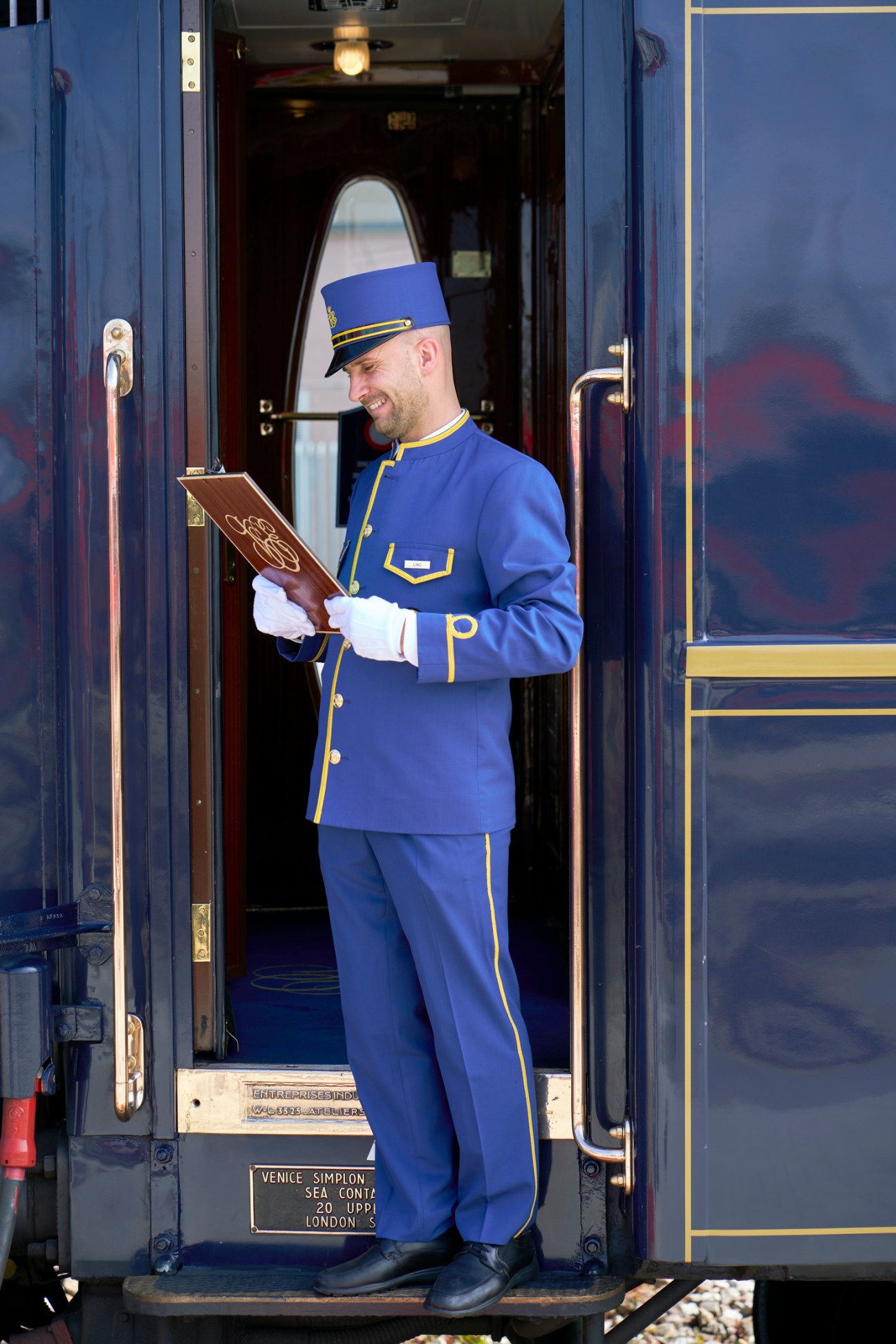
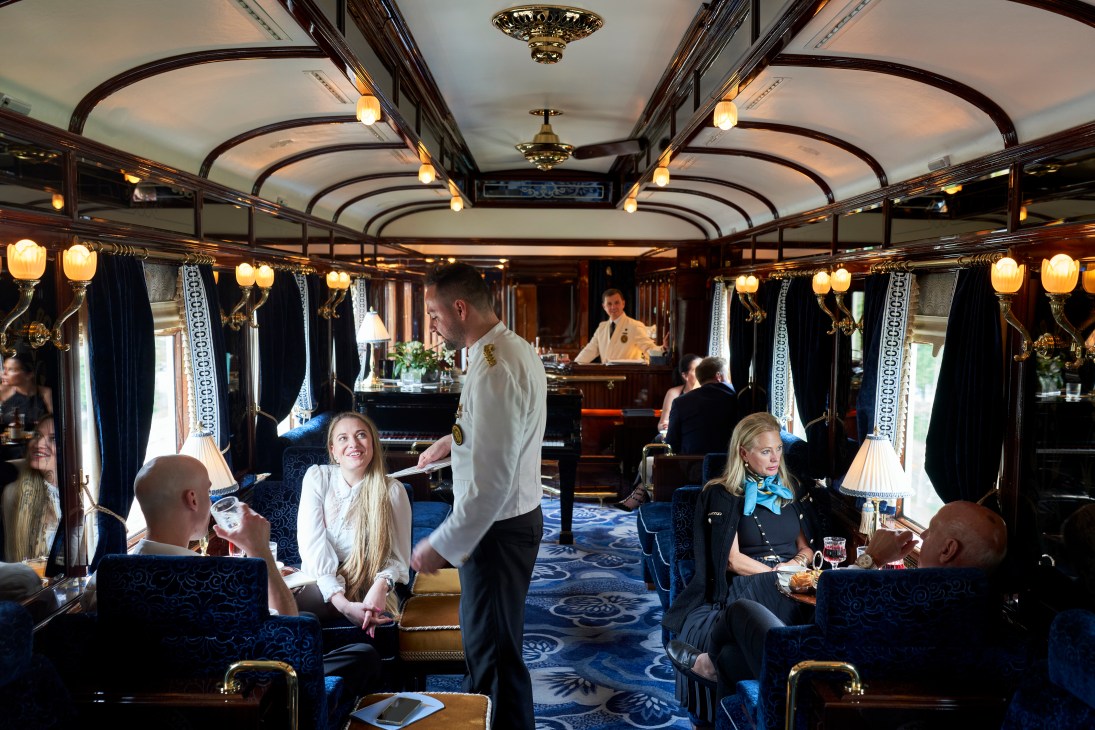
While it is time for Monocle to board, it is also a crucial juncture for Belmond’s luxury train service. Business is steaming ahead but a rival Orient Express is set to launch next year, making it imperative that the Belmond train stays ahead of the competition. Passengers on the Venice Simplon-Orient-Express cite the train’s fabled cultural history as their main reason to ride. “It was really because of the old movie Murder on the Orient Express,” says Eva Casias, an Austrian fashion designer in her late twenties, who is travelling with her American financier husband, Michael. “I watched the film many times and fell in love with it. It is so evocative and this train is so authentic.”
The suites are as luxuriant as you might expect and come complete with caviar, champagne and a fruit bowl so artfully put together that it could have been composed by a Dutch master painter. Monocle’s steward, Antonina, tells us that our carriage was marooned in snow for 10 days near Istanbul in 1929, the apparent inspiration for Christie, the writer who immortalised the service. It is this carefully curated mythmaking that ensures the Belmond train’s connection with the Orient Express brand, though, technically speaking, “Orient Express” refers not to a train but a particular route launched in 1883, when Belgian entrepreneur Georges Nagelmackers realised his dream of connecting continental Europe by rail.
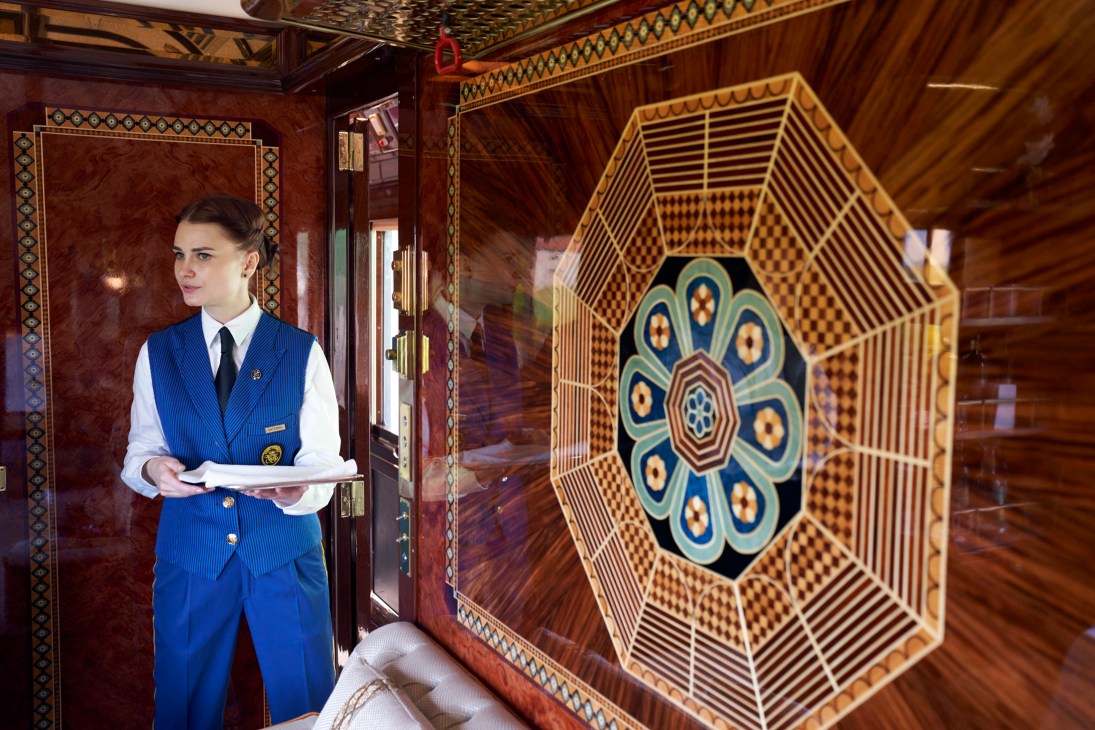
The route has had many iterations and was plied by rather run-down rolling stock for much of its later years. But the Belmond train’s provenance is firmly placed in the art deco heyday of the 1920s and 1930s. The current Venice Simplon-Orient-Express came together in 1977, when late US shipping tycoon James Sherwood bought two sleeping cars and set about recreating the journey. All 17 carriages on the current train were built between 1926 and 1931; many ran on branches of the original route.
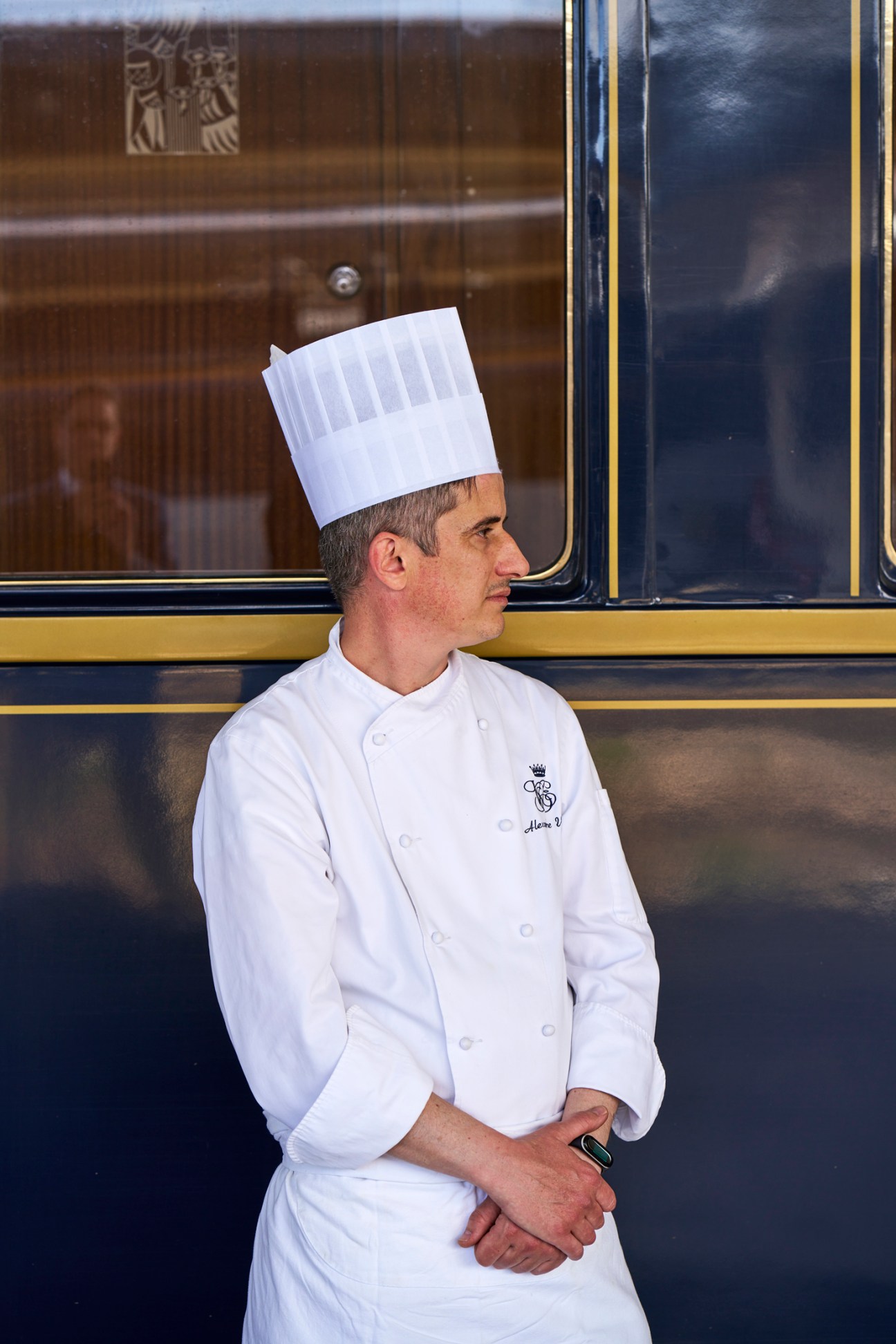
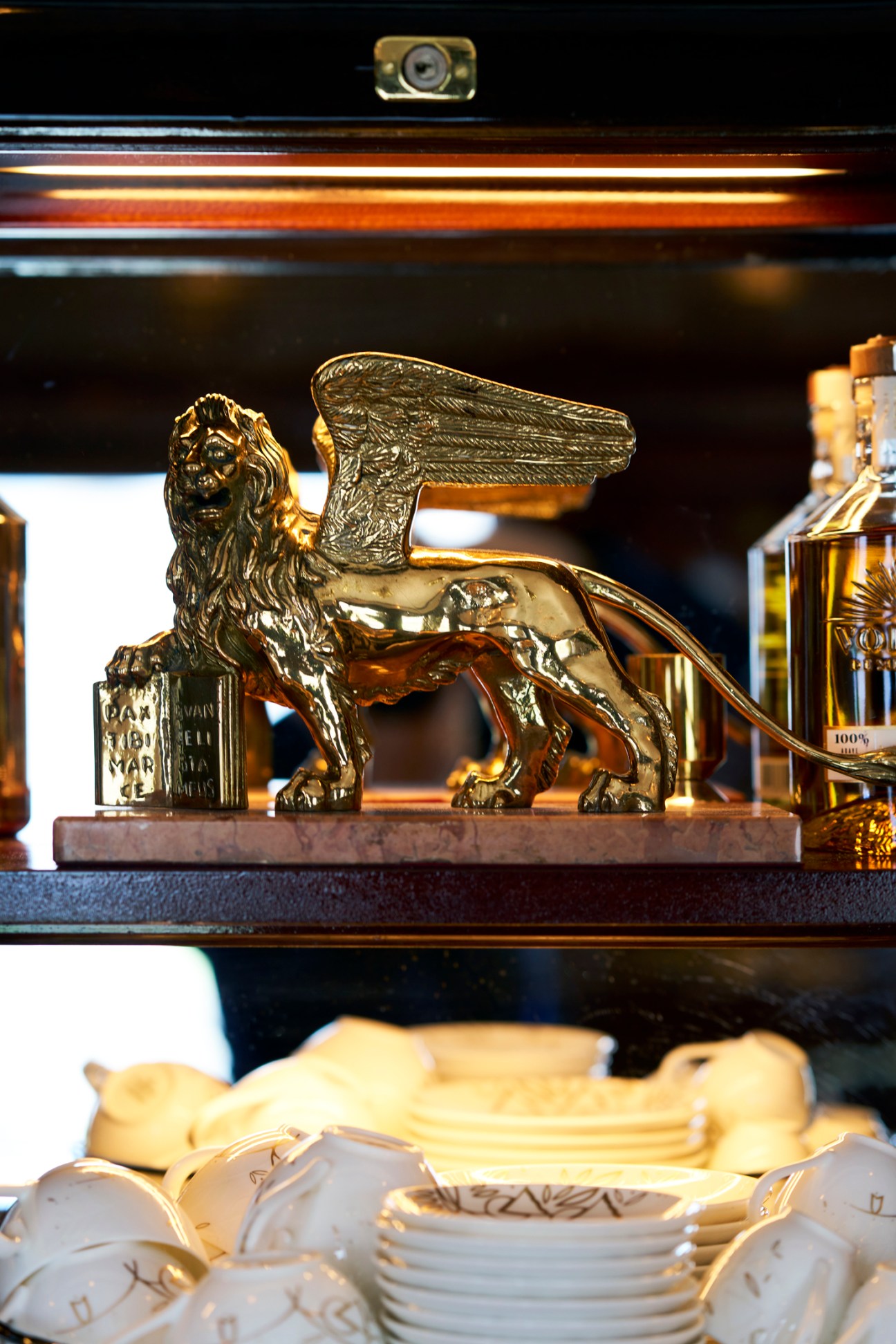
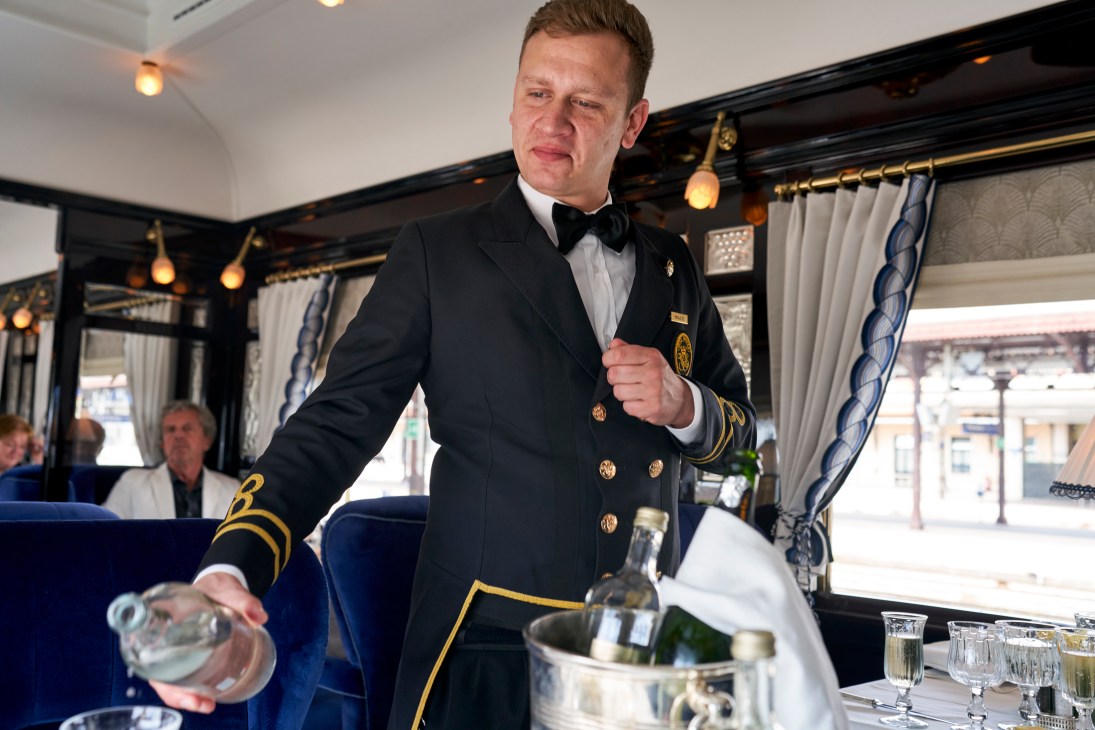
Monocle’s three-course lunch is served in the Cote d’Azur dining car, a first-class Pullman carriage decorated by René Lalique in 1929. The French jeweller and designer installed his signature glasswork panels depicting classical figures and using slightly opaque blue glass to recreate the shimmer of the Mediterranean. Sherwood had all the original panels restored when he discovered the carriage languishing in storage in 1981, only for half of them to be stolen a few weeks before the train’s inaugural journey. Craftspeople replicated the missing ones and today all the blue-hued fabrics and patterns take inspiration from the glasswork.
This honouring of the past – and what makes a journey worthy of the Orient Express label – is a topic that the train’s managers, Matthieu Ollier and Francesco Bonotto, are keen to talk about as we reach the highest point on the route: the Brenner pass at the Austrian-Italian border. As we stop to switch engines and smokers descend for their postprandial cigarettes in the crisp alpine air, Ollier concedes that the term “Orient Express” is an idea, a brand and “the title of a book”. But he also likes to look at it though a more romantic lens. “It’s a dream,” he says. “It was the dream of a Belgian man in the 1930s; it became the dream of an American man in the 1970s; and now it’s our dream.”
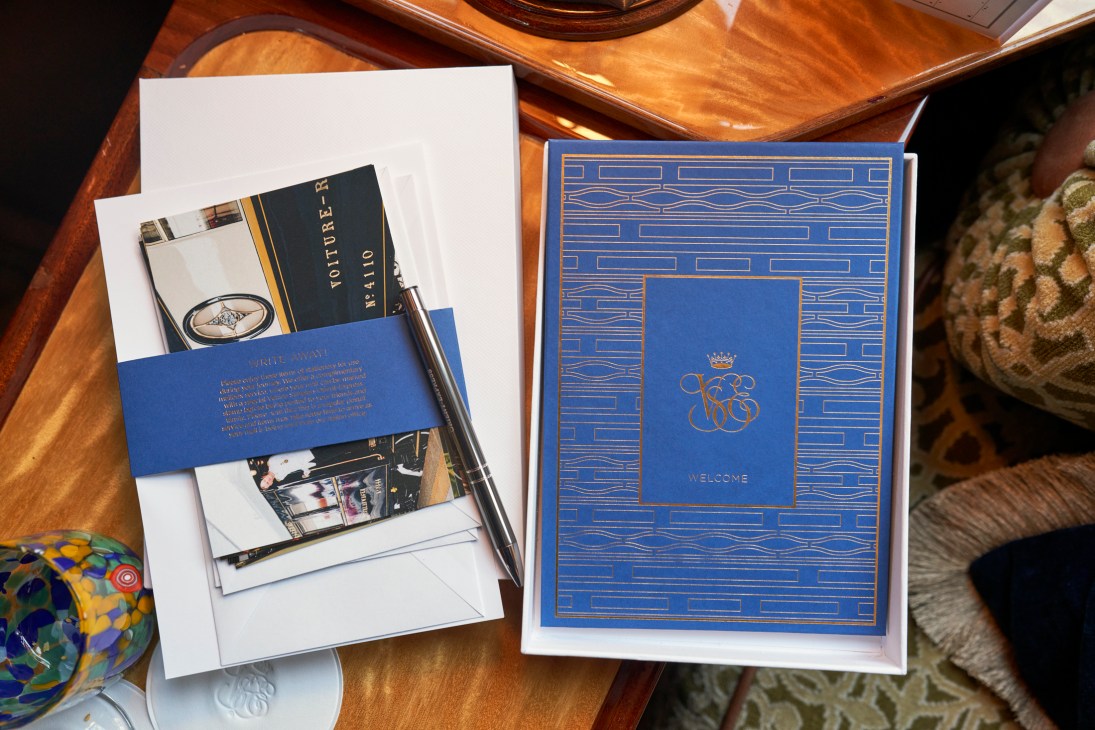
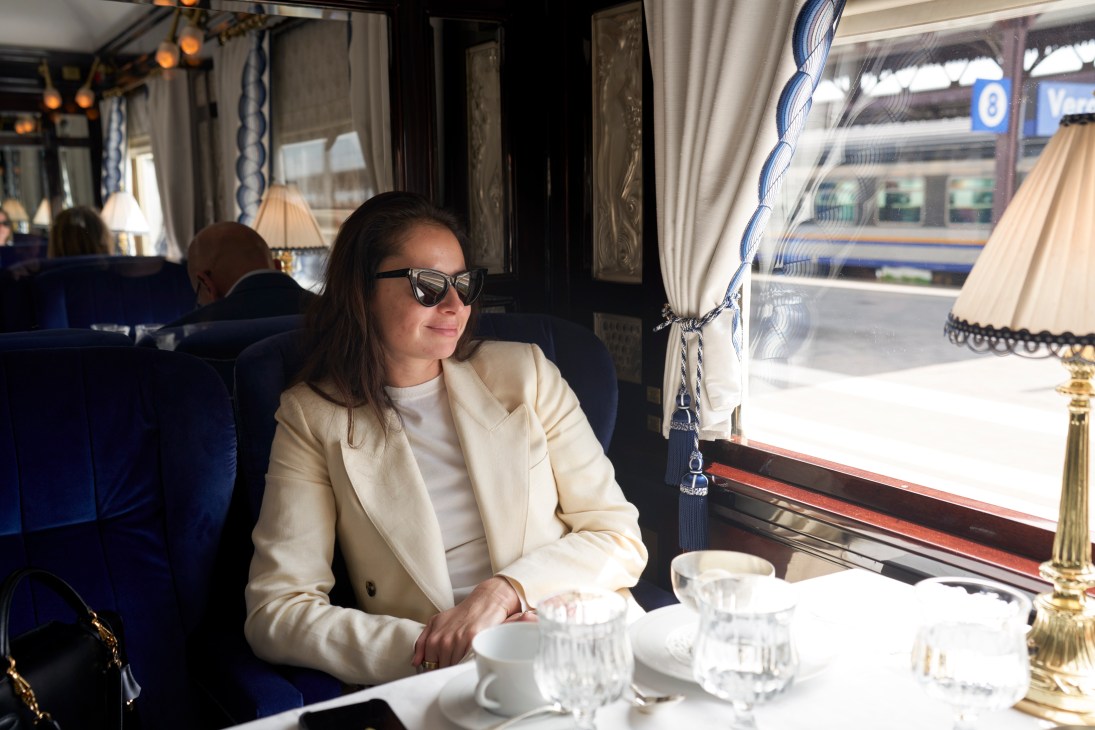
Determining which train can claim to be a “genuine” Orient Express will become even more complex next year, when Accor is due to launch its Orient Express La Dolce Vita, offering luxury train journeys across Italy. The group will follow that in 2025 with a pan-European, Orient Express-branded train featuring 17 original cars from the art deco period. (While Accor’s press materials talk about the “return of the legendary train” and the “rebirth of the Orient Express”, this second train has in fact been in service since 1982.)
Yet despite some gentle jibes about the provenance of the carriages, Ollier and Bonotto are surprisingly magnanimous about the prospect of a little competition. “It’s another train, another offer and another product,” says Ollier in a matter-of-fact way. “It’s a very good thing because it means that the market is dynamic and we are very happy about this.” The pair seem confident about the Belmond train’s future – and well they might: it is booked up years in advance. Eight new suites were unveiled in June 2023, pitched between the historic cabins (which have shared bathrooms) and the six top-of-the-range grand suites. Belmond has also introduced a host of new routes across Europe and this winter will see the addition of another itinerary to the ski resort of Courchevel.
Bonotto understands that competition means that Belmond must keep innovating, even with a historic marque. “Everybody knows the brand but we have to keep that up,” he says. “That’s where collaboration kicks in: with premium partnerships for the products offered on board and the menu creation.”
Bonotto talks about the atmosphere onboard in which both staff and guests play a role. There’s a strict dress code of no casual wear in any public spaces and the need for black tie at dinner assists in the pageantry. “It is like theatre,” he says.
After an opulent five-course menu from chef Jean Imbert accompanied by views of the dusky Swiss Alps, Monocle heads to the Bar Car 3674. Decked out in low lighting and sapphire upholstery, it is a relatively intimate space in a train that can accommodate 100 people. There is much camaraderie as a particularly sharp bend deposits dancing passengers in each other’s laps.
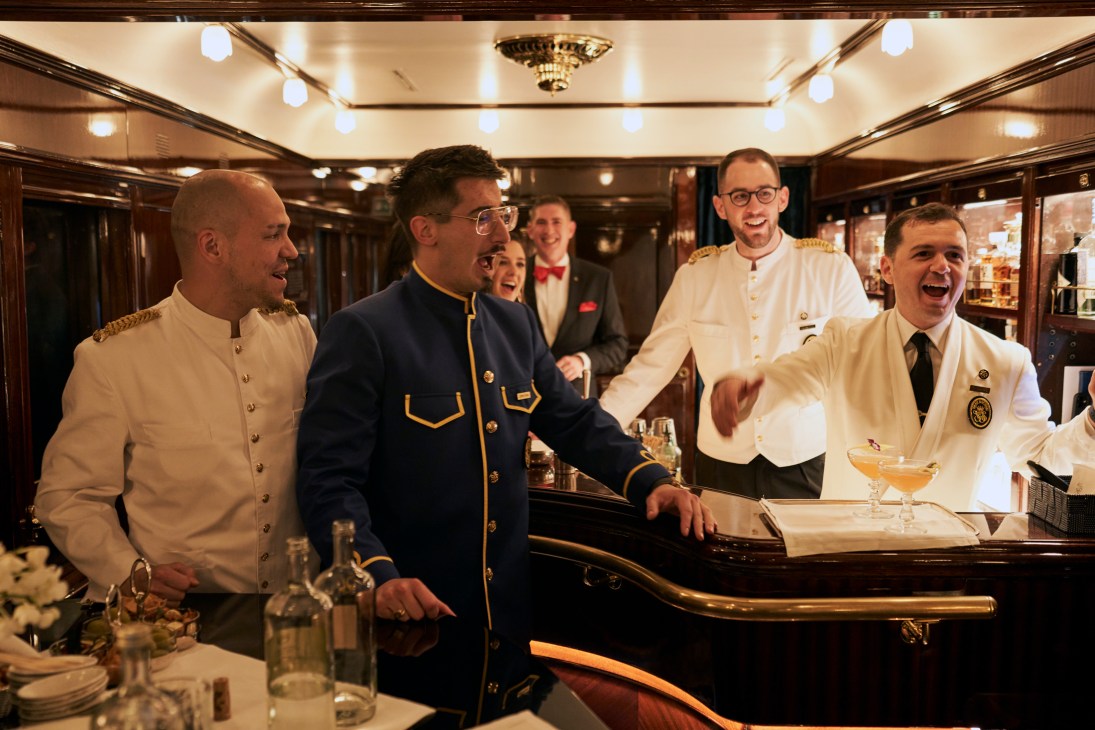
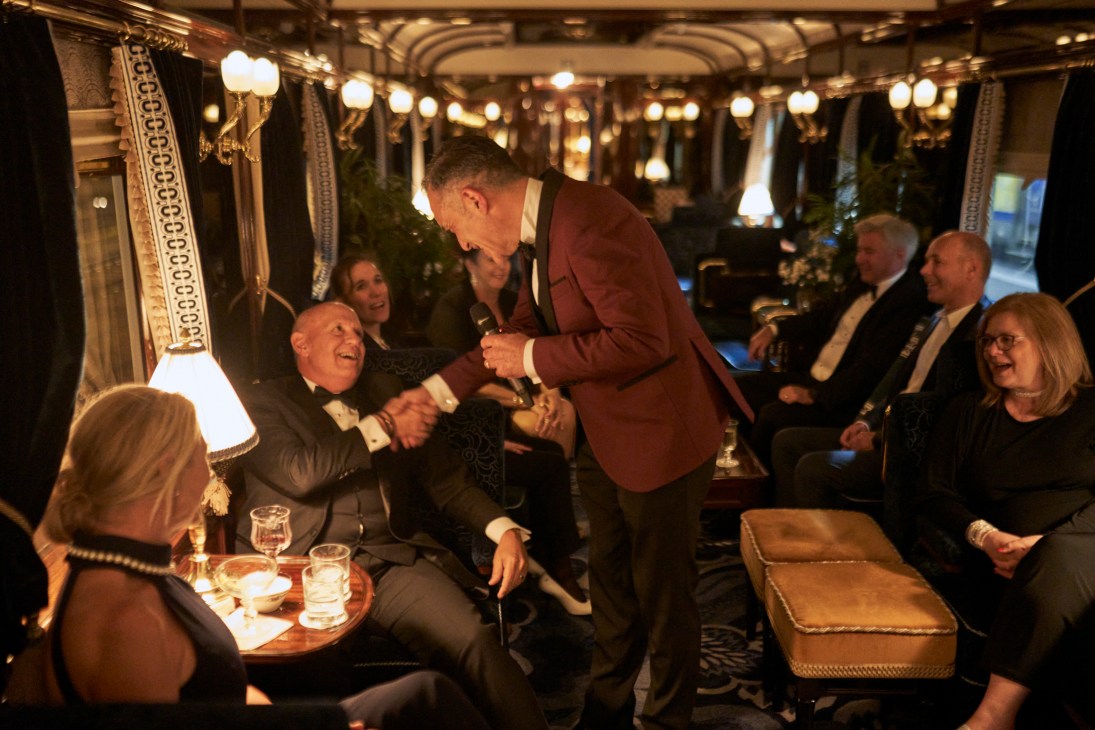

Head barman Gennaro Schiano mixes the signature cocktails with a flourish, as charismatic singer-trombonist Luigi de Gaspari works his way through the canon. As the drinks flow, the clock passes midnight and the train rumbles through Switzerland, De Gaspari ropes in various members of staff and passengers to join him for a number, before the whole bar finds itself bellowing along to the chorus of “Stand By Me”.
The next morning, as we approach a rainy Paris, the train is eerily quiet, passengers perhaps enjoying their last few moments in their beautiful cabins or sleeping off the last few cocktails before it is time to step out of the golden age and back to reality.