Issues
Open house
On the drive from Fiumicino Airport to the centre of Rome, one of the first sights to command attention is the Palazzo della Civiltà Italiana, standing tall on the horizon. The neoclassical building – its breathtaking scale has earned it the nickname Colosseo Quadrato (“Square Colosseum”) – is now home to the headquarters of Roman fashion house Fendi. It stands as a symbol of the brand’s powerful presence in its hometown, as well as its ever-growing ambition in the luxury market.
Fendi has been part of Romans’ lives since 1925 when it opened its first leather goods workshop on Via del Plebiscito. Almost a century later, having gained global recognition and backing from luxury conglomerate lvmh, the company plays an active role in preserving the city’s heritage and telling new stories about the Rome of today. It funded the renovation of Palazzo della Civiltà before moving in, helping to remove any connotations with fascism (the building was constructed during the era of Benito Mussolini) and transforming it into a vibrant, cultural hub.
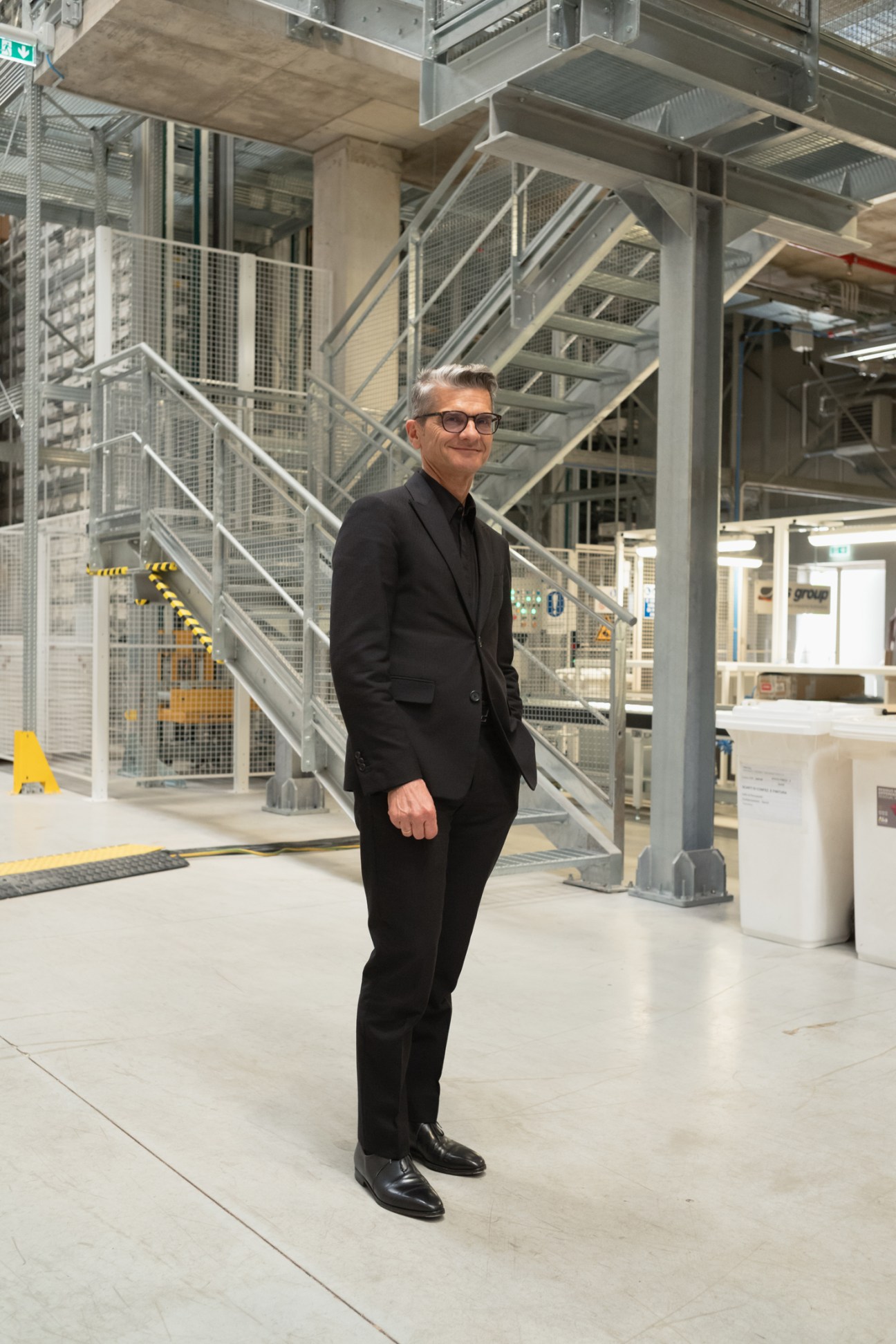
The house’s design, communications and executive teams all sit in this Roman HQ and will confirm that walking through its grand entrance every morning, or looking up at the 68-metre-high concrete and travertine structure, never ceases to amaze. “This building now says Fendi just as much as our logo,” says Serge Brunschwig, the company’s French-born chairman and CEO, sitting on the airy balcony next to his office. “It has the same blend of classicism and modernity that we aim to express with our brand. I moved here five years ago and inspiration seems limitless.”
Fendi makes a point of sharing some of these moments of inspiration by frequently opening the Palazzo to host public exhibitions. These offer a taste of what goes on the creative team’s mood boards and of the infectious feeling inside the building, with elegant men and women constantly waltzing in and out holding stacks of paperwork, rolls of fabric or one-of-a-kind Fendi Baguette bags.
Most recently the brand held an exhibition celebrating Italian sculptor Arnaldo Pomodoro, showing some of his most recognisable bronze sculptures alongside sketches of unrealised architectural projects and a Fendi Peekaboo tote bag, customised by the artist. “Rome has so many different dimensions,” says Brunschwig. “And since there would be no Fendi without Rome, we do anything we can to give back.”
The beating heart of the Fendi business may remain firmly in place in the Eternal City but its ambitions today are as global as ever. The aim is to bring the world to Rome but equally to get out there, meet customers in new markets, gather inspiration from other cultures and build an international business.
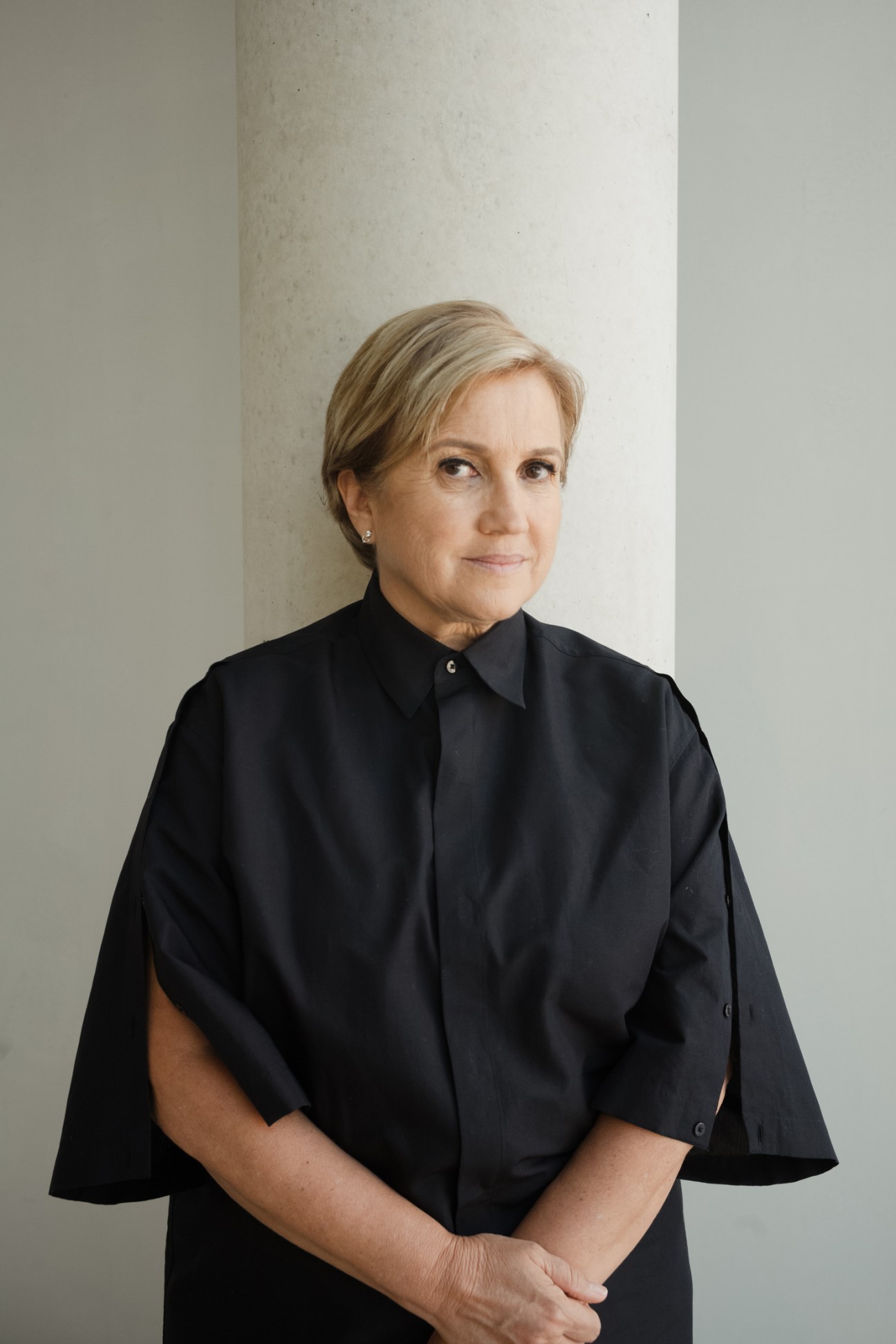
Creative Director of Accessories, Children’s and Menswear
Thanks to a 54-year-old partnership with the late designer Karl Lagerfeld and the creative leadership of Silvia Venturini Fendi, a third-generation Fendi who now helms the business’s accessories, children’s and menswear divisions, the brand’s name is well established. In any café in a big European capital, it’s not uncommon to spot a woman wearing gold-tinged aviators bearing the famous FF logo, or clutching a Baguette bag, one of Fendi’s many iconic accessory designs. Yet this is a smaller business with a lot of new ground to cover, especially when compared with some of its French counterparts in the lvmh portfolio, including Dior and Louis Vuitton.
According to Exane bnp Paribas, Fendi has surpassed the $1bn (€890m) mark in sales, while Dior and Louis Vuitton ring up $7bn (€6.3bn) and $20bn (€18bn) respectively. “This gives you the ambition to dream where you can go next,” says Brunschwig. “We want to continue pointing to new ideas and expanding the family. We call it our chosen family; I was adopted.”
Opportunities abound as far as Brunschwig is concerned. He has been spearheading retail openings in Tokyo’s Omotesando district, Doha’s new Hamad International Airport and the Dubai Mall in the past year. The arrival of British designer Kim Jones has also heralded a new chapter for the brand’s womenswear and haute couture divisions; jeweller Delfina Delettrez Fendi (Silvia’s daughter and one of Jones’s muses) has joined the family business, debuting its first jewellery collection this year; while Silvia Fendi’s menswear has been enjoying a renaissance of its own. “It’s a brand established by a strong woman and addressing the type of man who is on the go, who has an international outlook and appreciates elegance,” says Brunschwig, pointing to his own black, slim-cut Fendi suit. “There’s a lot of potential to grow a business established on these principles.”
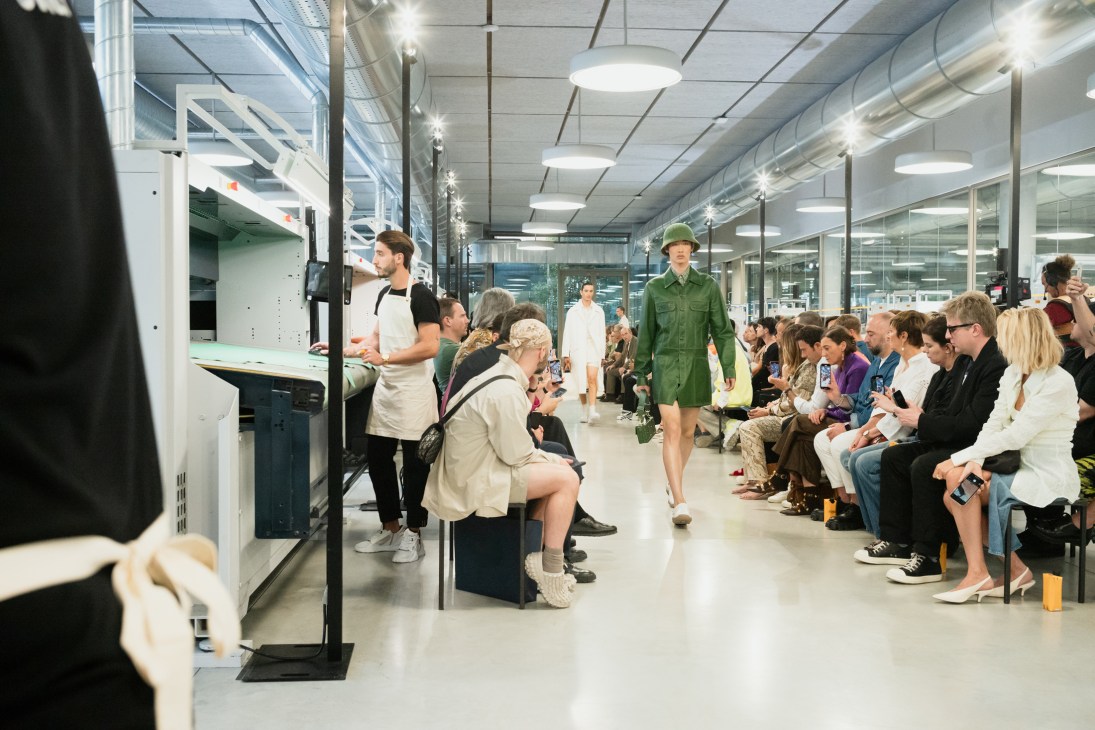
This summer the brand hosted one of its most impressive men’s runway shows in its newly renovated factory in the Tuscan town of Capannuccia, a 30-minute drive from the centre of Florence. It signalled its ambitions to expand the reach of its chic menswear designs and to do so while retaining the highest manufacturing standards. The Capannuccia facility was renovated by Fendi’s architecture department alongside Milan-based firm Piuarch, which developed the initial concept; it now resembles a modernist lab rather than a traditional factory, with state-of-the-art equipment and sun-filled offices. It was a worthwhile investment, given the brand’s commitment to setting new industry benchmarks when it comes to transparency and ethical manufacturing in the luxury sector, as well as its historical ties with Tuscany.
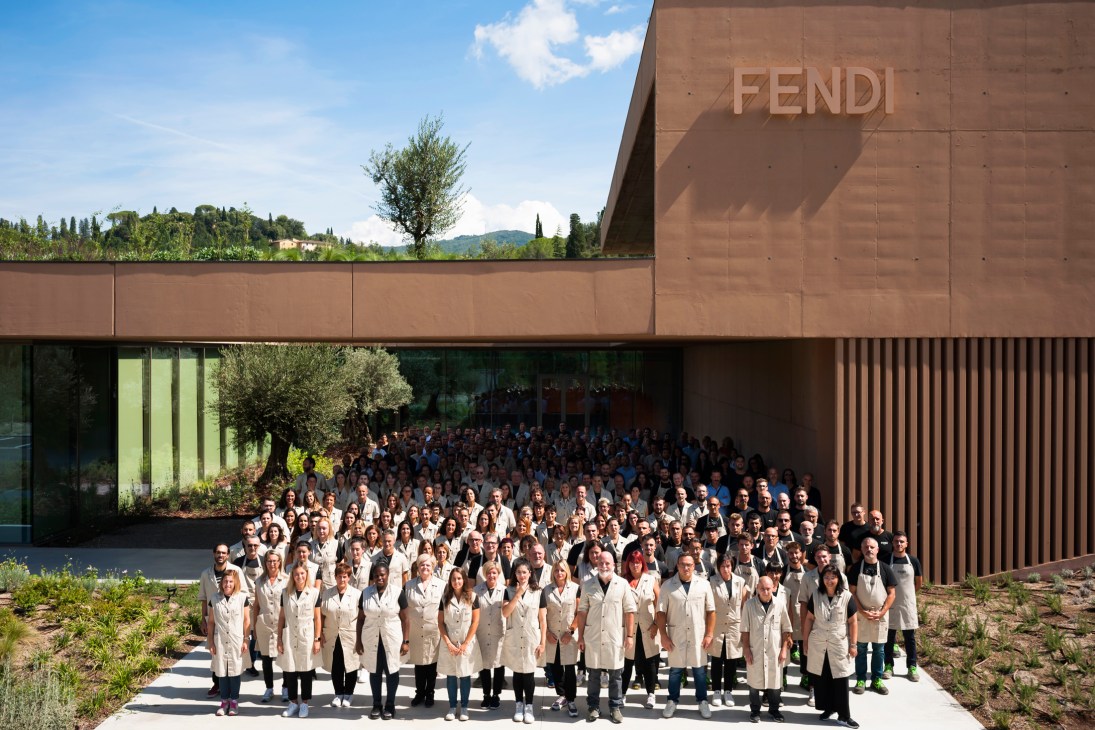
Adele Fendi travelled to the region in the early 1920s to explore leatherworking and started the company as an accessories business with her husband, Edoardo, shortly afterwards, having fallen in love with the craft. Today most of the brand’s leather goods are still produced in the region and the team of artisans remain Fendi’s primary sources of inspiration when developing new patterns or innovative materials to update the menswear designs. It’s why the investment in Capannuccia was about improving the team’s quality of life as much as it was about guaranteeing the quality of the products they produce.
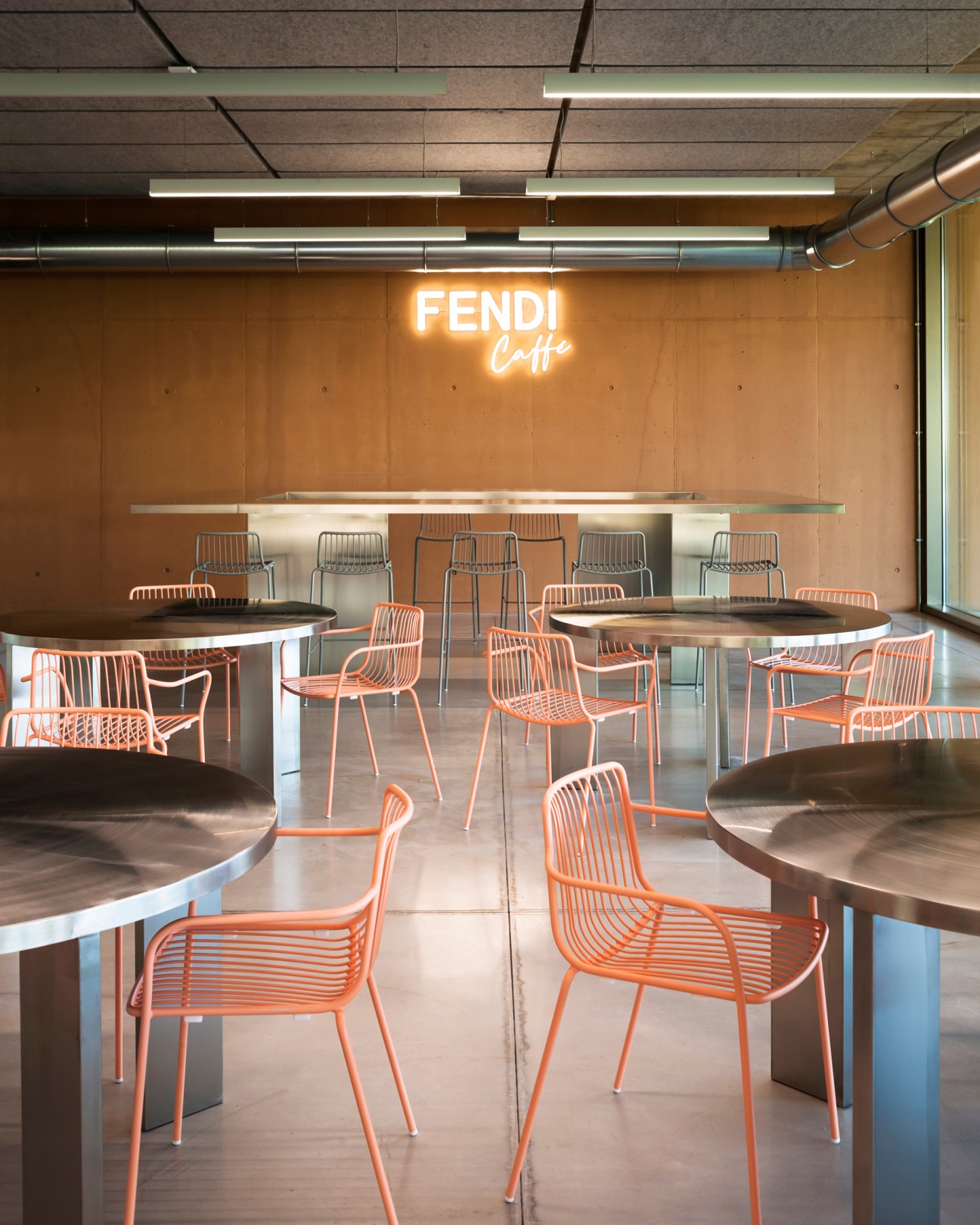
The new facility is surrounded by nature, including different species of Mediterranean scrub trees filling the courtyards, and a sprawling olive grove that might soon start producing Fendi olive oil for the employees. “There’s this cinematic vision of the craftsman crouching over a table doing very repetitive work but today the reality is very different,” says Silvia Fendi. “Our factory looks more like a science lab. It’s where we do all our innovation research and we teach people all the skills they need to create a product from start to finish. It makes them proud of the products that they make and I know that in some bags there are even hidden signatures, so that they can keep track of who made what.”
Opening up the doors of the factory to host a runway show is one way of turning the spotlight on all those who are working behind the scenes, and sharing these moments of pride with the brand’s broader audience. “We wanted to show more about ourselves as a company – our way of doing things,” says Fendi, who also pays homage to the team through the understated, workwear-inspired designs she presents for the occasion. “I’m really interested in experimenting with fabrics and workmanship. If you have something as interesting as a handmade fabric or an intricate construction technique, the silhouettes you design should be practical and clean, or it becomes too much to take in,” she says of the minimalist aesthetic that has defined her time as a menswear designer.
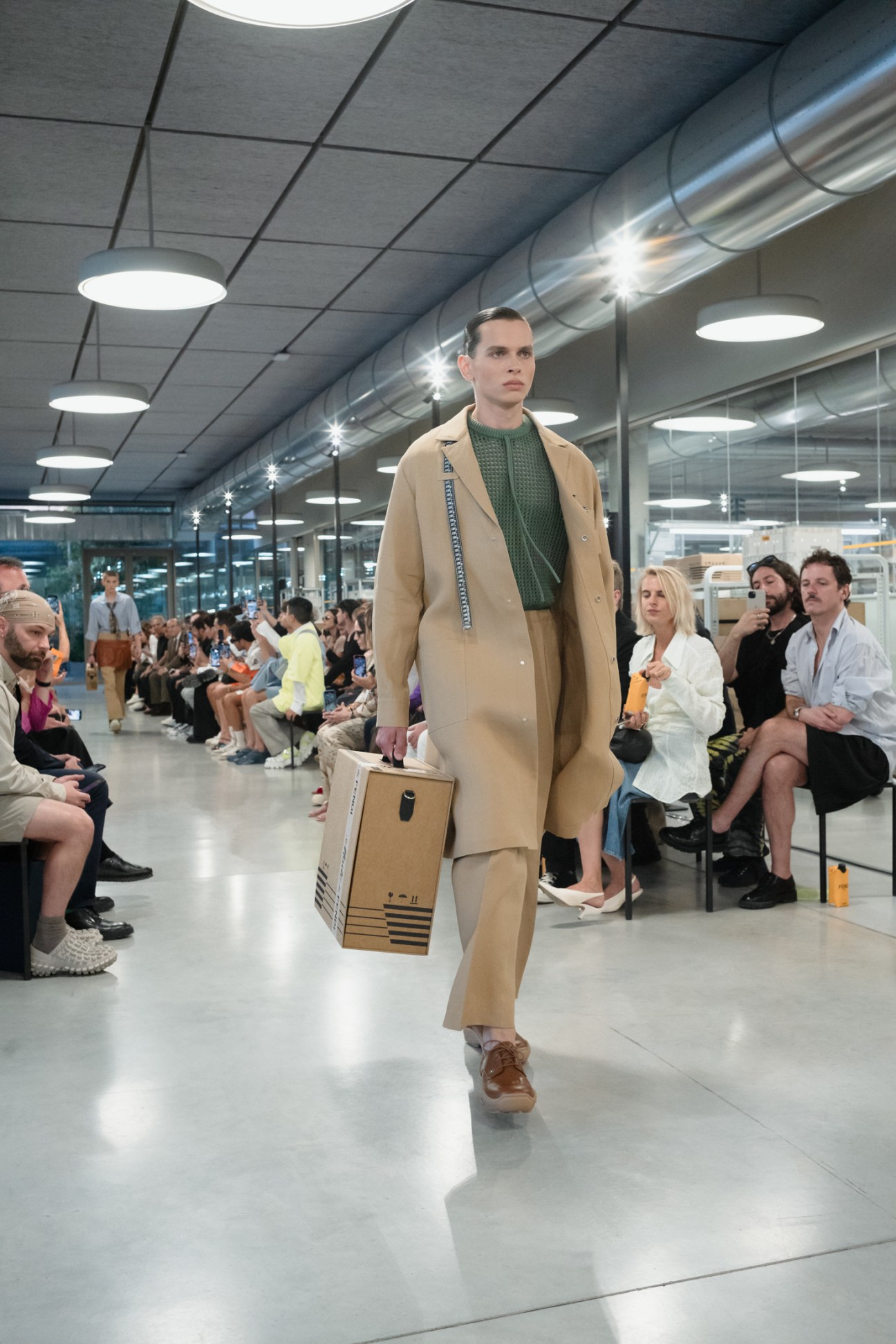

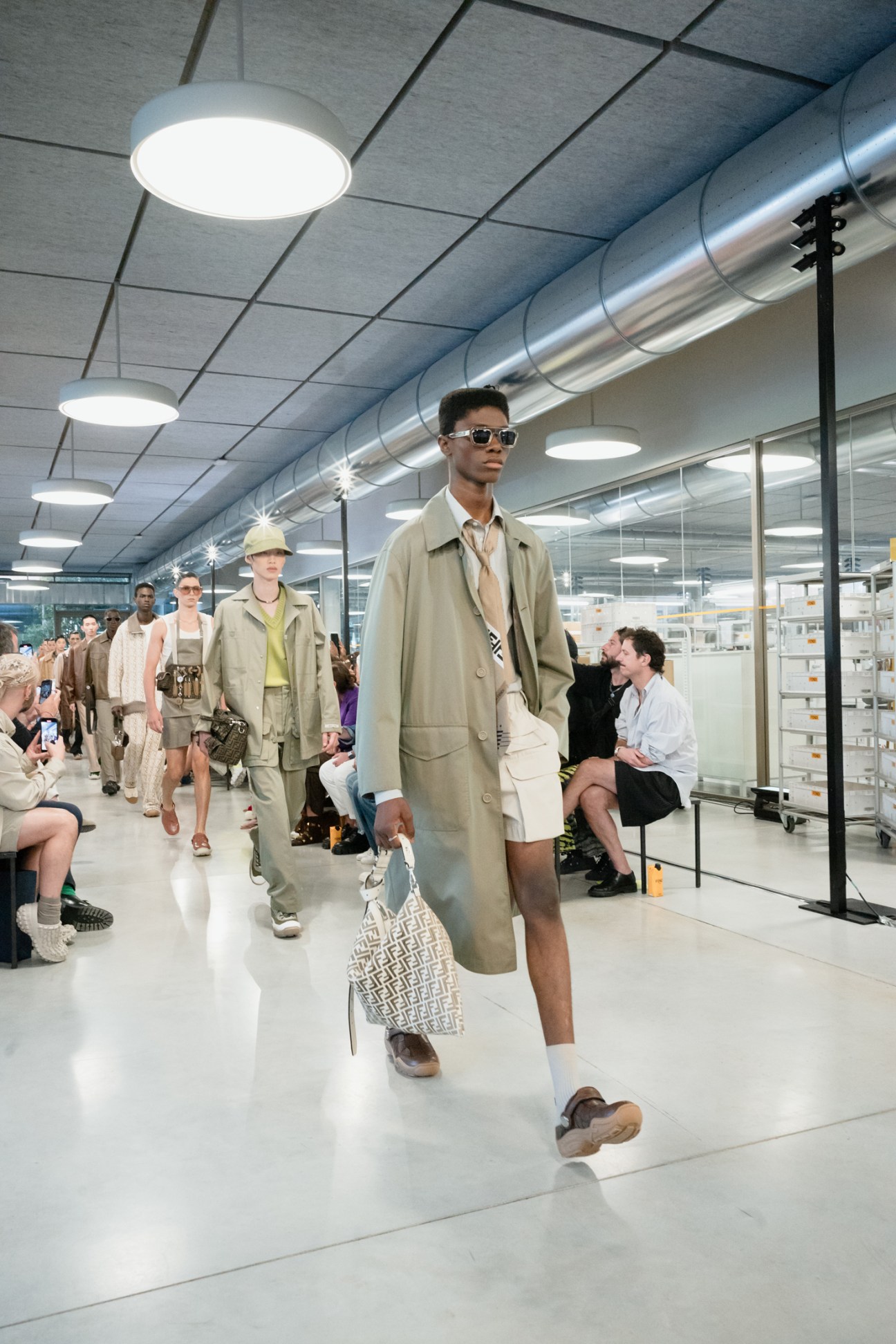
It’s a refreshing approach that has helped evolve the brand’s identity beyond obvious associations such as the FF logo. “I’ve always appreciated pragmatic clothing,” says Fendi. “But today, with men’s fashion becoming liberated from most rules, we can experiment much more with workwear and functional clothing. Maybe it’s a result of more women designers doing a great job in menswear.”
The new collection features direct references to the artisans’ uniform, via rubber-soled clog shoes, aprons worn over tailored trousers and shirts made from Japanese washi paper. “The classic uniform of the craftsman used to be made from paper,” says Fendi. “I also wanted to add striped shirts with rolled-up sleeves and ties, because today to be an artisan you need to have manual skills but also an engineer’s mind for using different machines. I’m always interested in this relationship between man and machine.”
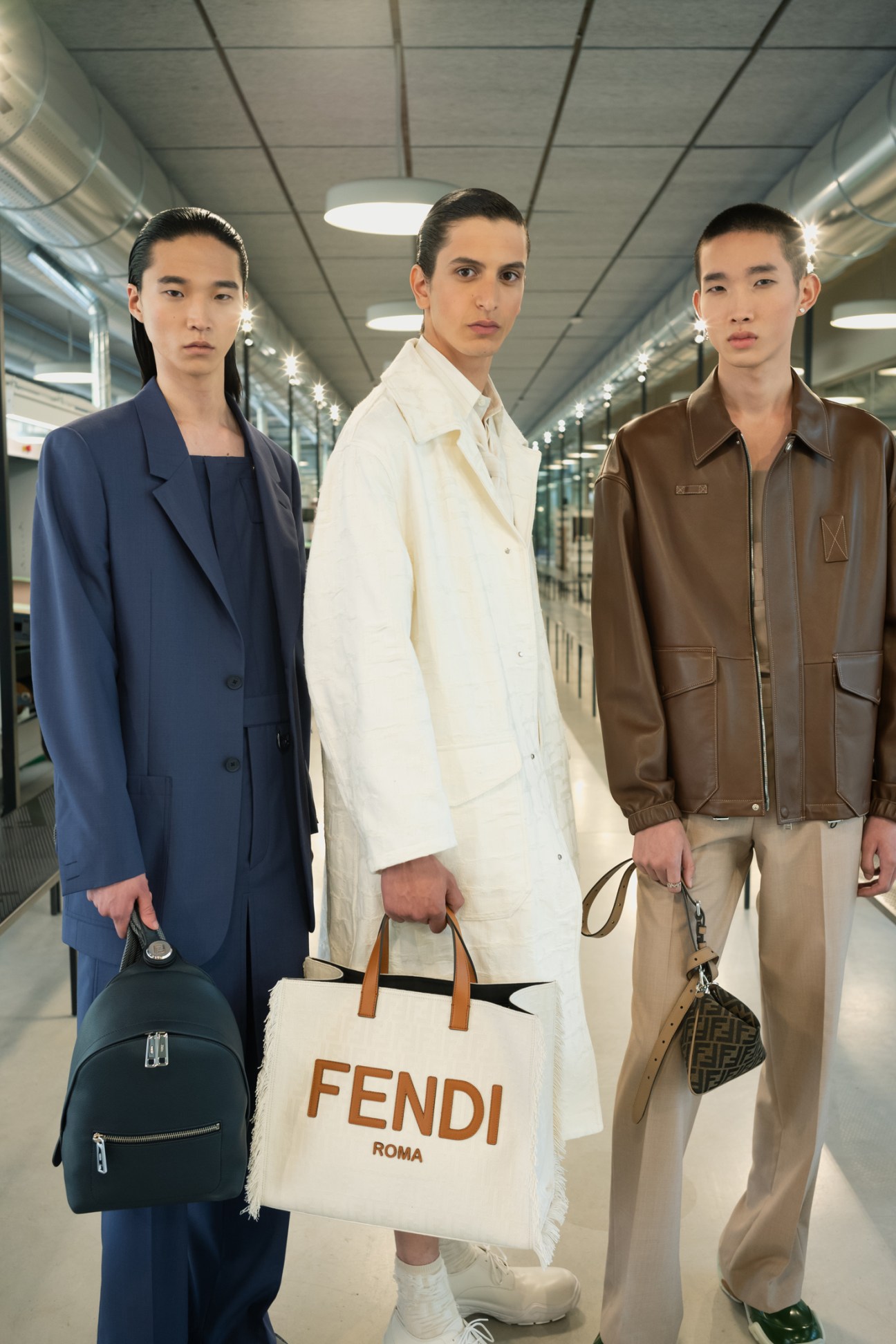
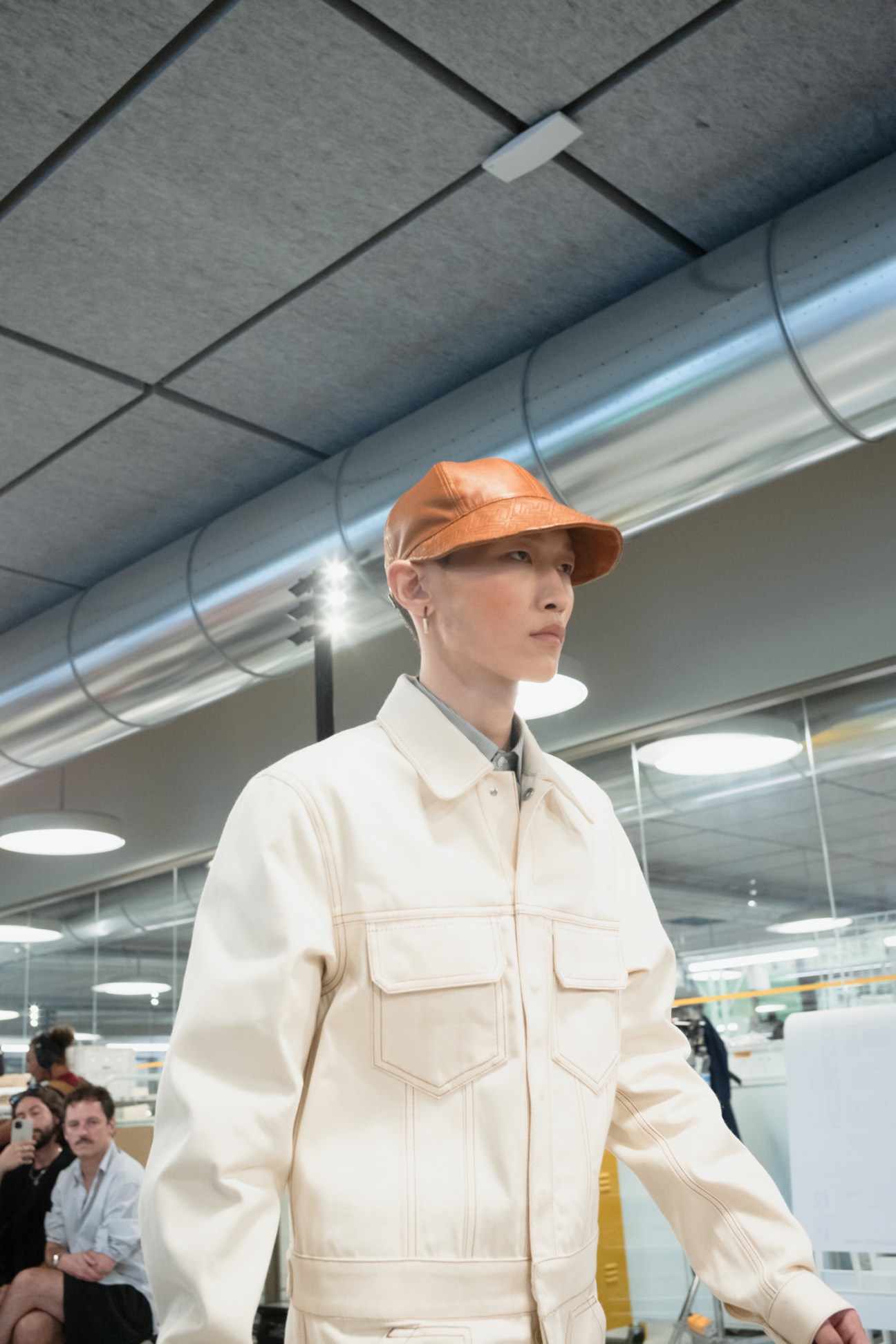
Unlined blazers highlight the skill and handwork that goes into creating a Fendi tailored jacket, while exposed backs add a touch of sensuality. “This is a sexy job, at the end of the day,” says Fendi of her mission to modernise the image of this line of work and attract a new generation of artisans to Capannuccia. A walk around the factory’s all-white office floors and workshops, buzzing with men and women of different ages (all dressed in their black FF branded T-shirts), suggests that she is well on her way.
The show unfolds between the artisans’ workstations while they continue sewing handles onto shoulder bags, cutting leather patterns and hand-painting the edges of intricately embroidered clutches, relatively unbothered by the fanfare around them. They only put their tools down during the show’s finale, changing into white work coats and joining Fendi for her final bow. “The portrait of the solo fashion designer is very much in the past,” she says. “We all now know that you can’t do anything by yourself in this business. A designer is just a spokesperson for the brand. We work together with our colleagues, so I wanted to show how invaluable they are by making them part of this show.”
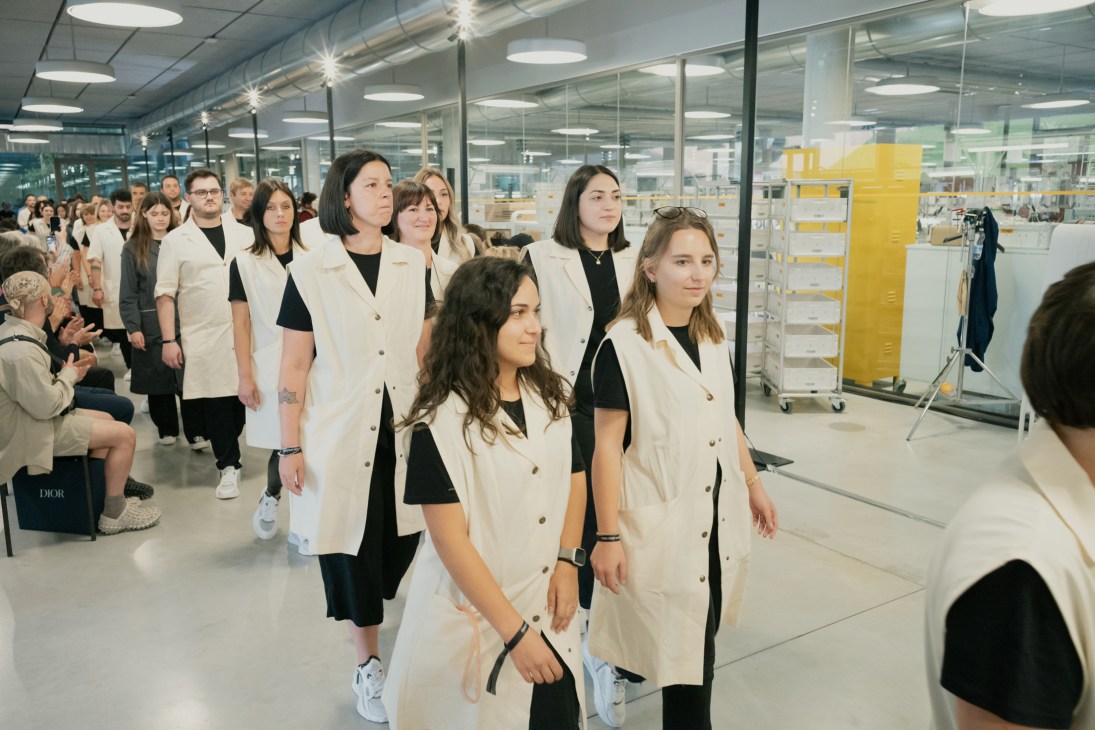
The family spirit shines through when the artisans join Fendi for that finale walk, as well as later in the day when they gather on the factory’s rooftop, dancing the night away alongside DJ Diplo, Brunschwig, Fendi and her daughters. “This sense of community and ongoing conversation is important for us,” says Fendi. “You can tell that there’s still a family behind it all even if the family doesn’t run the business any more. It’s evident in our long-lasting collaborations with Karl [Lagerfeld] and now Kim [Jones], who joined us to oversee womenswear and works so closely with Delfina [Delettrez]. I guess people choose themselves here.”
The brand might need to return to its usual Milan showroom for next year’s fashion show, yet the factory will remain Fendi’s creative laboratory, where all the magic happens. Built for the future, it can accommodate double the amount of employees it currently has in its workforce. Given the new apprenticeship schemes in place – Brunschwig is working with the Italian ministry of education on an initiative dubbed Adotta Una Scuola (“Adopt a School”) to promote craft to young talent – and the appealing working conditions on offer, there’s renewed confidence that all the workstations will soon be filling up. “This is the place that will allow us to grow,” says Fendi. She plans to continue her own frequent trips to the factory, to brainstorm with the team and recharge in its surrounding nature. “Working here is regenerating – just looking outside nourishes your soul. And at the end of the day, beauty attracts beauty.”
Better nature
Sitting on the terrace of hotel Es Racó d’Artà, you can look down the hill across fields and forests as birds flit overhead and croaking frogs let rip from the lily pond. It’s a version of Mallorca that many visitors to this popular beach destination never see but these mountains, this landscape, is the island at its best.
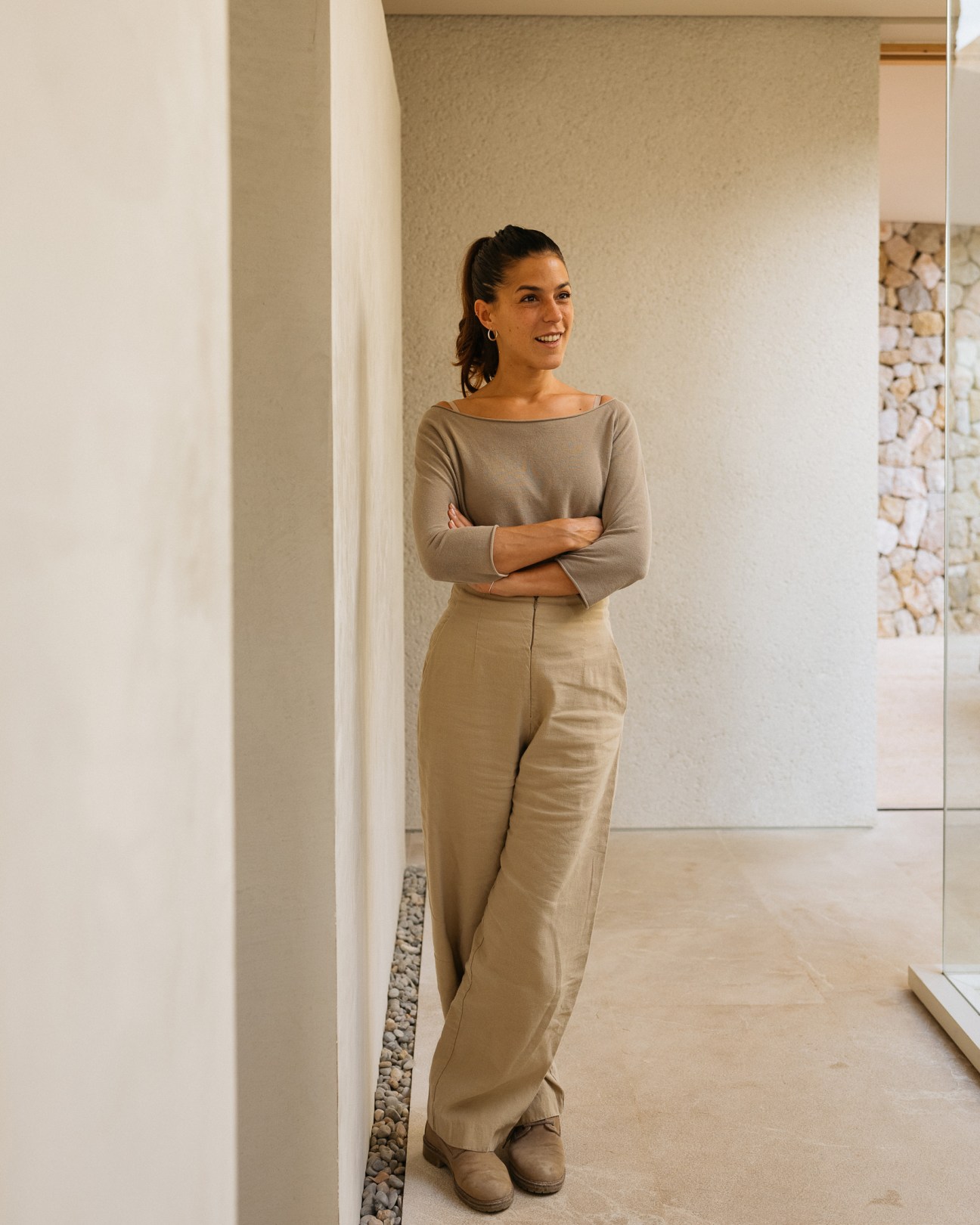
Es Racó opened just three days before the pandemic started and, after that, there were numerous stop-starts triggered by waves of lockdowns. This past year has finally seen the venture in full flow, says María Rincón, who is part of the hotel’s management team and has been working on the project for five years. She is a passionate advocate for this special spot. But to describe this as a hotel is to underplay the scale and vision behind the project, which is owned by celebrated Mallorquín architect Antoni Esteva and his friend, builder-developer Jaume Danús.
The property sits on a vast estate of some 185 hectares, which was snapped up by the duo when the family that owned it finally decided to sell up. It was in need of some care, having been abandoned for 50 years – the old stone farm buildings had fallen into disrepair and fertile fields were neglected. Esteva (who has overseen the sensitive restoration of several buildings on the island, including the lauded Son Gener Hotel) and Danús wanted to give something back to the island, and show respect for its traditions, crafts and the way of life. So the first thing that they did was to tend the soil, planting xeixa – an ancient variety of wheat – as well as 14 hectares of vines (they will start making wine next year), harvesting olives to make oil and setting up bee hives. Only then did they give their full attention to the dilapidated finca, slowly turning it into the heart of the hotel. They also developed a series of casitas, some with private pools, and villas that are subtly dotted across the landscape, as well as spaces for yoga, meditation, a soothing spa and a beautiful seasonal outdoor pool.
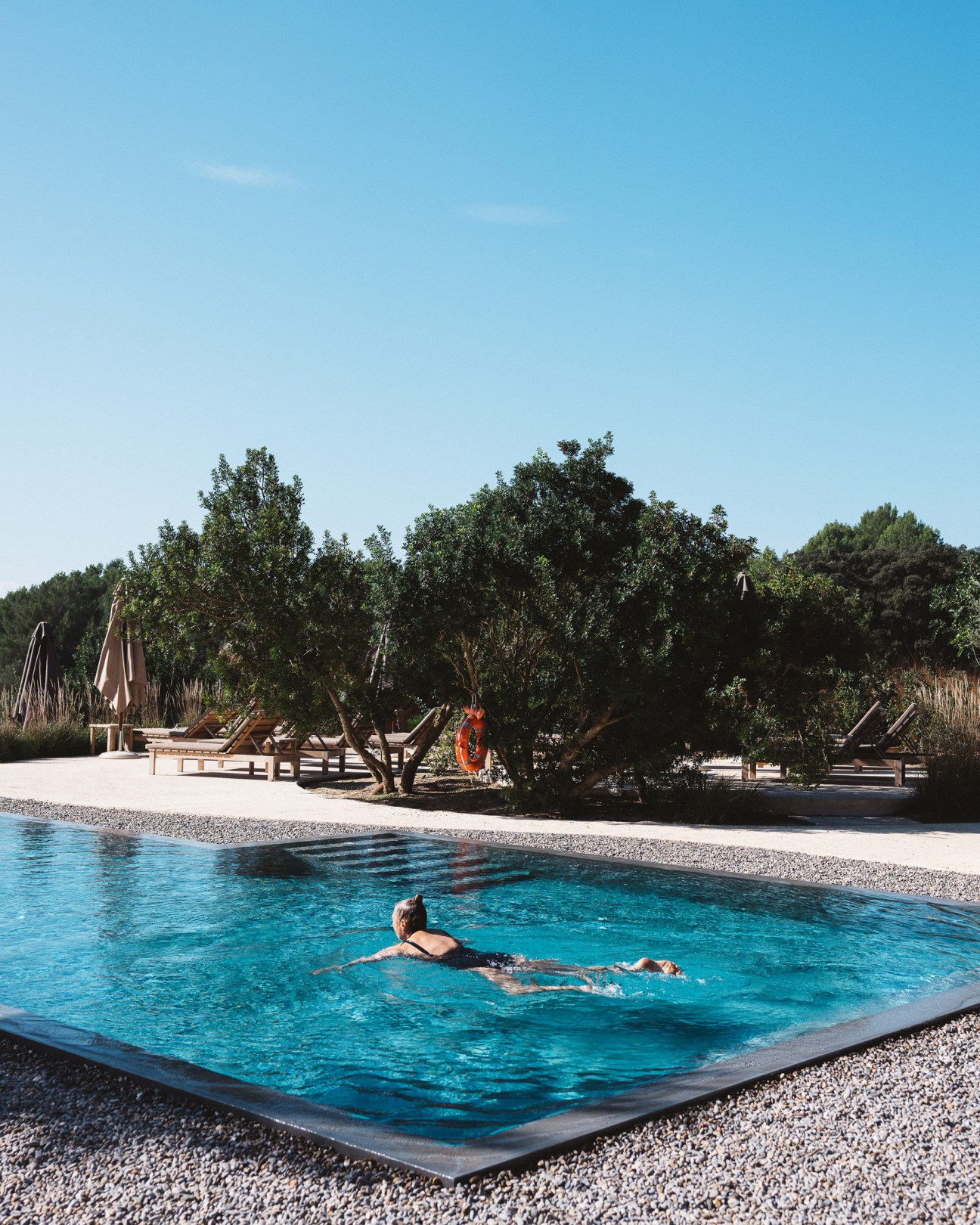
Es Racó pitches itself as a retreat and there is an emphasis throughout on enabling guests to reconnect with nature, talk and eat food from the farm. Es Racó encourages you to jump on a bike or get in your car to explore the nearby villages – the idea is to connect with the people who have lived here for generations. Staff will also guide you to some special beaches when the waves call.
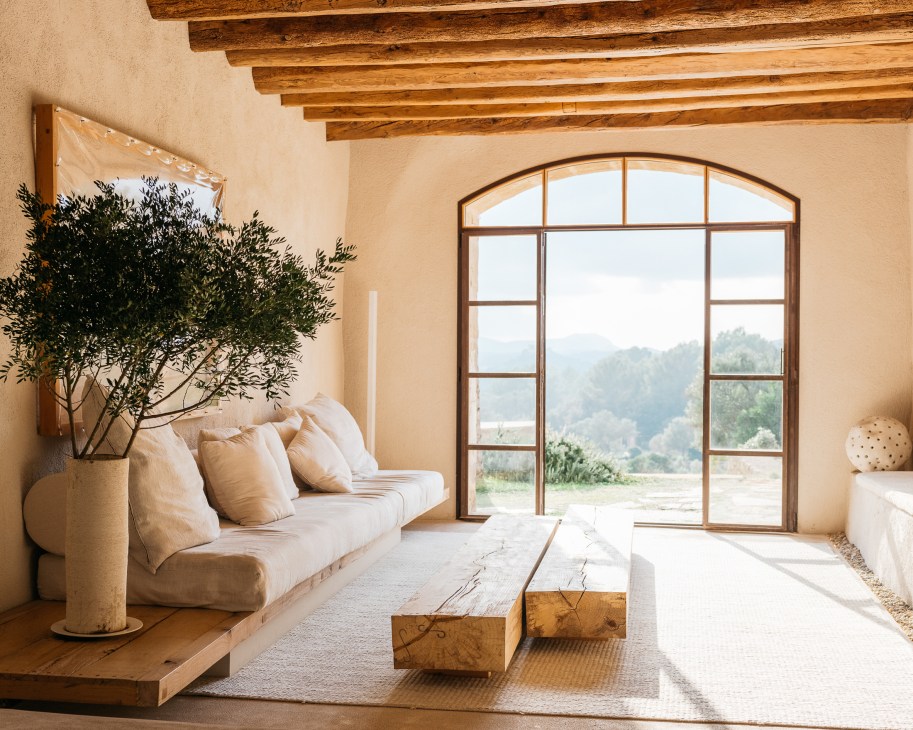
The serenity at Es Racó has many sources. It comes from the architecture and design, and the use of materials that are simple and noble – stone, timber, lime plaster, woollen rugs – and chosen to age gracefully. The colour palette – a neutral mix of soft creams and whites – also plays a role. Then there’s the art, which is rich with nature references, especially the work of island-based artist Hiroshi Kitamura and ceramicist Jaume Roig. Even the linen staff uniforms are perfect; they are made by the fashion label owned by Esteva’s daughter Rosa.
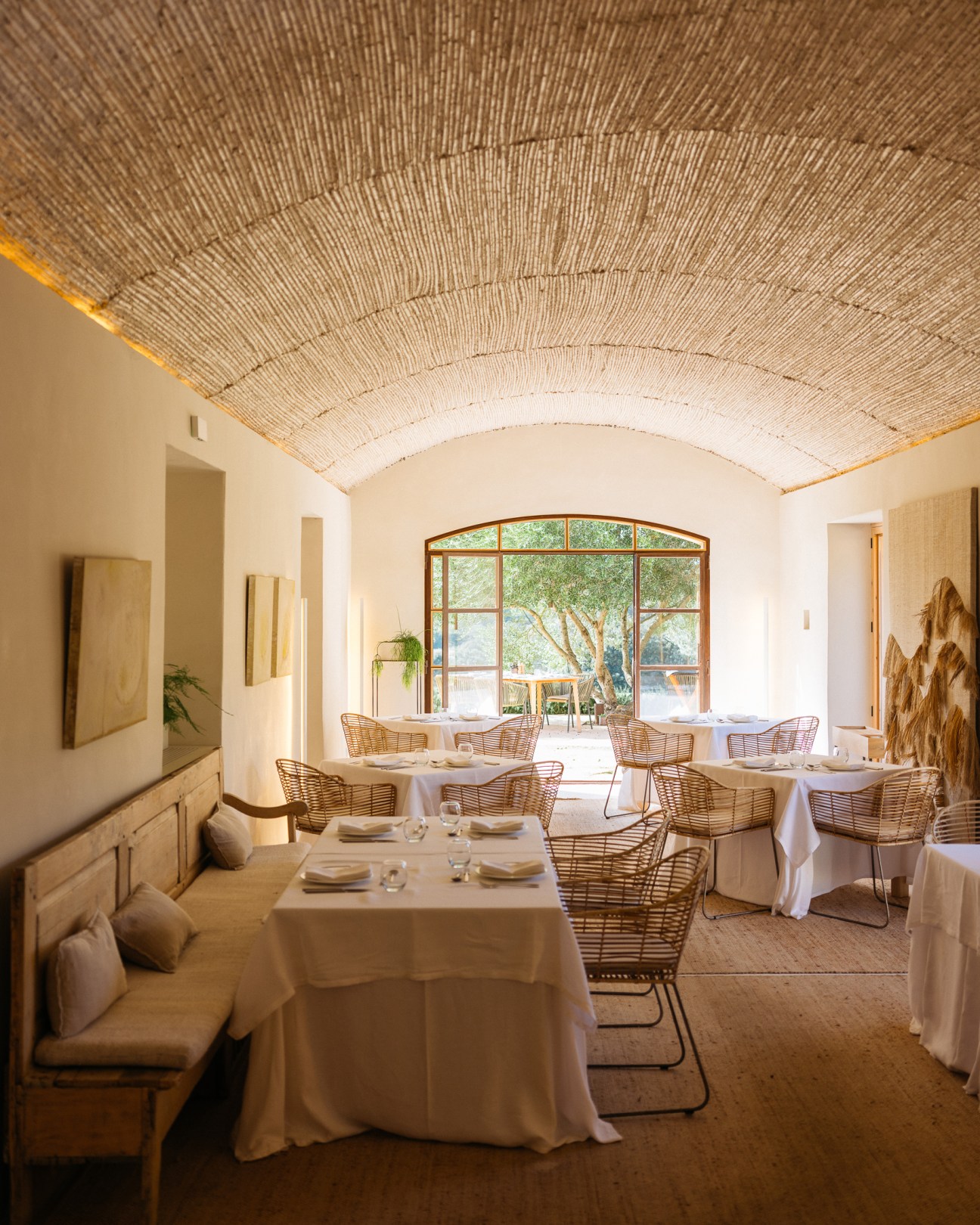
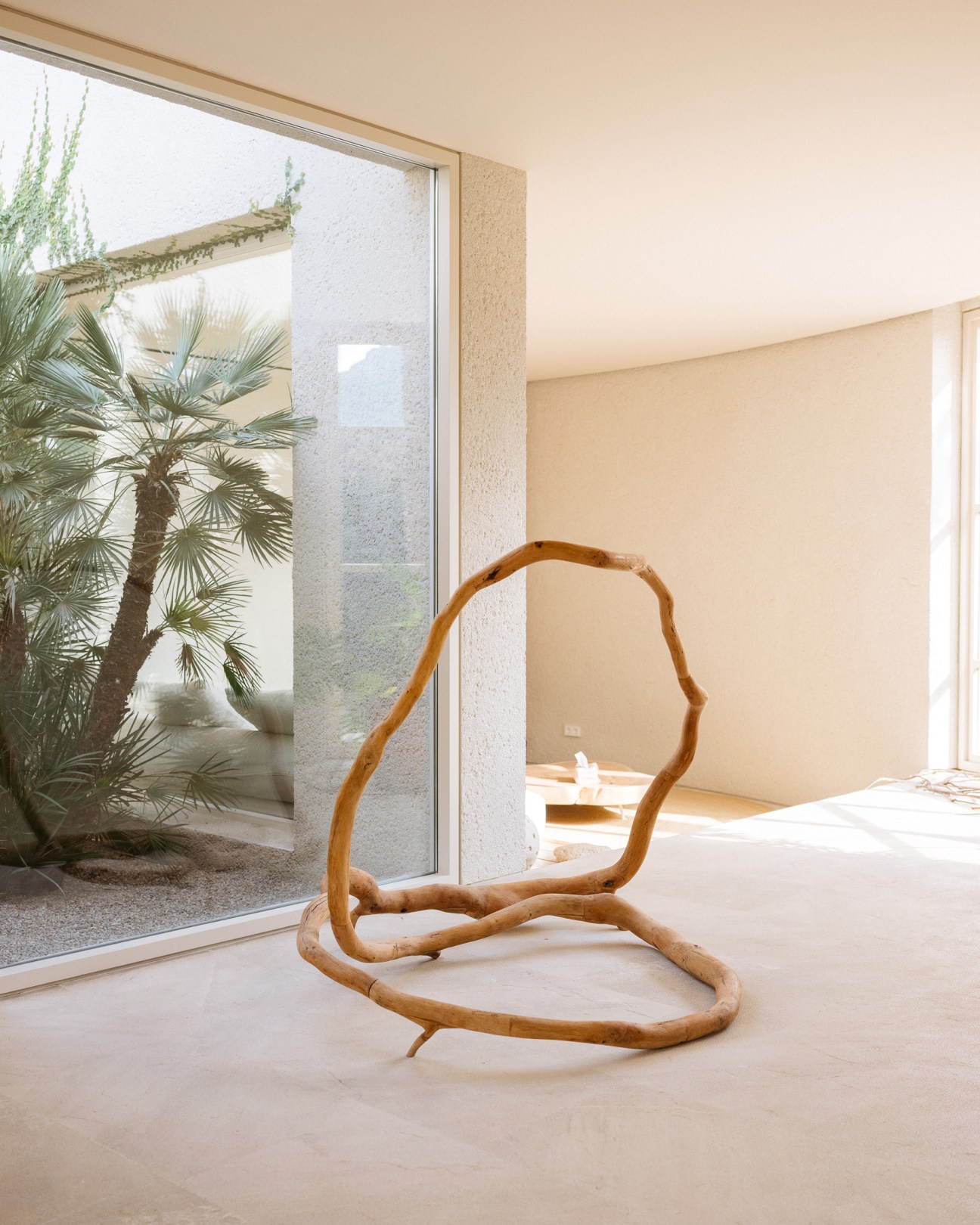
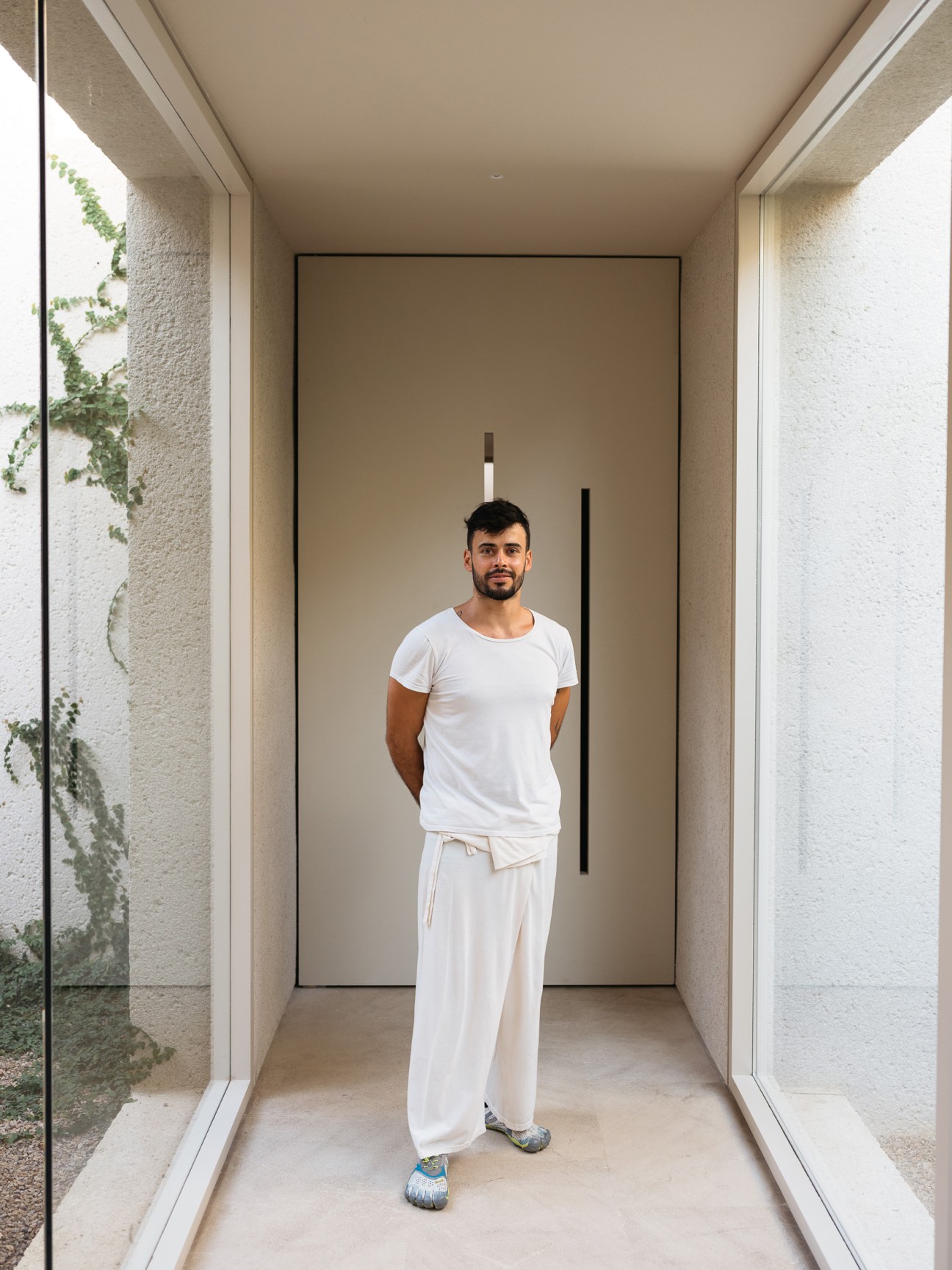
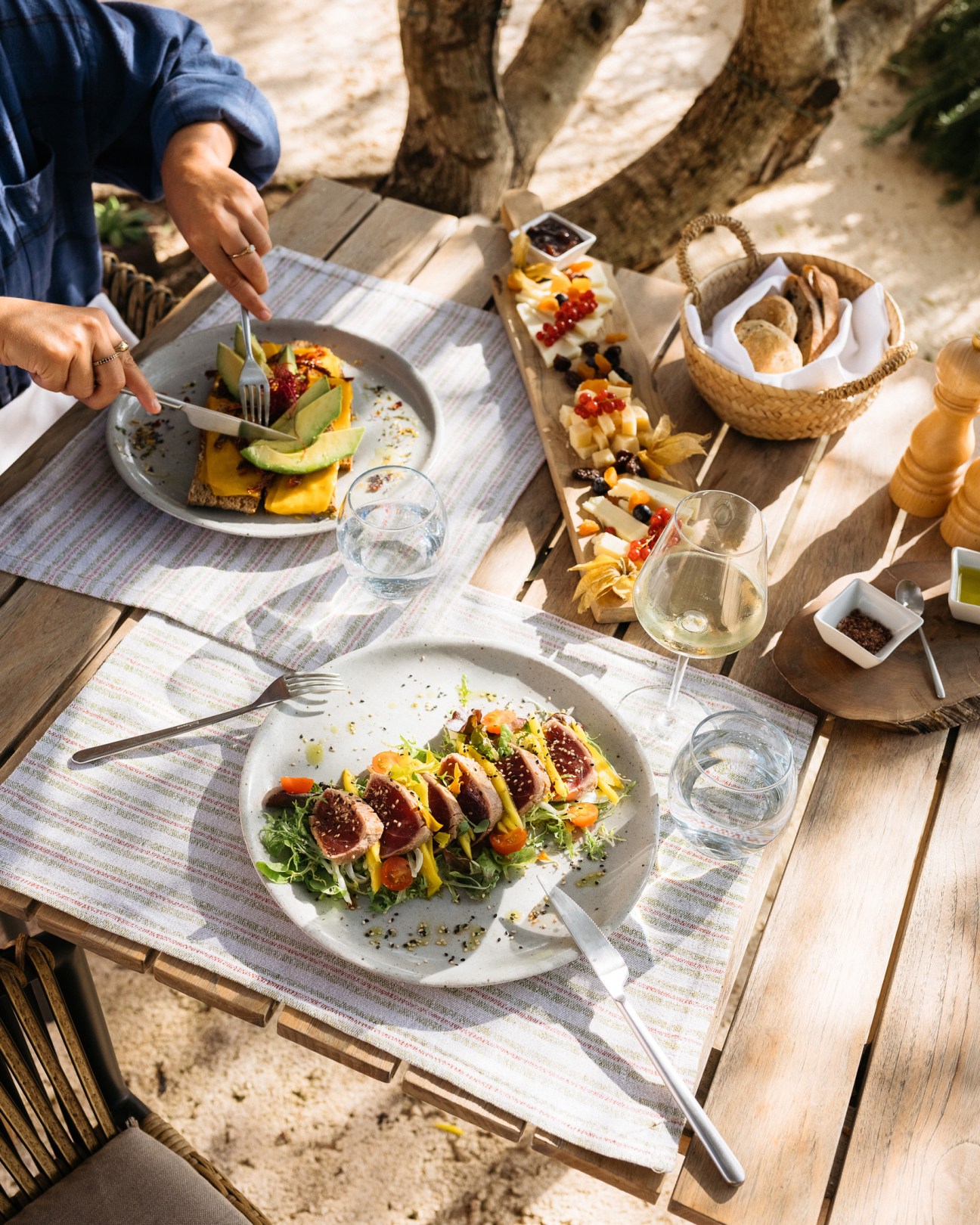
There’s integrity too. Local artisans and workshops have built much of the furniture. There’s also a focus on being sustainable, using solar and geothermal energy, and allowing carefully engineered shafts of daylight to illuminate the subterranean treatment rooms. In short, every space is considered and truly beautiful. But there is something bigger at play here: an attempt to reset tourism on the island and to find a path back through the fields to a Mallorca of memory.
esracodarta.com
For more hotels in Spain pick up a copy of ‘Spain: The Monocle Handbook’, which is available now at monocle.live/shop
All you can eat
Florette
Toronto
The Victorian shopfronts and elegant townhouses that line Toronto’s Queen Street West have long been home to some of the city’s nicest independent shops and dining rooms. Among the newest is Florette. “The way I discovered Toronto as a teenager was through its restaurants,” says founder Jerry Zhang, who left a career at Warner Music to open his own venue. “That’s how I fell in love with the city. I wanted to open something that was part of what makes Toronto’s food scene special.”
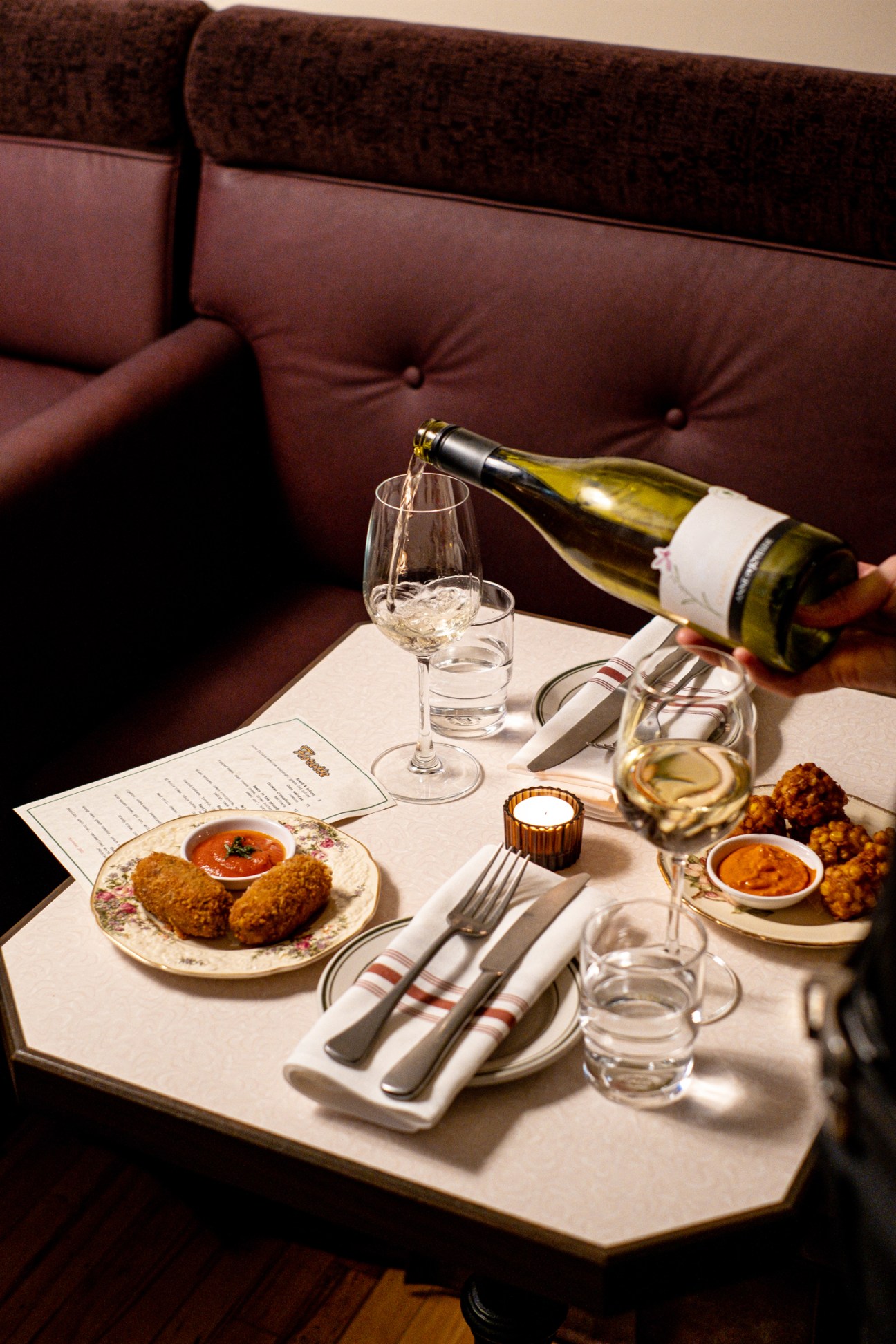
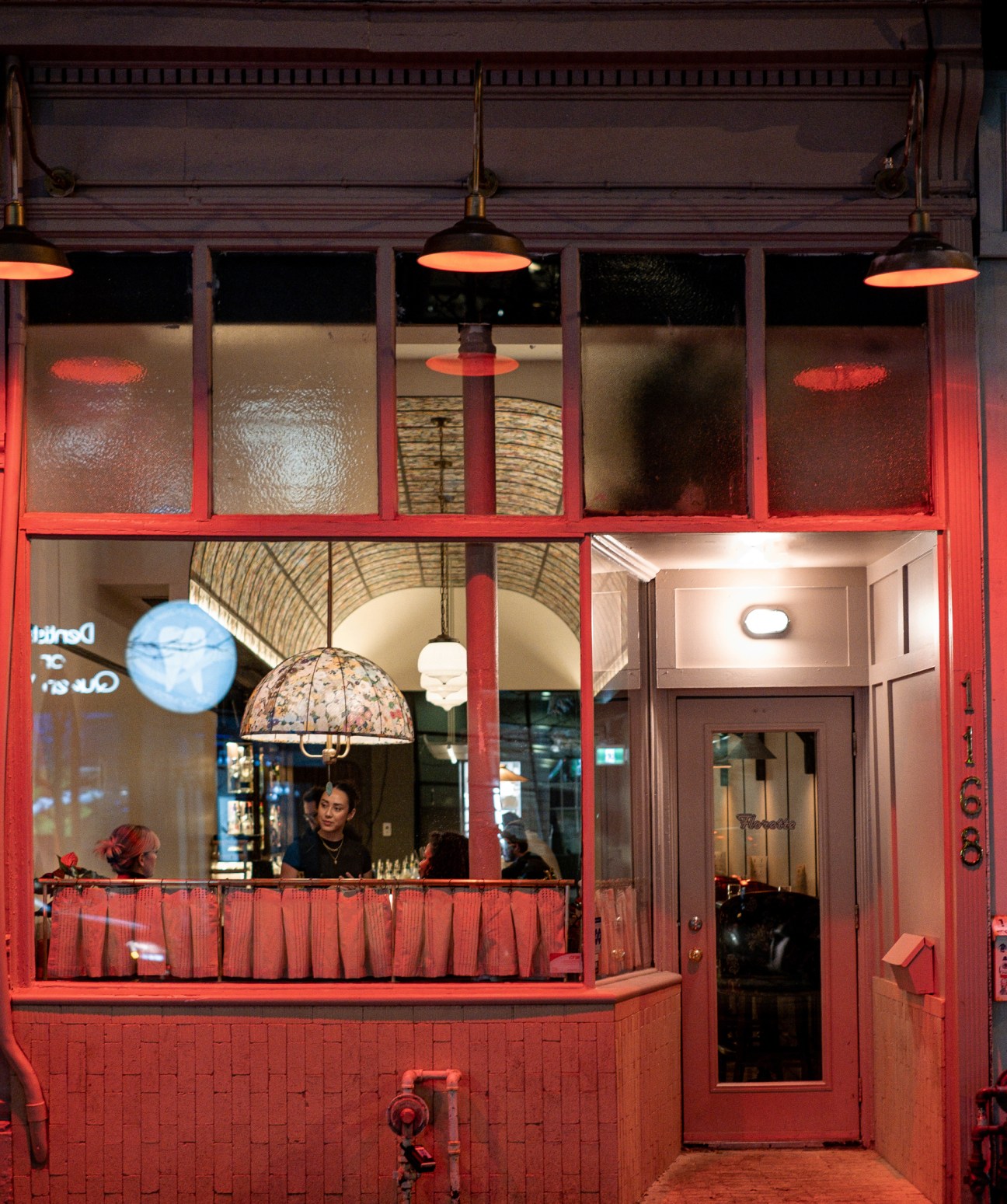
Toronto studio Denizens of Design saw to the interiors, which include a luminous ceiling printed with flowers. The furniture is either custom-made or sourced from antique dealers nearby. Florette’s menus are mercurial and defy categorisation – try clams from the Pacific coast served with fried curry leaves or chicken croquettes with house-made marinara sauce.
florettetoronto.com
Apollo Inn
Melbourne
Chef Andrew McConnell and partner Jo McGann’s Apollo Inn is a mere 50 metres from their beloved bar and restaurant Gimlet, the site of one of Melbourne’s first ever public houses. This intimate cocktail bar has new interiors by Sydney-based design firm Acme and draws inspiration from the timeless bars of Europe, with low lighting, wood panelling and a bijou 30 covers.
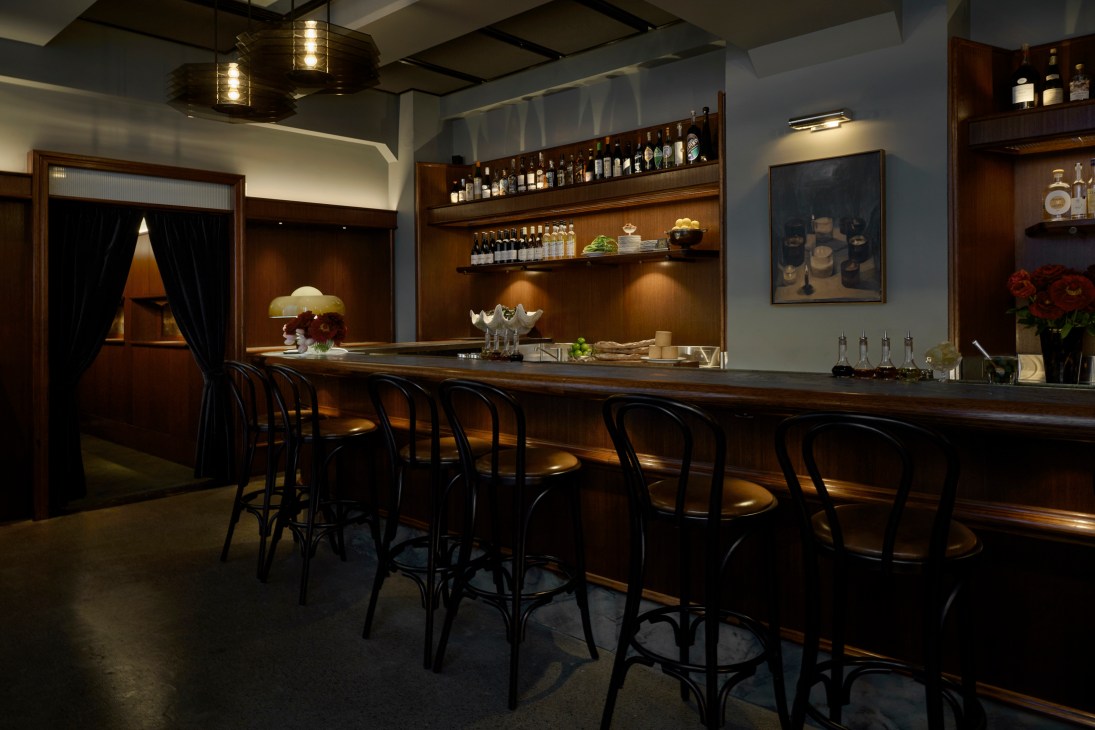
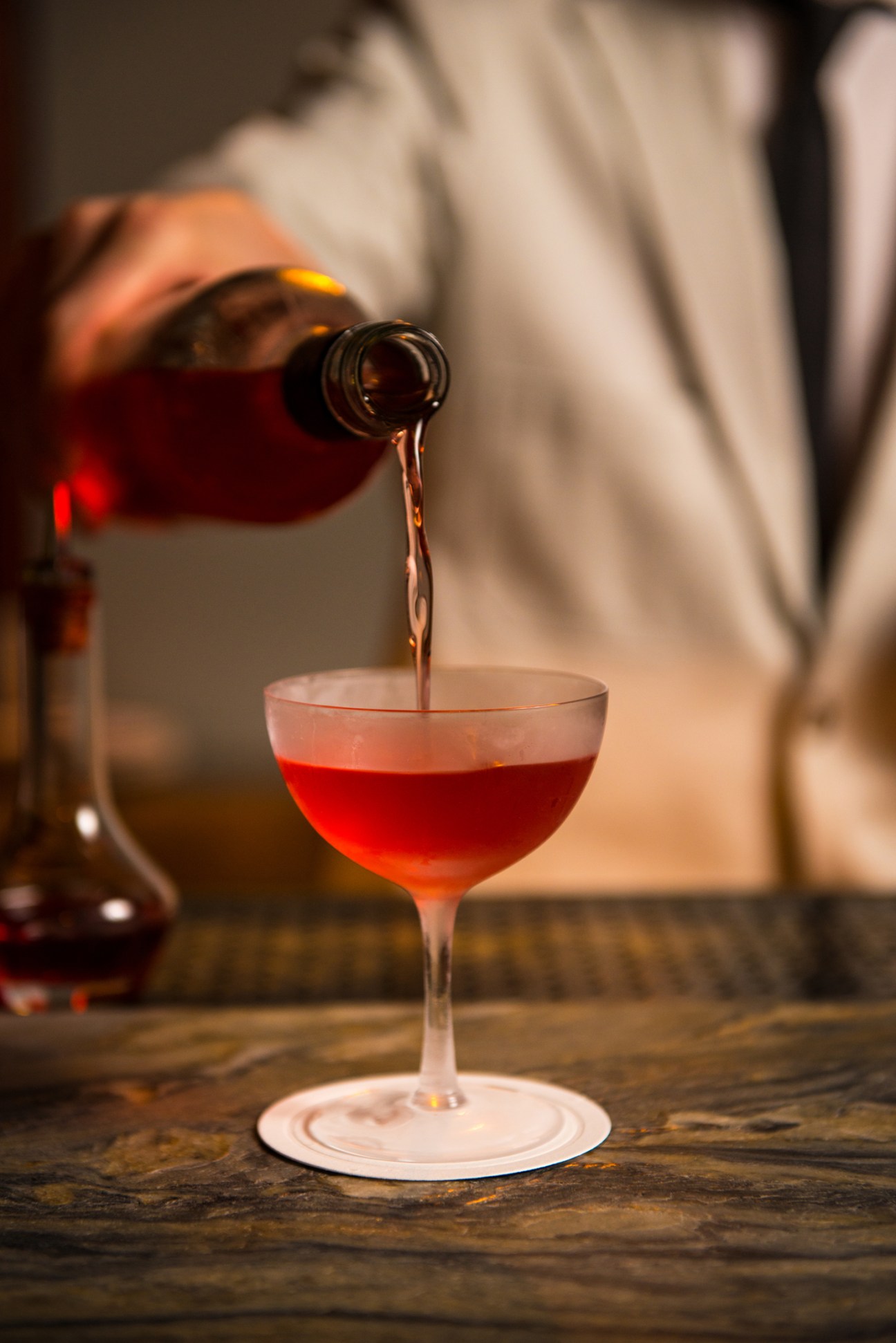
McConnell kept the menu tight and a little more rustic with 10 or so dishes that change regularly but can include a perfect prawn cocktail, oysters on ice or a classic beef carpaccio. There are four martinis on the menu, while house cocktails include a picon bière (chinotto, blood orange and juniper with French lager), a stinger (brandy and crème de menthe) or a classic champagne royale.
“The vision has always been in the back of our minds,” says McConnell. “We wanted to create a place that can happily be the night out or the before or after: one that was more focused on the drinks than on food.”
apolloinn.bar
Bostich
Berlin
Bostich opened in late spring but feels like it has been in Berlin’s Wilmersdorf for ever. Swiss-born restaurateurs Simon Bühler and Yllnora Semsedini wanted to create a place in which diners would linger. “[For those] evenings when you dress nicely because you are looking forward to time well spent with friends,” as Bühler puts it. “And with food that everyone enjoys.”
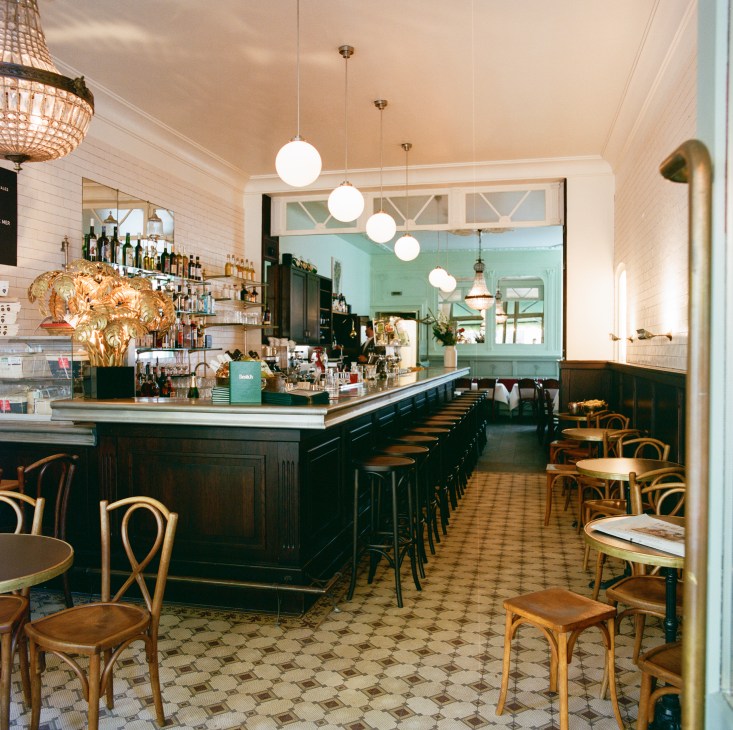
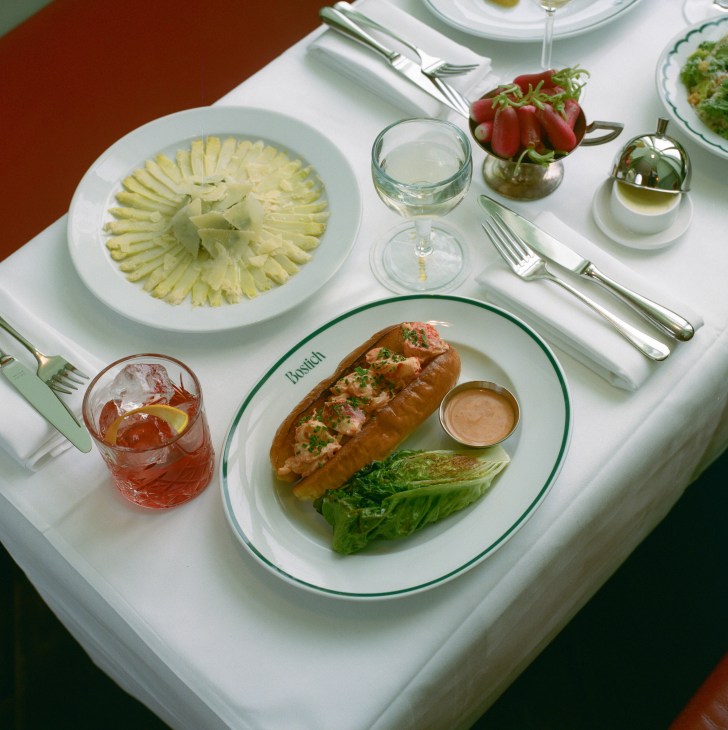
For Bostich that means fresh oysters and shrimp cocktails in the afternoon sun and unpretentious but high-end classics, such as buttery carrots, mashed potatoes and veal served in a fetching copper pot. Other highlights include tender lobster roll, truffle risotto and, to finish, a crêpe suzette (flambéed at the table by the brilliantly named chef Sarah Fillet. Design-wise there’s a whiff of 1930s France, with Maison Jansen palm-tree lamps, red wicker chairs and round bistro tables.
bostich.berlin
Sturehof
Stockholm
Sturehof, founded in 1887, has just reopened at its original address at 2 Stureplan in central Stockholm. The restaurant, which is spread across two floors, now seats 400 with a further 150 covers to come in 2026.
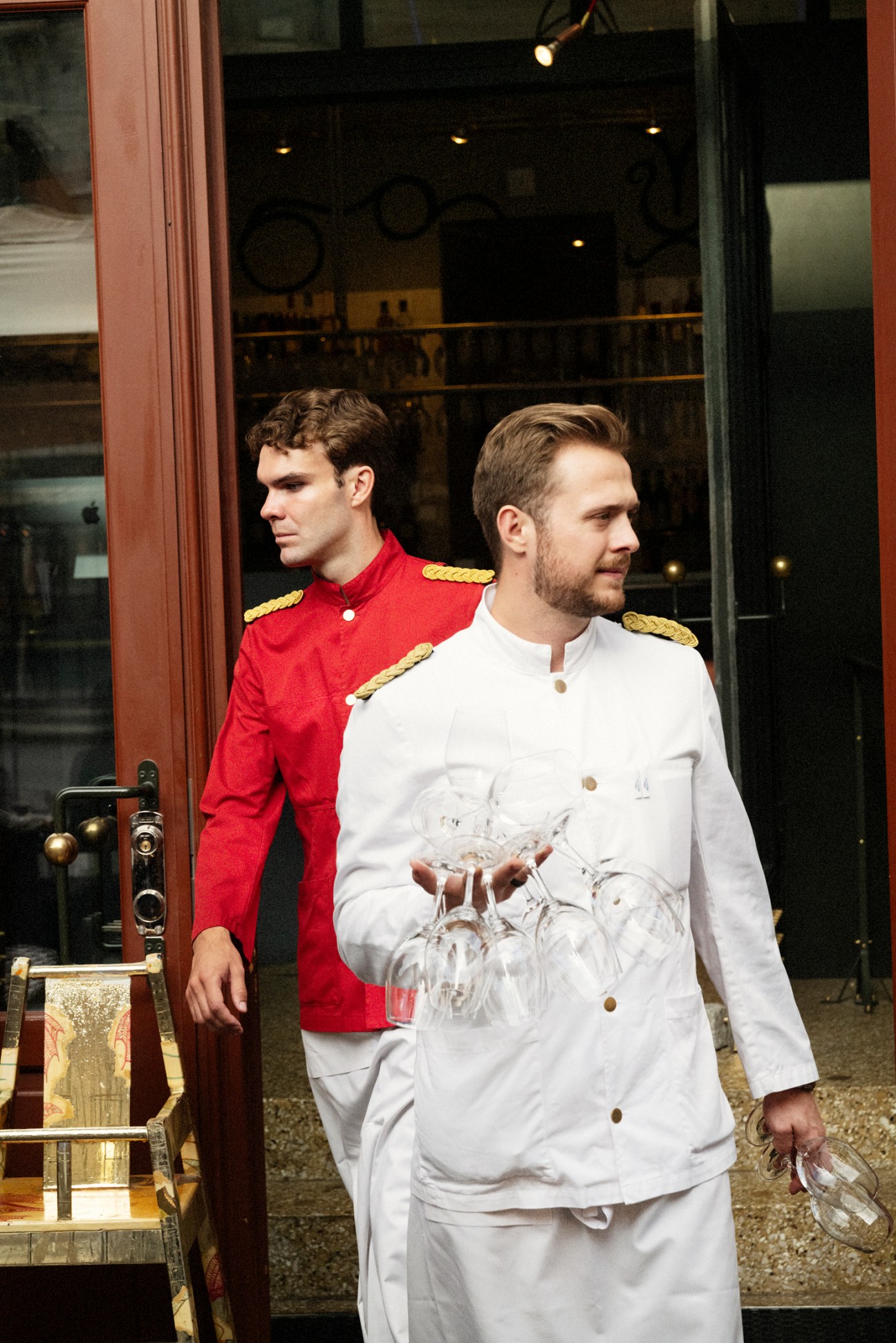
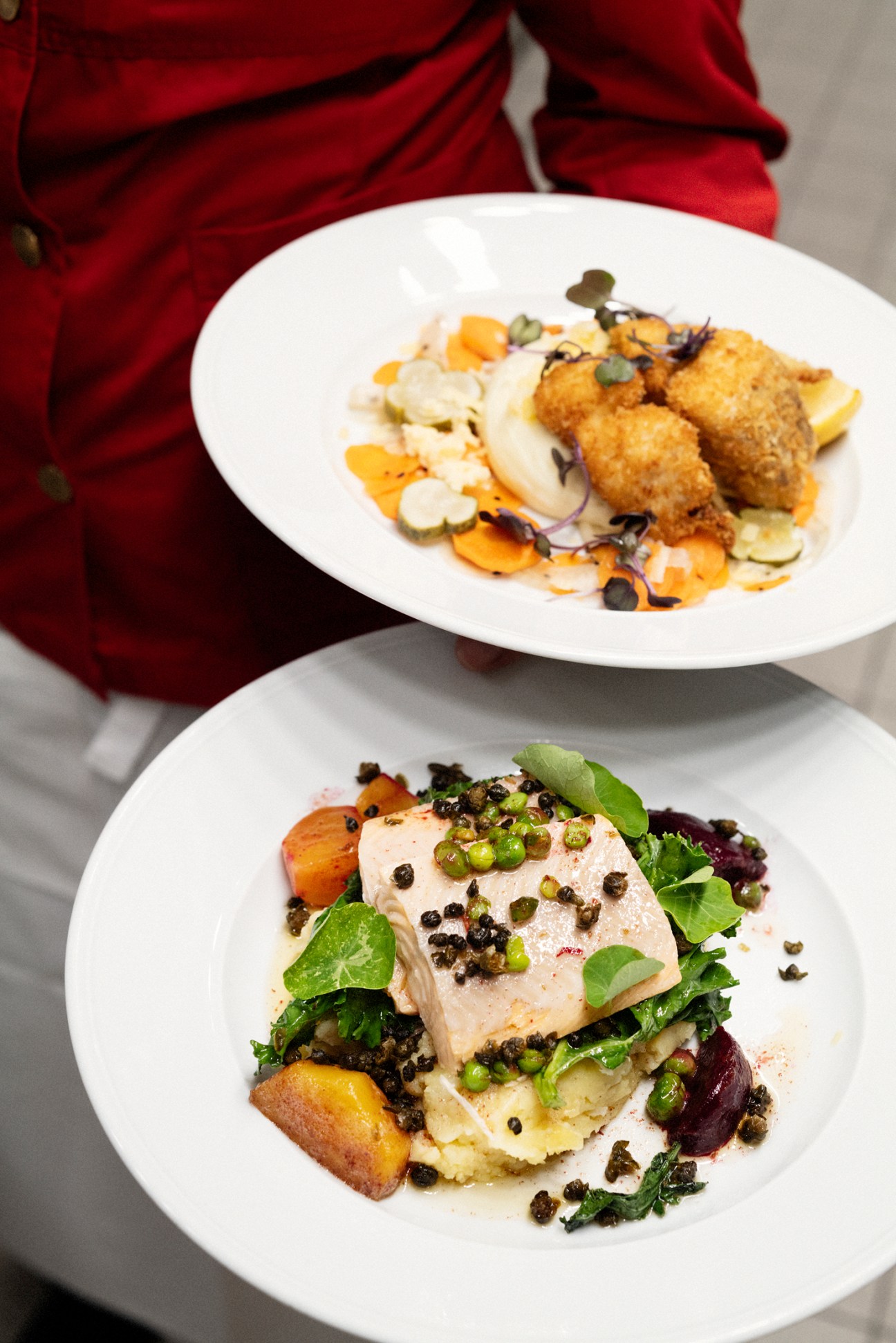
The space has been carefully updated by Stockholm practice Dinelljohansson: expect white tablecloths, oak panelling, terrazzo floors and black leather seating. There’s a book-lined dining room upstairs where books not only add to the atmosphere but are available to buy. Downstairs, there’s a snug 16-cover bar.
Seafood is still the speciality; Monocle sampled crayfish from Smögen on the west coast, served with radishes grown in the kitchen’s farm in northern Stockholm. Classics such as turbot with butter sauce or fresh Baltic herring caught by Sturehof’s own fishing boat are never far away. Occasionally, game hunted by the founder, PG Nilsson (whose restaurant group is an investor in Monocle), appears on chef Michael Larsson’s always-pleasing menu.
sturehof.com
Ember
Berlin
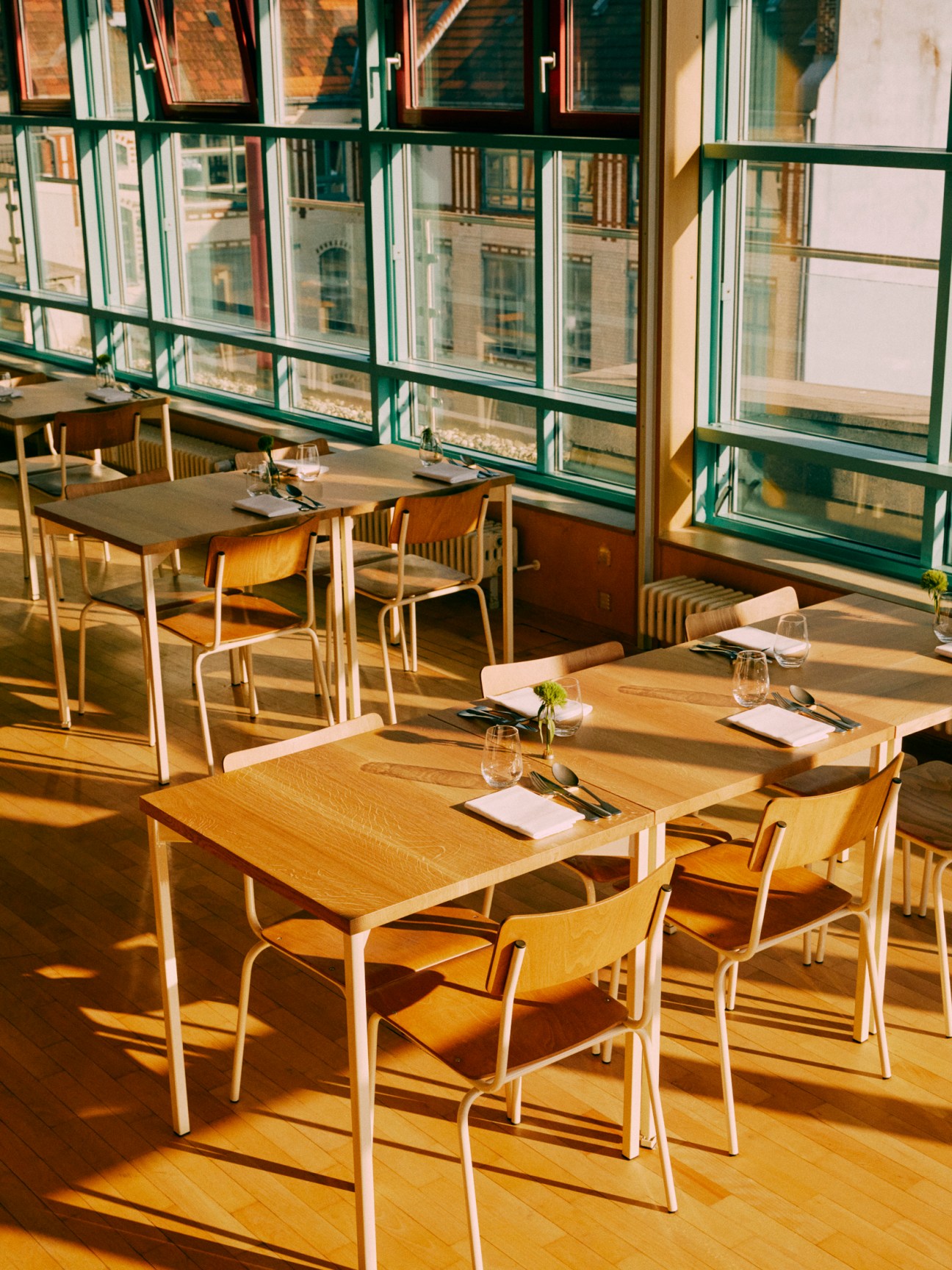
After stints at Copenhagen’s Noma and Berlin’s Ernst, chef Tobias Beck decided to focus on cooking on an open fire. After a few years of pop-ups across Berlin, Ember has at last found a home on a rooftop in Kreuzberg. Reached by taking a run-down elevator in a courtyard, the space has an outdoor terrace-cum-kitchen and a glass-walled dining room with appealing views.
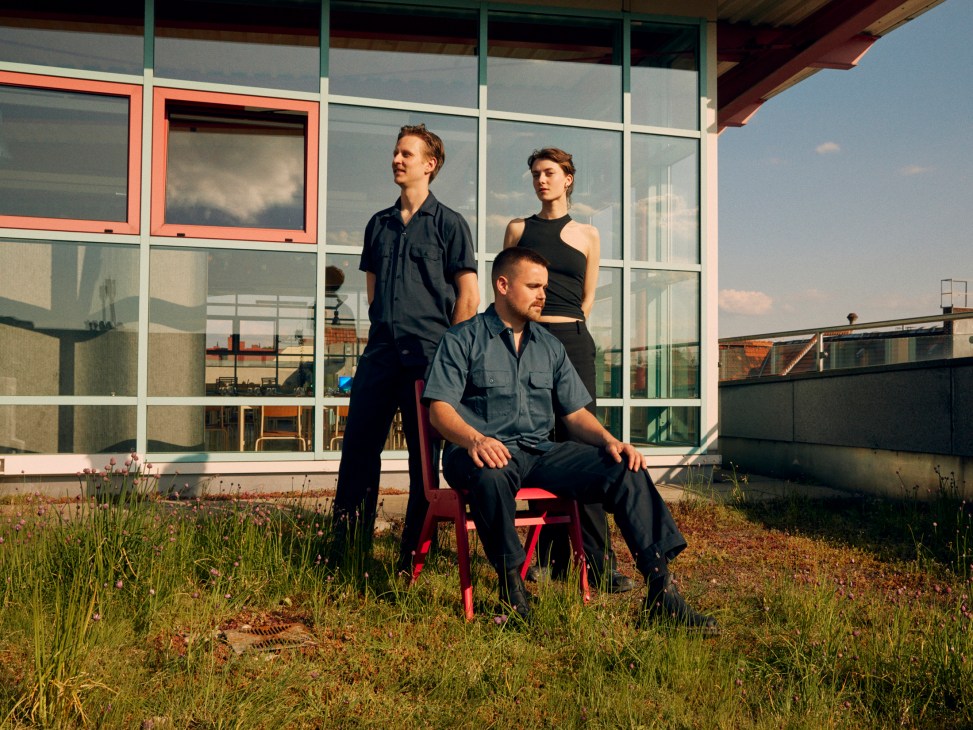
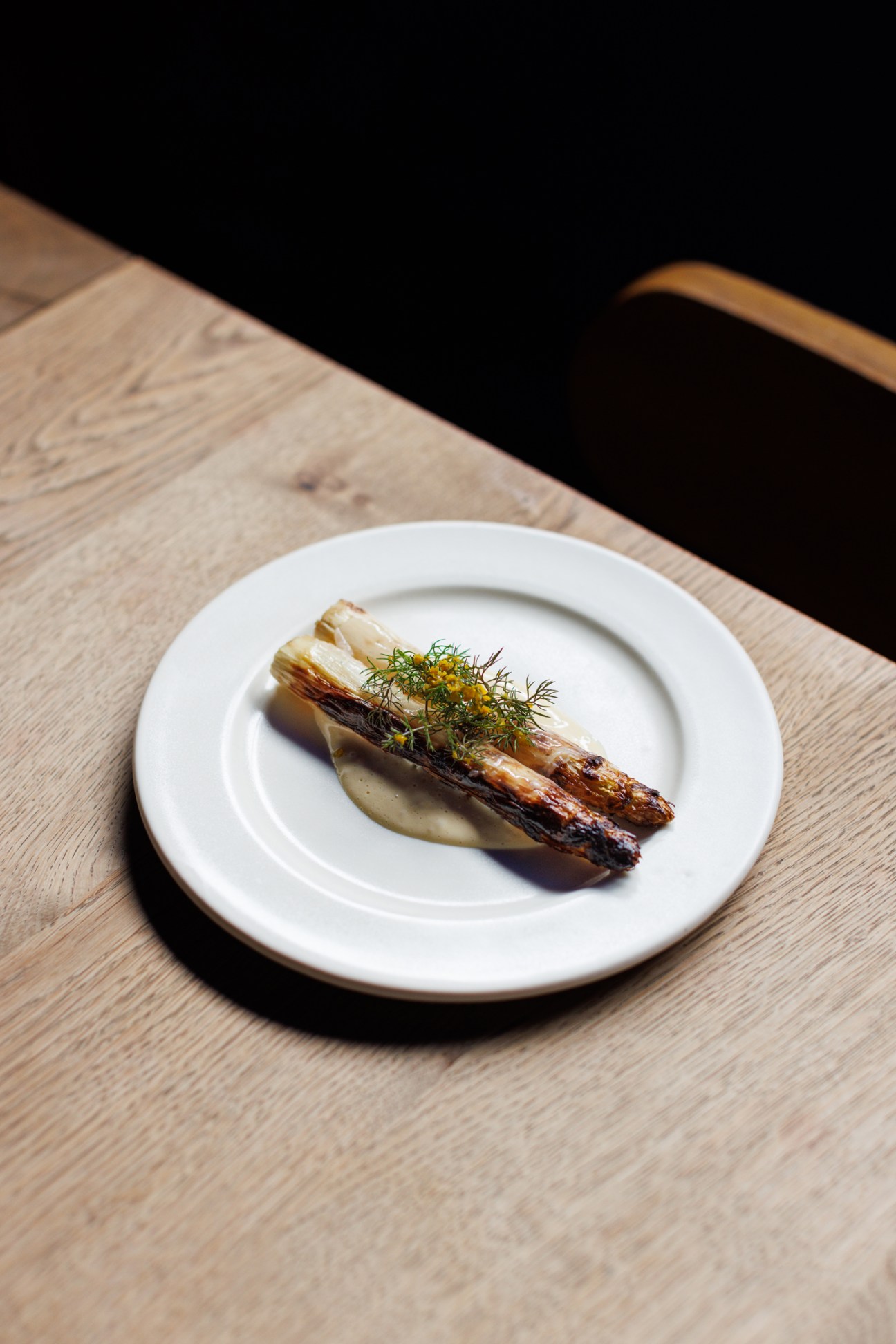
Beck’s approach to barbecuing steers clear of typical fare. “Germans love to grill but I’m trying to challenge the macho culture,” he says. Ember’s four-course tasting menu features dishes such as young asparagus with herb-packed sauce, slow-cooked lamb tacos and flaky wood-fired mackerel, all washed down by crisp natural wine.
ember-ofc.com
’Swill’ magazine
Sydney
The second issue of Sydney-based Swill magazine brings to light the often overlooked moments of everyday culinary culture. “It’s about the pure joy, play and creativity that exist in the hospitality industry,” says journalist and editor Myffy Rigby, who launched the large-format quarterly in 2022 after a spell at Time Out Australia and other publications.
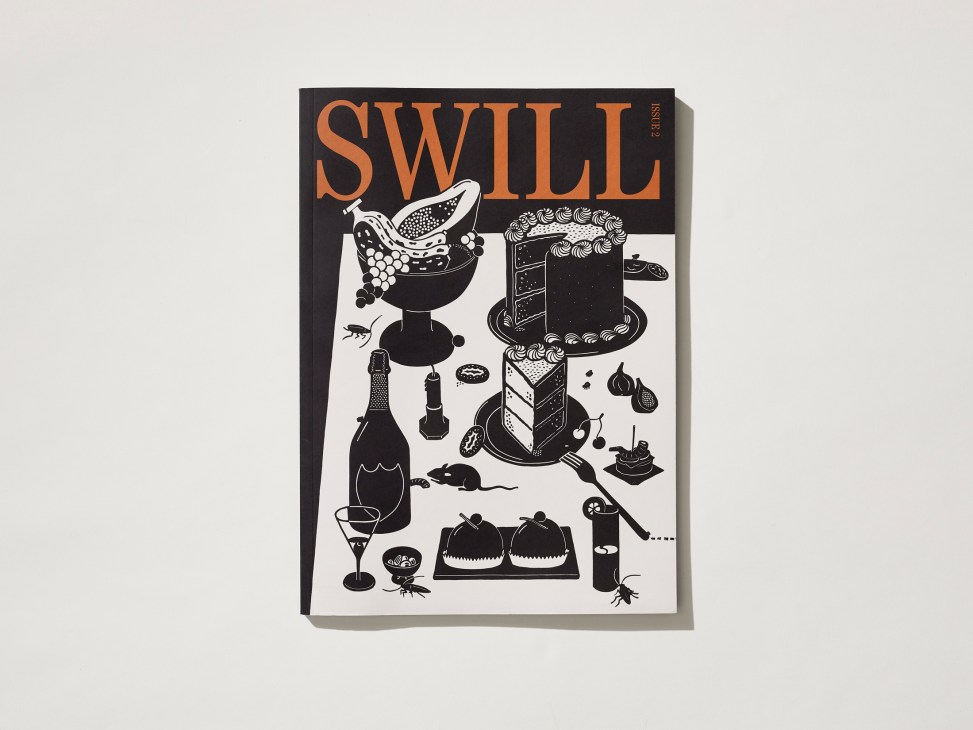
Behind the cover – an artful tableau by illustrator Allie Webb – readers will find a feature on the Mexican torta, a defence of the maligned Long Island iced tea, a fond farewell to Sydney institution Frankie’s Pizza, and plenty more besides. Look out for Issue 3, which jumps from the coast of India to a tour of Philadelphia with leading American pizzaiolo Joe Beddia. Tuck in.
swillhouse.com
Recipe
Pea and crab crostini
“I can’t wait to serve this refreshing snack to guests,” says our Swiss chef Ralph Schelling. “Some lightly toasted chilli flakes or a little honey will also go well with this dish and you can substitute the crème fraîche with fresh ricotta, as I did recently.”
- Ingredients
- 150g fresh peas
- 1 fresh baguette
- Olive oil, to drizzle, plus extra for serving
- 50g white crab meat
- 5g tarragon, finely chopped
- Black pepper, freshly ground
- 1 lemon, zest and juice
- 4 tbsps crème fraîche
- Chilli flakes, to taste

1.
Method
Cook the peas in boiling salted water for 4 minutes. Drain, cool under cold water and then drain again.
2.
Cut the baguette into eight slices. Place on a baking sheet, drizzle with a little olive oil and toss to coat. Grill for 2 minutes on each side. Set aside to cool.
3.
Place the peas in a bowl and mash with a fork. Mix in the crab meat, tarragon, black pepper and a drizzle of olive oil, as well as the zest and juice of half of the lemon.
4.
Spread a little crème fraîche on every toasted slice of baguette. Top each with a dollop of the crab meat mixture.
5.
Serve with more grated lemon zest, chilli flakes and a drizzle of olive oil.
ralphschelling.com
For more recipes and food news (plus Tyler Brûlé and Andrew Tuck’s columns) sign up to The Monocle Minute newsletter today.
IMAGES: José Cuevas, Valentin Cheli
Magnetic fields
Rock stars find many ways to part with their wealth but Takeshi Kobayashi has always taken a philanthropic view with his spending. A successful musician in his own right, as well as the producer for multimillion-selling Japanese band Mr Children, Kobayashi might have gone on a lavish spending spree. Instead, in 2003, he joined with other musicians to co-found AP Bank, an investment initiative to help businesses that were trying to move in a sustainable direction. Next he opened an organic restaurant, Kurkku Kitchen, in Harajuku. Then he bought a slice of land in Chiba and in 2010 turned it into an organic farm. Gradually, that rural idyll – barely an hour’s drive from central Tokyo – has become a sustainable food mecca and, as of last year, a hotel.
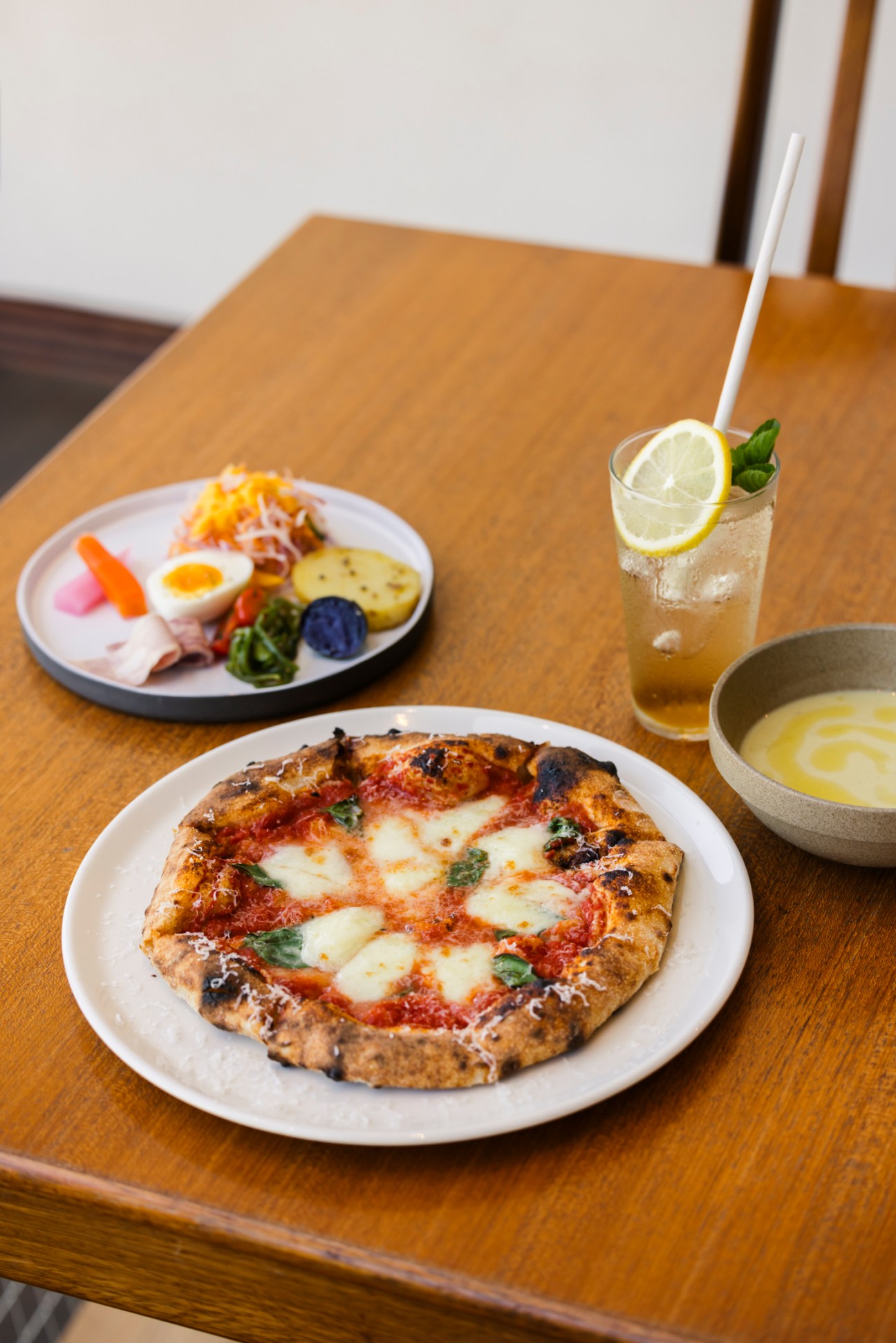
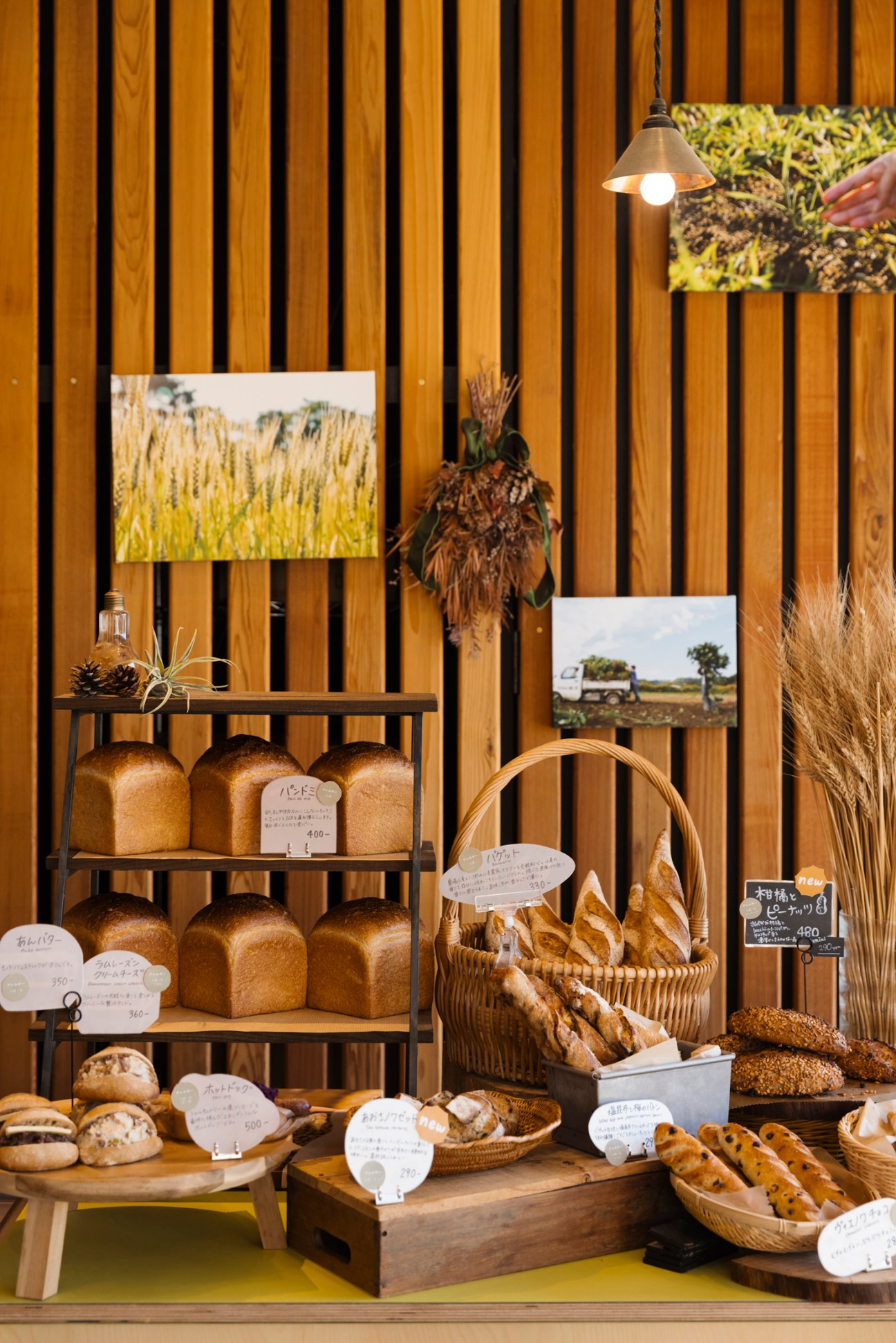
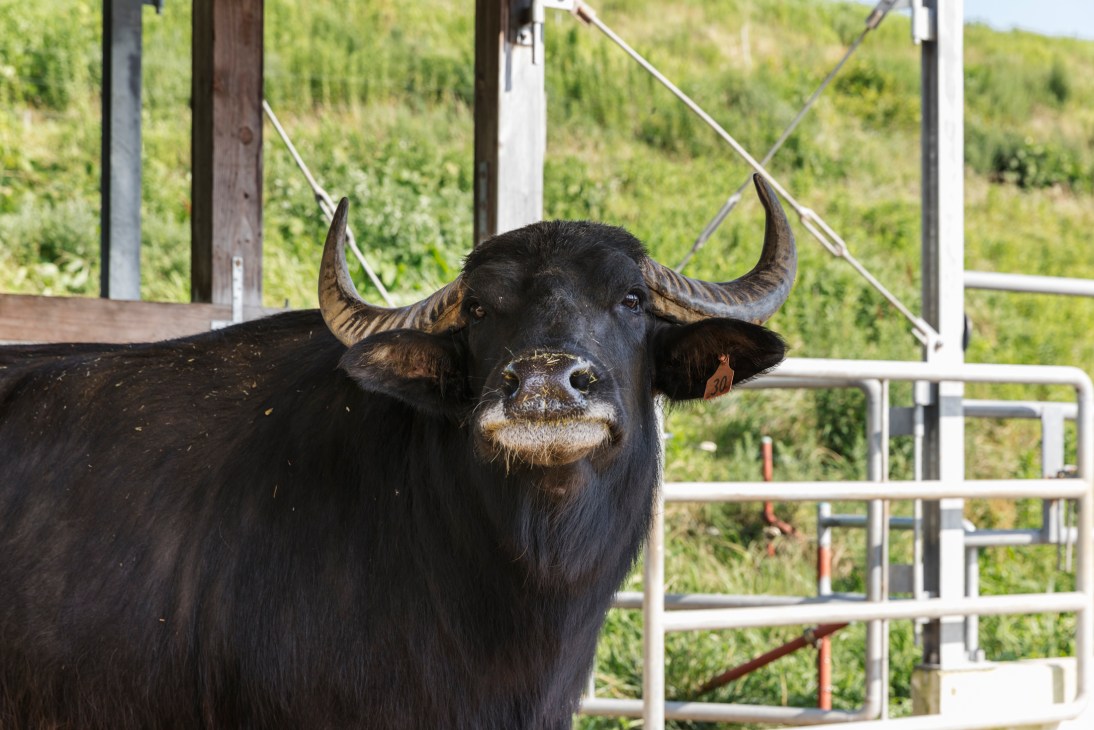
Kurkku Fields (kurkku means “cucumber” in Finnish) occupies a rolling patch of 30 hectares. Today it’s a model of organic agriculture practice, with rows of carefully tended vegetables, about 900 chickens roaming freely in their own quarters and water buffalo, dairy cows, goats and sheep. It’s not for show either. The produce is used in the restaurant, which serves vitamin-packed lunches and woodfired pizzas to a full house. The ice cream stand sells fluffed-up soft ices made with the cows’ milk; the milk from the water buffalo, sheep and goats is used for cheeses that turn up in the shop, bakery and restaurant.
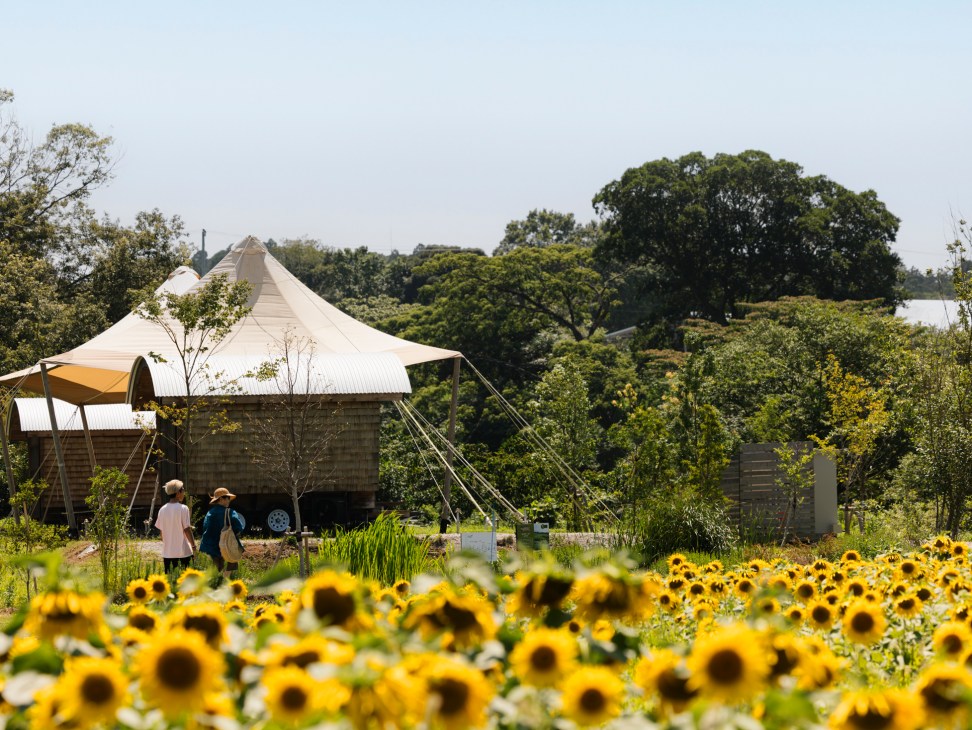
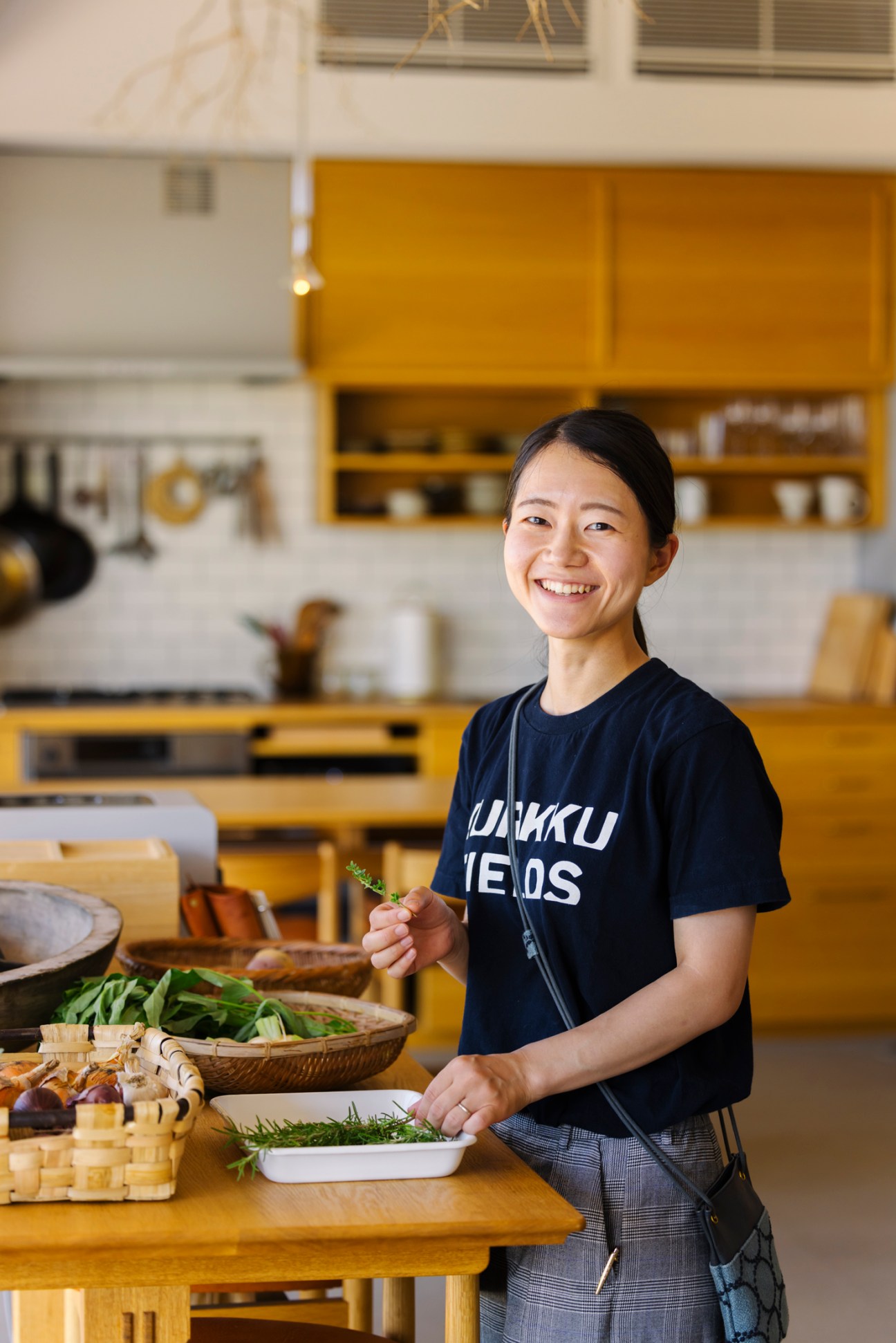
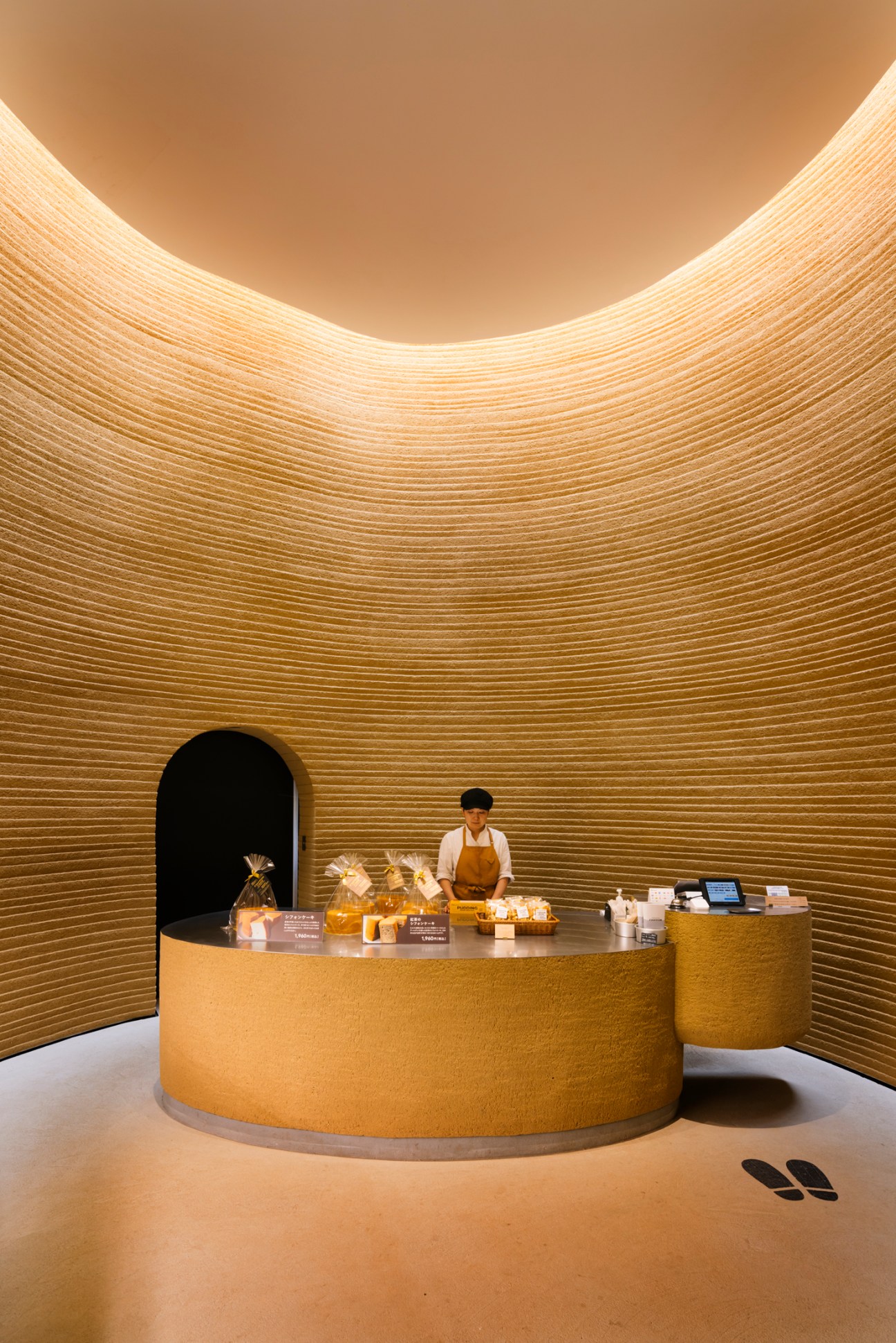
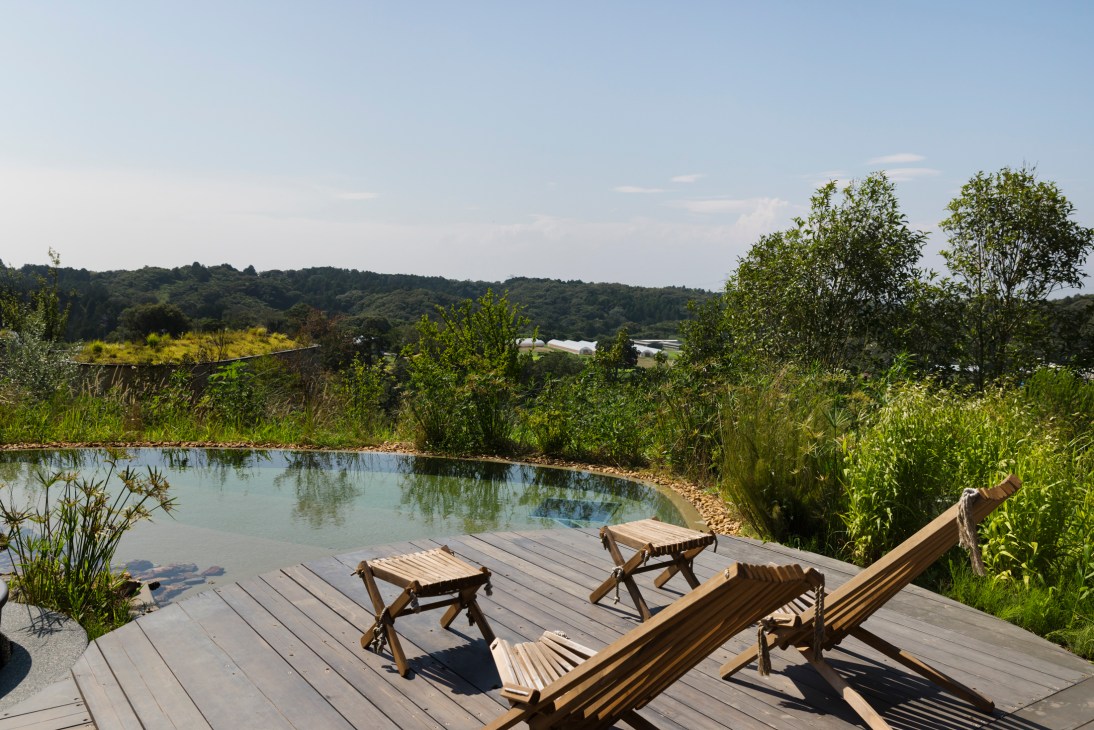
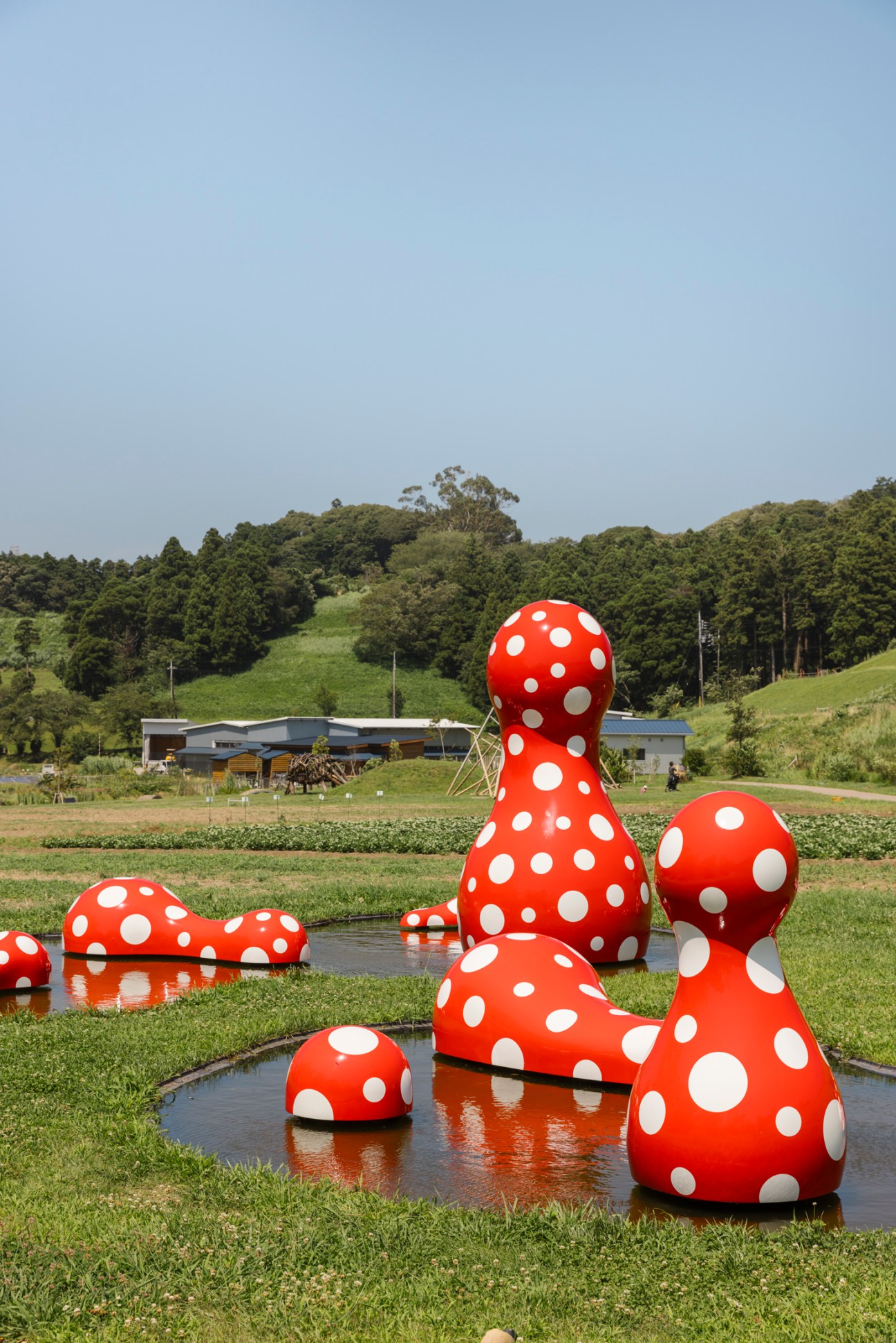
Visitors can come just for the day, enjoy the views and stroll around the grounds. Music (composed by Kobayashi, naturally) wafts through the air and contemporary art pops up in surprising corners; one of Yayoi Kusama’s famed Infinity Mirrors sits in a grassy nook. There’s a farm shop selling everything from Kurkku merchandise to fresh vegetables, and a deli serving home-cured ham and burgers made from locally hunted boars (generally seen as a nuisance by farmers in Japan). Chiffon sponge cakes are baked and sold in a dedicated building, with the eggs for them and for the softest crème caramel coming from the farm chickens.
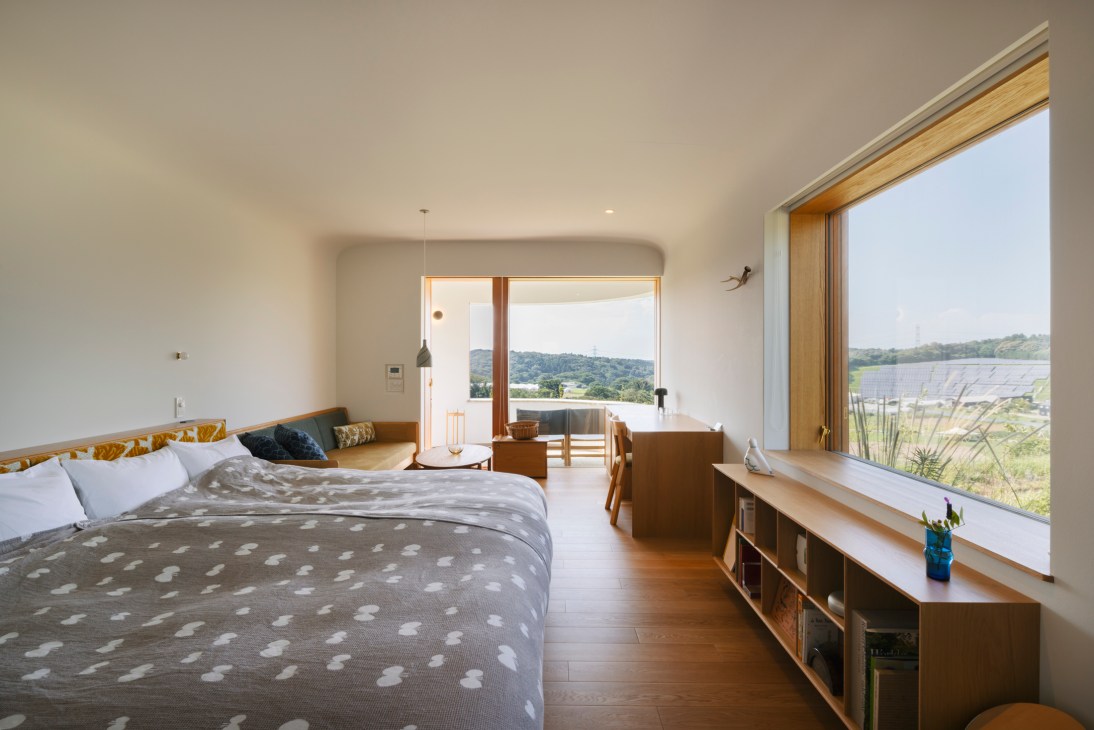
Those who want to stay can opt for one of the rustic wooden huts or this year’s hotel addition, Cocoon. Comprising seven freestanding rooms, a sauna and plunge pool in a fragrant garden planted with herbs and trees, Cocoon is the work of Akira Minagawa, whose Scandinavian-sounding brand Minä Perhonen encompasses fashion, textiles and interiors.
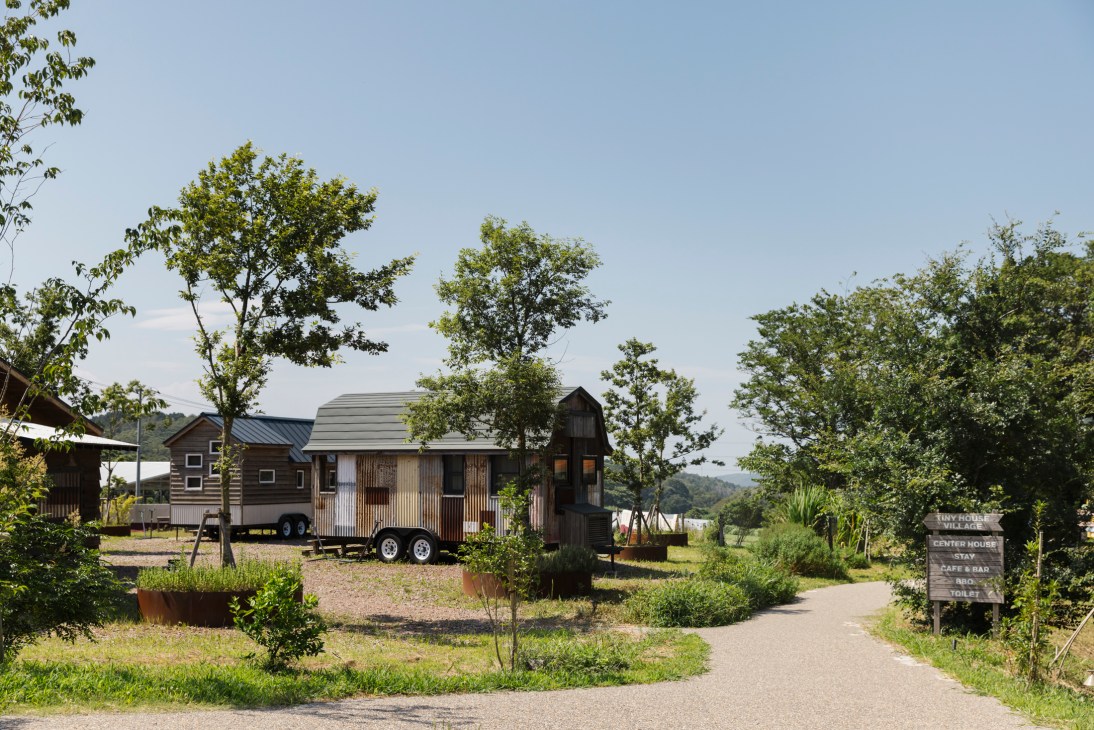
“We already had an accommodation facility called Tiny House Village on the grounds,” says Kobayashi. “The concept for that was learning that a small space could be enough, which was a first step for people to appreciate this place. But I wanted Cocoon to be something different: a place for deep thinking, where people could spend the night with a sense of floating in the middle of nature. So I talked to Minagawa-san; his products are wonderful and I had a gut feeling that there would be a good synergy. I asked him to take care of the entire concept.”
“I was really happy when I received the offer,” says Minagawa. “I’d been interested in creating ‘proactive’ accommodation for a few years; a place that doesn’t offer luxury or special services but is somewhere people can have an experience that they can’t have in their daily lives, in a simple setting. This goes back to my teenage years when I was travelling as a backpacker. I would buy food at the market and cook and eat together with the other people in the dormitory I was staying at; it left a deep impression on me.”
Minagawa worked with Takato Yoshida’s Kyoto studio Ikken on the architecture; the curvy wooden pods are decorated with Ikken’s timber furniture along with Minä Perhonen bedspreads and cushions; the bathrooms are lit from above by a skylight in the grassy roof. All guests get to experience a 90-minute farm tour, picking their own herbs and vegetables; they can either cook their own food in the shared kitchen – some visitors relish the time to cook away from home – or enjoy a meal prepared by chef Yoshiki Yamana with charcuterie made by chef Osamu Okada (who also happens to be a hunter) and fresh cheese from Hidetoshi Takeshima. The kitchen is fully equipped and the fireplace handpainted by Minagawa.
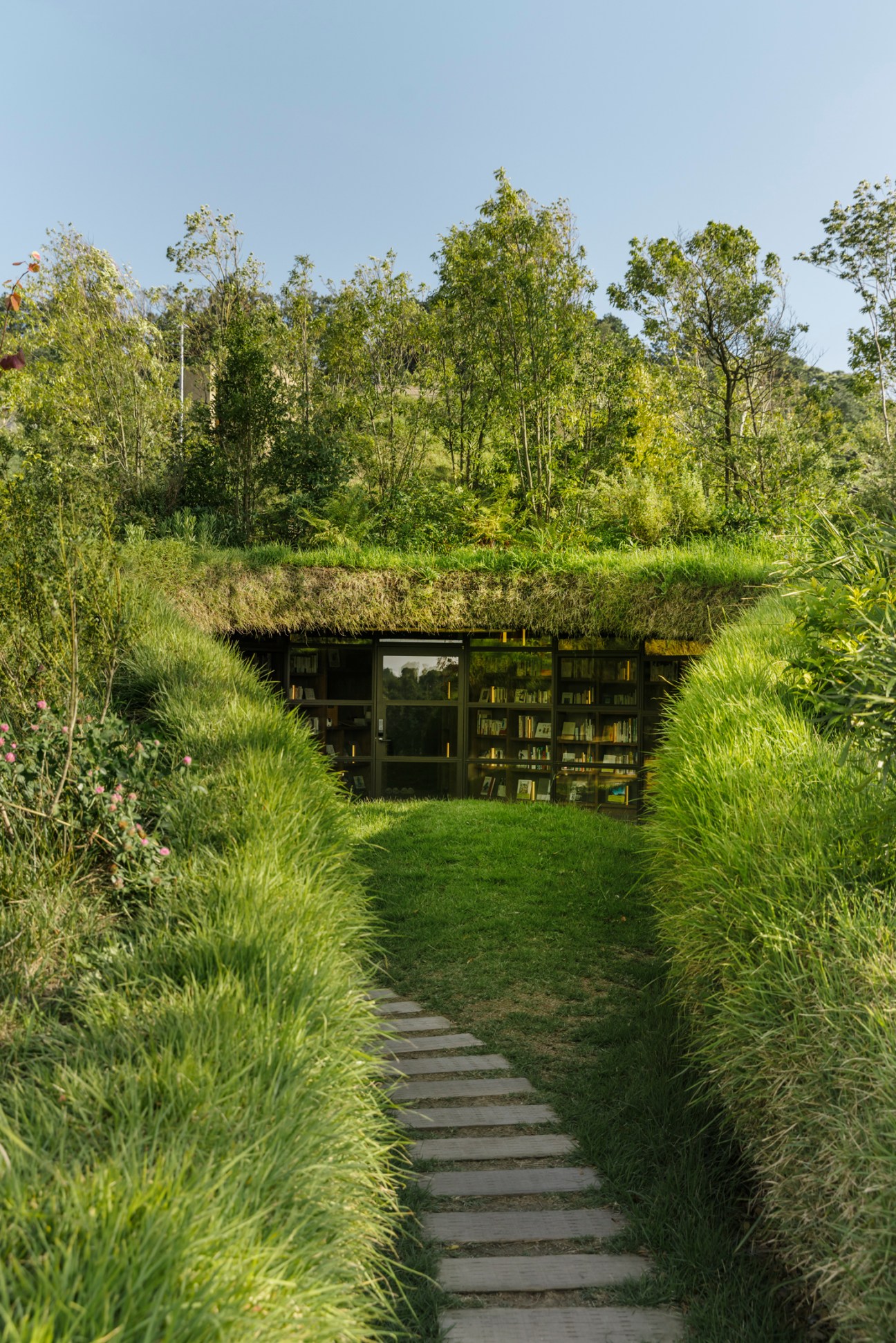
Another new opening on the site this year arrived in the form of an inspiring open-all-hours library, designed by architect Hiroshi Nakamura. Semi-submerged under a grass roof, it offers readers a cool retreat from the summer heat. The 3,000 or so books, curated by Yohei Kawakami of Book Pick Orchestra, focus on nature, farming, outer space, architecture, art and cooking, as well as novels, poems and children’s books. The hope is that people who visit Kurkku Fields will linger and have a deeper experience beyond dining.
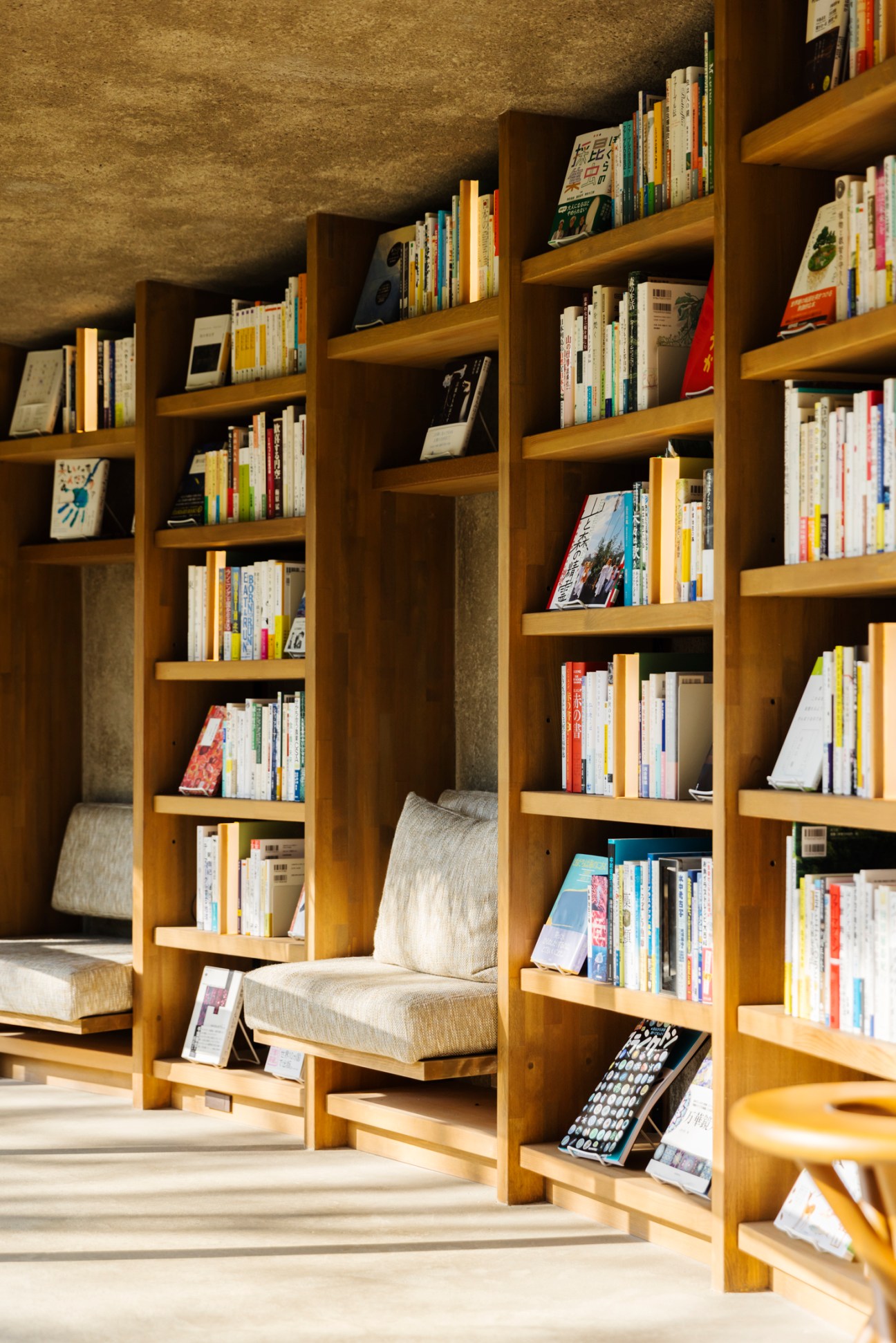
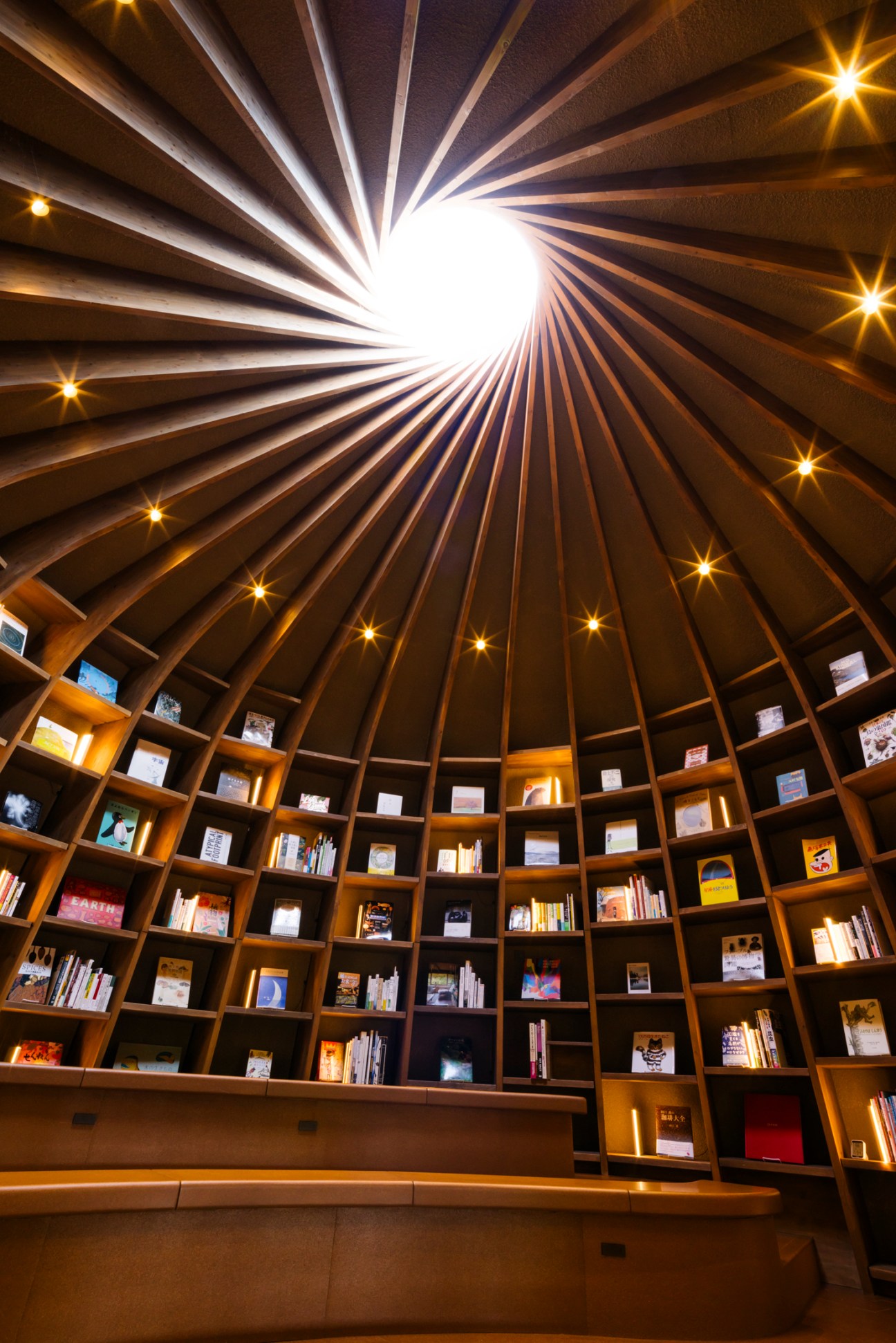
There is much to be gained from a stay at Kurkku Fields but the message never overshadows the simple pleasure of spending time in the countryside so close to Tokyo. For 64-year-old Kobayashi, the project points to his legacy. As he has said, “In the past few years, I have come to realise that the mission of Kurkku is to contribute to the realisation of a sustainable society. It’s something that has to continue into the future.”
Plan your Fields trip
It should take just less than an hour to make the 60km journey by car from central Tokyo to Kisarazu in Chiba, where Kurkku Fields is to be found. It is a scenic drive too: you’ll cross right over Tokyo Bay. Alternatively, take a Keisei bus from Tokyo Station to Kazusa ARC, then pick up a local bus that will take you straight to Kurkku Fields Iriguchi (Kurkku Fields Entrance).
Four to adore
Q&A
Amina Belouizdad Porter
CEO, PS
Los Angeles-based PS aims to bring a little private-jet panache to the airport experience with a membership model. Based at LAX since 2017 – and formerly called The Private Suite – this year it’s opening a space in Atlanta and is restoring the mid-century Pan Am terminal at Miami International. At the controls is its CEO, Amina Belouizdad Porter.

How does PS work?
If you’re taking a commercial flight, instead of going to the main airport, you arrive at a standalone PS terminal where we check you in and take your luggage. Then you can either head to one of our private suites, each with a well-stocked pantry, or to our salon, which is more social and like a members’ club centred around a bar. At boarding, we take you through our own security and then a BMW will drive you across the airfield to your flight.
What are you planning in Miami?
We’re restoring what was once Pan Am’s regional HQ and will open a terminal there by early 2025. The original, nicknamed “the Taj Mahal” was inspired by the US embassy in New Delhi. Pan Am epitomised the luxury and glamour we associate with the golden age of travel.
What is the future of business travel?
Business has blurred with leisure now we can work from anywhere but the bar is set a lot higher: I need to be able to get on a call before my flight; I need a workspace but also respite. PS is certainly one solution.
reserveps.com
Cruiser electric bike
Cowboy
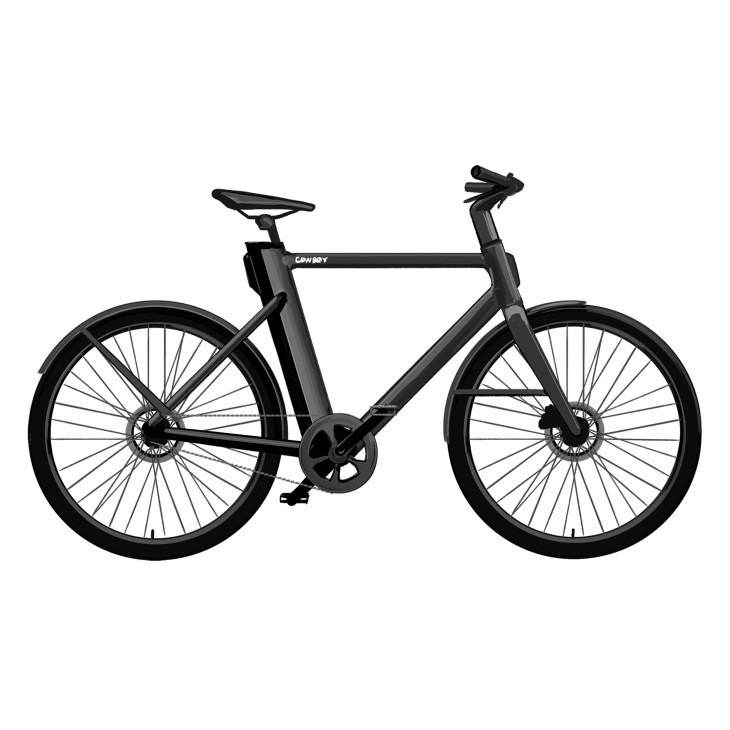
Getting out there is easier on an e-bike, with a battery that adds to the effort you put into pedalling. The latest two-wheeled wonders hide their battery subtly, rather than just placing it under the luggage rack. The newest model from Belgian company Cowboy simply slides it into the back of the frame, which has a rear light built in.
Unlike some, the battery is removable, which means you don’t have to drag the whole bike indoors or – applause please, apartment-dwelling riders – upstairs to charge it. Mind you, the Cruiser only weighs just over 19kg so it’s lighter than a lot of pedal-assist bikes. It also offers a more upright riding position than previous models, the result being an even more relaxed experience, helped by curved handlebars and a wider saddle.
cowboy.com
WF-1000XM5 earphones
Sony
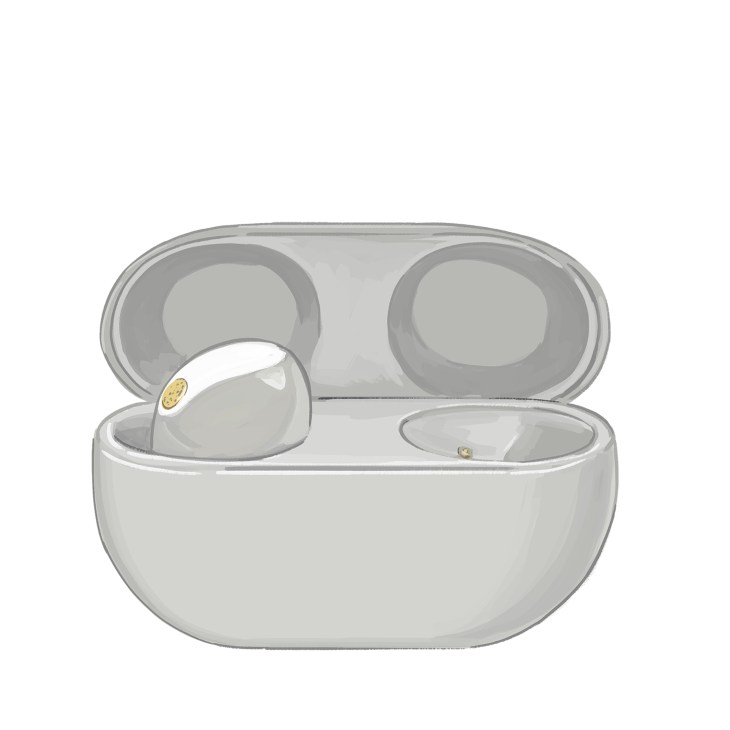
If you find yourself working in lively places, headphones with active noise-cancelling (ANC) allow you to concentrate better, or at the very least hear every note as it was intended. The received wisdom is that heavier earbuds or over-ear cans make for the best ANC. Yet Sony’s latest in-ears are lightweight and 25 per cent smaller than their predecessor but block out noise brilliantly. Audio quality is exemplary and advanced elements such as noise reduction mean that you can make that work call from even the least business-like environments.
sony.com
Galaxy Watch6 Classic
Samsung
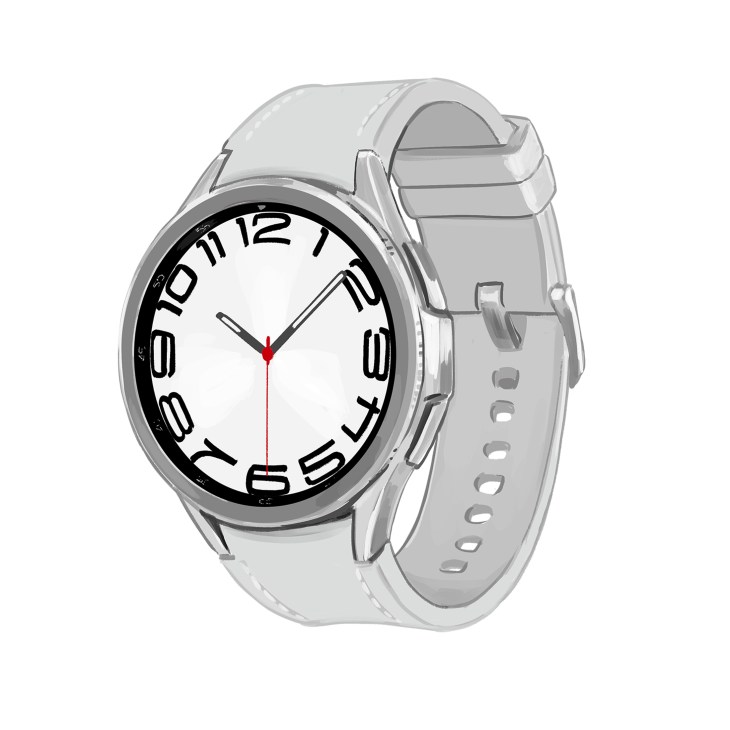
Samsung’s new wearable has a cool extra compared with other smartwatches: the bezel around the circular display rotates, letting you scroll through menus, for instance. It’s satisfying to use and makes the smartwatch feel more analogue. Samsung has made the display noticeably bigger without changing the overall dimensions of the watch, and there are now more faces to choose from. There’s a new processor on board too, which means that apps open faster and the overall experience is smoother. The new design also includes a larger battery.
samsung.com
Pixel Fold
Google
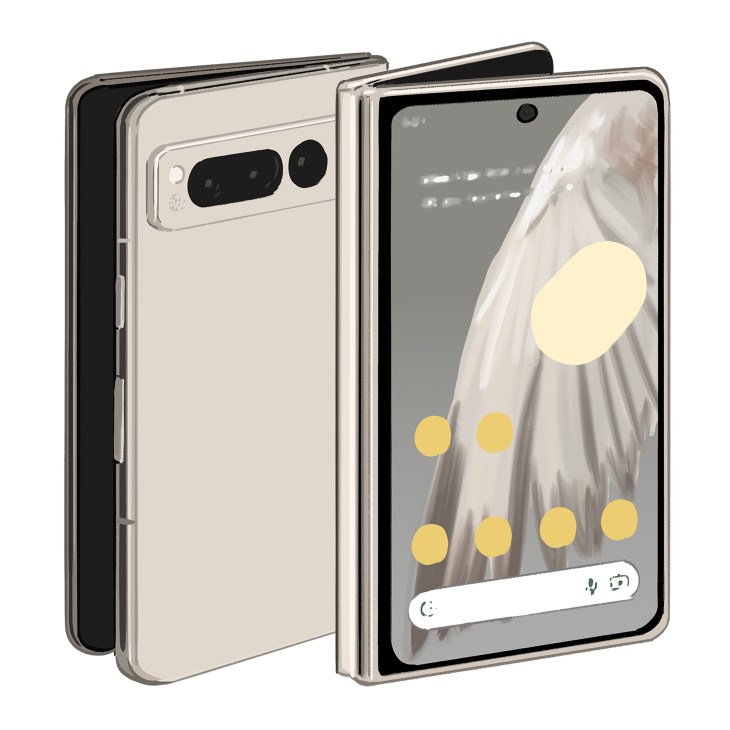
The problem with folding phones is that they open up to a display that’s almost square. There’s a reason why nobody has ever built a square tablet. However, Google’s own-brand phone has a wider display when folded, so that when it’s opened it has a rectangular shape that’s much more useful. It also has a 5.8in front display that is big enough to work well when closed. The inside screen (7.6in) has the visible crease common to folding phones but this almost vanishes when the display is on. The build quality is excellent, though folding displays still feel slightly fragile.
store.google.com
Wheels of fortune
At Incycles, a bicycle manufacturer and assembly plant, sleek cream-coloured Veloretti e-bikes are waiting to be packed. The frames have been painted, the brake cables, wheels and tyres attached, and now they can be placed into large cardboard boxes printed with the slogan “F*ck Cars”. It’s a phrase that, apparently, resonates in the Netherlands, where Veloretti is based and almost a quarter of people cycle every day. But it makes less sense here in Portugal, where the Incycles factory sits. You only need look at the company’s full car park to understand that this country hasn’t yet given the finger to the automobile. But Portugal is Europe’s biggest bicycle manufacturer, exporting three million bikes last year.
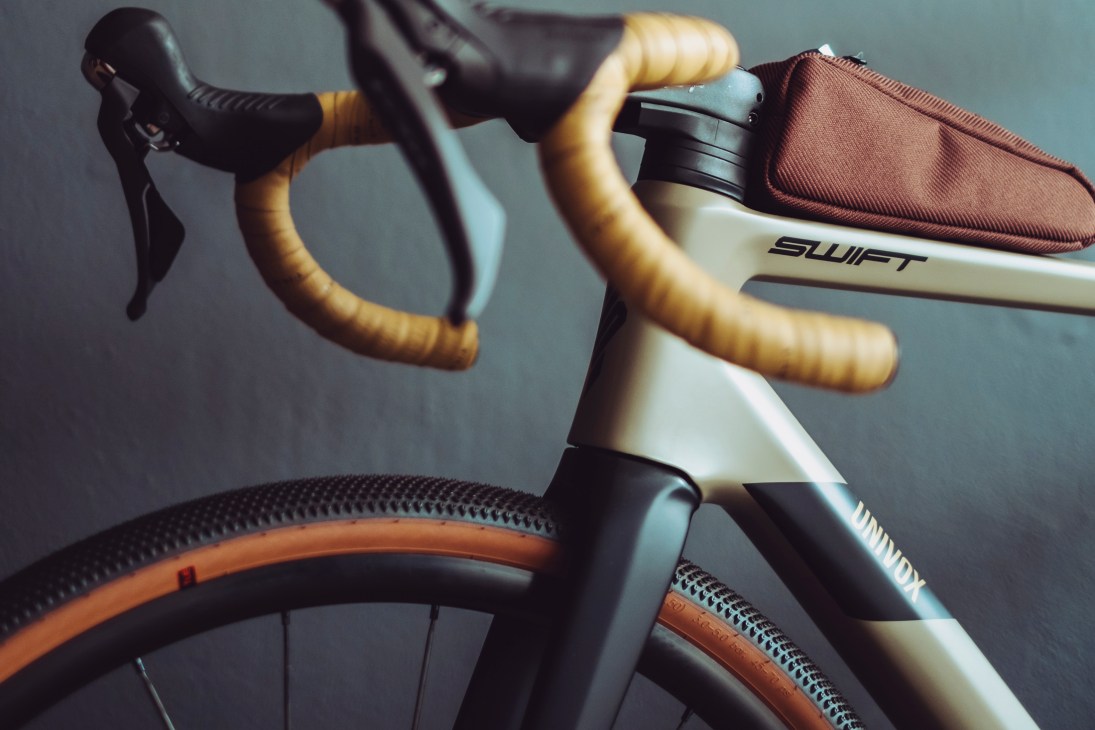
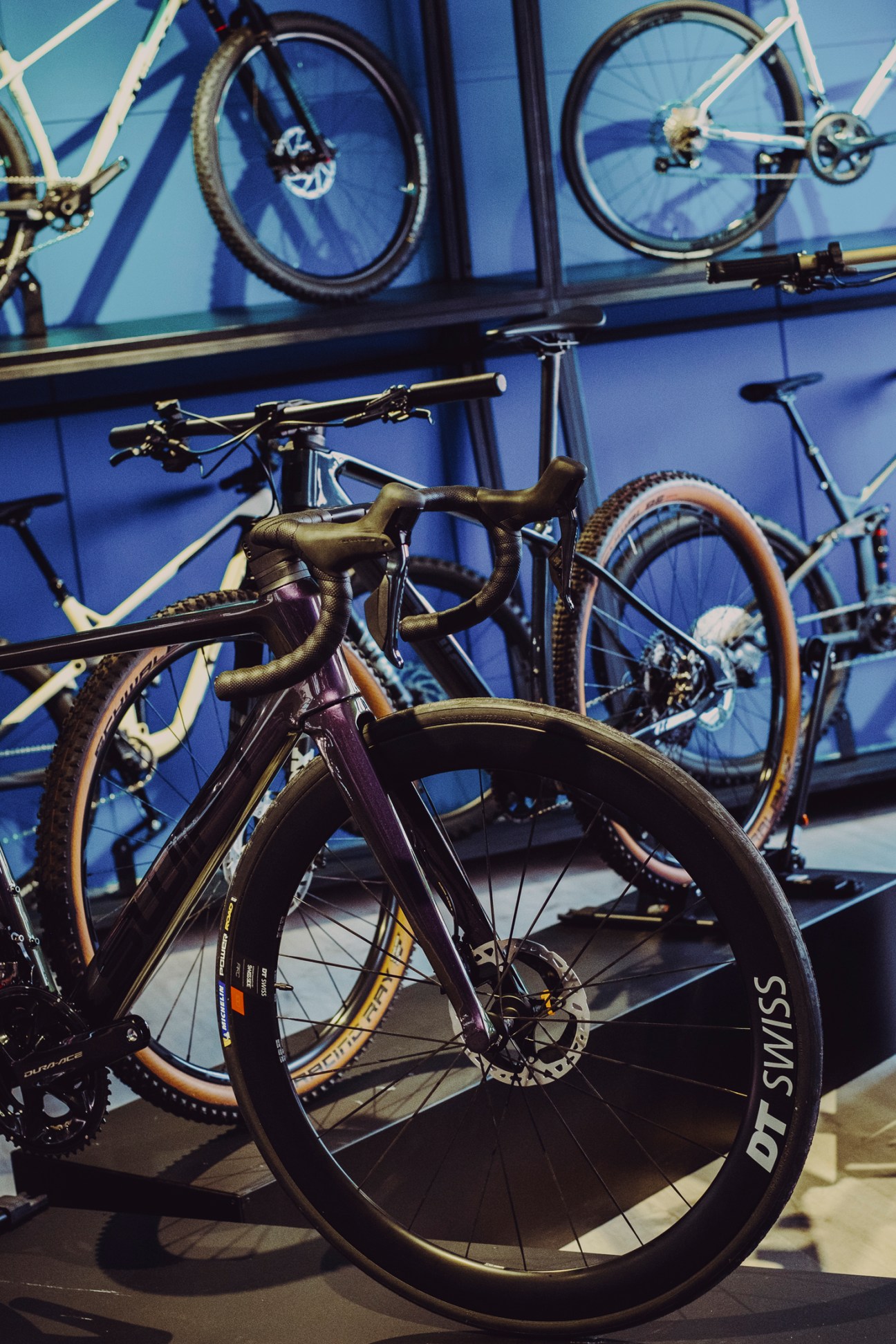
“We’ve just started to add another 10,000 sq m to the plant, which will increase our painting and logistical capacities,” says Filipe Mota, export manager at Incycles, who is giving Monocle a tour of the site in Anadia, central Portugal. Incycles started out in 2009 with its own line of bicycles but its owners soon realised that assembly was a better business model.
The company’s rapid expansion mirrors the growth of the industry in the country. In 2019, Portugal dethroned Italy as Europe’s top bicycle manufacturer, a spot it has held ever since. A year before that, Incycles won a competition to produce Uber’s European e-bikes, an investment that boosted the company’s earnings from €3m in 2018 to €65m in 2022 and increased the number of employees from 30 to 300. “We have already closed deals with clients for the year to come,” says Mota. “Companies now see us as a major player in Europe.”
Most bicycles that are made in Portugal are exported, with France and Germany being two of the biggest markets. For Incycles, though, the Dutch are the best clients and e-bikes represent 90 per cent of the company’s work today. “Since many governments started subsidising purchases, they’re in high demand right now,” says Mota.
E-bikes are just the latest in a series of innovations made to this trusty mode of transport and, as a product, bicycles also tell the story of the development of our global economy. “You can have a bike with tyres from the Czech Republic, spokes from Belgium, rims from Portugal,” says Mota. “There are 60 to 100 parts that go into a bike and they might come from as many as 15 countries.”
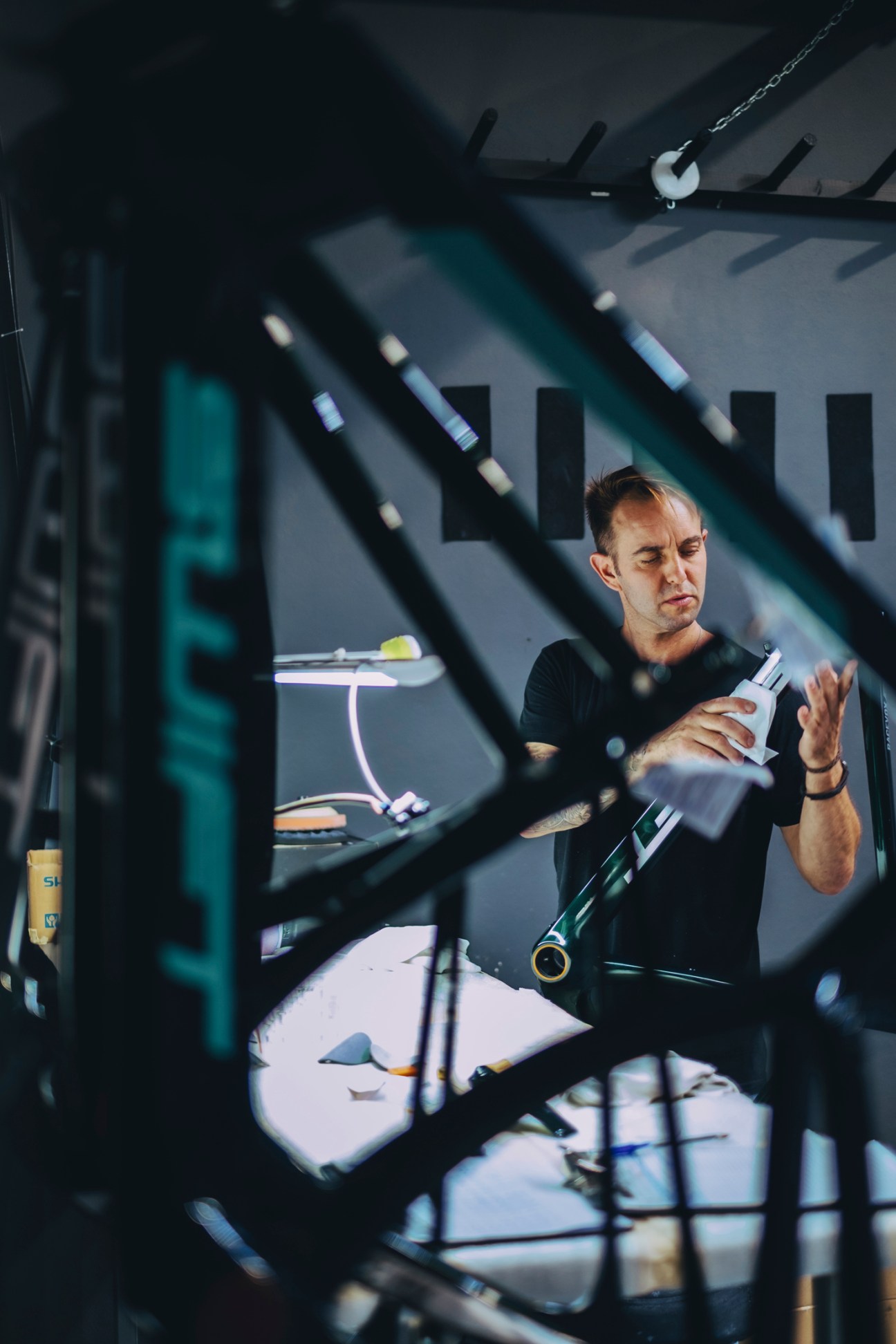
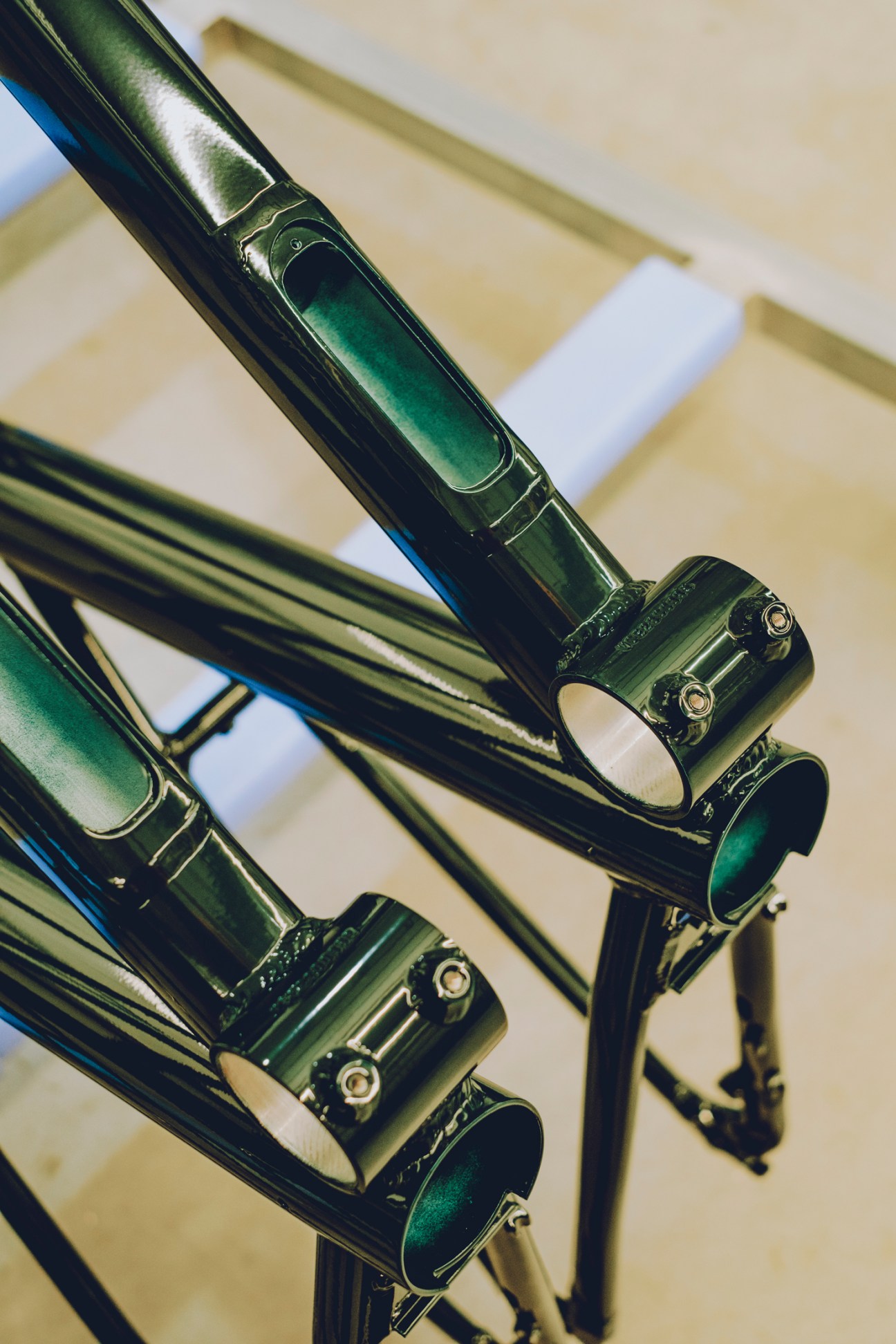

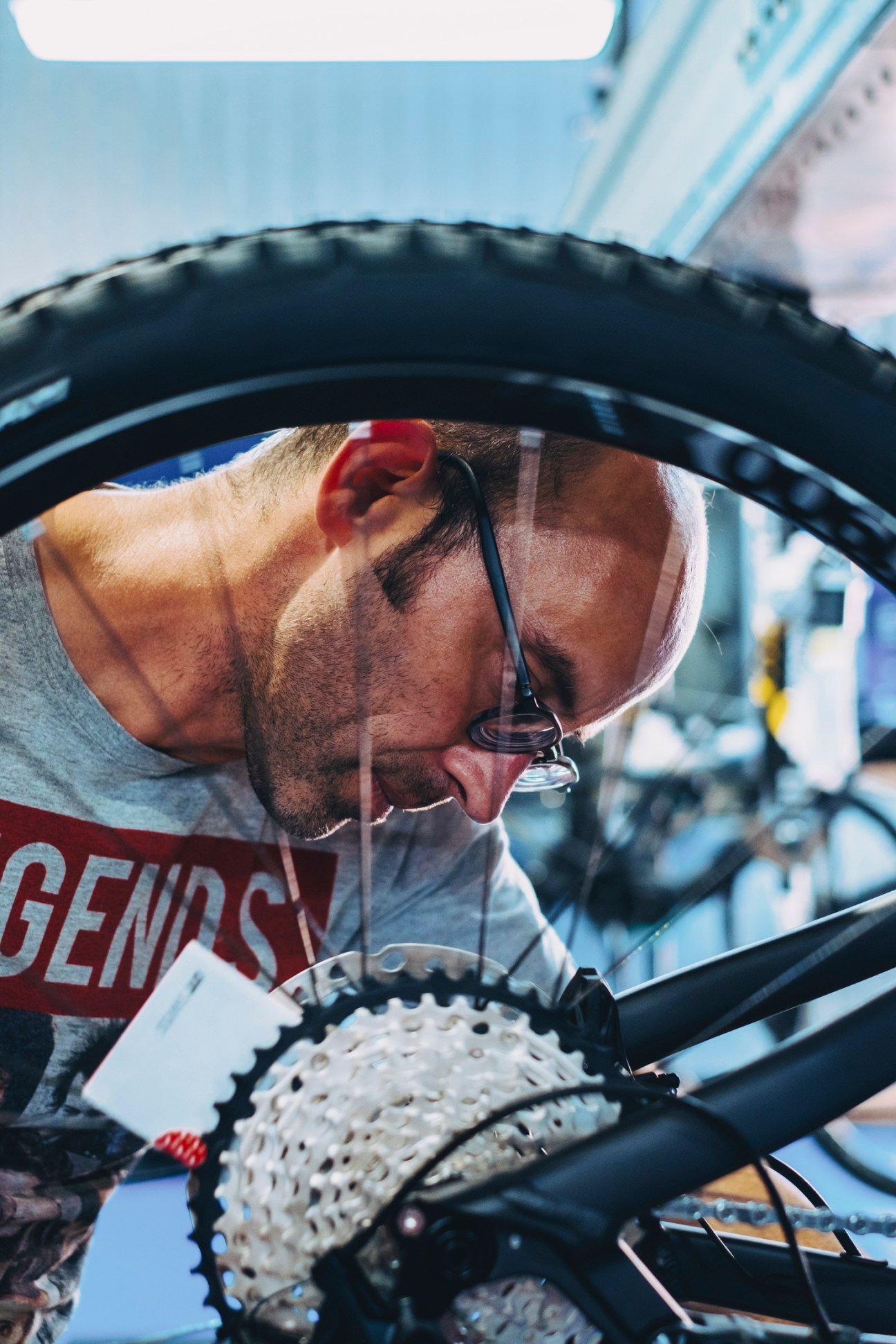
Most of these components come from Asia but there are several established – and a growing number of new – Portuguese manufacturers of parts, including Tabor with its artisanal leather saddles, and high-end frames from Carbon Team (both have factories less than an hour’s drive from Incycles). But assembly is not just about screwing a few nuts and bolts. Components are rolled onto production lines to go through numerous manual processes. Quality-control workers in white vests scour the line ready to step in at the sight of a crooked rim or chipped paint. “But it’s placing the sticker that’s the most important,” says Mota, jokingly. While it’s true that a bicycle’s brand will bestow most of its value, its place of assembly also matters. “Made in Portugal” is now seen to add status.
Portugal is now home to 80 companies in the sector that, combined, employ 8,000 people directly and a further 30,000 indirectly. Last year, Portuguese bicycle exports reached a record high, generating more than €800m. External factors have played a part. Anti-dumping taxes introduced by the EU in 1998 made buying bikes from China, the world’s largest producer, more expensive. “Without these laws, we wouldn’t have been able to keep producing in Europe,” says Mota. The pandemic also resulted in a global cycling boom. Combined with high fuel costs and a desire for greener supply chains, the perfect moment for Portuguese manufacturers has come.
But Portugal taking the manufacturing lead over its European counterparts isn’t down to chance nor cost alone, says Gil Nadais, president of the National Association of Two Wheel Industries (Abimota). “Being the largest manufacturer is interesting but what we are continually proving is our skill in the sector,” he says.
Before becoming Abimota’s general secretary, Nadais was the mayor of Águeda, a town that’s 15 minutes away from Incycles and home to many cycle businesses. “This competition is positive as it leads to salary increases and businesses optimising processes,” he says. Incycles, for instance, has invested in computerising stock with QR codes, as well as upping its game in terms of better benefits and company culture to retain workers. But more than competition, a spirit of collaboration in the sector has been key to the success of Portugal’s bicycle manufacturing.
In 2015, dozens of business owners, as well as Abimota, formed Portugal Bike Value, a project vying to better integrate the sector and advance its interests to attract foreign investment. At Europe’s largest bicycle trading fair, Eurobike in Germany, Portuguese businesses share a stand, working together to present the country’s diverse offerings. “We have projects to create new technology centres, approximate the production processes to the universities and work collaboratively for the sake of the industry as a whole,” says Nadais, also referencing a joint venture that secured an investment of more than €213m from the EU’s recovery and resilience grant.
For all the high hopes for the country’s bicycle production, however, there’s frustration at how little the Portuguese are actually pedalling. Despite a national strategy to encourage cycling, Portugal is still lagging when it comes to the allocation of funds to meet these goals. “Recently the government has taken important steps like the reduction of vat for the purchase of bicycles and school insurance coverage for pupils – but there’s still a long way to go,” says Nadais. However, some businesses are hopeful that they can break new ground. “Portugal has beautiful landscapes and an evolving infrastructure of cycle paths and nature trails but the population hasn’t yet become hooked on cycling,” says Thiago Lemos of Swift Carbon.
The South African-born brand of performance and competition bicycles moved its headquarters and assembly plant from Cape Town to Porto in 2018. It runs a lean operation of about 25 people working to transform specially engineered carbon frames made in Taiwan into state-of-the-art bicycles for road, gravel and mountain. With only about 200 frames completed a month, the plant’s output isn’t large but Swift bicycles carry a hefty price tag, at €2,000 to €9,000. “Our clients are connoisseurs,” says Lemos. “They’re not just looking for any bike.” Swift Carbon is committed to the Portuguese market and is entering it via sport. “Many national athletes and teams already use our bikes,” says Lemos. “We’ve been champions of the Tour of Portugal three times and are providing spare bicycles for the Portuguese federation in the Paris Olympic Games.”
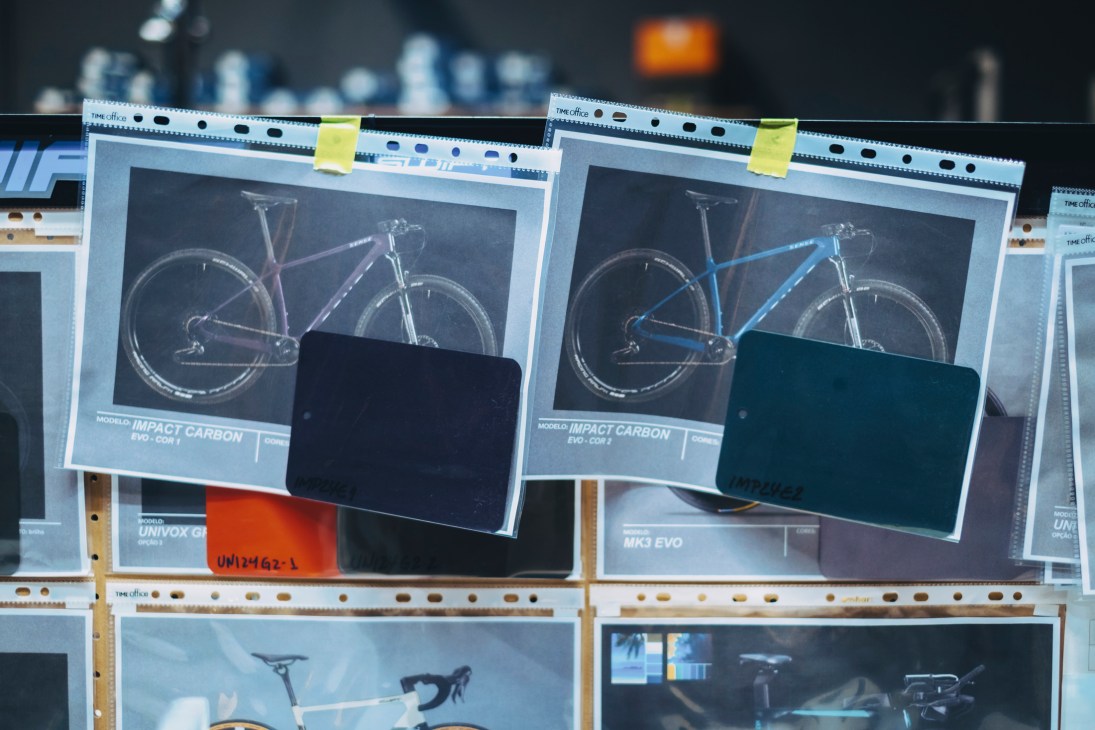
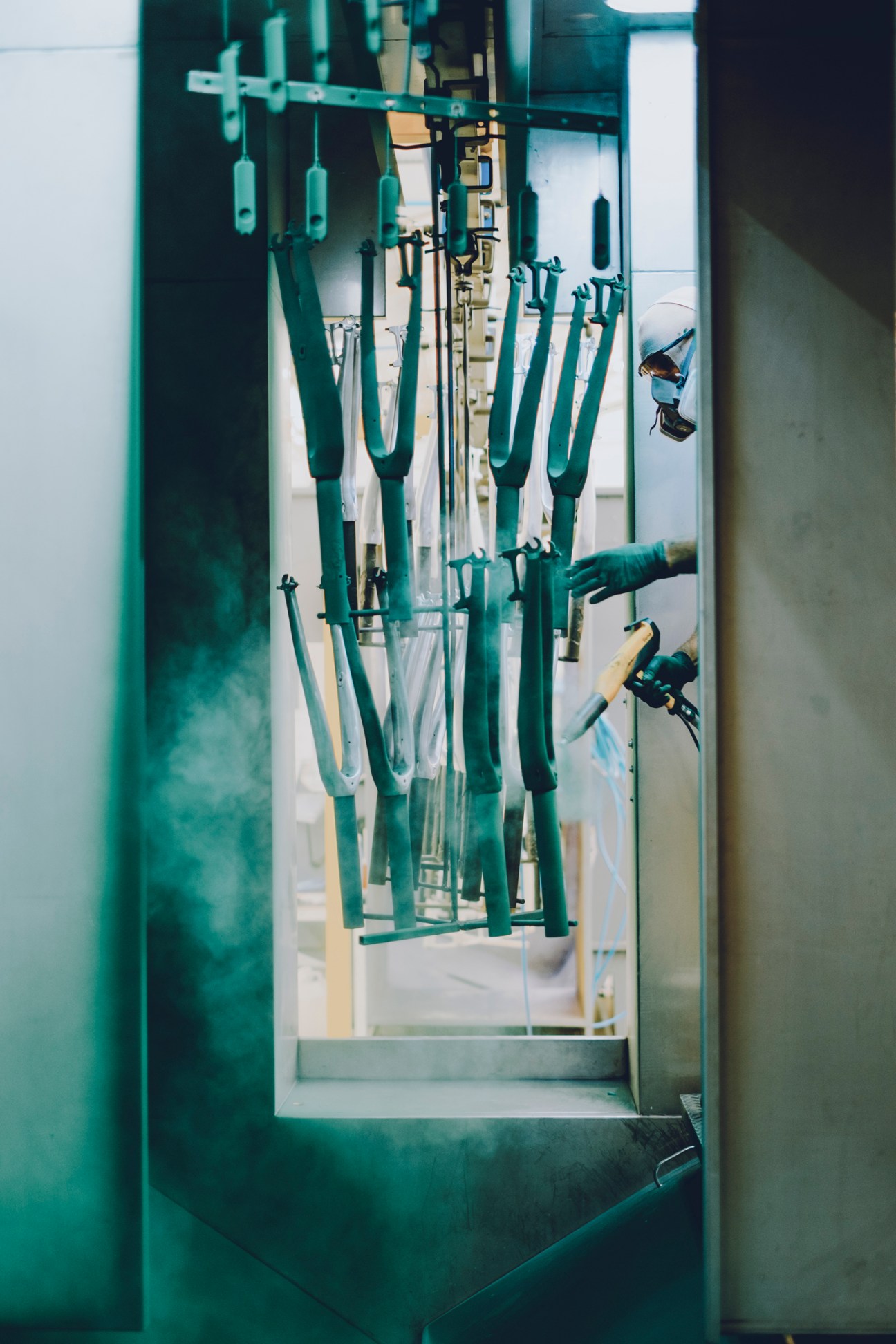
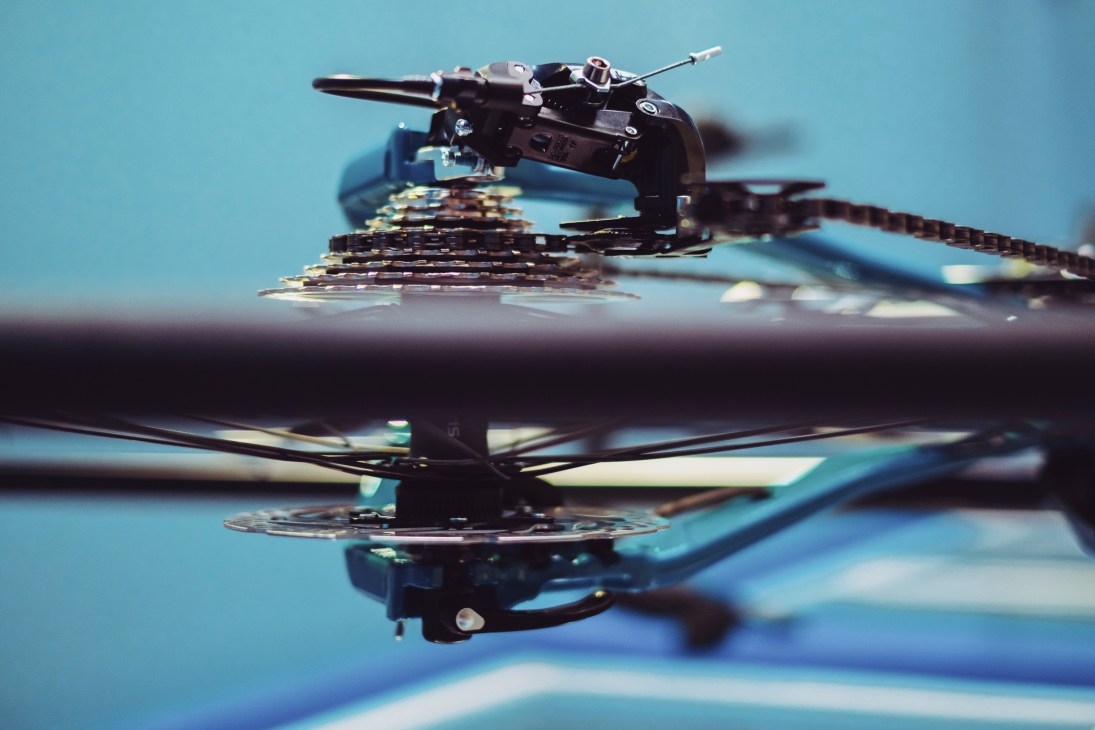
It might be some time until bicycles become a common mode of transport in Portugal’s cities but the country’s compact size and beautiful scenery might just be the perfect backdrop for another, more adventurous, kind of cycling culture to take root.
Quiet revolution
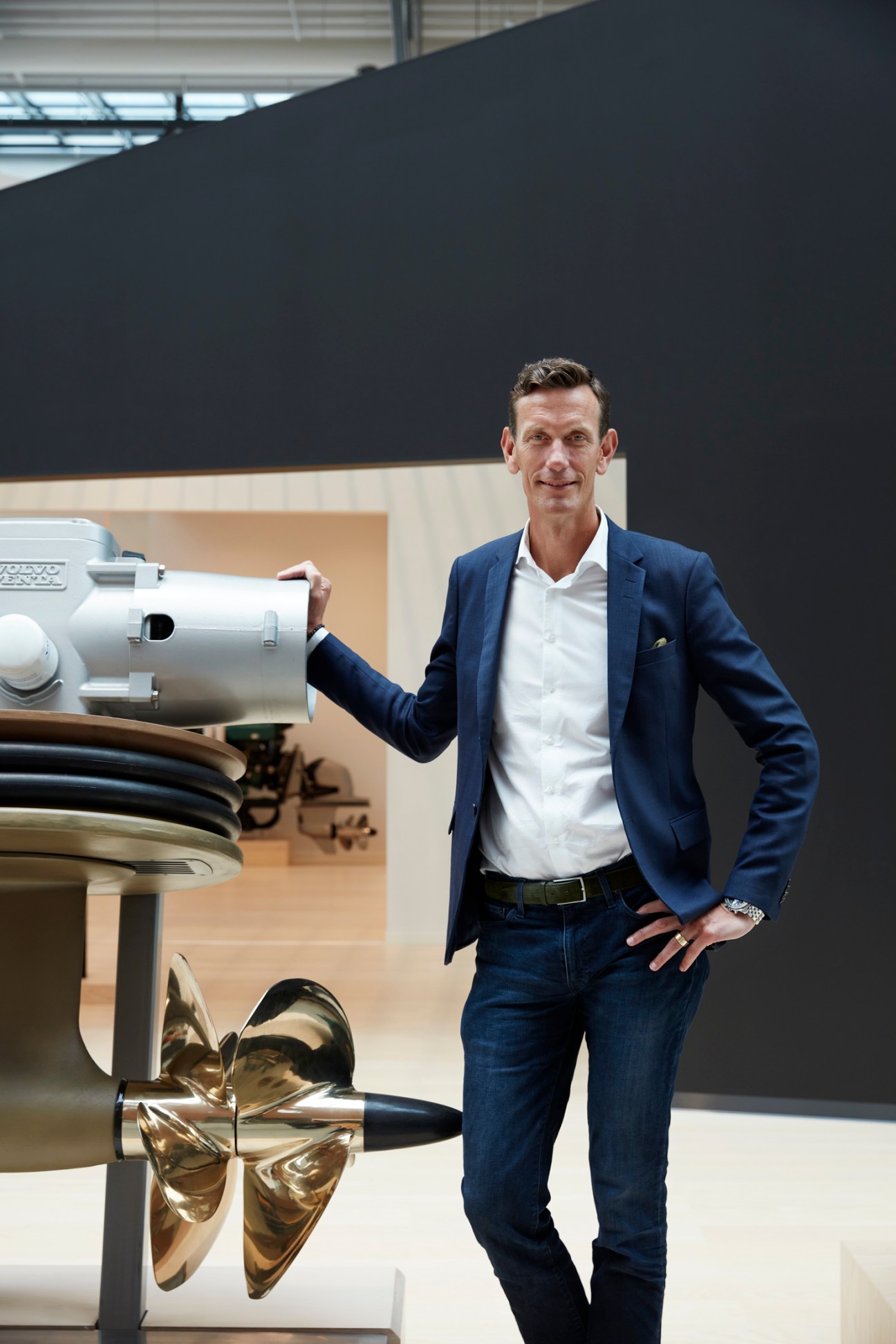
What at first appears to be a quaint Gothenburg harbour, complete with red fishing huts, is in fact a high-security facility. The Krossholmen Test Center, near the mouth of Sweden’s Göta Älv River, belongs to Volvo Penta, part of the Volvo Group. It is one of the best-equipped marine-testing operations in Europe. It’s here that Volvo Penta, long associated with building engines for leisure vessels (and more recently commercial ones), is transforming itself into an electric-mobility brand for the lifestyle boating sector. The shift at Volvo Penta, which had revenues of SEK18.1bn (€1.6bn) in 2022, is driven by the flourishing global market for electric boats, with anticipated growth of 11.2 per cent a year through to 2027.
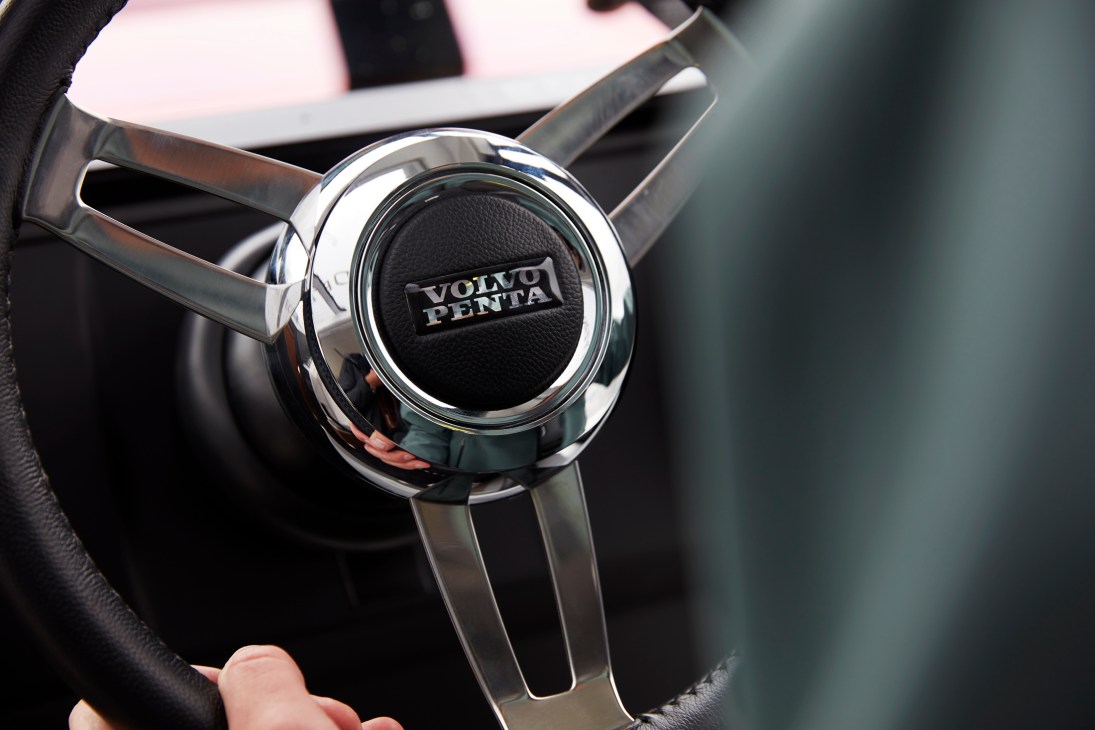
While there isn’t global legislation forcing boats to go electric, there are increasing environmental regulations at a national and regional level regarding emissions from marine vessels. These are pushing the industry to explore cleaner alternatives, including electric propulsion. Norway is one of the countries that has come farthest in electrifying its leisure boats, with projects supported by cities, municipalities and companies along the Norwegian coastline. And Copenhagen has set aside DKk10m (€1.34m) to electrify its entire fleet of harbour ferries as part of the country’s overall plans to become the world’s first carbon-neutral city by 2025.
When it comes to fully electric vessels, there are several companies working on commercial passenger ferries and recreational use. As well as larger players such as X Shore, Vita Power and Candela speedboats, there are smaller innovative brands such as Stockholm-based Sightseeing Rides, which offers tours in electric boats powered by green energy, as well as Norway’s Kruser, the world’s first boat-sharing platform for electric leisure boats.
Being fully electric has large environmental benefits. Electric boats can significantly reduce air pollution and carbon emissions. However, there are environmental considerations related to the production and disposal of batteries used in electric boats. Additionally, end-of-life battery disposal can cause environmental harm.
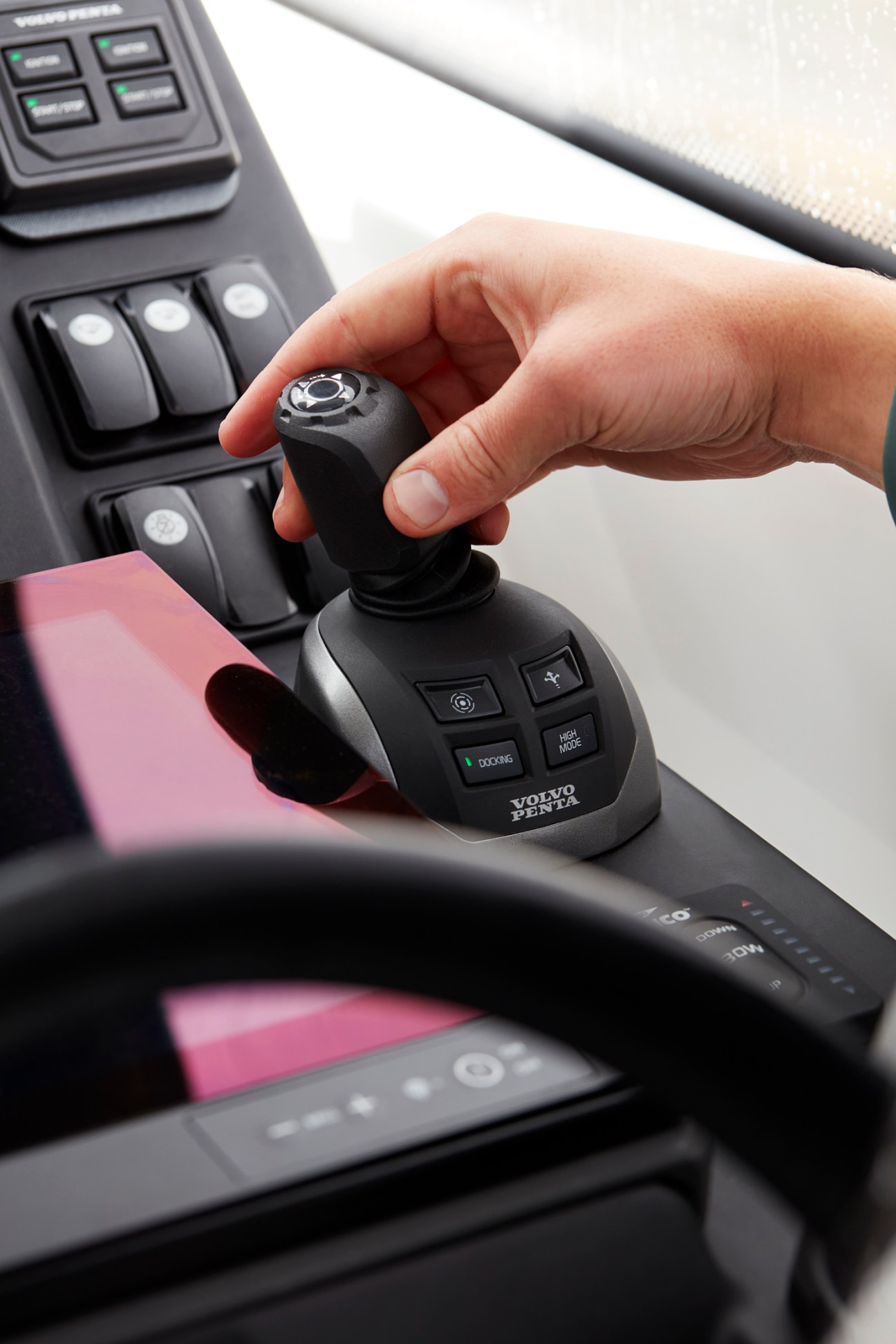
When Monocle visits the Krossholmen Test Center, a team of skilled mechanics, technicians and test engineers is busy preparing and testing what might be one of the answers to the future of more sustainable boating: a new hybrid electric vessel designed in collaboration with French leisure-marine company Groupe Beneteau, a long-standing Volvo Penta partner. Today boat dealers and potential customers have been invited to give their feedback on the Jeanneau nc37 sports-cruiser boat, which is equipped with Volvo Penta’s new hybrid system. Besides powering the engines, it also controls the positioning system that allows users to keep a boat still even when docking in windy conditions or strong currents. “We have a great opportunity to push towards sustainability with the technologies that are now available,” says Johan Inden, president of Volvo Penta’s marine business unit. “There is a big demand from customers to see what is possible in terms of sustainability concepts and better boating experiences.”
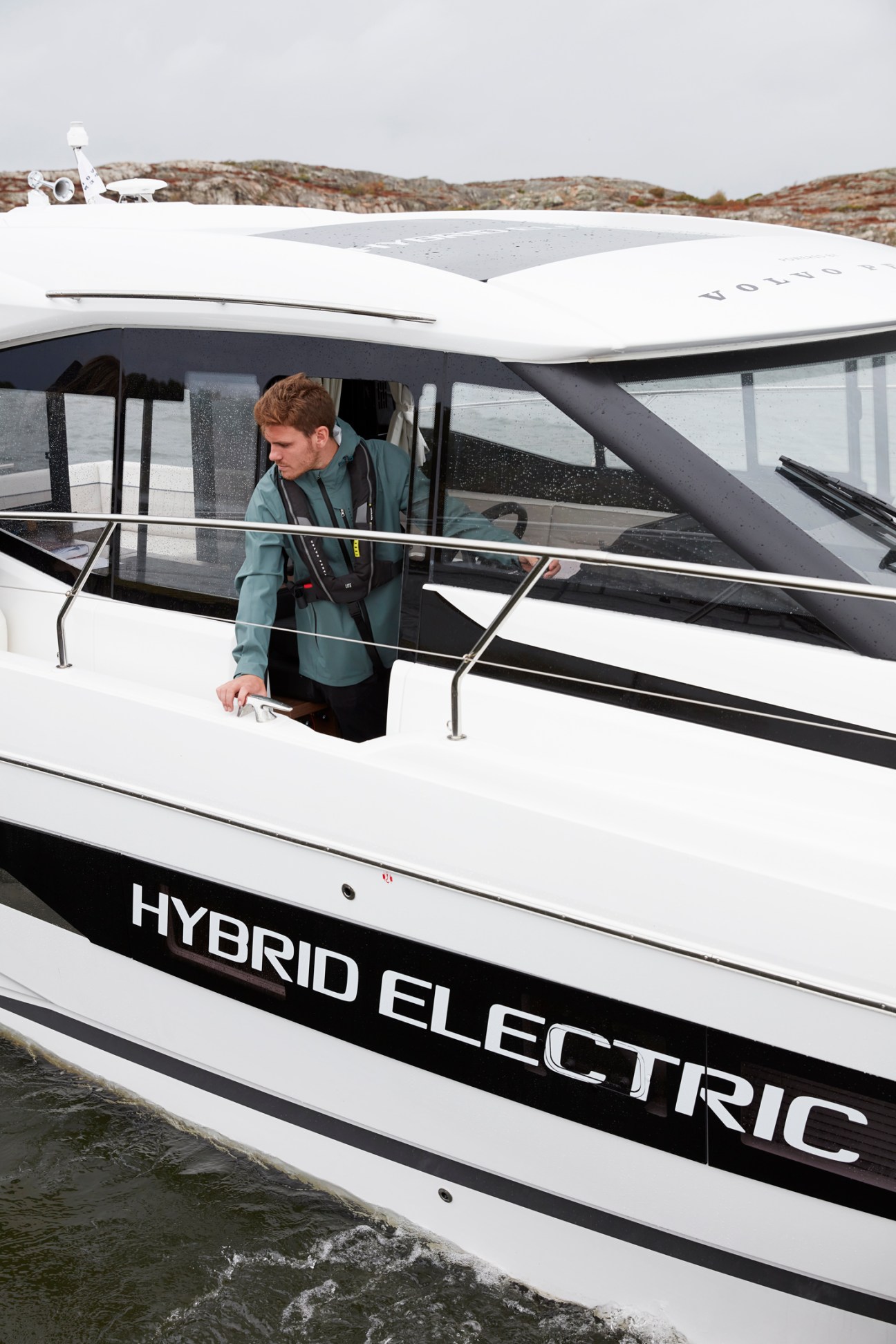
Inden believes, however, that it is important to be honest about the limitations. While some passenger ships and ferries are already fully electric, most boats need a way of producing energy too. This is why a hybrid engine will, for now, be the choice for most sustainability-conscious boat owners. “What is great is that we don’t have to wait for batteries to be 100 times better. We can start with this. Then as battery technology becomes more effective, or green fuels become more available, we can start infusing that into the platform,” says Inden. “From my perspective, it is more important to see what is possible today and build robustly for the future.”
Inden also believes that this technology will lower the threshold for people becoming boat owners. During the CES technology fair in Las Vegas earlier this year, Volvo Penta unveiled its concept of “boating for everyone”, which sees a greater future for boat-sharing (just as has happened with cars) and easier access to charging stations – or islands, in this watery instance. “I believe that rental models will play a big part in the marine industry going forward,” he says. “There is a huge opportunity to broaden availability by making it possible for more people to utilise existing boats. We will see more examples of subscription-based models. It will be about having a fantastic experience, not the hassle of owning a boat 12 months a year.”
Meet the Jeanneau NC37 hybrid vessel
The plug-in parallel hybrid, featuring two Volvo Penta d4-320 engines alongside two 60 kilowatt electric motors, offers three driving modes: electric, hybrid and power. The hybrid engine allows for leisure boaters to go long distances without stopping to recharge but be all electric and emission-free when cruising at low speeds (and use the combustion engine when speed is needed). The technology is based on Kvitbjørn, a similar hybrid electric vessel used by Norwegian tour operator Hurtigruten Svalbard that gives people a chance to get closer to wildlife in a near-silent tour experience.
Back to life
Pétanque Social Club
Marrakech
The restoration of a 1930s building – the old site of one of Morocco’s best private members’ clubs – has brought new life to the Gueliz neighbourhood. It was discovered by Marrakech native Kamal Laftimi, the restaurateur behind Nomad, Le Jardin, Café Des Épices and art space DaDa. “This is something we haven’t seen in decades,” says Laftimi. “A space for relaxation and serenity in the heart of the Red City.” Pétanque boasts Moroccan-Mediterranean cuisine, a great bar and a vast garden that’s open to visitors and locals alike. “Marrakech has evolved,” he adds. “It’s home to artists and nomads who bring with them creativity.”
pscmarrakech.com
Hotel San Fernando
Mexico City
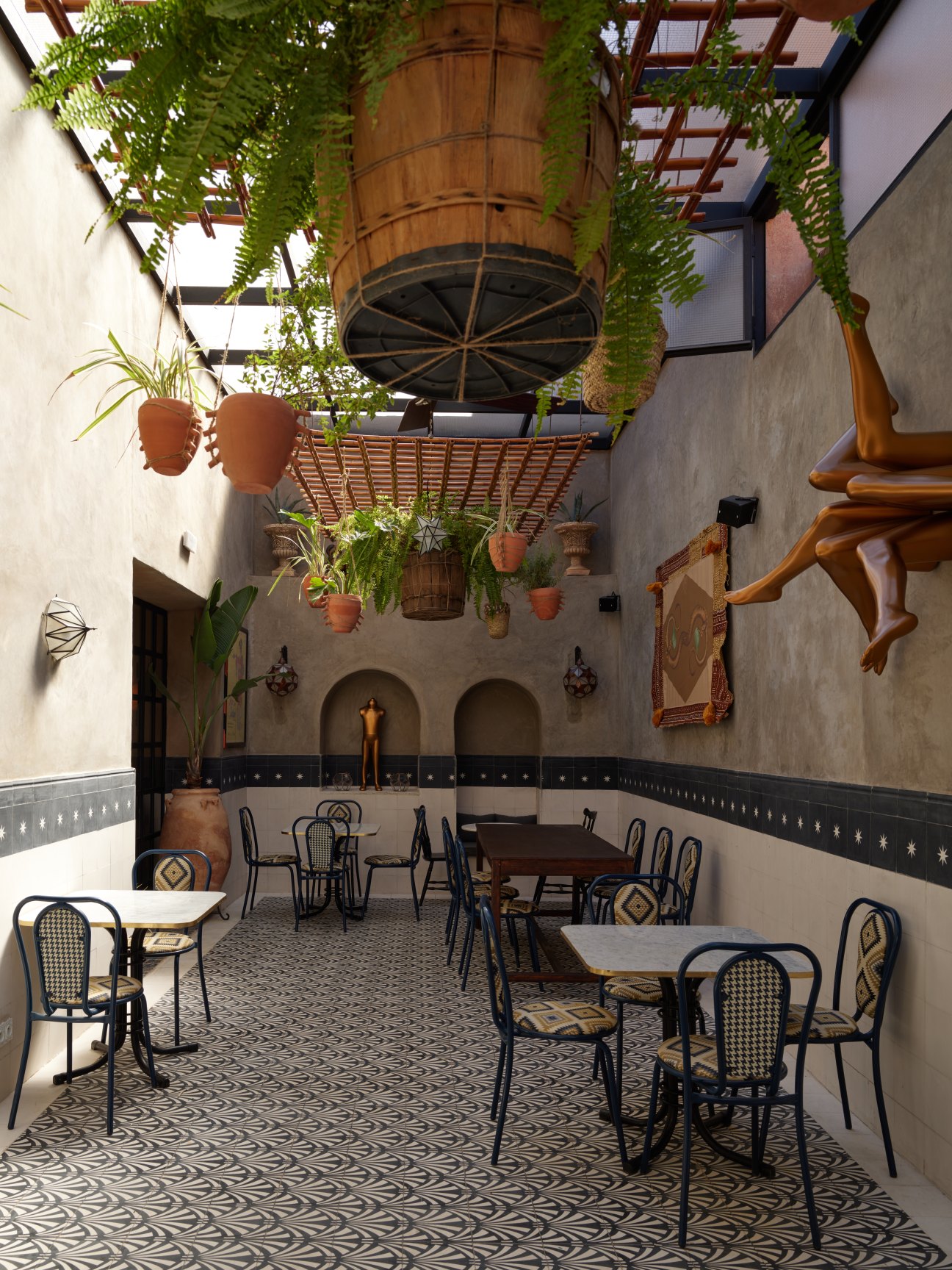
The 19-room Hotel San Fernando has opened its doors on the edge of Parque Mexico, a lush patch of greenery in the capital’s La Condesa neighbourhood. This newest member of the Austin-based Bunkhouse Hotels group is set in a 1940s block refurbished by the brand in collaboration with Mexico City-based studio Reurbano. The team has enhanced the building’s art-deco charms by adding metal panes and stained-glass windows to the shell.
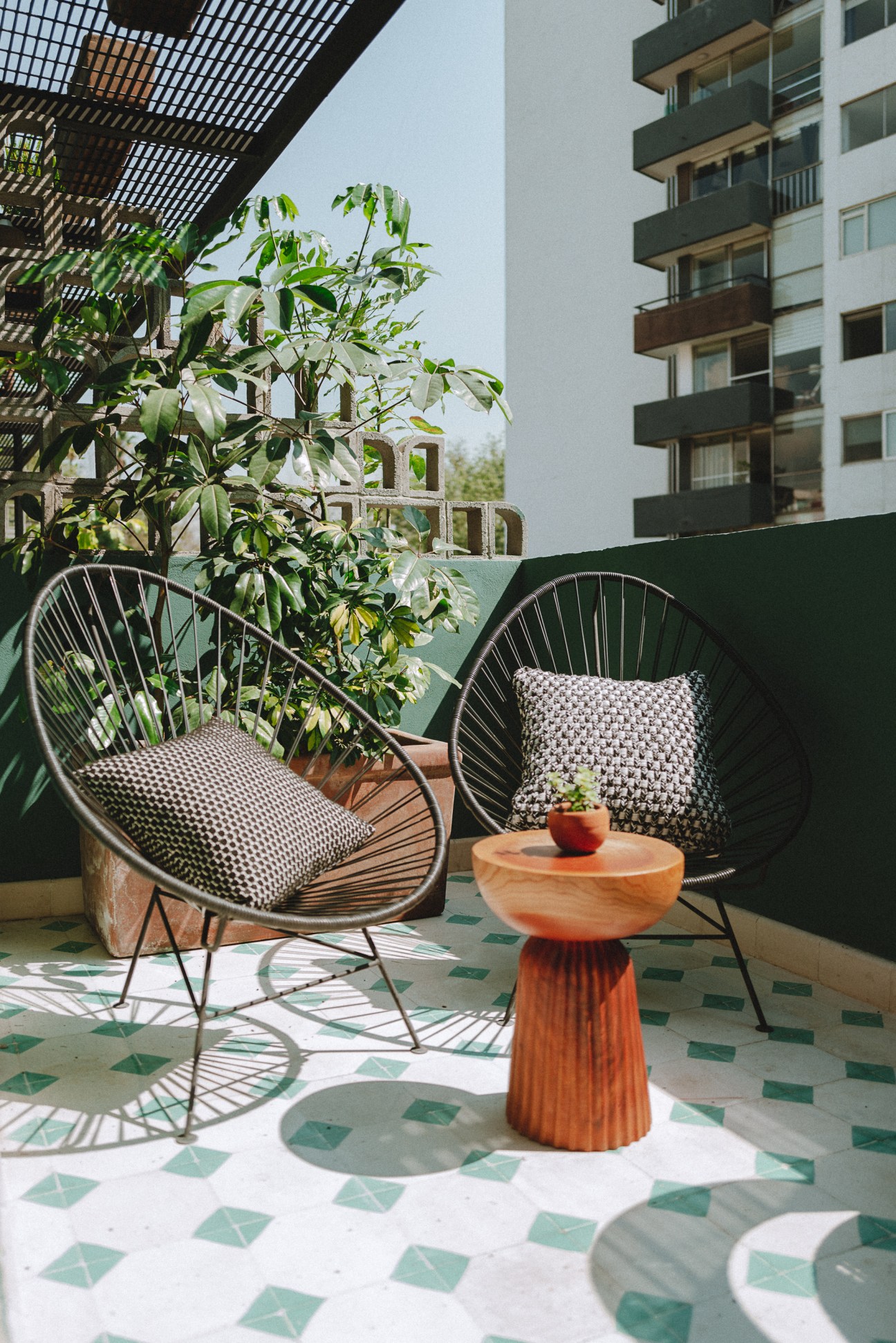
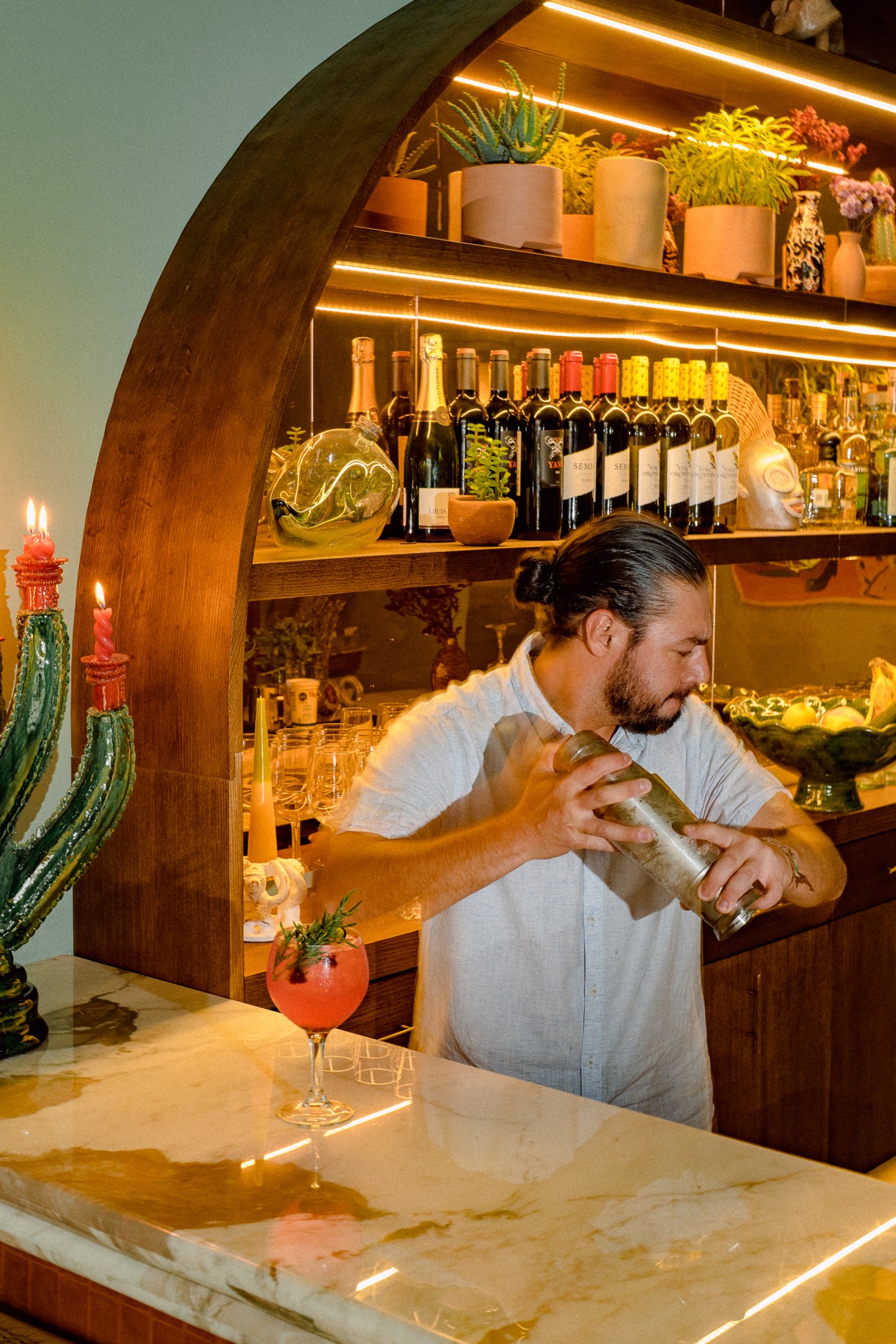
Rooms feature pink-and-green accents and custom wooden furniture by La Metropolitana studio. Elsewhere there are bright patterned rugs handmade by Oaxaca-based Enkelt, plus sconces and pendants by Mexico City-based ceramics studio Anfora. The rooftop bar is the spot for guests to enjoy breakfast and there is a street-facing salon for sipping a rosa mexicana and watching the city tick.
bunkhousehotels.com
The Largo
Porto
Sitting above famed chef Nuno Mendes’ restaurant Cozinha Das Flores and bar Flôr is a new and handsome hotel, The Largo. The 18-key project involved a thorough restoration of five interconnecting buildings, some dating to the 15th century.
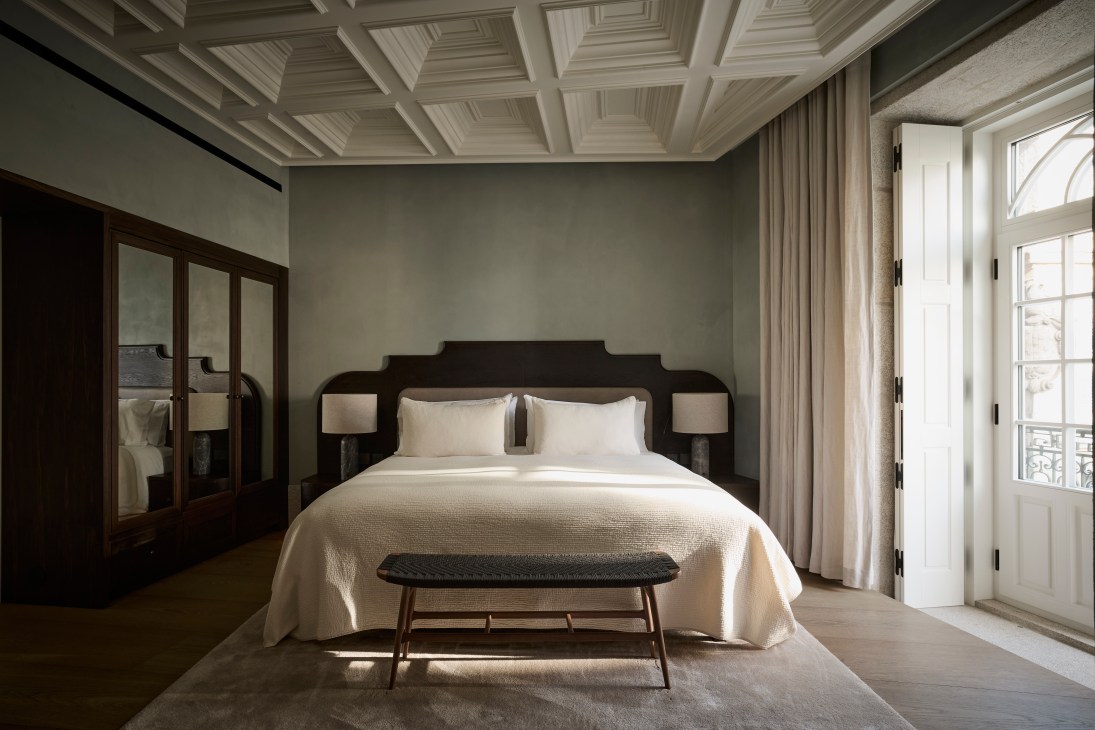
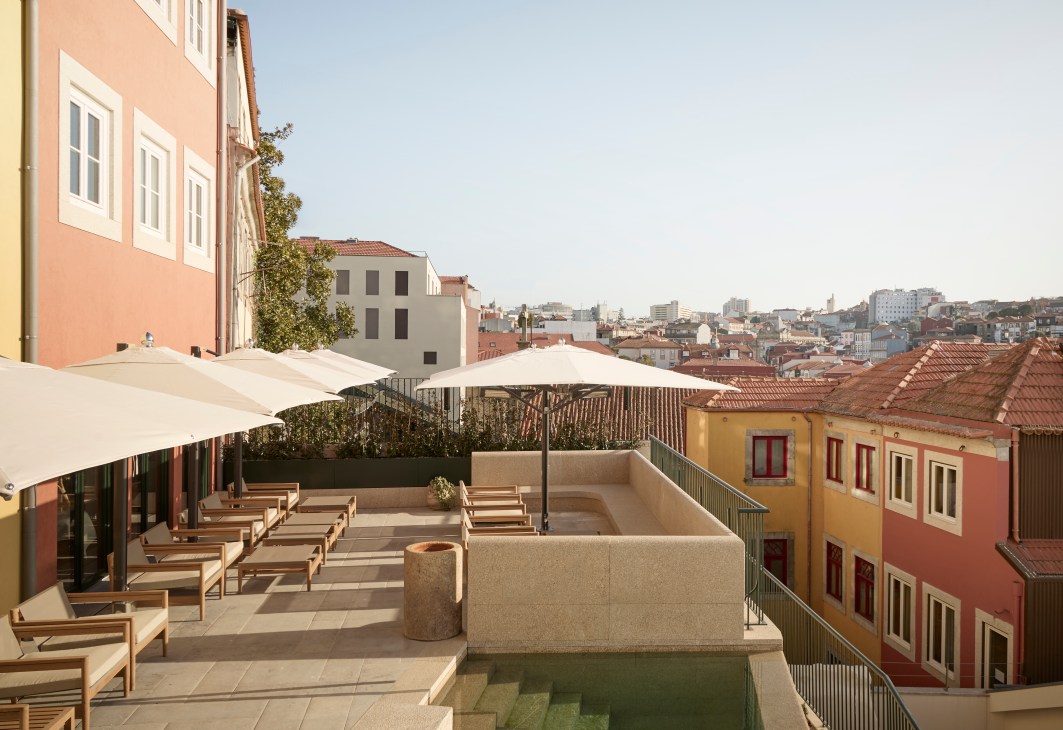
Danish design studio Space Copenhagen was tasked with the job. The designers took aged stone and tarnished wood as starting points and introduced plastered walls in earthy tones alongside blackened steel and brass accents. The wooden flooring and plastered walls bring warmth, while generous beds, sofas and armchairs invite guests to stay that little longer. This is Portuguese hospitality at its best: bijou bar Flôr serves small plates and sparky cocktails, while Cozinha Das Flores showcases northern Portuguese gastronomy with Mendes’s signature flair.
thelargo.com
Q&A
Amina Belouizdad Porter
CEO, PS
Los Angeles-based PS aims to bring a little private-jet panache to the airport experience with a membership model. Based at LAX since 2017 – and formerly called The Private Suite – this year it’s opening a space in Atlanta and is restoring the mid-century Pan Am terminal at Miami International. At the controls is its CEO, Amina Belouizdad Porter.
How does PS work?
If you’re taking a commercial flight, instead of going to the main airport, you arrive at a standalone PS terminal where we check you in and take your luggage. Then you can either head to one of our private suites, each with a wellstocked pantry, or to our salon, which is more social and like a members’ club centred around a bar. At boarding, we take you through our own security and then a BMW will drive you across the airfield to your flight.
What are you planning in Miami?
We’re restoring what was once Pan Am’s regional HQ and will open a terminal there by early 2025. The original, nicknamed “the Taj Mahal” was inspired by the US embassy in New Delhi. Pan Am epitomised the luxury and glamour we associate with the golden age of travel.
What is the future of business travel?
Business has blurred with leisure now we can work from anywhere but the bar is set a lot higher: I need to be able to get on a call before my flight; I need a workspace but also respite. PS is certainly one solution.
reserveps.com
Dream factories
1.
For all seasons
Scala, St Moritz
After more than 80 years of business, Scala in St Moritz closed in 2016. As one of the Engadin valley’s last-remaining cinemas, it was an institution – but because the ground on which the structure stood was unstable, demolishing it and erecting a new building was the only option. Fritz Burkard, president of the St Moritz Bobsleigh Club, was up for the challenge. When Scala’s doors swung open again in June after four years of work, the venue was more than just a refurbished cinema. “It’s important to bring people together, to offer a place to exchange ideas,” says Burkard.
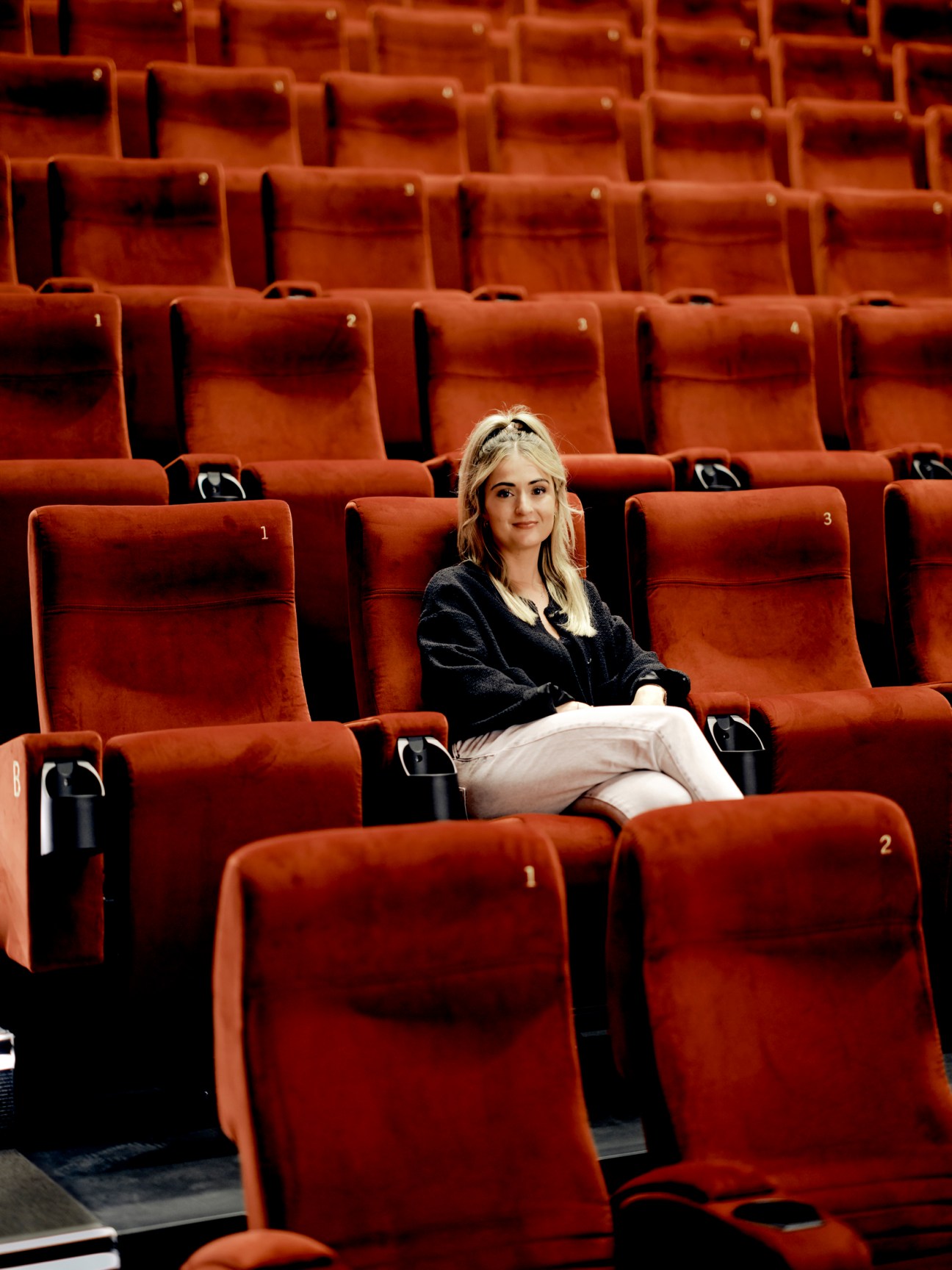
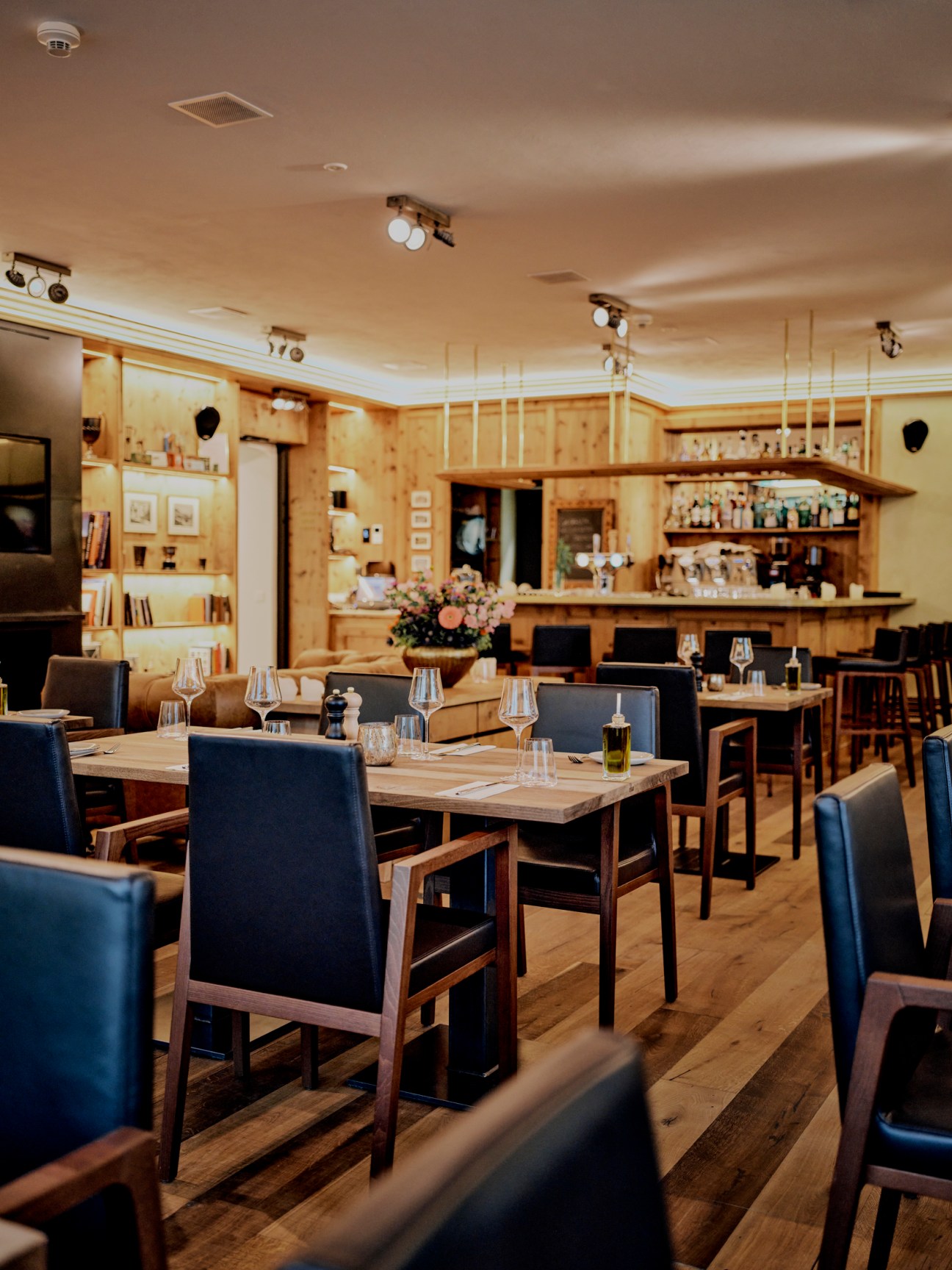
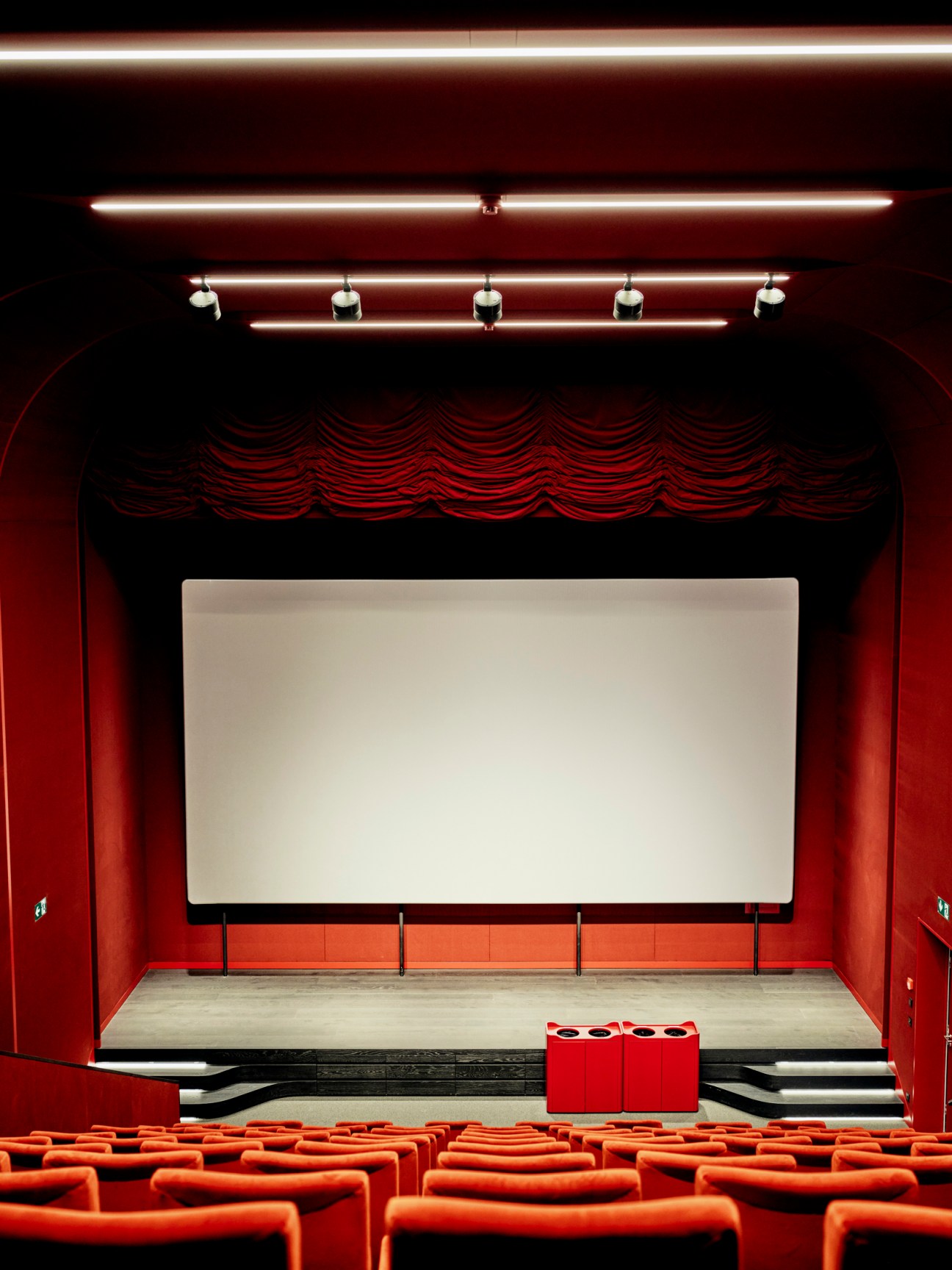
The centrepiece of the space is a slide that runs through the foyer from the second floor to the basement. Upstairs, Burkard has built a museum dedicated to bobsleighing, complete with a replica Cresta Run, an ice route created from scratch every year in St Moritz.
The screening room is equipped with the latest technology but it retains an old-school aesthetic. Its 107 crimson seats are roomy and the front row has been made inviting by the addition of footstools. Burkard’s aim is to keep the doors open all year, unlike many other venues in town. “Scala makes life in St Moritz more attractive,” he says. “The building is primarily for locals. Tourists are welcome but it has to work mostly for residents.”
In its restaurant, dishes made with regional ingredients are served at a long pine table, while screens broadcast bobsleigh races. The bar’s main attraction is a series of installations by artist James Turrell. This room, as with all the others, was designed to be rented out and host a wide range of occasions; in the future, Burkard hopes to collaborate with citywide events such as the Festival da Jazz. “Every space can be adapted to people’s needs,” says Lara Müller, Scala’s executive director. “We want to serve the community.”
scala-stmoritz.ch
2.
Empire of light
Cinema Royal, Beirut
When Karl Hadife and his family bought Cinema Royal in Beirut’s Bourj Hammoud district in 2020, it was on its last legs. Facing a former factory that the family is now in the process of transforming into a cultural centre, the building had been through various incarnations since its heyday – most recently, it was a brothel, until Lebanon’s financial crisis put it out of business.


Hadife, a film-maker who had just returned from a stint in New York, decided to restore the weathered picture house from the ground up. “It was in bad shape,” he says. “We had to redo everything, keeping the heritage aspects while making the other elements better.” Sourcing vintage 1950s pieces from the city’s antique traders, the family preserved the aesthetic of the original space, retaining many paintings by Avo and Yervan Hawarian, the cinema’s former owners and designers of some of the most iconic Lebanese film posters of the 1970s and 1980s.
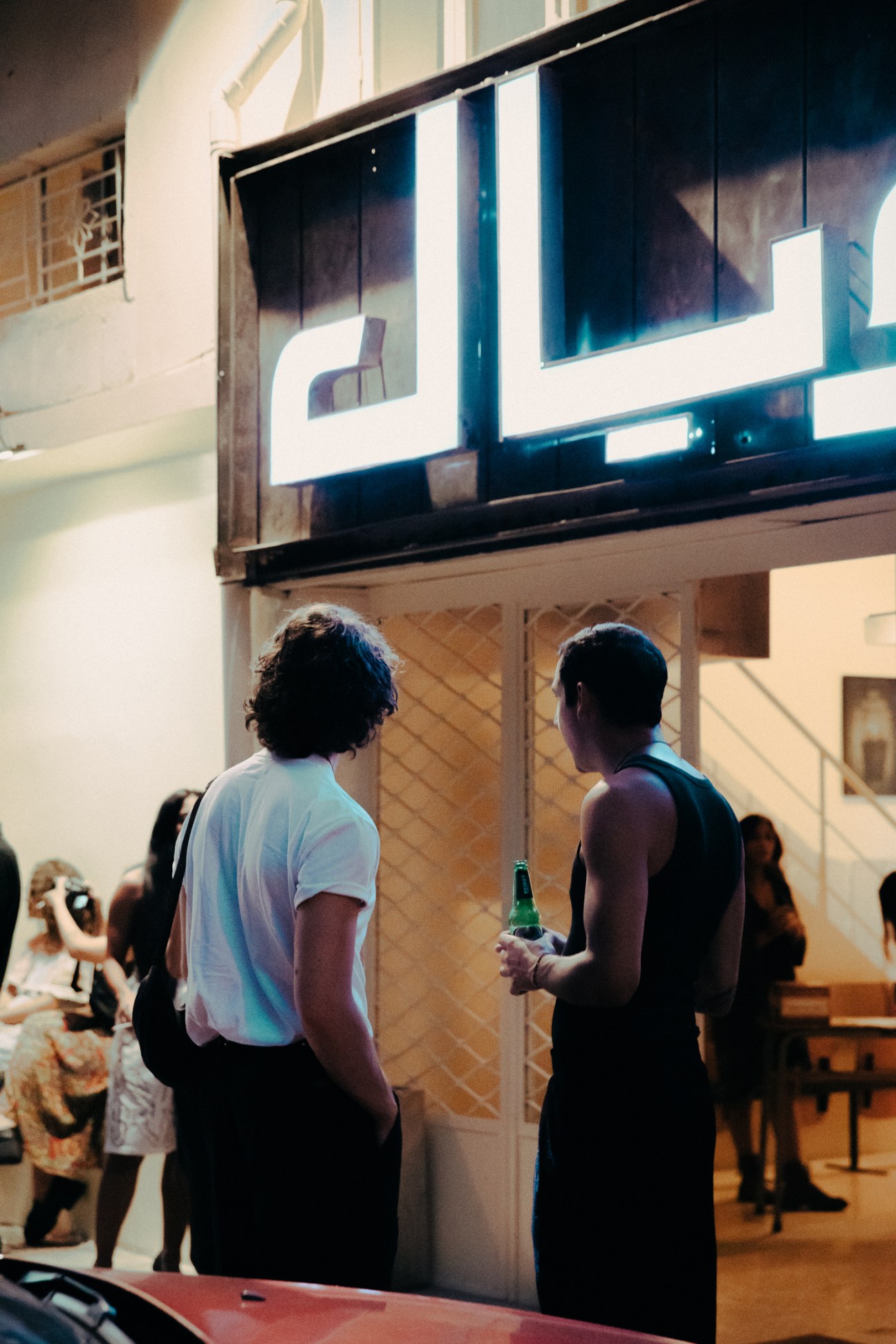

In its freshly refurbished guise, Cinema Royal has become a community space with a screening room, a stage for theatre and dance, and a display area for art exhibitions. “Because of the financial crisis, many cultural institutions and venues closed down,” says Hadife. “I wanted to open a place where we could democratise access to the arts, with a programme that is thought-provoking and promotes debate.”
Having resumed operations last autumn with a theatre festival, the cinema started running regular screenings this spring. Its film programme’s focus spans classic titles and modern Lebanese films, spotlighting rising talent such as director Nicolas Khoury. Next, Hadife wants to make the cinema a place where Arab visual artists and film-makers can collaborate. There’s far more to Cinema Royal than pressing play on a projector.
Rue 42, Bourj Hammoud
3.
Local hero
Riviera, Helsinki
Walk past Riviera in Helsinki’s lively Punavuori neighbourhood and you might mistake it for one of the district’s many chic bars. Indeed, inside the cinema’s elegant, moodily lit bar, filmgoers clink glasses while nibbling on tapas. A happy chatter fills the dark-coral-coloured lobby.
“We wanted this space to feel more personal and intimate than the large multiplexes,” says co-founder Atte Laurila, who launched this venture less than a year ago. Riviera’s two auditoriums feel like living rooms; patrons can sit on comfortable sofas, resting their drinks on the adjacent coffee tables. During screenings, punters can discreetly call waiters by pressing a button to order a glass of wine or Riviera’s signature ipa. “Going to the cinema is about more than just watching a movie, which you can do just as easily at home,” says co-founder Hanna Hynynen. “It’s a social event, something that brings you happiness, and that’s what we want to focus on.”
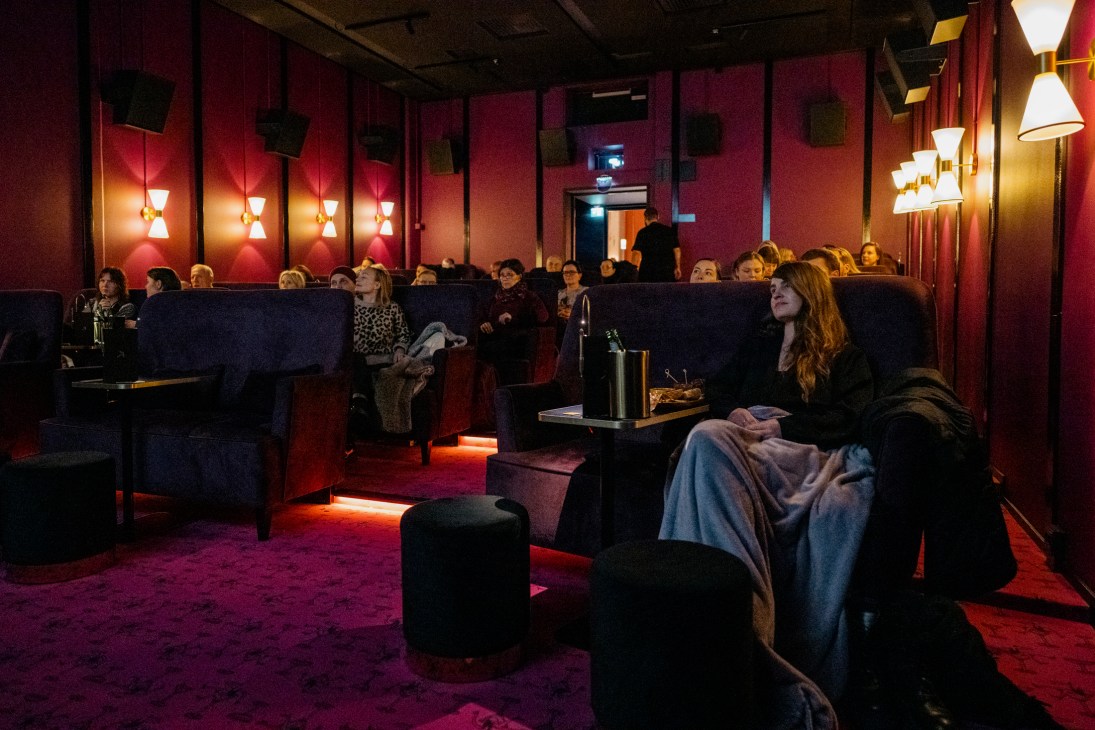
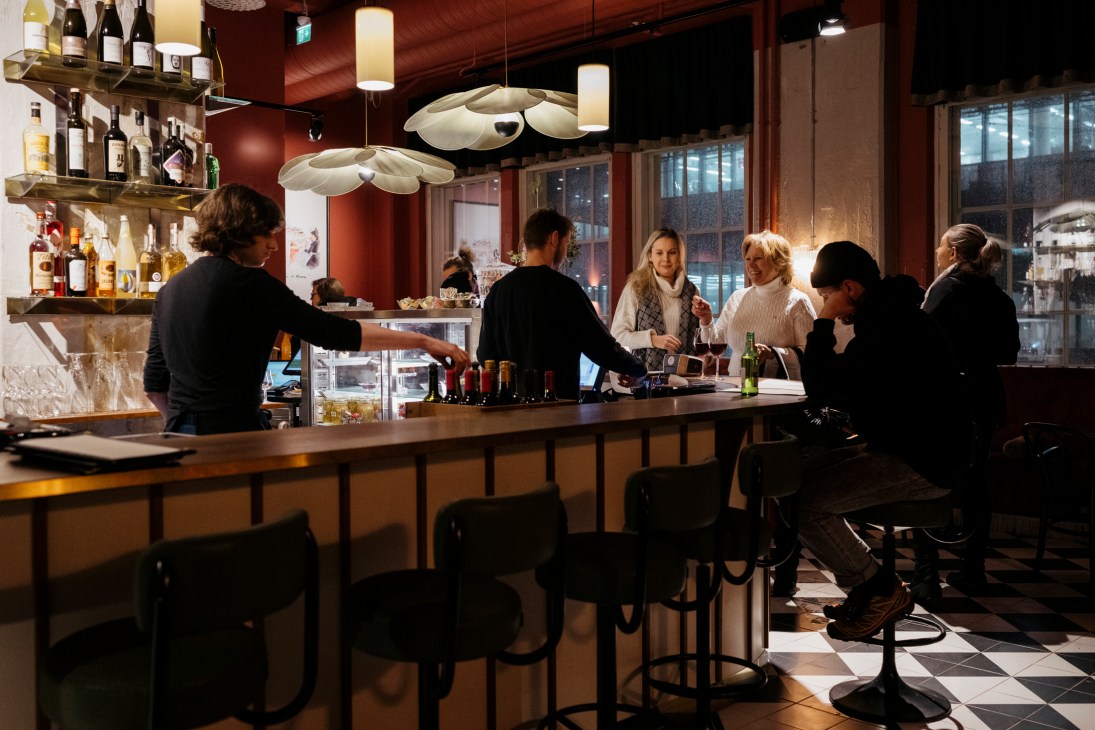
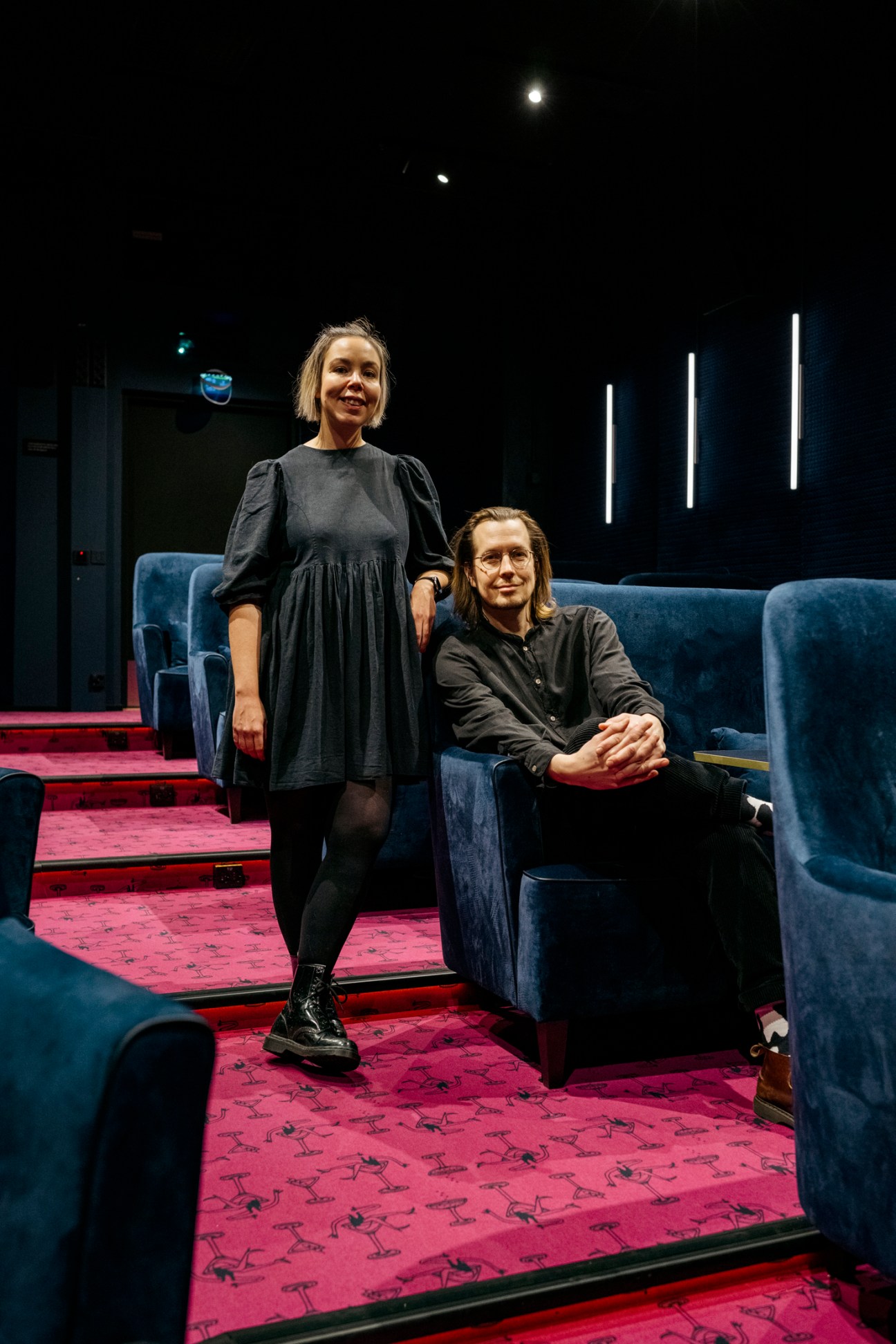
Still, Laurila and Hynynen know that films need to be at the heart of it all. That’s why the cinema features state-of-the-art audio and video technology. Each room is kitted out with a 20-speaker sound system but what sets Riviera apart from the big multiplex chains are details such as the curtains drawing open to reveal the screen as the projection begins.
This careful approach is reflected in Riviera’s programming. When Monocle visits, it includes dozens of films, ranging from Hollywood blockbusters to independent titles from the European festival circuit. “Many small cinemas focus exclusively on art-house content but people also want to watch hit movies, so why deny them that?” asks Hynynen. She is convinced that a great neighbourhood cinema should be “your best movie friend”. Punavuori’s residents can trust that Riviera will have something interesting for everyone, not just cinephiles. Meanwhile, the cinema has just launched a regular music night, with a pianist soundtracking the lobby’s hustle and bustle with film music.
In recent years there has been a boom of new independent cinemas in Helsinki: many central neighbourhoods now have their own movie theatre. “They have played an important role in fostering a sense of community, even pride,” says Laurila. Though Punavuori had long been one of Helsinki’s hot spots for restaurants, bars, art galleries and design shops, it had lacked a picture house for years before Riviera opened its doors. “There is a lot going on here and we wanted to be part of shaping the district’s culture,” says Laurila. So far, it’s all going to plan: showings are consistently fully booked and Riviera has become a treasured neighbourhood fixture.
rivieracinemas.fi
4.
Stepping up
Cineclube Cortina, São Paulo
It’s perhaps apt that Cortina, São Paulo’s newest cinema, should call itself a cine clube. As well as screening the latest films, it also hosts parties and is home to a cocktail bar and restaurant. It’s the kind of place where you can go for a steak tartare, enjoy a caipirinha and be impressed by the attention to detail that has been paid throughout.
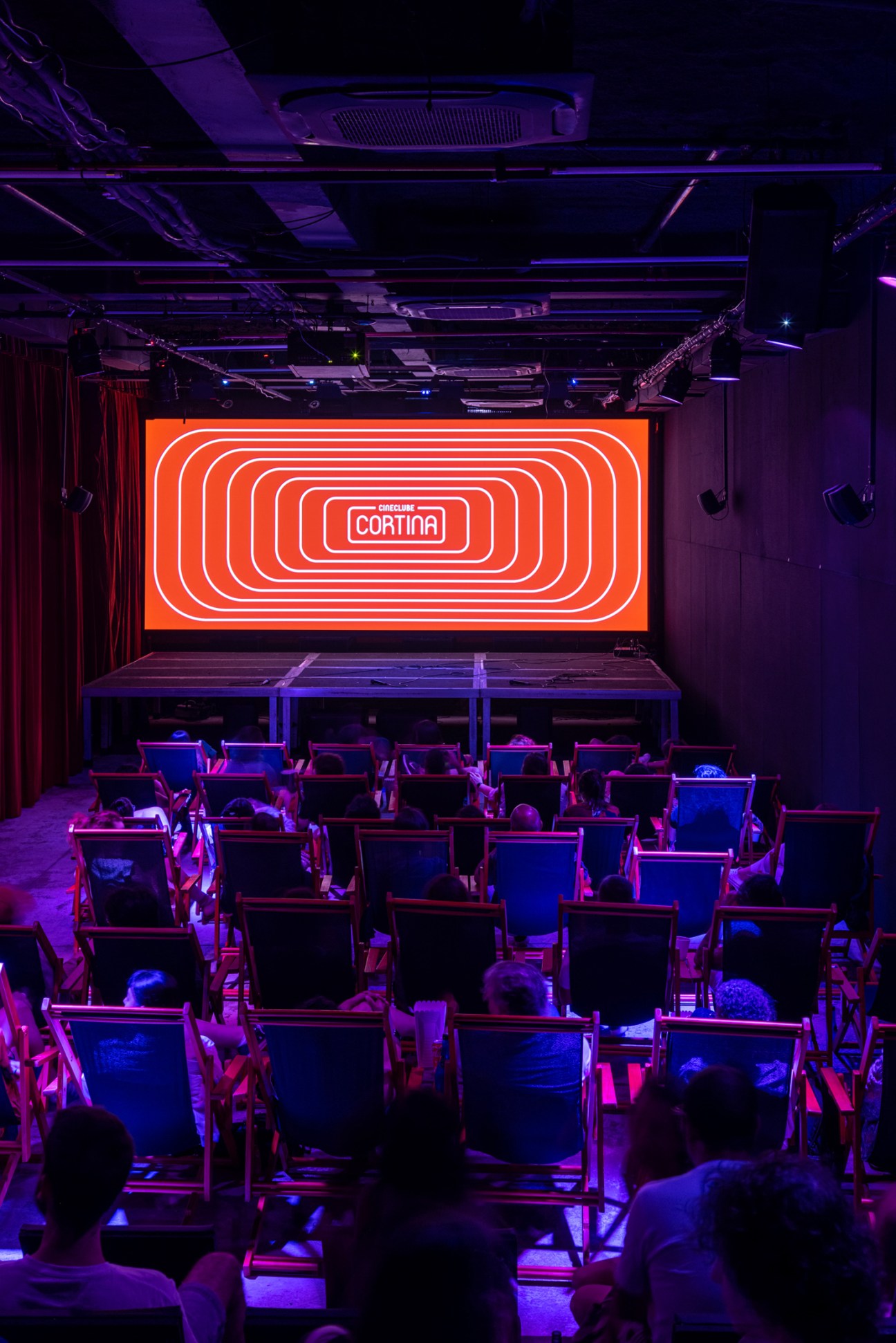
In the 1960s downtown São Paulo was home to the city’s most glamorous cinemas but many have since closed. Marcelo Sarti, Paulo Vidiz and Rapha Barreto were determined to reverse this trend; so, along with Metro Arquitetos, they turned a carpark into this multistorey venue in 2022. “We’re bringing the cinema tradition back to the region,” says Sarti.
The team was clear from the outset that Cortina should not be an ordinary multiplex. “We wanted it to be a hybrid space where you can watch a film, then dance the night away,” says Barreto. Accordingly, its foldable chairs can be dismantled for late-night parties for as many as 500 people. The packed events schedule ranges from Súbete, dedicated to the rhythms of Latin America and the Caribbean, to Primavera Te Amo, showcasing new Brazilian music. The film programme is equally diverse, with modern romcoms jostling with the classics. Upstairs, Argentinian bartender Chula serves cinema-inspired cocktails, including a white Russian in tribute to The Big Lebowski.
Cortina has been crucial to the area’s revitalisation and its success signals an appetite among Paulistanos for a cinema that’s not a suburban multiplex. Despite all the extras, its movie curation remains central. “A cine clube is a space where we can discuss film in a deeper way,” says Sarti.
cardapiocortina.com.br
5.
Out of the past
The Piccadilly, Adelaide
Opened in 1940, The Piccadilly stands at the corner of a jacaranda-lined street in North Adelaide. “My great-grandfather purchased the ‘Old Lady’ in 1983,” says its fourth-generation custodian, Deanna Wallis. Despite its longevity, the cinema needed a rethink by 2021. “Even before the pandemic, there was a decline in attendance,” says Wallis. “So we decided to look at what our options were, starting with the building.”


Over a period of 18 months, a au$2m (€1.2m) renovation returned the structure to its former glory. The foyer’s terrazzo tiles have been restored; the staircase has been spruced up, as has a mural of London’s Piccadilly Circus by F Millward Grey. “We have the original bathrooms upstairs and 1940s vents in one of the screening rooms,” says Wallis. But the family’s plan involved more than a structural refit. “People don’t just want to see a film,” she says. “You have to offer other experiences with it.” Now the café serves flat whites and nibbles are available in the lounge. “Events have been successful too,” says Wallis. “We have hosted sold-out q&as during the Adelaide Film Festival for movies such as The Defenders.”
One of South Australia’s longest-running cinemas, The Piccadilly is a landmark that has witnessed the film industry’s evolution. Its refit ensures that it can continue to do so for many years to come.
wallis.com.au
Witness the fitness
1.
Albion
UK
Cycling brand Albion looks to the ever-changing UK skies to inspire its weather-resistant cycling gear. “On a long ride, you might encounter a number of weather conditions: it might be raining in the morning and sunny in the afternoon as you go up and down a mountain,” says Charlie Stewart, who co-founded Albion with two friends, photographer Rupert Hartley and Jack Howker, a former brand consultant. “You need versatile clothing that is packable. British weather definitely offers the right framework for developing such products, even if we don’t get extreme heat or cold.”
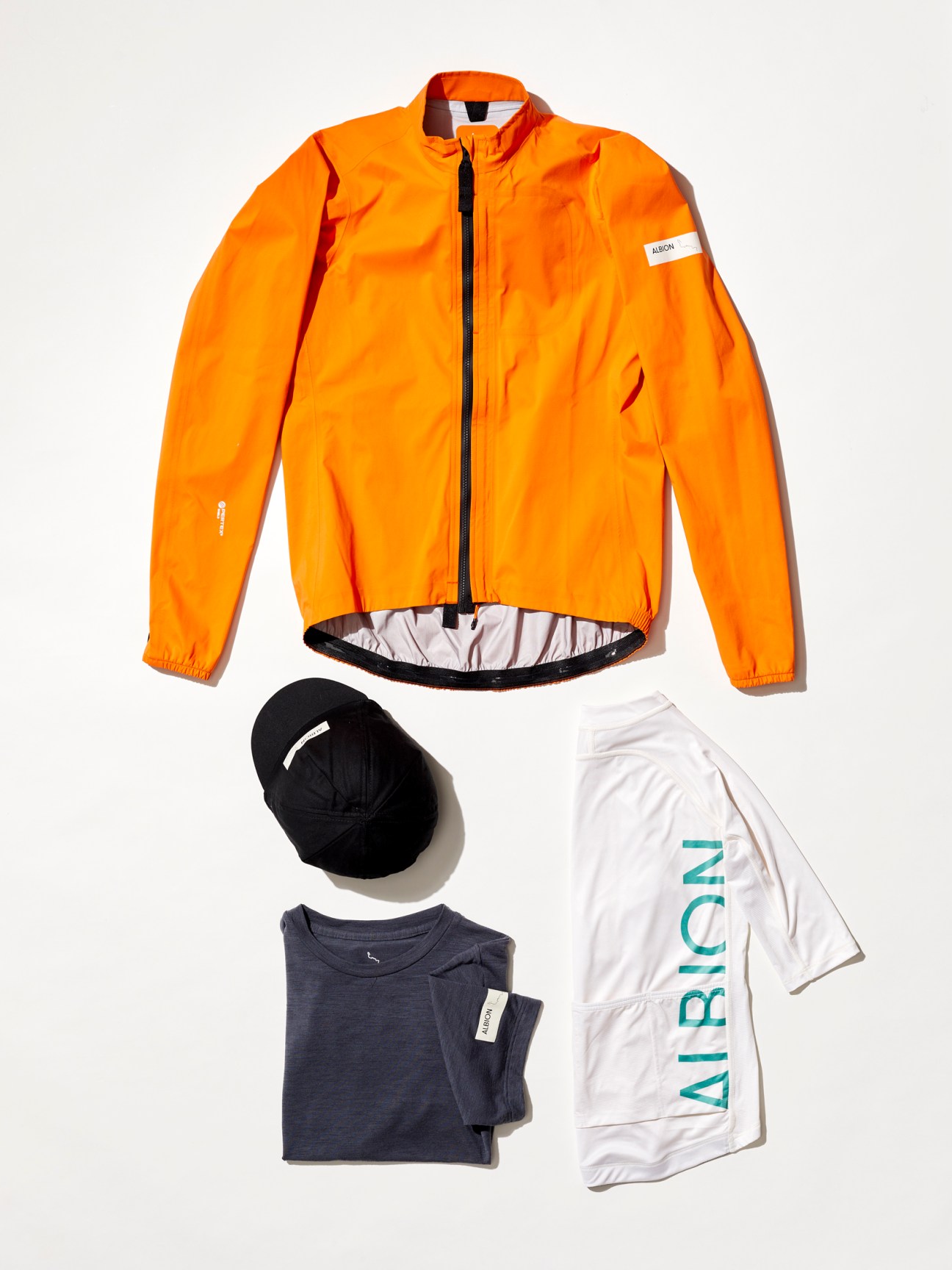
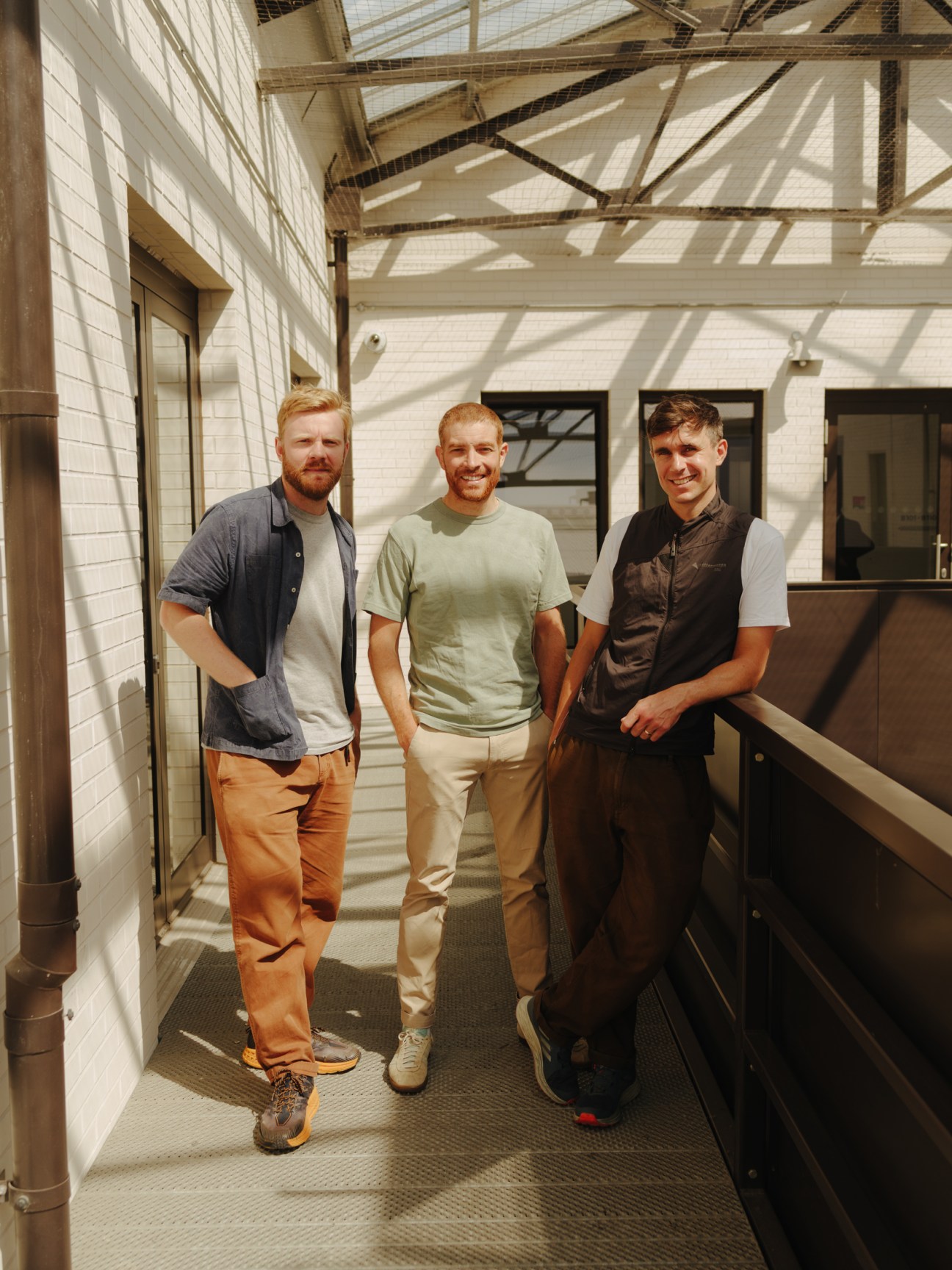
Since the label’s launch in 2016, Albion has been building a community of keen – and at times obsessive – cyclists with an eye for detail. They have come to appreciate the brand’s clever layering system, including breathable rain jackets, merino wool T-shirts and bib shorts, developed in aerodynamic, lightweight fabrics to facilitate racing. “We kept the designs quite simple, without any mad patterns, because we want to make clothing that will last,” says Stewart.
“A jersey or a jacket is meant to be used for years and we offer free repairs for life to keep an open dialogue with our customers.”
Every product is developed in the brand’s studio in southeast London and put to the test by Stewart and his team. Prototypes are sent to Albion’s manufacturing partners in Italy, China and Scotland once perfected, leaving little room for error. “We’re becoming a favourite brand among hardcore cyclists,” says Stewart. “It’s a question of lifestyle. We ride to work and for fun, and watch cycling races on TV. When you’re cycling, you’re exploring the limits of your physical and mental capabilities. Cycling is just a good way to unplug.”
albioncycling.com
2.
Paul Smith cycling essentials
UK
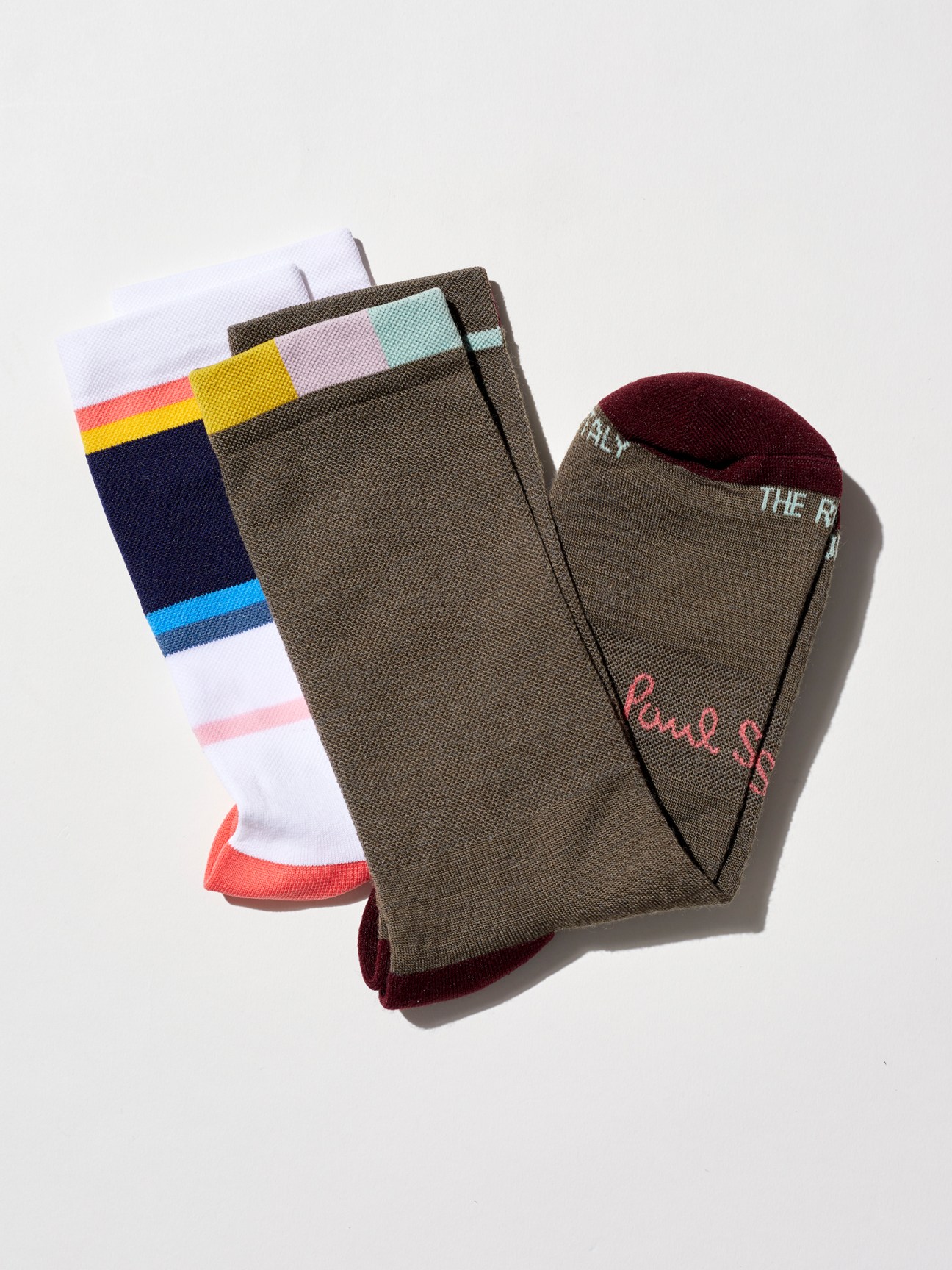
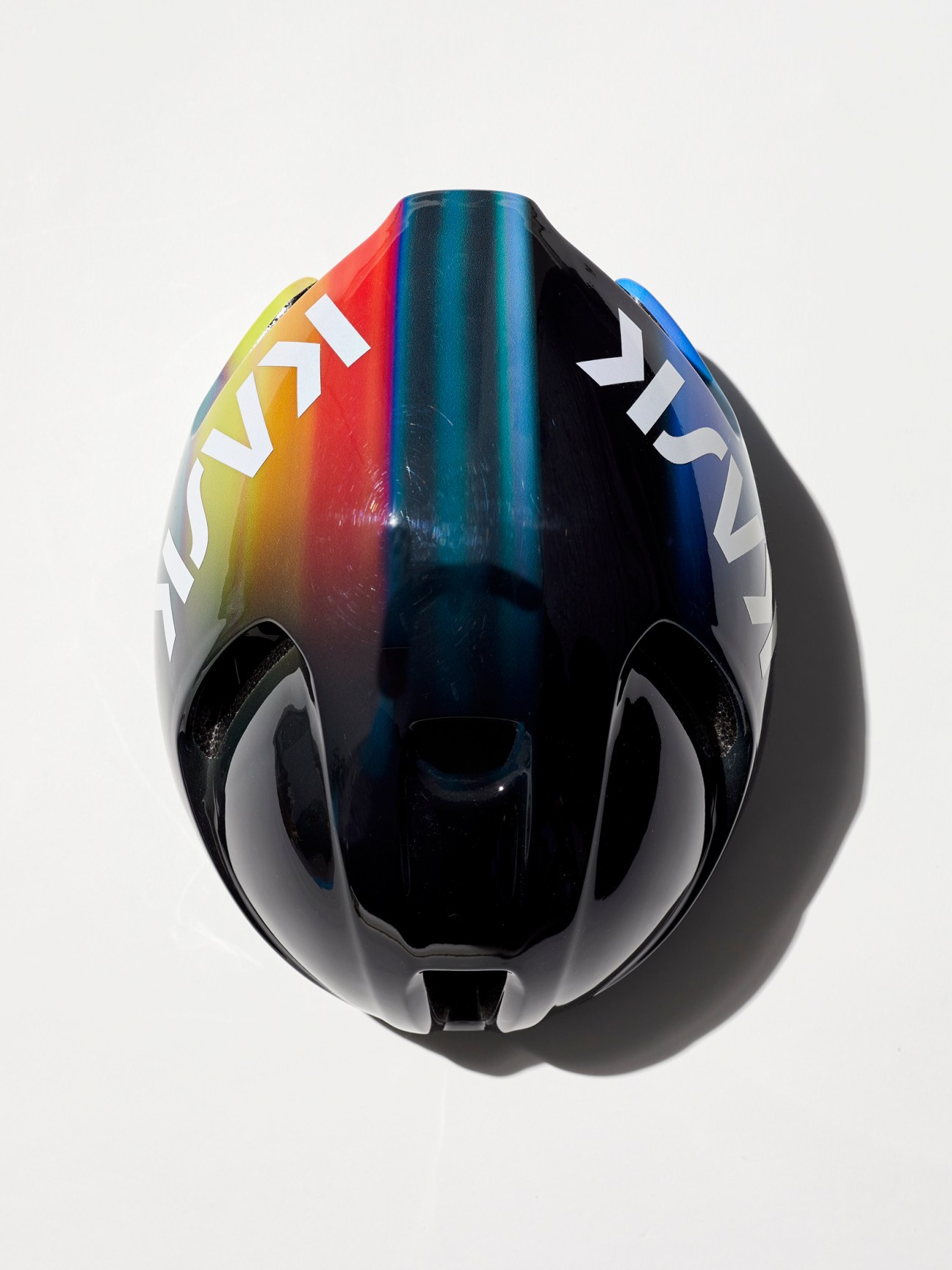
Paul Smith has a passion for cycling and his London HQ is filled with bikes, race trophies and memorabilia that often inspire his runway shows. He also likes to collaborate with cycling labels on capsule collections (among our favourites are the socks he designed with Rapha). The brand’s striking “Artist Stripe” cycling socks are made in Italy using a technical sports yarn with a comfy mid-foot support band. Smith has also joined forces with Italian helmet specialist Kask to design a lightweight helmet for a head-to-toe look.
paulsmith.com
3.
Prada Linea Rossa sunglasses
Italy
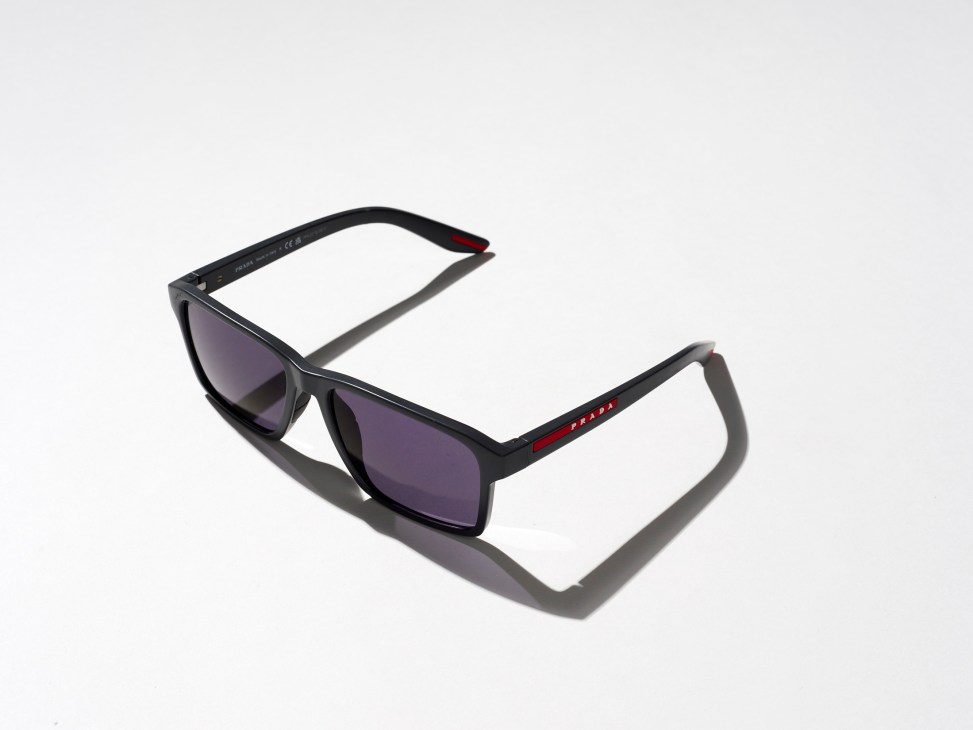
Cycling sunglasses are normally associated with wraparound silhouettes and multicolour lenses. But as the market for cycling fashion diversifies, brands are starting to offer a variety of options. We recommend switching to more modern, understated designs that match your day-to-day style. Prada’s Linea Rossa line offers an array of elegant alternatives, including these rectangular frames featuring monochrome Tuning lenses.
prada.com
4.
Forét vest
Denmark
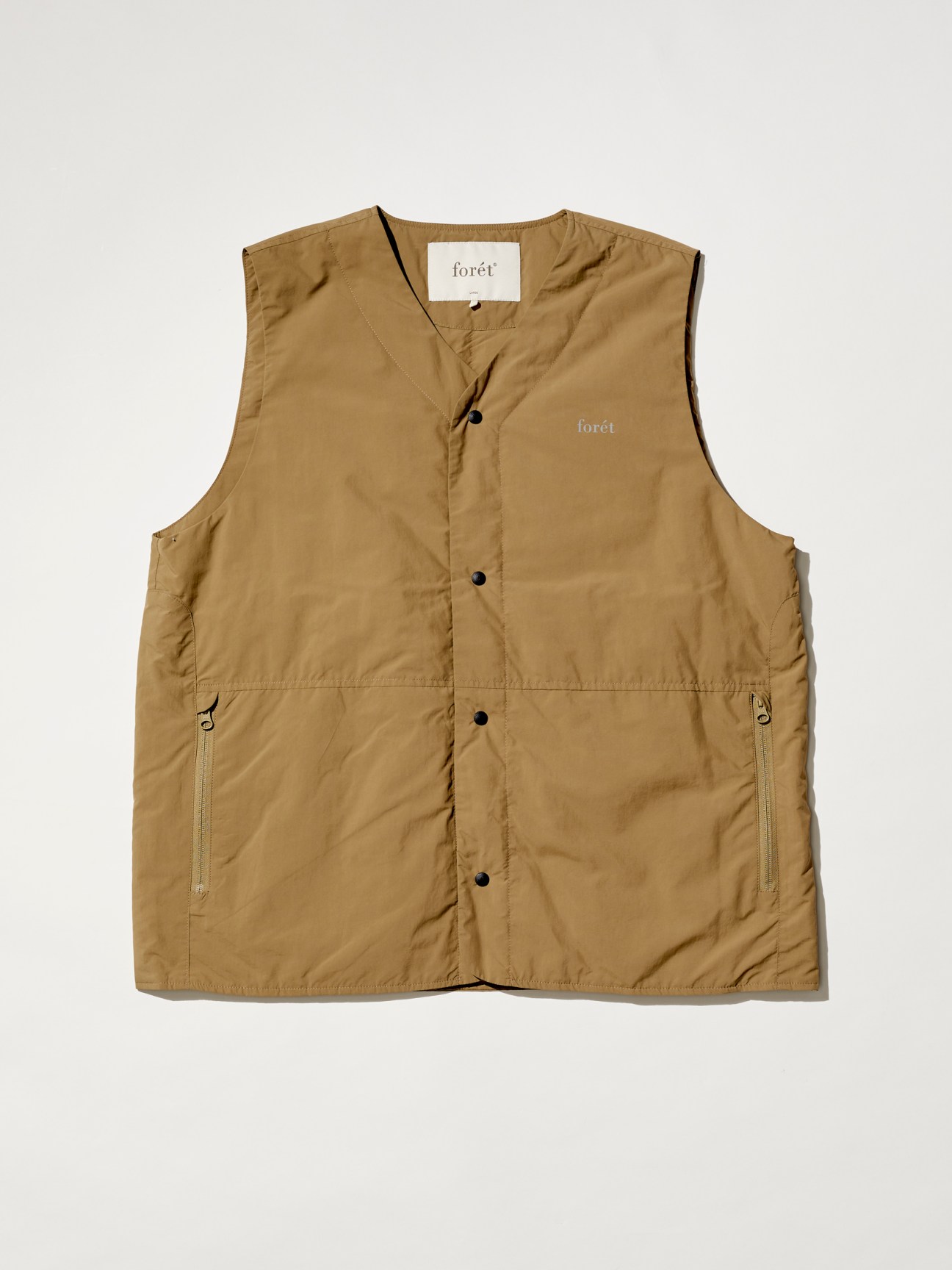
Inspired by Denmark’s forests that founders Jeppe Meier and Jesper Finderup explored as children, Forét’s collections aim to reflect the timeless quality of nature. This khaki vest is coated with eco-friendly, water-repellent materials inspired by the team’s recent canoe trip. “We develop clothing that stays relevant for longer than a season,” says Meier.
foretstudio.co.uk
5.
L/Uniform pannier bag
France
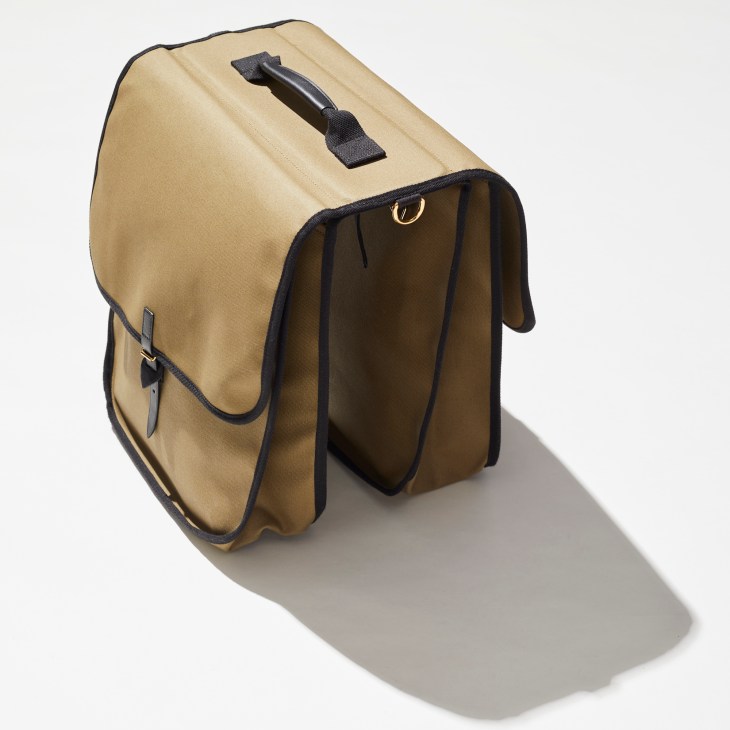
Parisian label L/Uniform offers elegant canvas bags for every occasion, including cyclists’ daily commutes. Its new saddle bag features two roomy pockets on either side and a coat of fluorinated resin makes it water-repellent. Once you reach your destination, you can adjust the straps to turn it into a portable shoulder bag.
luniform.com
6.
Pas Normal Off-Race Stow Away jacket
Denmark
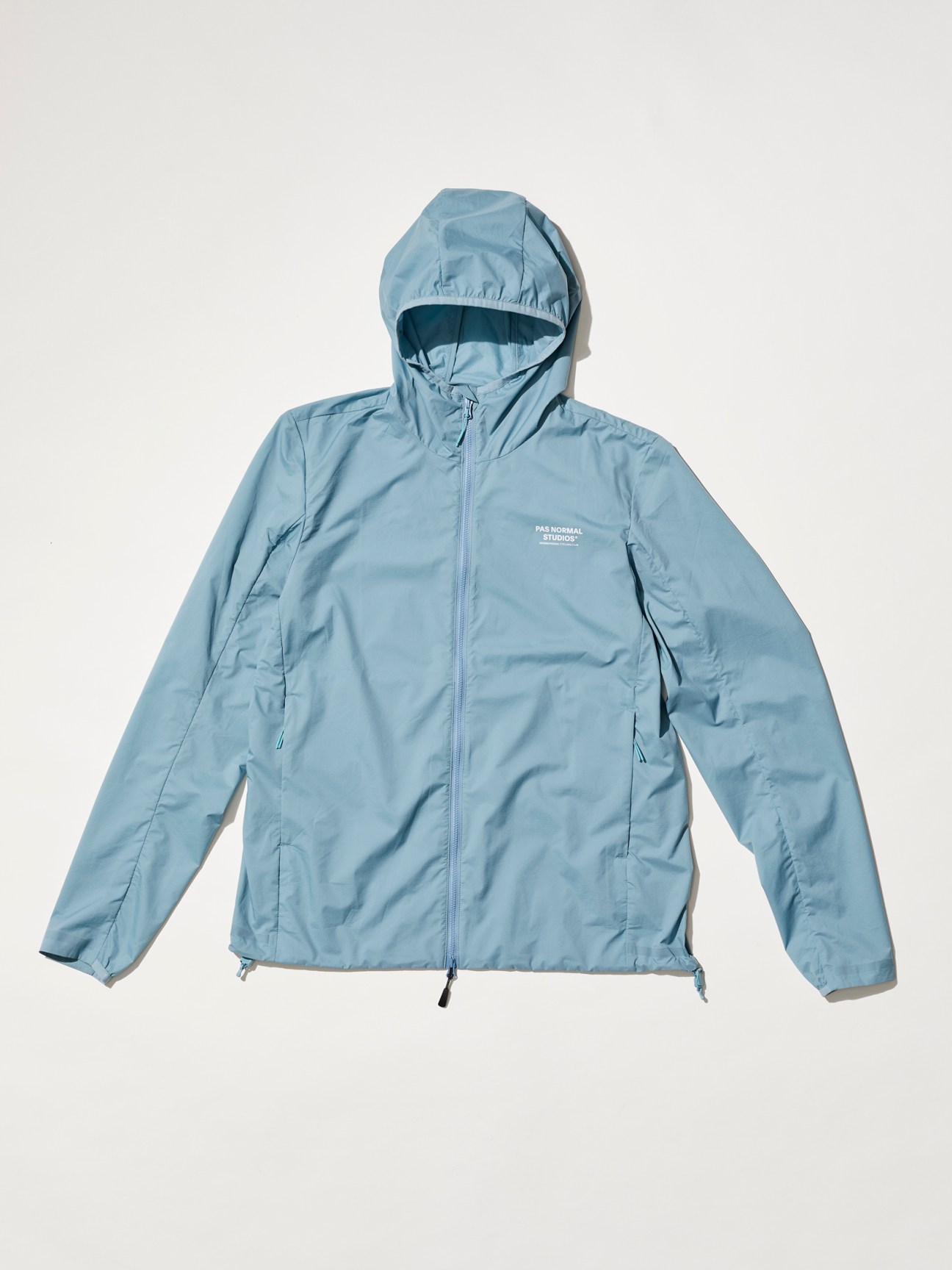
Copenhagen-based Pas Normal Studios offers smart designs suitable for both daily commutes and more adventurous weekend rides. We have our eye on the dusty blue version of the Off-Race Stow Away jacket. Made from a lightweight yet resistant ripstop fabric, this is a jacket that will see you through windy autumnal days. When the sun comes out, it can be stashed away into an integrated back pocket.
pasnormalstudios.com
7.
Qwstion Medium Bucket Bananatex backpack
Switzerland
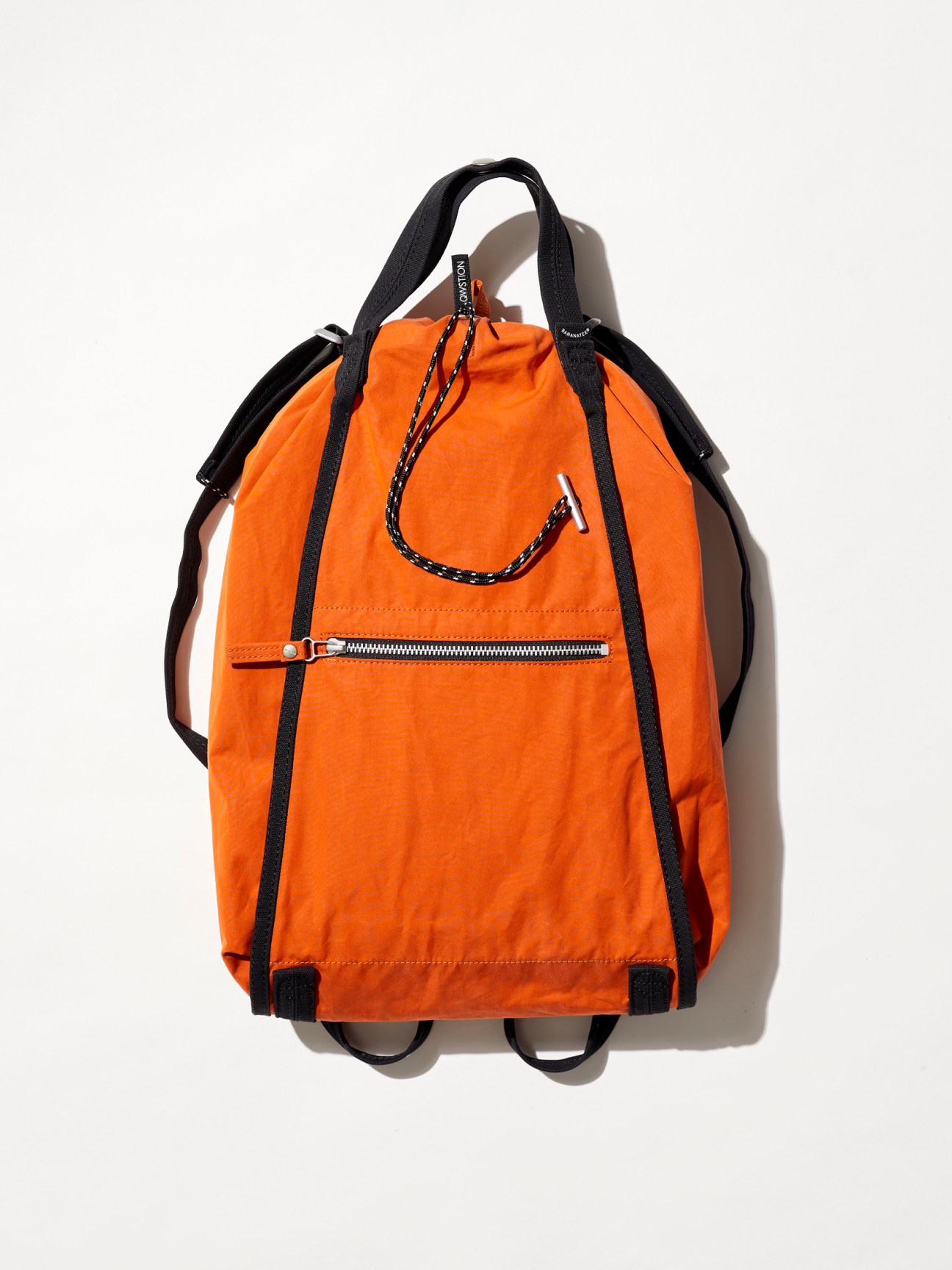
Zürich-based label Qwstion lives up to its name: by using plant-based materials and paying tribute to Swiss modernism, it aims to question design and manufacturing norms. “Our goal is to contribute positively to society – and materials play a fundamental role,” says co-founder Christian Paul Kaegi. “We use plants instead of plastic because they can convert carbon from the air into useful fibres.” The brand’s latest backpack design is made from a durable banana fibre. “Every single part of the bag is plastic-free and can be recycled,” says Kaegi.
qwstion.com
8.
Tracksmith Eliot Runner
US
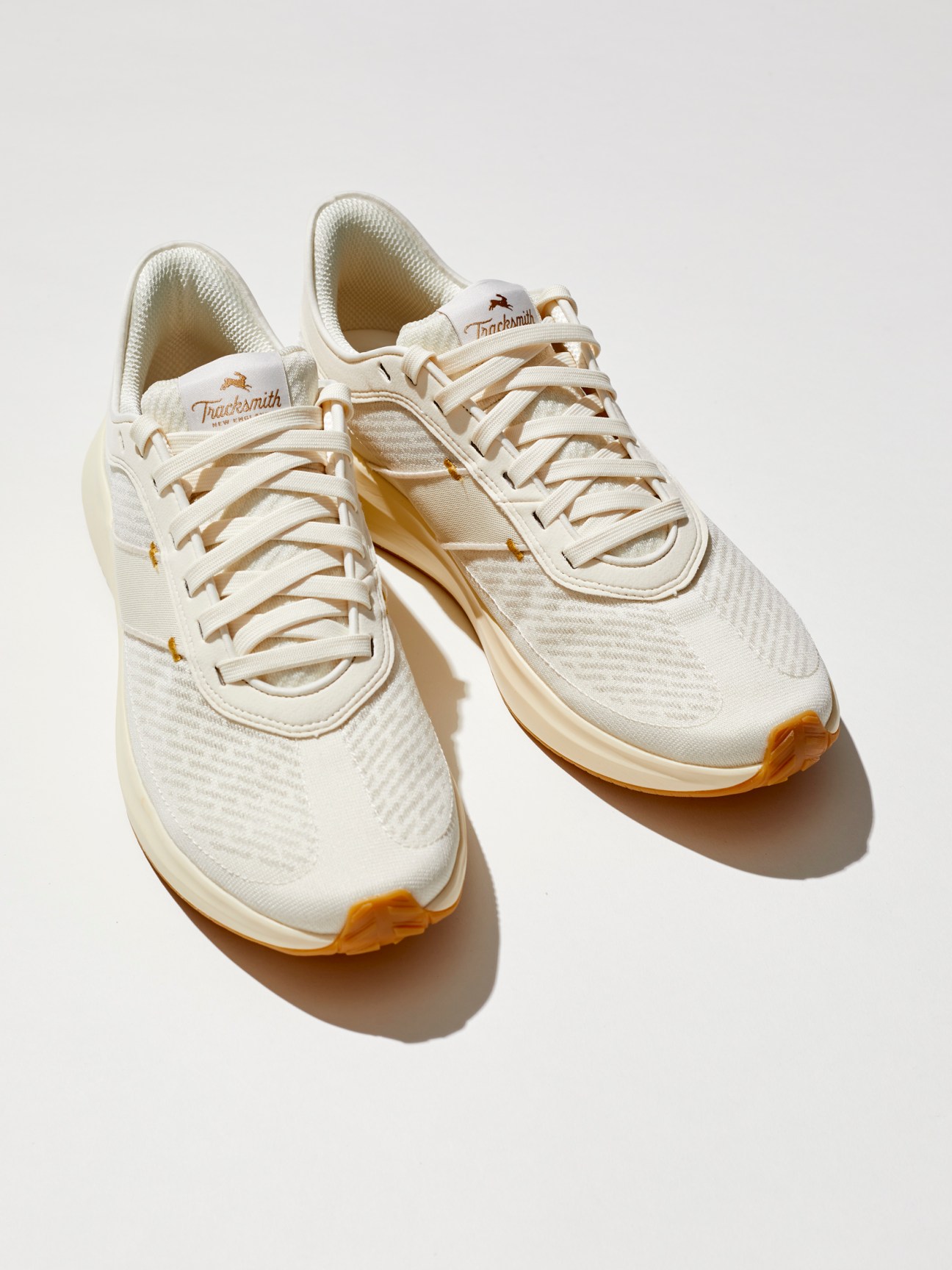
New England-based Tracksmith has a reputation for equipping runners with some of the highest-quality gear in the market. Its first trainers, the Eliot Runner, feature a subtle woven pattern and neutral shades, while the use of ultra-soft synthetic suede and engineered mesh ensures a soft stride and top performance.
tracksmith.com
Pedal power
How cycling fashion has got into gear
I joined my first cycling club when I was 13, right after my father introduced me to mountain biking during one of our family holidays in France (writes Sam Brogan). The feeling of freedom as we sped up mountains in Brittany got me hooked and, 18 years on, I’m still riding around the world. Since then I’ve seen cycling evolve into a highly technical sport where every performance element is carefully considered – clothing included.
Since the pandemic, more people – probably in search of that same sense of freedom – have been buying bikes and joining cycling clubs. They’re also putting a lot more thought into what they wear, meaning cycling fashion has been enjoying its own momentum. There is a continuous push for innovation and hard-working pieces that enhance performance. Today you are not just picking up any old jersey from your local sport shop but investing in quality designs that can also make you faster.
The shift has been a long time coming. The first Lycra cycling shorts were designed by Swiss brand Assos in the 1970s (not to be confused by fast fashion retailer Asos). Taking inspiration from the Swiss skiing team, Assos created lightweight shorts that maximised aerodynamics and helped cyclists gain speed. By the 1980s, most professional riders traded their woollen shorts for Lycra, thus setting a precedent for cycling brands to keep innovating.
Any competitive rider will tell you that function comes first. The brands that I trust offer clothing that enables you to ride in any weather and feel comfortable along the way. UK label Albion’s long-sleeve jersey is a good example: it’s light enough to be worn all year and can be paired with a gilet during the colder months. High-quality socks are another essential for making winter rides more enjoyable.
As Monocle’s art director by day, I find that aesthetics play their own role when it comes to finding the right gear. Why not consider colour and design, just as we do with the rest of our wardrobes? Rapha was one of the first to challenge perceptions by thinking as a fashion brand as much as a sports brand and introducing the cycling community to a more refined aesthetic, free from the traditional, loud logos.
Today more brands are following in its tyre tracks and diversifying the cycling fashion market. Copenhagen-based Pas Normal Studios makes a good case against black bib shorts with elegant, muted shades. It’s refreshing to see a shift towards more solid colours. I have my eye on Velobici’s emerald-green sets, which also happen to be helping to revive the manufacturing industry in my hometown, Leicester.
Gone are the days when you were limited to mass-produced gear. With these new names bringing considered design to the world of cycling, you no longer have to abandon your style – or appreciation for quality – on the bike.