Issues
Deep focus
Photographer Anastasia Taylor-Lind grew up travelling across the English countryside in a caravan, spending her days reading children’s books and Wilfred Owen’s war poetry. At the time, she had limited access to the outside world so her first significant encounter with photography was when she came across Don McCullin’s reportage on the Vietnam War at school. “I had an immediate visceral reaction,” she says.
Taylor-Lind decided to become a photojournalist. In 2003, while studying at the University of Wales, Newport, she travelled to Kurdistan to report on the women of the peshmerga during the Iraq War. She later lived and worked in places such as Syria, Gaza and Lebanon, before heading to Ukraine, where she took photographs of Kyiv’s Maidan protests in 2014 that cemented her status in the field.
A lot has changed since then: in the aftermath of the uprising, Vladimir Putin annexed the Crimean peninsula and, in February 2022, Russia invaded Ukraine. However, Taylor-Lind has continued to report from the region. Earlier this year her photographs of the conflict were the subject of an exhibition at London’s Imperial War Museum.
When Monocle visits Taylor-Lind at her flat in east London, she tells us that she has returned home earlier than expected after being injured in a Russian missile strike on a restaurant in Kramatorsk. Though her scrapes are still visible, Taylor-Lind is in a cheerful mood, offering us coffee and biscuits while her wheat-coloured lurcher, Blaze, looks on.

We step out for a stroll in Abney Park, an eerie but peaceful cemetery in Stoke Newington. She tells us that though the people she photographs in Ukraine are often in close proximity to death, life doesn’t stop for them – which is why her images focus on the normality that persists amid the conflict. Earlier this year, Taylor-Lind and Ukrainian journalist Alisa Sopova, a frequent collaborator, received a grant from the National Geographic Society to support their work after almost a decade of self-funding their projects.
Taylor-Lind views it as her professional responsibility to share the realities of life on the front lines while avoiding sensationalism or clichés. “Objectivity and truth-telling aren’t always achievable – but what a huge misrepresentation it is when people tell stories that don’t reflect those whose stories are supposedly being told,” says Taylor-Lind. As a woman in a field dominated by men, she has also been plagued by the question of who gets to share other people’s narratives to the point of putting her camera down for long stretches and turning her attention to poetry instead.
Taylor-Lind stresses the importance of portraying her subjects respectfully and with compassion. “In reportage, you might find yourself in someone’s bedroom, photographing children waking up in the morning,” she says. “You’re asking for intimacy and trust, and to report on life as it is, without intervention.” She still grapples with how best to do this. “I have come to the conclusion that I won’t find better ways to represent people through photographs if I’m not taking pictures,” says Taylor-Lind. “I need to deal with these issues in a practical way. Still, what right do I have to tell someone else’s story?”
Before we part ways, Monocle asks Taylor-Lind how she summons the courage needed to take these pictures. “I’m not fearless,” she says. “I’m incredibly afraid and I should be. Everyone asks me, ‘What will you do when the war ends?’ But I’m pretty sure that wars never end for those who experience them.”
The CV
1981: Born in Swindon, UK.
2004: Graduates with a BA in documentary photography from the University of Wales, Newport.
2014: Her first photographic book, Maidan: Portraits from the Black Square, is published by Gost books.
2016: Becomes a Nieman Fellow at Harvard University.
2022: Taylor-Lind’s debut poetry collection, One Language, is published by Smith|Doorstop.
2023: An exhibition of her work, Ukraine: Photographs from the Frontline, opens at the Imperial War Museum in London.
Locked and loaded
Dressed in chinos, trainers and a black polo shirt, Luis Cobos, the Spanish founder and ceo of one of Mexico’s leading manufacturers of safes, is standing in a factory on the outskirts of Querétaro when he begins to show us around a room lined with rows and rows of lockboxes. Most of them will end up in the homes of wealthy individuals, he says. Or at supermarkets and convenience stores. Founded in Mexico City in 2013, his company Bull Safe has no trouble selling its products.
While safe-making in Latin America’s largest Spanish-speaking economy is still a niche industry – mostly metalworkers managing small businesses – high crime rates in the country mean that it’s a growing one. Cobos, who estimates that most medium-sized businesses and more than a third of Mexican households making more than $100,000 (€94,465) a year own a safe, is intent on meeting that demand. “In Mexico, people who make safes are often craftsmen who have workshops with four employees,” he says. For such businesses, delivering large orders to corporate clients is a big challenge. Cobos, on the other hand, has built Bull Safe into one of Mexico’s most successful medium-sized manufacturing companies. His strategy? Investing in modern production equipment, developing a software-monitored management plan for efficient step-by-step production and training 55 workers to master specific tasks in the factory. “I have very good employees,” Cobos tells Monocle. In 2018, the company produced about 1,000 units a year; now it makes up to 700 every month.

At the factory, the tasks vary. Some employees design safes using 3d computer software and create plans to programme machines that laser-cut sheets of steel; others weld, powder-coat and oven-cure the units. We watch a group of workers as they fill the doors and walls of each product with concrete. Cobos nods towards a set of hammers and mallets, and explains that traditional metalworking tools are only used to correct small errors if pieces with small defects emerge.
Cobos shows Monocle to a safe that can be tested by pushing its door closed, rotating the circular handle to the left so that the thick steel deadbolts slide into place. Everything locks shut with a satisfyingly solid click. “It feels heavy, right?” Cobos asks, chuckling.
While he is satisfied with the quality of his products, he knows that there is always work to do. Honing Bull Safe’s software and customer service features, for example, is a major priority for the ceo. Customers are already able to monitor and even open their safes remotely. He is interested in finding out how he can make this system better. “We update designs every year,” he says of his products, which cost between $400 (€378) and $3,000 (€2,835).
He is now also looking to the direct-to-consumer model successfully implemented in Mexico by the paint producer Comex, a division of ppg, for inspiration. His reasoning is simple. Over time, Cobos has realised that investing in physical retail spaces often pays off. “I opened a shop in Mexico City – we saw sales grow,” he says. “So I launched stores in Querétaro, León, Monterrey, Mérida and Cancún.” Cobos’s next frontier? “The plan is to enter the US market.”
While Cobos has supervised and guided the company’s development, he still finds it remarkable how quickly Bull Safe has evolved. “There was never a plan from the beginning but we sell better products at better prices,” he says. “It’s been organic growth.”
All hands on deck
Just as in a good newspaper that covers everything from boardroom manoeuvres to sports-field shenanigans, the writers and editors at Monocle have diverse reporting beats. On any given day, we’ll have someone in a conflict zone and another decoding fashion runway shows; someone at their desk hunting down an elusive architect while another quizzes a think-tank analyst. All these beats, these editorships, are demanding, come with pressing deadlines, require tenacity and collaboration. Sometimes stories don’t work or don’t deliver the insight or access to merit space on page but there are times when the team returns to the office to write, debate and edit having all bagged their quarry. This has been one of those issues.
Let’s start at the end and our Expo. Grace Charlton is one of Monocle’s youngest writers and this month we dispatched her to write about some of Milan’s oldest residents: the glamorously turned-out women known as “sciure“. Working in partnership with photographer Andrea Pugiotto, a Monocle regular, their task was one that required charm, grit and an ability to shrug off rejection. They had to approach these great women in the street, persuade them to pose for the camera and make sure that they didn’t run off when they heard what the focus of the story was (being a sciura has connotations of grandness that not everyone is happy about – though, these days, it’s increasingly a bit of a compliment). Anyway, they got the story. Women who have developed a personal style across the years that reflects their characters march across our pages.

Meanwhile, at the front of this issue, Alexis Self, our foreign editor, has shepherded along a report by the writer Marcel Cartier and photographer Peter van Agtmael. It saw the duo travel to the border between Iran and Iraq to meet young women who have come to Iraqi Kurdistan from Iran to join the peshmerga, the band of militants who fought for the region’s autonomy from Baghdad and who hope to one day liberate Kurdish territory from the influence of Tehran’s theocratic rulers. These stories might look and sound gulfs apart but they share the same commitment to storytelling.
In between these dispatches, two key themes play out across our pages. On page 87, you’ll find our inaugural Retail Awards, where we celebrate some of the store owners, buyers and developers who see in shopping more than a chance to drop some cash. Over the years, Monocle has championed the cause of good retail because, at its best, it anchors communities, champions the well-made, supports local businesses – and people – and creates spaces where a multitude of events and moments of inspiration can take place. And, at a time when many big US and European cities are struggling to keep their malls and shopping strips vibrant, we wanted to shine a light on some best practice around the globe.
But this is also our autumn style and fashion special – and here another skilled editor steps forward: Natalie Theodosi. She can help you fix your wardrobe but it’s the interviews she lands that will really change your fashion outlook. This month she meets Frédéric Arnault, Tag Heuer’s 28-year-old ceo, who is on a mission to make it a billion-dollar timekeeping business, and Elizabeth von der Goltz, ceo of Browns, the group now owned by Farfetch that wants to recreate the magic of in-person shopping. These are big business players with insights and visions that go beyond the world of just style.
Our design editor brought home a report on how architecture can shape educational outcomes and we trained our cultural lens on Gerhard Steidl, the go-to publisher for the greats of art and photography. In our opening pages, we deliver moments with polymath Edmund de Waal, a strange Egyptian roadtrip and a meeting with Portuguese architect Álvaro Siza.
Now it’s over to you. We hope that you enjoy the issue and the places it takes you to. You can send ideas, thoughts and reflections on it (and anything else) to me at [email protected].
Have a great month.
In the hot seat
Frédéric Arnault
CEO, Tag Heuer
Switzerland

Frédéric Arnault, Tag Heuer’s 28-year-old ceo, took the top post at the lvmh-owned watchmaker in 2020 with big ambitions to turn the company into a €1bn business. He has already made a number of left-field moves that have commanded the attention of both the industry and watch collectors, from investing in new materials such as lab-grown diamonds to debuting higher-priced models and releasing five-minute action films rather than traditional ad campaigns. Another key pillar of his strategy has been to reignite the brand’s ties with the world of racing so that Tag Heuer becomes synonymous with racing watches in the same way that, say, Omega has come to define diving watches. So far it has been working: according to estimates by Morgan Stanley, the company’s sales reached chf729m (€762m) last year, up from chf682m (€711m) in 2021.
Arnault’s flair for innovation and readiness to challenge watch-industry conventions shouldn’t come as a surprise: his father, Bernard Arnault, transformed the lvmh group into a €79bn business by way of bold, unexpected investments in luxury brands. Yet Arnault, much like his father, also has a deep appreciation of the watchmaking craft and the history behind Tag Heuer’s famous designs, particularly the Carrera, the sporty timepiece designed in 1963 by brand founder Jack Heuer, who looked to Le Corbusier’s architecture and Charles Eames’s furniture for inspiration. Here, Arnault tells Monocle how he plans to balance modernity and tradition – and reach his targets.
Why have you chosen to focus so much of your communication efforts on the Carrera this year?
There are a lot of people who don’t necessarily know that this is a watch that was released back in the 1960s, so we need to talk about it and show it to the world. We never moved far from the original design concept and it has remained relevant and modern, so it’s something to be proud of. Our approach has been to stay away from re-editions and instead update vintage pieces with new modern design details.
Why have you chosen to release a short film, ‘The Chase for Carrera’, instead of running a traditional campaign?
It’s important to invest in deep, engaging storytelling, especially in today’s world when people might look at one brand one day and move on to something else the next. We wanted to push the boundaries. People are used to short 30 or 60-second video campaigns but we created a five-minute film with one of the best directors [David Leitch] and some of the best actors in Hollywood [Ryan Gosling and Vanessa Bayer]. It’s a big brand statement that allows you to feel the spirit of racing that this watch reflects. It’s important not to take yourself too seriously and bring elements of fun in a campaign – that’s very Tag Heuer. We’re a luxury brand but we also want to be accessible in some ways. Tag Heuer watches tend to be the first watches people receive or buy for themselves – that’s a unique position to be in.
How important are the brand’s ties to racing?
I wanted to invest heavily and reassociate the brand with the sport. When you think of a brand that is linked to racing, it needs to be Tag Heuer – which is why we are rebuilding amazing partnerships with Formula One and increasingly talking about the Carrera as a racing watch. After all, the Carrera Panamericana [which inspired Jack Heuer’s design] was a rally race in the 1950s. Customers who are into racing might make up a smaller percentage of our audience but the rest also enjoy the fact that this is a timeless, sporty design. If you think about it, most of the people who wear diving watches might not go diving either but the association gives the watch more substance. It’s more about the spirit of the sport.
Why did you choose to introduce new materials such as lab-grown diamonds to Tag Heuer designs?
I’m convinced about that vision and chose to invest in lab-grown diamonds because we can use them in really unique ways. They come in shapes and textures that wouldn’t be possible to achieve with natural diamonds, so they give a new flavour to the design of the watches.
How are you keeping up with the watch industry’s ever-increasing quality standards?
We are continuing to improve both the quality of our movements and our assembly process. There are monthly checks on our return rates to make sure that we always stay below certain levels and these have continued to decrease every year. Recently we introduced five-year warranties for some of our watches and invested in solar-powered movements, which will allow customers to have the same watch for as many as 15 years without needing to have it serviced. This has meant continuing to make investments to increase the capacities of our four manufacturing sites. We have our own dial manufacturer, which also produces dials for other companies. It’s why we have been increasingly seen as one of the top players from a manufacturing perspective. We have been ensuring that we don’t make all of our investments at once. As a result, we can absorb any added costs [due to inflation].
You have laid out some big financial goals for the business. Where do you see most areas of potential?
Our key priority is to keep investing in quality and the perceived value of our signature watches. We don’t want to grow too much in terms of volume. Most of the growth moving forward will be a result of added value. We have been releasing a number of higher-priced timepieces; you wouldn’t normally associate them with Tag Heuer, yet we have had great success with them. We believe that this is the way forward.
tagheuer.com
Elizabeth von der Goltz
CEO, Browns
UK
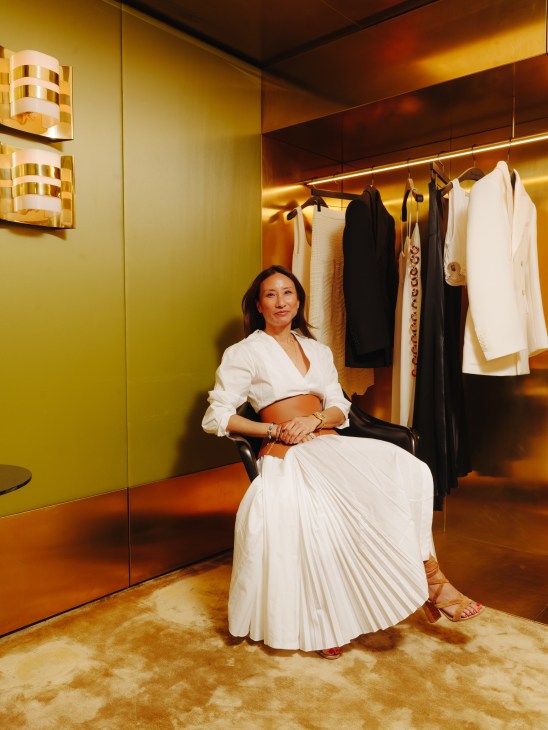
When Elizabeth von der Goltz began her career as a fashion buyer, working for the now-closed New York institutions Barneys and Henri Bendel, she remembers sitting near Joan Burstein, the founder of London’s Browns boutique and admiring her as a “real icon”. “She was a true risk taker who always went out to discover the new generation of talent,” says Von der Goltz. Nearly 20 years later, she is sitting in the leafy courtyard of the Browns boutique (a stone’s throw from its original South Molton Street address) as the company’s newly appointed ceo.
In the years that have transpired, Von der Goltz has held leadership positions at Bergdorf Goodman, Net-a-Porter, Matches Fashion and, more recently, taken a detour to Boston to complete the Advanced Management Programme at Harvard Business School. She has also experienced the transformation of fashion retail first-hand: the days when her former employer Barneys was heaving with stylish New Yorkers at lunch hour are in the city’s past and investors are no longer bidding for online retailers, many of which are now sitting on piles of unsold stock.
Browns too has faced a slowdown since the coronavirus pandemic, as well as internal management changes. But Von der Goltz is coming into the business with optimism. “It’s the perfect time to decide how we move forward,” she says. Farfetch, with its highly efficient marketplace model and multi-faceted portfolio (the company also invests in fashion start-ups, owns the Milan-based New Guards Group and has partnerships with the likes of Chanel, Chopard and Harrods) is helping to refine her formula for success. “Farfetch is a business of the future with a platform that can help to power the Browns business globally,” she adds. “Everything else in the retail landscape is based on dated business models.”
Here, she tells Monocle how she plans to reignite the joy of boutique shopping and turn Browns into London’s most vibrant gathering spot.
How have you been reshaping Browns’ strategy?
Like the rest of the industry, we have gone through so much transformation since the pandemic, including supply-chain disruptions and inflation. We had to sit down and re-envision our mission, our positioning and product strategy. There’s so much more we can be doing in the world of ready-to-wear, for instance. It’s not about buying more; we want to keep a sharp focus on our point of view instead, introduce customers to new names and ways of wearing familiar styles.
The shop is also very important in building our community. My aim is to create a real destination, a cultural hangout in London. Whether you want to shop for a one-of-a-kind item or come to Native [the courtyard restaurant], Browns should be top-of-mind – just like Colette used to be in Paris. That’s why we’re also thinking about having more artistic residences. Creating loyalty to a space is essential. I would love for Londoners to feel that attachment to Browns and for travellers to make it their regular stop when they’re in town.
Where do you see the most potential for growth?
I see opportunities across the board. Menswear is particularly interesting at the moment and evolving at a faster rate than womenswear. There’s a move away from streetwear hype into something a lot more grown up, so we have an opportunity to introduce customers to best-in-class tailoring or dress shoes, styled in our modern ways. We have also been investing in advanced technical wear, as well as vintage watches and fine jewellery. The aim is to host more events with our designers next year, bring in more products and talk to our top clients. Another priority is to make sure that we are changing the shop floors on a monthly basis so that our customers can discover new items every time they come in.
Is new talent as important now as it has been in the past, when Joan Burstein, for instance, would snap up fashion students’ entire graduation collections straight off the runway?
I actually think that we can take this heritage further into the future, by giving these young talents a global platform. Today there’s so much noise out there; it’s even more important to offer something that’s emotional, something that you can’t find anywhere else. We do also carry Gucci and all the rest of the big-name brands but it’s all about balance and curation.
What role does the digital arm of the business play?
It’s important to keep growing the online business because not everyone will be able to come into the boutique all the time. The focus for us is best-in-class service: our customers should be able to get what they need from us, no matter where they are in the world. Being powered by the Farfetch platform also means that we have a big global audience – no one has that many eyeballs if they’re building a site on their own. It’s not about technology for technology’s sake but about creating an ecosystem where customers can get the best service, customised recommendations and access to our stylists, both online and in the shop.
How did returning to education change your outlook as a leader?
I had access to professors who are on Fortune 500 boards and fellow students who have worked across industries. Hearing how they have made it through the current socioeconomic shifts and evolved the cultures of their companies helped me to think about leadership and how to share my new vision for Browns with the team. This kind of experience opens you up to finding creative solutions. You also learn that even as you’re hitting your goals, you always need to keep an eye on the future.
brownsfashion.com
Kristoffer Juhl
Co-founder and managing director, Tekla
Denmark
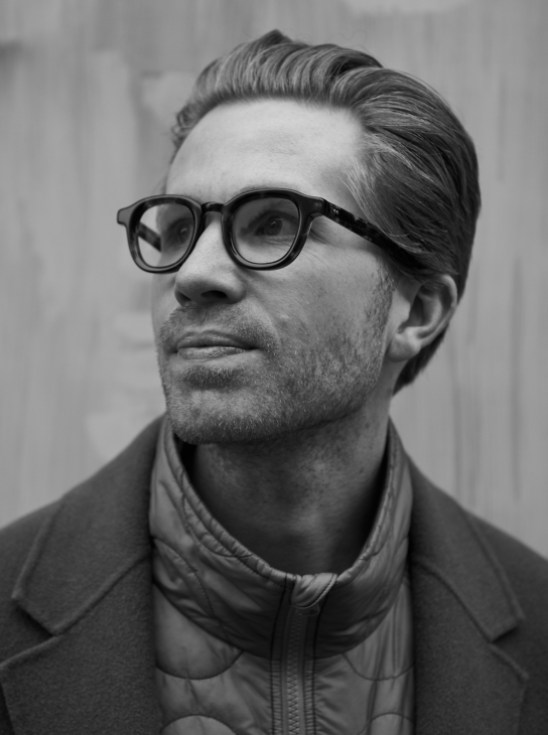
Charlie Hedin and Kristoffer Juhl founded Tekla Fabrics in 2017, with a handful of samples and the desire to breathe some fresh air into the world of bedding. Over the past six years, the company has experienced a meteoric rise, evolving into a globally recognised “personal luxury” brand, known for its pyjamas, silky soft bed linen and neutral-hued towels.
Much of its success has been a result of Hedin and Juhl’s obsession with high-quality, minimalist branding – its boldface logo is loved by many – and cleverly-executed collaborations with Finnish furniture powerhouse Artek or French fashion brand Jacquemus.
Recently, Tekla opened its first flagship in Copenhagen – a pared-back space located in a historic building that dates back to the 1930s – and plans to continue investing in retail with shops in London, Paris and New York also in the works. Here, we talk to Juhl, the firm’s co-founder and managing director, about Tekla’s rapid rise and highly promising future.
Take us back to the genesis of Tekla.
I have known Charlie [Hedin] since 2014. Years ago he pitched me the idea that he wanted to make bedding. I had never really given it much thought – that it was something that my mother gave me for Christmas – but I loved his energy and enthusiasm. In 2016 he started working on an identity for Tekla, looked for manufacturers and had some samples made at home. He then asked me to help him run operations and it felt natural to join forces.
How did you find your first customers?
If you walk into most shops that sell bedding, you can only buy white or grey sets; we wanted to challenge that. We visited shops in Scandinavia and tried to win over the buyers but we were often told that our product was “a nice little capsule” that lacked consistency. So we expanded our range and, as a result, the customers that we wanted to work with saw the potential. Tekla began with strong branding and then evolved into an emerging label within home textiles, known for its modern values.
How would you define your brand’s values?
Our focus is on being a responsible brand; international retailers expect you to be as sustainable as possible. These companies have environmental goals to reach and it’s easier for them to ask new labels to be compliant, rather than huge ones to change. It was in our interest to be sustainable but we also thought that if we were building a brand, we might as well do it right. For us, this means making high-quality products that last for as long as possible. We also think about functionality because towels and bedding aren’t just square pieces of fabric; they have to feel incredible day after day, not just the first time that you use them. This comes down to the materials and how you educate your customers to make their products last.
Inclusivity is also extremely important to us. We develop quality products and, while they come at a price point, we don’t want to push it too far. Our audience is a great reflection of this: we have 14-year-old customers who want towels and pyjamas but we also sell nightgowns to 80-year-old retirees.
How important is the role of your manufacturers?
Most of our manufacturers are based in Portugal. We haven’t changed them since we started the company and we are significant customers for all of them. They have taken the time to understand what we want and why details matter: why that extra stitch is important and why some things cannot be compromised on. We have grown together and so we challenge them to do better – it’s no secret that 90 per cent of our environmental footprint lies upstream. So in our journey towards becoming even more responsible, those relationships are important. We often find ourselves in the position of educating them, which has been key in building Tekla and is even more important going forward.
You’ve been behind a number of sell-out collaborations. How do you choose your partners?
Fashion has always done well to bring elements of culture into designs. We realised that no one was doing that in our industry and so we saw it as an opportunity to explore our interests, particularly in art and architecture. We were very lucky to be able to work with British architect John Pawson. As someone who builds houses that only few can afford, he wanted to work on a more accessible product. Why not create a beautiful range of blankets or bedding that is a bit more affordable?
Your first flagship shop has just opened. How important is physical retail to your brand?
It was inevitable that at some point we needed to have a physical manifestation of the brand that we could control. I tell our team here that getting feedback from customers in the shop is like digging for gold. We want to ensure that we are using their insights to help us optimise the shopping experience and so that they feel valued.
What’s next for the business?
It’s no secret that we are very ambitious when it comes to retail because that’s how we can further establish the brand. The market is changing: there are fewer multi-brand boutiques in Europe, which is unfortunate. But it also means that there are new opportunities for us to create our own retail experiences. When thinking about the next steps for Tekla, we’re looking at expanding into international capitals such as London, Paris and New York. We need to figure out how to keep our communities excited about constantly returning to the physical shop.
teklafabrics.com
Inner space
New opening 1
Casa Nossa, Campinho
“It was love at first sight,” says star Portuguese chef José Avillez when Monocle asks him to cast his mind back to the first time he saw the derelict, hillside farmhouse on the banks of Alentejo’s Alqueva lake. “I wanted to give the best of me and share this with other people,” he adds, thoughtfully, about the decision to turn the site into his first hotel with the help of his wife, Sofia Ulrich.
It was easy to see the place’s potential but even getting to the property – which is in the tiny village of Campinho, a little more than two hours inland from Lisbon – offers a sense of discovery. The estate itself is peppered with centuries-old holm oaks and native plants are allowed to grow wild. There are no other settlements or buildings in sight. “When we saw this house, we knew that the hotel had to be here,” says Avillez.


What started as a family project quickly ballooned. Today, Casa Nossa (“Our House”) is open to the public and spread across a 1,500 sq m property, with 10 guest rooms. That said, it’s designed to be rented out whole. Once the place is booked, chef Avillez gets to work and creates a fresh menu for every stay. “I don’t send it to the guests in advance, so there’s always an element of surprise,” he says. A healthy relationship with neighbouring farmers ensures that only the best local produce is used, highlighting the region, Portugal’s bread basket. “Our lamb is local and we only use Alentejo pork, which is the breed of Iberian ham,” he says. “We get our fish and shellfish from the nearby ports of Setúbal and Sines.”
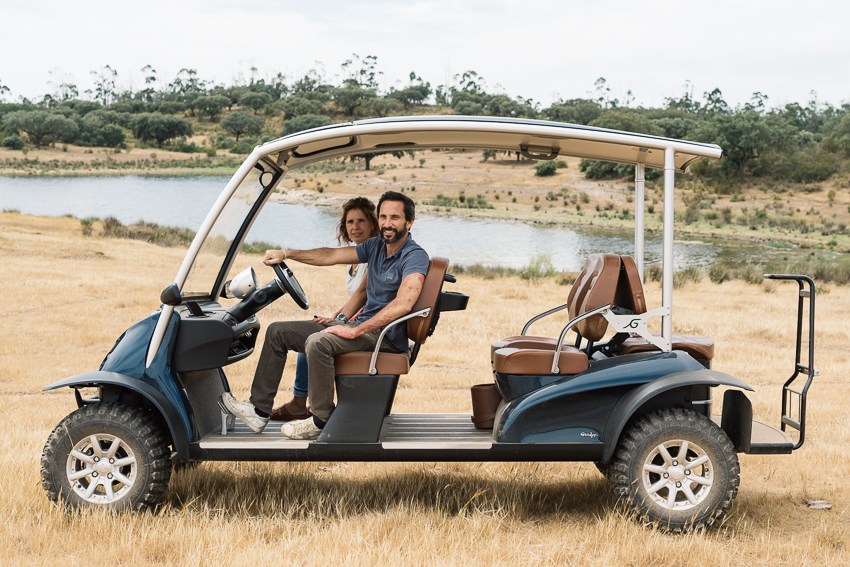
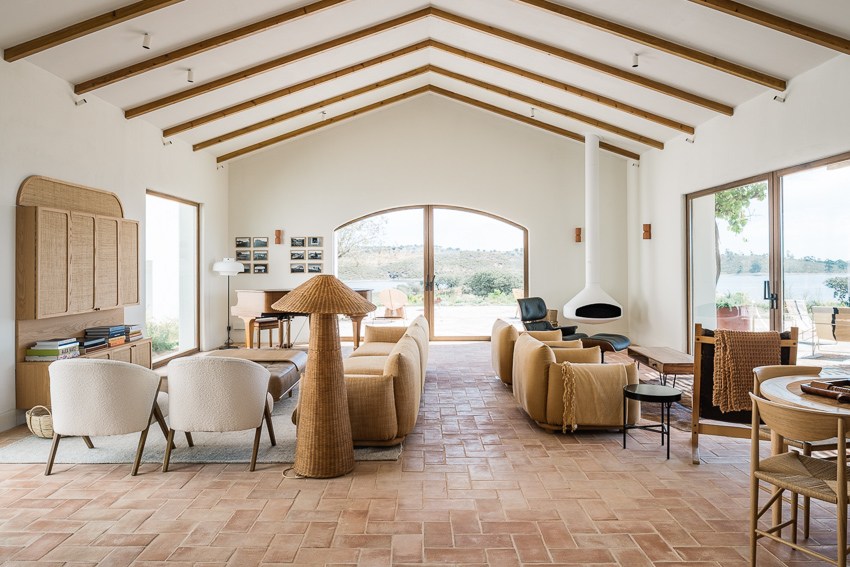
This is a business but it’s obviously an immensely personal project for the chef, down to the decor of the house itself. “I wanted to be an architect when I was a teenager,” he says. “So designing this house was my chance of being an architect and helping to build it.” The two-storey estate was designed by Avillez himself, with the interior furnished by Lisbon-based Studio Astolfi and Ulrich. The dining area includes a long communal table designed for the sharing of food and conversation, with several cosy corners by the fireplace, large windows and a backgammon board. “We wanted to have different places around the house for people to be social,” says Avillez, as he shows us the event room. Boasting comfortable wide seats and a stage, the space can be used for cinema sessions or intimate concerts. Across the hall is the wine cellar and next door is the bar: a dimly lit, wood-panelled room perfect for socialising before dinner or for having a nightcap. “This artwork belonged to my grandfather,” says Avillez, motioning towards a sculpture.
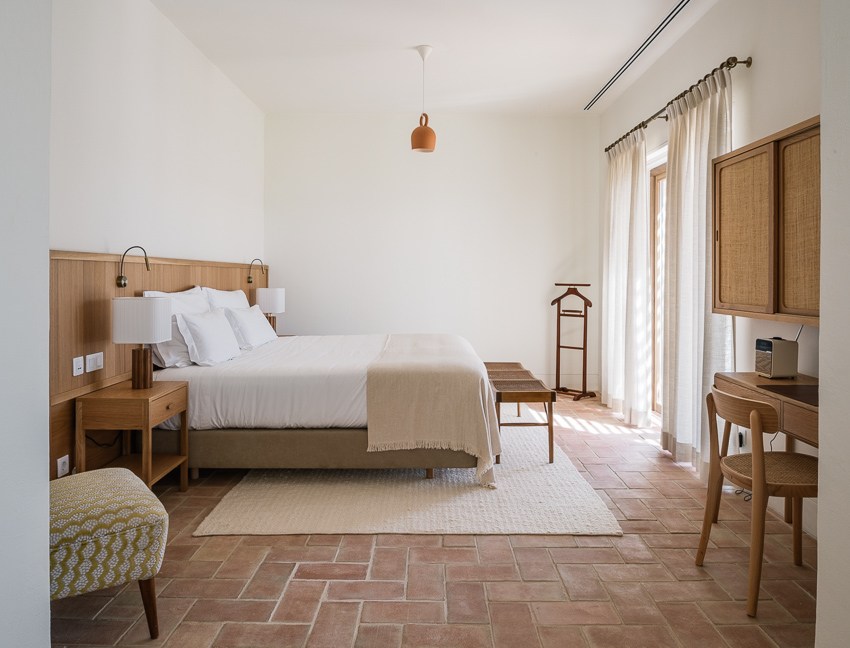
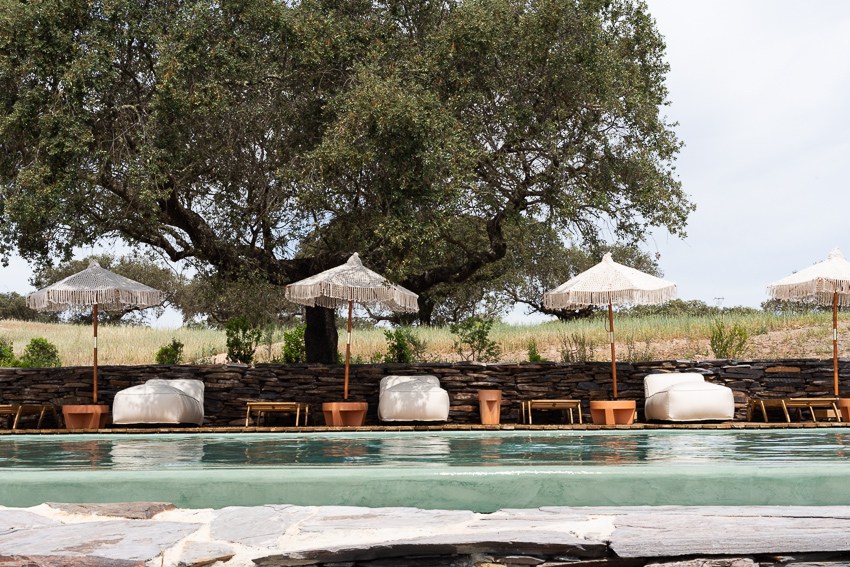
Upstairs are a series of black-and-white photographs showing the family camping in the derelict farmhouse that was here before. “These were taken by my wife,” says Avillez. “We did a few camping trips with our children in the estate when we first bought the place. It’s not a hotel, really; we call it a house. It’s meant to feel like home.”
casanossajoseavillez.pt
New opening 2
JNcQUOI Beach Club, Comporta
Off the coast of the Atlantic Ocean lies JNcQUOI Beach Club, the newest opening from Portuguese hospitality group Amorim Luxury. The group was established in Lisbon in 2005 and while it has five restaurants, a private member’s club and a forthcoming boutique hotel in the city, it felt that it was time to expand to Comporta. “The beach club is a gateway into our world,” says Miguel Guedes de Sousa, president of Amorim Luxury and co-founder of JNcQUOI.
Set on Pego beach, the venue is split between the Cabana, its beach service and the beach club restaurant, which has a certain je ne sais quoi about it – as the club’s name suggests. A South African team of artisans was flown in to weave its thatched roof, while its hardwood floors were imported from Sweden. The bamboo in the outdoor space “provides a seamless integration with the landscape”, says Guedes de Sousa. There are several seating options too: you can perch outside, sit indoors with a view of the kitchen or on the terrace. “Regardless of where you are sitting, you’ll see the sea and feel the breeze,” he adds.
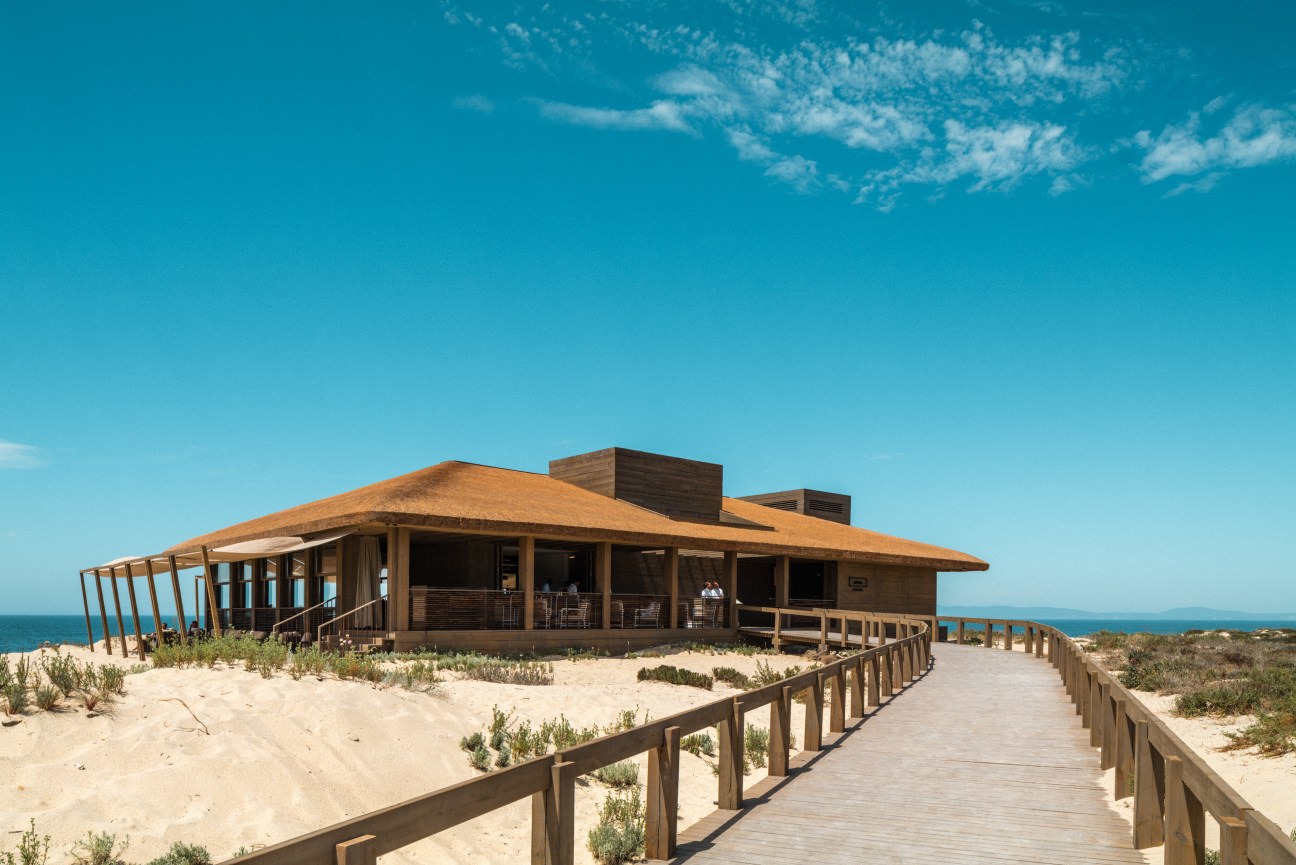


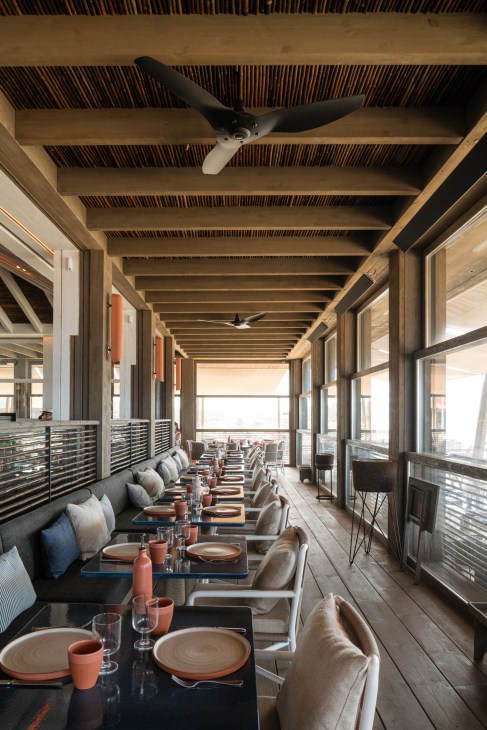
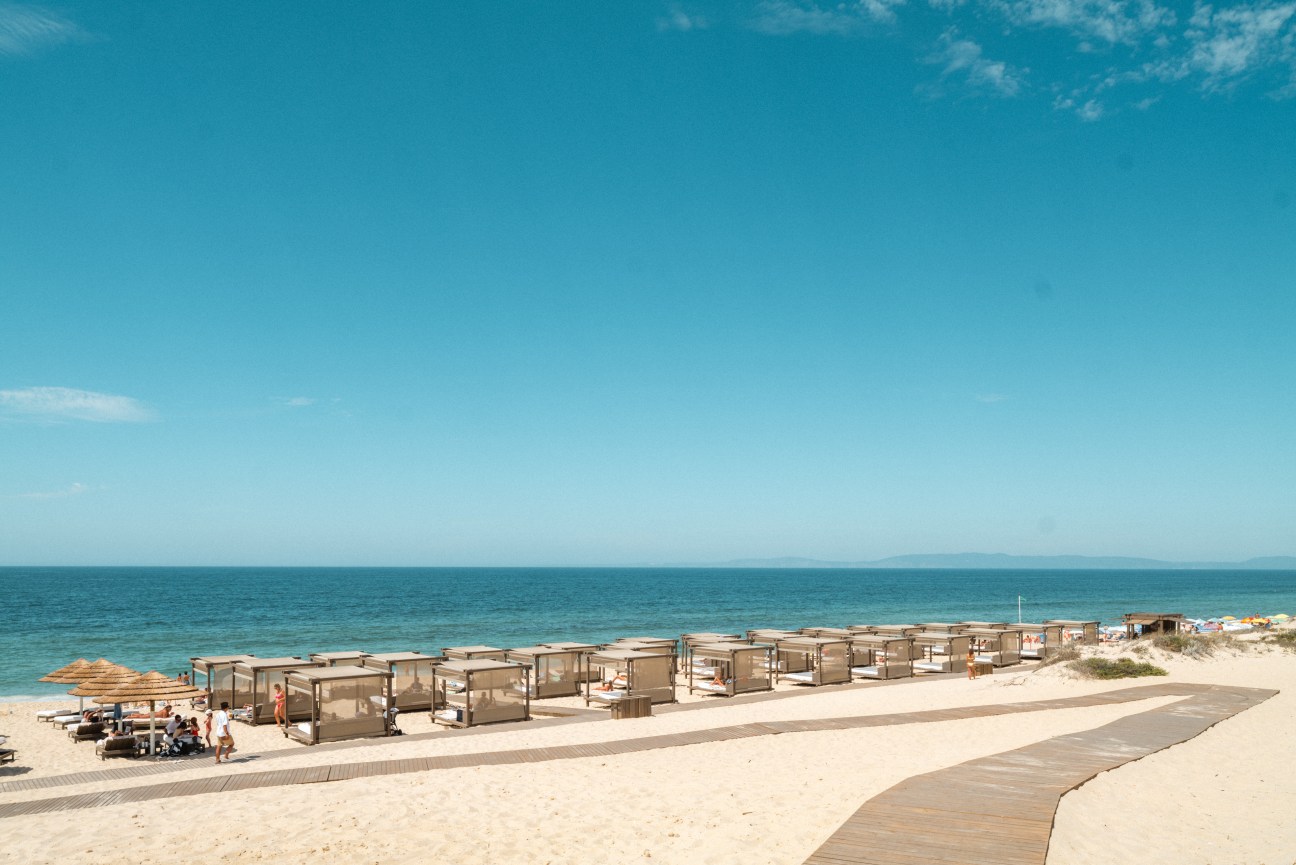
White sunloungers are carefully lined up along the waterfront, complete with thatched parasols, side tables and cabana-shaped sunbeds. There’s full table service, a live DJ and beach chair rentals that start from as little as €25. “Even though we’re a luxury company, we want everyone to be able to experience our world,” says Guedes de Sousa. But the beach club is only the first step. “We’re creating a resort-type complex in Comporta with 48 villas, 16 club villas and a hotel designed by Vincent van Duysen, along with restaurants, an athletic club, a spa and more.” The project is taking shape behind the beach, meaning that upon completion, the brand will have a new hub by the sea. “Wherever we go, we want to create a community,” says Guedes de Sousa. “We have international ambitions and we are super excited.”
jncquoi.com
New opening 3
Pateos, Melides
One of Portugal’s longest stretches of beach extends from Tróia to Sines, just south of Lisbon. Boasting almost 65km of pristine, white sand, it has become a prime destination for sunseekers and hoteliers alike. “I have always been in love with this area,” says Miguel Charters, co-owner of Pateos, a new collection of four holiday homes in the village of Melides. “I used to come here as a teenager with my wife, Sofia, who was then my girlfriend. We always said that we would build something special here.”
Pateos combines the mid-century modernism of Portuguese architect Manuel Aires Mateus with a deep sense of tradition. Wood, concrete and glass work together in a series of spaces that blur the boundaries between indoor and outdoor. “It was all designed so that people can maximise their experience of nature,” says Charters. “That’s why we experimented with patios where you are sheltered but at the same time outside.”
The villas riff on the tradition of the “Monte Alentejano“, says Charters, referring to the farm-based accommodation typical of southern Portugal, where small structures surround a larger, central one. At Pateos, four villas, which can be booked individually or all together for 14 people, are set along a pool and sunbathing area that overlooks the Atlantic. This feature was Charters’ starting point: every villa faces the water and is built to respect the topography, as well as to ensure privacy. “Seclusion is important,” he says. “We want to give our guests a change of pace. Most of them lead busy lives, travelling around the world, so it’s important for them to have a space where they can switch off.”


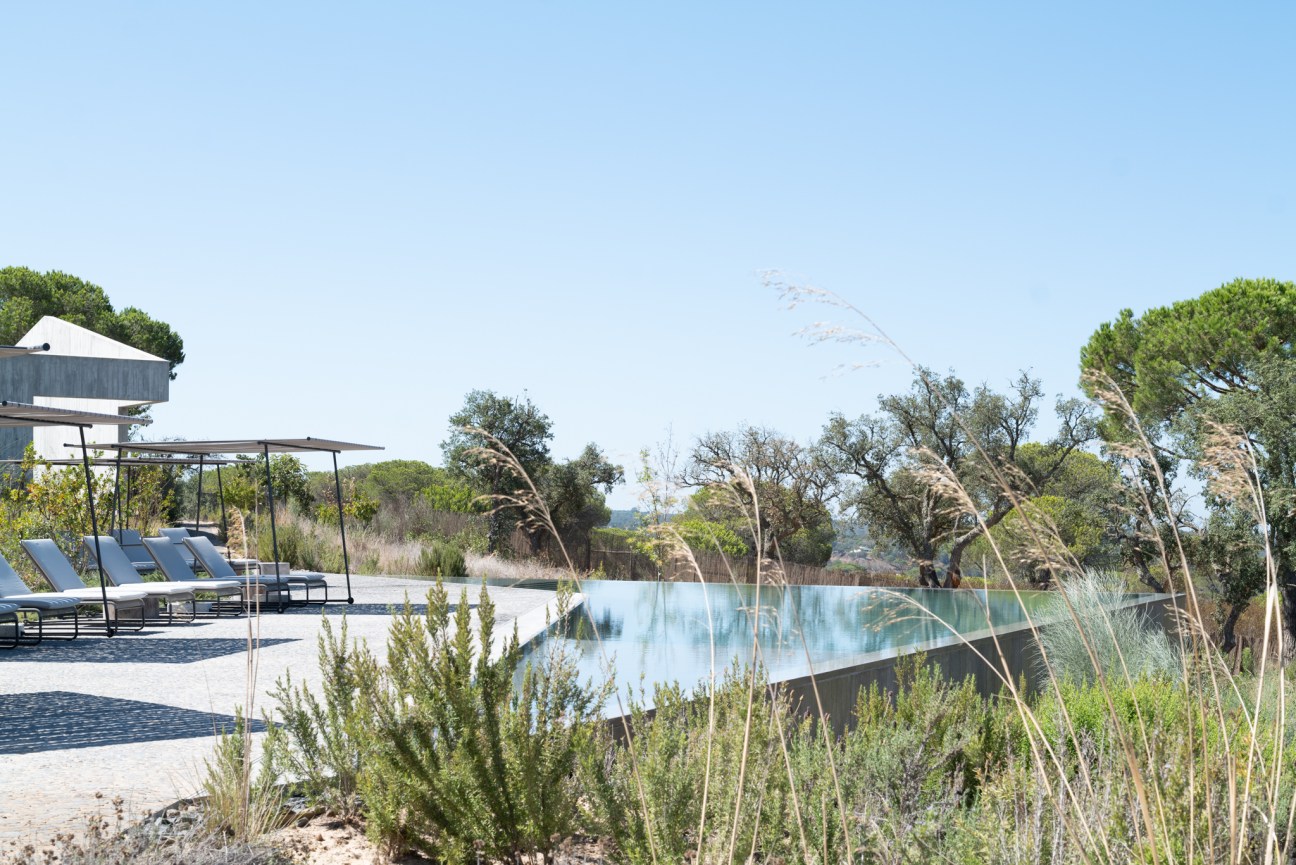
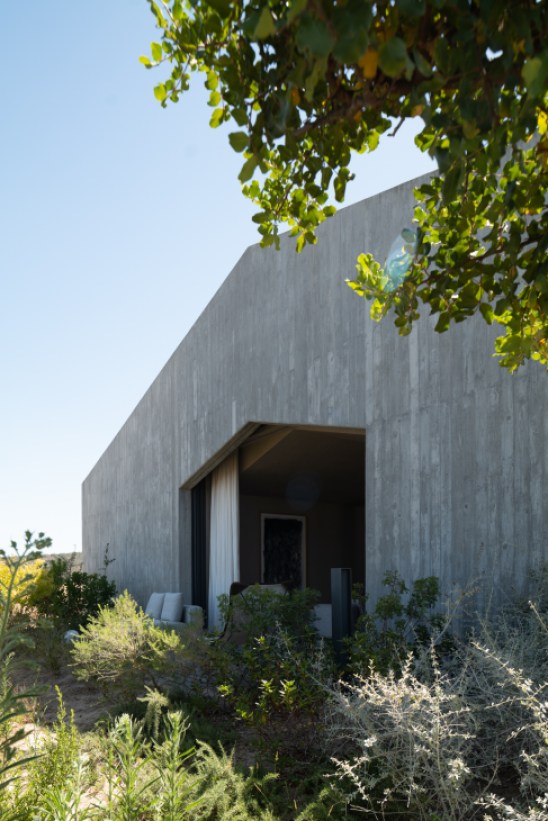
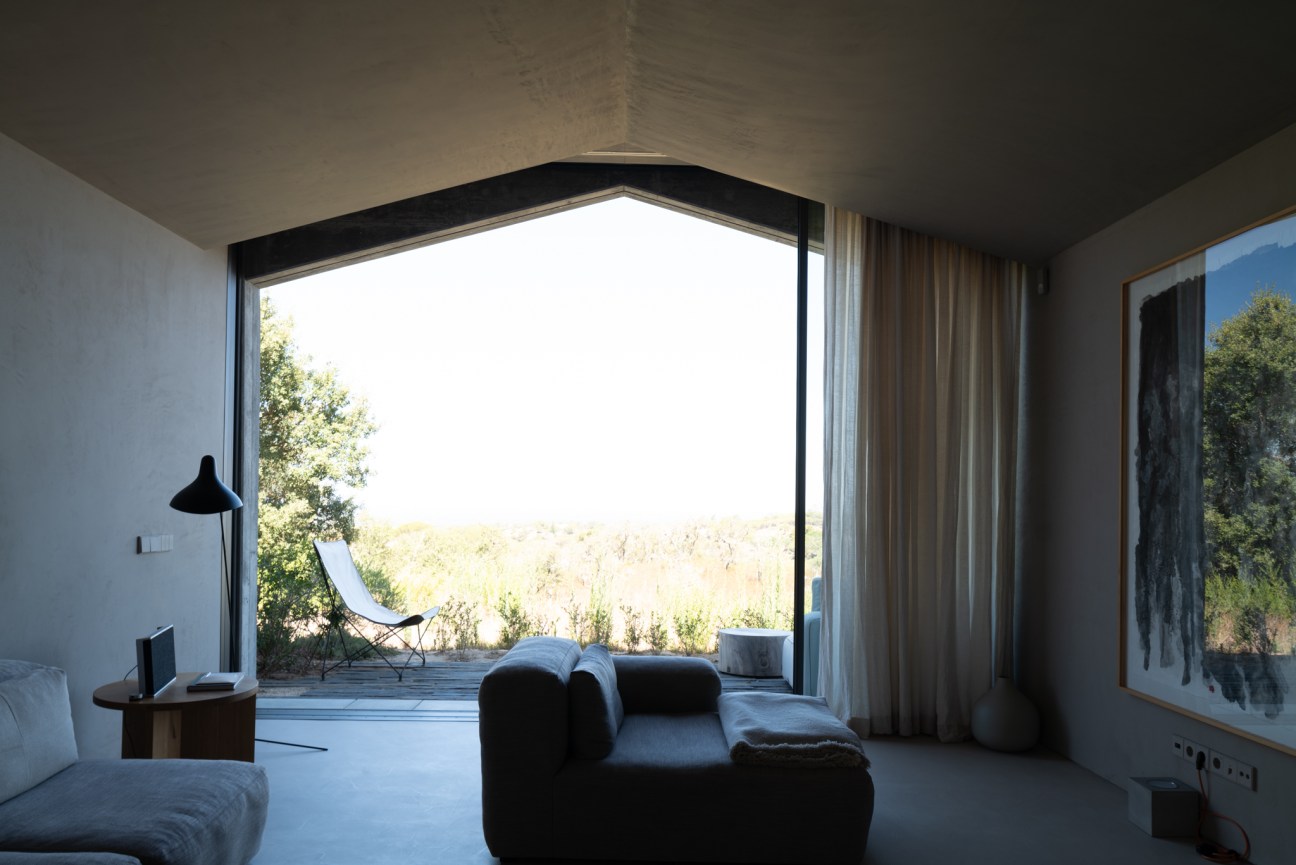
From the moment when you check in with Filipe Lopo, Pateos’s general manager, everything feels simple and seamless. “We want to evoke the kind of comfort that people feel at their grandmother’s house while providing an excellent level of service,” Lopo tells Monocle, explaining that housekeeping is kept behind the scenes and mealtimes are left up to the guests. “After all, your grandmother would make you breakfast whenever you want it and do your laundry too,” he says.
Glance at the surrounding hills and you will spy the first stirrings of Charters’ next project. “We have planted vines,” he says. “I hope that, in about five years’ time, we can make our own wine here. It will be an exclusive batch, mainly for in-house consumption and for sale at selected retailers.” Charters also plans to restore an abandoned structure to turn it into a wine cellar and create a second cluster of villas nearby. “It won’t be a copy of the existing ones; it will have its own identity.”
pateos.pt
Dream machines
Galaxy Z Flip5
Samsung
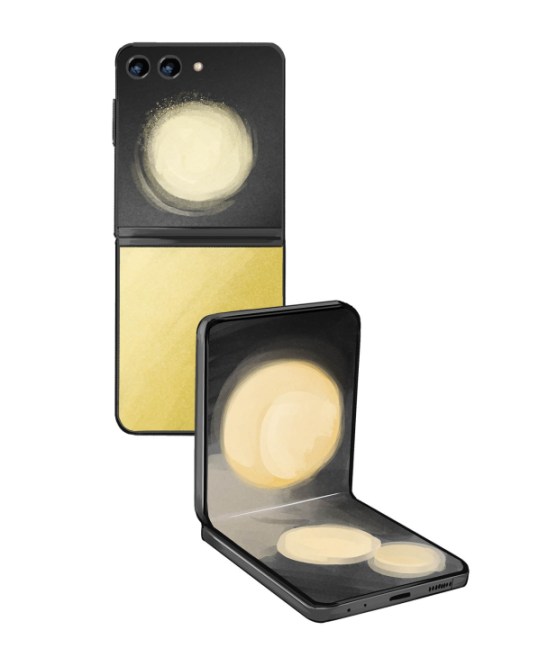
If you don’t want something that folds out from phone to a device closer to a tablet, Samsung’s latest might appeal: it folds in half to become much more pocketable. This model comes with a glorious external display that is so versatile that you often don’t need to unfold it at all. You can also use it for photography, so that your subject can see themselves as you’re snapping them. It folds completely flat to prevent dirt getting in and the crease that you see when the screen is unfolded (a issue that dogs many folding phones) is only visible when the screen is off.
samsung.com
BoostCharge Pro Fast Wireless Charger
Belkin

The USB-C socket of this versatile battery pack lets you connect an iPhone or other smartphone to charge by cable, and the white circle wirelessly charges the Apple Watch and second-generation AirPods Pro. It’s the first battery pack that fast-charges the Watch too, from flat to 80 per cent in 45 minutes, and is powerful enough to charge the Watch and a smartphone at the same time. All from a sleek, lightweight battery so portable that it’ll become indispensable.
belkin.com
Studio Pro headphones
Beats by Dr Dre
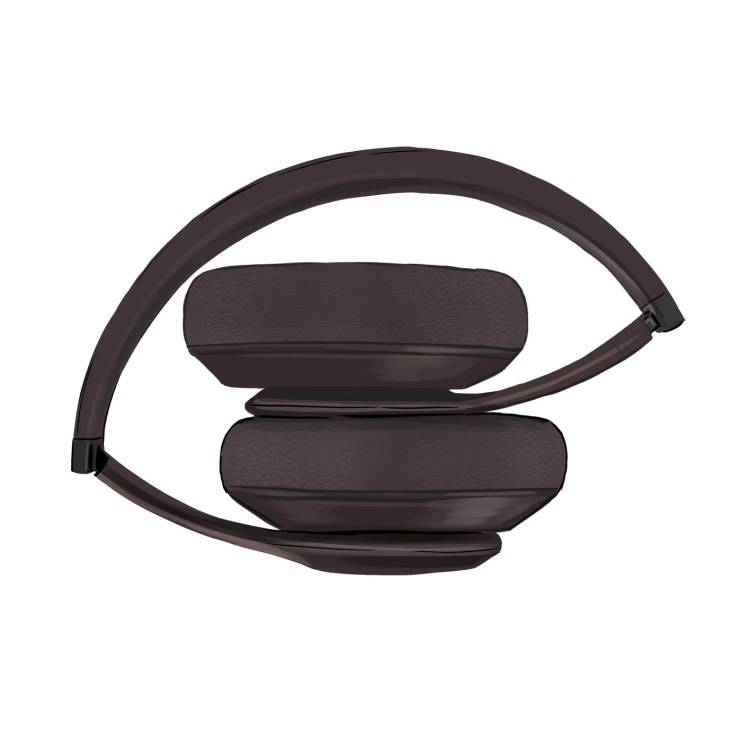
Beats by Dr Dre (the Apple brand that isn’t AirPods) has launched a tremendous new pair of over-ear headphones. AirPods are designed to work with Apple hardware but Beats, magnanimously, work equally well with an Android as an iPhone. They include seamless pairing, better findability if you lose them and great audio. Battery life is strong at up to 40 hours (24 with noise-cancelling turned on). Unlike Apple AirPods Max, these headphones come with a 3.5mm cable and are more keenly priced too.
apple.com
HT-AX7 compact theatre system
Sony
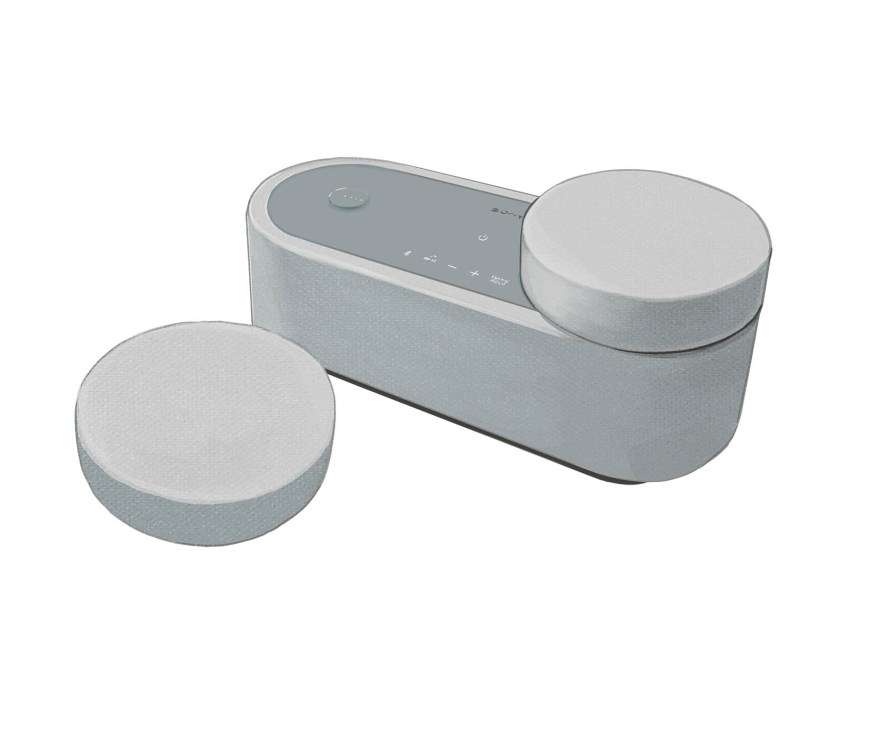
This is a remarkable portable sound system that makes the audio from a smartphone or tablet more exciting. It comes in the form of a squat lozenge with a circular speaker at either end. Held in place magnetically, these can be undocked and placed behind the listener to work as satellite speakers. The effect is highly immersive, with Sony software making it feel as though the audio is coming from every direction – even overhead. You can adjust the volume and the distribution of the sound using the buttons on the main speaker or through the Sony app. The audio output is big and powerful from the main unit and the extra units add a spectacular 3D effect. The battery lasts as long as 30 hours; a 10-minute recharge is enough for a couple of hours.
sony.com
Trunk Hotel Yoyogi Park offers a quieter, greener vision of Tokyo hospitality
Tucked in alongside Yoyogi Park, the Tomigaya neighbourhood provides a calming contrast to the high-rises and bustle of nearby Shibuya and Harajuku. It’s here in Oku-Shibu, among the local retailers, cafés and hole-in-the-wall eating spots, that Trunk found an ideal setting for its third boutique property, Trunk Hotel Yoyogi Park.
The Japanese hospitality company created waves in 2017 with the opening of its first location, Trunk Hotel Cat Street, followed by an exclusive whole-house rental in Kagurazaka two years later. Each one-of-a-kind project draws inspiration from the local surroundings, while incorporating Trunk’s fresh approach to culture, creativity and hospitality into the build. The Tomigaya district, situated across the road from 54.4 hectares of green space, provided designers with the opportunity to find harmony with the landscape, incorporating elements of nature into the inner-city location. Tokyo-based architect Keiji Ashizawa was tasked with leading the design of the hotel, which centres on the concept of urban recharge, inviting guests to find both solace and stimulus during their stay.
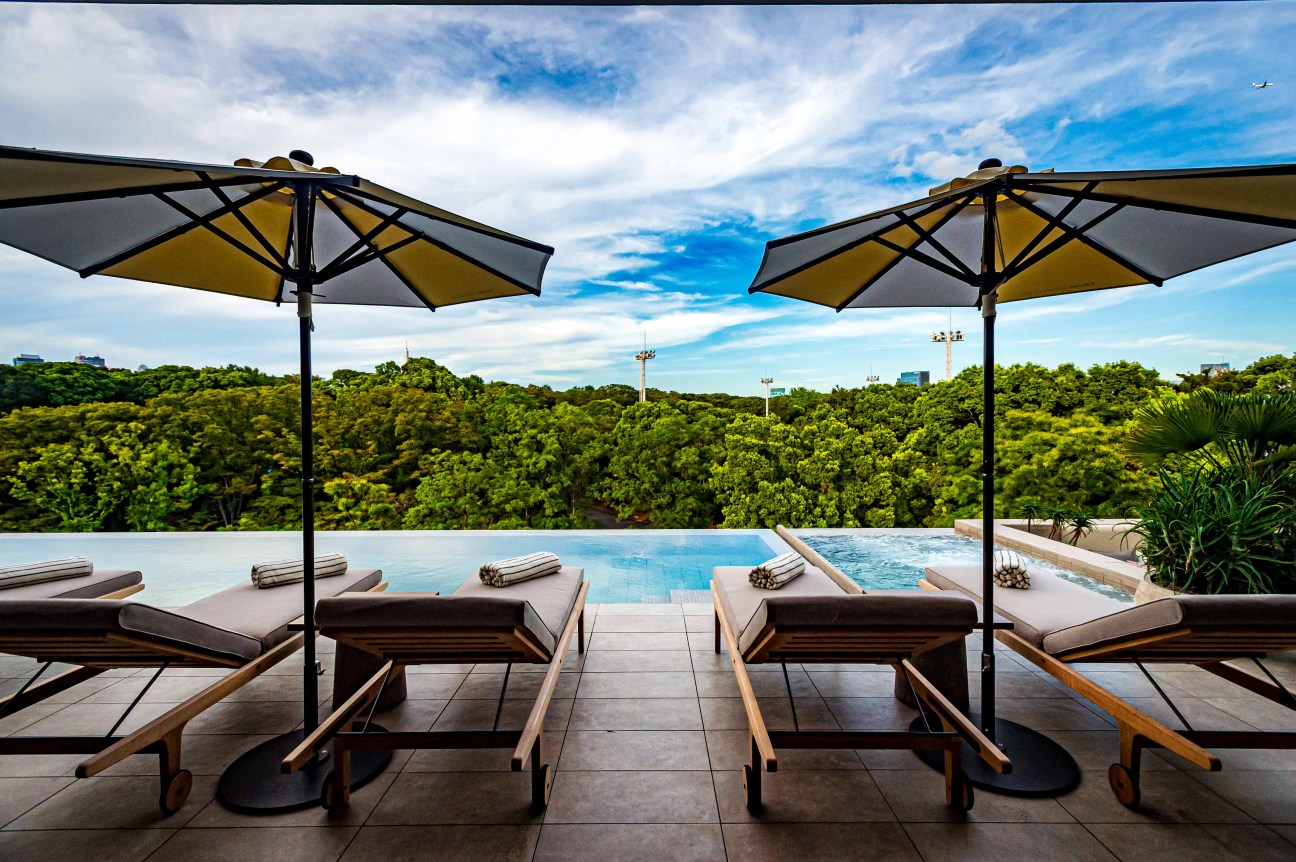

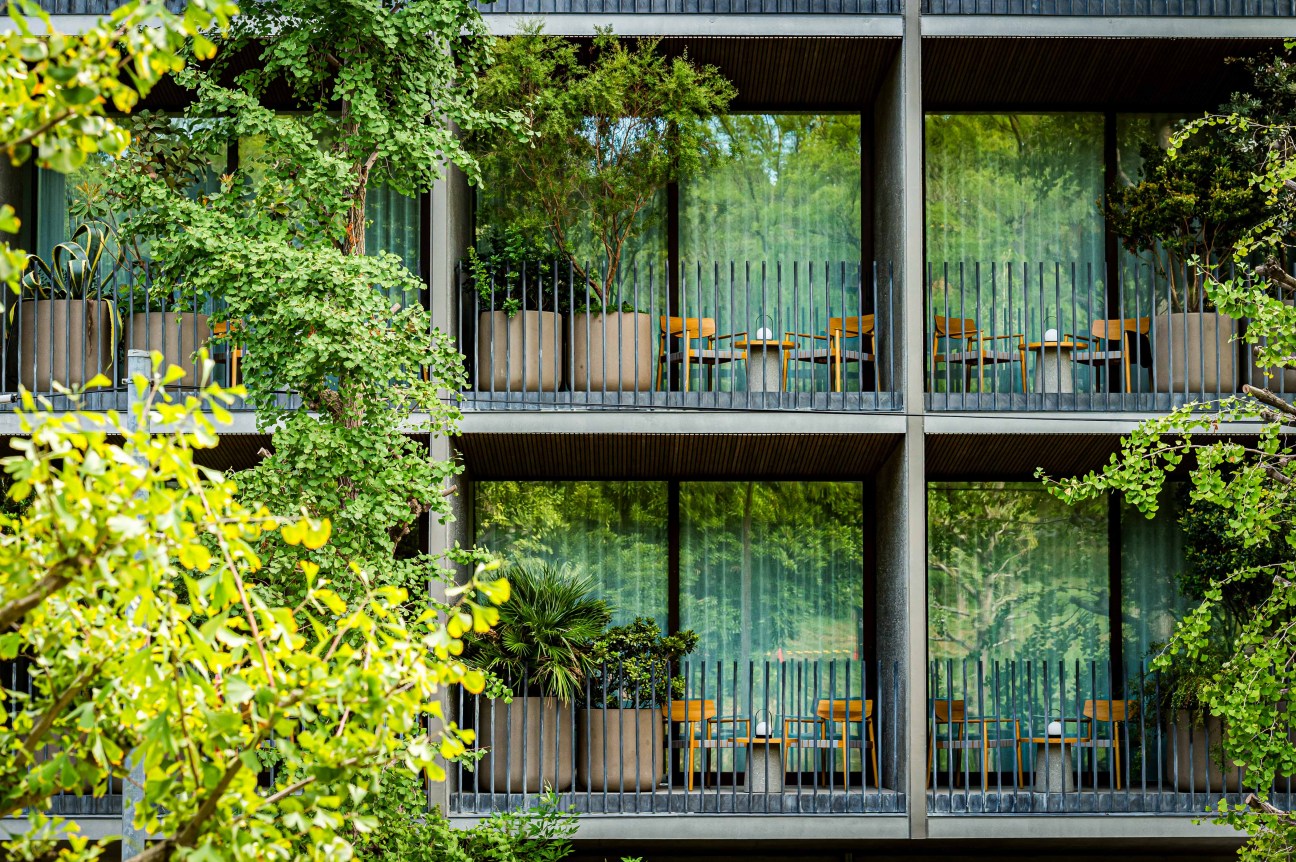
When Monocle visits on the eve of the hotel’s September opening, rustic-looking concrete panels and copper details merge with an array of greenery, creating the sense that the building has long been part of the neighbourhood.
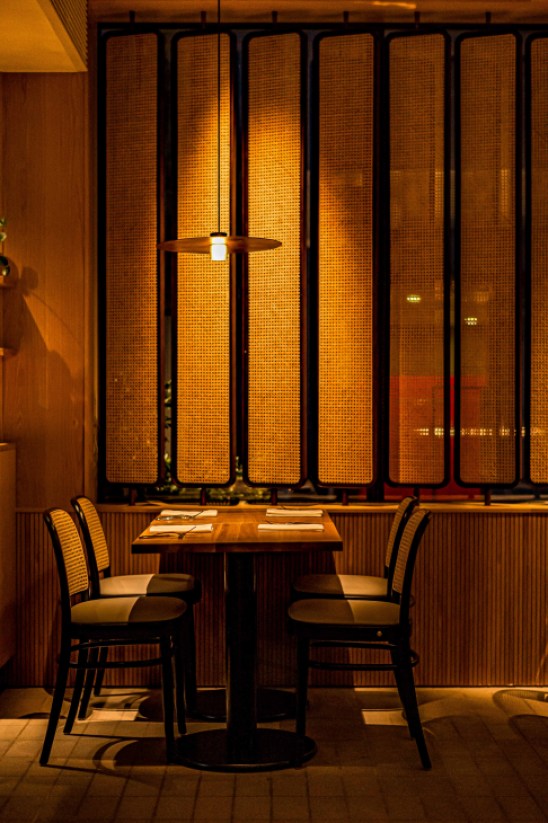
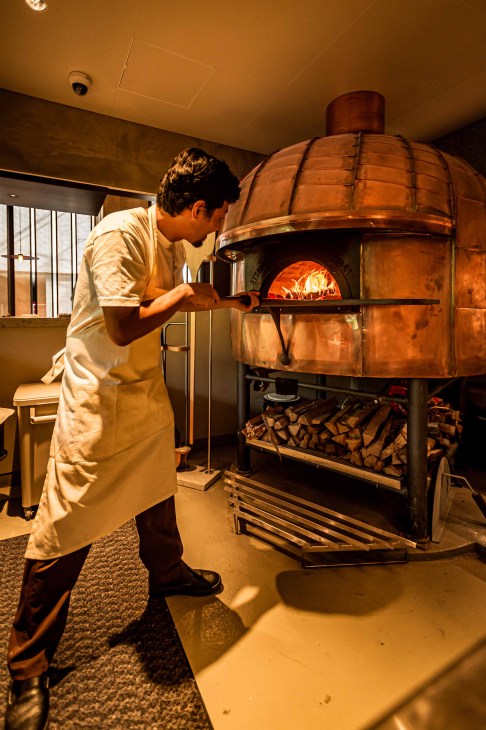
Looking skyward, plants sway gently in the breeze, extending out through the balcony railings. Entry to the 25-room hotel is discreet and separate to the modern Italian restaurant on the ground floor. Guests are welcomed into an intimate lounge, bathed in the warm glow of Kojima Shoten lanterns. A custom-made scent, featuring notes of juniper berries, vetiver and a hint of budou sansho (Japanese pepper), adds to the sense of calm. “A hotel can completely change your travel experience,” says Ashizawa. “Tokyo can be chaotic so it’s important to be able to reset. This is why it makes sense for the interiors to be a bit muted.”
For the interior design, Ashizawa worked in collaboration with Danish firm Norm Architects. The Japanese architect’s philosophy of honest design, combined with Norm’s soft minimalism, resulted in spaces that feature a neutral palette, natural textures and emphasise tactility. “A relaxing space should cater to all of the senses,” says Frederik Werner, designer and partner at the Copenhagen-based practice. “Design can become a buzzword for what’s trendy but much of the work that we do [together] is rooted in craft, tradition and heritage, which are often forgotten in the process.” The guest rooms include furniture from Karimoku, Ariake Collection and Audo Copenhagen, Kvadrat textiles and Hotta carpets, while Trunk’s in-house team curated artworks ranging from contemporary calligraphy to sculptures and art-brut pieces.
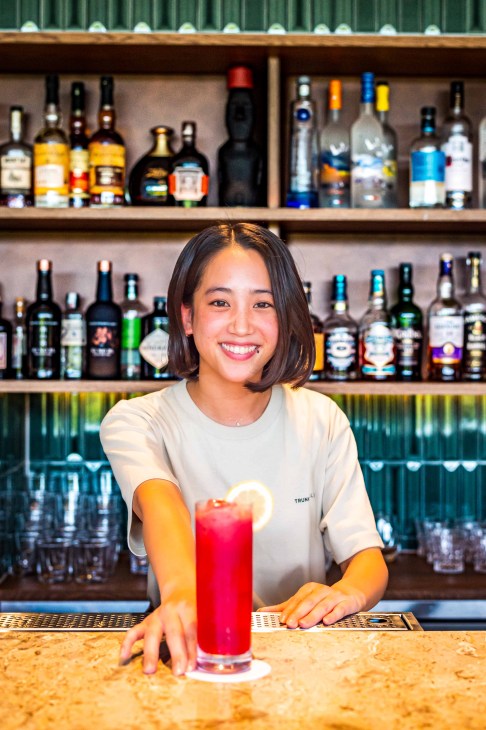
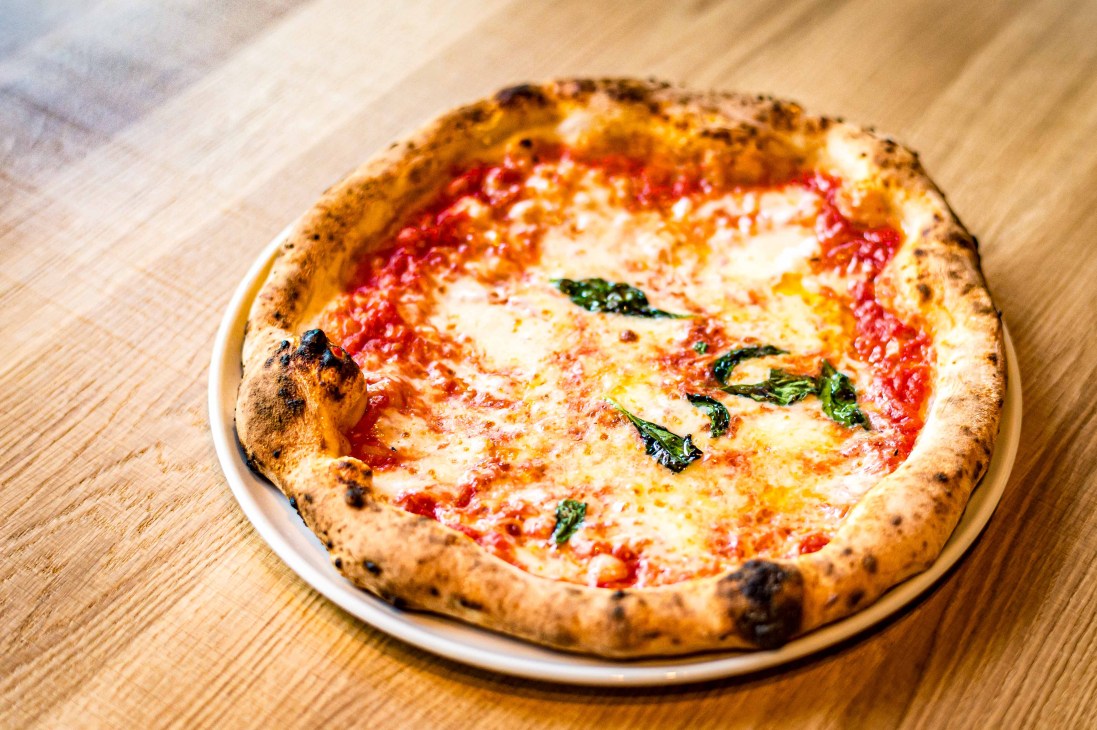
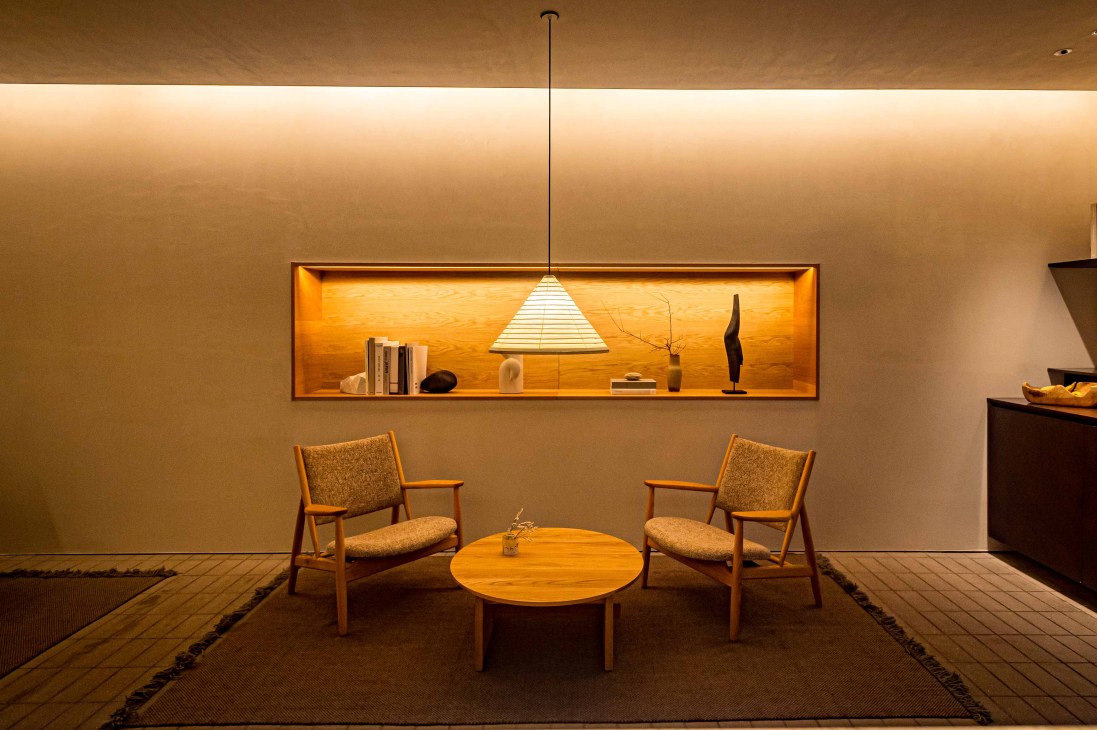
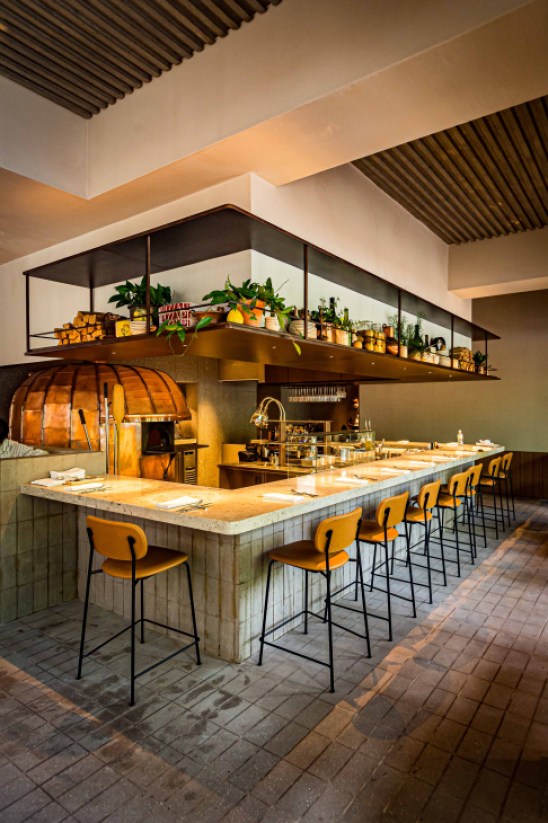
While the influence of Yoyogi Park permeates throughout the hotel, the rooftop pool and lounge is where it truly takes centre stage. The sixth-floor space, complete with an oyster bar and evolving cocktail menu, overlooks the expansive green canopy towards some of the city’s architectural highlights. Whether you’re reclining poolside, perched at the bar or enjoying a scenic dip, it provides the perfect setting to recharge on your own terms.
yoyogipark.trunk-hotel.com
In good taste
Cravan
Paris
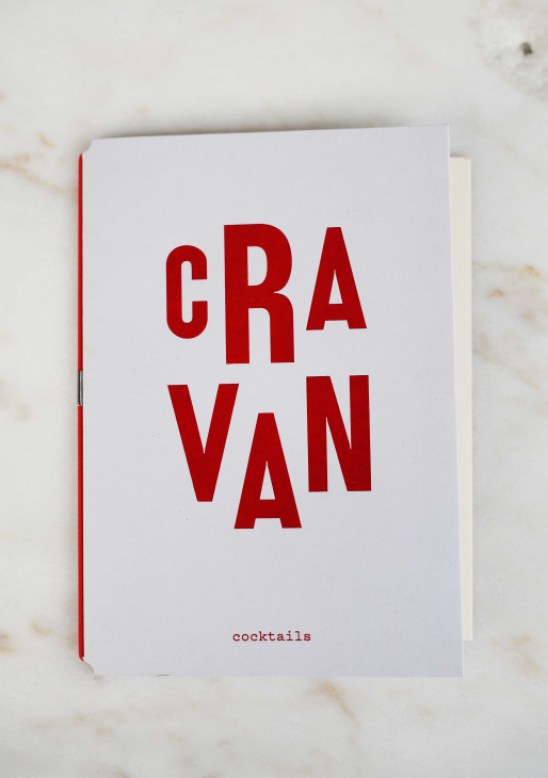
Franck Audoux imagined the location of his bar, Cravan, to offer a proper cultural treat and found just the spot in one of the last remaining historical buildings on Paris’s Boulevard Saint-Germain. Since opening in June, the Moët Hennessy-backed cocktail bar has become the talk of the Parisian hospitality scene. Belgian designer Ramy Fischler was brought in to reimagine the interiors of the 17th-century building. He proceeded to create a Dadaist collage referencing Arthur Cravan, the surrealist poet after whom the venue is named.


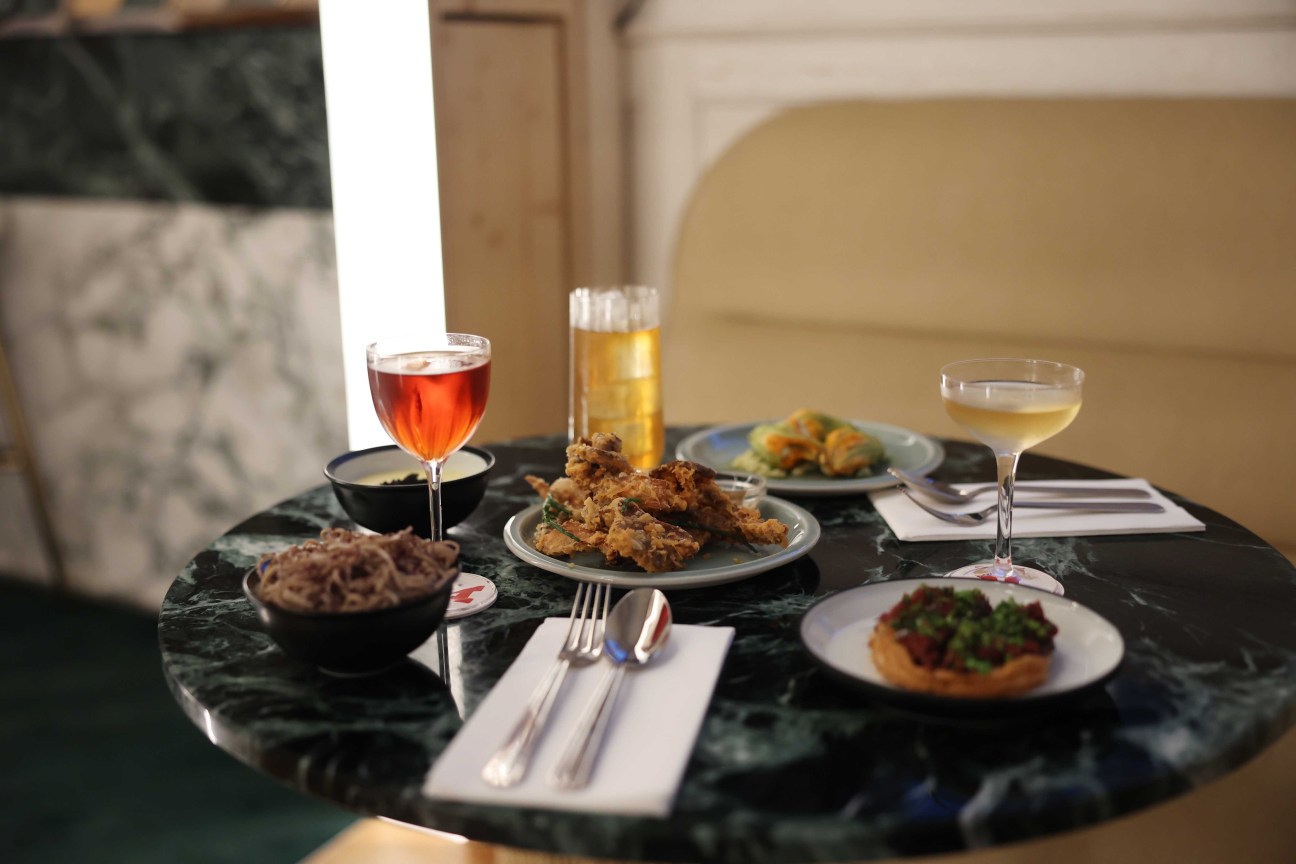
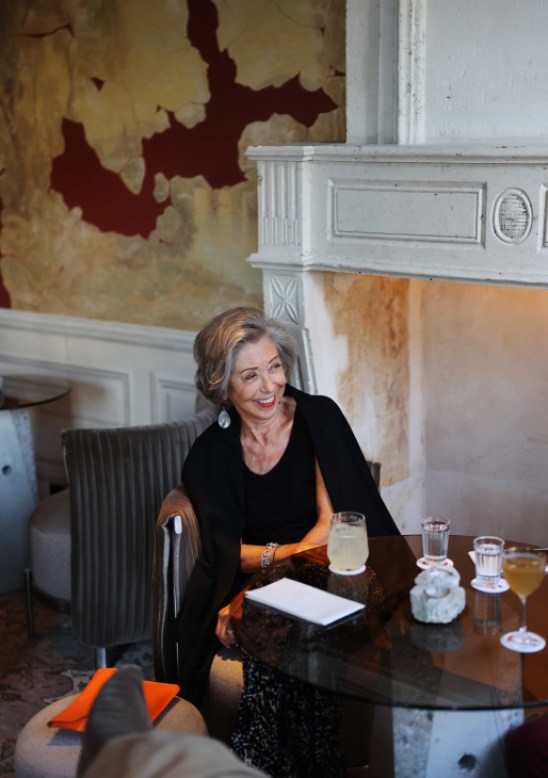
Comprising three bars, a bookshop and a rooftop kiosk for small groups, Cravan is a well-conceived addition to the literary history of the Saint-Germain-des-Prés area in which it sits. The ground-floor bar pays homage to the original Cravan, a red-fronted favourite in the 16th arrondissement, and its belle epoque style, while the first storey offers mid-century-inspired décor: think a marble bar, metal finishes and mirrors. Heading upstairs, you’ll see a Rizzoli bookshop where you can peruse Audoux’s book, French Moderne Cocktail, for some inspiration before you head to the third-floor bar. This cosy affair has several small salons, each with their own fireplace and is easily the most intimate of the building’s many spaces. Needless to say, the drinks are top-drawer throughout and the menus, though ambitious, are pleasingly close to the classics while reflecting the differing moods of each room. Make ours a royal basilic, a champagne-based number made with Ruinart brut with a hint of botanicals and basil. After all, we’re celebrating.
cravanparis.com
Le Foote
Sydney


From the Swillhouse group – responsible for surefire favourites including the Shady Pines Saloon and The Baxter Inn – comes Le Foote, a new European-inspired restaurant and bar in a former sailors’ tavern in Sydney’s Rocks neighbourhood. The walls of Le Foote’s 50-seat dining room are lined with art, including a mural by Italian ceramicist Mastro Cencio, while the wine bar is decorated with work by artist Allie Webb and the alfresco tables offer a view of the water and the Sydney Harbour Bridge. The menu offers Aegean wines, cocktails and snacks. Larger plates look to the grill for steaks and seafood: the octopus comes with potatoes, macadamia nuts and Aleppo peppers, while the swordfish “rib eye” is cooked on the bone. Save space for the lemon-leaf ice cream.
swillhouse.com
Elm
Helsinki

Located in a meticulously restored 19th-century wooden villa in the leafy Kaivopuisto park, Elm is the latest venture by restaurateurs Albert Franch Sunyer, Luka Balac and Carlos Henriques. The venue draws on the trio’s vast experience in Spain, Serbia and Portugal and adds a warm and welcome Mediterranean twist to Helsinki’s already eclectic restaurant scene. Dishes such as grilled octopus with molho verde, escalivada (Catalan roasted vegetables) and milho frito (fried cornmeal) are available to order.
“We are a multicultural and friendly neighbourhood bistro that exudes a laid-back vibe,” Balac tells Monocle as we sample wines from North Macedonia on the restaurant’s sunny veranda. It’s no surprise that Elm has become an instant classic.
restaurantelm.fi
Recipe
Maritozzi

This Roman take on the humble doughnut is a cream-filled delight studded with ruby-coloured fruit for tartness. “The best ones can be found at Pasticceria Regoli in Rome,” says Swiss chef Ralph Schelling, who explains that most berries work within the cream. “This is a simplified version; I often add orange-flower water, too. I particularly love maritozzi with fresh wild strawberries.” —
Makes 10
Ingredients
For the pre-dough
- 130ml whole milk, lukewarm (plus extra for coating)
- 1.5 tsps dry yeast
- 150g flour
- 1 tbsp sugar
For the dough
- 150g butter, softened
- 125g caster sugar
- 1 tsp salt
- 4 eggs, medium
- 400g flour
For the filling
- 500ml cream
- 1 heaped tbsp powdered sugar
- 50g wild Italian strawberries (other berries work too)
Method
1.
Mix milk, yeast, flour and sugar for the pre-dough in a mixing bowl, then leave it to rise (covered with a tea towel) for about 15 minutes.
2.
Add remaining ingredients for the dough and knead with the dough hook of a hand mixer for about 5-7 minutes, until it’s airy and bubbles form. Cover and leave to rise for a further 10 minutes.
3.
Turn out dough onto a floured work surface and divide into 10 equal pieces. Roll each piece into a ball, then shape it into a loaf of about 10cm long, slightly tapered at the ends. Line a tray with baking paper and equally space the pieces.
4.
Cover and let rise for about 60 minutes, then preheat the oven to 180C.
5.
Brush the maritozzi with milk and bake for 12 to 15 minutes until golden brown.
6.
Leave to cool on a rack.
7.
For the filling, whip cream with the sugar until stiff.
8.
Cut the maritozzi in half lengthwise (not quite all the way through) and fill with whipped cream. Or you can cut them like a roll and fill them that way, adding wild strawberries or berries before serving. Enjoy.
ralphschelling.com
Eat, sleep, repeat
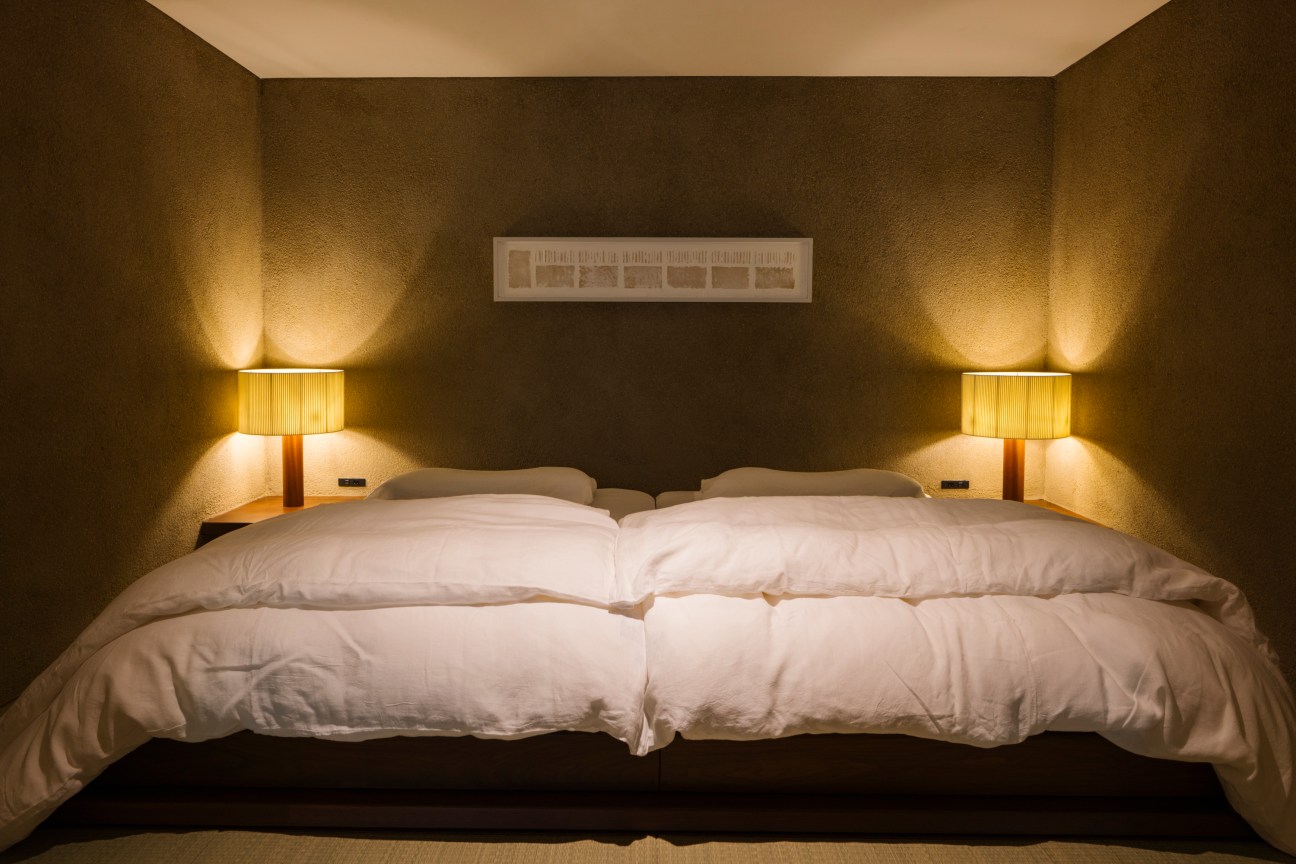
The recently opened Auberge Tokito is 40 minutes from central Tokyo and a minute from the small commuter station of Nishi-Kunitachi. Beyond the fluttering noren curtain, guests are ushered into a private world of innovative Japanese cooking, onsen (hot spring) baths with water piped from deep below the ground and an atmospheric Japanese tea room, all set in the partially renovated building and garden of Mumon-an, a traditional restaurant that used to stand here.
The four-room hotel is owned by Tachihi, formerly an aircraft manufacturer, who lured chef Yoshinori Ishii from London, where he had led the kaiseki (multi-course dinner) restaurant, Umu, to Michelin stardom. Everything about the bedrooms – two Western, two Japanese – is best in class: mattresses, linens, quilts, even turntables and speakers. There are mud plaster walls and paper screens; bathrooms come with their own spa bed (treatments on request) and the products are made by Japanese botanical brand Waphyto.
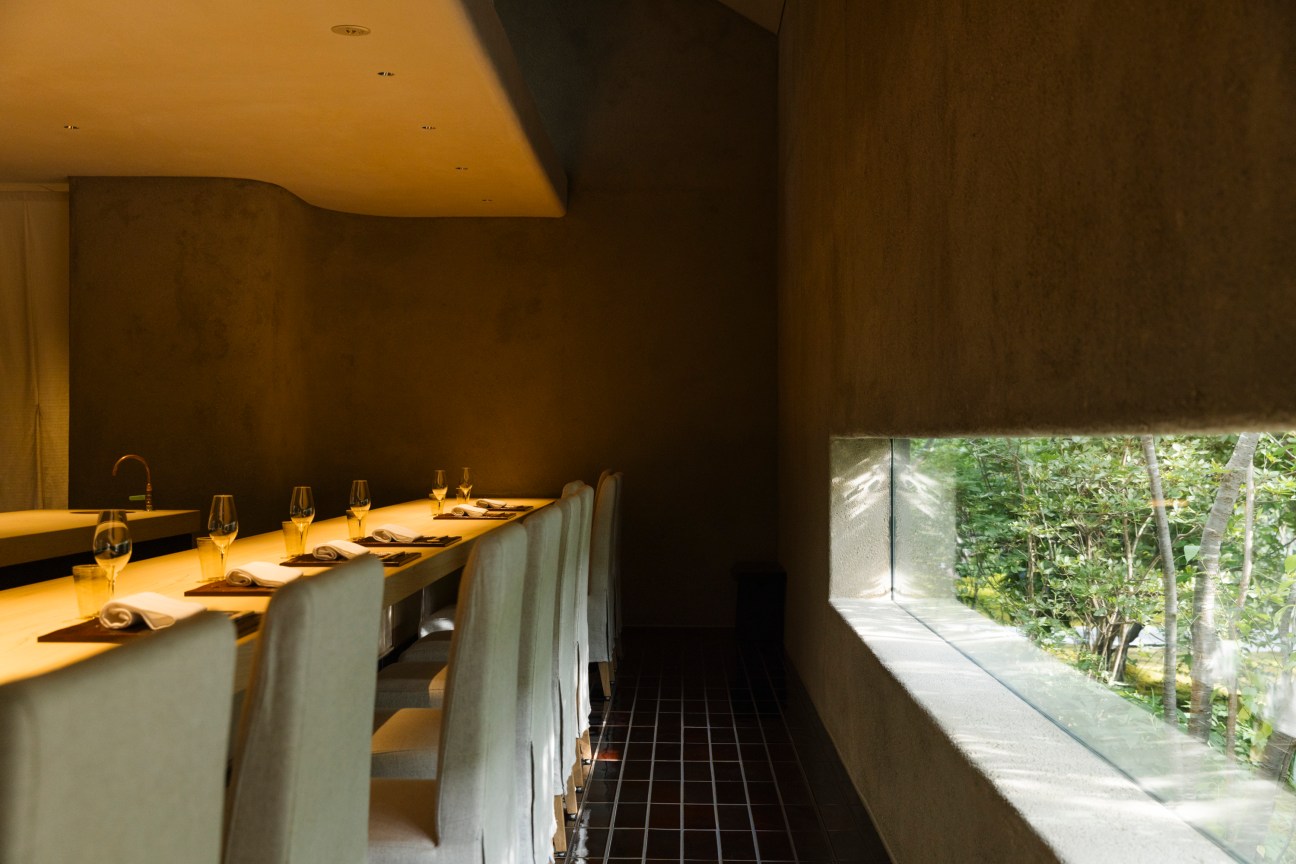
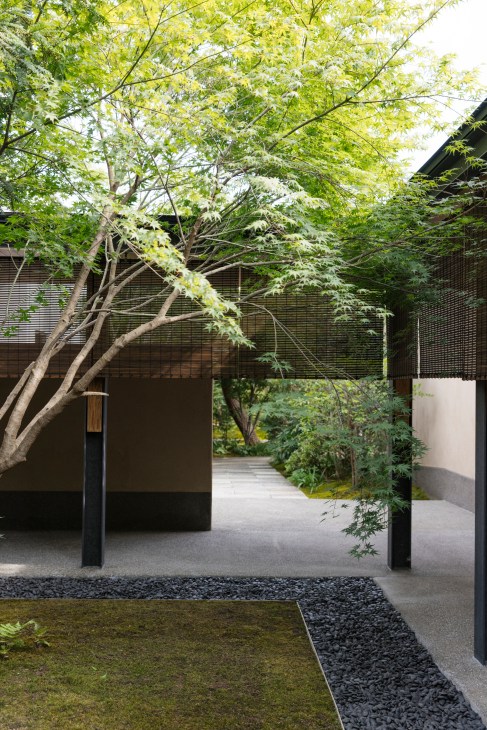
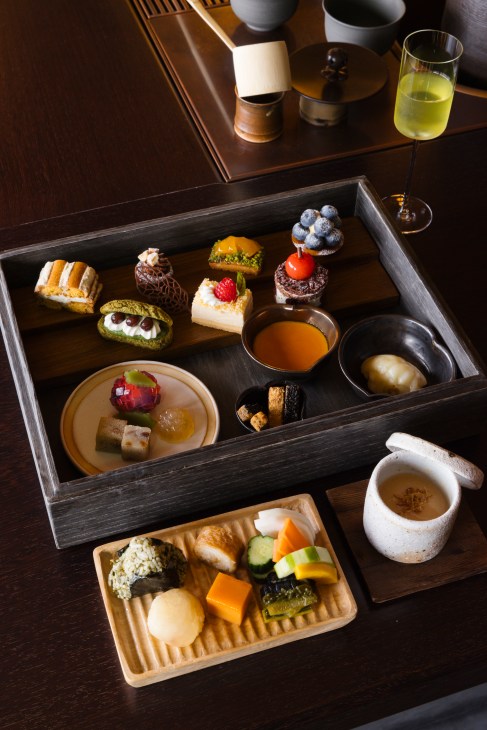
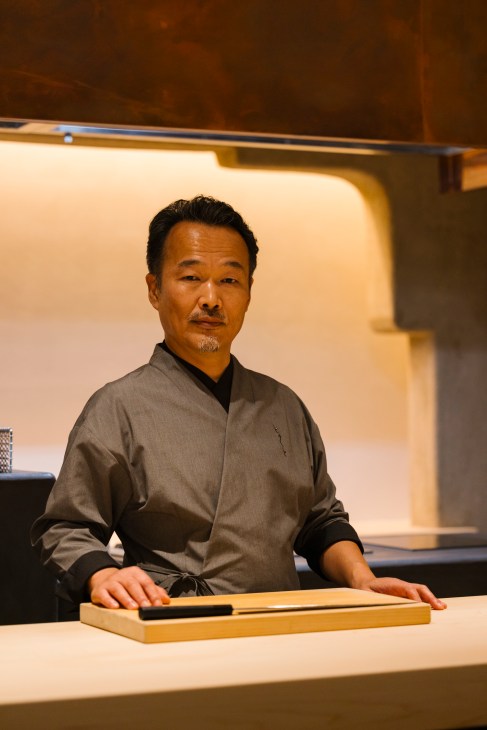
For many, the draw is the cooking at the hotel’s restaurant, which is divided between a 10-seat counter for those who want to see the chefs at work and a 22-seat dining room overlooking a courtyard. Ishii’s team includes fellow Michelin-starred chef Kenji Okawara, who is both head chef and general manager. “We’re using Japanese ingredients but in a fresh way,” Ishii tells Monocle on our tour. “Kaiseki has become so much about rules. But we make great cheese in Japan now, so why not include it?”
aubergetokito.com
Apollo Palm
Athens
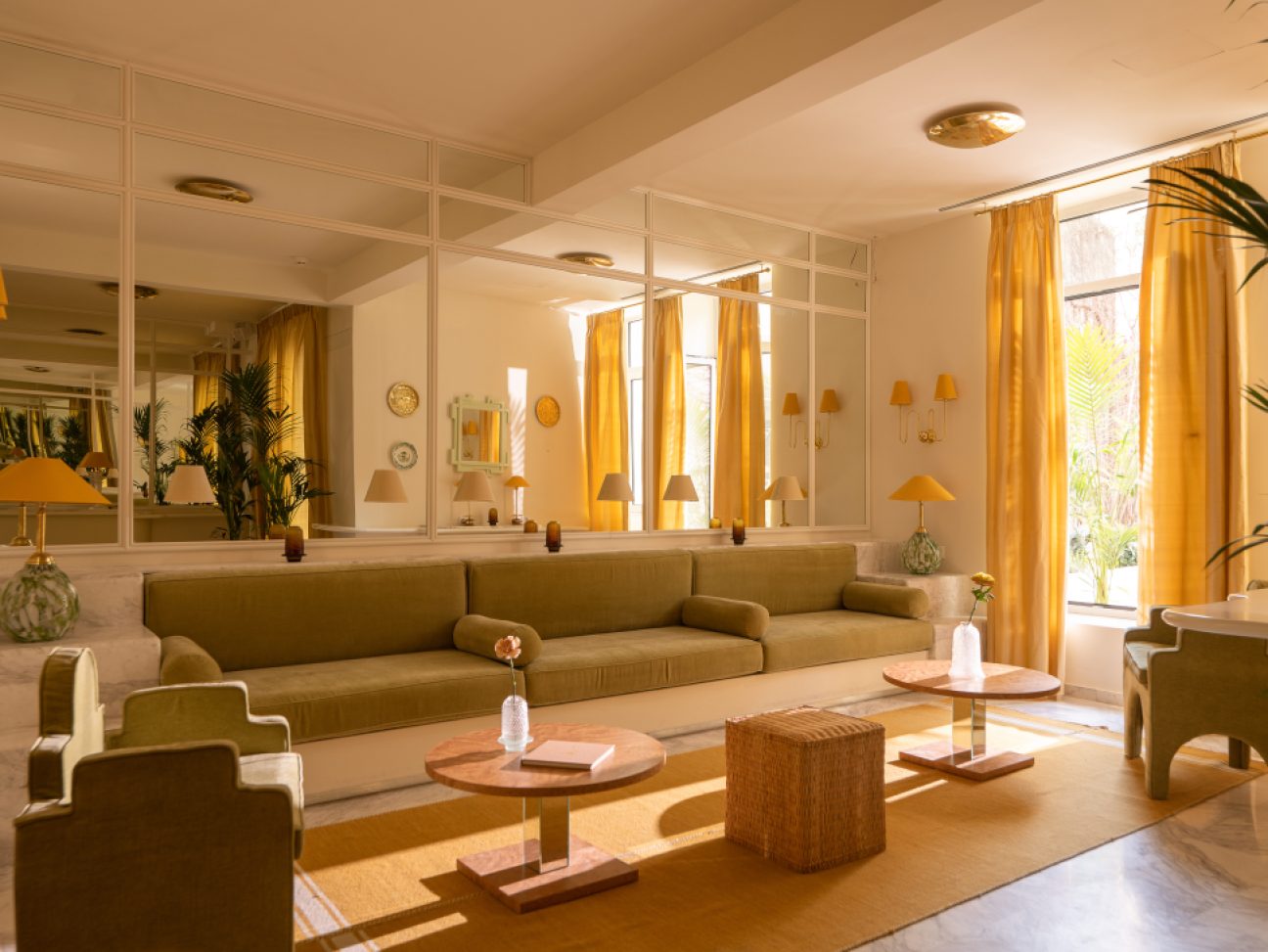
Athens has undergone something of a Greek revival when it comes to smart new downtown hotels. The latest is Apollo Palm, a 48-key stopover housed in a Bauhaus-style, 1930s police station. Interiors come courtesy of Mariette Sans Rival, a Paris-based designer who knows how to make a space dramatic given her specialism in opera-set design. “I used a lot of colours that play with the light,” says Sans Rival. “Think yellow, white and gold.” Locals can also drop by for a drink at the rooftop bar, which boasts views of the Acropolis and a cocktail menu put together by Alekos Alexiadis, founder of the acclaimed Athenian watering hole Santa Rosa. There’s also a palm tree-shaded café in the hotel courtyard that serves locally roasted coffee.
apollopalmhotel.com
Shore up
Few ports of call along the Mediterranean coast can compete with the old-world allure of Portofino. The picturesque fishing village lined with colourful houses was once best known for its luxury shops and moorings for glitzy yachts but there’s another side of the town to be glimpsed beyond its famed sea-facing Piazzetta. Up in the hills overlooking the Ligurian Sea are an unexpected bounty of fruit, vegetables and herbs that are giving rise to a food and hospitality business. La Portofinese celebrates another sort of luxury altogether.
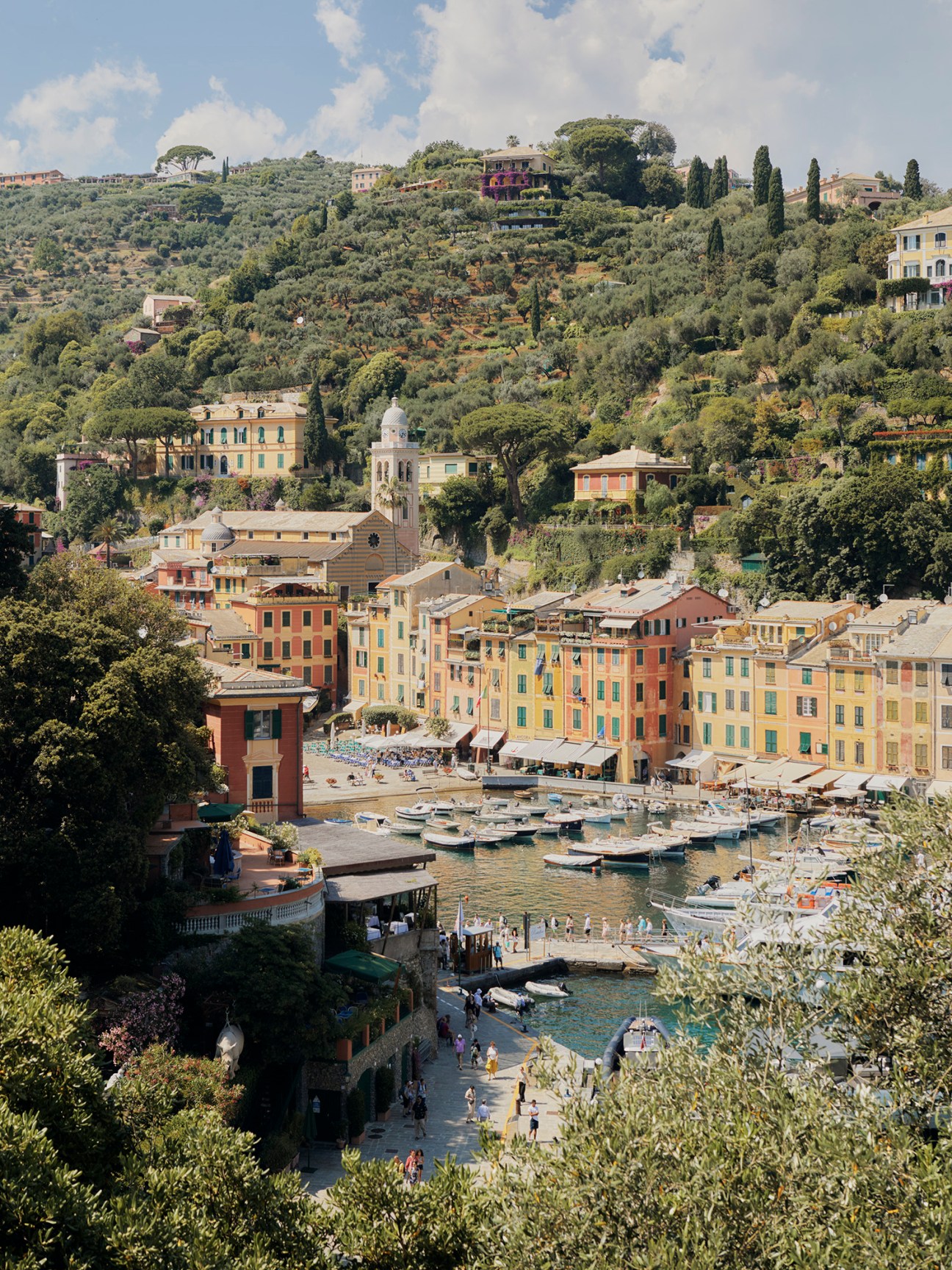
“The dream was to bring people back to the hillsides and create an authentic experience that respects this place,” says Tatiana Niccolini as she walks Monocle through the property’s sun-kissed hop fields on a promontory overlooking the town. Niccolini is the daughter-in-law of the property’s founder, Mino Viacava, who is the sixth generation of his family to call the area home. Though his relatives were bricklayers who doubtlessly helped to build the place, Viacava remembers stories that his grandfather told him about the family’s past tending crops on this same patch of land amid the cliffs, sea and maritime pines.
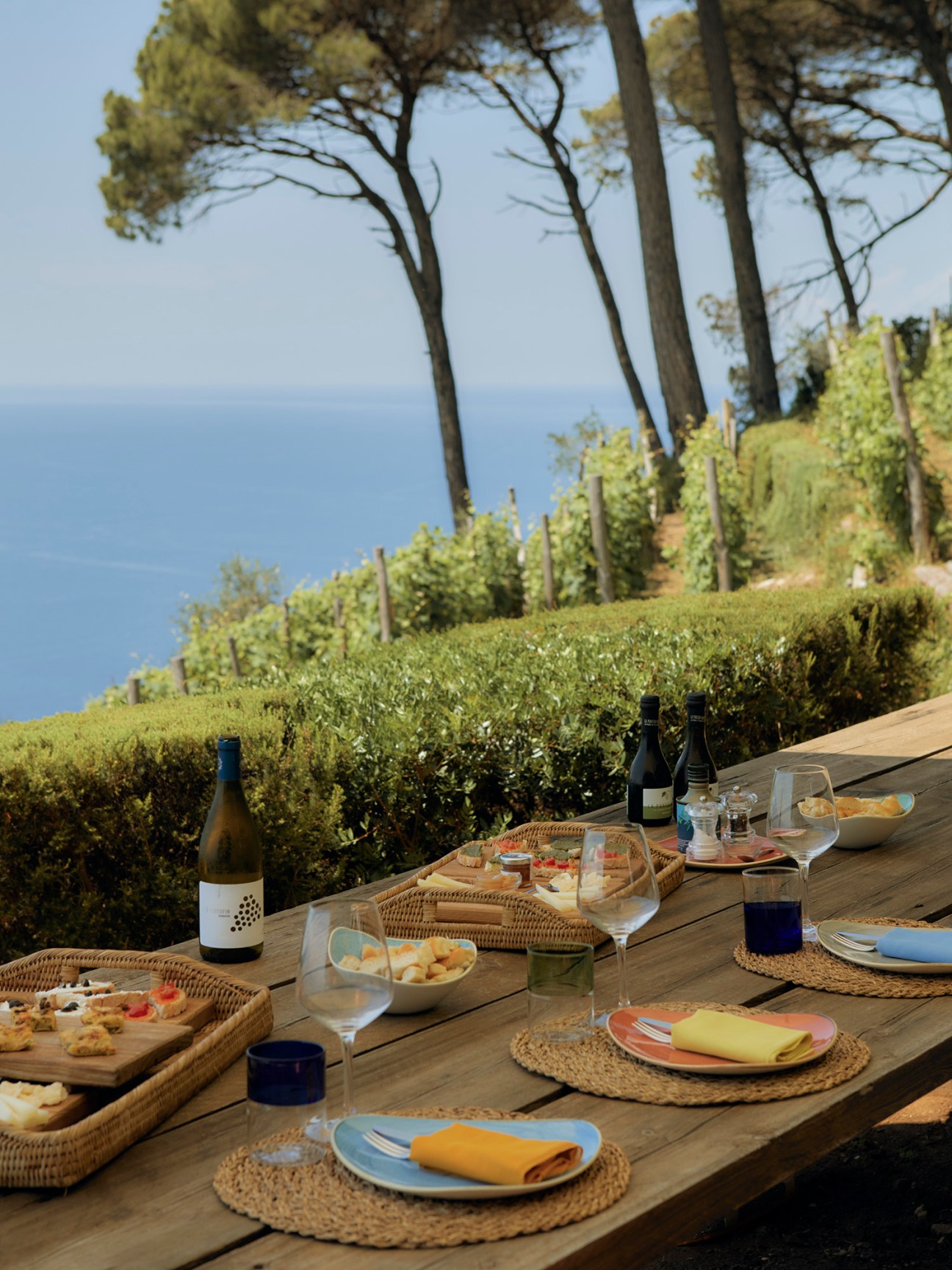
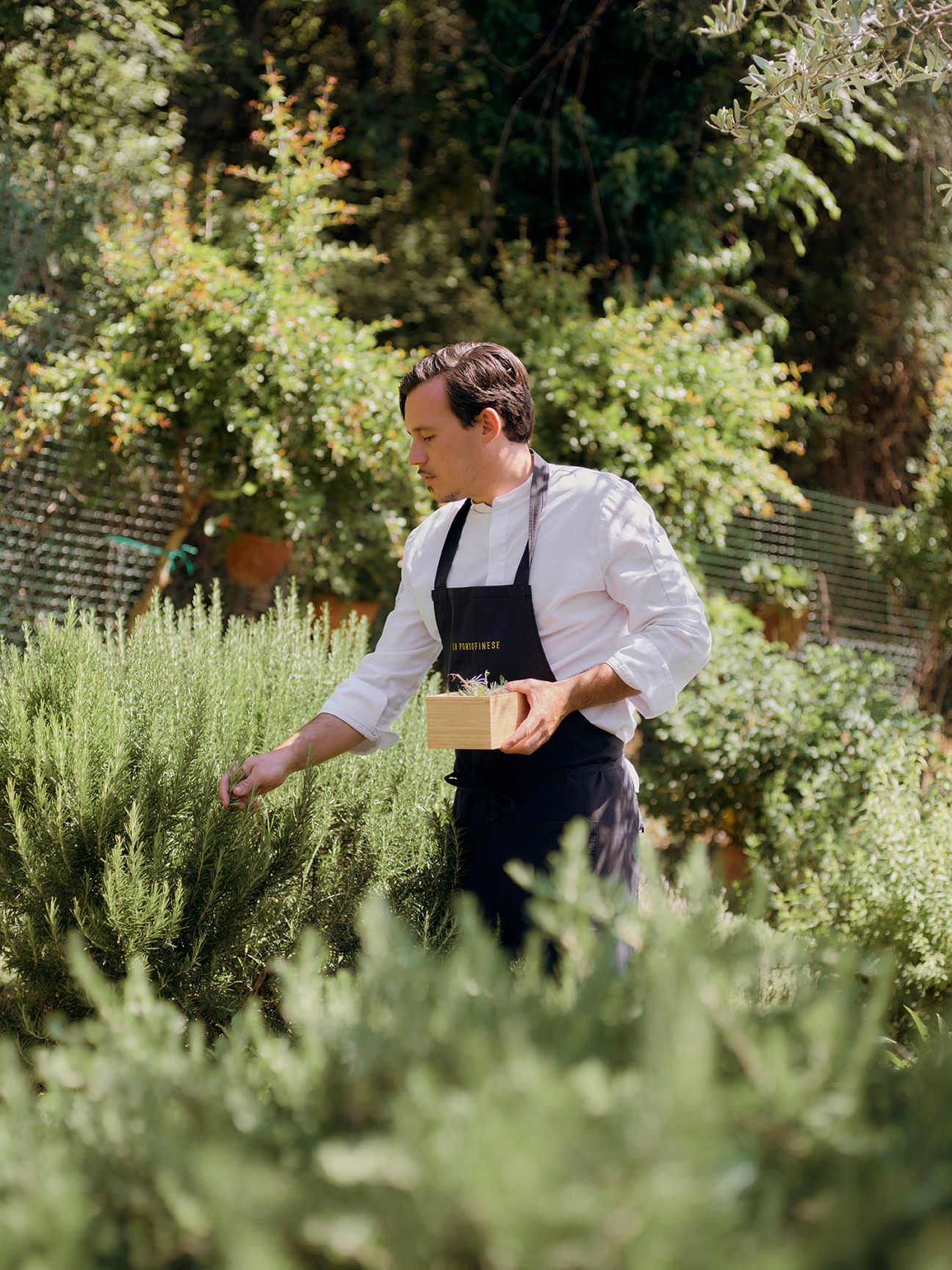
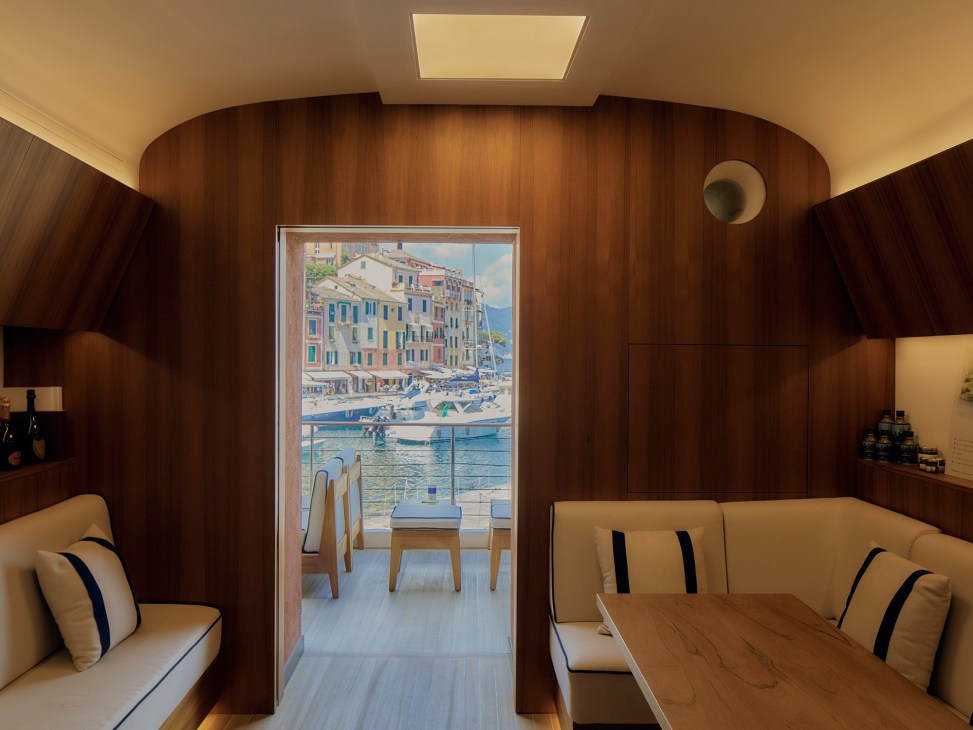
“It was a simpler life then; one that was focused on the land,” says Viacava as we pass an olive-oil press where Ligurian cultivars lavagnina and pignola are turned into a grassy golden condiment served at the firm’s rustic restaurant, Osteria dei Coppelli. “There were none of these fancy boutiques that you see here today,” he adds with a wistful grin.
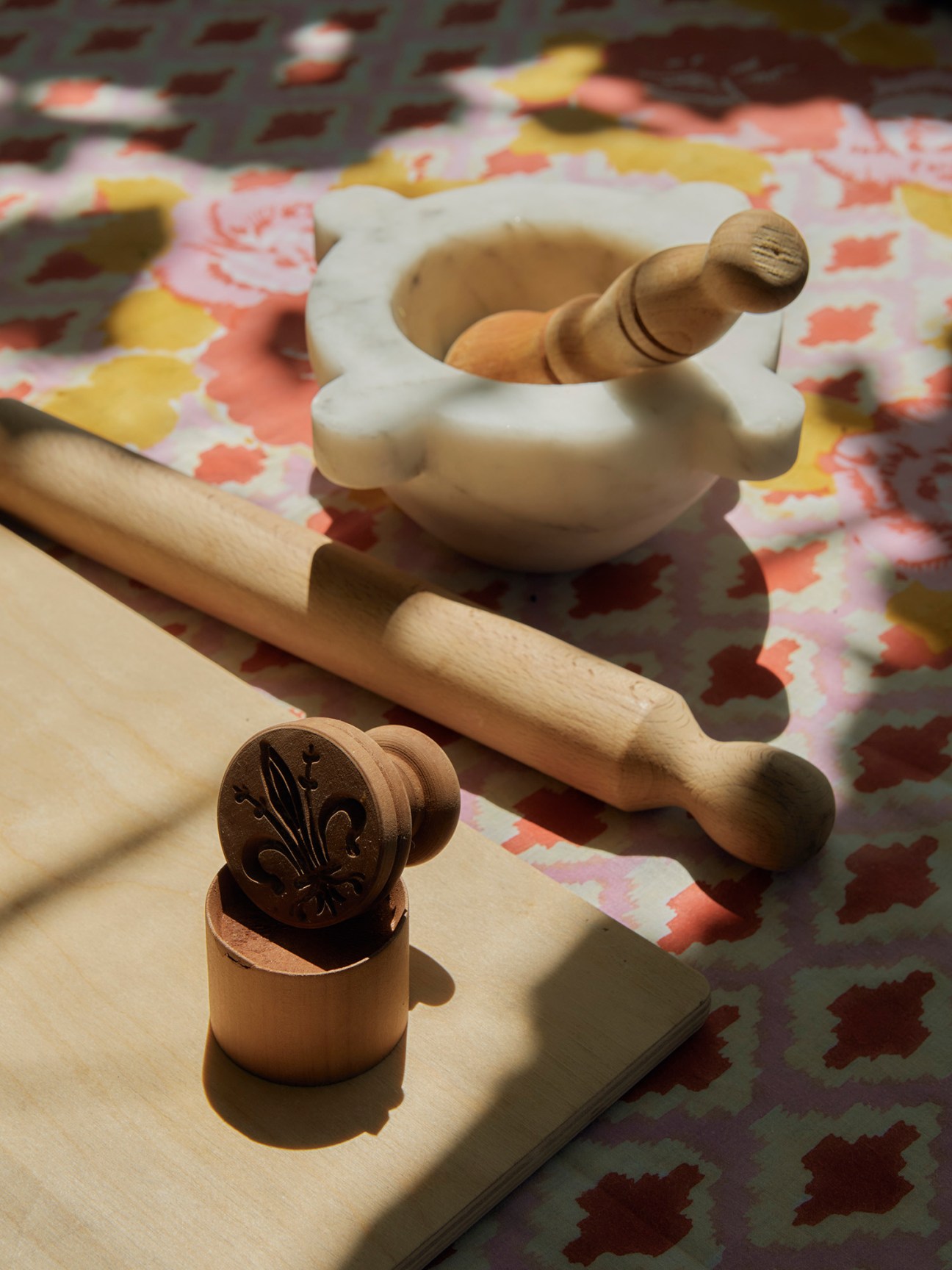
Besides overseeing a farm with chickens and rabbits, as well as another that grows vegetables from courgette to squash, Viacava’s La Portofinese project provides cooking classes at the osteria, which specialises in classic Ligurian dishes. For a hard-to-beat sundowner, guests head to the bar overlooking the scenic city-centre square or another set dramatically at the tip of the headland under a working lighthouse. Here, patrons usually have the house cocktail, the “Portofinese spritz”, with prosecco, soda and limoncino, a liqueur made from Ligurian lemons.
Viacava’s efforts to help revive local agriculture were the inspiration behind the decision to plant hops and make beer, influenced by a chance discovery in the archives of a nearby abbey run by Benedictine monks detailing their interest in making beer. Never one to waste an opportunity, Viacava came up with recipes for two ales that he now makes and sells.
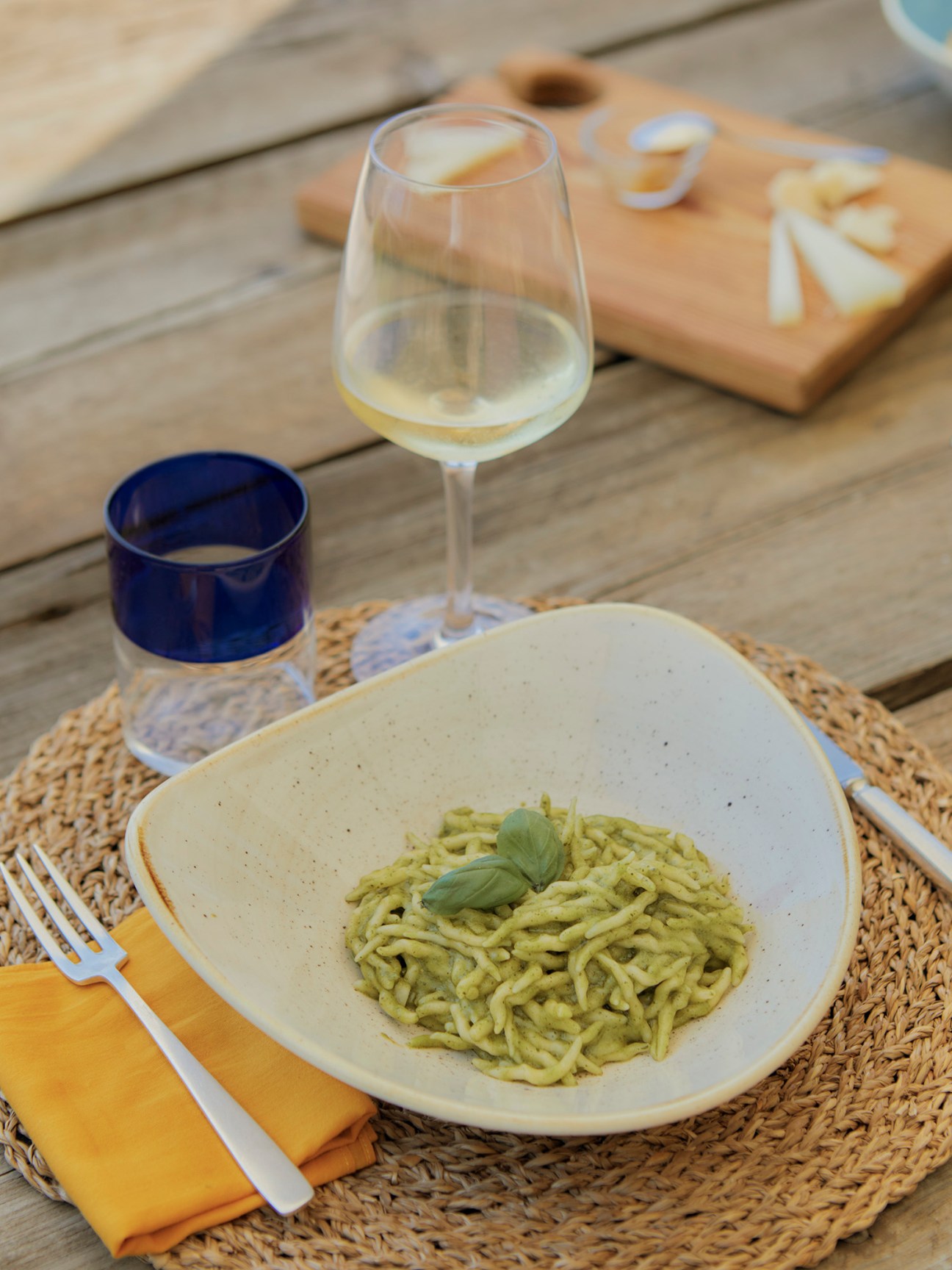
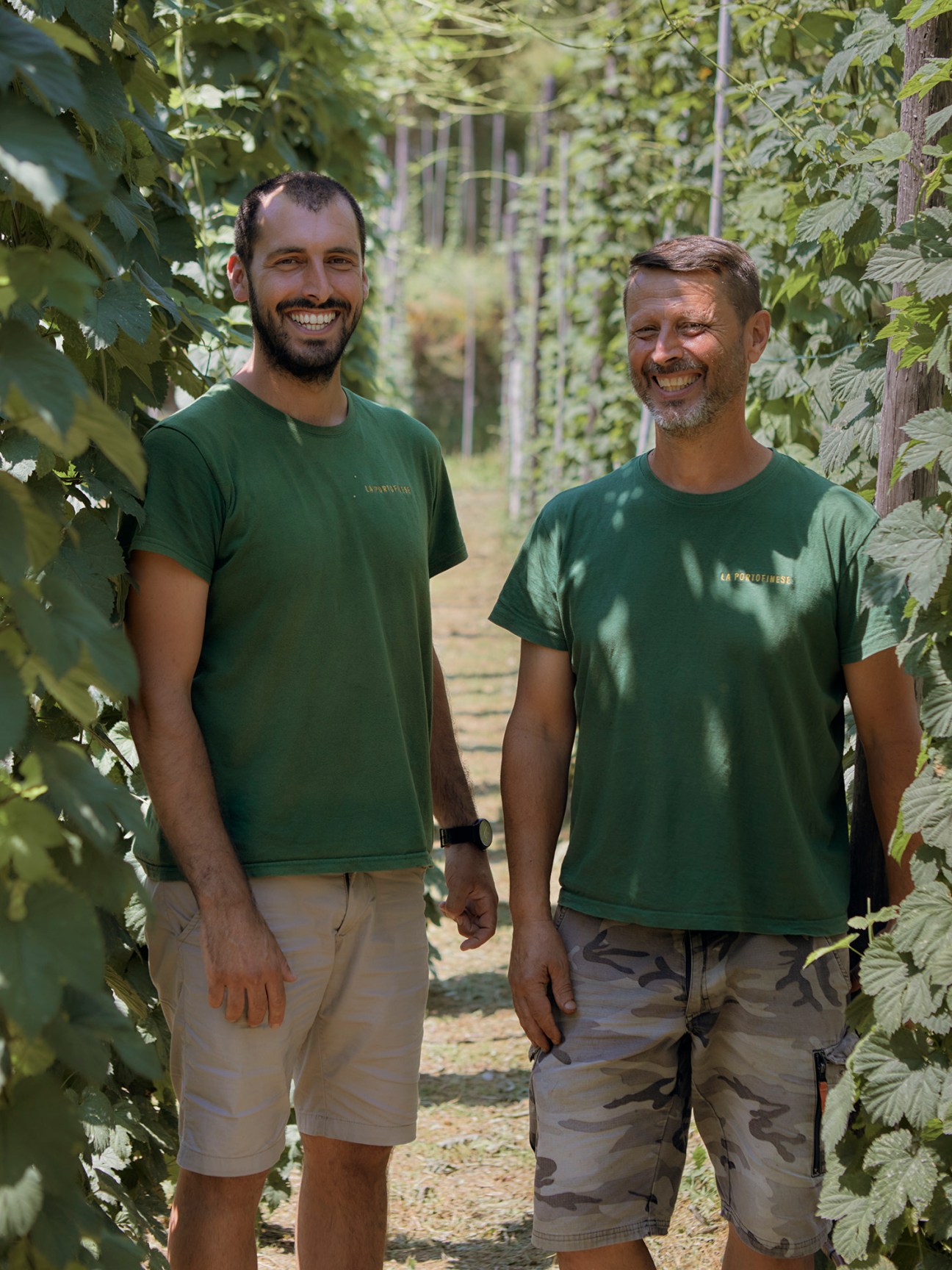
La Portofinese might be a mission to reclaim some of the area’s traditions but Viacava is running a business too. His properties are scattered across the headland but visitors can be whisked up and down the narrow, twisting roads to the six sites aboard a fleet of Piaggio Porter minivans. The loftiest section of the project is an eco-friendly farm with wind turbines almost 300 metres above the sea near Cala degli Inglesi (“English Bay”). There, rows of plump vermentino grapes hang heavily on old vines planted on steep terraces that are tickled by salty wind coming in from the sea.
“What’s wonderful is the variety that we offer,” says Niccolini, as she dons sunglasses and pours a chilled glass of white wine before lunch. “We can organise a picnic here high up at the farm to soak up the views of the riviera, walk people through a recipe for trofie pasta with pesto or visit the grotto behind the main piazza with its cool, natural cave that doubles as a wine cellar.”
For Viacava, whose project aims to draw attention to a long-forgotten part of the area’s economy, the reception to his initiative, which started in 2012 and continues to grow, has been nothing short of remarkable. Today supporters are everywhere, from residents who buy their jam, oil and wine to in-the-know concierges at resort hotels nearby, such as Belmond’s Splendido hotel, all of whom are happy to recommend La Portofinese to guests in search of something genuine and modest.
Despite his success, Viacava remains sanguine about his mission and what drives him. “It’s about maintaining traditions and passing them on to the next generation,” he says, gazing out to the Ligurian Sea. “What’s better than that?”
laportofinese.it