Issues
Sonic wonderlands
1.
Sound and vision
Studio Richter Mahr, UK
In the office of Studio Richter Mahr, there’s a photograph of the building as it was in 2019 – a steel-framed barn with breeze-block walls lined with agricultural equipment and hay bales. For composer Max Richter and his artist wife, Yulia Mahr, it’s a reminder of what they have achieved: buying a former alpaca farm in Oxfordshire and transforming it into a world-class recording studio and arts facility. Richter is among the most celebrated composers working today and has created soaring soundscapes for everything from Hollywood blockbusters to Royal Ballet performances and Dior runway shows. He and Mahr met in their twenties, when she hired Richter to compose music for a theatre production that she was working on. They have collaborated for more than 30 years, with Mahr producing visuals to accompany her husband’s music. Today she is a multidisciplinary artist whose practice encompasses photography, video, installations and sculpture, and is preparing to launch a fine-art publishing imprint.
In 2015 the couple decided to leave their apartment in Berlin for a home in the English countryside. “It was a conscious choice to move out of the city,” says Mahr. “When you are doing creative work, it’s easy to be bamboozled by the pace of contemporary life.” After finding the barn, the duo set about converting it. Architectural designer Charlie Luxton and architects James Renfrew and Eleni Papadopoulou worked on the shell of the building and domestic areas; specialists Level Acoustic Design and Studio Creations were called in to construct the music and mixing rooms, as well as Richter’s writing space. “All of the music rooms form one unit,” says Mahr, whose atelier spreads across another of the building’s flanks. “It’s like a suspended building within a building, with a sprung concrete floor. That’s why we have such fantastic sound insulation. Max can have an orchestra playing a film score and we don’t hear any of it.”
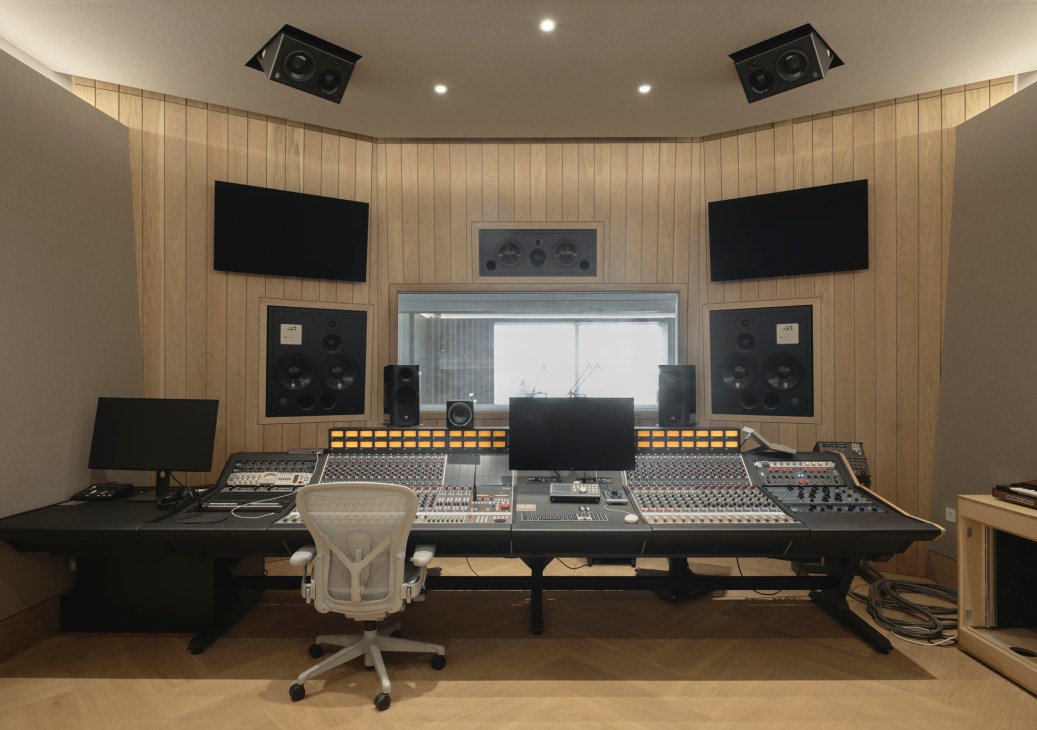
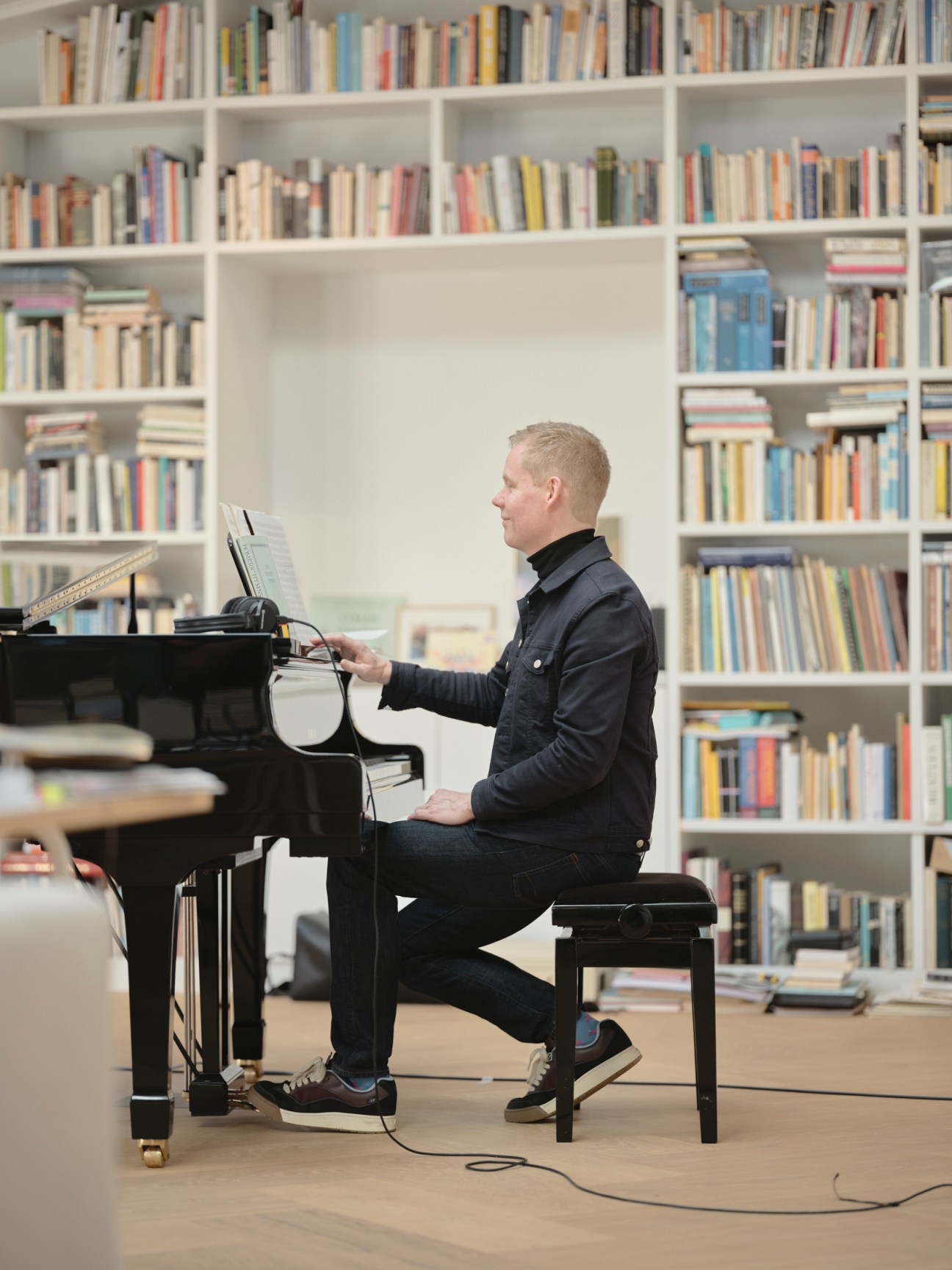
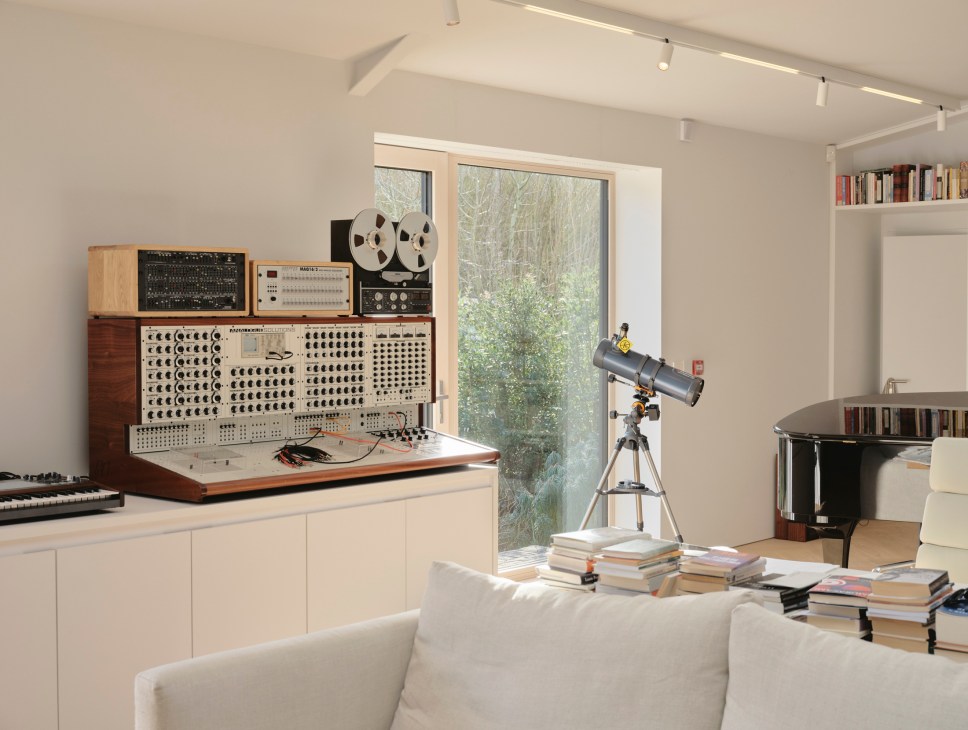
This section of the building contains Richter’s personal studio and a live recording room. The equipment here is a mix of cutting-edge digital technology and lovingly restored retro gear. “We have all kinds of wonderful vintage microphones, which sound really special,” Richter tells Monocle. “There are two recording paths here – digital and analogue, in which everything is recorded on tape. We have machines from the 1970s that have been completely rebuilt so that we can use them as new.” When Richter was setting out the specifications for the space, he ensured that the studio would be fully equipped for creating film scores. “We can record to pictures and deliver the music in full Dolby Atmos [surround sound].” With such high-spec kit, he no longer needs to journey all the way to facilities such as London’s Abbey Road Studios or Hollywood’s Capitol Studios to create work. “I never have to leave,” he says.
Building a new life in a glade that borders 12.5 hectares of woodland has had a significant effect on both Mahr and Richter’s work. “There’s a natural rhythm that resets your radar,” says Richter. One way in which the studio connects with the land that surrounds it is through its kitchen garden. Produce grown here, as well as eggs from the adjoining hen house, is used to make lunch for the studio team and everyone sits around a large table in the central atrium to eat together. “That goes back to my grandmother in South America and the meals that she used to cook for everyone,” says Mahr. “I wanted to recreate that communal eating experience, so we thought that the heart of the space should be a café.”
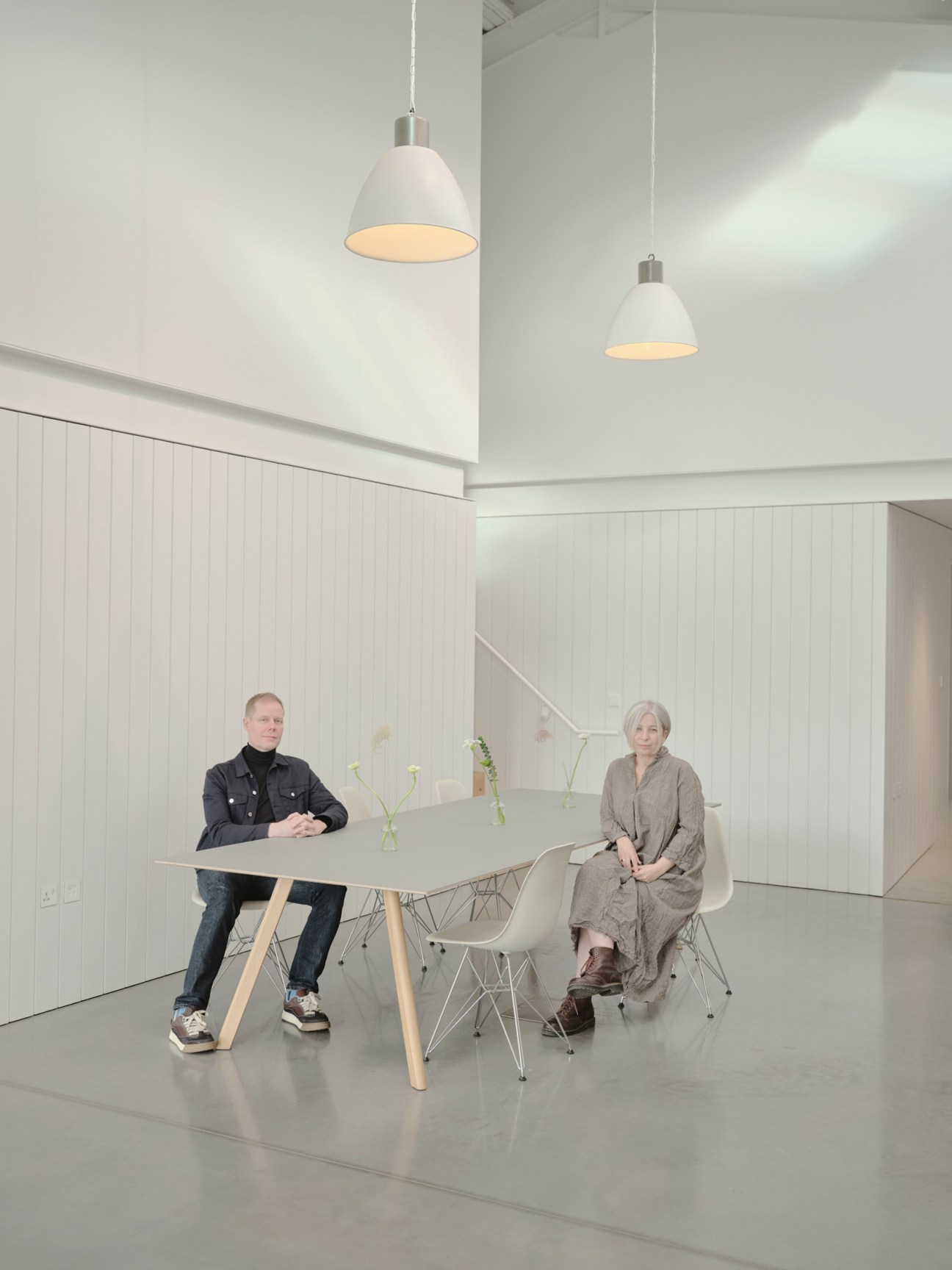
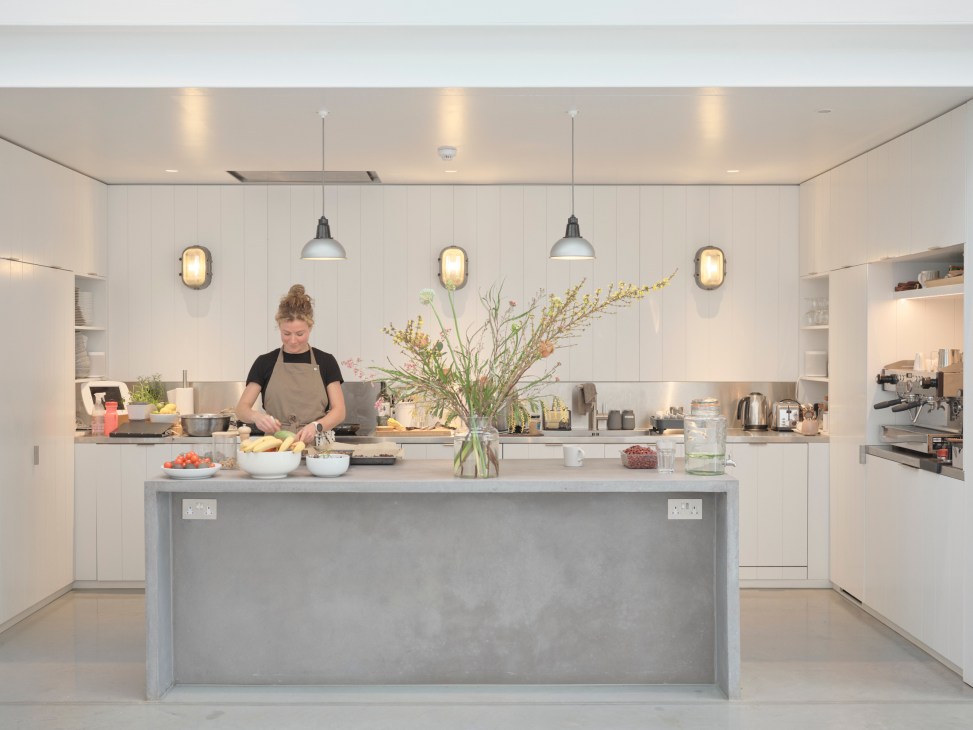
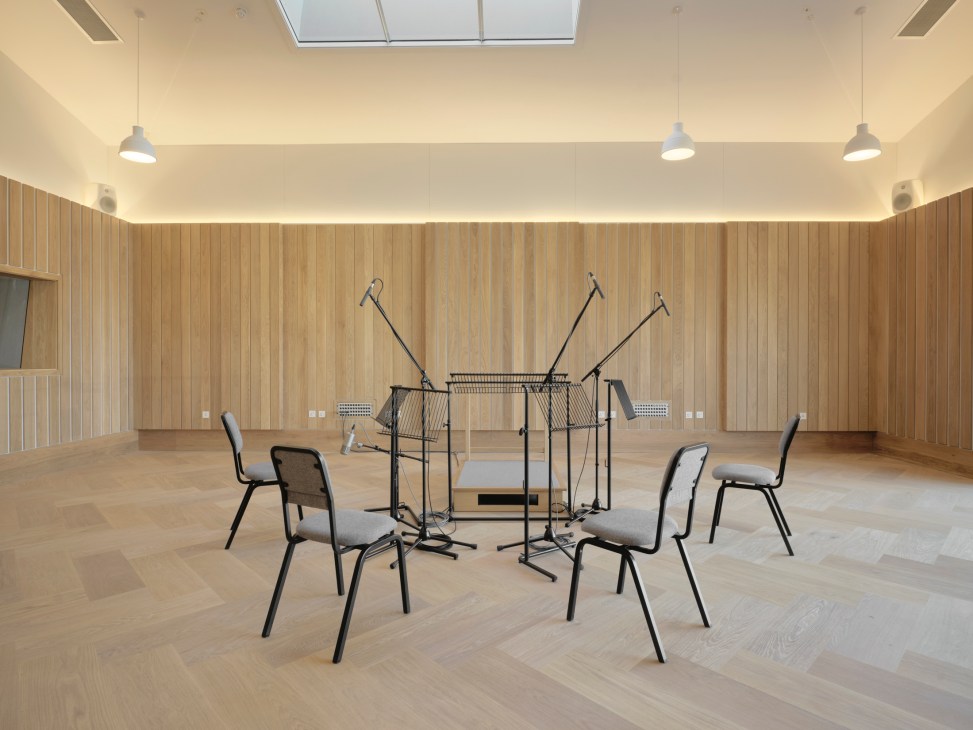
The couple aren’t the only ones making work at Studio Richter Mahr. A crucial aim of the project is to help the next generation of artists and musicians to find their feet. Its residency programme, for example, invites creatives to stay in one of the studio’s on-site shepherd huts and use the facilities to develop a project. Last year, Studio Richter Mahr released its first record, Free and Equal Vol 1. The EP features tracks by emerging musical talent such as Coby Sey and Duval Timothy, and all profits were donated to Médecins sans Frontières. The residency programme has focused on musicians so far but there are plans to welcome visual artists too.
“We have always intended this space to be not just for us but for others who don’t have the resources too,” says Richter. “It has taken a while to figure out how best to implement that idea but it’s exciting to see that part of it grow. It’s like teaching: you encounter creative minds at different points in their career and that gives you new perspectives. It’s great.”
studiorichtermahr.com
2.
Among the trees
Flow Studios, France
In recording parlance, “flow” denotes the sequence of stages that a sound goes through before you hear it. When Luke Aaron Clark decided to set up a studio in the village of Chailland, a short train ride west of Paris, he chose it as the project’s name. “It was a bit of a play on words: the technical term used in the profession, the flow of the river [that runs next to the studio] and the creative flow that an artist seeks,” he says.
As a composer and sound artist, Clark, who grew up near Brighton in southern England, has participated in residencies around the world. “I’ve always appreciated having a new environment to work in,” says the 45-year-old as he takes Monocle on a walk in the forest surrounding Flow Studios. “During a residency in Florida, I became interested in the relationship between architecture, sound and nature. So I built a human-scale beehive filled with microphones that transmitted the sound of people walking through. It gave me the confidence to create a more permanent structure.”


Opened in 2022, Flow sits in Chailland’s former town hall, built in 1850. Since Clark acquired the building five years ago, it has been extensively restored, with the plans for the recording area drawn up by US studio designer John Brandt. A cloudlike oval diffuser hangs five metres high in the live room, where the sun streams through large glass openings that frame the view of the forest. Windows are unusual in recording studios, which tend to be dim. “As humans, we need natural light,” says the 70-year-old Brandt, who has worked on more than 900 projects, from his office in Jakarta. “When an artist enters a studio, creativity should be encouraged. It should make you think, ‘I can’t wait to start working.’”
“Being tucked away in a quiet, little French town creates a certain type if isolation”
Those who have used the studio so far include labels such as Because Publishing and singer-songwriters Malena Zavala and Clou. “Being tucked away in a quiet, little French town creates a certain type of isolation,” says Zavala, whose song “A Different Path” was recently recorded at Flow. “If you’re stuck in the sound for several hours, a walk in the forest can be soothing,” says Paris-based Clou, who created four songs with artists she brought with her on a three-day stay. “Everything at Luke’s studio was made to help us work and only care about the music.” In the piano room, Clark sits in front of a restored 1904 C Bechstein. “The studio is an instrument,” says Clark, as he prepares to play. “Creativity is not an easy thing to reach so any help has real value.”
flowstudios.fr
3.
Music factory
Kabelovna Studios, Czechia
Czech composer and producer Karel Havlicek was bored of working in dull, windowless facilities but when he looked around Prague for a better set-up, he was stumped. His solution? To build his own. “I needed a space where I could feel the energy and have a lot of air and light,” he tells Monocle. When he and his business partner, sound designer Vladimir Chorvatovic, were shown an early-20th-century former cable factory, they knew that they had found the right spot. Havlicek commissioned architect Barbara Bencová to help turn the structure into a modern space while respecting its original features.
Opened in 2022, Kabelovna Studios has insulated skylights, concrete floors, acoustic panels and steel-and-glass doors that lead to two recording rooms. With their porous properties, the restored brick walls have proved ideal for recording. The facility is equipped with the latest sound-editing kit, voice-over booths and a Petrof grand piano. “Because of the high ceilings, the piano sounds as though it’s in a cathedral,” says Havlicek. “It’s amazing.”


Havlicek and his team of sound designers and engineers work on everything from original soundtracks for film and television to voice-overs for commercials for companies such as Škoda and Apple. They have worked on feature films for clients such as Netflix and HBO, as well as on Havlicek’s personal music projects. “I wanted to have a space for composing or recording classical and electronic music, and for audio post-production,” he says. “It’s really convenient to have it all under one roof.” The studio allows Chorvatovic to try out new techniques too.
To help create an atmosphere that encourages creativity, Havlicek’s twin brother, Maxim, supplied artworks that were added to the studio’s acoustic panels. Aesthetic choices weren’t made at the expense of functionality, however. “We have to be a proper studio and not compromise on the sound,” he says.
To that end, Havlicek snapped up hi-tech audio monitors by Finnish brand Genelec that allow the studio to calibrate the sound coming out of them to the space, which means that it could retain some of its architectural quirks and imperfections without compromising the working process. “Havlicek has perfect hearing,” says Bencová. “The sound isn’t recorded in entirely perfect conditions as we did many things intuitively, which makes it all much more natural.”
kabelovnastudios.cz
Charging ahead
High in a woodland glade on a granite hill overlooking Gothenburg – Sweden’s motor city – Monocle is ushered into “The Eagle’s Nest”: a whitewashed hall with floor-to-ceiling frosted windows. Maximilian Missoni, the Austrian head of design at Polestar, is giving us an exclusive look at the near-future of the company: four shiny new models, one production- ready, another approaching that stage, plus two eye-catching concepts, all lined up for inspection. “The purity, timelessness and logic in the line comes from a Scandinavian mindset,” says Missoni. “Design is like a weapon. It can create the wrong desires and cause harm but, deployed properly, it can create a desire for a more sustainable option.” That option, he hopes, is Polestar, a relatively new, all-electric, sustainability-focused car brand with a very famous neighbour: Volvo Cars.

Monocle is not allowed to photograph the four new cars but the first is Polestar 3, a premium suv that shares a platform (a common set of mechanical components) with the Volvo ex90. Out early next year, it will sit in the same sector as behemoths like the Audi Q8 E-tron. Next is Polestar 4, a “crossover suv-coupé”. It has the sharp hips and glass roof of the Polestar 2 but Missoni draws Monocle’s attention to the fact that the roof extends further back and there is no rear window. “If you look at coupes today, rear windows have become so compromised anyway, so we will use a camera for the driver’s rear view,” he says. Polestar 5 – a sexy, low-slung four-door grand tourer – will be based on the company’s first dedicated platform, created at its r&d base in the UK. Completing the new line-up is Polestar 6, a low-volume roadster based on the same platform.
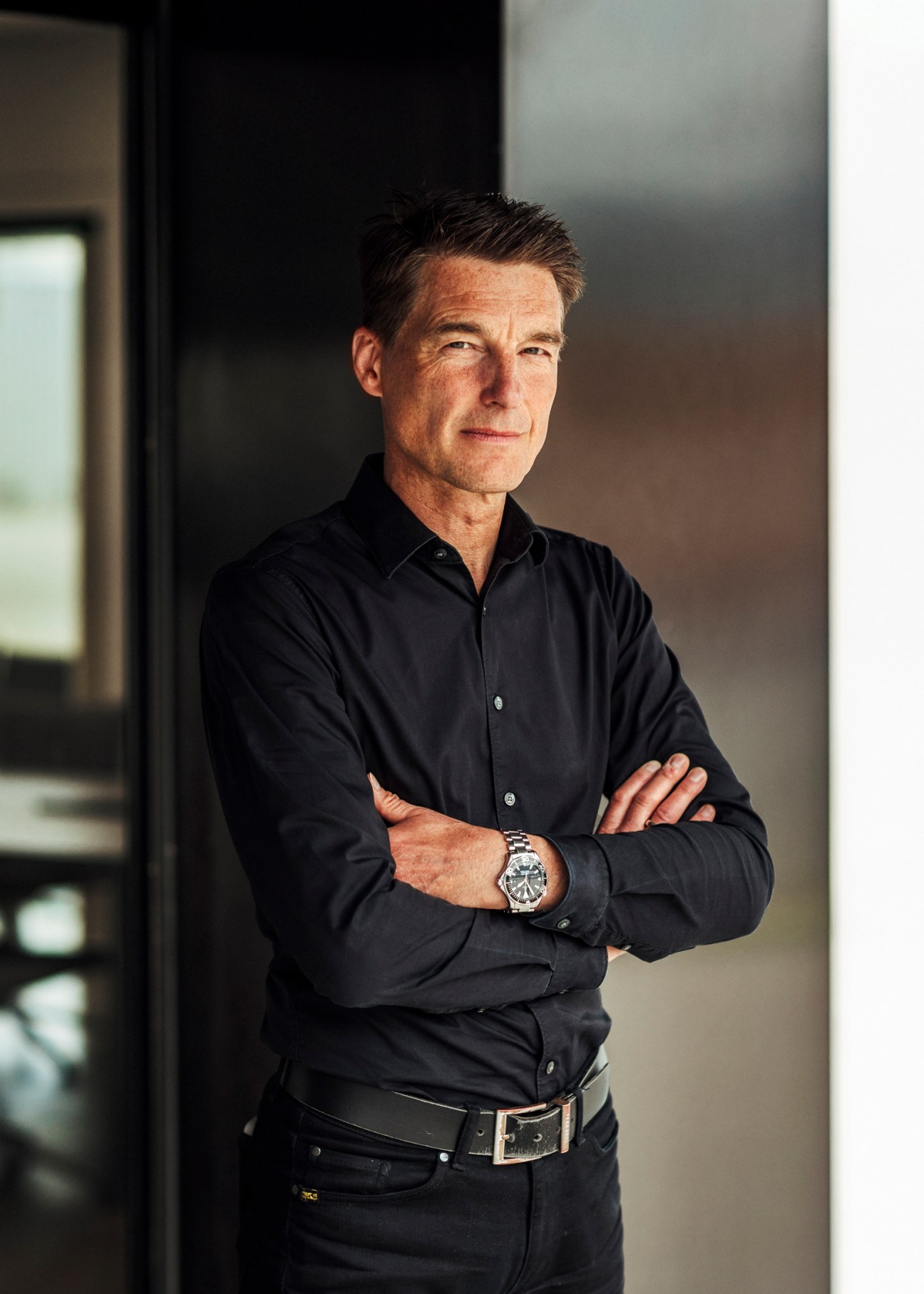
Traditionally, larger model numbers denote larger cars but at Polestar they indicate chronology of launch. The Swedish brand briefly served as Volvo Cars’ tuning division. In 2017 it surprised the automotive world with a limited run of its hybrid sports coupé, Polestar 1. Two years later came Polestar 2, a battery-electric five-door fast-back, which shares a platform with the Volvo xc40.

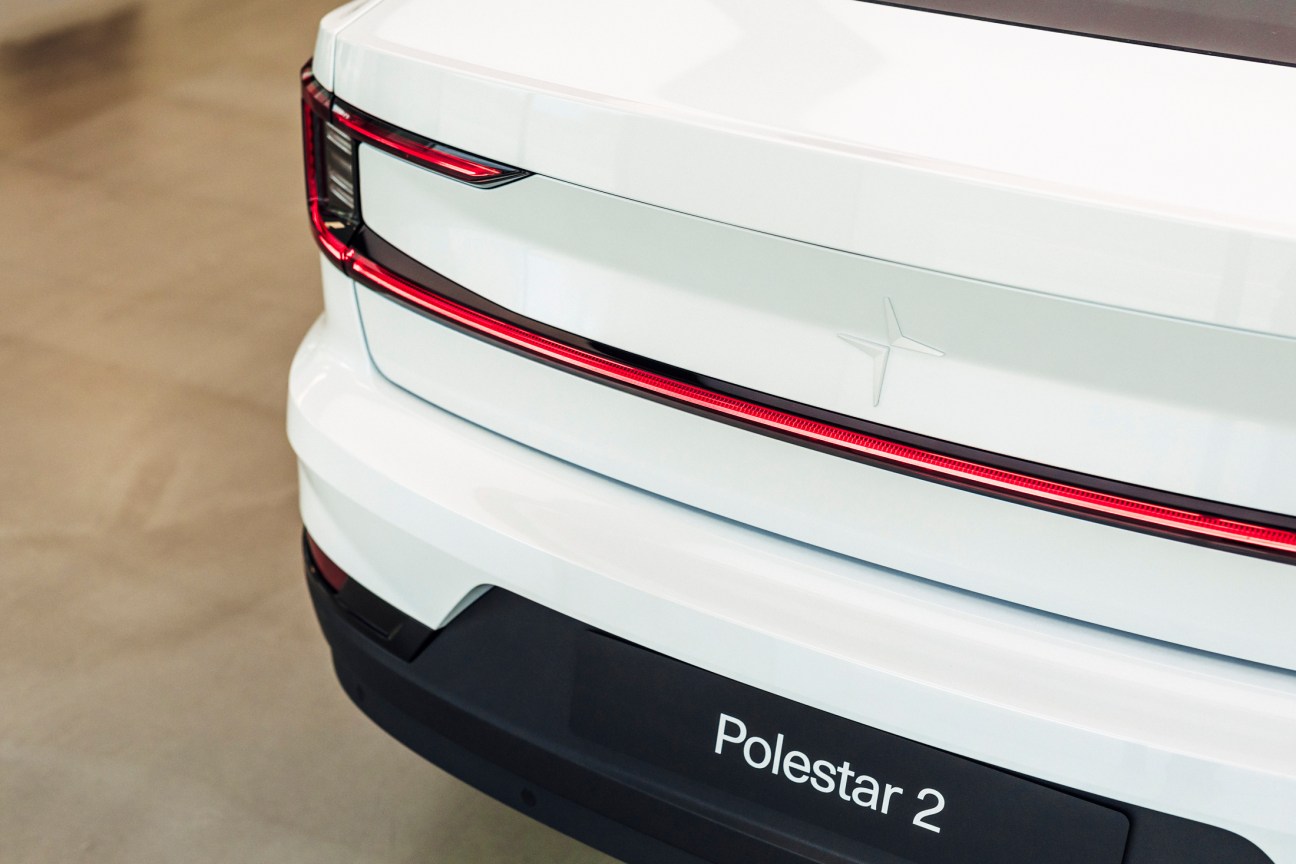
Although The Eagle’s Nest used to be Volvo’s HQ and its Gothenburg plant is a few hundred metres below us, Polestar was never destined to become the electric division of the established player. Both are distinct companies under the Geely Holding umbrella (see panel) and Volvo Cars’ own electric range is fast evolving with ambitions to be all-EV by 2030. Likewise, claims that Polestar is being pitched as a kind of Scandi Tesla (in part thanks to a recent Super Bowl ad that gently mocked Elon Musk) are wide of the mark. In truth, the company has loftier aims. “We are more like Porsche,” says Polestar’s charismatic German ceo, Thomas Ingenlath. “We benefit from being an exclusive, boutique brand within a larger group. Performance as a mindset is one of our values.”
Ingenlath is quick to clarify that by “performance” he doesn’t necessarily mean schoolboy yardsticks such as acceleration times or top speeds (a race that Tesla is currently winning anyway); he is referring to the handling and sustainability credentials of the cars. Polestar also has a strong software focus. Its cars were the first to use Google’s Android Automotive operating system and, despite there being 150 dedicated retail spaces around the world, you can only buy them online.
Continuing his comparison, Ingenlath views Polestar 3, with its top-tier equipment and high luxury, as a Porsche Cayenne competitor. Polestar 4 will sit between the 2 and 3 in terms of price and size, targeting potential Porsche Macan buyers, while the 5 will be “a grand GT, low and sporty”. The latter, he says, will be a Porsche Panamera rival in the €100,000-€150,000 bracket.
Ingenlath and Missoni both have impeccable pedigrees in European automotive design. The former worked in the Volkswagen group (at Skoda and Audi) before joining Volvo Cars, where Missoni was chief exterior designer, in 2012. The pair were responsible for the most cohesive, elegant and low-key-desirable range of cars of the past decade – a refreshing alternative to the visual aggression of many German and Asian brands.

But EVs are experiencing a bit of a backlash these days as more consumers wait for hydrogen-powered or smart-fuels options. Practicality is one issue: Monocle’s borrowed Polestar 2 needed charging twice on the drive from Copenhagen to Gothenburg (the journey was within the car’s maximum 655km range but it didn’t start fully charged – for comparison, a Volvo XC70 does about 1,000km on a full tank of fuel). Battery technology is advancing rapidly, counters Ingenlath. Future Polestars will be able to manage more than 600km and, he says, “for 350 days of the year, 400km to 450km still means that you are very well equipped”. What about the environmental and humanitarian consequences of mining the lithium used in EV batteries? “We have put a spotlight on that bad situation,” he says. “We have very strict contracts with our suppliers, and blockchain-secured sourcing. We know the stuff we put into our cars. Of course, bad things in life happen but the important thing is that you truly work on improving them.”
According to Ingenlath, Polestar buyers are mostly male, over 40 (though younger in China), tech savvy, early adopters and, clearly, given that even the entry-level Polestar 2 starts at about €50,000, affluent. “We have a very broad spectrum for onboarding, from the guy who knows everything about EVs and has owned them before, to the majority who are switching from combustion engines.” This year Polestar will sell between 60,000 and 70,000 cars; the target is Porsche’s annual sales of 300,000.
Perhaps more than at any other time in history, the success of a company like Polestar depends on the great intangible of perception. EVs can’t differentiate themselves on tech and performance in the way that cars used to. They all have roughly the same (very quick) acceleration, emit the same quiet hum and use pretty much the same batteries – at least for now. So, aside from price, the choice for consumers comes down to brand image. Polestar making Porsche its lodestar makes economic sense – the German manufacturer is the world’s most profitable car company – but you can’t recreate almost a century of design and quality heritage in a few years. And based on the 2’s interior, Polestar has a way to go to lift its materials and fit above Volvo levels. “We don’t need to worry about a brand legacy or changing customers’ mindsets,” says Ingenlath, calmly. When talk turns to automotive advertising, he grows a little more exasperated. “The message surrounding cars has become so devaluing, so cheap, and almost disrespectful to the consumer. Car companies talk to us like we’re three-year-old children. We want to bring our great product to customers who cherish a European character that we have always loved in cars, one that resonates with quality and style.”
According to head of brand Pär Heyden, Polestar’s marketing strips away the usual lifestyle clutter of automotive ads. “We don’t do ‘cars driving on winding roads’ and all that,” he says. Cues are taken from the fashion industry instead. “I like the way that Prada and Chanel communicate,” he adds. “They have the confidence not to explain everything.”
Clearly Polestar has to set itself above the rapidly fragmenting EV market as new brands seemingly arrive every week. But many have taken aim at Porsche over the decades – Lotus, Jaguar, Alfa Romeo and bmw included – with varying degrees of success. At time of writing, the stock market still isn’t convinced either: Polestar’s share price has lost almost 50 per cent since its Nasdaq launch in 2022.
“It is heavily undervalued,” says Ingenlath, as he shifts into ceo mode with a confident smile. “The potential, when you see where we will be with Polestar 3, 4 and soon 5, that is a very interesting perspective on how affordable and favourable the share price is today. It’s a big invitation to clever people to put their money in the right direction.”
Group dynamic
Zhejiang Geely Holding Group (Geely Holding) is owned by Chinese billionaire Li Shufu and has ambitions to become the “VW of China”. It bought Volvo Cars from Ford in 2010 and, as well as its own Geely brand, the group is comprised of car companies as diverse as EV start-up Zeekr, the UK’s Lotus (also moving into EV and suv markets) and the London Electric Vehicle Company, which makes the city’s iconic black taxi cabs. Geely Holding also has partnerships with Renault and Mercedes-Benz’s Smart. Polestar has no factories of its own. Its cars are currently manufactured at two Geely plants in China but, for the US and EU markets, Polestar 3 will be made in Volvo’s South Carolina plant.
Growth spurt
The imf predicts that Indonesia will be among this year’s fastest-growing major economies. The retail sector is booming as domestic tourism surges. Initial public offerings on the Indonesia Stock Exchange are raising unprecedented amounts – about €2.05bn in the first half of 2023 – and overseas investors have welcomed President Joko Widodo’s “omnibus law”, which simplifies regulations for commercial and business interests. The country’s growth has been aided by government policies such as the pre-employment card programme, which provides training to jobseekers; meanwhile, the Independent Campus initiative is encouraging university students to go abroad or take internships during the academic year, with the goal of exposing them to the wider world and increasing their competitiveness.
Indonesia received a record €38bn in foreign investment in 2022. It’s a sign of the country’s strong regional ties that the top sources of funding were Singapore, China, Hong Kong, Japan and Malaysia. Much of the new investment has gone into the metals and mining industries. Indonesia’s deposits of nickel, tin and other minerals crucial to the production of electric-vehicle (EV) batteries have put it in an advantageous position, even as the environmental downsides of mining have become better known. One challenge facing Indonesia is to step up from simply exporting raw materials to being a manufacturer in the EV supply chain, which would help it to capture more value and boost overseas investment further.
As the capital of Southeast Asia’s largest economy, Jakarta has long been a key regional hub (the Association of South East Asian Nations, or Asean, is headquartered here). As Indonesia’s middle class grows alongside the economy, new retail businesses are springing up and start-ups are attracting investment. Entrepreneurs are taking steps to address pressing issues such as gridlocked traffic and air pollution with sustainability-focused schemes but the city government must take more decisive action too.
Jakarta’s bustling streets and flurry of business activity belie a looming existential change. In August 2024 the planned city of Nusantara will be inaugurated as Indonesia’s new capital. Nusantara is a legacy project for Widodo, who will leave office next year having served the maximum two terms. It remains to be seen whether his replacement will be able to replicate the country’s recent economic success. Jakarta’s days as a capital city might be numbered but it will continue to grow as Southeast Asia’s commercial engine. Tapping into this booming economy is a generation of entrepreneurs with varied portfolios; here, we meet a few of its movers and shakers.
Sight for sore eyes
Saturdays
What it does: Optician and café chain
Key innovation: Saturdays has redefined eye care as a part of a wider aspirational lifestyle.
Eyewear company Saturdays is one of Indonesia’s most recognisable brands. Founded in Jakarta in 2016 by Rama Suparta and Andrew Kandolha, it has distinguished itself through its affordable premium glasses and its approach to bricks-and-mortar retail. Saturdays operates 47 outposts across Indonesia, half of which contain a café – part of the company’s effort to challenge the notion that a trip to the optician is a necessary but not necessarily enjoyable errand. “For us, it’s part of the experience,” says Suparta.

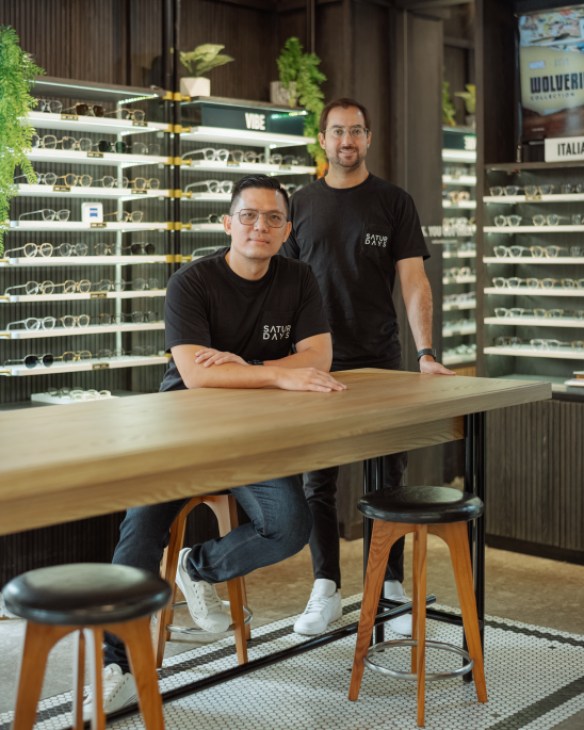

The company’s swift expansion is the result of a smart business strategy: its shops offer free eye tests, encouraging passers-by to drop in for a check-up without any obligation to make a purchase. Many visit just for the appetising snacks and drinks served at the in-store cafés and brand recognition has increased as a result. Alongside Saturdays’ commitment to physical retail is an online presence that includes a well-designed app and a platform allowing users to try on glasses virtually.
The eyewear collections come at a range of prices in order to reach as wide a swath of Indonesian consumers as possible. This is especially important because the company is growing its presence beyond top-tier cities. “As we expand outside Jakarta and target a bigger audience with items at a lower price point, we’re also spreading awareness about the need for corrective eyewear and how it can increase productivity,” says Kandolha. Saturdays has also launched glasses aimed at students and released limited-edition collaborations with popular entertainment brands. At the height of the pandemic it trialled home try-ons, in which opticians made house calls to conduct eye exams and let customers try on frames. It was so popular that the company has continued to offer the service. Saturdays will stick with what works and isn’t afraid to try new things. So far, this has paid off.
Natural touch
Growell
What it does: Grocery shops
Key innovation: Growell caters for the fast-evolving consumer tastes of young Jakarta residents.
After noticing how difficult it was to stock up on gluten-free and other speciality foods in the Indonesian capital, Rosalinda Tjioe opened the first branch of Growell in Jakarta in 2021. Inside, hazelnut butter and pyramids of fresh fruit can be found alongside local fare such as a vegan sambal, a chilli sauce that is usually made with shrimp paste.
Tjioe, who is 28, worked with local interior-design studio Seniman Ruang to kit out the expansive shop, adding bright incandescent lights, white-tiled display fridges and curved wooden counters. The Pondok Indah shop, which opened in 2022, contains a café selling fresh juices and Growell’s cold brews, and a courtyard with restaurant vendors where customers can sit for an outdoor lunch under the shade of a star-fruit tree. Growell also stocks items from international brands such as Dr Bronner’s and Baggu, as well as Greater Good, Tjioe’s recently launched line of sustainable wooden kitchenware, vegan beauty products and other items.


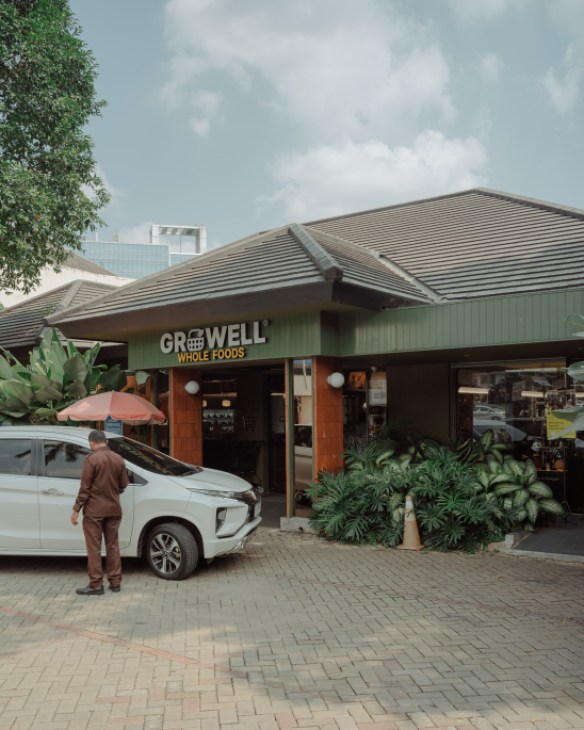

In addition to Growell’s two Jakarta shops, a Bali outlet is due to open in November. The company’s success attests to Indonesia’s changing consumer tastes: young professionals of Tjioe’s generation are becoming more keen on independent retail with good design and a commitment to sustainability. She says that the coronavirus pandemic has made people more health-conscious and has helped to increase interest in natural products.
Now a community has begun to form around Growell, which hosts events including food festivals, pottery classes and yoga sessions on its premises. “I want to use it as a platform to educate people about sustainability,” says Tjioe. “People here are open-minded and willing to learn so it’s good for businesses to have a starting point in Jakarta.”
Perfect Brew
Tanamera Coffee
What it does: Coffee shops
Key innovation: Tanamera was instrumental in reframing coffee as a speciality product in Jakarta.
It was while living in Perth and exploring its cafés that Dini Aryani Criddle fell in love with coffee and saw that it was considered a serious gastronomic pursuit, not just a convenient fuel. In 2013 she moved back to Jakarta determined to kick-start a speciality coffee movement in Indonesia, the world’s fourth-largest coffee-producing country but mostly known at the time for mass-produced beans. That year, Criddle founded Tanamera Coffee. Its mission was simple: to use beans sourced from Indonesia’s finest coffee regions that adhere to the growing and processing standards of speciality coffee.
With its rapidly evolving culinary scene and plenty of young professionals with disposable income, Jakarta proved to be a perfect base. Tanamera Coffee now has eight outlets in Jakarta and 12 more across Indonesia. It also supplies wholesale coffee to more than 250 hotels, resorts and restaurants in the country and, in the past three years, has expanded into coffee capsules and other home-brewing products. Now that Criddle has established the Tanamera brand domestically, she hopes to keep expanding abroad.


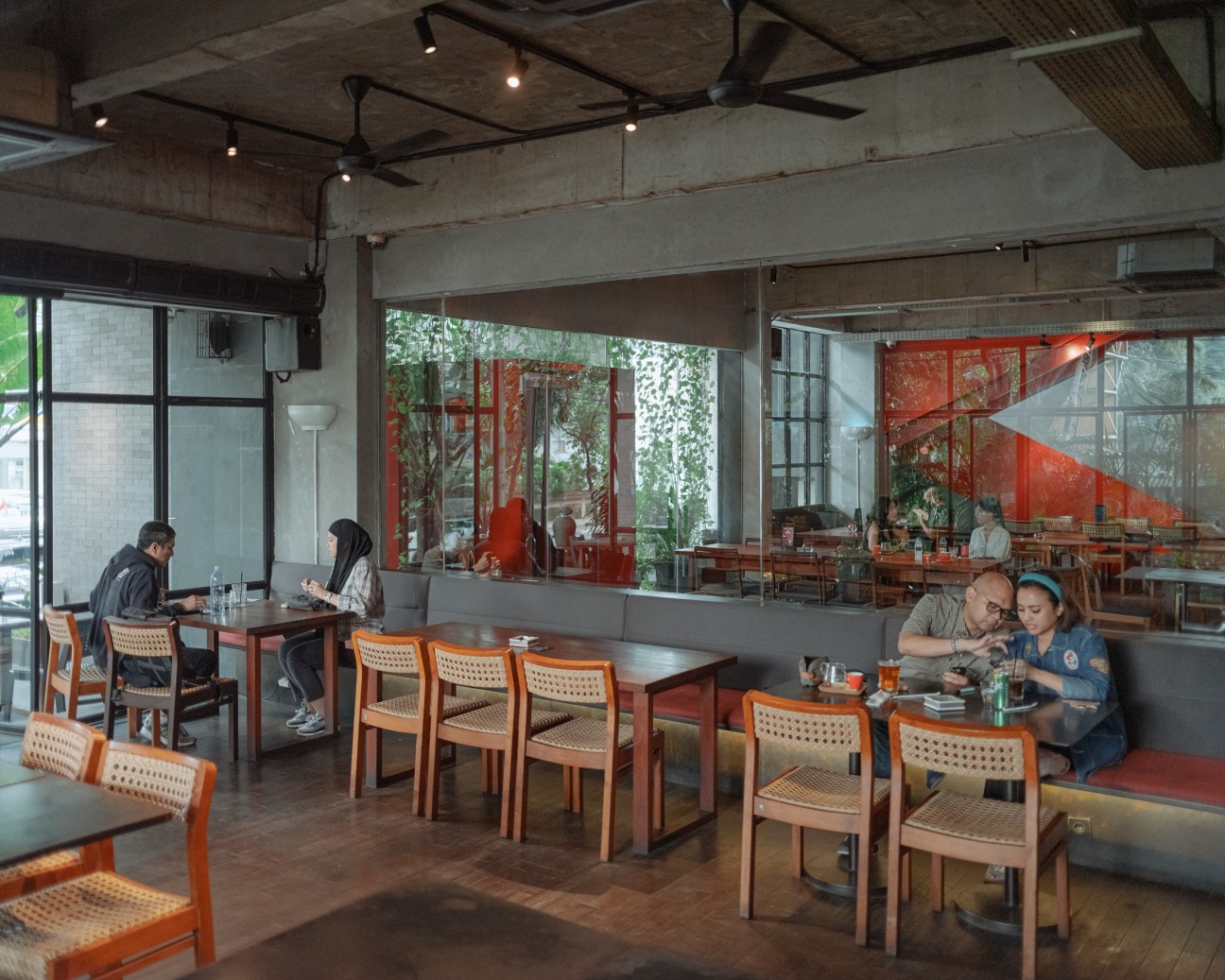
Its first international café and roastery opened in 2020 in Singapore; there are now nine Tanamera Coffee outposts there and, as of July, an outlet in Kuala Lumpur.
“It would take you several hours to fly across the country,” says Criddle. “There are more than 13,000 islands with many coffee-growing regions that are all very different.” Coffee plantations dot the archipelago, from Sumatra in the west to the volcanic slopes of Bali and the verdant peninsulas of Sulawesi. Her current favourite blend hails from the island of Flores. Depending on which part of Indonesia the coffee is from, it has flavours as diverse as chocolate and hazelnut, tobacco and herbs, and citrus fruit. “That’s what we would love more people to taste.”
Rebranding a city
Syah Establishments
What it does: Hospitality
Key innovation: As Jakarta grows, Syah Establishments has kept pace by opening outposts catering to all tastes.
When Felly Imransyah opened The Gunawarman in 2016, the street that the hotel is on, Jalan Gunawarman No 3, was a quiet one. “There were only five or six restaurants in the area,” says Imransyah. “Now there are 80 or 90.” Jakarta’s hospitality scene has exploded and his business has kept pace with the industry’s growth. Syah Establishments, the company that he founded in 2014, manages restaurants, beach clubs and more. “The competition is tough so we need to be creative,” says Imransyah.
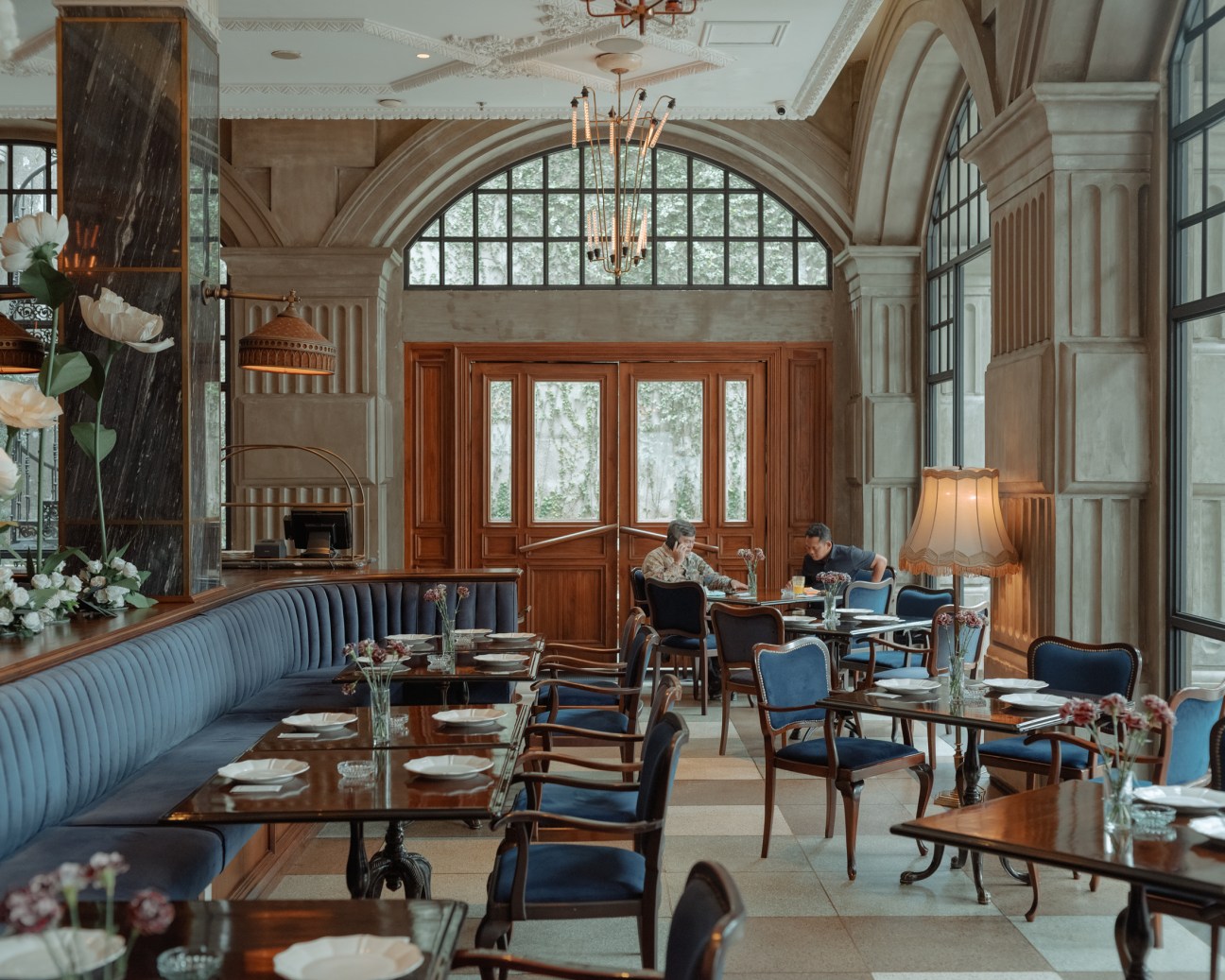


Syah Establishments’ businesses target a range of customers. The Gunawarman, a hotel with wood-panelled interiors and a private members’ lounge, is aimed at an older, wealthier clientele, while Hotel Monopoli in south Jakarta seeks out a more youthful crowd. “We need to be selective in how we brand ourselves and bring high-quality products and service,” says Imransyah. Putting together top-notch teams is a big challenge and Imransyah puts a lot of focus on staff training with the understanding that customers’ impressions will define the brand more than marketing campaigns. Syah Establishments’ restaurants, resorts and bars are popular with Jakarta’s residents but its founder is keen to attract international visitors and show them that Indonesia has more to offer tourists than just Bali’s beaches. According to Imransyah, the capital’s urban attractions are on par with those of Bangkok and Singapore but the branding isn’t quite there yet. “We have to create an awareness of Jakarta,” he says. “We have a big opportunity.”
Waste not, want not
Tridi Oasis
What it does: Recycles plastic
Key innovation: Launched in 2017, the company was early to stake its mission on sustainability.
Dian Kurniawati holds out her hands. In her palm are silver-white flakes, still warm from the machine that has churned them out. Minutes before, these flakes were bottles. Kurniawati is the director and founder of recycling start-up Tridi Oasis, which collects plastic waste and reprocesses it for use in everything from printer cartridges to coal-replacing fuel. A former management consultant, she became interested in founding her own company to tackle environmental issues after travelling around Southeast Asia and seeing the damage caused by industrial development. She knew that good intentions weren’t enough; it also had to be financially viable. Kurniawati realised that the most efficient way she could help to convince companies to cut down on polluting plastics was to offer a cheaper alternative that happened to be greener too.

In 2017, when she launched Tridi Oasis, sustainability start-ups were barely on the radar of investors. “There was nobody,” says Kurniawati, laughing. “They would ask me, ‘What do you do again?’” Today things are very different: Tridi Oasis has received enough funding to employ more than 100 people and has broken ground on a new processing facility. The company exports to European and US multinationals but Kurniawati hopes to expand domestic sales.
Indonesia is the world’s second-biggest ocean-plastic polluter. Plastic litter is also an ongoing quality-of-life issue in urban centres such as Jakarta. Kurniawati has co-founded a volunteer beach-clean-up group in the city; members make excursions to the seaside to sweep the coast of waste. She loves to experiment with uses for the recycled plastic; one recent foray into furniture produced hexagonal side tables that now sit in the lobby of the Tridi Oasis office. Kurniawati isn’t quite ready to launch a furniture line but the prospect remains enticing. “We don’t have the capacity yet; we’ll build it later on.”
Masters of their destiny
Being in a state of limbo can be a source of inspiration. In Skopje, the capital of North Macedonia, the city’s chequered past as part of the former Yugoslavia and uncertain future within the EU are frustrations that provoke young creatives to question what it means to be from this small, landlocked and recently minted country.
“My goal is to promote emerging artists from the region because, though they have created their own community, they have been neglected by the art market over the past 30 years and they need support,” says Jana Garvanlieva, who founded gallery and online art platform Pioneri in 2022. “It’s what motivates me.” The name of Garvanlieva’s gallery harks back to the era of Yugoslavia, which stretched from 1918 to its implosion in 1992 – and was a term used to describe hard-working young people with strong moral values. Its use signals a shared culture with Balkan cities such as Sofia and Belgrade. It’s these places – both up-and-coming cultural destinations – that Garvanlieva cites as examples of what Skopje could achieve if North Macedonia accedes to the EU and receives dedicated funding for the arts.


When Monocle visits Garvanlieva’s gallery on the outskirts of Macedonia Park, where she regularly hosts opening nights with DJs and drinks for more than 100 guests, the art on display is by emerging names such as Tijana Stojkovska, Glasgow-based Filip Velkovski and Tokyo-based Ana Jovanovska. The works draw inspiration from forgotten brutalist architecture, US artist Jean-Michel Basquiat, Japanese love letters and more. Meanwhile, in Milan this spring, Rome-based multimedia artist Margarita Aleksievska Sclavi exhibited her hand-painted tapestries at Casa Ornella during Salone del Mobile, under the name House of Ita. “We have something authentic, being Balkan,” says Garvanlieva. “Despite artists leaving Skopje, there is still a creative climate here. We’re famous for our music and films.”
There is an element of absurdity to Skopje’s architecture. An earthquake in 1963 destroyed 80 per cent of the city’s buildings and a reconstruction effort led by Japanese architect Kenzo Tange has left many brutalist gems. More recently, kitsch additions dreamed up by former prime minister Nikola Gruevski’s populist government as part of his controversial “Skopje 2014” urbanism project have radically altered the cityscape. Bronze statues honouring the region’s luminaries, often strange and sporting eerie expressions, stand on every corner. None are as brazen as the one dedicated to Alexander the Great, who surveys the city, sword in hand, from atop his horse. Along the Vardar river, which winds through the city, pre-existing buildings have been given pseudo-neoclassical wedding-cake façades. Nonetheless, scratch the stucco surface and a city full of Balkan charm awaits, where hours can be whiled away over drinks, cigarettes and dominoes in the Turkish cafés of the Old Bazaar or the leafy boulevards of the bohemian Debar Maalo neighbourhood.


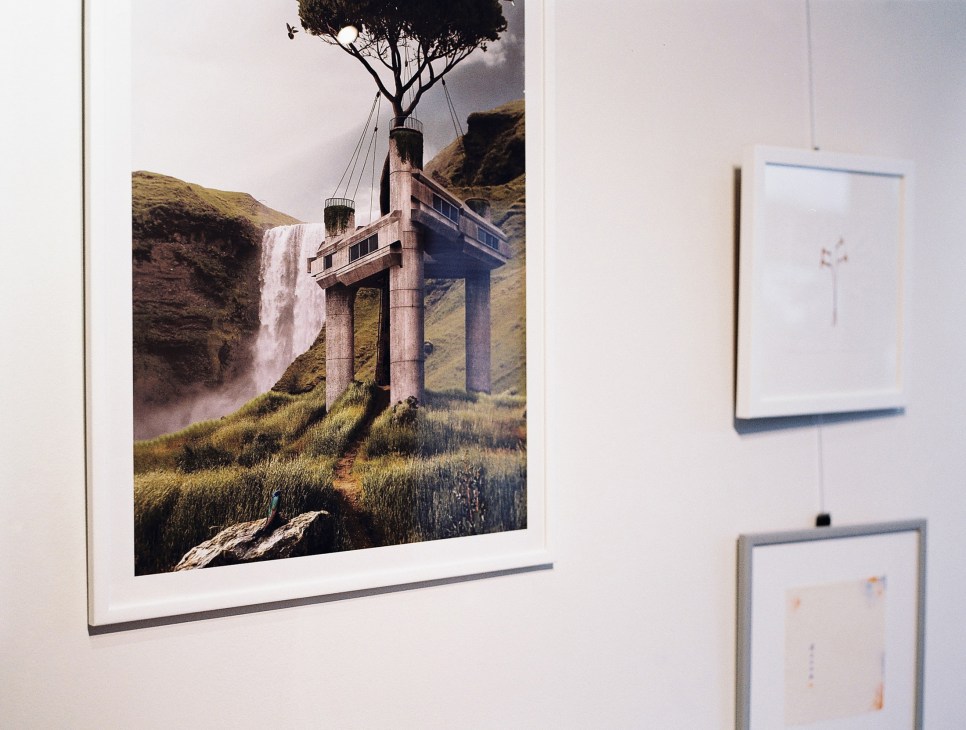
As Monocle’s Slovenian photographer Jaka Bulc navigates the city in Serbo-Croatian, it’s clear that nostalgia for the communist era (some of it secondhand, in the case of younger generations who weren’t alive to experience it) unites the Balkan region despite its collapse 30 years ago. At the Museum of Contemporary Art, a modernist concrete-and-glass edifice financed by Poland following the 1963 earthquake, the concierge unlocking the terrace doors laments not giving Bulc a ticket for free; he didn’t know he was Slovenian. From our terrace perch, beyond the city dotted with cranes and seemingly endless construction, we can see verdant mountains – one of them, Vodno, is topped with a 66-metre-tall steel crucifix, the Millennium Cross. Inside the museum, an exhibition named Defragmentation gathers artists from Poland, Czechia, Slovakia and Hungary to reinforce co-operation and solidarity across borders as 2023 marks 60 years since the earthquake.
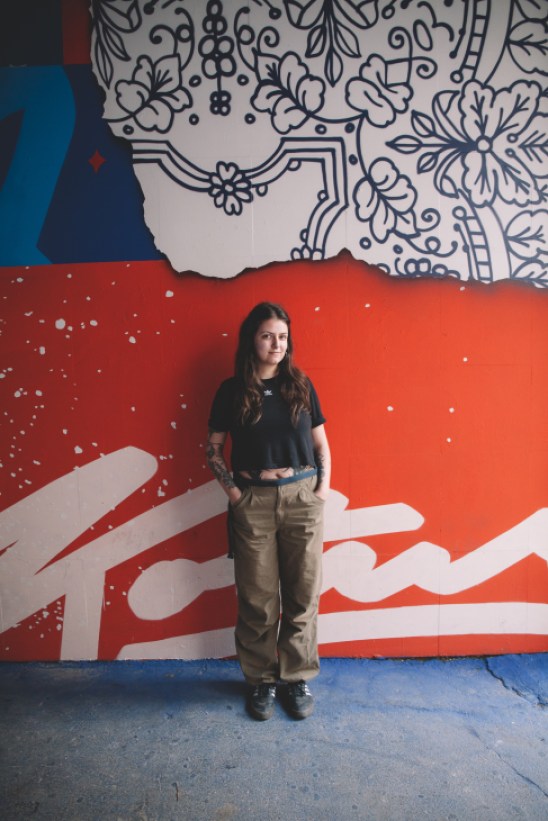
In the Old Bazaar, where the call to muezzin’s prayer can be heard in the winding streets, the National Gallery’s premises are the bones of what was once a 15th-century Turkish hammam. Under the direction of Dita Starova-Qerimi, a permanent collection traces the evolution of art in the region, from post-Byzantine icons to abstract pieces by artists from North Macedonia and beyond. Beneath starry domes, abstract paintings mingle with brass statues and more folkloric portraits by Croatian artist Ordan Petlevski and prominent North Macedonian expressionist Petar Mazev. As an introduction to this particular field of Balkan art history, it is a concise, well-considered collection.



A short walk along the river, past booksellers and kiosks, is the mkc centre, a city-council-funded space for art, theatre, music and more. Since February 2022, in the face of governmental budget cuts, its programme directors have been working around the clock to promote emerging talents, such as rap group Dope Kukjata, and attract international acts such as US surf-pop band Daikaiju. “We’re raised here, it’s where high-schoolers come to get a taste of alternative music,” says Luka Toshev, who is helping the centre with its online presence while juggling teaching music and touring as a guitarist for Dina Jashari, a rising star of North Macedonia’s bedroom-pop scene.
When we meet Toshev over shots of iced espresso at the mkc, he is preparing to head to Exit Festival in Serbia, a huge opportunity for young musicians to build their audience in the Balkans. “It’s the same scene, from Skopje to Ljubljana,” he says. “We understand each other, so touring the region, spending a month in Croatia this summer and performing somewhere different every night makes sense.” As a North Macedonian act, is there ever any pressure to switch the singing to English? “For sure. Maybe we would get more clicks or be able to perform in cities such as Berlin or London. But performing in English is boring. You don’t need to understand all the lyrics; the emotion behind the songs can be the language.” With his cycling sunglasses perched atop his head and a lighter attached to his hip by a retractable holder, Toshev embodies a certain offbeat Balkan edge that could surely overcome any language barrier.
In the evenings, a lively crowd of film enthusiasts can be found at Café Kotur, where screenings of new and old releases are accompanied by cocktails mixed with the evening’s entertainment in mind. “Since we opened five years ago, this has become the best spot in Skopje for coffee in the morning and a cocktail at night,” says waitress Angela Karulovsq. “And every week you can expect something new, be it an event, film screening or concert.” The premises, with their mid-century light fixtures and furniture, were once the headquarters of the former Yugoslavian distribution body Macedonian Film. The film scene in North Macedonia is particularly strong, with Oscar-nominated directors such as Milcho Manchevski, Tamara Kotevska and Ljubomir Stefanov flying the flag on the international scene and documentary festival Makedox taking place every August.
With its strong café and festival culture, North Macedonians certainly know how to have fun. As the sun sets over Skopje’s main square, Bulc treats Monocle to some grilled corn from a street vendor and we watch people pass by: families, elderly men on bikes, young couples holding hands. It’s unclear whether geopolitics will allow for North Macedonia to accede to the EU and what that might mean for its cultural scene and young creatives. But in the meantime, with Balkan spirit in spades, Skopje is enjoying itself.
Skopje address book:
Pioneri
Art gallery for emerging artists from North Macedonia and the Balkan region, run by Jana Garvanlieva.
pioneri.net
National Gallery of Macedonia
Founded in 1948, the city’s main art gallery is based in a restored Turkish hammam from the 15th century.
nationalgallery.mk
Museum of Contemporary Art
A modernist marvel with smart exhibitions and stellar views of the city.
msu.mk
MKC
Council-run cultural centre where concerts and workshops are held for the young and young at heart.
mkc.mk
Akademska Kniga
A bookshop with a brilliant selection of North Macedonian classics and foreign-language literature, including English.
akademskakniga.mk
Café Kotur
A lively spot for drinks that also hosts regular film screenings.
+389 75 760 497
Public Room
A dynamic bar, events room, restaurant and co-working space on the pedestrianised strip of Debar Maalo.
publicroom.org
Brutalisk
Buzzy bar and shop with a recording studio, inspired by Skopje’s brutalist cityscape.
38A Boulevard Ilinden
Affairs
SOFT POWER ICON
Mongolia
Heavy duty
With 1,187 career wins and a record 45 grand tournament victories, Hakuho Sho is often described as the greatest sumo wrestler of all time. His retirement ceremony in 2021 was attended by dignitaries including a former Japanese prime minister and the president of the Toyota Motor Corporation. But Hakuho is not a typical yokozuna (those who have achieved the highest rank in sumo).
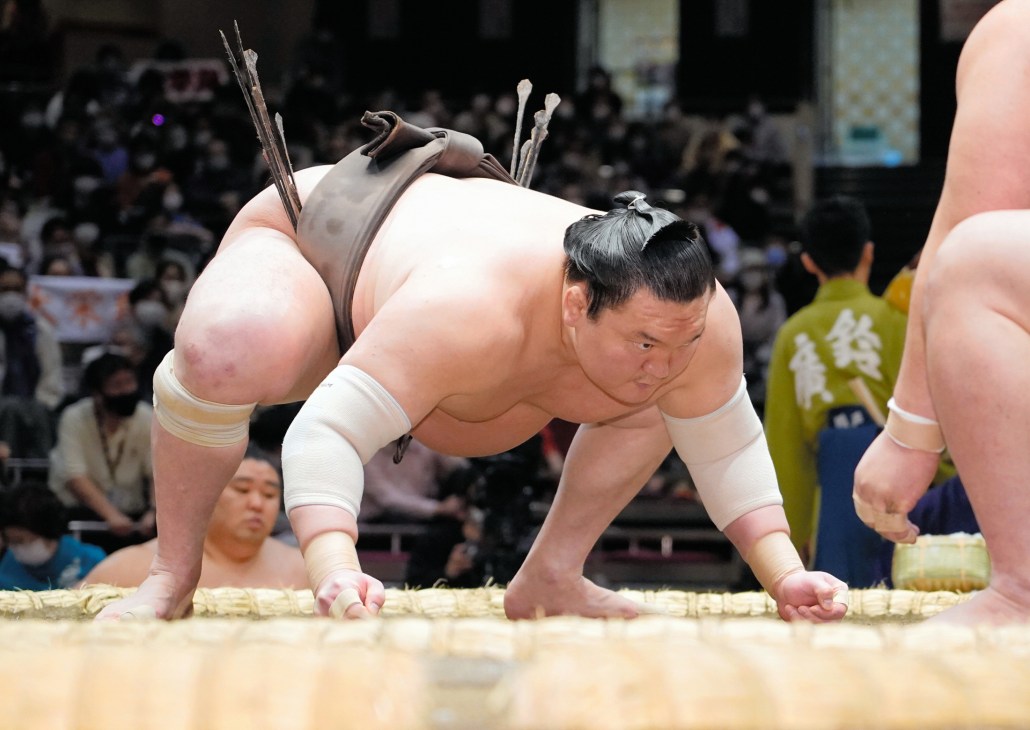
Born Mönkhbatyn Davaajargal in 1985 in Ulaanbaatar, he emigrated to Tokyo at the age of 15 to follow his dream of becoming a sumo wrestler. In 2011 he returned to his homeland as Hakuho Sho, national sumo champion, to launch the Hakuho Cup, a competition encouraging a new generation of Mongolians to embrace Japan’s national sport. Sports Nippon described the competition as “a bridge for friendship” between the two countries – a bridge of which Hakuho is a steadfast cornerstone.
Diplomatic Spat
Church vs state
Who vs who: Russia vs Bulgaria
What it’s about:
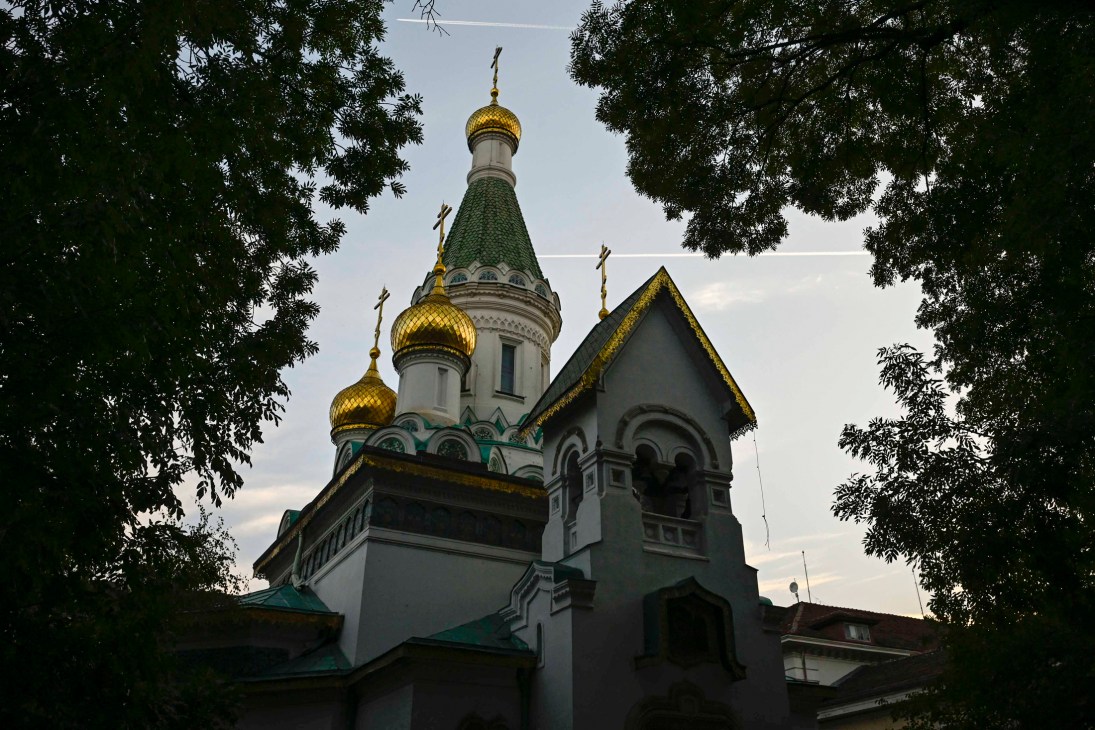
Russia has summoned Bulgaria’s ambassador in Moscow to a meeting without caviar after Sofia threw out the head of the Bulgarian franchise of the Russian Orthodox church. Bulgaria accused Archimandrite Vassian – and two Belarusian clerics retained by Sofia’s church of St Nicholas the Miracle Worker – of attempting to “influence the social and political processes in Bulgaria in favour of Russian geopolitical interests”.
What it’s really about:
Bulgaria’s recently elected prime minister, Nikolai Denkov, has made a point of reckoning with Russia’s long-standing meddling in Bulgaria. It is not impossible that, as one Bulgarian MP has suggested, Archimandrite Vassian is “a representative of Russian intelligence in a robe”. Possibly not coincidentally, the major opposition party to Denkov’s coalition is an out-and-proud pro-Kremlin operation.
Probable resolution:
Russia will huff and puff (it has already described Bulgaria’s move as “blasphemous”). It is sadly unlikely, however, that Russia will pause to wonder why pillaging one of its Western neighbours on an absurd pretext has not enticed the rest of the former Soviet sphere to re-embrace Moscow.
The Foreign Desk
Having sympathy for politicians
Andrew Mueller on…
It is not fashionable to sympathise with politicians but making The Foreign Desk often prompts gratitude that I have my job, not theirs. I shake their hands after interviews at some summit or conference and toddle off to an agreeable dinner with colleagues, while they go back to attempting to ensure the security of Europe, or some such task. Possibly during such a dinner, we decided that if we couldn’t exactly organise it for listeners to walk a mile in the shoes of these decision-makers, we might be able to have them spend half an hour at their desks.
We recently aired a three-episode season under the sub-heading “In The Room” (wherever you get your podcasts, etc). We sought out people who had, at pivotal moments in recent history, been in the room – or, as the case might have been, aboard Air Force One as it flapped frantically about the US attempting to evade terrorists, or on the bridge of a Royal Navy frigate as the order was given to abandon ship. We considered three events: September 11, the Falklands War and the secret meetings that preceded the release from prison of Nelson Mandela. The intention was to remind our listeners, and ourselves, that human affairs are more often than not directed by people sitting around a table asking themselves and each other frantic variations on, “What the hell do we do now?” Even – especially – in such circumstances, our leaders are obliged to maintain a façade of implacable calm. It is usually only off the record, or after the event, that politicians will admit what a strange and terrifying thing it is to find yourself actually sitting at that table.
If there was one representative moment of some extraordinarily illuminating (and humbling) conversations, it was when we asked Andrew Card, former chief of staff to US president George W Bush, to recall the morning of 11 September 2001. There was a point at which Card knew that a second hijacked aeroplane had hit the World Trade Center – at which, indeed, much of the world knew that America was indisputably under attack – but the President of the United States, reading a book to an elementary school class, did not. Card had seconds to decide what to say and how to say it. His boss, it can reasonably be argued, went on to make decisions that seemed to many at the time like lousy ones – and proved every bit as regrettable as predicted. But he made them, as all leaders do, with incomplete information, against a backdrop of shifting circumstance and with little knowledge or control of their consequences. History is a much easier thing to judge when we know how it turned out.
Mueller is the host of Monocle Radio’s ‘The Foreign Desk’.
Politics
India
Name check
Invitations to September’s g20 summit in New Delhi were signed off by the “president of Bharat”. A mix-up in the mail? Not quite. While India is the country’s official moniker in international parlance, Bharat is its Hindi name. Commentators have interpreted the news as a sign that the ruling Bharatiya Janata Party and Prime Minister Narendra Modi intend to change the country’s name (as represented in English) in the UN register. This, it is believed, would appeal to its Hindu nationalist voter base.

But politics aside, what would such a name change actually entail? “The names of countries in local languages are usually laid down in constitutions,” says Pierre Jaillard, chair of the United Nations Group of Experts on Geographical Names. Once a name change is constitutionally formalised, “the country can notify the UN by means of a simple note,” he adds. “It is then immediately entered into the UN terminology database.”
“Each people has the right to speak its own language, even when referring to other people or foreign places”
In the Indian constitution, English and Hindi are both cited as official languages, while both India and Bharat are used to refer to the country (though the latter is only used once). So, in theory, the name change would be straightforward.
However, Jaillard notes that the UN’s terminology database doesn’t mean much on its own. For one, every country has its own national authority on place names, which have no obligation to align with the UN. Furthermore, the real aim of changing a place name is not to alter a database entry but to have it reflected in general usage. “This might take years of diplomatic effort,” says Jaillard. “And even then it might never succeed.” The nation formerly known as Swaziland is one example. When it changed its name to Eswatini in 2018, most countries updated their charters and common usage to reflect this. However, in Jaillard’s home country of France, the name Swaziland – a remnant of British colonial rule – persists. And there’s not much that Eswatini can do about it.
“On the one hand, each people has the right to decide on its own name and the names of places that belong to it,” says Jaillard. “But on the other, each people has the right to speak its own language, even when referring to other peoples or foreign places.” He admits that this is a contradiction but it is not his job to weigh in on which of these rights is more important – that is up to each country and each individual’s conscience. “The balance remains to be defined,” he says. And that is something for the advocates of “Bharat” to consider.
Transport
Seoul
Green card
Seoul’s metropolitan government has announced that the “Climate Card”, a new multi-use public transportation pass, will be available from 2024. For a monthly fee of 65,000 won (€46), cardholders will have unlimited access to Seoul’s vast network of subway and bus lines, bike-share system and, when the Han river water bus launches next year, boat services too. The card will be available to purchase next summer, after a five-month pilot programme. The impetus is twofold: it is intended to mitigate rising costs of living and reduce carbon emissions by decreasing car use.
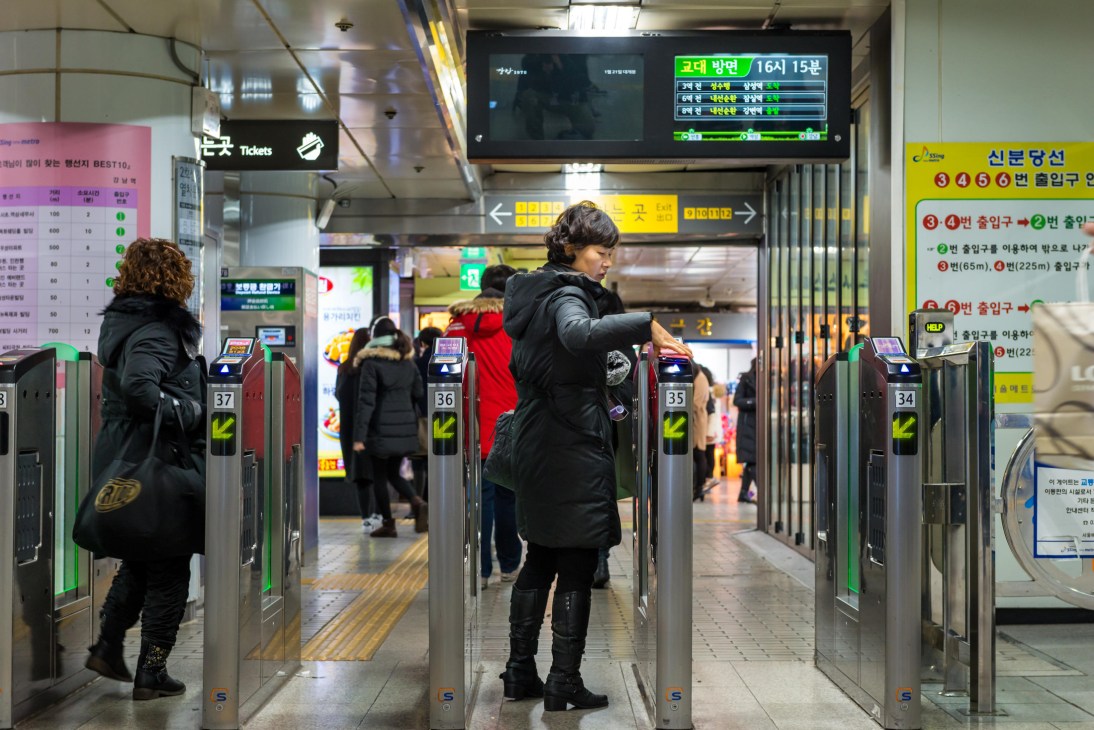
In 2022, Seoul’s mayor, Oh Se-hoon, also introduced a five-year climate plan that included replacing half of the city’s public buses with electric vehicles and building 181km of cycle paths. These initiatives are part of a broader push by the South Korean government to tackle climate change. Last year newly elected president Yoon Suk-yeol reaffirmed the previous administration’s goal of achieving carbon neutrality by 2050. Much will depend on a nationwide reduction in coal use but action within Seoul, the country’s most populous city as well as its economic and political hub, is crucial. With transportation accounting for 17 per cent of the city’s greenhouse- gas emissions, the Climate Card is a positive step.
Images: Alamy, Getty Images
Business
The Entrepreneurs
Manufacturing with a conscience
Tom Edwards on…
“We want things to last,” says Eyerusalem Kidane, co-founder of Ethiopian premium leather-goods company Sabegn. “It’s a core value of mine: I don’t want to keep buying the same thing over and over. This is also ingrained into how we design things. We use scrap; we use upcycled material. We don’t want to use new things to make more stuff that ends up in landfill. This is our ethos.”
From Sabegn’s workshop in Addis Ababa, Kidane and her colleagues produce beautiful bags from waste leather, incorporating traditional weaving techniques and design flourishes. After working with European and US brands, Kidane now has global ambitions for her own range. Starting with a concept store that opened in the Ethiopian capital in 2018, Kidane has built a loyal customer base attracted by provenance as well as the end product.
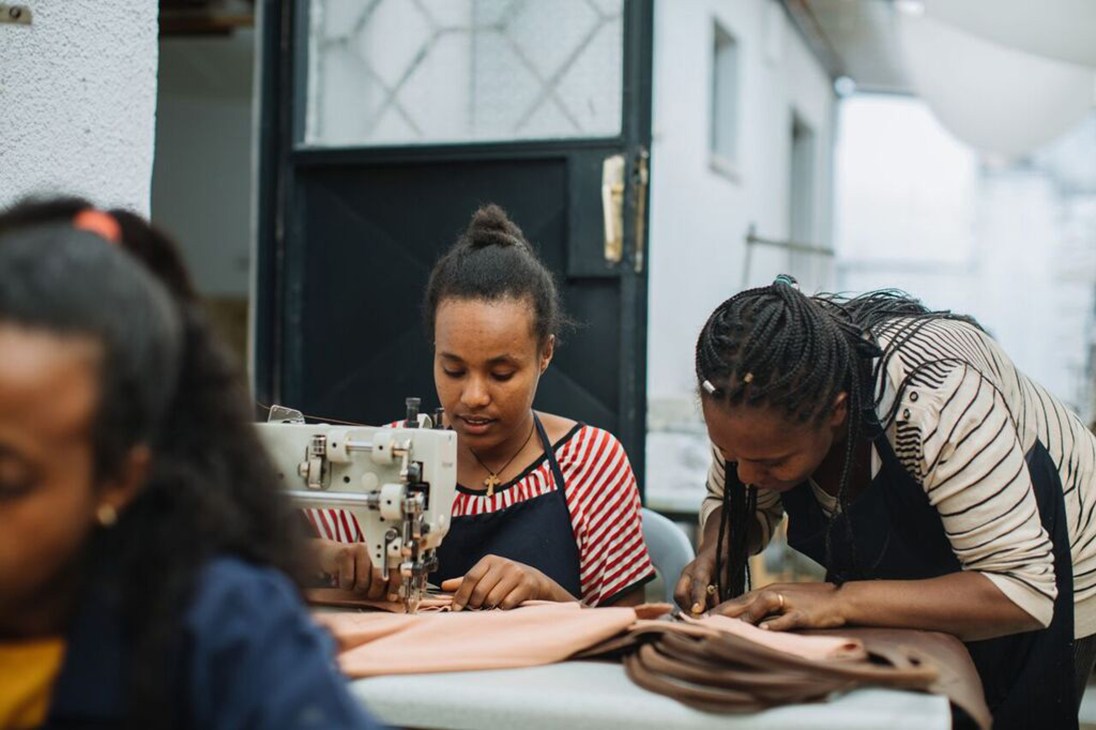
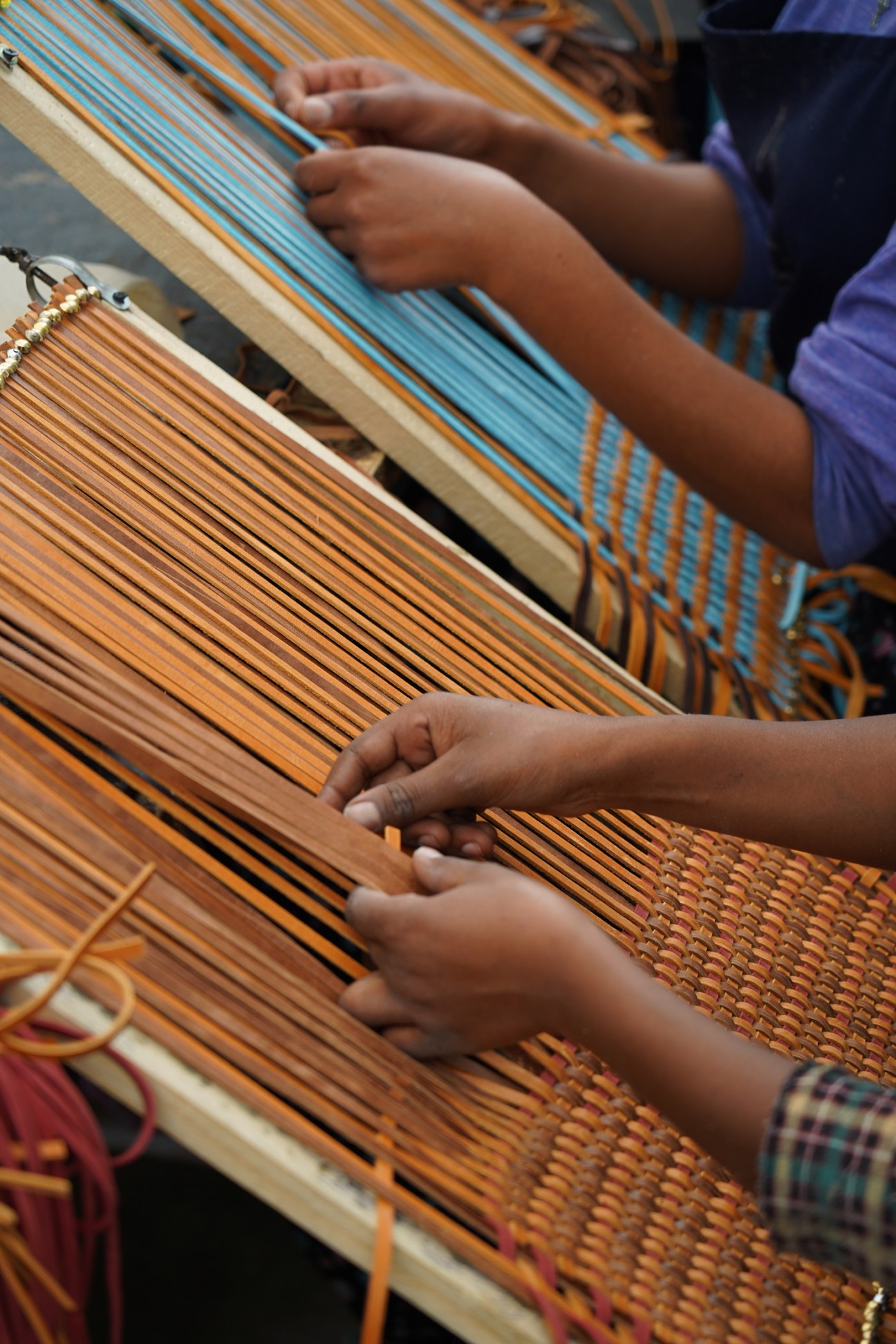
“We must use materials that are sustainable and we want the product we make to last,” says Kidane of her ambitious social enterprise. “It’s also one of the reasons why we went into a pre-order model: we don’t want to make things that will end up being thrown away.” The numbers certainly make impressive reading: as much as 10 tonnes of waste leather is used in a single collection of Sabegn bags. This is material that otherwise would have been destined for landfill. When Kidane and her sister, Elizabeth, founded the business more than a decade ago, they wanted to reflect the values of their family, which has been involved in the crafting of jewellery in Ethiopia for several generations.
As Kidane explains, however, Sabegn is about far more than artisanal manufacturing. “What brings us purpose is seeing our colleagues grow,” she says. “This is something that my mother taught me: to always help develop people. I think we have succeeded with that in Sabegn. My colleagues, mostly women, stay with the business for years. Paying salaries that make people able to save money for a better future is a vital part of what we do. The majority of people working in global fashion are not paid a living wage,” she adds. “We are making a difference here in Ethiopia – and this is how we want to keep doing things.”
To hear more from business owners on the move, listen to Monocle Radio’s weekly programme ‘The Entrepreneurs’.
Aviation
Norway
On the crest of a wave
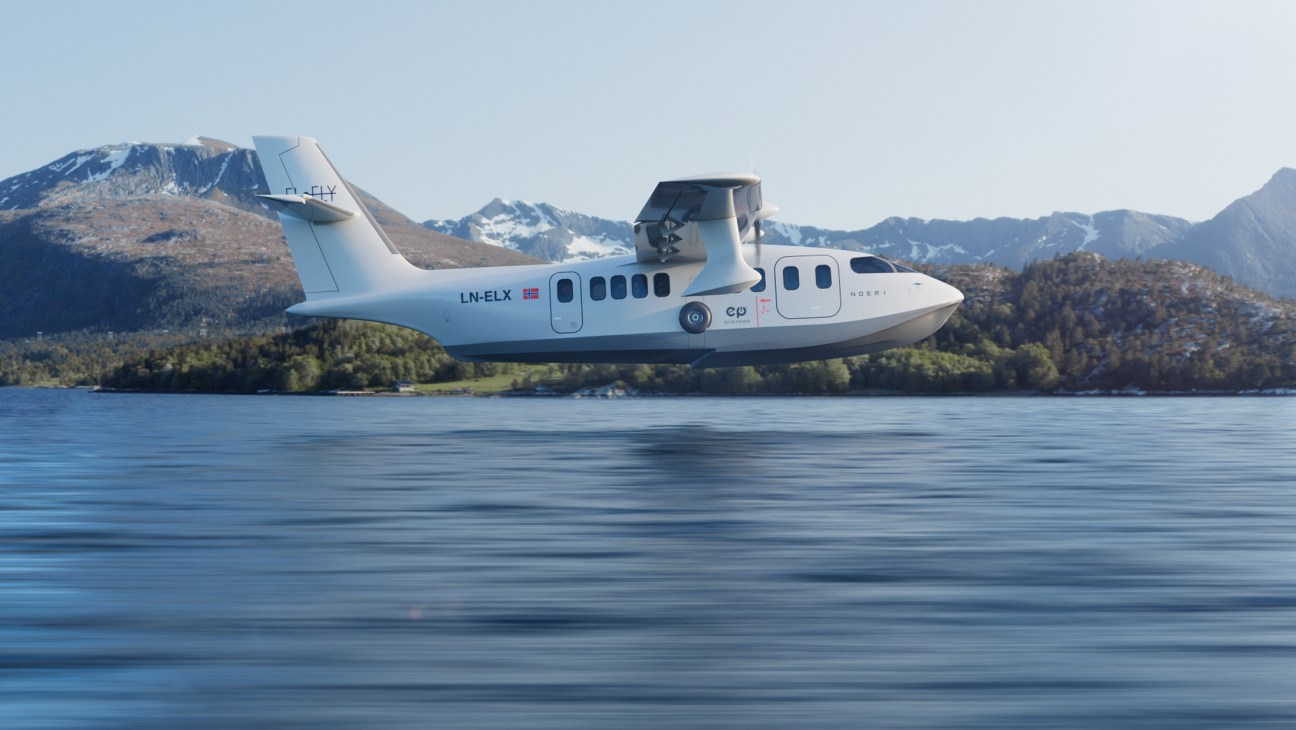
Elfly Group is developing electric aircraft from its base in Bergen, Norway – and it’s on the ascent, not least thanks to an nok84m (€7.5m) grant secured in September from the Norwegian government. Its 20-person team has a handful of projects but their flagship product – and the reason behind the grant – is a commercial electric seaplane dubbed Noemi. Elfly released the specs and design for the aircraft in June and says that it hopes to have a prototype ready to take flight by 2025, with service entry in about 2030.
On the surface, this might look like any other fledgling regional electric-aircraft project: Noemi promises seating for between six and 13 depending on configuration and boasts a range of about 170km, meaning that its use is somewhat niche. Yet, because it’s a seaplane, that niche could turn out to be rather large. Designed initially with Norway and its challenging-for-transport terrain in mind, the aircraft could provide a whole new level of convenience and sustainability to any number of places – wherever there’s water to land on.
As a seaplane, Noemi can skip congested airports and deliver passengers from one city centre to another. But it also promises a revolution for those in remote communities – again, just look to the towns and cities amid Norway’s west coast fjords, for instance. An efficient, emissions-free nine-seater could even mean guilt-free flights from Stavanger to Bergen, for example, whereas right now the journey by bus, car or ferry takes about five hours. Or how about Odense to Copenhagen over in Denmark? The list goes on.
That’s not the only thing Elfly is doing differently. The firm plans to flip the traditional manufacturer-airline ecosystem and business model on its head by obtaining an Air Operators Certificate and operating the aircraft itself. That’s right: the company does not intend to sell its aircraft to anyone. (Though if the idea takes off as it hopes, it’s difficult to imagine that Elfly won’t reconsider.) Running a global seaplane airline and an electric-aircraft manufacturing firm at the same time would present a series of challenges. But at home, it sounds like the perfect solution for an initial foray into the Norwegian market. And the idea already has a natural advantage in Norway because the government has mandated that all domestic flights be emissions-free by 2040. Elfly is well on its way.
An emissions-free nine-seater could mean guilt-free flights from Stavanger to Bergen, for example
Fittingly and unsurprisingly, the Noemi seaplane is modelled primarily after ships, though the aircraft’s design is reminiscent of Northrop’s famed Grumman g-73 Mallard too, another rugged and robust seaplane. Elfly says that it is designing the Noemi to be able to operate in waves of up to two metres in height. Whether passengers will accept flying (and landing) in those conditions is perhaps another question. Still, the Noemi sounds nothing if not capable – and highly promising. We look forward to climbing aboard.
Retail
Taiwan
Scenes from a mall
Shopping centres are thriving across Asia and new players continue to enter the market. Among them is Taiwanese property developer jut Land, which has opened its first mall, Noke, in Taipei’s Dazhi area. Designed by Michael Lin, the building houses 95 tenants over seven floors. The project has given the 35-year-old company, best known for building luxury flats, a new perspective on construction: rather than handing over the keys to buyers and closing the door on its way out, this time it’s in it for the long haul. The ribbon-cutting at Noke was just the beginning.
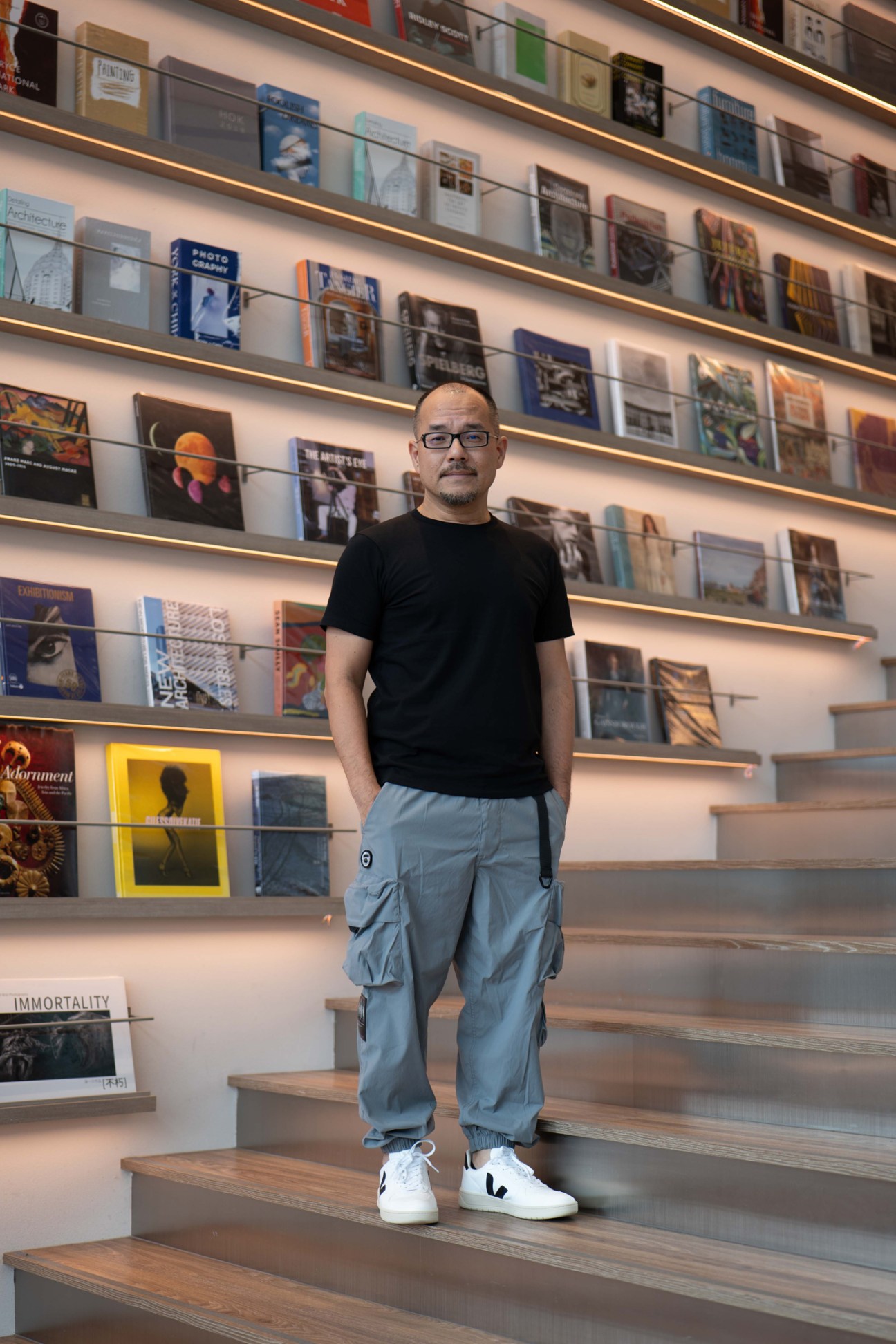
“It’s a living building that’s open to the public so we needed to design a space that could grow and change,” says Aaron Lee, jut Land’s 52-year-old deputy chairman and the driving force behind Noke. Wearing cargo trousers by A Bathing Ape and Veja trainers, he gives Monocle a tour of the €93m investment. It’s a sizeable down payment by a company that turns over about €467m a year and there’s a lot riding on Noke’s success. “It’s too expensive to be a one-off,” says Lee.
On the day that we visit, every corner of Noke is busy. Visitors queue for an art exhibition on the ground floor and a longer line forms for takeaway Taiwanese tea. Upstairs, lunch is being cleared away at a hot-pot restaurant designed by Kengo Kuma, while young people skate on an ice rink. At the heart of it all is an open-plan Tsutaya bookshop; though Taiwan has its own bookshop chains, Lee (pictured) knew that Tsutaya would open doors to other Japanese businesses that he wanted to work with, such as Onibus Coffee. “[The Noke outlet] is the number-one Tsutaya for sales in Taiwan,” says Lee.

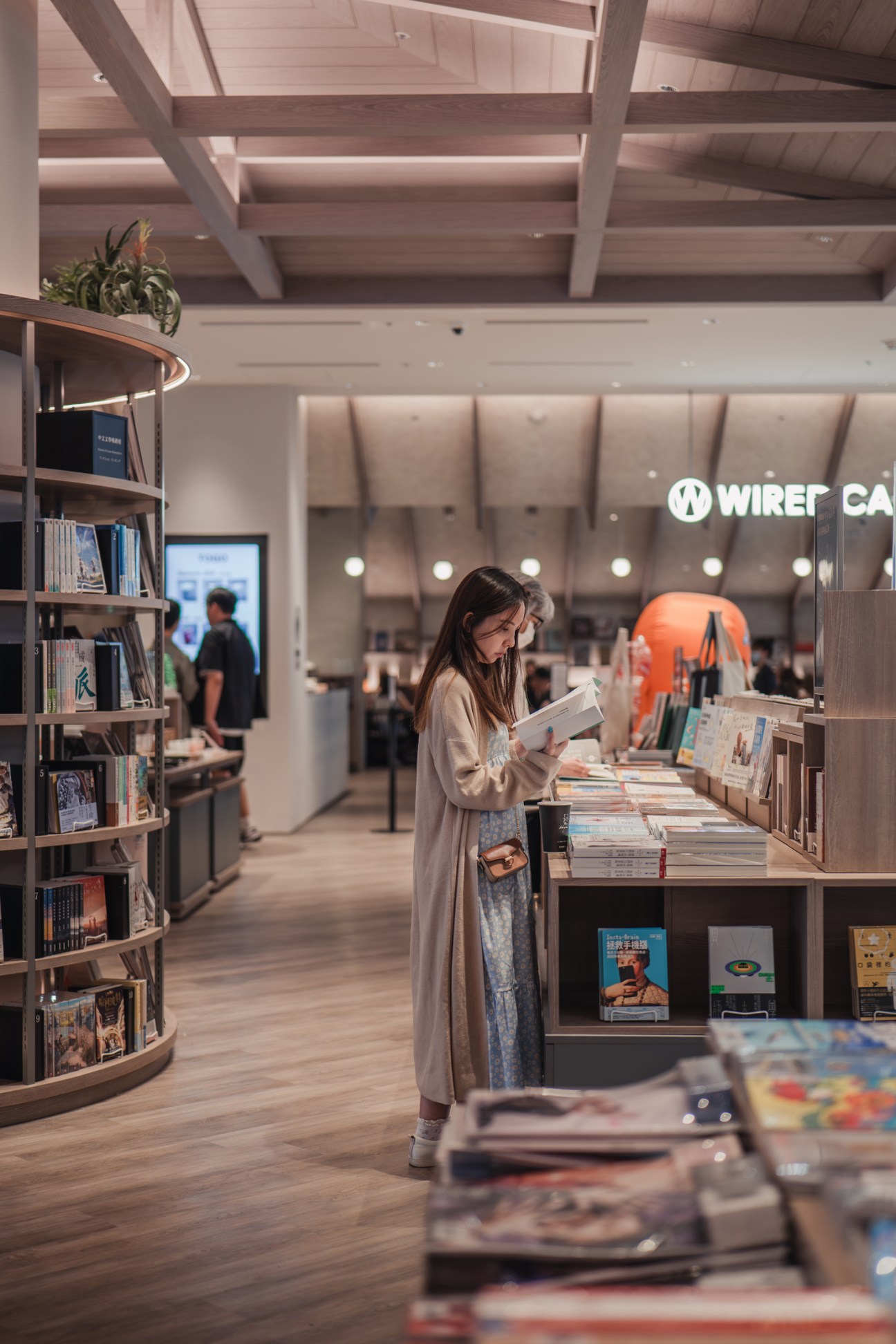
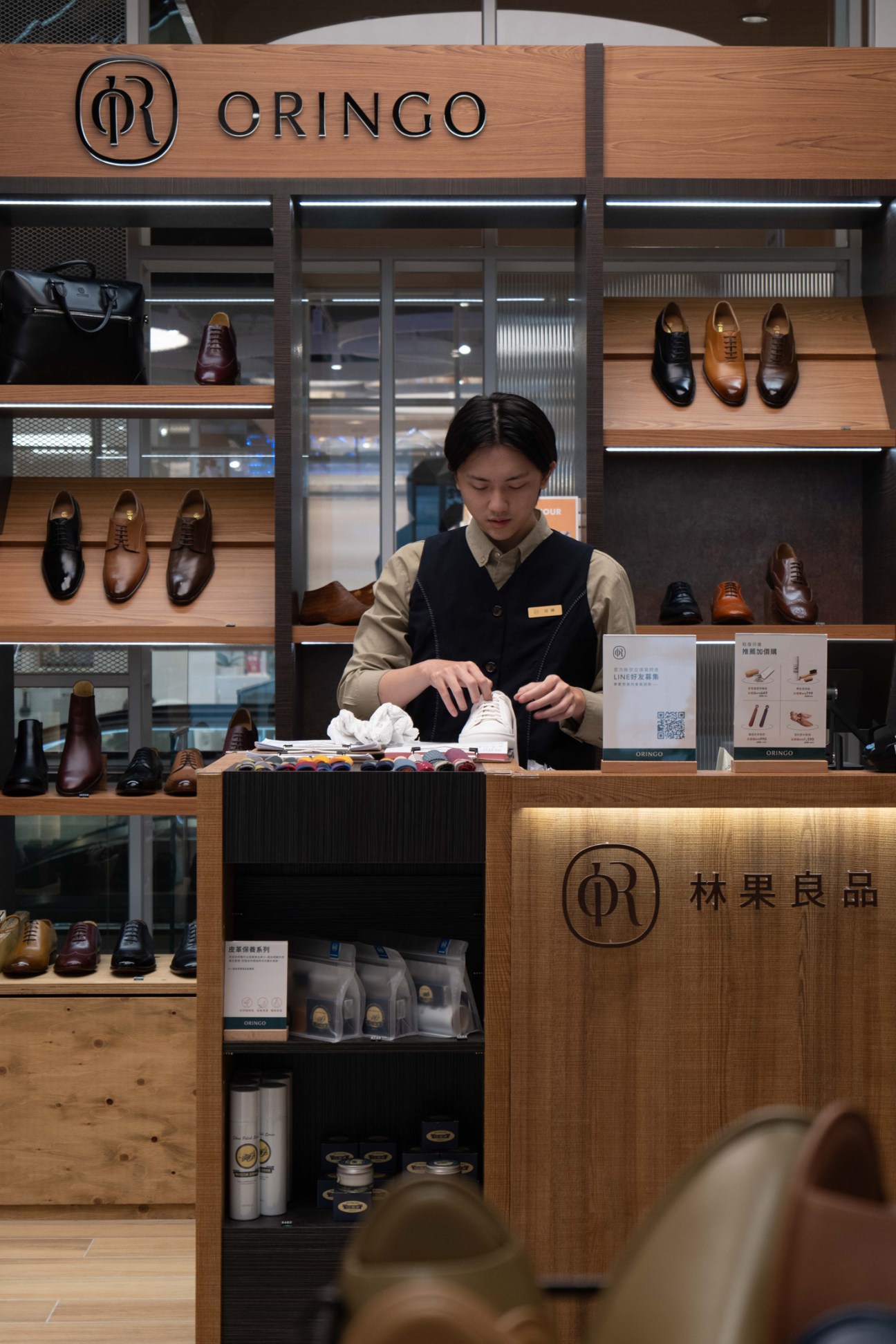
jut Land manages 15 shops at Noke. Most of these are in-house concepts created under Lee’s stewardship. He joined his father’s company about 25 years ago and started running its everyday operations in 2005. Since then his strategy has been to increase the number of transactions that customers make with the company from the current level of one property purchase every 20 or 30 years. His first move was to open an interior-design firm. Designer furniture showrooms came next, followed by flower shops, bakeries and cafés. A shopping centre brings them all under one roof. “We owned the land that Noke sits on for a long time without knowing what to do with it,” says Lee, who used his strong background in retail to win the backing of his family members on the board.
Taking on a fresh challenge has clearly energised him. “The mall is only at passing grade right now – I give it 60 per cent,” he says, spotting problems everywhere. The pandemic has prevented the leasing team from signing every tenant on his wish list and his biggest challenge currently involves talent. Experienced retailers are stuck in the past, he says, while outsiders with fresh ideas about the future of the shopping centre lack the industry experience to know what is achievable.
jut Land has been building apartments in Dazhi for more than 30 years. Noke could “jump-start the neighbourhood” as a workplace, according to Lee, who has plans to build six commercial towers in the vicinity over the next 10 years, including a new headquarters for the company and a tower by Japanese architect Tadao Ando. “Property is a very local business and every district has its own giant,” says Lee. “We could quite comfortably keep doing what we have been doing but I want the challenge of turning jut into the big Taiwan brand.”
Furniture
China
Q&A
Demos Zhu
Founder and CEO, Mingus
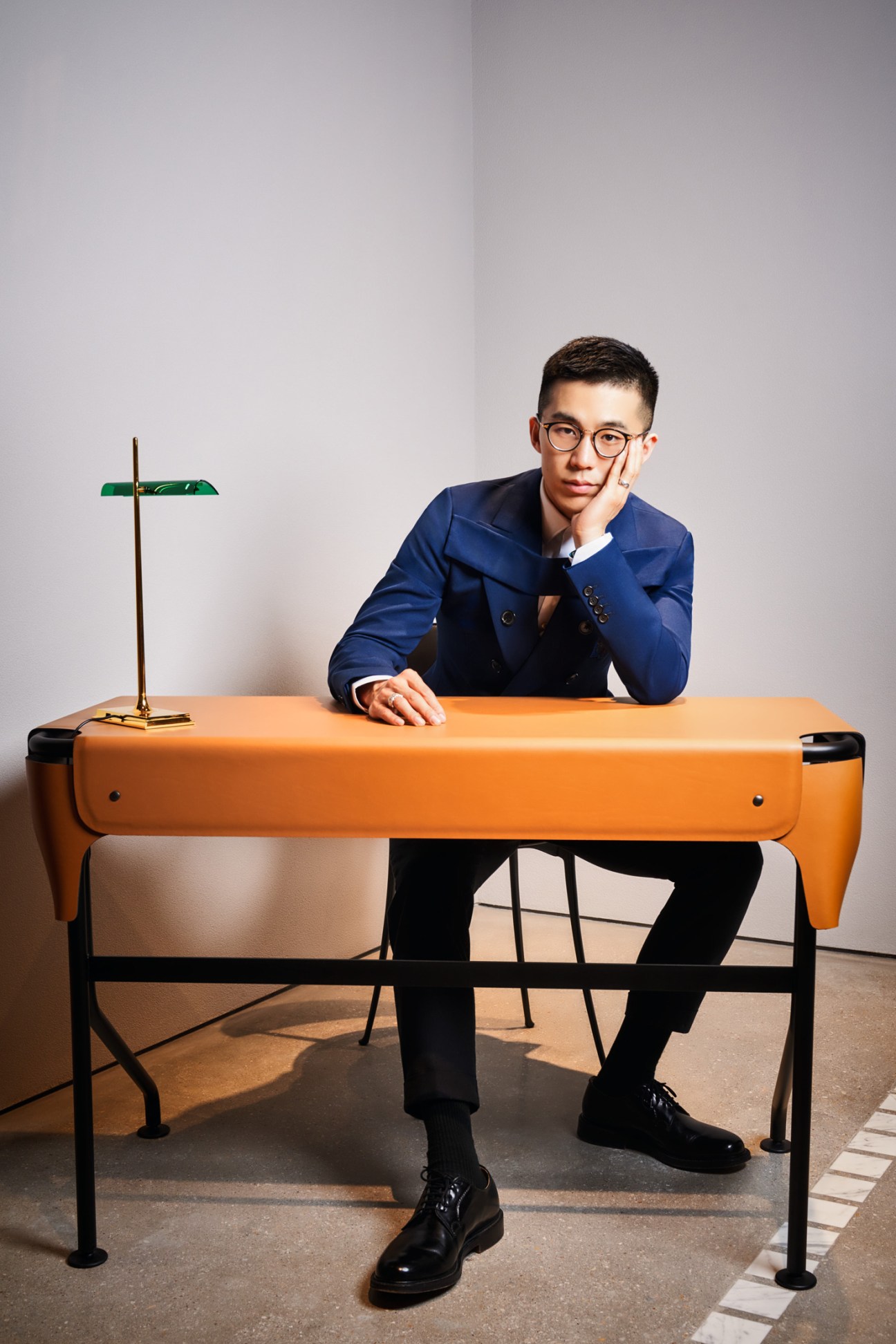
Mingus has nine furniture and home furnishings showrooms in China’s four biggest cities. Founder Demos Zhu opened the first multi-brand showroom in 2019, before opening solo shops for the likes of usm.
How’s business?
Our sales have increased but our stores are not going to meet the expectations we had at the beginning of the year.
Your bestselling brand?
usm. Before they started working with us in 2020, they’d been in China for more than 10 years but were quite small. We did a marketing campaign and launched the flagship store in Shanghai last year. The whole store space is like an apartment; we positioned usm as residential.
What’s the future for furniture retailing?
Consumption is now encouraged so people change their furniture more. My parents’ generation bought expensive furniture and talked about it doubling in value in 10 years’ time. People my age talk about design and comfort.
Images: Elfly Group, Sabegn
Pulling the plug
“Alas,” lamented a few Parisians. “At last,” said many more. After a referendum in April in which residents voted overwhelmingly to banish free-floating rental e-scooters, the French capital bade adieu to them on 1 September. Five years ago, the city became the first in Europe to introduce them at scale. It felt like a good idea at the time: an app would tell you where the nearest one was, you’d unlock it with a click and on you hopped. There was no obligation to wear a helmet or even a capacity limit; three people hugging on to a single e-scooter became a common sight.
As for using the roads, riders preferred zigzagging on pavements, which was much more fun. And when you finished your trip, you could leave the vehicle anywhere. Hundreds were recovered from the Seine every year.
This fantasy of liberté quickly became a nightmare. The number of rental e-scooters shot up to 20,000 in 2019 and 40,000 in 2020, according to analytics firm Geo4cast. They were everywhere, often piled in heaps in the middle of the pavement. The joy had gone. It became a tale of destruction, accidents and fatalities. Le Parisien reports that 1,193 people were injured by e-scooters between 2019 and 2022, and six people died. The city started regulating their use in 2020 and their number was capped at 15,000. It was an improvement but it felt like too little, too late. Most of us had grown to hate what we at first cherished.
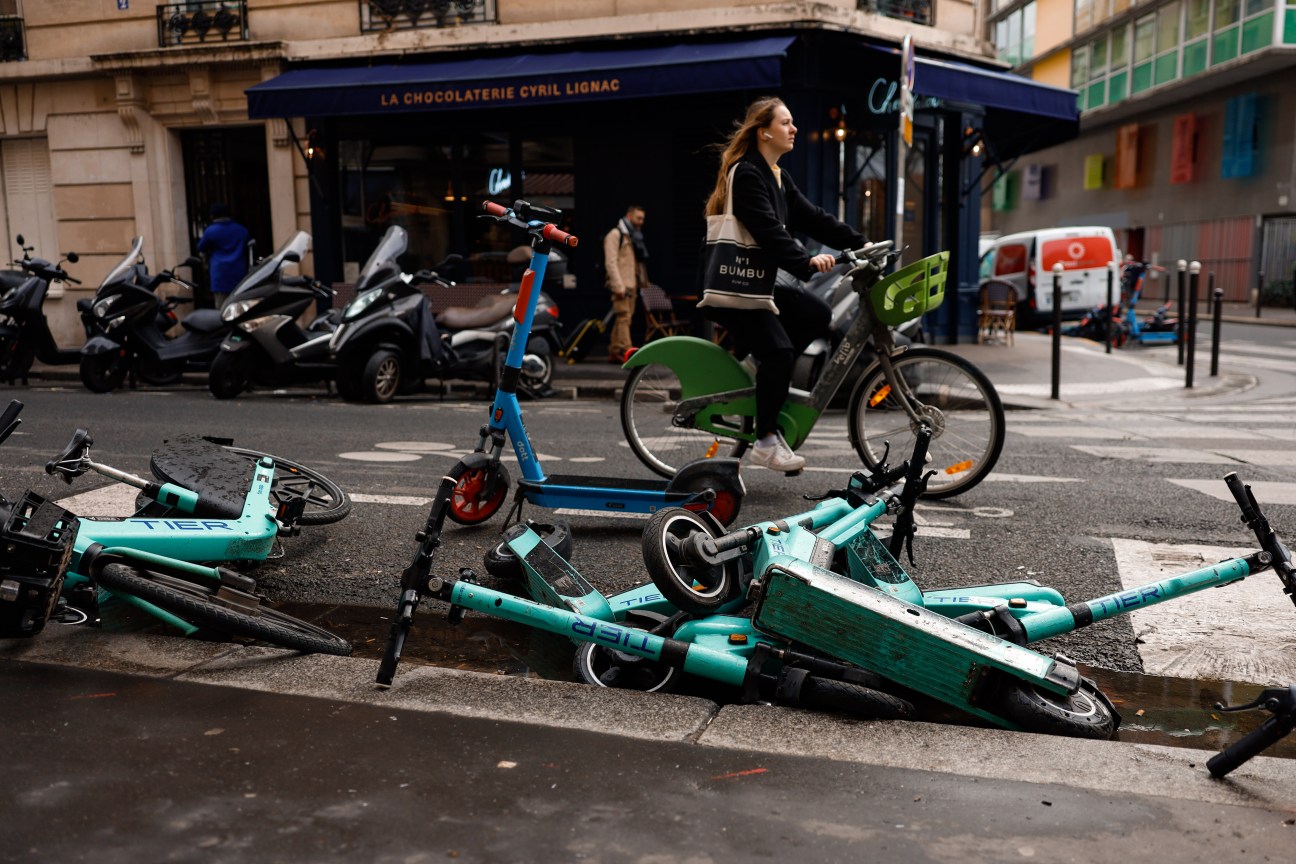
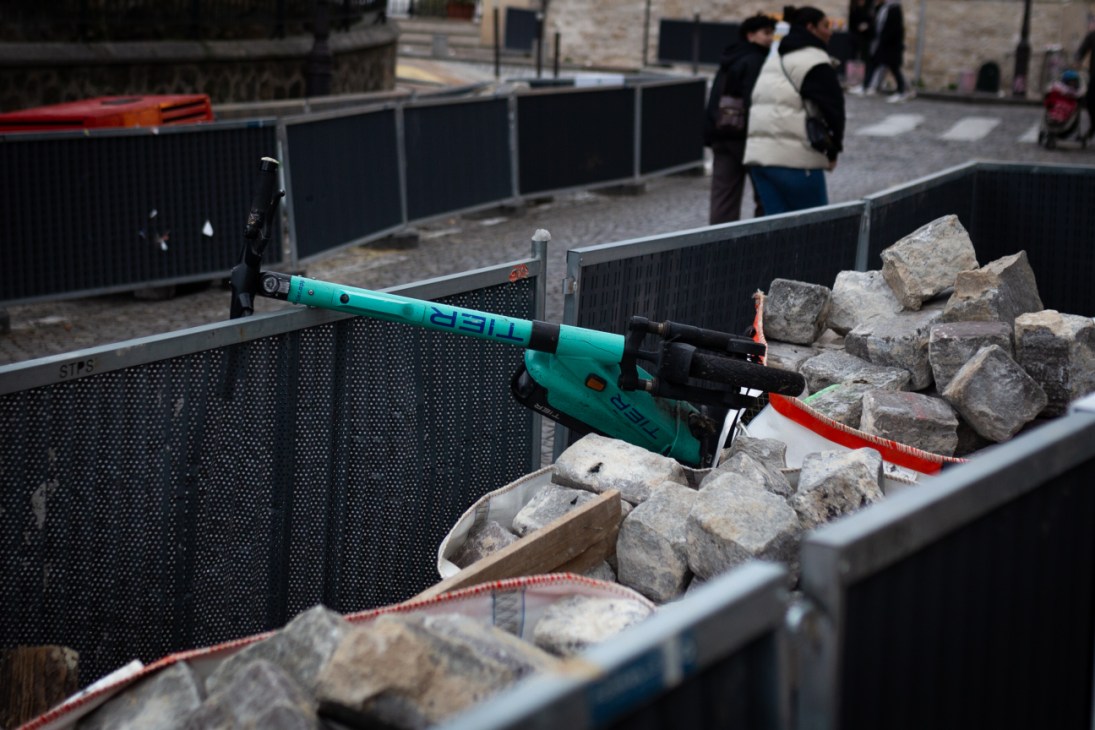
Does Paris feel different now that rental trottinettes have gone? There is certainly a welcome sense that sanity has prevailed. But e-scooters are still part of the scenery: privately owned ones haven’t been banned and people who loved to commute on them have just bought one. Those who have invested in their own e-scooters usually behave much better than the free-floating tribe: most wear helmets and neatly fold up their vehicles when they reach their destination, rather than leaving them in the street.
E-scooters are only one part of the e-revolution and what the French call la mobilité douce (“soft mobility”). This shift in the way we travel has many guises: roller-skating, gyro pods, hoverboards (such as those made by Segway) and, of course, bicycles and e-bikes. Paris, which rolled out the world’s first city-run bike-sharing programme, Vélib’, in 2007, has developed its cycle lanes and services at great speed. Today, alongside Vélib’, which has about 400,000 subscribers, private providers offer about 13,000 free-floating e-bikes – a number that is expected to rise steadily as we approach next summer’s Paris Olympics. Meanwhile, laws have encouraged employers to finance their workers’ e-bikes or e-scooters. Since the pandemic, streets such as Rue de Rivoli, which runs east to west from Le Marais to the bottom of the Champs Elysées, have been given over to the softly mobile.
If there is a lesson to be drawn from Paris’s experience with rental e-scooters, it’s that regulation should come before (rather than after) the introduction of a new mode of transport, especially in an old city that is popular with tourists and well known for its charming but narrow streets. After this calamitous episode, the French capital can now look forward more serenely to hosting the Olympics. Having won its bid by promising to halve the Games’ carbon footprint, the city is building dedicated “Olympic lanes” that will allow an expected 10 million visitors to cycle from one event to another. Those who want to go from the Stade de France to the Aquatics Centre (the only new permanent building constructed for the Games) can simply walk across a new bridge above the A1 motorway linking those two colossal sports arenas.
In the end, the trottinette saga only reasserted the importance of orderly soft mobility. As far as urban transport is concerned, careful planning is always better than freewheeling improvisation.
Paris-based journalist Poirier’s latest book, ‘Left Bank: Art, Passion and the Rebirth of Paris 1940-1950’, is out now.
Pots of gold
Judging by the sharp architecture and immaculate interiors, you might expect Vermicular Village – a cookware showroom, shop, restaurant and café in Nagoya – to be the work of a young company making its mark on the design world. Not a bit of it: Vermicular is the brand name of a company that emerged from a family-run iron foundry that has been manufacturing in the city for more than 80 years. At the heart of this retail and hospitality operation are the cast-iron pots and frying pans that are being made a short drive away.
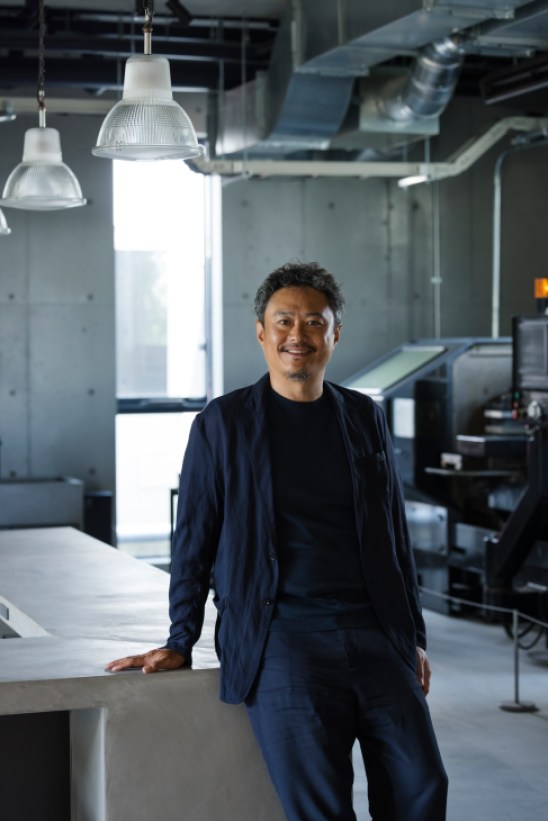
Vermicular’s origins date to 1936 when the Hijikata family founded Aichi Dobby, a foundry known for its skill in precision casting machine parts. When the latest recession hit, however, the company’s future looked precarious and it might have closed but for the determination of the third-generation heirs, Kuni and Tomo Hijikata.
The brothers were determined that the family business and its exceptional craft folk were not going to be consigned to history. Rolling up their sleeves, Kuni became a casting expert, while Tomo set about mastering precision engineering. The challenge was to shift the company’s skill set away from supplying parts for ships (a dead end at this point) to something that could revive its fortunes.
“The enamel we use doesn’t pass any smell onto the food. And because the seal is so tight, the umami and aroma are all kept inside. Nothing escapes”
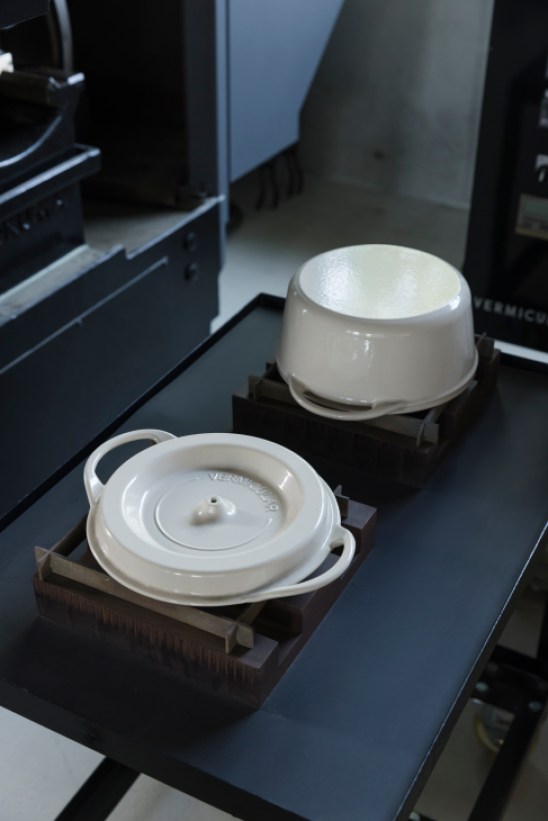
Research pointed the brothers to the kitchen and, eventually, to the creation of an enamelled cast-iron cooking pot. Tomo realised that the foundry was uniquely positioned to make a pot with a perfectly fitted lid – no mean feat, as it turns out.


There are other household names in the enamelled cooking-pot business but none had cracked the problem of closing the gap between the pot and the lid. Simply put, in the immense heat of the casting process the iron warps. The brothers knew that they could do better. Three years and 10,000 attempts later (they had to create a new alloy and a new enamelling process) the team had solved the problem. The Vermicular gap – a mere 0.01mm – allowed for a near-perfect seal, which from a cooking point of view, means that the flavours stay in the pot. Ingredients need little extra flavouring, meat is unusually juicy and even the least competent cooks find that they can produce a delicious meal.
When the pot hit the market in 2010, influential food bloggers spread the word and before long there was a 15-month waiting list (in the early days, production was slower but now the company can make 20,000 pots a month). Shoppers loved the unusual colour palette too. This was partly a result of a commitment not to use cadmium. “To make a red or yellow – good colours for kitchen equipment – you need cadmium, which is a harmful substance,” says Kuni. “The craftsmen might inhale it when they’re blowing on the furnace or it will flow away in the wastewater, so we don’t use it.” Vermicular pots don’t use lead either.
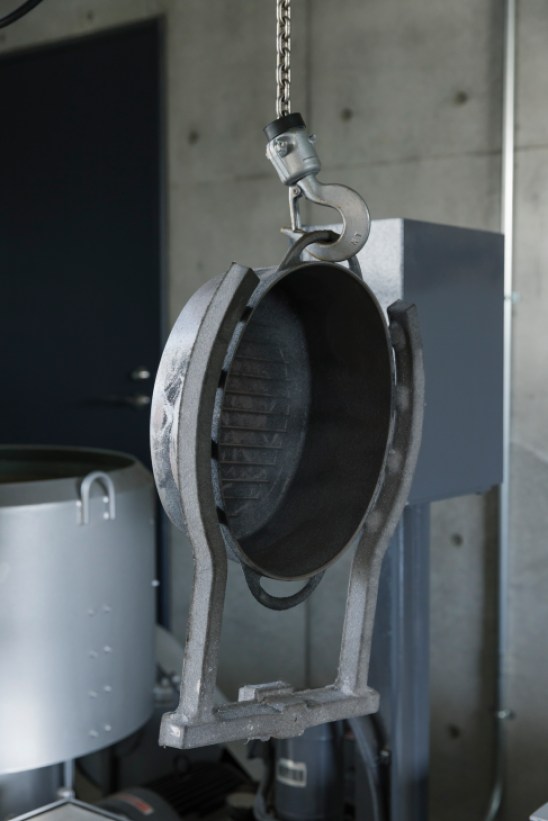
The oven pot was followed by a rice cooker, the Musui-Kamado, which is now being used by everyone from home cooks to top-end Ginza sushi restaurants. To Western diners who don’t necessarily share (or understand) Japan’s obsession with perfectly cooked rice, the Musui-Kamado is marketed as the world’s first cast-iron induction cooker inspired by the traditional Japanese stove (or kamado). There are also ultralight, rust-free cast-iron frying pans with handcarved wooden handles.
Every product relies on the skill of the factory workers. Pots and lids are hand-machined (a sight to behold – the worker taps on the lid to judge, by ear, if there is even the slightest warping), which no other manufacturer bothers with. The Vermicular enamelling technique involves three rounds of handspraying, drying, finishing and baking each piece at 800C.
Sensitive Japanese palates appreciate the effort. Take the rice cooker, for instance. “If you use a regular rice cooker, the flavour of what it’s made from – usually rubber or aluminium – transfers to the rice,” says Kuni. “The enamel we use doesn’t pass any smell onto the food at all. And because the seal is so tight, the umami and aroma are all kept inside. Nothing escapes.” The frying pans have their own qualities, notably that moisture instantly evaporates from the enamelled surface, which means that soggy stir fries are a thing of the past.
The Hijikata brothers look at Vermicular as a lifestyle, hence the photogenic showroom and the artfully styled cookbooks, which are a big hit with pot-lovers. An in-house design team keeps a tight rein on the shops and branding, and the company also retains an executive chef, Naoki Toya, who comes up with recipes that show how to master the signature musui (waterless) cooking technique and get the best out of the products. There are collaborations with ceramic makers and art printers too.


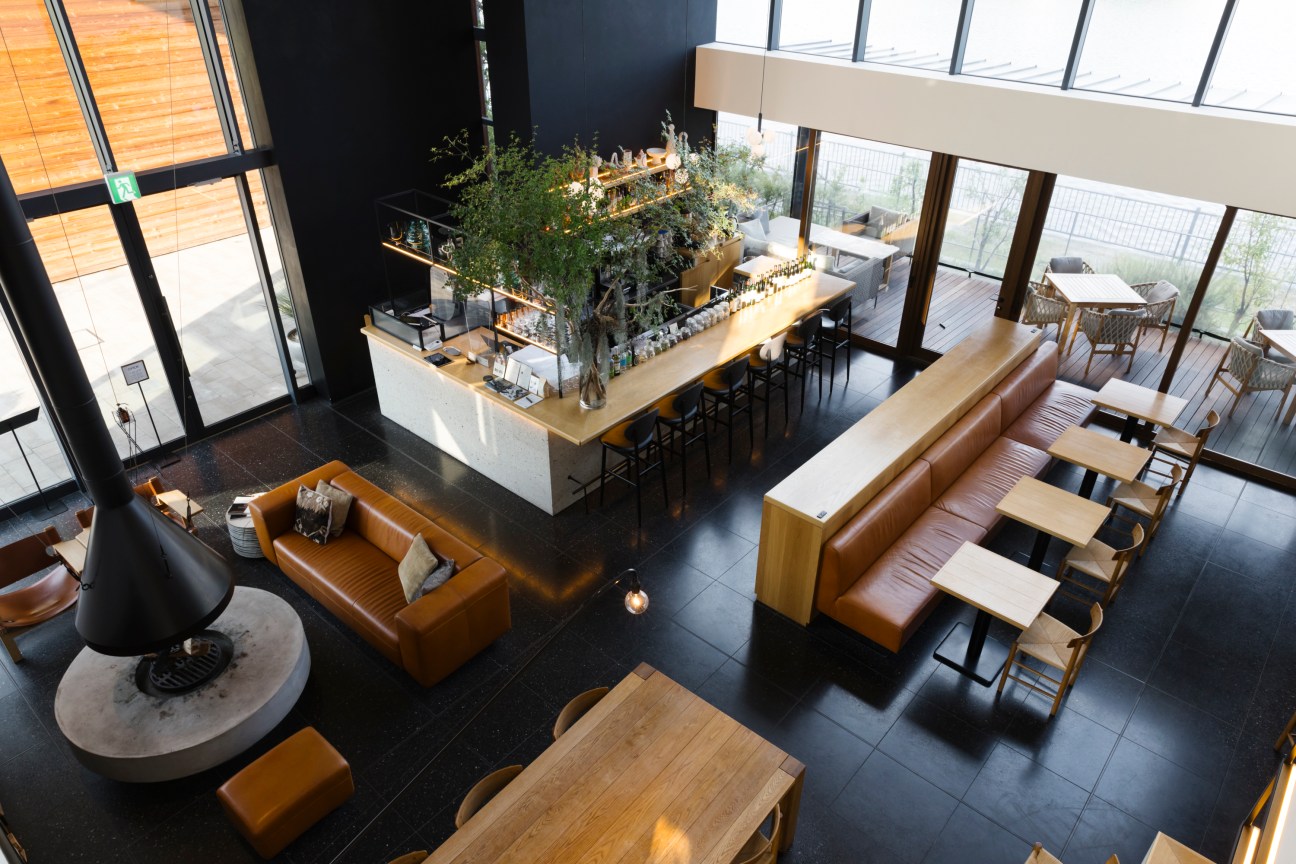

Opening their showroom in Nagoya was an obvious choice for the brothers. “The closeness to the factory was one factor but the other was that this area – Nakagawa-ku – is where we grew up and went to school,” says Kuni. “Our grandfather lived right across the river from here. It’s our way of giving back to the neighbourhood.”
This autumn the company launched its latest product: the Oven Pot 2. Years of making the original oven pot – they’ve sold more than 630,000 – propelled the development of a new pot that is thinner, lighter and quicker. Chef Toya is already lining up recipes to show what the new pot can do (restaurant-quality fried rice, high-speed roasting and a rich curry in 45 minutes). Some customers love their hefty old oven pot but those who want to make the switch can bring in their pots to be recycled. The colours are as chic and muted as ever – an oyster grey or a soft pink among the choices.
Fans come to the showroom to buy pots, cookbooks and kitchen accessories; they can then go down the road to the Pot Made Bakery (yes, even buns can be made in the tiniest 10cm oven pot) or dine in the airy restaurant, appropriately called The Foundry, all overlooking a stretch of water.
The care and attention to detail shown by everyone, from the founders to the factory workers, is clear. This is more than a business; they are pouring their hearts into the Vermicular brand. “The factory has been open since 1936 and it has never closed,” says Kuni with pride. “That means a lot to us.”
vermicular.jp
Train gang
Like any true judoka, Haruki Uemura is modest about his sporting achievements. A ninth dan black belt, a World Champion (Vienna, 1975) and an Olympic gold medallist (Montréal, 1976), Uemura, 72, is adamant that he was nothing special until he turned 18. Even then he had to work hard for his success. “I was the smallest in my weight class – I was 100kg and 174cm tall,” he says. “Most of my competitors were 190 centimetres and up. I remember one who was 220cm and 170kg.” He still beat them all.
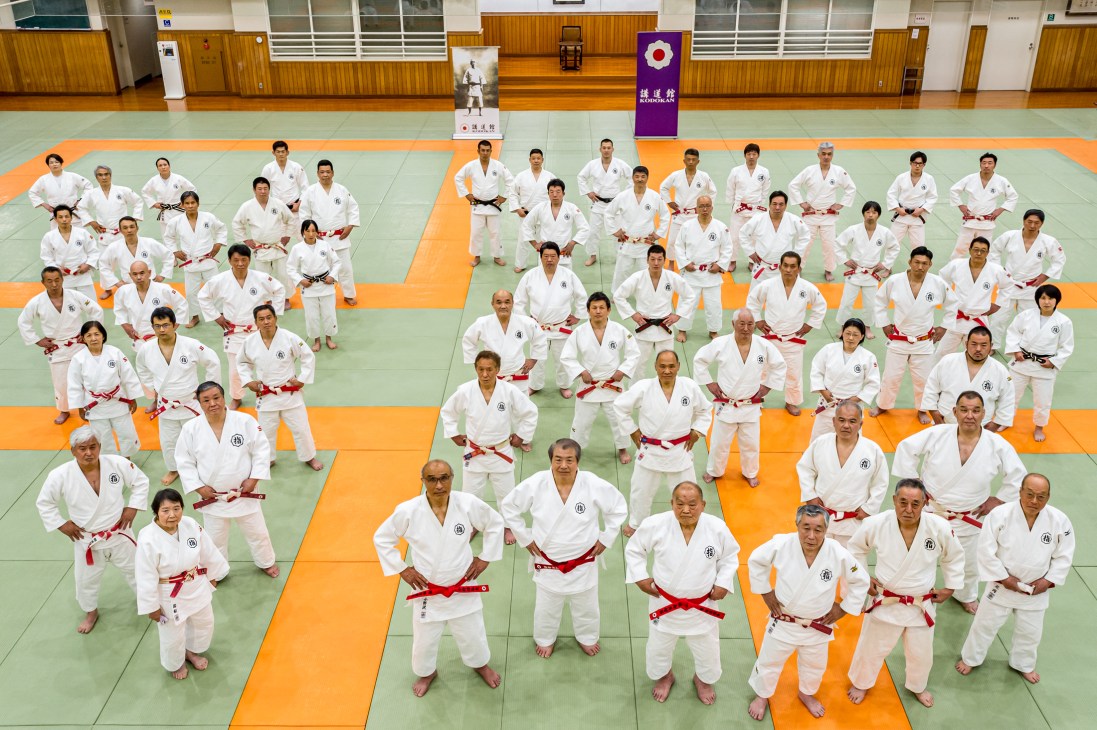
Since 2009, Uemura has occupied the most revered position in Japanese judo: president of the Kodokan Judo Institute in Tokyo, which might be described as the sport’s spiritual home. Kodokan was founded in 1882 by Jigoro Kano, the man who first created judo. Back then there were only a handful of disciples; today there are millions of judoka in more than 200 countries.
There are many judo federations but it’s the role of Kodokan to rule on everything from technique to ranks, banning dangerous moves and codifying 100 techniques to keep global judo competitors on the same page. The institute’s modern eight-storey home sits close to Tokyo Dome. Judo practitioners from home and abroad come to train and study here.
There are training spaces, accommodation and classes for men, women and children; a library (with 5,000 books relating to judo), a hall of fame and the biggest training mat of all, the main dojo. There are more than 150 instructors enrolled to teach here. They teach technique but also reiho (decorum), respecting others and fair play. “A good judoka is strong but kind,” says Uemura.
Kodokan dispatches instructors around the world. Uemura’s colleagues are all seasoned judoka too. They understand that judo is not just a sport but a way of learning about life. “This job is all about communicating judo to the rest of the world and to the next generation, so I’m constantly researching and reading old books,” says Uemura. “There is still so much for me to learn.”
In the balance
“It’s not Finland. It’s not Sweden. It’s something in between.” A voluble Swede is describing Åland to Monocle on an afternoon ferry back to the main island. He’s right, in more ways than one. Åland is a collection of some 6,700 islands in the Baltic Sea, positioned about halfway between Stockholm and the Finnish coastal city of Turku. Its 30,000 inhabitants are overwhelmingly Swedish speakers but Åland has been Finnish territory since 1809. Landing at the islands’ only proper airport – a compact propeller plane does the 35-minute hop from Stockholm – you’re met by fresh salty air. “People here are a little special,” says our German-born taxi driver. “A little back-in-time.” Trying to get a meal in the capital, Mariehamn, past 20.00 on a Sunday proves tricky. A waitress at a mercifully open pizzeria-slash-sports-bar shrugs. “It’s Åland.”
Despite the sleepy nightlife, this is no political backwater. Åland is the subject of no fewer than four international treaties, which give it significant government autonomy from Finland and a demilitarised status. This means that no armed forces can be stationed here in peacetime. This began in 1856, after the Crimean War. Åland’s proximity to Stockholm meant that, in words attributed to Napoleon III, a military base here would be “a pistol pointing directly to the Swedish heart”. The victorious French and British insisted that Russia, which controlled Åland at the time, keep it free of fortifications. This was reiterated three times in diplomatic settlements after the First World War, the Finnish-Soviet Winter War and the Second World War. But Russia’s full-scale invasion of Ukraine last year has prompted a tightening-up of Baltic security. Finland joined Nato in April and has increased its military spending by 36 per cent; Sweden, whose Nato bid is awaiting ratification from Turkey and Hungary, conducted its largest military exercise in 25 years this spring and is refortifying the Baltic island of Gotland. Given Åland’s similarly strategic position, its demilitarisation has come under scrutiny. Several MPs in Helsinki’s new right-wing coalition support scrapping the policy. One, Atte Kaleva, bluntly stated that “Åland’s freeriding should end”. Finland’s foreign ministry has opened a legal review into the islands’ treaties, which was due to report as Monocle went to press.
Twenty-first century Åland is not without a security presence. Its police are armed, as are its border guards, who have an office in Mariehamn and another on Kökar, a small outlying island with barely 200 residents, reached from the main island by a two-and-a-half-hour ferry. As the boat chugs along, small spits of land appear out of the thick, early morning mist. Kökar is scrubby and rocky, with scattered houses and a few herds of cows. Clumps of reeds and red boathouses line the shore. The mist lifts for a few hours in early afternoon and the sunshine briefly transfigures a rather severe landscape into something idyllic.
Here Monocle meets Juri Jalava, deputy head of Åland’s 33-strong border guard, whose shaved head and steely blue eyes are offset by a toothy grin. His officers are equipped with pistols and rifles but no military-grade kit such as machine guns and artillery. One of the border guard’s “daily chores”, says Jalava, is patrolling the sea and identifying vessels that pass through or near the islands. Vigilance has been heightened since the Ukraine invasion – they’re on the lookout for accidents at sea and issues with electrical cables. “Such disruption could mean something else,” he says. Jalava mentions, without elaborating, “interesting” observations in the northern Baltic but no uptick in Russian vessels veering too close to Åland’s territorial waters. “I think we have gone back to the Cold War era,” he says, meaning a time when states were careful with each other’s boundaries.
In wartime proper, Åland’s demilitarisation is temporarily lifted and the border guard is merged with the Finnish military. The islands’ territorial waters were mined during the Second World War, and on a small hill above their station are piles of rubble: the remains of gun emplacements and bunkers built during 20th-century wars and then destroyed in order to comply with the four treaties that govern Åland’s fate.


Some think that this isn’t enough to keep the islands and their defenders safe. Charly Salonius-Pasternak, leading researcher at the Finnish Institute for International Affairs, says that no large country would accept, as Finland has to, “that it has responsibility for defending a territory but it cannot fully prepare to defend that territory”. When demilitarisation was first introduced in the 1850s, it could take weeks, or even months (depending on sailing conditions) to launch a naval attack. But “the time-distance equation has changed dramatically”. An enemy assault would be much quicker today and if Finnish troops aren’t allowed to train on Åland and familiarise themselves with its terrain, then some of them would “die unnecessarily”, says Salonius-Pasternak, due to lack of preparedness.
Susanna Mickwitz is the owner of the only grocery shop on Kökar that is open all year. “If, God forbid, we’re moving to war, everyone here should help in whatever way they can and not expect others to come and help us,” says Mickwitz, who relocated to the island from Helsinki with her husband 10 years ago. Like many who Monocle speaks to, she knows of more young men signing up for military service – which is optional for Ålanders but compulsory in mainland Finland – since the war began.
Åland’s first military reservist group was founded last year by Jonas Back, who led a 25km “march” through Mariehamn in April. Proper military training involving weapons has to be carried out on the mainland, where Swedish-language courses held by mpk, Finland’s national reservist organisation, have attracted dozens of Ålanders. He thinks that the ban on mpk activities in Åland is “overprotective”, given reservists are private citizens and demilitarisation “only applies to state actors”. If given permission, he plans to set up a shooting range for reservists on Åland next year.
Mariehamn is a small city of some 11,000 people. The centre, an architectural hodgepodge of modernist office blocks and traditional Scandinavian design, quickly gives way to suburbs with pastel-coloured houses. It’s built along a small peninsula so you’re never far from a bracing sea breeze. In the days of the windjammer – huge, iron-hulled sailing ships built to carry cargo – it was a major shipping hub: Åland-owned vessels carried Australian grain to Europe until the 1940s. Today the port is more likely to welcome ferries carrying tourists who descend in the summer for hiking, swimming and other outdoorsy pursuits. By mid-September the season is over, bar a few hardy Germans, and the unused docking machines look like strange metal sculptures silhouetted against a white sky.
Mats Löfström, Åland’s sole MP in the Finnish parliament, has a room in the old offices of Gustaf Erikson, once the islands’ biggest shipowner. He cautions against Finland revisiting or even breaking any of the treaties. It would lead to a diplomatic “race to the bottom and that doesn’t serve small countries”, he says. “In that world, only big superpowers will dictate the rules.” The deputy head of Åland’s local government, Harry Jansson, agrees. Abolishing Åland’s status would “go against everything that is at the very heart of international relations”. Permitting the creation of a reservist organisation was up to the mainland authorities, he says, and it wouldn’t have been allowed by Åland’s 30-person parliament, which supports demilitarisation. “I don’t think a couple of weekends on the Finnish mainland will make any difference when it comes to defending the islands,” says Jansson.


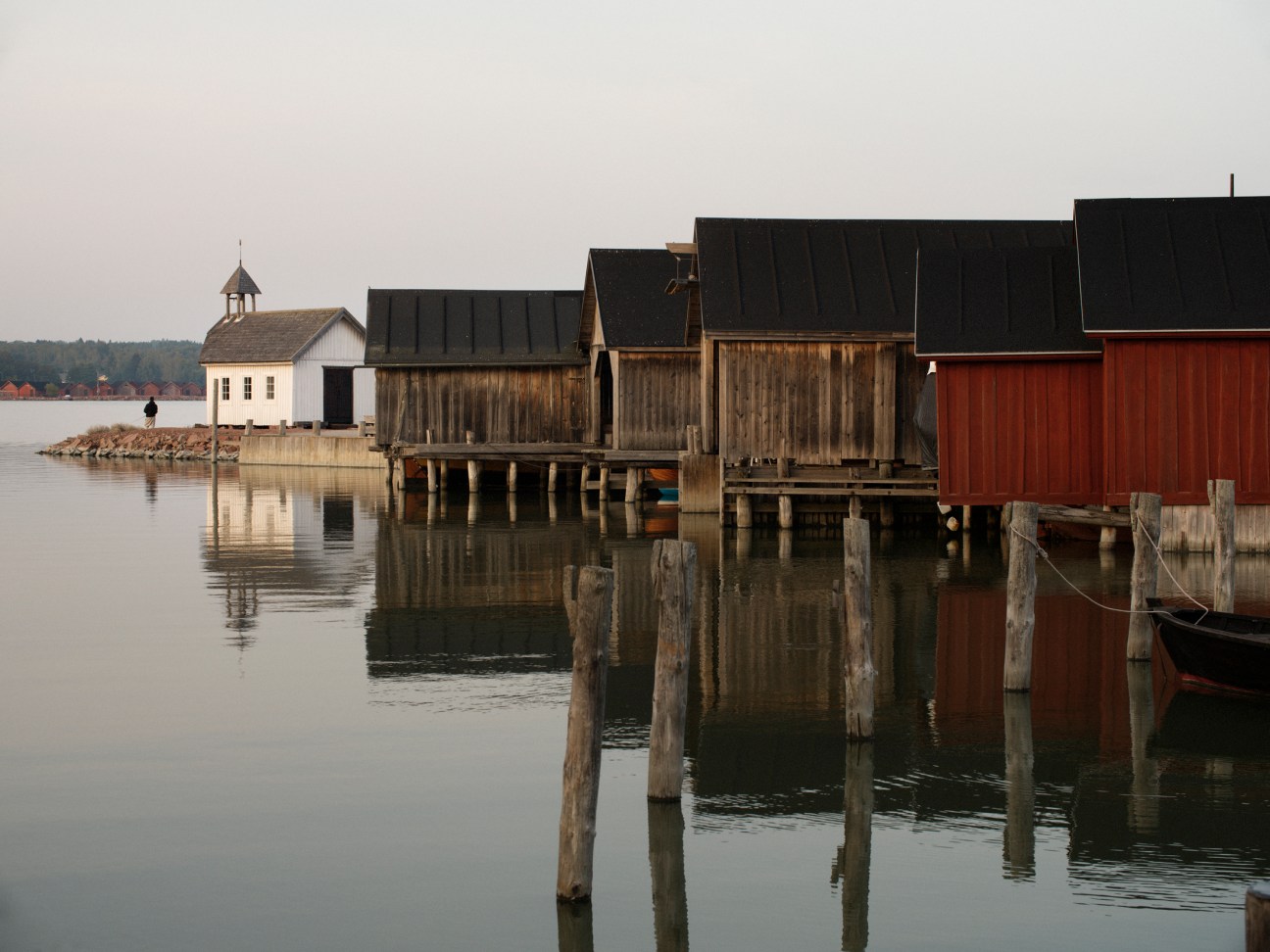
One problem that Löfström sees with the demilitarisation debate is that “people don’t know that there are military plans for Åland but they cannot be disclosed to the public” – hence an impression that the islands are defenceless. Those plans, Salonius-Pasternak says, would probably involve “specialised archipelagic maritime units” from Finland and Sweden, similar to the UK’s Royal Marines and equipped with high-speed boats. It’s a “robust” strategy, he says, but one that could be significantly improved by lessening constraints and constructing bunkers to store ammunition, for example. But any changes wouldn’t be dramatic. “No one is calling for any sort of military base,” he says. Besides a few Finnish soldiers occasionally training on the islands, most Ålanders “would not notice” any difference.
Among many locals here, questions about demilitarisation are refused in a polite Scandinavian way. But opinions that are offered tend to lean towards the status quo. “Most people want demilitarisation,” says Ingvar Darnemo, a plumber who was taking the inter-island ferry to change someone’s radiator valves. Erik Nordlund, an 83-year-old former sea captain and shipping manager, thinks it’s “a paper tiger, really” – Stalin and Lenin didn’t ask about Åland’s legal status when they attacked Finland. Demilitarisation is a “relic”, he says, albeit one that serves as a “good symbol” for the islands and is worth maintaining. But according to Sia Spiliopoulou Åkermark, director of the Åland Islands Peace Institute, a local ngo, it offers far more than symbolic value. The “Åland example” – an effective system of autonomy for a minority group – has been cited in negotiations over contested territories from Cyprus to Kashmir. When Hong Kong was transferred from British to Chinese rule in 1997, the dispute-resolution body between Hong Kong and mainland China was modelled on the one between Åland and Finland.
Peter Eklund, chef and co-owner of Café Viktor in central Mariehamn, says that demilitarisation “is a two-edged sword”. “In peacetime, it’s a great thing,” he adds. “But when the shit hits the fan, it’s totally different.” If the Ukraine war leads to “some form of real aggression” from Russia against Finland or Åland, he would favour reconsidering the policy. “We have to defend our way of life somehow.” The issue comes with considerable cultural baggage. The second Åland treaty, from 1921, was part of a League of Nations intervention to stop Sweden and a newly independent Finland going to war over the islands. Despite an unofficial referendum in which more than 95 per cent of residents said that they wanted to join Sweden, Finland was granted sovereignty – partly due to the diplomatic nous of its chief negotiator, Carl Enckell. To compensate, Ålanders were granted political autonomy, protections for the Swedish language and property laws that favoured natives. Even today, you have to be a resident on the islands for at least five years to buy a house in certain areas. Autonomy within Finland is accepted to the point where both independence and joining Sweden are fringe beliefs at best.


The demilitarisation debate, therefore, is partly a proxy for Åland’s cultural distinctiveness from mainland Finland. If military rules are altered, might language rules be next? Jansson, the deputy head of government, is clear: “We only watch Swedish television; we are culturally part of Sweden.” Kenneth Smulter, a 59-year-old sport and health teacher at Mariehamn’s secondary school, says that “in sports I’m a Finn”. Otherwise, he considers himself an Ålander with “our own culture”. Two of his pupils, Hanna and Sofia, agree. Like many people here, neither of them speaks Finnish, though their Swedish has a distinct Finnish accent.
A few minutes’ walk from Mariehamn’s government buildings is a Russian consulate, established in 1940 to allow the then ussr to monitor the islands’ demilitarisation. Today, it’s only home to the consul and his wife. Since the war began, there has been no sign of either of them and a petition demanding the consulate be closed has accrued more than 50,000 signatures. At 17.00 every day, Ålanders gather outside the consulate to protest against the war in Ukraine. On a Tuesday afternoon in early September, it consists of 20 people and a golden retriever. “U-kra-i-na,” they chant. Then they sing Beethoven’s Ode to Joy, followed by more chants – “free Na-val-ny”; “Pu-tin, kill-er”. It’s wrapped up in five minutes and the crowd filters away. Among the attendees is Kaveh Bahar, an Iranian refugee who came here with his family in 1992. Why protest? “I don’t like dictators,” he says. “If Putin wins in Ukraine, he doesn’t stop.” Demilitarisation is a model that has worked, he adds. “Maybe we could be a model for the rest of the world.”
It seems unlikely that a small Baltic archipelago would be particularly cosmopolitan but it is. There are 300 Ukrainian refugees here; many residents Monocle meets come from Sweden, mainland Finland or further afield. Roberto Ferrari, an Italian from near Bologna, met his now-wife in a nightclub here. Mariehamn in the summer used to be “like Rimini”, he says, with young Finns exploiting the long, balmy daylight to party endlessly. Denise Bergvall worked as a nurse in Saudi Arabia and Lebanon before coming back and eventually opening an antiques shop. “We are the children of sailors,” she says. “They brought home ideas and we were influenced to go abroad.” This worldly outlook has long gone hand-in-hand with a contentedness, bordering on complacency, about Åland’s seclusion from the world’s military realities. But a choice, now discussed after decades of silence, has come into view: to retain demilitarisation or to properly prepare for a near-unimaginable conflict. As war rages unabated in Europe, this discussion is likely to only grow louder.