Issues
The great beyond
Are you tired of celebrity chat shows, with their rehearsed anecdotes, calculated self-deprecation and guests giving whatever product they are pushing that week the hard sell? Danish TV has the antidote. Det Sidste Ord (“The Last Word”) is a taboo-busting coup de télévision: an obituary programme in which an interview with the subject is filmed in total secrecy, with the footage then being held in the Royal Danish Library for editing and broadcast only after he or she has died.
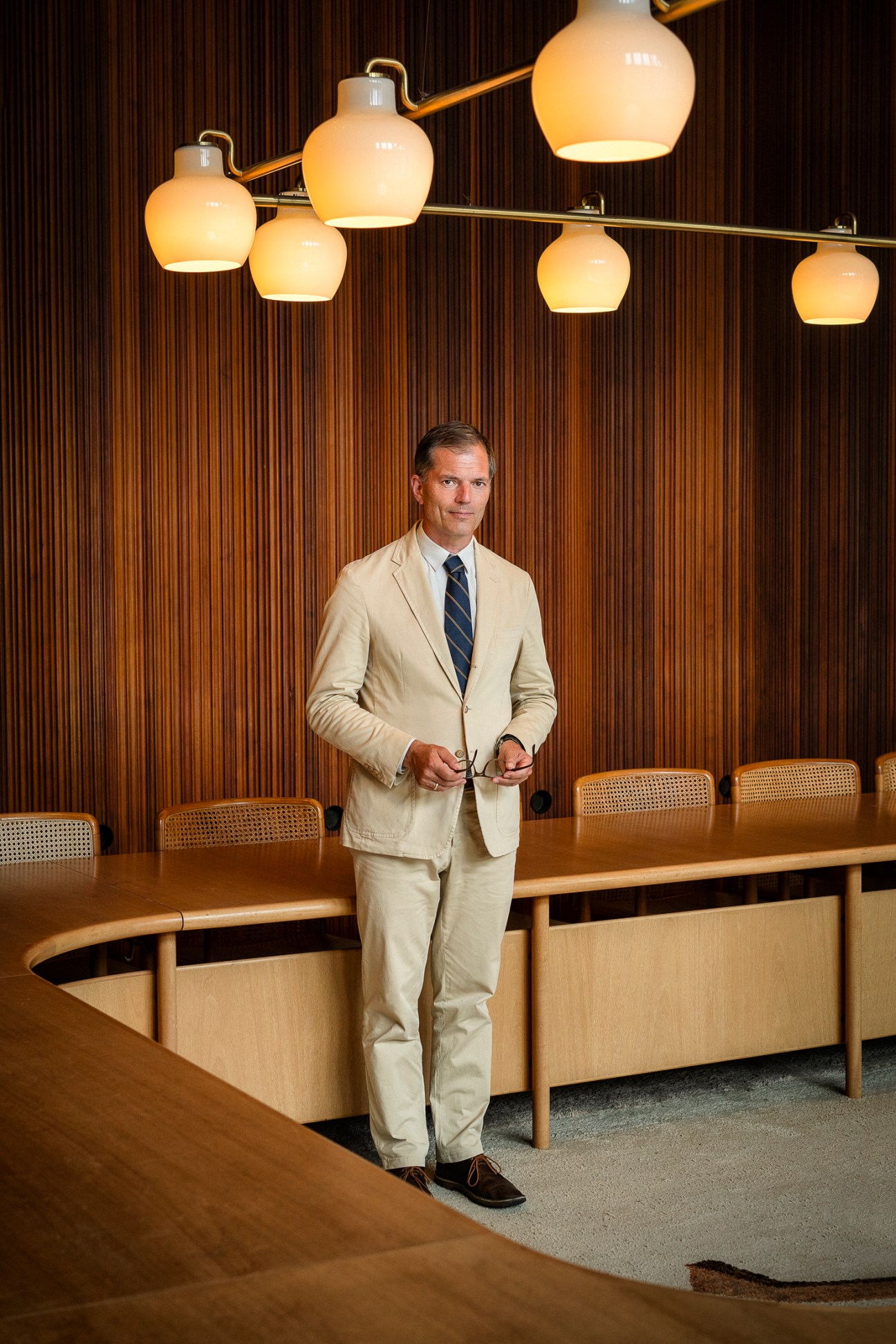
“It’s a kind of silent uproar against the speed at which things are broadcast today,” Mikael Bertelsen, the show’s 56-year-old host and creator, tells Monocle when we visit his office in central Copenhagen. “People have said that it’s old fashioned. To me, that’s a compliment. Nowadays everyone is broadcasting and everything is forgotten. I want to somehow protect the moment.”
Det Sidste Ord is filmed at an undisclosed location in Copenhagen. Hair and make-up people are banned from the studio; the show’s five cameramen aren’t given the audio. Meanwhile, the sound recordist is from overseas and doesn’t speak Danish. So far the first edit has been broadcast within two weeks of a subject’s death. The programme’s producers hope that a second version with additional material will be screened after 20 years.
“One evening I went to an event at the Royal Danish Libary, where actors were reading archival letters written by the likes of Hans Christian Andersen, Karen Blixen and Tove Ditlevsen,” says Bertelsen, recalling one of the inspirations for the show. “The head of the library had previously confronted me and said, ‘How come nothing that you produce on modern TV helps us to conserve the cultural heritage of living personalities?’”
Bertelsen had taped interviews with Danish-American pianist and comedian Victor Borge before he passed away in December 2000. The recordings were ultimately not used but the experience of speaking to a notable figure in “the autumn of his eventful and exciting life” stayed with him. Bertelsen switched his focus to running a publicly funded talk-radio station called Radio24syv. When the station was shut down in 2019 following pressure from right-wing politicians, it threw him into a personal crisis. “At the time, I felt a revulsion to anything related to the media,” he says. “But I was too old to become a tennis player. I thought, ‘Should I become a gardener?’”
Luckily, he decided to develop his ideas for a long-form, late-in-life interview and took them to commercial channel tv2, which immediately said yes. “There comes a point when people have a discussion with themselves about the decisions that they have taken,” says Bertelsen. “It’s a vulnerable point.” Det Sidste Ord proved to be a success and its format has been sold to several overseas broadcasters.
An undisclosed number of episodes have already been recorded and six have been broadcast so far, featuring figures from fields ranging from popular entertainment to politics. Bertelsen will not reveal the identities of the other interviewees. A key aspect of Det Sidste Ord is that the questions are often posed to the guests in the past tense and third person. For example, “Who was so-and-so?” (“I never found out,” replied composer Bent Fabricious-Bjerre, whose episode became the first to be broadcast after he died in 2020, aged 96.) Or, “What’s the most important thing that so-and-so found out while they were alive?”
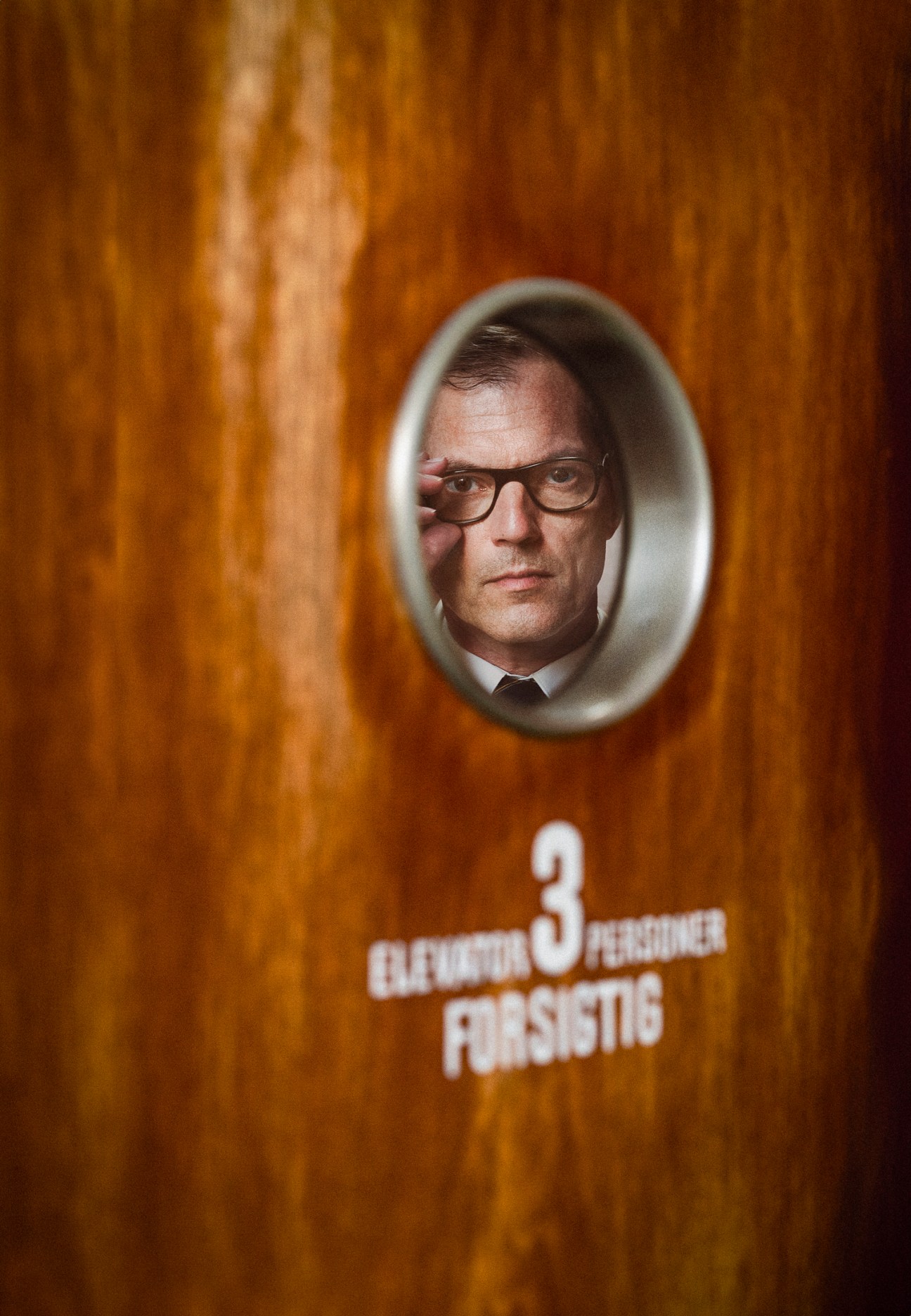
Several hours of footage are captured. It hasn’t been unknown for elderly guests to take a mid-interview nap. Editor Jacob Thuesen, who is usually based in Hollywood (he is now working on a film by Darren Aronofsky), cuts the conversation down to an hour.
“Instead of editing to exaggerate conflict as most TV does today, Jacob tones it down,” says Bertelsen. “We do almost the exact opposite of what’s conventionally done. Usually you try to chase secrets and get people to reveal things but I realised that I’m here to listen and be curious. And the things that you stop chasing tend to appear anyway. Because we edit it after all of the clichés have been written in the obituaries, we can come up with something that isn’t so obvious.”
Bertelsen, a father of three with one grandchild, has been making intelligently subversive radio and television for more than 30 years. His career started when, at the age of 20, he sent 100 ideas to the children’s radio department at national broadcaster Danmarks Radio. In the late 1990s he moved into TV with a chat show, a format that was out of fashion at the time; he has since made satire programmes and documentaries. His signature style – controlled, ironic, full of awkward pauses, with Bertelsen always dressed in a shirt and tie – is today a well-known brand.
“I had no education and am an autodidact,” he says of his early days in broadcasting. “I don’t know why I wasn’t thrown out during those first years because I would stutter and could barely say my own name.” But he was given time to fail and learn “at a pace that wouldn’t be allowed today”.
Another characteristic of Bertelsen’s on-screen style has been the sense that he never courts the audience’s approval and quite often aims to provoke. “I appreciate viewers’ complaints because they mean that people are engaged and excited about what you are broadcasting,” he says.
Currently he can also be seen on Danish television screens in another unusual chat-show format. In All Exclusive, he and comedian Casper Christensen invite a celebrity guest to a luxury villa in Portugal. Christensen conducts a daylong interview while Bertelsen listens in off-camera, intervening only occasionally to guide the conversation. “My job is basically to help Casper be more interested in the guests,” he says with a laugh.
Christensen’s ex-wife, actress Iben Hjejle, and former Danish prime minister Helle Thorning-Schmidt have been guests on the first series of All Exclusive – but who would be Bertelsen’s dream Det Sidste Ord guest? He considers this for a brief moment and says, “Donald Trump. But then again, maybe not. Haruki Murakami would be good. Let’s say Murakami.” The great Japanese novelist happened to visit Denmark this summer for a literary festival. Who knows? Perhaps the secret studio is already booked.
Denmark’s finest
Danish television has become synonymous internationally with serious dramas such as Borgen and The Bridge, which have become successful because of, rather than in spite of, their Nordicness. (Coming soon to TV in the UK, Australia, the Netherlands and the US is prison drama Huset, starring The Killing’s Sofie Gråbøl). Less well known are the Danish TV formats such as Det Sidste Ord that have been remade abroad.
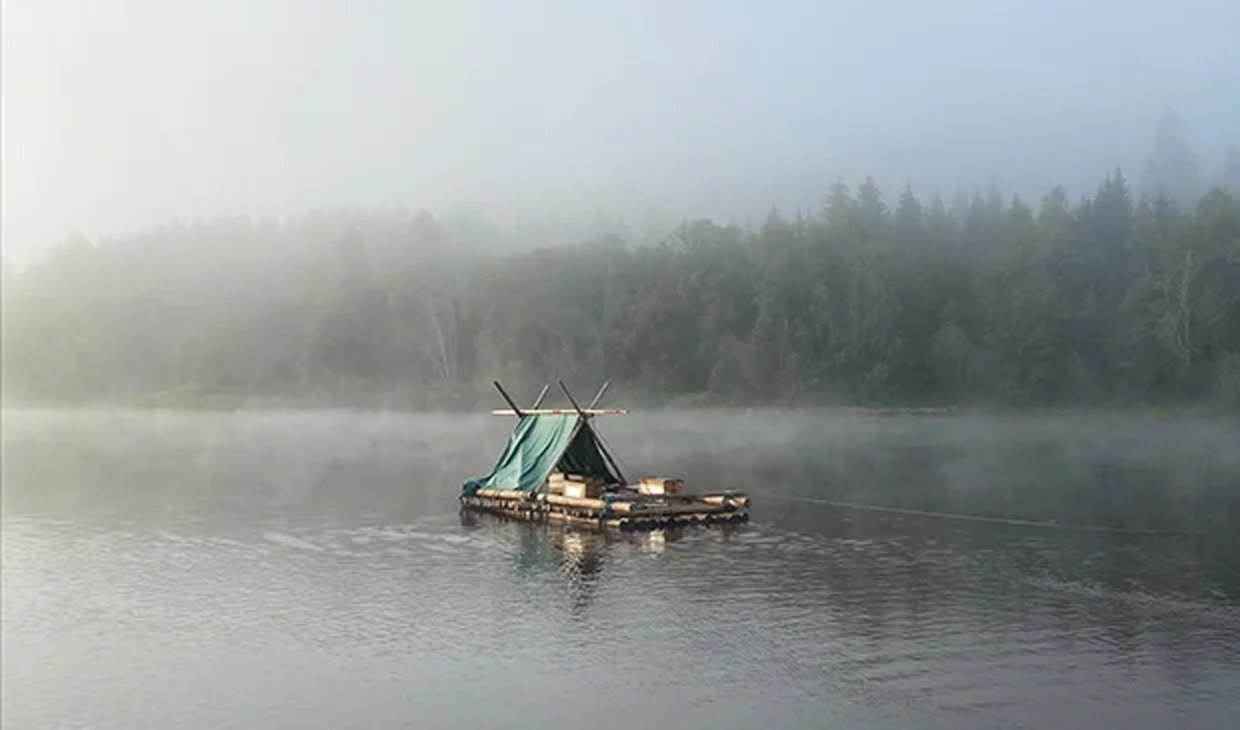
Love Raft (2022): A dating show from national broadcasting company DR in which five couples build a raft and set sail down a river. Sold to Dutch and German TV, among others.
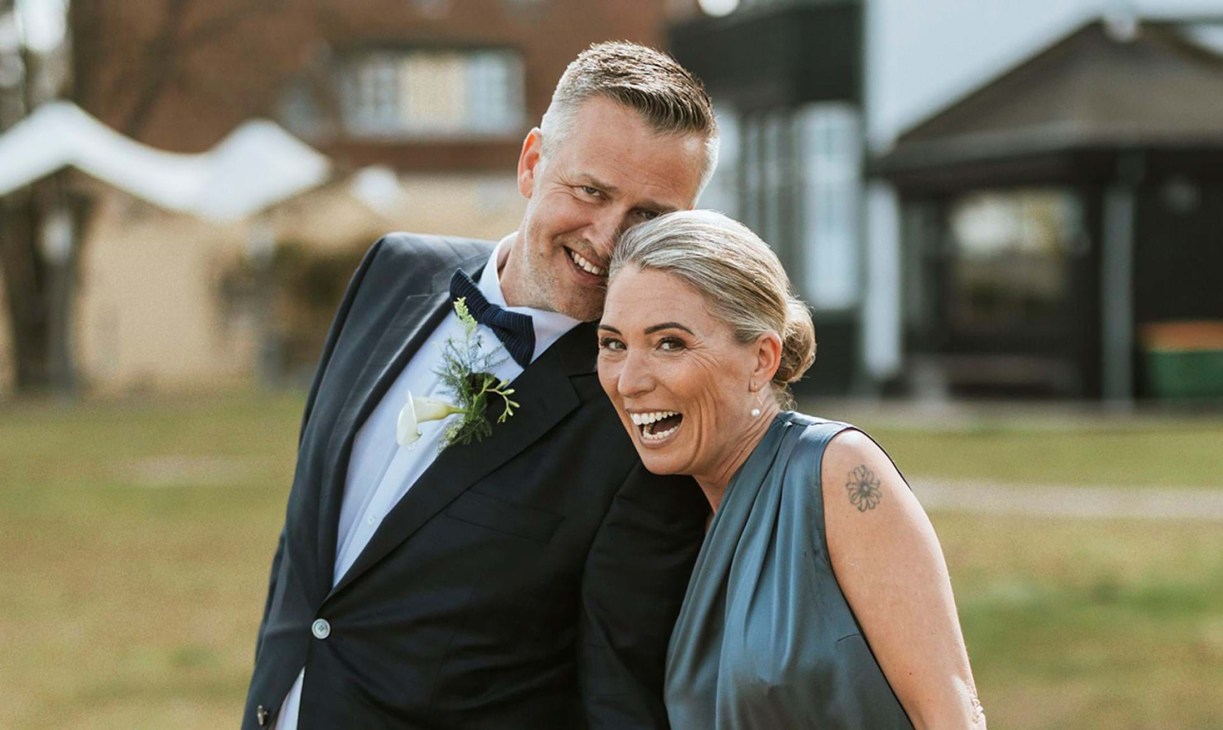
Married at First Sight
(Gift ved første blik, 2013)
DR’s audacious show in which singles get married at their first meeting has been one of its greatest international sales, with Australian, German, French, Dutch and US versions.

The Killing
(Forbrydelsen, 2007)
Following the global mania for Danish-made dramas in the 2000s, Fox Television Studios remade DR’s pioneering crime drama for the US market. There were also Turkish and Egyptian versions.
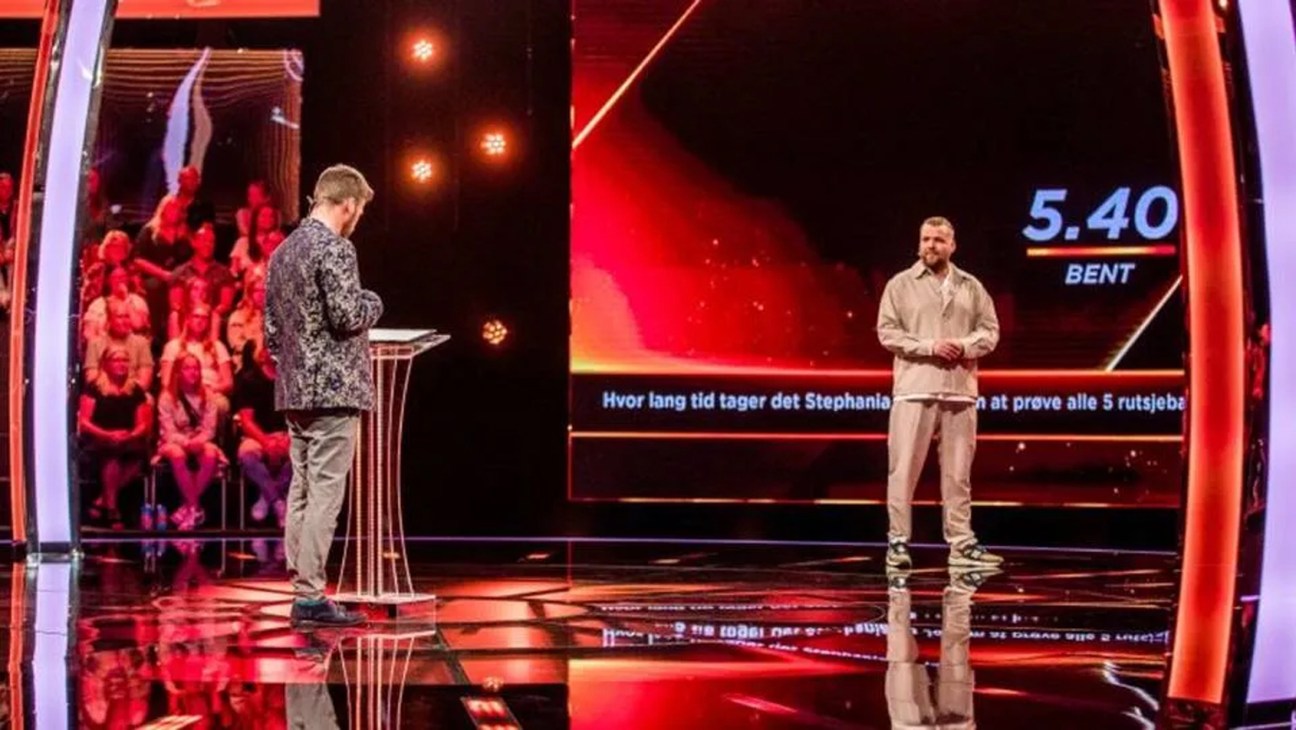
All Against 1
(Alle Mod Én, 2016)
In Nordisk Film TV’s big Friday-night game show, one competitor takes on the nation, guessing the results of various spectacular experiments.
How Finland’s furniture makers Artek, Woodio and Vaarnii are securing timber for the future
With 75 per cent of its landmass covered by forests, timber is Finland’s most abundant natural resource. It’s big business too – the most recent valuation of the country’s forest industry was €20bn. This situation might seem to paint a rosy picture for the country’s wooden- furniture makers but the reality is that they are Finnish timber’s underdogs. The industry has coalesced into three large conglomerates that mainly produce pulp for cardboard and paper, limiting access to wood for furniture production. Which begs the question: how do the nation’s design brands secure timber for their future? We find out how an established maker, an innovator and a new industry shaker are tackling the problem.
1.
The established maker
Artek
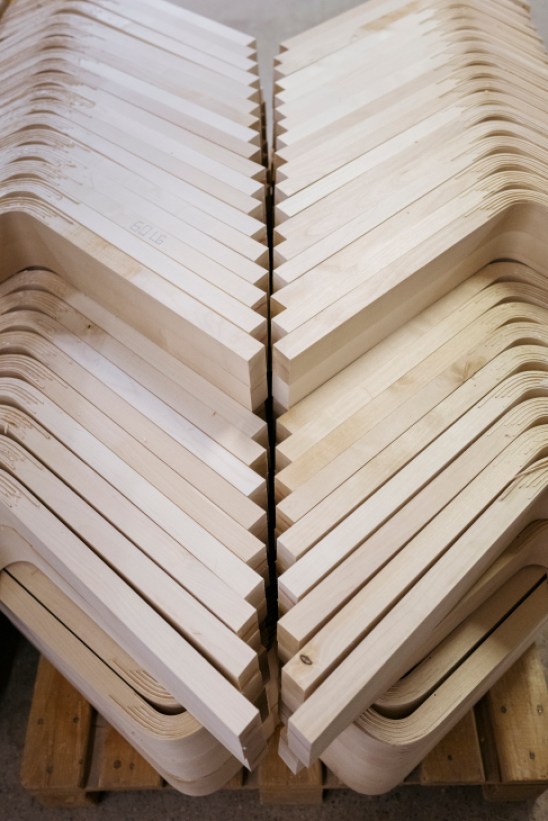
On an October evening in 1935, four Finns gathered for dinner at König, the cultural crowd’s haunt in central Helsinki at the time, to draw up plans for a new design company. The name would be a fusion of art and technology – Artek – and it had an odd manifesto, typewritten on an A4 sheet in red ink. At the top of the page was written “industry and interior design”, and next to it a second pillar: “propaganda”. Through publications, exhibitions and mass production of bentwood furniture, the firm’s four founders – Alvar and Aino Aalto, Maire Gullichsen and Nils-Gustav Hahl – wanted to propagate new ideas and ways of living. Nearly 90 years later, it is safe to say that Artek has lived up to expectations. Today the company is facing an issue that the four founders hardly anticipated: in a country famous for being not much else but forest, a manufacturer of wooden furniture risks running out of raw material.
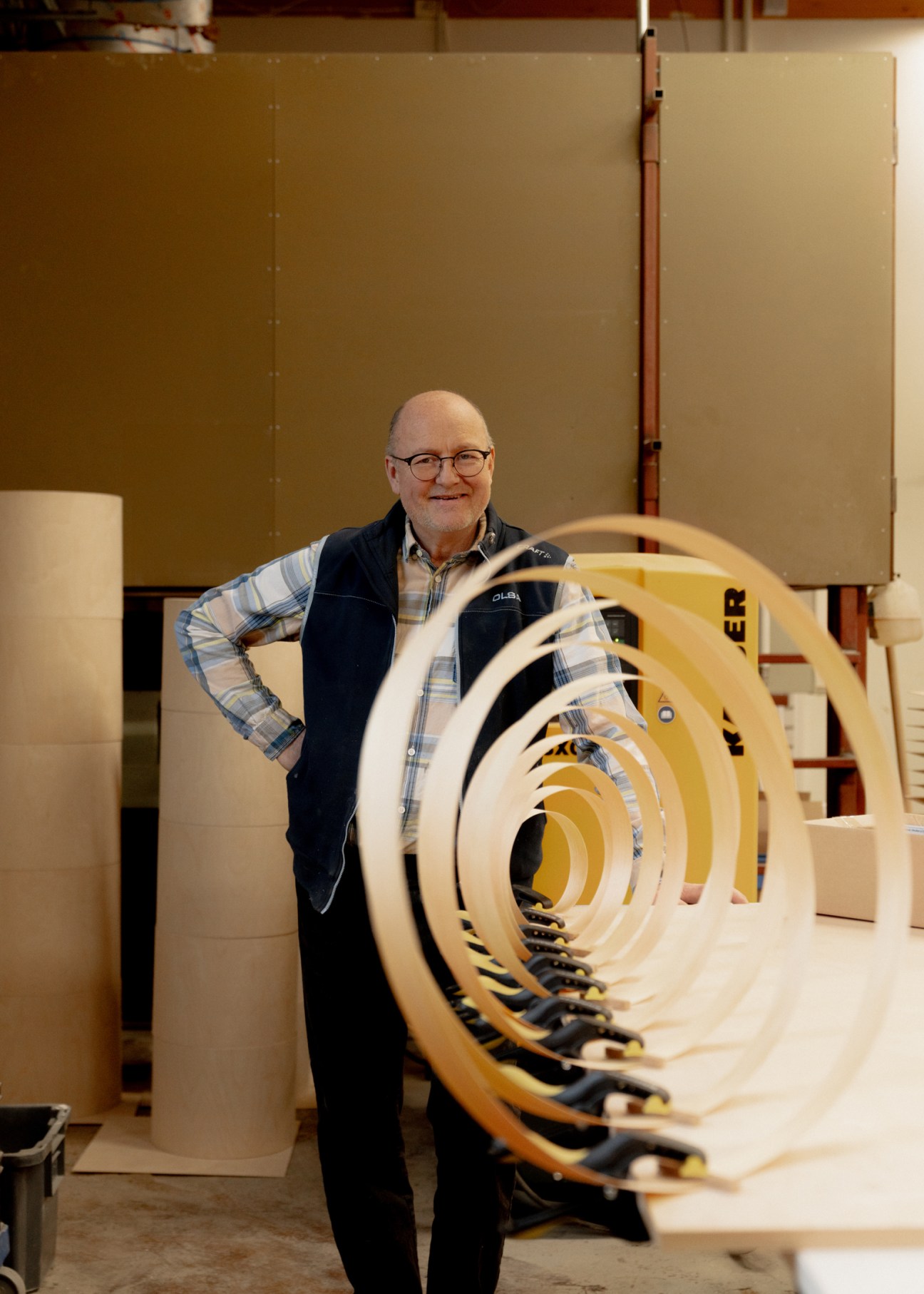
“We don’t know whether, in 30 years, we’ll have enough quality wood,” says Marianne Goebl, Artek’s managing director. “How do we make sure that the next generation of Artek still has birch?” Goebl has just pulled up with monocle to a low-slung 1960s building that looks inconspicuous except for an outdoor area with Barber Osgerby-designed chairs. Inside, we are greeted with a handshake and a business card that is a thin slice of wood veneer stamped “a-factory”. Here, on the outskirts of Turku in southwestern Finland, is where Artek’s wooden three-legged Stool 60s, linoleum-topped tables and curved timber Paimio armchairs are produced.
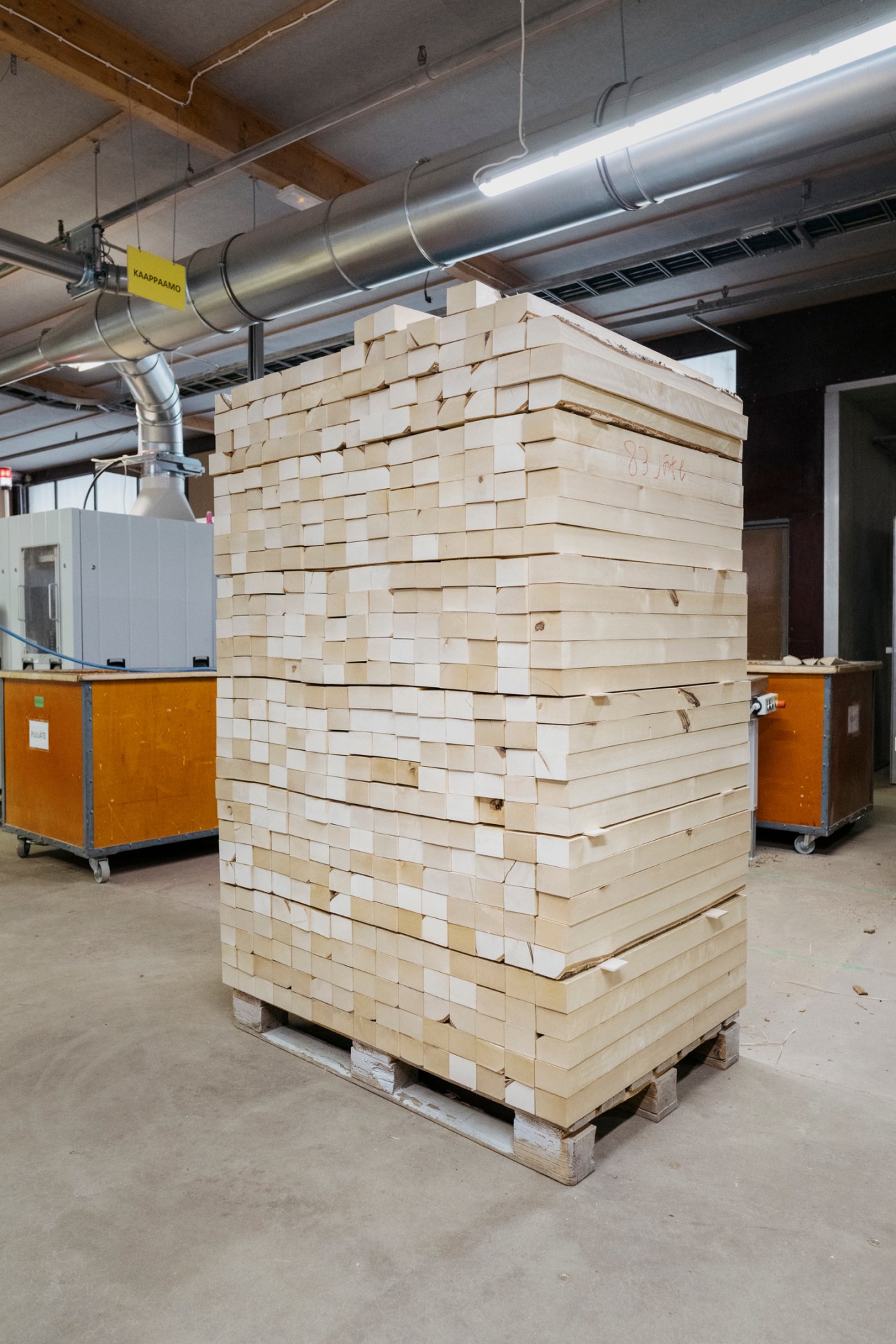
Artek furniture is almost exclusively made from birch, a common leafy tree recognisable for its white bark. The logs arrive from a sawmill in central Finland, are then cut into planks and left to dry outside. For a long time, any piece of timber with a small visible flaw – a knot, a dark spot, a piece of bark – would either be painted or burned to power the factory. In effect, just one tenth of the felled birch would end up as Artek’s signature natural wooden furniture, with much of it discarded based on its looks. Goebl points to a new sorting pile of pieces that all display some small imperfection. They would not formerly have made the cut but are now being used to produce Villi, a new model of the Stool 60 released in mid-2023 for the brand’s 90th anniversary. The plan is to roll out this new timber standard across a wider range of Artek products.
Villi is designed by Formafantasma and is one of the first outcomes of the Italian studio’s long-term collaboration with Artek. In 2019 the company, formed by Simone Farresin and Andrea Trimarchi, was presenting Cambio, an exhibition on forestry at London’s Serpentine Pavilion. Goebl wondered whether Artek wanted to apply Formafantasma’s research on an industrial scale. “We opened up the entire supply chain and said: go in and have a look,” says Goebl. The voluntary audit involved archival research, factory visits and a wide set of interviews. It resulted in a list of 29 points for improvement – including a rethink of the wood selection standards. “They were minor flaws, to the point that we couldn’t even see them,” says Farresin. “Now, from one tree they can use much more.”
The new standard represents one of Artek’s biggest shifts in its manufacturing practices and is also a reset. Vintage Artek furniture shows much more tolerance for natural variations and patterns in the wood. Only in the 1990s were criteria tightened to require an almost plastic-perfect surface. “Somehow our aesthetic perception has been trained over the years to think that a wooden product should look uniform,” says Goebl. “That is not what the forest produces.”
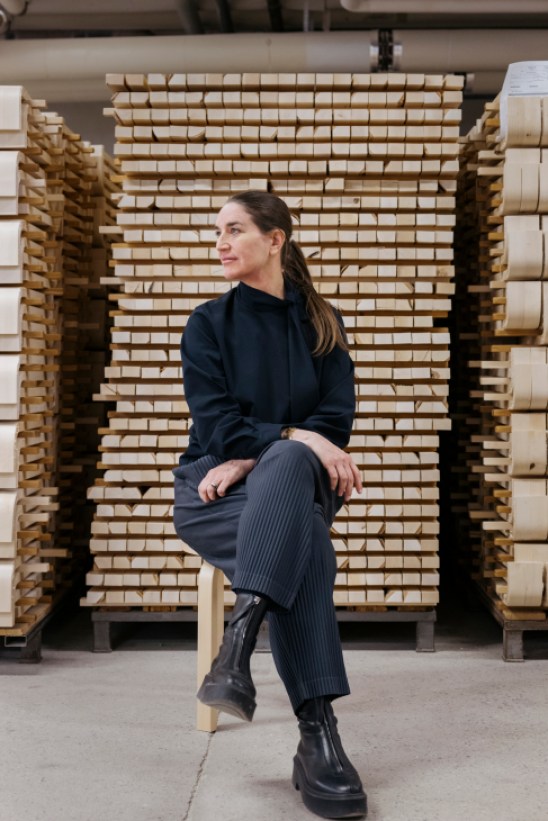
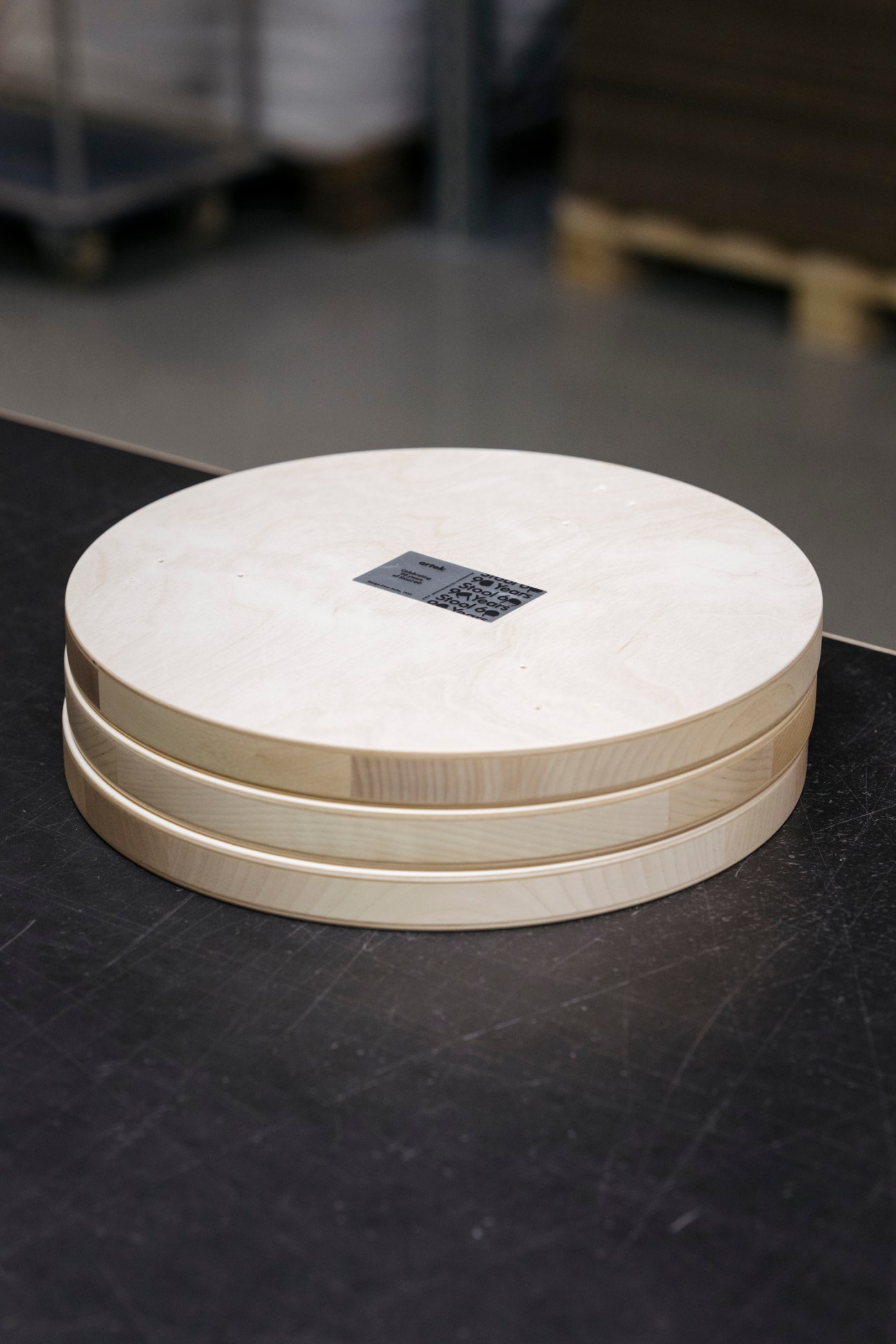
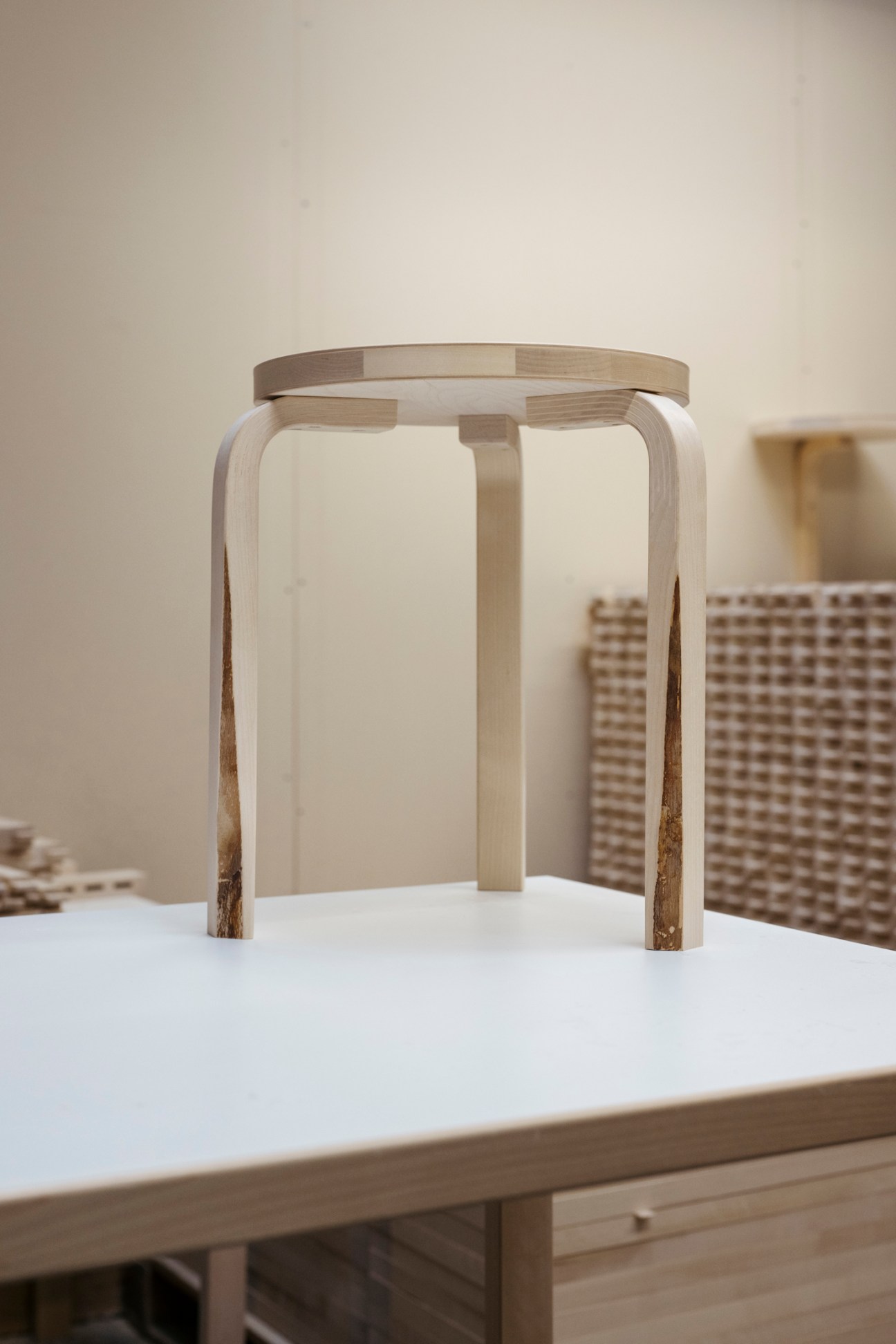
The frugality might be stylish but it is also existentially motivated. Much of the a-factory floor is dedicated to the L-leg, Artek’s signature way of bending a solid piece of wood by 90 degrees. The 30-step process of veneering and glueing has changed little since it was invented by Alvar Aalto and carpenter Otto Korhonen. The L-leg technique is so specific, and so dependent on high-quality Finnish birch, that moving production overseas has never been an option for Artek, even if it had wanted to. “I wasn’t aware that this company was so closely linked to this one material,” says Goebl, who stepped in to lead Artek in 2014, soon after it was acquired by Swiss firm Vitra. “It is literally rooted here.”
Despite Artek’s outsized role in the world of Finnish design, the company is a small fry when it comes to Finnish forestry. The demand for paper and cardboard far outstrips the furniture industry’s needs, meaning that more of Finland is being planted with species such as pine and spruce to feed the boilers of the pulp mills. Only one remaining sawmill still supplies the A-grade birch that Artek covets, from trees left to grow in mixed forests for 50 to 80 years.
Behind the factory, at the bottom of the stacks of timber laid out to dry, are a dozen extra-large planks of octogenarian birch. Trees of this diameter are essential for making the Paimio armchair, which is shaped from a single piece of wood. The logs will only keep coming if trees are not cut down too early, or don’t all end up in a pulp machine. Formafantasma’s recommendations include eco-activist measures such as giving every employee a piece of forest.
It is time for such action: the forest industry has been high on the national agenda ever since a routine emissions report sent shockwaves through the country in 2022. Finland has based its goal of net-zero emissions by 2035 on the assumption that its forests sequester carbon but the report flipped that on its head. Forests are being felled at such a fast clip that the industry has changed from a net carbon sink into a net carbon emitter. Using the country’s “green gold” to make valuable, longer-lasting products would go a long way towards reversing that problem and, as Artek shows, it’s good business too. Maybe all it takes is a bit of propaganda, in the Artek founders’ sense of the word, for prioritising the making of bentwood chairs over pulp that becomes cardboard in China. “Artek is so small but in the cultural understanding of people it is so huge,” says Farresin. “Design brands have the power to change the culture.”
2.
The innovator
Woodio
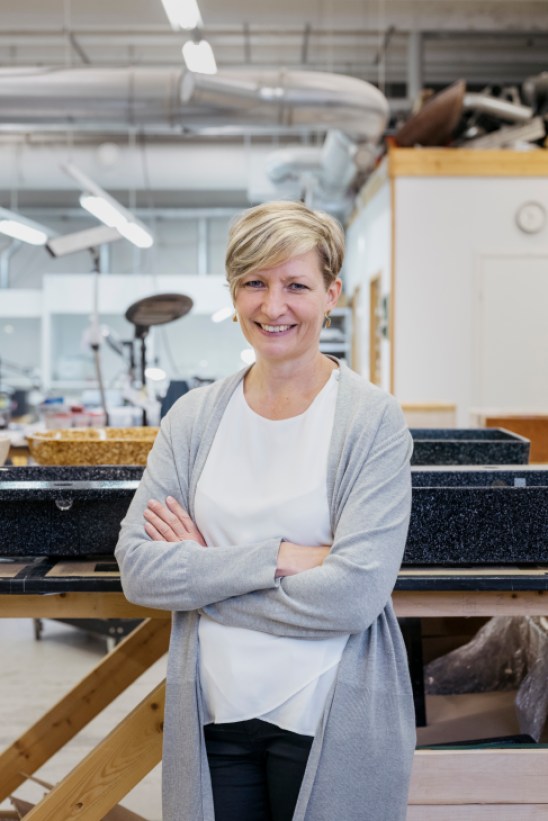
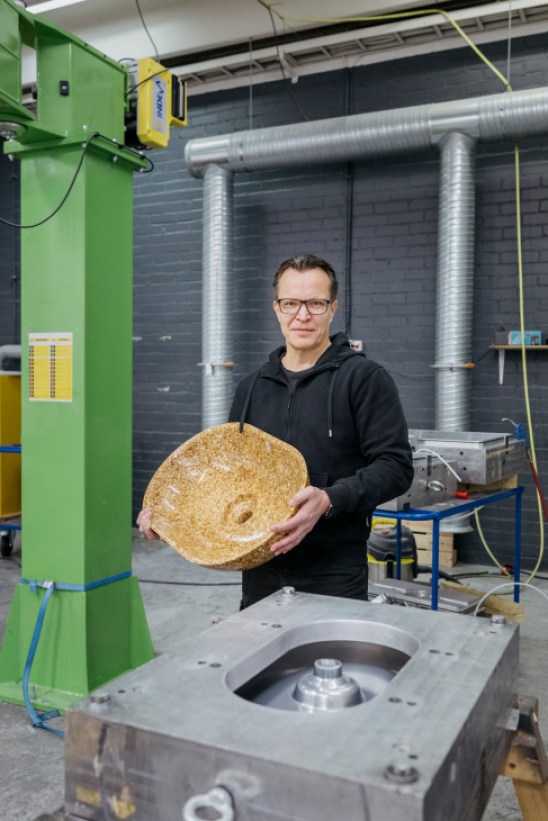
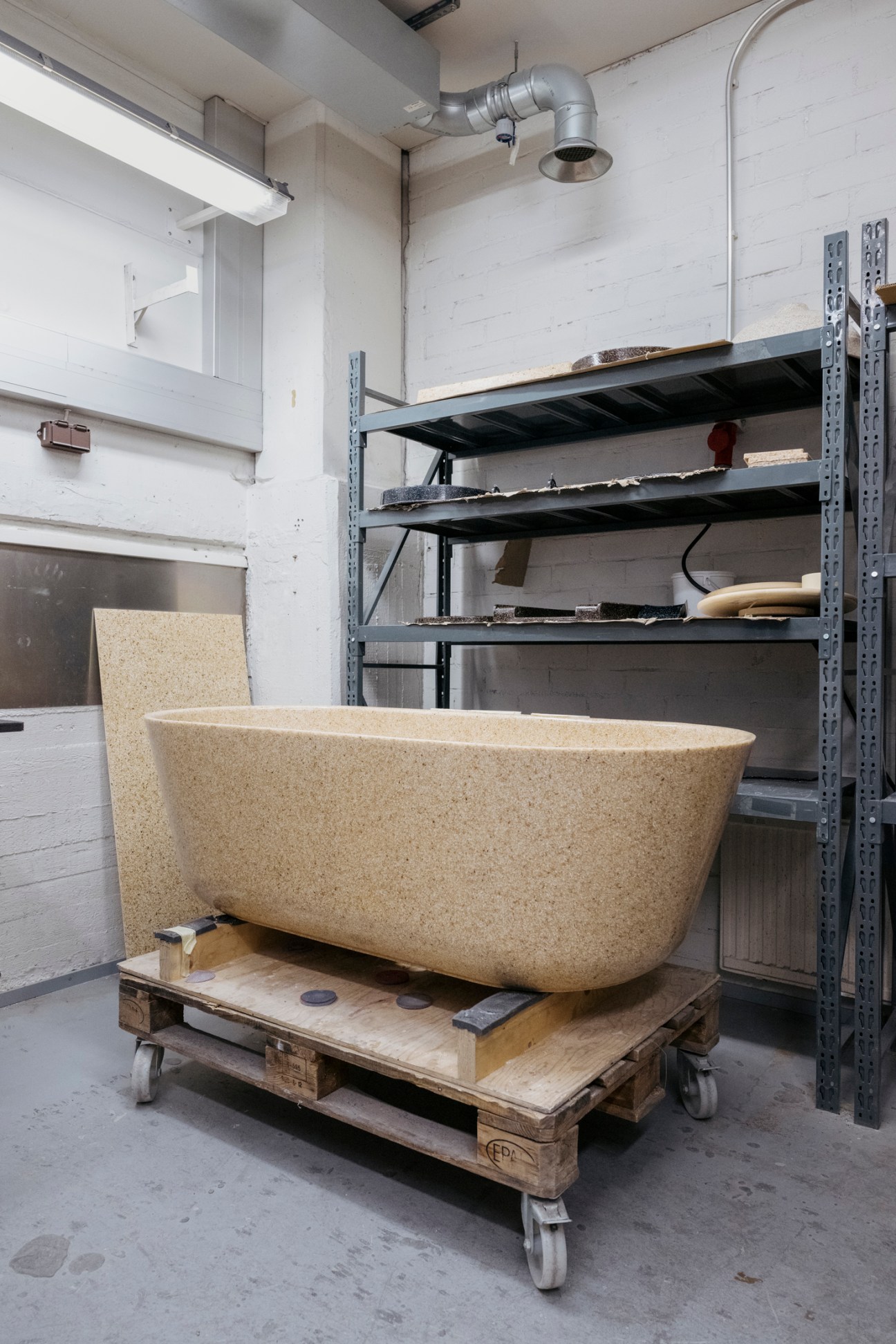
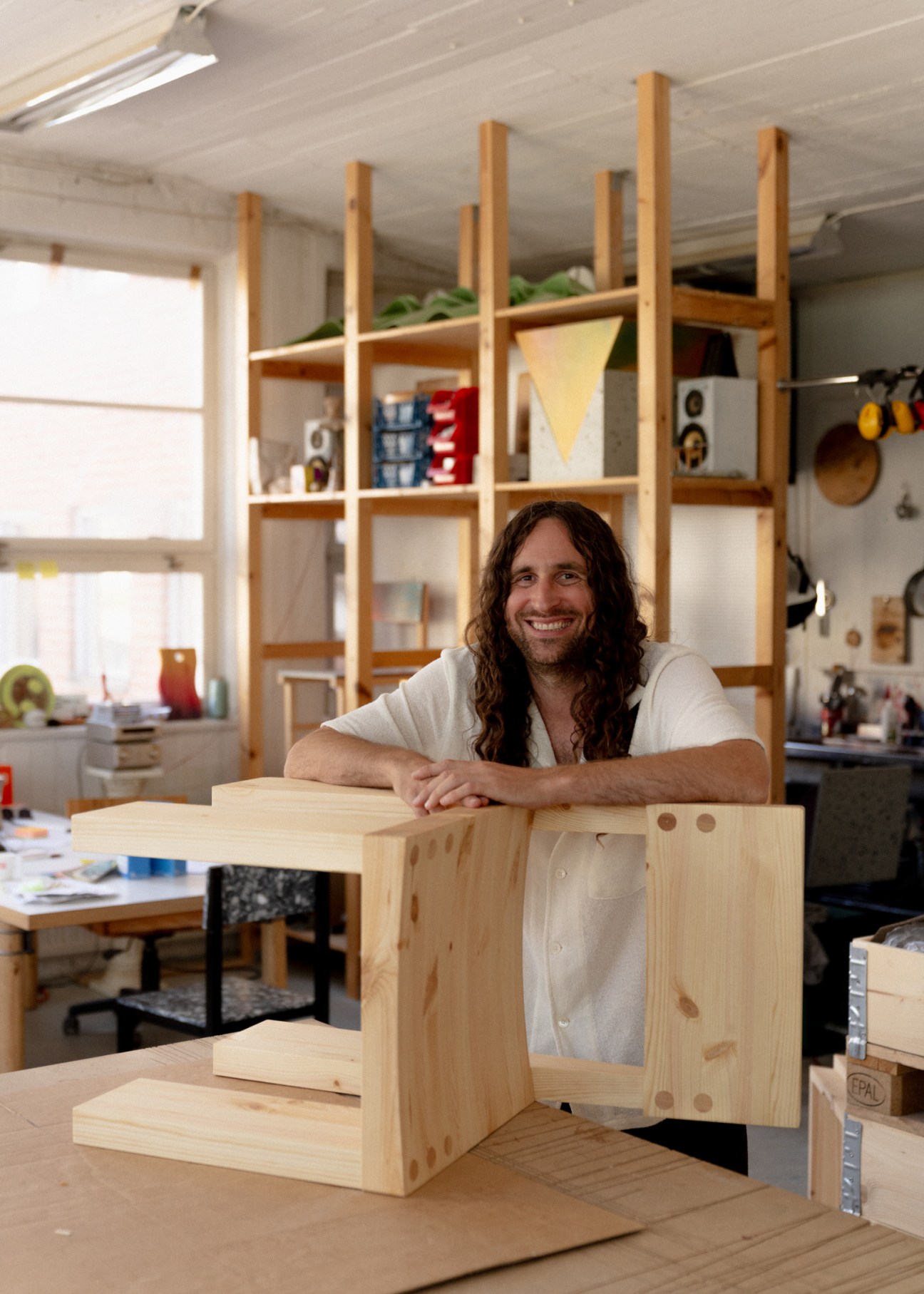
At bathroom manufacturer Woodio’s factory in northern Helsinki, Reijo Rautakoski scoops a handful of wood chips from a container and inspects them with a keen eye. “These are Finnish birch and we get them from a cellulose factory in eastern Finland,” he says, walking monocle through the firm’s production process. These wood chips are a side stream of cellulose production and would be burned as waste were it not for Woodio, which launched in 2016 and uses the would-be byproduct to manufacture fixtures such as basins, bathtubs and toilet seats. “The real innovation here is that we are able to combine wood and resin-based adhesives to make a 100 per cent waterproof wood composite,” says Rautakoski, who oversees technical development and heads the company’s innovation arm, WoodioLab. The carbon footprint of wood-based bathroom products, says Rautakoski, is up to 80 per cent smaller than that of traditional ceramic products, while sharing otherwise similar characteristics and having an even better shock resistance.
The sleek, state-of-the-art factory is teeming with activity when monocle visits for a tour led by Rautakoski and Woodio’s ceo, Terja Koskenoja. Some craftsmen are polishing the products while others inspect them further along the production line. Wood chips, of which the company uses more than 25 tonnes every year, are blended with resin and poured into moulds. They are then taken into a heated room – affectionately nicknamed “the sauna” – where they solidify. Outside the factory, snow is falling and temperatures have dropped to below zero, so the heated space provides a nice refuge in which to talk about Woodio’s mission. “It’s funny that we should talk in this ‘sauna’ because it’s part of what makes us a sustainable alternative,” says Koskenoja. “Ceramic-based products require such high temperatures that we wouldn’t be able to stay in this room. Lower heat means less energy consumption.”
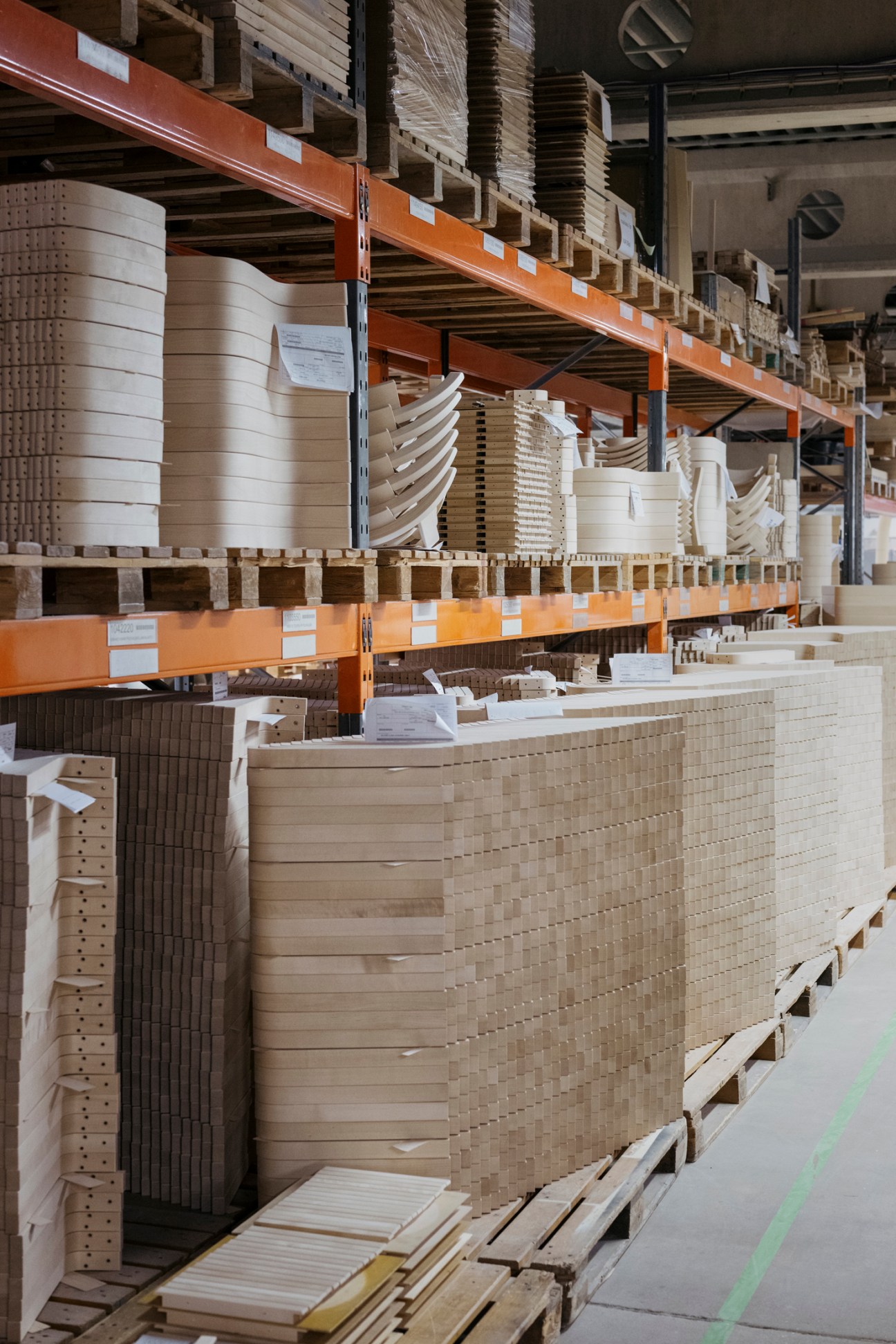
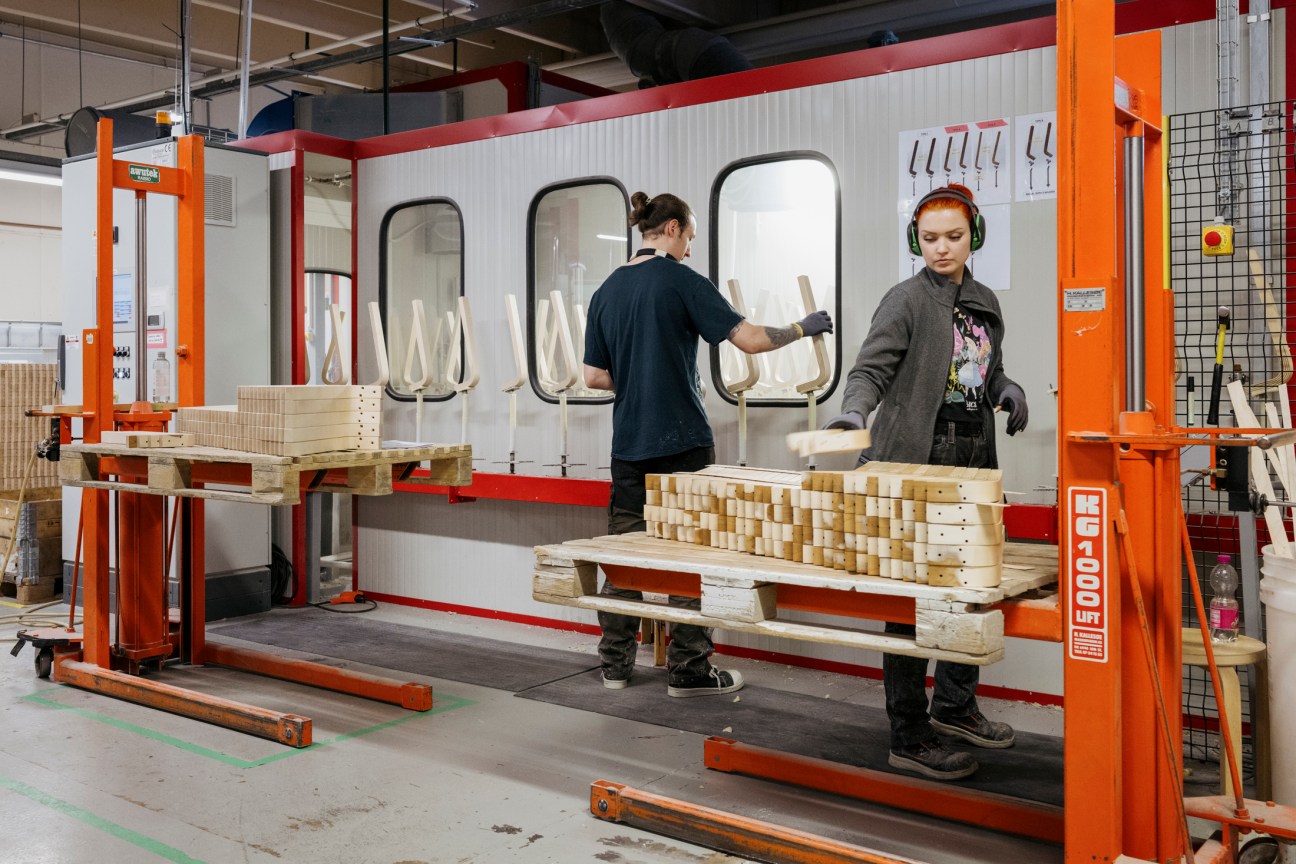
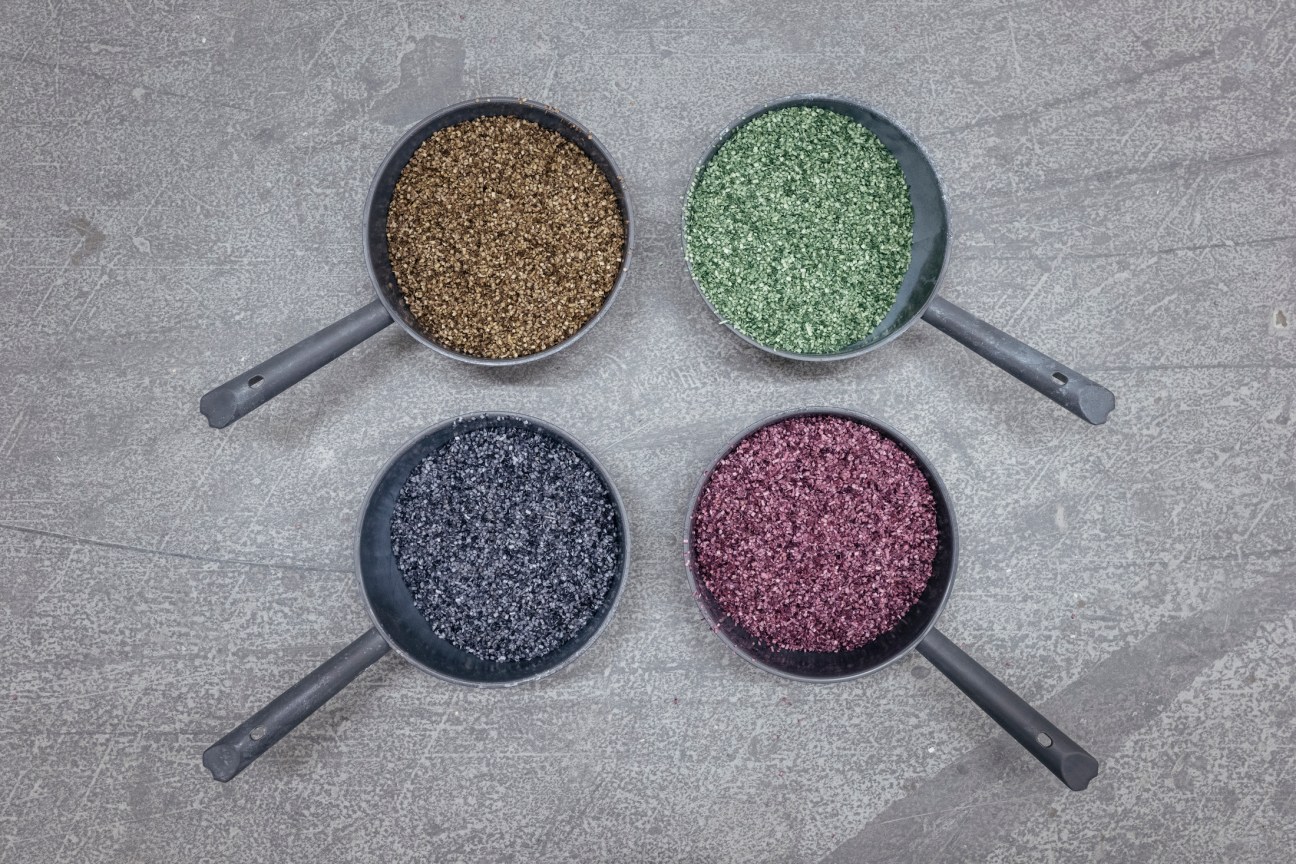
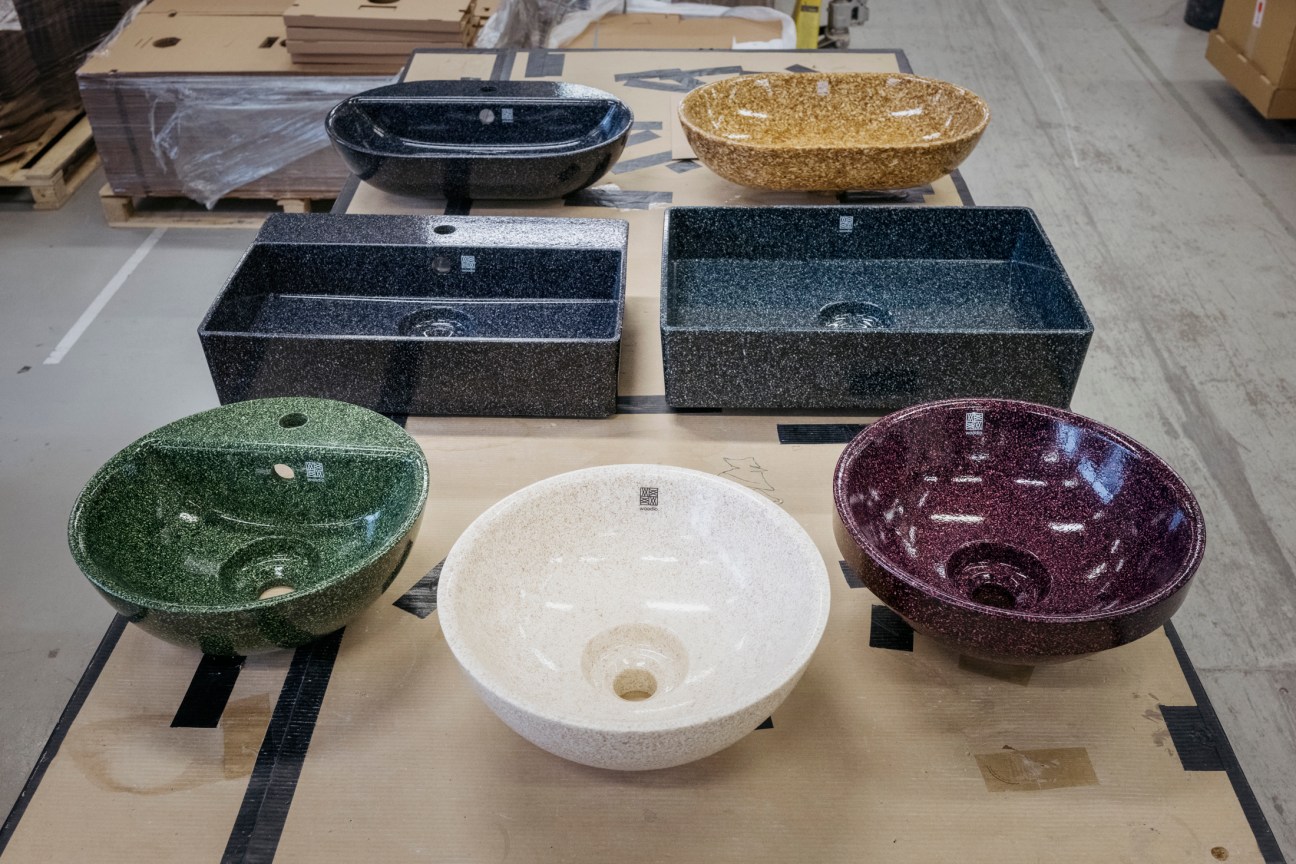
Woodio’s design language is distinctly Scandinavian: elegant yet minimalist, with form following function according to the timeless modernist creed. The wood chips are dyed in various colours ranging from polar white to charcoal black and a vibrant moss green reminiscent of Finland’s boreal forests. The chips give every product a distinct colour and a sense of materiality absent from traditional ceramic alternatives. “We want people to see the wood in these products,” says Koskenoja.
This production and material innovation at the heart of Woodio lends itself to many uses. The company’s goal is to branch out beyond bathroom fixtures. In mid-2023, Woodio launched a product called Solid, which is a multipurpose sheet material that can be used for tabletops. “Our material would also work on walls and ceilings, or for furniture,” says Koskenoja, before going on to explain that the bathroom was the natural starting point. “It was best for impact, to show to people that we can make things such as toilet seats using wood.”
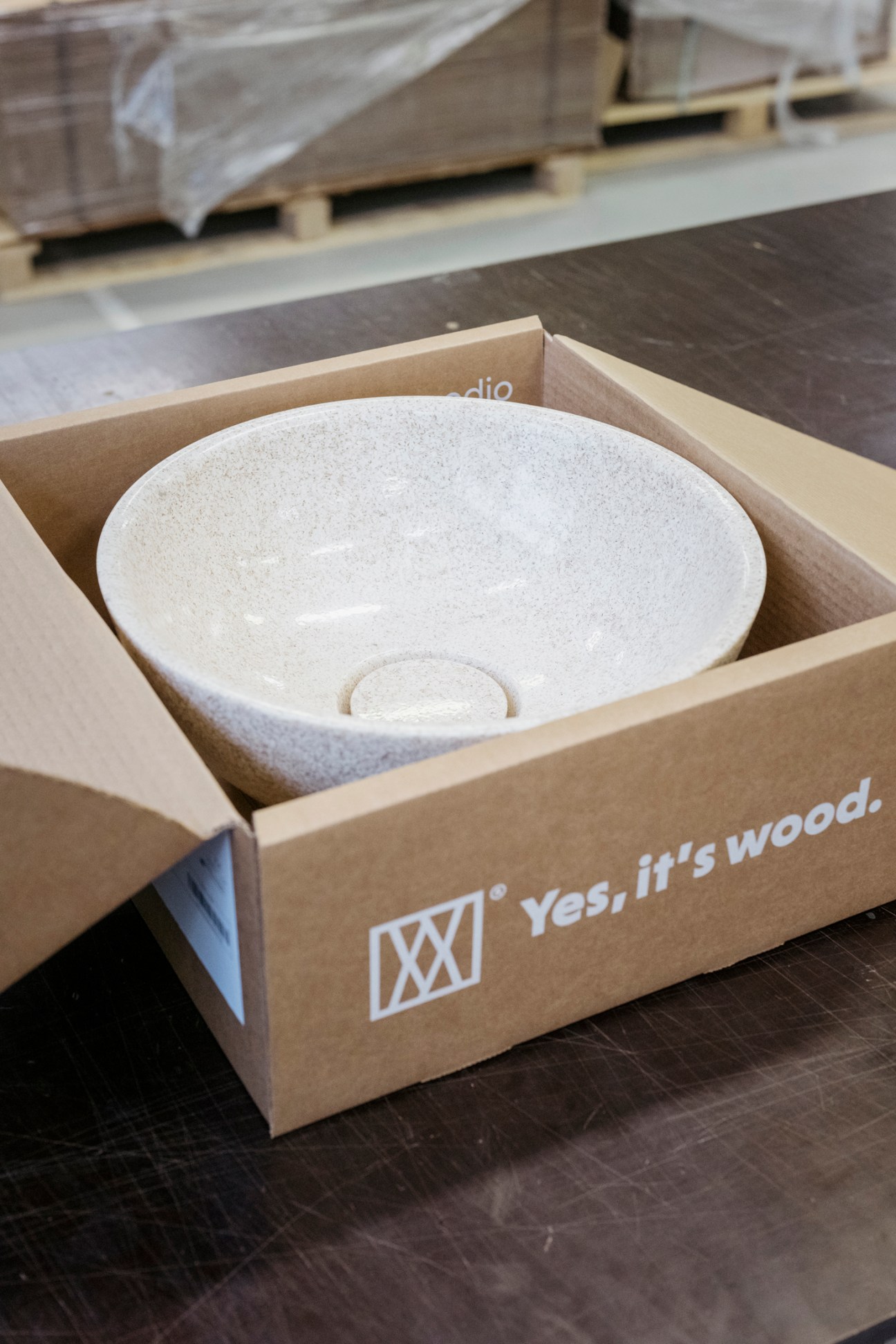
It is, of course, wood – a fully renewable material – that makes Woodio sustainable. And it is at the heart of everything that the business does. Alongside the company name, every item is shipped in boxes printed with the words, “Yes, it’s wood.” It was therefore an obvious choice to keep the manufacturing base in Finland. “We want to be close to where our raw materials – Finnish birch and Estonian aspen – come from,” says Koskenoja. In the future, Woodio is planning to push its environmental ambition even further by becoming a carbon-negative company and, as monocle goes to press, it’s set to launch a project that would enable it to fully recycle its products at the end of their working life. “The built environment is responsible for up to 40 per cent of all carbon-dioxide emissions,” says Koskenoja. “Our goal is to reduce that number by pushing the boundaries of what we can do with wood.”
3.
The new industry shaker
Vaarnii
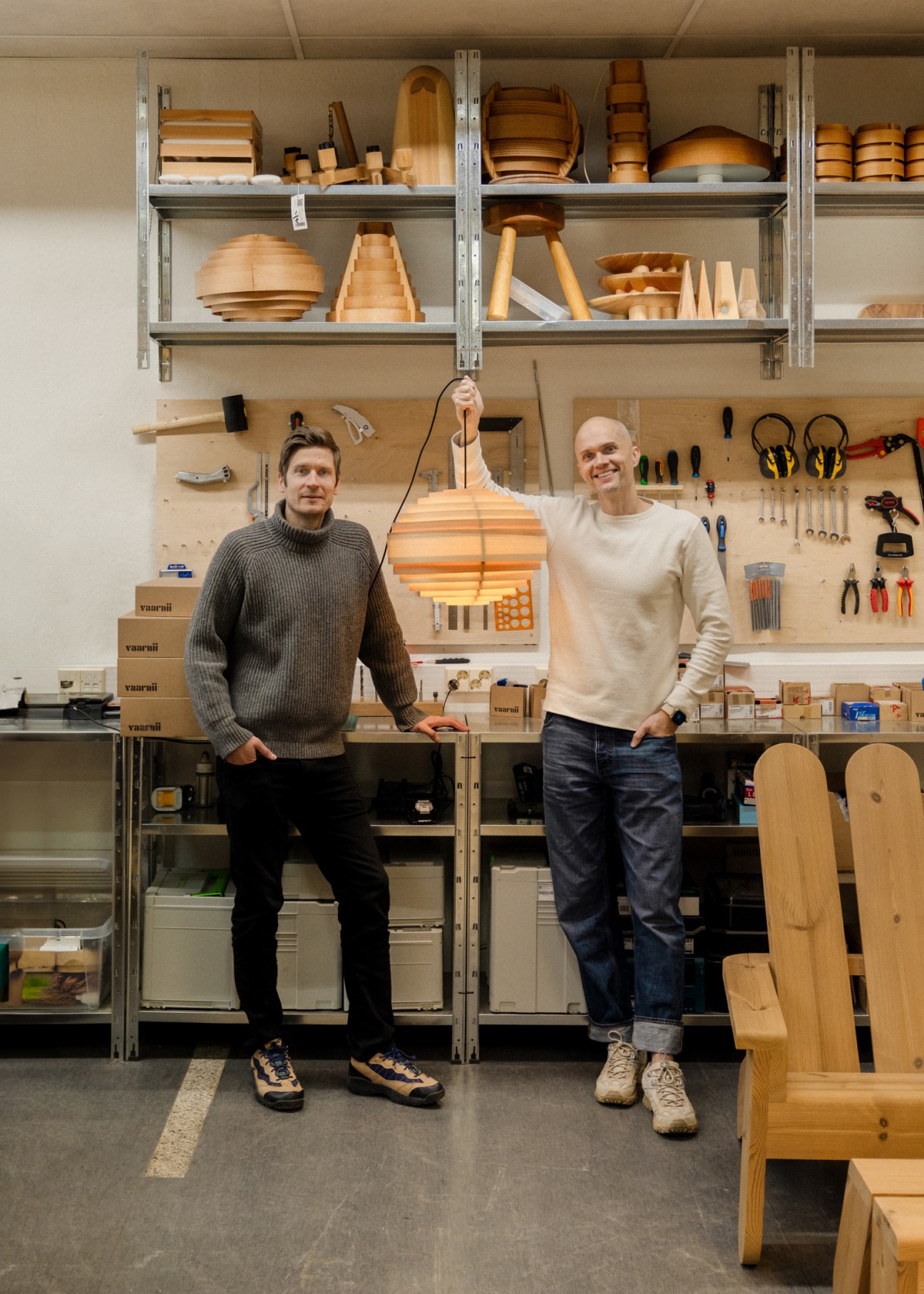
“In Finland, we say we’re the land of uncompromising extremes,” says Miklu Silvanto, co-founder of Vaarnii. “It’s a place where difficult winter seasons are followed by days of endless sun. So, naturally, the brutal can meet with the sophisticated here.” Silvanto’s assessment of his country is also an appropriate description for the work of his firm. Vaarnii, launched in 2021, is an emerging furniture brand designing pieces that blend the raw aesthetics of mid-century brutalism with sleek contemporary design.
Both Silvanto, who previously worked in industrial design at Apple and was chief design officer at Denmark’s Bang & Olufsen, and his co-founder Antti Hirvonen – an alumnus of Tom Dixon and Artek – were keen to redefine contemporary Finnish design. “We both left Finland for other ventures and gained other design inspiration, so our collective experiences have pushed us to look further into what Finnish design means today,” says Silvanto.
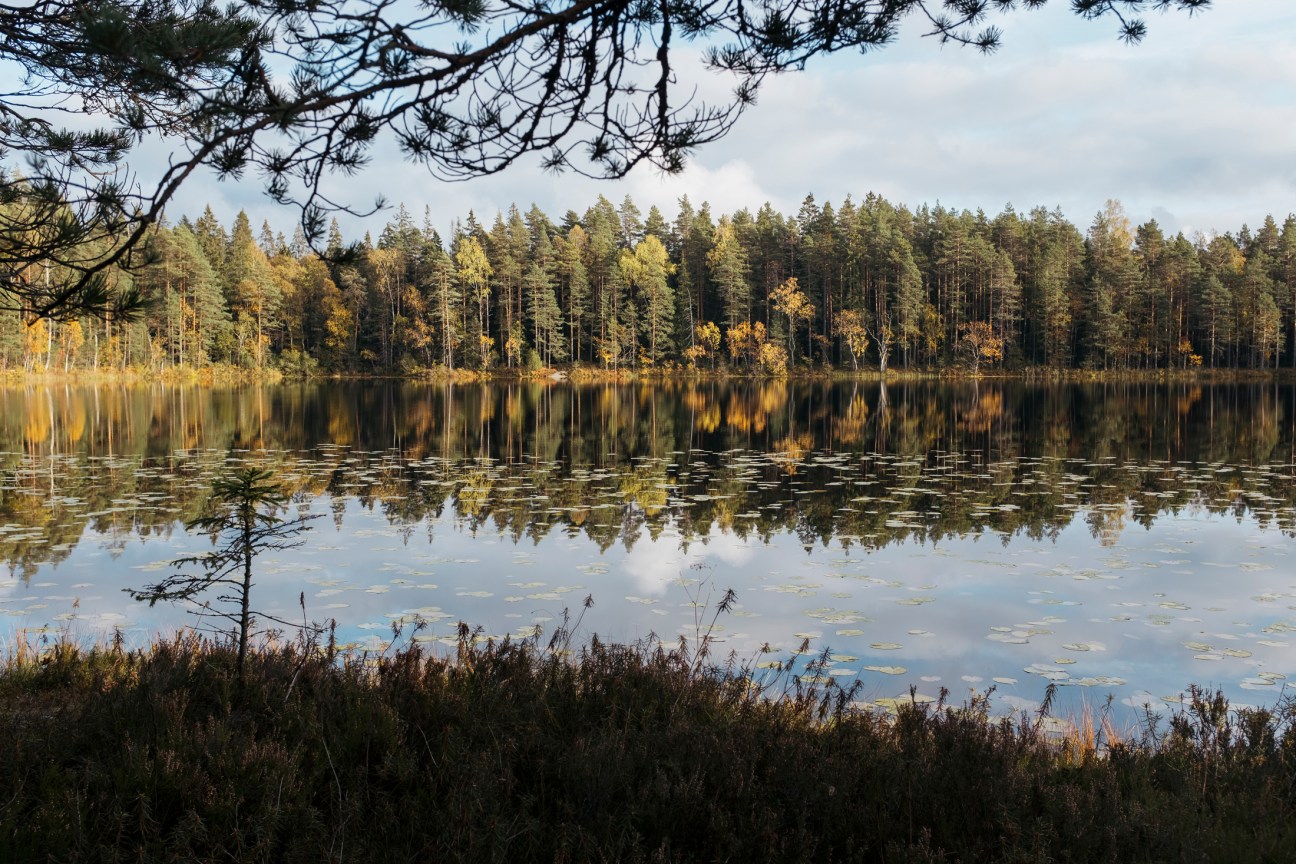
The result is a company that has a unique business model: Vaarnii creates bespoke collections of furniture and lighting using only Finnish pine. “It’s all over Finland – 44 per cent of our forests are pine – so it’s part of our cultural identity, in a way,” says Hirvonen, explaining that the tree’s fast growth properties make it the most sustainable option in the Nordics for making new chairs, tables and light fixtures. “Despite this, a very tiny fraction of it is going into making furniture today.”
Once the most popular timber for furniture-making in Finland, the softwood has, over time, been misrepresented as a material of lesser quality, gaining a reputation as a poor alternative to birch or aspen. Yet Vaarnii is hoping to rise to the challenge and shift the narrative around the wood. “We feel that pine’s potential has been dismissed for far too long,” says Hirvonen. “We are on a mission to change that.”
Key to the success of the brand – and to increasing the use of pine in the furniture industry more broadly – is changing the visual perception of the wood by showing that its knotty, yellow and shiny appearance can be used to make striking objects. “Pine is substantial, long-lasting and full of character,” says Silvanto. “It has patterns and eccentricities that only get better with age. It is often understood as a cheaper option, which has been another challenge for us to tackle because we want to make pine gallery-worthy.” To do so, the brand sources timber from across Finland and partners with regional makers, such as the Puulon factory in Padasjoki in the south of the country, to realise designs by international studios, including Stockholm-based Fredrik Paulsen. Vaarnii has also dipped into the archives of designers such as mid-century Swedish icon Hans-Agne Jakobsson to revive famous forms.
Partnering with Finnish manufacturers and only using Finnish pine has allowed Silvanto and Hirvonen to create an authentic brand identity and drastically reduce lead times, minimum order quantities and logistics costs. “This is our contribution to Finnish design culture and to future generations,” says Silvanto. “Focusing on one material offers an easily digestible narrative in regard to sustainability and a wide-ranging manufacturing advantage. It’s also a template by which we can introduce more products and categories in the future.” All of this, Silvanto concludes, is living up to Vaarnii’s aim of making striking but simple objects that will withstand the test of time, while also instigating a new era of Finnish furniture-making.

The wood from the trees
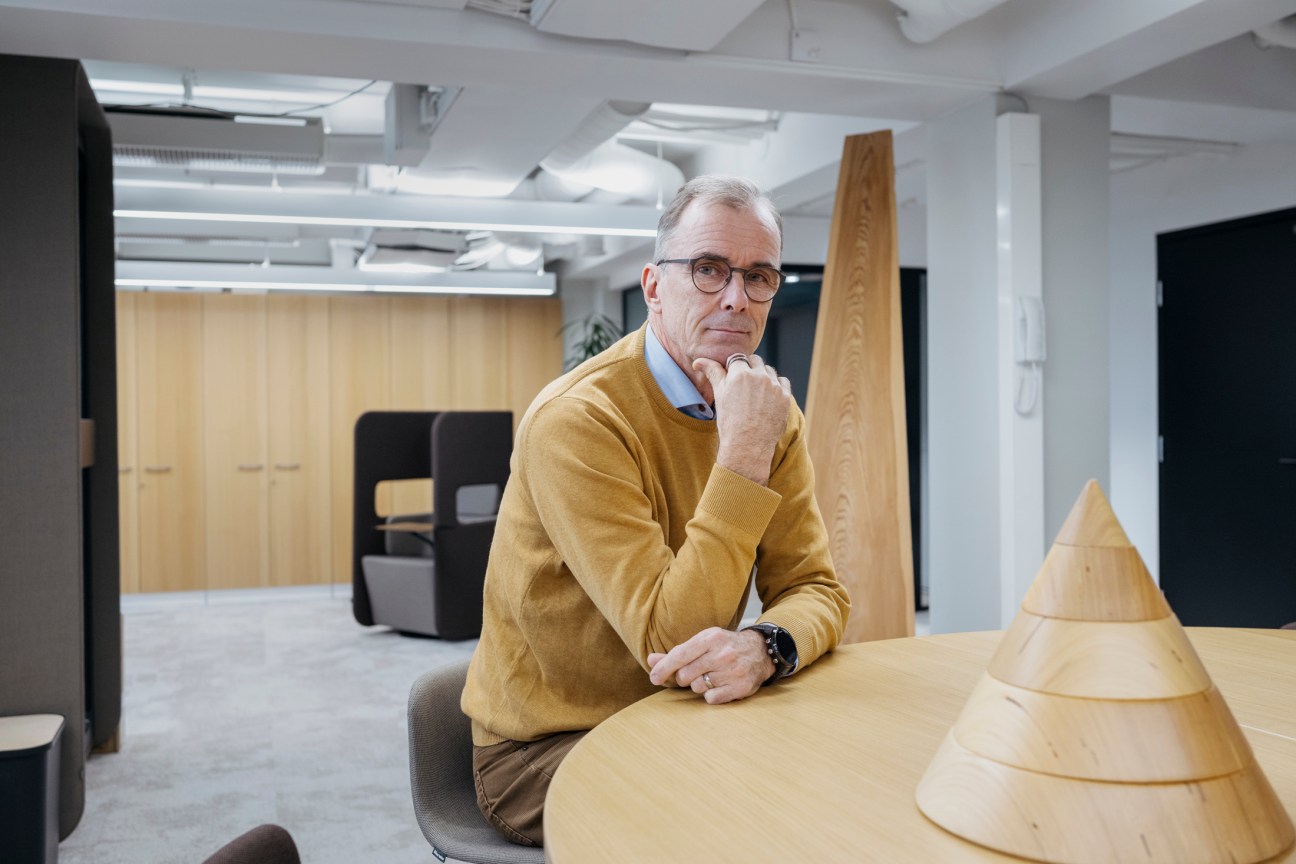
To understand what wood means to the Finns, let’s start with the fact that three quarters of Finland’s total land area is covered by trees. “We live and work in forests; they are our homes and places where Finns of all ages go to relax,” says Matti Mikkola, managing director of the Federation of Finnish Woodworking Industries. Forests are key to Finland’s economy too. “It’s one of the biggest businesses in the country,” says Mikkola. It is also among the ways in which Finland is entirely self-sufficient.
The industry has been successful in adapting to change. Paper is still a key product but Finnish timber companies produce everything from packaging and furniture to building materials and houses. More than 70 per cent of Finnish timber is now used in buildings. And the furniture industry generates more than €1bn of revenue a year.
With consumers demanding more environmentally friendly items, the timber-furniture makers are well placed: wood is both a carbon sink and a renewable material. “Every time you buy a wooden product you make an ecologically sound choice,” says Mikkola. “Finnish law obligates us to plant trees to replace those chopped down and these younger trees absorb more carbon dioxide than the existing ones.” Mikkola says that those calling for Finland to protect its forests don’t always see the big picture. “Our timber industries live off forests – if they disappear, livelihoods disappear.”
That doesn’t mean that the industry is resting on its laurels. “We are innovating,” says Mikkola. “We can utilise the side streams of the timber industry to make all kinds of things, even clothes. We are also working with waste-management firms to find new uses for leftover wood.” Mikkola sees a bright future for the wooden-furniture makers. He says that we are already witnessing the renaissance of wooden furniture around the world, with Finnish companies leading the way.
Top draw
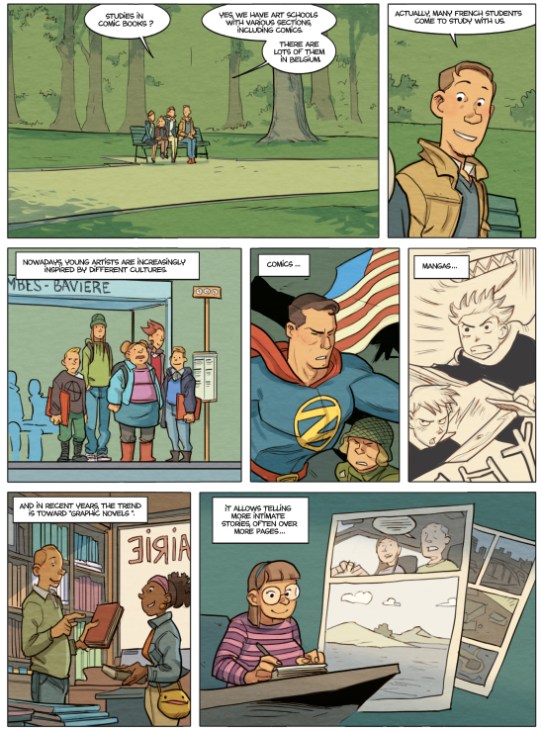
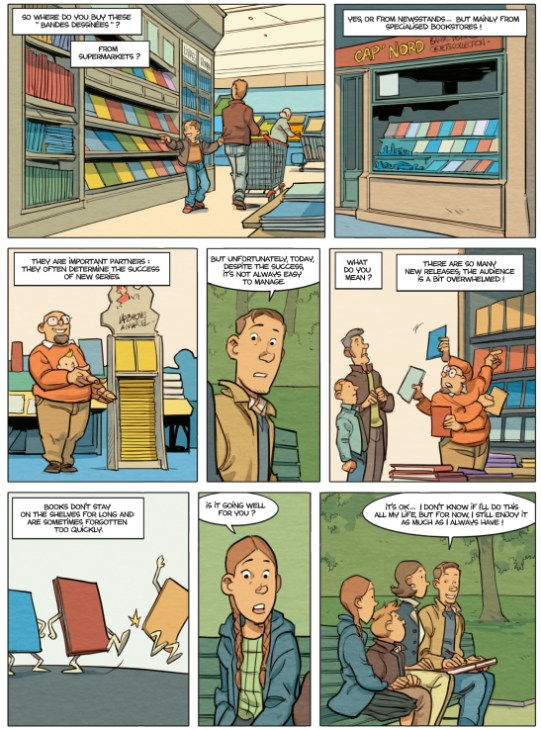
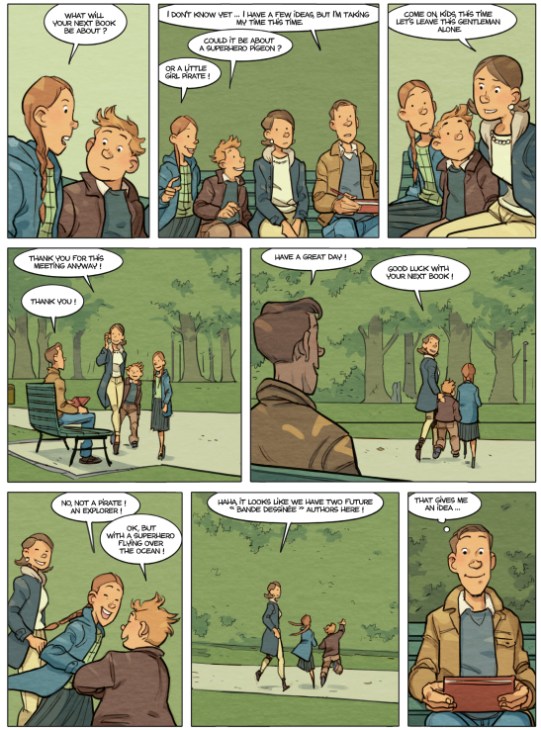
Japanese manga is perpetually popular but Franco-Belgian bande dessinées (or BD) are charming a new generation of readers. There is a long tradition (think Tintin and Asterix) but a bright future too. Today one book in every four sold in France is a BD. The global market is worth €15bn in 2023 and expected to grow to €21bn by 2030. As the industry swells so does the range of subjects artists cover, from clever biographies to thrillers that are as likely to be read by adults as in schoolyards.
To explore the animated medium’s mass appeal, monocle.livemissioned one of our favourite graphic artists, Hamo, to tell the tale of his art. Readers can draw their own conclusions.


Inside Le Commandant Charcot, the world’s first luxury icebreaker cruise experience
Sailing through frozen seas and breaking through thick layers of ice is no easy feat: it demands not only an experienced captain but also a dedicated team. This is something that the crew of Le Commandant Charcot, the world’s first luxury ice-breaking cruise ship, knows and understands well. Commissioned by French cruise company Ponant and unveiled in 2020, Le Commandant Charcot can sail 270 passengers to faraway locations, such as Greenland or the North Pole. It can even undertake a semi-circumnavigation of Antarctica, cruising from New Zealand to the bottom of Argentina in 30 days.
Unlike most commercial exploration cruise ships, which have to stop upon reaching ice, the sight of frozen water often only marks the beginning of a trip for Le Commandant Charcot. “Guiding a 150-metre-long vessel powered by 45,500 horsepower through dense ice, combatting the fierce katabatic winds [which flow downhill] from the Antarctic and battling 15-metre-high waves requires extreme precision and patience,” the ship’s captain, Stanislas Devorsine, tells monocle.
Others working on the ship have their own set of challenges. Hotel manager Jean-Lou Rodot-Dufayet, for example, must ensure that bad weather doesn’t damage the 123 cabins and suites on board. Meanwhile, the culinary team, trained by chef Alain Ducasse, serves exquisite menus daily, even when land – and fresh produce – is nowhere to be seen. Lastly, the ship’s technical crew keeps machinery running in freezing conditions. “They’ve trained at some of the world’s foremost seafaring institutions,” says Devorsine.
Each member of the crew can set up an ice survival camp, made specifically for Le Commandant Charcot. This camp, deployable on both water and land, is equipped with shelters and polar survival suits. Additionally, the team has conducted emergency simulations in collaboration with the Arctic Nations’ Search and Rescue (SAR). These drills, Devorsine says, were highly successful. “So much so that the SAR teams are now keen on adopting some of our innovations, such as the polar suits.”
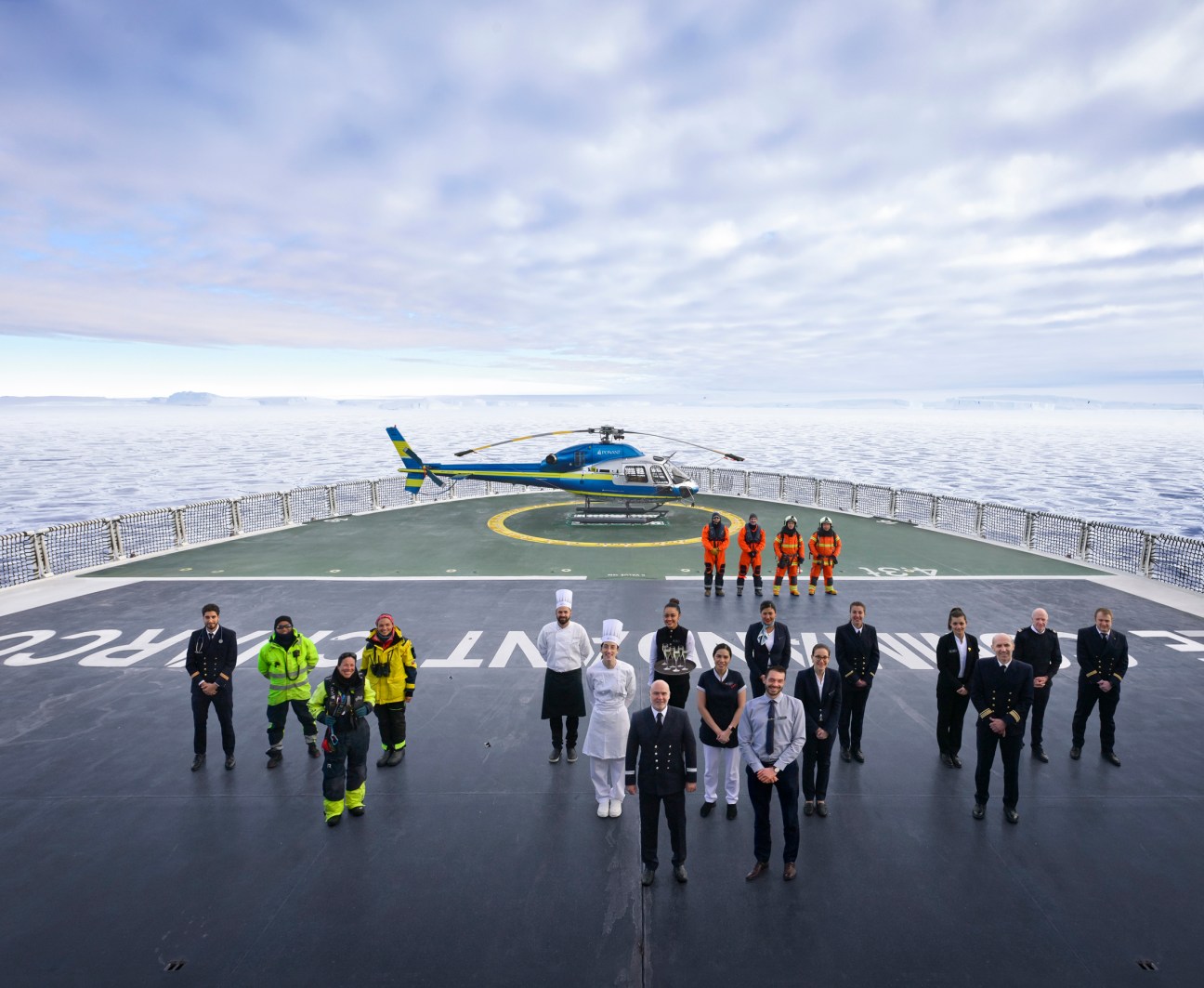
Stanislas Devorsine (bottom right)
Captain
A graduate of the École Nationale Supérieure Maritime in Le Havre, Stanislas “Stan” Devorsine’s maritime journey began early. As a young mariner, he participated in global sailing competitions, always venturing towards the world’s remote polar regions. Before joining Le Commandant Charcot’s crew, he captained the French icebreaker L’Astrolabe for a decade, which carried supplies and researchers between Hobart, Tasmania and the Dumont d’Urville research station in Antarctica.
From left, to the back, to right in the above image:
1. Marc Senat
Ship doctor
“Being at sea for up to a month means that we need a medic who is both calm and flexible.”
2. Donnel Quiocson
Bosun
“Supervises and assigns all maintenance tasks, given by the staff captain, to deck personnel.”
3. Marilia Olio
Expedition guide
“With the ocean and weather conditions changing every hour, her job is often unpredictable.”
4. Jennifer Roux
Assistant expedition leader
“The expedition team has to work closely with the bridge and hotel teams to make explorations and landings possible.”
5. Izaac Mainville
Aircraft engineer
“We need the helicopter to scout the area before a landing, so having good heli technicians on board is a must.”
6. Olivier Mabille
Helicopter pilot
“With almost two decades of experience in the French navy, Olivier is the best heli pilot to have on board.”
7. Jerrieboy Rabacca
Heli and firefighter assistant
“Performs helicopter operations in a secure way, even when the weather conditions are very unstable.”
8. Jeffrey Zamora
Firefighter pro
“The ship needs skilled firefighters like Zamora, who also are always on stand by during helicopter operations.”
9. Benjamin Mathiou
Executive chef
“Creates five-course menus while navigating 15-metre waves in the Antarctic Ocean, which requires a special kind of culinary talent.”
10. Liza Lario
Second pastry chef
“Having freshly baked bread, exquisite pastry and desserts is a real treat when we’re away for weeks.”
11. Jean-Lou Rodot-Dufayet
Hotel director
“A hotel integrated into a hi-tech ice-breaker needs a hotel director who keeps a cool head even in the most remote corners of the world.”
12. Lana Madeiro
Bar manager
“From a very early morning cappuccino to an extremely late digestif, Lana serves every guest with a smile.”
13. Jenely Capuz
Cabin stewardess
“From staff quarters to the owner’s suite, Jenely’s housekeeping team keeps every cabin spiffy clean.”
14. Alexandra Garcia
Front desk manager
“The person who takes care of every guest request, even when we are sailing under difficult conditions.”
15. Florian Taburiaux
Cruise director
“Acts as the bridge between passengers and crew, ensuring that every voyage goes smoothly.”
16. Julie Cotar
Maitre d’
“Managing a fine-dining restaurant three times a day on board an ice-breaker is no easy feat.”
17. Albane Bosetti
Deck officer
“Coming from the national marine corps in France, Albane is an essential member of the captain’s team.”
18. Camille Reisemberg
Sommelier
“From serving Chateau Margaux to our VIP guests to stocking up on local wine when we’re docked, she pulls everything off with
panache.”
19. Hugues Decamus
Chief engineer
“When temperatures are as low as minus 35c, you need experts to ensure that the engines run smoothly.”
20. Robin Lefebre
Staff captain
“As second command on the ship, Robin is an excellent ice pilot and even went with Le Commandant Charcot to the North Pole.”
Affairs
Pluck of the Irish
Josh Fehnert on why, despite not quite making the cut in Monocle’s Soft Power Survey, Ireland’s moderation, spirit and diaspora are quietly influential the world over.

If there’s such thing as a softly spoken superpower – able to quietly project goodwill and often get its way – Ireland is surely a contender. While the mind might go to clichés of green fields and Guinness, Ireland is able to punch well above its weight on the world stage. How? Well, having a grateful diaspora helps, especially if it extends to the White House (“Top of the morning, Joe!”), as does knowing that Brussels has your back. The presence of the blundering UK pressing political self-destruct next door helps too.
Global goodwill comes all the easier when you’re a small, wealthy democracy with a policy of military neutrality. Its good brand was in the top 20 according to the 2023 Anholt Ipsos Nation Brand Index. It’s a top 10 in the United Nations Human Development Index and is perceived to be among the least corrupt, according to Transparency International. It has a free press, is increasing its global aid contributions and has invested in 22 new embassies and trade missions since 2018. Ireland’s gdp shot up 5 per cent this year with similar growth forecast for 2024 – figures that France, Germany and the UK can only dream of. A low corporate tax rate of 12.5 per cent has helped to draw investment and being a lively, liveable Anglophone country with plenty of pubs means that many put down roots here.
Beyond the numbers, there’s nuance. Social progress in recent years has been swift. The fact that a country once ribbed for its fondness for “the drink” is set to become a world leader in health warnings on alcohol packaging illustrates the point. Not to mention the vast legislative leaps made on marriage and gender equality in the past decade. As the power of the church waned, Ireland put faith in education and training. Today it’s one of only a handful of nations where more than 50 per cent of the adult population has completed tertiary education.
This once strict Catholic nation is also now led by Leo Varadkar (pictured, with Joe Biden), a gay doctor of Indian origin with a penchant for colourful socks. That these changes have left people more likely to raise a glass than an eyebrow, and that politics here remains a sensible centrist affair, is also remarkable in an age of fighty populism. Ireland’s proportional representation system is partly responsible: coalition governments are common.
“That’s led to moderation,” says Mark Henry, author of An Optimist’s Guide to Ireland at 100. “And a consistency in policy about education and our success attracting inward investment.”
Even the nation’s cultural tropes are being rewritten. Irish writers account for four of the 13 on the 2023 Booker Prize longlist and it has four Nobel literature laureates. And who’s that on top in the historic Eurovision stakes? Ireland, tied with Sweden on seven. Films, filmmakers and actors got plenty of attention and Hollywood nods at the 95th Academy Awards, including the nominee for the best international feature film (Irish-language tearjerker An Cailín Ciúin), best actor shouts (for Paul Mescal and Colin Farrell) and wide acclaim for Martin McDonagh’s The Banshees of Inisherin.
Not all the nation’s far-flung talent took the gongs for which they were nominated and that’s one way to understand Ireland’s subtlest successes in the soft-power stakes: everyone loves an underdog. Even the nation’s rugby team – ranked first in the world for most of 2023 – were seen favourably despite crashing out of the Rugby World Cup in France at the quarter-final stage. The team told a tale of bravery, pluck and valour rather than ignominy in defeat. By contrast, the harder-to-love England side exceeded expectations but remained almost unanimously disliked. Ireland’s reputation for being reliable, and its peoples’ for being good-humoured, have helped to define its consistent popularity and influence abroad. Even if it doesn’t always get a trophy for its trouble.
Josh Fehnert is Monocle’s proudly part-Irish editor.
Game changer

The South African rugby team’s charismatic 32-year-old captain, Siyamthanda Kolisi, sealed his standing as one of the game’s most recognisable figures in October when he led the Springboks, the country’s national team, to triumph in the Rugby World Cup – its second in succession and record fourth in total. The flanker, known as Siya, had rewritten his country’s sporting history before when, in 2018, he became the first black player to be appointed as captain of a team that was, historically, the preserve of the country’s white elite. During apartheid, rugby in South Africa was segregated and the Springboks were barred from competing in the first two Rugby World Cups.
Now, Kolisi is the embodiment of a unified sport supported by members of all of South Africa’s many and varied demographics. His eloquent post-match interviews regularly feel like soliloquies on rugby’s more poetic qualities: teamwork, sportsmanship, respect. And Kolisi’s powers extend far beyond the pitch – particularly in his charitable and philanthropic work, which have made him a unifying figure in a country still attempting to bridge long-drawn divisions. His by-now-familiar habit of singing traditional southern African songs, such as “Shosholoza”, as he took to the field became a talking point around the world. The unabashed renditions seemed to express a joy at his exalted position and a broader sentiment that felt, to many fans, more universal and more explicitly expressed than those traditionally conjured by a game of rugby.
Kolisi presents South Africa as a country of aspiration and social mobility, where neither race nor class need be impediments to an ascent to the summit of national life – and he does so in front a global audience. Every now and then, a sports star transcends the arena that forged them. In Kolisi, South Africa has a charismatic ambassador whose influence extends far beyond the field of play. He embodies, for both South Africans at home and his legions of supporters abroad, how potent a feeling it is to sing when you’re winning.
Andrew Mueller on…
Unbelievable truths
You’re wrong about the Middle East. To be clear, you might have a firm grasp of the dynamics of the conflict in Gaza and a reasonable understanding of the history that led to this unhappy point but, right now, something that you believe to be the case is flatly untrue. To be even clearer, the author of this column does not exclude himself from this assessment. You should not beat yourself up about this (unless you’re among those who are confidently sounding off on social media on the basis of such misapprehensions, in which case you should). The present Israel-Hamas conflict, ignited by the terrorist group’s vicious assault of 7 October, has been harder to make sense of than most because of a particular combination of factors. Some of these are the depressing eternal elements of warfare – for example, protagonists seeking to command the theatre of information with a combination of evasion, obstruction and invention.
Others are recent developments. If there is a single representative demonstration of our new age of confusion, it is perhaps the 19 October front page of Libération. The French daily splashed with a photo of a protester at a pro-Palestine demonstration in Cairo, brandishing a poster of an injured infant screaming in the rubble of Gaza. Libération’s photo was authentic but the protester’s image was an AI-generated simulacrum.
Inevitably, this prompted widespread wilful missing of the point from the malevolent and/or ignorant on all sides of the argument, a cacophony worsened by the acquisition of an influential social-media platform by Earth’s thickest billionaire. This will get worse until or unless the regulation of social media is taken seriously, to say nothing of the regulation of artificial intelligence.
This columnist’s solution to this problem is doubtless no less utopian or impractical than this columnist’s solution to the Israel-Palestine issue. But basically it is this: it’s long past time that we ceased indulging the nonsense that social-media platforms are neutral conduits of conversation, like phone lines. They are publishers and should be as accountable for what appears on their platforms as any newspaper. (Libération quite properly followed up with a detailed explanation of their misunderstood front page, though it’s certain that vastly fewer people read that than bought excitedly into a narrative of deliberate deception.) Social-media companies do occasionally remove inflammatory or inaccurate content. This demonstrates that they can. They need to be told that they must and, if that necessitates hiring armies of sub editors, that’s their problem.
Andrew Mueller hosts ‘The Foreign Desk’ on Monocle Radio. Listen live at monocle.live/radio every Saturday at midday London time or download as a podcast.
Art house

It took French artist Nicolas Floc’h six months to canoe down the Mississippi river, during which he documented the weird colours that bubble up from its depths. His patron was the Villa Albertine, a US-based arts institution established by the French embassy, which is reinventing the artist residency as a means to refresh – and somewhat revive – French soft power on this side of the Atlantic. “It’s inspired by the Villa Medici,” says acting director Judith Roze, referring to the famed patrons’ palace in Rome, which has been owned by the French state since the 19th century. “The goal is to forge new connections between the cultural scenes of the two countries.”
The residency programme is in its third year and artists in any discipline can apply. They don’t need to speak French; the only requirement is that their project is rooted in the US.
Marseille-based music producer Djellali El Ouzeri, for instance, spent this autumn combing through the sound archives in Atlanta and gathering street ambience to create a sonic “bridge” between the two cities. Other residencies have included research stints by social scientists and philosophers.
In 2024, Villa Albertine will bring artists from 15 countries to the US. “There’s a good stock of Francophilia here but it’s also true that the US is increasingly turning to other geographies than Europe,” says Roze. “Too often the image of France is about the past and there are a lot of misunderstandings about French attitudes towards diversity. So it was important for us to say that France is also a portal to other places in Europe, Africa and the Middle East.”
The villa’s programming is administered via 10 outposts across the US, with its headquarters in New York. Housed in the Payne Whitney Mansion, the Gilded Age home of the philanthropic Whitney family on Fifth Avenue, the villa has just completed an extensive reimagining of its fifth-floor atelier, which overlooks Central Park and will be used to host gatherings. “Villa Albertine is not just a residency programme,” says Roze. “It intends to be a global platform of exchange between the US and France.”
villa-albertine.org
Sunken treasures
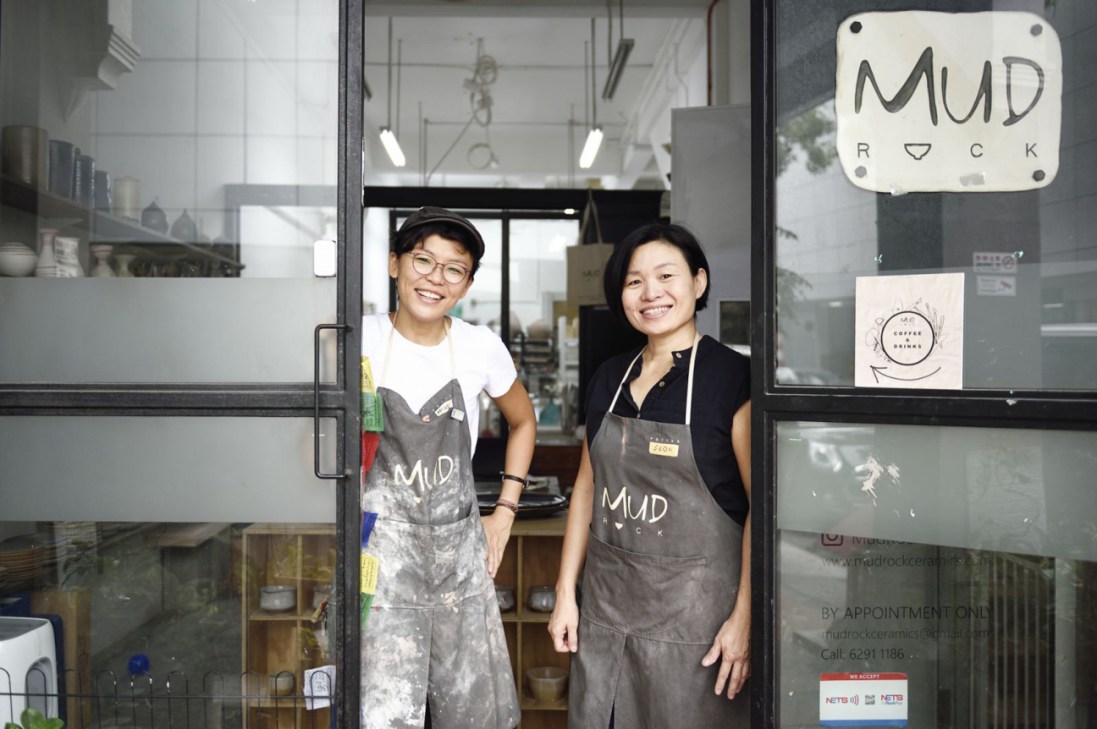
More than 1,190 years after an Arabian trading ship sank in the waters south of Singapore, ceramicists Ng Seok Har and Michelle Lim (pictured above) are still learning lessons from its porcelain cargo. The duo founded Singapore-based Mud Rock studio in 2013; it has since become the country’s premier purveyor of handmade ceramics, supplying Michelin-starred restaurants and fashioning gifts for diplomats and monarchs. “There’s a long history of soft power in ceramics,” Lim tells monocle. She has given guided tours of the Tang shipwreck at Singapore’s Asian Civilizations Museum, focusing on its vast array of painted bowls, ewers and other treasures. These, she says, tell the story of cultural exchange, trade and international relations across oceans.
Mud Rock’s creations perform a similar role today. Soon after the studio was founded, Singapore’s high commissioner in Canberra hosted a dinner that was served on its plates. The ministry of foreign affairs has commissioned Lim and Ng to make ceramics to be gifted to royal families and dignitaries across the world, including those from Sri Lanka, Tanzania and the Vatican. Mud Rock’s beautifully rendered vases, bowls and tiles showcase Singaporean art and local craftsmanship, offering new perspectives on a country associated more with finance and business than with artisanal pottery.
“We don’t want our work to be hidden behind a cabinet,” says Lim. “We imagine people bringing it out every time they meet a Singaporean.” One of the studio’s most memorable commissions was a 90th birthday present for Queen Elizabeth II. They created an intricate tea set inspired by a tingkat, a traditional tiffin carrier, with etchings commemorating the monarch’s connections to Singapore, such as her first visit in the 1950s and the tembusu tree that she planted on one of her later trips. Lim and Ng made nine versions before settling on the final set, which they hand-delivered to the UK to ensure its safety. “There was immense pressure,” says Lim. “But it was an incredible honour.”
Just add water
Venice harbours many secrets and one of them is Anish Kapoor. While Italy’s city of waterways might seem like an impractical place to live or work, the area has always held an appeal for artists. Kapoor, a Turner Prize-winning sculptor, has now joined this cohort. At his studio near Campo San Polo, he tells Monocle why. “It’s God’s country on many levels,” says Kapoor, who has a studio in London but now spends the better part of every year in Venice.

He still struggles with the “belonging, not belonging” feeling of his youth. The son of Punjabi and Iraqi-Jewish refugees, Kapoor grew up in India and moved to London to study art as a teenager. But in Venice, the artist is embracing the liberation of being an outsider. In 2018, Kapoor purchased the Palazzo Priuli Manfrin, a grand if crumbling 18th-century residence, where he plans to establish his own foundation, studio or repository for his works.
The palazzo’s frescoed ballroom and salons are already in use, having opened to the public at the Venice Biennale in 2022 with a display of Kapoor’s art. That same year, he also used it as a second location for his ground-breaking solo exhibition at the Gallerie dell’Accademia, where he debuted works covered in Vantablack coating (considered to be the world’s darkest man-made substance) and a canon that shot gooey mounds of viscera- coloured wax directly onto museum walls. The artist’s recent exhibition at Florence’s Palazzo Strozzi in October brought together some of his most emblematic creations: a blood-coloured wax monolith on train tracks shaped by their continual movement through a doorway; curved mirrors that reflected and warped the viewers’ perception; and forms that were, seemingly, made entirely of pigment.


They were sculptures that lacked solidity and distinct borders; forms that were startlingly shapeless and impossible to fully grasp. “I was trying to portray the way that real objects are not real – the way that material things are immaterial,” says Kapoor. “We know that from our experience of ourselves.”
Kapoor fashions the objects – or “non-objects,” as per his terminology – in collaboration with a team of more than 20 assistants at his London studio. But in Venice, he paints alone. A palette mashed with globs of red paint and silicone sits on the artist’s studio floor, which his dog, Tara, then prances through before walking across some works laying on the ground. Kapoor smiles at her paw trail.
Currently on display at Lisson Gallery’s two New York spaces, the works that Kapoor has produced here feature elements that he has never worked with before, such as Catholic-style shrouds and aureoles. His reasoning? “The job of the artist is to follow the unknown,” he says. “Do what you’ve never done before and risk the possibility that it’s utterly idiotic.” Tara, in his arms now, gives Kapoor’s face a lick. “I’m talking about freeing yourself. And freeing yourself is a process.”
The CV
1954: Born in Mumbai.
1973: Moves to the UK to attend the Hornsey College of Art and, later, the Chelsea School of Art and Design.
1978: Takes part in his first high-profile exhibition, New Sculpture, at the Hayward Gallery.
1991: Wins the Turner Prize.
2018: Purchases Venice’s Palazzo Priuli Manfrin.
2022: Subject of an exhibition held at the Galleries of the Academy of Venice.
2023: Kapoor’s paintings are on display at Lisson Gallery’s two New York locations until 20 December.
Hook, line and winter
Zetterberg takes over and it doesn’t take him long to catch a fish – but it is so small that we must let it go. “We only keep the bigger ones,” he says. “The ones that have enough meat on them.” Finnish law determines the kinds of fish that people are allowed to take home. Zetterberg’s favourites? Zander and perch. But other popular varieties include whitefish, trout, arctic char and burbot.
This time we have to make do with a few small ruffe. But Zetterberg isn’t disappointed. “This is not like going to the supermarket,” he says. “You need practice and patience – and we have just started.”
It’s a sunny winter’s day with subzero temperatures, clear blue skies and little to no wind, and we are preparing to set out for the open sea. “Perfect conditions for fishing,” says our instructor, Antti Zetterberg. We are not sailing; we are walking, because Helsinki’s Seurasaarenselkä Bay is covered in a layer of ice that is 30cm thick. We are here today because Zetterberg, an avid fisherman and editor in chief of fishing magazine Kalastus, has agreed to teach Monocle the ins and outs of ice-fishing – a popular pastime in Finland, where tens of thousands of lakes freeze over during the winter months. Zetterberg has come prepared – so prepared, in fact, that onlookers might think we are setting out on a polar expedition (think winter overalls, ice drill, sonar, various rods and lures, a stool, pliers, Swiss Army knife and dry suit). Should we be worried? “The ice should carry us,” he says, handing us ice picks that we can use to pull ourselves up in case we fall into the freezing water. “But it’s best to be prepared in case it doesn’t.” We pile the equipment on a sleigh and start looking for a spot. Some people are walking their dogs on ice and give us a thumbs-up. Ice-fishing is a respected hobby in Finland and it is considered polite to wish the fishermen luck.
Once we settle on a location, Zetterberg begins showing Monocle how to use an ice auger (a hand-operated drill) to make a hole. After about 10 seconds, we manage to pierce through the frozen lake. Then it’s time for Zetterberg’s party trick. “These are a game changer in ice-fishing,” he says, handing Monocle a small gadget that looks like a stethoscope. This sonar transducer shows you in real time whether fish are lurking beneath the ice. “Before, you would have to wait and see,” says Zetterberg, laughing. “Now you just see.” But there are no fish to be found here. Monocle begins to feel cold and tired but Zetterberg reminds us why we are here. “You’re surrounded by wide expanses of beautiful snowy landscape,” he says. “It makes you feel completely free.”
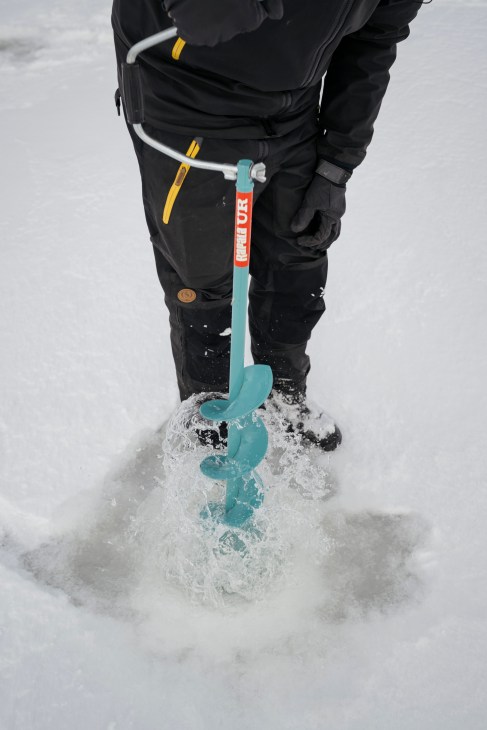


At our next spot, we make a hole and cast the sonar. “This was the easy part,” says Zetterberg, handing us an ice-fishing rod. “Now we need to lure and catch the fish.” We cast the rod in the water through the small hole, letting it sink almost to the bottom. After a few minutes, Monocle asks Zetterberg whether we should change spots again. “Are you kidding me?” he says, laughing. ” You’ve only been in there for a minute. Sometimes it takes hours – and that’s the beauty of it.” Ice fishing is not a pastime for the impatient. But it is therapeutic and calming, a mindfulness exercise of sorts. After all, Zetterberg explains, how often is it that we can sit still for hours on end, immersed in nature? Something pulls at the fishing rod then suddenly stops. No luck for us this time.
Design
Show of appreciation
Roca has opened a gallery-cum-showroom in São Paulo, following its creation of similar spaces dedicated to culture and conversation in Barcelona, Madrid, Lisbon, London, Shanghai and Beijing. The Spanish bathroom specialist, which was founded near Barcelona in 1917, is aiming to contribute to the design scenes in the cities where it has outposts. The Roca galleries showcase sustainable architecture and design as well as hosting talks that are open to professionals and the public. The new space, created by Brazilian architect Fernanda Marques, draws inspiration from the Atlantic forests of South America, while keeping a contemporary touch via sleek black façades.
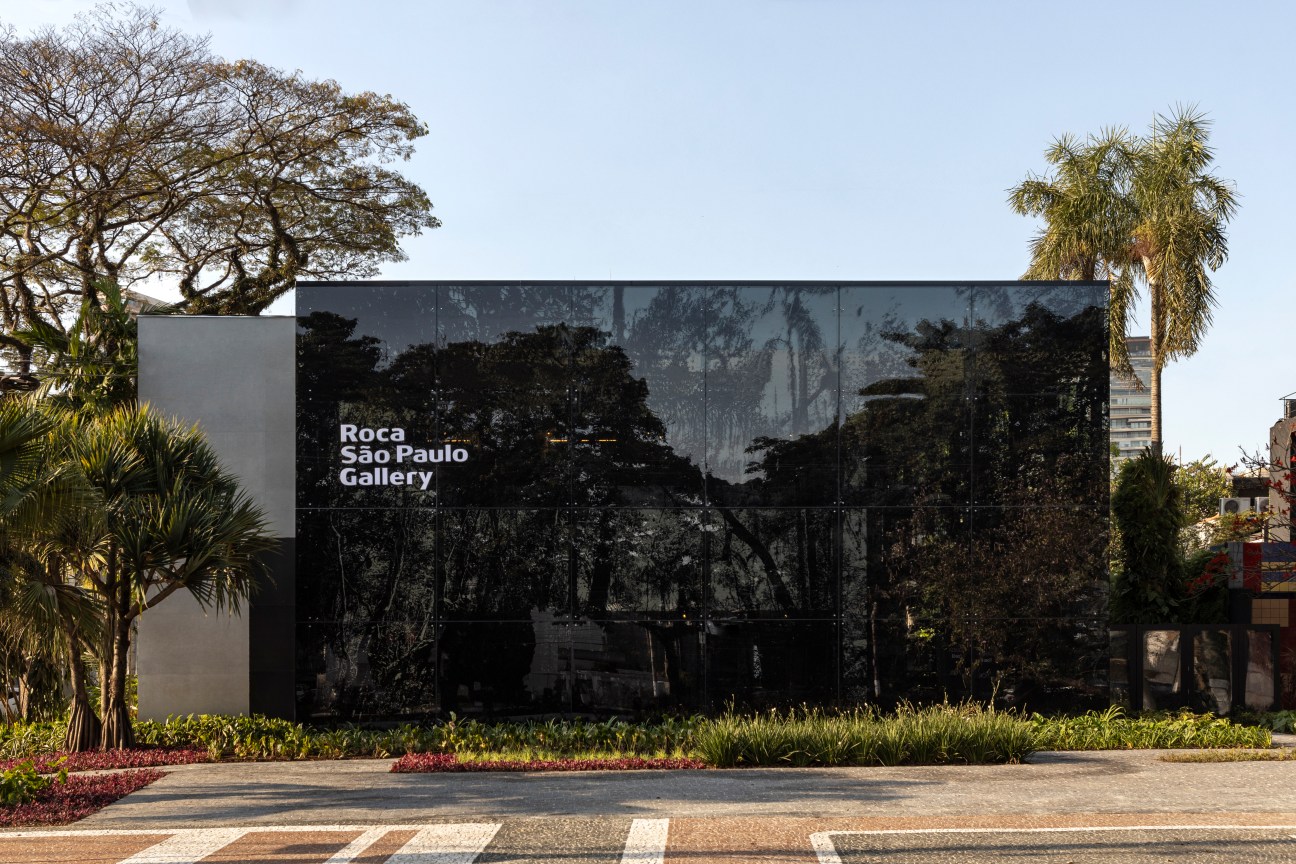

Located in São Paulo’s central Jardim América neighbourhood, the gallery sits on one of the most vibrant avenues in Brazil’s biggest metropolis. “For me, the significance of the gallery transcends professional achievement,” says Marques. “The Atlantic Forest is a biome with one of the highest diversity of plant and animal species on the planet, heightening the urgency of its preservation. In this sense, I dare to assert that the work, in and of itself, serves as a manifesto.”
roca.com
Dubai Design Week
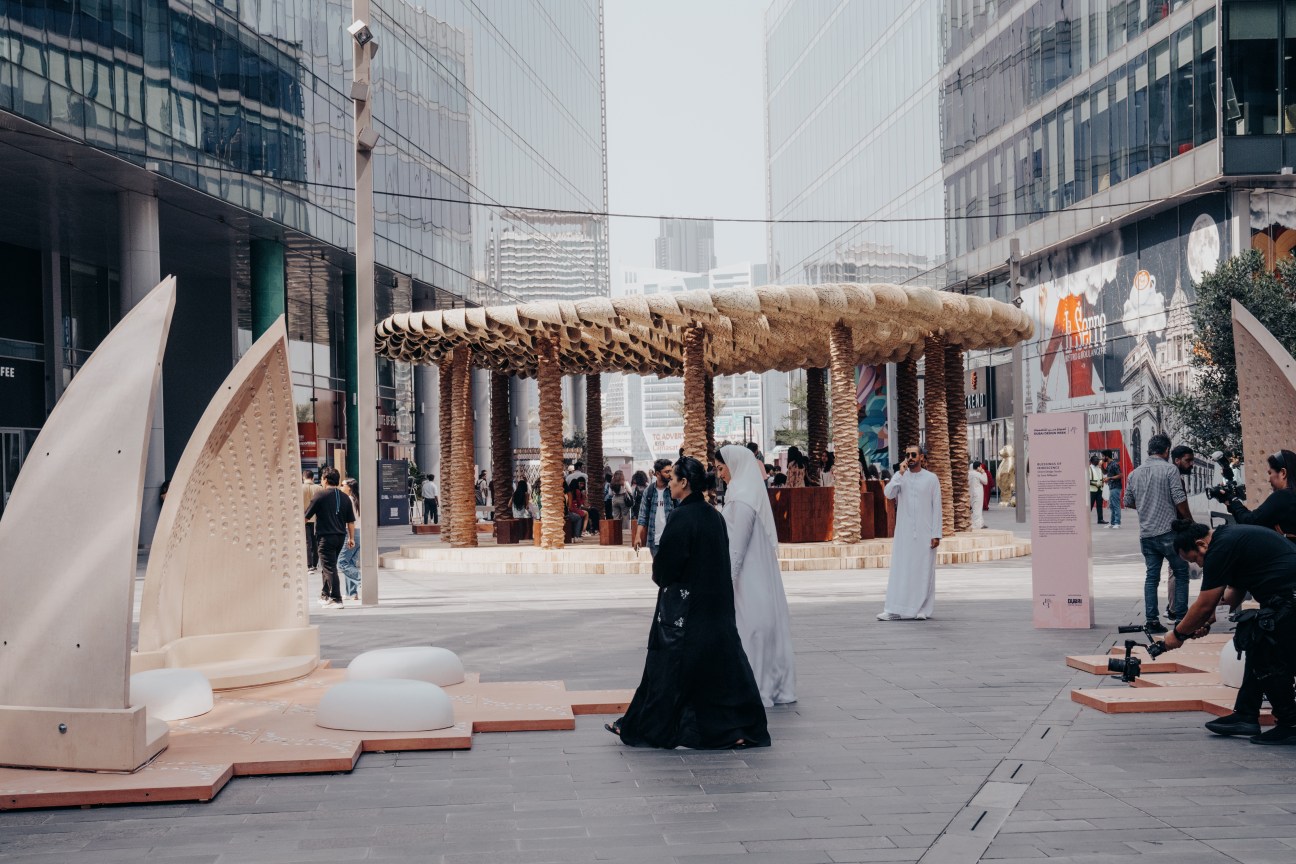
Since 2015, Dubai Design Week has rounded off the year of design-minded fairs and trade weeks. At its 2023 iteration in November, more than 20 installations and architectural structures were installed in the Dubai Design District. A key theme that ran through much of the work on show was an eagerness to connect architecture with place – apt in a city often accused of constructing soulless buildings.
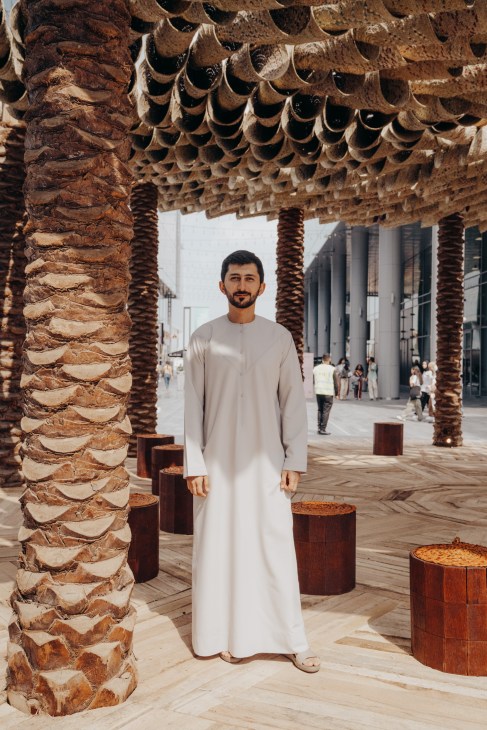
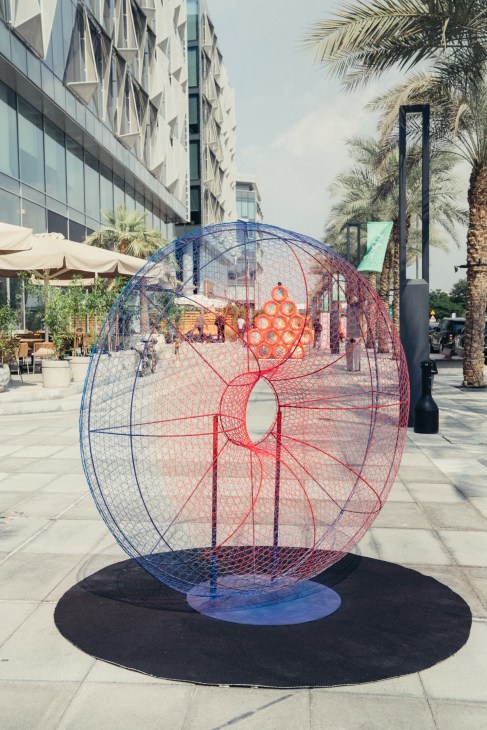
“Dubai has always been about the biggest, the tallest,” says Abdalla Almulla, who won Dubai Design Week’s annual Abwab pavilion commission. “It’s important to take what we have learned in the past and use it to change perceptions. We want the uae to be seen as forward -looking.” Almulla, whose pavilion, made from palm trees, was hinting at a return to regional materials to ground architecture in place.
It’s a theme that Shabir Mir, a Pakistan-born, Dubai-based creative also addressed. “The main issue across the world is identity: we’re experiencing a crisis of it,” says Mir, whose “Ring of Life” sculpture utilised waste fishing nets, once ubiquitous in Dubai. “One hundred years ago, this object was everywhere in the city. I want us to consider how we can reflect these things in our surroundings today.”
Almulla and Mir’s installations suggest that designers should look beyond their immediate surroundings for materials and structural inspiration. The results are sustainably minded and give architecture a sense of identity.
dubaidesignweek.ae
Holding the fort
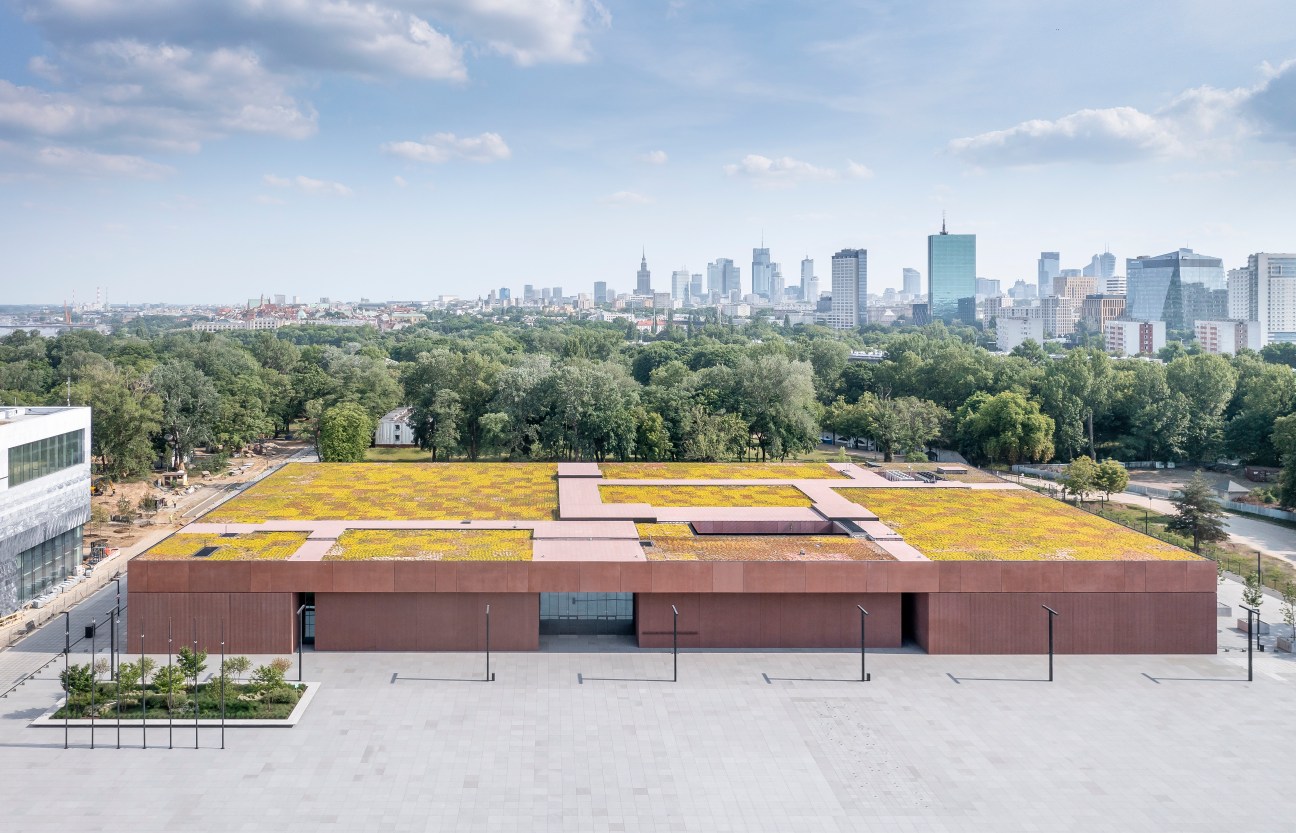
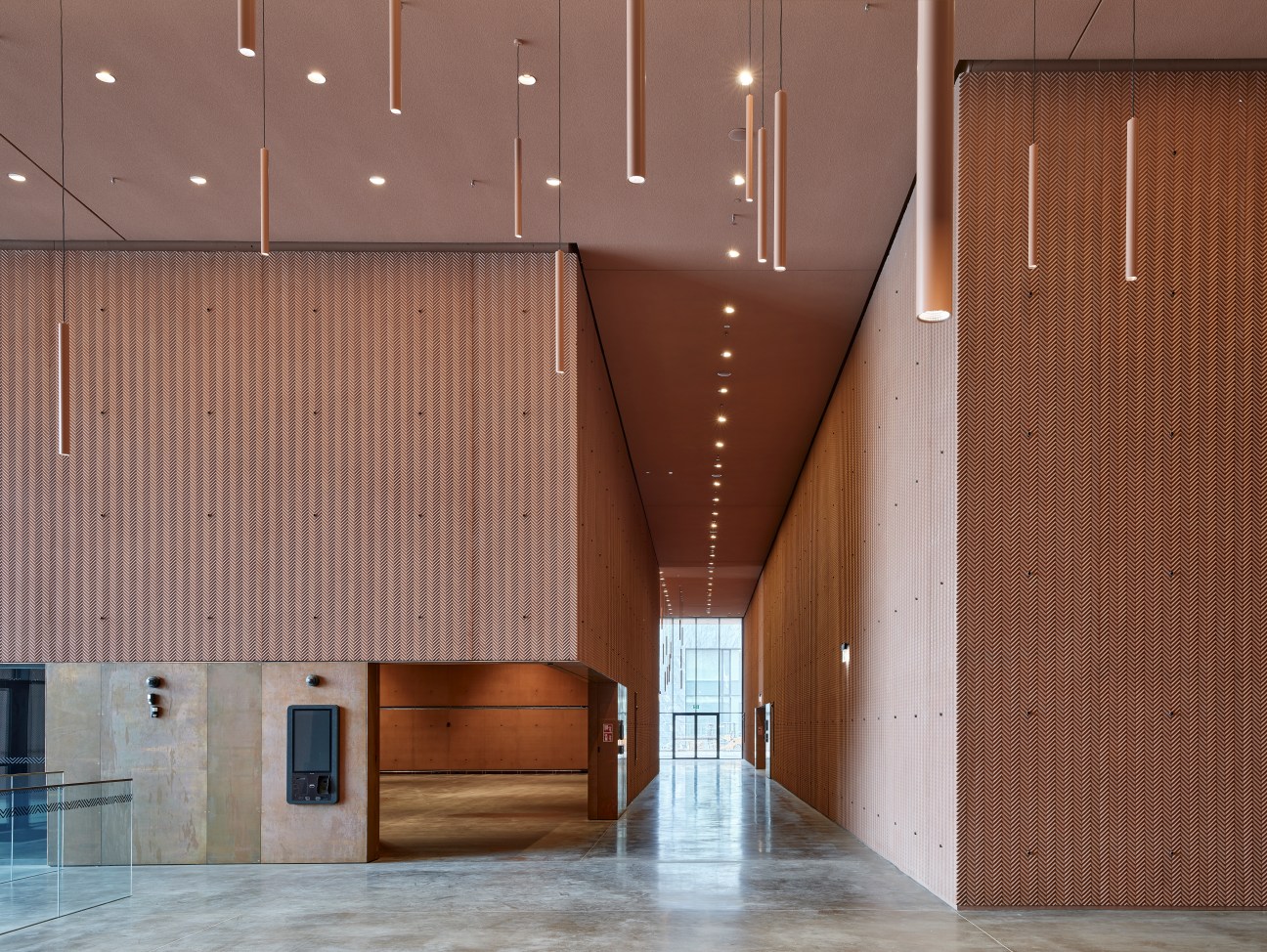
For decades, the Warsaw Citadel, near the centre of the Polish capital, was largely closed off to the public. A 19th-century fortress built on the imperial order of a Russian tsar, it has a long and, at times, harrowing history. But Varsovians are now able to return to the citadel, thanks to the construction of a new public building within its walls: the Polish Army Museum, which has been designed by wxca Architectural Design Studio.
“We wanted to create a site for the capital’s residents and visitors for cultural events and everyday activities,” says Marta Sekulska-Wronska, ceo of wxca. Structurally, the new museum is composed of eight blocks united by a shared green roof, enhancing the verdant surrounding citadel parkland. wxca’s architects were sensitive to the original features of the fortress and its history during the design process too. Chevron patterns on the surface of the museum evoke military motifs, while the walls feature a coloured concrete that alludes to the red brick of the Citadel. Space for reflection was key too. “It was important for us to create a sense of tranquillity,” says wxca architect Pawel Wolanin. “We wanted the interior of the museums to have a slightly sacred atmosphere. During the planning stage, we imagined people whispering inside.”
The new facility is part of a wider development of the citadel. Other additions to the complex, which are currently under construction, include a second wing of the Army Museum (essential, given that it has an archive of more than 300,000 exhibits) as well as the new Museum of Polish History. “As well as hosting visitors to the new headquarters of the Polish History Museum and the Polish Army Museum, the complex of fortifications and expansive green spaces will be opened to the public,” says Sekulska-Wronska. She hopes that, collectively, the buildings will form one of Europe’s largest museum complexes – and transform a long-overlooked part of the city.
wxca.pl
Trade mission
Design Nation is a new Belgian trade show focused on the contract furniture market. Its first iteration took place in the town of Kortrijk in October 2023 and, aside from offering a new forum for brands to present work, it served as a new physical model for industry fairs.
“We decided to move away from a traditional trade show format to a concept with fixed surfaces and plug-and-play booths, so brands don’t need to invest a lot in building a stand,” Design Nation’s exhibition manager, Hannelore Caenepeel, tells Monocle. “If you go to a city such as Marrakech, you have narrow streets where you go from one shop to another, and a central square where you can have a drink.
This is where the idea came from.” The result was a maze-like exhibition hall with booths separated by gauzy white curtains, offering a sense of both airiness and intimacy.
Smaller than many trade fairs, with just 74 companies present, the event had a sense of conviviality that proved popular. “The new format is convenient in terms of setup and costs,” said Philipp Mainzer, co-founder of German interiors brand e15, which was presenting the new Galerie table designed by David Chipperfield. “This trade-targeted event is in our interest because at least half our business is commercial.”
design-nation.eu
Turning heads
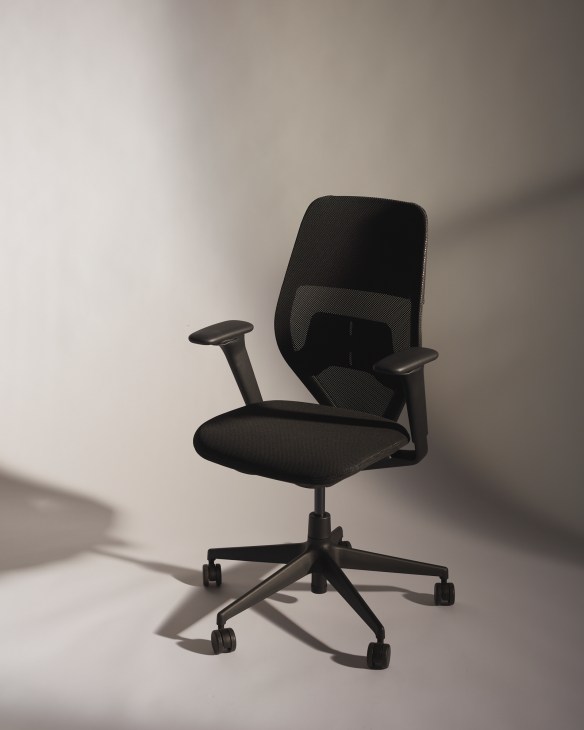
Office life has evolved in the past three decades – and so too has Vitra’s partnership with Antonio Citterio. The Swiss furniture firm has, over the course of 30 years, worked with the Italian architect and furniture designer on 10 iterations of the office chair – the latest of which, acx, has just hit the market.
The ambition of its designer was to create a perch that is compact and offers some much-needed comfort for desk-based work. Its standout feature is a mechanism that allows the chair to automatically adjust positioning based on the weight and dimensions of the individual sitting on it. This is supported by a number of control elements, hidden under the seat, which allow the user to further tailor their experience. “The idea was to have an understated chair with a reduced backrest and a warm array of upholstery colours, suited for both home offices and open-plan workspaces,” says Citterio.
Much of the chair is made from recycled materials and it can be easily separated and recycled again at the end of its life. It comes in seven fetching mesh colours along with a matching seat fabric and a light-coloured or black frame. The result allows the user, and chair, to sit pretty in any work environment.
vitra.com
Business
F&B — Canada
Soft spot
When sisters Andrea Grand and Katie Fielding surveyed Canada’s fizzy-drinks sector in early 2020, they spotted a gap in the market for a higher-quality alternative to the same old household names. “The drinks sector in this country was very different back then,” says Grand. “If you didn’t drink alcohol, your only options were a can of pop or a glass of soda, so you would feel as though you were sitting at the kids’ table. We wanted to put alcoholic and non-alcoholic drinks on a more level playing field.”

So in 2021, following careers in marketing in Toronto’s fashion and lifestyle sectors, the pair launched Barbet, a colourful range of naturally flavoured sparkling drinks, all made and canned in the city. “We might have been a little naive to what the beverage industry had in store for us but we were super lucky,” says Grand. “A lot of people were very generous with their time. So we just started asking questions.”
Initially working with a mixologist friend who specialises in cocktails, the sisters crafted three drinks that were tinted and flavoured with ingredients such as grapefruit, juniper, calamansi lime, jalapeno, cucumber, lavender and pineapple. Once released, the drinks quickly found a thirsty audience. “The ingredients have kept people coming back,” says Grand – as have Barbet’s brightly striped cans, which were created in Toronto by Design of Brand.
Attempting to make a dent in a canned-drinks sector dominated by large, multinational manufacturers was a sobering prospect. “I have always been a problem solver and that lends itself really well to entrepreneurship,” says Grand. The team decided to emphasise a key aspect of the brand in deciding where to debut Barbet’s drinks: its small size.
“If you launch your products in a big grocery shop, there’s a perception that you are a big operation,” says Grand. Instead, Barbet approached some of Toronto’s smaller boutique food shops and delicatessens, as well as a selection of the city’s well-regarded independent bars and restaurants.
“We wanted to preserve the more direct, one-on-one connections that we had made with bottle shops, cafés and corner shops,” says Grand. “We knew that, if we could win over 100 people in that way, having them tell a friend about us would have more of an effect than getting our cans on the shelf of a big supermarket.”
The strategy paid off. Demand in Ontario for Barbet’s drinks has doubled every year since launch and expansion into the US is now under way. Grand tells Monocle that she expects sales to reach half a million cans by the end of 2023. “We are scaling the business and excited to introduce it to more people,” she says. “The support for small businesses in Toronto is really strong so it’s a great city to get feedback from your customers. That has been the most important part of the journey for us so far.”
The Entrepreneurs
Power suits
Daisy Knatchbull founded The Deck on London’s Savile Row in 2019 to disrupt the male-dominated world of tailoring, becoming the first house on the storied street to have a storefront dedicated to women. Bespoke suits start at about £2,800 (€3,200) and Knatchbull has also developed a ready-to-wear line.
“I was lucky to be exposed to Savile Row at a young age,” says Knatchbull. “At 23, I found myself on this incredible street. I was able to experience having a bespoke suit made for me. It was this feeling I can’t describe: an incredible, empowering strength coming through the suit. I thought, ‘This is something I want every woman to be able to experience.’”
Knatchbull’s bold vision has led her to wear other hats. “I’ve become a supporter of female entrepreneurship,” she says. “I want to do whatever I can to better that. The stats are against us: only 2 per cent of venture-capital funding goes to female- founder businesses. There’s progress to be made.”
To hear Knatchbull’s story, listen to episode 622 of Monocle’s podcast, ‘The Entrepreneurs’.
Aviation — Canada
High water

This year’s record-breaking summer wildfires in countries including Canada, Greece, Italy, Portugal, Tunisia and Algeria have renewed focus on a storied, Canadian-made method of putting them out. Nicknamed “Super Scoopers” in the US, where they are among the firefighting craft of national and state forest services, Canadair’s red-and-yellow amphibious water-bombing plane can take on more than 6,000 litres before ascending to douse wildfires from the sky.
Originally launched in 1969, the planes ceased production in 2015 as a result of dwindling demand. However, moves to restart manufacturing began in 2019 when Indonesia’s defence ministry made a one-off order for six new cl-515s and a cl-415eaf, which will be delivered next year. And interest in the aircraft, which are manufactured at De Havilland Canada’s facility in Calgary, has been ticking up. France bought 16 new Canadair planes at the Farnborough International Air Show in 2022 to reinforce its existing fleet and the European Commission ordered an extra 12 last July to be stationed across the EU, including in Portugal, Croatia, Italy and Spain. Both deliveries are due by 2027. Expect demand from other territories before then as the return of the aerial firefighting classic takes off.
Economics — Stockholm
Happy campus
Jonna Dagliden Hunt on the world’s first professor of happiness and how the academic department he has set up could lead to us ditching GDP and measuring glee.
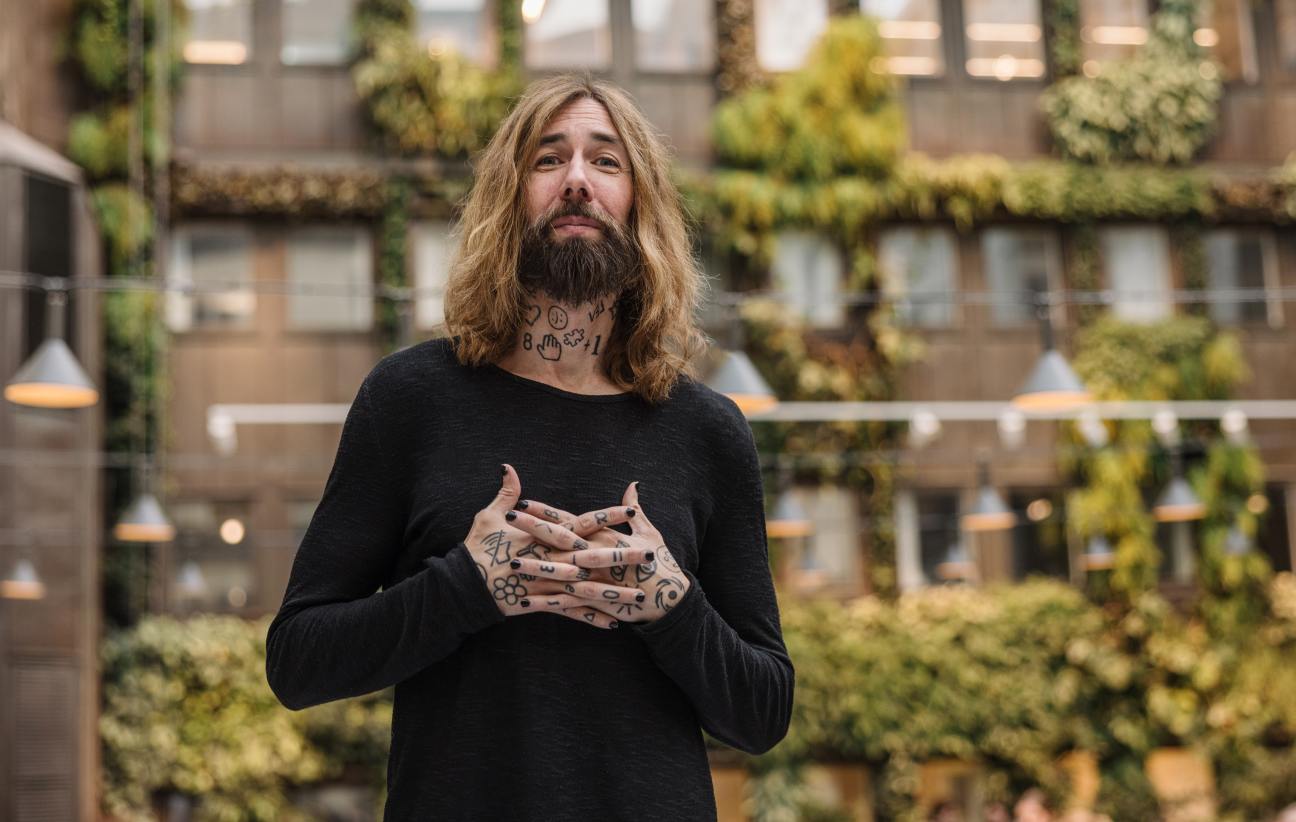
In 2008, at the fresh-faced age of 34, Micael Dahlen became Sweden’s youngest economics professor. Now he has a new accolade: he is the world’s first recipient of a professorship dedicated to happiness, wellbeing and welfare. As part of this role, he will head up a new centre dedicated to the topic at the Stockholm School of Economics (sse). But Dahlen is no smiley newcomer to the subject: 10 years ago, he introduced happiness studies to his students and is the author of several books that offer a scientific approach to its research. In fact, his entire body signifies his mission and breaks with the stereotypical view of a professor. His tattooed arms work as Post-it notes for things that make him happier. The number 70, for example, reminds Dahlen not to give 100 per cent all the time, to avoid burnout. A roadworks sign reminds him to learn new things, not least as a professor. “Finally, I’m able to work with happiness full-time and build both the research and teaching around it as much as possible,” he says. “My goal is to make society happier.”
Last year, Dahlen’s programme, Happiness and Wellbeing: Making a Better Life, became the most popular optional course in the school’s history. It is currently struggling to meet demand. Students are keen to find out how they can lead happier lives and eager to be part of what Dahlen calls his “naughty approach”. Some of his challenges to students include making eye contact with strangers, confronting fear, reconciling with a person who they were once close to and asking someone for help. “Hopefully, the course will become mandatory for all students soon,” he says, while showing Monocle some of the rooms and environments of the Center for Happiness, Wellbeing and Welfare.
In addition to a large modern art collection placed throughout the building (initiated by the current principal, Lars Strannegård), there are rooms designed to encourage creativity and spaces for more intimate discussions between students and teachers. In one, students can nestle in small huts for a relaxed seminar. In The Light House Room, a small group of students can tell stories around a pretend fireplace. Other happiness fixes are more questionable. On a desk in the middle of one classroom is a microwave to encourage students to eat in class. “All types of impulses and stimuli affect us,” says Dahlen. It is hard to believe that everyone would appreciate a curry or fish stew being consumed while they study but Dahlen is adamant about his microwave mission. “Even when something smells odd or a bit different, it affects our creativity,” he says.
Research at the new centre will look at quality of life, mental and physical wellbeing, social changes, what constitutes a healthy economy and how companies and society contribute to people’s welfare. The goal is to shape policymaking, guide companies in implementing health-promoting measures to enhance productivity and profitability, and, not least, make research findings accessible to the public.
For Dahlen, the search for happiness began as a way to understand people better. He had noticed that money was the dominant focus for many. And, he says, with soaring interest rates, inflation and recession, we are seeing that it hasn’t worked out as a measure of success, let alone happiness. As part of his mission at sse, Dahlen wants to broaden the understanding that economics should be about so much more than wealth.“As an institution, we are a crucial social actor, a welfare agent,” he says. “And with that, we have the great responsibility to educate students who will go into positions where they can truly make an impact – whether it is in the public sector, politically, in civil society or in business. It’s about providing them with as many tools and as much intellectual space as possible.”
According to Dahlen, welfare is the beating heart of economics. Despite Sweden being named the sixth happiest nation in the World Happiness Report, it is also home to some of the most stressed and worried people. To try to improve things, he is establishing a grand “happiness experiment”. “Can we make all of Sweden a little happier and healthier if we help each other?” he asks. “A first step is to actually have it as a concrete goal and begin measuring happiness in the same way as we do with gdp and other metrics.”
As for the future, Dahlen is an optimist. Despite the world seeming more insecure and unhappier than ever, he believes that we have a bright future ahead. “I’m an optimist for two reasons,” he says. “First, the future hasn’t happened yet, which means that anything is possible.” And second? “We still have so much to discover – and I’m sure that there are lots of fantastic opportunities ahead.”
Lines of defence
In a letter to the US Congress in October requesting an extra $50bn (€47bn) in defence spending, Office of Management and Budget director Shalanda Young cited threats to national security posed by wars in the Middle East and Ukraine, tensions in the Indo-Pacific, a breakdown in border security and an increase in drug trafficking. Such threats are not unique to the US. In 2022, global defence spending rose by 3.7 per cent to more than $2.2trn (€1.87trn).
After a period of relatively benign international relations, geopolitics is heating up and so is the planet. Indeed, Young neglected to mention, probably for political reasons, what many would argue is the most serious challenge to global security: climate change.
Though there is debate over which threat is the gravest, what is beyond doubt is the need for great resources. In this 12-page survey, we analyse the efficacy of the world’s security apparatus and explore ways to improve it – at a local, regional, national and global level. We visit a nuclear submarine in the US Pacific Northwest to explore the effectiveness of mutually assured destruction as a 21st-century deterrent. On a visit to South Korea’s largest arms manufacturer, we assess the economic consequences of a rearming world.
But security isn’t just about guns and armour. In Turkey, we meet engineers working to secure buildings devastated by earthquakes. In the Philippines, we talk to an octogenarian who helped to bring an end to several decades-long insurgencies. And in Estonia, we meet those at the forefront of protecting European cyberspace. Elsewhere, there are essays from leading thinkers on what lies ahead for global security and how to confront it. Plus: inflatable tanks.
Sub culture
We squeeze aboard one of the nuclear vessels being updated by a twitchy US.
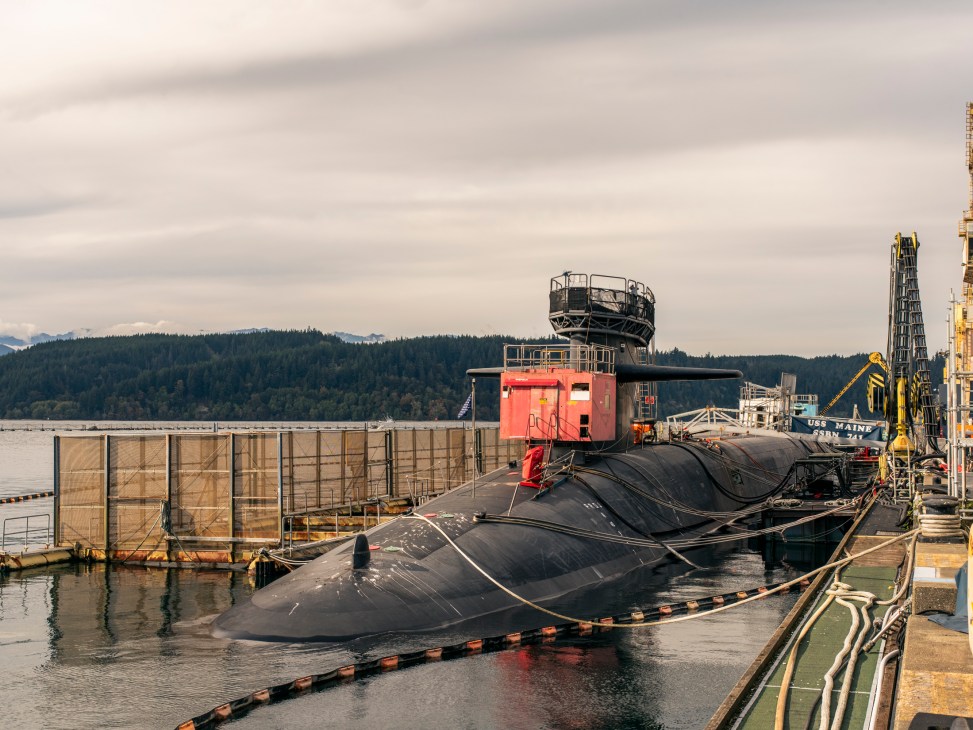
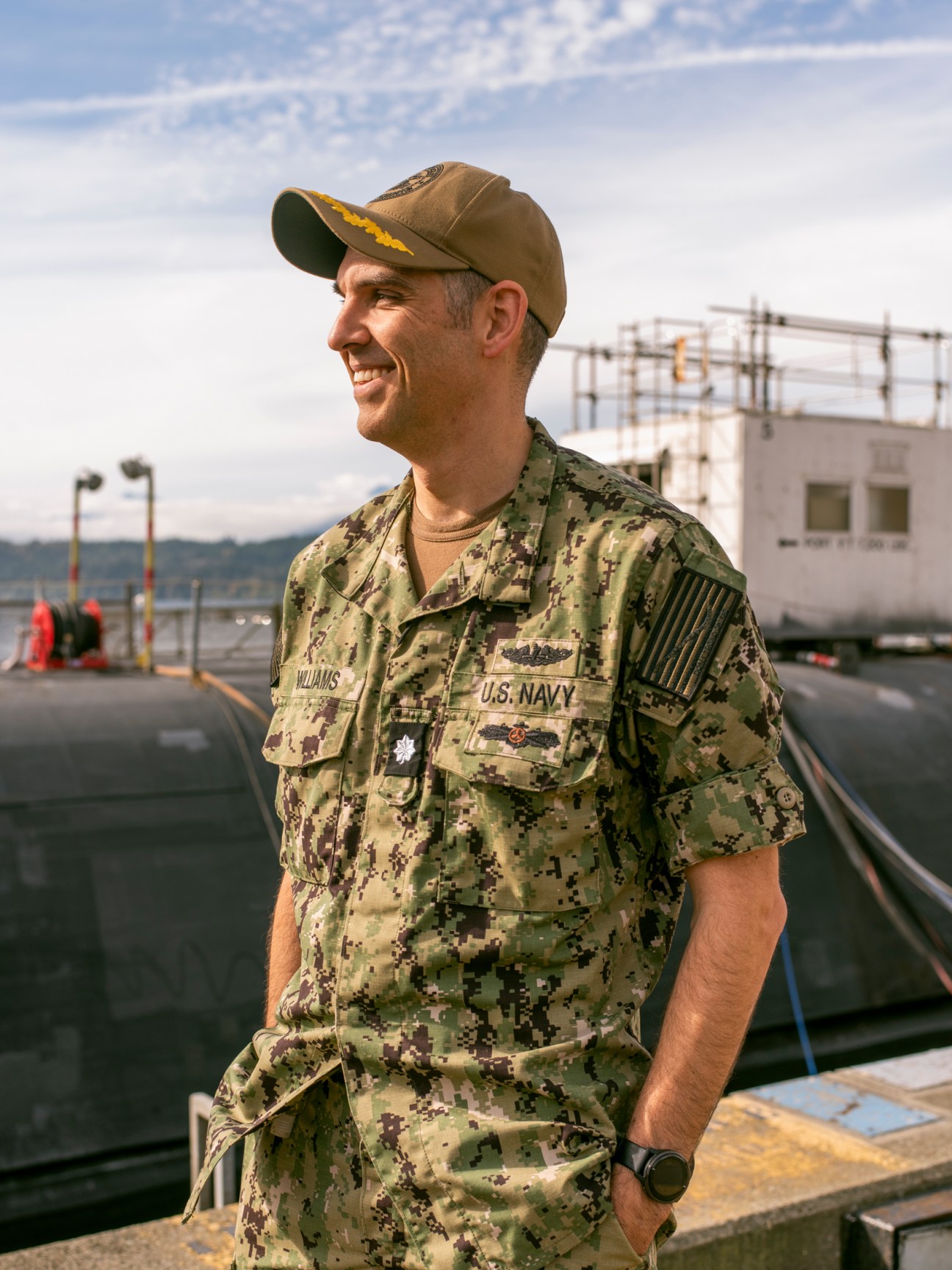
When Monocle arrives at Naval Base Kitsap in Washington state, after passing several security checks and surrendering all electronic devices, the pier is a hive of activity as 2,000 workers put finishing touches to the USS Maine – repairing valves, inspecting motors, replacing pumps and applying paint.
“Our pit stops are short, intense and complex,” says Josh Williams, Repair Officer at the Trident Refit Facility. The pier contains a dry dock that is large enough to accommodate a 170-metre-long Ohio-class submarine and 130,000 sq m of industrial space with some €90m worth of equipment. Armed sailors keep a watchful eye while the submarine is at its most vulnerable. On a crisp autumn day, the only passers-by are harbour seals and fishing boats.
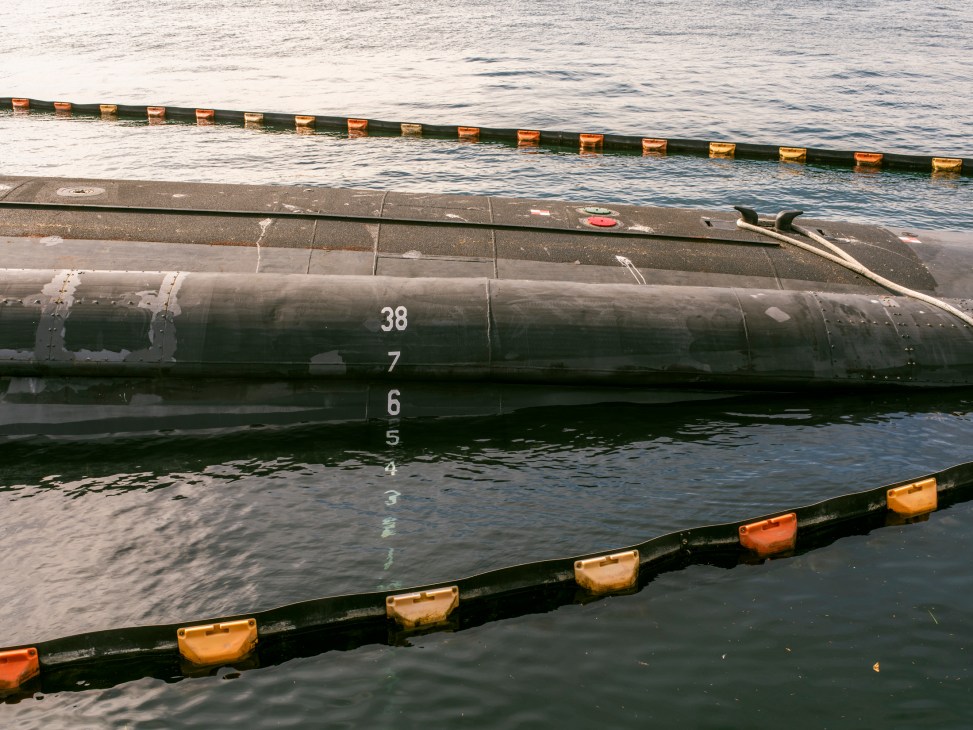
The Maine has been in port for several weeks and will soon head back out into the Pacific for the next leg of an endurance race that has been ongoing for nearly 40 years, when the first of the US Navy’s 14 Ohio-class ballistic missile submarines – known as “boomers” – were commissioned. Along with land-based intercontinental ballistic missiles and strategic bomber planes, these vessels are one of three legs of the US nuclear triad.
Once thought of as Cold War relics, nuclear deterrence and doctrines such as mutually assured destruction (MAD) are back in vogue. Both the Biden administration’s 2022 Nuclear Posture Review and Congress’s Strategic Posture report, released in October, warn that the US and its allies now face two nuclear peer adversaries: Russia and China.
“The threat is getting worse,” says Robert Soofer, a senior fellow at the Atlantic Council. As a result, arms control is giving way to nuclear modernisation. The US Navy is playing the long game: it has a strategic plan for nuclear-armed subs through to 2084. The first Columbia-class submarine, which will eventually replace the boomers, should hit the water by the end of the decade. It will be armed with Trident II d-5 missiles with a range of more than 7,400km.
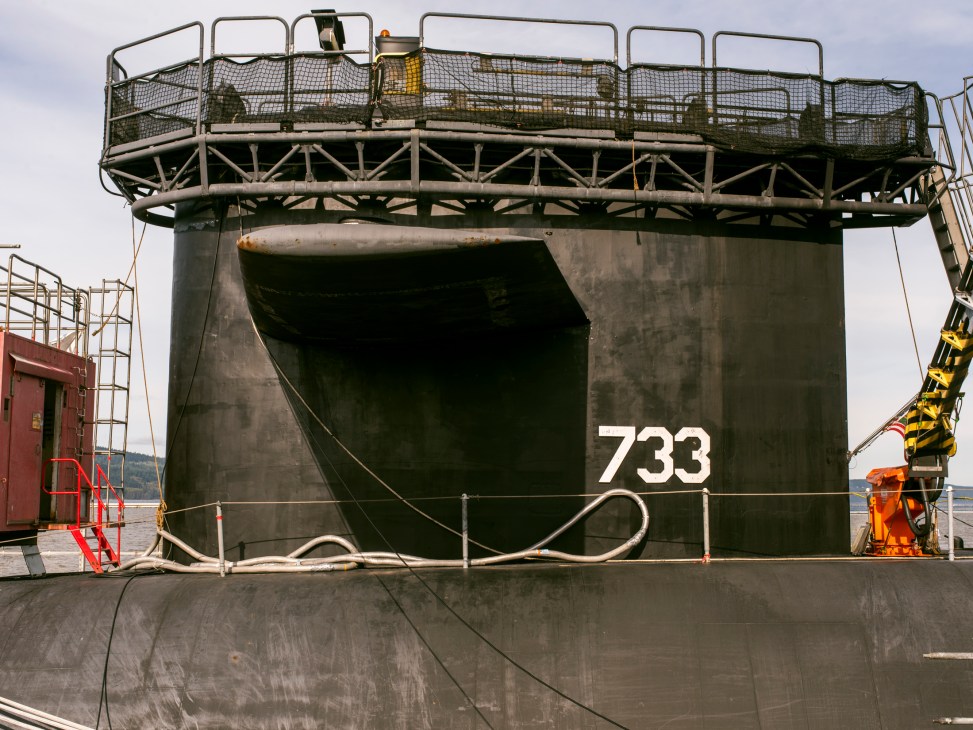
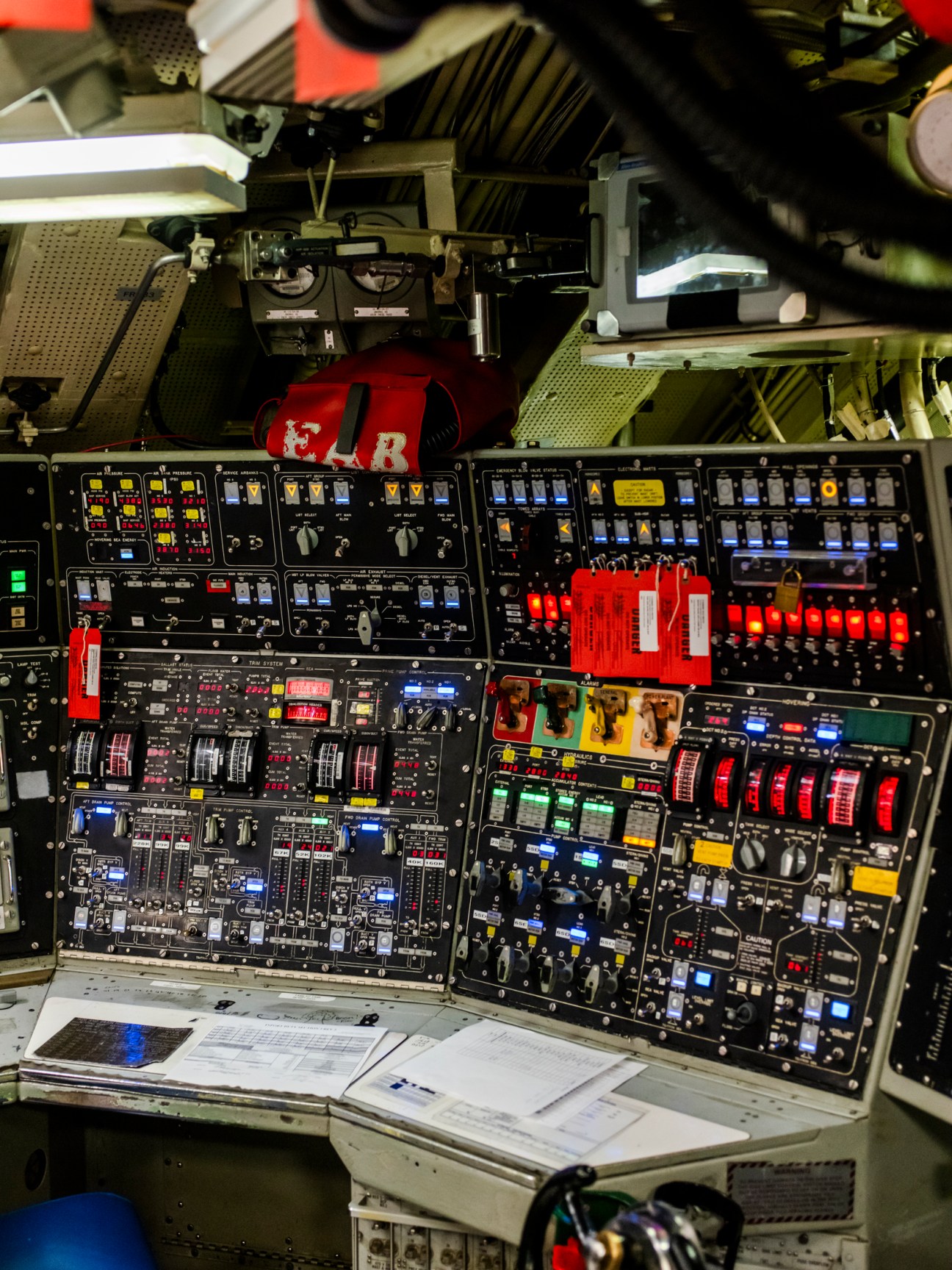
But the boomers are still a trump card. Russia or China could theoretically wipe out US missile silos and bombers in a first strike. They would be harder pressed to locate these stealthy deep-sea craft armed with the capacity for hundreds of warheads. Powered by a nuclear reactor and capable of generating its own drinking water and oxygen, an Ohio-class submarine can stay in the depths indefinitely. The only limiting factor is the crew’s three to four months of food rations.
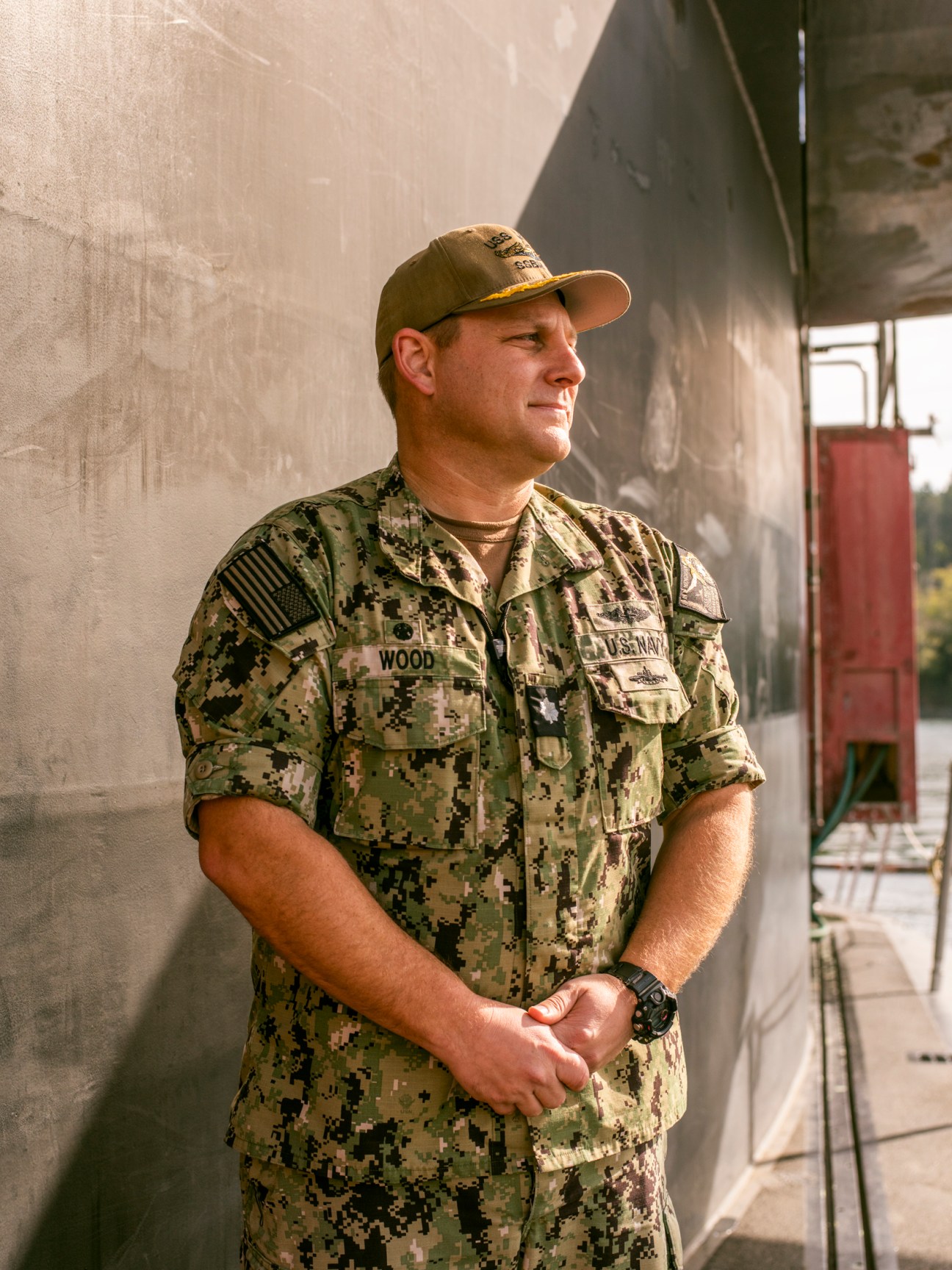
“We are the deterrent,” the Maine’s Commanding Officer, Travis Wood, who has spent seven years of his life underwater, tells Monocle below deck. “If deterrence fails, we are the tip of the spear.” The Maine’s most recent deployment was a two-and-a-half-month tour that included an April stop in Guam, where senior commanders from the Japanese and South Korean navies came aboard for a first-ever trilateral visit. Wood was circumspect about specifics but he confirmed that boomers are spending more time in the Indo-Pacific to confront a rising China. “Pushing farther west is the current initiative,” he says. Though submarine captains take orders like any naval officer, Wood relishes the relative freedom of a vessel capable only of receiving low-frequency radio communications for most of its time at sea. “This is the most autonomy you can have in the military,” he says.
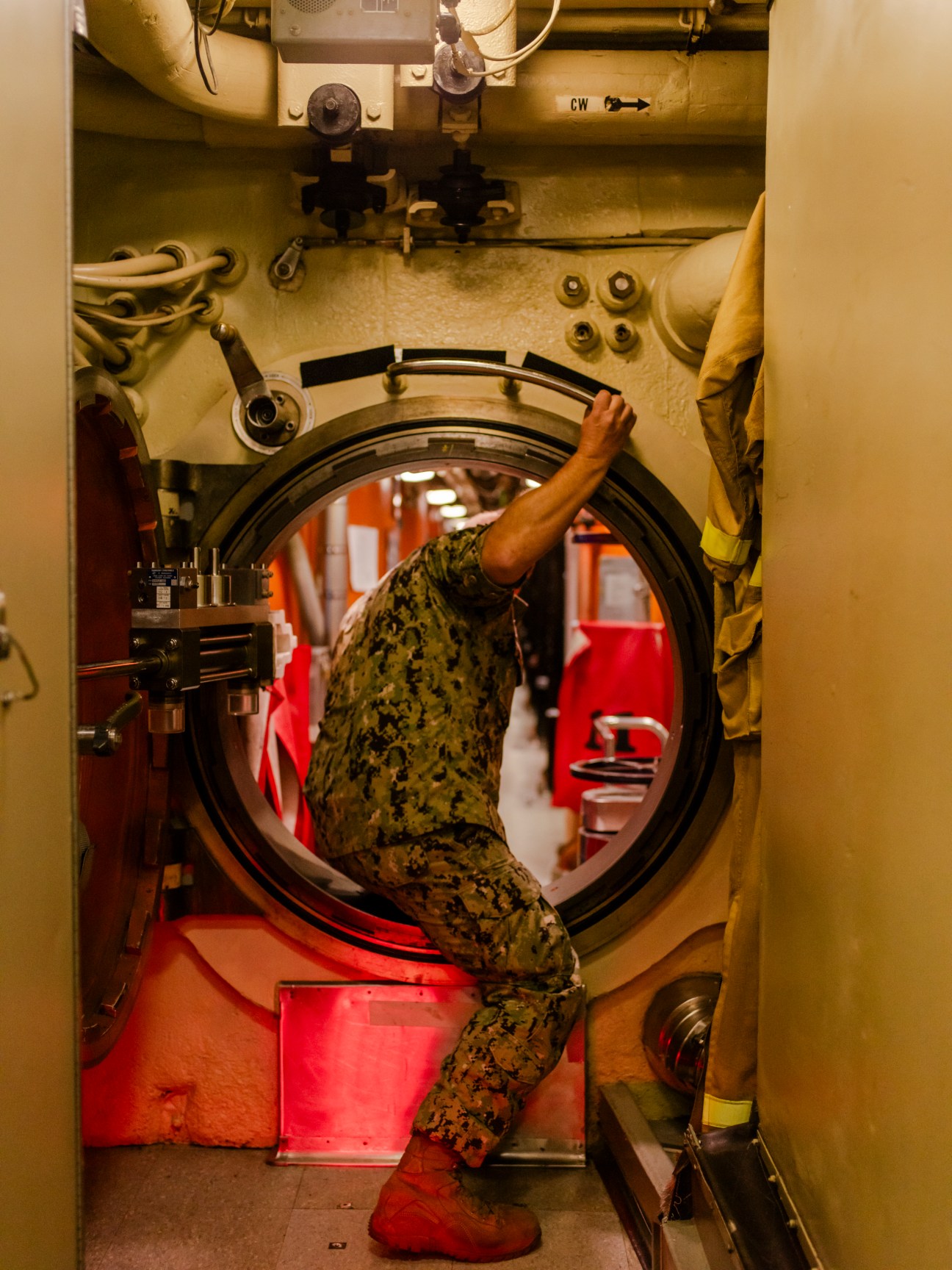
Life onboard the Maine requires extreme minimalism. Crew members sleep in bunks tucked between missile tubes, 30cm of steel separating their heads from a nuclear warhead.
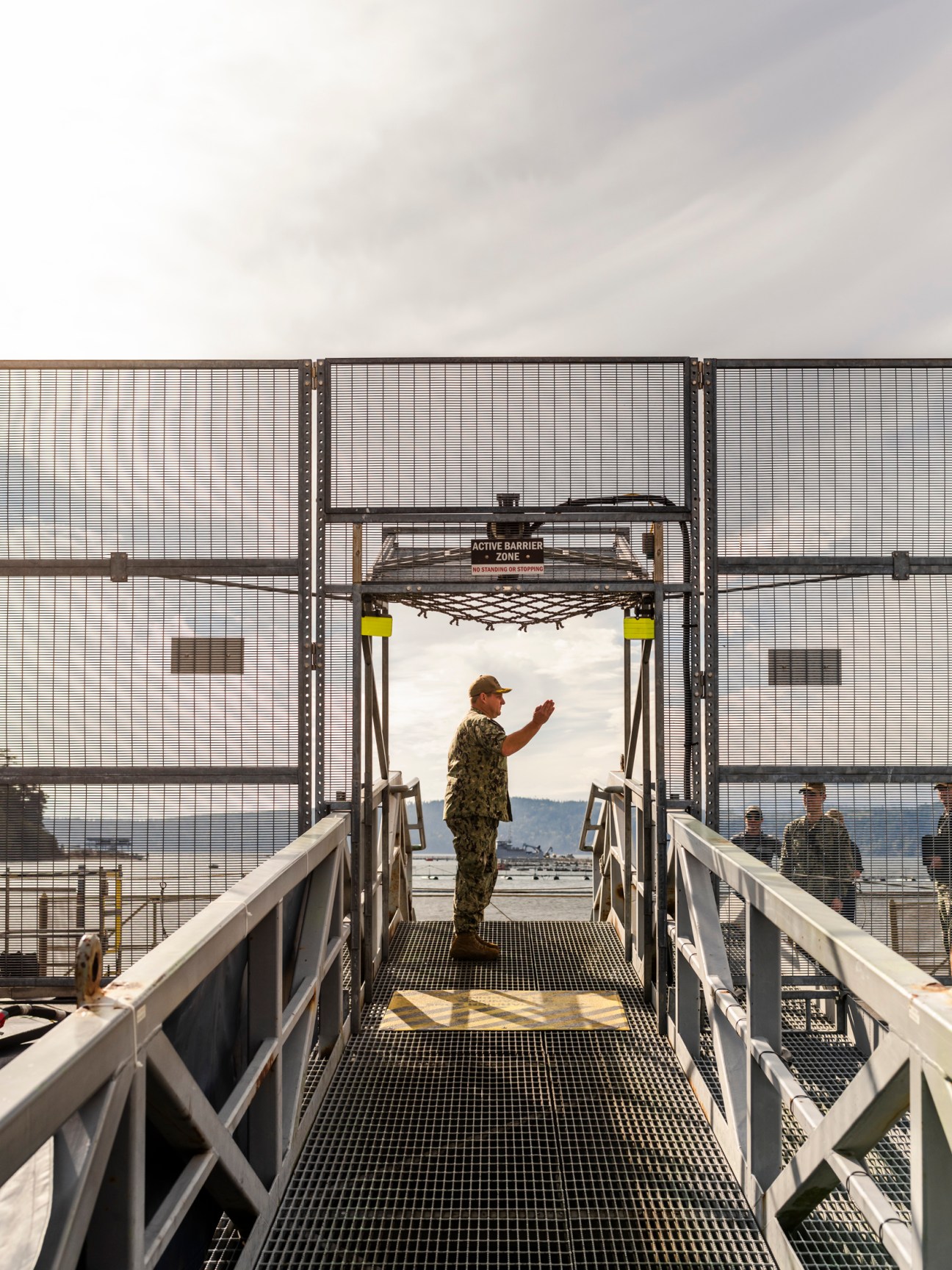
Their only personal effects storage is a shallow drawer under the mattress – enough for socks, underwear and an entertainment tablet. When at sea, they are unable to communicate with the outside world for weeks. Exercise is confined to a treadmill and weight rack in closet-sized spaces. Two washing machines and driers run laundry 24/7. It takes a special breed to volunteer for such close quarters. Lieutenant Commander Elisabeth Staab has served on a range of US Navy vessels and prefers the boomers. “If you ever had dreams of being an astronaut, this is as close as you can get without going to space,” she says.
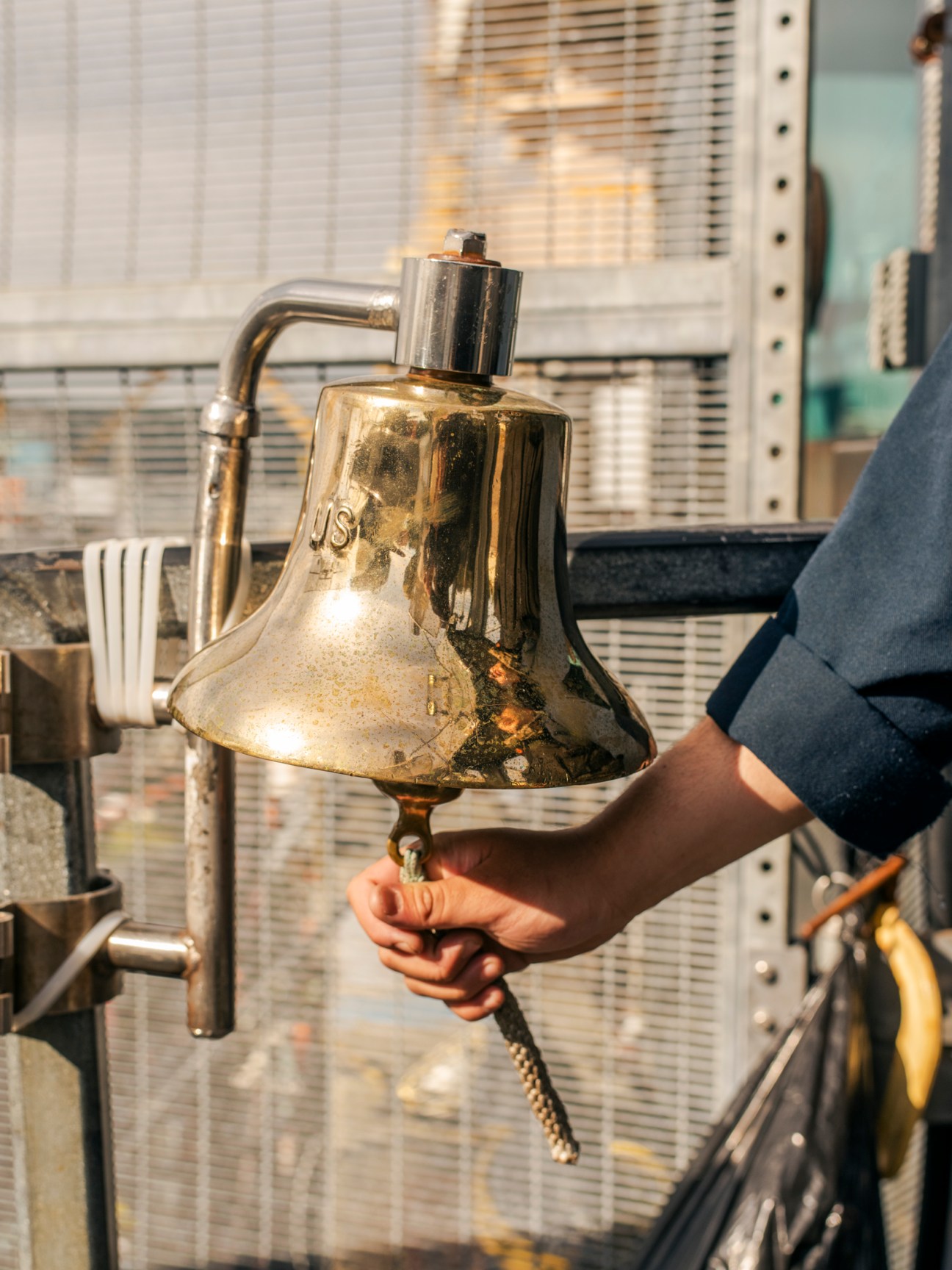
With responsibility for 170 sailors, Wood’s hopes for the new Columbia-class are more quotidian than hi-tech: upgrade the kitchen to allow for better cooking. “Food makes the biggest difference to morale on a sub,” he says, before we climb a ladder to the top deck for some fresh air. “It’s your only comfort.”
Export boom
South Korea’s once domestic-only arms maker has turned global supplier.
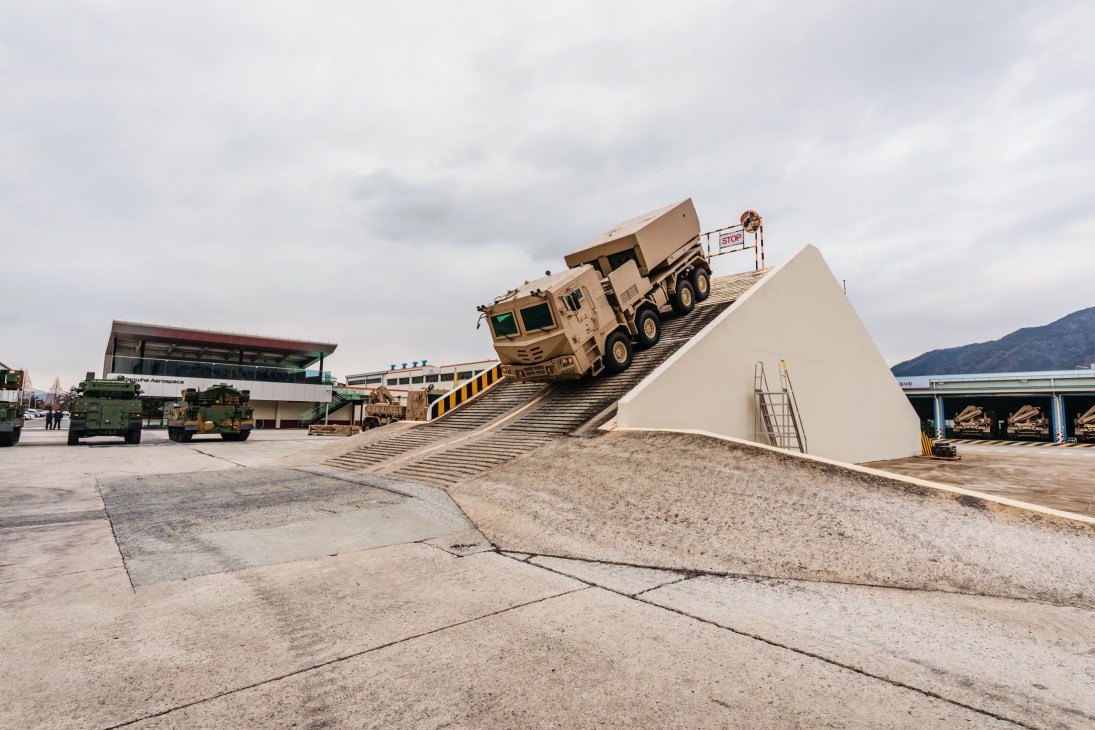
Workers at Hanwha Aerospace, South Korea’s largest defence contractor, have been busy. Over the past 18 months, there has been record demand for their wares, particularly the K9 Thunder, a self-propelled howitzer that can manoeuvre on rough terrain. Though Seoul refuses to send lethal weapons to Ukraine – so as not to provoke Russia, a key ally of its belligerent neighbour, North Korea – the war has been an indirect boon for the country’s defence industry: in 2022, exports totalled $17.9bn (€16.8bn), more than double the previous year. Many of the countries that have sent arms to Ukraine have chosen to purchase Hanwha-made replacements. In July the company won a contract worth up to AU$7bn (€4.2bn) to build 129 Redback infantry fighting vehicles for the Australian army.
For decades, South Korean contractors were meant to support just one customer: the South Korean military. Even though the 1953 Korean armistice ended combat, North and South are still technically at war. Efforts to deter Pyongyang, which once boasted the peninsula’s superior military resources, meant that South Korea has invested vast amounts in its homegrown industry. Due to this heightened state of preparedness, says Lee Kyounghun, a veteran engineer and senior vice-president at Hanwha’s Changwon Plant Three, Seoul conducts “very rigorous inspections, down to the smallest parts”.
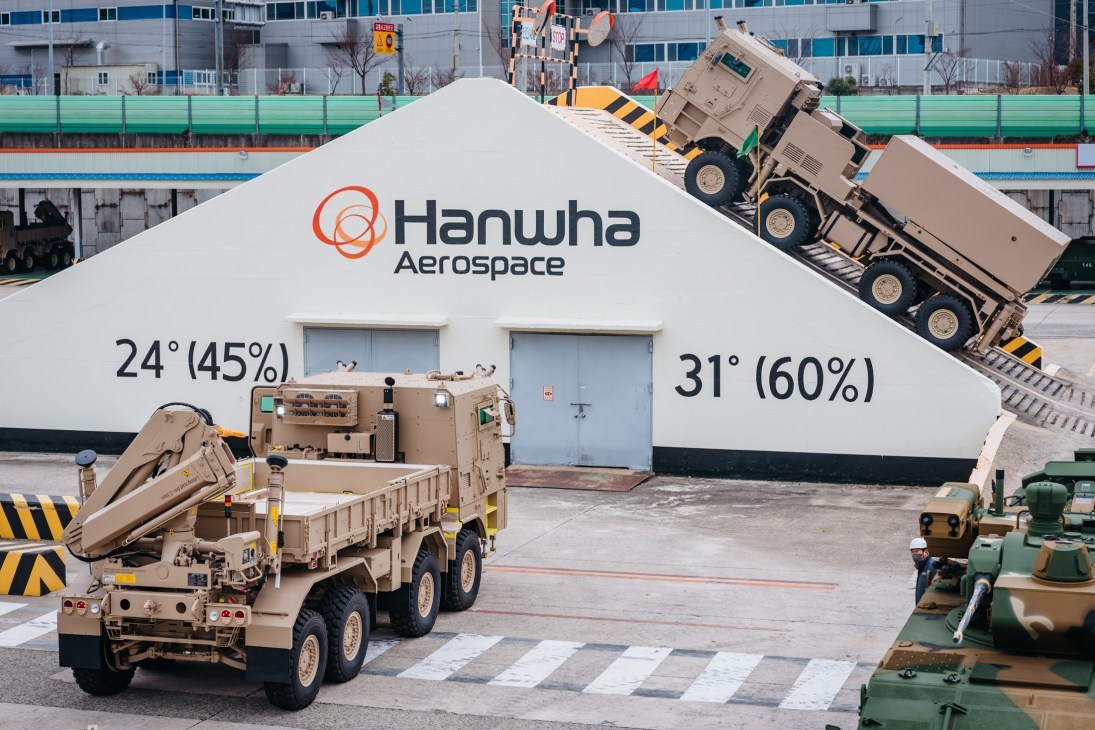
Fighting fit: Hanwha facts and figures
Headquarters: Seoul
6,420: Employees
KRN62.28trn (€44.1bn): Revenue in 2022
Key clients: Australia, Poland, Norway, Finland, Estonia, Turkey, Egypt, India, Malaysia and Indonesia
Having to serve a demanding domestic market, South Korean arms producers became nimble and innovative. Hanwha engineers say that flexibility is a major strength, allowing the use of single assembly lines for multiple models, meaning that the company can tweak the specifications of equipment according to customer demands for terrain, weather and warfare types. Inside the vast plant, robots cut and bend steel K9 chassis into shape. When a fourth assembly line opens in April, capacity will increase to 320 vehicles a year. Hanwha’s engineers keep a close track on customer feedback in order to monitor how their products perform in the field. This is helped by the fact that they assemble many of the orders in the purchasing nations, which improves innovation, though technological transfer to clients can lead to greater competition down the line. “The more you export, the harder it is for you to keep your technological edge,” Dr Marjorie Vanbaelinghem, director of Institut de Recherche Stratégique de l’École Militaire, a French military research institute, tells Monocle. “So you have to be ready to invest a lot. That’s not a problem for South Korea, because it’s very good at investing in technological innovation, but it’s a risk.”
Hanwha, which was founded in 1952 as Korea Explosive Company, a purveyor of gunpowder and dynamite, appears unfazed by potential imitators, especially in the inflation-battered West. Whereas some larger arms exporters there struggle with cost overruns and production delays, it has been expanding its portfolio and absorbing rivals. Recent acquisitions include Daewoo Shipbuilding & Marine Engineering, a huge South Korean shipbuilder that makes frigates and submarines, and Connecticut-based edac Technologies, an aviation engine parts manufacturer. Its current cash cow, the K9, used to be made by Samsung Techwin, a larger company that Hanwha acquired about a decade ago. This proactive approach appears to be paying off. When Monocle visited Seoul’s adex arms fair in October, Hanwha had the splashiest booth, showing off its unmanned combat vehicles, drones and satellites. With geopolitical tensions heating up, Hanwha looks set to supply South Korea’s allies over air, land and sea.
Keyboard warrior
Estonia is at the vanguard of the fight against Russian cyberattacks.
It’s known as Web War One. In 2007, Russian hackers launched a large-scale cyberattack on Estonia that temporarily shut down a large portion of the Baltic nation’s essential services. The infiltration was halted relatively quickly. “By today’s standards it wasn’t anything terribly frightening,” Luukas Ilves, Estonia’s chief information officer and undersecretary for digital transformation, tells Monocle. “But it was the first time that a government had clearly used cybertools to achieve a geostrategic end. They failed but it woke us up to the risks.” Those risks stem from the fact that virtually all of Estonia’s government services are online. To keep these functioning, the country’s cyber defences must be impenetrable.
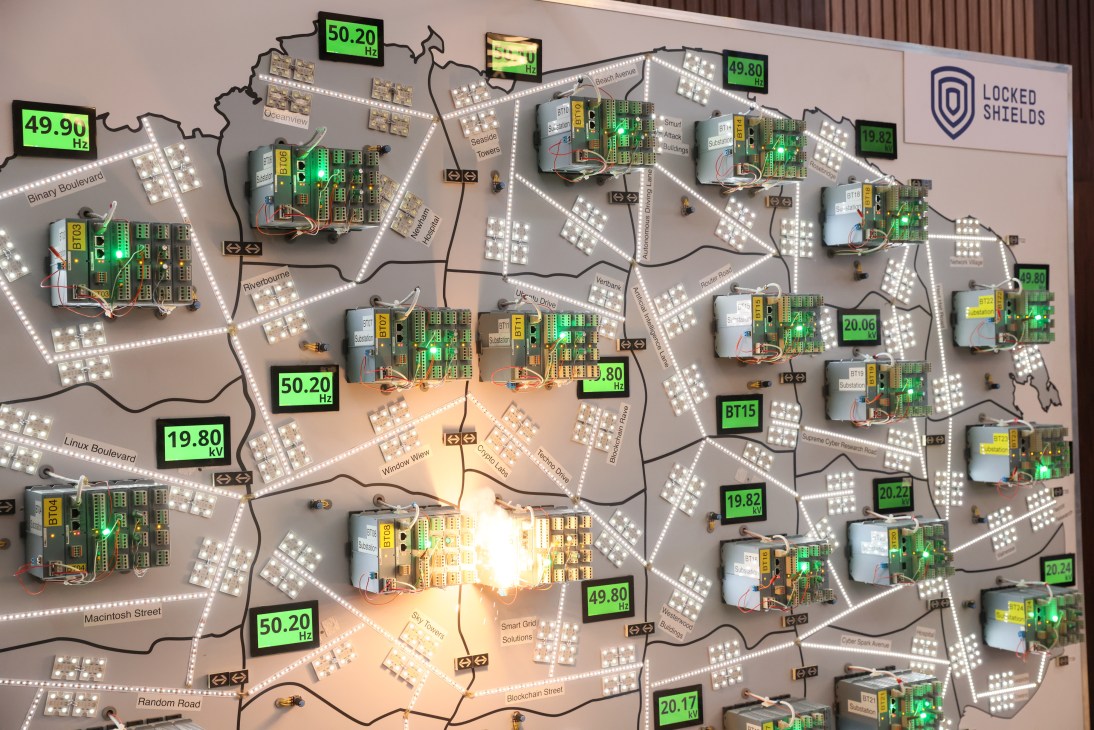
The 2007 attack turned Estonia into a global advocate for cybersecurity. “I wish there was a single, crisp, strategic answer,” says Ilves. “The big one is just to realise that it’s an important focus. You have to put time, energy and resources into it. It has to be a lot more collaborative than something like defence, where you really can have most of the work done by governments.”
This also means coming up with a common set of rules: when does an attack in the digital world amount to an act of war? Estonia is a leader here too. The Tallinn Manual, produced by Nato’s Cooperative Cyber Defence Center of Excellence (ccdcoe), based in the Estonian capital, lays out how international law can be applied to cyberwarfar and cyber operations.
The goal is in part to “clarify how international law applies in this area,” says Agnes Kasper, head of ccdcoe’s law department. Take the Geneva Conventions of 1949; “It doesn’t matter how you do it,” says her research colleague Aleksi Kajander. “You cannot target civilian objectives during an armed conflict, only military objectives.”
Ilves says that there has been a lull in state-sponsored cyberattacks over the past two years as Russia has focused its efforts on Ukraine. “In the same way that Ukraine is out there fighting for all of us, I’d also say they’re fighting a cyberwar for all of us,” says Ilves. Kyiv has strengthened its own cyber defences with US and Estonian help, and its critical infrastructure has largely held up during the war as a result. But Nato needs to be ready for the aftermath. “When the physical war ends, it could get worse for us in cyberspace,” says Ilves. The fear is that Russia could launch the kind of cyberattacks that it has directed at Ukraine’s infrastructure on Nato member states, in part because even a successful online strike is less likely to invoke Article 5, which is collective defence by Nato.
Nato has stepped up efforts to counter such threats. The world’s largest cyber-defence exercise, Locked Shields, is hosted annually in Tallinn; the 2023 edition was the largest one yet. More than 38 countries and 3,000 people were split into teams, collaborating and competing each other to ward off major cyberattacks. “Things have become a lot better in the past 15 years,” says Ilves. The key is co-operation across borders, between governments and even with multinational companies – the internet knows no national boundaries.
Take it up a gear
Five pieces of kit that defence ministers are hoping for this Christmas.
There is nothing like someone else’s war for demonstrating to any given military what its own inventory is lacking. Ukraine’s defence of Russia’s invasion in particular has prompted an uptick in procurement and some rethinking of requirements, as Russia’s old-school armour-and-infantry onslaught was met with nimble and inventive modern defences. Here is a plausible, if partial, wish list.
1.
High-altitude balloons

In early 2023 a Chinese surveillance balloon was shot down by an F-22 over South Carolina’s coast. Somewhat comical though the event seemed, the idea of weaponising high-altitude balloons is being taken seriously. Future military high-altitude balloons – and solar-powered fixed-wing craft – could have obvious reconnaissance and surveillance capacity, but could also become weapons platforms.
2.
Disposable drones

The Ukraine-Russia war has increased interest in drones. Baykar’s Turkish-built Bayraktar TB2 attracted early attention but it’s an Australian import that might represent the greater leap forward. Melbourne-based company Sypaq Systems has supplied Ukraine with hundreds of disposable drones made of cardboard. These have a range of up to 120km with 3kg of payload and cannot be picked up by enemy radar.
3.
The flying ship
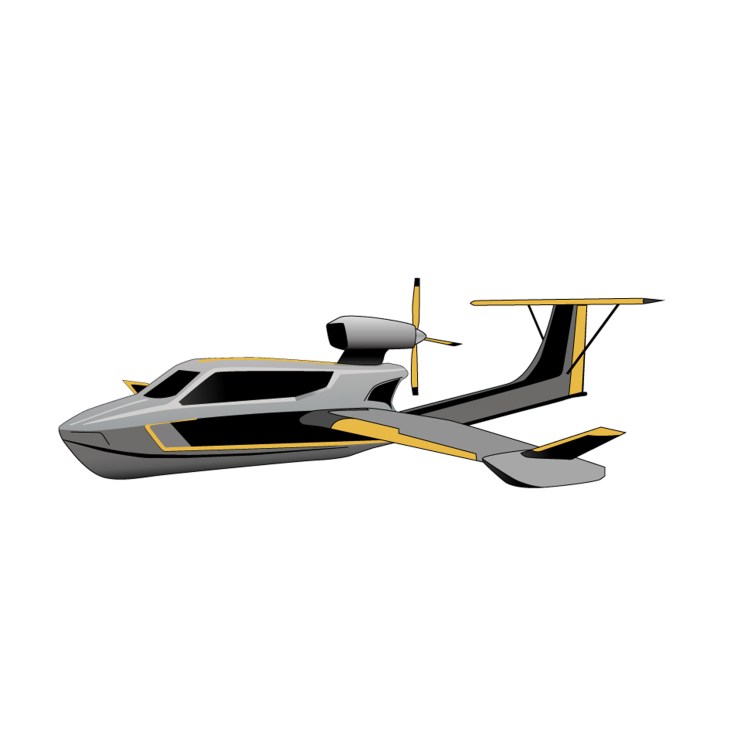
South Korea’s Marine Corps are working on something similar to the Soviet-built Lun-class Ekranoplan flying warship. The country’s defence ministry is funding a military version of the Aron m80, which currently transports commuters. It is anticipated that the craft, skating over such obstacles as sea mines, would enable rapid deployment of amphibious troops.
4.
Unmanned ships
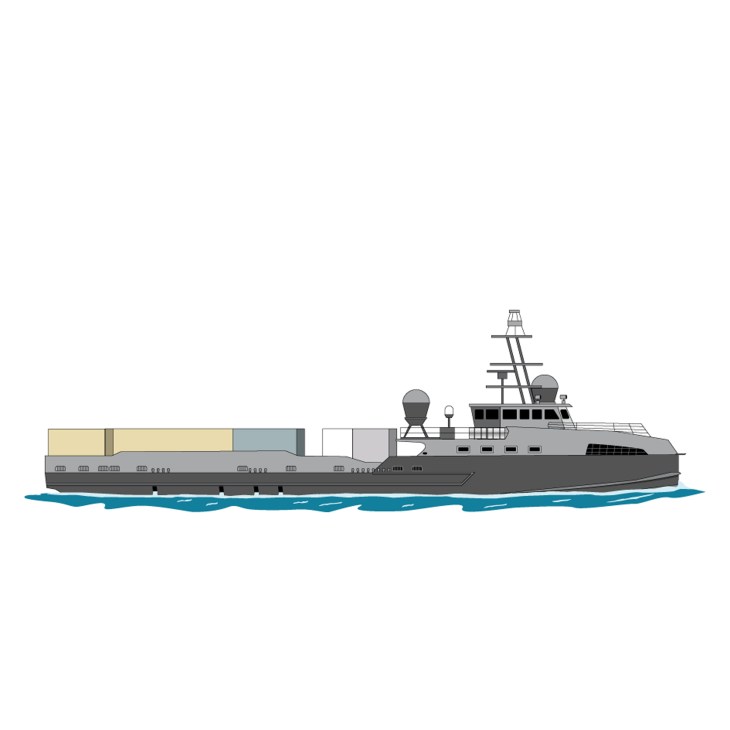
It is not only Ukraine’s success with unmanned aircraft that has caught the eye. The country, which has no meaningful navy, has also used unmanned maritime craft to great effect. Its kamikaze drones have damaged several Russian ships and naval facilities and kept Russia’s conventional Black Sea fleet largely confined to port.
5.
Long-range missiles
The US-built Lockheed Martin mgm-140 Army Tactical Missile System – atacms – was deployed in combat by Ukraine for the first time in October, destroying several helicopter airfields in Russian-occupied Luhansk and Berdyansk. We might be entering a new missile age. The US Navy has reoriented its budgeting towards long-range weapons, while Australia has announced the purchase of more than 200 US-built Tomahawks.
Blown up
Inflatable decoys are deceptively cheap strategic assets on the battlefield.
Deception has always been part of conflict: there is an obvious benefit to persuading an enemy that you are more powerful than you actually are. In the hi-tech realm of modern warfare, there is also an important economic advantage to such ruses. Guided missiles are expensive as well as destructive. If they can be lured away from their targets, it not only preserves the people and assets of the country they were aimed at, it wastes the money of the nation that launched them. Czech company Inflatech has spotted a valuable market.
Many of these, it is impossible to avoid noticing, are models currently being used by Ukraine in its war against Russia. Inflatech is, however, understandably cagey about its customer list.
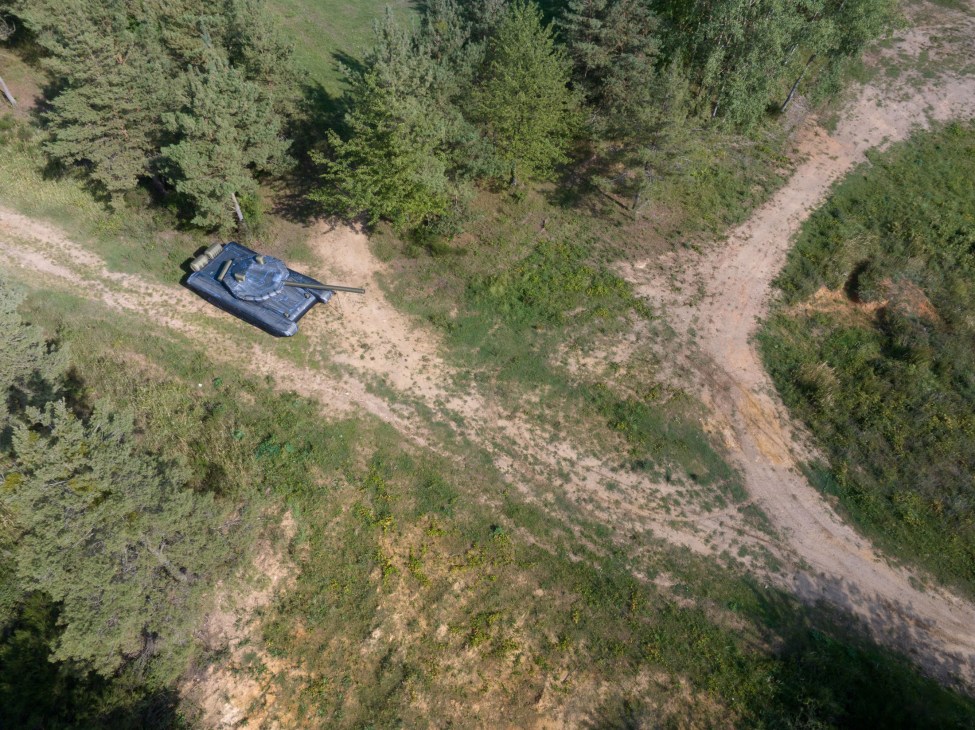
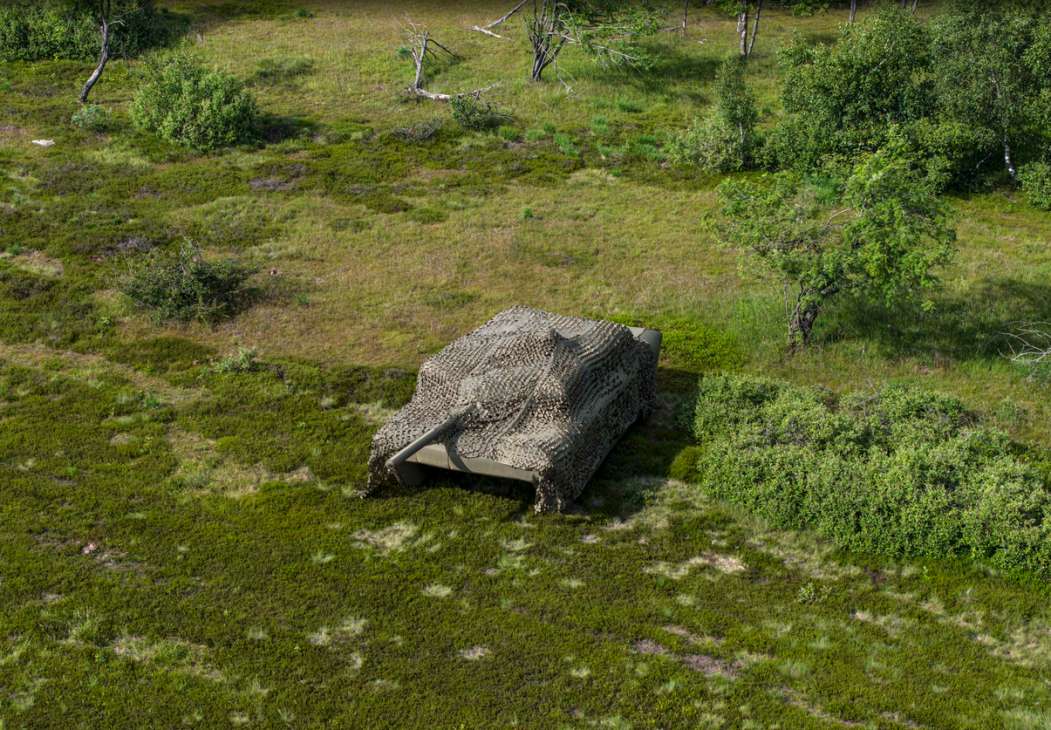
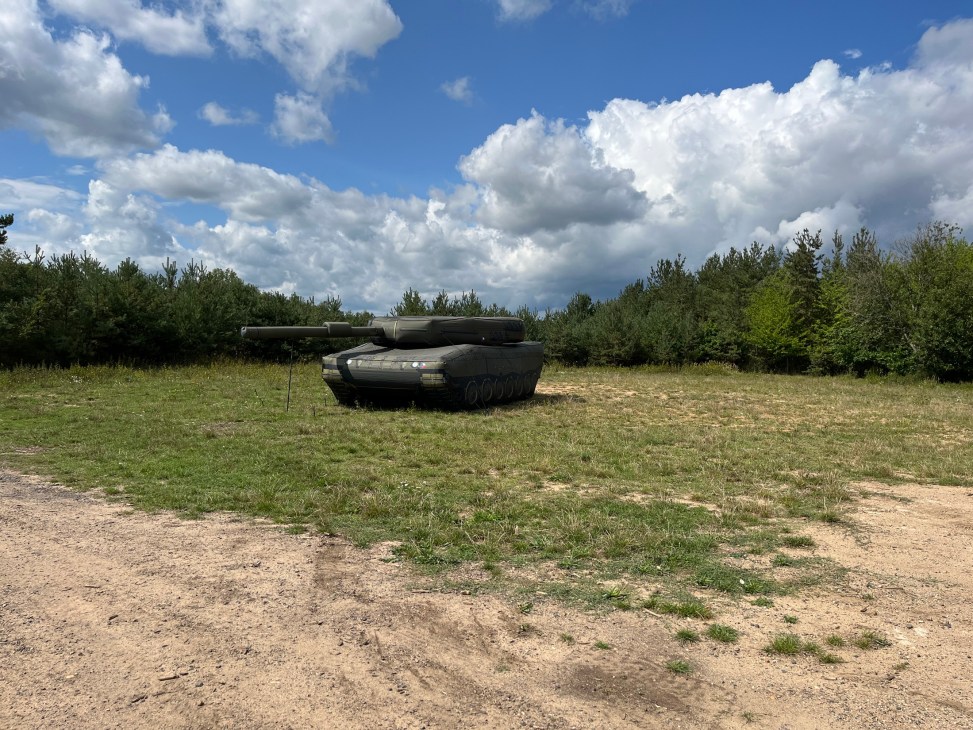
“Suffice to say, our systems have been sold on four continents and have been battlefield tested, successfully deceiving the enemy,” Inflatech consultant Mike Ritchie-Cox tells Monocle. The company’s blow-up facsimiles cost between €6,000 and €70,000 each. But even the more expensive decoys are still a fair swap for a Russian kh-59 Ovod cruise missile, which has a unit cost estimated at €500,000. The decoys are also useful as firing-range targets and in vehicle- recognition training. A typical deflated decoy weighs as little as 43kg. In combat, they can be deployed in a matter of 10 minutes. “And we have veterans on our staff who ensure that the decoys are “squaddie-proof” – so they can be assembled in the dark by tired users,” says Ritchie-Cox.
Historic decoys
Trojan Horse: Though it probably never existed, the most emblematic decoy in the history of warfare was this enormous wooden horse that turned out not to be a conciliatory gift to Troy but a personnel carrier bearing Greek warriors.
Previous inflatable tanks: Allied forces deployed inflatable Sherman tanks in Dover during preparations for D-Day in 1944, in order to suggest a landing at the Pas de Calais rather than Normandy.
Stone tanks and wooden bombers: In the Second World War, Japan built aircraft from bamboo and replica tanks from volcanic rock. In China, Japanese troops painted a silhouette of a burning US b-29, hoping that other American aircraft would drop down to investigate.
Dummy soldiers: First World War trenches were adorned with papier-mâché heads to lure enemy snipers.
Truce or consequences
Addressing the reasons for rebellion is key to one peacemaker’s successes.
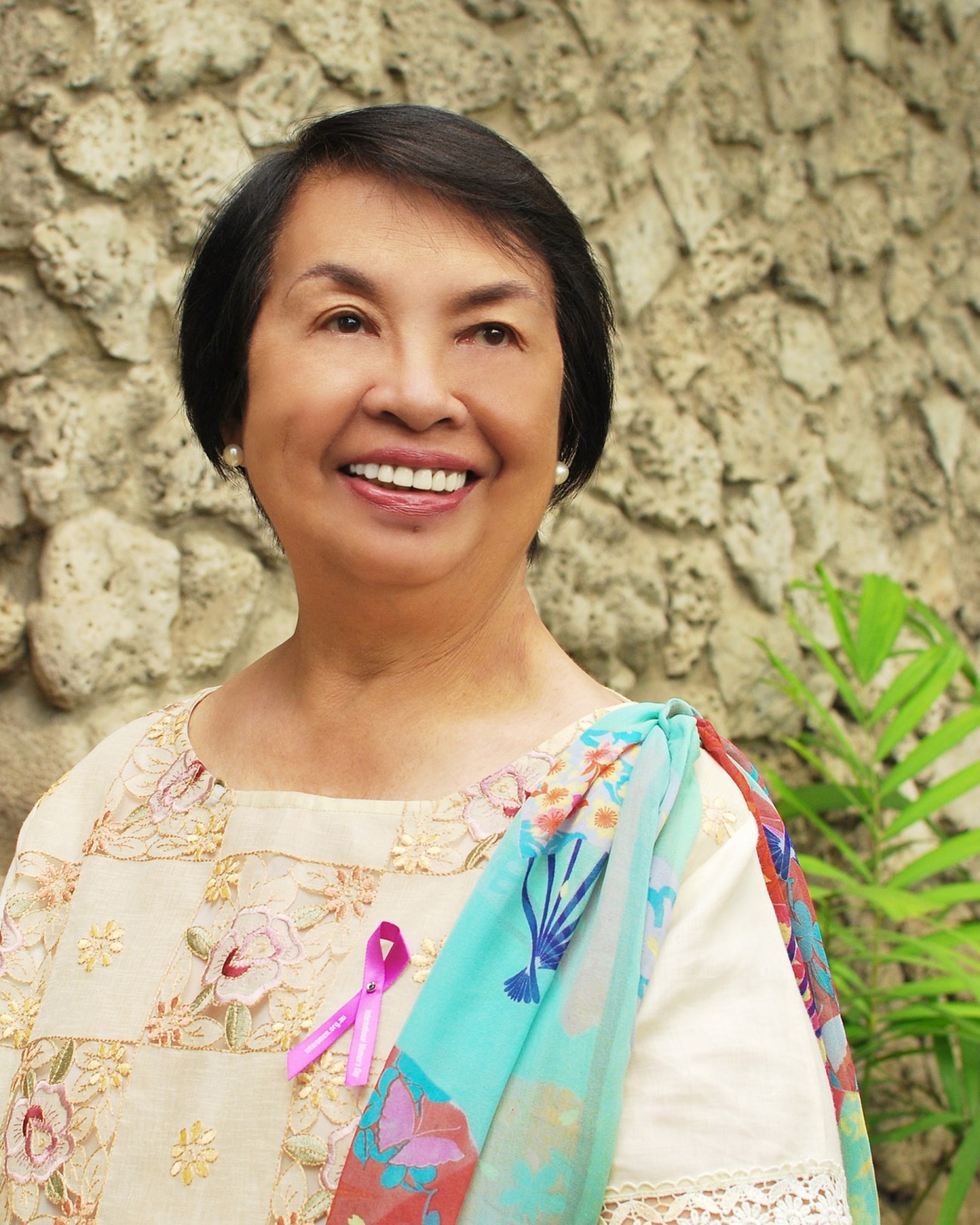
Unassuming Irene Santiago, an 82-year-old grandmother from the Philippines, has been nominated for a Nobel Peace Prize. She also features on the syllabuses of several US universities. It’s all due to her novel approach to peacemaking, which has brought an end to several decades-long insurgencies on Mindanao, an island in the southern Philippines. Over the past half-century, at least 100,000 have been killed and millions displaced here by fighting between government forces and armed groups – some demanding independence, others communism, and one fundamentalist Islamic rule. The Philippine armed forces once believed that the only way to crush these groups was with force. But now, thanks to Santiago (pictured), they see it differently. “They gave a general a top award for no body count and no human-rights violations,” she tells Monocle. “That is a seismic change.”
It took years for Santiago, who worked as a journalist and for the UN before becoming a negotiator for the Philippine government, to persuade her bosses to change their approach. For years she worked to get more civilian and female voices into negotiating teams. Finally, in 2013, there was a breakthrough. The Moro Islamic Liberation Front, a 30,000-strong militant group fighting to establish a breakaway Islamic state, appointed lawyer and community advocate Raissa Jajurie as its key negotiator. Santiago, meanwhile, nominated Miriam Coronel-Ferrer, a political scientist who had led an anti-landmine campaign. For the first time in a conflict that had killed more than 120,000 people, negotiations were led by non-combatants with roots in the communities they represented. Within a year, a peace deal had been signed.
Santiago’s approach began with her eight ingredients for peace: a well-functioning government, fairly distributed resources, low corruption, free access to information, a well-equipped workforce, jobs and business opportunities, good relations with neighbours, and respect for the rights of others. She says that the key to approaching seemingly intractable conflict is to focus on day-to-day things that really matter, such as food security and education. “I am not doing anything about terrorism and ideology,” she says. “Inequality is a root cause of insurgency. This is the difficult part. And this is what we are trying to work on now.”
It’s often taken for granted that building a productive society is something you do once war is over and that resolving a conflict is done on the battlefield. Santiago’s goal isn’t to end war but to make peace. To do that she dealt with civilians, particularly women, who are more likely to be dealing with the pressures and frustrations that trigger conflict. They know what their communities need in order to accept and sustain a peace deal. You can argue for decades over territorial control, temporary ceasefires, prisoner swaps and power sharing, or you can go to insurgents’ communities, ask them what they lack and focus on fixing the problem. “Santiago’s interventions in Davao worked because there was one vision and one goal – to bring back the legitimacy of the state,” says Georgi Engelbrecht of Crisis Group, an international organisation that analyses conflicts. Santiago puts it in simpler terms. “I identified two things: fear and hunger,” she says. “If you can take out fear and take out hunger, you are done.”
The roots of southern Philippine insurgencies
1965: Ferdinand Marcos is elected president of the Philippines.
1971: Moro National Liberation Front forms to fight for an independent Moro nation.
1977: The Moro Islamic Liberation Front splits from the Moro National Liberation Front.
2002: Islamist militants are blamed for bomb attacks on Manila and Zamboanga.
2003: A Moro Islamic Liberation Front attack in Mindanao leaves 30 people dead.
2004: Peace talks begin between the government and the New People’s Army in Norway.
2014: A peace deal is signed between the Philippine government and the Moro Islamic Liberation Front.
2015: Hundreds of Muslim ex-militants sign up to vote in the 2016 elections.
2017: Islamic State-linked Abu Sayyaf and Maute groups seize Marawi City.
2018: Peace 911’s pilot project is launched in Davao City.
2022: The Philippine Army declares Davao City “insurgency-free”.
Shock therapy
Rebuilding after an earthquake applies to confidence as much as construction.
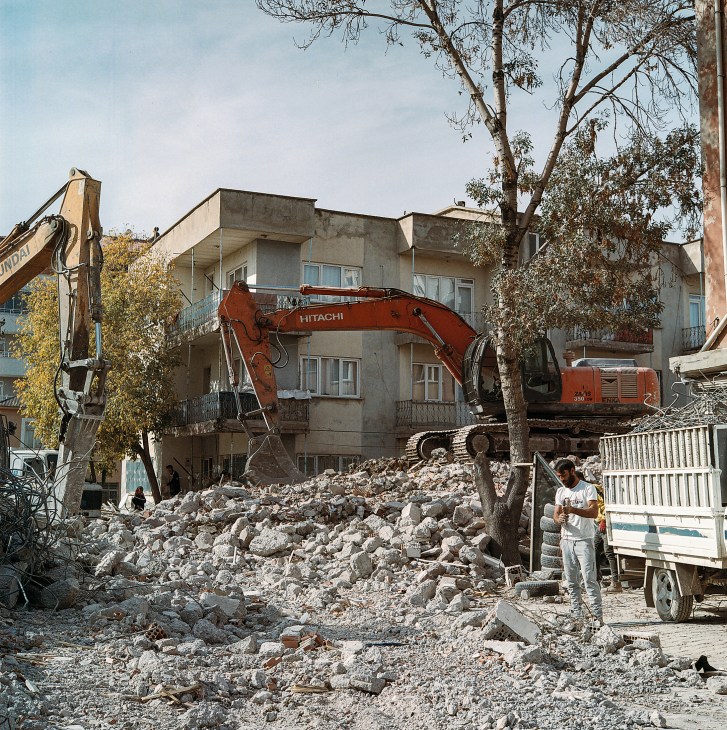
Nehir Kabakulak had faith in the way her home had been built and in January 2020, when a large earthquake hit, her block proved sturdy – there wasn’t even a crack in a wall. But three years later, on 6 February 2023, two earthquakes struck Turkey. The second of these, with a magnitude of 7.6, was centred on her hometown of Elbistan, and her building shook so much that it seemed to be made of paper. There was massive destruction: 1,377 buildings collapsed in Elbistan, nearly a fifth of the city’s total, and a further 2,773 were damaged beyond repair. Some 995 people died here, including Kabakulak’s 17-year-old son, Seyhan, who was staying in another building that night. When she walked through the town after the disaster, she didn’t recognise the streets.
Within a few weeks, state inspectors had assessed her home as safe to return to. But the damage that had been inflicted was deeply unsettling. “It was in a terrible state,” Kabakulak tells Monocle. “The walls were full of cracks. All the furniture was broken. I didn’t trust that it was safe.”
That reaction is common – and understandable – among people who have lived through natural disasters. Our homes are integral to our sense of security and seeing them fail leaves a deep psychological scar. Rebuilding a sense of safety after earthquakes, floods or war is as important as reconstructing the buildings themselves, says Kit Miyamoto, a Japanese-American structural engineer who specialises in disaster response. This year alone he has worked in Turkey, Ukraine, Morocco and Afghanistan, and is planning a mission to areas of Libya that were affected by catastrophic flooding in September. “People want to come back to normality but also many might be scared, even if buildings are safe,” says Miyamoto. “That puts tremendous stress on the displacement camps and it’s important to decompress that so they can be used for people who really need it.” Empty homes and neighbourhoods also bring other risks: looters often arrive soon after disasters and Kabakulak’s home, like others in Elbistan, was targeted by thieves.
In every disaster zone that he visits, Miyamoto sets up joint companies or non-profit organisations with local engineers and trains them how to deliver technical information in a way that even illiterate people can understand.
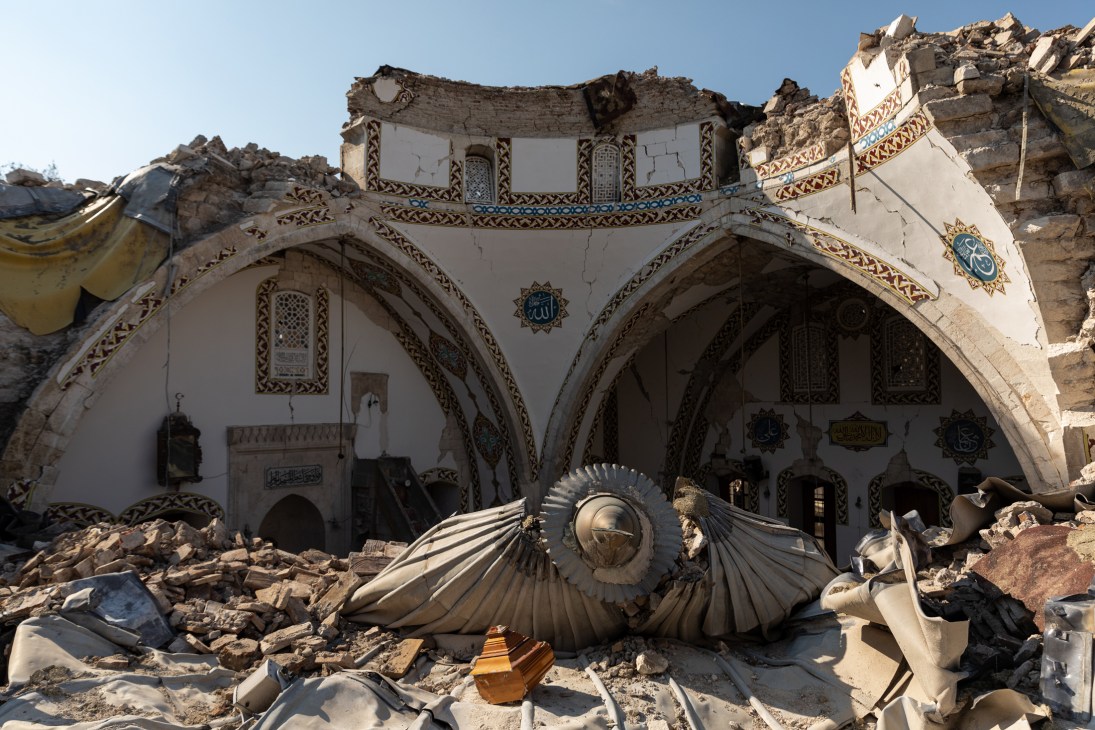
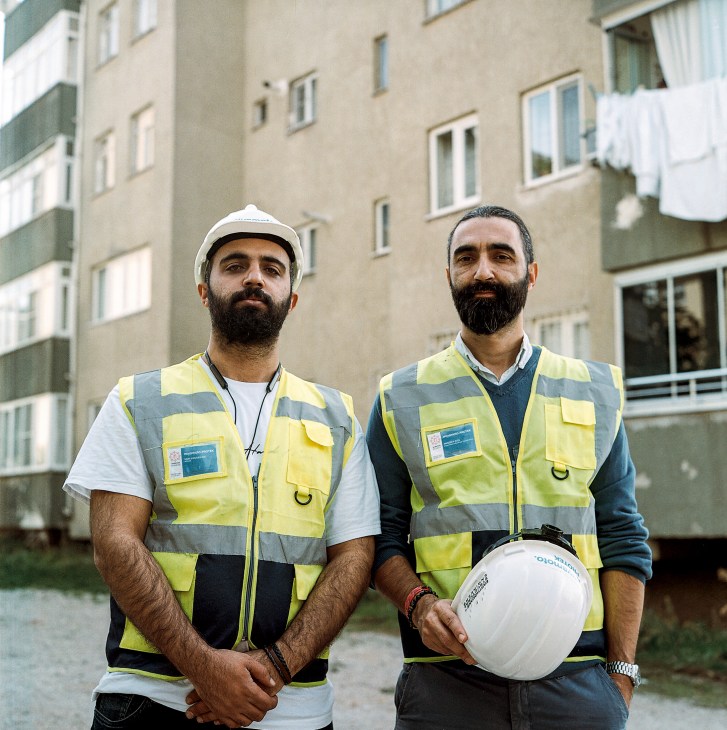
Then they go out into communities, visit homes and hold town hall meetings where they explain what cracks and other types of damage mean. “We are the doctors of buildings,” says Mustafa Kizil, a civil engineer who is part of the project that Miyamoto has set up in Turkey, in collaboration with Protek, an engineering firm. More than 1.7 million buildings across 10 provinces were affected and over 5,000 buildings have been assessed by the government. “We see some families who can’t sleep in their bedrooms [the first of the earthquakes struck at 04.17] and are sleeping in their living rooms,” says Kizil. “In one meeting a lady was begging me to come to check her apartment. I went and explained to her the factor of safety that is built into buildings and she became comfortable.”
Sometimes fear is rooted in misinformation. Following an earthquake in June 2022, rumours spread of subterranean volcanoes being shaken into activity. Miyamoto’s team checked the area to reassure residents that the rumours were false. In Turkey, more than 50,000 aftershocks followed the initial quakes, renewing the sense of panic. But the remedy can often be as simple as filling in cracks and repainting, jobs that Kizil and his team arrange for the poorest, internationally displaced or most vulnerable people. In one block, criss-crossed with what appear to be deep cracks, Kizil explains to a homeowner that they are superficial and the building is sound.
Kabakulak stayed in a camp, then in a container home for seven months after the earthquake, through an unseasonably cold spring and then a punishing summer. In September, Kizil and his team called to let her know that her home was ready. When she stepped through the door, she found it freshly painted, with no sign of the damage that had terrified her so much. “After it was finished, it felt the same,” says Kabakulak. “Now I can remember my home again.”
Turkey’s 2023 earthquakes
In the deadliest disaster to hit Turkey in its modern history, more than 50,500 people were killed.
387,346: Number of buildings that collapsed.
50,576: Buildings assessed as damaged beyond repair.
58.1: Percentage of collapsed buildings that were constructed after 2001, despite stricter regulations introduced after the 1999 earthquake.
€65.3bn: Estimated cost of rebuilding.
Black swan or grey rhino?
Benedikt Franke gives voice to the slang behind world-changing events.
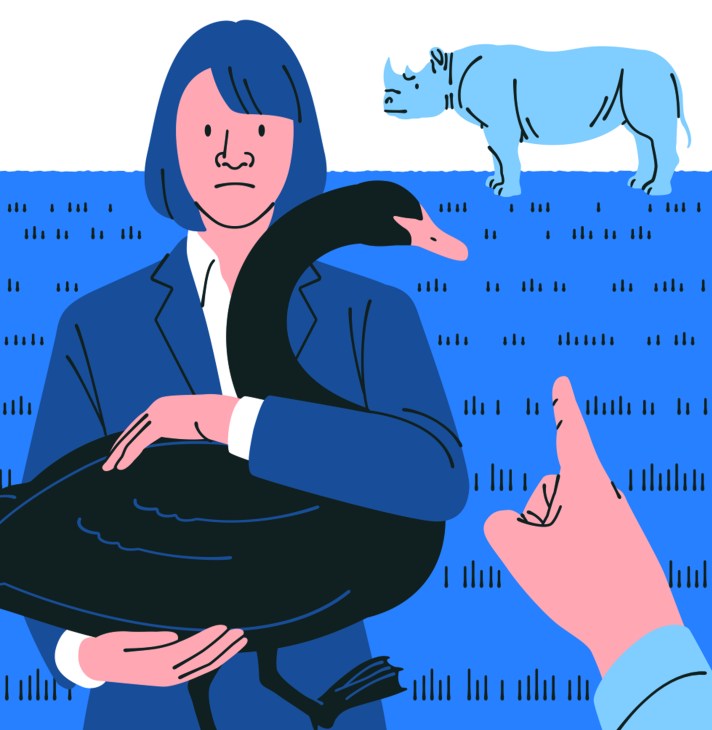
From “canary in the coal mine” (early warnings of potential hazards) to “red herrings” (strategically placed information to mislead and distract from actual threats), animal analogies are popular in security analysis. This is reason enough to clear up the confusion between “black swans” and “grey rhinos”. In their original definition, black swans are unforeseeable events with major effects on international and domestic politics; grey rhinos refer to obvious risks that we acknowledge but tend to ignore.
Unlike black swans, grey rhinos are thus not totally unexpected but merely overly underestimated. This does not make them less impactful. Coronavirus, climate change or the Hamas attack on Israel are examples of classic grey rhinos – well-known threats that we have been ignoring for too long. Other rhinos on the horizon include the unfreezing of conflicts in the Balkans, the de-dollarisation of the world economy and the collapse of regimes in places such as Iran or Algeria. For all of them we should have plans in place.
Despite the clear logic, both terms still get mixed up. Most people tend to take every sudden development as a black swan but the truth is that most of these events are actually grey rhinos that we have ignored. In fact, much of the popularity of the black swan is down to yet another animal. Namely, the “elephant in the room”. This analogy refers to pressing, often uncomfortable matters that we choose to avoid in the hope of escaping their consequences. This aversion to confronting things head-on makes the black swan an attractive descriptive concept for those who would like to pretend that there was no way to see a particular challenge coming. At the Munich Security Conference, we usually don’t let them get away with it.
Benedikt Franke is vice-chairman and CEO of the Munich Security Conference.
Keep it in check, mate
Nina dos Santos weighs in on the big business of interfering with affairs.
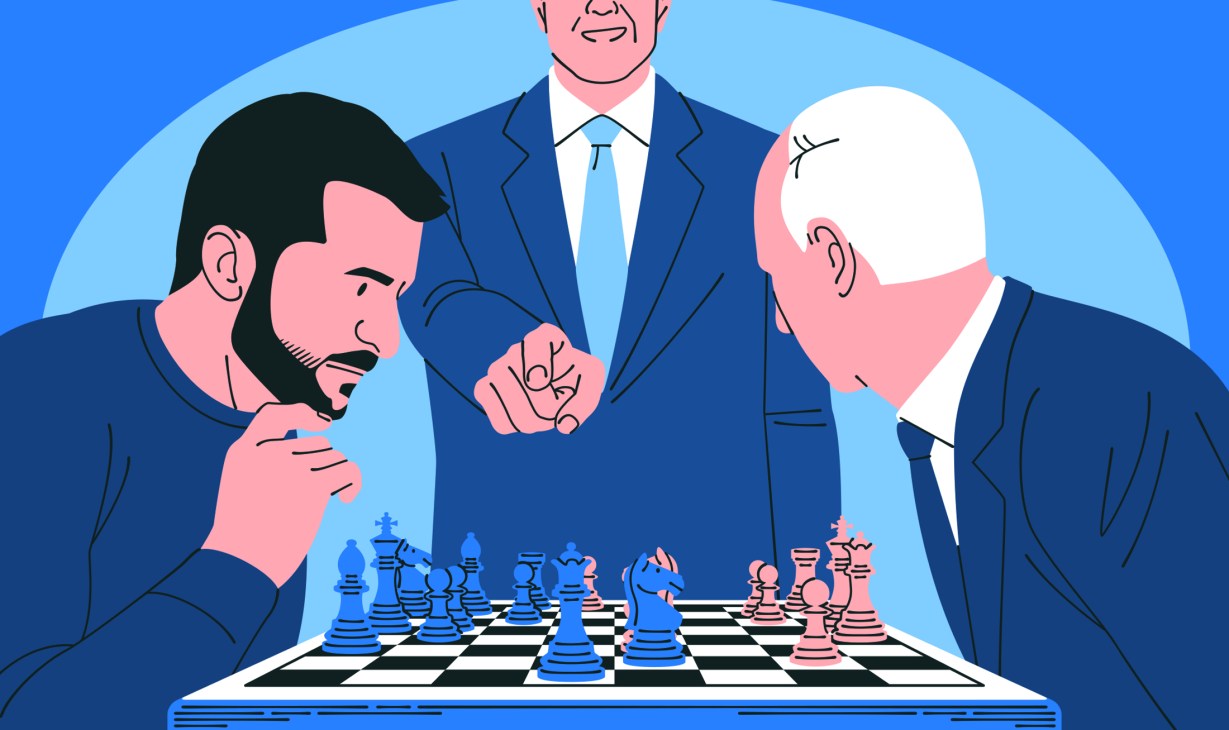
When it emerged in September that Elon Musk had prevented Ukraine from using his Starlink satellite system to ambush Russia’s navy in Crimea, many asked how one private citizen could hold such sway in a foreign conflict. Some called Musk an outright security threat and demanded that his power be curbed. But history tells us that meddling in affairs by wealthy, so-called non-state actors is nothing new. Sometimes they do so to support causes that they see as just. More often, however, commercial interests are their main motivator. Wars, after all, have always been big business. Banker JP Morgan Jnr financed Allied armies during the First World War, while newspaper magnates William Randolph Hearst and Joseph Pulitzer are widely credited with mobilising their titles to press the US government to declare war on Spain in 1898.
But the objectives of today’s foreign-policy freewheelers are not always as clear cut. Musk appears to be as easily influenced by what’s trending on his social-media platform, X, as he is by the words of a world leader. Indeed, modern technology barons own much of the hardware that states rely on and have the cash to bankroll projects that their governments can’t – Starlink being a case in point. You only need to observe the obsequious nature of UK prime minister Rishi Sunak interviewing Musk at a conference on artificial intelligence in November to see the imbalance in power between private wealth and government.
So how can the world’s richest man be brought to heel? Some experts argue that invoking special laws, such as the US Defense Production Act, could force Musk to sell his wares to Washington first, which could then be distributed to the country’s allies. Another option might be to nationalise businesses such as Space X’s Starlink, Musk’s satellite-launching service, which can be considered a monopoly in the field. Though it has been done before, this option would likely prove controversial and might deter other private companies from entering the market and generating the very competition that is needed as a counterweight. Perhaps the best solution would be to bring Musk’s space firms on board as fully funded defence contractors, with the same contractual responsibilities that other players in the sector face, including not selling products to hostile states.
Musk’s Ukraine intervention was a wake-up call for policymakers. Tackling his power so late in the day won’t be easy but it will get harder the longer it is left unchecked. This risks setting a dangerous precedent, creating a world in which non-state actors are increasingly allowed to involve themselves in conflicts of global significance.
Nina dos Santos is a foreign correspondent, TV anchor and the former Europe editor of CNN.
Stronger than fiction
Emma Searle on the sci-fi minds helping states to predict future threats.
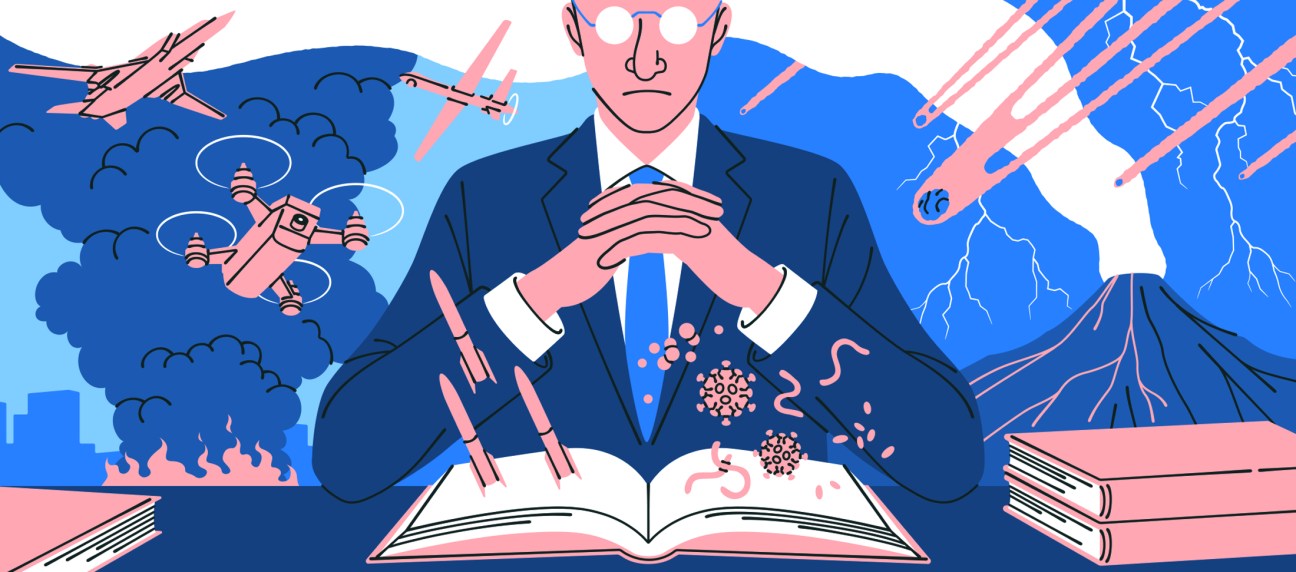
A failure of imagination is the worst mistake that a country’s defence establishment can make. This was the conclusion of the 9/11 Commission Report, which investigated the US’s response to the September 11 attacks. In the aftermath, the Pentagon sought advice from dozens of science-fiction writers whose jobs involved imagining outlandish future conflicts. The enlistment of sci-fi novelists to inform defence planning has been practised by governments for decades. In 2005,the Canadian military hired novelist Karl Schroeder to write Crisis in Zefra, a novel set in a mythical African city-state, which fictionalised scenarios that peacekeepers might face in a near-future conflict. Earlier this year, the UK’s Ministry of Defence hired two of the sharpest minds in sci-fi, Peter W Singer and August Cole, to write eight stories about threats that might emerge within the next 20 years. In France, a group of writers known as the “Red Team” have been tasked with imagining conflict scenarios for the French military.
Fiction’s main advantage is that it is the antithesis of a dry report, making expert findings more digestible. “It’s akin to what I do with my children in the morning,” says Singer, author of Ghost Fleet: A Novel of the Next World War. “I sneak fruit and vegetables into a smoothie. At one end you have science-fiction, which is basically like a milkshake. At the other you have the kale – the strategy paper. Together it becomes a hybrid of narrative and nonfiction.” Fiction has also informed policy within Nato. “It has helped us to think through things that we included in Nato’s first climate-change security action plan,” says Ruben Diaz-Plaja, a senior policy adviser at Nato.
Naturally, setting boundaries is crucial. Fiction is only useful to policymakers when grounded in research, offering strategies to mitigate the conflict it describes. This was a central drive for retired Australian major- general Mick Ryan, whose novel White Sun War: The Campaign for Taiwan posits the scenario of a Chinese invasion of Taiwan. “It involves drawing a line from where we are now and where we might be in five or 10 years given the technologies we’re starting to bring into the military,” says Ryan. “I don’t think the book will lead to any great changes but we might then ask, ‘If this happens, what is our position?’” History has shown that unimagined threats can become reality. Coronavirus came as less of a surprise to those who had grown up watching Contagion and The Andromeda Strain. Technologies and weapons were germinated in the minds of novelists such as HG Wells and Jules Verne. Military expertise and wisdom can be found in unconventional places.
Emma Searle is the producer of ‘The Foreign Desk’ on Monocle Radio.