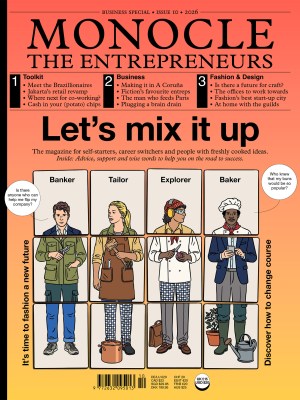
Issues
Spheres of influence
Our double issue takes you from one year to the next, from December’s joy (we hope) to a more contemplative January when plans are made, ideas hatched. But many of the stories and themes that have shaped 2023 are likely to remain relevant in the new year and beyond. Some of the mood music will be stuck on repeat.
One of the themes that will continue to be crucial is security – from how nation states use their might for self-defence to how cities protect their citizens from a multitude of threats, both man-made and natural. It’s a topic that we shouldn’t shy away from because it affects so many things: whether businesses feel that it’s the right time to invest, whether parents are confident about allowing their children to walk home from school in the dark, and more.

That’s why this issue contains two deep dives into the question of what we can do to make ourselves feel more secure. Our foreign editor, Alexis Self, has commissioned a series of stories looking at topics such as defence spending, South Korea’s growing role in manufacturing the kit that the world’s armies want, and spotting risks – but he has also explored the value of negotiating with your foes and how a nice inflatable tank might be all that you need to keep your soldiers out of harm’s way. Then, in the business pages, Petri Burtsoff investigates how to protect our cities from floods, air pollution, terrorist attacks and other dangers without scaring people unnecessarily or limiting personal freedoms. Safety and the ability to trust that things will be OK are essential for the gentler elements in our lives to flourish. You can’t have a good quality of life if you think that it can be swept away at any second. It’s a subject that we need to debate.
Balance is also vital. This double issue is host to our Soft Power Survey, which looks at how nations can win friends and gain global influence through the use of such things as culture, diplomacy, food and design. I always find the annual survey fascinating as it charts the rise and fall of the nations featured and how, while people back home might grumble about their leaders or the state of the economy, out in the wider world their country’s brand appeal can often be shining brightly.
A good example of a cultural play with glowing soft-power credentials is bande dessinée, the graphic novels that come out of France and Belgium. It’s a tradition that took off years ago with the likes of The Adventures of Tintin and Asterix but is now a vast publishing phenomenon. And it’s a sophisticated one: the stories told cover everything from history to espionage, design movements to biographies. In a meta move, we commissioned Belgian artist Hamo to produce a comic about the comics. I must add that Tyler Brûlé, our editorial director, is a fan of the genre and played a key part in the negotiations; I was only surprised that he didn’t make an illustrated appearance.
Two final things to flag. In our design pages, there’s a story about Finnish timber that includes a report on how the furniture brand Artek is embracing imperfection. It has been looking at its supply chain as it seeks to meet its environmental commitments and one of the conclusions is that it needs to use more of the felled birch that’s the mainstay of its furniture. The pursuit of perfection meant that as little as 10 per cent was being accepted as worthy of use. But now it is looking at how knots and marks can be embraced and has released a version of its Stool 60 that celebrates the blemishes. It’s a wonderful example of how a simple change of mindset can transform how we see beauty.
Then there are cakes. This issue’s Expo is a big cake shop with a display of festive buns, brioches, spicy confections and creamy temptations that puts the icing on the issue. Please feel free to get stuck in.
Finally, a thank you to all of our readers for your support across the year (and it was great to meet many of you at our events). We hope that you have a merry Christmas and joyous end-of-year celebrations, and wish you a safe and happy 2024. With some cake on the side. And, as always, feel free to send ideas and thoughts to me at [email protected].
Legends in the baking
1.
Spice of life
Lebküchnerei Woitinek, Nuremberg
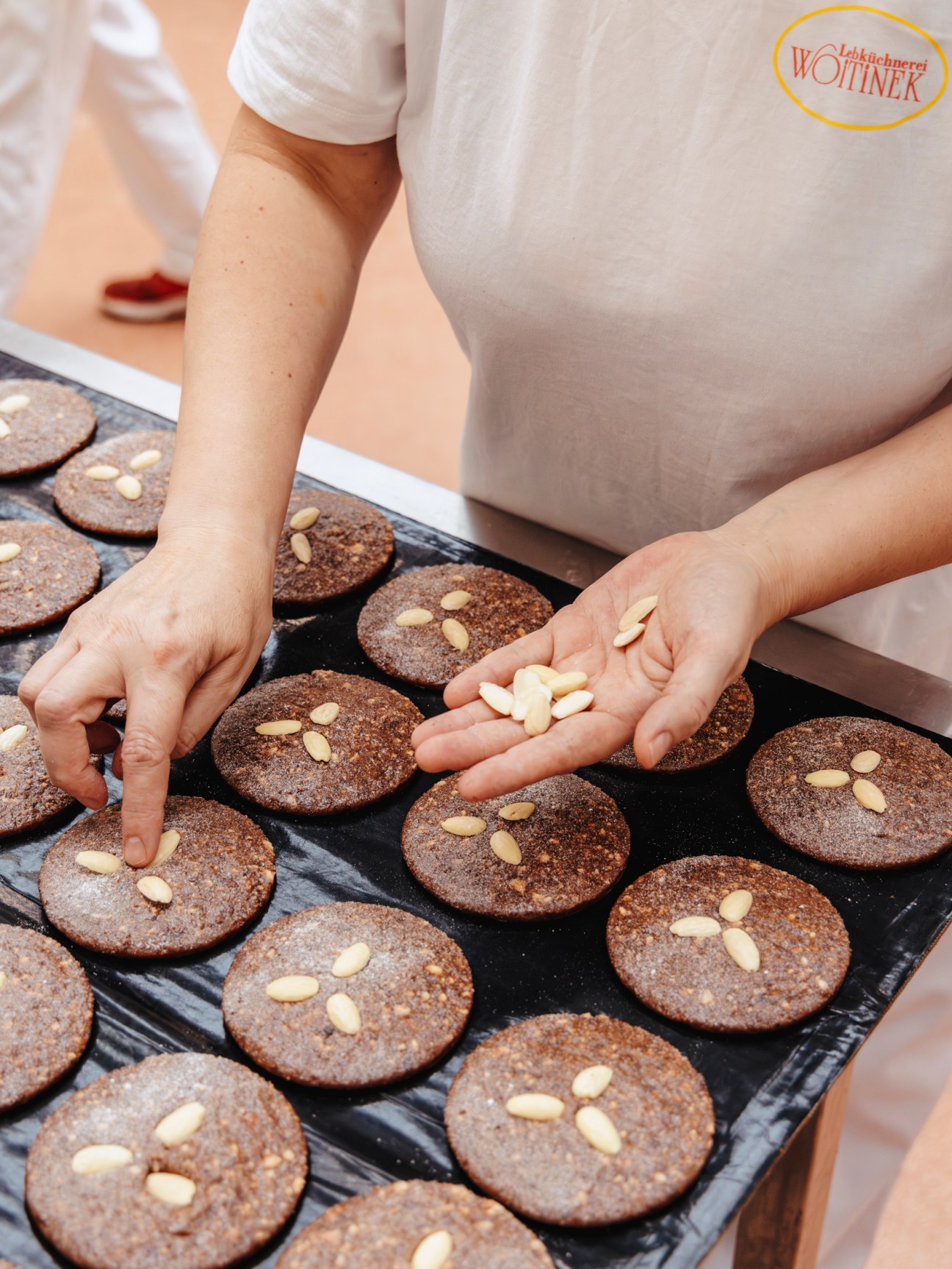
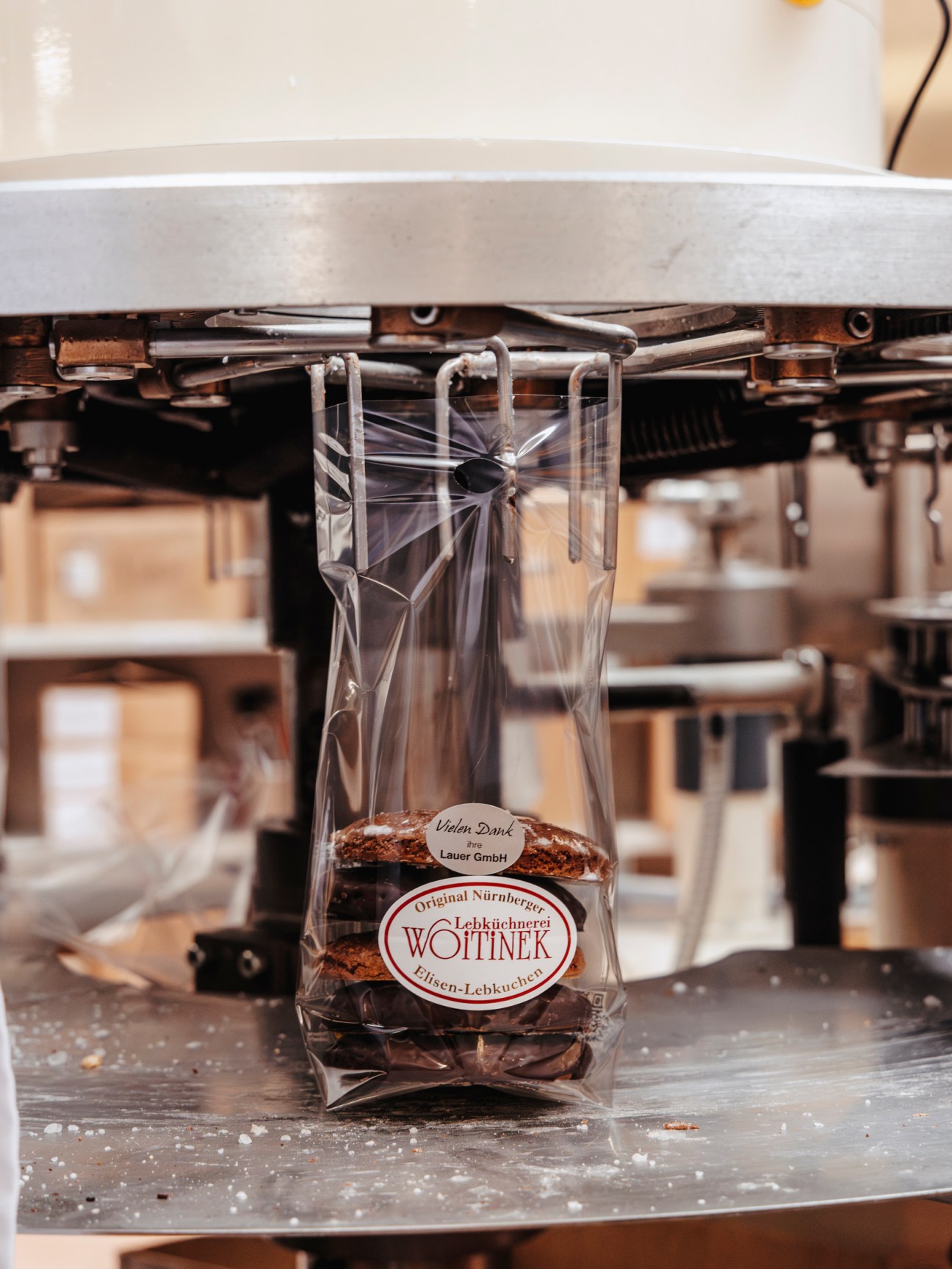
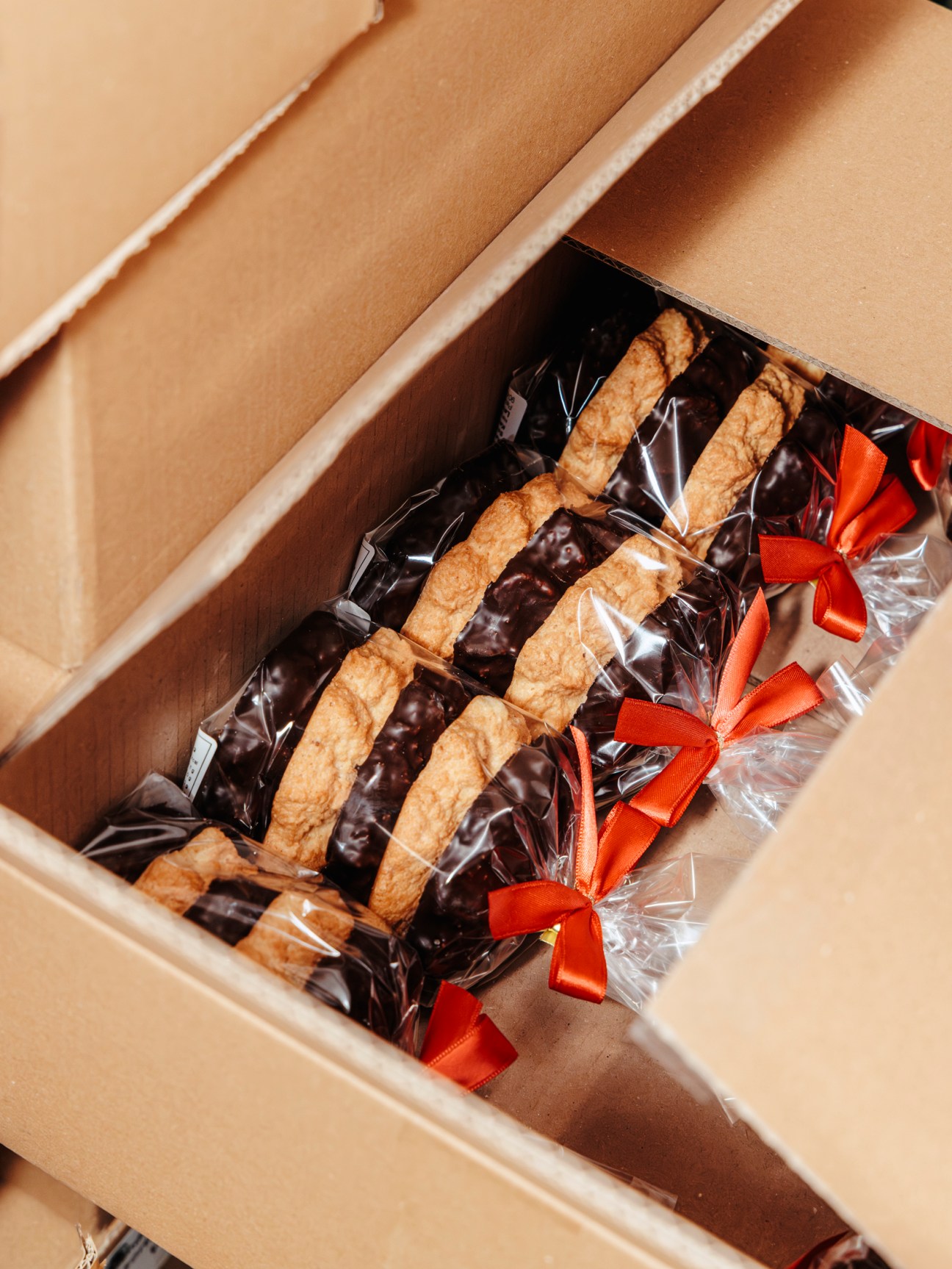
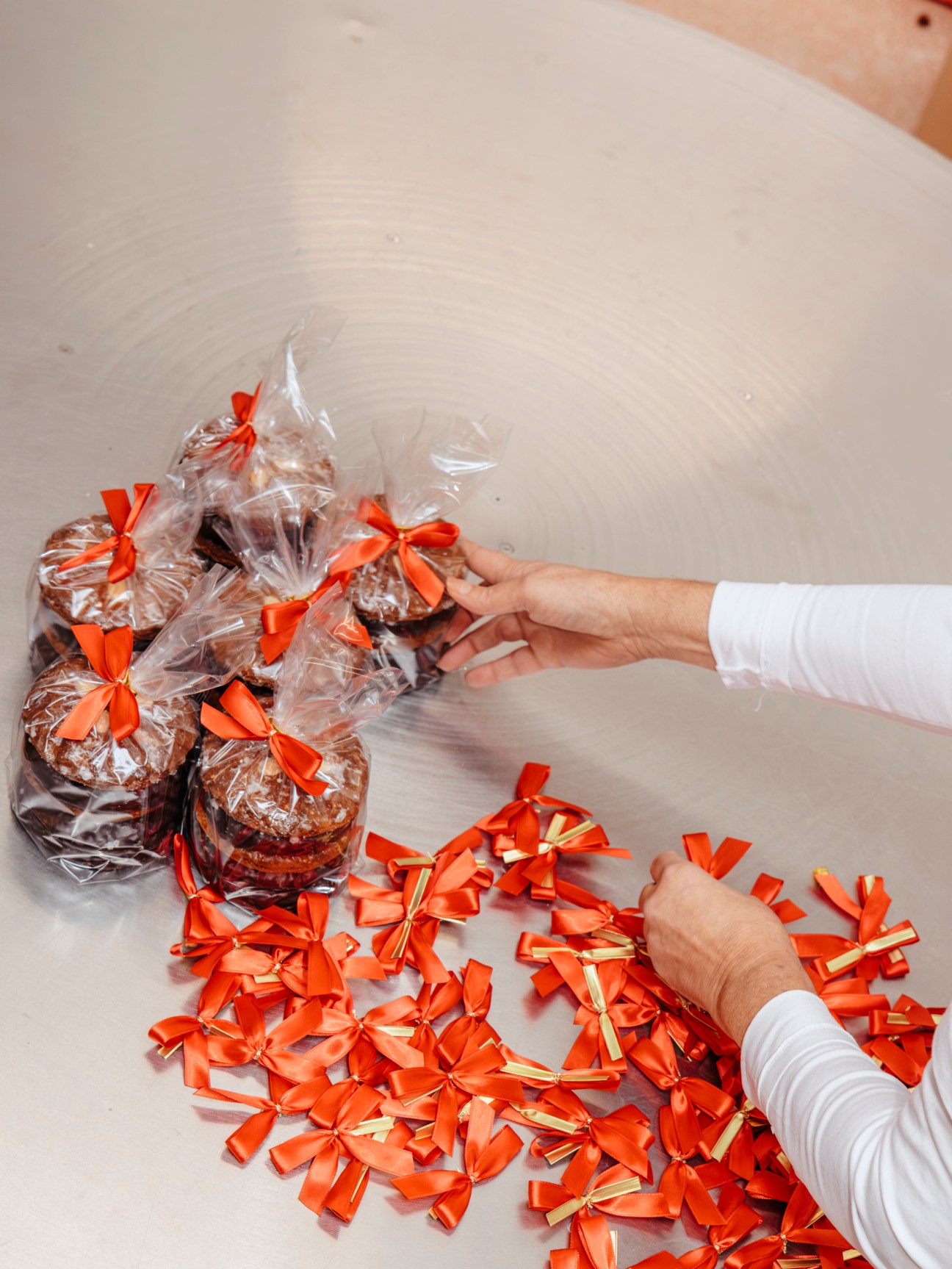
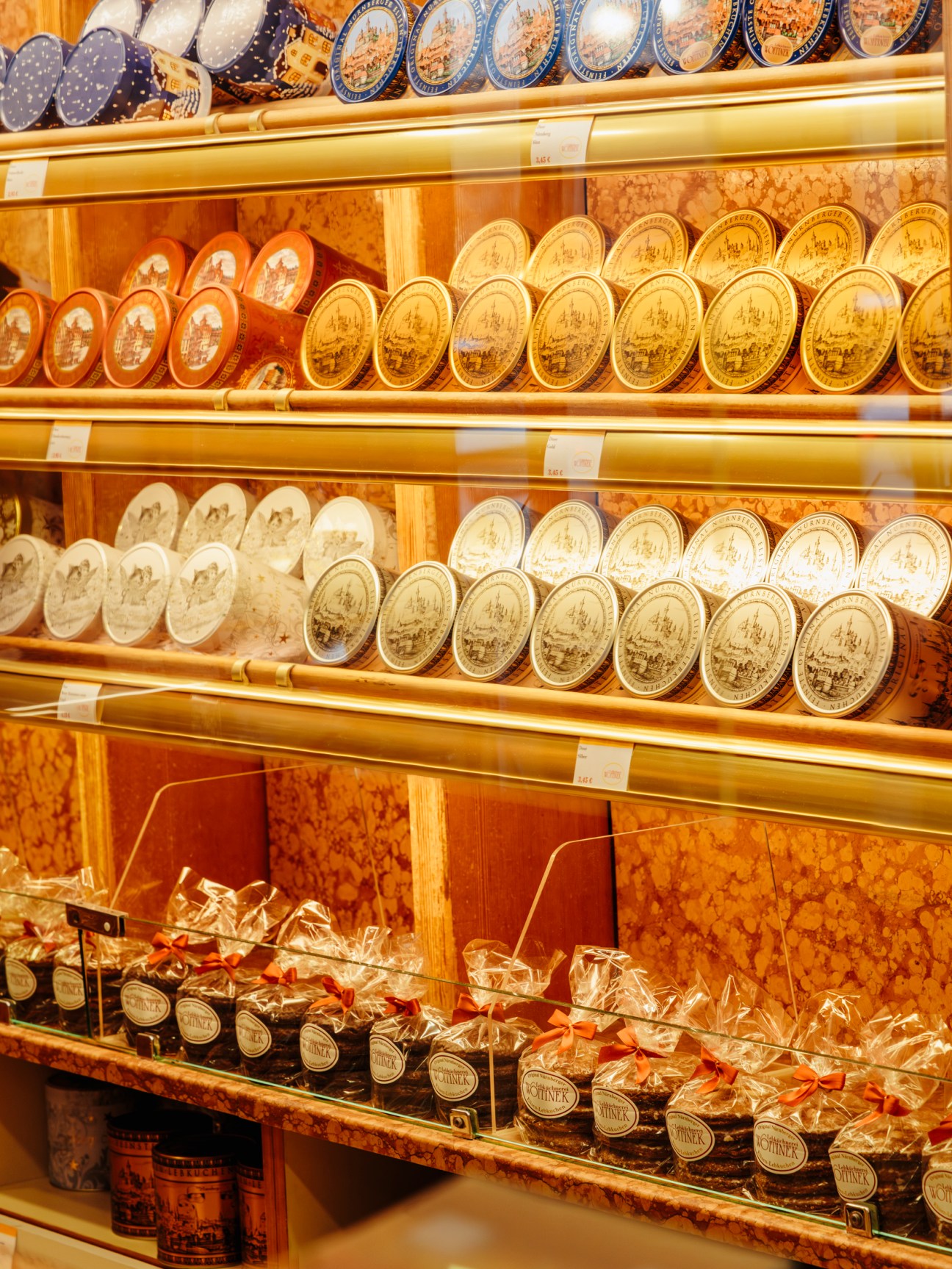
At first glance, the modern shopfront of Lebküchnerei Woitinek in Nuremberg’s Steinbühl neighbourhood is like that of a typical German bakery. A second look, however, reveals that there’s no bread on offer, no rolls, not even a pretzel. Instead, the shelves are stocked with red-ribboned packets of Lebkuchen, a traditional gingerbread from Nuremberg that’s enjoyed at Christmas.
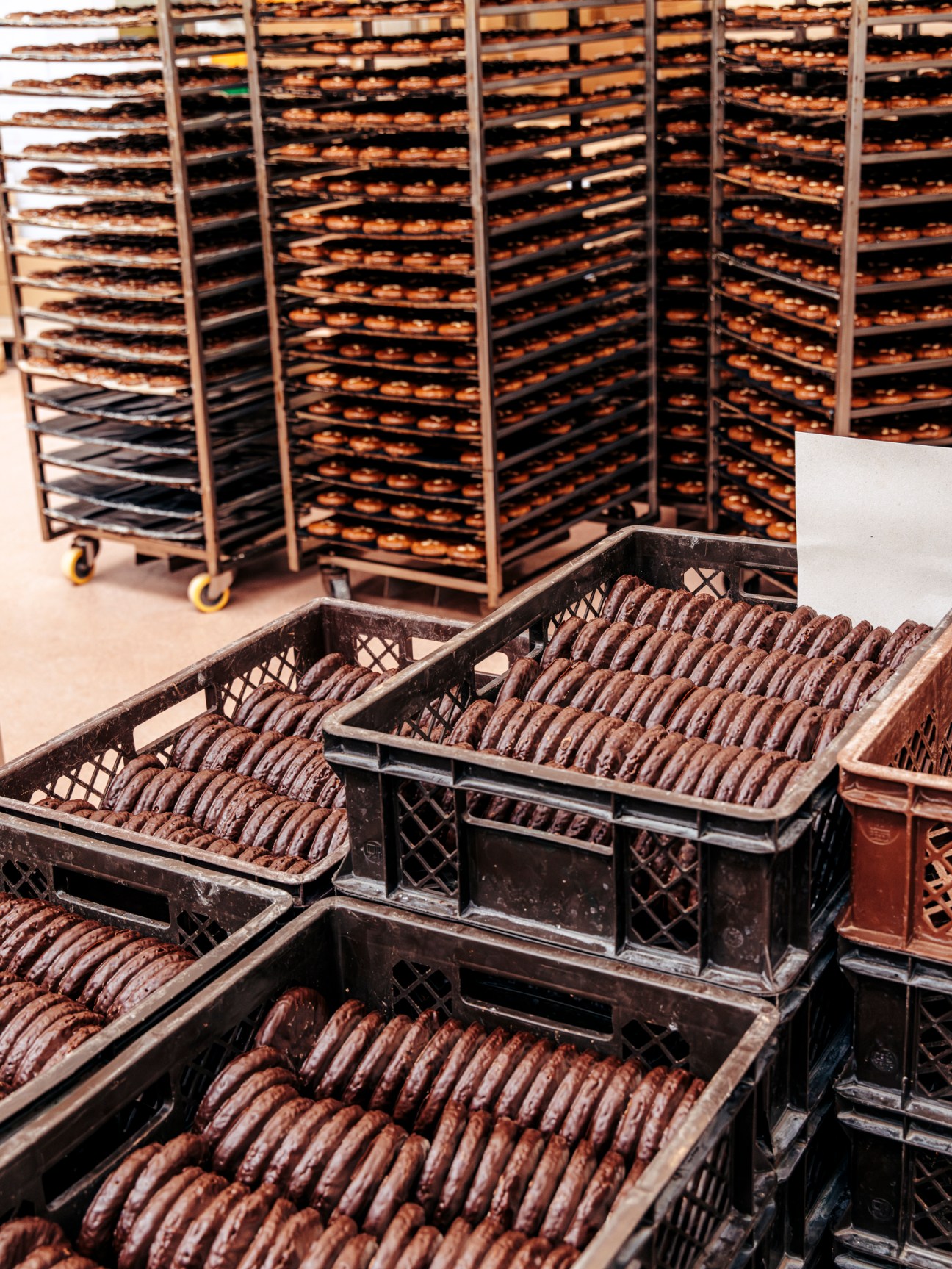
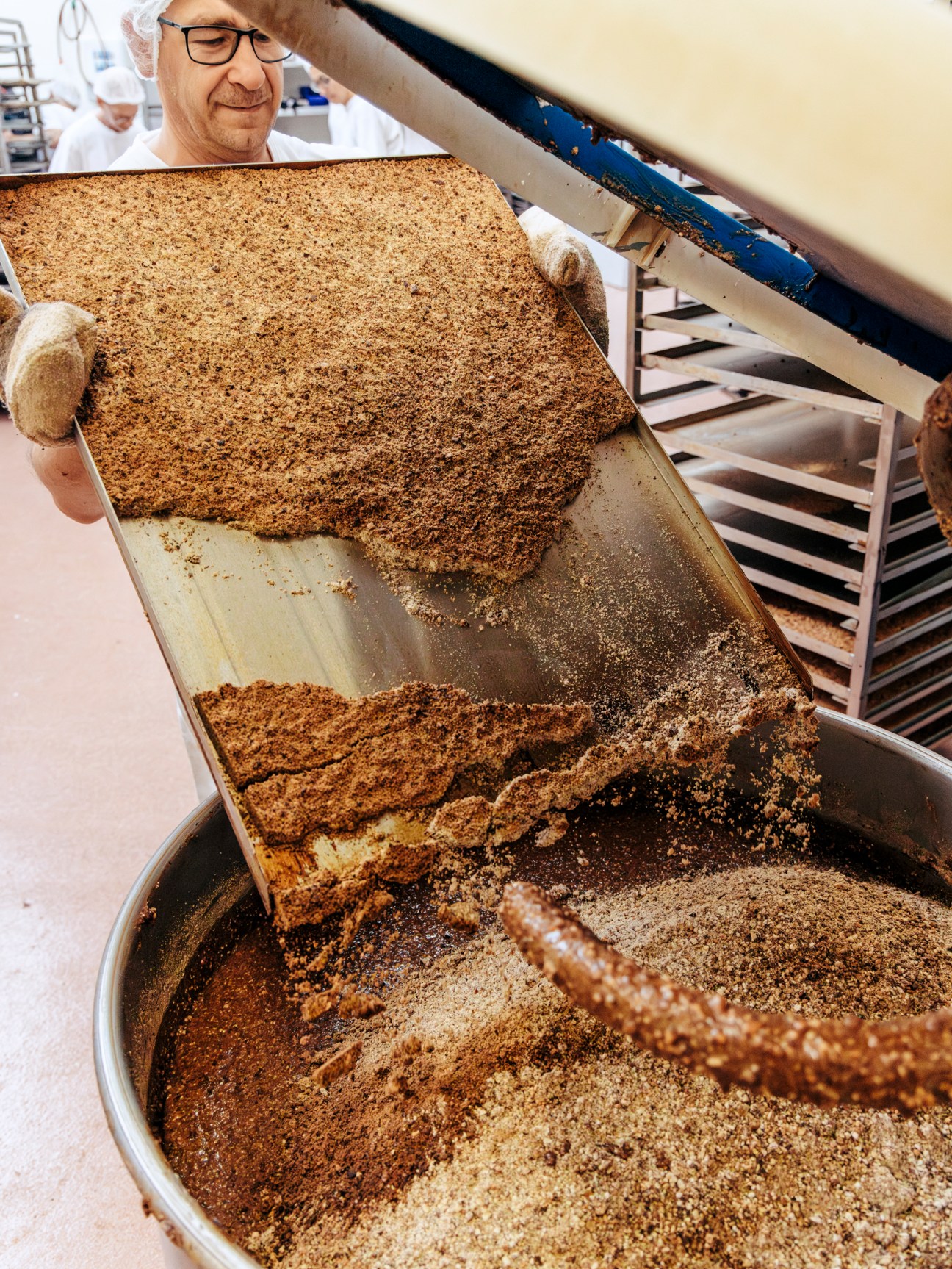
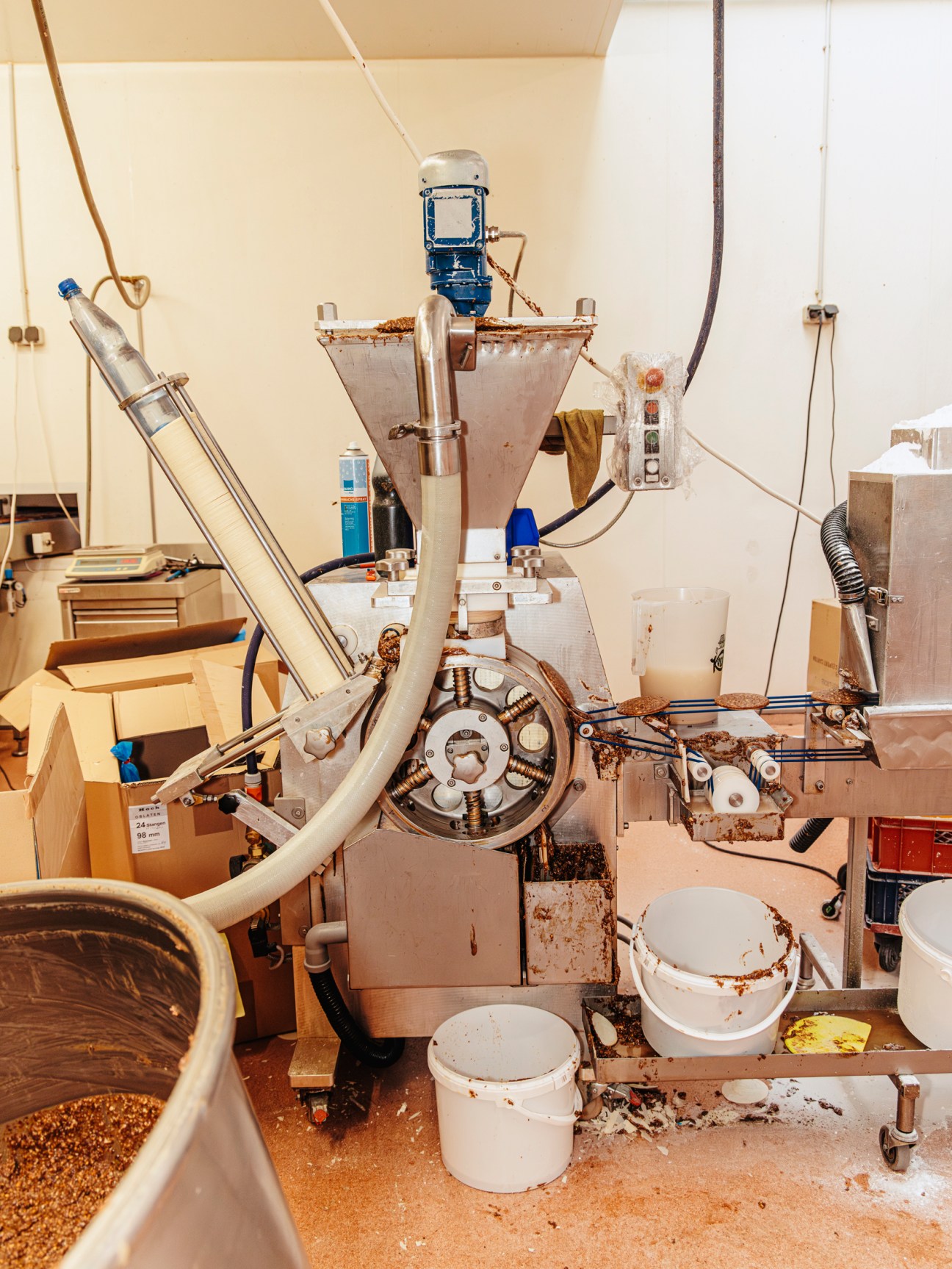
Today, Lebküchnerei Woitinek is still family-owned, run by fourth-generation baker Bernd Woitinek alongside his wife, Pia, and their three children. “My great- grandfather built this business in 1895 and I took over from my father in 1995,” says Bernd, now in his mid-fifties, as he shows Monocle through the manufacturing facility that brims with stacks of boxes filled with fragrant Lebkuchen. A small group of women wearing hairnets are busy packing various kinds of gift boxes. “I thought I could run the Christmas gingerbread production from here for a few hours a day after the regular baking in the morning, but our Lebkuchen were so successful that it proved impossible to do both. So, in 2004, we decided to stop making bread in order to focus on the festive season.”
The production of gingerbread has long been associated with Nuremberg, ever since its heyday as an important stop on the international trade routes of the 14th century, playing an essential role in the buying and selling of spices. Early recipes for Lebkuchen (which can be dated to 1395) list only honey, flour and spices along with a raising agent such as ammonium carbonate. After the Lebküchnermeister (master gingerbread bakers) formed a guild in 1643, the recipe evolved to a richer, moister version that includes almonds, nuts and eggs. Today, Bernd still uses his grandfather’s recipe to produce three million of the rich, nut-laden cakes between August and December.
Surrounded by Lebkuchen in their office and on the production floor, where they can be found handing out tasty samples to staff and customers, the Woitineks are at peace with the historical and cultural significance of their gingerbread. Bernd, somewhat embarrassed, even admits to not being particularly fond of it. However, when asked about ingredients and texture, he has clear preferences. “I like the nuts roasted and chopped quite rough for a little crunch,” he says as he breaks up a piece of Lebkuchen, which should never be cut to avoid squishing the dough. “I use a special hazelnut marzipan for additional aroma, but with only 2 per cent flour, just enough to stabilise the dough and retain the moisture.”
Most importantly, Lebküchnerei Woitinek’s spice mixture, which makes up only a tiny proportion of the dough, is custom-made by one of two remaining local spice traders. “The quantities we need are too large to mix all the cloves and cinnamon, cardamom, star anise, allspice, black pepper and nutmeg ourselves,” says Bernd. Finally, for the chocolate coating, the gingerbread baker creates his own mix of special beans. Though he might not indulge in them often himself, this traditional Nürnberger Lebküchnermeister is clearly proud of his family’s famed gingerbread.
2.
Where life is sweet
Scaturchio, Naples
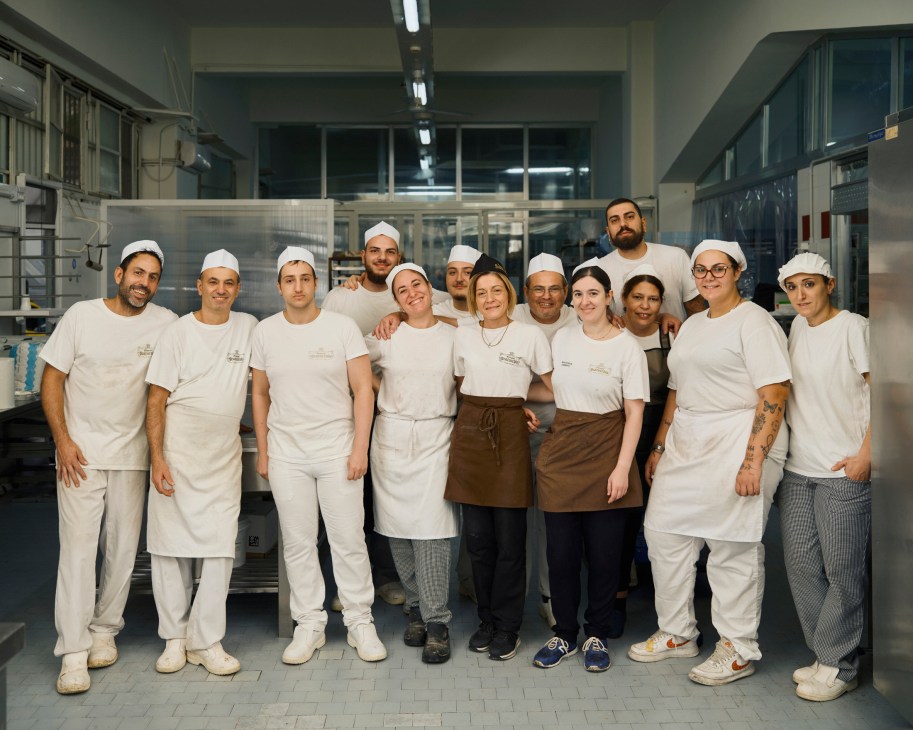
Walk along Via Mezzocannone in Naples and you’ll reach yourself in Piazza San Domenico Maggiore, where the San Domenico obelisk towers above a square populated with lively cafés and university students on their way to lectures. Here you’ll find Giovanni Scaturchio and his family’s pastry shop, which was established in 1905. A century later the name is synonymous with the mouthwatering flavours of Naples’ most celebrated pastries, such as the baba sponge cake and sfogliatella puff pastry. At Christmas, the smell of honey and candied fruit permeates the square as the Scaturchio bakery fills its windows with Neapolitan struffoli (deep-fried dough balls doused with honey).
“They’re a symbol of good wishes for the new year,” says Giacomo Cautiello, director of the Scaturchio laboratory, where recipes and pastries are developed and painstakingly perfected. In his vanilla-and-sugar-scented office, Cautiello explains that Neapolitan Christmas desserts are intended to signify the promise of abundance and prosperity in the coming year. Every dessert is made for a specific time in the festive season; struffoli are to be eaten during the two-week period between Christmas and the Epiphany.
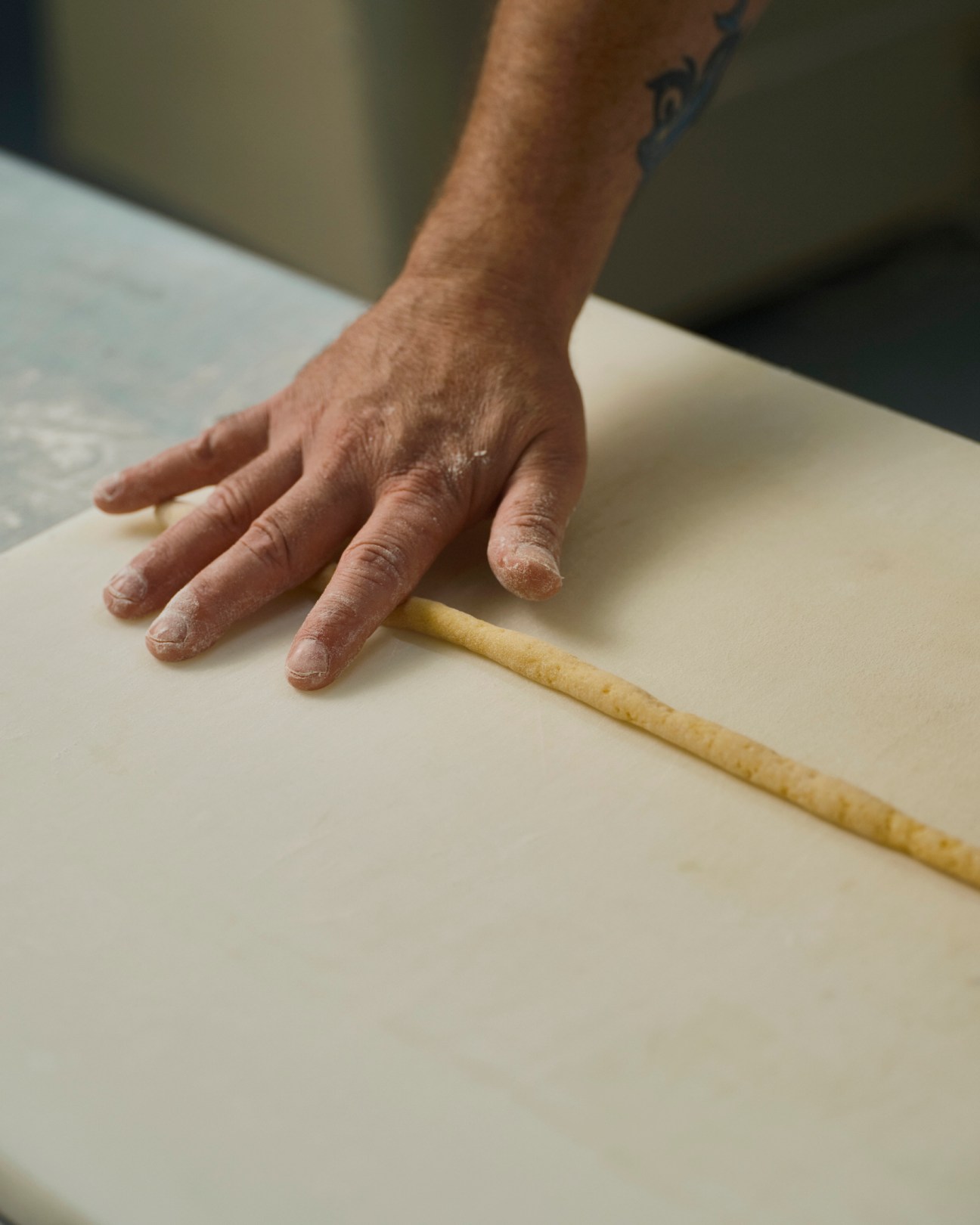
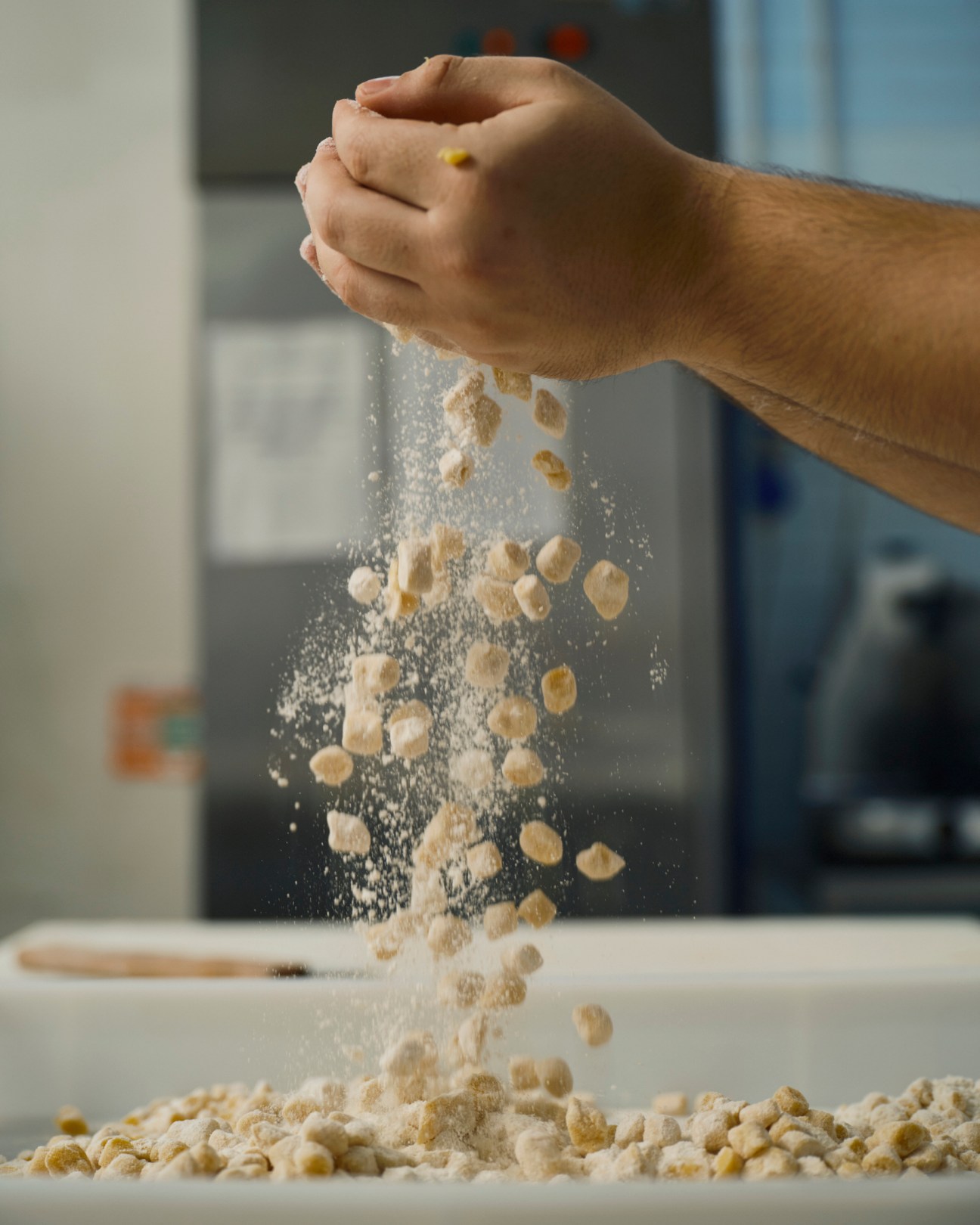
The origins of struffoli can be traced back to antiquity, when delicacies made from fried dough and honey were common. The recipe was refined by monks during the medieval ages before entering the homes of Neapolitans during the 18th and 19th centuries. Scaturchio’s version hasn’t changed for more than 100 years. The dough is made from sifted flour, water, eggs and butter, mixed and cut by hand into small balls (the smaller the better) and fried in peanut oil. The golden spheres are then drowned in an aromatic paste that combines honey, orange, cinnamon and vanilla before being dressed with fruit. “The orange and lemon peel is grated by hand,” says Cautiello. “You can’t begin to imagine how much fresh orange juice we drink in the laboratory during that time.” Struffoli, which are meant to be enjoyed by the spoonful, have a crunchy exterior and soft interior, delivering a bitterness in the fruit that marries the richness of the honey.

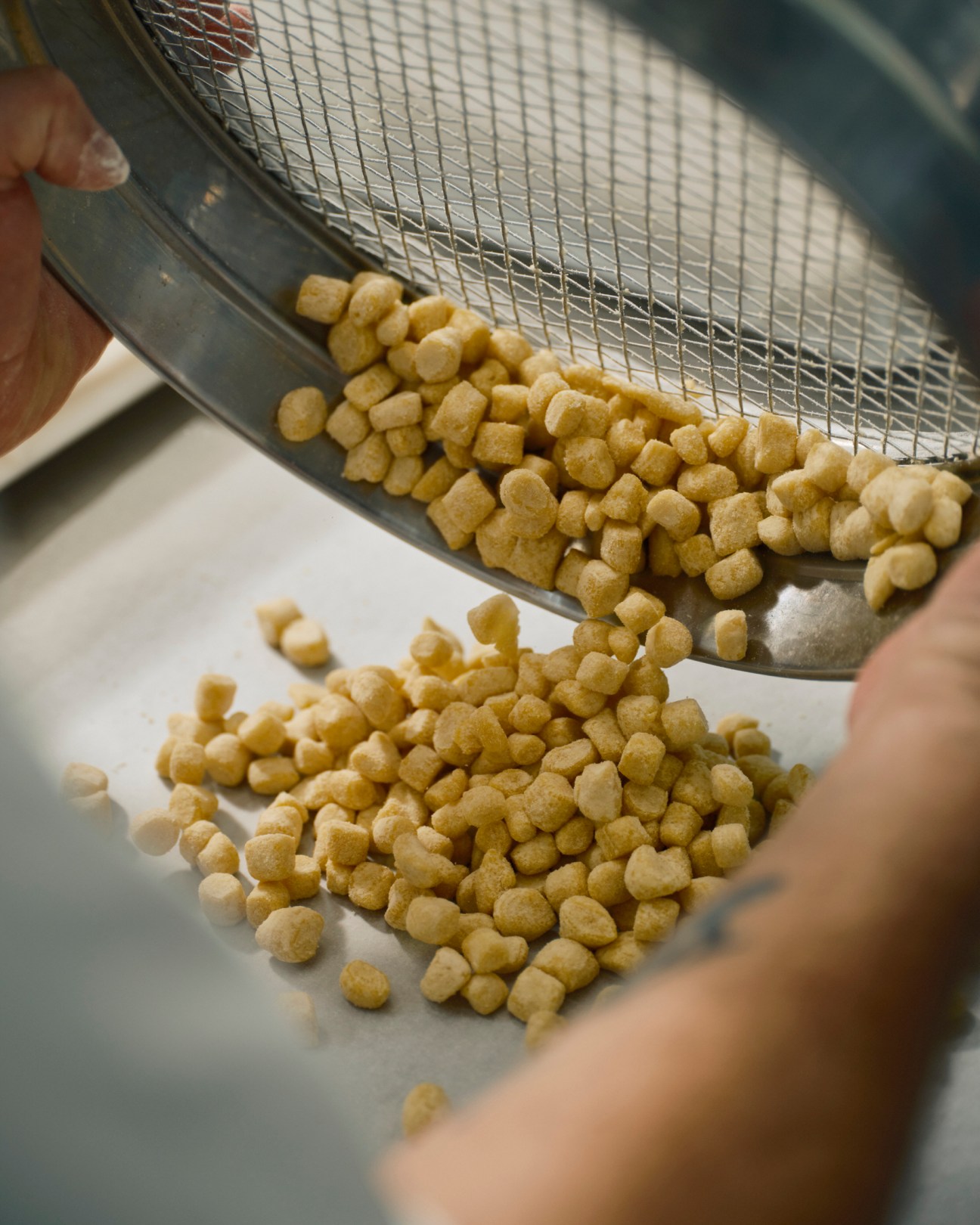
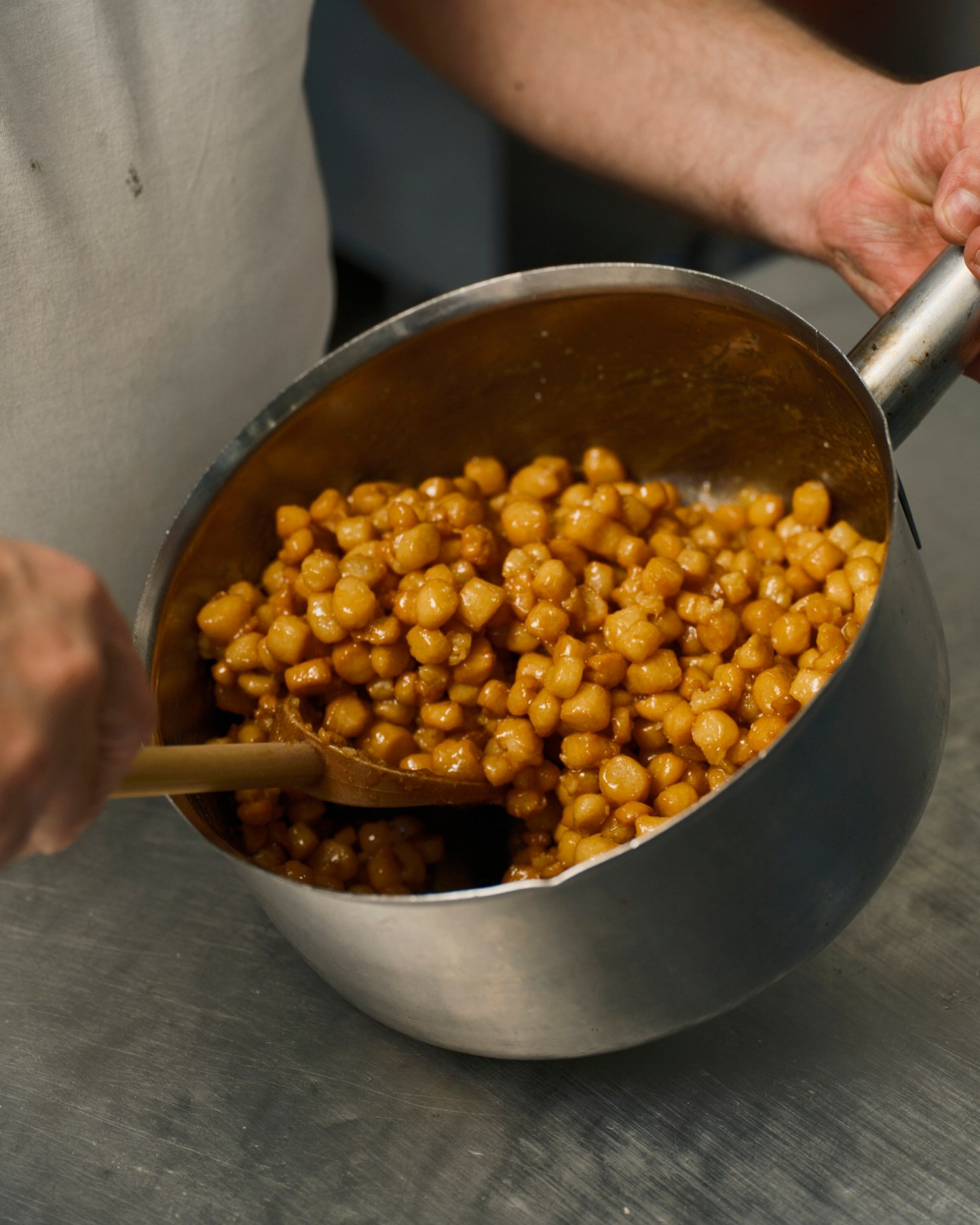
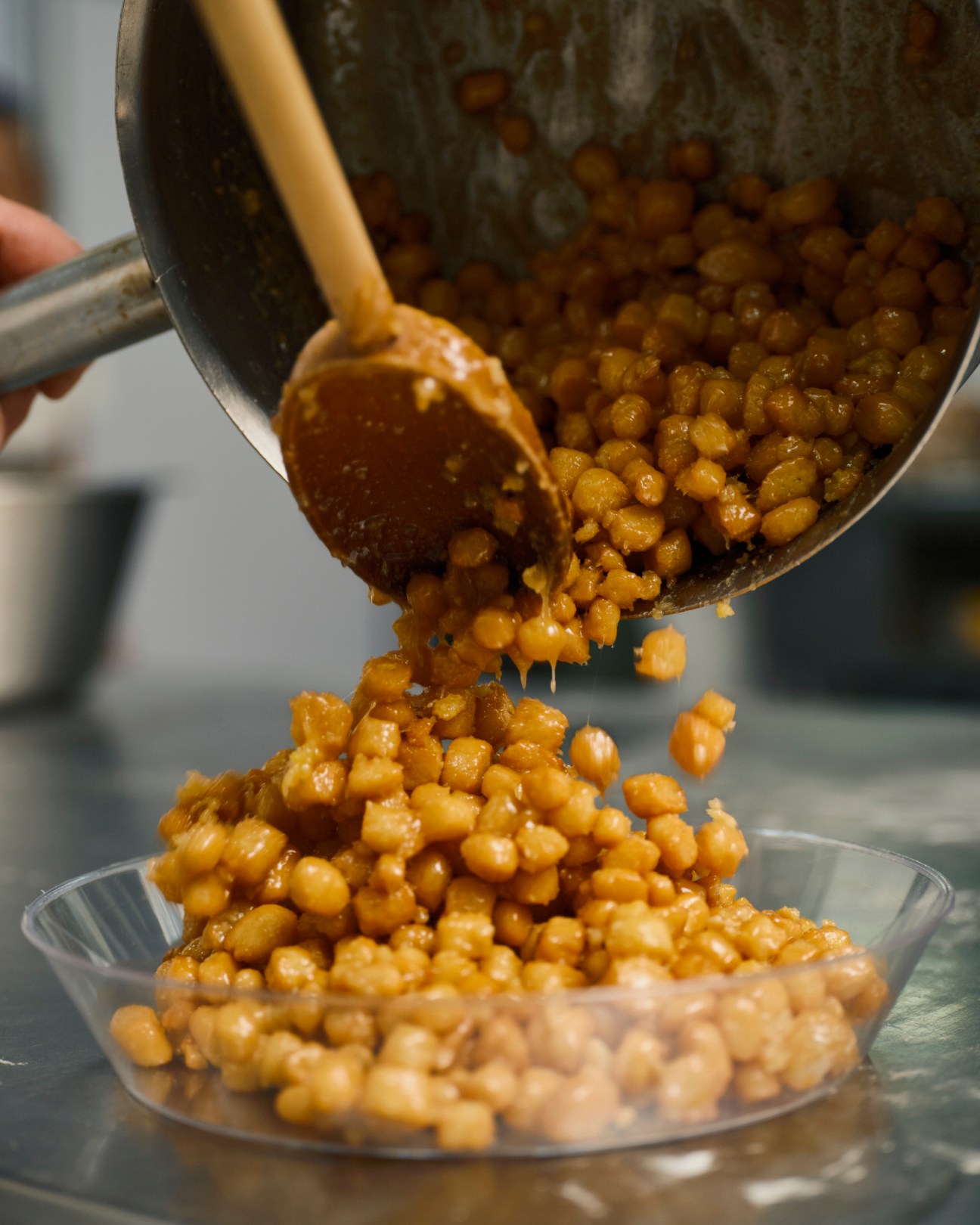
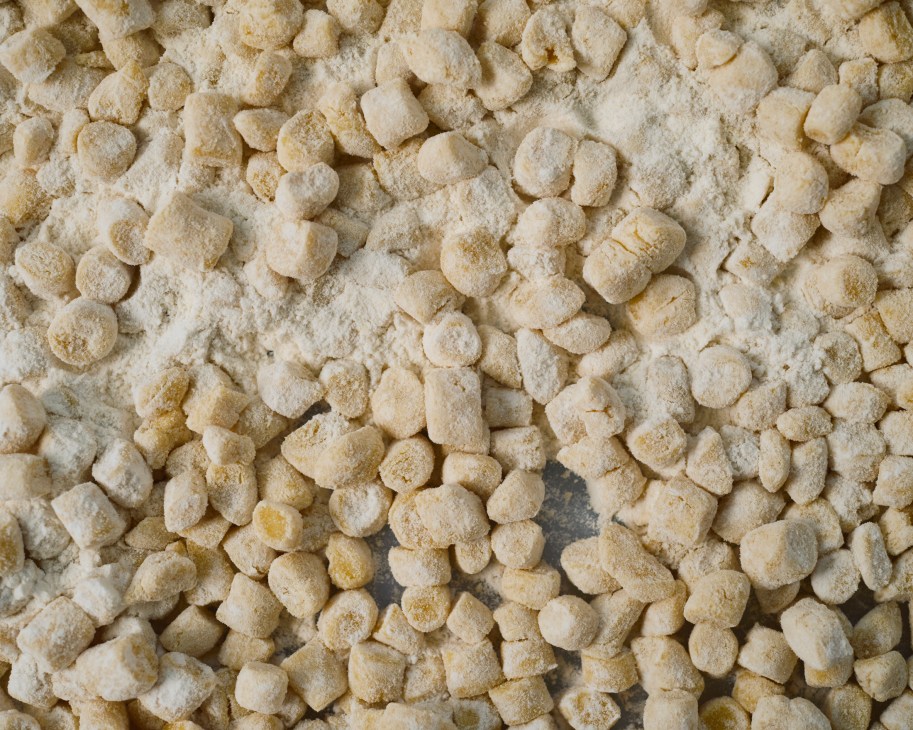
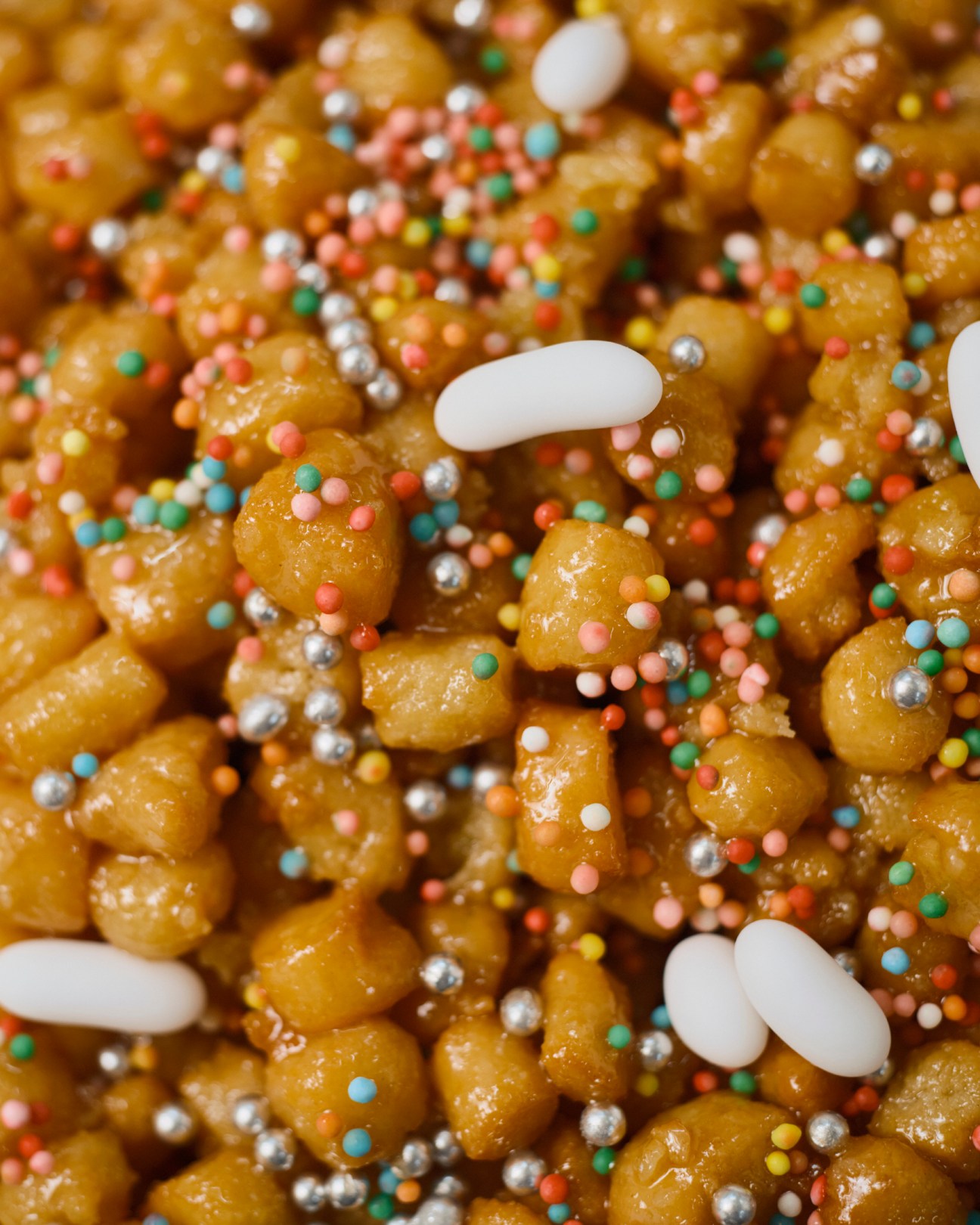
The importance given to the quality of the ingredients is what has set Scaturchio apart for nearly 120 years. For Cautiello, it’s what makes the difference between a dolce (a dessert of high quality) and something that is simply sweet food. “You always have to select the best,” he says.
Back inside the San Domenico outlet, operations director Alfredo Donvito reveals the second secret of the shop’s success. “It’s the hands of our pastry makers, who are passionate about doing things the traditional way, which gives our products a different taste,” he says. A bowl of struffoli isn’t just a sweet but a piece of the city’s people, traditions and the small things that make Naples what it is. “Here, confectionery and food in general has been transmitted to us by our mothers and grandmothers,” says Donvito.
The pleasure derived from a perfect dessert is at the heart of everything that Scaturchio does. “Our products are a small luxury,” says Cautiello. “When you sell struffoli, you must sell it with passion and a smile, ensuring you’re creating a pleasurable moment for the person in front of you.”
3.
One of a kind
Asimakopouloi, Athens
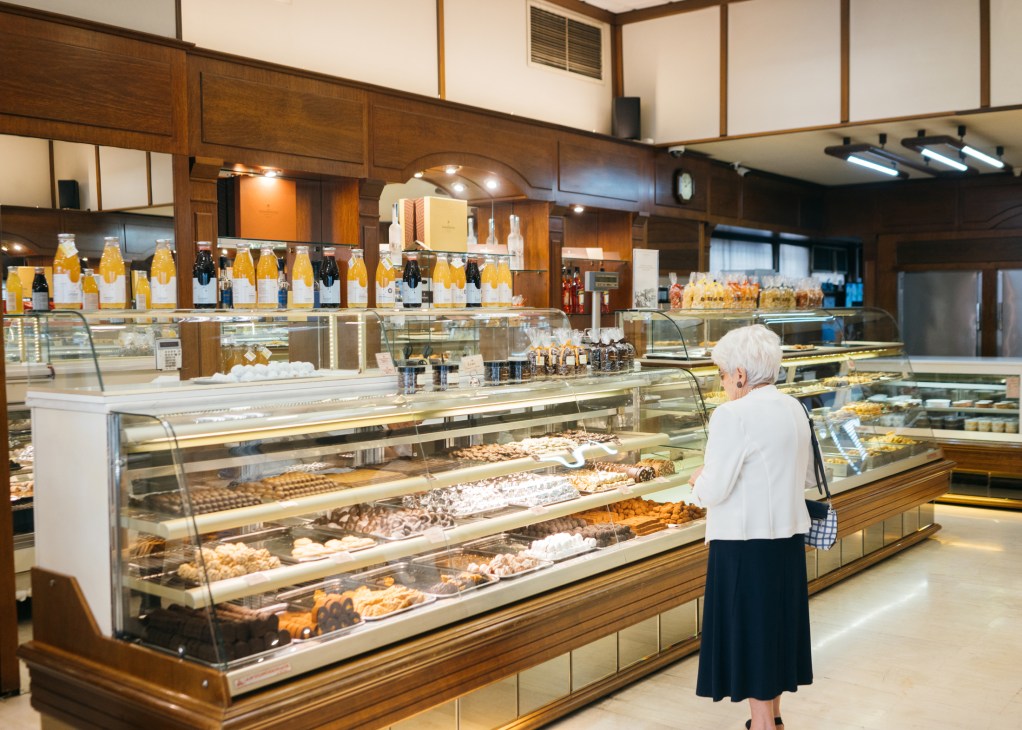
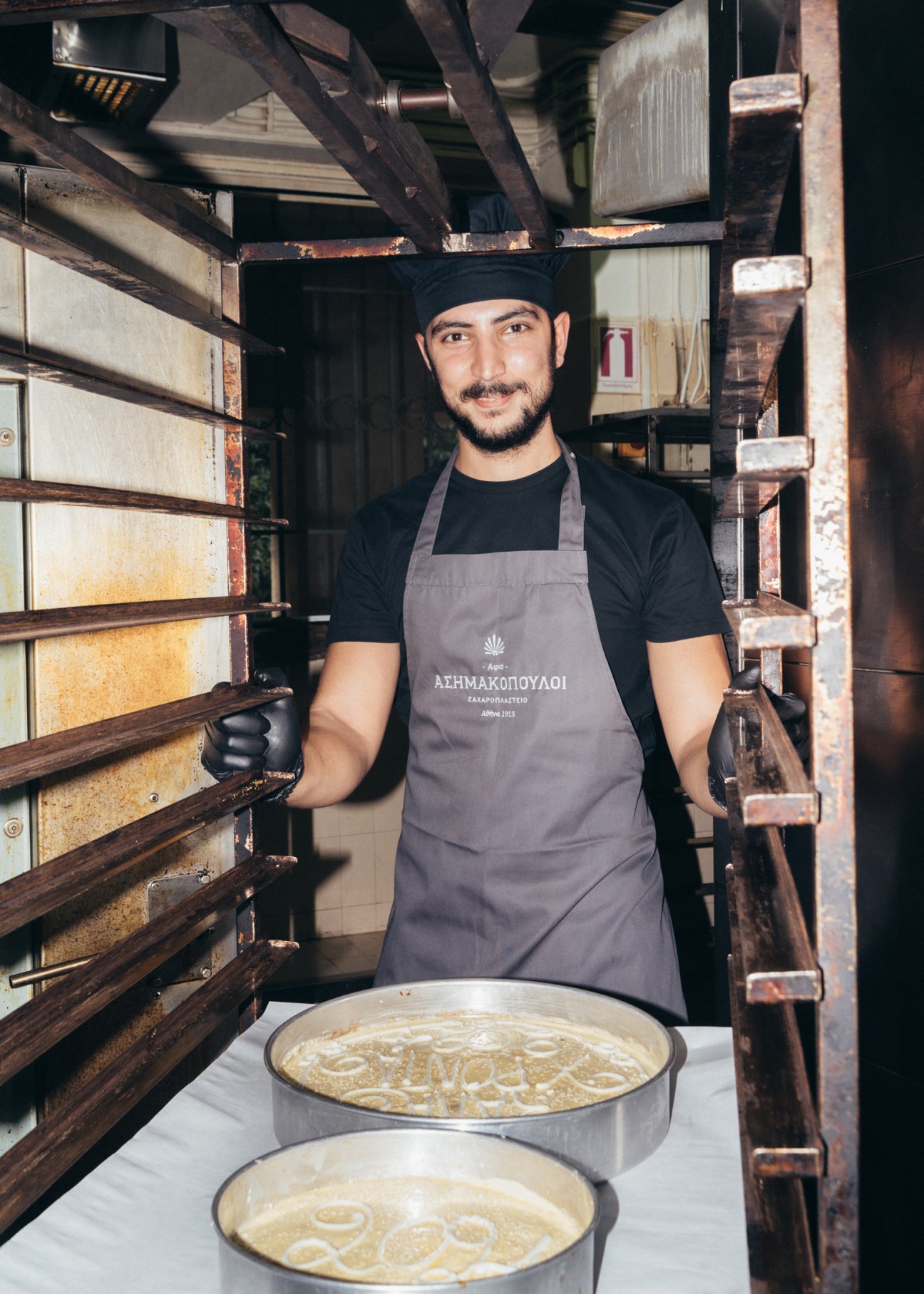
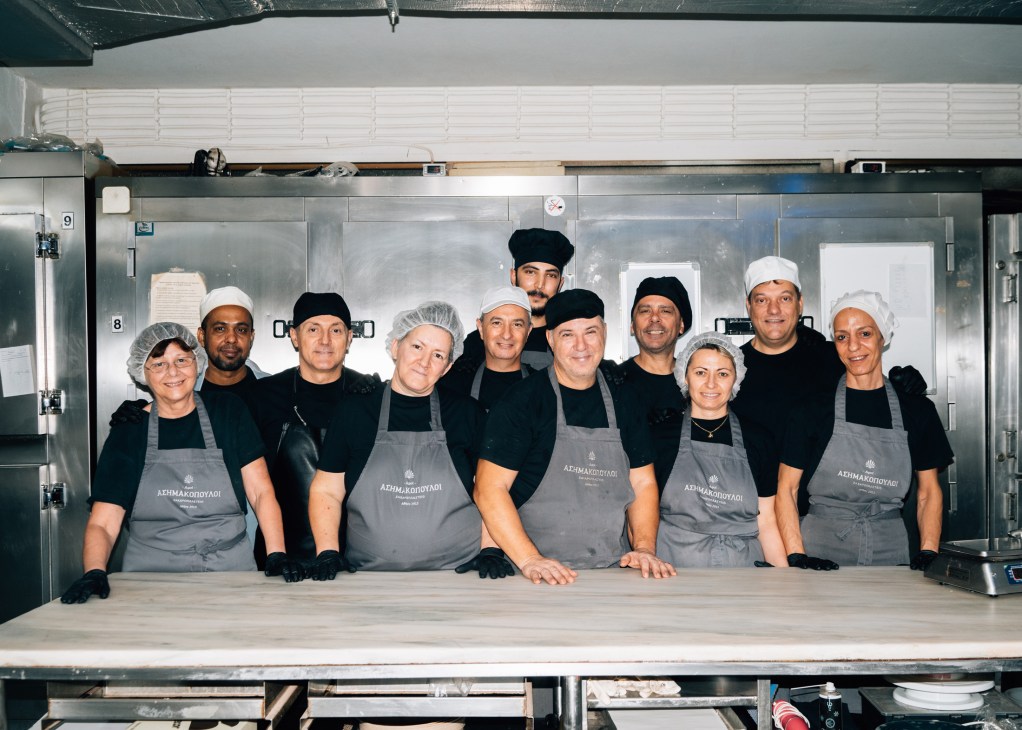
For Athens bakery Asimakopouloi, the festive period is a race against time. Racks of vasilopita – traditional Greek New Year’s cake – are wheeled in and out of industrial-size ovens, arriving still warm into the clutches of customers who queue around the block to get one. “It’s all hands on deck at this time of year,” says Vasilis Asimakopoulos, a third-generation baker who today runs the business with his sister Jane, father Dimitris and uncle Thanasis.
The business was founded in 1915, originally selling a small range of dairy-based products such as milk, yoghurt, rice pudding and galaktoboureko (syrup-soaked custard pies). Over the years, this grew to include chocolates and baked goods, and the business has garnered a reputation as the producer of some of the city’s finest vasilopita. The dessert is something of a cake-brioche hybrid, consisting of a simple mix of sugar, flour, butter, eggs, milk and orange zest. Asimakopouloi’s vasilopita is made using a traditional blend of fresh sheep and goat’s butter, as well as cow’s milk sourced from small dairy farms in Spata and the Megara region in Attica, which is pasteurised on-site at the bakery. “It is extremely fresh,” says Vasilis. “And this combination gives the cake a more robust taste.”
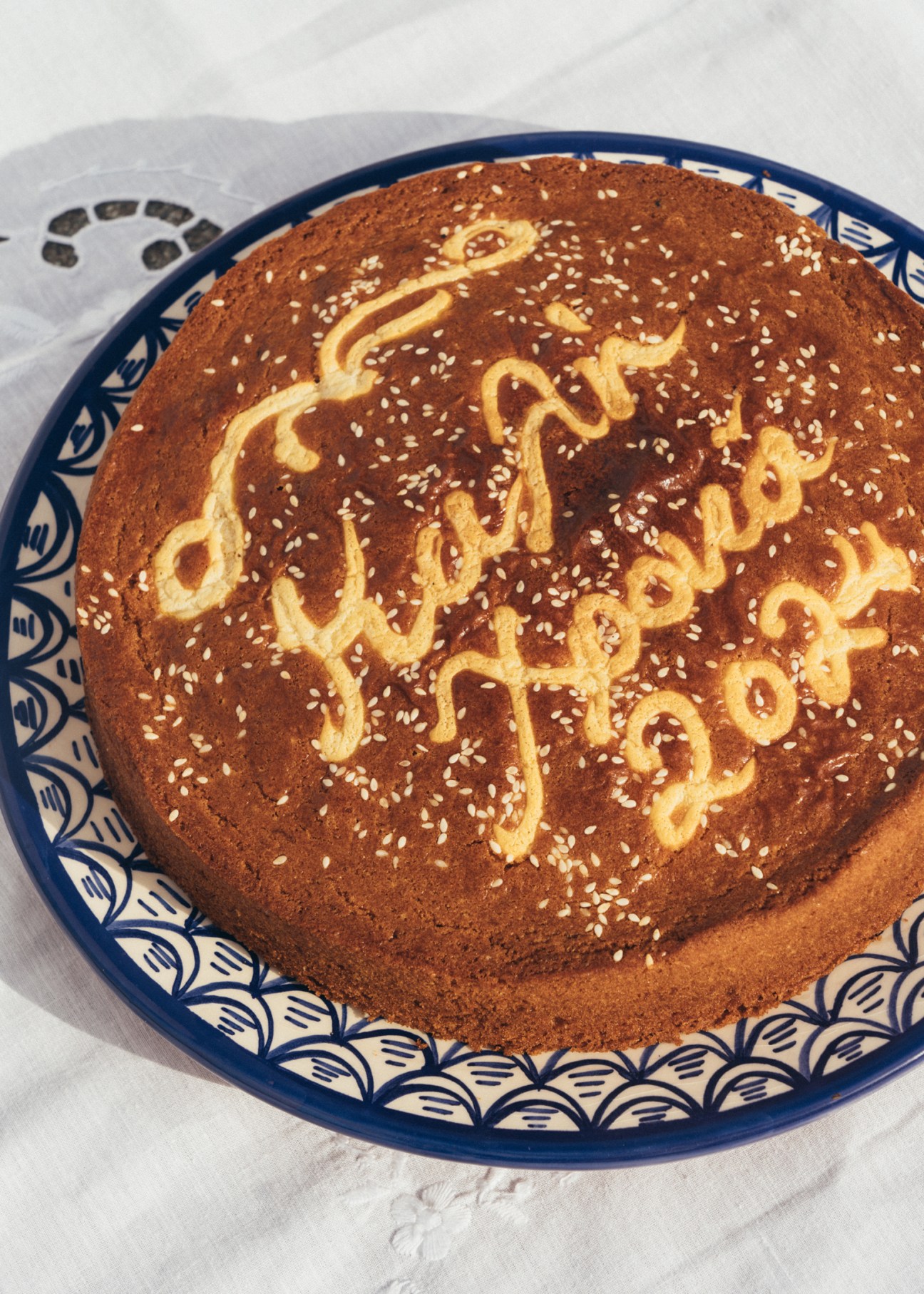
The word vasilopita means “bread of Vasilis” and is named after the medieval Saint Vasilis, a bishop from Cappadocia in modern-day Turkey. There are different variations on the story as to why the cake bears his name but the predominant one claims that, when his diocese was under siege, he asked citizens to raise an offering of money and jewellery to use to bargain with their attackers. When the ransom was given to the invaders, they were so ashamed by the collective generosity that they refused to take it and ended the siege. When Saint Vasilis attempted to return the valuables to their owners, he couldn’t identify what belonged to who and so decided to bake them all into a cake that could be sliced and distributed evenly.
Today a coin is either usually baked into the cake or slid underneath before being cut. Whoever discovers it is blessed with good fortune for the year ahead and often given a banknote set aside by the head of the household. To honour the tradition, customers at Asimakopouloi are given a special coin every year to slide under their vasilopita. “Last year a woman in her seventies came in to show me her collection of our coins,” says Vasilis. “She had been buying our cakes every year for the past 25 years.”
Along with Spyros Dimopoulos, head chef at the pastry department, Vasilis can be found honing the exact recipe for the vasilopita. “Our cakes are the result of 60 years of trial and error,” he says. “We still use a lot of my grandfather’s old techniques but we always try to make things better. We’re working with unprocessed ingredients, so you don’t know exactly how the butter or milk might be in any given year, or the flour might be really strong. So we need to adjust the quantities accordingly. I always put on about 5kg over this period from testing all the different variations.”
4.
Fit for royalty
Confeitaria Nacional, Lisbon
Confeitaria Nacional has celebrated many firsts in its near 200-year history. The elegant pastry shop – founded in Lisbon in 1829 – was, for example, the first establishment in the city to have a public telephone. It was used to communicate between the shop, Confeitaria Nacional in Praça da Figueira, where the establishment is located to this day, and the pastry kitchen when stocks ran low and a replenishment of baked good was in order.
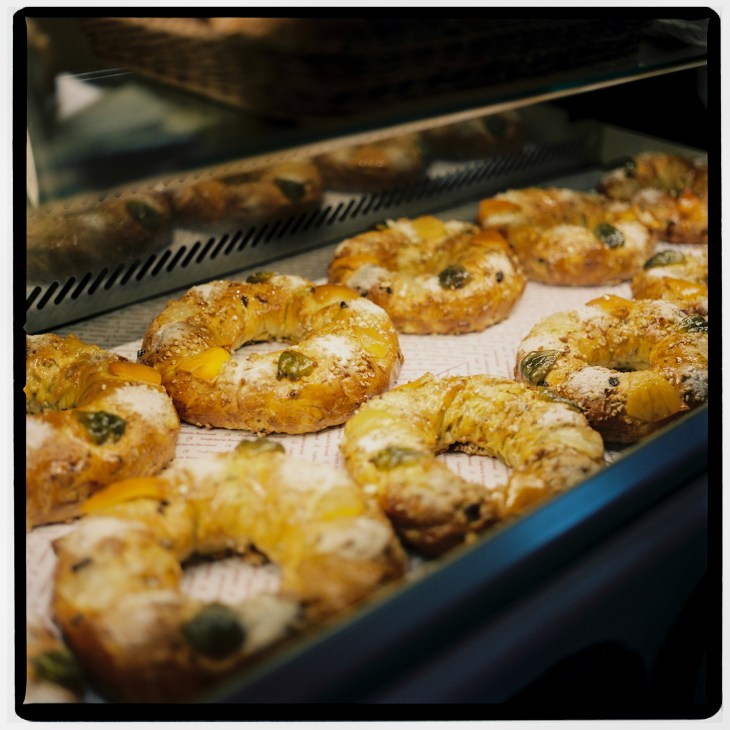
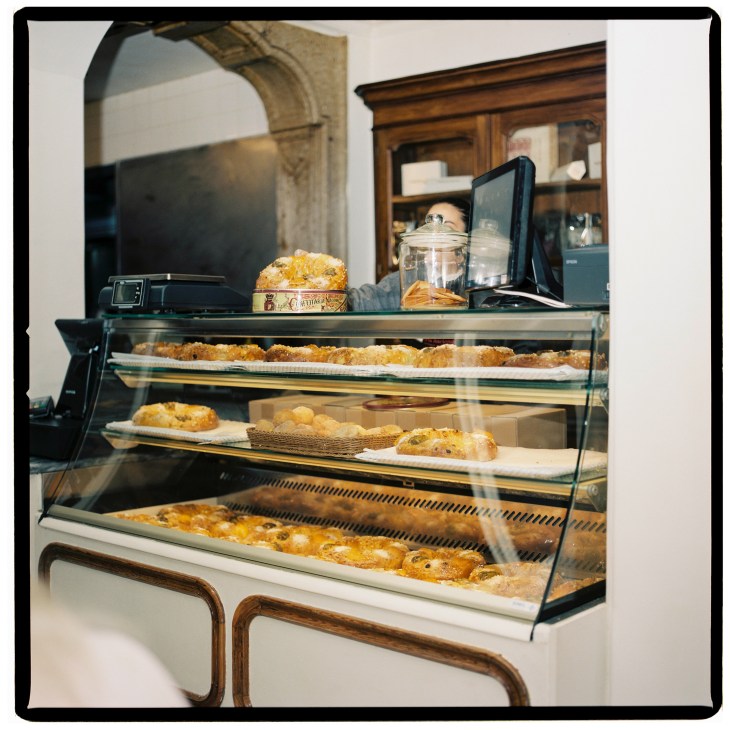
Confeitaria Nacional was also the first shop in Portugal to sell the now ubiquitous Christmas cake, bolo rei, or king cake. The circular brioche takes its name from the three Magi who presented Jesus with gifts; today bolo rei is meant to be eaten on 6 January to celebrate the trio’s visit to the newborn baby. The recipe for this brioche containing raisins, nuts and candied fruit was brought to Portugal from France (where the galette des rois reigns) by Balthazar Castanheiro Junior, the son of Confeitaria Nacional’s founder. At the time, Confeitaria Nacional was the official provider of pastries to the royal household and the bolo rei was swiftly devoured by both the monarchy and the general public (when Portugal was declared a republic in 1910, there was a movement to rename the cake the Bolo Presidente but it never caught on).
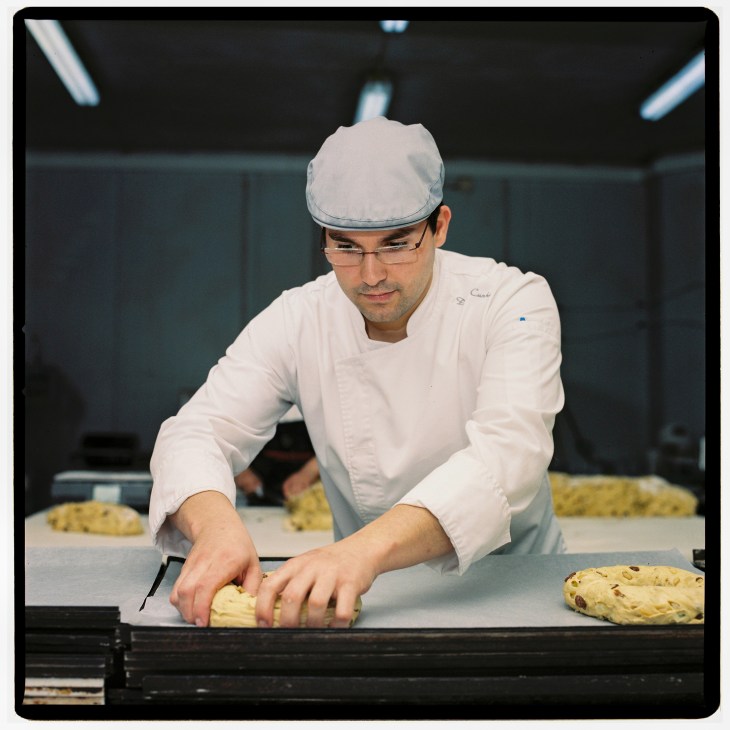
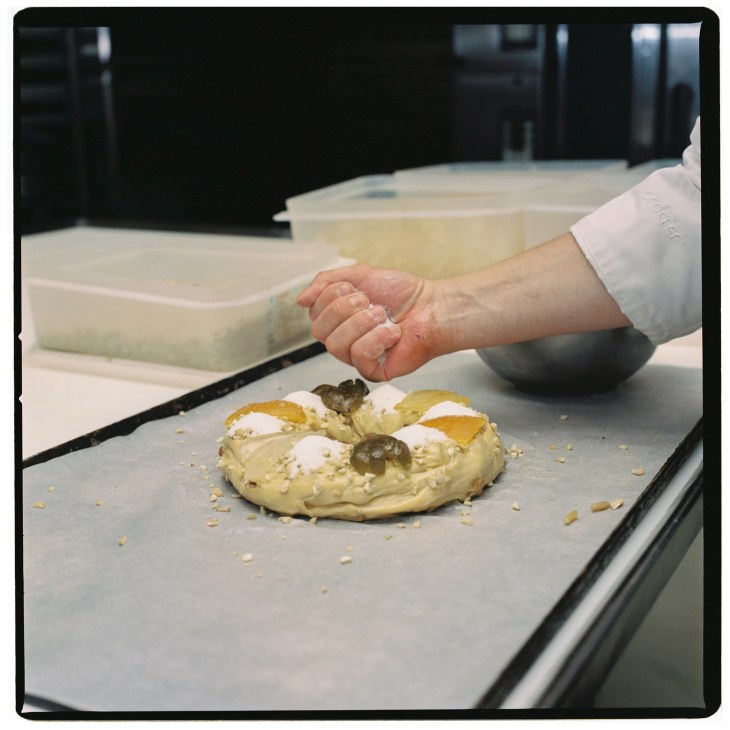
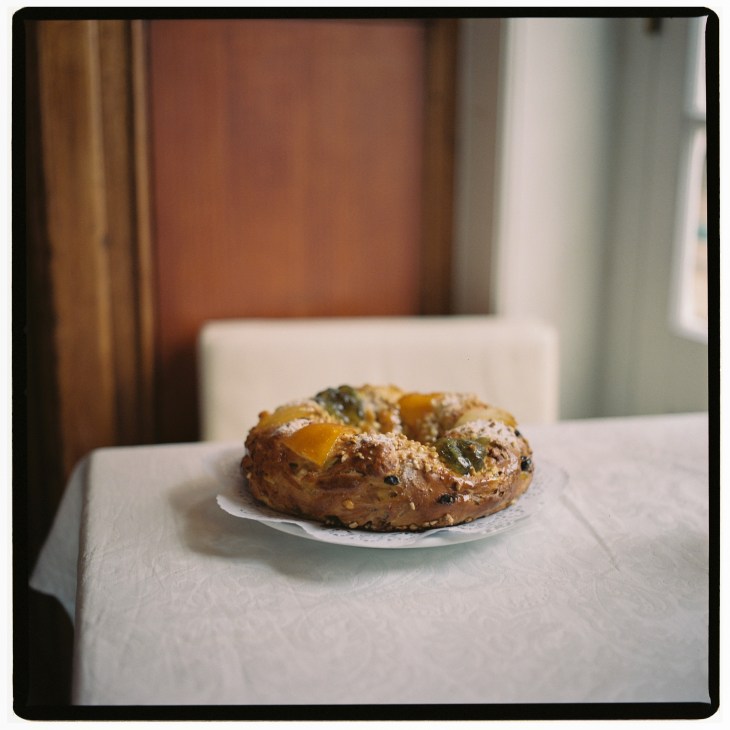
Today, bolo rei is a staple at any Portuguese Christmas table, sold in bakeries and supermarkets around the country. Traditionally, a fava bean and a little silver trinket (usually a small figurine of a saint) are inserted into the cake. Whoever finds the fava bean in their slice is expected to buy (or bake) the bolo rei the following year. The lucky person who receives the slice of bolo rei with the silver trinket becomes king for the day and will enjoy good fortune in the coming months. Sadly, in recent years some bakeries have done away with inserts completely due to the risk they might pose as choking hazards or tooth-breaking devices.
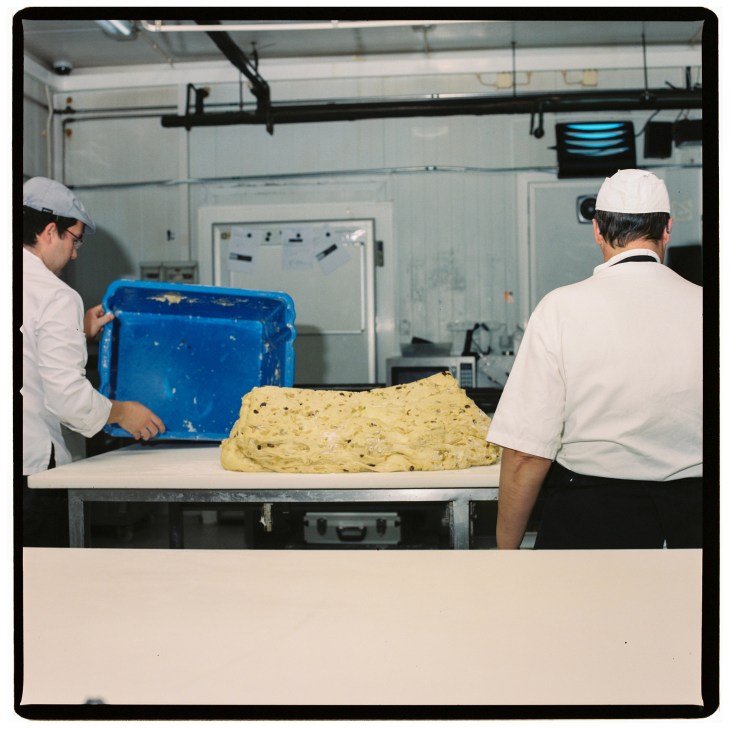
In Confeitaria Nacional, sales start in October and production wraps up just before Easter – for those who want to extend the pleasure of eating the cake well after 6 January. In the three days leading up to Christmas alone, 6,000 cakes are made in Confeitaria Nacional’s kitchen and the red-and-yellow tins that they are packed in fly off the shelves of its three Lisbon shops.
Though the cake is now found all over Portugal, Confeitaria Nacional does things in a unique way, starting with a secret ingredient that, it is said, only two people know: the establishment’s sixth-generation owner and the head pastry chef. The establishment also prides itself in not using any artificial colourings in its candied fruit. Whatever the secret ingredient is, it must be doing something right. The famed cake has remained a classic over the years, sought after by Portuguese at home and by the country’s diaspora. Last year, Confeitaria Nacional set up a distribution network to sell its bolo rei in what’s known as the “saudade market“– countries home to large Portuguese communities such as France, Luxembourg, Netherlands and Spain – so that expatriates can savour their country’s Christmas crown jewel, wherever they happen to be.
5.
Festive fruit
Colombin, Tokyo
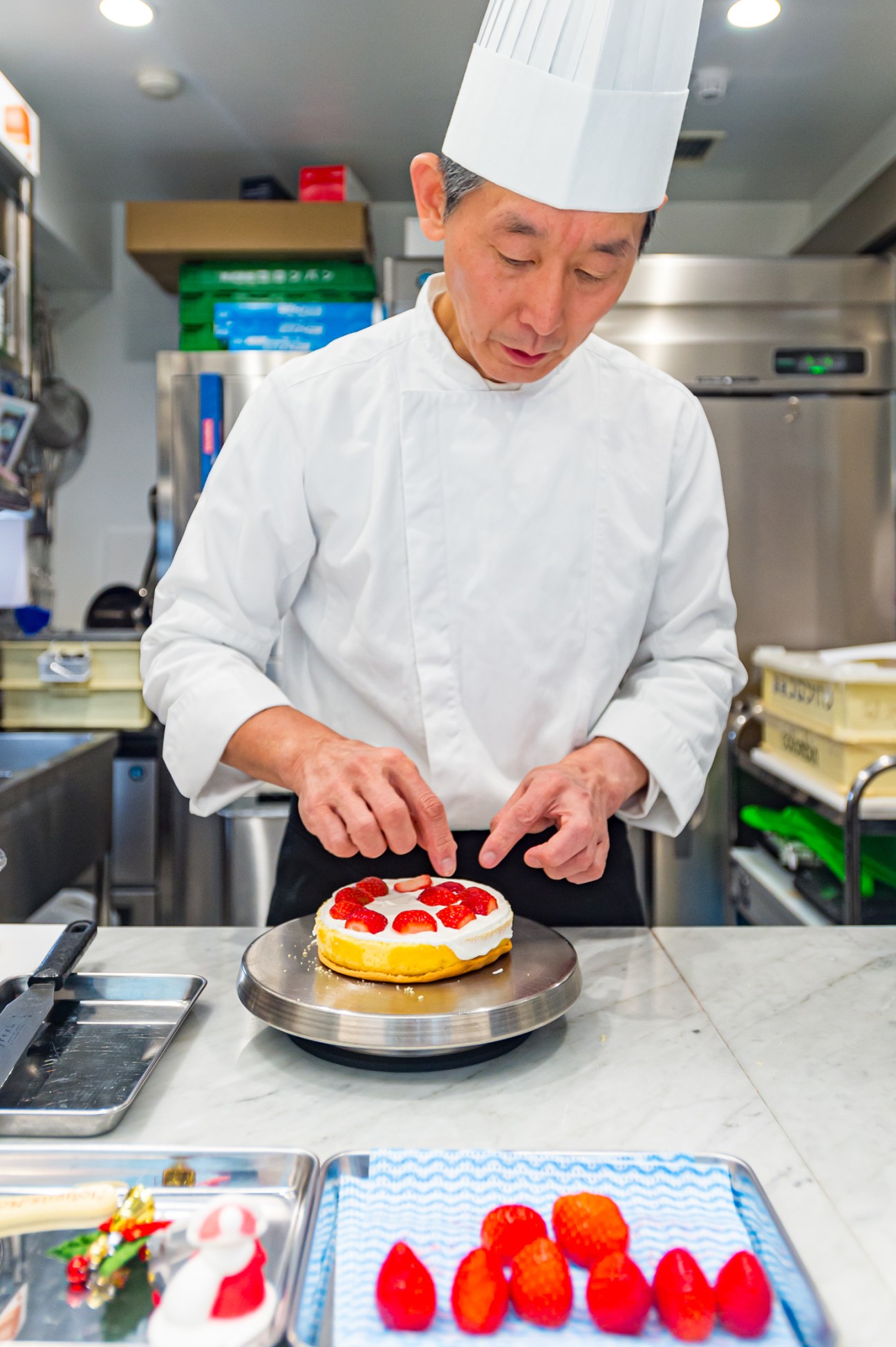
Japan has never had much time for the alcohol-soaked heft of a traditional fruit cake, preferring instead to celebrate Christmas with a frothy strawberry shortcake. This simple but sublime confection of featherlight sponge, whipped cream and fresh strawberries originated with Kuniteru Kadokura, a baker who worked in the Japanese royal household before studying pâtisserie in France (the first person from Japan to do so) and then returning to open his own establishment, Colombin, in Tokyo in 1924.
The invention of the Japanese strawberry shortcake came a few years later, made possible by a series of converging events. First was the introduction to Japan of homegrown strawberries and then the arrival of whipped cream. Hayato Futaba, who, like Kadokura, was working in the Imperial household, started growing Western fruits in greenhouses at Shinjuku Gyoen. The strawberries took off in 1919. Meanwhile, Nakazawa Dairy obtained machinery from the US to start whipping cream. The sponge itself was less complicated: Kadokura based it on castella, a Portuguese-influenced sponge cake that bakers had been making in Nagasaki since the early 16th century.
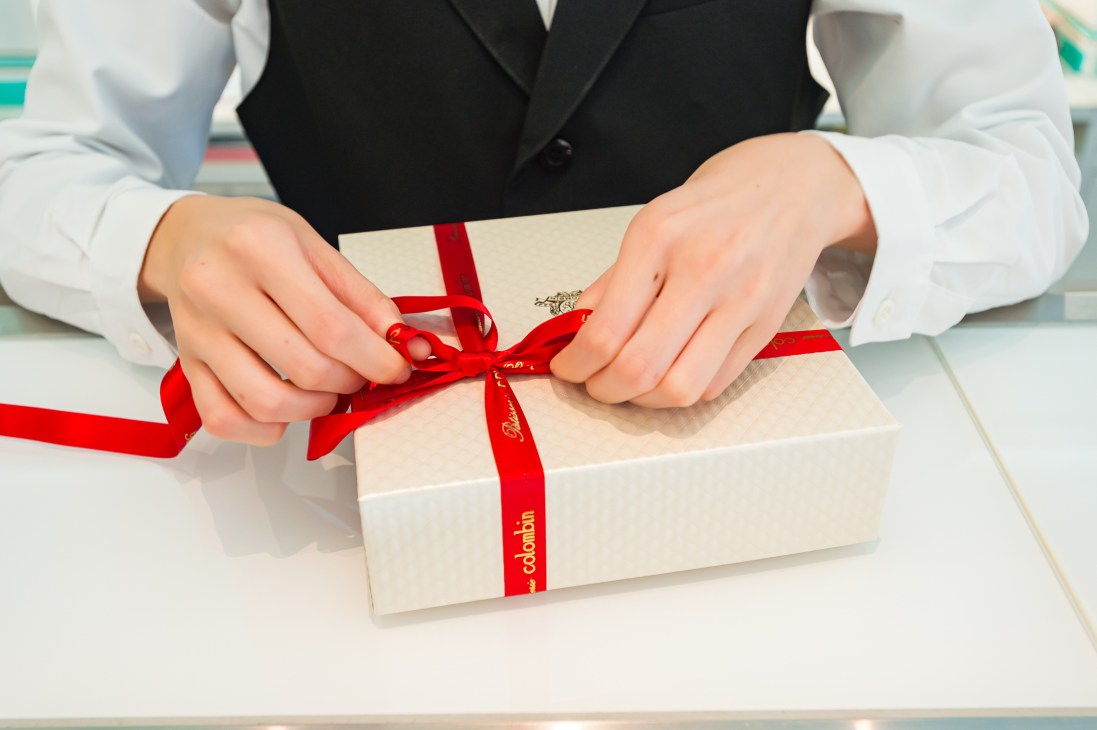
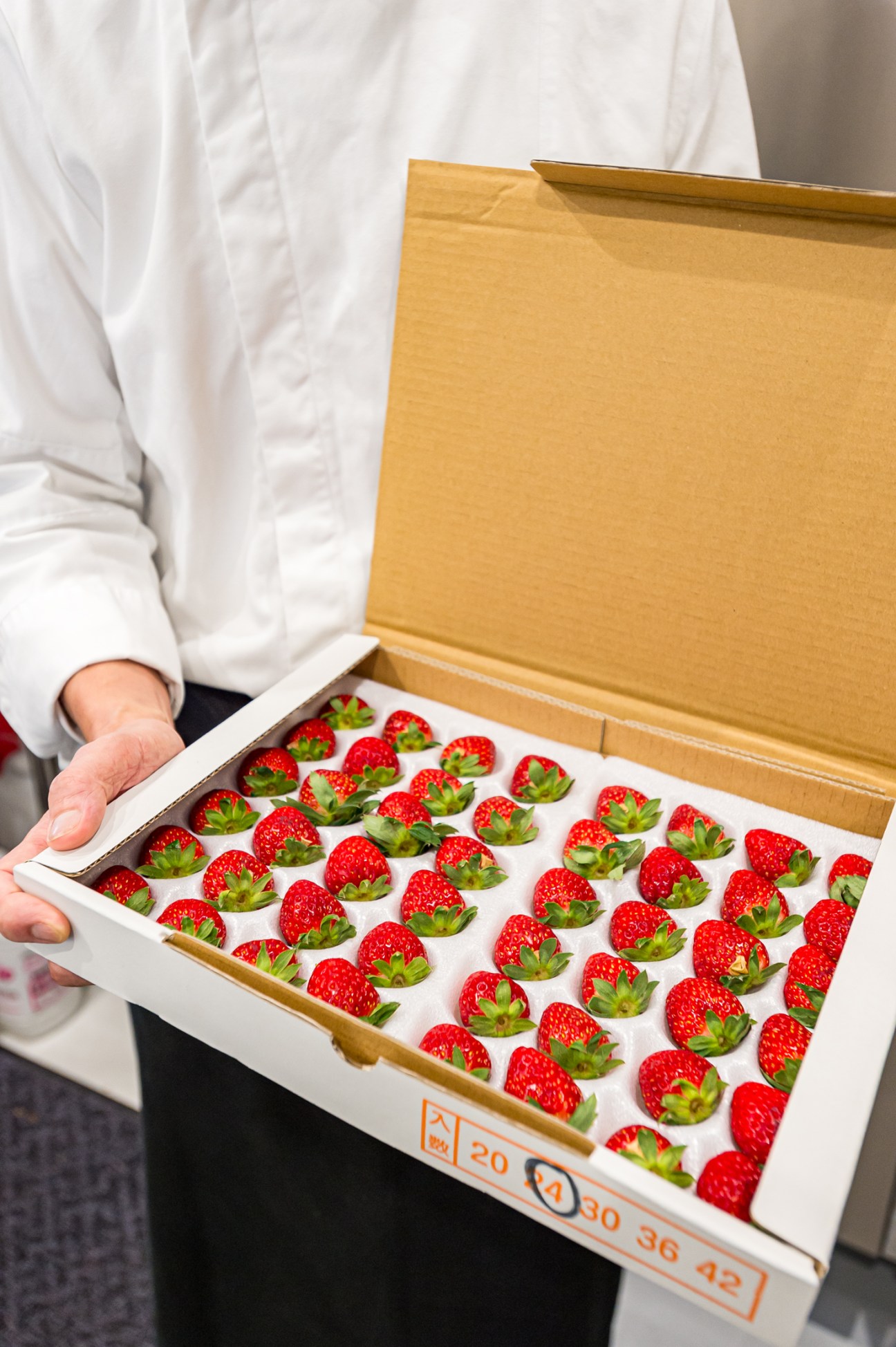
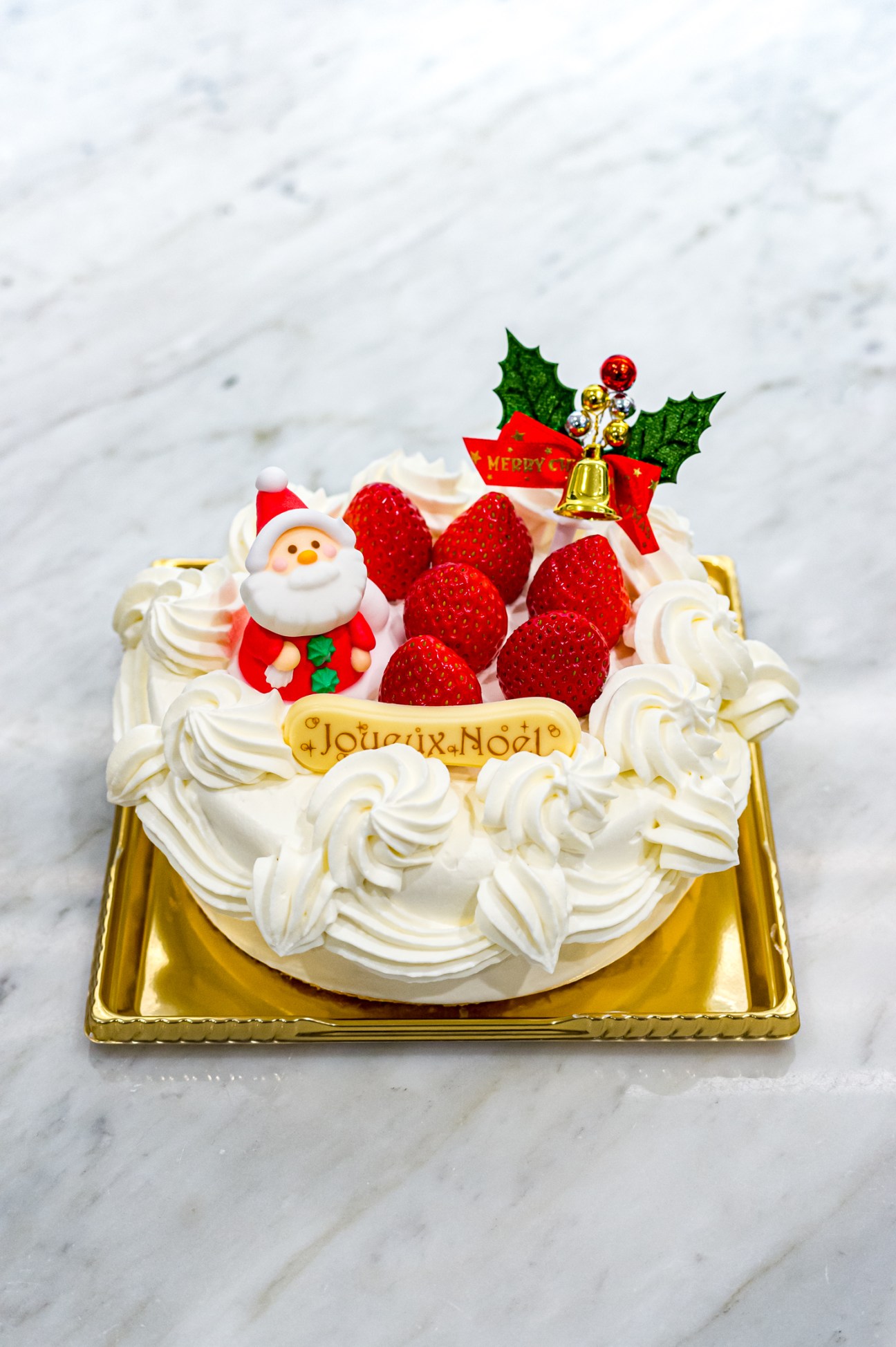
The strawberry shortcake morphed into a Christmas staple a few years later and Colombin continues to make thousands (they’re expecting to sell 4,000 this year). There are many versions that appear anywhere from convenience stores to independent pâtisseries but Colombin offers an authentic experience. The recipe has barely changed, apart from the reduction of sugar in the cream from 20 per cent to 10 per cent. A photo from 1959 reveals that even the swirly piped cream is much as it was. Colombin’s head pâtissier today is Yasuhiko Horie, who joined the company in 1978. “It’s a very simple cake to make,” he says. “The secret is in the ingredients.”
The Colombin sponge, says Horie, is denser than some due to the addition of extra egg yolks. The whipped cream is still made specifically for Colombin by Nakazawa and with a rich double cream to achieve a snowy whiteness. The cream is mixed with sugar and Madagascan vanilla. The strawberries are always the best available: a firm but sweet Suzu Akane variety from Hokkaido. In Japan, the strawberry season used to start in January but farmers have since made it earlier to meet the Christmas demand.
Colombin had to pause production in 1944 owing to a shortage of sugar but bounced back after the war. By 1955 it had a shop at Haneda Airport. Colombin’s old Harajuku shop was recently swallowed up in a development, but the company’s attachment to the area, which began in 1967, continues with the new shop that opened in spring 2023.
The old favourites are present and correct; so too are marble cakes, cream puffs, apple pies and jars of crème caramel. Chef Horie notes that the stollen has also become fashionable with Tokyoites in recent years. But strawberry shortcake is still the star of the show come December. The design changes every year but the basic format – Santa in a bed of strawberries – remains. “It’s tempting to make it more elaborate but you have to remember that every cake is decorated by hand,” says Horie. And if Christmas isn’t a time that calls for traditions, when else does?
Trading places
The joys of going shopping are undisputed: nothing beats the experience of walking into a physical space, taking in its interiors and signature scent, and making a fresh discovery or striking up conversations with fellow customers and staff. That’s why brands have continued to invest deeply in expanding their retail networks, tailoring outlets to their locations and offering bespoke services for loyal clients. This winter, for example, much-loved brands such as Visvim and Paris-based L/Uniform have invested in new outposts in Tokyo to cater to locals’ and visitors’ growing appetite for well-designed shops.
The multi-brand boutique is also back on the rise, thanks to creative retailers with the canny ability to scour the market and curate best-in-class collections. Madrid’s Sportivo and Beige Habilleur in Paris are just two examples of fast-growing multi-brand shops; both have been expanding their businesses and celebrating new openings in their hometowns this winter. An international outpost is in the works for Beige Habilleur too. In these pages, Monocle rounds up some of the best new openings. Happy shopping.
1.
Meeting in the middle
L/Uniform, Tokyo
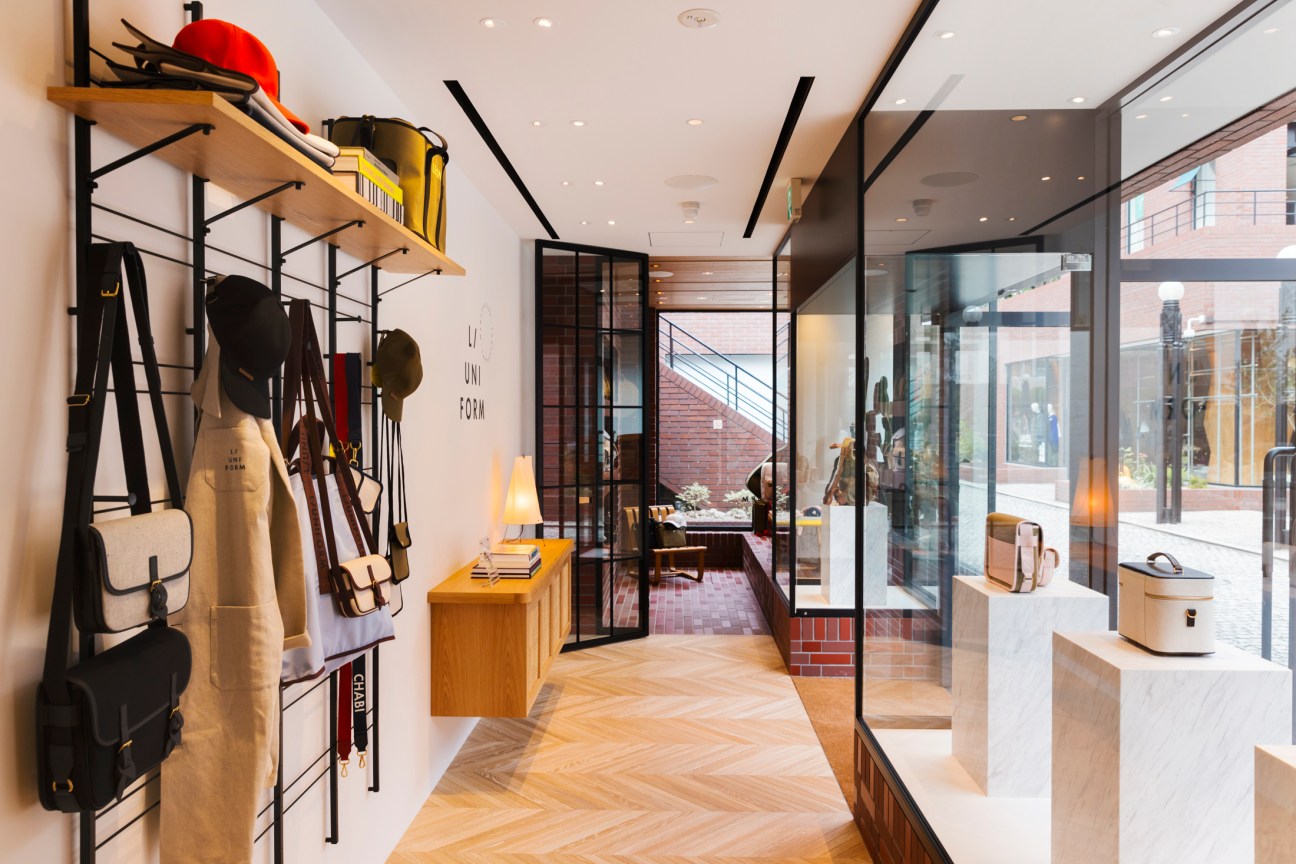
Founded by Jeanne Signoles in 2014, French bag label L/Uniform now offers a collection of canvas and leather styles in more than 100 variations. Japan is its biggest market, so expanding its footprint here was a priority. The brand’s new shop in Tokyo’s Minami-Aoyama district is its second flagship shop in the country.
Wanting it to feel like a Japanese house from a French perspective, Signoles called on Masamichi Katayama and his studio, Wonderwall. “I put myself in the mindset of a French architect who likes the work of Junzo Yoshimura,” says Katayama. He installed paper lanterns by Isamu Noguchi and pieces including armchairs by George Nakashima and Katsuo Matsumura; a backlit paper screen changes brightness throughout the day. “Materials such as brick tiles combine with chevron-pattern flooring, a European-style desk area and more to create a mix of Japanese and Western.”


Bags remain at the heart of the brand but the shop’s line-up also includes a folding stool with a canvas seat, cushions and dog leads. Every bag has a number and most items can be personalised with initials. A suitcase called No 40 combines canvas with Spanish calf leather. Travel has never looked so chic.
luniform.com
2.
Outside advantage
Norrøna House, Baerum

It has been more than 90 years since Norwegian adventurer Jørgen Jørgensen founded outerwear label Norrøna but the demand for its durable winter apparel remains strong. Four generations later, Jørgensen’s great-grandson, who bears the same name, is leading the business into the next chapter with the opening of Norrøna House, a new multi-purpose hub featuring an indoor-climbing gym, a development factory, repair centre and Nordic restaurant. Here, he tells Monocle about the ambitious venture.


What is the concept for Norrøna House?
We wanted to create a hub for our customers where they can find inspiration, get their gear fixed and meet each other. The experience needs to be different from what you can find online. The building is a paper mill from 1862 with a waterfall outside where freshwater salmon swim. It’s a green area but also close to the centre of Oslo. It’s great to be able to design products in the same place where we can meet our customers. We want to combine this affinity for nature and good design because many consumers now wear our pieces in urban environments too.
Tell us about the design of the space.
All of the shop’s fixtures, including smaller details such as the hangers and mannequins, are made in-house and have been tailored to fit our brand identity.
What else is the company focusing on?
Norrøna has its own travel agency, which is in the process of building lodges north of the Arctic Circle. These are remote locations in fantastic nature reserves that offer all kinds of outdoor activities. At Norrøna, we don’t just provide the gear but also the experiences that it enables.
norrona.com
3.
Leader of the pack
Sportivo, Madrid

Sportivo has been a go-to destination for Madrid’s best-dressed men for more than 20 years. As its reputation has grown, so too has the list of labels that it stocks, from UK brand Mackintosh to Scandinavian names such as Norse Projects. Keen to keep expanding its offer without overcrowding the original shop on Conde Duque, founder Goyo Otero started looking for a second location. Last autumn, Sportivo opened a shop in a former palazzo dating back to 1907 on the nearby Calle Limón. The ground-floor space had long been empty.
“It was used as a motorcycle-repair shop,” says Otero, who enlisted Mayice Studio to refurbish the interiors. The design team stripped back the space, keeping its exposed plaster walls and terrazzo flooring and adding fresh white paint to its ornate Doric columns. The original light fixtures have been fixed up and towering windows flood the shop with natural light. Clothes are hung from metal rails or arranged on tempered-glass sheets strung by wires from the ceiling. The design was kept minimal to ensure that nothing distracts from the clothes.
“This space is for the higher-end designers that we stock,” says Sportivo buyer Nacho López, referring to collections by the likes of Lemaire and Dries Van Noten, as well as emerging brands such as US-based And Austin. There are plans to add more homeware and books to the shop’s offering too. “We’re happy to be starting a new chapter,” says López.
sportivostore.com

4.
Hitting the jackpot
Visvim, Tokyo
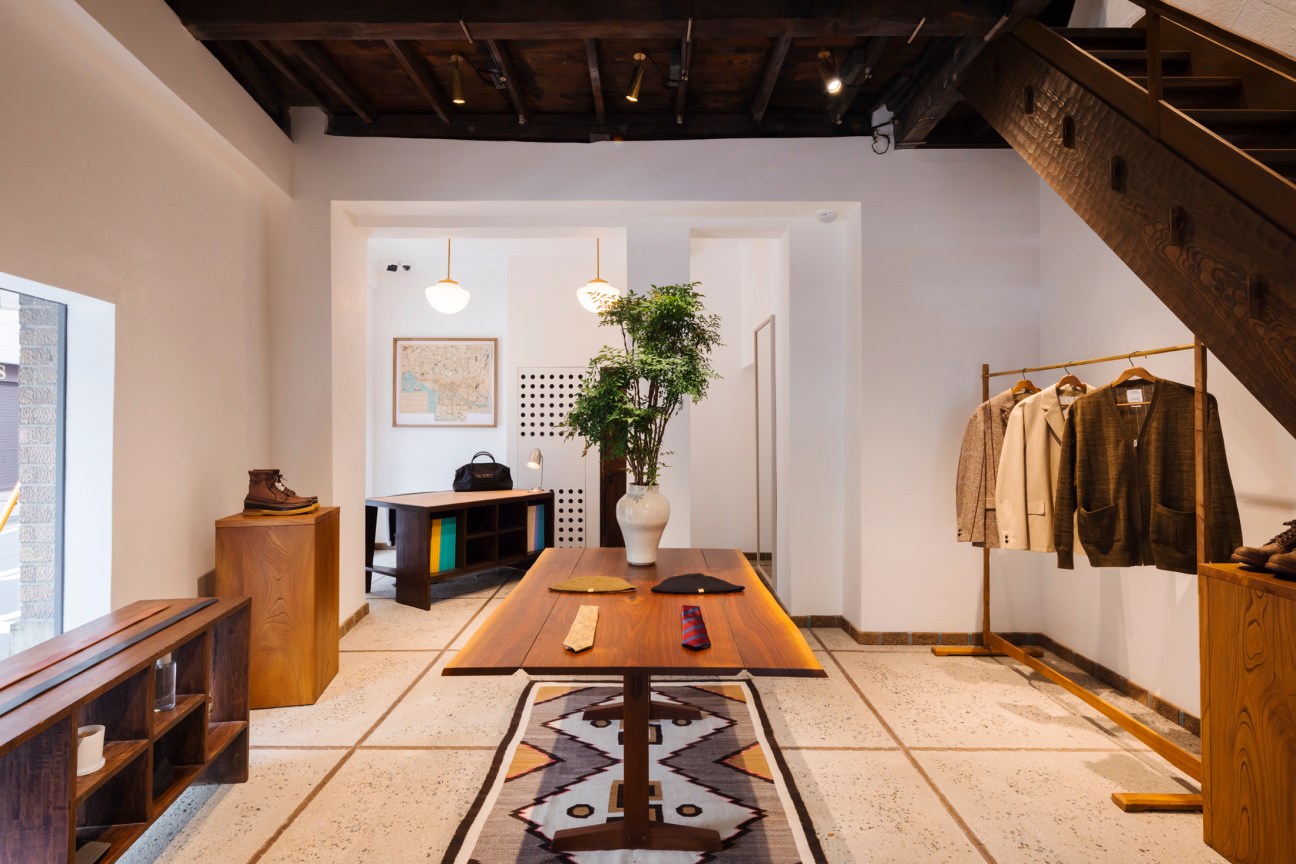
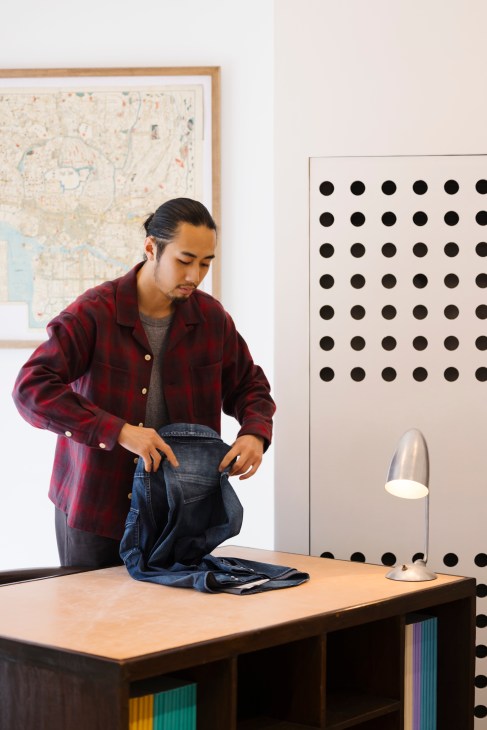
Such is the popularity of Hiroki Nakamura’s Tokyo-based label Visvim that first-day customers at its latest opening in Ginza were drawn from a lottery. Housed in a 90-year-old, three-storey building, the shop combines Nakamura’s love of Americana and Japanese craft, hence the vintage map of the city on the wall and the custom carpet from the US that lines its vip room.
Trends are largely irrelevant for Nakamura, who returns to his core designs season after season. A new denim jacket, featuring a corduroy collar, has been given a dorozome mud-dye treatment in Kagoshima, while a pair of striped wool trousers was inspired by traditional Japanese silhouettes. You’ll also find Visvim’s popular hand-sewn Brigadier boots and sweaters hand-knitted in Tohoku. “It’s not just about preserving old things but enhancing them,” says Nakamura. “It’s great to pass on history in this way.”
visvim.tv
5.
Men about town
Beige Habilleur, Paris
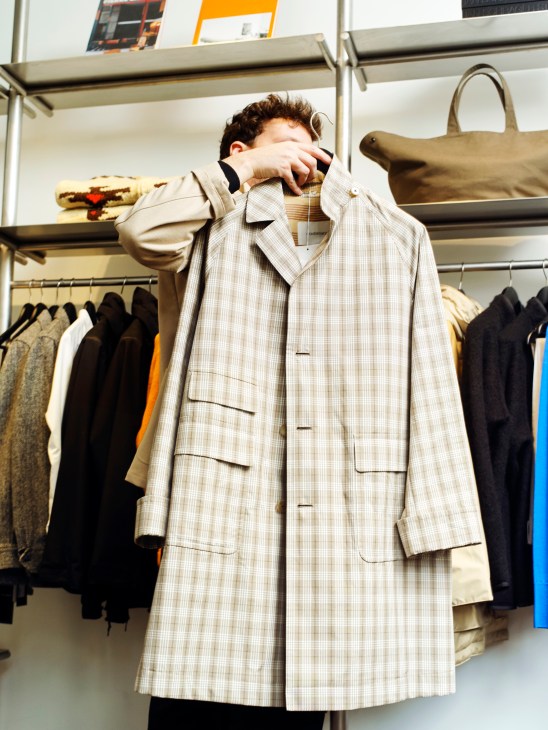
“You will always need a good blazer or a tweed jacket,” says Basile Khadiry, co-owner of Beige Habilleur, a Parisian menswear boutique that is celebrated for its wide-ranging collection of what he calls “modern classics”. Khadiry and his partner, Jean-Baptiste Ménétrier, launched the business as an online retailer in 2015, before opening a showroom in the French capital’s 16th arrondissement that quickly evolved into a boutique.
The duo initially wanted to help revive what had become a dull residential neighbourhood but, in late 2023, they seized the opportunity to move to a more central location. The new shop is on the corner of Rue Bonaparte, a short amble from the bustle of the Saint-Germain-des-Prés quarter. As a result, more curious passers-by wander in. Meanwhile, many of the locals have already become regulars.


Artistic director Pierre-Alexis Guinet and architecture studio Corto-Corto designed the space to evoke a walk-in wardrobe. Its brown velvet carpet makes you want to kick off your shoes, while the centre of the shop features mirror cabinets, a banquette and display cases for leather accessories. “The idea was to imagine what a traditional menswear boutique would look like today,” says Khadiry.
The answer to this is also reflected in the clothes hanging on the boutique’s steel racks: think relaxed tailoring, chunky knitwear and rubber sneakers. Khadiry, who previously worked at luxury businesses including Louis Vuitton and Chalhoub Group, tells Monocle that he is committed to finding “the best item in each category”. That includes plenty of Japanese brands, from coats by Cohérance to shirts by Haversack, and warm knitted jumpers by Scottish brand Jamieson’s, as well as wool jackets by South Tyrolean brand Rier. When they can’t find exactly what they are looking for, Khadiry works directly with brands to create their own in-house designs, including a line of shirts made with Neapolitan tailor Salvatore Piccolo.
Khadiry is also part of the team behind independent print magazine L’Étiquette, alongside his friend Gauthier Borsarello, who is the creative director of Parisian label Fursac. Borsarello will soon be selling pieces from his extensive vintage collection in the new shop. “The items will rotate every two weeks,” says Khadiry. “We are always trying to find a balance between the old and the modern, and the cool and the traditional.”
beige-habilleur.com
Creative resistance
It is almost two years since Russia’s invasion but Ukraine’s creative industry is still going strong. Many Ukrainian designers have had to put their family’s security first, moving away and setting up temporary homes and workspaces across Europe, from Warsaw and Berlin to London. But their commitment to both representing their country’s cultural heritage and supporting their teams and manufacturing partners – the majority of which stayed in Ukraine, eager to continue working –remains their priority.
Here, three brand owners and entrepreneurs tell Monocle their stories of displacement and how, against all odds, they have managed to adapt to wartime conditions and continue growing their businesses.
1.
Dressing the first lady
Natalia Kamenska
Stylist and co-founder, Gunia Project

When Ukrainian designer Natalia Kamenska woke up to the sounds of explosions outside her Kyiv flat in the early hours of 24 February 2022, she lay still in disbelief. “I was half-asleep and didn’t register the noises at first,” she says.
That morning marked the displacement of millions of Ukrainians from their homes. Kamenska, stylist to Ukraine’s first lady, Olena Zelenska, and co-founder of fashion and homeware brand Gunia Project, was among them. She made the decision to leave in the early spring of 2022. “I knew that if the whole population got up and left, we wouldn’t have enough resources to resist Russia,” she says. “But I had to prioritise my role as a mother. I couldn’t risk my child’s life by staying, so we left for Berlin.”
This was a familiar journey for Kamenska, who had been splitting her time between the city, where her husband lives, and Kyiv, where her business had been based. This time, though, it was different: surrounded by refugees pulling their suitcases across the platform, the designer thought that she might never get to return home.
A lot has changed since those early, grey spring days. In Kyiv, cafés, bars, restaurants, galleries and factories have reopened, while a record number of businesses have been rebuilt to respond to the realities of the war. “I understood that we could restart when the postal service and taxis began working again,” says Kamenska with a smile. Once settled in Berlin, she focused on restarting Gunia Project’s operation, following calls from her team and network of artisans who were keen to get back to work. Gunia Project’s first post-invasion sale was a series of candles in aid of the Ukrainian army. Soon after, the brand went back to selling its full range of jewellery, glassware, ceramics and clothing. Against all odds, the journey between Germany and Ukraine again became routine.
“At first, it was all a bit of a mess as our production came to a complete halt,” says Kamenska. “The eastern Ukrainian factory that used to source clay for us shut down, so we were searching for another supplier for more than a year.” Gunia’s clay supplier has now reopened but the brand is also looking to find production partners in Europe to facilitate international orders. “It’s our responsibility to keep going,” she says. “Fashion is a vital part of the economy and designers have to continue working to support Ukrainian society and those who protect it. We’re showing that we’re serious about business.”
Before the war, Gunia Project was rising in popularity thanks to Kamenska and co-founder Maria Gavrilyuk’s elegant designs, which often reference folk culture. Today, on the streets of Kyiv, it isn’t unusual to spot people dressed in the brand’s embroidered shirts. Ukrainians abroad recognise one another by wearing the same Gunia Project signatures – a way for them to express their solidarity with Ukraine and support local businesses from afar. Kamenska has also been witnessing fashion’s soft power as part of her ongoing work as Zelenska’s stylist. “In the first days of the war, Zelenska was adamant that she didn’t need stylists or make-up artists – there was no need for it during wartime,” says Kamenska. “But when she had to start travelling abroad to represent her husband, Volodymyr Zelensky, we had to rethink the way she dressed.”
Retaining the simplicity and sticking to muted colours, Kamenska explains that clothes became Zelenska’s source of strength and a tool of diplomacy. “Nowadays most Ukrainian women will choose a suit for official engagements to boost their confidence,” she says. “I still like to use small details such as brooches to convey messages. A flower is a symbol of returning home, an ear of rye is a symbol of Ukraine and so on.”
Kamenska is adamant about using her resources and international network to continue the conversation and act as an ambassador for Ukrainian culture. “Through Gunia, I feel that I can tell the world about my country, about our traditions and culture. To me, this comes hand in hand with our struggle for independence. There is so much beauty that we must save from destruction.”
guniaproject.com
Kamenska’s hopes for 2024
“I hope that 2024 is the year that rewards our resilience with a victory. But to achieve this, we need the international community to continue supporting Ukraine by sharing news of what is happening in our country, donating to local charities and, of course, buying from Ukrainian brands and artists.”
2.
Fighting for the future
Julie Pelipas
Founder, Bettter
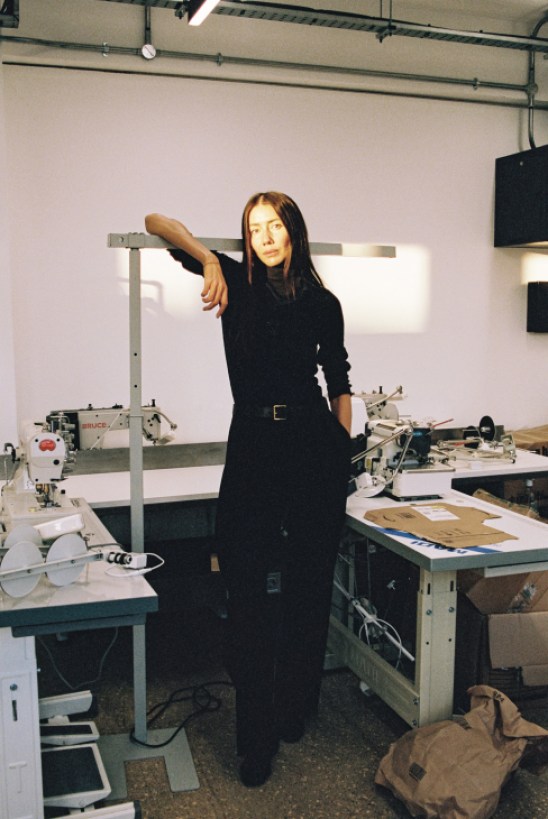
Julie Pelipas, the Ukrainian founder and creative director of fashion brand Bettter, sees herself more as a creative problem-solver than a designer. Since launching her own brand in 2020, she has committed to addressing fashion’s overproduction issues and offering solutions – mostly in the form of elegant tailoring made using upcycled textiles that would have otherwise been written off as deadstock. “Deadstock is not a popular topic,” Pelipas tells Monocle from her studio in London, the city she relocated to after having to flee Kyiv in February 2022. “I don’t want to confront people, but rather show them that we can create something fantastic and new using what we already have.”
Originally from Mariupol, Pelipas has a background in fashion journalism and used to work in Kyiv as a stylist and Vogue Ukraine’s fashion director. She left her post in 2020 to start her upcycling business and convince the fashion industry to adopt a more regenerative mindset. “There is an estimated $6bn [€5.7bn] worth of deadstock going to waste,” says Pelipas. “The numbers are buried deep in research because brands prefer to keep stock on financial balance, burn it or throw it away.” Her challenge was in persuading the big fashion houses to give her access to their unused or unsold materials.
In the past two years, she has had to face a challenge of a different scale, forcing her to rethink both her brand’s trajectory and her personal life. Having sensed political tension from early on, she moved to London with her two children a week before Russia invaded Ukraine – a decision she says that she took as a mother rather than as an entrepreneur. Still, she found ways to adapt her business’s operations to her new reality: research and development for Bettter now takes place in London and most of the label’s small-batch manufacturing has been relocated to Portugal. Pelipas was forced to shutter her own manufacturing facility in Kyiv but has sourced new partners across the country and keeps 30 per cent of production in Ukraine – something that she is eager to maintain. “Relocating took a lot of energy from us. I promised my team that I would keep them safe and not lower their salaries,” she says. “I’m responsible for 30 people, with some choosing to remain in Ukraine and others relocating.”
The same sense of responsibility has also driven her to take on an unofficial ambassadorial role for Ukraine, using her connections in the international fashion community to raise awareness for her home country and highlight the work of fellow Ukrainian creatives. Through Bettter Community, a non-profit initiative, she offers Ukrainian designers access to her label’s global platform and showcases their work. “I realise how privileged I am to be in London, to see normal life outside my window,” she says. “I had to witness my family go through a nightmare, often with no electricity and little water or food. They can’t erase that horror from their souls. As a nation, we’re dealing with a generation of physically and mentally broken people.”
Even while facing the trauma of the war, Pelipas has kept her business going. Her dedication is paying off: in May, EU regulators pushed to ban the destruction of unsold clothes and a month later, Bettter received the lvmh Karl Lagerfeld prize with a reward of €150,000. “The prize came at a good moment,” says Pelipas. “It was an important push to develop the business further, at a time when we were feeling down and exhausted.”
In the face of war, fashion can often appear trivial but for Ukrainians, dressing well is an act of resistance. “I can’t sit here and be silent,” says Pelipas. “If I give up on Bettter, I give up on myself and that would almost mean giving up on my country. Any person, at some point, faces a decision: are you here to fight or will you give up?”
bettter.us
Pelipas’s hopes for 2024
“In 12 months’ time, I want to be sitting here talking about the reverse situation: the world becoming more peaceful and our industry moving beyond its old ways. Collectively, we have made a lot of mistakes but I have hope that there’s a better future ahead.”
3.
Finding a purpose
Mary Furtas
Founder, Cultnaked
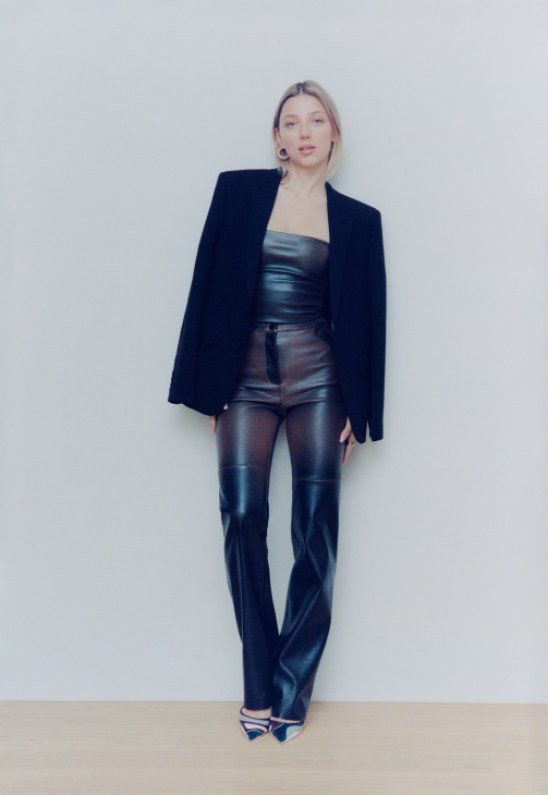
Designer Mary Furtas is the life of any party: sharply dressed in Helmut Newton-inspired blazers or evening dresses of her own design, holding engaging conversations and being the first on the dance floor. A former photographer, she founded her own fashion label just over five years ago in her home of Kyiv and turned it into an international success. “My husband and I had just bought a flat in Kyiv, we were planning a big renovation, we just had our baby and Cultnaked, my brand, was growing every single month,” she says from Warsaw. (She currently divides her time between London and the Polish capital.)
Despite her energy and optimism, she has also been living with the fear of war for nearly a decade. “The conflict has been here since 2014 but no one used to pay attention,” she says. “When it all started, I had lost some friends, so I was hyper-aware of it and when Russian troops started gathering around our borders in the summer of 2021 and then again in December of the same year, I became extremely anxious. I would wake up every day not knowing what to do: will I have to run when something happens? Will they close the borders? Will I survive this, if the currency collapses?” When her fears were confirmed and she woke up to Kyiv being bombed last February, she rushed to the border with her young daughter. After a gruelling 17 hours, they reached Poland. “I barely remember the next few months,” says Furtas. “We went to Lodz, tried Krakow, where everything was too expensive to rent. We then drove to Portugal and from there ended up in the UK. Anywhere we were, we wouldn’t even get out of the house because we would see no joy in anything.”
Furtas started finding glimmers of hope when a Ukrainian logistics company resumed international deliveries and she received new orders on her website. “The momentum was lost: we couldn’t offer the quick deliveries we used to and more than half of international transactions on our site would fail,” she says. “Still, when I saw orders coming through for the first time after the invasion, I felt as though there was a chance that I might survive. Plus, my team in Lviv were telling me that they wanted to continue working. They knew when they needed shelter – there are sirens before every bombing now – and felt that there was no point in sitting at home any more.”
To adapt, Furtas established a UK business entity, relaunched her website and moved her Lviv production office from the ninth to the second floor, so that people can evacuate the space faster. She also established a temporary base in Warsaw, which allows her to drive to and from Lviv every couple of weeks to meet her team, shoot campaigns locally and oversee production. Her recent summer campaign was shot after a sleepless night following threats of a nuclear attack. “Of course, I’m scared every time I go back, but this is about being a team and I’m not going to let my team down,” she adds. “Also having my own workshop means that I can control the quality. I know every stitch; I don’t need to fly to the Far East to make my clothes. It all happens in a compact 150 sq m space. That’s our answer to having a sustainable supply chain.”
Furtas has managed to grow her company’s revenues to $700,000 (€652,000) in 2021. She is expecting further growth and is now plotting to expand into footwear and handbags, as well as launch a second label. “The best thing is to just do something – and I’ve always had this drive to create,” she says. “You’ll never be fully happy when there’s a war, you’re always being dragged into dark places. But you learn to live with this. Today I understand that the most productive thing that I can do is to keep on going and keep fighting. By growing the brand, I generate income and help the economy – and the country.”
cultnaked.com
Furtas’s hopes for 2024
“I hope that the international community won’t shut their eyes to the war in Ukraine or ignore the effect on its own security. There’s a huge increase in propaganda, trying to silence Ukrainians or make us look unworthy of support, so people should keep joining our demands for protection.”
The best shopping in Budapest
Budapest’s charms are twofold: the city famously consists of two distinct halves divided by the Danube river. On one side there is the quieter, more residential Buda, with its hills and soaring baroque castle. On the other there’s the bustling Pest – the beating heart of which is the fifth district, the place which contains many of the shops listed over the next few pages. Even the bridges connecting the banks are worth visiting, with the most beautiful being the Széchenyi Chain Bridge. Let’s take a stroll.
1.
Pauza
Basic Brilliance
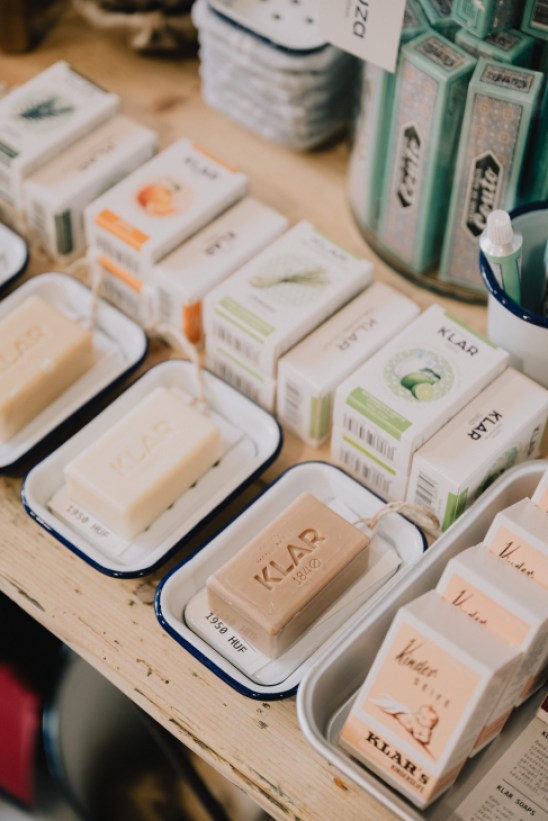
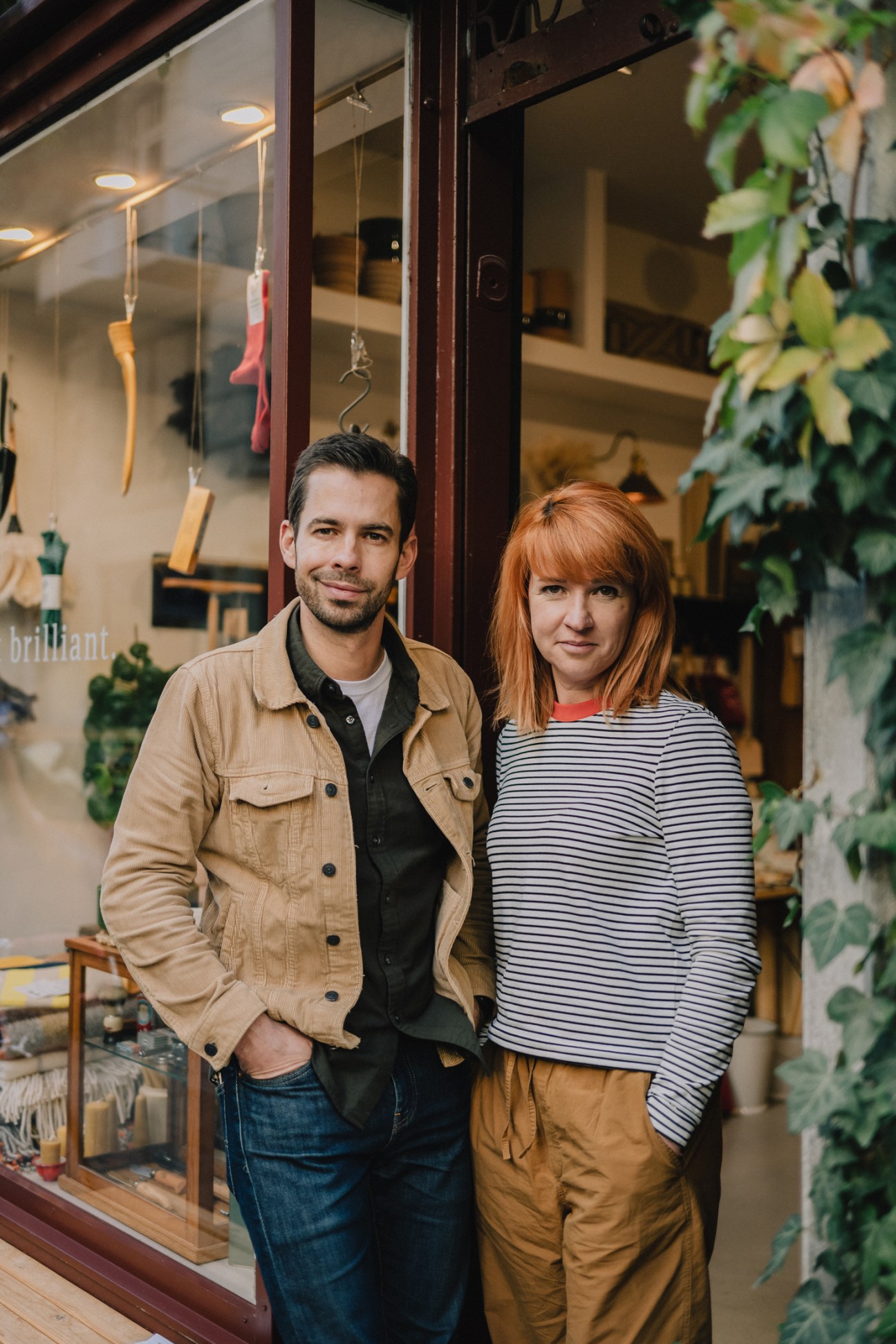
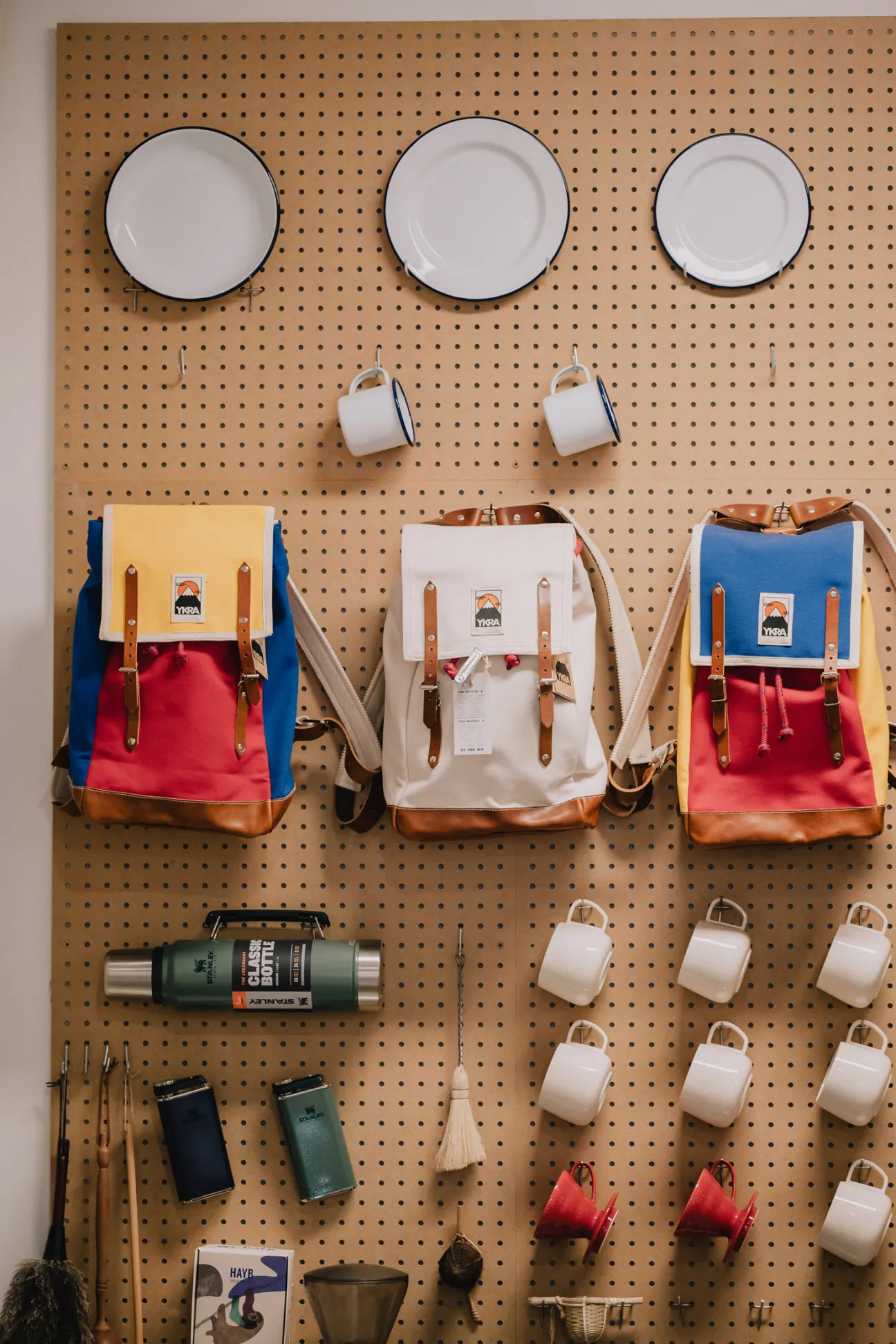
In 2016 Éva Klément and husband Zóltán Nádasy (pictured) took a backpacking trip through North America and Asia before quitting their corporate jobs to set up Pauza. “That trip taught us to appreciate beautiful, functional everyday things,” says Klément. This sentiment is reflected in both the shop’s motto – “Basic but brilliant” – and its inventory: from coffee cups by Hungarian ceramicist Anett Sáfrá and minimalist enamel kettles from Japanese maker Noda Horo, to woollen blankets by Finnish brand Lapuan Kankurit. Our pick? The colourful backpacks from YKRA, a Budapest brand inspired by 1970s mountaineering gear.
Vitkovics Mihály utca 7
pauza.hu

2.
Marlou Wine Bar & Store
Fine Wining
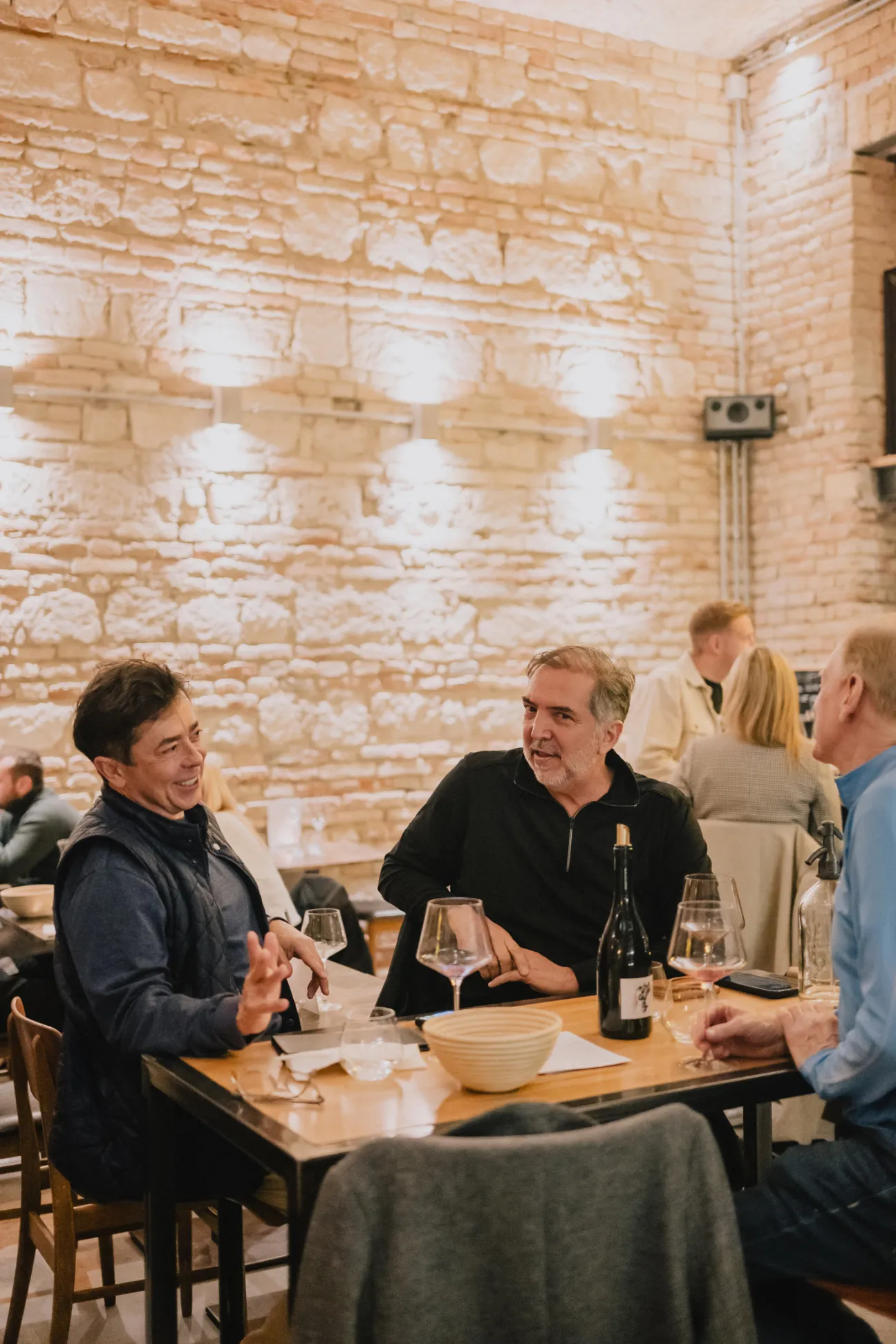
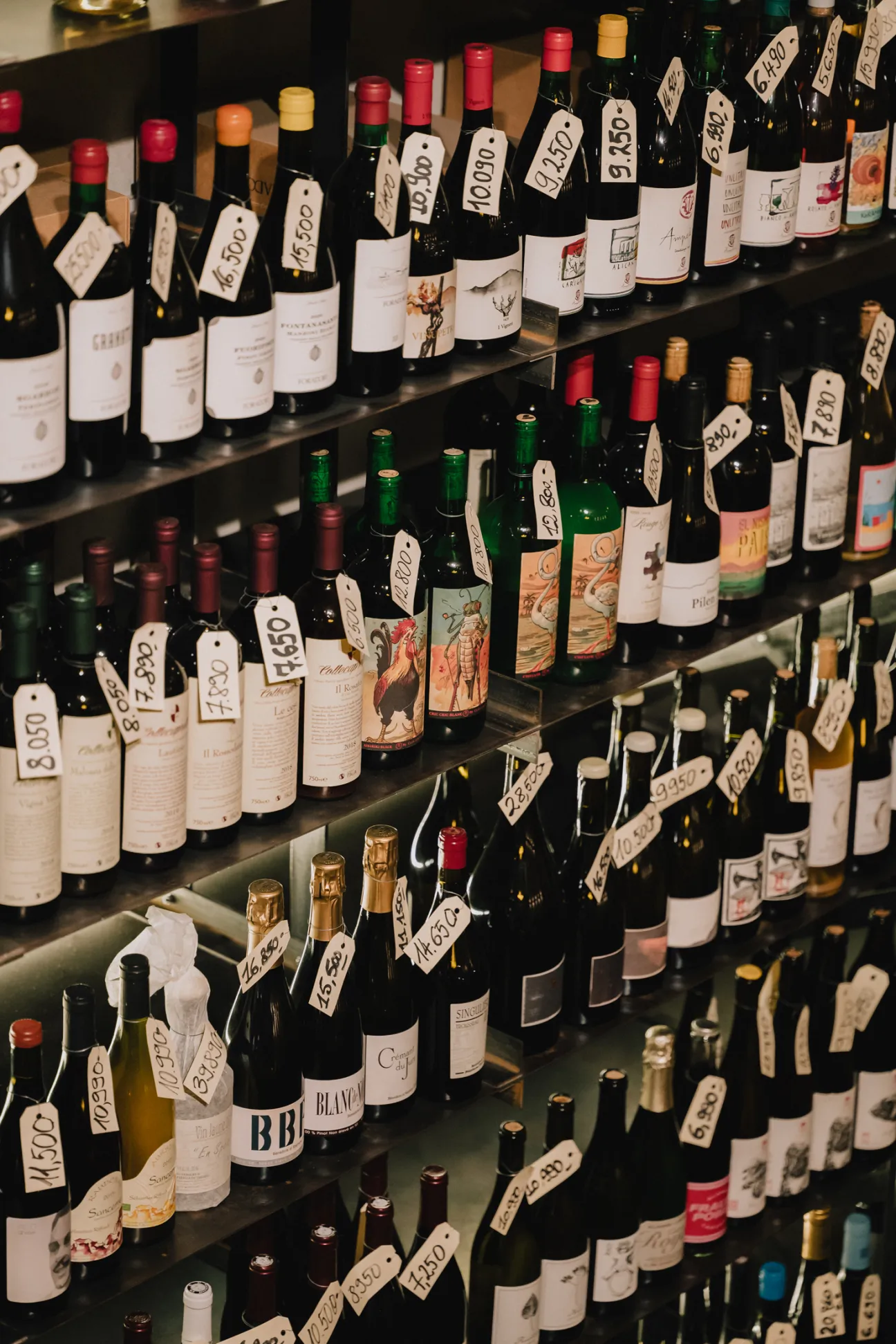
Owner Jean-Julien Ricard first started coming to Hungary 20 years ago. “I instantly fell in love with Budapest,” he says. In March 2020, Ricard opened Marlou, just behind Budapest’s Opera House. The first coronavirus lockdown began just days later but the business was a success: first as a shop and then as a bar and bistro in its own right. Part of the reason is Marlou’s selection of wines from both Hungary and France. We recommend the Atlas pinot noir from István Bencze, a natural winemaker from the hills around Lake Balaton.
Lázár utca 16
marlouwinebar.com
3.
Kalóz Records
Spin City
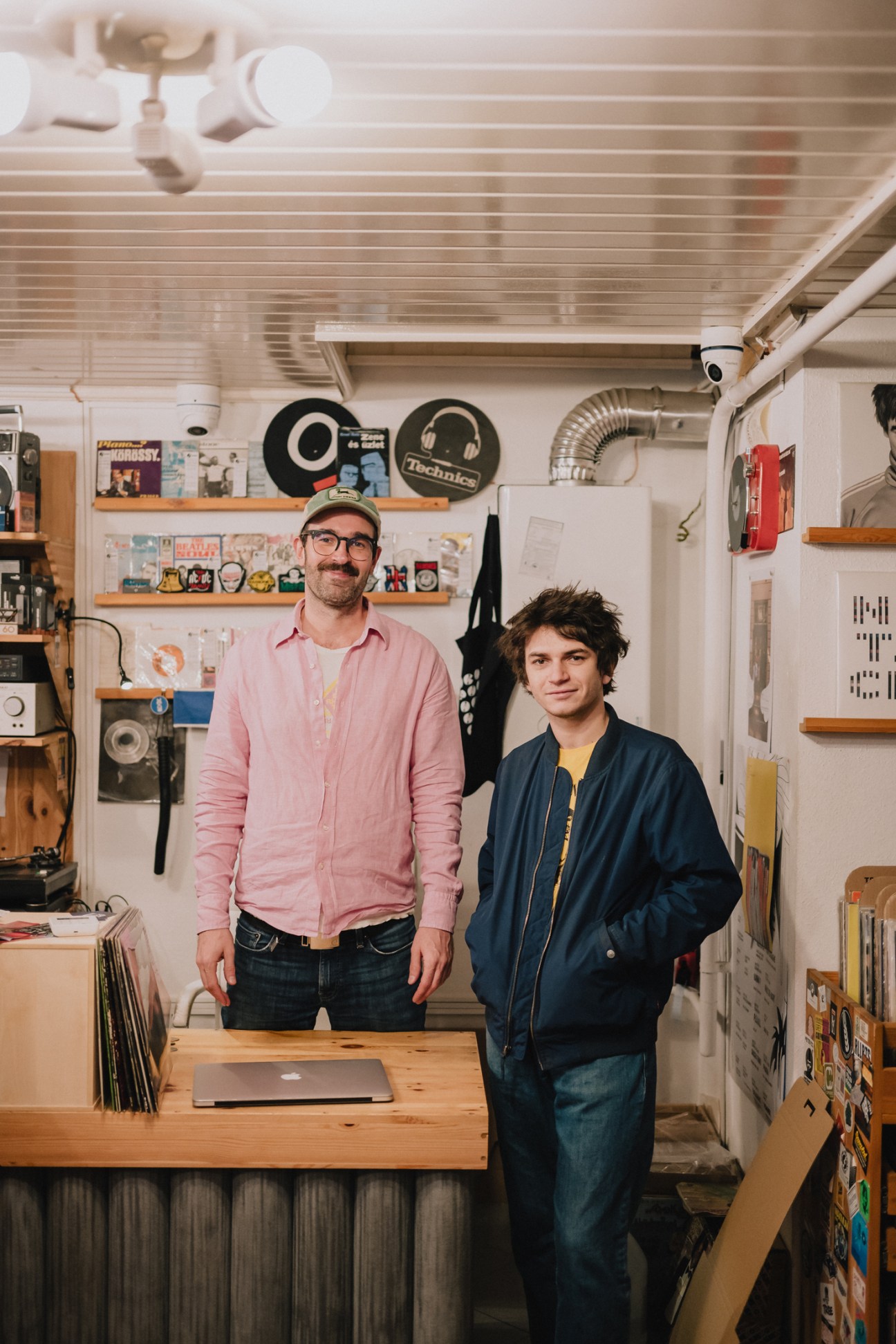
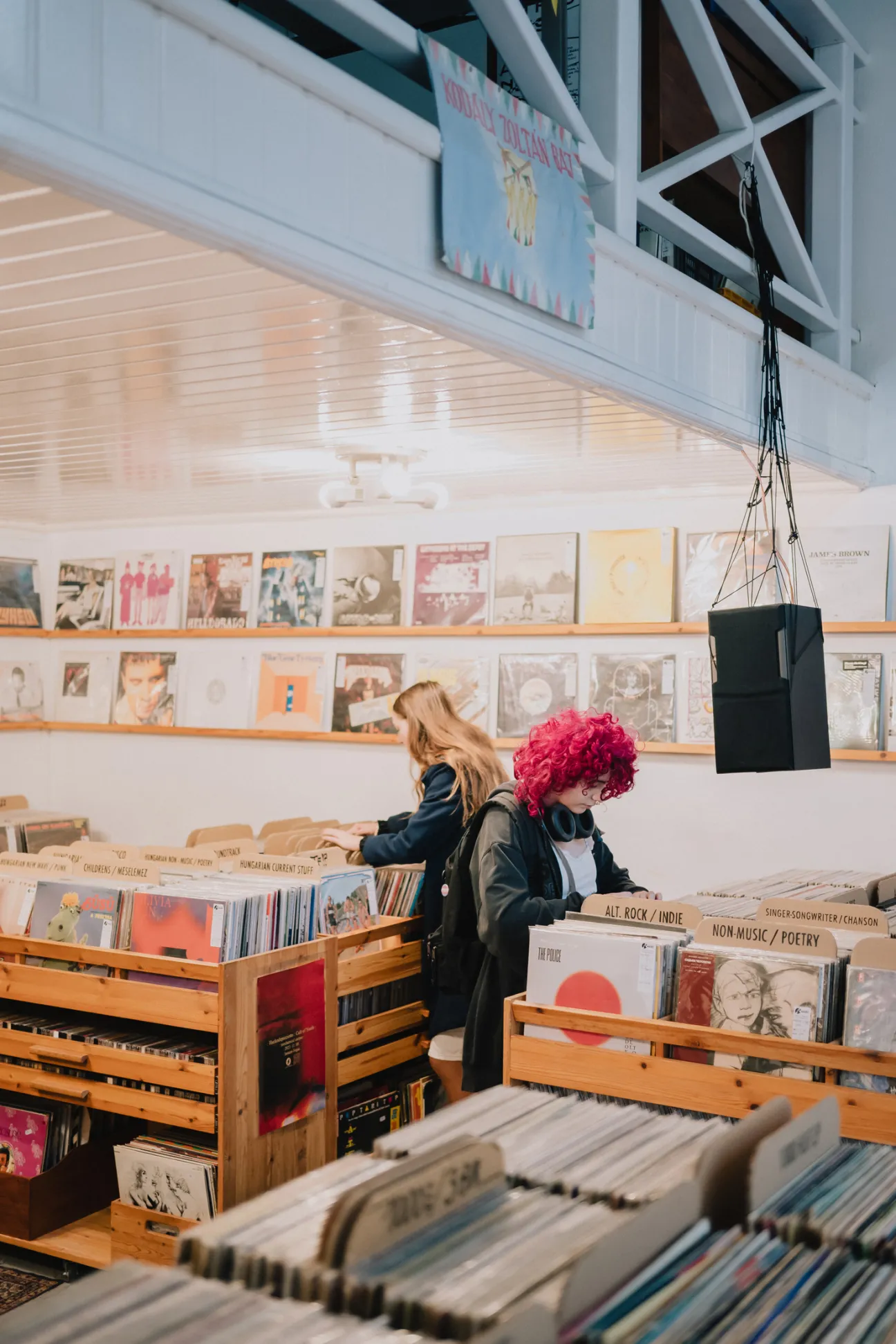
Five years ago, Kristóf Kürti – a sociologist by training but a DJ and record-collector by vocation – was talking to a business-minded cousin who told him that he could turn his passion (and a 30,000-odd record collection) into a business. Kürti started Kalóz (or “Pirate”) Records, which, buoyed by a global interest in vinyl, has managed to captivate both diehard enthusiasts and younger people for whom vinyl is a new format. Business has been so good that in 2021 Kürti opened a second shop in Szeged in southern Hungary.
Bródy Sándor utca 25
recordstore.hu
4.
Ghraoui Chocolate
Sugar Rush
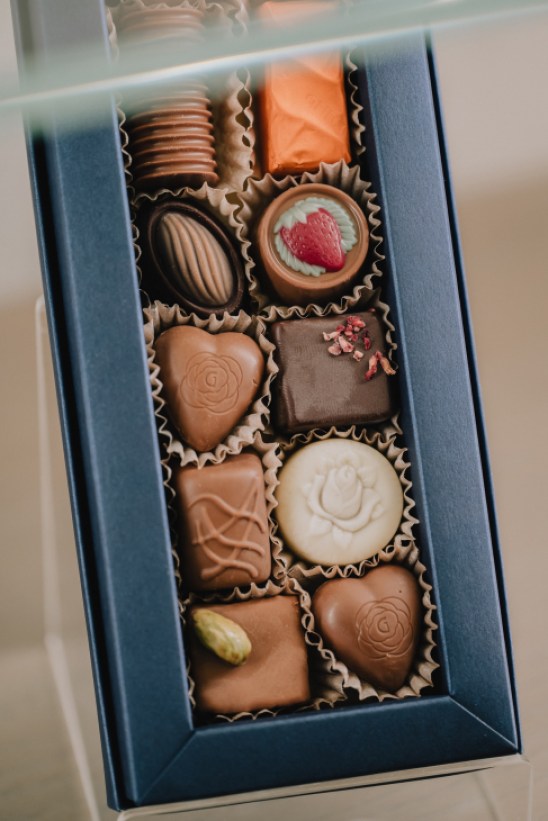
Ghraoui left its home country amid civil war in 2012. Syria’s loss was a win for Hungary. The company relaunched there in 2017; you’ll find its boutique close to the Opera House. One of its best-sellers, Szaloncukor (flavoured chocolates in foil), is a variation on a Hungarian Christmas speciality.
Andrássy út 31
ghraouichocolate.com
5.
The Garden Studio & Café
Visual Feast
Run by Hungarian fashion designer Dóri Tomscányi and Turkish restaurateur Merve Ilgım Deprem, the shop carries a super selection of bags, shoes and homeware from Hungarian designers. Centre stage is given to Tomscányi’s womenswear, almost all of which features bold floral patterns (hence the “garden” name). In the café part, Deprem serves her take on Turkish cuisine; gözleme stuffed with aubergine and pumpkin pancakes are recommended.
Paulay Ede utca 18
thegardenstudio.hu

6.
Aeron
The A-game
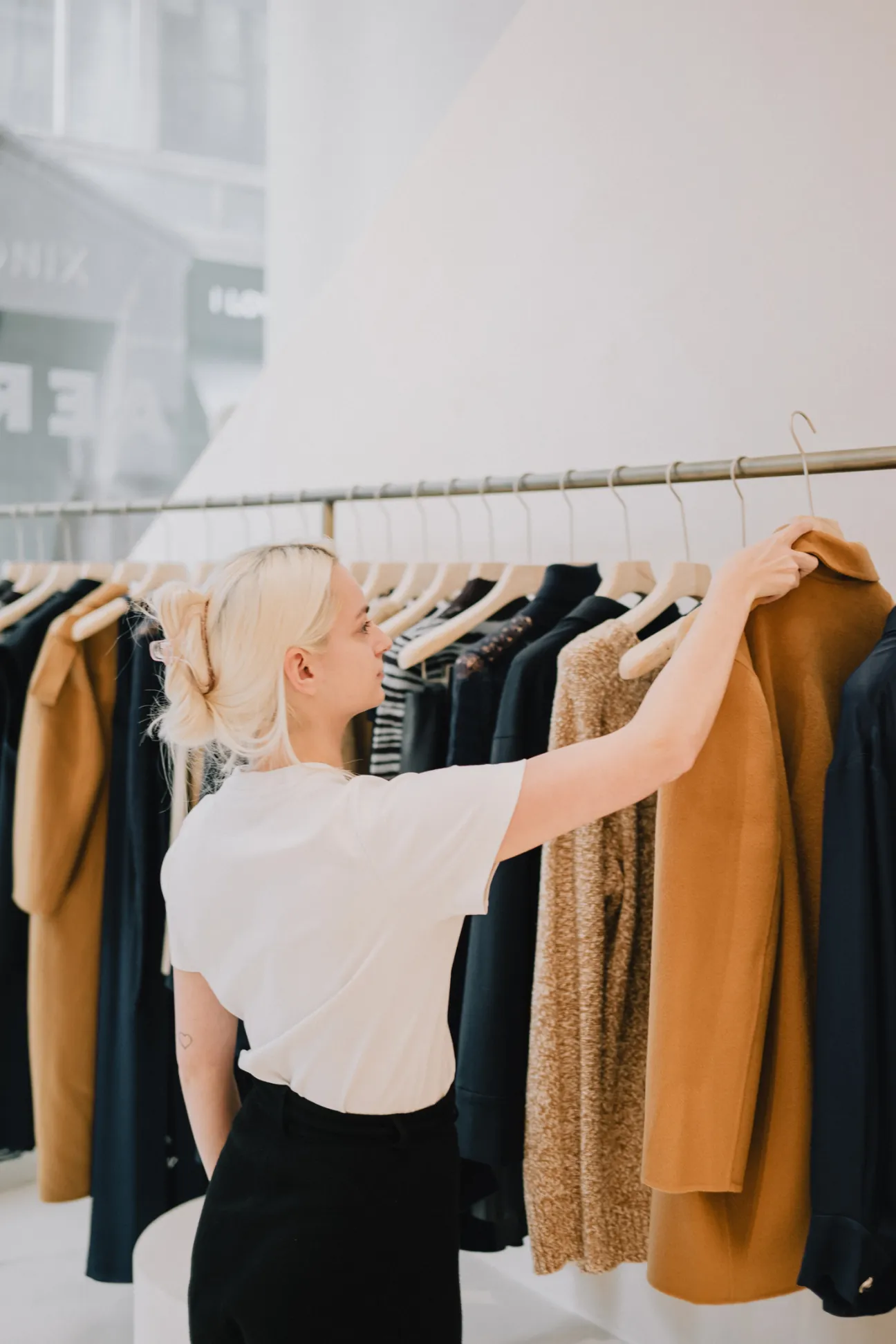
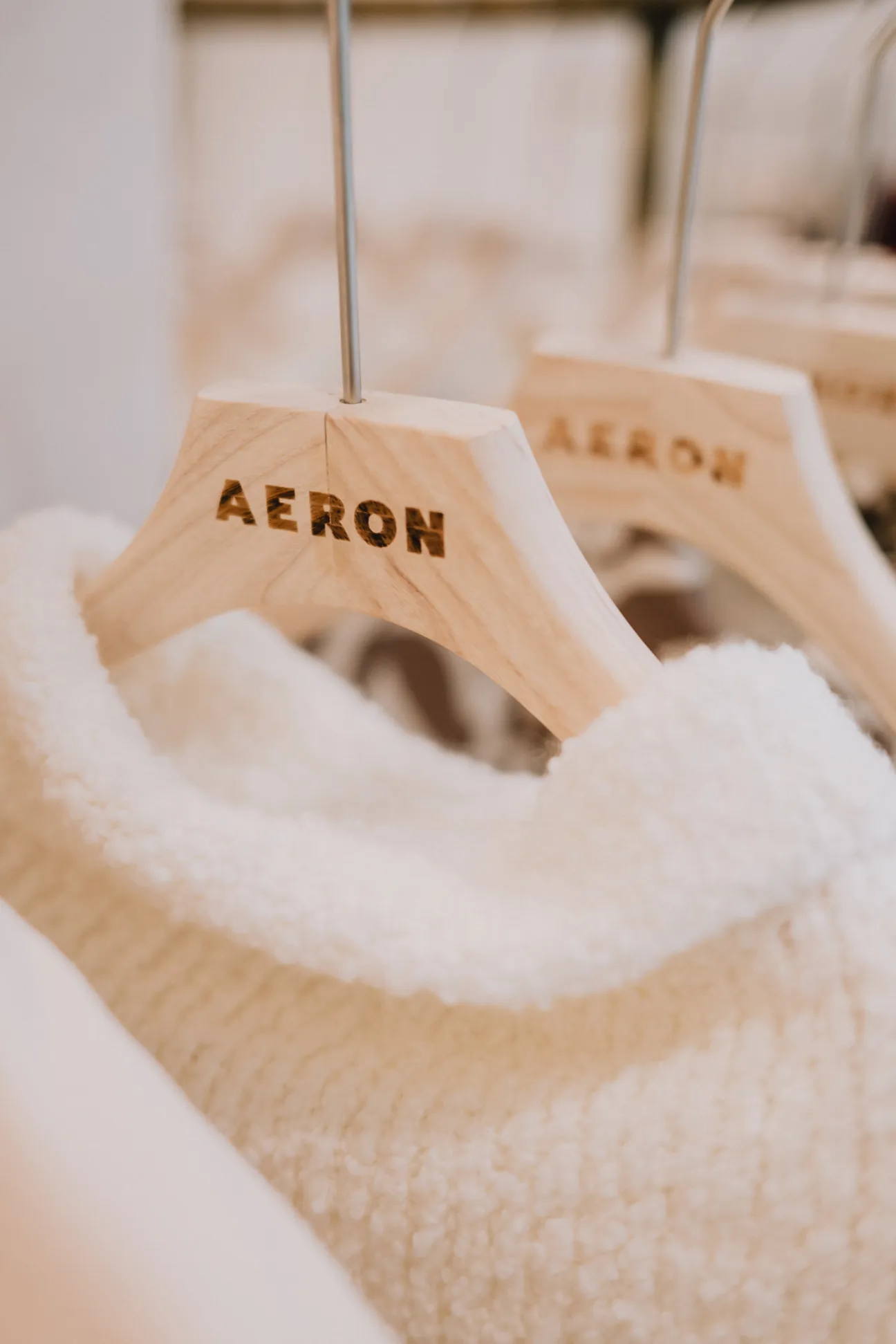
The female fashion brand’s first permanent shop opened in November 2022 and is everything Aeron founder Eszter Áron likes: clean lines, earthy tones and playful details. “After years of pop-ups, this is a place that gives a sense of home for our pieces,” marketing manager Máté Dávid tells Monocle. The shop offers the full Aeron catalogue and includes the brand’s signature suits, made in its Budapest atelier. The oversized blazers with high slits, peaked lapels and signature buttons in the shape of the letter A are customer favourites.
Szervita tér 8
aeron.co
7.
Lúd Labor
Bound for greatness
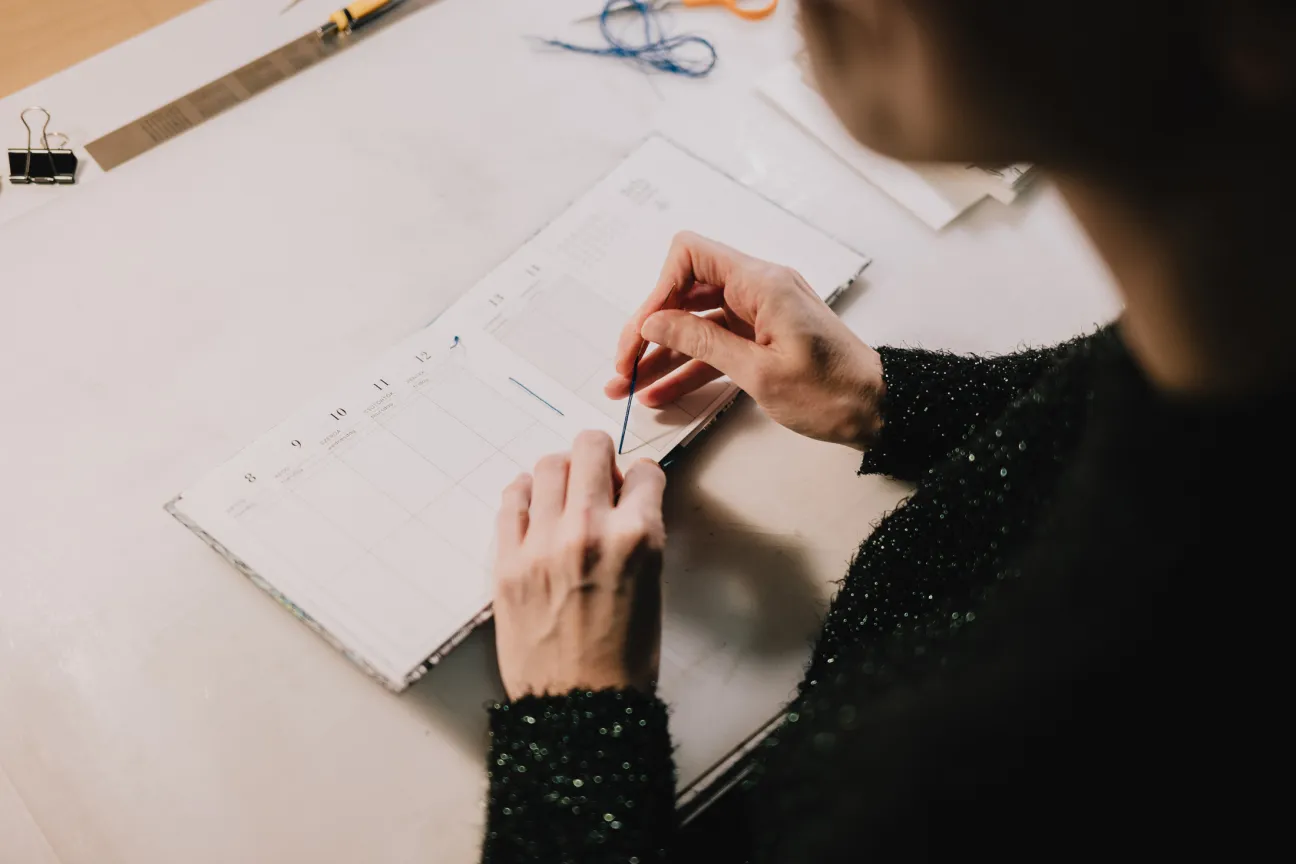
Named after a nearby Jewish marketplace that dealt in poultry (“lúd” is Hungarian for goose), this paper shop is run by bookbinder Noémi Mónus and gallerist László Böröcz. “We fused [our two careers] together and opened this space in 2019 because bookbinding is a dying art in Hungary,” Mónus tells Monocle. Lúd Labor’s speciality is handbound notebooks and planners made on-site using a technique where pages are sewn directly onto the spine. Mónus-designed wrapping paper and cards suit your festive needs.
Klauzál utca 31
ludlabor.com
8.
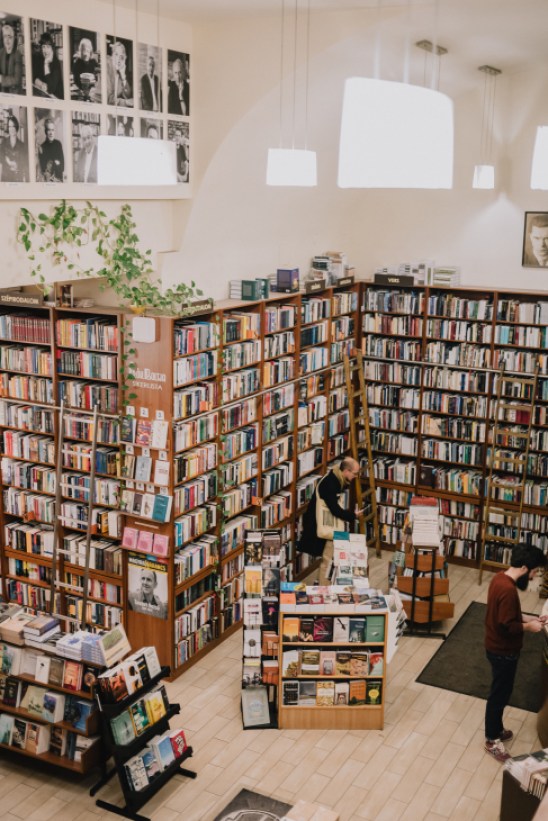
Írók Boltja
Food for thought
Literally “The Writers’ Shop”, Írók Boltja started in 1950 as a bookshop and a meeting place for the city’s writers, artists and intellectuals. According to staff, there’s at least one Hungarian writer shopping here on any given day. With regular poetry readings and presentations, the shop specialises in contemporary literature, philosophy, psychology and art, plus translated Hungarian fiction. This season’s bestseller is Breaking Through: My Life in Science by Katalin Karikó, winner of the 2023 Nobel prize in physiology or medicine.
Andrássy út 45
irokboltja.hu
9.
Vass shoes
Lace Space
Launched 45 years ago as a maker of fine women’s footwear, Vass switched to men’s and now makes ready-to-wear and made-to-measure shoes using calf-leather from France and Italy. Founder László Vass manages the production while his daughter, Éva, can often be seen in the shop, whose upper floor – visible from both outside and inside – contains rows upon rows of red shoe boxes marked with customers’ names. Expect great service from two shop assistants (Judit and Gábor) and leave more time for a made-to-measure order; they’re popular at this time of year.
Haris köz 6
vass-shoes.com


10.
Budapest Poster Gallery
Wall Furniture
Ádám Várkonyi has been collecting vintage posters for 20 years, a passion that led him to open this gallery in 2010. “We deal in posters from other countries too but our focus is on 20th-century Hungarian poster art,” Várkonyi tells Monocle. Visits are by appointment.
Paulay Ede utca 20
budapestposter.com

11.
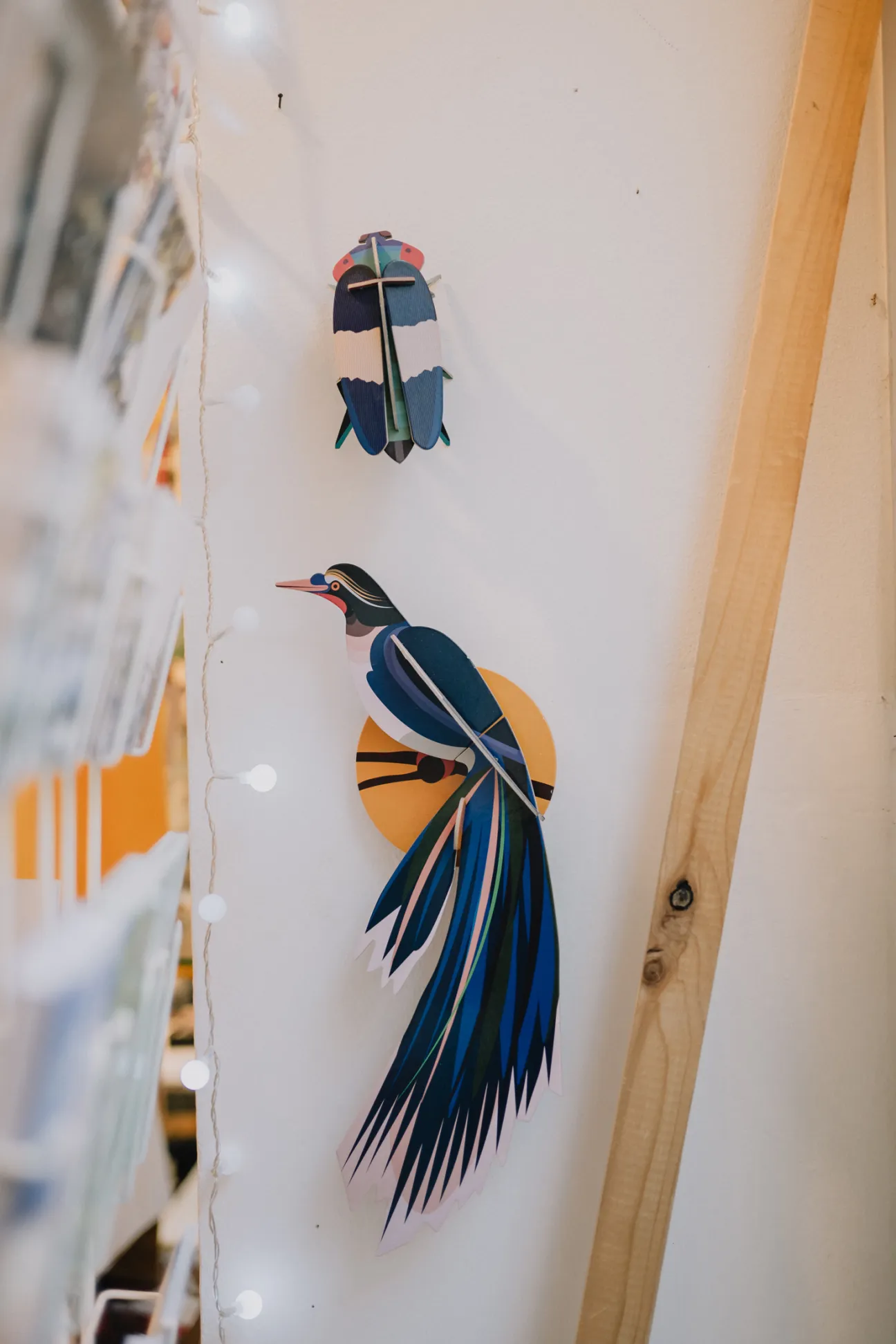
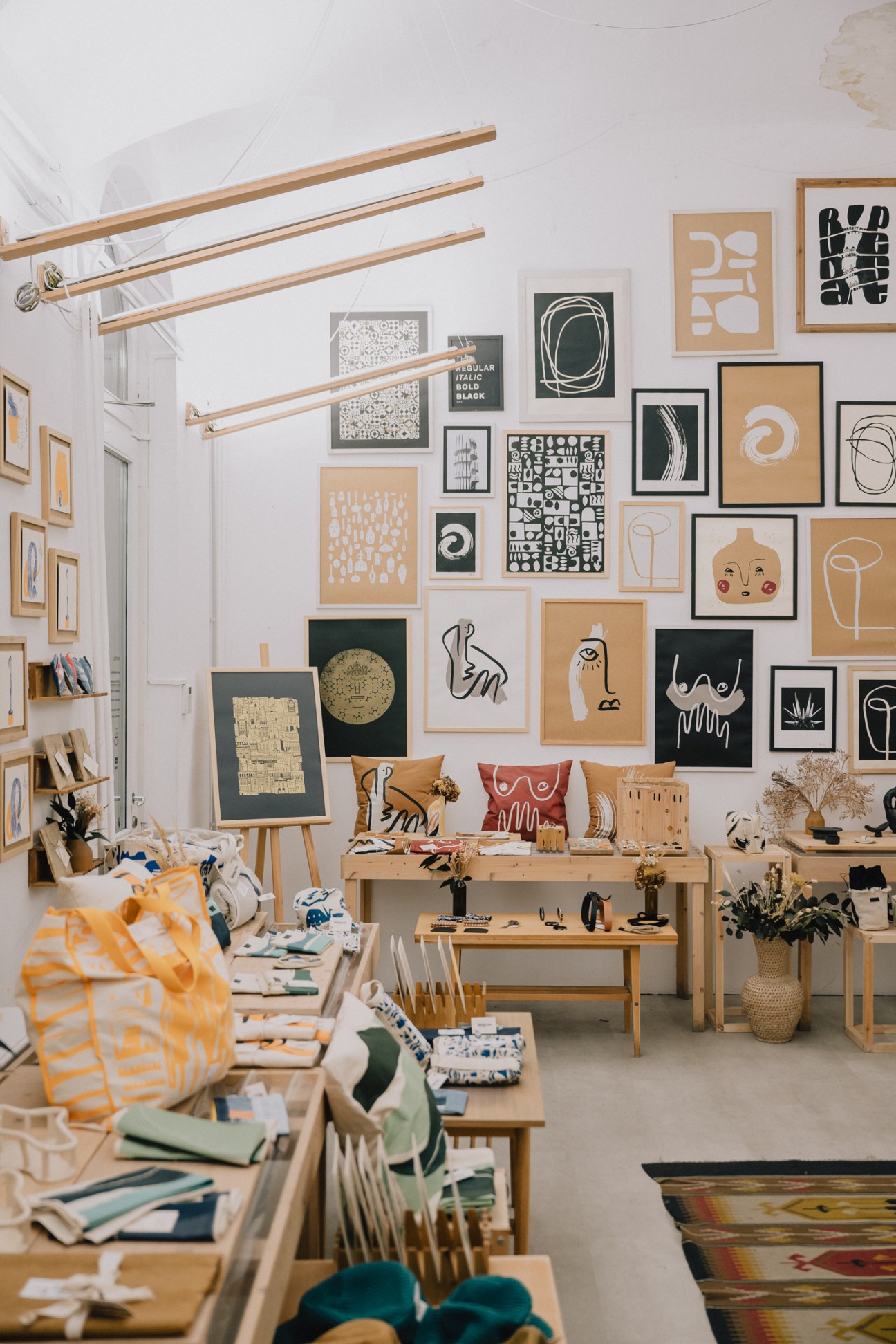
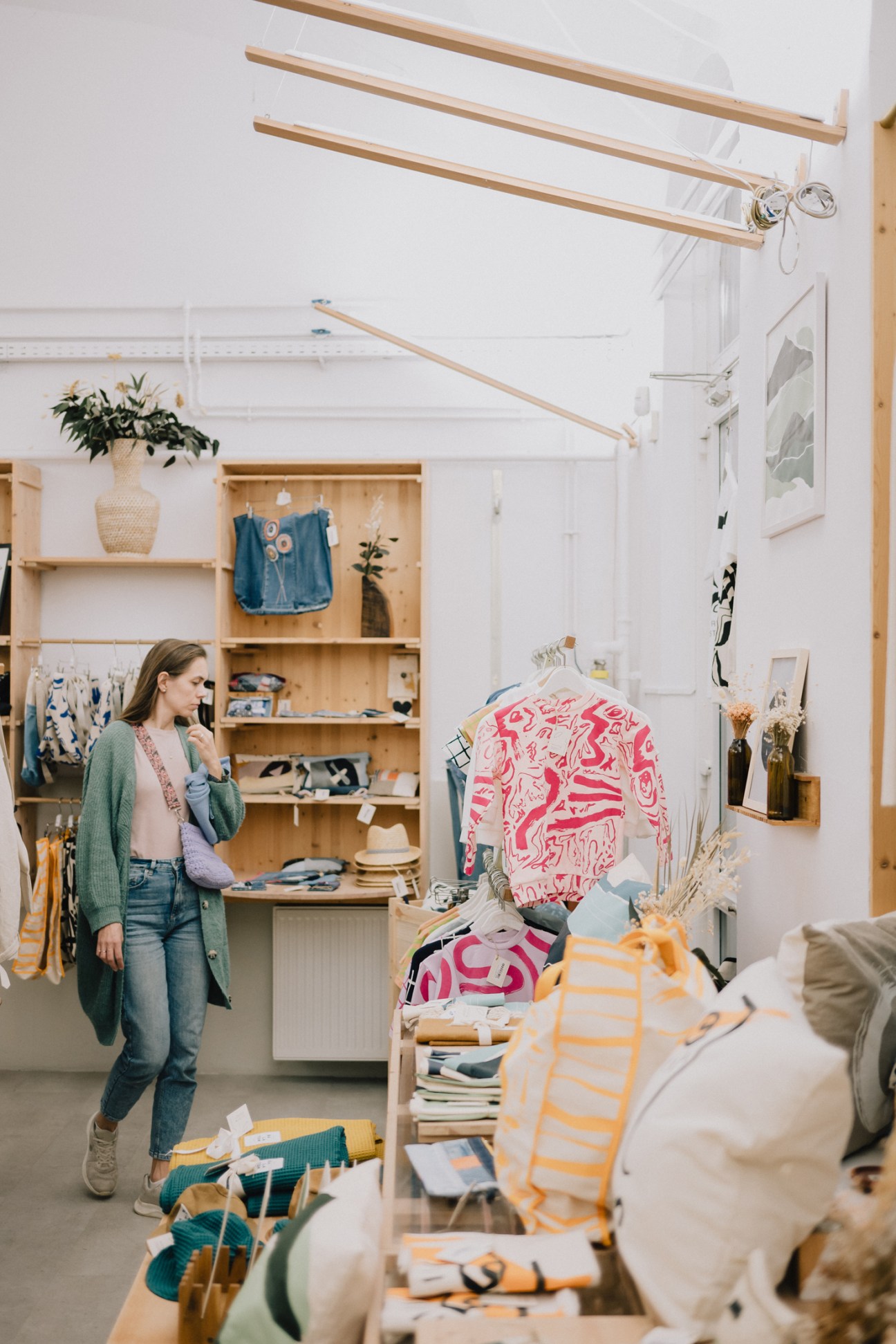
Printa Concept Store
Screen Scene
Printa is a design shop, art gallery, screen-printing studio and café under one roof. True to its name, Printa’s emphasis is on artistic prints, mostly designed and produced in-house by employees including shop manager Anna Szabó. The space also boasts sustainable upcycled clothing, the preserve of Printa founder Majoros Zita, who also makes ceramics and homeware. All Printa products are produced sustainably and visitors with some time can take part in screen-printing workshops: it always leaves an impression.
Rumbach Sebestyén utca 10
printa.hu
12.
Fabrika
Mid-century marvels
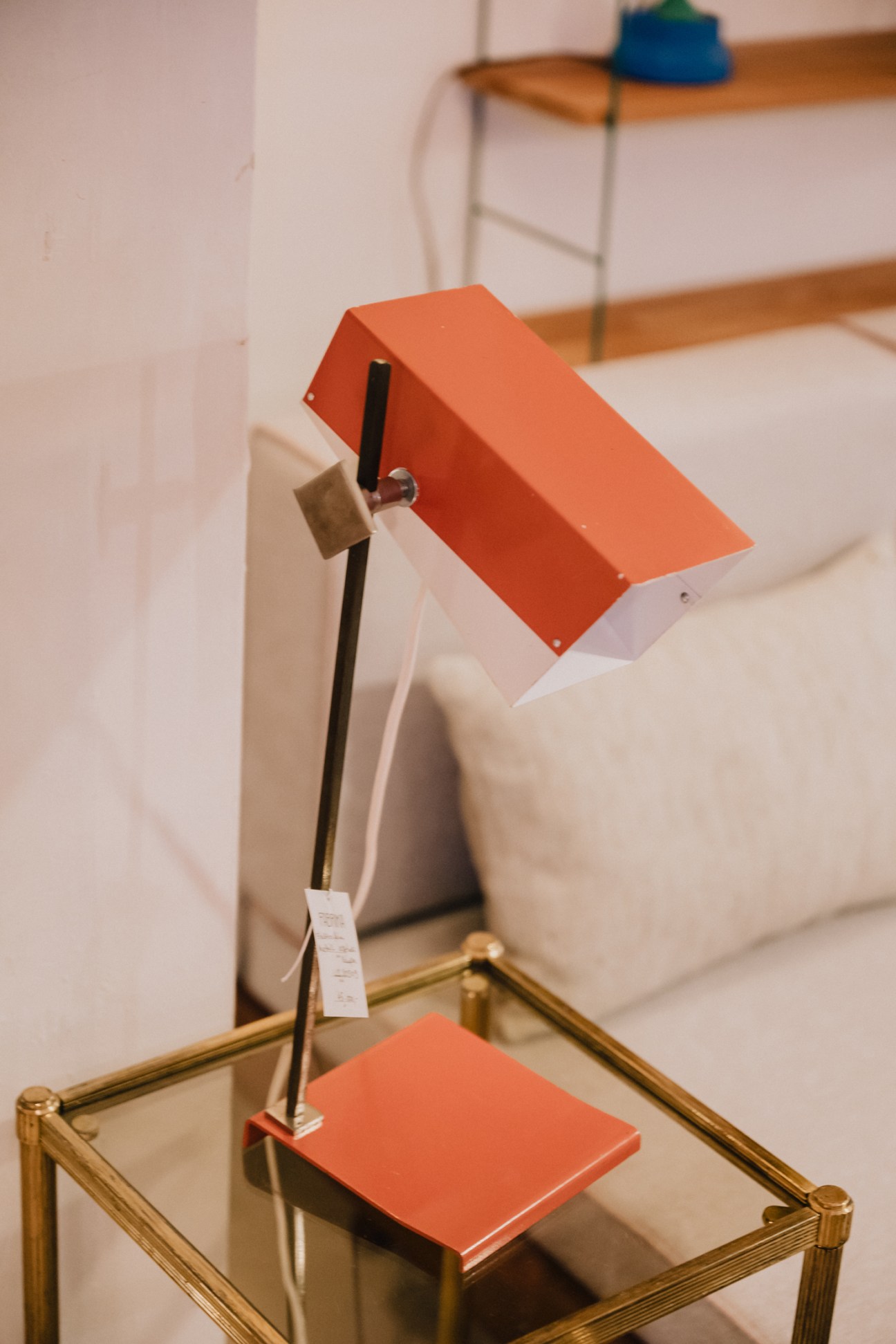
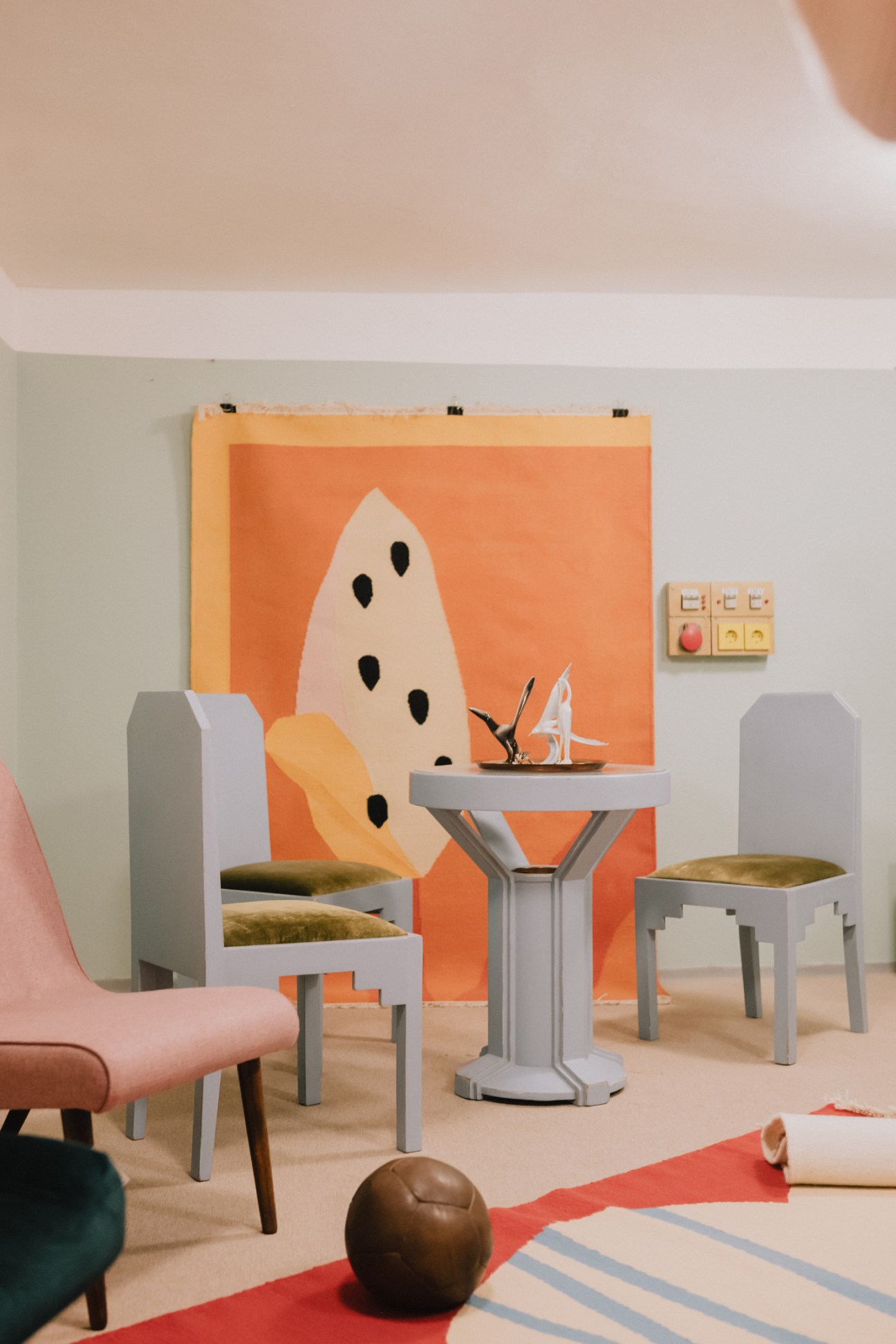
Not to be confused with a similarly named Italian restaurant, Fabrika sells restored mid-century furniture and lamps, including desk and ceiling lamps from Hungarian designer Tamás Borsfay. Highlights include armchairs by Czech designers Jaroslav Smidek and Jindrich Halabala. Owner Mariann Kollár started as a customer and says the shop is as much about community as retail. “Every few months, I organise exhibitions and get-togethers for like-minded people,” she tells Monocle on a tour. Currently on display? Rugs by Hungarian designers Anna Katalin Lovrity and Eszter Révész.
Szondi utca 94
studiofabrika.com
13.
Tipton Eyeworks
In the groove
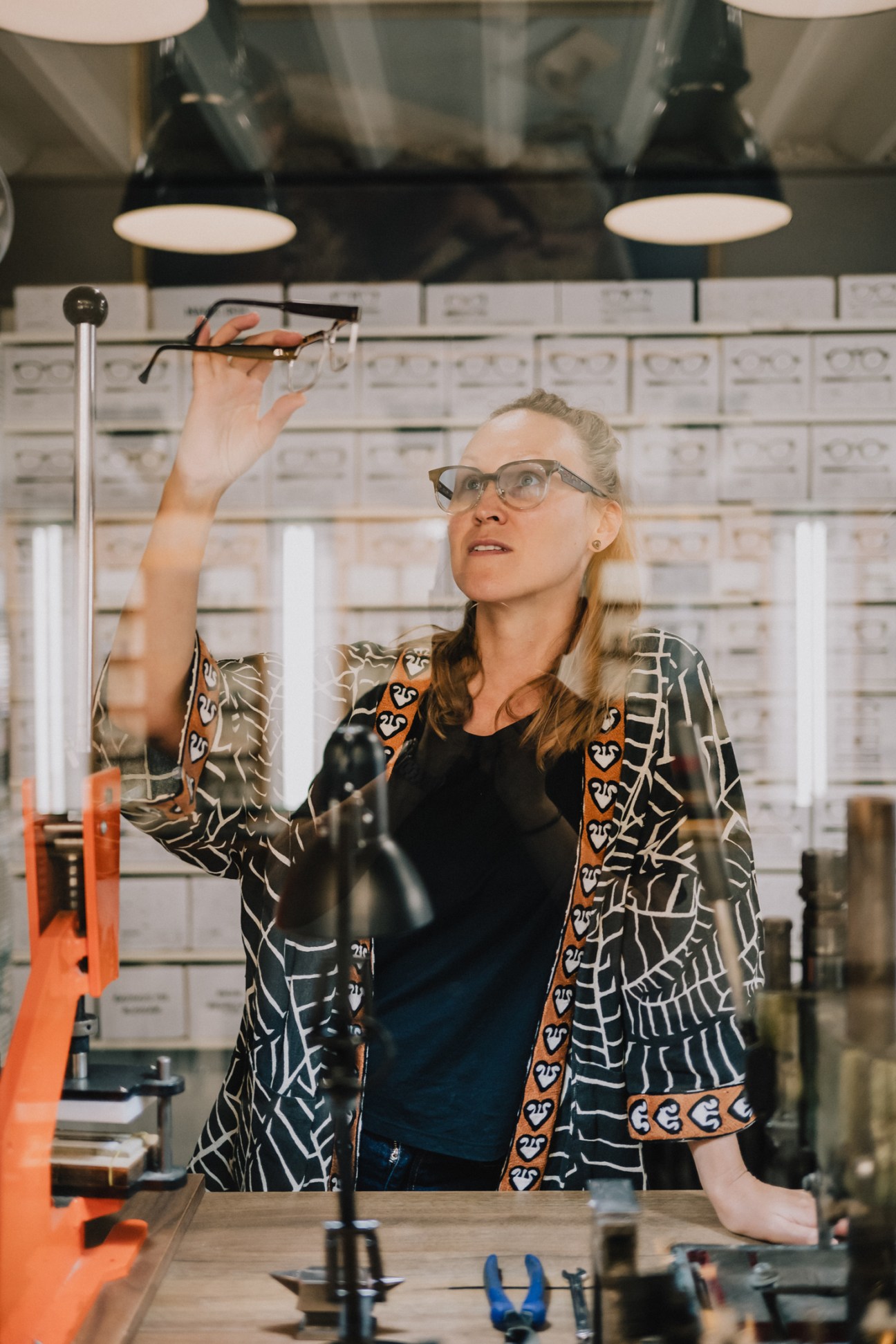
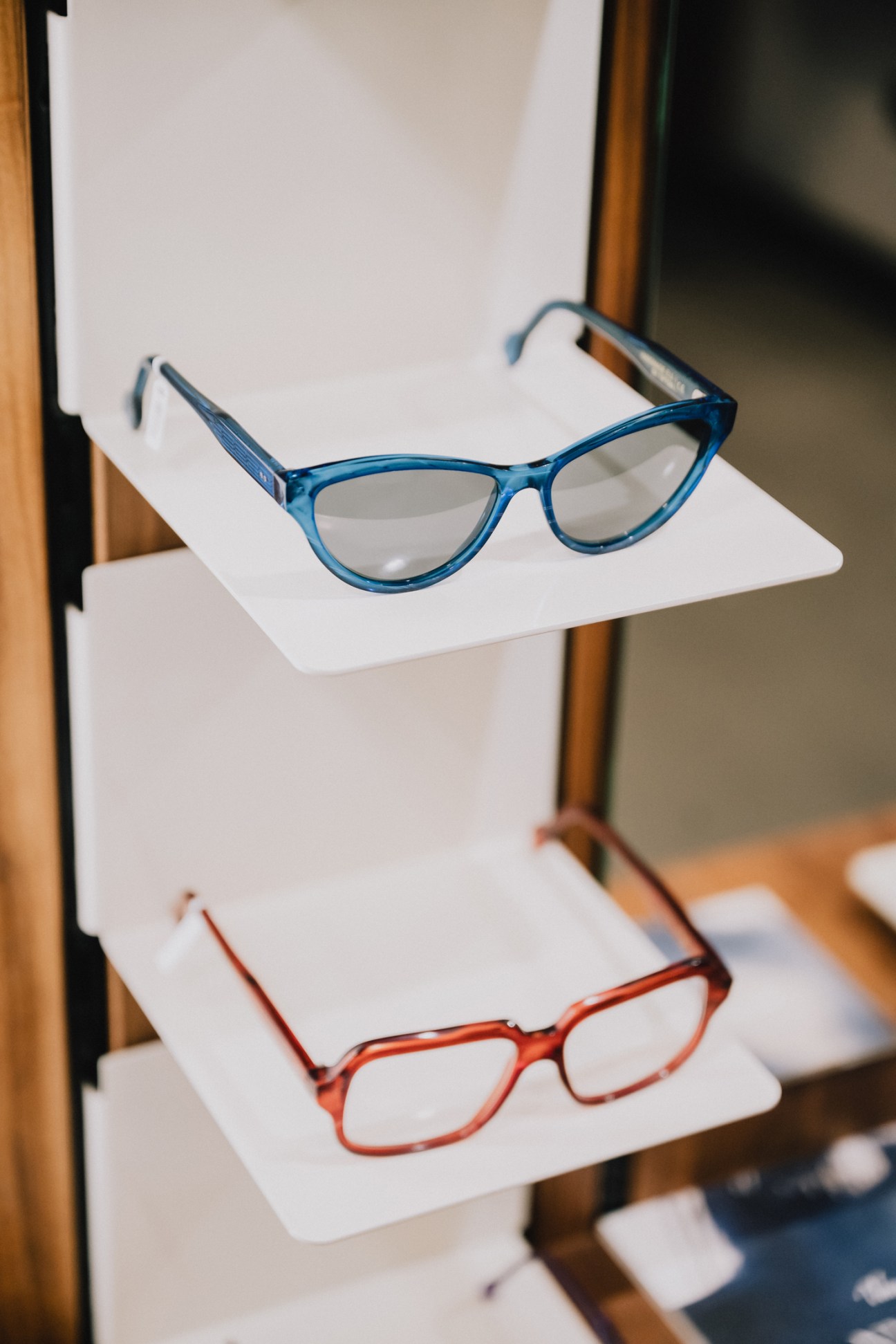
Created by entrepreneurs Zachary “Tipton” Milaskey and Yulia Tishchenko (pictured below), Tipton Eyeworks makes its glasses frames from vinyl records (the first one was reportedly a Creedence Clearwater Revival LP). There’s an ongoing collaboration with rockers AC/DC, mostly made from copies of the band’s Back in Black album. Depending on how busy things are at the time, customers can also bring beloved records to be made into a frame to a Tipton design (there are 100 to choose from). The store doubles as a workshop and an optician.
Erkel utca 6
tiptoneyeworks.com
14.
Tisza Shoes
Retro Kicks
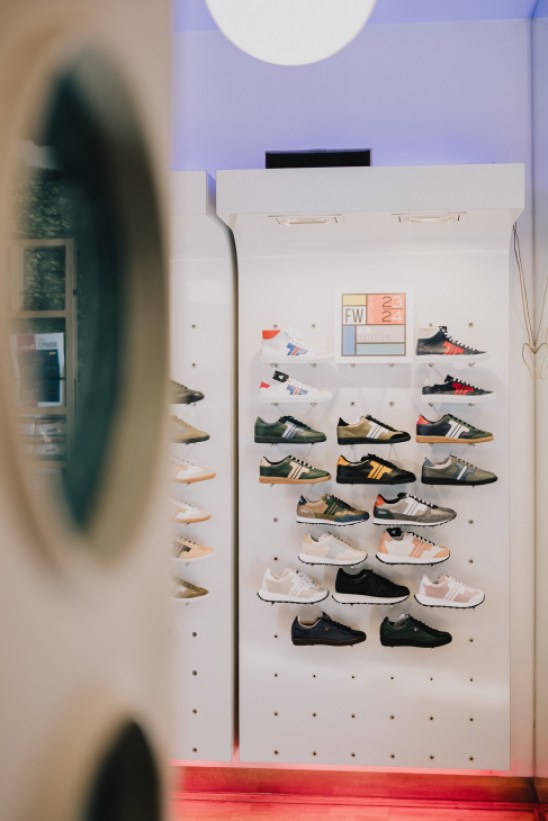
In 2002, while on a walk in central Budapest, entrepreneur László Vidák spotted a man wearing a pair of communist-era Hungarian trainers. He liked their retro look and knew the brand: “Tisza”, named after a river that flows through most of Hungary before joining the Danube. The following year he took over the brand, then all but dead, and quickly made it into a cultural phenomenon. All shoes are made in a small town on the Tisza in eastern Hungary. We recommend the classic Martfü model named after the brand’s original factory.
Károly körút 1
15.
Omorovicza Boutique & Spa
Treat yourself
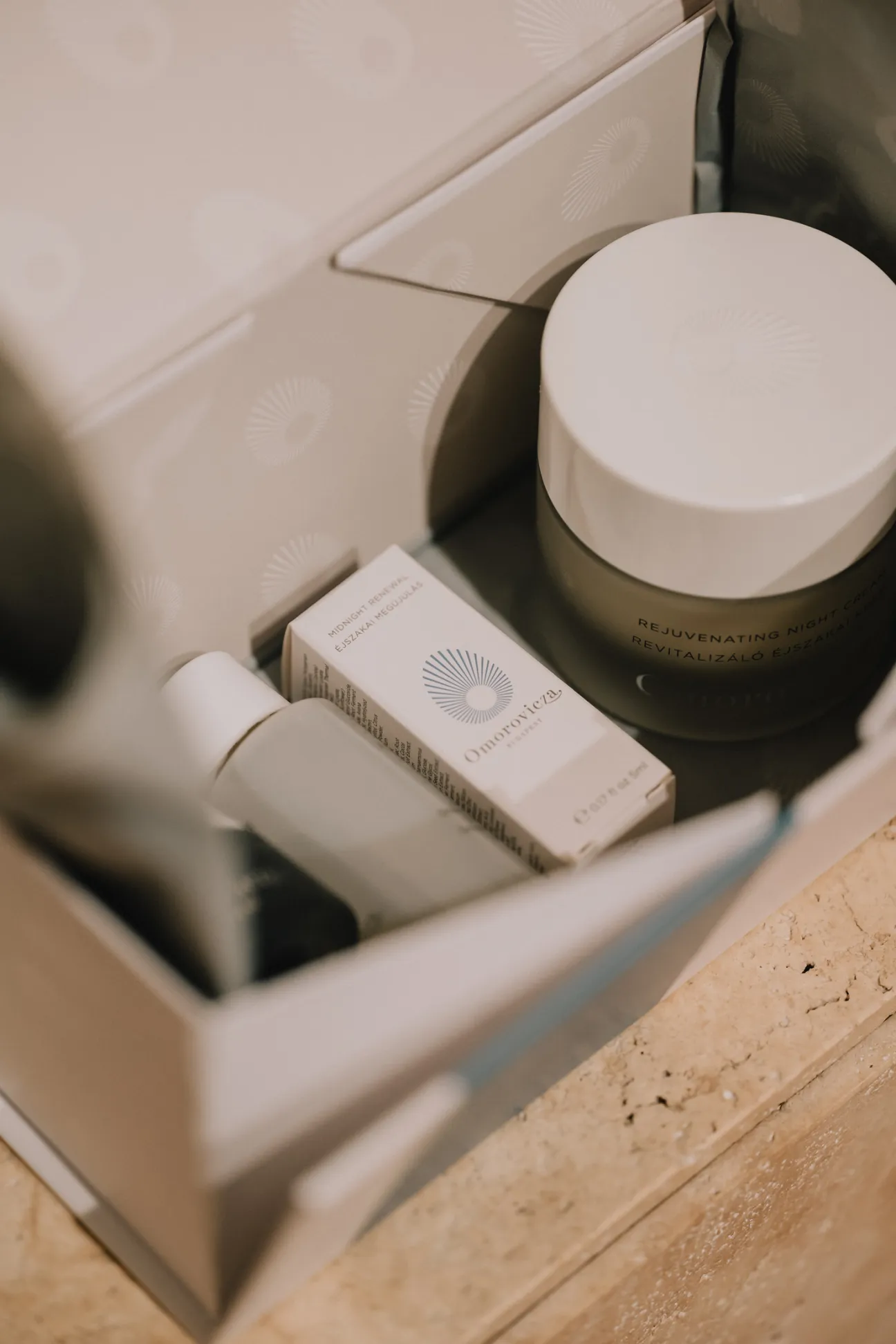
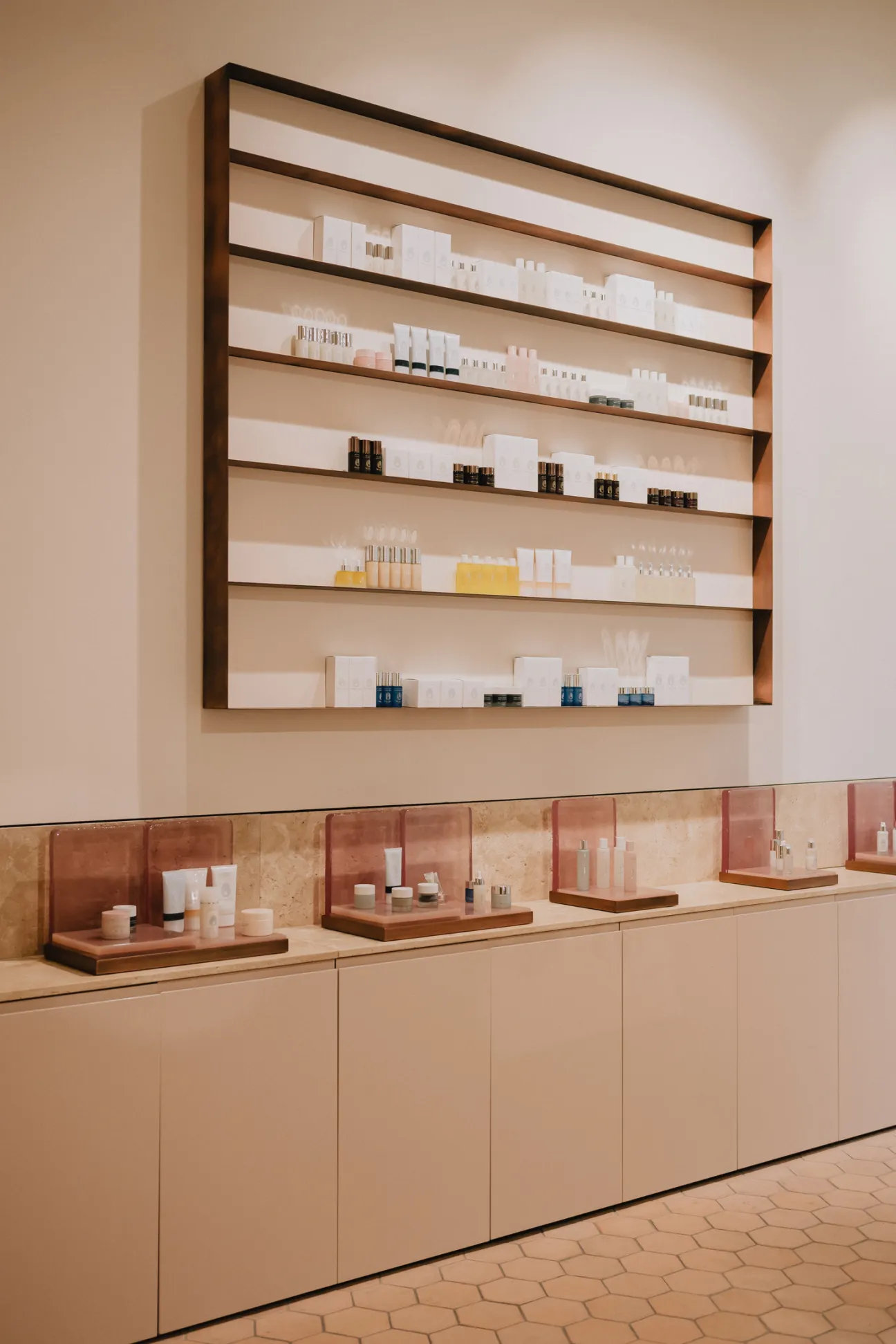
The Omoroviczas were a noble Hungarian family who in the early 19th century built a famous thermal bath on the Buda bank of the Danube. Two centuries on, scion Stephen Omorovicza met young US diplomat Margaret de Heinrich, they married and launched what quickly became one of Hungary’s premier luxury beauty brands. Book a spa appointment well in advance if you want a treat. If there are no slots available, get Omorovisza’s best-seller: Queen of Hungary facial mist.
Andrássy út 45
omorovicza.com
16.
Medence Concept Store
Waste not
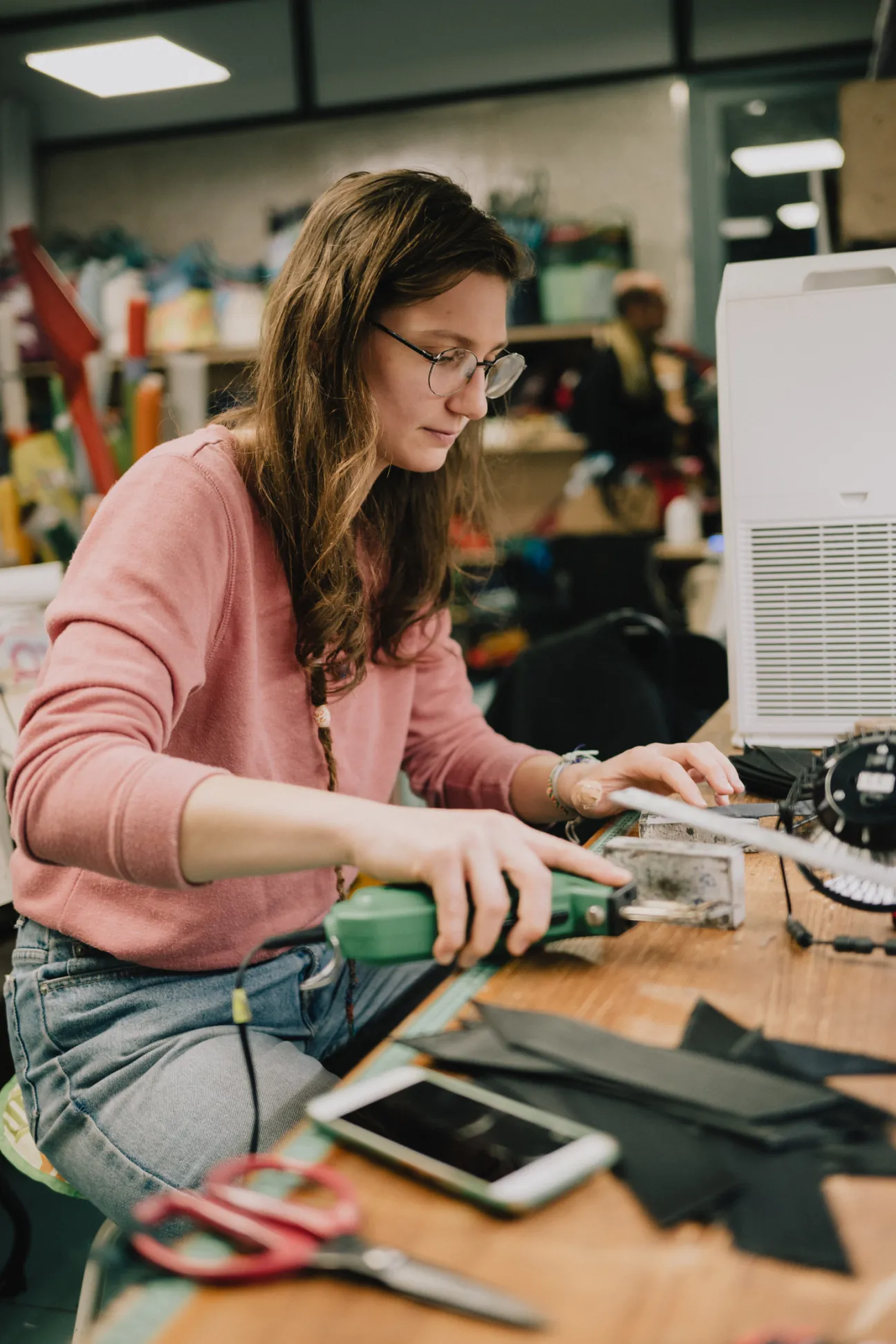
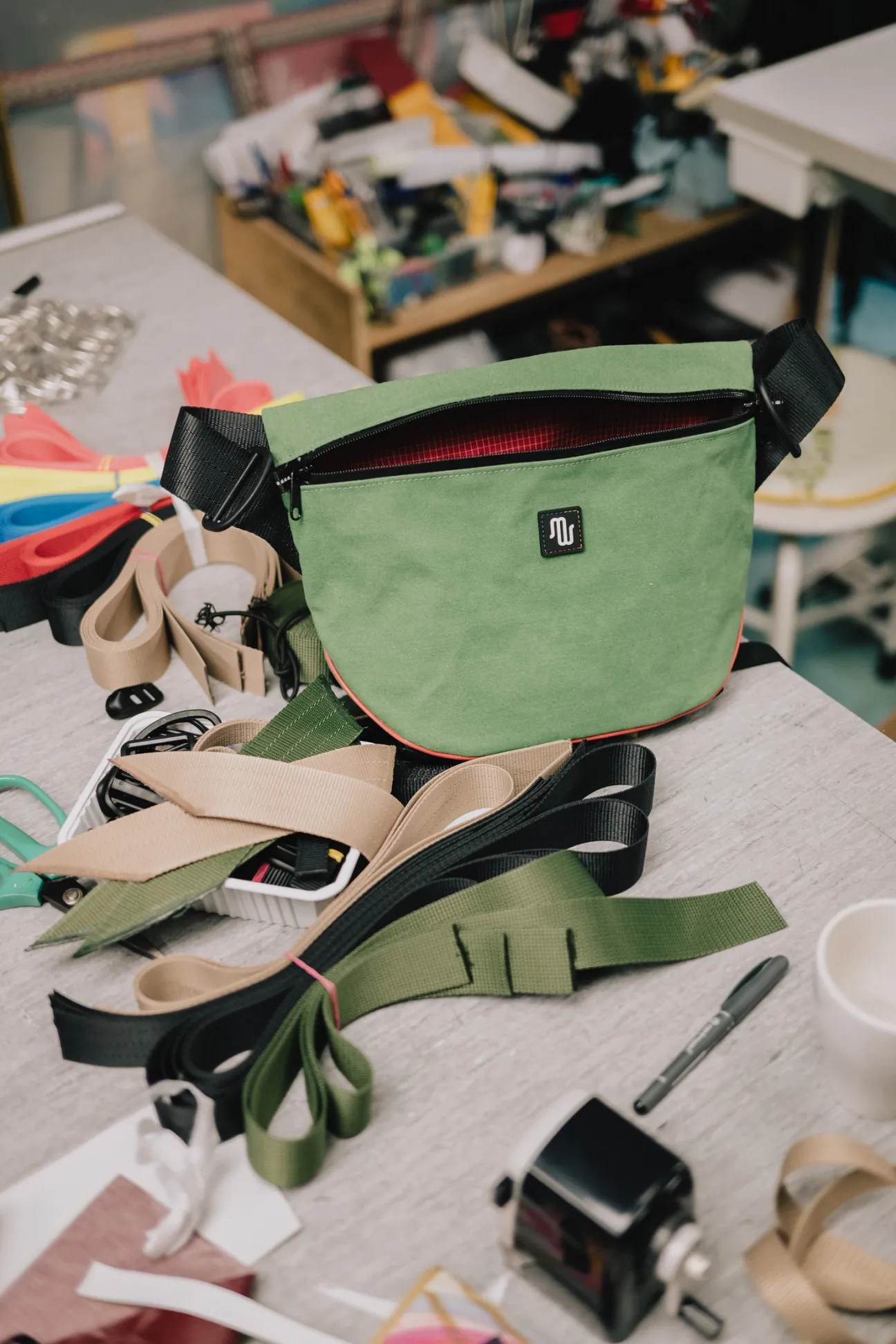
Medence has been making bags, backpacks and baskets using old advertising and construction netting since 2006. “If one of us sees an interesting net at a building site, we’ll ask the workers to give it to us afterwards,” says Réka Kozalek, one of the Medence team. Most of the time, however, advertising and construction companies donate unprompted. The shop, in the Bartók Quarter, also offers workshops where visitors can make their own bags. Among the existing stock, our favourite is the Bob bag – compact yet big enough for a laptop and daily essentials.
Ménesi út 1
medencebag.com
17.
Artkraft
Treasure trove
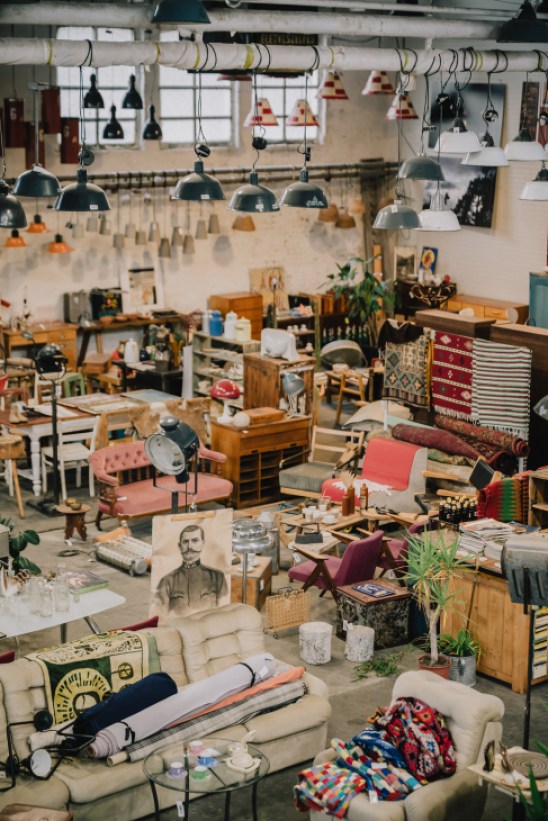
Buried deep in an industrial zone next to the disused art deco Kelenföld Power Station (worth a visit for design buffs), Artkraft isn’t easy to find. Once there, be ready to lose yourself in its enormous showroom overhung by vast, salvaged industrial lamps. Here, design magazines and used books are scattered around mid-century desks, tables, chair sets and wardrobes. There’s little in the way of organisation or categorisation here but it’s worth the journey and the rummage – a little effort will unearth some gems.
Budafoki út 70
loftdesign.hu
18.
Palmetta Design & Textile Art Gallery
Design classics
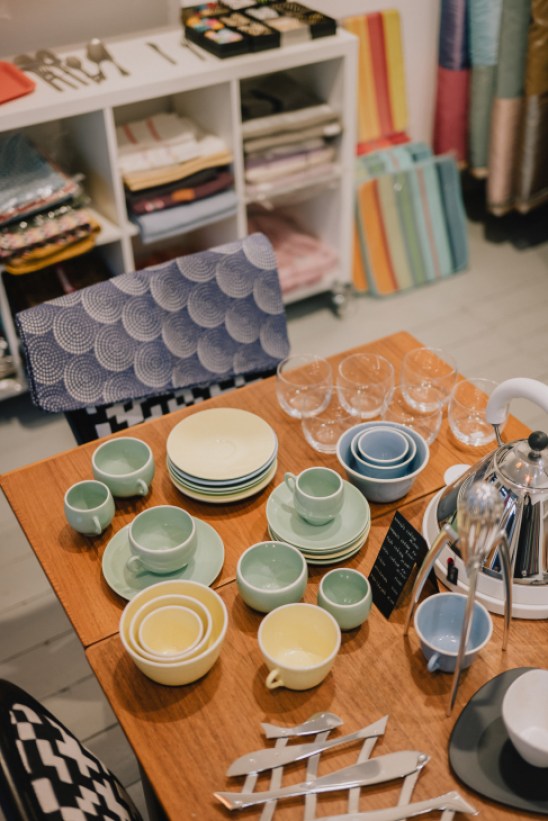
Run by Itsván and Anna Regos, whose textiles, pillowcases and bags form a core part of the selection, Palmetta is the sole Hungarian distributor of the German homeware brand Remember, plus a wide range of Alessi kitchenware.
Bartók Béla út 30
palmettadesign.hu
19.
Plante
Green space
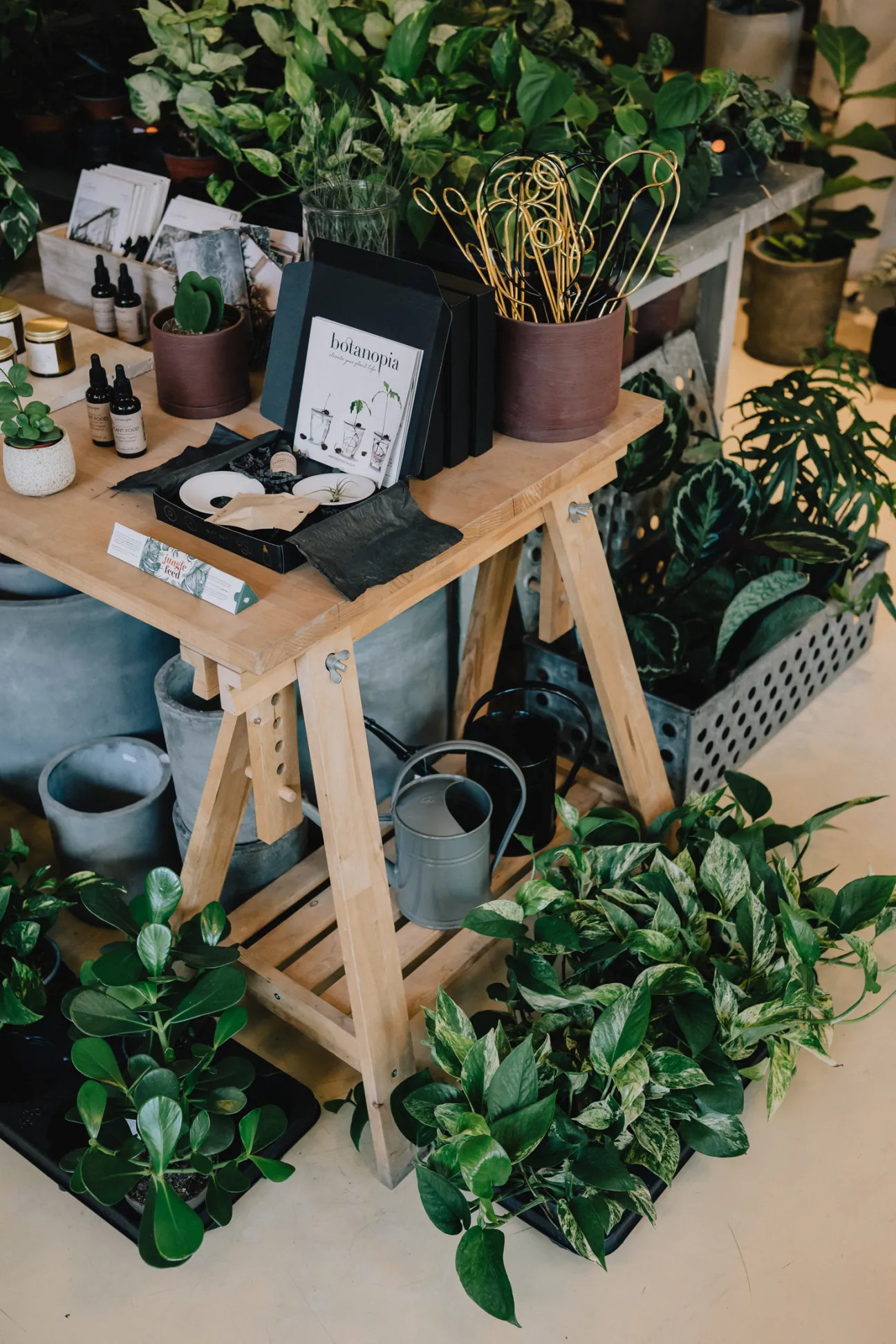
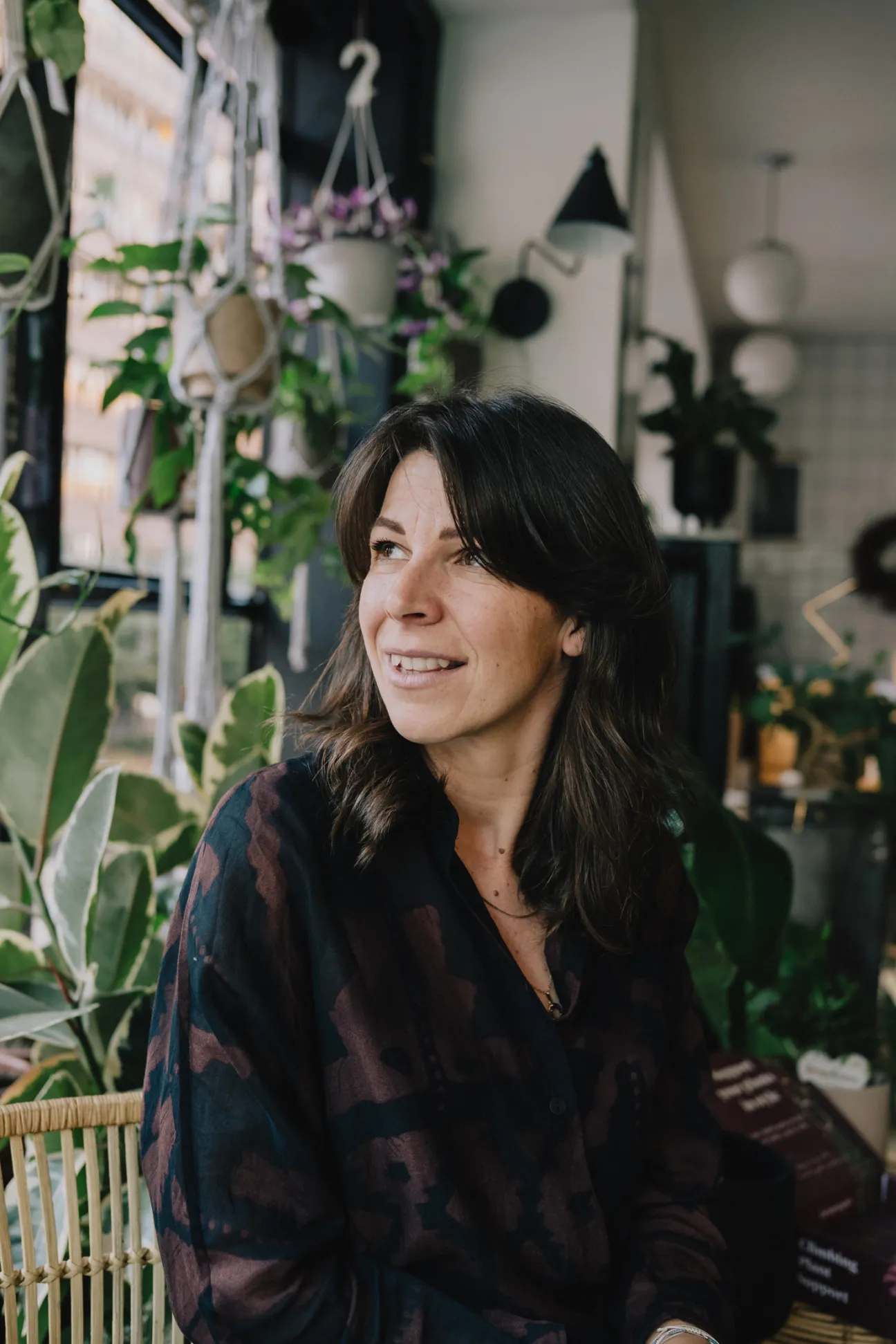
Located on the glass-fronted first floor of an impressive 1940s building – part of the listed Madách Imre Square housing project – Plante is full of lively flora. Not to mention everything that goes into raising and maintaining it, from soil to watering cans to books. Co-founder Katalin Tóth (pictured) has a background in economics and design, not botany. Plante’s biggest sellers are pots by ceramicist Viktor Erdei, made for the shop near the southern city of Pécs.
Madách Imre utca 8
plantebudapest.com

20.
Prezent
Touching treats
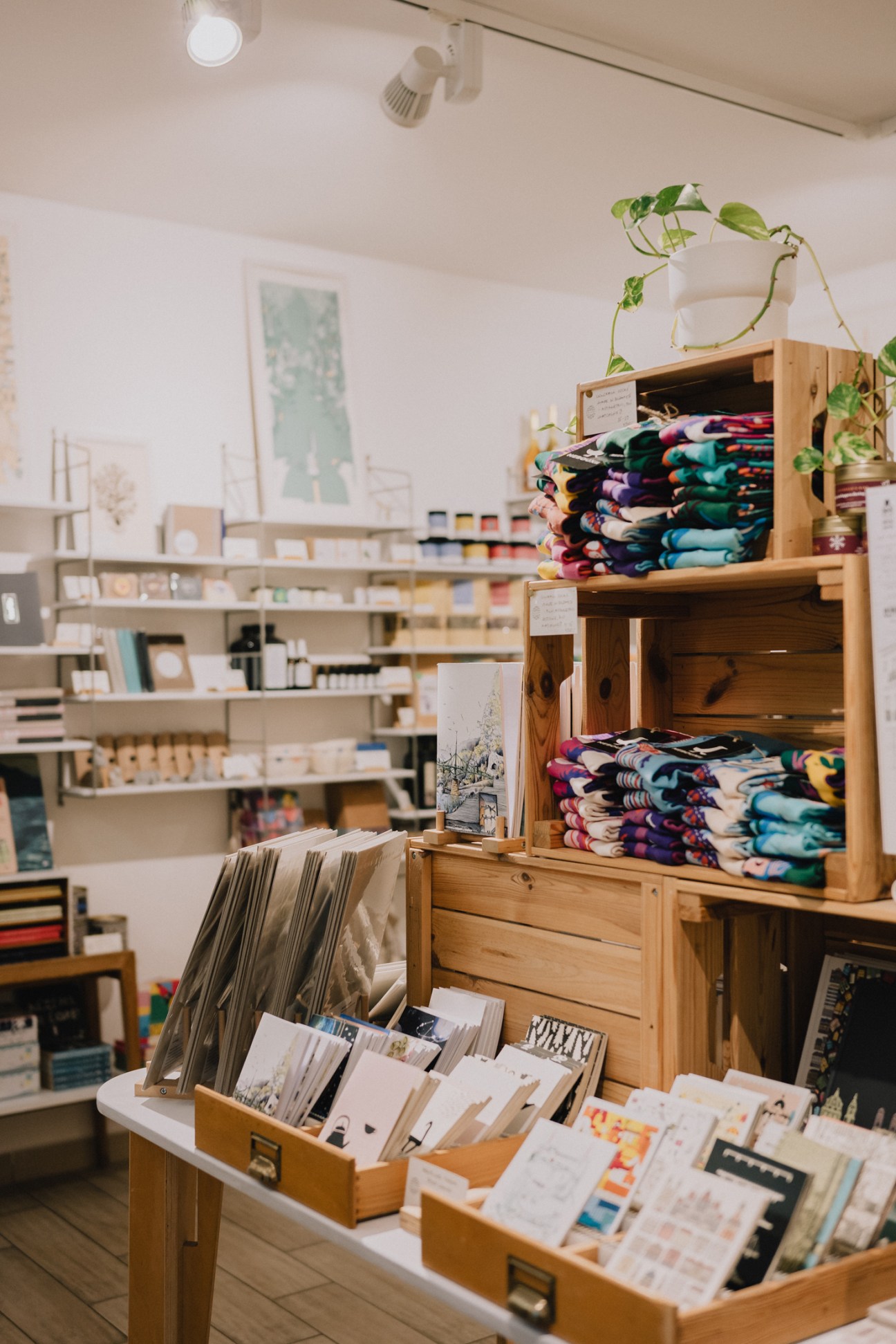
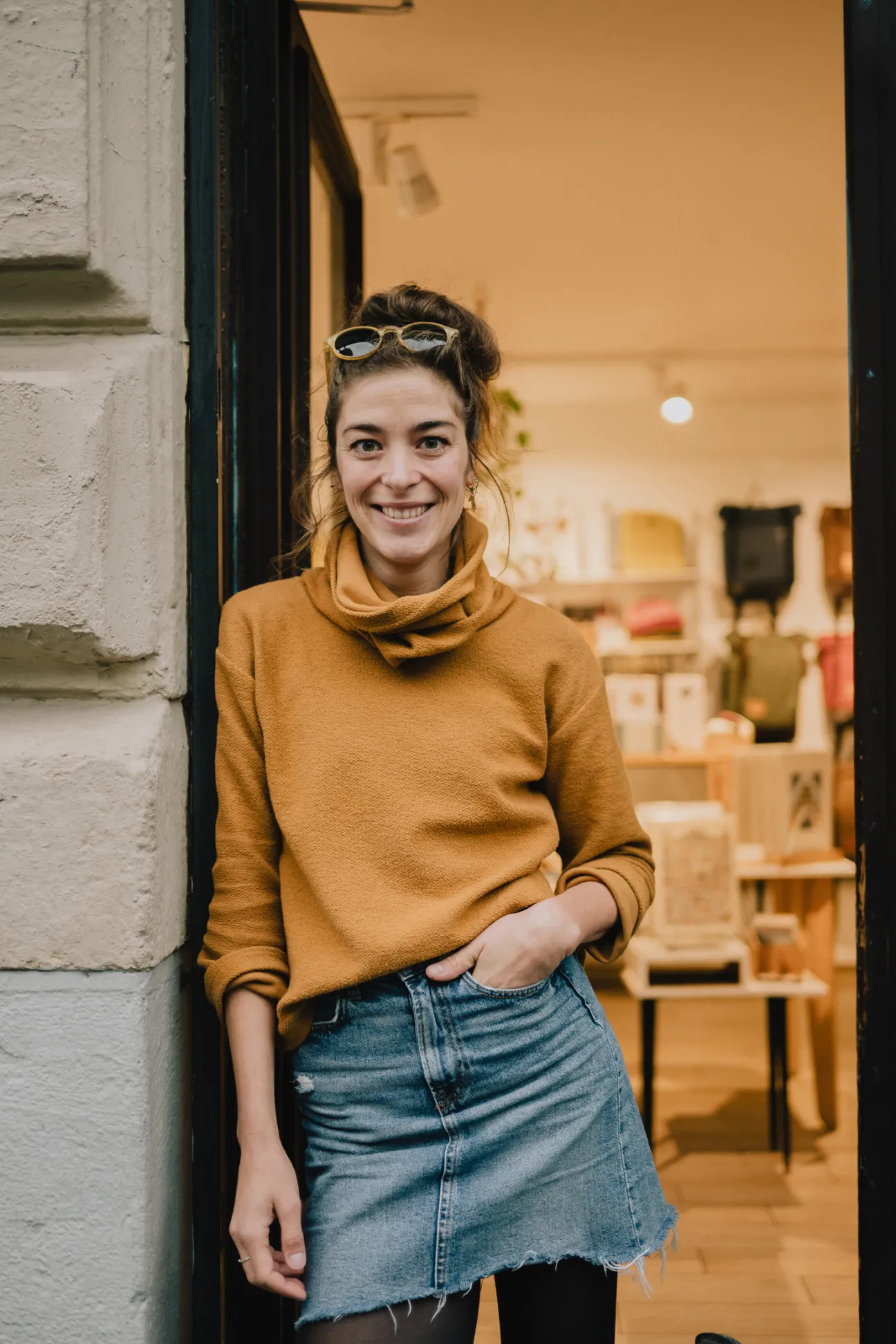
Dea Bilau (pictured) has co-run Prezent since 2018 and her brand Touch Me Not Clothing is a top seller. Every piece comes with a card that names all of those who were involved in its production for transparency. Prezent’s other speciality is its own backpack brand, Blind Chic. The bags are made on the first floor by seamstress Sára Orbán, who goes by “Saci” and is always happy to receive visitors and explain her process and work. Ask the staff first, though, and don’t be spooked by the sewing machine noise upstairs.
Döbrentei utca 16
prezentbudapest.hu
21.
Ajka Crystal
Glass menagerie
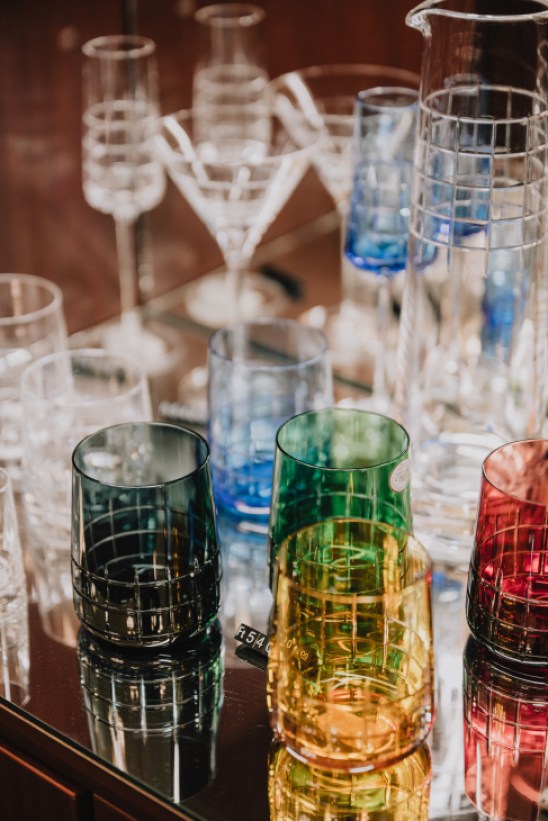
A glassware manufacturer whose history dates back to 1878, Ajka Crystal is well-known for its wine and champagne glass sets decorated with intricate motifs. Ajka also makes vases, decanters and Christmas-tree decorations. The shop’s vast interior stretches away into the dazzling distance.
Kossuth Lajos utca 10
ajka-crystal.com
22.
Massolit Bookstore & Café
Turning the page
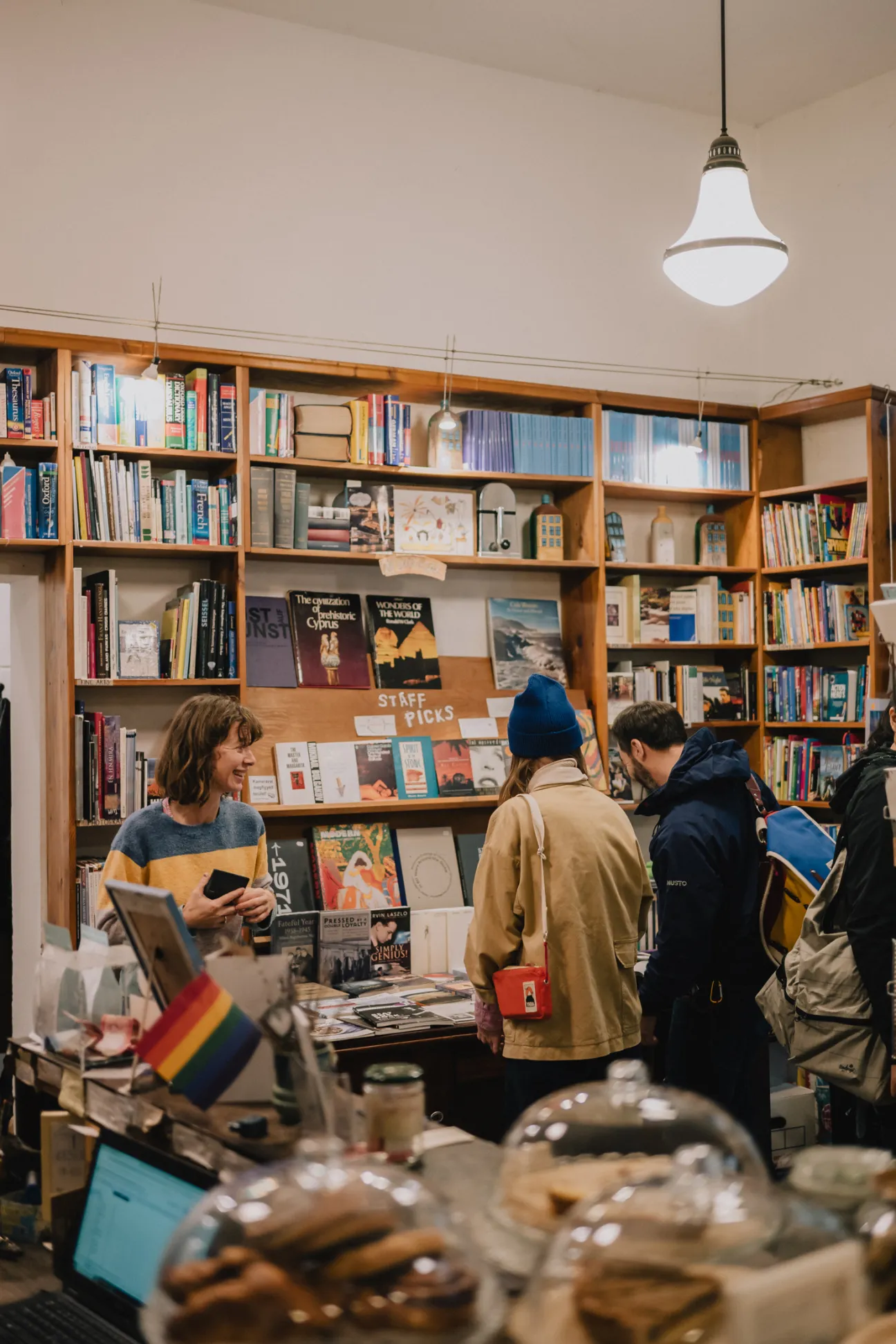
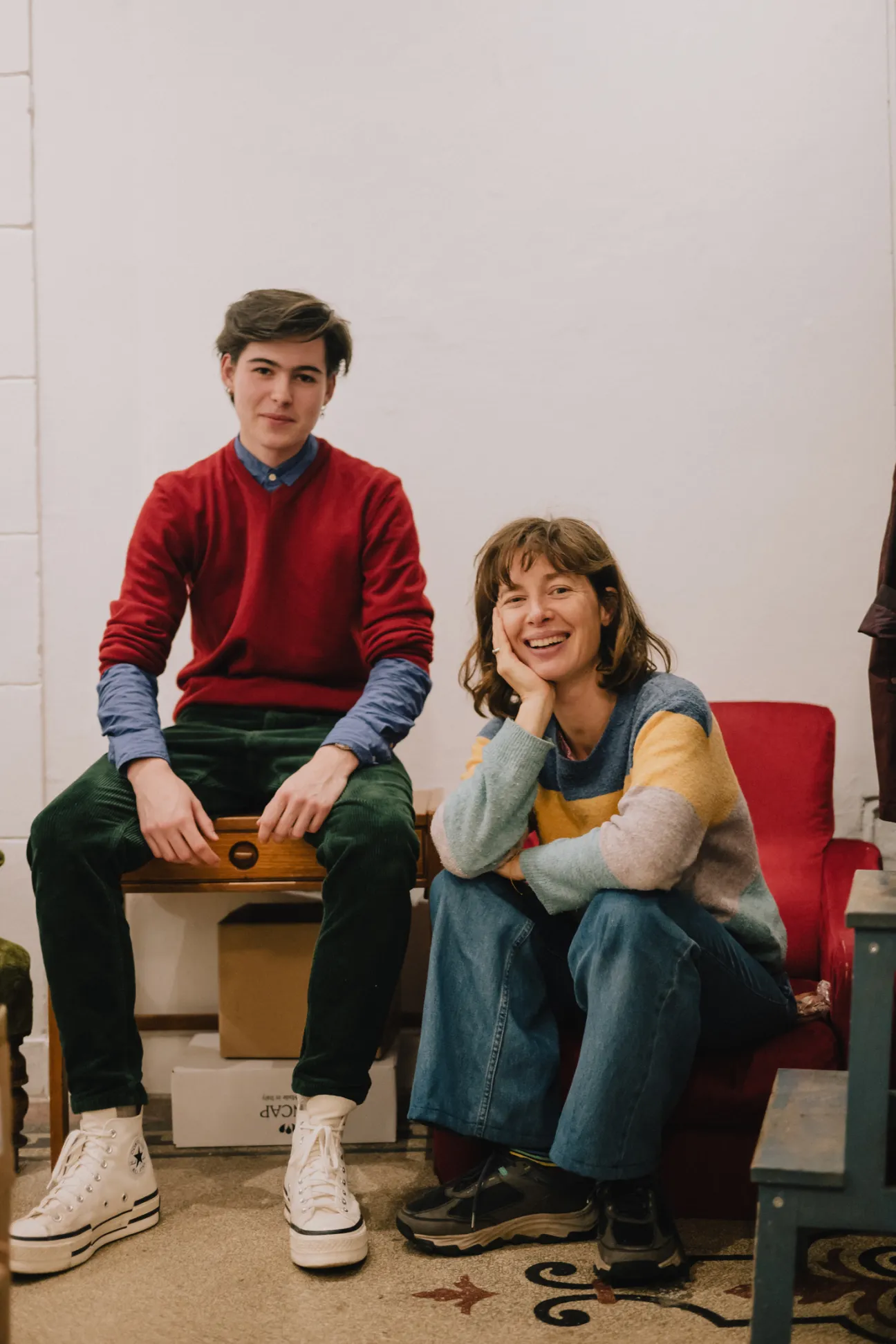
One of Budapest’s first dedicated English-language bookshops, Massolit (an acronym for a literary organisation featured in the novel The Master and Margarita by Soviet writer Mikhail Bulgakov) stocks some 4,000 titles, new and used, with a focus on Hungarian authors in English translations. Make it your first stop if you’re in the market for a Budapest guidebook. Visitors can hand in their own books in exchange for credit or coffee (both good options here).
Nagy Diófa utca 30
massolitbudapest.com

23.
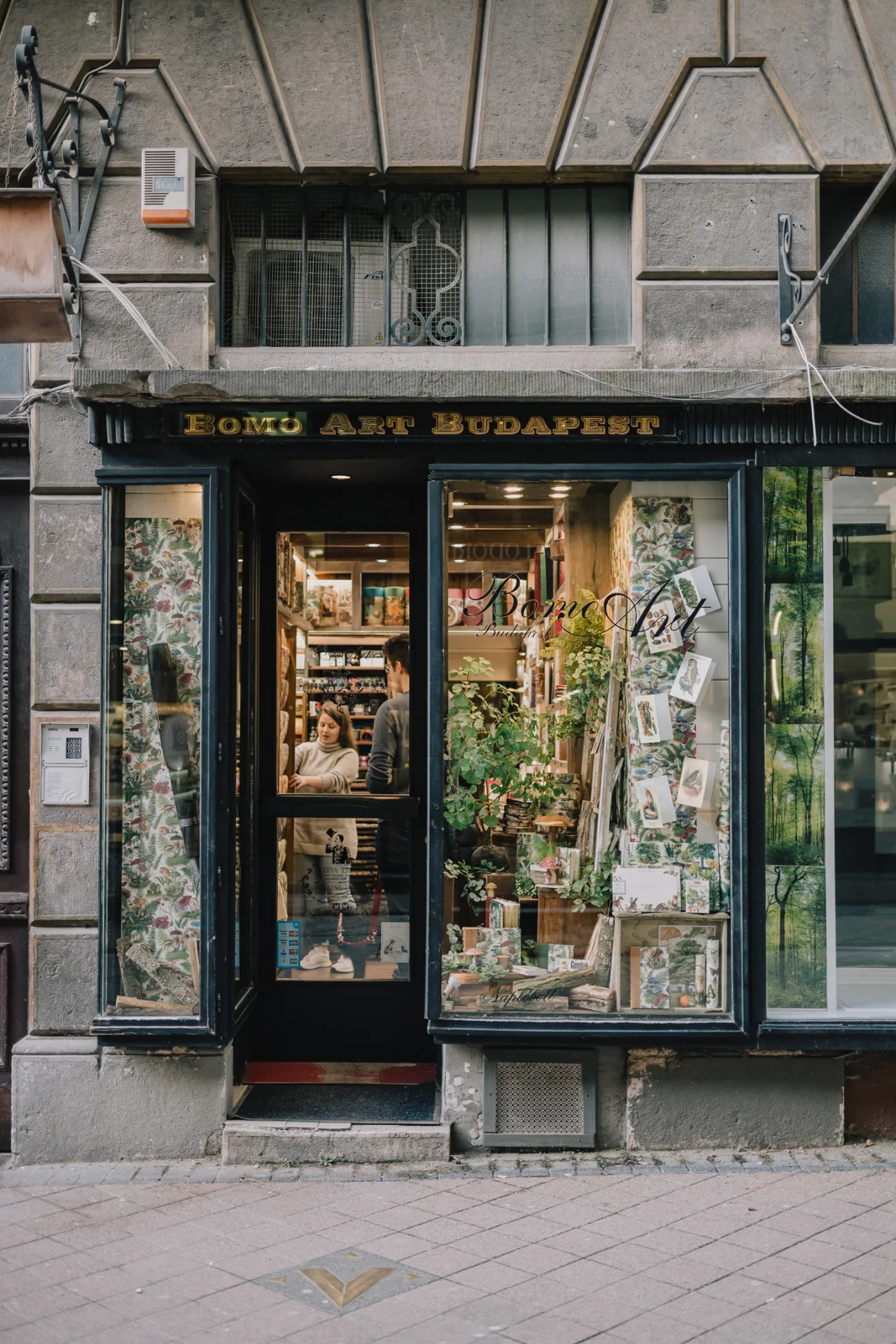
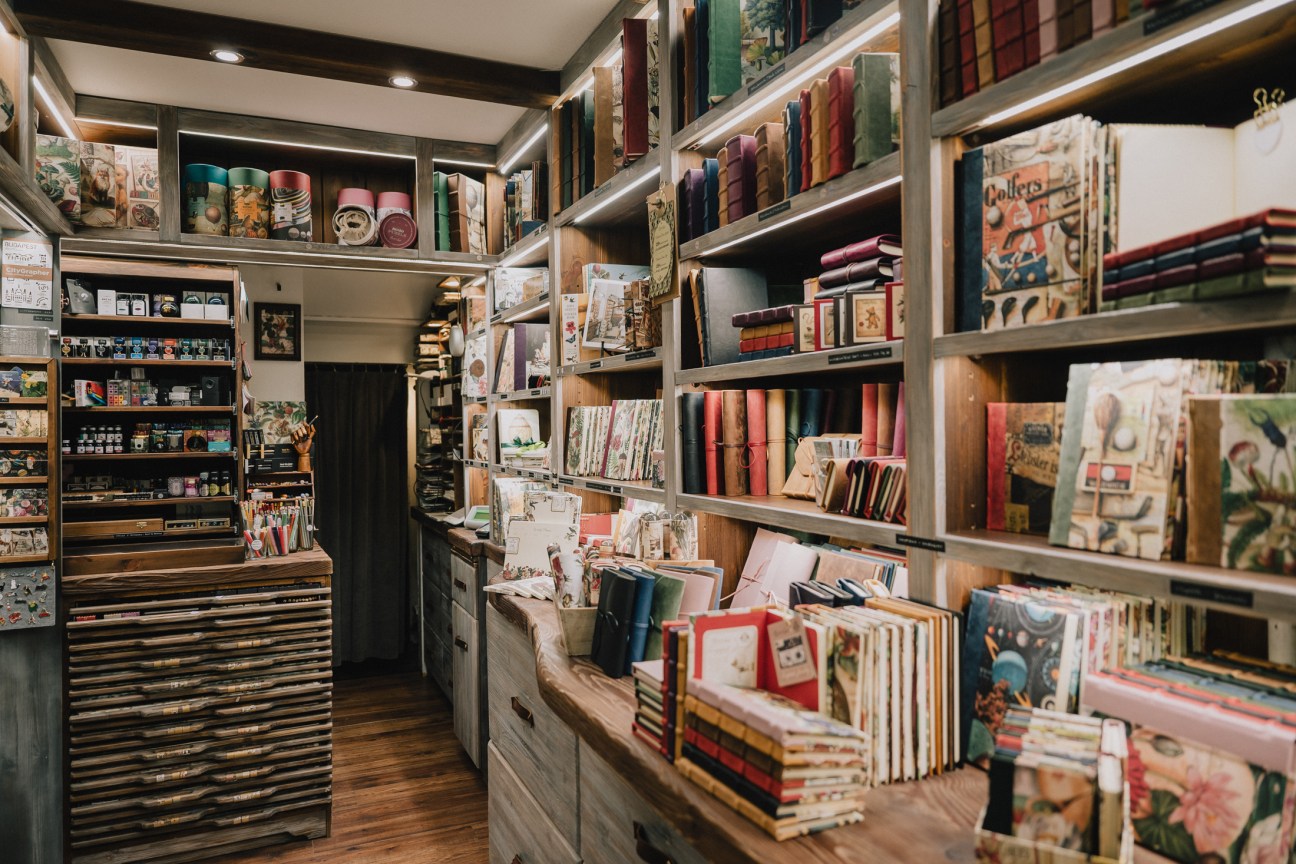
Bomo Art
Elegant Stationery
This cheerful stationery shop on the Pest side of the Danube (with a further outlet on the Buda bank) is beloved for its leather-bound notebooks and journals, whose cover designs are made by in-house illustrator Éva Hollósi. Boom Art also collaborates with contemporary artists and designers such as Zsófi Barabás, who created limited-edition notebooks for the brand’s 20th anniversary a few years ago. Children might like Bomo Art’s kaleidoscopes or praxinoscopes (versions of early animation devices invented in the 1870s).
Régi posta utca 14
bomoart.com
24.
Nanushka
Indie Threads
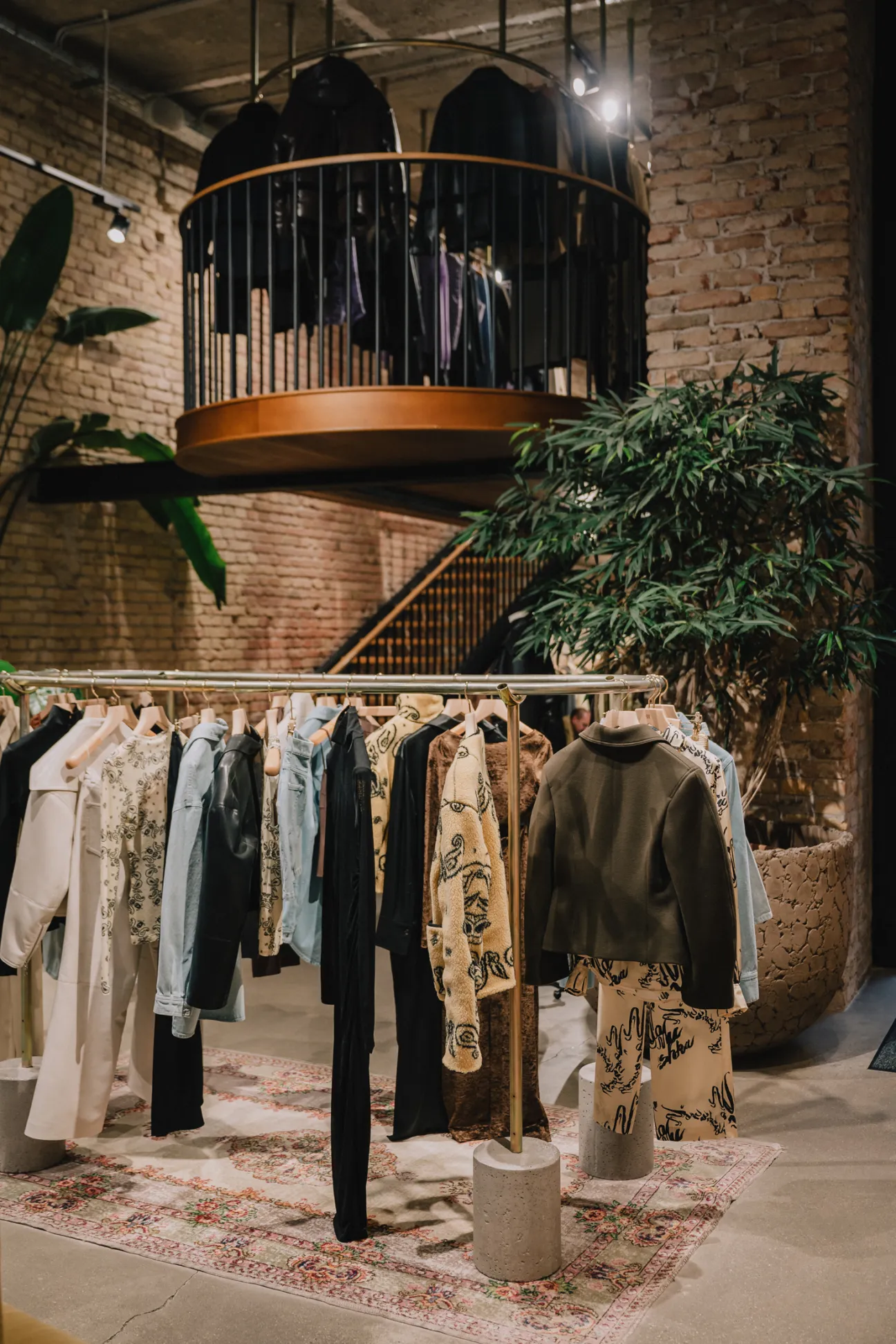
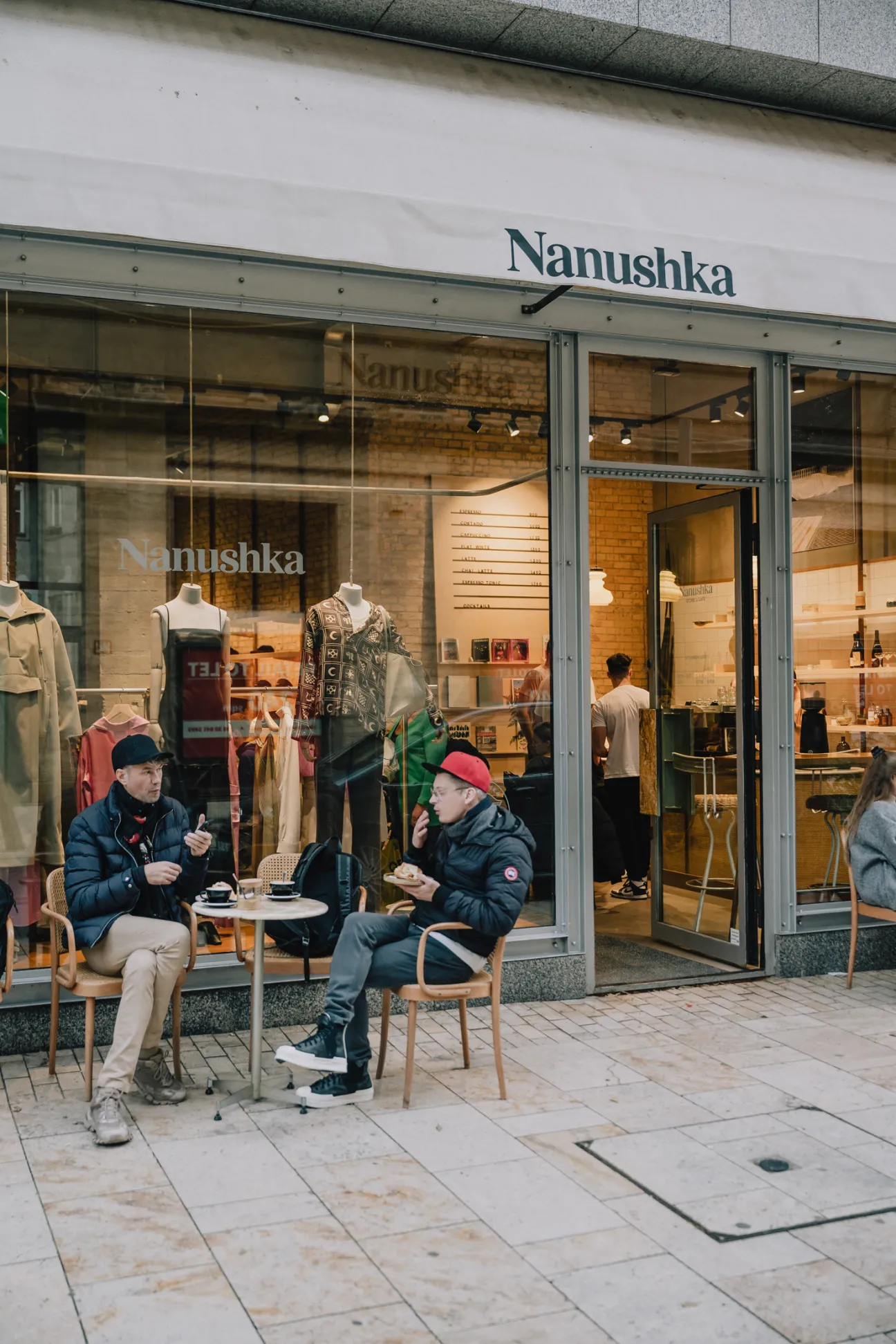
Now one of the best-established independent fashion labels in Hungary, Nanushka (a childhood nickname of founder Sandra Sándor) started in 2006. It quickly became a household name in Budapest and then, increasingly, in other cities across Europe and beyond. Its flagship shop is a few steps away from fellow fashion store Aeron (see #6); both belong to the same group, Vanguards, that also owns Milan-based brand Sunnei. The shop features both men’s and women’s collections, all of which lean towards big silhouettes and long forms.
Bécsi utca 3
nanushka.com
25.
Daken Studio
Restored Wonders
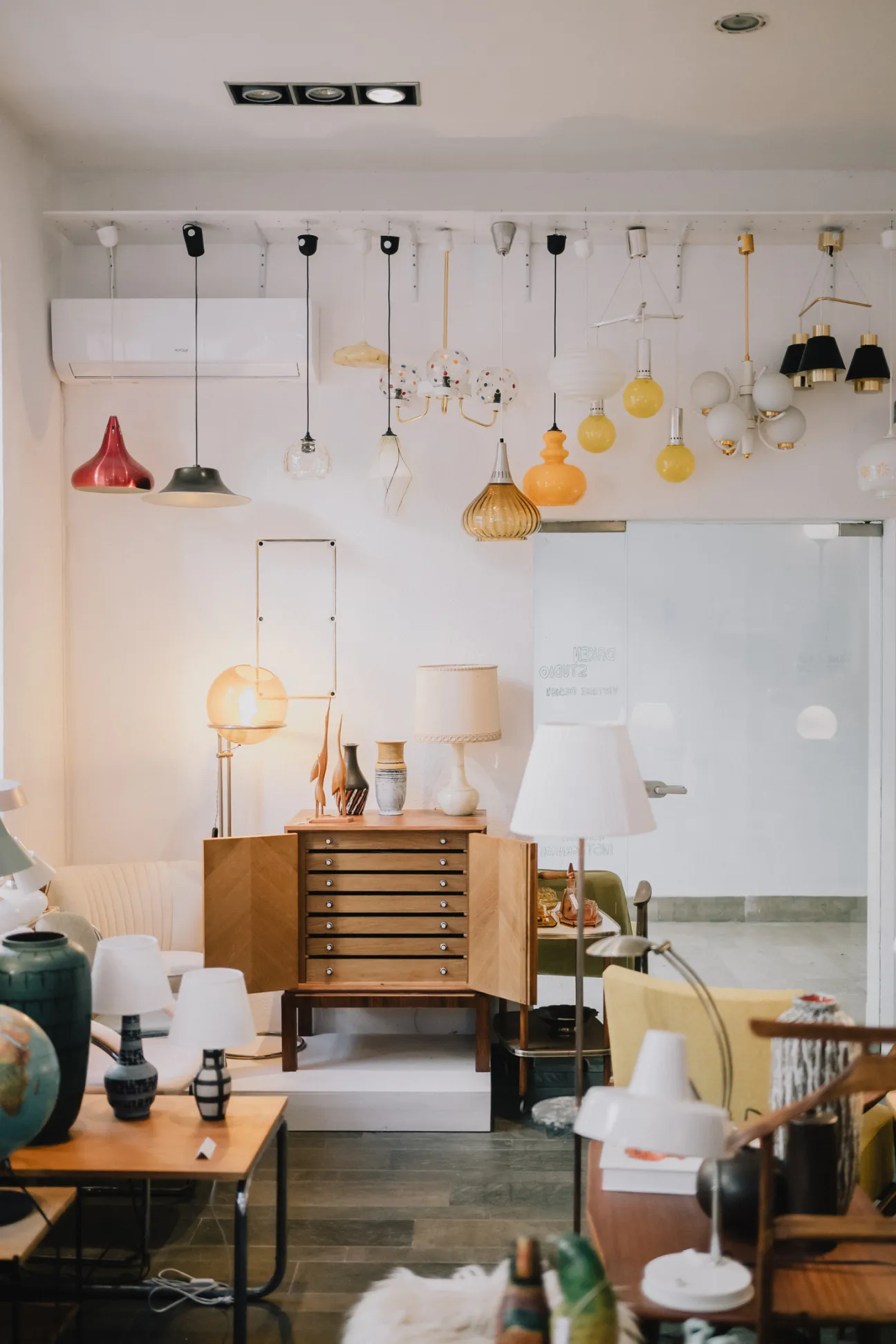
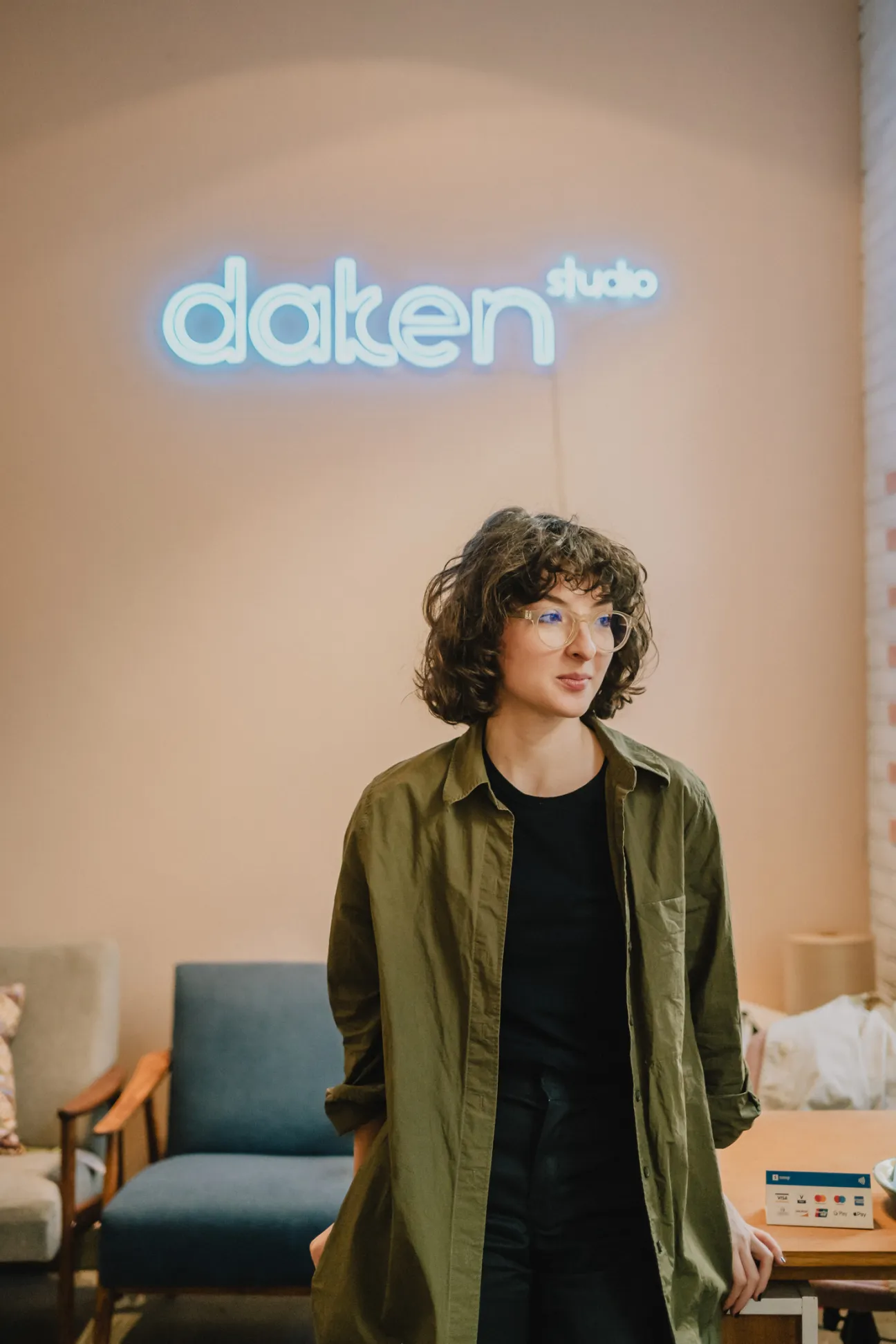
In the decades after the collapse of communism in 1989, many Hungarians threw out their Soviet-era armchairs and sideboards as symbols of the system. In the years since, mid-century furniture and homeware flooded the market and Daken Studio’s sister-brother founders, Zsófia and Dániel Koma, took advantage. Their love of 20th-century Czechoslovak, Polish and Hungarian design stems from their grandparents, who were celebrated artists during the communist period. Whatever comes their way is lovingly restored and displayed in their shop near the city’s Jewish quarter.
Horánszky utca 5
daken.hu
Address book
Where to stay and eat in Budapest
Stay
On the Pest side: Párisi Udvar opened in 2019 in a glorious art nouveau arcade that formerly housed the Central Savings Bank.
Petofi Sandor utca 2-4
On the Buda side: Hotel Clark offers a clean and clear modern design that honours the engineer behind the nearby Széchenyi Chain Bridge, Scotsman Adam Clark.
Clark Ádám tér 1
Breakfast
Lui: An artisanal bakery next to the postcard-pretty parliament building with some of the city’s best pastries.
Aulich utca 7
Lunch
Menza: From Tisza shoes owner László Vidák, it reimagines Hungarian favourites such as goulash and galuska (egg noodles), in retro-inspired surroundings.
Liszt Ferenc tér 2
Dinner
Onyx: A Michelin-starred minimalist affair, which offers great food and wine tastings. Beware the odd opening times and reserve well in advance.
Vörösmarty tér 7-8
Coffee
Gerlóczy Café: Looking onto a quiet square, this Parisian-style café on the ground floor of a grand building that houses a boutique hotel boasts some of Budapest’s best coffee.
Gerlóczy utca 1
Getting here
The Ferenc Liszt International Airport is 25km southeast of the city centre. A taxi, shuttle bus or train will get you to town in less than an hour. If you are travelling by rail, the chances are that you will arrive at the Keleti, or Eastern, train station, a late-19th-century masterpiece of glass and iron.
Tools of the trade
Since its founding in 1837, French luxury house Hermès has become one of the world’s greatest makers of leather goods. Whether you are buying a saddle, a pair of sandals or a handbag, there’s a heightened sense of confidence that comes with Hermès’s orange branding – you can trust the provenance of its products and rest assured that their value will continue to increase over time. There are many reasons for the label’s success but a continued commitment to artisanal manufacturing remains key. “We are constantly investing in our leather production as the demand for bags and small leather goods is extremely strong,” Guillaume de Seynes, managing director of Hermès, tells Monocle.
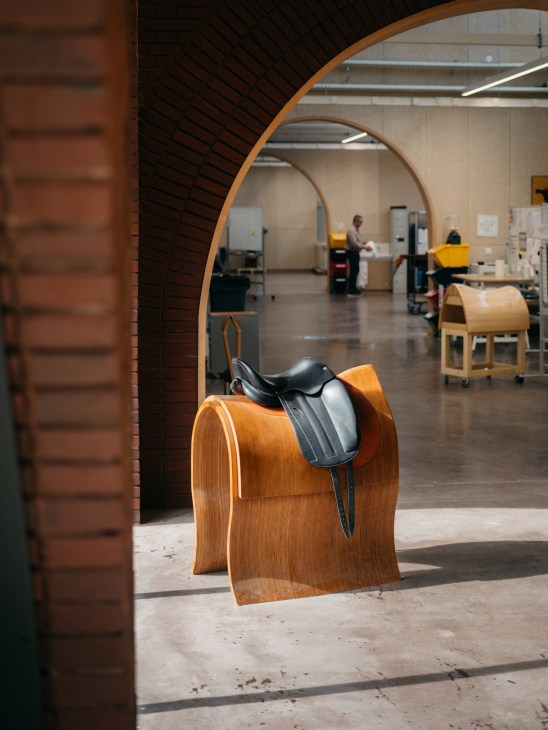
As part of this investment, the brand opened a new manufacturing hub called Maroquinerie de Louviers in 2023, which specialises in bags, saddles and bridles. The workshop in Louviers, a commune in Normandy, is the house’s second leather-goods centre in the region. “We generally organise our production facilities into groups of three sites,” says De Seynes. “It allows our craftspeople to move easily between locations and bring their savoir-faire along with them.” The company also operates a fragrance plant close by.
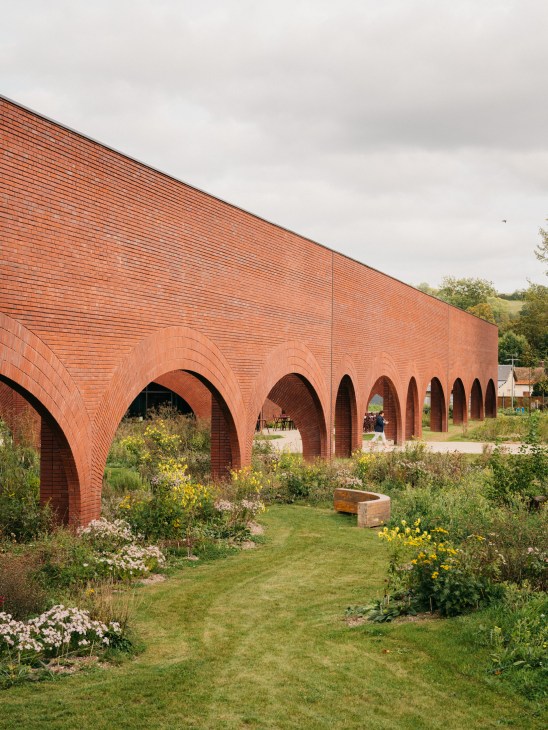
Often referred to as terre de cheval (land of the horses), Normandy’s history of horse breeding ties in with the company’s equestrian heritage – Thierry Hermès opened his first harness-making workshop in Paris in 1837. And it’s clear to see how the region got its nickname. As Monocle drives up to Louviers, about 100km northwest of Paris, horses graze freely in the open green landscape. On the edge of the town, you catch sight of the imposing, red-brick building that houses the new Hermès workshop, which is designed by Beirut-born architect Lina Ghotmeh. “My uncle Jean-Louis Dumas, former chairman of Hermès, used to speak about the art of creating beautiful objects in beautiful settings,” says De Seynes, explaining his decision to work with Ghotmeh on the project. Together, they designed a space that fosters creativity, focuses on employee wellbeing and respects the building’s original function.
“The site, the local resources and the bricks were my inspiration,” says Ghotmeh. The architect starts every project by considering the accessibility of local materials and the working environment, creating what she calls “archaeology of the future”. Her compact, square-shaped plan for the factory was made with the brand’s brightly printed silk squares in mind. She also used bricks in a palette ranging from red to violet, all of which were produced 70km from Louviers to support the region’s skilled artisans. “Building with bricks is about scaling the idea of architecture down,” she adds.
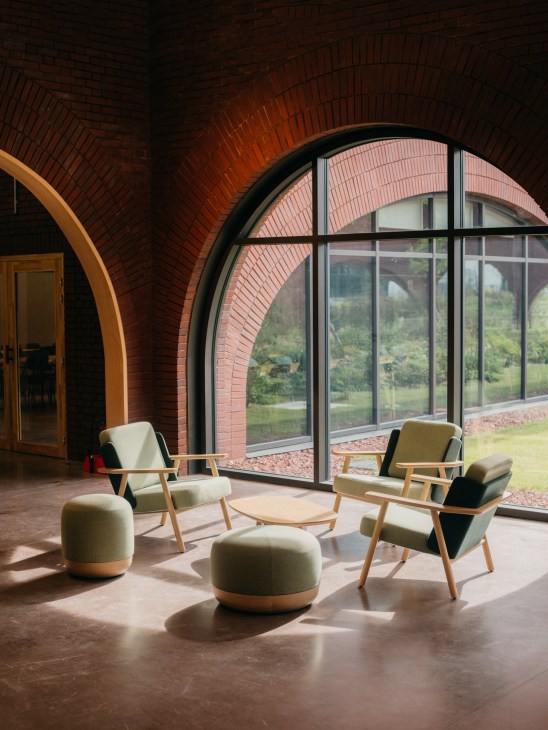
Upon arrival at the new facility, you step into a large entrance hall known as La Place du Village, where team gatherings usually take place to introduce new staff members or share the company’s latest financial results. The business reported double-digit growth and revenues of €3.36bn for the third quarter of 2023, defying the slowdown that has taken hold of the wider luxury sector.
The equestrian workshop, the first to be established by Hermès outside Paris, sits at the front of the building. Further in, there are administrative offices, while the back is reserved for bags and small leather goods. Every workshop has its own adjoining cutting room. “The production methods are different but they complement one another,” says a supervisor, as we walk past a wooden vitrine filled with bobbins.
Once the leather is cut, it is delivered to one of the craftspeople, who all have their own height-adjustable workstations and tools. Artisans assemble every item from start to finish based on the principle of un homme un sac, meaning one man per bag. Nearby, a canteen serves warm lunches subsidised by Hermès. On the day that Monocle visits, a chalkboard lists dishes such as lieu noir à la bordelaise (a type of fish) and crème brûlée.
The Louviers site has attracted workers from the surrounding area who began their careers by learning about leather at the brand’s training centre next door, the Louviers École Hermès des Savoire-Faire, which offers apprenticeships that last up to 18 months. Many retrain from other professions, with staff including former bakers, nurses and hairdressers. “It’s always good news when Hermès decides to invest,” says De Seynes, noting the company’s tight-knit relationship with the mayor of the nearby commune of Le Vaudreuil, Bernard Leroy.
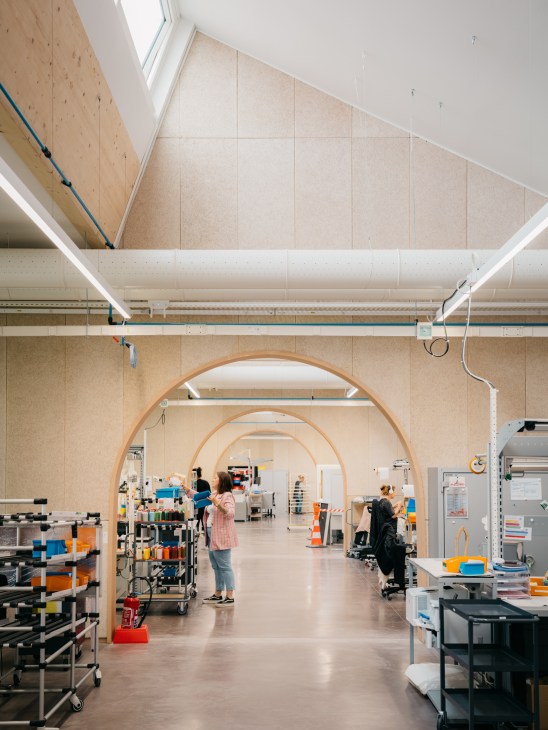
When it reaches full capacity, the Louviers site will employ 260 leather workers and saddlers, in addition to staff in management and logistics. Of the company’s 12,400 employees in France, more than half are artisans – a worthwhile investment in helping Hermès to retain its status as a luxury-market leader. “The only way that we can increase our output is to grow the number of artisans,” adds De Seynes. “This is still extremely manual work. It’s not only a matter of investing in equipment but also about hiring more people, training them and identifying the most talented ones – the ones who will become masters of their craft.”
Walking through the building, there is a sense of airiness thanks to its broad corridors, generous apertures and high ceilings. Daylight streams in through the arched side windows, illuminating the artisans’ workstations below. “It’s important for the rooms to have northern light because it is clear and pure,” says De Seynes. A leather worker in the bridle-making team echoes his thoughts. “There is so much natural light here,” he says. “It helps us ‘read’ the leathers and work precisely.”
The building is also unexpectedly quiet, aside from the soft thuds of hammers echoing in the distance – a reminder that every item is put together by hand and that there are no machines to speed up the process. In one workshop, a woman sews straps onto a Kelly bag made from Epsom leather, while her neighbour assembles the same bag in glossy-black Box-calf leather, the oldest version of the material used by Hermès, which is known for acquiring a patina over time. “This is my favourite type of leather to work with,” she says, with a smile. “It requires extra care.”
A bright space filled with smiling employees was part of Ghotmeh’s initial vision for the new Louviers facility. “Architecture has an immediate effect on wellbeing and behaviour,” she says. “I want this building to bring joy and warmth to the artisans, and for them to work in comfortable, naturally lit ateliers.”


Training the next generation of craftspeople and providing them with the right working conditions is quickly becoming a prerequisite for fashion houses. Hermès is setting an industry benchmark by investing in craft and sustainability. The Louviers workshop is powered by geothermal energy and more than 2,300 sq m of solar panels. It’s also surrounded by three hectares of gardens designed by Belgian landscape architect Erik Dhont, who ensured that most of the site’s original trees were retained.
Strolling around these idyllic gardens, where employees often gather during their afternoon breaks, offers a peek into what the future of manufacturing could be – one that isn’t purely machine-led but instead centred around human skills and artisan communities, working together in well-designed spaces. “We have been cultivating this know-how for centuries and still believe in it,” says De Seynes. “This means investing in good facilities, hiring staff and passing on our savoir-faire to the next generation.”
Domestic harmony
“Our work here is very diverse. In cities, you tend to be more specialised as an architect,” says Catherine Gay Menzel, leading the way upstairs to her home in the small town of Saint-Maurice, population 4,500. It is here, in the Swiss Canton of Valais, that she and her husband, Götz Menzel, established their architecture firm GayMenzel after working in New York, Basel and Hamburg. Since then they have become known for buildings, from public spaces to chalets, that draw inspiration from their surroundings with respect for the area’s traditional craftsmanship. “It’s always about context,” says Götz. “It is about revealing all these layers of context and then adding your own story to make something new.”
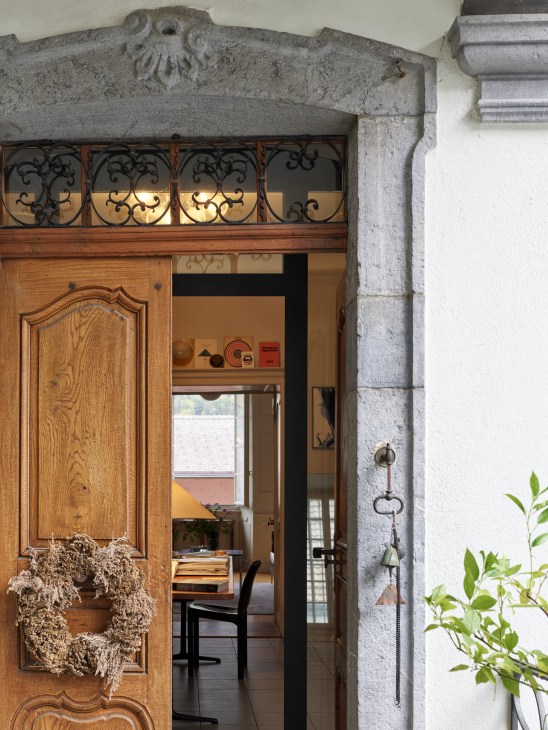
Today the couple are showing Monocle their own home: a spacious apartment on the upper floor of a grand 18th-century building, with a view of the Alps, where they live with their two teenage children. When they moved in more than a decade ago, the apartment, which they rent from the municipality, had recently been renovated by Catherine’s father, Roland Gay, an architect whose firm specialised in buildings using wood. “We were impressed by its quality and beauty,” says Catherine, who grew up in Valais before studying at eth Zürich. “We had been thinking about returning to Switzerland from the US,” she tells Monocle over tea on their sunny terrace in the building’s inner courtyard. “When we saw that the flat was available, we were able to imagine ourselves here.”
The apartment played a part in the Menzels’ decision to finally strike out in business on their own, adds Götz. “We had been wanting to open an architecture firm together,” he says. “It was a deliberate professional decision to come here.” Born in Hamburg, Götz studied architecture in Stuttgart and Lausanne and, like Catherine, practiced in New York. On returning to Switzerland, they both worked for Swiss architecture firm Herzog & de Meuron, then joined Catherine’s father’s firm in Monthey, near Saint-Maurice, as employees before founding their own firm in 2013.
“Our work is different but there is still some continuity. There is a care for quality, a liveability and domesticity, and an idea of comfort in terms of the space, light and scale – all of which makes you feel good. That is what is most interesting in architecture: making a place pleasant to live in,” says Catherine, reflecting on her father’s architectural legacy. Götz concurs. “Like Roland’s architecture, ours is never quaint,” he says. “It is highly liveable, while maintaining an architectural rigour.”
Similarly, their home has a warm, lived-in feel, with art, books and plants set against a backdrop of the apartment’s historical features. “It is an old architecture with many ledges and protrusions; it’s not sleek and minimalist,” says Götz. “Even 10cm is enough to deposit objects – or for objects to deposit themselves. There is this sedimentation,” he adds, pointing to the ledge above the door to the light-filled living room, which displays a group of items with circles and triangles on them. “Historically, this was known as a sopraporta, an artwork above a doorway. This is my personal sopraporta. The items might not have anything to do with one another at first sight but putting them together immediately creates new stories.”
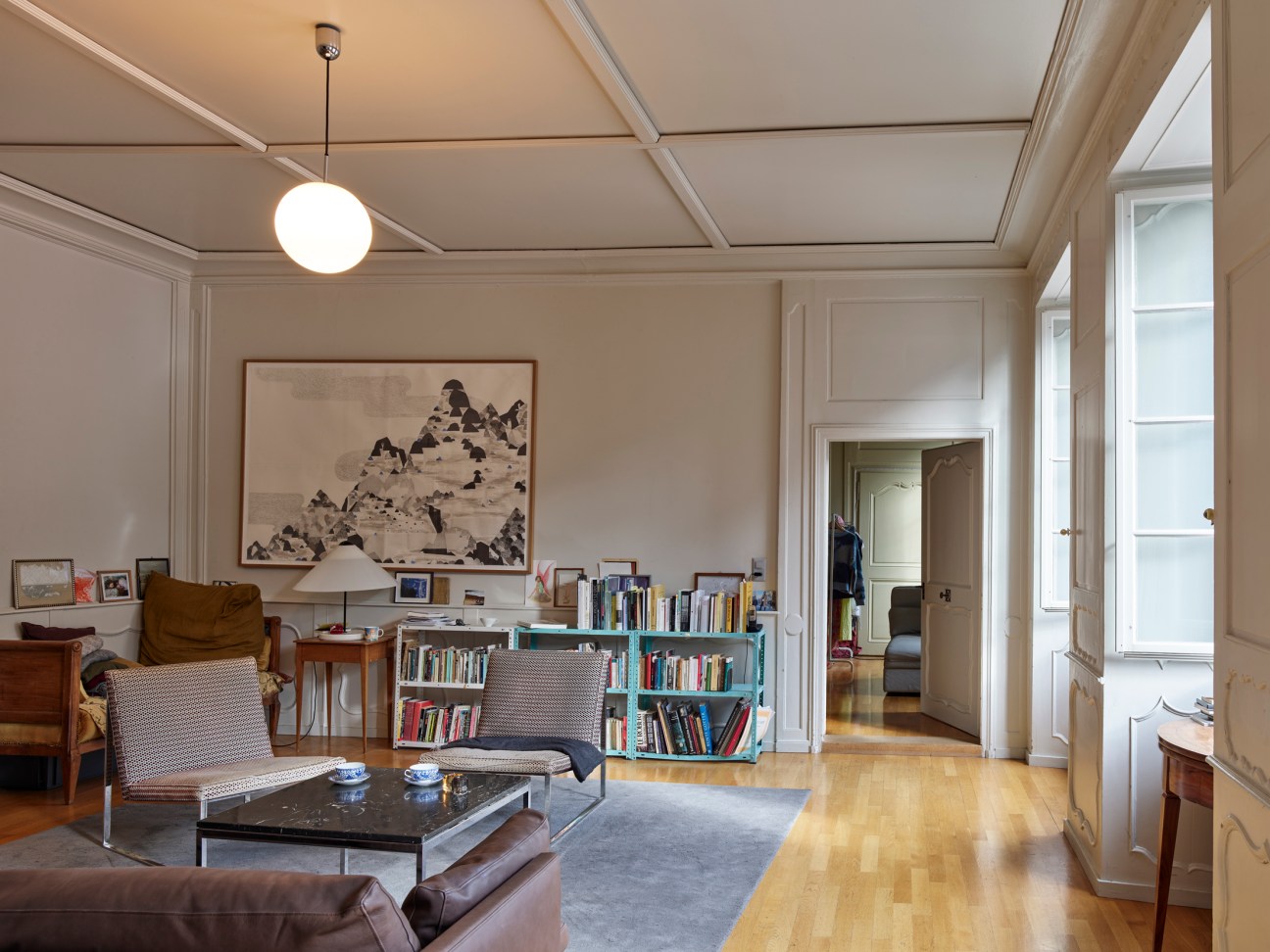


“It is about having objects with meaning, even if you move often,” adds Catherine. “My grandfather, who was a carpenter, put aside a tree for me, which we had made into this table. It was like a gift from him 10 years after his death.” She runs her hand along the smooth surface of the long table in the front room, where they host dinners with friends. In the living room, a pair of chairs that she drew and had made by a metalworker in North Carolina take pride of place. On one wall, a large painting by American artist Benjamin Deken entitled Mountain 2, a wedding gift, echoes the form of a nearby “Snow” table lamp from the 1970s by Vico Magistretti that they bought in Hamburg. The opposite wall features a large painting by Valais artist Gottfried Tritten, a friend of Catherine’s father. Before he passed away in 2015, he invited his friends’ children to each select one of his paintings. “It is a beautiful story about giving,” says Catherine. “It was almost a political gesture: he wanted young people to grow up with his art, which they would not otherwise have been able to afford. He gave it to us without expecting anything in return.

Working close to home
Catherine Gay Menzel and Götz Menzel use the design principles they apply to their home in other projects. Here are three of our favourites.
Grand Hôtel du Cervin
Val d’Anniviers, Switzerland
This neoclassical “grand hôtel” dates from 1893, when architect Elie Guinand dreamed up a hotel for tourists visiting the region to ski, hike and take in the fresh air. As of 2022, the building has been given a second lease of life as a youth hostel, with private rooms, shared rooms for up to six people, dormitories and a swimming pool – with views of the Matterhorn.
Grange aux Fontaines
Antagnes, Switzerland
This private Alpine residence was first built as a barn in the 18th century, a time period when making the most of available sources and a deep appreciation for woodcraft prevailed. In this spirit, Gay Menzel kept elements of the original wood façade that clads the two-storey building. Inside, design choices such as sweeping windows with views over the Rhône and concrete interiors are modern touches that infuse the space with 21st-century chalet chic.
Chalet de la Tour
Mayens-de-Sion, Switzerland
This atypical Swiss chalet from the turn of the century was the holiday home of Jean Travelletti, an engineer who played a hand in bringing railways to South America and Russia. With its dark-wood turret, the panelled exterior is more reminiscent of a Russian dacha than an Alpine chalet – an eclectic premise that inspired Gay Menzel to add Slavic touches to the interiors, including pastel-hued ceilings.
This interest in what they call objets trouvés (beautiful found objects) from a variety of life stages and eras permeates the couple’s work, including their recently completed renovation of the Grand Hôtel du Cervin, a nearby 19th-century hotel. “We do a lot of work on appropriation,” says Catherine. “It involves building up a connection to your environment – a room or building, but also a garden or city. You do not have to own it; it might even be a hotel room where you have stayed many times, which becomes your hotel. It is not about whether or not it is beautiful; it is about anchorage. Being there, being present and having feelings.”
“Creating a space is about generosity – not only financial but in terms of spirit – and being able to accept the diversity around you and live with it,” says Götz. “It is about balance. If you have a lot of stuff, you don’t need pink walls or the fluffiest carpet.” In their own kitchen, which came built-in and has a cool-grey floor, they opted to warm up the space by adding an antique bentwood bench and hanging up pictures in wooden frames. “Sometimes you just need to counteract cold spaces with warm materials.”
With its stately proportions and flowing layout, the home manages to strike a fine balance between togetherness and alone time. “I always use our outside space in the morning to have my first cigarette and a coffee,” says Götz, gesturing at the terrace. “We also use it for apéros when the sun is out. Behind the door in the living room, there is a sofa that everybody likes to use. It is in a dark, shady corner where you can retreat in the evening and hide away.”


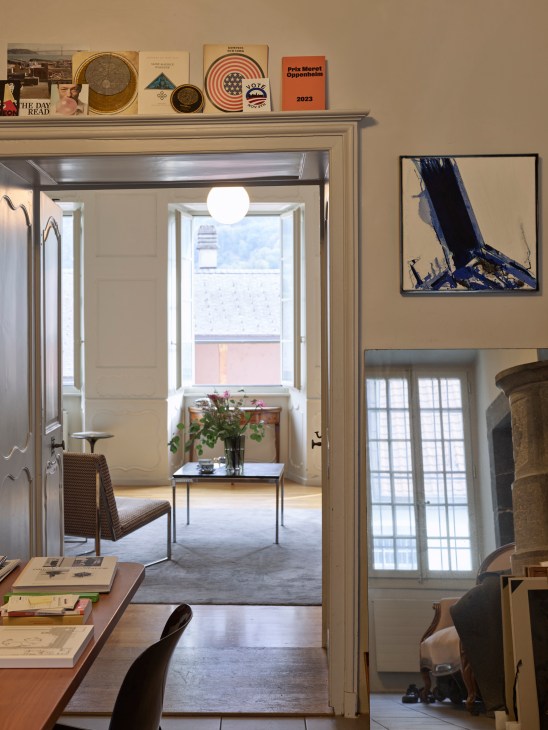
As Catherine points out, it all comes down to giving residents options. “In our projects, we aim to create a variety of nooks and corners, rather than one space where you spend the whole day,” she says.
It is clear that small-town living has been a boon not just for a relaxed quality of life but also for their careers. “In the beginning, it was a huge luxury not to be looking left and right at what others were doing but to be here and doing our own work,” says Götz, as we step outside onto the cobblestone street. “Being based here is very strategic,” says Catherine. “We are not in the city but we are very well connected to the Swiss architecture scene,” she adds, referring to her and Götz’s teaching at the Swiss Federal Institute of Technology in Lausanne, which is just a short train ride away. Other work in progress includes a residential project in Paris. “This time in Saint-Maurice has been like an incubation period,” says Catherine. “Now we can take the method that we have developed here and apply it in other places.”
House rules
As the days get shorter in the northern hemisphere, it’s only natural to look for ways to make our homes feel more comfortable and secure. Making some design-minded tweaks to lighting, replacing tired materials and adding new objects can ensure that our homes not only look great but also lift our spirits and improve our wellbeing too.
Knowing where to start, however, can be intimidating: budget and scale need to be considered and attention should be paid, in equal measure, to both details and the big picture. With this in mind, here are seven suggestions, ranging from small adjustments to wholesale changes, that will help to transform your space into a cosy sanctuary this winter.
1.
Reupholstered revival
Dedar, Italy

Keen to breathe new life into your living room? Rather than replacing furniture with something new, why not try reupholstering it with fabrics from Milan’s Dedar? The brand has an extensive range of cloths, including soft mohair, textured chenille and sleek satin. Dedar’s proximity to Como, which is known as the Silk City and is celebrated worldwide for its artisanal production of luxurious yarns, will ensure that your favourite furnishings are given the treatment they deserve.
dedar.com
2.
Sound decision
Hidden Sound, Switzerland

Whether you’re listening to an album or playing ambient tracks in the background, music is an essential ingredient in any cosy home. Yet sound systems can often be boxy and dominate a space. For a sleek solution, choose Hidden Sound. Its Bauhaus-inspired speakers are crafted by hand and are only 8mm thick. The system offers room-filling “360-degree sound dispersion”, so top-quality audio can be enjoyed throughout the home.
hiddensound.ch
3.
Hit the floor
Dinesen, Denmark
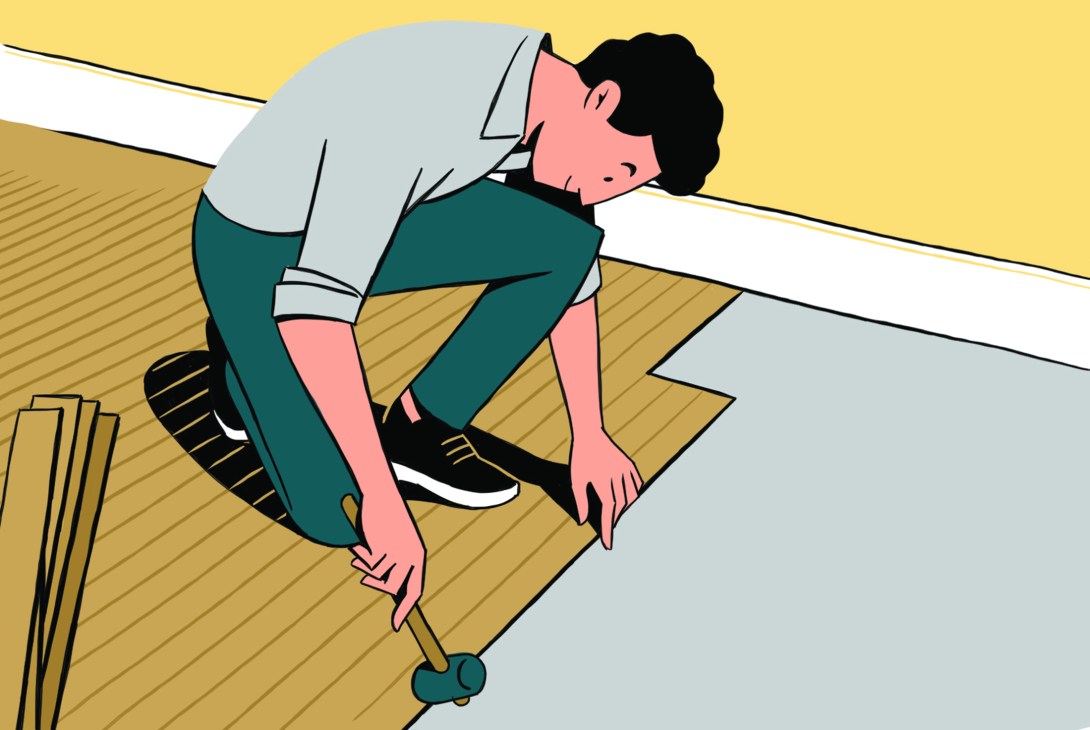
Laying a new floor can seem like a Herculean undertaking but it is worth the investment: the wood beneath your feet is, after all, the foundation of any interior. Opt for a time-tested, hard-wearing classic, such as Denmark’s Dinesen. The 125-year-old family company offers planks in ash, oak, pine and Douglas fir, all felled from responsibly managed forests. Across the board, Dinesen’s collections highlight the irregular and natural patterns of the timber.
dinesen.com
4.
Light it right
RBW, USA
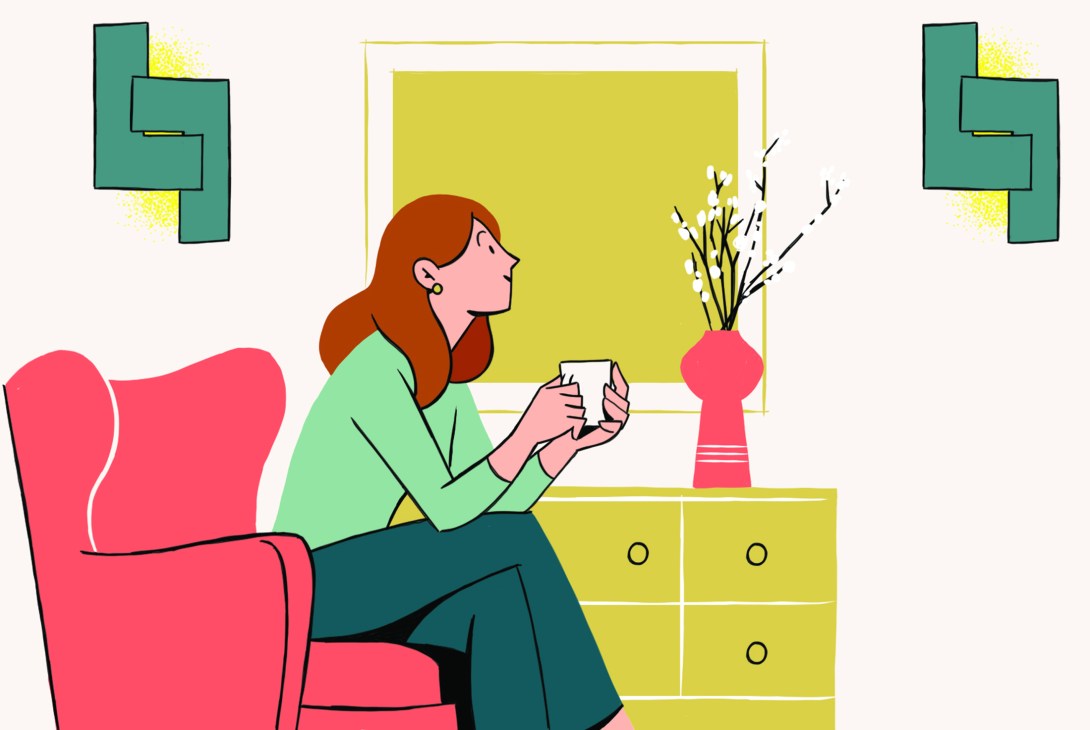
From its humble beginnings in a basement on Manhattan’s Lower East Side, award-winning lighting design and manufacturing studio rbw has gone from strength to strength by championing its own led technology, in a bid to replicate the look and feel of traditional lighting methods. The company is passionate about bringing warm, flattering and energy-efficient lighting to offices, restaurants, hotel rooms and homes. The results lift our spirits, helping us to feel both energised and relaxed.
rbw.com
5.
Give it a lick
Coat, UK

Reaching for a pot and brush is the oldest trick in the quick-fixes handbook: painting a white wall can transform the mood of both a room and its residents. The colour possibilities are infinite, and thanks to a new crop of forward-thinking firms, there are options with serious environmental credentials too. We’re reaching for the British brand Coat, which offers a colour chart that is water-based, solvent-free and low in potentially harmful chemicals.
coatpaints.com
6.
Flick the switch
Katy Paty, Czechia
As technology creeps into every part of our lives, many people are trying to make their homes “smart” (think lighting systems controlled by iPads). Monocle thinks that the smartest decision is to go back to basics. This handmade ceramic switch by Katy Paty, that’s ergonomic and easy to find in the dark, is one such illuminating solution. Designed and manufactured in the Bohemia region of Czechia, Roo switch has a retro feel, thanks to its rounded shape and glossy finish.
katypaty.com
7.
Corkage fee
Amorim, Portugal
Good insulation serves to reduce the travel of sound between rooms and lower energy bills – both essential elements for any happy household. For an environmentally friendly option that doesn’t compromise on efficacy, Monocle suggests tapping Portuguese company Amorim. It offers wall coverings made from cork, which has natural antibacterial properties, is easy to wipe down and is warm and soft to the touch. It will make yours a home for both clean living and green living too.
amorim.com
Persuasive manoeuvres
When it came to drawing up this year’s rankings and deciding who would take the top spot, Monocle’s editors were given pause for thought. It felt as though 2023 had not been a great year for any nation, especially those that were committed to “soft” ideals such as pluralism, diplomacy and peace. At times when these qualities are under threat, we are forced to reappraise them. As our inaugural security survey argues later on, protecting its citizens is a state’s primary purpose. While some take this to mean guns and bombs, here we choose to celebrate those subtler things that comprise security, such as respect, freedom and good living – all things essential to quality of life.

In a fracturing world, the exercise of effective soft power can seem vanishingly rare. But look beyond the harrowing images on the 24-hour television news and you might catch a glimpse of it in the background. As the situation in Israel and Gaza has deteriorated, Western and Middle Eastern leaders have begun a frenzied attempt to avoid a wider regional conflagration. At the time of writing, though the bloodshed in Gaza continues, this seems to be working – a testament to the efforts of diplomats such as the US secretary of state, Antony Blinken, who must have a really good portable iron for all the creaseless appearances that he has made since early October.
Diplomacy is very literally the antidote to war. And when you need to persuade someone, it helps your cause to do it in person. Emmanuel Macron is often criticised for his domestic policies but when it comes to getting out on the road and pressing the flesh with his foreign counterparts, there really isn’t any other head of state who does it so often. This, combined with his country’s enviable possession of those qualities mentioned above, as well as that inimitable savoir-faire, is why France takes the top spot for 2024. The survey is not an exact science; it involves much data but also lots of debate. It does not claim to be definitive either. We encourage you to challenge us on the results. After all, the ability to quarrel peacefully is an inalienable right of every French man and woman – and of you, dear reader, too.
1.
France
Despite its internal divisions, the world’s most-visited nation remains a cultural powerhouse.
France hasn’t had it easy in recent years. It has had to contend with the rise of the far-right and waves of social unrest, from the gilets jaunes protests to riots sparked by police violence. Nonetheless, it remains a soft-power titan. The enduring appeal of the French way of life has made it the world’s most-visited destination. Robust investment in the cultural and creative sectors has paid dividends and the country is leading by example in terms of the green transition, with the France 2030 investment plan under way. Paris’s decision to ban rental e-scooters in September is inspiring other cities to follow suit too.
That said, Emmanuel Macron, now in his second presidential term, knows that France can’t be complacent in a multipolar world where it often finds itself in the thick of fierce ideological battles. “We must rearm our diplomacy,” he told a gathering of French ambassadors in August, stressing the importance of the image that the country projects to the world. Macron is particularly concerned about anti-French sentiment in Africa, which Paris accuses Moscow of stoking.
Against such a background, the increasing role of France’s African and Arab diaspora in soft-power efforts makes sense. Franco-Senegalese creatives have been crucial in bringing Chanel runway shows to Dakar. France’s culture minister, Rima Abdul Malak, draws on her Lebanese roots. Footballer Kylian Mbappé, the captain of France’s national team, grew up in the Paris suburbs with a Cameroonian father and Algerian mother; much-hyped French nba star Victor Wembanyama has Congolese heritage. Macron has said that he wants the country’s inclusivity to be showcased at the 2024 Summer Olympics, following its successful hosting of the Rugby World Cup in the autumn. That’s not just a riposte to the far-right. It’s also good for French soft power.
In numbers:
Embassies abroad: 162
Unesco World Heritage sites: 84
2.
USA
As the pivotal 2024 presidential election nears, long-held American ideals are being tested.
Soft power comes in many forms. For the US, it has always been wrapped up in its ideals. At its best, the country practises what it preaches: it supports democracies, free speech and effective governance abroad, while projecting such values through the actions of its politicians and people at home. This worked well in 2022 as the US backed foreign democracies such as Ukraine, while working to fix its own electoral system and heal some internal divisions. In the past year, however, those ideals have once again begun to slip, which is why the US has dropped slightly in our survey.
The dysfunction in its House of Representatives in 2023 is symptomatic of a looming paralysis of government, while arguments over free speech have taken ugly turns within society. In diplomatic circles, waning American support for Ukraine and protests in the Arab world over Washington’s steadfast backing of Israel have undermined the country’s leadership. But while the US struggles to serve as a political role model these days, the record-shattering phenomenon that was “Barbenheimer” (the films Barbie and Oppenheimer, released on the same day) and Taylor Swift’s global tour were reminders of the country’s ability to shape the cultural conversation.
The year ahead marks a turning point. Whoever wins the 2024 presidential election, the result will be closely watched for signs of what the US represents and where it is heading: whether it will take an isolationist turn or continue to project outward; whether its government can even remain open for business amid a polarising vote and multiple trials. Few nations’ soft power is as tied to the question of whether they can lead by example as that of the US. For the Land of Opportunity, 2024 will be a chance to answer those concerns – or it could prove to be the year when it is broken by them.
In numbers:
Institutions in QS World University Rankings top 100: 27
Olympic medals at the last Summer Games: 113
3.
Switzerland
After a rocky start, Europe’s masters of mediation are reclaiming their rep for sensible diplomacy.
Switzerland has faced plenty of challenges over the past year, as well as opportunities to demonstrate its trademark stoicism. For a nation that prides itself on its stability and banking prowess, the collapse of Credit Suisse in March caused blushes before the bank’s state-orchestrated takeover by ubs. A miscount of votes in October’s federal elections further dented the country’s reputation for meticulousness. The final results showed a swing to the far-right.
Beyond its borders, there were questions around Switzerland’s neutrality after it mirrored EU sanctions against Russia. But as the Israel-Hamas conflict developed, it climbed back on the fence – though it voted in favour of a ceasefire at the UN General Assembly in October. Switzerland also contributed to getting humanitarian aid into Syria after an earthquake last February. In 2024 it will be in its second and final year as a non-permanent member of the UN Security Council, where it will be asked to arbitrate between permanent members China, France, Russia, the UK and the US.
On a lighter note, could tennis player Dominic Stricker be a replacement for soft-power behemoth Roger Federer? His win at the US Open against Greece’s Stefanos Tsitsipas catapulted him to the top of the list for sporting-treasure status. Swiss service also deserves a mention. The country exports some of the world’s best GMs and service staff as alumni of hospitality schools such as the ehl Hospitality College in Lausanne. There’s a culture of paying people fairly for work that’s sniffed at in other countries and offering incentives to build rewarding retail and hospitality businesses too. Wherever your favourite waiter or concierge hails from, there’s a fair chance that their manners were polished in Switzerland.
In numbers:
Nobel laureates: 25
Visa-free travel: 188 countries

Happy to help
Josh Fehnert on why having a reputation for good service is a future-proof way to win hearts and minds around the world.
It’s hard to pinpoint exactly when “service” became a dirty word in otherwise civilised societies: work for low-paid, low-skilled and low-status people. Was it when supermarkets began to replace human staff with glitchy self-checkout machines? Or when people started to feel embarrassed about working in a shop or restaurant? Whatever caused this shift in attitude, it’s undeniable that levels of service in some parts of the world vastly exceed those in others – and it’s time that we talked about it.
Good service helps to sell both your citizens’ and your national brand abroad. While the Swiss trade on silver service, plump pillows and precision table-laying through its famed hospitality schools (and decent, dignified wages for service workers), there are other nations whose skills should be commended too. In parts of Italy, Portugal and Greece, a career as a characterful and unflappable waiter is considered something to be proud of rather than a stopgap for eye-contact-averse students.
Thailand belongs at the top table of nations that know that a deftly deployed smile can unlock success in retail and hospitality. Meanwhile, a little time spent in Japan will teach you the difference between the crisp sincerity of someone who is happy to help and, say, the kind of subservience that can pass for five-star service in parts of the Gulf. Service shouldn’t be servile. Done well – with training, opportunities and fair remuneration – it bestows upon those who are good at it the capacity to read a room. It also teaches us to put our egos aside and consider others, a skill that is as useful for a ceo as it is for a sales assistant.
Many people believed that AI would quickly make redundant so-called unskilled service jobs but it turns out that screenwriters, financial analysts and even artists might be first in the firing line. As nations look to invest in future-proofing employment and to buoy their image abroad, hospitality could be an answer. The human touch, empathy and the ability to entertain (and maybe speak a few languages, make a bed and pour wine too) will still matter when that self-checkout machine is on the scrapheap.
4.
Japan
A diplomatic titan with huge cultural appeal.
Japan has had a good year in diplomacy. At the G7 summit in Hiroshima in May, prime minister Fumio Kishida expanded the core group to reflect the changing world, inviting leaders from the Global South as well as Australia, South Korea and India. Even Ukraine’s Volodymyr Zelensky put in an appearance. In 2023, Kishida travelled to the US, Europe, Africa, Southeast Asia and the Middle East, signing trade and security deals, and countering China’s (and Russia’s) bid to woo developing countries.
Toyota, buoyed by record sales, showed its new EV concepts at the Japan Mobility Show. Japanese films such as Slam Dunk and Suzume transcended the region’s fractious political relations and became hits across Asia. Tourists flocked to Japan in such numbers in 2023 that one of the buzzwords of the year was obatsurizumu (“overtourism”). In often confrontational times, Japan’s gentle hospitality provides welcome relief.
In numbers:
Embassies abroad: 156
Michelin stars: 414
5.
Spain
A rising force in both sport and culture.
The spectacle of that kiss and a string of own goals from Luis Rubiales, the now-deposed president of the Royal Spanish Football Federation, robbed the Women’s World Cup team of a victory lap. With the dust now settled, the episode can be seen in a more edifying light. The players’ skill on the field and their decorum off it has turned them into soft-power superstars, with midfielder Aitana Bonmatí awarded this year’s Ballon d’Or.
In politics, the embattled prime minister, Pedro Sánchez, has staked the reputation of his minority government on being a global voice of moderation. He visited China in March amid simmering East-West tensions and urged Israel to curtail its assault on Gaza in October.
Luxury fashion house Loewe continues its ascent, while the Celebrating Picasso exhibition, a collaboration between Spain and France to mark 50 years since the artist’s death, has been a blockbuster around the world. Then there’s Esa Ambición Desmedida, a new documentary on a bank-breaking global tour by madrileño musician C Tangana. The film reveals an artist who places his passion and integrity before profit. This story speaks to the country’s character: ardent, authentic and ready to stand up for its values.
In numbers:
Visa-free travel: 190 countries
Unesco World Heritage sites: 81
6.
South Korea
A creative hub with the world’s attention.
Interest in Asia’s fourth-largest economy remains strong, mostly on account of its cultural exports. South Korean Netflix show The Glory, a school-set revenge drama, inspired anti-bullying campaigns in Southeast Asia. Demand for Korean-language courses is sky high and you can find a bowl of bibimbap in any major city around the world. South Korean sportspeople have been earning their stripes, most notably Son Heung-min, the new captain of the UK’s Tottenham Hotspur football club. Meanwhile, president Yoon Suk Yeol wowed Washington when he crooned Don McLean’s “American Pie” on a state visit in April.
The spotlight has revealed South Korea’s problems too. Its parliament still hasn’t passed relevant safety regulations more than a year after the Halloween crowd crush killed 159 people in Seoul. The nation’s fertility rate remains the world’s lowest. Meanwhile, Yoon is working to make the country the world’s fourth-largest weapons exporter. South Korea has long maintained peace and proven that economic prosperity and democratic rule can be achieved from nought. But as its weaponry heads abroad, it will find it harder to maintain its neutrality elsewhere.
In numbers:
Institutions in QS World University Rankings top 100: 5
Aid to developing countries: €2.6bn
7.
UK
Enriched by tradition and innovation.
With the death of Queen Elizabeth II last year, the UK arguably lost its most potent soft-power icon. Her funeral, watched around the world, was a reminder of British ceremonial solemnity. The coronation of Charles iii in May was another opportunity to marvel (and occasionally scoff) at the eccentricities of the country’s constitution. It would be unrealistic to expect Charles to completely fill his mother’s shoes but the first year of his reign has shown that, when he keeps his mouth shut – or simply speaks in French, as he did during a lavish state visit to France in September – he can engender goodwill.
A steadying of the ship was also required from the UK’s prime minister, Rishi Sunak, who has brought (relative) calm to the country’s politics after the madness of Liz Truss and years of Brexit brain freeze. His hosting of an AI summit in November at Bletchley Park, the birthplace of modern computing, was an admirable effort to position the UK at the forefront of another nascent technology. Outside of politics, the England women’s football team got to the final of the World Cup in August. Though they lost, they won plenty of fans and favour along the way.
In numbers:
Artists in Spotify’s global top 50 in 2023: 6
Nobel laureates: 137

Political football
Mary Fitzgerald on why Gulf states are pouring money into the world’s most popular sport.
When it comes to soft power in the Gulf, there are few other tools that the region’s monarchies have embraced more enthusiastically than football. Not only have Gulf Co-operation Council members sought to invest in some of the world’s leading clubs, including Paris Saint-Germain (psg), Manchester City, FC Barcelona and Bayern Munich, they have also raced to host major events such as the World Cup. Football’s biggest tournament took place in Qatar in 2022 and Saudi Arabia has been confirmed as the host of the 2034 edition.
It’s easy to see why football is considered a particularly useful instrument of soft power: the world’s most popular sport is followed by billions of fans across all continents. Investing in major clubs guarantees not just considerable revenue but also unrivalled global visibility. Qatar Airways partners with several clubs (most famously psg in France), Emirates has joined up with Arsenal, AC Milan and Real Madrid, and Etihad has a long-running deal with Manchester City. As a result of these sponsorships, the airlines’ names are splashed across team kits and merchandise. Most of the world’s top-10 football clubs benefit from Gulf money in sponsorship or investment. But as Qatar’s experience with the World Cup showed, the beautiful game can also bring bad publicity. In the run-up to 2022’s tournament, media attention focused on the country’s abysmal labour conditions and poor lgbt+ rights.
The term “sportswashing” refers to how states with dubious human-rights records seek to improve their reputation by investing in sport. These criticisms lost some traction as Argentina’s victory in Qatar – plus Morocco’s success as the first African team to reach the World Cup semi-finals – grabbed headlines.
For Doha, the image of a triumphant Lionel Messi lifting the trophy while wearing the traditional bisht robe was a major win for Brand Qatar. As it prepares for 2034, Saudi Arabia, which has also faced criticism from international human-rights organisations, will no doubt see what lessons can be learned from Qatar’s experience.
Fitzgerald is Monocle’s North Africa correspondent.
8.
Denmark
Despite a clumsy response to domestic extremism, the Danes retain plenty of international clout.
The Danes are doing their best to save the world from itself but a slight slip in its ranking this year is perhaps an indication of the nation’s equally reliable ability to self-sabotage. In the plus column, Danish pharma giant Novo Nordisk, not content with making life tolerable for the world’s half a billion diabetics, is now tackling a far more widespread problem, obesity, with the global drug du jour, Wegovy. Sales have catapulted Novo to become the most valuable company in Europe by market capitalisation, while the Novo Nordisk charitable fund is now the largest in the world. Some fear that Denmark risks a Nokia/Finland scenario, with the country’s economy single-handedly rescued from recession by the company, whose value now exceeds Denmark’s gdp.
On the international stage, Copenhagen’s support for Ukraine continues. The prime minister, Mette Frederiksen, has visited Kyiv three times now, and Volodymyr Zelensky was in Denmark recently to accept a donation of 19 f-16 fighter jets. On the softer front, Jonas Vingegaard won his second Tour de France, cementing Denmark as a great cycling nation. And look out for the latest Mads Mikkelsen historical epic, The Promised Land (Bastarden), as a potential Oscar winner next year.
Yet the country’s conflicted relationship with Islam continues to clash with its uncompromising approach to free speech. The burning of the Qur’an by Danish extremists in front of Arabic embassies in Copenhagen has sent lawmakers into a twist. Foreign minister Lars Løkke Rasmussen’s pragmatic approach to the country’s economic interests in the Middle East (Danes sell a lot of dairy produce there) has meant that protests from Muslim governments have resulted in a more proactive legislative response. But clumsy wording of the new law means that protesters risk being caught in the legal net.
In numbers:
Companies in top-100 based on market capitalisation: 1
Pledged carbon neutrality by: 2050
9.
Norway
An EV pioneer and determined peacemaker.
Conflict resolution has remained a central feature of Norway’s foreign policy efforts this year. The Nordic nation has balanced its arms support for Ukraine with involvement in peace negotiations in Venezuela and Ethiopia. But the country’s soft-power muscle is perhaps even more visible in the way it has pushed its green credentials. EVs now make up nearly 90 per cent of all new cars and, crucially, the charging infrastructure is keeping up. However, many would like to see the country also committing to an end date for the exploration of North Sea oil and gas, still the mainstay of the Norwegian economy. In sport, Norway is used to reigning supreme on the snow. But this year has also been a boon for other sporting talent. Runners Karsten Warholm and Jakob Ingebrigtsen, and footballer Erling Haaland, have inspired fans around the globe. All in their twenties, this Norwegian trio are set to offer more inspiring performances in the years to come.
In numbers:
Aid to developing countries: €4.9bn
Nobel laureates: 14
10.
Italy
Still luring visitors for a taste of the good life.
This past summer saw a record number of tourists flock to Italy for a dose of sun, sea and sand. Aside from the inevitable questions about how to manage such a tide of travellers, the deluge was proof that Italy’s soft-power assets show no signs of being diminished. The country remains a coveted destination for people wanting a slice of the good life: prosciutto and focaccia, washed down with a glass of franciacorta, are the perfect anecdote to global economic shakiness and numerous geopolitical flashpoints. Italy, of course, has a centuries-old cultural history to dip into and last year’s additions to Unesco’s intangible cultural heritage list – Lipizzan horse breeding and Tocatì traditional games – go some way to showcasing the diversity contained within its borders. In short, Italy’s soft-power position remains solid: it continues to excel in areas such as gastronomy, architecture, fashion, design and even music. Alongside events such as Salone del Mobile and the Venice Film Festival, there’s also the forthcoming 2026 Milano-Cortina Winter Olympics. However, there are still areas for improvement, especially when it comes to openness and inclusiveness.
In numbers:
Michelin stars: 380
Olympic medals at the last Summer Games: 40
11.
Finland
It’s the ‘world’s happiest country’ for good reason, but new far-right leaders might darken horizons.
Finland continues to rise in Monocle’s soft-power rankings this year. The country joined Nato in April and while membership of the Western military alliance is very much a matter of hard power, it has given Finland a noticeable boost in self-esteem that has spilled over into the softer arena. This change in geopolitical status attracted a record number of international journalists to Finland and gave the Nordic nation a chance to flaunt its prowess in areas such as equality, sustainability and education. Finland was selected the happiest country in the world for the sixth year running by the UN and, though the metrics for the accolade are highly subjective, it is generally accepted that the country is an eminently good place to live.
Of Finland’s three soft-power icons, two are imaginary characters. Santa Claus and his fairy-tale home in Finnish Lapland attracted a record number of tourists last year, while Tove Jansson’s beloved Moomin characters remain one of Finland’s biggest soft-power exports.
Despite stepping down last summer, former prime minister Sanna Marin is also still an asset. According to the Finnish foreign ministry, she was mentioned almost 200,000 times in the international press in 2023, with a large part of that publicity being positive. However, with the far-right Finns Party now in power – and with the government expected to introduce a slew of new policies that make immigration into Finland more difficult – that positive international trajectory might reverse.
Finland also saw improvements in what has often been its Achilles heel: cultural exports. Its restaurants have more Michelin stars than ever before, and new design brands such as pine furniture-maker Vaarnii have caused considerable buzz abroad. Then there’s Käärijä, Finland’s Eurovision Song Contest entrant, whose “Cha Cha Cha” won the highest number of popular votes in the competition and was the first Finnish-language song to top the charts in many European countries.
In numbers:
Pledged carbon neutrality by: 2035
Visa-free travel: 190 countries
12.
Germany
Europe’s biggest economy is discovering the power of a bold, new values-based diplomacy.
If 2022 was the year when Germany’s new government charted a foreign-policy course that was fit for a world post-Ukraine invasion, 2023 was the year to show its progress. But the results have been mixed, as reflected in the country’s fall in our rankings. The term “sick man of Europe” has once again crept into the vocabulary of German-economy watchers, while a three-way coalition experiment has been wracked with infighting as the far-right opposition party Alternative für Deutschland rises in popularity. Abroad, chancellor Olaf Scholz is still struggling to exert the sort of diplomatic leadership that made Angela Merkel a soft-power icon.
As is often the case with Germany, the fundamentals are stronger than the perception. The country is on course to surpass Japan as the world’s third-largest economy in 2023 and remains the second-largest contributor of foreign aid to Ukraine. Its pragmatic approach to immigration – toughening deportation rules while improving access to work for legal immigrants – could be a good model to address chronic labour shortages. And its cultural exports, from beer gardens to classical music and book fairs, remain important. Germany boasted a record number of Michelin-starred restaurants in 2023, behind only France, Japan and Italy.
On the global stage where Scholz has struggled, others have stepped up. Germany’s defence minister, Boris Pistorius, has quietly become the country’s most popular politician. Its foreign minister, Annalena Baerbock, is charting a new diplomatic course that focuses less on economic priorities and more on straight talk and values; her approach is earning recognition in foreign capitals. Germany has a postwar history of preferring to operate out of the limelight, putting things into action but rarely taking centre stage. These days its allies expect a more public form of leadership, particularly in the EU, where nerves are fraying over Ukraine and populism is rising. Projecting stability remains Germany’s core soft-power value to other nations but with economic and political challenges growing in 2024, Berlin will likely have to focus its energy on internal renewal before it can regain its global stature. The world will be watching to see what kind of Germany emerges from the other side.
In numbers:
Embassies abroad: 151
Nobel laureates: 115
13.
Brazil
With the toxic Bolsonaro years now behind it, Brazil has been on a new, more hopeful trajectory.
What do Spanish pop stars and socialites in Los Angeles have in common? Their new-found love of Brazilian-inspired clothing, it seems. Over the past year, so many people have donned the colours yellow and green on runways and on the streets of major cities that fashion pundits have come up with a name for the phenomenon: “Brazilcore”. More than just a fashion story, the trend represents a significant change in the country’s image abroad. Since Luiz Inácio Lula da Silva defeated far-right president Jair Bolsonaro in the 2022 elections, his new administration has given plenty of attention to improving the country’s record on human rights and climate change (deforestation in the Amazon reportedly fell by 34 per cent in the first six months of his tenure). These changes have put the country back on the map and done wonders for its soft power. “Brazil is back,” the president announced during his state visit to China in April.
The phrase, which Lula repeated at September’s UN General Assembly in New York, has become something of a mantra for the president as he pitches himself as a different kind of leader for the Global South. A string of official visits to places such as Belgium, Cape Verde, South Africa, Spain and Paraguay – as well as a push for greater South American integration closer to home – have also been part of this strategy.
While Lula’s charm offensive has largely been effective, there have also been a few major hiccups. The president’s stance on the war in Ukraine, for example, landed him in hot water: he condemned Western interference and suggested that Russia and Ukraine were equally to blame. In response, the Biden administration accused Brasília of parroting Russian and Chinese propaganda.
Lula’s commitment to neutrality seems to come from good intentions. The president believes that it makes him well placed to broker a peace agreement between Ukraine and Russia. But it could also cost him friendships and alliances. The leader and Brazil as a whole could find themselves losing a seat at the table at the precise moment when other countries are most willing to give it to them.
In numbers:
Unesco World Heritage sites: 23
Michelin stars: 13
Good: Luiz Inácio Lula da Silva’s commitment to indigenous rights and the environment is a far cry from his predecessor’s anti-democratic values.
Bad: The president’s naive Ukraine policy has put a slight dampener on his country’s resurgent soft power.
14.
Portugal
Safe, open and forward-thinking, this Iberian nation is confidently boosting its global presence.
Despite ending the year with a political crisis, 2023 has been good for Portugal’s international standing. The sunny Iberian nation has continued its charm offensive to attract new residents and businesses. Portugal reported a record number of nearly 700,000 foreign-born residents, amounting to 6.8 per cent of the country’s total population. It remains an extremely safe nation, ranked seventh in the 2023 Global Peace Index. The country recently restructured its Golden Visa programme; a visa is now granted to those who invest at least €250,000 in cultural activities or €500,000 in local businesses. This shift in focus from property to investment mitigates the distorting effects on the domestic housing market and has been welcomed by newcomers and nationals alike.
Portuguese cities continued to play host to international gatherings of all kinds, from the Web Summit in November to World Youth Day, which brought as many as 1.5 million people to the country over the course of a week in August. The flexing of its hospitality muscle has paid off. Portugal has won the bid to co-host the Fifa World Cup in 2030 alongside Spain and Morocco. Yet some deeper problems remain. The nation is contending with a cost-of-living crisis and strained education, health and housing sectors. There is confusion over the future of Lisbon’s new airport; meanwhile, the government plans to reprivatise flag carrier Tap rather than capitalise on its soft-power status and envied connections on both sides of the Atlantic.
Years of political stability came to an abrupt end with the resignation of prime minister António Costa in November after police announced that he was being investigated under a corruption probe. Whoever comes next should continue to promote what Portugal does best while addressing some of its structural issues.
In numbers:
Visa-free travel: 188 countries
Aid to developing countries: €471m
15.
Australia
With the Albanese administration now bedded in, now is the time for it to recover lost ground.
Whether as a result of its size or its remoteness, Australia tends to overestimate what the world thinks of it. In October the defeat in a referendum of a proposal to establish an Indigenous voice to Australia’s parliament prompted considerable hand-wringing – at least, among “Yes” voters – about the potential damage to Australia’s global image. Though that might have been hyperbolic, it is fair to say that anyone abroad who did pay attention to the affair was not treated to an advertisement for the country. The campaign was squalid and the result easily perceived as petty. That Australia, a rich, secure and functional country, still can’t include its Indigenous peoples in its bounty is an enduring blot on its reputation.
Nevertheless, prime minister Anthony Albanese’s newish government, capably supported by his foreign minister, Penny Wong, has continued to recover diplomatic ground lost during the sullen, insular rule of Scott Morrison, for whom the strict lockdown prompted by coronavirus seemed not so much a public-health measure as the logical endpoint of his world view. As always, however, Australia demonstrated itself to the rest of the planet most confidently through the medium of sport, if with a somewhat mixed record in 2023. Its men’s test cricket team maintained the upper hand in one of Earth’s oldest continuous international sporting rivalries, retaining the Ashes in a gripping contest with England – though that feat rarely wins Australia further friends, especially in the UK. In the Rugby World Cup, the national team was less impressive. But in co-hosting the 2023 Fifa Women’s World Cup with New Zealand, Australia was seen at its best: generous, enthusiastic, gregarious and inclusive, as the country went gloriously nuts for a sport that is not normally a national priority and brought the planet along for a fabulous ride.
In numbers:
Olympic medals at the last Summer Games: 46
Top-100 companies by market capitalisation: 1

Breaking the barriers
Naveena Kottoor assesses William Ruto’s dream of a Kenya that welcomes all Africans.
If there’s one thing that Kenya’s president, William Ruto, has perfected since assuming office in 2022, it’s the art of public diplomacy. While traditional diplomatic heavyweights such as South Africa, Nigeria and Ethiopia have been preoccupied with domestic problems, Kenya has been projecting an image of being the champion of the continent’s great causes. From organising a summit on climate change in Nairobi in September to announcing a surprise public holiday on 13 November dedicated to tree planting, it has made headlines both at home and abroad.
Ruto’s latest idea was announced during a state visit to the Democratic Republic of the Congo in October. From 2024, Kenya plans to allow visa-free access to all African citizens. “I want to promise you that this might be the last time you are looking for a visa to come to Kenya,” Ruto said in Brazzaville. “We must remove any impediments to the movement of people around our continent.”
The dream of a visa-free Africa is not new. It is a key aspiration of the African Union’s Agenda 2063. While ageing Europe is increasingly being accused of being a fortress, in Africa, the continent with a younger population than any other, aspirations for free movement are very much alive. The Seychelles, Benin and the Gambia have already scrapped visa requirements for Africans. Soon Rwanda is planning to join them. But Ruto’s commitment is significant: with a gdp of about €106bn, Kenya is by far the largest economy in East and Central Africa, and the biggest economic player on the continent to remove travel barriers for its citizens.
By opening its borders, Ruto is not just wielding Kenya’s growing soft power. His hope is that the removal of visa barriers will accelerate the creation of a continental free-trade area in Africa. But at home the announcement wasn’t greeted with universal enthusiasm. Faced with high taxes, a currency crisis and rising inflation, some Kenyans fear that opening the borders could lead to wages being undercut. While the dream of African free movement might still be alive in Kenya, concerns about its effects echo those in Europe.
Kottoor is a Nairobi-based freelance journalist.
16.
Sweden
Home to global brands and chart-topping hits.
Sweden gave up its long-held reputation for neutrality when it applied for Nato membership. Meanwhile, its outward image as a progressive Nordic nation has been dented by gang-related gun crime, which has tested traditional Swedish values such as inclusiveness and tolerance. The ruling centre-right coalition has been left looking weak after winning power on a promise to end the violence.
However, Sweden’s EU presidency in the first half of 2023 was widely viewed as a success. Among the achievements was the historic Fit for 55 package, a climate law that makes reducing the bloc’s emissions by at least 55 per cent by 2030 a legal obligation. The Scandinavian nation already sources 60 per cent of its energy from renewables and aims to be free from fossil fuels by 2045.
The country’s top-50 brands collectively grew by 12 per cent in 2023. Ikea, Volvo, Spotify and h&m remain important to the nation’s success at home and abroad. Sweden’s status as a musical powerhouse was confirmed by hits for global megastars such as Taylor Swift and Ed Sheeran by the country’s producers and songwriters. A record seventh win at the 2023 Eurovision Song Contest also hit a soft-power bullseye.
In numbers:
Nobel laureates: 27
Visa-free travel: 187 countries
17.
Mexico
Buoyant tourism and a vibrant cultural scene.
In October, Mexico’s president, Andrés Manuel López Obrador, locally known as Amlo, visited Acapulco after a hurricane. His PR opportunity was disrupted when his Jeep became stuck in mud – an apt metaphor for his ineffectiveness as a statesman. Amlo’s six-year term ends in 2024. His lasting legacy might be the unprecedented use of the military for tasks ranging from managing ports to building bank branches. Violent crime has reached an all-time high and Amlo has largely failed to co-ordinate the “nearshoring” boom of potential investment in hi-tech manufacturing as companies around the world look to the Americas for alternative supply-chain options.
Mexico’s soft power continues to rely on the country’s chefs, musicians, filmmakers and others. Its culture continues to be a draw for tourists; Mexico tallied an impressive 14.8 million tourists during the first eight months of 2023. The Migrant Chef, Laura Tillman’s recent book about restaurateur Lalo Garcia, highlights the power of Mexico’s culinary offering. As Amlo struggles to make productive contributions on the global stage, the country’s cultural luminaries have filled the void of promoting the nation’s image.
In numbers:
Michelin stars: 17
Embassies abroad: 92
18.
New Zealand
Long considered as a ‘moral superpower’, New Zealand is a quietly persuasive force.
Prior to Jacinda Ardern, no prime minister of New Zealand had been an internationally recognised figure. Her immediate successor, Chris Hipkins, barely had time to become a household name in his own country before losing an election to Christopher Luxon in October. The new incumbent is unlikely to follow Ardern onto the cover of Vogue, though that is far from a measure of competent governance. It is certainly the case that, by the end of her tenure, Ardern was more popular abroad than at home. She was nevertheless a considerable soft-power asset. The acts that follow her onto the global stage will struggle to attract nearly as much spotlight.
Though New Zealand has a great deal to fall back on, it is difficult to estimate its soft-power footprint. People correctly think well of the country when they think of it – but that isn’t usually very often. Tourism numbers are still 16 per cent down on the last pre-pandemic year, probably a consequence of recent hikes in airfares. In October, New Zealand launched a new advertising campaign starring filmmaker Taika Waititi, showcasing the country’s glorious landscapes and its bone-dry sense of humour, which are two of the best reasons for visiting.
New Zealand is a quietly determined pioneer of environmental initiatives. In 2023 it became the first country to ban plastic supermarket bags, extending an earlier prohibition to include even the thinnest such receptacles, and proposed a tax on the greenhouse-gas emissions of farm animals. The country missed out on a keenly hoped-for soft-power triumph when its best-known international brand, the All Blacks men’s rugby union team, fell short of victory in the Rugby World Cup. But this mattered rather more to New Zealand than it did to anybody else. Hundreds of millions of viewers were entranced and intrigued by the pre-match haka.
In numbers:
Olympic medals at the last Summer Games: 20
Embassies abroad: 49
19.
Canada
A cultural juggernaut with deep convictions.
Canada’s status as an effective middle power was tested in 2023. In September, Justin Trudeau alleged that the Indian government was linked to the murder of a Sikh nationalist leader, Hardeep Singh Nijjar, near Vancouver. The claim drew a muted response from governments elsewhere, which continued to court New Delhi. That left Canada as a somewhat solitary figure in the ensuing row. Other factors have dented its soft power too – notably the invitation of a former SS officer to Volodymyr Zelensky’s address to Canada’s parliament in September. Ottawa’s inability to resolve its dispute with Meta and Google over a law to make them pay for news content has also called its leadership on global issues into question.
But Canada’s cultural clout remains undiminished. From actor Ryan Reynolds and Oscar-winning screenwriter Sarah Polley to the Paw Patrol franchise, Canada’s creative offerings are a key component of its soft power. International events including the Caricom summit of Caribbean nations, held in Ottawa in October, have showcased the country as an able host, which bodes well for 2026, when Canada, alongside Mexico and the US, welcomes the Fifa World Cup.
In numbers:
Nobel laureates: 27
Visa-free travel: 187 countries
20.
UAE
A hub of innovation that’s open for business.
The United Arab Emirates is treading a fine diplomatic line. While the world took sides over Ukraine, it stayed neutral and kept its door open to anyone who could bring value to its table. That approach is now being strained by events in Gaza but the uae has shown that it can do difficult diplomacy with poise. The Cop 28 climate summit in Dubai in December 2023 is a chance to tout its green ambitions. Following earthquakes in Turkey and Morocco, the uae chartered air bridges of aid. It has also extended its influence in Africa, where it is protecting forests in Zimbabwe and shoring up ports in Tanzania.
Dubai is a beacon of safety and openness, where Russians and Ukrainians coexist in peace. The inward flow of business has yet to ease off; as start-up capital dries up globally, the uae’s sovereign wealth funds have kept the cogs turning in places from Shenzhen to Silicon Valley.
But it could do more with its influence. In 2020 the uae became the first Gulf country to normalise relations with Israel but had little leverage as it sought a humanitarian pause to the bombardment of Gaza. Challenges and challengers (not least Saudi Arabia) are waiting in the wings.
In numbers:
Michelin stars: 17
Embassies abroad: 92
Bad: The country’s significant human rights issues remain an international concern, as well as the other elephant in the room: its lack of democracy.
Protect and serve
Protect and serve
Global
There is no one-size-fits-all solution to urban safety. What makes people feel secure and how much personal freedom and privacy they are willing to sacrifice in order to be at ease are culturally specific. For instance, the sight of armed police officers patrolling the streets might be considered more desirable in parts of the US than in more progressive European cities. In some Asian countries, residents happily accept a level of surveillance and facial-recognition technology that many Westerners might deem to be unacceptable.
There are, however, many proven ways to increase safety in our urban environments. After all, who doesn’t want good lighting, managed traffic and clean air? Over the following pages, we profile five companies that are keeping danger at bay with solutions that range from intelligent traffic-light sensors to well-designed, easy-to-install anti-terrorism barriers. Among them is a firm that has developed inconspicuous sensors that give city planners highly accurate, street-by-street information on air quality, making it possible to measure the precise difference that planting a few trees, creating a new park or turning a traffic-clogged street into a pedestrian zone can make.
Many of these innovations would not be possible without new surveillance technology. While this inevitably raises questions of cybersecurity and privacy, cities should not be automatically averse to novel solutions. The risks are often manageable and the benefits can far outweigh them. What these companies also demonstrate is that we can make the places that we live in safer without changing the way that they look. Nobody wants ugly concrete blocks and barbed-wire fences protecting our public squares or floodlights blasting every corner of our cities.
What all of these businesses have in common is that they make it easier for those who run our cities, from police officers to urban planners, to do their job. They might expose some uncomfortable truths, such as potholed roads, unsafe intersections or polluted streets, but, in the right hands, these solutions can pave the way for policies that significantly improve our quality of life – as long as robust checks and balances are in play.
Giving the green light
Notraffic
Most road accidents happen at intersections and, in many cities, fatalities are on the rise. Notraffic has developed a solution that helps traffic to flow more smoothly while protecting pedestrians and cyclists. The company’s smart sensors can be attached to existing traffic lights and control their sequencing according to data on who is nearby. “Traffic-light management hasn’t really changed since the 1940s,” says Notraffic’s ceo and co-founder, Tal Kreisler. “Most are still offline. In Vancouver, we halved the waiting time for pedestrians at intersections.” The technology also helps motorists, who spend less time at automatically triggered red lights. “We managed to cut the number of cars running through them by 70 per cent in a US city.” Reducing idling at intersections where nobody needs to cross means less harmful emissions too.
The devices can be remotely managed to give emergency services the right of way. “Seventy per cent of fatalities in traffic accidents take place in the hour after an incident,” says Kreisler. “Ensuring that patients get to a hospital faster has a big effect.” Notraffic already works with major cities in North America and is poised to launch projects in Europe and Japan.
notraffic.tech
Shining examples
Tvilight, Netherlands
Good lighting in cities contributes to a sense of security and is well known to help reduce crime. Dutch company Tvilight, which specialises in smart streetlights, has helped places such as Seoul, Beijing, Berlin and Amsterdam to improve their night-time illumination. Its products can be remotely managed, enabling cities to switch off lights where they are not needed to cut energy costs.
“Almost half of the energy bill in many municipalities comes from just streetlights,” says the company’s founder, Chintan Shah. With its integrated system, Tvilight enables cities to keep areas with higher crime rates well lit, while turning them off in spots where there is nobody around and with a low risk of antisocial or criminal behaviour.
Tvilight also helps cities to build intelligent lighting systems that use motion sensors to create on-demand illumination that follows people around as they move. The company calls this a “safe circle of light”. Sensors are also able to distinguish between pedestrians, cyclists and cars while filtering out “interference factors”, such as small animals or moving branches. “The same motion sensors also collect data on where people are when it’s dark, like heat maps,” says Shah. This feature allows planners in cities such as Helmond in the southern Netherlands to gain valuable information about how to improve their night-time services.
Tvilight’s lighting technology connects to other smart-city solutions through a central management system, enabling cities to change the streetlight colours on routes that emergency vehicles are using to warn other road users of their approach even before they hear the sirens. In the city of Chattogram in Bangladesh, Tvilight has installed a system of ambient sensors that automatically switches streetlights to a brighter level when the visibility is low as a result of heavy monsoon rains; this has helped to reduce the number of accidents.
What’s more, a city administration that uses Tvilight’s lighting system will instantly receive information when a lamp fails. “For example, Riyadh in Saudi Arabia has 500,000 streetlights and some 5,000 need fixing every month,” says Shah. Quick repairs reduce the risk of accidents – so the humble business of maintaining streetlights can be matter of life and death.
tvilight.com
Block party
Consel, Switzerland
Terrorist attacks have forced many cities around the world to resort to somewhat drastic measures. Public buildings and squares are often protected by hefty, solid blocks designed to prevent cars from driving into them – think of the black defensive street architecture that’s dotted around central London or the concrete barriers erected in major Italian tourist cities such as Rome and Florence. While such defences might be effective, they make our cities resemble war zones, evoking a sense of danger. Swiss company Consel set out to change the perimeter-protection market with well-designed access barriers. “We work with architects and designers to ensure that our products blend in and look elegant,” sales manager Manuel Benaiges tells Monocle.
Consel achieves this in various ways, from an imaginative use of colour to making security devices such as bollards, gates, barriers and road blockers appear less bulky and conspicuous. Instead of relying on standardised production processes, the company’s engineers and designers develop products based on a customer’s specific needs. Its key markets are Germany and Switzerland but also increasingly the US and Singapore.
“The sector is moving towards smarter, more integrated solutions,” says Benaiges. “We can make street furniture such as benches and planters that function as sturdy access-control units. We are also able to integrate sensors that use artificial intelligence into our products that can recognise licence plates and vehicle types.”
A popular Consel innovation is the Armis One, a mobile vehicle barrier that is easy to install and remove, with robust but foldable barrier segments that can be lowered manually to allow free passage in a matter of seconds. Cities such as Zürich have used them to protect public squares during festivals.
Consel shows that safety doesn’t have to come at the cost of liveability and comfort. Monocle believes that more companies that work in security sectors such as surveillance and access control should reach out to architects and urban planners to develop solutions that are more harmonious with their surroundings. Security is partly about psychology. If people sense that they are surrounded by cameras and armed guards, they will be reminded of the potential dangers and won’t necessarily feel safer.
conselgroup.com
All-seeing eyes
Genetec, Canada
Surveillance technology plays an important role in keeping our cities safe from crime and responding to accidents. One company that is helping to transform how the sector works is Canadian business Genetec (which Monocle’s sister company Winkreative has worked with). Genetec has built a platform that brings together data from various sources, such as cameras and sensors, in an easy-to-use interface. Its products allow police to patrol the streets virtually and, if an incident occurs, they can quickly review footage of it before they arrive at the scene. In Detroit, this has contributed to a 50 per cent reduction in crime.

Genetec’s clients range from law-enforcement organisations and civic authorities to stadiums and airports. By offering easy access to surveillance information from security cameras, water-level sensors, speed cameras and more, the company helps emergency services to plan their responses and figure out the most efficient routes.
“We can provide authorities with a far more holistic view of what is happening in their cities,” Christian Chenard-Lemire, Genetec’s product group director, tells Monocle. “This can be something as simple as rubbish-truck cameras collecting data on potholes. For those solving crime in our cities, this integration of surveillance sources not only brings more data but also helps them to analyse it faster.”
Increased surveillance inevitably raises questions about privacy and data misuse. Chenard-Lemire says that Genetec takes such issues very seriously. “Our mission is to protect liberal democracies,” he says. “That’s why we don’t do business with countries such as China or Saudi Arabia, where our technology might be misused.”
Genetec was the first company in its field to become gdpr compliant in the EU. In addition, the company’s software can automatically obscure faces so that only specific personnel, such as police officers investigating a crime, can access the full visual feed.
genetec.com
Catching air
Breeze Technologies, Germany
According to the World Health Organization, air pollution is associated with more than seven million deaths a year. Hamburg-based Breeze Technologies is helping cities to address the issue with its advanced air-quality sensors. These measure all common indicators of urban air quality and can be installed on streetlights and other fixtures to transmit real-time, location-specific data. “Cities traditionally use large monitoring stations to measure a city’s air quality but our sensors offer hyperlocal information at a more reasonable cost,” says Breeze’s ceo, Roberth Heinecke.
There are many benefits to having accurate, street-level pollution information. For example, cities can monitor how changes in urban infrastructure affect air quality and use the data to identify pollution black spots and steer traffic away from them. It also helps cities to combat wildfires as the sensors can pick up approaching flames long before residents can see them. Data about levels of small particles helps people with conditions such as asthma too.
“Our mission is to democratise access to air-quality information,” says Heinecke. As the information is immediately uploaded to the cloud, cities can easily make it publicly available. Citizens can then see where the worst polluters are and organise to protect the air in their neighbourhood. “In some cities where we work, we have witnessed a 70 per cent improvement in air quality,” says Heinecke.
Clean air is one of the most important elements of a good quality of urban life. After all, what use are attractive streets or parks if people don’t want to spend time outdoors breathing in polluted air?
breeze-technologies.de