Issues
Six buildings from around the globe setting industry standards
From São Paulo to Tokyo, these six projects are setting a benchmark for developers. It can be easy to focus on the bottom line over the quality of the build but the two go hand in hand: smart design can ensure the longevity of a project, making it a smart investment.
best for heritage restoration
Boksto Skveras
Vilnius, Lithuania
It’s rare for developers to give architects the time and budget that a large-scale project requires. But Boksto 6, a mixed-use development in Vilnius, is one such case. Here, London-based architecture firm Studio Seilern was able to sensitively restore six buildings in the old town over the course of a decade. The original site had been derelict since the 1990s, when it was purchased in 2008 by Lithuanian retail entrepreneurs the Oritz brothers.
Vilnius is a Unesco World Heritage site so Studio Seilern – led by the firm’s founder Christina Seilern – needed local authorities to sign off on every detail. The first phase consisted of an archaeological excavation that lasted seven years. Layers of architectural styles spanning 500 years – from Gothic vaults to Baroque structures – were revealed, as well as the evolving function of the site; over the years it has served as a chapel and a hospital.
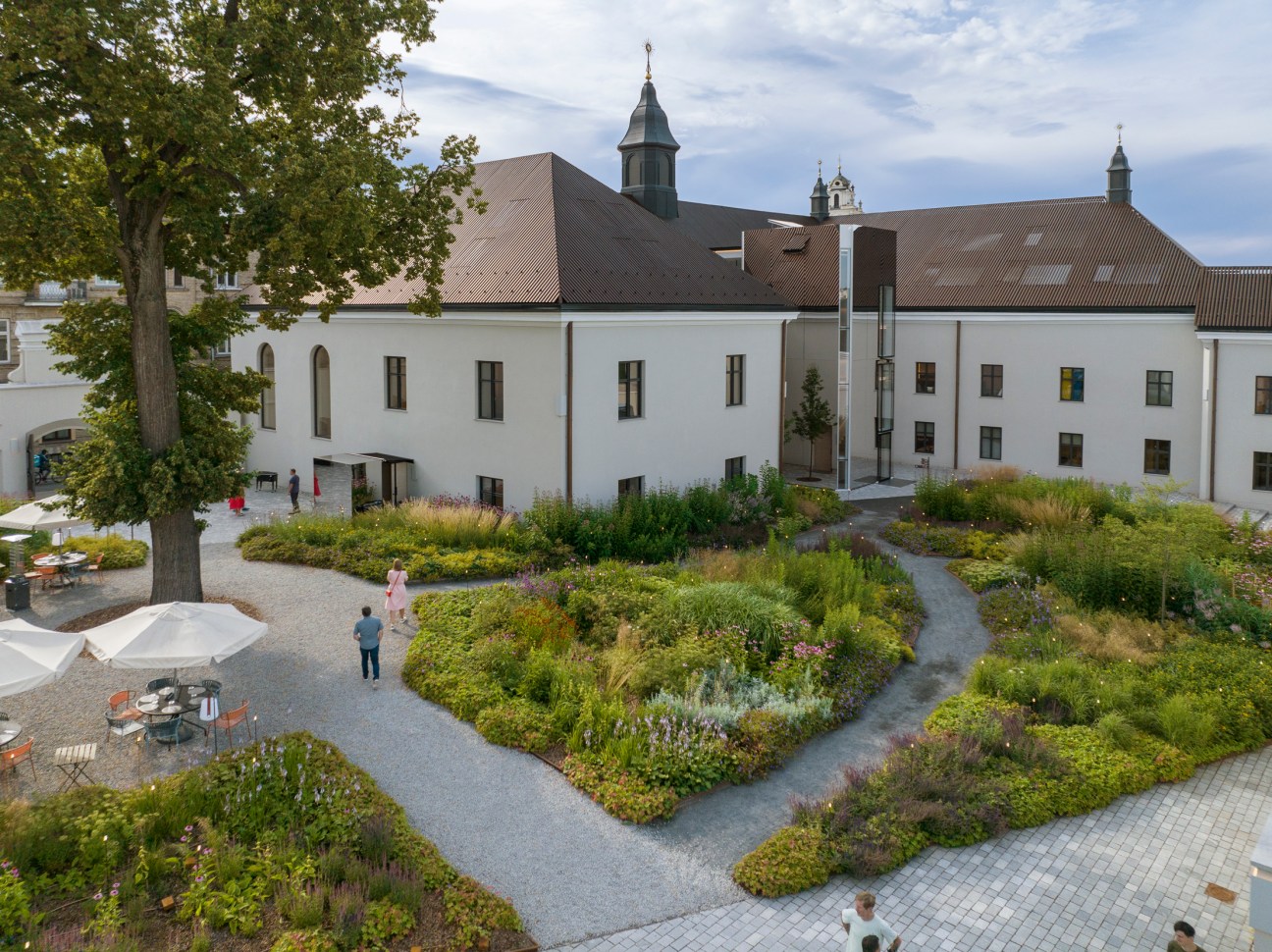
Boksto 6 owes its looks in part to the 500-year heritage uncovered by architects Studio Seilern during its initial work on the project.
This provided Studio Seilern with a visual language for the project, which consists of private residences and offices but also a health club and spa, a restaurant, chapel and performance space across the six buildings organised around a central courtyard. “We were fascinated by the history,” says Seilern. “We also took inspiration from the Alhambra in Spain, with polished steel insertions that mimic reflective pools.”
Since opening in 2022, Boksto 6 has reinvigorated a parcel of Vilnius’s city centre, sparking a wave of regeneration. How about that for a measure of a property development’s success?
studioseilern.com
best for apartment living
Onze22
São Paulo, Brazil
Completed in 2023 and towering above São Paulo’s tree canopy, it’s hard to miss apartment block Onze22. This product of Franco-Brazilian studio Triptyque Architecture was built by overlapping suspended slabs of concrete in a style reminiscent of early Brazilian modernist architecture. It is in the city’s Vila Madalena neighbourhood, its floor-to-ceiling windows and translucent façades offering residents a panorama of the cityscape from every natural-light-flooded apartment.
For Triptyque’s co-founder, Guillaume Sibaud, Onze22 was a chance to explore how to integrate the natural environment in an urban building. “We’re in an urban area but Vila Madalena is a place characterised by lots of vegetation,” says Sibaud. “It was about inserting the building in that soil and letting nature move through it.”
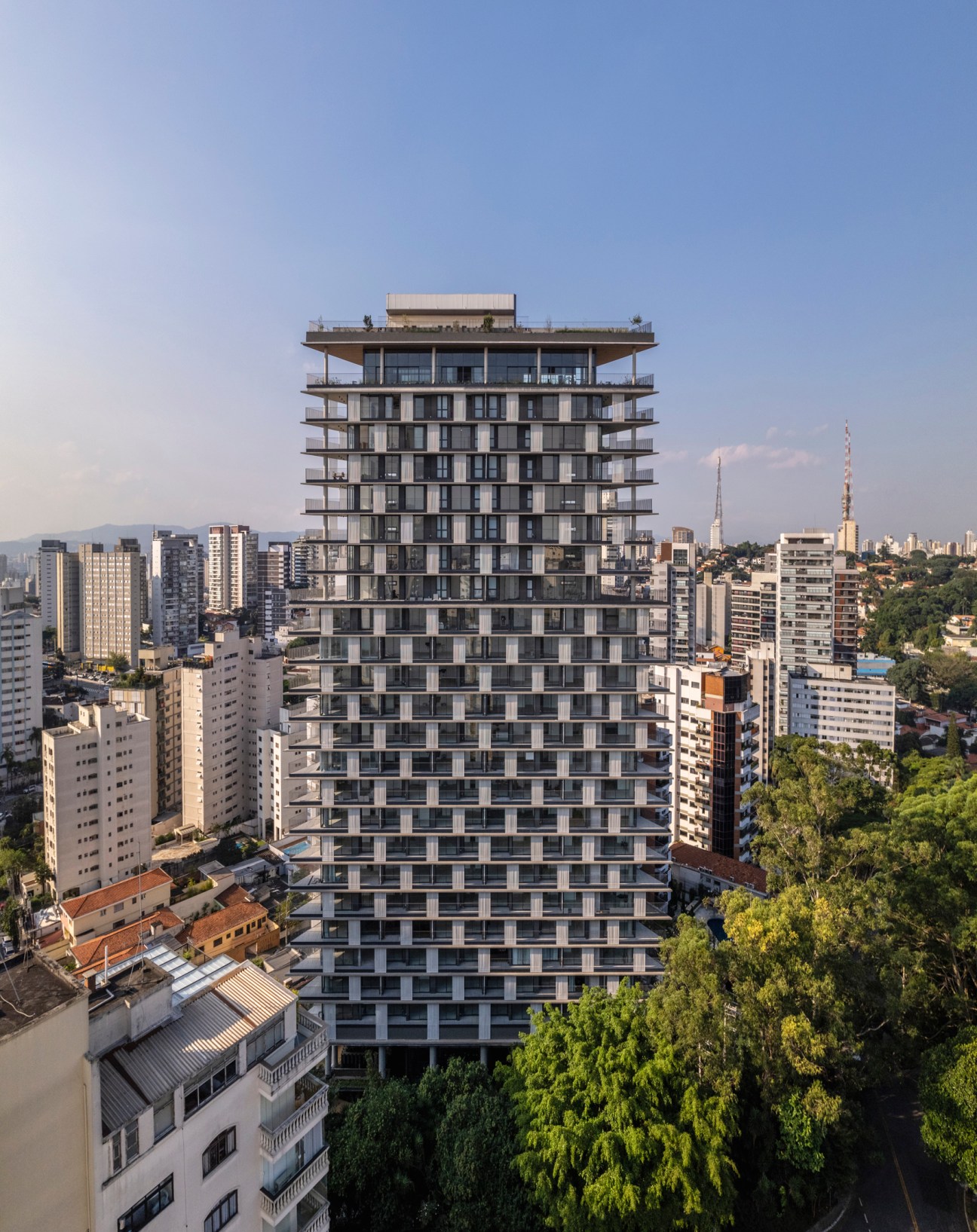
Onze22’s rooftop pool is just one of the development’s communal spaces that blend the shared and private realms to create its sense of a ‘grand house’.
Triptyque was established by a group of French and Brazilian associates in 2000 and is made up of two studios: one in Paris and one in São Paulo. The resulting back and forth between France and Brazil inspires the studio to experiment with different traditions. “Brazilian architecture has pushed the principles of modernism to the limits, composing spaces horizontally with slabs that allow movement without obstacles,” adds Sibaud. “Onze22 is really in line with this tradition”.
In addition to paying homage to the country’s architectural heritage, the structure also carefully strikes the balance between public and private space – an essential trait in any multi-residential structure – with the building set on pillars, elevating the ground floor apartments to ensure privacy. This sense of seclusion is enhanced by verdant gardens at the base, which provide screening from passersby. In addition to being able to wander through the gardens, residents can also enjoy communal amenities, from workspaces to a gym and rooftop pool.
The result is a building whose tenants feel as though they are living in a grand house rather than an apartment – a key ambition in Triptyque Architecture’s work. “Giving house-like qualities to apartments keeps cities attractive, as dense but enjoyable spaces,” says Sibaud.
triptyque.com
best mixed-use development
Mercado
Groningen, The Netherlands
For many years, Rode Weeshuistraat, a street running through the Dutch city of Groningen’s northern quarter, languished in the shadows of the warehouses and shops that backed onto it. It’s a situation that Dutch developers MWPO and Beauvast have addressed, commissioning architects De Zwarte Hond and Loer Architecten to let light and life back into the city with the construction of a new building, Mercado, in 2023.
“We were working with a difficult legacy at the start,” says Frank Loer, founder of Loer Architecten. “Over the years, the warehouses in the centre of the city had become empty and unused, leaving the heart of Groningen full of vacant buildings. This applied to Rode Weeshuistraat in particular. We knew we had to transform the street.”
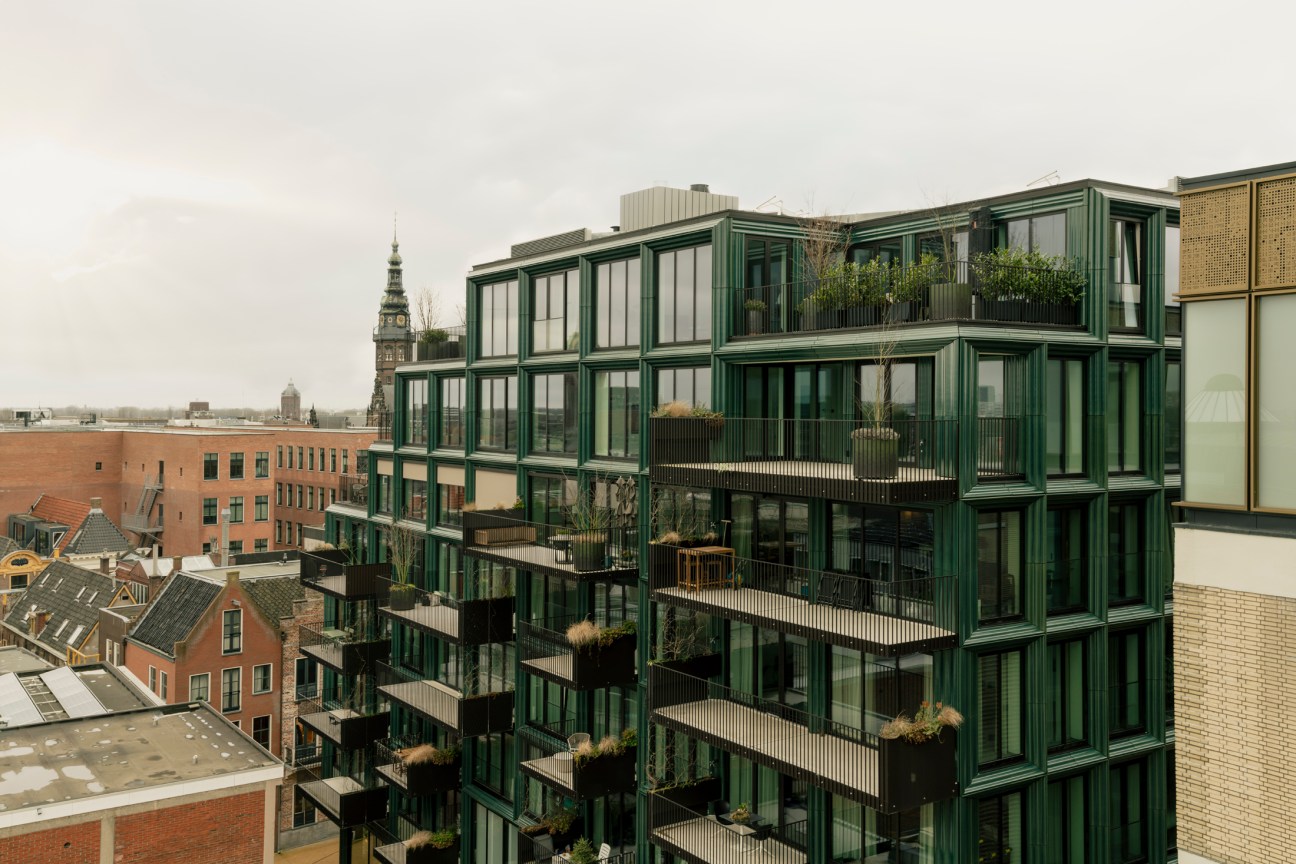
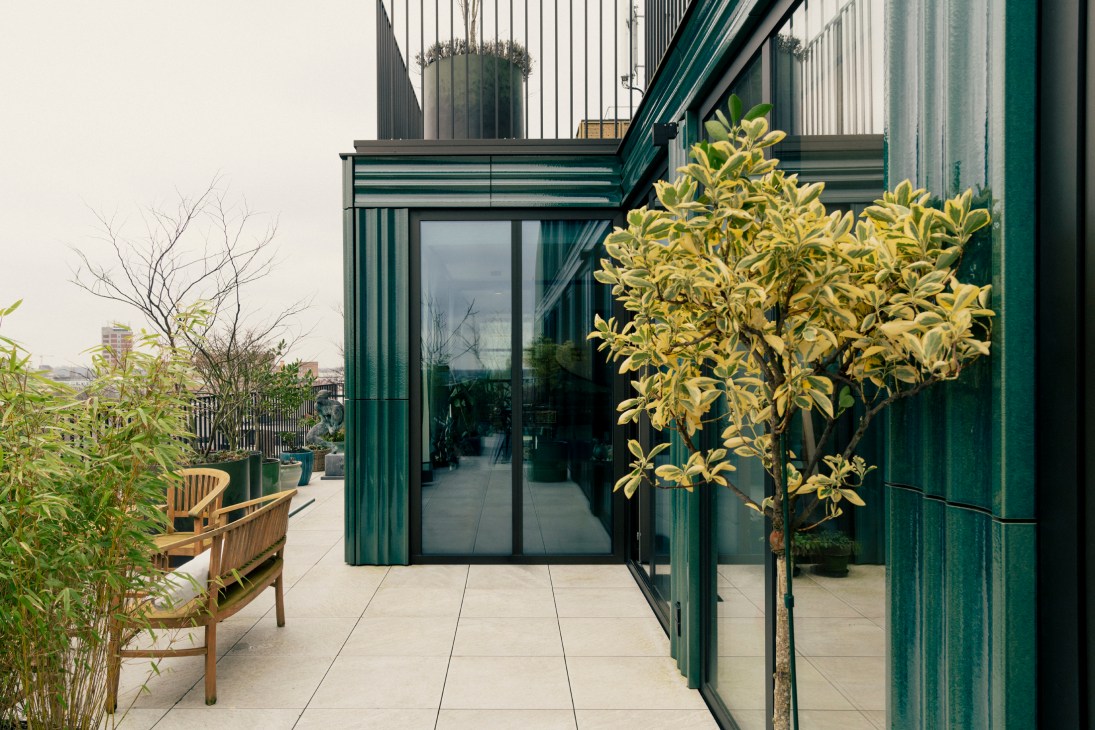
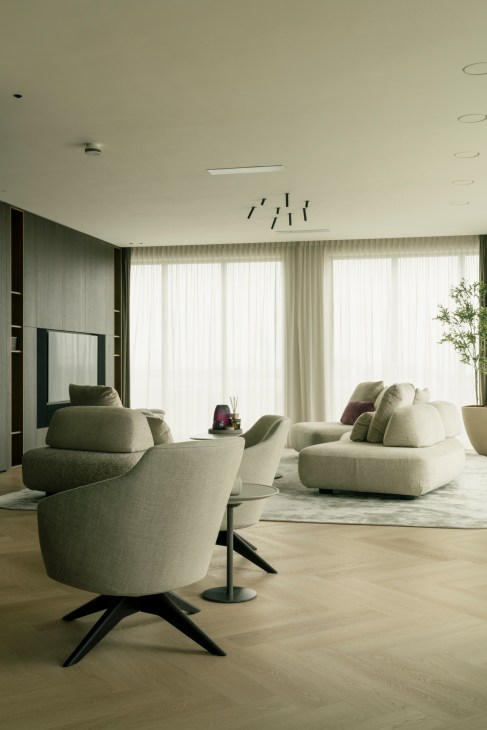
Working in collaboration, De Zwarte Hond and Loer Architecten set out to make their vision a reality. Step one was to demolish a building used for storage, before opening a new square and constructing the mixed-use structure. “We worked with the council to develop a narrative for the area centred around walking,” says Henk Stadens, partner at De Zwarte Hond. Keeping pedestrians and businesses in mind, Stadens, Loer and their teams brought together a mix of retail spaces on the ground floor of Mercado with 41 apartments built on the levels above.
Lush greenery overhangs the building’s boundaries, animating its exterior, while its stepped form means that it doesn’t overwhelm the street. “One thing we’ve noticed people appreciate about the building is its sense of generosity,” says Stadens. “The richness of the building, with its vegetation, the texture of its ceramic tiling and the variation in height captivates people. Often their reaction is just to come up to Mercado to touch it.”
Loer and Stadens are clear that the way for cities to develop isn’t to invest in sprawl but to look for density. “In many ways, urbanism comes above architecture for us,” says Loer. “If you want to change a city, it’s important to consider public space. Then you can think of buildings as actors in your quest to create those conversations and interactions.”
loerarchitecten.com; dezwartehond.nl
Q&A: Muyiwa Oki
Thinking big
Riba President Muyiwa Oki is an architect at construction consultancy Mace Group.
When Nigeria-born Muyiwa Oki assumed the mantle of president of the Royal Institute of British Architects (Riba) in 2023, he made history, not just as the institute’s first black president but also as its youngest. His election was built on a campaign that aimed to, in his words, “have the voices of younger, emerging practitioners heard”. It’s an aim he is furthering at Mipim, as one of the jury members of its Challengers programme: an initiative that invites 16 young real-estate professionals to share visions for how to build a better world.
Why get involved in a programme championing the perspectives of young people in property?
A key part of my work at Riba has been giving a platform for younger people to share perspectives on key issues in the built environment. That’s what I’m trying to do with the Challengers programme, in which young people write an essay suggesting solutions to the big issues – such as climate change or urban regeneration – and present at Mipim. We had more than 100 entrants from across the globe and selected 16 of them. Some of the ideas aren’t necessarily new but they’re left in the university curricula and aren’t broadcast to a wider audience, such as urban farming and how it could work in places like South America. Our hope is that people at Mipim see these as solutions to real-life problems and don’t stick to the status quo.
Why is it important to look for more of these radical solutions?
People are aware that the real estate, building and construction industry has an effect on the environment. About 40 per cent of global greenhouse-gas emissions come from construction. We want everyone to live as long as possible in prosperous communities, so we need solutions like these.
What are some of the steps we can take?
It’s about considering the notion of the triple bottom line: people, planet, profit. That has become common knowledge, so now it’s about how to make this happen – and do so in a sustainable way.
best cultural development
Haus 1 at Atelier Gardens
Berlin, Germany
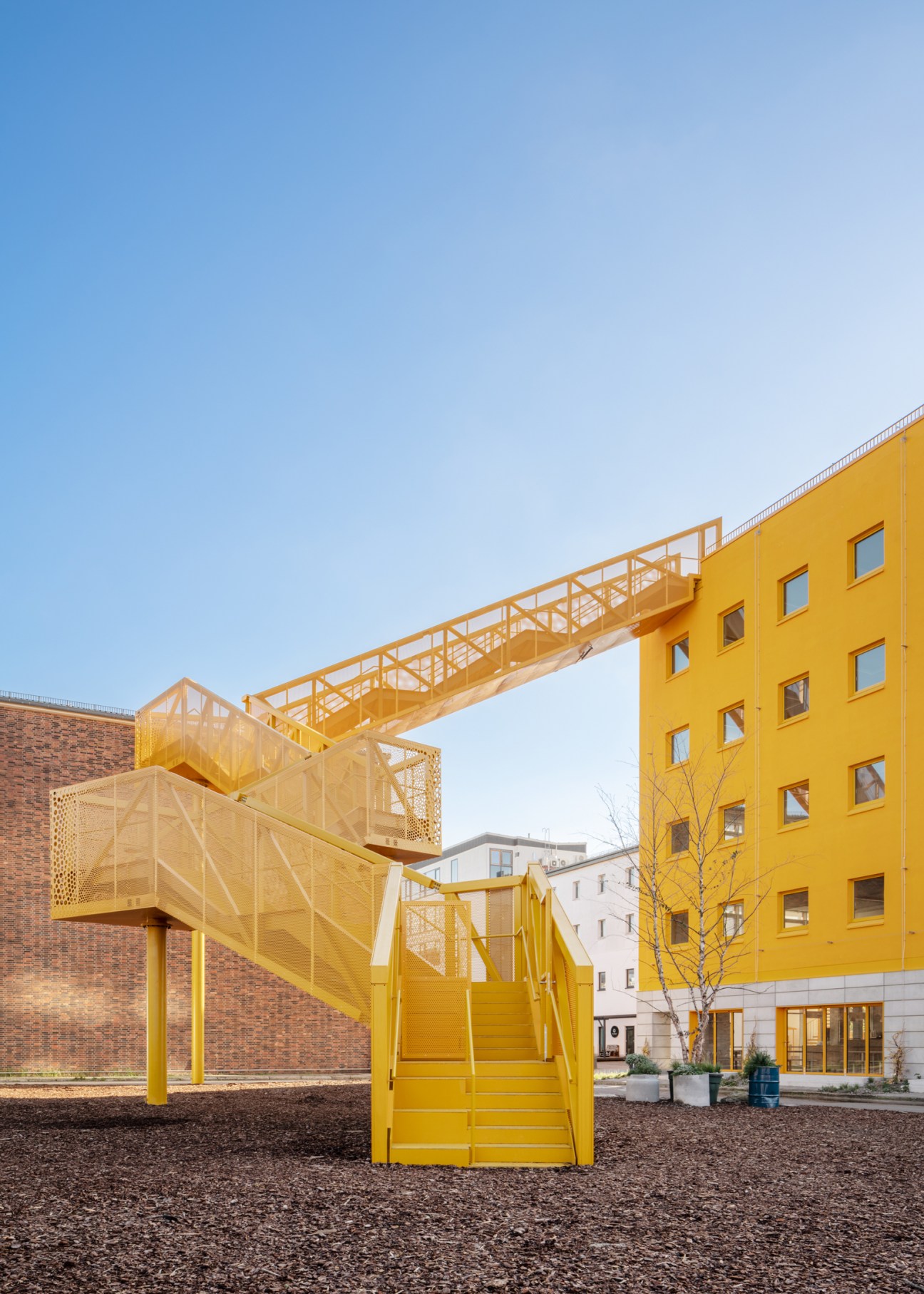
“It’s a modest paint job,” says Jacob van Rijs, partner at Rotterdam-based architecture firm MVRDV. That is one way to characterise Haus 1, an eye-catching architectural addition to an industrial area in the south of Berlin. It has been given an upgrade and finished in sunshine yellow paint.
Step by step
By taking things slowly and involving the local community, developers Fabrix won over what can be a tricky city to build in.
Haus 1 is part of Atelier Gardens, a redevelopment of Berliner Union Film Ateliers (Bufa), the vast studios dating back to 1912 when Germany’s film industry was booming. In 2019, London-based developer Fabrix bought the site and commissioned a masterplan from Dutch studio MVRDV. Berlin is not known for welcoming foreign developers but Atelier Gardens has been met with enthusiasm. It hosts film festivals and launch parties, and thanks to means-tested rents, there is a diverse mix of tenants, from tech companies to micro-farming collectives. Fabrix also involved local stakeholders from the start. “We didn’t just show up with plans,” says its CEO, Clive Nichol. “We spent three years talking.” Haus 1 is proof that a grassroots approach can make even daring transformation easy.
mvrdv.com
best for the elderly
Charm Premier Grand nursing home
Tokyo, Japan
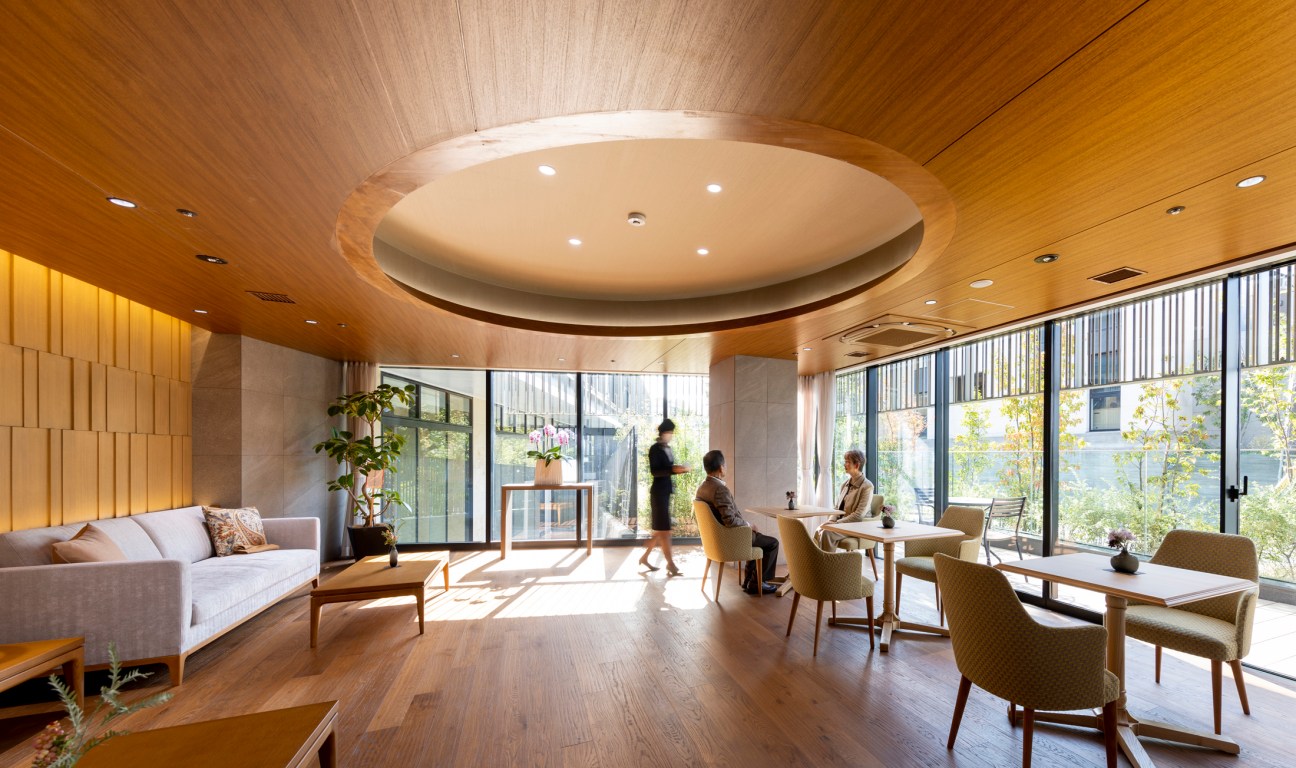
With nearly a third of its population of 125 million now over 65, Japan is leading the way in thinking about how best to meet the diverse needs of its senior citizens. Nikken Housing System, a Tokyo design and consultancy practice, specialises in the subject: it recently won the gold medal for residential projects at the Mipim Asia Awards, for the second phase of an upmarket nursing home in Tokyo it built with Mitsubishi Estate Residence.
With its balconies, picture windows and sleek wooden louvres, it’s apparent that Charm Premier Grand Gotenyama Nibankan is unlike most facilities for the elderly. “The feeling of ‘home’ can get lost amid the handrails and corner guards of nursing homes,” says architect Masahiro Suzaki, general manager of the design team at Nikken Housing System. There are double rooms for couples, cypress and stone baths, a premium food menu and 24-hour nursing. Other services include a concierge, yoga classes and dog therapy.
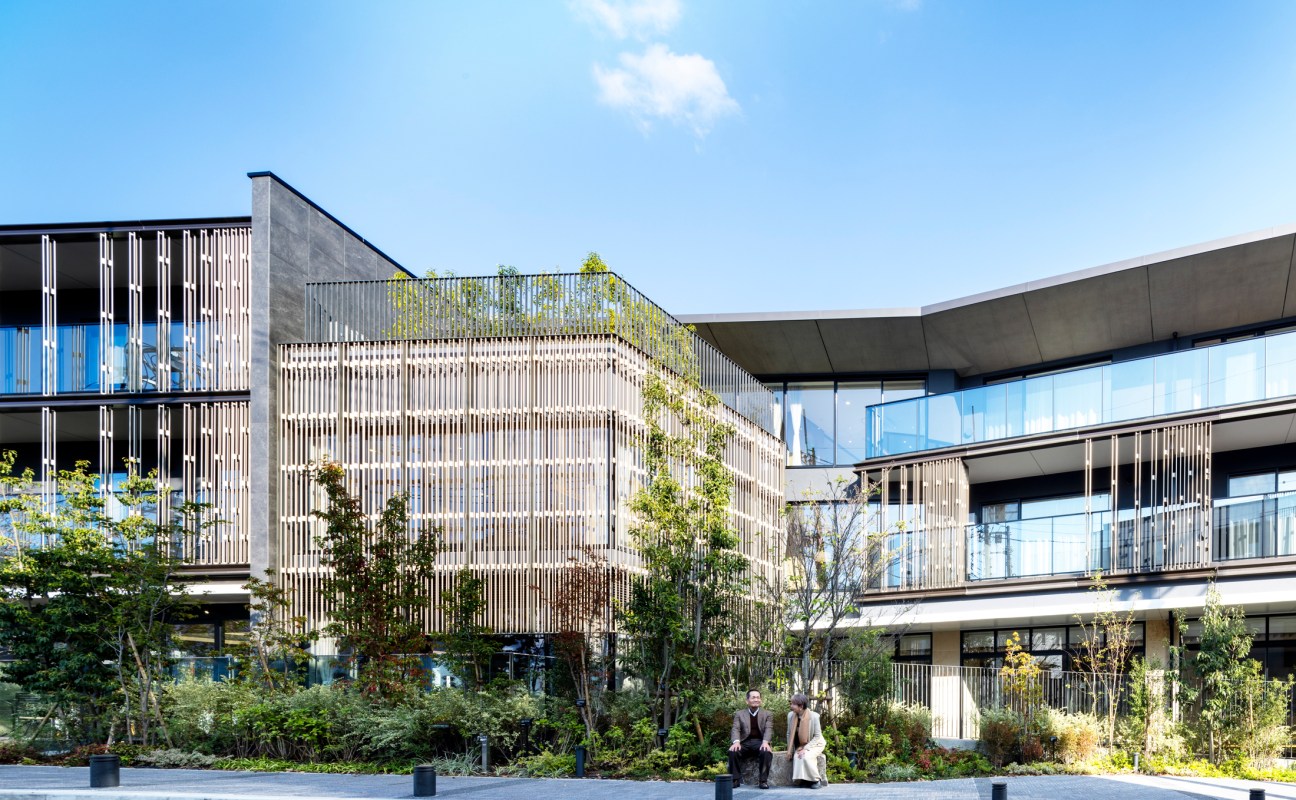
The nursing home, in the leafy neighbourhood of Gotenyama, has 37 rooms that can be adapted to residents’ needs, with bathrooms and kitchens for those who want to live more independently. “We’ve tried to create an environment where residents can move in without feeling a major shift in their lifestyles,” says Suzaki. The design also allows for changes as care progresses and takes in the needs of nurses and wheelchair users.
The dining room and lounge can be accessed from the street so that residents can come and go as they please and air circulates through open corridors, giving the interior a sense of the outdoors. While the home would be too high-end for many, the ideas here could be adapted to different settings. “Architecture can improve quality of life for the elderly,” says Suzaki.
charmcc.jp
best for social housing
Sunflower Houses
Vienna, Austria
For a fresh look at social housing, take a stroll through Sonnenblumenhäuser (German for Sunflower Houses) in Vienna. Part of the Wildgarten, a new residential neighbourhood in the city’s southwestern suburbs, it features 82 housing units across 11 buildings. Austrian Real Estate (ARE), the landowner, commissioned Madrid-based architecture firm Arenas Basabe Palacios for the project, which also features community spaces, shared bike-parking facilities and ground-floor commercial units.

“The construction is the opposite of typical, conventional solutions for suburban environments,” says architect Luis Palacios Labrador of Arenas Basabe Palacios. “It follows neither the model of a garden city nor that of a single-function development of blocks.”
The buildings have yellow, white or wood-clad exteriors, with south-oriented living spaces that open towards private gardens. A low-maintenance green space known as the Allmende (common land) adds to the community feel. The buildings vary in height and type, with small ones containing single-family and duplex housing mixed with larger structures of apartments. This ensures that all the interior rooms receive sunlight and shows that social housing need not be drab or overly uniform.
“It follows neither the model of a garden city nor that of a single-function development of blocks”
The decision to design buildings on different scales has implications beyond the Sonnenblumenhäuser: it provides a model for a variety of investors to get involved, from developers who can create smaller buildings and medium-sized Baugruppen (co-living and co-housing projects) to the city council providing the backing for the largest blocks. “In this way, we open up the forming of the city to a more inclusive process, where all these agents are represented,” says Palacios Labrador.
arenasbasabepalacios.com
Ten principles for designing vibrant and liveable mixed-use spaces
Creating a lively mixed-use development isn’t just about throwing up some buildings and calling it a day. Developers need to make considered decisions to deliver a successful place that matches the ambition of their original architectural renderings. It’s about clever details, an understanding of how people actually use space and meticulous design from choosing the right materials to community-building.
This is the art of crafting spaces that not only house but also connect, where tenants – whether residential or commercial – feel a sense of belonging that goes beyond their address. Here, we get into the nitty-gritty of what makes a mixed-use project truly thrive, proving that vibrant developments are built one thoughtful detail at a time.
1.
Sensory symphony

Building with materials that are interesting to look at will lend character to any development. A case in point is the rippled concrete on the façade of architect Lina Ghotmeh’s Stone Garden Housing project in Beirut. Natural, locally sourced options like stone, timber and clay bricks can help imbue a project with a sense of place.
2.
No blocking
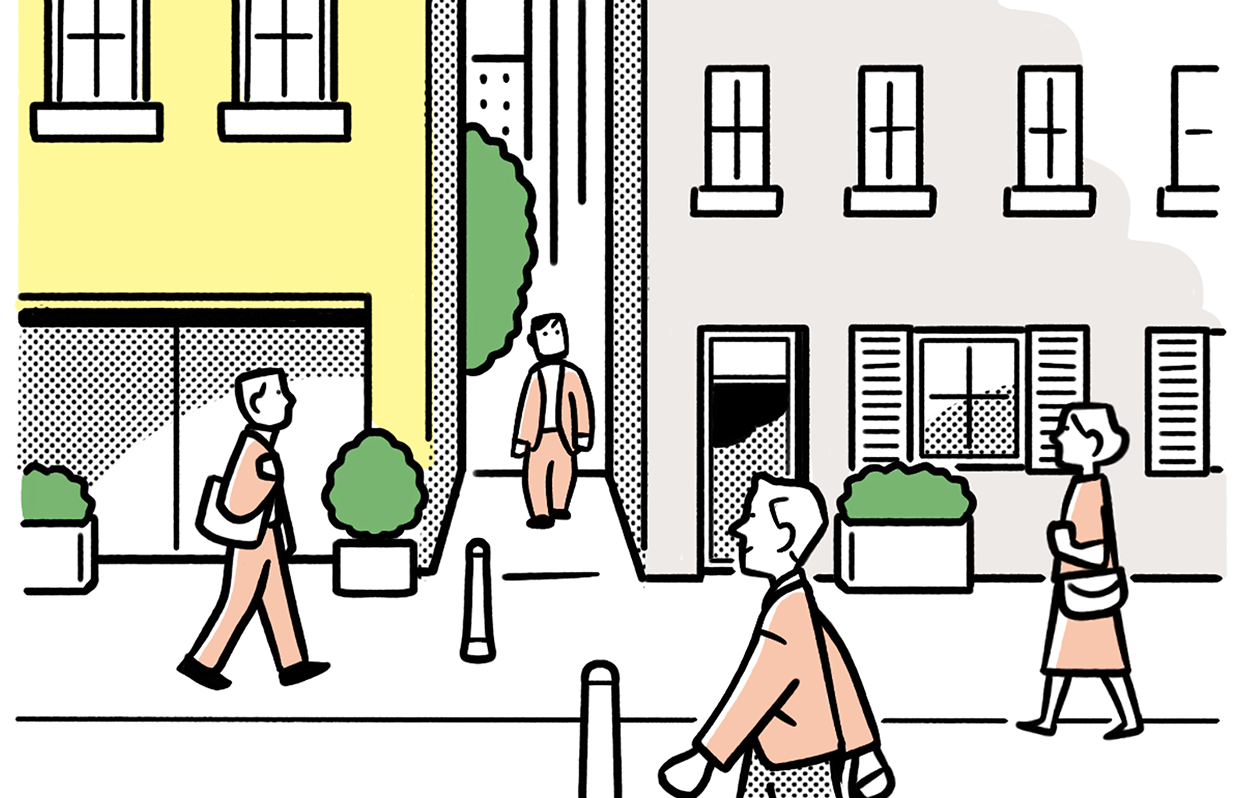
Avoid taking up an entire block with a single, impenetrable structure. Instead, invite public life into the development by shrinking building footprints. Create public spaces and thoroughfares for people to cut through the site, improving pedestrian connections. This will prevent a project becoming a dead zone and better embed it in the city.
3.
Tall order
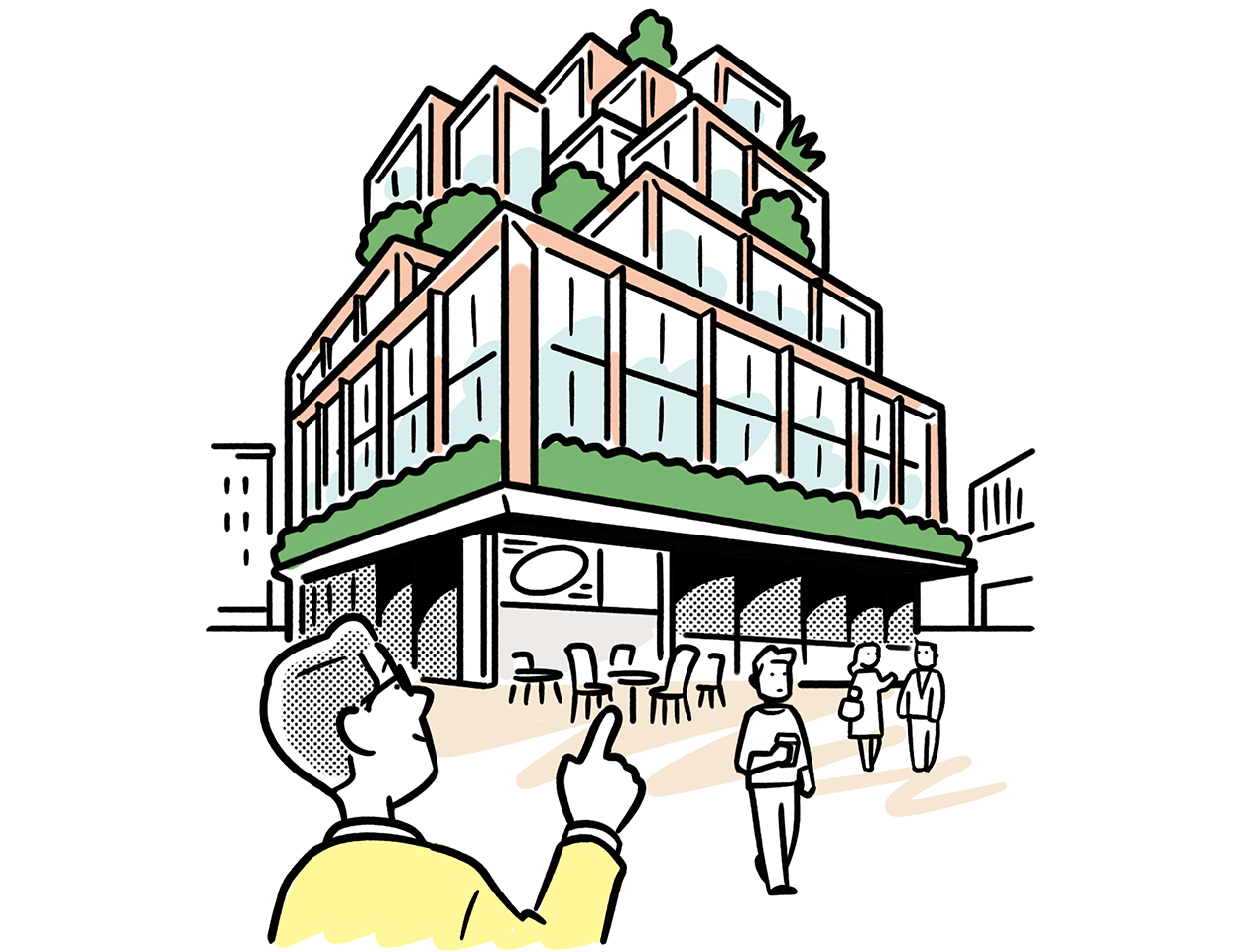
Cap buildings at five storeys. Why? Well, beyond that, according to Danish urbanist Jan Gehl, residents lose their connection to the street. A good rule of thumb is to ensure that people can comfortably call down from a balcony to the footpath. By capping the height, we ensure that the building’s presence doesn’t overwhelm the street or skyline.
But this doesn’t mean ignoring the needs of street level. Avoid brash glassy frontages and opt for a façade that has clear windows for passive surveillance. The doorway should be flush with the footpath (stepping up or down creates a physical barrier to entry) with awnings set only a few metres above the ground to offer a sense of cosy enclosure.
4.
Human scale
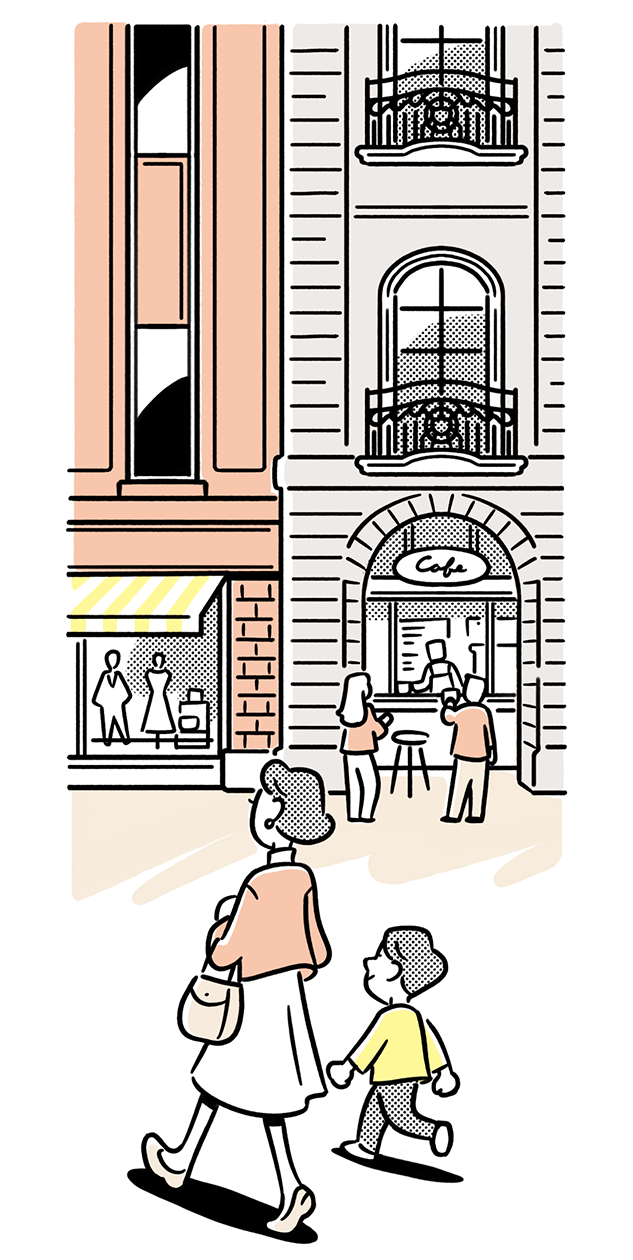
Use visually rich details on the lower levels of a building – think tiled façades, intricate masonry and faceted window frames. Different uses, such as public or private entrances, should be defined by these ideas and expanses of monotonous material avoided. Invite rhythm to keep passersby, or those staying longer, engaged and inspired.
5.
Mix and match
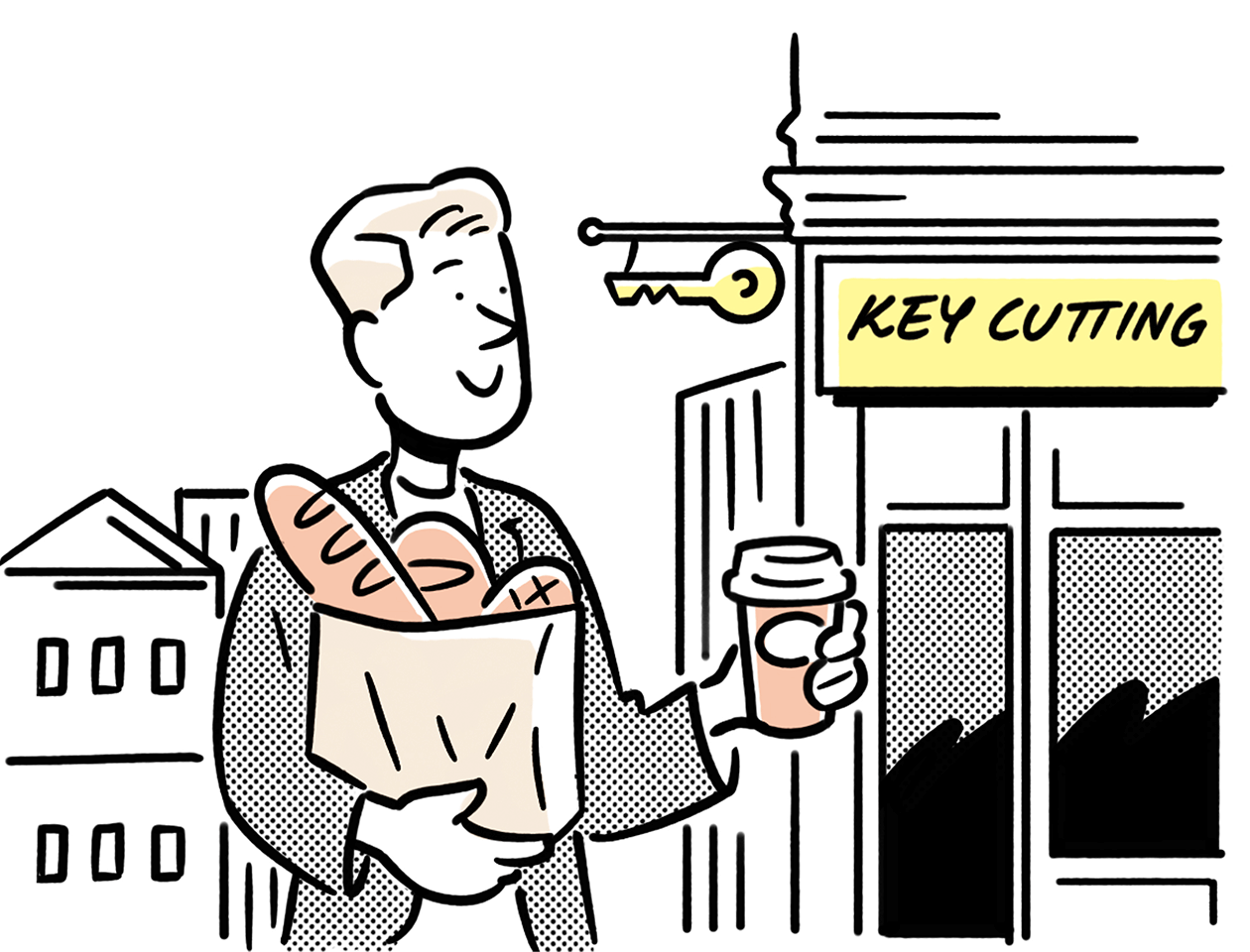
Create a complex whose patronage is, well, complex. Mix commercial, cultural, residential and hospitality offerings for a perpetual hum of activity and spontaneous encounters. Meet the essential needs of the community too: a butcher, baker, dry cleaner and key-cutting shoe-repair shop within walking distance is a boon for any tenant.
6.
Lush lifestyle
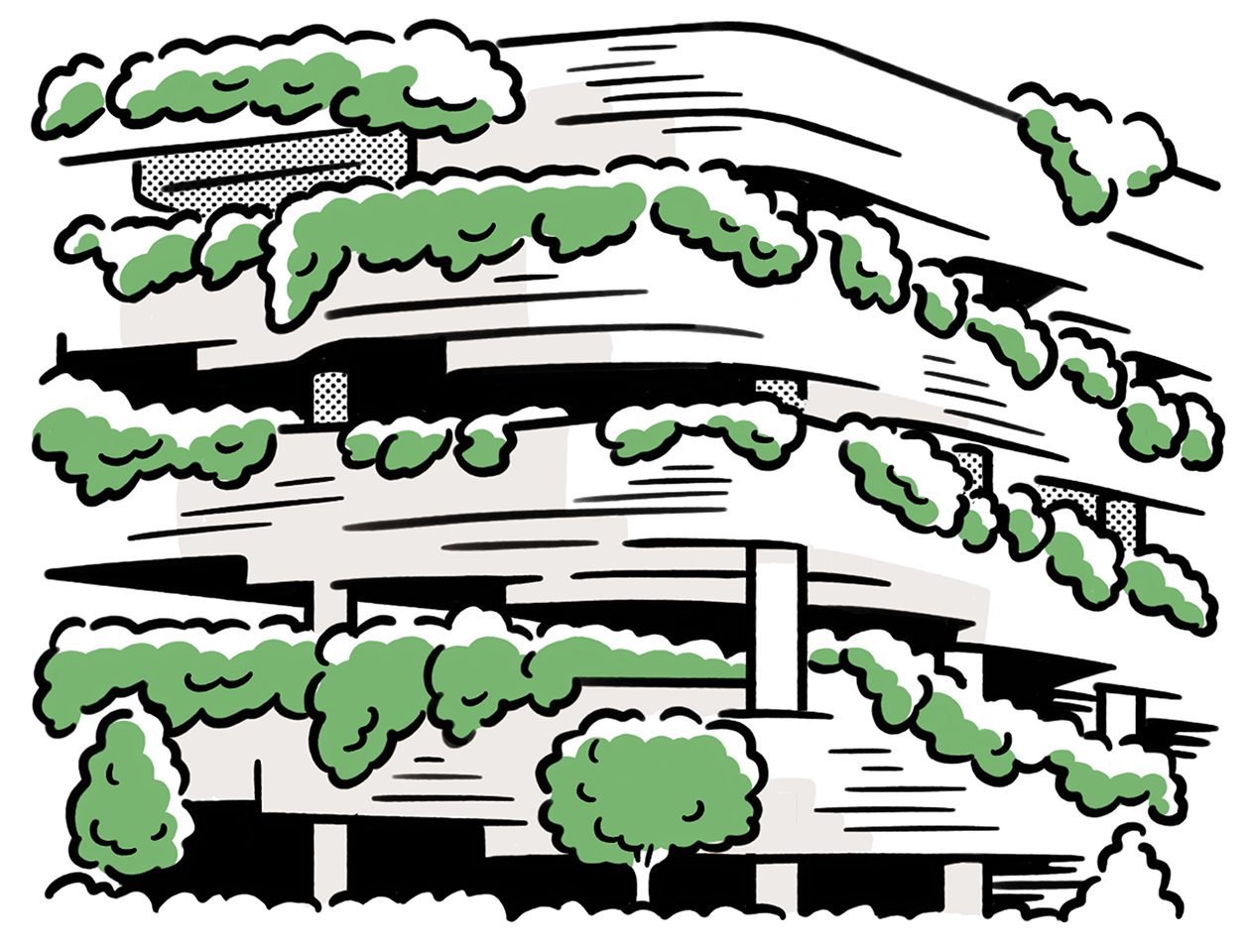
Studies have repeatedly shown that greenery can lower stress levels and improve general wellbeing; planting can also filter air and regulate building temperatures. Street-level trees and vertical gardens bring life to the façade (Singapore-based WOHA architects is an expert in this field), providing a cleaner microclimate for tenants.
7.
Civic service
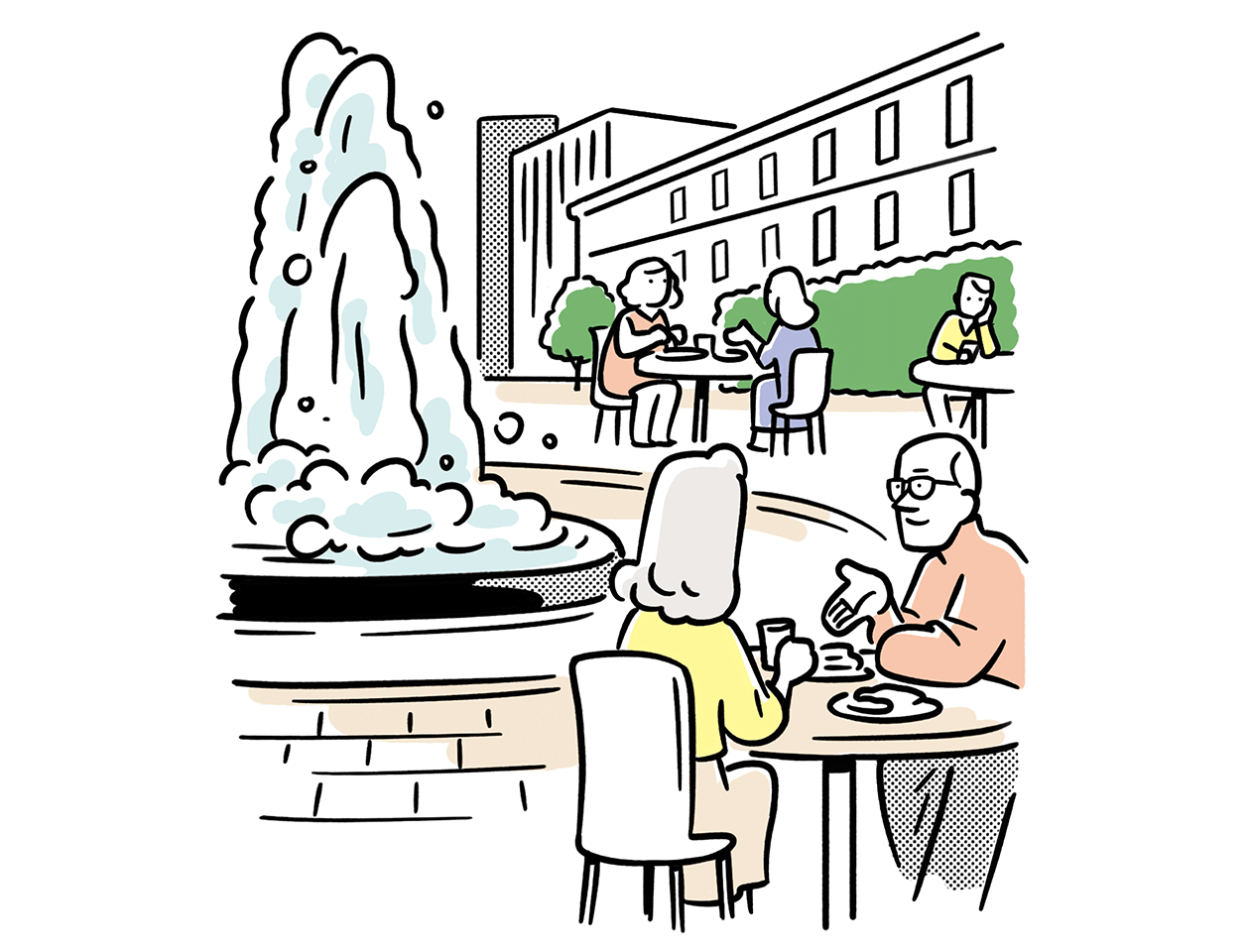
The services on offer should be enhanced by the surrounding public space. In a mixed-use development, make sure restaurants front onto plazas that diners can spill onto when the weather is fine and that there are benches for workers to stop for coffee. MVRDV’s Atelier Gardens in Berlin blends office space with hospitality offerings in a prime parkland setting.
If a development is more residential, make sure there are spaces for visitors to lock their bikes and communal courtyards where neighbours can stop to chat. Danish design studio SLA’s work on the South Harbor of Køge is a benchmark in this, with the residential buildings divided with linear parks.
8.
People first
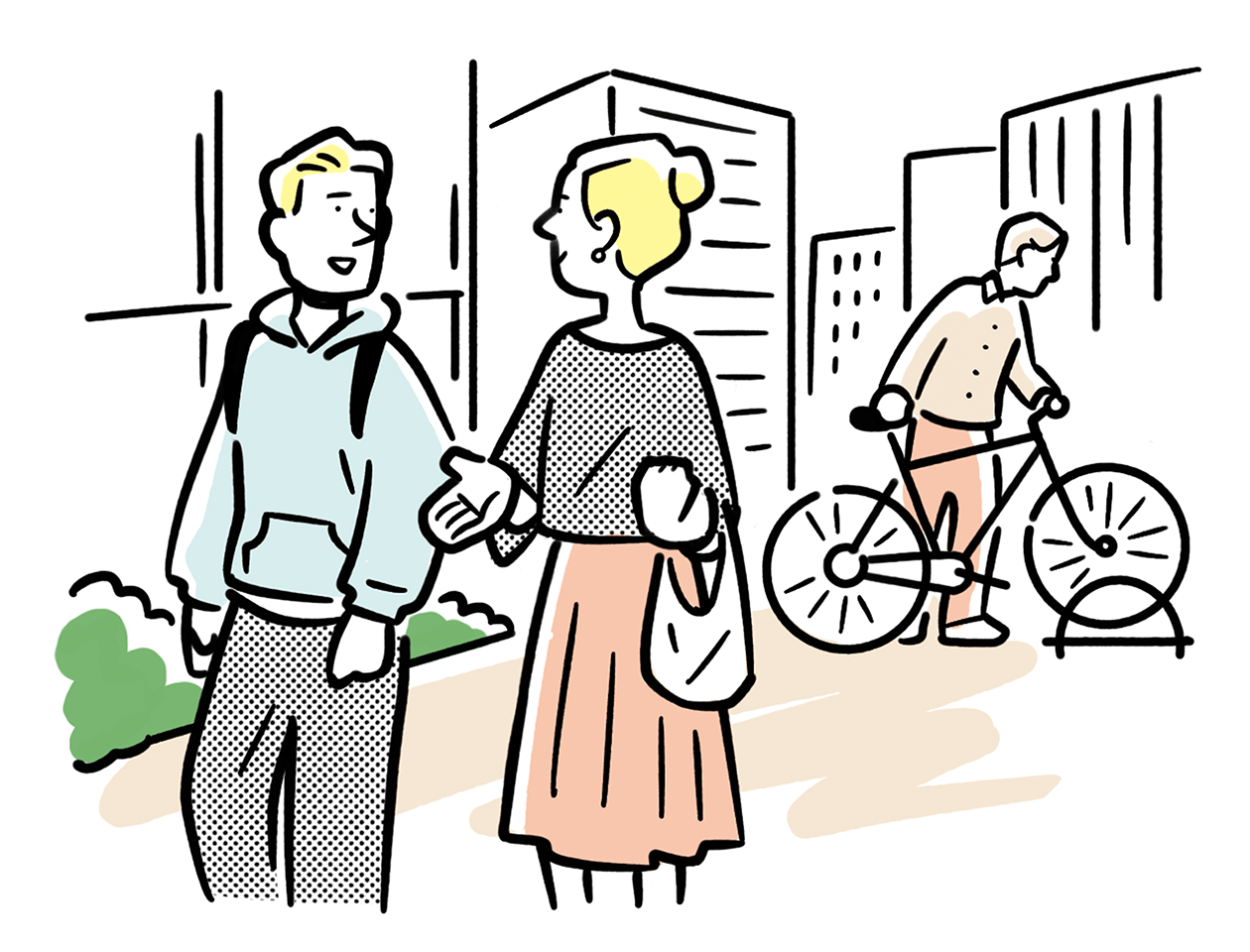
Prioritise the pedestrian experience, so whether tenants are walking to their cars or between home and café, their time outdoors will be uplifting. Provide generous footpaths, an abundance of crossings and traffic-calming measures such as kerb extensions. Where you have to include parking, do so in a discreet underground location.
9.
Go green
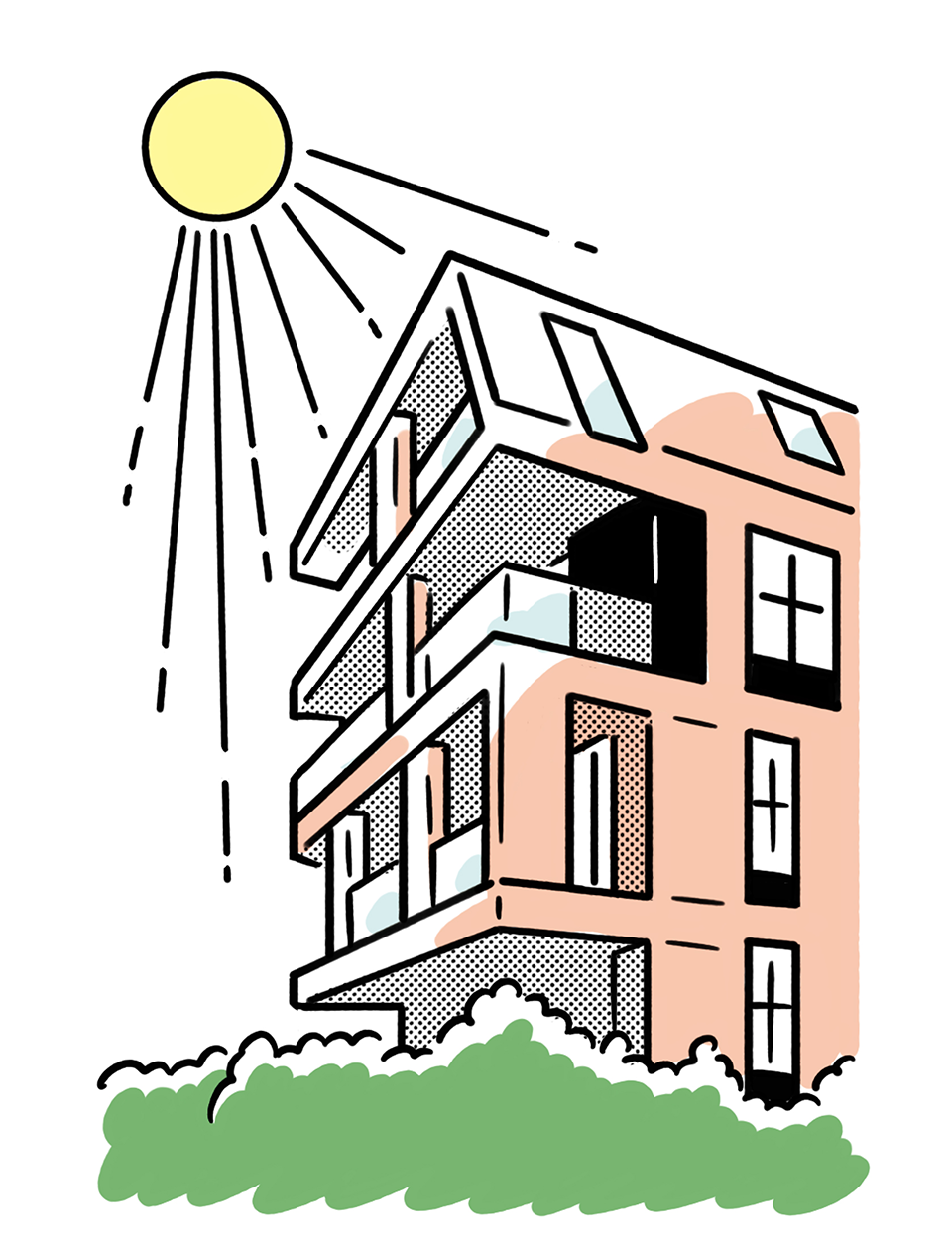
This is about more than using environmentally friendly materials and adding foliage. Architects should embrace the site’s microclimate and use it to enhance their design. Consider annual sun, wind and shade patterns, and position the building so that natural light and ventilation can be put to use in heating and cooling it.
10.
Participation awards

Finally, it’s all well and good to have a beautiful building but without buy-in from the people using it, it won’t be a success. Build a community by inviting continued resident participation: ask for ideas, host town hall meetings and encourage community gardens and public art. All of this will create a sense of ownership and belonging.
Hul le Kes proves that small-city manufacturing can be the right choice
Historically, the city of Arnhem was known as an industrial centre and a focal point for Dutch-German grain trading. But more recently the city, in the east of the Netherlands, has blossomed into a creative hub – a development triggered by the opening of the ArtEZ academy in the early 2000s, which offers courses in fashion design, dance and fine art, alongside a host of other creative disciplines. A number of homegrown labels and boutiques, such as Judith ter Haar’s Jones, have helped build this reputation even further.
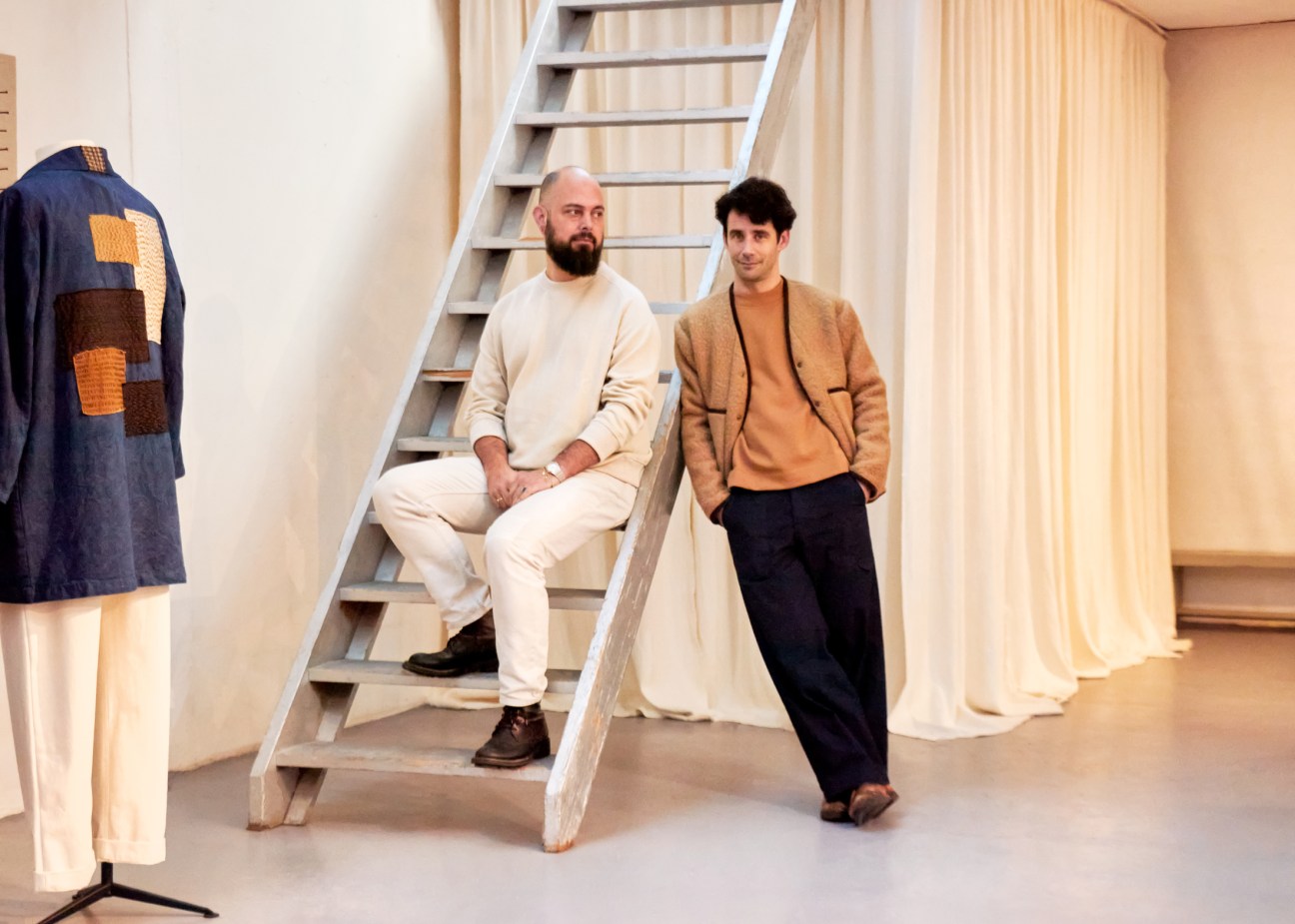
For designers and ArtEZ alumni Sjaak Hullekes and Sebastiaan Kramer (who follow in the footsteps of other famous ArtEZ graduates, such as couturiers Iris van Herpen, Viktor Horsting and Rolf Snoeren), the city’s compact size and sense of community offer an opportunity to return to traditional ways of making clothes and building a fashion brand. In their world, a customer can easily drop by the atelier to ask for an alteration or a repair and know the makers by name.
Hullekes and Kramer, who were disillusioned with the fashion industry’s waste footprint, founded their label, Hul le Kes, in 2018 with the goal of returning to the basics. Working in a small workshop in the Van Oldenbarneveldtstraat area next to the Rhine, the duo is committed to producing every piece that they design within their atelier’s four walls. More than 90 per cent of the materials that pass through the workshop are recycled and given a new lease of life.
What we would buy:
The Cremer jacket: Crafted entirely from upcycled vintage woollen blankets sourced from donations in the Netherlands.
The Abramovic jumper: This oversized garment made using recycled cotton from an interiors company was inspired by the raw edges often found the work of Serbian artist Marina Abramovic.
The Rodin shirt: A modern silhouette created from deadstock linen pays homage to the iconic Parisian sculptor.
Inside the workshop, sewing machines hum with activity as the Hul le Kes team of 50 tailors, pattern makers and apprentices painstakingly sew, stitch and steam natural or recycled fabrics. “We wanted to get back to the knowledge of manufacturing that is almost non-existent in the Netherlands,” says Kramer. “Arnhem doesn’t traditionally have a strong textiles know-how. The city is known for its fashion and design prowess but not for manufacturing – that tends to happen in India and China. This is the craft that we are trying to renew.”
Streamlined production allows Hullekes and Kramer to see the process through from start to finish, meaning that their craft is evident in every small design detail, from the hand-crocheted edges on the pockets of parkas to the loose cuts of their trousers, a nod to old sailor uniforms. “The Hul le Kes style is informed by an antiquarian aesthetic, reminiscent of the old-money style of dressing, but reimagined for the contemporary wearer who seeks practicality,” says Kramer.
“The city is known for its fashion and design prowess but not for manufacturing. This is the craft that we are trying to renew”
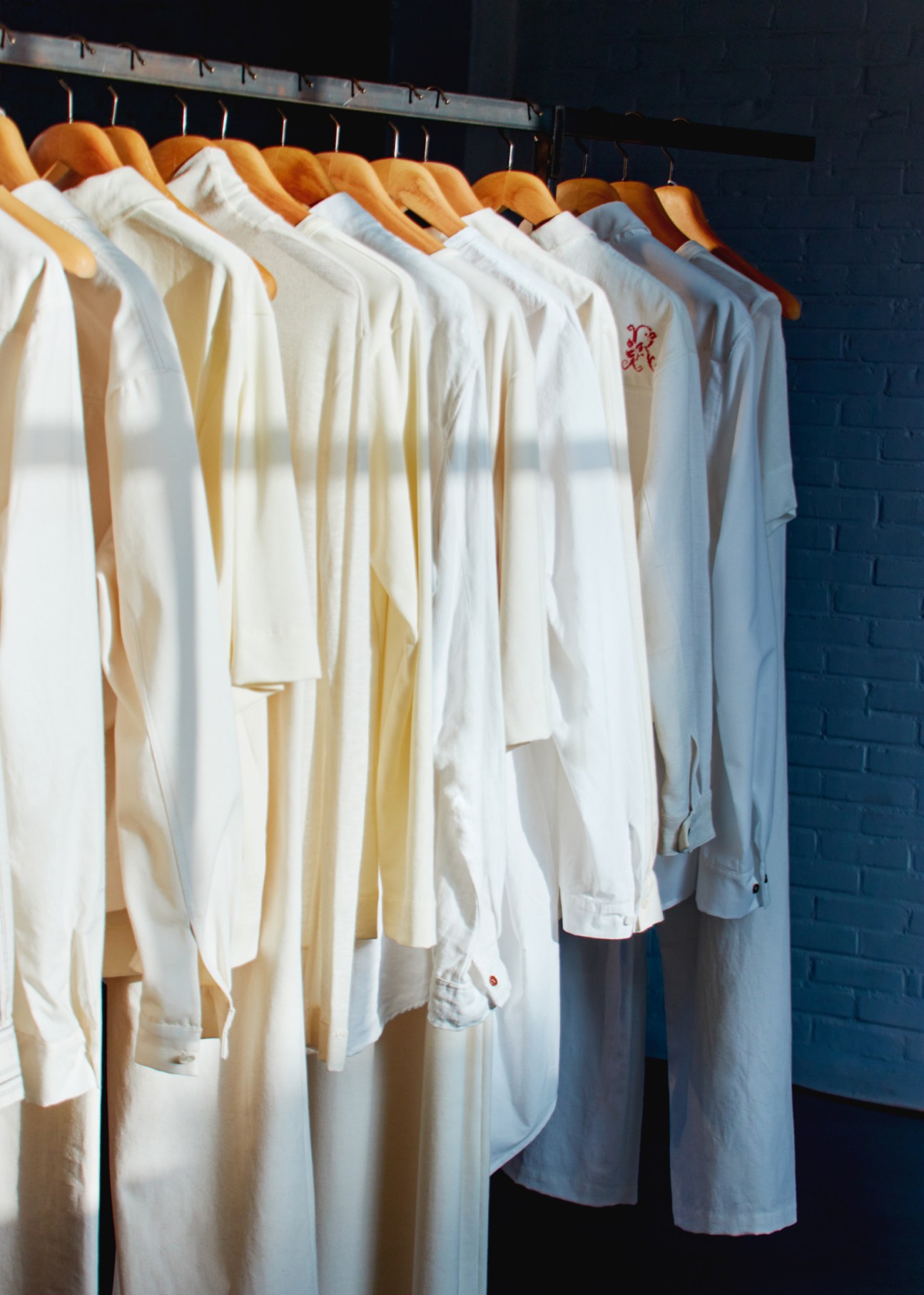
The names of the garments pay homage to the likes of Dutch author Jan Cremer, US painter Jackson Pollock and French philosopher Simone de Beauvoir – a testament to the designers’ penchant for honouring the past. In the same vein, antique markets are the perfect hunting ground for the duo, who are always scouring French flea markets to find old linens (which often come embroidered with family initials), unwanted tablecloths, blankets and deadstock from the fashion industry, which is most often discarded because of minor defects. Arnhem’s recycling initiatives and The Salvation Army also donate unwanted materials to the brand, as do the locals. As the reputation of the label has grown, Arnhem’s residents now make sure to save yarns from old pieces of clothing and make regular stops at the Hul le Kes atelier to drop them off.
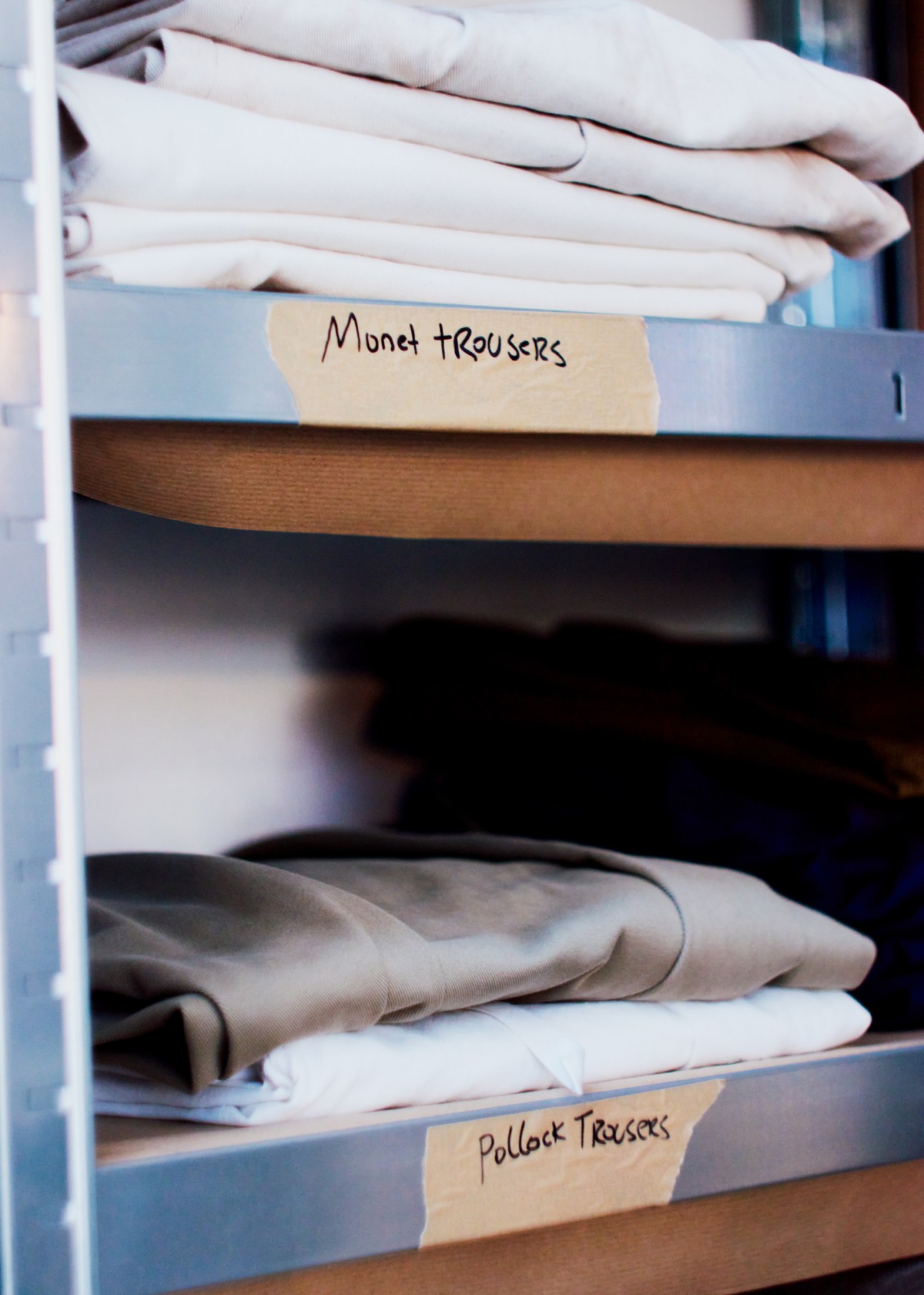

Once the recycled materials are secured, a natural dyeing process follows, using onion peel, avocado skins, rust and walnuts collected from forests and restaurant kitchens, giving each piece its own identity. It’s a lengthy undertaking – the studio only manages to produce some 150 pieces a month – but they’re in no rush because the Hul le Kes ethos doesn’t revolve around trends. Instead, collections are painstakingly developed with both the previous owners of the materials and the brand’s future consumers in mind. “Knowing where your clothes have come from is an important part of the recycling procedure,” says Kramer. Each piece comes with its own passport, documenting its place of origin, the date it was completed and the origins of the fabric.
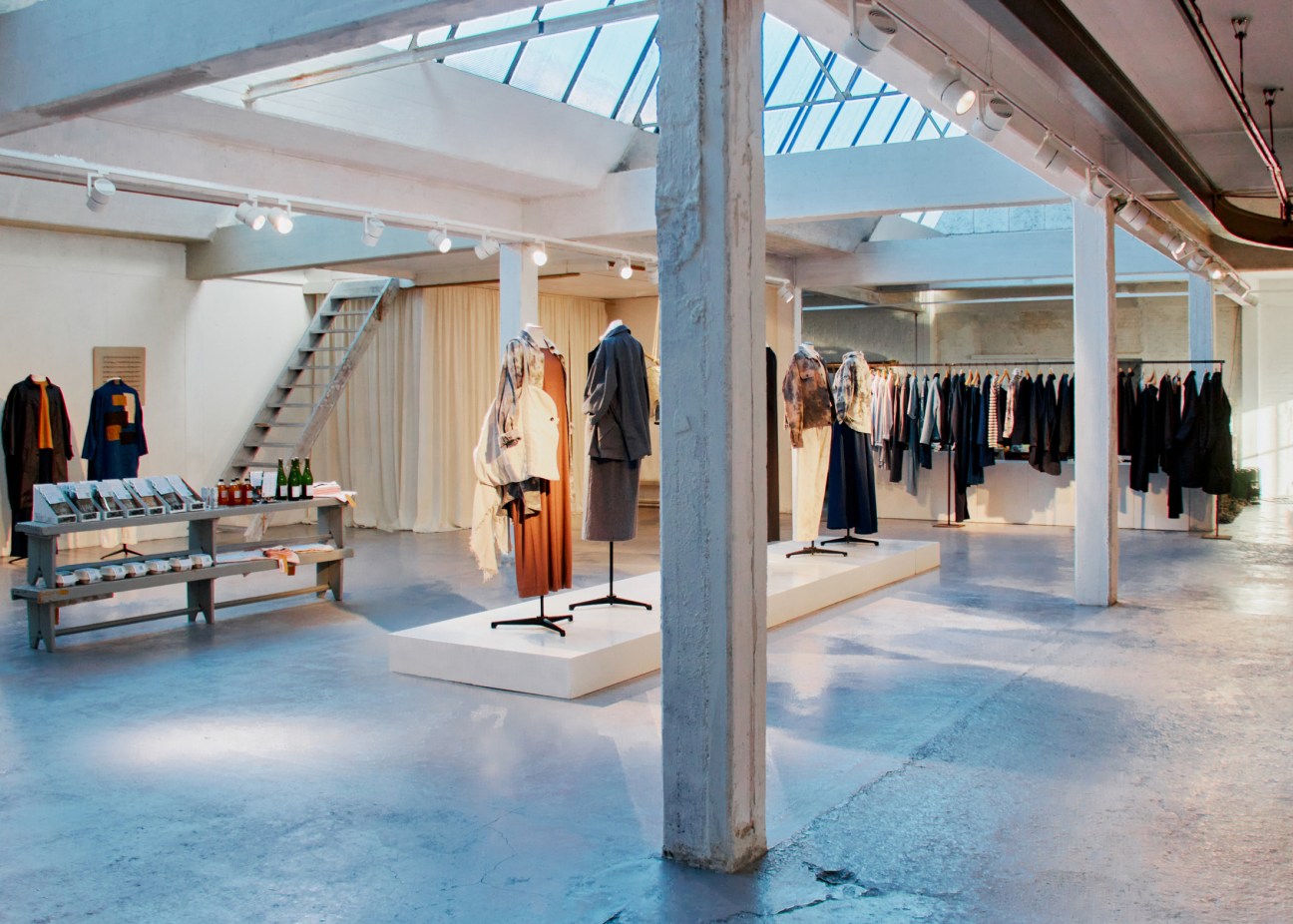
Once ready, pieces make their way to the brand’s flagship boutique, which opened last summer. Located in a former ironmonger’s within walking distance of the atelier, the airy boutique also has an events space, where the brand’s creative clientele – a mix of film producers, architects, graphic designers and gallery owners – get together to host panel discussions, see exhibitions or celebrate their own milestones. Opening up their space to others is part of having a “regenerative mindset”, say the duo, so they make sure that part of the shop is always available for clients to hire.
Though Hul le Kes is slowly building up its business – it participated at Florence’s Pitti Immagine Uomo this January – it only plans to work with a handful of retailers who share the same passion for craft and artisanal manufacturing methods. “We like to compare ourselves to a family business where you know people personally,” says Kramer. “We don’t want to lose the sense of where Hul le Kes started.”
In many ways, the brand has gone back in time by running a business that is so intricately connected with its local community and with slow, handmade production. It is a bold statement that is also decidedly modern.
hullekes.com
Parks and recreation: The disquieting history of urban parks built to make us factory-ready
In 1833 the UK government appointed a parliamentary committee to ameliorate unsanitary living conditions in cities. This committee’s focus was not on building safer housing, improving working conditions or broadening access to medical care but rather on increasing the number of places in which poor folk could go for a walk. Perhaps the emphasis is unexpected, though this was an era in which country air and proximity to greenery was imagined not only to have physical benefits but spiritual ones too.
After months of gathering evidence, the select committee announced itself quite convinced that “some open places reserved for the amusement… of the humbler classes would assist to wean them from low and debasing pleasures” such as “drinking houses, dog fights and boxing matches”. On their day of rest, “a man walking out with his family… will naturally be desirous to be properly clothed, and that his Wife and Children should be so also”. Such a desire for public probity, concluded the committee, will have “the most powerful effect in promoting Civilization, and exciting Industry”.
It might seem odd to think that the urban park is a truly sinister piece of 19th-century technology. In the years that followed the committee’s report, the great era of park building began in earnest, first in the UK and then worldwide. We’ve become used to seeing the park as a much-loved community space that is always, at least symbolically, under threat from greedy developers and lazy council bureaucrats. But the aim of the city park was never the benign provision of green space for recreation. Its aim was to guide and control – to nudge – the behaviour of the urban working classes; to get them out of the pubs and into the air where they could see, and indeed keep an eye on, one another. Most importantly, the park was there to maintain that most valuable of assets, the physical power of muscle: the actual productive capacity of industrial capitalism, now encased in these men’s suddenly valuable bodies.
This is no historical quirk. The ideological relationship between the city and green space – the idea that we need nature to tame and civilise the worst excesses of urban life – is still with us today. It was there in 2019 when London – bafflingly – declared itself the world’s first National Park City (what does that mean?). It was there when the mayor of Paris announced that she would erect an “urban forest” around four of her city’s most famous landmarks. It was there when the UK’s new “tree champion”, William Worsley, declared that urban trees would “improve our health and wellbeing and help grow the economy”.
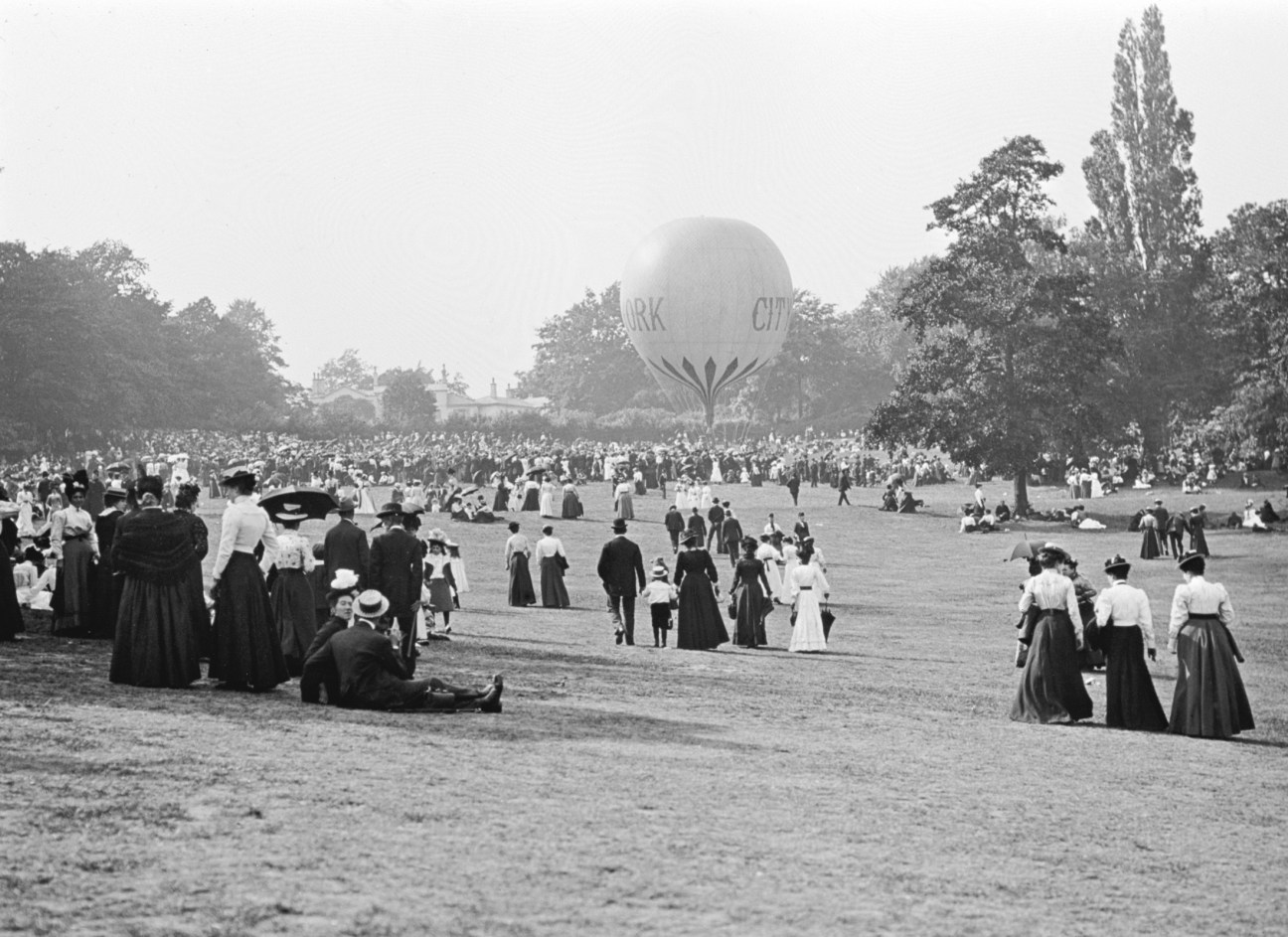
The ideological relationship between the city and green space – the idea that we need nature to tame and civilise the worst excesses of urban life – is still with us today
It’s not that any of this is bad or wrong. But we would be naive not to think that urban green space is deeply political, that the 19th-century vision of keeping people safely and boringly occupied while maintaining their tired bodies and brains well enough to keep the wheels of industry reliably turning is still very much alive. Maybe then, it’s time to give up on the fetish of the park, even to consider replacing it altogether with something more self-consciously dense and artificial; something with the unexpected joy of alleys and walkways, something that finally builds a concrete wall across the stern, watchful gaze of one’s self-righteous neighbours under the plane trees.
Fitzgerald is an author and academic. His most recent book, ‘The City of Today is a Dying Thing: In Search of the Cities of Tomorrow’, is out now.
Monocle joins Lithuania’s newest conscripts to find out how it defends Nato’s eastern flank
The world is facing a number of hybrid threats. In Europe, the return of large-scale land warfare has led furrow-browed defence ministers to issue warnings about the transition from a “post-war” to a “pre-war” world. There and elsewhere, governments are grappling with the dangers posed by a changing climate and urban anomie. The 2020s have been marked by health emergencies, civil disorder and supply-chain disruption. None of these looks set to abate.
Such times call for calm heads and forward planning. Over the following pages, we look at three examples of countries and organisations doing their best to ready themselves for the worst: conscription in Lithuania, elite police in France and disaster management in the US. This is our Security Survey – at a time when we should all be prepared.
Moments ago, Monocle was forced to abandon its battered station wagon on a mud track under Lithuania’s cloudy skies and hop in the back of an army-issue Mercedes-Benz GD. But now the driver – Sergeant Vidas Stasaitis, clearly doing his best to live up to his title of community outreach officer – decides that he is going to have some fun. Throwing his foot on the accelerator, he launches the off-roader at the lunar-like craters created by the day’s rain. At one point the infallible machine totters at a 45-degree angle, sending its civilian cargo hurtling towards the roof, before the engine wins and it lurches forwards.
Back on solid ground, our destination is a series of fields surrounded by woodland that make up the Lithuanian army’s Zukauskas training area near the eastern town of Pabrade. We’re here to see more than 2,200 military personnel and 300 military vehicles that have gathered for an annual exercise of Nato allies known as Strong Griffin. There may be international hardware on display and troops from Poland, the US and Portugal but Lithuania is clearly leading the show of strength.
The Baltic nation wouldn’t be able to do it without its conscripts – an increasingly important element within armed forces throughout Europe following Russia’s invasion of Ukraine in February 2022. High defence spending and the draft are back, a policy shift that has been vindicated by an increasingly perilous global geopolitical outlook, including ongoing unrest in the Middle East. Global military spending topped €2.06trn in 2022, the highest figure on record. Much of the rise in spending was led by Europe – a trend that looks set to continue. Sweden has expanded conscription to civilian emergency services; Denmark is weighing extending it to women; and Latvia brought back compulsory male military service from the start of this year. Meanwhile, countries from Germany to the UK and France (see box) are having intense discussions within their defence ministries about whether to follow suit.
Battle lines
During the annual Strong Griffin exercise, soldiers acting as opposing forces (look out for red tape on vehicles and uniforms) conduct infantry and armoured offensive operations to test Lithuania’s Griffin Brigade’s readiness.
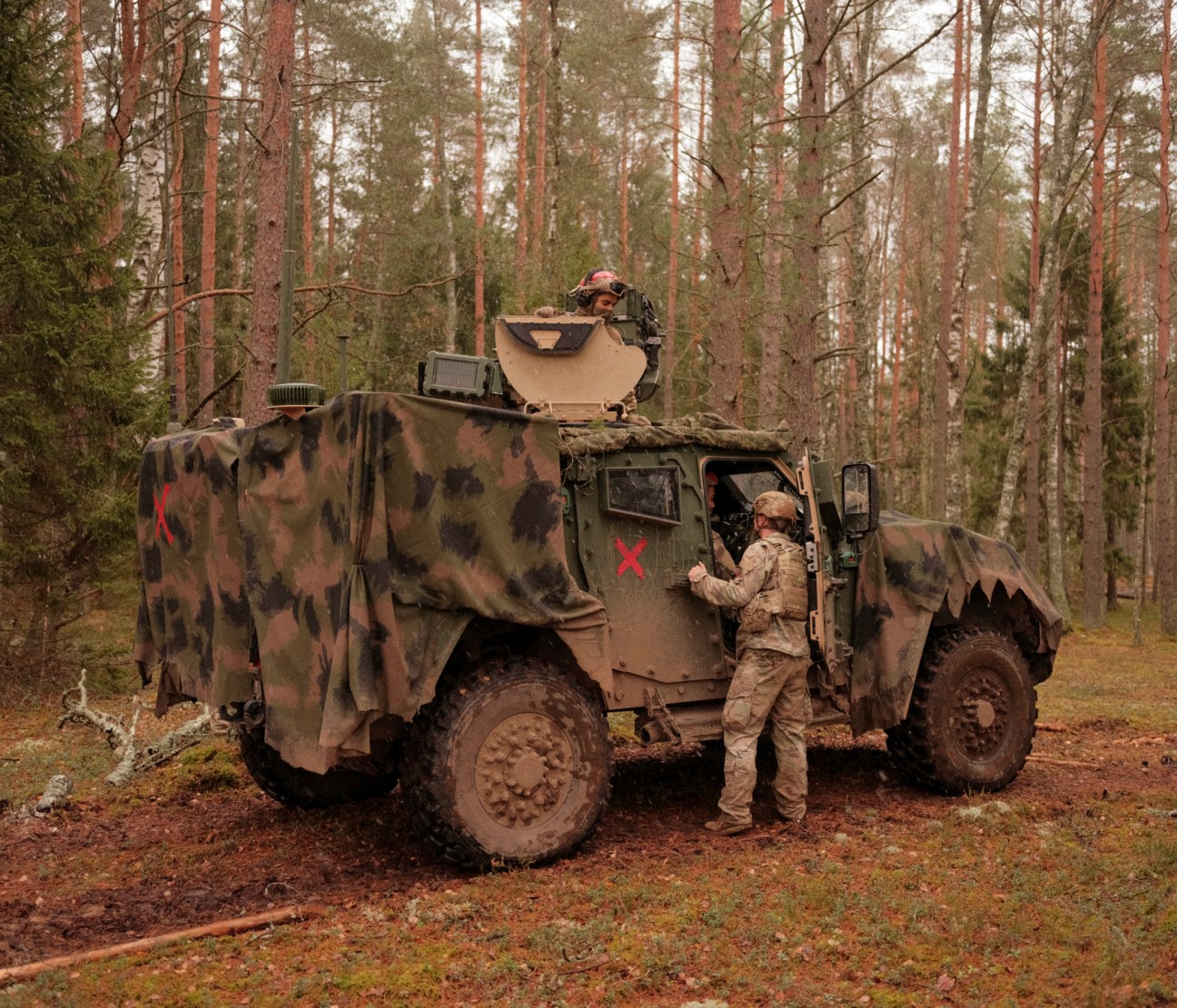
But Lithuania has been a European trailblazer. It introduced a nine-month conscription for several thousand randomly selected Lithuanian men every year (the age range is currently 18 to 23) in 2015 in the wake of Russia’s smash-and-grab annexation of Crimea. Today the Strong Griffin exercise is taking place amid biting winds that cut across open fields. Two thirds of the soldiers from the Duke Margiris battalion taking part are conscripts; half of the Kestutis battalion’s 400 soldiers have also been drafted. “The main purpose is to prepare the reserves,” says Margiris battalion’s commander, Lieutenant Colonel Mindaugas Specius, who sounds hoarse after barking orders all day. As well as having a large reservist base with basic military training, conscription is also a way of boosting active soldier numbers that had previously been flagging. “It’s a very good link between the armed forces and society, and a way to show [combat] readiness.”
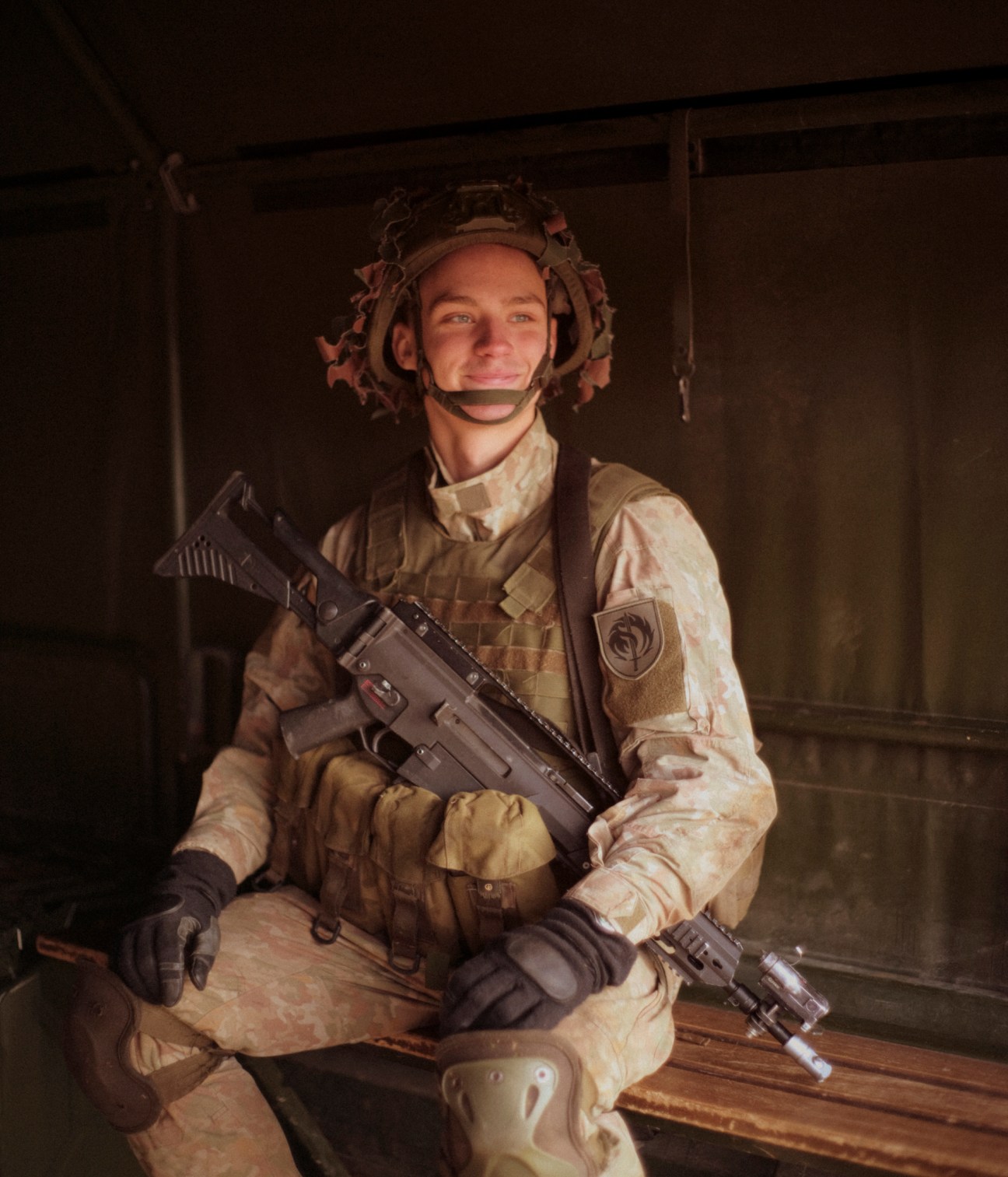
Combat preparedness is vital as the threat – perceived or real, depending on your point of view – from Russia and its allies looms large. “Our neighbours are unpredictable and unstable so we need to check our readiness every day,” says Specius. “The situation dictates that this type of exercise must be conducted at every possible opportunity.” Having untangled itself from its Soviet past and turned decidedly towards Europe, Lithuania feels a certain amount of vulnerability due to its geographical position. Indeed, Alexander Lanoszka, defence analyst and associate professor of political science at the University of Waterloo in Canada, calls the Baltic state “a small country that sits uncomfortably between Kaliningrad and Belarus” – a reference to the fact that it borders a Russian enclave to the west and what is effectively a Putin proxy state to the east. At one point, along the Suwalki Gap border that Lithuania shares with Poland, these hostile territories are separated by just 65km.
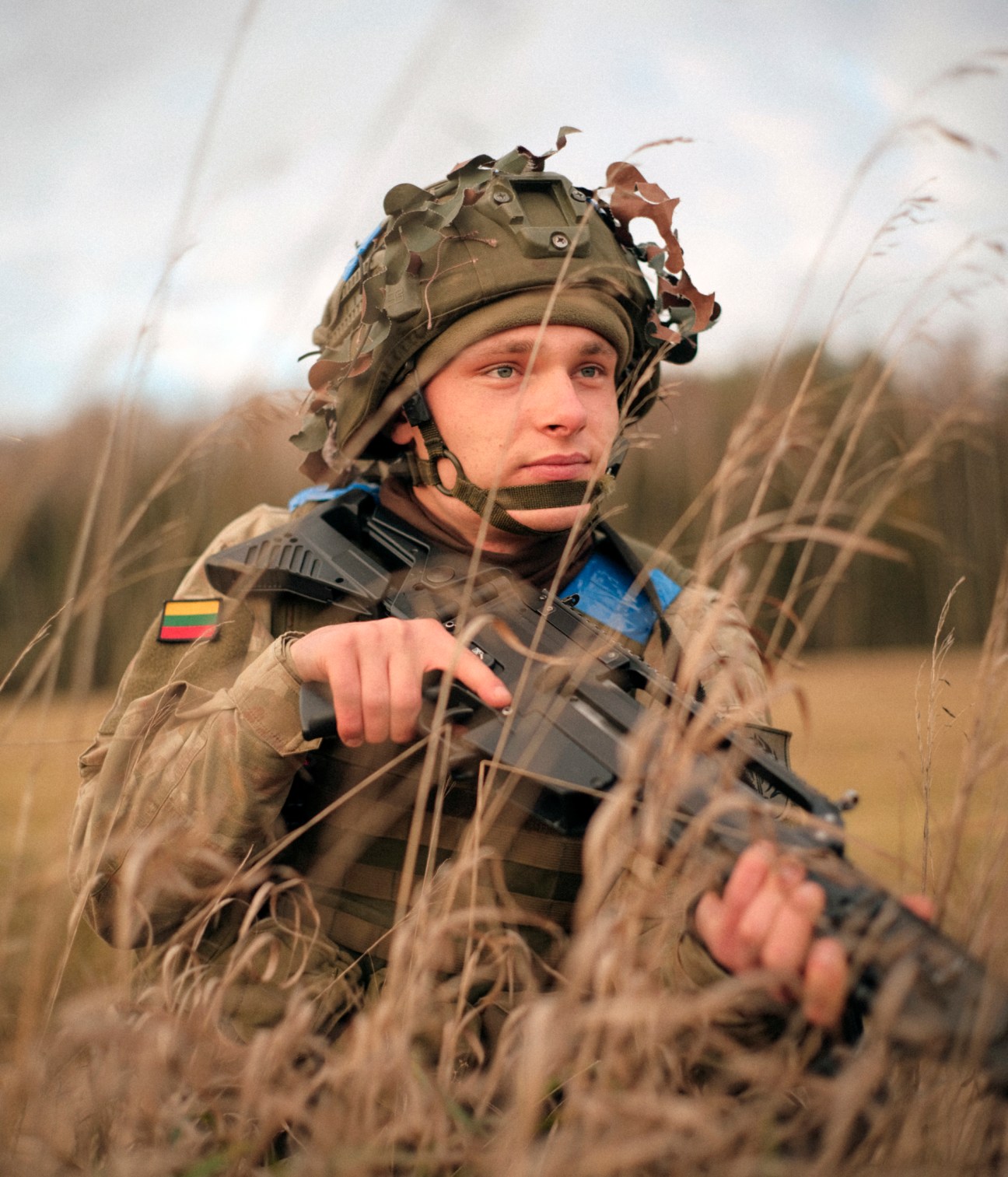
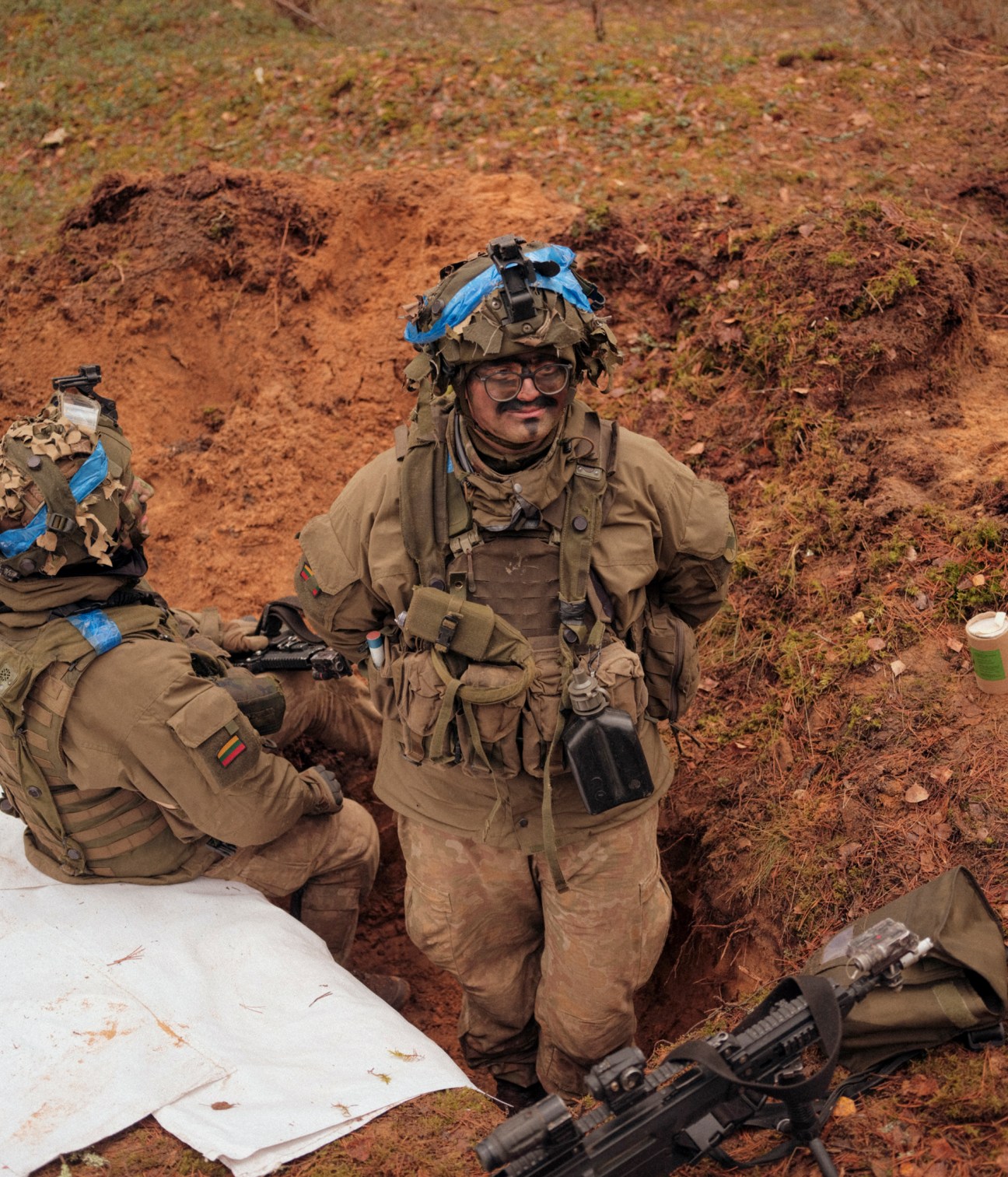
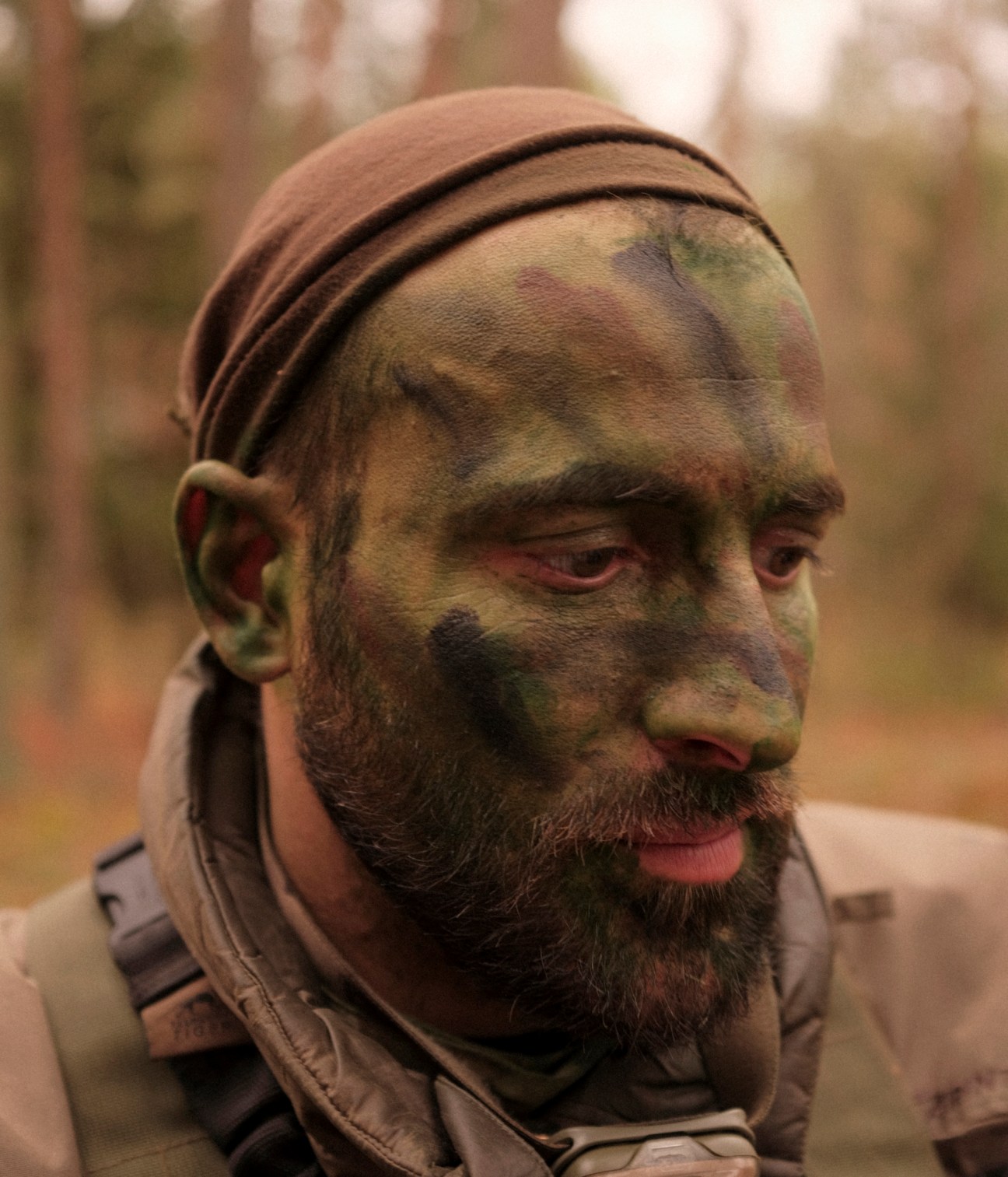
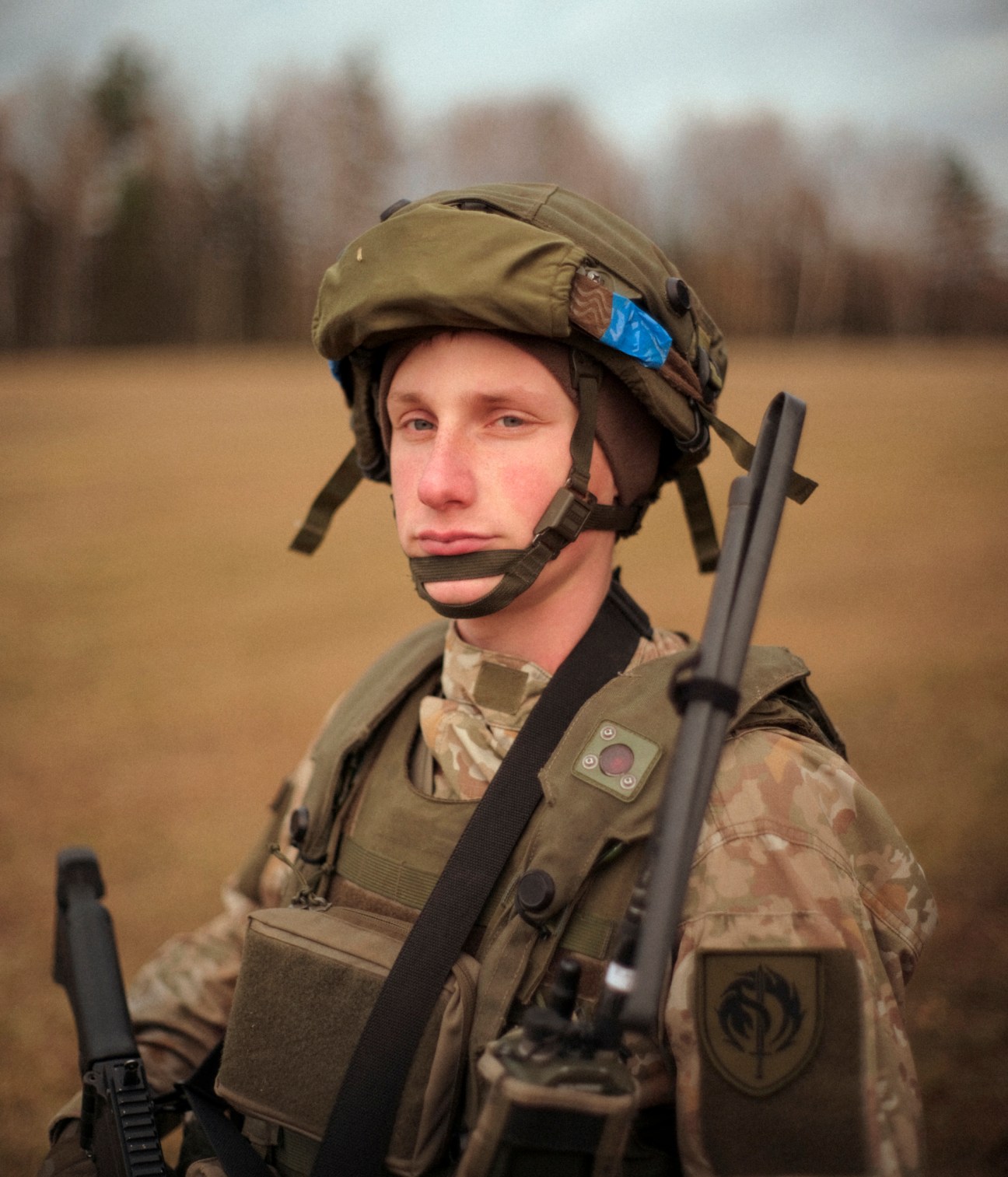
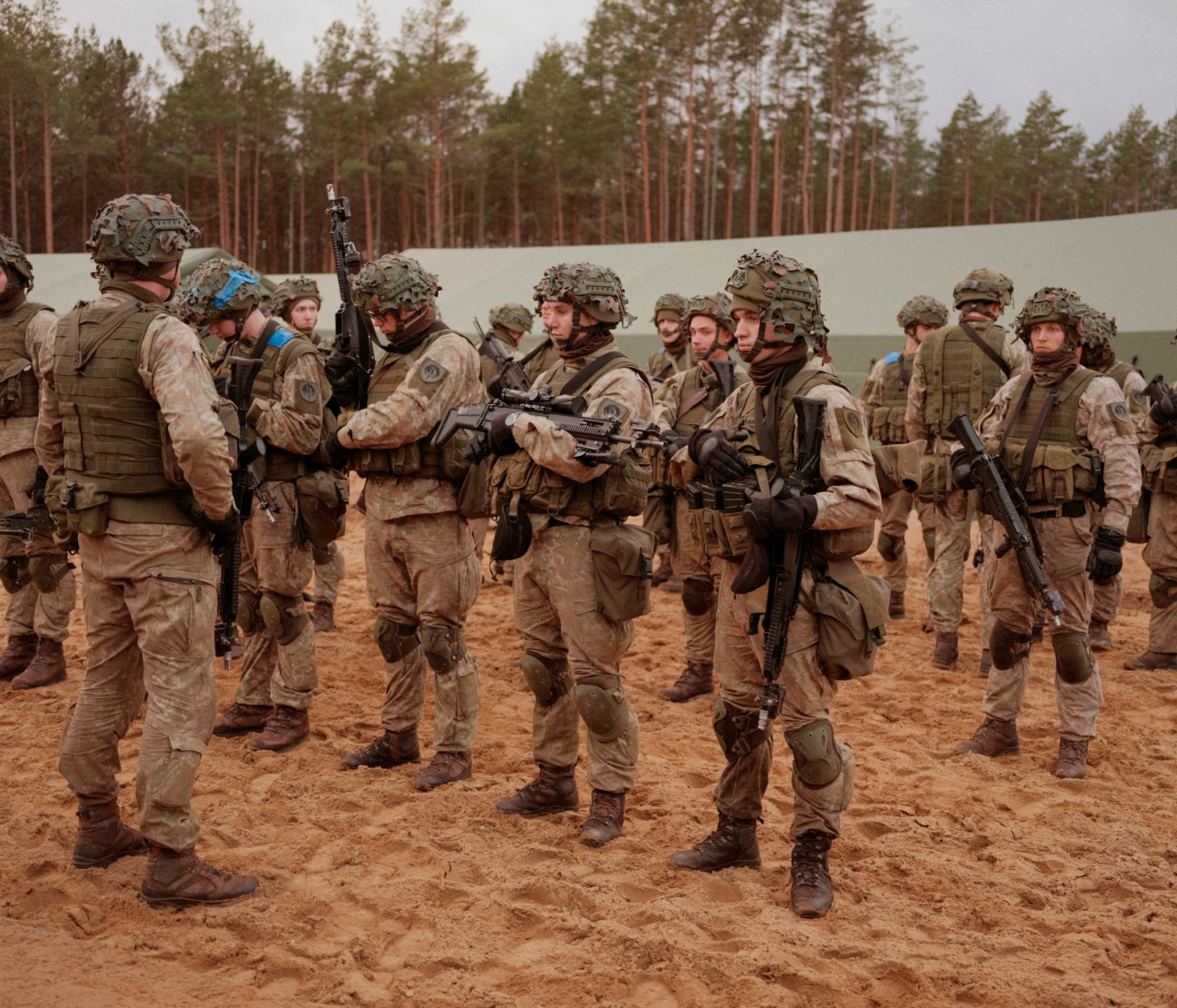
But if Lithuania’s conscripts are anything to go by, no one seems to believe that the country is in any real danger. At the Zukauskas training area, fresh-faced boys in brown-and-green fatigues clutch Heckler & Koch g36 rifles as they perform drills across fields, communicating with central command via Harris Galcon III RF-7800V radio stations. The troops have strips of blue tape attached to their uniforms to show that, in this simulation of a hostile environment, they are friendly forces. Wandering over to talk to Monocle is 24-year-old Vilius Monkunas, who has a confident air and a firm handshake. He is broadly in favour of conscription and says that it provided him with a break from office life in Lithuania’s second city, Kaunas. He might earn less here but with free board and food, he can save. He also thinks that it’s good to defend his country, though he doesn’t believe that the borders are in danger of being compromised. “I don’t feel any kind of threat, to be honest,” he says. “We are in Nato and we have a lot of allies. I’m not scared personally; neither is my family nor anyone around me.” It’s an opinion shared by 22-year-old Gvidas Daukintis, whose accent has an English twang – he moved to Maidenhead with his family six years ago. He says that Vilnius kept “bugging” him about conscription and he even had to pay a small fine for an initial no-show. “I feel safer than ever,” he says, rifle slung over his shoulder. But then he adds something that gets to the core of Lithuania’s conscription policy. “I don’t feel like anything is going to happen but we have to be ready for the unthinkable.”
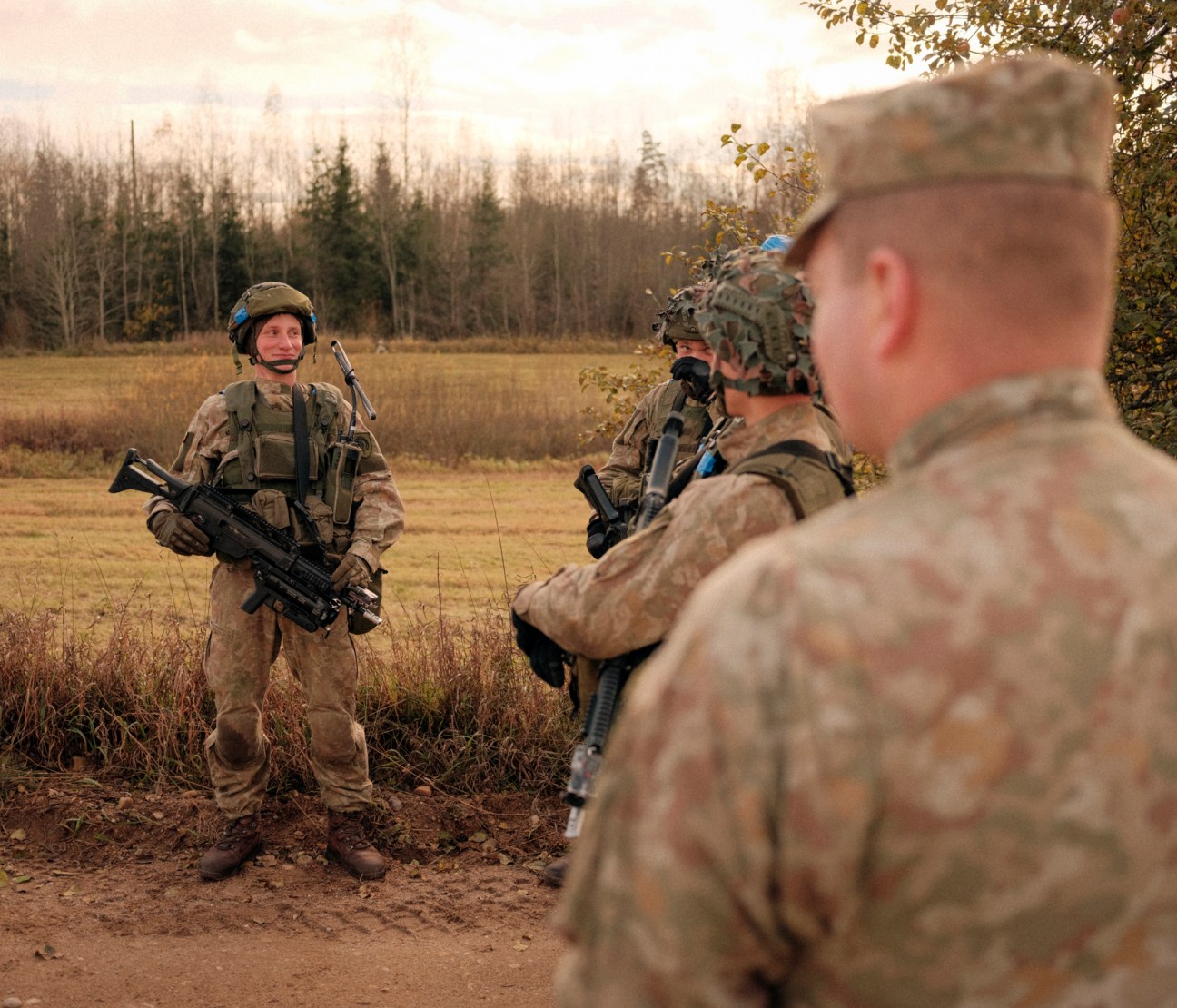
Lithuania hasn’t shirked away from talking about the potential threat posed by Russia and other bad actors who might be inspired by its bravado in Ukraine. Its foreign minister, Gabrielius Landsbergis, has long been vocal about strengthening what he calls “the eastern flank” of the two key blocs to which Lithuania belongs: Nato and the EU. Alongside unwavering support for Ukraine, the country has repeatedly called on Nato allies to increase their presence in the Baltic states. Germany has listened and has committed to the permanent stationing of some 4,800 soldiers inside Lithuania, who it expects to be combat-ready by 2027.
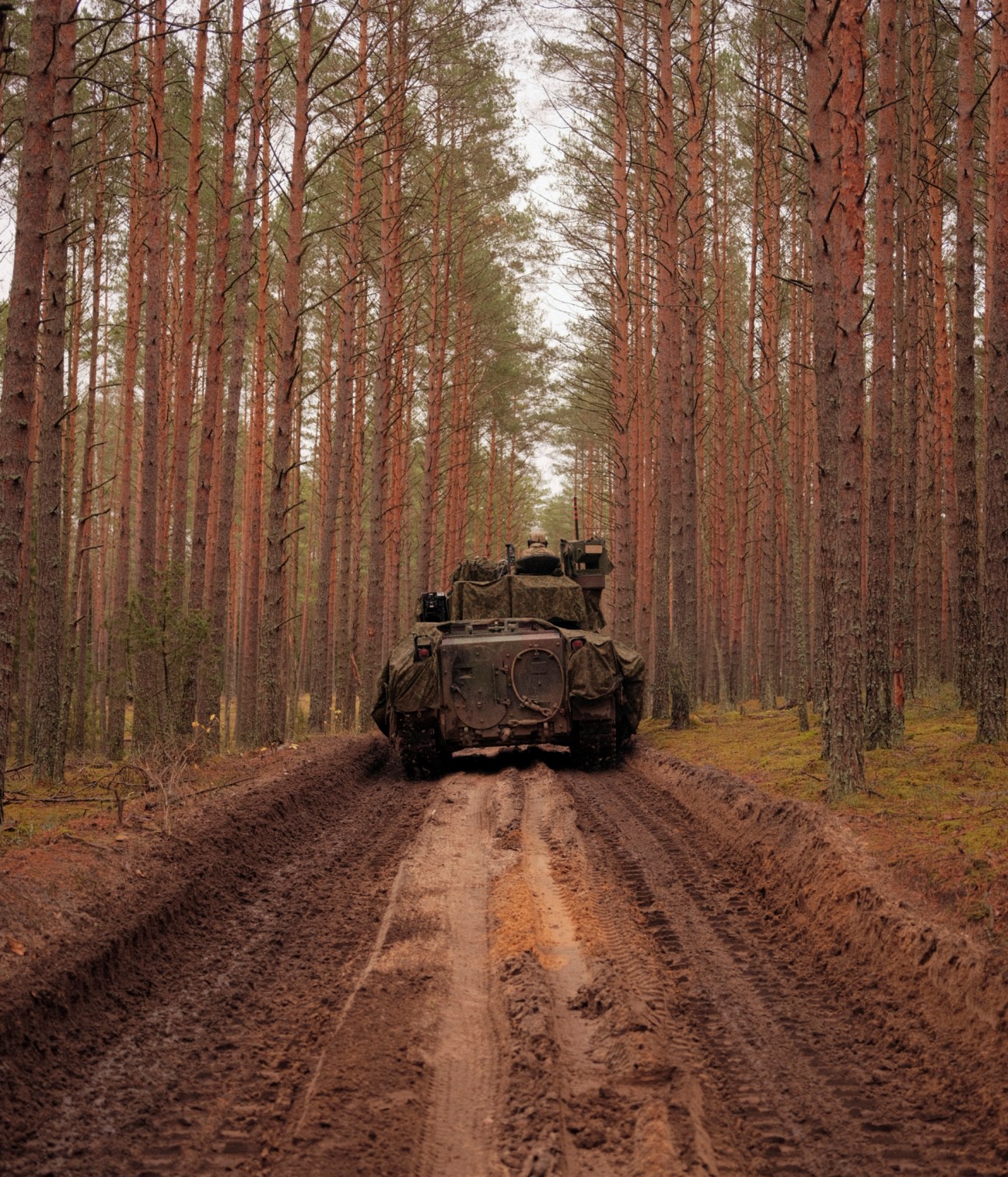
Highlighting Lithuania’s strategic position has its advantages if you are used to being overlooked as a country, according to Mark Galeotti, the UK-based executive director of the Russia-focused Mayak Intelligence think-tank. “All of a sudden, countries such as Lithuania can present themselves as being ready and active,” he tells Monocle. “In a way, that actually makes them more important.” Galeotti also points to the example of Poland, which has upped its status as a central European defence powerhouse by exploring a €20bn arms deal with South Korea.
Show of strength
Some 2,200 soldiers and 300 vehicles are involved in the exercise: US Abrams tanks and Bradley infantry fighting vehicles; Lithuanian M113 armoured personnel carriers and ATV Humvees; and Polish Rosomak armoured vehicles.
Lithuania’s armed forces are never going to match those of Germany, France or even Poland. But that’s missing the point, according to Zilvinas Tomkus, vice-minister of national defence. “Our strength is how we involve society,” he says, referring to how Lithuania builds resilience. “And this is an important thing to know.” He’s not the first Lithuanian official to talk about bridging the armed forces to civilians divide through conscription. And he’s not the first to point to a 2023 poll showing that 86 per cent of Lithuanians are in favour of the military profession, up by 7 per cent from the previous year. Indeed, the Ukrainian experience has shown what having widespread domestic support can mean on the battlefield, even in the face of a larger adversary.
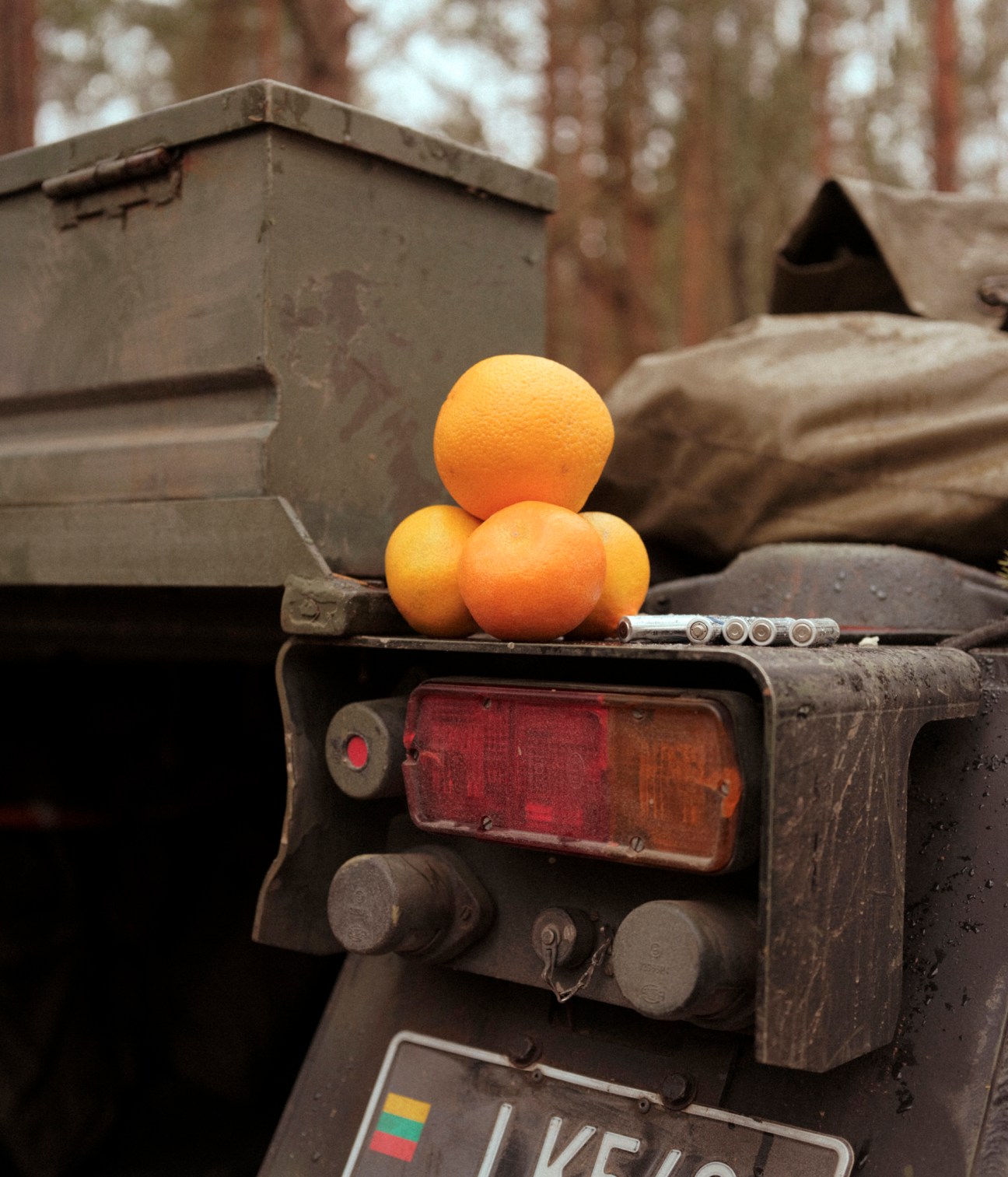
Still, there’s little doubt that conscript life is a big change from the creature comforts of home. Over in Zukauskas, soldiers are arriving back at their muddy temporary home, known in military speak as an assembly area, after the day’s exercises. They wash in blocks of portable-cabin showers and drop off their kits at the large army-green tents in which they’ll sleep on rudimentary folding beds. In an outdoor kitchen, protected from the rain by a tarpaulin, army chefs are heating up vegetable soup for dinner while Kiss’s I Was Made for Lovin’ You drifts from a stereo. Days typically start at 06.00 with lights out at 22.00. It’s not exactly the big nights out and weekend lie-ins that many 20-somethings are used to. “What’s the hardest thing here?” asks Vilius Monkunas, the junior private with that firm handshake. “Probably the rules; to stand in a crowd and for it to be very strict. It’s hard for me as I’m kind of a free soul.”
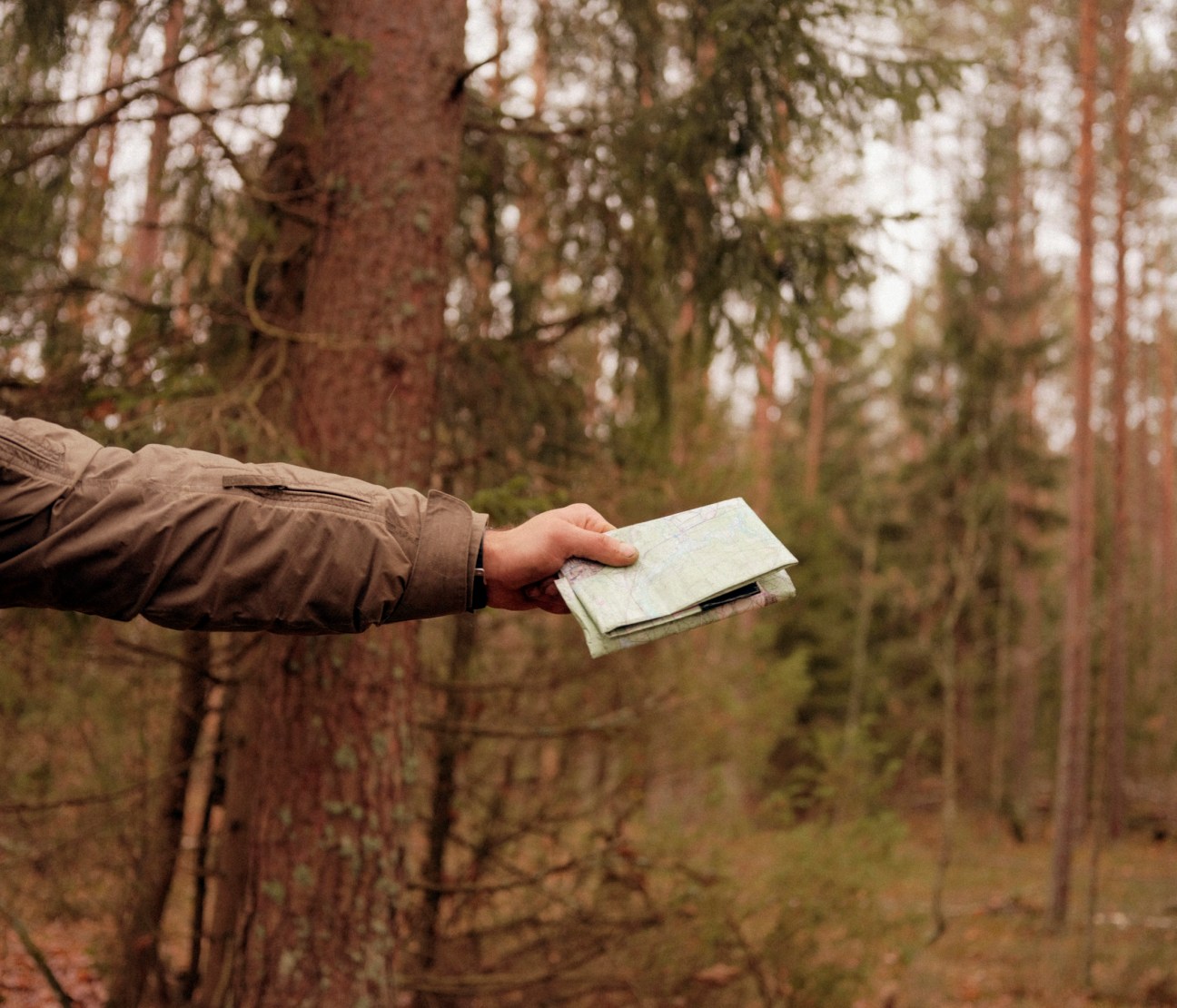
Despite the rigidity of their new regime, most of the conscripts have positive things to say about the time spent away from screens, learning skills that they most likely wouldn’t have acquired otherwise. No one we spoke to knew how to operate a gun previously. Many now know how to successfully navigate their way back to base from the middle of nowhere in the dead of night using only a map, a compass and a set of co-ordinates. Some, such as 19-year-old Ainaras Paukstis, are even contemplating becoming a professional soldier, though he’s yet to be fully convinced. For others, it has been an opportunity to test mental and physical reserves. “It’s changed me psychologically,” says Daukintis, the conscript with the English twang. “When you’re running or doing exercises, you can’t stop because the leaders are asking you to do it. You just keep pressing on and realise that you can do it – it’s amazing.”
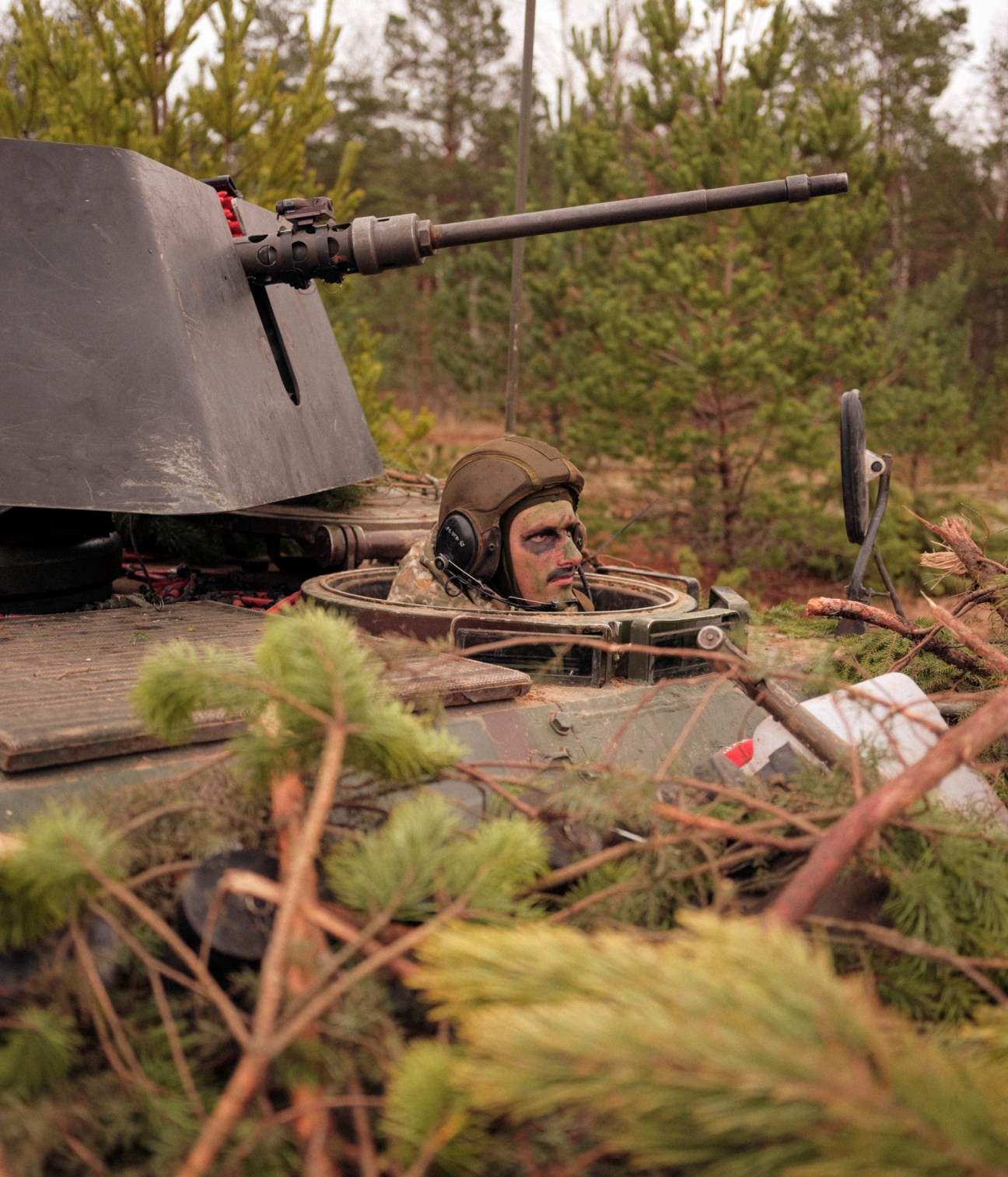
Of course, contemporary warfare needs more than brute force and land troops. “That’s why we need riflemen but also the guy who can operate a drone or use artificial intelligence as a tool to defend and fight against aggression,” says defence vice-minister Tomkus. Indeed, hybrid warfare is increasingly on policymakers’ lips, a term used to refer to non-conventional acts of hostility. For Lithuania, this has meant irregular flows of Middle Eastern and African migrants crossing from Russia-allied Belarus, a phenomenon that peaked in 2021 and has subsequently affected Latvia and Poland. Since the end of last year, it has been the turn of Finland to experience an influx of migrants seemingly funnelled there by Moscow; it responded by closing its border with Russia.
Serve and protect
Male draftees are called from among Lithuania’s 18 to 23 year olds, whereas all 18 to 38 year olds – male and female – in the country are invited to enlist on a voluntary basis. Both cohorts complete the same nine-month service.
Clearly the rumble of armoured vehicles and camouflage paint on soldiers’ faces during the Strong Griffin exercise is more than a stunt. Military spending has risen to 2.75 per cent of GDP this year (up from just 0.89 per cent a decade ago) and there has been a doubling down on compulsory military service, even if many of the draftees we speak to say that they think the decision to join should remain voluntary. Lithuania’s ambassador to Nato, Deividas Matulionis, tells Monocle that although it hasn’t happened yet, “it seems that the political will is there” for Lithuania to move from a partial to a general conscription model in the future. In fact, its parliament’s lower house has already passed a bill that will move things in that direction. At the end of last year, it provisionally approved lowering the conscription age range from 18 to 21, instead of 18 to 23. More importantly, the bill also aims to reduce the number of exemptions that stop people from joining, including for students. It will be put to a subsequent vote this spring and, if everything goes to plan, Lithuania could be drafting some 5,000 soldiers a year by 2027, up from the current maximum of 3,800.
Officials here are keen to underline that Russia should never be underestimated. They draw on the examples of the war with Georgia in 2008 and the Ukraine invasions of 2014 and 2022, which all largely took the West by surprise. It’s an opinion that battalion commander Lieutenant Colonel Specius shares, shrugging off the overconfidence of his young conscripts. “Young people might judge the situation differently,” he says. “But when you have to make difficult decisions, you need to understand the situation from all sides. We need to be ready when the moment comes.”
Draft plans: Europe’s conscription debate
So far, the return of conscription in Europe has largely been limited to Nordic and Baltic nations that feel a deeper threat from Russia due to their proximity. But there are signs that countries such as France, Germany and the UK are rethinking military service, a policy that largely fell out of favour in the aftermath of the Cold War. Former UK defence secretary Ben Wallace said that he was in favour of conscription as a means to build the reserves, inspired by the Swedish and Finnish models. Grant Schapps, his successor, has been open about the problems facing the army and the need to recruit more people (conscription being an obvious way to do it, even if the British public remain unconvinced). In France, MPs last year approved the largest military spending hike in half a century and Emmanuel Macron is known to be an admirer of military service. His introduction of a four-week voluntary service for teenagers has had a lukewarm reception but he’s still pushing to make it compulsory. As for Germany, its armed forces – the Bundeswehr – are also facing a drop in recruitment. Its 181,383 soldiers are short of the target of 203,000 that Europe’s largest economy wants to achieve by 2031. Conscription, abolished in Germany in 2011, could be a way to solve the problem.
Interview: Kim Bora, award-winning director of ‘House of Hummingbird’
It took South Korean director Kim Bora years to muster the courage to call herself a filmmaker. “I was always a bit embarrassed about loving films so much,” she says from her living room in Seoul. “In a [conservative] society like this, you’re always thinking about how things might not work out.”
Kim, one of the most acclaimed young directors from South Korea, is best known for her 2018 feature debut, House of Hummingbird, which won 59 prizes around the world, including at Tribeca and the Berlin International Film Festival. But success, she says, didn’t come easy. “I’m not this genius who is super certain of her opinions,” says 42-year-old Kim. “I just work really hard. Throughout my twenties I doubted whether film was the right path for me. Even in my thirties, when I finished House of Hummingbird, I thought, ‘This is too hard. I’ll quit after this one.'” What she didn’t know at the time was that the film would introduce her work to global audiences, who were already familiar with the oeuvre of male South Korean directors such as Bong Joon-ho and Park Chan-wook.
House of Hummingbird follows Eunhee, a 14-year-old girl, as she confronts complex questions about her identity, love, sexuality, social repression and more. This all takes place in the newly democratised South Korea of 1994 – the same year a major bridge in Seoul collapsed due to faulty construction. The tragedy is still seen as a symbol of rushed modernity.
Kim was a similar age to the protagonist when the Seongsu bridge fell. Her school years were not particularly happy ones. Kim, who sees herself as a feminist, recalls frequently feeling oppressed in the cookie-cutter South Korean education system. At the Kaywon High School of Arts, where she first studied film, she once had to watch a female student, who was elected as class president, be pressured by her teacher to give up her position to a male pupil – unfortunately not an uncommon tale in South Korea at the time.
The CV
2005: Graduates from Dongguk University with a degree in film.
2007: Leaves for New York and receives a master’s in film directing from Columbia University.
2011: Wins best student filmmaker for the east region from the Directors Guild of America for film The Recorder Exam.
2018: Releases House of Hummingbird to great acclaim at Tribeca, the BFI and the Berlin International Film Festival, among others.
2021: Begins work on Spectrum, a big-budget sci-fi film based on Kim Cho-yeop’s short story.
“I was livid,” she says. “When I entered my twenties, I began to sublimate this rage into film.” At Dongguk University, she connected with feminist communities and tried to defy widespread prejudice against female directors. But it was during her master’s programme at Columbia University in New York that Kim began to feel nurtured as a filmmaker. “I sometimes wonder whether I’d have realised that it is possible for a woman to make films had I not gone to that school,” she says. “In South Korea, when I wrote a script with a lesbian character, I was questioned why. At Columbia, I was asked about character development, the narrative arc.”
Today, South Korea is a dynamic battleground for feminist movements. But hurdles still remain, including in the country’s film industry, where female directors only contributed to 11.5 per cent of theatrical releases from 2009 to 2018. Even so, Kim is undeterred. She is working on Spectrum, a big budget, sci-fi film based on Kim Cho-yeop’s short story. She is determined to bring gender sensitivity to the film and has faith in her voice. “In my twenties, I approached filmmaking a bit like a child, wanting to express and prove myself,” she says. “Now I want to be a master.”
How do America’s first responders train for the worst natural – or manmade – disasters?
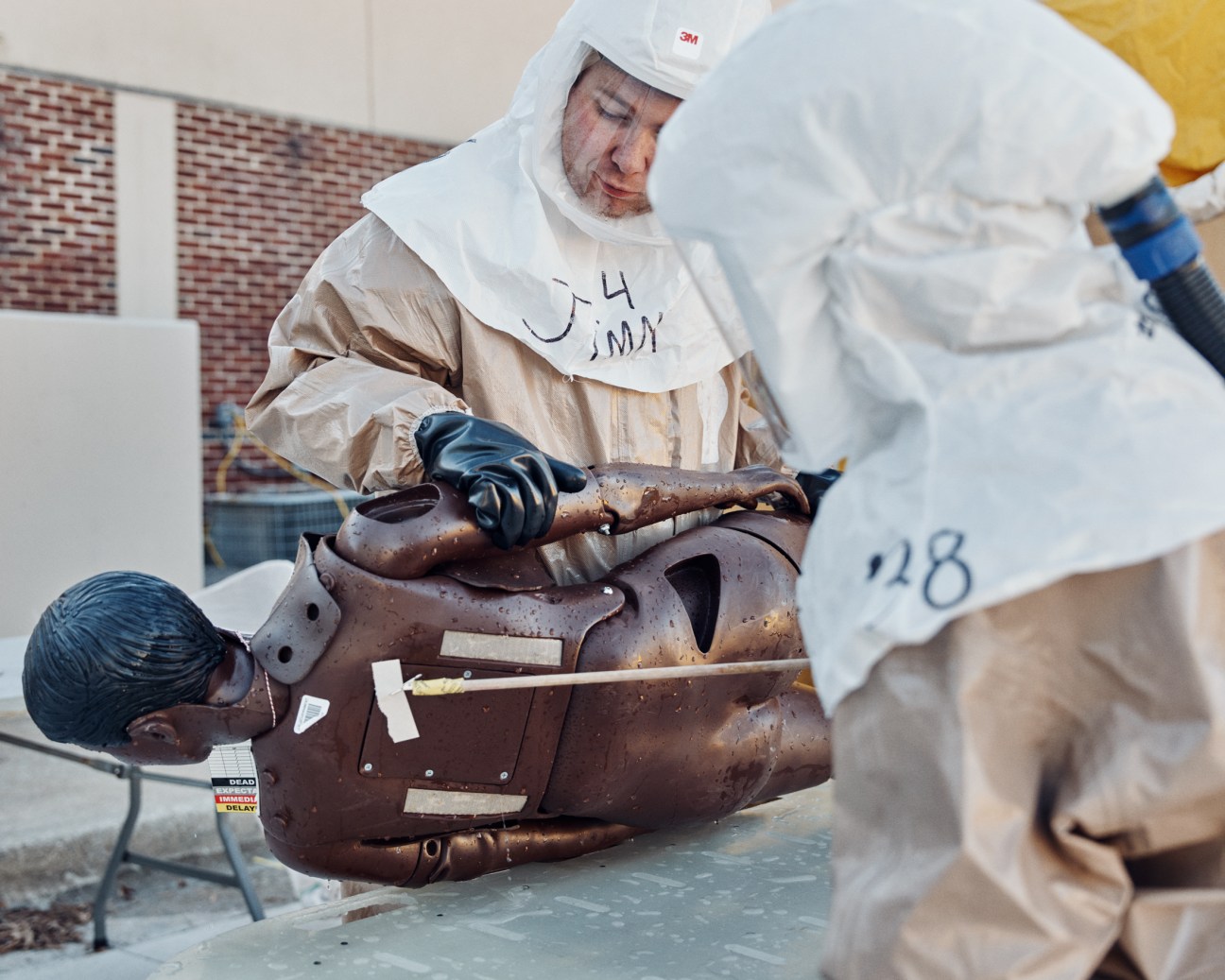
On an Alabama highway, a cargo truck carrying pesticide has stalled while crossing a railway track. A few moments later, it is struck by a freight train transporting an unknown chemical contaminant, which begins to leak. Any number of people could have been exposed. Nearby, at a small hospital in the town of Anniston, a “decontamination line” has been set up in a car park. When Monocle arrives, the scene is a flurry of ambulances; workers in Tyvek biohazard suits are cutting away the clothing worn by victims, who then progress through a long tent where any remaining contaminants are scrubbed away. Instructions are being shouted as more ambulances pull in. A man sits shivering in a white robe, a smudge of blood on his face.
For all the drama and intensity, this is not a real-world emergency but a high-fidelity simulation of what is rather coldly called a “mass casualty incident”. This hospital no longer treats actual patients: the “victims” are local actors or, in some cases, medical mannequins; the people in charge are instructors. This whole exercise, the culmination of a week’s training of emergency personnel from across the US, is happening on the grounds of the Center for Domestic Preparedness (CDP), a 50-hectare complex run by the US Department of Homeland Security’s Federal Emergency Management Agency (Fema) on the site of the former Fort McClellan, a nearly century-old military complex that closed in 1999.
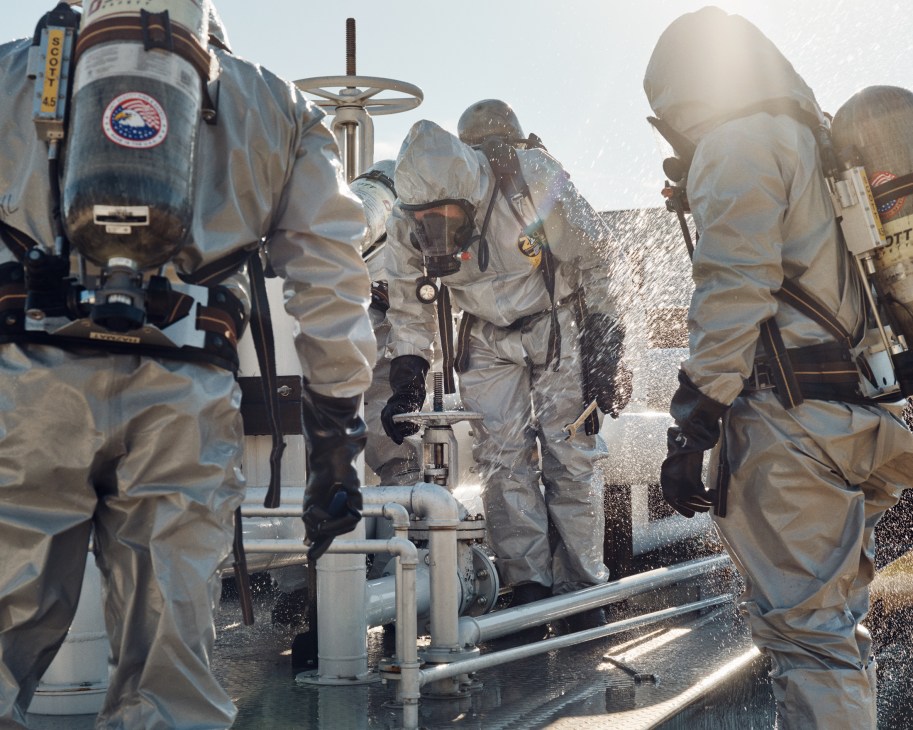
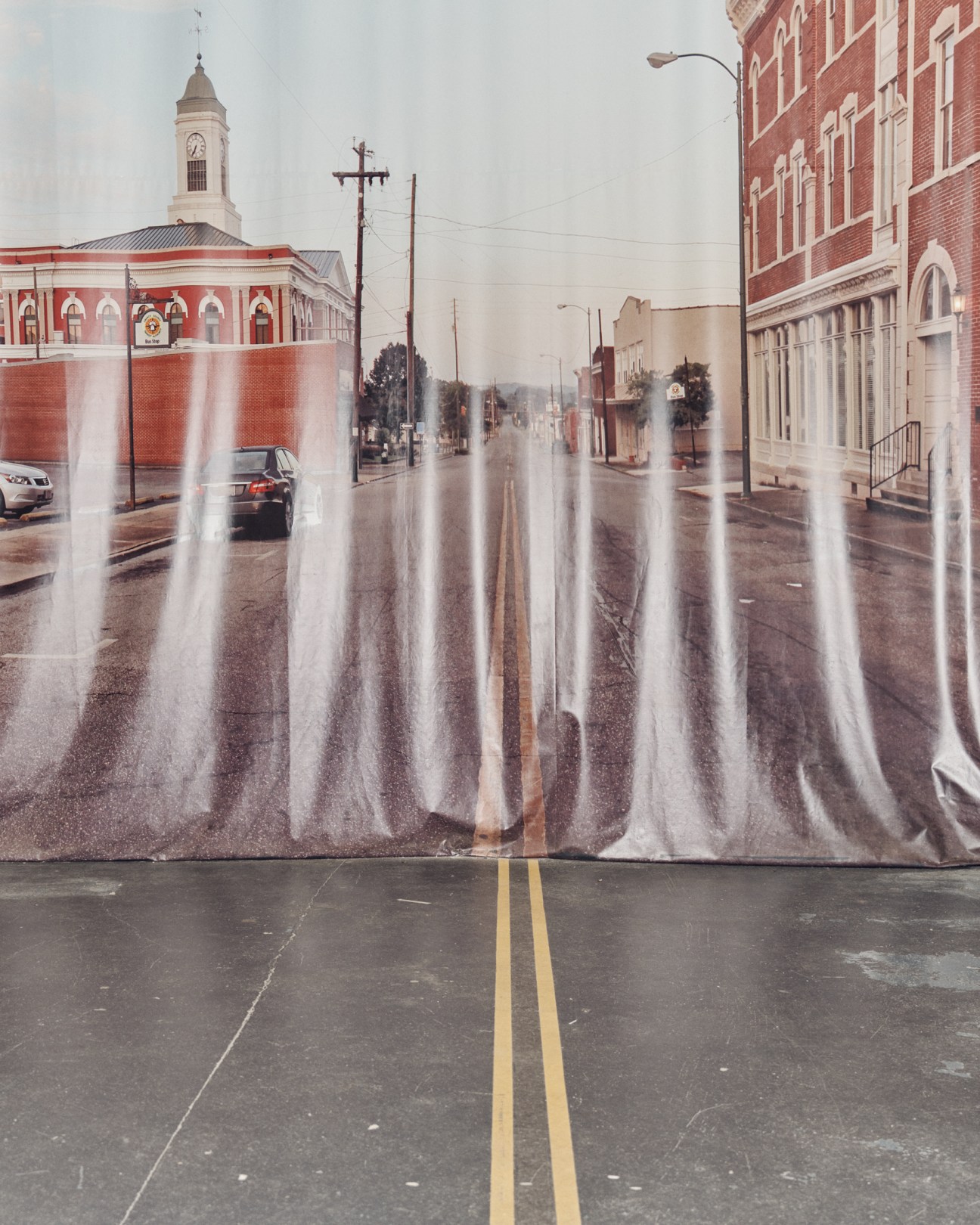
Since 1998, notes Kent Latimer, Fema’s director of training delivery, the complex has instructed more than 1.3 million firefighters, police, doctors and nurses in how to act in emergencies ranging from biological-weapon attacks and hurricanes to active shooter incidents. The centre’s unofficial motto is “training the best for the worst”, says Latimer. Most of the instruction takes place in specially designed simulation environments. The former army hospital is now the country’s only facility dedicated solely to training healthcare professionals in disaster preparedness and response. A few metres away, a cylindrical railway tanker sits next to some parked cars. “That’s a simulation of a 4-metre railcar,” says Latimer, with “domes” housing different chemicals. The car was built by Advanced Entertainment Technologies, a Californian company that specialises in theme park attractions and film sets, with a sideline in hazmat training props. Nearby, there’s another car, which can be tipped on its side. In the distance, what sounds like a high-school sports fixture is in progress. “For our public-safety training, we play loud crowd sounds to simulate what it would be like working in a crowded environment,” says Latimer.
Throughout the year, the CDP will run hundreds of these exercises – and with good reason. In 2022, for example, there were more than 1,000 train derailments in the US. In the most notorious case, a train carrying hazardous materials derailed in Palestine, Ohio, a year ago and residents are still reporting lingering health issues. The city halls of Chicago and Milwaukee, which host, respectively, the Democratic and Republican national conventions later this year, have sent emergency responders here for training in how to accommodate large and potentially hostile crowds. In 2017 there were so many natural disasters in the US – hurricanes in the southeast, wildfires in the west, flooding in the Midwest – that the CDP had to suspend training and send its workforce to help in real disaster zones. “So many people have things on their transcripts [school records] and yet, when they get out in the field, can they execute?” says Tony Russell, who helped oversee the federal response to Hurricane Katrina in 2005 and now leads the CDP. He draws on his experience in the Marine Corps. “In the military, we would train under ‘live fire’ conditions,” he says. “So you could hear, feel and smell when someone was firing at you.” He wants the same for the CDP. “You can read it in a book but how does someone react to being really hot or cold, or being stressed out? Until you feel those things, you don’t know – and that is going to affect whether you can actually perform a task.”
One of the most striking examples of the CDP’s realism is at its Chemical, Ordnance, Biological and Radiological Training Facility (or “Cobra”). A red-brick building with a soaring central atrium, it looks like a mid-century church that has been fenced off by intimidating coils of razor wire. Formerly the site of the US Army’s Chemical Corps Training School, it is the only place in the country where emergency responders can go for “live agent” training – meaning that they will be exposed to actual variants of nerve agents such as sarin, which was used in the deadly 1995 terrorist attack on the Tokyo subway, and VX, a lethal compound derived from pesticide research. “They are weapons-grade,” says Cobra operations manager James Johnstone. “They will kill you.”
Nerve agents are so called for their effect on the nervous system. “They will cause convulsions and secretions, and you’ll lose your bladder,” says Johnstone. The facility can also expose participants to biological agents such as anthrax or ricin; there are no known antidotes for these so the CDP uses attenuated, non-lethal versions of them. “We haven’t had a nerve agent down here in seven to 10 days,” says Johnstone, somewhat reassuringly, as we enter the facility. A sophisticated “negative pressure” air-handling system quickly sucks the contamination out of the various bays and through a set of charcoal and Hepa filters. “This is the cleanest air in Alabama,” he says with a smile. Why incur the added expense, and risk to human life, by using actual nerve agents? “We had one responder who came in, he was a 30-year firefighter, he’s been in all kinds of events,” says Johnstone. “As we were getting ready to go into the hot area, he says, ‘I’m not going to do it.'” By adhering to strict realism, the centre hopes to prompt realistic responses. “Practise like you fight,” says Johnstone.
Studies conducted by the Walter Reed National Military Medical Center, adds fema’s Latimer, have found that training in actual contaminated environments is superior to artificial settings. He gives an example of a responder wearing a claustrophobic airtight ensemble on a hot day. “When the going gets tough and it’s all hot and sweaty and you’re wearing a mask and you just need a little breath of fresh air…” he says. “What do you think a first responder’s going to do if they’re training in a simulated environment?” He feigns lifting a mask off his face. “You don’t take it seriously because you know it’s a simulation.”
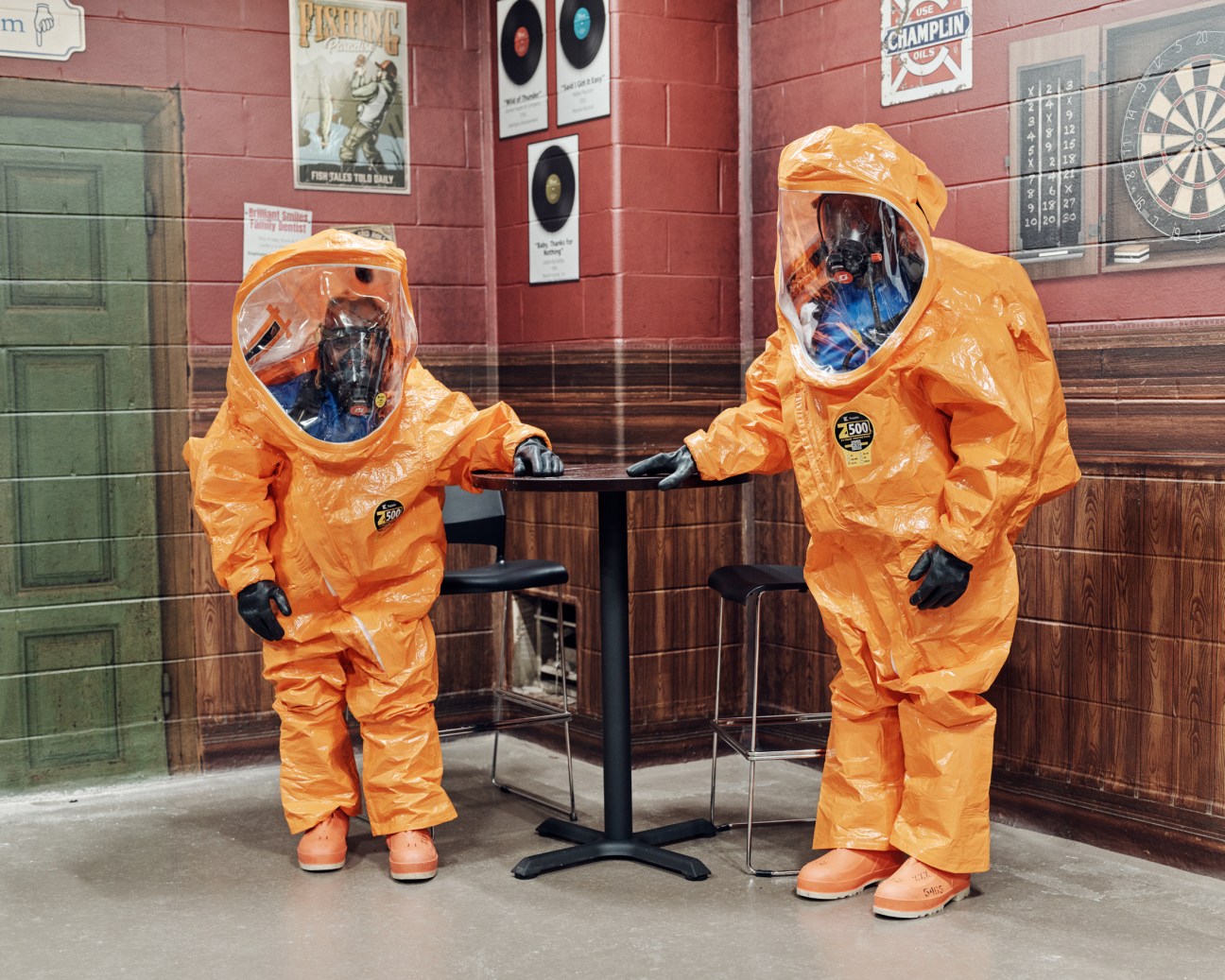
The CDP has spent several million dollars to upgrade the army’s facility from generic “training bays” to a simulated urban environment, a sort of mash-up of Nashville’s bustling Second Avenue (site of a 2020 bombing) and the New York subway. A warren of rooms and hallways, overseen by a control room, have been fitted with vinyl depicting environments ranging from a subway platform (complete with newspaper box and rubber rat) to a bar called Lucky’s. Before responders, clad in Grade A PPE (personal protective equipment), are allowed into the facility, they are exposed to a small dose of isoamyl acetate, or banana oil. “It’s very detectable when you smell it and it’s familiar,” says Johnstone. If participants smell banana, it means that their mask is not working. But it could also mean something else,” he says. “Somebody says, ‘I smell banana oil’, and they’re not smelling banana oil. They just don’t want to go in.” But even this psychological component has value here. “We would rather tap them out here than in the real world,” says Johnstone.
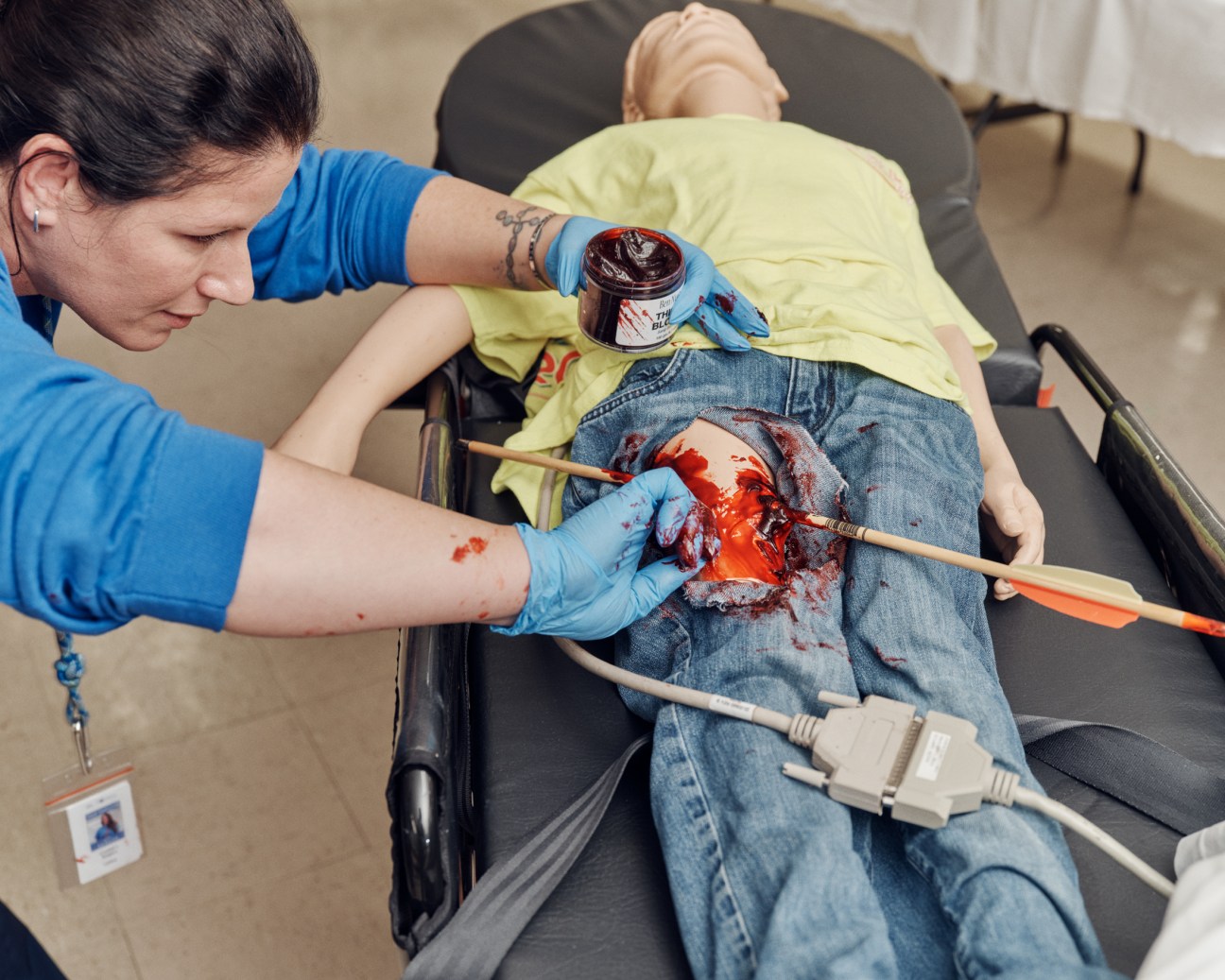
Back at the Anniston hospital, an actor named Ezra Gilreath is getting ready for his star turn. According to today’s script, he is a farmer named Cole Pollard who has lost his legs after becoming entangled in a piece of agricultural equipment. Gilreath, sporting sideburns and a pink shirt, sits on a gurney. His actual legs are tucked out of sight and what the world sees are two bleeding stumps. The crimson appendages are a highly realistic medical training device manufactured by Norwegian company Laerdal. Today’s exercises are all part of an Integrated Capstone Event, a chance for the assembled responders to put their training to work in an intense, multi-hour simulation of a regional hospital facing a sudden influx of patients. In addition to the patients coming from the train derailment, the responders have to deal with the standard pressures of a hospital environment. “We’re a relatively small hospital and our emergency department only has 13 beds,” says Rick Bearden, the CDP’s exercise manager. “On a normal day, in any town in America, those 13 beds will be full.” During a sudden “no-notice event”, the staff must scramble to reallocate scarce resources. To keep things interesting, CDP managers will throw a few curve balls. “This is like the script of a play,” says Bearden, pointing to a computer spreadsheet. Known as the Master Scenario Event List, it contains some 200 events, featuring everything from power outages to cardiac arrests.


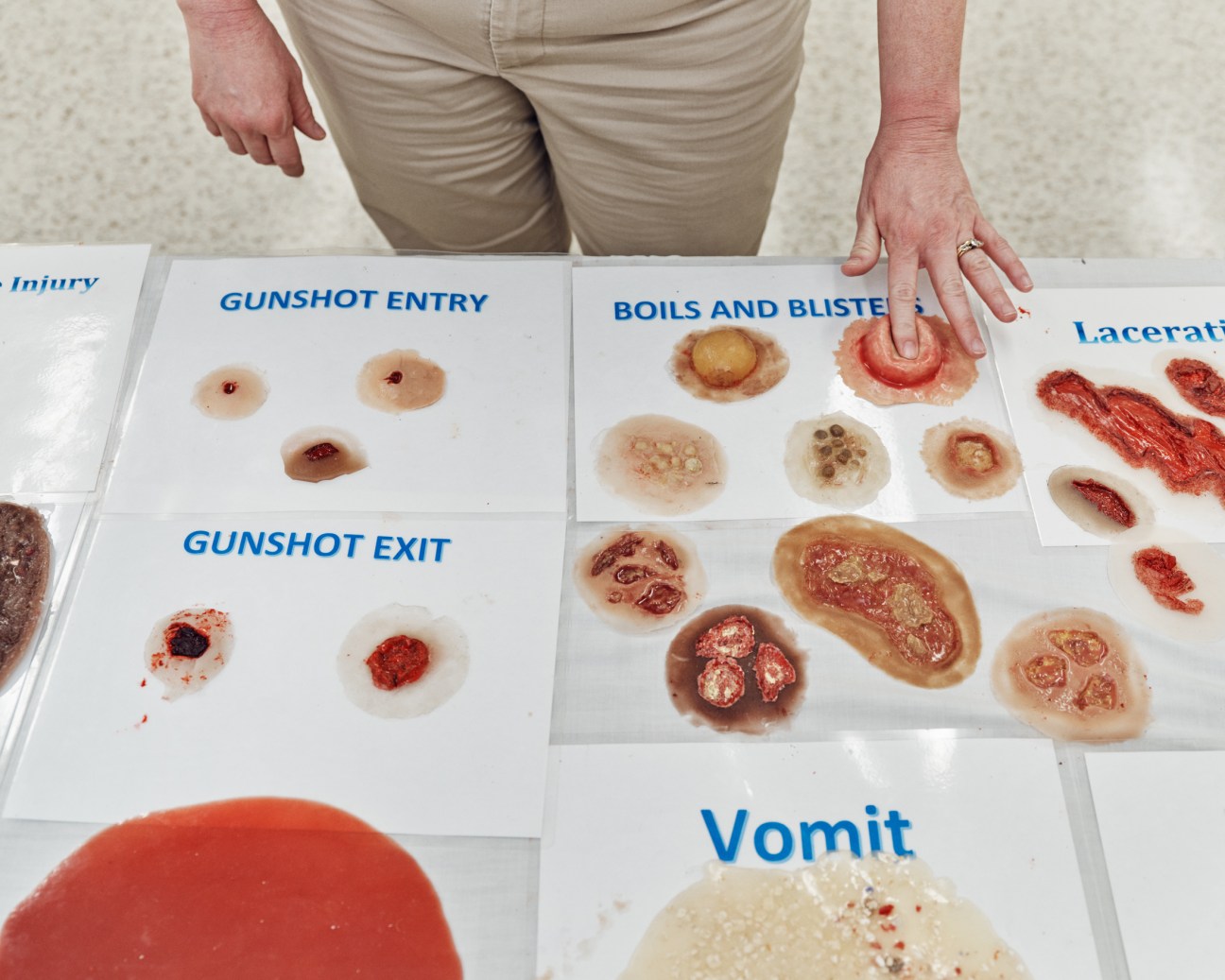
One of these events calls for a patient with an emergency double amputation to suddenly appear at the already stretched hospital. Gilreath, the fictional farmer, is one of several dozen live actors the CDP will use. Some lie on stretchers, others shuffle through the “decon[tamination] line” wearing T-shirts reading “I’m naked” so that responders can treat them appropriately. The blood smeared on actors comes from a plastic jug of Ben Nye stage blood; the flavour is “zesty mint, in case they need to put it in their mouths”, says Katelyn Deerman, a training manager at the CDP. If today’s event unfolds like a film, the mannequin ward is the special-effects department. There’s a bottle of Hershey’s syrup (used to simulate diarrhoea), “vomit” (Pond’s cold cream and oats) and a range of latex wounds – everything from gunshot lesions to boils and blisters.
As the morning unfolds, the heart of the action is the hospital’s command centre. Rob Carter, a physician and instructor, says that the administrators are managing the crisis in real time, with everything acted out to the letter. “The emergency department is asking for blood products,” he says. “That doesn’t just happen with the flip of a light switch. We make them call the blood bank.” Faithful to one of the script’s plot points, the hospital’s internal communications are down. “So we have to run down to radiology?” a nurse asks. Carter expresses slight concern over the team’s performance. “The tone of the room is loud, it seems a little disorganised,” he says. The reason, he suspects, is that the person in charge is “getting in the weeds”. Rather than prioritising the big decisions, “they’re trying to fix everything”.
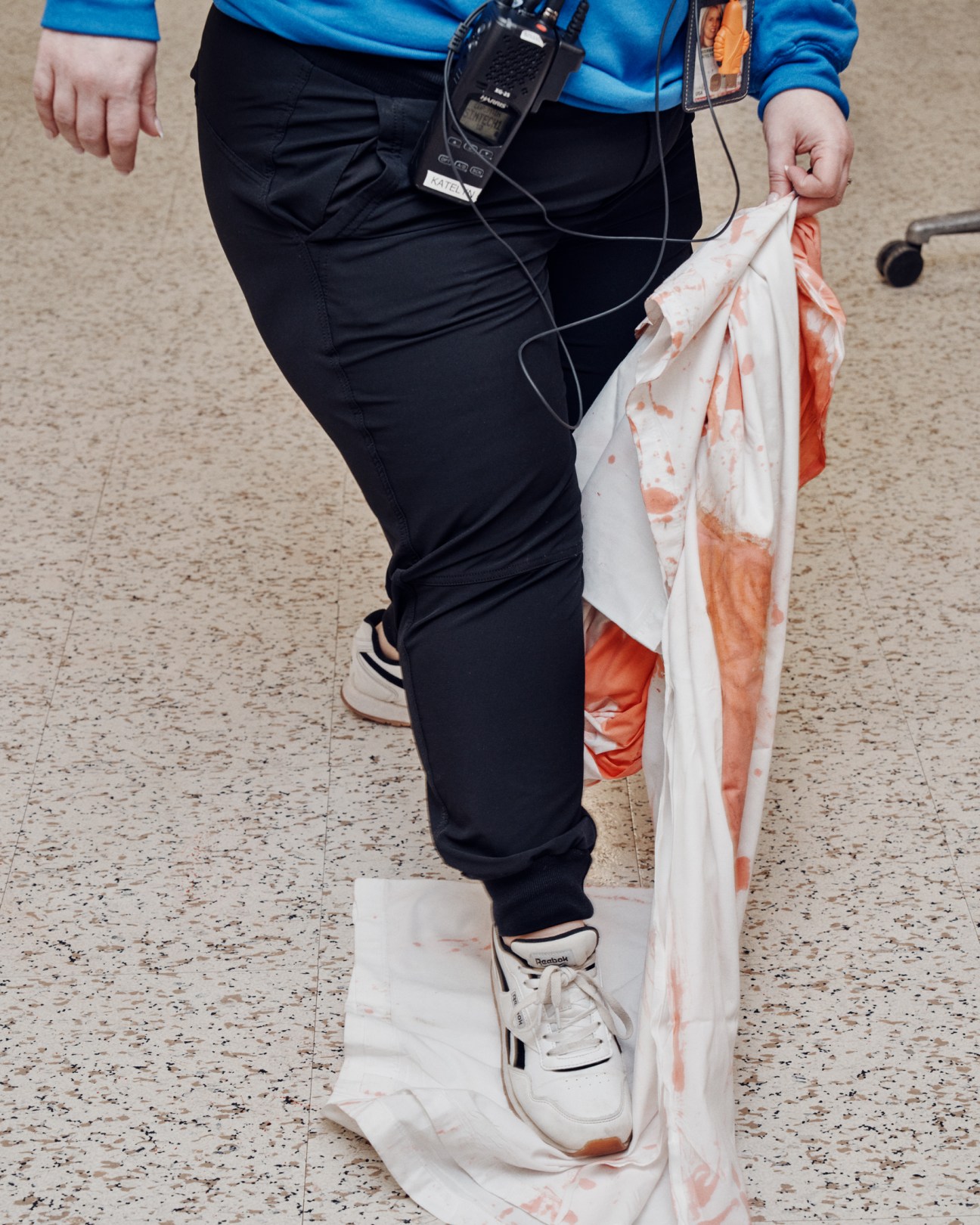
Back in the mannequin ward, Gilreath is ready to be wheeled to the emergency department. The staff cover their ears. “Ezra is the best screamer,” says Deerman. Suddenly, it’s go time. Gilreath unleashes a series of Oscar-worthy cries of “My legs!” as he is wheeled into the glaring light of the emergency ward. A team of nurses surrounds him, the doctor introduces herself. “You can come with me, ma’am,” a nurse says to the mother. “No,” she says repeatedly, her face a knot of anguish and concern. “I’m not leaving him.” His vitals are checked, tourniquets applied. “We got fluids?” someone asks. “Let’s get him up to the operating room.” The patient is whisked out, trailing blood on the gleaming floor. The room goes quiet.
At some point in the next few weeks there will be a new crisis – a hurricane or an earthquake – and a new cast of characters. Simulating these sorts of emergencies helps to resolve a real-world dilemma. Events like these don’t happen so frequently that emergency responders can learn on the job but they are common enough that someday these responders will get the call – and it won’t be a drill.
The design agenda: A new archive space opens at the Eames Institute of Infinite Curiosity
architecture –– norway
Cabin essence
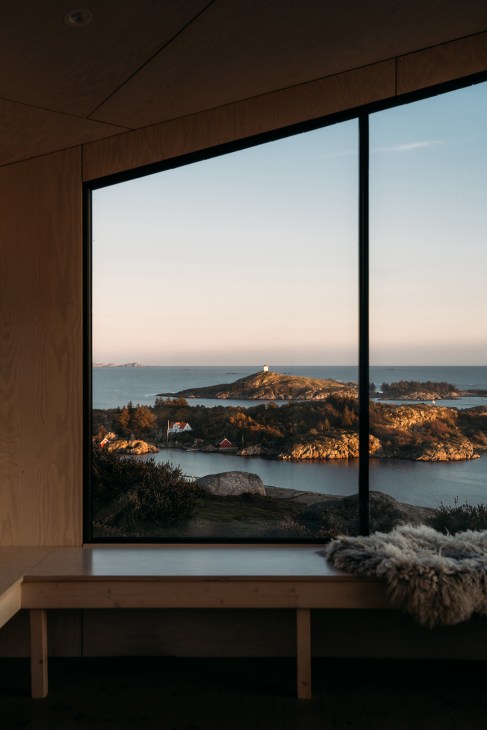
Porsgrunn-based studio Feste Landscape Architecture has designed a series of cabins for the Norwegian county of Agder. Located in various landscapes across the region, the 25 identical structures cater to those who want to immerse themselves in nature. Each has floor-to-ceiling windows, a fireplace & a built-in library. In 2021, Agder County Council commissioned Feste to create homely cabins that could be installed in remote locations. It was a priority of the project’s lead designers, David Fjågesund and Sigurd Aanby, that the natural environment would not be compromised.
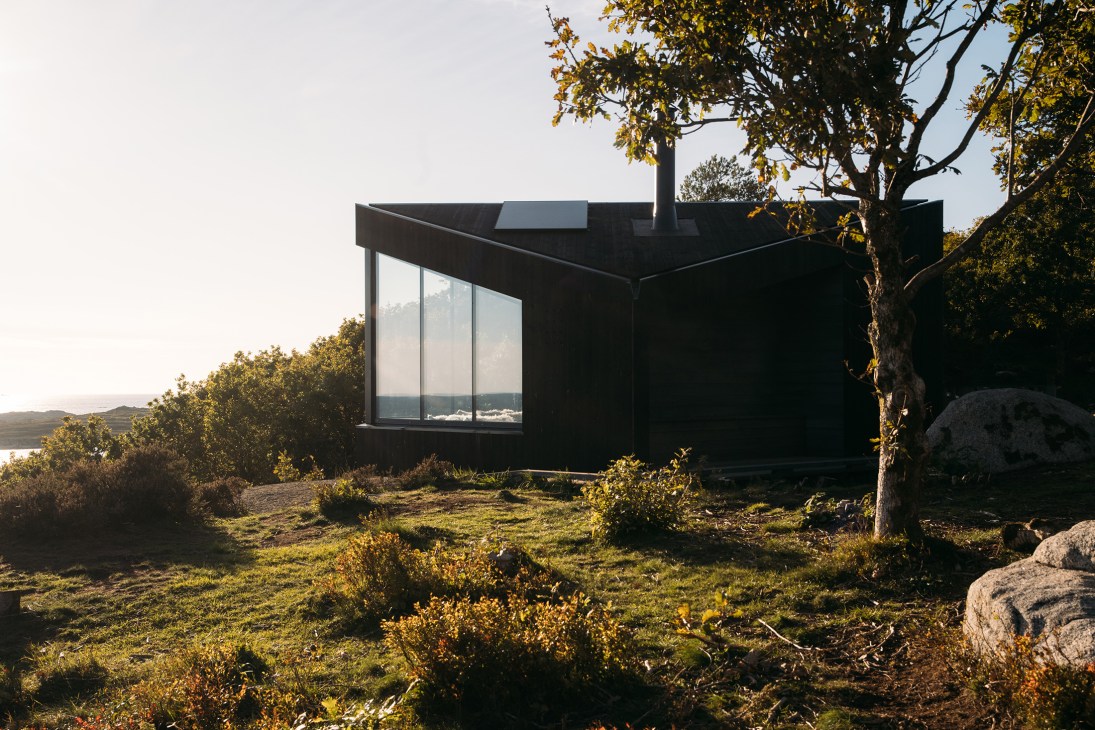
Their solution was to develop a modular design that could be prefabricated elsewhere and then positioned by helicopter. “This eliminated the need to use heavy vehicles and machinery to [install the cabins], which could have caused a lot of damage,” says Fjågesund. The designers were also eager for the cabin experience to feel distinct at every location. “By carefully selecting the plots and making considered interventions in the landscape, we gave each cabin its own unique quality,” he says. The result is a model for rolling out modular construction in a way that’s sensitive to nature and doesn’t feel repetitive.
feste.no
On Design
nic monisse on…
The Curse
There are very few series about architects and designers doing good. Which is why The Curse, from US network Showtime and starring Emma Stone and Nathan Fielder, is so exciting. It follows a couple (Stone and Fielder) and their efforts building eco-conscious housing in the small community of Española, New Mexico. Their distinctive, mirror-clad homes are airtight with robust insulation, enhanced by the selection of sustainable appliances and white goods for a top energy-efficiency rating.
The design-minded duo almost immediately hit speed bumps when tenants move in: one throws out a brand-new induction cooktop and puts a gas one in its place; another requests the installation of an air-conditioner. Some simply complain that they don’t want a toilet that doubles as a washbasin, no matter how much water it might save. In short, no matter how well intentioned, the ambition of the show’s designer duo is too radical for their “everyday” clients. It’s a reminder that while profound change is necessary to combat environmental challenges, it can only be considered progress if people actually stick to the plan.
“In short, no matter how well intentioned, the ambition of the show’s designer duo is too radical for their ‘everyday’ clients”
The show seems to suggest that instead of clean and green renovation projects that completely tip on its head a resident’s understanding of how a home operates or should look, making small tweaks, such as switching out single-pane windows for insulated options or installing discreet solar panels on a roof, should be considered. These elements don’t infringe on quality of life and are much more likely to receive uptake, making them a more effective way to influence change. This could also pave the way for bigger shifts.
This slower, gentle approach is surely better than a quick and radical one that is ultimately abandoned. The only flaw, I can see, is that this wouldn’t make for exciting television.
For more design and architecture analysis, subscribe to the Monocle Minute On Design newsletter at monocle.live/minute
gallery –– mexico
Outer limits
Sitting on the Oaxacan coastline in Puerto Escondido, Mexico, Meridiano is an exhibition space that challenges the conventional art-gallery model. “We wanted artists to have a space that reacts directly to the natural environment,” says Nicholas Olney, who co-founded Meridiano with Boris Vervoordt in February 2023. “That’s why there’s no ceiling, allowing an openness to its sounds, the weather, the sun, the moon and the stars.”

The gallery buildings, which were designed by architects Axel Vervoordt and Tatsuro Miki, are accessed via a secluded pathway, immediately immersing visitors in the surrounding natural environment. The two main rooms – a square, open-air space and a rectangular area with an oculus opening in its ceiling – act as a kind of sundial.
“With overhead views of the changing sky, the open spaces welcome the outside in and add layers to the sensory experience,” says Olney. “The architecture invites visitors to contemplate the artwork through the shifting environmental conditions. There’s an ever-evolving interplay of light and shadow.”
It’s an experience that is enhanced by the magnetism of the Pacific coastline. “There’s this feeling of being on the edge of the Earth here,” he says. “And the edge is where interesting things happen. It’s where interactions occur and things are most fertile, including the thoughts and ideas of the artists. That’s why Meridiano is unlike any other place in the world to show art.”
meridiano.art
furniture –– usa
Play time
Think that if you’ve seen one Eames armchair, you’ve seen them all? Think again. A new archive space in Richmond, California, reveals just how prolific industrial designers Ray and Charles Eames were, bringing together everything from their earliest prototypes to the ephemera that they collected over the course of their careers.
While there’s no shortage of ottomans or the couple’s signature moulded plastic seats at the Eames Archives, located in the Eames Institute of Infinite Curiosity, the curators have taken an idiosyncratic, playful approach to celebrating their design philosophy. Here, you’ll find not only the duo’s iconic work and prototypes but also items such as toys and stationery that they gathered from around the world.
“We call it a working collection because Charles and Ray kept things even when they were broken, so that they could figure out how to make them better the next time,” says Llisa Demetrios, the couple’s youngest granddaughter and the Eames Institute’s chief curator. Demetrios and the collections team have built the inaugural show from the 40,000 objects in the family’s collection. It’s a tribute to the world that Ray and Charles lived in, where thinking and designing happened through making, with surprisingly few sketches or drawings included.
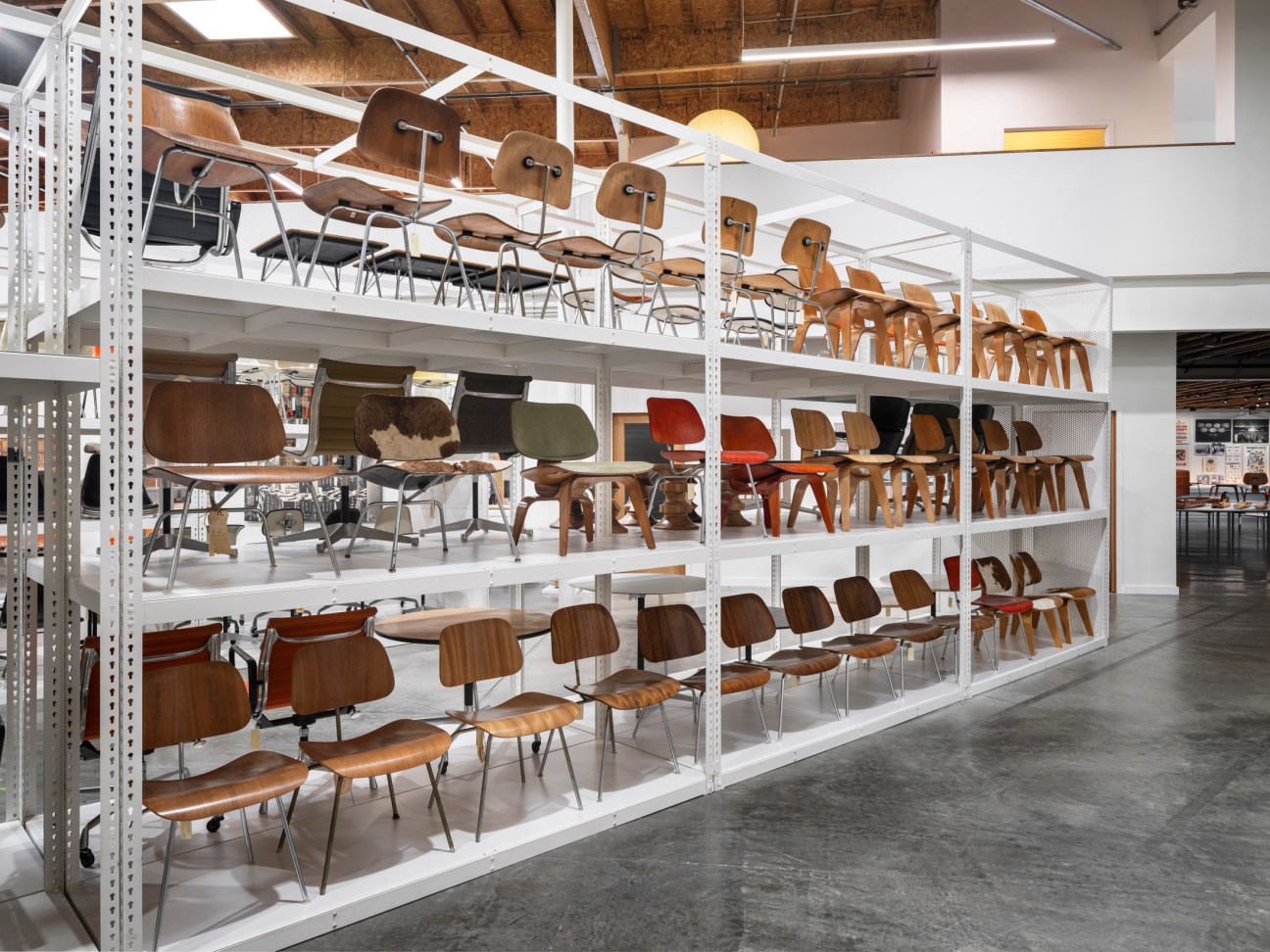
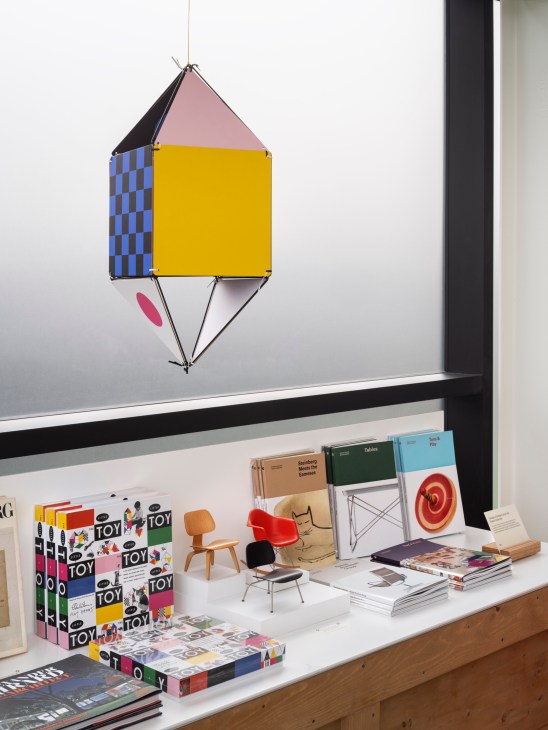
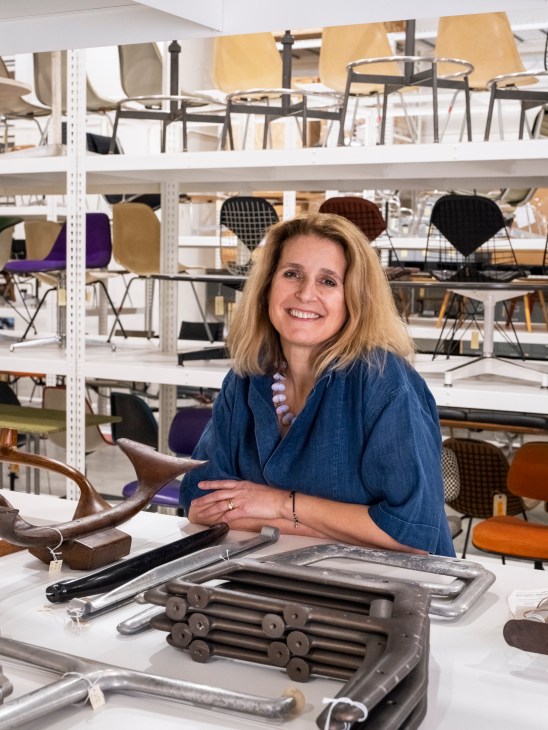
Among the objects that fill the vitrines are notes on the silver-paper linings that Ray liked to pluck from cigarette cartons, early paintings by Charles and Ray, and correspondence between the couple and their contemporaries. Drawers overflow with paper cutouts of people, used for making design maquettes by hand. Look under a stool and you’ll find a label designating who in the Eames office this perch was reserved for.
Apart from the meticulously preserved house where the designers lived in Los Angeles, there had never been a space dedicated to their collection until now. According to the Eames Institute, the couple’s interest in finding materials that don’t cost the Earth and creating products that last is particularly relevant now. “We hope that this is an organisation that does more than preserve the past,” says its president and ceo, John Cary. “It could offer a road map to the future.”
eamesinstitute.org
urbanism –– amsterdam
Vicious cycles
Grace Charlton on the urban blight of the Dutch capital’s two-wheeled road warriors.
Set on a network of waterways, Amsterdam has a compact city centre: many of its distinctive Dutch classicist buildings are crammed between canals. Given this limited space, the bike has become the logical mode of transport for traversing the city. It became dominant in the 1970s partly as a result of concern over traffic-related deaths; the 1973 oil crisis also increased anti-car sentiment. In the years since, Amsterdam has been celebrated for its urban design, revered as the world’s capital of cycling and held up as a prime example of a metropolis that prioritises people-friendly transport.
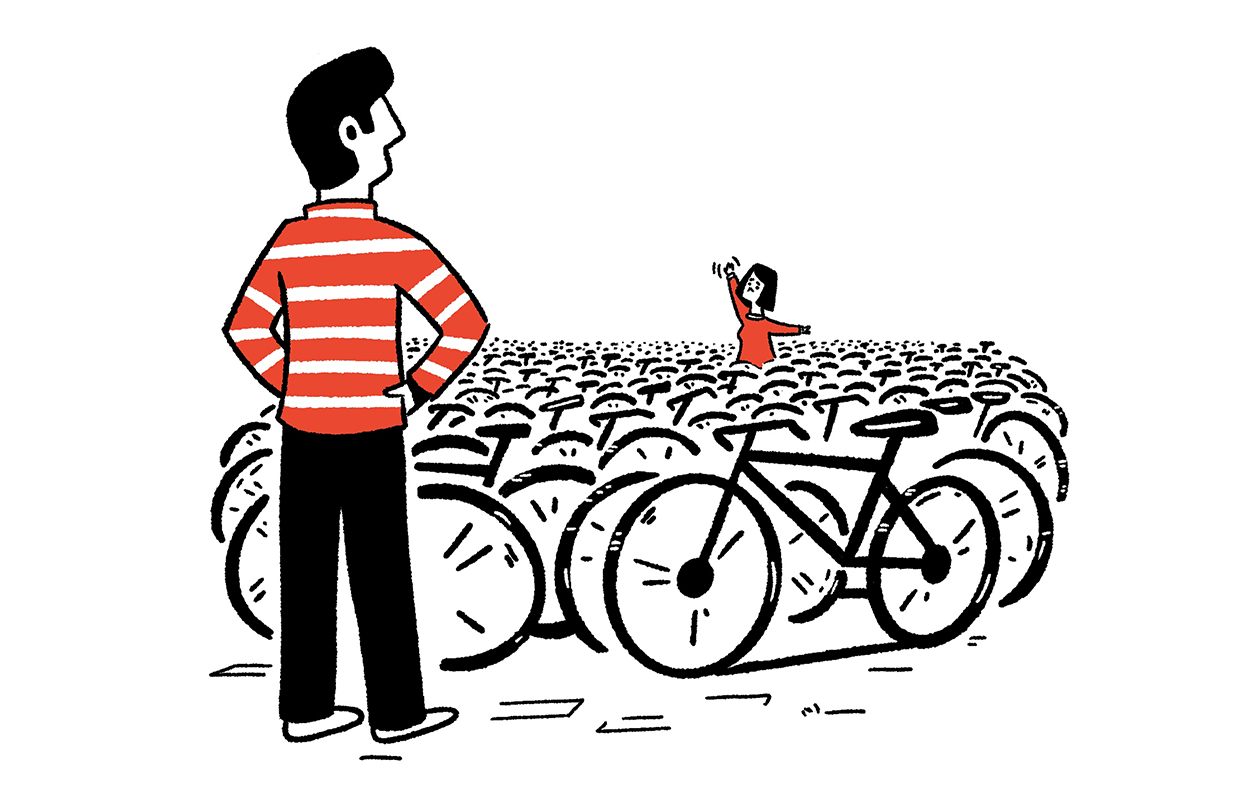
Today, however, the Dutch capital is a tangled jungle of bike frames piled on top of each other, many of which can be found at the bottom of the canals or abandoned on bridges. On a recent city break, I found its central neighbourhoods almost impossible to navigate. Waiting for my flight home at Schiphol airport, I couldn’t help but feel relieved that I no longer had to dodge a peloton of two-wheeled racers every time I wanted to cross the street. Cyclists rule Amsterdam’s roads, with bike lanes taking up as much space as those for cars. Meanwhile, pedestrians are squeezed onto narrow footpaths.
Many bike riders seem proud of their utter disregard of traffic lights, people walking or even common decency, often tailgating those in their path and never slowing down – parents with prams and the elderly, be warned. Over three days, I heard too many bike bells being rung passive-aggressively at people who were simply attempting to enjoy a stroll through the Negen Straatjes or Jordaan neighbourhoods.
It begs the question: in the same way that the city’s roads have been carved up to make way for bike lanes, should cyclists in the city now be forced to make more room for pedestrians? Or should cars be removed entirely for the benefit of those on two feet or two wheels? Either way, the current system is unsustainable. Perhaps the city’s central neighbourhoods could be improved by a little more pedestrianisation. At its best, a public space is just that: public, for all to share and use. Amsterdam could do with a reminder of that.
Compagnies républicaines de sécurité 8 – the mobile police unit countering urban violence
The French are no strangers to public protest. But even by their own rowdy standards, the past few years have been combustible. The damage that occurred during a week of rioting following the killing of a 17-year-old motorist by French police last summer led to an estimated bill of €1bn. This came after months of large-scale and sometimes violent protests against a rise in the retirement age. The police came in for criticism both for their heavy-handedness and their inability to contain the disorder.
Formed as a response to such events, the Compagnies républicaines de sécurité 8 (CRS 8) is a highly mobile division of 200 riot police, intended to act as a rapid-intervention Swat team. Rather than simply lining up with their shields at the ready, the unit uses military-style tactics to outflank and surprise violent protesters, terrorists and gang members. CRS 8 candidates are hand-picked after a gruelling recruitment process that includes endurance and shooting tests, obstacle courses, written exams and an interview in front of a panel. In 2023 only 22 of 95 applicants were selected. Several quit in their first year, citing a demanding work schedule that includes eight days of 24-hour duty followed by six days of rest.
Charles de Gaulle created the CRS in December 1944. Eight decades later, it has spawned an elite unit intended to combat threats such as terrorism, organised crime and public disorder. The group is led by Commander Olivier Desmaisons, a former diplomatic-security expert, and headquartered in a 17th-century castle near Paris.
The group was formed with one eye on this year’s Olympic Games in Paris. French police and political leaders want to project an image of security as millions descend on the capital in July and August. But critics of the government’s approach perceive it as a symptom of France’s slide into a police state. The CRS 8’s crowd-control work will be aided by a controversial video system, which uses an algorithm that has been designed to spot suspicious objects or behaviour, such as unsupervised luggage and dangerous crowd movements that could lead to stampedes.
Some are concerned that the new equipment will lead to wrongful arrests. But with an already tense domestic situation, heightened by fresh volatility in the Middle East, the government claims that it needs every tool that it can get. All will be hoping that the officers of this new division manage to keep their truncheons in their holsters this summer.
The CRS 8 carry at least 23kg of weapons and equipment at all times, to which is sometimes added an 18kg category-four ballistic riot shield for mass shootings. That’s a lot of gear. Here’s what else they pack.

1.
Heavy-duty polycarbonate ‘bubble’ shield
Smaller, outward-facing concave riot shields are more mobile than traditional riot shields, and so they’re easier to use in offensive operations.
2.
Tetrapol communications system
Tetrapol radio systems are popular with first responders and emergency services as they offer highly secure communication. They deliver voice and data from local to large networks and feature end-to-end encryption on group calls and emergency communications.
3.
Penn Arms PGL 65 40mm multi-shot grenade launcher
This launcher works with all 40mm grenades, including Flash-Ball rounds, but is only used by the CRS 8 for tear gas. It can fire up to six rounds in four seconds over a distance of 150 metres.
4.
GM2L tear gas and stun grenade
This grenade produces both a powerful detonation of about 160 decibels and a cloud of incapacitating CS gas. It does not contain explosives (it is a pyrotechnic device) and has no blast effect, unlike the GLI-F4 and F-1 models it has replaced, both of which have caused mutilations and which some critics consider a threat to life.
5.
Heckler & Koch G36K assault rifle
The CRS 8 carry the latest configuration of this rifle, which features length and height-adjustable stocks and aluminium alloy handguards. It is effectively a military weapon adopted by French police after the 2015 terrorist attacks to provide more firepower to first responders.
6.
Sig Sauer SP2022 9mm handgun
The SP2022, popular with law enforcement worldwide, features an all-polymer frame and an integrated accessory rail. It has a 9.9cm carbon-steel barrel, weighs about 900g and has a 15-round 9mm Luger magazine.
7.
Protective helmet
Like most police helmets, this features a hard shell with reinforced padding, a chinstrap and hinge-up polycarbonate visor. Accessories include a built-in radio microphone and earpiece.
8.
Telescopic defence baton
The CRS 8 uses three types of baton: a standard straight baton, a tonfa (side-handle baton) and a telescopic defence baton (TDB), like the one pictured. Straight batons and tonfas are made from durable rubber, plastics such as polypropylene or polycarbonate, or aluminium. TDB’s are usually made from high-grade steel.
The Monocle Property Survey 2024
Realdania
Copenhagen, Denmark
When outsiders attempt to analyse the remarkable quality of life that Denmark is known for, one often-overlooked factor is the role played by philanthropic foundations, a field in which the Danes could reasonably claim to lead the world. These fonde, whether family-owned or set up by companies, donate or invest more than DKK20bn (€2.9bn) a year to causes and projects at home and abroad. The foundation of Danish multinational pharmaceutical company Novo Nordiskis the world’s largest charitable fund, while Maersk’s, Carlsberg’s and Lego’s funds are similarly gargantuan. But in terms of contributions to the built environment, Realdania is the global leader.
“We don’t talk about ‘investments’,” CEO Jesper Nygård tells Monocle. “Our ‘return’ is to make a better society. It is very important that we support issues that cannot be solved just by government or local authorities, or the private sector, or civil society alone.”
Realdania has supported 4,750 building projects since it was established more than 20 years ago, ranging from community centres to museums, cultural hubs, parks, bridges and major urban transformation projects. “We are the enzyme that combines public and private sectors,” says Nygård. “Politicians are under increasing pressure to spend less tax money and the private sector has to have more focus on making a shorter-term return. Our role is to take risks and look longer term, even a generation ahead.”
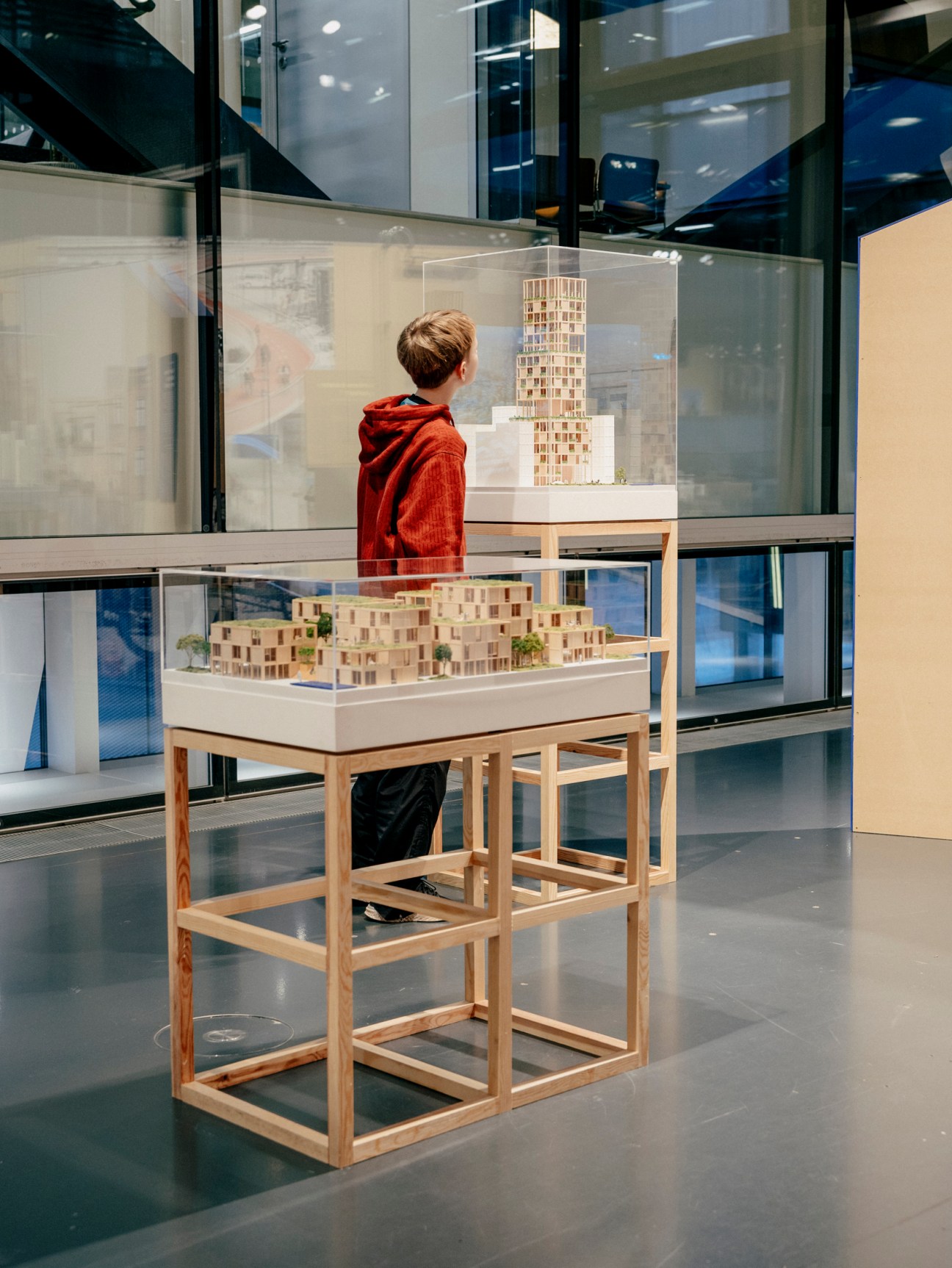
Realdania’s roots go back to the first credit unions of the 18th century but in 2000 it divested of its banking and mortgage activities to focus on charitable development work. Today it describes itself as a “self-endowed philanthropic association” with a total equity of DKK25bn (€3.35bn). On average, it spends DKK1bn (€134m) of returns from its investments on philanthropic projects in the built environment across the country every year. Some of those projects will themselves bring revenue or a complete return on investment but most are purely philanthropic.
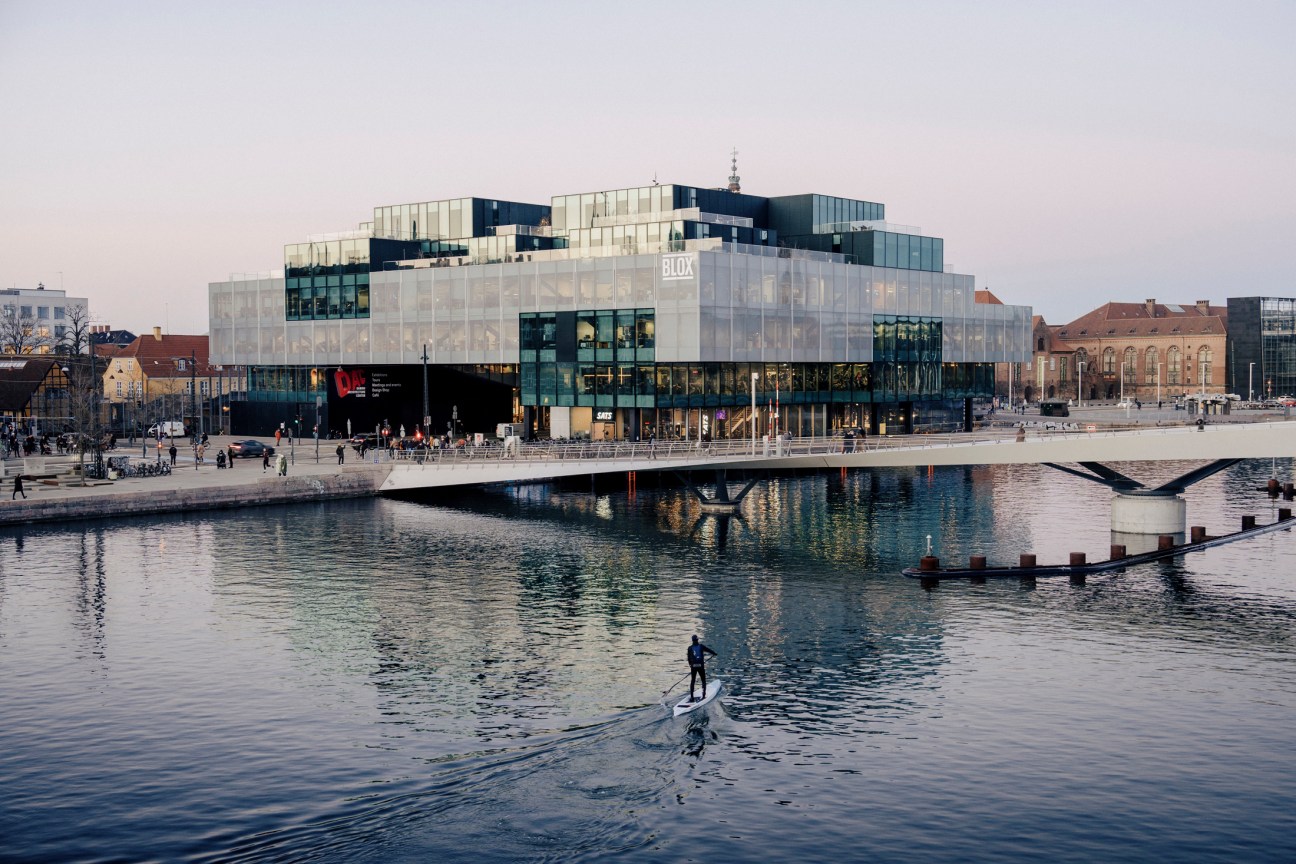
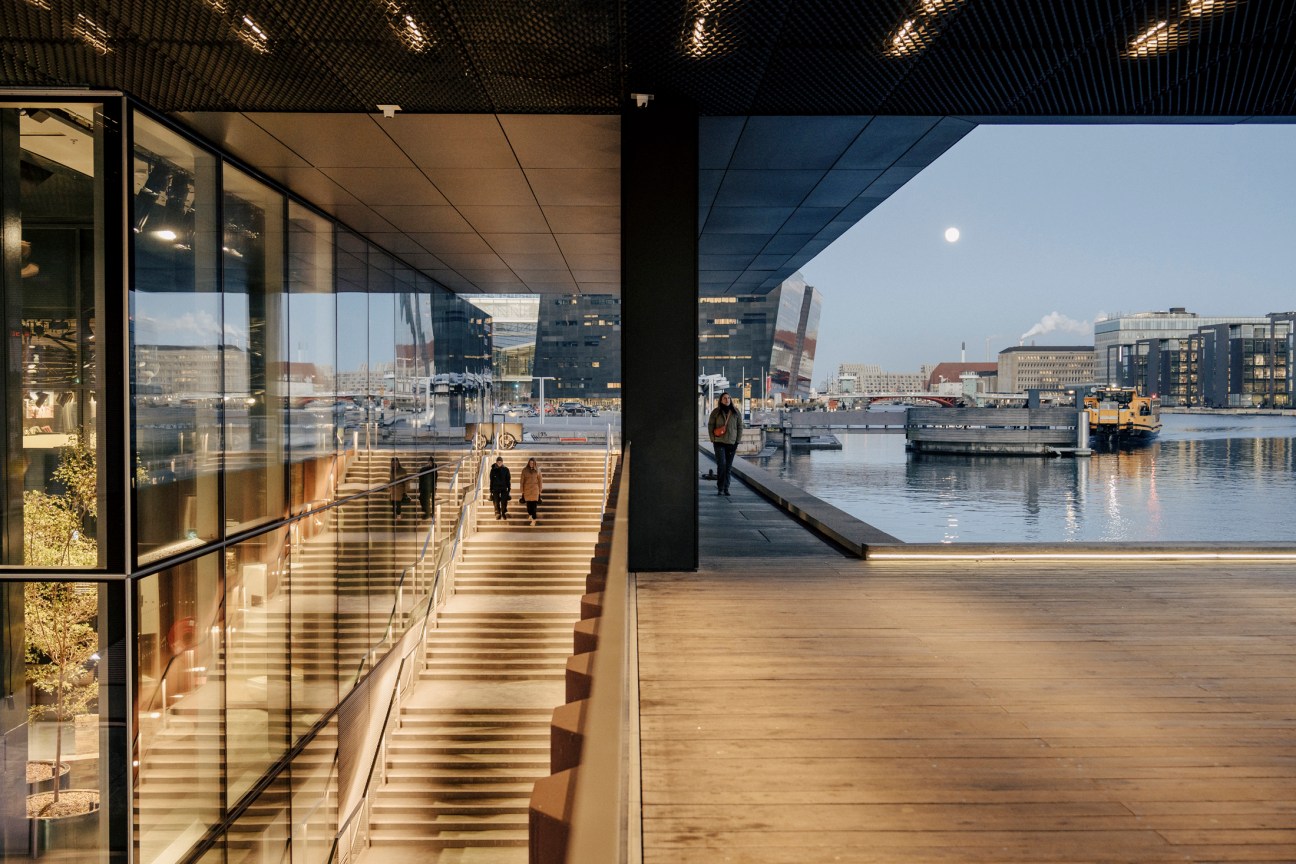
If you can think of a recent urban landmark in Denmark, the chances are that Realdania funded it, whether it’s Olafur Eliasson’s “Your Rainbow Panorama” on the roof of Aarhus’s Aros art museum, Norman Foster’s elephant house at Copenhagen Zoo or the capital’s innovative urban park, Superkilen, by Bjarke Ingels Group. Among its boldest projects is Blox, a stack of blocks dominating Copenhagen’s Inner Harbour.
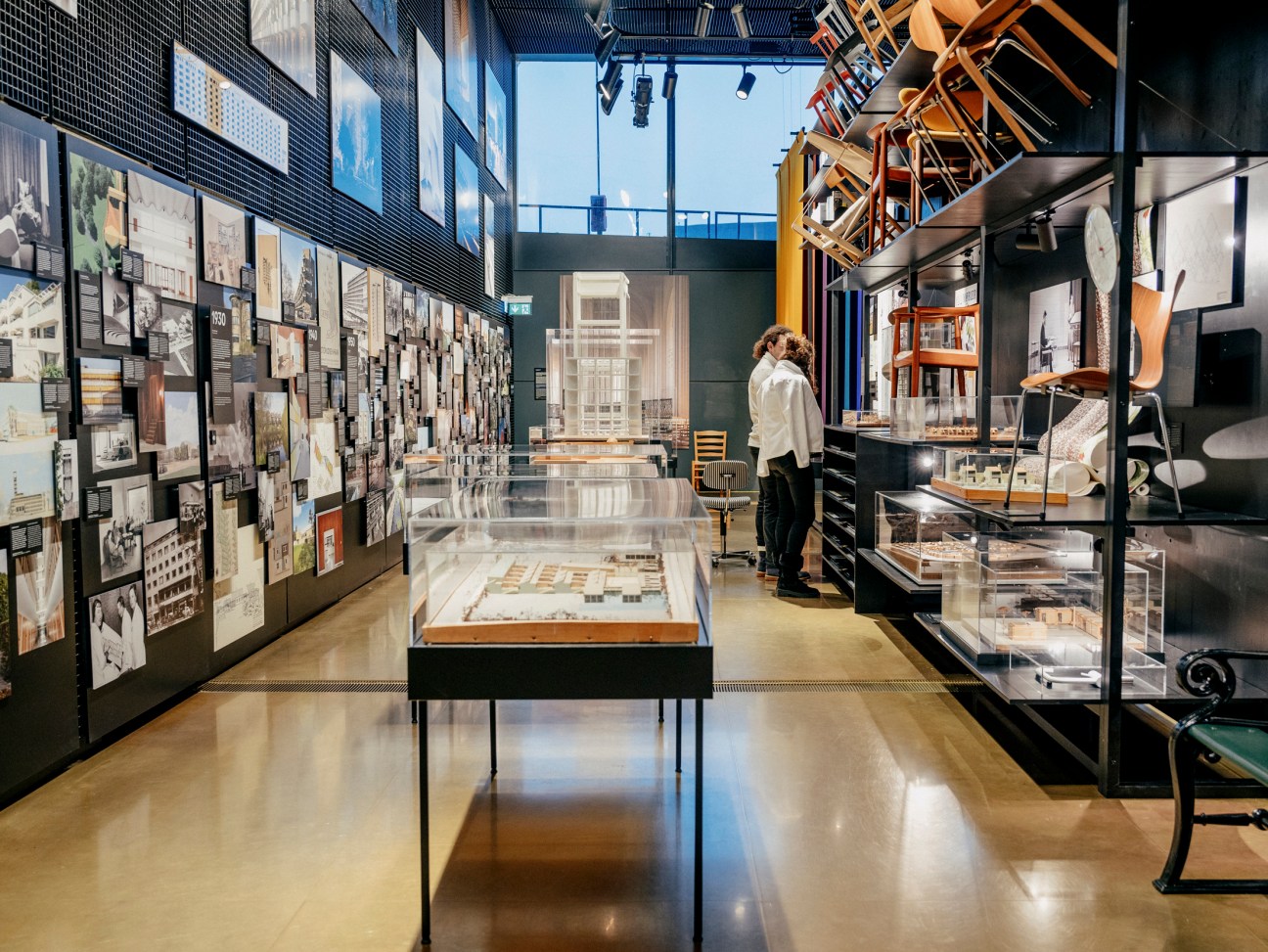
“Blox was created to be not only a home for the Danish Architecture Center [DAC] but also a place that would welcome all those who were in the business of architecture, design, engineering and development,” says DAC’s CEO, Kent Martinussen, who was involved in the project from the very start with architect Rem Koolhaas of Dutch studio OMA. “The Danish parliament was not ready to invest money in a new building but Realdania saw this as a way for it to engage with the public on issues such as sustainability, urbanisation and what architecture can do to shape society. And because it is a philanthropic association that will, in effect, be here forever, it can allow itself to think 50 years ahead when it comes to making an investment.”
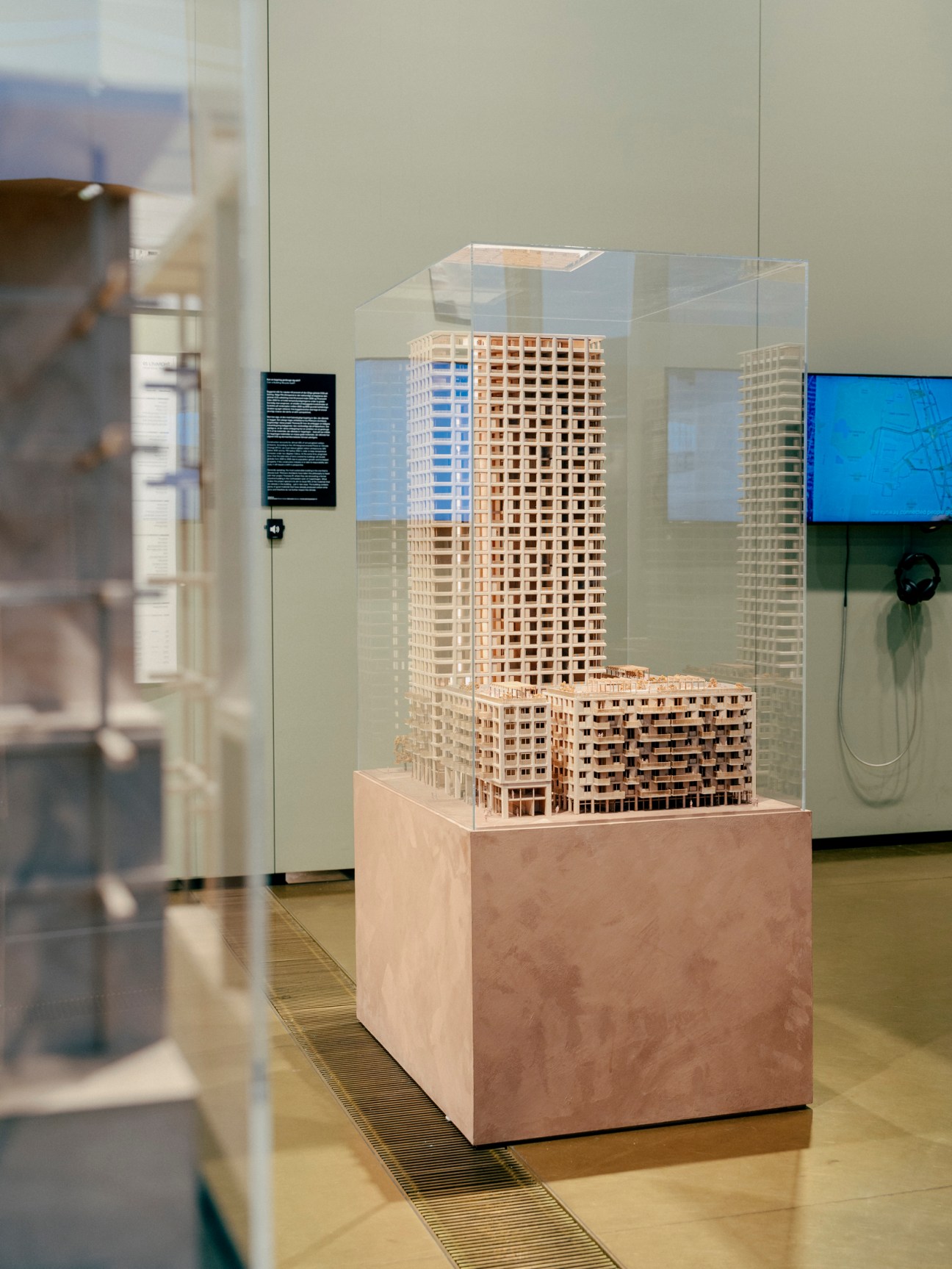
Realdania is also behind the transformation of the centre of Odense, Denmark’s third city, matching the local authority’s budget of DKK255m (€34m) in a decade-long project completed in 2021. Where once Odense’s medieval city centre was rudely bisected by a four-lane highway, now a tram glides through a green pedestrian zone with new housing and shops, and the stunning new Kengo Kuma-designed Hans Christian Andersen Museum.
“It’s a great example of how architecture can improve quality of life,” Realdania’s director of philanthropy, Nina Kovsted Helk, tells Monocle from Los Angeles, where she is consulting with US foundations. “At the beginning in Odense, people were criticising the project at public meetings because they didn’t want years of construction to take over their streets. Now the locals love it. As the mayor has said, ‘People used to come to Odense to see how not to design a city. Now they come to learn how to.'” Ironically, given the mayor’s enthusiasm, one of the lessons that Helk took from Odense’s transformation was to keep politicians away from the details. “It was important that those decisions were taken by experts – the architects, anthropologists and engineers. The politicians were strategically bold enough to let us do that.”
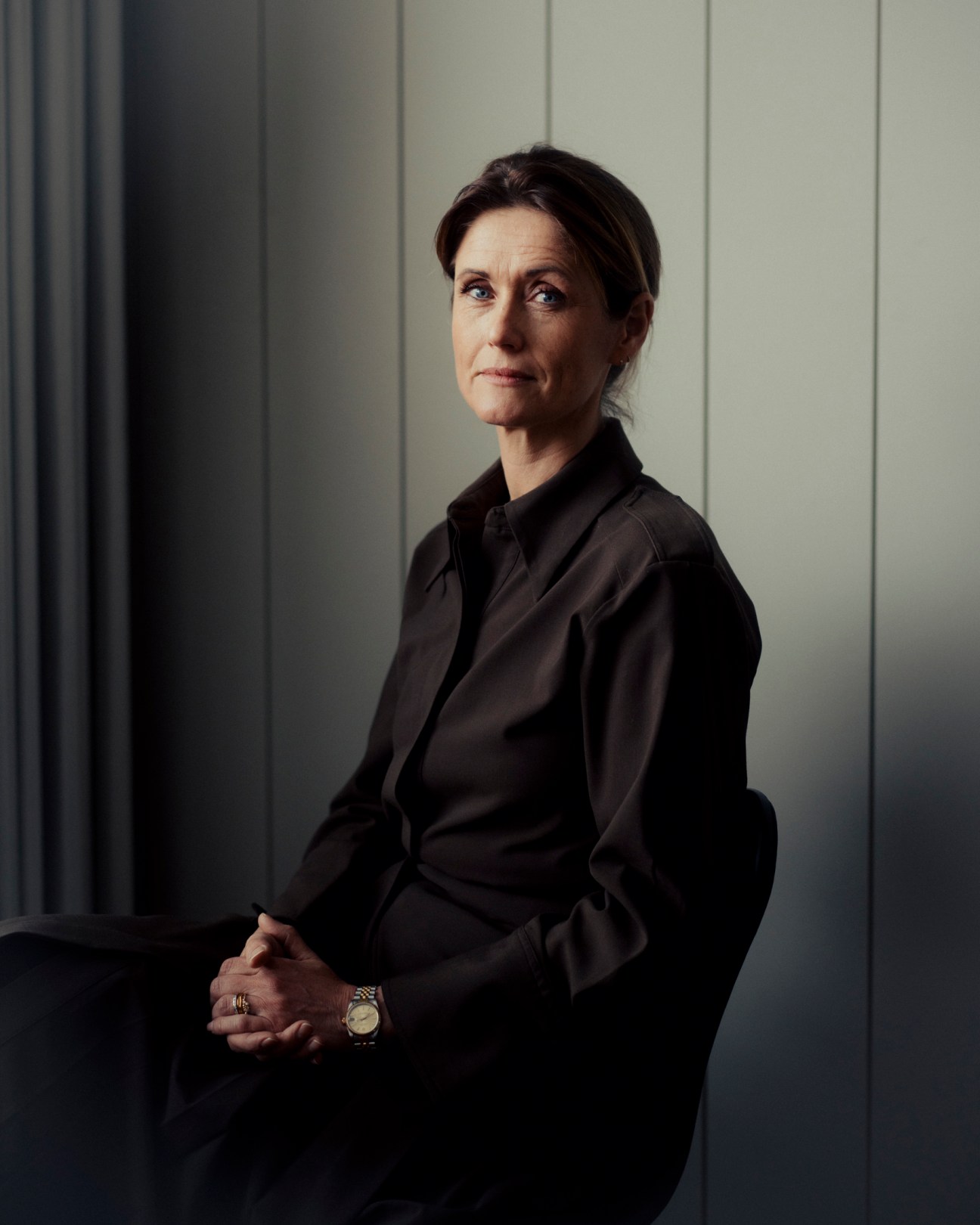
Realdania’s director of philanthropy, Nina Kovsted Helk
On a smaller scale is Demokrati Garage, a new event and project space in Copenhagen’s Nordvest neighbourhood, in which Realdania was a partner. “We think of ourselves as like a clubhouse for democracy, engaging this neighbourhood, which is very diverse and young,” project partner Johan Galster tells Monocle. “Realdania made sure that we found a balance, creating something not just for political nerds but for the whole community. I think that we inspired it in terms of how to engage with the grass roots. The old top-down way is dead.”
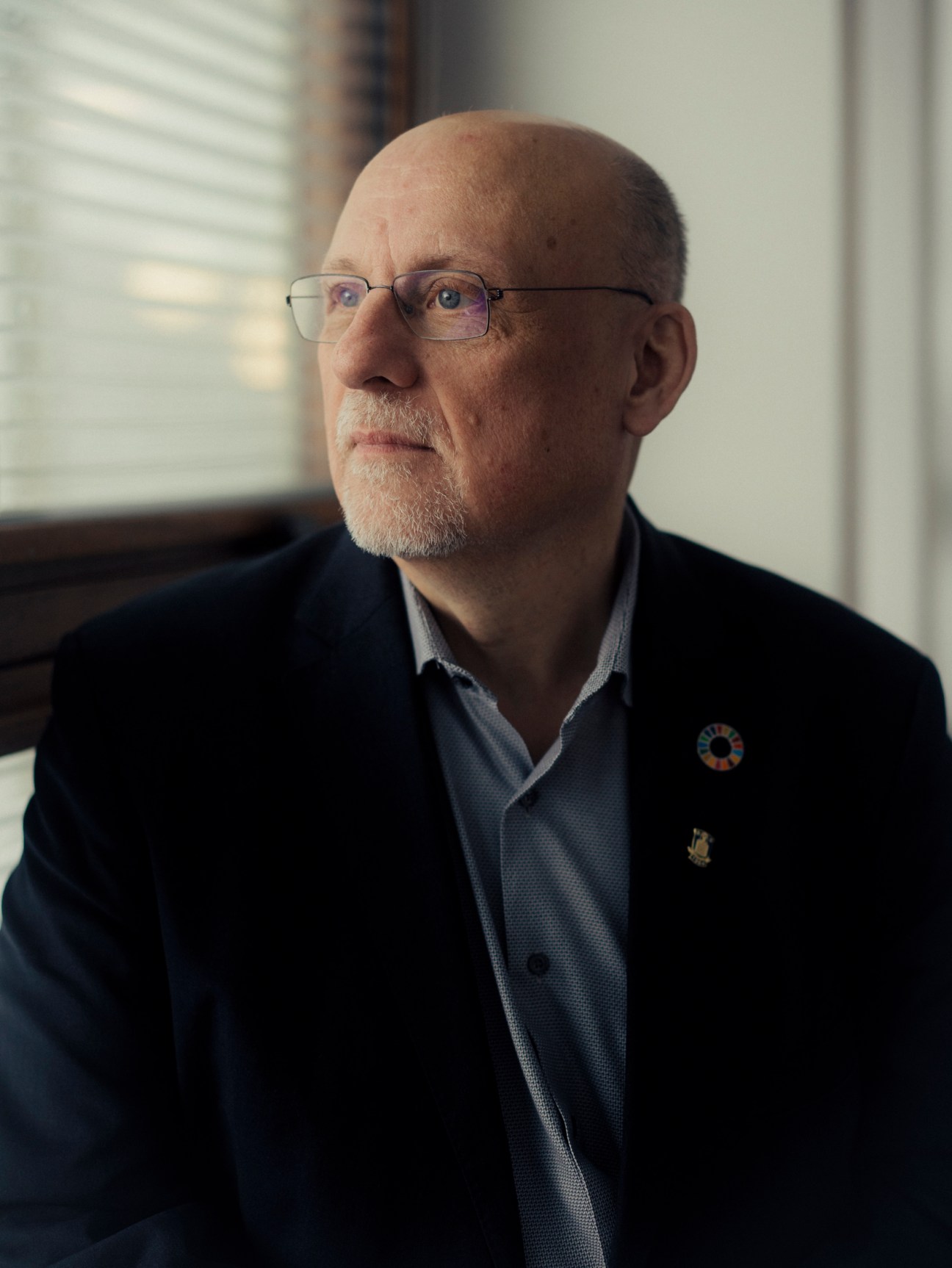
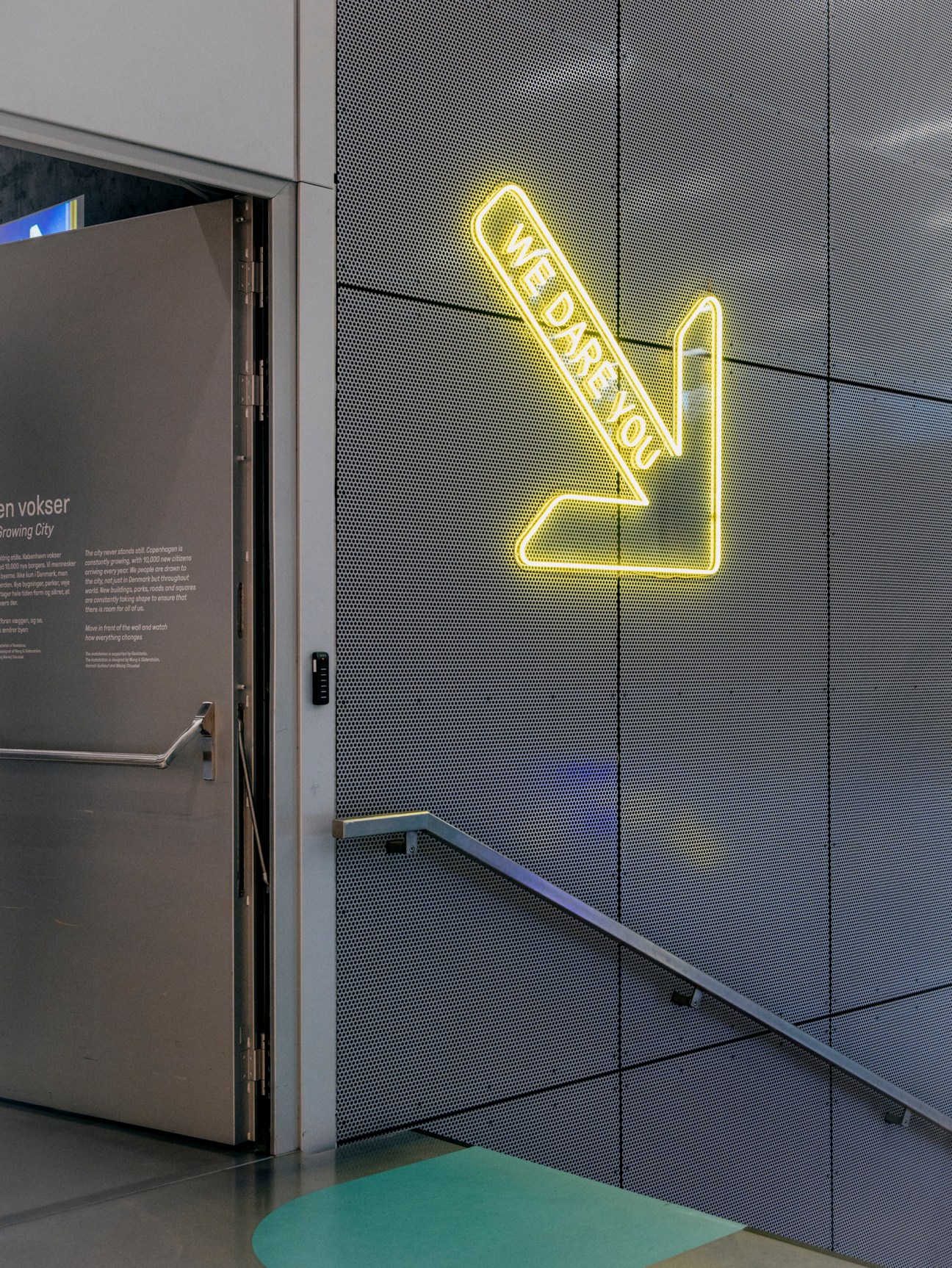
Anyone who owns property in Denmark can join Realdania for free and have a say in how the fund is run. Currently, about 185,000 Danes have joined. “We love it when we drop a stone in the water and see the rings spread,” says Nygård. “We call it ‘catalytic philanthropy’. That’s why we feel obliged to share our knowledge globally. In Denmark, we demonstrate that together, with our knowledge and experience, we can improve the quality of life for everyone through bricks, stones and construction.”
monocle.livement
When you can think about the long term and consider what will happen in 50 years’ time, you will focus on quality, commitment to place, raising the bar, aware that the next generation will judge the wisdom of your decisions.
Market analysis: Paris
French blues
“Having a pied-à-terre in Paris is considered a trophy asset for a collector of properties,” says Susie Hollands, CEO of bespoke real-estate agency Vingt. The concentration of international business and effective transport links with the rest of Europe has long made the French capital an appealing place to settle, especially for those with an active interest in the Parisian food, art and fashion scenes. “It’s never really been about the return on investment.”
Today, the city is in flux. “Paris has been a different city since the pandemic,” says Hollands. An exodus of young Parisians, tired of the endless influx of tourists, means the French capital is experiencing a higher level of foreign investment than ever. “There isn’t one nationality dominating the market,” she adds. “Paris has always attracted high numbers of Americans but we’re seeing a resurgence of Middle Eastern and Singaporean buyers.”
After enjoying a period of buoyancy thanks to low interest rates and a sharp increase in buying, Paris’s property market began to plummet in 2022. In December property prices hit a low point, valued at about €11,000 per square metre – a figure that looks set to fall below €10,000 in 2024. Interest rates have quadrupled in 18 months, plus a tightening of criteria for bank loans has prompted Parisians to hold off from buying. “The process for getting a mortgage in France is difficult because they have a very different attitude to debt compared with the US and UK,” says Hollands. “It’s very hard to get on Paris’s property ladder.”
But it’s not all doom and gloom. With the 2024 Olympic Games on the horizon, it’s likely that new housing stock will become available as homeowners who are holding out until the event start to sell. One neighbourhood, the northeastern department of Seine-Saint-Denis, has seen an increase of 18 per cent in its property prices year on year. Though the industrial suburb has always been something of a sporting hotspot (it’s where the Stade de France sits), the construction of the Aquatics Centre and Athletes’ Village here will give the commune – and the suburbs in general – an increasingly desirable quality of life, broadening real estate investment appeal in the wider Île‑de-France region.