Issues
Pedalling advice: How an architect truly gets to know a city
Being a travel guide is part of living in a foreign city. Every expat has received requests from family members, friends and acquaintances for recommendations. Sometimes they’re looking for tips for a good bar or restaurant; at others, they want a whole itinerary. My first attempt at putting together a guide to Shanghai took the form of an email. Updated and tweaked for every incoming visitor, this list has evolved over the years into a PDF and a keepsake to share. I have lost track of who has it now.
Earlier this year I helped to curate a “24 hours in Shanghai” guide for a Chinese design platform. AI travel advice is on the rise but there’s clearly strong demand for local knowledge and trusted human touchpoints. This is especially true in China, which has an entirely different set of search engines, apps and maps to the West. It can be far harder for non-Chinese speakers to find reliable tips online through a layer of translation, while understanding the cultural nuances to identify honest reviews among all of the bot-spawned listings.

I feel fortunate to have arrived in Shanghai from London when I did. It was 2009 and proper smartphones and apps such as Wechat didn’t exist yet, so Drew – who is now my husband – and I would get around on our bikes using physical maps. The best were stacked up at the arrival hall of Shanghai airport and available for free. We had done a bit of cycling in the UK but those trips (from Land’s End to John O’Groats, for example) were more about the journey. After arriving in China, we pedalled all around, determined to get to know our new home.
It was one of those freewheeling expeditions that led us to a basement storehouse in Yangpu selling old Phoenix bikes, an iconic Shanghai brand founded in the 19th century. We had discovered a treasure trove of old frames in the basement, painted in China Post’s pine green or China Electric’s blue and gold. After buying up the lot, replacing the original components and selling a few more than we expected, our bike shop Factory 5 was born. We soon started producing our own frames and components, tapping into a community of people looking to explore Shanghai on two wheels. That bike shop was the first home and project for our architecture studio: Linehouse started out on the mezzanine floor above the noisy workshop.
The skyscrapers in Pudong are probably the first things that come to mind when you read this but, at ground level, Shanghai is a flat city that lends itself perfectly to cycling. The traffic can seem daunting at first but it moves like a synchronised dance, making room for everyone on wheels. Bike-sharing schemes have become a part of the furniture here and compared to the 2010s – when the trend first took of and pictures of broken, discarded bicycle mountains flooded the internet – the quality of such services is much improved.
I continue to cycle everywhere every day. I drop the kids of at school on one of our commuter bikes and, on weekends, we all ride down to the Huangpu river or up to Suzhou Creek, stop for lunch and bring along any visiting friends. I take the bike to site visits if I can arrive looking respectable. Why? Convenience, exercise and to clear my head. I like observing and feeling the rhythms of the city.
In a place such as Shanghai, which has almost 25 million residents, I see things change in real time and my days are brightened by the sight of that which stays the same, at least for a while: the fresh fruit stall with the white cat, the sycamore trees that line the route home, the local noodle shop. Weaving through the traffic, a short cut through the little lane, a nod and a smile to the curious uncle who squeezes a tyre and asks how much my bike cost.
I’ve been taking these journeys for the past 17 years so it sometimes feels as though there aren’t many roads left unrolled. That gives me a rare perspective on Shanghai’s guide-book-worthy offerings. The pressure of distilling the best of your beloved city into a series of lists and bullet points is up there with choosing a favourite film or song – and there are always more details to add and things to update. Be sure to make a reservation, don’t forget that the crab-roe xiaolongbao (a kind of dumpling) must be eaten with vinegar and ginger, and… Oh, did Bastard move location? Shanghai’s restaurant and hospitality scene is ever-changing and so is our city guide.
Now in its fourth iteration, we have corrected the beginner’s mistakes, formatted it for phones, included photos and added graphical maps to group options in one glance. Arguments with foodie friends about which jianbing (pancake) stand is the best has put us through a rigorous taste test. Now, as I cycle around the city, I keep coming back to the same realisation – that Yunnan place is missing. I must update our guide and reshare.
I say “our” guide because these days the job of updating this list involves the entire studio sampling our way through the city. As architects, we see Shanghai through a very multicultural and creative lens. Food, places or things with a nostalgic, historic or local quality fascinate us. This can be a simple bowl of scallion noodles or the Ho Tung Villa that sits in the middle of the new Shaanxi Road development. This collision of the old and the new is one of the reasons why we call Shanghai home and why I am happy to get on my bike and be a guide.
Ten years ago we almost took Norman Foster for a ride. He is a keen cyclist and I still have the itinerary that we mapped out for him. He was in his eighties at the time so I insisted on coming along. Unfortunately, his trip got cancelled – but Norman, if you’re reading this, we’re still here whenever you want to get on your bike and see another side of Shanghai.
About the writer:
Swedish-Chinese designer Alex Mok is the co-founder of architecture and design studio Linehouse, founded in 2013. Shanghai has been her home since 2009. In April she spoke at Monocle’s The Entrepreneurs Live conference in the city.
Five new-generation, millennial mayors reaching across the US political divide
1.
Matt Mahan, Democrat
The mayor bringing a fresh sense of ‘compassion with accountability’ to his city.
San Jose
Matt Mahan steels himself as he heads into neighbourhoods in San Jose, California, with a hard proposal to sell: to build homeless shelters where the median house price is $1.5m (€1.3m). Homelessness is a pressing political issue for US mayors, as the number of people sleeping rough hits record highs. It’s acute on the West Coast, where big cities and state governments are dominated by the Democratic Party. Many perceive tent encampments – associated with litter, crime and fires – as a symbol of the failures of blue-state governance. The 43-year-old Mahan wants to change his party’s reputation.
The California native brings a data-driven approach to governing the Golden State’s third-largest city. Convinced that he could effect such change state-wide, in June he ran to become California’s new governor. He was the youngest candidate by almost a decade in a field that included former Los Angeles mayor Antonio Villaraigosa, Joe Biden-era cabinet member Xavier Becerra and billionaire Tom Steyer. Though Mahan lost the June primary, the fact that he polled well enough to make the debate stage proved that he is among the vanguard of a nationwide millennial cohort with less ideological fervour. “There’s a politics of pragmatism that younger leaders are bringing to the table,” says Mahan.
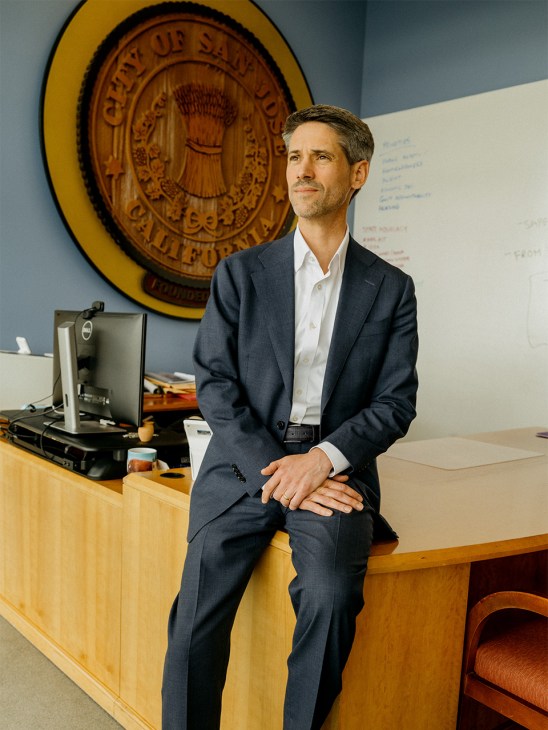
He describes his approach to homelessness as “compassion with accountability”. Shelters built on his watch provide security and case management, while enforcing rules such as no drug use or weapons. They prioritise beds for rough sleepers in the vicinity so that neighbourhoods quickly see improvement. The city enforces a camping ban for a two-block radius around them to make it clear that taking help and heading indoors are the only options.
This walks the fine line between fed-up residents who want a magic bullet and activists who see enforcement as criminalising poverty. “No, we can’t just ban camping and make thousands of people magically disappear – that’s not a practical or ethical solution,” says Mahan. “But also, no, we can’t allow people to camp anywhere they choose. If you have an unmanaged tent encampment, you have made it harder for people in interim housing to turn their lives around.”
At community meetings, Mahan has endured irate members of the public shouting at him. But lately the tone has changed. “Now I have people thanking me,” he says. The reason for this is that his proposal works. The number of unsheltered homeless people in San Jose has fallen by a third since Mahan took office in 2023. (Critics suggest that the figure is closer to a quarter.) Left-leaning forms of government that deliver measurable results are in the zeitgeist, partly thanks to books such as Marc Dunkelman’s analytical history Why Nothing Works and Abundance by Ezra Klein and Derek Thompson – and Mahan has seized that mantle. “My generation and younger voters do not have the luxury of performative politics.”
2.
Mattie Parker, Republican
For the first millennial mayor of a major US city, all politics is local.
Fort Worth
Upon taking the oath of office in June 2021, Mattie Parker, who was then 37 years old, became the first millennial mayor of a major US city. It wasn’t a claim to fame that the lawyer sought. “I have an old soul,” she tells Monocle. But having cruised to re-election in Fort Worth in 2023 and 2025, she concedes that her “age and generation have been a strength on most days”.
Now 42, Parker has overseen a generational shift in governance in Texas’s fourth-largest city. Though the cattle town has grown into Dallas’s twin city, with a population of more than a million residents, its charter stipulates that its mayoralty is a part-time role, with a modest salary of $29,000 (€25,000). “My husband jokes that it might cover my dry-cleaning bill,” she says.
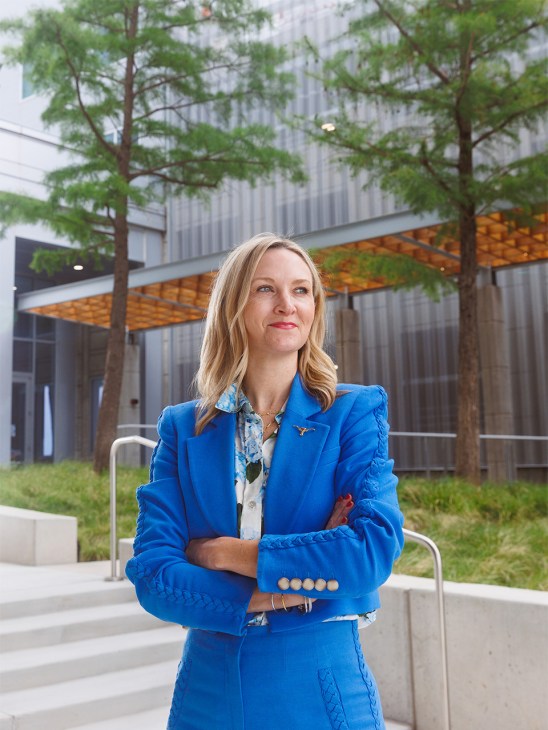
Before Parker’s election, it was common for a retiree to hold the office. But social media and the 24-hour news cycle have “turned this into a full-time type of job”, she says. “There’s no off switch.” Despite this, Parker, who has a chief of staff, holds down another part-time role as chief of staff to the CEO of a children’s hospital. The juggling that this involves hasn’t gone unnoticed by Fort Worth’s residents. In May they approved the doubling of her salary.
That vote of confidence has come as she attempts to stay focused on local issues at a time when municipal politics is becoming more national. “People are moving to our city because we have a very commonsense approach to governance – streets, streetlights, parks, libraries, public safety,” she says. “Cities that are well run fend off partisanship and ideological breakdown.”
Though Parker is a Republican, she admits that her party’s brand is “increasingly messy”. Having served as a former mayor’s chief of staff and then as a congressional district director, she has had a front-row seat to the growing polarisation of US politics. Parker now cherishes the chance to serve in an officially non-partisan elected office that allows her to break with party dogma. She complied with the White House’s dismantling of DEI (Diversity, Equity and Inclusion) initiatives but still touts Fort Worth’s diversity. And she isn’t afraid of government spending, leading the charge for the largest bond issue in the city’s history.
“I have principles and beliefs but my job is to build consensus and improve quality of life for every single resident, regardless of the party that they belong to,” Parker says.
However, she’s not afraid to draw a line between her position on public safety and those of her rivals. While her 2021 opponent, the chair of the local Democratic Party, dabbled in “defund the police” rhetoric, Parker made hiring more officers (as well as firefighters) a central part of her manifesto. “‘Back the blue’ doesn’t have to be partisan terminology and we can reject the ‘defund the police’ movement,” she says. “Any American city that wants to be successful has to adopt that philosophy.”
That conviction is paramount for the mother of three. She speaks to Monocle via telephone while wrangling her shirtless 10-year-old son. Higher office, for now, holds little appeal. “I can serve as mayor and be home for my family,” she says. “Public service needs to be treated as a calling, not a stepping stone.”
Parker’s modesty recalls the writer and intellectual Gore Vidal’s famous line: “Any American who is prepared to run for president should automatically, by definition, be disqualified from ever doing so.” Perhaps – who knows? – higher office does beckon for Parker. At least she knows that time is on her side.
3.
Justin Bibb, Democrat
The political moment demands energy and decisive action, says the 39-year-old Midwestern mayor.
Cleveland
Justin Bibb understands all too well the key concerns of his fellow millennials. “Our generation of voters is frustrated with the pace of change and the status quo,” he tells Monocle. The Democratic mayor of Cleveland, Ohio’s second-largest city, lists the climate crisis, the cost of living and housing affordability as his cohort’s principal worries – and his own too. “I’m one of them,” he says. “I can’t afford to buy a home yet.”
The connection that Bibb has with the US’s largest electoral group helped him to sweep to power as Cleveland’s second-youngest mayor in 2021, when he was 34. Cleveland native Bibb was previously an intern for former president Barack Obama, then moved into strategy for finance and tech start-ups before returning to public service with his run for mayor.
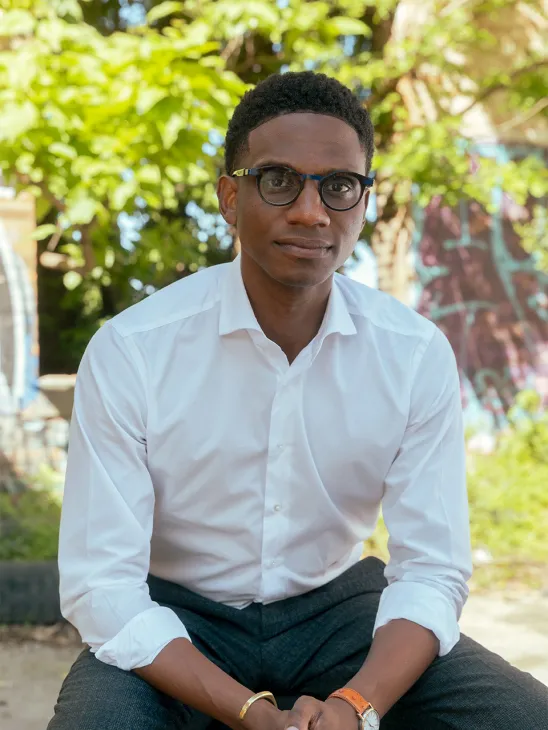
His 2021 slogan, “Cleveland can’t wait”, promised energetic renewal for the metropolis of more than 360,000 people, tapping into younger people’s frustrations during the coronavirus pandemic and offering a sense of hope for the future. But while it was Cleveland’s younger voters who helped to propel him into office, Bibb quickly understood that their problems didn’t exist in a vacuum. Addressing generational inequality meant dealing with various interlinked economic and social issues. Without safe streets and streamlined processes, businesses wouldn’t want to invest. And without the solid, well-paying jobs that come with investment, people couldn’t afford housing.
“The through-line of my campaign and our governing agenda has been prioritising a core set of issues that affect every Clevelander, whether you’re a working-class black senior on the East Side or a new Gen-Z graduate from Ohio State,” says Bibb. His first term was an exercise in transforming the city into an attractive destination for businesses, while taking on the scourges of the property market, including a crackdown on predatory landlords and investing $2m (€1.7m) to tackle homelessness. Clevelanders clearly felt that he was making good on his promises. Last year, he was reelected for a second term, increasing his share of the vote from 63 to 74 per cent.
Today, Bibb is excited about a huge waterfront development project on Lake Erie, industrial rejuvenation and pushing forward his innovative housing programme. He has seen other millennial mayors approach these issues with similar gusto. “We’re bringing a different level of energy and excitement, as well as a ‘Let’s get shit done’ attitude, that’s speaking to this political moment right now,” he says. He wants politicians in Washington to sit up and pay attention. “Americans don’t trust members of Congress,” he says. “They don’t trust whoever’s in the White House right now. But in many cases, they do trust their mayors.”
With crucial midterm elections in November, when the Democrats have a chance to win back the House of Representatives and the Senate, Bibb thinks that highlighting the successes of Democratic mayors is key to flipping red seats blue. “If the Democratic Party wants to win more elections – if it wants to expand its map and be more credible – what better champions than Democratic mayors in red states who are fighting a good fight and solving problems?” he asks.
Bibb is the president of a coalition of Democratic mayors in Republican-run states that brings them together “so that we can work across the aisle to solve some of the biggest issues facing America”. He is also a co-chair of the bipartisan National Housing Crisis Task Force. The issue of affordable homes dominates chat groups with other millennial mayors in cities across the US, says Bibb. In Cleveland, he is continuing to forge innovative solutions, including a $100m (€86m) fund aimed at creating thousands more units of affordable housing, a new portal to streamline development permits and investment in modular homes.
He is also optimistic that the $5bn (€4.2bn) “Shore-to-Core-to-Shore” project that will redevelop and connect the Lake Erie shoreline and Cuyahoga Riverfront to Cleveland’s downtown can boost jobs, investment and housing stock over the coming years. Then there’s the $1.6bn (€900m) renovation of Cleveland Hopkins International Airport. All of which is leaving Bibb hopeful that cost-of-living and climate refugees abandoning the large coastal cities will choose his Midwest home to put down their roots. “I want Cleveland to be the new capital for jobs and investment as we enter this next chapter of America’s economic story.”
4.
Bryan Calvo, Republican
Meet one of the country’s youngest mayors shaking up the status quo.
Hialeah
Bryan Calvo, the 28-year-old mayor of Hialeah, Florida, is ideological poles apart from the poster boy for young American mayors, New York’s Zohran Mamdani. Calvo is a life-long Republican serving in a city where 75 per cent of residents voted for Donald Trump in the 2024 presidential election. But 100 days into his first term as mayor, Calvo is happy to chat about the through-line between him, Mamdani and other young mayors across the country. “He’s trying to shake the system as well,” Calvo tells Monocle. “We look at it from a totally different political lens but I think he’s trying to shake the tree the best he knows how.”
Calvo is the youngest mayor of any large US city and an outlier when it comes to his politics. Almost all of his millennial and Gen Z counterparts in similar-sized cities are Democrats, reflecting a trend towards the left among urban dwellers and young people. Hialeah, however, has a unique electorate: about 80 per cent of its population are Cuban Americans, who traditionally support the Republican Party for its opposition to their home country’s communist regime. But while it may have a distinct identity, the generational concerns in Florida’s sixth-largest city (with a population of around 250,000) are similar to those seen across the country.
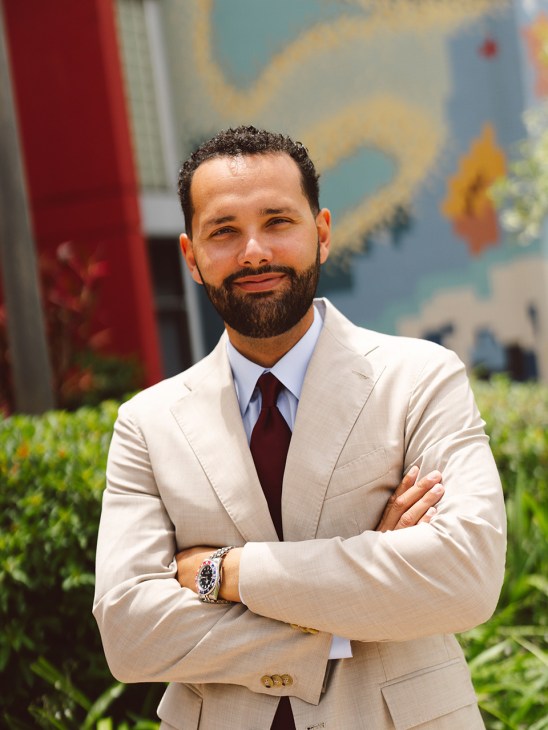
“From the standpoint of an older generation, it’s, ‘Hey, I’m retired and I can’t afford the home that I live in,’” says Calvo. “From a younger standpoint, my generation, it’s, ‘I can’t afford a home in my city.’”
Calvo sees his election in November 2025 as a consequence of the anger among voters towards stagnation in US politics and the inability of older politicians to understand the concerns of younger people. With the average age of a US senator hovering at about 64 years old and with a generation of both Republicans and Democrats unwilling to relinquish their power, there is a thirst for change at every level of American politics.
“If people were happy with the status quo, I would have never been elected to office,” says Calvo. “My youth was probably my biggest strength. I’m an attorney, I’m a Harvard graduate, but none of those things matter as much as the fact that I am young.”
He cites the coming challenges with technology and AI, which he believes that his generation is better prepared to legislate for. “If you watch some of the congressional hearings, people don’t know what social media is and now AI,” he says. “Though everybody is talking about it, people don’t really know how it works. You can’t regulate something that you don’t understand.”
Calvo is delighted with what he has achieved so far, trumpeting his success in eliminating property taxes for seniors, launching audits of city spending and consolidating city departments to increase efficiency. He plans to open bids in the coming weeks to convert underused city-owned spaces into multi-use developments, combining residential units with restaurants, shops and other community sites. With a new Democratic mayor, Eileen Higgins, in Miami (about 18km from Hialeah), Calvo is also getting a crash course in the politics of compromise and thinks deeply partisan Washington could learn a thing or two about working together.
“In the cities, it’s just about solving the problem,” he says. “It’s not about grandstanding, it’s not about pandering, it’s not about your next election as much as it is about solving the problems today.”
5.
Gina Ortiz Jones, Democrat
For this Texas mayor, breaking the rules is part of the job.
San Antonio
Military recruiting is a competitive endeavour in a country with an all-volunteer force, and soldiers from San Antonio typically take top honours for their ability of convincing young Americans to serve their country. It helps that their turf covers the metropolis with the trademarked nickname “Military City, USA” – an appellation not lost on the city’s new mayor, Gina Ortiz Jones, a combat veteran who previously served as undersecretary of the US Air Force. Given that her domain contributes an outsized number of recruits, she tells Monocle, “If we are not raising enough healthy or academically prepared kids, it’s in fact a national security issue.”
That motivation is one reason why the 45-year-old used her bully pulpit in October to raise $1.6m (€1.4m) for pre-paid grocery cards when the federal government cut food aid for low-income residents. In April her office released a set of recommendations for improving access to free early-childhood education, a topic close to the heart of the San Antonio public-school graduate who was raised by a single mother from the Philippines.
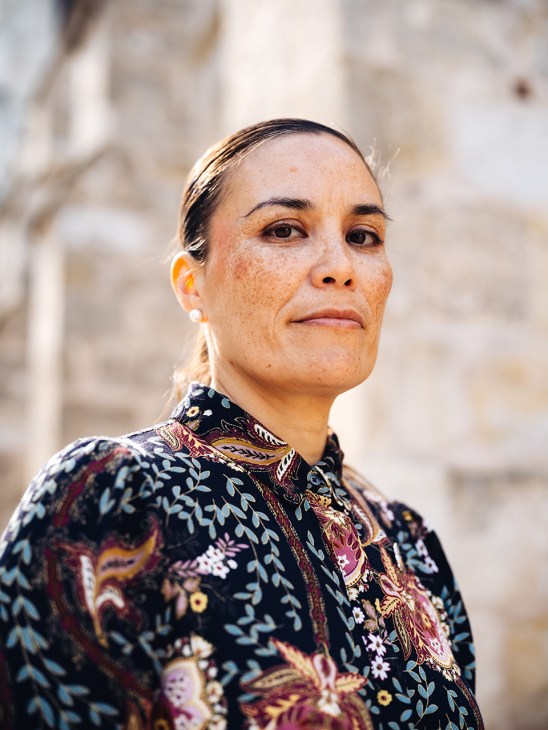
While a local government can only do so much to staunch the bleeding amid federal retrenchment on social benefits, she leans on her Pentagon experience when responding to funding cuts. “You plan endlessly,” she says. “And not necessarily to have the right answer, but to understand how you can mitigate risk.” Her focus on fundamentals such as nutrition and schooling stem from a confounding reality. San Antonio is among the country’s fastest-growing cities but struggles with a stubbornly high poverty rate – it is the third poorest of the US’s top 25 largest metro areas. Jones seeks to redress this imbalance wherever she can, recently pushing for higher wages for municipal employees.
Holding that line has made Jones a rare sceptical voice on Project Marvel, a blockbuster downtown revitalisation proposal anchored by a new arena for the city’s NBA team, the San Antonio Spurs. Even after voters approved plans to spend public money on the arena, Jones has been the single dissenting vote on multiple occasions for decisions related to the multi-billion-dollar scheme. She cites broken promises from 20 years ago, the last time the Spurs built a new arena with public funding.
“My background as an intelligence professional at the highest level of the military taught me due diligence,” she says. “We have to ensure that we are being good stewards of the public’s money.” Analysts now call her a “lone wolf” suffering high staff turnover and quickly running out of political capital but Jones remains unfazed. She sees her contrarian views as part and parcel of her unique biography. “I’m an Asian lesbian air-force veteran who served in Iraq under the “don’t ask, don’t tell” policy, so I’ve bucked the system a couple times,” she says.
From Bangkok to Bogota, these 23 innovative urban initiatives keep people moving and joyful
1.
A bike-storage gear shift
Biketti, Helsinki
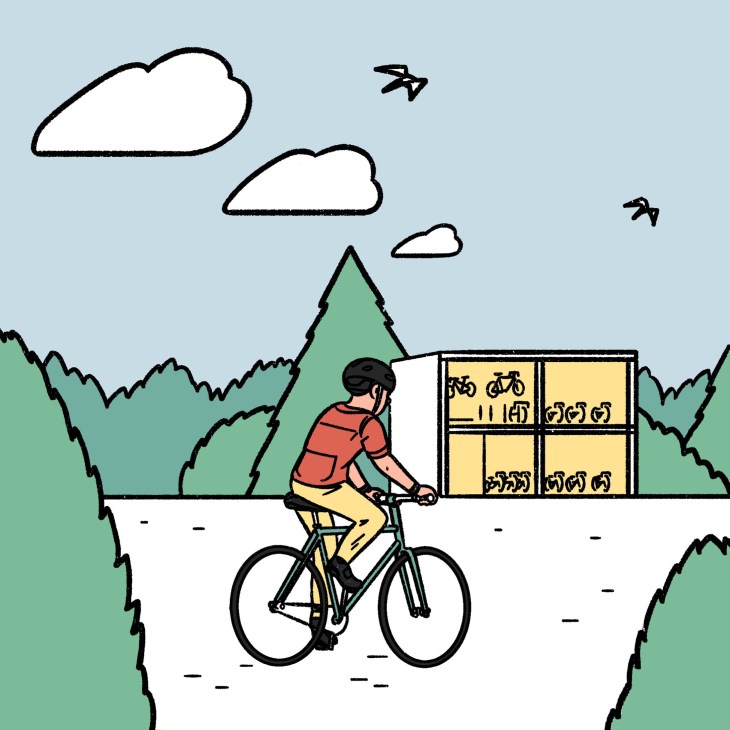
Some cities pour millions into cycle lanes but then ignore the final metre. Finnish firm Biketti aims to fix that with wooden storage solutions. The units come in various sizes, holding between 10 and several hundred bikes. They keep cycles safe and offer self-service access for repairs and cleaning. Some also feature storage for helmets and clothing. “We use ethically sourced timber and have architects to make sure that our bike garages not only function well but also look good,” says Janne Kalliomäki, CEO of Biketti. For now the market is Finland but don’t be surprised to see them elsewhere soon.
biketti.com
2.
Technology that creates a more active city
Coco Robotics, Los Angeles
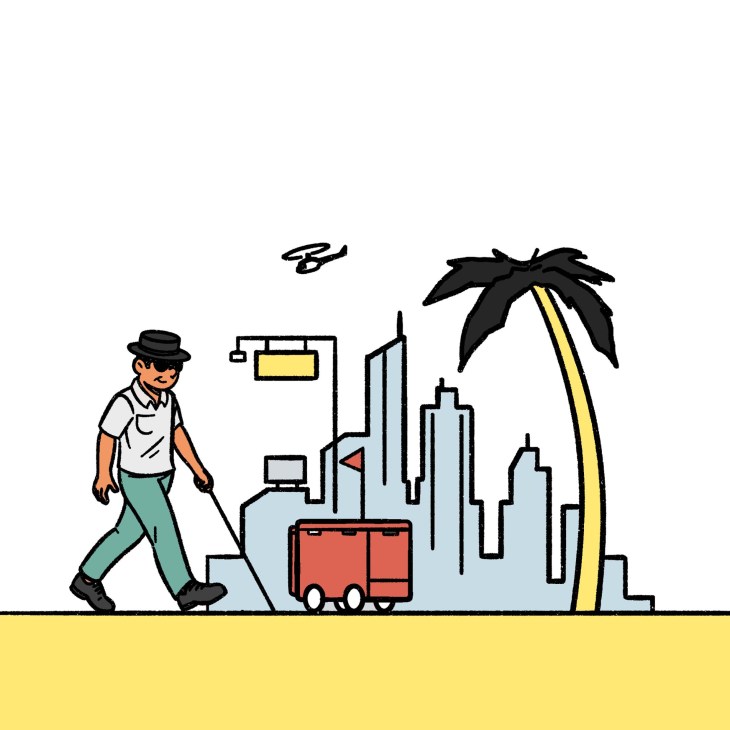
If you live in a US city (or a Finnish one, for that matter) you might have seen Coco Robotics delivery vehicles pootling around, as autonomous driving becomes an increasing part of our lives. One of Coco Robotics’ more surprising partnerships was announced in April 2026: a collaboration with BlindSquare, the leading accessible GPS app for the blind, deafblind and partially sighted. As Coco’s fleet gathers data while travelling the streets, information on obstacles gets fed back to BlindSquare, which provides alerts for its users. The scheme is available in six cities, from Miami to Turku.
cocodelivery.com; blindsquare.com

3.
A good case of thinking small
El Parque Gulliver, Valencia
Valencia’s beloved El Parque Gulliver is a 70-metre sculpture for children to clamber over. The structure recreates the arrival of Jonathan Swift’s titular character in the land of Lilliput, as recounted in the classic novel. Installed in the 1990s by designer Rafael Rivera, the playground is tucked inside Turia gardens and was recently refurbished. Almost 100,000 people a month flock to it during the city’s sticky summers. Nearby are giant chessboards, picnic areas, running tracks, skate parks and – importantly – a bar in which to sip on something cold while the children burn off some energy.

4.
Connecting spaces
Green Bridge, Bangkok
When Benjakitti park was extended earlier this decade, edging closer to Lumpini park by absorbing a swathe of land, City Hall built a temporary elevated walkway to link the two green spaces. In May, a permanent walkway called Green Bridge was unveiled, taking runners, walkers and cyclists safely across two roads and over the rooftops of a dense inner-city neighbourhood. The landscaping, lighting and lanes for pedestrians (using paving stones for delineation) make for pleasant early morning or late-evening strolls that show off canals, colourful temples and tall towers.
5.
Mental fitness matters
Goodlife Studio, Singapore
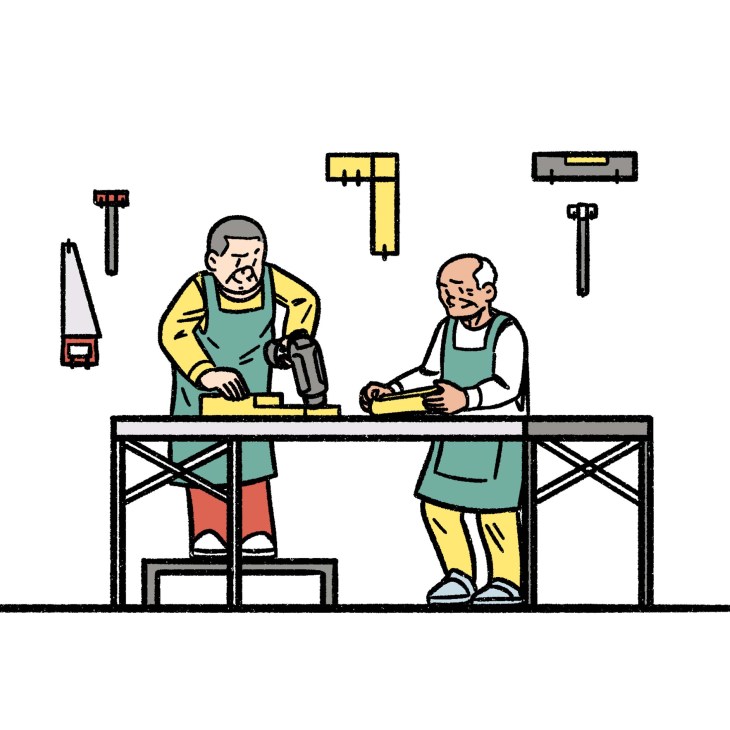
Singapore’s strategy for ageing emphasises staying socially connected and mentally sharp. Leading the charge is Montfort Care, which partnered with Singapore practice DP Architects to co-develop the concept of Goodlife Studio. The centres host activities for seniors such as carpentry and tea appreciation. The former have been especially successful in building support networks among men, who research suggests are at greater risk of social isolation. “We have crafted borderless environments that are welcoming and foster interaction,” says CEO, Chee Huang Seah.
montfortcare.org.sg; dpa.com.sg
6.
A free leg up
Bam Park, Milan
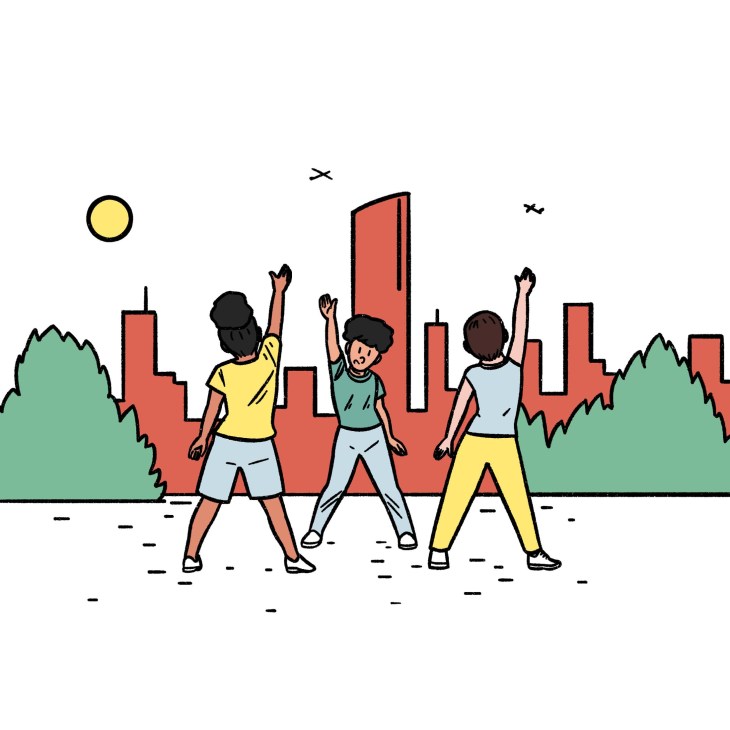
Finances shouldn’t stop the elderly from accessing exercise that keeps them limber. Bam Park in Milan’s Porta Nuova neighbourhood is alive with activities. It holds a free exercise class for the over-65s every Thursday at 10.30 between April and October. Bam has other events focusing on mental and physical sharpness – all of them free – including a metabolic walk (Tuesdays at 13.00) designed to help digestion, posture and circulation.
bam.milano.it
7.
Promoting a promenade
St Kilda Pier, Melbourne
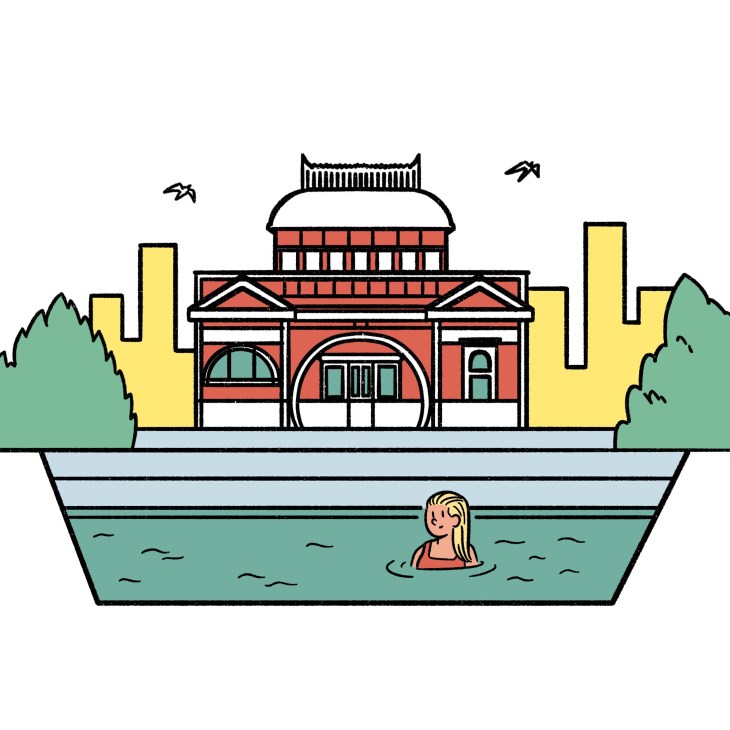
A jewel of Melbourne’s St Kilda neighbourhood is its historic quay, which was refurbished by architecture firm JCB in 2024. The heritage kiosk was retained while wood that was removed from the structure was used for benches. Paths were widened, toilets refreshed and curved amphitheatre seating introduced. At dusk, mast-shaped poles cast a soft glow – designed to not disturb a colony of penguins – while keeping the jetty alive for evening sprints and cold-water dips.
jcba.com.au
8.
Critical infrastructure can be a picnic
East River Park, New York
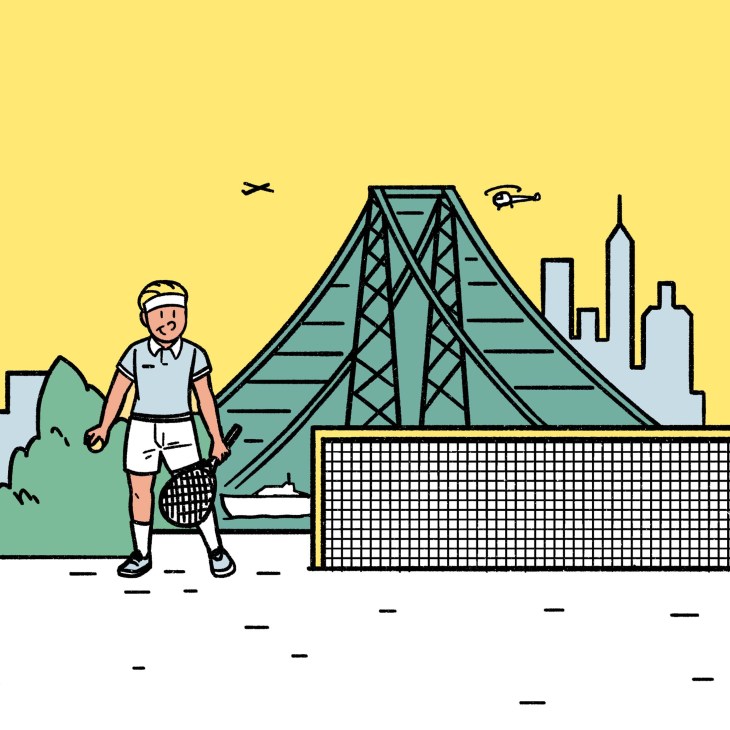
East River Park is a major initiative to safeguard Lower Manhattan from rising seas. Alongside flood protection for more than 110,000 residents, lining the waterfront are raised lawns, basketball and tennis courts, picnic and barbecue areas, a playground and play fountains. The park is also now more accessible than before, thanks to a pedestrian bridge over the buzzing FDR Drive.
nycgovparks.org

9.
Make space where you can
Namba Parks, Osaka
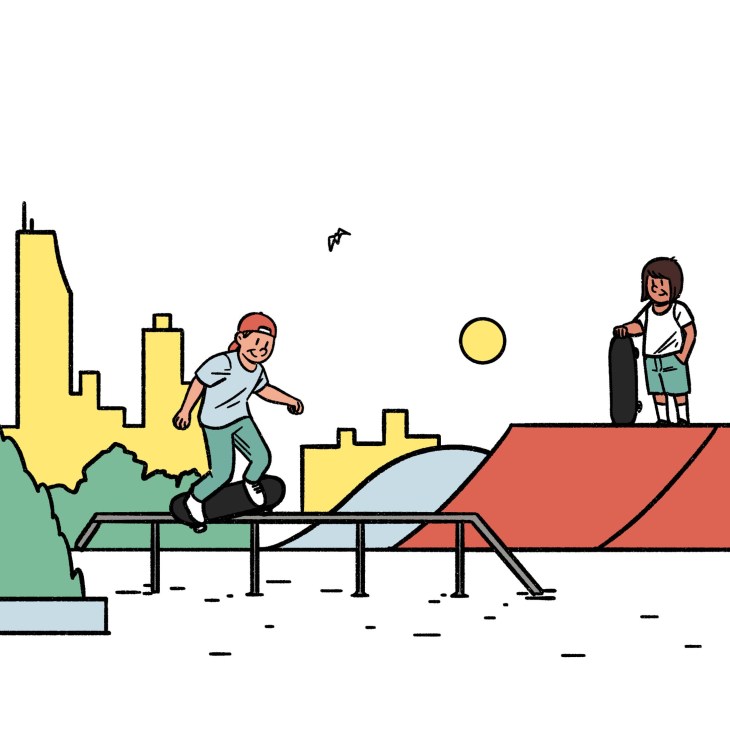
With a population density of 12,500 people per square kilometre, Osaka is one of the densest urban environments on Earth. But Namba Parks, completed in 2003 and designed by architect Jon Jerde, proves that green initiatives that get people outside can work in the tightest of spaces. Winding through a retail complex, the parks contain eight storeys of organic terraces, including groves, streams, ponds and waterfalls. The crowning glory is Parks Garden, open to the public and home to more than 500 species of plants.
nambaparks.com
10.
Get your skates on
Fucikarna, Prague
Skateparks shouldn’t be eyesores and nobody knows this better than U/U Studio. The firm’s team skate themselves and focus on the intersection between urban planning and skateparks as hangout spots for young people. Their latest ‘skate plaza’ opens this summer on the site of a former outdoor cinema in Mnichovo Hradiste, north of Prague. It comes complete with ramps and rails, as well as integrated seating, cupboards and clothes hooks to keep bags and equipment safe and dry.
uustudio.cz
11.
A company that gets the blood pumping
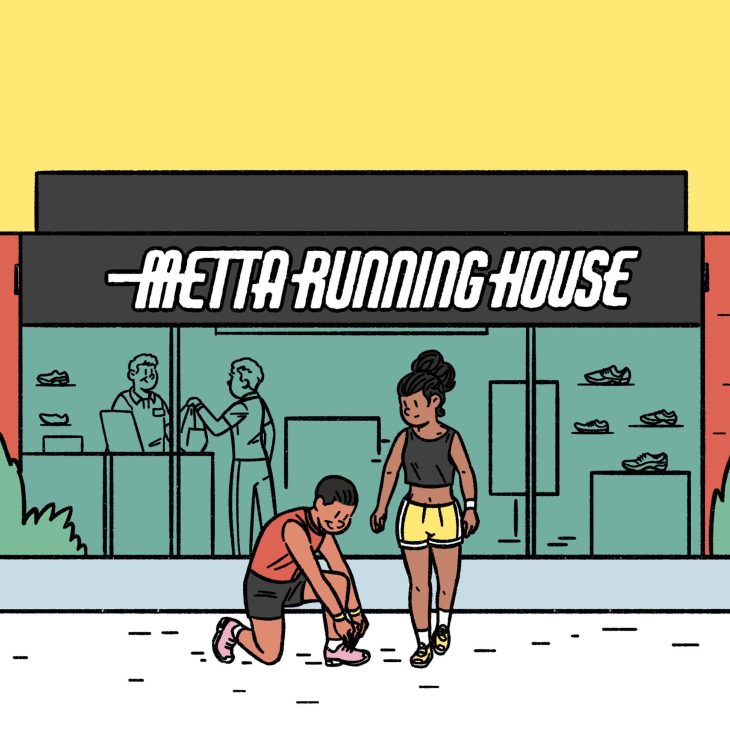
Metta Running House, Mexico City
Run clubs are a dime a dozen: risibly, many are online. Metta Running House, however, is a concept shop, featuring brands such as Nike and Hermanos Koumori in Mexico City’s Polanco neighbourhood. It revolves around all things real-life running – from branded races to a club membership with access to on-site lockers, showers and space to recover.
mettarunninghouse.com
12.
A little cycling insight
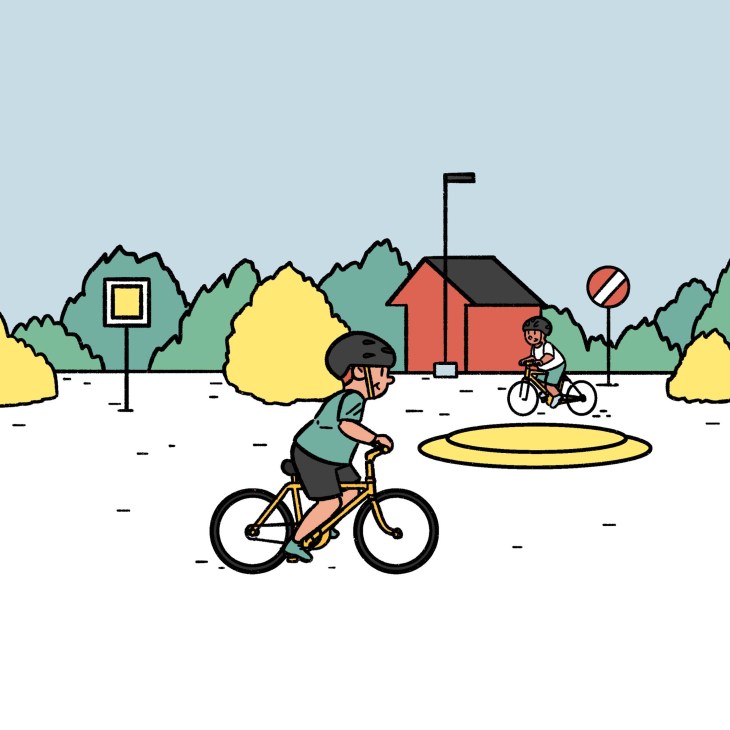
Bicycle School, Tirana
Albania’s capital, Tirana, is pioneering a model that transforms open spaces into mocked-up miniature cityscapes, where children learn the rules of the road in tandem with how to ride a bike safely. Opened in 2024, Bicycle School features scaled-down replicas of pedestrian crossings, roundabouts and cycle paths that run through pocket parks, as well as other road markings that young participants will come to recognise, ready for when they are old enough to cycle through the city in earnest. When that time comes, it’ll feel like child’s play.
13.
Adapt the resources that you already have
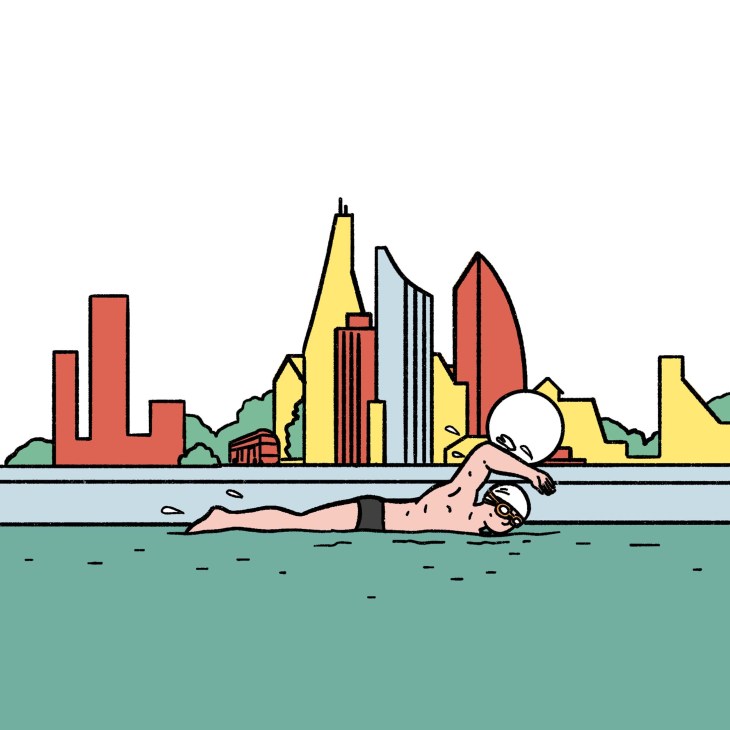
Sea Lanes Canary Wharf, London
While not every city waterway can be as clean as those in Copenhagen or Zürich, technology can help. Swimming pools offer places to swim without needing to clean an entire river, canal or channel. For years, London has had little in the way of a recreational relationship with such features but Sea Lanes Canary Wharf, which opened in June, is a watershed moment. The 50-metre pool, filled with water from the Eden Dock and independently from the River Thames, uses filtering membranes to make the water safe for swimming. Flanking the pool are dome-shaped wood saunas fuelled by renewable energy, with seating and foliage making it ideal for Londoners seeking to relax. While the thought of swimming in the Thames isn’t at the top of most Londoners’ to-do list, this neat solution is attempting to turn the tide.
sealanescanarywharf.co.uk

14.
Splashing out on public pools
Cape Town
Though the first public pool in Cape Town opened in 1908, in recent years the number has dwindled as resources have been cut. The city’s ambitious mayor, Geordin Hill-Lewis, has swum against the tide by investing ZAR40m (€2m) to get them open again, after identifying their civic importance – particularly for those unable to access the coast’s cool waters. During this year’s southern-hemisphere summer, all but one of Cape Town’s 37 pools were open for business, enticing 660,000 visitors during the course of the season. Having an affordable place to take a dip matters – other City Halls should take note.
15.
On the waterfront
Ookwemin Minising island, Toronto
Designed as a flood-protection and river-restoration project, the new park and island (formerly Villiers Island, now named Ookwemin Minising) doubles as a year-round recreational space for the public. It also acts as a hub for indigenous heritage, with shade provided by ceremonial structures, space for powwows and plenty of native greenery. Other highlights include kayaking, paddleboarding and canoeing; on land, there’s an event lawn, playgrounds, picnic areas and 6.1km of pedestrian and cycling trails – all with Toronto’s skyline as a backdrop.
latfoundation.org; waterfrontoronto.ca
16.
Making energy is a bright idea
Solar cycling track, Hyderabad
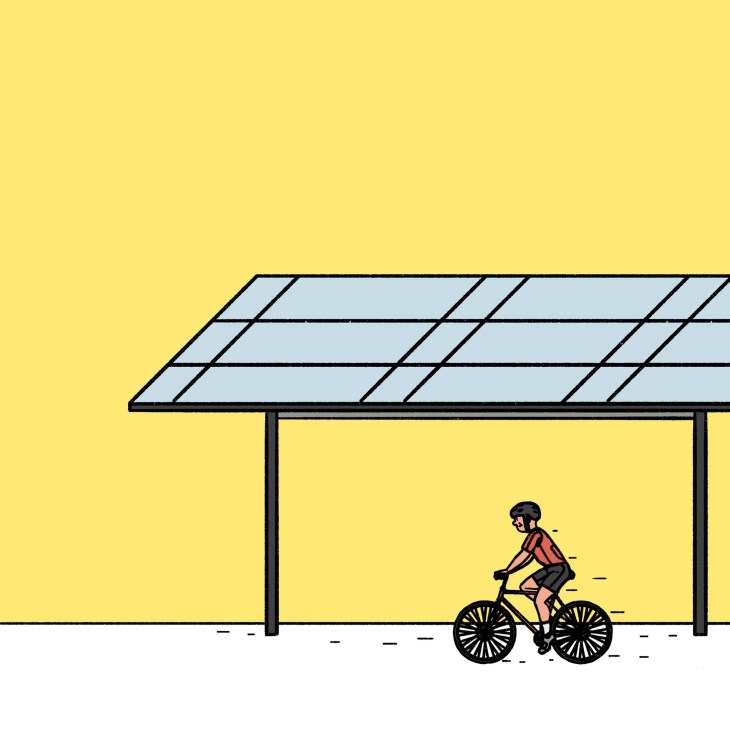
Indian megacity Hyderabad offers its cyclists 23km of shaded corridor that runs alongside two stretches of the city’s outer ring road. It also has a second function: it has no ordinary awning but, instead, 16,000 solar panels generating 16 megawatts of electricity (enough to power 32,000 streetlights). The track includes rental-bicycle points, electric-bike charging pods, food stalls and rest zones. While some issues have been raised, from maintenance to keeping enough rental bikes running, it’s moving in the right direction.

17.
Giving the right protection
Aspern Seestadt, Vienna
It’s no use providing outdoor facilities if they’re too hot in summer and drenched all winter. The first phase of Elinor-Ostrom Park, which runs beneath and to the side of a raised metro line, was completed in 2021. “The park’s shelter from the weather and the cool shade make the area well suited to sports uses,” says Jakob Kastner, open-space planner at Wien 3420 Aspern Development, the company behind Aspern Seestadt. There are year-round sports facilities and a bouldering rock for children, a motor-skills park and a cycling area, plus tables and benches. In short, a masterclass in how to build protected outdoor space.
aspern-seestadt.at

18.
Offering some relief
The Tokyo Toilet, Tokyo
In 2020, 16 celebrated architects were handed an unusual brief: redesign public lavatories in the Shibuya neighbourhood for a project prosaically titled “The Tokyo Toilet”. The result? Properly democratic designs by everyone from Shigeru Ban to Masamichi Katayama and, arguably more importantly, toilets that are cleaned three times a day. The glistening results mean none of the dread that often accompanies having to use public facilities in other locales, allowing residents and visitors to run further, wander longer and fully inhabit the city around them.
tokyotoilet.jp
19.
Getting the lights right
Nudgee Recreation Reserve, Brisbane
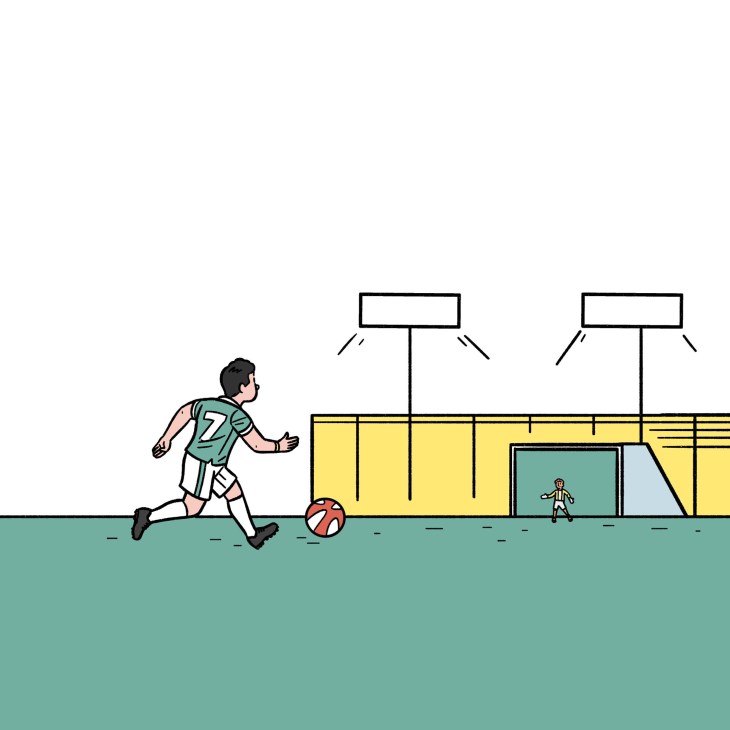
Lighting manufacturer Ewo was founded in Italy in 1996 and has been pioneering a less glaringly bright take on LEDs for a decade. It has cemented itself as a high-end player covering everything from homes to airports while looking to reduce energy waste and mitigate light pollution. Many cities have taken a shine to its floodlight system, which was developed for sporting occasions. Take the state-of-the-art Nudgee Recreation Reserve project in Brisbane, in which it worked alongside lighting engineering firm Rubidium Light to create perfect illumination for everything from a bike track to a dog park.
ewo.com

20.
Community clean-ups
Plogging, Bogotá
How do you improve an already positive fitness activity? By making sure that it’s not only yourself benefitting from it. Plogging, a wonderfully named social movement so simple that you wonder why it hasn’t been done before, combines litter picking with run clubs and sporting events and has become a way of bringing back civic pride while also burning some calories. Originating in Sweden around 2016, the name merges the Swedish words plocka upp – pick up – with jogging. Plogging Colombia is one of the most successful adoptions of the green-minded initiative to date.

21.
Encouraging small but impactful change
Bolzano, Italy
Sedentary urban populations need good leadership to become fit cities. In the northern Italian foothills of the Dolomites, the metropolis of Bolzano recently launched an advertising campaign in both Italian and German called “Fit: il movimento è salute” (Fit: Movement is Health), counselling the benefits of an active lifestyle. The ad campaign shows how small changes can make a big impact, whether it’s walking instead of taking the tram or doing some stretching instead of lounging in an armchair at home. The one we’re less convinced about is how you can combine brushing your teeth with five minutes of light exercise at the same time.

22.
All natural-material playgrounds
Palma, Mallorca
More than 50 years ago, when Hamburg-based social worker Hilde Richter was tapped to design an urban children’s playground, she imagined a natural wooden model rather than the harsh steel structures of the 1960s – one that would imitate children’s instinct to incorporate sticks and stones into playtime. Today, the Bavarian-based Richter Spielgeräte creates playgrounds that connect children with nature, sourcing wood from the Austrian Alps. In Mallorca’s rural Castell de Bellver Park, Richter Spielgeräte constructed swings, monkey loops and a balance course that blends in with the playground’s sand and surrounding fir trees.
23.
The stadium doing more than just sport
São Paulo, Brazil
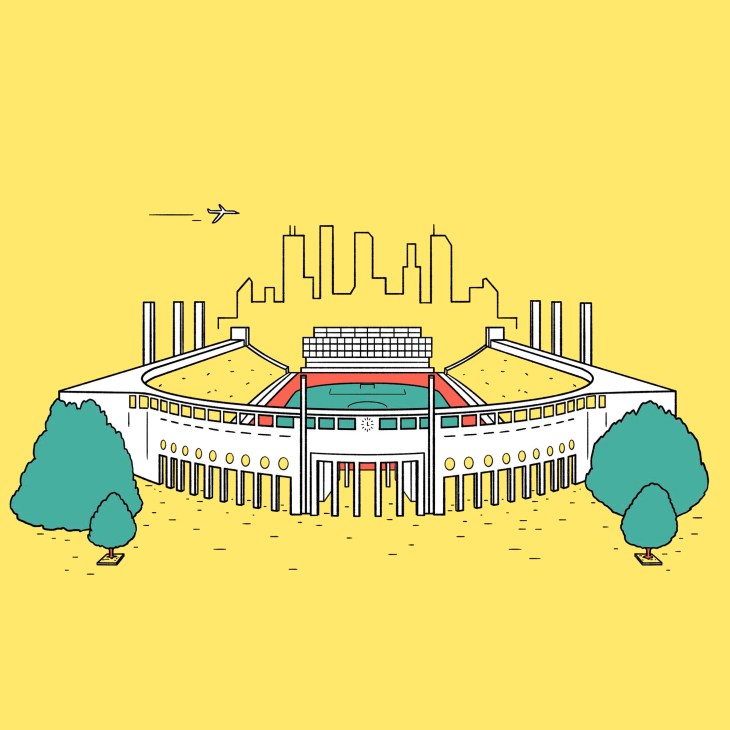
The Pacaembu stadium is a São Paulo icon, hosting some of the country’s most significant football matches. Inaugurated in 1940, the stadium underwent an extensive makeover at the hands of Raddar, an architecture firm based in São Paulo and Mexico City, and emerged as a multi-use space complete with an athletic track and an Olympic-sized public pool in which locals swim for free. The community-focused complex is also home to the country’s Football Museum, ensuring a steady stream of fans even when there are no games to watch. It just goes to show that while sport is great at bringing people together – good design can turn a stadium into a social hub.
Our top-10 books to holiday with this summer. Plus: must-visit bookshops around the world
1.
‘Lonely Crowds: A Novel’ by Stephanie Wambugu
Selected by Kelsey Lu
“I relate deeply to the narrative and characters in Stephanie Wambugu’s 2025 book Lonely Crowds: A Novel – but in vastly different ways. It’s certainly not my story but it takes a very capable writer to make you feel seen in this way. It’s funny too, making it a truly great read for summer. I found myself having to slow down as I was approaching the end, out of fear that I was finishing it too quickly.”
Lu is an American singer and cellist.
2.
‘Is a River Alive?’ by Robert Macfarlane
Selected by Jessica Gardner
“Since my childhood, summer has meant outdoor swimming in creeks, rivers and the sea. So what better book to immerse yourself in than Robert Macfarlane’s 2025 work Is a River Alive? Part environmental treatise and part memoir, the author explores our relationship to nature and humanity through his journeys along three rivers in Ecuador, India and Quebec. This is a deeply poetic and spiritual book, beautifully written and peopled by friendships, so the narrative moves with their stories, as well as the flow of water.”
Gardner is the Cambridge University librarian and director of library services.
3.
‘King of Kings: The Iranian Revolution – A Story of Hubris, Delusion and Catastrophic Miscalculation’ by Scott Anderson
Selected by Kaja Kallas
“I have read many books on Iran but this one from 2025 stands out as being very well written, almost like a thriller. I just couldn’t put it down. Anderson looks at the time around the 1979 revolution but from a different angle. This is an especially relevant read today, as the geopolitical consequences of the revolution are playing out again in real time.”
Kallas is the vice-president of the European Commission.
4.
‘Democracy’ by Joan Didion
Selected by Zosia Mackenzie
“Joan Didion’s Democracy feels perfect to revisit this summer. I first read it years ago but I have been thinking about it again because its atmosphere feels newly relevant: themes of political drift, emotional detachment and the fading glamour of American power. The 1984 novel unfolds in a haze of tropical heat, political scandal and private disillusionment – where memories fragment, motives blur and chronology slips. Within that instability, Didion creates an eerily precise portrait of a culture shaped by performance and its selective memory. Democracy understands that history is often shaped less by ideology than by mood, memory and the stories that people decide not to tell themselves.”
Mackenzie is the production designer for the film ‘The Drama’.
5.
‘In the Name of Identity’ by Amin Maalouf
Selected by Ibrahim Maalouf
“In a time when cultural and identity fears are pushing people against one another, In the Name of Identity feels more necessary than ever. My uncle Amin Maalouf reminds us that we are never just one thing and that embracing our multiple identities is a strength, not a threat. This beautiful, lucid book, published in 1998, reconciles us with complexity, curiosity and humanity. Reading it this summer is not escaping the world – it’s facing the future with intelligence, openness and hope.”
Maalouf is a trumpeter and composer.

6.
‘The Elements of Power’ by Nicolas Niarchos
Selected by Lucas Zwirner
“I’ve been recommending that people read Nicolas Niarchos’s 2026 book The Elements of Power. As someone attuned to value and global networks, I found it totally gripping. The book makes colossal geopolitical forces feel immediate, interconnected and even tangible. It quietly but decisively shifts your world view.”
Zwirner is the chief commercial officer at David Zwirner art gallery.
7.
‘This Mouth is Mine’ by Yásnaya Elena Aguilar
Selected by Citlali Fabián
“This is a 2024 collection of essays by Yásnaya Elena Aguilar, a Mixe [a language family with speakers in Oaxaca, Mexico] linguist and one of the wisest voices from my region.With warmth and wit, she writes about Mexico’s indigenous languages and the quiet politics that erase them – an open letter that draws us into her life and experiences. ”
Fabián is a mixed-media photographer based in Mexico.
8.
‘Summer Light, and Then Comes The Night’ by Jón Kalman Stefánsson
Selected by Pietro Biancardi
“At times, being far from the world’s noise opens us up to the call of the heart and the senses. A tiny village of 400 souls in the Icelandic countryside becomes a magnifying glass on the eternal tug-of-war between human desire and the threads of fate. By blending poetic magic with an unrelenting wit, Stefánsson searches for an answer to the question, ‘Why do we live?’ Every page of this 2005 book is a revelation that hits deep, making us laugh, cry and dream.”
Biancardi is the publisher at Iperborea publishing house.
9.
‘All Fours’ by Miranda July
Selected by Maike Cruse
“There are books that I love reading because they allow me to escape my own thoughts and immerse myself in a character’s world. All Fours by Miranda July, from 2024, is one of those books. It’s about midlife crises, new beginnings and menopause. July’s characters are quirky, contradictory and a bit adrift. They nurture bizarre fixations and construct fanciful dreams, holding on to these with all their strength. Their inner worlds are relatable yet so offbeat that they provoke laughter and tears – occasionally simultaneously.”
Cruse is the director of Art Basel in Basel.
10.
‘Beginning Middle End’ by Valeria Luiselli
Selected by Olga Campofreda
“A mother, her daughter and the mythical landscape of Sicily over a summer. This 2026 book is the story of a woman looking for a new beginning after a divorce, while at the same time trying to start a new novel and looking after a 12-year-old girl. Merging memoir, road narrative and reflections upon female lineage, Valeria Luiselli’s latest work feels less like a novel than a new literary form altogether, where storytelling itself becomes an act of survival and reinvention.”
Campofreda is the curator of the Miu Miu Literary Club.
Our favourite bookshops
Looking for a quiet spot to browse the shelves? Here are 10 bookshops that get the Monocle stamp of approval.

Llibreria Finestres, Barcelona
Visit all three outposts for their superb book selection and innovative interior design.
Kalemat Bookstore, Dubai
With a quiet café and views of the Dubai skyline, Kalemat is a literary haven.
Good Company Books, Lisbon
This English-language bookshop emphasises Lusophone literature in translation.
Daunt Books, London
Leaded skylights, Edwardian shelving and a minstrels’ gallery make Daunt spectacular.
Read more: Leaf through London with 10 bookshops that are bound to please
Albertine, New York
Housed in a Gilded Age mansion, Albertine stocks the US’s largest commercial collection of French literature.
Read more: New York’s 10 best lesser-known bookshops
Librairie 7L, Paris
Established by the late Karl Lagerfeld, the sleek 7L focuses on photography, design and haute-couture publications.
Ogaki Shoten, Tokyo
This Kyoto-based bookshop’s first Tokyo outpost has a café and hosts exhibitions.
Livraria da Travessa, Rio de Janeiro
This beloved spot has exemplary curation and is set to expand with more outposts.
Gleebooks, Sydney
A cherished bookseller in Sydney for more than 50 years, Gleebooks has three locations.
Never Stop Reading, Zürich
This design-savvy shop is stacked with books on architecture, photography, art and design.
Eight iconic Mediterranean shoe styles and the brands keeping their heritage fresh
From the heelless babouches found across North Africa and the Middle East to the cotton-velvet slippers of Venice, the Mediterranean basin is home to a variety of shoes whose stories are rooted in the native sand and soil. We round up eight distinct styles from across the region and spotlight the brands that have been reimagining these traditional footprints for modern-day holiday wardrobes.
1.
The espadrille
Spain
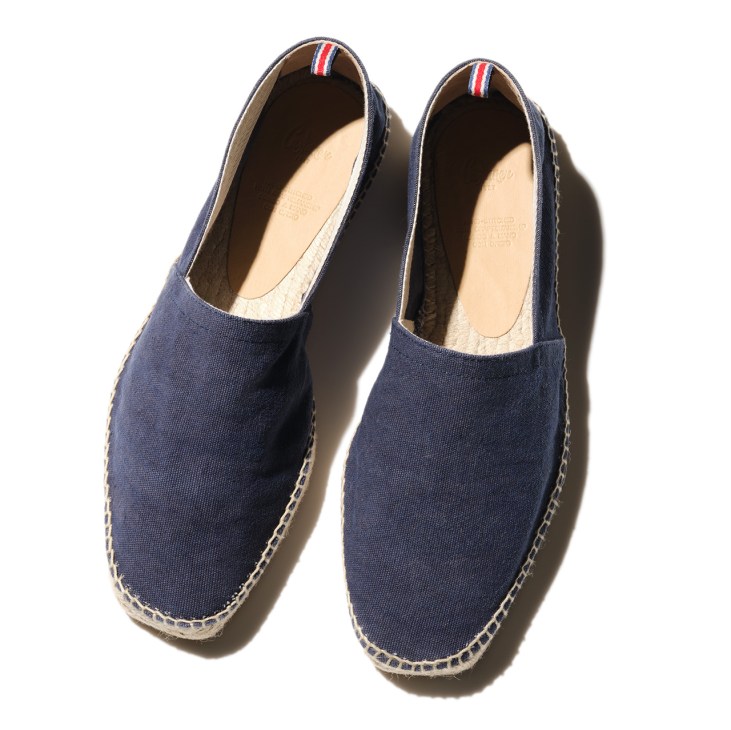
Espadrilles were originally worn by peasants in the farming communities dotted across the Pyrenees. The name derives from esparto, the tough grass that is used to braid their soles. Castañer, a Spanish label founded by Luís Castañer and his cousin, Tomás Serra, has been preserving this craft since 1927. However, espadrilles fell out of fashion until the 1970s, when French designer Yves Saint Laurent approached Castañer to create a wedged version, turning it into the summer fashion statement that it is today. We’re pairing ours with swimming trunks during the day and linen separates for sunset hour.
castaner.com
2.
The jelly shoe
France
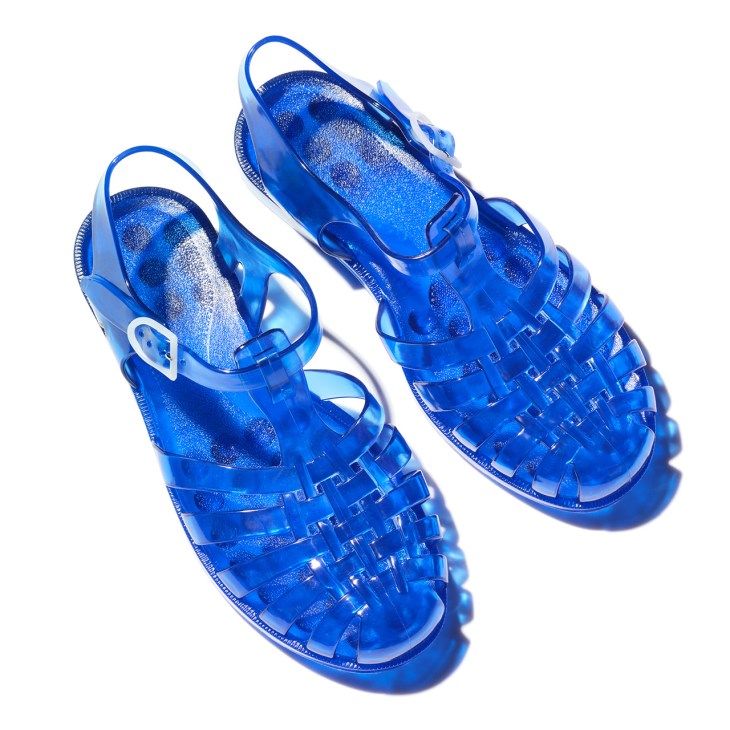
For many French people, childhood memories of les grandes vacances are synonymous with colourful jelly sandals. The shoe was invented in 1946 by French fashion brand Méduse as a water-friendly alternative to leather. Eighty years later, the silhouette remains unchanged: made from a single block of injection-moulded PVC, it features a spiked sole for grip, a rounded toe and braided straps. Each pair is manufactured in western France in colours ranging from cobalt blue to glitter pink via muted options such as khaki.
meduse.com
3.
The clog
Portugal
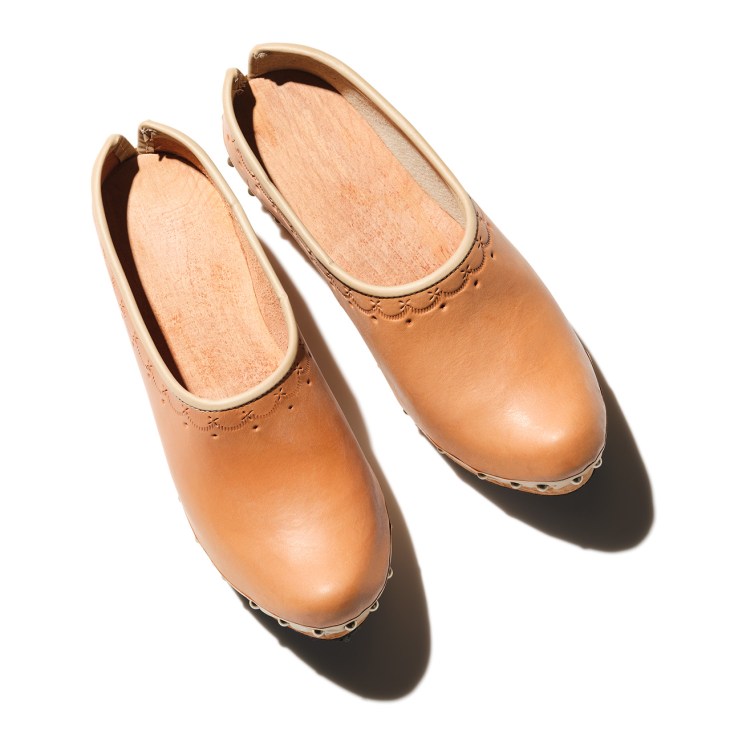
These funky, high-toed clogs are made in Barcelos, a town in the northwest of Portugal where sturdy wooden soles were needed to navigate the rugged mountainous terrain. Slowly, they clopped south, becoming a beach favourite in the Algarve. Today, the making of these shoes remains largely unchanged: delicately perforated leather is tacked to a wooden sole with metal studs. A Vida Portuguesa, the Lisbon shop that champions craft from across the Mediterranean region, offers some of the most elegant iterations.
avidaportuguesa.com
4.
The balghas
Morocco
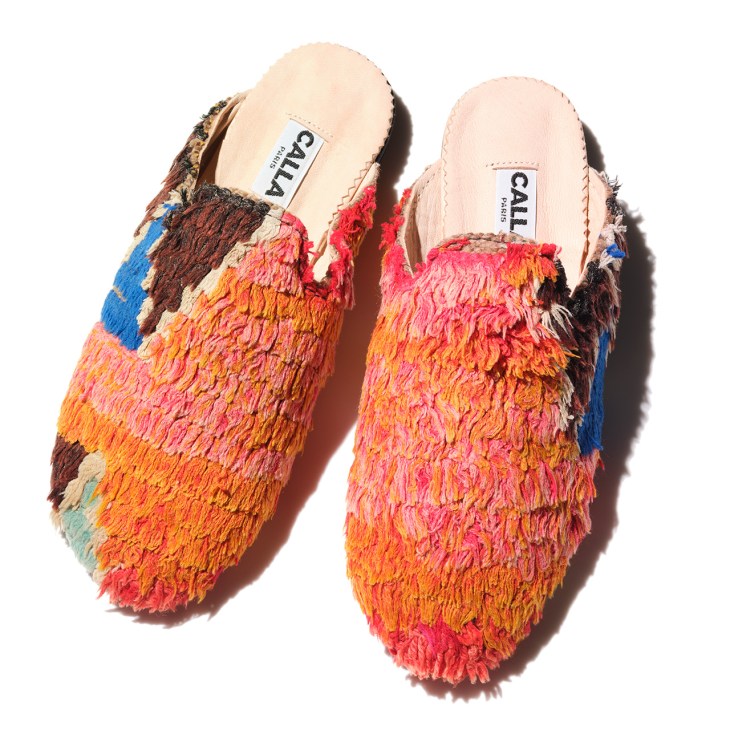
Known as balghas across the Maghreb, these textured slippers are a contemporary twist on the Moroccan babouche. Paris-based brand Calla produces a modern-day version, using another craft associated with Morocco, weaving. The result is these fluffy slip-on styles created from recycled Berber rugs. “I love the spontaneity of the process and the texture of these styles,” says Calla Haynes, the founder of Calla. “I’m proud to be putting Moroccan work on an international stage.”
calla.fr
5.
The Venetian Friulian slipper
Italy
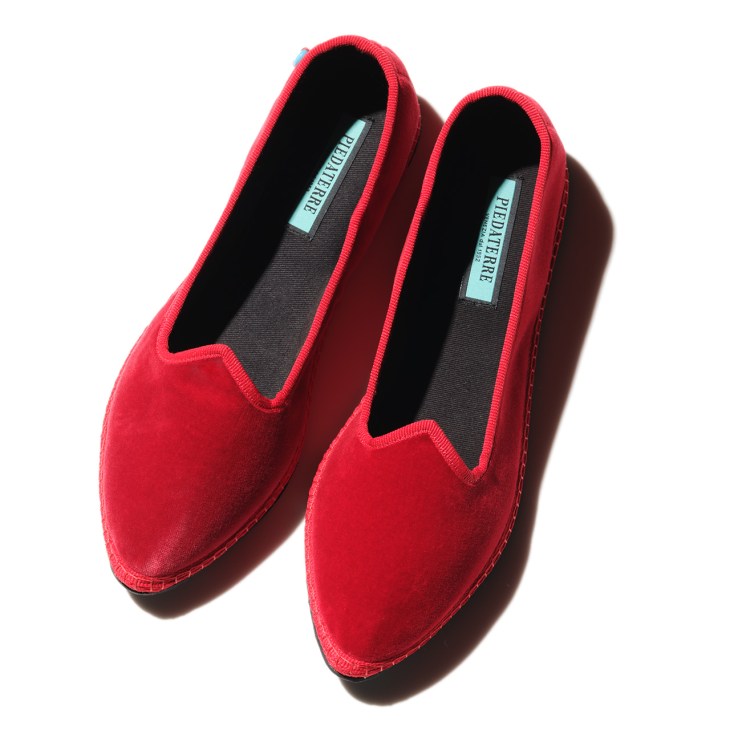
In Friuli, an agricultural region northeast of Veneto, women have been upcycling jute sacks and inexpensive cotton velvet to create slippers since the 19th century. Gondoliers adopted the shoe with a simple upgrade: a non-slip rubber sole. Today, the slipper is paired with linen suits for summer evenings or thrown into beach totes for post-swim lunches. Venetian label Piedàterre makes some of the best, using 100 per cent cotton velvet embellished with small glass beads.
piedaterrevenezia.com
6.
The lace-up sandal
Greece
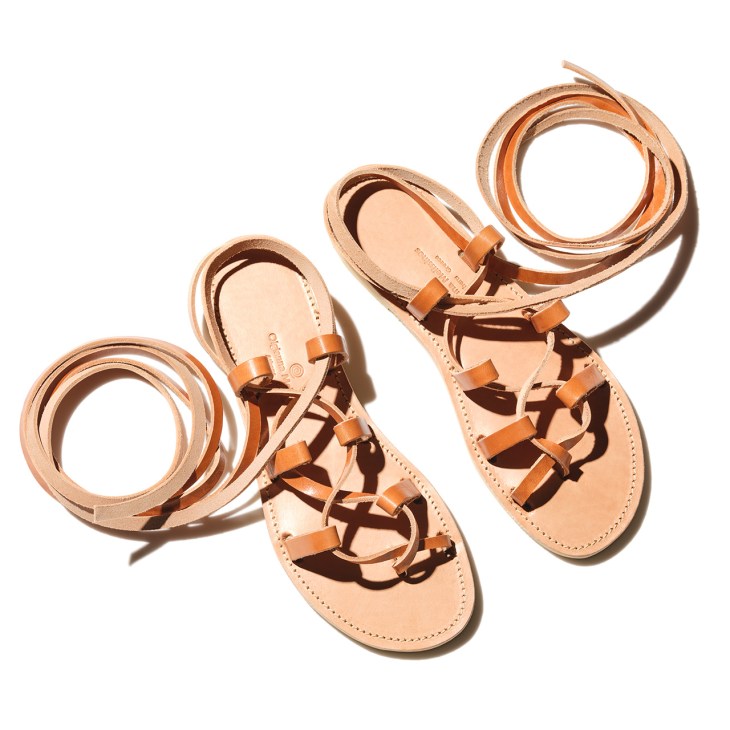
The Greeks are responsible for many innovations, from modern medicine to democracy, but one of the country’s most understated contributions is found on the foot. The Greek sandal can be traced back to the Minoan era (3000 to 1100BC), becoming a sartorial staple around 1200BC. More recently – in 1920, to be exact – George Melissinos established his sandal workshop at the foot of the Acropolis in Athens. His son, Stavros, later took on the business, reigniting the popularity of lace-up Greek sandals. Today, his daughter, Olgianna, runs the family firm with aplomb and continues to offer custom designs for a perfect fit.
melissinos-sandals.gr
7.
The mule
Turkey
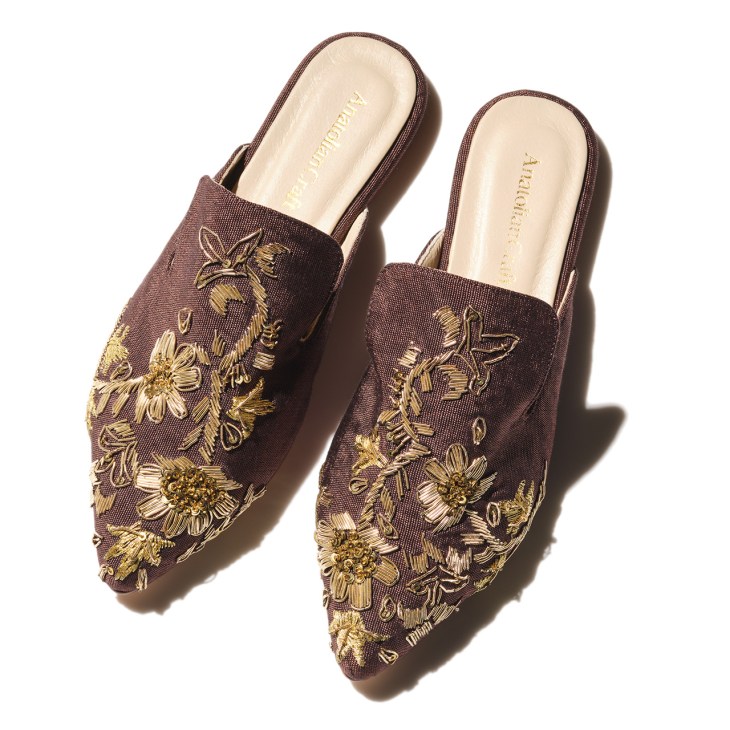
In Turkey, the silk-and-cotton kutnu textile, known for its slight sheen, is associated with the 17th-century courts of the Ottoman empire. Today, Istanbul-based label Anatolian Craft uses the fabric to create slippers that possess a similar opulence. Each pair is embroidered with beads and ribbon by artisans who create whimsical patterns of flowers or birds. Founded in 2016 by the former architect and designer Bilge Can, the brand draws on the cultural history of the Anatolian region to preserve embroidering techniques that are passed down from one generation to the next.
anatolian-craft.com
8.
The babouche
Lebanon
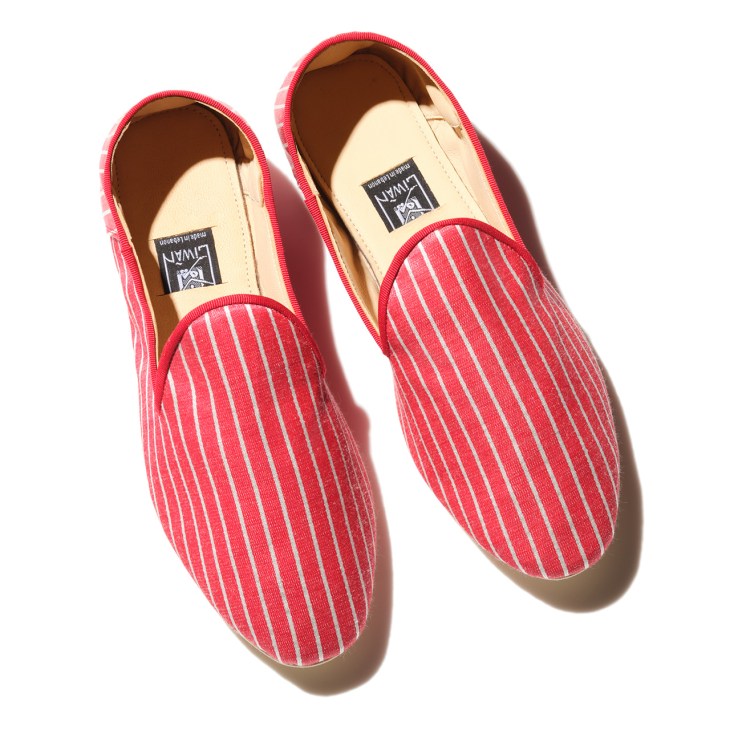
A sartorial mainstay of the Middle East and North Africa, the babouche was born in Persia. Suited to arid climates, the shoes are also easy to remove for salah (prayer). From Morocco to Tunisia via Lebanon, variations on the style include rounded or pointed toes, suede or leather options and soft or hard soles. Today, the babouche embodies a certain bohemian sensibility and is seen everywhere, from the streets of Paris to the Mediterranean seaside. We particularly like these striped babouches by Beirut brand Liwan, which makes handmade versions using satin, silk or brocade fabrics – a modern revival of a classic.
liwanlifestyle.com
Feel good summer fits: Three fashion designers defining warm-weather style in Rio, Milan and Palma
1.
Escapista
Milan
For the Milanese, the arrival of summer means time away, typically spent at the beach, to escape the sweltering heat and humidity that envelops the Lombard capital. To explore these ideas of leisure and escape, fashion-industry veteran Leonardo Girombelli left his career with luxury brands – mostly in e-commerce for the likes of Yoox, Prada and Tod’s – and branched out on his own.
Earlier this year he debuted his menswear label, Escapista, with a 40-piece collection inspired by the colours and moods of Mediterranean life. “I wanted the name to be poetic and to hint at travel,” says Girombelli. It also pays homage to the Escapist, a superhero featured in US author Michael Chabon’s novel The Amazing Adventures of Kavalier & Clay.
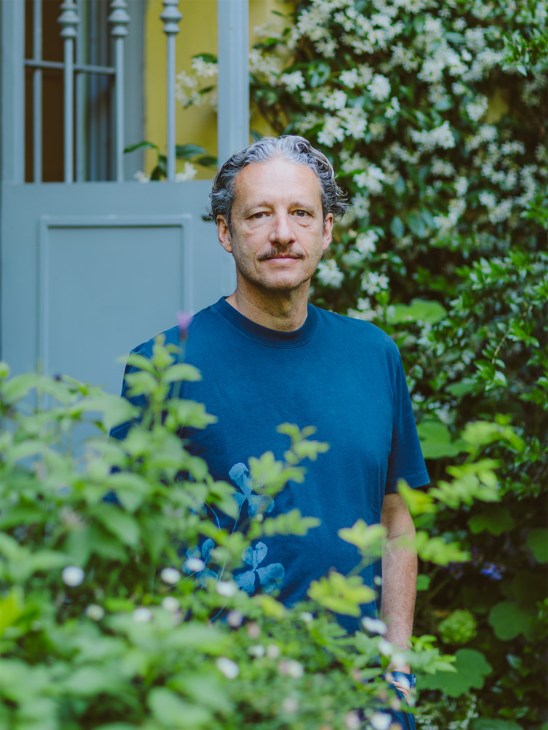
Girombelli grew up “immersed in textiles” in Italy’s Marche region, watching his parents run a clothing factory and produce seasonal collections for womenswear label Genny. By leaving e-commerce to launch his own resortwear label, he was coming full circle. “I wanted to create something authentic that would let me go at my own pace,” adds Girombelli, who has nurtured a network of trusted fabric suppliers and producers across Italy.
The brand’s T-shirts are cut loose to suit warmer climes and made from organic cotton in Puglia, then garment-dyed to give them a lived-in look. Collarless shirts are made using the same process, while the label’s Atlas bomber jackets are made from sturdy cotton sourced from the Marche region. For swimsuits, Girombelli turned to Portugal, creating trunks that feature playful details such as wooden beads on the drawstrings.
The collection also includes a range of bags – from totes with large external pockets to oversized duffels – designed for grab-and-go trips. “The aim was not to overdo it on this initial release and focus on making a small selection of well-constructed garments,” says Girombelli. “I wanted to create those evergreen pieces that become staples in one’s wardrobe.”
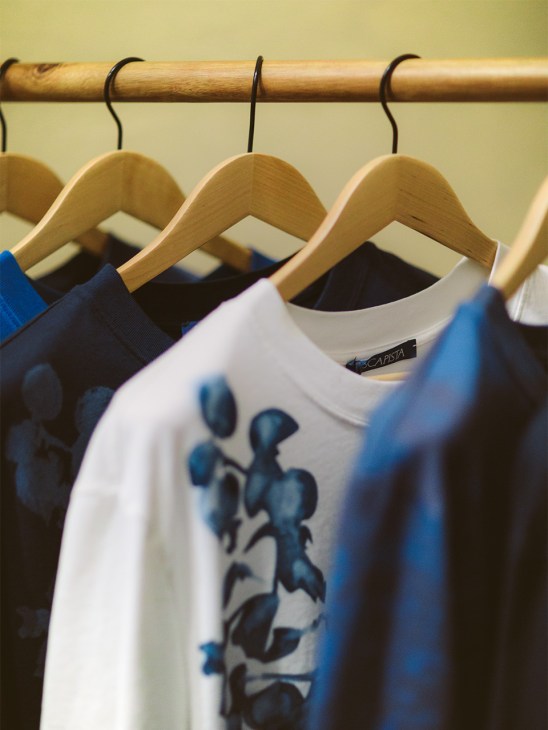
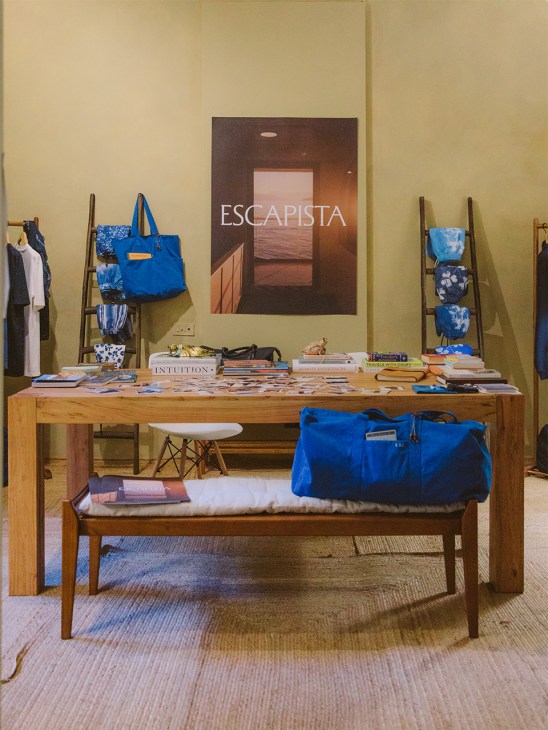
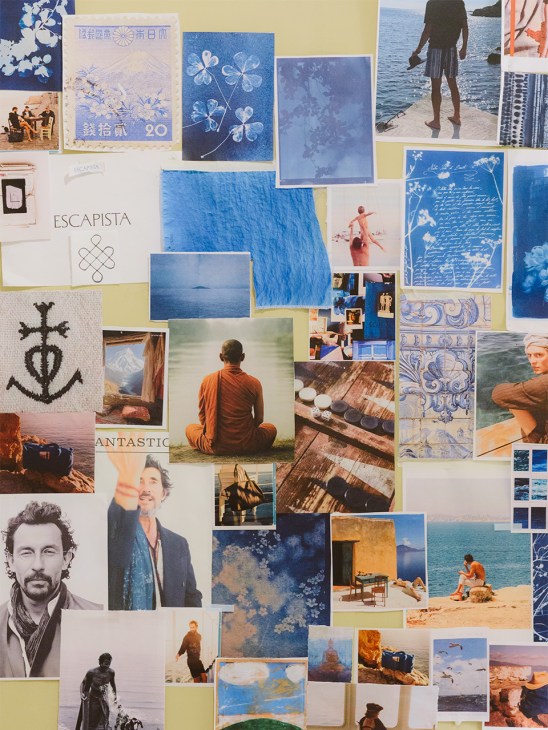
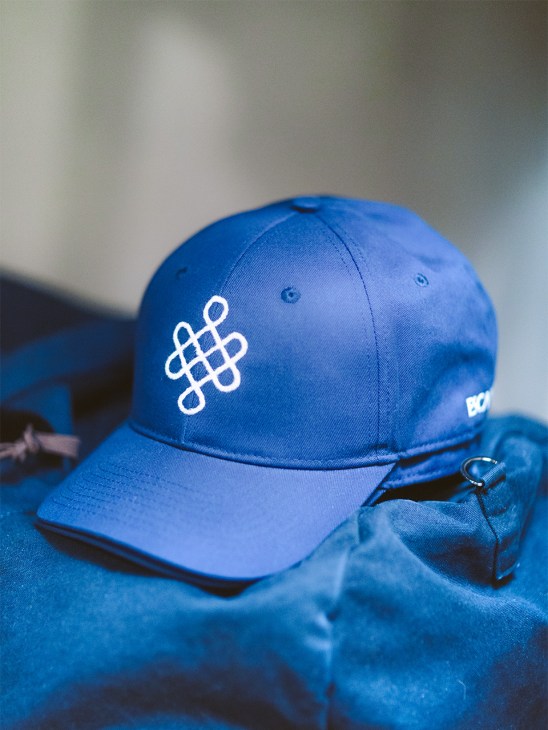
The blue colour palette, evocative of the sea and sky, was inspired by a mood board pulling together images of ferry rides to the Greek islands, with a touch of Morocco, Iberia and Italian summer haunts. As for the brand’s logo, a subtle “Esc” is discreetly embroidered on the hems of shirts or the sides of pockets – a playful nod to the escape key on computer keyboards.
So far, the market seems to approve of Girombelli’s sunny vision. In just a few months, Escapista has secured space in multibrand shops in Pantelleria, Toulouse and Rome, as well as in resort properties in Comporta, Bendor Island and Ibiza. There are many people, it seems, who harbour hopes of a summer escape.
escapista.com
2.
Lenny Niemeyer
Rio de Janeiro
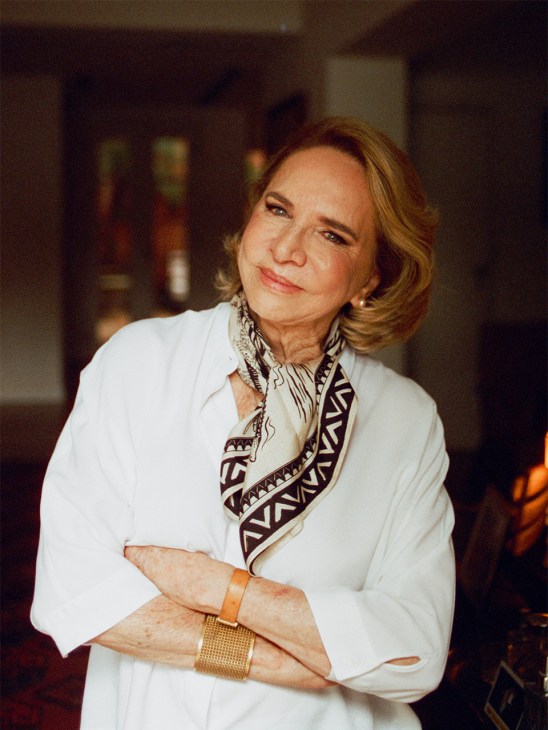
Since launching her eponymous label 35 years ago, Brazilian designer Lenny Niemeyer has helped to redefine the image of her home country’s swimwear, fusing elegance with a playful sense of joie de vivre. Niemeyer was born in Santos in the state of São Paulo but is Carioca in spirit – she is known for her love of good parties and days spent in the sun. She spends much of her time in Rio de Janeiro, where she lives with her family in a house overlooking the Rodrigo de Freitas Lagoon. It’s a popular spot in creative Carioca circles: Niemeyer often opens her doors to host gatherings for as many as 900 people. She recently celebrated the anticipated return of Rio Fashion Week, which injected a welcome dose of energy and money into a fashion scene that had been eclipsed by São Paulo.
Here, the designer tells Monocle about hosting, staying on top of Brazil’s swimwear market and what’s next for her brand.
Why did you start your brand in Rio de Janeiro?
After studying architecture and industrial design in São Paulo, I married someone from Rio and moved here. No company would hire me so I started making bikinis for some of my friends from São Paulo, purely for fun.
When did things begin to change?
It was around the time of the Collor Plan [economic reforms carried out in Brazil between 1990 and 1992], when a lot of people went bankrupt. I was working from my garage with a pattern maker, selling clothes to various brands. But they started cancelling orders, leaving me with more than 30kg of fabric. I was given the opportunity to take over a design shop that was closing in Ipanema and decided to take the risk. I started to establish a loyal customer base and opened shops in São Paulo, Rio and the south of Brazil.
How did you come up with your signature style of swimwear?
For me, beach fashion isn’t limited to the sand. I like experimenting with materials that are more commonly used for evening wear, such as silk, which is both natural and lightweight. My swimwear isn’t about being the sexiest or the most revealing. I focus on pattern making, colour and silhouettes with larger waists. When customers feel good in your designs, they will come back. I love it when I meet women who say that they still own Lenny Niemeyer bikinis from 20 years ago.
Why was it important for you to be part of Rio Fashion Week this year?
I had always fought to keep Rio Fashion Week running. When I heard that it was coming back, I wanted to have a retrospective. Our biggest challenge was using old designs but making everything feel new.
Tell us about your plans to expand beyond your home country.
We have a distributor in Europe but exporting our products is still expensive. I want to expand our retail network in Brazil first. International expansion will be a long process that I’m leaving to my daughter, Bel.
Tell us about your decision to bring Bel on board as creative director.
I’m at an age when I need to think about legacy. I want to ensure the company’s continuity. Bel has the same values as me. She has travelled a lot and now she’s back with a big desire to refresh the business.
Can Rio become a city that the world looks to for swimwear trends?
Definitely. Visitors are coming here wanting to buy Brazilian bikinis, including my designs. European women, in particular, are now more open to swimwear from this country.
What makes a good summer party?
It’s essential to have plenty of ice and all kinds of drinks. Your guests can help themselves. You then need good music and the right mix: journalists, artists, actresses, movie stars, bloggers. Sometimes, I meet people who were introduced at one of my parties and are still close to this day – and that means a lot to me. I don’t throw those very big parties anymore but I still think that it is important to help create connections between people.
lennyniemeyer.com.br
3.
Cortana
Palma
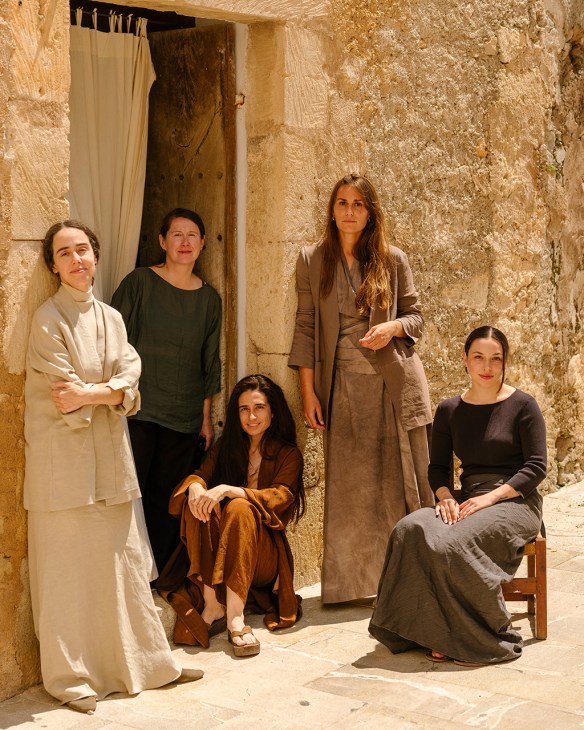
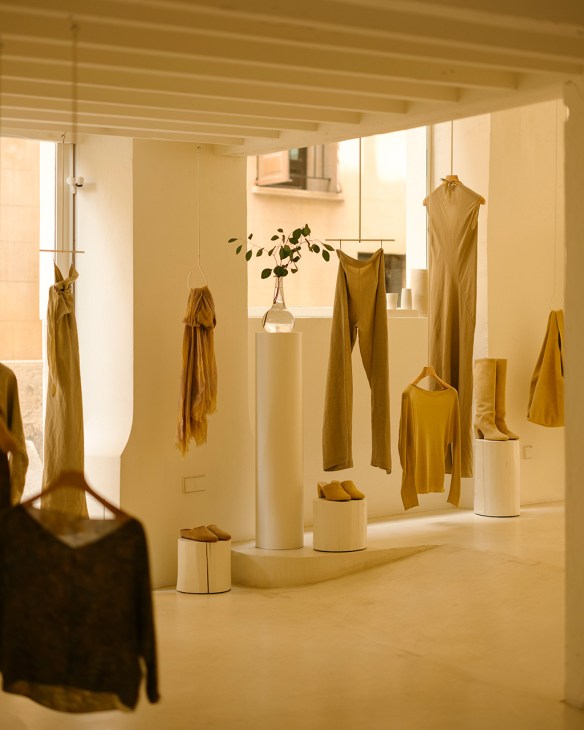
Cortana’s flagship shop in Palma stands apart from typical fashion boutiques. There are no mannequins in sight. Instead, soft linen trousers and silk crepe dresses hang at varying heights from the ceiling, like paintings in a gallery. “We work hard on every garment, fabric and print so I like to give my pieces a leading role,” says Rosa Esteva, who founded the brand in 2001. “I come from the art world and have been curating exhibitions from a young age. It’s about giving each piece the space that it deserves.”
Esteva, who grew up in Son Servera, a small medieval town in the island’s northeast, recently moved back to Mallorca from Barcelona. Since then, she has doubled down on her commitment to working with local artisans and has taken on projects beyond fashion, investing in the revival of hemp farming on the island.
The Cortana shop is in a restored townhouse, a maze of rooms with whitewashed walls. A narrow corridor leads from cosy nooks to light-filled rooms and a garden shaded by palm trees. It was designed by architecture firm Esteva i Esteva, led by Rosa’s brother, Tomeu, and father, Antoni, known for working on the homes and ateliers of artists such as Miquel Barceló and Joan Miró.
Esteva emerges from a dressing room in a green linen ensemble that exemplifies her minimalist style: a boat-neck top with mid-length sleeves and a long fitted skirt. Each piece is anchored in references to art and nature, and created from fabrics such as silk, linen and cashmere. “I want my clothes to feel like a moment that people take for themselves – like eating a healthy meal or meditating,” she says.
This morning the shop is quiet. Browsing inside are regulars including Palma resident Joana Maria Vives. Esteva steps into the changing room to adjust the fit of a pair of cinnamon trousers. “I like to see how customers interact with the clothing,” she says, kneeling to pin a hem. “Whether it was deliberate or not, you have created a community,” Vives tells her. “We don’t come here just to shop. We feel part of a concept, a way of being.”
While some of the brand’s operations are in Barcelona, Cortana’s design studio is now based in Son Servera, where Esteva was raised in a creative household. During her childhood, her father was always sketching house designs. Her mother, a florist who now runs country hotel Son Gener, taught her composition through flower arranging. After studying art and then fashion design in Barcelona, Esteva launched several brands, selling her handmade creations at friends’ shops. She founded Cortana at the age of 26 but it was a different proposition back then – her first collection featured a series of haute-couture dresses and long velvet coats. Its pieces caught the eye of buyers at Jean Pierre Bua, one of Barcelona’s top fashion boutiques at the time, and quickly gathered a loyal following.
Cortana now releases four collections a year. Pieces cut on the bias – an artisanal technique that allows the fabric to follow the body’s contours – have become a signature. The label prioritises comfort and its designs are often multifunctional. Dresses can be wrapped in different ways, tops become dresses and bags become scarves.
Monocle meets Esteva in Sa Pleta Freda, one of the oldest homes in Son Servera. Her father turned it into an art gallery in the 1970s and she has repurposed the upper floor as her studio. Here, she paints or sketches; her custom prints emerge from her watercolours. She makes full use of the space, pinning swatches of fabric onto the walls, picking up a pair of scissors and wrapping herself in fabrics to help her visualise the final design. “I find working on a computer impossible,” she says.
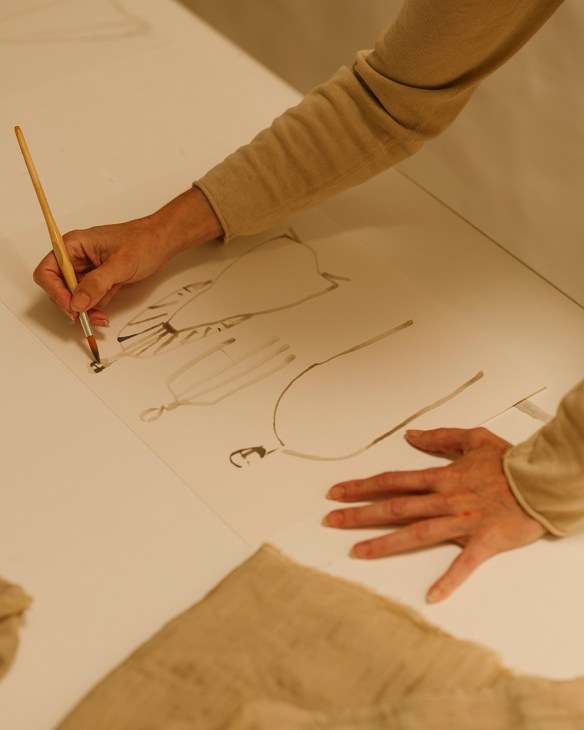
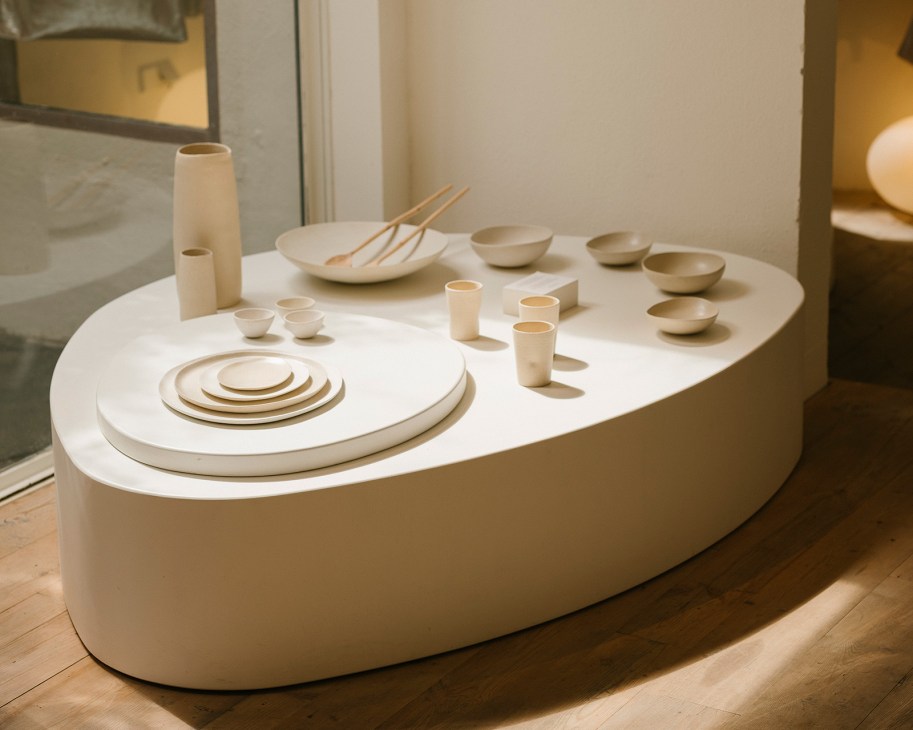
Esteva’s husband, Luke Matthews, runs Cortana’s business operations. He meets Monocle for breakfast at Es Racó d’Artà, a minimalist wellness retreat in an 18th-century farmhouse that is run by Esteva’s family. “Rosa designs very intuitively,” he says. “It’s more about how you feel in the clothes than how you look.” Es Racó d’Artà uses some of Cortana’s homeware line – ceramic cups, plates and jugs made by local artisans. Esteva also designed the staff’s linen trousers and tunics.
Interest in the brand has been growing, particularly in China, where Cortana is working with local partners to reach young, fashion-conscious consumers. There are plans to open outposts overseas and Esteva has been expanding into new categories. “We’re partnering with shops that we admire,” says Matthews.
Esteva has always drawn inspiration from Mallorca and its nature but this has been amplified since she moved back there. Living in the countryside has triggered a burst of creativity. The brand has since expanded into bags, shoes, homeware and perfume.
Her wellness-inspired approach starts with selecting natural materials. Back in the shop, Esteva runs her fingers along the racks in front of us: there’s a poncho in cupro (a regenerated cellulose fibre made from cotton waste) and a top crafted from ramie, a nettle-based fibre.

Cortana works with a local association to revive hemp farming near the town of Sa Pobla. Once widely grown on the island, hemp is known for improving soil, capturing carbon dioxide and filtering water. “Tourism is the dominant sector here so diversifying and giving opportunities to other business models that also have a future is essential,” says Marta Cabrero Iglesias, a childhood friend of Esteva who is helping to lead the initiative.
The idea was born when a woman gave Esteva hemp stockings that had been made in Mallorca some 200 years earlier. Her curiosity piqued, she began researching this lost tradition. Another turning point came when Cortana organised a weaving workshop. “It became a dialogue about Mallorca’s textile future,” she says. While Mallorcan hemp could eventually feature in Cortana’s designs, Esteva says that this isn’t the goal. “What matters is that we are doing something good for the land.” Her grounded vision is an example of how to run a growing business while still giving back – and making the most of sunny island living.
Fix up, look sharp: The most stylish menswear for summer 2026
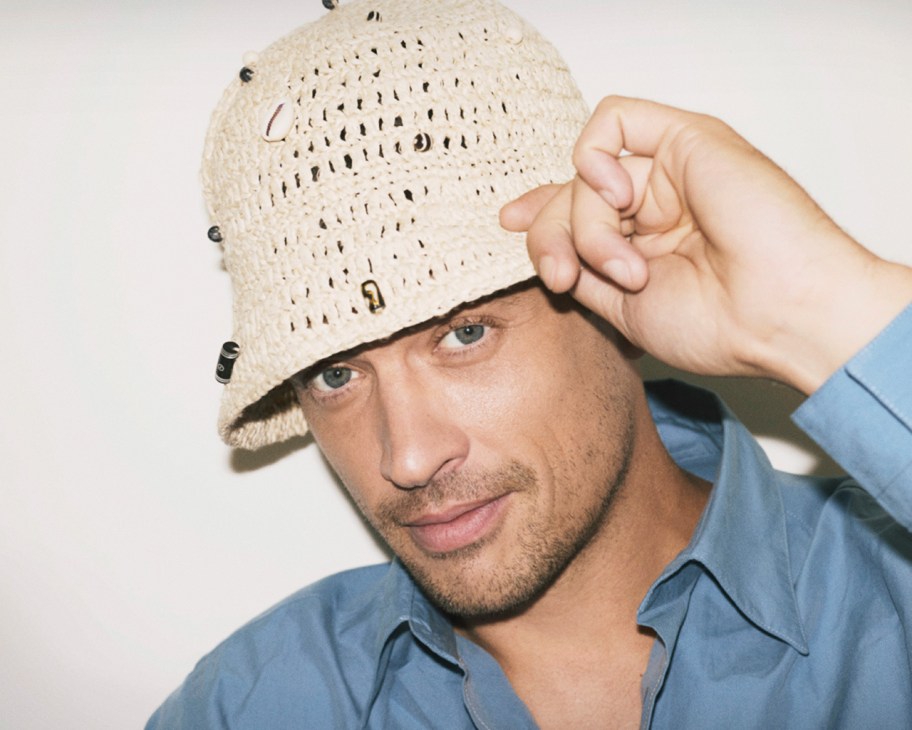
Bucket hat by A Kind of Guise, shirt by Margaret Howell

Hat and shirt by Loro Piana

Sunglasses by Maison Lassalle, shirt by Works and Days

Sunglasses by Jacques Marie Mage, jumper by De Bonne Facture

Sunglasses by A Kind of Guise, towel by Tekla

Sunglasses by Ray-Ban
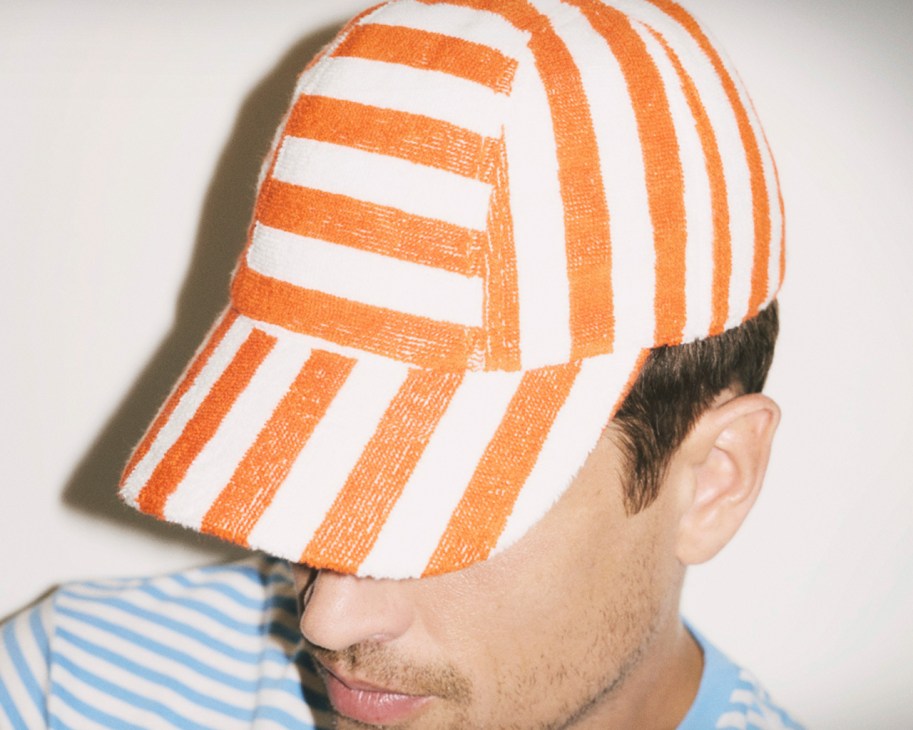
Cap by Hermès, T-shirt by Polo Ralph Lauren

Sunglasses by Maison Lassalle, shirt by Celine

Sunglasses by Persol, polo shirt by Gieves & Hawkes

Cap by Works and Days, glasses by Jacques Marie Mage, jacket by Agnès B
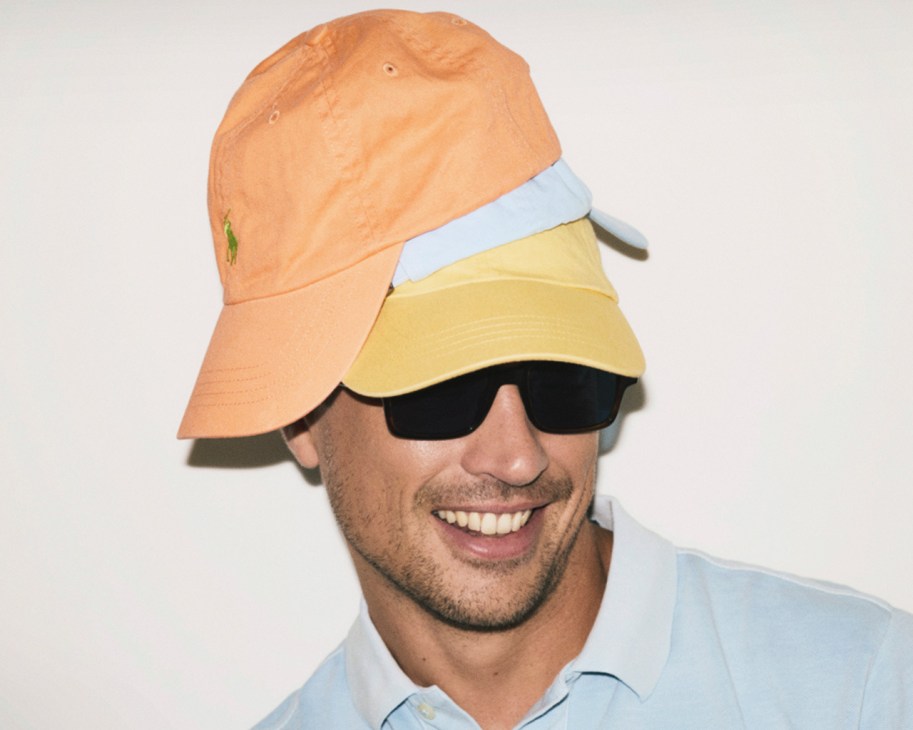
Caps and polo shirt by Polo Ralph Lauren, sunglasses by L’Ingénieur Chevallier
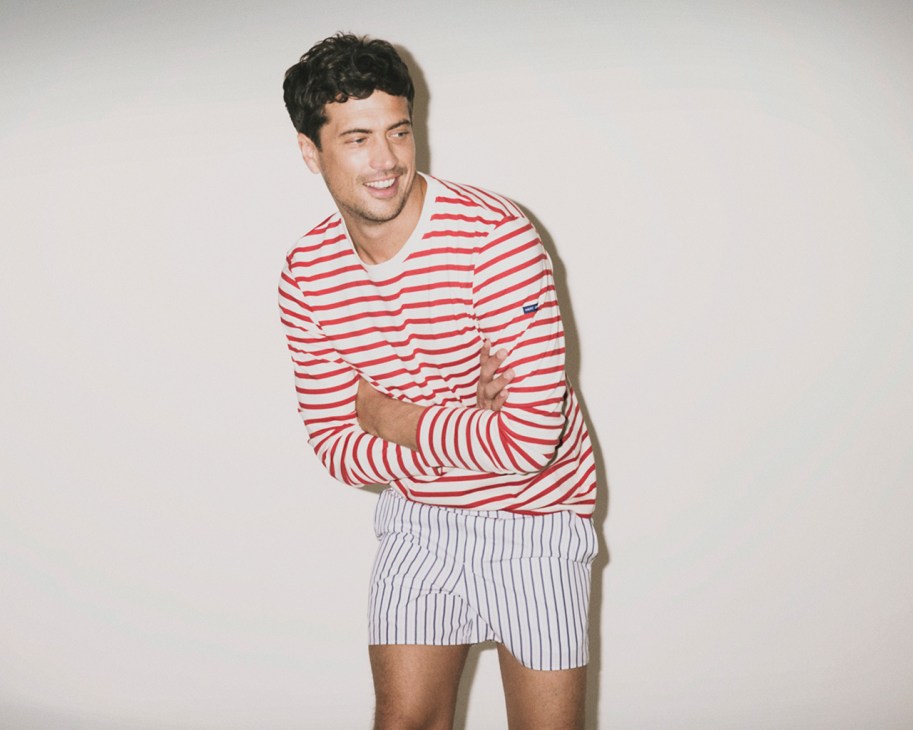
Top by Saint James, underpants by Ami
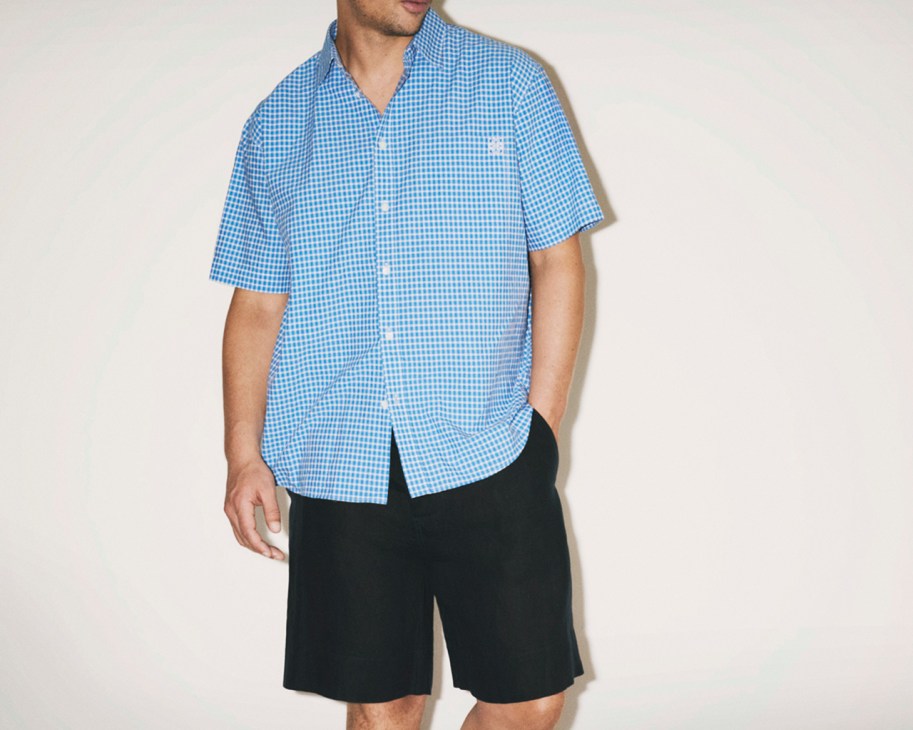
Shirt by Loewe 3 Paula’s Ibiza, shorts by MHL by Margaret Howell
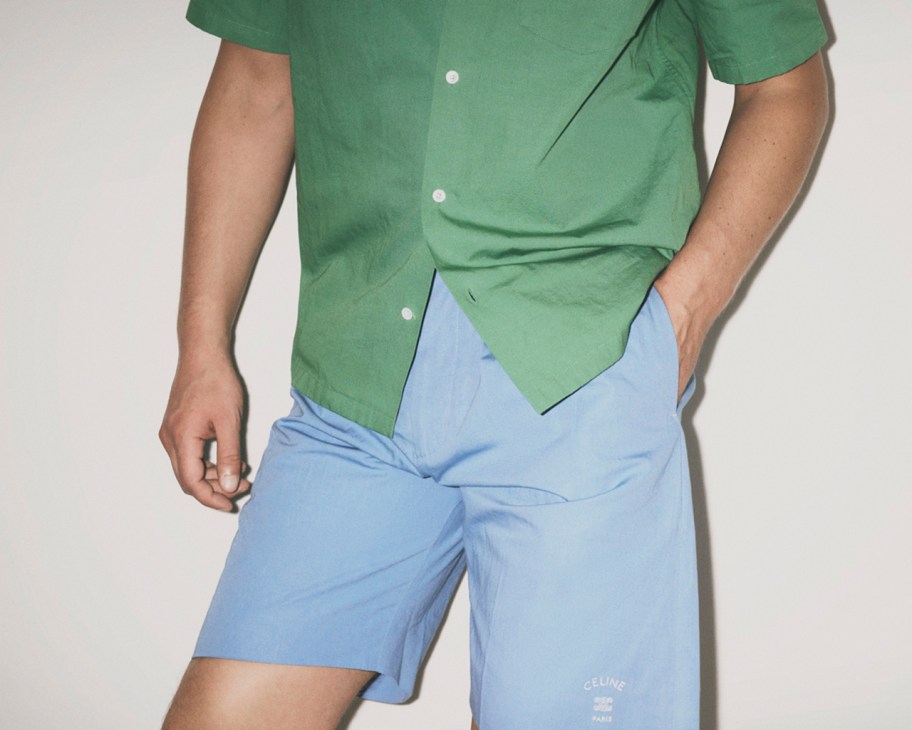
Shirt and shorts by Celine

Jacket, T-shirt and shorts by Prada

Shirt and shorts by De Bonne Facture
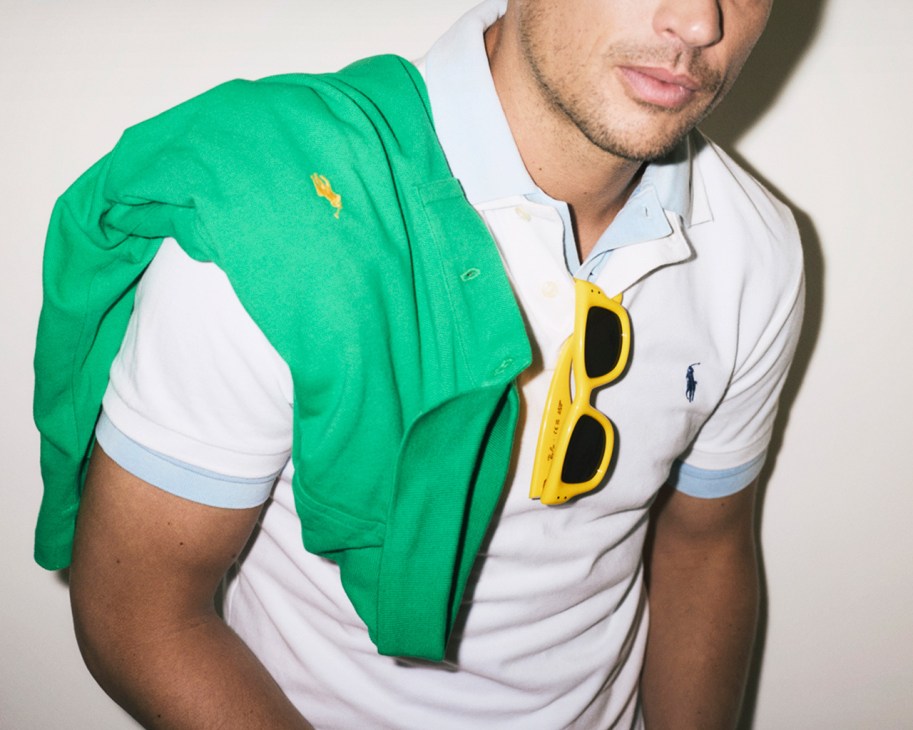
Polo shirts by Polo Ralph Lauren, sunglasses by Ray-Ban

Jacket, shirt and shorts by Zegna

Jacket and short by Dior, T-shirt by Works and Days
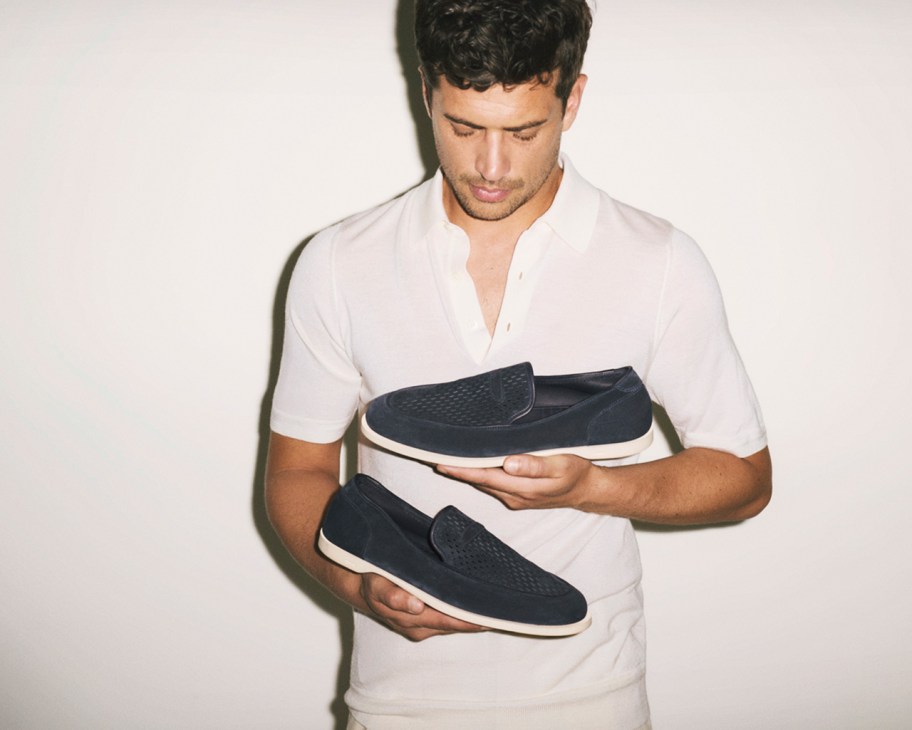
Polo shirt by Gieves & Hawkes, shoes by John Lobb
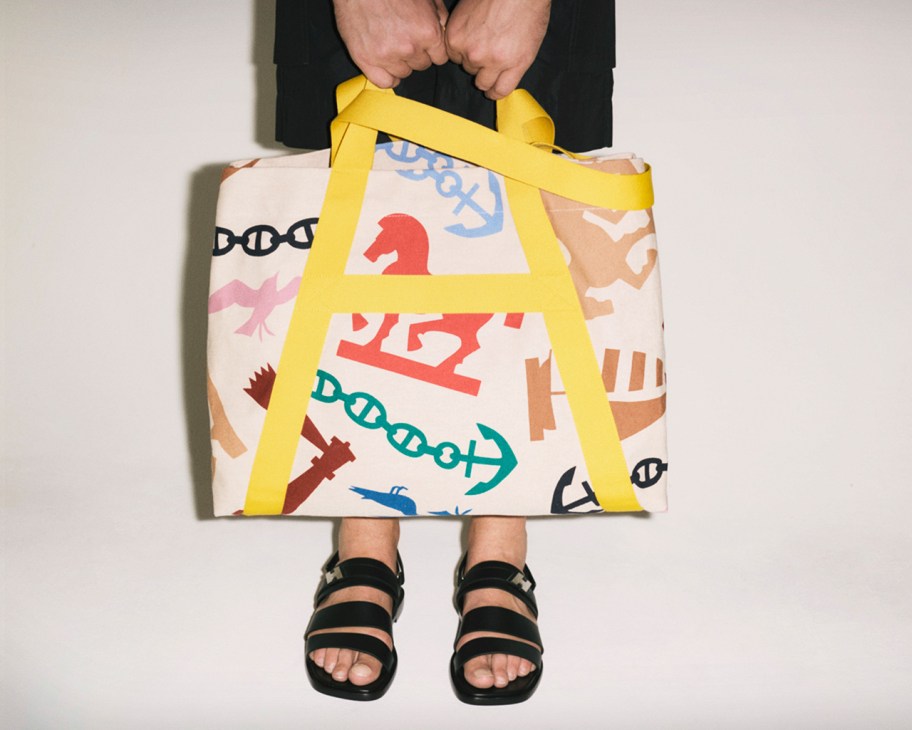
Shorts by MHL by Margaret Howell, bag and sandals by Hermès
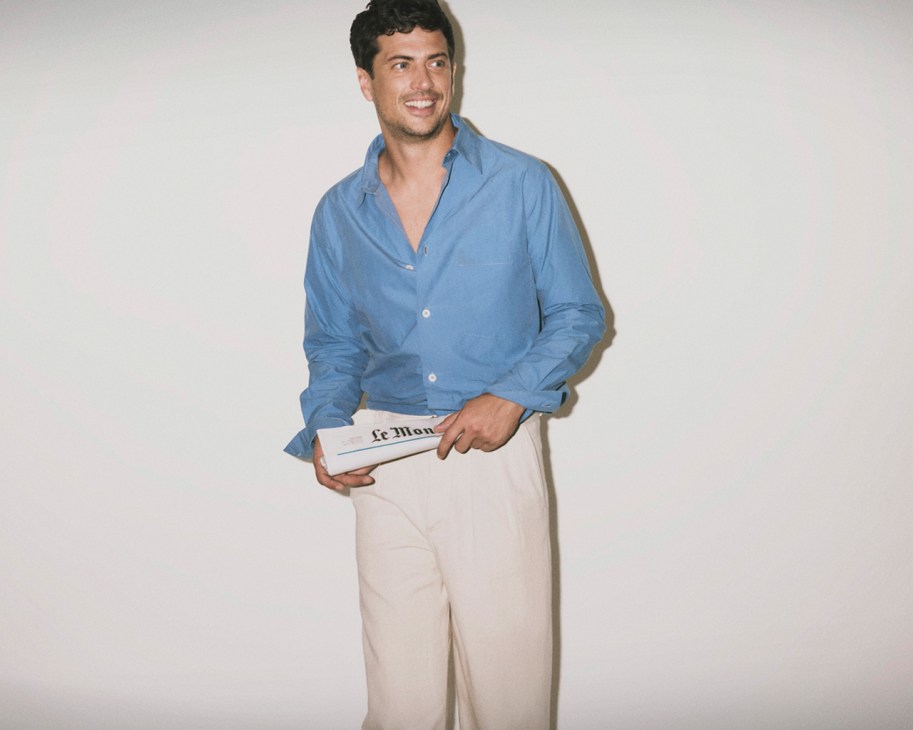
Shirt by Margaret Howell, trousers by Officine Générale
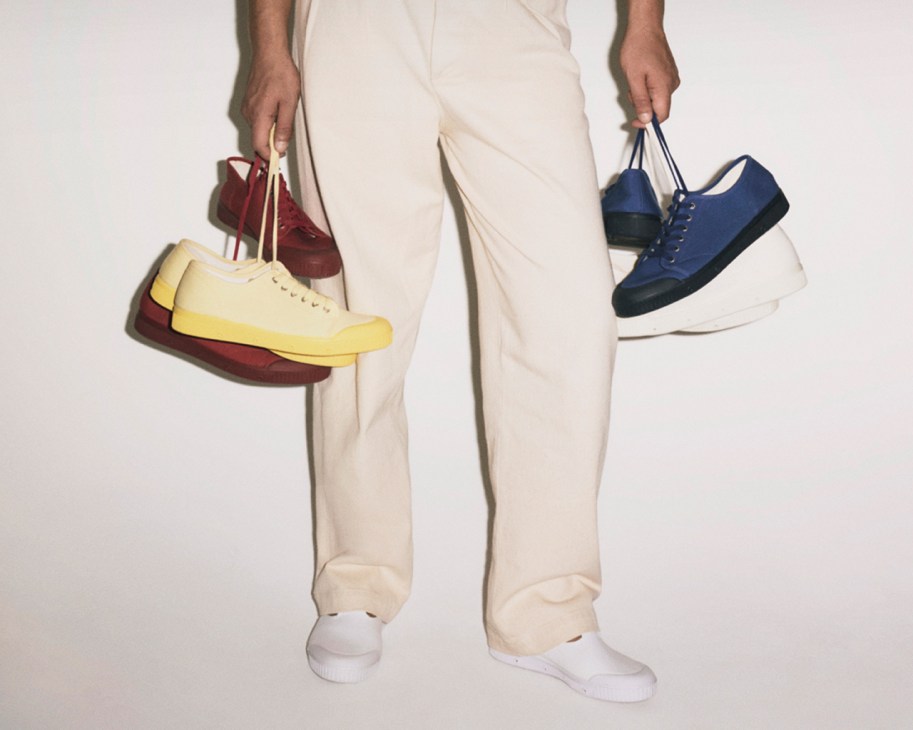
Trousers by Officine Générale, trainers by Spring Court

Beach towel by Hermès
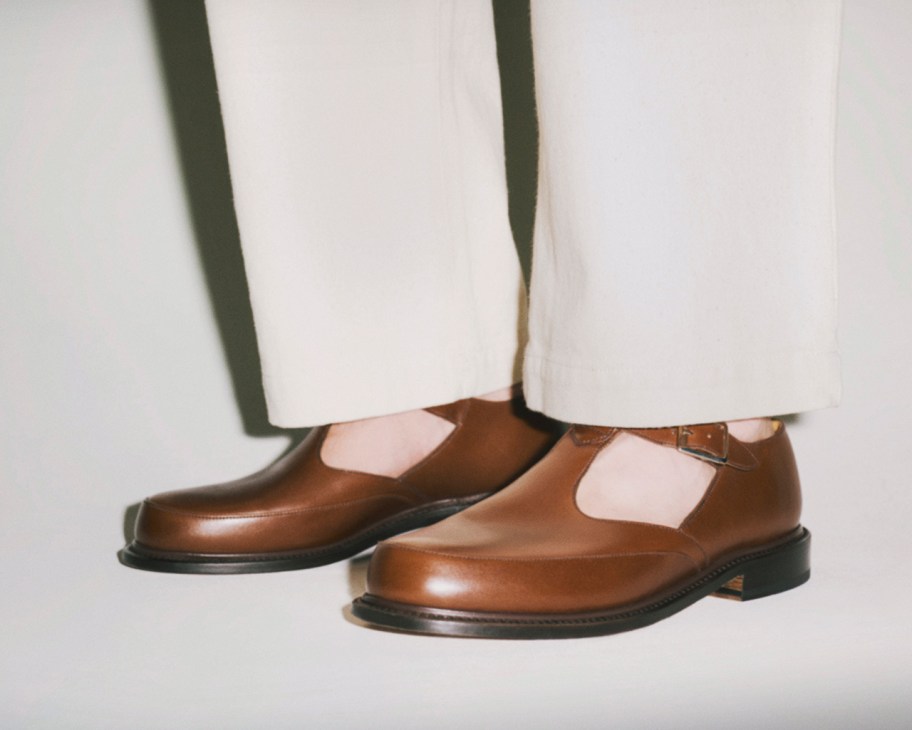
Trousers by Levi’s, shoes by J M Weston
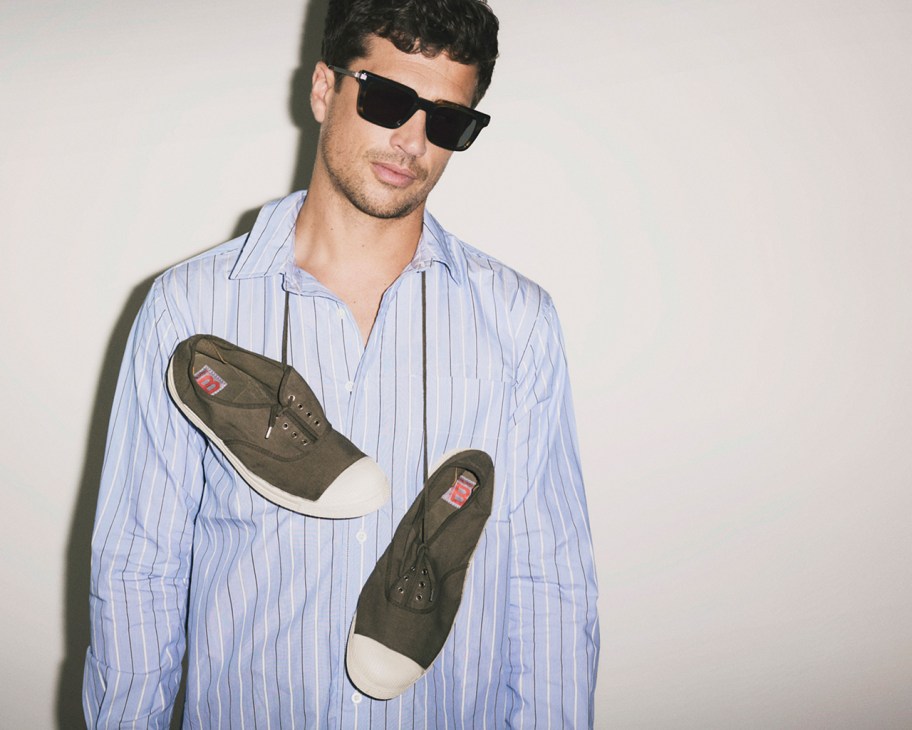
Sunglasses by Ferragamo, shirt by Works and Days, trainers by Bensimon
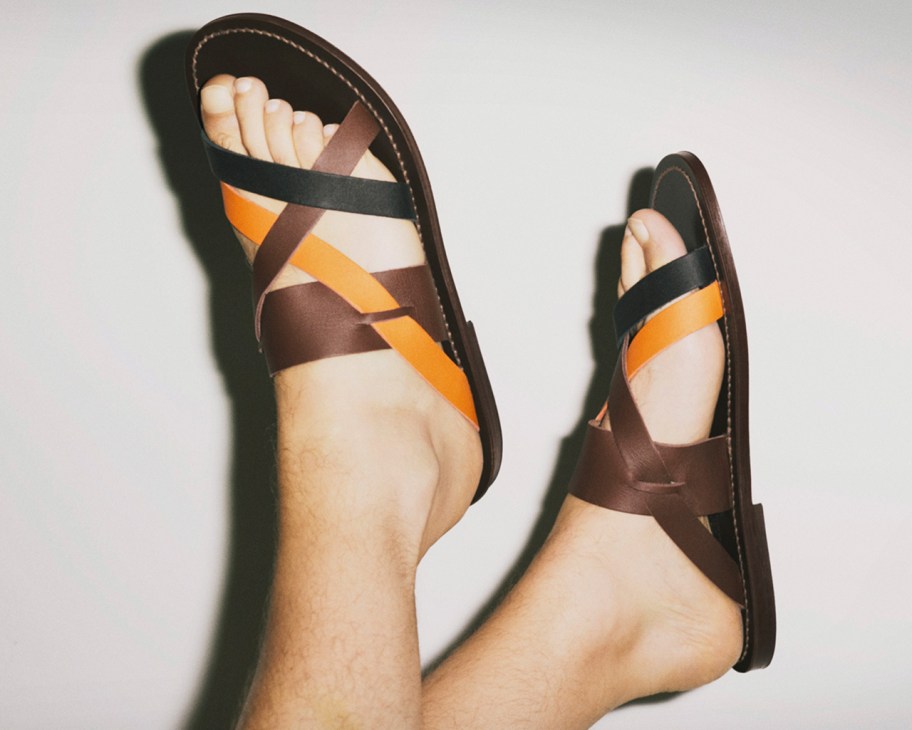
Sandals by K Jacques
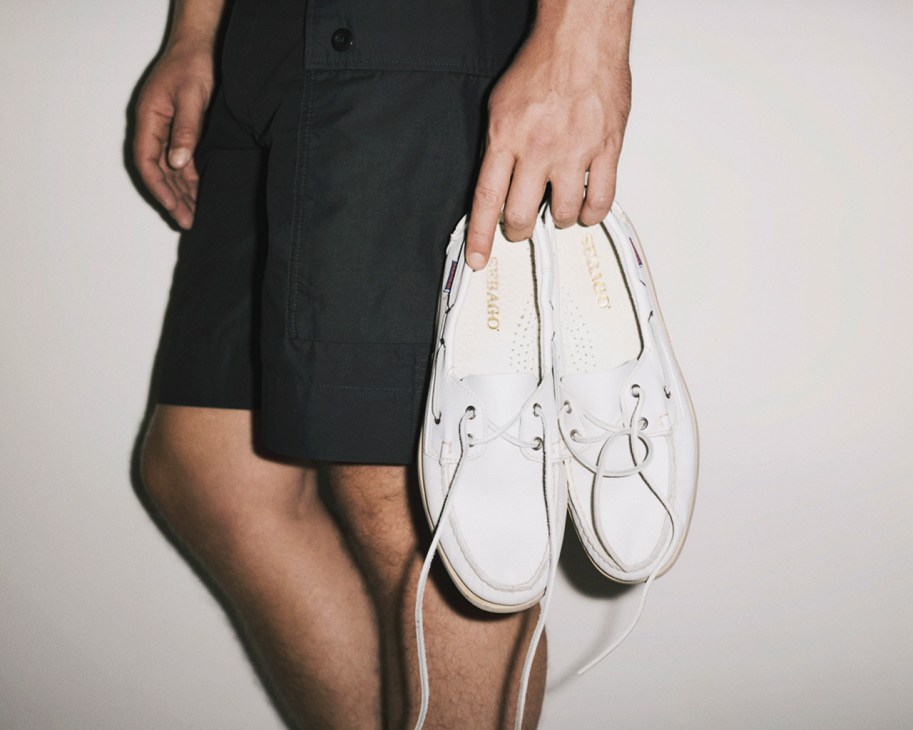
Shorts by MHL by Margaret Howell, shoes by Sebago

Shorts and bag by Prada
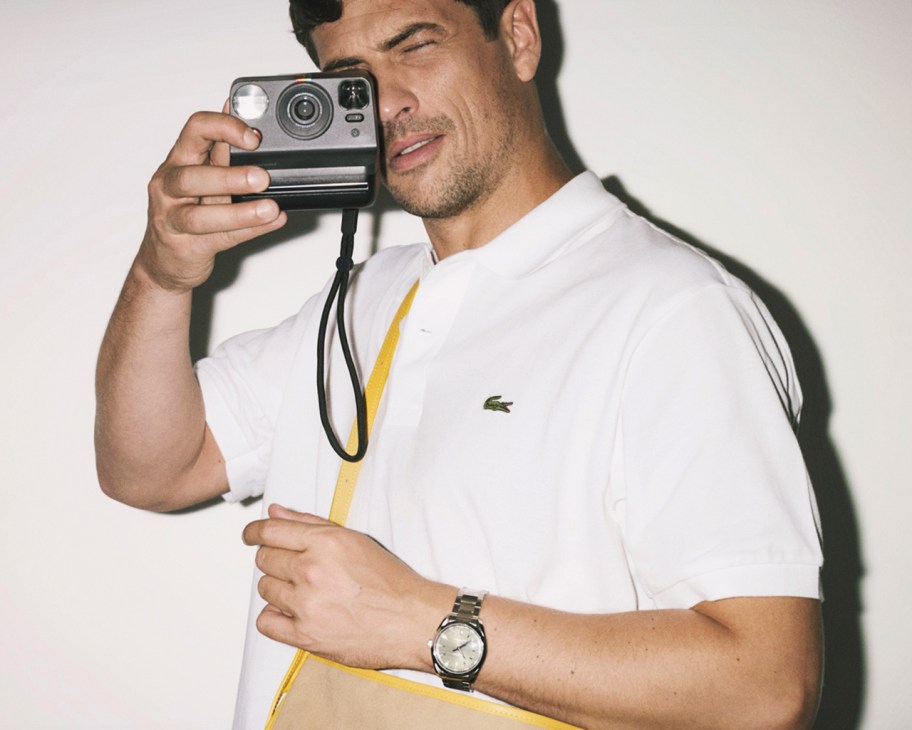
Polo shirt by Lacoste, bag by L/Uniform, watch by Omega
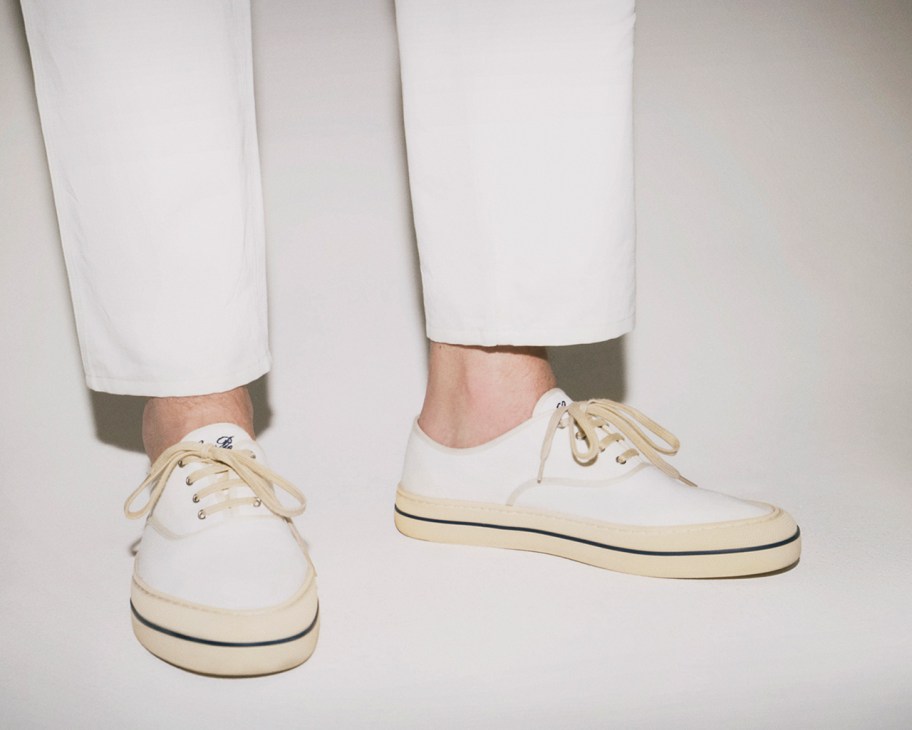
Trousers and shoes by Loro Piana
Stylist: Daphné Hézard
Fashion assistant: Charlotte Grébert
Hair and make-up: Audrey Payet
Model: Timothé Echelard
A day in the life of Ibiza’s Cala Llonga beach, one of Europe’s favourite suntraps
Before our toes touch the sand, let’s get a run of this beach. The sun is still a few moments from rising over the eastern Mediterranean – we have some time.
Ibiza’s Cala Llonga is one of those easy-to-picture postcard scenes. The sand blanketed with sunbeds. A panoply of different skin pigments are all vying for a healthier hue. Thickets of pine trees swallow the cliffside, where gigantic hotels jut out like postmodern megaliths. Every day, people gaze at the boats bobbing in the water, wondering whether they will ever be so lucky. It’s been this way – at different scales – for nearly six decades. The first major pioneering hotel, Playa Dorada, opened its doors on the beach’s left flank in 1969. Back then, pedal-powered swans made of fibreglass were predecessors of the inflatable flamingos seen bouncing in the water today.
Cala Llonga’s sandy shoreline is protected by a stretch of narrow cove (llonga – it’s in the name) carved naturally into the island’s eastern coast. This beach is emblematic of a much larger story. There is the island’s evolution from agrarian outpost to gregarious hotspot; the rise upon rise of tourism, or what philosopher Yves Michaud called “the industrialisation of pleasure”. And, of course, the adaptability of locals to serve and sate all and sundry. Most recently, new developments around Cala Llonga have mirrored the island’s wider embrace of high-end holidaymakers. But the seaside town’s prevailing sense of solidarity remains untrammelled. Spending a full day on these sands offers a glimpse of the many interrelated stories at play here. Now, a few seconds before the sun appears, let’s see who’s down on the sand.


Brimming with intensity is Dutch visitor Seth Kamphuijs, who is sitting and doing breathwork while staring into the pink-tinged sunrise. After a few words, he wastes no time before promoting his upcoming retreat. Early morning appears to be the shared province of wellness-seekers like Kamphuijs and workers scoping out another day under the sun. As a yoga class lays out its mats, the overseers of five demarcated territories for hamacas (sunbeds) – a pair of which will set you back €30 for the day – are busy dusting and straightening their beach furniture.
Across most of Ibiza, slow starts invariably stem from long nights. This beach has always been a favourite with families though. Some, toddlers in tow, are already arriving just before 10.00. We have an inkling that those longer, naughtier nights are wired into a few of these parents’ not-too-distant, still-cherished memory banks. In harmony with the sun, all sorts of activity starts heating up. Beach volleyball courts fill with leaping and bounding bodies for a training session. Dads drag parasols into position before initiating games of padel with their sons. The neatly ordered spread of beige hamacas starts to fill. In about an hour’s time, multi-toned towels will be held down by heavy bodies and restless minds. You can take your pick of pastimes on this shoreline: some do sudoku, others clutch summer novels. There’s lots of suntanning and screen-scrolling too.


At 10.43 a ship’s horn heralds the arrival of the inter-island ferry, a relic of the past that still chugs along. Two dozen passengers queue atop the wooden pier, all packed and ready for a day on the second Pityusic island, Formentera. The Torres family formalised informal beach-hopping boat rides back in the late 1960s with a proper ferry service aboard the llaüt Virgen de Fátima, the same year that Playa Dorada opened its doors. In 1972, the route expanded to Formentera – a 40-minute ride on a good day. There’s only one daily service there and back, which might explain why today’s line formed before 10.00, brimming with eager faces ready to swap this stretch of paradise for another. In the case of Formentera, we can confirm that the sea is indeed bluer on the other side.
“Coco, tengo cocos!” A small bucket of unbroken coconuts in hand, Tomás weaves his way through the masses, hawking his sip-and-snack treats with a burst of semi-song. At €10 a pop, he cheekily assures us, a purchase “will neither make me rich, nor you poor”, then opens the shell with his knife, waits for us to drink the electrolyte-rich water and carves out the flesh for us to snack on. “They’re cracking down on little guys like me working on the beach,” he says. “On a good day, I might sell up to 50 coconuts – but I have to always keep an eye out for the police.”
He’s not the only one. Last year, the island’s coastal authority ordered the beach’s two surviving quioscos (beach bars) to shut down, then issued a demolition order. It’s part of the Balearic Islands’ wider clean-up of makeshift architecture peppering these cliffsides, some of which stretches back decades, was never legal and now finds itself in the crosshairs of unsympathetic administrators. The other side of this story is a wave of investor consortiums snapping up rickety resorts and transforming them into high-end hotels.
In 2023, the 154-key Mondrian Ibiza opened on the site of the Hotel Playa Dorada, which had since become a three-star establishment. Its arrival and the more well-heeled guests who came with it have spurred similarly stylish restaurants to open around the shoreline. Industry data shows that the resulting increase in visitor numbers has led to expenditure topping €4.25bn in 2025 (about 85 per cent of Ibiza’s GDP). And while stays are getting shorter, nearly 3.4 million travellers touched down on the island last year – up from 3.27 million in 2024 and 70 per cent higher than in 2001. Once synonymous with the package-holiday crowd, the contrasts visible along Cala Llonga illustrate the latest uptick. A little way along the beach, a snorkel-wearing good Samaritan emerges from the water clutching a sliver of plastic and a sand-encrusted aluminium can. Behind him, channelling their inner children, a senior couple splash each other atop duelling pink inflatables. Here, people tend to reveal themselves. When you think about it, it’s an especially peculiar place – even though too much overthinking can feel a little misplaced.


For those who savour the salted air, sand on skin and full-bodied submission to heat and happenstance, a spot on the playa is one of life’s meridian moments. All other mandatory mechanics – the deskbound clacking on keyboards, the staring at spreadsheets, the endless chores and chagrin of the everyday – have finally led here: a down-tempo laydown where trivial troubles seem to melt away. A sense of relief is written across the many faces staring out to sea, observing and being observed. Unless you’ve come to play a proper ball game, the beach stretches out interstitial time – the time between time. It is a place of liminal leisure where one arrives, has nowhere to go and finally finds a moment to be truly present. There’s suddenly space for play, for pause, for flickers of pensive reflection. And yes, even a forceful splash or two with your companion.
If the pinkening backs of several heedless tourists are anything to go by, it’s high time to seek shelter from the relentless sun. After a short walk along Carretera Cala Llonga, the town’s main street, we order a couple of cañas at the Madisson bar. There, we meet its proprietor, Pepe – and barely get a word in edgewise. He tells us how he was born on this very beach, back when there was only a single farmhouse facing the shoreline. Back when Pepe was in nappies, his father would drive a donkey-drawn cart to lay out the beach beds; then came the quioscos, the makeshift guesthouses, increasing numbers of tourists and finally the monumental construction projects. Pepe is a football fanatic so his retro-styled wood-and-Perspex panelled establishment doubles as an exhibition space for old sporting photos. He points to a picture of the playa’s original football pitch, which was built in 1959 and has been the home ground of the local club ever since. It has even attracted occasional football stars from the mainland. The other framed photos in the bar offer vignettes of long-gone halcyon days. So is Pepe nostalgic for those slow-fading, simpler times?


“People say how beautiful it was back then – cojones!” he exclaims, squashing any notion of sentimentality with Spain’s linguistic equivalent of “bullshit”. He explains: “In those days, I only owned one pair of trousers and shoes, there was no electricity and it took me an hour to walk to school. Now it’s not uncommon to see a Ferrari here.” For the record, there is no Italian stallion-emblazoned sports car in Pepe’s life – the 77-year-old, who is well known and beloved by returning visitors, prefers motorbikes. “He’s good with people; tourists always followed him wherever he set up shop,” says his daughter Laura, who splits her time between managing the bar with her sister Elena and filling in the gaps in her father’s story. There’s a lot to tell, too, the family having been in this spot since the mid-1980s.
Back on the sand, a punchy remix of Simple Minds’ “Don’t You (Forget About Me)” blares across the cove. The DJ on the decks beside the Hyde Hotel pool, which adjoins the Mondrian, is unaware that several portable speakers on the sand have cranked up their volume as a sonic countermeasure. It’s now past 16.00, the hottest part of the day, and the energy on the beach softens. Even the group of UD Ibiza football players, enjoying their off-season break with a cooler full of beers and a low-stakes ball game, have surrendered to the sun.
The day’s first instance of drama comes in the form of a jellyfish sting. Little Leo is promptly treated by attentive lifeguards who later clarify that this kind of thing – along with ensuring that oblivious swimmers don’t get squashed by the daily ferry – is about as dramatic as their job gets. “Why is it always Leo?” cries a friend of the boy’s mother (rather unhelpfully) as the group decamps back to their hotel.


By 18.00 the beach crowd has started to thin. As a few volleyball players return to the nets, we meet restaurateur Antia Pagant, who has brought her baby, Roco, to Cala Llonga’s playground. “There’s been a spirited effort to restore the beach,” she says. “Things like standardising the colour and the make of the sunbeds, and keeping the atmosphere family friendly.” She also tells us about Klaus, the beach’s seasoned bohemian and permanent resident for nearly 20 years, who has always been happy to give local businesses a helping hand. “Recently, a community-led effort collected funds for him to visit the dentist,” she says. “Cala Llonga is nice like that.”
This part of Ibiza was immortalised in Elliot Paul’s oft-recommended 1937 novel The Life and Death of a Spanish Town, which is set in neighbouring Santa Eulalia (a town that has since swelled to the size of a small city). While Paul charts the tragedy of the civil war in the spiritual self-destruction of a village community, he also captures the area’s prevailing beauty. His description of “a life more suited to human limitations and capacities, a rhythm more in accord with beneficent natural surroundings, a verdant sub-tropical landscape by the sea” feels entirely familiar as the sun dips below the horizon.
With a whole day of sand having sifted through Cala Llonga’s hourglass, it’s easy to behold the balancing power of the beach. A place where life’s ups and downs temper, simmer and then slow; where busy bodies meet newly calmed minds and a burst of cheering celebrates a barefoot goal, harmonising with a light siesta snore. And all of us adjust unwittingly to the natural cadence of sea and shore, until tomorrow and another sunrise.

Cala Llonga through the hourglass
06.33: Early morning sun peeks over the hills and the Med horizon
07.05: A motorised beachcomber cleans the sand
08.15: Meditators line the shoreline to practise morning breathwork
09.09: A yoga class on the playa strikes a warrior pose towards the sun
09.30: Raúl kicks off the day’s first multicourt volleyball practice
09.45: Sunbeds sit prepped and ready for another daily onslaught of towels and torsos
10.43: The ferry docks promptly at the pier, where a patient queue of passengers awaits
11.03: Beach beds or hamacas are already half full
12.10: The first wave of swimmers slips into the water for one of many cooling dips
13.31: A Brit is overheard complaining about everyone being on their phones – while talking on his phone
14.00: First round of lunchtime paella served at Sonrojo restaurant
15.30: Music begins blaring across the beach from the DJ decks at the Hyde Hotel pool
16.00: The harshest heat of the day hits the beach; a lull in all sporting activities ensues
17.00: Sunbeds sit half empty and seagulls begin to circle and swoop at any sign of scraps
17.45: First sign of strife: lifeguards attend to a jellyfish sting
18.30: Volleyball players return to the nets for another round of friendlies
19.01: Hamacas lie empty; families begin trouping back to their cars
19.16: Ferry Capita Jack returns, dropping off a boatload of slightly burnt daytrippers from Formentera
19.30: The beach tractor traverses the sand to empty overflowing bins
19.45: The footballers’ tally of beer bottles now numbers 24
20.00: A handful of people remains on the shore. The sea turns an opaque shade of turquoise
20.30: The flurry of dinner service is underway at restaurant Nun; the waiter doesn’t recommend the fish
21.00: The sun sets behind an eastern hill, 10 minutes earlier than on the island’s west side
21.30: The Mondrian’s elevated beach bar fills with freshly showered, sunkissed faces
22.00: The tinkle of drinks and conversation sees out another glorious day at the beach
The long awaited revamp of Budapest’s largest public park might finally be here
It is a sunny summer’s day in Népliget. Known as the People’s Park, it’s Budapest’s biggest public green space, covering some 100 hectares to the southeast of the centre. But rather than being an urban refuge for the city’s residents, it has been at the forefront of the country’s culture wars for years. Under former Hungarian prime minister Viktor Orbán’s government, redevelopment plans worth HUF50bn (€141.3m) were thwarted. This was because the push to remove concrete paving, bring in new amenities and add more greenery had been proposed by the city’s left-leaning mayor Gergely Karácsony. For many, the lack of investment was symbolic of the way the capital’s urbanism revamp had been caught in the political crosshairs of a divided country.
Now, however, change is in the air. With the election of a new government that is amenable to Karácsony’s proposals, newly unlocked EU funding of €16.4bn could finally provide the necessary capital for urbanism projects such as this to be realised, along with tramline upgrades in the suburbs and accessible Danube swimming zones. For ordinary Budapestians, it feels as though this could finally be the summer that their city escapes political deadlock and delivers on the quality of life that they have been craving.
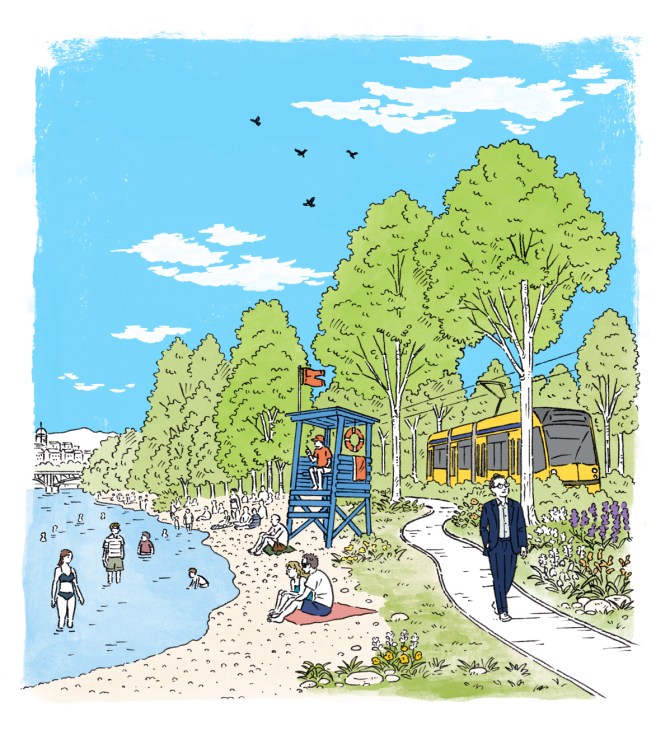
Comment
Updating green spaces in our cities should not be underestimated as a smart urbanism strategy. As places in which to cultivate, come together and cool off, well-maintained urban parks should be a municipal priority, especially as we experience a warming planet. It’s not just your city’s residents who will thank you – biodiversity will bloom too.
Further reading:
Neighbourhood enclave: Budapest’s Napraforgo Street
Put down the Coca-Cola. Stay hydrated this summer with these soft drinks from around the world
Every country has its own way of cooling down – and it often starts with an ice-cold soft drink. A nation’s beverage of choice can also serve an ambassadorial role, offering an authentic taste of its culture while evoking memories of childhood holidays and long, languid summers. Here are some of our favourites.
Jarritos
Mexico
In 1950 chemist Don Francisco “El Güero” Hill started making sodas in his Mexico City dining room. His first attempt, a coffee-flavoured drink, failed. His second, using tamarind, was a hit. Within a decade, Jarritos – Hill’s brand of soft drinks – was distributed across 80 per cent of Mexico’s states, available in a range of flavours including mandarin and lime.
Priced so that a schoolchild can afford a bottle alongside a media torta at break time, Jarritos embedded itself into the fabric of ordinary life. That accessibility is inseparable from its appeal: known as the “official drink of tacos”, Jarritos become the go-to accompaniment to spicy street food. Its name refers to small clay jugs that are traditionally used to keep beverages cool, while the formula honours the flavours of the Mexican orchard.
jarritos.com
Ramune
Japan
Originally marketed as a cholera remedy, Ramune has disarmingly simple ingredients: fizzy water, flavourings, sugar and citric acid. The origins of this lemon-lime soda remain contested, though one oft-repeated account credits Scottish pharmacist Alexander Cameron Sim, who is said to have introduced the carbonated drink in Kobe in 1884, inspired by the western lemonade.
But its appeal has never been based on its taste alone. Much of its charm lies in the ritual of opening the Codd-neck bottle: pressing the marble down with a pop and releasing a rush of bubbles.
hata-kosen.co.jp
Cockta
Slovenia
While much of the world gulped down Coca-Cola and other caffeine-fuelled drinks in the mid-20th century, a homegrown alternative was winning fans in Slovenia. Launched in 1953, Cockta (short for “cocktail”) blends 11 mountain botanicals including rosehip, a Slovenian staple foraged from wild hillsides.
Though synonymous with summer, Cockta debuted at a ski-jumping championship in Planica to link the brand image with an active lifestyle. Advertising posters later featured athletes climbing mountain peaks in shorts and water skiing in one-piece bathers, all while holding a bottle of Cockta. Today, that winter debut is best enjoyed in a glass with a single ice cube and garnished with a slice of orange.
cockta.eu
Sumol
Portugal
A portmanteau of sumo (juice) and sol (sun), Sumol was Portugal’s first soft drink made from pasteurised orange juice when it was launched in 1954. A pineapple flavour followed and the brand’s logo was soon plastered across the country on billboards, napkin holders, bottle openers.
This savvy marketing, which was ambitious for a nation that was then under dictatorship, became as recognisable as the drink itself. In South Africa, which has a large Portuguese community, Sumol remains ubiquitous: it makes for a refreshing pairing with piri-piri and the catchy television jingles of the 1960s and 1970s still sit in the public imagination.
Today, Sumol continues to tap into Portuguese youth culture through new flavours and partnerships with sports and music events – but for no demographic does it evoke the feeling of summer quite like it does for those who came of age with it.
sumolcompal.pt
Orangina
France
Everyone who grew up in France between the 1970s and 1990s will remember Orangina’s slogan “Secouez- moi” (“Shake me”). In 1935, French entrepreneur Léon Beton encountered Spanish pharmacist Dr Agustín Trigo at the Marseille Trade Fair, who was presenting a pulpy orange concentrate called Naranjina. Trigo’s invention would become the basis for Orangina, which launched commercially the following year.
The sparkling orange drink contains real citrus pulp, which tends to sink to the bottom of the distinctive bulbous bottle, so a good shake is necessary. For many, the sight of that bottle – inspired by the shape of an orange – still conjures memories of trips to the beach in Brittany. Today, Orangina is owned by Japanese multinational Suntory and is available in more than 60 countries.
orangina.eu
Crodino
Italy
Named after Crodo, the Alpine town in Piedmont where it was created in 1965, Crodino made a splash when iconic French actress Brigitte Bardot starred in its first publicity campaigns in the mid-1960s and 1970s.
While its name has changed over the years – the drink was originally released under the name Picador – the Crodino recipe has remained proudly unchanged. The non-alcoholic bitter apéritif is a blend of 15 herbs and spices, including cardamom, cloves and coriander, which are left to infuse for up to six months.
Since Crodino’s acquisition by the Campari Group in 1995, its popularity has spread to Austria, Switzerland, France and the UK, as well as the US, where it satisfies Americans’ seemingly insatiable appetite for all things Italian.
crodino.com
ARTICLE CREDITS
WRITERS:
- Natalie Stoclet
- Julia Mio Inuma
- Alexandra Aldea
- Gaia Lutz
- Adrian Moore
- Rossella Frigerio