Too many countries in Africa are seeking divine intervention from starchitects. It isn’t working
Ghana is embroiled in a controversy of biblical proportions. The National Cathedral and Bible Museum – commissioned by former president Nana Akufo-Addo and designed by Ghanaian-British starchitect David Adjaye – carried a staggering €385m price tag when it was announced in 2016. So far €55m of taxpayers’ money has been spent on the project. Yet three years after construction came to a grinding halt, the site in central Accra remains nothing more than a vast crater.
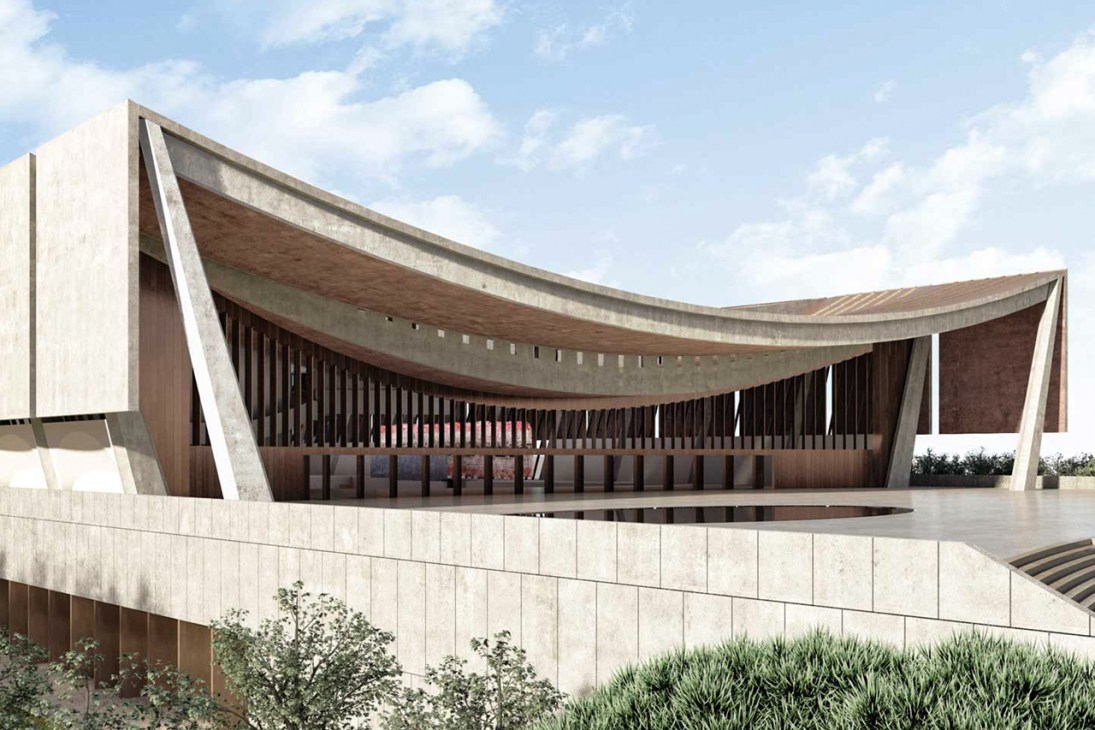
Ghana is facing its worst economic crisis in decades, with rising levels of inflation, debt and unemployment. Adjaye has become a lightning rod for the debate about what happens when starchitects undertake grand commissions in the Global South – not least when these projects run up against cultural, social and economic difficulties on the ground.
Last week, Ghana’s president, John Mahama, announced plans to investigate the cathedral’s financing, pledging to unearth the alleged profligacy and corruption of his predecessor. Mahama condemned those who, in his words, “stole in the name of the Lord”. But while the cathedral symbolises an egregious misallocation of limited resources, abandoning the building altogether poses its own conundrum. The barely built structure has already dented public coffers – and now the president faces a careful balancing act. The fate of the project could ultimately have an influence on Ghana’s Christian majority, a crucial voter base.
The situation mirrors similar stories of ill-fated or poorly thought-through projects across the continent. Architects working in Africa are often too focused on the prestige – or lucrative fees – that such commissions command, instead of examining whether fragile economies can actually make their grand visions a reality. In 1990, Pope John Paul II consecrated the Basilica of Our Lady of Peace in Yamoussoukro, a vanity project of Côte d’Ivoire’s then-president Félix Houphouët-Boigny. Heralded as the world’s largest church, this €289m monstrosity was an opulent edifice built amid economic despair. More than 30 years later, its grandeur is a haunting testament to misplaced priorities; its pews are rarely filled and its relevance still widely questioned. Ghana’s National Cathedral, like the Basilica of Our Lady of Peace, risks becoming a monument to hubris. The stakes are not only architectural but also moral – and they’re shaking the country’s foundations of governance and faith.
Mathias Agbo Jr runs a design consultancy in Abuja, Nigeria, and writes on design and architecture.