What’s the secret to a perfect sample? Australian music group The Avalanches share their secrets
On their new album, the musicians explore the sounds of our digital past. Here they share their creative process.
The Avalanches occupy a rarefied position in the pantheon of pop music. The Australian group, now consisting of Tony di Blasi, Robbie Chater and Andy Szekeres, isn’t prolific, rarely writes hit singles and doesn’t get entangled in celebrity spats or affairs with fellow musicians – but it does make monumental albums full of uncanny melodies and surreal diversions that are almost universally admired.
Its debut album, Since I Left You (2000), was a dizzying cocktail of nagging earworms and the inspection of strange emotional territory, realised by bringing together more than 3,000 samples from commercials, old songs and found sounds. The record sold 600,000 copies and turned The Avalanches into unlikely stars. And then came the “difficult second album”. Wildflower took 16 years to arrive but mapped new terrain and featured singers, not just samples. It was beautiful.
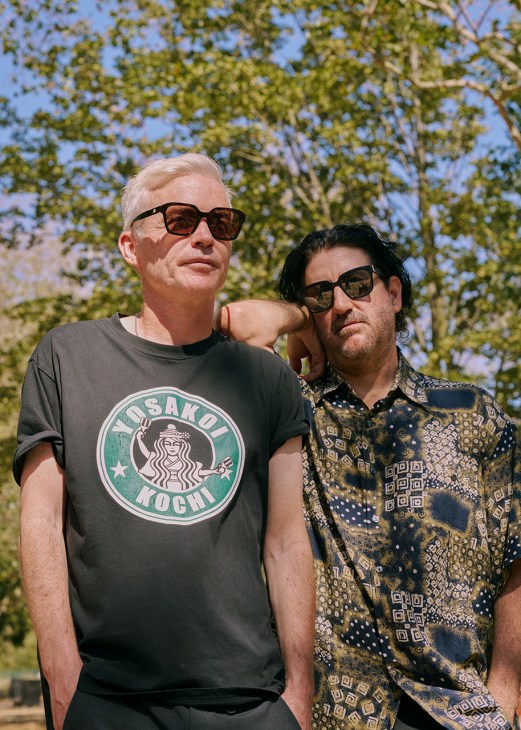
Its follow-up, We Will Always Love You, was released in 2020 and now the self-described “sampologists” (“Oh, God, sorry about that,” they say) are back with a fourth album. No Bad Memories links “real” music with the jingles and sound designs associated with the technology of the past 40 years: CD players, mobile (but not smart) phones, floppy-disc drives, modems, the shimmering noise of a just-switched-on Canon digital camera. The Avalanches hear tenderness in these sounds, made by machines that still carry our memories, somewhere in a drawer in our house, lifeless. But the new album – on which the group enlisted the talents of Jamie XX, Karen O and Portraits of Tracy, among others – is full of life. Oh, and there are some samples too. The Avalanches write and record as a trio but Di Blasi and Chater are the founding, touring and talking heads. Here, they tell Monocle about memory, melody and the magic of deadlines.
‘No Bad Memories’ is a kind of concept album about internet nostalgia and the sounds of machines. How did you begin creating it?
Robbie Chater: We’re always writing and sampling. Some songs started in the usual Avalanches way, with no theme. We find a beautiful sample that evokes a certain feeling and we try to make a song from it. The very nature of sampling is to explore the memory and meaning inherent in an old piece of music. Then we began wondering about the devices on which we store our memories and the sounds that they make when loading or starting up, and that was a wonderful rabbit hole to fall down.
So I’m not weird for loving the sound of the CD player closing its drawer and reading the disc?
RC: No way. And that’s exactly it – that’s our world. The internet is capable of being a wonderful archive, with catalogues of start-up sounds and disc noises. There are so many beautiful tangents: the way that Brian Eno made the Windows 95 start-up sound on an Apple computer, or the Nokia sound that we put in a song. It’s endless. And then we began making our own start-up sounds, jingles and audio logos to mix in. It was a lot of fun.
Tony di Blasi: In the past, switching on your computer and logging on to a website or early social media was a choice. Things weren’t always on, like they are now. The patience required to wait for a dial-up modem to kick in or for an image to load, let alone a song, was a choice and a commitment.
Does your writing process involve making an edifice of music, samples and sounds, then chipping away to reveal the sculpture?
RC: That’s absolutely it. Tony made a number of 30-minute sound collages to which we would then add more traditional songs. It becomes this huge thing but we need the freedom to make stuff. And then, of course, finishing it becomes incredibly hard – which bit goes here; which bleep goes there?

How do you know when it’s finished?
TDB: When someone tells you that you have a deadline. And on that day, you have to send everything in. And it’s been a bastard to finish but if that date wasn’t there, it would remain unfinished – forever!
RC: Yeah, that happened to us after the first album. It took us 16 years to follow it up. That was a trying time in many ways, so now we try to embrace deadlines. It’s tough to get far enough away from something that you’re working on to be able to judge it. At that point, my favourite sounds are when I go for a walk and just listen to the birds and people chatting in the street, the rumble of life, you know?
TDB: He’s saying silence is golden when we’re trying to promote a new album. Brilliant.
Finally, let’s go back to your original love of samples. Is there a song that represents your Proustian madeleine?
RC: Well, when we were thinking of samples to make our first album, we were buying old records from the bargain bin in record shops in Melbourne – easy-listening stuff that had come from the US in the 1950s and 1960s. So that texture was in those LPs.
TDB: There was also a Big Audio Dynamite record that was a hit in Australia when I was at school. And then Art of Noise were making odd pop records full of weird stuff and my brain was, like, “Whoa, that’s the most amazing thing I’ve ever heard!” Sampling is an art form that’s so close to our hearts.
RC: It’s a sort of alchemy, the crash of combining two sounds that aren’t meant to go together. I don’t know what it is. Actually, I know exactly what it is – it’s a kind of magic.
‘No Bad Memories’ is released on 16 October.