“We are explaining. We aren’t preaching.” Mina Al-Oraibi on the role of journalism in the Gulf
The editor in chief of state-owned UAE broadsheet ‘The National’ rejects the notion that journalism and government ownership are incompatible.
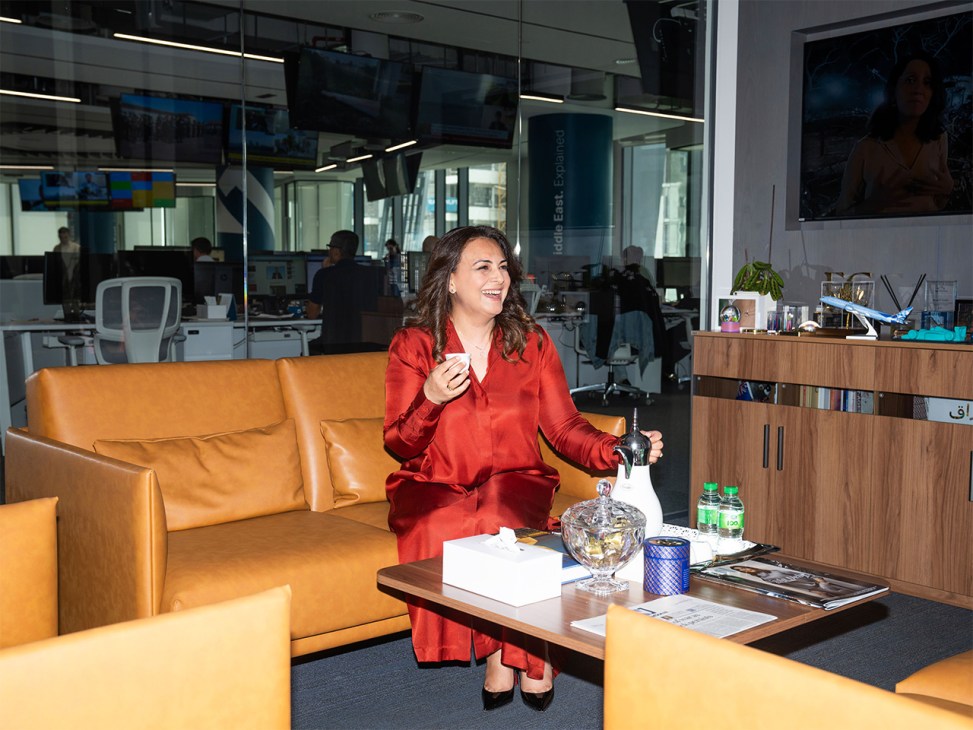
Mina Al-Oraibi enters the Abu Dhabi headquarters of The National in a flash of burnt orange – a bright contrast with the newsroom’s cool blue-and-grey palette. As she cuts across the open-plan floor towards her glass-walled office, she greets staff and stops to check in on an editor who had difficulties on his commute to work. “That’ll teach you to get an Italian car,” she says, with a laugh.
In the nine years since Al-Oraibi arrived in the Emirati capital to relaunch the English-language title, she has become one of the most recognisable figures in Gulf media. As editor in chief, she oversees a newsroom producing print, digital, video and magazine journalism for a publication whose ambition is captured in its tagline: “The Middle East. Explained”. In addition to The National’s day-to-day operations, she can be found moderating panels at the World Governments Summit, speaking at the World Economic Forum in Davos or fielding questions on CNN and the BBC. “I never thought that I would end up leading a newsroom,” she says, fishing for earrings in a taupe Mulberry Bayswater bag. “But I have always loved being a journalist, getting stories and meeting people on the ground.”
On a table in Al-Oraibi’s office sits a large white dallah filled with Arabic coffee, beside a neat row of cups. She offers Monocle one before pouring her own, then lifts the lid of a dish filled with pistachio-stuffed dates.
Al-Oraibi was born in 1980 in Stockholm to Iraqi parents and raised in the Middle East and the UK. After university, she started at London-based Arabic daily Al Hayat. In the run-up to the Iraq war, there was demand for those who understood the region’s geography and politics but didn’t have “an axe to grind”, as she puts it. Soon she was appearing on British television as a commentator and reporting as a roving correspondent, before being sent to Washington to run a bureau for international Arabic newspaper Asharq Al-Awsat. “The centre of the political universe is Washington,” she says. “You learn things there that shape how you see the world.”
She went on to become the youngest and first female assistant editor in chief at Asharq Al-Awsat in London before burning out. In 2015, after years covering the destruction of Arab cities and the rise of Isis in Mosul – her father’s hometown – she stepped away to take up a fellowship at Yale University. “I was heartbroken by what was happening in the region,” she says. “We would review the front pages and it was destruction, destruction, destruction. You couldn’t tell if it was Syria, Libya or Iraq.”
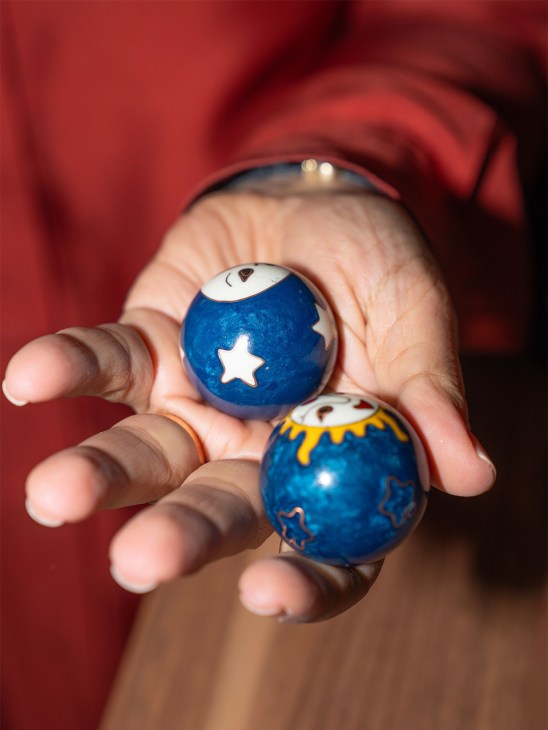
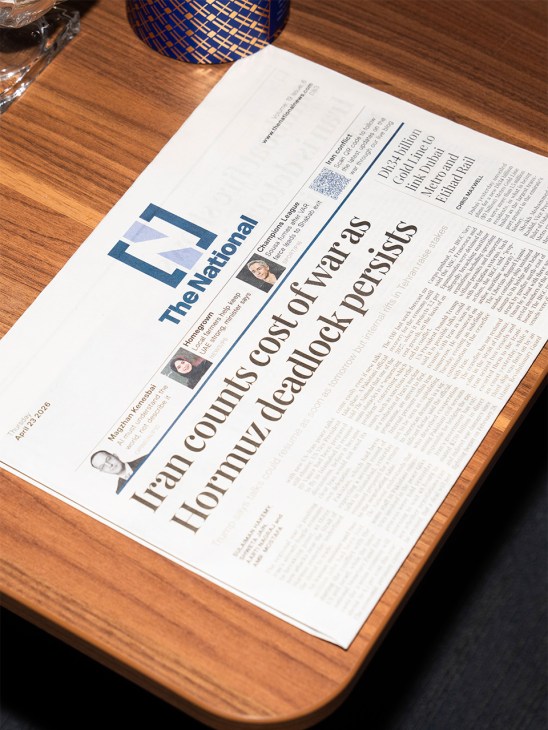
Following this break, Al-Oraibi joined The National in 2017. The mission was to rebuild the publication as a digital-first title. “I remember thinking, ‘Please stop saying digital-first,’” she says. “How do we just make sure that we’re getting through to audiences?” Today more than 80 per cent of The National’s readers access it via smartphone. But print still matters. A copy of the day’s broadsheet newspaper lies on her desk beside the latest issue of the title’s glossy weekend magazine and several branded stress balls. “I have used those a lot,” she says wryly.
Her digital instincts extend to artificial intelligence. The National has integrated AI into the less-glamorous mechanics of the newsroom – tasks such as transcription, audio clean-up and video editing. The question of jobs is hard to avoid: the business laid off 28 journalists as part of a restructuring in 2025, with further staff made redundant this summer (though Al-Oraibi is adamant that AI was not a motivating factor). The challenge, she says, is ensuring that efficiency doesn’t come at the expense of people learning the craft.
Al-Oraibi’s glass-walled office means that she can scan the entire newsroom in a single sweep, while staff know whether she is available. “If there’s breaking news, I can immediately see whether anyone is on it,” she says.
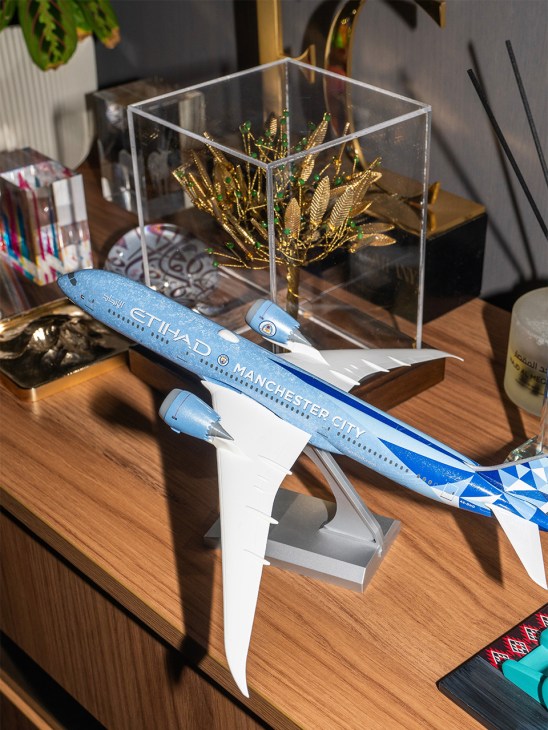
There are clues to Al-Oraibi’s personality in the objects that surround her. Several notebooks, each with “different roles to play”, sit alongside a fountain pen that was given to her by Riyadh’s King Abdullah Financial District and shaped like one of its towers. “It’s pretty,” she says, “but it would be insane to actually use.” There are no family photographs. “My work is work,” she says. Her Mulberry Bayswater – an almost permanent fixture on her arm – is crammed with the essentials of a life that’s lived between meetings: two phone batteries, make-up, reading glasses and sunglasses. “Everybody comments on how heavy my bag is,” she says.
The National is state-owned. Perhaps inevitably, Al-Oraibi is frequently asked about press freedom in the UAE. The question clearly irritates her. “My answer is always: read it,” she says. “If you have read The National and can point to something that doesn’t hold water, then we can have a conversation.”
Every country has media laws, she says. The UAE’s are stricter than some but clearer than many. Privacy laws, in particular, shape reporting. “There isn’t the same societal acceptance of digging into people’s private lives,” she says. “In much of the region, that is off limits.” She is equally forthright about journalism elsewhere: British royal correspondents protect access; Washington reporters can become too close to administrations. “There are always trade-offs,” she says.
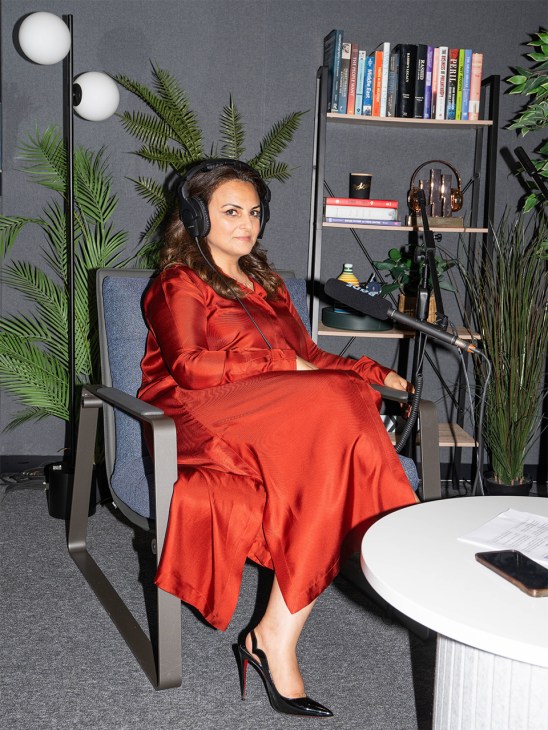
As a female editor in chief leading a prominent newsroom in the Arab world, Al-Oraibi represents a generational shift. The National’s staff includes journalists from across continents. “Someone will shout across the newsroom, ‘Does anyone speak this language?’ – and someone always does,” she says.
That breadth in terms of backgrounds became crucial during recent coverage of the conflict in the Middle East, when the UAE came under attack from Iranian drones and missiles. Al-Oraibi’s first concern was not headlines but staff welfare. “Everyone reacts differently,” she says. “Some had never lived through war before.” The National’s newsroom became both reporting engine and international resource, fielding requests from global broadcasters. “Covering a war can make or break a newsroom,” she says. “It made us. It didn’t break us.”
When it comes to Al-Oraibi’s reading habits, she consumes news quickly and mostly online: Reuters, AP, AFP, X and Instagram, alongside international titles. But some preferences remain analogue: the weekend Financial Times is a fixture and she regularly buys Monocle. A print subscription to Vanity Fair has been arriving at her London home for more than 20 years. Books are also always physical. She is currently reading Departure(s) by British writer Julian Barnes. “I’m obsessed with history, memory and how things are reported,” she says.
In the office, the television is almost always tuned to the BBC. At home, Al-Oraibi unwinds by watching series on Apple TV – Shrinking, The Morning Show and Slow Horses. Since leaving Asharq Al-Awsat, she has had one rule that dictates her viewing choices: no miserable television. “We do enough sad,” she says.
As Monocle departs, Al-Oraibi’s office door remains open. In a media industry that is contending with market forces and collapsing trust, she remains ambitious and clear about journalism’s purpose. “We are explaining,” she says. “We aren’t preaching.” It sounds simple but in this part of the world – and increasingly elsewhere too – that might prove to be a radical editorial philosophy.
CV
1980: Born in Sweden to Iraqi parents.
1982–1986: Lives in Baghdad during the Iran-Iraq War.
1986: Moves to Canberra, Australia, where she learns English.
1999: Enrols at University College London to study history.
2002: Completes a master’s in history at UCL and joins Al Hayat as an intern, before becoming a current-affairs journalist.
2005: Moves to Asharq Al-Awsat, going on to serve as a roving correspondent, Washington bureau chief and assistant editor in chief.
2015: Selected as a Yale World Fellow.
2016: Becomes a senior fellow at the Institute for State Effectiveness.
2017: Joins The National in Abu Dhabi as editor in chief, overseeing the publication’s relaunch.